Songs of the Day: New Music from Psycho YP & Azanti, Stonebwoy, Black Coffee & more

Music has been the driving force keeping us connected for the past ten months where we have been cut off from live experiences. As a result, last year, The NATIVE created our ‘Songs of the Day’ column as an avenue to curate some of the best and biggest songs from around the continent. In the time since its creation, the column has served as an means to discover music from niche, rising acts, while also spotlighting releases from the biggest artists on the continent. As artists continue to share their music with us, this year, it’s only right that we return to pointing you towards as much great music as we can.

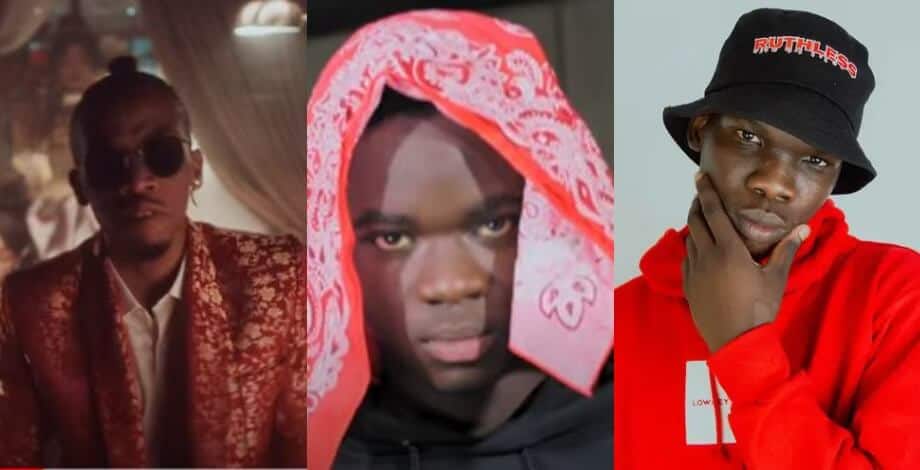
Mid-week, we brought recent releases from Tems, Scorpion Kings X Tresor, Mzvee and Sarkodie, and more. For our weekend curation, we’re bringing you new video releases from Psycho YP and Azanti, Kabza De Small, and Chi Virgo, as well as new songs from Stonebwoy, Black Cofee, Psiv, King Deetoy and Nviiri the Storyteller. Though the pandemic has denied us live shows, where the magical bond between artists and fans unfolds in real-time, artists have remained committed to sharing music with fans, so we continue to honour their art and create space and visibility for them. Enjoy.

Black Coffee – “Time” (feat. Cassie)

After months of build-up, and the release of over 80% of the album as singles, Black Coffee’s long-awaited sixth album, ‘Subconsciously’, is finally out in its entirety. Largely exploring the soulful corners of House music, the album pairs Black Coffee’s soothing instrumentals with a wide range of singers from around the world. One of the very few tracks previously unreleased, “Time”, features American R&B singer Cassie, who sings of going away with a romantic partner to a location where time is suspended. With a melodic phrasing that hangs between ‘90s R&B and her typical Rap-inflected singing, Cassie’s voice springs off Black Coffee’s sprightly drums and lush piano chords.

Chi Virgo – “Wave”

UK-based Nigerian singer, Chi Virgo introduced us to her expressive and relatable brand of neo-Soul/R&B style of music with her short but effective debut EP, ‘Under the Moon’. A project years in the making at the time of its drop, the singer explained that she was already plotting her next move – “I’m excited because it means I can get to releasing more things,” she said at the time. Possibly in the throes of her next project, the singer has shared the loose single, “Wave”, and it continues her bedroom Pop dalliances while amping the trippiness factor even further.

Produced by Ivy, “Wave” features a combination of gleaming keys, skittering hi-hats and off-kilter bass, all refracted through a lo-fi prism. Over it, Chi sings like she’s experiencing an out of body experience, repeating slightly muffled chants of, “I’m just on a wave,” in between verses filled with words of self-assurance in light of her dreams. The song also comes with an accompanying video shot by, and co-edited with, budding visual savant, Chuka “OTTO” Oknojo, and it taps into the psychedelic vibe of Chi’s performance. In it we see intimate shots of the singer moving around her room exuberantly, while the edits are laid on thick to create a trippy, riveting effect while watching.

Kabza De Small – “Sponono” (feat. Wizkid, Burna Boy, Cassper Nyovest & Madumane)

Last year, Kabza De Small gathered four of Africa’s biggest household name for an instant dance classic. On “Sponono”, Wizkid, Burna Boy, Cassper Nyovest and DJ Maphorisa (performing as Madumane) combine magnificently over Kabza’s mix of breezy tropical melodies and bouncy, Amapiano percussion rhythm. Pulling back attention to the record, the South African producer/DJ has shared an animation video for “Sponono”, featuring cartoon images of himself and his collaborators on a moving train, alongside symbolic gestures nodding to the album’s cover image. It’s not as momentous as getting all parties on set for a live video, but this animated rendition does a considerable job of capturing the song’s breezy essence.

Psycho YP & Azanti – “Focused”

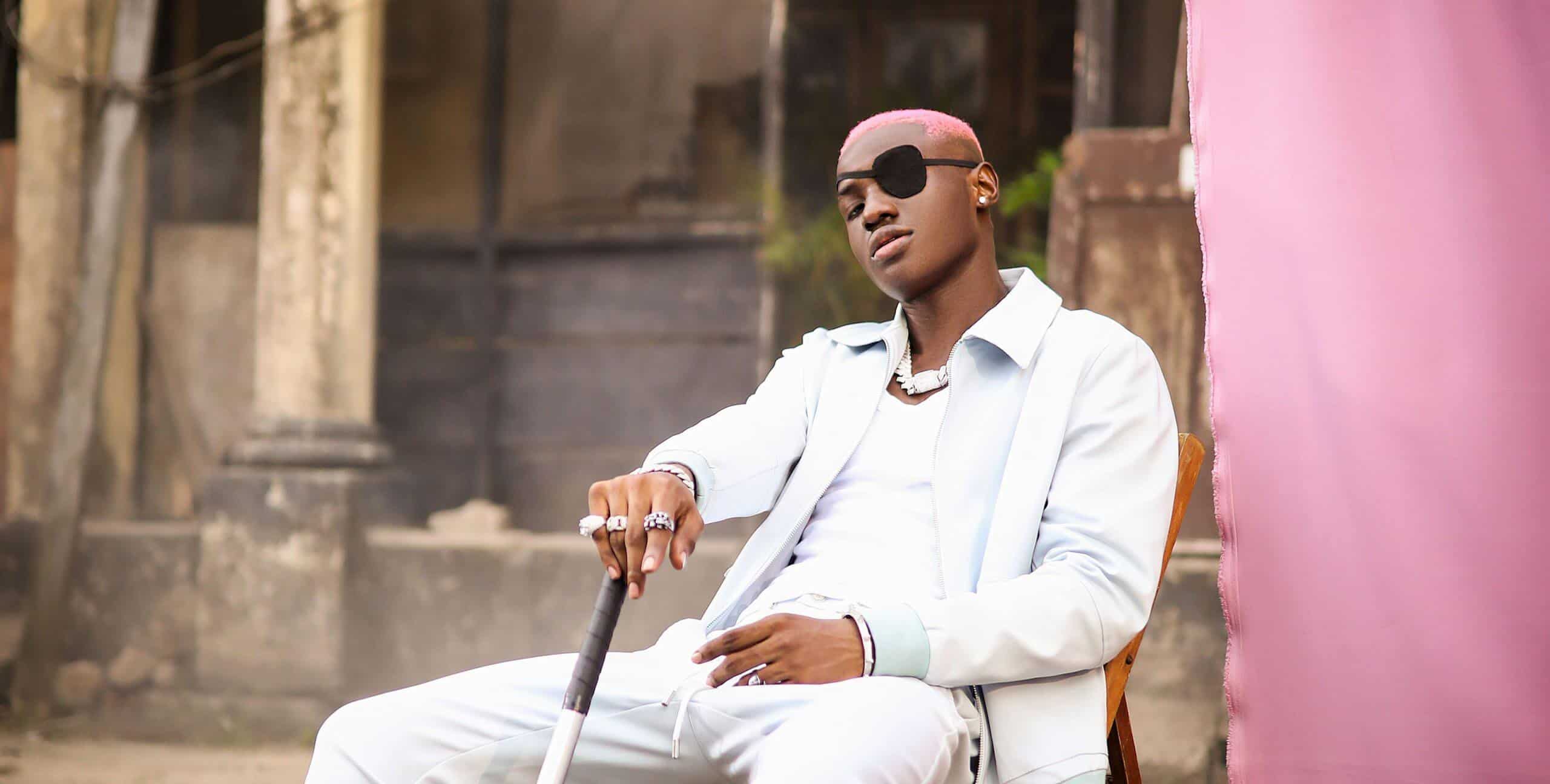
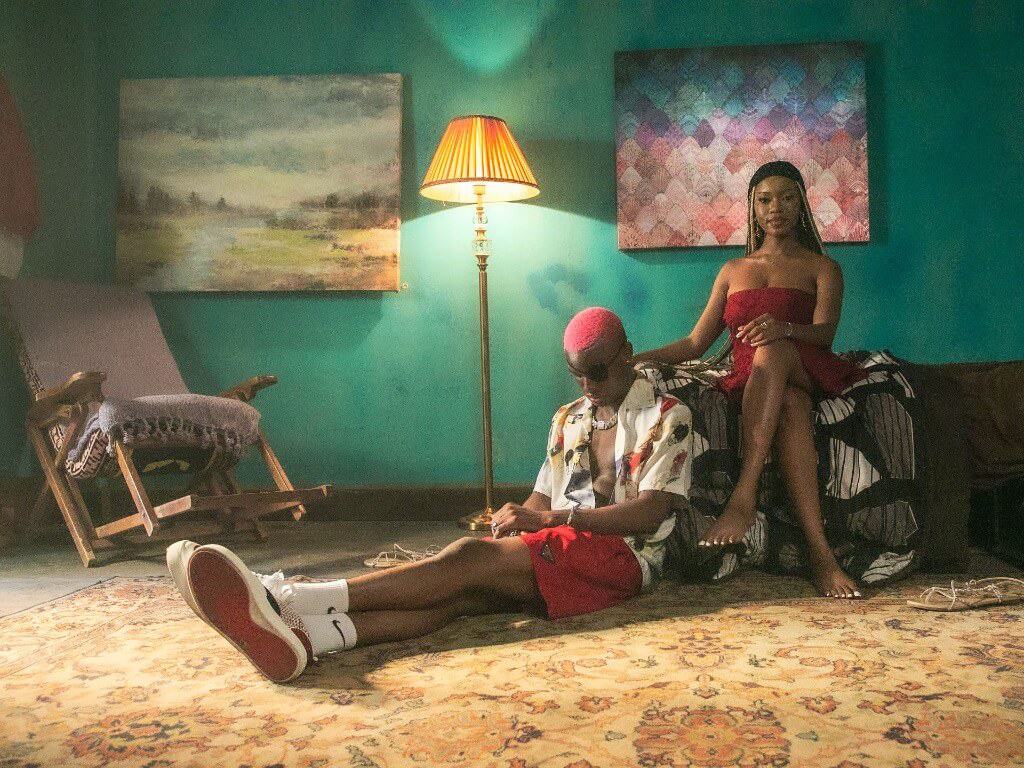
Late last year, we were introduced to Azanti via his joint project with Psycho YP, ‘YP & Azanti, Vol. 1’, and it served as a remarkable entry point into his budding capacity as an R&B-dominant singer/songwriter. Ensuring that the project continues to get the attention it deserves, the pair have shared the video for “Focused”, one of the tape’s standout tracks. Directed by Cindy Ihua, the set of visuals plays into the song’s lovestruck sentiment, setting YP and Azanti as photographer and set assistant, respectively, with the latter pleading his romantic case to the on-set muse. According to a teaser shared by YP on social media, the video for “Focused” is one of several already shot visuals for songs off the project, and it sets a crisp tone for those to follow in coming weeks and months.

Stonebwoy – “1 Gad”

“Dem know dadadada, say my profile taller than ladder,” Stonebwoy brags on his new single, “1 Gad”. Coming from one of the biggest Ghanaian artists of the last decade and counting, it’s a very fitting brag. Singing over Street Beats’ Dancehall-indented production, Stonebwoy boasts of his affluence and unyielding influence amongst Ghana’s teeming youth, while also appreciating the support he’s received on his journey so far. With his melodies coming across in a stream of consciousness flow, there’s an affecting spontaneity to Stonebwoy’s performance that makes “1 Gad” sound much more personal than a banal ego boost.

King Deetoy, Kabza De Small & DJ Maphorisa – “Petle Petle” (feat. Mhaw Keys)

All looks set for King Deetoy to become the next big House music DJ/producer out of Africa. Having spent the last two-plus years showcasing his inventive abilities across five projects, he’s just scored his biggest mainstream look yet, co-headlining a new project with the Scorpion Kings duo, Kabza De Small & Maphorisa. ‘Petle Petle’, the 7-track tape, builds on the trio’s synergy from their novel collaboration from last April, “You and Me”. Off the project, the title track exhibits the heterogeneous blend that characterises the project, folding Techno, Deep House and Amapiano into a thumping, melodious whole. Mhaw Keys mutters soulful, tribal chants, adding a mystical feel to the mostly instrumental song.

Psiv – “234”

Last November, Psiv made his first official foray into Drill with the Espiquet-assisted “Gangland”, a fiery cut describing the “mad land” that is Nigerian. Swapping angst for a display of bravado on his latest single, “234”, Psiv unloads a flurry of snappy bars extolling his money-obsessed ideals, bragging about the perks of flipping bags while mouthing off at those he considers to be opps. “All of my shawties, they steady be throwing it back/steady be beating the WAPs/Getting the money, you know that I’m deep in my bag,” he raps with exuberance over a gleeful piano chord theme and a sliding, explosive bass.

Nviiri the Storyteller – “Birthday Song” (feat. Sauti Sol, Bensoul & Khaligraph Jones)

After years building a reputation as one of the budding stars out of East Africa, Nviiri the Storyteller is set to begin manifesting his potentials on a higher level, with the impending release of his debut EP, ‘Kitenge’. Ahead of the early March release, the Sol Generation signee has shared the lead single, “Birthday Song”, and it features high profile appearances from Sauti Sol, Bensoul and Khaligraph Jones. Backed by a colourful, mid-tempo groove, Nviiri and his collaborators deliver a celebratory song embellishing the importance of birthdays. Whether you agree with the sentiments or not, the grooviness and overall vocal excellence on display is worth the listen.


Dennis is a staff writer at the NATIVE. Let me know your favourite the Cavemen songs @dennisadepeter


ICYMI: NEW MUSIC FROM TEMS, FASINA, SCORPION KINGS X TRESOR AND MORE

Songs of the day: New music from Tems, Fasina, Scorpion Kings x TRESOR and more

Music has been the driving force keeping us connected for the past ten months where we have been cut off from live experiences. As a result, last year, The NATIVE created our ‘Songs of the Day’ column as an avenue to curate some of the best and biggest songs from around the continent. In the time since its creation, the column has served as an avenue to discover music from niche, rising acts, while also spotlighting releases from the biggest artists on the continent. As artists continue to share their music with us, this year, it’s only right that we return to pointing you towards as much great music as we can.

For last week’s Songs of the Day, we brought you new singles from Ykb and Zlatan, Jackmillz, Dj Xquisite, Tomilola, Andy S, Veen, CKay and Mr Eazi. Today, we’re getting you back up to speed by bringing you the latest releases from Tems, MzVee and Sarkodie, Scorpion Kings x TRESOR, Fasina, Patoranking and Flavour and more. Though the pandemic has denied us live shows, where the magical bond between artists and fans unfolds in real-time, artists have remained committed to sharing music with fans so we continue to honour their art and create space and visibility for them. Enjoy.

Tems – “The Key”

Though Tems has a tendency to extend her range to accommodate rap flows, she’s most comfortable when she sings R&B melodies. Her latest project, For Broken Ears emphasised her fascination with melancholic themes as she avoided upbeat Afropop productions and asserted her angsty state of mind on tracks like “The Key”, which she has just updated with an eerie music video to match.

The video for “The Key” was directed by UAX and it captures Tems and her cultish group as they perform a ritual ceremony by the beach. We see as Tems performs the song, singing, “when they try to take me down/ we’d be flying off the ground,” while her face is lit up by red lights and special effects that make her confident lyrics more menacing. The video highlights Tems’ growing reputation as an artist who makes music for everyday rebellion.

MzVee – “Balance” Feat. Sarkodie

COVID has paused large, elaborate parties and ceremonies, but the pandemic hasn’t stopped Ghanaian singer, MzVee from singing about turning up. “I get vibe, we go turn up,” she promises listeners over the groovy Afropop instrumentals produced by Kizzy for “Balance”, one of the standout tracks from her album, ‘InVeencible’. The song also features Sarkodie who joins MzVee to delivered feel-good sentiments to make the song a rave starter.

Though the tape was released last year, MzVee has now revived it with a party-themed music video directed by Jay and Stephane Boateng. The video sets MzVee and Sarkodie at a dance club, where their lyrics are most appropriate. Set to the tune of Sarkodie’s romantic rap verse, the music video for “Balance” delivers all the right feels as we approach valentine’s season.

Scorpion Kings x TRESOR – “Funu”

Electronic Dance music has continued its dominant run in South Africa, as the sound keeps evolving through different genres like Afrohouse, Gqom and the trendy Amapiano sound. Though more people have started to explore the sound across the continent, South Africa remains the epicentre, as they continue to experiment with different new electronic sounds and give us exciting new music, such as Scorpion Kings x TRESOR’s “Funu”.

The song is expected to feature on the ‘Rumble in the Jungle’ album made by DJ Maphorisa and Kabza de Small (professionally known as the Scorpion Kings) alongside Congolese born Afropop singer, TRESOR. The album is set to drop in April but while we wait, the trio has shared the video for the lead single, “Funu” and it shows them living lavishly in a mansion where they dance and perform the song.

Fasina – “Peace of Mind (LIFE)”

The wait for Fasina’s new EP, ‘Love and Grief’, is finally over, with the artist finally shared the 4-track tape fans have been anticipating on Monday. The tape finds Fasina narrating different relatable stories about the highs and lows of his life in his uniquely laidback take on Afropop. And with quarantine testing couples new and old, the standout track, “Peace of Mind (LIFE)” basks in disagreement with his muse. Singing, “I cannot be here on time when you need me back/ so I feel I can’t lie and say I want you back,” the Lagos-based artist is exuding confident charisma here while he addresses the people who tried to undermine him in the past.

Patoranking – “Mon Bébé” Feat. Flavour

You’d be wise to avoid Patranking’s social media if you’re like me and you know already know you’re going to be alone for valentines. The singer appears to have recently gotten boo’d up with the self-proclaimed Mama Africa, Yemi Alade as he has been posting her pictures and captioning it “Mon Bébé”, the title of one of the more romantic songs from his latest EP, ‘Three’. Produced by Telz, “Mon Bébé” is set to the lightweight groove of Highlife as Patoranking is joined by Flavour to sing about their romantic feelings for their muse; “Oh my morning dew/ I can’t stop thinking of you”.

In line with the romantic theme, the music video for “Mon Bébé” plays out like a wedding ceremony for Patoranking and his muse, who turns out to be Yemi Alade. Though it’s likely that the relationship was set up as publicity for the song and video, they share pretty convincing intimate moments, so we wouldn’t be surprised if this match is true.

Busiswa – “Makazi (feat. Mr Jazziq)

In December, Busiswa shared her third studio album, ‘My Side of the Story’, an adequately personal project where she takes control of her own narrative. Following the brazenly sexy video for the Kamo Mphela-assisted “SBWL”, she’s shared a new set of visuals for pre-released single, “Makazi”, a searing, slow boiling song dedicated to her Xhosa roots. Matching the pride in her voice over Mr Jazziq’s folksy Amapiano groove, the video features Busiswa in traditional regalia, as she sings at the side of the ocean and while miming a ritual ceremony. The video also features appearances by members of the local community from the village she calls home.

Eno Barony – “Yentie Obiaa (feat. Efya)”

Last Friday, Ghanaian rapper Eno Barony finally released her long-teased sophomore album, ‘Ladies First’. As the follow-up to her aspirational 2018 debut, ‘Yaa Asentewaa’, Eno stakes her claim to respect with a better rounded album than her previous effort, framing her self-assured candour within the context of African women receiving lesser attention than their male colleagues. On standout selection, “Yentie Obiaa”, Barony teams up with songbird Efya for the second time on the album, and even though the entirety of the song is delivered in Twi, its components are familiar and remarkable: from Eno Barony’s laid-back, swaggering flow, to Efya’s honeyed singing, and Hype Lyrix’s groovy, mid-tempo production.

[mc4wp_form id=”26074″]


You are meeting Debola at a strange time in his life. He wandered into a dream and lost his way back. Tweet at him @debola_abimbolu


ICYMI: Catch up on all the songs released across the continent last week

NATIVE Exclusive: It’s Joeboy’s time now

In 2017, just before he had completed his undergraduate degree at university, Joseph Akinfewa-Donus, now popularly known as Joeboy, had to make a life-changing decision. He could either receive a one-time lump sum of $5,000 or a chance to shoot a video backed by one of Afropop’s most dazzling musical acts, Mr Eazi. He chose the video and it’s safe to say, the rest is history.

Four years and some months later, Joeboy’s fated decision to star alongside the emPawa boss, Mr Eazi, led Joeboy on a incredible career run which saw him releasing back-to-back hits from “Baby” to “Beginning”, sharing his debut EP ‘Love & Light’ and amassing over 700,000 monthly listeners on Spotify.

Now, Joeboy has his eyes set on another big career milestone, the release of his highly-anticipated debut album ‘Somewhere Between Beauty and Magic’, a 14-tracker that explores love, its complications, perks, and the way in which the complex emotion defines all human interactions. A week before its release, Joeboy joins me on a Zoom call from his home in Lagos, bursting with confidence and self-assurance that the album is finally here, arriving in a timely fashion in the month of love.

It was a pretty long process to get to this point so I am just super excited that’s finally go time. I know my fans have been eagerly waiting and I can’t wait to finally share my album.”

Although Joeboy is certain that now is a good a time as any to release his debut, the singer tells me that the album was actually ready for release over a year ago. But when the world shut down to curb the spread of a deadly virus at the start of March last year, Joeboy delayed the release, waiting to see how the turbulence of the pandemic would affect the music industry. The effects were catastrophic, and many of the singer’s live performances had to be put on hold or cancelled altogether. “I then moved my album to the final quarter of the year but that’s when the End SARS protests happened and I had to lend myself to the cause,” Joeboy admits. The album was once more pushed back because of the uncertain times but then the worst happened.

Joeboy suddenly lost all the files for his debut project’s recorded songs, a story he recounts with a resigned tone. Beaten down by the prospect of recording the project’s songs again, Joeboy had all but given up on the release of his debut. Weeks later, he received a call from YBNL boss, Olamide which instantly set him straight. “He told me that people don’t throw stones at trees that don’t bear fruit, they only throw at those that bear fruit,” Joeboy shares with NATIVE. This exchange had a lasting impact on the singer who immediately vowed to redirect his focus to the positives around him. Armed with this knowledge, which acted as a protective balm for the tumultuous past year, Joeboy embarked on re-recording the songs, trying his best to replicate the same vibe. Whether successful in the latter or not, Joeboy is now ready to welcome listeners into the world surrounding his debut album.

On ‘Somewhere Between Beauty and Magic’, Joeboy sets out to deliver on his best form, exploring more range in his themes and songwriting and showing a level of growth and confidence that seemed amiss on 2019’s ‘Love & Light’. He tells me that during the album’s creation, his focus was on showing a range of emotions, this time drawing out familiar pains and fortunes that would resonate with his growing fanbase. “I think I have proven, to an extent, that I can make music and make great hits so I am not really trying to prove anything anymore,” Joeboy speaks confidently. 

“Hits are always important, but when you keep stressing to create hits each time you release a song, it kinda limits your creativity.”

With the album already available for pre-order, the project’s tracklist reveals that ‘Somewhere Between Beauty and Magic’ is a solo effort – there will be no features to the 14 tracks. Still, the tracklist is replete with a number of talented young producers in these parts: Dera, the mastermind behind Joeboys hit single, “Baby”; BeatsbyKO, a longtime friend and collaborator of the singer; Tempoe, Type A, and more. Joeboy tells me he meticulously convened these diverse producers, in order to guide us listeners through as many different soundscapes as he can employ, within the project’s short runtime.

When I ask why he’s worked with such a diverse range of sounds, Joeboy tells me that he has a lot of respect for the new generation of Afropop producers who he believes are actually responsible for shaping the sound of the growing genre. He is also amazed to be working alongside peers such as Fireboy DML and Oxlade and colleagues like Olamide who he used to look up to for many years.

At this moment, the future is still uncertain but we can expect Joeboy to keep hedging his bets on himself and making beautiful, romantic music. Before our call ends, Joeboy tells me that although he’s about to drop his debut album, he’s already looking forward to working on his next. “I’m wasting no time in hosting my next recording camp. The world keeps moving so my motto is to remain consistent and focus on the positives.” In today’s fast-paced music industry, it’s clear that Joeboy has what it takes to stay ahead of the curve and it’s certainly his time to shine now.

Pre-add ‘Somewhere Between Beauty and Magic’ below.

Featured image credits/Ikenna Nwagboso (BANKU MUSIC)


.@tamimak_ Is a Staff Writer at The NATIVE


ICYMI: Fireboy is ready for the next level of the long game

Dice Ailes wants you to do the money dance

Dice Ailes is aiming for viral prominence with the release of his latest single “Money Dance”, the latest song catching the attention of TikTok users. Last year, TikTok emerged as one of the most exciting apps lending its influence to the music industry, with viral challenges, freestyle and dance competitions boosting a song’s chance of attaining chart-topping success. When TikTok challenges are done right, they tend to gain traction and spread like wildfire across various social media apps.

You couldn’t scroll through your social media timeline without coming across Megan thee Stallion’s “Savage” challenge, or “Don’t Rush” challenge from Young T and Bugsey, right down to the recent Silhouette challenge – a mash-up of Doja Cat’s “Streets” and Paul Anka’s “Put Your Head on My Shoulder” – that is currently coursing the web. All proof of TikTok’s newfound ubiquity and the ability for it to push songs into public consciousness.

Some artists have found a way to hack the perfect sound that easily lends itself to these challenges, while others have been slow burners, finding love with niche communities on the app. A Dice Ailes’ latest single is fresh off the press, “Money Dance” is currently falling in the latter; a catchy Afropop record is capable of lifting feet to the dance floor, “Money Dance” has currently racked up quite the impression on TikTok so far. In some versions of the money dance, women are curating detailed choreography which is a mash of all your favourite Afropop dances, while other TikToks consist of people flexing with their stacks of cash. Whatever is your speed, we’re sure you’ll love the videos. Take a look at some of the top contenders below, and join in the fun, by sharing your own money dance with the hashtag #MoneyDanceChallenge.


View this post on Instagram


A post shared by Waterman (@dice_ailes)

https://www.tiktok.com/@dice.ailes/video/6924931991334882565?sender_device=pc&sender_web_id=6894357547928389125&is_from_webapp=v2&is_copy_url=0

https://www.tiktok.com/@dice.ailes/video/6924932890056789254?sender_device=pc&sender_web_id=6894357547928389125&is_from_webapp=v2&is_copy_url=0

Featured image credits/DiceAiles


TENI ANNOUNCES LONG-AWAITED DEBUT ALBUM, ‘WONDALAND’

The NATIVE team reminisce on our favourite throwback songs

There’s no denying that music in the 2020s is different. Unlike before, many artists are less likely to stay confined within certain boundaries of genre, now prone to experimenting more and blurring the lines between these traditional modes of music-making. These days, rappers can decide to make Emo, Hip-Hop artists are dabbling in Country, and some artists mix so many different styles that it’s impossible to stick them with any labels. It’s why today we have artists such as Amaarae, Playboi Carti, Juice WRLD and more, consistently defying traditional conventions and setting their own rules.

While our ethos at NATIVE has always been to deliver content as the reliable pulse of the African millennial, we, like many millennials and Gen Zers our age have a soft spot for the nostalgic. Even though our tastes continue to acclimatise to the furore of modern times, we can’t help but remain big fans of the golden age of music back in the late ’90s and ’00s. From R&B, to Hip-Hop/Rap, to Soul music, Pop and more, it’s infinitely clear that the music of our childhood had it all and you’d be hard-pressed to find anyone that won’t jump at a chance to witness a Young Money reunion or kick back with your favourite Bow Wow and Nelly songs playing on a loop.

To this end, in our best efforts to kick off the first week of African American History Month, the NATIVE team is bringing you our best 8 American throwback songs that traversed time zones and cultures, crossing over to the vibrant parties that populated our younger years. From Brick & Lace’s “Love is Wicked” to Mario’s “Let Me Love You”, these are the evergreen songs that we love to love. Enjoy.

“Hard Knock Life” – Jay Z

In these parts, dinner with Jay-Z is almost as coveted as a first-class ticket through the pearly gates. The internet often throws itself into tatters debating whether an evening meal with the Hip-Hop mogul is worth forfeiting a hypothetical million dollars. For many, it is, and for many others that is ridiculous. The disagreement is fair, but as is always the case when people on the internet land in a tiff, there is a seed, from which this thorny bush of incredulity spawned, that is well worth interrogating. In dinner-with-Jay-Z’s case, it’s his inspiring rags to riches story, that forms not only the crux of his personhood but also lies at the heart of his music, in songs such as “Legacy”, verses such as “Clique” and evergreen hits such as “Hard Knock Life (Ghetto Anthem)”.

A single off his 1998 third studio album, ‘Vol. 2… Hard Knock Life’, Jay-Z opens the album’s second track with one of the most famous chorus’ in theatre musical history. “Hard Knock Life” is a bleak number sung by Annie and her friends in the orphanage as they recount their gross maltreatment in an effort to justify their misbehaviour on screen. As a black person in America, the criminality projected onto the orphans, the marginalisation that strips them of their basic rights and humanity is one to which Jay-Z can most easily relate, as it’s a reality he’s had to endure too. Like Annie, this discrimination, marginalisation and societal disregard drew him into the life of crime he describes on his opening bar, “standin’ on the corners, boppin’.” In the very next line, however, comes the all important explanation as to why Jay-Z is so venerated in these parts; he has gone from dealing drugs “to driving some of the hottest cars New York has ever seen.” For a population largely suppressed by the greed of our governments, for a people whose reality is so hopeless they believe their desperation can only be alleviated through crime, Jay-Z’s hard knock life is an entirely relatable fate on the African continent. Throughout this song, and his entire discography, Jay raps about his unsavoury past, but with each new and successful album, he does so from a position of increased privilege. To be able to reminisce about the hustling days is an aspiration we all share, and hearing Jay-Z achieve this is an inspiration we all shared.

Adewojumi Aderemi

“Crank Dat” – Soulja Boy

My brother and I used to compete for music bragging rights when we were growing up. This meant that I tried staying glued to MTV and Channel ‘O’ as much as a 13-year old could so that I could say I heard a song or an artist before he did. Unfortunately, he beat me to Soulja Boy and I’ll never forget how he got so excited by the video for “Crank Dat” that he tried to do the dance to show me what I had missed. It was hilarious because we were in public and since most people hadn’t seen the dance yet, he just looked crazy.

Fast forward a couple of weeks and the catchy song was playing everywhere in Nigeria. By the end of that year 2007, the song was practically inescapable and it didn’t take long before a Nigerian parody remix, “Crank Dat 9ja boy” started making rounds on the internet. Soulja Boy’s impact was felt all over the world and Nigeria wasn’t an exception as we all joined in on the energetic dance routine and embodied the confidence the song inspires.

Debola Abimbolu

“Bedrock” – Young Money

Young Money, Cash Money was the moment, circa 2008. Everywhere you looked back then, the label imprint run by Lil Wayne was making heatwaves and ushering in the current crop of Rap legends including Drake and Nicki Minaj. Not only were they dominating in music, but the fashion of the time, snapbacks – G-shocks, coloured skinny jeans – were a reflection of Hip-Hop’s broader influence on popular culture. If you didn’t own any of these at the time, then you were pretty much a social pariah.

One of the most memorable songs to come out of the YMCMA era was “Bedrock”, the second official single from the Hip-Hop/Rap group. The song and its accompanying video were all the rave at the time, showing us the Young Money mansion where the team throw extravagant parties with all the drinks, beautiful people and drugs you could find. Personally, Wayne, Drizzy, Millz and Nicki were some of my favourite verses on the song, particularly Ms Minaj who was making a name for herself at the time. I mean what is more memorable than beginning a verse with, “Okay I get it let me think I guess it’s my turn/maybe it’s time to put this pussy on your sideburns?” The answer is nothing. As one of their biggest fans, I can probably still rap each verse on here word for word and I’m willing to battle anyone who thinks they can take me on. They don’t make songs like this anymore.

Tami Makinde

“In Da Club” – 50 cent

Full disclosure, I disliked 50 Cent for a significant part of my early lucid relationship with music. Part of it was that he was in a competition with my then fave, Kanye West, circa 2007, which turned out to be mostly imaginary, but it also heralded a sonic and thematic adjustment to Rap – so, yayyy Kanye. When I eventually grew out of my adolescent pettiness, and nudged by a classmate who wouldn’t shut up about Fif, I gave the Queens rapper a chance and actually listened to his music, which turned out to be quite alright. Even with my hate, “In Da Club” was already a mammoth smash in Nigeria, and it’s my least favourite songs on 50’s classic major label debut, ‘Get Rich or Die Tryin’’, there’s no denying that it has an everlasting place in pop culture.

When children parties were still very much blown out events – kids these have really cool parties by comparison, if you ask me – “In Da Club” was one of the mandatory songs to be played (along with Sisquo’s wildly inappropriate “Thong Song”). In fact, there was a high chance one of your “hip” uncles would start chanting “go, go, go shawty, it’s your birthday/we’re gonna party like, it’s your birthday,” everyone else would join in and you’d have move your body like you really enjoyed the song. For such a self-professed gangster and trouble-shooter, “In Da Club” being 50’s signature in a highly conservative Nigerian society fills my heart with joy from time to time. I sometimes anticipate the day I become the uncle that embarrasses my nieces and nephews with the opening chant of this song, because it needs to remain a rite of passage that doesn’t die with my younger millennial generation.

Dennis Ade Peter

“Let Me Love You” – Mario

Mario’s “Let Me Love You” served as the decade’s ultimate romantic anthem; catchy and upbeat enough to be played at full volume in clubs and romantic enough to inspire listeners to go after the woman they love. The soulful ballad was released in 2004 when R&B just began dominating the pop world as it peaked at #1 on the billboards charts. The opening lines, “Baby I just don’t get it/ Do you enjoy being hurt?” are easily one of the most memorable lyrics from that era with the specific narrative for wooing a woman who’s already in a relationship.

With his charmingly convincing lyrics, “Baby you should let me love,” written in a way that cleverly disguises the sexually suggestive sentiments behind innocent words, “Let Me Love You” was the hallmark of gooey-eyed romantic music that’s just the right dose of explicit to work on teens and their mothers. It is still Mario’s biggest hit till date as it earned him his first Grammy nomination for Best Male R&B vocal performance. Last year, 15 years after the original song was released, Mario reunited with the song’s producer, Scott Storch to make an anniversary edition that confirms the classic R&B song’s evergreen appeal.

Debola

“All I Do Is Win” – DJ Khaled

Before the ongoing pandemic made clubbing a life-threatening activity, the possibility of hearing DJ Khaled’s “All I do is Win” on a night out was pretty high, and I can say with some certainty that when clubs and dancefloors open, it will remain a staple of Nigeria’s club scene. I can’t remember when this song crashed into our shores, but it’s one of those few crossover hits that dug its grip into our local space and has refused to let go, in over a decade. Personally I have no deep sentiments towards the song, but I’ve heard it in so many public spaces – in one or two weddings and even at church – that I have now been compelled to join the collective raging it always inspires, on several occasions.

Released as part of his fourth studio album, ‘Victory’, “All I do is Win” heightened DJ Khaled’s popularity in these parts up to a ten, and the reasons are easy to detect. Obviously, the song is synonymous with head-banging hype, with a supercharge beat that sounds like it was inspired by the roaring verve of a sports car engine. On a thematic level, a song about winning will always become a huge favourite, because which Nigerian doesn’t like winning? Parents always want their children to win, young people are always trying to win against a broken system that puts us at a disadvantage; so when you see people violently thrashing when the DJ fast-forwards to Busta Rhymes’ motor-mouth flow on the remix, it’s not just because they love the song, it’s that it in some way feels spiritual to a lot of us.

Dennis

“Love is Wicked” – Brick and Lace

Did you listen to the DJ spin this bad girl anthem on a loop at the function back then or did you have a normal childhood? I, for one, am certainly sure that you could not have missed Brick and Lace’s smash hit “Love is Wicked” unless you were living under a rock – respectfully. Released back in 2007, this song was an unmissable number both here in Nigeria and in the US where the Jamaican-American R&B sister duo resided. For one, it was a passionate callout at an unworthy lover who took their love for granted, endlessly lending itself to those of us who’ve been through similar plights, while on the other hand, the song’s upbeat production could get anyone off their feet. 

“Love Is Wicked” became a staple at many block parties in its time, with the ability to draw partygoers of all ages to the dance floor to burst out their best moves. RIP to the waists back then. I distinctively remember winning many dance competitions because of the killer dance routine I had crafted to accompany the Reggae song’s upbeat production. With lyrics like, “cry me a river cause your love is wicked,” the melodramatic song was packed with enough memorable one-liners to perform a heartfelt rendition to each time it was revisited. And it’s certainly earned its stripes over the years, having featured on film motion picture soundtracks including the soundtrack for the Bratz movie. If that isn’t Y2K, I don’t know what is.

Tami

“Umbrella” – Rihanna ft. Jay-Z

Rihanna has changed our lives in so many ways. Even before singlehandedly diversifying the make up industry, her many looks were responsible for several hairstyle revolutions, for example the undercut hairstyle that rocked the early 2010s, or the ‘Loud’ red that inspired us to be that little bit more daring with our hair colours. When it comes to her music, Rihanna has made many songs that have been hugely impactful and influential, and amongst these remains her ‘Good Girl Gan Bad’ lead single, “Umbrella”. There are innumerable reasons why “Umbrella” changed the world, but here in Nigeria there are only two that really matter.

Featuring Roc Nation boss, Jay-Z, “Umbrella” was the fuel to the fire of the Beyoncé vs Rihanna feud for pop stardom and Jay-Z’s heart (apparently), rumours that gave us Nigerians a Nollywood franchise to adore, Beyonce & Rihanna. Pitting the two singers against each other, Beyoncé became synonymous with virtue and good values, whilst Rihanna was the role models for all us girls who had gone bad. It was a silly dichotomy (that even reared its ugly head during Versuz talk last year), but during peak Beyoncé vs Rih, your preferred artist was definitely a point to be judged by; I remember a friend telling me I was unserious because I loved Rihanna, and I should aspire to be more like Beyoncé.

Another distinctly Nigerian cultural artefact “Umbrella” gave birth to, this time directly, was Banky W’s “Ebute Metta”. From Nate Dogg’s “Area Codes” hook to Cassie’s whole thing on “Long Way To Go”, in the ‘00s, Nigerian musicians refused to let a US hit go by without a local refix. Unfortunately, Nigerian Pop is a little too far into the global game for these sort of infringements to fly – I highly doubt “Catch Cold” was cleared – but hearing the familiar Tricky Stewart beat, Rihanna melody and even Jay-Z’s throat clearing intro, as the setting to Bank W’s proud ode to Nigeria’s many states was as emotive as they come. Sure, we laughed, but “Ebute Metta” has remained memorable, and with the growing unrest unrest across the nation, this song is the unifying anthem we need at this time, and it couldn’t have happened without Bad Gyal RiRi’s dancing in the rain. As Bank W reassures us using the original “Umbrella” flow, “doesn’t matter we gon’ make it out to the end.”

Woju

Featured image credits/NATIVE


ICYMI: HOT TAKES: CANCELING TRANSPHOBIA, ‘NAMASTE WAHALA’, THE NIPAH VIRUS & MORE

Teni announces long-awaited debut album, ‘Wondaland’

Teni’s fairy-tale breakout run in 2018 heralded the entry of a self-accepting pop star. In that year, she delivered multiple smash hits, including “Askamaya”, “Case”, and “Uyo Meyo”. The following year, she shared her debut EP, ‘Billionaire’, with its title track quickly rising to nationwide ubiquity. She followed up with ‘The Quarantine Playlist’, a joint EP with DJ Neptune in the thick of Nigeria’s nationwide lockdown last April, while teasing an upcoming album later in the year – which didn’t end up happening.

To close 2020, Teni then released a new single, “Jo”, along with its accompanying video, hinting at the possibility of the album release sometime early this year. The singer has now confirmed impending plans to drop the album in March 2021, going on to unveil the title to the debut as ‘Wondaland’. At this time, details of the project are scarce, but we do know that the video for a Davido-assisted track was recently shot. It’s safe to say that Teni’s debut album is a highly anticipated and long-awaited drop for Afropop listeners, so we’ll keep you updated as more details get revealed in coming weeks.


Dennis is a staff writer at the NATIVE. Let me know your favourite the Cavemen songs @dennisadepeter


ICYMI: 17 PROJECTS WE’RE LOOKING FORWARD TO THIS YEAR

A beginner’s guide to Femi Kuti through 10 essential tracks

While he started playing the saxophone in his father’s legendary Africa ’70 band from around the age of 15, there’s a latter story that signifies Femi Anikulapo-Kuti’s baptism of fire as an heir-apparent of Afrobeat. According to lore, Fela thrust a 19-year old Femi unto the stage at a concert in Paris in 1981, forcing him to play a saxophone solo he’d only recently begun rehearsing and had barely mastered. The nervous young musician didn’t bomb, neither was he spectacular, but the major lesson was that he didn’t crack under (unnecessary fatherly) pressure.

This steeliness would come in handy a few years later, as Femi was thrust into leadership of the band – now known as Egypt ’80 – following the arrest and subsequent imprisonment of Fela by the Buhari military regime in the mid ‘80s. Having kept the momentum of Afrobeat alive in the two-plus year-long absence of its key magnetic figure, Femi opted to strike out on his own as a recording artist and performer in the late ‘80s, with the formation his own band Positive Force. Fela, clearly incensed by this move, infamously heckled his son’s first album, ‘No Cause for Alarm?’, publicly declaring his chagrin for it. The two would later reconcile, and Femi released his second album, ‘M.Y.O.B’, on Kalakuta Records.

Over three decades since making that pivotal decision, Femi Kuti has grown in stature as one of the most enduring social truth-tellers of our time, and one of the greatest saxophonists out of Africa. While it’s impossible to escape the shadow of his father, Femi’s achievements have hinged on extending the creative and socio-political legacy of Afrobeat, purposefully advancing the genre’s ethos while also standing out as a distinct, thoughtful person of his own. His 10-album strong discography is proof of his artistic genius and a showcase of his personal ideologies – which are slightly more genial and far more consistent than his father’s.

This Friday, the African music legend will share his eleventh LP, ‘Stop the Hate’, which will also serve as one side in a double album, ‘Legacy+’, with his son Made Kuti. So far, “Pa Pa Pa” and “As We Struggle Everyday” have been released as singles off the album, and they show that the musician is still very much in the business of dissecting social ills and finding new ways to refresh the distinct sound of Afrobeat. In anticipation of the album, we’ve compiled ten essential tracks that chart Femi Kuti’s musical path over the years, all of which are must-know songs for the partly unfamiliar and previously uninitiated. Dig in to Femi Kuti’s legacy below:

“Search Yourself”

No Cause for Alarm?‘ (1989)

With his first album, one of the things Femi did was put some distance between himself and his father’s excesses. “Search Yourself”, off side A of the album, is a public service announcement against the harmful effects of vices, specifically drug and alcohol abuse. Its overly preachy, straight-faced proselytising doesn’t land too well, but in the context of Femi’s budding career at the time, this song set the precedent for an artist willing to serve as a moral conscience to millions of Nigerians and Africans, without the complicatedness of habits many might consider as toxic. In a way, it made him less complex, but it also indicated an intent to solely focus on issues. “Search Yourself” also teased Femi’s musical direction, more influenced by the sublime grooviness of the Africa ’70 era than the strident verve of Egypt ’80.

“Theory of Togetherness”

M.Y.O.B‘ (1991)

By his second album, Femi Kuti’s vision as a socially inclined artist was becoming a lot clearer. He would carry out the dual duties of ridiculing societal ills caused by inept governmental institution, and preaching cordiality amongst citizens, regardless of creed and colour. Standout track, “Theory of Togetherness”, caters to the latter part of this mission, with Femi positing that the world will only come close to paradise when we all get along much better. On paper, it sounds quite corny, but considering how deeply divided the world is due to various forms of bigotry, religious prejudices and racism, cordiality and mutual respect despite differences doesn’t sound like a terrible solution. Also clearly improved as a composer since his first LP, “Theory of Togetherness” exhibits Kuti’s understanding of Jazz as a foundational element of Afrobeat, with the arrangement hinging on a loose, remarkable synchronicity between all the parts involved.

“Wonder Wonder”

Femi Kuti‘ (1995)

Just like his father, Femi Kuti is a staunch pan-Africanist. The cover for his eponymous, 1995 major label debut album superimposes a map of the African continent on a picture of Femi Kuti holding his saxophone while staring at the camera. Opener, “Wonder Wonder” wastes no time in advocating for African unity, starting off with an intro bridge that remains true till date: “many things dey happen for this world wey go surprise you, confuse you, depress you, turn you wonderer.” On the first verse, he quickly invokes the memory of former Ghanaian president and model pan-Africanist, Kwame Nkrumah, invoking history while espousing the potential benefits of unity. The second verse is far more caustic, as Kuti takes aim at the exploitive overtones of religion on the continent. Rumbling right beside him is one of the funkiest arrangements in his entire catalogue, punctuated by delightfully squealing horn motifs, a sprightly rhythmic section and indelible call-and-response chants.

“Truth Don Die”

‘Shoki Shoki’ (1998)

Without being the least bit hyperbolic, “Truth Don Die” is one of the very best feats of songwriting in Femi Kuti’s catalogue, both as a composition and a piece of social commentary. As the opener to his fourth album, “Truth Don Die” set a ferocious, poignant tone for a body of work that’s widely regarded as a tour de force in Afrobeat and African music at large. In an unflinching indictment of society, Kuti rants about the collective penchant for lies to trump the truth, using personification and a fair bit of storytelling to get his point across. His singing is incensed, opening up a delivery dimension he had yet to fully explore till then, and it feels fitting striding atop a viciously catchy groove that will vibrate your bones, even till this day. Whether it’s corrupt government officials lying to its citizens, or the daily dishonesty rampant in interpersonal dealings, “Truth Don Die” works on multiple thematic levels, while hitting a phenomenal musical zenith.

“Beng Beng Beng”

‘Shoki Shoki’ (1998)

After Fela’s passing in 1997, Afrobeat began to witness a renewed level of interest, both locally and internationally. Femi seized the moment with the magnificent ‘Shoki Shoki’, which had “Beng Beng Beng” as its commercial focus track, and arguably the musician’s biggest song till date. Having cut a serious figure over the entirety of his preceding catalogue, this was Femi’s assertion that he was no prude, laying down a straightforward sex scenario over a slightly kitsch blend of Afrobeat and dance music. Considering its continental success, “Beng Beng Beng” is proof of Africa’s sex-crazed society, despite our deeply conservative public outlook – Femi Kuti briefly tapped into that to deliver one of the biggest songs about sex in the last few decades.

“Sorry Sorry”

‘Shoki Shoki’ (1998)

Months before the release of ‘Shoki Shoki’, Sani Abacha had passed away after nearly five years of being a brutal dictator. That monumental death gave way to proceedings for Nigeria’s third democratic republic, which, unsurprisingly, was partly spearheaded by top military officials. This political make-up stirred up scepticism amongst many Nigerians, including Femi Kuti, who issued out “Sorry Sorry” as his letter of cynicism towards the potential, next ruling class. “Politicians and soldiers make meeting, our country dem wan repair/dem dey make like say dem know say na dem spoil our country,” he sang in irritation. Although he never gets into specific name-calling, he references Fela’s incendiary “Zombie” while claiming there to be no difference between soldiers of the military regime and those seeking office through democratic means at the time. Considering the presidential predicament we’re currently in, “Sorry Sorry” was quite prescient. (For follow-up, see 2018’s “Dem Militarize Democracy”.)

“Water No Get Enemy”

Red Hot + Riot: The Musical Spirit of Fela Kuti‘ (2002)

In his vast discography, “Water No Get Enemy” is one of the best known Fela songs, a unanimous classic that easily resonates with listeners of multiple generations due to its accessible, poignant message. On stage and on wax, Femi Kuti has covered “Water No Get Enemy”, but this collaborative effort is a wonderful reinterpretation of the seminal song. In the early ‘00s, Femi was orbiting around the Soulquarian movement, which was an integral part of the invention of neo-Soul and the reinvigoration of Jazz/Soul-inspired Hip-Hop at the time. This relationship influenced his fifth studio album, ‘Fight to Win’, but it’s this cover, off Red Hot’s Fela cover album, that best provides proof of a creative synergy. After an intro cut that reprises the original arrangement, this song slips into an Afrobeat meets neo-Soul hybrid, with Kuti taking the lead in front of the ever-delightful D’Angelo and vocal goddess, Macy Gray. Backed by an all-star band that includes Nile Rodgers and Roy Hargrove, the trio pay respect to Fela’s classic, while having fun with it at the same time, flowing into one another with the same forceful grace water’s unstoppable flow is praised on the song.

“‘97”

Africa Shrine (Live)’ (2005)

Even though their relationship had several stresses and strains, it’s undeniable that Femi Kuti idolised his father, so, of course he felt immeasurable pain when he passed away in August 1997. On ‘Fight to Win’, he immortalised the events of Fela’s momentous funeral proceedings on a track named after the fateful year, “‘97”. To fully grasp the emotional weight of the song, you should listen to its live rendition on the 2005 live album, ‘Africa Shrine’. While the in-studio version is aptly glum, there’s a looseness on the live version that allows for an affecting ray of sunshine. After appreciating the fans for making Fela’s burial ceremony an unprecedented success, Femi sings of the uncertainty behind the proceedings, and the passing of his sister, Sola Anikulapo-Kuti, shortly after. “’97 (Live)” is sung from a retrospective perspective, remembering the pain without letting it consume his gratitude. For better appreciation, you should watch video footage of the performance.

“Wey Our Money”

No Place for My Dream‘ (2013)

As he’s gotten older, Femi Kuti has only gotten bolder. Though he isn’t extremely combative, a handful of songs show that he’s capable of calling out specific names even while addressing the general ruling class for its ineptness. “Wey Our Money”, the rollicking penultimate cut off his ninth album, addresses political corruption with burning fury. Kuti’s rage is poured out generally, but he also does some name-calling that includes some of the most recognisable political figures in the last three decades, all of which are widely alleged to have diverted public funds whilst in office. This boldface approach is driven by a ska-inflected take on Afrobeat, as Femi Kuti has only continued to tinker with the genre’s confines while pulling in outside influences.

“One People One World”

One People One World‘ (2018)

Nearly thirty years after promoting the idea of global cordiality on “T.O.T”, Femi Kuti has clung tighter to his hope of a utopian world with zero conflicts stemming from prejudice. Although he effectively entered into elder statesman territory on his last album, ‘One People One World’, his message largely remained the same, albeit with a wisened edge to his trademark lively delivery. “Racism has no place, give hatred no space”, he admonishes on the title track, a sentiment he’s been peddling throughout his career. This time, his message is given a riveting, fresh new coat with the stunning instrumental arrangement, featuring one of the best and instantly memorable horn themes in his entire discog. “One People One World” is a testament to Femi Kuti’s resilience because, even though the world isn’t changing fast enough (if at all), he’s determined to keep fighting the good fight, as he continues to constantly refresh his chops and strive for musical excellence.


Dennis is a staff writer at the NATIVE. Let me know your favourite the Cavemen songs @dennisadepeter


ICYMI: “FINDING FELA” & THE IMPORTANCE OF WHOLESOMELY DOCUMENTING AFRICAN MUSIC’S HEROES

Hot Takes: Canceling transphobia, ‘Namaste Wahala’, the Nipah virus & more

We live in a world where the truth seems harder to grasp on to every new day; every morsel of information is fed right to us through both traditional news and social media, and the converging of these two channel has led to the truth near vanishing into obscurity, buried beneath layers of hearsay. At times, the constant cycle of (mis)information is enough to overwhelm any individual, and I, myself have become too caught up in staying updated that I sometimes feel incredibly burnt out. If this is something that you also struggle with then please consider taking regular breaks.

It doesn’t help that there doesn’t seem to be any hope of returning back to normal with the pandemic still disrupting life as we knew it. As such, I have decided that the best possible way to cope is to consume information that keeps me informed and also entertained. Social media platforms like Twitter, Club House, Instagram and others have become a mainstay for most of us during this time as it provides a mix of niche entertainment and news updates. As a bonus, those who wish to offload and share their thoughts (in 280 characters or less for Twitter) can do so. Although there are some takes and news headlines that will surely have you rolling your eyes into their socket, there are also unifying moments where we all truly sit and engage with a range of topics. For example, this month, we’re celebrating Black History month so the popular conversations often highlight heroes and iconic moments in our rich history.

For my debut as the author for everyone’s favourite NATIVE column, Hot Takes, I will take you through the trendy tidbits making rounds across the pop culture world, while we kick off Black History month, get ready for Drake’s coming album and lament the impending Valentine’s day. Here’s the tea;

What I’m listening to at the moment: Megan Thee Stallion’s ‘Good News’

I was furious when I heard that the entire world of Hip-Hop did not embrace Megan’s latest album, ‘Good News’ when it dropped last year. One person had the nerve to say they skipped the whole tape, which gives me a clue as to why certain parts of the Hip-Hop community might find the album by one of the rappers nominated for Best New Artist at the coming Grammys inaccessible. Some people (men) feel emasculated when a woman speaks from a position of power, and that’s exactly Megan Thee Stallion does throughout the course of the 17-track album.

Like every rapper that’s on the charts and popping, Thee Stallion raps about sex, violence and the lavish lifestyle of a scammer. The beat for “Body” is built around a sample of a woman moaning while Megan raps over it, bragging about her curvy figure and black skin. The song’s message is empowering for women while her upbeat flow makes it the perfect song to hear at the titty club or use for a TikTok dance challenge. I mean this album has gems including “Savage Remix” with Beyoncé and features from Popcaan, SZA, 2 Chainz, DaBaby and more. But I guess haters just gon’ hate till they learn that we can’t keep living like back in the days when women were called witches because they could read and write.

What I’m watching on YouTube: BLADE RUNNER 2049 (Black Out 2022) Anime Short

I’ve developed more appreciation for steaming platforms since the pandemic hit and confined us indoors. Whether it’s revisiting old music videos for that hit of nostalgia or just trusting the algorithm to suggest something trendy or relating to my specific interests, YouTube has been my saving grace while self-isolating. Recently, I discovered a valuable gem that helped boost my self-esteem as it raised my nerd profile and anime savvy, ‘Blade Runner 2049 (Black Out 2022)’. Released in 2017, the anime short-film was shared by Warner Bros. Pictures’ official page as one of the teasers in the lead to the release of the sci-fi thriller, ‘Blade Runner 2049’, which won the Academy Awards for Best Science Fiction Film in 2018.

The clip opens with the movie’s director, Denis Villeneuve giving a brief explanation on how the anime short film ties into the timeline for his Blade Runner sequel. For the rest of the 16-minute duration of the video, we see the anime-styled clip set in Los Angeles, May 2022 after an EMP detonation has caused a global blackout that has massive, destructive implications all over the world (not unlike the Covid-19 virus). I was whisked away from where I’m quarantining in my dimly lit room in Lagos to the dystopian cyborg-infested anime timeline of the ‘Blade Runner’ universe directed by ‘Cowboy Bebop’ and ‘Samurai Champloo’s Shinichiro Watanabe. For those who are familiar with anime, mentioning those names alone is enough to confirm that I hit the jackpot. However, for others who just need a distraction from the lockdown blues, ‘Blade Runner 2049 (Black Out 2022)’ delivers action-packed fight sequences between humans and cyborgs, enchanting anime art scenes and a compelling story about a black cyborg replicant, Iggy, voiced by Jovan Jackson.

‘Namaste Wahala’ could be so much more

(By Adewojumi Aderemi)

On February 14, Netflix will usher in their first-ever Nollywood-Bollywood collaboration, Namaste Wahala. Directed by Hamisha Daryani Ahuja, an Indian businesswoman who has lived in Nigeria all her life, the movie based in Nigeria and centres around the marriage of two of the world’s most vibrant, most notorious cultures – especially renowned for their opulent wedding industries. Cleverly titled, Namaste Wahala – a sort of greeting to trouble, that infuses two of the most popular aphorisms from both cultures – the trailer for the Netflix-acquired movie depicts an interracial couple battling disapproval from both their families, an expected outcome when considering both Nigerian and Indian societies are quite traditional and make a fuss about unions between different tribes (see The Wedding Party), talk less of entirely different nationalities. It is exactly this predictable plot line that leaves me disappointed in this new all-star Nollywood effort, that casts Ini Dima Okojie as the lading character, Didi, alongside RMD, Joke Silva, and Osas Ighodaro.

After The Wedding Party and its sequel, or another interracial romance, Isoken, the Nigerian film industry has cautioned us plenty on the barriers you’ll face if you ever attempt to marry outside your tribe. Although it’s a reality pretty much every Nigerian is familiar with, recent blockbusters have continued to depict this storyline and, at this point, it is tiring. Marrying Nollywood and Bollywood is a truly pioneering move, but there is absolutely nothing fresh or innovative or boundary-breaking about a Nigerian and Indian wedding becoming strenuous for the couple owing to traditional and mildly judgemental parents – it’s just predictable, a huge ‘duh’, a start middle and end that we all see coming. So what’s the point?

Of course, romantic comedies all over the world tend to regurgitate the same tropes; the genre isn’t known for its imagination, but even still, I am disappointed that yet another rom-com about a bride and groom’s mission to earn their families’ approval is being created, and I am enraged that it is being shamelessly marketed as a pioneering or forward-thinking film. This is a monumental union of the world’s largest film industries outside of America, but it is for exactly this reason that Namaste Wahala should be so much more than another mindless Netlflix watch. Alas.

A new deadly disease, Nipah breaks out in China 

China’s health concerns have caused the whole world grief since the World Health Organisation (WHO) first reported about the Coronavirus in Wuhan, China on the 31st of December, 2019. The cases have since spread around the world, taking the lives of over 2.24 million people across the globe (at least 1,600 from Nigeria) and forcing the rest of us to go into quarantine to reduce the spread of the virus. While we are still waiting for medical experts to provide a trustworthy vaccine for COVID-19 virus, China has warned that they have a new virus outbreak, Nipah with a fatality rate of up to 75%.

Experts have already started calling it the potential next big pandemic risk and frankly, such claims can’t be taken lightly in our present climate. Although the world’s leading pharmaceutical companies are doing their best to get vaccines ready to protect us from COVID-19, other pandemic risks are being unaddressed. According to news reports from WHO, the Nipah virus is spread through fruit bats and it can cause flu-like symptoms and brain damage. In 2018, India reported the outbreak of the Nipah virus which claimed 17 lives at the time and forced other countries like Saudi Arabia and the United Arab Emirates to temporarily ban frozen and processed fruits and vegetables imported from Kerala, India to stop the virus from spreading.

While are all still trying to adjust to COVID-19’s impact on our lives with no music concerts or large gatherings or even casual visits from friends, China is at risk of a new deadly epidemic that reminds us that no matter how bad things are, they could always be worse.

Nike unveils laceless Nike GO FlyEase sneakers  

Sportswear brand, Nike has released the laceless Nike GO FlyEase sneakers which can be put on and taken off without using your hands. Though it isn’t Nike’s first laceless shoe (they launched the laceless FlyEase range in 2015), the previous editions still required a hand to open. This is the first Nike shoe that is entirely hands-free and while people with disabilities appear to be the target market, the shoes can serve everyone that finds it difficult to put their shoes on; pregnant women, energetic children, lazy dads etc.

The first editions of the FlyEase footwear were inspired by 16-year-old Matthew Walzer, a cerebral palsy patient. He wrote a letter to Nike asking that they consider developing a shoe design for people who may have trouble tying shoelaces. The prototypes made by Nike’s shoe designer, Tobie Hatfield, were made available for the Lebron Soldier 9, Pegasus 32 and Flex Run shoe models. However, the new range of Nike GO FlyEase sneakers improves on those previous models, as they have no adjustable laces but have a clog-like shape that’s very easy to slip into. Combined with a large rubber band – called a midsole tensioner by Nike – this hinge allows the shoe to be secure in both an open position for the foot to enter and a closed position for when the trainers are in use. The story behind the development of this sneaker has won Nike a lot of praise and goodwill on social media, as the sports brand provided the solution to a common problem.

The Nigerian government continues pushing back the deadline for NIN registration

The federal government has announced yet another extension to the deadline for all mobile network subscribers to provide their National Identification Number (NIN). The initial deadline was the 30th of last December, but with most people locked into celebrating the holidays, they eventually set a later date for the 19th of January. However, the passive reactions of Nigerians on social media showed that most people couldn’t be bothered to register at all, choosing civil disobedience as a form of protest against the bad governance we all experienced, particularly during the EndSARS movement.

Notwithstanding, the minister of Communications and Digital Economy, Dr. Isa Pantami announced yesterday that a further 8-week extension has been given for the deadline which is now slated for the 6th of April, 2021. He mentioned in his statement that the extra time was given to accommodate those following the social distancing rules at different registration points.  According to the National Identity Management Commission (NIMC), a total of 56.18 million NIN numbers have been collated by mobile network operators and while it’s a huge improvement compared with the 47.8 million reported in January, it’s still less than half of the general population of Nigeria.

Transphobia needs to go, ASAP

(By Dennis Ade-Peter)

Even in an increasingly liberal world, transphobia is a global issue. In Africa it’s perhaps ten times worse, due to an ultra-conservative, staunchly religious, and intensely judgemental society that has fostered hate and casual cruelty towards members of the LGBTQI community. On the continent, queer people are routinely targeted, by the letter of the law (homosexuality is currently outlawed in 34 of the 54 African countries), and otherwise by deeply prejudiced individuals. Even in South Africa, where queer rights are fully recognised and protected, discrimination remains quite rampant.

Last week, MacGyver “MacG” Mukwevho, host of the popular podcast, Podcast & Chill, came under fire after he and his co-hosts, Sol Phenduka and the Ghost Lady, made transphobic remarks on episode 220 of their show. The trio were discussing the recent debut of actor Siv Ngesi’s drag persona, Sivanna, which detoured into an ugly segment about transwomen. For about ten minutes, the trio went on to misgender transwomen, used the derogatory term “shemale.” Sol even went as far as stating that he was “baffled “by the need for transitioning when many transwomen are only sexually attracted to other women, a further display of ignorance that wrongly conflates sexuality with sexual identity. Within hours of the episode release, concerned individuals and many South African celebrities made their disgust known, and within days corporate sponsor Old Mutual withdrew their support from the podcast.

In the same breadth, though, many fans of the podcast used this medium to spew out casual transphobia, claiming that the Queer community and its allies were being oversensitive and looking to censor MacG and his co-hosts. For the uninitiated, Podcast & Chill is widely regarded to be the biggest podcast in the country, leading the pack in a still untapped but growing part of SA media. In about two years since debuting, MacG has interviewed a long list of celebrities that includes Nasty C, Sha Sha, Simmy, and Ricky Rick, and earlier this year, he was chosen as the only podcaster in the inaugural class of YouTube’s “Black Voices” amplification fund/program – indicators of his platform’s growing magnitude. The transphobic remarks spewed out on his podcast, in the form of distasteful jokes, acts as the latest moment of reckoning in a country still fighting – even though far advanced than every other African country – to stamp out homophobia, transphobia, and queerphobia in general.

Unlike some of his hateful fans, MacG and his team have taken this situation and the backlash as a teachable moment – at least that’s what they’re projecting. After four days of radio silence, the team returned with a well-worded apology and a penitent new episode featuring Yaya Mavundla, a transwoman and prominent Trans activist. Whilst it might all just be optics, it is quite amazing to hear Yaya dressing MacG and Sol down, holding them accountable for their incendiary words and correcting them with the ear-bending verve of a deeply annoyed parent. In the apology and on the episode, MacG reiterated a commitment to doing better in the future, but many are doubtful about these intentions, considering that a public display of homophobia was a big reason of why he was fired from his job as a radio presenter/DJ, back in 2010.

So far, several people have asked for the podcast to be cancelled and MacG de-platformed, while another side of the argument, including Siv, see this as an opportunity for educating dialogue – although there’s something to be said about re-educating grown ass people with access to the internet. Regardless of which side you fall on, we can all agree that it highlights the need for a collective stance against queerphobia, especially when it’s coming from popular people who have the influence to plant and water the seed of hate towards queer people.

[mc4wp_form id=”26074″]


You are meeting Debola at a strange time in his life. He wandered into a dream and lost his way back. Tweet at him @debola_abimbolu


ICYMI: Catch up on the hot goss from last week

On the sexualisation and policing of the female body

Before I turned 13, I was already conscious of the differences between my body and that of my male counterparts and how mine could be sexualised without my consent. I remember sitting on the playground and feeling dirty because an older non-teaching staff had commented on my breasts, a comment that made me stiffen and withdraw into myself. At the time, I felt ashamed because I had attracted this adult’s comment, unknown to me that he was being inappropriate and predatory for sexualising a young girl barely of age.

That feeling of shame and guilt is one that many other women can surely attest to having felt at some point in their lives, particularly for those of us who grew up in religious African homes. In our society, women are taught to continually feel shame when we attract unwanted sexual attention. We are taught to belittle and shrink ourselves from the watchful eyes of dangerous men, and we are taught that purity is our virtue and anything that contradicts it is harmful. However well-intentioned we think we’re being, we are endlessly propagating the idea that we need to police women’s bodies to avoid tempting men in society, who are presumed to have no self-control when faced with women.

The female body is policed all our lives. Women are told what to wear or what to eat to remain desirable, how to carry our bodies and use them and all the way down to whether we reproduce any children or not. From a young age, many women are taught that their bodies are how we understand and define ourselves, and how the world sees us. My younger self all those years on the playground learnt that day that I was powerless against the gaze of those that should know and do better – yet public discourse has done little to progress past this harmful advice that being sexualised is within the woman’s control.

The idea that women are the protectors and flag-bearers of “virtue” and “morality” is the basis of the rape culture that we are working tirelessly to tackle today. When women are sexually assaulted or violated, we begin to question the victim, inappropriately inquiring into what they wore, how they looked, and why they were at the place the event occurred in the first place. This is a direct result of the failures of purity culture which teaches us that women ought to be inherently pure, as such when sex and gender-based violence occurs, the crux of the blame falls on the woman because she went outside the parameters of how society defines purity. It’s why archaic laws, such as women of the Armed Forces being prohibited from having children out of wedlock still exist, because the misogynistic ideals – from which these patriarchal rules that place the burden of the act of sexual intercourse solely on the woman’s body, were created – are still rife within society.

Men, on the other hand, are allowed to live without their bodies being subject to scrutiny and sexualisation by society, in fact, they are often the custodians of ensuring that women do not diverge from purity. Only a few months ago, there was outrage following the release of Cardi B and Megan thee Stallion’s sex-positive bop “WAP” with many men, both in the music industry and IRL, calling for both women to tone down their salacious desires. I found it disconcerting how Hip-hop/Rap, a genre known for promoting sex and sexualising women, now had to be toned down because women were the ones being explicit about their desires. For most women being confident in their sexuality is not the norm, this writer included. In fact, women who are raised or learn to be confident in their sexuality are often criticised by society for being different and ridiculed for their upbringing.

Another cause of viral commotion recently has been the weird reactions to Chloe Bailey’s confidence, and her carefree attitude on social media. Many men and women alike were riled up because Chloe, now 22, is growing into herself more, and sharing with her fans and listeners her newfound sense of self, which happens to enjoy kicking it back and throwing it in a circle. On Twitter, many began insulting and chiding the singer for defying the norm, some labelling her a “slut desperate for attention” within seconds of watching her videos. These shock tactics are nothing new, women throughout history, have been insulted for owning their bodies and choosing to exist outside the conventions of purity that society has laid down. It was not until Chloe opened up about her self-love journey in a tearful video that people realised they were bullying someone who was just coming into herself as an adult woman.

“And it’s really hard for me to think of myself as a sexual being or an attractive being quite frankly. So when I see all the uproar about my posts and stuff, I’m a bit confused. I really don’t understand because I’ve never seen myself in that way or in that light,” Chloe had said on the now-viral Instagram Live session with fans. But even if Chloe did see herself in that light, why is she not allowed to own her body autonomy the way that she deems fit to her. Why does body positivity have to be empowering for it to be deemed okay and why does it have to be a source of shame when women’s intentions are simply to be sexy? Even the recent vitriol over the Silouhette challenge is so uncalled for when women are just using these as a means of self-expression. Social media and technology have become such a huge part of our lives, especially in these unprecedented times where we are without physical social interaction. We are bound to want to show more of ourselves, especially as we find new ways to love our bodies and the outrage against another’s personal decisions with their body will never not be judgy and misplaced. As a society, we must question why we have so much disdain for any means of self-expression that contradicts our personal values.

Women who professionally work within the adult industry, either through channels such as the hugely successful OnlyFans, are also not immune from society’s moralistic gaze and are prone to the same levels of outrage, if not more, from the wider community for ‘exposing’ their bodies. Last year, when we spoke to African women who were learning to claim their sexual autonomy through sex work, we learnt that many women were being harassed by the men in their lives posing as paying and interested clients in order to harm them. It’s actually surprising that sex workers are expected to be discreet and ashamed about sex, even within their profession, because it has been deemed unserious and immoral, despite the fact that we as a society consume a lot of the content these artists produce.

Just recently, it was announced that the South African government would be charging users of Only Fans with value-added tax rates meaning that content creators will now have to pay 15 percent of all their earnings to the South African Revenue Services. While the process is currently underway, it is worth noting that Only Fans is a platform that became popular in the last year due to its free market for content creators to earn revenue, particularly sex workers who bypassed gatekeepers by sharing their content directly with consumers for a monthly subscription. Sex work itself still remains a criminal act in South Africa. In recent times, all efforts to have sex work viewed as important work in society fell on deaf ears, until now, that the government see another viable way to earn income off the backs of people only trying to make ends meet.

One of the most comforting things these days is that there is a community of women all unlearning these harmful puritanical ideologies that have been instilled in us from young; women finding and discovering what their bodies and sexuality means to them. These days, women across all industries are showing why it’s important to reclaim their image and inverting these harmful norms of male objectification for their benefit. As Megan memorably rapped on last year’s “BITCH”, women are past the days of appeasing to the male ego. With lyrics like, “But it’s 2020, I ain’t finna argue ’bout twerking,” she audaciously shows that we’re entering times where more people are reclaiming their body autonomy, without anyone’s permission. Anyone who thinks less at this point is intentionally choosing to disregard a woman’s autonomy and these types aren’t worth stoking the embers of this polarising discussion.

In 2021, I certainly don’t want to keep having the same old discussions about why a woman is comfortable showing her body online or in-person, so the next time you feel yourself tempted to tell a woman what she should or shouldn’t do with her body, stop and ask yourself first: who get’s to decide how she feels about her body and why do her actions have to match up to your ideas of modesty?

Featured image credits/ColumbiaDaily


ICYMI: Examining the societal structures which enable sexual assault

Best New Music: Tomilola’s “Mo Yato” is the self-confident anthem you need

All around us, death and its permanence continue to rock the foundation of our faith in human life as we once knew it. From surviving the scourge of a deadly virus that continues to threaten our very existence, to fighting world governments with no regard for our lives, the defining thread from the preceding year has revealed that pain and happiness can co-exist in tandem for pretty much all of our lives. In order to forge ahead in this world as an empath, one needs to have a strong sense of self to navigate the horrors of our current reality and remain on your ten toes despite any curveballs life decides to throw at you.

In our present self-isolating climate, music that speaks to the core of our being and provides a secure emotional base to assess our personal experiences is always welcome. Tomilola’s new second official single, “Mo Yato” – roughly translated in Yoruba as I’m different – seems to provide this as she sings about finding the strength within to weather life’s tempestuous moments.


View this post on Instagram


A post shared by Tomilola (@tomil0la)

Opening up with the sound of thumping bass and delicate guitar strings, Tomilola ushers listeners into her second official offering with a vivid scene that sets the foundation for her honest confessional. “I’m running/I’m running from myself now,” she sings in the song’s opening moments, painting a picture of a restlessness to stay active and evolve consistently. Switching from her calm and deadpan delivery in the verses, to a higher pitch in the hook and pre-chorus, it feels almost like Tomilola is symbolising the freedom she feels through her melodies.

Over the groovy production by Kingsley Okorie of the Cavemen, she sings, “I don’t wanna do follow follow/Can’t afford to wait till tomorrow I need to get going now,” showing listeners that cultivating a strong sense of self and self-confidence is all one needs. There is an impatience to Tomilola’s journey – she knows that if she loses any time to second-guessing, she will inadvertently miss out on her opportunity so she trusts her ideas. The verse ends with the singer self-assuredly declaring, “I’m not afraid to be myself, I’m gonna jump.”

Throughout “Mo Yato”, Tomilola asks listeners to remember that they are special, encouraging them to move with that palpable confidence in each area of their lives. For a newcomer in the music industry such as herself, Tomilola is making her most defining statement yet; she is different and as a rarity in the nascent stages of her career, she has full control of her creative and professional journey. Tomilola is saying that she is carving out her own space because she knows who she truly is and it’s this motivation that keeps her going even when she’s afraid. It feels like a pep talk you would have with yourself in the mirror, urging yourself to be strong and get your head in the game.

Nothing feels out of place on this number. Each lyric she employs is there for a reason, vibrating with a need for freedom and defiance, Tomilola sings with all the self-conviction in the world that will certainly provide listeners with a powerful message to take on whatever they may face over the coming months. With a powerful voice that represents a musical manifestation of strength and power, Tomilola is shaping up to be a musical luminary capable of winning over our hearts and ears and we’re excited to see how she continues to peel back layers to her personhood in later releases.

Stream “Mo Yato” below.


ICYMI: The importance of women sharing their experiences through music

TurnTable Top 50: Omah Lay’s “Godly” spends ninth week at the top of the charts

These days, the certainties of life are death, taxes, and Omah Lay’s “Godly” sitting at the top of the TurnTable Top 50 charts. For the ninth week in a row, the singer’s introspective, spiritual-leaning smash is the best performing song in the country, based on combined metrics from freemium streaming platforms, radio airplay, and TV airplay impressions.

With this ongoing streak, the Port Harcourt-hailing singer/producer continues to extend the record for the longest number of weeks at the top spot, with the opportunity to extend the streak to double digits in the coming week (the chart tracks metric from Fridays to Thursdays).

The summit of this week’s Top 50 also remains unchanged, with DJ Kaywise and Phyno’s amapiano banger, “High Way”, remaining at No. 2, while the controversial “Cash App” by Bella Shmurda, Zlatan, and Lincon is still at its peak No. 3 position. Naira Marley’s “Koleyewon” moves up to No. 5 (from 6), Wizkid and Burna Boy’s “Ginger” surges to No. 5 (from 8). Rexxie and Mohbad’s “KPK” comes in No. 6 (previously at 9), while Olamide’s “Infinity” and “Loading” continues to hold in the top ten, at Nos. 7 and 8 respectively. Zinoleesky’s growing hit song, “Kilofeshe” comes in this week at No. 9, the singer’s first entry into the top 10. This makes Marlian Music the first record label with three artists in the top ten of a week.

After making a notable splash with her excellent, eponymous debut EP, Mavin wunderkind Ayra Starr makes her TurnTable Top 50 debut in this week’s edition; the snappy, standout cut “Away” enters at No. 10. The song also earned 36.17million radio airplay audience impression, entering the Top airplay chart at No. 6. Ayra is just the second female artist to record a solo top ten hit on the Top 50 chart, the other being Tems, with “Damages” peaking at a highly respectable No. 6. You can read through this week’s TurnnTable Top 50 charts here.


Dennis is a staff writer at the NATIVE. Let me know your favourite the Cavemen songs @dennisadepeter


ICYMI: OMAH LAY’S “GODLY” HAS NOW SPENT 8 WEEKS AT NO.1

Style connoisseur Chisom Njoku partners with Porsche for art film

Fashion and film are truly a match made in heaven. Although the red carpet, runways and billboards are more recognised ways for fashion brands to promote their new collections, the artistic medium of cinema can add an extra layer of intrigue to fashion labels, especially for a luxury connoisseur who needs to make a point of difference if they want to enhance their apparent exclusivity. Nigerian luxury fashion connoisseur, Chisom Njoku is one of such exclusive, high-end fashion buffs, committed to showcasing the classy elegance of African fashion, which he has most recently achieved with his tastefully made, eponymous art film, Luxe Eko.

The art film was made in partnership with the international car manufacturer, Porsche as it set out to challenge stereotypes of poverty and disorganisation that people have unfortunately affiliated with Africa. Luxe Eko opens with a narrator asking, what do you really know about Lagos? before we see the lead actor and executive producer, Chisom Njoku, and the female lead and producer, Izegbua Ihongbe walking through a garage filled with Porshe cars. The 3-minute long short-film plays out like a music video that follows the couple as they go on a romantic boat cruise, pop a bottle of champagne and visit the biggest art gallery in West Africa, Nike Art Gallery. Each set captures them in different stylish couture that can definitely contribute towards changing the poverty narrative of Africa (particularly the suit with gold embroidery worn by Chisom and the diamond-studded black dress worn by Izegbua). The visuals are accompanied by songs to fit the mood, for example, Wizkid’s “True Love” and the confidence-inspiring Trap song, “Afro Wonder” was commissioned to make as the soundtrack for the entrance scene.

Luxe Eko is Chisom Njoku’s second major project focusing on highlighting Lagos’ eccentric high-end scene. His first project ‘Parisian Vibes in Lagos’, was regarded as a breath of fresh air when it was released in 2018, but Luxe Eko is no doubt an improvement for its strategic partnerships.

NATIVE spoke with Chisom Njoku ahead of the premiere for the short film to get the full story behind the luxury fashion project, and collaborating with the world-class Porsche brand. You can read the conversation below.

NATIVE: Can you walk us through how you got Porsche involved with the art film?

Chisom Njoku: During the course of this project, I learned that the proper pronunciation is Porsche (paw·shuh). I and my co-producer, Izegbua, decided that we wanted to collaborate with a brand that has elegance in its name. We also wanted it to be a brand that hasn’t done something like this before. And truly this is the first time Porsche is doing a lifestyle project with any African or Nigerian creative. I found that interesting because a few other luxury brands were edging close –  like there’s a Mercedes Benz fashion week in South Africa. So it was a prime opportunity. We approached Porsche Nigeria and through the head of marketing at the time, we were able to connect with the entire team in Germany. It all took off from there. It wasn’t a walk in the park because to execute something like this, you need to help them to understand what it is and see the vision. They could tell just how committed I was to tell the story.

Why did you choose to make an art film for promotion instead of the usual runways or red carpets?

So the reason I chose to make an art film was I felt it will capture the essence of the message a lot better. In 2018 I had released a lifestyle project called ‘Parisian Vibes in Lagos’ and that was a photo series. It went well and it was nice, but to me, I didn’t feel like it hit the nail on the head. I feel like people will connect to this more. You know, cause we were able to apply music, colour, and the movement of the subjects while showcasing fashion. Plus, it’s multimedia so it can be shared across different platforms. It made sense.

What was the recruitment process for those who worked on this project with you (actors, directors, camera crew etc)?

I made sure that I was already familiar with the work ethic of every single person that worked on this project because I knew it would be tasking. I had a grand vision in my head from the jump and everybody that didn’t key in to that would have fallen out [with me] because it didn’t necessarily make all the sense from the jump. I needed people that would trust that I knew what I was doing. This was the first time that I worked with some people that I worked with on this but I did my research beforehand so I knew how they were and how they responded to pressure. It made everything easier ’cause I knew they were just as dedicated to seeing it pop.

What are your expectations after partnering with an international world class brand?

I feel like working with Porsche doesn’t open doors for just me as an individual creative but for the whole Nigerian creative industry in general. It just shows people what we can achieve here. The entire project was shot and made special by Nigerians. We did everything here. There were international people involved of course but not on the creative level – it was more on the business side of things like negotiations and media as well.

Personally, I went on to start a production company which I actually used to execute this. The plan is to be able to execute more campaigns like this for world-class brands. Although it’s a great opportunity and it’s a blessing to say the first official project was for Porsche, I’m looking to do so much more. Looking to work with tech companies, fashion brands, artists, real estate agencies etc. Just being able to create and being able to bring out magic in this way is special for me. You know, being Nigerian, you’re already at a disadvantage so there are some things that seem out of reach, but the fact that my team and I were able to accomplish this just goes to show that, for me it was Porsche, for the next person, it could be Tesla. It could be anything. I’m excited to see what the future holds.

Huemaine is the production company and creative agency that I founded while creating Luxe Eko. I got the idea because I spoke to colleagues overseas and they’d talk about how there’s no reputable face for marketing agencies and advertising in Nigeria. When people want to make creative campaigns, they’d shoot in South Africa and come and use the campaigns here. Or just pay someone that’s popular but doesn’t know how to do good work. And the subpar work will discourage them from working with Nigerians again. Just seeing this and the quality of work we were able to put out, I hope it motivates more international brands to give Nigerian creatives a shot. The world is already a global village so I should be able to go from working with Porsche to working with Rolex next.

What’s it like running a luxury fashion brand in Lagos, Nigeria.

So like every other part of the world, luxury brands cater to a certain demographic. So that means your ads have to be tilted to that demographic and your content has to appeal to them. You have to put things on platforms and spaces where the people you’re targeting go to frequently.

It’s actually lucrative ’cause Africans love luxury. We like exclusivity, so if you’re able to properly establish a business of that sort in Africa, it’s very profitable. Believe it or not, there’s a lot of wealth domiciled here. There are people earning legitimate money that you wouldn’t believe. So, as far as operating a luxury fashion brand in particular, it’s just a matter of building quality and trust to a level where affluent Africans trust you enough to patronise you. ‘Cause that’s the hard part; getting them to trust that yours is original as opposed to traveling or flying out or having personal shoppers get [the products] for them overseas. If you’re able to establish that you sell authentic stuff at your store or your brand makes authentic products that they’d normally travel out to get, if you can show them that these luxuries are within the 15, 30 minutes drive within the city, they’d rush to you. But you have to establish that trust first.   

Featured Image Credits: Instagram/inchisomwetrust
[mc4wp_form id=”26074″]


You are meeting Debola at a strange time in his life. He wandered into a dream and lost his way back. Tweet at him @debola_abimbolu


ICYMI: Rele Art Gallery is showcasing the “Orita Meta” exhibition in LA today as the first African art gallery to place roots in the city

An update on the nationwide #EndSARS judicial panels

Months ago, following the chaos and violence that ensued from the #EndSARS protests, judicial panels were set up across the 36 Nigerian states as part of the demands to signify that the federal government was committed to the eradication of police brutality. Led by Vice President Yemi Osibanjo and the National Economic Council (NEC), directives were given to the various state governments to set up an impartial panel that would sit and hear the victims of SARS-related abuses, particularly in Lagos state where the panel had jurisdiction to hear victims of the Oct. 20 horrors.

Since then, the various panels have been bogged down by meticulous efforts to derail their continuance, from the Lagos state government forensically investigating days after the toll gate violence to the Nigerian army challenging the validity of the panels and in some cases, restricting investigations to some of their barracks around the country. Needless to say, our worst fears about the judicial panels resulting in nothing more than a farce, as they have been known to do in the past, is correct.

Yet again, the Nigerian people are being served the long end of the stick with another lackadaisical attempt by her government to wade off the international press and larger calls for justice and restitution. However, a few months ago, we stressed the importance of staying woke and remaining vigilant so that we may properly monitor the processes and progress of the various panels in Nigeria. Despite our lack of faith in the current administration, these panels are currently the only way for many in our community to receive compensation and justice for their loved ones, after being victimised by the very people sworn to protect them.

In the new year, the memories of the years of abuse and violence sustained by Nigerian youth at the hands of SARS officials and members of the Nigerian police force across the country cannot be forgotten. All across the country, judicial panels are currently underway to sit for their first hearing of the year following the adjournments from last year’s hearings. Each state is moving at a different pace with some counting some forms of progress and others entirely at a standstill.

Down south, the Oyo state panel has been adjourned for another two weeks while the Ekiti panel has begun offering remuneration to victims. However, the Lagos state judicial panel has been derailed by the Nigerian Army who pulled out of the hearings when new evidence affirming their violent use of bullets on October 20 surfaced. In other states such as Anambra, the panels have refused to sit altogether due to a lack of funding and other necessary approvals, while in Kwara, the panel has concluded its findings entirely and is now deliberating.

Anambra

On December 10, the Judicial Panel of Investigation on Police Brutality in Anambra State adjourned the hearings of victims of SARS-related abuses, particularly the infamous Awkwuzu SARS, the deadly station which is responsible for over a thousand extrajudicial killings in the state’s history. The panel is said to have heard over 300 victims during its time, with calls for CSP James Nwafor to face the panel alongside Peter Obi who was state governor during these deadly massacres. However, this year, the panel has consistently failed to resume operations with reports stating that the Anambra State Association of Town Unions Hall, the venue of the sitting, is still locked two weeks since its resumption.

According to HumAngle, the issue of inadequate funding, which led to the suspension of sittings in December last year, has not been resolved as some members are still complaining of the non-payment of their allowances. The investigation also found that the panel has exhausted the 12 sittings approved for it by the state government and a further approval for an additional 24 sittings is required to enable the panel to exhaust the load of petitions before it has not been granted.

Bayelsa

The Bayelsa judicial panel started the new year with a level of promptness that trumps other state panels. Resuming hearings on the 6th of January, the panel has gone on to host over seven recorded days of hearings for victims in the state. This is because the deadline for submissions of claims was set by its Chairman Justice Young Emmanuel Ogola (Rtd.) for the end of January. The panel has been accurately keeping the public informed through their social media accounts which include video recordings of the hearings and a summary of all the cases heard each day. Currently, there are six cases that have been adjourned till February.

Ekiti

The Ekiti State judicial panel of inquiry has resumed its hearings of SARS-related abuses since the 5th of January, following a two-week court recess for the Christmas holidays. Since its commencement, it has heard the testimonies of over 20 victims, including a young man named Anthony Onuagbara who lost sight in his right eye due to SARS brutality in 2012 as an NYSC corps member, and which subsequently resulted in his inability to secure employment till date. Currently, the panel has now begun awarding monetary compensations to victims in the state including recommending a sum of 1million Naira for one victim.

Edo
According tothe Chairman of the Edo State Judicial Panel of Inquiry on Police brutality, Justice Ada Ehigiamuose (RTD), the Panel has concluded over 80 cases out of 100 cases received. Although not all of the cases have been concluded, the Edo state government have now given the state panel an extra six weeks to submit its report and findings. This comes after the expiration of an initial ninety-day period given to them to come up with their findings. The panel will be using the time extension granted to put finishing touches to the number of petitions still before it.

Kwara

Since resuming its hearings on January 4th, the Kwara state judicial panel has continued to listen to several complaints from victims of SARS abuses within the state. On the 27th, it was announced that the panel had now concluded its public hearings and would now be deliberating on the cases reported and collating their final submissions in a report for the state government. Kwara is one of the first states to conclude its hearings and findings.

Lagos

The Lagos state judicial panel resumed on the 5th of January after a short recess for the Christmas holidays. Since then, it has continued to hear the petitions and complaints of victims and families of victims who have suffered at the hands of SARS and those who were injured, hurt or missing from the Oct. 20 horrors. However, efforts to continue the hearings have been derailed by the Nigerian Army, which has now pulled out of the Lagos State Judicial Panel as more evidenceresurfaces confirming that Nigerian soldiers opened fire on peaceful protesters last October.

According to reports, the Army and its legal counsel had consistently failed, three times in a row, to appear for the hearings prior to pulling out. This comes after the Reddington Hospital testified at the Judicial Panel that they treated many gunshot victims on October 20,21, and 22, evidence that proves that the Army had done a lot more than fire blanks into the air, as they claimed. The matter has now been adjourned till the 27th of February to give time for an adjournment by the recently-elected Chief of Staff.

Oyo

The ongoing judicial panel in Oyo state commenced on the 26th of January with most of the petitioners in attendance and represented by their legal counsel. However, the hearings have now been adjourned till the 16th of February due to non-service of process on the Commissioner of Police and the State with several other cases adjourned until much later in the month. It is yet to be determined if the panel has concluded on any of the ongoing hearings.

Rivers

The Rivers state panel resumed on the 5th of January and has heard over 189 petitions since its inception last year. Currently, the panel has now concluded its sitting and is deliberating on the petitions filed. According to the panel chairman, Justice Chukwuneye Uriri (rtd), there were over 70 cases discarded out of 187. The panel’s recommendations would soon be submitted to the state government in due time for immediate enforcement.


ICYMI: Insecurity persists in Nigeria

A 1-Listen Review of Yung L’s ‘Yaadman Kingsize’

Yung L took his time to get into full bloom. Gaining his first bout of attention as one-third of the Jos-hailing collective, Grip Boyz, the singer spent the end of the ‘00s and beginning of the ‘10s as one of the slowly bubbling secrets of Nigerian Pop music. As the synergy between Caribbean Pop and contemporary Afropop started to become more evident, Yung L scored his first huge solo success with 2013’s “S.O.S”, an enduring banger that retains its novel, afro-Caribbean feel till date.

Even with an immediately ubiquitous breakout hit and a few notable follow-up singles, it wasn’t until 2017 that Yung L shared his aptly titled debut album, Better Late Than Never. A sprawling, 17-track offering, the project made up for the long wait, as the singer tinkered with the Dancehall-inflected Afropop lean of his sound to generally laudable results. In the time since, Mr Marley – as he’s alternately known – has remained quite active, sharing a steady stream of singles, and two EPs, ‘Jollification’ and ‘Juice & Zimm’, in the last two years.

Announced and detailed earlier this year, Yung L has followed up with his newly released sophomore LP, ‘Yaadman Kingsize’. For those who’ve paid attention in the 3-plus years since his debut album, it’s clear that Yung L has taken a few steps as a music maker, doubling down on the Caribbean edge of his sound while tightening his songwriting. Already lauding it as his best project, the new album is an opportunity for a potent showcase of those improved abilities. Let’s see if Yung L’s second full-length takes advantage of those positive strides in craft.

In usual 1-listen review fashion, all reactions are in real time while the music plays. No pauses, rewinds, fast-forwards or skips.

“Yaadman (Intro)”

This bass opening makes me want to put a fat joint in my mouth, and I don’t even smoke. I’ve listened to this song every morning since it came out as a single, such a great song to get you hyped for the day. When he enters that double-time flow, my head and shoulders convulse aggressively. This is a great way to start an album. I’m ready!

“Operator”

Chopstix is top ten Nigerian producers of the last decade, don’t @ me abeg. This beat is giving me green-yellow-red vibes, you can visualise a dance floor on a Caribbean island listening to this. “Tonight, I’m eating that vagina,” wow so forthright. The flow of this first verse is great, so plain-stated but it feels apt. The hook could be catchier, but the contrast with the flow of his verses is a great from a structure point of a view. Yung L has gotten better as a Dancehall singer. This is a good cut, might be a keeper after revisiting a few times.

“Womanizer (feat. Tiggs Da Author)”

Choppa tag. I love this already, an anthem for male “ashewos” and prospective ones as well – like myself. A female voice harmonising his slut chant is such a flex. “Girl dem love me and me love dem the same way/they always bring the kitty my way,” haha. I can relate to one half of that sequence, I don’t have the sauce like that (yet). Man, I’m missing the soul I usually associate with Tiggs’ voice; that was more of a serviceable contribution to be honest. Another solid song, keeps things moving pretty seamlessly.

“Puna”

A song titled “Puna” should sound wild, but he’s already referenced female genitalia so it feels normal. This beat is so colourful, Afrobeat within a modern context that doesn’t sound like parody. “Na which kind puna we never see, we never chop…we never fuck?” FFS!!. Add Yung L to the list of Nigerian artists looking to win a Grammy. This song is not even over yet and it’s an instant standout, such a big record in terms of persona. Yung L is showing out with this one, and he got a great beat to do it on. Who produced this record? If it’s not a popular name, I want to hear from her/him for the rest of this year.

“Opp”

Caribbean steelpan drums will always put you in a positive mood, such a lively instrument. “If you no be bro, you be opp,” is a statement. There’s so many intriguing highlights from this first verse, his pen has worked really good on this album so far. “I count my dough and I roll up the loud,” is a sign of good living. The fact this beat doesn’t get unnecessarily complicated is such a great thing, just a delightful percussion pattern and a synth bassline. It makes you focus on every single thing Yung L is saying, which is generally worth hearing.

“Rasta (feat. Seun Kuti)”

This is a nice bounce, Spax always comes with the right sauce for any artist he works with. Another Afrobeat-inspired production done right, a few of your favourite Nigerian artists should be taking notes. Someone needs to do a story on Fela and Afrobeat’s influence on weed culture in Nigeria (don’t steal it, we’ll do it over here). One of my favourite things about Seun Kuti’s horn playing is how rugged it is, but the musical texture always finds a way to sound smooth. This is a really good, short record to have in the middle of your album.

“Bwoy (feat. Shank)”

Been looking forward to this song since Yung L unveiled the tracklist, been too long since we heard from Shank. Okay, I like how he’s playing call-and-response with this vocal sample. Yung L has a deep sense of pride in himself, and you can tell it’s based on feeling secure with his roots and what he’s been able to accomplish. This beat is also delightfully spare, love it. Shank! He doesn’t sound as ferocious as I remember, but there’s that trademark liveliness still in his voice. I like when guests don’t overstay their welcome, because it forces them to leave their mark within quick, allotted space. This is a bit underwhelming, probably because of how much I expected from it. Will have to revisit.

“Eve Bounce (feat. Wizkid) [Remix]”

I wasn’t too enamoured by this song when it came out, but I heard it after ‘Made in Lagos’ came out and I instantly understood why Wizkid jumped on it. The Caribbean Pop meets R&B vibe partly mirrors the sonic tenor of ‘MIL’, very colourful, groovy and somewhat solemn. Wizkid’s voice is such a fascinating tool, and it’s morphed into a monster part of his arsenal – glad Toye expanded on it on WizMag. This is a great showcase for Yung L’s growth as a Pop music songwriter, taking familiar elements and retooling them into a distinct, remarkable song.

“Cool & Ease”

More short albums all 2021, please. “Me affi get that money in a kilogram,” is a mood for this already spinning year. I like how the beats on this album never feel chunky even when they’re composite, it makes this such a leisurely listen. This is one of those wishful, stress-free songs, the type you daydream about lazying around on a beach to. Good record within the context of the album.

“Police & Thief”

Even from the title, you can tell this one will be thematically heavy. These piano keys are so broody, even the percussions are very dirge-like. “And some ah carry broom, some na umbrella” is such a potent lyric. That double bass sneaked up perfectly, great addition to heighten the tension of Yung L’s lyrics. “Police and thief in the streets, but me can’t tell who is who.” Fuck the police, and fucking end SARS and police brutality in Nigeria. Man, this song is so heavy, it’s loaded with so many details. I’m tempted to say this is a perfect piece of socio-political commentary in Nigeria, but I’ll go back before I lay such hefty claims.

“Land of Light (outro) [feat. Abood Khiery, Sammany Hajo & Rashid Omar]”

I don’t know any of the featured artists on this, but whoever is taking this solemn intro is killing. Yung L is quoting a passage from the book of prophet Isaiah, can’t remember the exact chapter and verse – my mum would be so mad if she found out because this is a really popular verse. This is a soothing and reassuring way to close out an album.

Final Thoughts

Yung L was right to hype this album as his best project yet. Even though it’s a take based on only one full listen, ‘Yaadman Kingsize’ lives up to the speculative weight laid upon it by its creator. This is not an indictment of his previous projects, but an assertion of his artistic growth over the years. The singer’s sophomore is a tightly crafted, constantly entertaining, and personable display of his abilities.

Lasting just under the half-hour mark, ‘Yaadman Kingsize’ pulls and wastes no punches, rendering Yung L in his multidimensionality, as a raunchy gentleman, serial peace seeker, and socio-political observer. The album’s length also ensures that every technical tick and trick is heightened; with no unnecessary filler and zero lag due to run time, his melodies glisten from start to finish, the lyrics stand out positively, and the supple production endlessly delights.

Although it would be farfetched to deem it mould-breaking, ‘Yaadman Kingsize’ thrives off Yung L’s willingness to experiment, matching the improved tone of his singing and writing. As the music industry is only just fully shaking off the grogginess of the holiday, it’s impossible to frame this album within the context of the music from this year. What I can say with some level of definiteness is that, Yung L has set an impressive tone for Nigerian Pop albums for 2021.

Featured Image Credits: Instagram/yunglmrmarley


Dennis is a staff writer at the NATIVE. Let me know your favourite the Cavemen songs @dennisadepeter


ICYMI: SILENCING NIGERIAN RAPPERS IS NOT THE ANSWER TO CYBERCRIME

17 Projects The NATIVE team are looking forward to this year

In 2021, Afropop’s sonic landscape has never looked better and that is largely down to the gamut of musical acts that are now reshaping the face of the genre for future generations. Last year historically saw the release of more Afropop projects than we’ve ever received as eager fans on the continent, including the release of projects, such as Wizkid’s magnum opus Made in Lagos’, Burna Boy’s ‘Twice As Tall’, and Amaarae’s stunning debut The Angel You Don’t Know’ which comforted ears at a time where many were in search of aural healing.

Outside of West African Pop, other artists around the continent also began crafting their impenetrable sonic worlds, buoyed by the soulful and rhythmic production that has now come to be expected of African music. South Africa’s Busisiwa and Sho Madjozi, Sauti Sol, Nigerian comedian, Basketmouth, Cassper Nyovest, Kenya’s rising Maya Amolo, Kabza De Small, and many more, released some of their best musical efforts, each instrumental in its own way for broadening African Pop’s sonic palette.

Now that 2020 is over, we are beginning to see 2021’s music picture more clearly and it’s already looking like a banner year for African music, especially pertaining to incoming albums and EPs already being teased by our favourite artists. Although we’re very much in the early days of the new year, there’s already so much new material to anticipate in the coming months. With the focus of the world now on recorded music (thanks to the panoramic), NATIVE has compiled a list of the year’s most highly-anticipated releases which includes already confirmed projects from VanJess, Mr Eazi Shekhinah, Scorpion Kings x Tresor and more. While other announcements have been less concrete but no less promising such as Diamond Platnumz and Liya’s imminent debuts and ascendant artists like SGaWD and capespring’s debut albums. It’s already looking like a great year for music on the continent, so let’s look forward to the music we expect to see in 2021.

Shatta Wale

Last year, the uncertainty brought on by the pandemic denied us the release of Shatta Wale’s 5th studio album, ‘Gift of God’. Although live concerts are still a no-go while wait for a viable vaccine for the COVID-19 virus, the Ghanaian dancehall heavyweight has promised that he’ll share the album this year. We got the first taste of what’s to come with the release of his new single, “1 Don”, arriving earlier in the month. Though it’s unclear if the song will make the final cut for the album, the self-assured lyrics confirmed that he’s still in high spirits following his profile growth from last year’s feature on Obama’s 2020 summer playlist.

Shatta Wale has already made his presence felt in the international music scene as a dancehall artist, but fans who have been following him know that he can also perform as a rapper. He released a Hip-Hop mixtape, ‘Cloud 9’ in 2017 and last year, he rapped over a drill beat on “Kumerica”, showing he isn’t afraid to experiment with trendy new sounds. In an interview with BBC last year, Shatta Wale expressed that the coming tape will sell very well in the international market because he plans to feature international stars like Vybz Cartel and Beyoncé. His last collaboration with Beyoncé, “Already” was a huge hit and there’s no doubt that another collaboration between the two will be massive. We look forward to hearing that as we edge closer to the album’s release date.

Debola Abimbolu

Odunsi (The Engine)

Odunsi (The Engine) is always on the cusp of further artistic explosion with each new project he undertakes. After exploring love and its complexities on his 2016 debut EP ‘Time of our Lives’, he emerged with 2018’srare., a world with a distinctively retro-inspired aesthetic that harkened back to his mastery of ’80s and ’90s R&B influences. By the time he was releasing his sophomore EP ‘Everything You Heard is True’ two years down the line, Odunsi had morphed again, this time letting listeners into a rare and rounded glimpse of his psychedelic-inducing rockstar world. 

For some, Odunsi (The Engine)’s master shapeshifting abilities are a tad disconcerting but for many day-one fans of the artist, growth and evolution has come to be expected with each project chronicling a different phase in his life. Cue in “Fuji 5000”, the anthemic loose single from the singer released at the tail end of the year to fans’ surprise. The song blends the sounds of indigenous Fuji with Trap eccentricity, a feat largely untapped in modern Afropop. “Welcome 2 da new world,” Odunsi had tweeted on the song’s release day, suggesting he was in album mode and ready to hit back with a new thematic persona. Announcing the title of the forthcoming project as ‘KAKEGURUI‘ back in September, our expectations are sky-high for Odunsi’s latest multiverse – especially as he takes inspiration from one of the most enamoured subcultures: Anime.

Tami Makinde

Kwesi Arthur

Last September, Kwesi Arthur dropped ‘This is Not the Tape, Sorry 4 the Wait II’, the sequel to the similarly titled pack that preceded his 2019 star-making project, ‘Live from Nkrumah Krom, Vol II’. In addition to fanning the hype for his coming album, which will be released sometime this year, ‘Sorry  4 the Wait II’ served as a stunning reminder of Kwesi’s versatile skillset, the type of artist that can spin a searing Drill banger and deliver boisterously sung melodies on a party-ready song. In the time since his last full project, Kwesi Arthur has clearly been consolidating on his abilities as a music maker, and he’s manifested it in the array of loose singles and long list of guest features. All of that growth is set to coalesce on his forthcoming project, and if it’s as exciting and thematically riveting as the preceding 3-song pack, then we’re in for an absolute treat.

Dennis Ade-Peter

capespring.

16 years old, capespring. caught our attention last June, featuring in our Fresh Meat column for that month, following the release of his debut tape, Duality. A five-track course, ‘Duality‘ played true to its name, as capespring. placed both his singing and rapping talents side by side, separating his two halves with a soothing interlude. Just over six months since his debut project, capespring. was already “basically done” with his next body of work, he told his modest Instagram following.

It’s common for artists to announce the imminent completion of their newest body of work, and leave listeners in the wind for months to come, but with the release of “indigo”, “off [his] next EP,” capespring.’s start to 2021 indicates that the new project should be dropping some time within the first quarter – if we’re judging by the timeline followed by his previous project ‘Duality”s lead single, Gang” and the EP’s arrival. Flaunting his linguistic ability, his alluring vocals and his undeniable rapping chops, “indigo” is a pop-rock infused number that leaves us impatient for capesprings. forthcoming EP. As he is a rising star, quick succession of albums will keep him in the view of fans and industry players alike, so not only are we keen to hear more of his casual, conversational raps, we are also anticipating the career hike that a new body of work will bring capespring. Watch this space.

Adewojumi Aderemi

Rema

Other pop stars would kill for the success Rema has had after just two years since he debuted as a Mavin artist. No, the 20-year-old artist hasn’t racked up a Grammy nomination or featured on the Billboards chart – not yet, anyway – but he is still reputed as one of the most internationally recognised artists from the continent thanks his very first hit single, “Dumebi” getting featured on Obama’s summer playlist in 2019 and his performance at last year’s NBA All-Star Weekend show.

Given all he has accomplished, it’s hard to remember that Rema hasn’t actually released a proper album yet. He has released a lot of projects that feel like albums, from the 4-track EPs, ‘Rema’, ‘Rema Freestyle’ and ‘Bad Commando’ to his compilation project, ‘Rema Compilation’, and they have allowed him to keep a near-constant presence in music conversations. His hit singles from last year, “Woman”, “Ginger” and “Peace of Mind” also helped in that regard, however fans expect him to bulk up his discography with a proper album in 2021. He has confirmed as much on Twitter, implying that he’s working on sharing his first full-length project with a simple, “album, yes. For a versatile artist who can make emo Trap songs and lightweight Afropop bops, it will be interesting to see how he balances all his different sounds to make a cohesive album.

Debola

Shekinah

R&B is some ways away from dominating mainstream attention, but it’s undeniable that the South African music scene is leading the charge. Marking an instant impact with her well-received 2017 debut LP, ‘Rose Gold’, along with its huge, focus single, “Suited”, Shekhinah has become one of the leading lights of modern R&B on the continent. Originally scheduled to drop late last year, the singer’s sophomore LP, ‘Trouble in Paradise’, is finally scheduled for a February 26th release date. Ahead of the album, she’s already shared “Tides” and the Bey T-assisted “Fixate”, both smooth cuts flaunting her honeyed voice and ever-affecting writing. It’s an indicator of a purposeful return, four years after her breakout run.

Dennis

SGaWD

22-year-old SGaWD is one artist you should keep tabs on this year. The Fresh Meat Alum is strutting with palpable confidence into the new year as she sets her sights on the release of her first body of work. First hitting our radar with the exciting snappy comebacks on the Rap release “Are You Dumb” last year, the rapper and singer soon became an unmissable force with her powerful vocals and sex-positive lyrics. 

Although she rounded up the previous year with only one official solo release, there is an abundance of collabs stacked in SGaWD’s arsenal, from the sexy slick-winded rapper style she employs on Somadina’s “Kno Me”, to the coy, soulful singing she adopts on Jess ETA’s “Resistance”. Confident and smooth-talking at the same time, SGaWD has clearly set the bar high for her debut EP, due to be shared with listeners at some point this year. To stay updated with its release, we’d advise you to stay peeled to her Instagram account where she’s endlessly testing new material on her growing fanbase. 

Tami

Mr Eazi 

Mr Eazi’s trajectory from breakout star to global ambassador for Afropop is nothing short of exemplary. The mid-tempo, Banku music style he popularised helped rewrite the sonic DNA of Afropop, and in the years since, he’s grown even more prominent while doing his part to enable a better music ecosystem on the continent, through the incubator/label services company, emPawa Africa. With all of these obligations, he’s remained active with dropping new music but it’s been three years since his last solo project, ‘Life is Eazi, Vol. II: Lagos to London’. That’s about to change, with the imminent arrival of a new EP, ‘Something Else’. Ahead of the February 19 drop, Mr Eazi has just shared “The Don”, a self-eulogising track that hints at the assured direction the project might take. Considering all he’s achieved, no one can say Eazi hasn’t earned the right to toot his own horn.

Dennis

Cina Soul

Fans are quite literally begging for a new Cina Soul project. Releasing her last body of work, ‘Ga Mashi‘ in 2018, Cina Soul’s discography remains distinguished by her 2017 project, ‘Metanoia‘, owing to her sparse single releases. Attentive to her visuals, her branding, and live performances – back when they were any– Cina Soul’s artist profile resembles that of an upcoming artist, so it’s no wonder that fans are constantly yearning for more official drops. Thankfully, as Kla Manye curates her new visuals, we’re given an assurance that a new project will follow shortly. Tweeting, “Project ELEMENT,” alongside stunning promotional images, details surrounding the album (or EP) are still scarce, but if industry insiders are to be believed Cina Soul’s next effort is fully ready, and it’s about to be “another banger!”

Adewojumi

Falz

Falz’s last album, ‘Moral Instruction’ took on a prophetic slant during last year’s EndSARS protests as it spoke on the issue of police brutality at the heart of the movement. Though Falz is no stranger to exploring politically conscious messages, the album was a bold switch from the usual lighthearted persona we heard on previous projects, ‘Wasup Guy’, ‘Stories That Touch’, ‘Chemistry’ and ‘27’ – he even borrowed notable samples from Fela for extra measure. Falz’s active involvement in the EndSARS movement earned him the support of more Nigerians who saw him walking the talk and it certainly boosted the anticipation for a follow-up to ‘Moral Instruction’.

It’s still unclear when Falz plans to drop his coming album, but after going all of last year without dropping any project, fans are expecting to get a new one this year. His acting career has kept him busy as he continues to show off his versatility with different award-winning roles. However, his time on set hasn’t kept Falz from delivering hit singles like “Bop Daddy” and “Squander” featuring Niniola. Over the course of his career, Falz has shown that he can deliver the hits as well as the knowledge. His next project could add to the political message of the last or it could be something for the club. Either way, you can bet that fans will tune in and support the bop daddy.

Debola

Lady Donli    

To round up 2020, Abuja-based singer/songwriter Lady Donli released dual singles, “Rockstar” and “Parole”, the final offerings from her ‘Enjoy Your Life’ era. Announcing that she would be evolving beyond the project’s titular person Cash Mummy, a new alter-ego emerged ready to take listeners into the next phase of Donli’s sonic evolution. While there are no firm details of a forthcoming release, Donli has shared with fans that the album is in its final stages as she finetunes it for delivery later this year

When we last heard from the singer, she shared that the new project was an entirely new vibe: “Every time I create a new project, it’s a new sonic, I take on a new identity,” and her upcoming sophomore album is no different. With a prospective darker alter-ego named Space Whore, we won’t be surprised if we get to see a more sexier, twisted side to the singer. In any case, we’re waiting with bated breath. RIP Cash Mummy.

Tami

Liya

When it comes to artist activation, Mavin know how to make a statement, launching their artists into popular consciousness with EPs straight off the bat. Their unusual tactics have definitely spoiled listeners on the continent. Signing to eponymous label Davido Music Worldwide last year, Liya’s only official release since has been the commendable “Melo”, the opulent video for which starred her alongside her label boss, Davido. Of course, this drought has been a little disappointing, but just a couple of days ago, Davido himself gave us a hint that the wait will be worth it soon, announcing that the 30BG ‘First Lady’’s EP is “under construction.”

Though it wasn’t made explicit that Liya would be dropping this year, it isn’t a stretch to imagine that January construction will lead to a fully formed project by the end of 2021. With dynamic women across the country already breaking glass ceilings in a range of industries, more and more women are being given the opportunities they deserve to shine and we would love to see that happen frequently within the music industry as well. in the mainstream and compete alongside the top pop artists. It would be awesome to see Liya amongst these conversations this year, and what better way to command attention than a debut EP?

Adewojumi

DJ Maphorisa, Tresor & Kazba De Small

South African sound maestros, Dj Maphorisa and Kabza De Small are longtime collaborators who spin every track they touch into musical gold. With a track record for creating danceable hits capable of placing Amapiano on the global map, the producer duo have gone on to craft four joint albums so far under their moniker Scorpion King, with ‘Once Upon A Time in Lockdown’ being their most recent offering. Now that it’s 2021, the pair are wasting no time in delivering yet another body of work that will enlist the sonic efforts of South African singer Tresor. Judging by the project’s promotional single, “Funu”, an anthemic number with a disco sheen, it’s clear that we are soon in for a real treat. Coupled with Tresor’s honest songwriting and soulful vocal stylings, ‘Rumble in the Jungle’ – arriving February 26 – is certainly set to make a splash in the music scene this year.

Tami

Diamond Platnumz

It’s quite interesting that, in all his years of dominating as East Africa’s foremost superstar, Diamond Platnumz has only dropped one full project. In early 2018, he released ‘A Boy From Tandale’, a star-studded effort with high profile features from Rick Ross, Ne-Yo, Omarion, Tiwa Savage and much more. Nearly three years later, he’s only gotten much bigger. Similar to Nigeria’s Davido, the Tanzanian singer has built his rep off crafting hits, making full use of the singles-focused terrain in these parts – and to full effect.

For a significant portion of 2020, there were rumours that Diamond would be dropping his sophomore album, but that notion took the backseat after his label, WCB Wasafi, focused on pushing the eponymous debut project of its latest signee, Zuchu. Although it’s not been confirmed by the singer, there’s already speculation that Diamond Platnumz’s long-awaited LP is in the works and should be in our ears sooner than we expect. Considering the magnitude of his debut, Diamond’s full-length follow-up should be a show-stopper.

Dennis


VanJess

Their campaign started last year September with “Come Over” a funk production that mixes their nostalgic sensibilities with the contemporary R&B sounds with which they have grown most famous. Since “Come Over” VanJess have released “High & Dry”, “Slow Down” and “Curious” (featuring Jimi Tents and Garren) off the forthcoming EP, and also “Groove Thang”, which didn’t make the project cut. Employing the same retro imagery for all the pre-album singles, VanJess weld the soundscape of their childhood – down to a tell-tale “Rump Shaker” sample – with the tastes of today.

With features from KAYTRANADA, Phony Ppl and Devin Morrison, as well as the “Curious” collaborators, VanJess’ ‘Homegrown’ looks to be an authentic expression of their artistry; the stunning album art alone and tracklist promising a full nine tracks dipped in gold. The EP is set for release in May, and is already available for pre-order.

Adewojumi

Cruel Santino

Santi is one of the few African artists known for putting extra effort to make legacy projects with genre-defining conceptual directions and immersive narratives with visuals to match. As a result, we’ve watched his career blossom with each new tape he shares. His latest project and debut album, ‘Mandy and the Jungle’ was released in partnership with Interscope-affiliated American label, LVRN, and he was able to score features with international artists, DRAM and GoldLink as well as other notable artists from around Africa. Unfortunately, in the wake of his ‘Mandy and the Jungle’ tours, Santi invited a hiatus at the start of last year,  and one of the long lists of reasons why 2020 was so awful was because we only got to hear one single from Santi, “End of the Wicked”.

The fanfare for ‘Mandy and the Jungle’ and sparse single release ensures that all eyes will continue to be on Santi to deliver another classic project in 2021. He recently came out on Twitter to speak about how he’s feeling the pressure from fans demanding a new tape saying, “you people don’t care about me, you only care about the album.” However, his most recent tweet explained that he’s taking his time with the project so he can give his fans the “best possible experience (he) can give in a time where everything is unsure.” I suppose we can wait a little longer for the next Santi album. We don’t have a date yet, but his tweet emphasises Santi’s perfectionist work ethic and we can’t wait to hear what he has cooking for us in the studio.

Debola

Intaba Yase Dubai

2021 is set to be the year Intaba Yase Dubai becomes a bonafide star. After years toiling in the underground and earning his rep as an ascendant Folk-Pop prospect in the KwaZulu-Natal area of South Africa, the singer has garnered major looks in the last few months. His indelible hook on Big Zulu’s smash hit, “Imali Eningi”, slung him into a higher realm of ubiquity, and his new recording deal with S.A. powerhouse label, Ambitiouz Entertainment, will only push him further. With a sonic make-up of Maskandi, Afro-Soul and Folk, Dubai’s debut project, set for sometime this year, will make his distinct even more profound on mainstream Afropop.

Dennis

Ictooicy

Ictooicy always has a project up her sleeve. A rising artist with more than enough music to keep her fans satiated, it is clear that making and releasing music is Ictooicy’s passion, and she is going to continue fulfilling her wants for a long time coming. As always, Icy’s Twitter has brought us along the journey of the forthcoming, ‘$HYGURL‘ – which could have been another project of hers called ‘Chaos‘. It’s said to feature SirBastien, ‘Sorry I Don’t Like Phone Calls‘ feature, Cozy Kiyo, Ghanaian polymath Oshunda (who created the album art), and likely 234Jaydaa and SOMADINA with whom she’s created, “something amazing.” As Ictooicy grows stronger, and her network is cast wider, the stakes on her career continue to rise, and we’re hoping that this album will be a definitive one from the Fresh Meat alum.

Adewojumi

Featured Image Credits: The NATIVE


12 NIGERIAN MUSIC INSIDERS TO FOLLOW ON SOCIAL MEDIA

In Conversation with The Jide Taiwo, a storyteller intent on immortalising Nigerian music

Like many adolescents and young teenagers, Jide Taiwo had an idea of the career path he wanted to trudge. Unlike many, though, he’s currently seeing it through. When young people are asked to project their future careers, especially young Nigerians, the common answers are lawyers, engineers and doctors. With a strong inclination towards the arts at an early age, nurtured by a mother who always encouraged him to write, and a bone-deep love for Hip-Hop and Nigerian music – which coincided with his exposure to reportage and storytelling – Jide Taiwo looked towards music journalism, a largely unconventional path by every definition in Nigeria’s conservative society.

I remember running into Hip-Hop World Magazine, I must have been in JSS2 at the time – you know how it happened for Paul on the road to Damascus – it was a visceral moment for me,” he recalls to me over the phone. Intrigued by the stories and lifestyles of prominent artists, and enamoured by the idea of documentation, he decided to take a shot at music journalism in his adult life. Some years after leaving Uni, he landed his first main gig on this chosen path, working with Bubbles Magazine, a now defunct, physically distributed publication covering the happenings in Nigerian music at the time. Years later, Taiwo joined online publication theNET NG, going on to head the company’s media operations for around three years.

These days, he’s a “streaming storytelling exec.,” working as the Head of Content at popular streaming platform, Boomplay. With just over a decade working actively in Nigeria’s still growing music journalism terrain, Jide Taiwo’s dedication to telling the stories of Nigerian music remains unwavering. For proof, read his recently released, debut book, History Made: The Most Important Nigerian Songs Since 1999. In twenty-one chapters, the newly-minted author flips through the years in contemporary Nigerian Pop music, highlighting the most important song of each year, and justifying his picks by detailing the circumstances surrounding them.

With “importance” as the central emphasis and a heavy focus on context, History Made is a treasure trove of stories, with an aim to provide clarity on essential songs of the last two decades, both for the previously naïve and those partly familiar. Largely self-curated, the picks were gathered from Jide Taiwo’s keen observation of Nigerian music over the period, with the criteria being the symbolic weight of songs to the artist’s trajectory and the development of Nigerian music.

For example, he deems Chidinma’s “Kedike” to be the most important song of 2011, over Wizkid’s “Pakurumo”, a decision that might baffle many. However, the way he explains it in the book, “Kedike” instantly turned Chidinma from ex-talent show winner to superstar and advanced the pan-African blueprint several Nigerian artists have run with since then – is quite eye-opening. With History Made, part of it was to push the conversation and for people to also bring their perspective in as well, he explains, placing the book as more of a two-way conversation with Nigerian music lovers, rather that an outright, authoritative take.

According to him, it’s also an avenue to further the agenda of wholesomely documenting Nigerian music, a facet of our growing music ecosystem that has often lagged over time. In its own way, it’s a reminder that the past, present and future aren’t too far apart, the link between them are the stories detailing the events happening at each point in time, lest everything is totally forgotten.

Our conversation with Jide Taiwo, lightly edited for clarity, follows below:


View this post on Instagram


A post shared by The Jidé Taiwo (@thejidetaiwo)

The NATIVE: When did you decide to start working on History Made: The Most Important Nigerian Songs Since 1999?

Jide Taiwo: It’s something that I’ve been wanting to do, not specifically because I think I’m the know-it-all, but once I discovered how we treat stories in this side of the world. Imagine how Burna Boy has been moving in the last few years, and then, say, ten years down the line, some guy from France will come and tell us, “this is what happened,” and we start to argue about the facts. But at the time, we that were living in that moment could have documented it properly. I don’t know whether that’s because of our peculiar societal issues, and it’s not just recently. Even ab initio, think of the great dynasties in Nigeria – there’s no written record. It’s something that I felt so strongly about that it didn’t matter if I was going to write for long or whatever, it just had to be done. With History Made, part of it was to push the conversation and for people to also bring their perspective in as well.

When exactly did you put pen to paper?

So, in 2019 I was working on another book for my previous employers but that bottomed out. I had been thinking about History Made for a while in my head, I just didn’t transition into putting pen to paper, but in December 2019, I decided that I was getting it done in 2020. I gave myself that deadline, and it was deliberate because it probably wouldn’t have happened yet if I had left it open-ended. I sent out a tweet sometime around then, announcing that the book would be out second quarter, because in my head it’s not that hard to write. These are stories that I knew and I was certain of the format I wanted to use already, so I started writing in January 2020. Then the pandemic set in, and I thought I would be very productive in that time, but I just couldn’t write. Everyone was worried about where the world was going, so I took a break, got back to in July and by December it was out. Again, it helped that I had a print background, so I knew what printing was going to take it.

Speaking of format, why did you go the context-heavy route instead of discussing, say, the quality of the song?

I think, firstly, because I didn’t want to shit on anybody’s work. I’ve been a critic at some point, and I think critics are actually very good for the culture, but on something as massive to me as doing my first book, I didn’t want to say a song is bad. Also, some of the stories are so rich and interesting that I felt it would be a disservice not to talk about them, and just decide to highlight why a song is good or bad. Like the first chapter on [Tony Tetuila’s] “Omode Meta”, I saw it all happen and I remember how I felt hearing 2Face’s voice for the first time, so I wanted to put everything into context so people who were not around at that time, or didn’t know the story, can trace the premise of how it came up.

What year was the hardest to decide?

What I did was, there were shortlists for songs in each year, and I went through each one to determine what I’d consider to be most important. The one that I argued with myself over the most was the chapter about [Chidinma’s] “Kedike”, I even tweeted about it, because it’s impossible to ignore Wizkid’s beginnings. However, there was also Chidinma back then, and that song was massive for her. Wizkid’s trajectory was kinda gradual, he had “Holla at your Boy” and a few others, “Pakurumo” took off after the album came out, but “Kedike” changed Chidinma’s life damn near overnight. I had to remind myself of how Chidinma’s journey went, it was clear that she, as an artist, was created to target the pan-African audience, and it worked immediately for her, until she later decided that it wasn’t what she wanted to do anymore. That year gave me a tough time with those options.

You mentioned taking that decision to twitter, did you have any other contributors that helped?

No, not so much. That was something I avoided because I know myself, I’m easily distracted and if I was listening to people it would change the direction and context of what I wanted to do. It wasn’t a secret that I was working on something, but I didn’t want to open it up to a lot of contributions, I wanted to retain the originality – warts and all. If anyone’s going to find issues with it, let it be that I’m going to be the one responding, not multiple people at once. There’s the saying about too many cooks. So it was something I held close to myself – I limited the number of people in my ear about it.

As much as the book focuses on the context of the most important songs, there’s an implied nod to the sonic evolution of Nigerian music over the period. Is that something you’d want to expand on in a project sometime soon?

Oh yeah. I felt like this book wouldn’t be enough to properly chart the musical evolution of Nigerian music, there’s just so much to cover, so much research, so many people to talk to, all of which matters to do that as well as it should be done. Also, I’m aware that Ayo Shonaiya is doing a documentary on the backstory of Afrobeats – that should be out sometime this year – and I was privy to some of the conversations that happened, and in my head I’m like, “wow, there’s just so much to tell that won’t fit into 180pages.” Having said that, there are plans to do a more comprehensive analysis sometime down the line, I will make the announcement at the right time.

You still speak about Nigerian music with a burning passion, which is not something you’d always find amongst long-serving music journalists. How much longer do you plan on telling these stories?

Well, one of the reasons I also wrote this book was, I found out that I was losing passion for Nigerian music, I’m not going to lie. Current Nigerian music didn’t appeal to me as much, maybe because I’m a father now and I have to buy milk on the way home, but I wanted to remind myself of why I got in, in the first place. So I had to listen to a lot of music – admittedly I still prefer a lot of the older stuff, not to be the grumpy old man in the room. But I’ve seen the evolution of things around here, and I’ve also seen how music and culture journalists have evolved in more established terrains as they grow older. Someone I’d point out is Elliott Wilson, he turned 50 the other day and you can see how he’s navigated the ever-changing media landscape.

I’ve also studied companies like Netflix and Disney, and you see how people evolve themselves. I started out with Bubbles Magazine, which was print, then I moved over to theNET NG, which is online, and I headed their media operations for just under three years, at a time when they were transitioning formats. Now I’m at Boomplay as Head of Content, which is great because we’re only starting to scratch the surface of streaming in Nigeria. At various times in my career, I’ve been lucky to always be on the cutting edge of new possibilities, and I’ve done stuff that’s not necessarily creative-related –I’ve done the hard and ugly job of numbers, keeping my eyes on the business side of it. So, as for remaining here, the medium would change – I might be writing today, tomorrow it’s a documentary series – but I’d like to be in service of entertainment for a long time, because it’s possible.

What does history mean to you, and how do you think we can contextualise it better since it’s happening right in front to us?

History to me is a factor of human life, and it would be a disgrace if we’re not recording it. There’s a popular saying about the victors always writing the stories of the vanquished. Nigerian music is on the up and it would be disgraceful if those of us witnessing it first-hand aren’t documenting it properly. There are some things that need time to evaluate, but there’s others that are too obvious to not highlight properly, like Burna’s recent album run. While I’m not entirely sure of what history should be, I know a 100% that it shouldn’t be nothing. My greatest peeve is foreign publications sending in journalists for paltry stories and that becomes definitive, because it won’t be as encompassing as what we’d do if we’re doing it properly. It’s not just for us now, it’s for people coming after us; because the future is not just some distant phenomenon – the future is now.

[History Made: The Most Important Nigerian Songs Since 1999 is available for purchase here.]

Featured Image Credits: Instagram/Jide Taiwo


Dennis is a staff writer at the NATIVE. Let me know your favourite the Cavemen songs @dennisadepeter


ICYMI: 12 NIGERIAN MUSIC INSIDERS TO FOLLOW ON SOCIAL MEDIA

Rap Song of the Week: Anti World Gangstars refresh street-rap tropes on “Men Soji”

Anti World Gangstars are as much of a collective as they are a motley crew. Comprising five Rap artists and Cross, the team’s producer/engineer, the Abuja-based squad is bonded by a communal sense of irreverence, devoted to making music that’s in conversation with popular trends, rather than being dictated by it. On their impressive 2019 debut album, ‘Gang Business’, the rebellious ethos of Anti World Gangstars takes centre stage, guided by a bruising soundscape ranging from gleeful Trap to sinister Drill, and a commitment to friendly one-upmanship.

On their fairly new single, “Men Soji”, featuring Alpha Ojini alongside squad members, Fatboy E (fka Ekizzy J), Reeplay and Odomodublvck, the camaraderie is cranked up a notch, as all participating parties combine for a street-rap banger that fits squarely within the current scope of dance-ready Rap music in Nigeria. As familiar as it sounds, though, what’s riveting about the song is its lyrical content, as each rapper injects their own personal perspectives to refresh the tropes typically associated with this style of Rap music. In place of straightforward boasts, the quartet hone in on years of knowledge accrued from moving and manoeuvring, each bragging about the individual make-up of his sharp street OT (read as orientation), and altogether flaunting their knack for keeping their eyes constantly peeled.

The defining element of Anti World Gangstars lies in how well a common ground is found without the need for individual personas to be tamped down. In fact, with very little interplay on songs, the emphasis is on these personas to snowball into something overwhelming. “Men Soji” is a great collective song for this particular reason, because there’s Fatboy E’s playful self-seriousness, Reeplay’s effervescence, Odomodu’s ever-present self-mythologising, and Alpha Ojini’s canny hand for vivid storytelling. All of this is underlined by a collective dedication to writing instantly memorable bars:

“Yo, Fatboy E, pass the chicken sauce/you can take it all, I’m not eating much/I’m observing table manners, I’m not talking much/unless na money you dey talk, then I’m talking (kmt!)” – Fatboy E

“Don tey wey I don enter streets/dem go chop your eye like meat, if you no come legit” – Reeplay

“My luger no dey pump/e dey shoot, e dey cough” – Odomodublvck

“SARS pull up like six for the bus/soji men, them no fit police us/gbege dey but we still position” – Alpha Ojini

These raps are delivered in agile, loose flows, with each rapper bouncing off Cross’ ultra-groovy and slightly lush beat in varying degrees of approach. With a stunning, irresistible hook – referencing the infamous pastor/street preacher from last year who immortalised “600 years” and “I go comot your teeth just now” into Nigerian pop culture – “Men Soji” is a remarkable feat of popular music craft. It’s a reiteration that Anti World Gangstars aren’t just versatile enough to try out a wide range of sounds; at their best, they have the wherewithal to transform what’s modish into a striking reflection of their unique mentality.

Listen to “Men Soji” here.


Dennis is a staff writer at the NATIVE. Let me know your favourite the Cavemen songs @dennisadepeter


ICYMI: SHAKEZ SEETHES WITH RIGHTEOUS ANGER ON “BLOOD ON THE FLAG”

No Signal’s 10v10 returns for a fourth season

Back in lockdown season one, No Signal, an extension of the party-starting RECESS ecosystem, grew into prominence, as their radio channel hosted artist v artist clashes to keep diaspora audiences entertained during our adjustment period to  the dull reality of being trapped indoors indefinitely. One of the highlights of our early lockdown experience was the infamous NS10v10 battles, which are now back again for their fourth season, much to the delight of UK residents, who have been suffering under stricter lockdown measures since before the Christmas holidays.

Unfortunately, with the coronavirus still claiming the lives of millions of people across the world, the stay at home mandate continues to be as important a practice as ever, if we are serious about curbing the spread of the infection. Whilst this news is incredibly dreary and depressing, No Signal Radio – able to expand over the year, thanks in part to their success in securing the Metallic Inc. Platinum fund – are here to keep us company and keep us sane, and, as proudly black owned business, they’re bringing us the content that genuinely speaks to our culture and interests.

Their 2021 NS10v10 debut is clear proof of that. Pitting Wande Coal’s greatest hits against Davido’s best, music enthusiasts Eman and Tammy will be uniting Afropop fans worldwide in a competitive clash of two of Nigeria’s most successful Pop stars. Whilst Wande Coal has given us defining hits that have remained timeless, Davido is arguably Nigeria’s surest bet when it comes to the making of a Pop song – the competition between these two is fierce, so things are bound to get heated during our customary communal tweet-along as we tune into No Signal radio. Hosted by DJ and presenter, Henrie, this episode is a very strong start to the season for No Signal, projected to draw in listeners and voters worldwide; you do not want to miss out.

The battle starts at 9:15pm in the UK, which is 10:15pm in Nigeria. You can (and absolutely must) tune into the show here, on No Signal Radio.


View this post on Instagram


A post shared by No Signal (@theresnosignal)

Featured Image Credits: Twitter/No Signal


THE SIGNIFICANCE OF NO SIGNAL’S INDEPENDENCE DAY CLASH FOR BRITISH NIGERIANS

Fresh Meat: Best New Artists (January, 2021)

When we left things off in 2020, the crop of fresh young talent on the continent was growing at an exponential rate. Despite the effects that a pandemic had on the music industry, artist discovery was rife throughout last year, with many newcomers – from SGaWD to Bella Shmurda – earning their stripes in no time. The lack of in-person collective experiences meant that audiences were only able to connect directly online to their favourite artists, which made building connections with new artists tasking but not beyond impossible.

Omah Lay, a Nigerian artist who had released his debut EP ‘Get Layd’ back in May quickly amassed quite the following, earning a record 1.8 million monthly listeners on Audiomack in less than a year. He wasn’t the only one making career-defining strides, Tems’ debut EP ‘For Broken Ears’ topped charts both at home and in the diaspora, as did Ghana’s Skillz 8figure, and South Africa’s Filah Lah Lah, who earned a prominent spot on Apple Music’s African Artist Spotlight. While these artists enjoyed new levels of accolades and increased visibility, they have set a fine pace already being emulated by a milieu of young underdogs boldly experimenting with the genre.

With the promise of the new year, all eyes are on the next generation of hitmakers ready to make music that is equal parts genreless, imaginative, and true to their personhood. From Mavin’s latest signee Ayra Starr to South Africa’s ethereal Roho, below are some of the artists you have to pay close attention to. 

Ayra Starr

Activated last week Friday, Ayra Starr is Mavin Records’ latest signing, and just like the rap sensation who preceded her, Ayra is coming out the gate hot. On Friday, Ayra Starr released her five-track debut EP that shot her straight to the top of the streaming charts, the lead single, “Away” earning over 200 thousand views in her debut weekend.

Just 18-years-old, Ayra Starr was discovered on Instagram by Mavin head huncho, Don Jazzy who was attracted by her dynamic and compelling covers. An avid music fan from an early age, Ayra’s sprawling musical taste is reflected in her dexterity as an artist. In the only thirteen minutes fans have been able to hear so far, Ayra is as much ballad R&B singer, as she is an adept Pop harmoniser. She is, at the same time, seeking freedom from a toxic lover on “Away”, as she is singing about attracting a potential partneron “Ija”, who turns into her fairy-talk match on “Sare”.

Inspired by Beyoncé, Rihanna, Shakira, Sia, and on the Afropop scene, 2Face, Ayra is a unique pop star in her own right, with the spiritual vocal flair of Tope Alabi, and the indigenous language capabilities of Andjelique Kidjo – two more of her sonic inspirations over the years. But as much as Ayra Starr takes cues from legends who earned their name almost at the start of her life, she is also a voice for her generation, co-writing with her younger brother to produce lyrics that connect with Gen Z listeners across continents, across cultures. Particularly the coming of age record, “Ditr” narrates how the harshness of the world hits like a truck as we make the rough transition from adolescence to adulthood and has thus pushed many towards vices, that might start innocent at first but end as a slippery slope. Ayra is very aware of the complexities that come with the years ahead of her, but she’s got the confidence and self-assuredness that we’re sure will serve her well, and through her self-affirming music, wishes to help young girls find that in themselves also.

Meji

The first and undoubtedly most important thing Meji needs you to know about him is that, he’s “The One.” It’s a belief he swears by, a belief every potential fan has to buy into without reservation. In Rap music, messiah figures are a constant part of the genre, rappers who believe that they’re primed to resuscitate the genre on their way to widespread prominence. Fancying himself an adrenaline shot to Nigeria’s commercially flailing English rap scene, Meji tends to carry himself with the same delusional gait of the archetypal messiah, but he sounds confident (as does his music) enough to make you believe, or interested at least.

Playing in a field where controversy brings attention, Meji broke out in the most likely way possible: beef. One of the rappers to get ticked off at Blaqbonez calling himself the best rapper in Africa, Meji issued his own diss tracks, “Blaq Out” and “100 Clowns”, the latter of which went viral after its caustic and funny music video came out. Since then, though, he’s been proving himself less of a rabble-rouser and more of a purposeful noisemaker. In late September, Meji shared his debut EP, ‘The One’, an impressive showcase of his considerable qualities as a Rap artist and songwriter, as well as a strong statement of personal intent. Across its six tracks, replete with moody, glistening keys and knocking low end bass, he lets listeners in on his ambitions, oozing the sort of unyielding tenacity that’s analogous to, say, a Meek Mill.

With a strong tilt towards punchlines and a naturally boisterous cadence, Meji’s assurance in himself is as intoxicating as it is outlandish, a true representation of his rap dreams. “I am the one that was chosen to break every chain/like Jesus, turn water into wine, I’m transforming the game,” he raps on the title track of the EP, while deeming his predecessors to be John the Baptist. For all his ambitious boasts and undeniable desire, what will keep Meji on his upward trajectory, alongside his willingness to keep growing as a music maker, is that he still has personal stories share. “95”, the closing track on his EP, is a riveting, affecting piece of storytelling that charts the complications of his birth to partly weaving the story of growth into a young adult. There’s clearly more where that came from; Meji’s story is just getting started, pay attention now.

Gyakie 

Ghanaian singer, songwriter, and performer, Gyakie comes from a legendary musical family lineage in Ghana. Born Jackline Acheampong, the singer is the daughter of Ghanaian Highlife legend Ernest ‘Owoahene’ Nana Acheampong, popularly known as Nana Acheampong, one-half of the famous Lumba Brothers. Although “music lives within her” as she declares on her debut EP ‘Seed’, Gyakie is careful to forge her own name and path in the music industry outside her famed father. In a recent interview with Okay Africa, the budding singer shared, my dad is legendary, he did his and I’m here to do mine as well,” a confident statement that immediately becomes clear on further perusal of her vibrant and soulful music catalogue.

Gyakie started releasing music in 2019, realising, on her journey to begin a professional career in international business, that she could no longer avoid her calling to the musical arts. Her first single on her Apple Music page, “Love is Pretty” is an Afro-R&B and Reggae affair, where Gyakie ponders emotional matters. Intermingling English and Twi into her lyrics, Gyakie shows the range of her voice, singing with high-pitched pained vocals about a romantic partner that needs convincing of her love. The best kind of music is music that makes you feel, and Gyakie’s alluring vocals certainly conjure fraught memories of my own relationship trysts. By her second release, “Never Like This”, Gyakie was already trying a different stylistic range, this time relying on the vibrant allure of Afropop to deliver another romantic number that showed off the singer’s impeccable pen game. It’s why her debut EP ‘Seed’ is the perfect addition to her catalogue, showing more of Gyakie’s mastery of genres like never before. Though short, running just under 15 minutes, the 5-track EP is a euphoric listening affair, much of its sound rests on delicate pianos, xylophones, and gentle wind instruments, matching the gorgeousness and tenor of Gyakie’s lyrics. “Forever” is a love anthem that finds the singer celebrating her love interest, and wishing to enjoy their connection for the rest of her life. It bleeds into one of the EP’s promotional singles, “Whine” which is a catchy and upbeat Afro-Reggae number that will certainly have you whining your waist in your bedroom. Just as a fruit seed is planted into the ground to blossom into rich and tasty fruit, so also does Gyakie’s debut musical effort plant the necessary seeds for her evolution. By its end, the project’s title becomes a testament of growth; Gyakie is blossoming and we’re all bearing witness to her journey, one track at a time.

Roho

After garnering their first wave of major recognition, nascent artists are often expected to follow-up with new material at a fairly quick rate, in order to keep that attention and double the amount of ears tuned to them. In his case, South African singer Roho travelled the opposite direction, opting to remain relatively quiet after his 2019 single, “Goin’”, began to gain traction. Apart from sparse feature appearances, Roho moved rather furtively until the build-up to his debut EP, ‘Ephemeral’, which he shared in October 2020.

For those who encountered “Goin’”, an immersive slice of alt-R&B, it was quite obvious that the singer’s potential had no ceiling, so the subsequent period of silence was a bit frustrating to enamoured listeners. However, as ‘Ephemeral’ now proves, good things come to those who wait, and sometimes great music takes time. Breaking down its process in a podcast episode for Next Gen Greats, Roho explained that the creation of the EP began after a period of creative drought, and it’s evident that the fertile run after translated into a complete body of work. Relying on water as its central, symbolic element, the 7-song project is an engrossing introduction to Roho, as an intensely expressive writer and an adult with a sense of purpose.

Extremely cohesive without being remotely uniform, ‘Ephemeral’ is built around atmosphere and emotional honesty. The production is cut from innovative corners of alt-R&B and Neo-Soul, a lush and aqueous sonic soundscape that’s easy to fall into but slightly jagged enough to keep listeners on their toes. Across the set, Roho sings of finding self, pushing himself to be better, reminiscing on previous romantic situations, and painting intimacy as something equally carnal and sacred. Created as “an ode to a transformative period in [his] life” – summer of 2018 – it becomes increasingly glaring with each repeat, front-to-back listen that, Roho’s ability to memorialise the past while moving forward is his biggest strength as a writer.

At the moment, he’s working on turning the EP into a short film while also trying to “[get] better at this music thing”, indicators that he’s here for the long haul. Ultimately, Roho is working to level up, even if he’ll take breaks to ensure whatever he’s putting out represents his best, at every single point in time.

Filah Lah Lah 

Afropop, Hip-Hop, House, Gqom and more recently Amapiano, may be dominating South Africa’s music scene these days but R&B and Soul is becoming increasingly popular in the country. Cue in talented new singer Filah Lah Lah whose successful two-year run is a testament to this fact. Although Filah Lah Lah is relatively new in the scene, she earned the title of Apple Music’s New Artist Spotlight for October following the release of her debut EP ‘Filahsofy’ two months earlier. The title has been held by rising African acts such as Rema, Amaarae, Nasty C and more, who have continuously redefined the sound of music coming from the continent. 

Filah Lah Lah’s debut is a stunning 5-track offering that deals with intimate matters of the heart from a youthful fresh perspective. Over Neo-Soul melodies and 808 Trap beats, Filah Lah Lah candidly reflects on past situationships and ponders about new romantic interests, having conversations with herself on the atmospheric beats that sound like falling into a daydream on a summer day as you watch the clouds go by. Released during the coronavirus-induced lockdowns, Filah Lah Lah saw an opportunity to show her growing fanbase her emotions in their purest forms. You can hear her growing pains on records such as “Defiant” where she admits to nursing sad thoughts about her reality and indeed that of many young people. She sings “Isolation’s the name, overthinking’s the game/senses are heightened but Lord knows I’m trying,” showing listeners that she’s gone through the relatable motions that being cooped at home could bring and the realities that come with living with so much uncertainty about the future.

There are moments where the project seems diaristic as Filah Lah Lah covers intimate topics, such as pining for a lover on “This Is” and “Just In Case”; at times she’s happy, other times she’s liberated, hurt, jealous, and even anxious. Lah Lah leaves no stage of the relationship process out, soundtracking everything from the longing, to the getting under someone else, the getting over, and even to the personal promise to stop texting him. Filah Lah Lah is constantly cascading through vocals that make the succinct project at times seem longer than it really is. Listening to ‘Filasofy’, one is reminded of SZA’s ‘Ctrl’ with its similar lyrics tracking how we fall in, out, and back in to love but Lah Lah’s personhood is peppered into the tapestry of each song on the project, showing an unmistakable sense of self and confidence. That self-assurance earned her new levels of recognition at the time of the project’s release, marking her as one of the ones to watch for the new year. With a handful of singles and a debut EP under her belt, Filah Lah Lah is carving her own corner in the music industry and we can’t wait to see what she cooks up next.

MohBad 

Raised in Lagos, the artist born Ilerioluwa Oladimeji Aloba had the privilege of being exposed to indigenous Yoruba music that described the harsh reality he could relate to. Seeing how music change the lives of others from poor backgrounds, Aloba was also encouraged to start making music, adopting the moniker, MohBad as a characterising nod to his bad boy status. His knack for combining street-savvy storytelling with melodic fuji-inspired singing made him the perfect fit for Naira Marley’s Marlian label and, since he signed joined last year, MohBad has grown to be a real contender for the next Street-Hop crossover artist.

Last November, MohBad shared his debut tape under the label, ‘Light’ showcasing his introspective pen game as he narrated stories from personal experience over the 8-track duration of the EP. The EP positioned him as the number one “bad boy” of the Marlian label and with the 2nd track, “Marlians Anthem”, we also saw just how much faith the head of the label has in the 24-year old artist. Naira Marley also made a guest appearance on “Ponmo”,  alongside Lil Kesh, while Davido was featured on “Once Dede” to give the album its mainstream spotlight. ‘Light‘ merits that kind of attention; while the big features put the tape on a lot more people’s radar, it’s his catchy melodies and compelling lyrics that holds their attention.

Closing 2020 with his contributed vocals on Rexxie’s latest hit single, “KPK”, MohBad earned the enviable status of a trendsetter as the song grew to become the soundtrack to music lovers’ flashy posts on social media. The song’s viral success saw MohBad’s profile really take off and he now has his own dedicated community of fans who give his songs massive streaming numbers and are eagerly waiting for his next release. MohBad’s acclaim should only continue to expand, especially now that he has more hit songs to feature on playlists and even perform for shows whenever concerts finally return.

 Saint Bond

Boasting internationally renowned dances and collaborations with global pop stars like Beyoncé and J Balvin, pop music of Nigerian origin is now one of the most popular genres in the world. The spotlight has allowed the new generation of emerging artists to quickly grow their audiences as they now have the potential to break out in new, prosperous ways.

Saint Bond emerged as one of the promising music talents 2020 had to offer as his artistic range and clear-eyed vision set him apart. His skill was first proven as the creative director behind DJ Cuppy’s acclaimed debut album, ‘Original Cuppy’ which saw her expand her sonic pallet to explore trap, soul, R&B and Afropop sounds. Bond is now showcasing himself as a singer and producer with his latest release, “Free”, crafting a gleaming and joyous resistance anthem against police brutality.

Producing the euphoric beat for “Free”, Saint Bond hybridises highlife guitar riffs and EDM synth harmonies to make the catchy baseline. Singing “Police go stop us/ they wan control us/ The tryna’ hold us down/ together we’re stronger,” with tender elation, “Free” is the kind of motivational song we don’t hear enough of these days, as Saint Bond encourages listeners to unite in the fight against oppressive police systems. The breezy groove of the song and its progressive message struck a code with Pharrell who hand-picked it as one of the 10 tracks for his latest project, ‘i am OTHER, Vol. 2’, a joint compilation tape between his iamOTHER collective and SoundCloud.

‘i am OTHER, Vol. 2’, focuses on empowerment, unity and speaking up about racial injustice. And with the EndSARS protests still fresh in our memory, Saint Bond was able to channel sentiments from the police brutality to deliver a bop that speaks on his real-time experience as he highlighted the traumatic effects of being harassed by people who are supposed to protect us; “The story dey lead me to depression/ The matter dey fear me to ask question”. “Free” has now garnered nearly 10k streams on SoundCloud and it’s currently one of the most streamed songs from the tape on Apple Music. The song’s success emphasises not only Afropop’s dominance in the global music scene, but also clues us in to Saint Bond’s promising ability to make hits, as “Free” is ganing more attention than the tape’s lead single, “Greatness” by WooDaRealesr and Killer Mike.

Image credits: NATIVE


Words by Debola Abimbolu, Dennis Ade-Peter, Tami Makinde, and Adewojumi Aderemi


BEST OF 2020: THE BEST NEW ARTISTS FROM LAST YEAR

Songs of the Day: new music from Mr Eazi, CKay, Tomilola and more

Music has been the driving force keeping us connected for the past ten months where we have been cut off from live experiences. As a result, last year, The NATIVE created our ‘Songs of the Day’ column as an avenue to curate some of the best and biggest songs from around the continent. In the time since its creation, the column has served as an avenue to discover music from niche, rising acts, while also spotlighting releases from the biggest artists. As music industries around the continent have begun kicking into gear, it’s only right that we return to pointing you towards as much great music as we can.

For last week’s Songs of the Day, we brought you new singles from Bella Shmurda, Tomi Thomas, Le Diouck and DJ Bamao Yendé, Fresh Meat alum, capespring and Sustain. To kickstart the weekend, we’re bringing you new tunes from Dice Ailes, Ykb ft. Zlatan, Jackmillz, Dj Xquisite, Tomilola, Andy S, Veen, CKay who just announced his sophomore album ‘Boyfriend’, and Mr Eazi who is set to release his second EP ‘Something Else’ later this year. Dig in.

Mr Eazi – “The Don”

Since his sophomore album ‘Life is Eazi, Vol. 2’, Mr Eazi has spent time creating and building his artist incubator platform emPawa Africa which has successfully funded and powered the next generation of African musical talent. On his forthcoming EP ‘Something Else’, the follow-up to last year’s ‘One Day You Will Understand’, he appears to now be reaping the rewards of his entrepreneurial seeds sown over these past few years. The project’s promotional single “The Don” finds the singer experimenting with Trap sensibilities couched in his blend of Banku music and Dancehall as he declares himself “The don and I paid my price, I’m living like I’m in paradise.” He clearly brags different.

Dice Ailes – “Money Dance”

After rounding up 2020 with the danceable hit “Pim Pim” featuring Olamide and “No One”, a special tribute song to the lives lost during the EndSARS movement, Dice Ailes is ready to kick off the new year with new music. “Money Dance” his latest single is a catchy danceable hit that is sure to get you moving this weekend. Over a skirty bassline and Afropo drums, he sings “I really no like two-faced niggas, me I no dey give them chance/I do the money dance,” casting his focus on making the bag and being successful rather than paying focus to what the naysayers are discussing.

CKay – “Kiss Me Like You Miss Me”

By the end of 2020, CKay had set himself out as one of the ones to watch with his string of collaborations from Davido’s “LaLa” to Amaarae’s “FANTASY” but this year, he’s casting his focus on more solo releases with his sophomore album ‘Boyfriend’ slated for release February 12. The project’s promotional single “Kiss Me Like You Miss Me” is a heart-wrenching confessional which sees the singer pining for physical intimacy with a love interest. Over delectable strings and soft drum patterns, he makes his romantic intentions known, making it official with the best way Gen Zers know how to: the honorary dp update.

YKB – “Dey Your Dey” featuring Zlatan

Yusuf Kan Bai, now simply going as YKB, has just released a new single addressed to the opps titled “Dey Your Dey”, a catchy bop that instructs them to stay out of his business. Singing over the rhythmic beat produced by Gizzle Beats, “Don’t let them take you for a fool/dey your dey,” he encourages fans to cautiously watch out for the opps posing as friends to exploit you. Zlatan joins him for a memorable verse on the song, rapping, “Judas dey him dey/he for no be wey he dey,” aptly using this biblical reference to hone in the message about staying clear of wolf in sheep’s clothing.

Tomilola – “Mo Yato”

After introducing herself with her debut single, “Let Go” featuring The Cavemen, last year, singer/songwriter Tomilola is back with a new track to start the year titled “Mo Yato”. The upbeat soulful single finds her showing off more of her powerful vocals as she confronts the desires she has for herself, encouraging listeners to always remain self-assured and listen to their heart rather than follow the crowd. Over the groovy percussive beat, she sings, “I don’t want to do follow follow/Time is now, I’m not afraid to be myself,” a self-confident message that soundtracks a young woman’s journey to finding power within herself. With “Mo Yato”, Tomilola clearly shows that she’s here to stay, and we can’t wait to see how she develops into herself this year.

Jackmillz – “Temptation” featuring Aziz

Fresh Meat Alum JackMillz is back with his first official single of the year titled “Temptation” which features Aziz. The midtempo single is an exploration into young love as the Lagos-based singer confronts his inescapable feelings for a romantic interest. “I don’t want to waste your time/We been falling too deep, I’m tempted to give you everything,” he sings softly over the slow piano-led beat, admitting that he’s fallen for a crush for whom he’s ready to risk it all.

DJ Xquisite – “Once Again Dey Don Dey Vex Me” ft Blaqbonez and Psycho YP

Dj Xquisite pairs up two of the promising young rappers in the scene, Psycho YP and Blaqbonez for braggadocious new single “Once Again Dey Don Dey Vex”. Over the upbeat catchy production by BMH, both rappers trade bars about getting shit popping and ruling their own turf successfully to the annoyance of their haters. Blaqbonez takes the songs first verse and the hook, explaining why he has to keep delivering songs to keep the fans content and the enemies angry. He’s joined by Psycho YP who raps on the second verse, “Usually I’m popping on streets, usually I charge 100 for a feature/I be coming like a dealer”, as his bars grow more ruthless and cocky.

Andy S & Veen – “PTC”

Port Harcourt based rapper and producer, Veen has just linked up with Côte d’Ivoire rapper Andy S for a joint 3-pack EP titled ‘RDBQ Vol. 1’. On the standout second track “PTC” both artists trade bars over a lilting piano-led beat procured by Veen himself. Andy S takes the song’s first verse, rapping in French for the lot of it, before she’s joined by Veen on the song’s second verse. “Yeah I’m shining, niggas hating/on the way to be the greatest,” he raps confidently, letting his clever wordplay and steller penmanship take centre stage. It’s inspiring to see both artists from different backgrounds come together for such a boisterous offering.

Featured image credits/Instagram


ICYMI: Silencing Nigerian rappers is not the answer to cybercrime

Dice Ailes opens 2021 with new single, “Money Dance”

Dice Ailes has mastered the art of making feel-good Afropop music that can bring any dancefloor to life. Last year, he shared his collaboration with Olamide, “Pim Pim” which felt fated to be the lead single to usher in his debut project. But while the speculations about the project are yet to be clarified, he has resumed the new year by giving fans yet another anthem for the dancefloor, “Money Dance”.

“I roll with plenty bullion vans/ Your girl want me, I no give am chance,” he sings softly over the laidback Afropop instrumentals produced with a mellow rhythm. The song finds Dice Ailes twirling around hedonistic reflections on his success as he channels a rap-like swagger that allows his deadpan, detached melodies to sound cool as he mocks his opposition; “You can never do the money dance.” “Money Dance” is a strategic attempt to harness the power TikTok holds in flipping songs into internet sensations, more than fitting for Dice Ailes, who certainly has the charisma to make the dance challenge a viral success.

Released via TMM Entertainment/Sony Music Entertainment West Africa, “Money Dance” is Dice Ailes’ debut drop since he announced that he’s joining acts like DJ Khaled, J Hus and Young T & Bugsey under Black Butter Records’ management. This partnership is likely to be a lucrative one for Dice Ailes, and hopefully will result in more consistent music – and maybe even that debut album at last.

Featured Image Credits: Instagram/dice_ailes
[mc4wp_form id=”26074″]


You are meeting Debola at a strange time in his life. He wandered into a dream and lost his way back. Tweet at him @debola_abimbolu


ICYMI: The Shuffle revisits how Dice Ailes’ smash hit, “Otedola” impacted Nigerian pop culture