Azzi On The Beat Wants To Challenge The Status Quo
Azzi On The Beat has built a practice around making beats in front of an audience, placing the process at the centre of the experience.

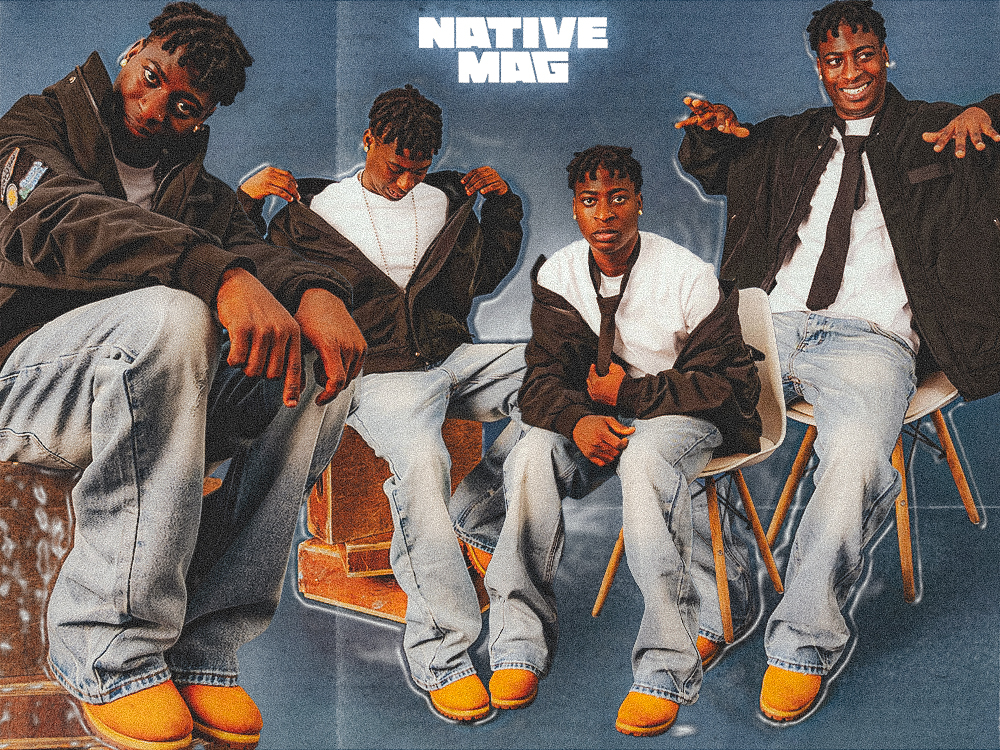
Azzi On The Beat has built a practice around making beats in front of an audience, placing the process at the centre of the experience.
There is a version of this story where Azzi On The Beat stays in the background. Where he is just a name in the credits, a producer tag at the top of a track, or a reference point for the sound of someone else’s breakout. Instead, Azzi is in the middle of a crowd, building a beat from scratch while people watch and lose themselves to something they are witnessing being born in real time.
For decades, music producers have occupied a peculiar position within popular culture. Their work shapes the records that soundtrack people’s lives, yet their visibility rarely matches their influence. Audiences recognise the voices, the faces, and personalities attached to songs. Yet, the people responsible for building the sound often remain in the background, their contributions acknowledged in credits but rarely experienced in real time.
Azzi On The Beat has spent the last few years challenging that arrangement. Rather than treating production as something confined to studios and software, he has built an artistic practice around making beats in front of an audience. His performances place the creative process at the centre of the experience. The crowd is not simply listening to music, it is watching it happen. The decision emerged from a frustration that many producers eventually confronted. “I sat down one day and thought about how producers are always in the background of the work,” he explains. “The musician takes center stage, and the producer is either a feature credit or completely invisible.”
His answer was not to move away from production but to make production itself the performance. He builds beats on stage, in front of the audience, in the moment, constructing rhythms and textures in real time while responding to the energy of the room. In many ways, the transition is an extension of the environment that shaped him. Raised on the outskirts of Bariga, he left home at five years old alongside his older brother and grew up within Footprint of David-a creative academy in Bariga-where different artistic disciplines existed side by side. Dance occupied a central place in that world. So did singing, percussion and performance.
“My growing up was rooted in a dancing group,” he shares. “The academy had different aspects of art. We did singing, dancing, drums, all of that.” For a long time, dance appeared to be the path he would follow. The distinction only became clear later, when he began examining which form of expression felt most natural to him. Faced with the choice, he found himself drawn more deeply toward music. That decision eventually led him toward production, though the influence of dance never disappeared.
Unlike producers who treat the stage as a place to replay completed work, Azzi approaches it as a space for interaction. Rhythm, movement and audience response remain active components of every set. He works with a background track as a foundation and builds everything else live over it, which means he is simultaneously constructing music and reading the room, adjusting direction based on the energy in front of him.
His February Boiler Room set was a wall-to-wall wonder, with people pressing close and noise coming from every direction. He moved through it, explaining: “Practice makes perfect. I do this every day.” The honest version of that answer is that he has practiced until technical execution no longer requires conscious thought, freeing him up to focus entirely on the crowd.
Anyone encountering Azzi’s work for the first time is likely to encounter another recurring symbol alongside the live performance: the masquerade. The association emerged gradually. Audiences began connecting the horn he carries during performances with the imagery of traditional masquerades, and over time the comparison evolved into a defining aspect of his public identity. “People started relating my horn to a masquerade,” he starts. “Whenever I want to perform, they see the horn and say, ‘Who is this big masquerade that is out?’”
Per Azzi, the horn represents spirituality. Before most performances, he opens with a traditional chant, a way of grounding the set in something older than the room he is standing in. “The horn represents the gods for me,” he says. Within many communities, the arrival of a masquerade transforms the energy of a gathering. Azzi’s interpretation borrows from that cultural significance while introducing an important distinction. His masquerade has a face. The performer remains visible. The audience sees the person behind the spectacle, which feels particularly significant for an artist whose entire career has been built around making visible what usually stays hidden.
Those ideas extend into the music itself. His sound is commonly associated with Mara, but even that description arrives with qualifications. “What I play is not related to Afro, not related to house. Mara is not boxed,” he explains. He describes his approach as futuristic, a layering of forward-facing textures onto a foundation that runs much deeper than the music itself. Elements associated with Electronic music sit alongside traditional sounds. Contemporary production techniques meet older forms of musical expression. The result feels neither entirely futuristic nor entirely rooted in the past, which is precisely the tension he is interested in.
That tension is most deliberately explored in “Eyo Fusion,” a project built around questions of cultural continuity. What does it mean to carry tradition into the future? How can ancestral sounds survive without becoming frozen in time? “The tradition never dies,” Azzi says. “Even though my sound is in the future, I still have to bring the ancestors’ chants into it.” A full Azzi set reflects this clearly. Traditional chants appear alongside electronic abstractions, live percussionists and chanters share the stage with production equipment, and the conversation between different generations of sound sits at the centre of the experience.
That philosophy has helped distinguish his work within a crowded musical landscape, but it was a different kind of record that significantly expanded his audience. “Mr. Barry” emerged from experimentation rather than careful planning. Following the momentum generated by his Boiler Room set, Azzi and his team decided it was time to offer audiences something new. The session unfolded loosely. Ideas were tested without excessive concern for outcomes, and the chorus arrived from a whistle sound, where the word “Barry” surfaced and stuck.
Then the featured hype man, Barry, came in and the other elements were added to see if they worked, and a team member who was absent during recording later rearranged everything into its final shape. “Everything unfolded as a joke,” Azzi says. He was not convinced by it when they finished. He rarely is about the tracks that end up connecting most: “When I criticize a particular work I do, when I feel like I don’t like it, that’s when people tell me they like this song.” Within days of release, the song was approaching 100,000 streams and beginning to travel beyond the communities already paying attention to his work.
Viral moments are not things he allows himself to dwell on. “Once I start feeling too praised, too happy about it, I know myself. I start losing it,” he says. “I know it is written. It will happen. So I just let it go.” The perspective reflects a broader focus on his mindset. For an artist whose work depends heavily on experimentation and continual development, remaining attached to a single success can become a ceiling.
That mindset will likely serve him as his career enters a new phase. International performances across Europe are already confirmed for this summer, including appearances at the Dour Festival in Belgium, one of the country’s most established music events, alongside shows in Amsterdam, Marseille, Berlin and Italy through September, October and November. One Night One Gathering, his annual event, returns this year with a new concept: “Finding X.” It positions Azzi as the X variable being searched for. A new single, “Big Mask,” coined from his identity as the big masquerade is close to release, extending the mythology that has become central to his artistic identity.
At its core, Azzi’s career is an ongoing attempt to rethink what a producer can be within contemporary music culture. Rather than accepting invisibility as part of the job description, he has built a practice that places creation itself in public view.. The audience can see the process, the performer, and the face behind the sound. For Azzi, that visibility appears to be only the beginning.

