What Does Cannes 2026 Say About the Future of African Cinema?
If the future of African cinema cannot be divorced from European or external funding, what direction is this future taking?

If the future of African cinema cannot be divorced from European or external funding, what direction is this future taking?
A glance through publications on African cinema at the close of 2025 revealed strong expectation for more collaboration on projects, diversification of distribution avenues, intentional storytelling and experimentation with genre in 2026. There was growing optimism at films from Africa not being watered down, futuristic takes on films as exemplified by ‘Memory of Princess Mumbi,’ the growth of streaming platforms, more intercontinental collaborations and new models to finance film production. Still, optimism is easier to declare than verify. Fortunately, the Cannes Film Festival presents the perfect opportunity for such verification, especially in light of raving comments about the African film selection at the festival this year.
Held annually in France, the Cannes Film Festival is one of the world’s influential film festivals, alongside the Berlin International Film Festival, Venice Film Festival, Toronto Film Festival and the Sundance Film Festival. The Festival’s vibrancy and sensibilities, like most others, shapes which films become globally visible and historically remembered. Un Certain Regard, for innovative, experimental and avant-garde works by directors, is one of the festival’s important award categories. Meaning “a certain look,” this award category focuses on risky and stylistic storytelling.
The importance, to Africa, of this award comes from more than representation. In 2025, Akinola Davies Jr. ‘s ‘My Father’s Shadow,’ made headlines as the first Nigerian film to be selected for Un Certain Regard selection. 2024 saw Zambian-Welsh director Rungano Nyoni’s ‘On Becoming a Guinea Fowl’ selected for the Un Certain Regard award on a platter of accolades along the lines of being “a vibrant exploration of family and social mores.” In 2023, ‘Banel & Adama,’ a romance movie by Senegalese screenwriter Ramata-Toulaye Sy where the main characters’ love for each other goes against their village’s beliefs made a run for Palme d’Or, the festival’s most important award.
This was followed by ‘Four Daughters’, Tunisian director Kaouther Ben Hania’s documentary-drama that explores loss, motherhood and radicalisation after a woman’s two eldest daughters leave the family to join Daesh fighters in Libya. Going as far back as Senegalese director, Safi Faye’s 1979 Un Certain Regard submission, ‘Fad’Jal,’ there is no doubt that Africa’s representation at the Cannes Film Festival exists, thus giving credibility to the continent’s filmmakers as being capable of ingenuity and creativity when it comes to making films, like their counterparts anywhere in the world.
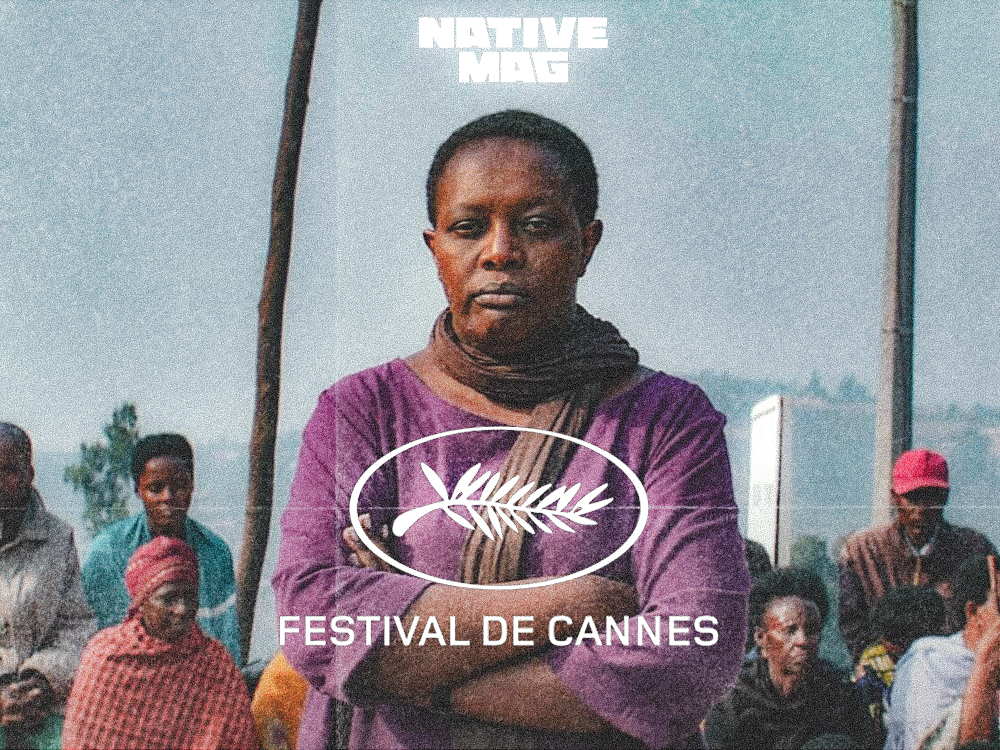
In 2026, the African films selected for this award are ‘Ben’Imana’ by Marie-Clémentine Dusabejambo, ‘Congo Boy’ by Rafiki Fariala and ‘Strawberries’ (also referred to as ‘La Más Dulce’) by Laïla Marrakchi. ‘Ben’Imana,’ Rwanda’s first selection in the category, explores the life of Vénéranda, a survivor of the Rwandan genocide of 1994, and her attempts at rebuilding the trust that her community had lost as well as helping the said community to endure the long process of reconciliation.
While trauma carries the thematic weight of Dusabejambo’s submission, war, poverty and social collapse appears to do just that for ‘Congo Boy.’ Starring Bradley Fiomona Dembeasset as Robert, the film follows the life of a Congolese refugee who struggles to take care of his sisters and brothers on his own, while trying to survive an unremitting blitz of civil headwinds as a result of Central Africa Republic’s civil war. The last submission, ‘Strawberries (La Más Dulce),’ unspools the real-life story of women who leave their country to pick strawberries in another country, with the promise of making money to take care of their families, only to be met with exploitation, sexual abuse and harassment and slavery.
These three films tap into the deepest parts of the human psyche to speak to various themes replete and common in nearly all African films. The contrast becomes clear when placed beside some of this year’s non-African Un Certain Regard selection. Jordan Firstman’s ‘Club Kid’ (US) explores the protagonist’s attempt at fatherhood, after a lifetime of reckless indulgence, earning the film a strong reputation as the “big hit of Cannes 2026”. Jane Schoenbrun’s ‘Teenage Sex and Death at Camp Miasma’ (US) explores queer and trans-identity, memory and horror, and sexuality. France, on the other hand, presents ‘Words of Love’ by Rudi Rosenberg and ‘A Girl’s Story’ by Judith Godrèche as their submission for the festival. While Rosenberg creates a delicate family drama about the tense relationship between a mother and daughter, who seeks a father she’s never met, Godrèche adaptation of French author Annie Ernaux’s memoir revisits an incident from the author’s teenage years with the perspective of adulthood.
Combined, these European and American selections explore a variety of themes such as sexual awakening, absence, family intimacy, emotional longing, formative sexual experience, male dominance among others. Upon comparison, it feels like African cinema at Cannes is merely updating familiar festival expectations and answering the question of whether global cinema has become more open to African complexity. If anything, it seems to have created a sophisticated cultural shorthand for helping certain African realities travel more than others.
A cursory look through some of the world’s major film festivals would highlight that this pattern is not unique only to Cannes. At the Berlin International Film Festival, African films that were recognised are often ones with political history and social struggle at its epicentre. Take, for instance, Mati Diop’s ‘Dahomey’, on reparations of stolen Beninese artefacts which won the festival’s Golden Bear award in 2024 while Alain Gomis’s ‘Félicité’, about a singer navigating the streets of Kinshasa to raise money to save her son’s leg from being amputated, revealing the truth about the city’s poor healthcare, was awarded the Silver Bear Grand Jury Prize in 2017.
The Sundance Festival, though it claims to support experimental and independent films, paints a similar motif. Chiwetel Ejiofor’s The Boy Who Harnessed the Wind and Nikyatu Jusu’s Nanny all centred themes of famine, poverty or migration. Across the African films submitted and awarded at these festivals, they imply that only these kinds of stories are possessed with the exact kind of festival currency expected than those with comedy, African sci-fi or romance as thematic focus, just like the same message the African selection at Cannes 2026 conveys.
This imbalance cannot be separated from the political economy of selection. To explain this, the process that goes behind choosing a film’s country of origin is important. ‘Congo Boy,’ for instance, was produced by Makongo Films in the Central African Republic alongside UNITÉ in France and Karta Film in Italy. It was co-written by Boris Lojkine and Tommy Baron, both French filmmakers. The film’s distribution was handled by The Party Film Sales, a French international sales agency. ‘Ben’Imana’ involves production companies Princesse M Productions in Gabon and Ejo Cine in Rwanda, in collaboration with Les Films du Bilboquet in France and DuoFilm in Norway while ‘Strawberries ( La Más Dulce)’ “hails” from Lumen (France), Mont Fleuri Production (Morocco), Fasten Films (Spain), and Mirage Films (Belgium) production roots. Meanwhile, France international company, Lucky Number, handled film sales and distribution.
This is excluding the fact that financing of these films themselves come from international sources, like the Berlinale’s World Cinema Fund. A film’s nationality often stems from the production companies that back it and where the money comes from. For example, if a Paris-based production company handles financing, registration, production and controls distribution, the film may be officially French even if its story, cast and director are all African. This is why ‘Ben’Imana’ is listed as Rwanda, Gabon, France, Norway, Ivory Coast;‘Strawberries ( La Más Dulce)’ as France, Morocco, Spain, Belgium; and ‘Congo Boy’ as Central African Republic, France, Democratic Republic of the Congo, Italy co-productions respectively.
This shows that, as predicted, the visibility of Africa cinema is expanding in 2026 but its infrastructure is majorly dependent on external funding and sources, due in no small part to lack of large domestic funding systems, state grants and strong distribution frameworks. Yet, in spite of these, the question lingers: if the future of African cinema cannot be divorced from European or external funding, what direction is this future taking? Can it truly be said that these submissions are, in the truest sense, from Africa?
This year’s Cannes, which validates the pattern, also provides the most convincing proof of what might happen when the pattern is violated. With a perfect score on Rotten Tomatoes and a standing ovation at its Directors’ Fortnight premiere, Arie and Chuko Esiri’s ‘Clarissa’, an adaptation of Virginia Woolf’s NOVEL, Mrs. Dalloway, set entirely in Lagos, focused solely on desire, memory, intimacy, and lost aspiration with no signs of poverty, displacement, or conflict in its thematic structures.
The funding of ‘Clarissa,’ however, sets it apart even more: MBO Capital, a Nigerian private equity firm, and CANEX Creations, a division of the African Export-Import Bank, provided the film’s funding, making it a unique example of an internationally acclaimed African movie with significant African funding as well. African capital is positioned in the concept as the main force behind development and output rather than as a passive observer. Chuko Esiri noted that “from the beginning, it was important to us that Clarissa be both rooted and resourced on the continent where it is set.“ The Esiri brothers addressed both the structural and thematic issues that constitute the main focus of this article in a single picture, demonstrating that the foundation for a different sort of African cinema future is conceivable.

