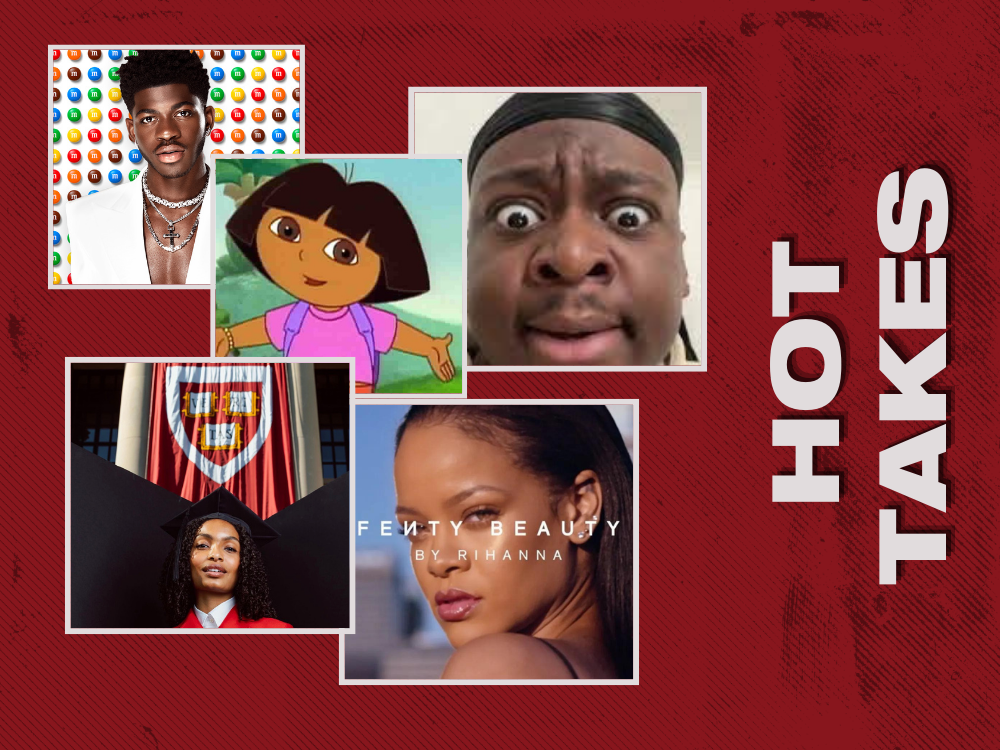
Hot Takes: Bridgerton, Grammys’ Virgil Abloh fumble, Nigeria’s latest queerphobic law & more

We are a few days into April fools month, and already there has been a lot of clownery from all angles. Over the past few weeks there have been ceremonies for what may be the two biggest award shows: the Oscars and the Grammys. They both delivered in giving the internet content to buzz about for weeks to come. The infamous slap, questionable red carpet outfits and shocking wins and snubs have been making their rounds throughout social media since.

In this week’s Hot Takes, we’re going to look specifically into a posthumous memorial that should have been heart-warming but in some ways felt worse than a snub. We’re also going to talk about social media companies themselves, with Twitter having a new feature and some questionable ways Facebook tried to go against their competition. We’re also going to talk about the second season of one of Netflix’s most popular shows.

Enjoy!

What I’m watching 

The show I’ve been binging is one that basically half the world was watching simultaneously, eagerly anticipated since its release date was announced. I, of course, am talking about “Bridgerton,” Netflix’s romance period drama that came back for a second season. It is based on a series of novels by Julia Quinn, with each installment focusing on the romance between a different Bridgerton sibling and their romantic interest.

This season focused on Anthony, the oldest sibling of the illustrious family, and newcomer Kate Sharma. When I heard that Anthony would be the sibling of focus this season, I was unsure if I’d want to watch this season at all. Throughout season one, Anthony represented all that was frustrating about men and gender dynamics in the regency era. He took control of his sister Daphne’s romantic life, promised her to a repulsive suitor without her knowledge and violently ‘defended’ her honour against her protests. He did this while also being an all around rude, prickly person. I couldn’t think of how they’d make my least favourite Bridgerton bearable for the entire season. 

They managed to achieve this with the character of Kate. Kate, a protective older sibling like Anthony, matched him in every way. As she tried to shield her younger sister – who he was initially courting, from him – she took every opportunity to call him out on his behaviour, giving him an entire season of being humbled. This kind of rivals-to-lovers set up often works best for arrogant characters like Anthony, as it gives them a way to be challenged by someone they respect and initiate important character development for them. Kate and Anthony were in many ways the best part of the show so far. 

While I enjoyed the pairing however, the initial love triangle is something that made their relationship much less bearable. Love triangles always feel unnecessarily frustrating. Particularly in cases like this where it is obvious who the final couple will be, taking the tension out of scenes when it is clear that the endgame couple should just admit their feelings. This triangle was especially uncomfortable due to the fact that it involved two siblings, Kate and her younger sister Edwina who was eager to be courted by Anthony. This set-up made everyone come across as unlikable: Anthony, for proposing to Edwina even after he realised his feelings for Kate; Kate, for not speaking up for herself and informing both Edwina and Anthony about the depth of her feelings; and Edwina, for being so oblivious to the tension between the two, until the moment before she married Anthony. 

The initial drama of the love triangle may have worked if it wasn’t dragged on through most of the season. The wedding between Anthony and Edwina was never close to happening in the book and was clearly put in for maximum drama at the expense of the characters. Apart from the effect on the likability of the characters, it also robbed the audience of softer scenes with Kate and Anthony, as most interactions before they got together officially were either filled with irritation towards each other or anxiety about their growing feelings.

The season ended with them only just admitting their feelings for each other. With two such unyielding people it would have been nice to see more genuine moments of bonding and vulnerability. The closest we got was of Kate guiding Anthony through his anxiety attack over her bee sting (it makes more sense in context.). We never got scenes of Anthony comforting Kate about her struggles, although he did defend her family to her step-relatives. A lot of this could have been eased through simply having them become friendly before even admitting their feelings, like with Simon and Daphne in season 1.

The build up of tension certainly did make their romantic scenes more satisfying in some ways. It just would have been nice to see more of it.

What I’m listening to

Speaking on Bridgerton, one of the standouts from last season was the use of the symphony “Spring 1,” by Max Richter. It played over a climactic scene where Daphne stood in the rain and finally began to make amends with her love interest, Simon. In March, Richter gifted us with a re-composition of the track. The re-composition includes credits to the Chineke! Orchestra, an orchestra made of ethnically diverse members. 

The original version was already quite magical. This 2022 composition however is even more ethereal. It feels lighter, airier. Its immersive enough to transport you to a world where you can dance on clouds. Two of my top genres for my Spotify wrapped for 2021 were ‘Ethereal’ and ‘Melancholia’ and based on my love for this symphony, it seems like that will continue. There are definitely many more sad girl hours scheduled for me!

Virgil Abloh was definitely more than a “hip-hop” designer

In 2021, the fashion industry lost a true tastemaker when the Off-White designer Virgil Abloh died. Through his frequent collaborations with musical artists, the music industry lost an influential figure as well. Because of this, it isn’t surprising that the Grammy’s wanted to show some recognition to him with a posthumous award. Where the issue lies is with the recording academy addressing Abloh specifically as a ‘Hip-Hop designer’.

I can’t help but feel like this is an attempt at othering. He could have easily been addressed as just a designer, or one that collaborates with musicians. Black people involved in music are often automatically associated with hip-hop and nothing else. They are pigeonholed in the industry and not given flexibility in ways that non-black creators are. An example of the fact that Abloh never exclusively worked with hip hop artists is through the fact that the members of BTS, a K-pop band, wore his designs to the very same award show.  

The award show has had issues with the way it has named awards. In 2020, Tyler the Creator criticised the naming of the Urban music category, saying “I don’t like that ‘urban’ word. To me, it’s just a politically correct way to say the N-word. Why can’t we just be in pop?” “Hip-Hop”, in turn, sounds like a more PC way of saying urban. It’s unfortunate that the academy seems unwilling to let go of its attempts to strictly categorise black creators. The public backlash against Abloh’s award naming may be enough for the Grammy’s to avoid this specific mistake again, or it could just make them pivot to another word to specify blackness. 

Twitter’s new safety mode

Twitter has recently introduced a Safety Mode. According to Twitter, when this mode is activated, the platform will automatically flag and block “any accounts with potentially abusive or spammy behaviour” for seven days. On paper, this sounds like a wonderful feature. It could potentially help tackle cyberbullying and harassment. This could be particularly useful on a platform that is notorious for trolls.

I just have to wonder why the feature isn’t permanent. Truly dedicated trolls will just keep coming back to harass Twitter users, having to be re-blocked week after week. It may still be helpful to the average person who has less intense haters, which is a start. People with larger platforms however may not feel any real effects from this.

As I’m writing this it is undecided whether it will apply to politicians at all. There is a strong argument for this though, as the use of it could prevent valid political criticisms from being shared online. In this case, maybe it is actually for the best that it will probably only be effective for the average person. All there is to do is watch and see if it is effective even for them.

Facebook vs Tiktok

There are other tech companies that have been making headlines recently. Facebook’s parent company Meta has been revealed to have sent emails calling for a smear campaign to Tiktok. Meta reportedly partnered with a right wing consulting firm Targeted Victory for a PR campaign to sway public opinion against Tiktok.

Their emails confirming this have been gotten by the Washington Post. In these, Meta stated that they need Targeted Victory to “get the message out that while Meta is the current punching bag, TikTok is the real threat, especially as a foreign-owned app that is #1 in sharing data that young teens are using.”

It is not surprising that such dirty tactics would be used by major companies. I doubt Tiktok would have suffered major blows from this, at least from their user base, but the statement above especially feels particularly pointed. The wording of it feels xenophobic. There was clearly an attempt to fear monger against the idea of a ‘foreign’ company corrupting innocent American teenagers. This feeds into ideas of the “Yellow Peril” and framing Asian people as a threat to Western ideals. This feels especially true with the rise of anti-Asian sentiment due to the pandemic. Seeing a company with such power attempt to fan the flames of these sentiments, when they publicly stood against Asian hate, is a reminder of what the goal is for most companies, which is just to further their own brands at any cost.

Due to these plans being exposed, maybe people will look deeper into things that could be the result of a PR machine.

Nigeria’s legislative arm is trying to ban crossdressing

Nigeria’s lack of tolerance towards the LGBT community is no secret. Northern Nigeria just recently ranked as the most homophobic area in the world in a 2022 World Population ReviewThis is a country where even showing support for the community can be heavily penalised.

Due to all of this, unfortunately, it doesn’t come as a surprise that lawmakers in Nigeria’s house of representatives are currently pushing a bill to sanction “cross-dressing.” The bill will only give exemptions to those “cross dressing in the course of a stage play or in any bona fide public entertainment.”. Dressing in a gender non conforming way will be reduced to simply being a form of entertainment for others, and will be unacceptable to the government otherwise.

A particular issue with this bill is its definition of “cross-dressing”. It is addressed in the bill as “the practice of wearing clothes usually worn by a person of the opposite sex.” This is a very vague way to enforce the law, as the use of gender to limit clothing has always been shaky, and is especially true now with rapidly changing trends. Could a man simply wearing a crop top be prosecuted?

At the end of the day, this will likely be interpreted as whatever makes the law enforcers uncomfortable. This bill will probably target gender non-conforming people in the public eye, such as Bobrisky, Derenle Edun, James Brown and others. There is still a chance that the bill won’t be passed and the government’s energy will move to actually important issues and for the sake of the people who will be targeted by this bill, I hope it does not.


ICYMI: AT THIS POINT, AFROPOP SHOULD BE LOOKING BEYOND THE GRAMMYS

At this point, Afropop should be looking beyond the Grammys

Going into the 64th Grammys Award last Sunday, Wizkid was widely tipped for two gramophones. The Nigerian superstar was nominated in the Best Global Music Album and Best Global Music Performance categories, up against four-time Grammy recipient Angelique Kidjo, compatriots Femi and Made Kuti and a host of other musicians who, honestly, hadn’t scratched his critical and commercial acclaim over the past couple years. Expectedly, the ascendant Afropop community and its many lovers rallied around Wizkid to bring them home.

The results of those categories are no longer speculation. As the world again turned towards America to validate their beloved superstars, the ‘Made in Lagos’ star lost out on both awards, to Ms. Kidjo and Aroof Aftab, stoking the old conversation about the validity of the Academy’s classifications of the music that’s being created outside of the West.

No stranger to international acclaim, Afropop has for long sought the Grammys as a confirmation of its legitimacy among global popular music. In 2020, one of the earliest cultural discussions revolved around Burna Boy’s loss in the ‘Best World Music’ category to Angelique Kidjo’s ‘Celia’, a characteristically brilliant album which paid homage to Celia Cruz while updating Kidjo’s sound with robust Latin influences. ‘African Giant’, however, was a tour-de-force, taking afropop’s sonic backgrounds into deep streams of diasporic history, and executed alongside exciting acts within Nigeria and abroad. At the time Burna was an album into his rebirth, releasing ‘Outside’ to widespread acclaim the year before; his skill across that album and ‘African Giant’ was peerless, signifying the expansive horizons the genre could reach. When he lost, it was obvious that the Grammys didn’t care for diversity as it claimed.

Opinions were shared, but none captured the problems of the ‘World Music Album’ category as strongly as Ivie Ani’s essay, which would be referenced when the Academy changed the category’s name ten months later to “a more relevant, modern and inclusive term.” There’s, however, been no real signifier that the Academy understands those terms beyond their basic connotations.

In recent years the number of international acts who’ve faulted their selections have grown, including Drake, The Weeknd, Nicki Minaj, Frank Ocean, Diplo and a host of others. If the biggest stars operating within that universe could cancel what’s supposed to be ‘the biggest night in music’, Afropop shouldn’t be excluded from more active conversations about reclaiming our autonomy, especially as we’re being looked upon as the fastest growing phenomena in the global music industry. 

The truth is that the Grammys are an American awards with a value system inherently different from ours. They also have a history of promoting white biases about what African music should sound like, negating the crisscrossing of genres and experiences happening between African artists out in the world. Contemporary Afropop varies in presentation, collected in the retro perspectives of Lady Donli as much as Wizkid’s groovy laid-back songs. Artists like Rema, Black Sherif and Focalistic sound nothing alike, but would no doubt be lumped in such derogatory categories if the Academy nominates them in the future. As expressed in our takeaways to Billboard’s inaugural Afrobeats chart, there are no distinct parameters for which artists could feature on it; with such a slope field, Afropop could slither out of relevance when they’re done milking our current relevance. 

It has happened before. From the 70s, Reggae made incursions into the US and United Kingdom. Artists like Bob Marley took positive messages of love into the biggest arenas and stadiums, while Jimmy Cliff’s appearance in the 1973 film The Harder They Come introduced Jamaican music to cinema audiences worldwide. The latter decades saw more consistent efforts at marketing Reggae to the world. The eighties Dancehall trend continued into the early 2000s, with Beenie Man, Sean Paul, Lady Saw and Shaggy especially visible internationally, collaborating with American superstars at will. Furthermore Hip Hop as a movement was heavily influenced by the anti-oppression themes of Reggae, its most recognised pioneer—DJ Kool Herc—being a second generation immigrant from Jamaica. The charts at the time recognised the genre’s impact, much like everyone who’s scurrying to set up an Afropop chart today, before Billboard’s Reggae singles chart was shuttered in 2020. 

Among the most heated controversies from last Sunday’s Grammy, was the awarding of ‘Best Reggae Album’ to SOJA, a Virginia-based white band with no relationship with Jamaica. Perhaps a decade ago it would have caused widespread outrage, but people now know better than beating what is essentially a dead horse. The choices of the Academy will always project their prejudices, which pays little recognition to musical history or cultural nuances.

In the aftermath of Wizkid’s loss, social media took up the conversation about what the Academy prefers. A number of people pointed out the sociopolitical messages in Angelique Kidjo’s music which was mirrored also on Burna Boy’s Twice As Tall, saying it gave them an edge for their wins. Quite comically, they alluded to ‘jungle music’ being the format for a Grammy win, a term that can be denoted as music that is heavily influenced by traditional aesthetic, a visual interpretation of Africa’s supposedly thick forests being crucial. A smaller number posited that live instrumentation across the song or body of work could also tip the scales. All these, though, are to be taken with a pinch of salt, as mere speculations inspired by looking from the outside. 

The greatest chance Afropop stands at not being a temporary fad, is by looking inside. At this point we should be thinking beyond the Grammys. Given their frequent misgivings, it’s really the grip of neo-colonialism that’s stopping us from sidestepping their annual politics. Every musician and their best friend grew up thinking of winning a Grammy, but our indigenous award shows could elevate to a similar reputation if all hands are on deck. The United Kingdom’s Brit Awards has done well in decentralising the Grammys’ influence, knowing that over the years credible projects from their part of the world have been snubbed for lesser American releases. Which is really no surprise given that at the end of the day everyone’s looking out for their own. 

Here in Nigeria we haven’t given our award shows the deserved respect. In a country riddled with administrative and infrastructural problems, a platform like The Headies should be lauded for its consistency. In 2018 it was a bad look how Wizkid packed more than half the artists nominated by the Headies to perform at his 02 show, leaving the Lagos-held show severely under-attended. Afropop infamously revolves around Nigeria but so far that soft power hasn’t translated into homegrown development. We’re making these big moves in the world without recognising that home, as it said, is where the heart is. No one knows what ‘Made in Lagos’ means for a generation of Afropop acts more than Africans. Sounds crazy but there’s a better chance that a random music lover in Ojuelegba could spend thirty minutes discussing the relevance of “Essence” and MIL in general. 

Quite interestingly, the Headies are going in the other direction. Earlier this year, the Ayo Animashaun-led platform announced that it would hold this year’s edition of the awards in America, at the Cobb Energy Performing Arts Centre in Atlanta. The news was met with concerns, but Mr. Animashaun joined a Twitter Spaces chat by the NATIVE and 49th Street. Among other things, he clarified that world-class production was cheaper and easier to access in America and that he was sure the show would again hold overseas but he couldn’t tell the evolution. What I picked was that this year’s event will be a test-run, and how successful it will be depends on the level of cooperation the Headies board receives from Nigerian artists and industry stakeholders. 

In the same vein, there’s the space for more award platforms to step up and reach for similar cultural relevance. Of course it’s easier said than done but we’re seeing international companies pump huge money into Nigeria when they sign artists. That financial leverage can be extended towards other sectors of the entertainment industry, and award shows are a viable means of doing just that. On the part of the Afro Pop audience, we could be more intentional and excited about the groundbreaking stuff that’s being achieved within our local spaces. A number of communities, podcasts, documentaries and other music professionals have been bringing Afro Pop up to the contextual level of music elsewhere, providing crucial information that vivifies the history and evolution of the movement. 

Similarly, TurnTable chart ranks among the most important musical innovations in recent years, publishing weekly chats with statistics from streaming platforms, TV and radio. Last week they announced that they would begin incorporating data from Apple Music, Spotify and Deezer, essentially making their charts a more robust and accurate depiction of the country’s listening patterns. It was an affair that deserved more celebration, but instead we’re fixated on the international charts which always seem to prioritise Nigeria over other African countries and genres, and which surely doesn’t recognise the shifting nuances of what’s popping over here. 

Eventually we have to decide if we’re the real owners of Afropop. A well-referenced Igbo proverb is, “Until the lions learn to talk, the story of the hunt will always glorify the hunter.” The Wizkid case certainly opens up a larger conversation, and it’ll be a disservice not to recognise that.


ICYMI: EAST AFRICA WILL NO LONGER BE IGNORED IN WIDER AFROPOP CONVERSATIONS

Tobi Lou is growing into the artist he wants to be

“Ya’ll gat about, what time is it?… Ya’ll gat about seven days left to listen to ‘Non Perishable’, after that, I’m deleting it from the internet.” Those were the words the Nigerian-born, LA-based rap artist Tobi Lou spurted cheekily in a video he posted on Instagram, just after he released his recent 11-track mixtape, Non-Perishable’.

The announcement threw his cult following into a full-blown frenzy. From wistful satirical videos on TikTok begging him not to delete it, to making the topic a top trend on Twitter for days, to getting the album into 3 categories on the Billboard, to helping the tape snag the top spot on the iTunes Hip-Hop Album chart. They moved mountains, shifted the needle of his career and asserted to the world how powerful the artiste’s loyal fan base is.


View this post on Instagram


A post shared by tobi lou (@tobilou)

I’ve been on a Zoom call for a little over six minutes, waiting for Tobi Lou to appear. I had been joined by his public relations manager and two other members of his team earlier, who had cordially exchanged pleasantries with me and assured me that Tobi would soon join us. A calmness hovers over the virtual nucleolus we share. As I look at their avatars transfixed on a slice of my Zoom window, I visualise them as menacing guards poised to pounce on me if I put Tobi in an uncomfortable situation. The same calm gives way to an eeriness—my connection tapers for a second, the tableau on my screen flickers, static filters through my headphones. Silence.

“Heyy,” says Tobi, his bass-inflected voice thunders through my headphones, bringing a fresh gust of vim into the room as the corners of his lips slowly fold up into a spirited smile.

“Yo! What’s up bro”

He apologises for being behind schedule while fiddling with his camera to get a good angle “Sorry for the lateness, my eh.. Zoom wasn’t working.” As for many of us slowly adjusting to the vagaries of a fast-paced post-pandemic reality, domestic life for the LA-based multi-hyphenate artiste has gotten tricky. Life has gotten especially tricky for him considering that he just dropped a mixtape. “I feel good, I think I’m doing so much right now, it’s hard to really feel things”. Just like most of us, however, he looks like he’s getting along just fine, at least judging from the slice of reality visible through our shared virtual window. Framed against the backdrop of a picturesque living room, he’s draped in a pastel-pink sweatshirt, which hangs low enough to reveal a svelte glistening chain adorning his neck. He dons an off-white cap worn to the back, which stealthily functions to accentuate his unconventional nature.

As I speak with Tobi Lou, it becomes obvious why he has amassed a ride-or-die fan base—he has the uncanny ability to weave words with astute dexterity, whether it’s through a conversation or the lyrics in his music. He welds words suavely to enrapture you in whatever offering he puts forward.

Tobi Lou has not always toed the music arc professionally. He used to be a talented baseball player, playing for the Joliet Slammers. But even then, he was always doing music in the background. After practice and in-between periods of respite from actively playing sports, he channelled his energy into music, splitting the limited time between woodshedding and actively making music. The career inflexion point for him came when he suffered a hamstring injury and was forced to give up playing baseball. Following this, music naturally became his prime interest. “I think the only thing that changed was that I no longer had any time constraints around like my job per se, I could sit at the computer all day and investigate music, experiment, make songs, make beats,” he tells me.

While this shift came with its perks for him music-wise, it also came with unforeseen baggage. For one, instead of the fixed schedule he had during his baseball days, Tobi Lou now had all the time in the world to make music, which meant he often found himself lost in the whirlpool of music-making, often forgetting to take the breaks. 

His relationship with music, however, started at a young age. In grade school, he often wore the hat of being the class clown, stringing together cleverly fashioned cheeky rhymes to entertain his classmates. By sixth grade, he had recorded his first song. He speaks about this moment with a palpable childlike enthusiasm: “It was like magic almost, like the fact that my voice was now rapping over the same beat we would hear on the radio.” After this momentous epoch, he religiously started making music at home on his computer, tinkering with keys and buttons to make his music sound the way he envisioned it in his mind. This pattern of making music still trails Tobi Lou till this day; he finds it most comfortable making music from his home.

Even though he had pursued other interests, the way he sees it, he was born to make music and everything that played out,  culminating in him becoming a musician were as a result of the seemingly invisible yet powerful hand of destiny.

In the mid-2010s, the sonic direction of Hip-Hop was taking a new turn, as younger artists were starting to lean towards more experimentation, shredding the standard rap rubric to shreds and putting it together in new inventive ways. It was in this period Tobi Lou had his big break, and in many ways, he encapsulated the zeitgeist of the time, with his avant-garde look, his Lo-Fi pixelated sound and his aesthetic informed by his nostalgic love for films and animated shows.

In 2016, Tobi made his debut with “Game Ova”, a viral single that racked in more than 1.5 million streams on SoundCloud. Pressed about how this single came about, his face takes on a spirited aura and he grows loquacious. He tells me how he got sent a pack of beats from a Detroit producer. While perusing the pack of beats, he liked most of them, but when he heard the “Game Over” sample, he was instantly enraptured by it. “I heard that sample from ‘Game Over’ from the Super Nintendo, and my eyes just lit up,” he says. He credits this moment as one of the key forces that shaped his artistic trajectory and defined his musical vista. Today, when people think of Tobi, they envision a suave blend of digital Lo-Fi aesthetics and sounds, and “Game Ova” was the start of this legacy.  

Tobi’s art transcends rapping. Rap is the spiky piece of the iceberg piercing through the water, under the water is a giant mass buoying the iceberg. For Tobi, this subtle mass upholstering of his artistry, which functions to deliver the 360-degrees-Tobi-experience, comprises his genius outré production abilities, his cool conversational delivery style and his cutting-edge artsy visuals. These qualities mirror his strong creative personality. He started recording before producing, but early on, he got curious about music production and the holistic process of creating music from start to finish. He’d hear a sound or think of a melody and want to bring it to life, that gnawing yearning guided him into learning music production.

When he got more serious about making music, he quickly figured out that he was not the most prolific vocalist or the sharpest lyricist, production was a way to elevate his craft, engineer a unique experience and seer his brand on every song. Artist-producers like Kanye West and Pharrell Williams were among his mentors, and by effect, their 360-creative process crystallised the idea of being involved in the creation of a song from start to finish.

Scrolling through his Instagram page reveals an elaborate virtual labyrinth of enigmatic photos and videos such as tiles of bold avant garde visuals expertly superimposed against each other. It could pass off for a futuristic virtual museum in the metaverse. Pressed on this he says, “I always wish I went to an art school but I think in general—like I have two sisters, we’ve always had the craziest imaginations. I don’t think we needed any formal training, I think the only thing we needed was to grow, and this is what everyone needs—to grow into the type of artist they’re gonna be”. 

Tobi is very conversational, we’ve been talking for over 30 minutes, and he’s been very open with me, replying to my questions with affable vim. He provides elaborate replies to my questions, while punctuating the session with spirited laughs, elaborate gesticulations and occasional pauses to gulp his bottle of water. This astute conversational dexterity bleeds into his music, on every song, he paints a vivid picture with his characteristic casual conversational tone, paired with accentuating sound effects and a fitting production.

“One of the first things I learned when I came out to LA from Chicago, I was sitting in like meetings and sessions with producers, A&Rs and stuff like that, and a lot of it was pop-based sessions, and they taught me how to speak in a pop formula,” Tobi tells me of a period in his learning curve. “That the things I’m trying to say shouldn’t be hard to reach, think about how you talk to somebody, some of the things that we’ve said in this conversation can be used as lyrics.”

Tobi Lou just put out his third project, a mixtape which he cheekily dubbed Non-Perishable’. The project has earned him the biggest commercial reception since the start of his music career. “You know, I wish I could say I planned it,” he says of the project. ”I don’t know what triggered it, I just know the thought came to me. I always wanted to drop a project out of the blue but I don’t have enough awareness to do that, and it finally got through my head that, ‘hey! you can’t just be an artist you have to market yourself.’”

Non-Perishable came about in a different way than any other tape, or project that I’ve released because with the other projects, I knew I was working,” Tobi Lou says of the spontaneous process for the mixtape. “Like, say on Live On Ice’, which I released in 2019, I knew I was working on it. Non-Perishable’ is the only project I didn’t know I was working on. I was actually working on another project called ‘Perish Blue’, and a lot of it took place over 2020 and 2021. That project was so deep and emotionally draining that I was exhausted, and I made a whole different bunch of stuff that didn’t make the album. I just remember talking to my sister, because I make so many different styles of music, and ‘Perish Blue’ was kind of long and had so many different styles. She’s just like ‘Yo! What if you just focused on giving people an organised, put together energy, for each project?’ So when she said that, I was able to take a lot of the fat off of ‘Perish Blue’ and then I realised I had three projects and Non-Perishable’ is the one that I just released.” 

At this point, he starts looking jaded and reaches to his bottle for a huge gulp of water. I make mental notes and start preparing to roll the curtains. Instead, I somehow steer the conversation into a more sunny arc and talk about how excited I was, when I heard his collaborative effort with fellow first generation Nigerian-American artist Chika. His face lights up and he gives off a wide smile, struggling to control his mirth. I ask him if he has plans on working with Nigerians in the future. “Yeah, definitely! It’s kind of long overdue, and it’s something I’m excited to do”.

The conversation gets breezy and relaxed, so I press on.

“If you could work with any Nigerian artiste from the entire talent pool we have for now, who would it be?”

“I’ve always wanted to work with Wizkid because I think he is such a pioneer, but then I heard Tems’ voice and I just kind of fell in love with her voice. I’m a producer, so I imagine people in different sonic environments. If you put me in a session with Tems, oh my gosh! I just would imagine what would come from it. I would say it’d have to be a tie between Wizkid and Tems. But I have respect for all Nigerian artistes because they’re all doing something different. If I end up being in a session with Santi, that is a win in itself, cos it’s something new and different coming from that.”

Tobi is still loquacious, speaking passionately about how vibrant the Afropop scene is now, but he looks visibly tired, so I hint at the interview drawing to a close. For a few seconds, he pauses to catch his breath. Seeing him still, as soft amber-hued light filters creamily through the window behind him, I’m struck by how he is as much a genius in real life as he is in his music. 

He tells me about his plans for the year. In a couple of months, he’ll be touring in the fall, rolling out more music videos, he also plans on rolling out three more projects this year. He announces with brazen confidence “My goal this year is to be the best new artist, to be like when you look up and say ‘what happened this year?’, and like, all that happened was, every time someone looked up, I was there.”


NATIVE EXCLUSIVE: MARTINS IMHANGBE TALKS NEW SEASON OF BRIDGERTON, BOXING & MORE

EXCLUSIVE: NATIVE Sound System announce debut single featuring Lojay & Ayra Starr, out this Friday

You might have seen them at a ‘guest list only’ London party, heads down on the decks as hands fly up on the dance floor. You might have heard them on the NTS or No Signal airwaves, or on runways from Dubai to Paris, or at festival in Lagos, Vegas, Puerto Rico, London. You might don a black T-shirt with an unsuspecting logo on your left pectoral, and a huge disclaimer on the back, letting the world know that you are down with NATIVE Sound System.

Sister brand of our NATIVE Magazine and NATIVELAND, there’s no doubt that you have experienced NATIVE Sound System, in some way or another. Starting out as the DJ duo of Addy and Sholz, NATIVE Sound System is first known for its continued pilgrimage around the world spreading the gospel of breaking sounds from our home state, country, and continent. Sharing our sound through sets at Boiler Room or shows with the likes of Rema, Naira Marley, Odunsi (The Engine), the NATIVE Sound System duo quickly grew into a community of synergetic musical talent, identifying, championing and now producing sounds from this side to the world watching.

Helmed by; Addy, the resident DJ of the group; Sholz, executive producer and DJ; Teezee, executive producer and artist in his own right; and Seni (commonly known in music circles as “Chubbz”), executive producer and A&R, NATIVE Sound System has now entered its third act. If you couldn’t relate to the first paragraph, have no doubts that you will be seeing and be hearing a lot more of NATIVE Sound System now. A production supergroup knotting together the well-known and the little-explored – in music that feels both comfortingly familiar and like a welcome change from the status quo – NATIVE Sound System are stepping into a new realm, producing and releasing their debut album in collaboration with the cohort of self-defining musicians that have informed and supported our sound over the years.

Produced by NATIVE Sound System and Executively A&R’d by the Monster Boys (GMK & Genio Bambino), this album tells the story of our home according to the climatic and cultural seasons that make up a typical year in Lagos. From the murky Hip-Hop beats that keep us energised through the rainy weather, to the Amapiano bangers that sustain our festive period; from the breezy bounces that accompany us on boat rides to the beach to the intermediary lull of our dry season. In meteorology, seasons are defined by climatic patterns, on this album, you’ll hear the season as sounds.

“For the album we were in this mindset of trying to create the seasons of a year in Lagos – Rainy, Dry, Harmattan and Christmas seasons,” Chubbz, Executive Producer and A&R for NATIVE Sound System says. “This album feels like we are bringing you into our world.”

Ironically, it rained in Lagos today. The day that we exclusively announce NATIVE Sound System’s the lead single off this independent album. One of the first tracks to be recorded on the album, “Runaway” sits in the album’s rainy season. First beginning as a ballad by Lojay, “Runaway” also stars Ayra Starr, who recorded her verse in Lagos, Nigeria several months later. Produced by NSS’ very own Sholz, “Runaway” features additional production by Grammy-award winning producer Lido (for his work on Chance The Rapper’s Coloring Book’ and Adey (“Juice” by Ycee and DRB’s “Trouble” featuring Tems).

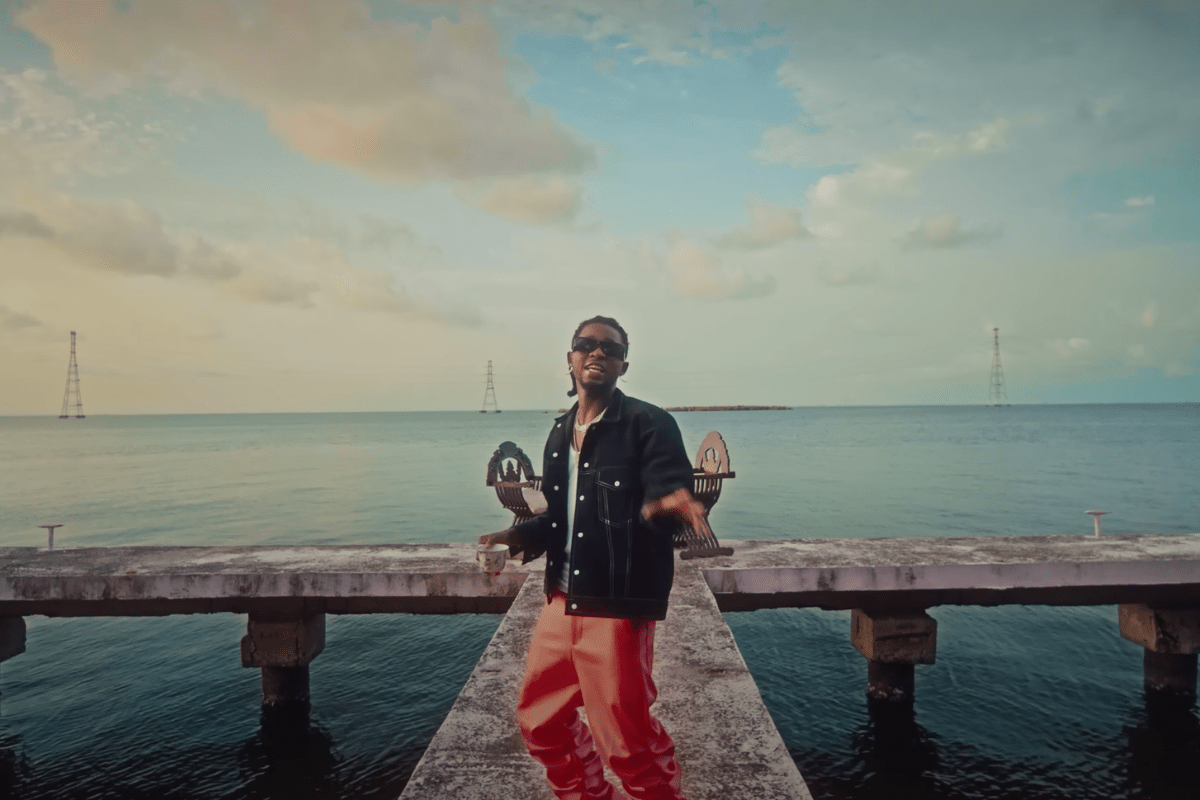
Out this Friday, April 8th, “Runaway”‘s music video’s direction hails from a similarly iconic name in, with Dafe Oboro (Black Is King, Miu Miu Babes) behind the lens. In partnership with Bottega Veneta, the “Runaway” visuals feature exclusive items from the Milan-based brand’s SS22 collection. The MOMO Lagos styled music video also spotlight the works of young African fashion creatives, with co-stars Lojay and Ayra appearing in Kenneth Ize. The “Runaway” visuals are an artistic rendering of the impassioned and turbulent love story narrated by Ayra Starr and Lojay on the record. Coupling two of 2021’s most prolific breakout Afropop artists, in what will be their first ever collaboration, “Runaway” strikes the perfect balance between the familiar and the new, straddling Pop and Alternative tastes as never before heard. As Sholz will tell you, “Lojay has this great Nigerian hustle spirit in him and Ayra is kind of the opposite. She is like this Pop princess, so it [felt] like this marriage between this up-and-coming hustler, and this anointed princess.”

“NATIVE Sound System is the sound sister that represents what we at NATIVE as a whole entity believe is the future of Afro music,” Teezee professes. Lojay concurs. “NATIVE Sound System are basically about furthering Afrobeats and opening people’s ears to alternative genres and sounds. This is one song I feel can help push the boundary as to where we can take Afrobeats.”

“Runaway” will be released this Friday, April 8th, and is being distributed by The Orchard. This is the first single off NATIVE Sound System’s independent debut album, which is slated for a mid-May release, and promises to bring out the unheard of sides of your favourite artists, opening up listeners’ ears to a whole new world.

Join the System and pre-save “Runaway” here or via the QR Code below.

Featured image credits/Niyi Okeowo

Image credits/Michael Agharese

Words by Adewojumi Aderemi

Songs Of The Day: New Music From Pongo, Frescool, Runda & More

2022 is no longer a new year, and Afropop knows that very well. As much as the previous year was packed with scene-defining achievements, especially within the context of global growth, the only way to keep the momentum from falling off is for artists to keep reaching into their bag for great music that holds the ears and captures the hearts of millions of listeners across the continent and well beyond. That’s exactly what’s been happening, so much so that there’s hundreds of new singles, at-least one new must-hear album and a new smash hit every week.

Amidst this torrent of new music, the NATIVE is committed to highlighting the best releases you need to hear, and possibly add to your playlists. That’s the essence of our ‘Songs of the Day’ column. Earlier in the week, we had new releases from Zlatan, Icytooicy, Maya Amolo, Alpha Ojini and more. Today, we bring to you new releases from Pongo, Frescool, Runda and More.

Pongo – “Hey Linda”

Angolan-Portuguese singer and songwriter Pongo is here with her new album ‘Sakidila’, a 12-tracker with features from Titica, Mosty and more. She opens the album with the standout, up-tempo track, “Hey Linda.” The record sees the artist delivering a party-ready, fun record while she raps in her dialect over the melodious production of the track.

Frescool – “Alone”

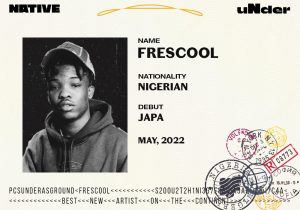
Following the release of his 2021 single “Cover Me,” Cash Nation signee Frescool is here with his latest offering “Alone.” The Bally-produced record sees the artist delivering a mid-tempo, inspirational record which sees him singing about his struggles and working hard for a spot at the top. “Everything I think about is money, ah/If I no get, kini mo ni ah, me I just wan dey alone,” he sings contemplatively on the chorus of the track.


Thywill – “On Tweaduampong” (feat. Kwaku DMC)

The Asakaa boys are back at it again, this time with new single, “On Tweaduampong.” On the song, Thywill teams up with Kwaku DMC and the duo deliver a hard-hitting drill record which sees them both spitting heavy bars in their respective dialects.

Kid Kwesi – “Antisocial”

On Kid Kwesi’s latest offering, “Antisocial,” the Ghanaian singer and rapper delivers a slow paced record which sees him  singing lyrics about evolving, growing and improving his artistry at his own pace. On the track, he sings, “there no be chance I dey sing I dey rap, nobody fit take my place/I dey do everything nobody like me/I be king of my craft and I’m taking my shit to the world.”

Runda – “Good Girl”

Afrobeats singer and songwriter Runda has arrived with his latest single, “Good Girl,” a romantic number which sees the artist singing sweet and sultry lyrics to his love interest, lyrics such as “You bad, you bad, good girl gone bad/These girls be hating but they no fit be like you/you are my lover forever,” over the bouncy production of the track.

Featured Image Credits/NATIVE


ICYMI: FOUR TAKEAWAYS FROM THE INAUGURAL BILLBOARD AFROBEATS CHART

TurnTable Top 50: Asake ascends to No. 1 after Burna Boy-assisted “Sungba (Remix)”

Last week TurnTable chart announced the addition of data from Apple Music, Spotify and Deezer to its cumulative numbers for the weekly TurnTable Top 50 charts, and other relevant component charts. Partnering with several record labels and distribution companies, the chart publication will now be able to assess Nigerian-based streaming numbers from those platforms, making TurnTable’s charts even more authoritative going forward. This new development will kick in and begin affecting the TurnTable Top 50 next week, while also serving as the basis for new album and artists chart.

For this week’s edition of the TurnTable Top 50, Asake leads the pack with “Sungba,” a somewhat expected outcome following the release of its Burna Boy-assisted remix. The song became an organic favourite in the days after the YBNL-signed singer dropped his debut EP, Ololade Asake, and it’s become a nationwide hit song. The new remix, as well as its boisterous video, has furthered the ubiquity of “Sungba,” helping it to a new No. 1 peak. It’s Asake’s second No. 1 on the TurnTable Top 50, joining Davido and Kizz Daniel as the third artist to record multiple No. 1 entries with a single project. With the remix recording a huge portion of the chart points, Burna Boy is also credited with the No. 1, making him the second artist to record a chart topper in three consecutive years.

Rema is at No. 2 on this week’s TurnTable Top 50 with “Calm Down,” scoring his highest charting entry on the chart. Skiibii’s “Baddest Boy (Remix)” with Davido moves down one spot to No. 3 this week, while remaining in the top five of the streaming, radio and TV component charts. After topping the chart for the last three weeks, Pheelz and BNXN’s “Finesse drops three positions to No. 4. Rounding out the top five, Fireboy DML’s new single, “Playboy,” makes its debut at No. 5, on the back of 2.29 million equivalent streams (No. 3 on streaming) and 20 million in radio reach.

Asake makes another top ten entry with “Omo Ope,” his former chart topper, which now sits at No. 6. Omah Lay and Justin Bieber’s “Attention” follows at No. 7, falling one place from its previous position. Holding their spots from last week’s TurnTable Top 50, Magixx and Ayra Starr’s “Love Don’t Cost A Dime (Re-up)” is at No. 8, while 1da Banton’s “No Wahala (Remix),” featuring Tiwa Savage and Kizz Daniel is at No. 9. Rounding out the top ten, TI Blaze’s “Sometimes” moves up three spot to No. 10, after previously peaking at No. 6 on the chart.

You can go through the full rundown of this week’s TurnTable Top 50 here.


ICYMI: LISTEN TO TEMS’ THE LEADING VIBE RADIO ON APPLE MUSIC

Songs Of The Day: New Music From Zlatan, Ictooicy, Maya Amolo & More

2022 is no longer a new year, and Afropop knows that very well. As much as the previous year was packed with scene-defining achievements, especially within the context of global growth, the only way to keep the momentum from falling off is for artists to keep reaching into their bag for great music that holds the ears and captures the hearts of millions of listeners across the continent and well beyond. That’s exactly what’s been happening, so much so that there’s hundreds of new singles, at-least one new must-hear album and a new smash hit every week.

Amidst this torrent of new music, the NATIVE is committed to highlighting the best releases you need to hear, and possibly add to your playlists. That’s the essence of our ‘Songs of the Day’ column. Last week, we had new releases from Joeboy, PsychoYP, Black Sherif, Bey T and Boohle and more. Today, we bring to you new music from Zlatan, Icytooicy, Maya Amolo and more.

Zlatan – “Money” ft. Davido

After taking a brief hiatus from releasing any solo material, following the release of his sophomore album ‘Resan’,  Zlatan has teamed up with Davido for the new record “Money.” On the Spellz-produced track, they both deliver an uptempo dance record which sees them both speaking on their hustle so far, how far they’ve come and making more money.  On the chorus of the record, Zlatan chants “If you’re young and getting money, dupe lowo Jehovah/Omo’ope na money dey stop nonsense.”

Maya Amolo – “Can’t Get Enough”

Kenyan singer and songwriter Maya Amolo has arrived with the self produced record “Can’t Get Enough”, a slow paced track which sees the artist singing to her muse about their irresistibleness. She chants lyrics such as “The way you glue onto me, aging like fine wine/I can’t get enough,” expressing her deepest feelings over the melodious production of the record.

SaveMilli – “Rose”

For his first official single of the year, rapper and singer SaveMilli has arrived with a 2-single pack ‘Justin/Rose’. On standout record “Rose”, the artist directly address his love interest, serenading her with lyrics such as “Baby I want to know, shey na cunny love you dey do me so/which kind love you dey do me so.”

Ictooicy – “Save It”

For her new release, Fresh Meat alum and singer Ictooicy is here with the new 4-track EP ‘Sorry’, a combination of heartbreak tunes with distinct, soft and satisfying production. The solo 6-minute run sees the artist on “Save It”, singing lyrics such as “You save it for the ones that you really love/And then you leave me here to pick up the call” to her love interest while also expressing her hurt and unhappiness.

Goya Menor – “Bounce”

Following the success of his viral hit single “Ameno Amapiano Remix” with Nektunez, Benin born Afrofusion artist has arrived with a new and trippy tune “Bounce.” The Eternal Africa-produced track is an uptempo track which draws inspiration from South Africa’s Amapiano scene. The track infuses kicks and a heavy bass on the production of the record, while the artist flexes his deep vocals on the track.

Vader The Wildcard – “Best Day (Same Agbero)”

On this record, Vader The Wildcard delivers a celebratory tune, infusing on the beat elements such as talking drums and more to deliver the typical Yoruba party record. On the track, he sings lyrics such as “Everybody, jupa to the music, cause we’re having the best day of our lives” speaking on living a stress less life and enjoying the good times to the fullest.

Featured Image Credits/NATIVE

Best New Music: Black Sherif continues to refine his uniqueness on “Kwaku The Traveller”

Mohammed Ismail Sherif—who goes by the moniker Black Sherif and is fondly called Blacko by fans— doubles down on his groundbreaking successes of last year with his glistening new single, “Kwaku The Traveller.” On his latest offering, he puts forward the most refined version of himself we’ve seen since his breakout, displaying shrewd pristine, storytelling abilities as he shuffles between delivering impassioned raps and belting shrill, melodious lyrics, over a stirring Drill beat.

The budding iconoclast burst into the limelight after releasing his celebrated hit single “Second Sermon,” which quickly became a landmark moment for Ghanaian Drill. Not long after, Nigerian superstar Burna Boy caught wind of the burgeoning tune and hopped on it, spawning an energised remix that furthered his popularity, from small clubs planted in the suburbs of Accra, to pummelling house parties across universities across Nigeria, to even the NBA All-Star Game in Cleveland. The lanky 20-year-old kid from Accra was taking over cities across the world with his enrapturing drill anthem. 

Blacko’s sound is typically described as Drill, but on a closer listen, it can easily be inferred that it is heavily tinged with the exotic melodies of Highlife, layered with astute lyricism delivered in the charismatic cadence of modern Afropop. Drill rappers usually lead from behind, allowing the menacingly thumping beat to take the centre-stage, while they punctuate the beat with clipped swanky verses. Black Sherif, however, walks in lockstep with the beat, his message and his story are as important, if not more important than the beat.

In the “Second Sermon,” he paints an elaborate picture of his life in the streets, over a thumping guitar-inflected production. Rapping in Akan, he tells a piquant tale of how he and a couple of his gangster mates complete a shady transaction and make a lot of money. They, however, get swindled by the leader of the gang, which prods them to launch an offensive with “12 killer boys” to retrieve their share of the loot. He punctuates this thrilling narrative by mulling out loud, glum about how his Aunt Merrie doesn’t know about his newfound shady life in the streets of Accra, “Aunty Merrie nnim s this be the life I dey live for here”. Even though most listeners outside the shores of Ghana have little idea of what Black Sherif is rapping about in Akan, the high-octane beat layered with his impassioned raps and anthemic chants makes for an irresistible siren song. 

On “Kwaku The Traveller,” Black Sherif continues on this arc of delivering irresistible anthems. Here, however, he swaps the vibrant uptempo production of “Second Sermon” for a sombre instrumental that aids his reflective lyricism. He displays dazzlingly genius songwriting, dialling up the brilliance he displayed on his preceding offering—using a suave blend of English and Ghanaian Pidgin, sprinkled with bits and pieces of Akan, briefly departing from his previous style which saw him leaning full-tilt towards Akan as his primary medium of delivery. The narrative on the record segues unobtrusively from the story on “Second Sermon”. Black Sherif is still far from home, still on his money-making quest but this time, he’s forlorn and stricken with a gnawing yearning for the succour of home. Over the bouncy hook, he sings, “This is Kweku, the Hustler. He’s been far away chasing gwallala. I’ll be back again bro, …, I swear on everything, I swear on my life. I can’t wait to be back…”

What makes Black Sherif a reliable narrative anchor, and helps this song to be so evocative, is his fallibility. On the first verse he raps about making mistakes, sounding heavy under the weight of his guilt. Interestingly, still in the verse, he does a smooth 180 and absolves himself of the guilt, blaming it on youthful exuberance and declaring his desire to keep it moving. “But I can’t blame myself for this shit…who never fuck hands in the air, no hands?” he raps vivaciously. Further communicating the weight of Blacko’s self-reflection is the song’s dark and cloistered environment—furnished with eerie sustained keys, minor chords and a menacing drum pattern—the production functions to transpose his message. 

On this new song, the growth of Black Sherif as an ideal poster-boy for the captivating and authentic edge of Ghanaian Drill is palpable. His songwriting is elegant, his stories are more shrewd and collected, his voice is more malleable, shapeshifting amorphously to express an expansive gamut of emotions, his sonics are more mature and refined and his hectoring personality is more conspicuous as he makes no attempt to flatten his idiosyncrasies. There’s something almost obscene about watching an artist so young display this level of brilliance. “Kwaku The Traveller”‘ is a stupendously brilliant follow-up to his breakout song, and Black Sherrif looks very much like he’s carving his own path to becoming an icon.

Listen to “Kwaku The Traveller” here.

Featured image credits/FifiAbban


SOUNDS FROM THIS SIDE: ASAKAA DRILL

Review: Rema’s ‘Rave & Roses’

Mystery is not always a prelude to greatness, but Rema has wielded it well. The Benin-born superstar donned teddy bears and balaclavas as early branding totems, while his music expressed amorphous intent far wider than any of his contemporaries. For three years, the artist born Divine Ikubor powered into the quintessential unclassifiable artist, readily adapting various sounds and eras in his presentation. Cue in his affiliation to Mavin Records, and you have a classic talent-meets-opportunity story, one with chapters of genre-hopping ability and unpredictable scenes of sustained brilliance.

Rema’s music has frequently divided opinions. Even with his mainstream success, his flitting across a range of genres, including emo rap and Afropop bangers laced with Bollywood-style melodies has not always sat well with some listeners, while others readily gave him the acclaim of a generational talent. His output across three EP’s showed this off, earning him the love of a dedicated fanbase, respect within and outside African music circles, and most importantly anticipation for his debut project, officially announced in June 2021 with the caption: “Album – Rave & Roses”.

Being his debut, and so far from his breakout moment with “Dumebi,” expectations partly hinged on what sonic journey he would carve out, and if he’d tread the path with the confidence as he’s shown on shorter projects. In the run-up to ‘Rave & Roses’ release, Rema acknowledged these concerns with the new music, including his three-pack run with “Soundgasm”, “Calm Down” and “FYN”. The earlier two singles expressed masterful ability to turn half-enunciated melodies into important conductors of space, with his writing immersed in sexual innuendos. On the third single, the Kel P-produced “FYN,” AJ Tracey became the first act to feature on a Rema song, introducing vivid sketches of his superstar lifestyle to the stateside swag Rema has picked up on his many travels.

Since his debut back in 2019, Rema’s magnetism has been obvious, making him one of the most documented artists in recent times. The internet contains a multitude of pages that chart his personal and artistic evolution, threaded by the artist’s inherent sense of personal narrative—a journalist’s delight. Even with this awareness, Rema still inches towards full form.

On ‘Rave & Roses’ he creates one of the most striking openers in Afropop history, solely for that intent. “Divine” tells the story of his birth, poignantly narrated from his mother’s perspective. It’s a searing, vulnerable portrait of Rema’s formation, impressing the colourful hues of a superhero origin story. Popular music is full of artists adapting larger-than-life personas, but Rema’s ability to sound convincing makes the record stick. “Nothing fit come against my destiny/ I fight battles wey nobody ever see/ As I dey this industry with God company,” he sings at its latter parts, reiterating its central messages of strength and timeliness. “Script wey God mark, you wan cancel it?” he later quips, alternating between lived-in brags and supernatural assurance.

The song’s introspection unarguably secures its elevated position in Rema’s catalogue, but the musician doesn’t stretch its perspective. Such moments are spaced, while love and sexual activity portends the centrepiece of this album, the spring from which Rema’s most expressive tendencies flow. The duo of “Bounce” and “Lady” were early explorations of desire that advanced the cherry outlook of “Dumebi”. In the more recent songs, he was approaching a silkier realm of sensual experience, revelling in the confidence he projected and the shock value of his eccentric tales.

On ‘Rave & Roses,’ Rema continues to salute the salacious nature of Afropop, but his vocal deliveries are far-ranging, existing on the seams of diasporic affiliations and dreamy inventiveness. His melodies sometimes sound like mutterings from the depth of sex-induced sleep, but with his endless cache of Nigerian references, he emerges with records such as “Hold Me” and “Mara”. Affectionate lines of affirmation abound the former, while the latter is more spritzy, with a percussive bounce that sets Rema for brilliance. “I loved you once, I no get time to crush/When you no get money na me make you posh/Now other boys dem go wan dey rush/They no know say na person cook the food for pot,” he sings on the second verse, employing the linguistic nuances that makes him one of the more inventive songwriters in Afropop. “Jo” and “Love” wear similar hues, warm enough for a family meeting, but could also play out of dimly-lit nightclubs, pulsing with the possibility of intercourse. He’s usually humorous, whether comparing a lover’s attention to the dopamine rush of a cigarette or making parallels between her booty and the Taliban. Ever so often, such chuckle-inducing lines are sprinkled throughout the album, reminding listeners of Rema’s youthful ways.

On the other side of attraction rests physical intimacy. At least, according to Rema. ‘Rave & Roses’ has its love affairs, but the door opened by “Soundgasm” stays open; speaking to the song’s brilliance that on the album, it remains the most immersive of its kind. The soft patter of the chorus is mirrored in “Dirty”, where he places the name ‘Ifeoma’ in a series of oh-sounding moans, the intent slightly hidden. Those melodic vibrations contributed to the excitable reception of “Calm Down,” with the album placing those stylistic pattern on a grander view. A soft hum follows every line in the chorus of “Carry” where he contrasts ‘Obianuju’ with juju, reaching for extremes to form what are perhaps the most obsessive-sounding lyrics on the tape.


View this post on Instagram


A post shared by REMA (@heisrema)

Occupying the space between boyish cool and adult desires, Rema traverses them at will and combines their peculiarities for wholesome experiences. No songs on ‘Rave & Roses’ encapsulate this better than “Runaway” and “Addicted”. The former tenderly closes the album, engaging the rather trite theme of eloping with trademark zest. Although true, it’s still weird to hear “many get money pass me die” from Rema, but above the cinematic synths and rural-style percussions, he delivers the second verse with more ingenuity, singing “I know say I meet you for street, but baby girl you no dey for the streets” with deep sincerity, forming the sweet lover perspective he intended on.

Upon release, “Addicted” was among the fan favourites, understandably so given its outsized level of musical awareness. The synth-wave production echoes of ’80s Michael Jackson, shimmering like a thousand lights in a ball room. With the drip to match, Rema skirts around the beat with unorthodox deliveries, melding emo-rap sensibilities into hedonist tales. The track centres a female character who’s “addicted to the lifestyle” in the same way MJ’s Billie Jean might have been. As with “Divine”, Rema’s artistry shines differently when he enters the skin of someone who’s removed from his confident mien, relaying their minute actions with empathic clarity. “Love is not a source of income”, meanwhile, is one of the sickest caption-worthy lyric in an album full of them.

If captions were the metric by which a musician’s understanding of popular culture was gauged, “Are You There?” indisputably enters the highest echelon of conscious music, a term that’s been translated problematically over the years. To be fair, Nigeria’s rotten institutional deficiencies continue to befuddle the sanest and most educated among us, rendering Fela Kuti’s messages relevant 25 years after his death. For the Gen Z and millennial generation, the EndSARS protests of 2020 portended the biggest chance at making positive change; which they did until the shattering events of October 20, 2020. In the aftermath, Rema cut his dreadlocks as a statement of alignment with the masses, soon after releasing “Peace Of Mind”. That song broadened Rema’s relevance in a way few superstars of his generation have cracked. Songs of protest usually project heroism on the musician but Rema’s wasn’t righteous in its outlook, rather harrowing and inspired by events that clearly hit close to home. When he sang “this pain no be only my pain, many people pain e join my pain/ many people dun die in vain,” the stories of Rema’s troubled personal life comes into perspective. “Are You There?” thus enters this thread of vulnerable records that engages with the complex nucleus of society.


View this post on Instagram


A post shared by REMA (@heisrema)

From the first line, Rema addresses his proficiency for sensual themes but quickly switches the focus on the negativity of Nigerian society. The song takes the nature of satire, decked in groovy production even as Rema makes profound observations on the state of modern Nigeria. Everyone from Buhari to the musician’s critics gets the stick, rendered in an aloof perspective which ultimately elevates the record. Among the contemporary hallmarks of an Afropop album is the sociopolitical song; unlike this one though, most are barely in conversation with the artist’s previous work. Lyricism aside, the song’s production underscores the brilliance of beats, which Rema coasts through on the sixteen songs, becoming the grid that lights up other aspects of his artistry.

Over the years, Rema has proven himself capable of operating across sonic extremes, whether on the propulsive percussions of “Bounce” or the trippy psychedelia of “Why”. ‘Rave & Roses’ cedes experimentation in favour of cohesion, with Grammy award winning producer, London’s hand in every song but five. Even with Rema’s sprawling vision, the familiarity of his co-creators retains an intimate feel across the tape. The satisfying progression from “Divine” to “Hold Me” underscores the relevance of curating an experiential album, a house with several rooms. The Sarz-produced opener mirrors his lyrical direction by building melancholy around his narrative, the way a film score evolves from zero to hundred, moving with the character development. Elsewhere the beats remain in sync with Rema’s singing.

On “Dirty”, neo-Highlife percussion is coloured by the brazy saxophone; between the middle-belt of the song, a rich backend of live instrumentals elevates the potency of Rema’s delivery. “Addicted” and “FYN” capture various strata’s of the American imagination, decades existing between the birth of their sonic inspirations. The disco-pop sound of the former counts Fireboy DML and The Weeknd among its recent adaptors while “FYN” bounces with the summery vibe of late afternoons in Atlanta, the barbecue sizzling with chicken and red cups littered about the front lawn.

Higo’s production on “Carry” ranks among my favourites on the album, mixing bright percussions with the woozy keys one would hear across the alté soundscape, where he’s an influential tastemaker. The sizzling bounce of “Oroma Baby” and “Are You There?” further immerses Rema into Nigerian experiences. It’s intriguing how both songs can be placed side by side and are yet distinct; the former’s boisterous vibe against the latter’s referencing of Konto, a sub-genre popularised in early 2000’s Ajegunle, a renowned area of Lagos’s mainland.

As with any debut from a major artist signed to a major label, ‘Rave & Roses’ was always bound to extra scrutiny upon release. Added to the fast pace with which music is being consumed nowadays, it is not uncommon for audiences to expect novelty in order to hold their attention. For newer acts, this forces them into a pot filled with various ingredients that are then undercooked, leaving them with a project that aims for the moon but falls abruptly back to earth.

Rema is wiser. He knows he’s proven himself as a versatile act. As any veteran will agree, mastery at one skill is better than floundering at everything else. Make no mistake: this is an Afropop album, but he makes credible efforts at diversifying their presentation by lining their seams with other sounds. Where it sometimes falters is that Rema’s songwriting, however humorous and engaging, sometimes needs a counter view, which means the album could have benefited from more features. 6Lack brilliantly complemented “Hold Me” with vocal contributions which underscore his almost unparalleled knowledge of Afropop among other American acts, while AJ Tracey and Yseult had invigorating features on “FYN” and “Wine” respectively.

Easily too, a couple of songs could have been left off the album to make for a more air-tight listening experience. Rema’s writing tires out after all the love songs, meeting the lover’s parents being a particularly redundant image. As we’ve always known, he’s most lyrically focused when he talks his shit and the trio of “Divine”, “Are You There?” and “FYN” are unmissable high points of ‘R&R’, together portending weighty mission statements that another young musician in his position might be careful about making.

Ultimately, ‘Rave & Roses’ sparkles with brilliance. It’s the creation of a 21-year-old, one who’s nevertheless accrued vast experiences and lessons. If you fault his sexual enthusiasm, you can’t fault the hard work that’s earned him the flex. As gleaned on the cover art, there’s been a consistent progression from the kid who left Benin City for Accra on his own before he was sixteen. While ‘Rave & Roses’ doesn’t cover the breadth of that narrative, there’ll always be more opportunities for Rema to speak on such matters. “People expect complex lyricism but let me grow, I’m a kid!” he recently told GQ. “Well, that kid has delivered a debut many will continue to take note of in the months and years to come.

Stream ‘Rave & Roses’ below.

Featured image credits/NATIVE


ICYMI: Lanre Williams On The Making of Rema’s ‘Rave & Roses’

What’s Going On: Ghana’s E-Levy Bill, Kenya’s Supreme Court Ruling, Tunisia’s Dissolved Parliament

“What’s Going On” Tallies Notable News Headlines From Across The Continent — The Good, The Bad, And The Horrible — As A Way Of Ensuring That We All Become A More Sagacious African Generation. With This Column, We’re Hoping To Disseminate The Latest Happenings In Our Socio-Political Climate From Across The Continent, Whilst Starting A Conversation About What’s Important For Us To All Discuss. From Political Affairs To Socio-Economic Issues, ‘What’s Going On’ Will Discuss Just That.


The Kenyan Supreme Court rules BBI illegal

The Kenyan Judiciary exercised its freedom, last week, after ruling the Building Bridges Initiative (BBI) illegal. The initiative, which was spearheaded by the state’s president, His Excellency Uhuru Kenyatta and the opposition leader Mr Raila Odinga was a stale attempt of bringing national unity after the 2017 general elections. The Constitutional Amendment Bill of 2020, dubbed BBI, was to introduce 74 amendments to Kenya’s Constitution through a method known as the “popular initiative”.

Some of the amendments included: expanding the executive and legislative branches, adding the post of prime minister, two deputies, official leader of the opposition, creating at least 70 new constituencies and adding an affirmative action clause that would create the possibility of up to 300 unelected new members of Parliament, potentially creating a Parliament nearing the size of the United States Congress.

As the country is preparing for her general elections in August 2022, this serves as a win for Kenyan’s. Democracy is guaranteed as the BBI intimidated judicial independence while at the same time eradicating opportunities for the establishment of an efficient opposition to the government. If passed, it would lead to the implementation of different reforms eventually affecting the awaited 2022 August general elections.

The ruling adds stiff tension in the country as the BBI has been tied to the political leaders: Deputy President Mr William Ruto and Opposition leader Raila Odinga, who is on his 5th attempt. While Mr Raila Odinga supported the proposed bill, Deputy President William Ruto strongly condemned the bill insisting it was a move to out him of the government. This comes after the fallout between Kenyan President Uhuru Kenyatta and Deputy President William Ruto.

Ghana’s e-levy bills

Ghana’s parliament approved the controversial e-levy bill which will result in more taxation for its citizens. The bill will see a 1.5% taxation on electronic money transfers. Members of the opposition refused to cast a vote as they termed the tax as unfair due to the fact that it will take the lower-income people and small business owners out of the digital economy. The government claims it will help raise over 900 million dollars and address the problems of unemployment and high public debt.

Markets reacted immediately after the tax passed. The prices of Ghanaian Eurobonds rose by as much as 2.77 cents on the dollar, reaching their highest value since the day before Russia invaded Ukraine. According to government estimates, the tax which covers electronic money transfers can raise up to 6.9 billion Ghanaian cedis ($926million) in 2022.

Terrorism charges against Tanzanian opposition leader

Tanzanian opposition leader Mr Freeman Mbowe is now a freeman after Tanzanian prosecutors dropped the charges of terrorism levied against him. Mr Freeman Mbowe was arrested on 21st July 2021 in a crackdown denounced as a throwback to the oppressive rule of the country’s late leader, John Magufuli.

Mr Mbowe who was released after eight months of detention was arrested hours before a meeting to discuss constitutional reforms. The arrest of Freeman Mbowe brought international attention as it once again, questioned democracy and the rights of activists in Africa. International bodies and activists in Tanzania have called for an amendment to the constitution to prevent the wrongful detention of victims.

Tunisia’s dissolved parliament

Last year, Tunisia’s president Kais Saied’s decided to freeze his country’s Parliament, reportedly due to his need to seize power. Following this decision, just last week, political tension in Tunisia further spiked after her President recently made the move to completely dissolve his country’s parliament. The decree came last Wednesday just hours after the members of the last house held a plenary session online and voted to end his exceptional measures, which included the suspension of the chamber and the sacking of the prime minister, along with the seizure of legislative and judicial powers.

The president also promised that the legislators who had opposed presidential rulings in the virtual meeting would be prosecuted on heavy charges of “conspiring against state security”. Tunisia’s justice minister then launched a judicial investigation against more than half of the members of the now-dissolved parliament who took part in the online session. Many Tunisians welcomed the action stating it was necessary to save the country from corruption. Following this move, the president has now ruled out parliamentary elections within the next three months. According to reports, Tunisia’s president will then move to rewrite the constitution which will instinctively delay the general elections.

BRING JUSTICE TO THE KARRAYYUU GADAA PEOPLE

In December 2021, the Oromia state security forces kidnapped 39 members of the Karrayyu Gadaa people and executed 14 of them during the pastoral community’s gathering for a seasonal prayer known as Kadhaa Waaqaaas. The Karrayyu Gaadaa people are a traditional community with a commitment to the peaceful settlement of disputes. The brutal act is termed a premeditated murder as the Karrayyu Gadaa people opposed the government using Ethiopians to fight against the Oromo and Tigrayan rebels. The government feared the Karrayyuu people would welcome the rebels allowing them to use their land as a route to invade Addis Ababa.

The Oromia State officials blamed the Oromo Liberation Army for the deaths however various state bodies, officials and activists criticised the government and Oromia Special Forces. In February 2022 the Ethiopian Human Rights Commission (EHRC) finally confirmed the Oromia state security forces were guilty of the Karrayyuu Gaadaa massacre. Despite this, there has been no legal action taken to bring the perpetrators to justice. International voices in Addis Ababa are urged to call for independent investigations and the Ethiopian government and Oromia people to apologise and arrest those involved. This could prevent unnecessary disruptions in the future.

Songs Of The Day: New Music From Joeboy, Black Sherif, PsychoYP & More

2022 is no longer a new year, and Afropop knows that very well. As much as the previous year was packed with scene-defining achievements, especially within the context of global growth, the only way to keep the momentum from falling off is for artists to keep reaching into their bag for great music that holds the ears and captures the hearts of millions of listeners across the continent and well beyond. That’s exactly what’s been happening, so much so that there’s hundreds of new singles, at-least one new must-hear album and a new smash hit every week.

Amidst this torrent of new music, The NATIVE is committed to highlighting the best releases you need to hear, and possibly add to your playlists. That’s the essence of our ‘Songs of the Day’ column. Earlier in the week we had releases from Wizkid, Nandy, Kwesi Arthur, Fola Bella Shmruda and more. Today, we bring to you new releases from Joeboy, PsychoYP, Black Sherif, Bey T and Boohle and more.

Joeboy – “Cubana”

Following his hit song “Alcohol” whcih currently ranks at No.14 on the inaugural Billboards Afrobeats Chart, Joeboy comes back with a bouncy new single titled “Cubana”. The song’s percussive production provides the perfect backdrop for Joeboy for fire off his amorous lyrics which have grown sharper and clearer since his previous release. The hitmaker gives his fan a preview of what to expect in his upcoming project, which is the follow-up to his debut ‘Somewhere Between Beauty and Magic.’ 

Black Sherif – “Kwaku The Traveller”

Kwaku the Traveller is a reflective number powered by Black Sherif’s gritty delivery. The Drill track takes features otherworldly production production as Black Sherif boasts his knack of storytelling. Packed with hard-punching lyrics, “Kwaku The Traveller” is a promising street anthem, following the rapper’s link up with Nigeria’s Burna Boy on “Second Sermon Remix” earlier this year.

Bey T and Boohle  – “Unanicheza” ft. Soa Matrixx

On this Amapiano track, Kenyan singer Bey T teams up with South African singers Boohle and Soa Matrixx. Charactarised by strong cultural pride and traditional percussion, the production creates a languid sonic atmosphere. “Unanicheza” is a soulful yet innocent track questioning the loyalty of a significant other. Boohle and Bey T give a raw and pleasing performance with a catchy hook.

A-Reece – “Couldn’t Have Said It Better, Pt.3”

A Sequel to “Couldn’t Have Said It Better Pt.1” (2017) and Pt.2 (2018), “Couldn’t Have Said It Better Pt.3” came as a surprise to A-Reece fans as he was celebrating his birthday. After a successful 2021, A-Reece reasserts his position in SA Hip-Hop as he gives his archetypal cadence over a Black Metaphor beat. He embodies his boisterous persona dishing out lyrics such as  “got executives on the edge of their seats// It’s hard to keep score You know they say that only losers check the scoreboard// to remind you he is rap god.” A- Reece is planning to release a project on 21st October 2022 which also happens to be 6th anniversary of his debut album ‘Paradise.’

Psycho YP – “WYDTM” ft. Azanti

Whenever Psycho YP and Azanti come together, the results are wonderous and “WYDTM” is a testimony. Coming from Psycho YP’s new two-pack project, “WYDTM” is another accolade to add to his trophy cabinet. On this trap R&B/Soul, their chemistry is undeniable with their distinct flow and irresistible ad-libs. 

BNXN – “For Days

Despite the international hit of “Finesse” with Pheelz, BNXN is only taking it up a notch. “For Days” is a romantic number that sees BNXN confessing and assuring his love to his muse. On the chorus of the track he sings lyrics such as “You know you be my baby, You know I got you for days/Something dey me baby, You never call me today” to his love interest.

Featured Image Credits/NATIVE

A 1-Listen Review of Uncle Waffles’ Debut EP ‘Red Dragon’

Social media plays an indisputable role in the music we enjoy today. Over the years, we’ve seen social media’s power to boost an artist from operating on the fringe margins to viral success, as seen from Fave, Khaid, and a spate of other talented newcomers. Similarly, Uncle Waffles was such a sensation in October 2021 when a feel-good video of her DJ’ing and whining for a hyped, intimate room went viral.

The South African polygoth rode the wave for the rest of last year, but soon carved the blueprint for a career as a recording artist earlier this year. Her debut single “Tanzania” unites three other performers from South Africa, with Waffles’ production sizzling beneath their spirited vocals and introducing her sure-fire abilities to newfound her audience. Burnished with the energetic party room vibe of Amapiano, the record made for an interesting entree into the music of Uncle Waffles.

Earlier today, her first project ‘Red Dragon’ was officially released, months after that single fanned the embers of Uncle Waffles’ heated sprint towards stardom. The four-track EP follows in the heavily collaborative style of the genre she operates in, packing almost thirty minutes of run-time in that space. Recently making our March column for the talent-spotting UNDER, Waffles’ project will now get our one-listen treatment.


View this post on Instagram


A post shared by Waffles (@unclewaffles_)

In usual 1-listen review fashion, all reactions are in real time while the music plays. No pauses, no rewinds, fast-forwards or skips.

“Tanzania”

I didn’t know when this came out, shame on me. Well, great vibes are never hidden for too long and this, surely, is a good start to the project. There’s something intricate and delicate about Amapiano production like this; every element builds like a picturesque house in a mystery novel. These vocals are bewitching, energetic and really in sync with the song’s bounce. The features have different textures, but there’s no clash here. Soulful female voices meld with the gritty men’s, the percussions rattling behind to create a truly immersive atmosphere. Of course, I don’t know what’s being sung but between the word ‘senorita’ and ‘Tanzania’, I’m picturing a drop-dead gorgeous East African diva walking into the studio where this was made, and just taking everyone unaware with her luminous beauty.

“Umalume Wako”

If the opener was a light-headed entry into Waffles’ universe, this is sturdier, like staggering into a forest while drunk. There’s an open-air vibe about the record; at the same time it retains intimacy, like the music that plays when a camera zooms in on a film character who’s conflicted and thinking stuff out. I guess that’s the thing I love about dance genres, the easily shifting gears between public and private, how one section could build on melancholy while another is more celebratory. Depending on who’s listening, you’re either dancing away your problems or caught in a dreamlike state of reverie, where nothing can penetrate the satisfying warmth of the drums building around you.

“Uwelona”

The chord progression on these opening seconds is similar to those on Rema’s “Calm Down”, but they’re definitely spacier keys. “Uwelona” is a decidedly different vibe from the other pair of songs on this project. Moving with the reserved pace of an interlude, it settles the energy of the tape so far. Those keys are just one element of what makes this song so soothing; the drums are as well warm, forming a beautiful backdrop when jazzy horns are introduced. The singing on this is also the most accomplished so far, evidently invested in complementing the laidback mood of the production. Waffles is not the only producer here, that much is clear, but the disparate textures of sound are neatly woven. As the song progresses, other elements enter and leave, moving in a truly unpredictable way. The best way to enjoy Uncle Waffles is by letting go of any expectations and just sinking into the hypnotising feels of the music.

“Love I Need”

This song is credited with five other collaborators and at eight minutes, Waffles is definitely going for an epic closer. Cinematic: that’s the word that best describes these opening seconds. Waffles’ drums exude the sustained mystery you’d hear in the music of veterans like DJ Lag and Kabza De Smallz but her keys tend to be more mellow. Following the previous song’s lead, the singing here is soulfully inspired. As always, I’ll reiterate my opinion that South African voices are some of the richest on the continent and I think that’s because of their vibrant relationship with their indigenous languages and cultures. Anyways, this is a bop, although I think it wears a little thin after the fifth minute. The seamless flow between the singers is one of the highlights of the record, while Waffles’ production provides a consistent cushion for their vocal acrobatics. WHAT ARE THESE SYNTHS? Okay, I spoke too soon, the song’s pulling into an affecting closer, voices lulling like angels into the world’s darkest void. This is perfect.

Final thoughts

Uncle Waffles’ ‘Red Dragon’ portends a credible start to her career, it includes an incredible selection of the excitable sounds that makes the South African music scene so heralded. Of course, the nature of her come-up casts the sceptical shades of a familiar pattern on her name, but what better way to showcase her talent than putting this project out?

To her credit, Waffles is not all about being a one-woman show, rather using her popularity to salute decades of musical tradition. What emerges is the earliest indication of a producer and artist primed for the top level, and it’s surely worth keeping an eye out for this 21-year-old who’s uniquely flying the banner of one of the most recognisable genres in the world today. With her debut EP now out, we’re excited to see where Waffles goes next.

Stream ‘Red Dragon’ below.

Featured image credits/UncleWaffles

Davido joins Trinidad Cardona and Aisha on FIFA World Cup 2022 single, “Hayya Hayya (Better Together)”

Nigeria did not qualify for the upcoming FIFA World Cup, but it’s indirectly found a way to feature in the tournament’s proceedings. This evening, when the group stage ballots are being drawn, and when the competition finally kicks off in Qatar in late 2022, the gruff voice of Nigerian pop superstar Davido will be heard across the world.

Announced earlier today, the singer is part of the trio involved in the lead single of the FIFA World Cup Qatar 2022 official soundtrack, which also features Latinx American singer Trinidad Cardona and Qatari star Aisha.


View this post on Instagram


A post shared by FIFA World Cup (@fifaworldcup)

“Hayya Hayya (Better Together)” is an uplifting song that centres on the social mission of the FIFA World Cup. Although known as one of the most competitive tournaments in sports, the World Cup is one of the most watched events on the planet and, as such, it’s a tacit celebration of togetherness.

“Hayya Hayya” reflects just that, both in its line-up of artists from three different continents and through its genial lyrics advocating for increased global unity. The song melds elements from Caribbean pop, Eastern Rock and Reggae, acting as a colourful canvas for Trinidad’s ebullient vocals, Davido’s bouncy melodic cadence and Aisha’s aromatic flourishes.

In its recent editions, the FIFA World Cup has been linked to official and unofficial songs to accompany its tournaments, from Shakira’s “Waka Waka” to Ricky Martin’s “La Cope de la Vida.” This year’s tournament will mark the first attempt at a multi-song soundtrack and according to FIFA Chief Commercial Officer, this lead single “symbolises how music—and football—can unite the world.”

Watch the video for “Hayya Hayya (Better Together)” here.


ICYMI: FOUR TAKEAWAYS FROM THE INAUGURAL BILLBOARD AFROBEATS CHART

Young Jonn Makes His Debut With ‘Love Is Not Enough’

After years of inventing himself as one of the most inventive street hop producers in the game, Young Jonn released his first official single last month, the rhythmic “Dada.” Off the back of his debut single, the mastermind behind hit records such as Naira Marley’s “Mafo”, Lil Kesh’s “Efejoku” and veteran rapper Olamide’s “Bobo” inked a deal with record label, Chocolate City Music.

Today, Young Jonn emerges with his debut EP ‘Love Is Not Enough’, a 5-track offering which draws production elements from Afropop, R&B and soul, intermingled with his light, melodious vocals and heartfelt lyrics. The tape features production credits from a fine collection of beatsmiths in the country such as Type A, Smyley, Niphkeys with additional production from Young Jonn himself.


View this post on Instagram


A post shared by JIGGY ☄️ (@youngjonn)

‘Love Is Not Enough,’ as its title suggests, is a collection of romantic anthems tracing the course of a relationship from initial lust to the inevitable acceptance of remaining just friends. It  features records such as “32”, “Dada”, the lead single off the tape and “Normally”, all of which sees the artist delivering instantly catchy melodies over memorable production.

The EP serves as a taster course to what Young Jonn has to offer, running the span of moods in its 13 minute run-time. On the first single, “32”, the artist chants romantic lyrics such as “I dey shine my 32 because this love dey sweet my belle/Omoge I go give am all to you”, opening up to his love interest about how she makes him feel. His love for women is delivered with a fiery passion gleaned through his sincere writing. 

‘Love Is Not Enough,’ is a welcome change from Young Jonn’s track record as a producer. Here, he puts his examines the dissolution of a relationship, delivering a glittering debut that presents all sides to the producer turned artist. Speaking about the EP’s thematic choice, Young Jonn shared:

       “Love is great, Love is necessary, Love is beautiful; but Love is not enough.”

Listen to ‘Love Is Not Enough’ here.

Featured Image Credits/YoungJonn

Listen to Tems’ The Leading Vibe Radio On Apple Music

Tems is the leading vibe. Since breaking into the music scene in 2018 with “Mr Rebel,” the singer has wielded the phrase as a powerful tool to stake her claim in the scene. Growing from a popular lyric to a real brand, worthy of emulating, she describes the term as a statement which helps people find their voices, find their own thing and achieve the best of life. From the very beginning, Tems herself has only been a natural leader, setting the tone for those coming behind her and creating a path for the people who look up to her.


View this post on Instagram


A post shared by TEMS (@temsbaby)

Now, hot off the heels of her sophomore EP If Orange Was A Place,’ Tems will be joining the likes of DJ Cuppy and Julie Adenuga as Apple Music radio has launched a new show ‘The Leading Vibe Radio With Tems.’ The first episode is set to launch this Saturday, 2nd of April 2022.

The Leading Vibe Radio is aimed at talking about real things and solving real problems, as well as building a community for African women across the continent. The show will be hosted by Tems alongside her two co hosts, Muyiwa Awoniyi, the host of The Donawon Podcast and Tems’ manager; and Adetunji “Tunj” Paul, director of studio BLVCK and host of the Bantu: The African Creative podcast.

The live radio show will take place every two weeks at 7am LA time, 3pm Lagos and London time on Apple Music 1. Tems shared in an official press release with Apple Music:

“There are many “leading vibes’, and it’s about all of us collectively coming together to lead the vibe-that’s Africa to the world.

If everyone found their thing, life would be so much easier in general-especially coming from Africa, where it’s really hard to find your thing. Because when you’re in survival mode, you’re not thinking about yourself or finding the ‘inner you’ or doing anything.”

Featured image credits/Tems


ICYMI: Read our review of Tems’ ‘Orange Is The New Place.’

Kano is set to star in Daniel Kaluuya’s new film, ‘The Kitchen’

British actor Daniel Kaluuya has announced his first feature film as a writer. Yesterday the ‘Get Out’ star revealed that production for ‘The Kitchen’ is already underway and the film will explore “a future where the gap between the rich and the poor has been stretched to its limits,” according to the official announcement.


View this post on Instagram


A post shared by Kaluuya (@danielkaluuya)

In an Instagram post, Kaluuya revealed that the film has been eight years in the making, imprinted in his mind ever since his discovery in a barbershop that kids were getting paid £200 for executing million pound heists. The setting of the titular ‘kitchen’ evokes the street life of a near-future London slum, a place which tests the mental and moral strength of its inhabitants.

Already, Kaluuya’s ‘The Kitchen’ has tapped into some of Britain’s most talented actors including Top Boy’s Kane ‘Kano’ Robinson who plays Izi, and newcomer Jedaiah Bannerman who plays 12-year-old Benji. Together the pair “battle to survive in a system that is stacked against them”.

‘The Kitchen’ is co-written with Joe Murtagh, who is renowned for his work on dramas such as ‘American Animals’ and ‘Gangs of London’. Kibwe Tavares makes his debut as feature director, though he’s previously worked alongside Kaluuya on the Sundance-nominated short movie Jonah alongside production by Dan Emmerson through collaboration with Kaluuya’s production company 59%, DMC Film, Film 4 and Netflix, where it will show upon release in 2023.

Featured image credits/

Nigerian Funk’s compilation project, ‘Golden Lady’ captures the vibrancy of past and present Afropop records

The act of “flipping” a track is one of the oldest ways producers have kept music alive, paying homage to history while simultaneously charting the future. Nigerian Funk is an NGO that is focused on the preservation and documentation of Nigeria’s musical legacy. Today, Nigerian Funk official have released ‘Golden Lady’, a compilation of seven producer remixes of songs by Nigerian female musicians.


View this post on Instagram


A post shared by Nigerian Funk (@nigerianfunk)

Producers like Johnson IP, Sir Bastien and Suté Iwar reimagine songs from inspirational women who’ve created timeless music over the years, from the iconic 70s twin duo The Lijadu Sisters to Sade Adu, Tiwa Savage and Lindsey Abudei. In their hands a record such as Lady Donli’s “Cash” becomes a stirring Amapiano affair, retaining the aspirational hue of her notes but exploring sounds distinct from the neo-Highlife sound of its original. It also sees Tems’ introspective “Free Mind” transformed into the hardest drill instrumental, well capable of shutting down party venues from Abuja to Brooklyn.

The focus on women, says the Nigerian Funk NGO, “is an intentional choice made to place a focus on Nigeria’s trailblazing female musical talents on the final day of Women’s History Month.” The compilation is also part of The Nigerian Music Preservation Project, an initiative meant to collect and contextualise expansive periods in popular Nigerian music, specifically between the 1950s and 2000s. “This,” they say, “is a long term project motivated by the current gap in the active preservation of Nigeria’s music history and the need for access to this history for posterity.”

Surely, Afropop, and Nigerian music particularly, is on the cusp of becoming a global behemoth and it’s crucial to appreciate our history even as we surge forwards. It’s been a long run and the pioneers and change makers of the scene deserve the acknowledgement, just as every lover of the music requires the granular education of its evolution. Initiatives such as ‘Nigerian Funk’ are no doubt the way to go, and ‘Golden Lady’ is reassurance enough that the past and present of Afropop’s music history will be preserved.

Stream ‘Golden Lady’ below.

Featured image credits/

Four takeaways from the inaugural Billboard Afrobeats chart

A week before its arrival, Billboard announced a new weekly chart tallying the most popular Afrobeats songs in the U.S. The hugely popular chart publication and magazine made the announcement in tandem with Afro Nation, who serve as partners for the new chart. As scheduled, the debut edition of the chart was published on Tuesday, March 29.

Unlike the debut of the UK Afrobeats chart in 2020, which came with its fair share of critical conversations, the U.S. version has been mostly greeted by excitement, a level of geniality that is likely due to the long trudge towards stateside recognition. At that, it’s still worth taking an insightful look at the first week of the chart, so here are four takeaways from the debut edition of the U.S. Afrobeats chart.

CKay leads the pack with “Love Nwantiti”

If you ask most people who they’d guess would set the pace for the chart in its first week, the poll would’ve featured CKay’s “Love Nwantiti” as a favourite. Released in 2019, with the accompanying video for one of its remixes coming in a year later, “Love Nwantiti” took over two years to reach global ubiquity, via TikTok virality. Having debuted on the Billboard Hot 100 last year, the song was one of several to further confirm the ascendant popularity of Afropop, and its debut, peak placement on the new chart is proof of its staying power.

In the recent IFPI Global music report, Warner Music’s Temi Adeniji stated that the label is “truly thinking of [CKay] as a global artist.” While “Love Nwantiti” is a solid footing to begin ensuring those ambitions are achieved, it’s not the only gambit, and the evidence is in “Emiliana” also debuting at the tenth spot of the U.S. Afrobeats chart. Even though it isn’t as mammoth as its smash predecessor, “Emiliana” seems to be performing respectfully, and it hints at CKay continuing his momentum over the course of the near future.

Tems lands 8 (!) entries on the chart

Think about it: Around this time in 2019, Tems was a fairly known up-and-coming artist with two singles and a handful of features. Three years later, she’s easily one of the most popular and invigorating proponents of African music on a global level. If that’s not awe-inspiring, I don’t know what is. Further confirmation of Temilade Openiyi’s ascent is her record-setting eight entries into the new U.S. Afrobeats chart.

Of course, “Essence,” her song of the summer collaboration with the iconic Wizkid is near the top of the chart at No. 3, while For Broken Ears standout, “Free Mind,” follows closely at No. 5. Also in the top ten is the Brent Faiyaz-assisted “Found,” off last year’s If Orange Was A Place. Tems’ remaining entries are split between songs from both EPs, a strong indicator that the singer/producer is building a dedicated following in the U.S. Having signed a major label deal with RCA last year, the resources and systemic support at her disposal for future releases will ensure there’s more record-setting moments on this chart.

Is it really representing Africa if it’s all Nigerian?

Of the 50 songs on the inaugural U.S. Afrobeats chart, only one does not feature the participation of a Nigerian artist. That song is “Down Bad,” the smash hit by Ghanaian singer Kelvyn Boy. If you want to get a bit technical, you could add Darkoo and Black Sherif’s melodic drill banger, “Always,” but Darkoo is British-Nigerian even if she lives and operates out of the UK.

This overwhelming dominance of Nigerian pop music and its artists is obviously a reflection of what’s popular stateside, but the lack of diversity further obfuscates the sheer breadth of African pop music. As far as impact is concerned, Afropop revolves around Nigeria, which intentionally and unintentionally marginalises the rest of the continent. In a western world where there’s still ignorance of Africa, and its diverse youth culture, the U.S. Afrobeats might be promoting the egregious idea that the continent is a country, and our music can be neatly categorised into a one size fits all genre name.

What makes a song Afrobeats enough to be on the chart?

If you scroll all the way down to the 41st position of this chart’s inaugural edition, you’d find Metro Boomin’s “Borrowed Love,” a sunny track off the ace Atlanta producer’s NOT ALL HEROES WEAR CAPES LP, which features fellow ATLien Swae Lee and Nigerian pop superstar Wizkid. It’s a surprise entry that also seems important because, amidst all the songs by Nigerian pop stars, it serves as a great entry point into looking at the nuances of an ‘Afrobeats’ chart.

“Who gets to decide which songs belong to the Afrobeats genre, enough to earn a spot on the chart? Do the producers and artists have to submit a genre?” Adewojumi Aderemi and Debola Abimbolu asked those pertinent questions when the UK Afrobeats chart was set to launch, questions that remain relevant today. In the case of “Borrowed Love,” is it because of the Wizkid affiliation, or is it because the composition of the song fits within the Afrobeats template?

If it’s the former, does that mean every artist from Africa with a popular song, regardless whether they make Amapiano or Drill or Bongo Flava, will simply be lumped into the Afrobeats chart? If it’s the latter, does that mean a song like Doja Cat’s Afro-house-inspired “Woman”—which is currently moving up the Hot 100—qualifies as a potential entry into the Afrobeats chart? The fact that the answers aren’t clear, or won’t be clear anytime soon, is an indicator that the chart curators are choosing the validation that comes with a vague tag that continues to water down the diverse essence of African pop music.


ICYMI: WE NEED TO TALK ABOUT AFROBEATS

uNder: Best New Artists (March 2022)

Re-evaluating something is to find new ways to understand its purpose. For almost two years, The NATIVE’s editorial team has committed to spotlighting new and nascent artists that have either picked up widespread attention, or we believe are on the cusp of a profile, or are darn good artists adding to the inventiveness of African pop music. We titled the column ‘Fresh Meat’, but that name is being revamped, as is our commitment to our mission to both be on the pulse of popular music and, also ahead of what’s happening today.

This edition of our monthly selection of Best New Artists will be titled ‘UNDER’ henceforth, a play on the word underground. Usually, the trope attached to underground music is its distance from mainstream success, however, the Internet has revolutionised music streaming and success at the click of a button. As such, the artists featured in this column are far from “under the radar,” each month, we’ll be introducing a talented spate of artists, from around the continent and diaspora, including those that you may have heard of before, and others you might never have heard of, but are on the cusp of their biggest moment.

‘UNDER’ is a celebration of young African artists who create without fear, of boundaries, of unacceptance, of the perception of what African music should sound like. This month’s edition, in addition to being dominated by talented women, celebrates the musical diversity of Afropop, including artists that make earworm pop tunes, silky R&B-influenced music, and an experimental electronic producer. The column name is new, but the purpose has only been renewed. Tap in if you wish to be that friend putting people unto good music or if you’re an A&R, looking for the next best thing, this is the group of artists you want to be paying attention to.

Solana

Solana’s music brings together a fusion of exciting sounds, executed through the luscious sheen of her voice. The 24-year-old received her early musical education in church, singing in choirs around Lagos. The 2000’s blog era was especially influential, as she listened to artists like Nicki Minaj and Drake who went on to inspire her seamless movement between genres.

Speaking to the NATIVE, Solana spoke about the period before the release of her debut EP. “I was just recording and stuff,” she says. “I was just trying to put stuff together basically. I wanted something to put out.” 2019’s ‘Fire’ turned out to be a noteworthy introduction to Solana’s skillset, a dazzling immersion into ten songs. Emblazoned on the cover is a close shot of her face, her pearl eyes intense. That mood follows into the music, whether on the boisterous “Bad Energy (Japa)”, where she bigs up her paper chase with a skittering cadence familiar among versatile rappers, or on the affecting “Love Song”, which begins with a Spanish guitar solo and segues into an expressive, hair-down song about living her life to the fullest. “If you feeling down, you tap into this higher life,” she sings with the purposefulness of a street preacher.

Demonstrations of Solana’s brilliance are abound elsewhere; “Far Away” is a dreamy-eyed account of young, lost love, uniting on wax with fellow emPawa artist Joeboy. Her lyrics engage everyday expressions, but the energy comes from her vocals, a voice as luminous as water crystals shimmering under the moon. Last year, she released a two-pack single, collaborating with Killertunes and Victony on “Badder” and “On My Way” respectively. “Because it is coming from me,” says Solana when asked about the peculiar quality in her music. “I have a lot of things to say and there are people that want to listen”.

Emmanuel Esomnofu

Uncle Waffles

Except you’ve been off all social channels for the past few months, you’d have at least one clip of a young female DJ thrilling a gathering of young sweaty bodies swaying and rocking as though under the grip of a spell. When performing she alternates suavely between spinning disks and punching keys on her deck, entertaining the crowd with smooth dance moves and working the crowd into a frenzy with spirited hype-chants. This DJ is Uncle Waffles.

Since the start of her career, her popularity has exploded exponentially. As the days unfurl, her presence burgeons, sprawling steadily like a wildfire. Even global superstar Drake has taken note of the South African artiste and endorsed her— he followed her on Instagram last year and recently appeared on her Instagram live session. Recently, Uncle Waffles announced her official foray into music with the release of her debut single, “Tanzania” and her debut EP which will be released this weekend.

“Tanzania,” is a self-produced Amapiano number that sees the performer singing in her mother tongue, over an infectious production, giving listeners and fans an insight on what to expect on the talent’s debut. Outside music, the show-stopping icon does some modelling work and is a strong voice advocating for mental health issues. She’s particularly passionate about mental health advocacy given that she has suffered anxiety disorder in the past.

Chibuzo Emmanuel

Babbz

In a soundscape defined by boisterous percussion, elaborate melodies and braggadocious lyrics, Babbz is among the elite spate of nascent voices putting their spin to Afropop and pushing for the diversity and inventiveness of the sound. In 2019, he made his official dip in the water with his debut single “Ma Lo”. “Ma Lo” transposes the thrill of hearing an inspired work-in-progress. Even on the raw production, his distinctive style is immediately obvious— he rallies shimmering guitar melodies, sparse punchy drums, pixelated bass underscores and furnishes these with his lustrous vocals.

Two years later, he doubled down with his second single, the KD assisted “Lagos”. On the song, his outré disposition becomes even more lucid. He fuses his archetypal sound with bouncy Dancehall influences, masks his vocals with billowing robot-like auto tune effects, and constructs an elaborate montage of the bustling Lagos City with piquant melodies. This year, he took a step towards the powerhouse he is capable of becoming, after he released his debut EP ‘Pineapple Juice,’ under the auspices of Dr Sid’s Zero Gravity Records.

On this project his growth is palpable, he strikes a delicate balance between raw experimentation and a future-facing refined sound. Staying true to his core he creates an exciting amber-hued salacious tableau. Rallying an eclectic gamut of sounds and melding them with his quintessential soulful guitar-inflected sound, he explores themes ranging from love to lust and the grey in-between, using astute storytelling and impassioned crooning to this effect.

Chibuzo

Kenah

Rap might be a lyrical genre, but ingenious musicians are finding ways to rope in the melodies. 21-year-old Kenah is inspired by musicians like Juice WRLD and Nasty C, but her first love was Justin Bieber, whose lucid songwriting and vocal approaches made her want to create songs. She was born in the southeastern state of Enugu, but moved to the bustling city of Lagos when she was around fourteen years old, expanding the music she was exposed to.

In 2018, shortly after enrolling into the University of Abuja as an undergraduate of Theatre Arts, Kenah formed bonds with other musically-inclined people. “That was when I decided that I wanted to do music professionally,” she said to the NATIVE. Her first song was released with the assistance of producer friends, acclaimed around the campus community. Her trajectory fast-tracked in the next couple years, and in 2020 a number of excitable freestyle clips got her a record deal with JustJojo Entertainment, a UK-based company owned by a woman.

Making the most of 2021, Kenah released her debut body of work, titled ‘3:05 Musing.’ With seven songs, its themes of self-confidence, romantic love, denial and luxuriating ease will be familiar to anyone who has lived through early 20’s life. Her voice has the refreshing quality of warm milk, contributing to every song’s appeal. “3:05am” has all the markings of a centrepiece record, capturing visceral shades of young expression. Over bouncy production Kenah alludes to her come-up, how she’s defying the odds. Her bars are remarkably vivacious yet introspective. “Been here for so long, now they detecting my flaws/ I’m not insecure, but I’m pushing them out of the door,” she raps. On the brooding “Closer,” she alternates between singing and rapping, hitting exciting peaks with her vocal runs and lyrical precision. Later that year she put out “Player”, flaunting her ability to shine on percussive Afropop production. Kenah’s working on new music, which will no doubt be “unique,” she says, “because I connect with my lyrics, I connect with hearts with how I put out my songs. Every single song I write, it comes deep from my heart.”

Emmanuel

Khaid

Only a few months ago, Khaid was relatively unknown, releasing only a handful of singles and freestyles on his social media. These freestyles, all of which are averaging around 200K views on his Instagram, were bold and daring collages of his eclectic music style ranging from Hip-Hop/Rap to Trap, R&B and more, delivered with crisp lyricism and clear-cut delivery. While they introduced listeners to his style, Khaid’s sparse canon of work also placed him front and centre in the eyes of industry insiders, including some of its biggest names such as Don Jazzy, D’Prince, and more. Eventually, this landed Khaid his breakthrough when he signed a deal with Sydney Talker’s newly minted record label, Neville Records, becoming the first artist under its roster.

Currently, the Lagos-based singer has only one official release in his discography, his breakout single “WITH YOU” which has garnered over 980k plays on Spotify alone. The mid tempo Afro-trap record finds the artist chanting romantic lyrics to his love interest, lyrics such as “Having fun times with the girls but I just wanna be with you/I’m riding in my new escape say baby let me die for you”. In a similar fashion to his freestyles, the record peaked on TikTok and became a viral hit. Khaid’s social media savvy is another welcome string to his bow.

Speaking with the NATIVE, he shares of his music: “I think my story basically, the struggles that I’ve been through. and mood, and the environment also inspires me but if it comes what inspires my writing, it’s my story.” Already, Khaid is teasing new music, sharing teasers and clips with his followers on social media including his recent Instagram post which features a snippet of him putting his unique spin on Rap by fusing it with a range of other genres including Afropop and R&B. This method of testing new material with his day one fans seems to be paying off, as anticipation is rife for his new single and his debut project, which we’re told is already in the works. With promise of new music, sometime soon, Khaid shares tells us, “My EP is more of trap songs. I’m trying to make trap music an essential part of Nigerian music so people won’t be afraid to do it and I believe releasing this tape will do it.”

Wonu Osikoya

Coco Em

East Africa’s Electronic and Dance music scene is teeming with innovators and boundary-pushing creatives. At the end of the previous decade, Coco Em emerged as one of the high-flying mainstays of the scene, making a name for herself as a DJ capable of enveloping mixes and with a wide-ranging musical taste. The latter is due to her formative years, which exposed her to disparate influences like Koffi Olomide, Madonna, Missy Elliott, and more. Also, before taking to the decks, Emma Mbeke Nzioka was a photo-journalist and budding filmmaker, giving her a widescreen flair she applies to her musical endeavours.

Having established her DJing bonafides, Coco Em is letting audiences in on another layer of her creativity with the impending release of her debut EP, ‘Kilumi.’ Created during the peak pandemic lockdown of 2020, the 7-track tape will introduce listeners to the producer’s inventive take on the electronic fusion of influences like Rap, Grime, Amapiano, Afro-house and more. The sample of what to expect is small but enticing, with Coco Em’s compositions on pre-release tracks proving to be sparse and searing.

Lead single “Land (Black) First” sets a caustic groove beneath politically-charged quips, while “Winyo Nungo” is Drum N Bass-inspired. Featured on last year’s Place: Nairobi, a compilation album featuring leading lights of Kenya’s electronic scene, “2021” is more abstract, a Glitch track with a sequence of streaking synths and white noise in multiple loops. There’s some serious range in just those three tracks, making it impossible to not be excited by what Coco Em’s catalogue will mean for African electronic music as it continues to grow.

Dennis Ade-Peter

Layzee Ella


One of the surest ways to get your music to the right ears in the music industry today is by turning to social media. Across the years, we’ve seen social media act as a powerful tool to bring artists closer to their audience, by passing industry gatekeepers and garnering organic attention. Singer, songwriter and rapper Layzee Ella began releasing freestyle covers in 2017 and a year after, she released a freestyle to Burna Boy’s “On The Low” which garnered the attention of many. This inspired Layzee to release more covers and along the way, she delivered her first official single, “Sober” in January 2020.

Last year, she shared with listeners her debut EP ‘When The Lights Go Off’, a 6-track collection of love songs which sees the artist making a rather defining statement and visualising the experiences of a Gen Z artist, trying to make sense of situations which may arise. The EP gives listeners a feel of a distinctive sound, where she speaks on matters such as love, romance and more, as she draws production influences from Trap, fusing it together with Soul and Afrobeats. The tape features standout tracks “Body On Me” and “Somebody”, both of which are mid paced, catchy numbers which finds Layzee expressing her most intimate desires. The artist also draws inspiration from other soundscapes, including R&B, TrapSoul and more. Layzee Ella is currently working on another project, ‘Girls Don’t Need Love’ which is set for release later this year.

Wonu

Featured image credits/NATIVE


Editors note: Uncle Waffles’ nationality has been corrected to Swazi. We apologise for any inconvenience. 

Hot Takes: Horrible Bosses, The Oscars Saga, Hustler Culture & More

In a blink of an eye, March is drawing to a close, just as most of the year flown by. We’re gradually inching closer to Easter and all the fun and exciting activities it brings to our doorstep. A part of me is glad that the month is almost over, as March has felt like a cursed month since 2020 when COVID was declared a pandemic, sending the world into a frenzy its yet to recover from.

My weariness of the month felt justified as I read about some of the bizarre things that happened so far this month, ranging from a celebrity making a tone deaf comment on working women to the horrible treatment of a Black supreme court nominee. The lead up to Aries season, also let us see some more pleasing news however. The time of this specific fire sign seems to ignite a passion in people that makes them more outspoken, as seen by people taking to Twitter to criticise the mistreatment many face from Nigerian bosses and Will Smith’s recent actions at the Oscars.

Continue reading to see my takes on some of the most notable news stories from the month.

What I am watching:

The fourth and final season of ‘Killing Eve’ has arrived. The show has followed the intense relationship between the (now former) MI6 agent Eve Polastri and the psychopathic but delightfully carefree assassin, Villanelle.

The relationship between the two has gone through several changes. It began with a cat and mouse chase where the two women fell into mutual obsession with each other. Season 2 had them become something akin to partners in crime as they played for the same team briefly, before falling out and becoming estranged in Season 3, then finally coming together at the end of the season. Season 4 however began with the two once again estranged, with no clear explanation as to why their relationship regressed once more.

Considering that this is the last season ever, with only two episodes left, the consistent back and forth has truly become exhausting. Unless the final episodes have some exceptional scenes between the two, I can’t see how the show will end in a satisfying way.

What I am listening to:

Since I downloaded TikTok, it has been a surprisingly major source for new music for me. The most recent music Tiktok has recently put me on, is an entire film soundtrack from the Disney film ‘Encanto.’ The film follows a Colombian family where each member is given a magical gift, all except the main character. The film was scored by Germaine Franco, who is notable as the first woman to score a Disney animated feature.

My favourite song from the soundtrack has to be the introductory song, “The Family Madrigal”. The song was written by Lin Manuel Miranda and it expertly introduces each character along with their magical powers, while also hinting at the complex issues that plague the family in a catchy and lighthearted song. Another standout for me was the now viral song, “We Don’t Talk About Bruno“, about the black sheep of the family.

Horrible bosses

People have taken to Twitter to discuss their experiences with their horrible bosses, with a hashtag inspired by the 2011 film that followed a group of friends who decide to murder their bad bosses. 

Bad bosses have been the bane of many people’s existences world wide. In Nigeria however, bad bosses tend to be taken to the extreme. Treating people in subordinate positions badly seems to almost be a part of Nigerian culture, as workers are often faced with behaviour that ranges form dismissive to downright insulting by bosses and clients alike.

The Twitter discussions bring to light the intensity of the mistreatment that people face. It also shows just how prevalent this issue is amongst Nigerians, as it seems like everyone has a story to tell. The passion with which people are beginning to criticise this treatment is reflective of the way millennials and Gen Zs are starting to approach work. More people are beginning to discuss the idea that life does not begin and end with how well you do work wise.  It seems like we are entering a stage where people place more value on themselves and their mental health and reject toxic work culture.

Kim Kardashian and hustler culture.

In regards to the last point, Kim Kardashian definitely did not seem to get the memo when it comes to outdated work culture. She made waves with a statement that quickly became infamous, saying , “I have the best advice for women in business. Get your f—— ass up and work. It seems like nobody wants to work these days.”

It is both surprising and completely understandable that she would feel comfortable making such a tone deaf statement publicly. As much hope as there is for younger people in overcoming this mentality that you should do nothing but work, it’s something that is deeply ingrained in the minds of many. This is especially true of people like Kim whose familial wealth could easily convince them that the hard work alone that they put in is what has led to continued financial success. 

At first, this statement made me feel a little sad that such a mentality was still so mainstream, and that we have not gone past the idea of the existence of a true meritocracy in society. However, my hope for shifting public consciousness was once again reignited by the amount of accurate criticisms towards this statement and the privilege it holds. Maybe things really will change for the better.

The Oscars.

The Academy Awards are often a very strange event. Its history has been littered with some truly bizarre viral moments such as the infamous 2016 Best Picture mix up and pre-social media but still noteworthy moments. The 2022 Oscars did not disappoint in giving us a moment that will be dissected and memed for weeks, if not months to come. This moment was when Will Smith punched Chris Rock after the comedian made a joke about Jada Pinkett Smith’s alopecia.

There have already been takes ranging from praising Smith for defending his wife so intensely when black women often go undefended even by those closest to them, to criticisms of men being too quick to use violence as a solution to conflict.There is a bit of a conundrum when it comes to viral moments from the Oscar’s.

Will Smith may have increased the viewership. The lessening viewership makes this lose lose situation. If it’s boring less people will watch. But if there are infamous moments or scrubs or controversies people will continue to lose their respects for the awards. In this case however much of the criticism is falling on Will Smith himself instead of the Oscars as an institution.

Ketanji Brown Jackson and being 4 times as good.

There has been uproar from both sides of the political spectrum since Joe Biden announced his intention to nominate a black woman to the Supreme Court. Now that he’s actually said the name of the woman he wants to nominate she has been intensely cross examined by the public as well as the Judiciary committee at her confirmation hearing

This reminds me of a famous quote from the show ‘Scandal’: “you have to be twice as good as (white people)  to get half as much of what they have.” as a Black person. Then take into account that she is both Black and a woman, it seems that she will have to be four times as good.

Oklahoma abortion ban

The Oklahoma House of Representatives passed an abortion bill that is one of the harshest yet. The bill will stop women from getting abortions regardless of how early the stage is whether it’s a day or two weeks.

Following on from the other abortion bans also allows for civilians to sue each other and anyone who aids or abets the abortion.  The only exception would be if a woman’s life is at risk due to the pregnancy, or if the pregnancy was as a result of sexual assault.

The requirement of proof of a sexual assault in particular makes this law feel like a punishment for women who engage in consensual sex. This feels even more like a punishment when taking into account how difficult it is to prove sexual assault took place at all, even for women who aren’t seeking abortion. If this bill passes, it does not spell a bright future for the direction of bodily autonomy for women in the US.

Featured image credits/

Songs Of The Day: New Music From Wizkid, Kwesi Arthur, Nandy and More

2022 is no longer a new year, and Afropop knows that very well. As much as the previous year was packed with scene-defining achievements, especially within the context of global growth, the only way to keep the momentum from falling off is for artists to keep reaching into their bag for great music that holds the ears and captures the hearts of millions of listeners across the continent and well beyond. That’s exactly what’s been happening, so much so that there’s hundreds of new singles, at-least one new must-hear album and a new smash hit every week.

Amidst this torrent of new music, The NATIVE is committed to highlighting the best releases you need to hear, and possibly add to your playlists. That’s the essence of our ‘Songs of the Day’ column. Earlier in the week, we brought you songs by Nasty C, T3agray, Nviiri The Storyteller, Skillz 8Figure and more. Today, we bring you new release from Wizkid, Nandy, Kwesi Arthur, Fola Bella Shmruda and more.

Wizkid – “True Love” ft Tay Iwar and Projexx

Wizkid’s ‘Made In Lagos’ is the gift that won’t stop giving. He continues to expand the world around the album with new videos, the latest being the Tay Iwar and Projexx-assisted “True Love.” The Nabil Elderkin-directed cut features the Jamaican-Canadian model Winnie Harlow as Wizkid’s muse, with clips of the pair delivering a sensual and intimate performance under the stars. 

Nandy – “Siwezi”

Tanzanian singer, songwriter and emPawa signee Nandy has arrived with her first official single of the year titled, “Siwezi”. The slow paced record sees the “Number One” singer delivering a sweet and soulful record with pure and undiluted vocals as she sings lyrics in her native tongue. Good music has the ability to transport us to different places regardless of language barriers, and “Siwezi,” stands out for plaintive chorus and sharp verses. 

Joeboy – “Cubana”

To kick off the year, singer songwriter Joeboy is has arrived with his first official single of the year “Cubana”. On the Type A-produced track he chants lyrics such as “She say she want the banana, It dey make her go bananas/Shawyty wanna go Bahamas, Pon Deck he dey make her lose balance”, delivering his most playful performance so far.


Laime – “Profit (Tribute To The Fallen)”

In these trying times when lives are being lost as days go by, singer and songwriter Laime kicks off his year with the record “Profit”, a tribute to all our fallen heroes. Timely arriving a day after the terrorist attacks on the Abuja-Kaduna railway tracks, the new track gives hope and aural healing to those who need it. He opens the track with warm lyrics “to all my brothers that I lost, tell them rest in peace/It’s a wicked life but money no fit make me kill my friend.”

Kwesi Arthur – “Celebrate (Acoustic Version)”

Last year, Ghanaian singer and songwriter Kwesi Arthur collaborated with Teni to release the uptempo jam “Celebrate”, a congratulatory record which found the pair singing about the good things in life and having the best time. Now, Kwesi Arthur is slowing down the pace with the acoustic version for the track. Here, he infuses more guitars and pianos into the song’s production, centring guitars and the surety of his voice to drive the message further home.

Fola – “Ginger Me” ft. Bella Shmurda 

For the new track “Ginger Me”, Nigeria singer Fola recruits Bella Shmurda. The record sees the pair expressing their deepest feeling to their respective muses through their amorous lyrics. On the chorus of the track Fola sings “ginger me o, ginger me o, aya mi n ja ni o aya” which translates to “Ginger me oh, ginger me oh/my heart is beating for you”.

Dan Drizzy – “International” Eugy

For his first official release of the year, Ghanaian singer and songwriter Dan Drizzy has arrived with the Eugy-assisted “International.” The record which draws heavy elements from South Africa’s House music, is an uptempo track which sees the artists speaking on the flashy life, cars and stacking up their money. They hype themselves up with lyrics such as “Internationally, we step in with a big Bugatti/So we dey cause tsunami” on the chorus of the track.

T-Classic – “Dangerous”

For T-Classic’s first release of the year, he shares “Dangerous,” a love song produced by newcomer Reward Beatz. On the  track, the artist sings about his muse’s physical appearance, her confidence and how she makes him feel. On the infectious chorus, he sings “Cause her body ticking like a timebomb/insurance dey for you, cause I dey for you.”

Featured Image Credits/NATIVE