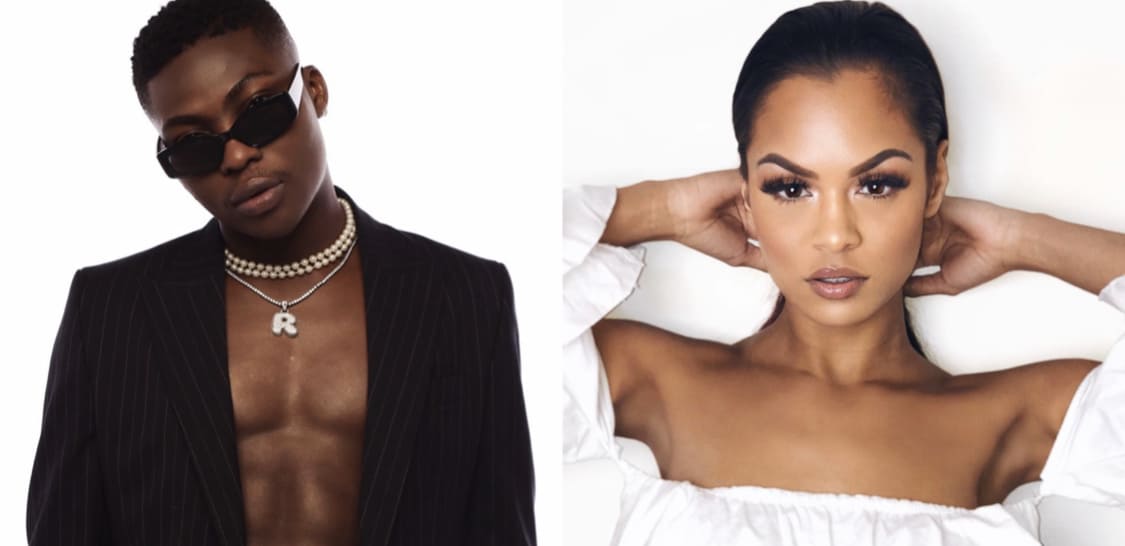
After a brief hiatus, Reekado Banks returned in September with “Rora”, a song that effectively put him back in radio rotation and on party playlists. The comeback song is currently slated as the lead single for his highly anticipated sophomore LP, ‘Daddy To Many’, and while there are no indications as to when the project will arrive, the singer has just released “Put In Pressure”, another single targeted at dancefloor audiences.
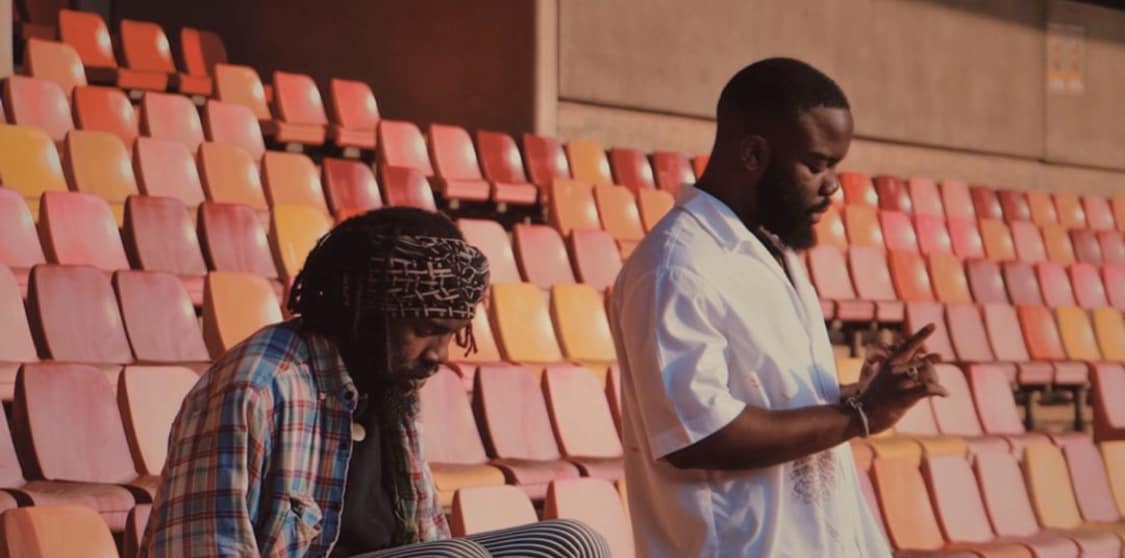
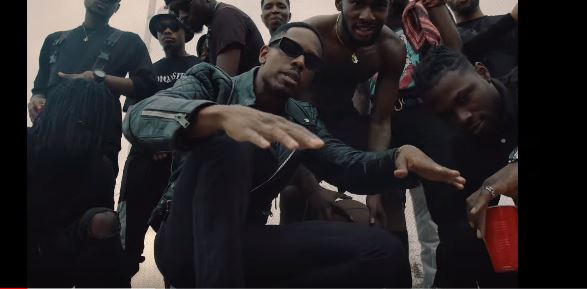
Over Kel P’s mix of whirring bass guitar riffs and explosive drum synths, Reekado sings about a lust-driven encounter with a love interest, loading his set with scarcely veiled innuendos that makes its dancefloor romance intentions known. “Put In Pressure” also comes with a Clarence Peters-directed music video, where CGI effects are used to match the tenor of Reekado’s lyrics. There are also colourful shots of Reekado Banks in a couple of eye-catching outfits, singing his lyrics while dancing in the company of beautiful models.
Watch “Put In Pressure”
Featured Image Credits: YouTube/Reekado Banks
[mc4wp_form id=”26074″]
Dennis is not an interesting person. Tweet Your Favourite Playboi Carti Songs at him @dennisadepeter
Davido’s plan to take afropop global culminated a two-year-long campaign which resulted in the release of his sophomore album, A Good Time.
As expected, ‘A Good Time’ delivers a smooth exercise in translating and flattening Davido’s dual-national range of influences, as he features artists and producers from both Nigeria and America. The project is soaked in the pop sound of West Africa filtered through mainstream pop flavours that highlight the omnivorous evolution of afropop. Standout track, “Sweet in the Middle”, draws from neo-R&B, rap, pop and Nigeria’s regional street-hop style.
Produced by Shizzi, mellow synths and zanku-ready drums background Davido’s modulations, in the opening verse. Naira Marley’s usually boisterous cadence is more laid-back on “Sweet In the Middle”, allowing Zlatan to steal the show with a more energetic follow-up delivery. Towards the end of the track, WurlD comes in to meld all of the track’s varying textures and moods together, mashing afropop with his own unique R&B-inspired style.
Despite the different sounds, each artist allows the beat’s transfixing rhythm to shine. “Sweet in the Middle” sums up the wide range of influences in afropop, while offering a dream-pop vision for what we may come to understand as authentic afropop for many many years
You can stream “Sweet in the Middle” below.
Featured Image Credits: Instagram/davidoofficial
[mc4wp_form id=”26074″]
You are meeting Debola at a strange time in his life. He wandered into a dream and lost his way back. Tweet at him@debola_abimbolu
Buju’s broke right into mainstream acclaim earlier this year when he released “Spiritual”, featuring Zlatan. The song portrayed him as a romantic singer, whose folky melodies are bolstered by a healthy dose of street-hop swagger. Club DJs and partygoers alike couldn’t resist putting the song to work on dancefloors.
Having helped him crossover to more audiences, “Spiritual” just got an accompanying music video as it introduces his mass appeal through the romantic and festive direction Visional Pictures follow. We see Buju and his muse having a good time at the beach before he’s seen singing his sultry lyrics to encourage her as she dances for him at a party. Zlatan also makes an appearance at the party with cuts of him dancing with Buju while delivering his Yoruba-infused rap verse.
See the music video for “Spiritual” below.
Featured Image Credits: YouTube/Buju toyourears
[mc4wp_form id=”26074″]
You are meeting Debola at a strange time in his life. He wandered into a dream and lost his way back. Tweet at him@debola_abimbolu
It’s been nearly a year since Wani released any new music, and his last single “In 2 U” left us wanting more from the talented singer. Well, the wait is over as just in time for Christmas rocks, he has shared two new singles “Fast Life” & “No Love”.
“Fast Life” is a romantic song in usual Wani fashion, featuring artist and producer Minz. Over the drum-led beat, Wani sings about his love interest, addressing her directly as he tries to get her attention. ‘Put your hands around my body, my Ifunanya’ he sings, infusing r&b and afropop tropes to court his lover, wishing to have her sooner rather than later.
On the less affectionate “No Love” produced by Higo, Wani enlists Prettyboy D-O for a cut-throat braggadocios anthem, on which they send a message to fake people around. Wani sings about not wanting any fake G’s around him while D-O joins him to rap about how fake all the niggas around him are. ‘When they see the boy, they wan hug man, no be you wey just curse man’ D-O raps, fed up with the insincerity, while Wani warns people not to step in his terrain when they’re not cool.
Listen to “Fast Life/No Love” below.
Featured image credits/TSE
Tami is a lover of astrology, music and women. Tweet your fave female artistes at her @tamimak_
The Fireboy DML fandom already set Friday, the 29th of November, aside in anticipation for the YBNL singer’s debut project, ‘Laughter, Tears and Goosebumps’. He has released the album as promised but has also upped the ante with a graphic accompanying video for “Scatter”, one of the new cuts from the 13-track tape.
Produced by Pheelz, the energetic instrumentals for “Scatter” compel listeners to move to the beat’s alluring EDM-fueled rhythm. The music video also seems to build on the song’s irresistible narrative through a post-apocalyptic set, which shows Fireboy DML waking up the dead with a device on his wrist, before leading them to a party where they dance in harmony with the beat. There are also scenes tributing “The Joker” through the clown costumes and chaotic scenes while we watch Fireboy DML boast about the effect his songs have on the dance floor; “As I enter, the party scatter”.
Watch the music video below.
Featured Image Credits: YouTube/Fireboy DML
[mc4wp_form id=”26074″]
You are meeting Debola at a strange time in his life. He wandered into a dream and lost his way back. Tweet at him@debola_abimbolu
Dice Ailes joins the conversation for afropop’s global takeover with his feature on “Hasta El Piso”, Spanish singer, Kaydy Cain’s new single. The catchy mix of synths, percussions and groovy afropop drums produced by Steven Lean gives the song a party vibe which inspires Kaydy Cain and Dice Ailes to adopt lightweight flows that invite listeners to the dancefloor.
While Kaydy Cain sings sultry Spanish lyrics for his verse and the chorus, Dice Ailes’ mix of English and Spanish lyrics give the song more international appeal. Through his verse, the raunchy intentions of “Hasta El Piso” are exposed to non-Spanish speakers with his verse describing a romantic meeting on the dancefloor.
You can stream “Hasta El Piso” by Kaydy Cain, Dice Ailes and Steven Lean below.
[mc4wp_form id=”26074″]
You are meeting Debola at a strange time in his life. He wandered into a dream and lost his way back. Tweet at him@debola_abimbolu
After putting in an excellent shift on Burna Boy’s “Another Story”, M.anifest became hot on our radar, and to take advantage of the increased visibility, he’s recently dropped two singles, “Big Mad” ft Simi, and a second collaboration with Burna Boy, “Tomorrow”. Both songs serve as the lead singles to M.anifest’s new project, ‘The Gamble’, which he’s just released.
‘The Gamble’ is made up of seven tracks, and similar to the romantic inclinations of its singles, the LP finds M.anifest contemplating the risks we take when we’re in love. In addition to Burna and Simi, the rapper recruits several other guest artists, including British-Ghanaian rapper Kojey Radical, British-Nigerian singer Moelogo, and Ghanaian singers Worlasi, Bayku and B4bonah.
‘The Gamble’ is M.anifest’s first project since his 2016 debut LP, ‘Nowhere Cool’, and it serves a buffer release before the rapper releases his sophomore LP sometime in 2020.
Stream ‘The Gamble’ below.
Featured Image Credits: Instagram/Manfestive
[mc4wp_form id=”26074″]
Dennis is not an interesting person. Tweet Your Favourite Playboi Carti Songs at him @dennisadepeter
Religion has been a major story this past year. In Nigeria, we have seen sexual violence in churches; entire schools for young boys run by Imams involved in organized abuse of children; and questions on the role of women in politics, much of which tend to brush up against religious notions of women’s place. Power and religion is a heady mix in any context, but in a place where the most institutionalized thing is lack of protection against abuse of any kind, it is headier still. What has been glaring about these stories of abuse of power is the extent to which these people used power vested in them — by church or state, or in the case of that one professor in the University of Lagos sexual harassment, both — to oppress vulnerable populations. If God created human beings in his own image, human beings have in turn molded God in their own.
Because of the ways that religion shapes such macro-level dynamics as politics and culture, it is easy to miss the quieter ways it shapes the most intimate of our relationships – with our communities, with our friends, with partners, and with ourselves. In 2017, I started collecting stories of people’s relationships with religion through a series of interviews in my DMs. In these conversations, I asked each person questions about what drives their un/belief, how it shapes their relationships with others, and how they have evolved and grown in their [lack of] faith. Each image I share from these conversations show these people’s experiences and personal truths that they have graciously accepted for me to share.
I have not always been able to write this. Some of these conversations are two years old, because I had wanted to write a much more personal piece on religious belief back then. I stopped being religious as a teenage girl and was angry — I can’t even articulate at whom this anger was directed - - for a long while after. This anger would pretty much shape my attitude towards religion for a long time, until it no longer did. I cannot say that I am aware of how this change happened. Time does it work, rounding out our hard edges and smoothing over our rough surfaces like sandpaper. For me, writing this and telling these stories is a sort of milestone in my own evolution, much the same way that these stories mark these people’s trajectories.
Religion is a dye that colors everything in modern Nigerian life. That I am not religious does not mean that I have not had to negotiate the contours of belief or relationship with God as an adult. I would venture that no Nigerian is able to live in the country completely adrift of the idea of faith. The shape of my moral universe is not consciously determined by religious instruction today, but it likely is by how I was raised and what I have experienced. All of these things are very closely aligned with a sense of belief, and ideas around sin and penance, faith and grace.
Here’s what I have learned.
1. The Importance of Community
A lot of the people I talked to shared that their major driver for their religious practice is the sense of community they get out of it.
This is doubly important for immigrant communities and is a very easy way of building relationships in new cities. The importance of this community will likely take on a different dimension for Nigerians abroad as it does Nigerians in the country. It makes me wonder about what else takes on a renewed importance when one is far away from home. In the calculation of better electricity and access to education and other opportunities, nobody really talks about how lonely emigrating to another country can be. Here, B. tells me how her aunt joined the Jehovah’s Witness church when she moved to another country. It became a link to the community, something she likely missed sitting alone in her apartment when the JW missionaries came knocking.
If a sense of community is a key driver, it does make it harder when you withdraw. This is especially when religion is a glue that binds you to your family . Most of the people who engaged with me that have lost faith told me that they could not tell their parents and still carried on going their places of worship.
Community brings to it a weight that either feels comforting or constricting, depending on the extent to which you neatly fit. Yet, my interviews showed me the extent to which it is still a need that drives our behavior.
2. A relationship with God Is Very Much A, Well, Relationship
This was something I never quite understood. How, after all, can you have a relationship with a being you’ve never seen? What shape does this relationship take?
As with every relationship, there will be some things that happen that you’re not altogether happy about, but the idea of having an intimate, ultimately beneficial relationship with an almighty creator is a powerful one. Whatever I think of religious practice, I came away from these conversations thinking of the ability to believe as a kind of superpower, much like the ability to love. Of course, not every relationship with God is rosy. Someone shared with me how his mental health struggles made him feel guilty and question the strength of his own faith.
In much the same way that the personal is also political, the community around one’s faith and the way one is taught about religion often shapes one’s relationship with God. That’s where it tends to get complicated.
3. There Is a Grieving Process When Faith Is Lost, Much Like Other Kind of Loss
There is a sense that people who walk away from religion skip away into the sunset at the thought of some newfound freedom to do as they please. From my conversations in these interviews as well as elsewhere, I find that this is not necessarily true. Precisely because a relationship with God is a relationship, it is possible to fall out or to walk away. And as we know in other kinds of relationships that we have, then your agency in the ending of that relationship does not mean you will not mourn its end. Indeed, I would argue that even the anger and viciousness of atheists who used to be religious is a manifestation of mourning. Anger is very much part of the grieving process.
I honestly did not understand this until I read R. O. Kwon’s “The Incendiaries”. The writer herself is a Korean-American who was raised Evangelical and has spoken publicly about mourning her loss of faith.
In a 2018 interview, she says this of her loss:
“With religion as I experienced it, the first and foremost feeling was one of love. I loved my idea of God. I really wanted to show how exciting and passionate religion can be and therefore how terrible it was to lose that, and to lose my faith. When I most deeply fell into religion, not entirely unlike when I’ve had one-off crushes, there was a feeling of ‘maybe this will give me all the answers I’ve been seeking.’ Losing my faith was devastating to me. For the next year I was as depressed as I’ve ever been. I was and am close to my parents, but I remember thinking that I’d rather lose one of my parents than lose God. When I believed, I lived in a world where there was no real loss and no real death. It’s such a different worldview than what I have now. Before I lost my faith, I would never have considered myself an especially anxious person. I didn’t have to be anxious because somebody omnipotent was always looking out for me. Now I could pretty reasonably call myself anxious. I wanted to try to bridge the chasm between these worldviews. On the one hand it was devastating that my friends and family couldn’t understand at the time how alone I felt and on the other hand it felt strange to then start making friends at college who were just like “okay, you used to be a Christian.” Very quickly I learned to turn it into a joke.”
If religion is a compass with which one moves through the world, then acting on one’s lack of faith requires a kind of courage not unlike the kind that wills one to be guided by a being followed a legion of equally flawed humans. Everything about the way we move through life requires courage, and to own up to what you do and do not believe in an environment as hostile to unbelief as Nigeria is its own kind of integrity.
4. How Religion Fits Into Your Life Is Just As Important As How You Fit Into It
Religious belief is not about what you want, but what is right given a set of principles that determine what being a Muslim/Christian/etc means. Still, the level of people’s adherence seems very much shaped by the extent to which their religion as they know it will accommodate who they are becoming, and to what extent they can bring to their God their fullest selves.
Some of the most poignant stories I heard were about this negotiation of how much of themselves they can be while also being an adherent of their religious practice. A former church leader spoke to me about the experience of coming to terms with his sexuality:
A woman told me about how the fears surrounding her body shaped her experience in the Yoruba religious tradition as a child:
Another person told me of her discomfort with the church’s teachings on religion and a woman’s place:
Sometimes, the people on the other end of the religious fervor in an intimate relationship can get hurt by their significant other’s practice. Religious people can be so preoccupied with their own internal struggles that they forget that their significant other or family member is not some disembodied test of righteousness, but a human being with feelings as valid as theirs. These stories abound anecdotally from people in my personal relationships and that I’ve heard through these conversations. Here’s one I can share because it has few identifying details.
I think it is no surprise sexuality shows up a fair bit in some of these stories. The shame and fear in sexuality that Abrahamic religions tend to impart can manifest itself in hypocrisy and judgement of other people, especially towards those who are not straight or who opt to express their sexuality differently. So much of the associated shame in their bodies and sexual proclivities does not merely turn off once a ring hits their finger, though. I worry about this especially for women, who I see often take years, decades even, to unlearn the learned shame and fear. For all its value, I worry about the benefits of worldviews that leave one with so much to unlearn, and the lack of grace this community allows for those who are unlike them.
5. There are always more questions than answers
For all its performative aspects and community, religion is a deeply personal thing. Young Nigerians are facing cultural influences from their ethnicity, religion and a barrage of messaging from a western perspective, all of which are competing for their attention in a social media-driven world. Social mores will continue to evolve elsewhere, feeding into a cultural conversation in Nigeria that will in turn shape how we live and, in turn, the lenses with which we will regard religious practice. Changes to the way we believe come with changes in the way we live. That likely won’t change.
Efe’s music career is still yet to top the fanfare from his Big Brother Nigeria campaign, however, his latest song, “Campaign”, has certainly impressed his music fans. Thanks to the assist from BOJ who does what he does best with the hook and Ice Prince’s rap verse, the song captures the celebratory zeitgeist of club music while Efe rapped about his difficult path to acclaim and his disregard for critics; “No be dem be Jesus/ I go just dey do am my own way”.
The recently released music video for “Campaign” highlights the song’s festive intention with the party setting directed by Frames by Wealth. We watch BOJ, Ice Prince and Efe partying with friends and models at night party where they play party games like dart, rock, paper, scissors and beer pong while they perform their verses.
Watch the music video for “Campaign” below.
https://www.youtube.com/watch?v=yYu1-mkyfoU
Featured Image Credits: YouTube/Efe Money
[mc4wp_form id=”26074″]
You are meeting Debola at a strange time in his life. He wandered into a dream and lost his way back. Tweet at him@debola_abimbolu
By all accounts, 2019 has been favourable to GoodGirl LA. The singer opened the year with her spiritually inclined single, “Bless Me”, shared the music video for her breakout single, “Faraway”, and finally released her long-awaited debut EP, ‘LA Confidential’, to positive reactions. To close out the year, she’s just released a new single, “Talo Lomo”, and it featuring Wizkid’s latest signee, Terri.
P.Prime and Tempoe co-produce the catchy beat for “Talo Lomo”, merging light piano chords, groovy guitar riffs and lively percussions. Matching the club-ready inclinations of the beat, LA and Terri deliver a jovial set where both singers woo their love interests, admitting the lengths they would go to prove their affections. “I go die on top your matter, you’re driving me crazy”, LA sings on the first verse, while Terri delivers the song’s memorable hook.
Stream “Talo Lomo” here.
Featured Image Credits:
[mc4wp_form id=”26074″]
Dennis is not an interesting person. Tweet Your Favourite Playboi Carti Songs at him @dennisadepeter
Earlier this month, Chidinma and Flavour confirmed their rumoured relationship when they released a joint EP ’40 Years Everlasting’. Over the 5-track project, they professed their love for each other, with a promise to keep their love burning for forty years. Their EP’s titular track “40 Yrs” was the first single to get a befitting video treatment, and showed them cosying up.
Now, they have released a Clarence Peters-directed music video for one of their joint singles “Nkem” which sees Flavour delivering his romantic verse while playing the piano for an audience of listeners. ‘Cause in you, I’ve seen the treasure I was looking for’ he sings, professing his love for his new boo. Chidinma then joins him on stage, and they both deliver a stunning duet where they let their love for each other take centre stage.
Naira Marley has had one hell of a year. The rapper rose to even greater prominence earlier this year, after the release of his smash singles, “Am I A Yahoo Boy” and “Soapy”. He’s gone on to drop several other hit singles, however, he’s looking to close out the year in style with the release of a new EP, ‘Lord of Lamba’. Naira hinted at the possibility of dropping a 5/6 track project on his Twitter page earlier this week, while asking his Marlians to help name the EP by suggesting titles.
It’s unclear as to how Naira landed on the present title, but ‘Lord of Lamba’ is as fitting as it gets, since it references his ongoing hot run and his ability to release bangers. There’s currently no tracklist or release date for the EP, but we can rest assured that we’ll be getting more Naira bangers sooner rather than later, with his Lagos headlining concert, MarlianFest Lagos, scheduled for this December.
Tomi Adeyemi is the #1 New York Times Bestselling author for the novel and upcoming motion picture, The Children of Blood and Bone. Earlier this year she announced her new book The Children of Virtue and Vengeance, the blockbuster sequel to her debut book, will be on sale December 3rd.
Ahead of the book’s release, she has made the first six chapters of The Children of Virtue and Vengeance available online. The sequel follows the West African mythological fantasy that began in the previous book, and follows the story of Zélie and Amari who have finally succeeded in bringing magic back to the land Orïsha.
However the ritual to return magic to their homeland was more powerful than they could have imagined, as nobles have their magic ancestry returned to. Both Zélie and Amari find themselves at odds as their kingdom is on the verge of a civil war and they must find a way to unite their kingdom or watch as Orïsha tears itself apart.
M.I has dominated Nigeria’s hip-hop scene since he debuted ‘Talk About It’ over a decade ago, and the album established M.I as the future of rap with songs like “Anoti” and “Safe” laying the template others have followed for commercialising rap in Nigeria. To celebrate the project’s 11th anniversary, we are revisiting “Fast Money Fast Cars”, the Wizkid-assisted track that highlights M.I’s ear for catching the sound of the future before anyone else does.
M.I put Wizkid on before the Starboy even became a household name in Nigeria, and as extraordinary as that sounds, it’s not often mentioned. The first time most fans heard Wizkid’s boyish voice was on the hook of “Fast Money Fast Cars”, where he joined M.I to reflect on the commercial attribute of dating in the 21st century; “To ba lowo oma tele e lo (They’ll follow you if you have money)”. Since Wizkid was relatively unknown when the song was released in 2008, M.I’s wordplay and punchlines were the song’s biggest appeal. But in retrospect, M.I’s faith in Wizkid’s sound at the start of his career is more compelling now given Wizkid’s career trajectory to become a globally accomplished artist.
His dominance is often questioned but impossible to ignore and songs like “Fast Money Fast Cars” hint at how he has remained relevant with his remarkable knack for taking risks with his sound and reinventing himself.
Stream M.I and Wizkid’s “Fast Money Fast Cars” below.
Featured Image Credits: Instagram/Mi_abaga
[mc4wp_form id=”26074″]
You are meeting Debola at a strange time in his life. He wandered into a dream and lost his way back. Tweet at him@debola_abimbolu
Since the release of her debut EP ‘Rapture’ earlier this year, Koffee has set herself up to become one of the forces leading the charge in the prominent reggaee scene. This year alone, she’s joined Daniel Caesar on the remix to his single “Cynaide” and was nominated for Best Reggae Album at the 2019 Grammys; all the while cementing her rise to international acclaim.
Now in a bid to continue her winning streak, she has now Koffee linked up with Gunna for a new single titled “W”. The music video which is set in her homeland, Jamaica is directed by Mattt Baron. Gunna and Koffee deliver their verses, while a tempestuous storm broods on the horizon causing everyone to panic and stay locked indoors. ‘Where di dolla sign? Money pon me mind’ she sings, reflecting the joyous mood the islanders adopt once the storm arrives and it turns out it is raining dollar bills.
“W” is all about encouraging people to focus on the Wins and not the Losses, to not forget to live their best life and to always remember to give thanks,” Koffee reportedly admits, giving more context to the new stunning bop from she and Gunna.
Watch the music video for “W” below.
Featured image credits/instagram
Tami is a lover of astrology, music and women. Tweet your fave female artistes at her @tamimak_
The announcement of Timi Dakolo’s label signing with Virgin EMI Records came with the promise of a new Christmas-themed album, ‘Merry Christmas, Darling’. In anticipation of the full-length, the singer released the title track as the project’s lead single, and it features British singer Emeli Sande. With their emotive performance, both singers capture the feeling of longing to spend the holidays with your favourite person(s).
‘Merry Christmas, Darling’ was released last Friday, and Timi has just shared the video for “Merry Christmas, Darling”, and it visualises the romantic elements of the song. In the video, we see both singers delivering their lyrics sullenly, because they’re not together on Christmas eve. Things brighten up at the end, when Timi arrives at home from his trip, and we finally see Emeli crack a smile through the window.
Watch “Merry Christmas, Darling” here.
Featured Image Credits: YouTube/Official Timi Dakolo
[mc4wp_form id=”26074″]
Dennis is not an interesting person. Tweet Your Favourite Playboi Carti Songs at him @dennisadepeter
It’s hard to imagine a time when we weren’t awkwardly trying to ‘gbese’ and figure out the steps of Zlatan’s Zanku, and his mark on the scene has been made pretty clear. A few hit songs later, he dropped his debut project, ‘Zanku’, where he offers fans more context for his journey from humble beginnings to becoming one of the indigenous artists putting Nigerian music on the world map.
Now, he has released the music video for the project’s opening track, “Wake Up” and it plays out like a documentary as we watch clips from his stage performances and dance sessions with fans on the street. Directed by Twitch, the scenes set in a studio where a choir with trumpet players perform and dance to the Spellz-produced beat.
Watch the music video for “Wake Up” below.
Featured Image Credits: YouTube/ZlatanIbileVEVO
[mc4wp_form id=”26074″]
You are meeting Debola at a strange time in his life. He wandered into a dream and lost his way back. Tweet at him@debola_abimbolu
Sakordie’s reign as a pioneer of Ghanaian rap has been a long itme coming, and since ascending to widespread prominence, he has managed to remain a rapper’s rapper, while hitting new milestones in subsequent years. He recently picked up the inaugural award for Best International Flow at this year’s BET Hip-Hop Awards, and in October, he successfully pulled off his first headlining music festival in his home city, Tema. To celebrate the success of the latter event, Sarkodie has just released a new single, “Oofeetsɔ”, as well as a fitting music video.
Assisted by Ghanaian hiplife singer, Prince Bright, who sings the catchy hook, Sarkodie celebrates his rise from humble beginnings into becoming a symbol of hope for his community. Although his two verses are mostly delivered in his local language, Twi, his vibrant candour and the endearing music video help in conveying the upbeat tone of his lyrics. In the video for “Oofeetsɔ”, footage from the 3-day festival are spliced together, including awe-inspiring shots of performances taken from the concert finale.
Watch Sarkodie in “Oofeetsɔ” below.
Featured Image Credits: YouTube/OfficialSarkodie
[mc4wp_form id=”26074″]
Dennis is not an interesting person. Tweet Your Favourite Playboi Carti Songs at him @dennisadepeter
Given how deeply rooted misogyny and rape culture is in Nigeria, it comes as no surprise that there has never been an official sexual offenders list in Nigeria. UNICEF says 1 in 4 Nigerian girls are victims of sexual violence before they turn 18, and according to a national survey carried out in 2014, only 38% of those who experienced sexual violence as children told someone about it, and only about 5% sought help.
The National Agency for the Prohibition of Trafficking in Persons is the law enforcement agency charged with administering the provisions of the Violence Against Persons (Prohibition) Act. Currently on the website, there are 7 incidents reported, 10 verified reported cases and 5 convicted cases. Although this numbers do not represent the vast amount of underreported cases, it is a first step towards proper documentation and accountability.
Last summer, we all witnessed how young women in Nigeria took to social media to name and shame their abusers, with media personality, Busola Dakolo adopting the same approach when divulging her encounter with COZA Pastor Fatoyinbo. Social media has always been a useful tool that women can use to make their voices heard in a society where the police and the government have turned a deaf ear.
The advent of the list, although long overdue, is extremely important to ending silence culture in Nigeria, and it’s good that we are finally having a permanent list that can be used to hold perpetrators in our society accountable.
Tami is a lover of astrology, music and women. Tweet your fave female artistes at her @tamimak_
With streaming being the primary mode of music consumption these days, artists are always looking to find new listeners in any part of the world, and collaborations are great way to make that happen. Case in point, UK dancehall singer Taliwhoah who’s hot on our radar with her latest single, “Sweet Sweet”, featuring M.I Abaga.
The cut is the final track on her debut album, ‘Another Dimension’, accompanied by a video for the M.I-assisted cut in its promotion.
Shot in Toronto, the video for “Sweet Sweet” captures the summery vibe of Taliwhoah and M.I’s romantic set, on which they sing sensual lines about being attracted to one other over the catchy beat SAK PASE produced. The video starts off with a daytime pool party, where both artists perform their lyrics with smiles on their faces. It then ends with a club scene, where we see Taliwhoah singing and dancing in intimate poses with her love interest.
Watch Taliwhoah and M.I in “Sweet Sweet” below.
Featured Image Credits: Taliwhoah
[mc4wp_form id=”26074″]
Dennis is not an interesting person. Tweet Your Favourite Playboi Carti Songs at him @dennisadepeter
In October, Nigerian rapper Erigga released his latest album, ‘The Erigma II’, to widespread acclaim from older listeners and Nigerian rapheads in general. Across its sprawling 17-tracks, the southside rapper draws on past influences for songs focused on storytelling, while also putting his trademark penmanship to work.
In an effort to promote the album in time for Christmas, Erigga has just dropped a befitting music video for the intro track, “Welcome to Warri”. In the ominous video, Erigga is captured in an inner city environment alongside goons, conveying the severity of his grimy set where he recaps a bunch of past traumatic events in vivid detail. Erigga also flexes his hood credential, with a pivotal scene that shows him signing a physical copy of his album for two confrontational rivals.
Watch “Welcome to Warri” here.
Featured Image Credits: YouTube/Erigga Paperboi
[mc4wp_form id=”26074″]
Dennis is not an interesting person. Tweet Your Favourite Playboi Carti Songs at him @dennisadepeter