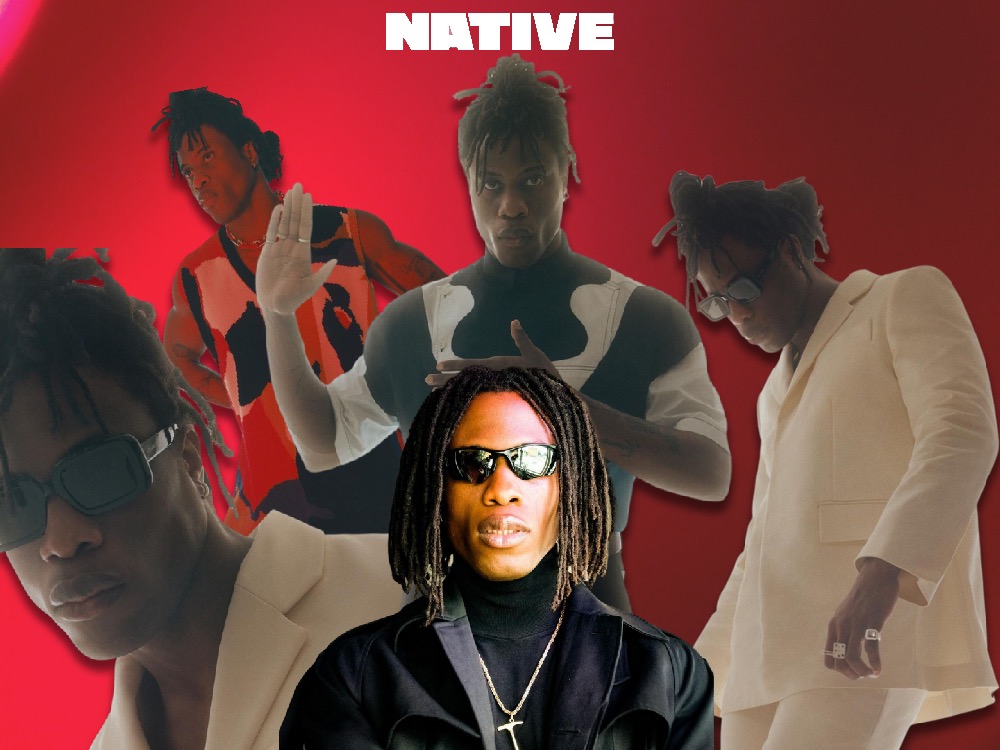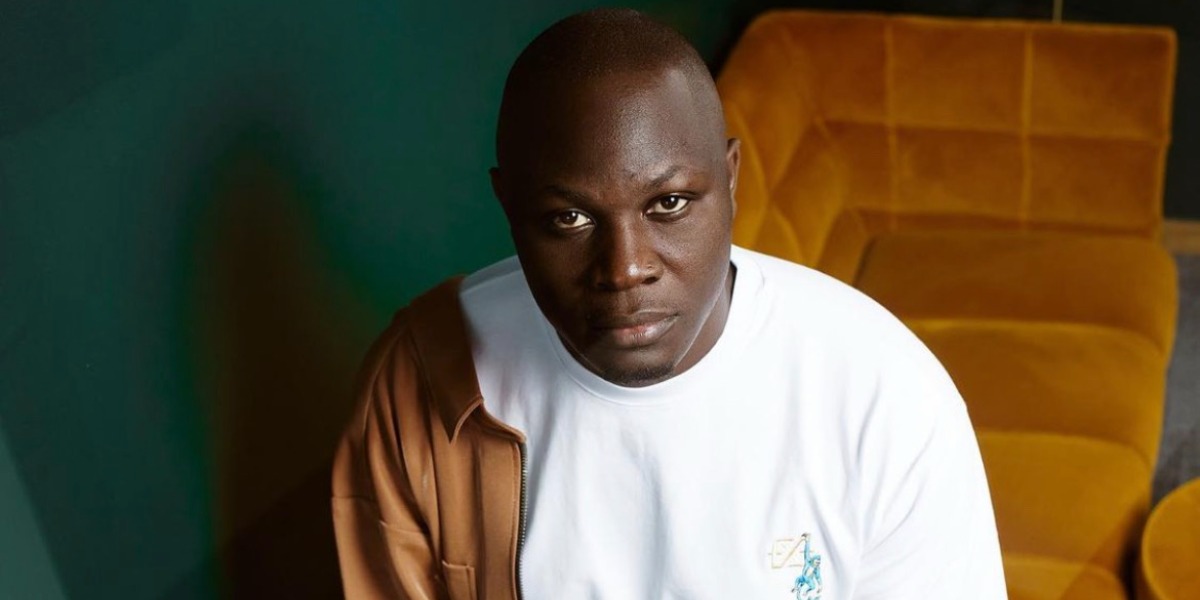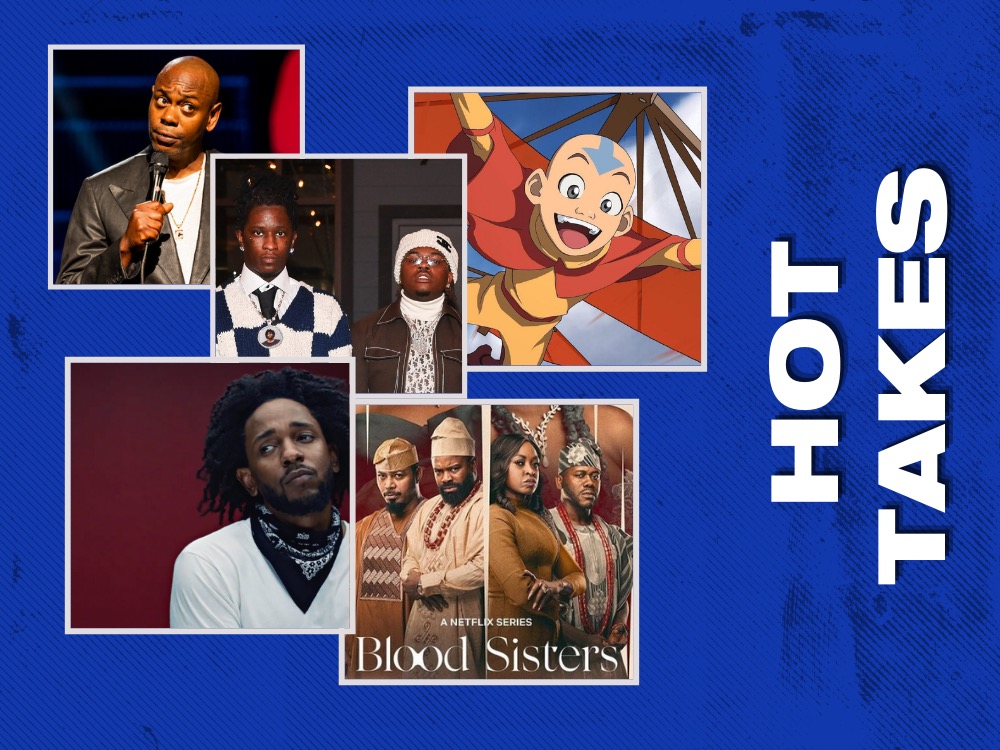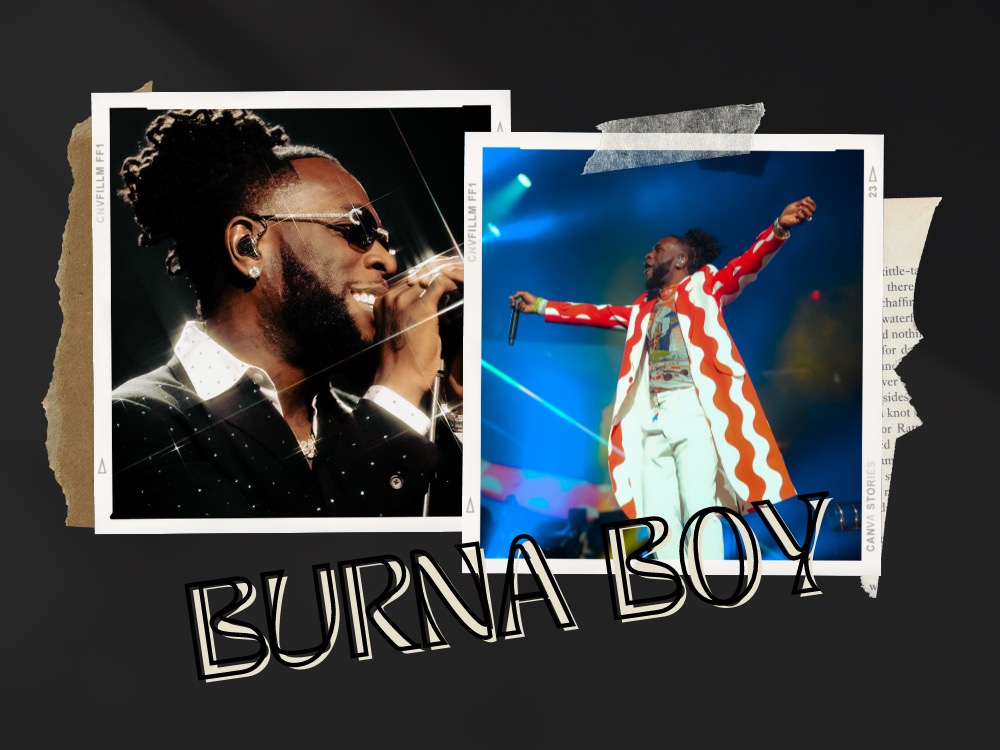
2022 is no longer a new year, and Afropop knows that very well. As much as the previous year was packed with scene-defining achievements, especially within the context of global growth, the only way to keep the momentum from falling off is for artists to keep reaching into their bag for great music that holds the ears and captures the hearts of millions of listeners across the continent and well beyond. That’s exactly what’s been happening, so much so that there’s hundreds of new singles, at-least one new must-hear album and a new smash hit every week.
Amidst this torrent of new music, The NATIVE is committed to highlighting the best releases you need to hear, and possibly add to your playlists. That’s the essence of our ‘Songs of the Day’ column. Earlier in the week we had releases from Wizkid, Nandy, Kwesi Arthur, Fola Bella Shmruda and more. Today, we bring to you new releases from Joeboy, PsychoYP, Black Sherif, Bey T and Boohle and more.
Joeboy – “Cubana”
Following his hit song “Alcohol” whcih currently ranks at No.14 on the inaugural Billboards Afrobeats Chart, Joeboy comes back with a bouncy new single titled “Cubana”. The song’s percussive production provides the perfect backdrop for Joeboy for fire off his amorous lyrics which have grown sharper and clearer since his previous release. The hitmaker gives his fan a preview of what to expect in his upcoming project, which is the follow-up to his debut ‘Somewhere Between Beauty and Magic.’
Black Sherif – “Kwaku The Traveller”
Kwaku the Traveller is a reflective number powered by Black Sherif’s gritty delivery. The Drill track takes features otherworldly production production as Black Sherif boasts his knack of storytelling. Packed with hard-punching lyrics, “Kwaku The Traveller” is a promising street anthem, following the rapper’s link up with Nigeria’s Burna Boy on “Second Sermon Remix” earlier this year.
Bey T and Boohle – “Unanicheza” ft. Soa Matrixx
On this Amapiano track, Kenyan singer Bey T teams up with South African singers Boohle and Soa Matrixx. Charactarised by strong cultural pride and traditional percussion, the production creates a languid sonic atmosphere. “Unanicheza” is a soulful yet innocent track questioning the loyalty of a significant other. Boohle and Bey T give a raw and pleasing performance with a catchy hook.
A-Reece – “Couldn’t Have Said It Better, Pt.3”
A Sequel to “Couldn’t Have Said It Better Pt.1” (2017) and Pt.2 (2018), “Couldn’t Have Said It Better Pt.3” came as a surprise to A-Reece fans as he was celebrating his birthday. After a successful 2021, A-Reece reasserts his position in SA Hip-Hop as he gives his archetypal cadence over a Black Metaphor beat. He embodies his boisterous persona dishing out lyrics such as “got executives on the edge of their seats// It’s hard to keep score You know they say that only losers check the scoreboard// to remind you he is rap god.” A- Reece is planning to release a project on 21st October 2022 which also happens to be 6th anniversary of his debut album ‘Paradise.’
Psycho YP – “WYDTM” ft. Azanti
Whenever Psycho YP and Azanti come together, the results are wonderous and “WYDTM” is a testimony. Coming from Psycho YP’s new two-pack project, “WYDTM” is another accolade to add to his trophy cabinet. On this trap R&B/Soul, their chemistry is undeniable with their distinct flow and irresistible ad-libs.
BNXN – “For Days
Despite the international hit of “Finesse” with Pheelz, BNXN is only taking it up a notch. “For Days” is a romantic number that sees BNXN confessing and assuring his love to his muse. On the chorus of the track he sings lyrics such as “You know you be my baby, You know I got you for days/Something dey me baby, You never call me today” to his love interest.
Social media plays an indisputable role in the music we enjoy today. Over the years, we’ve seen social media’s power to boost an artist from operating on the fringe margins to viral success, as seen from Fave, Khaid, and a spate of other talented newcomers. Similarly, Uncle Waffles was such a sensation in October 2021 when a feel-good video of her DJ’ing and whining for a hyped, intimate room went viral.
The South African polygoth rode the wave for the rest of last year, but soon carved the blueprint for a career as a recording artist earlier this year. Her debut single “Tanzania” unites three other performers from South Africa, with Waffles’ production sizzling beneath their spirited vocals and introducing her sure-fire abilities to newfound her audience. Burnished with the energetic party room vibe of Amapiano, the record made for an interesting entree into the music of Uncle Waffles.
Earlier today, her first project ‘Red Dragon’ was officially released, months after that single fanned the embers of Uncle Waffles’ heated sprint towards stardom. The four-track EP follows in the heavily collaborative style of the genre she operates in, packing almost thirty minutes of run-time in that space. Recently making our March column for the talent-spotting UNDER, Waffles’ project will now get our one-listen treatment.
In usual 1-listen review fashion, all reactions are in real time while the music plays. No pauses, no rewinds, fast-forwards or skips.
“Tanzania”
I didn’t know when this came out, shame on me. Well, great vibes are never hidden for too long and this, surely, is a good start to the project. There’s something intricate and delicate about Amapiano production like this; every element builds like a picturesque house in a mystery novel. These vocals are bewitching, energetic and really in sync with the song’s bounce. The features have different textures, but there’s no clash here. Soulful female voices meld with the gritty men’s, the percussions rattling behind to create a truly immersive atmosphere. Of course, I don’t know what’s being sung but between the word ‘senorita’ and ‘Tanzania’, I’m picturing a drop-dead gorgeous East African diva walking into the studio where this was made, and just taking everyone unaware with her luminous beauty.
“Umalume Wako”
If the opener was a light-headed entry into Waffles’ universe, this is sturdier, like staggering into a forest while drunk. There’s an open-air vibe about the record; at the same time it retains intimacy, like the music that plays when a camera zooms in on a film character who’s conflicted and thinking stuff out. I guess that’s the thing I love about dance genres, the easily shifting gears between public and private, how one section could build on melancholy while another is more celebratory. Depending on who’s listening, you’re either dancing away your problems or caught in a dreamlike state of reverie, where nothing can penetrate the satisfying warmth of the drums building around you.
“Uwelona”
The chord progression on these opening seconds is similar to those on Rema’s “Calm Down”, but they’re definitely spacier keys. “Uwelona” is a decidedly different vibe from the other pair of songs on this project. Moving with the reserved pace of an interlude, it settles the energy of the tape so far. Those keys are just one element of what makes this song so soothing; the drums are as well warm, forming a beautiful backdrop when jazzy horns are introduced. The singing on this is also the most accomplished so far, evidently invested in complementing the laidback mood of the production. Waffles is not the only producer here, that much is clear, but the disparate textures of sound are neatly woven. As the song progresses, other elements enter and leave, moving in a truly unpredictable way. The best way to enjoy Uncle Waffles is by letting go of any expectations and just sinking into the hypnotising feels of the music.
“Love I Need”
This song is credited with five other collaborators and at eight minutes, Waffles is definitely going for an epic closer. Cinematic: that’s the word that best describes these opening seconds. Waffles’ drums exude the sustained mystery you’d hear in the music of veterans like DJ Lag and Kabza De Smallz but her keys tend to be more mellow. Following the previous song’s lead, the singing here is soulfully inspired. As always, I’ll reiterate my opinion that South African voices are some of the richest on the continent and I think that’s because of their vibrant relationship with their indigenous languages and cultures. Anyways, this is a bop, although I think it wears a little thin after the fifth minute. The seamless flow between the singers is one of the highlights of the record, while Waffles’ production provides a consistent cushion for their vocal acrobatics. WHAT ARE THESE SYNTHS? Okay, I spoke too soon, the song’s pulling into an affecting closer, voices lulling like angels into the world’s darkest void. This is perfect.
Final thoughts
Uncle Waffles’ ‘Red Dragon’ portends a credible start to her career, it includes an incredible selection of the excitable sounds that makes the South African music scene so heralded. Of course, the nature of her come-up casts the sceptical shades of a familiar pattern on her name, but what better way to showcase her talent than putting this project out?
To her credit, Waffles is not all about being a one-woman show, rather using her popularity to salute decades of musical tradition. What emerges is the earliest indication of a producer and artist primed for the top level, and it’s surely worth keeping an eye out for this 21-year-old who’s uniquely flying the banner of one of the most recognisable genres in the world today. With her debut EP now out, we’re excited to see where Waffles goes next.
Nigeria did not qualify for the upcoming FIFA World Cup, but it’s indirectly found a way to feature in the tournament’s proceedings. This evening, when the group stage ballots are being drawn, and when the competition finally kicks off in Qatar in late 2022, the gruff voice of Nigerian pop superstar Davido will be heard across the world.
Announced earlier today, the singer is part of the trio involved in the lead single of the FIFA World Cup Qatar 2022 official soundtrack, which also features Latinx American singer Trinidad Cardona and Qatari star Aisha.
“Hayya Hayya (Better Together)” is an uplifting song that centres on the social mission of the FIFA World Cup. Although known as one of the most competitive tournaments in sports, the World Cup is one of the most watched events on the planet and, as such, it’s a tacit celebration of togetherness.
“Hayya Hayya” reflects just that, both in its line-up of artists from three different continents and through its genial lyrics advocating for increased global unity. The song melds elements from Caribbean pop, Eastern Rock and Reggae, acting as a colourful canvas for Trinidad’s ebullient vocals, Davido’s bouncy melodic cadence and Aisha’s aromatic flourishes.
In its recent editions, the FIFA World Cup has been linked to official and unofficial songs to accompany its tournaments, from Shakira’s “Waka Waka” to Ricky Martin’s “La Cope de la Vida.” This year’s tournament will mark the first attempt at a multi-song soundtrack and according to FIFA Chief Commercial Officer, this lead single “symbolises how music—and football—can unite the world.”
Watch the video for “Hayya Hayya (Better Together)” here.
After years of inventing himself as one of the most inventive street hop producers in the game, Young Jonn released his first official single last month, the rhythmic “Dada.” Off the back of his debut single, the mastermind behind hit records such as Naira Marley’s “Mafo”, Lil Kesh’s “Efejoku” and veteran rapper Olamide’s “Bobo” inked a deal with record label, Chocolate City Music.
Today, Young Jonn emerges with his debut EP ‘Love Is Not Enough’, a 5-track offering which draws production elements from Afropop, R&B and soul, intermingled with his light, melodious vocals and heartfelt lyrics. The tape features production credits from a fine collection of beatsmiths in the country such as Type A, Smyley, Niphkeys with additional production from Young Jonn himself.
‘Love Is Not Enough,’ as its title suggests, is a collection of romantic anthems tracing the course of a relationship from initial lust to the inevitable acceptance of remaining just friends. It features records such as “32”, “Dada”, the lead single off the tape and “Normally”, all of which sees the artist delivering instantly catchy melodies over memorable production.
The EP serves as a taster course to what Young Jonn has to offer, running the span of moods in its 13 minute run-time. On the first single, “32”, the artist chants romantic lyrics such as “I dey shine my 32 because this love dey sweet my belle/Omoge I go give am all to you”, opening up to his love interest about how she makes him feel. His love for women is delivered with a fiery passion gleaned through his sincere writing.
‘Love Is Not Enough,’ is a welcome change from Young Jonn’s track record as a producer. Here, he puts his examines the dissolution of a relationship, delivering a glittering debut that presents all sides to the producer turned artist. Speaking about the EP’s thematic choice, Young Jonn shared:
“Love is great, Love is necessary, Love is beautiful; but Love is not enough.”
Tems is the leading vibe. Since breaking into the music scene in 2018 with “Mr Rebel,” the singer has wielded the phrase as a powerful tool to stake her claim in the scene. Growing from a popular lyric to a real brand, worthy of emulating, she describes the term as a statement which helps people find their voices, find their own thing and achieve the best of life. From the very beginning, Tems herself has only been a natural leader, setting the tone for those coming behind her and creating a path for the people who look up to her.
Now, hot off the heels of her sophomore EP ‘If Orange Was A Place,’ Tems will be joining the likes of DJ Cuppy and Julie Adenuga as Apple Music radio has launched a new show ‘The Leading Vibe Radio With Tems.’ The first episode is set to launch this Saturday, 2nd of April 2022.
The Leading Vibe Radio is aimed at talking about real things and solving real problems, as well as building a community for African women across the continent. The show will be hosted by Tems alongside her two co hosts, Muyiwa Awoniyi, the host of The Donawon Podcast and Tems’ manager; and Adetunji “Tunj” Paul, director of studio BLVCK and host of the Bantu: The African Creative podcast.
The live radio show will take place every two weeks at 7am LA time, 3pm Lagos and London time on Apple Music 1. Tems shared in an official press release with Apple Music:
“There are many “leading vibes’, and it’s about all of us collectively coming together to lead the vibe-that’s Africa to the world.
If everyone found their thing, life would be so much easier in general-especially coming from Africa, where it’s really hard to find your thing. Because when you’re in survival mode, you’re not thinking about yourself or finding the ‘inner you’ or doing anything.”
British actor Daniel Kaluuya has announced his first feature film as a writer. Yesterday the ‘Get Out’ star revealed that production for ‘The Kitchen’ is already underway and the film will explore “a future where the gap between the rich and the poor has been stretched to its limits,” according to the official announcement.
In an Instagram post, Kaluuya revealed that the film has been eight years in the making, imprinted in his mind ever since his discovery in a barbershop that kids were getting paid £200 for executing million pound heists. The setting of the titular ‘kitchen’ evokes the street life of a near-future London slum, a place which tests the mental and moral strength of its inhabitants.
Already, Kaluuya’s ‘The Kitchen’ has tapped into some of Britain’s most talented actors including Top Boy’s Kane ‘Kano’ Robinson who plays Izi, and newcomer Jedaiah Bannerman who plays 12-year-old Benji. Together the pair “battle to survive in a system that is stacked against them”.
‘The Kitchen’ is co-written with Joe Murtagh, who is renowned for his work on dramas such as ‘American Animals’ and ‘Gangs of London’. Kibwe Tavares makes his debut as feature director, though he’s previously worked alongside Kaluuya on the Sundance-nominated short movie Jonah alongside production by Dan Emmerson through collaboration with Kaluuya’s production company 59%, DMC Film, Film 4 and Netflix, where it will show upon release in 2023.
The act of “flipping” a track is one of the oldest ways producers have kept music alive, paying homage to history while simultaneously charting the future. Nigerian Funk is an NGO that is focused on the preservation and documentation of Nigeria’s musical legacy. Today, Nigerian Funk official have released ‘Golden Lady’, a compilation of seven producer remixes of songs by Nigerian female musicians.
Producers like Johnson IP, Sir Bastien and Suté Iwar reimagine songs from inspirational women who’ve created timeless music over the years, from the iconic 70s twin duo The Lijadu Sisters to Sade Adu, Tiwa Savage and Lindsey Abudei. In their hands a record such as Lady Donli’s “Cash” becomes a stirring Amapiano affair, retaining the aspirational hue of her notes but exploring sounds distinct from the neo-Highlife sound of its original. It also sees Tems’ introspective “Free Mind” transformed into the hardest drill instrumental, well capable of shutting down party venues from Abuja to Brooklyn.
The focus on women, says the Nigerian Funk NGO, “is an intentional choice made to place a focus on Nigeria’s trailblazing female musical talents on the final day of Women’s History Month.” The compilation is also part of The Nigerian Music Preservation Project, an initiative meant to collect and contextualise expansive periods in popular Nigerian music, specifically between the 1950s and 2000s. “This,” they say, “is a long term project motivated by the current gap in the active preservation of Nigeria’s music history and the need for access to this history for posterity.”
Surely, Afropop, and Nigerian music particularly, is on the cusp of becoming a global behemoth and it’s crucial to appreciate our history even as we surge forwards. It’s been a long run and the pioneers and change makers of the scene deserve the acknowledgement, just as every lover of the music requires the granular education of its evolution. Initiatives such as ‘Nigerian Funk’ are no doubt the way to go, and ‘Golden Lady’ is reassurance enough that the past and present of Afropop’s music history will be preserved.
A week before its arrival, Billboard announced a new weekly chart tallying the most popular Afrobeats songs in the U.S. The hugely popular chart publication and magazine made the announcement in tandem with Afro Nation, who serve as partners for the new chart. As scheduled, the debut edition of the chart was published on Tuesday, March 29.
Unlike the debut of the UK Afrobeats chart in 2020, which came with its fair share of critical conversations, the U.S. version has been mostly greeted by excitement, a level of geniality that is likely due to the long trudge towards stateside recognition. At that, it’s still worth taking an insightful look at the first week of the chart, so here are four takeaways from the debut edition of the U.S. Afrobeats chart.
CKay leads the pack with “Love Nwantiti”
If you ask most people who they’d guess would set the pace for the chart in its first week, the poll would’ve featured CKay’s “Love Nwantiti” as a favourite. Released in 2019, with the accompanying video for one of its remixes coming in a year later, “Love Nwantiti” took over two years to reach global ubiquity, via TikTok virality. Having debuted on the Billboard Hot 100 last year, the song was one of several to further confirm the ascendant popularity of Afropop, and its debut, peak placement on the new chart is proof of its staying power.
In the recent IFPI Global music report, Warner Music’s Temi Adeniji stated that the label is “truly thinking of [CKay] as a global artist.” While “Love Nwantiti” is a solid footing to begin ensuring those ambitions are achieved, it’s not the only gambit, and the evidence is in “Emiliana” also debuting at the tenth spot of the U.S. Afrobeats chart. Even though it isn’t as mammoth as its smash predecessor, “Emiliana” seems to be performing respectfully, and it hints at CKay continuing his momentum over the course of the near future.
Tems lands 8 (!) entries on the chart
Think about it: Around this time in 2019, Tems was a fairly known up-and-coming artist with two singles and a handful of features. Three years later, she’s easily one of the most popular and invigorating proponents of African music on a global level. If that’s not awe-inspiring, I don’t know what is. Further confirmation of Temilade Openiyi’s ascent is her record-setting eight entries into the new U.S. Afrobeats chart.
Of course, “Essence,” her song of the summer collaboration with the iconic Wizkid is near the top of the chart at No. 3, while For Broken Ears standout, “Free Mind,” follows closely at No. 5. Also in the top ten is the Brent Faiyaz-assisted “Found,” off last year’s If Orange Was A Place. Tems’ remaining entries are split between songs from both EPs, a strong indicator that the singer/producer is building a dedicated following in the U.S. Having signed a major label deal with RCA last year, the resources and systemic support at her disposal for future releases will ensure there’s more record-setting moments on this chart.
Is it really representing Africa if it’s all Nigerian?
Of the 50 songs on the inaugural U.S. Afrobeats chart, only one does not feature the participation of a Nigerian artist. That song is “Down Bad,” the smash hit by Ghanaian singer Kelvyn Boy. If you want to get a bit technical, you could add Darkoo and Black Sherif’s melodic drill banger, “Always,” but Darkoo is British-Nigerian even if she lives and operates out of the UK.
This overwhelming dominance of Nigerian pop music and its artists is obviously a reflection of what’s popular stateside, but the lack of diversity further obfuscates the sheer breadth of African pop music. As far as impact is concerned, Afropop revolves around Nigeria, which intentionally and unintentionally marginalises the rest of the continent. In a western world where there’s still ignorance of Africa, and its diverse youth culture, the U.S. Afrobeats might be promoting the egregious idea that the continent is a country, and our music can be neatly categorised into a one size fits all genre name.
What makes a song Afrobeats enough to be on the chart?
If you scroll all the way down to the 41st position of this chart’s inaugural edition, you’d find Metro Boomin’s “Borrowed Love,” a sunny track off the ace Atlanta producer’s NOT ALL HEROES WEAR CAPES LP, which features fellow ATLien Swae Lee and Nigerian pop superstar Wizkid. It’s a surprise entry that also seems important because, amidst all the songs by Nigerian pop stars, it serves as a great entry point into looking at the nuances of an ‘Afrobeats’ chart.
“Who gets to decide which songs belong to the Afrobeats genre, enough to earn a spot on the chart? Do the producers and artists have to submit a genre?” Adewojumi Aderemi and Debola Abimbolu asked those pertinent questions when the UK Afrobeats chart was set to launch, questions that remain relevant today. In the case of “Borrowed Love,” is it because of the Wizkid affiliation, or is it because the composition of the song fits within the Afrobeats template?
If it’s the former, does that mean every artist from Africa with a popular song, regardless whether they make Amapiano or Drill or Bongo Flava, will simply be lumped into the Afrobeats chart? If it’s the latter, does that mean a song like Doja Cat’s Afro-house-inspired “Woman”—which is currently moving up the Hot 100—qualifies as a potential entry into the Afrobeats chart? The fact that the answers aren’t clear, or won’t be clear anytime soon, is an indicator that the chart curators are choosing the validation that comes with a vague tag that continues to water down the diverse essence of African pop music.
Re-evaluating something is to find new ways to understand its purpose. For almost two years, The NATIVE’s editorial team has committed to spotlighting new and nascent artists that have either picked up widespread attention, or we believe are on the cusp of a profile, or are darn good artists adding to the inventiveness of African pop music. We titled the column ‘Fresh Meat’, but that name is being revamped, as is our commitment to our mission to both be on the pulse of popular music and, also ahead of what’s happening today.
This edition of our monthly selection of Best New Artists will be titled ‘UNDER’ henceforth, a play on the word underground. Usually, the trope attached to underground music is its distance from mainstream success, however, the Internet has revolutionised music streaming and success at the click of a button. As such, the artists featured in this column are far from “under the radar,” each month, we’ll be introducing a talented spate of artists, from around the continent and diaspora, including those that you may have heard of before, and others you might never have heard of, but are on the cusp of their biggest moment.
‘UNDER’ is a celebration of young African artists who create without fear, of boundaries, of unacceptance, of the perception of what African music should sound like. This month’s edition, in addition to being dominated by talented women, celebrates the musical diversity of Afropop, including artists that make earworm pop tunes, silky R&B-influenced music, and an experimental electronic producer. The column name is new, but the purpose has only been renewed. Tap in if you wish to be that friend putting people unto good music or if you’re an A&R, looking for the next best thing, this is the group of artists you want to be paying attention to.
Solana
Solana’s music brings together a fusion of exciting sounds, executed through the luscious sheen of her voice. The 24-year-old received her early musical education in church, singing in choirs around Lagos. The 2000’s blog era was especially influential, as she listened to artists like Nicki Minaj and Drake who went on to inspire her seamless movement between genres.
Speaking to the NATIVE, Solana spoke about the period before the release of her debut EP. “I was just recording and stuff,” she says. “I was just trying to put stuff together basically. I wanted something to put out.” 2019’s ‘Fire’ turned out to be a noteworthy introduction to Solana’s skillset, a dazzling immersion into ten songs. Emblazoned on the cover is a close shot of her face, her pearl eyes intense. That mood follows into the music, whether on the boisterous “Bad Energy (Japa)”, where she bigs up her paper chase with a skittering cadence familiar among versatile rappers, or on the affecting “Love Song”, which begins with a Spanish guitar solo and segues into an expressive, hair-down song about living her life to the fullest. “If you feeling down, you tap into this higher life,” she sings with the purposefulness of a street preacher.
Demonstrations of Solana’s brilliance are abound elsewhere; “Far Away” is a dreamy-eyed account of young, lost love, uniting on wax with fellow emPawa artist Joeboy. Her lyrics engage everyday expressions, but the energy comes from her vocals, a voice as luminous as water crystals shimmering under the moon. Last year, she released a two-pack single, collaborating with Killertunes and Victony on “Badder” and “On My Way” respectively. “Because it is coming from me,” says Solana when asked about the peculiar quality in her music. “I have a lot of things to say and there are people that want to listen”.
Emmanuel Esomnofu
Uncle Waffles
Except you’ve been off all social channels for the past few months, you’d have at least one clip of a young female DJ thrilling a gathering of young sweaty bodies swaying and rocking as though under the grip of a spell. When performing she alternates suavely between spinning disks and punching keys on her deck, entertaining the crowd with smooth dance moves and working the crowd into a frenzy with spirited hype-chants. This DJ is Uncle Waffles.
Since the start of her career, her popularity has exploded exponentially. As the days unfurl, her presence burgeons, sprawling steadily like a wildfire. Even global superstar Drake has taken note of the South African artiste and endorsed her— he followed her on Instagram last year and recently appeared on her Instagram live session. Recently, Uncle Waffles announced her official foray into music with the release of her debut single, “Tanzania” and her debut EP which will be released this weekend.
“Tanzania,” is a self-produced Amapiano number that sees the performer singing in her mother tongue, over an infectious production, giving listeners and fans an insight on what to expect on the talent’s debut. Outside music, the show-stopping icon does some modelling work and is a strong voice advocating for mental health issues. She’s particularly passionate about mental health advocacy given that she has suffered anxiety disorder in the past.
Chibuzo Emmanuel
Babbz
In a soundscape defined by boisterous percussion, elaborate melodies and braggadocious lyrics, Babbz is among the elite spate of nascent voices putting their spin to Afropop and pushing for the diversity and inventiveness of the sound. In 2019, he made his official dip in the water with his debut single “Ma Lo”. “Ma Lo” transposes the thrill of hearing an inspired work-in-progress. Even on the raw production, his distinctive style is immediately obvious— he rallies shimmering guitar melodies, sparse punchy drums, pixelated bass underscores and furnishes these with his lustrous vocals.
Two years later, he doubled down with his second single, the KD assisted “Lagos”. On the song, his outré disposition becomes even more lucid. He fuses his archetypal sound with bouncy Dancehall influences, masks his vocals with billowing robot-like auto tune effects, and constructs an elaborate montage of the bustling Lagos City with piquant melodies. This year, he took a step towards the powerhouse he is capable of becoming, after he released his debut EP ‘Pineapple Juice,’ under the auspices of Dr Sid’s Zero Gravity Records.
On this project his growth is palpable, he strikes a delicate balance between raw experimentation and a future-facing refined sound. Staying true to his core he creates an exciting amber-hued salacious tableau. Rallying an eclectic gamut of sounds and melding them with his quintessential soulful guitar-inflected sound, he explores themes ranging from love to lust and the grey in-between, using astute storytelling and impassioned crooning to this effect.
Chibuzo
Kenah
Rap might be a lyrical genre, but ingenious musicians are finding ways to rope in the melodies. 21-year-old Kenah is inspired by musicians like Juice WRLD and Nasty C, but her first love was Justin Bieber, whose lucid songwriting and vocal approaches made her want to create songs. She was born in the southeastern state of Enugu, but moved to the bustling city of Lagos when she was around fourteen years old, expanding the music she was exposed to.
In 2018, shortly after enrolling into the University of Abuja as an undergraduate of Theatre Arts, Kenah formed bonds with other musically-inclined people. “That was when I decided that I wanted to do music professionally,” she said to the NATIVE. Her first song was released with the assistance of producer friends, acclaimed around the campus community. Her trajectory fast-tracked in the next couple years, and in 2020 a number of excitable freestyle clips got her a record deal with JustJojo Entertainment, a UK-based company owned by a woman.
Making the most of 2021, Kenah released her debut body of work, titled ‘3:05 Musing.’ With seven songs, its themes of self-confidence, romantic love, denial and luxuriating ease will be familiar to anyone who has lived through early 20’s life. Her voice has the refreshing quality of warm milk, contributing to every song’s appeal. “3:05am” has all the markings of a centrepiece record, capturing visceral shades of young expression. Over bouncy production Kenah alludes to her come-up, how she’s defying the odds. Her bars are remarkably vivacious yet introspective. “Been here for so long, now they detecting my flaws/ I’m not insecure, but I’m pushing them out of the door,” she raps. On the brooding “Closer,” she alternates between singing and rapping, hitting exciting peaks with her vocal runs and lyrical precision. Later that year she put out “Player”, flaunting her ability to shine on percussive Afropop production. Kenah’s working on new music, which will no doubt be “unique,” she says, “because I connect with my lyrics, I connect with hearts with how I put out my songs. Every single song I write, it comes deep from my heart.”
Emmanuel
Khaid
Only a few months ago, Khaid was relatively unknown, releasing only a handful of singles and freestyles on his social media. These freestyles, all of which are averaging around 200K views on his Instagram, were bold and daring collages of his eclectic music style ranging from Hip-Hop/Rap to Trap, R&B and more, delivered with crisp lyricism and clear-cut delivery. While they introduced listeners to his style, Khaid’s sparse canon of work also placed him front and centre in the eyes of industry insiders, including some of its biggest names such as Don Jazzy, D’Prince, and more. Eventually, this landed Khaid his breakthrough when he signed a deal with Sydney Talker’s newly minted record label, Neville Records, becoming the first artist under its roster.
Currently, the Lagos-based singer has only one official release in his discography, his breakout single “WITH YOU” which has garnered over 980k plays on Spotify alone. The mid tempo Afro-trap record finds the artist chanting romantic lyrics to his love interest, lyrics such as “Having fun times with the girls but I just wanna be with you/I’m riding in my new escape say baby let me die for you”. In a similar fashion to his freestyles, the record peaked on TikTok and became a viral hit. Khaid’s social media savvy is another welcome string to his bow.
Speaking with the NATIVE, he shares of his music: “I think my story basically, the struggles that I’ve been through. and mood, and the environment also inspires me but if it comes what inspires my writing, it’s my story.” Already, Khaid is teasing new music, sharing teasers and clips with his followers on social media including his recent Instagram post which features a snippet of him putting his unique spin on Rap by fusing it with a range of other genres including Afropop and R&B. This method of testing new material with his day one fans seems to be paying off, as anticipation is rife for his new single and his debut project, which we’re told is already in the works. With promise of new music, sometime soon, Khaid shares tells us, “My EP is more of trap songs. I’m trying to make trap music an essential part of Nigerian music so people won’t be afraid to do it and I believe releasing this tape will do it.”
Wonu Osikoya
Coco Em
East Africa’s Electronic and Dance music scene is teeming with innovators and boundary-pushing creatives. At the end of the previous decade, Coco Em emerged as one of the high-flying mainstays of the scene, making a name for herself as a DJ capable of enveloping mixes and with a wide-ranging musical taste. The latter is due to her formative years, which exposed her to disparate influences like Koffi Olomide, Madonna, Missy Elliott, and more. Also, before taking to the decks, Emma Mbeke Nzioka was a photo-journalist and budding filmmaker, giving her a widescreen flair she applies to her musical endeavours.
Having established her DJing bonafides, Coco Em is letting audiences in on another layer of her creativity with the impending release of her debut EP, ‘Kilumi.’ Created during the peak pandemic lockdown of 2020, the 7-track tape will introduce listeners to the producer’s inventive take on the electronic fusion of influences like Rap, Grime, Amapiano, Afro-house and more. The sample of what to expect is small but enticing, with Coco Em’s compositions on pre-release tracks proving to be sparse and searing.
Lead single “Land (Black) First” sets a caustic groove beneath politically-charged quips, while “Winyo Nungo” is Drum N Bass-inspired. Featured on last year’s Place: Nairobi, a compilation album featuring leading lights of Kenya’s electronic scene, “2021” is more abstract, a Glitch track with a sequence of streaking synths and white noise in multiple loops. There’s some serious range in just those three tracks, making it impossible to not be excited by what Coco Em’s catalogue will mean for African electronic music as it continues to grow.
Dennis Ade-Peter
Layzee Ella
One of the surest ways to get your music to the right ears in the music industry today is by turning to social media. Across the years, we’ve seen social media act as a powerful tool to bring artists closer to their audience, by passing industry gatekeepers and garnering organic attention. Singer, songwriter and rapper Layzee Ella began releasing freestyle covers in 2017 and a year after, she released a freestyle to Burna Boy’s “On The Low” which garnered the attention of many. This inspired Layzee to release more covers and along the way, she delivered her first official single, “Sober” in January 2020.
Last year, she shared with listeners her debut EP ‘When The Lights Go Off’, a 6-track collection of love songs which sees the artist making a rather defining statement and visualising the experiences of a Gen Z artist, trying to make sense of situations which may arise. The EP gives listeners a feel of a distinctive sound, where she speaks on matters such as love, romance and more, as she draws production influences from Trap, fusing it together with Soul and Afrobeats. The tape features standout tracks “Body On Me” and “Somebody”, both of which are mid paced, catchy numbers which finds Layzee expressing her most intimate desires. The artist also draws inspiration from other soundscapes, including R&B, TrapSoul and more. Layzee Ella is currently working on another project, ‘Girls Don’t Need Love’ which is set for release later this year.
Wonu
Featured image credits/NATIVE
Editors note: Uncle Waffles’ nationality has been corrected to Swazi. We apologise for any inconvenience.
In a blink of an eye, March is drawing to a close, just as most of the year flown by. We’re gradually inching closer to Easter and all the fun and exciting activities it brings to our doorstep. A part of me is glad that the month is almost over, as March has felt like a cursed month since 2020 when COVID was declared a pandemic, sending the world into a frenzy its yet to recover from.
My weariness of the month felt justified as I read about some of the bizarre things that happened so far this month, ranging from a celebrity making a tone deaf comment on working women to the horrible treatment of a Black supreme court nominee. The lead up to Aries season, also let us see some more pleasing news however. The time of this specific fire sign seems to ignite a passion in people that makes them more outspoken, as seen by people taking to Twitter to criticise the mistreatment many face from Nigerian bosses and Will Smith’s recent actions at the Oscars.
Continue reading to see my takes on some of the most notable news stories from the month.
What I am watching:
The fourth and final season of ‘Killing Eve’ has arrived. The show has followed the intense relationship between the (now former) MI6 agent Eve Polastri and the psychopathic but delightfully carefree assassin, Villanelle.
The relationship between the two has gone through several changes. It began with a cat and mouse chase where the two women fell into mutual obsession with each other. Season 2 had them become something akin to partners in crime as they played for the same team briefly, before falling out and becoming estranged in Season 3, then finally coming together at the end of the season. Season 4 however began with the two once again estranged, with no clear explanation as to why their relationship regressed once more.
Considering that this is the last season ever, with only two episodes left, the consistent back and forth has truly become exhausting. Unless the final episodes have some exceptional scenes between the two, I can’t see how the show will end in a satisfying way.
What I am listening to:
Since I downloaded TikTok, it has been a surprisingly major source for new music for me. The most recent music Tiktok has recently put me on, is an entire film soundtrack from the Disney film ‘Encanto.’ The film follows a Colombian family where each member is given a magical gift, all except the main character. The film was scored by Germaine Franco, who is notable as the first woman to score a Disney animated feature.
My favourite song from the soundtrack has to be the introductory song, “The Family Madrigal”. The song was written by Lin Manuel Miranda and it expertly introduces each character along with their magical powers, while also hinting at the complex issues that plague the family in a catchy and lighthearted song. Another standout for me was the now viral song, “We Don’t Talk About Bruno“, about the black sheep of the family.
Horrible bosses
We are talking about horrible bosses but your house help can only eat in the kitchen.
People have taken to Twitter to discuss their experiences with their horrible bosses, with a hashtag inspired by the 2011 film that followed a group of friends who decide to murder their bad bosses.
Bad bosses have been the bane of many people’s existences world wide. In Nigeria however, bad bosses tend to be taken to the extreme. Treating people in subordinate positions badly seems to almost be a part of Nigerian culture, as workers are often faced with behaviour that ranges form dismissive to downright insulting by bosses and clients alike.
The Twitter discussions bring to light the intensity of the mistreatment that people face. It also shows just how prevalent this issue is amongst Nigerians, as it seems like everyone has a story to tell. The passion with which people are beginning to criticise this treatment is reflective of the way millennials and Gen Zs are starting to approach work. More people are beginning to discuss the idea that life does not begin and end with how well you do work wise. It seems like we are entering a stage where people place more value on themselves and their mental health and reject toxic work culture.
Kim Kardashian and hustler culture.
In regards to the last point, Kim Kardashian definitely did not seem to get the memo when it comes to outdated work culture. She made waves with a statement that quickly became infamous, saying , “I have the best advice for women in business. Get your f—— ass up and work. It seems like nobody wants to work these days.”
It is both surprising and completely understandable that she would feel comfortable making such a tone deaf statement publicly. As much hope as there is for younger people in overcoming this mentality that you should do nothing but work, it’s something that is deeply ingrained in the minds of many. This is especially true of people like Kim whose familial wealth could easily convince them that the hard work alone that they put in is what has led to continued financial success.
At first, this statement made me feel a little sad that such a mentality was still so mainstream, and that we have not gone past the idea of the existence of a true meritocracy in society. However, my hope for shifting public consciousness was once again reignited by the amount of accurate criticisms towards this statement and the privilege it holds. Maybe things really will change for the better.
Variety journalist speaks up on Kim Kardashian’s claims her “work” comments were taken ‘out of context’ pic.twitter.com/n09032ifuu
The Academy Awards are often a very strange event. Its history has been littered with some truly bizarre viral moments such as the infamous 2016 Best Picture mix up and pre-social media but still noteworthy moments. The 2022 Oscars did not disappoint in giving us a moment that will be dissected and memed for weeks, if not months to come. This moment was when Will Smith punched Chris Rock after the comedian made a joke about Jada Pinkett Smith’s alopecia.
There have already been takes ranging from praising Smith for defending his wife so intensely when black women often go undefended even by those closest to them, to criticisms of men being too quick to use violence as a solution to conflict.There is a bit of a conundrum when it comes to viral moments from the Oscar’s.
Will Smith may have increased the viewership. The lessening viewership makes this lose lose situation. If it’s boring less people will watch. But if there are infamous moments or scrubs or controversies people will continue to lose their respects for the awards. In this case however much of the criticism is falling on Will Smith himself instead of the Oscars as an institution.
There has been uproar from both sides of the political spectrum since Joe Biden announced his intention to nominate a black woman to the Supreme Court. Now that he’s actually said the name of the woman he wants to nominate she has been intensely cross examined by the public as well as the Judiciary committee at her confirmation hearing
This reminds me of a famous quote from the show ‘Scandal’: “you have to be twice as good as (white people) to get half as much of what they have.” as a Black person. Then take into account that she is both Black and a woman, it seems that she will have to be four times as good.
The Oklahoma House of Representatives passed an abortion bill that is one of the harshest yet. The bill will stop women from getting abortions regardless of how early the stage is whether it’s a day or two weeks.
Following on from the other abortion bans also allows for civilians to sue each other and anyone who aids or abets the abortion. The only exception would be if a woman’s life is at risk due to the pregnancy, or if the pregnancy was as a result of sexual assault.
The requirement of proof of a sexual assault in particular makes this law feel like a punishment for women who engage in consensual sex. This feels even more like a punishment when taking into account how difficult it is to prove sexual assault took place at all, even for women who aren’t seeking abortion. If this bill passes, it does not spell a bright future for the direction of bodily autonomy for women in the US.
BREAKING: The Oklahoma House has approved a total abortion ban that can be enforced by private citizens.
If approved by the Senate and signed into law, this ban would take effect immediately.
It’s a dark moment for Oklahomans’ ability to control their own bodies and futures.
2022 is no longer a new year, and Afropop knows that very well. As much as the previous year was packed with scene-defining achievements, especially within the context of global growth, the only way to keep the momentum from falling off is for artists to keep reaching into their bag for great music that holds the ears and captures the hearts of millions of listeners across the continent and well beyond. That’s exactly what’s been happening, so much so that there’s hundreds of new singles, at-least one new must-hear album and a new smash hit every week.
Amidst this torrent of new music, The NATIVE is committed to highlighting the best releases you need to hear, and possibly add to your playlists. That’s the essence of our ‘Songs of the Day’ column. Earlier in the week, we brought you songs by Nasty C, T3agray, Nviiri The Storyteller, Skillz 8Figure and more. Today, we bring you new release from Wizkid, Nandy, Kwesi Arthur, Fola Bella Shmruda and more.
Wizkid – “True Love” ft Tay Iwar and Projexx
Wizkid’s ‘Made In Lagos’ is the gift that won’t stop giving. He continues to expand the world around the album with new videos, the latest being the Tay Iwar and Projexx-assisted “True Love.” The Nabil Elderkin-directed cut features the Jamaican-Canadian model Winnie Harlow as Wizkid’s muse, with clips of the pair delivering a sensual and intimate performance under the stars.
Nandy – “Siwezi”
Tanzanian singer, songwriter and emPawa signee Nandy has arrived with her first official single of the year titled, “Siwezi”. The slow paced record sees the “Number One” singer delivering a sweet and soulful record with pure and undiluted vocals as she sings lyrics in her native tongue. Good music has the ability to transport us to different places regardless of language barriers, and “Siwezi,” stands out for plaintive chorus and sharp verses.
Joeboy – “Cubana”
To kick off the year, singer songwriter Joeboy is has arrived with his first official single of the year “Cubana”. On the Type A-produced track he chants lyrics such as “She say she want the banana, It dey make her go bananas/Shawyty wanna go Bahamas, Pon Deck he dey make her lose balance”, delivering his most playful performance so far.
Laime – “Profit (Tribute To The Fallen)”
In these trying times when lives are being lost as days go by, singer and songwriter Laime kicks off his year with the record “Profit”, a tribute to all our fallen heroes. Timely arriving a day after the terrorist attacks on the Abuja-Kaduna railway tracks, the new track gives hope and aural healing to those who need it. He opens the track with warm lyrics “to all my brothers that I lost, tell them rest in peace/It’s a wicked life but money no fit make me kill my friend.”
Kwesi Arthur – “Celebrate (Acoustic Version)”
Last year, Ghanaian singer and songwriter Kwesi Arthur collaborated with Teni to release the uptempo jam “Celebrate”, a congratulatory record which found the pair singing about the good things in life and having the best time. Now, Kwesi Arthur is slowing down the pace with the acoustic version for the track. Here, he infuses more guitars and pianos into the song’s production, centring guitars and the surety of his voice to drive the message further home.
Fola – “Ginger Me” ft. Bella Shmurda
For the new track “Ginger Me”, Nigeria singer Fola recruits Bella Shmurda. The record sees the pair expressing their deepest feeling to their respective muses through their amorous lyrics. On the chorus of the track Fola sings “ginger me o, ginger me o, aya mi n ja ni o aya” which translates to “Ginger me oh, ginger me oh/my heart is beating for you”.
Dan Drizzy – “International” Eugy
For his first official release of the year, Ghanaian singer and songwriter Dan Drizzy has arrived with the Eugy-assisted “International.” The record which draws heavy elements from South Africa’s House music, is an uptempo track which sees the artists speaking on the flashy life, cars and stacking up their money. They hype themselves up with lyrics such as “Internationally, we step in with a big Bugatti/So we dey cause tsunami” on the chorus of the track.
T-Classic – “Dangerous”
For T-Classic’s first release of the year, he shares “Dangerous,” a love song produced by newcomer Reward Beatz. On the track, the artist sings about his muse’s physical appearance, her confidence and how she makes him feel. On the infectious chorus, he sings “Cause her body ticking like a timebomb/insurance dey for you, cause I dey for you.”
“NCVRD” – read as uNcovered – is an interview series that takes a closer look at the cover art of our favourite albums or projects. We aim to uncover daring and bold visual artists across the continent while illuminating the creativity behind a project’s visual world.
Since he was a child, Lanre Williams, professionally known as Willy’s Art, knew he was born to paint or illustrate or sketch. “I actually knew I was good,” the 24-year-old artist says half-laughing when we have a chat one Monday afternoon in March. Driven by a propulsive sense of urgency, Willy has become one of Nigeria’s most in-demand illustrators and cover art creators over the last three year, with his work even attracting the attention of American artists, Lil Nas X, and wizened rapper, Snoop Dogg.
According to Willy, comic remains one of the biggest sources of his inspiration. “When you look at my drawings, there’s seriousness there, but I’m trying to make it look as childish as possible so it can be attractive,” he says. So it makes sense that for his debut album, self-confessed comic aficionado, Rema, would turn to Willy to create a visual representation of his music.
From the start of his career, Rema has never shied away from using other creative mediums to pass his message with his cover arts doubling as time stamps of his current fascinations whether they be baby-faced teddy bears, spaceships, or love. As it stands, ‘Rave and Roses,’ is set to be a codification of Rema’s universal interpretation of his pop music inspired by distinctly Nigerian experiences and, in typical Rema fashion, the cover art offers a portal into Rema’s mind. “That cover speaks a lot about Rema, it has Rema’s story in it,” Willy explains. “As simple as it is, it’s talking about Rema, what he has been through. Everything is on that cover. I feel like, for his first album, it’s a killer piece.”
Going further, Willy explains: “The skeleton on the cover is Rema. The house burning is the house where Rema wrote those songs. The songs are so hard that they can make a house explode. Rema is running out of the house but the fire from the house is so intense that it catches up with him.”
Our conversation which follows below has been lightly edited for clarity.
NATIVE: Let’s just start with the much simpler questions about yourself, where you grew up, why you got into art and the things you do?
LANRE: My name is Williams Lanre. I’m from Lagos State. I grew up around Surulere, but there were a few movements. We moved to Ibadan, we moved back to Lagos, but I’m currently back in Lagos. I’ve actually been drawing for a while. I started in primary school. I just had teachers telling me that I was good and I should tell my mom that I should take my drawing more seriously. I actually knew I was good, and I started very early.
NATIVE: How early did you start?
LANRE: I’ve been drawing since I was 6 or 7, but when I started trying to put my work out there; running comics, comics on paper, trying to go into competitions like PEFTI, just making submissions to different places like Mr. Biggs, ‘SupaStrikas’, that was around 11 or 12. When I was 13 or 14, I was already doing things on my own, trying to create my personal comics, because I’m actually a comic artist. I just kind of switched in the past couple of years. I think I officially switched in 2019. It just happened all of a sudden, because I think I was feeling bringing people’s ideas to life. That’s actually what comics are about; bringing ideas to life. So, I did that with my brother for a while. We still do it, though. We still have comics we’ll publish in the future, but for now, we are doing what we are seeing.
NATIVE: Speaking about comics, what comic books did you get into as a child? What comics do you look at now as a grown artist? What are your thoughts on comics, generally?
LANRE: I think everybody would say ‘SupaStrikas.’ From drawing every page on SupaStrikas to just trying to create your own. Then, the thing is I watch a lot of cartoons. I’m a cartoon guy. Not 3D, 2D. I watch a lot of them, and I watch manga cartoons. That’s actually what influenced my style. When you look at my drawings, there’s seriousness there, but I’m trying to make it look as childish as possible so it can be attractive. I don’t want something so serious. I just make it tell a story, everything I’m doing must tell a story. Even with that sense of me telling a story, I try to play around with it using simple expressions.
NATIVE: You don’t make it overcomplicated.
LANRE: Yeah, I don’t want to bring that realistic feel because it’s kind of boring to me. I just like cartoons. If you look at the covers that I have done, you’d see that everything from the gestures of their hands to the colour palettes I use, I make everything colourful. Sometimes, I make it look like it’s a kid that made it.
NATIVE: So, that’s your signature style?
LANRE: Yeah, that’s it. Make it as childish as possible. Even though it’s childish, I want to make sure people that are grown can actually relate to it. They can say, “Oh, this thing is cool.” I just give that feel. I actually paint realistic styles too, but I just stopped. I deleted them from my page. It’s not my style anymore. This is what I’m going with currently.
NATIVE: You mentioned doing a bunch of covers in the past. I’m curious about life as a comic artist operating in Nigeria. Where’s sustainability in that? How do you ensure that you are not just doing it as a passion project? Sustainability is important as a creative, what is the pathway to sustainability for you? How has that journey been?
LANRE: I wouldn’t say that I’ve been into the comics deeply. For companies, I’ve created three comic books. Yedi Naija, their magazine and everything, and some other books. As an artist that’s starting in Nigeria, I don’t know. I think I didn’t really know my worth then. When you’ve worked in Nigeria and you look back at some jobs you’ve done, you’d just feel like, “I gave them this quality at that price.” The thing is it kind of helps out with experience, that’s what I’d say. It only helped me out with my experience.
I didn’t look at the money too much, I just wanted to get my work out there during that period. Like my first comic book, I just wanted to get my work out there. From the second to the third to the fourth, it just paid off. The first comic I made was a proposal. That proposal made them see and understand that they could actually work with me for their brand. That’s how I started working with them. I started working with their branch in South Africa. That was how everything started. I didn’t push it much further because it takes a lot of time.
NATIVE: What else have you designed within the Nigerian music industry?
LANRE: I’ve worked for Dr. Dolor, Rema, Alpha P, and DJ Spinall. I’ve worked for L.A.X and Wizkid, but the work is not out there right now. I’ve worked for a lot of them, and some Nigerian commissions. Some of my clients are also outside the country. I’ve worked for Snoop Dogg. I’ve worked for Lil Nas X, multiple times. He’s one of the people that motivated me because he actually got to me when I was at 2k followers. I was trying to put my work out there. He reached out and didn’t care if I was a big artist or something, he kept me on a huge project. He gave me a lot of boost because I hadn’t started working with Nigerian artists then. I barely even worked with a lot of people that time, so he was kind of the first person. Him, then Rema.
NATIVE: My next question is about you working with Rema. How did that come about? Did you reach out? Was there an introduction? How did that happen?
LANRE: The funny thing about Rema is, like I’d say, this cover art, my first post on Instagram, I didn’t come through anybody. I just came online and made my first post. No connections, I didn’t know anybody, no celebrities, no influencers, nobody. It was just my art. The thing is there is a drawing on my page that I made. I drew three Rema’s; Rema EP, Dumebi Rema, and I think Rema won an award during that period, so I drew that Rema. I drew three of them together. I was even feeling like, “I shouldn’t post this stuff,” but I got ginger from my friends: “Post it up, this shit is dope.”
As I posted it, that post blew up. Everybody was reposting. I had made a few posts before then, though. It wasn’t like it was my first post. If you check my page, you’ll see that. So, the post went viral and all. I think Don Jazzy commented. A lot of people engaged in the post. I just felt like it went viral, so I didn’t even keep it in mind, but some months after, Rema texted me on IG and told me he liked my work and would like to put me on a project with Samzy. There was a song that time. It was a featured project. So, that was the first work he hit me up for. That was how it started. From there, I did “Ginger Me”, I did highlight drawings on his stories, “Bounce”, “Soundgasm”, and some of his pictures. But that was how it started.
NATIVE: So, how has the experience been working with Rema on these kinds of projects? Is he involved in the process? Does he want certain details to come to life? What is that process like?
LANRE: Rema is a funny guy. Sometimes, I feel like it’s actually Rema drawing. Everything he wants, he has it in his mind. Even if I send him a sketch, even if I trigger the idea by sending him pictures, it just sparks something in his mind. Then, we just start and we keep going on and on till we get the job done. At first, I wasn’t able to actually adapt to it because the workload was looking much, but I kind of made a way to work with him with ease. It’s really good because Rema is a really creative person. He’s like the most creative person I’ve met, and I always tell him, “Just turn artist too nau,” because he really has the insight. Like, “Bounce.”“Bounce” was a crazy idea he just created. Most things come from him and some of them come directly from me. If Rema tells me that, “Yo, I don’t have an idea for this, come up with something,” then the lion in me comes out. “Soundgasm” was something I played around with. We did something crazy there.
NATIVE: When did you start making the concept for the album? Was there a conversation like, “Now, we are making something for the album,” or was it just a spur-of-the-moment thing?
LANRE: That was last year. I think we started making the album last year. It was June or August. The thing is, Rema called me for a meeting and said we needed to speak. When we had the meeting for the album cover, immediately after, Rema announced that the name of the album was ‘Rave & Roses.’ I didn’t know. It was during the meeting he told me that it was ‘Rave & Roses.’ During the meeting, he explained what we were going to do. And the funny thing is, it was an entire idea. What is on the album cover right now isn’t what we did throughout last year.
All we did last year was create a cover but we were going back and forth, but a piece in the cover art last year made it into the current album cover, and that is the grave. The grave where the sword is. We finished the first album cover around October. Then, Rema went on tour and when he came back, he said we needed to change the album cover because it didn’t flow with the way he arranged the songs, the mood of the songs. He had made adjustments to the body of work. I was like, “Okay. Let me come over and we’ll talk about it.” Then, I went over and Rema just made a very simple sketch. The sketch is on my page, it’s a rough drawing. Rema made a drawing of a house burning and a skeleton coming through the house. He just gave me the pen to bring out the idea, then I worked on it there. That same day, we created the album cover.
NATIVE: That same day?
LANRE: Yeah. We created the whole idea. After four to five days, we were done.
NATIVE: So, it was really fast and it was settled on?
LANRE: Yes, it was really fast. The first one we did took a lot of months, this one just got done very fast. It was so crazy. Everybody flowed and we just did it. I’m really happy about this cover.
NATIVE: That’s what I was going to ask. What are your feelings about the cover? Do you feel like it actually represents the soundscape of the album?
LANRE: Yeah. The thing is this cover represents everything as Rema’s first album. Everybody was thinking we were going to draw spaceships and the world coming to an end or something. There were a lot of expectations. But we listened to ourselves and thought about what would actually work. We paid attention to what that album was talking about. The songs there are love songs. We tried to follow the vibe and still produce that banger vibe. That cover speaks a lot about Rema, it has Rema’s story in it. As simple as it is, it’s talking about Rema, what he has been through. Everything is on that cover. I feel like, for his first album, it’s a killer piece for it, so I’m actually glad we made that change.
NATIVE: Personally for you, as a creative in your own right, how does it feel to be involved in the debut project of a major pop star like Rema?
LANRE: I’m not going to lie, it feels good. I had plans in 2019. I just sat down and prayed. I wasn’t really professional then, I wasn’t as good as this, but I said, “I know one day, I’ll do Rema’s cover, and some other big artists,” but Rema was the first person I mentioned because he understands what art means. He flows with it. So, Rema was the first name I called, then some other big artists too. I didn’t know this would happen, trust me. It wasn’t my plan. It was just something I said and it manifested. I didn’t picture it happening. I just thought I’d do a cover for Rema and that’d be it.
NATIVE: Can you run me through what the cover means from your own perspective?
LANRE: The skeleton on the cover is Rema. The house burning is the house where Rema wrote those songs. The songs are so hard that they can make a house explode. Rema is running out of the house but the fire from the house is so intense that it catches up with him. He’s running with a rose, towards the sun. The sun is the light. The grave below is what Rema has passed through. If you know Rema’s past, he has lost a couple of people; his dad and his brother. That’s what the grave means. Then, the swing is showing where Rema came from, his first EP. That journey. It’s just a crazy idea. So, the back cover will be coming soon, so you guys will understand what we are trying to say. Everything is detailed on the back cover.
Two nights ago, terrorists attacked a Kaduna-bound train, leaving people dead and many kidnapped. According to reports the train had left Abuja around 6pm, making its way through Katari and Rijana communities when an Improvised Explosive Device (IED) detonated along the railway, halting the train. Passengers who tried to escape through doors were shot at, leading to deaths, some instantly and others, over an extended period of time.
I’m in the train . I have been shot please pray for me.
At 9.43pm, a Twitter user (@nelo_x) tweeted: “I’m in the train. I have been shot. Please pray for me.” Several vile comments were made on that post by government apologists, who discarded her update on the assumption she was chasing clout. Even as more information was revealed over time, with a number of other Twitter users saying they knew Chinelo, those comments still stunned with their cruel disregard for human life, all of them exposing the horrifying fact that Nigeria is deeply torn along moral, ethnic and political divisions, which will surely escalate in the months leading up to the general elections next year.
Chinelo’s death was confirmed by gruesome pictures of her on Twitter. She was one of us who, like Bamise, Pelumi, Jimoh, Oke and several other young Nigerians, have been avoidably killed by the insecurity allowed by the present administration. Rather than remember her at that moment, photos of her in her medical attire were widely circulated. Many who knew her confirmed she graduated sometime around 2015 from the University of Port Harcourt, an outstanding student of Medicine. She’d become a specialist in dental surgery, working at St Gerald’s hospital in Kaduna until her death. Chinelo once received an award for her “beauty and brains”, and according to a Steph was about to leave Nigeria. She wrote:
“Dr Chinelo was making an honest living, she was working at St Gerald’s hospital in Kaduna, she wanted more for herself and processed her papers to leave this hell-hole. She resigned last month to leave the country this Friday then this happened. Nigeria why???”
Please don’t circulate that picture of Chinelo on the train. Let us honor her memory with these. pic.twitter.com/tLmNs29grg
A close friend of Chinelo from their time as undergraduates gave a comment to the NATIVE. She had her secondary education in Queens College, Lagos and while at UNIPORT stayed resident at Pritaso Block B. “That’s where I got to know her,” he said, adding that “she was very serious with her academics [and] would read all night. She didn’t have time to play around. But she was a nice person.”
Further information revealed that Chinelo was from Onitsha, Anambra state. The Megafus are also popular in the community, where this news was received with great shock. In a statement signed by the National Publicity Secretary of the Nigerian Medical Association Dr Aniekeme Uwah JP, the Association bemoaned the “worsening insecurity in the country which has made all of us and Nigerians as a whole vulnerable to violent attacks by hoodlums, bandits, kidnappers and terrorists who are currently having a field day causing us deep sorrows and severe pains. [The Association also recommended] that the Federal Government gives a strong consideration to the establishment of state police to further complement the efforts of the Nigerian Police Force.”
There have also been repeated calls for blood donations at the 44 Nigerian Army Reference Hospital, which has been positively responded to so far. At the NATIVE, we say a word of prayer for victims and their families, for hope and strength to live through these times.
In the last few years, the insecurity that has plagued northern Nigeria has been exacerbated. In Kaduna, specifically, the turmoil has reportedly been ongoing for decades, in varying forms of conflict, from ethnoreligious killings to terrorist attacks.
2020 brought better awareness to the crisis in southern Kaduna, letting previously oblivious Nigerians in on the myriad of factors responsible for the rampant death toll, displacement and constant fear that’s become a part of daily life in one of the most populous states in Nigeria.
In the last few days, Kaduna has been in the news for fatal reasons, with attacks perpetrated by armed terrorists—recognised by the Nigerian government as bandits, and also colloquially referred to as unknown gunmen—rocking the state.
There’s been attack on several communities, on the state’s international airport, and the rail line between Kaduna and Abuja was viciously set upon by armed men. For this week’s edition of What’s Going On, we’re focusing on the recent happenings in Kaduna, while sending our prayers to survivors, family of victims, and everyone living under the dark cloud of imminent danger in Kaduna.
50 killed in bandits attack in Giwa local government area
Barely a week after 37 people were killed in Kaura local government area of southern Kaduna, armed terrorists killed at least 50 people in an attack on nine communities in Giwa local government. Confirmed by Mohammed Jalige, state police public relations officer, the incident took place between last Thursday night and early hours of the following Friday morning.
Speaking to Daily Trust, Mansur Ibrahim, a member of the vigilante group in one of the affected communities, reported that the terrorists burnt down houses, vehicles, motorcycles, while eloping with over 100 cows. “The villages affected were Dillalai, Zango Tama, Kaya, Barebari, Anguwam Bakko, Gidan Alhajin Kida, Kadayan and Durumi, among others,” Ibrahim stated. He also said that some of the victims who sustained gunshot wounds were receiving treatment at Ahmadu Bello University teaching hospital, Shika-Zaria.
Still reeling from that incident, there’s been no respite against attacks in Giwa local government. About 48-hours later, terrorists again invaded Hayin Kawa village, killing 15 people on Sunday Night. A local who spoke to Vanguard stated that the deceased victims were buried early Monday morning, while lamenting the frequency of these armed attacks. “Killings and Kidnappings in Giwa are getting out of hand, as people are being killed and kidnapped daily.”
Gunmen attack Kaduna airport
On Saturday, some unidentified gunmen forced their way into the compound of the Kaduna airport, killing an official of the Nigerian Airspace Management Agency (NAMA). Mr. Shehu Na’Allah was patrolling the runway when the bandits invaded the airport through the perimeter fence from a nearby forest at about 1pm. Confirming the incident, airport manager Amina Salami stated that the armed terrorists shot Mr. Na’Allah, however, the sound of the shots fired alerted military personnel who were able to quell the situation.
“The sound of gunshots attracted the attention of armed security operatives who arrived at the scene, and were able to repel the bandits from gaining access into the main airport complex,” Salami said. While the incident delayed a flight that was bound for Lagos, the military authority has since stated that the attack happened six kilometres from the terminal, and they were able to kill 12 (of the reported 200) assailants through an air strike.
At the moment, local airlines are considering suspending flight operations to and from the Kaduna International Airport. According to The Guardian NG, Azman air, which had its flight delayed due to the situation, has suspended operations, pending the complete ease of the troubled zone. The Federal Airports Authority of Nigeria (FAAN) has since reassured airline operators and passengers that “normalcy has since been restored,” stating that a heavy reinforcement team from the Nigerian Defence Academy will be helping to ensure the safety and security of airport workers and passengers.
Terrorist bomb and attack train carrying passengers on the Abuja-Kaduna rail track.
On Monday evening, a passenger train conveying over 970 passengers was attacked by armed terrorists. The terrorists blew up the rail tracks, forcing the Kaduna-bound, 1,000-capacity train to derail between Rijana and Katari, along the rail corridor in Kaduna. With the train engines damaged, the armed terrorists tried gaining access into the train, indiscriminately shooting at passengers, most of whom lay across the floor to avoid the gunfire.
News of the incident made it to social media in real time, with several survivors and victims sharing their experiences. According to Vanguard, Anas Iro Dan sent out a post to his Facebook page, giving a picture of what the passengers were going through. “Please, this is an emergency. We are inside the train at the moment. Kidnappers planted explosives on the train tracks and the train engines have been ruined, we are helpless.”
On Twitter, dental surgeon Chinelo Nwando Megafu sent out a distress tweet: “I’m in the train. I have been shot please pray for me.” Hours later, it was confirmed that she had passed, with a picture of her deceased body floating around Twitter. Chinelo’s last tweet elicited sympathetic responses from many, but it also drew tone-deaf responses from wicked sceptics who deemed her tweet as fake news. The Nigerian government has yet to address this tragic attack, and even though it has been confirmed by the Nigerian Railway Corporation and Kaduna state government, the slow response is symbolic of the slow and inept reaction to the fatal insecurity being endured by the people of Kaduna and northern Nigeria.
I'm in the train . I have been shot please pray for me.
For the third consecutive week, Pheelz and BNXN continue their impressive run on the TurnTable Top 50, with “Finesse” snagging a third consecutive week at No.1. The continent-spanning anthem caught the attention of the public when sensational singer BNXN dropped a snippet of the number, which spread like wildfire. Upon its release, it shattered glass ceilings and became an instant nationwide favourite, earning artiste-producer Pheelz his first number one. It is the third longest No. 1 song of 2022 on the TurnTable Top 50—behind “Baddest Boy (Remix)” with 5 weeks and “Peru” with 4 weeks.
Skiibii’s “Baddest Boy (Remix)” with Davido holds steady at No. 2 for another week. Interestingly, it has occupied only the top two positions on the chart since its debut. Sensation of the year Asake isn’t losing any steam as the Olamide-assisted “Omo Ope” holds steady at No. 3, after peaking atop the chart for a week. Rema’s “Calm Down” moves up a notch to No. 4 on the TurnTable Top 50 after peaking at No. 3 on the chart. It continues to lead the radio chart for the fifth straight week. Following last Friday’s release of his debut album, Rave And Roses, “Calm Down” and a handful other songs off the 16-song set are poised to populate the top part of the chart on next week’s TurnTable Top 50.
Asake’s “Sungba” makes its long due entry into the top ten, leaping a staggering ten spots to a new No. 5 peak. Interestingly, the artist has just rallied Grammy-winning superstar Burna Boy for a remix to the already huge song, putting it in position to rocket up the chart in coming weeks. Also, this makes Asake the first artist to record multiple top ten entries on the TurnTable Top 50 with a debut project (EP or LP).
Outside the top five, Omah Lay and Justin Bieber’s “Attention” tumbles down two spots to No. 6. Lil Kesh’s “Don’t Call Me” with Zinoleesky slides from No. 6 to No. 7 after peaking at No. 3. Magixx and Ayra Starr’s “Love Don’t A Cost A Dime (Re-Up)” soars to a new peak of No. 8, earning Magixx his first top ten entry, and Ayra Starr her third. With this, Ayra Starr sets a new milestone, becoming the first female artiste to earn three top 10 entries on the TurnTable Top 50 chart; joining “Bloody Samaritan” which peaked at No. 1 and “Away” which peaked at No. 4.
1da Banton’s “No Wahala (Remix)” with Kizz Daniel and Tiwa Savage jumps seven places up to No. 9; it becomes the lead artiste’s first top ten entry, Kizz Daniel reaches the region for the fourth time while Tiwa Savage records her second top 10 entry. Zinoleesky’s “Rocking” ascends one spot to No. 10, returning to the top ten after a two-week respite. Just outside the top ten, Ajebo Hustlers’ “Loyalty” moves to a new peak of No. 18, Blaqbonez’s ”Commander” debuts at No. 19 while Victony’s “Apollo” moves to a new high of No. 20.
2022 is no longer a new year, and Afropop knows that very well. As much as the previous year was packed with scene-defining achievements, especially within the context of global growth, the only way to keep the momentum from falling off is for artists to keep reaching into their bag for great music that holds the ears and captures the hearts of millions of listeners across the continent and well beyond. That’s exactly what’s been happening, so much so that there’s hundreds of new singles, at-least one new must-hear album and a new smash hit every week.
Amidst this torrent of new music, The NATIVE is committed to highlighting the best releases you need to hear, and possibly add to your playlists. That’s the essence of our ‘Songs of the Day’ column. Last week we brought you songs by Tekno, Bad Boy Timz, Lady Du and more. For today, here are songs from Nasty C, T3agray, Nviiri The Storyteller, Skillz 8Figure and more.
Nasty C – “Can’t Imagine”
Few MCs are able to consistently talk their shit without sounding redundant. Not Nasty C, whose lyrics are usually spiced with anecdotes from his life, often setting up the grandiose with relatable bars about his come-up. On “Can’t Imagine”, the Durban native again trods the path, ripping up an electric production that sounds fitted for his larger-than-life persona. “I can’t imagine my kingly self trying to mingle with y’all/ Or talking down on those above me just to fish for applause,” he raps on the first bars, underscoring the game that’s got Nasty the respect of his rap elders and peers.
Skillz 8Figure – “Section” ft. Kaley Bag
The Ghana-based Sierra Leonan artist displayed his musical qualities on last year’s ‘After Dark’, experimenting with sounds from trap to afro pop. “Section” has him delivering in zesty fashion over Jassy Jossie’s synth-heavy production, singing of the pleasures in his life. Kaley is as well animated, complementing the lucid gravitas of Skillz’s hook with a more enunciated verse, bringing heat to the cool.
T3agray – “Be My Friend”
The US-based artist made his name with emo-suffused songs, weaning his heart’s stories for experiences that are no doubt universal. The Fresh Meat alumni has kept also kept a prolific streak, putting out two projects since 2020. “Be My Friend” possesses the brooding feels of his other music but on closer attention, it’s actually a love record disguised in melancholic melodies. “Hey, do you wanna be my friend? I promise not to let you down/ I promise we’d drive out to town, with the windows down,” sings T3agray on the record’s bridge, expressing its warm sense of movement.
Nviiri the Storyteller – “Jealousy” ft. Darassa
This new record from the Kenyan musician pairs rolling drums with Latin-style keys, energetic in the typical laidback style of Nviiri The Storyteller. With his svelte vocals telling the tale of a jealous lover, Nviiri plays around with his delivery, adopting a cadence that swings like a belly dance. On the song’s second verse, Darassa is equally affecting, dropping a verse that brief yet potent, further hitting home the song’s message.
Twitch4Eva – “Moko”
Budding Ghanaian artist Twitch 4Eva has won the hearts of many with his emotive music, sliced into fascinating pockets of local sounds and experiences. Last year he released two songs, a remix of “CHASKELE” with Nigeria’s Oxlade and the other being “Give Up”. Both showcased the undeniable talent of Twitch; with 2022 here, he’s made his official bow with “Moko”. He flows over a rap-inflected beat, blending easy lines about living his life in Pidgin English and Twi. “I dey look for money, make nobody come worry me,” he sings.
ChuxChu – “Weakness”
Having collaborated with a number of afro pop stars from Ayo Jay to BNXN and Wani, ChuXchu has established his talent. On new song “Weakness,” he charts the helpless feeling of being in love, his sweet vocals capturing all the wistfulness of the theme. “Needless to say I’m speechless, nothing to fill my weakness”, he sings on the song’s intro, riding the string-based melancholy of its production.
Majeeed – “No Room For Love”
Nigerian artist Majeeed released his ‘Bitter Sweet’ EP over the weekend, a succinct listen of six songs influenced by the bubbly landscape of contemporary afro pop. A standout on the record is “No Room For Love,” which rings with the delicate angst captured in the title. Majeeed sings of a toxic relationship, straddling the zones of affection and hatred for the ways he’s being treated. It’s as affecting as such themes can be, and Majeeed’s vocals are accomplished atop the production which ripples with warm percussions and horns.
The Abuja music scene has produced some of the most unique superstars in Afropop today. Among many, Tay Iwar, Psycho YP, Zilla Oaks and more stand out, making mainstream incursions with folk-tinged soul and vivacious raps, quite different but sharing the same individualistic drive that forms the core of their communities. The 26-year-old artist and producer Detailmadeit emerges from this tradition.
Born in Lagos, a young Detailmadeit moved around the country a lot because of his father’s police job. Yet, wherever he found himself, music was a constant part of his life. He played in brigades and in the choir, amassing knowledge which informs his versatility today. After high school in Nigeria, he moved to the US for further studies. His music found its footing during that period. “The music person is me,” he told The NATIVE earlier this month.
Between his father’s profession and his mother being a professor in political science, Detail turned to his elder brother who shared a similar interest in music, and “showed [him] it was possible.” His early loves included famed icons Michael Jackson and Fela Kuti, while his gruff-inflected melodies were influenced by the incandescent music of rappers such as 2Pac, The Notorious B.I.G, Ja-Rule and 50Cent.
Detail although makes it clear he listens to pretty much everything else. “When people ask me what genre of music I make,” he says, “I find it quite difficult to answer, because I make what I feel.” We linger a bit on this when he mentions Kanye West as a major influence, choosing ‘My Beautiful Dark Twisted Fantasy’ as his favourite in West’s catalogue. The Jeen-yuhs Netflix documentary being a natural side-topic, Detail imagines looking back on his career from a similar level of acclaim. “For me, regardless of how much work I’ve put in so far, it still very much feels like the beginning,” he says.
“When people ask me what genre of music I make [because] I find it quite difficult to answer, because I make what I feel.”
As a young Nigerian in the diaspora, Detailmadeit leaned into the communal aspect of music-making. “I used to record songs in my room and release on SoundCloud and people on my campus would listen to them and they’d big me up,” he recounts. “If they had little shows here and there, I’d perform. I was also deejaying a lot and I got paid for it. That’s how I mainly keyed into entertainment there and I know all the rappers on campus, all the singers, they’re all trying to come to my dorm room to record, to see what we can put together.”
In 2017, Detailmadeit released his debut project, ‘Summer in the Capital’, collaborating across the Abuja scene with explosive beats inspired by Hip-Hop and Caribbean styles, reveling in the independence of being his own producer. 2018’s ‘Scorpio Season’ was even better, with fuller 808s and vivid detail on introspective highlights such as “Life” and “Phases”, the emotive opener where he raps about life outside Nigeria. “Nothing was the same/ At sixteen, I had to leave my parents; I had to grow up and be my own man/ That’s how my life changed.”
When Detail returned in the summer of 2014, Davido’s “All Of You” was hot, its unforgettable beat produced by Gospelonthebeatz. 17-year-old Detail reached out to the producer through a contact number available on his bio. Gospel’s manager answered, and Detail somehow convinced him to invite him to the studio where he spoke to Gospel for the first time. He would be granted access to Gospel’s studio, met Speroach and a whole lot of music professionals during that time. “For them to have invited me in, it really did a lot for me, and now I can say so far as the industry goes in Abuja, I’m definitely recognised now. Now I’m aiming for Lagos, aiming for Nigeria, aiming for Africa, and then the world.”
Last year, Detailmadeit released “WAR READY”, “STEPPINGS” and “Talk & Do”, working to consistently put himself out there. Recently, he shared “Issa Vibe”, a bubbly collaboration with DJ Neptune and Baby Fresh, who uncharacteristically sang the record’s hook. “Not too many people know that because we wrote the song together so when we switched, you wouldn’t realise, unless you know my voice and you’re really paying attention to the song,” Detail explains. “It was a pretty good experience working with the two of them and it’s still ongoing, you know it’s a kind of ‘for life’ thing cos we’ve done something this great. Definitely many more things are still coming.”
If Detailmadeit projects confidence in his moves, it’s because he’s a practical individual and every bit a businessman as he is creative. Hours before we spoke, he was in a meeting that required his presence as the founder and CEO of Galaxy Records Limited, which he describes as “a one-stop audio-visual and branding solutions company”. The Abuja-based company opened in 2020, ideated as part of his Masters project studying audio production at the University of Westminster. “I’ve always liked music and I’ve always liked entertainment,” he explains, “and my passion for those two things really pushed me towards opening up a business like this.”
Last year, Detail also registered the clothing brand ‘Lifestyle’ as a business company. “I actually take pride in my dressing,” he says. “I like clothes a lot. And I was thinking ‘what could I really do that would be outside of music, but still be in entertainment. I said ‘okay, let me go into clothes’. My brother owns a factory in Lagos making clothes and I’m like ‘cool bro, let’s collaborate on this.’ Cos also, a very key part of entertainment and music is merchandising, so ‘Lifestyle’ is pretty much my merchandising aspect of my music. Cos las las, it’s my lifestyle. Everyone has their lifestyle.”
There’s a number of forthcoming stuff from Detail. Exciting videos have already been shot for “Issa Vibe”, directed by Lucas Reed while he’s looking to get more strategic partners to support the music. He’s sure, as he said during our interview, “[that] Detailmadeit doesn’t disappoint. Wherever you put him, he can play. He can do something and you’ll be wowed.”
In 2016, when WurlD released “Show You Off,” Nigerian pop music was on the precipice of profound variations to its sonic makeup and scope. That was the year of Mr. Eazi’s game-changing entrance, Tekno’s “Pana” and Runtown’s “Mad Over You,” tell-all confirmations that there was a shift towards new tempos and sounds. It was also the year of Cruel Santino’s ‘Suzie’s Funeral’, Lady Donli’s ‘Wildflower’ and, generally, the proper take-off period for a new generation of nonconforming artists on the alternative side. Not too long after, street-pop rampaged in with its own latest renaissance, expanding from a perceived fad into an inventive arm of Afropop.
It was in the middle of all this the artist born Sadiq Onifade was figuring out the kinks to Nigerian pop. Prior to the organic breakout of “Show You Off,” a brassy ditty that grew legs from SoundCloud to Twitter timelines to consistent radio spins, WurlD was a singer-songwriter operating in the disparate worlds of Atlanta Hip-Hop/R&B and Eastern European Electronic music. He was writing songs for Timbaland, Akon, B.O.B and several other American artists, while working with Polish producer and DJ Gromee on pulsating tunes that became bonafide hits in his collaborator’s country and geographical region.
When I spoke to WurlD in 2020, he admitted that the reception of the Shizzi-produced “Show You Off”reeled him back to Nigeria, after spending his formative years as a teen and budding artist on the other side of the world. Instead of rushing head first into his transition, WurlD took his time on the backend, figuring out the best ways to apply and fine-tune his ingrained Western pop sensibilities with the myriad of possibilities in Afropop.
Then there was a bust of abundance: ‘Love is Contagious’ is his debut EP with far-flung music choices, ranging from Fuji-indented bops, to baroque folk-pop and silky R&B. ‘I LOVE GIRLS WITH TROBUL’ paired the singer’s storytelling chops with utterly stunning Afro-house and electro-pop beats from veteran innovator and hit-maker, Sarz while 2020’s ‘AFROSOUL’ is a heaving attempt at Makossa, Reggae-fuelled introspection, the clanging polyrhythms of Kel P.
In a period where aversion to the borders of genres is prominent, WurlD showed his workings a fusionist. Those three projects, released within fourteen months, established a boundless approach to music selection, while distinguishing him as a new age soul singer. WurlD continues to combine these traits on his fairly new debut album, ‘My WorlD With U’, but the stakes are notably much more different than solidifying his chops as an artist. This project scans as the singer’s most personal work yet, an album that traces individual growth through the framework of romantic situations.
One allegation that will never be levelled against WurlD is emotionless lyricism. Right from the days of nascent recognition, his reputation was that of an affecting writer, centring the overwhelming bulk of his music on describing and springing tales on the contours of intimate relations. As resonant as these songs are, there’s a slight but noticeable distance between the singer and the experiences he sang of. Where ‘Love is Contagious’ is irrepressibly blue-eyed, ‘ILGWT’ is tethered to complicatedness of two people liking each other, and even as WurlD’s powers as a consummate musician lends these dexterous showcases a lived-in edge, these are concept projects partly plucked from imagination, as well as conversations with friends.
On ‘My WorlDWith U’, everything is seemingly set to reflect the singer’s own dalliances with heart-related matters, and the lessons he’s gleaned from them. For consideration, “NOBODY WINS INTERLUDE” from ‘ILGWT’ is a conversation between two girlfriends about a guy one of them might be interested in, while “BLUE (Interlude)” on this album is a voice note from a woman declaring suitability with WurlD based on the matching colour of his hair and that of her dress. Both skits are pivotal parts of the narrative arch of their respective projects, but where one is performance-based, the other sounds very much like it was plucked directly out of the singer’s life. The surrounding songs act as lived-in evidence.
‘WorlD’ follows its creator’s evolution from romantic antagonist to potential wholesome lover. It’s a three-act run that starts at the toxicity and wilful gaslighting of being an errant, unrepentant partner, then goes on to portray the uncertainties and complexities of going through entanglements while being single, before concluding with the lust-driven devotion that accompanies being deeply enamoured. At each point of the 17-track set, WurlD ensures his song-craft is appropriate for his vivid depictions, pulling off an impressive shift in portraiture.
On early highlight, “LET YOU DOWN,” WurlD matches the rumbling thump of P.Priime’s Afro-house scape, rambling of his frustration at consistently disappointing his partner. “You know I never meant to let you down,” he ardently sings, but there’s no attempt to reckon with his missteps. Over the next few songs, he tries hard to justify his romantic inefficiencies as a partner, guilt-tripping, projecting faults and flat-out playing the blame game. When he sings, “Gave you enough of my love/what you want from me?” on “TOXIC,” it embodies the typical characteristic of guilty parties failing to go into detail, in order to preserve some sort of dignity.
As the album trudges on, one thing that’s constant is the pointed and straightforward writing. A lot of these songs are conversations from a first person perspective, prioritising WurlD’s feelings at every time, but not entirely beholden to just his version of the truth. This mode of operation is not alien for WurlD, but where his previous songs leaned into descriptive embellishments, he’s a lot more matter-of-fact here. Even a song with a premise as elaborate as “SAME AS YOU” is delivered very directly, making a conversation with the other man in a triangle sound quite mundane. It’s sung in ‘been there, done that’ tone and, alongside the complicated stakes-setting of “SOMETHING TO LOSE,” it opens up the euphoric stretch that closes the album’s narrative run.
The same way direct, lived-in writing upgrades WurlD’s gift for portraying complicated situations on the first two parts, the third part of the ‘WorlD’ is buoyed by terse declarations of commitment and scene-setting that matches. “When you need me, I’ll be there for you,” he coos over the reverberating bass guitar riff, gently subdued percussion and soft horns of the Spax-produced “MAKE IT SNOW,” a stunning vision of Fuji-indented pop melting into a light Salsa swing. That song exemplifies the musical heterogeneity of this album, where unexpected combos tickle the ear. On the pre-released “SPUNK,” sirens and shekere brush to form a luscious deep house cut, while “THE WAY YOU LOVE YOU” puts a tribal house spin on R&B.
Tapping heavyweight sound-men like Sarz, P.Priime, Major League DJz, Leriq, Telz and more, WurlD purposefully expands his network of collaborators, but as his co-production credit on every song indicates, the album wholly caters to his ticks, whims and visions. ‘My WorlD With You’ is a set that includes palpable ‘90s R&B-influenced cuts, electronic ballads, and standard mid-tempo Nigerian pop fares, while rarely being dizzying. The obvious tying factor, in addition to his writing, is his voice, a deceptively agile vessel that can be impassioned, hazy, viscous, light and rubbery. That range is on display, constantly and aptly shifting tones on an album with songs that have proper bridges in additions to full verses and hooks.
At an hour long, though, it could’ve used some light editing, like cutting out the kitschy, EDM-influenced “SHINE,” which includes a serviceable feature from the usually, more boisterous and indelible Sho Madjozi. Also, the first two songs are preludes that aren’t quite essential: “THESE DAYS LOVE DON’T CHANGE” is wistful but ultimately long-winded, and “GUCCI” is quite inert—both songs dull the opening momentum. (On one of my plays for this review, I started with the third track “LET YOU DOWN” and it was a much better experience.)
The album does close in similar fashion, with two songs that serve as an epilogue. “OVERTHINKING” is the long overdue reckoning, with contemplative lyrics sung into a slab of buzzing synths, “NO EASY LOVE” admits to the work it takes in building a lasting, wholesome relationship. They don’t offer an ideal resolution, but these bookends find WurlD as a more perceptive person, gracefully accepting his flaws while charting a path forward for himself.
Barely two months into his activation as YBNL’s latest hitmaker, Asake has won over our hearts and ears. For someone who started off with a series of freestyles, song covers and more, he’s currently operating in a lane that many new artists would long for, as he garners the attention of music industry heavyweights on his rise. In the near two-years since his 2020 breakout single, “Mr Money,” the singer’s star power has only intensified, deliberately crafting every part of his artistry into an unmistakable identity, capable of holding his own in the game.
2020 might have brought Asake close to his defining moment but 2022 is the year that he knocked it out the park. Beginning the new year with news of his signing to YBNL, the label imprint founded and run by veteran rapper, Olamide, Asake burst onto the scene, ready and willing to have a good time–and showcase his irresistible charm while at it. The first sign of his new level came with the release of the Olamide-assisted “Omo Ope,” an euphoric jam that combines the breezy and visceral knock of contemporary street-pop with choral flourishes.
“Omo Ope” was solely focused on the enjoyment that’s happening in the moment–taking stock of everything the singer was feeling and experiencing as his new affiliations gained him new levels of recognition. The “Mr Money” crooner followed this up with the release of his debut project ‘Ololade Asake.’ The tape hosts 4-tracks offer an introduction to an artist with a clear sense of musical direction, a logical evolution from previous singles where melodies took a backseat to catchy lyrical phrases.
Off the back of his eponymous EP, Asake has held down the country with tracks such as “Omo Ope” and “Sungba”, celebratory upbeat records that have gained him debuts on the TurnTable Top 50 charts and earned him top spots as contender for breakout artist of the year. As he continues to ascend the ranks in the music industry, Asake continues to peel back new layers to his artistry, letting viewers in on his infectious personality through his EP’s visual world.
The EP’s standout track “Sungba” is an upbeat number that draws influences from South Africa’s House music and subtly pairs this with the melodic kicks from infectious Afrobeat drums. Over the past few weeks, the track has become a sleeper hit, taking over clubs, the charts and the streets, furthering street pop’s rising mark on the culture today.
To further capitalise on the song’s viral moment, Asake has tapped Burna Boy for a befitting remix for the track. If there’s any surefire stimulus for rising artists, it’s a shiny feature from one of Afropop’s big three and Burna Boy’s presence on the song is magnanimous. After teasing the track for the past week, the remix arrives today, making good on all its promises to further extend the shelf life of “Sungba.”
In typical Burna Boy fashion, he doesn’t hold back on the song, bursting with life and energy from its opening moments. As the track progresses, Burna chants self assured lyrics, such as “my problem is I too sabi” an instant quotable that’s been regurgitated across many timelines today. Burna continues to take full ownership of his verse on the track as he sings more lyrics such as “You give me sugar cause you got that Ikebe super/oya ti won bota bi ti konga”, which translates to “haters may fall into a deep well”, utilising his 16-bar verse to the fullest with no second wasted.
“Sungba Remix” is an enjoyable listening experience with Burna Boy’s verse serving as a welcoming cherry on top an already solid record. To accompany this energetic remix, the record arrived with the TG Omori-directed video, a brightly-coloured and eye-catching visual affair, that sees the artist’s flaunting bundles of dollar bills, beautiful women and having a good time while spreading the gospel of enjoyment. If there’s one thing that’s certain, it’s that Asake came into the scene cocksure and this level of self-assuredness is synchronous to the success he’s now enjoying.
The other day, my CD copy of Gino’s ‘Pain Plus Work’ broke. Released in 2006, the album is revered by those in the know as one of the best Nigerian rap albums ever, a stunning collection of vignettes depicting the gritty mundanities of being a hustler on the concrete jungle of Lagos’ inner parts. At the time, I was deeply enamoured by its lead single, the ever-affecting “No Be God,” that I would cease flipping between terrestrial TV stations every time I found the song’s video.
As a kid inching towards my teenage years, living in the far-out parts of Lagos mainland, I understood the reality and divinely-tilted optimism of “No Be God,” but ‘Pain Plus Work’ only fully entered my life about seven years later, when I was in university, going through the motions of getting a degree and beginning to figure out that adulthood was really the trenches. I saw the CD laying on the desk of the shop attendant where I regularly bought CDs in Ilorin, and I agreed to part with 400 naira—just over double the going price for CDs at the time—because he was reluctant to sell. The logic was that I’d bought four other albums so it would all round up to a thousand naira.
Considering the countless amount of times I lost myself in the bravado and occasional introspection of ‘Pain Plus Work’, I should probably have been charged a little more. I spent many evenings visualising the boastful raps and reality-soaked quips across the twenty tracks, and more than a few early mornings were dedicated to admiring Gino’s jaunty yet suave flow over his brother and producer/rapper Sossick’s cinematic beats.
First, the ‘Pain Plus Work’ CD lived in the third slot of the CD player in my uni hostel, then, factoring in the obvious limitation of that listening medium, even though I used it every chance I got, I ripped it with the laptop I was using at the time. I carefully labelled each track and transferred them to the 64 GB memory card I used with three successive phones. By the time that card got permanently damaged, I had stopped using a laptop with a CD drive compartment, so had everyone in my family and all of the friends around, and I’d left uni, so I can’t even recall what happened to that CD player. Also, at this time, I was already dedicated to streaming music, and had even moved ‘Pain Plus Work’ and a couple of select album CDs into the car, I tend to use the aux cord a lot more.
It’s a travesty that Gino’s excellent and only studio album isn’t on the major streaming platforms. A few years back, I was talking to a rap artist about seminal albums in modern Nigerian and I vividly recall he’d used the term “erasure” when we briefly fanned out on, and discussed the digital absence of, ‘Pain Plus Work’. The latter is not a unique fate, many important albums in the canon of Nigerian music aren’t present on Apple Music, Spotify, Tidal and the likes. The biggest sell of music streaming is the instant, on-demand access to millions of songs and thousands of albums. There are a few caveats, though, and one of them is that access is function of availability.
I get blue each time I remember my ‘Pain Plus Work’ CD has cracked in two unequal halves, not because I can’t listen to the album—I found a purchase link for a digital copy after a few minutes of searching—but for what it symbolically means. Call it needless sentimentality or whatever, but I’ve always deemed music as invaluable, especially the ones that mean a lot to us. Of course, in a capitalist world, everything has a price and music is not immune to that. As the ways we listen to music have evolved to fit into the post-digital age, the value of music has trended downward and, in my sentimental opinion, so has the experience itself.
There’s a pretty sizeable difference between tapping your screen and slotting a CD into an appropriate player. One feels quotidian, the other has an intentionality to it. I’m not in any way against the digital normal, but it doesn’t always carry the preciousness that I (and I’d like to assume many others) attach to music. I re-bought ‘Pain Plus Work’ for over triple the price ($2.40 ~ 1,400 naira) and even in my gratitude, my heart involuntarily sank a bit when I didn’t catch the CD skip on the posse cut, “Lagos,” I’d become used to in the years of sporadically revisiting the album in the car CD player.
Music is a living, breathing organism. It’s art, and art is not inanimate. In the past, things like CD skips, tape winding, bleached album packs and jackets, were signifiers of our relationship to music. I remember buying the CD copy of Wizkid’s debut album, ‘Superstar’, four different times, because the girl I liked at the time, permanently borrowed the first one I bought. I forgot the second CD at a friend’s house, and my mum mistakenly trashed the third from her old car. I still had the pack for the second by the time I bought the fourth, and I simply moved that new CD into the old jacket, mainly because I wanted to remedy the silliness of going back home with a pack that didn’t have a CD.
That sort of relationship with an album extends beyond public approval, making personal meaning the main context through which we experience music. (Then, I could care less if everyone else thought ‘Superstar’ was an instant classic—all that mattered is that it was to me.) With the increasing ubiquity of the internet and the constant evolution of smartphone technology, physical modes of music recordings were destined to be phased out significantly. It’s far from egregious, because CDs phased out tapes, and tapes did same to vinyl; the triggers were technological advancements and the sell was better access to music for more listeners.
A classic character from a hugely popular comedy-drama TV show once remarked, “New is always better.” The context was to justify a serial Lothario lifestyle, but I think it applies to the way we take to new mediums of music listening. Vinyl players are too bulky to move around, tapes and CDs have durability concerns, iPods seem unnecessary when your phone, with the help of an internet connection, can get you to almost any song you want to hear almost immediately with a couple of clicks. New seems much, much better. At the same time, though, and beyond my kind of purist sentimentality, music streaming doesn’t seem entirely Utopian from a functionality standpoint.
Some weeks back, Spotify wasn’t working a couple of hours. I found out after that downtime, because my streaming platform of choice isn’t Spotify, but it immediately struck me as a mildly apocalyptic event because I wondered what it would be like if I was one the millions of people that primarily listened to music through that medium. Every once in a while, I joke about the possibility of streaming platforms disappearing temporarily or permanently, and what that would do to us as music listeners. Spotify brought my paranoia to reality, and from what I gathered on my Twitter timeline, it wasn’t a remotely pleasant experience for listeners that went through it.
To be smug, music disappearing was not a concern in the era of predominantly physical music forms. You might misplace your CD, you might break it, someone you like might permanently borrow it, all sorts might happen, but you can buy it right back. If it can happen temporarily to Spotify, the most popular music streaming platform, then it can happen to their competitors, and it can even happen permanently. Panic and paranoia aside, what the Spotify moment reinforced is that we don’t really own our music anymore.
Music streaming emerged as a veritable means of sating a generation that didn’t see the need to pay for music anymore. Online piracy became rampant at the turn of the millennium, sending global music revenues into a downward spiral. These days, online piracy is becoming less pronounced with streaming as the modish reality of music listening. It’s a solution that makes a lot of sense, but it’s a bit jarring to me that we can’t lay ownership claims to the music we listen to through this easily accessible medium.
Obviously, artists (and/or their labels) own the music, but in this context, ownership has to do with what belongs to you—i.e. the purchase—and, to an extent, tangibility. Essentially, in lay terms, music streaming is digital renting because the music doesn’t belong the listener even though they’re in control of what they play and how they curate their libraries. It’s evident in the many complaints of lost personal playlists and libraries you come across on social media. Even artists (and/or their labels) flex their ownership, sometimes taking songs and albums off select platforms or away from streaming entirely. Everyone but the listener can lay claim to ownership of the music in the era of unguarded access. Isn’t that…something?
There’s also the matter of money; Streaming doesn’t pay a lot. While listeners can access millions of songs for a relatively small amount, artists have to earn far less than the reach of their music might suggest. Last November, indie musician Thijs Nijenhuis broke down his payouts from music streaming platforms, and the numbers were, quite frankly, appalling. (Not to throw anyone’s favourite platforms under the bus, but getting $2.99 for 1,000 streams is ridiculous to me.) A lot of it comes back to listeners and the value we attach to music. For example, I’ve seen tweets stating that Apple music should be free if you use an iPhone, which is just ludicrous.
As it stands, we’re getting what we bargain for, the monthly subscription fee continues to buy us access to music, but with it comes the risk of impermanence and it also results in putting far less money in many of our favourite artists’ pocket. The thing is, though, it’s impossible to overstate access as a perk of music streaming. Every artist wants to maximum visibility, especially in a globalised world driven by social media interaction, and streaming helps with that. As an advocate for the value of music and the tangibility of purchasing music, the downsides consistently make me wince.
My version of Utopia involves a hybrid of streaming and purchases. I stream music, a lot, and, not to be holier than thou, I also buy music. In addition to the easy access, streaming serves as a filter for me, cycling through music and finding the songs and albums I like enough to commit to buying. A few days back, I bought the Namibian producer DJ Dreas’ early 2022 album, ‘DAYSBEFOREULTRA’, a luminous and lush electronic record. Without streaming, I might never have discovered DJ Dreas and his album, and in the days before music was digitally revolutionised, I probably would never have been able to find a physical copy to purchase in Nigeria. It’s an album I’ve been incessantly playing on my streaming platform but, in addition to signifying my reverence and relationship with the music, buying also means I’m not subject to the impermanence of streaming.
Like all the albums I’ve purchased digitally, ‘DAYSBEFOREULTRA’ is not just locally lodged in my laptop to be played on iTunes, it’s also carefully filed on my phone and a hard drive. I’d rather not be subject to an unforeseen downtime from my streaming platform of choice, or the whims of shitty internet from Nigerian service providers when I’m trying to conjure immaculate vibes during a rainfall. Every so often, I even keep considering finding a way to burn all the albums I’ve bought unto empty CDs. Maybe it’s overkill.
Personally, I’d still take buying the physical copy of an album over its digital, partly for aesthetic purposes. Nothing beats holding an album pack, admiring the cover up close and reading through the credits. I remember Tami—The NATIVE’s Managing Editor—bringing her limited edition vinyl copy of Odunsi (the Engine)’s 2018 debut album, ‘rare.’, to the office and trying my hardest to suppress my jealousy. I don’t even have a vinyl player—yet—but I can imagine hours getting lost in gazes at the album art.
Part of this preference for physical is also historic. If ‘rare.’ exited streaming and digital purchase platforms for some reason, I don’t think Tami and a few other thousand listeners are going to fret, and that means a lot, not just to them but to the history of Nigerian music, that one of the most important albums in recent years doesn’t disappear into the ether. It’s not that physical copies of music can’t fade away, it’s that they are in the listener’s control. Maybe that’s why, between the aesthetic and the transience of digitally accessing music, vinyl has been on a resurgence in recent years. Even CDs seem to be on the rebound.
To reiterate, this story is not a tirade against music streaming. While I’m still saddened about the loss of my ‘Pain Plus Work’ CD and this was partly inspired by that, this piece is emboldening the fact that there’s an ongoing trade-off in our relationship with listening to music, and everyone needs to be more conscious about it.
Rema’s debut album has been an enigma for the longest time. Despite being officially announced by Mavin Records a little over three years ago, conversations about the Benin-born superstar usually transcend the contemporary. He’s been acclaimed as a generational talent as eagerly as his melody-based songs are sometimes slandered, contested on the altar of public opinion. Leading to this present moment, the billion naira question has been: what would his debut album sound like?
Earlier today, ‘Rave & Roses’ was released, the culmination of an audio-visual rollout experience that, from the listening party to the album’s trailer, mirrored the slick intensity in Rema’s own music. The singles “Soundgasm”, “Calm Down”, and “FYN” were distinct yet cohesive, evading the grasp of those who’d attempt to define Rema’s sonic experiments. Expectations were nevertheless at an all time high, this album being the most anticipated in recent afro pop history. With sixteen songs, the universe of Rema is unraveled like never before, for anyone to step inside and feel their way around.
Here at the NATIVE, we’ve followed Rema from the beginning, when the world’s love was still a dream conceived. When that dream became amorphous bangers steeped in intricate craftsmanship and youthful enthusiasm, we followed. Now, the album promised is here. No gimmicks. So, what are the album standouts? Who has the best verse? Biggest skips? Our editorial team have answered those questions, as we give our first impressions of Rema’s ‘Rave & Roses’.
Wonu: For me, this has to be “Are You There?”. I specifically enjoyed this song based on all Rema really says, you can tell he’s trying to pass a message aside from the vibe the song gives off and the production on the track is something else. The reggae vibe the track is giving off is everything. This is certainly a strong contender for best song and close second to this is “Soundgasm”. To me, “Soundgasm” can pass for a perfect song.
Shina: This is a tight call between “Hold Me” and “Addicted”. “Addicted” is that song that’s infused with prime 80’s crack, not like I know what that feels like but you get what I mean. And “Hold Me” sounds like the perfect song on this album, with the smooth segue from the intro track and one of Rema’s best deliveries on the album. 6lack also delivers a fitting verse on track.
Best verse?
Maria: There’s something about 6lack’s music and he put it in “Hold Me”, that’s why I think it’s the best verse and song in the album. You think the song is already as sensual as it gets with Rema setting the tone early on in the track and then towards the end, the tempo slows down and opens up to 6lack’s breezy vocals smoothly delivering spicy lyrics like; “I just want to lick you up and down”/“You know that I only want a taste” and everywhere just gets incredibly hot. His cadence is rich as always and the melodies surrounding it are sweet. That verse is pure ear candy.
Chibuzo: I don’t think there should be any debate about this to be honest. Rema’s first verse on the electric “Are You There?” is incontrovertibly the best verse on this project. In the verse, Rema is intentional but also as raw as it gets. Armed with his usual breezy confidence, he touches on a selection of weighty topics— the political zeitgeist in the country, personal reflection, burning sexual desire, amongst others. All the while weaving in cleverly fashioned quips and punchlines, delivered in the native Nigerian pidgin.
Tami: I think the album is full of great quotes across a number of songs, particularly with braggadociuos quips littered around the project on “FYN” and “Are You There?” However, I think the verses that made me chuckle and do a quick take back came on “Love” where Rema is expressing his desire to his muse. As he serenades her, he throws in relatable but humorous lines such as “high me pass Benson cigar,” and “Give me account number, make I come balance,” lines that would resonate immediately with his Nigerian audience who use this lingo in their day to day. Another memorable quote comes on “Are You There?” where Rema quips “Buhari chop, how many he cut for me/make dem play Dorime dorime for the club for the club for me,” a humurous but politically charged lyric that highlights the problems plaguing young people in his motherland. Rema is genius.
Standout production?
Shina: There are a lot of stellar productions on this project. I wouldn’t go with one but i’ll say “Addicted”, “Are You There?” and “FYN” are at the top of the list. Higo who also produced “Carry” is an honourable mention.
Emmanuel: See, one thing Rema will always have is banging production. I’ve said so before and I’ll repeat this: one of the ways Mavin Records have consistently excelled at this pop thing is by having the sickest producers in their corner. You just get the vibe they invest in their producers as much as they invest in the artists, which is only right. ‘Rave & Roses’ has very immersive production, buttery and warm for most parts. A number of songs make good claim for the spot, but right now I’m leaning towards “Are You There?” 1Mind’s production is really vivid, bouncing with a distinctly Caribbean groove. It’s also reminiscent of early 2000s Sean Paul, but Rema is in profound conversation with the violent history of dancehall when he subverts this bright production to deliver a record poignantly aware of the complexities that comes with being Nigerian.
Dennis: I’ll go for the 3-song run of “Addicted,”“Are You There?” and “FYN.” From a composition standpoint, those are three of the most unique songs on Rave and Roses, each showcasing versatility and executed with supreme confidence. The first is synthwave, with Rema skating across sparkling synths; the second is purposefully agitated, a personal statement of joy and defiance that references the Konto music period of Nigerian street-pop in the early 2000s; the final song is baroque funk, filled with rubbery basslines, rumbling bass guitar riffs, and impervious boasts. Production is not just the instrumental arrangements, it’s how the artist works in tandem with whatever soundscape they choose, and these three songs are perfectly cut diamonds, if you ask me.
Biggest skip?
Wonu: Biggest skip for me is “Calm Down”. The track is not bad but it’s extremely long and it can get very tiring easily. “Calm Down” is one of those tracks that I never really listen to till the end. Again, it’s not close to a bad song, it’s just extremely long.
Maria: My biggest skip would be “Carry”. Maybe if I didn’t read his breakdown of the track where he likened it to “Lady”, I might think differently, but I did and the song is not giving me anything close to what “Lady” did. It’s not a horrible song, it’s just not something I’ll listen to when I feel sexy as the lyrics depict.
Chibuzo: My biggest skip is “Mara”. It’s not by any means a bad song, I think the issue is that it is placed just below the electric “Jo”, juxtaposing it with such a powerful song makes it feel a little drab in comparison.
Best Guest verse?
Wonu: The synergy between Chris Brown and Rema on “Time N Affection” is everything for me. Chris Brown certainly did what he was supposed to do on this track and delivered a stellar verse. The texture of his vocals is everything, he certainly ate the track up. I’m going to be spinning this one for quite a while.
Chibuzo: For me the best verse is 6lack’s on “Hold Me”. First off, if there’s any such thing as a perfect song, “Hold Me” will fit perfectly in that pocket. From the segue between “Divine” and the song to Rema’s verse to the production to the spectacular jaw-dropping outro— everything screams perfection, and 6lack doesn’t deliver anything less. He was the perfect feature for the record, he understood the assignment and dropped a 10-over-10.
Overall first impression
Dennis: Apart from label mate Ayra Starr, I don’t think I’ve heard a debut album with as much edge as ‘Rave and Roses’ in the last five years, at least. A lot of debut album from ascendant pop superstars tend to be needlessly genial, perhaps as a way to be seen as wholesome by older listeners. Rema made an album that’s fitting for a 21-year old with a boulder-sized chip on his shoulder, and the world at his feet. It’s ebullient, it’s sex-crazed, it’s irrationally confident, it’s sometimes tender and vulnerable, and it’s wholly excellent in its execution.
Emmanuel: It’s a solid album. Really love the production and the several ways Rema’s able to describe sex. The sensual bangers aside, “Divine” and “Are You There?” are high moments on the album which demonstrates Rema’s unique ability to evoke thoughtfulness while pulling your legs to dance. Ultimately the plains of a sixteen-track album is vast and sometimes the excitement wanes, which I thought was due to monotony. The album’s vision demanded more features, a couple of women perhaps. Still, pretty solid and enjoyable. Well worth the wait in my opinion.