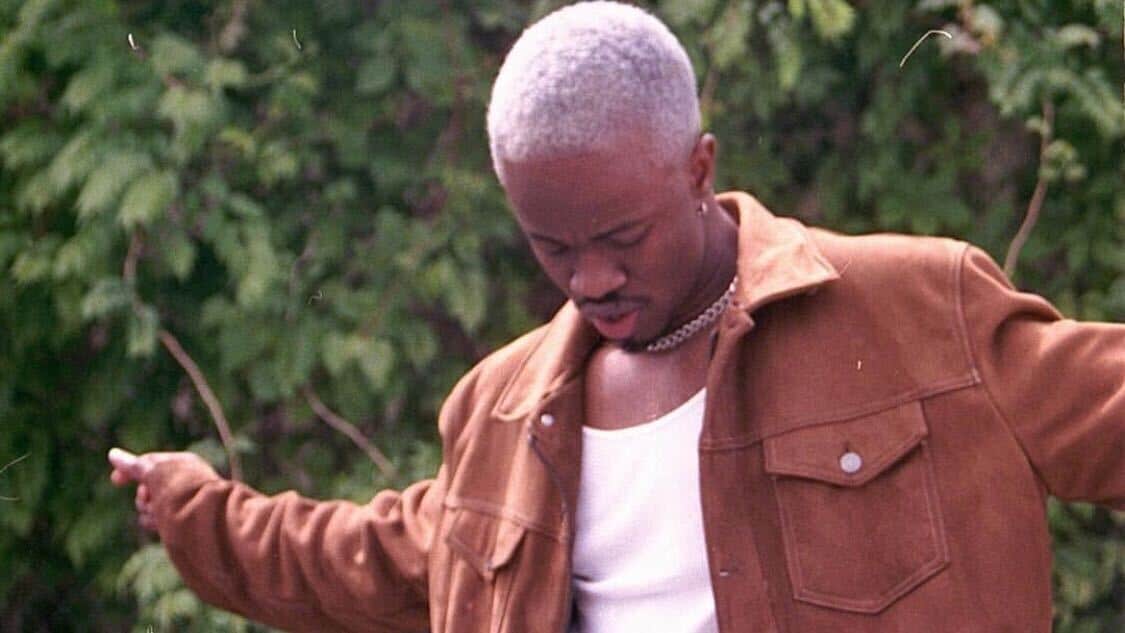
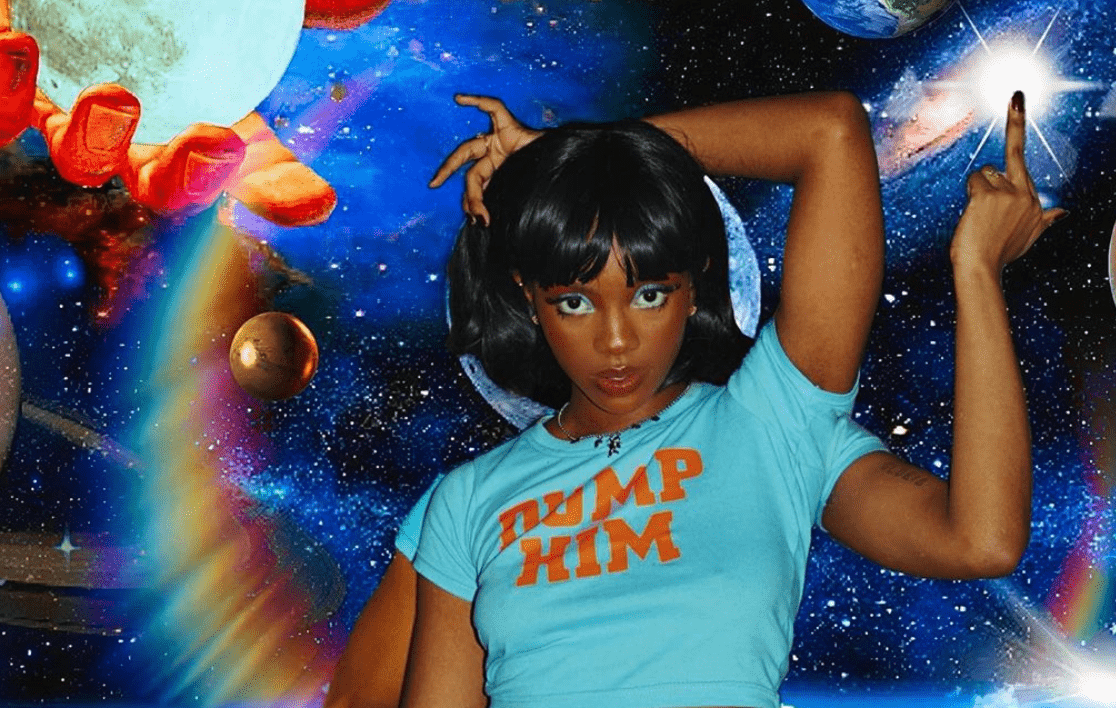
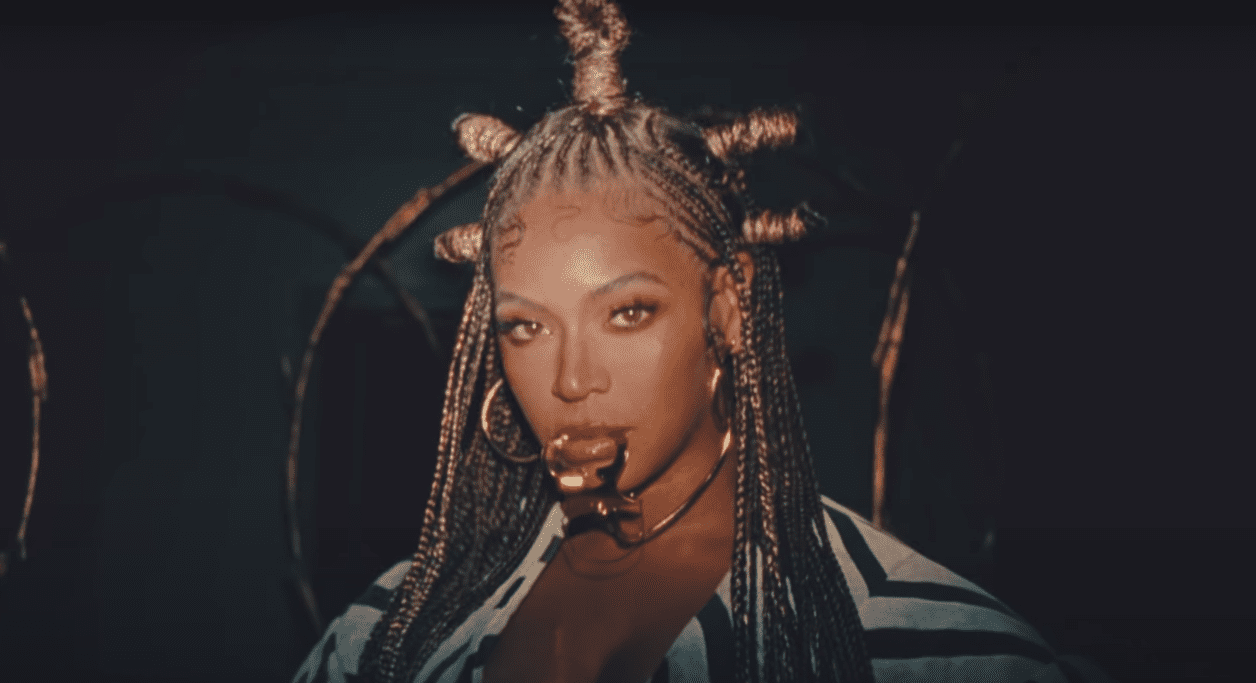
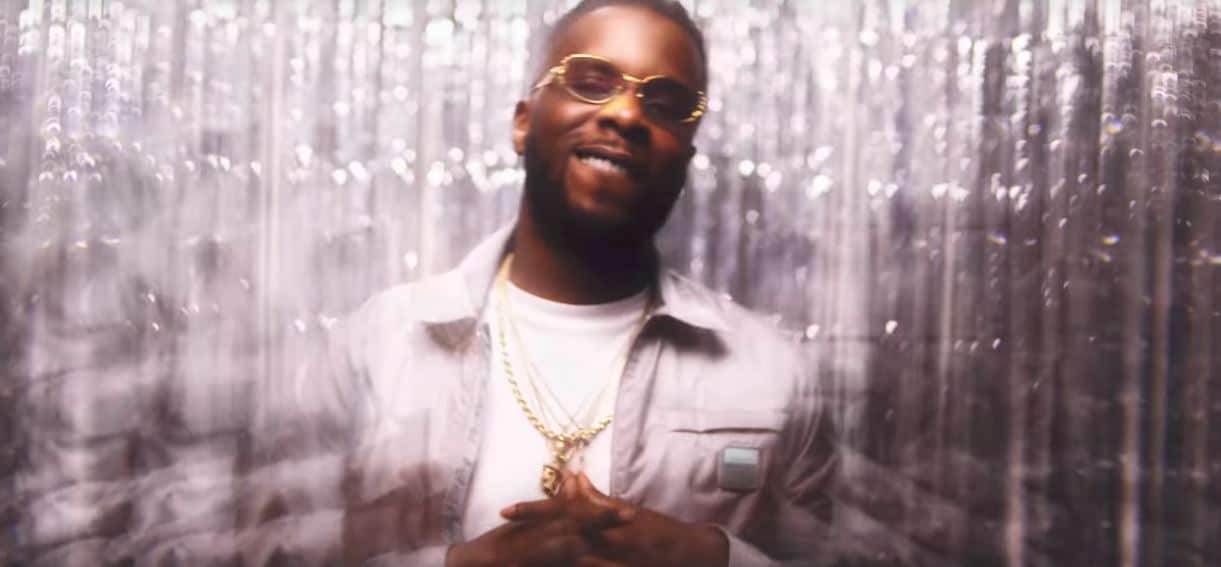
Jean Feier gifts fans with suprise project ‘Grand Theft Demo’

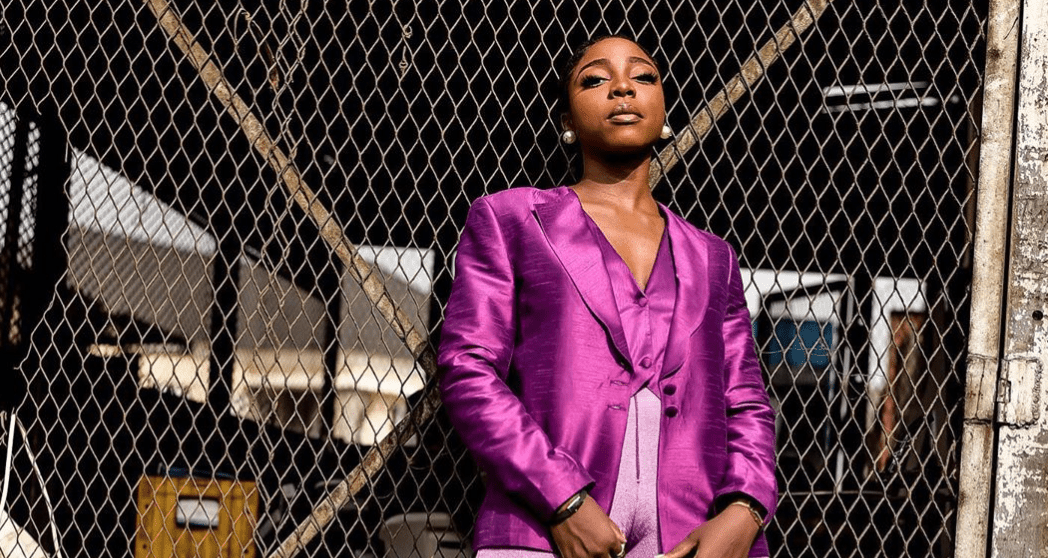
The biggest difference between Jean Feier and any of her peers in the music industry today, is her consistency and diligent work ethic. Every other week, we get a new Jean Feier number exploring a different theme and a different sound. We’re always excited to hear what she comes up with, as each release adds a new layer to the singer’s growing artistic reach. Just when you think you have her sound figured out, she switches it up and shows you there’s always a new layer to unpack with her.

The 7-track project benefits from features from Blaqbonez, E.L, Bryan the Mensah, and NLMGMN, all of whom sonically aid the project’s central theme of discovering oneself along your journey. Both ‘Grand Theft Demo’ and its architect, Jean Feier, gave a level of vulnerability which accurately represents what we’re all feeling, which in turn creates some sort of (digital) closeness and proximity between listener and artist. It’s equal parts sad and hopeful; she’s speaking openly about her journey but she’s not drowning in misery but instead staying afloat and assuring you that you can.

Speaking to the NATIVE, Jean Feier said about the project:

“‘Grand Theft Demo’ is an art piece I put together to free myself from everything I have been through  since starting out in the industry. As a young woman, sometimes you’re so hopeful and hold unto ideas and dreams of how your path should be but there comes a time that the glass ceiling breaks and you see the truth. I’ve been through events that could have broken me but still, I am spinning it in my favour. I made this project for black girls.

There’s also more lighthearted songs that are very bad bitch anthems! I want black women to feel empowered regardless of what they’ve been through. We need to see beyond potential and who they really are. At the end of the day, no matter how great their potential, the path they have chosen in the end, will determine how they treat other people (especially women)”.

Stream ‘Grand Theft Demo’ below.

Featured image credits/audiomack


Tami is living in a black mirror episode and can’t seem to wake up. Tweet your fave female artistes at her @tamimak_


ICYMI: Stream Ictooicy’s most adventurous project yet, ‘Lavish’

We spoke to a few women in entertainment about their experiences with sexism

Trigger warning: This post contains details of sexual assault and harassment. All names have been anonymised for the safety and protection of women in our community. 

According to Nigeria’s Chief Of Police, Mohammed Adamu, the country has recorded one case of rape every five hours between January and May this year. This month alone, we have been plagued with news of another woman being sexually assaulted nearly every day, and while this is not new or isolated, the reports have highlighted that we must all be committed to the fight against gender inequality, which is the root of sexual gender-based violence.

Back in 2006, Tarana Burke launched the #MeToo campaign to promote “empowerment through empathy” among victims of sexual abuse – particularly women of colour. The #MeToo movement has since affected public discourse and brought to light the ensuing epidemic that we are currently facing: grown men relying on grey areas to solicit sexual favours from women, whilst disregarding consent and the woman’s autonomy. This being the order of the day for so long, has now fostered a society imbued with microaggressions and covert sexism; two very pertinent facets of rape culture.

Today, we’re still seeing targeted violence towards women, and it’s troubling that in 2020, women are still fighting for autonomy over their own bodies. In the past 2 weeks alone, we’ve heard of accusations made against artists and others in the music and entertainment industry, such as D’Banj, Peruzzi, Bollylomo, Comedian Ebiye, and Mayowa Balogun. While these alleged cases have been brought to light, what’s scary is that there are a lot more lurking in the shadows, and will probably never see the light of day.

It’s clear that we’ve reached a time of reckoning and there’s a huge demand for change following the unjust cases of sexual violence in the past few weeks, some of which resulted in the loss of precious lives. To do our fair bit for our community, The NATIVE will be joining The Consent Workshop in their ongoing campaign, 21 Days Of Consent, to produce a series of articles dedicated to dismantling different facets of rape culture within the entertainment industry.

So far, we have discussed how music lyrics can either enable or dismantle misogyny, and for this piece, we’ve spoken to a few female artists, presenters, OAPs and more, about how their experiences with sexism and sexual assault within the industry.

For a young female artist who is just starting out in the industry, manoeuvring sexual harassment typically becomes the order of the day. “Whenever I tell them [the producers and artists] that I’m a female artist, they pretend to be interested and invite me over to the studio to record. Then when I arrive, talk of music is suddenly off the table and I am having to avoid their touch”.  From these accounts we’ve gathered, it shows that within the music industry, these women have been seen as an object of sexual desire before they are seen as an artist. This notion has presented itself in different ways, from examples like the above, to situations where women are being set up to be sexualised.

Another young singer recounts her manager requesting for her to show more skin in her music videos and on her social media platforms so that she can be more marketable – according to him, ‘sex sells’. Although this encounter may not have included any violent behaviour, it’s still a contribution to rape culture, as it teaches women that their sexual value is second to their talent and they can only progress if they constantly pander to the male gaze.

“As much as I am pretty and like to do these things regularly, I am not going to do that just because you requested. I will do it when I feel like it. I don’t think it’s fair for a woman to come in the game with a lot of talent and versatility like me, and then have someone tell them that they need to look a certain way.” 

Another female artist speaks about why she’s so committed to being an independent artist, and it’s solely because of her fear of men. She tells me how producers would try and leverage sexual favours for beats and how these requests made her turn inwards and vow to rely only on her abilities and those of a close group of friends to avoid any such trouble. Beyond dealing with sexual advancements, she also speaks about how she sometimes deals with casual misogyny and being tokenised, rather than being called upon for her actual talent. She says:

“It’s like men think that women can’t excel on their own, like we “need” them to help us out. It’s so weird. And it’s crazy cause sometimes you don’t even realise someone has been sexist towards you, it took my friend telling me for me to realise.”

For a media executive who worked at a popular TV station, she had to sever her contractual relationship with the music behemoth after incessant sexual offers from artists and their managers alike. She recounts that the higher-ups would complain about her looks, enforcing harmful notions that she was the cause of the attention she was receiving from these men.“It’s funny cause looking back, I think I developed Stockholm Syndrome because I became friends with some of these people after these events occurred. When I left that role, I dimmed down myself to avoid the attention of men.” she tells me.

She has since grown into herself and learnt to manoeuvre her new position of power. Whilst she still has to deal with what’s considered ‘regular’ misogyny from men who are intimidated by her and want to devalue her, she recounts a harrowing story from when she worked in the tech space when she was 17-years-old.

I experienced more sexual assault in the tech industry. My boss at the time tried to rape me – he had deceived me to come to the ‘second office’ to receive a parcel, meanwhile, it was his home. He tried to undress and have his way with me, until I began crying and he asked if he should stop. After this, I left and he gave me an envelope while leaving. When I got in the uber, I found that it was 30k.

The common factor here is that all these women who don’t know each other are all victims of the same belief of sexism from different men. The onus has been placed on them to either give in or face the consequences of not doing so, rather than dismantling structures that are set up to protect perpetrators. For a young OAP at a radio station, she has since come to the realisation that sexual favours are seen as a rite of passage and have become a norm because the men in power are just used to things being like that for them.

“People come into the industry from all backgrounds knowing that if you play the game right your life is changed. With this, a lot of people come in desperate to blow and whether it’s through sex, money or talent, that desperation will always be taken advantage of. Men are aware that women are desperate for these roles and capitalise on that and take advantage of these women. So when they come across women who aren’t desperate for the roles, they become offended and want to blacklist you”.

This is the same kind of power dynamic which played out in the case of a woman who interned with an advertising agency with a very popular filmmaker. She recounts a story about an initiation game they played, where new interns would be asked to stand on tables in front of the whole workplace and act like their favourite animals amongst other things. “I said my favourite animal was a dog and I was asked to walk like a dog across the table. When I refused, I was taunted and humiliated for being a spoilsport”. In addition, she and two other interns were asked to pick a member of staff (from the opposite sex), and after this, it was revealed they would have to give this employee a lap dance.

She recounts being gaslighted, by being told that she was sexualising herself since it was just a harmless tradition. Even after being reduced to tears, she says that the HR rep rudely taunted her for crying, before she was asked to leave for being a spoilsport. While it has since been announced that the company has since curtailed this welcome party, thanks to her speaking up, the experience has stuck with her. While the announcement was done in good faith she was very triggered by it and unsurprisingly so.

“The audacity to tell my story without me and send a tweet to me that it’s my story to tell and I should do what I want. It was very triggering for me to see people I look up to engage with him. I was forced to claim ownership of what happened,  and he put my business out there for me so I am ready to talk and get my story out there.” 

A woman’s pain is not a teachable moment for society, and it shouldn’t have to take people dying to wake the wider society up to the grim reality. As mentioned before, the common thread to pull at is the normalisation of sexually inappropriate behaviour towards women. In all their varying degrees – from microaggressions to actual assault – these things contribute to rape culture which endangers women all over the world every day.

As a society, what we want to do is disentangle female sexuality from the male gaze; we want women to be seen as autonomous beings and not extensions of the fantasies of men in power. To ensure this, we have to curtail these casual attitudes towards sexually inappropriate behaviour because they leave room for violent and abusive men to continue hurting women.

The importance of dialogue cannot be overstated, however, the onus can no longer only be on women to call out inappropriate behaviour. We have been doing so for centuries and clearly, nobody listens.  The responsibility lies with every single man and person in power in the entertainment industry, to address and treat women in the same way men have been addressed since the dawn of time; to treat women with respect for any reason other than the fact that she’s a human being.

It seems obvious enough, but here we still are in a country which has reported one case of rape ever 5 hours since January.

Featured image credits/NATIVE


Words by the women at The NATIVE: Tami Makinde & Damilola Animashaun 


ICYMI: Dissecting the role song lyrics play in enabling misogyny

A list of 10 Davido singles which could make up a classic album

Seven Years. That’s how long it took for Davido to drop ‘A Good Time’, the excellent follow-up to his debut album, ‘Omo Baba Olowo: The Genesis’. In that long period, where his only multi-song release was the rather panned EP, ‘Son of Mercy’, Davido went from new star on the block to international superstar, using the far-reaching power of single releases to his advantage.

In the near-decade since he’s been prominent, there has never been a time when a Davido hit hasn’t been in circulation, a testament to his blinding prowess as a hitmaker and the sheer amount of star power he’s continued to amass ever since. Beyond their successes, though, revisiting his non-album singles consolidates the fact that Davido has been at the cutting edge of Nigerian mainstream music, making these songs touchstones of afropop rather than loose throwaways.

At the moment, Davido is working towards ‘A Better Time’, a new album which we’re expecting later on in the summer. While we anticipate a new Davido project—partly because it’s not an everyday occurrence—it feels like a great time to appreciate the music he made that didn’t make it unto any of his projects. To that end, we’ve put together a definitive ranking of the 10 best non-album singles from the afropop superstar. Feel free to drop a comment or @ us if you feel otherwise.

10. “Pere” (F/ Rae Sremmurd & Young Thug)

It’s only slightly surprising that, in a year where everything Davido put out was met with rave acclaim, a song produced by hit-making producer DJ Mustard was his least successful release. It was indicative of an audience who was becoming increasingly confident in its homegrown sounds and demanded allegiance from prime purveyors. While it was clearly the weakest of his singles in that year (which everyone acts like it never happened), “Pere” is a highlight in Davido’s catalogue of global collaborations, especially with how comfortable he sounds alongside some of the most talented artists of the time. Assisted by serviceable turns from Rae Sremmurd and Young Thug, “Pere” is an attempt at a purposeful collision, and even though it falls short of hitting the mark, it’s quite impressive to be one of Davido’s best non-album cuts.

9. “Dodo”

If you think about it, from “Ekuro” down to “1 Milli”, Davido has always had songs that seemed tailor-made for nuptial occasions. “Dodo” lands squarely in that territory, and even though it’s very much a retread of “Aye”, it’s definitely far from being an unimaginative love song. At the time of its release, Davido wasn’t the love-stricken man the currently is, but he still had the words and enough charm to capture what it feels like to be in the honeymoon phase. Accompanied by groovy production with vivid Yoruba folk influences, Davido puts on his best rustic charm and spills out a handful of quips about undying affections in Yoruba, all of which he sells with his impassioned and playful melody runs.

8. “Fans Mi” (F/ Meek Mill)

Let’s be honest: “Fans Mi” is mainly a successor to Davido’s grass-to-grace single, the Naeto C-assisted “Back When”, albeit a more reckless and compelling song. Having established himself as one of the biggest superstars on the continent, “Fans Mi” was such an ebullient victory lap it was easy to overlook mentions of being him broke. Having already damned the underdog story, the song pretty much showed that Davido could push whatever narrative he wanted and get away with it, plus it came with a verse from Meek Mill which plays right into the rapper’s unapologetic flexing alley, and a Shizzi beat that still knocks.

7. “The Sound” (F/ Uhuru & DJ Buckz)

If you’re looking for a perfect encapsulation of Davido’s star power circa 2015, the music video for his instant banger, “The Sound”, might be the most potent example there is. At the time, glossiness was already etched into the DNA of popular Nigerian music videos, but Davido—with the help of director, Sesan—took things up a notch with a boisterous display of opulence, featuring exotic cars, jumping out of helicopters and the deserts of Dubai. All of that is fitting for a song which serves as a high watermark for Nigeria-SA collabs, which was a phenomenon on the rise at the time. Instead of finding foils for his energetic flair, as he did on “Tchelete”, Davido is joined by Uhuru and DJ Buckz, both of whom were on the same wavelength with him through their short but effective cameos.

6. “Wonder Woman”

Heart-warming is not the primary adjective that comes up when we talk about Davido, but it’s high time we start attaching it more to the singer. In his ongoing second act as a superstar, Davido’s run has been powered by affecting and appreciative love songs, none more so than “Wonder Woman”, a typical O.B.O flex that manages to extend into a celebration of women’s achievements. With his brags about his willingness to empty out his bank account, “Wonder Woman” contains Davido’s self-reverent trademarks, however, there’s a dotting energy in his fluid melodies and the lush, mid-tempo production that elevates it. Add the brilliant music video, with cameos from notable and enterprising women, and Davido’s genuineness makes up for any chinks in the armour of his execution.

5. “Tchelete (Good Life)” [Featuring Mafikizolo]

There’s a strong argument to be made about Mafikizolo’s mega hit, “Khona”, being the main catalyst behind the influence of South African house on contemporary Nigerian pop music. An indicator of that is “Tchelete (Good Life)”, Davido’s collaboration with the SA group that immediately shot up to smash success and is still a ringer at clubs and parties anywhere. With bombastic production from Shizzi and Oskido, “Tchelete” is a massive feat in complementary song making between artists with varying sensibilities. Davido’s combustible energy is balanced by Mafikizolo’s playful soul and all contributing parties find a middle ground which ensures the song slaps appropriately.

4. “Like Dat”

In a year where completely dominated afropop, the consensus around “Like Dat” is that it’s a criminally underappreciated song. It’s not a claim that’s entirely out of pocket, considering the controversy that followed when Teni publicly announced her songwriting involvements and the fact that “FIA” came out shortly after. Although it lacked the urgency that made its successor instantly popular, “Like Dat” is a potent snapshot of Davido’s ability to create—or in this case, co-create—a club-ready banger that bears his distinct charisma. In between the myriad of striking catchphrases, Shizzi’s preppy beat and DAPS’ phenomenal accompanying video, it’s Davido’s confident character that truly pushes the song into special territory and it’s telling that he’s still the only one who had the power to slightly dampen the song’s success.

3. “Aye”

“They say love is blind but I dey see am for your eyes” is as corny and sappy as romantic one-liners, which is basically on-brand in afropop, a genre largely driven by sentimental lines. On his huge hit song, “Aye”, Davido repeats that memorable line several times, perhaps as a way of emphasising how far removed the song is from the gloss and materialism that often powers his love songs. Although there are subtle (by O.B.O standards) allusions to his wealth, “Aye” is the closest Davido got to blue-eyed until “Assurance”. It is the type of song that has lyrics fitting for handwritten, teenage love letters—if they were still a thing—while T-Spize’s delectable folk production and the rustic music video helped sell Davido’s attempt at being relatable and universal. All of that culminates into making “Aye” the evergreen love song that it rightly and inarguably is.

2. “Skelewu”

“Skelewu” was so big, it had two music videos. After dropping a debut album that spawned multiple hit songs and following up with the similarly successful “Gobe”, Davido completed his ascension into the rarefied territory of artists who were too big to fail with “Skelewu”. If previous songs had already showed us his powers to finagle widely loved music, this song was a showcase of Davido’s ability to affect pop culture itself in a far-reaching way, the hallmark of a true superstar.

Packaged with a dance trend, “Skelewu” didn’t masquerade its intentions of dominating dancefloors, with the instructive lyrics, Davido’s unhinged playfulness and Shizzi’s percussion-packed beat binding together for a song that personified the unrestrained joy of the dance itself. Nobody in their right minds is doing the Skelewu dance at the clubs these days, but unlike many other trends, it’s fond enough to not be an embarrassing period. Davido has gone on to score bigger hit songs, but this song was the moment the wider audience became invested enough to clamour for a better music video; the moment he started becoming the afropop icon we all know and love.

1. “FIA”

Davido had to reply. Within weeks of two close friends passing, the singer found his name being dragged through the mud of speculation and slander, by a gossip-mongering press and a police force using his fame for publicity agenda. Every time he’s been provoked or seemingly backed into a corner, Davido has always come back swinging—“All of You”, “Bahd, Baddo, Baddest”—and on “FIA”, he brought out a flamethrower and incinerated all the chatter in one aggressive, instantly memorable and sublime fell swoop.

Initially starting off as a vindictive missive towards a past, exploitive lover, Davido flips the stakes for “FIA” to fit his agenda as an annoyed pop superstar. The Fresh VDM-produced song is a flawless pop record that had instant wide appeal, and Davido enhanced that thrill by finding the perfect pockets to take the needed swipes—“Caroline save you drama, I don’t need it for a soap opera/hola hola mr olopa, I’m not here to cause wahala”. “FIA” is a classic representation of Davido as a world beater, one who relishes challenges because they give him the opportunity to steamroll over them. For that, it’s not just Davido’s best non-album single, it’s a cornerstone of a mythical career he’s continued to assemble with every notable release.

[mc4wp_form id=”26074″]


Dennis is not an interesting person. Tweet Your Favourite Playboi Carti Songs at him @dennisadepeter


ICYMI: DAVIDO AS CRISTIANO RONALDO & OTHER NIGERIAN ARTISTS AS FOOTBALL STARS

Songs of the Day: New music from Adé Lasodé, Father DMW, Bemi Soul & more

With most of the world self-isolating to flatten the COVID-19 curve, music is one of the things that has kept our spirits up and sustained our sense of community. Artists from all around the world have continued to put out new music, and their relatable subject matters help us process past hurts, dream of a better future, whilst also just enjoying the present moment. It’s completely understandable if this week, you haven’t really been keeping up with new music releases, given the current state of affairs around the whole world.

So to help out a bit, we’ve compiled a list of the new songs you should listen to today. Following our weekend selections that included Nasty C’s latest single, a collaboration between Kranium and Tiwa Savage, new singles from DJ/Producers, Sun El Musician and Juls, and much more. This week, the focus is on Father DMW, Terry Apala, Zlatan, Jean Feier, Oma Mahmud, Ade Lasodé, Bemi Soul, Lemuel Inyang, and more. Enjoy.

Father DMW – “Eva4ever”

The entire quarantine period has seen many fads come in and out of our digital view, as we all collectively try to stay entertained while stuck indoors. A few months ago, Father DMW and his crush for Eva were a big source of our entertainment, as the pair played into the romantic buzz that viewers had created for them and delivered lighthearted entertainment on IG live.

Father DMW is taking his admiration for Eva a step further, by dedicating his latest single “Eva4ever” to the brief online fling (Eva definitely think differently) they shared on our screens not long ago. He samples Pop Smoke’s “Dior” throughout the song, as he boasts about his flashy lifestyle since joining the DMW crew. ‘She wear drip, I wear drip, wetin remain?’ he raps before the beat starts, as he sets up his stories in English before delivering his punchlines in Hausa, shouting out his Kaduna heritage and his upward trajectory.

 Terry Apala – “No Sege” featuring Zlatan &CDQ

Terry Apala is back with his second single of the year titled “No Sege” featuring Zlatan and CDQ, following his last release, the Niniola-assisted “Lock Up”. On the Ozedikus-produced “No Sege”, he is taking us back to the sweaty, inebriated nights out, as he delivers an afro-trap record primed for dancefloors everywhere. While Terry Apala and Zlatan are full of braggadocious boasts about beautiful women, it’s the song’s catchy beat that ensures you keep coming back for more.

Jean Feier – Circus (Sweet)

Our Fresh Meat alum, Jean Feier, is what’s hot at the moment. Over the weekend, she dropped a surprise project titled ‘Grand Theft Demo’. The 7-track project,  featuring Blaqbonez, Bryan the Mensah, and E.L, is an honest and open reflection of the times we’re currently living in.

On the project’s opening track “Circus (Sweet)”, Jean Feier addresses the state of the world today and questions her existence in the grand scheme of things. ‘Lesson learnt and I’m still learning/ I am just everything I ever wanted’ she sings, over gentle pianos and airy synths. She questions how long it will take to get to the place she wants to be at, creating an honest vulnerability that is greatly welcomed.

Bemi Soul – “Memories”

When we last heard from Bemi Soul, she was lulling us with her hypnotic vocals on two-pack release “Trust Issues/Gratitude” just in time for Valentine’s Day. This month, she’s just released a 4-track collaborative EP, ‘Kaotic Riddim’ with afrofusion producer, T.U.C. and we just can’t get enough of the catchy afrohouse rhythms on the project.

The song relies on the base-heavy afropop drums and slick chords, which match the gorgeousness and dreary tenor of her lyrics. ‘Lost in the memories that we had/let’s rewind and take it back’ she sings, atop blissful harmonies.

Oma Mahmud – “Jaiye”

On Oma Mahmud’s new single “Jaiye”, he addresses fellow Nigerians to find ways to enjoy their lives despite the many injustices that we face daily from our government and law enforcement alike. ‘You no fit solve Nigeria problem, my sister Jaiye’ he sings, over rock-inspired melodies and pounding drums. Rather than serve as a marker of defeat, the new energetic single actually aims to highlight the numerous problems our people face, as he pleads with fellow countrypeople to find ways to ease the strain on their mental health in any way that seems right to them.

Lemyangofficial – “Goosebumps”

The honeymoon stage of relationships is always rumoured to be the best bits; it always consists of the unfiltered adoration for another, the casual overlooking of all the red flags, and the optimistic feelings of a future together, which is enough to have anyone pinning for another romantic relationship. Uk-based singer, Lemuel Inyang knows this and plays on this nuance in his latest single “Goosebumps”. ‘Goosebumps that’s how I feel/body dey do me … baby all for you’ he sings over the song’s hook, over the catchy drum-led beat. His lyrics are filled with this deep seethed adoration and infatuation common in new relationships, as he promises to go over and beyond in his actions to show his love and admiration for his lover.

Ade Lasodé – “Pempe the Butter”

Since she released the slick-tongued number “These Niggaz” a few weeks ago, we’ve been pinning for new Adé Lasodé and it’s finally here. Her latest single, “Pempe the Butter” is a deeply intuitive single, which she speaks about the casual injustices that Nigerians are still facing today. ‘Pempe the butter to discover the way things dey scatter’ she sings on the songs infectious beat, where she leaves no stone unturned as she admonishes Nigerians for not getting to the root of our problems, as we barely seem to scratch the surface.

Featured image credits/Instagram


Tami is living in a black mirror episode and can’t seem to wake up. Tweet your fave female artistes at her @tamimak_


ICYMI: Here’s all the new music you may have missed last week

How the music in ‘Living In Bondage: Breaking Free’ aids the storytelling

These days, Netflix is ensuring that we don’t miss new Nollywood releases after they go out of cinema, and the latest addition to their catalogue is Ramsey Nouah’s directorial debut with Living In Bondage: Breaking Free. After many years of teasing, last year, we finally got the sequel to what is popularly known as the first Nollywood film; Living In Bondage, and it certainly lived up to all the hype.

The sequel follows the story of Nnamdi Okeke, a young man who can’t seem to ever get it right and falls flat on his face every time he tries. While he’s deep in the trenches, he meets a certain Richard Williams (played by Ramsey Nouah) who turns his life around with robust job opportunities and access to the best life he could only imagine prior. But the gag is, he has to pay a price for it, and Nnamdi doesn’t seem to quite be down for the demands made when payday comes.

Living In Bondage: Breaking Free, benefits greatly from CJ Obasi & Nicole Asinugo’s fantastic screenplay, as well as Ramsey Nouah’s excellent direction, and shows how far production is Nollywood has developed. It’s the right amount of classic Nolly-horror, drama and comedy, which manages to appeal to both the older audience who would have enjoyed the first one and also to a younger audience who were probably not even born when it was first made.

Set in modern-day, the film had everything you would expect from contemporary Nollywood, and what stuck out the most to me was the soundtrack, which aided the storytelling in more ways than you can imagine.

We’ve come a long way from when the soundtrack for Nollywood films were mostly only the score which set the mood of impending doom or even when there’s the one hit song used throughout the film to break up the scenes. This shows how we’ve moved into times where actual music is being used to aid storytelling and the importance of music supervision as a whole.

Right from the opening scene, you can already tell that music is an important part of the storytelling, as the film opens up with a little girl singing ominously, which in the end plays a pivotal part in the entire film’s plot. In the next scene, we’re introduced to a jovial Nnamdi hitting the club before the riches, with Olamide’s lively “Wo” playing in the background while he and his friend are trying to catch some rocks.

Living In Bondage II was set in 2019, and it would be no far cry to hear Olamide’s “Wo!” in the club even though it was released back in 2017. In this scene, however, the music is quietened while Nnamdi’s character is introduced to us, and we learn about his ambition and plans for a bigger future and is turned up while he tries (and fails) to get into the VIP section in the club. This song choice early on in the film already makes the storyline convincing to entice viewers, in addition to the fact it’s also very different to what we usually get from Nollywood club scenes, which usually go on for about five minutes with the one song playing the whole time. Rather than being the focal point of the entire scene, the song serves as an accessory to the story.

Later on in the film when Nnamdi first meets Richard, Illbliss’ “Bank Alert” commands your attention when Richard hands Nnamdi the keys to his Ferrari to take a spin and give him a taste of the good life. The song continues as the car zooms down Ademola Adetokunbo Street in VI, set to just the right volume as Richard is explaining to Nnamdi that in life, he has to seize the bull by its horns. This song would be considered an old song at the point when the film is set, however, it fits right into that particular scene and I could definitely imagine seeing a white Ferrari with the top down blasting the song on that street.

When Nnamdi gets on Richard’s private jet to Durban, Olamide & Phyno’s “Nobody’s Fault” comes on, where the two rap about going from rags to riches, as we see Nnamdi living lavish, popping champagne on a yacht, in a vintage car, and signing documents to seal his success. This is a very different vibe to the Olamide song which was played earlier on in the film before the riches, and the difference between the feel-good “Wo”, and the pensive and thought-provoking “Nobody’s Fault” sort of sets the scene. Phyno says in the song, “But nobody ever told me it’s not as easy as it seems” and this seems like a foreboding of what unravels in Nnamdi’s life for the rest of the film.

When he’s fallen in love with Kelly (played by Muna Abii), we hear the love song, “Tene” by Larry Gaaga and Phynowhich again fits the mood of their amorous exchange, while we’re watching them sit on the phone for hours and running on the beach in typical Nollywood fashion. By the time their relationship has blossomed and they’ve reached the stage of consummating it, the deed is soundtracked by Styl Plus’ “Olufunmi”, which if like me, you still cringe at watching Nollywood sex scenes, you’ll be distracted by the classic and sing along.

Background music in film and tv is meant to capture the listener’s attention and carry the story along in place of dialogue. In Nollywood, music is normally an added on extra, and rarely ever plays a part in the story or in relation to its characters. It’s interesting to see that Living In Bondage does this so well, and we would like to see more deliberate choices in more films to come.

Since social distancing requirements have restricted the standard revenue stream for artists in these parts through performances, movie soundtracks and music supervision could be another revenue stream for artists and producers in these times. In light of the current pandemic, which is changing life as we know it in every aspect, it would be interesting to see how the film and music industry can come together in light of this, especially with the likes of Netflix investing in Nigerian film. 

Living in Bondage: Breaking Free is now streaming on Netflix, make sure you check it out this long weekend.

Featured Image Credits: 

[mc4wp_form id=”26074″]


Damilola is the HBIC around here, don’t tweet at her @damdamxx


ICYMI: Alhaja Eniola Salami is one of the most important female Nollywood characters

GEMS: A List of the best songs released this week

Every Saturday, The NATIVE Will Put Out A List Detailing The Best And Most Enjoyable Songs Released During The Week. With The Scope Widening And Music Dropping At An Immeasurable Pace, It’s Easy To Miss Out On A Lot Of New Drops, So We’ve Decided To Help Out, By Collating A List Of The Best Hip-Hop, Pop, R&B Song From All Over The Continent. Our Main Goal With This List Is To Make Finding Great Music Of The Moment Easier For You.


DAP the Contract – “Love the World”

DAP the Contract’s consistent streak with releasing new music is matched by his flair for lived-in and substantial thematic content. Two months ago, the rapper/producer opened his account for the year with an EP, ‘Powers, Vol. 1’, and he recently updated the project with a deluxe edition that adds three new tracks. The additions are mainly a reflection of the grimness that has enveloped our world in the past month, and on the standout cut, “Love the World”, DAP lets his world-weary feeling roam free on wax.

Unfiltered and honest without being overbearing, “Love the World” finds DAP untangling the madness of injustice, racial and otherwise, adding a conspiratorial edge to his observations (“that iPhone close your third eye till you see none”) and letting us in on his relationship with the concept of a higher being. Amidst all of this, he makes a resolution to love the world while dealing with all its craziness, because that’s the best we can do lest our outrage push us into total darkness and nihilism. DAP’s careful optimism is matched by his gently propulsive flow and radiant boom bap production.


Ictooicy – “Attitood”

Ictooicy has been teasing her loyal following with her fourth drop for a while now and it’s finally here. ‘Lavish’ was rolled out earlier this week and impressively shot up to the #4 spot on Apple Music Alternative charts within hours of its release. With features from Fasina and 234jaydaa, who contribute sonically to her youthful tales of romance and chaos, Ictooicy delivers her most adventurous drop yet. 

The closing track “Attitood” is probably the project’s most enjoyable number, boosted by its airy synths and vivid percussions, Ictooicy apologises to friends for switching up when her moods get sour.  The track seems a bit like a dialogue, as she talks and sings over the beat, explaining the process behind landing such a great beat and proclaiming it the best Icy song ever.

“Please don’t hit me up when I’m not in the mood/I don’t really like giving you that attitood” she sings, reinforcing the song’s title as she pleads to be left alone even though she has two phones – one for the text, one for the road. Bad moods are like an itch that just becomes worse the more you scratch, and communication tends to be a bit harder when there are mood swings involved. We love to see Icy being emotionally intelligent and taking space when she needs to, in order to communicate better.

Preye – “Man in the Wind”

The legendary reggae singer Bob Marley famously sang, “Get up, stand up, stand up for your rights”. On her new reggae-infused single, “Man in the Wind”, Preye Itams taps into the spirit of Bob Marley’s sentiment without mentioning his name or invoking those particular lyrics. Burning with a righteous anger toward the myriad of unjust acts that are unravelling society, the singer charges listeners to go beyond digital activism and take to the streets in order to ensure change happens at a faster pace.

These past few days, outrage has been the common denominator in our existence, with many people taking to the streets to protest and more people expelling their disdain through social media platforms. While the latter has been integral to heightening awareness, educating more people and fostering a communal sense of moral responsibility, Preye is far more enamoured with the boots-on-the-ground approach since it’s far more radical—and radical might be what we need most right now.

“Nothing gets better if the trespassing is punished by another man’s sin”, she sings over the assortment of whirring guitars and marching drums. For the most part, she’s not invalidating the efficacy of activism through social media, but she justifies her stance through the contagious annoyance and defiance she puts into her delivery.

Urban Village  – “Izivunguvungu”

South African band, Urban Village, have just released a new song, “Izivunguvungu” and it builds on the traditional appeal of their powerhouse match-up. The 4-man band have continued to develop their reputation for performing acoustic melodies rooted in traditional Zulu sounds. 

Given the unpleasant state of the world today, “Izivunguvungu” plays out like an escapist antidote with the enchanting mix of the synths, drums, horns, percussion and otherworldly vocals, which reenact the spirit of a community whose history is marked by their fight against apartheid. 

The band described the song as “Inspired by the Zulu traditional music genre called Isicathamiya, a male opera style of music that Zulu migrant workers performed together. “We blended the rural traditional music with a modern sound. It’s a song about striving to overcome the storms and hardship of life, about the promise of the return home,” the band mentioned in a press release. Like other South African songs which have crossed over to the rest of Africa like “Khona”, “Izivunguvungu” is enchanting enough to convey the song’s message clearly enough.

Dolapo – “It’s Alright”

British-Nigerian singer, Dolapo is definitely an artist you should be paying attention to. The talented singer has been rapidly making her way up the music scene in the UK owing to her smooth blend of r&b and afrobeat melodies. She’s incredibly gifted at delivering relatable lyrics about love and life, sure to resonate with anyone who’s been through similar struggles.

Her new single “It’s Alright” is the latest object of our listening obsession. Dolapo offers a startlingly modern take on r&b with colourful vibrant vocals that are reminiscent of artists like SZA and H.E.R. “You ain’t never had someone to change your life/make you wanna upgrade put that shit behind” she sings, speaking her truth about unworthy past lovers on top of harmonies and melodies that seem to swell and shimmer with each notable lyric. Get into her latest this weekend, her buttery smooth vocals make for an overall gratifying listening experience that reveals something new each time it’s revisited.

Skiibii – “Banger” feat. Reekado Banks 

In 2018, Skiibii‘s career grew from publicity stunt acclaim to nationwide cool after his song, “Sensima” featuring Reekado Banks dominated DJ sets and radio airwaves. He followed up the song’s success with “Daz How Star Do” featuring Falz and Teni but his subsequent releases, “Omaema” and “Big Engine” slowed his momentum as they didn’t receive much attention from fans. Skiibii’s debut single for 2020, “Banger” is set to get him back on the track he started out with, as he reunites with Reekado Banks to deliver another unforgettable track. 

Much like “Sensima”, “Banger” brings out Skiibii and Reekado Banks’ confidence in their craft. Produced by RhymeBamz, the party-driven beat serves as the perfect backing for singers to woo their love interest with adoring lyrics with groovy allure. The pair dedicate most of their lyrics to singing their lovers’ praises, “Baby girl your body is a banger”, confident that they can secure a hit song by merely singing about their beauty.

Asides Skiibii’s lyrics, “To ba ri mi ninu Bentley/ Mo mope o fe ya selfie. When you see me in a Bentley/ I know you’d want to take a selfie”, the singers’ superstar status is hardly acknowledged as they remained focused on celebrating their muses. Though it’s still too soon to call “Banger” a hit song, it shows Skiibii at his finest and proves that we’d be talking about him for some time to come. With vulnerable yet heroic lyrics like “Let me be your sugar dad”, “Banger” is the sort of song that lingers with listeners and prompts you to think wistfully about your crush. 

Featured image credits/instagram


Words by Dennis Ade-Peter, Tami Makinde and Debola Abimbolu


ICYMI: FRESH MEAT: The best new artists this month (May)


Revisiting the past winners of the Headies Next Rated Award

In one of the greatest scams in music history, German-French R&B duo Milli Vanilli won the Grammy award for Best New Artist in February 1990. Prior to that win, there were hushes that Rob and Fab, the acts in the group, hadn’t sung a note on their breakout album, ‘Girl You Know It’s True’, and those suspicions were confirmed later that year. While Milli Vanilli’s win was quickly rescinded, it became a big smudge on the reputation of the prestigious category.

The very next year, Mariah Carey won the award and quickly restored some validation to the category. Beyond the clear potential she possessed and her already successful eponymous debut LP, the category’s actual vindication, is that Mariah went on to build an immense and longstanding career as one of pop music’s best and greatest artists.

Gauged by fairly limited output and largely based on potential, Best New Artist awards are more or less a way for award bodies and industry insiders to place bets on artists they deem as budding superstars and game-changers. As illustrated by the two stories above, winners can turn out to be scams or the real deal—and in some cases, painfully mediocre.

In the Nigerian context, the Headies Next Rated award is the most coveted of such award categories in our growing music scene. Since debuting at the very first edition of the Hip-Hop World Awards (2006-2011) —before they rebrand to become the Headies— Next Rated has been dedicated to awarding the “most promising upcoming act in the year under review”, with a new car added to the winner’s incentive alongside the Headie plaque. While we, thankfully, haven’t seen any Milli Vanilli-level scams receive the award, it’s had its fair share of hits, controversies and misses.

With the new decade bringing a clarity that we’re knee-deep into a renaissance, it will be interesting to see how future winners of the (usually mainstream-focused) Next Rated category emerge, especially in a time when the music is becoming more diverse and as more new, independent artists are constantly springing up and proving themselves. At the same time, it also feels like a great time to recap all the previous winners and nominees from 2006 till date, taking a look at their trajectories and gauging the overall efficacy of the Next Rated category itself.

2006

Winner – Asa

(Nominees: N/A)

With two instantly striking, classic singles; “Eye Adaba” and “Fire on the Mountain”, Asa was the ideal generational talent that to kick-start the Next Rated award. Not only was her music unique, she also had the star quality needed for the long game. At the time, the singer was signed to the rising label, Question Mark Records, an arrangement which publicly and controversially fell apart later that year. Instead of disrupting her momentum, that unfortunate situation turned out to be a catalyst, as Asa signed to the French imprint, Naïve Records and released her unanimously classic debut LP in 2007. ‘Asa’ was a resounding success, confirming Asa’s entry into the rarefied territory as a game-changing superstar, a status she’s held on to ever since.

2007

Winner – Overdose

(Nominees: Naeto C, Lawal Olumo, Kage, C-Mion, Gino, Blaise)

2007 was the tipping point for the blistering renaissance Nigerian rap went on to enjoy from the late ‘00s to the early ‘10s, and many people thought the Kaduna-born rapper Overdose was going to be on the frontlines of the movement. The previous year, OD had scored a hit with “Don’t Hate”, a song which flexed his undeniable strengths as a lyricist and also showed his innate understanding of the Nigerian market he was appealing. In other words, he was the promise of a rapper who could be the best of both worlds, therefore, the appeal of him being Next Rated was glaring. Unfortunately, the hope sizzled out after a while – in 2009, OD signed with X3M, and dropped a few hits, “Drinks in a Glass” and “Alujo”, however, he never really fulfilled the potential many saw for him.

The same can be said for most of the other nominees— Blaise is a classic case of what could have been, Lawal Olumo barely made any dent, and while he put out the classic rap album, ‘Pain Plus Work’, Gino fizzled out quicker than expected. In hindsight, with what we know now, Naeto C would’ve been the best pick amongst the bunch. With his swag, endless quotables and unparalleled ability as a hitmaker, Naeto has gone on to become an urban legend, etching himself into the DNA of not just Nigerian rap music, but pop culture as a whole.

2008

Winner – Wande Coal

(Nominees: GT the Guitarman, M.I Abaga, Banky W, Cyrus da Virus)

Nobody in their right minds expected any other artist but Wande Coal to pick up the Headie and car at the 2008 edition of the hip-hop world awards. The competition was pretty formidable though; M.I and Banky went on to become two of Nigeria’s most revered, boundary-pushing artists – but at the time, Wande Coal had already proven himself as a superstar in the waiting. There were literally zero doubts about the havoc he was set to wreak.

In 2007, the legendary Mo’Hits crew (in)arguably delivered the greatest compilation project in modern afropop, ‘Curriculum Vitae’, and Wande was the undoubted star of the show. After his win, Wande effortlessly hunkered down and proved everyone right, inarguably delivering the greatest debut album in modern afropop, ‘Mushin 2 Mo’Hits’. His legend was signed and sealed; no matter how you feel about the inconsistencies since then, there’s no question that Wande Coal and his debut are a cornerstone in the ongoing global acceptance of African music.

2009

Winner – Omawumi

(Nominees: Kel, YQ, MP, Djinee)

In these parts, former contestants of music contest shows often struggle to gain much momentum in the moments following, either because they buckle under the weight of expectation or they can’t seem to translate their lessons into making music that resonates with a wide audience. Starting off with her South African folk-infused debut single, “In the Music”, Omawumi quickly began to establish herself as one of the very few anomalies, reiterating the huge singing talents she showed as the runner-up of the 2007 West African Idols. She also managed to make a statement as a newly minted artist with the potential for longevity.

Outlasting other nominees in the category —all of whom were talented and went on to have moments of their own— with an impressive catalogue that includes well-received albums and hit songs, Omawumi has acquitted her Next Rated win in convincing fashion. While she is sometimes omitted in the conversation of perennially reliable artists, Omawumi has thrived in a space that hasn’t always been kind towards women, and her continuous stream of new music is proof that she has more to offer and isn’t planning to fizzle out anytime soon.

2010

Winner – Skuki

(Nominees: General Pype, Mo’Cheddah, Jesse Jagz, D’Prince)

Of the annual group of Next Rated nominees, this particular can make you a bit ambivalent in retrospect. In a baffling turn of events, these artists seemed to peak around the period of their nominations—with D’Prince being the only commercial exception, and Jesse Jagz hit new creative heights while drifting further away from the mainstream. Delivering hits like “Banger” and “Stamina”, eventual winners Skuki were in the middle of a dominating run, but there were no signs that they were here for the long run. The fact that it took only less than two years for their fuel to run out is very telling.

2011

Winner – Wizkid

(Nominees: Ice Prince, Olamide, Tiwa Savage)

In contrast to the preceding year, this set of artists was packed with artist who definitely went on to impact afropop significantly. Ice Prince took the definition of what it means to be a commercially successful rapper in Nigeria to another level; Olamide is arguably the greatest and most prolific rapper Nigeria has ever seen; and Tiwa Savage is amongst the artists that have continued to raise the bar for excellence in Nigeria pop music. However, much like Wande Coal’s set in 2008, there was no competition where Wizkid was concerned.

After showcasing his potential with his stunning appearance on M.I’s “Fast Money Fast Cars”, Wizkid established himself as afropop’s hottest prospect since Wande Coal with two scene-stealing features on Banky W’s sophomore album, ‘The W Experience’, and solo smash singles, Holla at your Boy”, “Tease Me” and “Don’t Dull”. Wiz’s Next Rated win was more of a pre-emptive coronation rather than a superstar prediction, with his classic, smash debut LP, ‘Superstar’ only proving this further.

2012

Winner – Davido

(Nominees: Eva Alordiah, Praiz, Chuddy K)

For the second time in a row, the Headies were given a surefire winner even though the competition wasn’t as tightly packed as the preceding year. I remember jokes about how Davido was about to add another car to his fleet while Eva Alordiah was going to continue moving around in cabs and on bikes – the rapper playfully admitted to her means of mobility in the campaign for the award. Regardless, Davido was utterly deserving of his win.

After pulling a 180 from the grass to grace story of his breakout single, “Back When”, Davido owned his privilege with “Dami Duro”, a smash banger of epic proportions. Similar to Wizkid, Davido’s Next Rated win was merely an acknowledgement of his world-beating talent and tenacity, all of which has manifested in a phenomenal career brimming with hit singles and sold-out shows across the world. He’s had one or two bumps along the way, but there’s never been a time when his greatness was in doubt.

2013

Winner – Sean Tizzle

(Nominees: Burna Boy, Dammy Krane, Seyi Shay, Phyno)

Perhaps the tightest set in terms of competition, each of the nominees for the 2013 Next Rated award had a legitimate shot at winning, it didn’t really come as a surprise when Sean Tizzle picked up the plaque and the car. At the time, Sean Tizzle had a huge hit in “Sho Lee” and subsequent singles touted him as a special talent, which he proved to some extent with his well-received debut album, ‘The Journey’. However, his win was a snub for Burna Boy, who would’ve been the ideal candidate with the gift of hindsight.

Similarly to Kanye after he lost at the Best New Artist award at the 2004 American Music Awards, Burna Boy exited the venue shortly after Tizzle’s win was announced, clearly slighted by the snub. Justifying his slight, even after already dropping a great debut album, ‘L.I.F.E’, Burna has gone on to hit undeniable levels of success, and flipped a rough patch after his sophomore album into one of the most dominant runs contemporary afropop has seen.

2014

Winner – Patoranking

(Nominees: Runtown, Yemi Alade, Skales, Orezi)

With his distinct reggae/dancehall-influenced sound, and the hit songs “Alubarika” and the Tiwa Savage-assisted “Girlie O (Remix)”, Patoranking was in pole position to poach the Next Rated award ahead of a talented set of competitors. While all the nominated artists are still active to varying but notable degrees of success, Patoranking’s consistency in quality and continued evolution as a bona fide part of afropop’s global push have helped in proving his potential.

2015

Winner – Reekado Banks

(Nominees: Lil Kesh, Kiss Daniel, Korede Bello, Cynthia Morgan)

Arguably the most infamous moment in the history of the award show, Reekado Banks winning Next Rated over Lil Kesh sparked an embittered exchange between both artists’ label bosses, Don Jazzy and Olamide. Going into the ceremony, most people fancied Lil Kesh as the runaway winner of the category, since – to paraphrase Olamide– every single was a hit, back to back to back. It wasn’t that Reekado wasn’t a strong contender, it’s that Lil Kesh’s numerous hits helped him reign over the year in review.

But for an award that also places a premium on potential, the Headies seem to have been vindicated in retrospect. While Reekado is still a pretty reliable hit maker, Kesh today is not as notable on the scene as he once was. From an objective standpoint, however, Kiss (now Kizz) Daniel would have been the best pick, as not only did he release a widely acclaimed debut—something that eluded his other contenders—Kizz has remained at the cutting edge of afropop ever since, sidestepping the dreaded sophomore slump. Even though he’s quite problematic, he has kept the hits flowing.

2016

Winner – Mr Eazi

(Nominees: Tekno, Ycee, Humblesmith, Aramide)

There’s a possibility that Mr Eazi would have had stronger competition for his Next Rated run, had Tekno not (somewhat wrongly) rescinded his nomination. The remaining trio of contenders—Ycee, Humblesmith and Aramide—had had breakout years as well and have continued to press on with their respective careers, but there’s no denying that Mr Eazi was a dominant force in a fairytale year that saw him greatly impact all of afropop.

Beyond that run, the satisfying part of his Next Rated win is the astronomical heights Eazi has reached since then. The singer has released two solid projects, toured around the world by himself and as a supporting act for Urbano mainstay, J Balvin, and he’s performed at Coachella. In addition, he’s also bolstering his CV as a visionary for the growth of African music, through the incubator/label services arm he initiated, emPawa Africa. He might not yet inspire the highest level of reverence as his slightly more notable senior colleagues, but Mr Eazi is a prime example of the seal of approval an award like Next Rated hopes to inspire.

2018

Winner – Mayorkun

(Nominees: Maleek Berry, Johnny Drille, Dice Ailes, Zoro)

Similar to his label boss in 2012, there was really no getting in Mayorkun’s way when he confidently and comfortably won the Next Rated award in 2018. Although he was in the midst of talented and promising prospects, Mayorkun had already made it to stardom with a string of big singles and it didn’t seem like he was going to stop. He eclipsed any doubts with his successful debut album, The Mayor of Lagos’, and he’s only vaulted further into superstar territory with multiple headlining concerts—including his sold-out, Indigo O2 arena show—and hit singles, like this year’s biggest song till date, “Geng”.

2019

Winner – Rema

(Nominees: Fireboy DML, Joeboy, Zlatan, Lyta, Victor AD)

Sometimes, you just know you’re witnessing a special artist right from the moment they appear. Immediately Rema dropped his debut eponymous EP, it was undeniable that he is as special as they come. The diversity and stunning quality of his two subsequent EPs, ‘Freestyle EP’ and ‘Bad Commando’, only cemented that idea and it was more than enough for the Benin-born artist to race his way to the Next Rated award of the last Headies.

To be fair, the nominee list was packed with worthy contenders who had proven themselves and have continued to build towards distinguished careers. Fireboy’s “Jealous” and “King” were two of the biggest and best songs of last year, and his impressive, hugely successful debut album, ‘Laughter, Tears & Goosebumps’ only projects greater things for the YBNL singer. Joeboy’s “Baby” placed the singer in the canon of potential long term hitmakers, a reputation he’s steadily fulfilling with subsequent singles and features.

Less than a year later, and as we’re currently living our lives against the backdrop of a pandemic and a bunch of other shitty events, it will take more time to justify Rema’s win. However, as this hinges on Rema full transformation from special to transcendental—he’s clearly well on his way—that bet already looks like it’s done and delivered.

[mc4wp_form id=”26074″]


Dennis is not an interesting person. Tweet Your Favourite Playboi Carti Songs at him @dennisadepeter


ICYMI: 20 NIGERIAN ARTISTS AS FOOTBALL STARS

Songs of the Day: New Music from Kranium X Tiwa Savage, Tay Iwar, Juls, Nasty C & more

With most of the world self-isolating to flatten the COVID-19 curve, music is one of the things that has kept our spirits up and sustained our sense of community. Artists from all around the world have continued to put out new music, and their relatable subject matters help us process past hurts, dream of a better future, whilst also just enjoying the present moment. It’s completely understandable if this week, you haven’t really been keeping up with new music releases, given the current state of affairs around the whole world.

So to help out a bit, we’ve compiled a list of the new songs you should listen to today. Following our mid-week selections that included drops from Prettyboy D-O, Nana Fofie, Juls and Sango, Efya and more, today’s curation includes Nasty C’s latest single, a collaboration between Kranium and Tiwa Savage, new singles from DJ/Producers, Sun El Musician and Juls, and much more. Enjoy.

Kranium x Tiwa Savage – “Gal Policy (Remix)”

Despite the tense banter that followed the flawless NS10v10 victories by Nigerian superstars, Wizkid and Burna Boy, over their dancehall contemporaries, Vybz Kartel and Popcaan, Afropop and Caribbean pop have a strong relationship which has been shown by the steady stream of collaborations between the genres’ respective artists. After featuring Burna on “Hotel” last year, dancehall star, Kranium has just tapped the services of Tiwa Savage for his latest drop, “Gal Policy (Remix)”.

Originally released earlier this year, “Gal Policy” finds Kranium in his trademark lothario bag, as he explains the peaceful dynamic that exists between him and the women he engages with. On the remix, Tiwa Savage plays the love interest who’s a bit slighted by his infidelity, but ultimately knows he remains committed to only her. The remix adds a layer of complexity while also showing off the chemistry between the two artists, over a catchy mid-tempo beat.

Nasty C – “Eazy”

Nasty C SZN is here. The South African rapper has been prepping the release of his third studio album, ‘Zulu Man with some Power’, and the last couple of weeks have seen increased activity that suggests the project will be here real soon. A week after dropping the socially concerned, T.I-assisted cut, “They Don’t”, Nasty C is back with “Eazy”, a new single where reverses back into his trademark braggadocio.

Adopting a smooth sing-song flow on the first verse and a sturdy cadence on the second verse, the rapper flexes his wealth and stunts on his adversaries, referencing his rise from the bottom as justification for his unhinged exuberance. “I see you change the way you feel about me when the lights hit my jewellery/It’s a lot of bad things here, I’m right where I should be”, he boasts over the psychedelic riffs and stomping bass.

Sun El Musician x Msaki – “Ubomi Abumanga”

South African DJ/Producer Sun El Musician broke out with his 2017 smash hit, “Akanmali”, featuring Samthing Soweto, and he’s worked his way into one of the premier purveyors of African house music with subsequent releases. For his second single of the year, “Ubomi Abumanga”, the producer puts together a dreamy banger that will either calm you down or get your body swaying, depending on your disposition. Gliding over Sun El’s thumping percussion, layered piano riffs and horn blasts, South African singer, Msaki adds an ethereal and captivating touch with her melody swells and playful vocal runs.

Oumou Sangaré – “Djoukourou (Acoustic)”

Later this month, Malian singer, Oumou Sangare will release ‘Acoustic’, an unplugged album with acoustic reworks of her critically acclaimed 2017 LP, ‘Mogoya’. ‘Acoustic’ will strip down the hi-definition tools which accompanied the traditional sounds of ‘Mogoya’, and it will mostly focus on Oumou’s voice with sparse instrumental embellishments. Ahead of the album’s release, the singer has just shared lead single, “Djoukourou (Acoustic)”, an energetic song which places Oumou’s energetic and bright voice alongside spritely plucked, folk strings.

Juls x Randy Valentine – “Wata”

While he’s established himself as the go-to guy of the neo-highlife subgenre, a lot of Juls’ music is a constant exercise in finding new ways to deconstruct and reinvent his chosen sound. “Wata”, his latest release continues to chart his experimental yet identifiable path, as he combines growling bass guitar riffs, afro-folk percussion and horn interjections to create the skeletal groove which pushes the song forward. Vocals on “Wata” are contributed by UK-based reggae singer, Randy Valentine, who delivers a message of positivity through his uplifting lyrics and his vibrant vocal performance.

Young T & Bugsey x DaBaby – “Don’t Rush (Remix)”

At the beginning of our social distancing woes, Young T & Bugsey’s “Don’t Rush” became a worldwide phenomenon following one of the most delightful TikTok challenges in recent memory. Looking to extend the song’s impact, the UK duo have just dropped the second remix to the smash hit. Te first one featured Urbano artist, Rauw Alejandro, and this time around, they’ve enlisted DaBaby, who’s song is currently number 1 on the charts. With the same beat and unchanged verses from Young T and Bugsey, DaBaby’s opening verse, where he employs his trademark supersonic flow, is the only new thing on the remix, however, it won’t be surprising to see the remix further the song’s success on the American charts considering.

Tay Iwar x Zilo – “Play Nice – Stuck Inside”

Earlier this week, Tay Iwar celebrated his birthday with the release of a new loosie single, “Play Nice – Stuck Inside”, a song that mines his ability to sing of the emotional complexities of falling in love. Joined by British R&B singer Zilo, the pair play a dysfunctional couple who find it difficult to be totally vulnerable with each other due to their egos and other personal issues. The song is divided into two halves, allowing us an unfiltered look into both sides of the relationship, with Tay and Zilo matching their evocative writing with affecting vocal deliveries over the exotic mix of Spanish guitars and reverb-stained 808 bass.

[mc4wp_form id=”26074″]


Dennis is not an interesting person. Tweet Your Favourite Playboi Carti Songs at him @dennisadepeter


ICYMI: CHECK OUT NEW RELEASES FROM PRETTYBOY D-O, NANA FOFIE, NASTY C, EFYA AND MORE

Life in Quarantine: Here’s how Prettyboy D-O is spending his days in LA

Life In Quarantine Is A New Bi-Weekly Column We Will Be Running To Give African Artists who are Quarantining In Different Countries From Their Home Country The chance To Speak about Their Creative Processes During The Current Global Pandemic. We will Take A Look Into Their Daily Routines And Find Out How They Are coping Being Away From Their Family And Friends With No End In Sight quite Yet. This week, we catch up with Prettyboy D-O as he quarantines in Los Angeles with his team.


It can be hard to keep up with the rapid pace of events unfolding during the lockdown, especially when you consider that we’re in the middle of an economic crisis and a racial war. One thing about this is that nobody is exempt from the effects of the pandemic, and where we would usually have events and live shows to provide some much-needed comfort from the ills of society, the ‘rona has changed life as we know it. Big events and crowded spaces are a prime spot for the virus to spread, and as such, artists are navigating a tough period, where they’re losing a revenue stream from not being able to perform live shows.

Prettyboy D-O is one of such artists who are affected by the ongoing social distancing requirements and he’s not very happy about how it’s affected his connection to his fans. D-O has been teasing a new project ‘Wildfire’ for a while now, and he went to Los Angeles, California to solidify a distribution deal to aid the reach of his music. Fortunately and unfortunately, he got stuck out there.

As he patiently waits for the borders to open so he can return home to his family and friends, D-O is spending his time in the States wisely. He’s still hard at work regardless and even tells me that he’s been able to record three videos since arriving in the country and foster some cross-border collaborations that his cult-like following would love.


View this post on Instagram


A post shared by Prettyboy D-O 🌍 (@prettyboydo) on

On how he got stuck in LA

I came here because I got a distribution deal and needed to finalise it. I signed this back in April, but we haven’t been able to make it back home because there are no international flights running at the moment. I’m just making the most of my time in LA, I was able to connect with artists here and get to collaborating with them as well. I’m dropping a new project soon, and I’m able to do more stuff than I would have in Lagos, so it’s cool.

On how he’s finding the quarantine

The quarantine period has been confusing and long. I would say like creative wise, I have been good because there is time and space to create and think of new ideas. In terms of life, in general, to me, it’s kind of confusing because we don’t even know when they are opening the borders yet.

Also with shows being cancelled, that has confused me a bit more because it hurts that side of the business that brought in money. But I would say, in a way, it’s been good for me in the sense that I’m in a country where I have a lot of resources at my disposal, and they’re easier and cheaper to get. In Nigeria, it can be a bit more difficult; the videos require good locations, that you will be undisturbed by police, and you have to find the right equipment to make it work. But out here, I’ve probably shot like 3 videos and I didn’t even spend that much ‘bread’ so the ease of doing stuff has been good.

One thing he’s learnt during lockdown

I don’t know how much people know about this but in 1992, the first-ever big riot that black people did for Rodney King was in LA – I didn’t know of this. I heard of Rodney King before during my time at university in the States but I didn’t know the full story. He was one of the first high-profile police brutality cases but I didn’t know the full story till George Floyd passed and my people out here were telling me about the deep history of the riots here in LA. If you go to South Central LA, it’s still fucked up.

At the same time that was happening, back at home, there was a girl, Tina who got killed by police and another young girl, Uwa that got assaulted and killed. In a way, I felt like I was between two different worlds because I am in LA and there’s lots of protests and anger on the streets but I’m Nigerian and all my friends and family are back home, so I’m plugged into the news there too. 

I mean I know I’m not a politician but if I had my way, I wish I could be more like Fela. Like how he was singing about the injustices in our country which I really admired. I mean there’s “Chop Elbow” but I had to heavily censor that before it’s release and take out the direct names of our leaders I had called out. Fela was so brave with how he fought for his county. My father was a military man, so I like a lot of soldiers like Sankara and I always revisit documentaries on them to know how to better fight for my country.

In Nigeria, I feel like my personal remedy to police brutality is that the policeman must pay with their life, and I know people might not like that but that’s my own remedy. So when the protest broke out here, I had to join in because people were being extremely fearless. I wanted to see how these people can just wake up and start fighting their governments and actually get results. Nigerians, us we can’t. These people walk for miles and hours, sometimes they walk through the whole of the city and if you’ve been to LA, you know that is huge. They march and protest from morning to nighttime and come back the next day for even more. I followed the march for a day and I was just amazed by them. For the first few days, we were watching it on TV and we were like wait why are we watching it on tv when we can be out there. 

But for you to fight Nigeria, you really need to come out. This is how I feel about Nigerian women. Nigerian women have this power in their voices, they come out in groups for each other and speak out against the injustices women face. Women are brave with their fight and that is the same fight me I want to fight.

On why he decided to drop new music now

I actually made “Odeshi” last year. A lot of the songs on my project coming out this year, I recorded them last year. “Odeshi” was not meant to drop when it did. It was originally going to drop much earlier in the year but we had some delays. The whole project has been ready since January but we couldn’t go ahead because of the distribution deal. I signed my distribution deal in April and we decided to drop in May. But in May, we couldn’t drop because of the pandemic.

Then beginning of May, my team and I knew “Odeshi” was going to drop on the 5th of June and then the project on the 19th. We knew and we had to wait. A week before the song dropped that’s when the whole world entered turmoil literally and I couldn’t move the date because if I did we would have to wait another month for the drop so I was kind of stuck. I only started promoting the single properly like two or three days to the drop, just because of how strange and angry the times were.

On what fans can expect from the upcoming project

‘Wildfire’ is a very metaphorical project. It’s very prophetic and spiritual but not in the sense you may think. It’s the storm before my debut album [‘Pretty World’ is out in December]. You know how in the book of Revelations, a wildfire just comes and cleanses the earth and the new world is born? This wildfire project is cleansing the streets for ‘Pretty World’ (metaphorically) so the first pre-released single, “Odeshi”, is literally like I am possessed and taken over by a power.

“Odeshi” is the possession; Odeshi is an Igbo word, which means bulletproof. My mum is from Imo state and when we were younger, we used to watch a lot of Nollywood films and there was a movie called Isakaba. It’s one of the most memorable films from my childhood, and I remember in the film, they used to say odeshi a lot so I recorded the song based on how I am protected, and anyone sending bad vibes my way is sending it back to themselves. Even from the visualiser and the artwork, you can see the idea behind it, I am literally consumed by fire. 

One thing he loves, likes and hates about lockdown.

I love that there’s less stress here in life, working and making music. I love the environment because out here, almost everyone is an entertainer or at least in the industry. I like that the weather is nice, and there’s always light and weed is legal here. I hate that I can’t see my family and loved ones, I miss my house in Lagos and I really miss performing as well.

Featured image credits/Instagram: obidinzeribe


Tami is living in a black mirror episode and can’t seem to wake up. Tweet your fave female artistes at her @tamimak_


ICYMI: Dami Oniru is making fetch happen from her family home in Atlanta

Dissecting the role song lyrics play in enabling misogyny

The popular saying goes, “art imitates life”, and regardless of their varying levels of self-awareness, artists tend to reflect who they are in their music. When we pay enough attention, we gain some insight into their personal traits – as well as the experiences and biases which shaped their worldview – through their choice of content and lyrical execution. By extension, the songs that dominate our headphones, radio stations and club dancefloors are a reflection of communal values, since they imitate society’s acceptable standard of living.

In comparison to this time last decade, Nigerian music has become far more heterogeneous in musical style and thematic range, which has left room for the reflection of increasingly liberal ideals of a younger generation. Regardless, the music is still a bit reliant on the acceptance of a wide audience, which is why a significant portion of what we’re getting is geared towards appealing more viscerally. To meet these expectations, artists tap into what they think audiences can easily identify with and often pull from society’s values to inform what they’re singing about.

Given that the music we get is mainly dominated by male artists and caters to dancefloors and communal events, it’s no surprise that many songs by Nigerian artists revolve around love and lust. Some are occasionally profound, but more often than not, settle into the intersection between banal and playful hedonism. In this indulgent dynamic, which is aided by our society’s deeply patriarchal value system, it has become the norm for women to serve as “objects” of desire and affection, more or less reinforcing the unideal ways men have been conditioned to view and communicate with women.

The last few weeks have brought about a frustrating and long-overdue conversation about gender-based violence targeted at women everywhere from workplaces to places of worship. The unrelenting stream of reports and accusations has sparked outrage, heightened awareness, and has only emphasised the need for everyone to unlearn and relearn not just biases, but also behaviours. The latter part, especially, has increased the stakes in terms of collective reckoning, pushing more people into re-evaluating our moral fabric, which is where music—as an imitator of society—comes in.

As a product of a casually sexist and misogynist society, Nigerian music can be very sexist, misogynistic and casually harmful towards women. There’s a really long line of examples, but in the thick of these ongoing conversations, an easy one to exhume is Kizz Daniel’s 2017 smash hit, “Yeba”. Weeks after release, the otherwise phenomenally crafted song became infamous for a conversational adlib in which a lady admonishes a guy for “touching” her in the club. Even though the problematic nature of that exchange is clear to anyone with a basic understanding of consent and personal space, there was a counter-response which deemed those criticisms as overbearing—a strong reflection of our club culture, aided by the music that serves as its soundtrack.

I’m not an avid partygoer, but from my few experiences and by personal accounts from friends, Nigerian clubs are an avenue where the agency of women is casually disrespected in the name of fun. In a damning extension of “tapping current”—a foolish conduct which exists everywhere from commercial buses and bank queues – girls and women are touched and groped without any regard for boundaries. While it is important to note that dancefloors are an appropriate space for people of any gender  bask in carnal euphoria, it doesn’t absolve you of you the basic duty to respect women and their agency, which is something Nigerian pop music needs to reflect going forward.

In his attempted PR save, Kizz Daniel explained that the adlib on “Yeba” is meant to be a cautionary tale of “no means no”, when, ideally, a woman doesn’t have to say no after being harassed. Zooming out a bit, there’s something of a dissonance to a song like “Yeba”, because it’s a great song and it’s also problematic, but since the former trait will likely overshadow the latter, women often have to find a way to accommodate/enjoy it despite the unwholesome parts

Having to balance that a song is problematic but also kinda fire presents a conundrum that’s intensified by how these issues have been normalised. So much so, that a significant portion of listeners won’t even take offence or realise that some things being said are offensive to them. In much the same way we are urging each other to know better and do better, it’s time for artists to start taking greater care to make sure that their writing doesn’t project or promote problematic ideals, especially those relating with sexual harassment and violence of any kind.

Of course, a primary aim of music is to entertain while ensuring the artist’s autonomy isn’t tampered with, however, artists need to start phasing out the standards that enable them to maintain sexist and casually problematic tropes. While I’m an advocate for not looking to celebrities to say and do the right things, there’s no grey area when it comes to sexual violence, and music should constantly reflect that. It doesn’t mean that the music should be tame or beige, it just means that they should be more respectful of women’s agency when exploring sexual tension, both overtly and covertly.

Opening his verse on Show Dem Camp’s classic song, “Feel Alright”, Ladipoe raps, “I got an itch and baby you gotta scratch that/you and that palm wine, you know I gotta tap that/maybe this one time you can put it in my jeans, though it’s something you never tried but Henny is a bastard”. Rapping in his trademark confident cadence, you can almost miss the fact that he’s basically describing an encounter that doesn’t take the agency of his interest into. “The thing with writing is, with a switch of a word or two, the interpretation of a line changes,” Ladipoe explains via text, admitting the fundamental flaw in his verse and even giving an update to what a better-written verse would’ve sounded like: “I got an itch, *she told me she wanna scratch that*/you and that palm wine, you know *I wanna* tap that/maybe this one time you can put it in my jeans, *cos it’s something we both like* cause Henny is a bastard”

Ladipoe’s update shows that, for artists who are genuinely interested in ensuring the dynamics of their writing is wholesome, all it takes is self-awareness and the willingness to self-edit, two things that should always be a given during the writing process. In his latest song, “Know You”, this growth is clear when he says “we can go there if you want to”. On that note, it’s a positive step in the right direction that Ladipoe isn’t the only artist who is this thoughtful. On Blaqbonez’s 2018 album, ‘Bad Boy Blaq’, there’s a song tellingly titled “Consent”, and although it’s not the most nuanced song, his intentions and plaintive execution are impossible miss.

Afropop breakout stars of this year, Oxlade and Omah Lay, are also great examples, especially via their respective Best New Music entries “Away” and “Damn”. In the former, Oxlade serenades his love interest without invoking the wanton clichés of Nigerian pop music, and on the latter, Omah Lay indulges his flaws without diminishing the value of his devoted partner or treating her terribly, as is the stereotype amongst men.

While we tend to overestimate the power of music in triggering change, it’s still a tool for social awareness all the same. Artists might not be the ideal role models for our society, but they have a huge role to play in the fight to stamp out gender-based violence—all it takes is for them to be a bit more conscious of women’s agency (yes, the bar is that low). In this way, listeners can (in)voluntarily internalise the changes in their music and proceed to do better.

We don’t just want music that imitates the current way of life; we need music that reflects the fight for a better present and serves as a beacon for far more wholesome future where songs project and promote healthy club cultures and overall communication with women.

[mc4wp_form id=”26074″]


Dennis is not an interesting person. Tweet Your Favourite Playboi Carti Songs at him @dennisadepeter


ICYMI: NASTY C DROPS TWO VIDEOS FOR “SMA” FEATURING ROWLENE

Mo Abudu to adapt 2 Nigerian literary classics into Netflix Originals

Just a few days ago, The Nigerian Broadcasting Commission released a new broadcast code, which requires all online streaming platforms to license their exclusive content to other broadcast media in Nigeria. If this new code is implemented, it means PayTV and streaming platforms will be prevented from making content exclusive and compel them to sub-license content for a prices.

It seems, however, that Netflix isn’t breaking a sweat about this and have now made a major move in collaboration with prolific filmmaker, Mo Abudu.

We’ve all been waiting with bated breath about what Netflix’s first move in Nigeria will be. Now, news has broken about their multi-title deal with Ebony Life’s Mo Abudu, who has licensed many films and series to the streaming giant and will create two Netflix Originals.

Among the highlights will be a film adaptation of Wole Shoyinka’s play,  ‘Death and the King’s Horseman’, and a series based on Lola Shoneyin’s best-selling debut novel, ‘The Secret Lives of Baba Segi’s Wives’. 

Speaking about this partnership, Mo Abudu said:

“As a Nigerian storyteller, my biggest motivator has always been to tell authentic and untold stories that resonate with every person, regardless of where they’re from in the world while showcasing our culture, heritage and creativity. This unprecedented partnership is testament to Netflix’s investment in African storytelling.”

We haven’t got any release dates yet, however, Variety states that one of them will be out this 2020. We’ll definitely be waiting to see how they pull it off.

[mc4wp_form id=”26074″]


For the Girls: It’s finally time for Nigerian rap to embrace its women

You’ll probably remember the effect Meek Mill’s “Dreams & Nightmares” has on niggas in the club, when the DJ spins the track. Everyone goes crazy, they’re all rapping along to the hopeful, yet brag-filled rhymes and it’s fair to call the track an anthem, even after 8 years. I’m very certain that if clubbing was still a thing, Beyoncé and Megan Thee Stallion’s “Savage” Remix would have the exact same effect on women. There was a collective joy the night it dropped, especially considering that before the song dropped and lifted our spirits, we had a heavy day of abusers being exposed and old wounds opening up again.

Hip hop is one of the most digitally consumed genres of music globally, so much that they’ve since been integrated as popular music and are dominating the charts with ease (Roddy Ricch’s The Box is still in the top 10 on Billboard’s Hot 100). In Nigeria, however, that’s not quite the case, and the rap scene doesn’t quite enjoy many of the same benefits in popular culture and mainstream acclaim. Regardless of this, you can probably mention ten male rappers from Nigeria who are still active today with ease but will probably struggle when it comes to naming girls who rap in the same breath.

That’s telling of the ugly truth that the scene is overwhelmingly dominated by men, and women are still waiting to have their voices heard within an industry which rarely champions them. It’s interesting that men have used women as the subject of their music and created a narrative for us through their perspective for as long as time has existed, yet aren’t quite so open to letting women into the scene to actually speak for themselves.

Regardless of this, there have been female rappers who have given women a voice all this time – from the talented frontrunners like Weird MC, Muna, Sasha P, Eva Alordiah, Mo’Cheddah who set the foundation to the new generation of girl rappers like Ictooicy, Yazavelli, DetoBlack, SGaWD, Phlow, Ade Lasodé etc who are carving out space for themselves. Given the current climate towards women, especially at this very moment, there’s no better time for women to have a platform to say what they want to say unapologetically.


Last year, Jermaine Dupri aired his grievances about female rappers, stating “I feel like they’re showing us the same things. I don’t think they’re showing us who’s the best rapper. I think they’re trying to show — for me, it’s like strippers rapping.” Given that misogyny and patriarchal ideals are already deeply woven into hip-hop’s fabric, it’s not surprising to hear ignorant takes like this. When you think about the background of some of the best rappers in the game such as BIGGIE, Kendrick or Jay Z,  they are narrating the life they live(d), and showing the entire world what that entails. A rapper like Cardi B or Megan Thee Stallion is doing the same thing, so it’s curious that one’s life story is revered, whilst the other isn’t taken seriously.

When you consider that this is the case in the “progressive” western world, you can understand how far behind the Nigerian music scene is in the scheme of things. We’ve said before that men use their music as a means to motivate each other, and women should be allowed to do the same. This is why the collective efforts of the new-gen female rappers are not lost, and it’s extremely comforting to see a crop of women who unwilling to compromise the right to speak their truth.

Artists like Ictooicy are breaking down this barrier, and although she’s not rapping about her sexuality, her slew of lo-fi bedroom pop-tinged rap is very important for women like her. In a world where women who express their emotions are typically labelled as either ‘angry’ or ‘bitter’, Ictooicy’s confident and honest music holds it down for many young African GenZers. One her 2019 single, “Sage” she raps about the power of speaking her mind and explicitly dispels any efforts to make her into anything she hasn’t chosen to be on her own terms. By not following the rules, she’s been able to create her own playbook that has endeared her to her loyal following (her last project peaked at the #3 spot on Apple Music’s Alternative Album chart).

One big issue in the Nigerian music industry is that we feel like rap has to sound a certain way for it to be considered real rap. Given this, people who tend to express their rap abilities over any style of music aren’t considered rappers, and if even the men suffer this, you can rest assured that it’s no different for women.

For the majority of the past two decades, female rappers were almost made to fuse some elements of afropop into their rap, in order to stay relevant in the industry. Nowadays, however, given how much has changed in the industry, women don’t really have to jump through the same hoops as the ones before them did. The order of the day isn’t dictated by gatekeepers anymore – we have realised that you can’t see a glass ceiling and are smashing through them and breaking into closed doors.

Rap freshman, DetoBlack made her debut with what seems reminiscent of Nicki’s verse on “Monster”  in Odunsi the Engine’s sex-positive number “body count”. With her slick tongued lyrics, she calls all the bad bitches around the world to assemble, culminating in many TikTok videos surfacing online in the weeks following its release. She came in with the force of a seasoned rapper, stating her claim unapologetically and might not even realise how much she has set the tone for the generation of women who will come after her. Sexuality in hip-hop/rap has always been used as a means to objectify women, but by reclaiming that narrative and shooting her middle finger back at the boys, DetoBlack is empowering the next set of women to consistently speak on these topics that are typically shunned in these parts.

In the same breath, we have rappers such as Yazzavelli who have been towing a similar path for quite some time, and her debut project ‘Velli’  showed off her confident delivery alongside her carnal desires. We also have Ms Fu, who always bares her soul, and did a great job explaining how tired we are of the patriarchy on Kojo Cue’s “From My Sisters”. We also have Phlowz, who recently switched up her rappity-rap tone in her latest project ‘Marmalade’ , and we also have Abuja-based rapper and singer, SGaWD dishing it out as it is.


Thankfully, we’re slowly shedding the archaic belief that only one woman can be on top of the game at a time, especially with the current class of female rappers ready to show their each other support and the growing community being fostered amongst them. Women are wising up to the fact that we’re all fighting the same fight and feeding into the staged-drama from critics to fans alike, which doesn’t eve particularly give you a seat at the boy’s table. We need to be coming together and nurturing a more collaborative atmosphere amongst the women in hip-hop/rap because we’re oftentimes our only allies.

Women are currently fighting the good fight for the emancipation of our experiences, bodies, and society’s expectations of us in every walk of life. The strongest weapon these women have in their arsenal is their individuality, which will appeal to many women all at the same time, whilst showing off a vast and diverse range of talent and sonic quality. Gone are the days of constricting personas, and gatekeepers telling women who they have to be liked and heard. Their main audience – other women like them – should understand each person’s place, and that we’ll have women like Ms Fu and Ictooicy who will validate our feelings and talk you through your healing, whilst the DetoBlacks and Yazavelli’s provide us with twerk-ready anthems.

It feels like there’s more room than ever for women to do whatever they want. These women are not waiting for anyone’s permission to navigate typical Africanness, and the audience is also welcoming them as soon as they come forward. They are taking up space unapologetically, and it will be interesting to see how ready the wider Nigerian audience is for this.

We’re at a point where every minority group is demanding fair treatment, and given this, as women, we’re more receptive to anything that feeds into this narrative. We’re here to listen, and the women who are making music in this era may very well be remembered as a revival for women in rap and a cultural reset. Ignore them at your own loss.

Featured image credits/NATIVE 


Tami is living in a black mirror episode and can’t seem to wake up. Tweet your fave female artistes at her @tamimak_


ICYMI: We’re witnessing a dominant new line in the afropop vanguard

The Shuffle: Majek Fashek’s “Police Brutality” sends a timeless message

In 1988, if you wanted a comprehensive review of reggae music’s global relevance, you couldn’t have done much better than to get your hands on ‘Prisoner of Conscience’, Majek Fashek’s breakout project. Though we’re generations away from when the album was released, the 7th track is titled after one of the most talked-about issues currently plaguing the world today, “Police Brutality”. The infectious Reggae harmonies and the emotive performance from Majek as he held a mirror to society, describing the damage caused by the police.  The song might sound a bit like a throwback, however, lyrically it’s more timely than ever.

The world has been immersed in the feeling of outrage since the horrific video of George Floyd’s murder at the hands of Minneapolis police officers went viral on the internet. Even here in Nigeria, police brutality has consistently plagued our society and whilst we were grieving with our American brothers and sisters, we also had to protest the unlawful killing of Tina Ezekwe, a teenager who was shot and killed by a policeman. Videos of police violence have continued to flood social media timelines with protests happening in America and other parts of the world that needed to remind their citizens that black lives matter.

If we needed a reminder of how awful things have always been, this is it, as Majek wasn’t prophetically warning about the dangers in the future when he released “Police Brutality” in the ’80s, he was speaking about the present reality of the time. One could even argue that it was a central part of the album as he can be seen wearing handcuffs in the project’s cover art.

“Police Brutality” emphasises that Majek Fashek’s greatest strength was his ability to always preach positivity. Throughout the song, he very clearly expressed his frustration and anger at the evil done by the people who are meant to serve and protect us; “Them dey loot, them dey shoot, them kill all leaders of tomorrow. This insanity has caused a lot of disunity in our community”.

Singing “Oh what a brutality/ I call it insanity”, “Police Brutality” hardly qualifies as protest music as he was merely describing a well-known reality for all his listeners. However, the hopeful message of the project’s lead single, “Send Down the Rain” showed that he remained optimistic about the future. Ironically, he passed away just last week, when police brutality appears to have reached its tipping point, and people are calling for a revolution of sorts.

“Police Brutality” can find new audiences with our present climate, clamouring for social change. The song remains endearing for fans who followed the singer’s journey until his last day, while those who have just discovered it for the first time should be given a push to change things since it’s clear that we’ve been there before.

Stream Majek Fashek’s “Police Brutality” below.

Featured Image Credits: Web/TheCable
[mc4wp_form id=”26074″]


You are meeting Debola at a strange time in his life. He wandered into a dream and lost his way back. Tweet at him @debola_abimbolu


ICYMI: In loving memory of Majek Fashek, who spoke the language of optimism 

Songs of the Day: New music from Prettyboy D-O, Nana Fofie, Nasty C, Efya x Tiwa Savage and more

With most of the world self-isolating to flatten the COVID-19 curve, music is one of the things that has kept our spirits up and sustained our sense of community. Artists from all around the world have continued to put out new music, and their relatable subject matters help us process past hurts, dream of a better future, whilst also just enjoying the present moment. It’s completely understandable if this week, you haven’t really been keeping up with new music releases, given the current state of affairs around the whole world.

So to help out a bit, we’ve compiled a list of some songs you might have missed over the past week, in the middle of all the charos. Our mid-week “Songs of the Day” curation includes new releases from, Nana Fofie, Juls and Songo, Efya and Tiwa Savage, Skiibii and Reekado Banks, Nasty C and T.I, Prettyboy DO and Tim Lyre, and other artists like IDPizzle whose music provides escape from the increasingly bleak news updates we’ve been getting latest. Enjoy.

Nasty C – “They Don’t” Feat. T.I

Nasty C has been gearing up to the release of his upcoming project, ‘Zulu Man With Some Power’ and he’s been booked and busy all year long. Earlier on, he released his first single for the year, “There They Go”, where he stunted on his haters, and now for his latest release, “They Don’t”, featuring T.I, he’s tapping into hip-hop’s penchant for speaking the truth about the ills of society. He contributes to the ongoing protest against racial and social inequality, with lyrics describing the harsh reality he’s faced with as a black man, and seems to find comfort in spirituality and says “Everything will be alright soon/ The only thing I can do is turn to the Bible”.

Juls and Sango – “Angele Ni Fie”

Juls and Sango teamed up for an instrumental project, ‘Fufu and Grits’, released under Soulection Records. The standout track, “Angele Ni Fie” marries the cultural influences from the producer’s African origins, building a steady groove with horn samples, percussion, upbeat drums. chant samples which are primed to get listeners excited.

Nana Fofie – “Yeno Ntem”

Nana Fofie blends her Afropop sensibilities with contemporary R&B melodies to create a uniquely sensual sound anchored by her Ghanaian heritage. She has started the year off with a new romantic single, “Yeno Ntem”, upon which she sings over the laid back beat produced by WillyBeatz and VaineyOJ.

Efya – “The One” feat. Tiwa Savage

We’re excited to have reached a point where collaborations with women have become a mainstay in the industry, and this is what makes Efya and Tiwa Savage’s Black Jerzee-produced track so intriguing. Backed by catchy Reggae instrumentals, the pair address a love interest, with soulful vocals which complement the song’s appeal.

Skiibii – “Banger” Feat Reekado Banks

Skiibii and Reekado Banks have teamed up yet again after the success of their last collaboration, “Sensima”. Their new single, “Banger” is gearing up to become another hit, as they exchange lyrics celebrating their love interests, music and lifestyle. In typical Afropop fashion, the lyrics are penned to charm lovers and put listeners in the mood to dance and they accomplish this with the backing instrumentals provided by RhymeBamz.

Prettyboy D-O – “Odeshi” Feat. Tim Lyre

Prettyboy D-O is one of Africa’s most exciting artists, and his energetic personality always shines through on each track. His latest offering, “Odeshi” finds him describing his dedication to putting in the work; “From January, we dey grind till December so we no get time to play with pretender”. The song features a rap verse from Tim Lyre who infuses some Yoruba lyrics over the trap beat.

[mc4wp_form id=”26074″]


You are meeting Debola at a strange time in his life. He wandered into a dream and lost his way back. Tweet at him @debola_abimbolu


ICYMI: Here’s a list of comforting songs to help you unwind this week

A list of comforting songs to listen to soundtrack your healing this week

2020 been a difficult year to navigate. Before our lives were threatened by a deadly disease, and now systemic racial and gender-based injustices, life was already crazy enough. Collectively, we all face a wide variety of obstacles on a daily basis, and now when you add the unease due to the aforementioned, there seems to always be something going on that’s trying to pull you down.

The pandemic has drawn us farther apart physically, yet somehow connected us online. The past week has shown that we all have a common interest to make the world a better place, following virtual and IRL protests in response to the death of George Floyd and the horrific assault and killings of young girls in Nigeria from Uwa Omozuwa to Tina Ezekwe.

There seems to be difficult news to consume at almost every turn, and the cycle of constantly digesting horrific news and graphic images can be detrimental to one’s mental health. The other day, I read somewhere that currently, your diet isn’t solely about what you’re eating; but also about the news you consume, the conversations you have, the music you choose to listen to daily and literally any information you’re willingly plugging in to has the power to change your social diet.

On the chorus of “Energy”, after baring his soul, Runtown directs us “back to the dancing”, and sometimes, it just be like that. Music has proven time and time again to be a conduit to healing, and whether it’s the song lyrics that resonate with you or a beat you can get lost in,  you’re likely to hear something that will make you feel better.

Last week, when it was all going down, we provided you guys with a care package filled with tips and advice on how to unplug and take care of yourself considering everything that’s going on. This week, while things seem to have calmed down a bit, we’re all still triggered and aware of the horrible realities we’re facing, so we’ve gone a step further and providing a music care package to get you through these difficult days.

There’s a lot going on at the moment, make sure you take care of yourself.


View this post on Instagram


A post shared by eudaimonia (@eudaimonia.wellness) on

Kojo Cue – From My Sisters

We can all admit that the world is a bit more shit than usual for women right now, and that’s why to start out, we want everyone to hear from Ms Fu, Anae, Dzyadzorm & Raphaella, who brought our collective voices together in this song. Although it was released back in November last year, it could have dropped today and still be as relevant.

A lot of the time, women are made to feel shame about how angry we are at a system which has been designed to keep us down, and this song in light of the past week is the perfect reminder of just how justified we are in our anger. We must do our bit to dismantle, disrupt and discuss, and the track which starts off with “Listen to the stories, you can feel the pain in our eyes”, presents the perfect starting point.

SOLIS – “Can’t Breathe”

SOLIS’ brand of lo-fi bedroom pop music is incredibly important, her messages are poignant and powerful. On “Can’t Breathe” she encapsulates perfectly what most of us may be feeling at the moment, the world is spinning fast but SOLIS’ angelic and undulating vocals are here to guide you through feeling your emotions until you can let them go.

Tems – “These Days”

Tems’ latest single couldn’t have come at a better time. The deeply reflective and sombre number is fitting for these uncertain times, and make for the perfect background for when you want to slow down and look within. With a clear confession of how she’s feeling towards a sour relationship, Tems has put forward a kind of vulnerability that validates yours and has created something that could replace a late-night conversation with your homegirls. Thank you Tems.

Dave – “Psycho”

Dave didn’t get a Mercury Prize in 2019 for no reason. His stellar and deeply intuitive project ‘Psychodrama’ saw him delving into themes of family and identity in an almost therapeutic manner. On the project’s “Dreams & Nightmares” style opener, “Psycho”  he bares his soul so honestly that it’s infectious. Dave mirrors everyone’s state of mind, speaking about spirituality, systematic injustice, mental health, identity crisis and more in the span of 4 minutes, without missing a beat. For anyone who’s finding it difficult to find a moment’s calm, Dave’s therapy rap is the perfect soundtrack to get those feelings out.

Nonso Amadi – “Free”

Nonso Amadi’s thing is love songs, and although “Free” is another love song, Nonso Amadi manages to capture a universal feeling; the need for freedom. With current social distancing requirements, the world is a different place from what it once was when this song first came out, but the message is still clear. Even while reliving heartbreak Nonso Amadi’s voice is soothing—resigned but optimistic.

Deathproof – Gigi Atlantis

The calm flippancy in which Gigi declares  “fuck, the method’s a madness”, and “ain’t finna die, so we ride” on “Deathproof” is exaclty what you need to wind down to this week. The BOJ-assisted song finds the balance between chant-ready declarations and promoting resilience, singing, “Nobody Said That It Would Be Smooth Sailing”, which indicates that it’s a song made for both the artist and the audience. The world is upside down for everyone right now, and Gigi seems like she’s giving us herself the push we all need at the moment.

Naira Marley – “Mafo”

It would be a disservice to the entire Marlian community to not include our President’s most uplifting and assertive song so far. If we know about any musician’s struggles, it’s Naira Marley, and his jovial attitude towards it all tells us everything we need to hear. On Ma Fo, he’s telling us not to panic, and to always stand our ground because life is fucked up. Young Jonn’s infectious beat makes it impossible for you to sit still whilst Naira Marley is telling us to ‘stay happy and se jeje’ . The storms never last.

Tomi Thomas – “Shaken”

Tomi Thomas has a gift. His uplifting vocals and memorable lyrics will always catch your attention, and keep you captivated in the song. “Shaken” is the gift that keeps on giving, it’s a powerful message for listeners to remain strong and bold even in the face of troubles, is incredibly touching especially now. Even though our faith is shaken, we will not be moved in these times.

Odunsi The Engine – “Wetin Dey/Better Days”

Odunsi’s double drop “Wetin Dey/Better Day” is the exact kind of music you would call rhythm and blues. “Wetin Dey” is upbeat, catchy, fun, and memorable with the colourful accompanying sure to bring a smile to your face, while on the flip side “Better Days” is a desolate tune more fitting for the times we are in. Much like Odunsi and Wani, we’re all praying for the better days to come and restore hope to the bleakness we’re all feeling.

Runtown – “Energy”

Runtown’s “Energy” is exactly what you need right now. His superpower is his ability to get us in our feelings, whilst wanting to turn up and this track makes the perfect summation. It’s the exact song that’s reflective of the artist’s mind, where he speaks about adoration for a love interest, but also flexes on naysayers and ‘enemies’ with platitudes such as “so I say, no man can take my joy away.  I just wanna make more money and live my life my way”. Think we can all relate.

Dami Oniru – “Nowhere to Run”

Dami Oniru’s latest single “Nowhere to Run” is a marker of the unprecedented times we’re all collectively navigating through at the moment. Rather than give up hope, Dami Oniru is telling us directly to engage in deep self-reflection, which is always the prerequisite for growth. Speaking to the NATIVE, she shared that: “The song is about rediscovering your power and finding strength in your weakness and just remembering that whatever the situation you are going to get through it”.

Burna Boy – Ja Ara E

This song starts off with wise words, “Your body go rest o, pa tell pikin o” which basically tells us that we can’t cheat nature. Earlier on, we spoke about how what you consume affects your state of mind, and if you don’t intervene, your body (mind in this case) will do what it needs to regardless. Later on in the song, he also gives some more solid advice, telling us to: “Look around in all the places you go to, stand your ground and stay solid like Ogun. Watch your back and do what you’re supposed to, take care of family and people you’re close to”. It’s important for us to stay strong at the moment.

Odunsi & Tems – Decided

When the song dropped back in April, we were weeks into quarantine when life was very confusing and people were grasping for any bit of grounding they can get. The past week, similarly, has felt a bit like that, and there’s a heaviness in the air that’s hard to place and navigate.

We’re at a point where we’ve been made to confront our immediate reality and contribute towards making a collective change to the injustices whilst dealing with the tragic deaths and y’kno, a pandemic. As our Best New Music selection that week, we said it was the perfect song for self-reflection and that’s every bit as true right now as it was back in April.

Skepta & Wizkid – “Bad Energy (Stay Far Away)”

Skepta and Wizkid’s first official music collaboration “Bad Energy” was undoubtedly the talk of the town that year, due to the catalytic effect of this fusion of two rich sounds. While when it dropped, it was the perfect soundtrack for summer parties and beachside living, with lines that made the perfect Instagram captions. Today, however, we quite literally need the positivity the song exudes, and we’re begging the bad energy to stay away.

Nasty C & T.I – “They Don’t Know”

This seemed like a befitting number to close this care package series. South African rapper, Nasty C has teamed up with rapper, T.I for a deeply sombre and reflective number titled “They Don’t Know”. The song directly addresses the racial injustices going on in the US, and urges listeners to remember the names of all those we have lost (Say Their Names: George Floyd, Breonna Taylor, Sandra Bland, and countless more). The proceeds from the song will be going towards Unity Freedom and Solidarity Fund.

Stay Safe everyone.

Featured image credits/giphy


Tami is living in a black mirror episode and can’t seem to wake up. Tweet your fave female artistes at her @tamimak_


ICYMI: The art of using music as a form of prayer

A list of comforting songs to soundtrack your healing this week

2020 been a difficult year to navigate. Before our lives were threatened by a deadly disease, and now systemic racial and gender-based injustices, life was already crazy enough. Collectively, we all face a wide variety of obstacles on a daily basis, and now when you add the unease due to the aforementioned, there seems to always be something going on that’s trying to pull you down.

The pandemic has drawn us farther apart physically, yet somehow connected us online. The past week has shown that we all have a common interest to make the world a better place, following virtual and IRL protests in response to the death of George Floyd and the horrific assault and killings of young girls in Nigeria from Uwa Omozuwa to Tina Ezekwe.

There seems to be difficult news to consume at almost every turn, and the cycle of constantly digesting horrific news and graphic images can be detrimental to one’s mental health. The other day, I read somewhere that currently, your diet isn’t solely about what you’re eating; but also about the news you consume, the conversations you have, the music you choose to listen to daily and literally any information you’re willingly plugging in to has the power to change your social diet.

On the chorus of “Energy”, after baring his soul, Runtown directs us “back to the dancing”, and sometimes, it just be like that. Music has proven time and time again to be a conduit to healing, and whether it’s the song lyrics that resonate with you or a beat you can get lost in,  you’re likely to hear something that will make you feel better.

Last week, when it was all going down, we provided you guys with a care package filled with tips and advice on how to unplug and take care of yourself considering everything that’s going on. This week, while things seem to have calmed down a bit, we’re all still triggered and aware of the horrible realities we’re facing, so we’ve gone a step further and providing a music care package to get you through these difficult days.

There’s a lot going on at the moment, make sure you take care of yourself.


View this post on Instagram


A post shared by eudaimonia (@eudaimonia.wellness) on

Kojo Cue – From My Sisters

We can all admit that the world is a bit more shit than usual for women right now, and that’s why to start out, we want everyone to hear from Ms Fu, Anae, Dzyadzorm & Raphaella, who brought our collective voices together in this song. Although it was released back in November last year, it could have dropped today and still be as relevant.

A lot of the time, women are made to feel shame about how angry we are at a system which has been designed to keep us down, and this song in light of the past week is the perfect reminder of just how justified we are in our anger. We must do our bit to dismantle, disrupt and discuss, and the track which starts off with “Listen to the stories, you can feel the pain in our eyes”, presents the perfect starting point.

SOLIS – “Can’t Breathe”

SOLIS’ brand of lo-fi bedroom pop music is incredibly important, her messages are poignant and powerful. On “Can’t Breathe” she encapsulates perfectly what most of us may be feeling at the moment, the world is spinning fast but SOLIS’ angelic and undulating vocals are here to guide you through feeling your emotions until you can let them go.

Tems – “These Days”

Tems’ latest single couldn’t have come at a better time. The deeply reflective and sombre number is fitting for these uncertain times, and makes for the perfect background for when you want to slow down and look within. With a clear confession of how she’s feeling towards a sour relationship, Tems has put forward a kind of vulnerability that validates yours and has created something that could replace a late-night conversation with your homegirls. Thank you Tems.

Dave – “Psycho”

Dave didn’t get a Mercury Prize in 2019 for no reason. His stellar and deeply intuitive project ‘Psychodrama’ saw him delving into themes of family and identity in an almost therapeutic manner. On the project’s “Dreams & Nightmares” style opener, “Psycho”  he bares his soul so honestly that it’s infectious. Dave mirrors everyone’s state of mind, speaking about spirituality, systematic injustice, mental health, identity crisis and more in the span of 4 minutes, without missing a beat. For anyone who’s finding it difficult to find a moment’s calm, Dave’s therapy rap is the perfect soundtrack to get those feelings out.

Nonso Amadi – “Free”

Nonso Amadi’s thing is love songs, and although “Free” is another love song, Nonso Amadi manages to capture a universal feeling; the need for freedom. With current social distancing requirements, the world is a different place from what it once was when this song first came out, but the message is still clear. Even while reliving heartbreak Nonso Amadi’s voice is soothing—resigned but optimistic.

Deathproof – Gigi Atlantis

The calm flippancy in which Gigi declares  “fuck, the method’s a madness”, and “ain’t finna die, so we ride” on “Deathproof” is exactly what you need to wind down to this week. The BOJ-assisted song finds the balance between chant-ready declarations and promoting resilience, singing, “Nobody Said That It Would Be Smooth Sailing” – which indicates that it’s a song made for both the artist and the audience. The world is upside down for everyone right now, and Gigi seems like she’s giving herself the push we all need at the moment.

Naira Marley – “Mafo”

It would be a disservice to the entire Marlian community to not include the President’s most uplifting and assertive song so far. If we know about any musician’s struggles, it’s Naira Marley, and his jovial attitude towards it all tells us everything we need to hear. On “Ma Fo” he’s telling us not to panic, and to always stand our ground because life is fucked up. Young Jonn’s infectious beat makes it impossible for you to sit still whilst Naira Marley is telling us to ‘stay happy and se jeje’ . The storms never last.

Tomi Thomas – “Shaken”

Tomi Thomas has a gift. His uplifting vocals and memorable lyrics will always catch your attention, and keep you captivated in the song. “Shaken” is the gift that keeps on giving, it’s a powerful message for listeners to remain strong and bold even in the face of troubles, is incredibly touching especially now. Even though our faith is shaken, we will not be moved in these times.

Odunsi The Engine – “Wetin Dey/Better Days”

Odunsi’s double drop “Wetin Dey/Better Day” is the exact kind of music you would call rhythm and blues. “Wetin Dey” is upbeat, catchy, fun, and memorable with the colourful accompanying sure to bring a smile to your face, while on the flip side “Better Days” is a desolate tune more fitting for the times we are in. Much like Odunsi and Wani, we’re all praying for the better days to come and restore hope to the bleakness we’re all feeling.

Runtown – “Energy”

Runtown’s “Energy” is the vibe you need right now. His superpower is his ability to get us in our feelings, whilst wanting to turn up and this track makes the perfect summation. It’s the exact song that’s reflective of the artist’s mind, where he speaks about adoration for a love interest, but also flexes on naysayers and ‘enemies’ with platitudes such as “so I say, no man can take my joy away.  I just wanna make more money and live my life my way”. Think we can all relate.

Dami Oniru – “Nowhere to Run”

Dami Oniru’s latest single “Nowhere to Run” is a marker of the unprecedented times we’re all collectively navigating through at the moment. Rather than give up hope, Dami Oniru is telling us directly to engage in deep self-reflection, which is always the prerequisite for growth. Speaking to the NATIVE, she shared that: “The song is about rediscovering your power and finding strength in your weakness and just remembering that whatever the situation you are going to get through it”.

Burna Boy – Ja Ara E

This song starts off with wise words, “Your body go rest o, pa tell pikin o” which basically tells us that we can’t cheat nature. Earlier on, we spoke about how what you consume affects your state of mind, and if you don’t intervene, your body (mind in this case) will do what it needs to regardless. Later on in the song, he also gives some more solid advice, telling us to: “Look around in all the places you go to, stand your ground and stay solid like Ogun. Watch your back and do what you’re supposed to, take care of family and people you’re close to”. It’s important for us to stay strong at the moment.

Odunsi & Tems – Decided

When the song dropped back in April, we were weeks into quarantine when life was very confusing and people were grasping for any bit of grounding they can get. The past week, similarly, has felt a bit like that, and there’s a heaviness in the air that’s hard to place and navigate.

We’re at a point where we’ve been made to confront our immediate reality and contribute towards making a collective change to the injustices whilst dealing with the tragic deaths and y’kno, a pandemic. As our Best New Music selection that week, we said it was the perfect song for self-reflection and that’s every bit as true right now as it was back in April.

Skepta & Wizkid – “Bad Energy (Stay Far Away)”

Skepta and Wizkid’s first official music collaboration “Bad Energy” was undoubtedly the talk of the town that year, due to the catalytic effect of this fusion of two rich sounds. While when it dropped, it was the perfect soundtrack for summer parties and beachside living, with lines that made the perfect Instagram captions. Today, however, we quite literally need the positivity the song exudes, and we’re begging the bad energy to stay away.

Nasty C & T.I – “They Don’t”

This seemed like a befitting number to close this care package series. South African rapper, Nasty C has teamed up with rapper, T.I for a deeply sombre and reflective number titled “They Don’t”. The song directly addresses the racial injustices going on in the US, and urges listeners to remember the names of all those we have lost (Say Their Names: George Floyd, Breonna Taylor, Sandra Bland, and countless more). The proceeds from the song will be going towards Unity Freedom and Solidarity Fund.

Stay Safe everyone.

Featured image credits/giphy


Tami is living in a black mirror episode and can’t seem to wake up. Tweet your fave female artistes at her @tamimak_


ICYMI: The art of using music as a form of prayer

Listen to Mr Eazi’s new EP, ‘One Day You Will Understand’

In less than five years since garnering widespread popularity between Nigeria and Ghana, Mr Eazi has established himself as one of the forerunners of African pop music, not just in the drive for further global recognition, but also playing a major role in fostering a proper ecosystem on a pan-African level. Since the beginning of last year, Mr Eazi has performed at Coachella, snagged multiple cross-Atlantic features with J Balvin, Four of Diamonds and more, in addition to the incubator program/record label and distribution services arm he founded, emPawa Africa, has been integral in spreading the reach of many new artists across the continent.

With all of these successes and obligations, the singer has remained consistent with his own solo releases, and he’s just shared a new EP, ‘One Day You Will Understand’, in collaboration with emPawa. The 4-track EP plays into Mr Eazi’s realised pop instincts, pairing colourful production with his trademark writing style to suit the beat, languidly infectious melodies and guest vocals from King Promise and C Natty. On the EP, Mr Eazi comes across as a consumed romantic, as he laments about a love interest who’s with someone else on the Guiltybeatz-produced “Baby I’m Jealous”, and restates his undying commitment on the pre-released single, “I No Go Give Up On You”.

In hyper collaborative mode, the EP features four different producers, with Nonso Amadi laying the folk-pop beat for “Ogogoro No Sweet Pass Pami”, while Legendury Beatz set the foundation for the club-ready sound of  “Baby This Your Body Na Gobe”. ‘One Day You Will Understand’ is Mr Eazi’s first project since his 2018’s ‘Life is Eazi, Vol. 2 – Lagos to London’.

Listen to ‘One Day You Will Understand’ here.

Featured Image Credits: Getty

[mc4wp_form id=”26074″]


Dennis is not an interesting person. Tweet Your Favourite Playboi Carti Songs at him @dennisadepeter


MR EAZI AS ROMELU LUKAKU & OTHER NIGERIAN ARTISTS AS FOOTBALL STARS

We Spoke to members of the creative community in Kaduna about the ongoing conflict

The past week has been utterly disheartening. Along with news of the brutal crimes committed against young girls all over Nigeria, came a harrowing reminder of the ongoing conflict in the North as the #KadunaMassacre began to trend alongside the various “Justice For” hashtags on Twitter.

Though news of the constant violence that plagues Southern Kaduna often makes headlines in mainstream media – to the harrowing extent that sometimes they may not even be the headline – many young Nigerians outside the region find themselves grossly uninformed of the extent of the violence. The truth is, these killings have in fact been ongoing for over three decades. Unbelievable as it may seem that Nigerians are being slaughtered in one part of the country whilst the rest of us remain oblivious, this has been the reality for a very long time. So, let’s take a brief look at the history of the Southern Kaduna attacks. What are these killings all about?

Well, the root of the conflict is a struggle across numerous states in Northern Nigeria between the Fulani Herdsmen (also labelled the Fulani Militia) and farmers over depleting land resources – owing to the encroachment of the Sahara due to climate change and urbanisation. Historically, the government allotted grazing reserves to herdsmen in a scheme whereby they provided the herdsmen with land, water and the requisite resources for them to rear their cattle in return for taxes. However, with the ‘70s oil boom, came a decline in the agricultural sector, and this resulted in the neglect of the grazing reserve system.

So the situation at present is that stripped of their security and stability, the herdsmen now resort to seasonal nomadic grazing; however, as other communities have built upon the land they wish to graze, contention between the herdsmen and the local people invariably arises. In recent years these clashes have increased – which is why we’re hearing (more) about it – and the ensuing conflict has resulted in mass displacement and needless, tragic deaths.

Designed to raise awareness about the killings, the trending topic, #KadunaMassacre was met with hostility by the police and political figures in the region, who believed the hashtag to be a divisive tool to undermine the efforts of security personnel in achieving peace. With the Kaduna Police threatening to prosecute journalists ‘for spreading fake news’ (the news was true, just reported late), and conflicting reports on the magnitude of the killings, social media news of the #KadunaMassacre was shrouded in uncertainty.

Given how terrifyingly rampant this genocide is in the region, how distressing it is that innocent people are losing their lives and their land by the masses, it’s imperative that we familiarise ourselves with the facts so that our mobilisation for peace in aid of our country-people is well-informed. To that end, The NATIVE reached out to members of the creative community in Kaduna, who have helped us shed light on the conflict in the place they call home, giving much needed perspective of those living, working and creating amidst the unrest.

Yamai Kholie Patrick

Yamai is the owner of classic menswear brand Kholie, formerly known as YKP. Born out of a healthy dose of vanity and necessity – Yamai’s need to dress to impress on a university student’s budget – Kholie began as an up-styling project, where Yamai would buy second-hand clothes and then customise them according to the latest trends he’d spotted in the movies.

These early days dating back to 2012 – a time when MTV Base Africa had successfully spread the gospel of South African urban wear sensation, Ama Kip Kip – music videos were another huge inspiration for the young Yamai as they were for most young Nigerian creatives of all walks. Eight years, an accounting degree and his NYSC service later, Yamai’s Kholie retains some of the playful exuberance characteristic of the whacky videos which coloured most millennial childhoods, whilst conforming to the matured tailoring of traditional Nigerian menswear.

Ruth Joan Waziri

Ruth is also a designer, though Ruth Waziri Atelier is much younger than Kholie. Entering into the creative sphere as a model (she’s represented by Few), Ruth began designing her own ‘fits just two years ago. In this short time, Ruth Waziri has evolved from a traditional bespoke tailoring brand into a contemporary womenswear fashion label. Attending Bingham University in Karu, Abuja, and beginning her brand during her Youth Corp year (she was lucky to pass out in March, right before the COVID-19 lockdowns began) Ruth boasts an interstate market between Kaduna and Abuja.

Midst Dyeris

Midst is a documentary filmmaker, who came into the game in 2016, the year which marked a turning point in Nigeria’s creative industry, where artistic disciplines began to garner more respect and earn its people social brownie points. From what I remember at least, 2016 gave birth to the ‘cool’ creative (‘cool’ replacing struggling, try-hard, inauthentic and other negative parentheses that some were predisposed to using when describing creatives). Midst wanted in on this “cool thing” called filmmaking and it didn’t take him long to fall in love with the discipline, officially kicking off his career as a filmmaker toward the end of the following year.

Venturing into filmmaking was not without difficulty. Struggling to promote his local content without any funding, Dyeris made the decision to upgrade his TV and YouTube content creation to wedding and documentary filmmaking, as these were more lucrative outputs for his time and resources. With a lot of ups and downs along the way, Midst describes his journey using the universal adjective for the indescribable experience, “interesting”. But having fallen in love with storytelling Midst’s drive to create never relents.

Yashim Abin

Yashim – more commonly known as Sketch – owns a lifestyle brand that specialises in beaded bracelets, although other accessories such as caps and necklaces are also available. An architect by discipline, Sketch has always been industrious with his hands. In fact, it was his passion for drawing and other crafts – from making greeting cards to party decorations – in primary school, that scored Yashim the alias Sketch. SKETCH is the name Yashim appropriately bestowed upon his brand in 2013 when he decided to meld his fashion enthusiasm with his artistic inclinations in honour of his father, who passed away that year.

The loss of his father inspired Sketch to start something for himself, putting his love of fashionable accessories to good use. In remembrance of his dad, Yashim’s first creation under SKETCH was a commemorative bracelet. Realising that he wasn’t the only one who needed a token by which to remember a deceased loved one, Sketch began making remembrance pieces for friends and relatives and so the “something of my own” Sketch had committed to starting in honour of his father was born.

These four beginnings are relatable to any creative who’s gone out and started their own thing. But for Sketch, Ruth, Yamai and Midst, their Kaduna location and the instability in the regions has a real bearing on their businesses, and their personal lives too.

What’s it like being a creative in Kaduna?

Midst: Being a creative here is a bittersweet feeling. Sweet because there are a lot of stories to tell, it’s affordable to carry out projects without thinking twice, which is an add up to any creative mind. Bitter because creatives hardly get the accolades they deserve. People would rather pay someone coming from Lagos x3 to do a job and drag quarter the price with a home-based creative for the same or even better quality.

Yamai: It is really challenging trying to break out into the national scene, you know? People don’t really respect what you do if you’re not in Lagos or Abuja. But so far, the growth has been steady and encouraging. [A benefit is that] we have a fair overhead cost here in Kaduna compared to places like Lagos and Abuja. Rent is a bit fair, there’s ease of going around here, transportation is cheap.

Sketch: It’s been good really, basically because there’s always been an overflow of ideas, [which] could be attributed to [me] being in my home zone. But as much as there a pros there are cons. Sourcing of raw materials, skilled labour and equipment have been really challenging, [as well as] market of products, sales and all of that.

Ruth: Being a creative in Kaduna is hard work, especially when what you’re trying to do isn’t something really familiar in the North. I’ve encountered some struggles with pricing, exposure, at some point logistics were hard. Also getting raw materials, especially when I need to get some things for bridals. [For instance] I’ll go to the market and ask for let’s say, a padded bra cup –I’ll be told I have to order from Lagos because people here don’t use etc. There are fabrics quite alright, but you find out that there are new things in vogue etc and I’m looking for it up and down [in Kaduna] but when I get to Garki market in Abuja it’s there, gbam!

When I was in Abuja, people paid for my services without asking questions and belittling what I charge or so. Kaduna is also relatively cheaper than other places. Hiring tailors and transportation (days when I have to go to the market to and fro or do fittings or take measurements) is cheaper. I also have more clients here, since that’s where started from and grew. I think at some point when I was serving in Abuja, I had to do interstate sewing and send to my clients over here, and that helped me in learning how to take my time and sew properly without having to think of adjustments etc.


View this post on Instagram


A post shared by SKETCH | 🦁 (@dbrand_sketch) on

How has the violence in Southern Kaduna affected you?

Sketch: Well, it really has affected me on a personal note ‘cause my old man passed during the killings around my hometown, in 2013. For a long time, this has been going on. We used to casually stroll to our hometown, but these days it has to be very important and calculative. I can’t visit my hometown or [my] dad’s grave like I’d love too. It has also really affected my business directly.

Yamai: Directly, as regards to a family member, no. But there are people who I know that have lost relatives. It has affected business [though]. In some periods we have to be on 24hrs curfew, for a week or so. The last one that required a long curfew that affected where I stay was October 2018. I remember having to sneak out of Kaduna to attend LFDW that year, as it was a no movement, stay in your house curfew.

Ruth: Personally, we are all affected because we all know one or two people from these parts. There’s a girl that lives with us who went home to see her parents during this lockdown and she’s from that particular community or around it I think. We couldn’t reach her and everyone was panicking and all. We were on edge about what could have happened to her until we finally heard from her, and explained her situation. 

Mentally you’re always thinking about what if and panicking. Some people who don’t know the distance in Kaduna and your friends who are not from around will be calling to check up on you to make sure everything is okay when they hear that there was an attack in Kaduna. It’s very draining to keep explaining to them over and over again. With regards to business operations and so on it doesn’t really affect me per say since most of my clients live in [the] main Kaduna town.

Midst: For me, the killings hit personally. A lot of times I go online and see it on the trend list, and it breaks my heart. Some weeks back, we were coming from a trip and we passed a village that was attacked the previous night – [it] was not a good sight. Seeing women and children leaving their homes to a distant land, walking miles with lots of luggage because strange people are attacking their land, killing their fathers, mothers and children is heartbreaking. I mean those images are disturbing. A woman we gave a lift cried and said she thought she [wouldn’t] make it, I can’t say exactly [what] the reasons for these killings [are] but the Government are not doing enough or apparently not doing anything about it and it pains the most. 


View this post on Instagram


A post shared by DocumentedByMidstDyeris (@documentedbymidstdyeris) on

Is there any form of activism ongoing against the violence in Southern Kaduna?

Ruth: None that I know of

Sketch: Well in recent times I don’t know who’s has been advocating, but I know there have been a few individuals and a few people on social media. I haven’t seen any other [besides SOKAPU] movement/medium that have moved against this violence

Midst: I have heard and read about the Southern Kaduna Union. It is a good one to have a Governing body that will always speak for their people, I am not part of any movement but I will always give support with my craft.

Yamai: I call out the government when they mess up and support them on projects that make sense. I mostly just want what’s right for the people. I don’t know if that’s activism, but I really want the country to be better.  The most common [activist group] is SOKAPU [Southern Kaduna Peoples Union]. Steven Kefason [and] John Danfulani. 

Unionisation is something I think we all consider to be largely a thing of the past; thanks to the Thatcher/Reagan era, peoples unions have seen a dramatic dissolution. These days, unions aren’t as prolific and few wield as much power as they did during industrialisation’s prime. But in Southern Kaduna, the Peoples Union is the primary activist group demanding peace be restored to the region, the only formal organisation speaking out against the lethargic government it seems. As a community, the people of Southern Kaduna believe that they have suffered social and economic inequalities and injustices at the hands of what they deem to be their (state) government’s disinterest in their welfare or their lives.

It’s not difficult to see why the people of Southern Kaduna are disgruntled. Attacks on their communities are largely met with silence: the President of SOKAPU has criticised Kaduna’s governor el-Rufai over his quickness to respond to attacks in the Igabi and Giwa villages in early March, whilst having never condemned it nor issued a statement when attacks have occurred in Southern Kaduna municipalities. When outrage is garnered and shared by the Nigerian people at large, security personnel seek to undermine the gravity of the issue. The state’s First Lady even brazenly denied any obligations to condemn the killings via her public Twitter platform, essentially saying she’s just here for the LOLs.

That isn’t to say that authorities have been entirely mute. President Buhari – communicated through Senior Special Assistant on Media and Publicity, Garba Sehu – issued a statement on the latest (May 13) attacks in Kajuru LGA, Kaduna and el-Rufai shared a retweet mentioning how he has brokered peace. Unfortunately for the people of Kaduna, a few words and some retweets of a resolution without any transparency or assurance that it will be lasting isn’t going to cut it. There are still many displaced peoples. There is still a general fear of impending attack. Kaduna (and other states in which the Fulani militia are in operation) need action.

Midst: The government should act. We are not talking about just a life, these killings are happening back to back and The Governor hasn’t said a word yet.

Sketch: There are supposed to be some “conflict resolution“ means of resolving all of this really. Because securing those areas with security personnel is something the government isn’t ready to do.

Yamai:  We just want the government to take actions. We want the killings to stop.

With regards to what the rest of the country could do, Yamai thinks:

“Calling them out and making sure that is done will go a long way for us.”

So load up your Twitter fingers my fellow keyboard warriors, we’re fighting for Peace in the North.


Wojumi is a bad bitch and she’s going to brag about it. Tweet her your latest cultural exploits @dewoju


ICYMI: Here’s a few things to do to end gender-based violence around you

How Majek Fashek’s music spoke the language of optimism we need at the moment

Even though my respiratory system is easily prone to illness from exposure to cold, I’ve always found being in the rain to be quite liberating. I remember a few times in uni when the skies darkened and droplets of water would begin to pour, instead of seeking covers I’d continue playing football with guys who clearly had a better tolerance for the weather. That same night, or the next morning at the latest, the effects of my choice would predictably and painfully begin to manifest, but I don’t recall ever ruing my decision to throw caution into the wind.

I’d be lying if I said I’ve had any profound, rain-related moments with Majek Fashek beyond classic 1988 single, “Send down the Rain”, but thinking about it now, it perfectly encapsulates the carefreeness of standing, running or doing any under playful activity in the rain. It might cause a coughing fit, difficulty in breathing for a while or even graver consequences, but being in the rain can be an act of living in the moment and enjoying what’s happening right there in front of you. Recorded during a period of low rainfall in Nigeria’s south-south region, “Send down the Rain” was more than a plea for the heavens to open, it is, on a visceral level, a personification of the unfiltered joy rain can bring as an experience.

As a younger millennial who knew of Majek Fashek and didn’t get to experience him during his peak in the late ‘80s and early ‘90s, a song like 2Baba’s “Dance in the Rain” is a bit more fitting as the soundtrack for my trysts with rain. The thing about timeless music, however, is that it’s never too late to fully appreciate it and find new meanings. “Send down the Rain” is as evergreen as music gets, and it’s one of those songs several generations of Nigerians are familiar with, whether they experienced its smash success first-hand and the ensuing myth that christened Majek, “Rainmaker”.

Growing up with parents who were only interested in playing the “classics”, I was very familiar with Majek’s signature song, but my first time actively and voluntarily listening to the singer as an adult happened through sampling. In late 2015, Nigerian rapper, Boogey dropped his mixtape, ‘Irregularly Scheduled Program’, and on it was the standout selection, “Say Amen”, a prayer-filled cut that was carried by a warm reggae-folk instrumental, which I later found out was a sample of Majek’s “Holy Spirit”. That served as my gateway into ‘Spirit of Love’, the legendary singer’s international major label debut on Interscope Records.

Released in 1991, ‘Spirit of Love’ captures Majek, with the support of his band, the Prisoners of Conscience in sublime form. Musically rooted in reggae, with visible Yoruba folk influences, and championing the Rastafari beliefs of freedom and world peace through a pan-African lens, the album is a compelling combination of socially aware music and evocatively arresting rhythms. Loading his music with a message was Majek’s mode of operation on his three previous albums, and it continued until his final album in 2017, ‘Weep Not Children’, which features a 2Baba-assisted remix of “Holy Spirit”.

In the enviable league of Nigerian artists who spoke truth to power, though, Majek was unique in his own brand. He wasn’t as satirically blunt as Fela or as humorously surgical as Lagbaja, but what made his music so potent and instantly attractive, was that he proselytised using hope. With a voice that communicated vigour by cutting through the pain, and poignant writing that sounds inspiring even at its most pedantic, Majek prioritised the bigger picture of a brighter future, without undercutting the tension of a world suffering from racial injustices, or Nigerian society struggling with civil fairness and economic difficulties. Since these issues are still very prevalent, Majek’s most enduring legacy might be his optimism, especially in a time when it’s all doom and gloom.

If you’re a person with a beating heart and any common human decency, the events of the past week have been extremely difficult to manoeuvre. The news cycle and timeline feeds have constantly given us reasons to wince in agony and heartbreak, shifting the focus between gender-based violence and police brutality. We learnt of the death of the teenager, Tina, at the hands of police, reports and accusations of sexual violence have been coming fast and in vivid details, and the world got to see another unarmed black man getting murdered by the police—all of this has happened against the backdrop of an actual global pandemic.

Perhaps the most foreboding part of this unfortunate series of event is that, we’ve been here before and it never seems to get better. In usual fashion, these reports have been rightly met with outcries, outrage and protests, but it all feels like inflection points in the never ending downward spiral. We’ve seen a man leverage privilege into support despite indicting himself as a rapist, the family of a sexual assault victim is currently being denied justice due to the ineptitude of our policing system, and a country is brutalising its citizens for protesting against race-motivated injustices, with support from its president.

Under these circumstances, optimism is quite a luxurious commodity. Obviously we want things to get better, which is the reason for our outrage, but the contradicting forces in our society makes it difficult to truly believe things are going to get exponentially better anytime soon. In fact, if you’re a Nigerian who’s pragmatic enough to gauge the rot of society – which has an alarming poverty statistic; is morally bankrupt and socially vindictive despite placing a premium on puritanical values and also has been saddled with leaders who exploit these same defects rather than fix them – it’s easy to tread into hopelessness because nothing really gets better around here.

Regardless, that’s the task we’re faced with if we want something to change— to challenge the idea that nothing really gets better around here. “There’s work to be done, Africa”, Majek sings on the rallying anthem, “So Long Too Long”, a call to duty that’s as urgent today as it was when the song was released three decades ago. It might sound like some sanctimonious BS, but the fact is that we are all responsible for the change we desperately want to see. Even though our society makes it easy to feel helpless, we have to hang on to hope wherever we can find it so we don’t lose sight of the reasons we’re outraged.

The stereotype is that Nigerians are a self-serving people who only care for their personal needs, and as true as that is, the displays of collective annoyance and communal support is proof that many of us want a better, saner and safer society. With the odds stacked up against us, being positive is the only motivation to continue chipping away towards a brighter future. That’s what Majek Fashek represented in his music; he spoke the language of optimism while singing of the daunting challenges of rebuilding society for the better.


By default, I’m not a very optimistic person, however, I also hate to think that things won’t ever get better. Following the announcement of his sad passing in the early hours of Tuesday, June 2nd, 2020, and in light of the crazy events of the past week, listening to Majek’s music feels like tapping from an inexhaustible fountain of hope. Even though he had a rough fall from grace and his powers as a musician considerably waned as he battled personal demons, we should remember him as an artist who spoke truth to power in the form of empowering, optimistic hymns.

We should honour his memory by drawing inspiration from his visions of a future that’s free of police brutality and any other forms of oppression. Our society has been burning for a while, and we have to anticipate or at least create the conditions for the rain that changes the tides of things.

Rest in peace, Majekodunmi Fasheke.

[mc4wp_form id=”26074″]


Dennis is not an interesting person. Tweet Your Favourite Playboi Carti Songs at him @dennisadepeter


ICYMI: REMEMBERING TONY ALLEN, A BONAFIDE AFRICAN MUSIC HERO

Examining the societal structures which enable sexual assault

While global society has been fighting to dismantle harmful beliefs and behaviour which enables rape culture, Africa as a whole has only started to catch up and we seem to be decades behind the rest of the world. In light of the fact that we have lawmakers who still believe that women should dress ‘appropriately’ to avoid sexual assault since ‘men are not wood’, and policemen who when a case is brought to them think it’s appropriate to ask a traumatised 18-year-old whether she enjoyed her assault, we have a lot more than we think to dismantle.

If you’ve been paying attention to social media over the past few days, you’ll see that something doesn’t quite sit right. With reports of several women being killed at the mercy of police brutality and mostly sexual violence, we’ve reached a tipping point where the dark underbelly of societal ills are now being exposed. Unfortunately, the consequence of this has been the loss of precious lives to society’s negligence of what women have been fighting against for most of my life. Given this, it’s clear that we’ve reached a time of reckoning and there’s a huge demand for change. To do our fair bit for our community, The NATIVE will be joining The Consent Workshop in their ongoing campaign, 21 Days Of Consent, to produce a 5-part series. Each piece will be dedicated to dismantling different facets of rape culture and how the music industry as a whole contributes to this from the actual music to the structures in place.

Back in April, after several whispers, we learnt horrid details of Brymo’s alleged assault of an unassuming fan, amidst a swarm of women coming forward to boldly name and shame their abusers. Since then, there seem to be no consequences for the singer, and he’s resorted to threatening his accuser with the law, whilst relying on the support of fans and tweeting incendiary things such as “silence is always consent”. As recently as last night, we learnt about how talent manager, Mayowa Balogun recorded his partner during sex without her consent and also proceeded to announce this encounter to Twitter (in form of an apology) without speaking to her about it first. From the varying nature of each of these cases to the responses in favour of the accused men, we’ve spent the past week confirming something we already knew: the music industry and society as a whole has a big issue with their attitudes towards women.

In the past week alone, we’ve heard of accusations made against artists and others in the music and entertainment industries such as Peruzzi, D’banj, Comedian Ebiye and Mayowa Balogun. Peruzzi’s 2020 began with accusations by Daffy Blanco, who in January, said he had defrauded her of 15 million Naira and also tried to force himself on her. As usual, this accusation went away as quickly as it came, and we never heard anything about it after a while. Last week, however, another allegation was made against Peruzzi, this time with a detailed description and voice recording of what allegedly transpired between them.

Trigger Warning 

In her Twitter thread, Jayamah22 went into great detail about how he forced himself on her after she had repeatedly rejected his advances. Although the singer/songwriter emphatically denied these claims in a statement and also via several tweets, a slew of older tweets from him are indicative of his (and society’s) attitudes towards women and their autonomy, making a case for how these attitudes have led to the tipping point we’re at today.

In Peruzzi’s tweets, he says overtly (and around the same time of his alleged act) that if a woman does not agree to his advances, then he will forcibly have sex with her. In his statement, however, Peruzzi admits that his tweets were irresponsible and that because he was younger, didn’t realise the gravity of the things he was saying. Similarly, Mayowa Balogun in his address, relied on the fact that he wasn’t aware that his behaviour was problematic, even though it has only been over the course of two years. Given that sexual assault is not a new thing, it’s a bit curious that people generally don’t realise the gravity of making distasteful jokes about sexual assault, and this is where society has failed, mostly to the detriment of women. Worldwide, thanks to the patriarchal structure of our society, attitudes towards sexual relations between men and women have the effect of trivialising or normalising sexual assault and harassment.

People tend to think that unless it escalates to the point of the penetration, then ‘it’s not that deep’, however, the rationale behind tweets such as Peruzzi’s –which is basically that a woman does not get the choice – are a big part of the problem. Similarly to the account shared by Brymo’s accuser, what’s clear and common, is that these men have prioritised their own sexual urges over the autonomy of their (possible) partner’s. Where people might see a grey area thanks to these societal structures, we are (and have been) saying that it is assault. This is a direct result of the patriarchal culture which teaches that sex is something a woman gives to a man for him to take or enjoy and in these (alleged) cases, they were both denied something society taught to believe is theirs to take.

In addition, our society’s disingenuous teachings about sexual relations are deeply rooted in traditional and religious norms. Therefore, sex is treated as a taboo topic and many of us would have only been taught that we shouldn’t do it more than anything else. In many homes, parents fail to teach their sons about consent – based on the assumption that they shouldn’t be doing it anyway – whilst teaching and impressing upon their daughters the importance of avoiding trouble. When these things then do happen, there’s an ingrained culture of victim shaming and blaming, since the order of the day is that women should avoid trouble rather that men shouldn’t be doing these things in the first place. By getting into this trouble (even through no fault of her own), she has essentially stepped out of the line society has marked out for her, and the focus is then shifted to this rather than the consequence for the actual abuser.

Knowing that they are not as protected as they should be, victims and survivors often remain quiet, afraid of the consequences they will face. In the thick of things last week, Comedian Ebiye’s ex-girlfriend came forward and recounted details of the physical and sexual abuse she endured during the course of their relationship. Whilst it was chilling to read the comedian’s deplorable acts, what was more upsetting was her account of his confidence that there would be no consequences of his actions, because of his loyal fanbase.

With the knowledge of the cushioning they have, thanks to their privilege, perpetrators typically have a lot of confidence that they can get away with assault.  When women make allegations against prominent figures in society, people come out in droves in support of their faves, whilst silencing the women they have allegedly abused. By questioning the legitimacy of a person’s account, what they’re doing, is making the public (who already have dangerous views towards sexual assault) less empathetic towards these women who have come forward. Given how much has already been discussed, it’s fair to say that these people know exactly what they are doing.

As it is, while Ebiye’s ex-girlfriend feels liberated for sharing her story, she also feels unsafe – she doesn’t believe her parents will be understanding if they were to find out, and she also believes that she could be harmed by people connected to the comedian. These fears mirror and confirm what most people in her position feel, and this should be enough indication that something ain’t right.

The unravelling of events this week has brought to light the fact that we cannot continue to be complacent in hoping that things will change without ensuring change is implemented. While we can all contribute in our own little ways to continue working towards building a community that prizes fairness and social justice, we must also disrupt and dismantle to ensure that all are treated with dignity and respect. In our next part of this series, we will be discussing how songs and their lyrics often enable harmful behaviours.

Featured image credits/TheConsentWorkshop


Damilola is the HBIC around here. Don’t tweet at her @damdamxx 


ICYMI: How to use your male privilege to be a better ally in the fight against gender-based violence 

Stream Ictooicy’s most adventurous project yet, ‘Lavish’

The biggest difference between Ictooicy and other aspiring new artists has always been her casual DIY approach to music. We’ve grown used to Icy baring her soul and diving deeply into head in her music, however, her latest EP, ‘Lavish’ takes a more adventurous direction and positions her as a soft-voiced rapper who knows how to party; “You know me I like to party/ Find me where the drinks are plenty”.

On the 4-tracks of ‘Lavish’, Ictooicy rhymes over pillow-soft instrumentals of electric guitar riffs, synth-pop samples and trippy beats produced by Pan and Lexis and Chris. Fasina and 234Jaydaa feature as guest vocals on the title track, “Lavish” and “Shadows” respectively, and with each song, they contribute perfectly to Icy’s gentle tale of romance.

Some of the tracks on ‘Lavish’ highlight the problems she has noticed with her relationships, with particular details to the effects it had on her emotions. With sharp hooks, and thoughtful lyrics, her voice is as dreamy and charming as the backing instrumentals, and throughout the project she shows off significant artistic growth all round.

Listen to the EP below.

Featured Image Credits: Twitter/ictooicymusic

[mc4wp_form id=”26074″]


You are meeting Debola at a strange time in his life. He wandered into a dream and lost his way back. Tweet at him @debola_abimbolu


ICYMI: Ictooicy talks about using music as her escape for her NATIVE Exclusive