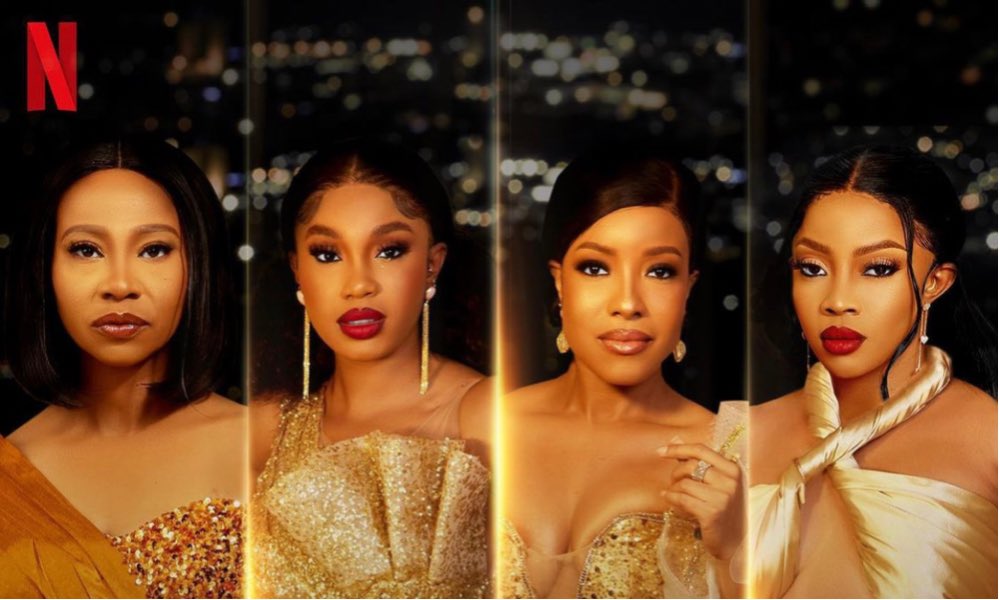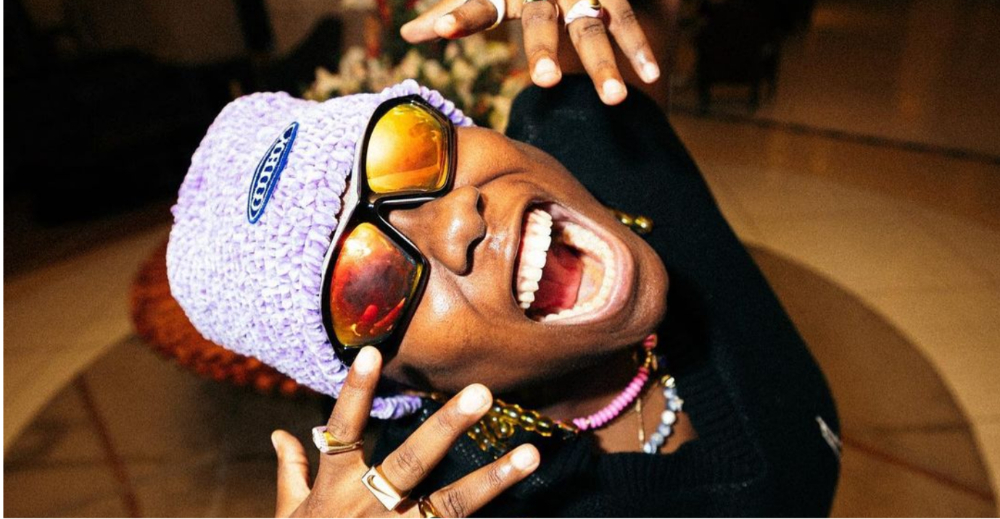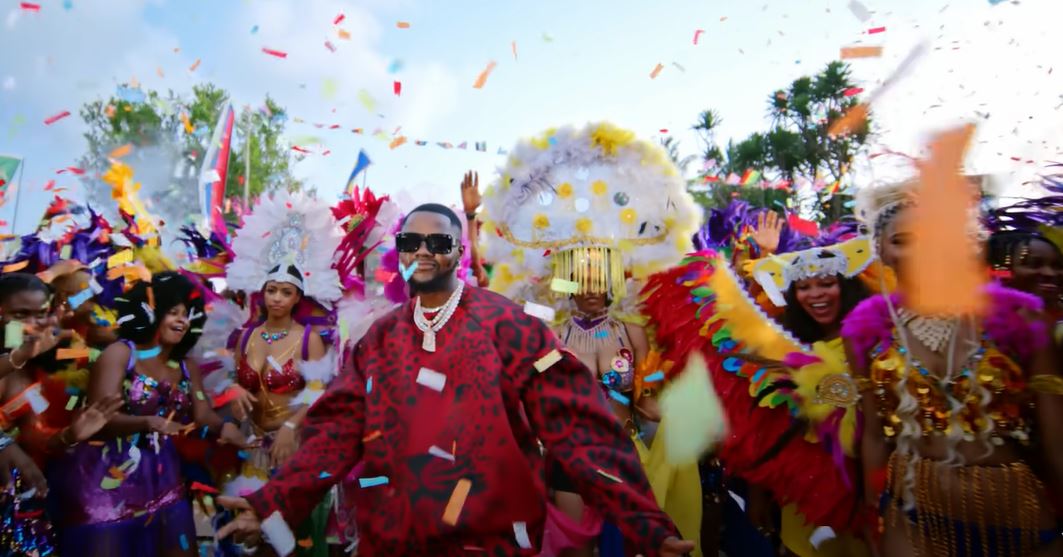
Simi Shares Details Of Her Third Studio Album, ‘To Be Honest’

Finally, we have a release date for Simi ’s third studio album. Over the long Eid weekend, as the country geared for a return to official duties following the religious holidays, the singer announced June 3rd as the official date of her third album. She also shared its title: ‘To Be Honest’.

There’s a number of reasons to be excited about new music from Simi, but the most exciting is the most glaring one. Few musicians of today wield her power of emotional storytelling and technical songwriting, a hybrid that she’s mashed to critical acclaim across two full-length solo projects.

Her 2017 debut ‘Simisola’ heralded her generational talent, spawning a number of hit songs whose resonance still ring heavy today. Followed by the tribute album to her father ‘Omo Charlie Champagne’, she proved capable at incorporating more colourful Pop flourishes into her sound. In 2020, Simi continued her ‘Restless’ EP series, portending her most experimental tape till date.


View this post on Instagram


A post shared by Simi (@symplysimi)

Simi has been active on the scene since then, most recently becoming a judge on Nigerian Idol. Her vocals and star presence has also contributed to the glowing profiles of songs like Chike’s Running To You and Liya’s remix of Adua. Last month, she released the sizzling “Sare”, impressing her bright melodies over the eclectic production. 

Announcing the album via social media, in a handwritten note, she wrote about making the album and how conceiving her daughter made her postpone her initial plans. “I’ve been trying to tell you a story”, she wrote. “For close to three years, I’ve been desperate to tell you something. Something to help me show you the thoughts I’m thinking…the feelings I’m feeling. I started to start, but then I got pregnant and I said ‘not yet’…”

There hasn’t been more information or a tracklist for ‘To Be Honest’ but trust we’ll keep you in the loop. With the reputation of this particular singer, an album helmed by such a transcendental personal experience isn’t something you want to miss out on. 

Featured image credits/


ICYMI: The Awe-Inspiring Evolution of Adekunle Gold

Best New Music: Moliy’s “9 To 5” Celebrates The Joy of Unconventionality

Moliy’s profile has been on the rise ever since last year when she bodied her role on Amaarae’s Sad Girlz Love Money. Almost two years ago, her crystalline vocals showed great promise on debut EP ‘Wondergirl’, stoking excitement around her dreamy takes on Afropop. The Fresh Meat alum has continued to sketch her narrative, one song and project at a time, not quite fazed by the pace of today’s music scene.

Her latest drop came last weekend, a 3-song project she named ‘Mahogany Street’. Coming weeks after Moliy coloured BOJ’s In A Loop alongside her sister Mellissa, the songs were met with expectant ears. After lining her records with flourishes from diasporic genres, Moliy plays closer to home on her new tape. The title takes from a real street in Accra, Ghana while the sonics, as she said in an exclusive with The NATIVE, was inspired by “my neighbourhood, that’s what I’m saying, like I really want people to know I’m from Ghana and I’m out here making the kind of music that I do, I want it to be known.”


View this post on Instagram


A post shared by Moliy $ (@moliymusic)

With just three songs and Moliy’s refreshing cadences, her latest EP ‘Mahogany St,’ is an immersive experience that underlines the artist’s movement towards the centre of a burgeoning global movement. To that end, no other song captures the awareness of her confidence as the catchy opener “9 to 5”

Many artists have looked to the future with eyes of optimism, projecting favourable fortunes on themselves. It’s however believed that sometimes luck comes into play in the search for success, and turning to the divine becomes a viable leeway. The young African isn’t so concerned with things they can’t control, believing that destiny can be arrived at through hard work, and truly a number of success stories prove the fact. “9 to 5” is that song, and Moliy is confident she doesn’t want to journey through the conventional path.

Just under three minutes, the song stakes its claim, carried on Moliy’s inspired vocals and a gritty Dancehall bounce. Although steeped in cinematic back effects, the singer’s voice stays in tChe centre of things. “See the pain in my eyes, what I did to survive/ Real ones go fit realise”, she sings in the first verse, and before coasting to the assured hook, maintains character as one who’s tasted the sour edges of life, singing “But everyone has let me down, I got trust issues”. 

For its own sake though, the record doesn’t fully embrace the sentiments that come with such betrayals. On the second verse, Moliy throws the light back on the community, opening the car seat for anyone who’s down for the ride. Her increasing ease with local cultural references also shines, especially in lines such as “Try get in my way and get this gobe” and “karma on the roll, gonna catch up on you one day.”

Moliy might not be known to the biggest section of Afropop fans, but she’s showing the grit necessary for a shot at the top. With a song like “9 to 5”, she’s speaking to her youthful fanbase but also to the wider industry, letting everyone know she’s in her zone and hungry for all that comes with making it.

Featured image credits/Instagram

Songs Of The Day: New Music From Naira Marley, Darkoo & More

2022 is no longer a new year, and Afropop knows that very well. As much as the previous year was packed with scene-defining achievements, especially within the context of global growth, the only way to keep the momentum from falling off is for artists to keep reaching into their bag for great music that holds the ears and captures the hearts of millions of listeners across the continent and well beyond. That’s exactly what’s been happening, so much so that there’s hundreds of new singles, at-least one new must-hear album and a new smash hit every week.

Amidst this torrent of new music, the NATIVE is committed to highlighting the best releases you need to hear, and possibly add to your playlists. That’s the essence of our ‘Songs of the Day’ column. Last week, we highlighted new drops from Tems who featured on Future’s new album alongside Drake, Zenesoul, Majeeed, Moliy, T.I Blaze, Skiibi and more. Today’s selection includes new cuts from Young Jonn, Darkoo, Ninety and more.

Young Jonn – “Dada Remix” ft. Davido 

Following the release of his debut EP as a performing artist ‘Love Is Not Enough’, Young Jonn has collaborated with Afropop superstar and DMW Label boss Davido for the remix of the standout single “Dada.” The remix sees Davido elevating an already catchy track. He opens his verse with lyrics such as “Now, ini mini mani mo, on your marks, set, baby let’s go/girl your body be the koko, money money choke o for the bank o”, letting his love interest know he’s ready to take care of her with all his wealth and power. 

Naira Marley – “O’dun” ft Zinoleesky

For his first official single of the year, street pop artist Naira Marley has arrived with a new record “O’dun”, featuring his protege and former NATIVE cover star Zinoleesky. “O’dun” is an Amapiano infused track which sees both artists singing in Yoruba about experiencing something sweet and savoury. Zinoleesky delivers a stellar verse on the track as he sings “feeling like spartacus I’m dangerous, she loves me cause I’m famous.” The song also serves as the lead single off Naira Marley‘s forthcoming debut album, ‘God’s Timing The Best.’

Darkoo – “Everything But You Remix” ft BackRoad Gee, Clean Bandit & Young Chencs 

On “Everything But You Remix”, UK rapper singer and songwriter Darkoo teams up with BackRoad Gee for an uptempo Afroswing record.  Co-produced by Young Chencs and Luke Petterson, the record sees both artists singing to their respective muses and making claims about how they currently feel. Over the hook, Darkoo sings “I just want to let go off everything but you,” while setting the scene for Backroad Gee to step in and rap melodiously over the stellar production of the track. 

Ninety – “Hold My Side”

For his debut EP, Ninety is here with ‘Rare Gem’— a 7-track project which features records such as “Buttercup” and standout record “Hold My Side.” “Hold My Side” is a mid-tempo record produced by Typae which sees the artist making confessions to his lover. On it, he offers lyrics such as “My baby be like rizzla wey dey roll my ganja/she got the fire like a full lighter.”

Goya Menor – Ameno Amapiano ft. David Guetta 

Following the success of his hit single, “Ameno Amapiano” record which took over the Internet and clubs only a few days after its release, Goya Menor has tapped American producer David Guetta for a befitting cross-continental remix. The record features similar elements to the song’s original production, while also sprinkling signature house melodies that have come to underscore Guetta’s stellar production. 

Mr Drew – “Dayana”

Ghanaian Highlife singer, songwriter and performer Mr Drew is here with another record “Dayana”, a mid-tempo number which sees the artist making love confessions to his muse. On the Beatz Vampire-produced record, he showers her with his undulating affection with amorous lyrics such as “Baby you give me something, step in the front show workings/Make somebody call my Dayana.”

Alpha Ojini – “Two Horns” ft. Boogey, Kel & A-Q

For his latest release “Two Horns”, Alpha Ojini, Boogey, Kel and A-Q have teamed up for a hard-hitting rap number which sees all the artist flexing their skills over the song’s gritty production. The record which is a blend of Afropop and Hip-Hop-type beats sees all four rappers trading bars on their achievements and being above their opps and haters.

Featured Image Credits/NATIVE


ICYMI: PROJECT RUNAWAY

Day In The Life: Grace Ladoja, Founder Homecoming Festival

For the past few years, Homecoming has played a key role in the cultural exchange between Nigeria and the rest of the world. Since the first iteration in 2018 where we witnessed the breakout of the then 19-year superstar, Rema, the music and arts festival has grown into one of the most important platforms for the next generation of Afropop superstars

Founded by Grace Ladoja MBE, who is also the co-founder of Metallic inc. — a global culture studio, each venture operates as an intersection between music, marketing and culture with the main aim to support youth culture in any way they can. Shuffling between running these entities, motherhood, building a family, and managing the careers of artists such as Skepta and Sarz, Grace is setting the path ahead of her straight. 

Last month, Homecoming returned to Lagos after a fallow few years due to COVID, and I had the great honour of spending the full day with her during the Homecoming weekend. We spent the Saturday of the festival weekend together, which was the first day of the pop-up at Alara, Lagos. With a very early start at 8am, I gained a closer look at how she juggles her different responsibilities throughout her 24 hours and I must say, she certainly is a dynamic force.

I met a relaxed Grace Ladoja at the Arise TV studios, seated with crossed legs and a cup of tea in her hand. She was preparing for an interview scheduled for 8:00 AM, but got off to a slightly delayed start. When on-air, she spoke eloquently on ‘The Morning Show’ for about 30 minutes, shedding light on the 4-day festival, her career as a talent manager, being a mum as well as building her young family.

After the interview had wrapped up, we headed out to her home so she could prepare for the rest of her very busy day. In the 15-minute journey from the studio, Grace Ladoja mainly only spoke about how excited she was to see her son, Zacai, who was turning 1 that weekend. The shift from Boss to Mum was palpable, as she spoke with a firm, concise tone whilst talking business, but became a pile of mush with regards to her son. 

We arrived at Grace’s Ikoyi residence at about 9:23AM, where she stopped by to get changed out of her TV clothes to a more practical choice for the hustle and bustle of the day. While in the living room waiting for Grace to come back, I could hear her playing with her son before she stepped back out wearing a black tee with “I SUPPORT YOUNG BLACK BUSINESSES” written boldly across the torso – an exclusive Off White x Homecoming collaboration). You could tell she was going for a practical look, but she still managed to look glamorous, pairing the tee with black Prada shorts and black sneakers from Drake’s Nocta x Nike collection. 

At about 9:51AM, we headed over to Alara Lagos, a luxury concept store, located in the heart of Victoria Island, Lagos, Nigeria. The whole place was set up with Homecoming brand representation all over the place, from stickers to merchandise to exclusive collaborations designs with streetwear brands such as Patta, Daily paper, Ashluxe, Motherlan and more. 

Before the day kicked off, Grace showed Zacai around, going from stall to stall explaining to the 1-year-old what each brand represents. As she took commemorative pictures and videos with him at the Nike x NOCTA stall, she spoke to him about her achievements and how far she has come, asking him “Are you proud of mummy? You should be proud of mummy”. 

She spent a bit of time at the pop-up location before eager customers began to make their way, checking in with the team to ensure nothing was out of place. Within the hour since we arrived at Alara, Grace mentioned that she needed to get her breakfast sorted out twice, but never got round to it due to the sheer amount of work she had to do.  

After making sure everything was in check, we set off to a shoot location elsewhere in Victoria Island for the i-D editorial photoshoot which features images of all the collaborative pieces between Homecoming and the brands in partnership with them.  At the shoot, Grace and I have a little chat about what a typical day in her life is like. 

When she finally found the time to sit for breakfast and get her hair done at the same time, she says candidly “I know this may sound clichė but every day in my life is different from the last.” Being in the entertainment and popular culture business, it’s hard to predict how a day unfolds, because there’s usually so much to keep abreast of and stay on top of. Being a music business mogul and managing parenthood is no easy feat for anyone, but what makes it worthwhile for Grace Ladoja, is the passion she has for everything she does. She sees her job as a part of her life and her life as a part of her job, and this allows her to manage both heavy duties side by side. 

“When you have a baby, everything in your life becomes number 2 and my son is my number 1 priority.” 

One other thing Grace Ladoja sees as a job is making the world a better place for women. She is very vocal about her need to support other women and ensure that they also can stand in their power, and she buttressed this during our chat saying:  

“I have a job and it’s to amplify and push women that are doing great things, because sometimes the confidence you can give a woman is just them seeing you as an example.”


You don’t have to spend the whole day with Grace Ladoja to place that she is a strong and confident woman who stands in her power, and considering the monuments she has built across the pond, any woman, regardless of their background would be inspired.  After chatting for a bit, we went to get a closer look at the shoot, and Grace checks in with the producer to make sure everything is going well. While the shoot is on, she chats with her partner and co-founder of Metallic inc, Alex Sossah about Homecoming, the ongoing pop-up, the panels and more as we all prepare to head back to the pop-up. We arrived at the pop-up at a few minutes past 3pm and the entire place had become so much more colourful and vibrant than it was earlier on in the day.

The place was filled with a stylish crowd from all over the world who were ready to reconnect with all the different facets of culture available. The pop-up had people shopping exclusive pieces from Drake’s Nocta collection, Daily Paper, Pith Africa, WAF and more. While the pop up wound down for that day, we headed out  to the pane discussions,  where Grace shared a bit of knowledge about streetwear culture alongside other streetwear brand representatives such as Street Souk, Free The Youth, Daily Paper, Motherlan and more. The panel which kicked off at 6:00PM was very insightful and there was a lot of insight made available. A number of emerging streetwear brands were represented as well as already established brands, which gave the audience two different perspectives to take away from. 

Altogether, a day in the life of Grace Ladoja seemed like a success looks like. When a thing of your dreams becomes a tangible object that benefits others, it’s an incredible thing and no wonder Grace is so proud of herself. 


View this post on Instagram


A post shared by The NATIVE (@thenativemag)

8:45AM – Interview with Arise News where she spoke about the impact Homecoming has had so far, Homecoming’s relevance to the culture today, the musical culture in Africa now and Africans in the diaspora. 

9:23AM – Got back home to specifically spend some time with her son, Zaccai, get ready for the Homecoming panels, the pop up show. 

9:51AM – Heading over to Alara to check out the set up. 

10:06AM – Grace checks out the set up and takes pictures and movies with Zaccai as she shows him around. 

11:00AM – Grace addresses the staff, starting off by thanking them and preparing them for what the day’s going to be like. 

12:30PM – She moves to the i-D editorial photo shoot. 

3:10PM – Grace goes back to Alara to check out how the pop up show is going 

4:40PM – Grace settles at Nok By Alara restaurant to eat and talk with friends and family. 

5:40PM – Grace heads out to the Panels where she’s sharing a bit of knowledge about streetwear, alongside other streetwear brand representatives such as Motherlan, WAF, Street Souk, Free The Youth, Daily Paper and more, all discussing ‘The Rise Of African Streetwear.’

6:00PM – The panels kick off and representatives from each brand are on stage, including Grace and her partner Alex Sossah, co-founder of Metallic Inc.

8:00PM – The very insightful panel rounded up. The members of the panels were asked questions by the audience, right after they had shed light on all they know so far concerning streetwear and the growth of African streetwear

Featured image credits/NATIVE


ICYMI: PROJECT RUNAWAY

UNDER: Best New Artists (April 2022)

Staying True To Our Mission To Reshape The Face Of African Popular Culture, The NATIVE Team Curates A Monthly List To Spotlight The Best And Most Exciting New Artists On The Continent. Some Of These Artists Have Dropped Songs To Some Regional Acclaim, While Others Are Brand New On The Block, Working Towards Their First Big Break. Tune In To What’s Next. Click Here For March’s edition.


Last month, after two years of discovering some of the Best New Artists on the continent and in the diaspora, we launched uNder, our new column dedicated to furthering our mission of spotlighting the sounds of tomorrow: today. With the start of a new year and quarter, we deemed it best to re-evaluate our commitment to music discovery and where it fits into the grand scheme of things in today’s hyper-viral climate.

While our goal of putting you unto the most exciting sounds remains unchanged, we realise that music is in a constant state of motion. uNder, therefore is a celebration of the ever-spinning wheels of music which vastly covers artists at different stages of their careers–from brand new discoveries to artists who are reaching a tipping point and on their way to mainstream success and even to more familiar names, with a few accolades under their belt.

This month’s edition is an indication of how wide that talent pool currently is. From Nigeria’s Boy Spyce who was just activated by the Mavin powerhouse with a debut eponymous EP to South Africa’s Pabi Cooper who blends kwaito with the rich sounds of house music. So stay tuned for all the exciting features to come—we’ll still be doing this round-up every month, but if you want engaging submissions, deep cuts, or just want to suggest who else we should be listening to, subscribe to uNder newsletter. We hope you find something new that you like.

Boy Spyce

The Mavin Dynasty has done one thing since it was established in 2012: produce stars. Last year, the record label unveiled Ayra Starr and Magixx, two instantly prominent voices of the new generation. In such little time, we’ve seen these artists grow rapidly, positioning themselves as key parts of the new wave of stars, emphasising that Mavin isn’t stopping anytime soon.

Earlier in the month, Mavin records activated new signee Boy Spyce, a promising new already making his mark and primed to reinforce the label’s dominance. Spyce was first discovered through a viral video on Instagram where he did a cover for Wizkid and Tems’ “Essence”. The cover garnered the attention of many, including industry heavyweights such as Don Jazzy, who reached out to the artist at the time and signed him to the Mavin academy.

Now, the artist is ready to take on what the world of music has for him. His unveiling arrived with the release of his self-titled debut EP, a 5-tracker which cuts across matters on love, self-awareness as well as self-growth, showcasing his euphonic vocals and splendid songwriting skills one track at a time. Tracks such as “Wayo” and “Dreams” are clear statements by the artist, proving why he’s here in the first place. On “Dreams”, he sings lyrics such as “And I dey look you through my window; boy you have to chase your dreams, you have a plane to catch by six”, reminiscing on the past and wishing for a better future.
Boy Spyce is a fresh voice of the new generation and we’re rooting for him.

Wonu Osikoya

Simi Liadi

Silky vocals have featured in the resumes of many great R&B musicians, and Simi Liadi is no different. Born in Germany to Nigerian parents, her childhood was characterised by a lot of moving around. Her family eventually settled in Maryland, USA. At 12, she joined the church choir which was where she got her earliest training on the technicalities of sound. In 2020, Liadi made her debut with “Clear”, a glossy record built on stuttering drums and swooning keys.

Liadi’s songwriting underplays complexity, rather honing in on the nuances of her voice to pass across an ultimately deep message. “Clear” was indicative of this, beginning with the couplet “I don’t need nobody but you/ But I need you to tell me if you’re down for me too.” She proved to be a consistent act over that year, releasing “Dream” and “The Hills”, both further underscoring her flair for pulling diverse strands of young love together.

She was especially busy last year, releasing a number of songs before putting out her debut EP, ‘Essence’, in May. Its six songs were carefully selected to highlight Liadi’s subtle twist on love stories, with “Letter To You” and “Faded” being particular highlights. The former demonstrates her technical writing ability vividly portrayed with melancholy as she thinks of a distant lover. “Faded” is about feeling out of touch in a relationship, with Liadi likening it to a fading fire. Last month Simi Liadi released a 3-pack titled ‘Experience’. Here, her songwriting shows even more maturity, leaning into less dramatic flourishes to tell her stories. Together, it’s a fine offering in the oeuvre of a singer who’s really singing.

Emmanuel Esomnofu

Pabi Cooper

From the deep basslines of Kwaito to slowed-down House beats and the dark atmospheres of Gqom, Dance music has, for decades, been an outlet for young Black South Africans to creatively express themselves. At the moment it cannot be argued that Amapiano is the biggest sound at the moment, serving as the modish outlet for producers, singers and dancers to express and entertain. This ongoing ‘Piano dominance has been the catalyst for new stars to transition from the dancefloor to the singing booth.

Not too dissimilar to 2021 breakout star Kamo Mphela, the exuberant Pabi Cooper came into the spotlight for her smooth dance skills in Amapiano, before getting in front of the mic to hone and showcase her chops as a vocal entertainer. Releasing her first EP dubbed ‘Isphithiphithi’ in 2021 she has become a fast-rising star to watch out for. The 2 song-set contained the titular track, featuring Amapiano buzzing artist Reece Madlisa, Busta 929 and Joocy, and “Unyangi’Jabulisa” featuring Yumbs. The EP vaulted her to local notoriety, on the strength of her gleaming vocals and infectious, energetic candour over dusty beats.

Despite being a relatively fresh face to the industry, Pabi has enjoyed many highlights on her path to greatness including stellar collaborations from some of Africa’s biggest stars including DBN Gogo, Focalistic and Diamond Platnumz. Her latest release, “Bayana Ke Bafana,” seals her come-up, as she partners with Focalistic, Ch’cco, LuuDadeejay and Nobantu Vilakazi for an anthemic cut that cements her proficiency for delivering ‘Piano cuts with a wide appeal.

Tela Wangeci

Majeeed

At just 23, Nigerian singer Majeeed has been making music for seven years, and writing for some of the most influential names in Afropop today, from Tiwa Savage to Seyi Shay. The singer and songwriter is slowly becoming an emerging voice of the new vanguard of Afropop stars, using music as a potent tool to tell stories which heal the mind. Interestingly, in a conversation with The NATIVE, he described his music as nature-inspired.

After signing with new record label Dream Empire Music, which was established in 2021, Majeeed recently delivered his debut EP ‘Bitter Sweet’. The 6 track project is a musical experience which is tied together by the artist’s emotions, his personal experiences as well as his environment. The 17-minute long listen features records such as “Yawa No Dey End” and “Tough Love”, both of which are uptempo afro-fusion records, which sees Majeeed speaking to his love interest about what he has been through and why he deserves to be loved correctly, flaunting his songwriting abilities and his satisfying melodies on the tape.

Since Majeeed made the decision to begin making recording music for himself two years ago, his musical journey has become a story in itself. With a knack for blending catchy Afropop rhythms with soothing R&B melodies, Majeeed is one to look out for this year.

Wonu

Mau From Nowhere

Kamau Wainaina came up with his moniker, mau from nowhere, as an ode to feeling out of place within the context of mainstream Kenyan music. Starting off on the Hip-Hop/R&B spectrum, he’s diversified his sound over time, leading him to dive into his pure consciousness and create by listening to more of his inner self. His hotbed is his ability to draw your emotions as seen in “Try,” as his vulnerability creates a serene environment free of judgement. Inspired by his time spent in the diaspora, UK and briefly, in the US, Mau has no facade in his music permeated, by mellow sound beds and cathartic performances.

For his releases, he occasionally takes to Soundcloud and YouTube, releasing covers and singles as he builds his Kenyan fanbase. From the release of his 2020 EP ‘MFN’, which is an acronym for his name Mau From Nowhere, his growth and maturity can be heard and felt as he expands his sonic palettes in “Pink Matter,” originally by Frank Ocean. ‘MFN’ was a stellar tape where Mau exhibited himself as a multidisciplinary artist, exhibiting his prowess as a singer, songwriter and producer. The EP served as a re-introduction into the scene allowing him to re-centre as he plans his next move. Thematically, the project delved into the complex turmoil of the human experience, touching on burnout and self-sabotage, while the results of miscommunication in relationships are also explored.

Sonically mau from nowhere is an experimental artist often toying with unconventional sounds. His creative restless nature enables him to explore and grow his sound as he delivers his emotionally layered numbers with tangible emotions.

Tela

Raebel

It’s increasingly becoming common for young Nigerian women to steal our hearts with names such as Fave and Ayra Starr immediately coming to mind. Another name that should be on your radar is Raebel, an 18-year-old  singer with a voice of gold. She grew up listening to the greats Onyeka Onwenu and Fela Kuti, but also had lots of contemporary music around her, put on by her mother. “My mom tried to make me join a choir but it was not my thing when I was younger,” she tells The NATIVE.

Raebel’s voice is undeniably her standout feature, a sun-tinted blossoming made even more evocative through her unique takes on songwriting. Writing from her own perspective, her songs however come across as universal, imbibed with all the emotional heft that has made international youngsters like Arlo Parks and Olivia Rodrigo so heralded in recent years.

Last December, Raebel released “Miniskirt”, a record about her autonomy in a relationship. She recounts the conflicts between her and a lover who wants her to freak out for him. The Timbun-produced song sparkles with bubbly drum patterns and an assortment of live-sounding effects. Made breezy with elements of Dancehall, Raebel sets a distinct mood, weaning lyrics such as “Why you try to compare me with all of them girls?/ Say me no fit wear miniskirt for you/ Me no fit be like others for you”. Speaking about the song, she says, “‘Miniskirt’ is not just a song about a [piece of clothing]. It’s a song about life, about society and how people expect you to be. Everybody expects you to look like this, the society wants this from you, what about what you want?”

Emmanuel

Avalanche Kaito

Experimental doesn’t even begin to describe the music Avalanche Kaito make. The trio, comprising Burkinabe griot and multi-instrumentalist Kaito Winse, alongside Belgian musicians Benjamin Chaval (drums) and Nico Gitto (guitar), is primal and cerebral, folksy and post-modern, beholden to ancestral traditions and driven by a future-facing, inventive verve. It’s a head-spinning meld of punk, electronic music, beatless noise, hints of free jazz, and Kaito’s deeply-ingrained folk music and reverence to tradition.

Born and raised in the village of Lankoué, in the Sourou region of northern Burkina Faso, Kaito Winse learnt the griot customs and musical heritage of his origins, taking them with him on his European travels, where he met Chaval in 2018. Then, Chaval was part of the post-punk duo Le jour du Seigneur, and as the two new friends and collaborators continued bonding, they invited Gitto to join in the formation of Avalanche Kaito. All three artists push past the boundaries of their work in previous bands and as solo act—notably, Kaito’s 2020 album ‘Kaladounia’ is a masterful introduction to the folk music knowledge he gained while growing up.

Earlier this year, the trio dropped their debut EP, ‘Dabalomuni,’ a brief and searing collection that includes musically spare tracks that centre Kaito’s voice, sometimes manipulated but never lacking organic intensity, and entirely wordless songs that still stun with their shifty compositions. It’s just an entrée for Avalanche Kaito’s self-titled debut LP, set to drop in June. With their released material so far, the band has set a precedent of unlimited possibilities guided by their zany perception of music’s relation to the earth, and whatever imaginations follow after that.

Dennis


ICYMI: PROJECT RUNAWAY

NATIVE Exclusive: The art, life & times of Anthony Azekwoh

Anthony Azekwoh is a Nigerian-based artist and writer who took the internet by storm in 2020, when his artwork “The Red Man” was sold as an NFT online. Within his catalogue, he has also designed album and single covers for several artists, including Adekunle Gold, Blaqbonez, Show Dem Camp, and Masego. These days, Anthony holds the attention of a global audience, both for his writing and art, and has received a number of accolades for them, including the Awele Trust Prize in 2017 and the Loose Convo grant in 2018.

Following the successful execution of his Lagos exhibition last year titled ‘Homecoming’, the 22-year-old creative just staged ‘Becoming’, a month-long exhibition running from April the 1st through the 30th at the Discovery Museum located inside Abuja’s Art-Tech District in Wuse 2.

Nearly a week after the exhibition’s launch, I arrive at the venue at 11:59am to meet the artist himself for a 12-noon appointment. Less than 2 minutes later, he arrives at the venue and greets me warmly. He leads me through museum’s narrow entrance adorned with lit images of Nigeria’s leaders, icons, and personalities. The exhibition is one of a kind. Perhaps the first in Nigeria, complete with a cinema room, a 360 room, and digital frames displaying live paintings. The first question I ask him is what he thinks of the space.

“Oh, it is great. There is nothing like it throughout the country”, he says, matter-of-factly. “In Lagos last year, we had to build our own temporary space from scratch, you know, just to exhibit. So, yeah. I really appreciate the existence of a place like this.”


View this post on Instagram


A post shared by Anthony Azekwoh (@anthonyazekwoh)

The 22-year-old’s foray into art and his ascension to the status of one of Nigeria’s most successful digital artists is familiar in some ways, and yet very unique in many other ways. Having been kicked out of Covenant University, one of Nigeria’s foremost private universities, for writing a scathing article about the school, he was subsequently kicked out of the house by his parents who didn’t approve of his focus on art over completing a Chemical Engineering degree.

“They weren’t so much upset about my engagement with art and artistic things, as they were about it not being what they had imagined for me,” he tells me as we settled down on a table in Lagos Bistro, a restaurant situated within the same premises as the exhibition. “And also, how much time I was spending on it as opposed to my Chemical Engineering work.”

It didn’t matter that he was already being recognised for his work all over the world, his parents were still unconvinced that he was making the best life decision. “To their credit though, things happened for me really quickly and it was a whole shift for all of us,” he offers an empathetic explanation. “I was blinking and things were happening for me, so imagine it as a parent of this child. One day your child is studying Chemical engineering and the next day he is telling you about this writing thing and the day after he is doing these crazy, crazy stuff. It can be a lot to take in and I understand how that must have felt for them.”

Reflecting on his influences as a writer, Anthony points to a time in his childhood when reading books like ‘Cat in the Hat’ bored him. His mother, on noticing that, gave him a newspaper to read instead and that made all the difference. Years later, he would be enamoured by the writings of Nnedi Okoroafor, Nneka Lesley Arimah, Neil Gaiman, and Kola Tubosun, who was his teacher in secondary school and the person who inspired him to take his artistic instincts more seriously.

*

In the exhibition halls, the paintings glow off the framed digital screens hanging on the walls. Nearly all the paintings, though their subjects appear human, exude a familiar superhuman, extra-terrestrial aura across board. For instance, the painting “The Traveller”, depicts an old man in a beautifully adorned red turban on a yellow backdrop. This portrait could pass for a representation of a real-life subject were his left eye not pulsating with unusual light.

The portrait of Mansah Musa, the richest black man in history seems perfectly normal until you look deeper into the background. From “Mama Gold”, to ”The Red Man” to “The Orange Father”, one thing is constant: the ethereal, almost stone cold eyes of the subjects, and their pulsating cigarette lights. And on the digital screen, they have even more room to play on. The flames flicker of the cigarettes while their chins twitch under the glow of the diamond above the heads of the subjects.

*

Seeing all one can do with digital art, from NFTs to the way they are exhibited in current times, I wanted to know what his thoughts were regarding the current climate for Nigerian artists. Were digital artists receiving some of the attention that other creative sectors are getting, whether it is tech, writing, Nollywood or the music industries. He takes a big swig of his lemon flavoured water, pauses a second, then says:

“Revolution is going on in every single craft or area you can imagine right now. In the Nigerian scene specifically, digital art is one of those things where equipment is expensive, the people who know the skills themselves are few and far in between and at the same time, there are people beating those odds. Like me, for instance, when I started, I was using mouse to draw and watching free YouTube tutorial videos. It is the same for other people I know who have embraced the reality of the moment and saying ‘this is how we have to learn it now’.” 

Anthony chooses his words carefully. Although he is cautious not to sound too arrogant, his demeanour is of a young man who is self-satisfied with his achievements, and yet is humbled by what he is yet to achieve. “We weren’t trying to start a revolution, per se. It just happened to be what was beneficial to me at that particular space and time. What then happens is that it automatically subverts the prevailing system of how art should be or should look like. Art wasn’t normally exhibited like that, with screens, cinema room, 360 room, and the rest, but at the same time it is natural for me because that’s what is available to this medium of digital art. You can do many crazy things like make the cigarette light glow with smoke; you can see heads move. Yes, so I think a revolution is already here because the capabilities have exponentially improved.”

“Revolution is going on in every single craft or area you can imagine right now.”


View this post on Instagram


A post shared by Anthony Azekwoh (@anthonyazekwoh)

What about NFTs, the much raved about Non-Fungible Tokens? What are the implications of minting your work on the Blockchain and selling it after an auction? What is the value if anyone can still have a copy on their smartphone? Anthony had himself made $40,000 off his “The Deathless Star” NFT collection last year, with the (in)famous “The Red man” NFT going for over $25,000. What better person to ask if not the artist sitting in front of me? 

When he first discovered NFT in 2020, he was hit with the same confusion, incredulity if you will, as many of us. “I didn’t quite get it”, he says. Then he adds, “It took me for a spin as I tried to figure it out. But then, the more I read about it, understood it, and used it, it was more like, oh this is just same old, same old.”

I am not satisfied, so I ask, what about ownership and provenance? How does that work here? He smiles, sips his glass of water again, then goes:

“So, let’s say for instance, let’s say a hundred years ago you made your oil painting called White Handkerchief. That painting was special for the main reason that when you go through this galaxy above and beyond, there’s still only that one painting of White Handkerchief by you. That makes it special. This explains why the value of artists’ works skyrocket when they die because that supply is now limited and it’s now fixed. Imagine 100 years later and it’s now digital art, art that can be infinitely reproduced across the internet. When I mint my work on the blockchain, everybody can see it. when I sell it; it’s been transferred. It’s the same with say TheMonalisa, you can take pictures of it all well and good, I can even make my own forgery but the original copy and ownership still belongs to that one person who has it.”

To what extent are Nigerian artists benefiting from NFT’s? “As for me in particular, my audience is global,” he tells me. “I have been building it long before I dabbled into NFTs. In that sense I can’t be a parameter for measuring that. However, anyone who is putting in the work and have taking their time, it shows.”

He alludes to Osinachi, arguably the most prominent NFT artist in Africa and curator of the first ever NFT-focused exhibition at the Lagos-based Art X last November. Art X is West Africa’s most prominent international art fair. “He started minting on the blockchain around 2018 or 2019 when his works were selling for $80 or $90. Now he sells them for hundreds of thousands of dollars”, he says of Osinachi’s success, even as he immediately acknowledges that it isn’t the case for everyone.

“It is a process, and nothing happens within a day. I recognise that while it [NFT’s] is working for a lot of people, it is still confusing for others.

This is because there’s a lot to navigate, with your audience, with your craft itself.  That process of rediscovery again and again and it just takes a while.”


View this post on Instagram


A post shared by Anthony Azekwoh (@anthonyazekwoh)

*

The 360 room envelops you with screens and sounds. “This is something I have been working on for a while. Feels good to finally let it out,” he says with grins.

The screens display the cascading and swift movement of the artist’s various works surrounded by shapes and lines. The accompanying sound is sonorous and each screen displays the same thing but from a different angle. I almost twist my neck from stealthily trying to ‘catch’ the moving images as they morph. I am convinced that it would be a playful toddler’s paradise.   

*

Unsurprisingly, Anthony’s influences as an artist are diverse. They range from his contemporaries and mentors like Duro Arts, to modern American artists like Norman Rockwell. Notwithstanding, his works both as a writer are steeped in a firm conviction that as a Nigerian artist, he cannot afford to make his works about things not connected to issues of the time.

He draws inspiration from history and the present times and brings them to an elevated stratum of existence. Often perceived as mystical and supernatural, the characters in his writing share certain resemblance with the subject of his paintings – a sentiment he reluctantly accepts. Author of several books and short stories, including ‘Stars’, and a series on Brittle Paper titled ‘The Fall of the Gods’, he has a forthcoming book titled ‘Sango Oya.’

He not only speaks about the need for nuance and balance in the stories coming out of Nigeria, he tries to do it in his works. He set up the Anthony Azekwoh Fund, where a percentage of every income from his art goes to, and is donated annually to upcoming Nigerian artists who need it. 

He tells me that the ‘Becoming’ Exhibition is the closing of a chapter for him and the same time the opening to a new one where he gets to find himself again. “I feel like the journey so far has been about me doing things that feel natural and then figuring out the best possible way to keep doing it.”

“Few years ago, I was known mainly as a writer and now few years later I am known mainly as an artist and I am still evolving and trying to stay more connected to myself. Right now, the only thing I’m working on is learning how to do 3D sculpting”, he adds.

More than anything, one of the most striking things about Anthony is his humility and clear sense of duty to himself and society. “My paintings have been seen by millions of people and sometimes I wake up to messages or posts online of someone saying, “look, I tattooed your work on my body”. We live in miracle times, because as a Nigerian artist, to achieve this level of exposure in say, the ’50s, at my age, would have been unthinkable.”


Sanusi Anselm writes short stories, poetry, essays, research papers, and policy briefs. He is a Contributing Writer at The Question Marker and the Non-fiction Editor at Fortunate Traveller. He is the anchor of our monthly Book Club and co-curated the book, Government Pikin: An Anthology of NYSC Travels. He lives in Abuja.


ICYMI: THE FOUR MANIFESTATIONS OF MALIAN CULTURE, ACCORDING TO GOOGLE

Bruk It Down: Genio and GMK on the Making of Cruel Santino & Koffee’s “Deadman Bone”

“Bruk It Down”, a video series shining a light on the producers and beat-makers behind the scenes, as they break down the intricacies of the songs we listen to every day. In the sixth edition of our NATIVE Original, The Monster Boys: Genio and GMK take us through the making of Cruel Santino and Koffee’s “Deadman Bone.”


Cruel Santino’s sonic universe is usually a marvel to behold. Right from cult classic ‘Suzie’s Funeral’ to more popular cuts like “Rapid Fire” and “Freaky”, the multidisciplinary creative has favoured edgy, layered beats over what is preferred elsewhere across Afropop. Last month, the artist shared his anticipated sophomore album ‘Subaru Boys: FINAL HEAVEN’, inviting a host of collaborators to build that world with him.


View this post on Instagram


A post shared by santi (@cruelsantino)

A frequent name you’ll see on the credits for ‘Subaru Boys: FINAL HEAVEN’ is the producer duo Monster Boys, made of GMK and Genio Bambino. Across the tape their production glistens, possessing the bewitching twist we’ve come to know Santino by. After the album was released, no one seemed to get enough of “DEADMAN BONE,” one of the album’s early standouts.

The record’s incandescent vibe resonated among a number of listeners who surely relished how Santi and the Grammy-winning Koffee linked up with great chemistry. Complementing the vividness of their vocal delivery is the production, a sizzling bounce that’s irresistible to get off your head once it hits.

For the latest edition of Bruk It Down, the duo walk us through the making of “DEADMAN BONE”. From multiple rimshots to steady 808s and crowd chants, here’s how an eternal banger was made.

Featured image credits/NATIVE


ICYMI: PROJECT RUNAWAY

The NATIVE x PowerHorse Present: ‘WTF IS ALTÉ!’

Alté is a word with many connotations. Shortened from the word alternative, it has become the moniker for an ever-growing Nigerian subculture which has been bubbling in the underground for quite some time. Unfortunately, the term has often been reduced to an insult against alternative people who are sometimes accused of devil worship, for using aesthetics and themes that make our deeply religious society uncomfortable.

On the less extreme end, they have also been accused of all being pretentious or shallow. Alté can be used by some as a shorthand for people who go against the norm for the sake of it. This waters down the innovation within the movement, and paints everyone who steps outside the mainstream with the same brush.

The NATIVE has always put a focus on supporting the genuine artistry and innovations of the Nigerian music scene, particularly the underground which has long been maligned by industry gatekeepers. Our music festival NATIVELAND has been headlined by many alternative artists, such as Odunsi (The Engine), Cruel Santino, Lady Donli and the pioneers themselves, DRB.

Thus it was only fitting that a documentary on the scene be birthed by none other than Teni “Teezee” Zacchaeus of the NATIVE, Lex, Ladder & Booker, and Metallic Inc. Titled ‘WTF is Alté?’, the mini-doc uncovers the scene’s key players while giving us glimpses into their lives and their methods.

“That’s what makes me alté, doing what I like to do or doing what I know how to do,” chimes Ashley Okoli on the video, speaking to the importance of staying true and not conforming to the mainstream. We hear their insight into what alté is and why it’s so important. It examines the history behind the term, as well the people that kicked of the movement.

‘WTF IS ALTÉ’ was directed by Ademola Falomo, San Omosa, Chukwuka Nwobi and Teni Zaccheaus, and is a true partnership between change makers in Nigerian society.

Featured image credits/Sulaimon Adebisi Wale


ICYMI: PROJECT RUNAWAY

Songs Of The Day: New Music From Tems, Zenesoul, T.I Blaze & More

2022 is no longer a new year, and Afropop knows that very well. As much as the previous year was packed with scene-defining achievements, especially within the context of global growth, the only way to keep the momentum from falling off is for artists to keep reaching into their bag for great music that holds the ears and captures the hearts of millions of listeners across the continent and well beyond. That’s exactly what’s been happening, so much so that there’s hundreds of new singles, at-least one new must-hear album and a new smash hit every week.

Amidst this torrent of new music, the NATIVE is committed to highlighting the best releases you need to hear, and possibly add to your playlists. That’s the essence of our ‘Songs of the Day’ column. On Wednesday, we highlighted new drops from Kabza De Small, NV Funk, BadTheSoundBoy and more. Today’s curation includes new cuts from Tems who featured on Future’s new album alongside Drake, Zenesoul, Majeeed, Moliy, T.I Blaze, Skiibi and more.

FUTURE — “WAIT FOR YOU” FT. DRAKE & TEMS

Future is back with a new album ‘I Never Liked You’, and “Wait For You” is an early standout on it. On “Wait For You”, he unites with Nigeria’s own Tems and Canadian Superstar Drake. The track which is a sample of Tems’ 2020 “Higher” — Future sounds forlorn as he whips through rapid fire lines about feeling vulnerable, doing drugs and a precarious situation with a love interest. Drake also holds up his end as he dishes swanky lines about a troubled situation with his muse: “Why you introduce us if you know that you was with him? Made me shake his hand when y’all been fucking for a minute”. However, Tems’ dazzling voice intersperses the record and is the connecting fluid that holds the track together.

ZENESOUL — “IS IT LOVE?” FT. AZANTI

For her latest offering, Zenesoul taps Afropop wunderkid Azanti for a new record titled, “Is It Love?” Over an upbeat groovy beat, Zenesoul opens the record with her rich soulful voice, questioning her muse’s feelings towards her. “Is it love? Or am I just a fool for you?” She sings with conspicuous distress in her voice. Azanti steps in, lancing the beat with his smoky voice as he delivers an illustrious verse in classic Afropop fashion about being jilted by his muse with lyrics such as “Oh no, I been alone yeah. And I been wasting, cause I been deceiving myself that I was over you”.

MOLIY — “9 To 5”

Off Moliy’s just released three-track EP ‘Mahogany ST’, “9 To 5” is an obvious standout. The track is a suave electrifying blend of Afropop and reggae, upholstered by shimmering guitar riffs and bouncy melodies. Over the groovy track she delivers a resonating verse about her strength as a woman, the efficacy of hard work and how the typical 9-5 work schedule doesn’t work for her.

MAJEED — “YAWA NO DEY END” FT. JOEBOY

Following the incredible success enjoyed by the original, wunderkid Majeed doubles down with a Joeboy-assisted remix. “Yawa No Dey End” is a beautiful mid-tempo highlife-inflected Afropop record. Over the groovy beat, Majeed displays pristine shrewdness, as he runs through the armada of problems he’s faced with and declares that letting loose and enjoying life is a much better option to being sullen. “But I go live my life, I go chop life, my brother yawa no Dey end”, he sings over the hook. Joeboy comes in with an electrifying verse — to the same effect as Majeed’s message — that transposes the song to a more lofty echelon.

T.I BLAZE & SKIIBII — “KILO”

Off the back of impressive runs for the pair, they unite for a fresh rousing Afropop offering. Over the boisterous Niphkeys-produced beat the pair take turns delivering rapid fire about youthful ebullience and their grind up to fame. “I’m already used to the fakeness, so I focus on the greatness”, T.I Blaze brazenly declares over the stirring production.

NINETY — “HOLD MY SIDE”

“Hold My Side” is a silky new number that finds the Nigerian singer Ninety weave poignant tales over a groovy beat with his sultry vocals. On the track, Ninety effusively expresses his love for his muse and showers her with adulation. Using cleverly fashioned lyrics, he acknowledges his muse’s reservation about him and reassures her of his desire to be with her for the long haul singing “I no go like to let you go, I no go like to play tinko”. The single features on his on his debut EP ‘Diamonds’ which was released today.

Featured image credits/NATIVE


ICYMI: PROJECT RUNAWAY

Listen To Ugandan Singer Suzan Kerunen’s new album, ‘From Ashes We Rise’

Suzan Kerunen is known as the pearl of Uganda. The celebrated singer is a polyglot who known for using her command of language to share her musical journey with listeners all over the world. Starting her career with her two sisters under the moniker Soul Of Africa, Kerunen got started in music at an early age, before debuting as a solo artist in 2006 with her thrilling album, ‘Nimefika.’

Since then, the singer has soared to higher level as she hits new rings in her decade-long career, including sharing the stage with contemporary music leaders such as the late Miriam Makeba, ASA, and Yvonne Chaka Chaka. Today, Uganda’s Suzan Kerunen releases her 5th studio album titled ‘From Ashes We Rise,’ which finds her celebrating Africa while she raconteurs tales of our battles, triumphs and victories to come.


View this post on Instagram


A post shared by Suzan Kerunen (@suzan.kerunen)

Releasing “Ginya” and “Earthly Speaking” as the album’s promotional singles, Suzan was inspired by the seismic effects of the COVID-19 pandemic which altered our lives in varying degrees. Her album metaphorically compares African to the Phoenix who manages to shed its old self and rises from its ashes despite facing harsh conditions. The 14-track set concedes Suzan’s position as not only an African icon but a global phenomenon as she meticulously frames the identity of an African through a plethora of languages including Alur, English, Swahili and French.

Using a series of features from across Africa including Burundi’s Bernice the Bell, Uganda’s Kinobe Herbert and Mseto Nation, and South Sudan’s WD Alzain-South Sudan, she addresses continental issues such as modern-day slave trade, Black skin stigmatisation, human trafficking, war, governance and climate change issues that keep sucking the life and blood out of Africa by global and continental perpetrators.

‘From Ashes We Rise,’ is carefully curated to bring out the diversity of art through spoken word, music, chants, riddles and proverbs with brilliantly varied percussion instruments which are Tamur (talking drums), Akogo (thumb piano), and Ndigidi (tube fiddle). The album sees Susan indirectly encourage and develop a breed of artists who will create art not just for self-sustenance but rather look at art as a reproductive tool for humanity. From “Earthly Speaking” which is a plea to save the Earth from global warming to “Remnants” which talks of hope for a new generation, the album is an extensible project juggling emotion, cognition and melody.

While the project ushers unspoken conversations in the African community, Suzan expresses the desire to break cultural boundaries used to keep people divided. Instead, she calls on humanity and empathy not only to those around us but to the climate itself.

Stream ‘From Ashes We Rise’ below.

Featured image credits/Instagram


ICYMI: PROJECT RUNAWAY

AV Shares New Single “Jiggy”; Inks Record Deal With Warner Music

2021 breakout star AV rose to mainstream prominence last year, following the release of his debut single “Big Thug Boys,” a catchy Afropop record that took over the airwaves and went viral on TikTok. A few months later, AV hit back with a new single titled “Confession” which equally portended his global ambitions. This all culminated with the singer earning top spots on our Fresh Meat (now uNder) column before the year ran out.


View this post on Instagram


A post shared by AV (@babyboyav)

This year, AV isn’t skipping a beat as he’s already inching closer towards the global powerhouse he is capable of becoming. Announced today, AV has officially inked a new recording deal with Warner Music, Sweden. With the backing of the industry giant, the Nigerian singer now shares his new single, a refreshing tune titled “Jiggy.”

Produced by Krizbeatz, “Jiggy” is an uptempo track which sees the artist performing at his best. Over the song’s Dancehall-inspired production which is intermingle with Afrobeats drums and Highlife sensibilities, AV sings about the euphoric feeling of having a new crush whose heart can’t be trusted. On the pre-hook, he chants lyrics such as “girl me I don jogodo, shack ogogoro/wetin I dey find dey inside your sokoto”, teasing his love interest about the effect she has on him when he’s inebriated. 

The new single which arrived today is the first single of the artists forthcoming debut EP ‘Thug Life’ which is set for release next month. AV continues to bring his A-game when it comes to showcasing his abilities as a songwriter and performer, and “Jiggy” is no different. It’s clear that AV is in it for the long run and with a new deal from one of the most prominent labels in the game, we can only hope he keeps delivering hits with his palpable charisma. 

Listen to “Jiggy” here

Featured Image Credits/Instagram

5 Years Later, Odunsi (The Engine) & Nonso Amadi’s ‘War’ Remains A Cult Classic

In 2017, no one saw the collaboration between Odunsi (The Engine) and Nonso Amadi coming. While both artists operated within similar ranges of R&B and Afropop, merging them to their will with each new release, there weren’t many nearby precedents for their collaborative ambitions. Even fewer could imagine their sonic connection, let alone envisage the creation of a four-track project. Yet it is this sense of quiet achievement that has characterised the legacy of ‘War’, five years after its release. 

These days it is relatively common for the success of Afropop to be measured in months, with new highs being recorded each day. Still, a number of subtle shifts triggered this state into being. In 2017, there were strong signs of a new wave. Early into the year Mr Eazi completed his 2016 run towards home with ‘Accra To Lagos’, distilling his Highlife roots into atmospheric slow burners carried on the earthy bass of his vocals. Wizkid’s ‘Sounds From The Other Side’ and Simi’s ‘Simisola’ were released two months apart from each other in the year’s second half, which both essentially highlighted that a new path had opened for Nigerian Pop, and there was only one way to test its efficiency: by playing its fields. 

Over on Soundcloud, the country’s alternative acts were early runners of the mid-tempo game. With their hold on the internet, they cultivated the dominant trait of independence among these creators. Often considered in terms of charting a course to the future, artists from that era also experimented through tinkering with the wisdom of past inventions and borrowing from a range of sonic influences. Between the duo who made ‘War’, Odunsi was more forthcoming about the influence of older forms like Fuji on his music, but Nonso Amadi’s records were often tinged with breezy elements which hinted at tropical Island influences. 

All these were present on the EP, contributing to its presence among a number of year-end lists. I was having a boring day sometime last year when I revisited some old projects that weren’t paid particular attention to upon release. That I picked ‘War’ first was only natural: I’d become a fan of Nonso Amadi shortly after my elder brother put me on to Long Live The Queen and I remember being surprised upon discovering he was also the voice behind Tonight. Odunsi grew on me a short while later, even though Desire with Tay Iwar and Funbi soundtracked many melancholic nights of my life. Eventually his artistry was placed into perspective with ‘Rare’, which offered my earliest immersion into the stunning breadth of the alternative soundscape, spawning semi-hits such as Divine and “Star Signs” which, featuring Davido and Runtown respectively, demonstrated the subtle ways the counterculture was influencing mainstream acts. 

The ‘War’ tape starts off with hints of its intended mood. A certain Jeff, riding through Hamilton in Canada talks about coming across this “smooth collection of nostalgic sentiments”—a description that still holds up after subsequent listens. What’s more nostalgic than love, the oldest theme of them all? Imprinting new spins on such a well-trodden subject isn’t easy, but that hasn’t stopped musicians from trying.

 I wasn’t too steeped in the details of love when the project was released, but years after coursing through seas of desire and affectation, a song like “Ocean” opens up more beautifully now. It captures all the wistfulness of being lonely and wanting someone beside you for the ride. “Henny plus me is a bad combination,” Nonso Amadi sings on the opening verse, sketching the picture of a beleaguered man who sits at the barstool and ponders if love would ever find him. It’s the type of broodiness he’s known for, but Odunsi on hook duties introduces a warm groove which balances the tape all through. “I’m the type to love you till you suffocate”, he sings on his verse, then going on to ask “how deep is your love?” 

Set to twinkling keys and steady drums, it’s the only song on the tape that’s not produced by either Nonso or Odunsi (The Engine). The mood carries into other records, moving between distinct meters of sound but wielded together by the musicians’ obvious chemistry. “Don’t” is the most upbeat song on the album, a fine contrast with the plea at its base. “Don’t make me love you, I don’t have to love you” they sing with the charm of one who’s already fallen but–like many of us–coming short of the language to address such a tender conflict. Perhaps the most warlike quality about love is how opposites of the human condition–love and hate, satisfaction and hunger–are pulled into its peculiarities. 

In the years since ‘War’ was released, relationships have risen to the top of most discussed social subjects, with disparate opinions on both sides of the gender divide. Men are often berated for their emotional unavailability, how wary we sometimes are to embrace the enthralling experience of being with someone and being for them. “Stay” ramps up the conflict, with Nonso Amadi getting direct to its base.What you mean I gotta hangout more; every time me and my niggas outdoors/ Everybody queue to take a photo; I ain’t really feeling like a model” he sings over the looping action film-esque keys. Odunsi is less pensive but maintains nuance, singing, Said she wanna know what it is, why I keep it moving like a solo/ I don’t need drugs to feel a way, you know that my love sophisticated/ I just need time, I need some patience”

As finely as any craftsmen working towards one goal, Odunsi (The Engine) and Nonso Amadi combine their peculiarities for an immersive experience. Whereas Nonso prizes introspection, Odunsi is more experiential, turning each story outside-in. Their distinct vocals–Nonso’s bright tone against Odunsi’s warm lulls—also brings the listener a balanced perspective of love through the peeking eyes of masculinity. Closing with “War”, the relationship has come to an eventual end. Here’s the most emotionally-heated stage, being so close to redemption and losing it. The song begins with beat scratches before segueing into a tempo that accentuates the song’s message. “Maybe you can text me later, but let’s not go to war” goes the hook, helmed on both sides by more detailed verses accounting for the fall-off.  


View this post on Instagram


A post shared by Nonso Amadi (@nonsoamadi)

There’s always the concern that joint tapes would fall short of expectations, but ‘War’ underscores the weighty gains of attempting one. It’s not a celebrated practice in Nigeria but there’s beauty in seeing two young artists create such a compact body of work so early in their career. 

Conceiving such from any duo today would be a hard task, and for less obvious reasons than you’d think. Fan comparisons are only one part of the equation; there’s a quality that comes only from being locked in and tuning to each other’s frequencies. Since 2017, I probably could count the number of notable joint tapes in one hand, but things could be simpler. Even when faced with the everlasting turmoil of love becoming war, Odunsi and Nonso Amadi demonstrate the usefulness in keeping things simple. 

Stream ‘War’ below.

Featured image credits/


ICYMI: Project Runaway

NATIVE Exclusive: Moliy is focused on consistency

In 2021, just as the world was adjusting to the post-pandemic reality, Moliy Montgomery was catapulted to fame courtesy of her contribution on Amaarae’s “Sad Girls Luv Money”—an ethereal mix of Afropop and R&B which became an globe-trotting anthem for ladies across the world who were weary of the festering restrictions of the lockdown and yearning for the banal freedoms of the pre-pandemic era. In many ways, the song crystallised the zeitgeist of the time and went to break new ground: It was one of the most sensational tunes on TikTok in 2021 and peaked at No.1 on the Most Shazamed Songs chart and No. 80 on the Billboard Hot 100. 

Now, just one year after this euphoric high, Molly returns with a gleaming new 3-pack mini-project ‘Mahogany Street’, and with it a more Afrocentric sound — one that aims to tether her to her people, to her home, Ghana. “It’s inspired by my neighbourhood, that’s what I’m saying, I really want people to know I’m from Ghana and I’m out here making the kind of music that I do, I want it to be known.”  

There are very few artists that have been able to bend the mammoth that is Afropop to reflect and accentuate their idiosyncrasies as much as Molly. Beyond her dreamy ethereal beats and her breezy enrapturing voice, there’s something about her message and the rawness with which she tells her truth.

Every line she fashions encapsulates a poignant message that resonates with her audience. In her music, she explores themes of sombre angst and gnawing sadness but also teeming joy and youthful ebullience. These are the qualities that have earned her a growing audience and indicate a momentous career ahead for her.  

Ahead of the release of ‘Mahogany Street’, Molly spoke to The Native about her sophomore EP, connecting back to her roots in Ghana and her illustrious ascent to fame. 

NATIVE: How was growing up for you?

Moliy: It was good, I have two siblings, we were always doing fun stuff together, creating music together, playing games together, watching movies together, going to school together. It felt very, you know, family oriented 

NATIVE: Interesting, did you say making music together? 

Moliy: Yeah, while being together, maybe on the way to school, we would be singing gospel songs together in the car?

NATIVE: Oh, I actually thought you guys were making music in a studio

Moliy: Oh no. (Laughs). Just for fun, just for vibes.

NATIVE: Are you the only musician in your family? 

Moliy: My sister does music as well, she’s been on two features with me already. One with Amaarae and one with BOJ. She goes by Melissa.

NATIVE: Melissa? Oh she’s your sister?

Moliy: Yeah she is.

NATIVE: How inclined were you to music as a child? 

Moliy: Just like any other child, I enjoyed music. When I was a teenager, I started really enjoying Hip Hop music, like, Eminem, Lil Wayne, Nicki Minaj and I also started enjoying Highlife music, I started enjoying Azonto music, you know, all of these influences. At that time there weren’t really streaming platforms, it was more like burning music into CDs, so, it was more like I’d be my own DJ and find the hottest new sounds that I really enjoyed and just create a playlist of them and just be listening to them on the way to school.

I think I was even more of a reserved person, constantly just wanting to listen to music more than being extremely social, if you get me. But it wasn’t really like a thing where I saw myself as an artist, I thought I really enjoyed music and I thought my voice was cool, I felt like if I wanted to do it I could but I didn’t see it as a career or what I wanted to do until I finished high school. I was trying to do the whole Uni thing, I bailed on that and I came back to Ghana and that’s when I started getting into music for real and actually trying to create records, because prior to all that I was just a really shy person. I never really gave it a go until that moment.

NATIVE: Can you throw some light on the period you spent in America for university? 

Moliy: It was very brief. I was doing business studies, like business administration in Florida, and it couldn’t have been a year before I pulled out. But prior to that I wasn’t actually living in America. I’ve always been living in Ghana and it was when I was going to Uni that I went out there, so then, I stayed for like a couple years but then it wasn’t entirely schooling the whole time. So I tried going to Uni and then, I also did a basic job, I was working at Victoria’s Secret, you know (laughs) in that kind of work , it’s like you’re in service to people. You have to engage with people constantly and try and entice them to purchase something and it was new to me, it was something that I feel made me come out of my shell. But then, I still felt like it really wasn’t for me. My back was killing me, fam, so I was like “Nah I can’t do this either”. 

I think it was about that time that I decided to come back and make this happen. I was like, “you know what, I’m gonna come back to Ghana for one year”, that was my plan, one year. And I came with my sister, it was around November 2019 and as soon as we got there we were connecting, recording, doing all sorts of things, just like for January or February, for the lockdown to actually happen during the whole Covid thing. So it was like, that whole plan and whatever I came to do and all of my intentions were just in the air then, cos everyone was supposed to stay home. It’s the mandate, and we had to figure out a way to keep recording, so we had this little set up at home.

I don’t think anybody would have been like “I’m still gonna drop an EP during this period” cos it was so random, and it was like, “with what’s actually going on, would it be a good idea? Is this gonna work out?” But at the same time I felt like I have this timeline that I’ve given myself, so am I really gonna drop all that because of this unexpected thing going on, but I felt like I had to do something because I didn’t want time to get away from me. I didn’t actually have a plan but I had the music together cos I had been working with the producers that made my EP. When I had the project together, the last song that I created was “Wonder Girl” and that was the one song that put the whole project together because it kinda helped me create an identity for myself as an artiste and at that point, I got connected to my current manager. 


View this post on Instagram


A post shared by Moliy $ (@moliymusic)

NATIVE: How was the process of working on your previous EP?

Moliy: I wasn’t always aware that I was making an EP, I was just creating honesty, so there’s like a bunch of other tracks that I halve but for some reason I pieced these ones together and like I said it was the final song “Wondergirl” that made it seem like a project to me, I felt like it was kind of me telling a story at that point with my experiences. All the tracks tell a story on their own. I was just trying to show all of the different things I could do and put it in a project.

NATIVE: You mentioned your music influences a while ago, so, who were the artistes you looked up to growing up? 

Moliy: I really love Michael Jackson, I like R2bees, I don’t know it’s like a whole lot, different styles of music I like. I wouldn’t even say it only just the artistes but like the songs and the songwriters involved, and melodies and different genres. Cos’ it all plays a role, I was exposed to a lot, different kinds of music.

NATIVE: How did the moniker Moliy come about, and is it in any way related to the drug?

Moliy: No, no, oh my God! (laughs). I’m half American, so I think my name is inspired from the whole American name Molly, cos my Dad’s American. My mum named me Molly, so my name is actually spelt “Moliy”, but it’s in no way affiliated to the drug. That’s why I specifically changed my artiste-name from Moliy, now the spelling is different, so come on, you guys don’t have a reason to affiliate it.

NATIVE: Can you tell us about your impending projects? 

Moliy: I’m doing two projects this year, one is like a mini EP, just three tracks,  and it’s coming out this month on the 28th called “Mahogany Street”. That one is kind of like, if feel like more Afro- themed, Afro-Reggae, and yeah I’m hoping it can show people that I identify with Afrobeats and that I’m Ghanaian, because I think some people miss the point, that I’m Ghanaian and that I’m Afro influenced. So that’s mostly the point of this project but then my other EP, that one it’s going to have its own story and it’s own ideas and I feel like it’s going to show my growth, more of my versatility and it’s really exciting, I can’t wait for people to hear what I’ve been working on.


View this post on Instagram


A post shared by Moliy $ (@moliymusic)

NATIVE: How was the process working on your soon-to-be released project in comparison to the ‘Wondergirl’ EP?

Moliy: There’s definitely more planning, there’s more teamwork involved, there’s bigger ways to make it reach the right ears. The first time was random, but this is definitely more intentional. I’m trying to make this my career, I’m trying to go far with this and attain higher heights, so of course I’m trying to put out my best work, and I’m hoping that goes really well. 

NATIVE: In the period between your last EP and now, how would you say you’ve grown as an artiste and as a person? 

Moliy: I would say I’m allowing myself to communicate how I really feel and what feels right, unaffected by what people might not agree with or understand. Because sometimes I feel like my music can be very opinionated and is very emotional and is a lot about how I feel and some people will not always agree with that. But you have to be confident and, because by all means I’m feeling it, I’m a girl in this age facing a lot of things that other girls out there are feeling, so someone has to be vocal about it. I guess I’m just hoping that those people who resonate with it support it regardless. 

NATIVE: What’s the idea behind the title of your impending release ‘Mahogany Street’? 

Moliy: No, it’s not random, it’s a real street in my neighbourhood in Lapas, Accra. It’s inspired by my neighbourhood, that’s what I’m saying, like I really want people to know I’m from Ghana and I’m out here making the kind of music that I do, I want it to be known.

NATIVE: African music to the world is the new wave. Are you focused on a crossover with your new EP? 

Moliy: I mean, it would be nice to crossover but I’m taking it step by step. I feel like I’ve already crossed over in a sense, I feel like right now it’s about consistency.

NATIVE: What are some of the challenges you’ve faced since starting your career? 

Moliy: I haven’t been able to do many shows, I want to be able to perform more. And I feel things now that Covid restrictions are slowing down, there are more opportunities and I’m excited to perform more and grow in that way as well.

NATIVE: Where do you see yourself as an artiste in the next five years?

Moliy: I see myself on really huge stages all over the world, and I see myself making the music I’ve always wanted to make with artistes that I really really really admire. I see myself having multiple streams of income and just living my dreams basically. 

NATIVE: Asides your impending EP, what’s next for Molly this year?

Moliy: Hopefully some more exciting features. 

Stream ‘Mahogany Street’ below.

Featured image credits/NATIVE


ICYMI: ROYALTIES, PUBLISHING & THE REALITIES OF THE MUSIC BUSINESS

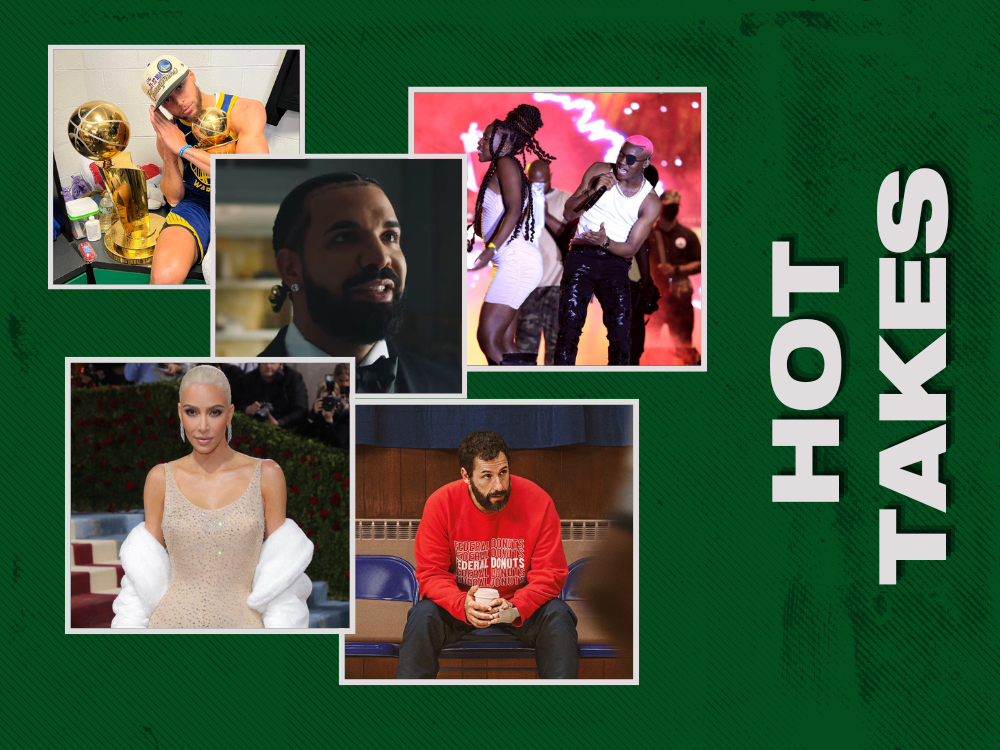
Hot Takes: Elon Musk’s Twitter, Linda Ikeji Strikes Again, #EndTimWestWood & More

In a blink of an eye, the first quarter of the year is done, though it feels like January was only a few days ago. Brisk as it may have been, this hasn’t changed the fast paced environment we live in, as we watch culture change and shift powers segueing from us chanting “Hot Girl Summer” one minute to “that ain’t P” in the next. In my opinion, the only enjoyable thing about April is the welcome return of live shows across the world from the Homecoming festival weekend to Rick Ross’ headline show in Lagos, Coachella and more. It’s official! Summer is approaching.

Today, I’m also particularly excited about Burna Boy’s show at Madison Square Garden which he sold out, becoming the first African to headline ay the stadium. While I wouldn’t exactly call myself an Outsider, I’m super excited for this show for some reason because the man can really perform his heart out. He’s committed to the craft and to giving his fans a great live experience so I’m sure he will not disappoint. I’ll be shouting “My problem is I too sabi,” for the rest of the week in his honour. Dig in to my hot takes this week on Real Housewives of Lagos, TikTok’s reach in the music industry, Elon Musk’s latest purchase and the investigation into DJ and alleged sexual assaulter Tim Westwood.

What I’m listening to 

Right now, I’m listening to a bunch of new music I stumbled upon as I’m not really listening to anything in particular. But I got into some new releases last weekend and I’m really feeling records like BNXN & Zinoleesky’s “Kilometer Remix” which was our Best New Music pick this week and Boj’s album ‘Gbagada Express’. I also got into Jaylon’s “Get Down” featuring Azanti and Chrystel and currently, that’s been on replay.

Jaylon and Azanti have a way of creating something magical when they come together and this time, Chrystel was the icing on top of the cake. The record features a blend of string instruments and piano chords, which gives the track a distinct feel to it and make it easily a favourite for me. I also got into Kwesi Arthur’s debut album ‘Son Of Jacob’, over the weekend and I’m surely going to be spinning that a couple more times.

What I’m Watching 

When I’m not scouring the Internet for new music, I like to spend my time watching  TV shows as often as I can. Currently, I’m hooked on a new Ndani TV youtube series called ‘Love Like This’, and I’m loving it. The series follows a woman called Abiye, who cheated on her fiancé a night before their wedding. On the day of their nuptials, she’s marred by guilt and leaves him at the altar setting off a mixed bag of reactions from her friends and family alike. 

Of course coming from a typical African background, this only caused family, friends and others to judge her based on this decision but truly, she wasn’t very much interested in him as she was still not over her ex. Shortly after this chaotic experience at the altar, she went back to dating him and it’s been drama drama drama since then. I’m currently 9 episodes in and I keep coming back for more.

Gentility…oshey stupidity!

TikTok continues to reach into the music industry, bolstering songs from sleeper hits to mainstream success in the blink of an eye. Last year, we saw this particularly in the case of Nigerian singer CKay whose 2019 single “Love Nwantiti” gained a new lease of life when it went viral on the social networking platform and earned top spots on global charts, including the Billboard Hot 100.

This year, TikTok continues to prove to be a viable source for “blowing” one’s music and we’ve already seen this in the likes of Pheelz and BNXN who scored a hit single with their recent collaboration, “Finesse.” Now, it seems that this is happening once again as Melvitto and Wande Coal’s “Gentility” climbs to the top of the Nigerian Apple Music Top 10 chart, almost three years after its official release. This no doubt shows the power that TikTok has in the long run, with the ability to increase the shelf life of songs in this hyper climate. Yet we’ve also seen songs spark and die on TikTok, spurring viral challenges and repost videos from millions of users one minute, only to be abandoned for the next viral thing in the next moment. I’m not exactly one to beat the gun and say that TikTok is going to redefine the trends in music and culture, but we may very well continue to see Afropop songs gain new life  

An Update On The  Real Housewives Of Lagos 

Spoiler alert.

The forecast for the debut season of Real Housewives of Lagos (RHOL) is drama, drama and more drama and I’m loving it. After kicking off three weeks ago, the Nigerian iteration of the hit reality TV show has piqued the interest of many viewers across the country who can’t help but irresistibly talk about the cast and their flair for trouble. 

As I mentioned in Hot Takes earlier this month, Laura seems to be the season’s villain and three episodes in, she’s still wearing this title with visible pride. I’m not really a fan of her so far, and have found her character to be a tad bit too spiteful for my taste buds, nonetheless she brings the much needed drama to the show. Last Friday, the girls were over at Carolyna for a garden brunch (more like dinner), following the beach get away hosted by Iyabo Ojo last weekend. 

Carolyna came ready to treat the ladies to a good time but unfortunately, drama waits for no woman. In the latest episode, we see Carolyna and Laura Ikeji have a face-off after two weeks of brewing anger. We see Chioma spill the beans about Laura wishing to slap Carolyna following the game played at Iyabo’s beach house. Carolyna does not take kindly to threats of violence as she feels Laura’s anger is misplaced. In Carolyna’s defense, Linda Ikeji, Laura’s sister has been weaving false stories about her on her popular gossip blog without verifying any of the damaging information. While I’ll spare the details about Laura’s hateful actions, there’s no denying that she has over the years fostered an unsafe environment for women, queer people, children and more, choosing sensationalism over any journalistic integrity.

Tim Westwood Accused Of Sexual Misconduct By Multiple Women

Ex radio host and DJ Tim Westwood has been accused of sexual misconduct by seven different women, making this the second time accusation against him come to light during his decades-long career in the music and entertainment industry. Although he has denied these allegations, multiple women have anonymously come out to share their experiences in an investigation carried out by the BBC. In the documentary, these survivors have accused Westwood of misusing his position in the music industry then, to exploit the young women.

Multiple women have also shared their stories since the BBC investigation came to light, detailing how the DJ and alleged sexual assaulter would cajole them into sexual acts during a time period of 1992 and 2017. The investigative documentary titled ‘Tim Westwood: Abuse Of Power’ aired on the 26th of April and set off a chain reaction on social media where survivours and allies were able to share their experiences.

According to the documentary, one of the women reporting her story  was underaged (17) at the time Westwood took advantage of her naivety, while another was a fan who wanted a picture with the famous DJ, only to be grabbed on her breast in the process. This has been one of the UK music industry’s most openly kept secret and has been long overdue, but I am sure glad to see something finally being done and can only hope that this documentary opens up a criminal investigation into his allegations.

Elon Musk Acquires Twitter For $44B 

Stop what you’re doing. We’re now operating on Elon Musk’s Internet. Earlier this week, it was announced that the world’s richest man Elon Musk had now acquired Twitter. This followed earlier announcements that Musk had become Twitter’s biggest shareholder but declined a position to join the company’s board. Following this, Musk moved for a hostile takeover with his majority share, and soon bought out the company with Twitter’s board announcing on Monday that it had agreed to Musk in a deal valued at $44 billion.

Shortly after his record deal with Twitter, Musk began asking Twitter users what changes they would like to see, to the point of suggesting an edit button for users on the social networking platform, a feature many have clamoured for years. Already, many are speculating about what the future for the social platform will look like now that it would be privately owned by one of the world’s richest men. Musk, of course, is notoriously unpredictable so if there’s one thing that seems clear: Twitter’s leadership will likely look much different after the deal than it does today.

According to people familiar with the matter, Musk has already laid out ambitions for Twitter that will fundamentally change the user experience. For instance, Musk wants to pay “creators” to produce content on Twitter, a strategy that helped build TikTok into a social networking juggernaut. Contrary to this, Musk who describes himself as a “free speech absolutist” has also long been vocal in his criticism of the platform’s content policies, raising questions after the company banned former US President Donald Trump. Whatever the case may be, I can tell that in the coming weeks we’re going to be hearing more and more from Elon Musk and what he has in store for Twitter. As someone who has been using the platform for as long as I can remember, I certainly do hope that this does not open a can of worms for incels, bullies and racists to go scott free on the timeline.

Featured Image Credits/NATIVE


ICYMI: PROJECT RUNAWAY

Victony Shares His Refreshing Perspective On New Song “Kolomental”

Victony’s life is straight out of a superhero tale. This past Tuesday made it exactly a year since the singer’s car crash that claimed a friend and, for several months, his ability to walk. Colleagues and fans contributed finances towards his welfare, and soon we saw him again, first moving around with a wheelchair. Now he walks, going about his life with a renewed vim.


View this post on Instagram


A post shared by VICTONY (@vict0ny)

On a musical level, that event has coloured his perspective ever since. Last year’s ‘Dark Times’ came just three months after, featuring two songs that offered an accurate view into the mindset of a survivor such as the emotive “Pray” ending with a solemn prayer from his mother. ‘Nataraja’ with Rexxie was also released and it reflected Victony’s truest self through reflection.

Victony’s latest song “Kolomental” was released yesterday, the first year anniversary of the accident. He shared a brief note on Twitter, in memory of his beloved friend. On the record, that brooding sense of melancholy lingers. The Blaise Beatz-produced song begins with the twinkly chords you’d expect from a Victony song, introduced by the line, “I no fit reason am, e go kpai me o”. Steeped in weariness that’s no doubt influenced by the heavy subject, the first verse talks about the many times he’s been on the receiving end of some wrongs, and about being unable to “calculate the calculus, e plenty gan.”

His resolve comes in the chorus, dropping some much-needed perspective. “Make I face my front, make ogbanje no use me test run/ Make potopoto no stain my cloth, Home advantage everytime I ball”, he sings, detailing why he’ll always ignore certain comments on social media and elsewhere. It’s entirely valid to protect one’s mental health and reputation by choosing not to engage with obviously malicious comments. With celebrities increasingly being prone to trolling online, some time off is a step many have been taking. Victony would rather unlook and put out music, which is the one thing he has control over. 

With the ‘Outlaw’ EP expected on May 6th, “Kolomental” for sure portends an interesting run-up to that. If anything, it’s shaping up already as a worthy completion of the journey that began a year ago. 

Stream Victony’s “Kolomental” below.

Featured image credits/


ICYMI: The NATIVE Presents Project Runaway

Songs of The Day: New Music From Kabza De Small, Killertunes, A-Reece & More

2022 is no longer a new year, and Afropop knows that very well. As much as the previous year was packed with scene-defining achievements, especially within the context of global growth, the only way to keep the momentum from falling off is for artists to keep reaching into their bag for great music that holds the ears and captures the hearts of millions of listeners across the continent and well beyond. That’s exactly what’s been happening, so much so that there’s hundreds of new singles, at-least one new must-hear album and a new smash hit every week.

Amidst this torrent of new music, the NATIVE is committed to highlighting the best releases you need to hear, and possibly add to your playlists. That’s the essence of our ‘Songs of the Day’ column. On Monday, we highlighted new drops from BOJ, Kwesi Arthur, Oritse Femi and more. Today’s curation includes scintillating vibes from Kabza De Small, NV Funk, BadTheSoundBoy and more. Tap in.

KABZA DE SMALL — “ZIWA NGALE” FT. DJ TIRA, YOUNG STUNNA, DLADLA MSHUNQISI, FELO LE TEE, BEAST & DJ EXIT

Famed for his prolific releases, Amapiano mainstay Kabza De Small recently put out a 4-track project, titled after this eponymous opener. As usual it’s full of dusty gold production where his collaborators shine. No other song better captures the festive vibe at the base of the project than “Ziwa Ngale”, which features a host of notable acts in the SA music scene. With Dladla’s trademark vocals setting the tone, other voices and effects merge wonderfully into Kabza’s production, making this a song you’d want to groove into the weekend listening to. 

NU FUNK — “FUNK TO BLACK”

From his base in South Africa, Gqom-inspired drummer, DJ and musician has made his mark among lovers of experimental Afropop worldwide. Quite recently, Nu Funk put out ‘Funk To Black’, a project of four songs, extending his stronghold on his unique expression. The titular opener is a brooding experience made alive with big drums and vocoder-inflected vocals. Repeatedly sung is the line “funk to black, the rhythm is back”, which really doesn’t give away the spirited groove of this record until you go ahead and press play. 

KILLERTUNES – “WYD”

In recent times, more producers have been stepping into the recording booth and creating their own bangers. Killertunes’ musical resume goes back some time, and he’s not stopping anytime soon. On his latest song, titled “WYD” (an acronym for ‘where you dey’) he rides a slow, neo-Highlife beat, riffing about a lover in very tender ways. “As your corner eyes just dey eye me/ I miss your vibing, when we go outline things”, he sings with sufficient humour, keeping a chill mood in sync with the production’s soft strings and almost muted percussion. It’s surely one for the late nights and moving hands.

BADTHESOUNDBOY – “BALACLAVA BABY” 

Emerging producer and artist BadTheSoundBoy has maintained a prolific streak, releasing the ‘Bad For You’ EP last year and now sharing what is his second single of the year, “Balaclava Baby”. A bubbly record, it possesses all the vim of modern Afropop, with subtle vocal effects that undergirds Bad’s passionate singing. The guitars are reminiscent of Calypso, and paired with the vivid Yoruba-style drums, it’s a record that will surely have many parts of your body moving. Absolute bop. 

A-REECE FT. MAGGZ — “MORE THAN ENOUGH”

A-Reece is known for his blistering raps but on the South African MC’s latest project, he dials things down a notch. ‘The Burning Tree’ is suffused in warm melodies and laid-back riffs on life and love. Crafted through the concept of enjoying a good blunt, Reece is tender and interrogative as he pokes holes in commonplace themes and renders them a new lean. “More Than Enough” begins with church-esque keys, but the lyrical direction is more militant, as Reece raps of naysayers “dealing with a heavyweight, I’m outside tell security to barricade.” Maggz turns in an evocative hook, showcasing the awareness that’s made him so loved among listeners in the South. 

Featured image credits/NATIVE


ICYMI: The NATIVE Presents Project Runaway

The NATIVE Presents Project Runaway

In the summer of 2020, Lojay, one of last year’s breakout stars began recording a trappy experiment helmed by London-based rapper and producer, New World Ray. Over the next two years, the freestyle would undergo transformation as it passed through several hands, including highbrow producers such as Lido (A$AP Mob, Chance the Rapper), NATIVE Sound System’s Sholz, and finally Adey.

That single, now known as “Runaway,” the soulful ballad performed by Lojay and his sweet-sounding collaborator, Mavin Records’ crown jewel Ayra Starr is the first song off the NATIVE Sound System‘s forthcoming debut album, the music division of the NATIVE Networks which is also the parent company of this very publication. The eponymous album will pull together a spate of talented artists, producers, sound engineers, A&R’s, and music executives from around the continent and the diaspora, all united to spread the sounds of tomorrow: today, the ethos of this very media company.

In that light, for our April Digital Cover and our first cover of the new year, we shine a light on all the collaborators on “Runaway,” tracing how the lead single off the NATIVE Sound System’s debut single came to be. Starring two of the most powerful voices of the new generation, Mavins lead female vocalist Ayra Starr and “Monalisa” singer, Lojay alongside director and producer, Dafe Oboro, stylist MOMO, Forevatired, Monster Boys and more.

‘Project Runaway’ highlights the creation process behind working on the record “Runaway”, and digs deeper into the rebellious and left-field nature of the NATIVE. The album which is centred around four of the climatic and cultural seasons that make up a typical year in Lagos, and is a compilation of familiar voices and new sounds. That being said, ‘The Sound Is Coming.’

Full Credits:

Starring Ayra Starr and Lojay in New Bottega

Editor-in-Chief: Seni Saraki

Managing Editor: Tami Makinde

Words by Wilfred Okiche

Photography: Victor Elochukwu

Styling: Morinsola Hassan-Odukale

Make-Up: Onome Ezekiel

Hair: Kehinde Are

BTS Photography: Torty Ikechukwu

BTS Videography: Ayo Odunsi

Production assistants: Wonu Osikoya and Moore Wright

Cover design by Shina Ladipo

You can read the cover story here.


ICYMI: Project Runaway

“Shrap over the rest”: The rise of a Kenyan genre for the youth, by the youth

As a global phenomenon, rap music’s most popular sonic trends reaches beyond its origin point, inspiring inventive twists from artists thousands of miles away. In recent years, rap music in Kenya has made this form of creativity compelling, through its exploration, and eventual localisation of Trap and Drill. In comparison to Kenyan Drill, which only started finding its identity recently, the Kenyan iteration of Trap–colloquially referred to as Sharp–is an identifiable, vibrant and vital part of its rap scene.

According to pioneering artists like Musau Mumo, Jovie Jovv, Nziira and Boutross Munene, Shrap is Swahili and Trap fused with the main goal of representing the Kenyan lifestyle. These artists want to depict the wins and losses of an average Kenyan and from this, they coined Shraplife. Shrap yielded a culture filled with fashion, flamboyance, bravado, and nonchalance, backed by a sound that is equal parts sinister, exuberant, blunt and hard-hitting. It has been a driving force, especially in the urban peninsula of Nairobi City where the population is mainly young people.

In the sub-genre’s earlier days, Kenya’s mainstream was more tilted towards popular regional acts like Diamond Platnumz and farther international artists. It was not until 2017 that Shrap gained attention with the release of the visceral “Kiasi” by Jovie Jovv. The certified banger rampaged through the mainstream with Trap music’s characteristic 808s kick and the fuzzy voice delivery from the Shrap pioneer. To further amplify the single, Jovie Jovv, with the help of Fred Matunga, directed a searing video depicting a quintessential life on the streets that involved drugs. As “Kiasi” stamped the Shrap image in the scene, Jovie earned the gilded title of Shrap OG. 

Even with this prime example, the content of a Shrap song isn’t limited to just trapping. Many artists in the scene also touch on the bleak standard of living in the hood, making detailed and sometimes affecting observations of life in the streets. For instance, “Tofauti/Different” by Boutross primarily touches on mental health, even circling in on suicide. These days, Boutross is seen as the image representing Shrap. A lanky fellow with a prolific output, he disregarded the old rap star metrics of greatness, like the use of heavy wordplay and sturdy flows, and instead perfected his art in storytelling.

Boutross started rapping at the age of 12, with his musical career kicking off later in 2013. With popular for hit songs such as “Yea Yea Yea” and “Story Ilianza,” he is Shrap’s most successful story yet. He managed to find his voice in his knack for emphasis and his aptitude for infectious vocal versatility, becoming an integral cog in Shrap morphing into a gargantuan beast and bypassing industry gatekeepers. In Nairobi, Shrappers and keen fans often say “Shrap is the gospel,” after Boutross’ legendary line, Shrap ni injili.”

In 2019, Boutross became the first Kenyan artist to feature on the EmPawa100 initiative, receiving a $3000 grant to shoot the flashy music video for “Wrong,” a booming, Shrap slapper that would become a national hit and gain heavy airplay despite its gritty lyricism. Doubling up as a producer, Boutross has become a significant name in the music industry as a creatively restless artist. More than anyone, he has used the frictions of modern Hip-Hop to his advantage. All at one, he is a rapper and a singer, a raw emotional purger, a street-centric braggart and a hopeless romantic. 

Boutross is idiosyncratic and identifiable enough that he’s become the go-to man for bold collaborations, teaming up with Nviiri the Storyteller on “Sin Thea,” and showing that Shrap has even bigger crossover potential. From finding his voice on 2018’s ‘Billy Jean’ EP to the scene-defining ‘6IXVIEWSII8K’ mixtape, which earned him the 2019 UnKut Hennessy HipHop Awards Best Male Artist, Boutross’ growth has not only cemented his music prowess, it has also mirrored the wondrous evolution of Shrap over the years. 

The boom of Shrap culture goes beyond the glorification of good times and has a lot to do with the democratisation of new technologies. Shrap music with its three-note synths and overdose of Auto-Tune, spread from just Swahili to vernacular languages. Kenya’s Wuod Baba identifies as a Shrap artist spreading the Dholuo Trap. His discography shows that music is more than just a language but an emotion that brings people together through melodies. While new names continue to crop up in the scene, Kay Gren is a much smaller name that hovers around Shrap’s pioneer days. His unique rapping timbre is perhaps what set him apart when he first debuted on the scene. Known for his feature in the mega-smash hit “Kibare Kwa Face,” his current absence keeps his fans on the verge of their seats waiting for his comeback.

For Shrap, lack of airplay did not stop the eventual breakout with key players taking a DIY approach that’s clearly paying off. Musau Mumo teamed up with Boutross to form ADF, a label that consists of Shrap artists Boutross and  Dope-I-Mean. While the music is clealry essential, the power players behind the label act as the driving force to the success of Shrap. The label offers services such as studio time, which is still an issue for most artists on the come up.

Musau also kickstarted Shrapnite, a showcase event for rising Shrap artists in and around Nairobi. There’s been about a half-a-dozen successful editions of Shrapnite since 2018 that have geared the recognition and growth of the genre, providing a platform to a medley of rappers, including NATIVE uNder alum Groovy Jo. One of the few female rap artists associated with Shrap, her flow, lyrical precision, and refusal to self-censor defines her growing catalogue. She is frank and outspoken about her sexuality and her desire while still commanding respect as a lyrical savant and dynamic rap artist. 

As Shrap keeps evolving and with the sound becoming indelible to Kenyan youth culture, DJ’s have also played a great role in its continued proliferation. Dj Mawinch is a propelling force to the sound. Making numerous Shrap mixes, Mawinch has been pivotal in spreading the sound to his peers. Apart from that, he designs custom clothing pieces dubbed “Renots Apparel,” which is often seen in Shrap videos. For Mawinch, his role in Shrap is playing unheard creatives as he has become an icon in the industry.  To varying degrees, other key DJ’s like DJ Abubaxter, DJ Hanuman, Magnum the DJ and GI Selects have also been monumental in the shaping of Shrap. 

Becoming an even bigger regional deal within East Africa’s thriving music scene, Shrap Nite has collaborated with the Nyege Nyege festival, a 4-day international music festival known for its unique East African feel and outlook, to create a sprawling line-up for a 2020 showcase that included Ohms Law Montana and Denzel Kong. This is validation for the fact that Shrap music resonates with the urban youth as their voice, through the inventiveness and authentic expression of its purveyors. 

Shrap openly embraces capitalism with its lyrics about success, fame, luxury and money, and its neoliberal pragmatism with a do-it-yourself basis provides testimony that you do not need a big record company to make it big. It is a way of saying “we don’t accept the rules of the game anymore, now we’re going to play it our way.” Shrap has positively added to the music community in Kenya as it is propagating musical democracy among its new and nascent acts.

Shrap is not merely a music genre but a way of living, dressing, talking, and self-expression for an entire generation. From social media networks to dance floors and has put up its functioning codes and systems. You might or might not love Shrap but like any music genre, the diamonds are beneath the surface.


FOR THE GIRLS: HOW WOMEN’S PLACE IN KENYAN MUSIC CONTINUES TO EVOLVE

Best New Music: BNXN & Zinoleesky are a dazzling pair on “Kilometer Remix”

When BNXN, the artist formerly known as Buju adopted his new moniker earlier this year, there were numerous speculations that his meteoric rise to success would affected by the significant change. Unknown to many, BNXN was no stranger to shedding his old skin and adopting a new name to suit his current standing in the game.

As a teenager, he tested the musical waters starting off as a rapper under the name Drizzle before gradually adopting Buju as his stage name. His early singles “Catch A Vibe” and “Energy” were a premeditation to his current cache of cathartic and ebullient songs, which now runs the span of moods and genres.


View this post on Instagram


A post shared by BNXN (@toyourears)

BNXN’s path to international recognition has been slow and steady but remarkable. After a robust 2021 flourishing from coveted collaborations such as the Zlatan-assisted “Feeling”, his feature on “Mood” off Wizkid’s ‘Made In Lagos Deluxe,’ to his debut EP ‘Sorry I’m Late’, it seems that BNXN is now is gearing for an even bigger 2022.

Already, he has displayed no signs of slowing down his current trajectory. Earlier this year, BNXN assured the world of his prowess when he teamed up with Pheelz, who has recently signed a deal with Warner, to release a giddy fan-favourite smash hit “Finesse” that went viral all over the world. “Finesse” currently sits comfortably at No.5 on the Billboard Afrobeats Songs Chart after debuting at No.6 five weeks ago.

Now to capitalise on this moment and further expand the world around his debut EP, BNXN has finally released the highly anticipated remix to his hit single, “Kilometer” which features street pop icon Zinoleesky. Produced by serial hitmaker Rexxie, the song’s original version has been climbing the airwaves for the past few months, taking over clubs and parties around the country with its propulsive and infectious rhythm.

“When I dey on speed, mo n ja kilometer/I don play your show, e jor owo mi da” BNXN coos over the song’s hook, admonishing a show promoter who has refused to pay him his dues. On the remix, Zinoleesky finds a balance between relatability and danceability in his lyrics, with a charisma that permeates off the track.

Over the catchy production, Zino adds to BNXN’s anger with the promoter, while he talks about his attraction towards a female counterpart who has an eye for expensive things “She likey extra ordinary things She wan to touch she can’t resist.” He also emphasises his disdain for shisha, chanting “Fuck SHISHA” over his love for weed. Rexxie’s street pop bounce sets the tempo for the resounding vocal contributions from both performers as they produce some of their best vocal work yet.

While the validity of remixes in expanding the shelf life of a song has been questioned by a number of music listeners recently, it’s clear that BNXN and Zinoleesky do not fall into that cyclical pattern. Instead, the pair showcase great charisma and synergy as they compliment each other’s smooth and infectious vocals. With “Kilometer Remix,” BNXN continues to widen the spotlight on him and showcase once again why deserves to top the charts.

Stream “Kilometre – Remix” below.

Featured image credits/NATIVE


ICYMI: A 1-Listen Review of Buju’s debut EP ‘Sorry I’m Late.’

Music Business Africa (MBA) Returns For A Second Edition

The Music Business Africa (MBA) program has recorded great influence since being founded by Godwin Tom in 2020. Its earliest form was through an internship program in 2017, but as Afropop scaled new heights in global dominance, it was clear that more in-depth resources on the music business needed to be shared. 

This July, MBA will be returning for its second edition with a program that actively trains the incoming music executives across Africa. “As Africans, we must take the creation and distribution of our knowledge into our own hands,” says Elizabeth Sobowale, who’s the new programme director. “MBA for Africa plays an important role in ensuring that the knowledge of Africa’s music, creative and cultural industries are passed on to the future leaders, executives and creators of the continent.”

Developed by iManage Africa, the MBA also partners with Music Ally and Dr. Carlos Chirinos of the Music Business Department at the New York University. YouTube Music will power this year’s edition. “Africa’s music industry produces some of the world’s most creative content and contributes significantly to global pop culture. This initiative enables the support of more creatives who will play a critical role in the continent’s fast growing creative economy. Additionally, It paves the way for the inclusion of more perspectives, which benefits the Africa and global musical landscape. It aligns with our values, and we are thrilled at the opportunity to support it,” says Addy Awofisayo, YouTube’s Head of Music in Sub-Saharan Africa.

“This is the most advanced music business programme on the continent, localised but with global, industry-standard best practices,” says Anthony Churchman, Music Ally’s commercial director. “It empowers Africa at the foundations: it starts with the people.”

Closing out in November 2022, the program will teach students about a range of music business trends and technologies, as well as giving them hands-on experience in releasing and promoting music to create sustainable careers for artists. Students will also communicate closely with experienced music industry executives, including a faculty drawn from all the different sectors of the business. The project also features the ‘Women’s Fund’, which continues the inaugural edition’s practice of parlaying the support of sponsors towards ensuring that at least 50% of this year’s participants are women. 

Godwin Tom recently moderated a panel at the NY:LON Connect industry conference about Africa’s music industries, which included a discussion about the importance of education to nurture young managers, lawyers, PR people and other roles there. The MBA also shares the same philosophy, even raising the stakes by incorporating practical tasks. In 2021, the inaugural students worked with five African artists in a ‘Talent Project’ that saw them release two EPs, including a crowdfunding campaign.

“When I started out in this industry, there was nowhere to learn about the business and so I, like many of my peers, had to make so many mistakes and it took me years to realise I had been doing so many things wrong,” says Godwin Tom. “The Music Business Academy for Africa has all the modules designed for creative music entrepreneurs to leverage and tap into the wide opportunities in Africa’s music and entertainment industry.”

Featured image credits/MBA


ICYMI: The Compozers are keen on expanding their legacy

NATIVE Exclusive: The Compozers are keen on expanding their legacy

Bands like The Compozers are a dime a dozen. For every one that’s been able to finagle their way into longevity, there’s way more that have fizzled in their nascent period. In fact, the one thing which seems to be common among bands is their inability to stand the test of time.

However, offering their own inspirational counter narrative, The Compozers are standing passing that temporal test on their own terms, cementing their status as the premier backing band in Black British music (and, by extension, Afropop) and charting their way forward as artists in their own right.


View this post on Instagram


A post shared by THE COMPOZERS (@compozers)

Referring to themselves as pioneers for many reasons, Stephen, the group’s drummer shared with me over a Zoom call a couple of days before their live show with Tiwa Savage: “I’ll definitely say that I believe that we’re pioneers because we didn’t have any examples of what we’re doing before we started and now that we started it, other people have seen what we’re doing and they’re replicating it in the different parts of the world and we’re happy to see that what we’re doing it in the intention to inspire others. So I’ll say yes and I believe that we’re pioneers.”

Drawing influences from some of the most credible bands in the world from the iconic Beatles to premier Hip-Hop band and production outfit, 1500 or Nothing, The Compozers are a British-Ghanaian group of four instrumentalists made up of Stephen Asamoah-Duah (drums), Nana Ntorinkansah (bass guitar),  David Ohene-Akrasi (keytar) and Charlie Mensah-Bonsu (keyboard), who kicked off their musical journey nearly a decade ago and have maintained a steady momentum in the past years.

Growing up Ghanaian and all coming from christian backgrounds, The Compozers are deeply invested in their christian roots and as much as possible try to inculcate this into the music they create. “Being Ghanaian, like going to Ghanaian church, growing up with Ghanaian music as well, like the way the music is, we implement it a lot in what we do as well, like how we approach it and stuff,” Stephen shares. “Also it’s very important to get a lot of support from the Ghanaians as well so it plays a very big part. We wouldn’t be here if God hadn’t given us these talents you know, we always have to give back.”

The Compozers can be described as the dictators of the sound. They decide what the music is supposed to sound like. Being a part of the industry for close to a decade, they’ve been able to key into the Afropop and Caribbean pop, finding a juicy mid-point that’s evident on feel-good records such as “Feel Right” and “Born You Well.” As of today, they’ve worked with some of the biggest names across the world, cutting across artists in different genres, from Davido, to Rax, to Koffee. This goes to show that The Compozers are a formidable band, experimenting with different musical genres and representing the Black-British community.

“We’ve been able to pick from so many different cultures meaning that we’ve been able to delve into different genres,” David, the Keytarist shared with me, with regards to what their music represents in the Black-British community. When I ask the guys what 10 years as a band means to them, they all shared with me their different perspectives on this. David responds:

“I feel like we just want to live, especially this 10 year journey, we just want to live that positive message and resonate in that and that whatever you want to do in this life, you can achieve.”

Ten years together as a Black musical band is something that’s rarely seen and The Compozers have a familial bond to than for that. “Being brothers is what allowed some challenges not to break this thing that we have,” Nana says. “Being in a collective is one thing, and being able to maintain a working relationship and a brotherhood as a collective is an entirely different ball game.” The Compozers are playing the long game as a collective and we have no choice as fans but to watch. As Nana declares, “what 10 years means to me, it means legacy and that we’re also just getting started.”

“10 years has been a long time and also not a long time when you really think about it,” Stephen adds. “I’m so grateful because this is something that we started so innocently and we had no clue on what it’s gonna be and it has blossomed to what it is today and it’s actually a worldwide thing and I can confidently say that if you go to every corner of this world and mention the Compozers at least 1 person would know who the Compozers are and I think that that’s an amazing achievement for us.”


View this post on Instagram


A post shared by THE COMPOZERS (@compozers)

For an instrumental band to come this far, I believe it’s something to take pride in. Maybe not to some degree as record producers, but instrumental bands have some level of control on the sound of Afropop and Black diaspora music, giving audiences memorable experiences to hold on to while playing and reinterpreting songs at a live show.

Beyond their live performance exploits, The Compozers are beefing up their resume. Last year, they released their debut album, ‘The Experience’, and for most, this was the first time hearing music curated by and centred on the band. In conversation about their next project and what’s yet to come, Charlie Biggz, the band’s keyboardist shared: “We’ve been in the studio with a lot of artists, mainly from Africa, and we’re still deciding on the genre of what the EP is gonna be but it’s definitely gonna be Afrobeats and we’re definitely working on it so watch out for it.”

Even though a lot of their work revolves around backing the most popular artists from Africa and across the diaspora, The Compozers are controlling their own narrative, in  terms of how they need their music to sound. It’s the sign of the collective greatness, a talent-fuelled group whose wholesome impact continues to be more than the sum of its parts.

Stream ‘The Experience’ below.

Featured image credits/NATIVE


ICYMI: With ‘Son of Jacob,’ Kwesi Arthur is aiming for the next level