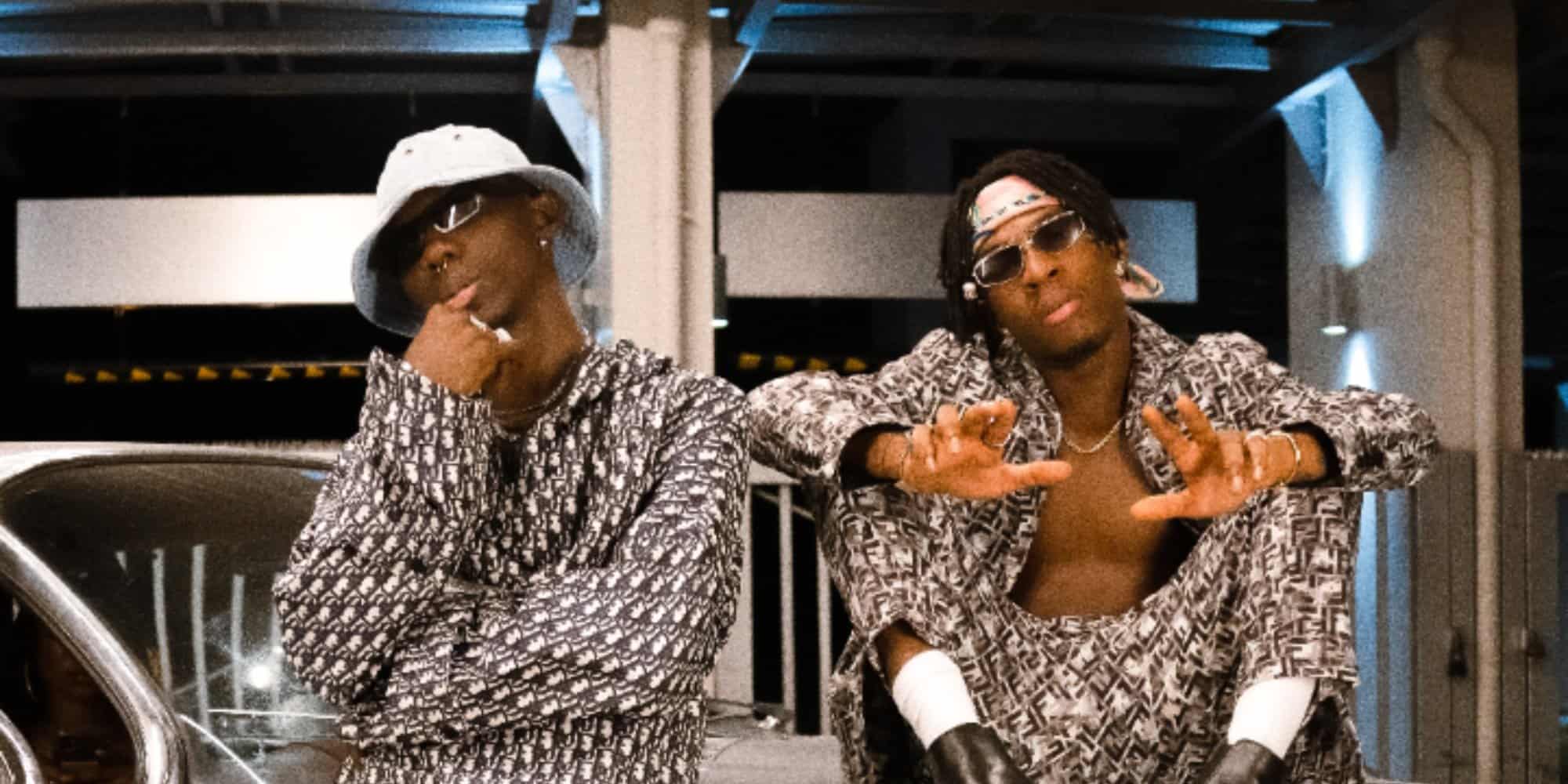
Celebrate Father’s Day with the NATIVE Wellness Hub

This past year has been particularly traumatising, with innumerable tragedies clustering the new-stream and personal losses affecting almost everybody. As we grow older and get better-versed in adult life, our responsibilities grow exponentially, making it even more difficult for us to focus on what is most important: our overall wellbeing. Often it is easy to put work, or family responsibilities or duties to friends first ahead of our needs, but in the end this only lead to burn out and in some cases, several visits to the trenches.

In line with our responsibilities as a community-first media hub, last month The NATIVE partnered with Eudaimonia Wellness to host our inaugural NATIVE Wellness Hub at the end of Mental Health Awareness Week, a retreat event designed to encourage our community to put their mental health first through resetting and re-centring. 


View this post on Instagram


A post shared by The NATIVE (@thenativemag)

During this retreat, one of our male guests expressed how the pervasive “men don’t cry” mindset stopped him from expressing his mental health needs. Nigerian men are very often denied the freedom to express their emotions, nor are they afforded the space to confront their inner thoughts. Unfortunately, the rigid expectations our society places on men pays no mind to their mental wellbeing and actively encourages men to ignore it or hide their struggles. For fathers, these troubles are especially heightened, as they carry the weight of the whole family on their shoulders.

Recognising the need for safe spaces for men in our community and beyond, this Father’s Day, NATIVE and Eudaimonia will host our second ever Wellness Hub, to offer a day of mindful meditation, and relaxing activities that will give dads the much-needed break that society instructs them to be ashamed of taking. 

Open to young and new fathers, seasoned dads and their kids or friends, if they wish to come along, The NATIVE and Eudaimonia’s Father’s Day Wellness Hub will include a Kung Fu class to kick off the session, followed by a cocktail making class powered by Johnnie Walker. With two 3-hour sessions taking place, one in the morning and another in the afternoon, this Wellness Hub can fit easily around your day, but will still ensure that father’s get the chance to prioritise their own wellness, for the day and be inspired to be attentive towards their mental wellbeing for life. 

Sign up for yourself, your dad or a loved and cherished father you know here, for a chance to attend.


ICYMI: FOR US BY US: PRIDE IS EVERYWHERE

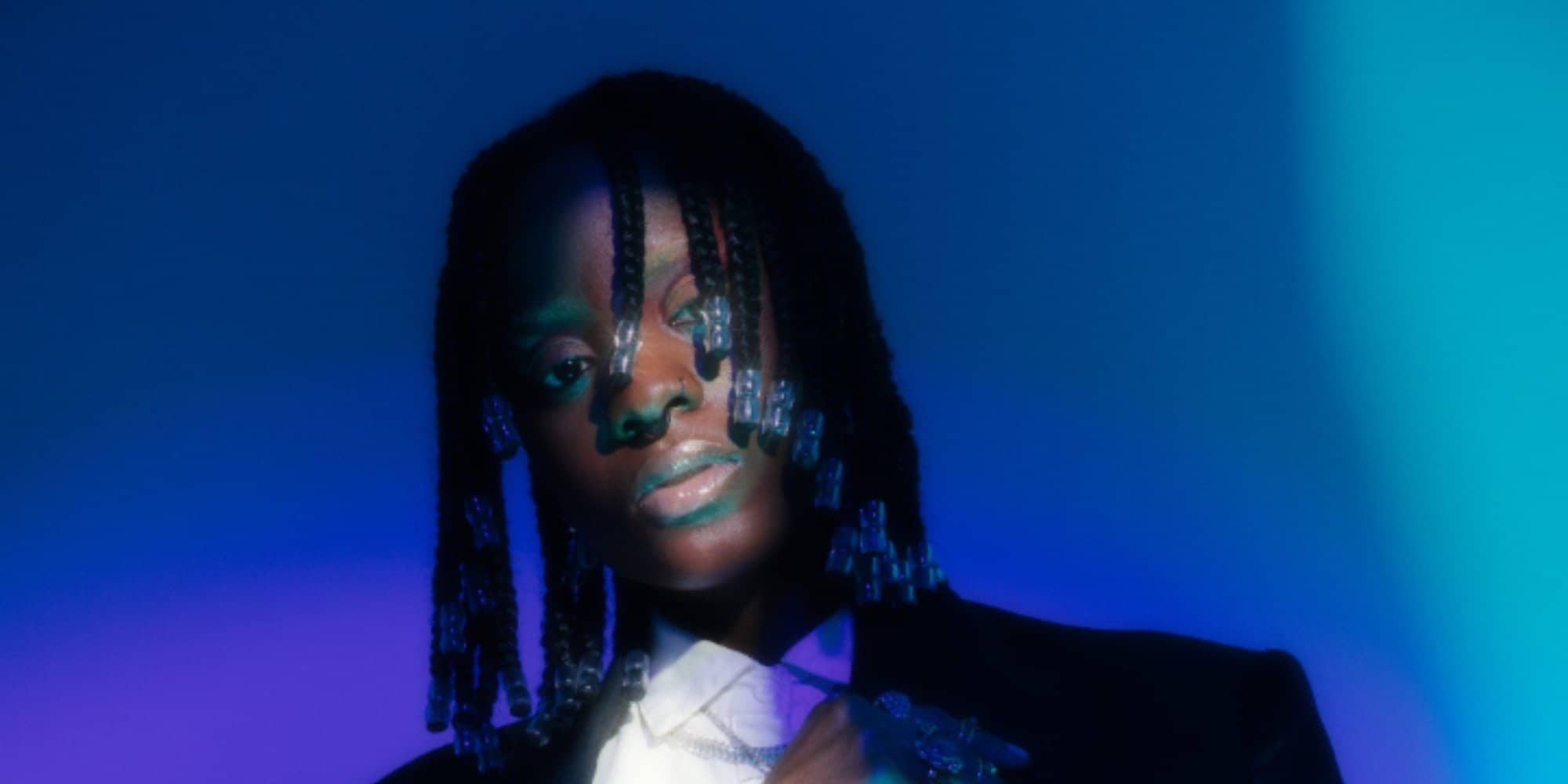
NATIVE Exclusive: Lojay’s commitment to artistic growth is paying off

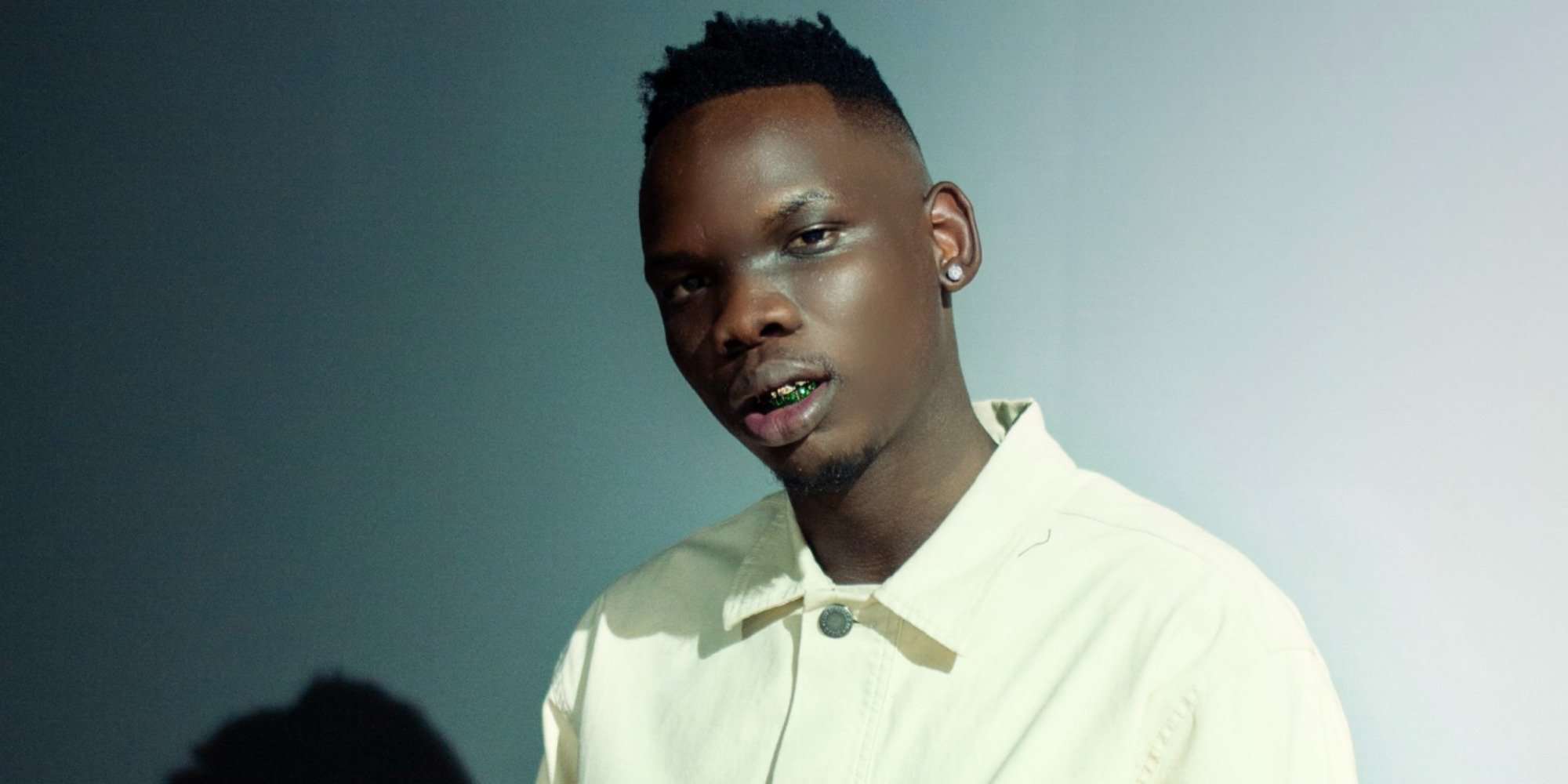
The night after the release of his new collaborative EP with Sarz, emerging Afropop star Lojay went to the club to find people deeply enamoured by the project’s Amapiano-infused closer. “I wish I filmed the reaction because people were screaming “Monalisa” and I’m thinking, ‘Didn’t this just drop last night?’” he recalls over a Zoom call, one week after release. It’s reflective of the rapt reception LV N ATTN was instantly met with, and it’s much deserved.

The 5-track tape is an excellent merger of Lojay’s gliding vocals, emotive lyricism and bright melodic choices, with Sarz’s proven ability to create eclectic and deeply engrossing soundscapes. Being the second artist to work with the Afropop production maestro, Lojay earns his breakout moment with effortless command, a benchmark performance fitting for his introduction to a wide audience. In 2017, he dropped his first EP, Midnight Vibes, a curious collection of his raw and promising abilities as a singer and songwriter. Upon graduating from Uni in 2018, he decided to go all in on making music, and that meant a strong commitment to refining his craft.

“I never really wanted to “blow,” I just wanted to develop my artistry and I believed everything would fall in place and well,” Lojay says of the period between making that decision and now. “I believe the growth is quite evident now.” Linking up with Sarz during the early days of the Coronavirus pandemic, Lojay wasn’t really in the best space, but the producer’s instant rapport and willingness to work on an EP was vindication for the time spent at becoming a better version of his musical self. The project’s only vocal feature comes in the form of a stellar Wizkid feature, another huge co-sign of his talents.

“I’ve just been absorbing everything that’s happening and working on taking in everything that’s yet to come,” Lojay says of the reception to LV N ATTN, noting that he’s been swamped with joy, excitement and, most of all, relief since its release. There are no plans to step back anytime soon, “I want to be able to make this level of music consciously for the next 10-15 years,” he tells The NATIVE. It’s Lojay’s time and the clock will be ticking for a really long time.

Our conversation with Lojay follows below, and it has been lightly edited for clarity.

NATIVE: What’s the origin story behind Lojay?

Lojay: Lojay is Lojay. The person I am within the music is the person I am outside. My whole life revolves around music, so there’s no possible way to talk about Lojay outside music. That’s literally me. Lojay means Lekan Osifeso Jnr. and that’s my actual name

What’s the growth between your debut EP, Midnight Vibes, and now been like?

To be honest, there’s been a massive amount of growth which I would say is very intentional. Going through my catalogue, you’ll notice the growth in the music. Every new song is better than the last and that was an intentional thing for me. Concerning Midnight Vibes, I had recorded a couple of songs and instead of putting out one song, I just decided to put out a couple so people could, you know, vibe and that was the major intention behind the EP. I was in Uni so I wasn’t really focusing on music at the time, but when I was done around 2018 and I started to drop songs like “Ariel” and “Ogogoro,” it was then my sound really started to take shape. At that point, I had left uni and gotten back to Nigeria, I had to figure out what I really wanted to do. I only had one thing on my mind, It’s what I’d been preparing myself for 2 years prior to that time and, well, I’ll say there’s been a massive amount of growth and I feel very blessed. I never really wanted to “blow,” I just wanted to develop my artistry and I believed everything would fall in place and well, I believe the growth is quite evident now.

How did you meet Sarz?

This was the beginning of the Lockdown in Lagos. I wasn’t in the best of spaces because music wasn’t really going the way I had intended for it to go. So in my bad space, I reached out to my lawyer just to let him where I was at the time, and my lawyer said, “I could hook you up with Sarz, what do you think?” And I’m like, “What do you mean what do I think?” So I went ahead to work on some demos and sent that out. In my mind I’m thinking Sarz would want to work on one song but to my surprise he says we should work on an EP and at that point, I knew this wasn’t a mistake and I was doing something right. Like, if Sarz could see that, to the point where he wants to work on an entire EP, then there had to be something. I had already been confident but there was just this reinforcement that came with him just saying, “Let’s work on an EP.”

Sarz has worked with some of the biggest names in Afropop today. What was putting the project together like, especially with someone of his calibre?

I know you might be expecting to hear something serious but it was mad fun. There was no forced energy, no pressure, the chemistry was there and it was just so much fun. We just camped in the house and listened to beats, we vibed, we laughed and we were just having a good time making music. This entire process made me understand the importance of keeping it seamless and just enjoying your process, rather than pressuring yourself to make a certain type of music; enjoy yourself and let the music make itself.

Was there any sort of self-pressure to make a ‘hit’?

Not at all. You can’t make a hit song, you can only make a great song. The acceptance determines whether it’s going to be a hit or not. If I was trying to make a hit, I don’t think I would have even thought about making “Tonongo.” It was never about making a hit song, it was always about expressing myself on a song and making it undeniable.

You mentioned recently that you don’t write, you allow yourself to feel the music then you take it from there.

That’s literally it, I always have to feel the music. Music is spiritual. It’s a feeling thing, not just a hearing thing.  On hearing a beat, I already know what I want to say within the first 5 seconds. In the space of 5 seconds, I know how the beat is making me feel, I know what I want to talk about and I just basically express myself then fill in the gaps properly after. I’ve realized that if I sit down to write, it doesn’t feel natural, it just feels like I’m reading a script and that just doesn’t work for me. By the time I’m even done writing, I most likely am not in that space anymore. So basically, I hear the beat, I feel inspired and I just start talking. A perfect example is the first verse of “Monalisa” because that just came out.

What’s your favourite song off the tape?

That’s like asking me about my favourite child. I honestly have no favourite because I love everything. Every song takes me to a different space, so I won’t say one is better than the other, I’d just say they all represent very different things and they all have their own essence.

What would you say has been the most challenging part of working on this collaborative project?

The most challenging thing about this project was conscious development. The major aim for me with this EP was to grow, and you can’t count it as growth if you’re not conscious of the things that are happening. I needed to be aware of the changes that were causing growth and to be aware of how to maintain these things. I want to be able to make this level of music consciously for the next 10-15 years. Making the music wasn’t hard, but making it intentionally was a different ball game. That was the most important thing for me as well as the most challenging.


View this post on Instagram


A post shared by Lojay (@lojaymusic)

Let’s talk about the Wizkid feature “Lv n Attn.”  There’s a viral video of you in utter shock and disbelief when you heard that verse, how did that verse come about?

I had recorded “Lv n Attn” in Lagos a while back before anything. We went to London and we had been doing some work. So I’m guessing Sarz on his own had gone to see Wizkid and played the song for him alongside a bunch of other songs and, apparently, Wizkid loved the song from the jump. Some random morning, I was at the studio and at about 2am, I got a text from Sarz asking where I was and if I could make it to another studio at that time, I had a feeling it might have been to meet Wizkid but I didn’t want to get too excited just in case it wasn’t that. On getting to the studio, it was some sort of studio in a studio thing. I walked into the room and I heard this laugh, I saw Wizkid facing the control board, he turned around and the first thing he said to me was, “I’m a big fan.” and I was so shocked. He asked the engineer to play the record and the record just kept on playing over and over. He said he liked the song and he’d like to drop a verse on it if I was okay with that and, of course, I didn’t mind.

A week passed and nothing, two, three weeks passed and nothing still. At this time, we were getting ready to go back to Lagos and Sarz said he hadn’t heard back from Wizkid so I didn’t really mind just finishing up the song myself. Sarz had thrown me off balance with what he had said, then went ahead to play the song and my reaction in that video was exactly what I felt. To say the least, I was shocked. In that moment, I thought about what that meant and because Wizkid is someone I had always looked up to, just getting him on my first official tape, him dropping the kind of verse he dropped and him just showing the kind of support he has shown is nothing but a blessing.

How has the general reception been to the EP, and did you have any sort of fear of unacceptance of the music?

Mad! That’s the simple answer. The reception has been crazy to say the least. The project was released on Friday and we went to the club that night and the night after, I wish I could film the reaction because people were screaming “Monalisa” and I’m thinking, “Didn’t this just drop last night?” That was when I knew this one was about to be very special. And No, there was fear of unacceptance. I knew what I had created and I was quite confident.

What’s the most valuable thing you’ve picked from working with Sarz?

Intention. That was the best and most important advice I really got from him. It was a conversation we had had very early and it was one of those conversations you have and after that, you don’t really need to talk too much anymore. One of the best things about working with Sarz is the creative freedom, he allows you to do your thing.


ESSENTIALS: SARZ & WURLD ARE A STUNNING MATCH ON ‘I LOVE GIRLS WITH TROBUL’

Hot Takes: Kai Collective, Insecure is Over Party, Superstar at 10 & More

Summer is here and we’re still coursing through the dreaded Mercury retrograde. While June used to bring the fresh promise of daytime parties and bottomless cocktails with all your best pals, this year seems different. On the one hand, with the COVID-19 vaccines in circulation around the world, and memes of the ‘fully vaxxed’ taking up every corner of our online space, we’re more hopeful than we’ve ever been in the past year. However, on the other hand, there’s no ignoring the real issues that are going on in our world from the insecurity throughout  Nigeria to the global fight for the rights of the queer community.

It’s been a difficult time to take stock of any pop culture news in a world where we’re constantly fighting for our voices to be heard. We took a much-needed break here at the NATIVE, directing our focus to our other properties including developing the NS Radio Live exclusively available on No Signal Radio and our recently launched digital covers which launched back in April. During this time, we haven’t lost sight of the ever-changing world of popular culture and how it continues to broaden and expand as the world becomes more digitally connected than ever before.

So, in the spirit of summer and the new hope it’s supposed to bring with it, we’re reviving the column one last time, and this time FR FR. For this week’s Hot Takes, I’ll be taking the reigns to talk all things Kai Collective, Insecure’s final season, Sarz and Lojay’s ‘LV N ATTN’ and Wizkid’s ‘Superstar’ at 10. Enjoy.

An album currently on replay: ‘LV N ATTN’ – Lojay and Sarz

With the mid-year mark of the year finally here, we, here at the NATIVE have been talking endlessly about the songs and albums that have soundtracked the year so far as well as possible contenders for songs of the summer. While everyone around me seems to have Ladipoe and Buju’s smash hit “Feeling” on repeat, a project that’s been getting a lot of love from me is ‘LV N ATTN’ by Sarz and Lojay. Standouts for me are “Monalisa”, “Tonongo”, and “Panty!”, and streets seem to approve as well. I’ve been out a couple of times and seen crowds of people dance in excitement as the songs come on rotation. It’s safe to say that Sarz has done it again and all alongside the stellar talent of a promising artist. Lojay is clear.

A series I’m binge-watching: ‘Cruel Summer’

Stop what you are doing right now and get into Freeform’s latest teen series ‘Cruel Summer’ a thrilling 10-episode show told over the course of 3 consecutive summers in ’90s America when a young girl goes missing in a small town and another girl mysteriously takes over her life. I spent my entire long weekend getting immersed in this world so I could probably give you a detailed synopsis of the series but for the sake of not giving away any spoilers, I’ll spare you guys. If your beat is thrillers that have you unpacking and guessing the ending through a series of flashbacks, flashforwards, and foreshadowing then you definitely want to check this out.

The Gaia’s next mission: Loungewear

Fisayo Longe’s Gaia print is one of the best discoveries of the past year. It’s so hot that it’s attracted knockoffs and variations from the entire fashion industry from far and wide, even the fast fashion brands. As we all know, there can only be one Gaia (no seriously, each Gaia print is unique to save fabric –talk about sustainability). Now, the world around the famous print seems to be expanding (There’s a pink Gaia on the way girls, get ready). Earlier this year, Fisayo Longe officially launched the Gaia swim under the tagline ‘Swimming in the Deep’, a vibrant collection of bikinis, one-pieces, and beachwear that donned the famous print. Without a moment of hesitation, the fashion designer and influencer has already hit back with the Gaia loungewear collection which is set for release this Thursday at 5pm to her community and later at 7pm to the general public.

The collection is set to feature a collection of intimate pyjama sets and head scarfs in numerous silk fabrics and colours alongside the new Gaia robe–the first of its kind. Each item is said to be uniquely made in efforts to save up to 40% of the fabric which would otherwise be wasted. Already, both ladies and gents on the timeline are lining up to cop theirs once the collection goes live and I can already see that Kai has got another hit on their hands–just in time for summer. It’s also amazing to witness in real-time the growth of a Black-owned African brand. Kai Collective has won over hearts in the past year especially for the community of Black women that it consistently nurtures and the distinct Gaia print courtesy of Grapes Pattern Bank, a locally sourced pattern design and printing company.


View this post on Instagram


A post shared by KAI (@kaicollective)

The Insecure is Over Party (Boo!)

HBO’s hit television show, Insecure is coming to a close with the premiere of its fifth and final season. I can’t help but feel sad that the show we have watched is coming to a close after keeping us company for the last 5 years as we navigate our own coming of age. In many ways, ‘Insecure’ is one of the most iconic shows of our time, as it showed us that black people can just lead normal lives. The show taught us about Black friendship, Black love, Black wealth and success, which led to many of us bonding on the timeline through live tweets of polarising commentary. “Do Issa and Lawrence get back together?” “Will Molly ever find love?” and the likes, were the starters and breakers of many friendships and relationships–and now its all drawing to a close.

In the past week, we’ve watched as the entire ‘Insecure’ cast and crew come together to shoot the series final season with teary eyes and deep longing. “Today is my last day shooting #InsecureHBO. Said goodbye to some of my favorite people on Earth, on and off-screen, this past week. Never imagined all the doors this would open. Forever grateful to those who paved the way for us to do us,” a tweet from Issa Rae read. It definitely does feel like we are standing at the end of an era, one which certainly gave a lot of people hope and joy to see Black characters represented so well on screen. But I’m even more reassured knowing that this certainly isn’t the end for Issa Rae and her drive to tell Black stories, our stories. She already has so much in the pipeline and I’m excited to see how she continues to break down the doors for more Black women in Hollywood. In any case, I’ll be hosting an Insecure Is Over Party till the final season is with us, you’re free to join me.


View this post on Instagram


A post shared by @insecurehbo

Superstar at 10

Wizkid‘s legendary debut album ‘Superstar’ is officially 10. The weight of that statement alone should both excite and scare any ardent Afropop lover, as we take course of where we’re coming from and where we still have to go with our sound. Just like ‘Insecure’ which connected many of us to authentic Black stories, Wizkid’s ‘Superstar’ connected many millennial and Gen Z Nigerians and Africans to a pop star that looked like them, talked like them and dressed like them.

In Wale’s prospective review of the famed album, he mentions that when Wizkid arrived on the scene with the memorable video for “Holla At Your Boy”, he immediately won over the hearts and ears of an entire generation across the country. His age and gimmicks were an advantage because “almost every Nigerian music superstar that arrived before Wizkid came on the scene fully-formed or at least with visible signs of the years spent trying to get to that pinnacle.” While the music was a very important part of what we were hearing, Wizkid’s status as a cult hero over the years has garnered him the sustained attention of his beloved stan group, Wizkid FC. Indeed, many OG Wizkid fans would tell you that ‘Superstar’ houses many of the singer’s greatest hits while newer fans will immediately site ‘Made in Lagos’, his most recent effort for its multi-genre sounds that traverses different cultures and people. Whichever side of the fence you lie on, there’s no denying that the singer has tirelessly worked his way into the upper echelons of Afropop music coming out of Nigeria and his debut album serves as the most clairvoyant example of how his music “travels, no visa”.

Can we cancel Cater 2 U?

Yesterday marked 17 years since Destiny’s Child released their hit single “Cater 2 U”, a song about the endless devotion that a woman offers her partner in their relationship. However, this anniversary was less than welcome by a new age of woke music fans who found the lyrics a bit worrying given the unequal power imbalances that still exist between men and women today. With comments ranging from “‘I can’t believe destiny’s child sing “bills, bills, bills” then turn round and sing “let me cater 2 u” to comparisons between the number and slavery, it’s clear to see that the song can’t just fly under the radar anymore in a year like this.

When these young women were creating this song all those years ago, I’m sure they never imagined there would ever come a day when it would stand trial in the court of public opinion A.K.A. our nosy timelines. At the time of its release, the song even peaked at #14 on the Billboard Hot 100 charts and earned two whopping Grammy nominations, but almost two decades later, closer examination of the song’s lyrics reveal how harmful it is to consistently preach that women cater to the opposite sex (all while disregarding their own needs and wants). I mean these women did sing “My life would be purposeless without you” and “I put my life in your hands” which are certainly not messages that you should be sending in any healthy adult platonic and romantic relationship. While no side seems to have won the argument, it does raise the question of whether songs with questionable politics can ever be questioned upon further review even though these ideas were widely accepted at the time of its release. I don’t have the answers either but it is an interesting argument that’s further been fueled by a response from Michelle Williams. In her video that now has 47.6k likes, Williams says, “I just heard y’all want to cancel the song, “Cater 2 U” by Destiny’s Child? Oh honey, you didn’t discern who you were catering to and you gave your little pearls to swine. Don’t be mad at Destiny’s Child.”

While I don’t support shaming people in relationships they didn’t bargain for, and would much rather press skip on the song when it comes on rotation, I’m all for debating this topic a bit longer on the timeline to spark more reaction from the Destiny’s Child camp. Maybe next time, Beyoncé will be the one on the other end of our screen pleading her case. Come on girls.

Featured image credits/NATIVE


Tami is the Community Editor. Pitch a story on our For Us By Us column for Pride month.


ICYMI: Wizkid’s ‘Superstar’

For Us By Us: Pride is Everywhere

The hair salon used to be a central part of my life much like church and school, in the way it blended into the sphere that made up the bubble of my childhood. Some saloons were better than others; some had insects flying about, some were not saloons at all but small sheds on the side of the road where the hairdresser would shift my head into uncomfortable positions accompanied by unfavourable smells -a rite of passage for many young Africans like myself. My memory of Richard’s saloon fell on the favourable side.

Childhood increasingly becomes fragments and fragments of disjointed memories, however, my memory of Richard’s saloon fell on the favourable side filled with lots of laughter and joy within. Richard was a flamboyant man. Even at the age of four I could feel that something about him was different from the other men I knew. He didn’t walk like there was something heavy on his back like most men did to accompany their swagger. In fact, it was quite the opposite. Richard’s back was very straight, and his chest was very upright. His upper body was not the only aspect of his that was unique from other men I knew. His voice was soft, and his laughter, high-pitched  that would spur similar bouts of laughter in everyone else. It was inviting and unassuming and free. It was a familiar movement that I had seen from women around me and on television. A movement that myself and other girls would practice when we were “doing shakara” or “catwalking.”

Do you remember Richard?

He died from HIV.

When I was ten years old, my older sister gave me this news that she had passively heard from adult gossip that always seemed to always fall into her lap. Richard had passed away from a disease that waged a war of fear on the average Nigerian and rampaged the bodies of its victims alike. It was on television, in popular ’90s shows like ‘I Need to Know’ – a harbinger of the dangers of unsafe sex- and advertisements warning that “AIDS no dey show for face o!” Queerness was not something that was overtly discussed at the time, but when it was discussed, it was accompanied with undertones of mockery and shame through the subliminal message that practicing any activity related to homosexuality would result in HIV/AIDS.

Nearly every African country has a variation of the hibiscus drink that Nigerians call ‘zobo.’ In Senegal, they call it ‘bisap’, in Mali it is called ‘dabileni’ and in Ghana, they call it ‘sobolo’. I learned this and more similarities in the African Students Association at my university campus. Formed and governed by students from all over Africa, creating a vision of what a borderless version of the continent could look like. It sometimes felt like home in a country where I had struggled to catch a hold of that feeling. We wanted to be the change that we wished to see in Africa. We held seminars, organised parties, and raised money for charities on the continent. However, our small group was teeming with a certain prejudice. Once, when it was suggested that our club host an event in collaboration with the LGBT+ club, several members strongly opposed while making jokes about the organisation. It seemed that although we were ready to unite against a common problem: the ineptness of our leaders, we were less willing to release this particular injustice we ourselves were perpetuating.

Questioning the status quo was discouraged in two of the three structures that completed the bubble of childhood, namely church, and school. But in the third structure, the saloon, the question “why” sat with me. Not “why was Richard like that?” because there wasn’t a question about that, there was an understanding, a knowing. Richard was Richard. But why was it not okay for Richard to be Richard? I had seen people beaten on the road for accusations of same-sex relations or “man wey dey do like woman” or “woman wey dey do like man.” People existing in a way that was opposite to the roles dictated for them to perform from birth. Through those actions of violence, the question “why” had been buried alive. It clawed its way out as I contended with my own queerness when I was in a space that “why” was okay and fear was not the ruling party.


View this post on Instagram


A post shared by Pride (@pride)

As the world was becoming increasingly difficult to endure last year, I read books like I was trying to quench an insatiable thirst to live in a different world. Ones that preferably didn’t involve a raging pandemic. I entered the world of Ijeoma, the queer protagonist of Chinelo Okparanta’s ‘Under the Udala Tree’. Inside, was a different pain nonetheless but a familiar one. A pain that brought up questions that reading Chinua Achebe’s ‘There Was a Country’ supplemented. In both books, the experiences of Nigerians during and after the civil war are examined. Okparanta answered questions for which words did not exist in Achebe’s more conventional book. What happened to the queer people? They were there. Did they suffer? They suffered and not only for their ethnicity but for their sexuality, too. Both Okparanta and Achebe’s work reflects upon how important it is to not emulate prevailing injustices. Because when an authority denies one group of their rights to be, they are taunting their power to take from their citizens at will.

Queerphobia is a common scapegoating tactic used by authorities with failing structures to misdirect blame. During the rise of Adolf Hitler in Nazi Germany, men who engaged in any actions deemed queer -from gazes to sexual activity- were tagged with pink triangles and sent to concentration camps where they were castrated, used for experiments, or killed. The regime continued to arrest gay men, Jewish people, Black people, and anyone they scapegoated as a threat to their progress. During the #EndSars protest, LGBTIA+ Nigerians were taunted for claiming their stake in the movement even though they experienced violence from the state and the police in numerous targeted ways and “14 years” has become a running joke within and outside the community, but the signing into law of the Same-Sex Marriage Prohibition Act was also a perilous experience for many queer Nigerians. In Uganda, 44 men were arrested as they prepared for their Pride celebration. In Ghana, 21 LGBTIA+ activists are still awaiting trial for simply gathering in a place. People often associate the LGBT+ community with crime, but that is because these same people are too afraid to ask what exactly makes it a crime. Pride month began as a protest in San Franscisco, California and it is still a simultaneous celebration and protest for many, including queer people across Africa and the diaspora. Joy is not a frivolity and neither are human rights.

Twenty-two years later, I would visit another salon in Nigeria that would answer “why.” I had long abandoned religion and finished university, but I would always need the salon. “Can I take your number?”, a woman in this saloon asked and I gave it to her without the usual hesitation that followed this question. I had spent two weeks in the sleepy town of Benin City with only my father, his wife and their help for company. Reconnecting with my former schoolmates didn’t hold much of an appeal since it felt like a gamble to open myself up to the homophobia and matching piety that would likely accompany their presence. She asked me to meet her at a popular venue in town that I looked up on Instagram, but the insecurity in Benin made me decline the offer. Instead, she met me at my house the night before I would be leaving for Lagos. We met at the front yard and sat under a gazebo with no roof. The roof that used to cover the pillars had caught fire after a stray flame flew in from the neighbouring compound and burned it down.The last time I had visited Nigeria, I was still coming to terms with my sexuality but, this time, saying “I mostly date women” came as easily as saying my name or age. So, as she and I traded information to bring familiarity to the space of stranger, I revealed my sexuality and she revealed her own. It came out of her like a weight that she was taking off her chest for a moment to breathe properly. We were safe here, under this gazebo with no roof. There was nothing to hide from. In a small way, that night we had our own private Pride celebration because what is Pride except shedding shame in favour of visibility? “Don’t forget me.” She commanded, and I abided. I wouldn’t forget her.

How could I forget that queerness was everywhere, and I had found it again in a salon?

I’m a big fan of celebrating life in general, especially in a world where suffering and pain are so rife. For a demographic exposed to such a high rate of death and abuse for their sexuality and identity, it is important for the African & diaspora LGBT+ community to celebrate life too. To celebrate the fact that people like Richard existed; people like Richard were killed by a disease that was so poorly managed because of fear, a disease that disproportionately impacts queer people and leaves behind fragmented memories and unmarked graves. I celebrate in the hope that more lives will be saved from shame and fear by joy and pride. Africans are known globally for our way of celebrating. We throw elaborate weddings, extravagant funerals and over-the-top birth celebrations. They are simultaneously a show and a gathering of a community that takes place to be seen and to be honoured. What would it look like to celebrate queerness with equal grandeur?

Featured image credits/NATIVE


ICYMI: How Nigerian men are embracing self-expression through beauty and fashion

Best New Music: Kah-Lo’s “Commandments” is a self-affirming piece of Dance music

Kah-Lo knows a thing or two about making great dance music. In 2017, her collaborative smash hit with British producer, “Rinse & Repeat,” was nominated for Best Dance Recording at the Grammys. The song is a masterclass in producer and artist pairings, combining a propulsive, hypnotic groove with scene-setting lyricism. The subsequent collab project, ‘Foreign Ororo’, made the best of that dynamic, with Kah-Lo slotting in as a reliable presence alongside Riton’s blend of Deep House, EDM, post-Dub, and Tribal House.

Last Friday, Kah-Lo returned with her official solo debut project, The Arrival, a 5-song EP that takes her sizeable artistic leap from her last collaborative tape. Where her instructive chants and picturesque storytelling on ‘Foreign Ororo’ often acted as another component within the musical wheelhouse, ‘The Arrival’ clearly centres Kah-Lo’s personality, making her an even more magnetic presence on wax. It’s a culmination of her disparate influences—the old school rap storytelling stylings of Slick Rick, the avant-garde siren chants of MIA, her unmissable Nigerian upbringing and connections to its local slang—into a charismatic whole.

“Commandments” is the self-affirming centrepiece of ‘The Arrival’, and arguably the best song on the EP. It is three minutes of mesmerising dance music, powered by an instantly recognisable sample, a beat that shape-shifts from minimalist to maximalist, engaging writing and Kah-Lo’s agile vocal performance. “I left your mans on read last weekend”, she proclaims seconds after the sampled chants of Denise Belfon’s legendary “Put Your Back in it” rings the track in. That cutthroat opening line isn’t even the premise of the song, it’s merely a gateway into unflappable boastfulness, evidenced by the litany of lines sizzling with convincing overconfidence.

After putting an initial pin in any doubts of her cuteness, Kah-Lo segues into an instructive bit on the dangers of wearing jeans to the club but is still supportive all the same because it’s always about having the best time regardless of apparel. Interestingly, this is based on a personal experience from when Kah-Lo ripped her jeans while twerking, giving the song a lived-in edge that makes it all the more substantial. The second verse doubles down on the brags, with Kah-Lo touting her commitment to looking “yummy” when she’s out for a function and referring to herself as her “own sugar baby.”


View this post on Instagram


A post shared by Kah-Lo The Ruler (@thatkahlo)

Co-produced by FNZ, Bijan Amir and Keanu Beats, “Commandments,” most likely unconsciously, seems to take musical cues from one of Kah-Lo’s biggest musical inspirations: Kanye West—especially from his post-Rosegold era. A bass guitar, a synth riff reminiscent of Kanye’s “Fade,” and a four-on-the-floor beat initially surrounds the sample, before transforming into a blaring affair halfway through the song, spotting soaring vocal chants, dramatic strings and a Tribal drum pattern. The awe-inspiring part in how much control Kah-Lo exerts on her surrounding by letting the other elements revolve around her bloodless and vibrant vocal cadence.

If there’s anything The Arrival proves, it’s that Kah-Lo has been growing in the last few years since becoming a Grammy-nominated global star. “Commandments” as the standout track makes all that growth sound effortless, a song on which she’s as bewitching as, say, Cleopatra and as infallible as a model strutting down the runway in 9-inch heels.

Listen to “Commandments” here.


@dennisadepeter is a staff writer at the NATIVE.


ICYMI: 1-LISTEN REVIEW OF ‘LV N ATTN’ BY SARZ & LOJAY

An update on the #June12Protests in Nigeria

Today, June 12 is Democracy Day, here in Nigeria. A day to commemorate the restoration of democracy and a move to civilian rule in the Federal Republic of Nigeria back in the ’90s after several years of strict military rule. Historically, it is supposed to be a memorable day in our country’s past, given that it commemorates the day in 1993 when MKO Abiola was appointed to be the head of state in Nigeria’s first election since military coup in 1983 – a landmark moment that is called the country’s freest and fairest election till date.

Today, the day serves as a reminder of the arduous journey ahead to witnessing true democracy within the country given that it is still plagued with inept leaders, corruptions, state-sanctioned violence, poverty and an unwillingness to develop its growing youth population. This year especially, Democracy Day has carried more weight than ever before, following the horrors that we all witnessed in real-time on October 20 2020, and the horrors that we continue to witness being meted to our fellow countrymen online and offline.

Earlier this month, following weeks of increased insecurity and violence at almost every corner of the country, from Lagos where there were reports of several kidnappings, to kidnappings and abductions across several universities in the country’s Northern region, many concerned Nigerians began planning towards a peaceful protest on June 12. However, as momentum grew, the motivations behind the protest continued to develop and take on new meanings for various people from LGTBQIA+ issues to the multiple political and police killings that persist across Nigeria, the Twitter ban and the government’s lackadaisical response to them.


View this post on Instagram


A post shared by Sahara Reporters (@saharareporters)

All across the country, pockets of peaceful protests have sprouted up from Abuja to Ibadan, Lagos, Jos, Osogbo, Abeokuta and Akure, marking the first time that many young Nigerians will rally together simultaneously across several states following last October’s #EndSARS protests. Within the diaspora as well, Nigerian citizens are standing in solidarity with their countrypeople back at home and engaging in peaceful demonstrations in London and more. Back home, however, the government’s reaction to these planned demonstrations and indeed our legal rights as citizens of Nigeria has been anything but encouraging, as the present administration continues to make known that young people in Nigeria needed to “behave” properly in order to be treated with basic decency.

Today, reports of heavy police presence across major cities in Nigeria were reported by several eyewitnesses who went out to peacefully observe the demonstrations chanting “Buhari Must Go”. In Abuja, protesters gathered peacefully on the streets but they were chased away by armed police officers who threw and attacked them with tear gas and live rounds. According to AlJazeera, even journalists and media crew on ground were harassed by security forces who wished to disperse everyone from the streets.

Similarly in Ojota, Lagos, protesters who were gathered on the streets were chased, harassed, beaten and arrested by armed security forces who were looking for scapegoats to answer for the ‘unlawful’ gathering. Mr Macaroni, the comedian and activist who was widely influential during the #EndSARS protests also marched alongside those gathered in Ojota. However, he reported online that warning had been sent that security forces were out to start shooting at anyone who was engaging in protests.

As of right now, it is not currently known how many people have been harassed and arrested by police across the country, however, there is currently a Google Doc currently being shared to fill in all the necessary information needed to find people who have been unlawfully detained for exercising their constitutional rights. If you know someone or have heard of someone who has been taken by police, you can fill in the information below.

This is a developing story and this post will be updated regularly.

Featured image credits/Reuters


ICYMI: Four takeaways from President Buhari’s interview with Arise TV

Review: Wizkid’s Superstar

When Banky W returned to Nigeria from the United States of America in 2009, he went about his music operation like a mob boss. With smoky videos, dark shades, trench coats, and an almost-impenetrable veneer, Banky seemed determined to reform the soundscape of Lagos with his silky R&B-influenced cuts and larger than life personality. To complete his vision of dominance, Banky W set about building one of the most formidable faculty in the music business at the time: in came Niyola, Shaydee, Skales, and, fatefully, Wizkid. It was time to conquer the zeitgeist. Thankfully, at that exact moment, Nigerian music was undergoing a silent evolution; the heads of Mo’Hits were travelling across the world, pushing for afropop’s global  recognition; P’Square, still formidable, were already showing signs of the rancour that would ultimately lead to their split; and 2Face was stuck in creative purgatory as the chill reaction to The Unstoppable proved. All these opened a vacuum at the top for a musician who could merge pop relatability with a magnetic presence for the new generation of listeners who were looking out for someone to reflect their desires, tastes and lived experiences on wax. 

Two days into 2010, Wizkid made his mark with “Holla At Your Boy,” a sunny, joyous pick-up hit that became an ubiquitous presence on radio and TV. Sporting his then-signature plaid shirts and jeans in the video for the single, Wizkid’s boyish charms eased the song about teenage romance into the mind of boys and girls across the country, instantly making him a cult hero. Being young was an added advantage for Ayodeji Balogun, as almost every Nigerian music superstar that arrived before Wizkid came on the scene fully-formed or at least with visible signs of the years spent trying to get to that pinnacle. Wizkid coming into the industry that early, made his connection with the crop of young listeners more genuine, laying the foundation for that fandom which we have seen mutate into a stan base over a decade later. 

With each month that passed in 2010, Wizkid acquired copious cultural relevance and acclaim for his warm melodies and easy smile, and with the social media revolution penetrating Nigeria at precisely that time, his come-up was truly felt on a national scale. What truly endeared Wizkid to the Nigerian audience was his insouciant streak, in his hands, disparate threads of musical history –  R&B, rap, reggae, and Fuji – were woven into a tapestry of sounds that seemed uniquely tailored for that specific moment in national history. The crystallization of Wizkid’s late teenage carefreeness was captured on his debut album, Superstar.

Coming more than one year after “Holla At Your Boy”, Superstar arrived with Wizkid established as a veritable superstar. The project explored the juxtaposition of his new position as an entree into the pantheon of Nigerian pop icons and life in the pre-Wizkid years. Clearly revelling in the attention and opulence that his success brought, Wizkid started the album in defiant fashion. “Say My Name” was a recognition of his position at the center of the new order and a promise to stretch his reach to the end of the world. Even lines about his prolificity are delivered mellifluously: “I keep pushing on, I no retire o/Till the day I die I’m on fire.”

While “Say My Name” was inspired by plans for the future, the song that followed it, “No Lele,” was a wispy look at the past and the experiences that shaped him. Born into a polygamous family and raised in and around the zanga, Wizkid’s worldview seemed to have been shaped by the disappointment and rejection that’s common in such situations all over the world. Memories of that disappointment spilled into “No Lele”, where he sings about making it against the odds and delivering the now-iconic line, “my music travel no visa.” Recognition where he was once rejected also provides fuel for his cathartic singing on “No Lele” as he quipped about being called the one in his ghetto. The same impulses that birthed “No Lele” produced “Oluwa Lo Ni”, where Wizkid hopped from thankfulness for making it in the ghetto to taking aim at hanger-ons taking the plaudits for his success.

Still, for all the personal gratification that success in his ghetto brought, Wizkid was being primed for mainstream success in the part of Nigeria that was not populated by ghettos. Part of the reasons his crossover appeal was successful was the sense of suaveness that Wizkid’s association with Banky W conferred on him. Art primarily reflects society, and Superstar, in some places, followed the formulaic narrative that the moneyed-up raps of M.I’s  MI2: The Movie and Naeto C’s Super C Season set as the  de-facto sound of pop that year. “Gidi Girl” was a classic R&B/hip-hop fusion even if Wizkid delivered both narrative and pathos on the song, mirroring the collapse of both genres into one another in the years to come. It’s a serviceable track that has become a cult classic in certain circles in the years since the album’s release but at that time it was the sort of “clean” songs that many parents would let their young wards listen to.

In many ways, girls are the central theme of Superstar. Wizkid croons about his attraction to them, pleads his case, and muses about their effect on them. Wizkid’s silver-toned voice and the playfulness just beneath his vocals makes the songs exciting enough to blast on cool afternoons. On “Love My Baby,” he makes the most grandiose promises,  promising to treat his lover right. Many Nigerian songs before Wizkid’s songs were premised on women and affection also but, as with most of his earliest works, Wizkid’s interpretations of young love brought those songs into the modern era, accessorising songs about love  with pointedly carnal lyrics and code speak that delighted the growing millennial generation he was speaking to. 

For all of Banky W’s careful curation of Wizkid’s persona and his musical content, the singer was still a product of a Yoruba family raised in Surulere in the late ‘90s to early 2000s. This certainly meant  a certain proximity to the music of Fuji modernizers like King Wasiu Ayinde Marshall, KS1 Malaika, and Saheed Osupa, and you can hear the influences in the music.  “Pakurumo” found him melding the jubilant, polyrhythmic base of Fuji music with the cadence of modern pop music; it’s a masterpiece of rowdiness and chaos as Wizkid hops from the hedonistic to the political over the cheery instrumental, ending with the name-calling that makes Fuji a fizzing genre. 

Long before he descended to a figure of scorn and bewilderment, Samklef was one of Nigerian music’s most inventive producers and despite just getting six production credits on Superstar, his essence is felt over the album even on songs where he is not credited. The most urgent songs on Superstar that add variety to Wizkid’s arsenal are a product of his forward-thinking dalliance with Samklef. “Slow Whine” is a clear-eyed pronunciation of what a typical Wizkid record would sound like as he grew into his stardom, turbo-charged with a delightful Banky W verse. Strategically placed near the center of the project, “Tease Me/Bad Guy” another Samklef placement, showed the sort of bombastic pop that would make Wizkid an ubiquitous presence on the chart in the two years that followed Superstar when he sauntered from song to song dishing out landmark-shifting verses to peers and elders.

It also helps to think of Superstar as Wizkid’s full-fledged E.M.E album; almost a quarter of the songs have a reference of sorts to the label that powered Wizkid’s rise to prominence, some songs are a swearing of his fealty while others are just glib, passing shoutouts. It works magnificently on “What You Wanna Do,” Wizkid lets us into the mechanics of a night out on the town and they involve him, Banky W, and Skales being in the building together and having as much fun as possible while songs from the label are on full blast. “E.M.E Boyz”, however,  an alternate cut of “E.M.E” does not possess the same je ne sai quoi – the flows are rigid and there’s no nexus between Wizkid and his guests even if Masterkraft’s beat rises to the occasion. 

The sequencing on Superstar is at best frenzied, moving rapidly  between themes and ideas before building on them sufficiently but, in the middle of 2011, it worked partly because of Wizkid’s pull and the sheer anticipation for the album. Thematically, the only part of the album that stays consistent is its final quarter, capturing Wizkid at his most rhythmically adventurous as he crafted songs of loyalty and hedonism, hopping from a hard-hitting collaboration with Wande Coal (“For Me”) to the centerpiece of the project, “Wad Up.” If there was ever a quintessential grace-to-grace song on the album, it was this song that found Wizkid and D’Prince in inspired form; still melodious, Wizkid’s voice acquires a gloomy hue to reflect the seriousness of his misgiving about being underrated while D’Prince’s verse cut to the heart of his own personal tensions. Superstardom can be a very lonesome road and near its end, the album became about the people who make that road for Wizkid as he makes a series of dedication to his friends on “Shout Out,” bigging up pivotal figures like Banky W, Wande Coal, then-manager Osagie Osarenz, Ayo Banks, and Rotimi Rudeboy.

Superstar isn’t a concept album, but it does a good job of capturing the life of a 20-year-old in the thick of his visible and excitable upward mobility. Across 17 songs, Wizkid stretches his voice, singing about his grind, seeing the world, talking to his famous crushes, and winning the respect of all those who doubted him. He is clearly delighting in it but recounting it with clear-eyed sobriety. 10 years after, there is no album like Superstar. Wizkid was not necessarily interested in breaking down the thought process for his romantic affectations as he did so eloquently on last year’s Made In Lagos, in a fatalistic sense, it was an album moved by lust and a sneering sense of achievement that arrived at the perfect moment in the perfect city.

Almost every year since Superstar came, artists have come who appear to be projections of Wizkid, trying to conjure the nostalgia of songs like “Scatter The Floor” and “Don’t Dull – a fool’s errand. A  lot of those songs are locked in a time capsule that is no longer accessible, perhaps even to the creator of the songs himself, but we are still saying Wizkid’s name ten years later, just like the first song on the album predicted.


@walenchi Is A Lagos-Based Writer Interested In The Intersection Of Popular Culture, Music, And Youth Lifestyle.


MADE IN LAGOS, SET FOR GLORY

Four takeaways from President Buhari’s interview with Arise TV

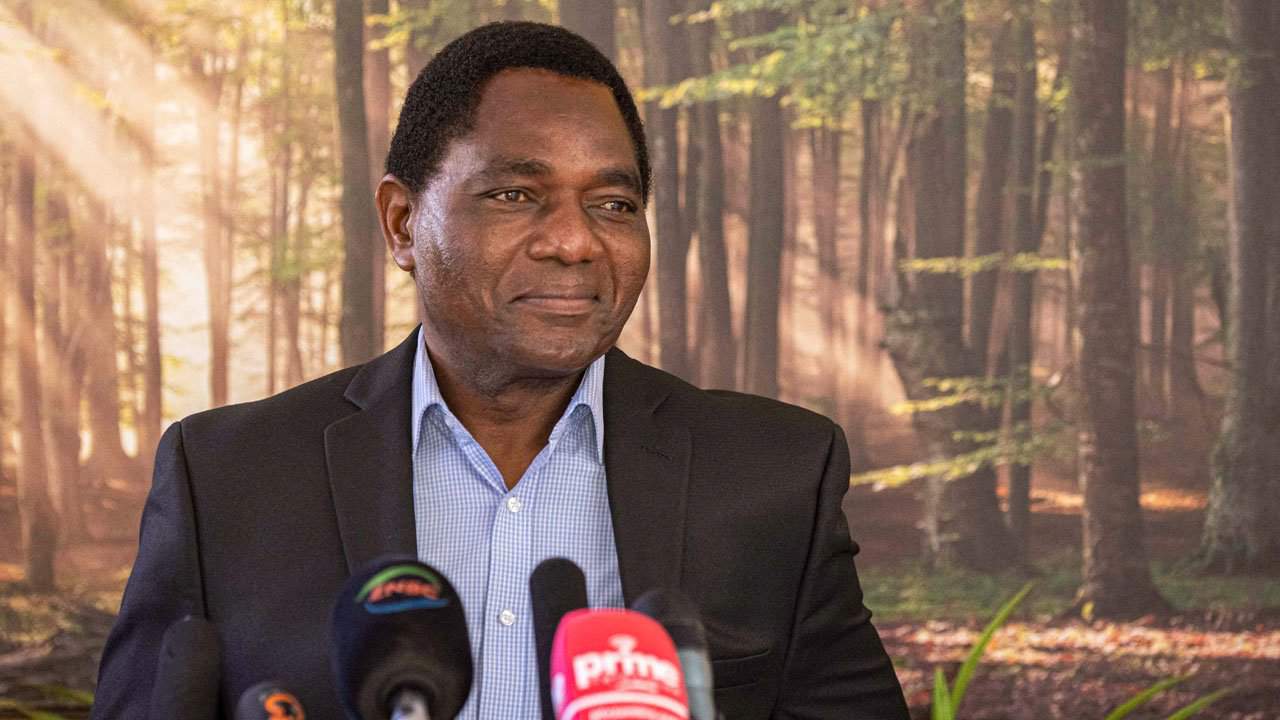
Nigeria’s President Muhammadu Buhari is a public figure with sparse public appearances. In the six years since taking the highest office in the country, Mr. Buhari, a former military dictator in the ‘80s, has kept avenues for addressing national issues to the barest minimum. Ever so often, Nigerians clamour for his presence in times of crisis and, more often than not, are typically met with deafening silence. When he chooses to surface, it’s usually through heavily curated mediums, reading pre-written speeches and avoiding any form of spontaneous conversation.

With this precedent, it was surprising to find out that, as part of his visit to Lagos, President Buhari had opted to be interviewed by local news channel, Arise TV. It was his first interview in the two years since winning a second term. Announced on the day of—just hours before it was aired live—its mere occurrence was a unicorn sighting, and many eagerly waited hear from the president on the myriad of issues facing the country. Comprising Nduka Obaigbena and Segun Adeniyi, high-ranking officials in the THISDAY-Arise media group, and Arise News anchors Tundun Abiola and Reuben Abati, the panel enquired on several concerns, especially on the matter of national security and the economy.

While the 45-minute interview can barely be considered a rigorous enquiry, it clarified Mr. Buhari’s opinions on pertinent issues and his plans for the country for his administration’s remaining two years in office. Here are a four takeaways from the interview.

Buhari is very aware of everything that’s going on

Perhaps the biggest, most annoying myth in the last six years is the idea that Mr. Buhari is not in full control of his administration. Partly due to the health issues that kept him in the UK for a prolonged period during his first term, there’s been claims made that his duties and intentions have been hijacked by a “cabal”, a claim that the first lady has been party to a few times. Just this week, in light of the twitter ban, a member of the National Assembly implied that there was a difference between the president and the presidency—to which the interviewer rightly called bull.

If there’s anything this interview proves, it’s that Mr. Buhari is in the full-know of everything happening in the country. Even though his answers weren’t the epitome of directness and clarity, they showed that he pays attention to what’s been said in the media and he constantly seeks and receives reports about ongoing events from those around him. The idea that he’s a senile old man needs to be eradicated, he’s directing the affairs of the country with a lucid mind and he’s doing it how he deems it best.

(It seems) Accountability is not really his bag

In the last six years, the mantra of the ruling All Progressive Congress party has been along the lines of if all else fails, blame previous administrations. It’s a motif that President Buhari clearly buys into. During the interview, he was asked to clarify the constant rumours of the increase in petrol prices and the murkiness of petroleum subsidy. As he did all through, Mr. Buhari refrained from answering directly, instead, he chose to lay blame at the feet of past administrations who squandered public funds from the booming price of crude oil “from 1994 to 2014”.

As much as many will agree that past administrations were fiscally irresponsible, it’s a tired trope to play into, especially since the same issue is plaguing this administration. Corruption is still a huge problem, lawmakers still earn ridiculous salaries and allowances, a bulk of the yearly federal budget is used for debt servicing even as the country’s debt obligations continue to increase. Mr. Buhari does everything other than hold himself and his administration responsible for escalating the woes they’ve escalated, even pointing blame fingers at the low tiers of government and citizens in general.

In the interview, Tundun Abiola asked, “What can you do to make Nigeria a more competitive and more attractive destination for foreign direct investment?” In response, President Buhari first references last October’s EndSARS protests as a march for EndSARS was a march for young people to “remove me,” before going on to lay the entire blame for Nigeria’s increasingly hostile business environment on its youth. “You may have a good degree but you may die without having a job. Why? Because nobody is going to invest in an insecure environment,” he said. “So I told them, I said they [members of the federal executive council] should tell the youth, if they want jobs they will behave themselves, make sure Nigeria is secure so that people can come and invest.” Yikes.

Buhari wants us to be should be appreciative of his administration’s effort

“We have a problem of unemployment,” Mr. Buhari said at the beginning of the interview. “We have a problem of a lot of youth looking, basically, for what to eat, not to talk of accommodation and others. The level of poverty is unimaginable.” It’s another indicator that the president is not entirely oblivious to the challenges in the country, however, it didn’t take long for him to state that the country is faring much better than it is when he took office six years ago, asking us to refer to the people of the North-east and South-south for affirmation of his claim.

In a country being rocked by a nationwide problem of insurgency, banditry, kidnapping, police brutality, multi-dimensional poverty and other terrible systemic issues, the president is seeking for a standing ovation on the basis that he believes things were worse. “Try and appreciate what efforts the federal government has done,” he replied Reuben Abati when asked about the security issues in Nigeria’s northern region, with respect to his administration’s promise to lift 100 million people out of poverty. Even though words were not jumping out of his mouth, Mr. Buhari constantly spoke with an assuredness that his administration has been getting it right all along—and will continue to get it right. Well, I know more than a few people that will rebut with a vote of no confidence.

Is Nigeria’s Democracy a joke?

A big part of the campaign that helped him win the 2015 presidential election was the projection that the former military dictator had returned as a reformed democrat. Since taking office, though, he’s leaned into autocratic ideals on several occasions, disregarding the rule of law and the constitution at will. Just last week, his administration suspended Twitter in the country, in retribution for the removal of a tweet widely considered as a threatening invocation of Nigeria’s genocidal past. When asked about it, he replied, “I will keep that one to myself.”

As annoying as his unwillingness to be held accountable for such a weighty decision is, what’s more sinister is the chuckle he let out, which led to a room briefly filled with laughter—I still don’t know what’s funny. In his six years in office, Mr. Buhari’s administration has routinely undercut free press ideals and continues to trample on public freedom of speech, especially with its attempts to restrict and regulate social media usage. The suspension of Twitter’s operations in the country is a clear attack on the civil rights of Nigerians who’ve constantly taken to the platform and other social media platforms air out systemic grievances and organise for our voices to be heard in protest.

It’s his latest autocratic move in a country that’s (supposed to be) running a democracy, and nothing about it warrants a chuckle. In another grim example that hints at a seeming chagrin at democracy, Mr. Buhari fondly recalled the era of military regimes, explaining how the fight against corruption involved taking suspects to jail and treating them as guilty until they prove themselves innocent. Considering his administration’s track record for violating the rights of citizens, detaining and re-arresting individuals against court orders, amongst other indicators, the reformed democrat might not really be reformed after all.


@dennisadepeter is a staff writer at the NATIVE.


ICYMI: WHAT’S GOING ON: NIGERIA’S PRESIDENT INVOKES GENOCIDAL PAST TO THREATEN WAR

Essentials: ‘The Arrival’ of Kah-Lo’s debut EP

A Grammy-nominated artist in the ‘Best Dance Recording’ category for her 2016 hit single, “Rinse & Repeat” with British DJ, Riton, it is unexpected that Kah-Lo considers this her arrival. Following up the 2016 with a joint tape with Riton in 2016, Foreign Ororo, Kah-Lo has spent the last couple of years handing infectious dance tunes with an array of seasoned collaborators, from Michael Brun on“Spice”, Diplo to Blond:ish on “Giv Dem”, also working with Davido and Mr Eazi on the latter’s “Money” record with Riton.

Kah-Lo has been on the scene for a number of years, and she has been a prominent voice in Dance music from Nigerian artists all this time too. However, with the bulk of her discography filled with collaborative numbers, the arrival of a body of work over which she stakes full ownership is well worth bragging about. This is exactly what Kah-Lo’s debut EP is about. Titled, ‘The Arrival’ Kah-Lo not only marks her more significant solo effort, but on the five self-assured and rightfully self-obsessed tracks Kah-Lo makes boasts of her beauty, her unique skill and everything about her in between.


View this post on Instagram


A post shared by Kah-Lo The Ruler (@thatkahlo)

The Arrival‘ is loud, it’s cocky and it’s Kah-Lo. Opening with a deep bass thump and the monosyllabic expletive, “damn“, Kah-Lo sets out with an arresting and unmistakeable start to her debut album, picking back up after the instrumental intro that follows with brags about how cute she looks. These confident sentiments are carried along through the album, on the song that blares after the EP opener, “Ouch”, Kah-Lo proclaims, “I look so fire bitch I am the match,” and amidst self-reverential gloats that her love is the best, on “Candy” Kah-Lo also slips in that her looks are up there too.

Despite the natural hair movement of the mid-2010s that walked hand in hand with colourism advocacy, even in big 2021, dark skin women are disproportionately underrepresented and in many instances snubbed, as lighter women are afforded privilege for being fairer. Hearing a darker-skinned women shover he beauty in our faces unapologetically, is exactly the medicine society needs. A regular Mary Poppins, Kah-Lo’s music is a trip to a better land, in terms of its sonics too. Hoping to “take you to different places,” as she spits on “Spaceships” Kah-Lo’s music transports listeners to a world of buzz, a Dance utopia so far from the spaces to which listeners in Nigeria are accustomed.

This is the arena in which Kah-Lo thrives. Rapping about drinking, going out and living in an eternal rinse and repeat of the fast life with her friends, ‘The Arrival‘ is the exact kind of soundscape that facilitates Kah-Lo’s preference for a good. As the glaze of gloom that has eclipsed these past couple of years sticks, Kah-Lo’s free-spirited, bold and secure debut album is gravitational in its pull. Rapping in a natural, monotonous timbre, Kah-Lo’s puns are intelligent, as is her ability to work different sounds and inspirations into her own brand of Dance. On “Fire”, where Kah-Lo emerges with a variety of arrangements, Kah-Lo dives into her Pop-bag, doing the same on Candy” which packs a plethora of instruments, and intimates at Hip-Hop influence, in the name as well as through the bass-line.

Though featuring only one other act, The Knocks, for her debut album, Kah-Lo works with a number of songwriters – Australian songwriter Styalz Fuego on “Spaceships” – and producers and songwrit, from underground beatsmith Dan Gleyzer, who brought the album to a close with an impeccable arrangement of a Kah-Lo harmony on “Candy” to Grammy winning production duo FNZ who produced the “Commandments” alongside Keanu Beats and Bijan Amir.

Leading her own effort and doing so with the expert finesse she’s been training with over the last few years, Kah-Lo has marked a new arrival, the arrival. We’ve been waiting.

Featured Image/Kah-Lo 


ICYMI: AKWAEKE EMEZI PUBLISHES THEIR MEMOIR, ‘DEAR SENTHURAN: A BLACK SPIRIT MEMOIR’

Songs Of The Day: New Music From Rema, Prettyboy D-O, Kida Kudz and more

Much as we’d like music drops to slow down and give us a chance to catch up with the unique tunes that are sprouting from across the world, the reality of the music business in the post-2010 era is very much different. With amazing songs dropping at an unrelenting pace, it’s not always easy to cut through the noise and sheer volume of it all to find the music that will accompany our melancholy, inspire our next creative breakthrough, tether us our loved ones more securely, or take us to a place of unencumbered elation.

That’s where our ‘Songs of the Day’ column comes in. We try to keep our fingers on the pulse of music from across the continent and beyond, bringing you exciting songs from talented musicians who are continuously trying to bounds of artistry with their music. Last weekend, we spotlighted songs from Midas the Jagaban, M.I and Oxlade, Tems, Rebecca Winter and more. To kickstart this long-weekend, we’re bringing you the best releases from around the continent including Rema’s latest single from his forthcoming debut album, alongside new releases from Prettyboy D-O, Rexxie and Sho Madjozi, Kida Kudz, Emo Grae, L.A.X and Davido, D.A.P The Contract and many more. Enjoy.

Rema – “Soundgasm”

Two years ago when he made his debut on the music scene with his self-titled EP which featured hits such as “Dumebi” and “Why?”, it was clear that MAVIN and Jonzing World had secured another star on their hands. The boy from Benin with the golden voice and otherworldly melodies has spent the time since converting unbelievers into Ravers, thanks to his distinct sound, and radio-ready hits. This year, Rema is focused on his greatest feat yet: the release of his debut album, which we hear should be on the way any minute now.

To whet our appetite, the Mavin star has made an official introduction to a new music genre, which he titled ‘Afrorave’ with a  new single, “Soundgasm”.  In usual Rema fashion, the lyrics are salacious, the beat is propulsive and the vibes are a-plenty. Singing “Sexy love, what she need from a bad boy like me/Your body high me like lean when we do it skin to skin”, Rema gets straight to the point with his muse, painting a picture of the euphoric sexual experiences they could share if she were to accept. In the song’s accompanying video directed by Bobby Hanaford, we see the singer in a completely different form, playing the role of the loverboy as he sings and serenades his muse with an acoustic guitar. It’s clear that the rebrand is complete and Rema is in full album mode. Watch this space.

PrettyBoy D-O – “Living in Bondage”

Since the beginning of the year, Prettyboy D-O has been teasing the release of his forthcoming project ‘Love is War’, an aptly titled project that is in line with the tropes of anarchy and thug-love, two sentiments that have trailed his brand since his entry unto the music scene. Today, he’s just unveiled one of the project’s promotional singles titled “Living in Bondage”, named after the ’90s Nollywood classic.

Over the song’s menacing production, he rap-sings “Mom I’m at war/say a prayer cause I’m in war, Tell me in the Bible who killed Abel?” over the song’s pre-chorus asserting that he’s constantly on survival mode because of the cut-throat settings he has been born into. Following on from “Jungle Justice”, Prettyboy D-O continues to be a voice for the injustices that happen right on his doorstep in Nigeria. The song is a straight display of his rapid-fire lyricism.

Kida Kudz – “Makaveli”

Next month, Kida Kudz will be releasing a new album, the highly anticipated 10-track ‘TOP MEMBA’ which he’s already teasing with promotional singles “Ball Till We Fall” feat. Bella Shmurda and “Animalistic”. His latest release is the braggadocious number “Makaveli” which finds the Jiggy Boyz top member delivering on his top form with crisp lyricism and clear-cut delivery. Delivering fire bars at a breakneck pace, he raps “started from the ghetto now we global/Am too solid and no one can shake/Dem man know I’m the truth”, boastful about his growth over the years. A literal street chronicle, Kida Kudz paints a visual picture of his years of come-up and the trajectory of his career so far. “Makaveli” is clear proof that he’s ready to up the ante on his next project.

Rexxie – “KPK Remix” (feat. Mohbad & Sho Madjozi)

Talented beatsmith, Rexxie is weeks away from the release of his debut project ‘A True Champion’, which is set to feature both local and international acts such Naira Marley, Bad Boy Timz, Midas the Jagabn, Ms Banks and more. Ahead of this, he’s now released the remix to his hit single “KPK” which features Mohbad and South African singer, Sho Madjozi. The remix retains all of the original’s stellar elements, including its infectious groovy Ampiano production, however, this time, there’s the added inclusion of Sho Madjozi’s verse which finds the singer telling listeners to “Ji Masun”. It’s everything you’d expect from this Naija x SA collaboration.

L.A.X – “Pepe” (feat. Davido)

After delivering his sophomore project ‘ZaZa Vibes’ last year, singer L.A.X is back with his first official single this year titled “Pepe” featuring Davido. Over the song’s mellow production, both singers deliver verses about their desire to spend their money on that special woman in their lives. Produced by DMW’s Napji, L.A.X sings about blowing his “pepe” on top “Sisi Nene” over the song’s catchy hook before he’s joined by Davido on the chorus who sings about a woman playing games on him: “Which of your niggas go fit deliver/she want to do me wayo”.

DAP The Contract – “Trouble” (feat. Famous Bobson)

Earlier this year, rapper and singer DAP The Contract released a 4-track EP titled ‘I’m Glad You Made It This Far’, a succinct collection of songs to commemorate how far he had come as an artist with his ever-growing fanbase. Without wasting any heat, he’s back with a new single, this time a mid-tempo groovy single titled “Trouble” featuring Famous Bobson. On the song, he assumes the position of both the jaded rapper and the emotional singer, wearing many hats as he delivers the song’s first verse and its infectious hook: “Shawty wanna be my lover/Shawty giving me double trouble“. He’s joined by Bobson on the second verse who’s equally smitten with a dangerous woman.

Emo Grae – “Gone”

If you haven’t been paying attention, Marlian Music signee Emo Grae has a voice of gold and he’s not afraid to use it to sing the most vulnerable lyrics we’ve ever heard. His latest single “Gone” is a romantic number that finds the singer addressing a love interest who has taken his love for granted. Singing “Shey you know say I dey for you, girl I ride for you/Funny how I have no bullets but for your love I’m gone” over the song’s uptempo beat, he speaks directly to his affection for his muse, expressing his commitment to her and their love despite her own hesitation. Another anti-love hit in the works.

Dr. Adaku – “Can’t Touch That”

London-based singer, songwriter, a newly-minted PhD holder, Dr Adaku has just released her first official single of the year, the educative and groovy number titled “Can’t Touch That”. Inspired by her desire to teach others abiut the importance of consent in sexual and romantic relationships, Dr Adaku serves up an infectious Afropop number that’s capable of instructing listeners and attracting them to the dancefloor. Over the anthemic production, she sings-raps “Entitlement is never the answer/And did you know that consent is key sir”, stressing the importance of respecting women’s bodily autonomy and allowing them to exist with the glaring watch of the male gaze. Informative and a bop? We couldn’t stan more.

Featured image credits/Instagram


ICYMI: While we mourned, we danced: On EndSARS, Afrobeats & grief

Akwaeke Emezi publishes their memoir, ‘Dear Senthuran: A Black Spirit Memoir’

Releasing their debut novel, Freshwater in 2018, the feats Akwaeke Emezi has accomplished in these three years are remarkable. Named a National Book Foundation “5 Under 35” honouree that same year, their follow-up novels, the Young Adult debut PET and the instant New York Times bestseller, The Death of Vivek Oji, received similar critical acclaim, the first winning them the Stonewall Book Award, and the latter longlisted for multiple literary prizes this year.

Through what has been a highly prolific career so far, however, Akwaeke Emezi still had their fair share of battles to overcome. “[W]hile my career looks lovely and shiny on the surface, [sic] these were the things I was dealing with behind the scenes,” Emezi explains of their driving motivation to release, Dear Senthuran: A Black Spirit Memoir. Chronicling their own expertise on how to finish a book – not in terms of structure but the emotional and psychological preparations authors must have – Dear Senthuran sheds the veil of the glamorous perceptions of unending success and happiness we have of their career, and points to the “brutal” consequences “being visible and being shiny and being prolific” had on their personal life.


View this post on Instagram


A post shared by akwaeke emezi (@azemezi)

With each chapter written to loved ones in Emezi’s life, Dear Senthuran, released on June 8, is a bare and vulnerable autobiographical text that reveals the numerous journeys Emezi has traversed throughout their life. From escaping the 1993 civil unrest through the fantastical worlds created by their’s and their sister’s imaginations to the road of acceptance they are still charting as a non-binary, trans ogbanje, where 2018’s autobiographical novel Freshwater cloaked their lived experiences under the armour of fiction, this second memoir is open and proud to share their story as an authentic, unapologetic real-life narrative.

As the Next Generation Leader tells TIME, this Black Spirit Memoir isn’t written to conform to white spaces as most successfully published books are encouraged to do, “speaking in the most intimate language [they] have,” even from the book’s title, Akwaeke Emezi is honouring their roots and writing to a world where these stories are not minimised, marginalised or manipulated to fit into the white gaze. Pronounced like this, Senthuran is a Tamil name, representative of their mother’s South Indian origin. In an audio extract released through Penguin Random House, Akwaeke Emezi speaks with their Eastern Nigerian Igbo inflection, despite having spent many years abroad. This is Akwaeke Emezi’s most personal literary feat yet, and given the politics inherent in one’s personal identity, this book comes as a political statement too. Akwaeke Emezi writes to and for the people that they call their own; as an extract from the book’s blurb reads:

“I want to write as if I am free; as if my people are the only readers as if we are the ones who hold structural power, the ones for whom the markets bend, the ones with resources from generational wealth, the target demographic.”


View this post on Instagram


A post shared by akwaeke emezi (@azemezi)

Doling out four books in the space of three years, Akwaeke Emezi already has a couple more works in the pipeline for next year. According to their website, they are set to debut in two genres: romance and poetry. Their first ever romance novel, titled You Made a Fool of Death With Your Beauty, has already sold its screen rights to Amazon Studios, with Emezi set to executively produce. Their debut collection of poems is titled Content Warning: Everything and also slated for a 2022 release.

It’ll be a busy year for fans and followers of our “favourite spirit”, but to start with, read more about Dear Senthuran: A Black Spirit Memoir via their website, where you can also find links to purchase the book.

Featured Image Credits: NATIVE


ICYMI: HAPPY PRIDE

While we mourned, we danced: On #EndSARS, Afrobeats & Grief

“The country is burning, both in dream and wakefulness” – Moyosore Orimoloye

In the middle of 2004, at the peak of his troubled, growling reign at the top of Nigeria pop, Eedris Abdulkareem released “Jaga Jaga”. Eedris made his name from being the sort of rapper who blurred the line between his mimicky raps and the biting social critiques that littered his works, but even by measure of all that had come before, “Jaga Jaga” was visceral. Opening the video for the single was a message, or maybe a warning, that what was about to be witnessed was the reality—and perhaps, if we paid attention, the future—of Nigeria’s trajectory. What he goes on to describe is a delineation of chaos, wanton destruction, and death that had people dancing from the creeks of the Niger Delta to the slums on the fringe of Lagos.

It is tempting to ascribe prescience to the musician’s work because in our nostalgia-tinged minds many people can conjure a Nigeria that appeared to worked in their childhoods and adolescence; so jarring was the vividness of “Jaga Jaga” that it seemed like a collage of scenes out of a post-apocalyptic re-imagination of Nigeria that seemed at odd with the realities of the country in that immediate moment. But even while the country appeared to work in walled-up silos, many felt the effect of a country more concerned with the optics of performance than it was with getting to work. What this means more than anything is that as some people’s lives crumbled, other  people summoned their best impression of normalcy to keep at it like the country wasn’t on fire: carrying on with zest that comes from decades of practice, singing Eedris’ “Jaga Jaga” as some fantastical accompaniment to their disbelief, and hoping and praying that misfortune did not arrive at their doors while jamming to this polyrhythmic fusion of sounds and sonic markers that started to be called Afrobeats at the turn of the last decade.

When I say Nigeria was burning, I do not give into hyperbole. In October 2005, a plane fell out of the sky and plunged families into grief. In 2010, an armed militia launched an attack against a city in Northern Nigeria, marking the transmogrification of a beast into a soulless leviathan. Conversely, Wizkid was taking the first steps into the path of greatness that would lead him to an undisputed position of cultural infallibility. Davido would follow a year later as would Burna Boy. Two years later, a whole cultural movement was on the map powered by euphoric anthems about lust, partying, and its potent intersection. While this was unfolding, the country slipped onward and onward to an abyss, but we seemed committed to the idea that music was an escape and that, perhaps, if we lost ourselves in the pulse of our catchy music, it would be easier to work through the pain. And for a while, that tactic worked: pain as pleasure, pleasure as pain.

By the time #EndSARS came around in 2020, all our worries had been documented in songs that urged the elected class not to plunge the country into water or mused about the probability of 2010 as the promised year, or the increasing climate for violence in numerous parts of the country, and the violence that the state perpetuates against its citizenry. I guess what I am saying is that the protests were inevitable because no matter how hard you try to turn your away from disaster, no matter how hard you try to build your walls against it in a country that luxuriates in that brand of jeopardy, it still arrives at your doors, leaving you with sadness in your mouth and ruminations about what the future can look like.

For me, every #EndSARS protest ground I visited last year always represented an oasis of possibility in a disappearing climate for hope. There were flags, chatter, chanting camaraderie, and, as an act of propulsion, refreshments; and the request was simple: we would like to die no more. I also think the protests became about community and our belief that if we held each other’s hands securely, nothing would hurt us; that briefly, in these small circles, we became impervious to Nigeria’s less pleasant machinations. Under withering humidity, the people stretched their voices far beyond the natural limits of tired, weary minds and demanded that a police unit be scrapped and, not too far from their lips, was the wish that Nigeria would get out a rot. And when the rain came, we huddled beneath leaking stalls and whatever had a roof over its head, biding our time, and perfecting the quick bonds made at protest grounds with people we would probably not see again the next day.

At the protest grounds too, there was the miracle of sound. From my position on the fringes of the crowd, I watched in wonder as inauspicious murmurs on one end of the ground gradually passed through the crowd and warmed their lips till it became an unstoppable cascade of righteous fury. I also watched Afrobeats provide the melodies that lined the mouth of confused and angry protestors. Times without numbers, someone from somewhere in the crowd would break into cries of “Nigeria jaga jaga” and I must assume that it is easy to assume what follows. One time, at the Lagos state secretariat, the Lagos state governor tried to calm irate protesters and they turned on him, witheringly shouting back the words of “FEM”, Davido’s monster hit, to him. It was often music that provided a brief escape between the emotional strain of protesting, even as we protested the loss of our comrades, even when we were confronted with a rain of bullets as we protested the loss of our comrades. Even when we committed more of our lost comrades to earth, Afrobeats—or whatever you call Nigerian music—has been there as a protest chant, an elegy, and a firecracker.

Momentum carries, and two weeks into the protests, many young people I know who were plugged into the pulse of the Internet are carefully straddling the boundaries of optimism and pessimism. But we never stopped talking and raising our voices at protest grounds. Shouting and singing and disrupting and organising, we did it all and music was a weapon. Music, amongst many other things, was the weapon of the people in October. Not necessarily because it contained the words that spoke truth to power or because it enunciated our demands in the clearest terms possible, but because to shout of the words of a Nigerian pop song at a protest ground when the margins of one’s life is crumbling is an act of radicality that almost borders on political defiance in a country trying to neuter you.


On the night of October 20th, 2020, the Nigerian military shot at protesters at the toll gate and more than 100,000 people watched it live on Instagram. As they held hands and sang a medley of folk songs and pop music, we saw the Lekki Toll Plaza turn to a killing field that held the broken dreams of countless people. First came the quiet, the rage, and then the questioning of memory as we retreated to our houses and looked over what we lost and stood to gain.  We grieved in private and via 140-character tweets that compressed our feelings into vignettes of anger and resignation. Then the president spoke and said nothing about the shootings and the humour poured out as we searched for tools to memorialize what happened. On a freestyle that later became a single, Burna Boy threads the political with the personal over the death of protesters that night, providing a tragic archiving of an event that shook many to their core. Days later, when DJs spin the track at places where bodies congregate, it elicits a little bobbing of the head first and then a sigh later.

When people talk about grief, not many speak about its ability to obscure time and its effects. It felt like a lifetime but nine days after soldiers shot citizens at the Lekki toll plaza, Wizkid dropped Made In Lagos. The culmination of a sonic journey that started with Sounds From The Other Side, Wizkid called on a phalanx of local and international talents to record an inspired body of work that attempted the nationwide equivalent of a TL cleanse. I cannot speak for everyone but among the people that I know, the tears were still falling but they felt something different to hurt and confusion when the warmth of Made In Lagos embraced them. Afrobeats is a genre that has allowed—required, even—its artists to abandon all constraints that are humanly plausible (grammatical, conceptual, and lyrically) and revel in the imagination of a good time, to stretch the elasticity of that creation till it merges with your immediate reality, even when the country is on fire, and especially when the whole nation is on the edge. I say this not to convince you that Made In Lagos profoundly rescued everyone that heard it from the gloom of an abominable disaster; more that, for many, it sat sad by side with their sadness till they gathered enough strength to attempt to work through its scars and the loss of youthful innocence.

No one who listens to Davido can call him a conscious musician by any stretch of the word. But even the most politically apathetic can become a tool for representation during taut times like this. It is incredulity, I think, that Davido felt the most at “FEM” becoming an anthem at the #EndSARS protests. There is no process to a pop diss song becoming the anthem of the people, but the song of the protests belongs to the protesters. Two weeks after Wizkid released Made In Lagos, Davido dropped A Better Time, his second maximal album in a twelve month span. It was not an album that met the moment, but it was of the moment, transforming pain and whatever tensions that lay at the core of Davido into boisterous pop anthems.

On A Better Time, “I Got A  Friend” seems like a celebration of friendship and fraternity but if you listen closer what it really is a litany of obituaries reimagined as a beautiful mess of synths and thumbing basslines. And many times that was what it meant to live in the immediate aftermath of 20/10/20: to transform all that pain into fuel for whatever daily exercise that we define our identities against. For weeks after that date, I never went to bed without tears lining up my eyes and I can say the same for the people I call my own. Yet, I think that in those time of uncertainties, it was a welcome feeling to have two albums, wildly different in approach, that beckoned Nigerians to a light at the end of the tunnel; peddling a form of group therapy, even one that, at its most elemental, comes down to imagining all the things we can do to one another under the neon of a disco club.

It is the night of April 26th, and I am crying as I walk back to my home again. It could be the exhaustion of watching myself struggle with my mental health again but I think that, in that moment, I am sad because the people that are my friends are sad again and my friends are sad because they have lost someone who is their friend and, while dealing with that sadness, they have had to commit their friend to the earth before the sun set that day without the long drawn out goodbyes that grief demands. There is a hierarchy to mourning more often than not, but that night I wished all of the world would stop revolving and acknowledge the tragedy in my network, that my friends would cry without awkwardness because this country is devastation after devastation and I wonder what thing can help get my friends out of their despair.

What Lagos-based singer, YKB, sings about more than anything is rooted in joy or, perhaps more accurately, a long-winded elation that never stays dampened for too long. The sort of joy that can see friends through their toughest times and inspire a laugh and acknowledgement that we still have to go on. A few weeks after the night of April 26th, on Snapchat, I see my friends dancing to YKB’s latest freestyle in an open air party in Lagos and I am happy to see them breathe in the cool evening air that fills their lungs and live a little in spite of Nigeria, in spite of death, and, more importantly, because we have such little time left. I want all my niggas find a way to live with the grief that continues to locate us in this house of jeopardy. I want them to find the peace of mind that Rema sings about and if music is the tonic, so be it. The backdrop to grief doesn’t have to be grim, many times what we need is something to carry us to another place, not necessarily a better place, but somewhere where all the death and loss recedes even for a little while. A place where we are alive and fighting whatever demon needs to be fought, a place where my people are not broken.


@walenchi Is A Lagos-Based Writer Interested In The Intersection Of Popular Culture, Music, And Youth Lifestyle.


ICYMI: IN CONVERSATION WITH TOYE ARU, THE PRODUCER WITH AN AFFINITY FOR BIG SOUNDS

For Us By Us: Exploring Fatness and Desirability as a queer African woman

Presents were a rare occurrence in my family. Gifting, in material terms during special occasions was uncommon. However, my earliest memory of being offered gifts as a child was when they were offered as an incentive to lose weight. My mother would often promise me a new phone, or a new game, or dolls if I came down to the size that was deemed acceptable to her. In an effort to please, and fulfil these desires, I would try to put away daily meals; I starved, not only in hunger but also in the desperate need for the affection I felt was reserved for only thin children. Still, I would not lose enough weight, and I would not get any of the proposed gifts. I knew that my mother was jealous of all the other mothers who had thinner children. I knew that she longed for us to look like our neighbours, who were stylish as young girls and could fit in most of the attire marketed towards our age group. Even now, I feel like my fatness eclipses all other accomplishments in my mother’s eye. Still, my fatness is objectionable to her.

I remember bringing friends home after university, and her commenting that my friends were all big now. Since I made a conscious effort to go after friendships with people who looked like me, at the time, I received that statement as a total compliment. However, the world has never provided a safe space for big girls like me. Evident in bridesmaids being expected to lose weight for their friends’ weddings, in fashion shows and runways filled with size four women exclusively, generally speaking, thin girls’ friendship groups consist strictly of thin women, and fat women are expected to force our way in or pander to please their ideals of what friends should look like. Exhausted with trying to fit in, I am now resplendent in standing out and having friends who take up space.


View this post on Instagram


A post shared by Tabria Majors (@tabriamajors)

Fatness has always been a core part of my existence. In high school, I got compared to anything and everything, mainly large, black animals. I have had people compare me to hippopotamus’ (who are the cutest by the way), gorillas and elephants alike. I was aware of my grotesqueness in every sense of the word, and I despised myself for it. People would speak to me like I was dust beneath their feet and it was deserving because I existed in a fat body. Asides being offered presents as an incentive to lose weight, I had relatives who would rub their daughters’ desirability in my face. In trains with little brides, my dress would be easily identified as the biggest. I began to loathe weddings and any outing that would require measurements and being judged in the presence of many. Sometimes I would break down in tears over countless statements made towards me, knowing that my only comfort would come from my mother wrongly claiming that they were trying to help.

People would encourage me to look ‘better’, so that I could finally be treated as a human being. Then they would say they did this for my health, while my mental wellbeing suffered under daily judgement. My doctors ‘recommended’ several practices – ranging from starvation to strenuous, unhealthy daily exercises – and the word ‘obese’ was violently thrown at me, weaponised to illicit the inevitable emotion of shame they knew would follow. They would suggest enforced food deprivation, encouraging my parents to seek out, on my behalf, strict schools that would ensure the goal of thinness.

I understood very early on that any person who failed to conform to society’s ideal of a worthy body would be effectively punished until they bent into submission or withdrew from social gatherings completely. Romantically too, I was made to believe no options existed for me, in a fat body. No man would want to be with a fat woman, except they were ‘forced’ into doing such – force usually meant if the man in question was also undesirable (due to reasons such as looks, class, ability, etc.). And even if any man felt moved to be romantically attached to me, there was no question as to whether or not he would cheat. In fact, I was readily prepped by family members for such an occurrence to happen in my older years. 

At a point in my life, I had only ever encountered thin brides, thin love interests, thin happy people. Nearly every show, music video or organised activity was filled with only smaller people. If fat people were deemed fit to be present, it was only to be the butt of the joke. In Marvel’s 2019 EndGame, Fat Thor is displayed as a gross, destitute version of his previous glamorous character. In fact, his fatness has seeped into his behaviour such that he has no goals or hopes of still being a hero. Rather than be concerned for his depressed state, which is due to their loss against Thanos, the other Avengers make him out to be a less-than. In HBO’s culturally-acclaimed series, Sex and the City, a core character named Samantha adds weight because she has been neglected by her boyfriend and she is suddenly unattractive to the point where her closest friends cannot stand the sight of her. All around us, the media reinforces that visibility was only ever afforded to the desirable.

All of this contributed to me having little to no social skills, a depleted sense of self-worth and a hankering to be a people pleaser. I thought that I was only worthy in service of people, effectively fulfilling the mammy trope that I could not even begin to comprehend at that age. During slavery and subsequently Jim Crow, mammies were larger black women (mainly dark skin) who were committed to the service of white families, even at the expense of their own. Their only gratification came from doing labor, and they did not have sexual agency except when they were over-sexualised as caricatures, with physical depictions of large asses and even larger lips by white people. Martin Lawrence’s character in Big Momma’s House is a shining example of this, of how society does not see fat women as sexual outside of our fetishisation or as commodities for the labor we provide, for example, people often alluding to fat women being able to cook and look after the family. 

It is mentally dilapidating to understand how often society punishes you for your identity, then also makes fun of you when you become the very thing they have ascribed you to be. I was taken advantage of, countless times, at first physically and then sexually as time went on. Till date, I have a polarising fear of someone taking pictures of me unknowingly, as my high school crush did so during church, then gleefully showed me the badly-angled views of my back rolls and my panties peeking out from underneath my skinny jeans the next week. I had never been more mortified. So used to being rejected, especially by the opposite sex, as are a lot of fat women, it never occurred to me that a boy would ever like me for whatsoever reason. In an article for EveryGirl, Beth Gilette explains that there’s a stigma around finding a plus-size woman attractive, as men (really, people in general) have been conditioned by media and society for generations to think that thinness is what is beautiful. This is what they see, read, and hear, so attraction to a fat person is a deviation from the norm, which people often find difficulty in admitting. 

At sixteen, someone I had been infatuated with for going on three years had to be confronted (by me) before he admitted that the only reason why he had never dated me – by extension, be seen with me in public – was because I was fat. Existing as a person who people cannot be seen out with is a total mind-fuck. As I taste the tips of desirability, as an adult who is becoming more comfortable with their body, I am still floored at the ways in which I am approached romantically, sorely different from my thin peers. There is hardly any intentionality in the way I am ‘asked out’, most men want to put in the barest minimum and receive everything I have to offer. They expect me to jump at their proposals of (mainly sex), because they believe that the privilege would be all mine. Their attraction to me is a favour and by all means my responses must reflect that.

Even within the queer community, I feel unwelcome. It should be a safe space, but I am largely aware of the community’s strict aversion to non-thin bodies. Most of the lesbians I know, masculine or otherwise, are dating thin women. I identify as femme and femmes are expected to be dainty, prettily dressed and soft-spoken. In fact, majority of what we regard as femininity is reserved for thin women. Fatness, tallness, queerness, and ones gender identity automatically reduces their proximity to what is regarded as feminine. It was easy for me to reject the construct when it came to understanding gender identity as I had never felt any connection to the theory as a whole. 


View this post on Instagram


A post shared by Lizzo (@lizzobeeating)

My immediate community of friends, family and acquaintances are not the only guilty parties, strangers too, empowered by the media and societal ideals, have been as quick to cut me down, though they don’t even know me. I remember that I have had things shouted at me as I walk in the streets. Market violence aside, I have heard yells of “orobo” (fat person) while trekking on my dad’s office street. Most recently, I had just finished setting up some NYSC documents at a café and was making my way back to my car. A keke rode by, filled with passengers. The driver shouted, to the hearing of the entire street “YOU TOO FAT!” multiple times. Incensed, I screamed curses at him and then opened my door. Ironically, most people looked at me oddly for responding.

I have come to understand that society expects fat people to be dehumanised in silence. They expect us to take the insults, the shaming and all the pain and be content with it as our lot. When you fight back, they are confused. Interactions like these engage a very important yet highly neglected theory: how would the many instances of violence in fat peoples’ lives be different if someone stepped in? How my relatives might have responded if my mother chose to shut down their constant barrages instead of letting them tatter my self-confidence like attack dogs. What difference it would have made if my doctor was chastised by his superiors, or how silly the keke driver might have felt if a passenger had interrupted and asked him to drive instead of talking. How would society’s engagement of fat people drastically change for the better if people felt like our pain was worth paying attention to? Disrespect would become way less casual or normalised.

Reflecting on my privilege in these moments is knowing that at the end of the day, I am shielded by class. These insults were thrown at me while I was on the street walking to meet vehicles. I think of the fat women who face this sort of violence countless times every day. I think of the fat women who might board these kekes and be confronted by such drivers. I think of how often the burden of social anxiety brought on by weight keeps me in bed and yet these women have no such luxury of sleeping in to avoid judgmental society. I think of how buying well-fitting Western-tailored clothing, which became a huge boost to my self-confidence, is also unattainable for these women. 

Western clothes in larger sized are not readily available, one would have to reach the very back of markets before coming in contact with people who stock fat sizes. Meanwhile, big-brands charge objectively more for fat clothes and in return, burden us with burlap sack fashion.

For Nylon Mag, Bailey Calfee sorts through retailers who stock plus-sizes for both genders. It comes as no surprise that some brands (such as Old Navy) are charging more for just the women’s plus sizes, and not the men’s. The retail misconception, which argues that more fabric should mean more money, becomes null and void once we recognise that even straight sizes differ from one another, for example, a size 4 is bigger than a 2, and a size 6 is bigger than a 4, but the price for all of them is exactly the same. Thus, the argument holds no weight unless people start paying for fabric variations among straight sizes as well as in plus sizes. 

I think about the fat women who are not ‘well-shaped’ and how often fat people are blamed for their disabilities.  A 2008 study by Yale reveals delves into the mistreatment of fat people by health care professionals and how we are often denied equal access to health insurance as a result of weight or BMI exclusionary tactics from insurance companies; fat people are effectively made to believe our weight is the cause of any illness we might have in life. I think of how often we are misdiagnosed and mistreated by our healthcare providers. I think of how studies have shown that people who are less desirable are less likely to find work and more likely to receive higher prison sentences.

I think about how desirability determines or takes precedence on just about everything in this world, and how severely I am lacking in this area. I worry about my fat brother, by extension fat children as a whole growing up in the age of internet bullying, harassment and social ostracisation. A report from Nationwide Children’s states that fat kids who are victims of weight-related teasing or bullying are 2-3 times more likely to report thoughts of suicide or to engage in self-harming behaviour, such as cutting. This is an alarming statistic. Even fat children are not safe from weight-related attacks, from peers or guardians alike.


View this post on Instagram


A post shared by Enam Asiama (@enamasiama)

Every good thing I feel about my body, any positive thought about my looks was something I had to give myself. Asides from my sister’s constant support, there was no sudden affirmation from society that made me who I am. There was no partner who poured their endless love into my body, and there was definitely no support from my immediate family when they realised I had made a choice to start enjoying my body, rather than spending every waking moment in fear of the word fat. Even if everyone else hated my body, I was determined to take intentional steps towards doing the opposite.

Unfortunately, loving oneself does nothing to shield from the societal repercussions and systemic injustices that come with living in a fat body. We have been groomed into hating our bodies; into comparing ourselves to smaller women, into hating larger fat people. We have taken on several ‘diets’ that range from dropping an entire class of food to only eating within a small window. Society has long since turned weight, and hating fatness or fat people into a currency, and the billion-dollar weight-loss industry booms off our insecurities each day.

I can encourage you to show kindness and all other pretty, flowery affirmations, however, I would like to instead challenge straight-size people to confront fatphobia, in all spaces. Fat people already do every second, so the onus would be on you all instead. Discuss why your friendship group is all thin women and how you could actively support a fat friend. When the people around you comment on or make a fat person feel ashamed, do not stay silent. Straight-size men, stop approaching fat women as mules, instead, take the care you would when talking to thin women, add jara and give it to us as well. Give labor to the fat people in your life, rather than always expecting it from us.

Featured Image Credits: Instagram/Tabria Majors


Chiamaka Ejindu is a fat, dark-skin woman committed to liberation for all marginalised people in every sense of the word. Tweet her @AsChiWasSayin to hear her wisdom on body politics (disabled or otherwise), sexual health and mental wellness. 


ICYMI: How an entire generation of Nigerians grew up disliking their dark skin

What’s Going On: Nigeria’s President invokes genocidal past to threaten war

No victor, no vanquished. That was the edict issued by the General Yakubu Gowon-led federal government of Nigeria in January 1970, following a civil war that lasted about two-and-a-half years. With estimates of around a hundred thousand military deaths and over a million civilian casualties in the south-eastern Nigeria region, the conflict was way too fatal to be summarised into a pacifying statement.

It wasn’t some quibble, it was a war; and as we know, wars have victors and they have vanquished, too.

The civil war was effected by South-eastern Nigeria’s secession, with the region self-determining itself as the Republic of Biafra, an independent country officially declared by Major Chukwuemeka Odumegu Ojukuwu on May 30, 1967. Over a month later, Nigeria, which was now firmly under military control, declared war on the region under federation principles, deeming Biafra’s separatist move as an undermining of Nigeria’s sovereignty. What followed was Nigeria using every tool at its disposal to suffocate the self-separated region into surrender—massacring towns, and cutting off aid supply channels, using starvation to weaken and kill off a significant portion of the region’s civilian population.

“Many of those misbehaving today are too young to be aware of the destruction and loss of lives that occurred during the Nigerian civil war,” a tweet from the official handle of Nigeria’s President Muhammadu Buhari read last Tuesday. “Those of us in the fields for 30 months, who went through the war, will treat them in the language they understand.” Appearing as part of a thread aimed at addressing the attacks on government facilities in the country’s southeast, the tweet was widely decried for its explicit threat of genocide in the region, especially within the context of Nigeria’s widespread security problems and the manner in which the president has addressed these issues.

Just last month, Mr. Buhari made an “appeal” to the kidnappers of the students of Greenfield University, Kaduna, asking for their safe release despite the fact that the deceased bodies of five abductees had already been found. It was symbolic of the limp tone the president and his administration have adopted in addressing bandit-related activities prevalent in Nigeria’s Northern region which is fast becoming a nationwide epidemic, a sharp contrast to the caustic tone used in addressing the security and vandalism issues in the southeast. Many Nigerians on Twitter quickly reported the president’s tweet invoking the late ‘60s civil war, leading to its deletion and the temporary suspension of the account for “abusive behaviour.”

Like many government officials, it is widely believed that Mr. Buhari isn’t directly responsible for managing his Twitter account, but as an elected office holder, it is still meant to disseminate his statements and amplify his ideologies, even if its handler(s) give him some modicum of separation from the account. In literal fashion, the thread carrying the genocide-implying tweet is a slightly edited transcript of the president’s address during a meeting with the joint service chiefs earlier that day. It’s another indication that Mr. Buhari, a former military dictator in the early ‘80s and a commanding officer during the civil war, seemingly still harbours the autocratic ideals that defined the decades of sustained military rule in Nigeria.

By recalling the genocidal conflict which claimed millions of Igbos and ethnic minorities in the southeast, the president is knowingly using one of the darkest, most brutal times in Nigerian history to exacerbate the same ethnic, political and religious tensions which were ingredients for the civil war. The secession of Biafra and the ensuing conflict was a culmination of coups, pogroms and blindsiding tactics, a complicated order of events with a devastating outcome for all Nigerians which is still experienced today.

Philosopher George Santayana famously said, “Those who cannot remember the past are condemned to repeat it.” With President Buhari’s threatening comments, he’s almost condemning Nigeria to repeat a bloody past. Across primary and secondary school education curricular, there are no part of the History and Social Studies curriculum dedicated to the civil war, leaving millions of young Nigerians in the dark about a pivotal, even though gruesome, part of the country’s history. With the internet as a sprawling resource for knowledge, though, many are aware of this past and the conditions behind them.

Five decades after the war, pro-Biafra agitations are alive and are probably at its loudest in the years since. The motivations haven’t changed, it’s still a quest for autonomy amidst tussles defined by ethnic, religious and political differences. Where the gift of hindsight and a democratic system of government should be beneficial in addressing the issue, the president’s tweet is emblematic of the lack of nuance and brashness with his administration. During his first 4-year term, the Buhari-led presidency backed three phases of Operation Python Dance, the armed military action aimed at forcibly quelling the separatist movement, Indigenous People of Biafra (IPOB). It also publicly persecuted Nnamdi Kanu, founder and leader of IPOB, arresting and detaining him for over a year-and-a-half.

In its second term, this administration’s dedication to “crushing” the separatist agitation is still unwavering, intermittently sending soldiers to the southeast for armed operations that have played its role in the worsening security situation in the region. Since last August, security forces have clashed with IPOB members on several occasions, a trend that doesn’t seem like it’ll be stopping anytime soon. In that time, there’s been attacks on several police stations and Independent National Electoral Commission (INEC) offices, a violent raid on the country home of Imo state governor Hope Uzodinma, an attack on the prison in Owerri which set nearly 2,000 inmates free, amongst other sinister occurrences.

These events have been broadly attributed to militant operations or, as they are colloquially referred to these days, unknown gunmen. These attacks have also coincided with the emergence of the Eastern Security Network (ESN), formed last December as the paramilitary wing of IPOB. The army has routinely raided towns in south-eastern states and faced off with ESN members, with civilians being fatally caught in the crossfire. While it’s been routinely accused of the attacks on government facilities across the region, the ESN has routinely denied and explained that its aim is to protect private citizens against bandit-related activities, allegedly perpetrated by herdsmen of Hausa-Fulani descent.

The current situation of things in Nigeria’s southeast is complicated, its outcome can become greatly devastating, and the president’s incendiary statement inspires no confidence that a peaceful resolution will soon be reached. Over his time as a democratically elected president, Buhari has been accused of being tribally biased, and the difference in tone when addressing insurgency in Nigeria’s north and southeast doesn’t swing the argument his way. Pro-Biafra agitations have always bordered on the region being unfairly treated when it comes to economic allocation, infrastructural development, and political inclusion. In an ideal democracy, these are issues that can be addressed without guns. For the president to seemingly espouse autocratic ideals, is to validate the idea that unity can only be achieved by force—even if it means genocidal ethnic cleansing.

A few days after Mr. Buhari’s incendiary tweet, the Coalition of Northern Groups issued out a communique claiming that “the Igbo have benefitted more than any other tribe in terms of economic monopoly”, going on to state that pro-Biafra agitations are borne of “pent up jealousies against the North and its people.” The communique ends with scarcely veiled resolutions, even going as far as threatening pogroms against people of southeast origins. This is the sort of reaction this administration is currently engendering with its tone-deaf and violent stance, and it remains to be seen if things will change positively for the sake of wholesome unity.

At the moment, though, it doesn’t look like it. On Friday, two days after Twitter deleted Mr. Buhari’s tweet, the Nigerian government suspended Twitter’s operations in the country. It’s the latest move in this administration’s explicit aim to censor free press and gag freedom of speech amongst those living in Nigeria. Considering that social media bans and restrictions are mostly employed in countries under dictatorships, it feels very much like the president is intent on waging “War on Everybody”, similar to his regime in the ‘80s.

Wars have victors and they have vanquished, too.


@dennisadepeter is a staff writer at the NATIVE.


ICYMI: AFRICAN UNION SUPPORTS POWER GRAB IN CHAD

Jendaya is the luxury e-commerce platform catering to the African consumer

Africa’s e-commerce sector is experiencing a huge boom. Currently, the growing industry is estimated to be $19.8 billion with further reports by McKinsey stating that these figures are set to grow to $930 billion by 2025. These stats show that there is a  profitable avenue for African designers to market and sell their products globally especially as competition is growing in the luxury sector due to the rise of domestic brands. While US and Chinese retailers such as Amazon and Aliexpress have attempted to break into the African market, they are marred by a myriad of logistics issues and hefty import duties and taxes to name a few.

African e-tailers such as Konga, Jumia, and Afrikea are currently some of the home-grown names that have been working the African fashion and beauty landscape for several years now and have been credited with revolutionising e-commerce in Africa. While these players definitely deserve their stripes, there is a new generation of industry players such as Industrie Africa and Jendaya, a new e-commerce platform set to launch mid-July this year, which are redefining what it means to be a diverse luxury brand and consumer in this age.


View this post on Instagram


A post shared by JENDAYA (@jendaya.official)

Patriotic sentiment behind purchasing is on the rise and the term ‘Made in Africa’ is no longer associated with cheap goods but unique, limited-edition cult pieces, however, many consumers and brands are still on the lookout for a retail experience tailored to their taste. In a recent article with Business of Fashion, Vanessa Azar, the head of L’Oréal Luxe West Africa shared some of these defining qualities which include “the quality of the platform’s image, consumers’ level of trust in the online platform, and whether the platform already has a history of selling luxury goods.” This automatically rules out e-tailers such as Jumia and Konga which have been slow to tailor their image to a specific consumer and have not exactly built the strongest track record for trust and consumer satisfaction.

This has meant that in the meantime, African consumers are having to shop for their favourite luxury items from an online store abroad and ship it to a family member in the United States or United Kingdom to deliver them back home upon their return, in order to avoid high tariffs incurred from shipping directly from those sites to their home address. This act alone shows that there is space for new players to come in and build a strong all-inclusive distribution, shipping, and logistics model. In fact, this is what inspired CEO and Co-founder, Ayotunde Rufai to start his own company, Jendaya, one of the few e-tailers championing the continental African.

Rufai got the inspiration from his Nigerian aunt who frequently shipped her luxury items to his house where she would require his assistance to ship or return items at her will. Observing this strenuous process to stay connected to the things that his aunt loved, Ayotunde began conceptualising the idea for Jendaya in 2018 before reaching out to his co-founders Kemi Adetu and Teni Sagoe. “We entered a competition with the University of Monaco which is like a luxury competition they have annually and because we made it to the semi-finals, we had to create a pitch deck and a business plan and we found it was a really viable business idea.”

We are the first or only platform that actually focuses on and prioritises the continental African consumer when it comes to luxury e-commerce, our idea is to allow the global shopper to discover diverse luxury brands, as we set a new diverse standard for what it means to be luxury.”

Following this landmark moment at the competition in Monaco, Rufai and his co-founders would learn, unlearn, and re-learn the game several times before launching the editorial vertical of Jendaya in 2019 providing a way for their community to get comfortable with the brand. Initially meant to launch in 2020, Rufai would have to put his plans on hold when the COVID-19 pandemic hit and completely changed the way in which consumers engaged with fashion.

However, due to the fact that stay at home practices encouraged many consumers to purchase more and increase their e-spending power, Rufai was able to focus on growing the Jendaya community, meeting and connecting with names such as influencer and model Mayowa Nichols, actor Maisie Williams (known for her role as Arya Stark on “Game of Thrones”) and Frederico Marchetti, the CEO and Chairman of Net-a-Porter. He tells me that this allowed for the brand to redefine its perceptions of luxury African fashion explaining that due to the global nature of the average Jendaya consumer, “this has meant we are going for people who we deem to be real and not the standard definition of a luxury brand/influencer.”

Ahead of Jendaya’s official launch next month, we spoke to Ayotunde Rufai about the brand’s pilot phase one, the realities of e-commerce in Africa, and the future of sustainability in fashion. This interview has been slightly edited for clarity.

NATIVE: How does Jendaya plan to foster a brand identity that consumers can trust?

AYOTUNDE: I think what is really interesting is that in terms of mobile phone usage and internet use is that Africa has the second-largest digital footprint after China globally so I don’t think it’s that people are not aware of Internet usage and how to shop online. At the end of the day, Fintech is like booming on the continent and people are trying to crack the use of international banking and banking beyond banks through the internet and use of the phone and then there are platforms like Konga and Jumia which are success stories of fast fashion or the everyday use of e-commerce. Now, it’s just a matter of making convenient luxury goods for a specific demographic who engage in that and engage in it very well.

If you look at the stats of top spenders of luxury in Selfridges or Harrods, it’s always Nigerians and Africans who are part of that demographic so when they are home in Mozambique and Kenya, it’s not that they don’t know how to use the Internet because they well-travelled and cosmopolitan but the problem is building that trust and showing people that this is authentic which matches up to similar experiences shopping your home in your London or on sites such as Net-A-Porter. It’s also about understanding the nuance of being a metropolitan Nigerian or African and how they like to shop luxury and providing this for them so that they are comfortable to shop on Jendaya rather than waiting to travel to get these items.

NATIVE: How do you plan to stay on pulse with all the brands that your community is interested in?

AYOTUNDE: This is why I spoke about us being people-powered and community-driven. Also, we ourselves are the customer and have either been on ground or been of the culture or from the continent and so we know what is cool and hot and what isn’t yet but what could potentially be hot through our global community of tastemakers. In terms of setting a new diverse standard and allowing the global African shopper to discover new brands, we want to highlight the newer and exciting brands at the moment but a 100% we have Balmain, Dior, Prada, Givenchy, but the ones I want to speak about are Casablanca, Area, Tara Matthews, Marty Moto and Pablo Erroz. In terms of African brands, we also have Tokyo James, Richard Mnisi, Jermaine Bleu, Mazelle Studios, Abiola Olusola and we also have brands coming later in the year which is exciting. Things like this are always fluid so some brands will come in after we have launched.

NATIVE: Creating a reliable one-stop hub for shopping in Africa cannot be easy in a pandemic. What challenges have you had to overcome while preparing towards your official launch?

AYOTUNDE: One of them is probably just been creatively trying to convey exactly who Jendaya is onto our web development and to the visual aspect to who we say we are. In terms of conveying to our developers that this is the message and this is our objectives and mission and we need this to match up to what we are going to be launching visually. Good web developers are hard to come by so I think that’s been one thing that we have been battling with to make sure that everything gets the same experience when we launch.

Also, the logistics and the operational part of everything. So in terms of inventory and making sure we have got good enough rates coming through (because we’ve been running dummy tests) but making sure that the ones coming through are bearable as we start and just sort of working out the logistics in the backend in terms of how are we syncing our inventory levels and things like that. So those two things are probably the biggest hurdle at the moment; making sure that our identity is kind of presented well visually for when we launch and the logistics and operational aspect of the whole journey.

NATIVE: Also with the pandemic, a lot of consumers have turned to e-commerce and online shopping. Would you agree with the statement that the future of fashion is going to be a lot more sustainable, community-driven, and social-oriented?

AYOTUNDE: That’s exactly what it is because even pre-pandemic, we’ve kind of seen that the buzzword in fashion has been sustainability and community. I think the pandemic just really exasperated this and sped this realisation up so that a lot of brands who weren’t focused on their digital strategy, we saw like so many brands doing things online and tapping into the theme of diversity and equality and I think the pandemic just really sped this up and we actually saw these strategies in play. 2020 was good for the realisation of a lot of things we had already known and we were working towards and we just saw that in real-life action, last year gave birth to a few platforms which are mainly Black-owned such as Black Owned Everything and Black Fashion Fair but they are a testament of speaking to a specific community and the power of community and how you can be direct and unapologetic and create new standards for what it means to be luxury and cater to the luxury consumer. I think this has made way for platforms like ours to kind of thrive now. If anything, last year helped prove the content or the market more than anything else.

NATIVE: This year, Jendaya also partnered with Positive Luxury to work on some initiatives aimed towards the sustainable development of brands out of Africa. How do you plan to go about this partnership?

AYOTUNDE: That’s actually coming along because it’s still the early days of that partnership because the idea for us is that we want to empower brands and show them the value of being on Jendaya. So, if there are ten to twently Western brands, the same should also be done for African brands too so, for us, we want to proliferate and promote the work of African brands on our platform. But also, through collating the sales metrics and sales data on Jendaya, brands will be able to apply for business loans tailored to their earnings from our stats. We are also working with matching them up with other retailers not only those stocked on Jendaya that they can use to boost their visibility and showcase their work.

NATIVE: When will Jendaya be available to the public?

AYOTUNDE: Currently, July 21st is the official date we have now. Initially, it was July 1st but again what we are doing with visual representation has a lean-on effect for other things because we need the visuals to match. All roads lead to then.

Featured image credits/MazelleStudioxLouisVuitton/Jermaine Bleu/Torlowei


Tami is the Community Manager. Pitch an idea on our For Us By Us column for Pride Month


ICYMI: Nigerian creators are taking a stand against appropriation

TurnTable Top 50: Ladipoe’s “Feeling” takes the lead spot this week

Ladipoe’s revival is here–but you knew that. After weeks of winning over hearts and ears across the country, the rapper and singer’s latest single “Feeling” featuring Buju has made its way to the top of the TurnTable Top 50 chart.  The song tallied 54.2 million in radio reach and 1.65 million equivalent in streams making it the first Hip-Hop/Rap song to reach the top of the charts since its inception last year. This is a worthy victory lap for Ladipoe who may just be contending for song of the summer for the second year in a row.


View this post on Instagram


A post shared by Leader of The Revival (@ladipoe)

Coming in at No.2 is Olamide’s “Rock” which slides down from its No.1 spot last week after tallying 49 million in radio impressions and 1.49 million equivalent streams. This comes days after the rapper announces and releases the tracklist to his forthcoming project titled ‘UY Scuti’. The song is closely followed by Burna Boy’s “Kilometre” which rounds up the top 3 after spending three consecutive weeks at the top of the charts.

Blaqbonez’s “Bling” featuring Amaarae and Buju remains at No.4 this week, leading songs such as Wizkid’s “Essence” at No. 5 featuring Tems, Cheque and Fireboy DML’s “History” at No. 6 and Adekunle Gold’s “It Is What It Is” at No. 7 which all remain at their respective spot from the previous week. Rounding off the top 10 at Ruger’s “Bounce” at No.8 this week, the singer’s first top 10 entry, Gyakie’s “Forever Remix” featuring Omah Lay at No. 9 and Bella Shmurda’s “World” at No.10. Elsewhere on the charts, Lojay and Sarz’s “Tonongo” debuts at No.32, the first single off the duo’s recently released EP ‘LV N ATTN’ which featured Wizkid.

You can go through the full rundown of this week’s TurnTable Top 50 here.

Featured image credits/Instagram: scrdofme


ICYMI: One year later Deto Black’s first official single, “Tesla” is here

#TwitterBan: Nigeria indefinitely suspends Twitter

On Tuesday June 1, in response to the ongoing violence devastating Imo State, the Nigerian President, Muhammadu Buhari released a series of seemingly threatening tweets, in a similar vein to his harrowing statement that came a whole two days after the Lekki Massacre back in October. Implying that state violence was his answer – to both peaceful protest and insurrection alike – on Tuesday, President Buhari concluded a thread addressing the Indigenous People of Biafra (IPOB), the separatist organisation believed to be responsible for the violence in the East, with the now-deleted words: “Many of those misbehaving today are too young to be aware of the destruction and loss of lives that occurred during the Nigerian Civil War [in which Buhari himself served as a commander]. Those of us in the fields for 30 months, who went through the war, will treat them in the language they understand.”


This tweet, in particular, stood in violation of Twitter’s abusive behaviour policy, therefore as a consequence was deleted, and the President’s account suspended.

Now, it appears that Nigeria’s Federal Government are now throwing a public tantrum. In a press release, ironically shared to the subjected platform itself, the Federal Ministry of Information and Communications announced that the foreign government would be indefinitely suspending the operations of Twitter in Nigeria. With no details of when or how this ban would take effect, the press release cited “the persistent use of the platform for activities that are capable of undermining Nigeria’s corporate existence,” as the social media application’s fault, going on to state that, “The Minister [of Information and Culture, Alhaji Lai Mohammed,] said the Federal Government has also directed the National Broadcasting l Commission (NBC) to immediately commence the process of licensing all OTT and social media operations in Nigeria.”

Of course, there were jokes – with tweeters mocking the Federal Government for spreading the news via the precise app they wish to get rid of and using an archaic Twitter logo to do it – but this time, Nigerians weren’t simply meme-ing through the pain as we do. This time, there was overwhelming worry and fear at the silencing of youthful voices by the Nigerian government and the dangers to democracy that the information vacuum of a Twitterless Nigeria poses. In true dictatorial fashion, President Buhari’s government paid no mind to the protests of the people, nor did they consider all the costly implications to livelihoods this ban would produce. This morning, the good people of Nigeria woke up to find Twitter inaccessible using mobile data, however, internet service providers are yet to comply with the ban.

With the debilitating level of competency they have shown over the past six years, it is utterly shocking and gravely disheartening that the Federal Government would be so quick in their ill-advisable reactionary response to Buhari’s tweet being deleted for violating the apps regulations. It might be a foreign concept to men in power, but perhaps it might have swerved him to play by the rules this time. As Governor Seyi Makinde said in a statement appealing for the reversal of the ban, “Twitter has become the platform for young people and indeed all Nigerians to exercise their fundamental right to express and publish an opinion. Taking away this platform takes away this freedom and infringes upon our rights to freely and safely speak to our government. If it weren’t obvious before, it is abundantly clear now that the Nigerian government don’t want to hear from the Nigerian people.

Elsewhere in his statement, Governor Makinde also recognises the impact this ban will have on our international reputation, our economy, foreign investment and the livelihoods of Nigerians businesses and individuals who rely on the platform for communication and promotion. He states, “Nigerian youths and digital communications organisations earn a living from being able to use the platform to post communications on behalf of their clients. Others who may not have physical stores also rely on Twitter to give visibility to their products and services.” During the EndSARS protests especially, we were all witness to multiple ways in which Twitter supports and empowers young people in Nigeria. From enabling and easing crowdfunding, to acting as an emergency hotline, from mobilising groups in search of missing persons to educating users at home and abroad on contemporary issues and their historical context, as many dissertations of bright young Nigerians graduating this year will read, Twitter has been an essential administrative auxiliary in the current affairs of young Nigerians. It should be studied, tapped and used by the government to connect with us, understand us, represent us and effectively govern us. It should not be discarded in a childish unreasonable tantrum.

Since the effect of the Twitter ban, Nigerians have taken to sharing VPN providers, with ‘Thank God for VPN’ now trending in the country, however Attorney General and Minister of Justice, Abubakar Malami has today ordered that those still using Twitter, via VPN be immediately prosecuted.

Further, as expected, others are also peddling their own versions of the social media website, including Adamu Garba, whose inflammatory tweets regarding the President’s account suspension and his assertions that “Twitter is clearly an IPOB online Terror machine,” powered government support of this troubling ban. Previously petitioning the Nigerian government to sue Twitter Inc. CEO Jack Dorsey, following the philanthropist’s support of the EndSARS movement, Adamu Garba is now pushing for government officials and other Nigerians to make the switch to a very laughable, Crowwe App, which ironically has its own twitter profile. According to their Twitter bio, this alternative bird app (which apparently copied Spotify’s terms and conditions) is, “a Nigerian multi-purpose app built to ensure privacy in instant messaging, ease mobile payment, and let you connect with friends and family.” Existing social platform, Discord, which has been popular amongst gamers, is being courted as another alternative.

In the wake of the Twitter ban, Nigerians are also amplifying the previously scheduled June 12 protests, which were organised in prior months in response to the multiple political and police killings that persist across Nigeria, and the governments lackadaisical response. Falling on Democracy Day, this protest continues our resistance to persisting insecurity in Nigeria, police brutality, abuse of state power and the bad governance that enables all these. On June 12, Nigerians will fight for our democracy from the same military general responsible for overthrowing Nigeria’s first democratically elected president. It is a sardonic reality Nigerians are facing, and with every move the federal government make, the future looks even more bleak for democracy within the Federal Republic of Nigeria.

Featured Image Credits: Review of African Political Economy


ICYMI: WHAT’S GOING ON: NIGERIA’S INCREASING INSECURITY PROBLEMS, GHANA AS THE IDEAL DESTINATION FOR FOREIGN INVESTMENT & MORE


1-Listen Review of ‘LV N ATTN’ by Sarz & Lojay

As he rightfully professed on his early 2019 project, Sarz is not your mate. One of Nigeria’s most exciting producers, Sarz has a bevvy of soundscapes up his sleeve, and a unique penchant for collaborative music-making that has worked to the benefit of many of our brightest stars, not least Wizkid and Niniola.

Producing defining singles for both acts, such as “Beat of Life” and “Maradona”, Sarz further proved he was the magic trick when he brought out a joint project with WurlD, ‘I LOVE GIRLS WITH TROBUL‘, fusing with the self-professed Afrosoul artist in effortless style.

Like all of us, budding Afro-fusion star, Lojay, has had a front row seat to Sarz’s production prowess, and unsurprisingly set his sights on working with the industry front-runner. Bold and perseverant, Lojay reached out to Sarz looking for just one single, but in true Sarz fashion, the pair found themselves with a full EPs worth of music, stocked with potential hits that should take us through the summer.

Leading with a strong Best New Music contender at the time, “Tonongo” was an exciting tease of the strength and synergy this new duo have to offer. Setting him on course, the full EP ‘LV N ATTN‘ lives up to the stellar standard set by its lead single, and here is what I had to say about it on first listen.

In usual 1-listen review fashion, all reactions are in real time while the music plays. No pauses, rewinds, fast-forwards or skip

“Tonongo”

I am so excited for this project by this first song. The familiarity of it all is so inviting, plus what a seductive, alluring opening!? Lojay’s silky vocals, plus Sarz’s melodic production, and that kick… Christ, this song is so sweet. Ok, the second verse is a oh.. ok this bass guitar?? You guys need to pump up the bass on your speakers when bumping this track. Ok, time to get into unfamiliar territory, the end of this song feels bittersweet, because I love it so much I don’t want it to end but, new music time!


“Park O x3”

HELLOO!!!! Sarz is showing UP! with this introduction. Yes, I want to sit in a Mercedes, God forgive me not sure about methodist. These lyrics are hilarious, I wonder where he’s going with this. The beat is absolutely crazy. Lojay is really quite a witty lyricist, I greatly appreciate the vehicular puns he’s dishing out on this track. And his switch up game, when it comes to all the different flows and melodies he runs trough, is also fire. The highlight of this song is definitely Sarz’s production with that rock-like intro that reappears at the end.

“LV N ATTN” featuring Wizkid

Ok, I am ready for this one!! Loving the soft chimes to introduce it. Lojay kind of sounds like Wizkid I nearly thought this was it – or maybe I’m projecting my wants and needs to hear Wiz, my GOAT.

OK THIS HOOK IS FLAMES Lojay took it to the falsetto and this is about to be a HIT, Thank God I am hitting the club this weekend!!! Is this Wizkid? I’m so unclear… wait, Wizkid is like… rapping ? Okay, this is so different and SO hard!! I credit Sarz, always bringing out the best. Ugh Wizkid is giving the bars that screaming treatment, it reminds me of Thug and I might cry. I hope DJs play the Wizkid verse, because it’s coming late on in the song, but it’s also one of the best Wizkid feature verses in recent time. From ‘Made in Lagos‘ I’m so used to hearing one kind of Wiz, which he does perfectly, but this new flex has blown me away.


“Panty!”

Okay, this is a chill number, a bit underwhelming and kind of generic, especially following the high of the previous song. Oops, but this hook is phenomenal. Lojay really knows how to arrest our attention over the hook – also he is incredible with melodies. I am a really big fan! The production is a bit boring and kind of a disappointing offering from Sarz, but I am just so sold on Lojay it’s alright. Oh, Okay Sarz gets into his bag on the last ten seconds.


“Monalisa”

Okay, a fun dance number. Rapid shakers here, mellow chords there, Lojay masterclass everywhere. This project needs to be longer, I am so upset this is the last song. We need a Niniola remix of “Monalisa” sha. Sorry to be that person who boxes artists but I NEED to here “Nini de” on this record.

Final Thoughts

Sarz is such an incredible producer and collaborator, he has so many artists with whom he just naturally melds, as though they are destined to make music together. From Wizkid to Niniola, WurlD, and now Lojay, whenever Sarz gets down with an artist, the music they make together comes up in back to back bangers, and that’s exactly what he’s done here with Lojay.

As a rising singer who has been grinding underground for some years, according to the press it was Lojay’s perseverance and the power of social media that got him into the room with Sarz but from the sounds of this tape, he already had what it took to stay there. Lojay is naturally smooth and boasts a number of strengths. He knows how to work a melody, his lyricism is punchy and he definitely knows how to create a Pop sensational record. I’d be surprised if a few of these songs didn’t make it into the charts. A cool eclectic blend of world genres, from Rock tones to Dance grooves, to R&B and Afropop, Sarz unites these disparate sounds into one cohesive joint, with undeniable mainstream appeal.


ICYMI: A 1-LISTEN REVIEW OF TOMI THOMAS’ ‘HOPELESS ROMANTIC’

Best New Music: Tomi Thomas enlists Buju Banton for sultry new track “Hurricane”

Back in the Tomi Thomas was once holding it down as a member of the famous LOS crew. These days, he’s sustaining momentum all on his own as a formidable solo artist by soundtracking some of the most romantic cuts to come from Lagos over the past few years. His crisp, relatable lyricism and clear-cut delivery have been the legitimising force of his entire creative output, which he seems to improve upon with each release.

Earlier last year, Tomi Thomas stunned listeners with the bouncy GMK-assisted cut “Lagos (Everyday)”, a song about love and perseverance in Nigeria’s busy metropolis, which also got the Best New Music treatment at the time of its release. Next he served up a new groovy number, “Hopeless Romantic”, the titular single to his highly anticipated EP which he has now released alongside its promotional singles, “Who Knew” and “Again”.


View this post on Instagram


A post shared by Tomi Thomas (@tomithomas_los)

The 6-track EP ‘Hopeless Romantic’ has been well received since its release yesterday, as fans have been waiting patiently on a new Tomi Thomas project since 2016’s ‘Black Couch. Vol.1’ and ‘Illusions’, the joint EP he released back in 2018 with producer, Leriq. According to the singer, he’s been through a lot of growth and expansion in the five years since he embarked on those releases and has experienced life in all dimensions. This growth is what we now witness on his newly-released project where the singer is unafraid to pack in sharp, clear observations about life, love, and pain.

The EP’s most compelling track is “Hurricane”, the sultry closing number produced by Genio Bambino which finds Tomi Thomas teaming up with Reggae legend and Grammy-award-winning artist, Buju Banton. Opening up with the threatening sounds of thunder which signals an ensuing hurricane on the horizon, the song begins by mimicking its quite-literal title and setting the scene for what’s to come. Over the up-tempo production, Tomi Thomas quips “You’ve caused commotion in the homes of men/Everybody knows you’re a case don’t pretend,” comparing a love interest’s presence to the intensity and strength of a hurricane.

He continues on the memorable chorus “Like a hurricane again/she coming like a hurricane again, say Lord,” as the song’s groovy production progresses from a gradual build into a crescendo. It’s clear that the object of his desires is a force that he can’t seem to get escape. Buju Banton joins the singer on the next verse of the song, singing, “Crazy man surround yuh gyal/Turn yuh waistline and make dem head top spin,” equally smitten by a dynamic woman in his life. He goes on to admit that this woman has such a hold on him that nothing else can measure up to the feeling of being in her presence (and that of her backside).

The song’s memorable production pretty much demands that you dance along to it, placing listeners fully in sync with the tumultuous feelings these artists communicate. While both artists realise the fate that awaits them if they cross parts with this hurricane-like romance, they both seemingly embrace the ruin that potentially awaits them, as they float over the song’s tumultuous production. It sounds like the perfect death – albeit temporary.

“Hurricane” is exactly the kind of addictive number you’d expect from a dynamic artist such as Tomi Thomas and the Reggae powerhouse, Buju Banton. Listen below.

Featured image credits/Instagram 


ICYMI: A 1-Listen Review of Tomi Thomas’ ‘Hopeless Romantic’

Songs of the Day: New music fro Pa Salieu, M.I and Oxlade, Tems & more

Much as we’d like music drops to slow down and give us a chance to catch up with the unique tunes that are sprouting from across the world, the reality of the music business in the post-2010 era is very much different. With amazing songs dropping at an unrelenting pace, it is not always easy to cut through the noise and sheer volume of it all to find the music that will accompany our melancholy, inspire our next creative breakthrough, tether us our loved ones more securely, or take us to a place of unencumbered elation. 

That’s where our ‘Songs of the Day’ column comes in. We try to keep our fingers on the pulse of music from across the continent and beyond, bringing you exciting songs from talented musicians who are continuously trying to bounds of artistry with their music. Mid-week, we spotlighted songs from Chi Virgo and Joeboy, as well as DJ Neptune featuring the legendary Wande Coal. Today, we’re sharing some of the songs we’re most excited for again, from Mida the Jagaban, M.I and Oxlade, Tems and more. 

“All My Life” – M.I ft. Oxlade 

For almost as long as he’s been a presence in the music industry, Oxlade has been a muse to the stars, supplying honeyed hooks and verses that have shown his range and impressive singing credentials as songs like Ice Prince’s “Kolo” and DJ Tunez’s “Causing Trouble” prove. On “All My Life”, Oxlade supplies a delicate chorus to M.I. as well as his unmissable backing vocals. The rap legend’s verses are a mix between mushy and humorous, as he details what his loving process looks like, with lines such as “dey find your number/ Sudoku/ So, I can introduce you to my whole crew,” over Chopstix’s jaunty production.

“Wuje” – Midas the Jagaban 

London-based singer, Midas the Jagaban’s 2020 project, ‘Midas Touch’,  spawned a number of enjoyable listens such as “Cloud 9” and “Party with A Jagaban”. The project melded the buoyant sounds of West Africa with the  production patterns of modern music from places across the black diaspora. The video for her latest single, “Wuje”,off ‘Midas Touch’,  reimagines a post-apocalyptic future of her city, displaying a metropolis in the throes of a revolution.  Midas’ choreography is in sync with the feel of “Wuje” as she mixes the hedonistic with the social-political. 

“Nana” – TÖME 

Over the last twelve months, Canadian-Nigerian singer, TÖME, has been making music that speaks to her experience of being Nigerian without being within the geographical confines of the country. Her 2020 album, ‘Bigger Than 4 Walls’, established her as an artist to look out for. Her latest song, “Nana”, blends Afrobeats’ tonality with the poignant lyricism of the indie-folk music of her childhood. “Nana” sees TÖME make a tribute to her individualism over an ebbing instrumental, packing in lyrical choices that urge her to move on despite what might be happening in her life at the moment.

“Ordinary People” – Tems

Last year, Tems made a statement with her debut project, ‘For Broken Ears’. Mining angst and elation, she established herself as a presence on the scene as well as making appearances at the #EndSARS protests near the end of the year. In keeping with her awareness of social issues, her latest release, “Ordinary People”, a cover of John Legend’s original, is part of a series of releases curated by Apple Music to commemorate Juneteenth with songs of freedom. Tems’ melodic voices carries over the track’s simple piano chords, reminding of the power we have to effect change even as ordinary people. 

“COACHELLA” – Sarkodie ft. Kwesi Arthur

Ghana remains one of the few places in West Africa where Hip-Hop continues to shine in the mainstream. Ghanaian rappers, Sarkodie and Kwesi Arthur linked for what sounds like a potential chart-topper on “Coachella”. With Arthur handling hook duties, Sarkodie delivers a vociferous pair of verses over a beat that sounds like an homage to the animation flicks that were ubiquitous at the turn of the 2000s.

“GLIDIN” – Pa Salieu ft. slowthai

Releasing his debut mixtape, ‘Send Them To Coventry‘ last year, the past six months have been full of career highs for Pa Salieu, who earned a spot on the shortlist for the Brits Rising Star award and won the BBC Sound of 2021 poll. With his first release of the year, Pa Salieu is teaming up with a fellow groundbreaking young rapper from the UK, slowthai, for a high-octane record with all the makings of a hit.

Opening to LiTek and Whyjay’s infectious beat, which fuses Grime and Electronic sounds, the KC Locke-directed video, released simultaneously with the song, shows the pair of artists in a psychiatric ward, cluing us in to the frenzy to follow in the video’s three minutes. Over the mischievous production, Pa Salieu, with his distinct and alluring Gambian intonations, is accompanied by slowthai, as the pair’s lyricism and delivery reflect the manic implications of these visuals, swerving between dissing their opps and talking about self-love, branching by boasts of their affluence and also their way with girls. Depicting anarchy through a fisheye lens, this video perfectly encapsulates these two amped-up artists, and could very well become one of this summer’s part favourites for Africans in the UK diaspora.


“Lemonade” – Ria Sean

Ria Sean has just had a big week. Her deal with Aristokrat Records was announced after being recommended to the label by producer LeriQ. Keen to hit the ground running, the video for her debut single under the label , “Lemonade” has been released. The story of a couple caught between love, hate and intense passion,  “Lemonade” blends Afropop and R&B with lo-fi instrumentation. The video is beautifully choreographed as it cuts between shots of great dancers and Ria sporting brightly-coloured fabrics while her elastic voice keeps the song going.

“BAD” – Ogranya

Last year’s ‘Imperfect captured Ogranya’s evolution into suave singer in real-time, straddling icy piano synths and trembling percussions, the singer bolstered his reputation with strong song-writing and an alchemical ability to deliver refreshing melodies. He has kept up his prolificacy with a weekly series of singles released in 2021 and his latest single, “Bad”, displays all the things we have come to admire about the singer. His syrupy flow slows down the pace of the song to just the right sequence that allows him toy with the song’s title and his verses that sound like he’s gasping for air. 

A 1-listen review of Tomi Thomas’ ‘Hopeless Romantic’

Tomi Thomas is a relentless romantic. Whether threading a sombre elegy to Lagos in tandem with GMK on “Lagos (Everyday)” or interrogating his lustrous desire for a love interest on “Sleeping Over”, Thomas’ soundscape has been defined by the investigation of attraction towards certain places, people, and things. With attraction as a thematic reference point, the mode of executions drifts between spacey, emo-ballads and the sturdy patois-inflected Hip-Hop/Soul hybrid tracks that filled ‘Black Couch Vol. 1′.

In his own words, the five years since the release of Black Couch Vol. 1. has seen him experience life in all dimensions. His songwriting has gotten more precise and pointed as a showing on “vibrate”, off Remy Baggin’s Hentai proved. His voice is richer and the things he’s seen in the years since his last project have all led to this latest project, a six-track titled ‘Hopeless Romantic’

The project’s most recent pre-released single, “Again” saw more of his warm singing and some warped muffling that added gravitas of sorts to the record’s allure. In tune with the theme of the project, that we had ascertained from the lead, title single, “Hopeless Romantic”, on “Again” Tomi Thomas is makes sacrifices for a loved one and at times it feels like his voice might collapse into the skeletal production. What rang clear from the project’s promotion is that Thomas is refreshed and ready to explore attraction in exciting ways on ‘Hopeless Romantic’, and we’re going to go on the ride with him. 

In usual 1-listen review fashion, all reactions are in real time while the music plays. No pauses, rewinds, fast-forwards or skip

“Love Me Now”

The cadence that opens this project is so breathtaking. I always enjoy spoken word and to see it incorporated here is such a delight. Not many would be so daring but Tomi Thomas clearly dares, and the reward is so sonically pleasing. There’s just a pathos to his voice that makes this song visceral, urgent even. The soft guitar strums just about elevate this song. It’s coming to an end, but I will definitely add to this my playlist rotation. 

“Hopeless Romantic”

The title track! It feels like Tomi Thomas’ beat selection is just so much better overall. There are no pockets of the song where it feels ponderous or like he’s just passing time. Then he keeps switching between a languid style and a more charged patois-style delivery that is intoxicating. He’s still vulnerable in some places but he’s clearly more confident and that seeps into how his lines are delivered and how he’s saying things. 

“Again”

I have a problem with the sequencing here. “Again” coming directly after “Hopeless Romantic” feels a bit jarring but it’s not a criticism of the song itself. It’s perfect lounge music that has just enough suggestive innuendos to make bodies swirl when it comes on. Hoping this picks up and we get to hear it at more places as the world opens up more. Ethereal bliss. 

“GoGo Dancer”

Big, lustrous energy. The percussion is definitely wavy and the way Tomi staggers his flow earns him extra cool points but after the vibrant start he made he’s lost me for a few here. The hook works though, something’s just not connecting with this track. I had high hopes for this because of the drums and the echoey effect at the beginning. Win some, lose some I guess. 

“Waiting”

I love these sorts of tracks where the artist is revelling in their sexual desires and how they want to pleasure their partners. It’s obviously an effect of how R&B has moved from clean lyricism using predominantly synonyms and innuendos to a more muddied plain for expression. Additionally Tomi Thomas makes it work over what seems like a narcotised beat. The pulse of Nigerian Pop slowed down considerably last year and this song keys into that change. This is a very dynamic track and I will be revisiting it. 

“Hurricane”

The gem in Tomi Thomas’ crown. It almost feels like his career has always been building up to this moment where he’s going toe to toe with a Grammy winner. I didn’t know what to expect but this is so melodic and beautifully rendered. Mr. Banton’s verses have fire in just the right amount and I would sashay to this if I could dance. But I can’t so bob my head I shall. 

Final thoughts

The time away has obviously served Thomas well. He’s assured, confident, and in possession of a golden voice that can do tricks in different sorts of situations as required, but the real advancement is his writing. He’s always been good at writing tracks that felt intimate but to write the kind of tracks that are also forward-facing, in terms of their accessibility to Pop audiences, is a creative breakthrough that makes this extended play a great listen. 

‘Hopeless Romantic’ is light and fun in the right portions without scuppering the thematic vision of the project. The production is smooth and grooving, a nice counterbalance to some of the more instrospective instrumentals that Thomas has worked with on songs such as “The Renaissance” and “Hope In The Wild”. It would be an overestimation to say that the project would fundamentally alter the music landscape of Thomas’ career, but he doubles down on his strengths and updates his oeuvre with a body of work that sounds like his most engaging. 

Featured Image Credits: Instagram/Tomi Thomas


ICYMI: SONGS OF THE DAY: NEW MUSIC FROM JOEBOY, ENNY, SKAA & MORE