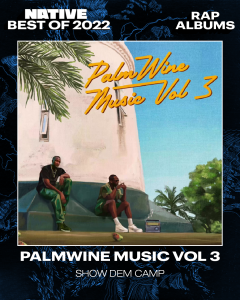
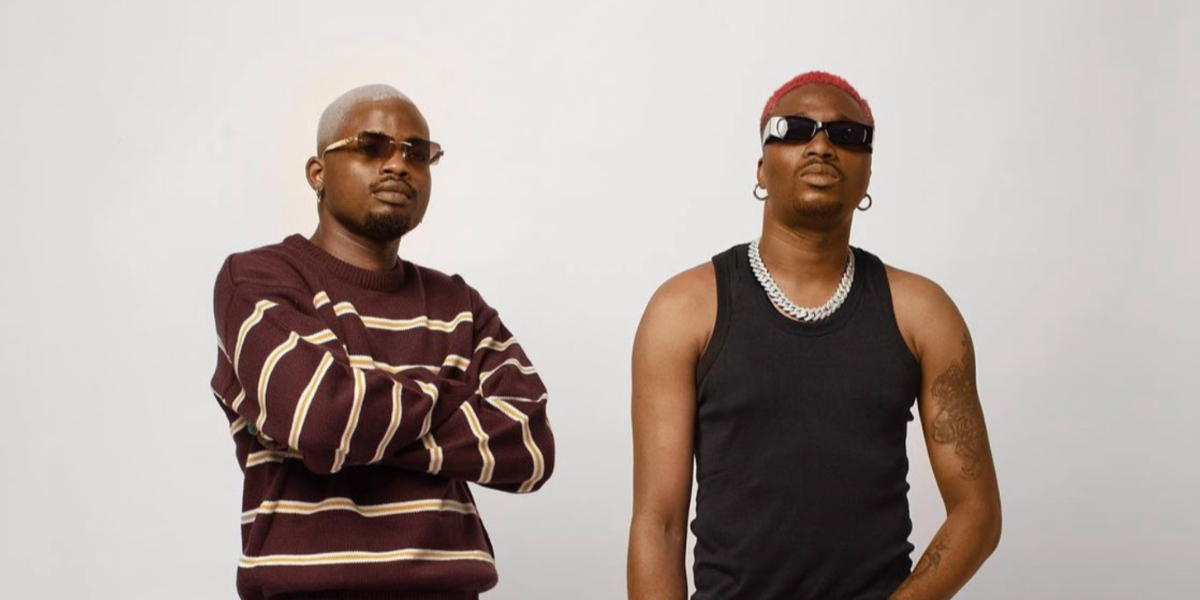
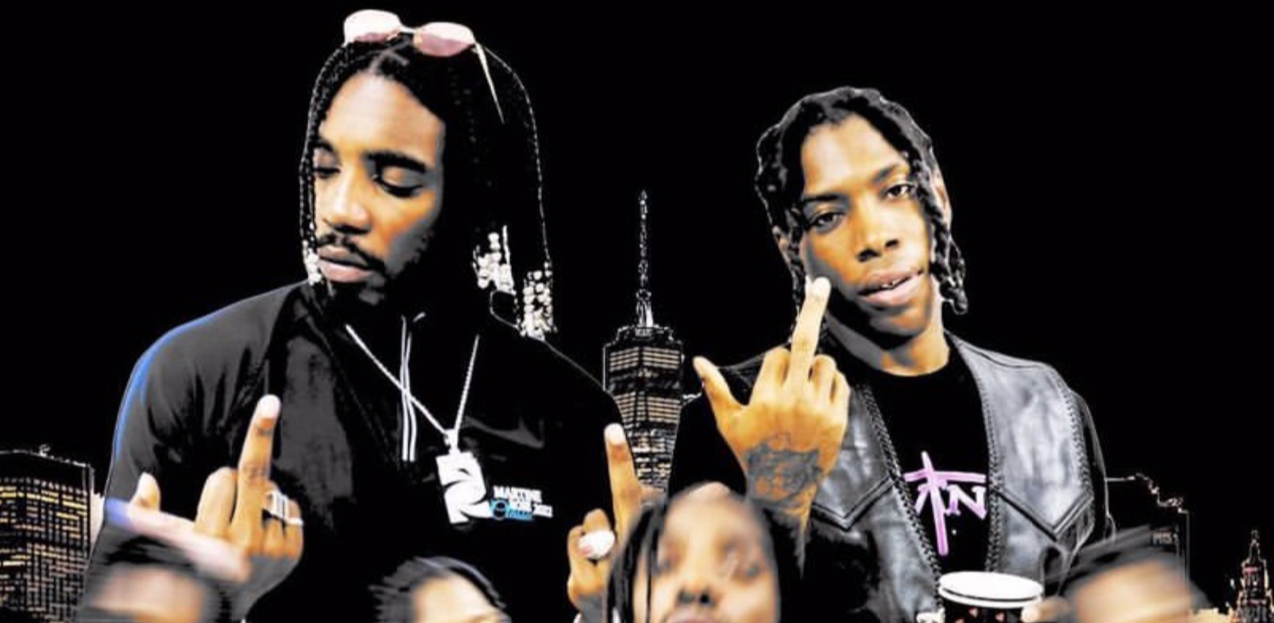
Best New Music: Show Dem Camp’s “WYW” Is A Detailed Evocation of Modern Relationships

Revered is a word often used to describe Show Dem Camp, and the reason isn’t so far-fetched. Since 2010, the Rap duo have worked to deliver some of the most cutting-edge rap music to emerge from the continent. While their lyricist credentials are sufficiently displayed on their ‘Clone Wars’ series, they’ve utilised their Palmwine Music tapes to reflect an easier perspective on issues, tapping from the centuries-old coastal tradition of palmwine music, a pristine flavour which constructs part of the fusion that is Highlife. 

Across two previous tapes of the ‘PWM’ series, the rap duo soundtracked the breezy motions of a cosmopolitan lifestyle, calling on varied collaborators for colourful hooks which stood beautifully alongside their verses. When ‘Palmwine Music 3’ was released last weekend, listeners got to experience an edgier side of Show Dem Camp, particularly in regards to the topic of relationships. The veterans dived into its toxic form on almost all the songs off the project, stitching a fictional radio station together with a signature stacked list of collaborators. A glittering standout is “WYW” featuring Bellah, a London-based Nigerian artist


View this post on Instagram


A post shared by Show Dem Camp (@showdemcamp)

The record is a powerfully true affair, first striking out as a seamless link-up due to everyone’s ease. Tec and Ghost barely have a slightly bad verse on their catalogue so it’s their collaborator, Bellah who most surprises here, marking ferocious territory with her airy vocals. Tec’s verse sets the scene rolling, playing out his typical understanding perspective by admitting his own faults and pointing out hers. “I know you say you love me, but I can’t lie/ These the kinds of feelings that you can’t buy,” he raps, setting up Bellah’s anger-fuelled riposte, the undeniable highlight of the record.

With a cool tone which perfectly carries her incendiary pose, Bellah sings, I hope she cheats on you, I hope she makes a fool of you/ I hope she carries belle for your friend, oh baby,” before delving into more horrendous wishes for an ex-beau. It’s an honest response and would surely be relatable to anyone who’s nursed similar relationships in the past. Need another “I’m over your antics” anthem? “WYW” puts on full display the romantic inefficiencies of dating in this generation, where there’s no denying that inside the rooms are more toxic than light, and in situations where there’s been a sudden breakup, the propensity for ugly language becomes higher.

True to his haughty persona, Ghost weaves layered bars about her own damning excesses: everything from astrology to IG streams and older niggers getting close is applied in his shot back, but Ghost’s humour is evident quite early on. “Caught defenceless so who’s the villain? Just hold your L, I know it’s tough like the bluest denim”. OG Show Dem Camp fans know how the rappers bounce off each other in verses, and “WYW” delivers exactly how they’ve always done: by embracing their distinct personalities and embedding that onto the song’s unique purpose. 

There are many other stellar hooks on ‘PMW 3,’ but Bellah captures the energy of the central conflict so well. Whether through emo influences or the cherry claims of hypnosis found in mainstream Afropop, love has always been a topical concern of musicians. Show Dem Camp have rather engaged the theme on a deeper level than most have, introducing their signature wit and candour to what is the finale of a classic series. In the future when the album gets a spin, “WYW” would be one to evoke a moment in time. 


ICYMI: READ OUR FIRST IMPRESSIONS OF SHOW DEM CAMP’S ‘PALMWINE MUSIC 3’

TurnTable Top 100: Ayra Starr’s “Rush” Is The No.1 Song In Nigeria

After debuting on the TurnTable Top 100 last month, Ayra Starr has risen to the top of the charts with her new single, “Rush.” As the No.1 song of the week, the track tallied 4.66 million streams and 40.3 million in radio reach. Following the release of its accompanying music video, the track has also amassed up to 1.73 million airplay impressions on TV, making Ayra Starr the first female artist with multiple No. 1 songs in Nigeria (“Bloody Samaritan” also peaked at No. 1).

Following closely at No. 2 and No.3 on the charts this week is Asake’s “Organise” and “Terminator” respectively. Asake was the previous holder of the No.1 spot on the charts, however, this streak has now been broken by Ayra Starr who rises to the summit of the charts. Pheelz’s “Electricity” with Davido moves up one spot to No. 4 this week, from its previously held position at No. 5. Rounding up the top 5 this week is former 7-week chart-topper, “Bandana” by Fireboy DML and Asake.

At No.6 this week is Asake’s “Joha” which retains its position for another week in a row. It is closely followed by Bella Shmurda’s new single, “Philo” which features Omah Lay at No.7 this week. The record tallied 2.43 million streams and 27 million in radio reach. It is the seventh top 10 entry for Bella Shmurda and the tenth for Omah Lay.

Rounding out this week’s top ten is Wizkid’s “Bad To Me” at No. 8. Oxlade’s “Ku Lo Sa – A COLORS SHOW” re-enters the top ten at a new peak of No. 9, while Asake’s “Dull” drops to No.10. Elsewhere on the charts, Victony’s “Soweto” with Tempoe reaches a new high of No. 12 while Black Sherif’s “Soja” debuts at No. 19.

Featured Image Credits/Instagram: AyraStarr


ICYMI: The soundtrack of the Nigerian dream

Songs Of The Day: New Music From Supa Gaeta, Seun Kuti, Twitch 4Eva & More

We’re more than halfway through 2022, and it’s been an eventful year for Afropop. There’s been a torrent of great new music, spawning a massive stack of inventive smash hit songs. From Highlife-infused Ghanaian pop, to the unrelenting force that is Nigerian street-pop, to South Africa’s indomitable Dance scene, to tantalising Drill explorations in East and Central Africa, and much, much more, we’re living through abundant and musically expansive times.

Every week, many songs from African artists make their way to digital streaming platforms, and wading through them can be intense. That’s where The NATIVE’s Songs of the Day column comes in to help. We go through as many new releases as possible, spotlighting them here, two to three times every week. Begin your week with new music from Supa Gaeta, Seun Kuti, Twitch 4Eva & More. Dig in!

Supa Gaeta – “Conversation” ft. Delis & Kojo Trip

Ghana-born UK-based Afrofusion artist Suae Gaeta has shared with listeners his sophomore EP ‘Road To DND,’ a 7-track body of work which features artists such as Kojo Trip, BRYAN THE MENSAH, Kirani Ayat and more. On standout record “Conversation,” Supa Gaeta teams up with Delis and Kojo Trip for a boisterous number which finds them spitting dizzying bars. Over the bouncy production of the record, the artist sings “If you don’t want to talk about the money, I don’t want to hear the conversation” as he affirms his focus solely on stacking his paper and making money.

Seun Kuti – “Fight For You” ft. Naomi Achu

Seun Kuti is a voice for change. On his latest single, “Fight For You,” the singer and Naomi Achu deliver an upbeat number which focuses on the fight for freedom in Nigeria by calling on the future generation. Over the heavy drums and trumpets on the beat, Naomi sings “Sometimes the government is heavy on the nation, will we survive with the heavy limitations/I will be there to fight for you,” backed up by Seun Kuti’s baritone vocals.

Twitch 4Eva – “Abeg U”

Ghanian singer and songwriter Twitch 4Eva is back with yet another mid-tempo romantic number. On the record, he pleads with his love interest to take him and his emotions more seriously because he is committed to their love. On the Afrolektra-production, he sings “Caro I’m begging, dont play me for a fool/Abeg o, I’m begging,” pleading with his muse to answer his cries. 

J. Derobie – “Bruk Off”

Ghanaian singer, songwriter and emPawa signee J Derobie returns with the lead single off his forthcoming project, a Dancehall infused record titled “Bruk Off.” The catchy new number is primed for the dance floor and finds the artist switching between his dialect and English as he encourages women to shake their bodies and have a good time. 

J Martins – “Gimme Love”

Veteran singer and songwriter J. Martins arrives with a mid tempo romantic number “Gimme Love.” Over the hippy production of the record, he sings, “Cause I’m falling for you, give me this your love/I dey mad for you baby,” imploring his muse to give their shared love a chance.

Jay Bahd – “Badman”

Asakaa drill rapper Jay Bahd is back with another bouncy drill record titled “Badman.” The new number finds the artist spitting hard hitting bars over the production of the record, switching between his Ghanaian dialect and English, stating that he’s a king and should not be messed with.

Poco Lee – “Otilo (Izz Gone)” ft. Hotkid

For the record “Otilo (Izz Gone),” popular dancer and artist Poco Lee taps emerging artist Hotkid for a special new number. The feel-good track finds the pair focusing on the good things in life, including partying and turning up. On the Producer X-produced record, Hotkid brings his infectious energy to the tracj with lyrics such as “I go high, I go party till the night, omo where my henessy o/we in the club all my people don dey vibe, you can feel the energy.”

Featured Image Credits/The NATIVE

uNder: Best New Artists (September 2022)

Afropop has always been expansive. It’s something that bears mentioning because of the sheer awe that comes with fully recognising the diversity of the music being made by African artists at home and in the diaspora. It’s also remarkable because, even in the post-digital era of instant access to music from almost everywhere, there are new artists being discovered every day. Some are helming incredibly unique sounds, others are making exciting iterations of familiar ones, and they’re all adding to the rich tapestry of Afropop.

At The NATIVE, our editorial staff shares some of the most intriguing artists on the frontend of their careers, in the hopes that you find your favourite new artist—and in the process, better appreciate the boundless scope of Afropop. This month is no different, with a list of uNder inductees that includes the genre-mashing rap artist Elsy Wameyo, R&B-influenced singer TAR1Q, pop savant YKB, and more.

Elsa Wameyo

It’s not usual for artists to break out the gate with fully-formed projects, but Elsa Wameyo is a striking exception. Her debut record “Intuition” was released in 2018 and saw the Kenyan-born Australian-based musician shine with an authentic storytelling ability. Her perspective could go from personal to generational under a well-crafted line. 

A rich sonic tapestry carries her soulful messages, buttery lo-fi knocks floating above synth grooves and other experimental bursts. Being a self-taught producer, Elsa’s music is purposeful even when eccentric. Cue-in “Daily” with its EDM progressions which pronounce the “your love is a drug” refrain of Elsa, a recognition of the exciting thrills that comes with a toxic affair. “Outcast” and “Pastor” offer laser-sharp entries into Wameyo’s ability to condense thought-provoking records into exhilarating bars, in heightened moments dousing her lyrical edge with soul. The latter’s poignance is especially captured in the hook, “Conditioned to feel like a lost man, dumb and depressed/ Funny he’s running to money, funny you’ve already won him,” she sings with wisdom well beyond her 23 years. 

On her debut EP ‘Nilotic’, she carries ethnic pride into her musical choices more poignantly. All six records are produced by Elsa, with audibly Kenyan chants backending the beats. From the jazzy drums of “Promise” to the melancholic notes on “Hunger,” the worldbuilding prowess of Elsa Wameyo is evident. In a style reminiscent of Little Simz, she isn’t a musician as much as she’s a cultural enthusiast, relaying ageless philosophies with a fluid grasp on contemporary language and sound.

Cozy Kiyo

Over the past five years, Nigeria has witnessed the entry of inventive musicians who’ve embodied an experimental ethos. In the subgenre of mood rap, few have been as affecting as Cozy Kiyo. Much like his moniker, his records evoke a chill, do-not-disturb vibe, carrying from the stateside swag contemporaries like Psycho YP and sGawd have stitched onto the tapestry of their music. Trap might be considered part of that aesthetic, but Kiyo’s music embraces even wider influences.

Wind instruments and melancholic chords colour his records with novelty,  while the delivery is much in-style with contemporary rap. On “Duffy” which runs less than two minutes, he raps cheekily, “mehn I’ve been in my duffy,” switching that for the more-popular ‘bag’ metaphor. He’s self-reflective on “Recipe,” swinging over brooding lo-fi progressions with a pace which amplifies his concerns even more poignantly. “I can’t take my ass to sleep, don’t know who I wanna be,” he raps in the hook, painting a scenario very relatable to young people while going further to rope in other characters who swirl around the world he’s describing. Animated objects make up Cozy’s branding, and the child-like honesty of his records reveal that to be deliberate.

He released his debut album ‘Home’ during the scene-shifting pandemic, constructing intimate profiles of himself at a time when everyone was deep-searching. Whether on the evocative opener “Drown” or the smooth-talking “Grim” or the Ictooicy-featured standout “Friends,” Cozy’s music manages to be real while sounding dreamy in the best possible way. Not many rappers are as purposeful as this guy, and attention is surely due. 

DON NGATIA

Don Ngatia makes music for the soul. He delivers his songs in a calm manner, preferring that his smooth vocals hit his listeners’ hearts one lyric at a time. He began his career with the 2013 EP ‘Venus and Mars,’ which was a great showing of his precocious gift for emotive songwriting, addressing love and heartbreak on the tracks “Venus and Mars,” “Where Is The Love” and “Lonely For.” He sharpened his talent covering the songs of renowned artists like Édith Piaf, Nina Simone and Duke Ellington.

A graduate of the Berklee College of Music, the Kenyan artist’s music is often a blend of African instrumentals, R&B and Soul, which he terms Afro-urban. In 2014, he released the singles “Mirabelle,” a modern allegorical tale of spirituality, love and fate, and “Solitude,” a track about the ache of loneliness after a lover’s exit. In 2016, after a two-year hiatus, he released the seven-minute Gospel track “Tide Me Over,” wherein he entreated the Almighty to “Cultivate in me the wisdom (to know truth from lie)/Grant me understanding (of the things that be).” On last year’s “Carpe Diem,” he expressed a desire to dispense with fear and embrace the journeys that life pushes his way. “Self-doubt’s a limiting cradle/But fortune seeks willing and able hearts/Won’t be lulled by fear or by fable/I’ll get out my head, with myself make amends,” he sang.

Don Ngatia produces most of his songs and designs some of his song covers, displaying impressive skill and versatility. On “Alone,” his latest single, he stews in the misery of a lover’s absence. “I can’t get you off my mind/Be thinking bout you all the time/I’m stuck on read found no reply/You stay on repeat,” he sings as the backing vocals serve as his only companion. The production is minimalist with twinkling piano keys and Caribbean-style drums, conveying the sadness and despair Don Ngatia feels. It is a credit to him that he has stuck to his strengths while perfecting his sound as the years roll by, making him a more formidable musician.

THE KAZEZ

Identical twins Taiwo and Kehinde Kassim got their big break in 2019 with “100 Naira 50 Naira,” a year after being selected as one of the 100 beneficiaries of Mr Eazi’s emPawa Africa. On the infectious “100 Naira 50 Naira, the duo, who go by the stage name The Kazez, spat witty lines about their experiences on the streets of Lagos. Two years prior, they had shown a knack for captivating flows and lyrics on the Rap tracks “Time” and “Alcohol.”

In 2020, they changed tack, revealing their singing talents on the love tune “You Deserve Better” and on the P.Priime-produced “Jericho.” A year later, they doubled down their budding Afro-fusion sound with “Rihanna,” putting their clean vocals and musical influences—from Orezi to Wizkid—on display. They went full throttle on the up-tempo Afropop tune “Church Mind,” showing that there are more sonic tricks up their sleeves.

The latest two-song pack ‘Pair’ finds them still experimenting with their Afro-fusion sound, with the tracks “Coming Home” and “Indian Feem.”  On the latter, they weave a love tune around their appreciation for Indian movies. They express their longing for a loved one on “Coming Home,” delivering patois-style on the bouncy beat. ‘Pair’ is a beautiful package of the duo’s talents. It is just a matter of time before they will catch the attention of the mainstream audience, as they continue to experiment and refurbish their sound.

TAR1Q

When TAR1Q was younger, he discovered his love for storytelling and in 2018, he decided to give storytelling a chance but this time with music. The now 20-year old singer and songwriter sharpened his skills over the years and has become a force of his own since stepping out of the Chocolate city recording academy. His musical style, which he terms Neo-Afro, synthesises contemporary Afropop, Soul, Hip-Hop and classic R&B.

“My music is completely in tune with how I feel, and how I am trying to make people feel when they hear it. It’s always been about feelings for me,” TAR1Q says of the descriptive tag that best fits his music. Earlier in the year, he kicked off his major label career with ‘Son Of The Moon’, a stellar debut EP that captures R&B, Soul, Pop and Hip-hop elements all tied together.  The body of work features standout numbers “Bad Intentions” and “Dear Insecurities” both of which immediately caught the attention of listeners across the afropop space. His debut EP garnered him over 1 million streams across all platforms and has fixed him in Afropop conversations today. The scope of the new project is a statement from an artist who has begun a solid journey and is ready to become an even bigger star.

YKB

YKB is one of the few artists who has had a peculiar journey. Initially starting out as a photographer, YKB focused on taking pictures and creating visual experiences for viewers. After making the switch to music, he initially went by the name YusufKanbai and shared his debut 2-song pack, ‘Hear Me Out’ with production credits from Godomarr and Higo music. The body of work saw Caribbean, Indian, and Afropop influences blended together.

Last year, he resurfaced on the scene as YKB with a renewed vision for his career. Since then, YKB has only shared with listeners songs that have stood out for its self-determined showcase. He followed that announcement with the release of the Zlatan-assisted record “Dey Your Dey” where both artists merged their distinctive strengths–YKB’s melodious, word-bending delivery and Zlatan’s high-octane ad-libs and vociferous verses–for a strong rap-sung collaboration. The artist did not stop there, last year, he shared his debut project ‘Before I Blow’, a 7-tracker which drew inspiration from its title and made many listeners pay attention to the artist and his art.

This year, he’s already shared some of his smoothest records, including “Imagine” and the Finito-produced “san siro,” which latches unto the percussion-led sonics of Afropop. For YKB, each release is a means to an end: soundtracking the emotions of young people just like him. “I hope my music helps people get through the day because it’s a sad world,” the artist shared with the NATIVE. He makes music to project how he feels, and accepts life in hope that someone somewhere can receive it. YKB is on the cusp of a breakthrough and we are here to see him shine.


ICYMI: GINIUS, LIRASE & MORE BEST NEW ARTISTS FROM AUGUST 2022

Religion In Street-Pop: The soundtrack of the Nigerian dream

Over the past decade and half, street pop has evolved, leaving its origins of outlier music to become the epicentre of Nigeria’ pop music, ruling music charts and achieving nationwide acceptance.  No one can boldly claim ownership of Nigerian pop music but there can be no doubt that the places known to us as the streets have had a great influence on the music coming out of this country.

The streets, often characterised by the lacklustre ambience and guttural realities of Lagos living have produced pop stars such as Daddy Showkey, Dagrin and Olamide and laid a solid foundation for many of the new school street pop artists today. In popular Nigerian culture today, most of the slangs and lingos we use stem from the streets, but another important factor which stems out of street music is its close relationship with religion.

For example, a record such as “Oba” sees T.I Blaze singing “Oluwa sha lon shomi, ko kin sh’eniyan/Oba l’Oba o ma je koni tan l’ara omo oba, k’oma ku dansaki” which directly interprets as “It’s still God protecting me/God will be God and it won’t finish on the body of God’s child,” an affirmation that would typically be expected in gospel music and not between the lines of a street-pop record. This continues on records such as Barry Jhay’s “Whine My God” where he solemnly sings “Igba ti mon jeun l’alai l’eran eni kankan o ri mi, eni kankan o ran mi/Only God fit make me smile” which translates to “When I was eating without meat, nobody saw me and nobody cared/Only God was able to make me smile.” While these artists may have different circumstances they are navigating, it’s clear that they have come to illustrate their pain by calling on a higher being to intercede on their behalf.

In the earlier days, young people in the Bronx borough of New York City, USA used their pain, and the unspeakable violence and tragedy that they experienced to create Hip-Hop, an art that appeals to the world. This sound has been refined over the years and more artists have weighed in with their own pains. The realities of many of those who initially started Hip-hop involved gun violence, drugs and  jail sentences. Hip-hop has now grown into a vibrant culture that allows rappers to express and sell their pain, and for listeners to relate and buy into this pain, similar to Nigerian street pop. The home of Nigerian street pop music is Lagos, Nigeria. Street pop music is easily made up of vernacular and Yoruba, the latter being the most relatable and popular language in Lagos. Similar to Hip-Hop, most Nigerian street pop artists are selling their pain and their reality as hope to people who come from where they’re from and we as listeners buy into their pain because it is relatable. 

When I initially came across Barry Jhay’s music in 2020 at the time when there was no certainty of what the world would look like in a few years, I remember listening to the record “Muje” and the lyrics “nkan to olorun mi ba fowo si e le baje/Adura wa gan gan ni tiwa ma se baje” instantly stuck with me. I finally found hope; in the midst of all the darkness, I found hope in the music. These lyrics simply translate to “Whatever God puts his hands in will never spoil/And our own major prayer is ours should never spoil.” Many times over, I’ve come across listeners and fans that have referred to Barry Jhay’s music as spiritual music. This is because like many artists of the same ilk, Barry Jhay is making affirming music that has earmarked him as a poster boy for representing the pain of the average Nigerian. Barry Jhay is in great company, among many other artists such as T.I Blaze and Seyi Vibez, who music that gives hope to the streets.

T.I Blaze is one of artist who never shies away from singing about his reality on the streets, using his music as a tool to communicate with God. When he shared his debut EP ‘The Fresh Prince Of Lagos,’ with listeners, he beefed the project up with affirming records such as “Try” and “Oba” with Barry Jhay, both of which he used to give thanks to God for his growth from adversity to riches. On “Try,” he sings the standout lyrics, “I no fit to run from God, I came from the streets no joy o,” sharing with listeners his actual reality and selling hope to those who may be in need of aural healing.

In the same light, when you listen to Bella Shmurda’s music, he is fervent in his prayer and firm in reminding listeners of his past and how God has come through for him. On “Fade,” a standout off Davido’s third studio LP ‘A Better Time,’ Bella Shmurda arrives as a mouthpiece for the streets. Over the catchy track, he constantly chants lyrics such as “I no fit to run away from God, if not I go fade away,” reminding listeners of his deep affection and respect for God, the one who guides his tumultuous days. On the Masterkraft-produced record “Hallelu” with Zlatan and Bella Shmurda, he turns inwards and orchestrates intimate conversations with his maker as he sings, “Hallelu, Hallelujah oh, Oluwa gbemileke/Maa gawuu, leyin Adura oh, ati awe fojo meje,” which translates as “Hallelu, Hallelujah oh, God has raised me over my enemies/don’t worry, if not for prayers and days of fasting, I won’t be here.” 

Due to this close relationship it has nurtured with religion, I’ve always been a fan of street pop. At times, when my mind is very occupied and I need a bit of hope, I turn to Barry Jhay’s music and find God between his lyrics. His music instantly lifts my spirit and gives me hope when there seems to be none. On his most recent EP ‘Son Of God,’ tracks such as “Bless Me,” call upon a higher being to watch over him and see him through life, a prayer that most listeners can relate to in their own personal intercessions. When Superwozzy and Barry Jhay came together for the record “Gratitude,” they both allowed themselves to be vulnerable in front of their creator as they delivered lyrics such as “God I want to thank you for the blessings, for the ups and downs, for the lessons,” displaying nothing but genuine gratitude to a more supreme being. 

Afropop has always managed to incorporate messages to God, and you’d be hard-pressed to find an artist who hasn’t dedicated at least a few songs to thank God for how far they’ve come. Street pop music is no different in this regard, and I’ve found a way to speak to God directly and commune with him through the music. Whether that’s through Barry Jhay, Candy Bleakz or Bella Shmurda, the soundtrack of the Nigerian dream is never wavering and now, there’s a new generation of street-pop artists laying the groundwork for a spiritual awakening.

Featured Image Credits/The NATIVE

2023 Oscars: Nigeria’s Absence & International Feature Film Submissions From Africa

About a week ago, the Nigerian Oscar Selection Committee (NOSC) announced that Nigeria will not have any representation at the 2023 Oscars Awards. The committe’s chairperson Chineze Anyaene-Abonyi shared that NOSC were unable to find any film that met the eligibility criteria for the International Feature Film category.

“Although the committee received three epic films following its call for submissions in August, it turned out that none of them will advance to the next stage owing to the voting patterns of members,” she told newspersons. The NOSC committee, which includes Omotola Jalade-Ekeinde, Mildred Okwo and Kenneth Gyang, among others, recorded a voting pattern of 8:5:1:1, with “no film is eligible” votes having the upper hand.

This is the second year in a row that Nigeria will not be submitting a film for the international award, since it submitted Genevieve Nnaji’s Lionheart in 2019 and Desmond Ovbiagele’s The Milkmaid in 2020. The Academy Award for Best International Feature Film—known as Best Foreign Language Film before 2020—recognises feature-length motion pictures produced outside the United States with predominantly (more than 50%) non-English dialogue. Aside from feature-length films, the category accepts animated and documentary features. 

Since the creation of the Best International Feature Film category, only three African countries have clinched the prize: Algeria, Ivory Coast and South Africa. The films include the 1969 political thriller Z (directed by Greek-French film director Costa-Gavras), the 1976 black comedy and war film Black and White in Color (directed by French film director Jean-Jacques Annaud) and the 2005 crime drama Tsotsi (directed by South African filmmaker Gavin Hood).

Despite Nigeria’s revered place in the African film industry, which it secured in the 1990s, it was until 2019 that the country first submitted an entry with Lionheart and the film was disqualified for not meeting the dialogue requirement. The Milkmaid passed the eligibility test but didn’t make the first shortlist in the category. What Nigeria’s film industry, popularly called Nollywood, possesses in quantity, it lacks in quality, most especially as regards storytelling and technical concerns.

Recently, a DW report interrogated the absence of African films on the world stage, citing financial constraints and non-existent international marketing as some of the issues preventing films from the African continent from getting recognition. In the same report, Nigerian journalist Steve Ayorinde laid the blame on Nollywood productions not meeting the technical requirements of a cinema film. He acknowledged, though, that streaming platforms like Netflix are causing positive change by requiring cinematic standards for the films they put up on their platform.

In recent times, several Nigerian films have stood out. Kunle Afolayan’s October 1, Izu Ojukwu’s ’76, Ramsey Nouah’s Living in Bondage: Breaking Free and Damilola Orimogunje’s For Maria Ebun Pataki are some of those films. But clearly, more efficiency is needed if Nigerian films are to have a breakthrough on the global stage.

While the 2023 Oscars Awards will go on without Nigeria, some African countries have submitted their entries for consideration.

TUNISIA

Under The Fig Trees is the fiction feature debut of French-Tunisian director and producer Erige Sehiri. It is a story of young and old people working in an orchard in rural Tunisia during the summer fig harvest. While they work, they connect – and disconnect – with one another as it concerns love and life.


MOROCCO

Moroccan filmmaker Maryam Touzani’s The Blue Caftan is about a woman and her closeted homosexual husband who run a caftan store in the Moroccan city of Salé and hires a young man as an apprentice. The Blue Caftan is Touzani’s second entry to the Oscars following 2019’s Adam.


ALGERIA

French film director Rachid Bouchareb’s Our Brothers revives the memory of Malik Oussekine and Abdel Benyahia who were killed by the police in December 1986 in Paris. Bouchareb’s film gives a fictional account of the event while examining the lives of North African immigrants in France.

TANZANIA

Adapted from Adam Shafi’s Swahili novel, Tug of War is Tanzanian filmmaker Amil Shivji’s take on love and resistance. Set in 1950s Zanzibar, the film is centred on a young revolutionary and a runaway bride, battling their desires amid British rule and local tensions. Tug of War is Tanzania’s first Oscars entry in 21 years.


KENYA

In the animated film TeraStorm, a group of superheroes unites to fight against an ancient wizard threatening to destroy the earth. It’s Kenyan 3D artist Andrew Kaggia’s feature debut and he serves as writer and executive producer.


UGANDA

Tembele is Uganda’s first-ever film submission for the Oscars. Directed by Ugandan filmmaker Morris Mugisha, the film is about a garbage man in Kampala who experiences a mental breakdown after the death of his son.

Outside the African continent, the countries that have made submissions include India, France, Canada, Italy, Spain, Sweden, Iran, Brazil, Palestine, Indonesia and Jordan. The 95th Academy Awards is scheduled to take place at the Dolby Theatre in Los Angeles, California on March 12, 2023.

Featured Image Credits/NATIVE

The Shuffle: Revisiting Maleek Berry’s Debut EP ‘Last Daze Of Summer’

Since his transition from producer to a full-on artist, Maleek Berry has risen to an undeniable level of prominence. The latter part of the last decade saw him deliver a spate of hit songs and two well-received EPs, while he’s also played his part in furthering Afropop’s global agenda, featuring on international collaborations with Estelle, Kid Ink, Goldlink and more.

Towards the end of summer in 2016 Maleek Berry shared his evergreen debut solo EP ‘Last Daze Of Summer.’ The 6-track EP, introduced the world to a new side of Berry, one with an army of party-starters under his belt and the ability to soundtrack our summer day parties and nighttime rendezvous.

While Berry’s last official release came in 2019, six years on from the release of that career-defining EP, the songs still live on, serving as a reminder of that period in time, an apex where Afropop was on the hinges of becoming a globally recognised genre. Now, there’s no denying that Maleek Berry’s influence is palpable in today’s musical landscape.

The 6-tracker executively produced by the songwriter, singer and producer is a compilation of catchy romantic songs laced with alluring melodies. On the opening record, “Kontrol” he faces his love interest and focuses solely on her and her feistiness, singing “Oh you want take kontrol/See my baby want take kontrol.” Back then, when this track was released, it spread like wildfire, quickly becoming the soundtrack to many summer nights and spun many video recreations from lip-syncing fans.

On “Let Me Know,” Maleek maintains his directness as he speaks to his muse to remain honest with him. The sharpness of the records helped listeners understand the point in which the artist was trying to make. Shortly after the release of the project, “Let me know if I’m more than just a friend to you” instantly became go-to lyrics for Afropop listeners and teenagers who may have found themselves tied up in situationships or in the friend zone. 


View this post on Instagram


A post shared by Maleek Berry (@maleekberry)

Elsewhere on the project on “Flexin,” Maleek Berry is singing about his baller status and enjoying all the good things any young African artist would want, money and fame. Over the melodious production of the track, he is deep in self-reflection singing “I’m flexin yeah, cause I just checked my bank account and I’m good/I’m flexin yeah, cause my single’s going off in my hood,” referencing the wide acclaim the songs would go on to have in the UK where he was born.

The Geko-assisted record “Eko Miami” is the most memorable of all the tracks with its feel-good production and catchy lyrics. After a tempo shift, Berry switches to a slow-rolling cadence fit for an after-hours session as he weaves lyrics about living life to the fullest. He sings “from the early yeah morning na we faji, eko miami/no work tomorrow, we go saye we faji, eko miami” sharing with listeners how he’s living in the moment and enjoying it, with the ostentatious flair of Lagos electrifying party scene.

As a frontrunner who set the tone for producer-artist transitions, six years on from the release of ‘Last Daze of Summer,’ the body of work is now revered as one of Afropop’s finest classics.

Featured Image Credits/NATIVE

Songs Of The Day: New Music From Ria Sean, King Perryy, Victony & More

We’re more than halfway through 2022, and it’s been an eventful year for Afropop. There’s been a torrent of great new music, spawning a massive stack of inventive smash hit songs. From Highlife-infused Ghanaian pop, to the unrelenting force that is Nigerian street-pop, to South Africa’s indomitable Dance scene, to tantalising Drill explorations in East and Central Africa, and much, much more, we’re living through abundant and musically expansive times.

Every week, many songs from African artists make their way to digital streaming platforms, and wading through them can be intense. That’s where The NATIVE’s Songs of the Day column comes in to help. We go through as many new releases as possible, spotlighting them here, two to three times every week. This Friday, enjoy new music from Victony, Mo’Believe, Bella Alubo and more. Dig in!

S HIGH FT. ZINOLEESKY & VICTONY – “HYPNOTIZE”

Produced by Telz, “Hypnotize” is officially a star-studded affair. Days earlier, clips from the recording session went on socials, keeping many amped about what Zino and Victony would sound like today. Now here, it’s obvious the chemistry as both artists unfurl bad boy lyrics over a serene, guitar-licked beat. Their distinct voices are perfectly in sync, making the record an ear candy that should become more accepted as the days pass.

RIA SEAN – “UPTOWN GIRL”

Since breaking out with a deal from Aristokrat Records, Ria Sean has consistently imprinted her distinct sound on a section of Afropop lovers. With a sophomore project expected sometime this year, Sean has released a new single. “Uptown Girl” draws from her R&B-toned direction, with evocative strings and soft drums enlivening the mood. Her delivery is as sleek as ever, with lyrics like “you need a fling like me” spelling out the record’s sensual intent.

BELLA ALUBO FT. 1DA BANTON – “SUGA BABY”

It’s been a minute since we got new music from Bella, and with “Suga Baby” she makes the return worthy. Over colourful percussions and notes, she unfurls stories of a relationship with great candour and wit. Her choice of 1Da Banton to form a duet proves to be affecting as well, the “No Wahala” musician blending quite beautifully with her chosen direction.

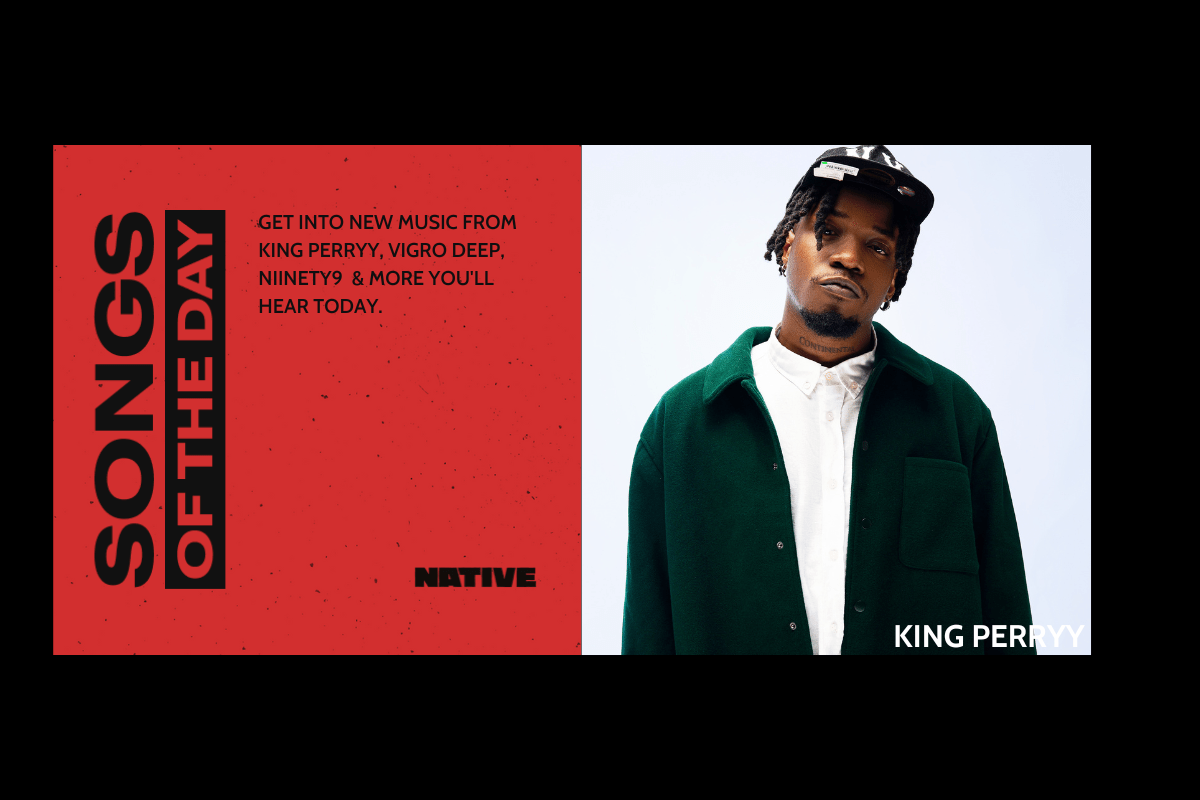
KING PERRYY – TURKEY NLA

Slowly but expectedly, Nigerian musicians are weaning their sound of Amapiano. This weekend, Perryy’s “Turkey Nla” happens to be one of the few records to tap from those recognisable log drums. He however makes good of the influence, sketching his ethos in deft style throughout the song’s runtime. Very much understanding of his voice, he goes from cool to energetic in a matter of seconds, following the synth-streaked production in its latter parts.


JIMOHSOUNDZ & SUSSS – “YOUR LOVE”

Warm serenade, tropical production. “Your Love” is a well-structured record from the duo of Jimohsoundz and Susss, flying the mid-tempo sound that’s now popular across Nigerian Pop. “I really really need your love,” they sing on the chorus, underlining the motivations at the centre of the record. The Dancehall inflection was also very crucial in diversifying the record’s sound, and there’s no doubt this forms a credible backlog for both rising musicians.

CECE VEE – “SHOOTING STARS”

South African musician Cece Vee has released a new record. “Shooting Stars,” like the title suggests, is a record shooting with triumphant synths and Vee’s sunny vocals. It’s an exhilarating record, the one you throw your head back to and take in the beauty of nature. Quite telling as well, that the video is entirely shot in the woods, with sci-fi elements like a lightsabre mirroring the glistering influence of eighties-influenced synth-wave on the production.

T3AGRAY – “TAKE THE RAIN AWAY”

uNder alum T3agray has marked out a psychedelic direction in his music, utilising Punk Rock and Emo Rap as the primary outlets for delivering his affecting songs. “Take The Rain Away” emerges from that tradition, bemoaning the loss of a relationship with all the attendant emotions that comes with it. A swinging guitar forms the backdrop, with purposeful splashes of drums bringing more life into the production. As ever, T3agray’s lyrics are haunting and searching, as he pleads, “why don’t you take the rain away, stay for another day”.

LOVN – “JUMOKE”

Not long ago, we included Lovn’s “Caution” among our Songs of the Day, a record which flaunted Highlife influences with the unmissable sleek delivery of Lovn. Earlier today, the talented musician released his project, ‘This Is Lovn,’ which is meant to display his range. “Jumoke” is a stellar addition to that project, a Pheelz-produced record which sees him bare his singing gifts to beautiful effect. Every bit a love song, the vulnerability of Lovn’s lyrics, as well as his pristine vocals, marks him out as an artist who has all the potential to become much bigger in the coming months.

Our first impressions of Show Dem Camp’s ‘Palmwine Music 3’

It took four years for Show Dem Camp to turn a marquee moment into the commercial pillar of their rap career. Released over five years ago, ‘Palmwine Music’ organically extended the highlife-indented influence and high-spirited feel of their biggest song till then—and maybe even till now—into a colourful, captivating and uniquely groovy body of work. The mini-album quickly drove up the rap duo’s profile, improving their appeal amongst older fans and newer listeners, serving as the foundation to their Palmwine Festival shows in Lagos and London, as well as a recent multi-city tour in the U.S.

These days, in addition to their reputation as barn-burning lyricists via the ‘Clone Wars’ series, the duo of Ghost and Tec are regarded as two of the most dynamic rap artists in Nigerian rap history, and that’s because of the wide appeal of the ‘Palwine Music’ series—and its 2019 offshoot, ‘The Palmwine Express’. For nearly a year, Show Dem Camp has been teasing the third edition of the project series, only making it tangible with a release date earlier this month.

Marked as the final entry in a trilogy, ‘Palmwine Music 3’ carries the hallmarks of its predecessors, in that it’s entirely produced by Spax and it’s loaded with an army of features. Clocking in at nearly an hour, the new project is the lengthiest in the series. Joining Show Dem Camp is a star-studded list of guests, including Tems, M.anifest, Tay Iwar, Oxlade, alongside Palmwine regulars BOJ, Ladipoe and Moelogo, newer voices like Bellah and Twelve XII, and more.

Being one of the most anticipated releases of the last few months, there’s bound to be instant verdicts of ‘Palmwine Music 3’ floating across timelines. From best song to best feature, here’s ours—The NATIVE editorial team’s first impression of the new Show Dem Camp project.


View this post on Instagram


A post shared by Show Dem Camp (@showdemcamp)

Best Song

Wonu: This one is actually very tough right now. I don’t think I have a favourite song but I’m leaning towards “Head Over Heels” and “Live Life” with Victony and Tems, respectively. Tems’ delivery on “Live Life” is easily one of her best performances I’ve seen in a while, coupled with the SDC’s standout performance and the message of the record which speaks on living a soft and easy life, this will have to be my current favourite right now.

Israel: To be honest, the entire project is an excellent body of work and I can’t bring myself to decide on a favourite but I’m torn between “Freaky”, “Apollo”, “Mine Alone” and  “WYW”. The features on those tracks were the standout performances on the entire album besides SDC, in my opinion.

Cynthia: For what it’s worth, this album is superb and makes it difficult to pick a best song or songs. Maybe in the future I would have a best song on the playlist.

What feature impressed you the most?

Emmanuel: Yo, every feature on here really does a great job. I think it’s no exaggeration to say that this is the most purposeful feature list on a Palmwine Music album. With that said, I was very impressed with the trio of Mannywellz, Oxlade and ToBi—especially the American-based Nigerian act ToBi who absolutely owned the “Rolling” song. Like everyone else’s, his rich vocals were focused on the theme of the record while flexing his own distinct strengths. Whereas the other features were unmistakably working towards the direction of SDC, the man ToBi resides at the record’s centre, and in a good way, in a way that exposes the intentionality behind every song of the album. You also have to credit Folu Storms and her charming, hilarious handling of the Palmwine Radio, which successfully embeds a conceptual thread onto the project. 

Dennis: 1billion.1FM is my pick here. OG Show Dem Camp fans know the humorous significance of the fictional radio station to the ‘Clone Wars’ series, especially the second volume, and while it appeared very briefly on the first Palmwine tape, it’s a delight to hear it as an integral part of ‘Palmwine Music 3’. I hope SDC send Folu Storms a couple of palmwine gourds, and I’m super grateful that there’s an album in 2022 purposefully incorporating skits into its overall concept. More skits in Nigerian music, please!

Did any of the features surprise you?

Uzoma: I won’t lie, when I saw the tracklist, it was the names Oxlade, Victony, Lojay and Tay Iwar that caught my attention. Being their first outing on a ‘Palmwine Music’ project, I was excited about what they would bring to the table. After listening to the project, they didn’t disappoint. But it’s “WYW” with Bellah that surprised me the most, in a positive way. When I heard the chorus, I sat up immediately. She and Show Dem Camp synced on this track about the blame game that follows a broken relationship. Ghost’s verse, especially, is humorous yet thoughtful. This feature is one of the standouts of the project, in my opinion.

Moore: In the most positive way, several of the features surprised me. Every artist was clearly carefully selected to best go with the overall vibe of each song. The most surprising might have to be Victony on “Head Over Heels”, the first proper track on the project. His sections feel so integral to the DNA of the song that it feels strange to refer to him just as a featuring artist.

Dennis: Man, I don’t know how Tems manages to surprise me every single time she’s on a song with someone else. Ideally, I’d say Bellah, because I’ve only heard two songs from her via a friend’s loudspeaker, and her performance on “Wyw” is not only a delightful surprise, it’s a flat-out album highlight. But the way Tems just sounds casually authoritative on “Live Life” is absolutely gobsmacking. I thought I knew what to expect, but it turned out to be even much better.

What song(s) off ‘PM3’ do you think would become commercially huge?

Daniel: “Your Love” is the obvious track. A classic love song that has Lojay delivering his sonorous vocals. Everyone who’s ever loved will be in their feelings, connecting to the longing for an ultimate lover.

Maria: Easy. “Live Life” takes the cake for this. I say this because social media is currently crazy about the “soft life” and this song is centred around it. The guitar strings and mid tempo bass on it evoke a relaxing feeling, strong enough to make you put your feet up, head straight to the beach or book an impulsive flight to an island overseas. With lyrics like “Live life, no time,” a couple of lines are certain to start circling Instagram as captions on posts and I can already see people using the song for vlogs (me included lol). Asides from this, it also features Afropop’s IT girl, Tems. Her feature will boost its commercial run, as she has a cult-like following with fans who pay close attention and immediately listen to anything she features on. I see this doing extremely well, after all, we’re all yearning for a good, soft life.

Damilola: ‘Palmwine Music 3’ by Show Dem Camp is such a relaxing album and has so many interesting features that’s helping boost its popularity already. Show Dem Camp are already loved by the youth so this album is going to be played for a very long time. Although I have a lot of favourites off the album, the song that I believe will become commercially huge is “Mine Alone” featuring Oxlade. My reason is a bit funny but the song gives this “Radio check” vibe more than the others. By radio check, I mean the song that the radio would preferably pick to play for their listeners. I also feel the song appeals to the taste of many Africans and just can’t be called a mid song. Asides that, Oxlade is becoming a huge name in global Afropop chatter and his feature on the song will help in selling the song tremendously.

Thoughts on Spax’s production?

Wonu: Spax is THAT guy, honestly, and I believe he works extremely well with Show Dem Camp. Spax continues to outdo himself one project at a time. The all round production on the project can stand the test of time and this is thanks to Spax and his evergreen and vibrant production. The body of work ‘PalmWine Music 3’ will be on rotation for a while and not just for me, but for many others. Someone give Spax his flowers already.

Emmanuel: If you noticed, the production of ‘Clone Wars 5’ had the most colourful beats Spax had delivered for the duo on a ‘CW’ tape. On this one, he continues that ethos by significantly taking the sonic direction into the broader lens of the Palmwine sound. It’s a very chill vibe, a bit ‘Made In Lagos’-esque, which inspires really beautiful performances from the musicians. There’s no doubt Spax counts among the most ingenious producers working today and, for the lush beauty on display here, the man deserves every flower he’ll get when that conversation eventually comes up.

How would you rate ‘PM3’ as the trilogy closer of such a highly-regarded project series?

Tami: Everyone knows that good things come in threes. Destiny’s Childs, The Holy Trinity, and of course, ‘Palmwine Music’. For me, ‘Palmwine Music 3’ is a welcome closer to the musical trilogy, as the project is replete with stellar penmanship, enviable flows from Tec and Ghost, clever wordplay from their talented spate of close friends and collaborators, and alluring highlife melodies from one of the most prolific beatsmiths in the game, Spax. It’s clear that their time away has Show Dem Camp itching to display new tricks and offer intriguing variations to now-familiar themes without erasing what we’ve come to love from the Rap duo. With a deeper emotional palette than ever before, ‘PM3’ sounds like Show Dem Camp have learned that superstardom comes with the ability to set their own agenda. I’m welcoming this next phase in their well-oiled machine, both in front of, and behind the scenes.

Dennis: ‘Palmwine Music 3’ is a great closer, in terms of what it wants to achieve. Previous Palmwine projects were thrilling rollercoaster rides, more focused on the visceral effect of the groove and the brain-holding quality of the guest hooks. Not to say Tec and Ghost verses were only placeholders, but this project seems to slightly embolden the thematic nuances and technical ticks of their lyricism. It makes sense since this is the “last” entry into this series, Show Dem Camp would want to leave listeners with enough substance to muse while sipping that palmwine. In addition to all that thematic substance, the grooves are still there and the guest hooks are still wonderful.

Uzoma: In my piece that traced Show Dem Camp’s journey with the ‘Palmwine Music’ series, I wondered what direction they would head in with the project, most especially sonically. I have my answer now. Again, Show Dem Camp have proved that they are attuned to the sounds and artists of the present time and that is what ‘PM3’ captures. I also feel it’s closer to ‘The Palmwine Express’ sonically than the other projects in the series. Although ‘PM3’ is the series finale, I believe it’s not the end of Show Dem Camp’s experimentation with Afrobeats. There’s more palmwine music from where these came from—just won’t be housed under that name.

Listen to ‘Palmwine Music 3’ here.


ICYMI: AHEAD OF ‘PALMWINE MUSIC 3,’ SHOW DEM CAMP CONTINUE TO BLAZE THE TRAIL

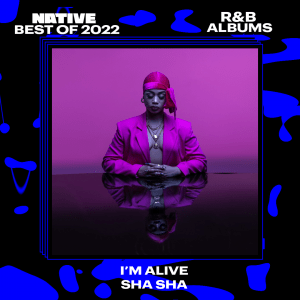
5 Standout Songs From Sha Sha’s New Album, ‘I’m Alive’

As Amapiano continues to grow as an international trend, genre-defying artists are playing a big role in amplifying sound. Even though the South African dance sub-genre is dominated by men, it’s obvious that women are playing a key role in the forward-facing movement of the scene. In 2019, Zimbabwean singer Sha Sha emerged as one of the brightest voices in ‘Piano, her debut EP, ‘Blossom’, quickly marking her out as a star, along with her head-turning appearance on MFR Souls’ “Love You Tonight”.

With her undeniable ubiquity, Sha Sha was bestowed the trite “Queen of Amapiano” title, and as much as the singer has leaned into it—see the video for “Woza”—it’s not a title that she’s let define her artistry. Before moving to South Africa and getting signed to DJ Maphorisa’s BlaqBoy imprint, the singer was a rising star in her home country, where she experimented with a wide variety of sounds, from country to R&B. Even on her debut EP, two songs aren’t Amapiano cuts, leaning more to the side of her expansive palette that caters to neo-soul-infused music. Adamant about showing her range, Sha Sha’s newly released debut album, ‘I’m Alive’, features as much Amapiano as it doesn’t.

On an album with deeply personal musings conveyed through that warm soprano, Sha Sha cuts across a plethora of emotions that will appease party-goers and soundtrack moments of intimate listens. Split in near equal half, ‘I’m Alive’ compiles sweetly-scented, groovy Amapiano bangers in its opening side, affecting R&B-infused cuts on its latter side. In a few seconds short of an hour, Sha Sha embraces the “Amapiano Queen” title as much as opens up her diverse interest even more. In its entirety, ‘I’m Alive’ is a wondrous listen from artist that’s in full bloom and taking control of her own narrative. Here are 5 songs that may put you on your feet and/or in your feels.


View this post on Instagram


A post shared by Sha Sha (@shashaofficial1)

“TRYING” (Feat. Musa Keys & DJ Maphorisa)

Immediately “Trying” plays you are hypnotized and very likely bopping your head. The gorgeous keys are all over the production and log drums are at the right tempo, with a repetitive snare that shimmers with a magnetic feel. Despite the first half of the album being on Amapiano production, there is a special connection with this song as there is a jazzy element blended with R&B as Sha Sha’s vocals cruise over the mid-tempo production that is serene. Perhaps that’s because the song is a cover of Sade’s 1992 R&B classic “No Ordinary Love”. Like her cover of Moloko’s “Sing It Back” on her debut EP, ShaSha has a beautiful way of translating these pre-recorded to feel like pieces of her expressions, and it’s a plus that she always finds the perfect production to put into a ‘Piano context.

“FAST CAR” (Ft. Mellow & Sleazy, Mas Musiq & Soa Mattrix)

In this album, I felt this was among my favorites. The song composition from the production and the songwriting were quintessential. The song gets better as you listen to it and takes you on a natural high with constant crescendos that accommodate her vocals through the verses and the chorus. Sha Sha’s dreamy vocals get you singing setting a colorful as you ascend into ET. This song sounds like it was made for a mellow house party accompanied by a red plastic cup and a joint. 

“THEMBA LAMI” (Feat. Ami Faku)

This was the second single released from the album, and not only did it serve as a wondrous hint at where the singer would be taking parts of the album, it’s also a great listen with the full-length. Sha Sha’s vocals harmoniously blend into Ami Faku’s darker vocals as you get lost in the production. This song gives Sha Sha the opportunity to boast of her delicate vocals. The sad tempo of the song is surprisingly comforting as they sing of forthcoming hope showing a chance for humans to heal. The song also acts as a transition into the second half of the album which is R&B oriented.

TAKE ME THERE (Ft. Blxckie)

If there is anything I love, it’s an R&B and rap collaboration. She enlists South African rap’s current golden boy, Blxckie, as he first gives a sing-song performance eventually flowing into a stellar rap performance. The slow soulful performance sips deep into your inner being making you crave enhanced love and attention making it an unrequited love song in the album. 

“GIVE ME SOMETHING” (Ft. Rowlene)

Sha Sha’s pen game is untouchable and she continuously impresses the fans by picking the best artists as her collaborators in the album. When it comes to R&B this song is wrapped in a time capsule that takes you back to the early days of the genre. Their infectious vocals give a gorgeous, nostalgic dive into a beautiful mind with a smooth ride. The purity of the song makes it poignant and remarkable. 

Listen to ‘I’m Alive’ here.

Featured image credits/Shasha

NATIVE Exclusive: How Chukwudubem Ukaigwe Is Telling Meaningful Stories With His Art

“For me, painting has become a method of way finding,” shares Nigerian artist Chukwudubem Ukaigwe to the NATIVE, a day after his solo exhibition, ‘Elegy Of The Wind’ kicks off in Lagos. As an interdisciplinary artist, curator, writer, cultural worker and founding member of the Patterns Collective, Ukaigwe sees their position in the art scene as an important one, which he does not take for granted, as he begins to lay the groundwork for a cultural renaissance.

Growing up with horticulturists as parents, art has always been a part of his family in more ways than one. “While I was in school, I was already practising professionally, however even before school, I think it was very apparent that I was an artist,” he shares, speaking about his upbringing which gave him ample space to be creative and try out different skills and hobbies. 

After initially beginning his tertiary education as an Engineering student, Ukaigwe soon decided to acquire a certification in Fine Arts. Soon, he made the change from Engineering to Fine Arts, pursuing a degree at the University of Manitoba in Canada where he graduated with a first class honours. Bolstered by this new certification, Ukaigwe was assured of his innate skills and abilities and soon began seeking out opportunities to find a path that worked for him.

“I believe painting inspires my work. Painting is really interesting for me, because I approach my paintings as writings. I don’t know if that’s very apparent from the way they look. For me, they are a process of thinking through ideas,” Ukaigwe admits about his work which spans different mediums including ceramic work, sound, sculptures and more. Of his artistic ethos and approach, Ukaigwe admits that he has become more interested in painting the picture of an entire story, from its beginning to its inevitable end: “Another thing about my paintings is there’s a nowness to [my paintings]. What that means is I don’t tend to have an idea of what I’m painting before I start, a lot of things just happen while I’m painting.”

(What Bigger Sea)

Ukaigwe’s unconventional style of art has earned him loyal fans, from Canada to Los Angeles, and now, his home city Lagos, Nigeria where he is currently hosting his solo exhibition in collaboration with Kanbi Projects and AMG Projects. ‘Elegy Of The Wind,’ as the exhbition is dubbed, is Ukaigwe at his finest as he delivers an introspective enquiry into the human condition, and the economy of language with reference to its universal implication and inferences.

The works featured in the exhibition function as stand-alone essays or compositions covering a wide range of subject matter: Modernity, time, migration, consumerism, and global warming. Across these works, Ukaigwe questions mark-making through an active covering-up and revelation of layers of painting, drawing, and truths. The exhibition will runs from the 17th of September until the 15th of October. Before the exhibition draws to a close, we caught up with Ukaigwe to talk about his interdisciplinary methods, making the change from Engineering to Fine Arts, his solo exhibition and more.

Our conversation with Chukwudubem Ukaigwe follows below, and it has been lightly edited for clarity.

NATIVE: How are you and how has the exhibition been going?

Chukwudubem: It’s been great. The opening was very warm, with a lots of love and people around. It was exciting and also very nourishing to show here in Lagos, because I was born and raised here. Also, I wanted for people who are like me and who I grew up with, to have access to my work for the first time. It’s something that’s fulfilling for me. 

Can you tell me about yourself?

My name is Chukwudubem Ukaigwe. I am an interdisciplinary artist that means I work across mediums. To be specific, I work with paintings, ceramic, sounds, sculpture and assemblage. I am also a professional writer and I run a collective of three curators. We effectuate artistic programming in collaboration with institutions like universities, artist-led centres and museums.

How did you discover your love for art? 

I think it’s always been there in some ways. I had a brief Engineering background before going to school for Fine Arts. I got my Bachelors of Fine Arts and graduated with a first class honours from the University of Manitoba in Canada. While I was in school, I was already practising professionally, however even before school, I think it was very apparent that I was an artist. If I could pick a particular period, it would be the time I loved drawing as a kid. I used to draw with my friends and I think that kind of helped me. I was also an illustrative learner and would use diagrams and drawings to understand complex ideas from Chemistry and Mathematics. Before I left the country, I started practising art on the side while practising engineering as well. Then in Canada, I  switched to arts after a while. It wasn’t hard for me because I was still practising professionally while I was doing engineering and I also had exhibitions and shows. Immediately I got into the Fine Arts program, I was offered a scholarship, so it felt like I had found my place. 

What was growing up like for you in terms of art and engineering?

I grew up in Lagos and it was full of so many experiences. My parents practised landscape art and were artistically inclined, even though they preferred for my siblings and I to pursue a lot of other skills. I also noticed that my brothers had artistic inclinations even though they went to school for other things. I also went to boarding school in Lagos and it’s like a melting pot of culture from different places of the world.

Can you talk to me about the art you create?

I approach my practices as conversations. Depending on the medium I am trying to pursue, I approach each piece of work as a conversation that needs to be expressed. For example, when I think about a particular theme or idea, I sit down and write about it or even read a little, then I can now choose what medium to express that. My inter-disciplinary practice explores the plurality of things such as time, language, place, migration, beauty, nostalgia and more. Using semiotic dissonance, I bring faucets of everyday life to generate conceptual interconnections pertaining to global aesthetics. Recently, my work has been requested in utilising simultaneous multiplicity of media to create immersive scapes. This means that I work a lot with the community and people. I’m also interested in multiple illustrated authorships. This means I’m interested in getting friends, family and people in the community to create with me and author my work with me. A good example of this is when I commissioned my brother to record sounds from Lagos and have them play in ceramic vessels during a recent solo show in Canada. 

(Wishes For The Passive Aggressive)

What message are you trying to convey with your work?

Generally, I believe painting inspires my work. I approach my paintings as writings, I don’t know if that’s very apparent from the way they look. For me, they are a process of “thinking through” ideas. Paintings are very active in the sense that they become a medium for me to process ideas. What happens is that once they are placed in a room and they start feeding off each other, new themes and conversations might pop up. Another thing about my paintings is there’s a nowness to my paintings. This means that I don’t tend to have an idea of what I’m painting before I start, a lot of things just happen while I’m painting. Like every mark is an event, nothing is planned; from the sketch to the under paintings to the final work. I imagine myself as a music composer putting things together. There are things I’m leaving out, there are things I’m covering up, there are things I’m letting be. So I’m very textual and musical with the way I compose these paintings.

Let’s talk about your exhibition. Why did you decide to bring your work to Lagos?

Well, I was born and raised in Lagos and the funny thing is that this exhibition is the first time my family is seeing my work as a professional artist because I’ve been gone since 2015. I also did it for people here in Lagos. I’ve been quite fortunate to have exhibitions in London, United States, Canada, artist run centres, museums, e-commercial galleries and I feel like these are places where the everyday Nigerians, people I grew up with can’t really have access to my exhibitions. So I believe a show in Lagos was imminent and very important because this is the space that shaped my childhood. I don’t think it’s going to be my last show here, I’m going to keep on engaging the Lagos Arts community or the Lagos Arts Ecosystem.

One thing that really stood to me is the name of the exhibition, “Elegy for the Wind.” Can you tell me how that came about?

Naming is another big part of my work. Sometimes, these names are comical, sometimes they are literal, and other times, they can be sarcastic and negate the actual reasons behind my work. I believe naming is an art form on its own. It’s not about just making the paintings or making a show, there are particular things that are also very important. I feel the way you name the work also does something to how it is received. You can extend meaning from the way you name it. So when people see it, it can either guide them to view the work or distract them.

For this show, coming up with the name didn’t just happen immediately, I was overthinking it at first. I wanted something very vague. The first name that I sat on for a while was “Willow” but it felt kind of derivative for me and I had to change it later on. ‘Elegy Of The Wind’ just felt like the right choice. I was reading Christopher Okigbo’s poems when I came up with the name. In the poem, he had like an elegy, which means a very sober and serious poem. I thought about my show and how I wanted to approach my show as an elegy; as a serious poem.

“I was trying to say with the name that this is a serious poem and it’s a very large one, very expansive like the wind.”

 (Darn That Dream)

How did that collaboration with Kanbi Projects and AMG projects come about?

This is the first time I’m involved in such a collaboration with two institutions coming together to present my work. For me, it’s a blessing to be honest. I’ve worked with Kanbi projects in the past and Adeola, its founder. We’ve booked shows primarily in London a couple of times, and he introduced the ideas of a solo exhibition in Lagos and put me in touch with AMG Projects who had interest in presenting my work. Collaboration is very important, and is also the foundation of where we are, as people. I run a collective where our whole foundation is built on the premise of collaborating with institutions. I’d love to see that happen more to be honest. [To witness] galleries from the United States collaborate with galleries from Accra, Nigeria, Scotland, wherever. This would lead to a richer and voluminous audience from all over the world. It also creates cross-national and continental relationships and we’d be able to meet new artists and create conversations that way.

What do you want your audience to take away from this exhibition?

There isn’t one thing in particular that I want my audience to take away from the show. I want people to experience the show, and have conversations with themselves, and with other people as well. I feel like my show is very rich and I believe some people need time to process my work so I’m not expecting people to come to a particular conclusion immediately. I think I’m just excited and I really want people in Lagos to see, think about and engage with the work. I want people to react to the work and engage with it on their own terms, and just take it with them wherever they are.  Generally, just for the show to be a point in people’s lives and for them to think through. We’re in a very critical time in the country, with the elections coming up and we need to have more conversations than we usually do. We have to bring more perspectives to the fore with the way we view things.

(Introspective Pause)

Featured Image Credits/NATIVE 


ICYMI: How Sinalo Ngcaba created NATIVE Sound System’s ‘NATIVEWORLD’

Ahead of ‘Palmwine Music 3,’ Show Dem Camp continue to blaze the trail

After closing 2012 with the release of ‘Clone Wars II (The Subsidy),’ Rap duo Show Dem Camp, uncovered a new sonic direction for their music with the 2013 single “Feel Alright.” The track, which featured then rising artists, LADIPOE (f.k.a. as Poe) and BOJ, possessed a playful and feel-good nature that deviated from Show Dem Camp’s other releases which leaned heavily on hardcore Rap and socio-political commentary. Behind the boards, Ghanaian record producer Juls layered traditional African percussions over Hip-Hop drums and live instrumentals. “Feel Alright” was a hit record by every metric, and opened up a pathway to mainstream success for the seasoned two-man group.

Consisting of longtime friends and collaborators, Olumide “Ghost” Ayeni and Wale “Tec” Davies, Show Dem Camp have amassed over a decade-worth of experience in their bag. Back in the early 2000’s, they began their careers as solo Rap artists, and after meeting each other in the UK, the pair instantly allied. They moved back to Nigeria in the late 2000’s, starting out as independent acts before finding their footing. Show Dem Camp are still independent but their stock has inevitably risen over the years, which has garnered them a loyal following with nine projects (including six albums) and cemented their place in the Afropop canon as a phenomenal blueprint for indie rap music coming out of Nigeria.

It would take until 2017 for “Feel Alright” to confirm its place as a precursor for Show Dem Camp’s evolution. Before then, the group released ‘Clone Wars III (The Recession)’ in 2016, continuing the politics-themed thread of the ‘Clone Wars’ series. The following year, inspired in part by the burgeoning Alté scene with its variant of avant-garde artists, Show Dem Camp returned to the sounds of “Feel Alright” with ‘Palmwine Music.’ On the project, Nigerian music producer Spax took Juls’ sonic template of groovy, slow-paced Afropop beats and reproduced it with his iterations. Palmwine music, which earns its name from the alcoholic drink distilled from the African Palm tree, is also another name for Highlife music. It began in the early 1900s, in several parts of Ghana, Nigeria, Liberia and Sierra Leone. Early pioneers of the genre in Nigeria include Osita Osadebe, Oliver De Coque, Oriental Brothers, Victor Uwaifo and Cardinal Rex Lawson. Juls’ Highlife productions borrow influences from Ghanaian musicians Ebo Taylor and Pat Thomas.

‘Palmwine Music’ is the result of many sessions, trying different ideas and Spax was really that guy that believes in our music and gave us the opportunity to experiment,” Tec said in an interview. “I feel like we have found a perfect marriage of producer and artist and he is open to trying new things and that is what really helped us get the confidence.” ‘Palmwine Music’ gave Show Dem Camp another win, proving that their performance on “Feel Alright” was no fluke.

Over lush beats with Highlife influences, the duo expunged the rough exterior from the ‘Clone Wars’ series, settling for a more relaxed delivery style. They invited Funbi, Ajebutter22, BOJ, LADIPOE, Tomi Thomas and Odunsi (The Engine) to deliver catchy hooks and verses that bought into the aura of chill party vibes fuelled by booze and fine women, with songs like “Up To You” and “Popping Again” standing out. The success of ‘Palmwine Music’ inspired Show Dem Camp to round off the year with the inaugural edition of their Palmwine Music Fest, with the acts on the project gracing the stage alongside others artists in the alternative music scene such as Bez, Blackmagic, Santi (now Cruel Santino), Tay Iwar, Sir Dauda and Lady Donli, among others.

Two years later, Show Dem Camp and Spax returned in 2018 with ‘Palmwine Music 2,’ tapping LADIPOE, Ajebutter22 and BOJ from the previous project. There were also new faces as well, in Nonso Amadi, Flash, Moelogo, Lady Donli, Tomi Agape and Falana, and big-ticket names such as Burna Boy. ‘Palmwine Music 2’ also extended an invitation across the shores of Nigeria to Ghanaian artist Worlasi. The project followed the cheery-and-party ethos of ‘Palmwine Music’ but it differed a bit as the duo interspersed happy tunes with songs that carried deeper and poignant meanings beneath the gloss of making merry with friends and lovers.

On “For a Minute,” Lady Donli sang, “Sticks and stones/Will break your bones/My love will take you to the throne,” celebrating the power of love to heal and revitalise hurt souls. In his verse on the Falana-assisted “The Garden,” Tec spun the biblical reference of the song’s title, painting a picture of a place of comfort becoming a dangerous jungle. He rapped about the fall of Muammar Gaddafi and the inefficiency bedevilling the Nigerian state and the African continent as a whole. “Never meant to take it deep/Just expressing a point of view,” one particularly poignant lyric said. Ghost played into Tec’s energy, speaking about the difference between love and obsession and how the absence of the former has damaged many relationships.  


View this post on Instagram


A post shared by Show Dem Camp (@showdemcamp)

The other songs remained true to the party vibes, with Nonso Amadi providing emotional gravitas on “System Failure.” Burna Boy and Show Dem Camp thumped their chest on the Afrobeat-influenced “Legend” while acknowledging their OG status. The Moelogo-featuring “Ragabomi” continued the praise for independent women started on “Independent Ladies” from ‘Palmwine Music’ and the elusive Flash is a show-stealing star on “Tropicana.”

Months later, Show Dem Camp would start 2019 with ‘Clone Wars Vol. IV: These Buhari Times,’ a project that addressed issues ranging from depression to loss to the social absurdities in the tenure of Nigeria’s president Muhammadu Buhari.  It seems that Show Dem Camp closing ‘Palmwine Music 2’ with “The Garden” was a subtle nod to the subject matters they tackled on ‘Clone Wars Vol. IV: These Buhari Times.’ Producer Spax handled production there, too, dropping mellow chords for hard-hitting basslines. “Welcome to The Palmwine Express. Please fasten your seatbelt and enjoy the ride,” a female voice announced during the closing moments of “Damiloun,” a single off ‘Palmwine Music 2.’ In retrospect, perhaps, that was Show Dem Camp’s way of revealing their next move, but in December 2019, in a shocking turn of events, the duo and Spax opened a new chapter with ‘The Palmwine Express.’ 

The new project still aligned with the theme of merriment of the ‘Palmwine Music’ series but it featured less of the percussion-driven sounds of those projects. It was more a collection of modern Hip-Hop, Afrobeats and R&B. ‘The Palmwine Express’ also carried with it some politically-induced agitations from ‘Clone Wars Vol. IV: These Buhari Times.’ “Tales By Moonlight” with Tems, which referenced the 90s children’s TV show, lamented the dishonesty that runs through the Nigerian state from politics to romantic relationships. “Alariwo,” a track wherein Show Dem Camp boast about their success, which is a result of hard work and consistency, wouldn’t feel out of place on Clone Wars Vol. IV: These Buhari Times.’ Burna Boy leads the introspection on “True Story” as he and Show Dem Camp reminisce on their hustles and passion to succeed.

Put these younger cats on is how it’s supposed to be/Lead them to the lake, everybody wears their beak,” Ghost rapped on “Alariwo,” admitting their willingness to work with newer acts like WANI, Fasina, BNXN, Tems, Nsikak David and Amaarae who join Funbi, Nonso Amadi, BOJ, Tomi Thomas and Burna Boy from the Palmwine Music projects. Elsewhere, on “True Story,” Tec, who is one-half of the management team responsible for Tems’ stellar rise, supported Ghost’s claims when he rapped, “Put the next wave in position now.” On “Popping” off ‘Palmwine Music’ Odunsi (The Engine) signposted the cultural importance of Show Dem Camp when he sang, “Remember turning on the radio/For an SDC record/Now I’m flexin’/On an SDC record.”

Now, we’re only hours away from the third instalment of the ‘Palmwine Music’ series which arrives on September 30. ‘Palmwine Music 3’ will house 17 tracks, with Spax reprising his role as producer, and feature acts such as Tems, Oxlade, Victony, Lojay, WurlD, Tay Iwar, BOJ and LADIPOE. According to Show Dem Camp, ‘Palmwine Music 3’ will also be the last project in the series. It is an interesting admission that stirs curiosity as to the duo’s next move because, just like their ‘Clone Wars’ series, the ‘Palmwine Music’ series has marked one of the most important moments in Show Dem Camp’s career.

One thing is certain, though, with ‘Palmwine Music 3,’ Show Dem Camp will carry on their penchant for collaborating with newer acts. Artists like Tems, Oxlade, Victony and Lojay are enjoying tremendous success with their unique brand of Afropop sounds. Show Dem Camp placing these acts on the project is an acknowledgement of their talent to define the sounds coming out from Nigeria and the African continent.

‘Palmwine Music 3’ might also return to the sounds of the previous Palmwine Music tapes or unite those sounds with that from ‘The Palmwine Express.’ With past releases, Show Dem Camp have proved that their ears are attuned to the modern times and, coupled with Spax’s versatility, it will be interesting to hear what they cook up. With their tenth project in sight, Show Dem Camp’s evolution continues. “Now they wonder which sound we go tap next,” Tec rapped on the BNXN-assisted “Do Me Nice.” Indeed, all eyes and ears are tuned to Show Dem Camp, waiting to receive their latest offering. When ‘Palmwine Music 3’ drops, the verdict will be out. 

Pre-add ‘Palmwine Music 3’ below.

Featured image credits/NATIVE

ICYMI: How the coronavirus pandemic affected Afropop

Hindsight is 2020: How the coronavirus pandemic affected Afropop

Human beings are wired to be busy. The only time a person is truly idle is that window between birth and being cognisant of your environment. Once we start becoming properly aware of what’s happening around us, there’s a drive to be busy for most of our waking moments, whether the reason is as frivolous as staving boredom or as weighty as finding and chasing different purposes. It’s why we often get restless when we’re forced to be still.

For many of us, 2020 was the ultimate year of stillness—and by extension, restlessness. For the first time in over a century, the entire world had to deal with the effect of a viral pandemic, one that required rigid confinement measures and an unprecedented degree of stillness. At first, it seemed like most people were taking the Coronavirus pandemic in stride, using isolation as a tool to take a break from regularly scheduled program. Part of that was the idea that everything would be back to the busy normal within a few weeks of adhering to these measures. That, obviously, didn’t happen and the uncertainty peeled away all that optimism; many were anxious to no longer be still.

That anxiousness played an integral role in making 2020 a year of reckoning for civil liberties. A year when dissenting voices against racism banded together, from across America to Colombia and Papua. A year when African youth from Nigeria to Uganda tried to hold the system accountable for state-sanctioned brutality and bad governance. In addition to the long-term circumstances behind them, these wider socio-political manifestations of restlessness were also aggregations of personal concerns.

There are some occasions where life imitates art but, for the most part, art is a reflection of life. Creativity doesn’t emanate from thin air, it is a by-product of personal experiences, lived realities, and the environment around these situations. The accessibility of music, both as a creative form and in its instant reach through technological advancement, made it the perfect medium to capture the nuances of the effect of a pandemic-wracked year, both in the moment and in its aftermath.

It’s almost impossible to parse any piece of 2020-related music without its relation to the Coronavirus pandemic, and that also includes music that wasn’t creatively informed by the realities of its stillness. When The Weeknd and Dua Lipa released albums in March of 2020, during the first weeks of lockdown, they were not only acclaimed for masterfully wielding nostalgia to create great dance-pop records, they’ve also been lauded for helping to embolden the trend of pop artists mining ‘80s-rooted sounds—Disco, New Wave, Synthwave, Electro-pop and more—for projects that were both euphoric and soothing during a time of despair. This followed through with well-received ‘80s pop-inspired albums from Lady Gaga, Jessie Ware, Roisin Murphy, and more.

In South Africa, DJ Maphorisa and Kabza De Small entered the year on a triumphant high, after their trio of joint albums in 2019 as Scorpion Kings helped push Amapiano into the mainstream. Gearing up to headline an arena-sized concert, they released a ‘Scorpion Kings Live’ album, but as soon as it became evident that the concert wouldn’t be holding during a pandemic, they quickly pivoted and shared a new project titled Once Upon A Time in Lockdown’. Not only was it a marker of the times, it also pre-empted the prolific tear Amapiano would go on to have, both as the most prominent sound in South Africa and as an influential, widely adopted part of Afropop.

That Dance-oriented styles were a significant part of popular music, both on an international and continental scale, is undoubtedly interesting, even if not entirely novel. Disco and House, foundational genres in the modern terrain of Dance music, were first popular amongst, and championed by, queer communities during the early years of the HIV/AIDS epidemic. During a period of shameful stigma, constant misinformation and flat-out discrimination, the shiny and visceral sounds of those genres offered moments of joyful solace on dancefloors, away from the judgemental, peering eyes of the rest of the world.

With a different context and even though dancefloors were shuttered across the world, Dance songs and albums offered joyful solace to a world uncertain of what would happen next. In Afropop, Amapiano’s dominance was starting to get pronounced, but in the country of its origin, it was elevating from mainstream pride to national treasure. With seminal releases like Kabza De Small’s ‘I am the King of Amapiano: Sweet & Dust’, Tyler ICU and Nicole Elocin’s “Bella Ciao”, Soulful G & Soa Matrix’s “uThando”, Reece Madlisa and Zuma’s ‘Ama Roto’, and much, much more, new classics were inducted into the ‘Piano hall of fame, and the smash hits only came in thick and fast.

While navigating through varying levels of government-mandated restrictions, South Africans still found their way to groove communally, but even in total lockdown, the groove never stopped. The Channel O lockdown parties, where guest DJs would play live sets and invited artists would perform to audiences at home, became a weekly staple, featuring a healthy dose of ‘Piano DJs and artists; twin producer/DJ duo Major League DJz kick-started the Balcony Mix sessions during lockdown, a platform that initially started as guests and sometimes curated guests only, and is now growing into a global presence; producers and DJs increasingly took to Instagram Live to play unreleased songs and exclusive mixes, which inevitably fuelled the culture of leaks that’s now a part and parcel of Amapiano and, in general, South African Dance music.

Producers and artists being highly productive in Amapiano began before 2020, but the pandemic and the increased attention from an idle audience, looking to be engaged totally opened the floodgates for a dam that had already been broken. That avalanche created a precedent that’s undeniably made ‘Piano the most prolific genre in South African music today, and even Afropop as a whole, a ripple effect that’s extended from Pretoria to Dar Es Salaam to Accra. On a few occasions during those months in 2020, when I’d go down to the mall in my Lagos mainland neighbourhood, I remember hearing the skull-rattling percussions of Mapara A Jazz’s “John Vuli Gate” and the chest-caving drums of Focalistic and Vigro Deep’s “Ke Star”, even before its hugely popular remix with Nigerian pop superstar Davido.

For better and worse, one of the true barometers of a sound’s impact on Afropop is its popularity within Nigerian Pop. The argument of who brought ‘Piano up west may have only happened recently, but it’s a conversation that’s been brewing for over two years prior. During the pandemic, it became increasingly obvious that more Nigerian artists and producers would be adopting Amapiano elements for the foreseeable future. Nigerian pop has regularly been defined by the relationship it has with its external influences, and its dalliance with Amapiano only emboldens that factor, so much so that it’s a vital part of the historic breakout run currently unfolding before our eyes.

For what it’s worth, the Amapiano relation wasn’t the only remarkable part of the COVID-19 year for Nigerian music. In fact, there was so much going on that it could described as some of the busiest months, packed with highlights and indelible moments. For one, 2020 was the year of Omah Lay’s ascendance into national and continental superstardom, a rise that was fitting for the times and feels preordained in retrospect. Here was an artist who laid out the complexities of his life over two EP’s within nine months, cushioning solipsistic details within the tender tenor of his voice and the vibrant and soothing patter of his music selection.

In a year marked by aloneness, the emotional candour of Omah Lay’s songs—matched with his refined song-making abilities—made it the relatable soundtrack for a generation of young people who wanted escapist music as much as music that sounded like a perfect companion to the toll of the times. While the singer’s debut EP, ‘Get LayD’, was created pre-pandemic, it’s impossible to divorce it from the social context it was received in, which makes it all the more significant.

Even though not hugely pronounced, introspection has always been a part of urban Nigerian music, from 2Face Idibia’s “Only Me” to Burna Boy’s ‘Outside’. But the arrival and ubiquitous reign of Omah Lay helped to amplify that tenet, and it’s played an integral role in the growing prominence of emotionally-charged songs and projects from some of the marquee names in the younger vanguard of Nigerian pop.

Across Nigerian music in 2020, there was welcome coincidence—like how Ladipoe’s “Know You” perfectly captured lockdown blues even though it was created way before—and there was welcome, sometimes spontaneous, intentionality. To the latter point, perhaps the most consequential effect of 2020 on Nigerian music is how it emboldened the significance of multi-song projects. Within a nine month span, listeners received by a barrage of new projects from a diverse range of artists, and it was also the first time that five of the biggest artists of their generation released new albums in a calendar year—all within about five months of each other.

In June, Burna Boy released his Grammy-winning album ‘Twice As Tall’, a contemplative and conceited bounce back after momentarily reeling from losing in the same category earlier in the year. In late August, Tiwa Savage dropped ‘Celia’, an album with personal motifs and one eye on legacy, which might be her best rounded full-length till date. Just over a month later, Olamide released his second project of that year, ‘Carpe Diem’, a delightful album packed with gleaming pop gems that shone brighter in the heart-rending aftermath of the #EndSARS protests.

Wizkid’s long-awaited ‘Made in Lagos’ also came out in late October, after the End SARS protests, soothing the hearts of young Nigerians with sauntering jams, and also playing an indelible role in the global reach of Nigerian pop through the world-reaching success of “Essence” months later. Rounding out that run, Davido made a quick turnaround from his sophomore album to release ‘A Better Time’, which led off with the iconic “FEM”, and reaffirmed his standing as an apex pop superstar.

All these are not counting the myriad of awe-inspiring project drops that came in thick and fast, a list that includes The Cavemen.’s new age highlife cult classic ‘ROOTS’, Odunsi the Engine’s internet stop moment with the psychedelic trap EP, ‘EVERYTHING YOU HEARD IS TRUE’ and its penultimate banger “body count”, rap veterans M.I Abaga and A-Q linking up virtually for the pandemic time capsule, ‘The Live Report’, Tems’ instantly striking and soulful debut EP ‘For Broken Ears’, and much, much more.

In the last two years, it feels like there’s an album or EP release that’s an event every other week and it doesn’t seem like a stretch to trace it back to 2020, when artists had excess time to create beyond the trappings of a singles-focused terrain. From Teezee to BOJ to Falz, several Nigerian artists have admitted to being inspired by the stillness of lockdown, busying themselves with creative endeavours that would push them beyond what we’d normally expect from them, only releasing those projects recently after months of fine-tuning.

Speaking to OkayAfrica, Ghanaian rapper M.anifest admitted that he was working on another album before the pandemic rerouted his efforts to making another project that would end up being his fourth studio LP, ‘Madina to the Universe’, which came out in late 2021. “Niggas ain’t doing shit, so you have time for reflection, and that’s where it came from,” he said. Fellow Madina native Kirani Ayat admitted a similar creative trajectory for his new album, ‘Aisha’s Sun’. “When the pandemic happened, I went through a shift and it changed my perspective on my music,” he recently told The NATIVE, adding that the pandemic-effected free time helped him create music with a distinct feel and deeper personal meaning.

While Ghana wasn’t exactly hit with the same back-to-back superstar album releases bug as neighbouring Nigeria, it clearly thrived during lockdown. There was KiDi’s ‘Blue’ EP, which spawned the massive hit “Say Cheese”, Kuami Eugene packed ‘Son of Africa’ with colourful highlife-influenced pop bangers, Darkovibes successfully transitioned from being part of an irreverent rap group to a solo star with ‘Kpanlogo’, Stonebwoy delivered a Ghanaian dancehall opus with ‘Anloga Junction’, and Amaarae rose well beyond pre-release hype and became an international star with her magnetic debut LP, ‘The Angel You Don’t Know’.

In what was arguably the best viral moment for urban African music in 2020, drill music from Ghana rose to international recognition. Clips from the music video of Yaw Tog’s “Sore” drew continental and global attention to the Asakaa drill movement in Kumasi, intensifying the spotlight on a phenomenon that was already enjoying local support. Influenced by the rise of Pop Smoke, the deceased Brooklyn drill pioneer, the drill scene in Kumasi—and Ghana, in general—wasn’t the only nascent drill scene on the continent, but its success served as a gateway to other hotspots for drill music across the continent, from Abuja and Kigali to Cape Town and Nairobi.

It doesn’t take a keen observer to realise that Afropop discourse is almost always centred on what’s happening in the West and Southern regions of the continent, which is understandable because they house the countries that serve as the most recognisable music hubs across the continent. East Africa and the much smaller Central African regions are often omitted from these wider African music conversations, but there’s been an uptick in internal validation over the last few years.

Still a favourable region for African artists, there’s a growing reverence for home-grown acts within East Africa, a trend from the previous decade that was brought into sharper focus by the pandemic. In Kenya, the Gengetone period reached its commercial peak after slamming its way into the Kenyan mainstream in 2017, galvanising young people to embrace the music being made by its own generation of artists. In that period, Shrap also emerged as the gospel of the Kenyan youth, and drill music is serving as a point of unity. In mainstream pop, Sauti Sol released ‘Midnight Train’ just as people were getting used to the restrictions, but of further consequence, members of the band took on personal creative projects during the lockdowns and shared the results across solo projects.

The alternative side of Kenyan music also got its due, whether that’s through the global recognition of its metal scene via Duma’s acclaimed self-titled album, or the electronic scene growing its reputation as one of the most inventive on the continent. As far as electronic and alternative music in East Africa, Uganda might be the closest thing to a Mecca, in large part due to its Nyege Nyege affiliations. The same declaration can be made for Tanzania, but more for how Bongo Flava has remained the dominating Pop sound of the region, which was only further stamped in 2020.

Diamond Platnumz consolidated on his superstar and star-maker status during those months, pulling out his own hit singles and helping to catapult singer Zuchu to near-instant stardom via his WCB Wasafi imprint. After leaving Diamond’s label to go solo, Harmonize released his debut album, ‘Afro East’, and opened up his own label that helped bring singer Ibraah to local and regional stardom. All of the feats of a pandemic year continues to translate to fruitful times and, along the line, it’s increasingly evident that East Africa will no longer be ignored in wider conversations about inventiveness and impact in urban African music.

The thing is, there hasn’t been any time when Afropop has never not been busy, but a global pandemic will either serve to diminish its productivity or intensify its importance to the everyday lives of its primary audience. The latter is what happened, and it has carried over, even as we’ve re-adapted back to the new normal. We might never be as idle and still as we were at the height of the pandemic, but it was a period that continues to have a lasting effect, both on artists’ perception on the importance of their music and listeners’ relationship to it.


ICYMI: CHECK OUT OUR LIST OF THE BEST ALBUMS FROM 2020

Songs Of The Day: New Music From Ayra Starr, Burna Boy, Mafikizolo & More

We’re more than halfway through 2022, and it’s been an eventful year for Afropop. There’s been a torrent of great new music, spawning a massive stack of inventive smash hit songs. From Highlife-infused Ghanaian pop, to the unrelenting force that is Nigerian street-pop, to South Africa’s indomitable Dance scene, to tantalising Drill explorations in East and Central Africa, and much, much more, we’re living through abundant and musically expansive times.

Every week, many songs from African artists make their way to digital streaming platforms, and wading through them can be intense. That’s where The NATIVE’s Songs of the Day column comes in to help. We go through as many new releases as possible, spotlighting them here, two to three times every week. This Friday, enjoy new music from  Burna Boy, Ayra Starr, Mafikizolo and more. Dig in!

BURNA BOY – “IT’S PLENTY”

Nigerian artist Burna Boy has released the video for “It’s Plenty” off his sixth studio album ‘Love, Damini.’ The Troy Roscoe-directed visuals capture the fun feeling of the song as it shows Burna Boy and his fans rocking to his stage performances. The video also depicts shots of Burna Boy and his fans in the UK dancing and spending their days in enjoyment.

AYRA STARR – “BLOODY SAMARITAN (REMIX)” FT. KELLY ROWLAND

Mavin Records’ artist Ayra Starr has followed up her popping tune “Rush” with a Kelly Rowland-featuring remix of “Bloody Samaritan,” off her debut album ‘19 & Dangerous.’ As she gears up for the release of the deluxe edition of the project, American singer Kelly Rowland taps into Ayra’s infectious self-confidence, hailing herself and Black women all around the world. “Ayra and Ms Kelly on a hit, hit/Only ring is celly when I’m lit/Girl we be telling them/All my feminine melanin represent/Gotta give glory to most high,” Kelly Rowland sings.

PORTABLE – “AZAMAN”

Since his breakout with last year’s “ZaZoo Zehh,” Nigerian artist Portable has courted controversy with his infamous online rants. On the music side of things, though, he has been consistent, putting out single after single, even releasing the ‘Zazuu Zeh’ EP earlier this year. His latest single “Azaman” is a delightful blend of Amapiano and Afrobeats. Portable uses the song to address the inhumanity that comes with powerful people trying to take advantage of those in need of help. “No trust person o/Na them go rip you/Them go call police o/Make dem arrest you o/You go wise,” he sings.

WHITE MONEY – “EGWU” & “YOU BAD”

Budding Nigerian artist White Money continues his foray into music with a two-song pack. “Egwu” and “You Bad” are both set on Amapiano; on “Egwu,” White Money calls on listeners to join in his party and on “You Bad,” he encourages listeners to believe in themselves and steer away from their path due to detractors.

TOLU MOGUL – “WHAT DEY SUP” FT. MINZ

Indie Nigerian Afropop artist Tolu Mogul taps fellow Nigerian artist Minz for the mellow “What Dey Sup.” Tolu Mogul and Minz sing of evading bad energy and holding on to positivity. “God damn, I’ve had enough/Gonna pour a little Vos/Money on my mind/Trying to knock my shades off/Me I no be ju/Everybody clear up,” Tolu Mogul sings.

BEEJVIBE$ – “BAD”

On his new single “Bad,” Atlanta-born Nigerian artist Beejvibe$ pours adulation on a love interest. Throughout the up-tempo tune, he sprinkles references to Nigerian artists and their songs, displaying his connectedness to the Nigerian music scene.

MAFIKIZOLO – “10K” FT. SJAVA

The visuals to South African duo Mafikizolo’s “10K” featuring fellow South African artist Sjava is here. The track is from Mafikizolo’s twelfth studio album ‘Idwala.’ The Slowman Films production shows Mafikizolo and Sjava in colourful attires transmuting the sultry energy of the track onto the screen.

Featured Image Credits/NATIVE

Essentials: Navio’s ‘Vibes Out The East’ Is A Stellar Addition To His Catalogue

Over the years, Navio has morphed into a complete representation of a rapper. He’s often made incursions into the world of pop (see collaborations with Vanessa Mdee and Burna Boy), and represents an authentic East African edge in his sound even when his lifestyle leans more towards being cosmopolitan. He’s also an avowed pioneer of the Ugandan rap scene, with his formation of the Klear Kut rap group in 2000 earning Navio national acclaim just some years into his teens. 

The burly, dreadlocked rapper has become a face synonymous with East African music, but he doesn’t rest his renown solely on his more-popular efforts. He’s an artist still connected to particular Ugandan experiences, and moves into the gaze of an ambassador on his songs. ‘Vibes Out The East (VOTE),’ the rapper’s sixth solo album, is constructed on these ideals. Its seventeen songs pull themselves closely, connected by Navio’s unwavering philosophies and the production’s sunny outlook. With the conventional style of stitching collaborators’ strengths into his music, ‘VOTE’ shines with a glamorous feel, which is admirably purposeful considering we aren’t so far off the period of December festivities.


View this post on Instagram


A post shared by NAVIO (@naviomusic)

Right from the start, “Hamadi” reveals a rustic element to the album’s direction. A guitar that sounds cut from the vibrant poignancy of street musicians, accompanied by Elly Wamala’s hook which evokes the tribal splendour of the griots, resonantly melding with Navio’s westside rap swag. “If there’s a heaven for a G, then my dad checked in,” he raps in the second verse, a slice of heart in a record streaked with affirmative lyrics. From then on, the project maintains that vulnerability, most captured by Nviiri The Storyteller in its early parts. “Let’s Do It (Tukoleele)” is breezy in a way reminiscent of M.I’s classic love records, but Navio’s very much in-sync with Nviiri’s direction, their voices very soulful in mirroring each other. 

Such records are paired with more boisterous cuts, stretching onto Navio’s venerable knack for rap anthems. “Cold” and “Utajua Hujui” are stellar standouts, the former featuring the duo of PYLO and The Mith, his friend and co-member of Klear Kut. Their chemistry results in highs, exchanging bars at some point as their collaborator unfurls bright notes. He goes the solo path on the latter, lacing heavy bars over a haunting drill-dented beat. In several ways a clever lyricist, he’s able to go from “cripple they flow and they coming up lame” to “she told me shoot my shot, and I’m nice with a free throw,” switching the flow from menacing to sensually suggestive without any hitches. 

A stirring with Ben Poi and Stogie T on “Extra Mile” sees him skate free on a nostalgic candy of drums and piano loops. Ben’s hook moves fiercely towards the commitments owed a lover, and the rappers move in a more pointed direction, Navio’s ever-smooth delivery hitting sweet spots in the beat’s count. The South African rap veteran is as reliable as ever, sleek in his technical prowess and constant humour, chipping in the revealing lyric, “Iceberg Slim, niggas hate and then vanish”, which is perhaps indicative of old beef with the Nigerian rapper. Edge remains an important aspect of music, and even when the honey-tone production across the album requires more specificity, the rapping comes to steer the boat. Alliance, in the finest sense. 

The album’s late moments are attended with a spiritual focus, and “Father Guide Us” very much embodies that trait. Over lush, visceral production, Navio sings beautifully in search of a lighted path, enlisting a choir to infuse more gravitas. Rapping-wise, he’s conceptual by adopting the third-person POV, and elsewhere leaning into his roots by singing in his native language. 

Tyra Chantey makes an excellent guest on “Water,” her luscious vocals as pristine as the element being described. Four tracks away, Navio closes out the album with the summery “Rare” which features Ugandan musician Shena Skies, and her singjay tradition—an amalgam of singing and deejaying—influences the production, glistening with Caribbean overtones matched with frequent bursts of bold electronic synths. It’s a colourful end to a colourful album, and for a musician who began professionally over two decades ago, Navio’s fine grasp on the contemporary is a great artistic feat. 

Featured image credits/Israel Ajayi

A 1-Listen Review of Yinka Bernie’s Latest EP, ‘Something New’

Beauty resides in everything touched by Yinka Bernie. Since emerging as a fresh-faced singer around 2017, he has gone on to establish himself as a multifaceted artist, producing and writing for others as much as he does for himself, all the while living out a private life as an academic. Yinka Bernie’s husky vocals have drawn comparisons with icons like Blackmagic and Burna Boy, but his novelty rests in his sonic compositions – experimentally brooding, he can go from the rapid distortions of electronic to the sea-evoking palmwine music, flexing a versatility that’s rarely matched in the West African alternative scene and makes Yinka a highly sought after creative. 


View this post on Instagram


A post shared by Yb (@yinkabernie)

Last year, he collaborated with multidisciplinary creative Niyi Okeowo on ‘Euphoric Sounds from Within,’ a project lined with exotic lo-fi beats and personal stories from voice overs, the words inventively cut at times to form parts of the production. It was as unusual as it was starkly beautiful, slowly moving with an ambient range. After that came “Jaded,” a song whose brooding groove deeply resonated, and eventually became one of my favourite songs of 2021. 

Yinka Bernie’s sparse periods of releasing music essentially works because of how potent a musician he is, casting nets into the human condition with an auteur-esque progression. Even when he’s curating the tempered landscapes of being young, he’s like many others, and has a tender, intimate atmosphere that makes him a beloved artist among his burgeoning fan base. With all the attendant anticipation, Yinka has finally released his latest EP, his third yet, titled ‘Something New’

In Usual 1-Listen Review Fashion, All Reactions Are In Real-Time While The Music Plays. No Pauses, Rewinds, Fast-Forwards, Or Skip.

“WHO DO YOU CALL”

I’m of the opinion we’ve seen more deliberate openers in recent times, and I’m expecting no less here. Warm drums and tones, a Kudi-esque hum, quite the ethereal set-up. Yinka’s voice just came in like a splash of water on a hot day; there’s shekeres somewhere, a really rootsy vibe. You can tell the lyrics are only in service of the set mood, and the repetitions of “Who do you call?” just fit very beautifully. He’s making some laser-sharp cuts with synths in these closing seconds, and then—that’s it, a sudden end to the hypnosis of a song.

“VERY SIMPLE”

The bar has been set by that first song, no two ways about it. “Very Simple” is quite simple in the sonic direction: there’s a faint touch of the mainstream Afropop sound in its drums, but there’s a melancholic feel set by a piano on loop. On his part, Yinka plays close to his Yoruba roots, going the humour-lined urban rap path Ajebutter22 and Falz are famed for. These raps come off very sweetly and cooly on the ears, their tone, even before the words, making an impression. I’ll surely be revisiting this one soon. “You hypnotise me, if na travel I’m organising”—this obviously wouldn’t read like the sickest bar but wait till you hear Bernie rap the words. Easily two for two, it’s been a beautiful introduction to the project.

“YB WHY? INTERLUDE”

A Yoruba praise song starting out this one, surely takes one to the red sands of Ibadan or Ife, or the many places where such music reigns supreme. It plays very briefly, before a voice-over of someone talking about Yinka’s music comes on. From the intimate cheerfulness of her speech, you can tell she’s a day-one. LOOL, this is just tender, actually sounds like a friend of his. She’s not harshly demanding music, but recognises he’s human and has the same insecurities many of us share. Thankfully Yinka has released something new. 

“SMILE BEFORE YOU SLEEP”

Some slow keys to start this one. Sounds like a traditional soul record, but the spaces in between the count is spread out, a tinkering Yinka has often done before. But he sounds very emotive here, utilising his rich baritone to cast affirming spells on the listener. He sounds so good sometimes I don’t care for what he’s saying – which makes it even more interesting because he’s such a brilliant writer. A line I’m particularly in love with is, “Maybe you should smile before you sleep, you know you can ring me in your dream,” which tenderly draws a connection between the romantic and the ethereal, a word that perfectly conveys the calming vivacity of the song. 

“IT’S OKAY TO CRY”

From the title you can perhaps guess they’ll be a conversational edge to this one, and you’ll be right. Having released the song earlier, it’s quite a shame I haven’t heard it earlier but WOW, this is such a record. He’s not as acutely melancholic as you’d expect, rather he’s recognising how everything flows into a larger story. The vocals are laden with emotion as he spills vulnerable memories and emotions. With the loosely held nature of his delivery, you have to pay attention to get Yinka’s words and it’s a choice that encourages active listening. It’ll be quite the journey to peep the words later, with less constraints. Joyce Olong on this is the perfect feature as well, her tone just melds very beautifully with the production. “I wanna be alone most times” – ME TOO, JOYCE, ME TOO. This duet just works, and is such a perfect closer to a perfect project. How’s Yinka Bernie not big big? 

FINAL THOUGHTS

‘Something New’ continues in the YB style of short projects. Listening to its five songs, it’s obvious he takes great note of the details in his art, crafting them to dazzle individually as much as it does as a whole. Every project of his from the cult classic ‘19 & Over’ has remarkably revealed an aspect of his artistry, and never fails to leave one wanting for more.

That’s the dominant takeaway from this one, too. He’s just a genius musician, and nothing would ever suffice. Asides that instant craving, the mass of the music is as weighty as ever, bringing personal and communal stories into its canvas. ‘Something New’ is another fitting portrait from a musician who has favoured vulnerability long before it became cool, and as part of his artistic trajectory, there’s something of a nagging suspicion that this is only a prelude to a larger body of work. There’s so much wealth in the five songs, that breaking them into smaller components might prove worthy even as a time-tasking activity. 

For now though, Yinka Bernie has served a project which will surely get repeated spins on the playlist. He’s mastered the relay of a specific range of emotions, and there’s no doubt we’ve been feeling those emotions lately. Warmth, serenade and stories—that’s what you’ll find here, a natural extension of the ethos YB has embodied over the years. 

Stream ‘Something New’ below.

Featured image credits/

Where Were You: Ghana’s Global Citizen Festival Was An Unforgettable Night

The easiest thing to remember, for those who arrived early, about the Global Citizen Festival that took place on the 24th of September in Accra, Ghana, is the sun beating down on the open arena at the historic Black Star Square. Harsh and unforgiving, the monuments from the Black Star itself to the statue of a soldier in arms, just off to your right as you enter the Black Star arena – took on a glistening shine of their own. Swarms of people who had just begun to pool around the main concert area, donning shorts, barely-there tops, squeaky sneakers with socks past their ankles, custom outfits leaning towards the avant-garde and populated by bright colours, all gained a radiance about them as well.

The show was slated to begin at 5pm, however, for several hours after the gates were opened at 3pm, people milled around, roaming the food stands and made up haphazard queues as they went along. Media personnel snapped away, friends hugged away, screamed at a face they hadn’t seen in a long time, and sighed when an expectant look finally reached the location. This went on until 7 p.m, when the sky had begun to close in on itself and the hypeman, Kojo Manuel  had finished pumping up the people’s energy assisted by DJ Mic Smith whose set list included everything from Nigerian music to Hip-hop.

As the main host, American-Zimbabwean actor and Black Panther star, Danai Gurira welcomed the over 20,000 global citizens at the event. The Global Citizen Festival, held in different parts of the world, is an ongoing effort designed to charge people to action in fighting for climate change and empowering women and girls. Through concerts featuring highly billed artists from around the world, Global Citizens from around the world are sensitised and encouraged to contribute meaningfully to the advancement of the world’s most pressing socio-economic concerns.

After a short but rousing welcome address, Ghanaian superstar Stonebwoy hit the stage with the reggae track “Run Go,” which seamlessly ushered the already anxious crowd into groovy, well-paced concert energy. With stunning backup vocalists enlivening his performances and dancers stunting and flipping behind him, he would go on to perform “Ever Lasting,” a bouncy Afro-pop number that took the already hyped energy up many notches. If the air hadn’t begun to crackle with excitement, Tems’ arrival, following behind Stonebwoy, definitely ignited it.


View this post on Instagram


A post shared by TEMS 🕊 (@temsbaby)

With this being her first performance in Africa this year, the rising Afrobeats star performed a selection of crowd favourites including “Free Mind,” “Essence,” “Damages” and the absolute crowd pleaser, “Crazy Tings.” With her career on a steady ascent, Tems’ performance, expressive and electrifying, sees her at her most unbridled; dancing in between sets, and even going into rockstar mode, as she danced on stage close to her bassist. As with Stonebwoy’s set, the backup vocalists carried the energy long after she had left the stage and gave Global Citizen attendees an unshakeable sense that this was the beginning of an unforgettable night.

That sentiment would be solidified by each performance to come. Stormzy, who performed the Burna Boy-assisted “Own It” sent the crowd into a wild spin when he brought Yaw Tog and Kwesi Arthur to perform the remix of “Sore.” As an artist who is proud of his origins, Stormzy occasionally interrupted his sets by sharing his feelings about performing in his home country. Considered altogether, his set was heartfelt and electrifying, although not everyone – to an understandable degree – could sing along to all of his numbers. Without dropping the baton, Ghanaian rap legend Sarkodie set the stage ablaze in the most metaphorical sense, running through bangers like “Original,” “Adonai,” “Can’t Let You Go,” and “Hope (Brighter Day).” With a magnetic candour and an irresistible charm, Sakordie delivered one of the top three best performances of the night; while illustrating the power of well-grounded artistry. The only slight letdown was Gyakie’s performances, whose set included songs too slow to carry the intensely high energy that had been established, she would however go on to redeem herself with a rendition of “Something,” which made for an indelible closing number.

Then there was R&B Sza, one of the most anticipated performances of the night. Donning a two-piece set in the colours of the Ghanaian flag, the American artist gave a spirited performance lined with dance breaks and strong, uncompromising vocals. For the crowd pleaser, she went with “Kiss Me More,” “Good Days,” and “All The Stars,” she even managed to sneak in her TikTok-famous “I Hate U” towards the end of her set. At the end of her run though, her fears that the mostly Ghanain crowd wouldn’t know any of her songs – even though as many would admit, she was the reason they were at the festival to begin with – was sufficiently vanquished.


View this post on Instagram


A post shared by Global Citizen (@glblctzn)

To round off an incredible night, Usher came in with a sensual performance amped up when he brought out Oxlade to perform his TikTok-hit “Ku Lo Sa,” Tiwa Savage for “Somebody’s Son,” and Pheelz for “Finesse.” Many have described that night in many ways; iconic, wonderful, insane, yet it doesn’t even scratch the surface of how good of a show it was. The Global Citizen Festival did so well because it marries the eclectic musical interests of Africans by inviting artists with whom we have allegiances at different stages of our lives. This also confirms the cosmopolitan taste of an average African music lover. Someone who can sing along to an Afrobeats track just as well as they can to Drew Barrymore. And although it might be a tired word to use at this point, but the Global Citizen Festival in Accra is quite simply unforgettable.

Featured image credits/IsraelAjayi

Ajegunle played a huge role in Nigerian pop but it’s becoming a static footnote

The vestiges of true culture never truly fade away. Over time it may dampen, but the shades are visible for those who pay attention. In the case of Ajegunle, a bustling neighbourhood located in Lagos, its hyper-charged Ragga feel and the attendant culture has continued to trickle into visible spots of contemporary popular culture. These days, Jonzing World musician Ruger channels that era and has an eyepatch that would remind many of Baba Fryo; and not long ago, the pop star Tekno was sued by the group Danfo Drivers for his uncleared usage of their iconic Kpolongo record. It’s not that the culture has vanished, it’s more of how its cultural relevance has not translated to homegrown development for Ajegunle itself. 

It’s perhaps useful to know I’ve lived in the neighbourhood. My family moved to Ajegunle sometime before 2010, a time when its golden era had, quite honestly, passed. Back then, you could hear African China blaring from a local DVD shop but you couldn’t look around, and say the environment had remained the same. With an increasingly globalised world, modernity was fast creeping up, and even though our street was connected by a wooden bridge to the infamous Orege, its temperament was more middle-class than revolutionary. 

For those who have lived in the area or frequented its lively streets, the “real” Ajegunle—the area surrounding Boundary Market, where houses crashed against shops and violence was always possible. When my family moved there, the culture we’d so fallen in love with wasn’t quite visible. It took a while for me to recognise that what was once fondly called “AJ Music” by its residents had split into two; on one hand, was the colourful and didactic songs that had dominated Nigeria in the late nineties and into the 2000s; on the other hand, AJ Music had evolved, not to be found in traditional channels but within select hotspots, in places where you really had to live the culture you admired so much. 

Youth culture was (and remains) the driving force of the new AJ Music. It would be impossible to discuss the blossoming of the scene’s music from the early 2010s till the decade’s end without giving due credit to teenagers and young adults in secondary schools who bore its flag high. This was the peak era of former Lagos State governor Babatunde Fashola’s reign, a period marked by the mass commissioning of school projects. In Ajegunle, places such as the Ajeromi Ifelodun, the Tolu Complex and Awodi-Ora had many government-owned schools, which were usually surrounded by those owned by private individuals.

If you know anything about class tensions, it’s that culture plays a huge role in them. I belonged among private school students, and from across our fences, we would see the flamboyance of our public school counterparts. While we were strictly monitored, they could jump past low fences and adventure into the streets, create music and freely indulge in the vices which fuelled the music. Their expression translated into beautiful music, and if you lived in AJ at that time you’d be familiar with its intricacies. Frenetic loops and minimal percussion usually formed the crux of the sound, sometimes devoid of a musician’s vocals. This was perhaps part of the bigger wave of lo-fi inspired EDM music that was sweeping through hoods in mainland Lagos, but there were also unmissable vocals. If anything, many artists had resplendent vocals just as impressive as the song’s production, dialling in the praise-singing tradition of Fuji. Those songs served as love letters to the place which birthed them, and also included names of familiar students being shouted out. As a young boy witnessing the rise of this ascendant culture, it was all so intimate and current, folding to the ebbs of daily activities and newly constructed lores. 

School class parties were the more positive spaces for interacting with the music. Private schools tended to deem the fast-paced sound as local and substandard, and would instead play more mainstream songs of the day. We were however inclined to go outside, to the hotels situated unassumingly within quiet streets where the public schools had their own parties. From the sight of youngsters pouring from the hotel to sellers of alcoholic drinks, ice-cream and whatever else was desired on the day, the music was most likely to be playing from within the dancefloor. Even though these parties often erupted into fights, by then the fun was already had, and even then a little panicky run was considered a checkmark on one’s street credibility. 

The negative perception of AJ Music (also known as Awala music) among older people was stoked by these fights. Everyone knew the culture supplied the music, but it was the freewheeling nature of its purveyors which upset them off the most. Every young person did what they did, and sometimes it wasn’t always “acceptable.” Sprawling streets would be packed full of rioting students from different schools facing each other, with stones, knives, machetes and at rare times, guns being the weapons of combat. 

Raised up and forged on these nearby experiences, the lore of Ajegunle music was extended in the way the musicians knew how best to: swapping militancy for exuberance, the communal made way for the individual. And truly, some made their mark on the scene in the fashion of local superstars. The DJ’s were the creative directors of the scene with prominent names like Solo B, DJ Webo and DJ C3; of the musicians, Kosere Master was arguably the most popular, with Designer L’omo penetrating some parts of the mainstream. He would later feature Timaya on a record titled “Ghetto Lover” after signing on to TDM Records.

Kosere was the last we’ve heard from that movement in a long time. His record “Kwete Dance” spawned the eponymous dance which was hugely popular in the environs. So far, as I and many others have recounted, the scene hasn’t produced a star as widely accepted, while the music is slowly phasing out of the spaces it once dominated. The interest in creating from the tradition has waned. Where its culture was once rebellion in the style of Naira Marley’s Marlians, it’s now generally considered uncool.

The reasons for this are many, but we’ll start with the most obvious: time. In the time that has passed, the purveyors of that era of AJ music have grown up and moved out of the neighbourhood. Their concerns have evolved as well, with music not being considered a surefire way to success. A major reason for this is the widely turbulent Nigerian economy, which has left very little space for creativity. Everyone’s plotting their escape from the shackles of poverty and where music once formed the crux of that escapism, now the path leads unmistakably towards money. 

Capitalism has also towered over culture, as hotels and residential spots continue to erect all over Ajegunle. You would think this creates space for local talent, but the direction is quite tailored towards the cosmopolitan tastes of their customers. Because the people thronging into these spaces are the same people growing into the streaming era and its own direction, the music changes. Drive through Kirikiri Road or within the streets of Boundary, and you’ll likely hear a song by Fireboy DML or Lil Durk before the upbeat pomp of AJ music. 

In the schools, the money-making culture is also prevalent. Fewer students are hosting parties and even fewer event centres are willing to accommodate their relatively inexpensive frenzy. You also have to consider the dearth of working structures around Ajegunle; of course, there are studios, but who are the professionals working in them? Are they working with standard tools and knowledge? Are figures from mainstream pop leaving their Island base and coming to sign and collaborate with them? Are the talented artists even creating music? The simple answer is No, but there’s a larger conversation that’s opened by this stagnancy of Ajegunle music, and it’s not a conversation we’ve had very often. 

Nigerian pop music left the streets to sustain itself. However, we also have to consider the relative lack of street credibility that’s been spawned off that choice and whether it even matters. In the case of Ajegunle music, there’s been a slow dredging of its culture from the consciousness of the present and coming generations. In larger music spaces, it’s spoken of with a sort of odd nostalgia and will sometimes get played in a sudden burst of throwback emotions. There is every indication that it has become a footnote in Nigerian music history, just as places like Festac and Surulere have been. Ajegunle’s grace lies in the distinction of its birthed subgenre, but even more qualities you would find in its superstars. 

The likes of Daddy Showkey, Marvellous Benji, African China, Professor Linkin had their local experiences going for them, and the music bore that unique stamp as well. Given the multifaceted nature of the hood, from its rich southern representation to the swirling of Pidgin slang, the music was a cultural document as much as it was just a song. Now, it seems we’re witnessing fewer Pop songs pulling these textures of shared living into the composition and writing. So rare has the natural sweet-talk become, that it’s now hailed as lamba and is possessed by very few. For example, not many lyrics have had the potency of Oritse Femi’s “Opolo eye, e no be open eye,” on his “Double Wahala” hit song. When the creators who truly immerse themselves in the bustling streets sing, it’s almost always obvious. 

For stark representation we’ve often turned to the streets, to the likes of Bella Shmurda, Zinoleesky, T.I Blaze and Seyi Vibes, who aren’t as separated from the culture as their neatly-cut counterparts. Even pop superstars are coating their vocabulary in street lingo, from Rema’s “Are You There” to the many times Burna Boy has hit the Zanku on stages across the globe, and you can tell their compositions pay attention to local flavour. The streaming era has divorced the need for street credibility, as you can directly vaunt yourself into those important meetings with the right networking and sufficient ability. The term “area champion” has never been so avoided as it is in the present generation of Nigerian music. 

For those who can still afford to, it’s always a rich experience to connect with the traditions of your resident neighbourhood. Today’s music may well be considered an economic product but at the heart of it, is the connectivity of art. Generations stretch from the past to bring you endless possibilities, and culture exists to enrich your own individuality. As Afropop continues to carry itself across continents and stars continue to pass the baton to a new generation, it is important that we don’t divorce ourselves from that rich relationship with our local neighbourhood as the relationship is essential and ought to be harnessed. 


SOUNDS FROM THIS SIDE: STREET POP

Deep Cuts: How “What You Want” portended Show Dem Camp’s growth

Growth doesn’t always require reinvention. In the Nigerian music context, there’s the running narrative that some level of conformity towards current sonic trends is required to break the commercial glass ceiling, and that occasionally requires reinvention, especially in the case of rap artists. It’s probably the conundrum Show Dem Camp were facing in the aftermath of their successful single, “Feel Alright”, featuring BOJ and Ladipoe.

Hit songs can be fickle things, mostly because they come with the pressure of repeating and surpassing the feat of delivering a widely loved song. Somewhere along the line of furthering their commercial appeal, Tec and Ghost enlisted renowned producer Pheelz and singer Ms Iye for the fast-paced “Ewele”, an obvious play for mainstream attention that ended up being a misstep. As a reset, they ended 2016 with the third instalment of the hard-nosed rap mixtape series, ‘Clone Wars’, easing themselves of any hit-making pressures and any overt need to conform to the mainstream.

The first instalment of the ‘Palmwine Music’ series, released in the summer of 2017, was clearly born out of pressure-free clarity. They’d found a unique formula with their biggest single till then, which bore the same neo-highlife influences that would play a huge role in slowing down the temp of pop music in West Africa, and all Show Dem Camp really needed was some subtle reinvention that proved to be greatly impactful. On its first entry, the duo, alongside primary sound architect Spax, quickly set the framework for the series, which included body roll-inducing grooves, robust percussion, the festive twang of the highlife guitars, and a bevy of guests delivering melodic hooks.

Of the 6 songs on ‘Palmwine Music’, penultimate track “What You Want” is the only song that doesn’t strictly adhere to the musical outline that has become the series’ trademark. Where the other tracks are gleaming highlife-pop gems, the Tomi Thomas-assisted song is a boisterous deep house slapper. In many cases, songs like these stick out negatively within the context of a cohesive project, but the charm of “What You Want” is precisely because it breaks form without disrupting the breezy ambience Show Dem Camp curate on the tape.

Swapping out folk-indented percussion for rubbery bass and tribal drums, the rhythmic uniqueness of “What You Want” is instantly striking, but it’s the guitar use that firmly plants it in ‘Palmwine Music’ territory. (It’s a little reminiscent of South African producer Prince Kaybee’s supreme ability to nestle guitar riffs within thumping drums.) Like a good portion of the project series it’s a part of, the song is romance-themed, a devotional love song with gooey declarations and blissful vibes.


View this post on Instagram


A post shared by Show Dem Camp (@showdemcamp)

On the hook and his beautiful verse, Tomi Thomas is as impassioned as ever, belting out his words with a warm intensity. It’s the perfect complement to Tec’s heartfelt but chill disposition on his verse, as well as Ghost’s standout ad-lib contribution. “Your love is so divine, it’s timeless/patient, coming back for you,” Tomi cries out on his verse. Over its subsequent instalments, Show Dem Camp has brought in an extensive amount of collaborators to grace the ‘Palmwine Music’ community, but it’s a testament to the quality of Tomi Thomas’s initial appearance—he returned on ‘Palmwine Express’—that SDC have yet to repeat the same distinct sonic trick with any other guest artist.

“What You Want” is a deep cut in the ‘Palmwine Music’ canon that stands out by being markedly different. In a way, it’s the spiritual predecessor to a song like “Alariwo”, which dabbled into Trap music aesthetics, and a couple of songs off ‘Palmwine Express’ that don’t expressly lean into the organic neo-highlife grooves Show Dem Camp and Spax tend to favour in the project series. Even without a lead single just yet, familiar SDC listeners have a good idea of what to expect with the impending arrival of ‘Palmwine Music 3’, but if there’s any experimental deviations to the sound, the origins of such boldness will always be traceable.

Watch the colourful video for “What You Want” here.


ICYMI: SHOW DEM CAMP TAKE A WELL-EARNED VICTORY LAP ON “THAT YEAR”

What’s Going On: Building Collapse in Kenya, Ebola Outbreak in Uganda & More

“What’s Going On” Tallies Notable News Headlines From Across The Continent — The Good, The Bad, And The Horrible — As A Way Of Ensuring That We All Become A More Sagacious African Generation. With This Column, We’re Hoping To Disseminate The Latest Happenings In Our Socio-Political Climate From Across The Continent, Whilst Starting A Conversation About What’s Important For Us To All Discuss. From Political Affairs To Socio-Economic Issues, ‘What’s Going On’ Will Discuss Just That.


BUILDING COLLAPSES IN KENYA

A seven-story building in Kiambu, Kenya has collapsed killing at least three people while several others are receiving treatment at a local hospital. Among the deceased include a mother and her two children after the building caved onto adjacent residential houses. According to Kiambu county Governor Kimani Wamatangi, the building was not built as per the required standards and was still under construction. 

The catastrophe occurred despite guidelines recently established by the government to reduce the surge in building collapses around the nation. This is not the first time Kenyans are lamenting poorly constructed buildings in the country. Last year in October, a nine-story building under construction in Kiambu County, collapsed, Luckily, no workers were on site given it was on Sunday. On August 31 last year, another five-story building under construction in Gachie, Kiambu collapsed, killing five people.

Bernard Njiraini, the managing director of the Kenya Bureau of Standards (KEBS), declared that some of the fundamental building materials would receive a quality increase. This comprises building structures thus it was a major factor in the nation’s building collapses. Kenya Red Cross officials, Kiambu County Fire and Disaster Management Department, Kenya Police, and Kenya Defense Forces are combing through the debris to evacuate over ten people who are said to be trapped.

UGANDA EBOLA CASES SPIKE AS 16 TEST POSITIVE
The health authorities in Uganda on Tuesday declared an outbreak of Ebola after a case of the relatively rare Sudan strain was confirmed in the central part of the country. The first casualty was a 24-year-old man who showed symptoms such as vomiting and died a few days later. The World Health Organisation has said the risk to Uganda is high since there is no vaccine as the treatment is mainly supportive care and the outbreak may have started 3 weeks before the first case was detected, raising the possibility of several undetected transmission chains. According to the Uganda Health ministry, there were 31 confirmed and suspected cases as of Saturday, a sharp spike from the seven cases registered on Tuesday, when the outbreak was first confirmed. The total confirmed and suspected Ebola deaths have also increased exponentially from one to 20. 

Dr. Henry Kyobe, Uganda’s Ebola incident commander, said the majority of the cases are in Mubende, the latest Ebola epicenter. Travel restrictions on non-essential work and a ban on large public gatherings have already been imposed in Mubende, said health ministry spokeswoman Emma Ainebyoona. In addition, the outbreak was detected among individuals living around an active local gold mine. Bayo Fatunmbi, head of disease prevention and control at the World Health Organization office in Uganda, told reporters that the Sudan strain is rare and had only occurred in Sudan in 1976 and in Uganda in 2011. He added various vaccines are being tested

LIBYAN MILITIA CLASHES LEAVE FIVE DEAD
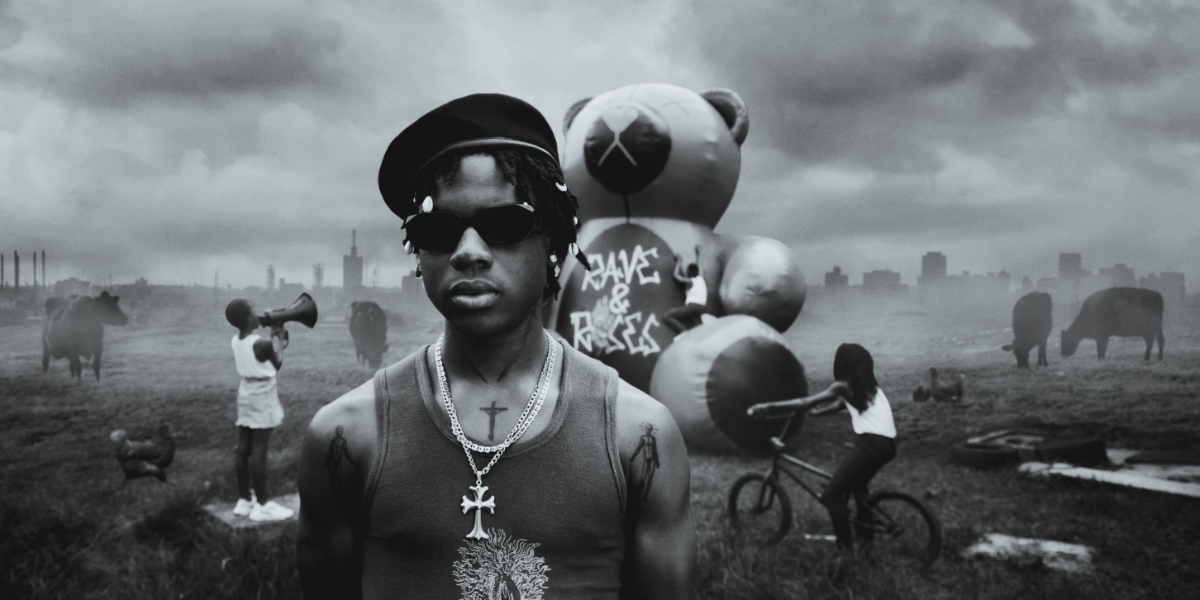
Clashes between two militias affiliated with Libya’s Government of National Unity have left five dead, including a 10-year-old girl, and 13 injured. Fighting broke out late on Sunday between armed factions in the west of the capital Tripoli. The clashes reportedly broke out after one militia fired at a member of its rival, both affiliated with the Tripoli-based government of Prime Minister Abdul Hamid Dbeibah. Footage circulating online shows heavy fire lighting up the sky at night. The clashes caused widespread panic among residents, and many government facilities and businesses in the town closed down.

The latest clashes come barely a month after 32 people were killed in Tripoli in fighting between militias loyal to rival political leaders. Both sides blamed the other for the violence, the worst fighting seen in the country in recent months. During the military confrontation, forces loyal to Abdul Hamid Dbeibah, the prime minister of the internationally recognized Government of National Unity (GNU), fought with armed groups of Fathi Bashagha, the former interior minister of the previous Tripoli-based Government of National Accord, which preceded the GNU.

The GNU was formed last year with an expectation to unite the war-torn country’s eastern and western political factions by holding a fair election, in which many have invested their hopes to bring political stability to the Northern African state. But the election has not materialized until now. Libya has been undergoing political war since the murder of longtime dictator Muammar Ghadafi in 2011. Since then there has been conflicting with the transition of power between split administrations each backed by rogue militias. 

TUNISIAN PRESIDENT AMENDS ELECTORAL LAW BEFORE DECEMBER ELECTIONS

Tunisian President Kais Saied has issued a presidential decree amending the country’s electoral law known as the Independent High Authority for Elections before the legislative elections in December. Under Saied’s decree, the commission will be reformed with seven members, including three judges and an information specialist and all shall be appointed by the president himself. Kais Saeid termed the amends as necessary to avoid the struggle of power between political leaders. The decree amends Tunisia’s electoral law which dates back to May 2014, was published in the official gazette late on Thursday. 

Under the new law, people would vote for individuals rather than lists as in the previous elections. The number of seats in parliament has also reduced from 217 to 161. Amendments also included conditions for candidates and voters, recommendations for running in elections, a deadline for appealing results, guidelines for campaigning, and more.

The electoral amendments have received mixed feedback so far, with some critics saying the law is based on exclusion and favors the president’s individualistic tendencies. However, Mr. Saied denied these claims in yesterday’s Council of Ministers meeting, saying: “The upcoming elections will not exclude anyone once they have met all objective conditions as laid out in the electoral law.” Tunisia has been undergoing a political crisis since 2021 under Saeid’s rule after he dismissed the government and assumed executive authority.


ICYMI: HOW YEMI ALADE, BONANG MATHEBA & MORE ARE JOINING THE FIGHT AGAINST MALARIA

Turntable Top 100: Ayra Starr’s “Rush” Debuts On The Top Ten This Week

After dominating the top 10 last week, Asake still remains at the top of the charts this week. Asake’s “Organise” holds down the No.1 spot  this week on the Top 100 charts. Taking a step down at No.2 is Asake’s “Terminator” while Wizkid’s “Bad To Me‘ leaps from No.11 to No.3 as it tallied 65.6 million in radio reach (No.1 on radio) and 3.51 million streams (No.4 on streaming).

At No.4 is Fireboy DML and Asake’s “Bandana“; It’s the second song to complete clean sweep (an exclusive merit for songs that has reached No.1 on all platforms weekly chart) and sixth overall song in 2022. Following closely behind “Bandana” is Pheelz and Davido’s “Electricity” at No.5 while Asake’s “Joha” moves from No.7 to No.6.

 Debuting on the top ten chart is Ayra Starr’s “Rush” at No.7 this week. The song tallied 3.12 million streams (No.6 on streaming) and 31.7 million in radio reach (No.9 on radio). “Rush” is the second song from the Mavins artist to debut on the Top Ten chart.

“Rush” is Ayra Starr’s fifth top 10 entry in Nigeria, becoming the highest of any female artiste in the country. The record “Rush” is also the biggest debut on this week’s Top 100. Rounding off the top ten from  No.8–10 respectively is Asake’s “Dull”, “Peace Be Unto You (PBUY)”, and “Nzaza“. Outside the Top 10 is  Victony and Tempoe’s “Soweto” with a massive boost  from No.30 to No.15 this week.

Featured Image Credits/Instagram