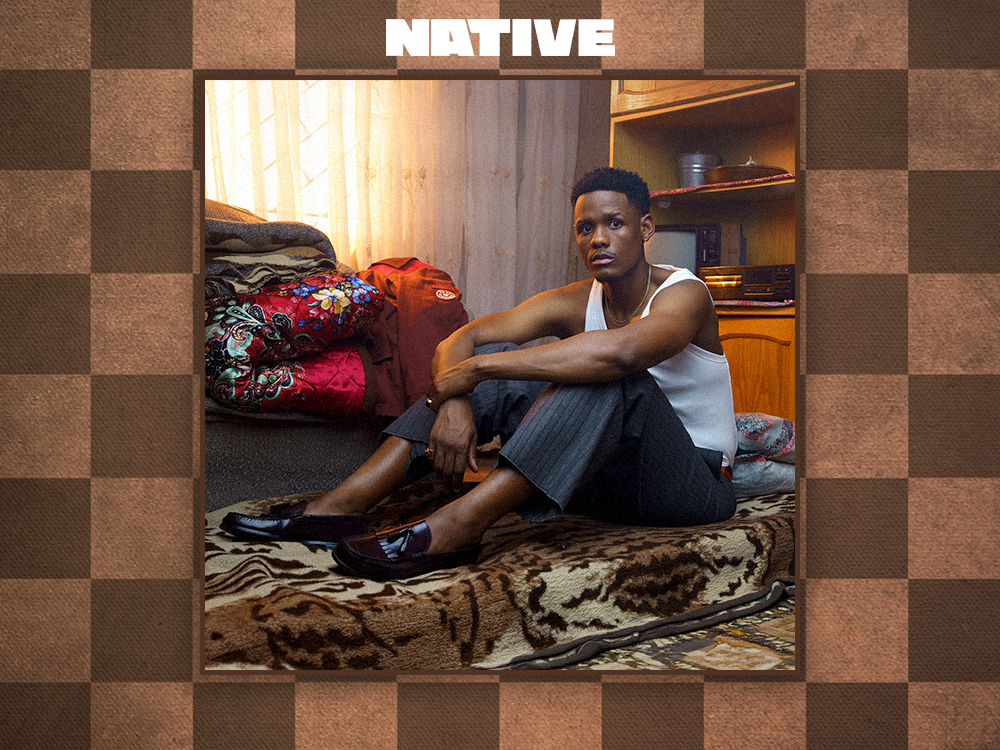
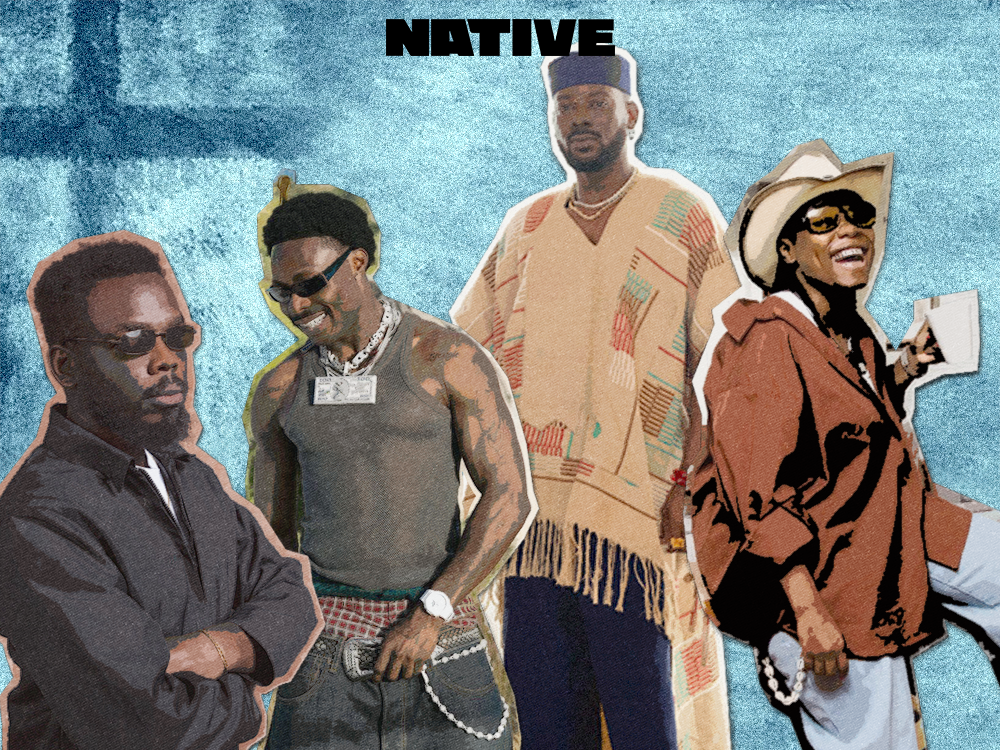
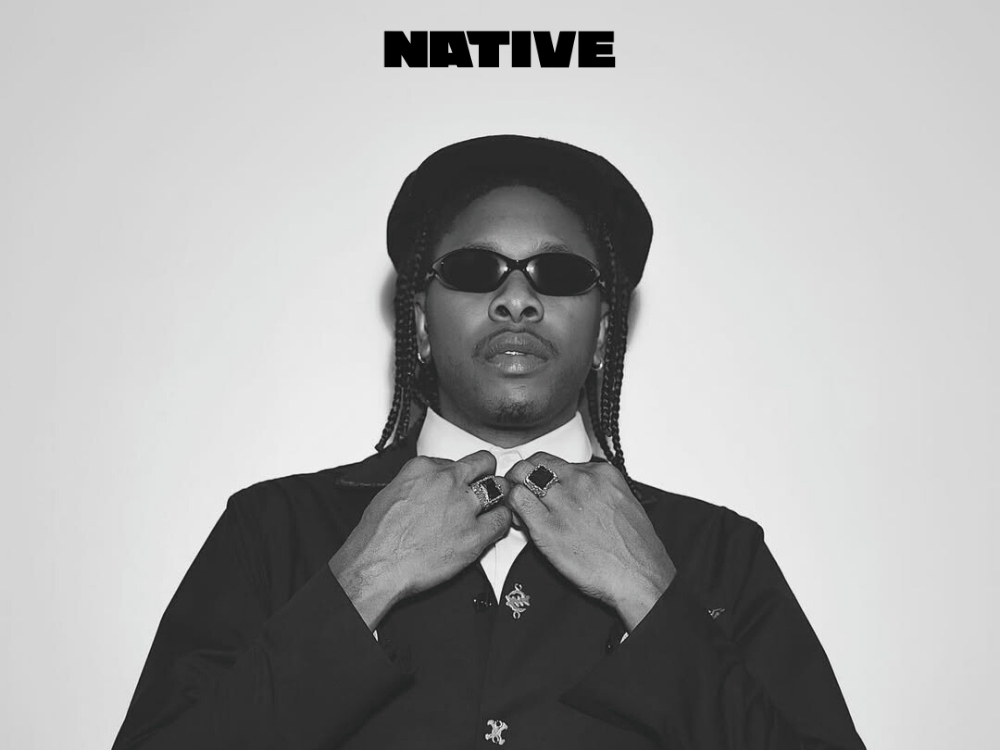
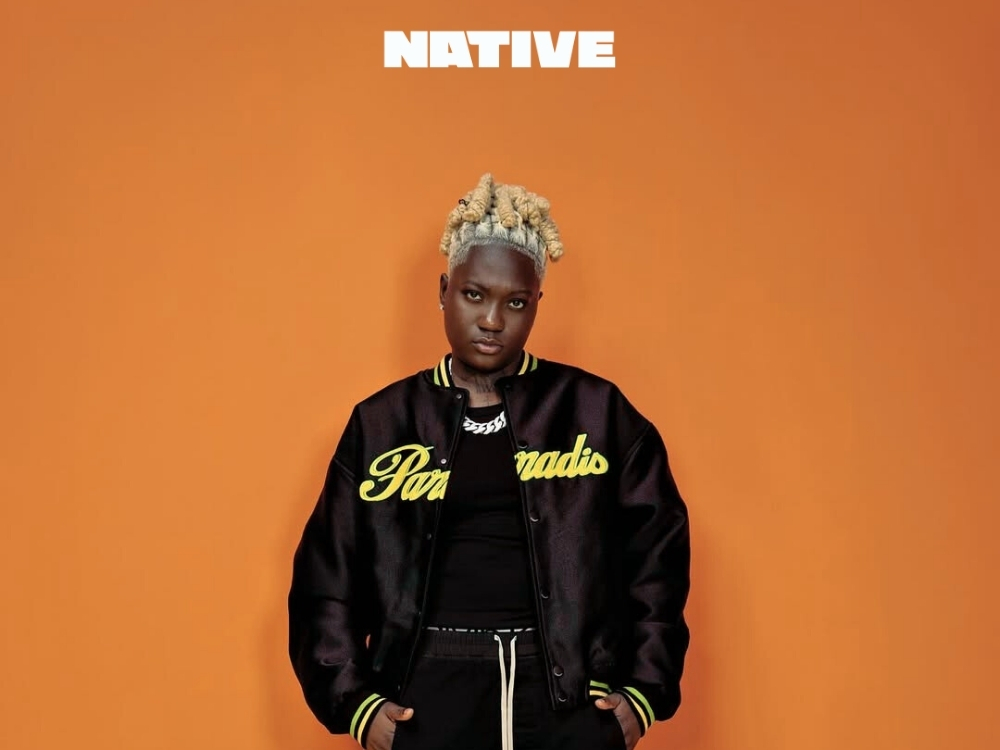
Mila Smith’s ‘You Need Therapy’ is an emotion-laden body of work from a rising star

Exploring any creative path, especially at such a young age comes with significant levels of doubt and the universal weight of personal expectations. In these times, forging a creative career is even more tasking given the vast amount of saturation in the industry and the overwhelming pool of talent looking to make their big break. Nonetheless, when it comes to music, new stars are being minted and a new vanguard of hitmakers are emerging from the African continent.

In the music industry today, success is measured by the billions of streams and number of accolades an artist can accomplish in their career span. Given this system of rewarding based on merit, it can be easy to side-step the collaborative process of music creation and remain insular in music delivery and performance. However, true creativity springs from the channeling a true and honest collaborative spirit and inviting others into your creative vision. This experience of working closely with other creatives is at the heart and soul of rising South African singer, Mila Smith’s music which sounds like aural healing for listeners in need.

In an exclusive interview with the NATIVE, Mila emphasises the sacred process of choosing collaborators so early on in her professional career and how one move could make or break your career. “It’s also just someone that holds the space for you to fail. Oftentimes, the best ideas will come out of failure and a shot in the dark. Sometimes you wouldn’t take that shot or make that leap if you’re afraid of judgment. I look out for people that hold that space and make room for that creativity to shine through,” she admits. With the release of her debut EP, ‘You Need Therapy,’ Mila’s maturity shines through not only in her choice of collaborators, but also in her ability to peel back the curtain on her personal experiences and journey thus far. Her sound, depicted largely through a soulful, pop-driven soundscape shines a spotlight on her storytelling abilities as she details her roaring emotions in the most honest and vulnerable way. 

The arrival of the 6-track extended play was teased by her 2021 standout debut, “Liars and Fakes.” Largely inspired by American pop princess, Dua Lipa and one of Mila’s greatest inspirations, Madonna, the pop-driven track provides an upbeat atmosphere for Mila to call out all the two-faced people in her life. The single leads in with daunting piano keys, followed shortly after with groovy strings that allow Mila travel into the rock atmosphere and aptly unpack her emotions. “Special, just an adjective you used for me,” she croons, immediately establishing the mood of the track.

She is unafraid to express her true emotions as she shares just how exhausting the inconsistencies are for her. When the song’s hook rolls around, Mila clearly proclaims over the now high-tempo progressions, “I don’t like liars, I don’t like fakes.” She takes the second verse to warn, “don’t come back when I succeed,” evidently confident in her abilities. When the track draws to a close, it is clear that Mila isn’t one to shy away from somewhat replicating her idols, while adding her own unique spin.

In a short time, Mila has been able to connect to audiences both within South Africa and beyond, holding the promise of an artist on the cusp of further breakthrough. It was in this well-deserved limelight that she unveiled another layer of her artistry with a pop-punk track, “Nice Guy,” in late 2022. “Nice Guy,” also serves as an introduction to her latest EP ‘You Need Therapy,’ and finds Mila operating pre-naturally at ease with her budding talent. “The lyrics are very honest but they pack a punch. I felt like it was only with a more Rock or Punk sound that the message of the song would’ve been perfectly conveyed. Had I stuck to another genre, maybe the music would not have been as effective,” Mila shares of the track.

On “You Need Therapy(Ready),” Mila shirks stylistic expectations and delivers a powerful rendition which brings her soulful vocals to the fore. After a series of distasteful actions, Mila has finally decided to part ways with her love interest in what we can conclude is her most honest delivery yet. This self-empowering number sees Mila reassuring herself and listeners that it is alright to part ways with unfavourable situations despite how familiar they may seem. Despite the song’s emotion-laden lyrics, the narrative is told through the lens of an upbeat, piano and guitar-led production with pop sensibilities.

“Toxic,” like the other tracks on the EP, is hinged on the subject of romance and affection. Here, Mila sings “You’ve got two personalities and I don’t know which one you are with me/It’s toxic, it’s toxic,” addressing an undeserving lover. On this mid-tempo number, Mila grapples with disappointment from discovering the truth about a close companion. In a similar fashion to “Nice Guy,” she struggles to connect her expectations and reality as she explains, “Were you like this all along?, I had hoped that I was wrong. By the conclusion, it’s clear that Mila is just here to express her emotions whether or not that comes with a resolution.

The penultimate track, “Hide In Hell,” is a powerful anthem depicting all the self-assuredness and conviction that comes from forging one’s own path and not leaning on anyone else. Mila had to tap into strong emotions to relay this experience and told the NATIVE that “Initially, when I was writing this I had this fixation on distance. My other producer also had this imagery of a hotel which kind of links to distance, travel and separation.” The track takes on a darker, more mature tone as she outrightly asks her love interest to hide in hell because their situation is beyond redemption.

On the EP closer, “Can’t Cope,” Mila gets candid about her struggles from childhood, a familiar experience for most young African adults. She aptly expresses feelings of dread while singing with a powerful voice laced with a honeyed falsetto, vivid yet economical songwriting, and expansive production. Speaking about the track, Mila shared “this was written when I was preparing for a math test in 2018. I was 14 years old at the time and I was on the stairs, crying because I despise math. The first line was my real experience because my head was in my hands and I did hate it.”

With a collection of poignant and resonating tracks, alongside lyrical breakup anthems more pointed and razor-focused than the last, it’s safe to say that Mila Smith is a recognisable talent with a penchant for narrative and relatable emotions. Mila’s conviction is apparent through the course of the ‘You Need Therapy,’ priming her for eventual success in her near future.

Listen to ‘You Need Therapy’ here.

Featured Image Credits/


ICYMI: IDENTIFY: MILA SMITH IS MAKING HEALING MUSIC 

Best New Music: Lojay and Olamide are a captivating pairing on new single, “Arizona”

Since his dazzling breakthrough with revered Nigerian DJ-producer, Sarz, on their collaborative EP, ‘LV N ATTN,’ Lojay has rightfully earned the ears of many listeners by carving out his own space in Afropop complete with a charismatic personality, emotion-laden songwriting and back to back hits. The 5-track offering evidently primed him for greatness and has sustained the artist since then as he proves he’s worth more than his salt. 

Earlier this year, the singer served up his sophomore effort, ‘GANGSTER ROMANTIC’ which more than proves his solo capabilities as a performer. What makes ‘GANGSTER ROMANTIC’ an easy listen is the faultless sequencing that accentuates Lojay’s emotions throughout the project, from playboy to loverboy, and from self-assured to hesitant. Although his career is still nascent, Lojay has worked with some of the best hands in the music business and, with his ability to make great music, the signs portend good tidings for his future. 


View this post on Instagram


A post shared by Lojay (@lojaymusic)

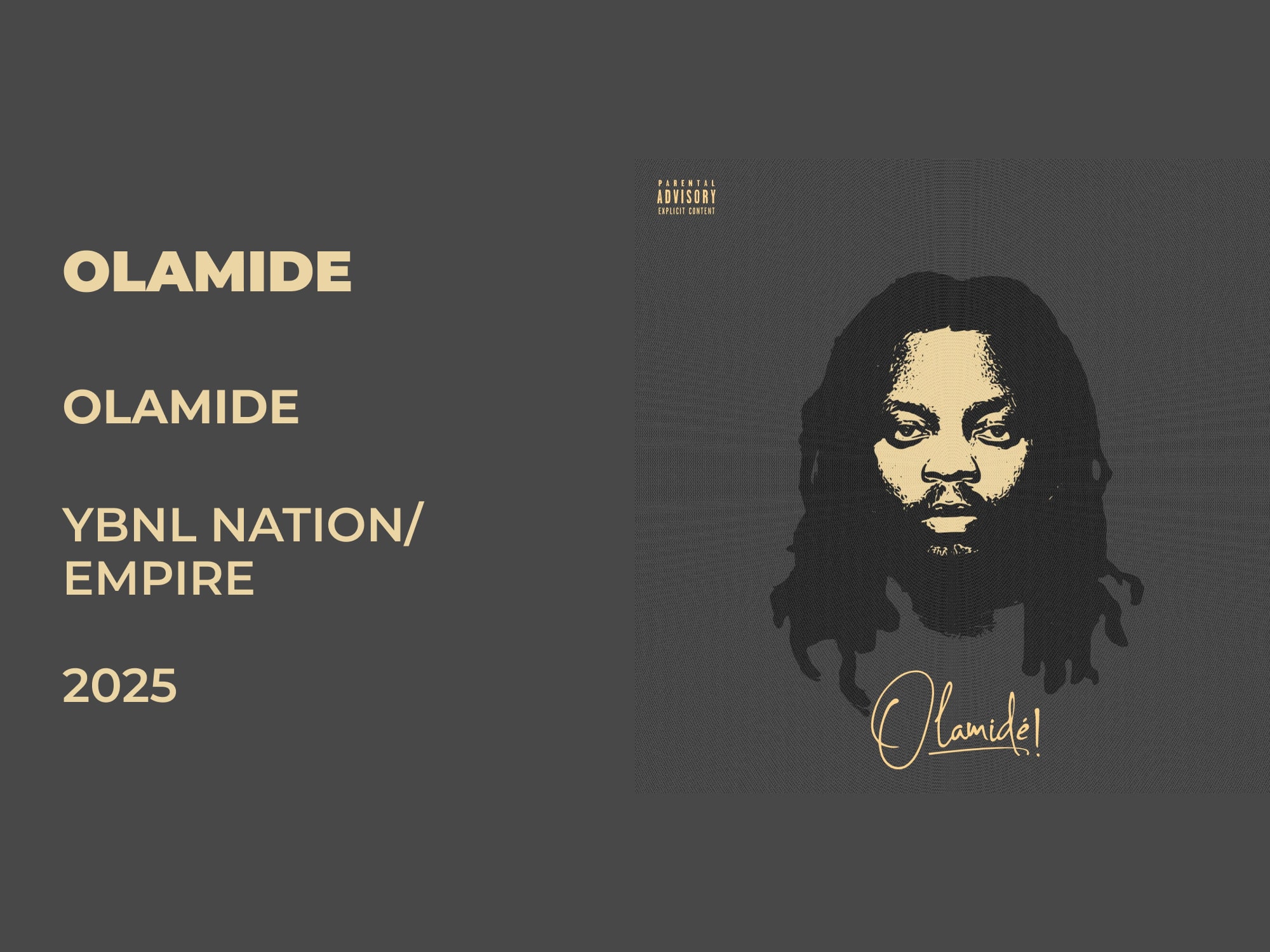
On the other side of the coin, Nigerian rap legend, Olamide continues to leave an indelible mark on Nigeria’s music history with a series of timeless hits and the mentorship of prized signees via his record label, YBNL. The release of his latest and according to him, last album, ‘Unruly,’ crystallised Olamide’s status as the leading street-pop artist of our generation, eclipsing all leftover doubt. 

And if it is truly the last we hear of Olamide in album mode, as he chooses to focus on expanding and reaping the benefits of the powerhouse that is YBNL, he is well within his rights. A few weeks ago, his star signee, Asake pushed the boundaries of his success a step further after snagging a Grammy nomination for “Amapiano” under the Best African Music Performance category. As Olamide joins Lojay for an intoxicating delivery on “Arizona,” it is evident that he is currently on flight mode, breezing through with potential hits like the superstar he is. 

From the opening seconds of “Arizona,” it is clear that we’re in for a good time. The track opens with signature log drum-shakers combination that portends the song’s irresistible and dance-ready quality. With this solid sonic foundation, Lojay and his guest star, Baddo lay down poignant and intimate verses that find them in loverboy anguish. Lojay’s lush chords alongside Olamide’s sonorous bars come into the picture, making for an instant recipe for success.

The track leads in with a heart-thumping mid-tempo beat, credited to P.Prime, only to be accompanied shortly after by echoey chords fading in and out of the track. Lojay’s croons take over as he sings, “What’s your lucky number baby, give me update,” immediately alerting us that we have another love-themed track on our hands. He takes on the narrative approach to detail an interaction with his love interest, where he beckons her to commit and follow him to various parts of the world.

Olamide slips in immediately after, raining praises on her physical appearance while explaining how crazy she makes him feel, “Nobody got this type of ukwu, omo buruku/You make a nigga coocoo.” As opposed to clearly expressing in words in a similar way to Lojay, he takes the onomatopoeic approach, creating melodies by repeating similar sounding words. It wouldn’t be Olamide without a comedic and memorable one-liner. So when he wraps up his verse saying “Agege bread no dey get label” it reiterates his witty penmanship many listeners have grown to love. His razor sharp flow, matched with the track’s smooth progressions and ‘Piano log drums in the background allow for his verse to carry tension of its own, forging “Arizona” as one of the catchiest feel-good numbers in recent months.

With a pairing as promising as this, coupled with the synergy the pair were able to display, it is safe to conclude that Lojay has added another string to his ever-growing catalogue. His efforts are a clear indication of his desire for growth and global visibility, achieved by his consistency all bound together by his admirably raw approach to relaying his lived experiences.

Listen to “Arizona” here.

Featured image credits/


ICYMI- REVIEW: LOJAY’S GANGSTER ROMANTIC

Identify: Mila Smith Is Making Healing Music

A new vanguard of hitmakers have emerged, tactfully exploring the inner workings of the music spaces with a childlike wonder that allows creativity flow into reliable, hit-making recipes. These newcomers are navigating the industry, armed with the expertise of veteran who paved the way before them, while conjuring new formulas to success all on their own. The likes of Nigeria’s Rema, Ayra Starr and South Africa’s Tyla are near-perfect embodiment of what countless years of dedication and growth, alongside the unrelenting support garnered at home base can look like.

It’s from this same ilk and mindset that South Africa’s Mila Smith comes from; expertly blending her mellifluous vocals with radio-ready beats that stand out from her peers. “I also look up to Black Coffee in terms of the success he’s been able to accomplish and Tyla who’s closer in age to me and doing groundbreaking things in the Pop-leaning scene,” Mila speaks on her African influences and reference points. 


View this post on Instagram


A post shared by Mila Smith (@iammilasmith)

Off the back of her debut single, “Liars and Fakes,” Mila earned the ears of loyal listeners from across the globe for her honest take and raw delivery over a pop-driven soundscape. The solo single showcased Mila’s penmanship which showcases her maturity as a performer, a feat that surprised many for such a young artist. In an exclusive interview with The NATIVE, Mila explained that the breakout debut single initially ventured within the Techno soundscape before taking a new Pop face with the aid of a slew of producers and South African R&B crooner, Mañana.

Her debut EP, ‘You Need Therapy,’ finds Mila pulling from a bountiful well of inspiration while making a point to provide an original perspective on her favourite songs. “This period had a lot of bumps and opportunity for growth as well as finding sound and expressing myself. You can see that all across ‘You need Therapy.’ One track, “Hide in Hell” has an R&B feel and “Nice Guy” has a more pop-punk feel. Then you jump to “Can’t Cope” which I’d describe as a ballad. It’s very emotive.” As such, ‘You Need Therapy’ serves as an intimate conversation with friends, acting as a testament to Mila’s dedication to exploration and overall, penchant for making feel good music her audience can connect.

Following the release of her standout debut EP, we caught up with Mila Smith to discuss her creative process, moments leading up to the release and what her future could look like.

Our conversation, which follows below, has been lightly edited for clarity. 

NATIVE: Thank you for joining me today. Talk to me about your background in music and who are some of your early influences?

Mila: I’ve always felt a passion for music and the first memory I have was when I got a microphone on my 3rd birthday. I spent the rest of the day singing Madonna songs and i’d say that’s when the spark was ignited. Following that, I’d write about my day and that was a creative outlet to me. It really took off in 2015 when I started a band with my schoolmates called Skyscrapers. I performed original music that I’d written and that’s when I thought music would become a career of mine. The band sadly disbanded in 2018 and I had a teen-life crisis. I was unsure of what to do until I was approached by Platoon, a label and artist agency and they signed me. The rest was history. Regarding influences from a young age, I’d say Madonna and Erykah Badu but as I’ve gotten older, I’d say Lana Del Ray, Adele, Taylor Swift and Beyoncé. 

Would you say that those people and your tastes have reflected the music you create now? 

Absolutely. “Reassemble Myself,” I’ve always described as an Adele Ballad because it is very emotional, raw and honest. She was certainly a reference when I was writing and producing that. I love Dua Lipa and “Liars and Fakes” is largely inspired by her pop sound. 

Are there any Africans in the mix that you take a particular liking to? It need not be sound. Maybe their style or journey has informed yours in some way. 

Of course. The first person that comes to mind, purely because of the lyricism is Msaki. I’ve also had the pleasure of meeting her and there’s people that have a presence about them and she’s certainly one of those. There’s an emerging artist called Lukhanyo and the Highrollers whose stage presence is amazing. I take a lot of inspiration from Lukhanyo and the Highrollers when it comes to performing. There’s an energy and chemistry between them that’s undeniable. I also look up to Black Coffee in terms of the success he’s been able to accomplish and Tyla who’s closer in age to me and doing groundbreaking things in the Pop-leaning scene. 

You’re still quite young. What’s your experience navigating the music industry been like so far? 

I think it’s been mostly positive for the most part. I have that support system in my immediate family, producers, writers and from Platoon as well. This period had a lot of bumps and opportunity for growth as well as finding sound and expressing myself. You can see that all across ‘You need Therapy.’ One track, “Hide in Hell” has an R&B feel and “Nice Guy” has a more pop-punk feel. Then you jump to “Can’t Cope” which I’d describe as a ballad. It’s very emotive. That’s just a testament to how I’ve been allowed to collaborate. I’ve been allowed to fail and not fear failure which has made the entire experience. 

South Africa has vastly textured music references steep in incredibly rich history, how would you say being from this part of the world has influenced your style? 

Music is in South Africans DNA. Everywhere sort of has a musicality to it even if it’s not playing music. It inspired me because we’re exposed to so much and there’s a wide range of sounds from Amapiano to Qqom or Pop and more alternative styles. Overall, it inspired me to create and play around  with different sounds. 

As much as South Africa’s greatest export at the moment is Amapiano, your sound is still largely pop and soul leaning. Why haven’t you dedicated to threading this part amidst the current mainstream sound? 

I feel like it’s just the sound that speaks to me the most. A lot of  influences are pop focused and it just happened to be the direction I chose. I feel most comfortable playing around with that for now but I’m still very young so who knows? I might do an Amapiano track and experiment with more sounds in the future. I don’t believe in being completely defined by one genre.

How do you see your music contributing to or standing out within the broader South African music landscape? 

I hope that it contributes in the sense that it’s very honest. I spend a lot of time on lyrics. I define myself as a singer but also as a songwriter and so, I hope that my lyrics are something that people can relate to. A lot of what I write about are universal experiences and in that sense, I hope that that would contribute to the broader South African music scene. Also, because the music in ‘You Need Therapy’  is diverse, I hope that versatility is something that draws people to the music. 

Let’s talk about your creative process. This could differ depending on the project but usually what comes first to you, the beat or the words?

Initially, what comes to me is a melody followed closely by a few lines of the song. After which I sit down by a piano and establish chords for the song. The lyrics would usually come after. That or I go into the studio with an idea of reference from a song I’d like to emulate in some way. It’s a collaborative process between all of us to then take that idea and make a song.

We’ve briefly touched on how you dabble between a couple of genres. How would you say these various soundscapes have enabled you to convey your message in the best way? 

They help me simply because they’re the most fitting medium to do so. My song, “Nice Guy” for example is all about someone who poses as a nice guy and in reality they’re anything but. The lyrics are very honest but they pack a punch. I felt like it was only with a more Rock or Punk sound that the message of the song would’ve been perfectly conveyed. Had I stuck to another genre, maybe the music would not have been as effective. A lot of the message would have been lost. So that’s why I feel like the difference in sound and the versatility it brings is so important. 

Your emotions really come through clear with your storytelling and ability to wear your heart on your sleeve. Why do you think it is important for you to come up so vulnerably in your music and how do you manage to stay grounded with the emotions? 

I don’t think it’s something I try to do or something calculated. It’s very natural for me. My way of expressing myself and how I’m feeling is through the songs. I think a large part of how I stay grounded is expressing myself through song. It feels like my own personal diary and it’s a great emotional outlet. 

Let’s talk about the moments leading up to your debut EP  ‘You Need Therapy.’ What were those moments like for you? 

I didn’t even fathom that it could be released. I was fully doubting that this body of work would ever see the light of day because it’s been such a long time coming. So the few moments leading up to it were just completely surreal. They were filled with such anticipation and I wanted it so badly to be shared with the world. Following the release, I feel so ecstatic. I am so hungry to write more and I’m already working more with producers so it’s clear that the project has encouraged me to look into more live performances. I want to continue to push myself genre wise as well so it’s just the beginning. 

During the creation, what messages were a priority for you to communicate to your audience?

I would say it differs from song to song because a lot of the time, once the music is shared to the world, it’s no longer my message. It’s now the message they receive from it which can differ from person to person or song to song. The universal feeling is just that they’re not alone. Also just the feeling of being able to jam out and enjoy the music. I’d hope that they appreciate the body of work, like the lyrics and also the versatility in the tracks. 

Collaborations can lead to unique creative experiences but are very sacred especially so early on in your career. What usually informs your choice of collaborators?

Initially, I didn’t really know anyone because people that inform my collaborative choices are members of Platoon, my record label who would suggest people and from there, I’ve met the most incredible collaborators who in turn recommend other people. It’s been great and I hope that continues because it’s kind of one big family. Regarding what I look for, I’d also say chemistry matters. There’s a certain energy that would just work and you almost always know when it’s going to sit right and when it’s not. You get the sense that you’re on the same wavelength. It’s also just someone that holds the space for you to fail. Oftentimes, the best ideas will come out of failure and a shot in the dark. Sometimes you wouldn’t take that shot or make that leap if you’re afraid of judgment. I look out for people that hold that space and make room for that creativity to shine through. 

Are there any artists, producers, or songwriters you dream of collaborating with in the future?

I’d love to collaborate with Lukhanyo and the Highrollers if we’re talking about South Africa. It wouldn’t hurt to work with some of the greats like Beyonce, Taylor Swift or Olivia Rodrigo. That’d be the dream.

What can we expect from you in the future following the release of the EP? Accompanying visuals perhaps? 

Definitely. There will be visuals for “Hide in Hell” coming soon. We can also expect more live performances and I’d also love to have my music in a movie of series as s score. That’d be a dream

Listen to ‘You Need Therapy’ here,

Featured Image Credits/Lunghelo Mlati (@theblvr_za)


ICYMI: THE RISE OF A NEW BIG THREE IN NIGERIAN POP

Cruel Santino expands the Subaru universe with new EP, ‘Cincinnati Pumpin!!’

Cruel Santino is constantly evolving. Since his debut, the singer has been peeling back new layers to his artistry with an even more diverse sonic palette built on genre-blending fusions, cinematic productions and accentuated with a rich array of melodies. As one of the frontrunners of the non-conformist alte subculture, the masterful genre bender has widened the potency of his arsenal while retaining the hallmarks of an experimental artist. 

On his recent album ‘Subaru Boys: FINAL HEAVEN,’ Cruel Santino’s evolution was brought into full view: with omnivorous music that escapes labels and actively contests them. The 21-tracker reaffirmed Cruel Santino’s master shape shifting and his ability as a pop culture collagist, to blend and meld genres to his will while offering one of the most daring projects released in the past few years. Since then, Santi has consistently expanded the Subaru universe with followup releases including his 2-pack release, ‘Holiday Sniping’ and now ‘Cincinnati Pumpin!!’ 


View this post on Instagram


A post shared by santi (@cruelsantino)


For his latest 4-track effort, we’re in full Subaru territory. The EP opens with the Len-assisted “4ever,” produced by Monster Boys. Before Santi’s instantly recognisable vocals arrive, the pair lay the groundwork with a daunting atmosphere layered with dull chords and soft croons. When the groovy bass drops, cue in a melancholic Santi who addresses his love interest in charming words. Shortly after, Len takes over to reiterate the message of the  love-themed track, riding the wave of the beat with mellow bars and heartwarming promises. The track doesn’t fail to remind us that we’re tuned in to Subaru radio before it draws to a close and smoothly transitions to an equally mellow atmosphere for “Cincinatti Pumpin!!.”

Arguably the most intriguing track on the EP, “Cincinatti Pumpin!!,” offers up the charismatic production of Tochi Bedford who continues to deliver trunk-rattling sonic homages and cascading flows. Here, the pair are a match in heaven as the track’s smooth, groovy soundscape of light drum patterns as Cruel Santino lightly sings of his experience serenading his love interest, “She was frontin’ as I tried to talk to her.” He emphasises his persistence despite her noncommittal attitude, laying a stellar verse before the track’s percussive elements switch tempo. 

On “Panic Island,” Cruel Santino joins forces with Odunsi (The Engine), a kinetic pairing that has served up memorable tracks such as “alte cruise,” “Nostalgia” and more. For “Panic Island,” both artists are utterly relaxed as they wax poetic over an airy mid-tempo beat that vibrates with emotion and angst about a current lover. “I want to taste you before he gets in the way,” expressing the lengths he would go to for her attention. As willing as he is to go the extra mile, he questions “Are you worth this love?” but sharply concludes “I’m feeling good.” Odunsi steps in midway across the track similarly questioning his love interest in a series of silvery melodies as he croons, “When will I have you to myself?”

The EP closes off with the bouncy number, “FTR” which wraps up the project on high notes with a smashing upbeat delivery alongside street-pop artist, S-Smart. The pair glide over the track’s dance-leaning instrumentals as they proclaim their love for the trenches. “In the trenches, they love me,” Cruel Santino chants over the smattering bounce and drums, boldly showcasing an impressive versatility as he delves outside his typical beat. Closing under 10 minutes, ‘Cincinnati Pumpin!!,’ is a reminder that Cruel Santino is constantly carving out his own space 

Listen to Cincinnati Pumpin!!’ below

Featured Image Credits/

New Music Friday: Projects From Odeal, WurlD, Lifesize Teddy & More

It’s another Friday and time for a roundup of music projects from African acts to check out. Throughout the week, music has poured in from all over the continent and sometimes unmissable projects can slip through the cracks, unheard. This column serves to bring those projects to your ears as you wind down to the weekend. We’ve compiled a typically spellbinding list today, a vast terrain in the African music soundscape covered. In addition to new projects from Odeal, Cruel Santino and Life Size Teddy, here are some more projects that deserve your ears.


ODEAL – ‘THOUGHTS I NEVER SAID’

British-Nigerian singer, Odeal has steadily expanded his catalogue with a slew of promising releases like Brazy-assisted “Be Easy,” and an unforgettable live rendition of “All That It Takes” for  A COLORS SHOW, whetting appetites for what was to come. Leading this New Music Friday, Odeal’s ‘Thoughts I Never Said’ arrives with eight solo tracks and a stellar, heartwarming outro, “Gave You My All,” assisted by Emil. A series of lush guitar strings and heavy piano chords create the perfect soundscape for Odeal’s sonorous vocals as he tells stirring stories of love and loss. 

MAYORKUN – ‘LOVE.. FOR FREE’

This year, Mayorkun has served up a slew of releases from “Balenciaga” to the Iyanya and Tekno-assisted “One Side(Remix),” to name a few. To close out the year, he delivers a hypnotic 5-tracker stacked with stories of heartbreak, finding new love and self-discovery. In what feels like an emotional rollercoaster, Mayorkun channels his inner lover boy in raw lyrics accompanied by melancholic melodies and soul-stirring chords to explain the complexities of love and life. On the project’s intro, he taps South African rapper, Blxckie, for a memorable rendition that sets the mood for the remainder of the project. 

LIFESIZE TEDDY – ‘POISN’

The announcement of any artist signed to one of Africa’s biggest record labels, Mavin Records, would understandably come with significant levels of buzz. Beyond the exciting news, Lifesize Teddy proved with her eponymous debut a few months ago that she is well worth the attention with standout tracks like “Air.Her recently released follow-up ‘POISN’ is not only proof of her dedication to expanding the scope of her craft, but also a fine showcase of her growth and versatility merely six months later. ‘POISN’ features three solo performances and two features assisted by fellow label signee, Magixx and Chocobantis. Lifesize Teddy effortlessly glides across the dark soundscape with honeyed melodies and hard hitting bars, making for an engaging 14 minutes listen. 

QING MADI – ‘QING MADI’

At 17 years old, Qing Madi has earned the ears of many listeners across the country since her chart-topping BNXN-assisted single “Ole.” She rounds her efforts into a self-titled 7-track extended play, featuring crowd favourites such as “See Finish” and “Vision.” Across the project, stacked with potential hits, we see Qing Madi within a familiar atmosphere of R&B, accompanied by Pop-leaning soundscapes with hints of Afropop. While she tackles the unsettling feeling of dissatisfaction after attaining life long dreams on “Madi’s Medly,” she explores loneliness and loss from a friendship gone sour on “Chargie.” Once again, Qing Madi has proven to be an artist on the cusp of a bigger breakthrough. 

CRUEL SANTINO – ‘CINCINNATI PUMPIN!!’

Since the introduction of Subaru World with his critically acclaimed 2022 album, ‘Subaru Boys: FINAL HEAVEN,’ Cruel Santino has been firmly dedicated to expanding the sonic universe of Subaru. A few weeks ago, he released a two-pack release dubbed ‘Holiday Sniping,’ featuring L0la and Slater. The arrival of ‘Cincinnati Pumpin!!,’ more than anything affirms Santi’s penchant for explorations and experimentation with the alternative soundscapes. The four track release features frequent collaborators, Odunsi (The Engine) on the groovy, drum-led “Panic Island)” alongside a melancholic story of love on “Cincinnati Pumpin!!,” produced by Tochi Bedford. 

WURLD – ‘DON’T GET USED TO THIS’

2022 was the last time WurlD released an album, the 19-tracker titled ‘My WorlD with U.’ Now, he makes a resounding comeback with an 8-track extended play tagged ‘Dont Get Used To This.’ The new project comes packed with exciting love songs with a standout feature from Sarz. On “Location,” WurlD reaffirms his undeniable chemistry with the producer atop an upbeat dance-leaning rendition where he transparently states his longing for his love interest with sweet-sounding lines in English and Yoruba. In typical WurlD fashion, he stretches his artistry a step further and adds to his strong catalogue of charming love tunes. 

LIKKLE BANGI – ‘LIKKLE BANGI’

Since her 2020 debut with “UDK,” Ugandan singer-songwriter, Likkle Bangi has garnered the attention of many listeners for her vast vocal range and authenticity, shone through her raw lyricism. Her official reintroduction to the world now arrives as an eponymous 4-track extended play where Bangi explores the highs and lows of life whilst threading a journey to self discovery. Her stark sincerity shines through twinkling keys and intoxicating drum patterns as she wholeheartedly bares her heart to anyone willing to understand. 

Featured Image Credits/Instagram

Deep Cuts: Davido balances charisma & vulnerability on “Green Light Riddim”

Time flies when you’re having fun. It took Davido seven-plus years to release the full-length successor to ‘Omo Baba Olowo: The Genesis’, his debut album from 2012. For the most part, he was dominating the airwaves with huge single after huge single, becoming the quintessential Nigerian pop superstar and arguably the most reliable hit-maker of his generation. In simple terms, Davido was having fun—for the most part.

The path to global superstardom, via realigning back into authenticity, is now Afropop lore. An EP that he panned as “shit,” the comeback single that shot him back the summit, its follow-up that greatly helped the stateside incursion of Nigerian pop, and a run of hit songs that culminated in one of the most dominant years we’ve ever witnessed from a popstar. More successful singles poured in and, after a long—really long—build-up, came ‘A Good Time’, the sophomore album that was then-overdue and now clocks four post-release years.

In the moment of its release, ‘A Good Time’ both benefitted from and was hampered by its many, many months of accumulated anticipation. The inclusion of several singles that dated back a couple of years ensured its core was familiar, perhaps a little too familiar. Listening back now, ‘AGT’ has aged finely, testament to the vision Davido baked into the album, rooting his musical choices in home-grown sounds while facing the rest of the world. On the album’s seventeen songs, he’s self-aware, deeply grateful, effusively in love and ultra-confident.

Tucked in the album’s lower-middle part is “Green Light Riddim,” a dancehall-influenced slapper that leverages Davido’s charisma and veritable lover-boy charm into one of the singer’s finest romance-themed songs—which is saying a lot, considering the catalogue. Over the years, Davido had already established himself as a premier creator of showy love songs centred on dedication. Because of his larger-than-life persona, the gambits had to be grand, from the dramatic overtures of “Aye” to the ostentatious promises of “IF” and “Fall” to the overt sentimentality of “Assurance.” By contrast, “Green Light Riddim” is a far simpler fare, which is what makes it stand out.

The execution is exquisite, a balanced mix of reputation-based conceit and vulnerability. After opening the song by brushing off negative chatter and establishing self-pride, Davido settles into confessional mode. “You know I’ve been falling for you…And I know deep down I wanna be with you,” he declares on the second verse, without any theatrics. When his voice reaches for something extra, it’s in service of the song’s central plea: “All I need is your green light.”

Usually, there’s an overwhelming conviction that Davido’s wooing tactics always work to his desired results. “Green Light Riddim” doesn’t upend that M.O, but there’s an innate nod to the fact that wholesome relationships thrive on a two-way commitment. Enthusiasm from the addressed party bodes well for the future. Within the context of ‘A Good Time’, the Shaydee co-written song shows that Davido can thrive even when pomp is not required of him, and that’s part of what makes the late 2019 project a great starting point to the trio of Time-based albums he’s dropped in the last four years. Each LP has had songs that are glue moments, i.e. not proper hits but worthwhile listen on full re-listens. The overall enjoyability of these songs have elevated the perception of Davido as a mainly singles artists. Yes, he’s still a monster hit-maker, but his albums are worth their runtime—and it started with ‘AGT’.

“Green Light Riddim” is one of the several deep cuts—including “Get to You” and “Company”—that shows how the overall cohesiveness of ‘AGT’ doesn’t blur the individual stakes and quality of its lesser heralded songs. It also shows the level Davido has been operating on, where glue cuts turn into effortless highlights.


ICYMI: ALL THE SONGWRITERS DAVIDO ENLISTED FOR ‘A GOOD TIME’

Tolibian celebrates early wins and a potentially bright future on debut EP, ‘Alien’

There’s no barrier to entry in Nigerian street-pop. That much is evident in the myriad of superstars and prominent artists that find their way into widespread acceptance, across hood acclaim, regional popularity and nationwide ubiquity. The common denominator, which also doubles as the most important requirement, is authenticity. Tolibian understands these things. An Ilorin-raised riser who first garnered attention through viral skits and song covers, his path into music wasn’t premeditated, rather a function of spontaneity.

Around the time TrenchTok became a full-force catalyst and driver for cultural moments and conversations, Tolibian emerged as one of the more wholesome creators. His comedy was hyper-specific in its use of language and experience, but he also had the uncanny ability to ensure punchlines hit the right pocket of generally, incredibly funny. It extended to the song covers, like his nasally croon on a cover of “Peru (Refix),” a profound and hilarious moment that helped further the ubiquity of the slang, ‘Sapa’. Tolibian clearly had song-making chops, but it often takes more than unpolished talent to become a proper artist.

On his new debut EP, ‘Alien’, the comedian-turned-singer hasn’t reached all-round form, but his growth is evident. It features five songs performed with a wide grin, perhaps still basking in the surprise of slowly but surely finding his footing in the current context of street-pop. “I found myself doing music, it’s not something I learned,” he told The NATIVE just before the EP’s release. Tolibian leans into that neophyte charm without getting overrun by naivety. He sticks to easy subject matters and loose melodic stylings, a little less ambitious than some of his older singles—but it makes sense for his very first project.

When “Abaya Palava” dropped in 2021, it felt idiosyncratic. A song centred on a traditional Muslim attire, with intricate, tongue-twisting rhymes to fit Tolibian’s storytelling candour, there was clearly no play for wide appeal but it found an enthusiastic audience amongst hundreds of thousands who could relate. Or generally understood the ramifications of the scenario he richly developed. It was further confirmation his abilities as a writer of reality-inspired narrative, set by the preceding single, “Abortion,” sung from the perspective of a lady coerced into sexual relations, with tough decisions to make in the aftermath.

By “Beware of Dog,” the Rexxie-produced single, it was clear Tolibian was gearing to make more accessible music in hopes of securing increased visibility. Further proof was in the melodic drill of the self-congratulatory “Journey” and the party-starting aim of “Hello.” For his new EP, Tolibian sets himself up as a purveyor of optimism within street-pop. ‘Alien’ is all sunny melodies, featuring a vibrant disposition from the singer as he enjoys his early success while keeping an eye on a potentially brighter future.

“If we dey alive, we go dey alright,” he sings on the opener “Alive,” that Ilorin-Islamic flavour in his voice elevating an otherwise ordinary declaration. The centre of the song comes a few lines later: “Nobody fit stop my success.” His conviction is sealed and the rest of the EP follows thus, almost as if willing listeners to join him on the same wavelength. Tolibian represents a prevailing mentality amongst younger adults from far less affluent parts of Southwest Nigeria that all it takes is one opportunity for undeniable success. The prevailing ethos that destiny finds it way manifest, especially when aided by hard (and smart) work. So, why be sad when you can make merry in advance for when things get better.

On lead single, “Happy,” Tolibian sings, “We caught ‘em by surprise/wetin God design no longer fit collapse.” In contrast to the rest of the EP, the song is a far more baroque moment, featuring an Amapiano-influenced heater for a beat. The rest of the EP, while leaning into colourful elements are more pared down, but still fitting for shuffling feet. Interestingly, Tolibian leans into Highlife via the Duktor Sett-produced tracks, “Day By Day” and “Party Ego.” It’s not a new synergy, going all the way back to ‘70s icons Victor Olaiya and Fatai Rolling Dollar. Taken together, though, ‘Alien’ is a show of how Tolibian can ground varying musical style with his rustic voice and chippy personality.

Listen to ‘Alien’ here.


TRACK-BY-TRACK: TOLIBIAN WALKS US THROUGH HIS DEBUT EP, ‘ALIEN’

The relaxed assuredness of Ajebutter22 & BOJ on ‘Make E No Cause Fight 3’

If an alté hall of fame is to be instituted, Ajebutter22 and BOJ are first ballot candidates for enshrinement. Butter declares as much on “Floating,” a song off his early year album, ‘Soundtrack to the Good Life’. BOJ doesn’t even need to say anything, he’s the guy widely credited for helping to crystallise the spirit of a renaissance movement into a now-seminal word. As well as championing being alternative to the norm, Butter and BOJ are defined by how they also interact with the mainstream—on their own terms, though.

It makes sense that they’re intertwined from the beginning. Well, not exactly the very beginning—Ajebutter22 had been making music for a couple of years prior, as was BOJ, as a member of DRB. When their paths crossed, it was the start of something career-elevating and culturally impactful. The 2013 hit song, “Omo Pastor,” signalled the arrival of two intriguing voices, one a fuzzy melody slinger and the other with a disarming baritone and malleable rap flow. In short order, their imprint began to grow; BOJ, a deadeye master of hooks, while Ajebutter22 became a respected cult figure for his alternative but ultra-accessible approach to making rap songs and albums.

A decade after their breakout collaboration and half-a-decade after acceding to fans’ request for a joint album, Butter and BOJ have returned with ‘Make E No Cause Fight 3’. The new EP, as with its previous two predecessors, is built on a shared zest for life between two kindred spirits. The perfect representation of Yin and Yang operating for culminative harmony. While motivations have shifted with each EP, there’s never any point where it feels like both artists are not on the same page, and it’s the same on this new 5-song set. This time, they are both driven by a relaxed sense of conviction, which makes sense considering the space each artist is in now.

When the debut edition of the series dropped in 2018, both BOJ and Ajebutter22 were a year removed from respective solo albums. No guest features were traded from the long-time collaborators, and it inspired the title of the joint project. At the time, Butter’s ‘What Happens in Lagos’ was a phenomenal feat in reality rap, but BOJ’s ‘Magic’ was clouded by an overt mainstream tilt and messy handling by his erstwhile label. ‘Make E No Cause Fight’ felt freeing, two bros basking in the confidence of being a formidable duo—all pressure side-stepped.

Five years and a whimsical second edition—with Falz—later, ‘MENCF3’ keeps things interesting even with the pair’s comfort zone. It’s evident right from the change in style of the album cover. Gone are the Manga-inspired representation of both artists duelling, now they’re seated Indian style surrounded by lush greenery. The music similarly leans into the serene, gently gurgling bass guitar riffs, highlife-inspired guitar chords, softly gleaming and groovy drum patterns that swing lightly rather than bounce. It’s chill but very far from lethargic

“42” opens the set on celebratory terms, with the guys basking in their growth from being broke, young lads in London to men chilling in villas and mansions. Instead of champagne, “We dey pop 42,” and it generally sounds like the soundtrack to toast to. Lead single “Sweet Life” is musically fuller, thanks to Spax’s typically plush production chops, as well as light-hearted verses from the Show Dem Camp duo of Tec and Ghost. Additionally, it contains one of the very best hooks BOJ has ever committed to wax, proof that there’s endless wonder in the familiar distinctness of his voice and abilities.

For the majority of this joint EP series, BOJ has functioned as the anchor, keeping songs centred with his knack for catchy melodies. He makes things pop. For the sizzle, that’s Ajebutter22, a wildcard who raps his every line in a mix of playful and poignant. With the very romance-driven direction of ‘MENCF3’, his quip-laden style represents the mischievous and boastful rizz generally associated with Nigerian men—Yoruba men to be specific. “Many fish in the sea but I’m eja nla,” he says on the silky neo-funk jam, “Rora,” while promising to pass the powerbank even if his phone on 1% on the closer, “DITR.”

‘Make E No Cause Fight 3’ is easy on the ears because Ajebutter22 and BOJ are noticeably light on their feet. It doesn’t have the playful urgency of its first instalment or the overt humour in its second, but there’s a cosiness that feels like the logical next step in this series. Hall of famers don’t really have much to prove, after all.


THE SHUFFLE: “OMO PASTOR” EPITOMISES BOJ & AJEBUTTER22’S EVERGREEN SYNERGY

NATIVE Selects: New Music From Boj & Ajebutter22, Tim Lyre, Niniola & more

It’s that time again. Every week, new music shows up, sweeping fans and music lovers off their feet while artists gauge reactions to know the effect of their creativity. At the NATIVE, we are committed to keeping our ears on the pulse of the music scene and bringing the best sounds to your doorstep. In our last edition, we brought you stellar new releases from Blaqbonez, Maya Amolo, Bantwanas, Shatta Wale and more. Today’s NATIVE Selects features singles from BOJ & Abjebutter22, Tim Lyre, PDSTRN and more. Lock in!


BOJ & AJEBUTTER22 – “DITR” 

Boj and Ajebutter22’s chemistry has never been up for debate. Since the pair first collaborated back in 2013 with the scene-stealing “Omo Pastor,” the duo has gone on to deliver a slew of stacked releases including two iterations of the ‘Make E No Cause Fight’ EP. To round up the year, the dynamic duo link up once again since their last offering in 2019 with the third installment to the ‘Make E No Cause Fight’ series. DITR,” the project’s final track is an instant standout for many reasons. An acronym for ‘diamond in the rough,’ we see the pair take on what they’re best at; serenading women. Ajebutter22 leads the Spax-produced track with an admirably smooth flow over the drum-led mid-tempo instrumentals. In their typical anecdotal fashion, “DITR” is coloured with various scenarios the crooners promise to show up for their love interest.

TIM LYRE – “ WHY EVILS” FT TAY IWAR 

Tim Lyre is on a roll. After serving up his debut album ‘Worry <‘ last year, the singer returns with an impressive 8-track project dubbed ‘MASTA’ before the year runs out. The project is packed with features from South African Amapiano crooner, Khanyisa, Minz and, the project’s intro “Why Evils,” is an instant favourite. Tim opens the track in a pensive state as a daunting piano chord invites audiences to listen closer to his words. He dabbles between singing and rapping as he questions life’s evils while narrating an interaction with his love interest where he beckons on her for patience. Tay Iwar’s mellifluous vocals perfectly contrast Tim’s as he croons of needing a break from life’s daily struggles

DUMOMI THE JIG – “MARIA” FT. NINIOLA & BLACK CULTURE

The Queen of Afro House is back. Niniola joins Black Culture and Dumomi the Jig for a new single titled “Maria.” The track, introduced in by lush, twinkling chords takes a groovy spin with the dance-led beat and hypnotic bars by Dumomi the Jig. The Nigerian-born rapper expertly rides the wave of the beat with rhyming puns as shamelessly rains praises on his love interest, “Trying to meditate but cannot concentrate, be like I don nearly Crace for your sexy waist.” He swiftly transitions into a melodious hook as he desperately croons for a chance with his love interest. Shortly after, Niniola takes over for a soft and sultry rendition.

SUMMER PEARL – “GREEN EYES” 

UK based Neo-Soul artist, Summer Pearl, unveils another layer of her artistry with her 13-track LP, ‘outmysystem,’ a melting pot of smooth Jazz, Hip-hop, Soul and Reggae. On “green eyes,” the project’s second track, Summer’s buttery vocals croon over lulled piano chords and a light drum rendition, shortly followed by a shifted Hip-Hop flow. She explores a series of theme surrounding love as she sings praises to herself, “I’m like a broken record, I get scratched in all the best places/And as you continue to play me, my green eyes replace it.”

PDSTRN – “OFFER” FT. VECTOR 

This Vector-assisted live performance features a series of melodious guitar strings, accompanied by a groovy drum pattern and PDSTRN’s head-bopping rap cadence. “I fit give you offer wey you no fit decline, this feeling you no fit fight/E day my shoot the thing you dey find,” he croons on repeat at the start of the track. Vector swoops in for a brief rendition over a slow tempo production.

OXLADE – “KATIGORI/PIANO

Master producer, P.Prime helms the production on “PIANO,” the latest single from Nigerian singer Oxlade’s recent two pack release. The house leaning soundscape houses Oxlade’s lush vocals which he uses to make promises and apologise to his love interest. Interestingly, but in typical Oxlade fashion, he accompanies his croons with comical chants and adlibs in the background. “KATIGORI,” on the other hand, takes a more self-reflective approach. Oxlade is ready to face the uncertainty of the future, armed with the confidence of an expert as sets himself apart from his peers in the industry.

DELASI – “PERCEPTION” 

“Perception” leads this Ghanian artists self-affirming two pack release, ahead of his forthcoming extended play dubbed ‘The Audacity of Free Thought’ slated for release early next year. The groovy track is established by a rhythmic drum patterns and locally sung chants, shortly followed by silvery piano notes and Delasi’s soft croons. He expertly explores the electronic-funk soundscape as he passes on a message of encouragement in the hook, “You can do anything, just believe in your dreams.” He doubles down to express his feelings of joy and freedom once he successfully drowns out the naysers and their expectations.

KEAMO – “UNFOLD ME(AMAPIANO REMIX)”

Keamo’s originally RnB single, “Unfold Me” takes on a new Afro-House face with assistance of Zambian DJ-producer, DJ Lowa. The previously slow-tempo single has now morphed beautifully into upbeat, energetic single, padded with Keamo’s honeyed vocals. Through the course of the track, she addresses her muse, urging them to amicably part ways.

EGO ELLA MAY – “HIGHER SELF” 

The penultimate track off ‘FIELDNOTES PT III,’ this contemporary jazz singer explores the concept of self-love, encouraging her listeners to engage with the practice to enable them tap into higher versions fo themselves. As the track closes out, she melodiously hums, “Falling with yourself is all that you’ll ever be, Falling with yourself is the only recipe.”

JULIET ARIEL – “HOLIDAY” 

As the year draws to a close, Congolese singer, Juliet Ariel is reiterating the need for a holiday on this upbeat Signal-produced track. “Body no be firewood, don’t want to stress, wanna keep it cool,” she quips as she expresses her need to unwind after working through the year.

SELA VIE – “CHASING THE PAPER + MONEY”

Nigerian singer-songwriter, Sela is focused on her bag as we see in her recently released two pack single dubbed ‘Chasing the paper + Money.’ Through the course of the brief listen, we Sela tuneful R&B inclinations shine through on “Chasing the Paper” with groovy drum patterns. For “Money” on the other hand, she taps into a groovy reggaeton sound as she quips on staying focused on chasing the bag.

Featured Image Credits/The NATIVE

Our First Impressions of Teni’s ‘TEARS OF THE SUN’

In 2018, Teni, a young entrant to the Nigerian music scene with her impressive catalogue of singles— “Fake Jersey,” “Fargin,” “Askamaya,” and one of her highest charting singles, “Case,” to name a few. The array of monster songs made her not just a reliable hit maker but a fresh entrant audiences more than willing to tap into. Consolidating her impressive entries with  “Party Next Door,” “Sugar Mummy,” “Power Rangers” and the ‘Billionaire’ EP, Teni was set to conquer the horizon and when her debut album, ‘WONDALAND,’ arrived in 2021, Teni needed no introduction. In her debut album, Teni’s evolution was evident. She steadfastly pushed the boundaries of her artistry, exploring unfamiliar paths without compromising her sound. 

Kicking off the arrival of her sophomore album ‘TEARS OF THE SUN’  earlier in the year with two singles, “No Days Off” and “Lanke,” Teni raised the anticipation of her fans as to what to expect in the album. In this 16-tracker, her sonic evolution is difficult to miss. With a lot of pop influence, Teni is on experimentation with other different sounds, displaying never-seen-before layers of her artistry which points to her present state of mind which is: unhinged vibes. Touching several issues like love, marriage, life, and legacy, Teni draws her listeners into her world in this latest project which speaks to her commitment to making music that appeals to her audience. 

In typical First Impressions style, the NATIVE team shares thoughts on the album, from best song to stand-out production, biggest potential hit, biggest skip, and more. Tap in!


View this post on Instagram


A post shared by TENI OTG (@tenientertainer)

BEST SONG 

Israel: So far, my best song has to be “YBGFA” because it beautifully encapsulates the struggles Teni has had to overcome and endure throughout her career while making other Black African women like herself feel less alone in their pain and anguish.

Tami: I was really looking forward to pressing play on the Teni album because all the promotional singles have been really engaging and served to further expand on her ebullient personality. ‘Tears Of The Sun’ has not disappointed and there are a few early favourites already. So far, I’m really loving the strong opener with “YBGFA” which I’m compelled to say is one of the most daring album openers in Afropop this year. It’s clear that Teni is prenaturally at ease with her abilities and she’s showing off all she’s learned in the past three years.

Alex: It’s hard picking a single track because the album is on replay. “Yaya Toure” and “Popo” are my most played. Picking the best song out of the 16 songs on the project, I am picking “Popo” for some reasons—first, the storytelling although a familiar topic is quite interesting and succinctly rendered with a beautiful and sharp vocal. Not missing out on the sound, I feel the production team did a thing with the sound of the track. It’s catchy and ear-worming. 

FAVOURITE PRODUCTION

Nwanneamaka: “No Days Off” still screams the loudest to me because that is what releasing a new album is about; exploring new things. If you asked me what  Genio-esq beat sounded like, that’s what I’d play but this is very out of Teni’s range and she held her own quite well. I’m open to hear traverse this soundscape in the future.  

Dennis: I mean, the obvious one is still “No Days Off.” It’s the wildest experimental swing Teni has pulled off yet, and it still doesn’t feel forced. The Jersey Club bounce and chirpy synths are just a show-off from Genio, it sounds as fresh as it did when it dropped months ago. Of the newer ones, I’ll go “Capricorn & Taurus,” which has a really sumptuous groove, but it’s those intermittent additions of tightly plucked guitar chords that gives it an elevating post-disco feel. Plus, Teni tried something interesting with her falsetto on the first verse. One of the more memorable moments on this album.

BIGGEST POTENTIAL HIT 

Shina: Hmm it’s hard to pick one from the album but my best possible pick is “YGBFA”, a baile funk-influenced inspirational record that is very relatable. This song will immediately catch the attention of listeners as it’s the first song on the album. Listeners will have their hands stuck on the replay button for a while before proceeding to listen to the rest of the album. An honourable mention would be “Ino” with Made Kuti.

Daniel B: I believe “Malaika” will resonate deeply with audiences due to its unique blend of familiarity and Teni’s distinct style. Despite its significant radio playtime, its impact will be heightened, especially considering the current state of the country. Teni’s adept reworking of the popular gospel song, infusing it with her classic style, will make it effortlessly relatable to a wide audience.

BEST VERSE

Shina: Definitely the verse on “YGBFA”, the opening track of the album. Teni is very confident and sings about how she is unapologetically African. This is one of the best writings I’ve seen from Teni.

Sien: It has to be the opening verse from “YBGFA.” She lets go of the ‘Tyranny of Shoulds’ and is focused on doing what she wants and living her own life. Very relatable to a vast majority and I very much believe the song would become an anthem.

BIGGEST SKIP 

Alex: “Holy Matrimony” is my biggest skip. The sound was good, however, Teni didn’t catch me on that track because I didn’t understand what she was trying to experiment with on the track. I may catch on to it later, but it doesn’t appeal to me. 

Dennis: I will not be adding “Popo” to my serato. The song lacks any real drive for me and, as much as I get how the tempo relates to the topic of trust in a relationship, it just doesn’t leap off wax or particularly simmer. Teni’s best songs unfold in technicolour, this one feels more monochrome to me.

STANDOUT FEATURE 

Nwanneamaka: I don’t have a slew of options to choose from which says a lot considering the project has 16 tracks. But this is really Teni’s moment so im glad to see her basking in all the glory with solo offerings. Of the three features we have, I’ll go for Made Kuti-assisted “Ino.” The song’s rhythmic elements accompanied by Teni’s high cadence hums are quite soothing to the ear. Made’s signature sax chords heighten the feeling of solace the track gives and I believe the album aims at. Like I mentioned, this is Teni’s moment so her vocals run across the track but Made’s presence is still clearly felt. 

Israel: I have to go with “Mecredi” featuring Tayc an Artist I had not heard of prior to listening to this record. Their Vocals compliment each other so perfectly and it’s definitely a stand-out Song on this Stellar Album from Teni Apata. The duet-style number was woven into the Soundscape of the entire Album really well with the amazing Production on the major elements of the song.

OVERALL FIRST IMPRESSION 

Daniel B:  I really like the project. The production is solid, the featured artists are fantastic, it’s precisely what one would anticipate from an artist of Teni’s calibre. There’s an abundance of fantastic tracks in it, offering a genuinely enjoyable time for both her fans and anyone who appreciates great music.

Tami: Overall, I think Teni’s album is a mixture of disarming vulnerability and authenticity. Since her emergence on the Afropop scene, Teni has always considered herself an outlier, capable of saying the things we don’t want to say outright and shining a light on her own emotional psyche. ‘Tears Of The Sun,’ is no different as Teni once again packs in a punch of diary-like ruminations and party-starting anthems that showcase her impressive range. She’s expanding her own sound and welcoming more people into her world, the growth is inspiring.

Stream ‘Tears Of The Sun’ below.


ICYMI: TENI DETAILS HER ANTICIPATED SOPHOMORE ALBUM, ‘TEARS OF THE SUN’

The Rise Of A New Big Three In Nigerian Pop

The walls of Nigerian Pop music have expanded over the past decade well beyond what many could have imagined. Armed with a slew of artists poised to cement global stardom and a series of hits back to back, the industry has witnessed a remarkable evolution led by recurrent players who seem to meet the criteria year in, year out. As much as the works of main acts are backed up by several supporting players making major impact in various ways, these flag bearers of Nigerian Pop have been awarded the title of Big 3 with good reason.

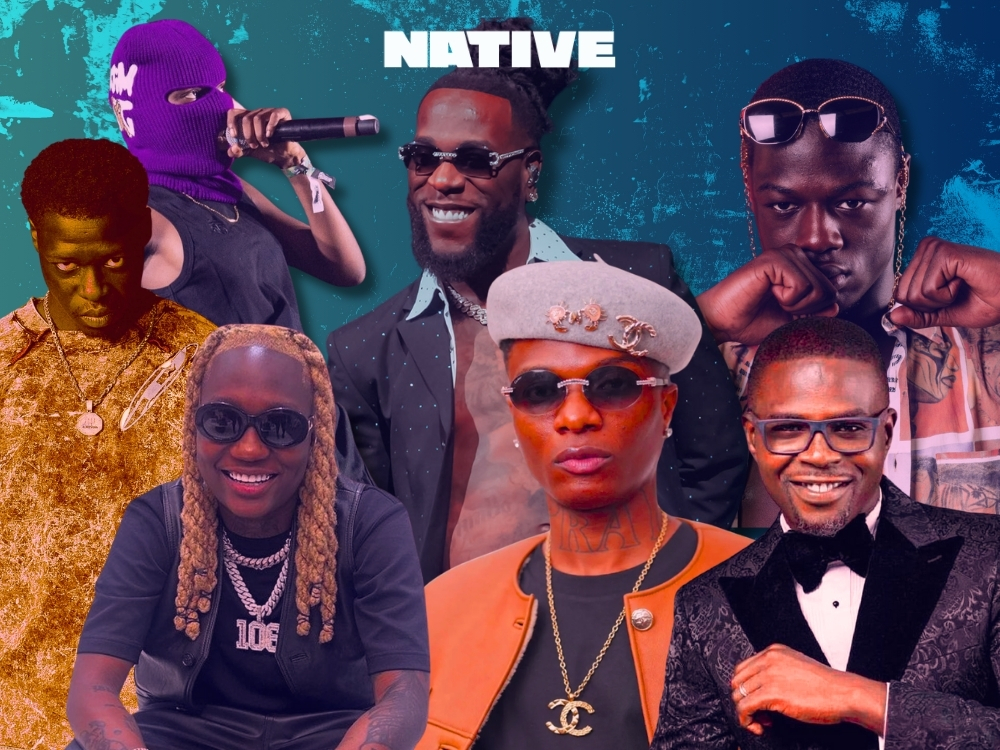
They have not only threaded a path down mainstream success in the country, but have given a voice to artists alike across the continent, stretching their impact far beyond preconceived notions. It is now commonplace in today’s world for African artists, veteran and new, to snag features or collaborations across international projects or receive grammy nominations across several categories. And we have Davido, Burna Boy and Wizkid, as reached by a consensus of listeners and connoisseurs across the country, to thank for this. 

In recent times however, the Big 3 have had to make room for new entrants bursting through the seams with a gradual yet resounding impact on the fabric of Afropop. As expected, various music heads, fans and stakeholders in the industry are so eagerly in search of the next big thing that we fall short in recognising an Afropop renaissance until it is in almost full effect. When the likes of Davido’s Tekno-produced “If” were garnering unfathomable levels of attention and formally reintroducing the international audience to the world of Afropop, Rema’s “Dumebi” was getting ready to take the country by storm.

Then, 18-year old Jonzing World signee debuted into the mainstream with what many would now consider a Rema classic, after a series of freestyle videos circulated the internet. A young man on a mission to venture away from the one-hit wonder route, Rema tuned out the voices of various naysayers with a 4-track eponymous extended play alongside befitting follow ups, ‘Rema Freestyle EP’ and ‘Bad Commando.’ These hit-stacked offerings earned him the ears of many fans within and outside the country for his varying influences and refreshing takes on Afropop. 

It still seems surreal that the Benin-born crooner has just recently taken on one of the largest world stages, London’s 02 Arena in a remarkable sold out show. While bracing  himself to deliver a once in a lifetime performance to 20,000 ravers, Rema takes a moment to recognise one the greats who brought him out on the same stage two years ago. For any fortunate attendees or online streamers like the rest of the world, we witnessed an almost eye-watering moment when an enthusiastic Rema joined Burna Boy on stage to sing to a zestful crowd, already chanting the lyrics of his biggest song at the time, “Dumebi.”

Only two years have passed and Rema now takes the stage solo to deliver memorable performances stacked with back to back hits from his robust discography, reiterating the famed phrase at the start of all his tracks, “another banger.” Prior to this, Rema had not only released a glorious debut album armed with unrivalled hits of far reaching impact and replay value, he had also performed several sold out shows and taken on stadium tours across the world including India. All the while, snagging the record as the longest standing African song topping the Billboard Hot 100 charts, after the multi-platinum Selena Gomez-assisted “Calm Down (Remix)” dominated our soundwaves for 35 consecutive weeks since peaking at No.3. So when the 23 year old star accurately anoints himself the Prince of Afrobeats and the Jay-Z of our generation on “HOV,” who are we to say otherwise? 

In a sense, predicting which prodigies or as Davido cheekily described, “new cat,” will live up to the expectations set before them has become a focal touchpoint on its own. It seems like every other day that one music head or X user with minimal knowledge in music or its steep history, comes out to crown the recipient of any noteworthy achievement “The next [insert veteran here].” Oftentimes, it is based on tried and true similarities in creative approach and other times, it is simply because both acts are from the region, create within the same genre or downright breathe the same air. As much as the earlier is the preferred basis for comparisons, such conversations still prove to be a double edged sword where some listeners fail to draw a line between inspiration and flat out imitation. Fortunately, the likes of Rema have wholeheartedly embraced inspiration from their forerunners, all the while exploring innovative ways to build on the groundwork laid before them.

Alongside Rema but somehow on the other end of the spectrum, Tems is steadily building a cult following within the soulful soundscape with her enchanting vocals and inimitable star qualities. While her instantly recognisable vocals strike a chord within listeners from across the globe, her charm and impact beyond what the larger audience can perceive has earned her the acclaim she receives today. Since her formal introduction with “Mr Rebel,” Tems’ ethos remains staying true to herself. Back in 2018, the youth-led underground scene built a fan base off morphing together sounds that strayed away from the mainstream airwaves at the time. Given the pressure that comes with giving into what’s hot at the moment, Tems seemingly cracked the code and prioritised longevity above all else, using her time to sharpen her vocal as well as writing and production skills.

As we eagerly anticipate her debut album, following the hit of faith-led crowd favourite, “Me & U,” Tems remains one of the most sought after collaborators of our time. Her vocals on Wizkid’s monster single “Essence” earned her the global ears she had long been preparing for, and as quickly as the records were broken and she graced various world stages, it was clear that Tems is more than ready to bask in the limelight of her tenacious efforts. Having recognised her superpower—her voice—Tems’ persistent journey down the path of truth led her to writing for Rihanna after over half a decade away from the music industry and becoming a Grammy award winner for a sample lent to Future off her debut EP, ‘For Broken Ears,’ to name a few.

Perhaps the biggest draw of this newer big three is in how distinct and musically disparate they are from each other. The older big three were unique, too, each differing in their imagination and how they used their skills in making music, but you can see the intersections without squinting too hard. Think Rema and Tems operate on different poles? It almost feels like Asake is an antithesis. He’s a pop savant whose strongest affiliation is with the deeper suburban parts of Lagos, a man who primarily sings—or sing-raps if you will—in Yoruba, sometimes stacking aphorisms breathlessly, to the point speakers of the language might be dizzied.

Asake’s time started at the dawn of 2022. Before that, he was a cult superstar in Uni, then an up-and-coming artist who scored a street hit but couldn’t convert that attention into any real momentum. Now signed to the label founded by the greatest indigenous rap artist in Nigerian music, Ololade Asake has vaulted into the uppermost echelon of Nigerian pop. The recipe: Stupendous hit-making prowess. If you conduct a 10v10 battle of the hits for artists who broke out in the last five years, very few of them are leaving without being utterly embarrassed. Asake hasn’t just caught up with the new vanguard of Nigerian pop stars; he’s leading the pack by more than a few paces.

No motion is being wasted on this prolific streak, evidenced by two albums and an EP in 18 months. Both albums are classics-in-the-waiting, tightly-crafted endeavours packed to the ears with hits. And it’s not just at home: Within nine months, he went from the O2 Brixton to the O2 Arena. Within weeks, he was at the Barclays Centre. Just the other day he became a first-time Grammy nominee, and his label boss is with him for the ride. That he’s operating at the speed of a blur doesn’t make it seem like any of this is unsustainable. It would be foolish to doubt that there are dozens more hits to follow and more than a couple more great albums, setting the runway for one of the greatest careers Afropop has ever seen.

That’s the beauty of it all. These stellar acts all at varying points in their career with ranging years of experience are using their voice to tell the stories that really matter all in their own ways. One song, feature, collaboration, production or writing cred at a time, these newcomers—and I use this term loosely—are expanding the scope of sounds emanating from these parts while representing Afropop’s embryonic yet promising future. And that isn’t to say the OG’s are still leading the game and stacking over the building blocks they once cemented, but the new class of Afropop geniuses have shown they are willing and able to take over if they decide to hang their boots.


Additional words by Dennis Ade Peter.


ICYMI: ASAKE’S TIME

Teni details her anticipated sophomore album, ‘TEARS OF THE SUN’

For the Nigerian pop singer Teni, authenticity and exuberance are the core tenets of who she’s shown herself to be. In the just over half-a-decade she’s been around, it’s never felt like there’s a persona being sold—what you see is what you get. Between songs and her regular dispatches on social media, Teni has drawn listeners and fans into her triple XL life through sunny melodies, random in-studio moments, a blasé sense of style, jokes—lots of jokes—and glimpses of vulnerability. The Girl Next Door continues to flourish as one of the warmest, realest pop stars around.

Two-plus years after her well-received debut album, ‘WONDALAND’, Teni is set to drop her awaited sophomore album. Announced recently, ‘TEARS OF THE SUN’ is scheduled for release this Friday, November 17, a momentous point in a journey that started off six months back. In May, she released the LP’s lead single, “No Days Off,” a bouncy slapper produced by Genio Bambino. A member of the Monster Boys, the collective primarily known for helming the forward-facing music of alté luminary Cruel Santino, Genio lends a distinct sauce that’s novel for Teni, but you wouldn’t know it from how her sonorous voice bends into a melodic, double-time rap flow.

In her exuberance, Teni has never shied away from trying new things, always looking to work with the brightest sonic hues she can find. It’s a testament to her charisma that she never gets drowned out by her choices—even on the very few occasions when things get garish. ‘WONDALAND’ benefitted from that all-out maximalist lean, turning out standouts like the Davido-assisted chart-topper “FOR YOU,” the breezy folk-pop jam “MOSLADO,” and the suggestively raunchy, fast-paced “INJURE ME.” While she took a break after her debut album dropped, partly due to health-related reasons—a life-threatening throat infection—she clearly hasn’t lost her verve for creating from a place of joy, conviction and intermittent introspection.

Off ‘TEARS OF THE SUN’, Teni has shared two more singles, which culminate in an indication to deliver an album with thematic range and musical versatility. The Blaise Beats-produced “Lanke” is a feel-good cut laced with the winking lyricism that defines her romance-themed songs, while the more recent “Malaika” is spiritually-informed, complete with a video that nods to white garment churches and their affinity for sporadic praying events near and in large bodies of water.

In an Instagram post dialling up expectations for the album, Teni wrote: “When you finally get to hear this album, I want you to listen from your heart, embrace it with your soul and I want you to know, I gave it my all, spoke my truth, straight from my heart, against all odds.” No one can ever accuse Teni of dialling it in, even when she’s freewheeling, so it makes that she hopes to receive keen attention from listeners. Similar to her debut LP, ‘TEARS OF THE SUN’ is mostly a solo affair, with the just two guest appearances from Nigerian rap star ODUMODUBLVCK and French-Cameroonian singer TayC. It will feature 16 songs in total and, hopefully, another singular, resonant statement of authenticity and conviction.


View this post on Instagram


A post shared by TENI OTG (@tenientertainer)

Presave ‘TEARS OF THE SUN’ here.


ICYMI: TRACING TENI’S SONIC EVOLUTION FROM “FARGIN” TO “LANKE”

Track-by-Track: Tolibian walks us through his debut EP, ‘Alien’

Unlike many young artists who dream of scoring multiple hit songs and sold-out shows, Tolibian didn’t start making music with lofty ambition. “I found myself doing music, it’s not something I learned,” the Ilorin-raised singer told The NATIVE fairly recently via a Zoom call. “I did not have any broad knowledge about it. So I see myself like an alien, I see myself like a stranger in the midst of people doing music.” In that sense, it’s fitting that his new debut EP is titled ‘Alien’, an introduction to Tolibian’s exuberant and hyper-realistic take on street-pop.

Stemming from a string of viral song covers, especially one of Buju’s “Peru (Refix),” itself a cover of the Fireboy DML smash hit, Tolibian became an online sensation, the meme-worthy nature of his nasally croons endearing him to listeners looking for a balance of comic relief and tangible craft. In the few years since, he’s been building his catalogue as a growing artist, especially showing his chops as a storyteller on his biggest song yet, “Abaya Palava” and its attendant remix with singer Raybekah.

With ‘Alien’, Tolibian presents his initial vision for making relatable music, packing his lyrics with everyday emotions, especially the desire to live a full and fulfilling life, while the mix adds a cruddy charm to the colourful musical direction. “The EP title ‘Alien’ is all about me embracing my uniqueness,” he candidly offers. “The uniqueness is the ability to do music even after the fact that I did not learn it or have any proper understanding about it and breaking free from societal norms and celebrating my individuality. So I’m trying to let my music transport listeners to a world where they can truly be themselves.”

Below, Tolibian walks us through the four succinct songs that make up the eleven minutes of ‘Alien’. The conversation has been lightly edited for clarity.

“ALIVE”

I’m going to start by saying being a musician on the journey to be known is a roller coaster of emotions. It is a mix of excitement, hard work and perseverance. You face a lot of challenges and setbacks on the journey to be great and on the journey to be known but also incredible moments of joy and fulfilment when you connect with your audience through your music. So one just has to stay true to yourself and keep creating. I never give up. So I called “Alive” a real anthem for those going through the hustle, for every hustler because it is all about acknowledging the struggles you’ve been through but also having that hope and belief that as long as we are alive, better days are ahead. 

“DAY BY DAY”

The lyrics for “Day By Day” are already so powerful and inspiring if you listen to it. That’s the new single I just dropped today. The song speaks to the struggles faced in life and the importance of staying strong and having faith. It is all about taking life one at a time, day by day staying true to yourself and not letting anyone bring you down. The lyrics also highlight the love and support from my mother’s prayer, which I call a beautiful testament to the strength of family. So let this music be a reminder to keep pushing forward and embracing the journey and never giving up. That’s what “Day By Day” is all about. 

“PARTY EGO”

“Party Ego” is all about not settling for less and embracing the YOLO mentality, I [say] in my lyrics and I quote, “I’m glowing like the city light/And I’m looking good on my own/So no pressure, just doing my thing/And I’m cutting ties with negativity.” That’s just what the song is all about. 

“HAPPY”

Happy” is a breakthrough song. Anybody listening to “Happy” should just feel that breakthrough and manifest greatness and all that kind of stuff. 

“DEJA VU”

The lyrics in “Deja Vu” speak to the power of self-belief, resilience and staying true to One’s self. There’s a line in the song I said, “Multiple is a times two.” So that line is more like a mantra for doubling my effort and achieving greatness. So my words are to remind us to brush off negativity and keep pushing forward. Most especially, trust your craft and never give up, keep pushing forward.

Listen to ‘Alien’ here.


Interview by Uzoma Ihejirika.


ICYMI: A 1-LISTEN REVIEW OF SHALLIPOPI’S ‘PRESIDO LA PLUTO’

NATIVE Exclusive: Muyiwa Awosika’s ‘Harmattan’ is a gripping tale about survival

Written by Uzoma Ihejirika.


In Muyiwa Awosika’s latest short film ‘Harmattan,’ a group of young recruits are vying for a spot in the Nigerian army when they are stung by a scarcity of water. In the face of adversity, each character embarks on a journey that results in a confrontation with their fears and flaws. Warri (Riyo David) and David (Chibuikem Chris) are the lead characters whose paths intersect, morphing from allies to enemies—both victims of the strict, rigid and soulless atmosphere of the training camp. ‘Harmattan’ which premiered at the recently concluded African International Film Festival (AFRIFF) is a story steeped in Awosika’s interest in the dark side of people.

“I have noticed that in situations or environments where there is a scarcity for resources, a scarcity for opportunities or any sort of scarcity, it brings out the survival instinct within people, and that survival instinct can completely trample on the other person,” he shares with the NATIVE. “And I think especially being Nigerian, you see that a lot. In a situation where resources are scarce, you get a lot of desperation, and a lot of behaviours which arguably wouldn’t be there if it wasn’t for that scarcity and that’s completely top-down and bottom-up.”


View this post on Instagram


A post shared by Muyiwa Awosika (@muyiwawosika)

The idea for ‘Harmattan’ came to Awosika’s mind after his own personal experience at the mandatory one-year national youth service, required of all Nigerian university school leavers and graduates. Awosika had served in Adamawa State; there, he befriended a military drill sergeant who piqued his interest. The drill sergeant, too, took a liking to Awosika. They spent their time in conversation, with the drill sergeant recounting his life stories: he had only joined the army because they offered to fund his university education. Through his friendship with the drill sergeant, Awosika earned him access to other officers in the camp and soon began studying their methods and way of life.

Awosika reminisces fondly about this period in his life and shares that going into service in Adamawa and interacting closely with armed officers gave him a different perspective. After his service year in Adamawa, Awosika, who kept in touch with the drill sergeant, returned to Lagos but the stories of water droughts and food scarcity in military camps he heard and the activities he witnessed at the Adamawa camp spawned the idea for ‘Harmattan.’ “I was like, ‘What would happen if these groups of people ran out of water? How would that shift the dynamic in an environment where everything is supposed to be about brotherhood?”

Awosika’s entry into filmmaking began at a young age. As a child, his parents’ DVD film collections were his first portal into the world of films. He also held a love for photography, enjoying a fresh sense of his surroundings through the camera lens. He paid attention to the commentaries and interviews involving film directors and actors as they shared insight into their works. Also a writer, too, his favourite filmmakers are film directors who also write, such as Ousmane Sembène, Hirokazu Kore-eda, Billy Wilder and Abbas Kiarostami.


View this post on Instagram


A post shared by Muyiwa Awosika (@muyiwawosika)

“I just think there’s something about you not wanting anyone fucking up your work or your idea,” Awosika says about his love for writer-directors. “If I wrote it, I just feel like it’s just right for me to direct it because when I’m writing, I’m visualising everything. I know what all the lines mean to me and the story. I know the story better than anyone else.” In 2021, Awosika wrote and directed his debut short film ‘Nine and a Day,’ which won the Best Editing award at the Falcon International Film Festival in London.

Unlike ‘Nine and a Day,’ which was shot in the UK, ‘Harmattan’ was shot in a village just outside of Ibadan, Nigeria. The training camp is an integral character in ‘Harmattan,’ with its dry and dusty land and dilapidated buildings. Its basic formation is the ingredient for the fear and anger and helplessness that grip the characters. Awosika and his cast and crew spent four days on set, blending into the setting for a realistic portrait of the story’s world. As an independent filmmaker, Awosika revealed that a large part of the success of the film was down to his executive producers (Funmbi Ogunbawo, Wale Davies, Finbar Ussher, Amir El Mero and Sam Kalati) and producers (Ebunola Agboola and Amir El Mero), who believed in the work enough to put money into it.

The opening scenes of the 17-minute ‘Harmattan’ situate the power of the film in its visuals and the unspoken tension between the characters and their environment. Cinematographer KC Obiajulu captures the characters with minuscular detailing: the huffs and puffs as they draw water from a well, their laboured breathing with patched throats after a gruelling workout and the tense switch on their faces between obeisance and indignation as they listen to their drill sergeant (played by Ani Iyoho) bark orders. Warri and David, on whose shoulders the film’s story rests, do more heavy lifting with their facial expressions than their words.

“In the auditions, I was looking for a sense that they [Riyo David and Chibuikem Chris] weren’t acting, that it felt more like a naturalistic performance or naturalistic vibe,” Awosika says. He also admits that he was looking for a fresh and diverse cast that was capable of communicating emotions non-verbally through their gestures or eye contact. “If an actor was doing too much then I knew they wouldn’t be right for the part. If they had this sort of stillness but you could see all the emotion and all the thinking within their eyes then I knew there was something there.”


View this post on Instagram


A post shared by Muyiwa Awosika (@muyiwawosika)

Awosika’s ‘Nine and a Day’ was a semi-autobiographical tale similar about a boy connecting with his biological father. While ‘Harmattan’ has smatterings of personal experiences, Awosika was more concerned about the complexities of male relationships, and how sometimes violence and discipline can co-exist, and even be craved for. On the film’s set, Awosika communicates his vision through boundless passion, refusing to just remain behind the monitor to give directions but staying with the actors on the scene. This mode of operation is greatly helped by the massive effort put in during the pre-production phase, where Awosika and the actors delve into the characters’ backgrounds, story arcs and motivations.

“As a director, I think my job isn’t to micromanage everyone’s performance, and it even goes down to the crew,” he says. “If we’re collaborating, it’s because I trust your instincts. A lot of it is just making sure that we’re all still remembering the world that we’re in: Where did we come from? Where are we going? Why are we doing this? I’m a believer in asking as many questions as possible, but the beauty about questions is that you don’t have to answer them.”

Awosika’s favourite characters are the ones that elicit conversation and tug at the viewer’s judgment over what is good or bad. “I like characters that lie. Not that I’m a liar. But I think they’re interesting,” he says. Some of those characters include Johnny Boy (Robert De Niro) in Martin Scorsese’s ‘Mean Streets’ (1973), General Buck Turgidson (George C. Scott) in Stanley Kubrick’s ‘Dr. Strangelove’ (1964) and Ibrahim Dieng (Makhouredia Gueye) in Ousmane Sembene’s ‘The Money Order’ (1951), based on his novel of the same title. Those characters represent people who lead lives influenced by their surroundings, situations, or motivations, however conflicting they appear.

‘Harmattan’ will premiere in Switzerland at the Winterthur International Short Film Festival in November and has also premiered at the Africa International Film Festival (AFRIFF). There are also plans to adapt ‘Harmattan’ into a feature film, as Awosika believes there are “a lot of areas [in the story world] to explore.” He’s also writing a new feature film and is close to the pre-production stage for a new film slated for shooting in 2024.

“Everything about this film had to be super authentic,” says Awosika about Harmattan. “I didn’t want anything that just felt off or didn’t feel real so everyone you see on screen, [felt] like they should be part of that environment. Authenticity was at the heart of the story.”

Follow Muyiwa Awosika on X here.

Featured image credits/NATIVE

Spotify has announced an update to its royalty terms but its significance is far more than just money

In its inception, streaming was a reactive measure. At the turn of the century and as the ‘00s wore on, digital bootlegging became ultra-ubiquitous, as the internet became a mainstay and pirating sites provided unlimited access to any and every song with a digital presence. As long as it had been recorded and publicly shared or archived on the internet, the public had access to it. As played out in Netflix’s drama miniseries, ‘The Playlist’, the unbridled—albeit slightly buggy—access to bootlegging almost any and mostly all music inspired Daniel Ek to found Spotify, undeniably the leading platform in global music streaming.

With the advent of Spotify, and similar streaming sites and apps, the music industry had to conform to an online piracy problem that was eating into potential profits. Now, streaming has become the primary means of music listening: Any internet-supporting device and a few clicks, and you can listen to millions of recorded music. For the vast majority of the listening public, we’re living an absolute dream; for many artist, it’s relative.

One of the main tensions in the ‘The Playlist’ revolves around artist compensation. In the show, the fictional character Bobbi T takes Ek to task on Spotify’s royalty model, a side of the show that asks questions without giving viewers any clear cut answers even through a time jump into the near future. It’s understandable, because there really isn’t any satisfactory solutions—except scrapping streaming and forcing listeners to go back to buying music, which won’t happen. At the moment, Spotify, as with the several popular streaming platforms around, employs the pro rata system in paying artists, dividing the pool of incoming revenue according to the number of plays songs get. On the face of it, that’s quite uncomplicated.

At the end of every month, the streamer gathers income of subscribing listeners and ad-generated revenue, pulling out operational cuts like taxes and billings, and divides the net revenue amongst rights holders—labels, publishers, distributors—based on the proportion. Basically, a song gets a fraction or percentage of the monthly net revenue in relation to the total amount of streams from listeners in a month. So, if a song by artist Y racks up a million streams, that number is divided by the total streams in a month, and the resulting fraction is factored against the total money to be divided.

Simple math, right?

While this payment model means pay-outs differ on a month-to-month basis, calculations have cited about $0.003 to $0.005 per stream, on average. This means it would take somewhere around 200 plays for a song to earn five cents. Compare that to digitally buying music, where albums sell for around $9.99 and singles sell for around $1.79. So, a song has to be played by a listener about 8,000 times to equal the value of buying the song. I can place a healthy bet that almost everyone who streams music has yet to play a song up to 8,000 times.

Amidst the unending conversations on whether the payment method in streaming needs to be fixed, Spotify has made a momentous announcement: A new minimum threshold for streams before any track starts generating royalties. Starting from Q1 2024, a song will have to be streamed at least 1,000 times before it can start earning money for its creators. According to reports, this new change is one of three to be implemented in order to “combat three drains on the royalty pool.”

The other two: financially penalising distributors when fraudulent activities is noticed on uploaded tracks, and a new minimum length of playing time for non-music “noise” tracks to generate royalties. For the former, it’s a measure to further combat stream farming, while the latter is an attempt to crack down on those who upload ambient tracks in fragmented forms while taking advantage of the 30-second revenue trigger for songs. According to Spotify, all three changes are a way to redirect the drains in the royalty pool to “working artists.”

Of all three measures, the minimum streams threshold for songs is brow-raising, and not exactly for positive reasons. While the details aren’t altogether neatly ironed out, it’s been reported that the Spotify plans to exclude songs that don’t reach the 1,000-minimum annual threshold will have their potential revenue reallocated to more popular stuff. It might seem minuscule, considering that the songs that fall within this category make up about 0.5% of the music on Spotify and a few million dollars in the revenue pool, but it’s a sinister approach in taking from the meagre and giving it to those better off.

Undoubtedly, this impending measure is going to affect independent artists. There are millions and millions of artists and creators on Spotify. There are two opposing ways to look at it: That number is an effect of the low barrier of releasing music in the streaming era, but the oversaturation makes it hard for many artists to gain modest to wide listenership. Sure, there are a lot of artists with gaudy to respectable number of Spotify, spotting millions and thousands of monthly listeners. The numbers their songs rake in are reflective of that. At that, there are also those with few listeners and not that many streams. What this minimum threshold rule threatens to do is determine their art as worthless, simply for not being popular enough.

In an interview with Music Ally back in 2020, Daniel Ek basically told artists to work harder. “Some artists that used to do well in the past may not do well in this future landscape,” Ek said. “You can’t record music once every three to four years and think that’s going to be enough. The artists today that are making it realise that it’s about creating a continuous engagement with their fans. It is about putting the work in, about the storytelling around the album, and about keeping a continuous dialogue with your fans.”

The immediate reactions from many artists to those statements were far from kind, with many citing the paltry compensations they receive from Spotify. The interview and subsequent rejoinders frame the relationship between artists and streaming platforms—not just Spotify. Considering that the Swedish streamer is one of the least paying platforms for music, none of that exchange feels particularly unwarranted. Now, with this minimum threshold measure, Spotify isn’t just dictating the terms of payment, it’s pretty much telling artists that they have to meet a criteria that goes beyond making and dropping music.

From a more parochial standpoint, it could be even more biting. In Nigeria, Spotify’s premium tier is pegged at N900, which means the net revenue pool is significantly less for many nascent (and “unpopular”) artists, especially when you factor in that paid streaming is still a modestly growing phenomenon. Also, without official numbers, it is difficult to know how many listeners are subscribed to Spotify, and in comparison to the earlier entrance of Apple Music and the rapid ubiquity of Audiomack, its presence can’t exactly be qualified as dominant.

For a rising or not-so-popular Nigerian artist who has to promote across streaming platforms, there’s the real possibility that songs might not crack over a thousand plays on Spotify alone, which means losing out on revenue, even if it’s very tiny. I have a new indie rapper friend who dropped an EP a while back, and I remember that he made a joke that he could order a plate of food worth about N3,000 with his quarterly check from streaming. Now, that amount just got smaller, since only one song of his has crossed the thousand stream milestone.

The truth is, making money off streaming isn’t easy—especially when you’re not Drake, Taylor Swift, BTS, and them. For the underground acts and the most unpopular of the unpopular artists, these tiny payments are a form of validation, one that helps the artist keep creating while holding on to a dream. Even for those who might be creating recreationally, it’s still flat out unfair that their work won’t be deemed as having any worth, simply because they’re not playing the popularity game Spotify has inevitably thrust on them and set the rules for.

Many people have already called on Spotify—and other streamers—to adopt a better, ‘artist-centric’ model, which is artists directly earning out of the subscription of listeners who play their music. That will be more complicated than the current pro rata system, and even more aggressive, as seen in the impending partnership between Deezer and Universal Music Group. There’s no ideal fix as far streaming is concerned, but deciding against paying musicians and song creators based on arbitrary number feels unethical. Yes, whatever is popular will and should earn the most, but every stream has a value, and its value should be assigned to its creator.


WHERE WERE YOU: SPOTIFY WELCOMES CREATORS TO STREAM ON 2023

Kah-Lo, Brazy & the women inventively fusing rap and dance in Nigerian music

“You ask what it is I’m doing/Hip-Hop house, hip-hop jazz/with a little pizzazz,” the great Queen Latifah rapped on her cult classic slapper, “Come into My House.” Off her 1989 debut album, ‘All Hail the Queen’, the song’s make-up—giddy raps over the four-on-the-floor bassline of House Music—wasn’t exactly novel, but it’s undeniably a seminal entry in a then-nascent, hybrid musical style. As a member of the Native Tongues collective, Queen Latifah was in close proximity to the Jungle Brothers, whose 1988 hit song, “I’ll House You,” is widely heralded as a marquee point in the early symbiosis between rap and House music.

Also comprising the critically acclaimed, influential groups De La Soul and A Tribe Called Quest, the Native Tongues collective was best known for turning out personal and socially introspective raps, with an emphasis on spiritual black consciousness. Their musical choices were just as outré, mainly influenced by Jazz from a couple of decades before the ‘80s and ‘90s. They also opened up their music to inspirations from across styles pioneered by black artists before them, evidenced by the occasional but enduring foray into House.

Native Tongues affiliate Monie Love dropped “Grandpa’s Party” in 1990, another classic example of a rapper taking to House Music production. On the song, she pays homage to Afrika Bambaataa, the Hip-Hop pioneer who sampled German electronic group Kraftwerk’s “Trans-Europe Express” on his 1981 hit song, “Planet Rock,” which peaked at No. 3 on the Billboard Dance charts. Following the RIAA Gold-certified success of Afrika Bambaataa’s single, more than a handful of rap artists in the ‘80s tried their voice at house, electronic and varying forms of dance music. With Monie Love and Queen Latifah, alongside Salt-N-Pepa with their 1987 smash hit, “Push It,” women in Hip-Hop firmly entered this side of fusion in rap.

In 2014, Harlem-raised rapper Azealia Banks dropped ‘Broke with Expensive Taste’, her kickass debut album where her silver-tongued flow and sleek melodies elegantly strutted over a wide range of production choices, from the shimmery thump of House and UK Garage to the exotic swing of Caribbean pop, Merengue and more. Even though ‘Broke with Expensive Taste’ was often labelled ‘Hip House’, it felt like an antithesis to most of the music lumped within the same category. Compared to uber-popular songs from artists like Flo Rida and Pitbull, Azealia embraced a grittier, panoramic approach, rather than co-opt the now overly mainstream (read: white) tilt of EDM, Tropical House and other related genres.

House music originated as the term for the music that was played at underground parties in the ‘70s and ‘80s by inventive, pioneering DJs like Frankie Knuckles, Larry Levan and more. Before House, Disco dominated mainstream music in the mid to late ‘70s, but its roots in the ballroom culture of marginalised LGBTQ+ communities wasn’t embraced. Its decline was swift, driven partly by racist, homophobic and misogynistic pushback. House music rose from the ashes of Disco. While it has splintered into many subgenres and is a foundational part of many hugely popular dance music styles, its core as a black-originated, queer-championed genre remains central—even if widely overshadowed by how much it’s been co-opted.

Explicitly paying homage to the roots of disco and house is part of what gave the iconic singer Beyoncé’s 2022 album, ‘Renaissance’, its curatorial excellence. Without any hint of hyperbole, “Alien Superstar” and “Thique” are some of the most galvanising rap-dance fusion songs, this side of Queen Latifah’s classic song. Released shortly after Drake, unarguably the biggest rap artist of the last decade and counting, surprise-released his frictionless, house-indebted ‘Honestly, Nevermind’, Beyoncé’s epochal effort is further proof that women—black women—are constantly setting the bar for excellence in rap-dance crossovers.

That much is true in Nigerian music. Take Kah-Lo, who scored a global hit with “Rinse & Repeat,” a collaboration with British producer Riton. The song reached No. 13 on the UK Singles Chart and snagged a Grammy nomination for Best Dance Recording in 2017. On ‘Foreign Ororo’, the 2018 joint project with Riton, Nigerian pop superstars Davido and Mr Eazi (twice) are the marquee features, pulling them into previously uncharted territory. (You could make a case that working with Kah-Lo partly influenced Eazi’s decision to make a dance album—as Chop Life Soundsystem with DJ Edu—where he mostly raps over Amapiano beats.) Swerving between rapping and singing, Kah-Lo’s bubbly energy is gilded by a very Nigerian identity in her cadence, delivering Pidgin-laced quips over Riton’s UK Funky and Techno-driven beats.

A few months back, she released her debut album, ‘Pain/Pleasure’, a 14-track tour through self-affirming experiences and a showcase of curatorial growth. Given the width to work with multiple producers, she toys around with Disco-Funk (“Unbothered”), Afrobeat (“Psycho”) and Amapiano (TMXO-produced “Runaway”), in addition to her affinity for uptempo house bangers. While ‘Pain/Pleasure’ features significantly more singing, Kah-Lo often dips into rapping not just as a variety gambit, but also when she’s making statements. On “Play,” the bridge is the only part that is rapped: “If you like and I like you/Why waste time, what you wanna do?…A bitch like me didn’t come to play.”  It’s fun and assertive, same qualifiers that extend to the money-obsessed “fund$” and the hubris-packed “GD Woman.”

From a quality standpoint, Kah-Lo has it all covered. Internationally, there’s a proof of concept commercially; locally, acceptance is relatively low and slow. “I went from people not knowing or considering that I was Nigerian or that I was making really great music, to being on the cover of three national newspapers,” she told The NATIVE shortly before the release of her album. Often, Nigerians are known for embracing other Nigerians achieving notable feats outside the country. Kah-Lo’s Grammy nod and the success of her work with Riton turned some heads, especially in music media and amongst curious listeners. For the casual listeners, it has yet to hit.

Part of that obviously comes down to the uniqueness of Kah-Lo’s music, in comparison to the dominant, mid-tempo styles ruling Nigerian pop at the moment. At that, conforming for a chance at immediate wider success isn’t on mind. “You know when Western artists try to make Afrobeats and it sounds just off. That’s what it sounds like when I try to make Afrobeats,” she says. It’s an incredibly candid admission. In it, you can also glean her understanding of the Nigerian mainstream’s aloofness to dance-fusion efforts. As she relays in the interview, authenticity matters most to her; insistently rapping and singing over varying types of dance production proves that.

While the acceptance for rap-dance fusions, especially from women, is still niche, there’s a proven potential for virality. About a year ago, Nigerian-raised, UK-based Brazy grew in popularity for her breakout song, “Attends,” a streaking banger defined by the rapper’s intoxicating exuberance. As with most things that go viral these days, the catalyst was TikTok. Already buzzing pre-release, with Brazy performing the song on a couple of stages as a preview for familiar fans and new listeners, it didn’t take long for fun, User-generated content to drive its hype.

Prior to “Attends,” Brazy was best as the introductory voice on Cruel Santino’s ‘Subaru Boys: FINAL HEAVEN’. Before that, she had a modest output of singles which, taken together, show her as a curious experimenter who’s unrelenting at flexing. The rudiments of her dance fixations trails back to “SELECTA,” a bubbly UK Funky cut. With “Attends,” her music is more complex, full-bodied and partly taps into Nigerian culture. Prior to the song’s creation, she told The NATIVE that she had been “listening to a lot of Brazilian Funk, French Buoyon Rap, Reggaeton, Dancehall, Trenches Music and so many more random selections.”

The ‘Trenches Music’ Brazy is referring to is the hyper-popular style of Electronic Music originated from the hoods in Lagos. Also referred to as ‘Cruise’, it is guttural and chaotic, thumping drums meets synth melodies meets loud snares meets street lingo and popular catchphrases culled from social media. Pioneered by DJ/producers like Ajimovoix Drums and Tobzy Imole Giwa, the style is distinct—you know it immediately you hear. Cruise is the du jour sound of street raves in hoods around Lagos and surrounding southwestern Nigerian states.

Cruise evolved from the ‘Shaku Shaku’ wave, kick-started circa 2017 with the viral popularity of song’s Slimcase’s “Legbegbe,” DJ Sidez’s “Oshozondi” and Idowest’s “Shepeteri.” Around the same time, the latest mainstream incursion of street-hop and street-pop began to take shape. As admitted by Slimcase to The NATIVE, his early efforts were inspired by Gqom, the South African dance music variant that grew in popularity over the mid-2010s. The floor-shaking bass thump and scuzzy melodies of Gqom was the foundation for those Shaku Shaku hits and, over time, the template was remodelled by top producers like Rexxie and Kel-P (“Killin’ Dem”) to give it a distinctly Nigerian feel and an accessible touch.

The raw, unpolished trademark of Cruise music holds the essence of Shaku Shaku before it went mainstream and its edges were filed out, but ratcheted up a few more degrees. Even though it may feel voyeuristic and extractive, its gritty appeal as a source of inspiration for a curious artist like Brazy, who purely enjoys the music without being entrenched in the culture, is understandable. On her new self-assured and sexy single, “OMG,” the influence of Cruise is apparent, as polished as the sheen is.

Brazy has christened her sound ‘Afro Future’ and/or ‘Afro Sexy’. It continues the controversial attempts of Nigerian artists to differentiate themselves by naming their style with a word and the prerequisite ‘Afro’ prefix. To be fair, Cruise Pop-rap doesn’t roll off the tongue nearly as good as Afro Sexy. If you really think about it, as wildly different as they are, there’s a shared musical basis between Brazy and an artist like Shalipopi, who recently named his style ‘Afro Pluto’. Obviously, Shali’s affinity for production streaked by Amapiano’s log drums is a distinct trait, but his melodic talk-rap style is a pop-rap take on dance music, albeit a style that’s overly pervasive in Nigerian pop at the moment.

Anyways, we’re talking about women doing unique things here.

A few weeks ago, rap artist SGaWD shared a tweet with an accompanying video, featuring an unreleased song, stating that she might have just founded a new genre. She called it ‘Alté Mara’, which “sounds like R&B, Pop, Mara, and Makossa.” For further description, Mara is “a Nigerian style of EDM.” Asides the fact that Mara is basically another word for Cruise music, the hybridisation does warrant excitement. The snippet slaps. To be a little cynical, the music still falls within the Cruise-inspired spectrum. Back to the excitement, though, SGaWD’s relationship with dance music as a rapper and singer is well-worn.

In August, she released “Dump All Your Worries on the Dancefloor,” a GMK-produced House thumper that immediately evokes a neon-bathed space. “Brace yourselves, I’m the hottest in the room,” she says right at the top, her impeccably smooth, fast-paced flow very Azealia Banks-like. More specifically, it’s reminiscent of “212.” A year before this fairly recent single, she collaborated with producer Ronehi for “Telfar,” effortlessly oozing charisma and sex appeal over a jumpy yet utterly cool beat.

Of consequence also is “Shayo Galore” with Wavy the Creator, a speaker rattler that celebrates alcohol-assisted good times. It seems like there will be more dance-rap fusion releases from SGaWD and while, like Kah-Lo, wide acceptance isn’t guaranteed, a string of songs or maybe projects might make ‘Alte Mara’ an actual thing.

For Aunty Rayzor, her worries aren’t a nominal definition of her sound; the Lagos-raised rapper just wants to bruise her way through beats. For the oblivious, Rayzor raised eyebrows after appearing on a viral freestyle session hosted by Slimcase. Paired with NATIVE uNder alum Daisy in an indigenous female rap tag team, every bar Rayzor spat landed like an explosive Molotov cocktail, creating an inferno of lyricism where the heat threatens to melt your face off through your screen. The best part is that she’s clearly having so much fun barring her heart out.

In September, Aunty Rayzor dropped her debut album, ‘Viral Wreckage’, definitely one of the hardest rap albums in African rap this year. Released through Hakuna Kulala, the Kampala-based record label best known for being affiliated with Nyege Nyege festival and dropping experimental, ultra-left field electronic projects, Rayzor’s jabbing raps are mainly supported by a buzzsaw framework of icy synth melodies and floor-creaking bass. The cast of producers are Hakuna Kulala mainstays, including Scotch Rolex and Debmaster—both primary producers for fellow Kulala rap label mate, MC Yallah.

Inventive Congolese folk-pop artist Titi Bakorta and Kenyan avant-garde pop singer KABEUSHE—both also label-affiliated—assist on the album’s softer moment, giving it some needed dynamism. ‘Viral Wreckage’ is an introduction to Aunty Rayzor, as curated by her label. It turns out to be a beneficial partnership. Considering how straight-down-the-line she is as lyricist, the unconventionality of the production heightens the thrill of listening to her rap with blazing authority. It’s far more positively dizzying than bludgeoning your ears. Think the late, great Dagrin’s iconic verse on Konga’s “Kabakaba,” turned into a singular style and ratcheted up a couple of degrees.

Asides the uber-raunchy Slimcase collab, “Doko,” there’s no song on ‘Viral Wreckage’ with a catchy groove, but it’s still an album with an unambiguously dance/electronic pulse. In fact, Aunty Rayzor adds a different dimension to the rap-dance fusion corner; you might not dance a lot but the music is visceral enough to soundtrack a rave. Also, Rayzor is an indicator that there are more places to creatively explore within a niche sound. In this moment, Rayzor and the multiple women mentioned in this piece are furthering the agenda of doing “Hip-Hop house, hip-hop jazz/with a little pizzazz.”


HIP-HOP SAVED MY LIFE: A LOVE LETTER TO THE GENRE AT 50

A 1-Listen Review Of Shallipopi’s ‘Presido La Pluto’

Clear road for Shallipopi. Those words have been inescapable in Nigerian music this year, the bat signal for one of the biggest breakout artists of the year in Afropop. Born and raised in Benin, capital of Edo State, the man born Crown Uzama has unloaded a handful of ubiquitous hit songs in just over six months, buoyed a unique style of street-hop where his conversational cadence, infectious, languid rap flow and unending slang are laid over rattling, log drum-based production.

It’s a massive feat for an artist to have a distinct musical identity within a short while of their entry into wider public consciousness, which is to say, you know a Shallipopi song immediately you hear it. Starting with “Elon Musk,” which went from brewing underground hit to club staple, Shalli’s patented style has earned him a reputation of crafting easily repetitive lines, most of them flecked with the irreverence of street dealings and youthful exuberance. The language is purely informed by Benin street culture and its heritage—“Obapluto,” off his ‘Planet Pluto’ EP, is the totem of the latter.

In the spirit of striking while the iron is hot, Shallipopi has now released his debut album, ‘Presido La Pluto’, a momentous undertaking that should capitalise on his flow state as one of the more disruptive and most discussed artist in Nigerian rap this year.

In usual 1-listen review fashion, all reactions are in real time while the music plays. No pauses, rewinds, fast-forwards or skips.

“Never Ever”

I don’t know if I’m excited or if I’m simply intrigued. “My life is like a moving train,” one moving at the speed of a bullet in the last couple of months. This went from vaguely reflective to easy flexing. I like the Rocky and Riri reference, because there’s a Rocky element to his craft, mainly from a narrative standpoint. I like this as an intro, not a big statement but the tone adds some dimension to the Shallipopi musical archives.

“Evil Receive”

Yeah, the log drums are here, gritted by reverbs. This sounds like something Vigro Deep would helm, or maybe Caltonic. The way Shallipopi flows alongside the beats he picks is always commendable, like it always sounds no one else could sound as effortless. I like that there’s a muscular base to these one-liners, but it still sounds as languid as ever. Whoever produced this beat has overdosed on the experimental, more electronic side of Amapiano. “Alhamdulilah, I be God special design” is a ready-made caption. This song feels longer than a typical Shallipopi song, but the momentum doesn’t disappear. These fuzzy synths, chef’s kiss.

“Cast” (feat. ODUMODUBLVCK)

This has some bounce. Bizzle for producer of the year, someone plug that up. (Pardon the music industry-related pun, for those that get it. LOL.) This song has the potential to blow the roof off clubs, every line so far feels like it should be yelled at high volume. Mr. Declan Rice on the scene. I don’t know about this verse, man. I liked the African mum bit but it doesn’t have the raging essence of a major Odumodu guest verse. Shallipopi is a nice guy, he won’t let your girl cheat on you with him without putting up some fight. A good man, that guy.

“More than Me”

Oriental strings, interesting choice. I like this, helps that Shalli enters with a melodic flow. “I’ve been coming,” that’s what she said. Sorry, I’ve been rewatching ‘Brooklyn 99’ recently, blame Nasty C’s “Release Me”—again you know if you know. This is kinda uplifting, the grass to glory thing is nice. I don’t know that it’s anything more than a deep cut, but everything turns to a hit with this man. Might skip this if it plays while I’m on shuffle, but it’s a decent album cut.

“Eazy”

I could already hear the bombast of this beat from the first few seconds. This fluttering flute is very Benin, very south-south. “This life no funny, I’ve got to make money.” We all feel you, Shallipopi. Bro, this guy could make the hardest children’s album if he wanted to, I can see the appeal to it. The flows he employs would have 5-year olds wilding out, LOL. Doesn’t mean it’s puerile, I’m just being imaginative. I really like this song, the background vocals are adding a nice texture to the affair. This is up there with “Evil Receive” as one of my early favourites.

“Things on Things”

The single I really liked. Might be my favourite Shallipopi song yet, every bar is a heater. “Lesson learnt is a lesson learnt/you nor fit insult my intelligence” is one of the greatest rap lines committed to wax in the year of Our Lord 2023. That guitar flourish under the chest-puffing of the second verse is absolutely crazy. I’m sorry, but this is the best song Shalli has made. It’s the controversial conversation that followed same-day single release, “Oscroh,” that overshadowed this masterpiece. I hope this album refocuses that.

“Wet on Me” (feat. Zerrydl)

Woah, this bass kicked my ears in. Zerry is not exactly a photocopy of Shalli, he might be even raunchier, and that makes me bet on him to be a star in the next few months. Nothing the Nigerian pop culture loves more than irreverent figures—for better or worse. Is Zerry from Benin? [Editor’s note: Zerrydl Shallipopi’s brother.] Something in the water, man. Is Butter sweet? I don’t know, man. This is a Zerrydl showcase with a quick verse from his label boss, and he doesn’t waste his time in the spotlight.

“Iyo”

Benin music, man. Grateful for that Edo Funk compilation album I stumbled upon on Bandcamp last two years or so. I’ve been to Benin twice, I need to go back soon. This is folk-rap, which is kinda what street-hop is. All this etymology is me saying that this is the song I’ve been most intrigued by on this album. I dare you to hear this song without pointing your two index fingers out and doing that popular auntie dance. That’s the perfect accompaniment to this jam. Will be back here.

“Oscroh (Pepperline)”

Ah yes, the single that got everyone talking. I can’t count how many times “the lifestyle cost, na you know” has popped into my head, and I’ve played the song a total of two times. Well, three now. The “Sandalili sandalili” melody is so hilarious. Yeah, I know it’s “standard living,” but I’m keeping my street cred. I say this man would have the 5-year olds going crazy if he made an album specifically for them! They might even be turning up to this already. Catchy tune.

“Over the Seas” (feat. Focalistic)

Fam, I wanted to hear “Ase trap tse ke pina tsa ko kasi” so bad. Both these niggas make music for the hood, but it’s not trap. See what I’m saying about a children’s album, can someone tell me I’m not pulling this out of thin air, FFS? This flow is ready-made for a nursery rhyme. I’d probably have learnt the 7X timetable faster if it came in this flow. “My new Mercedes, it don’t use a key.” Okay, Maradona! Talk yo’ shit. A Rahman Jago reference from a South African rapper? That man is a youth culture icon, cue in what I said about irreverent figures. “If Shalli drop, it’s a masterpiece.” I know like ten niggas that would scoff at that. I see the appeal of this, just don’t know that it’s not a skip in the long run.

“Jungle”

Back to the strings. Oh, sing-song trap, with a patois-indented cadence. Interesting. “Man, I wish that I could live forever” is something I only hear from artists. The music helps those sentiments, I guess. “In my family, I’m the only breadwinner” is REAL! I just remember a video I saw of Shallipopi rapping with a more traditional cadence, and this isn’t particularly a surprise. I recently told Wale that I had a feeling that Shallipopi might pull off a surprising musical switch, this is proof that he can if he wants. This is definitely a deep cut, but I hope it becomes something bigger. If not for anything, for those that won’t acknowledge Shallipopi as a rap artist.

“Jonze”

Penultimate song, feels like a worthwhile experience so far. Wow, I almost thought I heard “Kun Faya Kun,” LOL! Shout-out Dvpper, for those that get it. LOL. Nah, my ears are funny to me in this moment. Shallipopi tells great stories, granted they’re not linear, but I can see the happenings. I have mixed feelings about this song, I can’t lie. I can see it fascinating many people. It’s just not hitting for me fully. Will revisit, but it’s hehhh for me right now.

“So What?” (w/ Tekno)

Nah, this is a jam. I was low-key pissed that it didn’t make Tekno’s recent album, which is really good if you haven’t listened. The spirit of William Onyeabor is hovering over this song, particularly that groovy synth riff. It’s odd that this song didn’t get proper single treatment, it’s as club-ready as anything in either artists’ catalogue. This Shallipopi verse is the perfect showcase of the fact that he knows how to write for a banger. Masterkraft put his foot in this beat. I fuck with this, still.

Final Thoughts

In some cases, debut albums are straightforward, like when you have multiple hits and confidence is palpable. Recently, think Asake and ‘Mr Money with the Vibe’ or Fireboy DML and ‘LTG’ or, further back, Wande Coal and ‘Mushin 2 Mo’hits’. Shallipopi’s ‘Presido La Pluto’ doesn’t have the same instant, all-consuming factor of those albums, but it has similar markings. There’s no second-guessing himself, it’s mainly twelve attempts at making bangers, which is where Shalli has thrived so far. That he barely strays  from his template is commendable – too much change in such a short time isn’t always a good thing.

For what it’s worth, there’s some variety, even if only little, and it tells us that there’s way more to Shallipopi’s artistry than we know so far. Perhaps that’s another draw to this album, that we don’t know everything about the artist, and this  could be a journey that lasts longer than the initial moments of viral attention. From what’s in front of us, though, ‘Presido La Pluto’ furthers the bonafides of a seemingly effortless rap hit-maker, one that knows the power of quips becoming anthemic chants, especially when paired with those ‘Piano-indented arrangements that carry vivid Benin musical influences. The future will figure itself out; right now, Shallipopi’s regime is in full effect.

Stream ‘Presido La Pluto’ below.


ICYMI: READ OUR 1-LISTEN REVIEW OF ODUMODUBLVCK’S ‘EZIOKWU’

Presenting the second edition of BLACKLIST WEST AFRICA in collaboration with Guap Magazine

Depending on what your perspective is, thousands of young creatives and entrepreneurs in West Africa are finding ways to thrive in spite or because of the socioeconomic conditions in the countries that constitute the region. Maybe the answer is somewhere in between: that double figure inflation rates, coups and autocratic governments, the hurdles of conservative values, and more have made it that the benchmark for excellence is elevated. Talent is abundant, tenacity is no short supply, and new visions are being explored and executed at high levels.

That’s why there’s no time like the present to celebrate and champion the new leaders of the creative economy who are going against the grain in their respective fields, and fostering inclusive spaces and communities where young Africans can truly be themselves. Following last year’s debut edition, we’ve partnered once again with our friends at Guap Magazine for the second edition of the BLACKLIST WEST AFRICA—a celebration of the emerging voices that are shaping the future and spirit of our continent.


View this post on Instagram


A post shared by GUAP (@guapmag)

With the near-ubiquity of West African culture in the world today, these creatives and professionals on the BLACKLIST WEST AFRICA represent an emerging class of 30 under 30 leaders who are representative of our wider mission to identify and champion the best of African talent tomorrow: today. From the young and daring Ghanaian human rights activist, Nakeeyat Dramani Sam to Nigeria’s Blessing Ewona, who has fostered an inclusive culture of skateboarding in Nigeria, this list is by no means exhaustive one but a celebration and reminder of how far we’ve collectively come in various industries and an acknowledgment of where we can go in the future.

These exceptional BLACKLISTERS prove that there’s no such thing as being ‘too young’ or ‘too early’ to drive change and engage in the critical conversations of our era.

ADEMOLA FALOMO

Ademola Falomo studied International Business in the UAE and learned to apply its idiosyncrasies in the field of filmmaking, making him a standout in the industry. As a filmmaker, Ademola has worked with the biggest names in the African music scene in less than a decade of being active. However, he steals more spotlight for himself for being one of the pioneers in Nigeria’s Altè scene; having directed the most important films of renowned creators in the scene. Beyond music, Ademola has credits for documenting even more important African fashion and lifestyle stories including film projects with Puma, Nike, Martell, Jameson, to mention only a few. As founder and creative director, his film company, Family Inc., seeks to aid young, independent filmmakers alike out of West Africa to better nurse their art. One of the ways they do this is through their very frequent community-building meetings aimed at creating and upholding a hub that up and coming filmmakers can run to when in pursuit of clarity.

What is the biggest motivator for the work you do?

“I aim to continue building a community and a platform for fast rising indie filmmakers in Africa. So my biggest motivator is seeing the expansion and the inclusion of more women and men in film with Family.inc and the community we are building; because that growth and inclusion of young filmmakers inspired and nurturing their crafts to tell our stories really brings satisfaction to me.”

ANTHONY AZEKWOH

Anthony Azekwoh is a contemporary artist and author based in Lagos, Nigeria. His work primarily focuses on African folklore and mythology, using these themes and figures to tell stories of his country, transformation, and change. Following the success of his Lagos-London-New York tour, his most recent exhibition, “There is A Country” showing in both Lagos and Abuja, is an artistic response to the social, political, and economic chaos that pervades Nigeria using paintings and sculptures.

What is the biggest motivator for the work you do?

“I love it. This is what I’ve been doing for as long as I can remember: creating. The love of bringing something new to the world is what drives and pushes me to go forward. Love. Love is my motivator.”

AYOMIDE ORIOWO

Ayomide Oriowo is the co-founder of TurnTable Media and Analytics; a graduate of Obafemi Awolowo University, music executive, and a seasoned writer. His love for all things music and data led him to co-found TurnTable Charts in 2020. As the Co-Founder of the standard music charting system in Nigeria, Ayomide has contributed towards an ecosystem that aids the documentation of Nigerian art.

What is the biggest motivator for the work you do?

“A lasting legacy and cultural impact is my biggest motivator for the work I do.”

BLESSING EWONA

Blessing Ewona is a skateboarder, model and DJ. She founded Dencity, a skate collective where she teaches women and marginalised people to skate. She is looking to expand the community across Nigeria, building a community of female skateboarders, providing skate equipment, skate lessons and a safe space for women in skateboarding. She is also a DJ that goes by “WEAREALLCHEMICALS”, becoming a staple in the electronic/house music scene in Nigeria. Blessing’s seamless mixing and ability to read the crowd make her sets unforgettable. Her passion for house music shines through, creating a euphoric atmosphere wherever she performs.

What is the biggest motivator for the work you do?

“My biggest motivator for the work I do is the opportunity to learn and grow, I find fulfilment in knowing that what I do can create a positive impact on others“

BOLA “PSD” OLANIYAN

A fashion enthusiast with a wide array of creative roles. From Creative Director to the CEO of “bolapsd” brand, I’ve worn many hats. As a Graphic Designer, I’ve worked with industry giants like Nike, Streetsouk, Ashluxe, Mejimeji, and Teezee and so much more. My journey started in late 2021, and in 2023, I launched “bolapsd forever” a fashion line, hosting a successful pop-up tour in Lagos and Toronto, with another in Abuja this November. My fashion pieces have resonated with people, and sales have been outstanding for such a short time in the business. I’m also a Stylist and Fashion Curator, aiming to guide fashion enthusiasts toward the latest trends. Exciting developments are on the horizon as I continue this incredible journey in the fashion world!

What is the biggest motivator for the work you do?

“It’s a big deal for me to see my dreams becoming a reality, and it motivates me immensely. However, I know that there are still many more achievements to unlock. In barely three years, while I was still in uni all through those 3 years, I’ve come this far, and I believe the next steps will be even more remarkable. This is just the beginning of my journey.”

CALEB OKEREKE

Caleb Okereke is the Founder and Managing Editor at Minority Africa, a digital publication telling minority stories across Africa, supported by Google News Initiative and NED. He’s reported across Africa for CNN, DW, Aljazeera, Foreign Policy, The Guardian, and VICE News and has worked as an Editor with the New African Magazine. He was previously a Heidi news correspondent in East Africa based out of Kampala, Uganda. Caleb has spoken about inclusive and representative journalism at both Oxford and Stanford universities as well as the International Journalism Festival.

What is the biggest motivator for the work you do?

“The biggest motivator for my work has come from seeing how mainstream media organisations all across Africa, and especially in Nigeria where I am from have committed to news coverage that is designed to exclude marginalised groups. And it doesn’t just stop at design or exclusion but this kind of violent coverage is rewarded and correspondingly sustained – whether in virality or consensus. The dissemination of hate and division through media is not a random occurrence; it’s a deliberate act. Consequently, our response should not be arbitrary either. That intentionality drives me, if hate is not accidental, love cannot afford to be.”

DAVID NANA OKPOKU ANSAH

David Nana Opoku Ansah is an artist/image-maker and filmmaker who through analogue and digital mediums creates work to explore freedom, community, vulnerability and quintessential aspects of humanity to challenge the nexus of how images should look and feel through fashion, contemporary image-making and portraiture. His critically acclaimed ongoing project “Area Boys” captures the theme of freedom, vulnerability, truth and what it means for coming-of-age Ghanaian boys. This effortlessly connects David’s origins to his burgeoning identity as an artist. “All things are worth photographing” is a functional pillar of David’s ethos. ​​This project seamlessly bridges David’s roots with his evolving identity as an artist, encapsulating the essence of his artistic evolution.

David’s artistic influence knows no bounds. He is a grantee and the 2020 PhMuseum’s New Generation award winner. David was selected as one of the five African image-makers to reflect on their shared trajectories to James Barnor’s archive in April 2021 at Piccadilly Circus in London. In July 2021, he exhibited work at Le Carreau du Temple in Paris, France. David shot his first magazine cover featuring Kendrick Lamar. Additionally, his inclusion among the select 50 global creatives in the British Fashion Awards’ NEW CREATIVE CLASS of 2022 highlights his indelible mark on the fashion and art landscape. He has worked with Gucci, Off-White, Nike, Farfetch, Vogue International, Circa, Highsnobiety, Daily Paper, Maison Margiela, Reebok, Adidas, Dazed, Culture Art Society, Teen Vogue, New Era Europe, Byredo among others.

What is the biggest motivator for the work you do?

“Curiosity, questioning things and inquisitiveness drive a lot of what I do. I always want to challenge what images can look like and create what I mostly see in my head. There are always these feelings of how things could be more than what exists presently and to me taking the risk to know what these things will look like is everything to me. I want to create works outside the context of what the norms are.”

ISABEL OKORO

Isabel Okoro is a visual artist currently based in Toronto, ON. She is exploring the interactions between the motherland and the diaspora, and coined the term normatopia to describe a space which considers the tensions between a harsh reality and a utopia, and chooses to rest and thrive in the humanly achievable sweet spot that exists in the middle. At the cornerstone of her practice is visualising and developing an imagined world, Eternity, as a space to immortalise community members through stories of speculative fiction that embrace her concept of normatopia.

What is the biggest motivator for the work you do?

“The will to see ideas come to life – not just saying things, but showing them.”

KELVIN DOE

Kelvin Doe (aka DJ Focus) is an innovator and social entrepreneur from Freetown, Sierra Leone. Driven by a passion for tech, education and community development, he founded the Kelvin Doe Foundation (KDF) – a federally registered not-for-profit organization in Canada with a mission to provide creative spaces to nurture communities, ignite a culture of innovation, and inspire civic engagement. As the founder of the KDF, he engages with educators, the private sector, government leaders, and leading global visionaries to mobilize and provide resources and tools to advance the impact of experimental and hands-on learning programs – both in Canada and his home country of Sierra Leone.

His recent activity includes crowdfunding to set up a community makerspace. Kelvin has been awarded several national and international awards for his work, including a Presidential Gold Medal (2013) and the MTV EMA Generation Change Award (2019). He is also the youngest person to participate in the “Visiting Practitioner’s Program” at the Massachusetts Institute of Technology. In his two weeks at MIT, he presented his innovations to students in two D-Lab classes, engaged with MIT community members, and participated in hands-on research at the MIT Media Lab.

Kelvin has been invited as a guest speaker at various conferences worldwide, including Maker Faire ‘Meet the Young Makers Panel’, Google Israel Event ‘Moonshot Thinking’, Clinton Global Initiative, TedxTeen The “Crazy Ones” (New York, USA, March 2014), Eco Club Summit (Abu Dhabi, UAE, April 2014), World Intellectual Property Organization African Ministerial Conference “Intellectual Property for an Emerging Africa” (Dakar, Senegal, November 2015), TedxLusaka “Changing Africa’s Narrative” (Lusaka, Zambia, May 2016), Cimientos Foundation (Buenos Aires, Argentina, November 2017). Kelvin serves on the Honorary and Advisory Board of Emergency USA , an organization committed to providing free medical and surgical care to those affected by war and poverty. He currently resides in Toronto, Canada, where he continues to pursue his academic goals and participates in various media and technology-related projects, including his current project, Frugal Radio.

What is the biggest motivator for the work you do?

“There’s a vast reservoir of talent, not just in my home country, Sierra Leone, but across the African continent that remains untapped mainly because we haven’t found a way to cultivate, enhance and connect our talent to the right opportunities. Cases like mine are the exception, and they’re also proof of my larger point–that when provided with legitimate opportunities, Africans will tend to excel. But we have to find a way to systematize “luck” so that stories like mine are not the exception but the norm.”

MICHAEL “LONDON” HUNTER

Afrobeats is ushering in a new global Pop sound thanks in part to producers like Grammy-nominated producer and DJ LONDON. Hailing from Lagos, Nigeria, 24 year old LONDON’s musical ability is best demonstrated in records such as Rema’s “Calm Down” with Selena Gomez and also Rema’s recent song titled “Charm.” Not only was LONDON Rema’s main collaborator on his debut album, having co-produced 14 of out the 16 songs, he has also produced heavily for Ayra Starr having produced her hits “Bloody Samaritan” and “Sability.” He recently produced Stormzy and Raye’s “The Weekend,” a sultry RnB-Rap record that demonstrates his ability to create beyond Afrobeats. LONDON also produced Wizkid’s “Gyrate” from the Grammy-nominated ‘Made In Lagos’ album. LONDON’s uniqueness lies in his candid ear for unusual sounds and melodies for production, and his daring attitude to push the genre forward by way of experimentation and curiosity. Born and Raised in Kaduna, London has taken his sound to first Lagos and now to the world, playing a key role in representing the new-gen Nigeria, who are limitless. He is now working on his own debut project which will feature some of your favourite as well unexpected appearances.

What is the biggest motivator for the work you do?

“Honestly, success is my biggest motivation. I want my music to exist around the world and be in peoples lives everywhere“

NAKEEYAT DRAMANI SAM

I’m a youngest poet in Ghana and also climate change advocate who is currently the Youth Ambassador for an international organization, Climate Vulnerable Forum(CVF) which consists of 58 countries.

What is the biggest motivator for the work you do?

“The motivation behind my work just passion driven. I love humanity and I always want to serve humanity with what I do.”

OBADAN “WALTER BANKS” OHIOLE

Born in the vibrant city of Lagos, Nigeria Edo parentage, Walter Obadan is an inventive photographer who has built a noteworthy portfolio, catering to distinguished clients across Nigeria and the broader African creative landscapes. Additionally, he shares a dynamic collaboration with renowned Nigerian music video director, TG Omori. Walter views his career as a necessity, as shot by shot, he builds a story for the Nigerian Entertainment industry and beyond. Despite an unconventional educational trajectory, Walter credits his background in Architecture for bestowing him with a unique technical advantage.

Drawing from his familiarity with shapes, dimensions, angles, and graphics acquired during his incomplete architectural studies, Walter seamlessly integrates these elements into his photography, resulting in a thriving career coupled with a bankable charisma. This distinctive blend of skills has enabled Walter to embark on a continent-spanning journey, collaborating with some of the most prominent figures in the entertainment industry along the way. He is also credited with creative direction for numerous artistes at the inception stage including Afrobeats sensation, Asake. With an impressive clientele including other celebrated names like Burna Boy, Davido, Ckay, Ayra Starr, Kizz Daniel, Black Sherif, Walter aims to extend his artistic prowess to the grandest global stages and festivals, all while proudly flying the Nigerian flag.

What is the biggest motivator for the work you do?

“My biggest motivation is the ability to capture moments in a unique and artistic way, telling stories through my lens. Photography & filmmaking allows me to freeze time, evoke emotions, and share my perspective with the world. It’s the endless possibility of creating something beautiful and meaningful that drives me to keep exploring and improving my craft. Wacko to the world!!”

Best New Music: Brazy furthers her dance and rap fusions with the self-assured and sexy “OMG”

Not too many young artists have a firm grasp of their identities in their formative years, much less the possibilities of what they can do with their skill-set. It often takes months of practice and refinement for latent gifts to become tangible potential and budding stardom. Within that period of needed growth, precociousness plays an evident role in how quickly things get fully rounded. Nigerian-born, UK-based rap artist Brazy has been evolving in plain sight, and there’s an obvious perception of her abilities, in relation to the kind of music she can make.


View this post on Instagram


A post shared by brazy (@brazyybih)

In two-plus years of releasing music, Brazy’s catalogue is littered with singles that cater to her curiosities. On official debut single “Siren,” she tag teams with frequent collaborator L0la, her airy cadence creeping alongside the eerie flute synth creaking under the weight of heavy bass. “Gingerbread,” one of her more distinct songs, features a melodic rap performance reminiscent of Sugarbella-era Rico Nasty, while “Selecta” couples freewheeling quips over UK Funky-influenced production. Throwing paint to see what sticks? Maybe. Lack of imagination? Never. Ear-holding execution regardless of what direction? Definitely!

Nearly a year after releasing “Attends,” the mildly viral hit song that’s helped make Brazy a budding cult star, she’s turned in a new single that furthers her electrifying fusion of dance and rap. At first glance, it’s easy to parse “OMG” as an attempt to replicate the success of its predecessor, possibly on a bigger scale. It’s not a terrible ambition to have. In the same breadth, it’s also easy to admit that the song isn’t hackneyed or a barefaced repetition of what worked before.

Breakout artists often face the pressure of repeating the same tricks in order to sustain their level of success or ascend further into ubiquity. If there’s pressure, it rolls off Brazy; she seems so Teflon. Part of that stems from how organic making music has always been to her. In an interview with The NATIVE earlier this year, she explained that becoming an artist was a spontaneous endeavour, and it’s highlighted in her carefree raps and equally blithe flows. Also, as a music listener with an expansive taste, her production choices are a reflection of her boundless, globalised vision.


“Attends” was inspired by Cruise music from the trenches of Lagos, Buoyon rap with its Kreyol roots and deep French affiliations, as well as Reggaeton and Dancehall. “OMG” leans into an existing template for Brazy, sounding as fun and assured as ever. Obviously, it’s catchy, too. Helmed by Parked Up, plinking piano notes glimmer alongside wall-rattling bass, with a psychedelic hue adding to the song’s ear candy appeal. Aptly relying on her insouciant swagger, Brazy’s rap-talking cadence gives every line a lilt that makes them immediately memorable. There’s zero friction as she switches between English and Yoruba, even if—or especially because—the repeated chants of “Farable” and “Kilonsele” are delivered with that very British intonation.

At the core of her music, alongside the exuberance, there’s a strong sense of self-belief from Brazy that she’s in control of her surroundings and any situation she’s in—especially where it concerns attraction. “Just because I’m looking hot/Doesn’t mean you should fear,” she raps with a sly grin on her face. It’s on the same instantly memorable level as “Cheat on me, I’ll cheat on you” from “Attends.” It’s also proof that Brazy has embraced fully buying into her own hubris.

Rather than her ego suffocating room, the levity with which she wields her confidence is refreshing, obviously with a sexy edge—all heat, no steam—and the music, to put it simply, slaps. Regardless of whatever she’s rapping over, Brazy’s sureness is her identity. She just happens to know how to make dancefloor heaters, too. “OMG” is further proof.

Watch the video for “OMG” here.


FOR THE GIRLS: BRAZY’S CAREFREE & VERSATILE ARTISTRY

NATIVE Selects: New Music From Brazy, Blaqbonez, Maya Amolo & More

It’s that time again. Every week, new music shows up, sweeping fans and music lovers off their feet while artists gauge reactions to know the effect of their creativity. At the NATIVE, we are committed to keeping our ears on the pulse of the music scene and bringing the best sounds to your doorstep. In our last edition, we brought you stellar new releases from Shallipopi, BOJ & Abjebutter22, Tim Lyre and more. Today’s NATIVE Selects features singles from Blaqbonez, Maya Amolo, Bantwanas, Shatta Wale and more. Lock in!


BLAQBONEZ – “BAD TILL ETERNITY” FT. ZLATAN

Fresh off the 2023 Hennessy Cypher alongside LADIPOE and Vector, Blaqbonez and Zlatan link up for the former’s newest single “Bad Till Eternity.” Blaqbonez and Zlatan orchestrate an Afropop performance over a Hip-Hop bounce, singing about the rise to acclaim despite the challenges against them. “Bad Till Eternity” is another step towards Blaqbonez’s forthcoming studio album ‘Emeka Must Shine.’

BRAZY – “OMG”

Nigerian rapper and singer Brazy treads the same path of dance music as she did on 2022’s “Attends” with “OMG.” She bounces on the energetic beat with deft flows while exuding a magnetic appeal that makes the track fun and bubbly. Nothing is wasted throughout the song’s two-minute runtime as Brazy enjoys herself and also takes veiled shots at her haters.

SKIIBII, SEYI VIBEZ & TENI – “CBN” FT. REEKADO BANKS & MAYORKUN

The trio of Skiibii, Seyi Vibez and Teni unite for a fun, appreciative vibe on “CBN.” Over Highlife-influenced production, they sing, “Dem dey wonder how I spend,” boasting about their wealth. They invite Reekado Banks and Mayorkun to participate in the joy of the track, with both adding more colour to the song.

MAYA AMOLO – “WILDIN’”

Kenya’s Maya Amolo follows up her 2022 debut album with a deluxe version titled ‘Asali (Sweeter).’  This project contains new tracks including the previously released single “Cotton Candy.” One of the standouts from the deluxe project is “Wildin’” wherein Maya Amolo appeals to her lover’s feelings as she describes activities she wants to enjoy with them. Maya’s vocals serenade throughout the song, highlighting her talent and precise songwriting.

KIDA KUDZ – “BANGER” FT.  BOJ & PHEELZ

Kida Kudz unveils a two-song pack housing “Banger” and “National Anthem.” On the former, Kida Kudz and BOJ, over Pheelz’s production, play the roles of suave ‘bad guys,’ who get their wins effortlessly and are confident about their abilities. BOJ gives an enjoyable hook, Kida Kudz’s verses carry energy and Pheelz’s production shines with mastery.

DUNNIE – “JALO” 

Talented producer and musician Dunnie has always created music which is intricately woven into her heart’s desires. Hers is a natural love for positive, hearty narratives, and her new project ‘ANOMALY’ reiterates that artistic vision. On the lead single “Jalo,” she sings lovingly about the merits of affection, asking for the same goodness as she gives. Pairing mellow drums with bright, self-chorused vocals, an intimate, groovy feeling is realised, again proving Dunnie’s pristine song-making qualities. 


SHATTA WALE & TEKNO – “INCOMING”

Ghana and Nigeria’s music collaborations are ever present throughout history. Ghana’s Shatta Wale and Nigeria’s Tekno deepen that tradition with “Incoming,” a melodic rendition of their longevity in the music industry. “All I chase is my peace of mind/E get some things that I don’t subscribe/Bad from time for a long long time/From a long long time,” Shatta Wale sings. Tekno and Shatta Wale have a winner with “Incoming.”

SEYI SHAY – “DOING ME” FT. MIGZ & ARIEL

Seyi Shay has earned her stripes in the music industry. Yet, she seeks reinvention. On her latest project ‘Feels Like Home, Vol. 1,’ she tests her boundaries with sound with a fusion of Afrobeats and Afrohouse. On “Doing Me,” she establishes her manifesto about focusing on her path and making the best out of it. She takes to the song perfectly, the rolling drums and pianos guiding her.

BANTWANAS – “MUSA”

South African music collective Bantwanas release their second single of the year in the hypnotic “Musa.” The song is Bantwanas’ “ode to the masses” with help from Sino Msolo, who writes and performs the song. Banzi Mazimela’s Afrohouse production carries stirring vocals, invoking a spiritual yet happiness-filled vibe that will get listeners thinking and bobbing their heads.

JAYWILLZ – “PULL UP” 

Nigerian singer Jaywillz enters an introspective mood on his new single “Pull Up,” reminiscing on his journey and the accomplishments he has achieved. “First believe then embrace it/If you have a dream, then chase it/Every day is getting closer/This life, you need to be bold,” he sings. While the song calls for contemplation, it still demands that you dance away the worries and focus on the light.

KRIZBEATZ FT. 1DA BANTON & MBOSSO – “ABENA (ADM REMIX)” 

For a while now, Krizbeatz has been one of the most prominent producers across Africa. His distinct utilisation of percussion saw him heralded as a leading light of Afro Dance Music, which pairs zesty electronic sounds with an Afro base. On the deluxe version of his ‘King of the New Wave’ project, he creates this spellbinding reimagination of “Abena”. The tone of the voices is as evocative as ever, but it’s the party-evoking touches which bring a new dimension to the record, making it a new song all over again.

LAIK – “AHJE”

American-Sierra Leonean artist Laik is a  smooth operator “Ahje,” combining his Hip-Hop sensibilities with an Afrobeats bounce as he thanks the Almighty for his family – both those with familial bonds and those friends-turned-brothers. “I’m on a roll (Eh)/Ain’t nobody stopping me (No way)/Me and my G (Eh)/We be making money (All day),” he sings. Laik is one to watch.


Words By Uzoma Ihejirika & Emmanuel Esomnofu


Featured image credits/NATIVE

Interview: Not3s is connecting Nigeria and the UK with his music

Written by Uzoma Ihejirika.


In 2017, at age 19, Not3s emerged on the UK music scene with “Naughty,” his collaboration with fellow UK act 23 Unofficial. “Naughty” placed Not3s in the bubbling genre of Afrowsing, a melodies-full affair of Afrobeats and Dancehall, with incorporations of Hip-Hop, R&B and Grime. That same year, he scored a viral hit with the smooth love number “Addison Lee.” Both “Naughty” and “Addison Lee” showed off Not3s’ infectious East London drawl and tipped him as an ascendant star. Six years later, with four projects under his belt and fatherhood being his biggest personal milestone, Not3s is a man with renewed insight into his music and his Nigerian roots.


View this post on Instagram


A post shared by Not3s (@not3s)

“I feel like I learnt how to deal with situations and people much easier and earlier as opposed to learning that much later,” Not3s, born Lukman Olanrewaju Odunaike, shares with the NATIVE about the impact of the years. “I also feel like dealing with people earlier also allowed me to take any of the losses and lessons at a younger age as opposed to taking it while I’m older. So, it kind of allowed me to get all of my mistakes out of the way. I feel like I’m always learning, I feel like I’m always growing and I feel like I’m better than myself every day.”

Not3s’ latest project ‘Son of the Soil’ is his first as an independent artist. His 2017 and 2018 mixtapes ‘Take Not3s’ and ‘Take Not3s II’ as well as his 2021 debut album ‘3 Th3 Album’ were released under the supervision of Sony Music Entertainment. After the agreement between Not3s and the label ended, they chose to part ways. On his part, Not3s felt the breakup was necessary as he was unsure if the label had the right tools to handle the potential of his career. “And on top of that, I didn’t feel like I was ready because I didn’t feel like I had the right team,” he says. Not3s’ newfound independence is an opportunity to rebuild his confidence and believe in his blueprint for his career.

The seven-track ‘Son of the Soil’ pays homage to Not3s’ heritage as a Nigerian and African, even though he was born and raised in London. The EP features Nigerian talents in ODUMODUBLVCK, Hamzaa and Mayorkun, with production efforts from P.Priime, Ucee, KC, ATG and Saszy Afroshii. The inspiration behind the project stemmed from Not3s’ visit to Lagos when he and music executive Bankulli stopped by where Afrobeat legend Fela Kuti was buried. While they were there, Bankulli (with whom Not3s made the 2021 single “Foreign”) kept referring to Not3s as a son of the soil. The term stirred a host of emotions within Not3s, birthing different meanings.

“Son of the soil refers to my son, me being a son, and the sun within the sky,” Not3s shares. Born in Hackney, London, Not3s expressed the glitz and glam of London as well as the unpleasantries of his environment. “Being able to be the son of the soil and come out of the mud and sprout and blossom in every way that I possibly have without being affected by everything that goes in my area on a day-to-day basis till now is a big thing for me,” he says. “It’s a very important milestone for myself and for everybody else involved. And then also, the sun allows whatever is in the ground, whatever the seed is in the ground to grow out of the soil. It’s A lot of meanings around that one ‘son of the soil’ term.”

The music on ‘Son of the Soil’ blends the trappings of both the Nigerian and UK music scenes. Not3s’ mellow vocals coat the songs, which boast elements from Afrobeats, R&B, Hip-Hop and Amapiano. “Offering” and “Start Me Up” is Not3s sweeping up a romantic appeal with his charm; “High Fashion” with ODUMODUBLVCK and “So Far Gone” with Mayorkun carry the celebratory energy of a man steeped in success; “Who Dey 4 U?,” “Take Me Away” with Hamzaa and “Unexplainable” are the products of years of obstacles, failures and wins. ‘Son of the Soil’ is also a full-circle moment for Not3s whose earliest memory of Nigeria was his mum threatening to ship him back to the African nation whenever he misbehaved.

“At first, the light that I had Nigeria in wasn’t the greatest of lights because that was being used as a threat,” says Not3s, “so it added the fear factor of what is my home country actually like?” It also didn’t help a young Not3s that he faced racist comments wherein people called him a FOB or told him that he smelled like an ass. Those comments disconcerted Not3s as he realised that although he was British, he didn’t fully belong there and that his home country was mocked as a place of archaic practices and dangerous people. Now, Not3s is fully aware of the beauty of Nigeria (despite the obvious political and societal issues), from the food to the people to the music, which is all that ‘Son of the Soil’ celebrates in resplendent glory.

Not3s shared his time between Nigeria and the UK to make ‘Son Of The Soil.’ The plans for the project sped up after he signed a distribution deal with MOVES Recordings. According to Not3s, ‘Son of the Soil’ is representative of the connection fostered by communities of artists in Nigeria, Africa and in the diaspora. The Afroswing genre, which experienced a boom in the mid-2010s was one of the ways different communities around the world interacted with one another, the UK as a meeting point. The exchange of cultures, via music, is a big deal for Not3s and it is this phenomenon that ‘Son Of The Soil’ embodies.

Although shouldering the weight of his career on his term is a dream for Not3s, he admits that it has its drawbacks. “Sometimes there’s the ying but in order for your life to feel like it is in some sort of motion there has to be yang,” he says. He has chosen not to dwell on the negative aspects of life and instead focus on pouring love and joy into the world. He funds an NGO that fixes boreholes in areas in dire need of clean water and he plans to release a documentary that addresses the #EndSARS protests and shooting at the Lekki Toll Gate. ‘Son Of The Soil,’ with its bright-eyed optimism and happy vibes, is another way Not3s heeds his calling.

“I hope that [people] think about the beauty within it, the fun within it and energy within it and also I hope they are always reminded that we blossom through the roughness of places wherever we come from or wherever our parents or ancestors might come from,” says Not3s. “[I also want people to know] they shouldn’t shy away from being vulnerable and aid others to know that they’re not the only ones going through such similar [tough situations].”

Stream ‘Son Of The Soil’ below.

Featured image credits/NATIVE