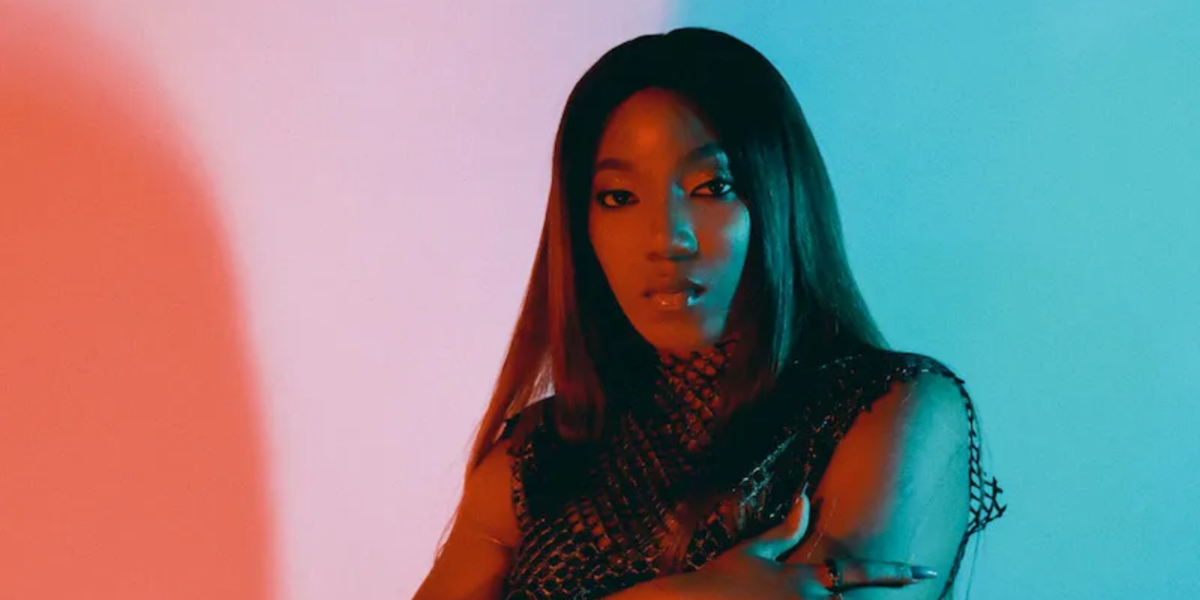
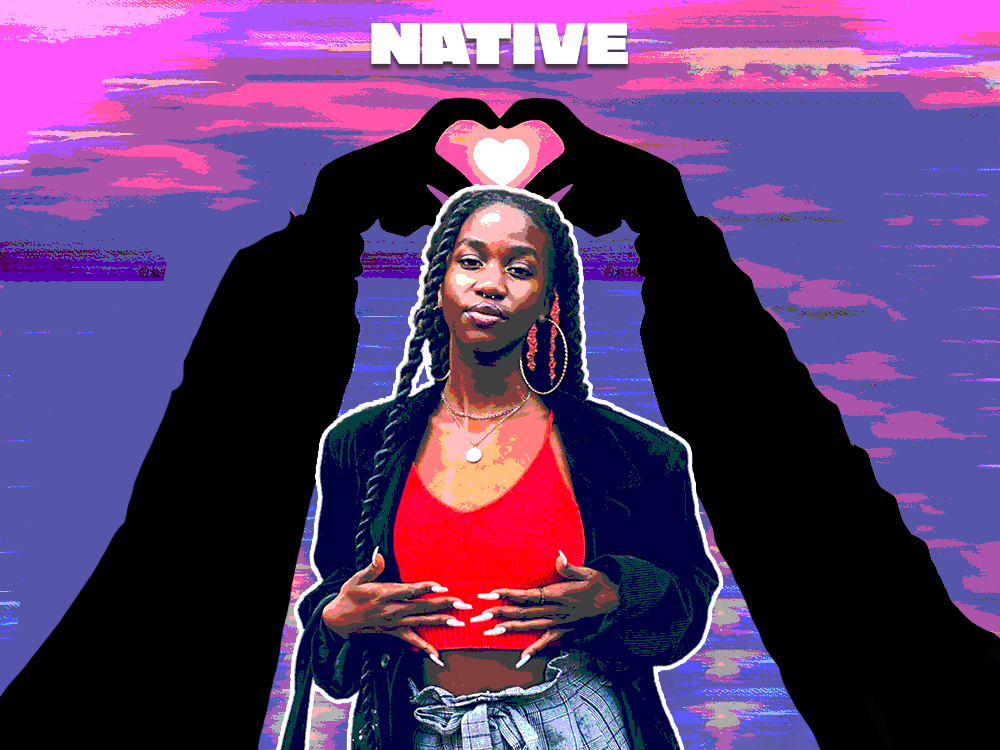
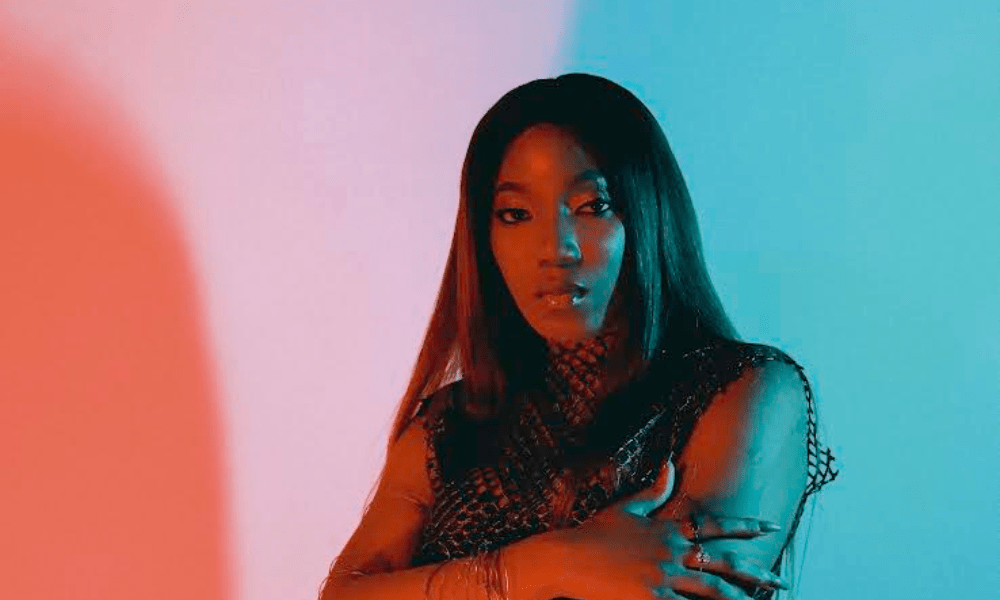
Preyé releases debut EP ‘Don’t Look Down!’

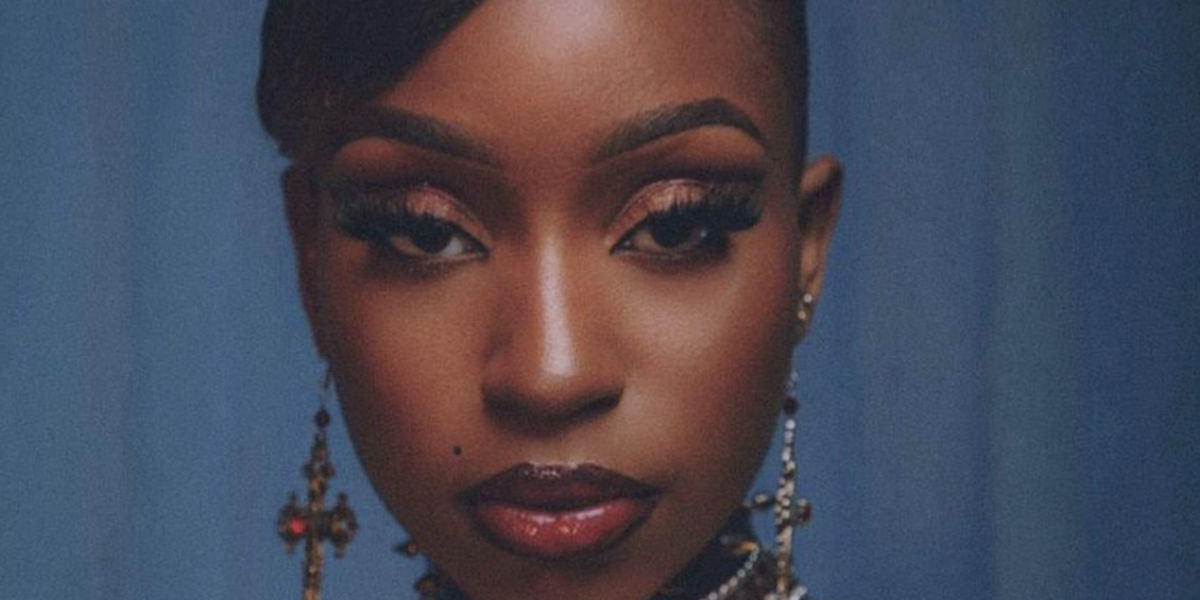
Preyé has been in the industry long enough to make you aware of her alluring presence with her provocative voice. Releasing her first single “Mortia” in 2015, she stood out among her Afro-Fusion/R&B peers, as she used metaphors to describe death. Using her experiences in life to tell a story to her listeners, she’s developed a pensive writing skill breaking down the vast range of human emotions and conditions.

After years lined with sporadic single drops that helped advance the lived-in uniqueness of her artistry, Preyé started teasing the impending release of her debut EP, leading off with the sultry single, “Red Wine”. The sumptuous single was a glimpse into this unfolding arc of her career, a confident showing embodying unbridled sex appeal, which was also fitting at the time of its February release. “Red Wine” is a sexy sip of R&B and neo-soul, making it clear Preyé is not shy about exploring intimacy, offering sensual coos over spry guitar riffs and loose swing drums, and vivid lyrics coating the record with lust and passion: “…you know the riffs that make the lover sweat, hands on my hips riding shotgun.

Don’t Look Down’, the announced title of her debut EP, was teased with a couple more pre-released singles, following up “Red Wine” with the vibrant “Malibu”, which was inspired by her trip to California. “If you cry with me, I’ll cry with you too/Die for me I die for you/Ain’t no problem, you’re my type”, Preyé sings over a mellow groove with neo-funk and dream-pop influences, her earthy voice perfectly reflecting the unguarded joy and excitement at being wholesomely and hopelessly in love. Capping off the run of pre-EP singles was “Crayons”, her enchanting vocals provide a soothing performance as the romantic number pairs up vibrant percussion with her soulful aura. Over the head-nodding production, she sings “I’ll do anything for you to dream big,” transporting us to a euphoria where love is the currency.

Today, ‘Don’t Look Down’ is finally out in its entirety. Housing 7 songs with a diverse range of R&B production, Preyé is capturing our lovelorn souls and driving them to freedom. Crooning over the delicate productions with her luscious vocals, she is not afraid to test new sounds as she explores the act of loving those around her. On “D.L.D Interlude”, she echoes the affirmation, “I am worthy of love”, explicitly embracing the easy allure of love and reminding us that it is okay to love, be loved, and want love, even in these when everything seems complex.

Preyé is joined by a sole guest, featuring Ladipoe on “Love, Today”, who’s in typical “lifelines” mode, as he opens up about balancing the realities of his ongoing success with his continuous quest to find peace and never lose sight of who he is. ‘Don’t Look Down’ is defined by an infectious transparency in its writing, enveloping melodies from Preyé, and production that balances ebullience with a loungey-vibe. Seven years away from her debut single, Preyé’s new debut EP is a strong marker of her growth over time and her confidence in her ideals as a person.

Listen to ‘Don’t Look Downhere.

Listen To YKB’s New Single “San Siro”

Since his breakout in 2019 with the release of the infectious freestyle “Swaggu,” Nigerian singer Oluwo Yusuf Gbolaga, popularly known to fans as YKB, has been on the cusp of a breakthrough. Emerging on the scene with an irresistible charisma and even slicker lyrics and flows, YKB has garbered himself a sizeable following, all devoted to his brand of melodious, word-bending delivery and stellar penmanship.


View this post on Instagram


A post shared by YKB 🤎 (@ykbonly)

Since then, he’s attained new heights  including landing a spot on Mr Eazi’s emPawa Class of 2020 alongside other talented young artists in Africa, and even secured a hit single with street-pop heavyweight, Zlatan. His first body of work ‘Before I Blow’ featured songs like “Wake Up” and “Practice Patience,” both of which helped listeners understand where the artist was at the time in his life while still remaining vibrant and colourful.

Last year, YKB who was initially known as YusufKanbai released his debut euphonious EP ‘Before I Blow,’ a 7 track body of work which allowed the artist to bring listeners into his world and explore his different styles and sounds. He’s since followed this up with groovy and infectious numbers such as “Imagine” and “If,” which have only served to showcase his impressive range and sharpen his delivery.

Now, arriving today is his most recent offering, “San Siro.” Produced by Finito, the mid tempo record is a romantic number which sees the artist chanting pleasant and melodic to his love interest. Merging his hypnotic and solemn vocals with his fine art of storytelling, the artist delivers a stellar performance. YKB glides smoothly on the boisterous production of the track as he sings “ever since I don set my korokoro eyes on you, I know that I will fight for you/I know that I will participate in any competition as long as the prize is you,” letting his muse know the length to which he is willing to go for her. The violin strings on the track adds an impressive layer to the track making the record as euphonious as possible. 

With “San Siro,” YKB shows that he has a clearer vision of his sound and he’s ready to unveil more layers to his artistry with a laser-focus on uncovering his true self.

Listen to “San Siro” here.

Featured Image Credits/Instagram

Listen to Maglera Doe Boy’s debut album ‘Diaspora’

Even without the announcement of an official debut album, Maglera Doe Boy already had a reverential presence amongst the younger generation of South African rap lyricists and stylistic inventors. Using music to delineate Ghetto’s stories, his career has been bounteous since his break out in 2018 with “Bodega. In 2020 he joined forces with colleague 25K and DJ Slique for ‘Champion Music’, and he released 2021’s 2 Player(The Digital Score) strictly on SoundCloud in line with its description as a mixtape.

In addition to these project drops, Maglera Doe Boy has built his rep as a consummate collaborator—a cheat code feature, if you will. From his technically dazzling display on Sipho The Gift’s “Dark Matter” to his giddy contribution to Boity’s “018’s Finest” and forming a solemn duet with lordkez on “Glory”, the rapper has consistently proven his ability to deliver glistening contributions that help catapult songs. Earlier this year, he formed a fiery duo with Thato Saul on MashBeatz’s street rap hit, Never Ride, creating an indelible mark to get listeners warmed up for his long-awaited debut album.

Officially announced in August, along with a pre-add link, Maglera Doe Boy has been clearing space for ‘Diaspora’, releasing a grip of singles before its eventual release last night. First, he released the MashBeatz-produced and Ason-assisted lead single Dor Do Povo, an affecting cut where he lamented the tribulations of young South Africans from the ghetto. Giving a stellar reflective performance, contrary to aggressive approach he’s known for, he offers insightful vignettes that pull directly from the environment he grew up in.

Following that single, he dropped the monochrome visuals to “Memoirs”, artistically telling the black and white story of his childhood tribulations—“..I write these memories from my soul..”—setting the tone for ‘Diaspora’ as a project informed by deeply personal events and honest first-person perspective. To drive anticipation for the album’s scheduled September 2nd release date, Maglera Doe Boy shared a handful of pre-release singles over the next few weeks, including God is A Black Woman with KayGizm,Makazana, The Suns Song, and the Focalastic-assisted Maglera House Party.

More than a day before it was meant to see release, Diaspora’ is officially out in its entirety. Being one of the most anticipated rap albums out of South Africa this year, the surprise drop sent Twitter into a frenzy, with fans excitedly dissecting the project and many already deeming it a masterpiece. On the heels of the 2022 South African Music Awards , where ‘2 Player(The Digital Score)’ was nominated for Mixtape of the year, the release of ‘Diaspora’ is set to unravel a new era of artistic excellence and higher reverence for Maglera Doe Boy. Lined with street rap ballads and hard knock rap classics, Maglera crafts an album that’s a perfect balance for old fans used to his powers as a lyrical wordsmith and new fans who will be taken by its coherent and thought-provoking narrative.

Listen to ‘Diaspora’ below.

Love Island Finalist Indiyah Becomes The First-Ever PLT Marketplace Ambassador

Indiyah Polack is that girl. After winning the affection of the entire British population and the diaspora as a finalist on the recently concluded season of Love Island UK with boyfriend, Dami Hope, she has become the poster girl for Black girls everywhere, who are looking to break glass ceilings and smash previously inaccessible heights.

While news of 6-figure deals and partnerships with fashion brands have been lined up for other Love Island contestants such as Gemma Owen, Paige Thorne and Tasha Ghouri since their exit from the sunny Majorca villa back in July, Indiyah’s lack of brand deals and sponsorships has been the topic of conversation–until now. First announced yesterday, news of the 23-year-old’s record-breaking deal with British beauty retailer and pharmacy chain, Boots reached social media to rave reception from fans worldwide.

Barely hours after, Indiyah Pollack has announced a new deal with fast-fashion brand PrettyLittleThing (PLT) which is part of the Boohoo UK group owned by a Umar and Adam Kamani. On social media, however, the announcement of Indiyah as PLT Marketplace’s new ambassador was met with scepticism, with many users conflicted on the tenuous relationship between sustainability and fast-fashion.

PLT’s Marketplace was first announced back in February when Creative Director and former Love Island finalist, Molly Mae shared a post on her Instagram about the fast-fashion company’s grand plans to disrupt the fashion industry. Undoubtedly, there were many questions from buyers across the world who were sceptic about what real changes would result from this move. While Indiyah as the face of the new PLT marketplace (with her own TV ad) is any Black girl’s dream, we can’t deny there are real ethical questions to be answered by PLT.

According to official reports, the PLT Marketplace is a buying and selling community which allows you to sell on the clothes you no longer wear or buy and sell Pretty Little Thing items as well as pre-loved clothing from other fashion brands. In the year-long deal, Indiyah will also be selling pre-loved outfits that she wore in the Love Island Villa. However, this is clearly at odds with PLT’s current standing as a fast-fashion company.

Good on You, a digital platform that weighs up the ethical practices of fashion brands, PLT has scored an environment rating of ‘not good enough’ and a labour rating of ‘very poor.’ Other consumers online have accused PLT of greenwashing and glossing over their horrible business practices with empty environmental-friendly policies.

The only way to redress these issues is by facing the problem directly and wholly restructuring their entire business model to suit more satisfactory and sustainable practices. While we’re more than thrilled for our girl, Indiyah who’s bagging up 6-figure deals left and right, we can’t help feel that this is another tokenistic idea by a fast-fashion brand who are known for disproportionately impacting Black women and women of colour. We’ll be keeping our eyes peeled for how this develops.

Featured Image Credits/Instagram

Essentials: Ogranya Is Poetic And Reflective On ‘Festival Of The Sun’

Last year, while the entire world was still reeling from the pandemic and figuring out how to return back to their normal lives, Nigerian artist Ogranya embarked on a challenge to release a new song every week for an entire year. Through those 12 months, Ogranya tirelessly carried out this project which culminated in the release of Project 52,’ at the end of the year.

The project garnered over two million listens across all platforms, bolstering Ogranya to new heights and new ears. Each track aligns with a very specific mood as Ogranya constructs a cohesive vision of life as a young Nigerian. Since his debut in 2018, Ogranya has been making music that delves into a variety of personal life experiences from love, healing and loss as well as the good, bad and ugly of toxic relationships.

Melding genres such as Soul, R&B, Jazz and more, Ogranya has been able to arrive at his own distinct fusion of sounds which has earned him a small but loyal following. This year, he’s released the earworm track “Brenda” which is a heart-wrenching love song about committing to someone whose heart cannot be trusted. Now the singer has shared new EP ‘Festival Of The Sun,’ which widens the scope of his sonic arsenal and sets the benchmark for where he is able to go sonically and lyrically.

The 6-track EP explores issues such as toxic love, romance, self awareness, growth and development. Across its 20-minutes runtime, Ogranya is at his most poetic and reflective as he spins earworm tracks about love and its misfortunes. Employing a range of skilled artists including Johnny Drille, Moliy, Moelogo and more, Ogranya brings his collaborators into his colourful soundscape without obscuring his singular vision: to spin memorable love tunes.

While Ogranya’s voice on this project is more refined, the singer still retains a relaxed and laid back tone, as he shuffles between different sounds and genres. There’s audible influence from a range of genres — shuffling primarily between the mid tempo Afropop and the syrupy melodies of R&B and Soul. The project’s entire mood revolves around the typical jovial themes that are characteristic of archetypal Afropop records.  

‘Festival Of The Sun’ opens up with the self-reflective number, “A Good Time.” The prelude sees the artist in conversation with a love interest as he hammers on the fact that he’s just trying to have a good time and enjoy every minute of his life right now. On the record, he quips “So tonight I wanna go on the dance floor, tonight I wanna take a different route tonight I wanna make you scream and shout,” sharing with listeners his current state of mind which focuses solely on having a good time.


View this post on Instagram


A post shared by Ogranya (@ogranya)

The next track “Abeg” is a more uptempo track assisted by Moelogo and Nviiri The Storyteller. The artist opens the record harmonising the standout lyrics “Cool it down for a minute/Life is for the living,” reminding listeners to let their worries go. On the record, the artist tells the story of focusing on the positive side of life rather than being phased by challenges and the uncontrollable obstacles which may come your way. Elsewhere, on the standout record “I’m Sorry,” Ogranya and Johnny Drille’s undulating vocals merge seamlessly as they both tell a story of mistakes they’ve made towards their respective love interests. On the romantic number, Ogranya sings on the hook of the track “I bet you know, how much I miss you/I bet you know that I’ve been thinking about you,” over the bouncy production of the John Ighodaro-produced track. 

On “Brenda,” which emerged as the lead single off the body of work, the artist addresses his love interest, singing about his love for her and how he plans to reciprocate the love. Over the groovy hook, he sings, “Brenda, Brenda, Brenda, She no dey give me trouble/Brenda, Brenda, Brenda, so I go dey here for you,” guiding the project’s tone and mood with his remarkable artistic fortitude. ‘Festival Of The Sun,’ closes out with the Moliy-assisted “Ecstasy,” a funky and sexy track which provides the duo ample space to fire off their romantic intentions. The record opens with the sensual vocals of Ghana’s Moliy as she chants “I’m feeling you next to me, ecstasy/I’m feeling your energy, ecstasy.” She is shortly joined by Ogranya as he takes a different approach, pairing his wistful vocals with the song’s fusionist production.

‘Festival Of The Sun’ is a stellar body of work by an artist who has paid attention to how important memorability is in his career. Ogranya approaches his new body of work with a clearer vision of who he is as a man and an artist, resulting in a body of work that is equal parts poetic and equal parts self-reflective. As Ogranya traverses a convoluted arc, experimenting with an assortment of sounds, he remains collected, anchoring the eclectic project with the familiar themes of love, romance and positivity.

Listen to ‘Festival Of The Sun’ here.


ICYMI: Read our Essentials on Benji Flow’s ‘The Thrill’

How “Yan Yan” frames Asake’s growth within the past year

Every year, Nigerian pop welcomes several ascendant stars to the mainstream. Of those entrants, it’s not unusual for one or more of those artists to put together a special breakout run that quickly sets them apart from their peers. In select cases, special doesn’t even begin to define that run—think solo 2face Idibia in 2004, Asa in ‘07, Wande Coal in ’08, Wizkid in ‘10/’11, Mr Eazi in 2016, and Rema in 2019.

Asake is in the midst of one of those transcendent breakout years, one that will be Nigerian music history lore for decades to come. Since making his searing entrance into the mainstream with “Omo Ope”, the singer hasn’t just been on a tear of smash hit songs, he’s been the primary narrative of Nigerian pop.

“Sungba” and “Palazzo” aren’t just insanely popular songs, they are irrefutable touchpoints in the pronounced trend of vocally stacked and anthemic hooks. Instant listener favourites “PBUY” and “Terminator” ratcheted up the efficiency of the snippet as a marketing tool before dropping. Asake isn’t just an uber-talented hit-maker, he’s made himself a cultural force.

For an artist with half-a-dozen veritable smash hits, and on the cusp of his debut album, it feels like a long time ago that the singer was trying to consolidate on the success of “Mr Money”. Following the Zlatan-assisted remix of that 2020 street hit, Asake dropped a similarly cruddy banger, “Don’t Hype Me”, but it’s the subsequent single, “Yan Yan”, that offers an inflection point between Asake, the one hit wonder and Asake, the pop superstar with a growing stack of hits.

Sometimes, artists breakout by pulling a 180 and totally reupholstering their style and approach to making music. Other times, they do so by doubling down on a formula and working out the kinks. Asake’s breakout is of the latter type, and “Yan Yan” is prime exhibit that he’d found the sound that would serve as the engine for his supersonic tear. Produced by Phantom, the song relied on the percussive ticks of Amapiano for a club-ready ambience and an exuberant backdrop for Asake to sing boastful and sexually suggestive quips: “I don arrive/omo, je ka lo London”.

The singer’s ready-made disposition was both earned and pre-emptive—he’d already scored a hit song but he wasn’t yet a bonafide star. “Yan Yan” didn’t do badly when it came out, I remember hearing it a few times around where I stay in Lagos mainland, but I wouldn’t describe it as ubiquitous. In hindsight, though, it’s a perfect middle of the road single, because it contains the hallmarks of his now-distinct artistry—albeit in rudimentary form.

There’s the ‘piano-indented beat, which sounds unpolished compared to more the extravagant instrumentation and arrangement of “Omo Ope” and “Sungba”; there’s also his fuji-influenced vocals and flashes of his quotable lyricism, but it’s not as engrossing and intricate as “Palazzo” and “PBUY”. Released just over a year ago, the song shows just how much can change with consistent retooling. It can be easy to take the journey an artist goes through for granted, but understanding humble beginnings makes the trajectory even more worthwhile to experience.

Hours ahead of his highly-anticipated debut LP, ‘Mr Money with the Vibe’, “Yan Yan” perfectly frames the huge strides Asake has taken on his way to becoming a singularly compelling artist.


ESSENTIALS: ASAKE COMES INTO HIS OWN WITH EPONYMOUS DEBUT EP

Review: M.I Abaga’s ‘The Guy’

M.I Abaga is constantly evolving with the times. Since his breakout with 2006’s “Crowd Mentality,” the seasoned rapper has maintained his position as Africa’s most successful English-speaking rapper, merging his propensity for lyrical astuteness with renowned commercial success. Over his decade-spanning career, he has built an enviable catalogue of hits from his critically acclaimed albums to his ‘Illegal Music’ mixtapes, all while shouldering the weight of heightened visibility and even higher expectations which have undoubtedly earned him a loyal following. 

At the end of the 2000s, M.I started his career on an irresistible ascent, a momentum that carried over to the following decade, but that dominance has been tested with each project since the mid-2010s. His 2014 album The Chairman and 2018 ‘playlist project’ Rendezvous saw him offer intriguing variations of his powers as a magnet, bringing in a sprawling cast of collaborators while building on now-familiar themes and soundscapes without erasing what fans had come to love from him. Taking a stark departure from his earlier releases, he turned inward and released some of his most honest work to date with ‘A Study on Self Worth: Yxng Dnzxl’, offering fierce reflections about his tumultuous life and insight into his psyche.


View this post on Instagram


A post shared by THE GUY (@mi_abaga)

M.I has always been knighted as the undeniable leader of the genre, with a legacy that now ranks among one of the most powerful in the game. It is a position he acknowledges as his, even with doses of a messiah complex. “I should be close to retirement/Couple more years be retiring but/None of you rappers inspiring/None of you pass the requirements/ I can’t retire yet, damn,” he raps in his scathing 2017 single “You Rappers Should Fix Up Your Lives.” It was this single that spurred him, Loose Kaynon, A-Q and Blaqbonez to start a supergroup (L.A.M.B crew) whose sole aim is to revive the English rap scene in Nigeria. “See I fathered the game, go check the record books/When rappers couldn’t get DJs to play ‘em like the second hooks,” he raps on the A-Q-assisted “The Trinity,” off 2020’s EP ‘Judah’. M.I, sure of his place in Nigeria’s music archive, never lets go of an opportunity to educate listeners about his legacy.

On ‘The Guy’, his fourth studio album and eleventh project, M.I Abaga is at his most relaxed yet. With all his years in the game, leading and pioneering the rap genre in the country, M.I approaches this album with a profound sense of calm. While his powers as a mainstream superstar are no longer at peak levels, M.I is still making music that reflects the current landscape. ‘The Guy’ is best considered as a melting pot of every of the skills that M.I Abaga has shown throughout his decades-long career, all commingled into a cohesive whole with witty lyricism and suave delivery. 

The album’s title, ‘The Guy,’ comes with an interesting backstory, which M.I hinted would be his new stage name. The title also serves as a powerful declaration: knowing your worth and power, recognising that no one is like you or can ever be you, that you are that guy (or babe or person, if you please). M.I makes this intention clear on the album’s titular track where he declaratively says, “I’m the guy, ask the guy you thought was the guy/If he don’t say I’m the guy, that’s a lie because I’m the guy.” From the album’s introduction, it is clear that M.I is not concerned with the competition, he is the standard and across the album, he sets out to showcase—not prove—why he still deserves your attention this far in the game. 

Across the 12-track project, M.I Abaga enlists the assistance of some of the biggest names working in the Nigerian music industry including Olamide, Wande Coal, Phyno, Jesse Jagz, Duncan Mighty and more, all while also providing production on a few tracks. As a storyteller and world builder, M.I has managed to remain generationally relevant, adeptly growing and developing with the changing times, and placing those with less visibility at the forefront of his work. It’s a remarkable position he plays with an everlasting message that guides him as he enters new phases of his personal and professional life. While not everyone will agree that he’s his generation’s leader, M.I is less concerned with titles than he is with collecting real estate and reverence.

On the Chopstix-produced “The Hate”, he turns his attention to fellow rappers and artists. “What’s up with all the hate though?” he asks before he goes full throttle to list the evidence of his legendary career. “I’m a god, I’m a king, I’m a Pharoah (Yes)/Been a leader since I was a day old,” he raps. His tone is blunt but not accusatory; it feels as though it is beneath him to be angry at the unbelievers.

As if to prove his superiority, the track is followed by “Bigger”, which features Olamide and American rapper Nas. There is a sharpness in both M.I and Nas’ verses as they acknowledge their career successes while professing a hunger for more. A collaboration nine years in the making, “Bigger” highlights M.I’s status as an upper-echelon rapper who can rub shoulders with the best artists in the world. It also counts as a win for M.I’s in his mission to raise the profile of Nigerian rap. Olamide, also a veteran in the game, delights with his chorus, which captures his grass-to-grace story and his unquenchable thirst for victory.  

Longevity is a befitting word to describe M.I’s career. Between 2015 and 2019, M.I served as CEO of Chocolate City (after being an artist on the label since 2006), shepherding the careers of Ice Prince, Dice Ailes, Jesse Jagz, Koker, Kahli Abdu and DJ Lambo, among others. Coinciding with the release of ‘Judah’, he launched his own imprint, Incredible Music, falling in line with his publicly-known dive into entrepreneurial ventures. Musically, though, he’s remained both a student and teacher of the game, and that’s shown in the quality of collaborators he’s worked with recently, whether that’s gleaning inspiration from, and trading bars with, veteran lyricist and close collaborator A-Q across a joint EP, or tapping lesser-known, porcelain-voiced singers Osi Grace and Tomi Owo on this album.

“Soft Life Tony”, one of the standout songs on ‘Guy’, features Lord Vino, a respected rap artist in Nigerian English rap circles, and together they add Tony Elumelu to the list of wealthy people exalted in Nigerian music – a list that includes Femi Otedola, Aliko Dangote and Mike Adenuga. Both artists long for the lifestyle that the Nigerian entrepreneur and philanthropist enjoys and express a determination to hustle and attain that status. While many might feel M.I has a financial capacity that doesn’t warrant looking up to Tony Elumelu, it is not out of place for humans, most especially Nigerians, to desire to go higher on the ladder of wealth. 

The Nigerian economy, with its unpredictability, forces the citizens, including the billionaires, never to hit pause. “Dangote still dey find money o,” Burna Boy sings on the track “Dangote,” off 2019’s ‘African Giant.’ M.I agrees with Burna Boy when he raps, “Normally soft life no be free, e dey cost plenty fees, chale don’t be deceived.” Not too long after its release, Tony Elumelu posted a glossy viral video on social media, playing directly into the reverence of “Soft Life Tony”.

M.I isn’t known for playing heavily into pop culture iconography, and he doesn’t start leaning into it too much now. The crux of his music has always been his personal experiences, which continues on his twelfth project. Earlier in the year, the rapper warmed many hearts when he broke the news of his engagement to Eniola Mafe. A video, which accompanied the announcement, revealed further details about the relationship. The video was also sound-tracked by a song that turns out to be the Wande Coal-assisted “The Love Song,” which appears on ‘The Guy.’ Dedicated to his heartthrob, M.I declares his commitment, promising to be a worthy spouse and lover. Wande Coal is also in fine form, adding to the song’s appeal with a sweet chorus.

The middle third of the album is filled with a run of devotional love songs, a perfect reflection of M.I’s life at the moment that also plays into his well-known ability to spin timely and timeless songs out of blue-eyed romance. On the Tempoe-produced “The Front Door,” Port-Harcourt’s first son Duncan Mighty draws inspiration from his native Ikwerre language and Ghanaian vocabulary to serenade a love interest. M.I is playful yet deliberate with his delivery on the percussion-led track as he makes romantic promises.

On the hypnotic “The Inside,” M.I taps into the Highlife leanings of Nigerian artists Phyno and The Cavemen. as he renders another love tune. There is also the playful energy of “Daddy,” where he and Chillz shower praise on the anatomy of the object of their affection. While firing off relatable and catchy lines, he drops witty bars that refer to the #EndSARS protests and the Nigerian military.

When M.I decides to address weighty topics, he goes in fully. On the Ossi Grace-assisted “Crazy,” he draws a parallel between toxicity in familial and romantic relationships and the toxicity found on social media. He complains about the lack of nuance and empathy in conversations, which he ascribes to the faulty relationships many people have with their loved ones. He places himself in the middle of that melee when he raps, “People be savage on Twitter be dying inside/Wish you could see how I’m feeling inside.” The track ends with advice from M.I : “Be kind, you never know what people are going through/ It’s crazy out there.”

On “Soldier,” M.I revisits the issue of male vulnerability, which he touched on in 2018’s A Study On Self Worth: Yxng Dxnzl.’ With assistance from Tomi Owo, he paints a sad picture of men, who as boys were encouraged not to express sad emotions, and, seeking an outlet for those emotions, have chosen suicide, violence or silence as adults. He surmises that this, in turn, has affected women who mostly bear the brunt of these men’s aggression. “Lift your head soldier/Pick your head up soldier, don’t cry,” Tomi Owo sings, offering strength to every man and woman in need of it.

‘The Guy’ is loaded with guests, mainly on the hooks, adding even more flavour to an album swirling with colour. Serving as a (co-)producer on majority of the songs, M.I’s ability to create ear-catching pop-rap is at the fore, and he’s joined by a list of renowned soundmen behind the boards, including Chopstixx, Masterkraft, Tempoe, and more. As he’s done on earlier commercially successful albums, and in collaboration-heavy projects, the sound palette reaches across the bubbling spectrum of Nigerian pop. There’s soulful, mid-tempo pop cuts, a club-ready bop, Amapiano is folded into Trap on “Soft Life Tony”, and the lead single is a drill fare that plays into the rising craze around the sound in Nigerian rap.

In addition to adding a vibrant touch and versatility to the project, several features serve as emotional foils. On the folk-inflected “Oil”singer BNXN joins M.I for an affecting performance, as both artists give thanks to God for protecting them and their families and ushering blessings into their lives. The song possesses a gentle-swaying rhythm that oozes leisure and comfort. The thankfulness extends into “More Life” as M.I and his fellow Choc Boiz—Jesse Jagz and Ice Prince—enjoy their victory lap. While Ice Prince cheers Abaga and Jagz in the background, Jagz uses his verse to declare that he and his crew are indestructible. M.I exudes positive energy throughout the track, refusing to allow life’s pressures to unsettle him as he sings, “Let me live my life, you live your life/Toast to more life, we do this shit for life.” 


View this post on Instagram


A post shared by THE GUY (@mi_abaga)

It is noteworthy that, in Nigeria’s singles-driven market, M.I hasn’t relented with putting out projects. His first and second albums—‘Talk About It’ and ‘MI 2: The Movie’—began his storied journey and revealed undeniable talent and passion to dominate Africa’s Rap scene. His ‘Illegal Music’ mixtapes were M.I’s way of exchanging verbal punches with the best rappers he could find. Subsequent projects, even through controversies, cemented M.I’s place in Nigeria’s rap history as a veritable voice. ‘The Guy’, on the other hand, is a celebration of M.I’s reign rather than the end of it. It is an applaudable chapter in the rapper’s dazzling career.

M.I’s act of sticking to releasing albums signifies his confidence in his gift; it is a statement that only an artist who has years’ worth of refinement can make. This album isn’t as ground-breaking as his earlier work nor does it take risks like his more recent, sometimes insular work, but it’s a strong reminder that the Nigerian music scene is yet to see an English rapper in the mould of M.I Abaga. He has morphed through the years and adapted to different changes while retaining his core as an artist. His works have kept him in a secure space, unharmed by the wave that is Nigerian Pop. ‘The Guy’ is a reminder to both him and his listeners: he came, saw and is still here conquering. That is a big win for rap music in Nigeria.


ICYMI: READ OUR REVIEW OF OMAH LAY’S POTENTIAL CLASSIC DEBUT LP

Songs of The Day: New Music From ShaSha, Soulaar, Eugy & More

We’re more than halfway through 2022, and it’s been an eventful year for Afropop. There’s been a torrent of great new music, spawning a massive stack of inventive smash hit songs. From Highlife-infused Ghanaian pop, to the unrelenting force that is Nigerian street-pop, to South Africa’s indomitable Dance scene, to tantalising Drill explorations in East and Central Africa, and much, much more, we’re living through abundant and musically expansive times.

Every week, tonnes of songs from African artists make their way to digital streaming platforms, and wading through them can be intense. That’s where The NATIVE’s Songs of the Day column comes in to help. We go through as many new releases as possible, spotlighting them here, two to three times every week. This Wednesday, enjoy new releases from South African Amapiano singer, ShaSha, the new Ejoya Music artist Soulaar, Eugy, Rowlene and more. Dig in!

SOULAAR – “BAM BAM”

This week, Ejoya Music announced the first artist out of its music development programme, Nigerian singer Soulaar. Now the newcomer has released his debut single “Bam Bam.” Soulaar might be new to the game, but his pen game skill has been in practice for a while, and the Afrofusion number gives a glimpse of his range of capabilities. Produced by Xtremetheproducer, Soulaar sings over a thumping bassline and airy piano keys ”Bam Bam Bila, She’s a killer, bloody sinner,” giving the song a hypnotic chorus.

SOMTO – “AVAILABLE”

The South Eastern music scene has produced remarkable gems over the years, and Somtoo comes from that lineage. A soulful musician based out of Awka, he explores themes of love and loss in a vulnerable style that’s influenced by his passion for writing and poetry. Somto’s latest record is “Available,” a warm bop which seeks the companion of a lover. With adequate grasp on his tone, the budding musician has created a contemporary-leaning record that both confesses and excites, confirming Somtoo as an impressive artist to watch out for.

M.RUMBI – “LET GO” FT. NAWEKULO

The mellow guitar riffs and harmonious background vocals give this Soul & RnB number a melancholic feel. Featuring the sumptuous vocals of Nawekulo, South African songwriter M.Rumbi reflects on fading love that has wilted. Nawekulo repeatedly sings “if I let go will it be okay,” showing the desperation of her love as she has been holding on for too long.

$HYLI – “SLOW WINE”

The best word to describe Ugandan singer, $hyli’s new single “Slow Wine” is seductive. The juxtaposition of singing, subtle mid-tempo productions, and dancehall vibe give off a dreamy tune that relaxes listeners. The beautiful catchy flow and bass percussions make up for the scanty lyrics in the song. 

EUGY – “NO OTHER”

2022 has been an active year for Ghanaian- British-based singer Eugy and “No Other” is another catalogue to add to his hits. He follows up his most recent single “Enough For Me” with an Afro-fusion ballad: “No Other.” On the Afro-Fusion ballad, Eugy combines cloy lyrics with his Afropop palette as he persuades a lady to accept his feeling towards her with lyrics such as “I’ll be your guy when you need, you know I’ll ride when you need.

EMMIE MUTHIGA – “CATCH ME LATER”

Releasing her debut album ‘FREE‘ over the weekend, Kenyan songstress Emmie Muthiga is redefining R&B according to her terms. The eight-track project contains an array of emotions circling love, despair, and liberation over complex up-tempo productions. The stand-out track “Catch Me Later” finds Emmie Muthiga bidding goodbye to a toxic relationship characterised by love and insecurity. She constantly assures her listeners her confidence is contagious as she meticulously blends Swahili and English while cheering on the beauty of Kenyan ladies. 

VUGA KVNGZ – “DROWSY”

Since breaking out in 2019, Vuga Kvngz has been on an upward trajectory in defining Afro-Trap. In his latest single: “Drowsy” he tells the story of working hard, drugs, and shawries on a trap-infused beat produced by DicetheGem. As his fan base and career evolve the feeling is overwhelming as he speaks of where he is heading. The aggressive vocals and the bouncy beat render this song enjoyable to listen to as the song is a perfect blend of rap and afro beats with; a beautiful hip hop orchestra. 

SHA SHA – “GIVE ME SOMETHING” FT. ROWLENE

South African songstress Shasha is gearing up for the release of her album ‘I’m Alive‘ coming out on 23rd September. With two songs out already including “Ungowami” featuring Soa Matrix and “Themba Lami” featuring the dexterous Ami Faku, Sha Sha released her third single”Give Me Something” from the anticipated album. Employing the euphonious vocals of fellow countrymate Rowlene, the R&B number gives a love story over a concussive production. Birthing a sonic bliss, the duo coat the song with their sweetened vocals.

Featured image credits/NATIVE

5 Standout Songs From Mafikizolo’s New Album, ‘Idwala’

Mafikizolo are titans of the African music space. Formed by composer Theo Kgosinkwe and singers Nhlanhla Nciza and Tebogo Madingoane in 1996, the group’s eponymous debut album was released the following year. Before 1999 when their sophomore album ‘Music Revolution’ was released, the group were famed for embedding Kwaito’s distinct groove onto broader genres. A trifecta was completed with 2003’s ‘Kwela’, an album whose title track featured the legendary Hugh Masekela and went on to become a great commercial success, firmly imprinting Mafikizolo among the greater figures of contemporary South African music. 

Ever since, sonic excellence and hard work has been defining traits of the duo. Following the untimely passing of Tebogo in 2004, the remaining members of Mafikizolo took a break and returned the next year. It’s been seventeen years since their fourth album, and they’ve clocked in eight albums in that time. ‘Idwala’, the latest of those, was released only last Friday. Translated into ‘rock’ in isiZulu, it advances the group’s collaborative vision—only this time, they’re more in-tune with popular music than ever before. Collaborations include Sjava, Ami Faku, Zakes Bantwini, and Sun-El Musician, among others. 

Curating a five-songs list is definitely hard, because the album is a sonic treat. Each song glitters with visceral production, and the accomplished voices of the musicians doing great justice. Jazzy, electric, and colourful are some descriptors that come to mind, but you’ll have the time to make your own selections. That said, these five songs aren’t necessarily the best songs—they rather evoke the variance of the album’s tapestry. 

“FATELA”

There are songs and there are songs. “Fatela” is that song. Right from the opening seconds, there’s a rustic element shimmering at its core. The drums are really alive and groovy, like there’s a party happening somewhere. You’ll find this quality of production elsewhere on the album, but there’s a familiar yet strange feel to this particular song. Classifying its genre is another task, as House blends into contemporary Jazz, and some shades of Indian-esque progressions. The singing polishes the record’s brilliance, bouncing with joyous inflections and the captivating hum at its centre, a childlike presence which elevates the feeling into something transcendental, yet ephemeral. 

“NGEKE BALUNGE”

This was a pre-album single and an excellent one at that. Countless times since 2020, I’ve allowed its slow groove wash over me like an ocean’s waves. Soulful strings and steady drums form the sonic bedrock, and those roll in the deepest into your psyche. Even before the duo’s voices are introduced, this soundscape is immersive and somehow personal, bending to accommodate whatever stories the listener might have. The actual meaning however weaves the tale of two young lovers who are the focus of society’s unwavering eyes and criticism. “They won’t succeed, they won’t finish us,” goes the chorus, “because this love obviously cannot be overshadowed.” 

“ABASIYEKE” FT. ZAKES BANTWINI

You’ll find collaborations are left and right on this album, but “Abasiyeke” instantly stands out. Even before Bantwini’s dreamy vocals swirl alongside Nhlanhla’s, the set mood is dusty, colourful, and made to sound interstellar through the glitter of its drums and keys. Chants of “abasiyeke, abasiyeke” blend into the production, dipping and rising in tempo to accommodate the verses. Community was perhaps the driving ethos behind this record, because it sounds made for sharing—sharing its fun vibe through a party, in a dark room full of friends, or on TV, where its yet-unmade visual would be full of smiling, dancing, and perhaps a logfire.   

“10K” FT. SJAVA

A slow, soulful feel permeates the bones of this record. It’s a winter-esque craving for someone’s love, imbued with all the longing and listlessness associated with that cutting feeling. The tone of the singing carries that looking-out-the-window vibe, its pacing supplied by the stripped production. This record’s mood is very reminiscent of Sauti Sol’s “Girl Next Door,” though the gender perspectives are flipped and here it’s Sjava delivering a winding, poignant verse. He flexes his famed versatility, dipping into Trap cadences while maintaining the homebound inflections and words from isiZulu. As far as R&B goes, this is probably the most traditional of the records and like most songs off the album, it sounds wrapped in a time capsule. 

“KWANELE” FT. SUN-EL MUSICIAN & KENZA

Imagine a dancefloor swirling with coloured lights, the conversations rising in dark corners, the smell of alcohol, the feet of people dancing, and yet somehow, every activity seems ordained. If one of them were to stop, the scene’s magic would be instantly subdued and watered down. That’s the associative mood of “Kwanele,” which is perhaps my favourite record on the album. A lot has been said and written of Amapiano’s intricacies but South Africans are great music makers, period. Here those signature drums are slowed, paired with Disco-esque synths and progressions. Along with the soothing tones of the singers, an ethereal record emerges. It is dreamy but still closely rooted in painful experiences, you can tell, and the sparse spaces in the verses allow the beat to breathe, to allow its seamless entry into the depths of one’s heart. A truly beautiful song.


ICYMI: READ OUR TAKEAWAYS FROM M.I ABAGA’S ‘THE GUY’

The importance of critical reporting to Nigeria’s burgeoning tech ecosystem

Reckonings have a way of altering pre-existing perceptions. Prior to a few months back, you’d assume it’s all rainbow and roses in Nigeria’s burgeoning tech ecosystem, with all the consistent news of investment rounds and increasing valuations. In addition to being proof that individuals and startups are creating valuable products, the influx of investments tacitly inferred a wholesomeness to the Nigerian tech space, with better practices and healthier work cultures than you’d normally find in Nigeria’s corporate environment.

As the news cycle of the couple of months have shown, it’s that this de-facto perception is not wholly true and a reckoning seems to be in full effect. In late March, TechCabal published an article alleging workplace toxicity at Nigerian payroll startup Bento Africa, furnishing the story with quotes from former staff and pictorial evidence. “Bento took everything from me—my sense of humanity, sanity, confidence, and trust,” a declaration from an ex-Bento staff opened the story, and the following couple of thousand words peeled back layers to the horrible circumstances employees had to endure.

With personal accounts from several former Bento staff, and additional pictorial evidence, the piece details gross verbal abuse, gas lighting tactics, undue pressure, abrupt termination, and more, directly perpetrated by co-founder Ebunoluwa Okubanjo. Corroborated by a few current Bento employees, these accounts merged into depicting a workplace culture that was detrimentally suffocating, harmful to mental and physical health, and even stripping staff of their respect. Immediately it was published, TechCabal’s piece generated a significant amount of shock, mostly because the Bento allegations presented a wildly differing reality to the neo-corporate ideals many young Nigerians expected to be norm in the tech sector.

In Nigeria’s corporate space, the rigours of being an employee are an open secret. From delayed or withheld salaries, to late closing hours without overtime pay, to enduring tongue-lashings, and more. Companies in Nigeria are infamous for consistently putting their employees through the ringer, testing the limits of their physical and mental wellbeing in an environment that’s already riddled with debilitating factors. Within this longstanding cesspool of unfavourable circumstances, Nigeria’s blooming tech space seemed to be much rosier, partly with the naïve expectation that younger corporate leadership would be much more sensitive to wholesome workplace culture.

“It’s disappointing but not surprising,” Systems Analyst and curator of Tech-focused newsletter, Get.Africa, Chiagoziem Onyekwena tells NATIVE of his reaction to TechCabal’s Bento story. It’s a stark opposite of general reactions because many were disappointed and surprised, but Chiagoziem, who’s been keen on the evolution of the tech ecosystem in Africa for years, has seen past the rose-tinted veil long before now. “I think, sometimes, when people think of tech companies, they think it’s better than a non-tech company of the same profile,” he adds. “These are companies that are barely few years old, several don’t have proper governance structure and they’ve only optimised for growth over having a safe work environment.”

That last statement is a perfect encapsulation of the Bento allegations, where Okubanjo expected 24-hour availability from all employees, and tested the boundaries of draconian employer behaviour within the framework of productivity and business upscaling.

Amidst the shock and disgust to Bento’s workplace situation coming to the light, a wider, trickle-down effect followed almost instantly. Within hours of TechCabal‘s breaking story, there were tweets and tweet threads from many in the Nigerian tech ecosystem detailing horrific experiences while working under Okubanjo-type bosses at startup companies, some explicit, others thinly veiled, and even more subliminal ones. It even culminated in a Twitter space, partially titled #HorribleBosses, where dozens vocally shared their experiences. Within a day, we all came to realise that the norm is far from our prior perceptions.

There’s a craze around tech in Nigeria, and for good reasons. The last few years has seen the advent of unicorns, companies valued at millions of dollars, and even lesser-valued startups, creating and iterating exciting products for local, continental and global use. There’s also the fact that this outstanding emergence is being effected by visionaries and highly-skilled experts across varying tech aspects, with a playing field that continues to widen to accommodate new, keen entrants, while keeping up with global tech standards. It’s even more impressive when you factor in the Nigerian factor, where the government is consistently looking to squeeze, rather than aid, a growing sector of its economy—largely because it’s being spearheaded by youth.

In all of this, it’s easy to understand why the presumptions of workplace culture didn’t take toxicity into account. Because this reality is just being given ample attention, it’s difficult to determine if the overall workplace culture is the case of a few bad apples amidst many good, wholesome companies, or vice versa. That sort of specificity allows for proper perspective, but it doesn’t strengthen faith when a unicorn-level company is facing its own share of allegations centred on corporate leadership.

On April 4, former Flutterwave employee Clara Wanjiku Odera published an article alleging bullying and intimidation by the company’s CEO, Olugbenga Agboola, detailing a situation that’s lasted for 3-plus years. Odera, who’s now the CEO and co-founder of Credrails, alleged that her exit from Flutterwave in late 2018 was met by hand-wringing tactics by Agboola, who she claimed refused to “have my dues settled,” blocked subsequent job opportunities, accused her of being behind a social media account spreading rumours of sexual harassment, and negligently roped her into fraud investigation.

Odera’s article was published a day after an interview with Agboola was published, where, amidst talking about Flutterwave’s growth into a $3 billion startup, he referenced Odera’s lawsuit which she filed during her exit. The allegations were, again, shocking. After all, this is the most valuable start-up in African tech, with a pristine outward image. However, that was just the drizzle before the torrential downpour.

Just over a week later, journalist David Hundeyin published a lengthy investigative piece, alleging fraud, perjury and insider trading. Hundeyin, who’s (in)famous for reporting and digging into contentious, complex scenarios with a sensational and authoritative (or gonzo, if you like) verve, paints the portrait of a corporate leadership that’s comfortable flouting the rules, with Agboola as the main culprit. The pillars to Hundeyin’s story are four former Flutterwave employees who serve as his sources, while his observations and inferences tie the story together.

While Hundeyin’s approach and reporting ethics were called into question, his piece was shocking and disappointing. It didn’t help that Flutterwave kept silent in the immediate aftermath of the piece reaching public eyes, which many took as a tacit admission of guilt, if not on all the allegations—at least some. If Odera’s article was an oil stain on the immaculate image of Flutterwave, Hundeyin’s was only driving this image further.

So far, the only response from Agboola and the Flutterwave brass is an internal memo to its staff, which was made public by Techcrunch, and the publication also (rightly) flagged the memo’s inadequacies. Just before that, Iyin Aboyeji, co-founder and former CEO of Flutterwave, granted an interview with TechCabal, attempting to clear up his role at the unicorn start-up and the circumstances surrounding his exit, which Hundeyin had roped into his story as both a co-conspirator and one of the indicators of Agboola’s aversion for being checked. However, Aboyeji’s interview did little to assuage the disappointment of those observing, with many even pointing at the far from rigorous questions he faced during the interview.

As a footnote to the interview, TechCabal did the much-needed diligence of publicising its working relationship with Aboyeji, Agboola and Flutterwave. It framed the complicatedness with which the publication has had to cover this situation. While Hundeyin has turned his investigative piece into a personal crusade—taking it to typically obnoxious extremes no less—TechCabal’s affiliation with Flutterwave puts them in a tenuous situation, making it difficult to be as thorough and critical as their Bento Africa story.

For a long while, the media surrounding Nigeria’s burgeoning tech ecosystem focused on overtly positive things like fundraises, valuations, interviews with founders and experts about products and new strides, helping to create that utopian image. Those investigative stories from earlier this year have helped to embolden critical balance. Right now, you’ll easily find articles digging into layoffs and salary cutbacks at start-up firms like 54gene and Alerzo, and reports on frozen bank accounts belonging to Flutterwave, signalling more attention to the grimier details in the Nigerian tech sapce.

“I like the fact that we’re discussing more than just valuations and fundraises,” Chiagoziem says. “We’ve been judging the tech space by just one data point, which is how much they’re raising. We’re not using other data points like whether they’re profitable or, in this case, whether they’re actually sane environment people are working in. We shouldn’t just been glory-singers and praise ourselves all the time, if not we’ll create an echo chamber.”

Juxtaposing the stances of TechCabal and Hundeyin, with relation to the Flutterwave situation, Chiagoziem acknowledges the complexity of this type of media coverage, as the intensity will vary based on structure and relationships—especially in a space that’s still relatively small. “I think TechCabal is stuck between a rock and a hard place,” he says. “How do you objectively report on your main sponsor and some of your investors? I actually empathise with them; for me, it’s reduced the standard of what to expect. It’s bigger than [these scenarios], and more about the models that these publications and publishers operate.”

At the beginning of this week, news came out that Eke Eleanya Urum, co-founder and CEO of stock investment app Risevest, had stepped down from his position due to ongoing investigations into allegations of sexual misconduct and non-sexual impropriety levelled against him. It isn’t the first time Eke has been in the news for allegedly unsavoury behaviour: In 2021, he was accused of fostering an unhealthy workplace by a former Risevest employee, and he was accused of sexual harassment by an unknown person during the Bento brouhaha. (He copped to the former and vehemently denies the latter.)

TechCabal was amongst the publication that broke the Risevest news, including quotes from Eke in their article, and also citing similar news from recent months. However, there were complaints on social media that the publication had omitted the Flutterwave situation in the roundup, even though it did publish news of Flutterwave’s ongoing money laundering accusations in Kenya. While some are clearly looking for a pound of flesh, or hoping to see a breakup in relations between TechCabal and Flutterwave, it’s also an indicator that concerned youth are looking for wholesome accountability, rather than the eye service that used to dominate the tech news cycle.

“In that regard, I still think critiquing is good,” Chiagoziem say of TechCabal‘s position and tech-related media in general. “I think criticism helps strengthen companies’ corporate structure, and even individuals. If you realise you’ve made mistakes in your part, then maybe in your second coming you’ll do better.”

To his latter assessment, Chiagoziem references Favour Ori, former CEO and founder of Wejapa, who was found guilty of underpayment, extortion and breach of contract, after some of the freelance developers he was working with outed his underhanded practices. These days, Ori is the CEO of payments start-up PayDay, which secured a $1 million pre-seed fund last year and, shortly after, joined operational investment company, Techstars, which has 15 unicorns under its umbrella. It’s the sort of redemption story that sets a precedent for the healthy effect of critical reporting and observation.

“Bento might end up being a good example, there’s been some restructuring at the top and they’ve put some people in there to improve work culture,” Chiagoziem says. Applying to the general playing field, it’s the sort of optimism many rooting for the continued uprising of the Nigerian (and African) ecosystem can hold on to, that it doesn’t just look like rainbow and roses, but that there is actually zero practice of toxic corporate leadership.


ICYMI: NIGERIAN WOMEN ARE PROTESTING AGAINST GENDERED BIAS IN THE CONSTITUTION

ARCON’s ban on foreign models offers no redemption for Nigeria’s creative scene

Why do Nigerian regulatory bodies always think bans, or alternate draconian measures, are the best way to deal with any and every issue? Although bans work in some situations, they can be a slapdash method that do not wholesomely address the issue they’re meant to tackle. Take the recent ban on the use of “foreign talent” in advertising campaigns targeted at Nigerians, an announcement that was made by the Advertising Regulatory Council of Nigeria (ARCON), and is set to take effect from October 1.

Justifying this move, ARCON claims the incoming ban falls in line with the Nigerian government’s policy of “developing local talent” and promoting local economic growth. Naturally, the announcement has been met with mixed reactions from Nigerians within the country and in the diaspora, as well as Africans across the continent.

The obvious argument for those in favour of the ban is to echo ARCON’s already stated motivations, claiming that it will serve as a boost for Nigeria’s creative scene due to the opportunities that should open up. To believe that, though, could be seen as being wilfully naïve, largely because, as the last few years have shown, enforcing strict measures to keep things local hasn’t worked too well in the government’s favour.

Many concerned about the ban have noted that ARCON, which finally changed its name from Advertising Practitioners Council of Nigeria, in a bid to fully assume regulatory authority, is looking to exceed its previously established limits as a body. Even with the name change and a new policy framework, the now-regulatory body is offering a flattening resolution that ignores several nuances. For example, the line between foreign and native talent is much thinner than the body seems to be taking note of. Beyond its local borders, Nigerians live everywhere, so does the ban apply to Nigerians who were born in Africa and across the world? What about those with multiple nationalities? What about those who’ve intermittently lived between Nigeria and elsewhere?

There’s also the obvious fact that we live in a global village, and a lot of the companies advertising to Nigerians have an international and continental presence, which makes it a bane—and quite honestly, insensitive—to ask for country-specific ad campaigns with local talent only. When creating international or continental campaigns, companies like Cadbury and Unilever don’t always pay attention to individual countries, except they’re being executed on an individual country scale. In multi-country ads, they recruit dark skin models to represent the African countries because we wouldn’t know the difference between a South African and a Nigerian.

With this ban, does that mean Multichoice can’t air an ad featuring Nigerians and non-Nigerians during the halftime show of a Premier League football match, which is syndicated on satellite channels across Africa? Does this mean that an ad geared to black people across the world can’t be shown on local stations in the country? Does it mean that campaign images featuring international, non-Nigerian sport stars and artists won’t be shown on billboards along roads and highways in the country? There are several unanswered questions surrounding this hasty decision.

ARCON’s impending ban is an overt attempt at controlling the direction of ad campaigns in Nigeria, rather than it is a wholesome attempt at regulating. It would be wrong to dismiss the fact that foreign-looking and foreign-sounding elements are often deemed as more appealing, hence the hunt for people who look exotic and sound non-Nigerian in many local ads. Back in the day, there was a widely shown ad by a soap company that only featured light-skinned women, an implied but well-known hint at skin colour, which continues till this day via ads by local skincare brands.

As we all know, colourism is a scab in African culture. Although few talk about it, it is represented in various aspects, not just ads but also in the characters we see in films and shows, and even presenters on TV. The policy, effective from 1st October might offer a solution to colourism in the country. In recent years, brands from several industries have faced criticism for their colourism. In 2017, Nivea faced criticism in West Africa  for a problematic ad which features a black woman applying the Natural Fairness moisturiser to her body and her skin becoming visibly lighter.

Even within this glimmer of positivity, it might prove exclusionary to Nigerians of a fairer skin tone, or those with dual nationalities. It will probably affect Africans who work within the Nigerian creative space. The truth is, there are too many moving parts in the world of advertising that makes it impossible to deem a sweeping ban to be the solution to whatever problems there seem to be. Yes, many brands and advertising agencies have always favoured voice actors with “foreign” accents, but the new policy states that only Nigerian talent should be used, which makes it application to accents rather nebulous.

“Buy Naija to grow Naira” has been the rallying cry of Nigeria’s current federal government administration, an attempt to foster the economy by emphasising a priority on local goods and services. So far, it’s proved to be a scam and a failure. It even went as far as the closure of land borders for about two years, but the move to force Nigerians to consume more local products backfired, and it has contributed to the consistently rising prices of food and household commodities. This ARCON ban falls in line with this patriotic ideal to prioritise local, and the outcome might not be great.

What happens when international companies boycott Nigeria out of its global and continental campaigns? What happens if, instead of creating more opportunities, the ban streamlines advertising to a select few creatives? What happens if the quality of local-only ads doesn’t amount to better quality? What happens if the revenue in the advertising space shrinks because multinationals don’t see any reason to invest in Nigerian campaigns due to the stringent policy?

This ban is raising more questions than delivering a great solution, and it’s clearly not the redemption for the Nigerian creative and advertising space some might think it is.


Written by Tela Wangeci and Dennis Ade Peter


WHAT’S GOING ON: ANGOLA OPPOSITION REJECTS ELECTION RESULTS, TIGRAY SOLDIERS LOOT FROM WFP & MORE

uNder: Best New Artists (August 2022)

What makes an artist special? It’s a question that can be complicated, especially when part of the job involves discovery—and in a time when breakout stars emerge at breakneck pace, no less. There’s the obvious requirement of talent, but even that isn’t always a clear signifier that an artist is special. It’s quite the conundrum, one that we deal with here at The NATIVE on a daily basis, partly for our uNder (fka Fresh Meat) column, and also because our editorial commitment to championing the stars and sounds of tomorrow—today—is a constant.

What working on uNder over time has taught us is that, special is a complex concept, and sometimes it means an artist has that ineffable and vivid star power, other times they make music that’s strikingly distinct regardless of mainstream appeal, and in some cases it’s their journey so far that proves intriguing. This month’s instalment of the Best New Artists column continues our quest to bring you artists we think are special.

Including the colourful afro-fusion of Ghanaian singer Ginius, the spell-binding voice of South African singer Chlèy, the summery earworms of Rwandan singer Chriss Eazy, and more, here are six artists you should be paying attention to.

Ginius

“I’m not a spontaneous person,” Ghanaian producer and singer Ginius readily admits. “I’m going to take my time to make my music proper, so that when I blow, nobody will tell me I didn’t pay my dues.” In a time where stars emerge out of the ether with a hit song and are often forced to keep replicating that trick, Ginius relishes the scenic route of becoming prominent by building artistry and commercial interest brick by brick. It’s a refreshing perspective she’s gleaned from the sustainable careers of artists like Burna Boy, Tems, Show Dem Camp, and more.

Born and raised in Ghana, before moving to the UK in her latter adolescent years, Ginius’ interest in music spans all the way back to being the “little girl who played congas in church,” growing her affinity for hand percussions through lessons from an uncle who owned a full set of the djembe drums. After her move to the UK, that naturally turned into an interest in producing music, and she started working towards a career behind the boards by researching DAWs and learning to play the piano. “When I started this music journey, I didn’t want to sing; I just wanted to produce,” she says, but at the nudge of a colleague and seeing the positive reception to her first song uploaded on SoundCloud, she decided to put it all together.

Officially starting her career in 2020, Ginius filled that year with a grip of releases, including ‘Happy to Be Outside’, a 3-song pack of summery Amapiano, released just before the sound became the craze of Afropop. She’s since released ‘How It Feels’, a romance-themed debut EP from last year, and earlier this month, she followed up with ‘Her Notions Since ‘97’, a more expansive effort that shows Ginius in greater control of her honeyed voice, as she sings of love, joy and life’s quest to be successful over colourful, largely self-helmed production. “The growth from my last tape to this tape is very intentional,” she says. “As much as music is something I feel the rhythm is a part of me, I’m also being like, ‘I need to up my game here’, because I’ve got eyes on me.”

Balloranking

Musically, Street-pop is an influential force at the very centre of Nigerian pop, dictating sonic trends and scoring communal, exuberant moments. Spiritually, though, the essence of street-pop is centred on portraying the reality of its immediate environment, unabashedly reflecting the lives and hopes of its artists, and by extension, its primary audience. Balloranking is an artist that hedges much closer to the spiritual aspect of street-pop, delivering soulful expressions of what it means to claw from less-than-ideal circumstances into a better life.

Starting to hone is abilities circa 2018 while still in school, the Surulere, Lagos-raised singer quickly began making his mark as a recording artist, releasing a grip of singles in 2020 that encapsulated his burning desire to succeed. Chief among those songs is “Time No Dey”, which features street-pop darling Seyi Vibez. The song is a prime showcase of Balloranking’s ability as an emotive song-maker, passionately singing self-motivational quips in a mix of Yoruba and Pidgin Englis over folk-indented production. “My music is afropop and afro-soul,” he said in a 2021 interview. The latter genre namedrop is a description that fits, especially if you’ve come across the video of him and Lyta performing the spiritually-inclined “Thankful”.

Right now, there’s a slightly more increased emphasis on the pop side of his artistry. Balloranking’s new EP, ‘Trench Kid’, is a confident and more musically expansive showing than last year’s aspirational-themed ‘Zero Panic’. There’s the soulful street-pop cuts like the title track and Bella Shmurda-assisted “Elevate (Remix)”, but there’s also the dancehall-inflected “Idol” and R&B-tinged “Feeling You” with Bad Boy Timz. The scope of the new project is a statement from an artist ready to become a bigger star without abandoning his roots.

Lirase

Music in the post-digital age is dominated by fusion, and Ghana’s Lirase willingly plays into that ethos. When Lirase started making music in his early teens with a group of friends, he barely saw the distinction between rapping and singing. Part of that is because his introduction to rap and R&B came through the melodic hip-hop smashes of American rapper Nelly in his early 2000s heyday. As he kept grooming his abilities, he came to the personal realisation that “there’s a thin line between both of them and I feel like it’s all about getting inspired to express yourself.”

Previously producing and performing under the moniker TonioBeatz, Lirase’s musical ambitions took a 7-year detour when he went to medical school, which furnished him with a wealth of personal experiences he now imbues into the music he makes under his actual first name. Over the last month, Lirase has put himself out as a refurbished artist with a sense of purpose, turning a dark period in his life into cathartic music for his own healing. Pulling from struggles with school, the split of a long-time friendship, and a breakup, Lirase’s new debut EP, ‘The Dawn’, pieces together a defiant statement of self, wholesomely willing himself to positivity over a busy but well-curated sonic canvas that includes threads from reggae, rock, folk, soul, electronic music, and more.

The point of Lirase’s music is to be as honest as possible. “I’m still learning how to put things the way they are,” he admits. There’s some concern that the alternative lean of his music might take some time to gain widespread acceptance but he’s playing the long game and looking to connect with more and more listeners by being authentic. “I make music that feels good to me, sounds good to me, and I know I don’t have a terrible taste in music, so it’s going to feel good and sound good to somebody else.” Listen to Lirase, the lived-in essence of his fusion music might feel good and sound good to you.

Chlèy

Everything moves at breakneck speed in the world of Amapiano. New strands of the South African dance subgenre are mutated and adapted every fortnight, there’s an unending avalanche of hit songs, and new stars are minted every few weeks. To the latter point, sometimes, all it takes to be an emergent star is a feature on a hit song. Earlier this year, Chlèy Nkosi saw an astronomical boost in her profile following the runaway success of Konke and Musa Keys’ “Kancane”, a groovy slapper on which she delivered its instantly memorable hook.

“Kancane” wasn’t Chlèy’s first appearance on wax, but it’s the song that firmly placed the 17-year old singer on a runway to success, and the reason is obvious: Chlèy possesses a wonderful voice. In that breakout performance, the intoxicating nature of her falsetto is on full display, but it’s in the bridge where she adopts a delightfully snappy melody that Chlèy shows the dynamic range of her voice. If you scroll to the bottom of her Instagram page, you’ll find a post with lo-fi video of the singer performing Seal’s classic “Kiss from a Rose” as part of a duet on national TV, indicating the level of her talent and the assuredness she already has in her voice even as a teenager.

More collaborators are taking note of that voice, like Mellow & Sleazy, the producer duo at the forefront of Bacardi-indented Amapiano, who recently joined forces with the singer on the recent hit song, “Wenza Kanjani”. There’s no falsetto on the song, but Chlèy’s voice is no less riveting, rattling out another memorable hook. Still firmly at the frontend of her career, Chlèy is no doubt still working on the specifics of her artistic identity, but she’s already a compelling singer to listen, which is very much a solid foundation to build a superstar career from.

Chriss Eazy

You might not be familiar with this, but Rwanda is home to some of the finest Afropop songs around. In the last few years, the country’s pop music landscape has been undergoing a renaissance in quality, buoyed by colourful soundscape that echoes influences from the globally-recognised pop sounds of Ghana and Nigeria—but with a distinctly East African and Rwandan flavour—as well as an increasingly long line of consummate vocalists with a knack for earworm melodies. Chriss Eazy is a singer who fits into that mould, but he wasn’t always an artist with a preference for melodies.

Reverent of Kendrick Lamar’s craft, particularly his 2017 hit song “DNA”, Chriss focused on honing his craft as a rapper, favouring trap beats and an aggressive double-time flow. In 2016, he participated in a talent competition, emerging as the winner amongst 341 other budding rappers. Chriss spent the next few years trudging the arduous path of rap superstardom, sharing freestyles and blaring rap singles, until June 2021 when he switched things up with “Fasta”, a raunchy pop song that received widespread attention. It signalled a new era, and before long, he scored a smash hit with “Amashu”.

In late May, Chriss Eazy dropped his biggest song yet, “Inana”, a romance-themed bop that came with a colourful video and an accompanying set of dance moves that would help its virality. The single solidified his rep as a hit-maker, placing the 21-year old singer on the path of sustained success. “My music is based more on creativity than just singing or mastering the lyrics,” he shared with The New Times shortly before his rap-to-pop change. “I love going with the flow and making sure that the people that listen to it are enjoying both the beat and the message.” It was an indicator that he was getting set to embrace the crowd-pleasing nature of being a popstar, and now he’s exhibiting his world-reaching potentials.

Major AJ

“My sound is basically Afro-fusion, just like Afrobeats mixed with other stuff,” Major AJ says of the descriptive tag that best fits his music. It’s a long way off from his heavy lean towards rap music when he began harbouring dreams of being an artist while growing up in Kainji, a small town in Niger state. At the same time, though, it’s not exactly peculiar: Nigerian pop music is heavily influenced by American hip-hop and R&B, with many of its pop stars starting off as rappers. Major AJ’s evolution from upcoming rap artist to rising pop star follows that same path, swapping YMCMB and Usher influences for Wizkid and Burna Boy inspirations.

In early 2020, Major AJ officially debuted with “Terminator”, a buoyant love song produced by Telz. It didn’t rocket the singer into notoriety, but you could hear the twines of his artistry as a pop singer locking together. Later that year, he teamed up with Leriq for “Original Love” and the following year, “Salo” caught the ears of Chocolate City, the label that’s currently nurturing his aspirations. In mid-July, he kickstarted his major label career with ‘Retroverse’, a brilliant debut EP that incorporates the timeless, groovy signature of disco and funk into the modish bounce of Nigerian pop. It serves as a potent backdrop for Major AJ to showcase his vibrant voice, as he paints striking romance-themed vignettes, and gets purposefully triumphant on closer, “Superstar”.

Mostly produced by Fresh Meat alum Dunnie, ‘Retroverse’ quickly establishes Major AJ’s bonafides as an artist ready to cater to a wide audience, while fostering a distinct identity that shows in his fearless approach to making fusion-pop music. “This project I used disco-funk, the next one might be something different,” he says. “I know I want to keep levelling up and I’m sure of myself, so I don’t think I’ll have any fears when I release anything. It will always be good music.”


Written by Dennis Ade Peter


ICYMI: LASMID, TXC, WENDY KAY & MORE BEST NEW ARTISTS FROM JULY 2022

Get To Know The New PocketApp by PiggyVest, A Socio-Commerce Platform

If you haven’t noticed from the deluge of tweets popping up on your Twitter timeline, Big Brother Naija is back for its seventh season. Kicking off barely a month ago, the Level Up season has arrived with its fair share of drama, gossip, stan wars, and all round wholesome entertainment.

As a mainstay in Nigerian popular culture, Big Brother is known to dominate conversations throughout its months-long airing on Showmax and DSTV. While a lot of these conversations typically revolve around topics such as the housemates, the different ships in the house, this year, there’s also a lot of talk about ‘Pocket by Piggyvest,’ the official sponsor’s of this season’s show.


View this post on Instagram


A post shared by Pocket App (@getpocketapp)

Formerly known as Abeg app, Pocket by Piggyvest app, is a social commerce and payments app targeted at young savers and tech-savvy business owners. The app was originally founded by Muheez Akanni and Dare Adekoya in 2019 as a social payment app which provides a peer-to-peer social payments platform where users can easily transfer money, partake in giveaways and request money from their contact list of friends.

Barely a year after its launch into the market through BB Naija Season 6, Abeg has now rebranded its name and user functionality. Now flaunted as Pocket app, the social and business payment platform introduces new and familiar features to appeal to a wider consumer pool. It was granted an approval in principle (AIP) by the Central Bank of Nigeria (CBN) to operate as a Mobile Money Operator (MMO), becoming Nigeria’s first social commerce platform to acquire this. In a bid to show off its advancement and growth, Abeg has reintroduced itself as Pocket by Piggyvest. So what’s changed exactly?

How exactly does it work?

The new Pocket app allows sending and receiving money to be a lot easier. Almost all possible transactions can be completed within the app. Similar to the Abeg app, payments can be made between two Pocket app accounts as well as any other with commercial bank account. Your Pocket app maybe funded from any commercial or local bank and vice versa as long as you have your 4-digit pin.

The platform also offers an avenue for trading. As an e-commerce app, it offers unique services to buyers and sellers. While business owners can create a virtual shop to display their products for free on the app, these items are available for purchase by customers through the app and these items are placed in the user’s shopping cart until the user is ready to place the order. Just like Mobile commerce apps, the delivery fees vary according to location.


View this post on Instagram


A post shared by Pocket App (@getpocketapp)

New features

The most standout feature on the app is that it offers an escrow service — a contract that outline the terms and conditions between parties involved and the responsibility of each. This means that when the buyer pays the seller, the money is held up in the app until the product reaches the buyer and the buyer indicates that they are satisfied with the product. Only then will the money is released to the seller. The idea behind the name Pocket is as a result of the additional functionalities for users to buy and sell items via virtual pocket shops. What this means for the e-commerce platform as well as other e-commerce platforms is that e-commerce companies can now play on the existing gap in access to financial possibilities, wealth, and opportunities. 

Pocket by Piggyvest retains its position as  the headline sponsor of the BBNaija Season 7 and has introduced more brands to the new and younger generation. Small scale brands such as Quacktails, The Install Brand and more which have been given a platform to display and move their businesses via the PocketApp have also appeared on the BBNaija screens to support the contestants in the best possible way. 

Featured Image Credits/NATIVE

TurnTable Top 100: Asake Debuts At No.1 With “Terminator”

This week, ahead of the release of his debut album, ‘Mr Mr Money With The Vibes,’ Asake’s “Terminator” debuting on the top ten for the first time with 6.83 million streams ( No.1 on streaming) and 55.9 million in radio reach ( No.2 on radio).

This is Asake’s third No.1 entry on the Top 100 and fifth overall. “Terminator” sets a new record for the biggest streams across all platforms in a week; with 6.83 million streams in a week which surpasses “Bandana” which tallied 4.48 million streams. Asake becomes the first artist with multiple No.1 debut since Turntable charts began tracking.

At No.2 this week, following a 5-week streak is Fireboy DML and Asake’s “Bandana” with 5.41 million streams( No.2 on streaming), 72.4 million in radio reach ( No.1 on radio) and 12.9 million in TV reach. “Bandana” sets a new record for biggest impression on radio by a song in a week surpassing Kizz Daniel’s with Tekno “Buga.”

Pheelz with Davido’s “Electricity” comes in next at No.3 with 3.45 million streams (No.3 on streaming), 38.4 million streams on radio reach ( No.10 on radio). Previous No.2 Carterefe and Berri-Tega’s “Machala” on the Turntable chart is at No.4 this week while Burna Boy’s “It’s Plenty” falls from the 3rd to the 5th spot this week concluding the top five.

Crayon’s “Ijo ( Laba Laba)” takes No.6 spot on the Charts ; It tops this week’s TV Chart with 14.4 million in TV reach. Burna Boy and Ed Sheeran’s “For My Hand” rebounds to No.7 spot from the 10th position of last week while Tiwa Savage and Zinoleesky’s “Jaiye Foreign” is steady at No. 8.

At No.9 is Burna Boy’s “Common Person” which falls from No.4 while Ruger’s “Girlfriend” drops one spot behind to No.10 this week on the Top 100. Outside the Top Ten, we have Joeboy’s “Contour” launching at No.21 while at No.35 is M.I and Olamide’s new single “Bigger,” with Nas.

Read a full breakdown of the charts here.

Featured image credits/

Best New Music: CKay’s “you” Embodies The Sad Thrill of Toxic Relationships

Last week, just before releasing “you”, CKay sent out a couple of tweets to “get things off [his] chest”. In one of his tweets, he spoke about creating a sound that birthed a new wave of Afrobeats alongside former Chocolate City labelmate Dice Ailes. For an artist who has preferred relative obscurity, that was a momentous statement for CKay who had announced his forthcoming ‘Sad Romance’ album shortly before that day. That placed his contributions in shifting the needle of Afropop under focus, and did so poignantly, and in the contentious language readily dissected by the online music community.


View this post on Instagram


A post shared by 𝙗𝙛 💋 (@ckay_yo)

CKay’s fortunes have been ascendant and fast, but what has remained consistent is classifying his music as “emo afrobeats”. In the sea-evoking lulls of “you,” the signature flourishes of that sound (which is technically not a genre, regardless) are present. Produced by the South African Christer Kobedi, the distinct element of Amapiano forms the rocky base of the beat. However, unlike CKay’s previous single, “Watawi”, the new record’s affecting quality rests on other influences. A somber sax and violin runs through the bones of the production, its chill, oriental mood quite audible through the slow, melancholic production.

Going the other direction, CKay’s upbeat delivery skirts with the sort of playfulness often found in his lyrics. The title is apt in referring to the other, a lover whose presence and memories is lovingly recalled by Ckay. Even though he’s intent on basking in the moment, his lyrics shift at crucial points, as though by the wind, to reveal a deeper underlying tension. Early in the first verse he sings, “It’s yours, take it like it’s yours/ But we won’t take pictures, don’t let nobody see us”.

The world of modern relationships is infamously shrouded in secrecy and distrust, which is something CKay has explored since “dtf”—off his debut EP—and other early records. 2021’s ‘Boyfriend’ was however the most incisive of stories centred around toxic relationships, with songs like “Skoin Skoin” and “Mezebu” revealing an admirable grasp on popular culture lingua, as well as CKay’s lithe vocals which was a fitting medium for relaying such narratives. As a producer, it’s expected that CKay would expand his soundscape while circuiting his strongest themes, which is what “you” does perfectly.

The verses’ melancholy is watered in the sultry intent of the hook and chorus, where CKay lets all abandon fly and gets deeper into his feelings. “Baby I’m in love with you ooh/ Fuck you like I miss you, fuck you like I need you, like I’ll never see you again,” he sings on the hook, sounding like he really means every word. He gets back into the storytelling on verse two, flipping the mirror on himself when he sings, “See I’m crazy, you know this/ But you sef you chose this”. It takes two to tango, CKay seems to say, unveiling the layers to his persona’s own toxicity. 

With ‘Sad Romance’ expected sometime next month, CKay has laid down a fine precursor to his current phase. Some musicians tend to talk big and create small, but intentionality has always lied at the heart of everything CKay. His ear for beats, his pristine songwriting, the chilling quality of his vocals, the symmetry of his aesthetic with his sound—everything kind of suggests we’ll be getting an album that will be talked about for a long time. 

Listen to “you” here.


ICYMI: CKAY TALKS ABOUT STAYING AUTHENTIC WHILE EXPLORING SCI-FI INSPIRATION

Here’s a list of winners from the 2022 South African Music Awards

It’s awards season. As the year draws to an end in a few months, it’s that time in the calendar where artists are taking stock of the musical year so far, gracefully confirming their accolades and weighing up the palpable influence they’ve had on fans across the world. On the continent, a number of our premiere award shows are returning for a new season with the Headies only days away from its first-ever broadcast in Atlanta.

Ahead of this, the South African Music Awards were held last weekend to rave reviews from music lovers across the continent. Hosted by the RiSA, the annual event is celebrated to honour the country’s finest music talent over two days in key categories, as they battle for the South African industry’s highest honour.

To this end, we have highlighted the winners in the major categories announced last weekend. Here’s a list of nominees and winners below:

Album of the Year

‘Musique’ – Chymamusique (Winner)

‘Elephant in The Room’ – Watershed

‘Franco Prinsloo: Kruis Van Liefda’ – Franco Prinsloo and Vox Chamber Choir

‘Pangaea’ – Wouter Kellerman and David Arkenstone

‘Wangikhulisa uMama’ – Shwi Nomtekhala

Best Hip-Hop Album

‘B4NOW’ – Blxckie (Winner)

‘Father of Zen’ – Kid X

‘Pheli Makaveli’ – 25K

‘Today’s Tragedy, Tomorrow’s Memory: Mixtape’ – A-Reece

‘Logan’ – Emtee

Best Female Artist of the Year

‘Platinumb Heart Open’ – Msaki (Winner)

‘African Bird’ – Khanyisile Mthetwa

‘Nkulunkulu’ – Kamo Mphela

‘Trailblazer’ – Reign Afrika

‘Trouble in Paradise’ – Shekhinah

Best Duo or Group of the Year

‘Ama Roto Vol.2’ – Reece Madlisa and Zuma

‘Elephant in The Room’ – Watershed

Franco Prinsloo: Kruis Van Liefda – Franco Prinsloo and Vox Chamber Choir

‘Pangaea’ – Wouter Kellerman and David Arkenstone

‘Wangikhulisa uMama’ – Shwi Nomtekhala

Best Amapiano Album

‘Notumato’ – Young Stunna

‘Nkulunkulu’ – Kamo Mphela

‘Auti eSharp’ – Mas Musiq

‘Kwa Kwa’ – Mellow and Sleazy

‘President Ya Strata’ – Focalistic

Best Reggae Album

‘Trailblazer’ – Reign Afrika

‘He Crowned I Emperor’ – Skeleton Blazer

‘Hard To Believe’ – Ras Canly

‘The Shift’ – Botanist Mr Lamington

‘Ngatanngwe’ – Red I Scorch

Best R&B/Soul Album

‘It’s All You’ – Brian Temba

‘Real Talk’ – P. Postman

‘The Arrival’ – Melleng

‘Sour Milk’ – Joda Kgosi

‘It Is What It Is’ – Mikhale Jones

Best Pop Album

‘Trouble in Paradise’ – Shekhinah

‘Souvenirs’ – Jeremy Loop

‘Motion’ – Tresor

‘A Journal’ – Bouj

‘Don’t Let Go’ – Jacky Carpede

International Achievement Award

Black Coffee

Rest of Africa Award

‘If Orange Was A Place’ – Tems (Nigeria)

‘Son of A Tribe’ – Edgar Muzah (Zimbabwe)

‘Karabo’ – Malome Vector (Lesotho)

‘Boyfriend’ – Ckay ( Nigeria)

‘Love & Isolation’ – Tay Iwar ( Nigeria)

Best Dance Album

‘Musique’ – Chymamusique

‘Muzika’ – Miza

‘Ghetto King’ – Zakes Bantwini

‘When House Was House’ – Mobi Dixon

‘African Electronic Dance Music’ – Sun-El Musician

Best Selling Artist

‘Notumato’ – Young Stunna

Read a full breakdown of the winners here.

Featured image credits/NATIVE


ICYMI: Four Takeaways From The 2022 Headies Nominations

NATIVE Exclusive: Chike is telling relatable stories, one great song at a time

2020 was the year of the booless. At most, it was for the Nigerian audience who primarily got introduced to Chike Ezekpeazu Osebuka during what was also the year of the peak of the COVID-19 pandemic. ‘Boo of the Booless’, the singer’s debut album, arrived on the celebratory St. Valentine’s Day, on February 14, and slowly but surely, many people caught up to its riveting, poignant messages of love, hurt, heartbreak, fatality, divine help, and forgiveness, among others.

Arriving last week, ‘The Brother’s Keeper’ is Chike’s sophomore album. In the past two years, ‘BOTB’ has become a cult favourite while Chike has shown the ability to naturally extend momentum. He’s rested his acclaim on the strength of Simi-assisted “Running”, the romance-suffused collaboration with Fiokee and Ghanaian songstress Gyakie on “Follow You”, and earlier this year in May, the Dunnie-hosted “Already Won” and “Hard To Find” following shortly after, an Highlife-inflected summer-esque bop featuring the iconic Flavour. Along with his ‘Dance of the Booless’ spin-off (which refixed songs from ‘BOTB’ through the EDM soundscape), a shared quality permeating these records is the humane lyricism of Chike and his vocal range. 


View this post on Instagram


A post shared by Chiké (@officialchike)

“After the first album, I definitely knew I was going for a second album,” says Chike to The NATIVE some days before the release of ‘The Brother’s Keeper’. “So, I just started recording as much as I could, I knew there would come a time when we would have to make a selection, and that time came”. 

Chike is always creating—three years ago, he wrote the earliest-recorded song on the album. Because Chike is always in his creative process, his music embodies a unique spirit that is formed by lived-in experiences, his imaginative qualities, and an eye, always, for stories. These are peculiarities in his music, and ‘The Brother’s Keeper’ advances that vision. 

The album title references the famous Biblical phrase which was said by Cain, as told in the book of Genesis, when God asked after his younger brother Abel. “I do not know,” the hard-hearted Cain had replied, “am I my brother’s keeper?”. “I understand it having a male undertone,” he says of my suggestion that the album was catering to his male section of fans, just like the previous had done for women. 

He, however, had simpler motivations. “I think a lot of people would have expected ‘Love on the Sky,’ or ‘A Day in Paradise’. But then Brother’s Keeper as much as it seems like it has a male undertone, that’s the theme. I keep saying that ‘Brother’s Keeper’ is a state of mind; it’s the state of mind in which I recorded my music, you know, what’s going on in my life, the new state of life for me. That’s what [the album] is”. 

Chike is very deliberate about the surrounding details of each project he puts out, and ‘The Brother’s Keeper’ is no different. Even though his titles are sometimes birthed from inspiration, his team comes in to offer counterpoints and fine-tuning. “Inspiration is not really wrong, but you also have to make sure it falls in place with where you’re trying to be at that time,” he says to me now. “But, you know, when you create things, whatever you create, your mind starts forming towards that.”

In terms of collaboration, sparse is a word that describes Chike. On ‘BOTB,’ he featured just M.I. Abaga, Ric Hassani and Zoro; while on ‘TBK’, he collaborates with Flavour, Ycee, and South African singer Azana. “Three is a lot, to be honest,” he says, alluding to the number of guests he’s had on both albums. “My guys and me, we put the music first. We don’t do collaborations because we want to, but because it’s needed, or because it might elevate the music. When you strike a balance between that and actually collaborating, you find out you don’t do too many collaborations.” 

The recording process is even more seamless. And even more so on ‘The Brother’s Keeper’, whose lush, colourful soundscape was majorly provided by Deeyasso and Killertunes. Other producers include Louddaaa, Tee-Y Mix, Lord Sky, Echo The Guru, and Saszy. “It’s a small world o—Baba how far, where you dey? I wan’ make music o; e no dey long pass that one,” he says humorously when I ask about how he links up with producers, then chipping in like some aged philosopher, “Some people find it harder to make time, some people find it easier, but it depends on what you want and what you’re willing to chase.” 

Such wisdom is found across ‘The Brother’s Keeper,’ but it’s held more intimately and expressed in the nerve-touching songwriting Chike has mastered throughout his career. The album opens with “On The Moon”, a punchy record with audible influence from Amapiano’s dusty log drums. It’s also indicative of Chike’s stretching vision: whereas ‘BOTB’ began with the sombre however admonishing notes of “Beautiful People”, here he’s a bolder, richer superstar, painting a suggestive scene in the second verse which begins with, “I got my ride already, the one I told you about” and ends with “You no fit see my sugar low”

That record and “My Africa”, which expresses the desire to go continent-exploring with a love interest, are the only exceptions in a thread that runs through ‘The Brother’s Keeper’. Elsewhere, Chike creates records with great amounts of tension. He charts the progression of a relationship from bliss to destruction, even though red flags stood every way of that journey. On songs like “Spell” and “Bad”, the toxic markings in a relationship are conjured with piercing vulnerability and humorous admittance. Though the sound behind the former is muted and poignant, the latter’s groove is folded into the cherry swing of Chike’s vocals as he sings, “Don’t tell me to leave my baby/ I no fit do am, I no get that kind mind”.

The album’s second half carries the weight of crumbling things. Being an actor, Chike is able to switch characters with all the required nuance and tone. It’s also in this category where his formal training in Soul and R&B come to the fore. Going through the motions of a heartbreak, he’s alcohol-thirsty on Pour Me A Drink”, tear-inducing repentant on “You Deserve”, self-affirmative on “Enough”, and finally acceptant on “Moving On”

YCee’s verse on the trio’s middle track is a career high, delivered in accessible but emotive lyricism, and rapped with a druggy exhaustion that advances the pathos of Chike’s own singing. “Enough” is a personal favourite, a masterpiece of a song which explores the pain of having a lover who craves the thrill of the unknown. “I put on the light in me, hoping that one day you’ll see,” he sings over stripped percussion and bluesy chords, and later on joined by the reverberations of background vocals. 

Chike’s renown as a vocalist is well charted, but even less is known about his upbringing. It’s a formative part of him the musician carries carefully, and that has allowed him the licence to craft the morally complex stories in his songs. Being from Onitsha, the artist was born into the Igbo storytelling tradition. An aunt used to tell him and his siblings bedtime stories. “Most of them were scary ones, because I think she wanted to scare us to sleep,” he says, laughing. “She always wanted us to close our eyes. They were stories, it was mostly Aunty Oge who told us stories to be honest. I didn’t read much; I wouldn’t say I read the novels and the rest because I just felt like, growing up, education was always made to look like a chore. Parents and teachers did it the best they knew how, I guess, but I started paying more attention to stories when I grew older, maybe in my late teens. And right now, I pay way more attention to it.” 

Listening to Tracy Chapman made Chike love telling stories, he says, mentioning his early influences: Usher, Neyo, Styl Plus—the legendary Nigerian group which has served as a sonic touchstone for many R&B-leaning acts since the late 2000s to this present day. In his older days, he picked up on the work of British singer-songwriter Passenger, whose emotionally charged songs are closely modelled in the folksy tunes of Chike. 

You’ll hear all those influences on the last three songs on ‘TBK’, even though Chike’s originality never comes under siege. Brooding keys are paired with Trap-esque drums on “God Only Knows” as Chike bemoans the betrayal of a close friend, repeatedly belting the words, “I didn’t know you want am for yourself” in an audibly pained tone. The project’s melancholy peaks on “Nothing Less, Nothing More”, a song that catches you off guard with its haunting perspective, imbibed with the ultimate sorrow of losing a loved one. A solo piano flows over the song’s terrain: a soft landing for hard memories. 

Alternative is a word often used to describe Chike. A number of things are indicative of the possible reason: his previous participation in acclaimed singing competitions MTN Project Fame and Nigerian Idol in 2015 and 2016, respectively. His tinkering with R&B and string-based folk music. His privacy as a person. His love-heavy themes. Artists like Tay Iwar, Johnny Drille, Bez Idakula, and Ric Hassani are some names in this conversation, but I think Chike is the one who leans into pop music the most. 

His producers have adapted the electric allure of Highlife into records “Amen” and “Watching Over Me”, while “Roju” was positively received by prospective partners, blaring at weddings across the country last year. Also sharing in this vision are the records “Good Things” and “Hard To Find” which finds a natural alliance in Flavour, and features the sugary Igbo-inflected singing both musicians are famed for. ‘The Brother’s Keeper’ is very calculated, balancing all these qualities with an experiential, personal grasp. 

When I asked Chike the most personal of the songs, he chose the album’s last song, “Please”. He says, “You know the beginning of the album says I’m on the moon, I feel like I’m touching the sky, finally things are working out for me. That thing I told you I wanted yesterday, I’m getting it now; feel like there’s no limit. And for ‘Please,’ I was just saying I hope at the end of everything, that I don’t end up empty-handed, that I have something to show for [all] the popularity, the life, the fame, the art. That in my quiet time, at the end of it all, it’s all worth it.”

Featured image credits/NATIVE


ICYMI: Korty Is Leading A New Generation Of Youtube Stars

What’s Going On: Angola Opposition rejects election results, Tigray Soldiers loot from WFP & More

“What’s Going On” Tallies Notable News Headlines From Across The Continent — The Good, The Bad, And The Horrible — As A Way Of Ensuring That We All Become A More Sagacious African Generation. With This Column, We’re Hoping To Disseminate The Latest Happenings In Our Socio-Political Climate From Across The Continent, Whilst Starting A Conversation About What’s Important For Us To All Discuss. From Political Affairs To Socio-Economic Issues, ‘What’s Going On’ Will Discuss Just That.


FOUR ZIMBABWEAN JOURNALISTS ATTACKED DURING A CAMPAIGN RALLY

Last Thursday, four journalists from Zimbabwe were injured by suspected followers of the country’s ruling party ZANU-PF. The journalists were covering the Citizens Coalition for Change (CCC) campaign rally headed by its leader Nelson Chamisa in central Zimbabwe. The CCC party has been attacked twice in less than a week, and the party officials blame ZANU-PF. The four journalists were injured as they filmed the ZANU-PF convoy in hot pursuit of Nelson Chamisa’s motorcade.

10 suspected Zanu-PF supporters who donned ruling party regalia punched and kicked the journalists, the reporters were ordered to delete photos and videos before their equipment was seized. According to witnesses, the Zanu-PF vehicles attempted to block Nelson Chasima’s car from entering Chitekete as it was the campaign rally venue. CCC was formed early this year and went on to win the majority of parliamentary and local government by-elections held on March 26th forming the opposition party.

As the country gears up for elections in 2023, more campaign rallies are being held. Emmerson Mnangagwa has been the president of Zimbabwe since 2017 after he carried out a coup in November. In 2018, he beat Nelson Chamisa who was vying for the presidency after a delayed announcement from the Zimbabwe Electoral Commission. The delay resulted in street protests in central Harare which authorities controlled by firing live bullets at the protesters, killing six and injuring others. ZANU-PF has been the ruling party since 1980 after the late Robert Mugabe led the country to independence and assumed presidential leadership. Emmerson Mnangagwa took over from Mugabe. Many citizens believe the 2018 elections were rigged and Chasima should be in power.

The committee to protect journalists denounced the attack castigating the crackdown on journalists as  Zimbabwe’s human rights record has been in the spotlight recently. This is after two opposition leaders, Job Sikhala and Godfrey Sithole were arrested on charges of inciting public violence and have stayed in jail more than two months after their arrest.

TIGRAY SOLDIERS LOOT 12 TRUCKS FROM THE WORLD FOOD PROGRAM

On Wednesday morning, a group of armed men entered WFP’s compound in Mekelle and forcibly seized 12 tankers filled with over half a million liters of fuel. The fuel had recently been purchased by WFP and arrived just days before it was stolen. The WFP director David Beasley issued a statement condemning the act which occurred as fighting has resumed between Ethiopian forces and separatists following a five-month humanitarian truce.

The Ethiopian government and the Tigray soldiers have been at loggerheads since 2020, leaving many displaced and hundreds dead. According to the WFP, the theft will impact humanitarian processes as it is now impossible to distribute food, fertilizer, medicines, and other emergency supplies across Tigray, as an estimated 5.2 million people are at risk of starving to death before the next harvest in October. Ethiopia’s government has joined the World Food Program in condemning Tigrayan forces. The government demanded in a statement that the fuel be returned and the international humanitarian community take action against the Tigrayan People’s Liberation Front 

The Tigrayan soldiers released a statement claiming they did not steal but instead said it was taking back 600,000 litres of fuel it had loaned to the WFP a few months ago.

CLASHES IN LIBYA LEAVE 32 DEAD

Libya’s Ministry Of Health confirmed at least 32 people are dead and 159 injured after a clash between Libyan militias in Tripoli. The attack ended Tripoli’s one month of calmness and the Prime Minister Abdul Hamid Dbeibah stressed the need for elections. The national elections which were scheduled for 2021 as part of a UN-sponsored peace process were abandoned amid disputes about rules governing the vote.

Throughout Saturday, intense fighting erupted in Tripoli as rival factions engaged in the intense crossfire. Dozens of buildings were destroyed and several cars were smashed and burned. Forces aligned with the parliament-backed administration of Fathi Bashagha failed to take control of the capital and oust the Tripoli-based government of the country’s interim Prime Minister Abdul Hamid Ddeibah. 

The UN-backed government of National Unity (GNU) led by Abdul Hamid condemned the act calling the Libyan parties to forget all issues of the past as the only solution is elections. The attack on Saturday was instigated by Fathi Bashagha who has been trying to install his government in Tripoli. Fathi Bashagha was elected as the prime minister by the Libyan government in early 2022 but Abdul Hamid rejected the appointment stating he will only hand over power through an election warning that his dismissal would lead the country back to “division and chaos.”

ANGOLA OPPOSITION PARTY REJECTS ELECTIONS OVER COUNTING ERRORS

The main opposition party in Angola, the National Union for the Total Independence of Angola (UNITA), has rejected the provisional results of the national electoral commission. UNITA claims the process was full of counting irregularities. The elections which were won by the ruling People’s Movement for the Liberation of Angola (MPLA) will maintain its nearly half-century in power by a slim majority.

According to Adalberto Costa Junior, UNITA leader, the victory by MPLA is misguided and henceforth they will not recognize the results. He vowed to challenge the results as MPLA is set to extend its reign for another five years, giving it a total of 52 years in power. Incumbent president Joao Lourenco won for the second time after garnering 51% of the votes with more than 97% of the votes tallied. 

The opposition UNITA  say they are doing their own tallying and are preparing to share their results. MPLA’s popularity in the election had dropped as they lost the votes in the country’s capital Luanda with more than 60% of the voters casting ballots in favor of UNITA The two parties have been rivals since the country gained independence from Portugal in 1975 as the two sides fought a civil war for more than 25 years, where hundreds of thousands died.

Critics of MPLA say it has failed to deliver on its promises to fight corruption and uplift people from poverty. Meanwhile, there has been a quieter reaction from MPLA after Joao Lourenco failed to show up for a press statement on Friday. The party stated the only official results were from the national electoral commission, which attribute 51 percent to the MPLA and 44 percent to UNITA.

Featured image credits/WSJ


ICYMI: WE SPOKE TO A FEW YOUNG NIGERIANS ABOUT THE INCREASE IN MOBILE DATA PRICES

Songs Of The Day: New Music From Olamide, Gabzy, DJ Neptune & More

We’re more than halfway through 2022, and it’s been an eventful year for Afropop. There’s been a torrent of great new music, spawning a massive stack of inventive smash hit songs. From Highlife-infused Ghanaian pop, to the unrelenting force that is Nigerian street-pop, to South Africa’s indomitable Dance scene, to tantalising Drill explorations in East and Central Africa, and much, much more, we’re living through abundant and musically expansive times.

Every week, tonnes of songs from African artists make their way to digital streaming platforms, and wading through them can be intense. That’s where The NATIVE’s Songs of the Day column comes in to help. We go through as many new releases as possible, spotlighting them here, two to three times every week. This Friday, enjoy new releases from Chike, Ogranya, DJ Tunez and more. Dig in!

Olamide – “We Outside”

Following the success of the Wande Coal-assisted hit single “Hate Me,” veteran rapper Olamide has arrived with his most recent offering “We Outside.” The Magicstix produced record sees the rapper speaking on his accomplishments so far as he sees his dues paying off. He opens the record chanting “Hustle for the money, till early morning/hustle don dey pay me, I wanna jaiye ni temi,” letting listeners know how far he has come. 

Gabzy – “Set Nice”

The best word to describe Gabzy is consistent. After recently featuring on the ‘NATIVEWORLD’ album on the record “TGIF,” Gabzy is now here with the mid tempo romantic number titled “Set Nice.” On the track, he describes his love interest and the hold she has over him. He sings moving lyrics such as, “From afar I see this pretty girl chocolate caramel, she’s not the usual this girl is not typical/Body phenomenal, the way she move you know In feeling her.”

Joe Kingston – “MAPESSA”

Joe Kingston is back at the right time for the summer with a new track called “MAPESSA.” “Mapessa” roughly translates as “money,” and Kingston draws parallels between the summertime and splurging cash. He delivers a summery track to cheer listeners up at times when you need to have some fun and splurge some cash after a stressful week. This is the perfect track to add to your summer playlist.

DJ Neptune – “Grinding” ft. S1mba

On the new record “Grinding,” Nigerian DJ and producer DJ Neptune teams up with British Zimbabwean rapper and singer S1mba. The Magicstix-produced track sees the artist focusing on working hard and stacking his cash. On the chorus of the record, he sings catchy lyrics such as “Monday Tuesday Wednesday Thursday, now they see I’m shining, I’m gon keep on grinding.”

Backroad Gee – “Blessed”

Congolese-British drill rapper Backroad Gee is dominating Drill conversations coming out of the UK. Earlier this year, he teamed up with Apex village rappers, Psycho YP and Zilla Oaks for a catchy drill anthem titled “IC3,” and has now arrived with his latest offering “Blessed.” The infectious new record sees the artist at his reflective state, as he expresses his gratitude for how far he has come in his career.

Young AI – “Permit Me” ft. Zinoleesky

Newcomer Young AI teams up with Zinoleesky for the upbeat record “Permit Me.” The song sees both artists chanting lyrics to their respective muses, lyrics such as “baby don’t reason me local, i’m not joker/I don’t want to hear it’s over”

Featured Image Credits/The NATIVE

Korty Is Leading A New Generation Of Youtube Stars

YouTube has become the premier video streaming platform in the world. It was popularly acclaimed as, firstly, a platform which could be very educative, but also as entertaining. Nigerians began owning channels and producing content not long after and in 2017, Mark Angel became the first comedy content creator in Africa to hit one million subscribers. 

In the five years since, YouTube has been favoured by Nigerians in showing the myriad stories emerging from the country. Earlier this year, Business Day reported that in 2021, the percentage of Nigerian YouTube channels that made above 1million in revenue increased by over 60% in the space of just a year. With programs like YouTube Black Voices, it’s increasingly being acknowledged as an important section of popular media and has become a favourite among Gen Z audiences.

A name that needs no introduction on Youtube is 22-year-old Eniola Olarenwaju, popularly known to fans as Korty. Korty’s status as one of the most exciting YouTubers is hardly a subject of debate. In a little over two years she’s become an important force in the Gen Z narrative, owning their skills and creating fierce work that speaks to their experience. She’s well acclaimed in the Lagos art scene, and even better, it’s because of her hard earned work. 

With an adequate grasp on youth culture, she’s a daring storyteller and an even better filmmaker. Her well-paced transitions, the peaceful cinematography, the alternative-inspired soundtracks, the freewheeling nature of her questions, her relentless curiosity—every one of her interviews, from Rema, to Ashely Okoli, Chuuzus, T.G Omori possess these qualities. Watching the ebbs of her art, you just know she had different influences than the previous generation of YouTubers. She’s less of a journalist than she is a filmmaker, creating situations and scenes where humanity can be better experienced in full colour. 

Recently, Korty was the topic of contention on social media timelines when the rising star shared a tweet declaring that her career trajectory was not paved by anyone else. A bold statement to make, many opponents seemed to miss out on the fact that Korty was simply taking pride in her abilities and speaking to her reality. As a Gen Zer, she’s bound to make such self-aggrandising statements in this age of bigging up oneself and ones achievements on social media. However, that single post has generated a lot of interest as a lot of people who felt she was disrespectful of her seniors in the scene, especially with the last part. Already the placing of “stupid” lathers a disregarding vehemence on the tone, and in an online reality where correctness is strictly enforced, it wasn’t long after people started calling her out.

Many opponents of Korty’s statement felt that she was minimising the valuable contributions of Nigerian Youtuber’s that had been operating before her, as the mid 2010’s was the heat period for Youtube. Figures like Tayo Aina, Sisi Yemmie, Fisayo Fosudo, Dimma Ummeh and Jackie Aina are names that would be amiss to mention when stating the famed alum of African entertainment on Youtube. Looking at their work, it’s easy to see why—their relevant fields cut easily across travel, lifestyle, food, design, fashion, community, beauty, politics, finance, tech and culture. Individually, they’ve amassed subscribers in millions and other relative numbers, but it is the humane quality of their productions that makes them so influential beyond the continent and globally.

While Korty could have better framed her statement, there’s no denying that she could be referring to the novelty of her craft. As a storyteller offering different ways for audiences to get into the minds of their favourite African creatives, Korty could be severing herself from the canon of Nigerian YouTubing, from their artistic traditions and vision. But more realistically, Korty is most likely referring to her own work in getting to where she is today.

As far as we all know, Korty has carved a lane for herself, all by her own doing. One of her earliest videos recounts how she quit her A&R job at EmPAWA and took to Youtube full-time. During her journey, she’s got very few cosigns from established YouTubers, or the assistance of a union. Korty’s power comes from social media, which is the biggest driver for her cultural acclaim, which is the reason why we’re having this conversation today. She speaks directly with her audience and bypasses industry gatekeepers by relying on the power of social media and her loyal following. Now, she’s found herself becoming a poster girl for those who don’t quite know where they belong–which many Gen Z’s relate to.

In truth, there will always be forerunners but the next generation equally has to offer—style, outspoken about social justice, well-read, thoughtful about any number of topics while keeping things fresh—and easily the coolest young people on the planet. The impact of those who came before should not be affected simply because there are others satisfying new tastes in audiences. However, their palpable influence of the frontrunner should not be downplayed because they created initial excitement around the scene. They might not have influenced Korty stylistically but they did set the wheels running for the industry. 

In the grand scheme of things, everyone is born to a certain generation, and it’s the nature of art to progressively improve on what has been done. Some artists fail to do so; others succeed and go on to become great. Everyone admits that Korty is well on her way, and deep down, every great creator is a fine student. 

The only lesson revealed is the power of storytelling. Korty’s presence online is intentional. She’s deliberately revealing of her day-to-day activities, as well as commenting on hot topics with a voice that’s recognisably hers and very Gen-Z in tone. She also places her unique career trajectory in perspective quite often, combining her natural curiosity with a humane way of reflecting those wins and losses, and that is why she stands out. That is why she was a chosen influencer for Fenty’s entry into the Nigerian market, much to the criticism of people who felt beauty YouTubers were best equipped for the role. 

Considering the number of informative threads that’s spurned off her comment, the overall reaction should be a lot lighter. She didn’t shade anyone, and now, it’s given way for people to know a lot more YouTubers than before. Given the vast interest points that YouTube covers, this will serve as a stark reminder to curators, that they need to keep adapting with the times and consistently meet the demand for content that is instant, defiant, boundary-pushing and above all, authentic.

Songs Of The Day: New Music From CKay, Rema, Lady Donli & More

We’re more than halfway through 2022, and it’s been an eventful year for Afropop. There’s been a torrent of great new music, spawning a massive stack of inventive smash hit songs. From Highlife-infused Ghanaian pop, to the unrelenting force that is Nigerian street-pop, to South Africa’s indomitable Dance scene, to tantalising Drill explorations in East and Central Africa, and much, much more, we’re living through abundant and musically expansive times.

Every week, tonnes of songs from African artists make their way to digital streaming platforms, and wading through them can be intense. That’s where The NATIVE’s Songs of the Day column comes in to help. We go through as many new releases as possible, spotlighting them here, two to three times every week. This Friday, enjoy new releases from Chike, Ogranya, DJ Tunez and more. Dig in!

CKAY – “you”

After announcing his debut album ‘Sad Romance’ few days ago with riveting visuals, self-styled emo-Afrobeats savant CKay has released the first single from the project. “you” mildly follows the template of previous single “Watawi,” adapting the breezy pomp of Amapiano’s log drums. The newer record is however more stripped and sensual, as ambient elements from Jazz are beautifully infused in this tale of love, lust, and a sprinkle of the brooding toxicity which usually permeates CKay’s records.

REMA FT. SELENA GOMEZ – “CALM DOWN (REMIX)”

Afropop has become so big, A-list foreign artists getting our records are considered normal. And in terms of individual acclaim, few names are as big as Rema. The Mavin wunderkid’s ‘Rave & Roses’ continues to oil the motions of a global tour, while Rema has also proven eager to release new music. With the remix of the smash hit “Calm Down” featuring Selena Gomez now released, Rema’s entry into the nucleus of (Latin) American pop culture is all but completed. And how did Ms. Gomez fare? Very well, for a first timer to the genre. Some people might even enjoy this a bit more than the original.

ZINOLEESKY – “CALL OF DUTY”

Nigerian Pop undoubtedly owes a lot to Street Hop, and that movement owes a lot to Zinoleesky. His hopeful incursions into pop have birthed records with a relentless and often playful spirit at their core, and “Call of Duty” ranks among that category. The production is handled by frequent collaborator Niphkeys, and has the bubbling percussions Zino favours coasting over. However the mood is light, as Zinoleesky unfurls innuendo-spiced lyrics with hearty exuberance.

DJ TUNEZ – “MAJO” FT. WIZKID, ALPHA P & TAY IWAR

Earlier today, DJ Tunez released his ‘Cruise Control Vol. 1’ project, featuring five songs and a host of musical collaborations. A standout is obviously the star-studded “Majo,” a warm record led vocally by Tunez’s frequent collaborator Wizkid. He’s the force behind the record’s hypnotic chorus, while the other singers build around him with groovy intent. This one was made for a Friday.

CHIKE – “ON THE MOON”

Yesterday, Chike followed up on his classic ‘Boo of the Booless’ debut album with ‘Brother’s Keeper’. If you know anything about this particular singer, you’ll know he’s heavy on the art side of things, and there’s no doubt this new album would be quite an experience. If there’s any doubt about that, Chike clears them early in the project with “On The Moon,” the kind of joyous, Amapiano-inflected number you’ll expect from a musician who changed his life with one project. His vocals are bright as ever, coating this record with unique hit prospects.

LADY DONLI – “SOFT LIFE”

She’s been away for a while, but Donli’s return was never in question. On her just-released record she continues the ethos of her cult classic ‘Enjoy Your Life,’ titling this one “Soft Life” so you know just what you’re getting. On the record’s start, she adapts the ‘o mukele’ chant from Ruff Rugged and Raw’s “Wetin Dey,” before layering her glossy vocals over other parts of the record with trademark lightness. The production recalls her live music-inspired takes on neo-Highlife and, in all, portends quite a lush, luxuriating mood.

PDSTRN – “NO HOME TRAINING”

After winning this year’s Henessey VS Class, PDSTRN has been one of the most acclaimed young rappers in the country. His moves were eagerly awaited though the rapper did well in taking his time to release work which showcases the full range of his abilities. Thus a record like “No Home Training” is a perfect move; over a thumping bassline borrowed from Dancehall, the artist sings about detractors in the comic style mastered by rappers. On streaming platforms, you’ll find a prelude of the same track, where he raps head-on and stakes his name as belonging in the conversation of top-tier MCs.

OGRANYA FT. JOHNNY DRILLE – “I’M SORRY”

Prolific is the word which best describes Ogranya. Few weeks pass by when the alt-leaning artist does not release a song, and how rare that he makes such beautiful music! Today he shared his latest project, ‘Festival of the Sun’ and this warm, bubbly bop with Johnny Drille is an immediate standout. Mr. Drille has the uncanny potential of transforming any record and with the sweet toned vocals of Ogranya alongside him, it’s no surprise that the union births such sonic bliss.

KAGEDIMES FT. PHEROPIZZLE – “ONLY FANS”

Glittering synths form the sonic backdrop of “Only Fans,” the latest record from British Nigerian artist Kagedimes. A steady drumline infuses a distinct feel of Afro Swing, as the artists sing about a lady interest with snapshots into places where they’ve related. The diverse vocals and lyrical direction, as well as the scintillating groove of the production, all renders the record enjoyability while extending the sonic relationship of Nigeria and the UK.