For The Girls: Isabel Okoro Is Memorialising The Experiences of Black People

After successfully connecting creative communities across Lagos, Toronto and London through her awe-inspiring photography and editorial campaigns, Nigerian photographer Isabel Okoro recently released her debut monograph ‘Friends in Eternity’. The new book encapsulate themes she’s explored throughout her career, displaying various images of Black people in a worry-free state, that she believes should be the norm. 

Okoro studied Neuroscience and Psychology, a fact that isn’t as surprising as it may sound at first, given her chosen profession. Her photography has been extremely people-focused in a way that embraces her psychological studies. Okoro’s work until now, has documented Black people, both within Africa and diaspora, examining themes of wanderlust and escapism through different mediums such as documentaries and more.

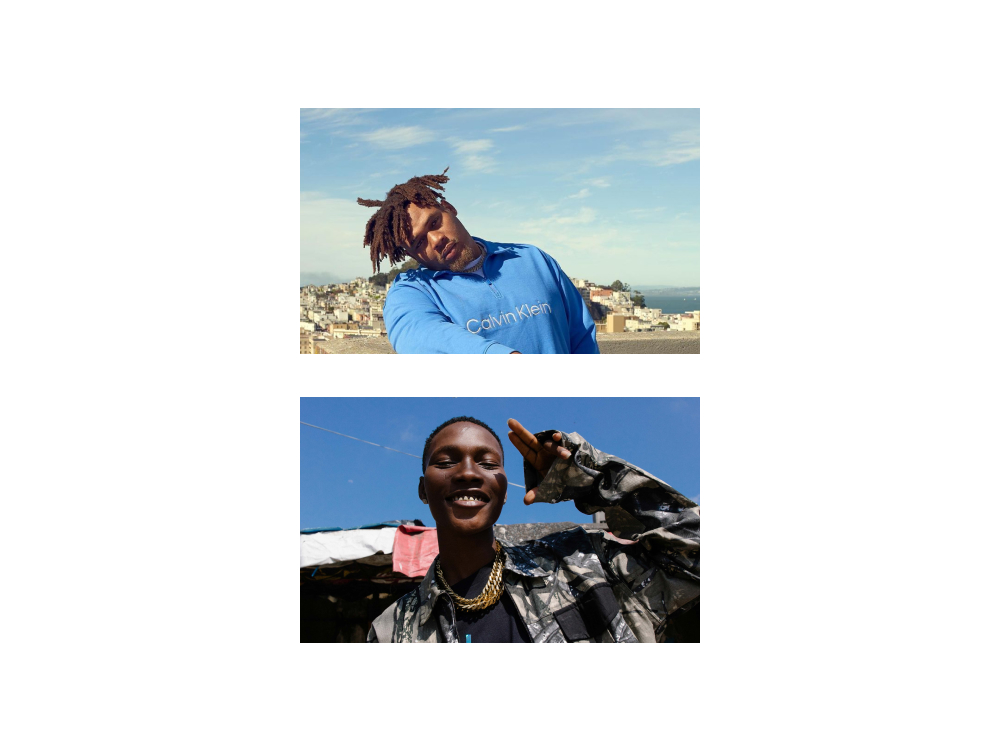
Her photo story, ‘Waiting For Forever’, made in collaboration with the brand 4ye, leaned heavily into these themes with photos of the three kids chasing the sun to the edge of the shore, as far as they can go. Okoro states that the series is based in Eternity, a concept that explores people – specifically Okoro and her friends – waiting to exist in the world, exploring the perpetual feeling of adolescence and the feelings that come with it. 

These ideas have been examined in much of her work. She has made a habit of working with close friends, which brings a particular type of intimacy to the photos that may otherwise not be there. Following the release of monograph and her recent exhibition in Toronto, we caught up with Isabel to discuss the inspiration behind her work, Black personhood and what is next for her. 


View this post on Instagram


A post shared by Isabel Okoro (@isabelokoro)

Her words which follow below have been lightly edited for clarity.

NATIVE: Let’s talk about your book — ‘Friends In Eternity.’ Now that it’s out, how does it feel for you?

Isabel: I think it’s been kind of bittersweet. Bitter because it’s something that I’ve been working on for a long time, and you know, I feel like a lot of the way that I interact with my work, within the past two years, has been centred on the idea of the book. Even when I wasn’t necessarily creating anything for the book, I still always had the book in mind and would try and keep my work consistent in that way. Now that it’s out in the world, I feel like I’ve just let go of something and that can be quite bitter for an artist, to let go of their passion projects in that way. But, I think it’s nice just having it out in the world and having it exist beyond me which has always been the goal.

NATIVE: How long have you been working on your monograph?

Isabel: I would say, like in general, for the past four or five years. I’ve known that I wanted to make a book regarding the concept of eternity but the idea for ‘Friends In Eternity,’ came in 2020. Around this time, about two years ago, I really started to look through my older work and try and connect all these dots that I saw. That is how I think Eternity revealed itself to me.

NATIVE: So why the name ‘Friends In Eternity’? Like what influenced that? What was the whole mindset behind the name?

Isabel: So eternity is my world, it’s what I call my visual universe. I call it that because I think one of my main goals is to immortalise images of my friends and images of other young Black people existing in this space. So that is where ‘eternity’ came from, and also, a lot of the things I’m inspired by like light and the sun are all eternal and forever.

NATIVE: So the concept is centred around you taking pictures of your friends?

Isabel: It’s not necessarily just about my friends but they are a main focus. With my work and with this world, I’m honestly just trying to create images that consistently represent young Black people in these spaces of joy, peace and freedom. These are our realities: You do have friends that you hang out with, you do have friends that you laugh with and friends that you feel at peace with sometimes. I wanted to make that image of our lives a consistency, so that it now becomes the norm.

I use the term ‘normtopia’ to define my world because I would say that it’s only normal and not perfect. At the end of the day, human beings by virtue of our humanity are imperfect. I’m not necessarily concerned with being anyone’s saviour or anything like that. I want the work to serve as an aide and to be a driving force in depicting what Black existence can be, when you don’t suffocate it with violence or dehumanisation.

“I’m honestly just trying to create images that consistently represent young black people in these spaces of joy, peace and freedom.”


View this post on Instagram


A post shared by Isabel Okoro (@isabelokoro)

NATIVE: Why was it important for you to memoralise the ‘normal’ experiences of Black people?

Isabel: I think I’m getting to a point in my life where I only care about real life. I say that to mean, I care about work that exists in real life and, I care about people I interact with in real life. I care about these real human interactions and connections that are very intentional. I think that the process of creating something physical forced me to think about what images people were going to gravitate more towards.

Working on this book forced me to really go back, and think about why I wanted to make the work in the first place. At the end of the day, once the book is out, it’s permanent. I can’t change it, I can’t adjust it to be more of what anyone else wants it to be. I have to stay true to myself and my work in that way and so caring about what’s real and what happens in real life meant that I had to create something that existed outside of social media and outside of the virtual spaces. I needed to create something that people could hold and flip through, something tangible that lasts and exists outside of me.

NATIVE: What was the selection process for the images that made it to your monograph? Were they taken all at once or over a period of time?

Isabel: I began thinking about eternity and creating this visual universe in early 2020, but before then, obviously I had been photographing and making images. Around 2019, I started to notice that my images had a certain feeling that they carried that I didn’t notice and I liked it. So, I started trying to do more of that although not necessarily on a conscious level but just like subconsciously by staying true to who I am and making the kind of work that I like. I ended up at this point, where it just felt so familiar, there was a certain feeling that these images carry that I know it was just me trying to say something. Once Eternity revealed itself to me, I, then started becoming more intentional with my approach to shoots. I would look for specific models or try and shoot at specific places because I knew at that point what I wanted to say in my work.

NATIVE: When did you realise that photography was something you wanted to pursue full-time? 

Isabel: My first year of uni. I had been taking photos for a while and I kind of saw I was good at it. and I liked doing it and I knew that I really had something in me. At the time, I didn’t really know what it was yet but I just knew that there was something there. It wasn’t just like ‘oh I’m taking photos just cuz I’m taking photos.’ I mean there was a bit of that but more that I’m taking photos because I’m feeling a certain type of way or I’m dying to remember this thing, there was always this kind of emotion attached to it.

NATIVE: Out of all the images which one would you say represents your book’s entire concept the most?

Isabel: I don’t really think I can choose. If I had to, I’d say maybe the cover image, just because I just love that image so much and I really went through a lot to get that image. Having that image as the cover and also what it represents and the references and motives behind why I wanted to create that image, it just stands out to me as what I would say describes my world.


View this post on Instagram


A post shared by Isabel Okoro (@isabelokoro)

NATIVE: You’ve been very honest with what normatopia or eternity means to you, but what does it represent?

Isabel: I think more than anything, to me, on a personal level, it just represents the journey. I shoot a lot of my work on film so, I’d done this shoot for the cover and something was wrong with my camera. All the photos came out blank and it was the same exact shoot, the same exact place but the photos came out blank. So I had to call my friend whose little sister I photographed and ask ‘can she come back again and lets try and get the image one more time?’. We did and this was kind of the strongest from the set and I just loved it so much. Since that day, I knew it was going to be the cover of the book because it just represents again the journey because literally, I think there’s a part of me that’s always trying to appease my younger self and this girl just kind of reminds me of a younger me.

NATIVE: When people get this book and look through it, what kind of emotion do you want it to evoke?

Isabel: More than anything, I just hope that they feel something. I don’t think I can necessarily dictate what exactly that is or what I think it should be. I just hope that they do feel something. I will say I hope the feelings are feelings of calmness or a sense of ease, peace, you know, just stillness, I guess.

NATIVE: Now that you’re done what’s next for Isabel?

Isabel: (laughs) I don’t know what’s next really. I’m still trying to process where I am at right now but I would just hope that the work keeps growing and growing however that may be.

You can purchase a copy of ‘Friends In Eternity’ here.

Featured image credits/


Words by Moore Wright and Interview by Ada Nwakor

EXCLUSIVE: Everything We Know About ‘Young, Famous & African,’ the first-ever African reality show on Netflix

More than ever, the gaze of the world is intently pressed on what’s coming out of Africa. Across music, fashion, food, and academia, the continent is making a grand leap forward that would have been simply unimaginable only ten years ago. Streaming giant, Netflix, was one of the earliest global powerhouses to make a move into the continent, spreading its wings with shows like Queen Sono and Blood and Water. The next level of Netflix’s engagement with Africa is set to be predicated on the unscripted drama of reality TV shows. 

‘Young, Famous and African’ is set to be the streamer’s flagship, cross-continental show and is going to be built around some of Africa’s most famous celebrities, starring Khanyi Mbau (South Africa), Diamond Platnumz (Tanzania), Annie Macaulay-Idibia (Nigeria), 2Baba (Nigeria), Zari the Boss Lady (Uganda), Naked DJ (South Africa), Nadia Nakai (South Africa), Swanky Jerry (Nigeria), Andile Ncube (South Africa), and Kayleigh Schwark (South Africa).

According to the show creators, the high-octane life of these celebrities will collide across seven episodes that were filmed in South Africa. Peace Hyde, show co-creator and executive producer, told Africanews that the show would serve as a medium to change perceptions of Africa moving forward. “This has been a labour of love that has finally become a reality. Growing up in the U.K, there were no glitzy and sexy images of Africa; all we saw were the stereotypical images that have been propelled in the media for years. Young, Famous & African presents an Africa that is vibrant, beautiful, glossy, and sexy to the world,” Peace Hyde said.

Ahead of the official debut of the show on Friday, The NATIVE caught up with some members of the cast to discuss shooting the show, what its stated objectives are, and what perceptions they hope to help change with the show. 


View this post on Instagram


A post shared by Netflix Nigeria (@naijaonnetflix)

NATIVE:  Can you describe what the series is about in one sentence for anticipating viewers ?

ANDILE: We’re going to give that one to Nadia cause she’s really awesome with this sort of thing. 

NADIA: I honestly think that it is a show that showcases African talent in different spheres, in different industries and people that inspire each other, that are inspired by the African continent and I think we are a group of people that are very strong headed and have very strong will but that also have drama, we have drama and issues we just like any other person. I think anybody that watches the show will resonate with that because I think no matter what group or dynamic that you find yourself in there are certain things regardless of fame money or youth that we deal with as humans and people so I think that’s something that will be a big resonating factor when you watch the show as well as super inspiring.

ANDILE: Never mind a sentence she gave you 16! 

NATIVE: So what did you say individually sparked your interest when you were initially presented with working on the reality show?

ANDILE: Well, number one, being in Nigeria you know how Africa is proceeding projected around the world. We get to see the most beautiful pictures from Europe, the most beautiful pictures from America of lives well lived, an inspiration to Americans, etc. Which then outpours into Africa. This is Africa showing a side that CNN won’t show you, this is a side of Africa that interested in me in telling a different story to the narrative of Africa that out there to be are part of something that says Africa is not a jungle Africa is not a war zone that is life beyond that in the continent, that was definitely one of the big things that sparked many of our interest.

KAYLEIGH: I think my interest was very similar to Andile’s. And it was the fact that it’s Netflix ,and Netflix is obviously a huge platform, I think all of us are usually blessed to be able to be on such a huge platform and also again you know Africa is such a beautiful place and the way it is perceived in other countries and you know the way the media shows it and the way the propaganda puts South Africa out to be  or Africa out to be is not always 100% accurate so it’s a great platform to showcase that

NATIVE: Nadia how about you? 

NADIA: I think the biggest thing for me is the fact that one of the major exports when it comes to fashion and music is from our continent and I think more often than not when its showcased from another country‘s perspective. I think this is the first time you’re able to see this to see it from our perspective from African people that are actually cultivating and defining what is new in fashion, what is the new sound in music and other industries as well. So coming from us by us which is the most exciting thing for me as a creative as well.


View this post on Instagram


A post shared by Netflix Nigeria (@naijaonnetflix)

NATIVE: And what was the most enjoyable part of shooting?

NADIA: The most enjoyable part for me was how our dynamics are as a group. It’s exciting to see how I’m at the beginning of shooting. We might not know every single person but real relationships formed from this experience. I’m sure you Andile, you and Annie would never cross paths if it wasn’t for this kind of platform to bring everyone together, you guys have cultivated a really good relationship even now.

With me and Swanky, like I’ve always known him on socials I’ve always known him when I went for the Afrimas in Nigeria but I never got close to him like I did, and he’s one of my good friends today. Like I’ll say also with Khanyi, she is someone  that is in the same industry with me that I’ve always looked up to. But now I can say she’s really my big sister because of experiences in the show, which is really exciting and great.

KAYLEIGH: I think for me it was the fact that I was unscripted and there was real life everything was 100% real, you know. It wasn’t put on in any way. And then also just being able to meet these amazing people . Every single one of the cast members are amazing, they all have their own personas and they’re all so different but we all come so well—we all come together so well—

ALL: *laugh*

KAYLEIGH: Quinton would’ve been the one to say this! But we all come together well.

NATIVE: I know each one of you are celebrities in your own right and you know have worked with the media in some way, but how would you say things kind of shifted going from you controlling what you put out there to being on a reality show and having to give them access to different parts of your life that you would not ordinarily give access to?

ANDILE: I’ll tell you what, there is a therapy around this as well. Nadia and I shared moments that are not things we’d ordinarily do, I know diamond and I shared moments like that as well, Quinton and I as well. So the access to part of you that you ordinarily wouldn’t share was then shared out of altruism thinking about other people. I mean my father’s passing is not something that I speak about, but I know for sure that there are people who struggle with that. Diamond was the same. *To Nadia* You know and you and your father’s situation that we spoke about as well is exactly the same. So in what we go through and what you see in the show there’s a lot of people that are gonna see relatable content that are gonna find a way to move on and deal with conflict that we move on and deal with on the show so that’s what I took out of it rather than it’s me just sharing my life no it’s me sharing part of me hoping to reach a part of you that’s at the same journey in life.

NATIVE: Yeah understandable. How about you guys, Nadia and Kayleigh?

NADIA: For me I think it’s a big concern at the beginning to the fact that I’m not used to showcasing myself in things that have to do with my personal life the way that I did on the reality show and there’s nothing that’s really compared to it. They obviously get a feeling of what we discuss and how things come out and how we interact with people that you actually forget what you said, and you hope that ‘oh my gosh I hope that was received the way I intended it, I hope that people can really see my personality and don’t think that I’m actually just being bitchy or ungovernable or unmanageable or difficult’.

That’s the thing, in the fact that we haven’t watched the show at all contributes to that, because all we were doing was just being honest and living our life in that moment, and you being honest and living your life in that moment you’re going to question yourself like were you authentic and being yourself. So there is always going to be that concern. It was exciting, but the first thing I wanna see is –I know it’s really like, primitive of me to think of it like this– but I want to see how people are going to receive me when they see my  personality and if it’s likeable. It’s like a test , like a study I’m doing on myself to think what are they gonna see how they’re gonna think of me and not just on my music on my music videos but literally from the words that I say and how I deal with people and how I interact with people which is interesting.

NATIVE: That’s a really lovely answer, thank you. Did you guys face any particular challenges while shooting?

KAYLEIGH: I think prior to the show I had a perception or I had an idea of what I wanted to share and what the boundaries were and you know what I was willing to give to the to the rest of the world but when you actually start shooting you realise she start giving away so much more than what you ever anticipated to do because you need to be able to deliver the message, the correct message to the person which makes so much sense once you share the full story, so and yeah I think that that’s it for me. 

NATIVE: Alright, thank you everyone this has been a really really lovely, interesting conversation and I’m looking forward to the show coming out and everyone seeing more of it. Can we expect a season two already?

NADIA: I hope so!

KAYLEIGH: Definitely. We have to. We have to see more.

NADIA: There has to be more.


ICYMI: NETFLIX’S SEX EDUCATION SHINES A LIGHT ON NIGERIA’S UNDERGROUND QUEER SCENE

BNXN, Cruel Santino & the importance of artist name trademarks

Around this time three years ago, BNXN, the artist formerly known as Buju was beginning to infiltrate ears and turn heads with his distinct, folk-tinged voice. As his stock rose and singles like the Zlatan-assisted “Spiritual” and “L’enu” brought him closer to the mainstream, the singer, was consistent in clarifying the source of his stage name: It was an abbreviation for “Beauty underneath just understood,” an expression that meant a lot to him. The reason for the clarification was glaring, since anyone could’ve concluded that he wilfully and liberally borrowed the moniker from popular Jamaican reggae/dancehall artist, Buju Banton.

Earlier this year, the man born Daniel Benson announced that his stage name going forward would now be the latter half of his government name, stylised as BNXN. There were no public explanations, and no philosophical reasons as to why he changed his stage name away from one that clearly meant a lot to him. While it may have very well been a straightforward artistic choice, the music industry hallways are always buzzing with spicier reports on these sorts of decisions. In this case, the speculation is that the Nigerian singer formerly known as Buju reached the awareness of Buju Banton and his team, after it became news that he would be serving as an opening act on Jamaican superstar Koffee’s next world tour. 

You might wonder, why would it bother a renowned Jamaican artist that his moniker is very similar to that of a burgeoning Nigerian artist? The answer is a two-fold reason that merges into one very strong argument: We live in a highly connected, globalised world, and the legality of an artist’s name is a unique feature. In terms of the former, it’s now trite to say streaming and social media has broadened the reach artists can aspire to, from local fame to worldwide recognition, a trajectory BNXN has been on with each solo release and feature-killing appearance. It’s the story of Nigerian pop music these days, where nascent artists are quickly exposed to audiences beyond boundaries and continent-separating oceans.


View this post on Instagram


A post shared by BNXN (@toyourears)

“It’s not just about the name, it’s the brand equity that comes with the name.”

With the upcoming Koffee tour, Daniel Benson might have been Buju to many new listeners, but to other listeners outside the African continent, he was effectively affecting the knowledge and prominence of Buju Banton, which leads to the other side of the argument. When these instances such as BNXN occur, there’s legal provision that helps protect that uniqueness and everything that comes with it. “Trademark, in general, is the aspect of intellectual property law that protects brand equity,” Oyinkansola Fawehinmi, a Lagos-based lawyer and music executive popularly known to insiders as “Foza,” tells The NATIVE. “It’s not just about the name, it’s the brand equity that comes with the name.”

Trademark is a precept applicable to any and everything with a distinct attached value. Names, logos, and colours, can be protected under trademark law, with the affiliated persons or entities owning exclusive use as long as these features are registered to them. This level of control plays a huge role not just as a means of stamping identity, but also within the very broad concept of branding. Every brand has a perception they want to create and an image they want to project, in addition to the services they offer, which makes distinct features like names and logos quite significant. Trademark prevents any copycats from gaining off the value attached to these features, making them recognisable and solely attributable to their owners.

As everyone with the faintest knowledge of the music business will tell you, an artist is a brand. Since names are important in the base level of brand identity, trademarks are an integral part of the music business. In Nigeria’s developing music industry, where due process isn’t always kindly received, trademarks aren’t being widely used just yet. “It’s kind of something we’ve been saying for a while now but people don’t really pay attention, because the posture in Nigeria to trademark and IP in general is quite lukewarm,” Foza explains of the parochial situation. “A lot of people have just neglected this thing over the years and no real action has been taken.”

Well, it looks like the days of zero consequences are winding down. Amidst the 2020 lockdown, the Nigerian experimental artist now known as Cruel Santino revealed that he had to lengthen his moniker following a strong request from a Spanish artist with whom he shared his previous stage name, Santi. Formerly known as Ozzy B, the artist had made the previous moniker change while undergoing an artistic rebirth that saw him move from rap lyricist to outré, fusion leanings. But this moment was different given that the name was inspired by his obsession with American genre-mashing singer/rapper Santigold, making the nominal situation with the Spanish artist Santi an honest coincidence.

These days, most Cruel Santino fans still refer to him by that immediate, previous moniker, mainly because it’s a shortened version of the current one. However, the change underlines the real implications of using a trademarked entity when it’s not registered to you. It’s also interesting that the change happened after Mandy & the Jungle’, the 2019 debut album that increased Cruel Santino’s notoriety in the U.S. and across Europe, which may have caught the attention of the Spanish artist Santi and/or their reps, and ultimately enforced the change. “Even if your local situation isn’t as stringent, you have to be more responsible in the global age,” Foza says.

Within the context of music globalisation, though, it doesn’t mean name trademarks aren’t globally binding. That an artist registers their name as a trademark in Nigeria doesn’t mean it automatically translates in the UK, or even any other African country for that matter. According to Foza, it’s advisable that Nigerian artists locally trademark their stage names as soon as they’re certain of their path, regardless of their popularity. As they begin to grab more attention and based on future projections, they should start the process in other international territories.

“What we usually recommend is, there are some treaties that allow you to do one singular registration and you’re protected in Europe in general or America in general,” Foza explains. “Africa doesn’t have a central trademark thing going on, so you have to go to each country to register your trademark. So, if you’re an artist that’s starting out in Nigeria, what we usually advise is that you register in Nigeria and as your audience grows, we usually recommend you register in the UK because it’s very receptive to Afrobeats. If you see or feel that in the next 2 to 3 years, your band is going to grow into something exponential, you register in America.”

It’s sound advice, considering that even in more diligent music ecosystems, name trademarks are still disputed over. In 2020, the country music band formerly known as Lady Antebellum sued the American blues/soul singer Lady A over nominal rights, after the band decided to remove the “ntebellum” part of their stage name, due to its ties with slavery, following the wave of civil rights protests in the wake of George Floyd’s brutal murder at the hands of police officers. After the band announced their name change, it became wider news that there was an artist who had been recording and performing under that moniker for over two decades. Both acts filed lawsuits against each other, and eventually settled earlier this year, but the dominance of the band on web search engines and streaming search tabs proves the importance of outright, legal ownership of a registered trademark.

The semantics of registering a trademark are slightly more complex than picking a name. For example, “you can’t register your natural name, except that you’ve built so much clout with that name,” Foza tells me towards the end of our conversation via WhatsApp call. “Even someone like Beyoncé, she had to use the apostrophe to distinguish it. You can’t register state names, location names and the like; the other thing to it is maybe changing the spelling, changing the logo, changing how it’s written. So, even BNXN isn’t spelt the regular Benson, because naturally you can’t trademark that because it’s a lot of people’s name.”

Further, trademarks work in classes, meaning that a feature is only peculiar to a person or entity in each class it is registered. If an artist registers their name in the entertainment services class, that name can be used by someone else in another class. “If you’re registering, say, Foza in the Entertainment services department, it means no one can use Foza as a stage name, as a performing actor, as an actor or whatever it is,” she explains. “However, someone can use Foza in the cooking industry. If I don’t want anyone to use Foza for anything at all, I have to register for each class.”

Trademark is quite nuanced, but it’s quite the imperative endeavour because, as Foza puts it, “anything can blow up.” While BNXN might not have envisaged that his previous moniker would have caused a minor wrinkle in his transition, and Cruel Santino was entirely oblivious of the Spanish artist Santi, they are solid examples of why artist need to invest in the details of what makes them identifiable. Both artists have moved on quite well from these name changes—BNXN is part of the biggest song in Nigeria at the moment and Cruel Santino recently dropped his sophomore album to much conversation—but that sort of smooth transition might not always be possible for every artist that falls into the same situation.

When it comes to trademarks, like they say, to be forewarned is to be forearmed. Or as Foza bluntly puts it, “We’re no longer in the era of artists being negligent, you could get away with it before but now you can’t.”


ICYMI: AUDIOMACK PARTNERS WITH MUSIC BUSINESS AFRICA & SPONSORS THEIR WOMEN’S FUND

Major League DJz Land A Recording Deal With Atlantic Records

Over the past couple of years, an exciting sound has emerged from South Africa’s busiest townships. The genre-mashing sound which borrows from other homegrown sounds has evolved from the depths of the underground to become a mainstream disruptor in today’s global world. Despite rising from the townships, Amapiano continues to influence global tastes thanks to the likes of the genre’s frontrunners including Kazba de Small & DJ Maphorisa, De Mthuda, MFR Souls, Vigro Deep and more.

At the forefront of the sound is South Africa’s Major League DJz have played a vital role in spreading the sound far and wide, from their base in Johannesburg, South Africa. 

After helming a number of hits off their recently released album, ‘Outside,’ the duo announced yesterday that they had crossed another milestone in their fast rising career. Shortly after signing a music licensing agreement with emPawa Africa last year, the hitmaking brother-duo have now signed a global recording deal with Atlantic Records.

Sharing in an Instagram post, they said:

“PIANO TO THE WORLD” was just a phrase that we believed in so much so that it changed our lives. This is just the beginning, there’s still so much work to do, the door stays open for kids coming after us. Black child your dreams are valid. Let’s dream as a nation because wow the doors are open wide & the world is ready to embrace Africa.”

The pair also dedicated this moment to their late colleague and friend, Riky Rick who unfortunately passed away earlier this month. This global moment for Amapiano and indeed South Africa is a collective effort, and Major League DJz themselves emphasise the genre’s collaborative effort in our Sounds From This Side digital exclusive.

Featured Image/NATIVE

The Shuffle: “Bachelor’s Life” exemplifies the timelessness of 9ice’s ‘Gongo Aso’

In 2007, 9ice wasn’t an unknown commodity. In addition to his indelible feature on Ruggedman’s seminal Nigerian rap smash, “Ruggedy Baba,” the Lagos-raised singer and songwriter dropped his debut album, Certificate’, to mild reception, even spawning multiple cult classic hits like “Little Money” and “Ganja Man.” While he was recognisable to keen listeners, at the time, he wasn’t quite popular to the wider audience to validate that stardom. Part of that is because he came up in an era where artist couldn’t skip steps on their way to widespread notoriety.

In hindsight, that first LP was a forecast of what was to come, a raw and vibrant mash-up of Yoruba Folk adages, Fuji-indented melodies, and vivid Hip-Hop influences, all held together by that guttural voice that squeezed out the elemental feelings and memories behind his stimulating writing. Building on these artistic axioms, 9ice fully arrived the following year with ‘Gongo Aso’, an album that stunned Nigerian music and all of Afropop with its overall ingenuity, merging aspirational grit, folksy soulfulness, measured bravado, and a booming sonic canvas.

Fourteen years later, calling Gongo Aso’ a classic album feels like an undersell. 9ice, greatly assisted by main producer ID Cabasa, delivered one of the most essential, and one of the greatest records in the history of Nigerian music. To the latter point, greatness is usually attached to impact, and only a handful of albums are on the same scale of impact as 9ice’s sophomore. Led off by its titanic title track, nearly every other song off Gongo Aso’ became hugely popular—“every other track became a single,” Osagie Alonge had once said while discussing the album on his podcast, ‘A Music in Time’.

While the album is largely dedicated to being a musician confident in his powers and a young man getting set to live out his glory, 9ice focuses more on the romance-fuelled stuff on the album’s second act. The Spanish guitar-flavoured “Wedding Day” remains a staple at many nuptial ceremonies, and “Kasa Final” is thinly veiled in its raunchy aggressiveness but you could make a case for it as an ode to unbridled attraction within the confines of a monogamous relationship. Where there’s real tension in that one skit and 3-song run is “Bachelor’s Life,” a brash celebration of being emotionally non-committal, where the only commitment 9ice and his trio of collaborators devote themselves is to consistent carnal pleasure.

Handling just song’s the chorus, over rippling guitar chords and jazzy percussion with a folk twist, 9ice sets a mischievous tone, chanting “I’m a bachelor” eight times each at the beginning, in between three verses, and at the end. That line is sung with a knowing smirk, as a justification for blatantly prioritising hedonistic thrills over connections with depth, so much so that when he proclaims, “all the girls wey dey for my area/ ni mo n ba s’ere (is who I’m messing with),” you’re tempted to smirk along with him.


View this post on Instagram


A post shared by 9ice (@9iceofficial)

Since his soulful voice makes the mischief charming, it gives his collaborators licence to be more exuberant and granular with details of their own preference for casual entanglements. Reminisce opens with a verse that pre-dates his flip into being at the vanguard of indigenous rap, slinging his Lothario boasts in a cadence that sounds very much inspired by the American rapper Ma$e. XP follows with a slightly more cinematic verse, ending with a vignette where he dismisses a potential interest intent on commitment before sex. Six O’s verse provides a solid capper, totally denouncing the idea of living a domestic life within his first eight bars.

In relation to its two preceding songs, the thematic tension “Bachelor’s Life” brought to Gongo Aso’ was evident, even more so when you consider 9ice got married shortly after. There’s a possibility he was channelling his past, hence the slightly wistful tone, but the vigour of his guests roots it in the present and makes it ever relatable to those dedicated to being in the streets. ID Cabasa even shifts the musical tone on those verses, throwing in sharply screeching piano strings, droning synths, and emphatic bass beneath those belligerent raps.

It would be disingenuous to not point out that “Bachelor’s Life” plays into the “boys will be boys” trope for its appeal, especially in a society that holds women to a higher standard. At the same time, though, it’s an indicator that situationships and other forms of casual relationships aren’t limited to recent times, where the complexities of two people getting together is more pronounced than ever. That’s more points for the timelessness of Gongo Aso’, that 9ice made a song, well over a decade ago, that could easily serve as a soundtrack for a modern-day reality show like ‘Too Hot to Handle’, or even more immediate, the dating scene in a mythically promiscuous city like Lagos.

Listen to “Bachelor’s Life” here.


ICYMI: 2BABA, 9ICE & THE BURDEN OF EXPECTATION ON NEW ALBUMS FROM OLDER ARTISTS

The Real Housewives Of Lagos Is Coming To Our Screens Next Month

It’s official, the Real Housewives franchise is coming to Lagos, Nigeria. Set to debut on the 8th of April, the reality television show ‘The Real Housewives of Lagos’ will follow the lives of six of the most intriguing women in Lagos, Nigeria including social media influencer and entrepreneur, Laura Ikeji, CEO of Hutchings limited, Carolyn Hutchings, CEO GoodHair limited, Chioma Ikokwu, fashion designer and CEO Tiannah’s empire, Toyin Lawani-Adebayo, Nollywood actress and business mogul, Iyabo Ojo & PR expert and creative director, Mariam Timmer. 


View this post on Instagram


A post shared by Showmax Naija (@showmaxnaija)

The show is available exclusively on ShowMax in more than 40 African countries and should feature a new episode every Friday from the 8th of April. The Real Housewives of Lagos will be bringing all the drama, power, high fashion, luxurious lifestyles and exclusive showcase of wealth around the lives of these women, just as the franchise has been known for in the past years. 

This version will mark the 16th version of ‘The Real Housewives’ format and the third African adaptation joining the Real Housewives of Durban and Johannesburg. RHOLagos is produced by Livespot 360 and will be the first installment of the franchise, distributed internationally by NBC Universal Formats. 

Speaking about the upcoming series, Busola Tejumola, the executive head of content and West Africa channels at MultiChoice Nigeria shared:

“The Real Housewives of Lagos has long been anticipated by fans of the franchise across Africa, and we’re excited to finally bring it to your screens.

The show will explore the rich culture and lifestyle of Africa’s largest megacity, Lagos, through the eyes of six of the city’s most glamorous women. Each of these women is unique, fabulous and watch-worthy. We are certain that our viewers will enjoy the ride.”

Featured Image Credits/ShowMax

Songs Of The Day: New Music from Timaya, Ms Banks, Iyanya & More

2022 is no longer a new year, and Afropop knows that very well. As much as the previous year was packed with scene-defining achievements, especially within the context of global growth, the only way to keep the momentum from falling off is for artists to keep reaching into their bag for great music that holds the ears and captures the hearts of millions of listeners across the continent and well beyond. That’s exactly what’s been happening, so much so that there’s hundreds of new singles, at-least one new must-hear album and a new smash hit every week.

Amidst this torrent of new music, The NATIVE is committed to highlighting the best releases you need to hear, and possibly add to your playlists. That’s the essence of our ‘Songs of the Day’ column. Earlier this week, we brought you highlight selections from Reekado Banks, Niphkeys, Busiswa, Bisa Kdei and more. For our mid-week installment, here are recent releases from Timaya, Ms Banks, Iyanya, and more.

TIMAYA — “No Pressure”

Following his 2021 continent-spanning, BNXN-assisted smash hit “Cold Outside”, Timaya shows no sign of losing steam as he follows through with his debut record of the year, “No Pressure”. Over the past few years Timaya has refined his sound and lyrics, establishing himself as a purveyor of chill groovy music with lyrics that tilt towards hedonistic themes and a general gospel of giving yourself to the moment. His 2019 smash hit, “I Can’t Kill Myself” highlights this superfluously. With its chill groovy cadence and its relatable hook, it spawned a full blown cultural moment. On “No Pressure” the singer continues on this route, as he bounces over a swanky mid tempo production, inflected with melodious horns, preaching his gospel of hedonism as he declares his earnest desire of living a life without pressure.

IYANYA — “CALL” (FEAT. AYRA STARR)

In the 2010s Iyanya thrilled the world with Afropop records spanning the entire spectrum, from the high-octane club jam “Kukere” to the R&B-inflected “Mr Oreo”. Following a string of low-key releases in 2021, he starts off this year with the Arya Starr-assisted “Call”. On the record, Iyanya draws from his archetypal late 2010s sound which leaned full tilt into mid-tempo R&B melodies. The production is a stripped-down, R&B-inflected Afropop sound featuring minimalist drum patterns and bouncy grooves. Iyanya and Arya both deliver mesmerising vocal performances over the mid-tempo bouncy groove, their vocals skimming and bouncing over the beat. The effect is an immersive soothing experience.

MS BANKS —TYPA WAY(FEAT. TION WAYNE & EIGHT9FLY)

On this record, British-Nigerian singer-rapper MS Banks rallies fellow British-Nigerian Tion Wayne and singer Eight9Fly for a sunny bouncy number. The production is a salacious bouncy groove peppered with high pitched guitar riffs and zingy drums. Eight9Fly blesses the record with his swanky flows and sultry vocals over the addictive hook. Ms Banks and Tion Wayne hold up their end, delivering electrifying rapid-fire verses, with lyrics like “Hair money green and my swag look clean” and “Love them smooth and brown like Banks and Meghan”.

WURLD — “PRESS”

Off the just released My WorlD With U, “Press” is one of the conspicuous standouts on Nigerian soul singer WurlD’s debut album. The record follows his characteristic percussion-heavy and sensual melodic sound. The song reflects on the disquieting aspects of the dynamics of wooing a love interest. On the song he tunnels through the full gamut of emotions experienced by a person chasing a muse who is not quite interested in the love proposal. He sings about being forlorn because his love interest isn’t interested in his advancements as she has someone she’s in a relationship with, even though she’s giving him mixed signals. Expressing his tumultuous emotional state with lyrics like, “She no dey press, she tell me baby, she no want stress, she got her own so she no they press”.

SEYI VIBEZ — “C Major”

“C Major” follows Seyi Vibez’ archetypal sonical arc. On the record he blends quintessential Yoruba melodies and exotic aspirational soul melodies into a brilliant whole. On the percussion upholstered record, he contorts his voice, scooting from a cool speaking-like tone to poignant sonorous crooning and vice versa as the song burns through. He explores themes like hope and divine assistance as he delivers his lyrics in Yoruba. 

TIA — “MAKE IT RIGHT” (FEAT. ONYINYE)

On “Make It Right”, sensational newcomer TIA taps Onyinye for a slowburn groovy RnB number. The production is immersive, lush and delicate—like dipping your hand into a jar of marshmallows. The pair take turns surfing the beat with their sultry vocals, as they deliver a salacious duet. On the record, TIA surfs a familiar arc, exploring the theme of unconditional love as he sings “Shey we dey dey, shey we dey dey like that, shey you dey dey when I dey say my mind”.

FRAYZ — “WEAK”

On “WEAK”, newcomer Frayz delivers a sunny ballad, laying his sultry vocals over percussion-heavy Afropop production punctuated by shimmering guitar riffs. On the record, he displays his dexterity as an artiste, contorting his voice and employing his usual clipped cadence to convey a range of emotions. The narrative of the song follows a familiar arc, he sings about his attraction to his muse and showers her with adulation, employing soulful melodies and cheeky lines to this effect.

KELVYN BOY — “DOWN BAD”

In 2020, Kelvyn Boy was among the slew of musicians that added colour and vibrance to the otherwise gloomy year, thrilling fans with a smattering of singles and his debut album, ‘Blackstar’. If his 2020 was a bubbly montage, his 2021 was a fine point — going the full year without a release. This year, the Ghanaian singer comes full circle, returning to the scene with a sunny highlife-inflected Afropop record. “Down Bad” is a bouncy, percussion driven number, peppered with exotic melodies, anthemic horns and tantalizing guitar riffs. On the record, Kelvyn Boy shuffles between nonsensical playful chants and offering adulation to his muse. The effect is an infectious playful summertime bop.


ICYMI: MAJOR LEAGUE DJZ LAND A RECORDING DEAL WITH ATLANTIC RECORDS

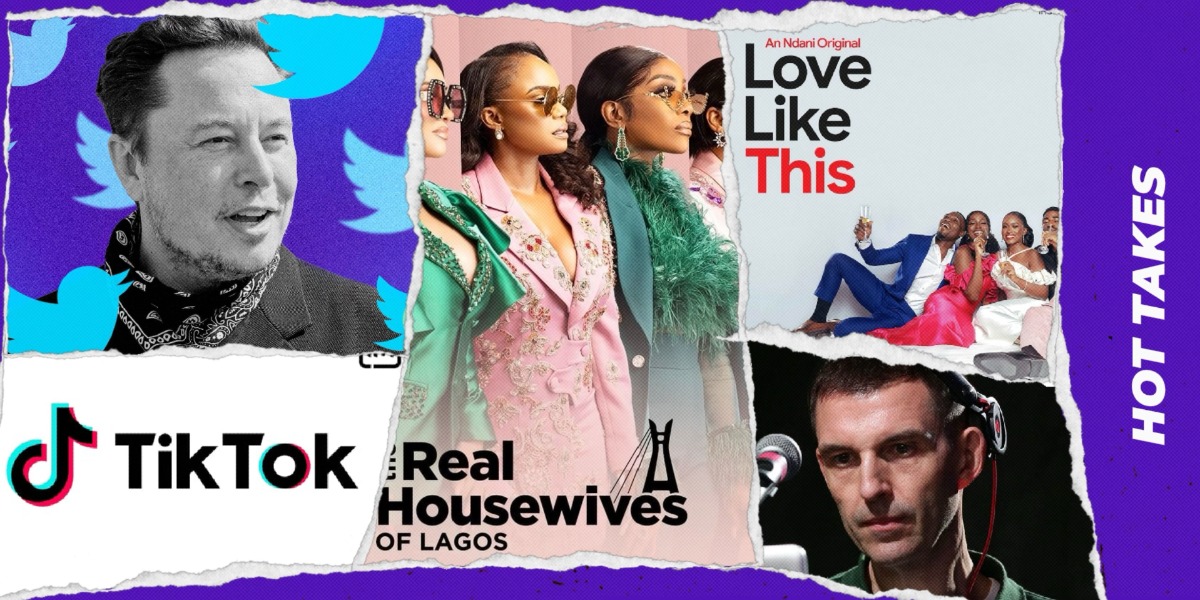
Hot Takes: ‘Subaru Boys’ reactions, the new Oscars development & more

With the month of march in full bloom, I have found myself constantly overwhelmed by the amount of information I’m exposed to on social media and in real life. Everyday a crop of riveting or disturbing news finds its way into my feed and seeps into my day. Whether it’s a story about a corrupt politician who was busted, or news of the horrors going on in Russia-invaded Ukraine, or about a high-profile celeb being called out on Twitter, these days I find myself suffering from a pathological case of information overload. A holiday in Zanzibar, off from the chaos of social media would really slap right now, but sadly, I’m in the media business and staying on top of current happenings is the cardinal rule of the job. 

Luckily I have a conduit through which I can let out pent up emotions and opinions. Our Hot Takes Column was crafted to get you up to speed with the current interesting and riveting topics in pop culture, and also offer out infamous insightful takes on them. From Motolani’s divisive article that seems to see him egg Santi and the Alté community to the couple of other topics that deserve a take, strap in as I take you on a breath-taking ride. Enjoy!

WHAT I’M WATCHING 

Since I completed the second season of HBO MAX’s infamous Euphoria, and Netflix’s enthralling Inventing Anna, I have found myself clueless as to what series to start binging on. Over the weekend, I settled on watching a movie, after hours of nerve wracking research, I settled on a movie titled The Power Of The Dog, it had off-the-chart reviews. In retrospect I regret watching it, and no, there was no Dog in the movie (yeah, bummer, I know).

It wasn’t at all a terrible movie, it’s one of those staid-yet-profound movies that go on to win Oscars to the bewilderment of everyone. It’s a painfully long, slow burn film with  Benedict Cumberbatch as the lead act. When the curtains metaphorically closed on the film, I was left shocked, shocked because I couldn’t still make out what the film was about nor grasp the full scope of the movie. If you love slow sedated films however, you’d love it. The movie explores concepts ranging from masculinity, alcohol abuse, to queerness. 

WHAT I’M LISTENING TO

Santi’s fresh release, Subaru Boys: FINAL HEAVEN’, has been the buzz of the media for a minute. As a music critic and an avid Santi fan I’ve spent the past couple of days soaking up the project. Since the release of his debut album, ‘Mandy And The Jungle‘, I had been craving for a new immersive Santi project, imagine the jolt of adrenaline that flooded my system when the project finally dropped.

I followed the album rollout avidly, the 30-second snippets on instagram, through to the piquant anime clips he released. So, even though no singles were dropped prior to the album’s release, I thought I had a lucid picture of what it would be like. However, the first listen was ironically jarring, it was totally different from what I expected it to sound like, it sounded vaguely otherworldly. Props to him though, he really went hard on the universe he promised to create, from the first track, the experience was immersive and palpable. The first listen was relatively uneventful, I plugged my earbuds in and let the songs play in sequence, the album started off really slow for me, I just kept waiting for something spectacular to happen. It wasn’t until “Final Champion” that the album picked up steam. The sonics of the project are quite complex and unique, so after the initial listen I gave it time to marinate.

So far, after over ten listens, I have done a one-eighty on many of my initial thoughts. Ironically, I now have five faves from the first half of the project I initially berated as slow. I also initially felt that some of the mixes sounded weird, I’ve warmed up to the sound now. Overall the fantastical Subaru World Santi created on the album has become more familiar, it almost sounds like the soundtrack to a movie (It would really slap if Santi releases a Subaru World anime series to accompany the album).

I’ve been hooked on the album for days now, not because it’s the best album in the world or my favourite, but because of the way it reels me into Santi’s fantastical world. I know comparisons are now said to be in bad taste but if I were to draw parallels between his latest cut and his previous album, I’d say that sonically Mandy And The Jungle has the upper hand—it’s easy on the ears and based on infectious minimalist melodies, Subaru Boys on the other hand shines for its cutting-edge inventiveness and the fantastical universe Santi built around it.

Nigerian parliament rescinds decision on gender equality bills

For years, several Women rights bills have been underway, moving up the ranks and looking poised to be passed into the law. On the first of March, which ironically marked the start of international women’s month, Nigerian lawmakers rejected all five bills. At the start of the week several women groups have taken the streets to express distaste over this happening, and from the look of things women across the country are poised to turn up the heat in the coming weeks. The protests have started taking effect as the Nigerian parliament made concessions yesterday, rescinding its decision on three of the five  bills. 

It’s hard to believe how patriarchal Nigeria still is in the 21st century. The lop-sidedness of power distribution is jarring, and this divide is one of the reasons Nigeria is still trapped in the conundrum of bad governance. We do hope that the protests succeed in upending the tide by ensuring the bills get passed into the law. 

ARE THE OSCARS SETTING A PRECARIOUS PRECEDENT?

The Oscars have caused public uproar over their decision to move eight categories to an hour prior to the live broadcast and pre-tape and edit in those acceptance speeches. This move has earned the prestigious award show serious backlash from fans and industry folks alike. Among the leading voices against this move is the legendary Steven Spielberg, who is generally regarded as one of the greatest directors of the past fifty years. Over the past week, the 19-time Oscar nominee has taken to various media to brazenly express his displeasure over the development.

This saga calls us as unified lovers of film to question the values of the movie industry’s prime award show. Are some categories more important than the others? The movie industry is one that is upholstered by collaborative effort, every piece of the machine functions to make the engine run, why then should some winners receive their awards before the main show, behind the spectacular audience that makes the award even more prized? Definitely the organizers have reasons for this move, perhaps commercial or logistic reasons, but are these reasons strong enough to upend the age-old tradition of the Oscars? 

THE WOES OF CO-PARENTING IN THE LIMELIGHT

Kanye’s feud with his estranged wife Kim swivels a new arc. In the early hours of Sunday, Kanye West took to Instagram in a series of videos, accusing Kim of not allowing his oldest child North West to attend his Sunday Service, he harped on the reality of ‘shared custody’, and speaking on the realities of co-parenting and how the wellbeing and actions of the kids leans full-tilt towards the woman, even though the both parties are supposed to have shared control. He also berated Kim for allowing North West, who is just 8-years-old to have a TikTok account against his will.

While Kanye may have some legit grievances, it seems that his complaints have fallen on deaf ears and failed to gain him the sympathy he would have hoped. Kim, his ex-wife has been seen on many occasions commenting on how Kanye spinning incessant lies on their ongoing coparenting situation is hurting her, and by extension their kids. While we do recognise that talking about Ye won’t be complete without talking about his mental health struggles, we can also recognise when he is perpetuating harm on himself and his family. Divorce is brutal and its even worse when publicly displayed in a battle for custody. We hope Ye finds the help he needs and Kim, and the kids are able to move on from the entire ordeal.


View this post on Instagram


A post shared by ye (@kanyewest)

ASUU EXTENDS WARNING STRIKE BY TWO MONTHS

This week, the Academic Staff Union (ASUU) announced their decision to extend the ongoing warning strike by an additional two months, given that talks between the union and the federal government had stalled. The announcement cast a sodden amber gloom on students enrolled in state-owned universities across the country. The result was the full gamut of reactions, spanning the entire spectrum — from staid pragmatic assessments of the situation to Nigerians making light of the situation in their usual manner.

Amid the hubbub, students were encouraged by government officials to see the ongoing strike as an opportunity, ” to cultivate new skills”. While this take is not an entirely bad one, it does ring as deaf tone in a country where access to basic education is not a fundamental priority by our government. Nigerians have the flexibility to contort themselves to accommodate almost any situation by seeing every setback as an opportunity but when is enough ENOUGH?

In an ideal educational system, school is supposed to train students to a high level of proficiency in their desired course of study, this means girding them up with the required skills to be relevant in their preferred choice of profession. These students applied to a university to obtain the technical know-how and skills of the trade. The rhetoric of students taking advantage of the strike to bag up skills is a testament to the insidious failure of the Nigerian educational system.

MAXIMILLAN DAVIS APPOINTED AS CREATIVE DIRECTOR OF FERRAGAMO

Black people have often gotten little to no respect within the fashion industry, with them working behind the scenes for generations as dressmakers. In modern times, black people are often still not valued in fashion, with aspects of black culture often appropriated or mocked.

This past month has seen some big and little wins for black people however. One of the most notable wins came with the announcement that 26 year old Trinidadian designer Maximilian Davis was appointed as the creative director of Ferragamo, a major Italian luxury house.

He recently withdrew from the LVMH prize of which he was a finalist, shocking many. The Ferragamo announcement made this more understandable. This however, coupled with Davis’s statement that he is putting his personal brand Maximilian on hold is a little worrying. The thought that he could be putting personal projects on the back burner in service of a larger company may or may not be too pessimistic.

Regardless, it is refreshing to see a young black person be put in a position of such influence in the industry. Hopefully this is a sign of even larger changes to come.


View this post on Instagram


A post shared by The Business of Fashion (@bof)


NCVRD: HOW UPSON MARTIN HELPED CRUEL SANTINO CREATE ART FOR ‘SUBARU WORLD’

Identify: WurlD keeps getting better and better

WurlD is perhaps the quintessential example of how far Nigerian music travels. Bred in Lagos, he moved to the US in the 2000s where his journey into music began. His early songs were crafted through an eclectic understanding of Western forms, no doubt imbibed during his time as a songwriter.

He’d later pair those sensibilities with elements from his Yoruba tradition, with songs like “Contagious” especially inspired by the audio-visual universe of Fuji. Around 2016, WurlD made “Show You Off”, an inspired collaboration with Shizzi and Major Lazer’s ‘Walshy Fire’, which introduced him to more listeners Caribbean. The success of that record, he tells NATIVE, “brought me into the culture, to be more intentional on being part of the history that’s being made right now with afrobeats.”


View this post on Instagram


A post shared by WurlD (@thisiswurld)

That intentionality is precisely why WurlD has been at the forefront of discussions about artists who transcend conventional Afropop definitions. Since 2018, he’s released three EPs and a deluxe, showcasing his flair for songs that stun with their range and whose wisdom is often simple, but ultimately tender and refreshing.

His genre could fall anywhere between electronic music, soul and percussive Afropop. In 2019, he was everywhere in the Nigerian music, lending his crystalline voice to hit records and his blue hair, one of the scene’s most recognisable features. After hitting the home run of Davido’s hit outro “Sweet In The Middle”, he went on to co-write “Blow My Mind” and again replicated the magic on ‘I Love Girls With Trouble,’ his joint tape with Afropop savant Sarz, whose vivid beats were the palette on which WurlD painted searing portraits of emotional turmoil.

Since ‘AFROSOUL,’ WurlD has teased the release of his debut album. Two years after, some personal struggles have empowered the singer to now let us into his sonic world with more clarity which sparkles across the nineteen songs on ‘My WorlD With You.’ A play on his name, the title also reverberates with the cathartic quality in his music. “This album is me trying to find myself all over again,” he explains. Two days before its release, we caught up with the musician to discuss its making and other relative aspects of his life.

Our conversation, which follows below, has been lightly condensed and edited for clarity.

NATIVE: How did the sound of this album emerge? Did you reach out to producers when you had the ideas or were there songs you recorded over time?

WurlD: This was more from songs that I’ve recorded over time. This album is a personal one. The sonics of this album is my journey; I lived in ATL (Atlanta) for almost seventeen years, starting my music there and coming back to Nigeria. You know, being born in Lagos and coming back to Lagos and being influenced heavily since my time in Nigeria, it made it easy for me to kind of find a space between both worlds. And the choices of the producers that I picked were producers I used to work with in the US, having them work with Afrobeats producers to get unique sounds and energy.

NATIVE: On “SAD TONIGHT” as well as “SWEET N FINE” and a few other songs on the album you’re often singing of romantic angst. To an extent, I think that’s the mood reflected in the album cover. Why is it a subject you’re interested in?

On this album there were a lot of things that I touched, and on the more overall spectrum, I’m talking about my personal experiences and how I’m trying to improve myself as a person, as a man. Those are my observations these days and when it comes to SAD TONIGHT” “I’m going back into my flaws as a human being knowing that I’ve not always been the best boyfriend or a guy dating in a relationship and it’s just one of those records where this time around I’m just trying to fix a problem. The idea of waking up in the morning when you have unresolved issues with your partner. That feeling in that moment’s always heavy and I feel like a lot of people can relate to that conversation. Wanting to fix a problem, right there and then, when you still can.

NATIVE: The first song on the album talks about success. I’d like to know what a celebrated artist such as yourself considers success as.

What I consider success these days is…being successful, it’s everyone around me. My family, my people, my friends—that’s success to me. Helping somebody; being part of someone else’s success story because we can all bear the instruments to each other.

NATIVE: A lot has happened since you released your last project, which was 2020’s AFROSOUL. How’ve you been since then?

WurlD: It’s been a personal struggle of survival to be honest, a lot of self-improvement and mental wellness. I’ve been really trying to just take care of myself, like my headspace. I think I was in a state of depression, early 2021. It’s the worst thing ever. It’s not fun talking about it. I was scared, I had no motivation. I mean, I just didn’t feel like doing anything. I had to just take time off and get myself right, if that makes sense. It’s been a lot of self-improvement. Mentally, as a person, as a friend, as a family member, as a communicator. I was really working on myself. Mental health is very important and we have to be really kind to each other.

NATIVE: Looking back on your previous work, there’s that one: I Love Girls With Trouble, which is unarguably one of the high points of afro pop in the last half decade. For you, what’s the biggest takeaway from that joint project with Sarz?

What we achieved is beyond words. When we came together we had a vision to create a progressive Afrobeats project. I think we did that. You know, and the project is still unmatched. We’re working on the part two of the project right now, it’s a beautiful thing. I feel like the best is still yet to come. We’re just blessed and hopeful that we’re able to see it through and looking forward for what’s to come. We just did something right on [the new album], “SWEET N FINE” to get people who miss the vibe back and slowly.

NATIVE: Before you became known to most Africans you were somewhat accomplished as a songwriter in the US. How did you get started on that?

WurlD: Being in America, as an artist the way for me to get into rooms was be a songwriter and I had passion for songwriting. And I knew lot of people in America then who were amazing artists but they loved my songwriting and that was my way in. I worked with Timbaland, I met B.O.B through someone and shortly after that, I started just doing all his hooks, for him and all the artists he was working with. I started just working with everybody, all the top producers. I started writing for Mario, I could list them on and on.

“Show You Off” was my first step at being close to Nigeria. It’s the reason why I’m in Afrobeats now; shoutout to Shizzi, we did something special and it changed my whole perspective. And for the first time I had people from Nigeria hit me up like yo, “we love your sound”. That brought me into the culture, to be more intentional on being part of the history that’s being made right now with Afrobeats.


View this post on Instagram


A post shared by WurlD (@thisiswurld)

NATIVE: How and when did you identify music as your career path?

WurlD: To be honest, at a really young age. I think I was probably like eleven or twelve though I didn’t start taking the steps till I was in America. I’m just grateful that I could follow my intuition. I just couldn’t see myself doing anything else even when I was in college. I would be in college daytime, and music studios nighttime.

NATIVE: Much of your music sounds luxuriating, the kind you hear when you’re chilling out and just taking care of yourself. Is that in any way influenced by your lifestyle?

I like to have a good time surely. I don’t swim but I like to be in beach spaces. Maybe house on a beach vibe, overlooking the ocean. I’m more of a lounge guy than a club guy. I love easy vibes, good music, live bands. I love movies, I’m a Netflix and Chill guy too. At the same time I love concerts, I love performing, I love taking trips. I’m a traveler; I love seeing beautiful places, I get inspired by them. Some of my music has a travel vibe, it’s traveler’s music, if that makes sense.

NATIVE: You’re always pushing the boundaries of the art you create. What’s the motivation behind that ethic?

WurlD: The motivation for me is to inspire. When I came into the market with “Show You Off”, that didn’t sound like anything else that I heard. I didn’t do [the song] till I felt like I had something that was different. I’ve always been inspired by artists that come with new vibes, one person would be Kanye West, right? Or like the Coldplays, the Sades and Seals and for me, all these artists have one thing in common: they have their own sound, they brought something new to the table. As for me, I always try to bring something new every time. That’s why every one of my songs and projects sound different from another.

NATIVE: What does this album mean to you?

This album is me trying to find myself all over again. This is me being flawed, this is me being broken, this is me being uplifted, this is me being hopeful. This is me falling in love, falling out of love but also more importantly, this is self-improvement for me. Self-awareness–this is me being a better person and a better artist, a better songwriter and a better friend. A better human overall, ‘cos we’re all a work in progress.

Stream ‘My WorlD With You’ here.

Featured image credits/

Best New Music: Rema Lives Up To His Name On AJ Tracey-assisted single “FYN”

Since being introduced to the Nigerian public via a series of freestyle trap videos that piqued the interest of a new generation of young listeners, Benin-born pop star, Rema, has in a way – perhaps unwittingly – veered as far away from the genre as the center of his creative canvas.

Instead, he has pivoted to newer modes of sonic expressions that rely primarily on his voracious appetite for experimental melodies and lithe voice to bring these gems to life. Across, his sparse catalogue, the singer has leaned into Bollywood-inspired sonics, sensual R&B, as well as the hypnotic groove of reggeaton. 


View this post on Instagram


A post shared by REMA (@heisrema)

In essence, it has been established that Rema is a genre-agnostic who has, in many ways, thrown Nigerian pop off-center for his eccentric flows and unique melodies. A few weeks ago, definitive proof of Rema’s debut album being ready emerged and he’s since detailed its release with the romantic single, Calm Down,” a maximal song about attraction and acting on the impulses of wanting to be with someone. 

Rema’s latest single and another joint off his eagerly-anticipated album, ‘Rave & Roses,’ is titled “FYN,” an abbreviation of “fresh, young nigga.” It is the first time that Rema and Kel-P have linked up since 2020’s “Peace Of Mind,” a stunning hymnal about searching for tranquillity that followed one of the toughest years as a young Nigerian in recent memories. Where the appeal of  “Peace Of Mind” came from its sense of melancholy and world-weariness, “FYN” is a suave tale of confidence, the thrill of being an IT guy, and the hate that this status inspires. 

“Straight out of BC, we taking the sound to the world you see, they don’t really like me,” Rema dissects in the prelude of the track before launching into a chorus that is an affirmation of his status as a fresh young nigga. Much of Rema’s post-“Peace Of Mind” releases have been possessed by the same sort of secure confidence that makes “FYN” a delightful listen. As Rema has grown older, he has found exciting ways to express his sexuality. Here, the tone is as unapologetic as it was on “Soundgasm,” signalling a shift in the inspirations and influences that shape his work. 

Not unlike classic sung-rap collaborations, “FYN” benefits from British rapper, AJ Tracey, providing a wider narrative to explain the perks of life as a fresh young nigga, and the benefits are quite sizeable: spending on expensive stuff, visiting the most exotic locations, and icing out every part of the body that needs icing out. 

Watching Rema since 2019 has been an experience in growing up side-by-side with one of the most precocious talents in Nigerian pop for the last 25 years and we have seen him process pain, loss, angst, and elation. On “FYN,” he’s celebrating the pure art of being young and alive in ways that are specific to him and the life he’s leading, while bringing his listeners along for the ride. ‘Rave & Roses,’ Rema’s debut album, is shaping up nicely to be a collage of all that’s going on in Rema’s world and if “FYN” is any indication to go by, it is a delight to be Rema right now.

Pre-add ‘Rave & Roses’ below.

Featured image credits/Youtube

TurnTable Top 50: Pheelz & BNXN’s “Finesse” Rises To The Top Of The Charts

In what has seemed imminent for a while now, Pheelz and BNXN’s “Finesse” has debuted at No. 1 on the Turntables chart. The record had gone viral before its release, thanks to immense patronage on TikTok. That virality has helped boost its streams, which Turntables calculates at 9.28million equivalent streams, making it also the No. 1 on streaming this week. At No. 9, it had 35.5million in radio reach.

Pheelz consequently becomes the first performer to reach No. 1 on the Top 50 as both a lead artiste and producer. It’s not his first however–he topped the chart for seven weeks with his production on Teni’s “FOR YOU”. BNXN has featured on No. 1 before (as BUJU) and he’s now he first artist to reach that mark with different names. With little movement in the charts, Skiibii’s “Baddest Boy (Remix)” with Davido slips to No. 2 after topping the chart for five consecutive weeks while Asake’s “Omo Ope” goes two steps down after leading the chart last week.

Debuting at No. 4 is Omah Lay and Justin Beiber’s “Attention”, which is Omah’s seventh top ten entry and Justin’s third. Both had previously featured on No. 4 with “Peaches (Masterkraft Remix)” in 2021. Rema’s “Calm Down” goes from 3 to 5 but remains top of the radio chart for the third week, with 62.3million in radio reach. Lil Kesh’s “Don’t Call Me” remains at No. 6 for another week in the top ten (the only song to spend every week of 2022 in the top 10) while TI Blaze’s “Sometimes (Remix)” with Olamide stays at No. 7 for successive weeks.

Completing the week’s top ten is BNXN’s refix of Blaq Diamond’s “Italy”, which elevates the chart at No. 8 while CKay’s “Emiliana” re-enters the top ten at No. 9. Khaid’s “WITH YOU” debuts on the top ten, rising to a new peak of No. 10. Dropping out of the top ten, Fireboy DML and Ed Sheeran’s “Peru” is at No. 13 this week but its legacy on the chart is impact–it’s the longest charting song on the top ten, being on there for 29 weeks prior to this one.

Read a full breakdown of the chart here.

Songs Of The Day: New Music From Reekado Banks, Busiswa, Kah-Lo & More

2022 is no longer a new year, and Afropop knows that very well. As much as the previous year was packed with scene-defining achievements, especially within the context of global growth, the only way to keep the momentum from falling off is for artists to keep reaching into their bag for great music that holds the ears and captures the hearts of millions of listeners across the continent and well beyond. That’s exactly what’s been happening, so much so that there’s hundreds of new singles, at-least one new must-hear album and a new smash hit every week.

Amidst this torrent of new music, The NATIVE is committed to highlighting the best releases you need to hear, and possibly add to your playlists. That’s the essence of our ‘Songs of the Day’ column. For our weekend instalment, we spotlighted new releases from Victony, BOJ and ENNY, Diamond Platinumz, Jaido P and more. Today, we bring to you music from Reekado Banks, Niphkeys, Naira Marley, KiDi, Diamond Platnumz and more. Tap in.

Niphkeys & Reekado Banks – “Man Of The Year”

Following the success of the hit record “Blessings” with Marlian record signee Zinoleesky, Niphkeys is here with the new track, “Man Of The Year”. Assisted by Reekado Banks, “Man of the Year” is an uptempo Amapiano infused bop, which sees the artist hyping himself up, singing braggadocious lyrics such as “Won so fun won pe, I get all the money in the bank/Put them on the run, I’m the man of the year.” 

Busiswa – “Where You Dey Go” ft Naira Marley 

Following the success of their 2021 hit single “Coming”, the duo have teamed up with record producer Rexxie for another hit “Where You Dey Go”. The standout production of the track features heavy kicks and bass drums on the beat, giving the track the amapiano feel to it. 

Kah-Lo – “Drag Me Out”

For her first official release of the year, Nigerian born US-based singer Kah-Lo is here with party tune “Drag Me Out”, a track that sees the artist expressing her playful and energetic side over a catchy and irresistible beat. In usual Kah-Lo fashion, the production provides the perfect background for her to fire her lyrics such as “I like to party, I like to get ecstatic/I’m spending all my money, I’m not leaving tomorrow.”

Bisa Kdei – “Love You” ft KiDi 

Ghanaian singers Bisa Kdei & KiDi have teamed up for a new record titled “Love You”. The romantic number sees both artists expressing their deepest feelings to their love interests in their respective dialects, while delivering a heart filled record that soothes the soul.

Diamond Platnumz – “Sona” ft Adekunle Gold 

Tanzanian singer Diamond Platnumz has arrived with a new track “Sona”, and has collaborated with Nigerian Afropop singer Adekunle Gold. The mid-tempo track is a romantic record, which sees the artists speaking on how their muses make them feel. On the chorus of the track Platnumz sings “My baby sona, now I’m a believer/Your love is all me  I want for life”. 

Rexx Life Raj – “Beauty In The Madness” ft. Fireboy DML & Wale

For this track, R&B singer and songwriter Rexx Life Raj has teamed up with Fireboy DML and Wale for a sensual R&B record titled “Beauty In The Madness”. The mid-tempo track finds the artists singing romantic lyrics to their respective muses. On the hook of the record, Raj sings “All that I imagine is you help me find a way to see the beauty in the madness,” expressing just how she makes him feel loved and seen.

Featured image credits/NATIVE

ICYMI: 11 Projects You May Have Missed This Year

What’s Going On: Chad peace talks, Google celebrates cultural heritage in Mali & more

“What’s Going On” Tallies Notable News Headlines From Across The Continent — The Good, The Bad, And The Horrible — As A Way Of Ensuring That We All Become A More Sagacious African Generation. With This Column, We’re Hoping To Disseminate The Latest Happenings In Our Socio-Political Climate From Across The Continent, Whilst Starting A Conversation About What’s Important For Us To All Discuss. From Political Affairs To Socio-Economic Issues, ‘What’s Going On’ Will Discuss Just That.


Zimbabwe Police block opposition party rally ahead of upcoming by-elections

In 2020, the Zimbabwe Electoral Commission (ZEC) suspended the previously scheduled by-elections to fill seats in the country’s national assembly and local authority positions. The suspensions were effected by the government’s Covid-19 regulatory ban on public gatherings, in order to control the spread of the virus amidst the global pandemic. Two years later, president Emmerson Mnangagwa has approved March 26 as the date for the long-awaited by-elections, however, him and his ruling party Zanu PF have been consistently accused of stifling opposition parties ahead of the coming polls.

On Saturday, police in Zimbabwe prevented opposition party leader Nelson Chamisa from holding a scheduled rally in Marondera, a city located 70 kilometres away from capital city Harare. Despite a government-sanctioned ban on protests and large political gatherings, thousands of Zimbabweans supporting the Chamisa-led Citizens Coalition for Change (CCC) took the streets, in defiance of an order that exemplifies the current administration’s attitude towards civil dissent. Thankfully, no violent acts took place, with Chamisa dismissing his supporters in order to avoid any fatal happenings.

The rally also signalled the deep dissatisfaction of the Zimbabwean populace with the Mnangagwa-led government, which they hoped would bring about a positive turn in economic and political fortunes following the ousting of former strongman president Robert Mugabe. In nearly four years, Mnangagwa’s leadership tenure has deepened the country’s economic woes, with inflation continuing to rise as well as the continuation of rampant corruption, while democratic ideals are being flouted in much the same way Mugabe did. It has worsened citizen’s distrust for government, and while thousands are impassioned against the current administration, political apathy is now rife amongst a significant portion of Zimbabweans who are solely focused on survival and don’t believe elections will solve the country’s myriad of systemic problems.

Ancient Timbuktu manuscripts digitised for public viewing

Last week, Google Arts and Culture launched a virtual gallery to showcase over 40,000 digitised pages of the Timbuktu manuscripts. These iconic manuscripts, some dating back to the 11th century, contain knowledge ranging from maths and geography to astrology and astronomy to music and biology. In 2012, Islamist militant groups took hold of the Northern Mali city, going after important artefacts like these manuscripts, which were, thankfully, smuggled to Bamako by several families who understood their cultural value.

For centuries, Timbuktu was a hub of knowledge, playing an integral role in the spread of Islam across the African continent and also furthering intellectual discuss on a range of subjects. The manuscripts are written on a range of materials, from Italian paper to goat, sheep and even fish skins. This process of digitising the manuscripts took about seven years, following an initial conversation between librarian (and manuscript smuggler) Dr. Abdel Kader Haidara and Google in 2014. The virtual gallery is part of a new Google Arts and Culture project titled Mali Magic, which also celebrates the West African country’s music, modern art and monuments.

The monuments section contains over 50 exhibits, including the first online, interactive tours of some of Mali’s most significant historic sites. The collection also contains videos and images dedicated to the country’s contemporary art scene, as well as profiles of some of the artists. For the music section, Grammy-nominated singer-songwriter Fatoumata Diawara wrote and recorded Maliba, a 7-track album dedicated to Mali’s cultural heritage and spirit. With its multi-pronged approach, Mali Magic captures and helps preserve the legacy of a country with a significant and rich culture, despite currently being riddled with insurgency and political uncertainty.

Chad military government starts peace talks with opposition groups

Last April, former long-term Chad president Idriss Deby Itno died after sustaining injuries while leading army troops against the Libya-based opposition rebel group, Front for Change and Concord in Chad (FACT). Immediately after, Deby’s four-star general son, Mahamat Idriss Deby immediately took over power in an unconstitutional manner, consolidating his father’s autocratic style of rule even though Deby consistently paraded himself as a democratic candidate at every election.

Instead of condemning the power grab, the African Union supported Mahamat Idriss Deby’s military government, seemingly satisfied by claims that it was transitional administration for towards eventual elections and a democratic administration. All of this political turmoil is happening during a fight against armed insurgent groups within the landlocked West African country. Ahead of a proposed national dialogue for a new constitution, scheduled for May, the military government has started peace talks with these rebel groups, as a first steps towards ending rebellion and holding peaceful elections.

Taking place in Doha, Qatar, the talks involves 44 armed rebel and opposition groups, with mediation between both parties by African Union Commission head Moussa Faki Mahamat and Qatar’s Minister of State for Foreign Affairs, Sultan bin Saad Al-Muraikhi. As a condition, the rebels asked for general amnesty and release of prisoners, which the military government has granted to hundreds but so far excluded FACT. Currently, the talks are expected to last several days, especially as participants representing FACT walked out of Sunday morning’s meeting.

Gunmen massacre over 80 people in Nigeria’s Kebbi State

Due to the Nigerian government’s inability to decisively end fatal insecurity in the northwest region, primarily perpetrated by armed groups, many communities have had to form vigilante groups in a bid to defend their lives. In the Zuru Emirate of Kebbi State, the vigilante group is known as ‘Ya San Kai’ and, last week Sunday (March 7), it partnered with the military on a joint operation to repel armed bandits roaming the border between Kebbi and Niger states.

According to Daily Trust, the military realised that the bandits had the numerical, positional and arms advantage, and decided to opt for a tactical withdrawal. However, the Yan Sa Kai men refused, leading to the death of over at least 63 volunteer vigilantes. Speaking to Reuters, Usman Sani, head of Yan Sa Kai and a retired soldier, said that the group’s plan to attack the bandits in the Sakaba area of Kebbi state must have been leaked to the bandits. “They lay in ambush, hid their motorcycles in the shrubs, circled us and opened fire in different directions,” Sani said.

About 48-hours later, the entourage of the Kebbi state deputy governor, Sama’ila Yombe, was ambushed by bandits while visiting Kanya community of Danko Wasagu local government area. According to Dabai, who said he escaped narrowly, the gunmen had mixed in with members of the community and were equipped with “much heavier calibre weapons than AK-47. The ambush led to the death of at least 18 soldiers from the 223 battalion stationed in Zuru. Wives of the deceased soldiers have since protested the deaths of their husbands, with a viral video from the protests showing their heartbreak and bitterness.

Important Reads:

The new Cold War spells trouble for Africa

Hope fades for voters in Zimbabwe

Women in Cameroon are activists and fighters but both sides in conflict are ignoring them

‘Infants here don’t know how to eat’: millions facing famine in Madagascar


ICYMI: THE NATIVE X ALÀRA PRESENTS: UNRULY

WurlD’s Latest Album, ‘My WorlD With You’ Is Here 

Over the last three years, soul singer WurlD, has emerged as one of the most innovative musicians operating in Nigeria. Across three critically-accalimed extended plays, the singer has established himself as a force to reckon with for his silky melodies and airtight lyricism. 


View this post on Instagram


A post shared by WurlD (@thisiswurld)

Love Is Contagious,’ ‘I Luv Girls With Trobul,’ and ‘Afro-Soul’ have provided gems like “Show You Off,” “PRISONA,” and “TROBUL” which have introduced the world to his electro-soul fusion sounds. All of that was paced to pave the way to the singer’s debut album, ‘My W0rlD With You,’ an intimate world where the singer wants to explore the depth of his feeling for a love interest. 

On the cover of the 19-track album, WurlD is deep in thought, considering his choices, and that image captures the mood of the project that turns out to be pensive and introspective. WurlD is joined by Dami Oniru on the opener, “THESE DAYS LOVE DON’T CHANGE,” as well as super-producer, Sarz, on “SWEET N FINE.”

With 19 songs to get through and WurlD guaranteed to pull all the stops to ensure that his debut album is an experience to savor, we are indeed in for a treat. 

Stream ‘My WorlD With Youhere.

Featured image credits/Platoon

Songs of the Day: New Music from Victony, BOJ, Diamond Platinumz & more

2022 is no longer a new year, and Afropop knows that very well. As much as the previous year was packed with scene-defining achievements, especially within the context of global growth, the only way to keep the momentum from falling off is for artists to keep reaching into their bag for great music that holds the ears and captures the hearts of millions of listeners across the continent and well beyond. That’s exactly what’s been happening, so much so that there’s hundreds of new singles, at-least one new must-hear album and a new smash hit every week.

Amidst this torrent of new music, The NATIVE is committed to highlighting the best releases you need to hear, and possibly add to your playlists. That’s the essence of our ‘Songs of the Day’ column. During the mid-week, we spotlighted new releases from Lady Donli, Blxckie, Barry Jhay and more. For our weekend instalment, we have new drops from Victony, BOJ and ENNY, Diamond Platinumz, Jaido P and more. Tap in.

Victony – “Apollo”

In an interview with content creator and popular Nigerian YouTuber Korty EO, 2021 breakout star Victony revealed that he’s an ass guy. It’s important information, especially within the context of his new single, “Apollo,” an unabashed ode to his favourite feature on the women he often finds himself attracted to. While his performances have scraped different types of highs, from catharsis to sensual expression, this new single reaches for euphoria, with the unique tone of his voice taking on a robust shape over P.Priime’s phenomenal house-pop production, which combines percussive elements from Amapiano and Fuji with lustrous synths. “Abeg slow down/know na bulldozer for your back,” Victony sings, in full surrender to his carnal obsession.

Diamond Platinumz – “Fresh” (feat. Focalistic, Pabi Cooper & Costa Titch)”

In the last decade-plus, Tanzanian pop artist and entertainment magnate Diamond Platnumz has emerged and maintained his status as one of the biggest artists out of East Africa. Today, he’s just released his first project in four years, a 10-track set titled ‘First of All’. In his usual fashion, the singer adopts a broad canvas that pulls in a diverse range of sounds within the sphere of African music, and its final track, “Fresh,” leans into the sonic rave of the moment, Amapiano. Over a dusty ‘piano beat, he’s joined by South African artists Focalistic, Pabi Cooper and Costa, as they all boast of their fly appearances, stuffed closets and deep pockets.

Coco Em – “Land (Black) First” [feat. Sisian & Kasiva]

In recent years, Kenyan DJ/producer has emerged as one of the most pronounced players in East Africa’s burgeoning dance music scene. While she’s made her name off playing enveloping mixes, she’s been teasing her full-fledged debut as a producer for a minute, and it’s happening with the April-release of her debut project, Kilumi. Ahead of the full tape, she’s shared the lead single, “Land (Black) First,” a song that pairs ominous and experimental production with socially conscious lyricism. “Who needs a hand, when the hand that feeds you bleeds you dry?” Sisian wonders out loud, with her confrontational cadence leaning close to spoken word poetry, and Kasiva’s mournful chants punctuating the song’s anti-colonial message.

BOJ & ENNY – “Culture”

In his episode of NATIVE’s ‘PreGame’ series, Nigerian singer BOJ revealed that his next album would be titled Gbagada Express’. Now scheduled for an April release, the project will include previously released singles, “Abracadabra” and “Money & Laughter.” Adding to the pre-release pile to stoke hype, BOJ has now shared a new single, “Culture,” which features British-Nigerian rapper ENNY. Helmed by Juls, the new single is built on the ace British-Ghanaian producer’s inimitable ability at laying down sumptuous neo-highlife grooves for his collaborators to luxuriate in, which is exactly what BOJ and ENNY do. BOJ opens the song with a self-reverent verse, setting the tone for ENNY’s proud quips on her first generation immigrant heritage.

Jaido P – “Queen and More”

Between his breakout single, the Olamide-assisted “Tesina Pot” and last year’s hit song “Cram,” Jaido P is proving to be adept at crafting bangers at will. The Fresh Meat alum’s new single, “Queen and More” is the latest entry into the line of street and club-ready slappers for the dynamic rap artist. Driven by a beat that pairs the droning synths of house music and the guttural bounce of current street-pop, the song is an impressive showcase of Jaido P’s ear for beats and his ability to pick an intriguing pocket to slot his sturdy yet groovy rap flow into. Similar to his breakout song, “Queen and More” is decidedly raunchy, but this time, it’s his storytelling chops and consistently improved powers as a songwriter that gets underlined, proof that the artist keeps refining his skills even though he’s found a sweet spot.

Yaw Tog & Bad Boy Timz – “Azul”

From “Ameno Amapiano” to Adekunle Gold & Davido’s “High,” slangs that have worked their way into pop culture fixtures have proven to be solid foundations for the emergence of smash hit songs. It seems like that’s what Ghanaian rapper Yaw Tog and Nigerian singer Bad Boy Timz are going for with their new collaborative single, “Azul.” The term “who order Azul?” has been fixed into Nigerian common speak for a while now, via its nightlife scene, and it forms the basis for both artists to combine for a song primed for dancefloors and clubs. Over 1da Banton’s fast-paced beat, Timz and Tog deliver lyrics that speak to their hustle and quest to live life to the fullest, with Tog adapting a heavily melodic flow that expands the perception of his drill and trap skill-set.

Ish Kevin – “My Year (2022)”

Last year, Rwandan rap superstar Ish Kevin vaulted into higher levels of popularity with a handful of singles that optimised his inventive and infectious take on drill music. Keeping the momentum going, he’s opened his account for this year with “My Year (2022),” a new single that sees the rapper veering into a new lane of experimentation. Displaying his wide musical interest and the malleability of his gruff voice, Ish Kevin tinkers with dancehall on “My Year,” making declarative remarks on the type of year he plans on having. As the lead single from Ish Kevin’s upcoming EP, Trappish II’, set for release later this month, it expands the possibilities for the project beyond his drill and trap allegiances. The accompanying music video is a staged rave in Jamaica Town, Kigali, making this musical foray feel even more authentic.

Oumou Sangaré – “Wassulu Don”

Iconic Malian singer Oumou Sangaré has consistently found a means to balance heritage with progressive ideals, rooting her music to the folksy sound she picked while growing up and championing women’s liberal rights in a patriarchal society. To celebrate this year’s International Women’s Day, she shared a new single, “Wassulu Don,” and its accompanying visuals, which features women in varying elements all radiating joy. Her spry voice is loaded with poise on the track, which mixes her Malian folk sound with the guitar elements of blues and rock. The new song is the second single from her coming album, Timbuktu, her first project of new material since 2017’s well-received Mogoya and “MOOD 4 EVA,” on Beyoncé’s The Lion King: The Gift, introduced to younger, wider audience.


ICYMI: VICTONY & REXXIE BECOME MUSICAL KIN ON 2-SONG PACK, ‘NATARAJA’

Listen to Babbz’s debut EP ‘Pineapple Juice’

The Nigerian pop scene is regularly updated with new sounds from artists. Buoyed by its global domination and access to world class production, each day (and especially Friday) is attended by new music from some of the most innovative and experimental acts in the game. Earlier today, Babbz was part of the stream of releases, kick-starting his year with his debut EP titled ‘Pineapple Juice’ and his official signing to Dr Sid’s Zero Gravity Records.


View this post on Instagram


A post shared by BabbzTheBaddie💅🏾 (@badboybabbz)

Lined with warm melodies and a consistently groovy bounce, the 5-track project is juicy much like the fruit it’s named after. Babbz’s energetic vocals are suffused in stories of love, lust and its numerous in-betweens, all presented with disarming simplicity.

Opening track “Energy” enthusiastically sets the pace for the rest of the project as Babbz reaches out for love with an optimistic outlook. ‘Anybody wey try to stop my shine, dem go see fire,’ he sings on the impressionable “Fyah,” a song where his vocal strengths come to the fore. Coasting over the chilled production, he’s unrelenting in the way young people can be, the vast breadth of their dreams ahead of them and for the taking.

The project’s focus is in the hedonistic and sensual, the throbbing of bodies and every other song, from Tim Lyre-assisted “Pineapple Juice” to “Falling” and the closer, “Spiritual Loving,” is in someway connected to that idea. You’d likely catch a groove to their inviting percussions, or Babbz’s cajoling singing cadences, which is a teasing ode to the dance floor and all the fun that follows it.

Stream ‘Pineapple Juice’ below.

Featured image credits/DemolaMako

Chocolate City introduces Noon Dave with new single, “Brunch”

For the better part of the past decade, Chocolate City has maintained its position as one of the most dynamic label imprints in the country, churning out a steady spate of talented acts including M.I, Ice Prince, Blaqbonez, CKay and more. With a roster that also includes some of the fiercest rappers and lyricists in the game, the Nigerian-based label is now looking to expand its reach by taking on new and young acts.

Announced earlier today, Chocolate City officially unveils its latest signee, Noon Dave. Born in Benin Republic and with his roots in Ogun State, Noon is a nascent R&B act looking to make his mark on the industry. To introduce him to new ears and listeners, the singer has now released his debut single, “Brunch” which is set to feature on his debut EP ‘Brunch At Noon.’


View this post on Instagram


A post shared by Noon Dave (@noon_dave)

The newly released track, “Brunch” is a slow-burn heavy bass RnB record, furnished by plush keys and coloured by Noon Dave’s sleek poignant vocals. On the record, he displays his brilliance, delivering plush romance-inflected lyrics with swanky the cadence of Afropop.

From the start, the record oozes a fresh aura, reeling the listener in and commanding attention with each romantic croon from Noon. He keeps the pulse going with an ear worm for a hook and cleverly fashioned lyrics, as he makes advances and butters up his muse on the record.

With the release of “Brunch”, the artist introduces listeners to what he’s capable of, offering a snapshot of his powerful delivery, relatable lyrics and overwhelmingly firm sense of confidence. Going by this, Noon is certainly primed to follow in the footsteps of the label’s long roster of successful acts—including M.I Abaga, Ckay, Ice Prince, Brymo and a host of others.

Stream “Brunch” below.

Featured image credits/ChocolateCity

Ahead of his debut album, Rema shares new AJ Tracey-assisted single “FYN”

With every passing day this March, the release of Rema’s debut album draws closer. The Mavin superstar is no newcomer to riding the wave, letting every new song speak for him while he otherwise stays out of the news. Further immersing listeners into the self-described afro rave, Rema has shared a new single ahead of his debut album release later this month.


View this post on Instagram


A post shared by REMA (@heisrema)

The new single, “FYN” features UK rapper AJ Tracy, who officially becomes the first act to feature on Rema’s own song. The Kel P-produced song is short for Fresh Young Nigga and sparkles with laid-back elements, a seductive drum line and eccentric keys lining its seams. Rema’s energy is dialled down a bit from his previous release, here exuding his characteristic charm through unique vocalisations.

While he’s still expressing the glistening allure of his celebrity, Rema will appeal to young audiences in his outsized awareness, his style of always overlooking those “hating on me” because he’s young and doing it. Elsewhere, he talks his shit and brags like only Rema can (“Miami bitch, chilling with the baddest bitch/ F**k her in the West and I fly her to the South Side”), often making his point in hyper-realised sexualisations and laidback enthusiasm.

Tracey makes a good feature, infusing the authoritative energy British rappers are famed for. His verse delights as a lyrical presentation, finely complementing the melodic contributions of his host. “You hearing lies if you ain’t heard I’m the best/ Me and Rema got the remedy to purge your distress,” he raps.

We’ve always known that Rema can beast on any track but this groove is just different. Extending the brilliance of “Calm Down”, it’s two out of two for Rema, a thrilling setup to what is unarguably the most anticipated album of the year.

Stream “FYN” below.

TikTok Launches New Music Streaming and Distribution Platform, SoundOn

The importance of TikTok to the African music space has been immense, connecting sounds to content creators in very ingenious ways. Over the past year, songs like CKay’s “Love Nwantiti,” Goya Menor and Nektunes’s “Ameno Amapiano” and Amaarae’s Kali Uchis-assisted remix of “SAD GIRLZ LUV MONEY” has blown up on the platform, going on to become features on global streaming charts afterwards.


View this post on Instagram


A post shared by TikTok (@tiktok)

To further strengthen its relationship with musical creators, TikTok is launching its own music marketing and distribution platform, SoundOn, which they describe as “an all-in-one platform for music marketing and distribution”. The platform allows artists to directly upload their music to TikTok and Resso, a streaming service owned by parent company ByteDance. They’d also be able to help artists distribute to global streaming platforms including Apple Music, Deezer, Pandora and Spotify.

In a creator-friendly arrangement, the distribution will be provided without charge and there will no transaction fees. SoundOn will pay 100% of royalties to the musician for an unlimited time on platforms owned by ByteDance. Streaming revenue globally will be also be paid 100%, but only in the artist’s first year and drops slightly to 90% afterwards. According to Soundon’s FAQ, artists will retain all rights and royalties—basically they still own their masters.

The SoundOn platform offers more than just distributing music for creators. It also packs an array of assistance tools to enable the artist meet their desired audiences; this can be done through providing numerical insights or getting advice from the SoundOn marketing team. Among other benefits of signing up: TikTok verification, editorial placements on partner sites and promotional support through creator marketing on TikTok.


View this post on Instagram


A post shared by TikTok (@tiktok)

“New artists and musical creators are a vibrant community within TikTok and SoundOn is designed to support them as they take their first steps in their career,” said Ole Obermann, global Head of Music at TikTok, in a statement. “Our SoundOn teams will guide creators on their journey to the big stage and bring the expertise and power of TikTok to life for the artist. We’re incredibly excited about how this will surface and propel new talent and how SoundOn will contribute to an increasingly diverse and growing global music industry.”

Last year it was reported that SoundOn had entered beta testing and is now fully available in the US, UK, Brazil and Indonesia, with artists like Muni Long and Abby Roberts highlighted as successful UK users. Earlier, in 2020 TikTok had made its initial advance into music distribution, announcing a deal with UnitedMasters, the first company of the ilk that was integrated into TikTok. “We’re incredibly excited”, said Obermann, “about how this will surface and propel new talent and how SoundOn will contribute to an increasingly diverse and growing global music industry.”

Interested artists can now register for SoundOn at us.soundon.global or soundon.global.

Oxlade signs recording deal with Columbia Records

Anyone who heard the gliding falsetto on the instantly memorable hook of Blaqbonez’s “Mamiwota” knew the voice behind it was almost guaranteed stardom. Over three years later, Oxlade is manifesting that potential in style. The singer hasn’t coasted on the unique power of his voice as much as he has formed into a potent weapon, capable of wringing out every ounce of emotion in his lyrics and carrying melodies so vibrant they are often unforgettable.

Just before the pandemic consumed our existence, Oxlade released his debut EP, ‘OXYGENE’, a wondrous showcase of his chops as a budding pop music savant. The EP featured his biggest song yet, “Away,” a runaway smash that would have been much, much bigger if not for the strict confining effect of Covid-19’s early days. That hasn’t derailed the singer’s momentum. In the time since, Oxlade has consolidated his status as a star, from follow-up hit song “Ojuju,” to standout guest appearances like the one on Basketmouth’s “Myself,” and even a scandal fitting for a popular figure.

Going forward, that level of prominence is going to receive a massive jolt of investment via a newly announced recording deal with Columbia records. The news was announced in a video montage shared through Oxlade’s social media accounts, as well as that of Columbia records. According to the tag in the announcement posts, Oxlade will receive label attention and support from the France-based arm of Epic Records, a label founded by Columbia, which was in turn founded by Sony Music, one of the big three major labels.


View this post on Instagram


A post shared by σאყ 🐐 (@oxladeofficial)

While the logistics of the deal might seem complex, it looks like a situation primed to amplify Oxlade’s talent to as many parts of the world as possible. Epic Records is best known for furthering the careers of superstars like Future, 21 Savage, DJ Khaled, Camilla Cabello and more, and even though Oxlade will be mostly interfacing with the French side of the label, the affiliation could do wonders for any stateside ambitions. The UK arm of Columbia Records will also service Oxlade’s recording deal, while Sony Music’s global division will provide support across other parts of the world.

Of course, with the excitement and potential magnitude of this deal, all parties are excited to set the ball rolling. The announcement sets the stage for the next Oxlade single, “Want You,” set for release over a week from now. It’s a new chapter for the Lagos-raised artist, as he continues his journey from attention-grabbing feature artist to pop superstardom.


ICYMI: THE SIGNIFICANCE OF DRAKE LISTENING TO OXLADE

Review: Asa’s ‘V’

In this contemporary, post-militarised phase of Nigerian music, there are few artists as addicted to the thrill of immersive world-building as the songbird known as Asa is. A precocious singer who was raised on the lounging Jazz, Soul, and Afrobeat collection of her cinematographer father, Bukola Elemide emerged on the Nigerian music scene in the mid 2000s. She stood out immediately as her sound familiarly retooled the gut-wrenching lyrical signature of musical titans such as Aretha Franklin, Fela Anikulapo-Kuti, Marvin Gaye, and Diana Ross. While the influence of her stylistic forefathers is palpable, she also added the cinematic flair of her father’s work to create a brand of music that was predicated on excellent penmanship and character furtherance. In addition to all of this, Asa’s music presented vivid snapshots of her interpretation of Nigerian culture, fuelled dually by an abiding sense of nostalgia for a home she left behind, given that her she moved to Paris for a number of years.

Much of Aṣa’s earliest and most acclaimed works were lived-in interpretations on the human condition, grief, love, familial love,  and betrayal driven by the singer’s natural inquisitiveness which would go on to birth some of the most foundational records in Nigeria’s Neo-soul canon. Standout songs in her catalogue such as Fire On The Mountain,” Bamidele,” and Bibanke are timeless gems that suggested a singer with clarity of thought. In going down this path, Aṣa became an institution unto herself, regularly heralded as a different kind of artist: one who has maintained her commercial edge without sacrificing her artistic licence.

Despite this view, the truth of the matter is that Asa has always been a shrewd operator, blessed with a prescient sense of the music landscape and steeped in the stylistics of Nigerian pop. Where the aforementioned “Fire On The Mountain” remains a high watermark of artistry off her debut album, “Jailer,” was the commercial heartbeat of her eponymous debut. Similarly, when she released her sophomore album, the leavened tone of ‘Beautiful Imperfection’ was counterbalanced by the jazz-inspired fiesta that was Be My Man while the cherry joyfulness of Eyo gave 2014’s ‘Bed of Stone’ its commercial heft.

All of this came to a head on her last album. After five years without releasing fresh material—the longest spell of her career—Asa’s music lacked the tangible connection to the heart of Nigerian music that all her previous efforts had despite their unique soundscapes. On ‘Lucid,’ largely inspired by Rock and Folk music, the ever-present sense of wonder and charm that made listening to Asa’s recounting of hurt and mild disappointment was swapped out for a hardened edge that engendered the feeling that danger was lurking at every corner. A tour was planned to help promote ‘Lucid,’  but then COVID-19 hit the world. 

Something about the pandemic and its after-shock brought a sense of perspective to many around the world—isolating alone in almost-empty houses can have that effect. And so, the music that has sprung out in a world still making sense of COVID-19 restrictions has sounded like songs of yearning for freedom and letting loose. Not unlike many other people, Asa had surplus time on her hand to look within during the pandemic. Isolating in Lagos, a new album began to take shape in the 39-year-old’s head, and for the first time, she was going to record entirely in Nigeria, inspired by the sun, food, air, and vibe of her home country. True to her words, that album, ‘V,’ takes inspiration from the mood and bounce of Nigerian pop music.  

V’ is Asa at her most light-hearted and unrestrained. There is a palpable sense of chromatic joy, playfulness, exuberance, and freedom to ‘V’ that is hard to find anywhere else in Aṣa’s oeuvre. Where its predecessor, ‘Lucid,’ gave expression to some of Asa’s most nihilistic thoughts and desires across its 14 tracks, ‘V’ possesses the narrative-laden wonder that makes Asa a brilliant listen. Nothing quite captures the scope of the singer’s vision for this project like the opener, “Mayana,” does. Aṣa has sang of love before, skirted around its borders in her songs, playfully requested for its glow but there’s a new depth to how her inquest is structured on “Mayana.” There’s an allusion to an island and living there for as long as possible with a love interest. 

The floating sense of comfort that inspired “Mayana” is also at play on its follow-up, “Ocean,” where Aṣa makes a grand gesture comparing her lover to the boundlessness of the ocean. Gone are the mooning songs about complicated love or technically-structured verses that made her the patron saint of indie-pop acts across Nigeria, instead Asa’s focus is on wrapping love in silky euphemisms and similes. When she intently sings, “Boy you are the ocean,” drawing out the words to imprint the impulse that inspires it, there are no doubts to how she’s feeling.  

In many ways, this is also an album about opening up Asa’s world to new people and influences as well as terrains that she hasn’t ventured into since we met her more than 17 years ago. Rising producer, P.Priime, was tapped to produce 90% of the album, supplying instrumentals largely built smoky soulish samples and minimalist percussions that suit Aṣa’s supple voice to a tee while nudging her to experiment with theme and topics. Blue-haired soul singer, WurlD, continues to be distinctly identifiable, writing with Asa on “Ocean” and contributing backing vocals. 

The biggest collaboration on this project remains IDG,” the Wizkid collaboration where both singers collide eras, sounds, and energies atop Priime’s ice-cool instrumental. Tackling a classic Afrofusion instrumental, Asa remains effortlessly cool, singing lines like, “nothing can break me, nothing can bring me down” with absolute belief in their potency, while Wizkid slides in with a relaxed verse about being able to tell real love apart from the fake version. It’s a collaboration that’s been over a decade in the making but both singers sound like perfect partners as they croon and swoon listeners over a funky track.

Nike is a curious choice to follow up “IDG.” On its distinct chorus, Asa gently recedes to the impulse of ‘Lucid,’ gently singing, in pidgin, “I no fit to love anyone anyone” with all the theatrical flair that she can manage; it’s a little off-message but it’s just a brief detour from the singer who is committed to love on ‘V.’ The next song, Show Me Off,” is a creative scion of “Be My Man,” but the drums, regardless of how fleeting they are, bring Asa’s work into the realm of contemporary Nigerian pop, which is more visible on Morning Man.” 

After all these years of creating music largely on her own, on ‘V,’ Asa has also decided to seek out some of West Africa’s most inventive musicians to test her chemistry with and validate their admiration of her pioneering work. Highlife brother duo The Cavemen set the vibe of Good Times,” singing about the validity of love in the context of friendship. The song’s mid-tempo pace briefly sees Asa make a return to the elegant ballads that she made a signature at the beginning of her career.


View this post on Instagram


A post shared by Asa (@asaofficial)

Elsewhere, she experiments with a flow that blurs the intersection of R&B and Hip-Hop on All I’ve Ever Wanted. It’s one of the most subtly urgent songs on ‘V’, but it’s another example of Asa crossing over into the world of her collaborator who happens to be Ghanaian singer, Amaarae. (Asa has said that she started writing this song with Amaarae in mind.) It’s also the most experimental song here, and it manages to capture Asa’s fluid expressionism across genres.

The finale of ‘V’ is a would-be anthem, Love Me Or Give Me Red Wine,” where Asa fits in lines like, “There’s no one else/You’re all I need” next to unclear lyrics that reflect the wanderlust of her heart. It’s the most forthright Asa, the solemn singer of Iba and Murder In The USA,” has ever been about romance in her career, but maybe she’s just ticking off mental notes on her to-do list.

In the years since Asa first became a national star, her creative work has provided inspiration to countless people as well as nourished a listening base that would do anything to see her approach to arrangement and song-writing established at the heart of Nigerian pop. The emergence of writers like Buju, Fireboy DML, and Omah Lay has provided a synthesis of good lyricism and exciting melodies but none of these writers have a mastery of melancholy like Asa has and neither can they bend the tedious to their will as Ms. Bukola Elemide does. The singing and writing on ‘V’ is a brilliant fusion of Asa’s soul music and the cadence of Nigerian pop. If she already scaled the mountains with her earlier work, this is the summit of one of the most brilliant musical minds of her generation.

Listen to Asa’s ‘V’ below.


ICYMI: ASA RETURNED HOME AND TURNED IN HER BRIGHTEST-SOUNDING ALBUM YET