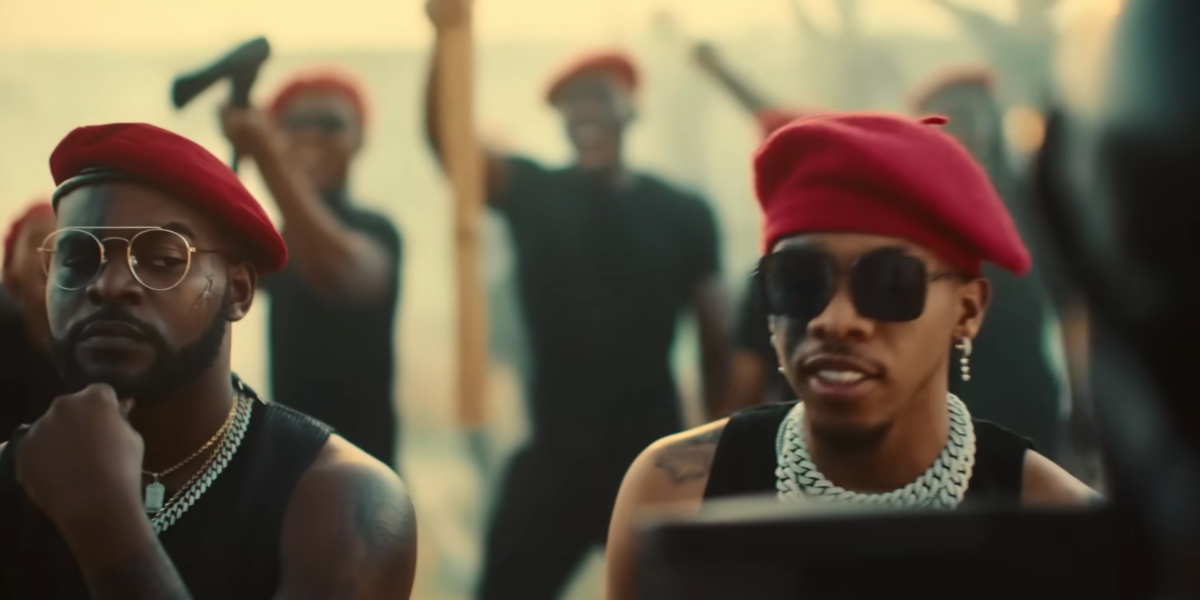

The Best Rap Projects Of 2022, Ranked

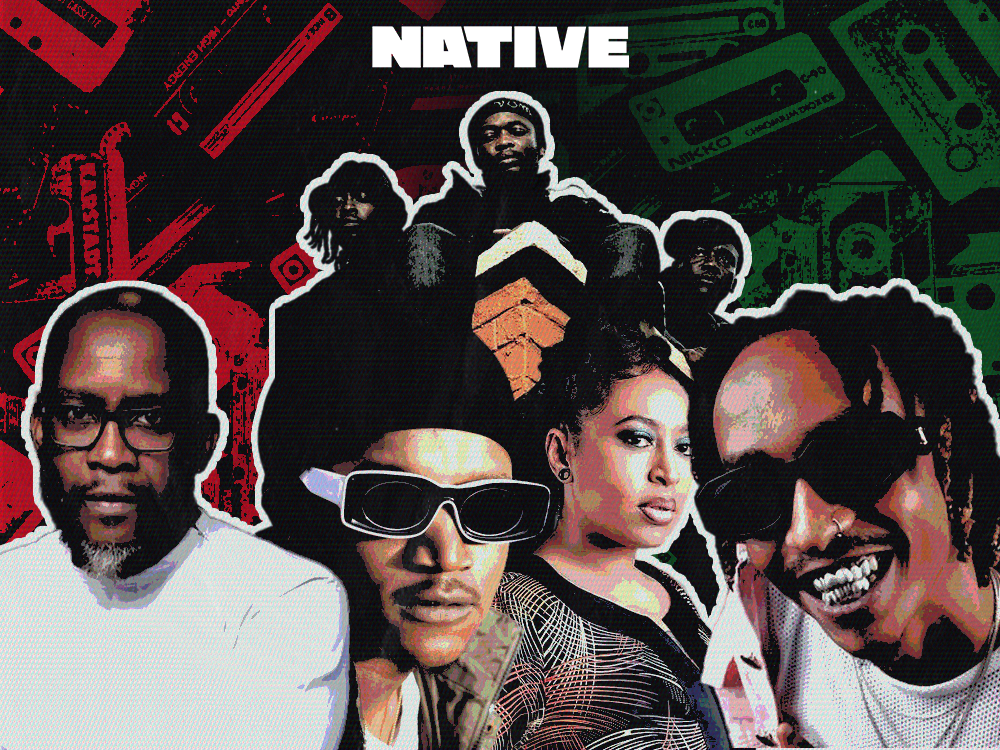
Once every few weeks, there’s a renewed conversation on the supposed deficiencies of Rap music in Africa. The catalysts are as varied as random beef or a comment from one of Afropop’s main superstars, but it almost always settles into rap’s perception as a genre lagging behind melodic Afropop and dance forms in terms of commercial impact. It’s a complex discussion with peculiar points in varying countries, but it would be a grave injustice to disregard the prolific, creative and inventive output happening across Africa’s Rap landscape. In fact, this year has seen an overflow of impressive rap projects, underlined by the ever evolving range of styles these artists bring to the table.

Stemming from its institution in the Bronx, Hip-Hop has seeped into the layered fabric of African music over the past three decades and successfully blended with the sounds from these parts, generating a fresh take with the already boundary-pushing sounds. Think Focalistic’s ever-exhilarating merger of Amapiano and rap, or Buruklyn Boyz infusing an urban Kenyan attitude into drill, or Kirani Ayat parsing rap through his Hausa heritage. The NATIVE editorial team’s list of the Best Rap Projects this year is a tribute to this infinite musical range, as well as the teeming brilliance in lyricism, narrative layout, unending flows, and an overall dedication to excellence.

15. M.I Abaga – ‘The Guy’

M.I Abaga is a perennial fixture in Nigerian (and African) rap, finding ways to remain musically and lyrically engaging even if his mainstream powers have declined from what they were this time a decade ago. This sort of longevity requires a boulder-size chip on your shoulder, which M.I gladly flaunts on ‘The Guy’, unvarnished evidence of an artist that has stayed true to his art and is relishing his current wins more than the past glories. Partly a return to the pop-rap dimension of his artistry, it’s the most accessible M.I project in eight years, packed with ultra-confident cuts with big hooks and feature-laden songs revelling in the glow of love—he got married this year, after all. In between are ruminations on legacy, the effects of toxic masculinity, and a closing song expressing an infectious joie de vivre.

Wonu Osikoya

14. Sarkodie – ‘JAMZ’

Sarkodie continues to tighten his grasp on the state of African Hip Hop affairs, and collaborations have been a major tool in his arsenal. ‘Jamz’ wholly explores the pop-rap direction he’s previously charted, calling on younger Afropop musicians to colour its seams. Featuring inspired performances from Lojay to King Promise, Ink Boy, Oxlade and Cina Soul among others, the music manages the pomp of festivity without feeling packed. The heart-pumping excesses of romantic love gives the Ghanaian music icon ample space to bend his Twi-laced considerations into form, with breezy productions casting a seaside vibe over its 35 minutes runtime. Yet there are moments of vulnerability, especially the BNXN-helmed closer “Better Days” which holds a torch over the well-documented struggles of the Tema-born rapper. When one’s caught in the fruity tangles of pleasure and good times, it’s normal after all, to reminisce on lesser-privileged moments.

Emmanuel Esomnofu

13. A-Reece – ‘The Burning Tree’

On ‘The Burning Tree’, his first of two solo projects this year, South African rapper A-Reece delivers a eulogy to the tantalising powers of marijuana. Although countless artists have made music inspired by their love for the herb—think Peter Tosh’s ‘Legalize It,’ Dr. Dre’s ‘The Chronic’ or Wiz Khalifa’s ‘Kush & Orange Juice’ & ‘Rolling Papers’—what makes ‘The Burning Tree’ far from a frivolous affair is A-Reece’s merger of personal struggles with exceptional rap skills. Across nine tracks, A-Reece and his guest artists shift from vulnerable to braggadocious, recalling childhood and adolescent travails to sending disses at opposing rappers who choose to ignore their proficiency in the booth. With bouncy drum packs and melodies that waft around leisurely, ‘The Burning Tree’ demands that you pay attention to a man confessing his love to his trusted companion.

Uzoma Ihejirika

12. Buruklyn Boyz – ‘East Mpaka London’

Immediately Buruklyn Boyz premiered the seminal “Nairobi”, they became the de-facto voices of Kenyan drill. Usually, that should come with some pressure, but Ajay and Mr Right have sauntered through expectations with subsequent releases, none more rousing than their debut album, ‘EAST MPAKA LONDON’. After over a year of building their credentials with great singles, some of them utterly essential to the Kenyan drill canon, they add a thrilling debut album to that repertoire. Over the course of the sprawling set, they reinvent as much as they stay tethered to their blueprint, adding some heart to the brawn they’ve always showcased, resulting in a dynamic album that collects the abilities of Ajay, Mr Right and their collaborators into a finely aggregated whole.

Dennis Ade Peter

11. Okmalumkoolkat – ‘uShukela eTiyeni’

Okmalumkoolkat has been an OG for a while, which would be an overwhelming advantage if the often colliding worlds of South African rap and dance music weren’t moving a mile a minute. For ‘uShukela eTiyeni’, he settles into being the cool uncle in exemplary fashion, exhibiting the essential tricks that brought him to ubiquity and finding pockets to fit in within more modish trends. There’s a bouncy depiction of being a family man, he masterfully whips his way through a minimalist trap beat, log drums find their way into the mix, and his mastery at rapping over the broken beats of gqom remain unparalleled. It’s the latest flex of greatness from a seminal talent.

Dennis Ade Peter

10. J Molley – ‘Almost Dead’

One of the attributes that makes J Molley stand out as a rapper is his voice, a droning tool that can communicate a range of emotions from hedonistic delight to existential dread. The South African rapper shared his most recent body of work, ‘Almost Dead’, earlier in the year and it quickly underlined his status as one of the most potent emo-rap purveyors on this side of the world. An immersive dunk into his mental space, where suicidal thoughts rub up against cutthroat raps, the 10-track project is an emotional rollercoaster. On a technical level, ‘Almost Dead’ is a statement of his forward-facing choices as a rap artist, with melodic flows snaking through the contours of trap slappers and drill excursions.

Wonu Osikoya

9. Reggie & O’Kenneth – ‘Straight Outta Kumerica 2’

A follow-up to 2020’s formative Asakaa tape, ‘Straight Outta Kumerica’, Reggie and O’Kenneth return with their unique spin on Drill music, substituting the hard-hitting beats for a chill aura that incorporates acoustic guitars and Caribbean influences. Rapping in a mix of Twi, Hausa, Pidgin and English, they and their Ghanaian colleagues document their personal and musical journeys in their home city of Kumasi, particularly relishing their triumphs in the last few years. ‘Straight Outta Kumerica 2’ is proof that Reggie and O’Kenneth, along with their Asakaa counterparts responsible for the explosion of Drill music in Ghana, are not running out of ideas for pushing the genre forward anytime soon.

Uzoma Ihejirika

8. Focalistic – ‘Ghetto Gospel’

Championing the fusion of Amapiano and Rap, Focalistic has come into his own as an influential hit-maker. Even as he plays an integral role in the global incursion of ‘Piano, with Davido collaborations and international gigs, President Ya Straata keeps his music hood-oriented—specifically, Pretoria hood-specific. Like his other projects, ‘Ghetto Gospel’ blends the infectious sounds of Amapiano whilst retaining the artist’s ability to make straightforward rap songs, keeping the quips flowing in Sepitori. Where his last long play, ‘Sghubu Ses Excellent’, was breathless in its fusion and unyielding dancefloor intentions, Foca allows for moments of introspection that simmer, while also doubling down on his powers as an inimitable commandeer of droning, party-ready rhythms. ‘Ghetto Gospel’ keeps the streets fed.

Nwanneamaka Igwe

7. Maglera Doe Boy – ‘Diaspora’

For Maglera Doe Boy, society and its attendant environment aren’t just backdrops—they’re active characters. That’s why he doesn’t just rep the hood in his music, he interrogates its matrix with relation to his life and the life choices he’s witnessed. Participant and keen observer, ‘Diaspora’ is littered with detailed stories of rugged events, songs depicting exuberant scenes, moments of breath-taking introspection and charming tenderness, Kwaito-influenced beats and serrated 808s. Referencing the displacing origins of South Africa’s townships—and also motioning towards parts of the global black experience—Maglera works in enough context to not pretend like he has all the answers, as he examines street politics and proclaims that “God is a Black Woman”. On the Ason-featuring “Dor Do Povo”, many of his raps are questions, but it’s obvious that there’s an incredible sense of clarity at play.

Dennis Ade Peter

6. Show Dem Camp – ‘Palmwine Music Vol. 3’

The last half-decade is packed with highlight reels strengthening Show Dem Camp’s mythos as arguably the greatest rap duo in Nigerian music history. This prolific run is commercially buoyed by their ‘Palmwine Music’ series where Tec and Ghost’s skill as rappers meets earworm guest hooks and colourful grooves inspired by highlife and entirely helmed by Spax. The third and final instalment in the series reaffirms the fact that no one is telling the tales and representing the rollercoaster nature of modern romance in Nigeria, with Lagos as an ever-present reference.

Amping up the thematic stakes, there’s depictions of toxicity, nail-biting drama, acerbic moments and rapping that ranges from joyfully vigorous to wistfully-toned. Featuring sweet-sounding collaborations from Victony, Tems, Oxlade, Boj, and many more, ‘PM3’ leaves listeners either with a great degree of accessibility with it’s message or longing for an experience they’ve never had—a feature at the core of rap and music in general.

Nwanneamaka Igwe

5. Thato Saul – ‘Life is Gangsta’

In rap, bravado is often used as a tool for exaggeration. For Saulsville-bred Thato Saul, bravado is a tool to make his reality raps even more searing. Always rapping at a purposefully frantic pace, with a cadence that makes everything he utters jab with the force of a stapler gun, every line is doused with a seen-it-all edge. On ‘Life is Gangsta’, his best-rounded project yet, posturing is grounded by honesty and each hood-related quip is from an earned lesson.

With quaking 808s and soulful melodic riffs, Thato Saul finds his groove as a song-making rap lyricist who can also turn in great hooks, but it’s the hands-on-bible truth telling that is the compelling gambit. “When it feels like depression, I pray to Jesus I fight this/really got G homies cutting their wrist, don’t wanna slice this,” he raps on the title track. It’s a gut-wrenching admission from a street-rap opus that represents the lives in his community and also offers intimate peeks into the rapper’s life.

Dennis Ade Peter

4. Black Sherif – ‘The Villain I Never Was’

Vulnerability is a major part of the music Blacko creates. On the breakout duo of “First Sermon” and “Second Sermon”, Black Sherif is at his most honest and vulnerable but he masks this with hard hitting bars and his distinct vocal texture. Blacko is even more honest and very much more intentional on his debut album, ‘The Villian I Never Was.’ Across 14 tracks, the 20-year old rapper is consistent with his pen game, his flows and his melodies, and most importantly, Blacko is consistent with the delivery of the message and the storytelling. 

The highlife influences on records such as “Oh Paradise” and “Don’t Forget Me” colours the tone of his delivery and the mellow rhythm of the records. Throughout the 40-minute run, Blacko displays honesty, making striking revelations across different records such as “The Homeless Song”, while pulling sonic cues from drill, emo-rap, reggae and more. ‘The Villian I Never Was’ is a letter from Black Sherif to the world; a letter in which he has used to document his pains, dreams and future aspirations.

Wonu Osikoya

3. Tyson Sybateli – ‘Home’

Discovering the music of Tyson Sybateli has been a highlight of my year. According to popular commentary on the state of rap music, the genre has entered an unprogressive ditch, creating uninspired, context-lacking records. If rap were to fight against those allegations, ‘Home’ would be inside the boxing ring before the opponent is ready. It’s an album with strong narrative verve and even stronger production to carry its ideals. Sybateli’s ethos is as real as they come; even when the beats are grand and highly fine-tuned, there’s a raw passion permeating verses.

He’s a lyricist with flair but also with an eye on the gritty life he’s meandered in South Africa, pulling all the stories into his broad canvas. “Bra Nyoga ‘Lude” bares his technical sleekness over a menacing beat as the rapper unfurls tales of familial history alongside his rap superiority. “Handouts” pairs Trap-tinged production with humour-laced admissions about being on the come-up and sparing no change for the needy. When Sybateli exhausts the fire in his punch, he incorporates the voices of MCs as diverse as he is (“Chauncy II”), a multiplicity which works to enrich the album with generational currency.

Emmanuel Esomnofu

2. Kirani Ayat – ‘Aisha’s Sun’

From the small community of Madina in Greater Accra, the rapper Kirani Ayat has embodied a stirring personality. His music encompasses the geographical and linguistic nuances of the region, with ‘Aisha’s Sun’ being the most accomplished of his explorations thus far. Being in the making as early as 2018, the project underwent a tonal and thematic change after the pandemic hit. Ayat’s vision was then pulled into the shifting nuances of being part of a community while furthering the instinctive urges of one’s own artistry.

He recorded parts of the album again, emerging with the lean-but-layered scope of ‘Aisha’s Sun.’ In just 22 minutes, the previously US-resident musician mints cultural currency into enduring portraits of strength. Vividly-produced, the soundscape borrows the lush influences of Hausa folk while culling in the boisterous intent of Trap. Kirani’s vocals also work to bolster the record’s replay value, whether he’s rapping about the strength of family or burnishing the credo of his trajectory and still-evolving craft.

Emmanuel Esomnofu

1. Sampa the Great – ‘As Above, So Below’

Home is where the love is. Home is where the hate is. Home is where the heart is. There’s no place like home. There are enough universal quotes to understand that what home truly means is ultimately personal, even if these relative values are widely relatable. The way Sampa the Great presents it on her excellent sophomore album, ‘As Above, So Below’, home is the catalyst for recalibration, the place that helps you step into your truest self away from the contrived pressures of the external world.

“You can do anything tryna forget who you are,” she sings on the positively haunting opener, “Shadows”. ‘As Above, So Below’ is an act of remembrance, of falling back in love with self and reconnecting with the purest source of inspiration possible. Inspired by her return and prolonged stay in Zambia amidst Covid-19 in 2020, Sampa’s reinvigoration is evident in its self-affirming core, pushing back against restrictive artistic perceptions with American rapper Denzel Curry, showing cultural pride in her momentous resurrection of Zamrock, being delightfully potty-mouthed alongside British rap artist Kojey Radical, and recruiting Beninese icon Angelique Kidjo for a blaring hook on the triumphant closer, “Let Me Be Great.”

‘As Above, So Below’ pulls in cross-continental vocal guests, but the music—it’s very soul—is mainly crafted with a core of Zambian collaborators, led by the revered Mag44, hopscotching across a kaleidoscopic musical blend, from folk and gospel-influenced flourishes to grungy and groovy choices with percussive stomp. The album’s heart and magnetic centre is Sampa the Great hell-bent on representing no one but herself, a premise executed to have as much spiritual significance as its visceral pull.

Dennis Ade Peter


Written by Emmanuel Esomnofu, Nwanneamaka Igwe, Wonu Osikoya, Tela Wangeci, Uzoma Ihejirika & Dennis Ade Peter.


ICYMI: THE BEST R&B PROJECTS OF 2022, RANKED

Songs Of The Day: New Songs From Teni, Harmonize, Jeune Lio & More

2022 is winding down and it’s been an eventful year for Afropop. There’s been a torrent of great new music, spawning a massive stack of inventive smash-hit songs. From Highlife-infused Ghanaian pop, to the unrelenting force that is Nigerian street-pop to South Africa’s indomitable Dance scene, to tantalising Drill explorations in East and Central Africa, and much, much more, we’re living through abundant and musically expansive times.

Every week, many songs from African artists make their way to digital streaming platforms, and wading through them can be intense. That’s where The NATIVE’s Songs of the Day column comes in to help. We go through as many new releases as possible, spotlighting them here, two to three times every week. Today, enjoy new music from Peruzzi, Jeune Lio, Harmonize,  and more. Lock in!

Teni – “Maitama” ft. Mayorkun, Costa Titch & Ch’occo

Last month, Teni made her welcome return to the scene since the release of her debut album ‘WONDALAND,’ with the Mayorkun, Ch’occo and Costa Titch-assisted single “Maitama.” The groovy record was buoyed by delectable Amapiano production laid down by producer, Jay Synths. Now to amplify the track further, Teni has released the song’s accompanying video which was directed by Darion and showcases the beauty of South Africa.

LUCIANNE- “TE AMO’ REMIX FT. PERUZZI & FIOKEE

After the success of the original “Te Amo“, British Nigerian singer, songwriter and actress Lucianne is not resting on her laurels. She has joined forces with Afrofusion star Peruzzi and Nigerian guitarist Fiokee to bring the track further to life with an infectious remix offering to close out her exceptional year. Written and composed by Lucianne, and produced by Majeek, the remix finds Peruzzi and Fiokee take the track to new heights. Peruzzi with his soulfully expressive and impassioned vocal delivery, groovy melodies, and glorious lyrical flair, while Fiokee brings his trademark lush guitar licks and arrangements to the party. Throughout the remix offering, Lucianne’s message of defiance, strength and not settling for less than she deserves still permeates as an anthem for women to boldly recognise their worth and fight for it.

ROTIMI & NEKTUNEZ – “MAKE YOU SAY”

For his latest offering, Rotimi teams up with Ghanaian producer Nektunez to create the infectious new single, “Make You Say.” The feel-good, upbeat, rhythmic track blends Rotimi’s smooth vocals over a mellow keys and twinkling production. The music video has been directed by TG Omori enabling Rotimi to connect with his Nigerian roots.

HARMONIZE – “MWENYEWE”

Talented singer Harmonize has shared a new single titled “Mwenyewe.” The compendium of the African drums and the percussion laced with delectable strings and chords compliment his sonorous vocals. Over the groovy beat, he sings about the essence of loving yourself, while detailing tale of winning and understanding the steps taken toward achieving personal happiness.

JEUNE LIO & MAGASCO – “LADY”

Cameroon-born, Abidjan-based DK Jeune Lio has teamed up with Magasco for a sizzling EP titled ‘Love In Transition.‘ Telling an emotive story of fading love while engulfed by lust, the three-track EP housed vocal collaborations from R&B songbird Iguocho and producer Veen. On “Lady,” the duo reminds listener about the uncertainty of admitting love to your crush. The intensity of the production and melodic composition displays the purity and compulsion of being in love with no care in the world.

HAZEL MAK – “SAKA SAKA”

The AFRIMA award-winning artist Hazel MaK teams up with Deep House DJ and Producer M.Patrick to bless us with an exciting new single “Saka Saka.” The single serves as an enlightening piece showcasing the beautiful beginning of the partnership between M.Patrick and Hazel Mac. “Saka Saka” sets the right tone for what’s to come from this Malawian queen come 2023.

Featured image credits/Harmonize

Turntable Top 100: Mavins’ “Won Da Mo” Leads The Chart

The overwhelming success of Mavin Record Label in the past ten years has been monumental. Following the release of their star-studded album ‘Chapter X’, Mavin becomes the second label to record a No. 1 song as billed artist with “Won Da Mo.” This follows weeks after record label EMPIRE’s Cough held the title. “Won Da Mo”  tallied 50.4 million in radio reach earning the No.3 position on radio and No.2 on streaming platforms with 3.1 million streams.  Mavins’ artists continue to dominate the charts as all artists. Climbing three spots up on this week’s charts, Mavin continues setting new records as “Won Da Mo” becomes the first No.1 song with 8 artists.

After a successful three-week dominance at No.1, Young Jonn’s “Xtra Cool” slips to No. 2. Still the fan-favorite song attained the No.1 position on the radio for the fourth week and No.2 on TV. Following close behind is Ruger’s “Asiwaju.” Peaking at No.3, the single is the artist’s highest charting single with 3.1 million streams and 48.2 million in radio reach. Kizz Daniel and EMPIRE’s “Cough (ODO)” bows down to No. 4 after spending four non-consecutive weeks atop the chart. Closing off the top five is Tiwa Savage & Asake’s “Loaded” after peaking at No.3.

Ayra Starr records two entries in the TurnTable Chart with “Rush” at No.6 and Wizkid’s “2 Sugar” sits at No.7. “Rush” occupied the No.1 position for three consecutive weeks. Andre Vibez produced both “Won Da Mo” and “Rush” making him the fourth producer to have multiple No. 1 songs in 2022. He joins Magicsticks, Blaise Beatz, and Rewardbeatz   Rounding out this week’s top ten; BNXN’s “Traboski” holds at No. 8, Asake’sJoha descends to No. 9 while Bella Shmurda & Omah Lay’s Philo is steady at No. 10 for another week. Elsewhere in the chart Mayorkun’s “Alarm” and “Oshey Boys” debut on the chart at No.79 and No.76 respectively.

See the complete TurnTable Chart Here.


ICYMI: READ OUR REMA COVER STORY FROM THE NEW RESET ISSUE

Essentials: Ovye’s ‘Ramin Tsuliyan Ungwan Pama’ Is For The Wanderers & Truth Seekers

According to the old fables, the journey of a hero is never linear. However, it typically follows that the hero goes on an adventure, emerges victorious in a decisive crisis, and returns home transformed. On Nigerian singer and songwriter, Ovye’s sophomore album, Ramin Tsuliyan Ungwan Pama (RTUP), a sober hero returns with tales from a journey of wandering and wondering. Following the release of his 2019 debut album, Ketchup on Everything,’ Ovye established himself as a bold, new, exciting voice of the experimental Soul/R&B tradition. 

Earlier this year, he was the selected performer for the first NOK Audiolabs, a platform by ALARA Lagos that encourages music-social experiments to interrogate oral traditions and celebrate fresh Afro-cultural talents. “In venturing into music as the thing I want to give people, I wanted it to reflect what I had been through because I was convinced I had gone through another cycle,” the Kaduna-born and based artist shared with the NATIVE. “I had seen a bunch of things, and I had been brought back to the beginning. I wanted it to invoke something up-down and sideways, for the music to paint that image of circumambulation.” 

While the album adeptly weaves through several important themes such as homecoming, belonging and more, a good starting point into the mind of the artist is where the album ends, where it began: “Daddy Issues. Arriving as the last track on the album, “Daddy Issues” is co-produced by Duktorr Sett and Ovye and was the first song written on the album—back in 2019. On the album cover, Ovye is wearing a very difficult suit that belongs to his father. It was the certificate day for a professional qualification he had spent three years working towards. “Horrible outfit, horrible! Horrible! I had called someone to repair the suit [because] the length of it was a bit much and the size of it a bit much. Then he made one leg shorter than the other. And it was too late [for the event], so I just went like that. I kept holding up one of the legs now and then, hoping nobody would figure it out.”

These personal anecdotes colour most of the new album. Ovye sings Gaia knows my song, she whips a ballad out of me, on mostly Saturdays when I’m holding back to keep to a rational path—a harm that never heals from me,” Ovye sings on “Daddy Issues.” However, unlike the rest of the painstakingly honest album, this song is more symbolic of a collective experience than it is a narrative of the artist’s experience. “I asked a lot of people to tell me stories of their relationship with their fathers. I wanted to detach myself from the song but rather go to the studio with a mood,” Ovye explained.

Ovye’s charismatic presence colours the rest of the album, as he oscillates between a spate of moods and themes. Each track aligns with the fable of the hero which constructs a coherent narrative. Except for “Daddy Issues” and “A Gathering,” it’s a wonder that Ovye’s album was recorded over two nights in 2020, a year which caused a seismic change in the lives of many people around the world. However, it took a further two years to find himself and feel all he needed to complete the album. “I needed to work with people with an emotional connection to the music,” he shares candidly. This journey led him to eventually collaborate with fellow experimental artists and producers Eseomo ‘Seo’ Mayaki, Nabot Ayuba and David Kambai to produce the rest of the album.

The album’s opener “In Spirit” opens with a call to “inhale slow, exhale slower,” accompanied by stretched-out notes on the violin, piano and Ovye’s sonorous voice. You can almost see the artist shaking his head as he reflects soberly: “Na for my hand the blunt die pass. I catch cruise. I lose guard fast. My mind, е wonder, wonder, wonder. About yonder, yonder, yonder.” On the next track, “Anini,” Ovye pipes out a confession in staccato:[My mental health], it deteriorates,” after which there is a dramatic pause, before ending with the warning “chasing the storm chasing you… don’t be the type gone too soon.”

On “Dey,” Ovye delivers an instruction to listeners to “run like hell. Don’t return, even when it hurts to see the ones you love waste away.” As the song builds, Ovye lets them in on the motivation behind his instruction: “dey your dey/lane,” which is roughly translated as stay focused on yourself. It’s clear that he’s laser-focused on uncovering the intentions of a lover and by extension, discovering his true self: “In case I fail to return when I do go in search for more, at heart, I’m yours.” This sorrow gives way to the aggression in the next track, “4th Exodus,” where the artist’s alliteration beats a drum. With layered yet distinct vocals, he repeatedly questions, “Is wickedness sweet?” and answers both “all the time.” With a plaintive chorus and sharp verses, Ovye conjures a playground of lithe instrumentals before chanting in Hausa: “If we’re done here, we’ll go home…to our hole of play…to our hole of gambling.”

As the album builds, the anger from the preceding track gives way to bargaining in the sixth track titled “A Gathering.” Over a distinctly Nigerian praise-and-worship rhythm, Ovye pleads in falsetto to “deny yourself the right to keep hope alive.And what are the options in this bargain? “Leave or be left behind?/Or Deal or be dealt with?” Side-stepping the bargain, the artist’s chorused voice advocates the third option repeatedly: “Worry!

Ovye is most vulnerable on “Gone 2 Soon,” a singular behind-the-curtain moment in the album where he shows love without defences. With the tenderness one finds at the end of weeping, Ovye speaks to a lost, loved one: “Anini, I will take my admiration of you with me where I’m going.” Attentive to the economy of sound and silence, his music is reminiscent of the experimentation with Soul and rhythm one finds in artists of the same ilk including Moses Sumney, Jon Bap and Benjamin Clementine. For ‘RTUP,’ Ovye only admits to direct inspiration from growing up in the church, including gospel classics Women of Faith and Panam Percy Paul, the Nigerian Neo-soul singer Lindsey Abudei, soul legends Sade and Erykah Badu and the South African Makhafula Vilakazi’s spoken-word album I Am Not Going Back to the Township.

Without understanding Hausa, the title of this album sounds like a royal title, an effect that venerates the title’s literal translation: “In the Butt-hole of Ungwan Pama.” (Ungwan Pama is the town in Southern Kaduna where the artist grew up.) ‘RTUP’ offers no easy consolation for anyone going through it, but carries an earnestness of heart and a strong voice unafraid of its panoramic range, tenderness and pain. It allows its listener to go to places they may not be brave enough to go otherwise: back home again. As the album’s final lines say: “Yaron baba na da yaron uban baba na.” / “This noise being made is ours, but it is not done yet.”


NATIVE EXCLUSIVE: THANDO SKWATSHA ADDRESSES PERSONAL & UNIVERSAL THEMES ON ‘IIMINI NENTSUKU’

EXCLUSIVE: Everything We Know About Netflix Naija’s First-Ever Young Adult Series, ‘Far From Home’

Since Netflix made its debut in Nigeria, we’re consuming more and more original African content from the streaming giant. From notable releases such as Kemi Adetiba’s 7-part series ‘King Of Boys: The Return of the King,’ which became the first original series from Netflix Naija, to the streamer’s first African original reality TV ‘Young, Famous & African,’ and ‘Blood Sisters’ which was released earlier this year, there’s no dearth of entertaining content intently pressed on what’s coming out of Africa.


View this post on Instagram


A post shared by Netflix Nigeria (@naijaonnetflix)

Now, Netflix Naija is ready to premiere its first-ever Nigerian young adult TV series titled ‘Far From Home.’ Written by Dami Elebe, the forthcoming series will follow the life of Ishaya Bello (played by Mike Afolarin), a young teenager and talented visual artist from a poor family who gets to live his dream when he lands himself a scholarship to one of the most prestigious schools in the country. The Inkblot produced 5-part series also sees talented actors such as Genoveva Umeh, Ruby Okezie, Bolanle Ninalowo, Olumide Oworu, Funke Akindele, Richard Mofe-Damijo, Carol King, Bucci Franklin and more.

According to the show’s synopsis, Ishaya Bello becomes entangled with the affluent world of Nigeria’s elite and battles a huge secret that threatens his new reality and his family’s safety. Ahead of the series’ premiere on Netflix this Friday, 16th, we caught up with some of the cast from the ‘Far From Home’ series, to gain some exclusives ahead of tomorrow’s release.

When I asked a few of the cast members about the most challenging aspect of working on the series, Olumide Oworu who plays a character known as Atlas shared: The most difficult part about filming this show was just trying to not have too much fun, for me because this is the most fun I’ve had filming in my entire career.” Similarly, Bucci Franklin who plays Government in the series also shared: “I’ll say the most difficult part about filming was waking up everyday knowing it’ll all come to an end one day and we would wrap up on the production at some point.”

Our conversation with the cast, which follows below has been lightly edited for clarity.

What are you most excited for viewers to watch in ‘Far From Home’?

Mike: For me, the interesting thing would be the fact that I’m on Netflix’s first Nigerian young adult series, and I, for some reason, am the lead character. How did that happen? I find that really interesting.

Ruby: For me, the most exciting thing about sharing this is that it’s a Netflix original. Also, the fact that it’s speaking to young adults all over the country, the continent and even the world is such a big deal for me. I’m also happy for viewers to see how talented the young people are. There are a lot of young people in this series and these people are incredibly talented, so I’m definitely happy to be sharing this with the world in a few days.

Bucci: Honestly, I know as actors, we say this all the time but with this project, we created magic. This is the result of sweat, sleepless nights, people getting hurt physically, and a few hassles here and there. Filming during COVID was also a lot but to be here now, experiencing what’s going on, seeing the series come together is magical. I haven’t seen the series yet but I’m extremely confident about it and confident with what I did with my character. We all made magic honestly, and I can’t wait for the world to see what we have here in Nigeria.

Gbubemi: The most interesting thing is the character I played. She is very different from what I would usually play and that was what stood out for me.

Nino: Well, sort of the same thing. Being on the first Nigerian young adult series on Netflix, and now having to play the bad guy on it you know that’s quite interesting for me if you ask me.

What did you find most interesting about the character you play in ‘Far From Home’?

Mike: I love the fact that [my character] does it all. To be honest, my character is truly unique because of all the different places I had to go to communicate his special emotions. I enjoyed playing a lot of the scenes because these are things that I’ve experienced in my reality at some point in my life so it was easy for me to tap into that and get the emotions that needed to be communicated.

Olumide: Personally, I think the most interesting thing about my character is you expect him to be one dimensional but there are actually many different layers to him. I believe I was able to connect with him beyond just what you perceive when you initially meet him. His journey across the season is really interesting and I cannot wait for people to experience that.

What stood out to you the most about the casting? 

Ruby: With the casting, I believe they did an excellent job. Everyone literally ate their individual roles and it was so inspiring to see. Everyone brought their A-game to this and that helped me myself. I was able to feed off other character’s energies and that helped me bring my best foot forward and just bring my own A-game as well without feeling any sort of way about portraying Nnenna for who she really is. Everyone wanted to create magic and we all had like minds so the casting was well thought out in my opinion.

Bucci: Big ups to the people in charge of the casting. The casting was divine and this was beyond putting pen and paper together, they found the right people and everyone was able to show themselves and their individual strengths. 

Nino: A lot of work was put into that casting. This was my first time with many of the young characters on set and like I said it was a self realisation. I had a lot of self realising moments seeing the hunger in disguise and knowing that I’ve been there at some point and I’ve had a lot of opportunities where I’ve celebrated success in certain films that i’ve done and knowing that feeling that they’re going to get that opportunity and hoping and praying that they’re able to utilise it well and in the right direction.

What was the most difficult part about filming ‘Far From Home?’

Bucci: For me, I’ll say the most difficult part about filming was waking up everyday knowing it’ll all come to an end one day and we would wrap up on the production at some point. I won’t get to share time with the directors anymore, the cast, the crew and everyone, that was definitely a lot to take in for me because filming this has been the most exciting thing I had done in a while. It was my first time working with a bunch of people and I certainly made some great friends on this set, I literally fell in love with these guys. I don’t joke with my craft because I see this as a means of evangelism so when I see people that understand and at least appreciate why they are artists and creators, I don’t take that for granted.

Olumide: The most difficult part about filming this show was just trying to not have too much fun, for me because this is the most fun I’ve had filming in my entire career. It was just so much fun that I had to remind myself at some point that this is work. That was really the only challenge for me, just trying to cut down on the amount of fun I was having because the entire production was just so great. They really gave us an opportunity to thrive and we thrived. I can’t wait to see the outcome. 

What do you hope for viewers to take away from this? 

Mike: From the perspective of my character who is a dreamer, I would say your dreams are valid, stay on course, stay on guard and focus on the focus.

Olumide: The biggest take away I want people to have when they see this show is to really be sensitive to yourself and to your environment. Pay attention to what’s happening around and make the best of whatever opportunities you have. Sometimes these opportunities come to you and sometimes, you need to create these opportunities for yourself. So make the most of what you have and always be grateful for everything you have. 

Gbubemi: Think and make good decisions and of course you have something you want to achieve, goals to get to but please go about it the right way and not the wrong way cause at the end of the day even if you get to where you want there is no peace there if you used wrongful means to get there. Take your time and it’ll come to you.

Nino: I hope viewers find it entertaining, inspiring and motivating, that’s all. I really just want people to have fun with it. 

Watch the trailer for ‘Far From Home’ below.

Featured Image Credits/Courtesy Netflix Naija

Join Momo Hassan-Odukale at the Chanel Métiers d’art show in Dakar

Last weekend, Momo Hassan-Odukale, Lagos-based creative director and stylist touched down in Dakar, Senegal for Channel’s Métiers d’art 2023 fashion show. Counting Wonderland and Lagos Fashion Week as some of her clients, Momo ethos remains putting together spruce looks while spotlighting homegrown brands and designers like Kenneth Ize, Lisa Folawiyo, Patta, WAF Lagos and the likes. With a front row view of Chanel’s show on December 8th, Momo sat amongst fashion entrepreneur, Reni Folawiyo, Adebayo Oke-Lawal, founder of Orange Culture and other longtime muses, Pharrell Williams and Naomi Campbell.

Commonly globe-trotting especially within Africa, Momo is no stranger to Dakar as she shares, “Dakar is one of my favourite cities in the world,” as she documents her moments prior to and during the show for the NATIVE. Arriving at her hotel, Momo was met with an personalised invitation from Chanel alongside a brand necklace with an African pendant and the iconic Chanel logo. In her usual fashion of representing African fashion designers, Momo’s two outfit choices were picked from Abiola Olusola’s SS23 collections, having to make a difficult decision between the crisp RIBAYI silk dress and the AINA set with a yellow organza apron, draped over a delicately beaded bralette. Opting for the latter and pairing with a pair of blue heeled mules, Momo evidently made the right choice.


View this post on Instagram


A post shared by MOMO (@momo.mho)

With some spare time on her hands, Momo headed to Lulu Cafe dressed in Nyosi Brand’s Sayi Daisy hand-dyed Adiré dress after which she went jewellery shopping at the local market to purchase some rings. “My jewellery was stolen recently so I’m just getting back all of my favourite piece,” Momo shares. Just hours to the show, Momo hit the next stop for a solo sushi date to gather enough fuel for the show slated for later in the day.

Chanel’s Métiers d’art 2023 fashion show breaks records for what is hoped to be the first of many. Being the first European fashion house to stage a show in Sub-Saharan Africa and Dakar couldn’t be a more perfect place. Home to an expansive world of contemporary art, fashion, film, dance and  music to name a few, Dakar is an influential art capital both within Africa and on an international scale. “More than just a show, this event will be part of a three-day cultural program accompanied by concrete action in terms of creative dialogue, sustainable development and the transmission of savoir-faire,” Chanel shared in a statement.

Hosted at Palais de Justice, the building, housing Senegal’s Supreme Court, is prominent architecture, characterised by large pillars and a seemingly airy space. The runway, a celebration of the culture and spirit of Senegal, kicked off with a vibrant show by musician and local, Obree Daman alongside a display by dancers from École des Sables. The collection was decidedly reminiscent of the ’70’s with printed silk shirts and pointed collar necklines alongside Chanel’s iconic intricate embroidery textures and patterns. “The show was great. This was my favourite look. I love the casting. I love the models that were walking down,” Momo shares. Following the outstanding show came performances by some Senegalese dancers alongside a glittering rendition by CKay.

Below are some looks from the runway, courtesy Momo Hassan-Odukale.

Photo: Momo Hassan-Odukale’s favourite look off Channel’s Métiers d’art 2023 runway

Photo: A white floral crochet dress off Channel’s Métiers d’art 2023 runway.

Photo: A beaded jacket over floral dress off Channel’s Métiers d’art 2023 runway.

Photo: Lafalaise Dion and Momo Hassan-Odukale

Photo (left to right): Faridah Folawiyo, Reni Folawiyo, Momo Hassan-Odukale, Arinola Fagbemi and Lola Ogunnaike (standing)

Featured Image Credits/The NATIVE


Nwanneamaka couples her creative interests with her individuality, using words as a vessel for her expression. 


ICYMI: STREETWEAR IS ON THE RISE IN AFRICA BUT INDUSTRY-WIDE SUPPORT IS SLOW TO HAPPEN

What’s Going On: Hoodlums Attack Nigeria’s Electoral Building, Tremor in Ghana & More

“What’s Going On” Tallies Notable News Headlines From Across The Continent — The Good, The Bad, And The Horrible — As A Way Of Ensuring That We All Become A More Sagacious African Generation. With This Column, We’re Hoping To Disseminate The Latest Happenings In Our Socio-Political Climate From Across The Continent, Whilst Starting A Conversation About What’s Important For Us To All Discuss. From Political Affairs To Socio-Economic Issues, ‘What’s Going On’ Will Discuss Just That.


ARMED HOODLUMS ATTACK ELECTORAL OFFICE IN NIGERIA

On Monday morning, a number of armed hoodlums attacked the headquarters of the Independent Electoral Commission of Nigeria (INEC). The attack happened along Port Harcourt Road, a popular location in Imo state in the country’s southeastern region. According to eye-witness reports, the attackers were in a convoy of more than five vehicles, shooting sporadically as they drove into the neighborhood where the INEC office was located. They then set fire to some parts of the building, possibly with the intention to burn the permanent voters cards (PVCs) and other sensitive materials being stored there. The police however responded in good time, managing to protect a major part of the structure. 

“It happened,” says the Imo state police Public Relations Officer Chinenye Chijioke-Osuji. “You can come and see things for yourself. Not all the offices were attacked but one side was completely down. The Election and Political Party Monitoring Liaison building was attacked, and part of the main building”. 

EARTH TREMOR ROCKS PARTS OF GHANA 

Residents in the Ghanaian capital, Accra, were left agitated as parts of the city were hit by an earth tremor. Between 10am and 12pm, some social media users reported what they’d felt—a tremor, rocking, to varying degrees, the communities of Dansoman, Mataheko, Weija, Accra Central and Mallam. While the reactions on social media were understandably marked by tension, Ghanaian authorities have moved to assure people of their safety. 

Speaking to the Citi Prime News shortly afterwards, the Principal seismologist at the Ghana Geological Survey Authority (GGSA) Nicholas Opoku, assuaged fears of Ghanaian residents, even though there were bound to be other similar cases. “What we have been saying all this while is that Accra is situated in the earthquake-prone zones so from time to time we will be experiencing these major earthquakes until such a time that a major will happen”. True to his words, similar incidents were reported between 2018 and 2020.

GUINEA’S COUP LEADER TAKES STAND FOR FIRST TIME 

On September 28, 2009, security forces opened fire on unarmed protesters who moved against Moussa “Dadis” Camara and his ambition to run for president. Camara had successfully led a coup against the government of Guinea, seizing power a year earlier, and was going to solidify his position at the helm of the West African country’s affairs but was resisted by the people. After the rounds of direct gunshots led to the reported deaths of over 150 people and dozens of women raped at the stadium where they had gathered, Camara became public enemy. He survived an assassination attempt months later and fled to Burkina Faso where he lived in exile for over a decade before returning to stand trial in Guinea. 

He made his first court appearance yesterday, visibly nervous as he made a plea for his innocence. Human rights groups have reiterated the stand that Camara, being the commander in chief at the time of the massacre, must bear the brunt of responsibility. In his account Camara made an unsatisfactory comment of being asleep when the protesters were being murdered, while pointing fingers at former President Alpha Conde as being behind an assassination attempt on him. Of the eleven people accused, Camara is the ninth to stand trial. 

NEARLY R2 BILLION FOR SOUTH AFRICA’S APARTHEID REPARATIONS UNSPENT

The unfortunate events of apartheid in South Africa saw a mass degradation of human rights, which created some of the most racially-discriminated societies and organisations in modern state history. Till this day, its effects are still felt, the downwards trajectory suffered by black people still crippling the potential of generations yet to come. Over the past five years, a special account called The President’s Fund, which was established by the Promotion of National and Reconcillation Act of 1995, was mandated to make reparations to victims of the human rights abuses under apartheid. 

Yet, according to the people this fund is supposed to be disbursed to, they haven’t received anything near the set-aside amount. Since 2017, even though the Fund has received R531 Million in investment revenue, only R98 Million has been disbursed. As a result, for the past two months over 150 victims of apartheid have been sleeping outside the country’s Constitutional Court in Johannesburg as part of the Khulumani Galela Campaign. They want the reparations owed to them, they’ve told reporters, with the extent of their injuries ranging from the physical to the mental, as in the case of a woman whose husband was gunned down. 


ICYMI: ROBERTSPORT IS SPARKING A TOURISM RENAISSANCE THROUGH ITS SURFING COMMUNITY

Best New Music: Kelechief & Amaarae’s intoxicating new single “Fine Wine”

Kelechief is playing the long game. As far back as the mid-2010s, the rap artist had been garnering attention his chops as a lyricist who deploys obvious technical brilliance in service of music reflecting his reality. After winning a Mountain Dew open call contest, he earned a $50,000 grant to make an album, the resulting project being 2016’s ‘Before the Quarter’, featuring standout tracks like “Play With My Hair” and “Immigrant Son,” detailing his life as a Nigerian born and raised in Atlanta, Georgia.

In the years since, Kelechief has released four projects, each one offering affecting insights into his growth as a person, and generally emphasising his preference for full-length projects as the medium for wholesome expression. While he’s always been upfront about his Nigerian upbringing, mostly within a first generation immigrant context, the last couple of years has seen him embrace that part of his identity even more, evident in the title and content of last year’s ‘Going Home’, and his travel to Nigeria in December 2021, which included a headline show and several live appearances.

In a few days, Kelechief will be releasing his newest album, ‘ATLagos’, a project he’s been teasing in the last few months with a torrent of freestyles and a couple of loose singles. Setting the album up, he’s joined by iconoclastic Ghanaian artist Amaarae on lead single “Fine Wine,” a collaborative choice that proves rewarding. Two years after her glittering debut album, ‘The Angel You Don’t Know’, stacked with standout tracks tracks like Santi and Kojey Radical-assisted “Jumping Ship” and “Celine,” Amaarae’s career has reached new heights. While “SAD GIRLZ LUV MONEY,” featuring fellow Ghanian musician Moliy, was already gaining traction across Africa, the Kali Uchis-assisted remix rocketed into stateside and global hit status, partly helped by TikTok virality.

Since then, Amaarae has sparingly put out new music, engaging with her fans through live performances on stages across the globe, from Koko London to Pitchfork Fest, as she works on a second studio album currently dubbed ‘Fountain Baby.’ It doesn’t mean she’s been radio silent, though. A bonafide feature-killer, she’s bared those seductive fangs on several occasions, including silvery bars on “Born Again” off Santi’s ‘Subaru Boys: Final Heaven’, a sensual showcase on Babyface’s “One Good Thing,” and brief yet indelible appearances on Blaqbonez’s “WHISTLE” and Stormzy’s “This Is What I Mean.”


View this post on Instagram


A post shared by Kelechief (@kelechief)

Amaarae is a song-elevating presence, which puts her high on a lot of artists’ feature list, but there’s a remarkable touch to how Kelechief creates the perfect environment for him and his guest to effortlessly thrive. Self-produced in collaboration with Zane and Steph Swanky, “Fine Wine” is a tantalising record drawing parallels with a love interest and the intoxicating highs of fine wine. The track’s alluring mellow keys lead into Kelechief’s enthralling vocals over the rhythmic percussion of the beat as he immediately confesses just how spell bound he is over his love interest: “Tispy, I might be/ Drunk of your lips I’m a lightweight.”

The mid-tempo track draws deeper as Kelechief’s melodic flow melts into the simple, ultra-effective and sweet-sounding hook. “It’s fine wine, fine wine, fine wine,” he repeats. Midway through the track, Amaarae’s mellifluous vocals and memorable adlibs, buzzing with its usual sensual energy, elevates the song to new heights. “When I’m around you I feel like I’m floating,” Amaarae whispers of her love interest, an all too familiar feeling elevated by the singer’s ethereal touch. Towards the backend of her outstanding verse, the singer switches to a patois-inflected flow, reminiscent of her iconic verse on Santi’s “Rapid Fire”, a nostalgia-based trick she doubles on by interpolating the hook of Santi’s “Sparky”another ‘Mandy & The Jungle’ era classic.

Ahead of his upcoming album ‘ATLagos’, “Fine Wine” shows us the softer, more melodious side of the artist, contrasting his previously built discography around hard-hitting bars. Drawing us further into the project, anticipated to be a stellar combination of unique, Atlanta rap sensibilities and Afropop in Lagos, “Fine Wine” shows just how expansive Kelechief’s sonic landscape can be expanded.

Listen to “Fine Wine” below and presave ‘ATLagos’ here.


ICYMI: THE BEST R&B PROJECTS OF 2022, RANKED

NATIVE RESET ISSUE: Rema, Still Divine

In three short years, the young boy that was once rapping out of the car window has become the young man on top of the world. Rema has scaled to the pinnacle of the music pyramid, and he’s done so seemingly without even breaking a sweat. Signing jointly to Jonzing World and the machine that is Mavin Records in 2019, he came on the scene young but confident boy, tipped as The Next Big Thing.

Not only has he lived up to the billing, but it’s fair to say he may have already surpassed the expectations the ever-sceptical Nigerian music industry had for him. Today, he sits atop the Billboard US Afrobeats Charts for a record 11th week, as a result of his borderline fanfic collaboration with Selena Gomez.

For NATIVE’s The Reset Issue cover, Rema is setting the record straight–he’s still Divine, the wunderkind from Benin who has bent Hip-Hop, Trap and Pop into his sonic orbit. “Everything that you hear is from my soul. I rarely have an external principle lead my spirit to create. I’m not boxed in. I can be on [any] genre and still sound like me. Afro-Rave is ME,” he declares triumphantly on our Ember 2022 Issue.

Full credits.

Photography: Richie Igunma

Art Direction: Gbenga Ayeblue

Styling: Pat Ada Eze

Production: Dawa Thompson

Make-Up: Ayopo Abiri

Photography Assistants: Toafiq Alade, Idowu Oe, Tunde Sunmi, Jeremiah Ogunsina

Art Assistants: David Abai, Busayo Adedeji

Styling Assistant: Freya

Production Manager: Ademola Eshinlokun

Production Assistants: Tega Akintola, Olaotan Collins, Moore Wright, Damilola Layiwola

Words by Seni Saraki

Read the full cover story here.

Songs Of The Day: New Music From King Perryy, Vigro Deep, Niinety9 & More

2022 is winding down and it’s been an eventful year for Afropop. There’s been a torrent of great new music, spawning a massive stack of inventive smash-hit songs. From Highlife-infused Ghanaian pop, to the unrelenting force that is Nigerian street-pop to South Africa’s indomitable Dance scene, to tantalising Drill explorations in East and Central Africa, and much, much more, we’re living through abundant and musically expansive times.

Every week, many songs from African artists make their way to digital streaming platforms, and wading through them can be intense. That’s where The NATIVE’s Songs of the Day column comes in to help. We go through as many new releases as possible, spotlighting them here, two to three times every week. Today, enjoy new music from King Perryy, Vigro Deep, Niinety9 and more. Lock in!

King Perryy – “Turkey Nla Remix” ft. Tekno 

Off the back of his most recent single release titled Turkey Nla” which arrived only a few months ago, Afro-fusion artist King Perryy has now shared the Tekno-assisted remix for the record. The Amapiano-infused record makes the original track more enjoyable with catchy verses and memorable hooks alongside a feature from Afropop star, Tekno. The track sets the momentum for his highly anticipated EP titled ‘Continental Playlist’ with star-studded appearances from Tekno, Victony, Ria Sean, and 1da Banton.

Vigro Deep – “Shukushuku” ft. Senjay

South African DJ and producer Vigro Deep makes music that sees listeners at the base of their emotions. Last Friday, he shared his latest project titled ‘My House, My Rules,’ which featured the standout track, “Shukushuku.” The party-starting bop “Shukushuku,” finds him teaming up with Senjay for an instantly memorable anthem. In usual Vigro Deep fashion, he makes use of log drums, heavy kicks and ascending cymbals to create otherwordly melodies that provide the perfect backdrop for his collaborators. 

R2Bees – “Su Mo Mi”

Following their streak of releases this year, Ghanaian duo R2Bees have recently arrived with their most recent release titled “Su Mo Mi.” The uptempo Amapiano record sees the duo at their most experimental, as they explore more drums and heavy beats. Over the KillBeatz production, the artists sing in their native dialects about their attraction to their love interests.

ManLikeJoe – “Games” ft. Niinety9

Newcomer ManLikeJoe has recently shared his new single titled “Games.” On the new number, he taps Afropop singer Niinety9 to deliver a romantic number. Over the melodious Johnson IP produced-track, the pair serenade their respective love interests with lyrics such as “All day, all day I’m thinking about you/my way, my way baby you go come my way.” 

Fasina – “Bad 4 Me”

Fasina makes sweet-sounding music that has earned him a loyal following of listeners. On his latest single, “Bad 4 Me,” the singer opens up about a toxic lover who he can’t get off his mind. Over twinkling keys and R&B-infused production with Afropop sensibilities, he sings “They say that you’re bad/all these boys do is cap cap cap,” as he lets her know the extent to which he’s willing to go for her.

Ronisia – “Probleme” ft. CKay

For the uninitiated listener, Ronisia was first introduced on CKay’s debut album ‘Sad Romance,’ when he featured the Cape Verde singer on the record “Lose You.” Now, Ronisia is here with her most recent offering titled “Probleme,” with a guest verse from CKay. The record finds the both artists reminding their muses about the hold they have over them. While Ronisia sings in her native dialect, her vocal texture combined with CKay’s give the record a special touch. 

Mr Eazi – “See Something” ft. Shatta Wale, DJ Neptune Medikal & Minz

Following the success of his hit single “Patek,” Mr Eazi teams up with Shatta Wale, DJ Neptune Medikal and Minz for another Amapiano-infused bop titled “See Something.” All the collaborators on the record bring their best to the record as they deliver stellar performances, colouring it with catchy and memorable verses that will surely get replay value this holiday season. 

SuperWozzy – “The Same” ft. PsychoYP 

Street pop rapper SuperWozzy taps Abuja based rapper PsychoYP for the brand new hippy record, “The Same.” On the Nakedbeatz-produced track, the artists are at his most braggadocious as they remind listeners of the work they put in to get to their current level. In usual PsychoYP style, he slides melodiously over the production while he delivers hard hitting bars.


Featured Image Credits/NATIVE

Everything We Know About Wizkid’s ‘More Love, Less Ego’ Africa Tour

In 2020, during the seismic change caused by the COVID-19 pandemic, and the new normal that set in after, the music industry underwent similar changes of its own. With many of us confined to our homes and immediate family and friends, artists put their global tours and live performances on hold, bidding the time that we could all congregate in large gatherings and enjoy music in real-time. 

As artists and the music industry began settling into the temporary normal, virtual live shows tried to get more inventive. Travis Scott famously hosted a spectacular live event on the gaming platform Fortnite, Burna Boy performed at a show that allowed viewers watch in virtual reality mode, and Wizkid’s first post-Made in Lagos concert was made momentous by an intimate preamble offering a glimpse into his daily life. These examples pushed the boundaries of the norms with virtual performances, giving digital attendees an experience they can hold on to, as opposed to the straightforward stage exhibition.

This year, the influx of live shows has been astronomical. With the worst now seemingly behind us, artists made their return to stages and sets around the world including some of the big-ticket events around the world including Coachella, Rolling Loud, Wireless, Flytime Festival in Nigeria, and more. The welcome return of these shows cannot be overemphasised by listeners around the world, as we’ve seen a massive rush to purchase tickets to attend in person and witness artists grace the stage once more, to perform albums and songs that havee soundtracked the 2020 stay-at-home induced orders.

While the fans are undoubtedly excited to experience the music in new ways, it seems that there has been little change to the infrastructure around live shows and performances. Think Ticketmaster selling over two million tickets in pre-sales for international star, Taylor Swift, and having to forgo general ticket sales due to high demands and insufficient ticket inventory. Added to this, there is also the recent case of Puerto Rican musician, Bad Bunny, whose fans were left outside Estadio Azteca stadium in Mexico City, after being turned away due to their tickets being considered as fake or duplicated. Over in Africa, live shows have also suffered a similar fate with organisation. Recently, tragedy struck when 11 lives were lost during a stampede this year at Fally Ipupa’s show in the Democratic Republic of Congo. 

These infrastructural issues bring to light the rot which has always existed the heart of the entertainment industry—the prioritisation of capital over the real-time experience of the fans and listeners who attend these shows. In these parts, live shows have always been received with a sore thumb. Frequently, artists arrive hours after their scheduled performances and set times, leaving idle fans waiting with no appropriate communication for hours on end. For a while now, these discrepancies have largely been ignored by music lovers on the continent, who typically chuck it up to production issues or African time. However, this year, Afropop fans are speaking up and demanding better from the artists that they love.

Over the weekend, Afropop singer Wizkid was the latest African act to come under heat following his reported absence from his highly anticipated show in Accra, Ghana. According to reports on our timelines, Wizkid was scheduled to perform at the Accra Sports Stadium to a 40,000-capacity crowd of concertgoers. The night kicked off with a showcase of excellence from Gyakie, Efya, DarkoVibes, Joey B and more Ghanaian acts who got things going with riveting performances, while the palpable energy of MC Kojo Manuel engaged the restless crowd alongside performances from Afropop dancers.

As the night wore on, the crowd were anxious for its headliner and main attraction, however, things took a turn for the worst when Wizkid failed to grace the stage after hours and hours of wait time. At 4AM, disgruntled fans were captured leaving the venue, heartbroken and downcast at the lack of communication from Wizkid, his management and event organisers. Rightly so, fans left the venue and demanded that their tickets be refunded due to a no-show from the lead artist. One viral video includes a clip of popular Ghanaian influencer and Youtuber Mahalia Akatugba and a group of her friends, who share their disgruntled feelings about Starboy’s absence from the show. “If not you personally, the MC could have said two hours, a fucking go, at like 2 o’clock, chale, Wizkid, e no dey come,” retorts one of the girls in the video, as the group exclaim at the late hour in which a message from the organisers came. They also called for Wizkid to be cancelled, while exclaiming that such an occurrence would not have happened in Lagos, yet alone, in Manchester or New York. 

According to an official statement from LiveHub Entertainment, which was released on the company’s Instagram account, Wizkid breached his contractual obligations by failing to show up to the venue in Accra. However, Wizkid’s public apology hinted at a different reason for his absence. According to the singer, security alerts and production issues barred him from putting on a high-quality show that the fans deserved and as such, another show would be organised in Ghana for the fans who were left waiting for several hours at the venue.

While the details of the security threat is still unknown, Ghanaian journalist and TV presenter Olele Salvador shares details on how Wizkid’s absence was communicated to the crowd: “I personally don’t recall hearing or seeing the organisers make a formal announcement to inform the crowd of about the no-show situation. I learned Wizkid wasn’t going to show up by a tip off from a source close to Wizkid’s camp alleging that the Starboy had been informed by some persons not to show up due to low turnout.” 

As a result, while many appreciate Wizkid’s apology shared via social media, Olele believes the reason for the no-show to be bogus. It doesn’t help that barely hours after the incident and apology, Wizkid once again missed another show for his ‘More Love, Less Ego’ Africa tour—this time in Abidjan, Côte d’Ivoire. Meanwhile, he is seen via his social media landing in Cotonou, Benin without any explanation. Coupled with that, several videos have been circulating with Wizkid performing there, forfeiting the show in Abidjan. This raises questions regarding the validity of Wizkid’s reasons for his absence in Ghana shared via his apology. 

I may not be privy to what type of production and security/safety that comes with booking Wizkid but when I saw what was provided in Cotonou where he performed 24 hours after, there was absolutely no difference. Perhaps the only difference was a seemingly larger crowd for the concert in Benin,” Olele shares. Reports are that there were about 5,000 concertgoers at the Accra Stadium, which tallies to just over 10% of the venue’s capacity, but low turnout shouldn’t be an excuse in a country currently dealing with runaway inflation numbers and a crisis with cost of living.

As Nigerian Pop heavyweights like Wizkid continue to redefine the status quo and sling the ropes of the burgeoning music scene beyond its borders, the importance of a near spotless reputation cannot be overemphasised. When, for whatever reason, things do not go as planned, full transparency and accountability are essential in ensuring the fans of the star do not feel slighted. Especially considering that the safety of many concert goers, as well as their money is at stake, negligence is unacceptable and at some point, apologies are just not going to cut it.

[Featured Image Credits/The NATIVE]

Editors note: We have reached out to Wizkid’s team for a comment and this post will be updated regularly with new updates.


Written by Tami Makinde and Nwanneamaka Igwe.


ICYMI: NIGERIAN MUSIC HAS A STREAMING FARM PROBLEM

NATIVE Exclusive: Thando Skwatsha Addresses Personal & Universal Themes on Debut Album ‘iimini nentsuku’

Thando Skwatsha’s music is soul-stirring. It combines heartfelt melodies and his powerful vocals, which were strengthened through years as a lead choral singer. Skwatsha, who grew up in Gugulethu, Cape Town, infuses his African heritage into his music, creating a blend of modern and past sounds. In 2018, Skwatsha met South African music producer Milan Rendall, after a friend had told him of a producer who needed the assistance of a vocalist. Since then, Skwatsha and Rendall have forged a deep connection and in 2020, they released the project ‘Love Is.’

Last month, Skwatsha shared his debut album ‘iimini nentsuku,’ which means “days and nights.” The Rendall-produced and emPawa Africa-supported project is Skwatsha’s first time singing in his mother tongue isiXhosa, well as in isiZulu and English. From songs like “ngyazfela” that deal with love to songs like “iskhalo sabantwana” that preach hope, Skwatsha’s ‘iimini nentsuku’ is a documentation of situations that remind us of our humanity.

Skwatsha, who is also a stage performer and actor, speaks with the NATIVE about his upbringing, creative process and aspirations for his career.

NATIVE: What was life for you like growing up?

Thando: Okay, so I grew up in a family of four with my mother, my father and my younger brother. He’s four years younger than me. I lived at home for the first 12 years of my life, after which I went to boarding school because I enrolled at a music school in South Africa. And that is where my journey with music started professionally. Because at the school that I attended, I was enabled and equipped with the necessary tools that allowed me to be able to present myself and be musically enrolled in the way that I am today.

So I went to a boys’ school in Cape Town, [and] then I had to move because the way that happened how I went to music school was that my mom, who organised the audition, didn’t actually know that it was a school, she thought it was just a choir and something that I could do on the side. And at the end of the audition, they told us that I had passed the audition and now I need to move schools. So that was a big change. But I grew up as quite an exciting child, meaning basically, I was quite hyperactive. Very bubbly, and loving, quite warm. I was very much what I think people would label as a happy child, in terms of that I was always enthusiastic about everything and anything and forever cracking jokes.

Life was pleasant, thankfully, and I’m fortunate enough to be able to say that. I didn’t really struggle for anything. You know, we grew up in Guguletu, which is a location in Cape Town. But that really didn’t change anything. My parents worked really, really hard in order to make sure that we never lacked anything, so we never really actually did. And then I went to school, I finished school; I matriculated grade 12 at the age of 18 at boarding school, which I continued, and I moved back to Cape Town where I enrolled in university, and then I am where I am now.

NATIVE: You’re multi-talented and do a lot, from music, film and theatre. At what point did you discover your passion for performing arts?

Thando: It was more of a process, of me just, you know, really starting to do things that I really liked at school such as performing in plays and being on stage, joining the choir, and then being drawn to do things naturally. And then realising that actually, you know, I’ve got a bit of a talent and a gift that I can use. And then eventually, where I am now in being conscious of that usage and actually deciding that “Look, I’m going to use this gift now in this particular way, this is what I want to be doing for the rest of my life.” So it was really a growing and learning process for me and the arts to grow and learn together. But it originally started as just pure enjoyment, because it was something that I love to do.

And part of that learning process was discovering that look, it’s not just the choir that I enjoy being a part of, I also love being on stage as an actor in the theatre. And on top of that, I also love joining the dance troupe, you know, for example. So it really was a learning process.

NATIVE: And during this period where you were discovering your passions for these different art forms? How was the support from your family?

Thando: Amazing, it was really, really good. I’m really, really fortunate enough to be blessed with parents and family that really are supportive of what I do. I have a lot of friends, immediate friends who even come and ask me like, “Mate, how did you do that? I have this thing, I want to do this. But my mom says this, or my dad says this, and I can’t do this.” Honestly, it was really easy for me, because I just came out like “Dad and Mom, this is what I want to do” and they really never gave me a hard time about it. And they were really like, “Yeah, if that’s what you want to do, you’re more than welcome to do it.” In fact, they encouraged me to do it. So I’m really fortunate to be in that position.

NATIVE: You were a lead choral singer. How has that shaped you as an artist?

Thando: Being a classically trained musician and starting in choral music especially has shaped my musicianship skills in a way that I actually struggle to articulate because of how big the impact it has had, on not only my musical journey but my artistic journey in general. I think it is very important basics that are not required, but really do serve the artist well, if equipped to be starting in a choir and you want to break [through] as a solo singer. There are certain things that you learn, not only from the conductor or the music teacher in front of you but from your fellow choristers singing with you about yourself [and] about music in general.

When I left music school, I look back [as I have gotten into the rest of society] and I’m like, “I’m actually a bit ahead musically than other people” because, at music school, we were 12, 13, 14 years old doing university level stuff because of how intense the program was. And it really put me that much ahead and made me that much different from the artists next to me, who perhaps didn’t get the training that I did.

NATIVE: In your interview with emPawa Africa, you spoke about not planning to be a recording artist and how it happened out of a stroke of luck. Was music just a thing of passion at that time?

Thando: I think it would be a lie for me to say I joined the music to not make a career out of it for the arts because that was the goal from [the] get-go, like I really wanted to keep doing this for as long as I possibly can from as young as I can remember. I didn’t plan on becoming a recording artist, though. I must tell you that. That happened through my relationship and meeting my manager/producer Milan and that also was [due] me just doing my thing. But it was always the intention to be able to get to a position in my career where I am able to do this for as long as I want to, without having to struggle for it.

NATIVE: A lot of your songs touch on the human condition and situations of life. What is it about making that kind of music that appeals to you as an artist?

Thando: So I write a lot about love in general. But I think what makes this upcoming stage of my music career so exciting and unique is the fact that I play a lot with imagination, and bringing it back to the human condition, I think, every human being can relate [to] being or having an imagination of sorts. And that’s really what my music [is] now. I’m singing in a different language, which I’ve never sung in before, in the way that I’m seeing right now. And the melodies are amazing, [including] the beats and the harmonies.

I heard a review from a friend of mine, who was listening to my songs and he was like, “It sounds like I’m in a movie.” And really, that’s the imagination aspect that I’ve been playing on. So I think that’s what makes my music quite relatable on top of the experience of personal life in general. But the imagination aspect is quite powerful.

NATIVE: What prompted you to sing your mother tongue on this project?

Thando: Everyone asks this question and there’s no direct answer. We [Thando and Milan] were in the studio and we stay in the studio for hours and hours, man, and we play around a lot. A lot of the work that I do is based [on] us wanting to create something and seeing how it goes. It’s intentional in the fact that we want to make music and we want it to go somewhere, but we don’t know exactly where it’s gonna go, if it can go anywhere at all. So when I got into the studio, I heard a couple of beats and I was very, very happy with them and I just started singing. And what was natural for me at the time was that I just tried out singing in my mother tongue, which was something that I’d never done before, which was very scary.

So we did it once with the first song that was released from the album “isaziso” and it came out quite beautifully, I think. And then we just did it again or we did it again or we just kept on doing it and each and every day became a different day in the studio with a different beat and seeing what the feeling of that beat is and then translating it into text. My artistic journey really revolves around, in the studio especially when recording music as a singer, it revolves around me hearing the beats and discovering the melody first and then coming back and writing the text.

NATIVE: You spoke about how singing in your mother tongue was scary at first for you. Could you describe the process of recording this project, from start to finish?

Thando: Yeah, like I said, it was a bit scary at the beginning, because I didn’t listen to the entire project until about a year after we started the whole process. I remember at the end of one of the sessions, my producer looked at me like, “That’s an album.” And then I was like, wait, I wrote every single song on here and I never thought that before. So the whole process was very revealing to me. And like I said, at first, I was a bit scared; the scaredness didn’t really come from fear, it came from nerves, as to like, you know, the first time doing something, like, “Look, I don’t know if I’m doing it right.” You know what I mean?  That feeling of the unknown really hit hard in the beginning. And then after hearing the entire project, or at least, after hearing a couple of songs on the project, I felt very confident and comfortable enough to be able to say, “Look, I think we’ve got at least something going here.”

NATIVE: On this project, you sing about your childhood, connecting the dots to your hometown and evoking emotions that pull the listener into your own world. Why was it important to interrogate the past?

Thando: The few songs that are really speaking about the past, which is only like one or two, it’s just me speaking about my childhood experiences and wanting to connect more with my inner child. The rest of the album was really—and we’re speaking past tense now because it was about four years ago—the rest of the album was really created in that moment of what I was feeling [at] that time. You know, whatever I was going through [at] that time in my life; there was heartbreak [and] there was, there was an artist part of me that I was wanting to still discover, and that’s where the imagination and the storytelling comes from. And then the one [song] that connected with my inner child are really the ones that I was just trying to make a full circle, in my healing as a person.

NATIVE: You worked with Milan Rendall on this project and you guys have worked extensively. How has that relationship evolved?

Thando: Our relationship has evolved in a manner that, once again, is quite difficult to articulate, because Milan is my brother today. But, you know, four years ago, I didn’t know who he was. And he and I are really, really tight. And what really knits us together is the fact that we formed a really, really close bond and friendship first, that is also enhanced by the music that we both have a passion about and, you know, things that we care about that; naturally, music drew us together. And then I found out that “Hey, this guy is actually kind of cool.” I actually enjoy this guy’s presence, like I like this guy, you know, and he felt the same. So it developed into something quite strong and close-knitted. So I’m forever grateful for that. And the music that we make on top of that and how far it’s already come is just like a cherry on top. Because go into the studio and make music because it’s fun, like, we make music for fun.

NATIVE: What was the best thing about working with Milan on this project?

Thando: The best thing about working with Milan on this project was his wisdom, his constant confidence in me, which sometimes comes more from him than it does from myself because of how much he sees and believes in me, and I think that was showcased more than ever during this project.

NATIVE: Was there any track on this album that was emotionally tasking to make?

Thando: Yes, of course, there were a lot of really emotionally tasking tracks that I worked on this album. You know, it’s never nice reliving hurt or things that didn’t serve you well. But I had to dig deep down as an artist and really overcome that, in order to be able to tell and sort of be stronger for the next person. And there were a couple of tracks, you know, “thandolwami,” “ngyazfela,” all of those love songs. And there’s even the one where I speak about heartbreak, but I speak about it next to a beat that is like pumping that you’d hear in the club, so it’s like a happy heartbreak song.

You know, just reliving all of those emotions is never an easy task. So I really find it quite challenging. And I’m really glad I overcame it in that manner.

NATIVE: Has that reinforced your belief as an artist to dig deeper? Or will you be more careful next time?

Thando: No, no, it showed me a few things. And one of those things is that, yes, it’s good to dig deeper, as much as it might be a scary thing to do, something that you don’t necessarily want. Digging deeper is where the magic stems from and how you become stronger and grow as a person as well. Because coming [face to face] with those deep emotions is necessary. Whether you do it in the forms of therapy—or, I choose to sing about it. But you know, it’s really, really messy and has really shown me that “Look, keep going. Keep going deeper and discover more, because there’s so much more.” This is only the first album; there’s so much more than I could dig deep upon as an artist.

NATIVE: Let’s talk about your work in film and theatre. Is there a satisfaction that film and theatre give you that music doesn’t give you?

Thando: No. All of my three babies, which I call them—music, acting and dance—none of them gives me a feeling that is higher than the other. It’s all just really, really good sense of dopamine because it’s all just expressive in different ways. It’s all using the body. It’s all telling a story in a certain way. And all of those things really make me feel the same way. No one gives me a higher power than the other.

NATIVE: You have a deal with emPawa Africa and you have shared your admiration for the outfit. What was it about emPawa Africa that made you want to work with them?

Thando: It really boiled down to my creator process not being hindered on, such as me not having someone who’s going to dictate how I make my music and where it comes from. The fact that I’m still retaining full ownership of my music was also a big factor. And a very big factor was the fact that emPawa aspires to empower young, independent African artists from Africa. So all of those things were really, really attractive to me. And I found it to be, I think, the best fitting home.

NATIVE: What do you hope your deal with emPawa Africa does for your music?

Thando: I hope my music is experienced in the best way possible. I hope people allow the music to take [them] on a journey. And I hope people let go and listen freely and simply just enjoy it.

NATIVE: What do you hope audiences take out from that project?

Thando: I’m feeling very confident about my project. You know, this process started four years ago and I’ve been waiting, waiting, waiting; there was a stage I didn’t know [if] this project was going to come out at all. But looking back on it now, I’m really confident [about] the art that I created; I think music is a blessing and being able to make music is such a huge blessing because it makes me feel things that sometimes I can’t explain, and I’m sure for the listener as well it does the same; music is a feeling, it’s a journey. And that’s what I hope my listeners aspire to when they listen to the album, in that they really take it in and allow the music to take them on a course.

Stream ‘iimini nentsuku’ below.

Featured image credits/NATIVE

The Best R&B Projects of 2022, Ranked

Fusion has always lain at the heart of African music, but never so more than now. Each day new subgenres are tested for their quality and relevance, even though emerging from relative unfamiliarity onto the stage of mainstream attention has been a landmark of the truly great. Alongside the sonic experiments found in the year-long influential amapiano and African drill for instance, the presence of R&B continues to create enviable lores of its faithful practitioners while soundtracking the greater conversation of love in the modern era, imbibing a soulful sensitivity than the hyperrealist pomp of Afropop allows.

Repurposing narratives possessed with unarguable emotional weight, 2022 has seen the release of many accomplished projects whose tapestry are audibly inspired by the swirling, plush and sometimes experimental sonics we associate with R&B. From the glorious live-centric vision of Ria Boss’ ‘Remember’ to the electronic-lined admissions of mental health in Yinka Bernie’s ‘Something New,’ the projects on this list are thematically varied and musically vibrant, revealing a curiosity to probe the mutations being carried out in African music.

15. Blxckie – ‘4LUV’

With ‘4LUV’, Blxckie introduces a softer-hued edge to his rap-dominated catalogue. Sidestepping any rap messiah pressures, Blxckie continues to showcase an artistic sensitivity that propels his music to unpredictable highs. Here he fuses rap-originated quips and evocative melodies which harkens to his early experience with soul and deep house classics. “umoya” employs twinkling Rhodes keys and stuffed pads to create its pensive atmosphere, with Blxckie delivering an affectionate performance in isiZulu. Elsewhere he’s similarly versatile: making a case for a lover’s supposed intimacy, “cry” exists as a stark contrast to the A-Reece-assisted “sneaky” on its deluxe drop, which dubs their silky rap performances with the gloss of late night revelries. Without ceding the record’s sonic currency, ‘4LUV’ translates the potential of imperfect relationships into contemplative pieces.

Emmanuel Esomnofu

14. Halo Yagami – ‘You Can’t Replace the Sun’

On his debut album, ‘You Can’t Replace the Sun’, released eight months after his EP ‘Usiba’, South African artist Halo Yagami curates an atmosphere so soothing and mesmerising, you’d want to stay there and grow roots. Defying straightforward classification, with musical cues from Maskandi to mid-tempo Afropop, the stylistic trademarks are indelible on ‘You Can’t Replace the Sun’ and it’s all anchored by a golden voice with a rustic tinge and a soulful verve. Sincere in its intention, Yagami urges listeners to return their attention to the seemingly small things that really matter – love, romance and human connection – expressing feelings unabashedly (“Cuddles” and “Miss My Baby”) and dealing out lived-in declarations of hope (“Nyamazane” and “Tolikela”). ‘You Can’t Replace the Sun’ is Halo Yagami’s reminder to the world that the big, helpful feelings live in the small, often neglected moments.

Uzoma Ihejirika

13. WurlD – ‘My WorlD With U’

It takes an abundance of talent and a remarkable sense of purpose to deliver three excellently executed and well-received projects in just over a year, with one of them being a near-classic collaboration with one of the most revered producers in Afropop. For his official debut album, Nigerian singer WurlD strengthens his standing as the quintessential soul singer with an incredibly diverse music project. A moving portrait with a lived-in premise, ‘My WorlD With U’ traces the path to wholesome personal growth through a romance-themed framing. That path is littered with colourful and groovy musical choices, from House and Electronic pop inflections to a Fuji-meets-Salsa standout and a wonderful Sarz reunion. Even as it’s slightly flawed due to its sprawl, there’s a cumulatively riveting allure from the gorgeous intensity of WurlD’s voice and the affecting candour of his writing.

Dennis Ade Peter

12. Maya Amolo – ‘Asali’

Maya Amolo turned her angst at the difficulties of modern dating into atmospheric tunes on her remarkable debut EP, ‘Leave Me At the Pregame’. Two years later, following a much needed break, the singer returned with ‘Asali’ , a debut album carrying a more wholesome perspective. Leaving the sourness behind, Maya’s personality here is more mature and happier as she focuses on the honeyed experience of embracing love while accepting that love isn’t linear, whether that’s in platonic relations or more intimate ones with dizzying infatuation at their core. Expanding her musical choices, ‘Asali’ features airy songs with an ambient mood and cuts with gentle, shoulder-rolling grooves, like the SirBastien-produced title track, where Maya sings in Kiswahili—a lyrically novel approach that makes her sound more lustrous and deepens her identity as a Kenyan R&B songbird.

Tela Wangeci

11. Nanette – ‘Bad Weather’

After months of teasing the possibilities of being a vital voice in South Africa’s booming new age R&B scene, Nanette eclipsed the potentials she flashed in fringe feature roles with ‘Bad Weather’, a striking debut EP that evokes an impenetrable inner toughness. Translating the direct writing style she’d already shown—like on her standout appearance on lordkez’s “handmedowns”into a full project, Nanette calls out “mama’s boys”, embraces the consequences of her less-than-deal choices, ponders life with a melancholic flair and ultimately offers herself some grace. Drawing from Neo-soul and contemporary R&B, the production choices amplify the detail-oriented tilt of Nanette’s writing and the consistent beauty of her vocal performance.

Wonu Osikoya

10. Jinku – ‘Oasis Park III’

For the third and longest instalment of his ‘Oasis Park’ series, Jinku recounts a tale of two cities—looking back to his roots in Nairobi while forging on to his new and uncertain future in Stockholm, Sweden. The entire project exerts the feeling of becoming and embracing change, which is in line with its synopsis, soundtracking Jinku’s final two weeks in Kenya and his first-ever winter in Sweden. To represent this unsettled period in his life, Jinku employs talented hands from back home, and his new life in Sweden, bringing together a talented spate of artists including Wendy Kay, Swahili Papi, Lina Hansson and more, into his orbit. “Looking for peace/Still searching for peace…I be feeling like Malcolm in the middle these days,” frequent collaborator DEZ sings on opener “Tena”, an introspective tone-setter for ‘Oasis Park III’ that also embodies Jinku’s focus on the album.

Tami Makinde

9. CKay – ‘Sad Romance’

CKay describes his music as ‘Emo-Afrobeats’ but there’s an obvious R&B nature to the scope and sound of ‘Sad Romance’. His first project since becoming an international star, the debut album is a clean execution of the singer’s take on the side of modern male R&B where solipsism is king, as he tells a love story from an unapologetic and blameless standpoint. Think “you cheated, I cheated too” or “leave me alone”, titles that instantly give away the tone of the project. The language is direct and the music is eclectic, incorporating mid-tempo Nigerian pop percussion, Amapiano influences on all-star standout “WATAWI”, and a lot of guitar riffs that recall 2000s R&B. Taking on the role of a protagonist in his narration—like many often do despite wrongdoing—CKay shows, with his indubitably plush and dulcet vocals, that it’s OK to engage with your pernicious side once in a while.

Nwanneamaka Igwe

8. Njeri – ‘D.R.U.G.S (Dear.Romance.U.Got.Sweet)’

In an interview with The NATIVE only a few months ago, Njeri shared that everything on ‘D.R.U.G.S’ is seamless, especially the music, and I have to agree. When the Kenyan singer and songwriter released the body of work in May, it was evident that Kenya’s growing R&B scene had a special talent in its vanguard. On ‘D.R.U.G.S,’ Njeri combines stellar writing abilities with eclectic vocal strength, to create the near perfect album. The artist serenades listeners with enchanting songs that have emotional honesty at its core, urging listeners to join in and be just as vulnerable as herself. ‘D.R.U.G.S’ sees the singer cycle through the high of romance, the complications that can lead to heartbreak and, eventually, a willingness to go through the finding new love and wholesomely fanning its flames. The optimism of its closer, “Love Again”, feels earned.

Wonu Osikoya

7. Jinku & Karun – ‘Passenger 555’

Karun’s voice keeps getting better. In June, she teamed up with Kenyan electronic producer Jinku for ‘Passenger 555’, a sublime partnership resulting in some of the most engaging music in either artists’ catalogue. A simultaneous two-way listen, the album moves through the motions of a failing relationship in its front-to-back order, while the reverse order sees a relationship fight its way into a wholesome rebound. Karun’s writing intentionally focuses on expressing emotions over sharing details, allowing listeners the licence to build the project’s characters however they want. Jinku constructs a soundscape of downtempo house and ambient R&B around Karun’s fluttering voice, wrapping listeners in a spacey bubble where time is suspended and all that matters are the characters they envision from the music.

Dennis Ade Peter

6. Sha Sha – ‘I’m Alive’

Even as she’s regularly touted as the Queen of Amapiano, it’s always been obvious that the base of Sha Sha’s artistry is that porcelain voice with breathy overtones. It just happened that the Zimbabwean singer found continental success and global interest with her ability to whip repetitive lines into siren chants. On ‘I’m Alive’, Sha Sha splits her debut LP into two slightly unequal halves, opening with silky and adequately thumping amapiano tunes, and a run of smoother tunes making up the back half of the project, but it’s the balmy melodies she consistently corrals that places the album in firmly soulful terrain. In the process of affirming her personal strength, through songs that delve into the complicated intricacies of modern romance, Sha Sha leans into her breathtaking range, reinterpreting a Sade classic over a gently smouldering ‘Piano beat and exuding joy on the closer, “Holiday”, while a piano melody reminiscent of ‘90s R&B creeps alongside.

Dennis Ade Peter

5. Dami Oniru – ‘Matter of Time’

When Dami Oniru released her early 2019 debut EP, ‘Bri’s Lounge’, it felt like a joyful exhale. After a few years hovering around as a promising R&B act with a few singles and several features, the singer turned up with a largely lovestruck EP, her voice radiantly snapping over groovy percussion and soulful melodies. After a hiatus, Dami Oniru returned with her sophomore EP, ‘Matter of Time’, a worthwhile representation of her growth as an artist.

From their cover arts, it’s telling that ‘Matter of Time’ is a direct sequel to its predecessor, more as a juxtaposition than a straightforward companion piece. Where she basked in the tingly feeling of attraction and asked for reciprocity on her debut, this project sees Dami Oniru grapple with the disappointment of being let down. There’s resentment but there’s no whining; in fact, it leads to a project laced with profound and playful moments of self-assurance, as she alternately broods and luxuriates in a sonic canvas that skates across atmospheric R&B, ‘80s New Wave inflections and UK Garage influences.

Wonu Osikoya

4. Manana – ‘but could the moments in between’

A glittering sensitivity remains the hallmark of Manana’s music. Released this year, ‘but could the moments in between’ extends its ethos of charting young love through the epic prism and acoustic-laden soundscape of R&B. Manana’s formal training as a musician informs his flawless pacing and weight, buttering the seams of this eight-track EP with electric layering and the serenade of his warm vocals. Through its 22 minutes runtime, the vulnerable writing finds perfect alliance with its nearby influences of neo-soul and Dance, endowing the project with undeniable replay value.

“Pulchritudinous” counts among the most beautiful songs released all year, each lyric charged with poetic intent while the music stirs with celestial arrangement. A similar tone permeates “But you first”, a sentimental ballad that echoes Frank Ocean and Moses Sumney. African musicians are cutting timeless gems from the golden quality of R&B and Manana’s second project in a planned trilogy highlights his unwavering focus as an A-level purveyor of his generation.

Emmanuel Esomnofu

3. Venom & Shishiliza – ‘LOVE IS PAIN’

As a greatly malleable sound, it helps that there’s no shortage of inventors and visionary curators in Amapiano. Late last year, Venom and Shishiliza showed their hand at being inventive curators with “Sho Boy”, a star-studded ‘Piano-meets-rap slapper. To start off this year, they put together the instant classic “Sondela”, a gorgeous love song that brought together Raspy’s dulcet singing, Blxckie’s near-spiritual melodic mutters, Tshego’s impassioned croon, a vigorous and emotive rap verse from the late Riky Rick, and Yumbs’ soulful, incredibly smooth ‘Piano-indented production.

Their attendant debut album, ‘LOVE IS PAIN’, chooses an emotionally stirring direction over slaps but it’s one glorious haymaker for the creativity that drives South Africa’s Amapiano, contemporary R&B and rap scenes. Packed with a litany of featured star artists and a myriad of producers behind the boards, the album is an exhortation on the commitment that is required of love, with a rotating cast that share perspectives on romance, relations between friends and even divine love. The standout appearances are innumerable, as is the overall wondrousness of the album’s palette. Many might be hesitant to call this an R&B project, but there aren’t many that have its stunning level of rhythm, blues, heart and soul.

Dennis Ade Peter

2. Yinka Bernie – ‘Something New’

There are very few African artists who can brag of an intricately self-produced project, robust with remarkable storytelling and stark vulnerability. In five songs and barely 13 minutes, that’s what Yinka Bernie achieves with ‘Something New’, his first solo multi-song release in well over three years. As much as it’s a nod to the 5-year gap between this sophomore EP and his debut project, ‘19 & Over’, the title undersells the music’s deeply emotional core.

The dazzling product of a polymath, one with a clear understanding of the synergy between what he wants to say and how he wants it to be heard, ‘Something New’ works through some of the most intimate parts of the human condition with a moving tenderness. Sung in his richly textured and deceptively agile baritone voice, over gently percolating percussion and sombre yet gleaming piano melodies, each line on each song embraces raw emotions without navel-gazing, a deeply relatable batch of songs without a contrived second. Two-year old lead single, “It’s Okay to Cry” with Joyce Olong, remains a resonant standout: “Look, it’s okay to feel lost inside, Man it’s okay to cry/ It’s okay to feel numb inside, Man it’s okay to cry.” Chills.

Nwanneamaka Igwe

1. Ria Boss – ‘Remember’

Ghanaian-Burkinabe R&B/Neo soul singer and songwriter Ria Boss had already begun work on her debut album ‘Remember’ before she lost her grandmother last year. She recounted that it was the grief that shook the project out of her. Seeking an outlet for the pain and sadness she felt, she proceeded to record ‘Remember’ as a live album, with the help of music director Emmanuel Nii Quaye Aryee, Ghanianan band The Musical Lunatics and a couple of music producers.

‘Remember’ is a moving collage of being lovestruck and lovelorn, of grief and memory, a declaration of the singer’s determination to live without the restrictions hoisted on women by society. Across the eleven tracks, she’s supported by a few guests and backed by a live band with tight technical chops and a loose feel. Ria Boss, armed with formidable vocals, spills excitement, ponders uncertainty and embraces personal joy, darting from sexually intense moments on “Somali Rose” to the giddy exuberance of the T’neeya-assisted “Damn” to the tender feelings brimming on “Kisses Under the Moon.” Recorded in one take, ‘Remember’ is a masterful and assured performance from a vocalist in touch with all of life’s complications and pleasantries.

Uzoma Ihejirika


Written by Tami Makinde, Emmanuel Esomnofu, Nwanneamaka Igwe, Wonu Osikoya, Tela Wangeci, Uzoma Ihejirika & Dennis Ade Peter.


ICYMI: THE BEST ALBUM COVERS OF 2022, RANKED

A 1-Listen Review Of Ajebo Hustlers’ New EP ‘Bad Boy Etiquette 101’

Ajebo Hustlers are one of Nigeria’s most impressive music duos. Consisting of rapper Knowledge and singer Piego, the group’s style is a refreshing blend of catchy Afro-pop melodies and observations about everyday living, both spiced with slang from their home city of Port Harcourt. “Barawo,” their 2020 single that was one of the tracks that underlined the youth-led #EndSARS protests in Nigeria, gave Ajebo Hustlers their first taste of mainstream success, while also securing them a guest verse from Davido on the remix of “Barawo.”

Ajebo Hustlers enjoyed further success with the Omah Lay-assisted “Pronto,” establishing their range to address both pressing societal/political concerns and the matter of intense lovemaking. They solidified their place with the 2021 debut album ‘Kpos Lifestyle, Vol. 1,’ which contained more of their arresting thoughts and tunes. Since then, Ajebo Hustlers haven’t slowed down; from “Loyalty” to “Caress” to the Fave-featuring “In Love,” they have serenaded fans with amazing music.

At the moment, Ajebo Hustlers’ new EP ‘Bad Boy Etiquette 101’ is out. Heralded with the Mayorkun-assisted “No Love (18 Plus),” I’d hope it reaches the high standards of ‘Kpos Lifestyle, Vol. 1.’ Now, it’s time to give it a listen.


View this post on Instagram


A post shared by AJEBO HUSTLERS (@ajebo_hustlers)

“DREAMS”

From this first sonic effect I hear, I can tell this one has a sombre tone to it. I’m right. Piego is setting the stage as he sings about his aspirations and his passion to achieve his goals. “You see dis music I dey sing/It is my only calling.” I felt that. Knowledge comes in next with the rap lines. “I wan cash out sotey na me go tap out/Drunk in success until I pass out.” Me too, Knowledge, me too. For a Niphkeys production (whose works with Zinoleesky are usually up-tempo songs), this is a chill song. But with a strong message.

 “IN LOVE” FT. FAVE

One of Ajebo Hustlers’ previously released singles. The lyrics “E be you/I thought I was shy but/Since I fell in love/I dey talk die now” from Fave are very relatable; I understand that feeling of love for a person the loosening tongue.  As usual, Ajebo Hustlers do a good job on a track that still holds its charm seven months after its initial release.

 “KISSES”

I like the guitar strings playing; they have a nice feeling to them. Piego begins to sing about not being able to remain himself after an argument or fight with a loved one. “I don’t wanna love no more/I don’t want your kisses on my lips/ I don’t wanna love no more/ I don’t want my hands up on your hips,” he sings on the chorus. This seems to be a song about not wanting to love but it feels to me like it is a temporary desire. Knowledge’s verse basically swings to the side of not wanting to be with a disloyal partner. Okay, Piego’s verse post-chorus confirms that this is a song about the pain caused by a lover and avoiding love to escape the pain. A superb and relatable song.

 “NO LOVE (18 PLUS)” FT. Mayorkun 

Amapiano rhythms! “You know it’s a cold world/And no one gets no love,” Ajebo Hustlers sing. Piego sings about a woman who has journeyed the wrong path and has endured life’s harshness. This song definitely has sexual undertones but the way Piego sings his verse evokes sadness. You just feel that the woman Piego is singing about has held on to her negative beliefs due to familial/societal dysfunctions. Mayorkun’s verse is basically playboy stuff. Knowledge follows the same path as Mayorkun. Clemzy’s lively beat is a good cover for the strong emotions in Piego’s singing.

“NO PEACE (VIOLENCE)”

The sound of a car engine revving. The beat sounds like a cross between Amapiano and Gqom. “I’m incapable of love/I’ve been burnt so many times so it’s hard for me to give trust,” Piego sings. Okay, I think I’m getting the general message of this project: fuck love and focus on the money. Can you blame Ajebo Hustlers, though? It is what it is. Okay, Piego’s chorus has turned this song in a different direction. This is a sex song.

 “LOYALTY”

This is still one of my favourite Ajebo Hustlers songs. Amazing production. Amazing lyricism. What’s there to hate? In line with the thematic thread of the project, Ajebo Hustlers position themselves as afraid of vulnerability but songs like “In Love” and “Loyalty” prove that they are big fans of love. They, like Piego sings, just want a partner who “just wants my loyalty.”

“BURN MY CABLE”

These opening strings are giving Highlife vibes. Wow, that beat drop came in unexpectedly. This is an interesting mix of Highlife and Trap and Drill, I think. Piego, though. “See my barney dey cock block me” is hilarious. Knowledge’s verse proves that their lovers are right; they want to be irresponsible guys but the women are saying no. But really, music producer Orlandoh is the star of this track. He gave Ajebo Hustlers a new direction and they delivered!

FINAL THOUGHTS

This project has much strength. Like with ‘Kpos Lifestyle, Vol. 1,’ Ajebo Hustlers keeping the tracklist lean works for them; it means we are sure it’s their best efforts on display. That is not different here. The seven tracks on ‘Bad Boy Etiquette 101’ is a continuation of Ajebo Hustlers’ refined style of balancing the serious stuff with the ones that inspire fun.

‘Bad Boy Etiquette 101’ shuffles from ambition to longing to romance to sexual daring. Like ‘Kpos Lifestyle, Vol. 1,’ it is a blueprint of their ideals and beliefs; they show parts of themselves: the things they love, want, dislike or are scared of. While I don’t feel it will cause a massive shift in their career, it is enough as a delicious meal for fans to munch and brood upon.

Stream ‘Bad Boy Etiquette 101’ below.

Featured image credits/

Songs Of The Day: New Music From Burna Boy, Pappy Kojo, Smada & More

2022 is winding down and it’s been an eventful year for Afropop. There’s been a torrent of great new music, spawning a massive stack of inventive smash-hit songs. From Highlife-infused Ghanaian pop, to the unrelenting force that is Nigerian street-pop to South Africa’s indomitable Dance scene, to tantalising Drill explorations in East and Central Africa, and much, much more, we’re living through abundant and musically expansive times.

Every week, many songs from African artists make their way to digital streaming platforms, and wading through them can be intense. That’s where The NATIVE’s Songs of the Day column comes in to help. We go through as many new releases as possible, spotlighting them here, two to three times every week. Today, enjoy new music from Smada, Erigga, Kelechief, Ejoya and more. Lock in!

BURNA BOY – “THE BLACK RIVER (WHISKEY DOCUMENTARY)”

On his Love Damini project, the Afrofusion superstar Burna Boy included “Whiskey”, a riveting record about the dangers of environmental pollution in his native Port Harcourt. Poignant as it was revealing, the song was indicative of Burna Boy’s long-shared desire to blend sociopolitical messages into unmissable bops. Now released, an accompanying documentary of 16minutes delves into this phenomena, speaking with health professionals as well as everyday residents of PH City who’ve been exposed to this carbon pollution. It’s full of stark imagery which complements the song’s enduring message, again etching Burna into the larger narrative of his people.

SMADA – “YE ANTHEM (MELLOW & SLEAZY and DJ YK MULE REMIX)”

Exactly a week ago, multifaceted Nigerian creative Smada released his debut record “Ye Anthem” under the newly-founded NATIVE Records. With sharp electronic influences, the record was an eccentric appraisal of a lady’s captivating ways, the artist utilising fun-streaked lyricism to espouse on that familiar feeling. On this remix with the acclaimed producer duo Mellow & Sleazy and electro pop savant DJ YK Mule, the fun is established in more sprawling ways, the synths swapped for crowded Amapiano-dented drums. Smada’s delivery is as affectionate as ever, flowing over the beat remarkably and effectively.


VECTOR FT. LADIPOE – “CLOWNS”

Concerning the recent discussions of rap quality in the country, it’s quite fitting Vector and LADIPOE are releasing the visuals to this joint now. “Clowns” is a cheeky rebuttal to seekers of beef, both rappers employing relatable puns to demonstrate their mastery. The visuals capture the minimalist energy of the record, a black-and-white montage expressing pure rap chemistry.

KELECHIEF FT. AMARAAE – “FINE WINE”

Known for going viral with technical, relatable raps on social media, Kelechief is primed to release a new album. To accelerate the journey, the US-bred Nigerian rapper has shared a new single with the scintillating Amaarae. “Fine Wine” is a sensual record which compares the goodness of a lover to the intoxicating highs of wine. Kelechief’s warm vocalisations meet the breezy allure of Amaarae impeccably, resulting in an enchanting ode to love.

ZAGA – “OHEMA”

A mellow base sets the direction for “Ohema”, the new single from South African-based Nigerian singer Zaga. It is produced by Young C Beats, warm percussions portending the perfect soundscape for Zaga’s affectionate singing to emerge. Much like the Ghanaian term it is named after, there’s a brooding sense of tenderness permeating the three minutes of this record. “Ohema, girl make you calm down,” he sings in the chorus, “when the money, we go run town”.

PAPPY KOJO FT. LARRUSO – “FRASS”

Ghanaian rapper Pappy Kojo knows his way around a slow paced beat and “Frass” sees him staking out in that direction again. His laidback approach brings an intimate house energy to the record, with the feature of Larusso introducing a spritzy Dancehall edge in its latter parts. Ultimately it’s a groovy bop, a result of two talented artists making way for their distinct skills to shine.

KOLD AF – “WASTED”

For a while now, the gospel of Kold AF has been circulating my timeline, an apparent release in the works. Today, the musician makes her entry into the space of Nigerian music. With her project ‘Kold SZN’ she introduces her skillset in very exciting ways. Svelte vocals and aware songwriting finds the crucial balance of capable production, qualities which are instantly bare on “Wasted”. Lush percussions and brooding elements contribute to the song’s tension, while Kold AF sings about being caught in the excesses of debauchery. So confident is she, that in its latter parts the beat switches and she maintains her impressive tempo, seamlessly going from confessional R&B diva to sensually exciting Ragga purveyor.

ERIGGA – “THE GOAT”

In September, veteran rapper Erigga released his third album ‘The Lost Boy’. It was a project which solidified the rapper’s tendency to line heartfelt stories alongside brazen takes on social issues. He’s now shared a deluxe of the well-received project, including four new records to extend the LP’s ethos. Though the songs were largely enjoyable, “The GOAT” is a stirring standout: humour-laced bars provides the rapper ample space to proclaim his legacy while taking clean shots at detractors, pulling in stories from his life to supply narrative sheen.

WILLIAM LAST KRM – “PEKA PEKA”

Carried on the heels of a TikTok challenge, “Peka Peka” is carving its place in the world. With eccentric percussions taken from the soundscapes of Amapiano and Gqom, the record captures an hypnotising party groove. The Botswana music star curates an expansive-sounding record wrapped with urgent movements, and going into a weekend, there’s no doubt many will be jamming to its jumpy rhythms, for a long time most likely.

BOY M.A – “WTD (WHAT TO DO)”

Port Harcourt-bred musician Boy M.A wields the stylistic quirks familiar among acts from the region. His latest single “WTD” bares these qualities, his excitable vocals floating over bubbly production. A lady’s affectation inspires his teary delivery, pleading and promising the world for her acceptance. The language is surely catchy, but M.A’s utilisation of background lulls infuses a layered edge to the record.

EJOYA FT. THE KAZEZ, OLADAPO & GODOMAR – “AJOKE”

After months of teasing the 2022 version of their yearly compilation albums, Ejoya has finally released it. Perhaps the most anticipated project among connoisseurs of new school Afropop, the project more than delivers on its promise. It boasts a stellar line-up of established and rising artists, their strengths meeting over eclectic, assured production. A stirring highlight of the project is “Ajoke,” a warm, sensitive record lined with pleasant vocals which flow into the ears with the creaminess of milk. The titular lady is presented in variant ways by the artists, but their songwriting is delicate and thoughtful all the same, with references to artists like Sarkodie and Asake etching a pop culture lean to the record. Cue in the polished, string-suffused production and you have sonic gold, a fine demonstration of the mastery Ejoya achieves throughout the album.

Listen to Teezee and Cruel Santino’s infectious new track, “Manhattan”

The first quarter of the year saw the release of two new projects – both a combination of different sounds and genres – from two of the prominent faces in the alternative music scene in the country. ‘Arrested By Love,’ Teezee’s first release in almost a decade reintroduced us to the artist as he explored his newly found soundscape, with the assistance of some close friends and collaborators such as Davido, Lancey Foux, Backroad Gee and more.

Just weeks after, Cruel Santino released his sophomore album, ‘Subaru Boys: FINAL HEAVEN,’ a project filled with glittery productions and eccentric vocal range that showcased the artist’s versatility. Other than these, the two have been fairly quiet through the year with the exception of L0la-assisted “Omoge Wa Jo,” a remake of Sauce Kid’s hit single which was powered by Spotify.


View this post on Instagram


A post shared by @teezee

Closing out the year, the pair join forces on a new track, “Manhattan,” under Nigeria and UK-based record label, NATIVE Records. Produced by GMK, the new track serves as Teezee’s first release since ‘Arrested By Love,’ earlier this year. The buttery smooth record, which was first teased on TikTok a few months back opens up with Cruel Santino who immediately draws listeners in with his infectious vocals and eccentric ad-libs, layered over the track’s groovy beat.

In the pair’s usual fashion of love-themed lyrics, Teezee and Santi direct their attention to their love interest, serenading her with sweet-sounding low cadence vocals on the track’s mid-tempo instrumentals. “I will do anything for your love, girl I want to see” Santi croons in the intro, expressing his desire fly across the world to be share the same space. Shortly after, Teezee’s rhythmic flow takes over the track as his sonorous vocals further explaining that distance is no issues. The duo go back and forth for the rest of the track, showcasing sonic dexterity as they detail their dedication to their muse.

With “Manhattan,” Teeezee and Cruel Santino share an enjoyable and fun release right before the detty December period, while also presenting a snapshot of their trademark soundscapes and their penchant for genre-mashing which they still approach with equal parts curiosity and confidence. Add this to your playlist this weekend.


Featured Image Credits/Teezee

Hot Takes: KU LO SA Remix, SpotifyKe Brunch , Love Island Returns & More

The year is finally coming to a close and there is no better way to kick off Detty December than to recap the events in pop culture before everything goes gung-ho. As the month is filled with festivities, the celebration is in the air. The month has already started with Morocco breaking the glass ceiling for African football at the World Cup 2022. Morocco being the first Arab country to reach the quarter-finals is a big deal, but I secretly hope for France to win once again.

This week I will be dishing out my Hot Takes on the Spotify KE wrapped event and the massive backlash on influencer culture, because I refuse to believe they ignored inviting artists and chose to handpick influencers. There’s also Love Island South Africa’s comeback which, after last year’s mess, I hope we are going to see a better representation and reflection of a country that is majority black people.

WHAT I AM LISTENING TO

One thing with Kenyan artists is, they are going to release a truckload of music towards the end of the year. 2022 is no different. I guess it’s the partying mood that characterises December. Kenya’s rap trinity Wakadinali recently released the third installation of their ‘Ndani Ya Cockpit’ series. Living up to their name as Kenya’s greatest rap group the project has me in a chokehold. ‘Ndani Ya Cockpit 3: All Grown Up’  is a testament to their effect in Kenya’s Hip Hop industry for more than a decade. Once considered the stars of underground hip-hop, the album features frequent collaborators: Wangechi, HR The Messenger, and long-time producer Ares66.

My favourite part about the project, apart from their unique Hip Hop sound and approach to Drill with songs such as “Balalu,” is how they provide a platform for upcoming underground stars while still working with rap veterans. Unfortunately, some rap fans were disappointed with the third installation of the tape as compared to the previous releases. While some debate on the context of their songs, I highly insist the group can’t sound the same as they did five years ago. They literally have nothing to prove anymore, they are the cardinals of Hip Hop and that’s on period.

WHAT I AM WATCHING

As usual, I am dabbling between a million K-Dramas, animations, animes, and YouTube shows. What’s currently been grabbing my grabbing my attention is Netflix’s adult animation ‘Inside Job.’ If you love animations, then this should be on your watchlist. Circling around the life of socially awkward Reagan working at Cognito.Inc who also happens to be a genius, the show brings to life controversial conspiracy theories that are often debated in real life. The gist of the show has to be her dysfunctional workmates who are either doing drugs, getting in trouble, or placing a bet on Reagan’s love life. As much as it’s animated, you still get grounded in reality. Apart from that, I am rewatching the British version of ‘Skins’ and ‘Shameless’

SPOTIFY KENYA RECEIVES BACKLASH FOR SPOTIFY KE WRAPPED INVITEES

While Kenya’s music industry has been struggling for popularity within the region, Spotify’s entrance into East Africa’s ecosystem might have improved consumption of local content but it doesn’t change the fact Kenyan artists still struggle for recognition. Over the weekend, the streaming platform held the #SpotifyWrappedKe brunch that was meant to celebrate the artists’ work over the year looking back at what songs, artists, albums, and playlists people listened to throughout the year. Sauti Sol, Wakadinali and Buruklyn Boyz boasted accumulating the most streams in 2022. The event was well attended with the theme being dress as your favourite artists. While the brunch was adorned with appearances from A-List artists, it didn’t take time to notice that more influencers rather than artists were in attendance.

The brunch was filled with pomp and artistic aesthetic, it was soon revealed that artists and fans weren’t pleased with the guest list, sparking a debate on Twitter. While most questioned the necessity of inviting influencers, artists echoed the constant ignorance from the platforms in terms of streaming revenue and support as compared to platforms such as Mdundo and Boomplay. It got to the point where fans demanded a boycott of using Spotify. Firstly, needless to say, Spotify Kenya has offered continuous support in the country as compared to other streaming platforms. Compared to previous years there was a 184 percent year-on-year increase in consumption of local music from 2022, an encouraging figure that shows that Kenyans do stream local music. Apart from that Spotify launched various programs such as RADAR and Equal which have seen Kenyan artists: Buruklyn Boyz, Nikita Kering’ and Ssaru grace the coveted covers.

I think what Kenyans should mostly concentrate on is the long-term effect the streaming platform is willing to offer and the continuous support it has offered in pushing Kenyan artists internationally. It is tiring to engage in conversations without prior knowledge of what goes on in the industry and highlight minute problems without offering any solutions. Inviting influencers to the brunch was an incredible marketing move expanding the platform to the creators and their fans and building an ecosystem between artists, creators, and listeners. In any case, let’s be honest, most people hear some songs from the influencers’ TikTok, Reels, and vlogs.

LOVE ISLAND RETURNS

It might seem that Love Island 2022 just ended but Season 9 is weeks away with the premier date being set for 16th January. The announcement which was made on Twitter sparked excitement with its fans eagerly awaiting for the contestants rebeal. Hosted by celebrated entertainment journalist Maya Jama, who is replacing long-time host Laura Whitmore, the series will take place in South Africa and we are ready for new bombshells. The raunchy singletons will be headed to a brand-new villa in heart of the Franschhoek wine valley. This is the second winter series after Paige Turley and Finley Tap won. This year fans will have a double cup enjoyment as there will be two seasons of the show.

While the show is a fan favourite, it received major backlash back in 2021 after failing to represent the diversity of South Africa by selecting too few black contestants. The opening line-up featured just one Black female contestant and only two other Black men. In a country that is 80 percent black, the cast was a disappointment. The winter series has not aired for three years so we definitely expect more improvement in terms of race romance, bromances, and everything.

In this day and age skin colour has become a bigger pandemic than it was before with beauty standards being judged not only online but also in our day-to-day activities. As the show is highly acclaimed, we only hope the directors realise that it is a mirror of the society we live in and the prejudice black people undergo in the entertainment sector and other fields. While the issue might look minute, it is a very big problem especially since South Africa has a tragic history of racism and xenophobia.

NOT CAMILLA CABELLO ON “KU LO SA” remix…HERE WE GO AGAIN

(Written by Nwanneamaka Igwe)

In recent years, the proliferation of Nigerian pop—or Afrobeats, for international purposes—has been unimaginable. With every release, its key players are incessantly redefining the status quo and peeling off all labels as a significant number of tracks garner attention and generate a followership beyond home base. In the usual American fashion of tapping into what’s hot, a slew of big names in the music industry, now more than ever, are seen featuring on the biggest songs emanating from these parts.

From the African perspective, these collaborations push their songs to an audience they may not have imagined reaching. This should enable them to gather even higher streaming numbers and from the business perspective, there is no harm in the move. While a part of me understands that, we have to at least draw the line somewhere. Off the top of my head, the most significant collaboration was from Justin Bieber on the Tems-assisted “Essence” off Wizkid’s ‘Made In Lagos.’ I, like a number of people, was not a fan of that feature. The original song was perfect as is but the feature undeniably drew more attention to the original, so I guess that could slide.

That single decision from Wizkid widened the floodgates we cannot seem to close. Before anyone realised what was going on, Ed Sheeran was on the remix of Fireboy DML’s “Peru.” Like the aforementioned case, the original -going off the numbers I’m seeing on my Spotify’s stats- still did better than the remix. However, we also got Selena Gomez on Rema’s “Calm Down” and Ed Sheeran once again on “For My Hand” off Burna Boy’s ‘Love, Damini’—which is not a remix, but still.

While I’m not a fan of the current pandemic of international features on Afropop hits and I personally do not engage with these songs, I guess I can let it slide? What I cannot stand is a feature from a musician who’s openly shared racist expressions on “KU LO SA,” undeniably the song of the summer 2022 in these parts. Scrolling through my timeline this morning and seeing that video, I had hoped I was dreaming. Unfortunately, that is not the case. Aside from the fact that these sonic pairings are unimpressive, a racist like Camilla Cabello on “KU LO SA” remix—slated for release this Friday—is jarring to say the least. Coming from the currently dissolved pop group, Fifth Harmony, her former bandmate, Normani, shared from personal experience that Camilla was a racist after some racist slurs and derogatory memes resurfaced.

Added to this, Camilla is not necessarily topping any charts in recent times so why would Oxlade tap her, of all people, for this remix remains a mystery. If the intention was to enable the track crossover to Camilla’s audience, I question the decision because I strongly believe you are who you listen to. Goes without saying that her audience should not be the target. The conversation is exhausting because it’s like we’re just letting ANYONE into our home and it’s not a pleasant sight/sound.

Featured Image Credits/The NATIVE


ICYMI: ASAKE’S TIME

The Rap Report: 4 Takeaways From Nigeria’s Hip-Hop/Rap Scene

A lot has been said about Hip-Hop/Rap in Nigeria this decade. Whether it’s the wholesale adaptation of Western Hip-Hop sensibilities which have been played back through a Nigerian filter or the rise of indigenous rappers who are maligned by their peers for not matching up to pure rap, the embers of polarising discussion are always being stoked by Hip-Hop/Rap fans and industry players alike.

While these first attempts at Hip-Hop in Nigeria included parodying as a feature and ultimately served as the foundation for Nigerian pop, Nigerian rap has become decidedly more refined since the new generation of rappers like Naira Marley, Rema, Maison2500, PsychoYP, Blaqbonez and others emerged with their impressive and distinct narratives.

This year alone, the scene has been buzzing with conversation and diss tracks as the coveted spot for ‘Best Rapper’ is debated once again. There’s nothing necessarily new about these conversations, Rap fans tend to periodically get into argument with other fans about the state of the industry and the key players making great strides in the industry. However, these conversations have developed very little beyond sensationalism.

Recently, Afropop singer Wizkid sent the timeline into a state of panic when a recent interview with 10 Magazine began making rounds on social media. When asked about the comparison between Afropop and other genres; the Grammy award-winning star shares: “I don’t listen to rap – that shit is boring to me,” he continues. “It’s dead now, it’s tired. These guys do the same shit, rap on the same beats, same flows,” he says, before pressing me to mention someone in rap that’s exciting me currently, to which I draw a blank when put on the spot.”

While it’s clear that Wizkid is not referring to Nigerian Rap music, and is instead speaking about how Afropop has taken a big chunk of real estate from Hip-Hop/Rap in the UK and USA, because of the dynamism of the genre. This statement has gone on to spur a number of offshoot conversations from Nigerian rappers who were disappointed at the veteran for putting down the genre and its frontrunners, despite their best efforts to garner the attention of mainstream audiences.

No one wins when the family feuds and this current iteration of the Nigerian Rap conversation is particularly enlightening because it shines a light on the alienation of a large selection of amazing and alternative Rap acts who have been flagbearers for the movement in their own right. From indigenous rappers such as Olamide, Phyno, and more, who have been able to adeptly blend Hip-Hop/Rap with distinct Afropop elements to genre-mashing leaders of the new school such as Rema, Cruel Santino, Prettyboy D-O, Psycho YP, Zilla Oaks and more, who are a revolving door of genres and sounds, all unified by their artistic fortitude. It’s a pivotal moment for the Nigerian Rap community and the road to the ubiquity of the genre still looms without much forward motion.

To that end, the NATIVE team have come together to share our biggest takeaways from the ongoing conversation, including our thoughts for the future of the genre and its community of fans and listeners. From the need for an innate culture around the music to the apparent pressure of going mainstream, here are our takeaways below. We’re keen to know your thought as well–tweet at us.

Culture and Impact: Can the rap community please stand up?

What does it mean to create a culture around Hip-Hop/Rap music? For anyone who knows their salt, the annals of Hip-Hop/Rap music began from the deepest part of New York City, USA in the early 1970’s where block parties reigned supreme. DJs began isolating the percussion breaks of funk, soul, and disco songs and extending them. Before long, it became common for the MCs (or rappers, as they soon became known) to talk and rhyme over and in sync with the music.

Then by the ’80s and ’90s, the world saw the rise of the East Coast/West Coast hip hop beef, with Biggie and Tupac Shakur representing their respective coasts and cultures. A lot of these rappers were coming up because of their aim to soundtrack the violence that shaped the lifestyle and environment these rappers grew up in. Alongside the music, the culture was also growing through fashion, music videos, sponsorships and product placements. By the 2000’s, it was certified: Hip-Hop/Rap was all the rave and Black rappers were at the forefront of this movement.

In much the same way as Hip-Hop/Rap developed and grew out of New York, and soon became one of the most ubiquitous genres of music in America, so also can we learn lessons from Hip-Hop/Rap’s rise in an African context. For instance, when tracing back to the roots of Hip-Hop/Rap in Nigeria, we can see that back then, many rappers were adopting the sounds and lyrics of ‘90s America without considering how they would fare within a Nigerian context. The effect of this is been felt far and wide in our country today. Many rappers have been unable to connect to their audiences because there is little community and togetherness around the genre. Back in the days, it was common to see stars such as Ruggedman and Da Grin and more, command the attention of young audiences due to their penchant for bearing the flags of the places and people that raised them. In today’s context, there’s very little being done to create and sustain a community or culture of Rap lovers. While we’ve seen the rise of indigenous rappers such as Olamide, Reminisce, Phyno and more, who have ostensibly worn their locales with pride, this has not always been the case for their predecessors.

Other than the famous Hennessy cyphers and rap battles, little has been done to foster a connection between artists and listeners. Recently, there have been steps taken by rappers such as M.I and A-Q who recently created ‘The Hip-Hop Event,’ a community of Rap fans committed to gathering to further the genre or Abuja-based rappers such as Psycho YP and Zilla Oaks, who continue to work with a new generation of fans through their Apex Village imprint. In other to keep the flag flying, it’s pertinent that Nigerian rappers spend less time cooking up tasteless beefs, and more time focusing and honing their reach through the power of community and culture.

Wonu Osikoya

We Need To Pay More Attention To Indigenous Rappers

The story of Nigerian rap isn’t complete without the contributions of indigenous rappers to the genre’s growth and development. Whereas the media and listeners have been accustomed to parse Hip-Hop through the prism of English-speaking rappers, there’s been more wholesome development from the purveyors of the street life, who present Nigeria as it is and not as an extension of America’s rap expression. From Nigga Raw down to I.D Cabasa, El Dee, Dagrin and Olamide, these rappers soak an incredible amount of everyday life into their stories while retaining textures from broader indigenous genres such as Highlife and Fuji. Asides making the music more relatable, this works as a form of cultural documentation, placing Rap music side by side with pop music which knows better than isolating the inherent richness in these cultures. 

It’s thereby detrimental when indigenous rappers are left out of such conversations. Recent times have seen the likes of Zlatan, Naira Marley, Zoro and Magnito among others, create some of the most interesting rap music we’ve heard. Even the phenomenon that is Asake owes a lot to this movement, as you’ll frequently hear him unfurling lyrics with the verbal dexterity of a rap artist. It brings to mind Chimamanda’s storied warning about the dangers of a single story, and if posterity serves right, the ongoing conversation will suffer from a similar dearth of nuance. 

Emmanuel Esomnofu

Relatability Of The Music

A significant element that adds to the value of music, beyond its composition, is the level of relatability of the music. More often than not, this manifests in form the sounds used to piece together the tracks instrumental but most especially the language and lyrics used to communicate messages. Like any art form, but most especially music being the most widely consumable medium, the art is more likely to leave a lasting impression if it draws from a common reality or speaks of a message the listeners can understand and Rap is no exception. By extension, it enables listeners to see themselves in the artists, making support, promotion and collaboration, among artists alike, much more seamless.

It’s easy to see why tracks such as Burna Boy’s “Last Last” can travel as widely as it did. In addition to the stellar composition of chords on the tuneful track, is how common the message of heartbreak is to a world-wide audience. Not to mention that the track was majorly sung in Pidgin. In the context of Hip-Hop/Rap, relatability is an underrated skill which isn’t factored into the music we’re getting. For instance, one of the most commercial Rap tracks “Joor Oh,” which features Jah Bless, Ice Prince, Reminisce, Durella, ElDee and is produced by Sarz takes listeners through a battle rap event, where each rapper spits bars that instantly have the crowd going wild. From Ice Prince sprinkling his bars with references to bus conductors, the bleaching cream epidemic and Yahoo boys, the music is instantly relatable to anyone from Nigeria, who can visualise the experiences being talked about.

For many Hip-Hop artists in Nigeria, however, audiences struggle to understand the meaning behind their messages. It sometimes seems like the focus is on putting out a couple of catchy one-liners, sacrificing lyrical depth and a core message for cheap rhymes. Their verses also lack a clear  storyline, leaving their lyrical dexterity -which is not always present- to bear the weight of the track’s enjoyment. Coupled with disconnected storytelling, a large number of Nigerian rappers major in English rap and prioritise a level of foreign sophistication a majority of Nigerian listeners are detached from. 

Without a connection, it is impossible for Nigerian rap to go mainstream let alone cross over locally yet alone, to a global audience. In order to garner a wider audience and ensure long-lasting influence, a balance of good lyricism, relatable storytelling and clever delivery must be in place. 

Nwanneamaka Igwe

Pressure Of Rap Becoming Mainstream

In an industry that is ruthlessly dedicated in discovering the hot new thing, it’s easy for things to come in and out of fashion. Rappers are often viewed as the urban voice of the youth, not only in Nigeria but around the world. From telling stories of the oppressed in the society, Rap has evolved from being braggadocious talk to its own unique art form that is punctured with real stories of hustling and suffering. 

In 2018, Hip-Hop/Rap was heralded as the biggest genre by publications such as Business Insider, Complex, Okay Player and more, surpassing genres such as Rock and Pop which once commanded the lion share of audience attention. In the 2017 report by Nielsen, it was stated that the growth in popularity of the Hip-Hop/R&B genre was “powered by a 72% increase in on-demand audio streaming” in the genre.

Within a Nigerian context, ascertaining the growth of Hip-Hop/Rap proves even more difficult given that we don’t have a verifiable chart system. On that note, TurnTable Chart has emerged to redress these issues by presenting a cumulative breakdown of music consumption in Nigeria. Over the past two years since its birth, TurnTable Chart has published the TurnTable Top 100 and other charts including Top Albums, that aggregates the most popular songs and releases in the country across freemium streaming, radio airplay, and TV airplay.

Purveying the charts, it’s easy to see that the lion share of music consumption in Nigeria revolves around mainstream Nigerian pop music, with other genres taking residency in the lower degrees of the chart. Currently, there is little representation of Rap music on the charts, safe for recent releases such as Black Sherif’s “Soja” at No. 67 and Odumodublvck’s “Picanto” at No. 87, which have bent Hip-Hop, Pop and more into their orbit.

For me, I think the constant pressure of Nigerian Rap to become mainstream takes away the authenticity of the culture. If you rap beyond the ineptitude topics of sex, money and fame, you garner very little attention without a well-established cult following. There are a number of Nigerian artists making Rap music today that is unheard of in any other part of the world, yet they receive very little support because listeners are waiting on big-feature co-signs before exploring newer acts. This is working to our detriment because we’re not allowing the genre to take its own shape and form its own trajectory but are focused on melding it into Western mainstream ideals. There’s little value in doing this, as Rap is a fairly young genre in Nigeria, and deserves the space to grow and develop its own culture and style. I’m a firm believer that Rap should be allowed to take its own course instead of comparing its success with other genres and trying to garner massive attention from the fans while conveying relevance. 

Tela Wangeci

Featured image credits/NATIVE


ICYMI: Here’s a list of winners from the South African Hip-Hop Awards

Kamaru Usman’s ‘Face Off Fight Night’ Returns This December

The African Knockout (AKO), producers of the African Knockout (AKO) TV show currently showing on Netflix, are back with the third edition of their mixed martial arts event series Face Off Fight Night. This year, the event will feature 22 fighters from 6 African countries.

AKO promotion, owned by Nigerian-born American UFC legend and world champion Kamaru “The Nigerian Nightmare” Usman, aims at promoting the sport of MMA into one of the major sports in Africa by providing a platform for young talents on the global stage and giving MMA fans a new and unique experience of watching professional MMA fights live.


View this post on Instagram


A post shared by AFRICAN KNOCKOUT (@theakoshow)

In the first edition of Face Off Fight Night, Ndidi Alonu was crowned winner, while Daniel Emeka Eze and Segun Ogunnoiki were first and second runners up respectively. In the second edition, there were two middleweight fights and Daniel Emeka, via unanimous decision won over Cherif Drame while Segun Ogunnoiki won via 2nd Round TKO over Ayivor Mawuko.

For the third season of the Face Off Fight Night series, Nigeria’s Segun “Machine Gun Shegz” Ogunnoiki, owner of the most finishes in AKO history, will make his main event debut when he faces a Beninese veteran Cherif Drame, who is currently on a winning streak. This season’s event also brings an interesting addition with the first-ever women’s MMA fights in Nigeria. Pamilerin Akintayo will slug it out with Juliet Chukwu, while Jane Osigwe will seek to make history when she takes on her energetic opponent Kengni Reine Kevine from Cameroon.

In another fight, knockout artist Daniel Emeka Eze (“The Big Shark Emeka”) gets a chance for redemption when he takes on Face Off Fight Night season 1 winner Ndidi Alonu; also, the currently undefeated Melvin “Nicotine” Ugochukwu will take on AKO debutant Johnson Dennis, and Emmanuel Benard Eweh puts his undefeated record on the line when he welcomes his DR Congo opponent, Josias Musasa.


View this post on Instagram


A post shared by AFRICAN KNOCKOUT (@theakoshow)

The Face Off Fight Night season 3 will be broadcast on SuperSport 2 on GOtv and SuperSport Variety 4 on DStv. It will also stream live for the international audience on the “The AKO Show” YouTube channel.

Date: Thursday, December 29, 2022 (Red Carpet at 6 PM)

Venue: Landmark Event Centre, Plot 2 & 3, Water Corporation Dr, Victoria Island, Lagos Nigeria.

Tickets are available here.

Featured image credits/NATIVE


ICYMI: The Best Album Covers of 2022, Ranked

Here’s A List of The Winners From The 2022 South African Hip-Hop Awards

Last month, nominations for this year’s edition of the South African Hip Hop Awards—one of the most prestigious genre awards in the continent—were unveiled. Whereas previous years have tilted on the side of great shocks and tactful omissions, 2022’s nominations list was largely devoid of such choices. For his contributions in societal change, the revered rapper Khuli Chana was to be the recipient of the Ubuntu Activism award. 

The biggest news was by far the historic domination of Blxckie in the nominations list, receiving a total of thirteen entries, including the MVP award and multiple spots in the Song of the Year category. Veterans such as K.O, Cassper Nyovest, Big Zulu and AKA were also in the running, portending a cross-generational line-up which highlights the several facets of South African Hip Hop. Acclaimed upstarts like Tyson Sybatelli, NATIVE Fresh Meat alum Money Badoo, and Thato Saul were also considered, while brands and international supporters were also included as well, setting up the December 6th event for musical greatness.

Well, all has been decided and the winners announced in a glamorous awards event which was held yesterday at the Gold Reef City Casino. In its eleventh edition, the presence of A-list artists was expected and that happened. Taking home some of the biggest awards was K.O, who bagged Best Song of the Year, Best Video of the Year and Best Collab of the Year, though there was no shortage of other deserving winners in other categories. Here’s a full list of the winners.

BEST DIGITAL SALES

Blxckie (Winner)

SONG OF THE YEAR

Blxckie ft A-Reece – “Sneaky”

Blxckie ft Madumane & Chang Cello – “Kwenzekile”

DJ Sliqe ft. Emtee, 25K and Flow Jones Jr – “Sta soft”

K.O ft. Young Stunna & Blxckie – “Sete” (Winner)

Loki Ft Blxckie – “Shoda Ngami”

Majorsteez ft Cassper Nyovest – “Asbonge”

Mashbeatz ft Thato Saul & Maglera Doe Boy – “Never ride”

Venom x Shishiliza ft. Yumbs, Raspy, Blxckie, Riky Rick, Tshego – “Sondela”

Yanga Chief ft. Blxckie, 25K – “Ntoni na”

Roiii – “Lavida Loca”

ALBUM OF THE YEAR

Lucasraps – ‘031 To the World 2.0’

Maglera Doe Boy – ‘Diaspora’

Thato Saul – ‘Life is Gangsta’ (Winner)

Tyson Sybaleti – ‘Home’

Zoocci Coke dope – ‘Anxiety +’

PRODUCER OF THE YEAR

Lunatik Beatz (Winner)

BEST VIDEO

ARMSDEAL – For Priddy Ugly’s “30 Minutes To Soweto”

SHALA THE UNICORN – For Nadia Nakai’s “Kreatures”

TED MAGERMAN – For K.O, Blxckie & Young Stunna’s “Sete” (Winner)

TREVOR GOLDIN – For Phantom Steeze’s “Zonke (Remix)”

ARMSDEAL – For Priddy Ugly’s “Por Favor”

MIXTAPE OF THE YEAR

A-Reece – ‘The Burning Tree’

A-Reece, Jay Jody & Blue Tape – ‘Heaven Can Wait – The Narrow Door Vol.1’

Priddy Ugly – ‘Mud’

Skhandaworld – ‘Welcome to the Planet’ (Winner)

Touchline – ‘S.O.O.N 2 (A Better Year)’

BEST MALE

Lucasraps

Thato Saul

Tyson Sybateli

Maglera Doe Boy (Winner)

Zoocci Coke Dope

BEST FEMALE

Trusted SLK

Gigi Lamayne (Winner)

Money Badoo

Indigo Stella

XXC Legacy

DJ OF THE YEAR

Dj Switch

Dj Zan D

DJ PH (Winner)

Dj Venom

Ms Cosmo

BEST COLLABO

Blxckie ft Madumane & Chang Cello – Kwenzekile”

K.O ft.Young Stunna & Blxckie – “Sete” (Winner)

Majorsteez ft Cassper Nyovest – “Asbonge”

MashBeatz ft. Thato Saul & Maglera Doe Boy – “Never Ride”

Venom & Shishiliza ft. Yumbs, Raspy, Blxckie, Riky Rick, Tshego – “Sondela”

LYRICIST OF THE YEAR

Zulu Mecca

Priddy Ugly (Winner)

A-Reece

Tyson Sybateli

PDotO

MVP/HUSTLER OF THE YEAR

AKA

K.O

Big Zulu

Cassper Nyovest

Blxckie (Winner)

BEST LOCAL BRAND

SkhandaWorld

Root Of Fame

Butanwear

Cotton Fest (Winner)

Swank

BEST INTERNATIONAL BRAND

Power Play

Sportscene

Puma

Russian Bear Vodka

Converse (Winner)

BEST REMIX

DJ PH ft. Makwa, Blaklez, Reason, Zakwe, Loki., Trevor, Blxckie, Cassper Nyovest, Roii, Lady Du, Saso, Stino Le Thwenny, Touchline, Kid X & 2lee Stark – “Serious (Remix)”

Loki ft. Blxckie & Sir Trill – “Shoda Ngami (Remix)”

Major Steeze Ft. Emtee, Moozlie, TOSS, Seekay, Roiii & Horid the Messiah – “Asbonge (Remix)”

MashBeatz ft. Sjava, 25k, Lucas Raps, Wordz, Thato Saul, Maglera Doe Boy, Saudi, Buzzi Lee, Roiii, YoungstaCPT & Anzo – “Never Ride (Remix)” (Winner)

Phantom Steeze Ft Sjava, AKA, Nadia Nakai, Robot Boii, Buzzi Lee & Mustbedubz – “Zonke (Remix)”

HONORARY AWARD PRESENTED BY HENNESSY

Wandile Nzimande & SecHaba Mogale (Winner)

BEST RADIO SHOW

Ligwalagwala – The Hip Hop Parliament

You FM – Hip Hop With Towdeemac

Ukhozi fm – Namba Namba 2.0 – (Winner)

Good Hope Fm – the Ready D Show

Thobela – Hip Hop Ka Moshate

Tru FM – The Urban Exchange

Motsweding – FM Rap Saga

Gagazi fm – Hip Hop Music Sessions

Yfm – Three Way

Inanda FM – The Hood Up

UBUNTU ACTIVISM AWARD

Khuli Chana (Winner)

BEST INTERNATIONAL ACT

Sarkodie – (Ghana)

Central Cee (UK)

Joey Badass – (USA)

Kendrick Lamar (USA) (Winner)

DAX – (Canada)

Ruff Kid (Zambia)


ICYMI: THE BEST ALBUM COVERS OF 2022, RANKED

Songs Of The Day: New Music From mau from nowhere, M.anifest, Smada & More

2022 is winding down and it’s been an eventful year for Afropop. There’s been a torrent of great new music, spawning a massive stack of inventive smash-hit songs. From Highlife-infused Ghanaian pop, to the unrelenting force that is Nigerian street-pop to South Africa’s indomitable Dance scene, to tantalising Drill explorations in East and Central Africa, and much, much more, we’re living through abundant and musically expansive times.

Every week, many songs from African artists make their way to digital streaming platforms, and wading through them can be intense. That’s where The NATIVE’s Songs of the Day column comes in to help. We go through as many new releases as possible, spotlighting them here, two to three times every week. Today, enjoy new music from Mau From Nowhere, M.anifest, Skales, Msaki x Tubatsi, Wakadinali, and more. Lock in!

MAU FROM NOWHERE – “GHOST”

uNder alum, mau from nowhere has shared a new single titled, “Ghost“. The pensive number echoes the tribulations of life especially after experiencing a debilitating breakup. The heavy drums and honest lyrics paint a picture that visualises Mau’s experiences as he becomes a ghost of his former self. He tells poignant and intimate stories about feeling hollow and empty around loved ones.

M.ANIFEST – “TOO BAD” FT. M.I ABAGA

A year after his critically acclaimed ‘Madina To The Universe’ album, award-winning Ghanaian rapper, M.ANIFEST unveiled its innovative follow-up ‘Madina to the Universe: The E.P.ilogue.’ On the stand-out single, “Too Bad,” he brings his captivating lyricism and rich global sounds to the forefront once again. On the record, both rappers wax lyrical about coming a long way and being guided on their journey before trading verses about their longevity in Africa’s rap game and how they have a lot more to give.

HOMERUN HITZ – “PEACE OF MIND” FT. STAINLESS AND NAIDA

Love is a beautiful concept. Whether it’s love gained at first sight or blossomed gradually from platonic to intimacy. In his latest offering, Homerun Hitz offers an Afrofusion tune titled “Peace Of Mind,” where he sings about the beauty of love. Over glittering keys, he sings to his muse after falling in love with her at a glance. Featuring Stainless and Naida, the romantic number packs a rapid fire verse and melodramatic chorus.

ST.SEII – “LA SAINT”

It has been less than three years since St. Seii began making music but he’s already making moves that will certainly etch his name in the heart of Afropop listeners. With each release, he peels back layers of professionalism and true craftsmanship that makes him stand out from his peers. After releasing his sophomore EP ‘BITTERSWEET,‘ he’s returned with two-pack single ‘La Saint,’ a heartfelt dedication to the women around him. On the mellow yet percussive number, “Woodtalk” he puts his affection for women on full display as he talks freely about how they make him feel.

SMADA – “YE ANTHEM (DJ YK MULE REMIX)

Smada is no stranger to stoking the ember of online conversation. Following the release of his highly anticipated new single, “YE ANTHEM” featuring Toyé and King Perryy, the NATIVE Records artist has now shared the official dance remix for the new track. Featuring DJ YK Mule, the popular street-hop DJ, Smada breathes new life to record by switching up its tempo and delivering an enjoyable and danceable record. With a dance-infused instrumental, Smada once again proves his penchant for staying on pulse with the times.

KINOTI – “S.O.K.O” FT. MODEST CHABARI

Over the weekend, rising Kenyan artist Kinoti released his sophomore EP titiled ‘Green Room.’  The stand-out single “S.O.K.O”  finds Kinoti and Modest Chabari singing over plucked guitar strings, as they praise their muse by serenading them with sweet words and worshipping their existence. “S.O.K.O” translates to market which is Kenyan slang for being single.

MSAKI X TUBATSI – “SUBALEKA”

On their new single, “Subaleka,” Tubatsi Mpho Moloi and Msaki issue an invitation to the listener and lover to journey to another place – where hearts, experiences, and sounds meet, shift and evolve. Experimental, playful, and complex, “Subaleka” introduces a merging of voices and instruments, in sparse, yet lush atmospherics.

The new track arrives alongside a video shot by up & coming South African director, Sanaa, who spends his free time in between commercial projects creating short films shot in Johannesburg’s Townships on his iPhone. Speaking about the “Subaleka” video, Sanaa – whose clips capture the quotidian of the present-day South African experience with candor and warmth – shares; “I tried to show an honest description of South Africa through a chant that adopts the spirit of closure. This film has recurring themes of love, passion, freedom, and travel.”

Featured image credits/NATIVE