Hear Dremo’s “Next Single”, a teaser single for upcoming material

Words by Fisayo Okare

https://www.instagram.com/p/BSiZ9ZugZTG/?taken-by=dremodrizzy

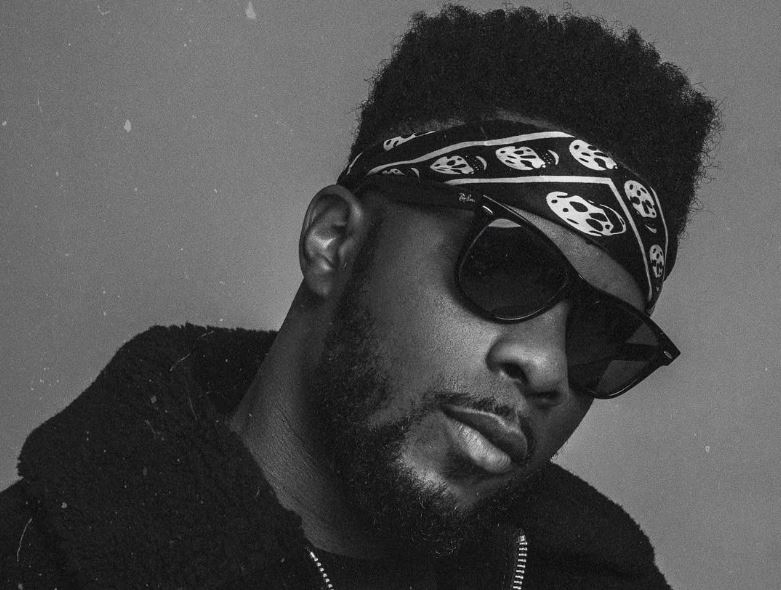
Different artists have different ways of promoting their brand. For DMW signee, Dremo, fans are a priority and “Next Single” is set to reassure their support for him. Composed and released as a teaser to his forthcoming single, Dremo’s new release is primed to wet ears ahead of an upcoming official single in the coming weeks.

On “Next Single”, Dremo talks the pressure to be at the top of his career. As he puts it, the growing popularity of his music has been a “curse and a blessing”, but he is optimistic about what’s coming nonetheless. There is no way to confirm if there is any truth to his self-affirmations or not, but he is both cocky and persuasive enough to make you wonder what he has been up to.

Listen to “Next Single” below

Featured Image Credit: Dremodrizzy/Instagram

Paradise Motel’s “Boys Hurt Too” Reminds Us How Fragile Masculinity Is

Niniola Evokes Inner Savage On “Maradona” Video

Niniola has had a number of acclaimed and commercially successful singles since her post-Project Fame debut “Ibadi” in 2014 but she’s still yet to release her debut album. That might change this year after “Maradona”, her first single of 2017, reaffirmed just how talented she is and immediately earned a spot on our Best New Music. She has released a complementing video for the Afro-house song and it has all the edginess that we loved about the single.

https://www.instagram.com/p/BSiff4Ahkkh/?taken-by=officialniniola&hl=en

“Maradona” like most Niniola songs borrows from the South African Afro-house. She sings about her unfaithful lover using the footballing legend, Maradona as a metaphor for his tricks and faux-clever moves (remember the hand of God goal?). If there was ever any doubt on the sensual context of the song, the video helps demystify the Yoruba heavy metaphors. Mex directs the video to show Niniola and her relationship with her charming yet cheating lover. She finds out about his dubious adventures and gets about as feisty as any woman with self respect can at a pool party; she throws his phone into the pool.

Niniola is breaking into the mainstream of Nigerian music and we’re well overdue for that debut album.

Enjoy the solid video for Niniola’s “Maradona” below.

Featured Image Credit: YouTube/

6 videos you need to see this week

Victor Oladipo is Already Working On Retirement Plan After OKC Thunder

2nd overall pick of 2013 NBA Draft, Victor Oladipo immediately made his mark as a promising talent by quickly rising to starting position at Orlando Magic and eventually Oklahoma Thunders. While his rendition of Bill Withers’ classic “Ain’t No Sunshine” at the draft game interview was dismissed as just a young happy-to-be-here stunt, the guard has proven again and again that his skills are not bound within the four corners of the court.

Thanks to his Nigerian mother, Mrs Joan Amanze Oladipo, the Thunder guard has no worries about what to do if his jump shots ever stop swishing. Since Victor was 7, she made him sing at church and while honing his basketball skills, he found time to develop his singing voice as well. His side talent stopped being a secret after winning a talent show with his “I Believe I Can Fly” performance in front of the star studded 2015 NBA Dunk Contest crowd.

Oladipo  might have lost the Dunk Content to Zach LaVine‘s massive throw down but it’s safe to assume artists like Rihanna and Nicki Minaj who witnessed his jaw dropping performance of R Kelly’s  “I Believe I Can Fly” took notice of the young Nigerian’s music ambition. It’s only his fourth year in the league and his career still looks promising but a music recording deal would be the perfect cushion for his retirement.

While we wait on that record deal, Rolling Stone magazine has gifted the Nigerian born shooting guard video on YouTube. It’s just as melodious as it is hilarious but it could be a move that gets the attention of prospective record labels. He wouldn’t be the first NBA star to hop into the booth, to varying levels of success. The question is, would he be more Damien Lillard or Tony Parker? Your bet is as good as mine.

Watch Victor Oladipo’s rendition of “I Believe I Can Fly” below.

Featured Image Credits: YouTube/Rolling Stone

6 videos you need to see this week

Lowkey, Phyno and Olamide are Nigeria’s most successful super group

As far as bands and groups go, Nigerians make notoriously fickle bedfellows.

Nigeria’s longest surviving(ish) group is Styl Plus, who have had enough roster changes that they might as well be a new group altogether. We have the continuing sagas of the explosive disintegration of the Remedies (Eedris Abdulkareem is still talking shit about everybody else till today) and Plantashun Boiz (BlackFace can’t seem to keep 2face’s name out of his mouth) and of course Storm Rex who was part of the insanely popular Desperate Chicks. Zulezoo fell off the earth, Ashionye murdered Emete and used it’s carcass to start her solo career. The Psquare duo and their manager brother used the better part of a year to drag each other through the dregs of the internet before ‘reconciling’ because nobody gave a shit about them as individual artists.

Groups don’t last even when they are populated by people who share geographical and ethnic similarities. So it is somewhat surprising that Nigeria’s most successful super group Phyno and Olamide, aren’t officially a group, or even from the same part of the country.


The only reason we can think of for why Olamide and Phyno have continued to work together, support each other’s music and even release joint albums is that they have transcended industry pettiness and politics and genuinely come to care for each other as friends. Their perfect bromance started in 2011, Olamide had just released Yahoo Boy No Laptop (YBNL) and was getting compared to the recently deceased DaGrin for his extensive use of Yoruba and his unconventional punchlines. Phyno on the other hand was well known in Eastern Nigeria’s high-life and hip-hop circuits as producer but he was looking to make the jump to rap. Perhaps it was because they both rapped in pidgin but someone somewhere insisted they collaborate and they made “Ghost Mode”. With visuals that ripped of Nicki Minaj’s Massive Attack and complementary rap styles like we’ve never heard before, by the end of the year everyone was rooting for both of them.

But what really sold Olamide and Phyno to us as a super group was their stagecraft. Olamide and Phyno together on a stage are electric and promoters knew it. Olamide featured Phyno on 2013’s Baddest Guy Ever Liveth and  2014’s Street OT and Phyno returned the favor on his 2014 debut album No Guts No Glory, remastering Ghost Mode as a second collaborative single on the album. This was sans one off singles that they put out solidifying themselves as the kings of the ‘local rapper’ movement. By then promoters and fans knew these one off collaborations was simply not enough and began to agitate for a joint album.

We got one in 2015’s Two KingsThis was a few years after Jay-Z and Kanye West’s Watch The Throneso everyone knew two rappers could work a project together. But Olamide and Phyno proved that it could happen in Nigeria. The album was given a surprise release in April and Olamide brought in long-time collaborator Pheelz to produce, Young John the Wicked producer (who would go on to work a madness at Made Men Music Group) represented for Phyno. It was a measured album, only ten tracks long in an industry where artists routinely put out twenty track albums without a forethought and covered a whole range of themes. Finally Olamide and Phyno had material they could tour with as a super group and they rode that train into the sunset.

Together Olamide and Phyno have collaborated on 19 songs in 5 years, including an official LP. They are a constant at each other’s concerts and Olamide helped Phyno sell out the Naira Bet sponsored #PhynoFest, and when Olamide had the very public beef with Don Jazzy, Phyno took his side, publicly condemning Don Jazzy for underhandedness. When Phyno was humiliated at the 2016 Headies after winning Song of the Year for ‘Fada Fada’, Olamide offered to give him one of his plaques.

We need to protect what Olamide and Phyno have, this kind of public support and camaraderie between two impossibly successful high profile artists at the top of their industry is the kind of example that we need to celebrate. Olamide and Phyno have overcome the hypermasculinity of the hip-hop, promoted inter-ethnic bonding through their music, elevated Nigerian languages as a respected medium of expression and continue to prove that black boy joy is a thing. Sure they are Nigeria’s most successful super group, but they are also our most high profile bromance, one forged on excellence, craft and mutual respect.

What’s not to love about that?

We Summed up Olamide’s Career in these 5 epic songs

Wizkid remixes “Fine Wine” by British Rapper, Yxng Bane

Yxng Bane is among the increasing number of rappers who blend other genres as their music aesthetic. He released “Fine Wine” last year featuring Kojo Funds for the Afrobeat single. To prove his appreciation of the Afropop beat he features Wizkid on “Fine Wine Remix”.

https://www.instagram.com/p/BSeamVvgVLQ/?taken-by=wizkidayo&hl=en

Wizkid released “Fine Wine remix” on his SoundCloud account, delivering a slow charming-casanova verse to the RemySounds produced beat. The Starboy borrows fellow Nigerian artist, Runtown’s flow from “Mad Over You” to add a Nigerian vibe to the slow-wine dancehall song.

Listen to “Fine Wine Remix” below.

Featured Image Credit: Instagram/@wizkidayo

Mo Adeniran emerges winner of The Voice UK

Listen To “These Days”, Derin Falana’s latest ‘Audio Journal’ update

As Told By Fisayo Okare

The lyrics in well written songs usually carry a personal message and while other artists don’t point that out, Derin Falana’s Audio Journal project emphasizes the image of music being a way to record experiences. Confessional journaling is no new phenomenon unless you are completely alien to creative circles. But it’s a smart decision to keep an audio Journal as an artist whose music is influenced by these experiences and perceptions. And trust, Derin’s decision to form his written Journal is ingenious enough to help him build his music career and fan base, who will follow his life’s journey with him.

In line with the personal style Derin’s compilation, Audio Journal is going to take, “These Days” plays out a narrative of the present events in his life, as alluded to by the single’s title. Over the subtle vocoder work, repeated bass, rubbery drums and g-funk style synth lines of the track, Derin raps introspectively about ‘Laryngitis’, ‘women’, ‘music’, ‘getting paid’ and other minutae of his life.

Derin shows just how versatile he is as performer, switching between rapping and singing as Jahmal Gittens well synthesized production goes where Falana needs it to.

“These Days” is released in addition to his two other singles on the Audio Journal compilation, “Live From Hollowgrove” and “cruising”, on his sound cloud.

Enjoy “These Days” below.

Featured Image Credit: Instagram/derinfalana

Tiwa Savage and the curse of the groupie effect

Nigeria’s Mo Adeniran Emerges Winner of The Voice UK

Chalk it down to Nigerians fighting spirit or pure talent, but Nigerians in diaspora have a history of doing amazing things that make us proud. In 2015, Emmanuel Nwamadi came third in the live finals of BBC’s The Voice UK  but this year, a Nigerian has gone on to win the series. Mo Adeniran was crowned winner of The Voice UK ahead of fellow contestants, Into The Ark, Jamie Miller and Michelle John after impressing the judges with his performance.

https://www.instagram.com/p/BScO_9sgLz0/?taken-by=imjustcalledmo

Mo won after a standoff against Into The Ark on Sunday. His sensational rendition of X Ambassadors’ “Unsteady” was impressive enough to outshine the “Not A One” by The Young Wild performance Into The Ark did to secure the win.

Alexandra Burke having won an edition of a UK music competition, went on to release “Hallelujah” which became the European record holder for single sales over a period of 24 hours, selling 105,000 in one day and topping UK singles chart in 2008. Mo Adeniran earned the much coveted Polydor recording contract after winning the 2017 edition of The Voice UK and the 20 year old Nigerian is now expected to start recording his debut project and release songs befitting of his title. No pressure.

Watch Mo’s The Voice UK winning performance of “Unsteady” below.

featured Image Credits: Instagram/imjustcalledmo


Best New Music: Drake’s “Blem” gets a better Afro-pop do-over by Wani

6 videos you need to see this week

Humble – Kendrick Lamar

Kendrick always goes for spectacular videos that do justice to his hit singles because lets face it, his fans around the world accept nothing less. “Humble” talks on the fake hype of being a rap icon by using religious symbols of the church and a crown and how people need to stop pretending and lying. “Humble” sees the Compton rapper take on the “rap gods” and though he didn’t call out names like he did in “Control”, a few fans have tried to connect the jabs at Drake and or Big Sean. Forget the shade, Kendrick has once again taken the rap game to church. “Humble” is a peep into what to expect from the rapper’s upcoming album, IV.

April Fool – Adomaa

Adomaa started getting popular in the Ghanaian music industry after her mash-up hit single, “Evolution of GH Music”. She has since gone on to release an EP, AFRABA the EP showing her versatility as a musician. The Ghanaian artist who has a Nigerian mom shows off her multi genre aesthetic once more on her latest single, “April Fool”. Though we’ve seen her switch between afro-jazz, Afropop, highlife and Rock, hearing Adomaa dominate a rap beat still comes as a surprise. Oris sets the video for the single at an abandoned looking house and shows a small choir with Ghana print uniforms as well as a fetish looking room with voodoo dolls. It’s unclear if these symbolic images are related with Adomaa’s lyrics or just the church harmonies playing over the instruments.

Fight feat. Dj Cuppy – Mr Eazi

While Mr Eazi’s Accra to Lagos mixtape wasn’t exactly as big as the Starboy Records would have wanted, the video for the tracks off the Afropop project have more than made up the EP’s lacklustre performance. His appeal has increased and taken him as across the African territory to other parts of the globe. The singer has returned from his tour promised to release more videos from the mixtape with the release of two teaser videos on his Instagram account. “Fight”, like most songs off the Accra to Lagos, is a romantic song and the video shows the singer’s search for a love interest. The plot doesn’t show much else but Mr. Eazi’s ‘Vibez Videos’ aren’t known for compelling story telling.

Cherry Game Girl – Straff

Straff released his debut project Vanilla Sky earlier this year and has since gone on to release his debut video “Cherry Game Girl”. It offers a glimpse into the goofier side of a hardcore rapper who has fallen in love and the video which was directed by the rapper builds on that scenario. He has described the video as “A compilation of one of the sweetest things going on in my head without restrictions, just my mind in a place full of colours.” The hipster romance and the cartoons are right for the rapper’s aesthetic which makes us curious for what else he has in store as far as visuals go.

Winning feat Nasty C – Emtee 

South African rappers, Emtee and Nasty C linked up back in 2015 to deliver “Winning” off Emtee’s album, Every. If there was ever any doubt about the rappers winning claim, they have finally released video proof. The video for “Winning” is full of regal imagery such as thrones, ornate sculptures and models in grecian inspired gowns. Though both artists have switched labels since the track was original released, there is no love lost among the rappers who are obviously happy about where their careers are.

Diary feat. Tiwa Savage – Fuse ODG

Fuse ODG is almost at this point an honorary Nigerian. His latest single “Diary” features Nigerian pop singer and latest Roc-A-Fella records signing, Tiwa Savage. Killbeatz delivers that mid-tempo chill-life vibe that Ghanaian music has ever so delicately mastered. “Diary” is a love song with Fuse playing the role of the suitor and Tiwa, the damsel who has to make time for him from her busy schedule. Of course, usual tropes abound.

Featured Image Credits: YouTube/MrEaziVEVO

AV Club: Read our review of Nasty C’s short film “Bad Hair”

Was Saeon Moruda’s “#Aii Remix” An Epic Fail?

As far as relevance goes, Saeon Moruda is a middling artist whose years of being in the industry has not panned out into mainstream success. Her career started on a sour note after her brief moment of fame for lashing out at Wizkid after his feature on her song, “Boogie Down” didn’t get her music the type of popularity she wanted. The Baseline Music recording artist has since changed from her brand from overwhelmingly feminine, to hypermasculine in “#Aii”, her most public acclaimed song till date. “#Aii remix” featuring 3 Nigerian rappers just surfaced on the internet and it shows that the singer turned “trapper” is still trying to use the shine of other artists to get recognized.

https://www.instagram.com/p/BSdYF5rjyIL/?taken-by=saeonmoruda

Vector throws the first punch on the hip-hop beat referencing Michael Jackson’s “They Don’t Care About Us” to depict the conscious nature of the song. Or so we thought since the other artists; Iceberg Slim, Terry Apala, Ycee and even Saeon Moruda herself seemed to be more passionate about stunting on their haters. To be fair, this paints an accurate portrait of the apathy that defines Nigeria’s Generation Y. The video was directed by C Dub of 8000Films who tries to represent the Nigerian society in a 6 minutes long video set in streets of Lagos. The imagery of long fuel queues and lit candles is a nice tough but the Instagram funny video cuts are unnecessarily long and do nothing to advance the plot of the video.

The song starts off like a conscious rap song meant to instigate a political revolution in the country but it derailed pretty quickly into shit town. That said, Saeon looks more comfortable in her new look having abandon the girly looks for dreadlocks and T-shirts.

Watch Saeon’s video for “#Aii Remix” below.

Featured Image Credits: Instagram/Saeonmoruba

Is “Give Me Love” the worst song released by SKales?

Here are all the essentials from Iyanya’s ‘Signature’ EP

2016 saw Iyanya part ways with his label and join Don Jazzy’s Supreme Mavins Dynasty team. The move was a curious one considering Don Jazzy’s reputation as the man who turns budding talents to hit makers but fortunately we didn’t have to wait for too long before Iyanya released Signature, his debut project under Mavins management. For the 8 track EP with only 2 pre-released singles, Altims, Baby Fresh and Don Jazzy get production credits.

Signature begins with “Odoyewu” an Afropop cut featuring Iyanya’s signature pseudo-sexual romanticism. Produced by Don Jazzy who adds his auto-tuned baritone harmonies on the up-tempo beat, the song starts off with the theme of a romantic apology but somewhere along the swing of the beat that narrative gets lost and the singer is just happy to be winning. Regardless, “Odoyewo” just like Mavin’s hit single, “Godwin” is catchy because of the sweet melodies and the subtle religious undertone.

Iyanya teams up with label mate, Poe for “Not Forgotten” a reflective song dedicated to loved ones lost. It is a broody shift from other Afropop songs on the EP. Iyanya carries high notes comfortably while Poe  picks up on the somber mood Iyanya has set.

“Nobody Has To Know” is the 6th track on Signature and just like pre-released single, “Hold On” it is designed for slow waist whine dances that Iyanya evidently enjoys doing. Only people with silky smooth voices can pull off the corny erotic intro on “Nobody Has To Know” and Iyanya brings puts his pipes to work and makes sure his RnB reputation is intact. The song plays like a perfect fit for sex playlists containing songs like “Birthday Sex” and “Pink Matter”.

Signature is melodious though the lyrics lose the cohesion and detailing in well written songs. Don Jazzy and the rest of the Mavins production crew came through on the project and Iyanya doesn’t look as out of place as he could have been considering how much experience he has as oppose to typical Don Jazzy signings.

Listen to Iyanya’s Signature album here.

Featured Image Credits: YouTube/IyanyaVEVO

See official tracklist for JHus’ upcoming “Common Sense” album

Coming off the success of his first single of the year, “Did You See”, J Hus has announced upcoming debut album ‘Common Sense’, is in the pipes for a May 12th release.

Yesterday, the rapper shared a picture of a hand written tracklist for the album on via Twitter, showing a 17 song list with features from Nigerian Afro-fusion artist, Burna Boy, North London rapper MoStack, Tazanaian born alt-Afropop singer, Tiggs Da Author and more

JHus impressive run this year has been hallmarked by collaborations with Stormzy and Dave amongst others. Earlier last month the rapper announced tour dates that would see him on the road through May, the same month his album is expected in.

https://twitter.com/Jhus/status/849277343608819712?ref_src=twsrc%5Etfw&ref_url=http%3A%2F%2Fwww.thefader.com%2F2017%2F04%2F03%2Fj-hus-common-sense

6 videos you need to see right away

Shuffle: ‘Nu Flow’ by JJC’s Big Brovas is 15 years old and still a jam and half

Believe it or not, there are few Nigerian musical veterans as prolific as Abdul Bello, known to us as JJC, as producer in the late 90’s in the UK, JJC built himself a reputation as an innovator, splicing his Nigerian heritage with international quality music. So when it was announced in 2000 after he had created the 419 Squad (which at some point had associations with Nigeria’s biggest contemporary exports D’Banj and Don Jazzy), he was convinced by fellow producer and rapper Fingaz to help assemble some of Britain’s best afro-caribbean singers and rappers to create supergroup Big Brovaz.

After a handful of unaffiliated projects in 2002, the band released its first single “Nu Flow” which went on to become a major hit in the UK and most of Europe, capitalizing on Europe’s obsession with bands at the time. “Nu Flow” is very much a song of it’s time, as evidenced by its percussions created by manipulating synths, its stripped down beat that is largely unobtrusive, allowing the vocal work by the group’s three female members Dion, Nadia and Cherise carry the song. JJC is a huge part of the song’s genetic makeup, working on the production of the song and sharing a verse with rapper J-Rock and providing hype man style adlibs through the entire song. There’s not a second on “Nu Flow” when the ball is dropped, and the song was so popular it topped

Meet Dapo Fagbenle, the Nigerian Photographer behind your favourite music videos

Boyewa’s “sunday night raw” is where esoterica, Bollywood and trap intersect

The sheer volume of music on Soundcloud is enough to make your head spin. Millions of hours of music of all genres that you have to sort through to find true gems. Naturally many really great musicians get swept away with the effluvia of mediocre music and sonic clones looking to capitalize on the success of the sounds of more established artists, which is why when true talent without any management, representation or PR catches our attention, we latch on to it, and sound the bugle. We’re sounding the bugle now for Boyewa’s “Sunday Night Raw”. 

Other than a very cryptical “Spirituality”, Boyewa makes no effort to explain his new single, which is the weirdest yet most familiar song we’ve heard in a long while. And perhaps he doesn’t need to, because in spite of the mumbling and gibberish that serves as lyrics for “Sunday Night Raw.” Boyega has sonic articulation more established artists only dream about. Using plonky synths, he creates a dreamscape, filled with synesthetic images of twilight and that sweet spot between wakefulness and sleep. Traditional drums provide the pulse for the song, though even they are put through a vocoder and grisled to provide edge for the song. The resulting sound actively references classic Bollywood show tunes, as well as contemporary film especially horror and mystery genres that milk the sounds we’ve come to associate with apprehension.

Boyewa chants his lines for the song, layering them over to provide a polyphonic refrain, lowering and heightening pitch for effect, he even throws in shredded guitar riffs for effect before switching the entire thing on it’s head and referencing classic 80’s pop with a simple synth piano refrain. Sunday Night Raw is both forward facing and nostalgic and it’s production is beastly.

Boyewa needs to come out of the shadows and embrace his genius because damn, he is quite the revelation.

Listen to “Sunday Night Raw” here.


The New Age wants to succeed but doesn’t want to let go of conventional music models, what gives?

The New Age needs to throw away the outdated rule book

Nothing works the way it should in Nigeria, nothing. Not even amateur music. Elsewhere amateur music is a cutthroat business with young, talented and ambitious musicians ruthlessly mowing down the competition on their way to nab that all elusive record deal. No better subculture illustrates this than battle rapping, a subset of hip-hop that consists almost exclusively of emerging rappers publicly decimating their rivals for the entertainment of an audience whose loyalty has to be won with skill and ruthlessness. This phenomenon spans across most genres, especially pop, which considering its commerciality and simplified lyrics and melodies should be encouraging of acceptance. The reality however is the pop-stan wars, rivalries endorsed by emerging pop stars so ruthless, people have been bullied into depression and self harm for deigning to question the supremacy of their idol.

In the Nigerian music industry what we have instead is a weird potpourri of emerging musicians, all aggressively forming collectives and communes, super groups and bands, publicly supporting each other, collaborating, endorsing the very people with whom they struggle for relevance. Many argue that this camaraderie (especially in Lagos, the country’s musical capital) is the result of privilege. Many of these new generation musicians are upper middle class and grew up as the first generation to grow up under the watchful eye of the internet and have come to equate the fleeting familiarity that having social media mutuals and sharing a pop culture canon tends to lend to new interactions. We cannot say for sure that is true, or even why, but we can say that it isn’t entirely why. This is what we think.

For one, there really aren’t any traditional record deals in Nigeria, proper legal contracts negotiated extensively between a singer’s agent and an interested record company. What exists in lieu of a record deal is either the exploitative ‘sale’ deals that the distributors like AHBU ventures of old offered artists like Psquare and M.I back in the day, buying off the rights to reproduce their music for a lump sum with the added threat of pirating the music if it isn’t distributed by their channels. Then there were the exploitative 360 deals often offered by record companies forbidding signees the ability to enter into independent endorsement contracts without remitting a good percentage of all revenue made during the duration of their contracts to their labels.

Without the lure of a label to sign to, there is simply no urgency for any emerging artist to find representation. Without representation and the guidance a label brings, these artists have had to look sideways for help navigating Nigeria’s volatile music space. These communes are working, for now. Singers like Odunsi The Engine, Ozzy B, Tay Iwar and Nonso Amadi (the literal vanguard of the New Age) have found international acclaim via the now popular streaming services, popping up on international charts they would have only dreamed about a decade ago. And in their own way, they are carrying their collectives along with them, sharing their music, featuring in their projects, harnessing the power of social media as a marketing tool. However, the New Age is getting it wrong in one vital way. They are still obsessed with traditional music distribution methods.

In Nigeria ‘no one’ pays for music. The numbers are probably closer to ten to one, when it comes to who buys music and who doesn’t.

The reasons for this are legion; piracy, poor distribution networks, misunderstandings between producers and artists, access to the internet. But the biggest disincentive for buying music is the disconnect between artist and fan. Our popular musicians are proficient at cloning trendy sounds/genres, with the speed and precision that is akin to piracy. There is little backstory, no personal connection or universal themes (other than big butts) that fans can latch on to and make the music their own.

Many of our hit songs are pretty much indistinguishable from one another and often musicians find that their fandoms are fickle, demanding that they jump trends with ease or get dumped for younger shinier versions of themselves willing to do what is needed to keep Nigerians dancing. This urgency means that albums are usually rushed and unremarkable, and singles are often dated by the period in which they were released. There are no classic albums from contemporary Nigerian musicians (save for 2face’s Grass to Grace and M.I’s Short Black Boy). If we are only chasing singles that lose replay value once the trend shifts from Afrobeats to hip-life, why should anyone spend their hard earned money buying it.

This is why it makes no sense that the New Age artists are also churning out individual singles, released arbitrarily by the truck load. The audience is too conditioned to seek illegal music and consume it as a perishable to get the cultural impact these artists are aiming for with their music. The fact that these singles are primarily released on streaming platforms like Soundcloud and Spotify doesn’t help either. It perpetuates the presumption that music should be ‘free’ and keeps the New Age artists in the red.

If Ed Sheeran’s % and Drake’s More LIfe have taught us anything, it is this, albums make more sense as an artist than singles, more songs means more opportunities to gain streaming revenue and find audiences, it means more avenues to reach and court audiences and it means more money. It also means more material to perform live. Offline interaction the form of concerts, performances and tours is how artists will sustain fandoms in the age of streaming, and the New Age artists, many of whom who have been active for more than a year only have a handful of singles to their names, some even as little as a feature on another musician’s song, withholding music from audiences as part of an elaborate roll out plan doesn’t work. It also doesn’t bode well if opportunities to perform present themselves and artists simply don’t have enough material to justify themselves a spot. How do you build a fandom if you don’t have any music to offer them.

Music has evolved and our New Age needs to not only evolve with it, they need to design the evolution to suit the musical future they see for themselves. They can only do that if they forgo the conventional

AV Club: Read our review of Nasty C’s short film “Bad Hair”

Hear producer, Bond on “Dash”, his first official single as a vocal artist

The Euphonic music group’s producer, Bond released his first personal project, Neighbors earlier this year to mark a start to the sound engineer taking a more frontal position with his sound production. Much like we’ve seen Maleek Berry do with his Eko Miami EP, the producer has decided finally to step in the booth to put his vocals on his productions. “Dash” isn’t Bond’s first single with no features but it’s the first time his voice takes central stage.

https://www.instagram.com/p/BSZVjKOAilf/?taken-by=its_bond

The song begins with the electronic synth trumpets and harp strums that popular in from Bond’s productions. His previous tracks, “Come Over” and “Labalaba” were Afropop and hip-life respectively but his latest single, “Dash” is every bit hip-hop. Bond raps with flows synonymous with rappers like Drake and Migos who have used rhythmic talking and boastful statements to mark their place on our playlists. “Dash” is a showcase of Bond’s ability to adapt his sound with other genres of music and it signals to a new phase in the musician’s career.

Listen to Bond’s “Dash” here.

https://soundcloud.com/its_bond/dash-prod-by-bond


Bond’s Neighbours is a fascinating multigenre experimentation

Meet Dapo Fagbenle, The Nigerian Director Behind Your Favourite Music Videos

After a life as a collegiate basketball player, Nigerian-British director and producer Oladapo Fagbenle had a gap period trying to figure out what to do. He tried out music and dabbled in different projects for 8 months till his brother nudged him to try out producing videos. After starting off under his brother’s media outfit Luti Media, he started producing videos for different directors, picking up tips till he felt confident enough to pursue directing.

His professional career as a director took off in 2010, following a stint under Director X. He has since curated a impressive portfolio, working with Migos, Kendrick Lamar, Iggy Azalea as well as some other acts. He has also created short campaign videos for BMW and Nike.

Here’s a short curation of 9 music videos you probably didn’t know he directed.

Bad and Boujee- Migos

T-Shirt- Migos

Big For Your Boots- Stormzy

Double Tap- Jordin Sparks ft 2 Chainz

Team- Iggy Azalea

Deadz- Migos ft. 2 Chainz

Bad Intentions- Niykee Heaton ft Migos

King Kunta- Kendrick Lamar


Featured Image Credit: FlexGodDaps/Instagram

MEET CHI MODU, THE NIGERIAN-BORN PHOTOGRAPHER BEHIND HIP-HOP’S MOST ICONIC SHOTS

Hear “Ice Cold Water” by Aristokrats Records signee, Ebisan

Words by Fisayo Okare

https://www.instagram.com/p/BSSqK7wAmS8/

When you get dunked in iced cold water, you feel a few different sensations. But one of the most obvious is the shock at being plunged into a totally different environment. Though on first sight, the sensation of being dunked in ice cold water might not seem like a proper comparison but Ebisan makes an attempt to compare it to the emotions she felt when she describes trying to return to an ex who once admitted undying love, but has now moved on. This surprisingly astute comparison is what Ebisan highlights in her new single “Ice Cold Water” off her debut Album Finally Here.

Ebisan’s broken-hearted lyrics do not only reveal the fickle nature of her emotions, it also reveals her jealousy at not having someone’s affection on demand. As Ebisan describes in an Instagram post, “Ice Cold Water” is an intimate recount of a sad experience, revealing her emotions and fears just like the rest of the album.

Ebisan joined Aristokrats record last year as part of the label’s expansion efforts and fans will be looking forward to a debut album with more expressions of vulnerability like “Ice Cold Water”.

Listen to Ebisan’s “Ice Cold Water” here

Featured Image Credit: Theebisan/Instagram

Ria Boss’ “Carefree” Is A Snapshot Of Self-Love From A Black Girl’s Eyes

Best New Music: Wani’s Afropop do-over of Drake’s “Blem” is better than the original

Most post-release debates on Drake’s More Life have centered around how the rapper’s playlist threatens to usurp the album format. One silently whispered but strong alternate argument however, is the cultural appropriateness of rappers like Drake who borrow influences from soundscapes like Dancehall and Afropop despite physically being on the outside of the accompanying culture. Perhaps this is why Wani’s rework of “Blem”, the seventh track off Drake’s debut More Life playlist, feels so authentic.

With the original single already set on the same breezy wine-friendly dancehall tempo popularised by Drake collaborator, Popcaan, Wani belts into a strong melody as the rhythm kicks in. As with many unofficial re-fixes, there is an inherent lack of interest in curating a central subject matter. Instead Wani opts for a freestyle, switching between fully-formed sentences and incomplete thoughts but never missing his mark or breaking a melody he seems to have recorded in one breath. This run-through feeling doesn’t come full circle until a lyrical sample from 2face’s “Keep On Rocking” adds an unexpected Afropop edge to the neo-R&B single. It’s an unmissable deliberate addition to a song that would’ve immediately brought post-Drake sounds like PartyNextDoor, Tory Lanez et-al to mind otherwise.

Drake’s More Life may go unforgiven in some circles as a Jewish Canadian rapper’s grand theft of sounds that don’t belong to him, but a lasting legacy would be its unification of genres for diversity of sound. This is not to say artists who primarily make dancehall and other third world sub-genres need Drake to help turn ears to their sound, but it proves good music would stand out definitively regardless of where it has come, and Wani’s even better version of an already good song is all the proof you need.

Listen Wani’s refix of Drake’s “Blem” below

https://soundcloud.com/wanimuisc/blem

Revisit our previous Best New Music, “Pocahontas” by Patrickxxlee

AV Club: Nasty-C’s short-flim, ‘Bad Hair’ is a really pretty picture that lacks cohesion

The cinematic longform music video has been a thing since musicians started making concept albums. Music inspires grand mental images and there hasn’t been a musician who hasn’t been tempted to translate their carefully engineered soundscapes into a visual narrative, stringing songs that would otherwise be appraised individually into a cohesive whole.

Artists like Drake (Views), Kanye West (My Beautiful Dark Twisted Fantasy) and Skepta (Konnichiwa) have put out short films for their personal projects. Big Sean and Jhene Aiko’s incarnation as duo Twenty88 was an entire concept album built around a long-form music video that presents them as an afrofuturist robot couple controlled by an oppressive corporation. With Beyonce’s fifth album Lemonade we saw the genre form build upon the grandiose imagery delivered on Kanye’s magnum opus, and really grow to be a personal medium for artists of colour, a way for them to approach storytelling and convey messages that might otherwise be lost in translation. However, until now we haven’t seen an African artist embrace the form.

This isn’t much of a surprise, given that the African market is largely governed by singles and remixes, with LPs seen by artists and their labels as formalities rather than passion projects, due to the difficulty to effectively sell albums in the motherland. Despite this, albums are still the best way to get your message across to listeners, and by extension, everything that comes with an album only aides this. Be it; interviews, television appearances, or say, a short film; the medium of the infamous “album” is unrivalled in freedom of expression. Enter: Nasty C.

Durban-born rapper Nasty-C is a the true scion of the kind of trap music, drawn from multicultural influences and popularized by Canadian rapper Drake. Nasty-C’s age (he’s 20) and the critical acclaim he’s garnered in his career has put him at the forefront of South African pop music and made him an alternative sex symbol. He is the perfect crossover artist, contemporary enough that young African see themselves in him but with the lyrical prowess and wordplay to demand respect from industry gatekeepers, especially an endorsement by Cassper Nyovest, South Africa’s biggest contemporary pop export.

His debut album Bad Hair released in September 2016 and the deluxe EP Bad Hair Extensions released in December 2016 has proven that he is more than an internet sensation. Instead of promoting the album’s singles through the conventional route of individuated music videos, Mabala Noise chosen instead to splurge on a long-form short film .

Bad Hair (aliased Veliswa) according to Daily Times ZA is an homage to the artist’s mother and premiered in theatres across South Africa on the 9th of March, a major coup for the artist.

Nasty-C directs and stars in the Veliswa, the first sign that the film would have kinks, considering the rapper has no professional experience as in filmmaking or as a scriptwriter. The choice of songs given the film treatment, “Don’t Do It”, “Good Girls and Snapchat Hoes”, and “Phases”, from the Bad Hair Extensions album seem in complete contradiction for a film dedicated to Nasty-C’s mother who died when he was an infant.

Visually however, Veliswa is a delight. By embracing the millennial obsession with classical inspiration spliced with modern narratives as evinced by platforms like Tumblr play heavily in the imagery of the film. Superior cinematography even for South Africa’s global standards keep you glued to the screen, afraid that even a second’s distraction will cause to miss some carefully curated image. The first act for “Don’t Do It” draws on South Africa’s colonial history, featuring the most beautiful colonial victorian manor and an albino jester in a ruched collar and models including Rwanda’s Happy J. Umurerwa in brightly coloured victorian gowns, posed where the white ladies would have been. The subversion of this imagery, which often features in black cinema puts Nasty-C in place of the lord, instead of out in the cotton fields. For any other song, this would be a powerful image.

This theme of the music completely contradicting the visual imagery continues through the rest of the film, the second act for “Good Girls and Snapchat Hoes” featuring ’empowered’ alternative women dress in altheisure wear, dancing in a beautifully lit communal bathroom, showing off and mouthing Nasty-C’s lyrics. But the lyrics themselves, which is four minutes of par the course slut shaming of ‘rap groupies’ is too jarring to ignore.

The closest Nasty-C comes to cohesion is on phases, which sees him rap to his music in a columned hall while a ballet major and athletic men in a variety of mask leap ecstatically into the air. It is much easier to imprint meaning into the abstraction that happens in the video. Nasty-C is at his best as a director when he is most stripped down.

At the end of the 14 minutes of Veliswa, you come to a few epiphanies; this is arguably the most beautiful long-form music video you have out of Africa by an African. the visuals for “Don’t Do It” might actually be the most beautiful music video out of Africa by an African. But like Tumblr, it is a collage of really pretty images that leaves you overwhelmed but fundamentally unchanged, unhinged, unmoved.

Paradise Motel’s “Boys Hurt too” reminds us how fragile masculinity is

Paradise Motel’s Release Visual for “You Can Be Bad For As Long As You Like”

Exploring the themes ever-present in any coming of age story, Paradise Motel’s Ego Sex is built on expressing a young man’s experiences with love, betrayal and heartbreak. Focusing solely on the conflicting emotions that come with a lover breaching your trust, “You Can Be As Bad For As You Like” is a conversation between a tortured man and his conscience. His conscience, unlike the stereotypical good cop telling him the right thing to do, blurs the line between right and wrong, telling him he can be bad for as long as he likes.

Bringing this noir tale to life, the lead singer plays the role of the brokenhearted psychologically-imbalanced boyfriend who just caught his lover cheating on him. It all goes downhill from there as he organises the murder of her side squeeze with his friends. He also goes on with his friends to ditch the body in a river and abduct his ex-lover who eventually dies and gets a special post-mortem golden shower.

The first in a serial roll-out, this new gory video strikes a sharp contrast against their previous gospel-centric one, perhaps hinting at an edgier Paradise Motel.

Watch “You Can Be Bad For As Long As You Like”

Featured Image Credit: Paradisemotel/Tumblr

Paradise Motel’s “Boys Hurt Too” Reminds Us How Fragile Masculinity Is