
The Shuffle: Throwback to Da Grin’s “Pon Pon Pon”, the hardest Yoruba rap song of all time

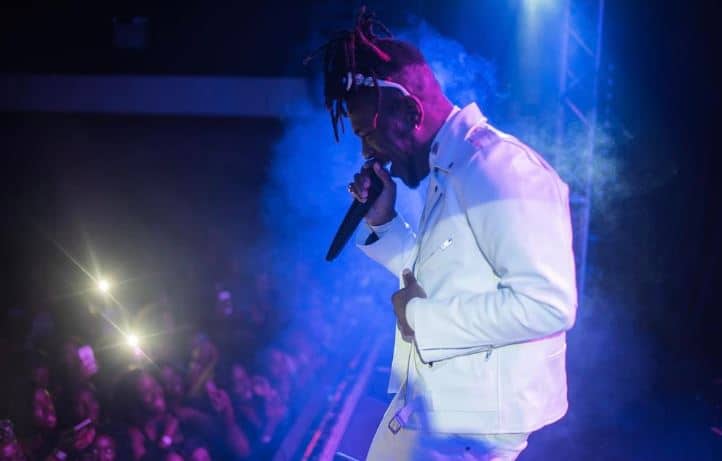
By the end of this week, it would have been seven years since Da Grin’s untimely death in a devastating auto-crash that claimed his life. The details of the Yoruba rapper’s eccentric life has already been documented in print and film, but as far as a legacy goes, Da Grin’s sophomore album C.E.O is all we have left of his relatively short career and life.

Off the same opus is lead single, “Pon Pon Pon”, a typically hip-hop broggadcio track with heavy kicks, loud synths and a piano-based flare. Producer, Sossick provides back up vocals, while DaGrin runs into bar after bar about his innate confidence and well-versed rap skills. The result is what perhaps became Nigeria’s first viral hit with quips and references spawned off Da Grin’s cheeky lyrics on social media and every day conversations.

As far as Yoruba hip-hop goes, Da Grin’s time on earth was enough to crease a defining place in the game for a lifetime. On “Pon Pon Pon”, Da Grin makes a series of declarations. The first is that he is a true Nigerian by all measures. The second is that no rapper would come close in terms of lyrical abilities or charisma. The third is that he has made all the neccesary sacrifices and none of his contemporaries can or will ever match-up to the speed of his fast-paced rise.

While the first declaration needs no further clarification, his short life span makes it difficult to tell where his abilities or aggrandised personal image would stand in today’s hip-hop. But perhaps this longing (you feel right now) for an alternate world where Da Grin is alive and making hard hip-hop in today’s sing-song rap music industry is proof he may have been right.

Stream Da Grin’s “Pon Pon Pon” via iTunes below

5 underrated Nigerian rappers they don’t want you listening to

David Oyelowo Steps aboard with Blumhouse to executive produce “Only You”

Words Of Fisayo Okare

Riding the buzz of last year, David Oyelowo known for his lead role as Robert Katende in “Queen of Katwe” and – probably his highest-profile role to date – Martin Luther King Jnr. in the American biographical drama film “Selma” (2014), is set to take another lead role in the forthcoming movie “Only You”.

The British actor of Nigerian descent has garnered praise and recognition for his prowess and earned himself award nominations including a Golden Globe for his role in Ava DuVernay’s “Selma” and an Emmy and Golden Globe for HBO’s Nightingale. In “Only You”, Oyelowo will not only be acting but also co-executive producing on the movie alongside Jeanette Volturno, Couper Samuelson and Jay Martin.

Not much has been said about the movie’s release date and storyline except for two things: it is a ‘thriller’, which revolves around ‘time travel’. Oyelowo will be working on the project with Jason Blum of Blumhouse, the production company behind “The Visit”, “Insidious”, “The Gift” and Jordan Peele’s “Get out” amongst others.

Definitely, we’ll be expecting nothing less than perfection from Oyelowo on this new project.

Within last year and these few months of 2017, Oyelowo has starred in 3 major feature films: Maris Curran’s “Five Nights in Maine”, Mira Nair’s “Queen of Katwe”, and Amma Asante’s “A United Kingdom.”  In the months ahead we’ll watch him star in  “Only You” alongside “God Particle”, a third installment in the Cloverfield series to be directed by Nigerian-American based filmmaker and director, Julius Onah.

Featured Image Credits: Twitter/david_oyelowoo

See Nigerian actor, Yetide Badaki in steamy trailer for upcoming American tv series American Gods

Listen to “Opoju” and “Ghetto Youth”, two new freestyles from Wizkid

Wizkid continues his recent run of releases with two new freestyles featuring DJ Spinall and Sarz on “Opoju” and “Ghetto Youth”, respectively. Wizzy’s last album Ayo was released 3 years ago but the StarBoy has since dropped enough songs to fill another album.

https://www.instagram.com/p/BTABjz9Ar16/?taken-by=wizkidayo&hl=en

Over the past few months he has capitalised off the Drake Effect and delivered two well received-singles , supplied guest verses and hooks for a handful of features, and changed his look with a golden blonde hue to his black hair. The indications may be slight, but Wiz is no doubt preparing for the beginning of a new era in his artistry.

Listen to “Opoju” and “Ghetto Youth” below.

Wizkid talks about how he captured Drake’s Attention

Best New Music: To Name A Few shows range with “Based”

Based, To Name A Few

The question everyone asks after an artist, band or supergroup puts out a debut single that challenges the status quo and cements their place as unconventional, is if they will fall to the ‘Sophomore Slump’.

I worried about this after the year long hiatus after To Name A Few’s haunting debut “Stay Over”. My worry intensified when the producer half of the duo Christopher Oti (known as Golddrummachine) put out an independent instrumental EP, advancing his own career as a solo artist not long after an impromptu cover of Frank Ocean’s “Pink + White”.

The band’s new single allayed all my fears. I’d sat down with Brumeh, who does most of the vocal’s for the group and went down the rabbit hole of the band’s musical history and their plans for the future. Turns out the band is under new management (Euphonic, the music arm of ‘New Age’ conglomerate Baroque Age) and have been restructuring their music releases to reflect this new status. While I was impressed, I still needed the music to corroborate everything I was told.

“Based” diverges completely from the emo-torch songs that have come to define To Name A Few, shedding the guitar-y synths and heavy reverb for a light, skippy percussive beat, layered over with subtle woodwind melodies and tinkling chimes. There is a definite Oriental bent to the music, but it is subtle enough to be an homage to Asiatic pop of the 90’s rather than outright appropriation. The entire vibe is ambient, not surprising considering that instead of the heartbreak and existential crises, “Based” has Brumeh musing on the worst/best high of his life. There’s no mystery female vocalist adding feathery accents but then again, the boys really don’t need any help  driving their point home.

If you ever had any doubts that To Name A Few had the range, well worry no more. They have found that sweet spot that melds their Nigerian millennial sensibilities with world class music and it’s damn well time someone did.

Listen to “Based” here.

Let this Afropop rework of Drake’s “Blem” make your day

On the place of God in mainstream Nigerian music

During press rounds for his newly released DAMN. album, Kendrick Lamar had infamously declared that his upcoming album would be focused on God. To support his claim, video for “HUMBLE”, the lead single off the album came peppered with lyrical and visual Biblical references. That God has a place in hip-hop is no oddity, black music has always been entrenched in some sort of spirituality. But usually, this is done with allusions to themes and concepts borrowed for increased artistic value.

In Nigeria faith and religion form a bulk of our everyday life. From random exclamations in daily conversations to fervent deliverance sessions, you can never separate a Nigerian man from his God. It shouldn’t be dismaying therefore, when Nigerian artists bring God along with them on their music. The conundrum however is in usually how biblical allusions or praises to the most high fall flat and fail to connect with any meaningful religious doctrine.

That “Nigerian music is not the place for content” is one of the biggest arguments touted to support the absurdity of pop music in the industry. A bright example is Wizkid’s In My Bed, where the singer thanks the living God he serves then proceeds on a series of random brags about his wealth and fame, before belting a chorus demanding that a nubile body report to his bed. If God himself heard this song, he’d probably be asking the same questions we have in mind and it is “Why am I here?”

“In my Bed” is only one of the many Nigerian songs where verses from holy books have been purposelessly quoted with loose ended references to God or a supreme being in the sky. But the often, the suggestive lyrics and raunchy videos that point to nowhere or connect to nothing have made it easy to conclude God is only a go-to when said artist is out of idea.

We need to do better
Nigerian music is not the first soundscape where spirituality has been married to sex and vanity. The hip-hop culture has rappers like DMX, Kendrick Lamar, Kanye West amongst others, most notable for talking about God in their often sexual and aggressive music. Jamaican Reggae is also heavily rooted in the Rastafarian belief and culture. For Nigerian artists the purpose may be unknown, but this place of God in artist’s discography is significant for illustrating the relationship between how an artist’s background affects his artistic process.

Conclusively it is important to note that religion is often used by many artists as a leveller as they struggle with the many effects of the fast-paced celebrity life. This keeps them from getting too hung up on their own successes. Whether they are thanking God for letting them win an award or for granting them the limelight, spirituality is more of a personal process than it is artistic. However, this should only charge artists to dig deeper for insight on how to incorporate God into their music beyond mere fillers for flat choruses and hooks. Afterall, If you must talk about your beliefs in your music, might as well drive home a message with it like a preacher.

Featured Image Credit: Twitter/@RoyalArts

Meet five Nigerians who have claimed to be god

What does the ‘Streets’ really mean to its firebrands in the face of Injustice?

After hearing what happened to inhabitants of Otodo-Gbame, a slummy fishing settlement outside Lekki last week, I began to wonder what happened to artists who have claimed to be speaking for the gritty streets.

A few decades ago, Fela would have been the contact point for addressing issues like this. No one will also forget the incursion of African China, Stereo Man and Ortishfemi amongst others in the violence rife Tinubu-era of the early noughties. These were artists who lived through the turmoil and poverty of the ghetto-life and thus became authentic voices for a lasting struggle. The purpose of their cause is still ever so evident in injustices like the demolition of Otodo-Gbame.

But as it would appear, the new generation neither has amplifiers for the common man’s struggle nor revolutionaries who are ready to damn the consequences and rage against the system.

Over the past year, Otodo Gbame has become the latest target in Lagos’s state’s forced urbanisation campaign to turn waterfront communities into real estate gold. The Lagos state government initially denied any involvement in the destruction of properties in the waterfront community. But authorities from the state reportedly returned to demolish the few homes that survived the first wave of attack earlier in the year. This comes after a court order, demanding Governor Ambode call off the plan to evacuate settlers from the ancestral community.

Lagos has quite a notorious history of slum demolitions. About 200,000 people were displaced from Lagos Island in the 50’s as part of a “beautification” scheme. Some might even remember the state-sponsored eviction in Maroko, one of Lagos’ most visible and iconic slums. They were visited with untold hardship and agony so that their land could be cleared for the erection of expensive new mansions and luxury apartments from the rubble of their homes. Similarly, the residents of Otodo Gbame are being violated of their basic rights.

This wide scale injustice should be a convenient time for artists who are so quick to make claims about their street credibility to prove they really care about Lagos and Lagosians. The continuing silence of Nigeria’s celebrity class however, has only shown how disconnected they are from the common man’s problems. In a fair world YBNL boss, Olamide who has been a beneficent of the state government’s support and perhaps has the ears of the state government, would be a championing voice on the Otodo Gbame tragedy. Yet, the days are counting, the hashtags are leaving social media and the headlines are slowly fading from the front-pages without not so much as a social media comment being made.

Agreed, we’re not supposed to place artists on a righteous pedestal, but basic human decency demands more from the same people who have profited off the sensibilities of ‘streets’ like Otodo Gbame. It’s time we start demanding better from our faves, especially when they are no where to be found when push comes shove.

On the place of God in Nigerian mainstream music

We took Tay Iwar’s ‘Renascentia’ and turned it into fanfiction

Words by Ehimenem Agweh

The doors to the bathhouse were closed but not to the woman in the heavy robe. The guards at the heavy marble doors strained and opened them wide to let her pass. The woman glided through as she whispered her thanks to them.

The night air followed the woman into the long passage. On the wall hung lit lamps suspended from ornate brackets. Each of them winked as she walked past. Perhaps they knew of her mission, perhaps they didn’t. Her destination was at the end of the passage, guarded by others just like the ones outside. Steadily and without breaking stride, she made her way there.

When she was a few paces away from the doors, they opened up to let her in. She went in and the doors shut with a finality, which sent a shudder through her. Anticipation and fear were her fellows in this late hour as she took in the sanctum where they came to hide.

Moonlight from an uncovered skylight lit the length and breadth of the pool. The corners of the room were in shadow but that did little to hide the sparkling and twinkling of the walls as light bounced from the pool to the walls. There were no lit lamps here. Only her, the moon and them.

They were silent but she knew he was watching her. She had heard of his looks, sharp and eagle eyed. But this didn’t feel like it was one of those. This was a caress on her skin. Something soft yet hard. It was a heated gaze. She could tell where it was coming from but she chose instead to look at the rippling water in the pool.

Take your shoes off, Atusa.

Her first instinct was to rebel against this disembodied voice in the darkness but she thought it unwise. She obeyed. Slowly, she slipped off her soft slippers and pushed them to the side.

Atusa. Her name rolled off his tongue like the water. No doubt, he had spent the day taking in the feel of it, the name of his bride. It had only been a week since she found herself in his presence and still she was as new to him as the dawn each morning.

Can you be free, Atusa? Can you?

Her heart was a drum in her chest. Her lips were sealed. Answers came to her tongue but none could come forth. They were patient with her because he understood her hesitation. The queen was a stranger to his ways.

Answer me, Atusa. Can you be free?

‘I believe I can be, my lord.’

Show me, Atusa. Show me that you can be free.

The order had been given and disobedience was not an option. Yet, she stalled. Hesitation had set it.

Why don’t you trust me? I won’t leave you alone, Atusa. Trust me.

The water was calling her name as he wove his words around her. Calm closed in and she obeyed.

She disrobed. Slowly, each clasp came off to reveal smooth pampered skin beneath. Another caressing gaze and she blushed under the cold bleached moon. Her next steps took her to the edge of the pool where she met stairs carved into the side. Her descent began.

Maybe I’m asking for too much, Atusa. Am I asking for too much?

‘Ask whatever it is you want of me, my lord.’

She could feel the cold water pressing against her legs as she made her way to the center of the pool.

Take all the time that you need, Atusa. Take all the time that you need. Show me that you can be free.

She was chest deep now. Her hair was partially submerged in the swirling water. She could tell that she was floating.

Close your eyes, let it take you. Don’t run from it.

In her mind, long forgotten connections came to the surface. They were him and together, they were us; she and him. The dark had embraced her fully.

Do you know who I am, Atusa?

From somewhere within, she answered. No, she did not know. Her lord should forgive her ignorance and grant her this knowledge. She was beginning to fall but in a pleasant way. The water was a sinking bed. She had her doubts but to silence them, she struggled.

Calm, Atusa. I am Calm. I am crystal blue persuasion. I feed on your desolation. I am paradise.

Her mind swallowed his words greedily. She could feel it working in her as her muscles relaxed to embrace her coming death. She had willingly let herself drown in him.

Don’t try to fight it, Atusa. Possibilities are always in the distance. You’ve got to reach out for it. Trust me, Atusa.

She did and it was her judgement.

I am in you, Atusa. I am you. I am in you. I am you.

It was a slow chant, which cradled her as the water carried her to the place where life ceases to have meaning. Her body stilled. It was over.

In the morning, I’ll be gone. Sleep well, Atusa.

They walked out of the room, leaving the woman in the water.

In the morning, as the sun climbed to its peak, she arose from the water.

Cleansed.

Purged.

Reborn.


Saving the New Age from the sins of its predecessors

16 unique songs that have defined modern Nigerian weddings

This story afeatures contributions from Ehimenim Agweh, Fisayo Okare and Debola Abimbolu

Last year, a Google map of collected geo-tagged searches over a 12 month period revealed “wedding” as the most searched keyword in Nigeria. We won’t bother to reaffirm the importance of marriage and the symbolism of weddings in Nigerian society, but one thing will be clear today and forever more: no matter the scale, Nigerian weddings always go hard. Over the years wedding formats have changed to incorporate modern trends in nuptial culture, but from the ceremonial procession to the first dance, the significance of music at the celebration of love will never be understated. On this list, we bring to you a definitive ranking of a mix of classics and modern Afropop hits that have shaped Nigerian weddings of the new millennium. Here’s a curated list of Nigerian songs that have definitely featured in at least one wedding ceremony you have been at.

16. Mo Money, Mo Problems – Notorious B.I.G

It makes sense that Notorious B.I.G’s “Mo Money, Mo Problems” ended up on wedding playlists across the country. Released in July 1997, it is old enough for our parents to have heard it on the dancefloor, but also new enough to resonate with 90s babies. Whilst on odd mainstay at an event commemorating the union between two people before God, it is probably the most honest track you’ll hear about adulthood. So in that sense, it makes sense.

15. Pop Champagne – Dr Sid

In reality there aren’t many reasons to have a Dr Sid song at your wedding. But then again, there won’t be another song that perfectly captures the penchant of the average Nigerian party-goer for champagne popping regardless of the celebration. So here is a song for those of us that came for the free booze. Cheers brethren.

14. “My Darling” – Tiwa Savage

A song which reaffirms the affection of two lovers from chase, meeting, marriage, parenthood to challenges, “My Darling” tells a love narrative of a couple through the eyes of the female partner, who is now an older, wiser woman giving her own daughter away in marriage. She reminisces on her past as her daughter prepares for her own wedding ceremony.

13. “Angel of My Life” – Paul Play

https://www.youtube.com/watch?v=4DSorRSscU0

Paul Play’s massive 2006 hit, is prolific in conveying deeply felt sentiments. The kind of words you would expect to hear from a guy who propositioning himself. for an attempt to make a paramour fall for him. Better still, the kind of words a groom would want to say to his gorgeous bride on their wedding day, while they receive stares and applause from an audience of family, friends and well wishers.

12. Today Today – eLDee

Looking for a classic wedding song with all the tropes and types? Look no further than eLDee’s Today Today. The song is chock-full of every single wedding cliché you can think of. Even though it mostly resonates with traditional ideas of marriage, it was the song to put singles on the edge with the prospects of how good a loving married life can be.

11. On Top Your Matter – Wizkid

For curating wedding playlists, the essential thing to keep in mind is the public acceptance the song gets. Of course it would go without saying that for a wedding, the song should cover themes of eternal love, prayer and respect for parents and Wizkid’s “On Top Your Matter” checks all the appropriate boxes.

10. Yori Yori – Bracket

Sometimes the songs that make it to turn table at weddings parties are just commercially acclaimed songs that discuss the subject of love however loosely. “Yori Yori” is not one of those songs. The up-tempo song features the trademark vocals of the Bracket and it quickly grew to become the official wedding song in Nigeria at the time. It’s longevity is today, is tested in live band covers and procession music between order of programs.

9. Baby Girl – Nel Oliver

https://www.youtube.com/watch?v=zqzBFXa2js0

Baby Girl did not only become the unspoken official song for Father-Daughter dances, the very narrative of the song was scripted along the line of a father realising his daughter would be happy with another man. Nel is a Beninese singer but he harmonises Yoruba, English, French and Gun to reflect the very concept of putting aside differences as a father to accept the choice of his daughter’s spouse. Given the touchy sentiments regarding inter-tribal marriages, this classic song still reiterates the need for unity regardless of wherever he/she might come from. Afterall, love trumps hate.

8. Laye – Kiss Daniel

They say weddings are the best places to meet single people. Perhaps there’s some truth in that because it’s easily to imagine the numerous friends and acquaintances dressed to the nines and looking to mingle. Kiss Daniel’s Laaye plays very nicely into this, starting off as an honest declaration revealing he didn’t come alone. He also states his interest would be the one he’d be going back home with. Perhaps, this song also be interpreted along the lines of someone meeting the ideal one after filling up his time with other people, it won’t be a reach to say it also fits the meet-ups that happen at the reception hall. Plus, the drum-heavy production on this Afrobeat single makes for a really good procession song for the newly weds.

7. Obi Mo – Obiwon

Obi Mu O in Igbo, literally means “My Heart” which should give a sharp insight about the nature of this song. Scripted as a vow to his lover, he promises to love her as long as he lives. He sings of her virtues, calling her a good woman, the only one he wants to settle down with. Coming from a young man who has “seen it all” like his character depicted, this proclamation is pretty heavy. Needless to say, this song is a wedding favourite as it captures the essence of marriage as a lifelong commitment from one person to another.

6. Fall in Love – D’banj

There is a silent word on the street that you’ll only hate a corny song until D’banj makes one. Perhaps this is why “Fall In Love”, a single that is soaked deeply in all of its own cliche(s) has remained relevant as a testament to true love. But besides being a go-to song for newly wed’s cake feeding segments at the wedding reception it also makes for great covers by Yoruba live bands in the Western part of the country.

5. Eji Owuro- Shola Allyson Obaniyi

It’s unclear if Shola Allyson’s “Eji Owuro”, a song about love ‘like a morning dew’ speaks of a pure love without blemish or love from the almighty being in the sky, but the inherent poesy lies somewhere in between. Initially released as part of a soundtrack to a Nollywood movie of the same name, Shola Allyson’s “Eji Owuro has survived through the years as the perfect cross of gospel and romance themes. Allyson’s somber melody and choice of words has made the classic a favourite of live bands and DJ for weddings in and out of religious settings.

4. Iyawo mi – Timi Dakolo

“Iyawo Mi” plays like a love letter and with Cobhams production, the chances of being critically and commercially acclaimed was already a given at its conception. In weddings today, Dakolo’s traditional themes on the mid-tempo light jazz song has made it a reference for couples requesting for the number during their slow dancing sessions.

3. “Aye” – Davido

“Aye” takes a significantly different turn from Davido’s usual aggrandized personal image. The singer released “Aye” off an announced (but still unreleased) sophomore album to celebrate Valentine’s day in 2014. In the following months “Aye” became source for memes, Gifs and even pre-wedding photo shoots themed around real love not based on material wealth.

2. Oruka – Sunny Nneji

https://www.youtube.com/watch?v=GxGkcYbvZU8

“You’ve found the harmony to the song you sing.” Sunny Nneji croons on “Oruka”, the undisputed greatest revelation to modern wedding playlists. Coupled with some Toni Braxton-esque songwriting and a Latin-inspired guitar, Sunny Nneji’s Oruka fulfills all wedding day righteousness. From a chorus announcing the newly weds will never be separated ever again to an outro imploring both bride and groom to bade their parents good bye, “Oruka” listens like a number plucked from a Disney fairytale. But what has given Sunny Nneji’s 2003 single unrivaled relevance till date, is that unlike any other song on this list, the veteran uses a the third party but detailed narrative without immersing himself into the lives of the newly weds. Add a little psuedo-poetic songwriting to that mix and what you get is a timeless classic that may never outlive its place or relevance.

1. Olo mi – Tosin Martins

Tosin Martins for the most part is know for his “Olo Mi” single because his subsequent releases have struggled to reach the heights the love themed song attained. The classic carries the message of being in love with such a distinctly melodious tune that you’ll be hard pressed to find a wedding where the song isn’t played. Yoruba or otherwise.

Shaggy, J Hus, AJ Tracey and more to play Strawberries & Creem Festival in Cambridge

Our good friends over at Strawberries & Creem just announced the lineup for their festival this summer with a literal launch. Taking the names of headliners Wiley, Shaggy and Mike Skinner and attaching them to a space-bound aircraft.

After booking Skepta in 2015, then Nelly and Kano in 2016 respectively, the festival that started as a party on a farm had set a pretty high bar to meet. But meet it they did, with grime legend Wiley, and reggae-pop icon Shaggy, joined by AJ Tracey and NATIVELAND alum J Hus.

Check out the full line-up below, and cop your tickets here.


Meet Five Nigerians Who Have Claimed To Be God

Ever since man developed a belief in the supernatural, different people with varying levels of self-delusion have proclaimed themselves god in a manner that would make Donald Trump’s egomania seem mild. Popularly documented names include 60s cult leader, Charles Mason who committed a series of murders and attempted to instigate a full-blown race war. And 70s preacher turned religious leader, Jim Jones, whose Messiah complex led more than 900 men, women and children to their deaths in a mass suicide in 1978. Nigeria may not have witnessed publicised large scale suicides (or murders) of that scale but there’s no lack of eccentric characters with god complexes. So in honour of the season, we bring you this list of legendary Nigerians who have managed to damn our conservative sensibilities as a religious society, to sit in the place of the most high.

Jesu Oyingbo

Credits (abiyamo.com)

In the 50s, there was a young carpenter named Olufunmilayo Immanuel Odumosu who held religious classes. Soon his followers increased as his popularity grew. Before long, he declared himself the son of God and this lifetime, his second coming. Following the precepts of the biblical Jesus, he encouraged his followers to sell their property and follow him which they did. Many of his adherents left their families behind and joined the religious leader to build a spiritual enclave which they didn’t leave till his death. His death would mark the beginning of a prolonged chaotic battle for the estate he left behind. Court papers would later reveal the darnedest details about Jesu Oyingbo’s life and times from plaintiff testimonies and witness accounts. These involved testimonies such as sexual perversion and large-scale incest that allegedly took place in the commune. One of his sons, Ayo had told the court that most of the disciples, including himself, had chosen to adopt Immanuel as their surnames, adding that after Jesu Oyingbo’s demise, he inherited three of his wives. He also revealed that Jesu Oyingbo was married to over 30 women and members of the commune “slept with one another’s wives”. Jesu Oyingbo was the ultimate scam artist who ran his religion as a private business. At the peak of his fame, more than 500 followers lived on his compound and worked for him in his commune. He treated the income from the worshipers as his private wealth, erecting buildings along an entire strip of Immanuel Street, Maryland, Lagos and throwing Gatsby-style lavish parties for no reason.Although the self-styled religious leader proclaimed himself Jesu Oyingbo, he didn’t share the one trait that popularised Jesus Christ, he failed to resurrect the third day as he had prophesied.

Malaika Agba

https://youtu.be/AgXYTXe-8SM?t=2m30s

In the early 2000s, late investigative journalist Kola Olawuyi aired a special episode of Nkan Nbe where he interviewed a woman who claimed to be God. Malaika Agba (born Olayinka Oladipupo) was a religious leader of a church named New Jerusalem Church with around 1000 followers in Isolo, Lagos. She was reported to have made people address her as ‘Baba’ meaning ‘The Father’ because of her claims to be a man and a woman all wrapped into one. As God, she declared a doctrine of enjoyment as she claimed she came to this world from her celestial abode for fun. Not unlike most religious leaders, she took liberties engaging her members in sexual intercourse when she wanted. However, her religion wasn’t just fun-filled. Former members and residents in Isolo were wary not just because of her decidedly different doctrine but because of the questionable circumstances surrounding the deaths of her members. One of these questionable deaths was that of a 21-year-old woman named Bosede Olaniyi who died in Malaika’s home. Maliaka reportedly adopted Bosede when she was 12 years in 1997. She never left Malaika’s side till 2005 when she suddenly died and was swiftly buried following Malaika’s orders. When asked, Malaika Agba claimed she was at a service when she was informed about Bose’s death. Initially, Malaika Agba claimed Bose died after a brief of malaria, but evident loopholes in her story made her claim hard to follow. Bose’s death sparked outcry from the public, demanding authorities to exhume Bose’s corpse for study by forensic pathologists. Later discoveries would reveal lab work showed the accumulation of bacteria around her heart and an injection mark under her elbow. Malaika Agba later confessed she used to carry out ‘spiritual surgeries’ for her followers to ‘evacuate the dirt in their stomachs’ and before the ‘surgeries’, she injects her followers. What happened afterwards to Malaika Agba was quite shocking. She was arrested and detained at the Police Criminal Investigation Department (CID) Headquarters in Panti, Lagos State where she made all her confessions. The longest standing mystery around Malaika Agba remains the unestablished contents of her ‘miracle’ injection. The details are sketchy till date, but Malaika Agba was freed after temporary incarceration. These days, she still holds reigns on her congregation even though the weight of the scandal largely forced her into a low-profile godhood.

Olumba Olumba Obu

Olumba Olumba Obu (Snr) (Credits: BSC.com)

Olumba Obu began his ministry, The Brotherhood of the Cross and the Star in the 50’s. He believed himself to be the King of Kings and the Immortal Origin of the Universe and like most incarnation of the supreme being, the legend of his miraculous acts spread from Calabar to the rest of Nigeria. He was 38 when he began claiming to be the biblical Holy Spirit and this led to bad blood with Christian sects in the country. The Olumba Olumba belief seems harmless, save for the rumored 144000 “virgins” who pledged their celibacy to the service of their leader. As far as god complexes go, Olumba Olumba Obu was pretty tame and peaceful till the early 2000’s when it was time for the “Holy Spirit” to get passed down to the new incarnation of god in his offspring. Before his unceremonious death, Olumba Olumba crowned his son, Rowland Obu as the Christ and King of Kings but after him but Rowland failed to impress some leaders of the sect who preferred the way his sister, Helen Obu. The followers were split in their loyalty to the siblings and this led to the one of the most violent religion inspired fueds in Nigeria’s history. They took to the street to defend their contrasting belief on which Obu would make a worthy reincarnation for their father’s legacy and be a good leader for The Brotherhood of The Cross And The Star. They resorted to killing and maiming each other while the siblings merely watched the violence and did nothing to restore unity. Till date, the rivalry between the siblings remains as potent as ever and the sect is still divided among the two siblings. The only thing both halves of the sect still agree on at this point is that Olumba Olumba would soon wake up from his “sleep” and continue his work.

Jesus of Ikot-Ekpene

John Bassey, Jesus of Ikot-Ekpene (Credits: NaijaArchives.com)

One of the major reasons for splits among religious sects is the inflated ego of the leader or a few members. Incidentally, ego also plays central role in the god complex. For Jesus of Ikot-Ekepene, his legend began when he was 20 and the spirit of God descended on him having the same effect documented in the bible. John Akpan Bassey was born in Akwa Ibom state with no education but could supposedly speak in strange tongues identified as German, English and all the languages in the world. He was also believed to have the ability to heal all illnesses, cast out demons and even raise the dead back to life. His congregation, Apostolic Faith Church were also convinced by his works and having received instructions from God, he ordered the church members to build him a throne fit for a god. By the time the masterpiece was finished, Bassey was humbled and asked that the chair should remain hidden in a sanctuary. Apparently, God wasn’t too happy about that because eventually, all the chairs in the church were attacked and eaten by ants except for the shiny one hidden away. This helped increase the faith of the church members in the deity of Bassey. The fame of Jesus of Ikot-Ekpene grew so much that he proclaimed himself the leader of the “holy nation of Gentiles”. However his godhood did not go unchallenged and internal friction would later lead some members to break away from the church to pioneer the Spiritual Kingdom Church of Christ (SKCC). The split from his old church saw him fully embrace the Jesus of Ikot-Ekpene title which saw him gain wealth and respect enough to command those who saw him as god. In the end, his empire shaped out to be centred around sex, money and power. In death, the Jesus of Ikot-Ekpene lives on in Bassey’s son who many believe is an embodiment of his father’s spirit.

Sat Guru Maharaji

Guru Maharaji was named Mohammed Ayobami Ajirobatan by his Nigerian parents but he has since grown to call himself God and with beards match the mental imagery of a supreme being. Like most people with a God complex, Satguru Mahraji has managed to build quite a reasonable followership spanning within and outside the continent with his fame spreading through his healing works. SatGuru boasts of a 40 hectares spiritual village at Odo-Ona Kekere, Ibadan. The grounds are regarded as holy and shoes aren’t allowed on the compound because devotees regard the “holy land” as the highest spiritual centre on earth and the kingdom of heaven on earth. As expected, the real details of what really happens on Sat Guru Maharaji’s mountain cannot be ascertained. His followers, however, keep faith with the conviction that Sat Guru is the carrier of God’s light and the other religions are lies brought by the Western world to Africa. Similar to the way Jesus gave specific instructions to his followers when performing miracles, Guru is known for making specific requests and instructions before their healing can be received. Guru Maharaji doesn’t believe in his mortality because death is darkness and darkness can’t stand the light. Presumably the real test would be how long the Satguru can keep the darkness away for.

Featured Image: God the Fatherby Cima da Conegliano, c. 1515 / Wikipedia

Joyce Olong’s ‘Shekels’ is the best thing you will hear today

On Olma Record’s Plug Good Music showcase EP, singer Joyce Olong made yet another fortuitous debut with “Baby’s Got The Blues”. While it wasn’t the most adventurous song on the EP, it made Olong’s point, it showed off her skills as a talented producer and singer songwriter and placed her front and centre as one of Olma Record’s big ticket artists. It seemed like an audacious brag but if Olong’s new single “Shekels” is anything to go by, she has damn well made good on her potential.

It is almost impossible to place “Shekels”  in a genre. Its opening trumpet runs remind you immediately of the best of Black Magic, but they last only for a second before the song dips into the smokiest of jazz intros deliberately dirtied with synths. Then Joyce Olong segues in, voice dripping with lower octave confidence. She guides you with suggestive lyrics and melodies hedged with subtle melisma. As the song progresses, it morphs, African drums bulking up the sparse instrumentation by the first chorus. Olong becomes more insistent, her whispery vocals gaining body and traction, demanding your attention, allusions of biblical imagery of archaic currency and Judean legal justice standing in for loss and betrayal. The final incarnation of “Shekels” comes after the second bridge, the jazz shed for a proper get-on-your-feet-and-dance tribal melodies, replete with call and response sequences. Joyce Olong is no less compelling at the end of the song as she is at the beginning, it is a though there is not one but three women in this one song, all equally competent.

As with Simi, it seems Nigeria’s female musicians are at their creative zeniths when they write, create and produce their own music themselves. Olong makes choices that she would have been dissuaded from if “Shekels” was produced by any one else, and those choices work excellently to make this song better than most of what is out there sonically. She is quite the revelation.

Listen to “Shekels” here.

Surfing the waves of heartbreak with music

words by Ehimenem Agweh

Sundays should be the most unassuming day of the week. No screaming, no fighting, no shouting, no breathing. Just rest and relaxation. Yet, I picked Sunday to be the day I wrestled the devil. The devil in this case is an actual human not the supernatural figure we know and marginally fear.

Wait.

I’m not telling this story right. Let me start over.

My story begins with a phone call and an argument on a Sunday morning. My first love and I had made plans for this particular Sunday, particularly to take our first communion together as newly inducted adults of the church. Unfortunately, my dearest had lost all faith in the institution of the Church and as a result, caused me to run late and engage in a pissing contest with him.

The next few days were a tightrope walk. I refused to call him, believing that he would have the good sense to pick up his phone and grovel for my forgiveness. I, in turn would grant it to him after stalling for two days and making him swear never to repeat such a disastrous performance ever again. Once again, I was disappointed. But the real kicker came when my family opened my eyes to the wreckage that was my relationship with Victor dearest.
It was silent. Everywhere was silent. He was silent and it was damning. Even if he had never spoken the words, he had wanted me to choose. To decide if I was on his side or sticking to my loyalties. In his silence, I saw the truth of the words we never said. He didn’t love me. He didn’t even respect me.

A few days later, a girl who identified as his girlfriend tagged me in a picture on Facebook. I hadn’t even known who she was; I just accepted her friend request as it came in. She knew about me and she was mocking me. The battle lines had been drawn and I snapped.

That night, determined not to waste my tears on him, I scrolled through my music library looking for something to soothe my wounded spirit. Tired, I picked a song at random. To my horror, it was Michael Bolton’s “How am I supposed to live without you”. That just did it and the waterworks started.

I cried so much through each verse Michael Bolton must have pitied me. My heart was not just broken, it was obliterated. Just as I thought it was over, I stumbled on Gabriel Afolayan’s “Kokoro Ife” in the same period. “Kokoro Ife” was probably intended to do no harm, but the languid pain in Gabriel’s voice blurred any emotional respite the mid-tempo upbeat instrumental could have held. But it didn’t stop me from hitting the replay button, something about our mutual misery oddly comforted me.

For the next two years, these two testaments to the power of a broken heart became my anthems. By day, I was a snapping basket case lashing out at everything. By night, I was transformed into a mess of tears as I played them over and over and over again. I apologize to my family in case they have been traumatised by the constant replay. There was a complete heartbreak playlist which I had prepared months before Black Sunday. I thought I would never need it but well, shit happens.

I’ve grown out of those two songs now. At least, I’m putting K-Pop on repeat this time. I cannot even remember the last I heard Michael Bolton or Gabriel Afolayan. I’d cringe if I heard them again. But there was a time when such mood based music allowed me surf the waves of emotions without sailing away.

Featured Image: Seye Doregos

Laura Mvula’s “Generation Anxiety” shows the dark cost of talent

Riton Releases New Video For “Money”

After last year’s “Rinse And Repeat” featuring Nigerian vocalist Kah-Lo, British DJ has stuck with the afro electronic formula for his newest single “Money”. This time he teams Kah-lo up alongside Davido and Mr Eazi. The subject matter of searching for a better life is not specific to any region but in Nigeria, Lagos is notoriously known for being the perfect place to hustle for money. “Money” however places more emphasis on the message of enjoying the free things in life which is also in line with the Nigerians lifestyle.

https://www.instagram.com/p/BSycye1lAkZ/?taken-by=ritontime

A promotional video was released earlier showing animated paper cuts of the artists but the official video has finally been released and it is shot in Lagos, Nigeria. Mr Eazi is shown traveling in the classic yellow Lagos bus to meet up with Kah-lo under a bridge. Everyone is seen having a good time as kids play soccer and Riton looks pleased to be in Nigeria for the first time. Davido presence in the video was felt over a television set that Riton switches on with a remote but it comes off as apt for his short contribution to the song.

The video for “Money” captures the context of the song as well as the Lagos’ hustle and bustle.

Watch the Riton’s “Money” below.

Featured Image Credit: YouTube/RitonTimeVEVO

Listen to the Native Mix: featuring Dj Wayne

NATIVE MIX 002: featuring DJ Wayne

Words by Fisayo Okare

Following the sprawling inaugural NATIVE Mix by SMOKING INDOORS, DJ Wayne brings it home on the second episode. Based in Lagos, Wayne regularly plays at island spots – Vapors and 355, as well as various private gigs. Before relocating to Lagos last year, he was a popular jockey in the Hull community, spinning songs at dances nearly every weekend.

In this episode of the NATIVE Mix, Wayne gives listeners a starter park for the new class in West Africa. From the hip hop/soul hybrid of Genio Bambino to the infectious breakout tracks from Santi and Nonso Amadi. The current wave of Nigerian music is eerily similar to the post-House of Balloons sound that took over Toronto, but the catalyst isn’t so clear as it was in 2011. This new school of artists all breaking out at the same time is a great thing for afropop music, and their embrace by relative OGs like Boj and Adey is a refreshing sight.

Listen to Wayne’s mix below, and peep the tracklist.

Sweetest Taboo – Genio Bambino
Gangsta Fear (feat. Odunsi) – Santi 
Coconut Lips (feat. Tomi Thomas) – GMK 
The Other Side (feat. Odunsi) – Genio Bambino
Insecurity – Bridge
Wateman – GMK
Radio – Nonso Amadi
Lovers Riddim (feat. Genio Bambino) – Santi (feat. Genio Bambino)
One More (feat. AYLO) – King Zamir 
Tonight – Nonso Amadi
For Sure – Boj
Tinko Ko – D-O
Bruk It Down (feat. Ayo Jay) – D-O 
Dirty Diego – Adey
Wait a Minute (feat. Olamide) – Boj (feat. Olamide)
Move On (feat. David Meli & Minz) – Famous Bobson
Novice (Remix) (feat. Falz) – David Meli
Regards To Your Mumsi (feat. Ajebutter 22 & Fresh L) – Falz
Vanilla – Odunsi The Engine
Purple – Teffy
Adura – Odunsi The Engine
Vibrate – Odunsi The Engine
Jungle Fever (feat. Genio & Odunsi) – Santi

Revisit the previous Native Mix feat. Smoking Indoors

Stay Calm, but it looks like Playboi Carti’s debut is officially dropping at midnight

Playboi Carti, infamously known for the pump fake when it comes to release dates, may actually dropping his debut project tomorrow. Due to an apparent glitch in the New Zealand iTunes store, the album was available for streaming for a short period of time. It also appeared on Spotify.


https://www.instagram.com/p/BSwWNyrF5uw/?taken-by=playboicarti&hl=en

With features from Lil Uzi Vert and ASAP Rocky, it looks like his self-titled debut project will finally hit the e-streets at midnight via AWGE/Interscope Records.

Watch Teaser Trailer for Orange is the New Black Season 5

Words By Fisayo Okare


Inmates keep fans on the edge with a new trailer for “Orange is the New Black” season 5. The Netflix’s award winning hit series is set to premiere on June 9th 2017. The series is based on Piper Kerman’s 2010 memoir, “Orange is the New Black: My year in a Women’s prison”, which documents her time at FCI Danbury, a minimum-security federal prison. After its first season, it became Netflix’s most watched original series and has since gone for five seasons with a projected run of seven seasons. It’s the first to score Emmy nominations in both comedy and drama categories and has gotten Uzo Aduba, American born Nigerian actress, two Emmy awards.

https://www.instagram.com/p/BRHVj-dluNi/?taken-by=netflix&hl=en

Although the plot details for the 5th season have not been disclosed, the 13 episodes to air will take place over the course of 3 days. It will be a tense season, with Poussey (as played by samira willey) dead, and returning actors including Uzo Aduba, and Laverne Cox amongst others.

The first episode picks up where season four left off. Inmate, Daya (Dascha Polanco) is pointing a gun at officer Thomas Humphrey (Michael Torpey) while chanting prisoners urge her to pull the trigger. While this is happening, Piper Chapman (Taylor Schilling) and Alex Vause (Laura Prepon) are discussing their decision to refrain from being troublemakers when they come across the uproar going on. “Is this a real riot?” Piper asks. “If this is a real riot, do you think this is a step forward or backward for equality?” Alex pulls Piper away from the scene as she asks all her questions. The teaser ends with Daya still pointing the gun at Humphrey and while the scene fades a gunshot is heard.

Watch the teaser trailer of “Orange is the New Black Season 5” below

Featured Images Credits: YouTube/Netflix US & Canada

See Nigerian born hollywood actor, Yetide Badaki in steamy teaser trailer for “American Gods”

AV Club: “Rouge”, Fisayo Osilaja’s new short film mines poetry from heartbreak

Fisayo Osilaja’s short film “Rouge” is entirely distinguished by its poetry. With clear crisp delivery, the kind that you only hear in the best of short films, Osilaja’s narrator Jzov Najea voice is like a lighthouse on the shore of treacherous waters, focused, singular, projecting calm and guiding you through the metaphoric images through which Osilaja tries to weave her story of heart break. It is her voice that I keep coming back to the entire six minutes run of the film, her voice that stays in my head long after the images of a blond haired silent protagonist Rouge (played by Riauna Nevels) and her room of balloons have faded from memory. It shows with quiet confidence that voice over narrations aren’t always bad.

Spawned by a true story, Osilaja’s Rouge, follows two main characters, Rouge and Bleu (pardonnez moi) and their intense but somewhat volatile love affair. Using lighting, a lo-fi film filters and different coloured balloons, Bleu and Rouge meet and fall in love, and settle into the rhythm of a relationship. Then discord sets in, creating a rift between them and widening it till Bleu is gone and Rouge is left with a metaphor sliver of him. Rouge has to let him go to truly find herself.

The film’s preoccupation with metaphorical representation is its most intriguing feature but also its biggest handicap. The film’s leads phone in their performances, never showing any real immersion in their characters, that flicker of emotion that is the shift between acting and being. There’s always a metaphor to substitute for any proper portrayal of emotion, and the actors spend the entire film in a pantomime of what the trajectory of a relationship should look like. That in itself becomes a metaphor for the film where perhaps the subject is too painful or personal for the filmmaker that she never really engages it with unabashed honesty, and instead substitutes symbolism for candor.

Rouge is a fascinating first film, but Osilaja is not there yet as a filmmaker.

Watch Rouge here.


AV CLUB: Nasty C’s short film “Bad Hair” is a pretty picture that lacks cohesion

Watch “To Self”, Eva Alordiah’s Latest Video

While fans waited for the rapper’s debut album last year, Eva released Because You’ve Been Waiting, a compilation of old previously recorded songs, freestyles and studio cuts on her soundcloud. The “playlist” kept fans entertained till she eventually released 1960 and boy, was the album worth the wait. One of the most acclaimed tracks on the album, “To Self” has gotten an adjoining video and asides showing Eva look cool as fuck, it also marks the first official statement that our favorite female rapper is working on a new ‘project’.

https://www.instagram.com/p/BSysX-2hw74/?taken-by=ievaalordiah

She added on her YouTube page that ““TO SELF” is off Eva Alordiah’s next rap compilation for the fans”. The untitled project is expected for release later this year.

While we wait for the EP, enjoy Eva’s video for “To Self” below.

Featured Image Credit: Instagram/ievaalordiah

5 underrated rappers they don’t want you listening to

Hear “Give It To Me”, a potential lead single off Eugy’s upcoming EP

The success of last year’s hit single, “Dance For Me” featuring Mr. Eazi spilled into 2017. Considering it easily has the most plays on Eugy’s soundcloud with over 4 million plays, it goes without saying that the British Ghanaian producer’s growing profile will only metastasize if there’s project to solidify his place in the game.

https://www.instagram.com/p/BSy_P-8hzpF/?taken-by=eugyofficial

These days, Eugy is taking a more frontal approach with his music, as a producer and artist. His latest single is a follow up to his appearance on producer, Juls’ “Bad” alongside Not3s and Kojo Funds. “Give It To Me” is Eugy’s first official release of the year and it features rapper, YCEE, who is currently on tour in the U.K.

Team Salut produces a mid-tempo beat for “Give It To Me” using pianos and drum kicks that rise to a peak and drop with a sleek thump. Eugy’s ability to strike perfect balance between afropop and rap is well known and “Give It To Me” will boost anticipation for his debut EP, Flavours. expected to be ready sometime this year.

Listen to “Give It To Me” below.

Featured Image Credits: Instagram/eugyofficial

The New Age needs to throw away the outdated rule book

Nova goes the lo-fi route with King Zamir for ‘Maddness’

The current standard and obsession for Nigerian music videos right now is a South African directed, celluloid quality video footage rife with Tumblr-esque, hyper pigmented built sets or opulent locations, with rappers airbrushed and edited to their ‘best’ selves. It was only a matter of time before that aesthetic became the mainstream, in line with international standards. So when Rapper Nova spun things on it’s head with a new lo-fi video for his song with King Zamir, “Maddness”, we took notice.

Nova’s been teasing a new EP Heat Wave, in collaboration with producer DoozyBeats, and “Maddness”  seems to be a teaser single to get us hyped for the main project. And Doozy is at the top of his game with the beat, conjuring a fire trap beat. He grounds the instrumentals percussion loops with an otherworldly sample of a vibrato scat singing a riff a la Kanye West. Zamir and Nova deliver rapid fire bars, hounding the beat and owning it, even showing off with an impossible to forget hook.

For the video treatment Nova goes retro, forgoing high res videography for grainy betamax style lo-fi, mimicking the ‘street’ videos of early hip-hop, complete with tube-light marquee names and 90’s hip-hop fashion, hoodies and baggy jeans included. Somehow it works, it all works, the ambience, the emphasis on the rappers, the lo-fi aesthetic. It shouldn’t but it does.

Nova seems in control of the image he wants to project for his forthcoming EP, and if Doozybeats can pull off a whole EP of beats this swaggy, we might have a hit on our hands.

Listen to “Maddness” here.

5 underrated rappers they don’t want you listening to

AV Club: Laura Mvula’s “Generation Anxiety” shows the dark cost of talent.

British singer Laura Mvula earned global acclaim in 2013 for her cerebral debut album Sing To The Moon, distinct for its superior orchestra arrangements and Mvula’s expertise as a composer, getting nominated for many global music awards and winning quite a few. Mvula seemed to publicly be living her biggest dreams but few that privately Mvula’s life was falling apart. Her marriage was failing and the anxiety which she’d experienced occasionally growing had worsened under the stress of fame and performing into a full blown disorder. Mvula took some time away from music to address and understand her disorder which she calls “Generation Anxiety” and took some steps to ensure she put her health first, finding and re-centering herself before beginning work on 2016’s The Dreaming Room. 

But now Mvula is doing more than just living with her illness. She is speaking out about anxiety and demystifying the disorder. First she did an extensive interview chronicling her personal struggles with Anxiety for British Media The Guardian, then she partnered with the BBC to produce a documentary shedding light on the disorder and how it has affected her and other high profile musicians and creators.

Mvula’s documentary flits between her personal struggles and the struggles of others, especially ordinary people and how they are advocating for Anxiety and other mental disorders to publicly addresses and acknowledged and hopefully eventually treated. It is important this documentary was made, especially a female musician of colour, because there is this misconception that mental illness is a ‘white’ thing, and there is intense pressure on musicians and creators to maintain an impeccable public presence. Added to the intense pressure to outdo one’s self with each new project, the expectations of fans and management and loss of privacy and identity, creators and artists of colour in the public eye need to especially take care of their physical and mental health.

Laura Mvula’s documentary is starting the conversation, especially around anxiety and how many musicians who fall of the radar do so not because their talent has waned, but because they simply did not have the support framework to handle the pressure that comes with their talent. It also asks us fans, to not be complicit in pressuring the creatives who admire into self harm or neglect in a bid to satisfy us.

AV CLUB: Read our review of Nasty C’s short film, “Bad Hair”