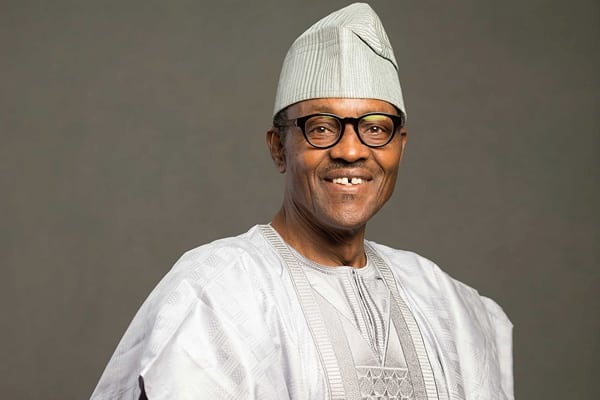
On CNN’s GPS show, the news network threw a bucket load of shade Nigeria’s way. In a quiz style format, they posed the question: The head of state from which country has not set foot in his homeland for two months? The options were laid out, Nigeria one of them, the rest like good shade was implied. President Buhari’s absence, formerly our private shame is finally getting an international dragging a faux pas this bad deserves.
But when we thought the excitement was dying down and we could go back to lamenting the our absent president in peace, something else came up. NaijaBet, one of the many sports betting companies in the country decided to add to its betting roster, a slot dedicated to betting on date of our absentee President’s eventual return. Options were given- the first week of August, the second week, the third or even the fourth. Already, the numbers are coming in and Nigerians are having a good laugh on Twitter.
Today's News Headline : "Villa staff put on standby for Buhari’s return'' 🤓
For the past few weeks, the news has been clogged back to back with criticisms and counter-attacks over the President’s prolonged stay in the U.K. From the indefensible decision to keep the Presidential jet in London to the inter-house sport parade style visits of party leaders and governors, the entire situation has become a national and international P.R. disaster, the kind you’d only expect from a B-grade Nollywood director.
For as long as this lasts, it is likely that NaijaBet could make a killing out of President Buhari’s absence. For the rest of us, knowing when our president will come home to us now feels a bit like waiting for fish to fall from the sky. The government certainly isn’t helping us get through this so let’s do it the only way we know how: with lots of jokes and memes.
Featured Image Credit: Twitter/@naijabet
A journalist by training, Ehimenim is a lover of history, good books and Game of Thrones. For her, the real world is just another Westeros and everyone is a supporting character. Read and repeat is her motto. Give her a wave on Twitter@EAgweh.
Singer Lady Donli has spent the better part of her musical career trying to distill the essence of being a young, non-conformist woman in a culture that is simultaneously progressive and incredibly restrictive as regards women. This was the main thrust of her EP ‘Wallflower’ with the questioning “Alice“. Since getting all of that off her chest, she has mellowed somewhat, expanding her oeuvre to include themes that all young Nigerian millennials, at home and in the diaspora can find resonance with. This new era has blessed us with songs like “Ice-cream“ and “Kashe Ni” which is finally getting the video treatment.
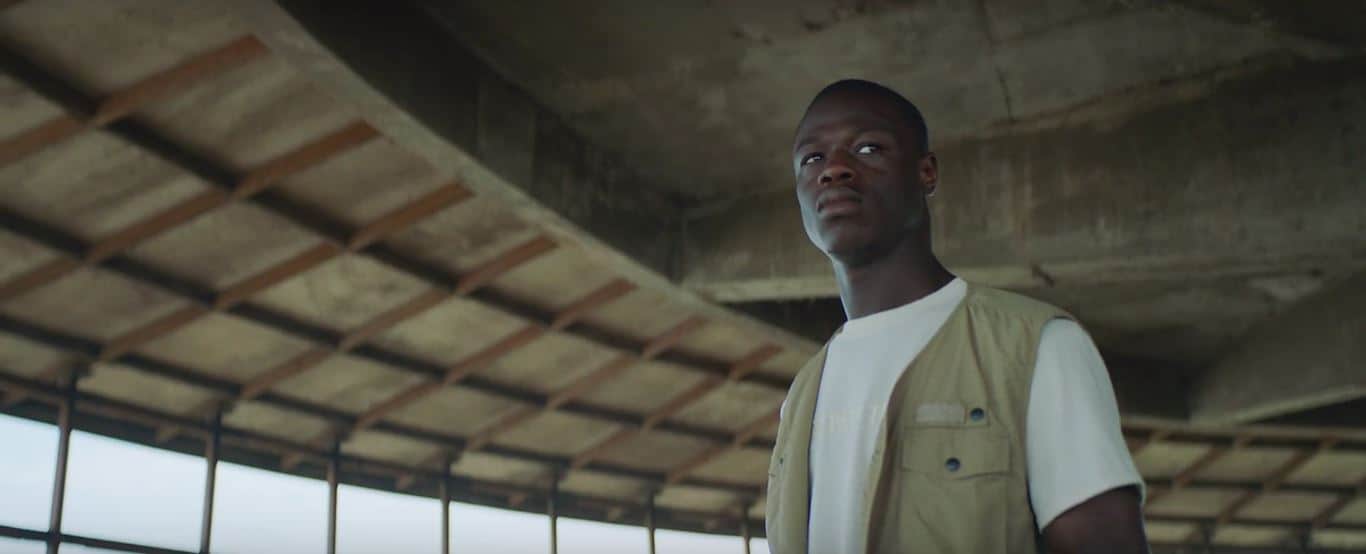
“Kashe Ni” (which is Hausa for Kill me) was produced by TOBAY of 80 Sounds, is part epistolary and part love song, revolving around the song’s protagonists struggle with conformity and self image and an expressive documentation of the first throes of love with an unnamed lover. and the video was shot in an abandoned fuel station in White City London by emerging director FP. This is Donli’s first official music video and it will be followed by the video of “Ice Cream” in a couple weeks.
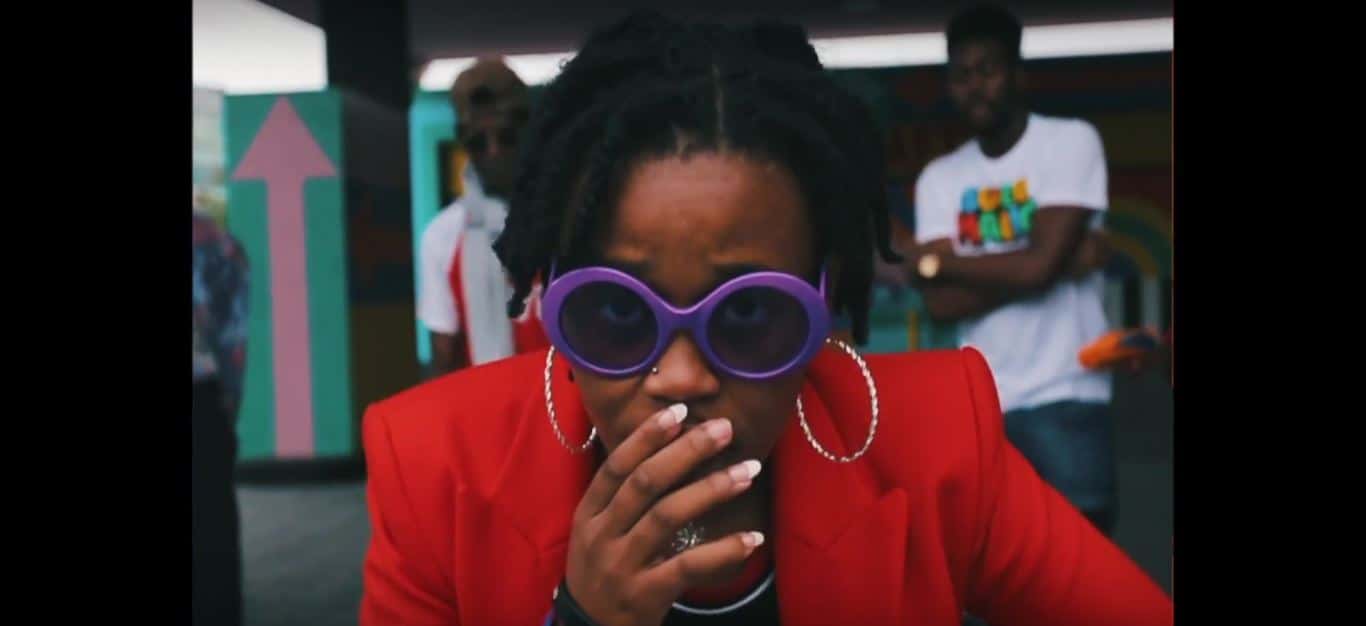
With cameos from some of Donli’s creative circle in London including blogger Uzzzoma who plays her tentative love interest, Fasina and Dj Femo, Donli sets the tone for her visual image, embracing androgyny in a loose red pantsuit and white sneakers. The video only slightly teases a male love interest in the first scene then abandons the thread for shot of Donli with her crew, vibing. They mill around in abandoned spaces, present but listless, channelling the ennui of the overstimulated millennial. It is pretty interesting stuff.
Check out the video and BTS shots below.
Featured Image Credits: YouTube/Lady Donli
You are meeting Debola at a strange time in his life. He wandered into a dream and lost his way back. Tweet at him@debola_abimbolu
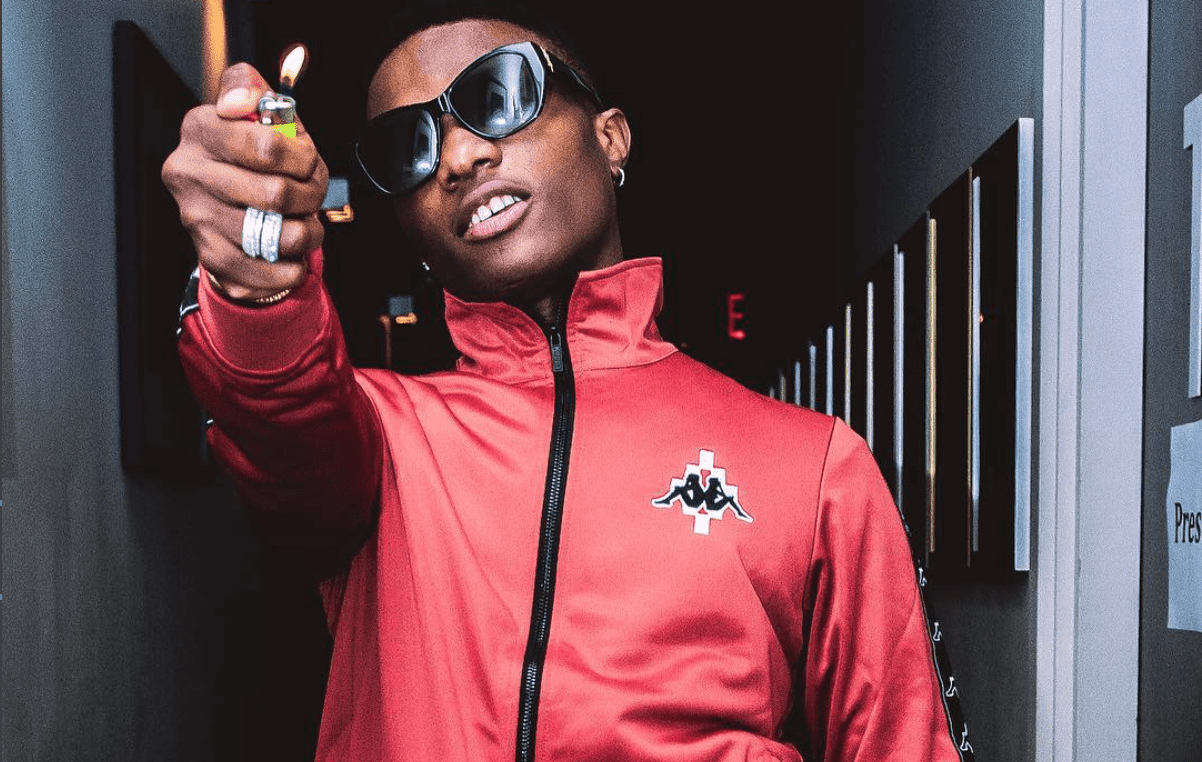
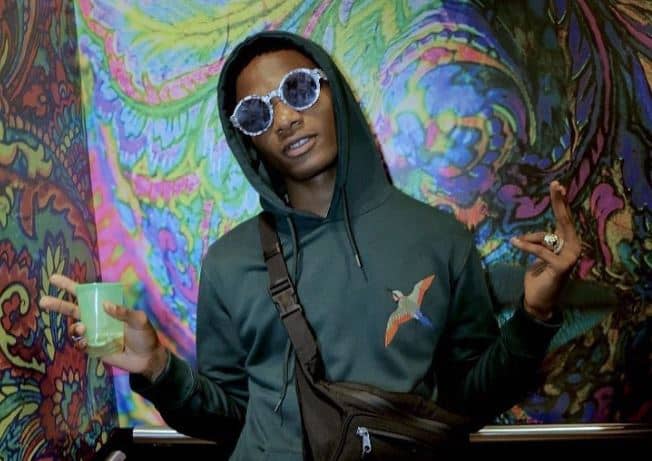
It’s been just four days since Masterkraft and Wizkid released new single, “Medicine” and the two have released another titled “Odoo”, they may have more up their sleeves to be released but since the songs are being dropped in bits, we’ll have them that way too. Similar to “Medicine”, “Odoo” is an Afrobeat track also told on love.
Their latest work is easily passable as a continuation of the first. On both tracks, Wizkid pleads for a love so intense. He may just “shutdown” without his lover he sings on “Oodo” and on “Medicine” he chants to his lover “O my darling I need your love o, I g’egbu mmadu” an Igbo phrase that translates to ‘You can kill a person’. Here Wizkid tells a loose narrative of love that meets he and Masterkraft’s desire to make music for the dance floor.
These two recent tracks listens like a come back for Wizkid whose Sounds From The Other SideAlbum has been constantly critiqued for leaning too heavily on music styles outside of Afrobeats to appeal to an international audience. To even make a bolder statement after ceaselessly releasing two tracks back to back, both are of the Afrobeat genre –highlighted boldly on Starboymusic on soundcloud, so no contention– in lyricism and production.
Here is “Oodo”, as Masterkraft describes in a social media post,fresh and hot. Enjoy below!
Featured Image Credit: Instagram/@Wizkidayo
Fisayo is a journalist who thinks writing is hard and reading too. But her journey somewhere reveals, words are like pawns on chessboard when writing. She wants to see, create and share with the world, experience & communicate these experiences. Tweet at her @fisvyo
After his album, God Over Everything peaked at #4 on the Billboard Reggae Charts, Patoranking’s career has kept an upwards trajectory. Sarkodie who was among the guest features on the record breaking album has teamed up with the singer for a new single of his own, “Many Girls (Kankpe)”. And if the success of their previous collaboration, “No Kissing” is anything to go by, we may have another smash hit on our hands.
The afrobeat instruments on “Many Girls (Kankpe)” is credited to Monie Beatz who mashes up a mid-tempo drum riff with loud horns, a familiar piano harmony from from Phil Collins’ “Another Day In Paradise” and an electric bass line. The infectious beat and Patoranking’s vocals take front and center but there’s enough room for all the pieces that make up the song—a few bars from Sarkodie ending with his classic “Obidi Pon Bidi”, layered feminine vocals that listens like a call and response with Patoranking and the romantic narrative that is the bread and butter of pop music.
Sarkodie and Patoranking are among the biggest names in African music. And though we can always trust their collaborations to take traction in the mainstream, there’s actually a lot to like about “Many Girls (Kankpe)”. The bounce and bump of the beat and Patoranking’s mellow vocals rides on the same wavelength of “No Kissing”.
It’s been a year since Reekado Banks’ Spotlight debut but the Mavins singer has all but appeared on guest performances and released adjoining videos from the album.
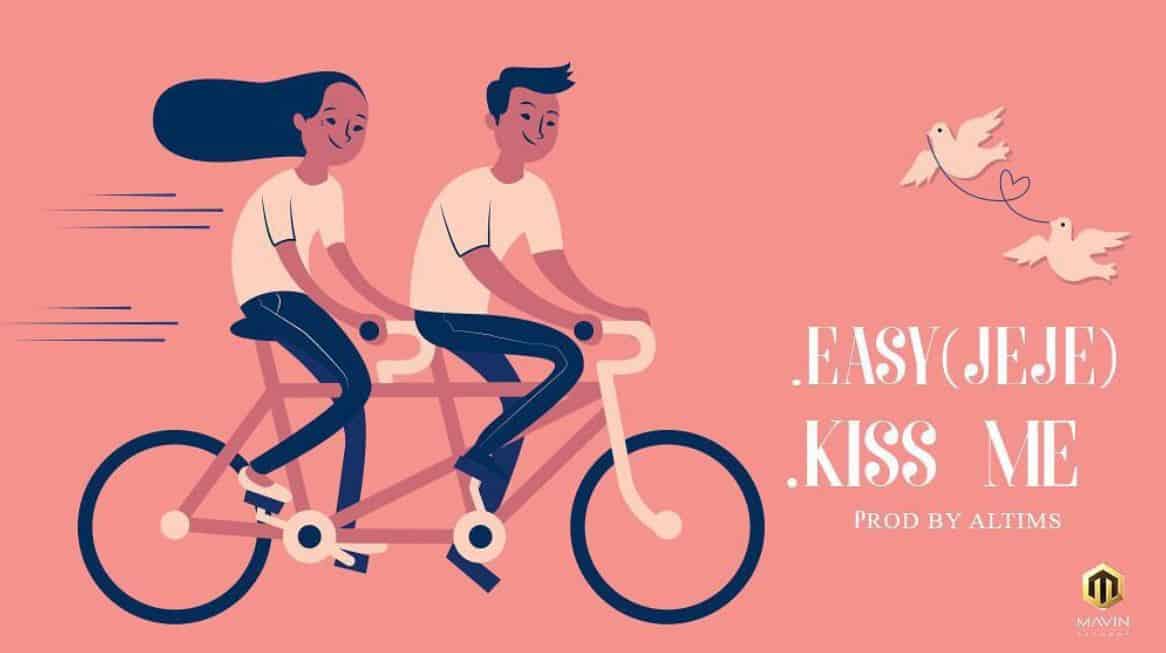
Releasing “Easy (Jeje)” and “Kiss Me”—two love songs—back to back, Reekado Banks shows an understanding of the music scene and the timelessness of the love music. Songs have been written about every topic imaginable, but the best ones—from swooning R&B ballads to contemporary club bangers—have been penned about the ups and downs of being in love.
“Kiss Me” has a mid-tempo bass guitar baseline and piano harmonies produced by Altims. Tin pan drums and horns are layered on top to add slow-dance features to the song that seems destined for couple’s first dance at wedding. Reekado Banks carries on the same dance theme in his lyrics; “Would You Dance One Time/ Baby Dance For Me”. And to further emphasize the party theme, Don Jazzy takes the backup vocals with light hearted and witty metaphors like “My Jamican Gbana/ My Tanzanian Vanessa/ My Nigerian Jollof”.
The second single, “Easy (Jeje)” is pacier than “Kiss Me” though the love theme remains. Altims also gets production credit for the synth harmonies rattling samples and drum riffs. Reekado Banks’ love story however takes a more serious turn as he quizzes his love interest; “Will You Marry Me Even Though I Met You Today”, but not serious enough to derail from the essence of the dance number. Because at the end of the day, he’s just trying to have a good time with his love, “Oya Baby Ko Ma Roll”.
Listen to these two new “gbedu wey dey burst brain”, “Easy (Jeje)” and “Kiss Me” below.
Featured Image Credits: Instagram/reekadobanks
You are meeting Debola at a strange time in his life. He wandered into a dream and lost his way back. Tweet at him@debola_abimbolu
C3, short for “Creative Content Conference”, is beginning a content revolution in Nigeria. Some already consider them to be the leading frontier of content Market in Nigeria, actually,”Nigeria’s First Content Market”. It’s easy for many to crown themselves ‘Firsts’ and ‘pioneers’, so you are probably wondering what the implication of this is. Well, just like MIPCOM or DISCOP that have built reputation internationally, as a gateway resource for film, television and digital content business for creatives in dynamic world regions, C3 are on a mission to connect TV networks, online distribution platforms with Content Creators and Production studios amongst local networks in Nigeria (their starting point).
The conference promises to be a memorable one for attendees. C3 has over 20 audio visual platforms (both web and traditional Tv) and over 30 content developers to source content from. They also have the support of the head legal controllers of the industry: the Nigerian Broadcasting Commission (NBC), Nigerian Film Cooperation (NFC) & African Creative Content Association (ACCA).
In their journey for this, C3 got their hands on some recent research the African Creative Association (ACCA) did. The results from their groundwork saw that over 65 percent of Nigeria (and Africa at large) actually have good quality content but unfortunately, also have no avenue to connect with the right platforms to distribute and monetise these projects. But you know it already, C3 is set to bring a solution.
And they begin this with their inaugural conference tomorrow, August 4th in Lagos. (see poster below for details). It’s unsurprising that the event will be holding in the country’s most commercial state, as Lagos is renowned as one of the most polarizing entertainment industries especially in music, movies and the emerging world of comics in Africa. Their next stop is in Accra, Ghana.
The masterminds behind C3 is Vortex Inc., a creative content company (and the body behind VEXPO) based in Africa, which exports African culture majorly through comics (illustrated content) and cartoons (animated content). As a media company Vortex Inc. believes it’s their responsibility to represent Africa in a positive light and show the beauty of its culture, environment and people.
A number of Media outlets and personalities will be participating. Spot us and spot them all below. One last bit, clickhere to register for the event. I’ll meet you there.
Media persons to be present as panellists include:
Niyi AkinmolayanDirector of the coming Wedding Party 2 and Founder of Anthill Studios (A Lagos based Animation Studio)
Matthew OkoduwaZonal Director NBC
TeclaContent Executive NTA
Stephanie Findlay of AFP Global and;
John Momah of Channels TV.
Fisayo is a journalist who thinks writing is hard and reading too. But her journey somewhere reveals, words are like pawns on chessboard when writing. She wants to see, create and share with the world, experience & communicate these experiences. Tweet at her @fisvyo
Chukwuma Okoye a famed meme-maker, was part of the second wave of millennial tweeters whose popularity rose as a result of inward facing impersonal jokes about African parents and millennial life. At peak of of his fame came viral replies and quotes from celebrities and many attempts to exploit his popularity for blog traffic, a comedy webshow and a T-Shirt line amonsgt other discontinued ventures. By the age of 18, Chukwuma controlled two accounts totaling a following of nearly thirty thousand people. He had a staggering level of unmeasured success and influence at his disposal, but even in a digital world, twenty-one year old Okoye is already aware fame does not come without a price even when its ‘just twitter’.
Okoye’s first encounter with the pervasive dangers of Twitter’s open timeline system came after some tweets from his account were uncovered to have been seemingly copied off similar posts by other people. Though Okoye recounts that he regrets the role he played in his own ordeal, he also vaguely mentions how other popular tweeters have been guilty of the same charge in the past to no consequence. But the penance he paid for what he assumed an inconsequential crime by far outweighed the sin. “At first i wasn’t bothered” he says, “Until my twitter handle became a top trend in Nigeria, with over twenty thousand people calling me names and insulting me for stealing tweets, even those I thought were my friends. I was like 18 at the time, and for the first time in my life, I realised what it meant to be depressed”
This was the beginning of a slippery slope for Okoye. Following the fall-out with seemingly adoring fans who shared, LOL’ed and LMAO’ed his tweets just weeks prior. Chukuwma came under intensified scrutiny for everything he posted on the internet. His turn from Afrocentric themed tweets to mainly posts with praises and pictures of Rihanna became the butt of banter about his loss of his African identity by trying to be American. Even a recent outing of another popular tweeter for stolen tweets brought Chukwuma back into the trending topic side bar. According to Okoye, some of the messages and comments aimed at him ranged from banal mob mentality chatter to suggestions that he be sought out and murdered for his content and style of tweeting.
Chukuma Okoye says he is no longer bothered by the constant bullying he faces on twitter , but his on-going experience is important in the current discourse seeking to explain Twitter’s dip in the stock market. This is reflective of Twitter’s shrinking number of users, causing the company’s executives scramble for solutions. Its shares per dollar fell from $26 to $17.75 in the time between when the IPO first launched to now. Investors are quickly losing faith as the public watches and speculates when the hammer would finally fall.
Last year, the media was flooded with a slew of think-pieces claiming Twitter had a problem. A troll problem. One it hasn’t been able to solve in a decade. The platform’s ‘public square’ format was an achievement in the time of its inception. Everyone could reach each other and with 1.3 billion accounts signed up, communication became a tale of mobile internet and screen tapping. The sharing was unhindered and the DMs open. It was an international communications dreamland rigged with a nicely wrapped bomb. What Twitter is now is in Buzzfeed’s description ‘a honeypot for assholes,’ and in its 11-year existence, Twitter has failed to put the foot down, effectively turning it into a troll wonderland. Where other sites had a means of self protection and insulation from negative influences, Twitter plays host to the world’s biggest cyber bullies and loudmouths who were ever ready by simply reading social cues and triggering victims in the most crude way possible.
This year saw an upward spike in the number of celebrities who either deleted their accounts or decided to step away from the bird just because they couldn’t deal with the trolls and bullies anymore. The most recent subtraction was Ed Sheeran, whose appearance on Game of Thrones sparked a trend of hateful tweets which led him to shut down his account. Even the ordinary users are leaving. The evidence is there in the drop from 328 million monthly active users to 317 million. It’s not the first and last time this will happen. Twitter’s toxic atmosphere has made it difficult for ‘free speech’ in a sense to exist on its own and thrive. The public nature of the site has effectively crippled it. Ease of access has destroyed whatever privacy and sanity a user might want to preserve online.
Twitter’s problem is in a word, abuse. Abuse of free speech, abuse of the platform, abuse of users. One way of picturing this is to imagine a person on a busy street who is suddenly being attacked for a random comment. That’s the reality of Twitter, a reality dealing with the mob mentality which exists in much of the web. The dangers of social media have always been inherent, but it is exaggerated and multiplied hundredfold on Twitter. Openness on twitter means the stalker-bug geo-tagging feature of Snapchat meets Tinder’s pick-up line based impersonal supermarket for sex, while managing to intensify self-consciousness like Instagram due to the public availability of posts to the rest of the world.
But the bane of Twitter -which encompasses the best of all the other sites- lies in its complacence and almost utter neglect of the people who use it. On each site exists the bigots, the loudmouths and other unsavories but they do not have the kind of hold on the public elsewhere that they possess on Twitter. Why do you think Donald Trump can get away with harassing a teenager online? Users most times have two options to protect themselves. Either they consciously curate their timelines, cutting out the crazies and insulating themselves from the madness or they leave their timelines as it is and just try to ignore and navigate the swamp. Either way, it’s a risk the user has to take; the easier alternative being to log out and delete. Twitter certainly doesn’t want that.
The coolness of Twitter is now in the past and the bird is on its way out. Twitter was once the baby of the revolution but it’s due to pop its clogs any day now. Unless the executives can find away out of the mess, Twitter will fizzle out and join MySpace in the back benches of tech history. The story of its consistent drop is even told in the forecasts. By 2020, Twitter might be seeing its new user additions dwindle to 3.6 million. It’s becoming harder to keep up with the other networks, all because of a failure to act. As it is, Twitter is testing various means of drawing users back including a subscription service and monetization through ads. Whether their escape hatches are working remains to be seen but the truth will always be that Twitter’s downward spiral isn’t over because of how the little the company is doing to make sure trolls don’t ruin good things for the rest of us.
Featured Image Credit: Debola Abimbolu/@debola_abimbolu
A journalist by training, Ehimenim is a lover of history, good books and Game of Thrones. For her, the real world is just another Westeros and everyone is a supporting character. Read and repeat is her motto. Give her a wave on Twitter@EAgweh.
Seeing Niniola perform on stage is one of the most exciting things you’ll ever see. When she moves, you are struck by her poise and that smile and her laugh. Part of what makes her an exhilarating performer is her stage presence. You can see the control, depth, ease and decisiveness. She is a wickedly talented performer who seems to be in one place and everywhere at the same time when she sings and delivers on complex dance routines. Everyone’s gaze remains locked. In that moment you are drawn into her kind of music and her personality. This is no doubt part of why Kobalt Music Group just offered her a publishing deal.
It’s hard to imagine that she who intensely knows how to move a crowd, is actually an introverted person. But for Niniola, the stage is a phase of extroversion and periods of intense introversion. Before “Ibadi”, “Shabba”, “Soke” and “Maradonna”, Niniola was that woman who stepped into a room and skulked in a corner fiddling with her phone, praying to stay unnoticed. Soon after she began performing to small audiences from the little band she had, she shed her skin and found herself.
But how does someone become so confident in a society where sex is a prohibited and restricted topic according to social and religious customs, in a society where women are constantly told to guard themselves and ascribe to certain values that are rooted in misogyny. Rather than fight this limiting conception, Niniola is seeking to even embrace her sexuality as a technique when she crafts her songs.
Niniola’s opus is “Maradona” a deceptive afro-house that explores some seriously heavy topics by folding them into deftly chosen colloquial Yoruba metaphors. She doesn’t shy away from being ballsy and underscoring the raunchiness that makes the track what it is. A striking feature of Niniola’s music is the way she uses Yoruba for very lush lyricism, “I love to sing in Yoruba cause I think Yoruba is very cool —and [I sing in] English Language as well— but I’ll rather sing in Yoruba because that’s my mother tongue. And people love the Yoruba Language as well. It just sounds really…Sweet”, she says.
As an artist, Niniola pulls off that rare feat of transporting audiences of different strata, into the same paradise. Well, it was how it happened at her last performance in Fela’s shrine. Maybe it’s her flair for speaking and singing in Yoruba during her performances, without a blemish on her spoken English —thus her message is communicated across all peoples— or maybe it’s just the euphoria her Afro-house style of music brings. To talk of Niniola’s genre of music without emphasis on other genres she tends towards, like RnB and traditional country music, would be skewering important bits of her music or reducing her artistry to one narrow detail.
She is deft behind the microphone as she is in the mixing booth. By taking a hands-on approach to sound design, she is able to control how tight and well-made each and every sound and instrument she sings along with while in studio is. She likes the studio to be quiet and void of any distraction, this way, she is able to extract as much story, emotions and directions from the beat. Next, she pens down some of her melodies and lyrics before crafting the actual arrangement of the song to make it whole so she ensures it has a general theme and the verse connects to the pre-chorus and then the chorus. But anchoring all of this is God, whose steady guidance melds all of these parts into a very pretty whole. She says definitively, “God comes first, I pray to him to give me divine inspiration to order my steps and take control of the session in general, so at the end of the day, I have a beautiful song to present to my team and in turn, we present to the world, to listen to.”
In the years before Niniola became a mainstream artist, she studied music at home. As much work as it seems Niniola puts into making sure each part of her song is neatly woven, nothing about the song departs from who she is. She has learnt to be herself because that’s the only thing that matters —how an artist embraces herself. In effect, this is how her audience come to appreciate her cool on stage. Cheerfully, she says, “being cool is dancing, for instance my song “Gbese kan soke”, that’s being cool”. According to Niniola, “being cool as regards to my music, my style, and my creativity just means being comfortable in my own skin, me Niniola being able to communicate with people through my music, especially when I’m on stage performing and interacting before the audience”.
Niniola has proved she’s a force to reckon with. She is breaking into the mainstream of Nigerian music, while there’s certainly an evolution taking place, we’re well overdue for that debut album and on it, Niniola will get to the essence of what she’s been chiseling at.
Featured Image Credit: Native
Fisayo is a journalist who thinks writing is hard and reading too. But her journey somewhere reveals, words are like pawns on chessboard when writing. She wants to see, create and share with the world, experience & communicate these experiences. Tweet at her @fisvyo
J Hus has been on tour since the release of his Common Sense debut album, and he will remain on the road till December. The roadman days often reminisced in his music have come and gone but not much has changed. Even “Spirit” , his latest video is J Hus in Ghana doing some soul searching, seeking motivation from a town where men and women work with their hands, and toil hard for daily living.
The video for “Spirit” is shot in Jamestown, a small village on the coast of Ghana renown for fishing and boxing. J Hus partakes in the recreational activities of the community as he performs the 12th track on the Common Sense album to highlight the positive spirit of the community. The encouraging narrative of the song, “Came From The Death, It’s Only Right That I ball” against the backdrop of cheerful face in the solemn video allows the song take a more realistic outlook.
As J Hus journeys through the village, the people in the community are shown working and keeping themselves busy with games till it gets dark. The array of shots of the various hustles—including spiritual prayers, bike riders, card games and more ends at at night when J Hus picks up a mic and entertains in front of pleased adoring fans.
Watch J Hus’ video of “Spirit” below.
Featured Image Credits: YouTube/JHusVEVO
You are meeting Debola at a strange time in his life. He wandered into a dream and lost his way back. Tweet at him@debola_abimbolu
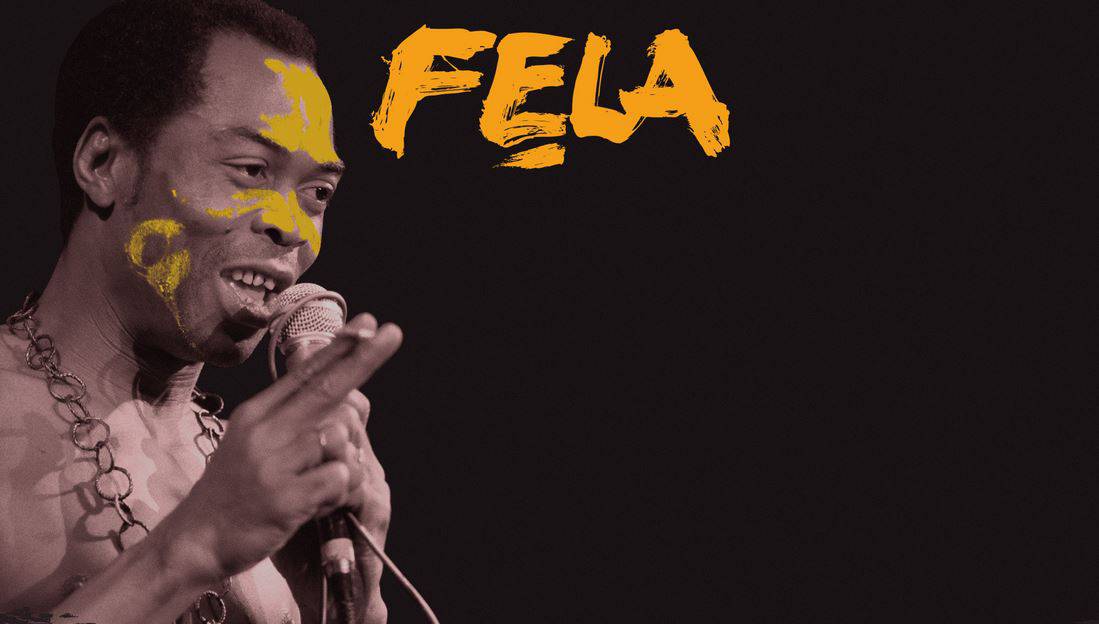
Fela left behind a legacy so inspiring that many (including his own children) have tried to follow in his footsteps. For a man with such an outsize personality and career, Fela’s legacy often gets summed up to a few outstanding exploits; his internationally recognized Afrobeat genre, his borderline fetish for a modernized version of traditional Nigeria aesthetics and his remarkable and very public disdain of Nigeria’s deeply flawed political system during his lifetime. While all these character traits were neatly condensed into a personality the whole country could support, all of Fela’s singular traits can be traced back to one thing, his unwavering activism. Fela was the consummate activist and it is time we celebrated that part of Abami Eda.
The bells are still chiming for Bobi Wine after his recent election into office made him the first musician in his country to get elected as a Member of Parliament. But the Ugandan parliamentarian isn’t the first artist who has nursed political ambition. Fela was among the first artists in Africa to speak openly against the political climate and though his political ambition may have peaked following his imprisonment under Buhari’s military regime, he was born into a politically aware family that inspired his passion for politics.
His father was the first president of the Nigerian Teacher’s Union and his mother (Funmilayo Ransome-Kuti) was the first woman to drive a car and a suffragette who led a successful fight for women’s right to vote in Nigeria. His politically conscious immediate family inspired a distrust of the oppressive military system of government and that got heightened when he traveled to London for studies. Fela got introduced to Malcolm X’s writings and James Brown’s music and his life and perhaps African music never remained the same again.
After abandoning his original career path to study music, Fela was introduced to Ghanaian highlife and the high-life tradition of chronicling history through music. But he didn’t like how passive the ethos of the music was. He then sought to create his own, a genre that employed many of the sonic qualities of high-life but allowed for impassioned political musings that Fela was finding himself increasingly drawn to. He returned to Nigeria, formed his first band and began to make enjoyable but highly political music. It seemed enough for him at the time, to channel the pain of the people, fresh from the civil war. But he had no idea, the fight was about to come very personal to him. He was arrested in 1974 for “corruption of minors and possession of cannabis” and served jail time for eleven months where for the first time in his sheltered life, Anikulapo saw the real Nigeria.
Fela ditched the Ransome in his name (which had western origins) and adopted Anikulapo which means “I have death in my pocket”. As part of his protests against the Nigerian government Fela renamed “African Shrine”, his club in Surulere where he performed all his live shows, “Kalakuta Republic”, declaring an independent republic and announcing himself as its leader. This was considered treason by the then government. Ironically, the name “Kalakuta” was inspired by a prison cell in America named Calcutta which helped emphasize Fela’s message of the global black struggle for liberation. He became the activist for oppressed citizens of the world through his music which contained strong anti-dictatorship messages like “Expensive Shit” and “International Thief Thief”—he never had any good thing to say about the military government.
Fela ran his compound at 14A Agege Motor Road in Surulere like a chief would and soon, the nearby Abalti barracks began to worry that he was undermining their authority. The tension reached it’s fever peak in 1977 when the Republic was burnt down in an attack that resulted in the loss of Fela’s mother life. This didn’t deter his ambition and after moving the Shrine to it’s current location in Ikeja, he continued his defiance of the government by releasing best-selling, provocatively titled records such as “Zombie” and “Coffin for the Head of State”.
He eventually formed a political party, Movement of People, a platform under which he sought to contest the 1979 presidential elections but wasn’t allowed to. The party was discontinued while Fela remains remembered for his good deeds of speaking against the ruling corrupt elite and his confidence in the face of overwhelming pressure. But Fela’s shattered political ambition may as well be a blessing in disguise since it spares him the burden of being affiliated with a system he spoke ill against.
Whether Fela could have been a good political leader is at this point nothing more than philosophical projection based on his personality. He was reckless and made rash and questionable decisions, traits that never bode well in a potential leader. His legacy remains as valid as it is today because of the position of opposition he played in Nigeria’s oppressive society. But one can’t help but wonder what Nigeria would look like today if Fela had taken the mantle way back in 1979.
Featured Image Credits: Web/fela.net
You are meeting Debola at a strange time in his life. He wandered into a dream and lost his way back. Tweet at him@debola_abimbolu
If there’s anything to pick from the success of mumble rappers, it’s the fact that good music remains lovable even with seemingly indecipherable lyrics. Migos’ “Versace” may be responsible for the heightened mumble culture in rap today but their style of lyricism also resonates in Boyewa’s releases. The singer who has been known to defy genre barriers has released a new single, “Blood Is On D Flo Demo” with classic R&B instrumentals.
His penchant for utilizing the sounds from his mouths as part of the instrumentals as he mumbles his words over decidedly catchy beats stands him out of the cluster of mumble artist. On “Blood On D Flo Demo”, he sings over a carpet of comforting electronic guitar harmonies backed only by laid back yet hard-kicking drum pattern. The guitar baseline and audio accessorizing on his vocals leads Boyewa to tag the single as “electronic” on his Soundcloud. But the ambient and soothing melodies he already perfected a year ago with his vocals on “Fada” remains familiar.
While most of the song’s lyrics are hard to make out, “Blood On D Flo. Demo” listens like it’s playing from a jukebox from the 80’s and does nothing to help with coherence. The substandard quality of the recording however creates a nostalgic atmosphere for a classic R&B number. The audio quality doesn’t improve before distinct emotions start to show as Boyewa belts an serving of melodious lyrics over a layer of cheering echoes.
Though we can’t deny that there’s a certain charm in understanding every word from a song’s lyrics, Boyewa more than makes up for it with replay value. “Blood On D Flo. Demo” is so soothing, it’s almost hypnotic. Listen to it below.
Featured Image Credits: Soundcloud/Boyewa
You are meeting Debola at a strange time in his life. He wandered into a dream and lost his way back. Tweet at him@debola_abimbolu
Off Patoranking’s acclaimed God Over Everything 2016 Album (Which turned 1 yesterday, August 1st) is “This Kind Love” an Afro-carribean jam featuring the artist whose recent music releases has been largely influenced by the genre, Wizkid. “This Kind Love” has been a jam on our playlists for the longest time and it’s taken forever for Patoranking to release visuals for it. This is presumably because the two have had projects on their plates back to back and Wizkid is barely even in the country. The two scarcely appear in the song’s video too, except for a poster of them being pasted by their alias.
Patoranking has now been on some other shit teasing and releasing new music and videos back to back (not features). We still have his video for “Hale Hale”, released last week, on replay and the man has 2 new ones for us already –the second is “Mama Aboyo” featuring Olamide. While this second video is a leak –hasn’t been officially released to Patoranking’s vevo account and neither has he made mention of it so far, we’ll speak of “This Kind Love”.
Shot by Clarence Peters, “This Kind Love” is set in Jamaica. The video takes off with young replicas of the artists who don outfits similar to what we’ve seen Wizkid and Patoranking wear. But this is besides the video’s point. Each shot takes us on a cautionary tale, explicitly telling the world to say no to domestic violence and yes to treating people (predominantly your spouse and lover) well. It wouldn’t be a first from Patoranking whose sleeper hit “No Kissing Baby” hints on a similar notion too.
We’ve seen artist make the turn to more socially conscious themes recently, Orezi’s “Cooking Pot” release is one in a number, where we saw him brilliantly channel Fela to talk sex abuse, rape and consent. For Patoranking, even when he expertly makes dancehall music, he still has a strong message to tell.
Here is Patoranking’s “This Kind Love” produced by longtime Wizkid associate, Sarz. Have a go at it below.
Featured Image Credit: Youtube/PatorankingVevo
Fisayo is a journalist who thinks writing is hard and reading too. But her journey somewhere reveals, words are like pawns on chessboard when writing. She wants to see, create and share with the world, experience & communicate these experiences. Tweet at her @fisvyo
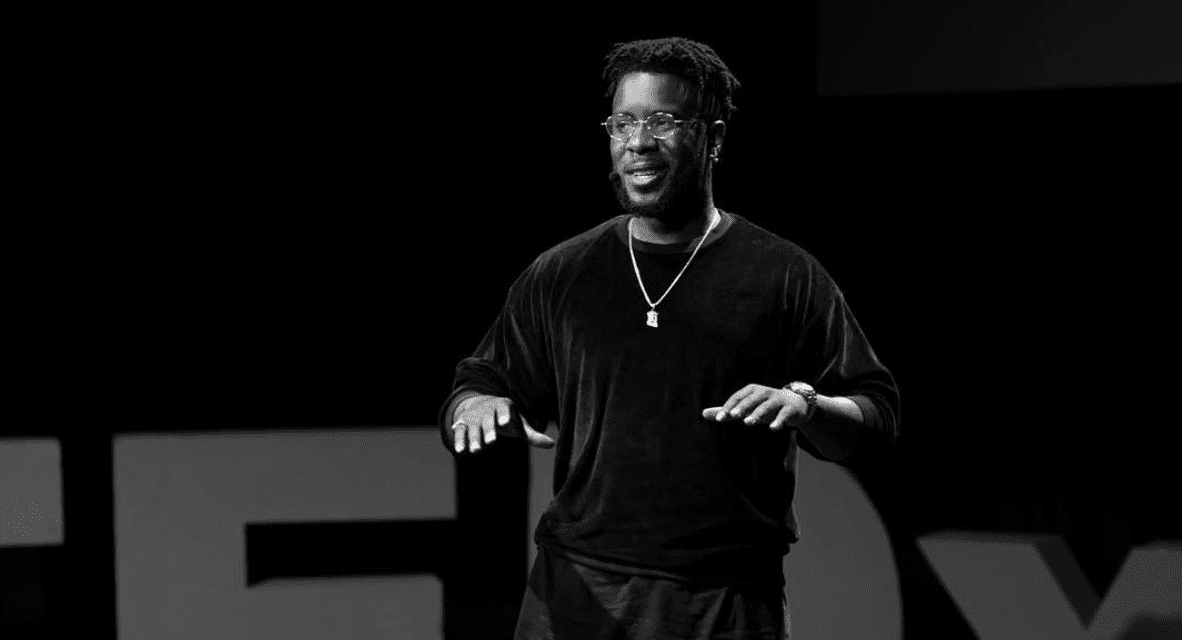
Maleek Berry recently added motivational speaking to his list of qualities at a recent TEDx event in Peckham, London. The independent event hosted by the community of Peckham boasted a line of speakers, mostly of Nigerian origin. The video for Maleek Berry’s talk was published today.
Sporting an all black outfit and nervousness, Maleek Berry broke down his journey from a toddler who enjoyed Michael Toddler to the hit-making mogul he is today. Each layer to his story detailed his experiences from his contact with music and his life on the way to stardom. Laughing in between pauses, the audience got to know Maleek Berry the person not just the artist.
To cap it off, he finished in classic motivational speaker style with a mantra: Find your truth. Short and to the point, it was an appeal to whoever was listening to chase their dreams and find themselves before it’s too late. He also made other points in this line but it was all in a day’s work for the newly minted inspirational speaker.
Take a moment to watch Maleek Berry’s Talk on TEDxPeckham below.
Featured Image Credit: Instagram/@maleekberry
A journalist by training, Ehimenim is a lover of history, good books and Game of Thrones. For her, the real world is just another Westeros and everyone is a supporting character. Read and repeat is her motto. Give her a wave on Twitter@EAgweh.
Ric Hassani has found a way to embody his artistry and classic man style in a way that’ll draw you into his music. He uses his music to wander into the hearts of his fans and supporters, while he uses his image as the the typical African Gentleman —in no coincidence the title of his album debut too— he wants us to believe he is. Though his lyrics may be all you’ve heard before, The African Gentleman Ep generally fares fine. Off that Ep is “Only You”, which he has just released music video to.
The Adasa Cookey directed video for “Only You” is shot in two major locations, the bed room and a vegetation that follows Ric and his lover display love and affection for one another. We have a Ric Hassani pining for his lover compelling her to believe all that his heart wants is her, “You are the light in my day, when I seeu, I’ll be okay” he croons over piano, guitar and drum thrums. Like most of the songs off his upcoming Ep, they build apt atmosphere for weddings so it’s not hard to imagine “Only You” thrive on wedding playlists.
Ric Hassani’s The African Gentleman was set for pre-order for July 30th till his team at Riverland Records announced it’s been moved. Although a new date is yet to be communicated, changes were made “to enable us deliver a top quality album to our amazing and wonderful fans”, they stated in an official instagram post.
While we wait for that, check out Ric Hassani’s music video for “Only You” below.
Featured Image Credit: Instagram/@richassani
Fisayo is a journalist who thinks writing is hard and reading too. But her journey somewhere reveals, words are like pawns on chessboard when writing. She wants to see, create and share with the world, experience & communicate these experiences. Tweet at her @fisvyo
Davina already showed her aptitude with writing on her debut EP and guest features where she melds lithely songwriting with inspiring spoken word poetry. Her debut tape as an artist, Love To A Mortal however showcases other traits: masterful production, smart arrangements and a willingness to follow melody and tune above and beyond genre or format. “Silence (Father Have Mercy”) and “F.S.L.S”, two of the pre-released singles from the project featured an infusion of ska-rocksteady genre on the former, alongside classic 90’s R&B/Soul sounds on the latter, “Juju”, another single off the album is a recursion of modern Afropop.
Love To A Mortal is filled with soft and tender songs of unity and self-love. At a time when the rhetoric churned from the mini-complexes of pop stars and social media micro-celebrities alike is ever aggressive and often unforgiving, Davina Oriakhi’s EP feels like escape.
Heart-warming R&B bears mark on opening track “It’s All About Love” this positive energy and joy sustains into second track, “These Feelings”, an even more uplifting track about love. She boldly declares her feelings for her partner and asks not to be judged because she’s only human, a strong message that resonates as one remembers sexual identities and inter-gender relationships are repressed in these parts of the world. The pacey drums, trumpets and piano riffs sum up to a very groovy jazz tune that allows Davina to emphasize her carefree happiness through a memorable scatting bridge.
The third track, “Temptation | Relapse” is perhaps the most provocative track and one of the two spoken word cuts that appear on the project. She speaks on two sides of addiction on the two part track—“Temptation” shows the attractive highs, while “Relapse” emphasizes the down and regrets—using spoken word poetry to address more serious themes like depression and struggling to forgive yourself on “Before The Silence” .
“W. S. T[Good Fight]” is an instant favorite with the laid back piano harmonies and soft drum riffs backed up by bass guitars. Davina encourages listeners to fight the good fight; “Freedom Don’t Come Easy. This Is What I’ve Learned/ If The Battle Ain’t Yours. My Question Burn”, “If You Haven’t Found The Time. Go The Extra Mile”—all presented without rage or aggression. The most defiant thing about the song is Davina’s defiance of the baser emotions during such audacious level-headed truth-speaking about spiritual warfare. With just the right amount of hippie vibe, she manages to keep the theme of spirit positivism going.
Listen to the Love To A Mortal EP by Davina Oriakhi below.
Featured Image Credit: Instagram/davinaoriakhi
You are meeting Debola at a strange time in his life. He wandered into a dream and lost his way back. Tweet at him@debola_abimbolu
Adekunle Gold has always known the path he wants to thread on without ever swaying. This way, a typical Adekunle gold music video is a tad vintage-y, his songs even when crafted lyrically in English, are highlighted with Yoruba cadences or phrases. An interview on EbonylifeTv’s The Spot 2 years ago brings to mind an Adekunle who recalls how he had painfully loathed the the opinion that his music and voice sound better in Yoruba than English. He felt offended. But rather than fighting it, Adekunle sought to embrace it and transcend it through his music. He has since released some of his song’s verses in Yoruba, a la “Orente” and “Pick up”. But he crafts mostly in English on “Call On Me”, his second official single of the year, which he now releases an official video to.
Directed by Moyo Oyeola and Peter Longno, the clip for “Call On Me” finds Adekunle Gold in search of a lady he’s found at a cafe. The video is pretty simple but enhanced by high definition shots of a vintage-esque setting that’s criss-crossed with creative shots framed with shadow lines of Adekunle singing. Everything comes together in full to give a breezy summer feel as a quintessential Adekunle adorns his printed wears and eventually finds the lady that previously caught his attention at a party in the video’s end.
Take a moment to watch Adekunle Gold’s video for “Call On Me” below.
Fisayo is a journalist who thinks writing is hard and reading too. But her journey somewhere reveals, words are like pawns on chessboard when writing. She wants to see, create and share with the world, experience & communicate these experiences. Tweet at her @fisvyo
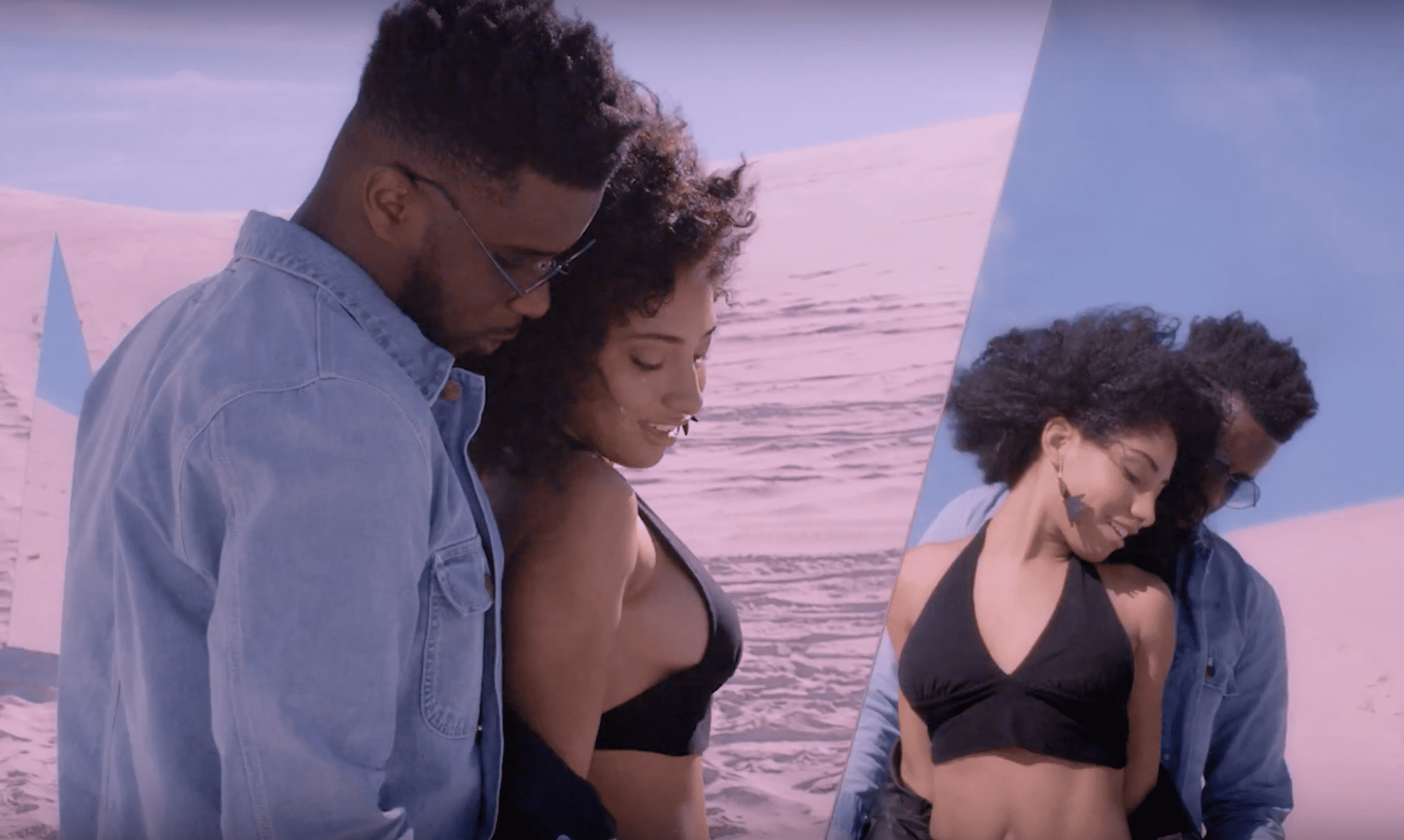
You ever sat in a room in the blues immersing yourself in thought of a lover who you’ve hurt or who’s hurt you? If this has ever happened to you, then you can relate with Maleek and his lover in his new video for “Been Calling”.
On “Been Calling”, Maleek is broken and yearning for his lover who’s pining for him as well. She decides to go to Berry’s Room, a quasi-futuristic place where people go to relive past hot times, the old romance, in an attempt to feel warm with one’s own lover or whatever you want to see. The concept feels inspired by an episode of Black Mirror.
When the lover is out, the warm she feels in that world isn’t there anymore. What happens next after reliving such memories is you come out feeling guiltier than before.
Meji Alabi directs the video, lots and lots of silhouettes and pastel shades. We see the actions in black and orange just like we see the lovers in happy and sad times. Everything comes together with Malek’s production in a way that may make you even forget that the song is actually melancholy.
Have a look at it below.
Featured Image Credit: Youtube/Maleek Berry “Been Calling”
Fisayo is a journalist who thinks writing is hard and reading too. But her journey somewhere reveals, words are like pawns on chessboard when writing. She wants to see, create and share with the world, experience & communicate these experiences. Tweet at her @fisvyo
Daramola is really on some other shit in 2017. He’s put out a critically acclaimed album and an EP after that is both familiar to the average Nigerian but also entirely experimental. There’s a fire burning inside the man and he seems desperate to channel all that energy into his music, putting single after experimental single out, working his way through the genres while retaining that his distinct Yoruba influenced musicality. And as we’re writing this, he’s just upped and surprised us with yet another one, “Swim Float Drown”.
The first thing that jumps out at you on Daramola’s new single, is the sombre tone he deliberately cultivates. Flirtations with Kanye West’s My Beautiful Dark Twisted Fantasy era, bring a mix of noirish Gothic ambiance, bass chants and minor choral harmonies, but brought firmly into the present through electronic manipulation and synth accompaniments.
“Swim Float Drown“, is much darker than much of Daramola’s catalog, chronicling the fracturing of a relationship thanks to a self destructive protagonist seeking comfort everywhere but his lover. He name checks Norse mythology (Valhalla) and 90’s postpunk with the rapid fire, emo verses that build and build but never crescendo. But “Swim Float Drown” is at it’s most Kanye at its very end; big guns, auto-tuned sung monologue, despair in excelsis.
Who knew the dark could be so delightful.
Listen to “Swim Float Drown” here.
Featured Image Credit: Instagram/@itsdaramola
Edwin eats his rice and cabbages. Tweet at him@edgothboy
It’s a pleasure to hear Bridge spit one of his hardest verses since his LOS crew split up. After two passable performances (for a rapper of his calibre) on his two previous singles, “Calling” and “Needy” it seemed like he hadn’t quite gotten over the break up. His latest single featuring Zamir however reminds listeners what Bridge is good at: making gangsta rap records.
While his old singles were swamped with needless introspection on the costs of love lost, “Blood Money” weighs in on where he stands in the hip-hop game with catchy flow and confident delivery. The bouncy trap beat is glazed through with sombre haunting trumpet harmonies, lending the hard lyrics high cinema airs. The gore and grit in the beat also resonates on Bridge’s vocals such that his lyrics are emphasized, rather than drowned. Serving up twitter worthy lines like “Staring At The World, I Could Shed A Tear” and following it up with “But I Wouldn’t Cause It’s Real Life”, focusing on his words is almost as important the dialog in action movies.
Zamir’s verse is a lot more personal: “I Know The Role I Play”. He leaves a more prominent impression through his lyrics; “I Prepared The Table, So I Ate” and ensures that the message for “Blood Money” isn’t lost in a fury of humble brags and deep moral postulations.
Listen to Bridge and Zamir’s “Blood Money” below.
Featured Image Credits: Instagram/badbridgelos
You are meeting Debola at a strange time in his life. He wandered into a dream and lost his way back. Tweet at him@debola_abimbolu
The Wizkid we used to know can still be heard in the extensive catalog the Starboy has grown over the years, but one wonders how he would thrive on the mid-tempo sound Tekno and Runtown have popularised since last year. Perhaps this is why “Medicine” carries an inherently familiar texture within. With “Medicine”, There is no telling Wiz is leveraging his time back home to work with some of the earliest influences of his sound who have also been instrumental in the turn around of the Nigerian Afropop.
“Medicine” brings forth a traditional-Afropop Wizkid we haven’t seen in a minute, a reminder of just how multi-versed he has become since the turn of his global campaign.
Photography: Tyrone Bradley (courtesy of Red Bull NG)
This story originally appeared in NATIVE 001: The Birth Issue, May 2017.
The city of Lagos is home to over 20 million people. The streets are always busy, and rainy days can be quite warm. Dubbed ‘The centre of excellence’, there’s an aspirational spirit to Lagos very few cities possess. WAFFLESNCREAM (abbreviated to WAFF) is a skate brand with strong intentions – to challenge preconceived notions of urban youth in Lagos city.
The whole idea is the synthesis of different interests: skateboarding, BMX, fashion, art and music. It entails a group of people that have a passion for creativity in its different forms. The brand seeks to shed light on Lagos, the forgotten heroes, and forgotten heroes to be. WAFF celebrates authenticity and particularly embraces innovation; it embodies the purist approach to individual culture.
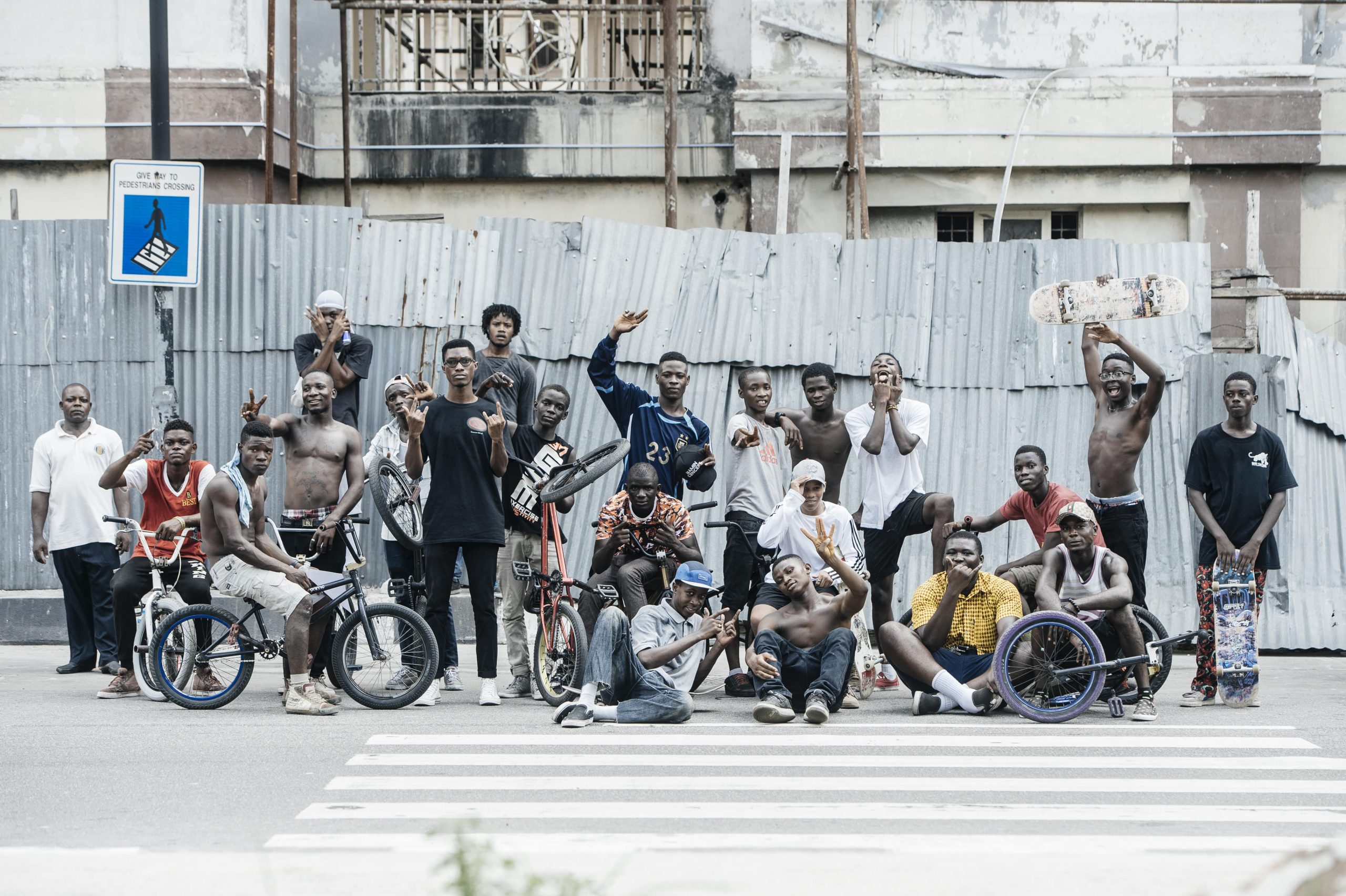
To get a good idea of what WAFF really is, you can’t speak to just one person: at its core it is a circle of friends that have become extended family – Nif, J, Elijah Zgambo, Kofo, Slawn, Onyedi, Leonard, Nuda, Jide, Fadekemi, AJ, Jordan Thomas, Dae, Millabad, Donnika, Thai Hibbert, Be, Saidi, Bai aka Fuzxy, Anthony Wildman aka Wildest, Omi, KC, and Eva, and that’s naming a handful. WAFF has become network of like minds scattered across three continents and counting. Here’s an image of ‘The Family’ from a past pop-up.
Humble Beginnings, History & Formation
Speaking to AJ, a skater who did videography on the first WAFF skate tour from Leeds to London we get first hand perspective of the brand’s humble beginnings, “WAFFLESNCREAM started in Leeds as a concept, no clothes, no ‘brand name’, just skating,” he explained via Facebook messenger. “Leeds was the first experiment, simply a vibe; there was no reference to home. But Leeds had its own unique style of skating and associated lifestyle we embodied. There was a mutual want to bring something different to skateboarding, and the Bello brothers [J and Nif, who started the brand] had strong ideas of how they would like to represent skateboarding. That brought them to their ‘we’re gonna get this’ moment. The filming and photography was approached with a focus on representing this pocket of life.” This process of organic growth happened again in Lusaka, Zambia when J teamed up with Elijah to help kick start a skate scene that is now in the thousands, before its latest reenactment in Lagos.
At the time of the first skate tour, the Bello Brothers (J and Nif) were between Reading and Leeds. The original Leeds skate crew had been about their antics as young skateboarders for some time, but J had to move away to Reading for univeristy. The actual concept of WAFFLESNCREAM as a brand was created while in Reading, long after the crew was birthed. J would design apparel while Skype-ing Nif, who made sure the merchandise got to the Leeds crew. And just like that, the first wave of WAFF had begun.
Shortly after, WAFF collaborated with Redbull to go on their premier skate tour, this is when AJ was brought on board to help document the trip. He credits his loyalty to friends to WAFF eventually becoming his family, “The reason I went to London with them was no one else in Leeds really knew about them and didn’t want to ‘dip their toe’ as it were, and trust them. So people saw it as just another early 2011 hype and an exploited idea. I stuck with them because the other riders [in the Leeds crew] were my close friends and eventually J became that also.”
The first skate tour was ten years ago, and since then seven collections have been released; the last release [titled ‘007’] being two years ago. It seems that for the past 2 years, WAFF has been in hibernation. After expanding the brand through regular apparel releases and pop-ups between London and Lagos, the family doubled down on their mission: to make skating a reality for the kids back “home”. When AJ is asked about the strides WAFF has taken, he tells the classic story of a diamond in the rough, “You know, people who used to snigger are now so surprised at their success and I just assumed it was only a matter of when. On the other hand, the last 10 years speak their own experience and validation. Besides this, the name can definitely turn someone’s interest by merit of being so unique. It happens so often when I crack out the ‘Crack is Wack’ [an adopted slogan used in their first collection] windbreaker and everyone’s like ‘yoooo’. Hahaha”.
More Than a Skate Brand
The last editorial from 007 was shot in 2015 on Elegushi beach in Lagos, this would serve as a preview of things to come. The core of the WAFF family are now based in Lagos and thus, the focus has shifted to a large extent. But there are still representatives across the UK, USA, Ghana and Zambia, who are still loyal to the house J built.
One of the key components of the brand of WAFFLESNCREAM is its ‘facelessness’. Founder and head honcho, J, is notoriously opposed to any sort of personal press or media angling to portray WAFF as one man’s passion project. And those that have met him know just how passionate he is about it: it has quite literally been his life for a decade now. This selflessness is refreshing in a country where everything seems to be about the individual rather than the collective: from the fashion world to the oftcriticised political realm. J’s personal detachment to the general public has allowed the brand to develop an identity that is independent of any individual figurehead, and it is reaping the benefits. Behind the scenes it’s a web of commitments where all the team members bring their strengths to the table. Nuda – a London based creative – has modelled and done creative direction for past editorials, Onyedi solely recorded footage for the last edit (‘Jide’), Slawn does graphic work and illustration for their coveted t-shirts, and Leonard does Illustration and photography. Most recently, Nif (who daylights as a product designer) is drawing up sketches for Lagos’ first skate park: the crowning achievement for the Bello brother.
When WAFF initially relocated to Lagos on a more permanent basis, J and the family brainstormed on ways to integrate into the underground culture of the city. Whilst this was their home, they were still seen by some as foreigners, coming from the UK. The family soon started sporadic underground music gatherings named VIBES. Established in 2015, VIBES was a perfect platform for WAFF to make their mark in Lagos. Bringing people from different walks of life into one room. Be it avid skaters, streetwear aficionados, or simply Lagosians tired of the repetitive bottle service clubs and overpriced bars – VIBES was a safe haven. At the time, WAFF had no office, staff or skaters but VIBES was a way to connect what would eventually become family through the universal language of music. Since its inception, there have been numerous, and usually spontaneous VIBES nights with selectors from the family [Dae, Omi and Fuzxy] all gracing the decks. Special guests such as Seun Kuti and M.I. Abaga have also been in attendance, with the events varying from the back garden of friends to art galleries. The VIBES DJs recently released a mix titled Indigenous Mix Vol. 1 – wonderfully hectic collection of tracks, which currently acts as the soundtrack to the flagship store. Harking back to the early noughties, the mix is only available in CD format, exclusively at the store in Lagos.
When talking about the familial ethos to work and skating, Slawn states, “Family is what the group considers itself to be. Because we know not everyone will accept and understand what we’re doing”. It comes as no surprise to find out the crew celebrates birthdays and engagements alike. Negative sentiment associated with the ‘otherness’ of emerging cultures stays true to skateboarding in Africa. Elijah [who helped set up the first Lusaka crew] has recounted tales of being arrested and locked up in Zambia on numerous occasions, in a previous conversation with HUCK Magazine.
Community Ties
The locals in the area around the store have mixed opinions on skateboarding. The vast majority of them are interacting with the sport for the first time and they are still trying to understand what it is exactly that these kids are doing. They mostly see skateboarding as an unnecessary hazard, but will cheer on when a skater’s ‘impossible’ stunts are landed – pun intended. For now, spectators are watching with an a gaze of amazement, but not quite admiration yet.
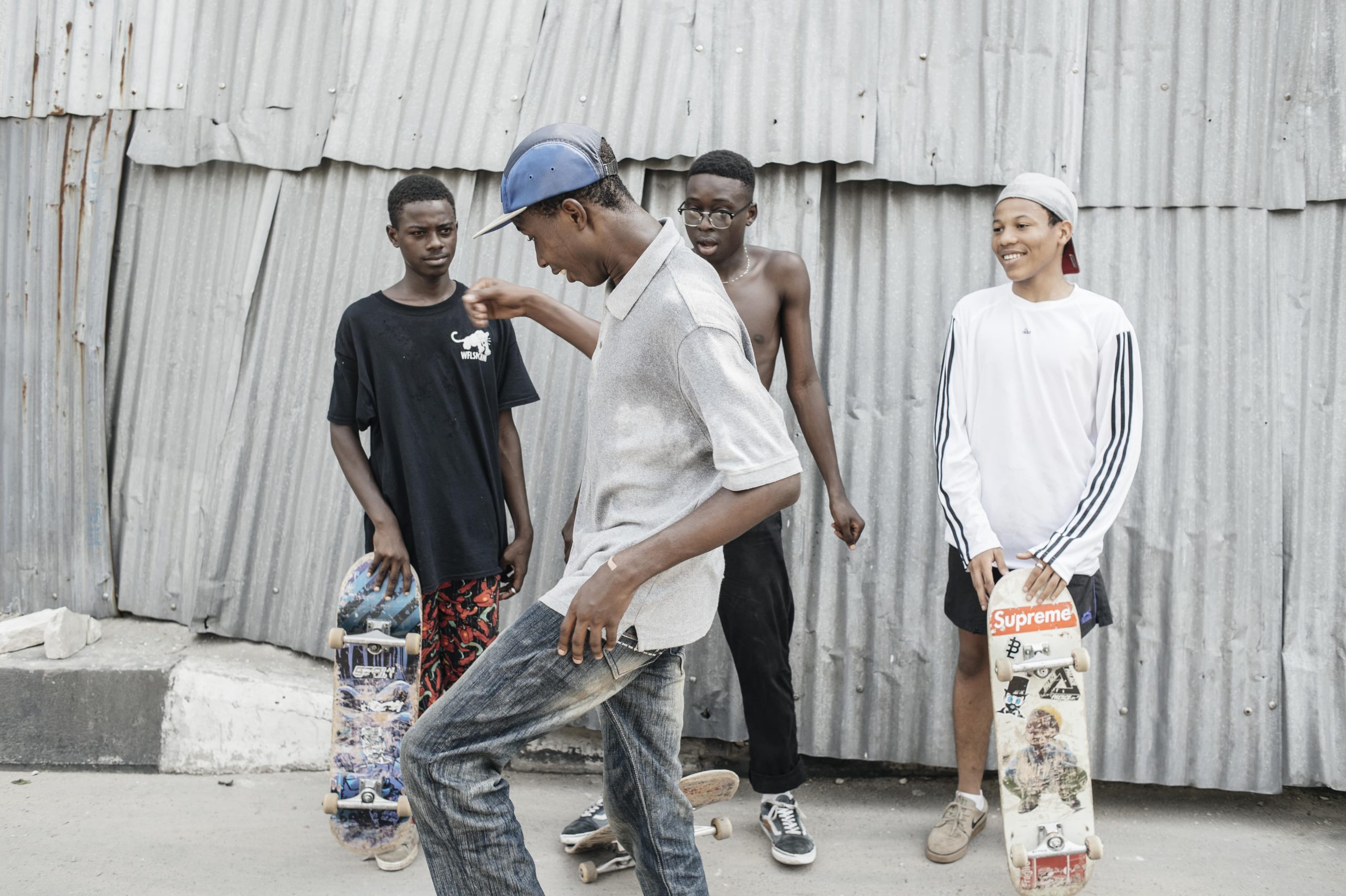
It takes a lot to be a skater in Lagos. Most of the city is flat so you haven’t the luxury of cruising down hills. It’s a lot of kicking and pushing to get around (this is the only way to pick up momentum when skateboarding). In addition to this, the best areas to skateboard are usually fenced off and/or have security guards. Sometimes skateboarding is wearily condoned at best, but this is without any future guarantees from proprietors of spaces the skaters frequent. Negotiating their way around to find the perfect mix of smooth ground and ‘skatable’ obstacles can be challenging, but definitely makes being able to skateboard even sweeter when they can. Everyone learns a trick from someone else, which means that the skate community is connected in a spiritual way too; it nurtures feelings of camaraderie and humility amongst the skaters. Leonard rants on the challenges of skating in Lagos, “You don’t have facilities, or even good roads. You don’t have people who have trained for years with skills you can catch up to, you just have to have a fuck you attitude towards these obstacles and keep grinding. Hopefully, someone picks up a trick from you, you learn from them, and the cycle continues.”
Leonard chimes in again with a frustrated but humorous tone, “Lagos is trying to be a megacity but the parks aren’t physically accessible, nobody’s making their way under a high speed bridge for r&r [a reference to the public parks built by the state in hard to reach areas]”. The WAFF crew is constantly on the lookout for interstitial spaces to skate. Sidewalks are few and far between outside the older parts of Lagos Island, which really comes down to city planning. When Nif and J break the news of a potential skate park, it’s met with as much excitement as relief.
Go Skate Day (an international skateboarding day) is being celebrated by the crew: on June 21st skate films will be screened all day at the skate shop and their second skate edit titled ‘Linda’ will be premiered. A half pipe being constructed for The 24th of June follows this; it’s surely a good time for the skaters in Lagos.
The Future of WAFF
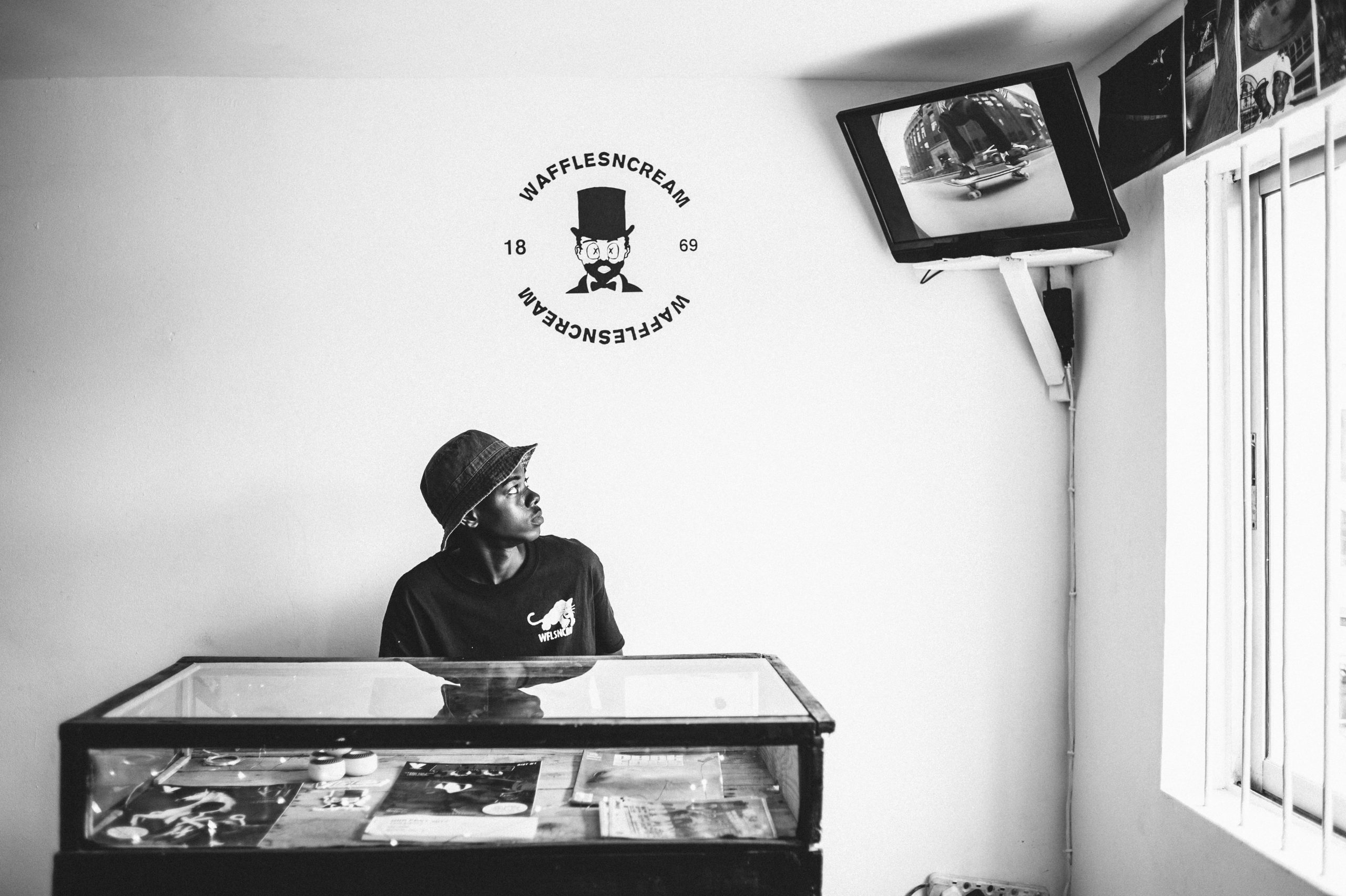
It has been an interesting past few years for WAFF, the brand now boasts West Africa’s premier skate shop in the shape of their flagship store in Victoria Island, Lagos which opened in January 2017. With intentions of making a global impact, it’s fitting to find that the shop’s address is 234 Muri Okunola Street (+234 being Nigeria’s international code). Senegal and Ghana are two other West African countries with a skateboarding scene but have no supplies. This makes the skate shop a regional game changer.
Despite their considerable strides, international distributors do not always believe that WAFF exists, sometimes going as far as asking for pictures of people buying apparel in-store to prove it’s legit. Kofo, the store manager recalls, “Every proposal feels like a 419 scam, with the ‘Nigerian Prince’ gag and all. The landlord still doesn’t understand what we do. People in public and even parents ask why we do ‘this thing’, they can’t make sense of it”. Outside of Nigeria, there is growing list of African countries with blossoming skate scenes, but only Zambia and South Africa boast skate shops. The possibilities for skateboarding on the African continent are still presenting themselves as the sport gains popularity in little pockets.
What the store means for Lagos is a cultural meeting point for skaters and creatives alike. After the soft launch there was a 5-week ‘Friends & Family’ exhibition featuring photography, illustrations, graffiti, paintings and music from different members of The Family. The space changes to suit its needs as it grows, while keeping the environment interesting and cosy. The original back office is now a production room. Recently the till was removed completely only to be replaced by a sofa. There’s a cat that roams around, but mainly just chills in the stock room.
In a country where the WAFF crew is more of an outsider pack, only the youth and future generations may enjoy the luxuries of a developed skateboarding scene aided by private and public support. The marginalised action sports enthusiasts – the skaters, bmx’ers, and more – may soon find themselves represented on an international stage. Skateboarding was just green-lit for the Tokyo 2020 Olympics and the intro to an epic underdog story has been penned. The question if Nigeria (or even Africa) will have its own Cool Runnings moment will surely be answered in due time. Other extreme sports in the region need a way to tell their own stories, but it’s the Wild West right now and there are no rules. WAFFLESNCREAM dually serves as a source of inspiration, and the benchmark to inspire other brands to come forth. London and New York are two cities that have seen skate brands revolutionise youth culture, and we can only hope Lagos is next. The infamously media-averse J finally speaks on the record when I ask him about his views on the future of skateboarding: “Africa is ready, let’s see what happens.”