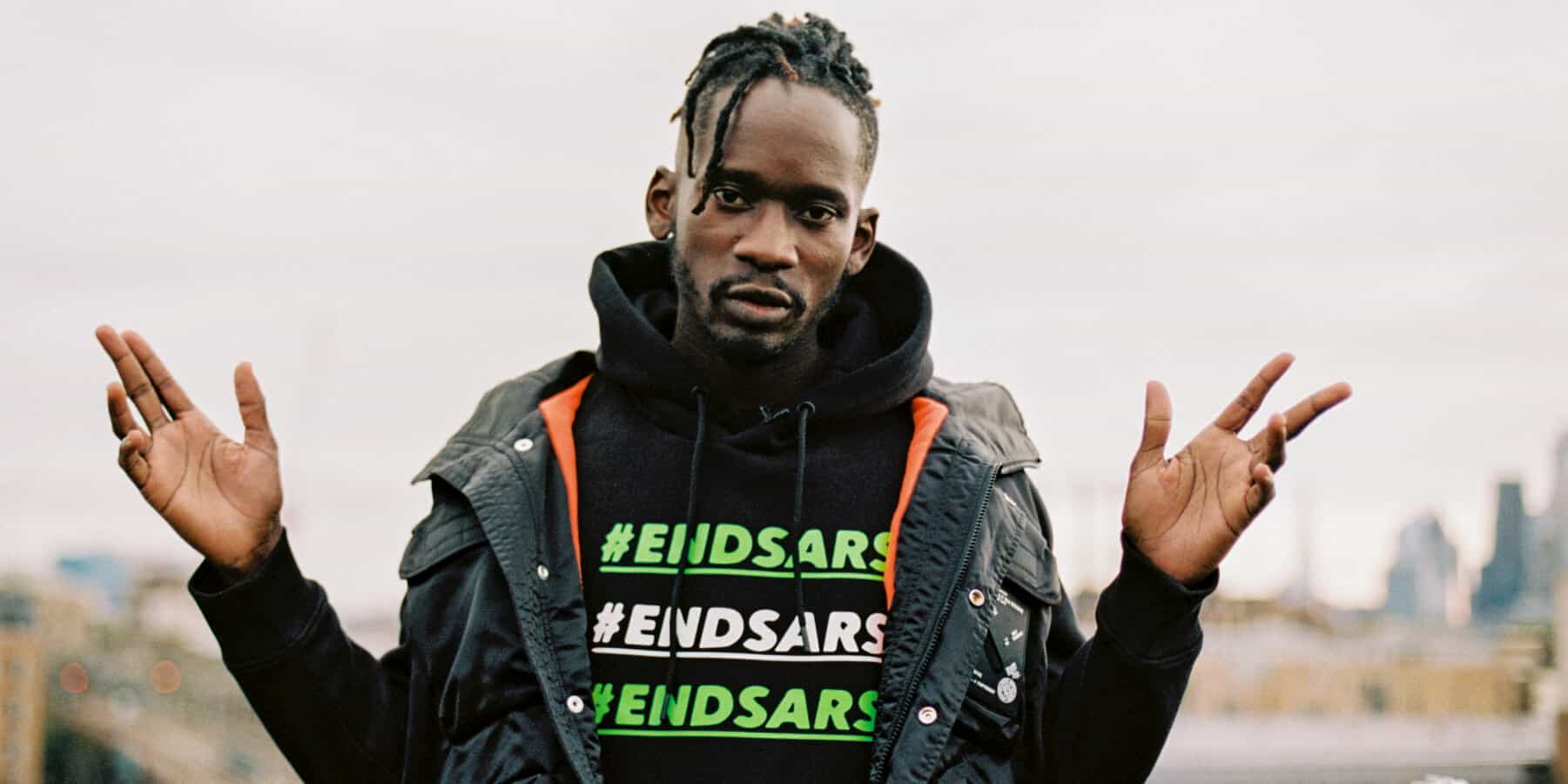
All the details of the #EndSARSProtests happening around the world

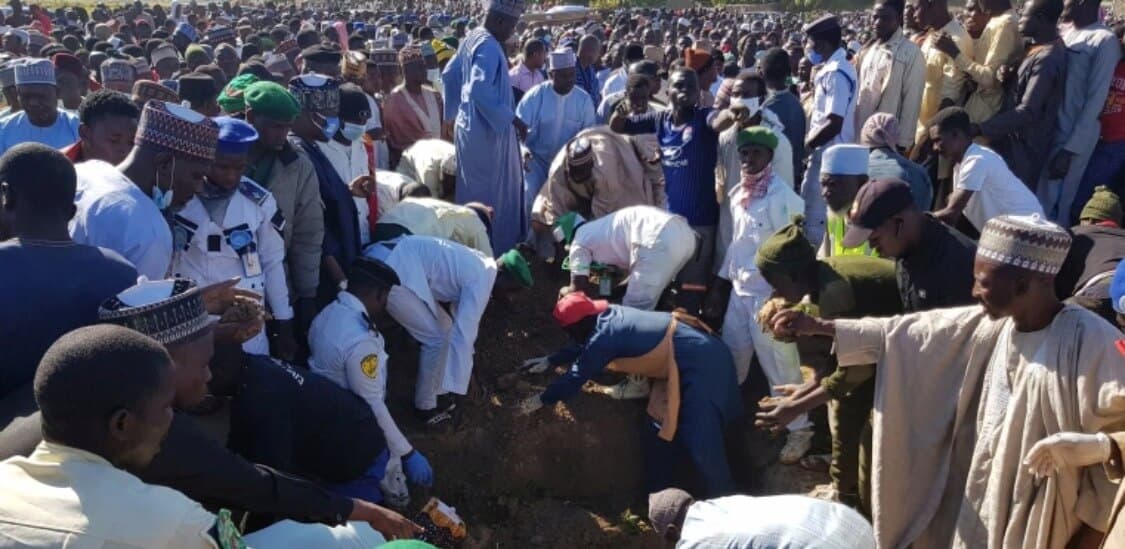
Nigerians are demanding an end to police brutality and the tyrannical reign of one of its anti-robbery units, SARS. Over the past week, protests have swept across the country in response to the unlawful killing of a young Nigerian citizen in Ughelli, Delta State. From Lagos to Imo State, Nigerians, particularly the youth are decisively and audaciously calling for the disbandment of SARS and for nationwide police reform to curtail further killings and harassment of its citizens.

The #EndSARS hashtag has resurfaced yet again, but this time around, our voices are being amplified all over the world, with Nigerians in the diaspora who have joined arms in disrupting the news cycle and causing enough noise on social media to gain the attention of the Nigerian government and international media houses. As many states in the nation enter their fourth day of protests, Nigerians in the diaspora are busy scheduling ways to peacefully iterate the efforts of their comrades in the country.

A journalist in the US, Adenike (@Deenike) has created a new hashtag #EndSARSProtestsDiaspora to simplify the process for Nigerians in the diaspora to source information on joining the protests happening in their cities. Here is what you need to know about the protests being held in Europe and America this weekend.

#EndSars

Protestors are being handled carelessly by law enforcers, so please be careful while you’re out. Before you find the protest nearest you, here are some handy tips for those who are going out to protest today:

South Africa

There are currently protests being held in Pretoria, South Africa in solidarity with the #EndSARS movement. You can find more information here.

London

There is a peaceful protest being held in London this Sunday in solidarity with Nigerians back at home speaking up against the injustices of SARS.

Atlanta

New York

A protest will be held in New York on Sunday at the Nigerian embassy in the city.

Those attending should please check out the protest routes below.

Washington D.C

Those in the DMV area, there will be a protest held in Washington D.C on Sunday.

Toronto/Ottawa

A protest is being held in Toronto today and more information will be updated shortly on the Ottawa protests.

Istanbul

Protests are being organised in Istanbul. Please state your interest here.

Berlin

A protest is being held in Berlin on Sunday.

Switzerland

A protest may be held on Tuesday, the 13th of October.

Ghana

A protest is being held in Ghana on Tuesday.

Lagos

There will be protests holding in Ajah, Surulere, TBS, Festac and Mowe on Sunday morning.

Nairobi

Epe

Minnesota

Ebonyi State

Ilorin

At the moment, more Nigerians in the diaspora are setting up peaceful protests through the right channels so please revisit this post for more updates this weekend. We’ll continue to update this story and share useful resources as we find them.

Featured image credits/HallmarkNews


Please share any useful information on the SARS Protests with her@tamimak_


ICYMI: The nation is united in our fight to #EndSARS

#ShutItAllDown: Namibians stand up against gender-based violence

In April earlier this year, a 22-year-old mother, Shannon Wasserfall went missing, a disappearance believed to be related to sexual and gender based violence (SGBV) – which is worryingly prolific in Namibia. Only last week, thanks to a tip to the Namibian police Wasserfall’s body was finally found, a whole six months after her disappearance.

For years, the Namibian police have been accused of negligence and nonchalance when it comes to the in investigation of  violent crime committed against women. News of Wasserfall’s death broke the camel’s back and on October 8, throughout the weekend so far, Namibians have gathered in the capital, Windhoek to protest femicide and other forms of SGBV, crying for the police to pay closer attention, more thorough investigation and prioritise these kinds of crimes.

Investigating Wasserfall’s death are top detectives in Namibia, and they have already detained a woman they believe to be a suspect in the murder. However, despite the quick response once she’d been found, it is still disappointing that it took so long for the police to act – if there was a more thorough investigation at the time Wasserfall went missing, could she still be alive today? That’s the question Namibians are grievously pondering as they protest through Windhoek police station, Zoo Park and the Ministry of Justice and parliament premises.

Because Wasserfall isn’t the only victim of police negligence when it comes to crime against women, her case is on in 176 cases of rape, domestic and gender-based violence crimes that have been reported to the Namibian police between March and September this year. Between January 2019 and June 2020 1,604 rape cases were reported, averaging at three rape cases being reported a day, in the year and a half. In any context this is troubling, but considering that the Namibian population is only just about 2.5 million people (under 1/3 of the population of London alone) this statistic is particularly harrowing.

The Namibian people have been calling for reform when it comes to attitudes towards SGBV in the country. Last week, prior to the discovery of Wassrfall’s body, the Namibian Minister of Gender Equality, Poverty Eradication and Social Welfare, Doreen Sioka came under fire for her graphic and insensitive description of an incident of child abuse. Disappointed that the Minister would be so callous in her language, Namibians continued to demand that more than just condemning sexual and gender based crimes, the minister should bring forth practical solutions that genuinely effect change, with Namibia’s Rally for Democracy and Progress leader, Mike Kavekotora saying,

“I am weary of the responsible person simply condemning the situation that he or she is responsible for. Who’s going to take the action to rectify that situation?”

At yesterday’s protest, young activist, Bertha Tobias, also resonated the same message, saying to the Minister and the government at large, “you are in a space where you occupy and office that directly mandates you to provide that substantive action going forward, we expect more than condemnation.

Earlier this year it was reported that the Association of Medical Students of Namibia (AMSNA), led by Tuwilika Nafuka, a fourth-year medical student, were petitioning to set up a digital sext offenders registry, called I Am Not Next Namibia or ‘Ianna’, to bring safety and security to Namibian communities.

“In 2015 there was an amendment to the Rape Act that allowed for the implementation of a sex offenders registry, the only question is when are they going to implement it?” Nafuka questioned. Successful in instating an SOR (can be found on the Ianna website here), Ianna are now petitioning that police clearance certificates include sexual-based crimes, as their omission means people convicted of rape, assault or other sexual-based crimes do not have to disclose their criminal record when applying for new jobs, not at schools, not at hospitals, not anywhere. The dangers of this are obvious.

Other activist groups fighting against SGBV in Namibia include the Slut Shame Movement, Me Too Namibia, and OutRight Namibia, and LGBTQIA+ advocacy group who partnered with Ianna to clearly define sexual-based crimes for same-sex partners, as the legal parameters tend to be heteronormative.

As people all over the world begin to stand up against the systems of oppression that purport to be for us, the establishments whose duty it is to protect us, yet fail to do so at every turn – even putting us in danger in some instances – it is important that we support every voice in every region in the revolution against the capitalist system that robs the 99% of their freedom and peace.

#EndSARS and #ShutItAllDown! 

Featured Image Credits: Feminist Rogue/Twitter


ICYMI: THE NATION IS UNITED IN OUR FIGHT TO #ENDSARS

How Alausa became the center of the #EndSarsProtests in Lagos

Over the weekend, the brewing condemnation of the heinous acts committed daily by the Special Anti-Robbery Squad (SARS) resulted in nationwide outcries from Nigerian citizens who rose up in arms to fight back against the reign of terror and fear that has been instilled by the police subset on the citizens it is meant to protect. Following the killing and death of a young man in Ughelli, Delta State, the years-old hashtag, #EndSars became a clarion call for Nigerian citizens, particularly for young Nigerians to once again share the atrocities and gross mistreatment they had suffered under the hands of these brutal enforcement agencies.

Musicians including Wizkid, Naira Marley, Olamide, WurlD, Runtown, Falz, and more, have all spoken out against the callous injustices being perpetrated all across the country. On Tuesday, Naira Marley was set to lead some of the nation’s youths willing to take to the streets and peacefully protest to call for the end of SARS but that shortly fell through when the rapper shared that he would be conducting an Instagram live with the Police Force PRO – DCP, Frank Mba. The major takeaways from the Instagram Live were that the complaints of the people had been heard loudly and clearly and swift and effective action would be taken to end the tyranny of the FSARS.

Following this, other musicians such Runtown and Falz went ahead to lead peaceful protests yesterday starting from Lekki. Concurrently, while this was going on, protests around the country sprouted up in Abuja, Delta, Ibadan, Owerri, and other locations around Lagos including those who besieged the police headquarters in Ikeja. Though the efforts made by Runtown, Falz, and a host of other public figures gained enough momentum to spur citizens into action by joining them on the streets and online, it was the efforts of a small group of 43 protesters who braved the cold night in Alausa last night in close proximity of the Lagos State House of Assembly that became the unsung heroes of the ongoing efforts to disband and end the reign of SARS on this country.

According to the reports on the Twitter account of an Anti-SARS page (@AntiSARsGeng), protesters had spoken with the Chief of Staff of Police earlier in the day informing him of their choice to take up residence in Alausa overnight, in order to gain an audience with the House of Assembly the following morning. What would follow in the next few hours, observed by many of us on social media, was careless treatment of the protestors who choose to fight for their country and stay overnight.

The Nigerian police opened fire and tear gas on the protesters, purposely destroying their tents and supplies and displacing those on grounds who only wished to involve in a peaceful protest. As the protesters weaned in numbers, the Nigerian police saw ample opportunity to intimidate the 43 brave Nigerians who remained in Alausa overnight. In the accounts of Anti-SARS Geng, they were beaten and bruised by police in the area who sought out to provoke them to retaliate. As the police pushed back against these protesters, these unarmed participants took to social media to document the atrocities being committed in Alausa seeing as local and national media were painfully quiet.

Under the #ALutaContinua hashtag, many young people who spent the night under these frightening conditions documented their story which involved having to sleep with mats and belongings on the floor after efforts from the police to seize their tents and restrict those willing to donate tents in the Alausa area. This morning, news reports coming from Alausa and environs showed that the scheduled meeting of the House of Assembly did take place this morning, with some protesters being granted entry into the meeting.

According to a Twitter thread by Funmi Oyatogun, the House of Assembly was reviewing a petition submitted yesterday against the FSARS police unit which requests the disbandment of SARS and an investigation into the defaulting officers who harass, extort, harm, and kill innocent citizens. According to the thread, the opinions of the speakers of the House were divided with some agreeing that the actions of the police unit were unjust and others claiming it was only a few bad eggs harming the image of SARS officials and would only require reform at the recruitment stage to curtail the employment of the ‘bad eggs’. Though the House of Assembly do not possess the power or jurisdiction to overthrow SARS, they do have the power to confer a resolution calling for the end of SARS and their meeting today showed a lack of promising results yet again.

Nonetheless, the protests continue into day 4 today in front of the House of Assembly. Nigerians are tired and will not be relenting on their courage and determination to bring the menace of the SARS unit. So far, the vast majority of the #EndSARS protests have been peaceful, as many people protesting are doing so just to see change happen within their lifetimes and to avenge the lives we have lost since the inception of SARS.

These are the brave 43 who stood their ground against the police yesterday:

The NATIVE team spoke to some protestors about their experiences at the protests and with SARS, and here’s what they had to say:


Bolaji

I was coming from a conference at Lekki. I live in Somolu and when I got to that Charly Boy stop they stopped me. They said I looked like a cultist cause I was wearing a black shirt and black trousers. They  asked to see my phone but I refused because I had sensitive company content in it. They threatened to shoot me. They said it wasn’t more than my girlfriend’s nudes that I had in my phone. They won’t let me go till I transferred 20k to one of the many accounts. 

FK

I’ve been here since before day break. Found out some people have been here since yesterday. We’ve been raising money so we can fund the medical bill for the lady that was shot.

Chidi

I was driving at night, on my way from an event where I was gave a speech. They initially accused me of speeding but I wasn’t and they were drunk. When I accused them of being drunk, they ask me to find something for them(bribe them). But i refused. They eventually let me go

Shina

They stopped me on the street, it was around Ojota. They asked me to give them my phone, so I did. We started to banter while one of them went through my phone. I had pictures I of some axe decor I saw at a restaurant(Spur), and as soon as they saw the picture their mood changed and they said I was a cultist. They told me to get into their van but I didn’t. I wouldn’t enter and I kept arguing for my innocence till I got emotional and started to cry. That was when told me I could go.

Farouk

They need to continue [the protest]. Why are they killing our children? 

Ademola

I don’t respect what the IG is saying. They have to end sars.

Jola

I was staying at a friend’s place when they broke into the house. They carried him and all the boys living in that apartment building. I was so scared but they left me alone and took all the boys. It was honestly traumatic. I’ve never seen that many guns.  I was scared they’d shoot and kill someone.


For more information on how to help out from home, please visit here.

Featured image credits/MrMacaroni


Tami is a staff writer at the NATIVE. Tweet at her any useful resources or leads on the #EndSARSProtests @tamimak_


ICYMI: Here are ways to support #EndSARS protesters and call for justice

A 1-Listen Review of Olamide’s ‘Carpe Diem’

Olamide’s 8th studio-album ‘Carpe Diem’ arrived today and as the title suggests, the veteran hitmaker is confidently seizing the moment with the new release, showcasing not only his ability to grow and adapt sonically with the changing times, but also his penchant for discovering some of the hottest talent brewing underground in Nigeria’s musical landscape. Fireboy DML to Bad Boy Timz, Bella Shmurda, producer P.Priime and more, one thing that stands out on the project is the range of young talent involved.

It’s surprising that an artist as culturally relevant through two decades of Nigerian music as Olamide would need to reveal a different side of himself, but his need to try on new stylistic choices is proof enough of how competitive the soundscape in Nigeria currently is. Currently, Nigerian music is awash with different styles and Olamide doesn’t box himself in one category, and thoroughout his career, he has shown that he can do the club-ready songs and also deliver the more mellow reflective tracks. Adding another string to his finely-tuned bow, ‘Carpe Diem’ shows Olamide’s continued reign as a street-hop legend and a musical savant with a shiny legacy who takes divergent sonic shifts, but stays true to his familiar tough-talking, afropop-infused hip-hop.

It’s a bold move, but one that’s fully welcome by his loyal following as the album is already topping Apple Music charts in the country. I’m excited to plug in and listen to this, and coupled with one of the sickest album covers I’ve seen this year, I know that this is going to be yet another banger in his arsenal.


View this post on Instagram


A post shared by Olamidé (@olamide) on

“Another Level”

This is an apt title for an album championed as revealing a different side of an artist and just like Burna Boy’s album opener “Level Up”, Olamide uses this mellow track to explain his present state of mind. He’s reminiscing about his past and the journey he’s been through to reach this point in his career. “I be big deal I fit ice water to the sea” is a very fitting bar for a song titled “New Level” and it’s clear that Olamide believes he’s at a godfather-type, untouchable level in the industry and he’s not wrong. This is solid.

“Green Light”

This was one of the promotional singles for the album and my thoughts on it still haven’t changed. Olamide is singing about receiving the “green light” (read as consent) from his love interest questioning why she is dulling him and not accepting his sexual advances. I guess every album needs that sexual song where the guy tries to convince the girl of his affection but I don’t know that these lyrics are for me ‘cause I’m just cringing. I can see how other people enjoy it though, I wish it didn’t come immediately after the strong opener but alas! there we have it.

“Infinity” featuring Omah Lay

Omah Lay is one of the greatest musical exports this year and I’m happy to see him getting his flowers in the industry. Now with two heavyweight co-signs from Wizkid and Olamide under his belt. This song is very thotty – permit my lack of a better word, but that’s exactly the word to surmise the whole song. Olamide is telling his love interest how much he wants a private rendezvous with her, with lyrics suggesting that if she performs well with the ‘banana’, she will be gifted a house in the opulent Banana Island. How charming… not lol. I think I’m just fed up with hearing men’s sexual desires please but besides that, Omah Lay’s vocals are top-notch on this. Will definitely revisit.

“Eru”

Another pre released single and perhaps the most enjoyable out of the two. This bouncy energetic number has already been making the rounds since its release a few months ago and it certainly hasn’t weaned in replay value since then. The best part of this song is when Olamide is in his zone on the pre-chorus chanting off inaudible catchy one-liners that will become sweet in your mouth when the alcohol is in the system. This is definitely a banger and one of my favorites on the project still.

“Triumphant” featuring Bella Shmurda

Pheelz is insane on the beat and both Olamide and Bella Shmurda are flexing their lyrical chops and incredible synergy. Bella Shmurda takes the reins from the beginning, delivering the melodies and cadence I have come to expect from him. To him, winning looks like being able to afford all the flashy designer items and the latest cars and I can’t even be mad at it. I too would like a custom Ferrari/Porsche. Olamide has always adopted a didactic outlook in his songs and this one is no different. He’s winning but reminding his fans that all that glitters is not gold. This is the type of song that you play every morning to kickstart your day. We all have the same 24 hours and that.

 “At Your Service”

Okay, now we’re talking. This is something different. The beat, the bounce, and even his lyrics. I think Olamide might be in love but if I was his girl, I wouldn’t be so quick to believe his honey-toned words. Niggas be lying. “Girl I’m not tryna make u a sidekick” must be a heartwarming message to hear from your rapper boyfriend, so someone somewhere must be very happy with this. In contrast to the other romantic/sensual songs, this one has more depth beyond the physical. He’s saying he doesn’t just want the sex but also a deeper connection and asks that she “stops messing with [his] head like E!” hm, Olamide Baddo (if you know, you know).

“Do Better”

The first thing that sounds out on this song is Young John’s production. It sounds very catchy and nursery rhyme-ish, but I’m guessing that’s to keep up with the fast-paced delivery that Olamide delivers on the song. Olamide does this thing with words where you have to go back and listen at least one more time, but for the sake of this first listen, I will say that the fervour of his pace and delivery is interesting enough for me to want to revisit this.

“Chimichanga”

Streets are already saying this might be the new slang, joining words like ‘Forza Speciale’ in the growing number of words from Nigerian pop culture that live rent-free in my head. Olamide is really rolling out the romantic numbers on this project and I’m getting more convinced that the veteran hitmaker may be in LOVE love this time and he’s making a point of showing it each chance he gets. I’m all in favour of him seizing the moment with his romantic interest and frankly, I would also like to chop a rapper’s money like chimichanga so let’s have it. The beat is also really nice and mellow. P.Priime deserves all the flowers for his impeccable work on this project. Definitely running this back.

“Shilalo” featuring Phyno

The songs have been short which is great for a full-length album, so it’s easy to get through the music quickly. I was most excited about this number because it has two legends on it and they never disappoint when they jump on a record together. Back in 2015, Phyno and Olamide showed that they are a formidable pairing when they released their joint project ‘2 Kings’ and their link-up on this number is no different. The subject matter is still about women and the effect they have on the men in their lives, see why I stan the girls. This woman really had an effect on Olamide cause he compares her to Queen Bey and that really is saying something (“You de baddest b like Mrs Carter”).

“Loading” featuring Bad Boy Timz

This is definitely a club banger and I’m living for it. Been excited for Bad Boy Timz since the “MJ” record, so its nice to see him on here showing off more of that irresistible charm. The song is premium enjoyment and Olamide and Timz toast to their vibrant lives, which sees them getting big bags, flexing, dancing, partying, and getting high. The way I see it, this will definitely get infinite replay value at the function with its catchy beat and I won’t be surprised if it’s a fan favourite.

“Unconditionally” featuring Peruzzi

Pretending I can’t see that Peruzzi is featured on this and focusing only on Olamide’s verse – fight me. That’s hard to do as he starts off this song so here we are. Olamide kicks this off in the sexiest way, his baritone sounds very sensual even though he’s singing about resorting to drugs for the pain his lover has caused him. Eish, that’s never a good sign. I would like to also beat this Kanye reference with a bat cause such an unnecessary comparison. I get the moaning about how desolate he is without her love, but it’s not for me.

“Plenty”

Saving the best for last, Pheelz is the mastermind behind the infectious beat on this song from the YBNL mentor and his ever promising mentee, Fireboy DML. This is a nice song to close off the album, they are both singing about the blessings in their life, it’s literally sentimental and well, plentiful. It’s nice but nothing really stuck with me other than the fact that they mentioned plenty an unhealthy amount of times on this record. New idea for a drinking game this week, drink each time someone says plenty on this song(LOOL). Okay, it’s over now.

Final Thoughts

All things being considered, ‘Carpe Diem’ is a solid project and a stark reminder that the afropop/rap landscape is always changing and with the boisterous 12-tracks on this project, Olamide continues to show why he will always have the clubs and streets on in a chokehold while giving listeners a newer more-refined side of him. Although the project has its fair share of filler tracks neatly packaged in the form of love songs, Olamide’s unbridled confidence in his abilities and that of the upcoming artists he takes under his wings marks the project’s sweet spot.

On his eight studio album, Olamide relishes in the joys of his decade-long reign in the music industry. Even though he’s trying on catchier sounds and working with underground acts, he can afford to switch it up this late in his career because of his consistency at delivering at the top of his game these past few years and with his omnivorous backlog of music, it’s not too far off from the Olamide we have come to know and love. With the majority of the album’s production done by the 18-year-old P.Priime, Olamide sits back and lets his tried-and-tested formula do the work and the result is an album that puts him in contention for one of the most influential voices in Nigerian mainstream pop culture.

Featured image credits/Olamide


Hell hath no fury like Tami. Tweet her your fave female rappers @tamimak_


ICYMI: Niniola is always evolving

NATIVE Premiere: Get an exclusive listen of Nova’s “Replay” here

Nigerian Ghanaian artist, Nova has showcased the depth of his sonic range since his NATIVE debut back in 2017. From adopting the jaded detachment of a rapper, and tapping into the EDM explosion of the time, he’s still found the time to shower his love interests with affection on his more slow-tempo love-struck numbers. It’s with this penchant for trying on new sonic choices, that he wishes to deliver more fire on his forthcoming project ‘S.T.A.Y II‘ – the sequel to last year’s S.T.A.Y (Still Think About You)’.

Ahead of the project release, he’s just shared a new romantic single title “Replay” which will serve as the project’s lead single upon its November 20 release. Produced and engineered by long-time collaborators, Doozybeatz and Bankyondbeatz, his latest offering, “Replay” is an honest confession of desire and affection to a failed love interest who he’s holding out hope that she will come back to him.

Over the mellow piano-led beat accentuated by subtle afropop melodies, Nova switches between rapping and singing as he captures the rollercoaster of emotions that come with modern-day relationships. “She told me run it back like replay/If you’re feeling lonely you can text me” he sings warmly over neo-soul ready strings, as he runs through an endless list of feelings that only he could evoke from her, in hopes that she will replay their private moments fondly and make a decision to return back to him.

Speaking on the new release, Nova shares:

“For people who have been listening to my music, ‘Replay’ captures the essence of Nova, and for listeners experiencing my sound for the first time, this is a great entry point to my ‘STAY’ series and the universe I’m creating with my music [and] I hope ‘that Replay’ serves as the perfect introduction to the new journey we’re taking with this next project”.

You can listen to “Replay” exclusively on the NATIVE below.

Featured image credits/Nova


Hell hath no fury like Tami. Tweet her your fave female rappers @tamimak_


ICYMI: Get to know Mannywellz through 6 essential tracks

Songs of the day: New music from Cracker Mallo and Fireboy DML, Laik, Zion Yande and more

We’ve had music through all the heartbreaking moments of 2020. Despite the ongoing pandemic, civil unrest, and the seemingly endless-barge of news about untimely deaths, musicians have continued to capture our collective pop consciousness with new songs that either reflects our present reality or provide an escape from it. We know it can be difficult to keep up with all the diverse streams of music so we’ve created this column to keep you, our readers, up to date with all the finest tunes coming out of Africa and the rest of the world. These are the songs you absolutely need to hear.

We started this week’s curation for Songs of the Day with the latest releases from celebrated Nigerian comic, Basketmouth, Native Tryne Alum, J Molley, Dunnie and Oxlade, Phyno, Supa Gaeta and more. Today, we’ve put together all the latest releases for our midweek curation for Songs of the Day. Cracker Mallo and Fireboy DML, Zion Yande, Mike World, Ghanaian singer, Herman Suede, Sierra-Leone singer, Laik and more have put out new music and you can enjoy them below. You’re welcome.

Cracker Mallo – “Wickedest Wyne” feat Fireboy DML

Cracker Mallo and Fireboy DML met at a writing camp organised by Ric Hasani in 2016. The two first realised the potential of their producer/artist combo when Fireboy DML’s “Jealous” became a hit and broke the YBNL singer into mainstream acclaim. Though Cracker Mallo has now started to build his catalogue as a performing artist with his singing performance on his recently released debut project, ‘A Friendly Introduction To Saund’, he still comfortable sitting back behind his production deck while other artists sing over his beats. On “Wickedest Wyne”, he’s reunited with Fireboy DML who performs sensual lyrics over the catchy Afropop beat produced by Cracker Mallo.

The newly released video for “Wickedest Wyne” sets up Fireboy DML and Cracker Mallo with beautiful women who serve make the romantic lyrics—“I don’t want to love nobody else but you”—more convincing. They are later captured having a photoshoot at a beach and the serene backdrop of the sand, water and the sky matches the breezy ambience of Cracker Mallo’s beat.

Herman Suede – “One By One”

17-year-old Ghanaian singer, Herman Suede just released a new single, “One By One”, a romantic bop that sounds like he’s ready to be a full-blown, stadium-sized pop-star. Given his accomplishments from last year when he had his first headlining concert and featured on Sarkodie’s ‘Black Love’, we should support the singer-songwriter on his journey. “One By One” proves his musical talent, as he performs a convincing romantic set that conveys emotions beyond his age.

Though most of his lyrics here are in English, Herman Suede also incorporates some Ga lines, which manage to express the depth of his affection. His lightweight melodies are made even more relaxing by his lyrics, “Lay your stress upon my shoulder/ never mind what your mama told ya”, while the catchy instrumental produced by S.Kool Beatz makes it fitting for dance floor audiences.

Zion Yande – “Cracks”

Zion Yande just released her new EP, ‘Free Was The Aim, Love Was The Game’, and it solidifies her reputation as an indie icon with a voice of an angel. Since she debuted in 2018, she has delivered the type of emotionally fuelled, soulful music that makes devoted fans out of listeners and with her latest project, she offers 5 tracks narrating her experience as she fiercely pursues love.

The standout track, “Cracks” finds her performing vulnerable lyrics as she’s addressing her elusive lover saying, “Don’t look too closely, you might see my crack/ Will you stay long enough to watch how I bloom”. Though “Cracks” is love song, Zion Yande’s sombre melodies and the orchestral harmonies she sings over allows her to capture the anxious feelings we sometimes have to deal with when in love. With her stellar performance, listeners can explore their vulnerable feelings and not feel ashamed of their honest reflections.

Mike World – “Jolly Rancher” Feat. Akuchi

Mike World’s last single, “Focus” put him among the emotive set of Nigerian songwriters as he delivered an emo-trap performance, expressing his unrequited feelings for his muse. For his latest single, “Jolly Rancher”, he switches up the pace as he embraces trap’s more cocky sentiments for a lightweight turn-up anthem. Here he teams up with previous collaborator, Akuchi who joins him to sing over the psychedelic trap beat produced by 007.

Both artists deliver melodic rap flows as they brag about their pussy and pill-popping lifestyles. Saying “I don’t do liquor, just roll up the weed/ gang gang in my blood streams”, “Jolly Ranches” is stacked with enough Instagram caption worthy lyrics to make you save the song in your phone.

Laik – “Stuck Inside”

After months of being locked down in quarantine, life is slowly going back to normal and it seems as though we can kind of go outside again. However, knowing the virus is still out there means we have to remain careful and some people have remained indoors, not prepared to take any risks. Sierra-Leone born artist, Laik has released a new single, “Stuck Inside”, a romantic single inspired by his quarantine experience and it’s soothing melodies can serve as the perfect soundtrack for anyone still social distancing from their love interest.

Singing “I really want dey your side/ when we see again it’s going down/ lemme just tell you that now”, he confesses his raunchy intentions charmingly. And with his catchy Caribbean fueled melodies, listeners are compelled to nod their heads along. “Stuck Inside” is the lead single from his coming EP, ‘Wanted’ and with his convincing performance on the single, we eagerly anticipate the tape’s release.

Featured Image Credits:


You Are Meeting Debola At A Strange Time In His Life. He Wandered Into A Dream And Lost His Way Back. Tweet At Him @Debola_abimbolu

ICYMI: HOT TAKES: PROTECTING WOMEN MEANS MORE THAN A HASHTAG

How the Liberian Movie Union are using piracy as their scapegoat

In August 2020, a task force from the Liberian Movie Union and Intellectual Property Office surrounded and stopped entry into numerous shops selling movies, seizing pirated movies and, in some instances, threatening violence if piracy was not stopped. Demanding that shops retailing movies must include Liberian films in their goods for sale, this incident was the latest in a series of local content drives by the Liberian Movie Union. In light of these events, Liberian-based writer, Dounard Bondo analyses why these actions might be redundant and where attention would be better served. 


International films have always existed within the Liberian market. Ubiquitous and omnipresent, before the turn of the millennium, Hollywood movies were, of course, a feature, as well as successful movies from around the continent too. The Liberian movie market has always been diverse and welcoming to foreign films, but it was specifically at the end of the Liberian civil war in 2003 that a significant increase of Nigerian and Ghanaian movies in Liberia was recorded, as the post-war period collided with the golden age of Nigerian and Ghanaian movies of the early 2000s. At that time, movies from Nigeria and Ghana had massive reach and popularity in the sub-region of West Africa, and on the continent as a whole. In addition to the impact of these movie industries, after the Liberian civil war, Liberian refugees who fled to Nigeria and Ghana during the war returned back home, their return helping to further the spread and dominance of Nigerian and Ghanaian movies on the Liberian market. 

With barely any time to digest the influx of Nigerian and Ghanaian cinema in the country, the mid-2000s saw the introduction of Mexican and Filipino movies on the Liberian market. Around the 2005 mark, telenovelas began dominating Liberian TV, joining the sect of the Nigerian movie industry commonly called the “Asaba market”, which places a particular emphasis on quantity. As the internet began to develop into the sprawling digital market we so often take for granted these days, both illegal and legal movies became even easier to access, leaving little room for domestic cinema to grow, let alone thrive. Currently, the Liberian movie market is dominated by Nigerian, Ghanaian Mexican, Pilipino and American movies. Liberian films have seen low consumer consumption and lesser reach on the Liberian market.

Liberia Movie Union/Facebook

The Liberian Movie Union (a union of filmmakers and actors in Liberia) – led by its president, Frank Artus, a Liberian actor and filmmaker who gained popularity through Liberian and Ghanaian movies – blame piracy and movie marketers for the low consumption of Liberian movies. The union’s stance is that pirated movies are saturating the market and that this saturation is a reason for the low consumption rate of legal Liberian movies, as well as the fact that – as perceived by the union themselves – some marketers do not retail Liberian movies. The union’s ultimate position is that, with these factors causing low consumption of Liberian films, Liberian filmmakers are being derived from earning from their craft.

Movies sold on the Liberian market are mostly sold on discs, sometimes multiple movies can be sold on one disc. A movie disc is sold for 100 Liberian dollars (50 cents), and while, typically, Liberian movies are sold per disc, when it comes to foreign films, it is common to see multiple foreign movies burnt onto one disc on the Liberian market. Of course, an average Liberian consumer would much rather purchase a disc containing multiple foreign movies, rather than pay the same price for a disc containing one Liberian movie, further pushing domestic movies out of the market. 

In 2019, the Liberian Movie Union (LIMU), Ministry of Information, Cultural Affairs and Tourism, and the Intellectual Property Office of Liberia put out a statement combating piracy. The statement banned the selling of discs with multiple movies, and held that pirated movies were illegal. The statement demanded that marketers phase out discs with movies by the second week of October 2019. This policy significantly affects foreign movies (especially, Nigerian, Ghanaian and Philipino), and it is being enforced in 2020.

Additionally, the statement reads “we encourage all marketers, distributors and those wanting to market films on the Liberian market both local and international must obtain Power of Attorney from the producer of the said film. Based on this, only legal films will be allowed on the market, beginning October 7, 2019”. 

Front Page Africa

There are concerns about the applicability of the statement, however. Many questions begin to arise surrounding the efficiency of the Ministry and the Intellectual Property Office’s new drive to dismantle the complex system of pirated movies that currently sustains the Liberian film market. 

Oftentimes, movies on the Liberian market pass through multiple distributors before reaching the marketers who sell it to the consumers, so when considering the above statement, it would be impracticable to demand that distributors and marketers obtain power of attorney before retailing multiple movies, because distributors and retailers down the supply chain would not be able to obtain power of attorney for the volume of movies they sell. If distributors were to demand a copy of the power of attorney from the wholesalers they buy movies from, they would find it difficult to verify the authenticity of the volume of documents they receive in relation to the volume of movies they sell. 

Additionally, the inflow and sale of foreign movies on the Liberian market is largely unregulated, thus curtailing the spread of piracy is a herculean task. When I spoke to a Liberian movie producer who chose to be anonymous, he said “while approval is required to put a Liberian Movie on the market, it is unclear as to whether foreign movies are subject to the same standards”. Furthermore, Retailers and distributors are not required to get a permit to sell movies. It then raises the question. What happens when a retailer buys pirated movies from a distributor? Would he be made to carry the loss of his goods when it is seized by the LIMU Taskforce?  

Liberia Movie Union/Facebook

Of course, piracy negatively affects the Liberian movie market, but Liberian filmmakers have several more dragons to slay on the road to increasing local consumption of Liberian movies. Prior to the war, Liberia had a thriving cinema culture, with multiple cinemas running in the country. Today, Silverbird cinemas is the only operating cinemas in Montserrado County, the most populous Liberian county and home of its capital city, Monrovia, alluding to the lack of distribution channels available to Liberian movies. Even at the few cinemas there are around the country, it is rare to see Liberian movies playing – in the last one year, no Liberian movie has been on the watch list of Silverbird cinemas – or even being shown on platforms like DSTV.

There are also concerns about the quality of Liberian movies. Most Liberian movies on the market are considered to be of lesser quality than their Nigerian and Ghanaian counterparts. With the internet facilitating easy access to movies online (both legal and illegal), foreign movies are more easily consumable – though it must be noted that with low internet penetration in the country, most Liberians in Liberia cannot afford to consume movies online. Still, for the Liberian diaspora, online streaming is a popular way of watching movies, and with virtually non-existent online databases for Liberian movies, and their absence from streaming giant, Netflix, it is all but impossible for these communities to access Liberian films. 

Credits: CNN

In conclusion, while the fight against piracy is pivotal to the growth of the Liberian movie industry, the low consumption rate of Liberian movies is more about consumer choice, quality of the movies produced, and the lack of structures within the Liberian movie industry to properly market and distribute domestically made movies. If these factors are not addressed, the removal of pirated foreign movies on the Liberian market still won’t have the desired effect on increasing local consumption – the Liberian film industry must address all its structural shortcomings in its entirety if they really want to see Liberian movies given their fair dues.

NB: Liberia Movie Union officials on ground at their headquarters refused to make a statement or answer questions. 


Dounard Bondo is a Liberian writer. His pieces cut across, politics, law and entertainment; and he also writes short stories. 


ICYMI: THE SIGNIFICANCE OF NO SIGNAL’S INDEPENDENCE DAY CLASH FOR BRITISH NIGERIANS

The significance of No Signal’s Independence Day clash for British Nigerians

In celebration of Independence Day, No Signal host a 10v10 clash paying homage to the hall party. To commemorate Nigerian Independence Day and Black History Month in the UK, British Nigerian DJ Femo explores the cultural significance of the Nigerian hall party for British-Nigerian millennials. 


Nigerians have been travelling to Her Majesty, The Queen’s United Kingdom en masse since before the 1960’s, with one of the foremost reasons beings for education. The greatest example, the legend himself, Fela Anikulapo-Kuti, who studied music at the renowned Trinity College of Music in London. This mass migration reached its height in the late 1980s with many young Nigerian’s fleeing the political and civil unrest plaguing the country due to the heavy-handed military rule in the post-war society. Facing serious insecurity, high rates of unemployment, violence, corruption and oppression, young Nigerians saw no choice but to seek asylum in the UK with the majority establishing communities all over London – Liverpool, Milton Keynes, Manchester– hoping to use their skills to join the workforce over here.

This resulted in settlements all around certain areas of London, that can almost be likened to Lagos, with their bustling populations of bleak people in places like Peckham, Thamesmead, Woolwich, Bow, Dalston, Lewisham and many more. Even with degrees and work experience from back home, countless Nigerian immigrants found themselves starting over with menial jobs that required little to no skills, working their way from the ground up as part of the working class, as cleaners, carers, bus/train drivers etc. Facing long hours of hard labour, made even more challenging due to proliferating workplace discrimination for being African, as well as the pressure of taking care of their families both in th UK and back in Nigeria, there was no doubt that this generation lived with perpetual stressors. Out of this lifestyle arose the need for places to gather as a community to attempt to recreate the feeling of being at home again. Two places would suffice, church and hall parties, though a distinction between the two could hardly be made as you could find God in the party as easily as you’d find a party in church.

These hall parties became a pillar of the Nigerian community in the UK, because they were a safe space to bond with family, friends, share food and customs from home free of judgement and scrutiny. These parties were one of the few places where Nigerians could wear their nationality like a badge of honour. There was no need to code-switch or be ashamed of the smell of your food, or extravagant native wear. In that hall, the kids roamed free as the smell of jollof rice wafted through the air, gele’s towered high and regal as money floated through the air to the sounds of live fuji/juju music which got the whole party moving. In those parties you were back home, even just for just a few hours.

Hall parties seemed endless, people would throw parties for just about anything; birthday parties, baby showers, baby-naming, baby-christening, graduations, weddings, send-off parties, church parties, celebration of life (funeral) parties, anniversaries, you name it – if anything significant happened within the community, Nigerians would find a way to make a party out of it. And of course, in true Nigerian fashion, hall parties became the pitch for some good-old-fashion competition. Who could sew the best asó-òké? Who could modify the latest dance in the freshest way? Who could spray the most money? Who could get the best band or DJ? It became more than chopping life, hall parties epitomised pride and dignity as a Nigerian. – a celebration of who we are, a break from this foreign society in which we had all found themselves in.

Hall Party culture is transcendent of even halls. These parties took place on the streets long before Nigerians ventured over to England. In Lagos Island, Surulere, Ikorodu, till today trips to these locales, on most days (outside the pandemic), witness any number of roads being blocked off by obnoxious parties taking place in the neighbourhood. Sister to the owambe culture Odunsi (The Engine) referenced in his opulent “star signs” video, there’s even a chase scene that’s disrupted by a sea of gele’s in director Kayode Kasum’s Netflix offering, Sugar Rush, that pays homage to this common occurrence.

Hall Party culture is so prevalent in West African society. Millennials that were raised in the hall grew up to tour the party format across the Midlands and London, incorporating this scene into the booming uni rave scene. In the era of #TheBigClash and other huge parties, Viva Hall Party was able to create a niche party atmosphere, setting themselves apart in a saturated market with a live band playing afrobeats music as well as their very own Viva Choir. These parties became so successful that it even crossed borders to the US in 2017 where they held one in Houston, Texas.

NS10v10 is the pandemic born clash that also celebrates the competitiveness subtly ingrained in hall party culture. Tonight’s battle is a battle of the bands, in a special Nigerian Independence NS10v10. Solek, one of the men taking centre stage, has been at the forefront of British Nigerian hall parties since as far back as 1995 according to his website. He plays a special blend of fuji/juju music that he often infuses with urban music such as pop, R&B, hip-hop and more. Going viral in 2017, after his groovy rendition of J Hus’ “Did You See” surfaced on twitter, he also earned attention with his cover of the popular “Man’s Not Hot” semi-parody freestyle. Even in spite of the global pandemic, he still managed to entertain fans using his Instagram Live platform, going viral once again with a fujified version of the popular Italian song “Bella Ciao”. Starting off a one man band and growing into a fully mobile band within 20 years, touring the UK is not easy, but Solek has managed to cultivate an active audience that spans across generations due to his ability to blend cultures and make them his own. His offering tonight will no doubt be more of this, and that’s what makes tonight’s clash such an enticing and significant one.


As for his competitor Mister Ologo, is good friends with Solek and is also a prominent member of the British-Nigerian community, performing in churches, restaurants, weddings and halls across the country. He’s also a frequent collaborator of upcoming UK Afrobeats artist, AdeJosh. Being considerably younger than WondaboySolek, he has a lot to prove tonight, but he is definitely a more than worthy contender.

The battle will be the usual 10 rounds and it went live on Youtube at 9pm, hosted by Reprezent Radio & No Signal’s Henrie and presenter Bisi Akins. Be sure to catch up with other shows on theresnosignal.com and listen back to more shows via their soundcloud.

Featured Image: No Signal/YouTube


DJ Femo is a British-Nigerian DJ who brings the spectrum of sounds coming out of Nigeria to the London radio waves via her shows on No Signal and Represent Radio. Catch her fucking shit up on her Soundcloud here.


ICYMI: HOT TAKES: PROTECTING WOMEN MEANS MORE THAN A HASHTAG

Hot Takes: Protecting women means more than a hashtag

TW: This post contains details of assault and physical violence against Black women.

As you could probably have already guessed from the featured image and title of this post, the gravity of today’s Hot Takes is not one to be taken lightly. Black women are angry at becoming the punchline, endlessly on the receiving end of harassment, violence, vitriol, assault, and physical and sexual abuse. It’s become increasingly clear that men don’t care about us, neither do they care about our experiences, so what better way to vent than to do things differently this week and address the concerns that many Black women, like myself, share.

This week we’re dedicating our weekly Hot Takes column to all the Black women within the NATIVE community around the world, we see you and we stand with you. Pop culture and its woes can stay on pause for the rest of the week, while we address pressing issues that continue to plague and frustrate the lives of many women in today’s misogynistic world. The constant ways our stories are belittled and lambasted have thrown the frequent disregard of women into centre stage and it will not go unaddressed any longer.

via GIPHY

 Megan, Tory Lanez and the Vilification of Black Women.

By Vanessa Iloenyosi and Tami Makinde

This year has been an insanely terrifying year for a number of reasons. For us as people, we are trying to survive a global health pandemic that has disproportionately affected the economy and life as we knew it. For us as a Black community, we are trying to survive a pandemic that is affecting our community at disproportionate rates, while escaping death at the hand of white supremacist police officers because of the colour of our skin. But most importantly, for us as WOMEN who are from black communities, as we are trying to survive a pandemic, being targeted for our skin colour, all while trying to protect each other from sexual and gender-based violence, responsibilities placed solely on our shoulders because the world has shown that it is not looking out for us.

Back in July, Tory Lanez allegedly fired four bullets at Megan thee Stallion after the pair attended a party in Hollywood, with two of the bullets injuring her feet, requiring surgery. At the time of this news, social media was awash with memes on what had supposedly gone down, many making Megan thee Stallion the butt of several distasteful misogynistic and transphobic jokes. After weeks of speculation, Megan shared the name of her shooter as Tory Lanez who remained quiet during the whole spectacle and didn’t respond until a few days ago where he had to audacity to capitalise off her pain.

On September 25th, the rapper shared a surprise full-length album titled Daystar, focused around clearing his name, gaslighting his victim, and gaslighting the female artists, who stood in support of his victim; all without a single shred of proof. This album shot up to number 1 on the Apple Music chart – a ranking he would never have achieved if not for the incident and the notoriety of his victim. The album sent social media into a frenzy. In the most unfortunate and pathetic turn of events, we witnessed a wave of people rise and attack the Megan, the victim of Tory Lanez, inexcusable and unfounded violence. These attacks came predominantly from the African American community, many of the men (and some women) who wished to hear Tory’s ‘side’ of that night. This mob of misogynistic enablers; without any legal, medical or forensic investigation experience, ran to Meg’s Instagram comments to accuse her of lying, being in the Illuminati and my personal favourite, trying to bring a successful Black man down. LOL.

In 2020, I was reminded that the greatest crime one can commit in life, is to be born a Black woman. The ruling from the very unfortunate murder of Breonna Taylor; who like me, was a Black woman just trying to make it in life, showed White America charging her killer, Myles Cosgrove not for ending her life unfairly but for making the mistake of letting one of the bullets meant for her, fly into her neighbour’s home. For months, Black people all over the world protested Taylor’s killing; black people demanded justice and cried out in pain when the ruling was finally passed. So how was it, that the very next day, these same members of the Black community, saw a victim, who looked like them, talked like them, and has similar experiences to them but decided the best bet was to side with the abuser and attempted murder because he released a music album, without any single iota of proof to back up his noise. Why is it that these people, more, unfortunately, these fellow Black women, felt more comfortable accepting the story of the accused and ignoring all the evidence from the victim. 

Tory Lanez’s behaviour, and the lack of real consequences so far, fits into a wider pattern of abuse against Black women in the world and particularly within the hip-hop community. Lanez chose to capitalise on a Black woman’s pain while placing his own struggles at the forefront, allowing his fans to endlessly berate thee Stallion and dehumanise her further, following months of targeted vitriol on social media. On the project, all implications are considered except the ones which might imply wrongdoing on the part of the man – Lanez plays on society’s constant disregard for black women. Men like Tory Lanez know that they will never be held accountable and they can escape any blame by playing the misogyny card and frankly, it is getting tired. And phrases like “protect black women“, “believe black women” or “black women are powerful” are doing little to help women if they are nothing but buzzwords to attract engagement on social media. Protecting black women is more than a hashtag and goes far beyond the confines of social media. Protecting black women means all black women, regardless of who is related to you and regardless of who their assaulters or perpetrators are.

Lil Frosh deserves to be in jail

By Tami Makinde

Yesterday, it was reported that a model and influencer by the name of Gift Camille had been suffering assault at the hands of her boyfriend of 10 months, the latest DMW signee, Lil Frosh. Shared via the Instagram account of her brother and manager, Michael, details of the months of assault were divulged which included details of how Lil Frosh’s tyrannical and cowardly outbursts on his girlfriend, Gift developed over time including reports of the rapper filming her naked and threatening to share these images if she were to step out of line.

In his account, Michael shared that he came to find out about the assault on the 22nd of June when Gift was booked to attend a video shoot for Lyta but turned it down because Lil Frosh would have not liked her appearing in the video, allegedly claiming it was unknown to him that the real reason she was reluctant to attend was because she had been physically assaulted by the now ex-DMW signee. On another occasion, Michael received a call from the rapper begging him for several hours to be reconciled with his sister after claiming he would not physically harm her any longer. Lil Frosh went as far as alienating Gift from all her friends and holding her back further from other work opportunities, damaging her belongings, and threatening to post videos of her online. Let’s not even get into the fact that her brother was aware of this and didn’t throw hands with this guy because no amount of begging can make me let anyone get away with harming my siblings.

And then on social media, the disregard for women continues. Despite the fact that Lil Frosh repeatedly perpetuated crimes that should be treated with the highest matter of priority and empathy for the victim, it was incredibly sickening to find that people online still found ways to make light of the gravity of the harm that has been caused to a woman. You need only look at the comment section on any of the vile gossip sites and even on the victim’s page as well, where people have made insinuations that she was looking for trouble by dating a rapper or justifying the harm because of how provocative women can be. Not only is this victim-blaming, but it is also entirely reductive from the matter at hand and it shows just how little Nigerians care about harm against women, especially when it’s at the hands of men they’ve trusted.

In this current social climate, domestic abuse and physical violence against women is not to be tolerated and should be more than enough grounds to call for an official arrest of Lil Frosh. Today, Davido also shared that his label, DMW would be terminating their relationship with the rapper as domestic violence would not be condoned within their camps. I believe that further than terminating his contractual career, he needs to be publicly denounced, and further, he should be behind bars. We don’t want the music anymore or his name on any concert lineups, Lil Frosh needs to be in jail.

Beyond this, this is the second time this year that a member of the DMW crew is being caught in disturbing news concerning harm against women. Earlier in January, Peruzzi was accused of defrauding Daffy Blanco of 15 million naira and also trying to force himself on her. Months later, in a now-deleted Twitter thread, she went into great detail on how Peruzzi forced himself on her even after she rejected his advances. The singer has repeatedly denied these claims but around the same period, a string of older tweets detailing how if a woman did not accept his sexual advances, he would forcibly have sex with them surfaced. Rape jokes are not funny and they will never be, they are an act of violence against women and a further way to propagate rape culture in our society. I’ve come to the understanding that men simply do not protect women, as we have seen on numerous occasions where women (and the LGBTQ community) are the only individuals backing women on social media and in real life, against the harm and abuse caused to them by men.

We all have a social responsibility to not only be decent human beings but to make our homes, offices, social and online spaces safer for women and not just the ones that we have a close familial, platonic, or romantic relations to. Anything less than this should be treated with utmost haste and attract zero acceptance for such egregious acts.

Featured image credits: NATIVE

ICYMI: Examining the societal structures which enable sexual assault

These are take aways from Naira Marley’s interview with Frank Mba of the Nigerian Police Force

Since he broke out into the mainstream, with the Olamide-assisted single, “Issa Goal”, also featuring Lil Kesh, Naira Marley has shown an impressive command of popular zeitgeist. His lewd lyrics and controversial takes make him a very polarising figure in the Nigerian music scene, guaranteeing him instant reactions whenever he drops new music, climbs on stage, or shares his street-savvy opinions on social media. Given his penchant for making pseudo-socially conscious music, especially following his arrest and court trial in 2019, we weren’t surprised to see Naira Marley join the recent online clamour for the Federal Government to put an end to the police brutality exacted on Nigerian citizens by the Special Anti-Robbery Squad (SARS).

Last week’s celebration of Nigeria’s 60th anniversary appears to have ignited everyone’s political passion, as Twitter and Instagram were flooded with posts of people sharing their abusive experiences at the hands of SARS officers, demanding that enough was enough, using the years old hashtag #EndSARS. Between the last 48 hours, we’ve gotten an alarming number of these posts, some even being shared in real-time, captured by the victims, journalists, or bystanders recording young people getting shot, harassed, or being illegally arrested.


On Monday, the urgency of the situation inspired Naira Marley to schedule a peaceful protest against SARS for 11am today, the 6th of October, however, he eventually settled for an Instagram live session with the Police Force PRO – DCP, Frank Mba. It wasn’t clear if the decision was made because of the heavy rain that fell or if our anti-hero was chickening out of the responsibility of organising a protest. Either way, he had our attention and the attention of over 30k people, who joined the Instagram live to see if he had indeed sold out to the police or if he could somehow deliver us from the evil of SARS by negotiating with them on IG.

After tuning in to the roughly thirty-minute long session, these are the three main takeaways that emerged from Naira Marley’s conversation with the Nigerian Police Force:

Naira Marley explained why he suspended the protest:

Naira Marley started the live on his own, adding the @Nigerianpoliceforce account on IG after a few minutes of explaining that he suspended the protest to protect the lives of his fans. Claiming that he didn’t want anyone to get the Coronavirus, even though fans responded in the comments saying that they’d wear masks, Naira Marley continued to assure viewers that he made the decision he felt was in the best interest of everyone. He might give off the impression of a delinquent youth in his music, but Marley certainly knows how to be cautious when he chooses.

Frank Mba explains that they’ve heard our complaints “loud and clearly” 

The Police Force PRO – DCP, Frank Mba joined the live and expressed his disappointment at the SARS officials who have abused their power and brought harm to the people they’re sworn to protect, in doing so, placing the entire police force under intense scrutiny. Mba explained that investigations are being carried out to ensure that SARS officers who violate the human rights of young Nigerians are dealt with by the law. He promised that IGP (Inspector General of Police) has banned the routine street patrols and won’t allow officers to parade in unmarked vehicles and wear plain clothes.

However, when viewers commented about an ongoing SARS operation in Ajah, Police Force PRO – DCP, Frank Mba simply asked that a formal complaint be sent to his office, as opposed to promising to take swift and effective action, as many expected. Mba also wasn’t very assuring when Naira Marley asked if it was okay to record SARS officials on our phones whenever they are harassing us, the law enforcement officer admitting that that could be an unsafe act in certain “security conscious zones” (whatever that means, it’s best to stay safe). Lastly, Mba also mentioned that the police are looking to incorporate body cameras into their uniforms and also gave a list of 10 fixed laws that should protect citizens from being harassed by SARS. Sadly, most of these are things we’ve heard before but have either never materialised, or remain ineffective while we continue to lose lives and get assaulted daily.

Naira Marley is giving the police a week to implement these changes

From this Live, it seems that Naira Marley is more calm now, and respectful to officers, saying “thank you for joining my live sir”, and other polite remarks that show his submission to their authority. However, we haven’t forgotten Naira Marley’s famous bad-mannered attitude. Though it’s hard for some fans (this writer included) to see Naira being so diplomatic while SARS officials are killing us in the streets he swore to protect on “As E Dey Go”, he assures everyone that he believes the government will make changes. If they don’t, the streets-elected president has promised to “rearrange” them.


We’ve had similar social media-sparked protests against police brutality in the past which failed to yield any notable results, nevertheless, this feels more convincing that the previous protests. Naira Marley has staked his street credibility on it and we’re hopeful to see genuine change emerge from his advocacy for the FG to #EndSARS.

Get to know Mannywellz: 6 essential tracks to prepare you for ‘Mirage’

Mannywellz is gearing up to release his forthcoming EP, ‘Mirage‘ on the 9th of October. From the pre-released singles, “Floating”, featuring sister duo, VanJess and the Wale-assisted “A Million”, it’s clear that the America-based Nigerian artist has his eyes set on exploring the intricacies of romance. However, with his previous projects, ‘Wellz’ and ‘SoulFro’ and ‘Meta’, Mannywellz has built up an enviable catalogue of songs that boast his songwriting range and his adept skill at different genres like soul, jazz, R&B and hip-hop, so we’re not counting anything out just yet, but instead preparing for the world of sweet sounds Mannywellz is guaranteed to deliver.

https://www.instagram.com/p/CF2NncZgSrW/

At the age of 9, Mannywellz moved from Nigeria to America, with his mom and siblings, hoping to reach an improved standard of living to the one here; given his accomplishments as a celebrated artist, producer, and Grammy Award-winner for his contribution to John Daversa and the Deferred Action for Childhood Arrivals (DACA)’s jazz album, ‘American Dreamers: Voices of Hope, Music of Freedom’, one could say Wellz’s move served it’s purpose and then some. Considering these achievements, not to mention that he was raised during his formative years in the States, it would be understandable if Mannywellz felt compelled to only make music that pandered to the American audience, but this is not the case. Instead, Mannywellz has remained committed to showing his appreciation for his Nigerian roots, incorporating a distinctly Afro sound into his music and collaborating with Nigerian artists, such as Adekunle Gold, R&B duo, VanJess, and fellow DC-based rap legend, Wale.

Mannywellz’s dedication to his Nigerian roots have proven rewarding; the influence of West-African tastes lends him an eclectic voice that makes his music appealing to audiences all over the world. After all, it was when he shared stages cross-country with the “Classic Man”, Jidenna, as he toured America in 2017, that Mannywellz, one of only two opening acts, first entered the realm of semi-stardom. In the three years since his breakout, Mannywellz has gotten good mileage out of crafting romantic songs or politically inclined numbers, but it is his consistent reflection on his identity makes his music strikingly authentic and shows you don’t have to sacrifice your core beliefs to be recognised.

While we wait for Mannywellz’s promised project, to prepare you for the impending, ‘Mirage‘, we’re taking a look back into Mannywellz’s catalogue, sharing the six key songs that highlight the diverse sound, introspective songwriting and successful career trajectory of Mannywellz.

“Dreams”

When Mannywellz debuted ‘Wellz’ in 2014, he introduced the world to his genre-bending sound as he rapped and sang over different instrumentals. His introspective songwriting was also highlighted on the standout track, “Dreams”, where he narrates his struggle to reach his ambitious goals. Saying “Don’t let the reaper find a reason to take my soul/Cause there’s so much more to me than these things I hold/ Forgive my soul and erase my history”, “Dreams” reflects on the sacrifices we make while on our path to better living. The deeply vulnerable lyrics, inspired by personal experience, also hint that Mannywellz lives his raps, a strong characteristic to flaunt on his introductory work.

“American Dream”

It’s fair to assume that everyone wishes for a better life, but when you’re born into a third world country, like Nigeria, that’s the default sentiment. It’s hardly a surprise that Mannywellz’s family felt compelled to leave Nigeria in search of the American dream, as it is portrayed ever so gloriously in the Hollywood movies and pop songs that entertain us. On “American Dream”, Mannywellz details how he ended up in America despite having very little say in the matter. When the song was released on his SoundCloud in 2017, he confessed that it was recorded as a freestyle writing in the Soundcloud caption, “This Freestyle Is So Rough That The Second Verse Is Just Gibberish”. Yet, his words still convey Mannywellz’s unimpressed impression of the American dream over a somber piano-led instrumental with acoustic guitar licks and backup choir melodies. The song reveals that Manny wasn’t as excited about the migration as his parents. Given the recent attention to racial injustice sparked by the Minneapolis police’s killing of George Floyd, it cannot be understated the difficulty of growing up a black man, in the so-called ‘Land of the Free’.

“Watermelon”

Individuality is a reoccurring theme in Mannywellz’s music, but on “Watermelon”, off of the pre-released singles from his sophomore project, SoulFro, he showed that he also appreciates the unifying quality of stereotypes that help us identify with our society, while still celebrating the complicity of our individual experiences. The song focuses on the happiness brought on by good food as he uses stereotypical black people meals; “Watermelon, Chicken and Rice” as metaphors for favours done by friends. The umbrella message of the song is that he’s ready to forgive those that betrayed him in the past, “As Long As [They] Bring [Him] That Watermelon” , his positive outlook in line with the thumping beats that depict a good time with friends.

“Love and Loyalty” – Wale Feat. MannyWellz

MannyWellz grew up in the DMV (District of Columbia, Maryland, Virginia) – the same place MMG rapper, Wale was discovered. Last year, the two teamed up for “Love and Loyalty”, one of the highlights from Wale’s 2019 tape, ‘Wow… That’s Crazy’ as they showed off the groovy appeal of vintage music from their home country, Nigeria. Produced by Sángo, the beat is a hybrid of hip-hop drums and highlife guitar harmonies, while both artists perform charming sets aiming to convince their love interest of their unwavering commitment. Mannywellz’s melodic hook in Nigerian pidgin English makes for a pleasant listening experience that elevates the album cut and develops Wale’s heartthrob status.

“Yeoo” – Feat. Adekunle Gold

Despite MannyWellz’s obvious passion for Nigeria, he’s yet to score a hit song that resonates with the mainstream audience in Nigeria. However, it’s not for lack of trying, as he tapped Adekunle Gold, one of the more outstanding talents from the Nigerian music scene, on his track, “Yeoo”. “Yeoo” was original released as one of the tracks from MannyWellz’s ‘SoulFro’ tape, but additional vocals from Adekunle Gold were added for a remix as the two teamed up to sing about their desire for the freedom, peace, and love that wealth affords.

“Ti mo ba lowo(If I had money)/ Ara mi a bale( I’d be at peace)/ We just want to be free/We just need love”, they sing in a mix of English and their indigenous Yoruba dialect before going on to acknowledge that happiness is beyond material possessions. The drums and electric guitars are set to faster tempo for the Adekunle Gold remix, switching the track up from head shake music to a feel-good summery bop.

“Imperfection”

Though he’s certainly not considered a gospel artist – he explores edgy themes outside the Christian music genre – Mannywellz he has shown he wouldn’t hesitate to deliver a spiritually inspired message in his verses, if he feels so inclined. Mannywellz has made no secret of his faith in God, and “Imperfection”, off his latest tape, ‘Meta’, blurs the lines between the romantic love expressed on secular music and the divine love that inspires gospel artists.

Saying “I know that you like what you see/ I know that you like what I give to you, oh God/ Nothing but love/ love and affection/ Cause me, oh God, I’m flawed, but you still love my imperfection”, his lyrics can be heard as flirtatious confessions or religious worship, depending on the ears listening. It takes remarkable skill to pull off that level of double entendre and Mannywellz handles it expertly with his sweetly melodic voice riding the R&B harmonies of the beat.

Featured Image Credits: Instagram/Mannywellz

[mc4wp_form id=”26074″]


You are meeting Debola at a strange time in his life. He wandered into a dream and lost his way back. Tweet at him @debola_abimbolu


ICYMI: Check out MannyWellz’s 3-track EP, ‘Meta’

Songs of the Day: New Music from Dunnie x Oxlade, Sevyn Streeter x Davido, Basketmouth x Show Dem Camp & more

We’ve had music to fall back on through all the heartbreaking moments of 2020. Despite the ongoing pandemic, civil unrest, and the seemingly endless barrage of bad news, musicians have continued to capture our collective pop consciousness with new songs that either reflects our present reality or provide an escape from it. We know it can be difficult to keep up with all the diverse streams of music, so we’ve created this column to keep you, our readers, up to date with all the finest tunes coming out of Africa and the rest of the world. These are the songs you absolutely need to hear.

Last Friday, we brought you new releases from Niniola, Simi, Olamide, Tekno and much more. To start your week, today’s selection includes a new international collaboration from Davido, the new track from celebrated Nigerian comic Basketmouth, the lead single off the upcoming tape by NATIVE Trybe alum, J Molley and more. Dig in and enjoy.

Dunnie – “Overdose [remix]” (feat. Oxlade)

Over the course of her growing catalogue, Dunnie has fashioned herself into a specialist of love songs defined by charm. For her latest single, she reached back into her EP, ‘Four’, delivering the remix of standout cut “Overdose”, featuring one of afropop’s resident loverboys, Oxlade. Together, they pair up for a soothing and sumptuous cut about the intoxicating rush of feeling wholesomely loved by a partner. The newly released music video for “Overdose (remix)” leans into the song’s breezy edge, with both singers performing their set at a rustic location, alongside several extras who add camaraderie and colour to the set of visuals.

Basketmouth – “Myself” (feat. Show Dem Camp & Oxlade)

After years hovering around and occasionally get involved with the music industry, celebrated comic Basketmouth released a solid debut single last year, hinting at a full project but never actually delivering. Now Basketmouth is headlining a new single, “Myself”, and it features vocal contributions by breakout star Oxlade and rap duo Show Dem Camp. Beyond linking the artists over a colourful, highlife-indebted beat by Ducktor Sett, “Myself” carries Basketmouth’s directorial fingerprints in its message of blocking off external noise and focusing on personal hustle.

“I can’t kill myself o, otumokpo [diabolical charms] no work for me”, Oxlade sings on the hook, a line that has Basketmouth’s plaintive sort of humour written all over it. Oxlade also handles the first verse, riffing on the unsuccessful attempts of gossipers and naysayers in distracting him. SDC’s Tec and Ghost follow suit, sharing space on the second verse where they recount their growth and the role conviction played in their ongoing success. Although he doesn’t sing or rap a line, Basketmouth’s curation skills proves invaluable to ensuring “Myself” is a resonant jam with strong replay value.

Sevyn Streeter – “Kissez” (feat. Davido)

From Summer Walker to Teyana Taylor, Davido has established a flair for forming memorable partnerships with R&B singers whenever he gets the chance. For his latest international collaboration, the afropop superstar has linked up with veteran R&B singer/songwriter, Sevyn Streeter, for her second single of the year, “Kissez”. Sonically carried by acoustic guitar riffs and sparse but groovy percussion, “Kissez” plays on the sensual side of the romantic spectrum, with both singers trading carnal come-ons, across separate verses and on a shared chorus. On his verse, Davido lets his outsize persona shine through with references to his deep pockets, balancing Sevyn’s bleeding charm with his playful and magnetic contribution.

J Molley – “Ang’na Stress” (feat. Costa Titch & Yanga Chief)

NATIVE Trybe alum, J Molley has spent the past few weeks building up anticipation for his upcoming project, ‘All is Fair in Love & War’. Ahead of its release later this month, the South African-rapper dropped the lead single, “Ang’na Stress”, in late September, featuring a catchy hook from Costa Titch and a verse from Yanga Chief. With J Molley taking charge of the first verse, the song finds all three artists touting their easy-going lifestyle, as they throw out vivid brags over a gaudy trap beat. The new, accompanying video for “Ang’na Stress” drives their point home, with all three artists rapping their bars while throwing around wads of cash and surrounded by women in a neon-lit room.

Boskasie – “Get Racks” (feat. Youngstacpt)

Since her breakout moment on Cassper Nyovest’s “Move for Me”, Boskasie has been slowly but surely building up to her moment in the spotlight. Later this month, the South African singer will be releasing her debut EP, ‘We Are Gold’, a project she describes as a short journey on what it means for Black women to own their story. Ahead of the EP, she’s shared “Get Racks” as the lead single, and it finds her in an overtly confident mood. “I dunno if you can see, this life was built for me”, she fervently proclaims over the stomping EDM-inflected beat. Her attitude sets the stage for a peach of a verse from SA rap veteran Youngstacpt, who goes on a tirade against gender-based violence. “Get Racks” sets a high bar ahead of Boskasie’s debut, and if it’s this pointed and topical, then we are in for something special.

Phyno – “Never”

While he’s shown that he can still get into the commanding rap form that led to his breakout, a significant portion of Phyno’s work since his 2016 sophomore album, ‘The Playmaker’, has been defined by his versatility. His latest single, “Never”, continues to chart the course that has proven him to be a proficient melody slinger, as he delivers a mid-tempo romantic cut. “Anything wey go break us, never oh never oh/I say we go dey, ever oh ever oh”, he sings over Blaq Jerzee’s sunny and bouncy production, expressing his sentiments in a rather plaintive format.

Supa Gaeta – “Gimme Dat” (feat. Twitch 4EVA)

Few weeks back, Supa Gaeta launched the rollout for his upcoming EP, ‘Supa SZN’, with the release of the Oxlade-assisted lead single, “Text Me”. Continuing to drum up anticipation for the project, he’s shared the penultimate track “Gimme Dat” as the second single, and it further hints at a breezy direction for the EP. Joined by Fresh Meat alum Twitch 4EVA, over summery piano chords, digital strings and a groovy percussion, both singers pair up for a club-ready set that describes the lustful thoughts that are omnipresent on dance floors. Supa Gaeta leads the way with the snappy hook and two verses, while Twitch adds his trademark, playful flavour with a delightful verse.

[mc4wp_form id=”26074″]


Dennis is not an interesting person. Tweet Your Favourite Vigro Deep Songs at him @dennisadepeter


ICYMI: HOW FASHION COULD GREATER INFLUENCE THE MUSIC INDUSTRY IN NIGERIA

Best New Music: Ictooicy’s “9 Lives” is a tale on the complexities of romantic love

The depth of unfiltered emotion that emits from each new listen of Ictooicy’s latest single “9 Lives” would not be unfamiliar to anyone who’s come across her brand of emotive lo-fi pop before. At the rate she releases new material in quick succession, it’s hard to ignore the chart-topping level of popularity she currently enjoying. In a recent interview, the talented rapper/singer shared that she makes music to make her feel better and to relate with her listeners.

“There’s always some shit happening. There’s always stuff to be upset about. I’m not afraid because we’re all humans, we’re all vulnerable at some point,” she shared. Her ability to navigate life as a Gen Z Nigerian woman with all of its complexities and sharp-edges is the bedrock of her sonic explorations, as she’s constantly infusing her experiences into records with which she hopes to connect with her listeners, finding community within her niche loyal fanbase. It’s in this deeply uncertain and endlessly complex world that Icy explored the nuances of romance on her latest single “9 Lives”.


View this post on Instagram


A post shared by LavishBaby❄️ (@icygram_) on

Opening up with soft piano keys, the song’s futuristic production cascades into a slightly charged breakup ballad as Ictooicy covers familiar grounds, delivering an unashamed look at her emotions as she mulls over the one who got away. The airy string patterns produced by Leehis set the foundation for the honest spit-along from the self-proclaimed ‘Poet with a Flow’ as she assesses a past less-than-satisfactory situationship that could have nearly ended her life. Wittily comparing her near-death experience in love to a cat’s nine lives, Icytooicy portrays a narrow escape, representative of the romantic woes that come with loving the wrong person.

Starting off with the song’s catchy hook, Icy sings “You always tell me that you love me/but you don’t act the way a lover would” before digging into the numerous ways her love interest left her high and dry throughout their time together. She walks us through how it felt to be rejected by a romantic crush, from being ignored by them to being showered with sugar-coated promises, only to find them with a new lover each month. She sings “Really I was trying to be the one, but it seems you love my friends much more than me” speaking her truth, as she slowly unfurls the romantic tragedies that come with loving an emotionally unavailable partner.

From the stories she reveals in her deeply poignant lyrics, it’s clear that Icy is messing with the wrong person. Armed with this realisation, rather counterintuitively, Icy proceeds to sing longingly about feeling thrilled to have her heart broken by this unnamed lover, with their clever way with words.  As a hopeless romantic, she blames herself for not saying the right things, admitting that everyone ends up leaving and never loves her how they say they do, a normal reaction for anyone going through a string of unsatisfactory two-week situationships that almost always end up with an eventual block on social media. For many millennial and Gen Zers dating during these social media times feels very much like the romantic tryst Ictooicy sings about on “9 Lives”. From incredibly loved up with a bright future one moment, to never speaking again the next, Ictooicy captures the nuances of these complex relationships perfectly as she explores all its inherent awkward corners on her lyrics.

There’s no sweet endings with “9 Lives”, Ictooicy has survived the tumultuous relationship but she lives to tell the story with a complicated sentiment. Rather than resort to kiss-offs, her lyrics are simply just saying ‘this is how things are’, accepting that the love she is looking for doesn’t reside with this current partner despite her numerous tries. It’s bittersweet, it’s tragic and, by the end, the song’s title becomes a message of hope; she’s clawed her way out of the pits, thank goodness for her “9 Lives”.

Featured image credits: Ictooicy/Instagram


Hell hath no fury like Tami. Tweet her your fave female rappers @tamimak_


ICYMI: The importance of women sharing their experiences through music

Being a sinistral in Nigeria, as told by left-handed Nigerians

All too familiar with the discrimination that comes with being a lefty,  freelance writer Bolaji Akinwande speaks to sinistral Nigerians about their experiences of left-handedness in the traditional society.


Research finds that an estimate of 10 percent of the world’s population is left handed, leaving the greater proportion of human beings right handed. Ambidextrous (people who use both the right and left hand equally) are only about 1 percent of the population, and in modern times, it’s believed that ambidexterity emerges when originally left handed people were trained or forced to get accustomed to using their right hand, resulting in no dominant hand, but an ability to use both to equal effect. 

Nigeria is deeply rooted in religious/traditional credence that houses certain fallacies, passed down through generations, and still on the verge of being taught to and adopted by future generations. With the help of social media, however, and most importantly thanks to the Millennials, efforts to re-shape our mentality and views have stirred up; from conversations centering around the erasure of rape culture, to sensitisation of mental health issues and the advocacy for women to be more respected society. Being a sinistral (left handed) has come with quite extraneous baggage, owing to traditional myths tied with your preference of hand, thereby encouraging discrimination.

Nigerian media personality, Kemi Smallz had her share of discrimination of handedness recently, tweeting that a delivery guy insisted she collect a package using her right hand, despite not knowing her dominant hand. What becomes clear from the context is that the delivery guy ascribes to the superstitious perspective that a certain hand is more felicitous than the other. While she might be and might not be left handed herself, the incident that transpired as Kemi Smallz collected her delivery is one that deeply resonated with myself and other individuals who are sinistrals, and have found themselves being similarly chastised for a preference with which they are simply born. So, to illustrate the difficulties of manoeuvring everyday life as a left-handed person in the conservative society of Nigeria, I reached out to some sinistrals to share their experiences of living in a country where the majority of its people are intertwined with orthodox beliefs concerning handedness.


View this post on Instagram


A post shared by Cardi B (@iamcardib) on

“Traumatic is the least, at some point I felt probably I was from the devil himself”.

The above quote came from Nkirukamma. From being told the left hand is of the devil to getting hurtful comments from her grandmother while eating, Nkirukamma shares the negative outpour that has come with being a ‘lefty’, in the Eastern part of Nigeria, Enugu.

“Using your left hand means you are not on the right hand of God. My grandmother wouldn’t let me eat from the same plate as her; ‘is this how you will be eating when you are in your in-laws house? You will be chased away and they won’t allow you [to] cook for them.'”

Though it was made very clear by her parents, from when she was still a child, that she had chosen to be identified as a sinistral and there would be no such circumstances that would make her become an ambidextrous or (right handed), the comments Nkirukamma received from others made her consider conforming in her teenage years. She remembers being scared of writing in public,

“Whenever I go to the bank, I would have to hide in a corner to write on my withdrawal or deposit slip, because when people saw me using my left hand they’d question why my parents allowed it – I was a girl and it wasn’t suppose to be allowed. Some bankers wouldn’t even take my slip from me unless I used my right hand, I felt like an alien in  this world. It made me withdrawn, scared and unwanted, my safe place was my home, that’s where I felt normal because my siblings didn’t see me [as] any different.”

Nkirukamma hated going out as a child, she couldn’t bring herself to believe the fact that she is/was a normal kid – society placed all sort of negative pressure on her. “Being left-handed was worse but also being a woman worsened things for me.” But finding acceptance in her later years nurtured her boldness and journeyed her to a place where she feels better as an individual.

I’m married now, got married to a man who is also a sinistral. Being one myself isn’t a problem because it totally feels normal, we have a child now and we don’t mind if all our kids are left-handed or not including our female children. Funny thing is, my in-laws haven’t chased me away because I’m left-handed, what my grandmother believed. I’m really [in] a better place because the people who matter accept me. I don’t care what other people have to say, they don’t get to me anymore.”

While Nkirukamma isn’t letting all the BS about being a sinistral get to her anymore, another individual recounts the most traumatic ordeal she has ever faced for being left-handed.

“It all started when I took a cab to class with my friend in school, I couldn’t reach for my bag/pocket because the cab was kinda tight, when I and my friend dropped I was able to sit up properly and pay the driver our fare only for the gesture to turn into him hurling abusive words in Yoruba Language [asking] why on Earth I would give him money with my left hand. He ranted about how my parent didn’t train me and all that. The whole scenario drew attention [from] passersby, [in the end] my friend pulled the money from me and handed it over to him with her right hand and dragged me away from the whole scene. I honestly felt numb throughout that day, I kept replaying the whole incident in my head. Though after some days I got over it, I’m not sure I will ever forget the whole ordeal.”

Prior to that incident happening, Bibiirekosefowora  doesn’t remember a previous experience more triggering than the above trauma. For her, there have been a good number of occasions where she has been ridiculed for using her left hand, though she remembers that none of these instances came from her parents, but from outsiders.

Faith, another sinistral I chatted with who had a lot to “get off her chest”.

“For starters, the reason I wasn’t “changed” was because I refused to, because I feel there is nothing wrong with being left-handed”

“Sorry i went off on a tangent,” she apologises after pouring out her mind to me. Faith wasn’t really frustrated when being beaten for using her left hand, getting shouted at for eating with it or being chased from a vendor in the market for using the “wrong hand”  to pick stuff because it is believed to “spoil one’s market”. All this wasn’t frustrating because she believed it was all being done to her face. “I knew what I was fighting against, external and internal superstitions and trash traditions. What pissed me off were the micro aggressions, the ones I couldn’t really get angry about but still frustrated me, the using of certain chairs and tables not designed with left-handed people in mind, the everyday appliance or object that makes life just a little pissy. There are downright offensive quips like, ‘you eat with the same hand you wipe your ass with’ and there are complimentary ones like, ‘that means you’re smarter than the average person’, both instances serve as an insult and as an expectation. Life is hard enough for a left-handed person, especially one growing up in a country like Nigeria, we don’t need more external baggage. For the most part, the culprits are superstition, tradition and religion.”

The belief that sinistrals are smarter than the average person is met with a skeptical stance by Faith. “My dominant hand being my left doesn’t make me smarter than someone that’s right-handed, I used to wear that false belief like a badge of honour ‘till I realised, if I want to denounce the negative stereotypes, I also have to denounce the positive stereotype – positive being subjective because that stereotype in particular puts an expectation on left-handed people in positions of power or intellect, not because they’re the majority but because they’re a minority. We don’t say all right-handed people are smarter than left handed people despite them being more in number in places of intellect and power. It all comes down to talent, hard work and a shit ton of luck.”

“Mostly, I was considered rude by people. Whenever I stretched out my left hand, I used to apologise though”

For Mejoke the most shocking myth she has ever heard associated with being left-handed would be from her grandmother, “she gave me a tough time while growing up because I was a lefty”. Mejoke’s grandmother disallowed her from serving herself from her cooking pot as she believed the food would “go sour” if she did. 

“It was embarrassing walking into a shop, and when you pay using your left hand, you’re told to pay with the right hand instead”

An anonymous sinistral told me. While this particular incident happened quite a long time ago, it left a consciousness in him to remain firm with his choice to identify as a lefty. He remembers having quiet an outburst and taunting back saying,  “if it was Barrack Obama who had chosen to pay using the left hand, would such gesture be met with a disapproval.” He recalls walking out of the shop. “People tried to make me change though, but it never happened,he added.

Speaking to Valarie E Ugboke, a psychologist based in Abuja on some of the psychological effects that comes with the discrimination against sinistrals, she shared with me: Discrimination against left handed persons can lead to a number of mental health related illness such as depression and anxiety, this is not a direct correlation but a number of factors in combination with such discrimination could result in these.

Another psychologist, Olivia Alabi of 360psyche – a Lagos-based psychological mental health practitioner – shares with me the ways by which some certain traditional/religious myths fueling handedness can be exterminated: Reorientation; people need to be reorientated just like in the days when the birthing of twins was an abomination and they were killed, people were reprimanded that their beliefs was barbaric, another way is through mental health education. Individuals needs to be aware that their stance may be detrimental to the mental health of others. Awareness should be encouraged and the need for why an unhealthy mind is toxic to to the society is also needed to be addressed

She also added,The government has an important role to play in the abolishing of traditional/religious beliefs tied with left-handed individuals. Lefties make up a significant amount of the society; there should be policies or technological innovations created to support and protect such a minority group. With this, it widens the room for the acceptance of sinistrals.”

While the world we live in is generally built to cater for the right-handed people, lefties should be allowed to express with the hand they prefer, they shouldn’t be subjected to conforming or discrimination. We as individuals need to unlearn myths associated with handedness and stop dwelling on fallacy. It all comes down to acceptance and respect for the choices people make. No trauma or discrimination should be associated with being left-handed. Normalising the left hand as the dominant manus is very essential for a better community. 

Featured Image Credits: CNN


Bolaji Akinwande is a freelance music/culture writer based in Lagos. A fashion enthusiast, Bolaji listens to music like his life depends on it. Tweet him your playlist @Rrrrrrrrboi


ICYMI: MUSIC THAT MAKES US PROUD TO BE NIGERIAN

How fashion could greater influence the music industry in Nigeria

Back in 2018, when Wizkid casually strutted down the runways of Milan, clad in a gold-studded ski mask and embroidered jacket for Dolce & Gabbana, a part of me couldn’t help but wish that he had made this remarkable debut for a Nigerian brand. Growing up, you’ll probably remember watching your favourite music videos on MTV and catching glimpses of your favourite artists adorned in luxury brands and designer items while toasting to the good life. It was commonplace – and it still is – for artists to use their music to brag about their successes or rap about their ambitious hustle in opulent fashion; luxury and wealth are ingrained in the fabric of music, particularly within the hip-hop community.

Over the past few years, many luxury brands have featured artists in their advertisement campaigns and in turn, been given branded product placement in artist’s videos or social media. Many rappers realised the power of personal branding which means something more important than a T-shirt, baggy jeans, or a tracksuit. Branded product placement within rap music and fashion became a means of expression for those who wanted to flex their newfound success and comfort of their celebrity lifestyle, and in essence, brag about their wealth.

Whether it’s Jay-Z assembling the rich and wealthy in “Roc Boys” or Lil Kim setting the coloured Versace hair trend in motion, or even Nicki Minaj forming an exclusive collection with the designer brand, Fendi following her famous “fendi prints on” line from her 2018 release “Chun-Li”, artists quickly became tastemakers for an entire generation. Brands also saw an avenue to capitalise on artists’ influence, a collaboration that in turn helped these artists improve their streaming numbers if the collection was tied to an album or song release. 

Music and fashion have been inextricably linked over the decades, but here in Nigeria, the links between the two have always been somewhat tenuous. When hip-hop made its entry into the Nigerian shores, back in the ’80s and ’90s, rappers wholly adopted the American ‘90s hip-hop culture, donning baggy shirts, jeans, and dungarees inspired by the tastes of the musicians they were watching from the West. Given that the order of the day was a wholesale adoption of Black American hip-hop culture, there was no embrace of the fashion houses that were in existence in Nigeria at that time.

The rise of afropop acts like Wizkid, Tiwa Savage, Burna Boy, Yemi Alade, Davido, and more, at the turn of the decade, saw partnerships bloom with banks, telecom providers, and multinational brands as businesses were keen to partner with these promising acts who were amassing cult followings through the burgeoning afropop genre. But despite the buzz these artists were generating, the fashion industry – which was marred by its own problems, such as funding, and as such had very little understanding or appreciation of African artists and how to capitalise on their growing success – was left out of the collaborative promotion process.

The lack of structure plaguing the fashion and entertainment industries has meant that verifiable data is hard to come by and, without data, it becomes difficult to prove that clothing brand collaborations, international or local, will bear tangible fruit for both the artist and the brand. Take, for example, the 2018 spat between Nicki Minaj and Travis Scott where his ‘Astroworld’ album beat Nicki Minaj’s ‘Queen’ to Number One on the coveted Billboard 200 charts, with help from a generous assortment of merchandise bundles – T-shirts, hats or hoodies, digital downloads, pre-sale concert tickets, and more. Minaj complained that Billboard should change its rules concerning counting albums sold within merch and ticket bundles because of its role in boosting chart position and revenue for the artist. Her concern was not unfounded, and showed just how much the fashion industry and the music industry work hand in hand to promote sales and revenue for artists.

Here in Nigeria, we seem to only just be wisening up to this, delayed, as usual, by infrastructural issues: There no a verifiable one-stop-shop for accounting for music streams across all DSPs in Nigeria. There is some data – such as the Apple Music Top 100, and the music chart publication, TurnTables, which accumulates charts across different channels such as Triller, TV, airplay, and more – but pertaining to a verifiable source for all cumulative streams, there is little data. In recent years, however, as the music industry’s infrastructure continues to develop, the relationship between musicians and fashion – specifically through merchandising – has been cultivated and fortified.


View this post on Instagram


A post shared by 🦅 (@wizkidayo) on

Over the weekend, Wizkid revealed the official ‘Made In Lagos‘ jersey, in collaboration with athletic footwear brand, Puma. Earlier this year, to add another layer to the multifaceted universe he forged back in May 2019, Santi rolled out ‘Mandy & the Jungle’ gift boxes, including an exclusive song, a signed poster, and of course a ‘Mandy & The Jungle’ tee, in celebration of the album’s first anniversary. Similarly, to commemorate a year of ‘rare.‘ Odunsi (The Engine) re-released the album in the format of the ’80s/’90s music that so heavily influenced his production, sharing limited edition vinyls, including two new songs for his devoted fans. Though no clothes were attached to this bundle, Odunsi’s move to promote his debut a year later, through yet another release, speaks to the emphasis of branded releases artists have been more closely paying attention to, in recent years.

One of the first whisperings of musical talent taking advantage of  fashion’s broader reach in a deliberate and cross-promotional way, was when Davido launched his capsule collection with one of Nigeria’s most prominent fashion houses, Orange Culture. Now known for their collaborations with influential Nigerians – actors Temi Otedola and most recently Denola Grey, have both created Orange Culture collections – Davido x Orange Culture’s Selfridges debuting collection centred around promotion of the first song from his unforgettable 2017 single run, “If”. A clear merchandising move, in which fans of both Davido and high fashion could literally wear the hit single, Davido’s Orange Culture collaboration was followed a year later by Wizkid’s Starboy jersey, designed by Nike who have been imperative in strengthening the bond between streetwear and music. On ground, labels like Vivendii and Daily Paper have made strides in doing so too, the former creating the merch for Odunsi (The Engine)’s ‘rare.‘ tour, the latter teaming up with Wizkid last year for another edition of Starboy merch.

Official figures on how many of these merchandise sales actually helped boost streams are still difficult to ascertain, due to the lack of verifiable data, but the fact that it hasn’t stopped more artists from taking an interest in building worlds beyond music and diversifying into fashion and style, proves that the venture has been more than lucrative.


View this post on Instagram


A post shared by boohoo (@boohoo) on

Recently, Burna Boy debuted his collaboration with Boohoo Man, an exclusive collection of streetwear arriving in promotion of his recently released third major-label album ‘Twice As Tall’. Heralded as authentically out of the rapper’s style book, the new collection was created in design studios from Lagos to Manchester featuring 120 pieces co-designed and executed through virtual meetings during the coronavirus-induced lockdowns. As his first proper debut in the fashion industry, it is important to notice how much thought and effort was put into this collaboration. As an artist who has been around for quite some time and has amassed such a huge following of people who look up to him – not only for the music but for the fire kicks, the clothes and the jewellery – Burna Boy needed to deliver merch that stood twice as tall amongst the previous collaborations his counterparts have ushered out over the years.

Speaking to his sister and stylist, Ronami Ogulu shared that Burna Boy’s collaboration with Boohoo was really important for the rapper. “He choose to collaborate with Boohoo as a way to give his fans access to the items on the line, he could have collaborated with Gucci or other high-end designers but accessibility was very important for his first collection,” she tells NATIVE. The collaboration was just another vessel for Burna Boy to capture this moment in his life, using fashion as a second means of communication for his artistry and self-expression. With Boohoo also shipping to Nigeria (for one week only), Burna Boy has found a brand that aligns with his family-oriented disposition and one that elevates his brand and adds another distinct layer to Burna Boy’s renowned.

The clothes from this new collection speak to a willingness in Burna Boy to build around the sonic world he has created with ‘Twice As Tall’ giving fans and followers the access to immerse themselves further by donning styles selected by him which cover every single occasion, from loungewear to occasionwear and more. While this is a worthy step for the African Giant, it would have been huge to see this worthy fashion moment bestowed on a Nigerian or black-owned brand (as Davido did with his “If” tailored merch) who deserve all the hype. Especially after the events of this year, considering the disproportionate ways in which many African-brands have been affected by the global health pandemic and its ensuing effects, African or Nigerian brands would have been a more glorious fit for the self-proclaimed African Giant.


View this post on Instagram


A post shared by boohooMAN (@boohoomanofficial) on

Still, Burna Boy’s collaboration makes clear of one thing, Nigerian artists are increasingly seeing the value of branded collaborations with fashion brands, however, it takes two to tango so for the two industries to truly benefit off each other, Nigerian brands must also be willing to collaborate with musicians.

Releasing teasers to his boundary-pushing EP standout, “body count”, Odunsi (The Engine) and Mowalola pioneered a moment between music and fashion in Nigeria, typical of the characterisation of the hip-hop cultural movement. Styling the quartet’s Sims avatars in exclusively Mowalola, the maverick artist-producer and Yeezy co-signed designer are hailing in a time where our music videos will be lined with It Nigerian designers, turning them into sights for the Nigerian people to spot new trends, discover new brands and lust after the wealth that affords our musicians these home-grown luxury labels. With afropop at the forefront of conversations emerging from the continent, now is a good time than ever for fashion stakeholders to place their bets and ‘fits on these artists, and capitalise on the self-sustaining cross-promotion that collaborative ventures between fashion and music have to offer.

Featured image credits: BurnaBoy/Boohoo


Hell hath no fury like Tami. Tweet her your fave female rappers @tamimak_


ICYMI: Nike unveils new jersey kit for Nigeria’s Super Eagles and Super Falcons

Why Nigeria can’t & shouldn’t be aiming to ‘own’ Amapiano

Mayorkun. Rema. Niniola. These are three notable Nigerian artists who have, in recent times, released songs heavily indebted to Amapiano, the South African House subgenre which rose to unquestionable dominance in the South African music mainstream last year. The adoption of this sound by these three mainstream artists is an indicator that more Nigerian artists will take to Amapiano in the near future. While this is positive validation for the creative quality of Amapiano, and will undoubtedly further the subgenre’s popularity, Nigeria has a tendency of taking on music from across African borders without giving due respect to its originators.

Back in July, Rema put out the phenomenal “Woman”, the final drop of an impressive 3-single run, a song which could easily been touted as the biggest songs this year. Upon release, there was an outpour of praise for Rema’s undeniable ability as a hit-maker, but that soon gave way to conversations about the sound he adopted, and its readiness for mainstream success in Nigeria. At their best, there were takes on the myriad of ways we can incorporate Amapiano elements into the distinct quirks of Nigerian pop; at their worst, it was insinuated that more artists adopting the SA House subgenre could lead to the point where we can claim absolute ownership.

In as much as these were takes given in the spur of the moment and can even be defended as harmless banter, there was a sinister sense of entitlement, especially with the latter set of opinions. It’s normal practice in pop music for artists and producers to take elements from existing music styles and refine them for a previously oblivious audience, however, when adopters start parading themselves as originators and outright owners – e.g. white people and Rock music – this is the point at which duplicitous appropriation rears it’s head.


While it has always been a fixture, the pace of cultural and creative exchanges between African countries has been enhanced by the ever-evolving internet, meaning that we get to see interesting trends across the continent almost in real time, and interested parties can quickly begin to figure out how to use these newly discovered fads to spur their creativity. It used to take some time, pre-internet. For example. the Makossa craze that overtook Nigeria in the early ‘00s, which had been the mainstream sound in Cameroon for decades prior, gained popularity in the Congo from the mid ‘90s and eventually led to the viral presence of Congolese singer Awilo Longomba within the country’s shores.

With the continued rise of on-demand music streaming, the ability to peek into whatever’s happening several thousand miles away thanks to the internet and social media, and constant pan-African collaborations between artists from different countries, sounds from several sides of the continent don’t have to take the scenic route to popularity away from its point of origin. In the case of Amapiano, it was a matter of how soon – not if at all – the addictive sound would begin to impact the Nigerian pop music scene.

A week before Rema’s “Woman”, ‘I Am the King of Amapiano: Sweet & Dust’, the blockbuster solo debut LP by South African DJ and Amapiano savant, Kabza De Small was released, and it notably contained “Sponono”, a frontrunner for record of the year, featuring vocal appearances by Wizkid, Burna Boy, Cassper Nyovest and Madumane – the former three being amongst the very biggest artists on the continent. On cue, the song quickly became, and has remained, a fan favourite in the Southern parts of Africa, while also garnering a sizeable buzz in Nigeria. “Sponono” is extra proof that these sort of star-studded collaborations can yield creative magic, diverse acclaim and general influence. Evidence of the latter point comes with the inference that “Woman” was recorded three days after “Sponono” came out (I’m not really insinuating direct influence, just pointing out an interesting detail).

Beyond inferences, the creative bridge between Nigeria and South Africa goes back several decades, from Hugh Masekela and Fela Kuti in the 1970s to Burna Boy and AKA in the last decade. The exchange of inspiration between SA and Naija is a two way street, Amapiano is just the latest import traded to us by our southern partners. It isn’t anything less than expected that Amapiano would begin to make its mark in Nigeria, however, as with whatever becomes the toast of the mainstream, the problem lies in our general (mis)treatment of relatively new sounds as something to claim ownership of, or disrespectfully strip for parts.

Following his ascension to widespread popularity on the back of his patented Banku sound – which is heavily indebted to neo-highlife – Mr Eazi played a significant role in adjusting the standard pace of Nigerian pop songs. Although there were strong precursors like Burna Boy’s “Like to Party” and Wizkid’s “Ojuelegba”, Mr Eazi’s distinct style, along with hit songs like Tekno’s “Pana”, helped normalise the flamboyant cool that’s become a signifier of Nigerian pop music.

Considering the roots of his sound and his part in this musical shift, it was a bit shocking to see the singer come under fire from Nigerians for his early 2017 comments about the influence of Ghanaian music on Nigerian music, even though it’s a well-established fact that goes back all the way to Highlife in the 1950s. Rather than take it as a moment of giving credit where it is due, it many Nigerians saw it as an opportunity to assert supremacy.

Due to our sheer influence in determining what’s hot in Afropop, Nigerians often think every musical style that makes its way to popularity over here should solely revolve around us, an arrogance that makes us willing to place our narratives over the actual origins of the sound. In doing this, we come across as bullies who no longer have anything innovative to contribute to the African music canon, and are only on the prowl for influences to take from (sounds palely familiar). Amidst conversations about the global appropriation of Afropop, we should consider it pretty damning that appropriating with reckless abandon is a dominant part of Nigerian music, when all that is required is for us to simply not pass ourselves off as ‘owners’ of a sound we didn’t create.

Following the meteoric rise of “Legbegbe”, Mr Real made it a point to reiterate Gqom – the House variant that combines SA folk with bombastic, Techno-indented bassline – as the sound behind his game-changing smash hit. “I looped the beat and added some other sounds. It’s from an Uhuru song that I don’t even remember anymore”, he admitted to the NATIVE in a 2018 interview, name-checking the prolific South African producer Uhuru and giving direct props to the direct sonic inspiration. “Legbegbe”, alongside other similarly styled bangers like “Oshozondi” and “Shepeteri”, led the Shaku Shaku wave that has now become foundational to Nigerian street-hop music today. Through constant innovation, the sound has mutated and evolved into several dimensions that’s traceable down to Rexxie’s ‘Afro Streets’ as well as Jaido P and Olamide’s recent street banger, “Tesina Pot”.

One could argue that, the adaptation and retooling of Gqom into a sound that’s now inherently Nigerian has to do with its Techno elements, a style of dance music with a proven universality. Pulling off the same process with Amapiano, however, will be a lot more complex due to its musical specificity. Born from a combination of Kwaito, deep house, Jazz and the folk drums of diBacardi, Amapiano is an offspring of sounds deeply embedded in the DNA of South African music. With this sonic make-up, the subgenre is so vividly singular that it’s instantly clear when it’s been adopted, and retooling effects drastic changes such that it can no longer be deemed as Amapiano. It doesn’t mean the sound is limited, it just goes to show how unique it is.

None of this implies Nigerian artists and audiences can’t co-opt and enjoy the warm, strident grooves of Amapiano; what is does mean is that there has to be respect in approaching the sound and purging the idea of ownership. In May, British-Ghanaian DJ/producer Juls put out ‘Happy Place’, a short EP with its fair share of Amapiano-indented songs. “Soweto Blues” and “Tembisa”, the songs with clear influences from Amapiano, are stunning attempts at fusing the sound with his established identity as a purveyor of colourful neo-highlife grooves. Built off his trip to South Africa early in the year and created in tandem with local artists Busiswa and Aymos, Juls foray into Amapiano was clearly built on pure admiration rather than appropriation.

On September 22nd, Spotify brought together several key players for “Amapiano Keys”, a virtual panel event that dug into the rise of the subgenre, its local impact, as well as its growing appeal on continental and global scales. Juls featured in the third section of the event, alongside Spotify exec Phiona Okumu and South Africa-based Zimbabwean singer Sha Sha (aka the Queen of Amapiano) – the trio, despite their varying level of involvements in the Mzansi-originated sound, made it their duty to constantly reference it as such.

Before them, journalist/photographer Setumo-Thebe Mohlimo and several Amapiano artists including MFR Souls, Njelic, Semi Tee and Focalistic featured in the preceding sections, and what struck me the most was the fact none of them referred to Amapiano as a sound, rather they invariably described it as a movement, a culture and a lifestyle. In different words, they described Amapiano as a reflection of the day-to-day life of many South Africans, especially that of the youths who form the bulk of the country’s populations.

Considering this weighty context, it would be disingenuous to continue pushing the agenda, even jovially, of Nigeria eventually owning Amapiano. Having already proved its national dominance, the movement is looking to upscale internationally, which is an agenda we can assist with. As Afropop continues to make global in-roads, Nigerian pop music has dominated a large portion of the attention from the other side of the Atlantic, meaning that we can further Amapiano’s international appeal through collaborations like “Sponono”, respectful and inventive co-opting like Juls’ ‘Happy Place’, and other wholesome avenues that doesn’t involve us erroneously parading ourselves as the owners of the Mzansi movement.

[mc4wp_form id=”26074″]


Dennis is not an interesting person. Tweet Your Favourite Vigro Deep Songs at him @dennisadepeter


AMAPIANO: THE GLOBAL SOUND OF THE SOUTH AFRICAN HOOD

Wizkid, Olamide & more call for the Federal Government to #EndSARS

Yesterday, the internet erupted in condemnation of the Special Anti-Robbery Squad, an arm of the Nigerian Police Force commonly referred to as SARS. Outraged by the alleged shooting and killing of a young man in Delta State by SARS, Twitter users began sharing their experiences of victimisation by the corrupt police force, in a worryingly familiar outcry.

From stories of killings to illegal arrests, torture, extortion and harassment, SARS, instead of protecting the citizens as is their duty, have consistently wreaked tremendous havoc on Nigerian people, particularly the youth, and left us genuinely unsafe. The terror of SARS has been years long and rampant. In 2016, a researcher for Amnesty International’s Nigerian arm, Damian Ugwu found thatthe callous workings of a police squad operating outside of the law and inflicting daily brutality on Nigerians who are often legally powerless to defend themselves against criminal accusations, let alone from the torture meted out by SARS.

Yesterday and today’s demand for reform to #EndSARS, from social media users has been amplified by voices from our musician celebrities, including Dremo, who put our pain into a song, Olamide, WurlD, Don Jazzy, Johnny Drille, Mr Eazi, Naira Marley and more, all seemingly following the example set by Wizkid, who chastised Buhari for paying attention to US President Trump’s health, whilst police brutality plagued his country.

Though The Federal Republic of Nigeria purports to be a democracy, the Nigerian people are pretty much powerless. Our government rarely ever take note of our protests, demands or advocacy. It is commonly understood that for any change to happen, it has to come from the voice of societal elites, such as other notable politicians or public figures of influence.

To see that our musicians are using their privilege to impart good is an admirable sight and one that we encourage them to continue doing. In June, when stories of gender-based violence broke, we were pleased to see celebrities stand up for the rights of Nigerian women, though it was disappointing that a double standard emerged when it came time to denounce their colleagues who had been accused of violence against women. Still, in the age of the Internet, we are seeing celebrities all over the world use their voice to demand justice, and having that here at home is especially powerful.

The Nigerian government have proven many times that the voices of everyday citizens are irrelevant to them, especially the youth who’s demands are never respected. Their statement of action released this afternoon is just further evidence of the fact that only when celebrities within their orbit begin to speak up, the change we have, for so long, appealed for will be taken into consideration. Announcing that “routine patrols and other conventional low-risk duties – stop and search duties, checkpoints, mounting of roadblocks, traffic check, etc” have hereby been prohibited, the Federal Government have also “warned the Tactical Squads against the invasion of the privacy of citizens particularly through indiscriminate and unauthorised search of mobile phones, laptops and other smart devices”. Promising to arrest and investigate corrupt SARS officials who have abused their power, this statement indicates that our Government has been listening and will finally begin to act on dismantling the abusive system of oppression that is SARS. With that being said, promises of reform have been made before to no avail, so we’re not celebrating just yet. Not until we once and for all #EndSARS


Wojumi Is A Bad Bitch And She’s Going To Brag About It. Tweet Her Your Latest Cultural Exploits @Dewoju


ICYMI: SUICIDE PREVENTION: OUR COLLECTIVE RESPONSIBILITY

AV Club: Why ‘Oloture’ is more than a story, it’s real life

As an investigative journalist, it was an uncomfortable watch. As a woman and survivor of sexual violence, I had a lump in my throat watching this film. But these uncomfortable truths need to be told and that’s what ‘Oloture’ did.

‘Oloture’ is a Nigerian Crime drama about a journalist who goes undercover to expose human trafficking and finds something bigger. A refreshing plot long overdue in the Nigerian storytelling space. For one, there’s not a lot of representation of the investigative aspect of journalism on screen. More importantly, there’s not enough documentation of the bad-assery that is Nigerian women committed to making a difference.

Enter Oghogho, a character created in 2013 by journalist, Tobore Ovuorie. No, it wasn’t for a movie, it was for an undercover report by Premium Times. What does this have in common with ‘Oloture’?

Tobore is a multi-award winning journalist who was motivated by the loss of a friend to investigate sex trafficking in Nigeria. Seven years later, Tobore still struggles with anxiety and PTSD from the horrors she experienced during her investigations (which can be found here).

Kiki: My discomfort watching this film must pale in comparison to seeing your story sprawled across the screens I Imagine.

Tobore: I am not regular on social media, my therapist advises that will to help my healing process.

From the trailer alone, I already looked forward to seeing ‘Oloture’, so it was a no brainer that when it was finally available to stream on Netflix, even my slow internet could not dissuade me. Every scene, every character, every plot twist spoke to me. This was probably the most impressive casting I’ve seen in Nigerian film, everyone clearly did their homework and ate up the script. All except the main character.

Sharon Ooja definitely treaded new waters in her role as ‘Oloture’ and there’s a score for novelty. But at the very core, I found it difficult to connect with her as the lead character – in short, she didn’t lead me into the story. This could be an acting flaw, a casting flaw or quite possibly a personal projection as I hoped to see myself, or at least any other investigative journalist I know in the lead character. Where she was described as naive, I saw spoilt instead. This is not a summation of her acting and I’d say overall, given the circumstances, she delivered beautifully.

Omoni Oboli delivered a convincing role of Alero, a sophisticated and experienced trafficker. Omoni has proven that there’s no role she can’t pull off. Alero is quite reminiscent of a very real Oghogho Irhiogbe, a very real trafficker who is still at large, encountered by investigative journalist, Tobore Ovuorie whilst walking the streets of Lagos disguised as a prostitute. “My lucky hunch was to tell her that my name was Oghogho too… She told me I looked like her kid sister and treated me like a favourite from then on” wrote Tobore in her 2013 investigative piece. From here on, it might become increasingly difficult to keep up with what is real life and what is a movie.

Of Orgies and Special Forces (Forza Speciale)

In one scene of ‘Oloture’, Alero has invited her girls to a “VIP Party” where she has instructed them to do as the VIPs please. All the men in the party, presumed to be politicians, have a sex worker on their arm or lap, or on both knees giving them a blowjob. It’s a familiar scene if you’ve ever been to any Lagos or Abuja sex party. Oloture has been invited for this sex party after being called “Forza Speciale”.

Forza Speciale is a term used in sex trafficking rings to separate the “wheat from the chaff” says an anonymous sex trafficking survivor. Women – or “product”, as they are called – are classified based on their desirability. The bottom feeders, termed “road force” lurk the streets of European countries, while the higher classed women are chosen to escort important clients. These escorts are called Forza Speciale.

Tobore documents a similar experience at an orgy and explains the sinister process of choosing a Forza Speciale in this interview with Zam Chronicles. Just like in the movie ‘Oloture’, after the girls are classified into groups, they’re taught a few skills that will supposedly help their journey. A lap dance and cat walking test are some of the dehumanising “trainings” these women have to go through.

They’re made to sign contracts, after which they’re given new passports with fake names. In the film, Oloture is given a Kenyan passport while the character Linda, beautifully played by Omowunmi Dada is given a South African name and passport. There are too many discomfiting similarities in this fictional film and the real-life accounts of Tobore’s undercover travails

I reached out to Premium Times and they confirm that Ebony Life Media wrote to seek their consent on May 30, 2019, which they later granted on June 3, 2019. Tobore still feels alienated from the entire process. She tells me she wishes she was informed before filming had begun.

EbonyLife Media in an official statement made available to us stated that Premium Times, Tobore Ovuorie and all journalists that have gone undercover to tell the truth about human trafficking were credited for inspiring Oloture in the end credits. They further state that Tobore Ovuorie watched Oloture prior to its premiere on Netflix and was aware of its Netflix debut and supported same. EbonyLife has also pledged a contribution to Tobore’s NGO as well as a number of other organizations championing the eradication of human trafficking. According to the legal representative of EbonyLife Media, ‘Oloture’, although fictional, will share similarities with other stories of sex trafficking as these are shared experiences that they gathered from their research and survivors of human trafficking.

“Our goal was to create awareness about the plight of millions of girls being trafficked in Nigeria and we hope with Oloture, we have done that.”

Celine – not real name – is one of more than 4 million victims of sex trafficking worldwide. She was 16, a Nigerian international student in Canada when she became a victim of sex trade. A study from the United Nations’ International Labour Organization estimated 3.8 million adults and 1 million children were victims of forced sexual exploitation in 2016 around the world. 99% are women and girls. Isolation and blackmail were tools used to keep Celine “in check”

‘Joy’ is a 2018 Netflix film directed by Sudabeh Mortezai based on true life events experienced by the lead actor, Joy Anwulika Alphonsusis. This is another heart-wrenching story a lot of Benin people relate to right from the opening scene where a witch doctor performs rites on women about to travel to Italy. This scene is significant. Many women who are trafficked abroad are roped into a lifetime of modern-day slavery, working to pay back the devil’s loan and shackled only by the fear of a “curse” placed on them by witch doctors in Nigeria. It would have been an incomplete Sex Trafficking story if this was not included, and ‘Oloture’ told it all, leaving nothing to imagination. This scene shows the main character, Oloture and the other women completely naked, chanting promises to the gods while being made to give a snip of their pubic hair after which they were made to lay down in a coffin accepting death as a reward for any promises broken – chilling scene.

Variations of this have been experienced by many victims of human trafficking, including Tobore – down to the gruesome murder in the abandoned compound, and she describes this horror as life-changing. Since her experience seven years ago, she’s had several nervous breakdowns, checked into a psychiatry unit and later rehab. When asked if she ever followed up on the story, she replied that she’s been too busy getting her life back together.

Kiki: So what does it feel like, seeing your story being played the way it was?

Tobore says she’s happy she made it out alive because her luck was stretched to the farthest ends and she hopes no one has to go through that again. An unsettling end.

Just like everyone, I was rooting for the protagonist of the film to win, but real life plays out in sardonic ways. When I was done watching, I tweeted my frustrations about the end, not because it was bad, but because it was way too realistic and a little personal for me. That could have been me, or one of my colleagues. It could have been any one of us who went undercover to uncover sexual harassment in Nigerian Universities. When my investigative film ‘Sex For Grades’ was released, I got a lot of comments, including some putting down “other Nigerian Journalists” and that bothered me so much. Besides me actually being a Nigerian, local media is all the horror it’s made out to be and more. For every Kiki Mordi or Kemi Alabi, there’s a disturbing number of Olotures that didn’t make it out and didn’t have the backing to, that got shut down and this is the reality of local journalism. It’s scary for anyone.

Then we have journalists like Tobore, whose publication cared enough to do a risk analysis, but many things still went wrong, and she still lives with that trauma until this today. There is no happy ending. Not in this film, not in real life.

The ‘Oloture’ story ends at Seme border, an expertly recreated set where viewer’s catch a glimmer of hope that perhaps our protagonist might find her escape. Here, we see a glimpse of the porosity of the Nigerian border, another important moving part in the big trafficking picture. No checks, no questions, just a stack of passports and a wad of cash. Here, Oloture sees a chance and takes it.

As in the film as is real life.

Oloture is available to watch on Netflix.

Featured Image Credits: YouTube/Filmladen Filmverleih

[mc4wp_form id=”26074″]


Kiki Mordi is an Emmy nominated Investigative Journalist and a multiple award-winning broadcaster with over 7 years of experience working in various capacities as presenter, writer, voice-over talent, filmmaker and reporter.


ICYMI: “CRAZY, LOVELY, COOL” IS A MIXED PORTRAYAL OF THE NIGERIAN UNIVERSITY EXPERIENCE

Listen to Simi’s new EP, ‘Restless II’

Shortly after the release of her new single “No Longer Beneficial” a few weeks ago, Simi announced that she would be joining the roster of home-grown acts catching the well-seasoned ears of Platoon–the creative company which boasts of over 80 African artists within their ranks including Amaarae, Cuppy, WANI and more. This announcement was excitedly welcome by her fans who had been eager for new music since her indisputable hit “Duduke” was released earlier this year.

Following on from the great news, Simi also announced the release of her highly-anticipated new EP, ‘Restless II’, the follow-up to her third studio album ‘Omo Charlie Champagne’ which was released at the end of last year. Leaning further into her r&b proclivities, the new EP ‘Restless II’ shares much of the same sonic DNA as its precursor seeing as we get more of her romantically-inclined numbers.


View this post on Instagram


A post shared by Simi (@symplysimi) on

‘Restless II’ sees Simi at her most mature yet, and the new mother and wife shows the depth of her lived experiences as she shares her musings on life, love, and passion. With features from UK rapper, Ms Banks, WurlD, and hubby, Adekunle Gold, she puts forward a succinct 6-tracker which traces captivating narratives about romantic love, as she audaciously explores both the good, the bad, and the ugly.

Starting off with the promotional single “No Longer Beneficial”, the project opens up with familiar themes, as she admonishes the men trying to lock her down into serious relationships. Over the guitar-led beat produced by Sess, she sings “No I’m Not Trying To Settle Down/ You’re Looking For Love/ I’m Looking For A Good Time”, a stark contrast to her current married life. This follows into tracks like the WurlD-assisted “Triggered” where she sings about an unfaithful lover who’s been taking her love for granted. Art doesn’t always have to imitate life, and Simi knows that all too well as she’s constantly singing about universal themes of love and pain that many of her listeners will definitely be able to relate to.

On “There for You” featuring Ms Banks, she’s moved past the cheating and unfaithful lovers as she praises wholesome love that serves her in ways that are beneficial to her. She sings about her devotion to remain by her lover’s side, purposely using lyrics that suggest it could be romantic or platonic love. Throughout the song, she affirms her choice to remain by her lover’s side through any weather, as she’s joined by Ms Banks who opts for a rap verse showing her ride-or-die disposition to those who she loves. “City Lights” offers a more soulful inclusion to the project, as Simi embraces her r&b proclivities to deliver a passionate rendition to her love interest.

The centerpiece of the project comes right at the end when she’s joined by Adekunle Gold on the groovy Sess-produced “Bites the Dust”. Like something out of a Mr & Mrs Smith playbook, both lovers exchange passioned verses about how they both fell short in their love. “Find somebody else to deceive now/I deserve quality now/You belong to the streets now” she sings mellifluously, admitting that she’s officially done with the love they share. It’s her most defining statement on the project and a testament to her growth as a person and an artist.

Ahead of its release, Simi shared with her followers that the new EP was a project she put together “anxious, because of how different it is, excited, because of how different it is, curious, because of how different it is, but also grateful, because of how different [she] could be” and upon hearing the 6-track piece, we have to agree with her. With ‘Restless II’, she makes a case for delivering a startlingly modern take on the r&b coming out of Nigeria.

Listen to ‘Restless II’ below.

Featured image credits/Instagram


Hell hath no fury like Tami. Tweet her your fave female rappers @tamimak_


ICYMI: Music that makes us proud to be Nigerian

Burna Boy shares short film for Stormzy-assisted “Real Life”

It’s not often discussed, but Burna Boy’s dedication to putting out compelling visuals has been part of what makes him a standout act. Depending on who you ask, he hasn’t always hit the nail on the head (e.g. the controversy that trailed the video for “YE”), however, his portfolio includes undeniable classics such as the videos for “Run My Race”, “Don Gorgon”, “Heaven’s Gate”, “Dangote” and more. Last month, the singer dropped the video for ‘Twice As Tall’ standout, “Monsters You Made”, a rousing set of visuals that matches the anarchist tone central to his burning socio-political rant.

https://www.instagram.com/p/CFz5SJLlkBa/

Going on with the rollout for his acclaimed fifth studio album, Burna has shared the video for the sublime, Stormzy-assisted cut, “Real Life”, and it continues to flaunt the superstar’s knack for bringing well though-out visuals to our screens. From its first minutes, it’s apparent that “Real Life” is a short film masquerading in the form of an “official music video”. It brings to mind “Thuggin’/Darko”, where beauty and bleakness collided in a sterling video that casted Burna as a multi-layered character who shares his time between being a father and thugging in the streets.

The Meji Alabi-directed short film for “Real Life” rehashes this narrative in a more accessible manner, while also laying out a much rounder storyline. Although there’s shots of Burna and Stormzy performing their lyrics, they are mostly scattered throughout the central narrative, which follows a young man as he goes through the day-to-day rigours of being a brother, an expectant father and a gang member. Deep into the short film, he’s set upon and stabbed by a rival gang, inevitably leading to his death. What follows is a moving spoken word piece that mourns losses like these and the effect it has on loved ones and future generation who get to inherit the trauma and beef that ensues.

In as much as “Real Life” deftly decries violence, it’s a reminder of life’s preciousness. As Stormzy sings: “Real life is for living, use this life that you’re living, be free”.

Watch the short film here.

Featured Image Credits: YouTube/Burna Boy

[mc4wp_form id=”26074″]


Dennis is not an interesting person. Tweet Your Favourite Vigro Deep Songs at him @dennisadepeter


ICYMI: 5 TAKEAWAYS FROM BURNA BOY’S ‘TWICE AS TALL’

Songs of the Day: New music from Niniola, Simi, Olamide, Mayorkun and more

We’ve had music to fall back on through all the heartbreaking moments of 2020. Despite the ongoing pandemic, civil unrest, and the seemingly endless barrage of bad news, musicians have continued to capture our collective pop consciousness with new songs that either reflects our present reality or provide an escape from it. We know it can be difficult to keep up with all the diverse streams of music, so we’ve created this column to keep you, our readers, up to date with all the finest tunes coming out of Africa and the rest of the world. These are the songs you absolutely need to hear.

Last Monday, we brought you stellar new songs from Kida Kudz, Young Jonn, Rowlene, and more. To round up the week, enjoy new music from Niniola who has just released her sophomore album ‘Colours & Sounds’, Simi who has also just released her highly anticipated EP ‘Restless II’. Bad Boy Timz has also released the music video for his single “MJ Remix” featuring Mayorkun, Olamide, Tekno, YP & Azanti, Hermez, MOJO, and more. Dig in and enjoy.

Niniola – “Look Like Me”

The undisputed Queen of Afrohouse, Niniola has just released her sophomore album ‘Colours and Sounds’ and it’s ostensibly her loudest statement yet. Building on her hit singles “Fantasy” featuring Femi Kuti and “Omo Rapala”, the newly released project is an afro-fusion affair as she dips further into her genre-mashing bag with help from producers like Timberland, Sarz, and more, spinning hits such as the GQOM-flavoured single “Oh Sharp” featuring Busisiwa and the Shuffle Musik-produced “Look Like Me”.

On “Look Like Me”, the afrohouse juggernaut is full of praise and adoration for her unique self, as she performs an assured set over the mix of Afro-house instrumentals, soulful piano arrangements, and groovy percussion. Taking inspiration from the song’s title, she sings “When I say do this/do this do that/Yes you wanna look like” sparsely inflecting her melodious vocals between the mostly instrumental track. In the video released alongside the single, she’s hosting a range of influences from the comic book era to DC’s Harley-Quinn and we have no choice but to stan harder.

Simi – “Triggered” featuring WurlD

Simi is having a moment for life. Her single “Duduke” was at the height of conversations on social media and the top of the charts earlier this year and since then, she’s shown a determination to put in the necessary work towards making the kind of music her doting audience enjoys – she’s yet to miss. Following her latest single “No Longer Beneficial”, the singer has now shared her highly anticipated EP titled ‘Restless II’ which finds her once again at her best form, exploring the complications of romantic love.

On the WurlD-assisted “Triggered”, she confronts an undeserving lover who’s been taking her love for granted. Over the gentle piano keys, she sings “Psych, boy you weren’t worth the hype/Chai, I fucking wasted my time” airing her romantic frustrations as she soundtracks the pure adrenaline and disappointment that comes from discovering you’ve been longing for someone who’s heart can’t be trusted. His infidelity is like a gun trigger being pulled on her and she doesn’t hesitate to send the accusatory kiss-offs to the receiver. WurlD joins her on the second verse, providing clarity to her questions although his responses are less than satisfactory. ‘You don’t know how to trust me, cause you had enough’ he sings, as he goes on to admit that he’s a different man now.

Olamide – “Green Light”

Street-hop legend Olamide is gearing up for the release of his forthcoming album ‘Carpe Diem’ and so far, he’s previously shared the boisterous new single “Eru” and now “Green Light” to further whet our appetites in anticipation of the project’s October 8th release date. On “Green Light”, he sings directly to a romantic interest, pleading with her to give him a chance to love her in a way only he can. Singing “You say I look like Casanova, for those weh I love, baby I go hard/Na who man no love an him go break heart” he showers his muse with all the affection and attention, trying to placate her doubtful feelings and get the green light from her to ease and release their sexual desires.

Tekno – “PuTTin”

Although Tekno’s back catalogue makes a compelling case for crowning him the voice of a generation, he’s also got a slew of club-ready hits on the back burner and his latest single “PuTTin” is a true declaration of his double-edged sonic abilities. On the groovy Spax-produced single, Tekno delivers a raunchy sex-positive affair as he invites a lover to a private rendezvous with him. Singing “I never see ashawo ever, she talk say when you see me, I dey puTTin” he delivers raunchy and suggestive lines masked by the song’s catchy beat, which makes yet another party-ready track

Bad Boy Timz – “MJ Remix’ featuring Mayorkun

Bad Boy Timz has had a great year so far. Following the release of his single “MJ” a few months ago, he amassed himself a loyal following who fell in love with the drum-heavy afropop number instantly making it his biggest hit yet. To capitalise on this, Bad Boy Timz has served up two remixes to the single, one with Teni and the other with DMW’s Mayorkun. Today, he’s released the video for the Mayorkun-assisted remix and it’s everything we would expect from the Michael Jackson-inspired single.

In the Adeyele Oluwole-directed video, Bad Boy Timz takes several leaves from the late entertainer’s book as he’s donned in a similar white and blue tux popularly associated with MJ, complete with the dance steps to match. As he delivers his lively verse in the dimly lit casino, he’s joined by Mayorkun who’s more than happy to flirt with Timz’ muse as they both deliver their stellar verses.

Azanti, Psycho YP – “Focused”

Abuja-based musical collective, Apex Village has just welcomed in a new member to the troop, 16-year-old singer Azanti. To properly induct him within the group, his debut project with Psycho YP ‘YP & Azanti Vol. 1’ has been announced alongside the promotional single for the project titled “Focused”. Over the infectious beat produced by Remy Baggins, Aznti delivers a stunning introduction into his world as he shows off his stellar lyrical chops.

The new single is romantically-inclined as both artists sing about their devotion to their respective muses who deserve all their attention. Singing “I ain’t tryna leave you alone/I’m just trying to make you my own” Azanti alluring vocals are on full display and we definitely can’t wait to see what he serves up next.

Hermez – “All the Time” featuring MOJO

Our Fresh Meat alum,Hermez has just released a new single “All the Time” featuring MOJO, a follow up to his recent single “Waves” which featured AYLØ and Le Mav. In his usual fashion, he’s declaring his affection for a love interest as he sings “Mama too too sweet, she never fold on me/Baby call on me and I give her D” as he tries to captures the ebbs and flow of his desire for his muse. He’s joined by rising rapper, MOJO who adds his slick flows to the new number making “All the Time” yet another single that he’s stolen our hearts and ears.

Featured image credits/Instagram


Hell hath no fury like Tami. Tweet her your fave female rappers @tamimak_


ICYMI: Leaked freestyle from Skepta, Deto Black, Lancey Foux and Unknown T