Listen to Blaqbonez’s new sensual single, “Commander”

Last Sunday, Blaqbonez gave his 2021 debut album, ‘Sex > Love’, a befitting live concert experience at his anti-love crusade. The concert stamped his growth from infamous rap rabble rouser to veritable fusion artist with mainstream success. While he’s expanded his delivery format to rely heavily on melodies, as a way of creating hit songs, Blaqbonez still approaches his music as a project artist, much as he did in his years honing his abilities in the underground. He’s already set his sight on his next album, currently titled Young Preacher’, which doesn’t have a release date but is scheduled to drop sometime this year.


View this post on Instagram


A post shared by Emeka The Stallion 🐎 (@blaqbonez)

Setting the ball rolling for Blaq’s 2022 new releases is “Commander,” a slinky sex cut that combines boastfulness with scene-setting. Produced by frequent collaborator Type A, the new single continues the pair’s preference for vibrantly coloured Nigerian pop that will fit seamlessly into playlists comprising groovy mid-tempo songs. Featuring oriental guitar riffs, acoustic guitar fills and dembow-inflected percussion rhythm, the sonic make-up of “Commander” acts as the perfect backdrop for Blaqbonez to croon about moving to a love interest and her eventual obsession with his sexual prowess.

Within the opening lines of the first verse, he vaguely recounts putting the moves on her using his star power and, by the hook, he’s using onomatopoeias to describe their sexual encounter. “She say, e dey sweet for body/she tell me say, you’re the air that I breathe,” he sings on the unsubtly self-aggrandising second verse. Running at 180 seconds, Blaqbonez imbues “Commander” with the same rewind-worthy verve as the situation he describes in the song.

Listen to “Commander” here.


ICYMI: THE IRONY & SHOWMANSHIP AT THE BLAQBONEZ ANTI-LOVE CRUSADE

Zinoleesky Keeps The Party Going On “Rocking”

Over the last half-decade, Street pop has been at the center of Afropop’s zeitgeist, providing stars like Naira Marley and Zlatan who have effortlessly bolstered the rowdy, dance-ready culture that makes music from west Africa so irresistibly catchy.  A new array of stars have emerged on the scene led by Agege-breed artist, Zinoleesky, whose dynamic melodies and silky delivery have earned him a place on the roster of Nigerian artists to look out for. 


View this post on Instagram


A post shared by Show KILLER🔫. (@zinoleesky)

Last year, the NATIVE cover star had a stellar year, releasing two singles – “Naira Marley” and “Gone Far” – that confirmed his peerless talent while other features on songs like “Blessings” and “Don’t Call Me” showed an artist on the cusp of becoming a legitimate kingmaker. On his latest song, “Rocking,” Zinoleesky keeps the party going with an amapiano-inspired maelstrom orchestrated by Niphkeys. 

While “Rocking” has a party-starting essence, it is essentially guided by introspection by Zinoleesky that sees him reflect on his relationship with the women in his life, money, an almost-obsessive desire to keep the party going. As usual, Niphkeys’ majestic instrumental is layered with percussive dials that rise and fall with the pace of Zinoleesky’s voice while he urges his audience to keep on rocking. 

Between lyrics like “Man no go fit resign” and “Me I wan free my mind, so no dull the vibes,” Zino is straddling the line between resignation and euphoria while transforming his thoughts into poignant music that is as fresh as it is addictive. 

Listen to “Rocking” here

A 1-Listen Review of DJ Lag’s Debut Album ‘Meeting With The King’

In 2019, DJ Lag collaborated with Beyoncé on ‘Black Is King.’ A year before, the American superstar had performed to “A Trip To New York,” a song by the South African producer and DJ. For the uninitiated, Lag was considered as having caught his big break. However, that isn’t the case. Way before Bey caught on, DJ Lag was a legend of South Africa’s Gqom scene.

His breakout song “Ice Drop” was released in a 2016 album, under a record label that’d been approaching him since he was in high school. He started as a dancer in his hometown of Clermont, Durban. A rapper cousin got him production software and he began making beats. Gqom, a dark variant of House music, was emerging around the nation’s townships, so loved for its formless expression. DJ Lag was early on the Gqom train and more than anyone he’s taken the sound international by touring regularly and releasing three EPs inspired by the swathe of electronic music he’s come into contact with over the years.

Shortly after the pandemic broke out in 2020, DJ Lag returned to his hometown of Clermont where he recorded much of Meeting With The King, his debut album. Anyone who’s heard a DJ Lag track knows the calculated chaos that it is, and I’m piqued for the different flavours he could explore.


View this post on Instagram


A post shared by DJ LAG (@realdjlag)

In Usual 1-Listen Review Fashion, All Reactions Are In Real-Time While The Music Plays. No Pauses, Rewinds, Fast-Forwards Or Skip.

“THONGO LAMI” (FT. NDONI)

Here we go guys. Have to say this is my first one-listen review and it’s a pleasure to be doing this. Man, this vibe is entrancing, I feel deep inside up in a tribal cave somewhere, listening to the drum music which tells the people’s history. Ndoni is ripping this beat, I wonder what she’s singing about. She’s repeating Ka we ma in what sounds like Zulu. Very powerful singer, the beat just builds around her. Pulsing and pulsing. Lag’s doing a madness behind the boards; there’s so many bewitching effects I’m getting right now. Bouncy stuff.

“DESTINY” (FT. AMANDA BLACK)

Amanda Black just entered this beat like it was a dream. Elegant voice, layering hums over Lag’s vivid production. That’s the word I’ve been grasping for since track one: vivid. You see Lag’s production, it takes you deep into a place that’s too overwhelming to describe. I’m listening with new headphones so I know what I’m saying. Amanda’s singing oscillates between powerful desire and raw pain, like she’s someone’s favourite aunt beckoning them home before it gets too dark. The music here just reminds me of a South African film I watched a while ago. Can’t remember the title now but I’ll try as we go on.

“RAPTOR” (FT. SINJIN HAWKE)

A swelling of open-air energy here. The percussions are really alive, the claps and vocal chants are thumping, my ears are bursting right now. What’s this refrain? Some back story about the collaborator on this record: Hawke produced Kanye West’s “Wolves” and after he and Lag were made this, he said something about Lag’s drums being tough, epic and minimal. If you listen to “Raptor,” you can’t help but hear it. There’s even more effects than usual but I’ll chalk that up to the presence of two producers.

“LUCIFER” (FT. LADY DU)

Really suggestive title, wonder if the song is as devilish. Oh, these drums of Lag’s. They never fail to capture one’s attention. Lady Du’s refrain runs like a rap lyric, but she’s not here to stay, not here to be verbose with lyrical miracles. The production does most of the heavy lifting, but her voice is no doubt suited for it. Perfect collaborations so far.

“iKhehla” (FT. BABES WODUMO & MAMPINTSHA)

The transition from the last song was perfect. Head-bopping stuff. I really like how the choruses are acting as a guide through the album. They’re usually the titles so every song gets really recognisable. Babes Wodumo is a legendary act and she brings the fire here. Something here is sounding like Zlatan’s “gbese” but I’m sure it’s not, lol. The male vocals are minimal, but the balance is hardly there. It’s all Wodumo in my head.

“INTO ONGAYAZI”

First solo track. DJ Lag really knows how to build a scene. There’s a Trap bounce somewhere here, yet there’s no denying the South African flavour. Is he the one humming? The expression on this is unique, deep, confounding. Most times the production goes from one idea to another in a split second, so sharp and complex. I thought it started like a rap song, now I’m hearing native chants and seeing a man searching for his soul. Wobbly keys and heroic claps swirling, very TV-esque.

“SHULULU” (FT. K.C DRILLER & LOKI)

Bells and beats. This is as sinister as anything Lag has created. The word “Shululu” intersected with production effects and another voice, a baritone. If you peep it, Gqom was created around a nightclub culture, so this album is better experienced. I’m not really feeling “Shululu” though, not on the level of the other songs. Maybe I’ll revisit.

“KHAVHUDE” (FT. MR JAZZIQ, VIC TYPHOON & MPURA)

Give me the money and I’ll probably make a film from only Gqom songs. Each time these beats drop I’m reminded of young people immersed in an activity, often at the extremes of emotional perception: very happy and almost ecstatic, or in profound anguish and confusion. Is there any middle ground for the black person? “Khavhude” has the strongest beat on this album so far. The features all deliver accordingly, dipping in and out of each other’s verses in a roundabout way, colouring the song in the brilliance of multiplicity.

“KEEP GOING”

By the title, this should be inspirational. Indeed it is. Lag hasn’t gone this direction all through the album–a sunny break. Here’s the middle ground I was looking for, hehe. The effects are cherry and light, save for the thumping drums at the center. As it progresses Lag gets sturdier, introducing whistles and faster paced rhythms. If you were jogging and this song came on, your pace would surely triple. At number nine and with six more songs to go, there’s an interlude vibe to this. What’s the progression from here?

“SOMETHING DIFFERENT”

The sound of buzzing flies opens this one, you just feel tingly around the skin. Seems intentional. The title just took another light. Lag really thrives on the depth of extremes. This big drum sound is everything, just love how each instrument is introduced, how the song swerves and catches back on each time that happens. I can picture the arm-swinging dance that would go with this. Arms and stomping feet, heavy facial expressions, combative. Tough. This is tough.

“YASHO LEYONTO” (FT. DLADLA MSHUNQISI)

HOLY. This beat dropped like a monster from hell. Just remembered that tweet I saw where angels were drawn how the Bible described them, looking very weird and stuff. Wonder how demons would look. There’s very powerful singing in this track, possibly the first time on this album where the vocals exceeds the production. The obliterating force in Dladla’s singing captures why South African women singers have distinctly owned their different eras, from Ladysmith Mambazo to the Mahotella Queens, down to Busiswa and Moonchild Sanelly. The Mafikozolo lady deserves a shout too–electric performers, the lot of them.

“CHAOS” (FT. GENERAL C’MAMANE & OMAGOQA)

The drums feel rubbery, elastic even. It’s not really distinct but sounds well paced, building up to something. Lag is keeping the vocals away, just getting things settled. There’s no boppiness in the first half, but here are the voices. The beat is contracting into complexity; more effects, sharp synths and drums. The features are not really singing, just laying dibs of talk over the beat. Lag is ending strong. It’s really a magic of technology that these kicks are not created by the masterful player of an ancient, big drum.

“NO CHILD’S PLAY” FT. GENERAL C’MAMANE & DEEJAY JACKZIN

This song is trying to be good, but doesn’t match up quite well. The conventions of a Lag production are present, the bounce and mystery in full glare, but perhaps it’s the time length. A 15-track album is always challenging nowadays, but we can’t fault the artist. There hasn’t been many albums without a single skip, and that’s on fact. Best do what expresses you. Remember Kendrick Lamar on “The Heart Pt. 4”?: “They tell me seven tracks, I said fifteen/ Called it an EP, they say I’m tripping.” Okay guys, thesis over. The next song’s on.

“NEW WAVE” FT. OMAGOQA

Last song before the last song and Lag is all about that new wave. As usual, the drums are tough and there’s so much energy I haven’t gotten since about three songs back. I’m intrigued to hear the energy he’ll pair this with on the last track. It’s nice getting to the end of things. The album has no doubt been engaging but I reckon it’ll make a better listen when I’m somewhere in Lagos, getting lit and swept under the music’s frenzy. Wonder what the prospects are for Gqom entering Nigeria.

“DJ LAG” FT. BABES WODUMO & MAMPINTSHA

The self-appraising closer. How fitting. DJ Lag invites the same duo on “iKhehla”. Mampintsha starts things off, making the introduction and chanting DJ Lag’s name like the perfect hype-man. Babes Wodumo is typically energetic, infusing brightness with her distinct voice. When hers and Mampintsha’s meet, there’s a symbiotic understanding of each other’s textures, and they cede way appropriately. Lag’s production, compared to other songs, is quite laid back. He just seems to be in the background, enjoying the adulation of his favoured collaborators. He’s the King after all.

FINAL THOUGHTS

The world moves and sounds emerge; connecting a sound born in a South African township to global audiences is remarkable, talking more of keeping his legacy strong, updating style and keeping an eye on the future. DJ Lag’s success cannot be chalked up to luck.

Meeting With The King embodies that dedication to growth. At a sprawling one-hour-plus, Lag engages an array of elements to entertain his listener, but he never craves attention. He follows his heart, disappointing popular expectations at times. The songs are largely engaging, his collaborators present. As a debut album, it’s as accurate a presentation as any memoir could be, a fitting start to his latest arc as the global face of Gqom.

Featured image credits/

NATIVE Exclusive: What To Expect on Teezee’s ‘Arrested By Love’

Over the last half-decade as music from the alté community has surged in popularity, due notice has been cast back to the pioneering work of culture and community icons like DRB Lasgidi and L.O.S. who paved the road for much of the fluid expressionism and leftist music that has sprung out of the community. DRB member, Teezee, has particularly received praise for his innovative style of rapping that melds influences from Fuji, afropop, and soul into his eclectic style of music.

Outside of his work with DRB Lasgidi, Teezee has previously released ‘The Fresh Prince of Las Gidi,’ a body of work that distilled his cool aura into an expansive showcase of the free-wheeling music tastes of an alter pioneer and, in recent years, Teezee has been working his way towards a body of work that both captures his position in the zeitgeist and offers a tunnel into his thoughts on love, community, family, and growing-up.

That project, ‘Arrested By Love,’ is due out tommorrow and captures the duality of Teezee as both rapper and singer than at any point in his career while displaying the appreciation for quaking instrumentals that Teezee has leaned into over the last 18 months. Importantly, ‘Arrested By Love’ offers a new vision for an integration of mainstream Nigerian pop–featuring acts like Davido and Teni–and the alté tenets that give room for experimentation and innovation.


View this post on Instagram


A post shared by @teezee

Below, Teezee gives his thoughts on the project and the process that birthed it.

It’s his second solo project.

Before he was chopping it up with his day-zero crew, DRB, Teezee was also on track for a formidable solo career following the release of his debut project ‘The Fresh Prince of Las Gidi.’ While he’s taken a step back and focused on important ventures such as DRB’s stellar debut project ‘Pioneers,’ and raising a family, Teezee is now re-emerging this year with ‘Arrested By Love.’

In his own words, “The most important thing to me as well as all the other business ventures. I’m trying to be like a Diddy or a JAY-Z or a Don Jazzy. I’m trying to be a business mogul.”

A full-length view into Teezee’s world

Following the seismic change of the past two years, Teezee is in a better position than any to release his latest solo project. He says, “I don’t think I have let people into my world in a long time. I think I’m ready now, I’m vulnerable, a lot has happened, the world has vastly changed and I’m just super excited to let people into my world.”

‘Arrested By Love,’ will see Teezee expressing a full range of emotions, capturing both his fullest, his highest, his weakest, and in his most braggadocious state. There will be more vulnerability than ever before as the Cancer man that he is. Teezee also adds, “I wouldn’t say people would see me in a mature light but I can definitely say they will see the full range of Teezee that no one has ever relly seen. I think I am a very interesting, eclectic character and there’s going to be a range.”

He’s coming through with all his artist friends

Although Teezee doesn’t want to give away too much. The project will feature some of his artist friends and creatives that he has established friendships with across the years. We know for sure that Maison 2500 and New World Ray will be on the summer drop following the release of “GUALA” last year but Teezee also lets us in on some album exclusives:

“I can say for sure that Teni the Entertainer will be on there. I love Teni’s music and everyone will be able to hear her in a completely different light. Sars on the Beat is also on there and I’m so honoured to have him. He’s one of the legends out here, to me he’s the Dr Dre of Africa so working with him was an exciting opportunity.”

He’s found his new sound

You can redefine yourself at anytime and artists with longevity like Drake, Nicki Minaj and more have shown us that it’s never to late to switch it up and redefine yourself sonically with each new release. Teezee has shown us glimpses of this on “Like to Party” with BOJ and Skepta and also ‘Make E No Cause Fight’ with BOJ and Ajebutter and of course, DRB’s debut ‘Pioneers.’

He shares: “I’m going to explore my new sound because I feel like I have discovered myself sonically right now so it is exciting for me to show the world what I have been working on.”

The future of Afropop

Afropop is witnessing its defining moment. Following the wins forged in the past year, there has never been a better time than the present to usher the sound into its next frontier. For Teezee, this is a mission that he holds dear to his heart, haven operated within the scene for over a decade.

In Teezee’s words, “I’m creating this project for the future. I’m creating this project for the world of people who live in places like we do and know that a world of opportunities is not available to them but who find ways to dream. I’m making this for the underdog and for who people have looked down on. Those of us that have struggled to show the world who we truly are and find ways to communicate it. This is really for anyone out there looking for a sign that they can also do it for themselves.”

“That’s what I am trying to do, I’m trying to inspire.”

Pre-add ‘Arrested by Love’ below.

Featured image credits/Teezee


Words by Wale Oloworekende and Tami Makinde

Where were you: The irony & showmanship at the Blaqbonez anti-love crusade

As Blaqbonez scurried about the stage at 2am in the wee hours of Valentine’s Day, something spectacularly ironic caught my eye. While the rapper/singer was passionately singing “Never Been in Love,” perhaps the most symbolic track of his debut album, two concert-goers were in the warmest embrace you’ll ever see, even going as far as exchanging pecks and playful kisses. “Never been in love, so fuck that shit!” Blaqbonez bellowed, and what seemed like deep romantic affection was happening barely fifteen yards away from the stage.

Last year, Blaqbonez released his debut album, ‘Sex > Love’, a consistently impassioned expression of his preference for carnal relations over the confines of romantic love. What that album lacked in nuance, it made up for in conviction and craft, combining forthright songwriting, Blaq’s oscillation between bright melodic croons and vivid rap flows, his delightfully badgering persona, and the innate eclecticism of Nigerian pop music. The 14-song set—19 on the deluxe—was a collection of the varying forms Blaqbonez has been experimenting with in the last few years of his career, from trap inclinations to the D-O-inspired dancehall explorations, adding his own obsession with Nigerian pop melodies to create his own version of a Rap/Pop fusion artist.

With “Bling” as its runaway hit song, and the considerable successes of other singles such as “Fendi” and “Okwaraji,” Sex > Love’ is a career-defining feat for Blaqbonez. To gauge that definitiveness, you had to have witnessed his headlining concert at Lagos’ Muri Okunlola Park. At 10:30pm, well over 90 minutes after the event was scheduled to start and with opening acts warming the crowd up, a line of attendees stretched out from the entrance gate to the venue’s other side, all waiting to get tickets since regular early bird tickets were all sold out digitally. I’m not that great at estimates but, excluding those still trying to get in, I can confidently say there were over 2,000 concertgoers already inside the confines of the open air venue.

That turnout was pretty much expected. In the days leading up to the live show, Blaqbonez had gone on an inventive, humorous social media-driven campaign that amplified the candour of its headline material. Titled ‘Breaking the Yoke of Love’ and billed as a crusade, the rap artist added the familiar hysterics of Christianity to his anti-love stance, building up an intrigue that thousands clearly wanted to experience. One look at the stage set-up, and you could tell Blaq, his production crew and his supporting cast (of strictly male artists) didn’t want to disappoint.

There was signage at the top that reminded attendees that this was a Blaqbonez crusade ministry presentation, a pulpit stood at the centre of the stage until Blaq asked his ushers to move it, and I lost count of how many times the headliner, his guest acts and hosts openly rebuked love. To the latter point, I also lost count of how many times I saw what I assume were couples, different set of duos linking arms, holding hands, petting one another heavily, and playfully singing along in each other’s faces. Of course, they were those who came with friends, and maybe I might be overstating the romantic element in the crowd, but I saw enough to be slightly amused and generally intrigued by the irony on display.

The thing is, concerts are widely known to be great avenues for dates, so couples would inevitably find their way into an anti-love concert. After all, these are the same people that harass our timelines with ‘me & mine’ pictures. In another moment that caught my eye, Mavin’s latest signee Magixx dropped by to perform his biggest song yet, “Love Don’t Cost a Dime,” and not too far from the food vendor stand where I was, a guy and a girl were doing their own karaoke rendition of the song, with the intimate energy of those “our song” couple moments.

Even Blaqbonez might have been complicit in these situations with certain line-up inclusions, like bringing CKay on to perform a 3-song set of hugely popular, romantic cuts. In my mind, that playful friction between the concert’s non-committal, hedonistic theme and the small but significant displays is symbolic of the common trope about how Lagos people—and many in this generation of youth, in fact—approach romantic relationships with ambiguity, wavering between the idea of wholesome devotion to a person and the pleasure-seeking thrill of the streets. Breaking the Yoke of Love celebrated that ambiguity, with an emphasis on the hedonistic pole.


View this post on Instagram


A post shared by Emeka The Stallion 🐎 (@blaqbonez)

Commandeered by a consistently vivacious Blaqbonez, Breaking the Yoke of Love used the same showmanship of its campaign as its foundational element. Minutes before midnight, Blaq emerged in the same white suit he’d been spotted in throughout the promo run for the concert, setting a searing tone with the one-two punch of “Novacane” and “Heartbreaker.” The air of anticipation had, by the second song, fully given way to the excitement that had been brewing since the handful of highlights from the preceding hour: Kayode performing his melodic drill slapper “Live Forever,” Josh2Funny’s humorous music parody act, and the slapstick comedy of Arole and Yhemolee.

For much of the 3-hour-plus set, Blaqbonez intertwined performances of songs from his debut LP with cameo appearances from his guest ‘ministers’, some much longer than the others. He set a reasonably high bar for the entirety of the night, rapping with vim, singing with poise, and prancing around the stage with controlled mania. Mixing the live elements from his backing band with TV tracks spun by the DJ, there was enough technical composure to signify that he matched the visibility of his online gimmicks with offline rehearsals. The preparedness was amplified by remarkable sound engineering, ensuring that the Blaqbonez and his supporting act—most of who used the DJ-backed tracks—were loud and clear.

A very common critique of live shows in Nigerian music is the propensity many artists have for lip-syncing and generally being offbeat. Thankfully, that’s not a critique that can be applied to Breaking the Yoke of Love. Both seasoned and rising artists did a good job at actually singing and rapping their words for the sake of clarity. When Blaqbonez brought out the rising singer Maxee to perform “National Cake,” his breakout song which was also fitting for the concert’s theme, his buttery tenor rang out to the very back of the venue where I was at the time. PsychoYP came on to perform a couple of songs off last year’s Euphoria, closing out with King Perryy’s “YKTFV,” and his sleek cadence was robust enough to get those at the front jumping.

The crowd at Muri Okunlola on that night was packed with young people, many of them seemed like undergrads—which makes sense because Blaqbonez took his promotion to the University of Lagos days before. These were guys and ladies who were engaged during M.I’s nostalgia-infused set, and were also actively interacting while younger pop stars like Buju and MohBad performed their hit songs. For each recognisable song, there were shouts of approval and singalongs. The level of engagement barely waned, whether it was Jaido P briefly popping by for “Tesinapot” or the euphoria that took hold when Mayorkun surprisingly appeared to perform “The Best” and “Holy Father.”

A significant portion of the higher peaks of the show were powered by gimmicks. Many of the supporting acts indulged Blaq’s theme, performing in their Sunday best suits, but it was Falz and Bella Shmurda that completely obliterated the assignment. Falz came in with a complete pastor’s set, including a roman collar to round out his fit. The songs he performed, like “Bop Daddy” and “Alakori,” were hits but the crowd seemed more into his cameo for that outfit choice. Bella Shmurda comically trudged on stage with a book that resembled the Bible, and engaged the crowd with bawdy humour: “Tell your neighbour, ‘you are a fuck, fucker, fuckest.’”

All through it—except the brief interlude that included sets by LadiPoe, Skales and more guests, as well as an outfit change to a blood-red suit—Blaqbonez was on stage, performing hypeman duties for his supporting acts in between his own songs, and sometimes seeming genuinely amused that he was actually pulling all of this off. For his final gimmick, Blaq faked the crowd out on another guest, before casually announcing that the show was over. The crowd, which had barely dwindled in numbers, weren’t buying it even though we had already clocked the joke. “They are still waiting sha,” he said from the exit side of the stage, disappearing into the night with no encore.


WHERE WERE YOU: ART X LIVE RETURNED TO LAGOS LAST YEAR

What happens if Olamide retires from making albums after this year’s ‘Unruly’?

Over a week ago, Olamide sent the Nigerian pop culture scene into a frenzy, after the rapper stated that he will be dropping his final album titled ‘Unruly.’ Taking to Twitter, the rap behemoth announced: 

For an artist who dominated the 2010s with a yearly album release cycle, and entered this decade with the vim of a fresh artist—three projects in two-plus years—Olamide’s proclamation of a final album is puzzling, only because he’s been moving with even more momentum these days, especially on the business side of things. In 2020, his record label, YBNL, signed a partnership deal with U.S-based label services company, EMPIRE. Many saw this as the start of his plan to launch his campaign for wider international recognition. If that’s the case, why would he hang his boots now?

In recent years, Nigerian pop music has multiplied its global reach, gaining popularity in recognisable music hotspots across the world, as well as in more obscure places. Rapping and singing mostly in Yoruba, with a primary emphasis on connecting with the Lagos (and Nigerian) streets that first championed him, Olamide has never explicitly cast himself as a proponent of Afropop’s Western incursion. Even as his last two albums, ‘Carpe Diem’ and ‘UY Scuti’, featured more vibrant melodies than sturdy rap bars and hewed closer to mainstream Nigerian pop rhythms, Olamide has prioritised authenticity over engineering a crossover. While breaking down Carpe Diem, he told The NATIVE that he wasn’t forcing collaborations with non-Nigerian artists, an indicator of his creative stance despite his improved access to more collaborators via his working relationship with EMPIRE.

Perhaps, that deal is more of a strictly entrepreneurial venture, an attempt to consolidate power as a music business magnate. Having signed Fireboy DML in early 2019, he has mentored and helped guide the singer into becoming one of the biggest Afropop artists around. Maybe he’s retiring, after all, to focus on another aspect of the game he’s excelled in–mentorship. In his time as a record label head, Olamide has an impressive record of being a star-maker, whether it’s in signing eventual stars like Lil Kesh, Adekunle Gold and Fireboy, or endorsing artists with career-uplifting guest appearances—in the sprawling list includes Phyno, Naira Marley, Bad Boy Timz and Bella Shmurda.

In the last two months alone, he’s exhibited this particular form of greatness on a handful of occasions, bringing Portable, T.I Blaze and Asake—who he’s just signed to YBNL—to the limelight with single features. Of course, the idea that he’ll become a facilitator of careers is speculative, but whatever may be the case, only time will tell for sure. What is definite, though, is that Olamide’s retirement from making full-length projects will be deeply felt, particularly because throughout the span of his career he has been an ever-present figure in Nigerian music.

We often tend to look at an artist’s impact through their number of hit songs, which would be scale-breaking in Olamide’s case. At the same time, that would be underplaying the fact that Olamide is an album artist at heart, setting and maintaining a dizzying tone for his career before prolificness became quotidian. The global music scene is now fast-paced, and the sheer volume of songs and projects that are churned out every day is staggering. As such, it’s easy to forget how scintillating and invincible artists were in their prime.

Olamide came into the Nigerian music scene just when it felt like the curtains of one era was being drawn closed and a new dispensation was being ushered in. He made a mark immediately, sending a cascade of reverberations in the local music scene with his debut single “Eni Duro” and his 2011 debut album, Rapsodi. Just as it is in every epic or legend, where the hero has to pass through a series of trials and tribulations and overcome them before attaining their full potential, Olamide had his giants to slay. His first obstacle to overcome was escaping the shadow of Dagrin.

Dagrin was one of the hardest rappers of his day, widely beloved for his rapid-fire Yoruba raps and gripping vocal cadence that inspired an obsessive following on the streets. Not only did his popularity chart new waters for indigenous rap music, it also redefined what Nigerian rap could be, delivering a burst of fresh energy that helped disrupt and ultimately raise the creative ceiling to Nigerian music itself. It wasn’t too long after Dagrin’s unexpected passing in 2010, that Olamide made his way into mainstream consciousness, after years honing his rap skills in the underground.

Olamide came in as a scrawny, ambitious kid who was generally acclaimed as being wildly innovative with his sound, delivering raps with guns-blazing, Lil Wayne-inspired lyricism and carefree self-assured braggadocio. But he was unfairly tasked with filling painfully huge shoes. Dagrin was a Yoruba rap legend, Olamide also delivered his raps in Yoruba, hence fuelling natural comparisons. Tasking a youngster with living up to the standard set by a legend is almost always a surefire way to send their careers into a downward spiral. In the world of football, there are the all too familiar stories of youngsters who display brilliance, get branded as the next Messis and Ronaldos, after a few years of the hype, they choke under the pressure and fizzle away. On the local front, there are countless similar cases—Lil Kesh was supposed to be the next Olamide, the DNA twins were supposed to be the new Psquare, the list goes on.

Faced with this boulder in the path of his Odyssey, he did what all heroes do, he got to work moving the boulder out of his path. Between 2011 and 2013 he released three studio albums and an innumerable catalogue of explosive, lava-hot singles. By 2013, with the culture-defining ‘Baddest Guy Ever Liveth’, he had planted his feet firmly in the industry and become his own artist, tending to his own legacy.

The next challenge he had to surmount was escaping the box street artistes were placed in. At the time, the word ‘street’ was used as a euphemism in Nigerian music parlance, limiting the ceiling of how high artists who identified as ‘street’ could peak. Olamide owned the street tag with his full chest, eclipsing those limitations one hot single, one hot feature, and one hot album at a time. His preference for delivering music in quick succession may have come with the occasional moments of diminishing returns, but the bulk of his discography is tilted towards greatness.

By 2017, Olamide released Lagos Nawa, his seventh studio album in as many years. In the next few years, that overwhelming productivity waned after the 2018 run of smash singles like “Kana” and “Motigbana,” and the December release of a YBNL compilation album. Around this period of relative silence, so many exciting things were popping up on the street side of the music scene. Young, hungry-for-fame street artists like Zlatan and Naira Marley popped up, driving the abundant period of the brief Shaku Shaku stint that was quickly replaced by the Zanku era. These guys sent seismic ripples reverberating through Nigerian pop music.

At the time, no one dared think Olamide’s odyssey was over, but he had stopped moving. On the outside, there were multiple outlooks on the situation of street-pop’s most iconic artist—to some, he was weary of the burden of stardom, he had done everything to be done, what was the point in continuing this gruelling voyage? To others, Olamide was simply taking the backseat to allow budding talent blossom. To another set, the situation wasn’t so grim, the King was simply laying low to gather strength and let off steam before continuing on his journey. The latter was the case.

In 2020, Olamide swaggered back on the scene with the acclaimed and sonically expansive album Carpe Diem,’ churning out an album that housed multiple smash hits eight months after putting the game on notice with the very first EP of his career, 999.’ In nine months, he followed up with his 9th studio album, the well-received UY Scuti.’ These albums expanded Olamide’s musical purview as a dynamic rap artist and (street-)pop hit-maker.

Maybe with his tenth album and eleventh project in twelve years, Olamide believes his odyssey is complete. For an artist who has shown a compulsive need to create projects, especially long plays, it’s a little difficult to fully accept his recent “last album” announcement. Also, add in the fact that rappers never really retire from the album as a medium of expression. If he does stick by his decision and a new LP doesn’t materialise after the impending Unruly, there’s no doubt that Olamide’s legacy is secure for years to come.

It’s an amazing story, from being a young upstart fighting the legend of a ghost, to him willing himself to becoming one of the greatest to ever do it. That’s the legacy Olamide will leave behind if he does retire this year.


ICYMI: WHY NIGERIAN POP MUSIC LEFT THE STREETS

Songs Of The Day: New Music From KiDi, Ria Sean, Tomi Owo & More

After the many wins forged by Afropop last year, the musical landscape has never looked more promising. As such the fast and furious pace of new music releases makes it hard to keep track of all the good music coming out of Africa. That’s where our Songs of the Day column comes in.

We’re doing the work to stay on pulse with all the music coming out from across the continent and beyond, bringing you exciting songs of tomorrow: today. Last weekend, we brought you new releases from Tim Lyre, Bucky Raw, Juls, dndSection and more. To begin the new week and celebrate Valentine’s day, get into these new releases from Kidi, Popcaan, Ria Sean and more. Enjoy.

KiDi & Tyga – “Touch It Remix”

Following a successful run in 2020 which saw the release of his debut album, ‘The Golden Boy,’ Ghanaian singer, KiDi teams up with American rapper Tyga on the remix to his standout single, “Touch It.” The groovy Afropop number finds KiDi in his natural element, toasting to the good life and beautiful women as he enjoys his success so far. He’s joined by Tyga for a fire guest verse that elevates the songs listening experience. The Tyga-assisted single will surely boost the song to new audiences, ahead of KiDi’s North American tour set for later this year.  

Asake – “Omo Ope” ft. Olamide

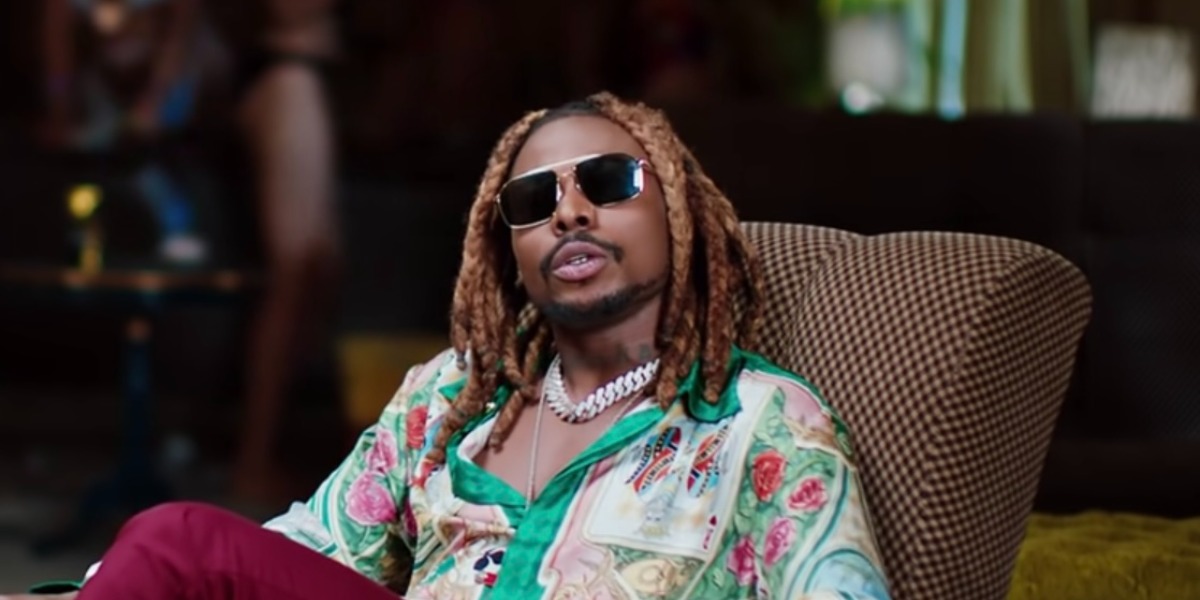
Starting out the year on a phenomenal note, Asake taps Nigerian pop mainstay Olamide for the catchy new single titled “Omo Ope.” Following his signing to the rapper’s label and the song’s success on the TurnTable Top 50 this week, Asake follows this up with the song’s official video that finds both artists in a nightclub, a feat that certainly portrays how the song is currently taking over the clubs.

Popcaan & Imeru Tafari – “Elevate”

Jamaican singer Popcaan taps Imeru tafari on the brand new single “Elevate”. The introspective new single finds both singers trading verses about overcoming life’s many troubles and elevating despite all odds set against you. In their smooth-sounding patois, they fill listeners with affirmations about making it in life. The song was released alongside a music video in anticipation for the singer’s forthcoming mixtape titled ‘Vanquish’ which is said to feature 10 new songs.

Jahmiel – “Lifetime”

Dancehall artist Jahmiel has released a new love induced single, “Lifetime” alongside a music video just in time for the week of love. “Lifetime” emphasises Jahmiel’s love and affection for his love interest as he reaffirms his commitment to choosing and loving her for a lifetime. In the accompanying video, we see clips of Jahmiel and his woman in romantic scenes as he professes his love for her, before the couple end up buying a house and moving in together.

Ria Sean- “Satisfy My Soul Aazar Remix”

Fresh meat alum Ria Sean first released the saccharine-sweet track titled “Satisfy My Soul,” as the headliner for her 2021 EP ‘Fluid’. After the earworm track warmed its way into our hearts, Ria is now giving the song a befitting Aazar remix, complete with a new video that elevates the listener’s experience of the track. Over a fast paced House beat, Ria delivers one of her best performances yet.

Tomi Owó – “Through The Never”

Last year’s ‘Metallica Blacklist’ album was curated to celebrate Metallica’s 30th anniversary, featuring a talented spate of artists, producers and engineers from around the world. Covering one of their favourite tracks on ‘The Black Album,’ Tomi Owó on Disc 3, Track 9 gives a special rendition of “Through The Never, making her the only Nigerian on the album (excluding Oma Mahmud on the song’s production). Following the project’s success last year, Tomi Owó has begin the year with her first musical offering, the video for “Through The Never.” The picture-esque is a dazzling black and white sequence which gives Owó the ample space to flex off her skills as a live performer.

AV Club: Surreal 16’s ‘Juju Stories’ examines human stories at the centre of supernatural chaos

After a run of the film festival circuit, Juju Stories’, the anthology film by the Surreal 16 Collective, was recently released in Nigerian cinemas. It is a film with many horrific elements but Abba T Makama, one of the three directors comprising Surreal 16, tells us he would call it supernatural rather than horror.

The three-part anthology film certainly has a grim, ominous tone at some points along with many things that are simply fantastical. The film uses familiar Nigerian urban legends or “juju stories” to tell sometimes horrific tales about various people, many of whom already don’t have the easiest personal lives. Makama says “everyone knows a Juju story,” and most Nigerians know much more than one. These are stories that feel familiar, stories grandmothers tell us before bed or we heard from peers who acquired them from their own relatives.

Supernatural stories have always been a mainstay in Nollywood, with films like ‘Nneka The Pretty Serpent’ considered iconic parts of the industry. More often than not however, these films are known for being particularly moralistic and over the top, both in writing and performances. Juju Stories’ explores a different side of the supernatural. The three chapters of the film examine extremely human stories at the centre of all the chaos surrounding them.

It is no less than what should be expected by the filmmaking collective surreal 16. The members, Michael Omonua, Abba T. Makama and C.J Obasi, have made it their goal to create films that aren’t limited by the conventions of Nollywood, with stories about a wide range of topics. The three stories within the film, “Love Potion,” “Yam,” and “Suffer the Witch” all deal with different aspects of Juju.

 Love Potion

‘Juju Stories’ opens with a first part that is written and directed by Micheal Omonua. It’s centred on one of the most frightening topics for young adults: love and dating. The story follows Mercy, a woman desperate for the affection of Leonard, an engaged man.

She is eventually convinced to take her desperation to the extreme by drugging Leonard with a love potion, that makes him fall into a deep infatuation with her. Mercy and Leonard move in together and all seems well at first. As we see their relationship progress, it becomes clear how misguided Mercy was in fixing her sights on Leonard, as the pair are obviously incompatible. She finally lets him go, her extreme measures seemingly for nothing.

‘Love Potion’ is interesting in how relatable its story is, regardless of the magical elements. A lot of the horror of the tale comes from the examination of the overwhelming pressure that women specifically feel to enter relationships, setting their sights on moulding mediocre or uninterested men into the man of their dreams. When men are seen as fixer-uppers, it never ends well.

There is also an extremely dark portrayal of Leonards situation. Love potions in fantasy stories have always seemed like magical roofies, even when portrayed in a light-hearted fashion. Here, Mercy essentially assaults Leonard, both mentally and physically, taking control of his motions against his will. But unlike most similar stories, this one examines how dreadful this is, with Leonards entire life being turned upside down. He leaves his fiancée to pursue his obsession with Mercy and when he is dumped he appears absolutely shattered being left incapable of moving on in ways that most people can.

Yam

The second part of Juju Stories’, “Yam,” is directed by Abba T Makama. It follows two men, Amos and Tohfik, as they hustle in Lagos amidst rising cases of people turning into yams. Tales of people turning yam for pocketing money found on the street is familiar to most Nigerian audiences. These are the types of cautionary tales that parents tell their kids to scare them away from doing bad things.

Aside from that, however, there is nothing overtly familiar about Makama’s ‘Yam’. The story has the loosest structure of all three sections of the film, with scenes going on for great lengths. The way it refuses to be upfront about the themes also makes the film have the most wiggle room for interpretation. Makama stated that he wanted the story to be open to interpretation and just make people laugh. With campy performances from the actors, he certainly will have gotten his wish.

There are many ways the story could be interpreted. The story was bookended by a painting of screaming man, a painting by Makama himself. The screaming man could possibly represent the never-ending purgatory that many Lagosians find themselves trapped in. The poorer characters seem to be stuck in a state of hustling and suffering. They mock and consume each other in order to deal with their circumstances.

Tohfik takes out his frustrations on his female companion and mocks Amos. Tohfik accidentally eats Amos after he has been turned into a yam, and is driven mad by the voice of a tormented Amos in his head. Both he and Amos are bonded together in a never ending cycle of horror. The rich characters start and end the film, untouched by the turmoil we have seen on the streets of their city, casually reading about the supernatural occurrences on a headline. They sit in front of the painting portraying eternal, ongoing torment, yet unaffected.

Regardless of its intended interpretation, ‘Yam’ is a story that addresses class in a very unique way.

Suffer the Witch

C.J Obasi’s ‘Suffer the Witch’ is the third and final story in Juju Stories’. Set in a university campus, this part harkens back to more familiar Nollywood films of the noughties. It follows a girl, Chinwe, and her growing suspicions around her strange and obsessive friend Joy. The events in the story make her increasingly sure that Joy is not just acting strange, but a witch.

A confidently shot film, many scenes are extremely tense and unsettling. A feeling of anxiety looms whenever Joy is seen or even just spoken about. She creeps up like a ghost in several scenes. She is spoken about in a way that makes it seem like she is always watching, always lurking. She almost like a deranged toddler, appearing odd but harmless when she wants to, but has a terrifying darkness lurking beneath the surface.

Joy seems to make it her mission to isolate Chinwe. A fantastic performance from Nengi Aidoki makes Joy a truly terrifying character. She switches on a dime between the cloying, childish affectations of Joy and the unhappier person within. It is unfortunate that the film falls into the usual partnering of lesbianism and villainy, something that pops up in many films as a lingering effect of the Hayes Code in Hollywood, and religious puritanism in Nollywood. The fantastic performances and confident directing however allows the story to rise above this trope.

‘Juju Stories’, overall, is an important addition to the more inventive films coming out of Nigeria, amidst the current emphasis on gloss in Nollywood. It treats the audience like adults and allows them to work through the themes without having their hands held. Abba states that “there are ways” in which the stories are linked, “but I’m not going to say it. The audience has to figure that out.”


ICYMI: THE IRREFUTABLE LEGACY OF OSUOFIA IN LONDON

For The Girls: Nana Darkoa Sekyiamah Wants To Have Frank Conversations About Sex

African women have always discussed sex among themselves. However, to write about the sex of the everyday African women and tell those intricate intimate stories from the perspective of those who lived them is something unheard of in our patriarchal society. Yet, telling that story with a lot of care and intentionality is what Nana Darkoa Sekyiamah has done with her latest book, ‘The Sex Lives of African Women.’

The writer, activist and feminist Nana Darkoa Sekyiamah has been advocating for the safe and healthy sex lives of African women for a very long time. In 2009, she started ‘Adventures from the Bedrooms of African Women’ with Malaka Grant, offering a space for African Women to share experiences of sex and our diverse sexualities. Since then, he work has championed and supported African women living their lives audaciously, without the monitoring gaze of society.

In a world that vilifies, silences, and marginalises women who engage in owning their own sexual agency, we need more platforms like Sekyiamah’s that are tell the daily, mundane, and majestic sexual stories of African women. Nana has been doing precisely that through her work for many years, whether by hosting panel discussions, hosting a digital forum, intimate events around sexual liberation for adventures and now her book.


View this post on Instagram


A post shared by Nana Darkoa Sekyiamah (@dfordarkoa)

For most young African girls, the stories we hear about sex are that of fear, caution, and public state-sanctioned violence. This has created a void in the available knowledge around sexual agency, liberation, and exploration of one’s sexuality from a young age that then leads to a life of unenthusiastic and unfulfilling sex lives that is geared to serve the patriarchic status quo.

Speaking with Nana has always felt like speaking with an elder sister, who is fearless and will truthfully share her wisdom, insights, and pleasurable experiences of sex. This is very much why most of the young African feminists I asked about Nana’s latest book described her as the real Shero ally, who knows how to tell stories and when to tell stories that see many of us at the base of our emotions.

Nana Darkoa Sekyiamah is simply creating a lane of her own, a foundation of which she has consistently worked for ages, her lane is brilliantly impactful to all African women of all ages, classes, and ways of life. For Nana Darkoa Sekyiamah, it is pertinent that stories of all African women include our stories of intimacy, healing, please, freedom, exploration, and thus sex.

In a conversation with Adeola Naomi, Nana talks about her new book, the significance of telling sexual stories of African women, and reclaiming our sexual agency.

The conversation which follows below has been lightly edited for clarity.

Can you tell us a little bit about yourself, Who is Nana Darkoa Sekyiamah?

NANA: I will say my primary identity, the one that I always describe myself as is that of an African feminist, I will add to that a writer. I think it took a while for me to feel confident enough to step into my authority as a writer because it sounds so big. But, actually having a book that is published by a sort of mainstream publisher that is available in different countries around the world makes me feel like okay I can finally call myself a writer. I am also a sister, a daughter, a friend, a mother. These are kind of my identities.

You said that you identify as an African feminist and I know you went to an all-girls boarding school in Ghana growing up, does that shape your feminism or inform how you present yourself as a feminist or how you even come into feminism?

NANA: Not at all actually, it is quite sad when you put it that way because you would think going to an all-girls boarding school would somehow imbed in me a feminist spirit. If anything I feel like my all-girls school tried to take away my feminist spirit, because it was a Catholic boarding school where the nuns had a really strong influence. Some of my memories of the school are things like literally being called a devil because I shaved my eyebrows and a whole bunch of other girls also then decided to shave their eyebrows. So, I actually feel like I am a feminist in spite of having attended a school that tries to get me to conform to a particular notion of girlhood/womanhood and respectability. For me, feminism is the opposite of all of that. Feminism is revolutionary, it is not about accepting the status quo. It is about questioning, it is about dismantling and rebuilding. Unfortunately, I don’t think I got that kind of education from my Catholic boarding school.

Your book is about the sexual lives of African women, and how sex is performed in society and sexuality. With everything going on right now on the continent, you are in Accra Ghana where there is an anti-LGBTQ bill discourse, there is a lot of conversations on the continent that repress sexuality, would you say sex is political?

NANA: Absolutely, the mere fact that the state tries to control who we love, who we sleep with who we form relationships with, shows us how political sex is. On the one hand, people like to present sex as a deeply personal issue but it is also a deeply political issue and one that as far as I am concerned we need to speak about. It is one of those issues people say ‘we don’t need to talk about what goes on in the bedroom’, and I feel like whenever people try to say there is no need to talk about something, that is the more reason one needs to talk about it. It is like with money, people say we shouldn’t really be talking about money, people shouldn’t know what others earn but that is because they don’t want you to know that you are being cheated, you are not being paid a fair wage. So, as far as I am concerned, sex is absolutely political and that is why I choose to write about sex.


View this post on Instagram


A post shared by Nana Darkoa Sekyiamah (@dfordarkoa)

Is that also the reason for your other feminist work as the communication director of the association for women’s rights in development (AWID)?

NANA: I will be leaving AWID in march, which I am super excited about, I love Awid, I have had a really good run there. But, it is coming up to seven years and I want to focus on my creative pursuit. The only way I can do that, especially now that I am a mother and don’t have as much free time as I used to have is to do that within my working hours. So, yes I am leaving Awid to focus on my next book, my other projects, including a podcast, and whatever else I feel like doing.

I love all the creative side of you and you embrace it all, your book is very creative and I would like to know what was going on in your mind when you were talking to all these women? Did you feel like you saw yourself in their stories or there was a specific interviewee where you thought this could be my story?

NANA: The process of speaking to people and hearing their experiences was super interesting. You know, like I used to warn people beforehand, saying ‘I am interviewing you about sex, which means I am going to ask you lots and lots of intimate details. I knew I wanted to write the stories in the first person, it meant, I really needed to know what it felt like to be in the person’s body. So, I would ask, ‘what else was going on, what could you see?’ because I wanted to put in a lot of texture and details in the stories. That was enjoyable, especially while writing about it, as I could almost imagine that I am not, for example, Chantelle, and this is what is going on. Of course, there are some stories that I identify with more than others. There are some stories I was like ‘this is the life that I want to lead, like Helen Banda, I also want to be Alexis when I grow up. I want to be Helen Banda right now and to be Alexis when I grow up. It was an enjoyable process.

What was your writing process like for this book, was there a preparation because it is such an intimate topic? Especially for the fact that some very sensitive and triggering stories might hurt to revisit?

NANA: Obviously talking about sex, you also inadvertently bring up issues of traumatic sexual abuse. In the beginning that was kind of unexpected for me, it may sound a little bit naive. I don’t think I had fully realised how many women had experienced child sex abuse. So, in the beginning, there was a particular question I was asking, then I realise afterward, that question was triggering people to tell me their experiences of child sexual abuse. Frankly, it got to a point where I didn’t want to hear it anymore, so I just stopped asking that question, and people stopped telling me. There was a question that I was asking and that would always come up for people.

What was the question if you don’t mind sharing?

NANA: I don’t mind at all, it was ‘what was your earliest sexual memory as a child?’ something along those lines or ‘what was your earliest awareness of sex?’ For a lot of people, it was an instance of abuse.

And what did that make you feel about the writing of sex as a topic? The need for this type of writing especially of African women as you were hearing all these stories of abuse?

NANA: It was a lot of fear as a mother of a young child. It just makes you really worried like can I do everything in my power to protect her? Is there a risk that she can be abused and what do I need to do to protect her? Because the reality is parents can’t be there 100 percent of the time and it is actually the people who are closest to you who tend to abuse the children. So, for me that is scary. That is really scary.


View this post on Instagram


A post shared by Nana Darkoa Sekyiamah (@dfordarkoa)

When you talked about freedom in the book, do you think that a lot of African women do know what freedom feels like in intimate relationships? You interviewed around 30 women for the book.

NANA: That’s a very good question. I feel like some women know what freedom is like and some women are living lives that think they are modelling many aspects of freedom for us. I am sure there are very few people who feel free in every single area of their lives. So, I think a lot of women who are working on being free, will always claim that sense of freedom, If I think of Fatou for example, the woman from Senegal, she always says, “I am a free woman.” She would say that to all partners, she claimed freedom for herself and that was the strongest value for her. She always made sure that she held onto that. I think sometimes we don’t know what freedom looks like and we need to figure out what freedom looks like for us so that we can claim it for ourselves. I think what freedom looks like for one person, looks very different for the other person.

Who are the African feminists that you would recommend to a young African girl to start their sexual liberation journey with?

NANA: It is easy for me because I actually bought two books by African feminists on sex and sent them to my goddaughter who just turned 17, I think I sent her the books when she was 16. So, I will say ‘the quirky quick guide to sex by Tiffany Kagure Mugo, and Dr. T: A Guide to Sexual Health and Pleasure.

Are there any more books around the sexual freedom of African women in your future?

NANA: I am starting to work on a second book which is actually about sexual freedom! Laughs.

I cannot wait to see and read it. When you chose to share the story of a trans woman and sex workers, would you say this was an intentional political decision before you even begin their interviews for the book and I want you to tell us more about that decision?

NANA: For me it is basic, trans women are women and there is no way I will write a book about the sex lives of African women and only include the experiences of cis women, that wouldn’t be a book about the sex lives of African women. So, for me, it was a given that I included every one of us. And if I am interviewing women about sex, surely I have to interview people who are experts about sex. Experts to the point that it is their profession. The book would be invalid without that, some people that I was planning to interview, I didn’t know they were sex workers, it just sort of came up in conversation. Kuchenga for example, I didn’t know was a sex worker. I knew Kuchenga was trans, but I didn’t know she was a sex worker.

This book is not just for African women, it is for all who relate to African women. What are the final words you want to say to all the people who relate to African women about the being of African women when it comes to freedom and liberation?

NANA: I will say support African women, love African women, listen to African women, know that we are the experts of our own lives. We don’t have one story, we are not a monolith, we don’t all think the same thoughts, and it is not bad if we don’t think the same thoughts. Like everyone else, we have our struggles, moments when we can come together, and moments when we need to stand apart. We are unique, we are complex, we are diverse, we are beautiful, we are horrible, we are everything, We are human.

Featured image credits/NATIVE

For Us By Us: How I Discovered Self Love

In a patriarchal world, the standards of beauty are endlessly weighted against women who look, dress and talk like me. Growing up in a world where Eurocentric standards of beauty rue the day, it’s hard for Black African women to see themselves represented in mainstream media and in turn, love themselves for how they look and who they are. According to one international study, only 4% of women aged 18-29 would call themselves beautiful and these numbers when narrowed down to my side of the world, are even steeper.

For me, a young woman navigating life in Lagos, Nigeria, I had to remind myself that my beauty existed regardless of my outward physical appearance. As a young woman who once attended a boarding school where all the girls had to shave their hair, I never really grew up believing I was conventionally attractive–with a buzz cut. However, surrounded by young girls and women who also donned the same low cut style as me, I was reminded that beauty was only skin deep from a very early age.

In my experience, I have learnt that it is almost impossible to love others the way they deserve to be loved without loving yourself first and this is something I have struggled with in my platonic and romantic relationships. I was unsure of myself and that in turn, meant that my relationships suffered due to my lack of self-awareness. Once this awareness kicked in, I decided to inculcate the habit of looking into the mirror, on my way out of the house every day, and reminding myself of my beauty and what made me unique. At the time, it was just a thing I did out of habit to but overtime, I realised this was building my self confidence. It became part a big of who I was, and now, a mirror is just a reminder that I’m beautiful.

Once you can be there for you always, you would never need to labour to be loved correctly in any relationship, whether that’s with friends, family or with a romantic partner. Self love is more about honouring yourself and where you currently are as a person, and then choosing oneself time and time again. It can be difficult to make the choice to commit to yourself and your happiness but for me, choosing myself has been an invaluable step towards the powerhouse of a woman I am capable of becoming. 

As a music head, music is another avenue for me to practice loving myself. Over the years, there have been numerable songs that have bolstered my belief in loving oneself, and in turn, filled me with the confidence I needed to take on a world that constantly counted me out. I distinctly remember how much I could relate with Justin Bieber’s “Love Yourself,” due to its honest lyricism. I felt a similar way when I heard India Arie’s 2002 classic, “I Am Not My Hair”, a timely track which was aimed to empower Black women and remind them that Eurocentric standards of beauty are not the measure of their worth or desirability. Although I was barely 4 years at the time, I distinctly remember that song inspiring and filling me with pride, the moment I could understand and interpret its lyrics.

The new generation artists have also been doing a good job at passing these messages with their music recently. The new vanguard of Afropop stars are confident in who they are, and they want the same for their listeners. Ayra Starr arrived with the breakout single “Away”, an affirming track with lyrics such as “understand I won’t be the girl that used to cry, cry about a man that never came through.” More than just an avenue to talk about her own personal experiences, the song was affirming for a new generation of listeners coming into their own as adolescents and interacting with the opposite sex. That song constantly gives women hope and strength as it’s a subtle reminder that nobody deserves to have so much power over you. 

On Joeboy’s debut album ‘Somewhere Between Beauty And Magic,’ he opened the album with the track “Count Me Out,” a self-appreciative number that found the singer talking up himself and his abilities. Here, he reminds listeners not just his strength as an artist but his self confidence and how he worked hard to be in the current Afropop conversation with standout lyrics such as “I drop hit I just smash hit and na so e go dey I’m never stopping”, a rather braggadocios but catchy entrance. These are the type of songs that are constantly on replay whenever I am feeling less than my confident self, because of their ability to see me at the base of my emotions. 

With Valentine’s here once again, I’m reminded of that little girl who made the decision to look into the mirror and choose herself, even when the world stood against her and those who looked just like her. I am a long way from that little girl, but in many ways, still exactly like her, searching for a way to be comfortable in my own skin. I can’t tell you it’s been easy and I certainly can’t tell you that it’ll be a one-week mission or a two-month thing or even a year. It’s an everyday job to love oneself and commit to loving that person in the mirror.

Self love is more than just acceptance. I have come to find that it is about challenging hateful lies that ruin lives, and then creating a space for the truth, which opens one up to love and fulfilling existences. Picture everyone making the decision to do this everyday, imagine how life could change for all of us? lf we all made the decision henceforth that we are perfect exactly the way we are, who gon’ stop us?

Featured image credits/NATIVE


ICYMI: Platonic Love Matters Too

In Conversation With Coodie & Chike, The Directors of ‘Jeen Yuhs: A Kanye Trilogy’

By now, we’re all familiar with the popular Ye lyrics that go “I miss the old Kanye/See I invented Kanye, it wasn’t any Kanyes
And now I look and look around and there’s so many Kanyes.” As one of the most enigmatic figures in music and fashion, Ye, the artist formerly known as Kanye West, occupies an interesting position in pop culture today and one that there’s still plenty of story left to be told.

In this three-part documentary titled ‘Jeen-Yuhs: A Kanye Trilogy’, we get to see the 21-year journey of Kanye’s formative years as a music producer in Chicago to becoming one of the biggest names there ever was in the music, fashion and entertainment industry. Premiering today exclusively on Netflix with the first act, ‘Jeen-Yuhs: A Kanye Trilogy’ is the brainchild of directors and producers, Clarence “Coodie” Simmons and Chike Ozah. The documentary plays out as a trilogy with Act I: Vision, Act II: Purpose and Act III: Awakening.


View this post on Instagram


A post shared by Strong Black Lead (@strongblacklead)

Every story about an icon always has a captivating beginning. The first act in the trilogy is called ‘Vision’, and that is because it takes us behind-the-scenes to the first moments that made Ye who he is to the culture today. Coodie met Kanye first, back when he was on the street of Chicago, trying to make it big in the world. “I saw how charismatic he was and how energetic and talented he was, so I’m like that’s the vision,” says Coodie in an interview with the NATIVE.

At the time, Coodie was hosting a Hip-Hop show on Channel Zero and doing stand up to support his career. He interviewed Kanye for Channel Zero, and from there, he began interviewing more prominent artists. Channel Zero started getting a lot of positive responses after they aired on channel 19, so at times, when his videographer didn’t want to go shoot at certain places, Coodie would take the camera and film, from there he learnt how to use the camera. But it was not until Coodie watched a documentary called “Hoop Dreams,” that he found the inspiration to document everything around, particularly the cultural figures at the nascent stages of their career, who had the potential to be really big. 

“And the genius of this movie is not Kanye, me or anybody that’s in the movie – the genius is unlocking the genius within you. Everybody got a purpose; when you figure that out your genius will shine.”

For Chike, he got to meet Ye later on while he was working at MTV. He was amazed to see another Black man who appreciated the beauty of art and design and who he could converse with. During his time at MTV, Chike noticed that there was never room to tell the stories of people who looked like him and being one of the only Black people on the design team, he would go out to pursue personal projects that championed his identity as a Black man. This is how he and Ye would become friends.

Coodie and Chike only had one goal when working on the documentary; and that was to capture the fervour of Kanye West’s expansive career and personhood. As someone who has lived most of his life in the media, and has come under heat for various controversies (see MAGA hat & Skete online vitriol), it was a gargantuan task to capture the man and the legend without touching on some of these moments. But more than hold a mirror to his darkness, Coodie and Chike were intent to encapsulate what made Ye tick.

One of the most memorable and significant parts of the film is getting to see and understand the intimate and beautiful loving relationship Kanye had with his late mother, Donda West. Although we see this from a surface-level view, as you pay close attention, you get to feel the closeness, love and support a mother has for her child. Kanye has never shied away from expressing his love for her and how much she means to him. He has referenced her many times in songs, interviews and even named two of his albums after her. Donda always knew Kanye had other sides to him that weren’t so pleasant, but she understood that that was how he was, and she never wanted him to change, all flaws and all.

According to Coodie, Kanye is still the same Kanye, and as a society, we lack sympathy. One thing that rang true from speaking with them is that we don’t understand what many people, especially these celebrities we put on a pedestal, go through. “These are all just different versions of people that become expressed as they evolve over the years,” Coodie expresses. It’s never an excuse to act out, but this film is mainly a tool to show a reflection of ourselves and how we evolve and change as human beings. 

In this documentary, you get to see Ye’s persistence and drive. Kanye had to make sure his dream came true. Often, just coming from where you come from, you have so many reasons not to trust your instincts and follow your dreams, but this trilogy serves as an inspiration to go for it. “Somebody has to make a sacrifice. Somebody had to break the cycle and sacrifice themselves for the next generation to be able to afford the time to sit and think,” says Chike. Just like Coodie and Kanye, we all have to follow our instincts sometimes and have faith to guide us through.

To this end, we spoke with directors, Coodie and Chike about meeting and working with Ye, the journey to completing ‘Jeen-Yuhs: A Kanye Trilogy’ and

Our conversation which follows below has been lightly edited for clarity.

NATIVE: How did you two meet ?

CHIKE: Coodie and I met when I was working at MTV and the producer Yasmine Richards who is also my friend, was producing ‘You Hear It First’ on Kanye and Coodie was  also helping them produce the segment. Ironically, using all the footage from documentary up until the time they were filming. She decided to introduce Coodie to everyone on MTV and she brought him to my floor and that’s how we met in 2002. 

NATIVE: How long has this idea been in motion and how does it feel finally seeing it come to fruition?

COODIE: It’s amazing seeing what you’ve thought about years ago come into fruition. It just shows that if you can conceive and believe you can achieve and that’s what it’s all about. It’s about everyone unlocking their inner genius and understanding this joinery is gonna have its ups and downs but if you keep moving you gonna have a destination. It’s not about me or Kanye but about how you can unlock your inner genius 

NATIVE: How were you able to condense Kanye’s decades-long life and career into a documentary?

CHIKE: The process is about us being a student of film, if we edited this doc a few year ago to would have been edited a lot differently but as we have been honing our skills and learning and studying the story, we were able decided that we wanted to tell a non traditional archetypal hero’s journey. And Once we decided to make that move it’s just rules that come with it, we decided our protagonist goals and desires the story starts to write itself and it makes it easy to make decisions of what’s not gonna be in the film 

NATIVE: In your own words, what does Kanye West mean to Black popular culture?

COODIE: Kanye means the only one – his name. 

CHIKE: Kanye is a very influential person to the culture and that’s why it’s important to contextualise him in person and pull the things out from what we feel that he represents and so to us  this film does that.  Kanye and coodie are two people that believed in themselves and God. They had a certain type of faith that allowed them to overcome any type of fear and try to follow their goals and dreams in life and their passions. The power of his influence can be utilised as a tool for people unlock their genius and passion 

NATIVE: Over the past few years, Kanye has been the subject of many headlines and backlash. Did that in any way shape or inform the story you wanted to tell?

COODIE: You have to realise that God writes our stories. He’s the art director, he’s everything and what we say just throughout the process of making the film is that Jesus directs. You couldn’t write that me and Kanye could reconnect during that TMZ moment and that’s something you couldn’t have thought or imagine. You couldn’t imagine that this kid from 95th street could be running for president at the time. So it’s just the journey and the footage tells the story. 

NATIVE: Were there any difficulties throughout the whole process and what would you say was the hardest part ?

CHIKE: There’s been adversities if you take in context of a 21 year journey, there’s definitely been moments where the role hasn’t always been smooth and that’s the testament to the film we are trying to make and we had to know that this film was gonna get made no matter what. We never let our imagination get in the way of God’s manifestation as far as how and when the film was gonna happen but we just always had a concept that it was gonna happen and I believe Coodie had that feeling once he put that camera on Kanye, it’s just how Coodie moves as a person. There’s always gonna be adversities and we welcome adversities. Adversities to us, they’re a blessing. 

NATIVE: Were you able to pick up on any similarities or parallels between the life Kanye lived and your life?

COODIE: There are a lot of parallels but we both had a mission and destination and we both had to get there no matter what. We are the same person, we both have the drive and we believe in Jesus Christ, so there are a lot of similarities. 

NATIVE: Aside from Coodie, are we expecting other voices/interviews from other people in his life and who would those be?

COODIE: You will hear voices of Pharrell and so many people in real time, I’m just the guy telling the story through my perspective but you’re gonna hear all kinds of voices through the film. 

What fed into the decision to partner with Netflix to release the documentary?

CHIKE: Netflix is an amazing platform as to how they work with creators. They really believed in what Coodie had in store and they let us run and it was a great partnership. From our initial conversation we knew that we had that autonomy and we knew they’d let us tell the story how we wanted to tell it. 

You can Watch Act I of ‘Jeen-Yuhs: A Kanye Trilogy’ here.

Featured image credits/Netflix

PreGame: NSG Take Us Back To Their African Roots

PreGame is a NATIVE Original series which grants us an all-access pass to the lives of your favourite artists & icons, on their most important days. In our third episode, NSG take us on a tour of their home city, Lagos, Nigeria before hitting the stage at the Lagos arm of their ROOTS tour.


The blurring of lines between British and African culture that has taken place over the last decade and a half has left a profound effect on the dynamics of music, culture, and arts. No place better typifies that eternal hustle and bustle like London does. The British capital is at present home to a number of music scenes that take their vim and exuberance from the motherland but have uniquely adapted their mode of expression to mirror the realities of life in the western hemisphere. 

Six-man afro-swing group, NSG, is one of the biggest totems of our unique cultural moment, forever straddling the divide between the incandescent groove of west Africa and the organised frenzy of London that they call home. Last year, following the moment-heralding success of their debut mixtape,Grown Up’, the group released an E.P titled ‘Headliner.’ The release of that project was to serve two purposes:  strengthen their bonds with the literal roots of the music that they channel as well as support a larger tour that brings their music to the people of Africa. 

One night last year, the NSG train touched Lagos and they brought the vibes to the Ultima Studios in Lekki where their unique melding of Rap, Afropop, and Soul music brought smiles and a sense of camaraderie to their audience. Following the pattern of our PreGame installations, we had conversations with the group hours before they touched the stage, discussing the concepts that inspire them, having amala, making ‘Roots,’ and their reasons for making the project. 

Watch PreGame with NSG below.

Deep Cuts: Nonso Amadi’s “Tonight” Is An Evergreen Anthem

750 days: that’s the time difference between Nonso Amadi’s previous pair of tweets. It’s an unusually lengthy time for a musician operating in popular spaces not to tweet, but then again Nonso Amadi is not your regular run-of-the-mill artist. Even while he burned hot on the lips of admirers, he maintained an elusive nature, popping up rarely if not only, in the complex stories folded into his R&B-influenced songs. If anything, his recent update hints at forthcoming music, and we’ve been patiently waiting.


View this post on Instagram


A post shared by Nonso Amadi (@nonsoamadi)

Sometime in late 2017, a record built on melancholic keys and almost muted percussions caught the ears of a number of listeners, quickly moving from an underground sensation into larger spaces—on radio most notably, the song became a favourite, repeated at various times over the course of a day.

Most listeners didn’t even know the singer was Nigerian; such was the breadth of Nonso Amadi’s expression. Slowly people caught up and before the year’s end, the Canadian-based singer had become quite popular, particularly among young people.
“Tonight” was everything Nonso Amadi needed in a breakout song. It’s that kind of song that equally packs thoughtfulness and groove, lined with the impeccable songwriting Nonso would regularly demonstrate down the years. In some ways it’s ambiguous, shuttling between scenes without laying specificity, but strikingly visual (“my girl, she’s got a gun in her hand”) and perfectly conveyed by Amadi’s glossy vocals.

Anyone who has loved knows the complexity that comes with the terrain. “Tonight” captured that dilemma so often associated with young love, where the harm caused by toxic habits clashes against the eventual make-up. “Tonight I represent the guy with the money who lives fast, but baby don’t die young,” Nonso Amadi sings on the pre-hook, hinting at the possibility of danger.

About three months later, he followed up with “Long Live The Queen,” further flexing his skill for producing deep tensions within simple structures. Love records are a industry trope, but who else is beginning theirs with such as “She was the queen to my heart but had her kingdom overthrown/Fought off the beasts in the dark, she spent the sleepless nights alone”?

In some ways Nonso Amadi never got his flowers for striking out early in the singer-songwriter path. Though his self-production and other DIY qualities made him considered among the Alté community (and even creating a joint EP with Odunsi The Engine), he was exploring sounds with a fixed tradition. Think Drake, think Bryson Tiller, think emotional conflicts doused in deceptively simple lyrics, and think of the Canadian connection.

The years since 2017 have been kinder to ingenious lyricists. Never has someone like Nonso Amadi been so primed for a takeover, and his more recent outputs have been typically great. 2019’s Free saw him collaborate with mainstream acts like Simi and Mr. Eazi, piquing curiosity towards what direction his forthcoming music could go.

Regardless, we’re all quite aware of Nonso Amadi’s brilliance and, truthfully, few songs released throughout the 2010s matches up to the sheer beauty of “Tonight”.

Revisit Nonso Amadi’s “Tonight” below.

Featured image credits/NATIVE

Netflix’s First-Ever African Reality Show ‘Young, Famous & African’ Is Coming Soon

Mark your calendars as Netflix is set to launch its first-ever African Reality show, ‘Young, Famous & African’ on the streaming platform next month. The series promises to give viewers the full reality TV experience, from rivalries to new friendships and romantic connections, as Africa’s stars give us an intimate insider look into their glamorous lives as in the City of Gold, Johannesburg, South Africa.


View this post on Instagram


A post shared by Netflix Nigeria (@naijaonnetflix)

‘Young, Famous & African’ is produced by Urban Brew Studios and co-created and executive produced by Martin Asare Amankw, Peace Hyde and Adelaide Joshua(Ghana) Hill(South Africa). The season will consist of 7 episodes with an A list cast that includes Khanyi Mbau, Diamond Platnumz, Annie Macaulay-Idibia, 2Baba, Zari The Boss, Naked DJ, Nadia Nakai, Swanky Jerry, Andile Ncube and Kayleigh Schwark.

The cast which hail from South Africa, Nigeria and East Africa and are the most elite in their industries including fashion, music, entertainment and Instagram. “It’s really exciting to be able to show the world an exclusive look into the lives of Africa’s top celebrities and socialites. Young, Famous & African is a depiction of a world that has never been seen before, highlighting authentic stories and unrivalled access to some of the most celebrated celebrities,” says Martin Asare Amankwa, one of the shows executive producers.

You can watch the official teaser below.

Featured image credits/

Best New Music: Rema Brings His Debut Album One Step Closer with “Calm Down”

In 2019, Rema arrived on the block, hot on his heels and ready to prove his star power. Launched into the music scene off the back of one of the country’s most illustrious record labels Mavins, the singer and rapper was bolstered to new levels of recognition within days of releasing his debut self-titled EP, which housed multiple seminal hits. Since then, he’s more than proved his salt, earning a spot in wider Afropop conversations and transforming into an industry tsunami to be reckoned with, with every drop.


View this post on Instagram


A post shared by REMA (@heisrema)

This year, Rema is fanning the flames of polarising conversations more than ever before. On March 25, the singer will finally release his debut album titled ‘Rave & Roses,’  nearly three years after a magnificent 3-project run back in 2019. While most fans are already hypothesising on what a Rema album would sound like in 2022 (us included), it’s evident that whatever Rema serves up will only be another step towards the powerhouse he is capable of becoming.

Since his debut on the scene, Rema has occupied an interesting position in the game. From “Dumebi,” to “Bad Commando,” and “Alien,” Rema has always grappled with different sounds and genres, bending them to his will as he delivers a melody driven sound with unfettered eccentricity. Music is evidently Rema’s playground and it’s clear that he’s able to shape-shift and contort his vocals to blend with any beat he’s given as we’ve seen from his growing catalogue.

As he continues to gain more mileage in the game, Rema has now coined his current sound as ‘Afro rave.’ While he’s left the term open to interpretation from his fans and peers, some of his recent releases have hinted at the direction he’s poised to go. Last year’s “Soundgasm,” is a sensual dancehall-track laced with sticky beats and euphoric sexual innuendos. On it, Rema directly addresses his muse, candidly expressing his intentions to share salacious moments together. It won’t be the first time he would be explicit about this side of himself, a feat that we’ve seen from his debut on “Dumebi” till now, with his recent release, “Calm Down.”

Gearing up to release his debut album, the singer and rapper has released the Andre Vibez and London-produced track titled “Calm Down.” The smooth Afropop number is a romantic track that finds Rema singing about his crush, regardless of his hesitancy to approach her. The song plays out as Rema moves from admiring his love interest in the background, to plucking up the courage to approach her at a party and dance with her under the twinkling of the dancefloor lights.

Over the song’s rhythmic production, Rema sings “Baby calm, this your body dey put my heart for lockdown,” on the song’s infectious hook, inviting his love interest to give into his advances with an irresistible boyish charm. In his usual manner, Rema throws in a mix of pidgin English and his now signature garbled-speech to convey his affections and emotions. Melodies are front and centre in everything Rema touches and on “Calm Down,” it’s no different as its catchy beat evokes feelings of nostalgia in listeners. The production seems to embrace both nostalgic and modern elements into its composition, arriving at a mixture that sounds like a comforting friend recounting their romantic trysts.

For most of us, we are able to see ourselves reflected in Rema’s catchy lyrics. More than just a means to offset Rema’s current emotions as a young artist on the scene, the innocence of the young romance that he sings about is instantly relatable and familiar for anyone who has put their heart out there. The song’s accompanying video by Director K echoes the song’s lyrics to a tee. Here, we see clips of a Rema navigating a party which his crush is attending. He goes from watching her on the sidelines to approaching her and winning the girl over–just like he says he will.

Confident and in the best possible position to take his sound to a new level, Rema is one step closer to the release of his debut album and with a midas touch that never weans, we’re confident that ‘Rave & Roses’ will encapsulate everything the star has to offer.

Pre-save ‘Rave & Roses’ below.

Featured image credits/DirectorK

TurnTable Top 50: Asake & Olamide’s “Omo Ope” climbs to No. 3

Last week, street-hop’s ultimate endorser, Olamide unveiled singer Asake as the latest signee to his YBNL record label. The announcement came not too long after their collaborative single, “Omo Ope,” a vibrant and celebratory cut that’s easily one of the best songs in this early year. Two weeks after making its TurnTable Top 50 entrance at No. 25, and moving up to No. 14 last week, “Omo Ope” has rocketed to the third spot on this week’s edition of the chart. Tallying 3.03 million equivalent streams and 31.8 million in radio reach, the song saw 85% and 52.8% increases across both respective mediums.

Having topped the local Apple Music charts—which is not a part of the TurnTable Top 50 yet—for much of the previous week, and with the impending release of his debut EP, ‘Ololade’, as well as the song’s accompanying video, “Omo Ope” has real momentum to get to the very top of the chart. For now, though, Skiibii continues to set the pace with his Davido-assisted “Baddest Boy (Remix).” Still ahead of the pack streaming-wise, the song is yet to top the radio and TV charts to complete the TurnTable sweep, a feat that would be apt for the song with the most single-week points in TurnTable Top 50 history.

Retaining its No. 2 position for the third straight week, after topping the chart for four straight week, Fireboy DML’s “Peru”—bolstered by the Ed Sheeran-assisted remix—remains in the top ten for the 26th week, extending the record for most weeks in the top ten. Fireboy makes another top five appearance this week, his feature on the remix of Reekado Banks’ “Ozumba Mbadiwe” helps in sending the song to No. 4 after it briefly fell out of the top ten. The top five on this week’s TurnTable Top 50 is rounded out by Lil Kesh and Zinoleesky’s “Don’t Call Me,” which just received a video treatment that should ensure its staying power in the top ten over the next couple of weeks.

Kizz Daniel’s “Pour Me Water” is at No. 6 this week, falling out of the top five for the first time since topping the chart for one week at the end of 2021. Rounding out the top ten of this week’s TurnTable Top, TI Blaze’s Olamide-assisted “Sometimes (Remix)” stays at No. 7, Kizz Daniel’s “Eh God (Barnabas)” moves one spot up from last week to No. 8, Burna Boy and Wizkid’s “B. D’OR” tumbles down four places to No. 8, while CKay’s “Emiliana” descends two positions to No. 10.

You can read the full rundown of this week’s TurnTable Top 50 here.


ICYMI: A 1-LISTEN REVIEW OF BASKETMOUTH’S ‘HOROSCOPES’

Songs Of The Day: New Music From Moliy, Tim Lyre, Juls & More

After the many wins forged by Afropop last year, the musical landscape has never looked more promising. As such the fast and furious pace of new music releases makes it hard to keep track of all the good music coming out of Africa. That’s where our Songs of the Day column comes in.

We’re doing the work to stay on pulse with all the music coming out from across the continent and beyond, bringing you exciting songs of tomorrow: today. Last weekend, we brought you new releases from Rema, Preyé, Nasty C, Basketmouth, L.A.X, Barry Jhay, Djaji Prime and more. To begin the new week and celebrate Valentine’s day, get into these new releases from Tim Lyre, Bucky Raw, Juls, dndSection and more. Enjoy.

Moliy – “Love Doc”

After her awe-inspiring performance on Amaarae’s “Sad Girlz Luv Money,” Moliy has stoked fans’ anticipation for new music from her. With the new year in sight, many listeners are already clamouring for an album from the singer, who has recently begun the year with her first offering titled “Love Doc.” Over the romance-inflected tune, Moliy sings about a love interest who she can’t seem to get off her mind during a wild night out in town. “I need the love doctor right now, think I need you by my side,” she quips on the song’s sticky-sweet hook, inviting listeners to conjure their own images of their romantic interests.

Tim Lyre – “Hubris” ft. Lex Amor

Continuing in his sonic brilliance laid down on earlier releases, Tim Lyre delivers yet another gem to the world. “Hubris” is a slow-burning soothing track that pairs Tim Lyre’s brassy vocals with memorable production.  Lex Amor brilliantly delivers a stunningly mature verse with a sensual infectious cadence, in her characteristic laid back manner. Both singer’s stunning vocals intermingle beautifully, making for a wholesome cathartic listen.

Bucky Raw – “Fine Girl”

“Fine Girl” is a head-bopping delectable number. Ace producer Mystro takes a powerful roster of sonic elements—Syncopated swaggering percussion, piquant keys, groovy bass riffs—and threads them together, end-on-end, so that the song seems to have an almost magical effect—drowning you in an ethereal soup of sonic pleasure.The beat is then populated by Bucky Raw and ace Nigerian rapper Vector’s vocals—carefree singing, heartfelt ad-libs and sure-fire raps.

Juls – “Summer In The Ends (Remix)” ft. Jas Karis & Zikoma

“Summer in the Ends” is the second track on Juls’ highly inventive and experimental 2021 album. The song is an upbeat melting pot of diverse sonic elements—Afropop, Caribbean soul music, Jazz—bookended by poetic narrations from George the poet and a host of others. On the remix, Juls swaps George the poet for Zikomo and slows the tempo of the song whilst retaining the essence of the original. Zikomo’s soothing voice brings a new current of fresh breeze to the song to create an even more mellow cathartic listen.

dndSection – “24 Days In Lagos”

If LSD was a sound, ‘24 DAYS IN LAGOS’ would be an accurate depiction of it—a chill lo-fi sound, wavy chords, pulsating waves from the strumming of a guitar. DND SECTION lays smooth quick-fire raps on the beat, talking about spending time on a beach house in Lagos, meditating and rolling ‘Jays’ until he sees clouds.

Featured image credits/NATIVE


ICYMI: 14 Projects The NATIVE Team Are Excited For This Year

For Us By Us: Platonic Love Matters Too

Growing up, there was a recurring feeling of anxiety I felt when I found myself putting too much value on friendships. I loved the idea of having a tight knit group of friends, thanks in no small part to shows such as ‘How I Met Your Mother,’ and longed for one when I got older. A group of friends that did everything together, friends that were closer than family–yet my reality never seemed to quite match up to the on-screen friendships I grew up watching.

Most other media in the early 2000s however, tended to present friendships as something to be used as a placeholder, before one grows up and settles down. In many a romantic comedy, there is the depiction of a friend in usually only exists to give romantic advice, make snappy comments and give the romantic lead the final push to go after the one they love, before losing importance once that objective is reached.

In February, especially, there are many jokes endlessly circulating about how tragic it is to be single on Valentine’s Day, regardless of the people you already have in your life. For older single people especially, this is often a source of anxiety as they are made to look at where they are in their lives in comparison to where they are told they should be.

For many young adults, and particularly Nigerians, there are certain priority shifts that are expected to happen as people mature and grow older. You are supposed to move on from the stereotypical wild party twenty-something years with friends, towards a life that is more focused on your children, your spouse and your career, sometimes even in that order.

So where does that leave people who get married later than their peers, or decide to never get married at all?

The 2014 film ‘Life Partners’ deals with that very question as it chronicles the strain on an extremely close friendship between the characters Paige and Sasha that begins once Paige gets a boyfriend. In a climactic argument, Paige tells Sasha that after you begin dating seriously, “you don’t talk to your friends till two in the morning anymore. You stop needing that.” The issues that the two characters face is unfortunately one that is familiar to many young adults.

Many articles have been written about people losing touch with their friends after they enter serious relationships, especially after they enter their marital home. Friends are often seen as the fallback, the temporary placeholders used until you can move on to greener pastures, a mentality that doesn’t serve people without a romantic relationship that they see as the centre of their world. This isn’t to say that the Paige’s of this world are inherently misguided however. There is certainly nothing wrong with treating a significant other as the most important person in your life. Most people choose their partners because they genuinely enjoy spending most of their time around them. Finding a relationship like this would make a change in priorities inevitable. Having a change in lifestyle from single friends also makes it understandable when people simply drift apart, no matter how much they love each other.

It’s the assumption that growing apart from your friends as you get older is to be expected but that doesn’t make the pill any less difficult to swallow. It makes it sad to see so many friends drift when their relationships could otherwise flourish. In recent years however, there have been changes to how people view friendships. More people have been getting married later in their lives, with the number of people getting married in their sixties going up in the past decade, lengthening the ‘free single years’ that is often spent with friends.

Likely because of these sorts of changes, there has been more emphasis on how much value people put on their platonic relationships, with the term ‘platonic life partner’ making the rounds on social media. A good example is shown through the viral Tiktok life partners Renee and April. They live together, consider each other their number one priority and have stated that if they wanted children, they would adopt and raise them together. April, one half of the duo, has also shared: “We wanted to spend the mundane moments together because we made the mundane magical.”

It seemed strange to many that these two people would want to commit so deeply to each other without a romantic or sexual element, questioning what would happen if one of them gets married, but the two women are confident in their dedication to one another. Many commentators on the duos videos have been pleasantly surprised that this was even an option. People like Renee and April are showing a new kind of companionship that many young people could choose.

There has also been emphasis put on friendships that don’t have a financial aspect to hem. Galentine’s Day, a term coined by Leslie Knope on Parks and Rec, has been used as a day for women to celebrate their love for their friends. Palentine’s Day is also used as a more gender neutral term for people who want to celebrate their friendships with the same affection that is often reserved for romantic relationships.

More films and TV shows have also been centering friendships as the great loves. The 2019 film ‘Booksmart’ focuses on two best friends saying a heartfelt goodbye, instead of focusing on their respective love interests. Friendships have been some of the most meaningful parts of my life. It makes me happy, and a little nostalgic, that there is more focus on and celebration of people who are often with you during the messiest, most heart breaking and most joyful life experiences.

Young people now have an alternative version of companionship to dream about, especially for those who don’t want to daydream about marriage. This lessened pressure to marry can even let people choose their spouses more carefully, if they aren’t seen as a necessity to experience great love and commitment.

Your friends can be your epic loves and not just a fallback. Philia, the Greek term for friendship, often translated to mean ‘the highest form of love’. In my own personal experiences, I find that to be completely accurate.

Featured image credits/NATIVE

What’s Going On: ASUU Strike In Nigeria, Xenophobia in South Africa & More

“What’s Going On” Tallies Notable News Headlines From Across The Continent — The Good, The Bad, And The Horrible — As A Way Of Ensuring That We All Become A More Sagacious African Generation. With This Column, We’re Hoping To Disseminate The Latest Happenings In Our Socio-Political Climate From Across The Continent, Whilst Starting A Conversation About What’s Important For Us To All Discuss. From Political Affairs To Socio-Economic Issues, ‘What’s Going On’ Will Discuss Just That.


Ever so often, we have to remind developed parts of the world that Africa is not a country. It’s not just because a significant portion of people in those parts are unenlightened, but also because of the continent-wide similarities when it comes to social, political, and economic issues. For one, Africa is teeming with corrupt and inept leaders—many of them dictators— who have failed to invest in meaningful infrastructure, all while derailing and rejecting systemic change through violent means if necessary. In addition to this, they are fully aided by deeply patriarchal, religion deferring, and ultra-conservative social constructs.

At the same time across the continent, the current generation of African youth are pushing against these systemic boundaries, in order to continue the arduous work of rewriting the narrative. Even with all of the endeavours, talent and records being witnessed from music to tech, the limitations put in place by the continent’s political landscape still looms large. Every week, disparaging headlines from around Africa make their way to the news, reminding us of the bumps affecting these perceived stripes, and the roadblocks which delay our growth towards more wholesome and enabling societies for all Africans. Below are few news bits of what’s been going in on in the past few days.

Nigeria’s ASUU embark on one-month warning strike

Earlier today, the Academic Staff Union of Universities (ASUU) declared the immediate start of a month-long strike. Going back to November last year, unconfirmed reports in the media suggested that ASUU were planning on embarking on a strike. Today, the union’s head confirmed a “comprehensive and total strike.”

The announcement was made by the President of ASUU, Prof. Emmanuel Osodeke, following meetings from the union’s National Executive council being held at the University of Lagos since Saturday. “We don’t like to see our students at home,” he said. “We don’t want our academic calendars disrupted but our demands are not met.”

Since 2009, the Nigerian government and the premier university association have been at loggerheads over the support owed to public universities around the country. ASUU’s demands have barely changed over that duration: funding to improve the standards of universities, University Transparency Accountability Solution, academic allowances and inconsistencies in the association’s preferred Integrated Payroll and Personnel Information System Payment (ISPIS).

Almost two years ago, the association embarked on an indefinite strike which eventually ended in December 2020, nine long months after. Led by the Minister of Labour and Employment, Dr. Chris Ngige, the government agreed to meet the association’s demands. This strike A apparently confirms they haven’t done so. A number of undergrads and individuals have criticised both the government and ASUU for their inconsideration towards the plight of the nation’s undergraduates.

The International Court of Justice rules against Uganda

Last week the International Court of Justice (ICJ) ruled against Uganda in a case involving them and the Democratic Republic of Congo (DRC). The ICJ in its ruling specified the sum of $325million as compensation for Uganda’s invasion and forceful occupation of the Ituri province between 1998 and 2003, during the Second Congo War. During this period, Uganda’s activities provoked a swathe of actions which went against international law: the killing of civilians, recruiting child soldiers, rape and all other sorts of harassment.

Reading the verdict, Judge Joan Donoghue of the ICJ said: “This global sum includes 225million U.S. dollars for damage to persons, 40 million U.S. dollars for damage to property, and 60 million U.S. dollars for damage related to natural resources.”
Seven years ago, the DRC asked for $11billion in damages which Uganda refused to pay, arguing it was “disproportionate and economically ruinous”. “It essentially seeks to make Uganda responsible for everything that happened in the conflict,” said Uganda’s Attorney General William Byaruhanga.

Congolese personalities were partly satisfied by the ruling. “It was a reason for pride for us because this condemnation goes in the direction of dissuading any other state that would try to carry out military activities on another independent state without its agreement,” said Christian Uteki, a Congolese jurist. “But there’s dismay, because the amount for which Uganda was condemned, $325 million, is a very small amount. This amount cannot cover the reparation as expected by the Congolese people.” The total sum is to be paid in annual instalments of $65 million, due in September each year from 2022 to 2026.

Ghanaian citizens protest unfavourable bill

The residents of Ghana are protesting against the government-proposed e-levy bill. As announced by the Finance Minister Ken Ofori-Atta during the budget statement for 2022, the bill would place a 1.75% tax on all mobile money transactions exceeding 100 Ghana Cedis.

The majority leader of the Ghanaian parliament, Osei Kyei-Mensah-Bonsu, suggested that the bill was necessary for providing funds for the 2022 budget and would deliver crucial services and improve infrastructure.

However, for Ghanaians who have been acting against the bill since last year, it would surely contribute to the country’s growing inefficiencies, which includes rise in fuel prices, corruption and the skyrocketing cost of living generally. Members of the Coalition of Concerned Ghanaians (CCG) led the “Yentua demo” in the streets of Accra. Joining the protests were civil society organisations, other political parties and the National Democratic Congress (NDC), Ghana’s opposition party which was founded by former president Jerry Rawlings in 1992.

South Africa stokes the flame of Xenophobia, Again

Since 1994 when all-race elections began in South Africa, no other political party has been more successful than the African National Congress (ANC), whose first president was none other than Nelson Mandela.

However, last year’s local elections saw the party perform poorly, especially in Johannesburg and Pretoria where a number of groups carried out anti-foreigner campaigns. Concerns about the 2024 national elections have led analysts to predict that the party will win less than half the votes, the first time that would be happening since 1994.

As a result, the South African cabinet have moved in place to introduce xenophobic policies. One of those is to send almost 200,000 Zimbabweans back home after their residence in South Africa since 2009. Another policy seeks to introduce employment quotas for foreign nationals. According to Home Affairs Minister Aaron Motsoaledi, a law is being finalized that will cap the number of foreigners that businesses owned by locals can hire. “If you are a South African business person who opens a restaurant or a factory, there is no law that tells you what to do, you can bring 100% foreign nationals or 100% South Africans,” Motsoaledi said in an interview. “We are saying there is an issue with unemployment and the absence of those quotas.”

South Africa has had a history of anti-migrant attacks. Although 3million of SA’s 60million population are migrants (according to the national statistics agency), jobs for unskilled persons are remarkably low. That hasn’t stopped the resentment among South African nationals for what they perceive as competition for limited opportunities, housing and other services.
In 2008, attacks on migrants left at least 67 people dead and about 6,000 people fled the country. Another outbreak of xenophobic violence in 2015 left dozens dead and saw hundreds of shops plundered and looted, as goverments tried to repatriate their citizens.

Featured image credits/

Here’s A List Of Films To Watch On Netflix Naija This Valentines Day

With the arrival of Netflix Naija, the slew of Nollywood films we are watching these days have been varied in their content and message. In modern films such as Damilola Orimogunje’s ‘For Maria Ebun Pataki’ and Kayode Kasum’s ‘This Lady Called Life’, more societal matters are addressed, giving room for nuanced conversations on mental health and parental abuse in Nigeria. 

Yet for every didactic message shared in these recent films, Netflix Naija has now followed this up with easy, feel-good releases that entertain us without necessarily teaching us any moral code. This Valentine’s Day, especially there are a number of romance films to endlessly dig into as we celebrate the day of love. Everyone knows how a typical Nollywood love story used to end up back in the days, it was either there was the was a feud between the families of the couples or something goes wrong on the day of the wedding.

Whether you’re celebrating with a partner or just looking to binge movies on your own, here are some Netflix films you can get into this Valentines Day. 

Wedding Party

As the highly anticipated wedding arrives, Dunni Coker and Nonso Onwuka’s lavish wedding plans turn into a nightmare of exes, fighting parents, and uninvited guests. The Kemi Adetiba-directed film features Banky and Adesua Wellington as the lead actors of the film and Zainab Balogun, Sola Sobowale Ireti Doyle and more as supporting cast.

Tango With Me 

The newly married couple Lola and Uzo merge self-discovery and healing while they deal with the aftermath of a traumatic event on their wedding night. The 2010 nollywood film directed by Mahmood Ali-Balogun features Genevieve Nnaji & Joseph Benjamin as lead characters. 

Dear Affy

An engaged couple hit a number of speed bumps and obstacles on their road to matrimony including major career complications and questions of fidelity This film stars Toyin Abraham, Odunlade Adekola, Kehinde Bankole, Enyinna Nwigwe and more and is directed by Samuel Olatunji. 

2 Weeks In Lagos 

A businessman returns back to his Nigerian home and falls in love with his friend’s sister irrespective of his family’s plans for him to marry a politician’s daughter. The cast includes Mawuli Gavor, Beverly Naya, Shaffy Bello, Efe Irene & more. 

The Bridge 

A Yoruba prince and a young lady from a well-to-do Igbo family face tribal prejudice and parental pressure when they secretly get married. The 2017 film is directed by award-winning actor and film producer Kunle Afolayan. 

Hire A Woman

An uptight man attempts to make his ex-girlfriend jealous when he pays his co-worker to act as his lover at a university reunion, starring Nancy Isime, Erica Nlewedim, Uche Nwaefuna, Alex Ekubo. 

Lara and The Beat

When their glamorous lifestyle comes to a screeching halt, two sisters try to rebuild their fortunes through music and enterprise. The 2020 film which stars Seyi Shay, Vector, Sharon Ooja, Shaffy Bello and more, is directed by Tosin Coker.

The Eve

At an epic beach party thrown by his buddies, a groom-to-be meets a lovely stranger who makes him rethink the meaning of life and true love. The 2018 Tosin Igho-film features Adeolu Adefarasin, Beverly Naya, Kunle Remi, Mr Ibu, Meg Otanwa and more.

Featured image credits/

 A 1-Listen Review of Basketmouth’s ‘Horoscopes’

When news started to filter out of Nigerian comedian, Basketmouth’s camp that he was going to drop his debut album in 2020, many people underestimated the much-loved figure who was more popular for his comedy than he was for any form of musicality. That album, ‘Yabasi,’ a deft fusion of Highlife and Hip-Hop produced in conjunction with Duktor Sett, arrived like a tempest, upending conventions about what Nigerian Pop can and should sound like while canonising the much-heralded renaissance of Eastern Nigerian Highlife music. 

The arrival of album two is now being treated as a legitimate occasion by many who are curious to see what direction Basketmouth takes on his new venture. Originally titled ‘The Scorpio Effect,’ this new undertaking, now titled ‘Horoscopes,’ has arrived on the back of months of tweaking and fine-tuning between Basketmouth and his collaborators.

In a chat with Apple Music, Basketmouth admitted as much, confessed that the music he has been making with Duktor Sett is an exercise in bravery, but what stands undoubted is Basketmouth’s inspired curatorial instincts and knack for seamless melodic immersion. It is the sweet ecstasy of discovering Nigerian music re-imagined in tantalising fashion that makes ‘Horoscopes’ such a tantalising proposition, and with the album dropping today, we are about to bear witness to the new arc of Basketmouth unfolding story.  

In Usual 1-Listen Review Fashion, All Reactions Are In Real-Time While The Music Plays. No Pauses, Rewinds, Fast-Forwards Or Skip.

“Love and Life” (ft. Johnny Drille, Simi, and MI Abaga)

I like how this one starts off and the first thing I remember is Dennis’ piece from last year about Johnny Drille and how he’s become such a rounded performer. He’s the soul of the song here if I’m being honest because the way he translates anguish is so exquisite. Simi is in her bag as well and, for all his personal drama, MI Abaga’s pen remains elite, there’s true synergy between all the artists here. I think that’s the magic of Basketmouth, he’s a true A&R, he knows what records need and he just arranges these unions that make the music truly remarkable. We’ve heard that this is a soundtrack album for a movie later in the year and this is truly big screen music. Definitely adding to a couple of playlists. 

“Your Body” (ft. Buju)

Within the context of this album, I think this song comes a little too early. A very rare misstep from Basketmouth but please can we talk about how Buju’s voice is such a delight, a breath of fresh air; this is a virtuoso at work. The percussions barely ascend and according to Basketmouth, this beat had to be remade because Buju’s delivery forced Duktor’s hands. I know we’re not supposed to rewind but I am sorely tempted to, will be revisiting this many times this year. A definite keeper. 

“Listen” (ft. Wande Coal)

These songs are running a little too late and it’s pissing my homegirls. The opening stretch of this song is also why we all know and acknowledge as one of the most influential contemporary Nigerian musicians of the last 15 years. His voice is so evocative, there’s pain, there’s elation and luster in it all. It’s just some twinkling synths and percussion here because I would imagine that they know Wande Coal’s voice is an instrument in a way. Would have loved to see what WC would do with a highlife instrumental but sightings of the legend are so rare that we can’t even be angry. “Love and Life,” however makes it hard for me to truly appreciate this song in this arrangement because the energy is slightly off, but this is a solid jam. 

“Celowi” (ft. Peruzzi)

Okay, ‘Yabasi’ alum in the building, and this is what I expected to follow up “Love and Life.” There’s a refreshing fervour to how Peruzzi is layering his vocals on this track. He was made to make music like this if we’re keeping it a buck. There’s a lounging jazz energy to this track and it’s the perfect centerpiece for an album like this. Again, barely over 2 minutes long but what a song, what a pivot into highlife. Let’s go!

“Money” (ft. Oxlade and Efya)

I think Oxlade fits perfectly within Basketmouth’s musical landscape hence why he was recruited here again, he has such an intoxicating voice that makes it easy to listen to him on loop. Efya’s music is also the perfect response to Oxlade’s opening section, she’s really going into it, getting into the essence of that “If I do mistake get money” line. I’ve noticed that Duktor Sett has really kept things dialled down and generally avoided any complicated flourishes which is a credit to how good he is because his presence is still noticeable on these tracks; he’s basically a metronome here, just keeping things ticking nicely. Great deep cut here. 

“Trouble” (ft.2Baba and Blaqbonez)

I think the first thing that I should say about this record is that this is musical heritage right here. Blaqbonez is joining 2Baba on a record, that’s like the G.OA.T of Nigerian pop music. Just wow, head blown and he doesn’t let himself down. What can I say about 2Baba man, that’s a timeless musicbox, he toys with pockets that he has no business being able to handle and just leaves a sonic pattern for Blaqbonez to basically devour. I also love how Duktor Sett blunts out Blaq’s voice at certain points, it’s exciting having to strain to hear what profanities he’s uttering. This is a tentpole record, I want to hear it at the Crusade on Sunday. 

“The Traveller” (ft. The Cavemen and Kwabena Kwabena)

If there’s any track that shows the scope of Basketmouth ambition, I think it has to be this one. For him to fuse Igbo Highlife and Ghanaian Highlife requires him to be attuned to the pulse of music on both sides and he just about pulls it off even if there is a slight drop somewhere in the interchange. It’s more fluid on the latter end of the track but to even attempt it shows how much of a serious musician he is. Not entirely sure about this, but I’ll revisit.

“Leave Me” (ft. Reekado Banks and Falz)

Reeky’s voice is so sultry and he carries this track so elegantly. I want to play this record for all the people that are stressing me, to be honest, but I’m too mild-mannered so I’ll just be content with jamming it up and laughing along to Falz’s verse. Weirdly, I think this is a song that might not get the attention it deserves for some reason. 

“Assembly of Gods” (ft. Magnito, Illbliss, Dremo, The Cavemen, Falz, and Flavour)

I don’t think I can tell you how pissed I am that this song is just 3 minutes, 15 seconds long. This is the posse cuts of all posse cuts and it’s just such a proficient record in terms of arrangement and structure. Everyone brought their A-games to this record and I like how all the rappers bring a unique signature to the record while The Cavemen and Flavour provide the bridges needed. A lovely, poignant record that only gets better when Basketmouth rounds things up. 

Final thoughts

With ‘Horoscope,’ Basketmouth has created an entirely new soundscape, coming less than 24 months after his last effort. It doesn’t have the frenzied Highlife-adjacent energy of ‘Yabasi,’ but it’s a body of work with its own convictions and messaging. It’s also infinitely more complex than the former record and deals with a myriad of issues without a startling level of clarity that has left me impressed. 

My biggest issue, however, is in its arrangement. Sometimes, it feels like Basketmouth was hyperaware that this is a different type of record and the arrangement reflects that because the clarity that mapped out the journey of ‘Yabasi’ is sorely lacking here. Still, many parts of the project capture the flair of cinema and shows that the Basketmouth train is only just creaking into motion. 

Listen to ‘Horoscopeshere

Featured image credits/