Watch Uzo Aduba mimic her mum, talk family and embracing her birth name

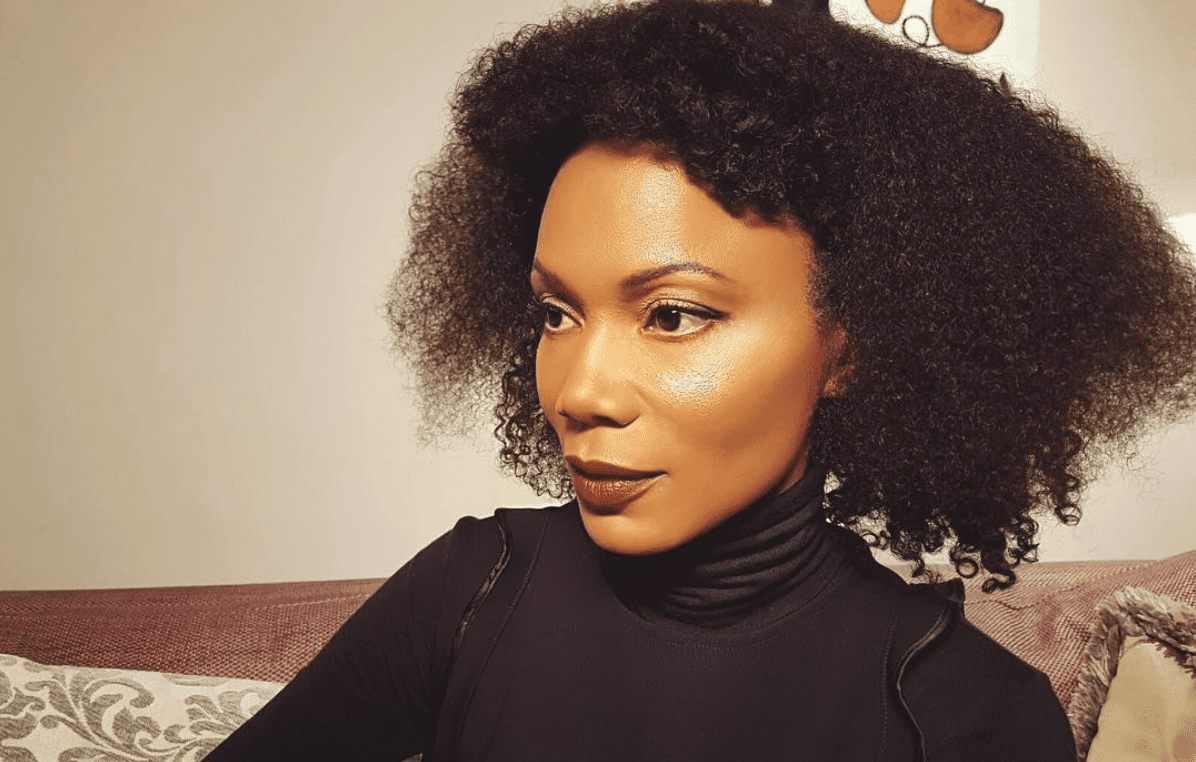
It’s no easy feat being different in a world where the norm is what’s expected of everyone. While some may slink into what is acceptable by the status quo, others stick up for who they are, gradually shine through it and eventually stand out for it, while making themselves a role model for others to follow. As a little girl growing up in elementary school, Uzo Aduba was somewhat of the former but her mother was there to nurture her and instill values in her, of which she continues to remain grateful for. The actor says her mum is a strong woman, “She’s lived 10 lives”. Her mum made her embrace her name Uzoamaka Aduba, of which she says when she asked her mum if she could call her “Zoe”, she said to her -now imitating her mum’s Igbo persona- “if they can learn to say Tchaikovsky and Dostoevsky…then they can learn to say Uzoamaka.

This was Uzo’s reply to a question from Tracy G of Sway’s Universe during an in-studio interview, saying: “A lot of people in hollywood, they’ll tend to change their names, and I also have a lot of Nigerian friends who have changed their names to make it easier for people in America to say aloud. Was that ever Something that you considered or was it easier for you because of your Nigerian pride?“. Regarding this, Uzo narrated her experience as a child, saying never again since then has she considered it as an adult.

She also spoke about the new season of Orange is the New Black (OITNB), the American comedy Drama Web series, where she plays the character of “Crazy Eyes”. Coincidentally, Uzo donned a similar hairstyle to that of Crazy Eyes when she went to audition for a role (not for Crazy Eyes, but another character) in the series. She was told a No, but called back for the role of Crazy Eyes, which she has gone on to win several awards for including the Emmy’s. The hair did it.

Uzo talks being an immigrant, being Nigerian, schooling, keeping up with about eight teachers from her school days including the Kindergarten ones too. To wrap up the interview the broadway actress sang in an operatic voice with its strained vowels, the scream of the high and strangulated sound in the soprano’s throat over a hip-hop beat (“hip-Opera“), suggested by Sway.

Enjoy the interview below.

Feature Image Credit: Instagram/Uzoaduba

ICYMI, Watch: Orange is The New Black Season 5 keeps fans on seats’ edge

Listen to Odunsi’s attempt to debunk the Yoruba Demon myth on “RnB Odunsi”

There is a new focus on critical reverence in pop music and indie artists are making bold statements and no longer restricted to using whimsical covers as branding devices.

For Odunsi, his reputation as a firebrand for progressive Afropop runs almost parallel to a culture whose ruling metaphor is the network within which every connection is seemingly equal. It’s also reflective of a music generation that grew up with better access to good music that has allowed blending of different sounds at the heart of their creative process, through sampling and verbal interpolations. Odunsi is quite apt at this and his latest unofficial release on FridayCruise, “RnB Odunsi” shows why he so celebrated for it.

https://www.instagram.com/p/BUFdQOvh3N8/?taken-by=odunsitheengine

Set on a guitar and mid-tempo drum baseline spiced up with rattling riffs, “RnB Odunsi” is a smooth evocative R&B journey that transports listeners into a vivid sonic fiesta. Odunsi delivers a pseudo-philosophical ballad about stereotypes and how gossips can ruin a good relationship. While he admits he isn’t perfect, he promises to treat her as best as he can. The narrative of love and its trials and tribulations aren’t new to the soundscape but his alluring vocals, vivid imagery and his nostalgic reference of Kas’ “Omo Yoruba ni mi oh” from “Fi Mi Le” strikes a chord.

Odunsi’s emotional rendition on “RnB Odunsi” could become a modern day R&B classic and if not, it hints at a need to counter indie prejudices by adjusting how we listen.

Listen to Odunsi The Engine’s “RnB Odunsi” below.

Featured Image Credits: Instagram/odunsitheengine

Check out Odunsi’s Five Most Definitive songs

Hear Waje’s deadpan delivery on her take of Ed Sheeran’s “Shape of You”

Words by Ehimenim Agweh

When Ed Sheeran released his hit song, “Shape of You”, he couldn’t have foretold the number of remakes and cover that would come out of it. From frisky musical.ly videos to a Terry Apala spin on the tune, Ed Sheeran has no doubt shaped playlists all over the world. In line with this global phenomenon, the latest spin on Sheeran’s Billboard-topping single come is by singer and songwriter Waje.

https://www.instagram.com/p/BVUWF4-jW4x/?taken-by=officialwaje

Waje who is known for her high hitting, deep chested style of singing gave the song a different treatment than it must be used to. Substituting a female for a male in her version, Waje gives an impassive performance. The song is devoid of highs and lows, just a mid-point which she sustains by not raising her voice beyond a certain level.

The cover is a speech given to a love interest just as Ed Sheeran did his but emotion seems to have taken a holiday and Waje is only telling it as it is, in tone and in word: ‘Look, I’m interested but don’t push it.’ It’s an excellent interpretation and different from the over flogged romance which seems to follow the song around. The cover was released as a video of her in the studio and an audio version was made available on SoundCloud.

Check them out below.


Featured Image Credit: Instagram/Waje

ICYMI: Watch Waje Charge Women To The “Mountain” In New Girl-Power Video

Chimamanda Ngozi Adichie is honoured with the Mary McCarthy Prize

Words by Ehimenim Agweh

Dressed in a striped green Zohi Taglit jumpsuit and her curls in full bloom, celebrated Nigerian author and feminist, Chimamanda Ngozi Adichie took to the podium of Bard College, New York to accept the Mary McCarthy Prize for her work as a novelist and a public personality.

https://www.instagram.com/p/BVAlcC1lxZ7/

Attending as a special guest, Miss Adichie’s honour comes at a time when women, African literature and women in literature are being celebrated. The award in short fiction which comes with a cash prize, publication of a collection of ‘short stories, novellas, or a short novel,’ and a standard royalty contract is in honour of late Mary McCarthy, a former faculty member of Bard College and a celebrated author.

The Mary McCarthy Prize is one of the latest in a line of honours for the writer since 2003 when she first won the Commonwealth Writer’s Prize. She was recently conferred honorary degrees from two institution, Williams College where she gave the commencement speech this year and Haverford College.

Congratulations Ms Adichie.

ICYMI: 23 year old Tomi Adeyemi earns a deal with Fox 2000 and Macmillan for her debut novel “Children of Blood and Bone”

Essentials: Mich Straaw debuts with ‘Collage Collection’ reissue

Every couple of years, a new artist comes around with enough talent to re-purpose the sound. But it’s 2017 and Nigerian hit songs are still stuck on beat driven radio pop. The few exceptional gems that surface shine even brighter as a result and Mich Straaw’s releases have spelt hope for the indie scene. With just a handful of self written releases and covers of songs like “Jungle Book – Wanna be like you” by Louis Prima and “Meanest Man” by Labrinth, he was able to draw enough attention to feature on the the line up for GidiFest earlier this year. Seemingly ready to build off this hype, he has finally released his debut project and with Collage Collection, he takes on the self-limiting sin all indie artists battle with.

Most of the 7 tracks on Collage Collection are old releases with “Long Way” featuring Rubunu being the newest. The project starts with “F.I.N.E” released nearly a year ago when Mich Straaw’s sound was more conventional less snobbery. He sings for a love interest on the mid-tempo beat produced by DoozyBeatz to double as a dance number though the piano chords and Mich Straaw’s vocals tend towards a serenade. The next track “CTRL” follows a similar narrative but this time, he sings over an haunting piano baseline. He delivers a rap performance as well trying whatever it take to convince his muse but his confidence won’t allow him fuss much and that attitude is one of the pitfalls of his Collage Collection.

The third track, “Long Way” is the most enjoyable listen on the project with the R&B beat produced by Tey Chaplin. Poly-synth harmonies and bouncy mid-tempo drum patterns deliver a perfect platform for Mich Straaw’s subtle singing with his guest feature, Rubunu. Their combination is reminiscent of the glory days of 90’s R&B. The love song brings to mind the Ashanti R. Kelly feature we never got and that’s a win for Collage Collection by all standards.

Mich Straaw goes back to rapping on “IWLU” with a take on the vulnerability of the male sexuality. He samples Bob Marley’s “Is This Love” for the chorus and gives an R&B refix that would have made the late legend proud. Love is a deafening running theme on the Collage Collection; whether it’s on a chill-wave song like “Fallen” and “Yours Sincerely” or any of his pop, blues and R&B tracks. It serves as a reminder love can be freeing as underground discernment for indie artists.

One thing this reissue confirms is that emotional turmoils will always be a relevant subject and we are long due for an actual album from Mich Straaw.

Listen to Mich Straaw’s Collage Collective below.

Featured Image Credits: Instagram/michstraaw

ICYMI: Mich Straaw has been dropping gems for quite some time

Watch Koker ride the summer wave while it’s still hot on “Wavy” video

Though it may go unnoticed, Koker has quite the track record for radio-worthy singles. He has managed to release one hit single per year since his breakout single, “Do Something” in 2015. His first attempt at another hit single this years comes through “Wavy” released over the weekend. Though it has all the markings of another sleeper hit from Koker, it’s more underwhelming than his previous efforts

https://www.instagram.com/p/BVUysGMlwNg/?taken-by=iam_koker

“Wavy” is produced by Rhyme Bamz and Reinhard Tega from Chocolate City. They put together a mid-tempo beat with tin-pan drums and 808 machine chord progressions with a synth baseline. Koker sings about his love interest on the thumping beat but as he often does, he manages to find a comical angle to the serenade. “I can’t come and go and kill myself” isn’t his best material ever but it didn’t need to be since his flows on the beat already put “Wavy” on such a groovy wave.

With the recent trend in song titles and themes, “Wavy” is a strong contender for word of the year as far as Nigeria music is concerned. Ycee, Olamide and now Koker have used the word and it’s beach connotation to depict their summer party music themes. The video directed by Director Q is set on a perfectly bright summer day for Koker and his love interest to go on a beach date. Conveniently, the lovers are the only ones on the beach but their detour to the games park has a few people in the shots.

Watch Koker’s “Wavy” video below.

Featured Image Credits: Instagram/iam_koker

Check out the ‘First Wave’, Ycee’s debut EP

Forget Hillary Clinton for a minute and meet Chocolate City’s first female President, DJ Lambo

After teasing a picture on Instagram telling followers and supporters to anticipate a big announcement a day ago, DJ Lambogini sent out a video of herself donning a presidential Black suit and tie, supposedly making an appreciation and announcement speech as the newly commissioned President of Choc Boi Nation, the flagship label under Chocolate City Music.

https://www.instagram.com/p/BVSA0fdFDHG/?taken-by=choccitymusic

DJ Lambo joined  CBN in 2013 after M.I Abaga’s privately owned record label, Loopy Music merged with Chocolate City to become The Choc Boi Nation in the same year, making Lambo the official DJ of the group. Lambo started out as an On-Air Personality, hosting shows on Ray Power,  Rhthym and  Love FM till she eventually found bearing and purpose in DJ-ing. Following the year she joined CBN, she featured on M’I’s The Chairman album, going on to play at events and more recently, season two of Big Brother Nigeria at one of their Saturday night vibes.

M.I has been CBN’s president for the longest time. It’s a little uncanny to see him step down from the position but who knows what he’s got stacked up ahead under his sleeves. Consequently, DJ Lambo will be the first female president under the group treading on the heels of her male predecessors, M.I, Jesse Jagz and Ice Prince.

Feature Image Credit: Instagram/DJ Lambo

Watch Yung L, Chocolate City’s latest signee, in video for his latest single “Cheers”

Adey’s “Cigarette” defines the direction this pop era is going

Pop is a quick study. If there’s one hit with a catchy snare sound, by the end of the year there will be a couple more with the same feel, either by the same producer or some up-and-comer picking up a few tricks and running with them.  Sounds travel fast, and a good one will often filter down. Krisbeatz’s production on “Pana” was refreshingly different because though it was primed for dance floors, the laid back beat embraced minimalism in a way we weren’t used to. It allowed for more attention to vocals and song writing that went on to inspire other enjoyable songs like “Mad Over You” and “If”. Producers can either create a new sound or figure out what’s trending quickly and Adey who has worked with several taste makers in the industry knows the mainstream sound.

https://www.instagram.com/p/BVS21QoFqfN/?taken-by=itsadey&hl=en

Blurring the line between producer and artist, Adey has released a new single titled “Cigarette” taking center stage with his own vocals. Though his work as a producer on YCee’s “Juice” and Olamide’s “Wavy Level” are more prominent than his own releases, his new single is set to change that. Set on a mid-tempo drum baseline combined with Spanish guitar riffs, the beat makes for a dance song with enough ambiance to make listeners pay attention to the vocals. Adey sings praises for a love interest while confessing his undying love and despite his par the course vocal work and atypical lyrics, he does enough on the production to give the song heft.

A few years ago, producers backing up their beats with their own vocals would have been seen as a novelty but lately, more and more artists are taking up beat making to avoid the legal brouhaha around song credits. Adey joins the prestigious line of beat makers with enough sauce to step behind the mic and deliver a good song.

Listen to Adey’s “Cigarette” below.

Featured Image Credits: Instagram/itsadey

Best New Music: D’Banj reinvents himself as a high-life crooner on “it’s not a lie”

AV Club: Genre-ly Speaking with Olu Ososanya

If you have walked into any cinema in Nigeria in the last 5 years desiring to see a Nollywood film, you likely discovered that 90% of the options were, Comedies of the Fish out of Water and Romance variety.  Anything else finds a hard time being picked up by distributors or even made in the first place. But it wasn’t always this way. There was a time when some of the most popular titles were Nneka the Pretty Serpent, Karashika, Brotherhood of Darkness, Diamond Ring, Blood Money, Igodo  all dark themed ,somewhat horror films. Then there were Silent Night, Issakaba, Rattle Snake, movies playing in the crime drama, genre.

So why the domination of comedy to the exclusion of other genres . Most people would say, “the country is hard, Nigerians just want to laugh and forget their problems”. True the most basic things in the country don’t work and a lot of un-necessary bureaucracy, laughter is a great escape for 90 minutes. But, those titles and genres were popular in the 90s,when the country was under a Head of state who summarily executed dissenters and enemies and most of the nation was living in fear.

Is life in 2017 really harder than the 90s were under military rule.  With 10x more entertainment options  is there more need for escapism now?  Was there no need to laugh and forget a dictator was calling the shots, literally and metaphorically? Or have our tastes changed so significantly since then?

Now, there will always be a place for the comedies, fish out of water tales because they have a faithful audience. But what about the others, where are the films for those who don’t like those genres?  Do Nigerians not like horror? The urban legend (madam koi koi etc.) kept alive via word of mouth for several decades would say otherwise.

Do Nigerians not like Action? Clearly we do, the Fast & Furious and MCU films easily clear the N100m mark in the cinemas. Nollywood classics, State of Emergency and Silent Night are fondly remembered by fans.

Understandably there is a financial factor as a majority of filmmakers are still working with micro budgets, so that limits certain types of stories.  You can’t build sets, hire consultants and send actors on martial arts/ firearms training for 3 months when the whole budget is under N20m. But a few filmmakers in spite of these limitations have managed to play in these genres. C.J Obasi with Ojuju and O-Town, Eric Aghimien with A Mile from Home and Slow Country.  Dare Olaitan with Ojukokoro, James Omokwe with The Awakening, and Stanlee Ohikhuare with Kpians.  Some of them didn’t get distribution after being screened at film festivals for various reasons stated by distributors.

Is this genre/story limitation good for the industry? Are there detrimental effects in the long run with a generation  only watching films which are laugh out loud; but none to engage them, put them on the edge of their seat, scare them silly or make them think? Where is the room of historical stories? Where is the space for stories which explore real issues in an engaging manner? The films which sink on a subconscious level and inspire them, make them reflect?

There are many engaging stories in our novels which readers decades later still hold dear . Think of the cultural impact of Things fall apart, Forest of a thousand demons, Death & the King’s Horseman, Jagua Nana ,The Trials of Brother Jero ,Anthills of the Savannah ,Man of the People etc

While not all novels have the same impact once adapted, it’s clear those types of stories resonate with Nigerians or is it a generational thing? Are millennials not interested in those types of stories? .

I don’t have any of the answers but with films like 93 Days, A place in the Stars, 76, October 1   and the upcoming Queen Amina telling more expansive and larger stories, there is hope; even if it starts with only one of those scale of films a year.
ABOUT: Olu Yomi is  a film culturist, screenwriter & director with a Masters in Creative & Cultural Industries. He has written for television; drama, sitcoms, web series & telenovelas. Short films which he has directed or written have screened at the BFI, Cannes, AFRIFF and other film festivals. He has worked on talk shows, talent hunts and documentaries.

AV CLUB: Olu osonsanya tracks the growth of Nollywood through its cinematography

Listen to President Zik and C4 on “You Don’t Know”

Blame Drake, but gone are the days when rappers were shy of showing off their vocal range. President Zik isn’t just a post-Drake artists; he a post Take Care artist, possibly the best Nigeria has seen in a while. On that album, Drake drifted lazily from rapping to singing over lush but sparse electronic soul samples that still sounds good every time it plays. President Zik does pretty much the same thing on “You Don’t Know”. He’s a singer/rapper but instead of obsessing over his relationship drama, he delivers a somber number to establish his imminent come up.

https://www.instagram.com/p/BVKZ9WahE-U/?taken-by=presidentzik

Discussing his struggle to get into the limelight while also being skeptical of the industry politics, President Zik references 2 Face and his Grass to Grace story that turned sour after his various scandals. He’s confident that he can get by with just his musical inspiration as he raps; “never listen to my teacher/tell me who rhymes deeper than the bars wey dey inside speaker”. He features C4 on “You Don’t Know” and she follows that narrative as she sings about surrounding herself with only people she can trust.

“You Don’t Know” is produced by StevJazz with a specific sort of spacious electro-soul sustained on organs and sparse heartbeat drums. The sort of beat that would seem forced in the hands of other rapers but President Zik swings from rapping to buttery teen-idol singing making it feel organic and effortless. This gives the impression that he’s doing whatever makes the most sense at any given time and sometimes that’s all we ask.

Listen to President Zik “You Don’t Know” below.

Featured Image Credit: Instagram/presidentzik

ICYMI: We figured out Tay Iwar’s creative process

Lord Vino’s “Something Light” is a ready made hit that doesn’t take itself too seriously

You probably haven’t noticed, but the game has changed. The objective when artists put out music nowadays is not just to blow (that is implied at this point) but to be the first to start a new music trend. Everyone is trying to craft a new “Skin Tight” or stumble on the next “Mad Over You”, a slight deviation from the in-demand sound that turns an artist into a household name and inspires a new wave of copycat singles. Competition is good, but it can get unhealthy when it is spurred entirely by the prospect of quick fame. Rapper Vino isn’t at all about that life on his new single “Something Light”. He’s just here to have fun.

Capping just shy of three minutes, “Something Light” is practically a ditty but Lord Vino manages to pack a whole punch of playful punchlines and two full sixteen bars on a ramped up instrumental with understated synth melodies and a frenetic guitar riff. He channels the Black British grime scene, peppering his quick wit bars with British slang and quips, yet his Nigerian roots and influences are front and centre, complete with puns about the ‘Yoruba Demon’ urban fantasy and a casual mention of personal affiliations to Naija rap legend M.I.

But the song never gets too serious, and that’s why it works. Because you never expect it, Lord Vino’s genius hits you out of nowhere and leaves you amused and very impressed.

Listen to “Something Light” here.

Featured Image Credit: Instagram/Lordvino

Best New Music: D’Banj reinvents himself as a high-life crooner on “it’s not a lie”

How 2face almost removed himself from an industry he helped build

Reaching the apex of celebrity and social class may seem like the dream for many, but even that goal is watered down by the reality that status must be maintained. As the saying goes, the higher they climb, the harder they fall, hence the task for many who reach the peak of success is to etch a legacy that will justify their place in the game. A case-in-point is 2face who pursued a solo career after the Plantashun Boiz split. His solo career spawned the resulting acclaim of his debut and sophomore projects, Face 2 Face and Grass 2 Grace respectively. But a time came in 2Baba’s career when he came close to losing it all.

Following a series of baby mama debacles, 2face became the brunt of scrutiny by Nigeria’s conservative public. In the months that followed, the singer’s ratings dropped as his baby counts from multiple women rose. Thinking a Plantashun Boiz reunite would put him back in fans’ favor, Plan B was released as a reunion album. But the project was considered dead on arrival due to a mediocre quality and low public acceptance of the project. Out of options and desperate to regain the good grace he enjoyed in the previous years, 2face attempted a bold move of releasing a third studio album with an international outlook. This birthed the release of The Unstoppable, a first of its kind that boasted of foreign influences, features and production work.

This turned out to be an ill-fated move as the album went unnoticed in many parts of Nigeria, a rarity for a 2face who was steadily racking up awards and nominations in the years prior. But the failure of The Unstoppable was not a reflection of the quality of the project. 2face’s strategy at the time was seemingly to release an album independent of the Nigerian soundscape. However, the lack of tours outside Africa, or involvement of international publishers that could help promote the album curtailed how far into the media it got.

It took nearly two years, but 2face soon learnt from the failure of The Unstoppable. As a reaction, he went back into the studio to rework some of the earlier recordings on The Unstoppable, added some new materials to the lot and repackage the entire project to primarily serve a Nigerian audience (Though he ironically titled it the “International Edition”).

Adding just 5 new tracks, 2 Face released The Unstoppable (International Edition) exactly 7 years ago today to show he had learnt his lesson from the original album’s failure. He addressed his baby mama issues on tracks like “Implication” and “Raindrops”, reminding listeners why he is so highly regarded. The Unstoppable (International Edition) also housed radio hits like “Enter the Place” and album stand-out “Only Me”, where 2face showcased a strong suit for songwriting tied to themes of justice, spirituality and hope. 2Baba’s strong character afforded him the presence of mind to admit his mistakes on the new release and though he didn’t exactly ask for forgiveness, his humanity is sustained with soul-baring songwriting.

Marketing the album in Nigeria was a smart choice that showed 2face’s maturity and an innate humility that has been lauded for in the past.
The Unstoppable (International Edition) also rescued 2face from falling into the class of the forgotten. His long-simmering issues had boiled over into a forgettable album but he quickly reconnected with the magic that made him a star in the first place. This album here is how 2face resurrected his career from drifting into oblivion.

Featured Image Credits: Instagram/official2baba

ICYMI: Revisit the time when 2Face gave us timeless music on “Only Me”

The Shuffle: Revisit the socio-political bliss of K.U.S.H’s “Let’s Live Together”

Words by Ehimenim Agweh

Nothing has changed. Twenty four years later, the band-Aids that held the country are beginning to rip and K.U.S.H’s “Let Us Live Together” has never been more relevant.

Yesterday was June 12, the anniversary of M.K.O. Abiola’s election in 1993. An election which didn’t live to see the next day and the country was plunged into chaos. Rising from it, we promised ourselves ‘Never Again’ but with the recent North-South ethnic tensions, it seems like we need a reminder of how we got here in the first place.

In 2003, music group K.U.S.H released their hit song “Let’s Live Together” as part of their album, The Experience. A much loved song, the video was a blend of black, white, grey and sepia. Yet, that wasn’t the the main attraction.

In between shots of TY Bello and Lara George doing their thing, were short clips of wartime scenes. From a starving child to a woman swearing to kill another woman and a shot of a dead body on scorched land, the theme was devastation, death and destruction, and Kush played it to maximum effect.

War is not pretty no matter the reason it was waged and if anything, K.U.S.H only wanted to promote unity and neighbourliness. “Let us Live Together” was their cry but it seemed to only bounce off the public consciousness. We liked the song but did we really learn from it?

In a time where the ‘major’ ethnic groups are threatening to rip each other part, the deep chasms in our relationship with each other are getting more pronounced. Turning differences into weapons and using them against the others is only making it worse. What better time than now to echo K.U.S.H’s recommendation for how to become a nation of united people. ‘Our strength is in our diversity.’ It’s a message for the ages and one we’d do well to heed.

Watch K.U.S.H’s “Let’s Live Together” below:

The Shuffle: How on God’s earth did Terry G get away with “Free Madness”?

Of rhymes and melody: Breaking down the art of Tay Iwar’s poetry

Words by Ehimenim Agweh

A song comes up after the previous one ends. A soulful instrumental begins. It’s familiar and yet, each time it plays, it embraces the listener anew. It’s a song the listener knows well. The characteristic piano-like tones blending with a guitar make their way through the air pods and into the listener’s soul. The song begins and it never leaves.

The process of writing and building that story, fleshing it out and giving it life is an act of creation which, it seems Tay Iwar has mastered. What might be herculean for some, is somewhat spontaneous for him. In his words, “I’m not used to writing songs down so I’d usually think of a scenario, real or fantasy, recent or old and attach sentences to them and record them in directly. Overtime, those sentences may morph or not.

The process itself is not really a process. It’s part inspiration, part word construction and part production effort. Think of a class of students engaged in a game of ‘Chinese whispers’, each one thinking up a fantastic scenario and putting their spin on the original idea. At the end of the game, the result is a complete narrative with a beginning and an end. This doesn’t mean that this is the rule every time. “Once in a while I change that process” Tay indicates.

Because each song is structured around a scenario, certain themes run through them which seemingly connects them in a loop to each other. Romance and sensuality give each other a run for their money, especially on “Renascentia”. The effect of this is a contrast of sorts between the two and how he plays with them creates an image of a person vacillating between two poles of the same emotion. Let’s not forget the relationship between the songs and the projects they are tied to.  For Tay Iwar, “Every song lyrically has its own story, but each project has its own theme sonically.” Ultimately, the idea of a theme runs concurrently with the story each song presents as they feed the composition.

Tay Iwar’s experience as a producer lends itself to the song production process in a big way. It revolves around multitasking and putting the pieces together as they come. For him, little to nothing is planned at first. All plans and arrangements are done afterward.

I record, write and engineer myself most times and try to do all of it at the same time, like in the same session“. His production credits have been built up over the years with each song he worked on. One of his stellar qualities is his ability to interpose his own soulful vocals between the instrumentals and the lyrics. The effect is of an echo which comprises of the singer harmonising with himself. With a noticeable lean towards reggae and its accompanying sounds, the pulls and drags he employs to push the lyrics make them stand out more.

Tay Iwar paints scenes with words, immersing yourself into the narrative of the song. Songs like “Trust Me”, “Wuse II” play out like a movie. The scenery is clearly stamped in the mind, the characters playing their parts to perfection. Tay Iwar’s magic is the beauty of a poetic mind and it’s this haunting quality that makes his songwriting special.

Feature Image Credit: Terna Iwar

ICYMI: We let imaginations run wild for one of last year’s best projects: Tay Iwar’s ‘Renascentia’

Bemyoda releases much anticipated debut album, ‘Stark’

Almost 5 years have pasted since Bemyoda melted our hearts with vocals and guitar harmonies on his Sketch EP. His imageries were brought to life by decidedly acoustic guitar strums with a live performance feel and this instantly forced comparisons to Asa and Bez who have made a remarkable impression on the Neo-soul Nigerian soundscape. Bemyoda’s distinctly creative expressions on his ballads however help stand him apart even when he goes as far as sampling Asa on singles like “Forever” but his rookie days are finally behind him. He has released his debut album, Stark to prove he is more than just another flash in the pan.

https://www.instagram.com/p/BVEuM-5Fgkp/?taken-by=bemyoda

His preference for folk melodies and jazz harmonies to address issues of conflict and hope once again takes us through what he described as an intense, spiritual and honest album. Stark has 10 tracks with production credits from Atta Otigba, Amos Kantiok, and Paul Scholten but no features. Though the tracks have rich and haunting baselines, it thrives on a combination of optimistic lyrics and Bemyoda’s distinctive vocals

It has been a long time coming but Stark gives Bemyoda an opportunity to confirm his reputation as one of Nigerians best Neo-soul acts and could go a long way in building a stronger fan base for both the singer as well as the genre.

Listen to Stark below.

https://soundcloud.com/bemyoda/sets/stark

Featured Image Credit: Instagram/bemyoda


ICYMI: Listen to the MockingBird’s “96” that makes a last impression beyond the infinite fact that it lit!

Pia Mia VS Phyno: The curtain call draws near as receipts surface and Mr Eazi speaks

As new revelations continue to make headlines, it has become more glaring that the suspicious imp, who was in between the two’s production of “I’m a Fan” respectively, an artist, songwriter Decarlo, didn’t actually hold the key to solving the puzzle, but was actually the key.

Adorning himself with the seemingly believable innocence of a witness testifying in court, Decarlo took to twitter to state his position on the case, to which his tweets would later come to stab him in the back.


Well, maybe Decarlo should have just kept a lid on things there, but he went on to indirectly ridicule his 2016 ally.


Phyno (& his team), who had probably been trying to stick up for the collaborator and supposed-to-be acquaintance in the very least, wasted no time to equally make an official statement, attaching screen grabs of WhatsApp discussions the two had prior to the  release of his version of “I’m a Fan” (featuring Mr Eazi and Decarlo himself), as proof to debunk Decarlo’s claims that Pia Mia’s version is the only authorised release.


Equally offended by Decarlo’s demeanour, Mr Eazi, a co-collaborator of Phyno’s 2016 released track, also took to the courtroom to testify against Decarlo with the following:


https://twitter.com/mreazi/status/874578848314253312

https://twitter.com/mreazi/status/874579942452981760

Despite the continued silence of Pia Mia and team, her name has no doubt been cleared from accusations of theft. The bone to pick however is with DeCarlo, who seemingly pitched different artists the same song with no objection to either versions going public despite giving affirmation for a release. No charges have been pressed by any of the parties involved, but all the new information we now have is enough to clarify how Pia Mia and Phyno’s similarly titled and composed, “I’m A Fan” came to be in the first place.

ICYMI, Read up: Pia Mia vs Phyno: According to collaborator DeCarlo, Phyno has no rights to “I’m A Fan”

Best New Music: D’Banj reinvents himself as a high-life crooner on “It’s Not A Lie”

There is no contemporary Nigerian musician who has enjoyed as much goodwill or broken as much ground for Naija music as former Mo’Hits front man and current D Kings Men strong man D’Banj. Over his 19 year career, he has managed to repeatedly reinvent himself and revolutionize Nigerian music in the process, challenging the status quo and fostering global interest in afrobeats. Which is why, even after the misstep that was the brief record deal with G.O.O.D Music and 2015’s scrapped album, it is almost ironic to have a line like “Google D’Banj” on his new song “It’s Not A Lie“.

The real reason our collective good will has remained sustained is that D’Banj always, always delivers. And he delivers spectacularly, bringing on old time label mate Wande Coal and Harrysong to help him transition from afrobeats to high-life, drawing on that goodwill as he seeks to reinvent himself yet again for his new album King Don Come and the era that it will precede.

All three men have something to prove and a similar history; they’ve all left the labels they began their careers with to start new ones where they have more creative and administrative freedom and perchance this is why they have so much chemistry. Harrysong, a nu-highlife veteran is the soul of the song, offering a glittery verse and an ear-worm chorus. Wande Coal’s newly acquired growl works to his advantage, giving edge to his new persona as a middle aged dandy.

But D’Banj doesn’t do any changing, and he has never had to. The D’Banj mold was made to be all-purpose, charming and mysterious but most importantly malleable. He is just as innocuous in a high-life song as he is as an EDM artist. D’Banj remains unharmed by experimentation, career missteps and personal tragedy.

“It’s Not A Lie” is more than an experiment, it’s a declaration of D’Banj’s enduring star power.

Stream “It’s Not A Lie” via Apple Music here


Feature Image Credit: Instagram/iambangalee

Watch the Video: “It’s Not a Lie” shows a Dbanj who has learnt from lessons of the past

Here are 5 album Essentials from Wizkid’s groundbreaking ‘SuperStar’ debut album

Today marks six years since Wizkid released a debut album that changed the craft and art of modern Afropop forever. In honour of Superstar, the album that began the Starboy’s journey from Ojuelegba to the world, here are five unmissable essentials from Wizkid’s groundbreaking debut.

Tease Me
The debates are still on-going on what makes Wizkid’s “Tease Me” such a good song. Yes, Samklef’s production, tingles with pianos and dancehall drums, while Wizkid sails across the melody with ease. Wiz also memorably sets off on loose freestyle verses, occasionally imploring his lover to strip tease him as he revels in his satisfaction with his newly found ‘bad guy’ status, thanks to an inner caucus of celebrities. “C’mon girl, c’mon girl’, he croons as if to convince the object of his affection she had to take him seriously because he was also now a part of the power circle. But to truly understand “Tease Me”, one must look past the cringe-worthy fact that he seems to be leveraging his new found social class for a chance with a girl. And instead, note how Wizkid asserts himself as a product of an extensive network of friends with understated impact on his career. Though seemingly cheeky, it’s a show of gratefulness and humility, a payment of respects more or less from an artist on-the-come-up to those who paved the way for him.

Love My Baby
“Love My Baby” is the designated love song from Superstar and perhaps the most effervescent song off an album that waned between mid to slow track tempos. Producer Shizzi creates a pulsating baseline peppered with snare drums while Wizkid expressly declares his love for his ‘baby’. On “Love My Baby”, Wizkid brings masterful composition and song arrangement to the fore like a true pop star. Despite maintaining a consistent theme with very little subtexts, no two parts of “Love My Baby” sound the same. This dynamism of flow on a single melody is especially accentuated by Wizkid hitting alternate notes, additional vocals layered on earlier sung parts and tints of Banky W toned on back-up.

Scatter The Floor
Producer Jay Sleek is known for big bangs that seem to be an attempt to show off his comfort with harmonising a wide range of sounds instead of actually translating the artist’s creative vision. On one hand, “Scatter The Floor”, is a band-camp’s wet dream of snare drums, on the other, it’s a riot of synths and lower register of electronic sounds and effects. However, Wizkid waxes Jay Sleek’s multi-layered production with his most expressive lyrics (till date) about wanting a girl to open the door to her life for him, so they can dance till dawn amongst other things.

Don’t Dull
One of the stellar characteristics of Wizkid’s SuperStar debut is production work that combined a series of old and new concepts for a sweet spot in between. This is reflected in how radio hits songs off the project like “Pakurumo” either held hints of genre evolution, or experimented with sounds that were not common with Afropop at the time; this is where “Don’t Dull” wins it all. Producer Samkelf, builds low with hymn-like piano synths and 808 drums, allowing Wizkid to come in with a barely auto-tuned melody that infuses both elements of Fuji and hip-hop. Here Wizkid is back to self-elation and assertion but it also highlights a unique combination of familiar and unique sound influences ever present through “Superstar”.

For Me (feat. Wande Coal)
As Wizkid’s Superstar continues to age into its coming classic years, “For Me” will live on as one of the most efficient collaborations of two premium artists at their respective creative peaks. Jay Sleek’s complex production designed the track as an ultimate dancefloor number, but the greatest shine is Wizkid and Wande Coal’s unmissable chemistry. There is a clear intent to make something of their highly anticipated collaboration, but both artists seemed a lot more interested in having a good time on the same wavelength. Wiz and Wande don’t only exchange casual shoutouts across verses, they also share a bromantic refrain on a free verse where Wiz raps “Tell Them What They Don’t Know Is Wande Coal” and Wande Coal sweetly chimes in “And Wizzy!”.

Stream the essentials of SuperStar via Apple Music below

Wizkid schools america on lagos parties, strip clubs and accents

The Isomers are all about finding the light on “Oya”

Abuja based alternative band The Isomers occupy a precarious niche in the Nigerian rock industry. So far they’re the only rock/alternative band in the country that isn’t gospel adjacent or a Christian/gospel rock band. And so they are helping define what Nigeria’s alternative/rock scene is and sounds like. They’re also the first rock band to put out a major project with 2015’s self titled The Isomers EP, a six track album that introduced them to the world. After 2017’s “Love, A Kite and A Rock” and “I no get“, they’re revisiting their first EP and giving “Oya” one of the song’s off the project the video treatment.

The new video is deliberately lo-fi, sticking the band’s unvarnished aesthetic. “Oya” was one of the songs on the EP that heavily incorporates more recognizable Nigerian elements like pidgin and tribal percussions, and seems a natural choice. The story is somewhat abstract but the general gist is imagery for how the band found each other and the music that has helped separate from the rat race that everyone seems consumed with and steered them towards a higher purpose. It is ambitious and charming in it’s own and kind of make you gain an appreciation for the band and what they’re trying to do with their music.

The Isomers’s catalogue is amazing and we hope they get funding to give more songs on and off the EP the video treatment.

Watch “Oya” here.

Feature Image Credit: The Isomers

ICYMI: The Isomers’ “I No Get” is a demand for love in spite of the recession

7th is bringing a different kind of vulnerability to the game with “Tender Moments”

A piano ballad with the word ‘Nigga’ in it isn’t something you’d conventionally expect, but with international acts like Bryson Tiller inspiring the new wave of music coming from Nigeria’s post millennial generation, there are very few unspoken conventions that have stayed unbroken. It has given us 7th’s “Tender Moments”. 

Nigerian music isn’t known for vulnerability. There is such a profound pressure to present a happy, financially fulfilled front to everyone that the majority of the music we make, new age artists inclusive is often positive to the point of being boisterous. Only after a handful of bonafide party hits or thug anthems do singers and rappers here start to let their guards down and really emote. Joshua Ananaba, otherwise known by the intriguing stage name 7th is subverting this entire trope with a first single that is entirely a piano ballad. There haven’t been that many memorable piano ballads, save for Darey’s “Not The Girl” and any one of Cobhams Asuquo’s many hits, so Ananaba is taking a huge gamble. But with a mix of excellent, if subtle vocal work, surprisingly good story telling that somehow remains ‘street’ while being relatable, and deft piano work, he sells us in on this tale of a man at the end of a volatile relationship and unwilling to move on.

He is definitely on our radar.

Listen to “Tender Moments” here.


Wizkid and Chris brown’s “African bad gyal” get an official release date

Lindsey Abudei & The Perfect 4th String Quartet make a strong case for the unplugged showcase

For singer/songwriter Lindsey Abudei, 2016 was a fortuitous year. After many delays and a difficult process, that involved several cuts and a restructuring of the project, And The Bass Is Queen, her debut album, was finally released to the public. It was 5 years after Brown, an EP people often mistake for an album, and 2010’s Prix Découvertes Awards, celebrating African songwriting where she was the second runner up. The album was critically acclaimed across the bar, but in the same breath many critics suggested it wouldn’t mainstream success in Nigeria.

It was long before the suggestions that Abudei water down her sound started coming. Suggestions to add some percussions or a little ‘ethnic’ flair, something the mythical ‘average Nigerian’ can latch on to and take ownership of her music for themselves. She found herself placed firmly in the category of Nigerian musicians whose music was qualified as ‘Alternative’ and thus not commercially viable not because it was experimental or unconventional, but because it ascribed to a global standard of technical excellence and universal accessibility. It seems unfair, even now, to be punished for excellence, but this is the nature of Nigerian music.

Rather than fighting this limiting category, Lindsey Abudei is seeking to embrace, and then transcend it through intimacy. Since the album was released, Abudei has opened for a number of high profile Nigerian musicians, including Asa, and has taken to small venues like the weekly Taruwa meet at Bogobiri in Ikoyi, poised in chair, backed occasionally by a bass player or guitarists, drawing old faithfuls and new converts into the fantastic world of the album’s plucky protagonist. These satellite performances were good practice for when Abudei decided to strike out on her own.


And she did, on May 16th via Instagram. With a string quartet no less. I thought it couldn’t get any more intimate than that. I was wrong.

Omenka Gallery, the venue for the concert was concurrently hosting an exhibition so it’s sterile walls were flush with hyperrealistic drawings and monochromatic photographs and stylized paintings of gawking women. In lieu of chairs were cushion spread out around the set up for the quartet in the middle of the room. Abudei worked the room, unassuming in a striped blouse and wide pants, her hair, cut into an unruly pixie cut. Many of the guests were long time fans who’d seen her perform before but never like this. So for everyone, Lindsey Abudei inclusive, this was a first.

The first thing that you notice is that there are no discrepancies between how Abudei sounds on the record and how she sounds live. Every note is delivered in near perfect pitch, every adlib measured to complement the quartet that plays in concert with her. The second is that the songs from the album and the EP before it are intensely personal to her, so much so, she has chosen to forgo playing instruments herself during performances so she can fully go where the music leads. We sing along with some songs, others we are content to just listen.

There are small anecdotes woven into the story, glimpses into the how songs came to be, and the things and people that inspired them. Libra man came from a conversation with her father, Shoot ‘Em Down was inspired by Jay-Z song, Drift Away has several versions floating on the internet. Then there is the easter egg of the female bass player, dressed up in red, a homage to album’s cover art and the double entendre of the album’s name. By the time Lindsey finishes her set list and the audience begins to drill her for encores, jukebox style, we all feel as though we’ve known for her years.  She indulges us, taking questions about her career thus far, her personal life, and the future. She lets it slip that she was recently accepted into a prestigious international music residency. We are all sated, but sorry to see it end.

It isn’t very often that we see a beloved musician shed the pedestal and the artificial barriers of raised stages & guarded barricades, become indistinguishable from people for whom she makes her music. This, perhaps, is the magic of Lindsey Abudei.

Tiwa savage and the curse of the groupie effect