Afropop is still pop, but emotions are elemental for DJ Wayne on NATIVE’s 12th mix, perhaps this is why its our coldest one yet. Heavy bass from “Go”, Tekno’s alleged response to shady statements from Wizkid back in July, ease into electric twin mixes from Wiz himself. TY Bello’s ode to the land of promise brings some somberness before the Wande Coal remix to L.A.X’s “Runaway” and the original are spliced together somewhere around here. Bass becomes light strings and melody peaks are waxed together by Mayorkun, Koker, Runtown and Jilex Anderson. There’s some light dance at the end of this by DJ Spinall and DJ Kaywise but Olamide’s “Wavy Level” takes it all back to base where harmony is found in songwriting or beats that have been stripped bare.
Listen our 12th mix and peep the tracklist below.
Go – Tekno
Medicine Remix – Wizkid feat. Phyno & Flavour Medicine – Wizkid Up 2 You – SDC feat Funbi
Greenland – TY Bello Runaway – L.A.X
Runaway – L.A.X feat. Wande Coal Mama – Mayorkun
Only you – Famous Bobson Wavy – Koker
Bad Man (remix) – Dun D feat. Kojo Funds & Sneakbo
No Don – Lotto Boyz For Life – Runtown Jeje – Falz Wave – Jilex Anderson
Informate – DJ Kaywise Feat. Tiwa Savage Calm Down – DJ Spinall Feat. Mr. Eazi
Haters – Shatta Wale & Mr. Eazi
Something Light – Falz Feat. YCEE
Wavy Level – Olamide
If only for its significance to the theme of summer and our reluctance to kiss goodbye to the holiday, Samklef has stepped up his game on visuals. While we’ve heard Samklef singing before—debuting with “Nonilizing” and “Laba Laba”—his latest offering, “Philo” is his first release under Akon’s KonLive record label. The move has seen him progress from acclaimed producer to singer-songwriter and finally a visual artist of sort.
Thanks to the video production by label mate Patrick Elis, “Philo” is created as feast for the eyes with the bright and sunny motif of the video. Samklef’s performance is assisted by a model in a teasing bikini outfit. Complete with suntanned palm trees, a swimming pool, a green grand piano, bright colored fruits and a yellow Lamborghini, Samklef is holding on to the summer shin.
His dance moves on the mid-tempo Afropop vibe of the single is far from convincing. But he enjoys a seductive chemistry with the model and highlights the romantic narrative for “Philo”. Watch the video for “Philo” below.
While the rest of us only dream of our perfect music collaborations and imagine what they’ll sound like, DJs have no trouble turning it into a reality. Not only do they make great mixes, they also curate the most popular sound with collaborative singles.
Though in this case with “Pose”, both artists and DJ are partial to the Afropop genre, both Tiwa Savage and Solidstar even out their edges for harmony. Yet the synergy they share on “Pose” is every bit as harmonious as the beat influenced by Caribbean harmonies. The mid-tempo drums are elevated by the soka horns and synth pianos as Solidstar take the first verse and chorus—lifted from Baba Fryo’s “Dem Go Dey Pose” released in the 90’s—before Tiwa Savage’s verse. They boast with rapper type swag and enjoy a duet towards the end of the track.
The video directed by ADASA COOKEY is shot in a Lagos and set at a night scene with cameos from guest artists Solidstar, Tiwa Savage and DJ Xclusive himself.
See the video for “Pose” below.
Featured Image Credits: YouTube/Superstar DJ Xclusive
You are meeting Debola at a strange time in his life. He wandered into a dream and lost his way back. Tweet at him@debola_abimbolu
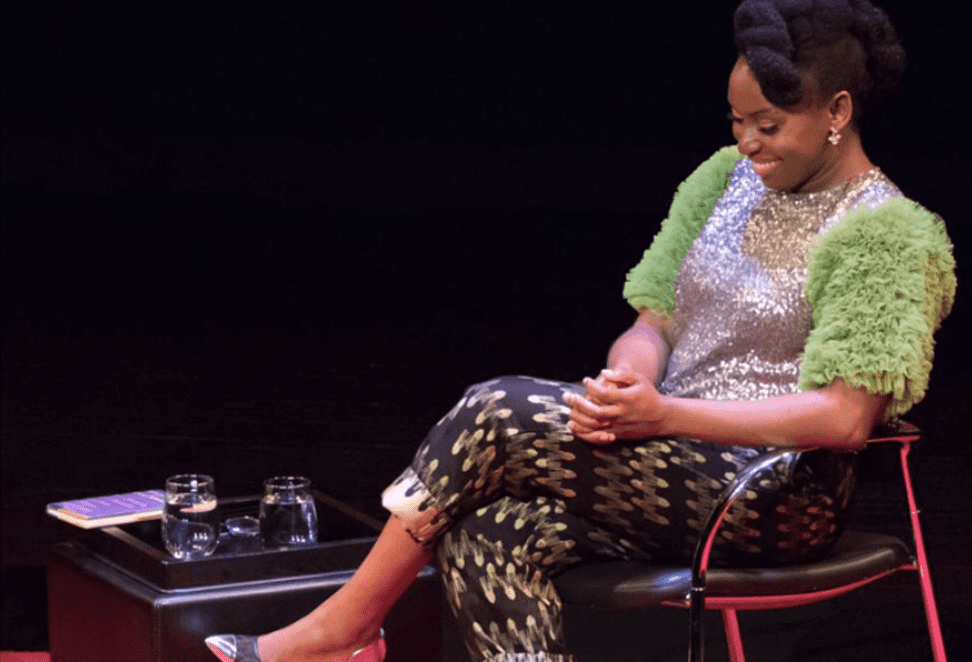
It is beyond amazing to think that nearly 20 years after Chimamanda Ngozi Adichie began her journey as a writer, she is Nigeria’s foremost 21st century writer and one of the most prominent voices in feminism today. As she turns 40 she is still regarded with a sort of ambivalence by many within and outside Nigeria. Many consider her work stellar but are conflicted by her personal politics.
One thing everyone is in agreement about is Adichie’s outsize impact on women here. Her fierce female protagonists have made a larger part of them reconsider a lot about Feminism. It’s difficult to not narrow all her achievements down to just that. Lets celebrate her with some of the memorable moments that got us revelling in her work and success.
We Should All Be Feminists TEDx Talk
Here, she details her views on gender construction and sexuality. One of her most easily remembered lines is when she says the problem with gender is it shapes who we are. “Feminist, a person who believes in the social, political and economic equality of the sexes”, she says. Her essay, We Should All Be Feminists is adapted from the talk and has remained on bestseller lists too. The 2013 Ted Talk has spun into many must reads, must hear and must wear (i’ll get there in the following list).
Chimamanda and Beyonce, Flawless
The We Should all be feminist Ted talk was sampled by Beyoncé in her song, “Flawless” off her 2014 album. By adding it as a major part of the song, Beyonce took the feminist TED Talk and amplified it a thousand fold, reaching millions of young women. It also won Adichie her first Grammy nomination.
Chimamanda’s collaboration with Dior
https://www.instagram.com/p/BT9lctZlEuP/?taken-by=chimamanda_adichie
Last year, she collaborated with Christian Dior on a T-shirt bearing the line “We Should All Be Feminists”. Many took the statement pieces to be a part of everything that is wrong with feminism today. The proposition is that feminism has become so mainstream as to be an empty marketing tool, a mere slogan on a bag or a T-shirt. But she elaborates on this in an interview with the guardian uk, “this is why so many women, particularly women of colour, feel alienated from mainstream western academic feminism.” she says. “Because, don’t we want it to be mainstream? For me, feminism is a movement for which the end goal is to make itself no longer needed. I think academic feminism is interesting in that it can give a language to things”.
The launch of Americanah
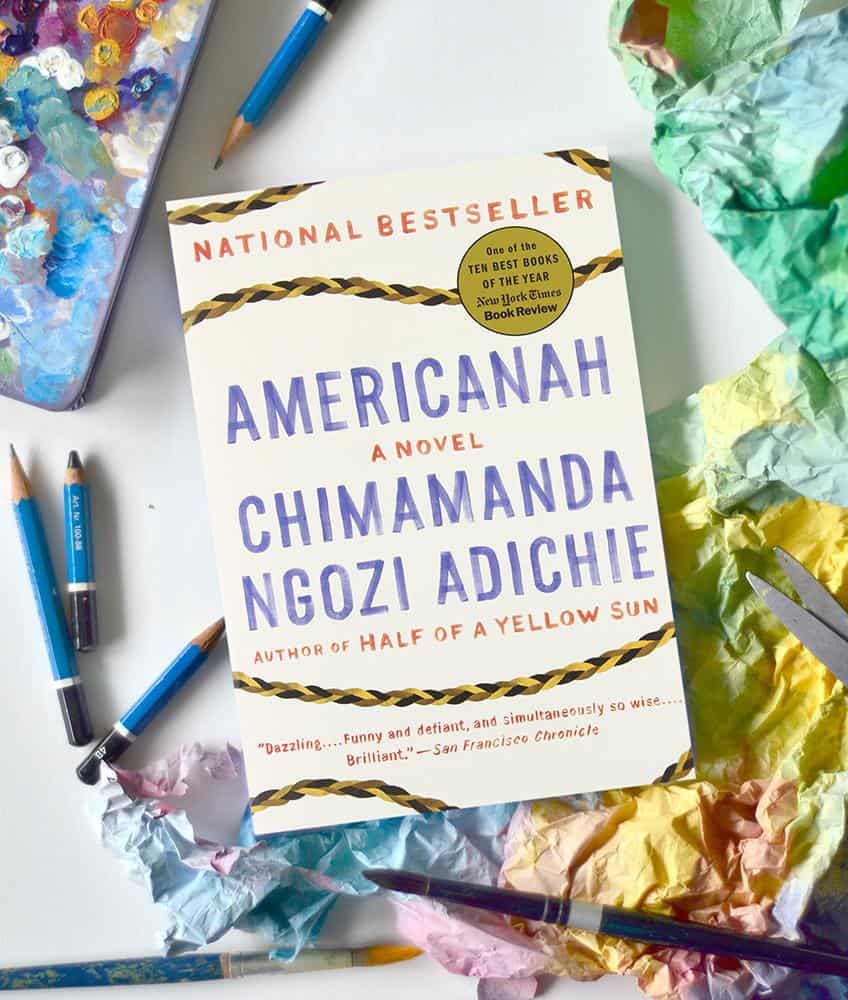
Her third novel, Americanah, launched in 2014, examines what it is to be a Nigerian woman living in the US. But it’s beyond that. It’s a book about hair: straight and afro; and discreet tensions, between white Americans and Nigerian immigrants, between Africans and African Americans, between the light- and dark-skinned and between new and established immigrants. Americanah (the word refers to Nigerians returning home after living in America) went on to win best novel at the National Book Critics Circle awards and it’s still one of the most read books of our time.
Birth of her daughter
Chimamanda is a wife, a self-confessed daddy’s girl —She’s written a long read on New York Times about her Dad’s experience with Kidnappers in Nigeria, being the father of a presumably ‘rich’ novelist and her dad was also one of the two people (including Chinua Achebe) to read and review her novel, Half of A Yellow Sun— and she is also a mother to a baby girl. But she isn’t delimited to all these and she’ll tell you that too. No one should be.
Featured Image Credit: Instagram/@Chimamanda_adichie
Americanah Image Credit: ruthmeharg . com
Fisayo is a journalist who thinks writing is hard and reading too. But her journey somewhere reveals, words are like pawns on chessboard when writing. She wants to see, create and share with the world, experience & communicate these experiences. Tweet at her @fisvyo
By dint of the Afro-house genre she dabbles in, Niniola’s voice is a colourful instrument that hits a lot of emotional nerve clusters at once, making you move to whatever music beats she sings on with precision. This way, every lyric crawls into your memory because you almost can’t differentiate which part of the song bares the chorus. On her new song “Sicker”,“Ma lo fara we mi o” she sings repeatedly, giving the words a different tang and savor in the video each time.
One of her best tricks has been repetition; it drills her ideas and leaves her impact. There have been few lines committed to engagement as “Are you begging, are you begging to dance? Are you willing, are you willing to move?” —it’s almost as if you are made to start questioning those around you along with her and slot in your own dance moves as you do so. Such persuasion plays out all through the song via the production engineer and film maker. Everything about it —the airy timekeeping of Sarz’ drums, Clarence Peter’s colourful montages, and Niniola’s dancing and singing —feels tightly worn and angled just right. It has that easy, rounded glow of someone who has really figured out exactly what they want to say and how they want to sound.
Still, the song exists for Niniola’s upcoming album, which she has promised to put out through our last experiences of 2017. “Sicker” is a piece to the final puzzle.
Bump it below.
Featured Image Credit: Youtube/OfficialNiniola
Fisayo is a journalist who thinks writing is hard and reading too. But her journey somewhere reveals, words are like pawns on chessboard when writing. She wants to see, create and share with the world, experience & communicate these experiences. Tweet at her @fisvyo
It is somewhat disheartening that we rarely hear about the democratic republic of Congo, if the topic of conversation is not about its brutal history under Dutch rule, its current spate of civil wars as feudal leaders fight for control of its vast natural resources, or its often reputation as the ‘rape capital’ of the world. But Congo is more than that, and one of its biggest export is it’s subculture of African Dandies, otherwise known as Sapeurs. Their unique style and their commitment to dress good as a metaphor for self actualization has drawn attention from celebrities as big as Solange Knowles who worked with Sapeurs for her the video for her song.
But finally Sapeurs are finally getting honoured by someone who intimately understands the subculture. Central African Republic DJ, Boddhi Satva, protege of Grammy award winning producer Louie Vega and owner of label Offering Records, and one of the permanent DJ’s on the critically acclaimed Coke Studio Africa teamed up with Congolese rapper Badi to record “Kitendi”, off his sophomore album Transitions. “Kitendi“s instrumentals are a whole soupcon of influences from, oriental drums, synth organs and a contemporary hip-hop beat, mixed in Satva’s distinct style. Badi pays homage to forebears of the genre Satva calls Ancestral Soul: Stervos Niarcos, Papa Wemba and Kester Emeneya. All three helped to pioneer “La SAPE”, the iconic fashion movement from the 1960’s that has morphed and evolved with the times and grown to influence contemporary francophone artists today.
Sans the history of “Kitendi” which means clothing in Lingala, one of Congo’s major indigenous languages, Badi is a formidable rapper, and Boddhi Satva is basically just showing off. It’s a pairing we hope we see more of.
Watch the video for “Kitendi” here.
Edwin eats his rice and cabbages. Tweet at him@edgothboy
Since his “Eni Duro” debut, Olamide has conjured a romance with the street, a theme and narrative that easily makes him the most marketable rapper on the streets—at least in Nigeria’s South West. And though his attempts to fully explore this ghetto aesthetic often derails him from his original Hip-hop genre, his fame certainly isn’t worse off from it. His more Jollof songs like “Turn Up” and “Shakiti Bobo” are easily more commercial than his conventional hip-hop songs and that’s what DJ Consequence’s latest single, “Assignment” is going for.
Featuring Olamide in his local elements, DJ Consequence’s new song is primed for dancefloors thanks to the upbeat Afro-house rhyme produced by Young John. The South African house drums are layered with spacious synth harmonies for Olamide’s laid back rap flow. He shout-outs streets in Lagos; “Shomolo/ Mushin/ Kumolu/” while discussing money, yahoo yahoo, bad bitches and other topics the streets can’t seem to get enough of. All the usual fare for Olamide, but he makes it sound so good.
Listen to DJ Consequence and Olamide’s “Assignment” below.
Although most of KINGJAMAL THE HITMAKER’s Live Long and Prosper is spent “Spitting Fire” bars and “Dream(ing) Of Blowing”, he has the courtesy to bother with the niceties and builds a frame of reference for his hustler aesthetic, albeit trivial—“Life Is Hard So I’m Screaming/ Fuck The World.”
In a bid to revive some of his old tracks and perhaps increase his play count, a few singles released last year are included on Long Live and Prosper‘s extensive 21-track list. Though the effect is a dragging stoner bluntness and a horror gore of a joyride, the short lengths of the tracks, bouncy yet eerie trap beats and features from Mr. Jabari, Rhoda, Toronto, P money and Ice Prince make the album worth the time.
He “Roll(s) Up/ Pour(s Himself) A Glass/ Hope(s) That Shit Lasts” on opening track “Something On My Mind”, a somber piano led ballad that allows KINGJAMAL THE HITMAKER reflect on his ambitions. He goes on to describe his flamboyantly nervy reality on “Frozen Jungle” and “Trap Music” where he teams up with Ice Prince to “Reload (his) Clips”.
One of the stand out tracks from Long Live and Prosper, “Muddy”is built around the tried and true hip-hop principle that the rougher the journey to the top is the better it feels there. Only love songs; “Jonze Me” and “Ur Nomber” divert from his hunger for success as he even goes as far including cuts from DJ Khaled’s “Don’t Ever Play Yourself” on “Leave Her”.
The project however doesn’t feel as inspiring as the title suggests. The self proclaimed Hitmaker still doesn’t have a hit song to boast of but there is a undeniable hunger for one. And Long Live and Prosper signals progression in his sound, which can only spell great things for KINGJAMAL THE HITMAKER.
Stream the album below.
Featured Image Credits: Twitter/KJTheHitMaker
You are meeting Debola at a strange time in his life. He wandered into a dream and lost his way back. Tweet at him@debola_abimbolu
Mainstream Afropop adheres to a rather straightforward blueprint of being unadventurous and relateable. This leaves the alternative-indie scene to pull all the weight for experimental and unique themes and sounds. Savy could have taken the mainstream pop shortcut with his latest single, “All I Want” given his captivating, throaty vocal tone, his candid attitude and love incline lyrics. But instead he steers clear of the dance music obsessions and sings over a decidedly mellow instrumental produced by Heartbeats.
Sure, the theme is familiar but it’s a breath of fresh air in the sense of listening to a young artist singing about things you know they actually relate to or have a hand in. Savy isn’t focused on eccentric, jaded lyrics or building a superficial personae on “All I Want”. All he does is establish his natural singing voice and highlight his affectionate feelings towards an unnamed love interest.
Over a light piano riff that soars as synths and drums are introduced, he confesses that he’ll “Give Anything For You/ Cause You’re All That I Want.” A light backup melody can be heard playing behind Savy’s melodies, giving off a gentle tone to the piece.
Listen to “All I Want” below.
https://soundcloud.com/savy-henry/savy-all-i-want
Featured Image Credits: Instagram/savy_henry
You are meeting Debola at a strange time in his life. He wandered into a dream and lost his way back. Tweet at him@debola_abimbolu
Earlier this summer DAP the Contract premiered “Special” at NATIVE’s Birth Issue launch party to instant warm reactions. Despite a somewhat surprise guest feature in the serial hit-maker Ajebutter22, “Special” is indented with all the things that makes DAP such a cerebral artist: a quirky baseline, synths and a slick flow inherently set on striking a balance between feel good and wallflower moodboards. Complemented by one of the best Ajebutter verses I’ve heard in quite a while (he should rap more), the track is the perfect late summer serenade before the days get shorter and the nights get longer.
Beyond sound, DAP’s roll-outs continues to reject convention, every new release is especially different from the former. First he released an EP, Two Roads in April,then he began a recently concluded music release series called ‘Contract Thursdays’.
DAP has just begun the second part of this series and “Special” is the first release of “Contract Thursdays Pt. 2”. In his own words, the new series will feature “a cross-cultural, colorful collection of new music, with help from various stellar artists. You can be sure to find something in the batch that you will fall in love with”. With Ajebutter and former collaborator, Peter Enriquez by his side, DAP kicks off this collection with a gem.
Stream “Special” below, and watch out for the rest of the series.
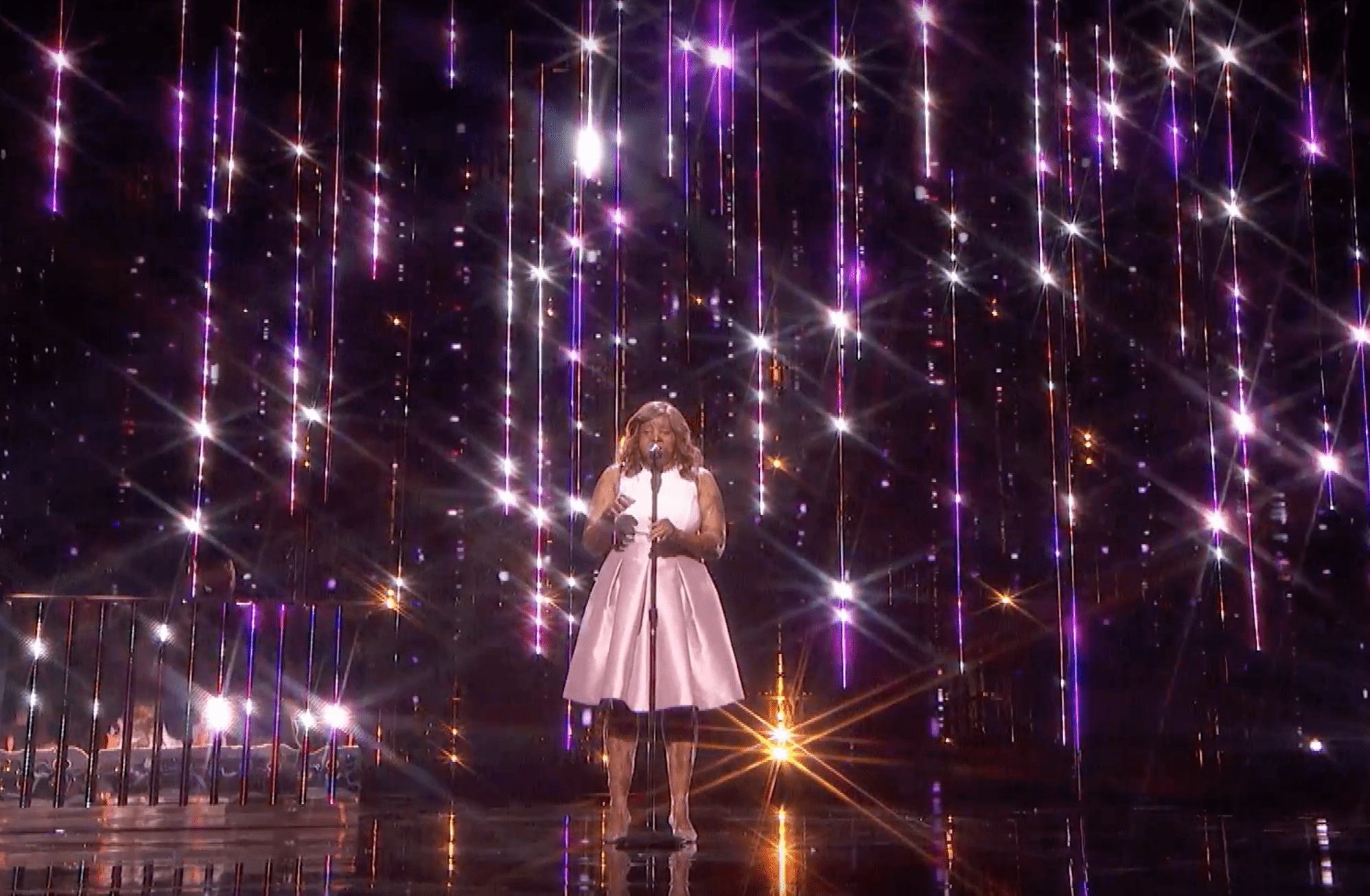
With only five acts going through to the Final Stage of America’s Got Talent, the artists who placed first, second and third were automatically into the finals yesterday. But the fourth, fifth and sixth acts took part in the Dunkin Save. Host Tyra Banks announced them early on so that the voting could begin: Mentalist Colin Cloud, dance troupe Diavolo, and singer Kechi.
In the Dunkin Save, America voted through Kechi, who on Tuesday night sang “Don’t Worry About Me” by Frances. She dedicated the song to her mum seated amidst the audience.
After the announcement, “I cannot believe I am in the finals,” said an overwhelmed Kechi. “This is unbelievable. Thank you so much.”
Watch the performance below, and anticipate her final performance on the live show next Tuesday, September 19 at 8 p.m. ET/PT on NBC.
https://www.youtube.com/watch?v=01JS2BHVkTU
Featured Image Credit: Youtube/Americas got Talent
Fisayo is a journalist who thinks writing is hard and reading too. But her journey somewhere reveals, words are like pawns on chessboard when writing. She wants to see, create and share with the world, experience & communicate these experiences. Tweet at her @fisvyo
All a good music video needs is a bunch of cool friends, a camera and glossy filters. Of course, considering the glut of uninspired visuals we often get in Nigeria’s music scene and Straff’s uncanny stroke for turning his wildest artistic visions into a reality as seen on his debut video, “Cherry Game Girl”, the video for“Trounce” always showed promise.
Directed by Lenx and shot in Lagos, “Trounce” doesn’t try to tell any story but it certainly does its job as a promotional tool emphasizing Straff’s inherent fascination with psychedelia. The spacious synth harmonies on the single produced by GCL3F are brought to life through the colorful filters, screen glitches, slow-mo to super-fast editing and more erratic beams of light than is medically healthy.
That being said, everyone knows most of the coolest things in life come with a prescribed warning. So before exposing yourself to the waves of psychedelic lights and kaleidoscopic imagery, make sure you aren’t photosensitive epileptic because this video has all the ingredients to trigger seizure.
Watch the video for “Trounce” below.
Featured Image: YouTube/STRAFFMUSIC
You are meeting Debola at a strange time in his life. He wandered into a dream and lost his way back. Tweet at him@debola_abimbolu
“I Wrote A Song About You” is Rookie SBK’s official music spring back from the angst that happened to him last year. The guy had gotten jaded after putting together 43 songs into one compilation album under the umbrella name Songs For The Blue on his Soundcloud.Tracks on the album are literally his life stories, on a track like “Brink of Adulthood” he rap-sings, ranting to his mother and people, that he is all grown up and on “Wake and Bake” he illustrates a dishonest relationship. This was in late December 2016. All tracks are raw and unmixed tracks, dished out to fans and supporters. In his own words, “the real ones who fuck with the sound”. Then. The unthinkable happens.
First, someone steals all his recording equipments, then Rookie gets into a copyright mess and is taken down on Soundcloud –perhaps this is why we now have 37 songs on the playlist, not the intended 43. After having put so much work in the music work, Rookie gets worn out, bored and tired of life. To him, it was impossible to escape the ennui and despair of it all, and in that moment he tells himself nothing lasts forever, even his music career. But this is a tale too trivial when juxtaposed with how good of an artist Rookie is. And he’s improving. Besides, he gets an ego boost from his followers on social media platforms who motivate him to keep the singing going.
Rookie is becoming a master in the RnB, Jazz and Hip-hop genre. Even when he sounds like Chris Brown or Justin Timberlake, he sounds like himself. And he takes even more pleasure in making sure we know too. “I Wrote A Song About You”, his new song is all bravado. Rookie creates a smooth beat out of a constant piano baseline, bouncing bass and a sound that strikes like a finger snap and he rides it with that fluid, effortless falsetto. “I’m just trying to heal, Oh baby I confess,” into “Tonight the stars are out for you” becomes a sentiment worthy of flushed swoons when it’s stealthily slowed down, leaving just the instrumentals to finish up.
“I Wrote A Song About You” is the kind of that smooth sultry vibe that win ladies back and maybe this really would for Rookie.
It’s beautiful. Peep the track below.
Featured Image Credit: Instagram/Rookie_SBK
Fisayo is a journalist who thinks writing is hard and reading too. But her journey somewhere reveals, words are like pawns on chessboard when writing. She wants to see, create and share with the world, experience & communicate these experiences. Tweet at her @fisvyo
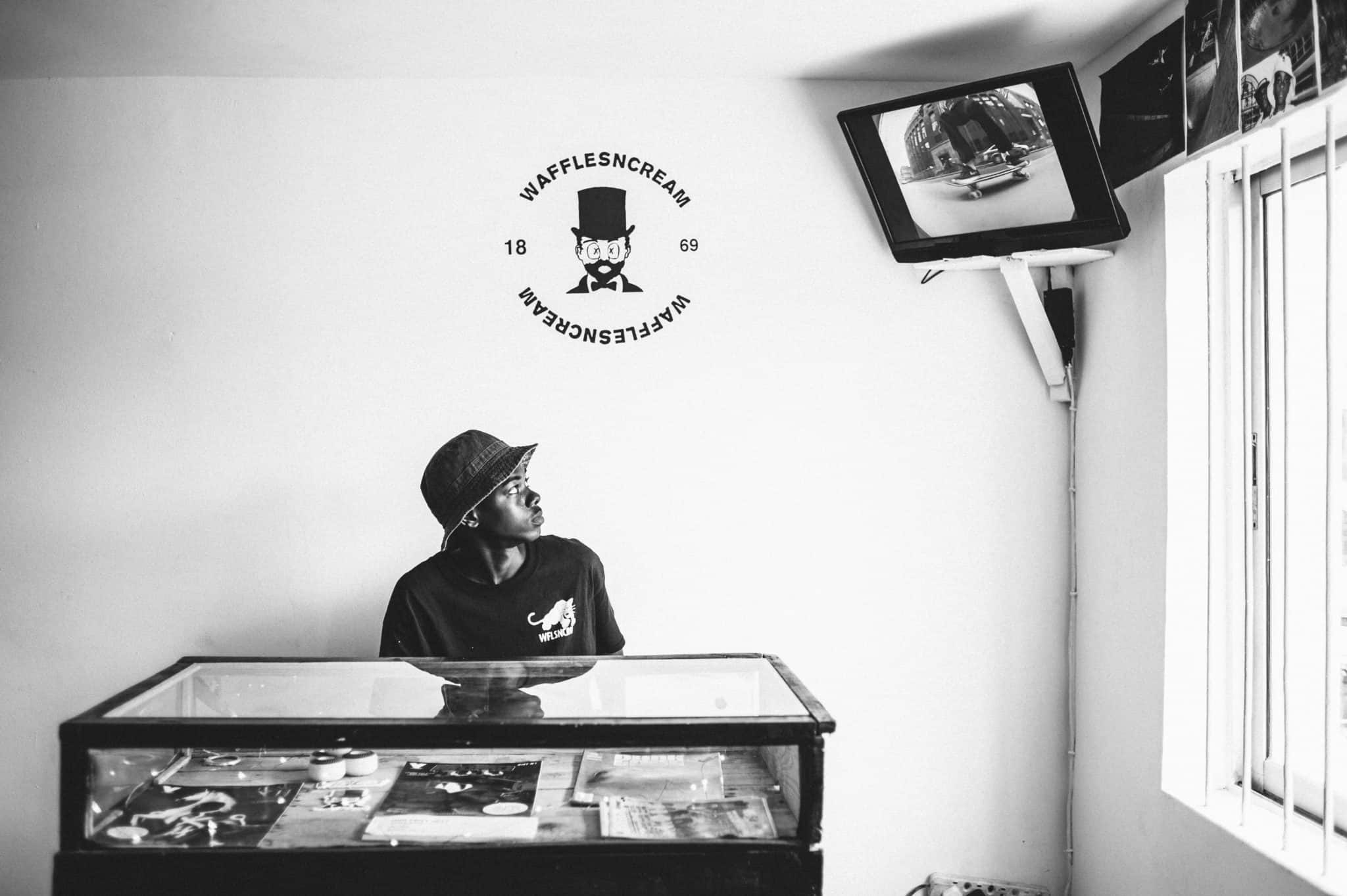
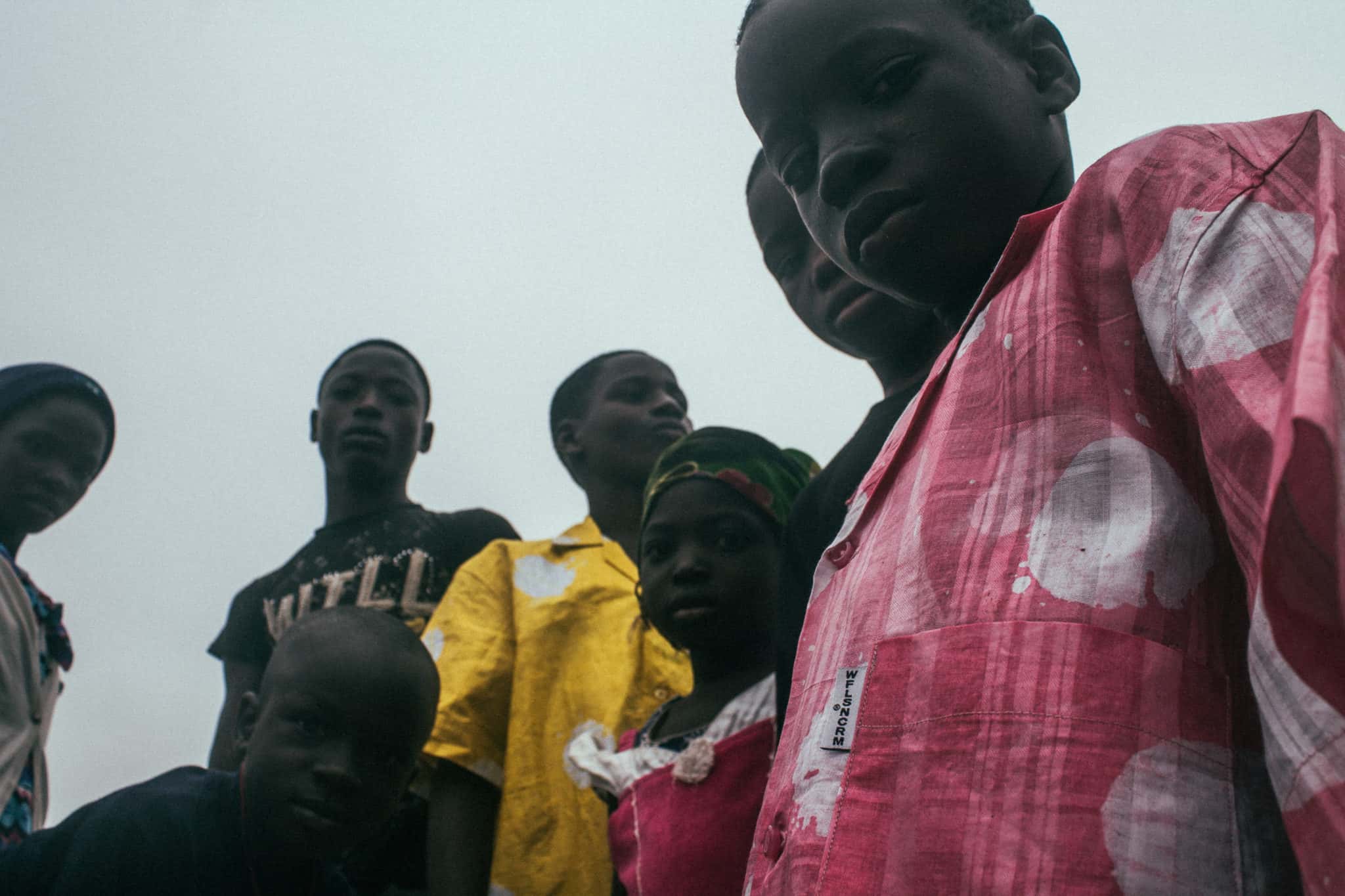
Fresh off a daring Tommy Hilfiger-inspired PSA (as seen above), WAFFLESNCREAM wasted no time in releasing their Dry/Harmattan ’17 collection. In their most ambitious drop yet, the line ranges from the tongue-in-cheek “Common Corruption” t shirts to classic bowling shirts. Shop the collectionhere.
We linked up with WAFFLESNCREAM and photographer Baingor Joiner to showcase the new collection, highlighting the extreme sports culture in Tarkwa Bay, Lagos, Nigeria. The growing community of skaters and surfers are taking to bringing their passion to the mainstream. Peep the the editorial below.
Mr Eazi who was born in Nigeria but educated in Ghana, understands the core properties of the music business, even if it’s by sprawling theories and controversies on the internet or just by catching any opportunity to make good music with good enough people.
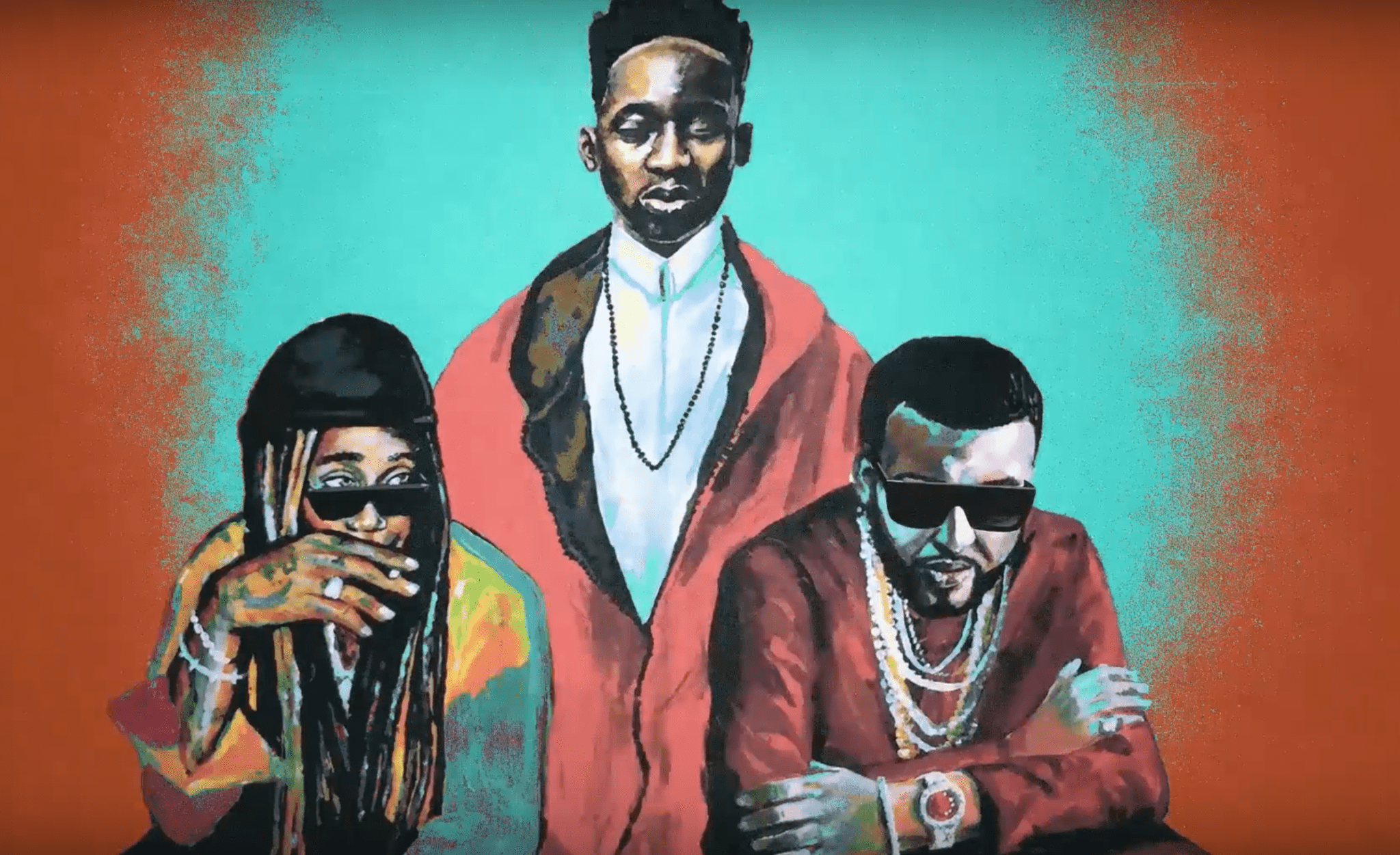
On “Leg Over (remix )” he finds ideal partners in Major Lazer, French Montana and Ty Dolla Sign. His “Leg Over” song which was already nearly a sleeper hit is brought back into consciousness as he closes the gap between genres to crop out a more transcontinental appeal. The track is powered by the same sound (worked by Ekelly) housed on the original with a little trilling synth tweaking by production trio, Major Lazer.
With Mr Eazi’s magnetic presence on the track, Montana and TY’s verses blend with the song’s theme and meaning, improving the song’s charm by dint of the same loose narrative Mr Eazi sung the original. The song is opened by Montana who follows up with a snappy verse, he passes it on to Mr Eazi, who still takes much of the spotlight and TY Dolla Sign sings next before Eazi closes the track.
Bump “Leg Over (remix)” below.
Featured Image Credit: Youtube/majorlazer “Leg over (remix)”
Fisayo is a journalist who thinks writing is hard and reading too. But her journey somewhere reveals, words are like pawns on chessboard when writing. She wants to see, create and share with the world, experience & communicate these experiences. Tweet at her @fisvyo
Santi (the man formerly/occasionally known as OzzyB) carries the aura of those “special” artists that don’t come around so often. Soft-spoken and relatively guarded on his personal life (a welcome change in an industry dominated by tabloid gossip), he comes alive when talking about his process, and how he got to where he is now. Despite enjoying his second wind at the moment, he has been in the game for nearly half a decade, and the confidence he he speaking about his “sound” is a testament to this.
Whilst his breakout hit “Gangsta Fear” (featuring Odunsi [The Engine]) seems to be growing into a cult classic, Santi is not resting on his laurels and has dropped two tracks this year, a handful of feature verses, and is in the process of making an EP. One of those singles is the infectious “Jungle Fever”, produced by GMK and featuring Odunsi [The Engine] & Genio Bambino. Santi has just premiered the video for “Fever” (co-directed by the man himself and Ademola Falomo) on Wired Japan.
We spoke to Santi about his thoughts on birth & death, the art of collaboration, and how he compares the current music revolution in Nigeria to the ones of the past. Check out our chat with him below, and peep the visual for “Jungle Fever” above.
In 2013, you released the mixtape Birth of Santi – what is the meaning of birth to you, in this context?
Birth is continuous and as long as you are willing to learn, you will always be able to have the ability to birth; and by birth I mean create. I started off mainly as a rapper, combining a bit of singing as well to form some sort of uniqueness, but as I learnt and kept on experimenting [with] more in music, it was quite clear what I wanted to make and become.
Do you see birth and death as mutually exclusive? Did Suzie (from Suzie’s Funeral) have to die for Santi to be born?
Suzie is a combination of everything, a combination of reality, feelings, beliefs and dreams. And for Santi to be born, those things had to die. Birth and death go hand in hand.
Do you feel the need to nurture your music once it is released? Or would you rather let it grow on its own?
It depends, I feel it’s always key to nurture music when it’s out. Sometimes people who listen to a song might not get it until they see a video. The music is one part of telling the sound and visuals sort of complete the sound. Then again, you often have cases of songs you least expected to do well, pushing doors and doing good numbers. I believe that if you want to have a good run in music, you have to be able to connect with people while evolving, so nurturing music is key as well.
You were one of the early rebellious voices to the traditional sound of Afro-Pop music in the early 2010s. How much do you think the first revolution with the likes of yourself, DRB and LOS has helped birth the latest class of artists in Nigeria?
I think it did help, because it allowed the younger ones to be more expressive and confident about what they’re doing. I was a 17-year-old expressing myself regardless of the industry and the type of music being accepted [back] then. The spirit of being rebellious is a huge part of being a youth and watching us rebel gave the younger ones the confidence to believe in their craft, grow it and push doors open.
What do you do to get yourself out of the inevitable lows of the creative process (writers’ block etc)?
I’m someone who more or less creates music out of sole fiction. It’s key that I am always lost in the world of my mind to be able to make the music I make. Sometimes you are zapped out of that and have to face “reality” and by reality I mean the things that might stress you or certain problems you might be facing. The key to getting out of blocks for me is just understanding where you are at and allowing your mind make the best out of it. Sometimes, it might just be that you are too comfortable, so from time to time I always step out to find new things outside to bring into my comfort zone.
How do you know when what you create is ready to be released into the world?
It’s like a spider sense, you just know!
Do you feel the release of music is always necessarily the final step for an artist? For you, is a release a cathartic experience or is it just the natural end to a process?
I think releasing music is a key step but not the final step, you could release the best album in the world and not leave a single imprint. You need to able to establish the connection between you and the people who listen to the music. Videos, merch and tours help complete the full experience, people listen to music for different reasons, some want to escape, some want to relate, some want to be sad etc. So it’s key to always create the full experience that makes it the music
Do you ever feel like the process of creating trumps the eventual release of your material?
Yeh it depends, for example recording the same song over and over again, just to get it right and after recording it, you find yourself sick of the song and not putting the right energy into the release of the song. So it depends, it’s a thing of the mind really, cause people are never gonna care or want to know what you did to release music. It’s literally all in your head.
How do you view collaboration in relation to creating music? Is it usually strategic or organic? Circumstantial or necessary?
Collaborations are key, especially right now. It’s quite beautiful cause each person is blessed with a sound of their own and combining minds to create music can only to better sounds. Sometimes, its strategic and sometimes its necessary, and it’s great when its both.
Your next release is highly anticipated as a result of how successful Suzie’s Funeral has been. How do you feel about putting this out into the world? Does it scare you?
It does not scare me, the key to making better music is moving on from past sounds and learning from what you created to make new and better music. You’re always gonna be nervous when experimenting and creating from scratch but always remain confident in what you do.
A new short film that solely focuses on Maleek Berry in association with Tidal and Appleton Estate USA rides on the back of all things to pique at people’s interest as he steadily makes his way to top charts in foreign markets. The short film is called “Where I’m From”. And it comes just after Maleek’s debut performance at Jay-Z’s Budweiser “Made In America Festival”.
On the short film, Maleek briefly details his experiences, being a native of Nigeria growing up in Clapham, South London, his production and vocal techniques. In line with the premiere of the short film, Maleek spoke to Essence magazine, where he revealed he’ll be “definitely coming out with another EP before the end of the year. It will be like a sequel to my Last Daysof Summer EP from last year. It’s going to be a whole different vibe though. It’s a different season so, the sound is going to be a little different as well so, people should look out for that.”
Take 5 minutes of your time to watch “Where I’m From” exclusively on Tidal Here.
Featured Image Credit: “Where I’m From”/Tidal
Fisayo is a journalist who thinks writing is hard and reading too. But her journey somewhere reveals, words are like pawns on chessboard when writing. She wants to see, create and share with the world, experience & communicate these experiences. Tweet at her @fisvyo
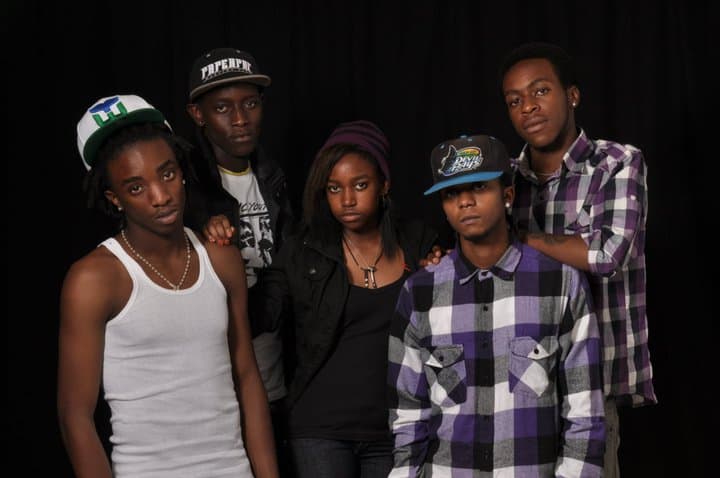
To understand just how big Kenyan hip-hop super group Camp Mulla was/is, when they reintroduced themselves through an impromptu concert in Nairobi after 5 years underground, music forums around Africa went crazy.
This is virtually unheard of for an African group, even more for an East African one who were all teenagers without proper representation when they debuted. But there is just something about these five, especially their charismatic female vocalist Karun that resonates with young Africans. Many argue that if Camp Mulla hadn’t temporarily disbanded, they would have eclipsed Africa’s biggest export and former contemporary Wizkid. Like Wizkid, the group’s peak culminated influence that spanned across Afro-urban culture and mainstream pop. Though Camp Mulla’s split at the turn of the decade robbed us of a world where the forerunners for African music are as progressive as they are youthful and uber-talented, the theory that Camp Mulla could have levelled on the the same ground with the Starboy is put to test when they featured Wizkid on “Prices” one of the main singles from their 2013 album Funky Town.
The first thing that stands out about “Prices” is Karun. A singer with enough charm to sway an entire continent, Karun was often the glue that held Camp Mulla’s often experimental songs together, and the honey that lured in listeners and kept them through the varying styles of the group’s rappers. She is on top form on “Prices”, vocal samples of her ad-libbing are threaded into the song’s contemporary hip-hop beat, acting as an undercurrent over which tribal inspired drums, a staccato synth riff and chopped and screwed string are layered. With a verse, several hooks and a bridge, it is mostly her song. The group’s rappers follow, each deck loaded with a braggy, swag filled verse about how the group’s life and fortunes have changed since their music went mainstream and their fan base swelled. But the only person who really goes toe to toe with Karun is Thee MC Africa who shares the chorus with her, and Wizkid who tucks in an early verse at the start of the song, setting up the tone for the entire thing. Swaggy and brimming with confidence, “Prices” is the kind of feel good song that goes straight to evergreen classic.
It’s hard to believe that 5 years have passed since this super collaboration was released, the production is still so fresh and the vocal work and instrumental will definitely get people pumped on any DJ’s rotation. Man are we glad to hear they’re back. Perhaps it’s time for a Wizkid/Camp Mulla rematch.
It’s unclear why you still haven’t heard it since it was released same day as the official video to the original track featuring Kojo Funds. But perhaps that’s actually the reason you haven’t. Well, welcome.
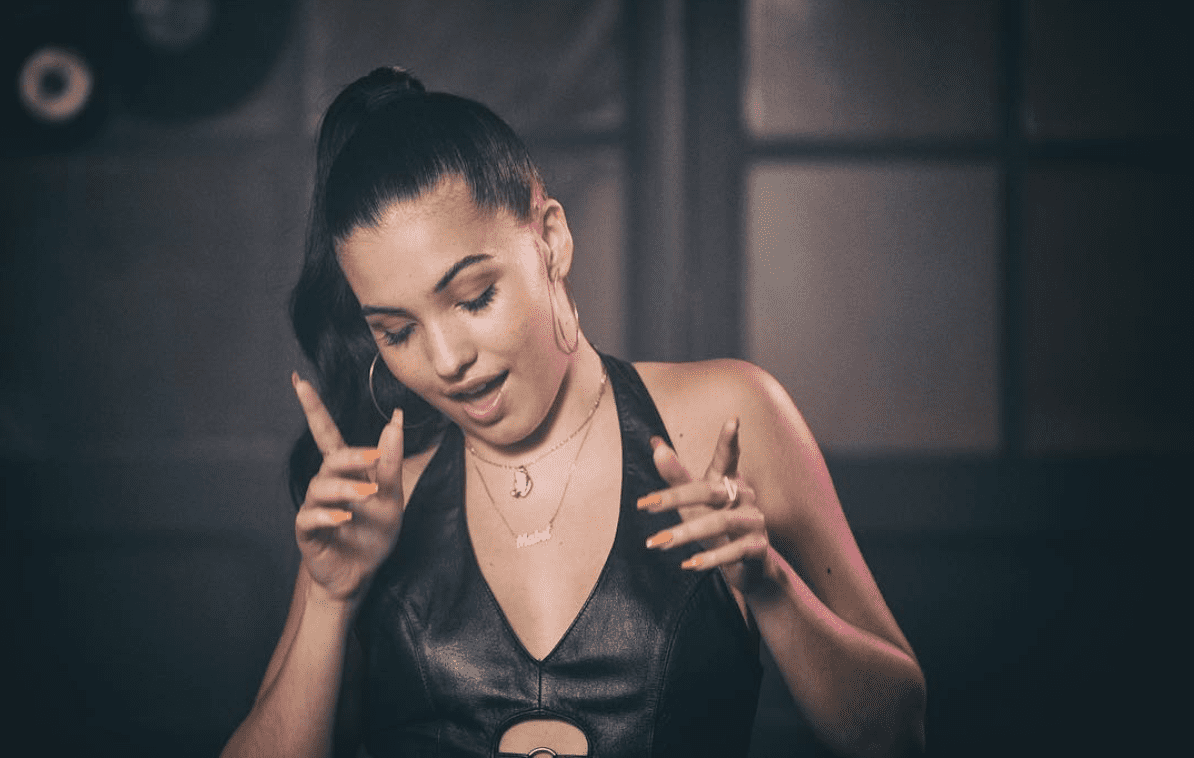
As an artist, Mabel has never tried to conform to anyone’s rules not even her musician parents, she’s tried to constantly filter her own tastes into what suits her. Seeing her release single, “Finders Keepers” with Kojo Funds in March was an interesting innovation or experimentation to hear. On “Finders Keepers” she switches up her R&B vibe just a bit to create a broader sound. She’s all about going beyond the ordinary, releasing another version of “Finders Keepers” tosonically and artistically broaden it even more. To this end, Burna Boy and Don-E take verses of the remix.
The two deliver verses that perfectly sits within the groove of the rhythm, letting them impress without doing too much. On “Finders Keepers” Mabel soundtracks a potential hookup in the club without any overthinking, the three men, Kojo Funds, Burna Boy and Don E respond to her call, taking the imitative challenge even further with a range of offers, sneering out lines like “Me aguh follow you wherever you call uh” and “Spend a likkle time on a liquor island, Have a couple drinks catch a like whinin” Just to satisfy her desire. They nail it, though, by the second time you’ve heard “Finders Keepers” it’ll feel overly familiar, but still have plaintive charm.
The production, worked by Jordan D Ried, is same as that housed on the original. Check out “Finders Keepers” remix below.
Featured Image Credit: Instagram/@mabelmcvey
Fisayo is a journalist who thinks writing is hard and reading too. But her journey somewhere reveals, words are like pawns on chessboard when writing. She wants to see, create and share with the world, experience & communicate these experiences. Tweet at her @fisvyo
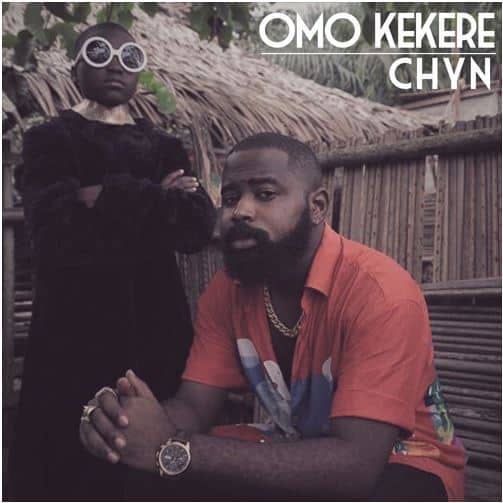
Many of us got first properly acquainted with rapper Chyn thanks to his guest verse on Falz’s “Chardonnay Music” and its somewhat controversial lyrics. Since then he’s released a slew of middling singles that kept him bubbling under but never really broke the surface into mainstream success. Though that is really by no fault of his own, the kind of classic rap that he is known for, replete with very western metaphors and punchline doesn’t really gain traction anymore in age of the local rapper and metaphors that reference Bariga and Surulere. As his sound has evolved, Chyn has subtly changed his approach to Naija rap to reflect his understanding of the scene. His new song, “Omo Kekere” suggests he might have found that sweet spot.
“Omo Kekere” roughly translated from Yoruba to mean small child, opens with a sample of what we surmise is a Wolof song. The tribal sample slows to a sparse hip-hop beat, with an undercurrent of a four second riff taken from the much larger sample and a yowl interspersed through the song. Chyn’s very western musings about his journey in the Nigerian music industry work surprisingly well with this instrumental, even the yowl interjecting his somewhat derivative punchlines. The song’s chorus, sung in Yoruba is the real clincher, an afrobeat ditty that will worm its way into your subconscious and stay there. It’s a more than decent single, radio friendly, and scalable both here and abroad. “Omo Kekere” could have done without all the casual sexism in the first verse, but it has never really harmed any of the other big names, we doubt it will barely make a blip here.
Give Chyn the applause, because if this is played right, he’s sitting on a mainstream hit.
Listen to “Omo Kekere” here.
Edwin eats his rice and cabbages. Tweet at him@edgothboy
JayZ’s 4:44 shook the world. But few songs on the album became a viral talking point quite like the album’s lead single “The Story of O.J”, which covers the gamut of topics relating to contemporary African American life; weaving complex quips about the value of wealth in black communities, the need to stunt on others, gang life and how it has decimated black populations. Aside from inspiring conversations about what we deem worthy and what we value as people of colour, The Story of OJ has also inspired a lot of black musicians to introspectively investigate the message that they project with their work. For Nigerian singer Maka Sam-Ejehu, it has inspired rage against the machine.
Maka takes the “Story of O.J” and reworks it into “Boxed In”, a treatise discussing the narrative of how Nigerians are viewed around the world. And there is much to talk about. Thanks to widespread advance fee fraud scams, violence from extremist groups and an emphasis on showing the worst of Nigeria, many Nigerian creatives find themselves pigeonholed into the stereotypical restrictions, much like the minstrels that JayZ references and reclaims on the story of O.J. Like JayZ seeks to reclaim the narrative around Nigeria through the singers, rappers and other creatives, whose work travels into the world and informs how we are seen.
“If your talent, my talent, our talents came together, we could be better…”
Listen to “Boxed In” here.
Edwin eats his rice and cabbages. Tweet at him@edgothboy