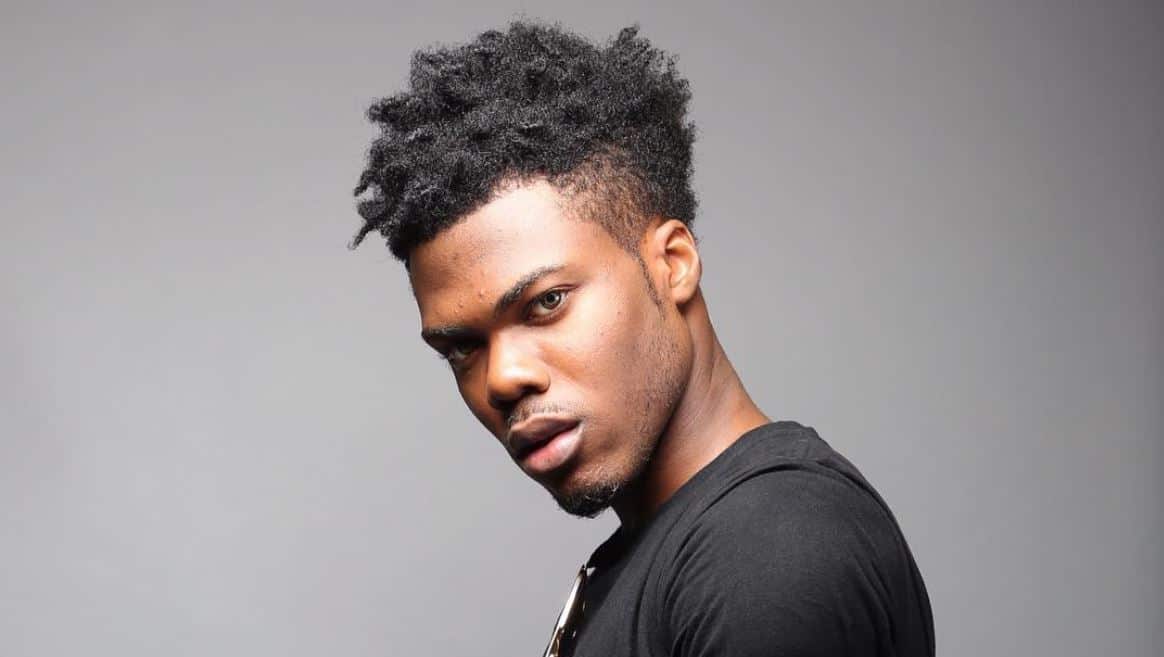
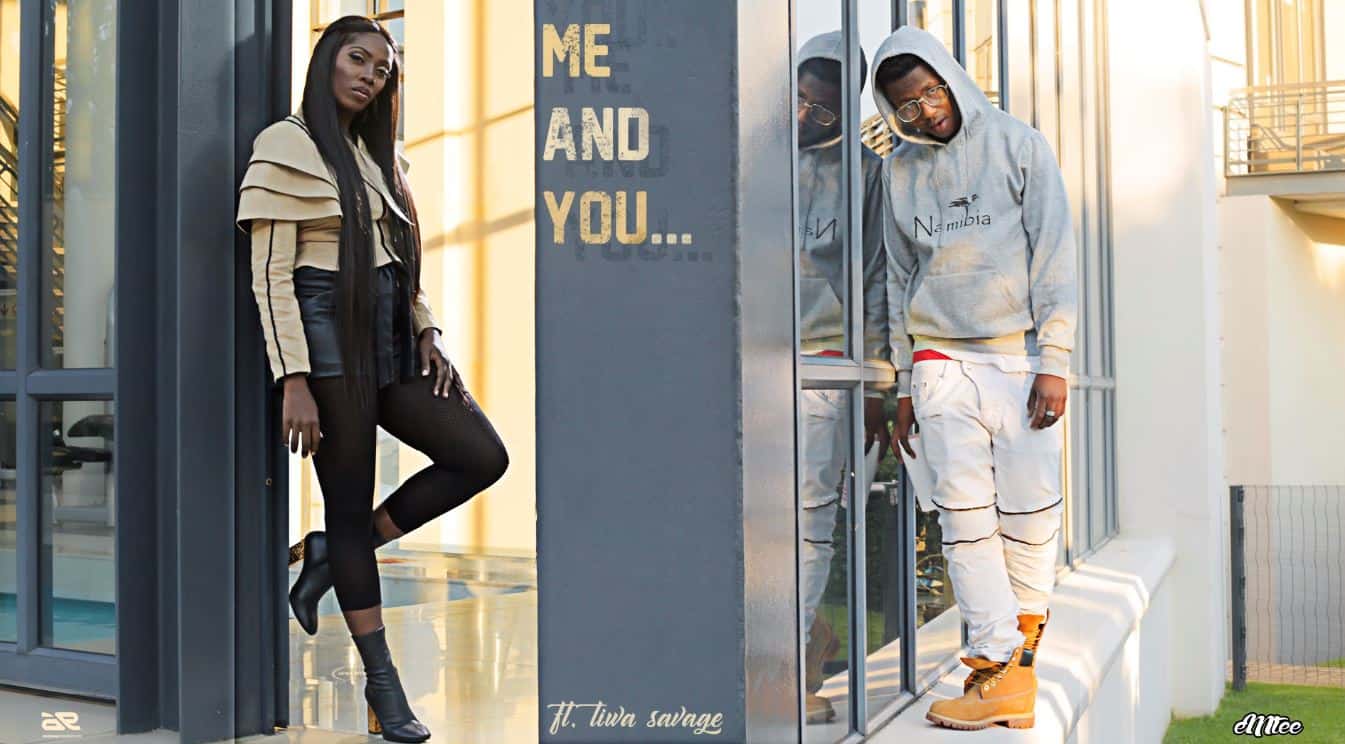
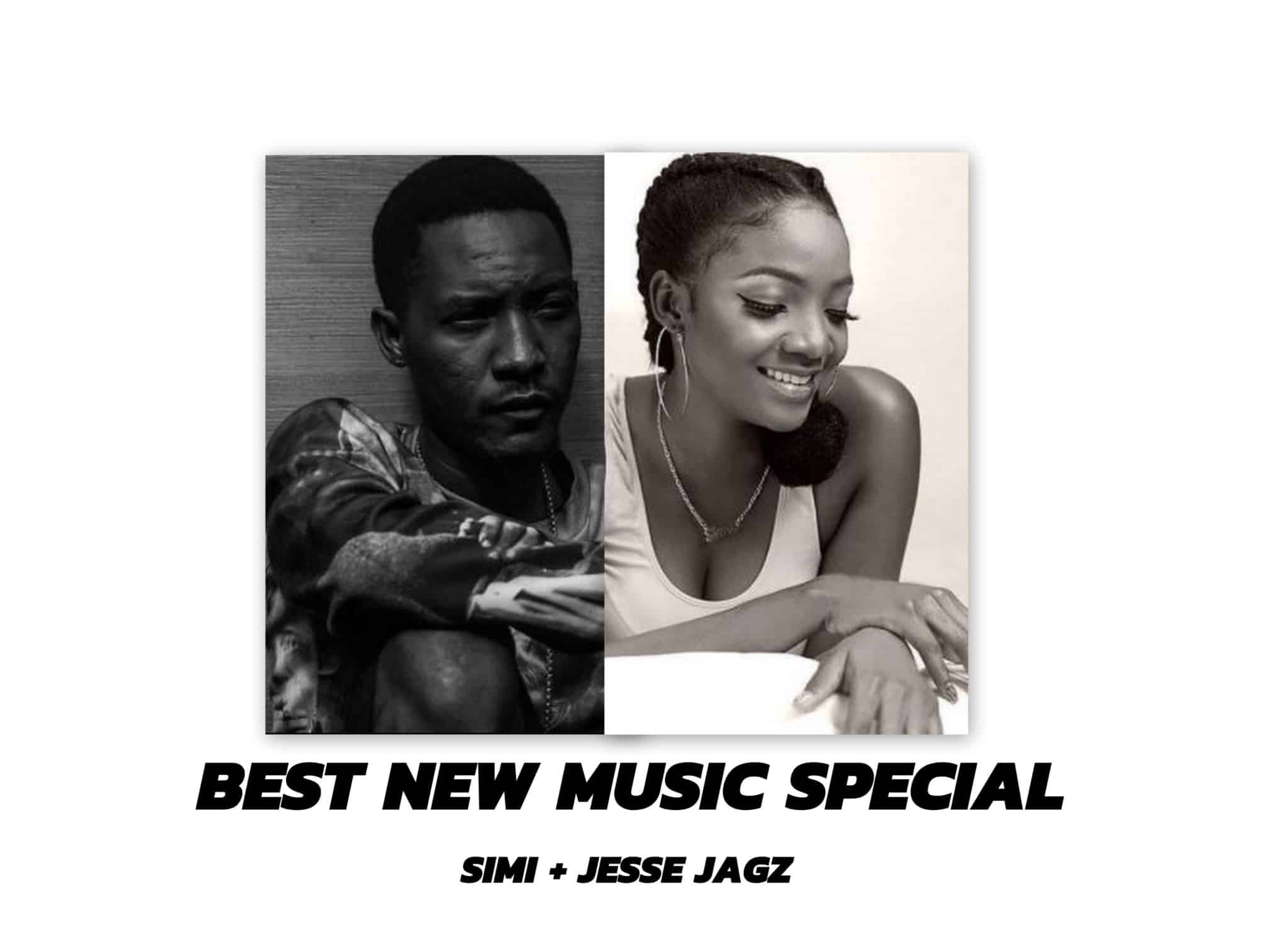
Best New Music: Dáramólá goes electro-goth on “Swim Float Drown”

Daramola is really on some other shit in 2017. He’s put out a critically acclaimed album and an EP after that is both familiar to the average Nigerian but also entirely experimental. There’s a fire burning inside the man and he seems desperate to channel all that energy into his music, putting single after experimental single out, working his way through the genres while retaining that his distinct Yoruba influenced musicality. And as we’re writing this, he’s just upped and surprised us with yet another one, “Swim Float Drown”.

The first thing that jumps out at you on Daramola’s new single, is the sombre tone he deliberately cultivates. Flirtations with Kanye West’s My Beautiful Dark Twisted Fantasy era, bring a mix of noirish Gothic ambiance, bass chants and minor choral harmonies, but brought firmly into the present through electronic manipulation and synth accompaniments.

Swim Float Drown“, is much darker than much of Daramola’s catalog, chronicling the fracturing of a relationship thanks to a self destructive protagonist seeking comfort everywhere but his lover. He name checks Norse mythology (Valhalla) and 90’s postpunk with the rapid fire, emo verses that build and build but never crescendo. But “Swim Float Drown” is at it’s most Kanye at its very end; big guns, auto-tuned sung monologue, despair in excelsis.

Who knew the dark could be so delightful.

Listen to “Swim Float Drown” here.

Featured Image Credit: Instagram/@itsdaramola


Edwin eats his rice and cabbages. Tweet at him@edgothboy


Dáramólá’s Special kind of Heartbreak Melancholy

Listen to “Blood Money” by Bridge and Zamir

It’s a pleasure to hear Bridge spit one of his hardest verses since his LOS crew split up. After two passable performances (for a rapper of his calibre) on his two previous singles, “Calling” and “Needy” it seemed like he hadn’t quite gotten over the break up. His latest single featuring Zamir however reminds listeners what Bridge is good at: making gangsta rap records.

While his old singles were swamped with needless introspection on the costs of love lost, “Blood Money” weighs in on where he stands in the hip-hop game with catchy flow and confident delivery. The bouncy trap beat is glazed through with sombre haunting trumpet harmonies, lending the hard lyrics high cinema airs. The gore and grit in the beat also resonates on Bridge’s vocals such that his lyrics are emphasized, rather than drowned. Serving up twitter worthy lines like “Staring At The World, I Could Shed A Tear” and following it up with “But I Wouldn’t Cause It’s Real Life”, focusing on his words is almost as important the dialog in action movies.

Zamir’s verse is a lot more personal: “I Know The Role I Play”. He leaves a more prominent impression through his lyrics; “I Prepared The Table, So I Ate” and ensures that the message for “Blood Money” isn’t lost in a fury of humble brags and deep moral postulations.

Listen to Bridge and Zamir’s “Blood Money” below.

Featured Image Credits: Instagram/badbridgelos


You are meeting Debola at a strange time in his life. He wandered into a dream and lost his way back. Tweet at him @debola_abimbolu


ICYMI: Watch Ajebutter22’s new video for “Ghana Bounce”

Wizkid and MasterKraft just unleashed a new single out of no where

The Wizkid we used to know can still be heard in the extensive catalog the Starboy has grown over the years, but one wonders how he would thrive on the mid-tempo sound Tekno and Runtown have popularised since last year. Perhaps this is why “Medicine” carries an inherently familiar texture within. With “Medicine”, There is no telling Wiz is leveraging his time back home to work with some of the earliest influences of his sound who have also been instrumental in the turn around of the Nigerian Afropop.

“Medicine” brings forth a traditional-Afropop Wizkid we haven’t seen in a minute, a reminder of just how multi-versed he has become since the turn of his global campaign.

Stream “Medicine” below

Is Anyone listening to Wizkid’s ‘Sounds from the other other side’? here’s what we know so far

WAFFLESNCREAM: How a Nigerian skate brand is providing community for a new generation of creatives

Photography: Tyrone Bradley (courtesy of Red Bull NG)

This story originally appeared in NATIVE 001: The Birth Issue, May 2017.

The city of Lagos is home to over 20 million people. The streets are always busy, and rainy days can be quite warm. Dubbed ‘The centre of excellence’, there’s an aspirational spirit to Lagos very few cities possess. WAFFLESNCREAM (abbreviated to WAFF) is a skate brand with strong intentions – to challenge preconceived notions of urban youth in Lagos city.

The whole idea is the synthesis of different interests: skateboarding, BMX, fashion, art and music. It entails a group of people that have a passion for creativity in its different forms. The brand seeks to shed light on Lagos, the forgotten heroes, and forgotten heroes to be. WAFF celebrates authenticity and particularly embraces innovation; it embodies the purist approach to individual culture.

To get a good idea of what WAFF really is, you can’t speak to just one person: at its core it is a circle of friends that have become extended family – Nif, J, Elijah Zgambo, Kofo, Slawn, Onyedi, Leonard, Nuda, Jide, Fadekemi, AJ, Jordan Thomas, Dae, Millabad, Donnika, Thai Hibbert, Be, Saidi, Bai aka Fuzxy, Anthony Wildman aka Wildest, Omi, KC, and Eva, and that’s naming a handful. WAFF has become network of like minds scattered across three continents and counting. Here’s an image of ‘The Family’ from a past pop-up.

Humble Beginnings, History & Formation

Speaking to AJ, a skater who did videography on the first WAFF skate tour from Leeds to London we get first hand perspective of the brand’s humble beginnings, “WAFFLESNCREAM started in Leeds as a concept, no clothes, no ‘brand name’, just skating,” he explained via Facebook messenger. “Leeds was the first experiment, simply a vibe; there was no reference to home. But Leeds had its own unique style of skating and associated lifestyle we embodied. There was a mutual want to bring something different to skateboarding, and the Bello brothers [J and Nif, who started the brand] had strong ideas of how they would like to represent skateboarding. That brought them to their ‘we’re gonna get this’ moment. The filming and photography was approached with a focus on representing this pocket of life.” This process of organic growth happened again in Lusaka, Zambia when J teamed up with Elijah to help kick start a skate scene that is now in the thousands, before its latest reenactment in Lagos.

At the time of the first skate tour, the Bello Brothers (J and Nif) were between Reading and Leeds. The original Leeds skate crew had been about their antics as young skateboarders for some time, but J had to move away to Reading for univeristy. The actual concept of WAFFLESNCREAM as a brand was created while in Reading, long after the crew was birthed. J would design apparel while Skype-ing Nif, who made sure the merchandise got to the Leeds crew. And just like that, the first wave of WAFF had begun.

Shortly after, WAFF collaborated with Redbull to go on their premier skate tour, this is when AJ was brought on board to help document the trip. He credits his loyalty to friends to WAFF eventually becoming his family, “The reason I went to London with them was no one else in Leeds really knew about them and didn’t want to ‘dip their toe’ as it were, and trust them. So people saw it as just another early 2011 hype and an exploited idea. I stuck with them because the other riders [in the Leeds crew] were my close friends and eventually J became that also.”

The first skate tour was ten years ago, and since then seven collections have been released; the last release [titled ‘007’] being two years ago. It seems that for the past 2 years, WAFF has been in hibernation. After expanding the brand through regular apparel releases and pop-ups between London and Lagos, the family doubled down on their mission: to make skating a reality for the kids back “home”. When AJ is asked about the strides WAFF has taken, he tells the classic story of a diamond in the rough, “You know, people who used to snigger are now so surprised at their success and I just assumed it was only a matter of when. On the other hand, the last 10 years speak their own experience and validation. Besides this, the name can definitely turn someone’s interest by merit of being so unique. It happens so often when I crack out the ‘Crack is Wack’ [an adopted slogan used in their first collection] windbreaker and everyone’s like ‘yoooo’. Hahaha”.

More Than a Skate Brand

The last editorial from 007 was shot in 2015 on Elegushi beach in Lagos, this would serve as a preview of things to come. The core of the WAFF family are now based in Lagos and thus, the focus has shifted to a large extent. But there are still representatives across the UK, USA, Ghana and Zambia, who are still loyal to the house J built.

One of the key components of the brand of WAFFLESNCREAM is its ‘facelessness’. Founder and head honcho, J, is notoriously opposed to any sort of personal press or media angling to portray WAFF as one man’s passion project. And those that have met him know just how passionate he is about it: it has quite literally been his life for a decade now. This selflessness is refreshing in a country where everything seems to be about the individual rather than the collective: from the fashion world to the oftcriticised political realm. J’s personal detachment to the general public has allowed the brand to develop an identity that is independent of any individual figurehead, and it is reaping the benefits. Behind the scenes it’s a web of commitments where all the team members bring their strengths to the table. Nuda – a London based creative – has modelled and done creative direction for past editorials, Onyedi solely recorded footage for the last edit (‘Jide’), Slawn does graphic work and illustration for their coveted t-shirts, and Leonard does Illustration and photography. Most recently, Nif (who daylights as a product designer) is drawing up sketches for Lagos’ first skate park: the crowning achievement for the Bello brother.

When WAFF initially relocated to Lagos on a more permanent basis, J and the family brainstormed on ways to integrate into the underground culture of the city. Whilst this was their home, they were still seen by some as foreigners, coming from the UK. The family soon started sporadic underground music gatherings named VIBES. Established in 2015, VIBES was a perfect platform for WAFF to make their mark in Lagos. Bringing people from different walks of life into one room. Be it avid skaters, streetwear aficionados, or simply Lagosians tired of the repetitive bottle service clubs and overpriced bars – VIBES was a safe haven. At the time, WAFF had no office, staff or skaters but VIBES was a way to connect what would eventually become family through the universal language of music. Since its inception, there have been numerous, and usually spontaneous VIBES nights with selectors from the family [Dae, Omi and Fuzxy] all gracing the decks. Special guests such as Seun Kuti and M.I. Abaga have also been in attendance, with the events varying from the back garden of friends to art galleries. The VIBES DJs recently released a mix titled Indigenous Mix Vol. 1 – wonderfully hectic collection of tracks, which currently acts as the soundtrack to the flagship store. Harking back to the early noughties, the mix is only available in CD format, exclusively at the store in Lagos.

When talking about the familial ethos to work and skating, Slawn states, “Family is what the group considers itself to be. Because we know not everyone will accept and understand what we’re doing”. It comes as no surprise to find out the crew celebrates birthdays and engagements alike. Negative sentiment associated with the ‘otherness’ of emerging cultures stays true to skateboarding in Africa. Elijah [who helped set up the first Lusaka crew] has recounted tales of being arrested and locked up in Zambia on numerous occasions, in a previous conversation with HUCK Magazine.

Community Ties 

The locals in the area around the store have mixed opinions on skateboarding. The vast majority of them are interacting with the sport for the first time and they are still trying to understand what it is exactly that these kids are doing. They mostly see skateboarding as an unnecessary hazard, but will cheer on when a skater’s ‘impossible’ stunts are landed – pun intended. For now, spectators are watching with an a gaze of amazement, but not quite admiration yet.

It takes a lot to be a skater in Lagos. Most of the city is flat so you haven’t the luxury of cruising down hills. It’s a lot of kicking and pushing to get around (this is the only way to pick up momentum when skateboarding). In addition to this, the best areas to skateboard are usually fenced off and/or have security guards. Sometimes skateboarding is wearily condoned at best, but this is without any future guarantees from proprietors of spaces the skaters frequent. Negotiating their way around to find the perfect mix of smooth ground and ‘skatable’ obstacles can be challenging, but definitely makes being able to skateboard even sweeter when they can. Everyone learns a trick from someone else, which means that the skate community is connected in a spiritual way too; it nurtures feelings of camaraderie and humility amongst the skaters. Leonard rants on the challenges of skating in Lagos, “You don’t have facilities, or even good roads. You don’t have people who have trained for years with skills you can catch up to, you just have to have a fuck you attitude towards these obstacles and keep grinding. Hopefully, someone picks up a trick from you, you learn from them, and the cycle continues.”

Leonard chimes in again with a frustrated but humorous tone, “Lagos is trying to be a megacity but the parks aren’t physically accessible, nobody’s making their way under a high speed bridge for r&r [a reference to the public parks built by the state in hard to reach areas]”. The WAFF crew is constantly on the lookout for interstitial spaces to skate. Sidewalks are few and far between outside the older parts of Lagos Island, which really comes down to city planning. When Nif and J break the news of a potential skate park, it’s met with as much excitement as relief.

Go Skate Day (an international skateboarding day) is being celebrated by the crew: on June 21st skate films will be screened all day at the skate shop and their second skate edit titled ‘Linda’ will be premiered. A half pipe being constructed for The 24th of June follows this; it’s surely a good time for the skaters in Lagos.

The Future of WAFF 

It has been an interesting past few years for WAFF, the brand now boasts West Africa’s premier skate shop in the shape of their flagship store in Victoria Island, Lagos which opened in January 2017. With intentions of making a global impact, it’s fitting to find that the shop’s address is 234 Muri Okunola Street (+234 being Nigeria’s international code). Senegal and Ghana are two other West African countries with a skateboarding scene but have no supplies. This makes the skate shop a regional game changer.

Despite their considerable strides, international distributors do not always believe that WAFF exists, sometimes going as far as asking for pictures of people buying apparel in-store to prove it’s legit. Kofo, the store manager recalls, “Every proposal feels like a 419 scam, with the ‘Nigerian Prince’ gag and all. The landlord still doesn’t understand what we do. People in public and even parents ask why we do ‘this thing’, they can’t make sense of it”. Outside of Nigeria, there is growing list of African countries with blossoming skate scenes, but only Zambia and South Africa boast skate shops. The possibilities for skateboarding on the African continent are still presenting themselves as the sport gains popularity in little pockets.

What the store means for Lagos is a cultural meeting point for skaters and creatives alike. After the soft launch there was a 5-week ‘Friends & Family’ exhibition featuring photography, illustrations, graffiti, paintings and music from different members of The Family. The space changes to suit its needs as it grows, while keeping the environment interesting and cosy. The original back office is now a production room. Recently the till was removed completely only to be replaced by a sofa. There’s a cat that roams around, but mainly just chills in the stock room.

In a country where the WAFF crew is more of an outsider pack, only the youth and future generations may enjoy the luxuries of a developed skateboarding scene aided by private and public support. The marginalised action sports enthusiasts – the skaters, bmx’ers, and more –  may soon find themselves represented on an international stage. Skateboarding was just green-lit for the Tokyo 2020 Olympics and the intro to an epic underdog story has been penned. The question if Nigeria (or even Africa) will have its own Cool Runnings moment will surely be answered in due time. Other extreme sports in the region need a way to tell their own stories, but it’s the Wild West right now and there are no rules. WAFFLESNCREAM dually serves as a source of inspiration, and the benchmark to inspire other brands to come forth. London and New York are two cities that have seen skate brands revolutionise youth culture, and we can only hope Lagos is next. The infamously media-averse J finally speaks on the record when I ask him about his views on the future of skateboarding: “Africa is ready, let’s see what happens.”

6 videos you gotta to see this weekend

A$AP Mob “RAF” feat. A$AP Rocky, Playboi Carti & Quavo

Music videos allow artists appeal to their fans not just with their vocal talents but also through their carefully orchestrated storylines, choreography and personal aesthetic. Though dancing artists may no longer be as pop as they once were, artists are still leaning on aesthetics videos and the A$AP Mob’s new video for “RAF” is as eccentric as they come. The video features A$AP Rocky, Playboi Carti & Quavo for a star-studded fashion show where they adorn an assortment of Raf Simons clothing while complete with VHS-inspired effects and an all-white background.

Jah Prayzah – My Lilly feat Davido

Wizkid and Davido may have gotten carried away and taken their rivalry to twitter, but we are glad they are finally back to competing with more maturity. While Wizkid’s latest release, Sounds From The Other Side is battling for international recognition with his American features, Davido has taken advantage of the African music scene. His feature on Zimbabwean singer, Jah Prayzah’s “My Lilly” is only one of the two African collaborations he has featured on in the space of a week. The mellow-dramatic video for “My Lilly” is shot in South Africa and directed by Godfather Productions who follows the song’s romantic narrative for a script that sees Davido get on his knees offering his love interest a big shiny rock.

Public Enemies – Jay Z Vs. Kanye West Documentary

Jay Z and Kanye West seem to have gone from super group to rivals. Though most of the talk about the beef has been largely speculative, “Britain’s Channel 4 network” is airing a documentary that will feature “unseen footage and unheard testimonies” . DJ Clark Kent, the legendary producer who has worked with Hov since his debut album is heard commenting in the preview, “One is a New York street dude, The other dude is a mama’s boy from Chicago.” Plus longtime music journalist, Touré adds: “JAY-Z is very thoughtful about money. Kanye is spend-it-all, art-comes-first”.

Flavour – Sake of Love Feat. Sarkodie

One thing you quickly realize from Flavour’s style and music is that he’s as much a lover and as he is a fighter. His macho demeanor may appear to contrast his romantic themes but they have only worked to make him a bigger artist than most. This Sesan directed video for “Sake Of Love” put that balance front and center as Flavour is shown fighting to defend a love interest. The fact that he is shown drinking just before smashing the head of his love interest’s ex might not be enough to appease the morally upright but then again, all is fair in love and war right?

Wizkid – Beats 1 Radio Interview

Wizkid’s new album, Sounds From The Other Side has put him in the media a lot lately. His latest one is this interview session with Beats 1 Radio host, Ebro Darden where he discusses his album and why he’ll rather have called it a mixtape. He also admits to his sound not being entirely new despite what others might saying, “The Sound Is Really Not Changing/ It’s Only Just Connecting” describing how he fuses different sounds.

Nick Cannon – Wild  ‘N Out feat. New Edition

MTV’s WildN Out is back and this time, Nick Cannon and the gang are hosting New Edition. As well as everything else that has made the show a must-see—lightning fast comedic improv, head-to-head diss battling and of course, their famous rap battles where guests always manage to find new ways to remind Nick Cannon about his ex, Mariah Carey.

Featured Image Credits: YouTube/asapmobVEVO


You are meeting Debola at a strange time in his life. He wandered into a dream and lost his way back. Tweet at him @debola_abimbolu


ICYMI: Patoranking shoots a rom-com video for “Hale Hale”. Watch it here

BURNA REBORN

The Boy from Port Harcourt has always been preordained as The Chosen One. Now, five years since his first single, he is ready for it all

Words: Ayoade Bamgboye

Photography: Chris Okoigun

Styling: Ronami Ogulu

LAGOS – “I feel like I’ve been Burna Boy since before I was born”, he exhaled rather matter-of-factly halfway through our conversation, “I’ve always been this guy”.

The house itself was unsuspecting. I don’t know why I had envisaged something strange but beautiful, a unique structure that young children could point at and say “that’s Burna’s House”, in some sort of Disney neighbourhood-hero type of way. But even that wouldn’t make much sense – despite his seemingly permanent relocation to Lagos (and currently, Lekki), Burna is, rather aptly put by the man himself at his debut show in 2011, “a Bad Boy from Port Harcourt”. In an adopted city, he has surrounded himself with family, and friends that have become family, but he still carries the aura of a mythologised outsider operating in his own world.

One of Burna’s bredrins (he refers to all of his inner circle as his bredrins), Shalala, was nice enough to escort me upstairs. We came to a small living room once we got in, and there was a child staring intently at me, eating a slice of pawpaw. Burna later told me that this phenomenal painting of the child was done by his sister, as were most of the others around the house. After walking up three floors, each one a variation of a large television, sofas and artwork, we finally came to a room. I’d call it a bedsit, but having a bedsit in the middle of a mansion is a bit of a paradox. It was technically a “bedroom”, the giant bed giving that much away. But it was populated with what felt like a hundred people, in addition to a living room and a fully stocked bar, so it didn’t really feel like one. I still had to ask Burna if this indeed was where he spends his nights. Sensing I was confused by the sheer volume of bodies, he laughed before retorting that “everywhere is everywhere.” By the end of my stay with him, I had become used to these effortlessly cryptic remarks which made no sense at all, but at the same time, all the sense in the world.

Since his relocation to Lagos in the early 2010’s, and the subsequent release of his needle-moving debut album L.I.F.E (Leaving an Impact For Eternity), Burna has long been painted by various parts of the press as an enfant terrible of sorts. From controversial Felabration outfits to imaginative rumours of the reason behind his prolonged absence from the UK, the traditional media in the country seem to be preoccupied with everything in Burna’s life other than the actual music. He admits he’s not blameless in this situation though, sometimes adding fuel to the fire by sparking back at the incessant press-operated rumour mill surrounding the music industry. “If I ever react to something in the industry, it’s because my fans keep going on about it,” he explains, “I just feel the need to appease them. Without them there’s nothing really, so I might as well.”

Is there anything youve done or said that you regret? 

Anything that Ive done or said that I havent meant, I apologise then and there for it. It doesnt take me long to process stuff, everything I do, theres a reason for it, but sometimes the way I pass a message, its just rah, mines landed like a slap.

His responses to questions about the industry (and thus his peers within the industry) are measured but blunt. He wouldn’t be drawn on how he felt about fellow artists jumping into the studio with anyone and everyone in the States. What in the past may have come across as marginally slighted by the perceived lack of critical acclaim, his tone and body language is decidedly different. Burna knows he is meant to be here. He doesn’t need you or me to rave about his album to remind him of his talent. Despite humorous jabs such as him stating “they know who to go to for stuff like that” when asked about being involved in political campaigns, he has successfully found a way to operate and exist outside of a mundane music industry muzzled by sponsorship millions, whilst still dictating the direction of the mainstream sound.

If nothing else, Burna Boy knows who Burna Boy is, and what he’s meant to be doing. Asked to describe himself with only 3 words, he said, “Real, great and…” he paused briefly. “I know what I want to say for the last one, but I don’t know it in English,” he pondered, before swiftly saying it in Yoruba “E li to mo na”. I stare at his blankly, wondering whether or not I should confess that I know very little Yoruba, if any at all. He was silent, so I imagined he assumed I knew what he said, at which point I had to ask, “what does that mean?”, to which he calmly replied after some more thought, “One who knows his own road.” How fitting, I thought to myself, as Burna stated this with the calm of someone who truly knows himself.

How would you describe your process of creating?

I’m not a rapper, or a singer, I’m not even an Afrobeats singer, I’m an Afro-Fusionist, it’s a spiritual genre of music, it just comes. You get chosen and it just works out for you. 

No plan, no process? Isn’t that scary, arent you ever worried that it just won’t come?

Nope. If it wasn’t gonna come, then I wouldn’t even be here in the first place. 

This sort of answer becomes somewhat of a regular occurrence during my stay with Burna: he completely believes that he was chosen to be here, doing what he is doing, and the explanation for his success is really that simple. His unwillingness to identify as an Afrobeats artist is particularly intriguing, given the legacy of the genre and his family ties to the legendary Fela Kuti; but it’s understandable that he wouldn’t want to box himself into a genre that means so much more than a certain tempo.

Pop music in Africa is slowly becoming one of the continent’s biggest exports. Watching the growth of the respective House and Hip Hop scenes in South Africa has been nothing short of inspiring, but the resurgence of African Pop music in West Africa has been breathtaking. In a world where everyone is more connected to one another than ever before, Nigerian music has travelled faster and further than many could have imagined. These days it is not uncommon to hear a Wizkid or Davido song at the club in New York. It is no longer a surprise to hear a Mr. Eazi sleeper hit on UK radio stations. When your favourite Instagram model posts a video dancing to a Burna Boy song, it’s not that unexpected.

But this sudden obsession with sounds from the motherland is not without explanation. Nigeria has long been seen as the home of the “Afrobeat”, birthed by the legendary Fela Kuti. Arguments about the exact definition of Afrobeats, what it is and what it is not, are even more heated than those seen in the UK regarding the definition of Grime. In the mid-noughties, mainstream artists started to slowly shift away from traditional Afrobeats, allowing their music to be influenced by Hip-Hop, Rap, R&B and other more contemporary sounds. Like every truly great genre, Afrobeats evolved to have its own sub-genres, appealing to different legions of fans. This seismic shift birthed the superstars of the 2010s: D’Banj, Tiwa Savage, P-Square and many more.


I am Afro-Fusion, so youre talking about where I am and where I’m going to be”


As the musical landscape in Hip-Hop and R&B shifted overseas, modern Afrobeats followed suit, in true pop music fashion. Burna Boy has always been seen as one of the pioneers of this shift, incorporating Dancehall and Hip-Hop on his earliest recordings, such as the encapsulating “Freedom Freestyle” off the Burn Notice mixtape in 2011, where he allegedly addresses his first stint in the UK. Artists like Odunsi [The Engine] and Mr Eazi have been quoted as classifying themselves under the genre “Afro-Fusion”, a fitting term to describe the sound of modern pop music in Africa: Afrobeats with a mix of pretty much everything else. Many other acts have since gone on to identify their music with this definition, but Burna Boy very much sees himself as the only frontier of Afro-Fusion. It’s more than a genre to him, it’s spiritual.

How do you feel Afro-Fusion is evolving? What can we expect from where it is now, and where it will be?

I am Afro-Fusion, so youre talking about where I am and where I’m going to be, you get me? I’m just going along with it. It’s fusion because it’s everything. Whatever the spirit decides, that’s what it’s going to be. 

How would you describe the spirit, is it like a feeling, or a vibe?

I dont know! That’s like asking me to explain what the air is like, sometimes it’s cloudy, sometimes it’s beautiful, sometimes there’s smoke in it, it’s just what it is. You get me?

Your music is quite political, in that there are clear connections with current sociopolitical issues – do you feel like music should be politicised?

No, I don’t only make music like that. I make music about stupid stuff too. It’s a spiritual thing so it’s whatever I’m feeling that day. It’s just a mixture of feelings and vibes.

 Do you feel a dilution in the culture of our music with the rise of international collaborations?

I’ve done a million of them, you’re going to hear too many next year, it’s not a secret, there are features with Grammy winners and all that. Ive never actually approached people before, I think that’s what happens when you’re original and real, you get me? There’s going to be an attraction when your style is clear. 

Family First

Burna sauntered around in nothing more than boxers and a warm smile, “Welcome to My Dojo” he laughed, as smoke filled the room. After I politely declined the “holy grail” on this occasion, I was offered a snack from his bedside drawer, which was literally filled to the brim with all kinds of sweet treats. I opted for a miniature Twix bar, he had a hot dog and a can of Coke, incidentally not from his bedside drawer.

It’s intriguing, the way he alternates between brother, son, partner and artist, never fully stepping out of each role, being all of them at the same time. He says as much himself when I ask him how he separates Burna Boy from Damini Ogulu. My mum calls me Burna Boy, it’s the same thing. It’s like I’ve been Burna Boy since before I was Burna Boy, I’ve always been this guy. There wasn’t a time where I was like, yeah, I’m going to be this guy now.” He says incessantly. “There was no development, that’s just the way I was born. If you look at baby pictures, I look the same. It’s mad. When I was little I looked like this, like I had one haircut till I was 23, the same haircut, you know the Burna Boy haircut? I always had that. Then I got tired of it and grew dreads.” His impassioned answer reminded me of Gloria Carter’s monologue on The Black Album opener “December 4th”, where she says she knew Jay Z was going to be “special” because she didn’t go through any pain during his birth. The notion that those closest to icons-to-be somehow always knew they would go on to be great isn’t new, but with Burna Boy, it seems perfectly believable.


“I feel like I’ve been Burna Boy since before I was born.”


A couple of weeks later at the inaugural NATIVELAND Festival,  Burna was deep in conversation backstage as J Hus ripped through hits like “Friendly” and “Dem Boy Paigon” for an adoring crowd. Flanked by his tenacious momager Mrs. Bose Ogulu, and his sister Ruonami who doubles up as his stylist, they were looking through some of the early edits of the photographs from his NATIVE Cover Shoot. “This one is sick, please send it to me!” he tells Chris Okoigun, as he stares intently at an epic shot of himself draped in a white robe, holding his trademark trap-phone, with smoke escaping from his mouth. Mrs. Ogulu agrees, “Yes please send them all to us,” she states before turning to directly to Chris, “but obviously we can’t use that one in the magazine,” she asserts firmly, with a wry smile on her face as she looks back to her son. He laughs, as if he already knew what was coming, and accepted her decision but insisted he still wanted the photo for his own personal collection.

This short exchange between son and mother, artist and manager, performer and booking agent, is pivotal to understanding the success of Burna Boy. He trusts her to protect him and his interests, taking care of the smallest problems and the biggest problems, so he can do what he does best: make music and perform it. In turn she trusts him to do just that, in a way that only he knows how. This isn’t to say that they do not disagree on certain issues, or argue like any parent and child do, but the fundamental trust is always there.

Mrs. Ogulu herself grew up in music, ironically the daughter of one of the most notorious music critics in the highlife era, Benson Idonije. He also famously managed Fela, leading to a young Bose Ogulu touring with Fela and his band, so she’s not really a typical mother-manager. She was born into music, just as her son was.  As mercurial and impulsive as Bose’s Son is, it is her job to find a way to organise the madness. Managerial masterstrokes such as Burna consistently performing all over the continent, particularly in South Africa, where she has strategically aligned him with the biggest acts out there, may go unnoticed. Burna Boy doing shows in far-flung cities all over Nigeria that his mainstream counterparts conveniently omit from their tours is not by coincidence. “All the shows are equally crazy,” he says when I ask about the sold out stadium gig he recently did in Makurdi. After a similarly sold-out Homecoming show at the Hammersmith Apollo, he embarked on an unrelenting UK club tour for over a month, playing in multiple cities. These strategic moves engineered by Mrs. Ogulu is what has gained her the trust of her pride and joy, and it is what lets him be the free spirit his fans love.

* * *

From my sunken position on the sofa in Burna’s room I looked around, and was reminded that we weren’t alone. I asked Burna who was who, half expecting him to dish out some sort Arya Stark-inspired response like “The bredrins have no name”. But he pointed out Dante, AK, Montana and Shalala, each of them smiled warmly.

Are they all your best friends?

They’re my brothers, I don’t have friends, I have brothers. You think it’s a manner of speaking when I say they’re not my friends, they’re my brothers, but it’s real. Do you think if someone put a gun to your head they’d jump in front of the bullet? With me, if you can’t do that you won’t be around me. I’d jump in front of a bullet for them. You should always think about that, because at the end of the day, the people around you are important, they can make or break you

Do you make music with any of them?

[Laughing] None of them make music, these are real niggas you’re talking about, you have to understand that, these are not popping champagne in the club niggas.

Just like his relationships with his actual family, Rankin’ (as his fans affectionately call him) believes that mutual trust and loyalty are fundamental to being in his inner circle. He’s unbothered by material possessions and award shows. More so than anything, he wants the people around him to be more than comfortable. Every artist needs a support system when they’re creating – it’s what gives them the unerring freedom to do nothing more than make art – and Burna appreciates this, and always wants to give back to the people who give him the foundation to make music for a living. Whether it’s taking care of his more-than-blood brothers, or making sure his sister gets styling gigs for all his shoots, Burna sees to it at that the proverbial 15% is given to “people he fucks with”, to quote his latest collaborator Drake.

What do you feel like is a logical next step in terms of the progression of your musical career?

I don’t know (insistently) I just take life as it comes, at the end of the day there’s no point planning stuff because it’s never going to turn out how you planned, if it does, then it means that’s how it was meant to be. I just feel like, life is just easy like that. It’s not that complex. 

What has worked so far?

The music. And being me. 

What hasnt worked?

The music, and being me. 

On “My Life”, the opening track of his debut album , Burna repeatedly croons “This is just the way I am/this was not my plan”, and watching him in his element, this seems more and more like case. Burna is really just out here being himself, and sometimes it goes right and sometimes it goes wrong. Some may say his refusal to separate Burna Boy from Damini Ogulu is affecting his career, but that may be just what sets Oluwaburna apart from his contemporaries. In the music industry in Nigeria, artists go through such extreme lengths to separate their musical identities from their true identity in some faux-WWE manner, caricaturing to the point of parody. That has led some listeners to question how authentic either character is, if at all. Burna is simply incapable of this: music is his life, and always has been. It’s his gift and his curse. His fans love his genuine honesty, his peers seemingly don’t. As pop music is once again becoming one of Africa’s biggest exports, it’s refreshing to see one of the leaders of the revolution so impassioned by it.

I ask Burna about new music, expecting verbal descriptions of what’s to come, but Burna offers to play me what he’s been working on. Well, he didn’t really offer. He asked me, then just started playing it. I wasn’t complaining though. As he shuffled from one expectedly-amazing collaboration to another not-so-expected, but equally amazing duet, I couldn’t help but watch him just as intently as I was listening to the music. Despite playing the music “for me”, he didn’t once ask what I thought or even grant me a cursory glance, echoing his own earlier statement that he knows his road. This wasn’t some early critics’ listening session: he genuinely just wanted to listen to his music and I happened to be with him at the time.


“Welcome To My Dojo”


As he switched tracks to a collaboration with a Grammy winner that must have been constructed in Reggae Heaven, my attention turned away from the self-proclaimed Rockstar and to the people he calls his brothers.  These are the people who he spends most of his time with when he’s not performing. They play FIFA for hours, fire up the BBQ on the weekends, and do pretty much what any mid 20s group of guys do in their free time. But something struck me as odd during the song: they were rapping every bar, crooning every trademark Burna melody, as if they were listening to the track for the first time. Each one of Shalala, AK and Montana were performing the song like it was theirs, finishing off bars, going back and forth like they would in a cypher, letting the music move them, just as Burna lets the music move him. This excitement would have been appropriate if this was the first time they had heard the song, but it clearly wasn’t, judging by the near perfect recall of the lyrics. Burna and his partner seemed unmoved by his bedroom becoming something in-between a raucous club night and an emotional deliverance service: I guess this wasn’t the first time.

As I drove away from Burna’s House questioning whether I had bredrins who would take a bullet for me, I felt I had witnessed something larger than me, something way more than just a smoke session and a preview of unreleased songs. Burna’s brothers weren’t brainwashed yes-men trying to score points. They weren’t fanboys lucky to be around their favourite artist and freaking out. They weren’t even childhood friends just trying to support their mate who makes music. Shalala, AK and Montana were believers.

What’s a Messiah without Believers?

TRYBE: Minz has a story to tell, and he wants everyone to hear it

Minz Has A Story To Tell, And He Wants Everyone To Hear it

Meet the 22-year-old singer and producer, who is spending his post-graduate years making people dance

Words: Stephenie Ohumu

Photography: Bai Joiner

Minz and I are in a house in Apapa, west of Lagos Island, fighting. Me on one side, insisting amala is crap; him on the other, swearing on everything he holds holy that, Amala – which he says tastes like Tuwo – is God’s gift to mankind. The calm, self assured way he insists on amala being the shit, will be present throughout the entire interview.

Olúwadámilọ́lá Adédọlápọ̀ Amínù, better known as Minz, is one of the brightest stars in the emerging pop music scene in Lagos. Having moved a lot as a child, growing up in Surulere and then Ajah, Aminu has paid his dues in the Nigerian education system. After attending two primary schools and two secondary schools, he ended up at the prestigious Babcock University in Ogun where he studied International Law and Diplomacy because, “that was what they told me to do”. The infamous “they” that he speaks of are his parents, a sentiment many African teens can relate to.

He recites this short biography in what felt like a disinterested elevator pitch, but that changed when we arrived on the topic of his music. He looks puzzled when I ask him at what point he realised music was his calling: ”I’ve always known. I have believed in myself from day one, [I have] always seen myself as an artist.”

Minz tells me his influences, none of them too surprising for a 22 year old pop star to be: Bryson Tiller, Kranium (he sings this), Tory Lanez, Maleek Berry, “and a bit of Wizkid.” Which bit? “I don’t know,” he laughs. “Wizkid is such a bad guy. Sometimes artists will be in the studio, recording, and they’ll tell them ‘Wizkid don talk that thing’ [and they’ll have to do it again].” He speaks about Ojuelegba’s chosen one with a sense of admiration and pride, as you would expect from an upcoming artist who may see a bit of himself in one of the nation’s greatest exports. Minz’s single “Aunty Patricia” channels the themes and cadences Wizkid has built a career off. But he isn’t quite as “bad”, not yet anyway. He remains an independent artist for the moment, wishing to do things in his own way and in his own time, dissimilar to an artist such as Wizkid who came out with strong label backing.

Minz has produced all six of his released songs, save a collaboration with Mowizzy on Odoyewu. Duality however does not translate to proficiency, and Aminu readily admits this, confessing that of his two skills, singing comes more easily.

“Beat making, is dynamic.” He says, “Each beat chooses its path to life.”

Some are products of ideas gotten while watching TV  – Family Guy, The Simpsons, and American Dad are his go-to shows. Other beats are formed from melodies that just “creep up” when he retreats into himself, or when he stealthily records people talking. On “Neva Stop”, just underneath the beat, a loop of an indistinct female voice can be heard saying, “stop, stop”. “Story”, his latest street-heater with over fourteen thousand plays in twenty-two days, starts with a dog’s bark. “I like experimenting. I love to play and twist sounds”.

The result are songs that double as experiences. A Minz song sounds eerily deconstructed, with fully immersive instrumentals (he particularly favours percussions. There is a level of relatability in the stories he tells, to the point where your experiences belong to Minz. He leaves things for you to find, things that make you backtrack and listen carefully (no you are not hearing things, there really is a dog barking on that track) and Minz assures that you will never be bored listening to him.

To lose his recording virginity, he recruited the help of a group of friends, a laptop, and a mic. In 2011, just out of Secondary School and believing himself a rapper, Minz recorded his first song on a Lord Banks beat titled “Stack it Up”. Like most first times, it was not pleasant.

“It was painful to listen to.” He says, wincing at the memory.

If at first you don’t succeed, try try again. A year later, in Prolific Studios on Ogunlana drive, close to Surulere’s famous Amala Shitta, Minz made a second attempt at recording, this time singing. The resulting song was never released due to technical problems. As more recordings were made, Minz’s sound got bearable, then good, then better. His songs today do not discriminate birthplaces. Some of them are born within soundproof studio walls, others, like “Neva Stop”, on his laptop, in front of his parents.

As both a singer and producer who leans heavily on drum-based compositions, it is hard to not compare Minz to Tekno. Of the comparison, he smiles, insisting Tekno is a cool musician, but one different from him – other than the fact they’ve both dyed their hair blond. For one, the sound we are vibing to, the face we currently see, is not Minz’s real face; at least not all of it. Just like his inability to stay put in schools, he will not stick to a sound for extended periods of time. “Constantly evolving” is how he puts it. He has found his comfort zone in the current Afrobeat wave but he will continue to grow. His infusion of other sounds: trap, highlife, reggae forms the foundation of an end goal of contributing to, and maybe changing the African soundscape, while creating as much content as possible. “I’m a new nigga on the come up/I’m working from ten to ten” Minz declares on “Know”, warning a nosy lover that anyone hindering his mission is dispensable.

“One album a year then?” I ask, referencing Olamide who has put out six (and a half) albums since 2011.

“No, no, you need to let songs thrive. Bodies of work will be frequently dropped, but, not albums per se, not like, sixteen songs.”

“So, like, EPs?”

“Yes”, he agrees, but pointing out that he would rather label these short length projects “playlists” a la Drake and More Life. The insistence on his naming these projects playlists shows that, like Drake, Minz is considering the music scene’s change in the internet age, and the desire to categorise product in different ways. Minz is one of the new crop of musicians announcing the new role of the artist, not only as an author, but also as a curator.

“All I ask is audience. To be heard. And Imma get it.” Minz tweets, about two weeks after our rainy day conversation. This talented creator is trying to connect with us, we would be wise to welcome him. Already, there are tell tale signs of Aminu’s profitability. “Aunty Patricia”, his most listened to song, and as such, the only single with a video (which he hates) , has 214,000 listens on Soundcloud, and 66,000 views on YouTube. With the promised fusion of delicately conjured danceable beats, sample experimentation, genre skipping, and familiar themes presented as relatable curated experiences, Minz the “fire boy” re-engineering Afropop, will be unstoppable.

Trybe: Ria Boss is ready to let us into her kingdom

Ria Boss Is Ready To Let Us Into Her Kingdom

Words: Edwin Okolo

Photography: Charles Lawson

Styling + Make Up: Maria Damiba

Condensing my conversations with Maria Bossman Damiba into a profile feels a little like pouring the ocean into a teacup. We are separated by two countries and cultures that are seemingly always at odds over who has the best rice, but technology connects us with a simple instant message sent via Twitter. Ria was delighted to find out we considered her part of our “Trybe”, a curated list of artists challenging everything we’ve come to expect of millennial music from Africa, and gave a rare look into her psyche.

But I wasn’t coming into this assignment blind. I’d already met Maria, just not as Ria Boss, the smoky voiced, confessional poet who had just put out her first EP. I knew of her as Hajia Kitty, a decadent, slippery tongued rapper who wore her sexuality like a day suit and had only mysteriously appeared as a guest artist on Fu’s Make War cover, and part of the Kuvie’s all-star line-up on “Dumb”.

After mobile network failures and scheduling constraints resorted us to speaking via exchanged voice-notes, I wondered who exactly I would be hearing from: Maria, Kitty or Ria. I heard all three women, like the Greek Fates, tell me about a life, much grander than anyone should have.

“My music comes from places of contradiction within myself”

Every great artist has those that inspire them, and Ria is no different in this respect, as she happily lists her idols. All the usual suspects make her list: Jill Scott, Teddy Pendergrass, D’Angelo, Erykah Badu, Nina Simone and Billie Holiday. But curiously there is also Nai Palm of Hiatus Kaiyote, Lianne La Havas, Frank Ocean and Florence Welch, innovation and tradition both equally represented. Then crucially, her grandmother, who was consumed with wanderlust and guided Ria through the often-forgotten aftermath of Soviet Europe, the newly technology-dominated heart of Asia, and Gabon, mere miles away from her estranged diplomat father. It only made sense that Ria would eventually seek to make her fortune in America, where most of her idols had gone to make theirs.

Ria didn’t realise being a nomad meant you were always leaving parts of yourself behind, and by the time she entered the relationship that would eventually become the catalyst for her EP Find Your Free, she was a husk, running on empty. It would be an easy cop-out to say that her relationship was toxic and its toxicity infected her, but Ria Boss concedes that her significant other was just as much a victim of her malice as she was of his. His presence merely amplified the things that living out of a suitcase allowed her to outrun. That pause was killing her, and she did the only thing she could, she documented this decline over the course of five years, crafting the songs that would eventually become the album.

But she had to leave one more time, to get away from him, and away from New York, a city which had become her home and the place where her music had gone from a hidden dream to her very existence to find the courage to truly find catharsis. She left New York for L.A and once there, got down to the task of healing through the EP.

“But Find Your Free is not a break-up album,” Ria Boss asserts, a lightness lilting her voice, “It’s not even a post break-up album.” Instead, she explains that Find Your Free is a kind of catharsis. She needed anthems pull herself out of the darkness that surrounded her, so she made some. She needed a way to make sense of the carnage left in the wake of the end of her time in New York, she crafted herself a bridge.

Bridges and anthems require technique to build and Ria Boss understands this, so she’s feeling out her way to the other side of being an artist. She speaks fondly of her time ‘gigging’ in The States, mentioning a number of memorable shows including one at the Brooklyn Museum for Target, another at the Milkshow in Seattle and considers them as her apprenticeship to understanding herself as an artist and learning that people can be cruel and inappropriate, like the man who catcalled her when she was performing at Catch The Wave in NY and had to be escorted out of the concert. But these opportunities, exciting as they were, left her underwhelmed, a cog in someone else’s machine. Teaching herself to produce her own music and build her own stage sets is how Ria is ensuring that going forward, contact with her craft is a fully immersive experience.

She got to test out all she’s learned so far at her latest performance in Accra at Serallio and liked it, almost as much as she likes the freedom of being able to make music when the inspiration hits. And this intrigues so much, I ask her to elaborate.

“My music comes from places of contradiction within myself,” she says, “that means there’s nothing I write about that I haven’t either experienced or heard about or observed. But that means while my music is confessional, it certainly isn’t autobiographical.”

Her debut EP can get very raw, so it is a relief to hear that the songs don’t necessarily reflect her life. They do however, reflect her moods, or sentiments that she’s held. Capturing a mood is hard, a sentiment even harder, so when fleeting epiphanies come, occasionally aided by a little green, she has to work quickly. Most of her music is done in a single take, while the ‘spirit’ is upon her, ‘riding her back’ to borrow from Voodoo imagery. But not all the masters recorded this way immediately become songs or singles. They stay in a vault that currently holds three hundred songs, in-limbo until Ria Boss finds them a home either as an independent project or a guest verse. Ria reminds me that the songs on Find Your Free did their time in the vault too. We wonder what the universe holds for them as they find their place in peoples’ hearts and minds.

Which leads us to discussing what the universe holds for Maria herself. I put a spin on the kitschy question of the future, laying out a virtual tarot reading and letting her guide me through the cards. There are many things the cards say, Europe in the fall, festivals across continents introducing people to Find Your Free and the woman behind it. Maybe AfroPunk in Johannesburg this December. She definitely sees Hajia Kitty, her foxy alter-ego, inspired by the subversion of Missy Elliot and the brazen sexuality of Foxy Brown and Lil’ Kim, finally being formally introduced as an independent artist through an EP of her own. Ria Boss sees the vault being spring cleaned and songs making their own way into the world as a series of EP’s. So much to do in the next few years.

Then Ria Boss hesitates, which is a strange thing to do when you’re recording a voice note, and her voice softens. It’s just Maria now, channelling herself and she is contagiously wistful as she takes a moment to contemplate.

“Love…there will be love for me in the future.”  she says, “…and ‘Happiness.”

TRYBE is a collection of artists that are on the cusp of greatness.


Edwin eats his rice and cabbages. Tweet at him@edgothboy


Trybe: Meet Zambian rapper, Patrickxxlee, who is channeling his inner punk through trap music

“Bend It” this weekend with Maleek Berry

Maleek is a man of his words. Last night, at the after party to his concert where he performed his acclaimed Last Daze of Summer Ep, he promised to release the new song he performed. And here we have it, “Bend It”.

“Bend It” is Maleek Berry’s fourth track this year since the release of previous records “4 Me”, “On Fire” and “Been Calling”. Maleek hasn’t missed a beat on the four tracks. His party themed music often crafted on romance has become a style we’ve come to know him for.

https://www.instagram.com/p/BXFk66KF7ul/?taken-by=maleekberry

As usual, Maleek is in love again, where he proves his mettle however is more melody than songwriting. Perhaps this is due to his background as a producer,  hence the given ability to twist and layer vocals with instruments to create the best possible whine-friendly music. Even as “Bend It” is seemingly impressed as  a love song, the Afro-carribean drum pattern, indicate the rhythm was meant for contorting body parts.

“Bend It” is produced and written by Maleek himself. Take a moment to enjoy the track below.

Featured Image Credit: Instagram/@maleekberry


Fisayo is a journalist who thinks writing is hard and reading too. But her journey somewhere reveals, words are like pawns on chessboard when writing. She wants to see, create and share with the world, experience & communicate these experiences. Tweet at her @fisvyo


One of Our Best New Music: Maleek Berry does what he knows best on new single, “Been Calling”

Crown Adanna Duru Your RnB Fave on “Fingertips” featuring John Ibe

Nigerian-American singer-songwriter, Adanna Duru has spent much of the last six years gaining attention from her live performances on competition shows. At 15, she proved herself a force to reckon with, making coaches fight for her singing talent and earning her fans outside and within Los Angeles, where she resides. From landing a spot on Adam Levine’s team on The Voice in 2012, to defeating other competitors to Top 10 at American Idols in 2015, Adanna’s performance of Lady Gaga’s “You and I” on American Idols even got her a shout out from Gaga herself. She has since worked with a slew of other A-list artists including rock legend, Nile Rodgers and Scott Borchetta, who coached her on American Idols.

Adanna released some of her own original works including a mixtape Exhibit A and a single she released in February, “Quinn” featuring music artist, Julius. Her flair for engagement isn’t a one stop shop at singing alone, she’s got a youtube channel where she vlogs about hair, makeup and some relationship pointers. All these have somehow helped in her creative expression. A few years later, Adanna is debuting an EP, Stardive in August, while we sit in anticipation for that, she releases “Fingertips” as the lead single from the Album.

https://www.instagram.com/p/BXBK16ThSFU/?taken-by=adannaduru

Her new single, “Fingertips” was premiered by earmilk. Adanna says the track is inspired by the “simplicity and innocence of a delicate kiss”. While crafting the song’s lyrics “Fingertips” grew into a love-themed song where she softly narrates the deep desire two lovers have for each other. “Fingertips” is co-written by herself and the featured artist, John Ibe, a houston based rapper who is also of Nigerian descent.

Wiidope mixes and masters the 4 mins 42 seconds RnB/Soul track and she taps director Tarek M. of Man & Cam Media and creative director Amaka Ofomata to shoot an evening house party in line with the song’s narrative.

For the most part, “Fingertips” is a glimpse into what to expect from her upcoming Ep, Stardive, mark your calendars for August 18th. While you can take a moment to appreciate Adanna’s “Fingertips” featuring John Ibe, co-starring Joshua Rivas below.

https://youtu.be/sQMFO_MUWWo

Featured Image Credit: Youtube/Adanna Duru_”Fingertips” 


Fisayo is a journalist who thinks writing is hard and reading too. But her journey somewhere reveals, words are like pawns on chessboard when writing. She wants to see, create and share with the world, experience & communicate these experiences. Tweet at her @fisvyo

Meet the Zambian rapper who is channeling his inner punk through trap music

Here is Tomi Agape’s “Breeze” for your next Chill out

It’s been nearly two months since Tomi Agape released her first single of 2017, “Love Melody” where she confesses a love with longing desperation. The singer has been working tirelessly in and out of the studio and her latest single, “Breeze” is another love-themed track. This time, she’s intended “Breeze” for a day’s chills with one’s lover or whatever it is one loves. Be it having a nice wine or just taking a drag, “Breeze” is the track that aptly captures the essence of a good chill out.

https://www.instagram.com/p/BW7y2cGl_mq/?taken-by=tomiagape

“Breeze” is worked by Spax’s production. Tomi croons soulfully over drum and piano beats, “Can You Feel The Breeze Nice Feel The Sunny Heat Ice Pour It Up For Me Right Right Now Now Now”. Her narrative is neither complicated or flowery, she’s able to contain meaningful connections despite the short runtime. And as with every good thing that’s short in supply, “Breeze” will leave you wanting more, enough to click play for another experience.

Tomi is earning our attention with every new release, trying to get us acquainted with her voice and her style. While we look towards a debut project for a more definitive catalogue, take a moment to appreciate Tomi Agape’s “Breeze” produced by Spax below.

Featured Image Credit: Instagram/@tomiagape


Fisayo is a journalist who thinks writing is hard and reading too. But her journey somewhere reveals, words are like pawns on chessboard when writing. She wants to see, create and share with the world, experience & communicate these experiences. Tweet at her @fisvyo

ICYMI, Hear Tomi Agape’s Feather Voiced Rendition On “Love Melody”

Davido features Rae Sremmurd and Young Thug for new single, “Pere”

Some may say it’s still too early to call 2017 as Davido’s year, but what do you do to a man who has ruled two quarters of the year and is currently on another run to claim the third one. We can condense Davido’s success of 2017 into “If” and “Fall” but that’s only if we want to ignore the fact that the former track was so good that sharing the same baseline with the latter didn’t do much to deter the rapid climb of both songs on the charts simultaneously. Davido’s third act of the year however seems to be a grander venture than his earlier efforts for the year. The OBO’s latest entry, “Pere” featuring Rae Sremmurd and Young Thug is the stuff dreams are made of, considering music fans have waited many years for African artists to work with contemporary global artists in their prime. Davido’s last two singles have relied heavily on Afro-inspired production, this on the other hand is more adventurous as he sings over trap beats.

DJ Mustard’s trap formula is instantly recognizable on “Pere” through the bouncy drum and pianos. Of course his “Mustard On The Beat Hoe” producer tag alone would have sufficed but the familiar beat helps the club inclined single’s appeal.

Taking the chorus in Yoruba and drawing inspiration from King Wasiu Ayinde Marshall’s fuji classic, Davido has his local fans covered while the beat sounds foreign. Rae Sremmurd and Young Thug carry on song’s raunchy theme boasting about—but not exclusively—their sexual exploits before Davido rounds it up neatly, “I Get This Talent/ Imma Show It Off” to emphasize the double entendre that resonates through the entire song.

Sesan directs the video for “Pere” featuring Rae Sremmurd, Young Thug, Davido and a couple models dancing to the trap beat.

Watch the video for “Pere” below.

Featured Image Credits: Instagram/davidoofficial


You are meeting Debola at a strange time in his life. He wandered into a dream and lost his way back. Tweet at him @debola_abimbolu


ICYMI: Listen to “Story”, Popcaan featuring Davido

NATIVE Mix 010: featuring DJ Wayne

In honour of the weather getting hotter, the drinks getting stronger and the nights getting longer, DJ Wayne provides a Throwback Mix of the best summertime songs from the early noughties.

Bangers from Lil Wayne and the artist formerly known as Young Jeezy, mixed in with pop classics from Jojo and Jennifer Lopez, provide a perfect soundtrack for the weekend.

Listen below and peep the tracklist.


Knock you down – Keri Hilson feat. Kanye West & Ne-Yo
Lie about us – Avant feat. Nicole Sherzinger
Lol 🙂 – Trey Songz feat. Soulja Boy
Go DJ – Lil Wayne
Shawty – Plies feat T-pain
Bust it baby pt. 2 – Plies feat Ne-Yo
G Slide – Lil Mama
I can’t stand the rain – Missy Elliot
Say something – Timbaland feat. Drake
Like you – Bow Wow feat Ciara
Check on it – Beyonce feat. Swiss Beatz & Slim Thug
Breakin’ my heart – Lil Wayne feat lil brother
Mrs officer – Lil Wayne
Soul Survivor – Young Jeezy feat Akon
Act a fool – Ludacris
Diced Pineapples – Rick Ross feat. Drake & Wale
Leave (Get out) – Jojo
Jibber Jabber – 3feat
Put it on me – Ja Rule feat. Lil Mo’ & Vita
What’s Luv – Fat Joe feat. Ja Rule & Ashanti
Candy rain – Soul for real feat. Heavy D
Let me love you – Mario
Tell me what you want – Ma$e feat Total
Sexy love – Ne-Yo
Roll Up – Wiz Khalifa
Rock with you – Ashanti
U don’t know me -Brandy
Everything, Everyday, Everywhere – Fabulous feat. Keri Hilson
On fire (Instrumental) – Lloyd Banks
Do for Love – Tupac
Get me home – Foxy brown feat. Blackstreet
Bump, Bump, Bump – B2K feat P. Diddy
Get right – Jennifer Lopez
I don’t need a girlfriend – Lil Romeo
Just a Friend – Mario
Get out – Shyne

Listen to the Native Mix 009: featuring SMOKING INDOORS

Listen to Rico P’s romantic new single, “Stay With Me”

Love songs have been the bread and butter of pop music since there has been pop music. Asides how saccharine they tend to be, there’s also the added bonus of how universal the theme is. Radio can’t play enough love songs and Rico.P is sure to get more than a few plays for his new romantic new single, “Stay With Me” aided by production from Remy Baggins and HiGO.

Rico P’s folk melodies over the electronic guitar led instrumentals on “Stay With Me” combine to create a compelling blend of traditional folk music and contemporary pop. His reflective lyrics heighten the fusion dangerously close to Beautiful Nubia standards as he confesses his desperation for a lover’s affection: “Can’t You See That I Am Dying/ I Need Love In My Life”. Though the love story seems destined for disaster—as they often are, Rico P stays for the most part, optimistic. Traditional afro-drum riffs ensure that while Rico P mopes about his feelings, listeners can keep a steady tap tap rhythm going with their feet.

No matter where you are on the romance cycle, newly single, deeply in love, hitting a rough patch, dating around, missing a former flame, Rico P’s “Stay With Me” is a song you can definitely get into. He creates a multi-layered narrative that rings true in all the stages of his relationship with his muse. That isn’t a very easy feat but Rico P manages it quite remarkably.

Listen to “Stay With Me” below.

Featured Image Credits: SoundCloud/official-ricop


You are meeting Debola at a strange time in his life. He wandered into a dream and lost his way back. Tweet at him @debola_abimbolu


Sad is the new happy on Lectrik’s new single, “Stay With Me”

Google’s CEO is in Lagos and we are excited

Words by Ehimenim Agweh

Today, Nigeria plays host to Google and tech industry watchers with the ‘Google for Nigeria’ event and guess who came around? That’s right, Google’s CEO, Sundar Pichai is in the country and he marked his presence with a picture from Computer Village.

The event which is already underway saw Adekunle Gold perform as the opening act in front of an audience of executives, press men and observers. Google even has one of its signature doodles to commemorate the event. Trainings are also taking place in addition to the event.

As part of the lineup of events for the program, Google launched StreetView for Lagos and showcased the most popular search tags from Nigeria.

Nigeria’s bustling tech space has been a magnet for big tech corporations in recent years. Lured by the possibilities of Computer Village and a dream Silicon Valley in Yaba, Nigeria’s lack of stable power, business start up difficulties and political roadblocks aren’t stopping Google and it’s affiliates from providing solutions to tech start ups around the nation. With the high numbers of personnel in various branches of technology in the country, it’s no surprise that the world has taken notice and come to our doorsteps.

Featured Image Credit: REUTERS/Akintunde Akinleye


A journalist by training, Ehimenim is a lover of history, good books and Game of Thrones. For her, the real world is just another Westeros and everyone is a supporting character. Read and repeat is her motto. Give her a wave on Twitter @EAgweh.


ICYMI: Hear Black Coffee talk African music and collaborations on Beats 1

In this week’s edition of ‘Sounds From the Other Side’

Words by Ehimenim Agweh

Since SFTOS dropped in its complete form on the 14th, Wizkid’s first child with RCA has been on a steady rise up the ranks and Billboard has the numbers to show it. The album which packs a lot of international collaborations and production credits, was released more than five months after it was first announced. Wizkid is currently enjoying international acclaim for his music and it is likely that it will turn to favour his latest body of work.

With just one week so far, SFTOS is sitting at #2 on the World Album chart in the international category, directly below EXO’s The War: The 4th Album. On the Digital Album sales chart, it is at #24. On the Billboard 200, it occupies a position much closer to the bottom at #107 as Jay Z’s ‘4:44’ leads the pack as #1. SFTOS is currently sitting on #73 on the Top Album Sales chart. 4:44 continues to take the lead in these categories. #47 is also SFTOS’ current number in the R’n’B/Hip Hop Album category.

Despite its low position on the prominent charts, Rolling Stone has given it the thumbs up as one of the top albums to stream right now. SFTOS is slowly pulling its weight through the ranks. In all, it’s been a great first ten days for the album and it is sure to make it to the top of the charts.

Featured Image Credit: Instagram/@wizkidayo


A journalist by training, Ehimenim is a lover of history, good books and Game of Thrones. For her, the real world is just another Westeros and everyone is a supporting character. Read and repeat is her motto. Give her a wave on Twitter @EAgweh.


ICYMI: The prospects of a Wizkid and Future feature looks bright

Watch Darkovibes raunchy video for one of our favourite tracks, “Tomorrow”

Darkovibes was one of our earliest revelations of the year. In March, he had just debuted the audio to his song “Tomorrow”, it’s barely 2 months since we’ve had his song on a replay and now he’s releasing the accompanying video that’s just as excellently put together as the track itself.

https://www.instagram.com/p/BWU6qFcgJ2D/?taken-by=darkovibes

We’ll have to agree that with “Tomorrow”, Darko ticks all the creative boxes from songwriting to production works and video direction, which is a rare feat to pull off. He has masterfully recreated the essence of the song with the song’s video, shot in a waterfall with him drenched unclothed in the stream as he holds on to his lover, the two embrace and hold on to each other desirably. Running with the song’s narrative, Darko pulls at his lover’s legs who is sitting up above him, as if soliciting to her to never leave. The actions in the video doesn’t go beyond this, but the raunch of Darko’s presence and performance fills up the 4 minutes of the song enough to keep your eyes locked and find yourself clicking play again.

Indeed, “Tomorrow” is woven into a monochromatic piece of art. Take a moment to appreciate it below.

Featured Image Credit: Instagram/@darkovibes


Fisayo is a journalist who thinks writing is hard and reading too. But her journey somewhere reveals, words are like pawns on chessboard when writing. She wants to see, create and share with the world, experience & communicate these experiences. Tweet at her @fisvyo
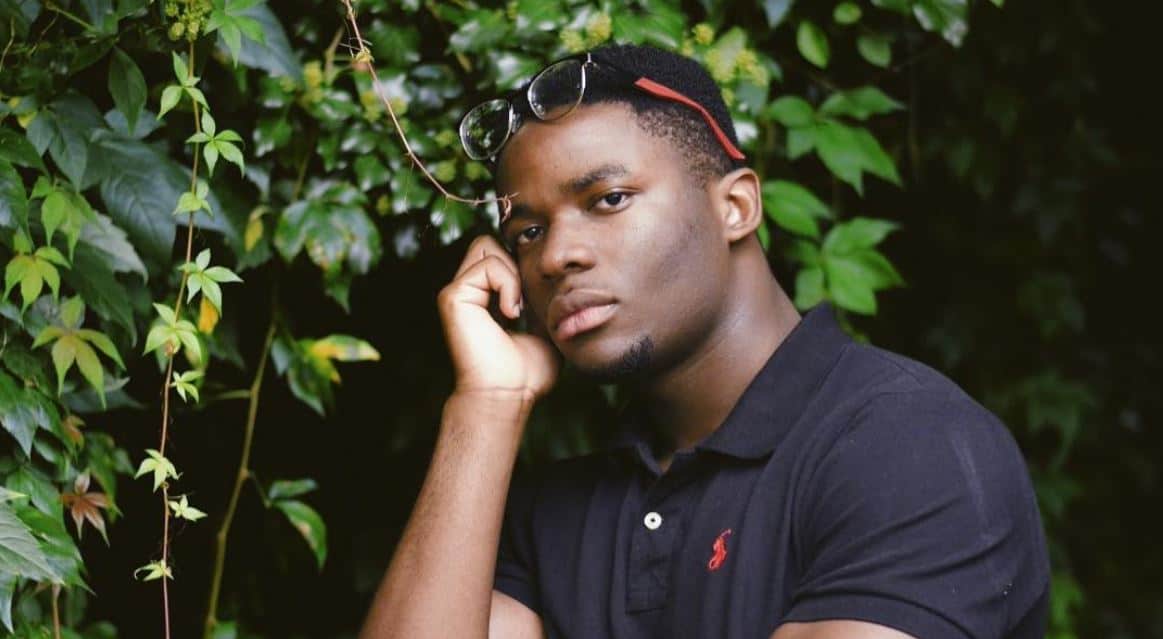

Read all about Darko’s hip-life revelation on “Tomorrow”

Hear Black Coffee talk African music and collaborations on Beats 1

Words by Ehimenim Agweh

This Friday, South African DJ Black Coffee will be appearing on Apple’s Beats 1 and he is delivering the goods on his life, his work and everything in between. The superstar DJ who has worked with major names in music and currently has a residency in Ibiza will be discussing his collaborations with Burna Boy and his dream for South African music alongside his co-host, Mario.

Black Coffee whose major focus is in House music reflects in this episode on his musical influences and how he got to work with Burna Boy in recent months. Describing how any kind of music influences what he does, he tells his co-host of the kind of vibes he works with, his storytelling and how much he wants his music to be a part of the lives of his listeners. He also discusses the potential in the South African music scene, how he taps into it and the international focus of the local market.

The episode also delves into his recent collaborations, from P Diddy to Usher. He also takes some time to look back on the success of his Ibiza residency, the volume of work behind it and his family’s reception of his fame. Stating that he tries to keep his work as separate from his home life, he also discusses how his children perceive his work and how much he and his wife try to maintain a reasonable distance between fame and family.

He spoke about how he and Swizz Beats got to work with Burna Boy and also plays an unreleased track from their project. The episode airs at 12pm Pacific Standard Time (8pm West African Time)


A journalist by training, Ehimenim is a lover of history, good books and Game of Thrones. For her, the real world is just another Westeros and everyone is a supporting character. Read and repeat is her motto. Give her a wave on Twitter @EAgweh.


ICYMI: Mr Eazi, on Apple’s “Up Next” and The Late Late Show with James Corden

Meet the Zambian rapper who is channeling his inner punk through trap music

Words: Toye Sokunbi
Photography: Jenny Tan

“What is Jollof man? Why are there so many flavours?”, asked PatricKxxLee between mouthfuls, affirming a global fascination for Nigerian Jollof rice that I never quite understood myself. It’s a hot Tuesday afternoon in October and PatricKxxLee is sitting across from me, gingerly clearing out another serving of Nigeria’s infamous ‘orange rice’. We first met at a party on his first day in Lagos, bonding into the night over cigarettes and shared millennial experiences. That night, I promised to give him a taste of Nigeria’s favourite dish; a promise I didn’t fulfil until five months later, with a recorder and notepad in hand.

PatricKxxLee, has come a long way from memorising rap lyrics when he was eight, to creating a production style he describes as ‘cinematic’. His interest in hip-hop was birthed from a prank that his older cousin pulled on him during his formative years in Zambia. He was locked in a room with nothing but a stereo and albums from Nas, Jay-Z, Ja Rule, 50 Cent and DMX, for over five hours. His cousin eventually got into trouble but the damage was already done. As twisted as it was, that day changed his life.

A few years later, the soon-to-be trapstar, moved to Johannesburg, South Africa. The relocation was a blessing and a curse. He lived in a place that was both a quintessential hub of contemporary hip-hop and urban culture, but also a city where kids at school called him ‘kwang’ (a slur for ‘foreigner’). As a reaction, he spent most of his early years in Johannesburg, getting in hallway fights and being alienated from the world around him. The only solace he found was in listening to every hip-hop album he could lay his hands on.

When he was 12, he started absorbing Lil Wayne’s entire catalogue, and after discovering Kurt Cobain, started writing rhymes and poetry in his class notes. Production didn’t start until he came off ADHD meds in the eighth grade, but it began with a question that troubled his young mind.

“I used to listen to music and I never understood where beats came from. I had no idea what a producer was. ‘How do I get beats of my own to rap with?’, that’s the question I always used to ask myself. I had three notebooks of lyrics but no beats to rap on, until one day someone showed me Fruity Loops.”

He had been too lazy to learn the guitar a few years earlier, but started playing around with the buttons on the program’s interface, training his ears to distinguish between piano keys and drum kicks. Then he came home from school one day and recorded his first song with a headphone microphone. Despite, the ‘messy’ production as he recalls, he went to school the next day, excited to play the song for his classmates. “I was like yo! I recorded this song, I recorded the song! And suddenly everybody wanted to hear me rap”

“I believe you have to become one with your imperfections, that’s why the music I make is an embodiment of what I believe”

Sadly his time with his first audience didn’t last very long. Patrick the Zambian kid was becoming PatrickxxLee, but at the expense of school work, he had become disinterested in. However as the universe would re-align, failing out of his regular high school landed PatrickxxLee in a missionary Remedial School outside of Johannesburg. At his new school learning was more focused on developing art and vocational skills. Patrick speaks very fondly of the transfer as we speak, almost convincingly enough to restore faith in traditional education. The details he gives as I ask about time in his new school are vague, but he smartly quips about taking an interest in romanticism and shock art, a formula we have seen artists like Tyler, The Creator and Eminem use to devastating effect. The two schools of thought broadened the scope of his themes and created a bedrock for his emotive style of production and lyrical storytelling.

Perhaps growing up millions of miles away from renowned hubs of Hip Hop like Brooklyn and Queens helped him: PatricKxxLee never tried to sound like anyone. His music is synth waxed, whilst simultaneously drawing heavily from punk rock and psychedelic trap, each song exists in its own weird, dark world. Music has always been an escape for Patrick, a medium for constant reflection in his life, even when it borders on self-abuse and romantic nihilism. At the core of his music, he is hurt and angry but honest about his flaws; he is his own greatest muse. He describes this music style as “neo-conscious”, a step further than the conscious artist who merely relates how he sees the world from his inner eye.

“Life experiences have moulded me to become this way. Music is truthful. The only thing you can do with your music is be honest. I believe you have to become one with your imperfections, that’s why the music I make is an embodiment of what I believe. Music helped me come to terms with who I wanted to be, whether good or evil. That’s why I lean towards the punk sound, because a punk is someone living on their own accord. The music I make is music beyond your conscience. This is who you would be if you didn’t have to think about what the world thinks. It’s a new kind of consciousness”.

In 2014, the rapper became a part of a hip-hop collective called The Cabin, alongside producers Ntsiki Mavuso, Bass Oskido and rapper, Neils King. The quad have since established themselves as a fresh crop of cutting-edge creators and curators of good music. The group’s influence in Johannesburg gave Patrick a chance to score production credits on Cassper Nyovest’s platinum-selling album, Refilo, in 2015. In 2016, after a creative tour of Europe, the rapper was signed to Lagos-based record label, Artis Records where he released his official debut EP, Disco Utopia.

“I want to reserve my music for powerful statements only”

But PatricKxxLee is not a man who finds contentment in his own ability. As we eat, he calmly listens to my critique of his music and style, especially how he responds to critics comparing him to Travis Scott. “The greatest artists are thieves”, he said with a chuckle, leaving me to wonder if he was being sarcastic or serious.

He later recounted how his manager (who he simply calls Jenny), found him via his growing SoundCloud account. “She just understood the music man”, he says this with the confidence of man who isn’t overly impressed with the progress he has made on his creative journey. For him, the goal is to constantly try to out-best his best self. Even being compared with Travis Scott, is a momentary reflection of his current form as an artist.

“I am never fully satisfied. I feel like I am climbing up a rope on a dry well and the light keeps getting further with every climb. But it gets brighter too. I have always been ahead of myself and my peers, and I feel that if I always break barriers with my music and keep on hitting the next new limit, I’ll live a very happy life. I want to reserve my music for powerful statements only”.


Toye is the Team lead at Native Nigeria. Tweet at him @ToyeSokunbi


TRYBE: To Name A Few are trying to change everything you think you know about nigerian music

Understanding Brymo on Wana’s Culture Diaries

We were instantly entranced after Brymo’s feature on Ice Prince’s “Oleku”, until then, we had never had anyone with such a distinct voice. His debut single under Chocolate City “Ara” was a phenomenon, turning him into an overnight star. He has stayed on our minds when his contemporary have all crashed and burned because of his vocal works and dexterity in song writing, kept us pining for him through the tumultuous split with his former label Chocolate City and the drought that followed after he was legally prevented from making music. Since then, Brymo has gone on to release three albums (giving him a total of 5): He named one Tabula Rasa, after hearing a judge use it in one of his hearings with Chocolate City in court, next is Trance, an 8 track compilation album, and his last album is Klītōrīs, greek word for ‘Key’.

Since his drastic split with Chocolate City, which the company won in court, Brymo has neither swayed or settled. Instead doubling down on his style of criss crossing fuji, RnB, rock, pop and afrobeats into what defines his career path. This time caring less about how people may consume his music knowing that those who will, would hop on his wave, the singer-songwriter has delivered dark, non-conformist albums that stand wholly apart from any of his music peers. For Brymo, he sometimes records a song and doesn’t release until a year later, just to be sure he really wants to put it out after he must have listened to it a ton of times. The challenge for him however isn’t song writing or singing but actually listening to him self sing to decide which music will be put out.

But he has stayed reclusive about his past, his philosophies and his process in music, until now. He sat down with Wana Udobang of Culture Diaries  as they say ‘spilled tea’.

“the followers of Brymo what they are actually after is that expression, because when you listen to Merchant Dealers and Slaves, it was really dark and very sad, very moody music, very angry. And then with Tabula Rasa, I managed to infuse humour in telling my truth. But with the latest album, Klītōrīs, there’s more fun to it. But more importantly, the three albums are very expressive. Even when I am saying something that’s really ordinary, I find a way to make it seem like ‘oh my God, what’s this guy saying. So I feel like my fans are after that expression, it becomes necessary for me to however not be scared to try out new things and new ideas, tell my new truth and my new story…”

Brymo had more to say about his background, music, success, how musicians make sales, touching fans and more within his 23 minutes stay on Culture Diaries,  an interview series which spotlights artists and culture creators shaping the Nigerian art and culture landscape. The series creator and host is Wana Udobang, a Journalist, Poet and Director. Through her interviewees, Wana offers rare insights into the creative process, challenges and has honest conversations about the Nigerian creative scene.

This episode features musician Brymo whose music is known for it’s poetic lyricism, check it out below.

Feature Image Credit: youtube/WanaWana Udobang”Culture Diaries meets Brymo”


Fisayo is a journalist who thinks writing is hard and reading too. But her journey somewhere reveals, words are like pawns on chessboard when writing. She wants to see, create and share with the world, experience & communicate these experiences. Tweet at her @fisvyo
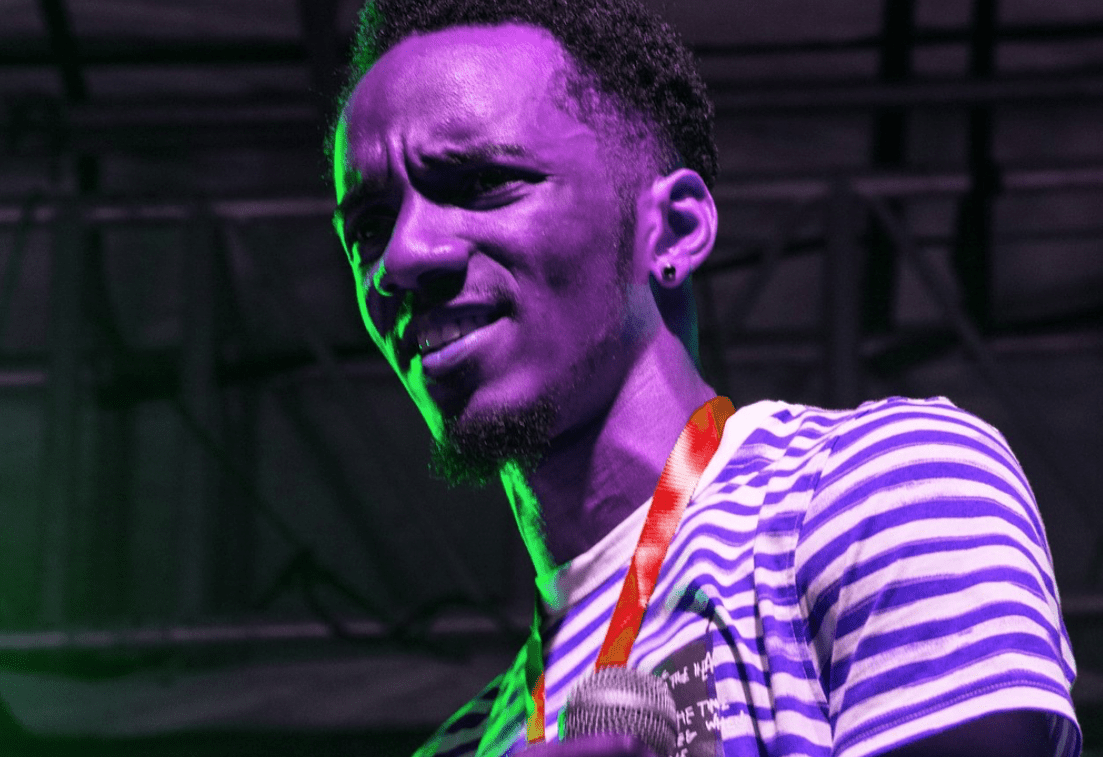

ICYMI: Afropolitan Vibes moved house and had us stoked

Watch Joh Makini and Davido playboy mansion themed video for “Kata Leta”

We haven’t as many popular musicians from Tanzania as Vanessa Mdee is, so it’s interesting to see Tanzanian rapper, Joh Makini making sound waves and equally putting the country on the map. Similar to Vanessa Mdee who has long had many collaboration with Nigerian artists like Reekado Banks and Peter Okoye (of Psquare), Joh Makini has also linked up with Nigerian artists in the past, this includes his collaboration with Chidinma on “Perfect Combo”. He’s now teaming up with Davido for another intra continental collaboration on “Kata Leta”.

https://www.instagram.com/p/BW7BFuWH3Dp/?taken-by=johmakinitz

We accept “Kata Leta” with some curiosity at the songs message but a guess may suggest it has a love-dating-relationship narrative somewhere in there. When good harmonies and melodies are interwoven, it’s easy to engage with songs outside one’s own language and just appreciate good music in the same way we’ve done with any of Sarkordie, Awilo longombaPhyno or Olamide‘s songs.

“Kata Leta” is solely crafted in Joh Makini’s indigenous language, Swahili. Davido kicks off the song with the chorus also uttered in Swahili while the video begins like a house party with just the two artists and six girls all dressed up in lingerie, dancing in ways intended to titillate Davido and Joh Makini. The two men look like A-list guests being entertained by playboy bunnies in a playboy mansion.

Take a moment to enjoy Joh Makini’s “Kata Leta” below.

Featured Image Credit: Youtube/JohMakini “Kata Leta”


Fisayo is a journalist who thinks writing is hard and reading too. But her journey somewhere reveals, words are like pawns on chessboard when writing. She wants to see, create and share with the world, experience & communicate these experiences. Tweet at her @fisvyo


ICYMI, Watch Wale’s “Fine Girl” featuring Davido and Olamide