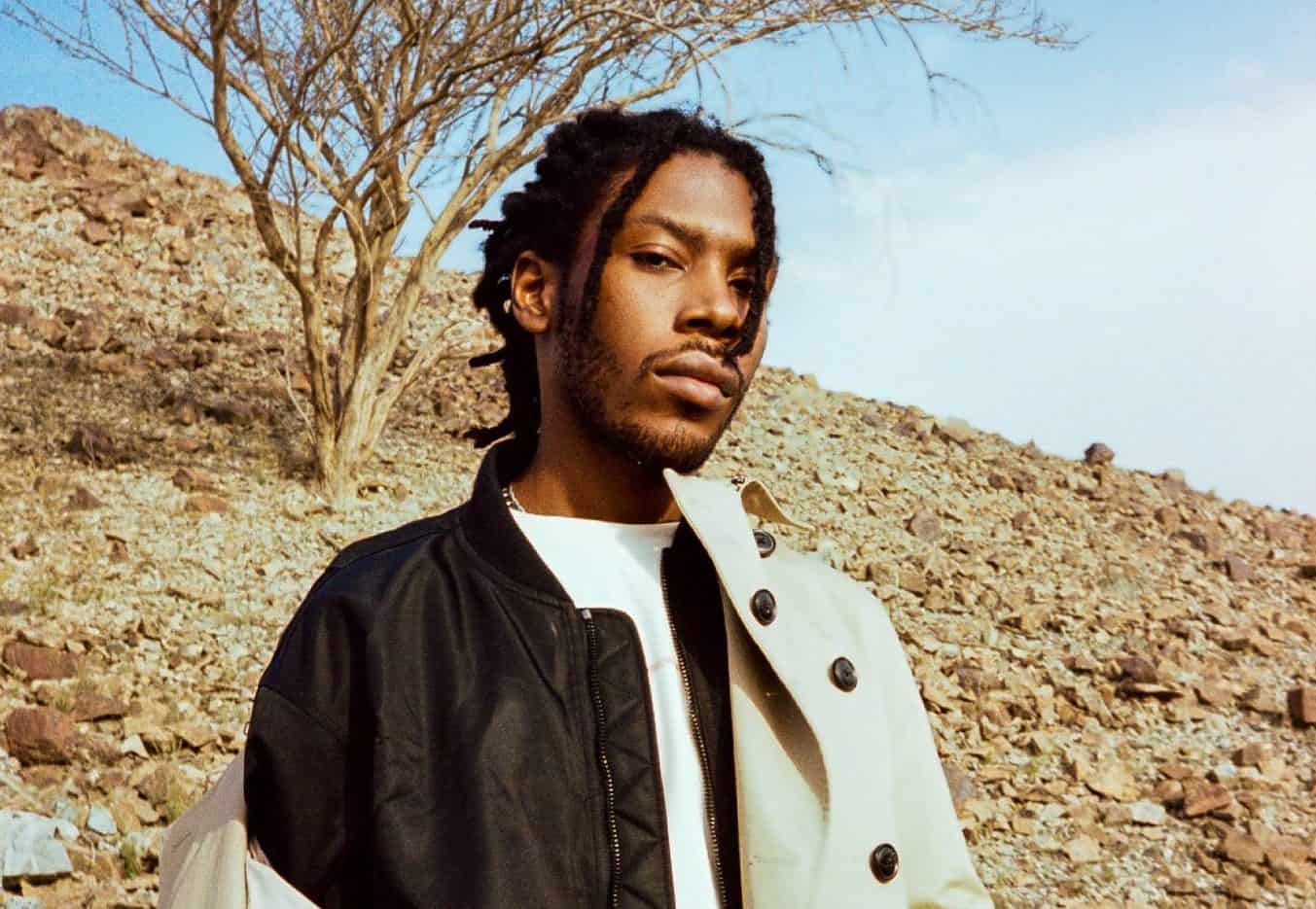
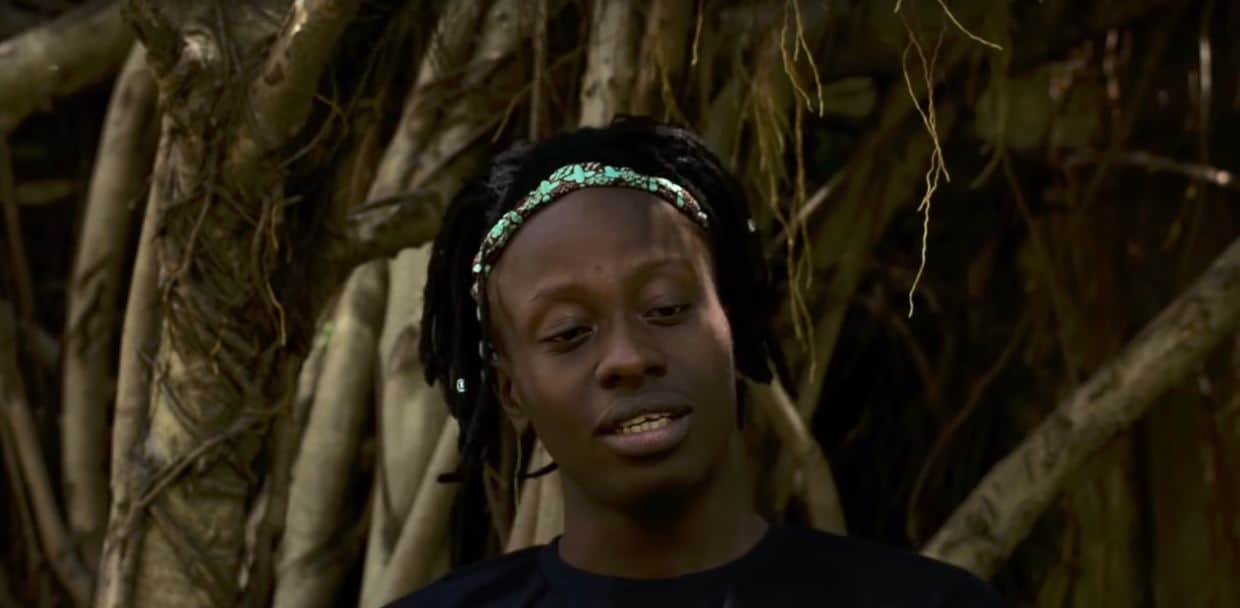
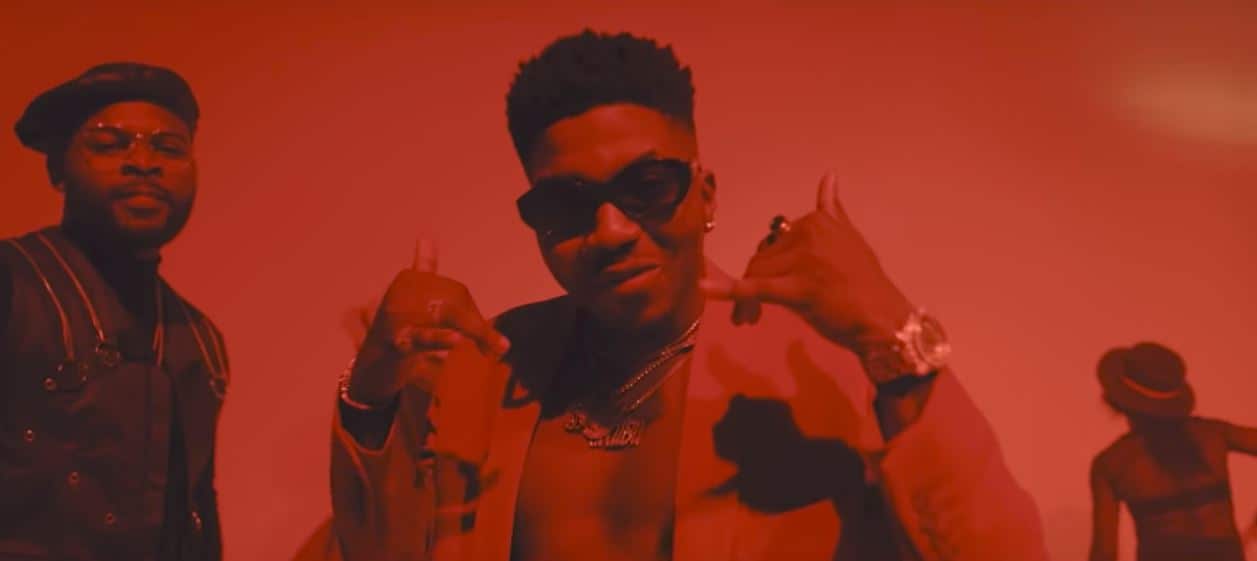
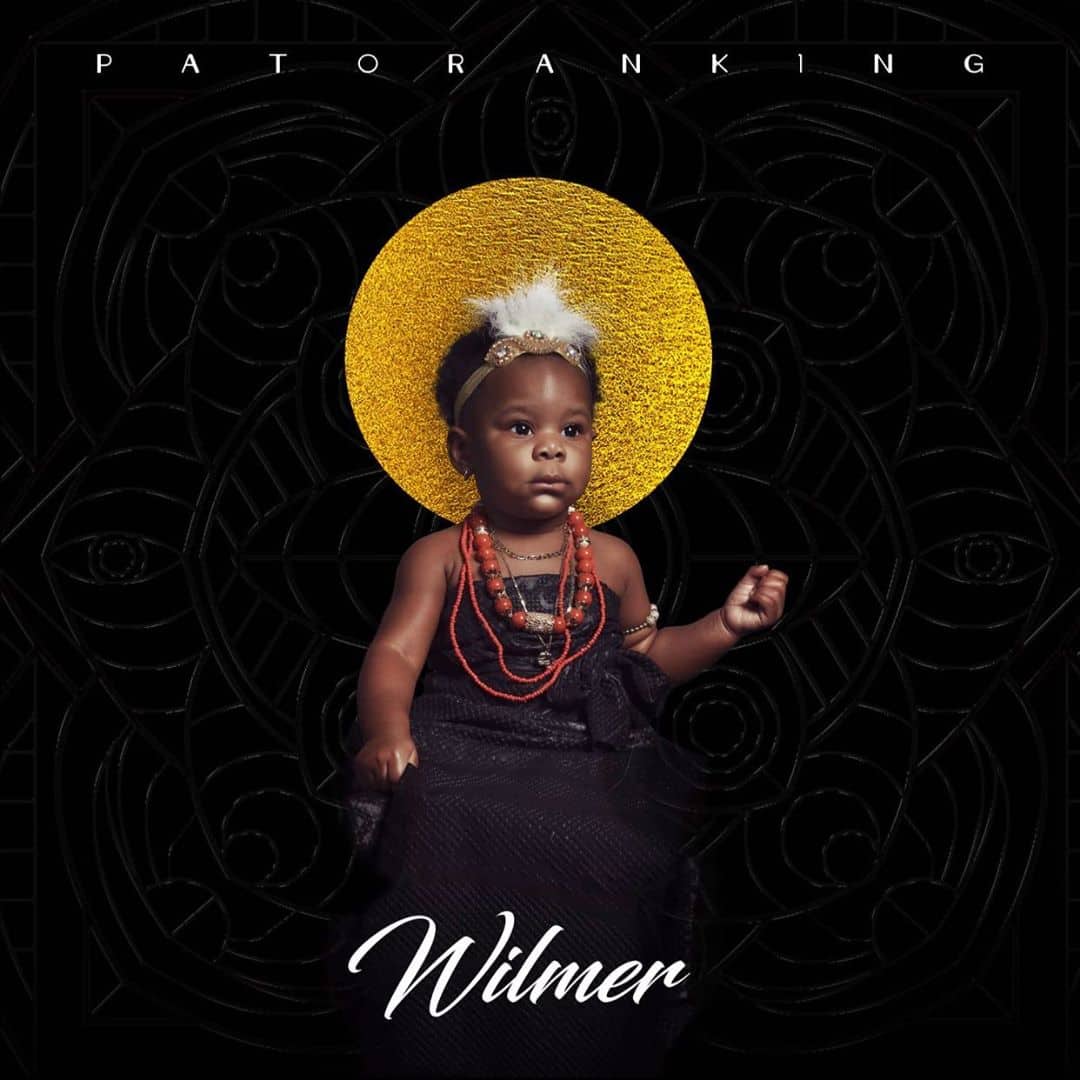
As the music scene in Nigeria gets more expansive, more niche genres are emerging with artists growing confident to experiment with different unique sounds. Ictooicy might seem your average rapper on songs like “Runnin Runnin Prod.weirdjason”, but as she describes on her Soundcloud page; she’s “not a rapper, just a poet with a flow”. Her latest single, “Balanced” finds her combining sparse washes of synthesizer, delicately rambling drum riffs and ghost-ridden vocals for a dream-pop number.
The results are as ephemeral as they are stunning, fitting for the 2-minute long song about romantic woes. Singing “Look at all the shit you put me through/ I could be your sad chic/ Tell me that you like me/ I think it’s kinda tragic” over the ambient beat Con produces, Ictooicy seems to acknowledge her questionable resolve to keep her relationship but would do it anyway. The airy beat leaves her to her vocal acrobatics while she exposes her own weaknesses, hitting the highest point of vulnerability as she pleads to be with someone who doesn’t seem as interested in the relationship.
Listen to Ictooicy’s “Balanced” below.
Featured Image Credits: Twitter/ictooicymusic
[mc4wp_form id=”26074″]

You are meeting Debola at a strange time in his life. He wandered into a dream and lost his way back. Tweet at him@debola_abimbolu
Afropop has been raking in notable wins since the middle of the decade. Popular proponents of the genre like Wizkid, Davido and Burna Boy, have inked pivotal recording deals with prominent international labels in the last three years. The latest addition to that list of Afro-Pop stars breaking into such mainstream ranks is singer-songwriter Tiwa Savage. According to reports, the former Mavin first lady just penned a new, global recording agreement with Universal Music Group.
According to the statement announcing the agreement, UMG will market and promote Tiwa Savage’s future music in over 60 countries across the world, potentially improving on the singer’s already burgeoning global crossover potential. “We are looking forward to partnering with Tiwa and her team to help her music reach new audiences around the world”, Adam Granite, UMG’s EVP Marketing Development, said of the deal, adding that “as one of Africa’s most successful, influential and dynamic singer-songwriters, Tiwa has truly global ambitions and UMG is committed to help her in achieving them”.
In 2018, a year with multiple international milestones for the singer, Tiwa Savage won the award for Best African Act at the MTV European Music Awards, becoming the first female artist to snag the award. Last year, she also sold out London’s IndigO2 arena, as well as performed to a live audience of 70,000 people at last December’s Global Citizen’s Festival in Johannesburg. The newly minted deal with UMG is set to improve on these achievements, especially as she’s slated to perform at UK’s Wireless Festival, Afropunk in Paris and the Oh My! Festival in Amsterdam, in the coming months of summer.
“My biggest goal is to make Africa proud. I’m so excited for this moment and I’m thankful to Sir Lucian Grainge and my new UMG family for their belief in my dreams”, Tiwa delightedly said of the deal, before going to express her enthusiasm: “I’m looking forward to this next chapter in my career and I’m more ready than I have ever been”.
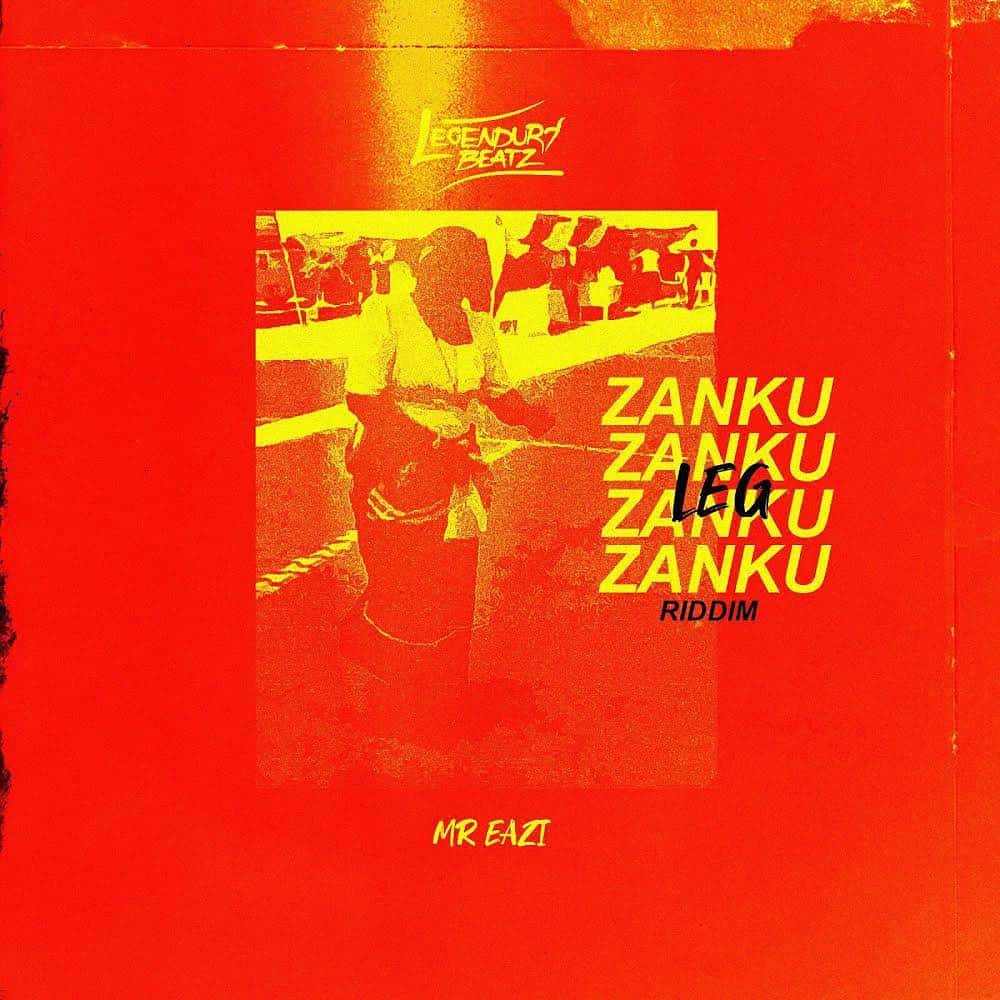
DJ Big N released his “Jowo” collaboration with Mr Eazi back in March and the record has since gone on to be played in clubs and on the radio. Thanks to Mr Eazi’s romantic intentions and the lightweight beat Princeton produces, carrying all the groovy traditional sounds to make for a dance number people of all ages can get into, the song also has all the marking to captivate all guests at wedding ceremonies.
The music video for “Jowo” has just been released and it highlights Mr Eazi sharp and biting lyrics at those who try to come between him and his lover. Patrick Elis directs the festive music video, set in an eatery where Mr Eazi’s love interest works. While she seems charmed by the romantic lyrics he performs for her, her guardians’ aren’t impressed till DJ Big N comes in to rescue the situation by buying her gifts that they approve of.
You can watch the music video for “Jowo” below.
Featured Image Credits: YouTube/MavinRecords
[mc4wp_form id=”26074″]
You are meeting Debola at a strange time in his life. He wandered into a dream and lost his way back. Tweet at him@debola_abimbolu
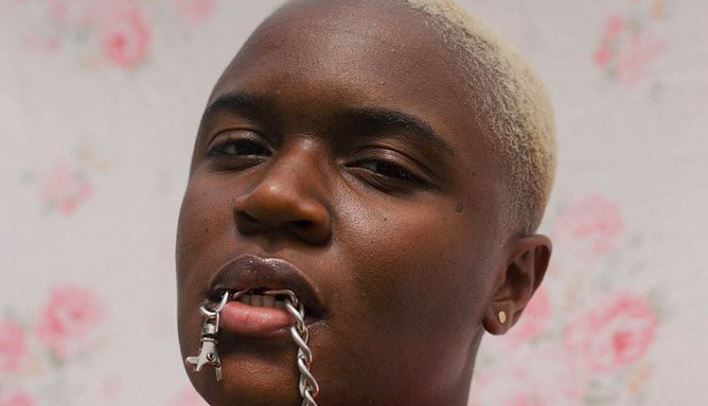
Despite having only put out a handful of singles, Wavythecreator has built a solid reputation for her soulful EDM sound. The very cool artist just put out a new single to add to her growing discography, adding a bit of punk romanticism on “Body Deep” as she sings a sex-positive anthem over a synth-led beat produced by Spanker.
Wavythecreator favors flirtatious vocals and she utilizes this on “Body Deep”, singing about her fantasies in the bedroom; “Above 18 yeah/ Sex is sicker with Hennessy”. Spanker’s hypnotic production underscores Wavy’s preference for intoxicating scenes through synth loops that amplify bars like “In a trance, I’m hallucinating”. Though her lyrics don’t aim for an aura of star-crossed love like the cover art seems to suggest, her slinky vocals are seductive. And married with the towering synths and sticky trap drumbeat, she creates a song bold and bewitching enough to play endlessly at exotic dance-clubs.
Stream Wavythecreator’s “Body Deep” below.
Featured Image Credits: Instagram/wavythecreator
[mc4wp_form id=”26074″]

You are meeting Debola at a strange time in his life. He wandered into a dream and lost his way back. Tweet at him@debola_abimbolu
Dunnie emerged as one of the 100 artists to benefit from Mr Eazi’s ‘Em Pawa’ campaign and her music video for “Foolish” is sponsored by the talent discovery platform. The song is inspired by the familiar tale of heartbreak as she laments the loss of her lover over melancholy piano-led beat. The music video recreates some of her lyrics with the romantic themed set which paired her with an attractive model who plays the role of her unfaithful lover.
Russ “All I Want” Feat. Davido
It’s that time of the year where DJs and radio presenters are looking out for the tune to capture the summer zeitgeist and Afropop has seemed a likely candidate since French Montana’s “Unforgettable” hit single fell just shy of the #1 spot on Billboard in 2017. With Afropop stars growing more international renown in America, a Davido feature can really increase the chance of scoring that mainstream hit and American rapper, producer and mixing engineer, Russ, has released his “All I Want” feature with Davido just in time for the sunny parties. Foreign Teck, OZ, and EY produce the lightweight beat for “All I Want” to suit Russ’s and Davido’s sultry lyrics, aimed at charming their love interests. The music video also stays within Afropop conventions as they shot a house party themed video.
Mr P – “One More Night” Feat. Niniola
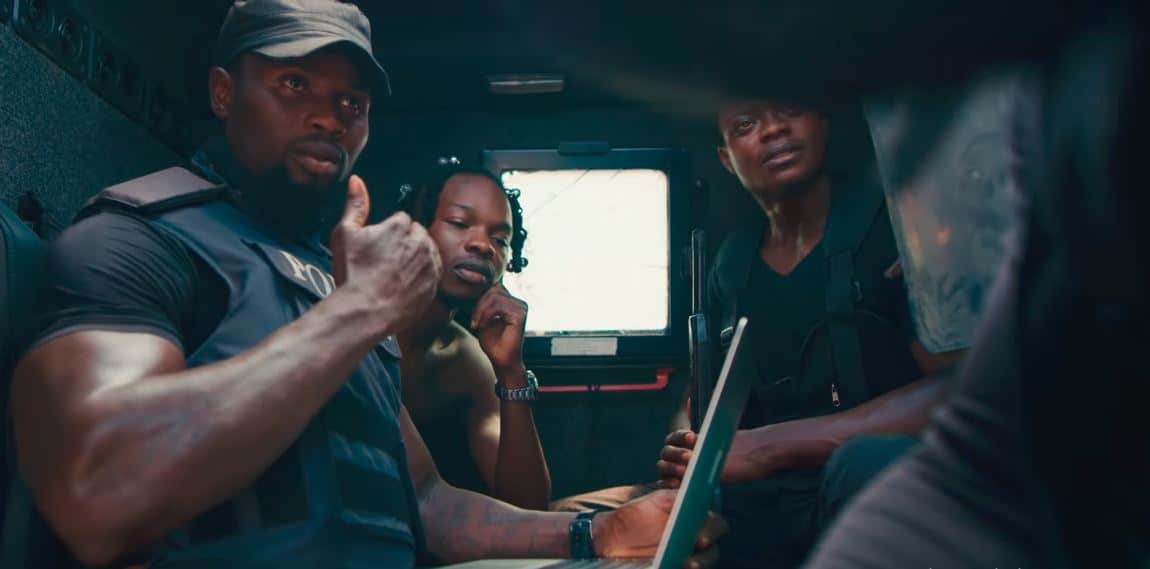
While the internet debate on who was the better performer between Beyonce and Michael Jackson, Mr P continued his MJ hero worship with the dance-driven music video for his new single, “One More Night”. The romantic song features a verse from Niniola and offers fans a chance to see her get her dance on as she teams up with the former P Square singer for a blend of African dances like Zanku and Michael Jackson inspired moves like the moonwalk.
Stormzy – “Vossi Bop”
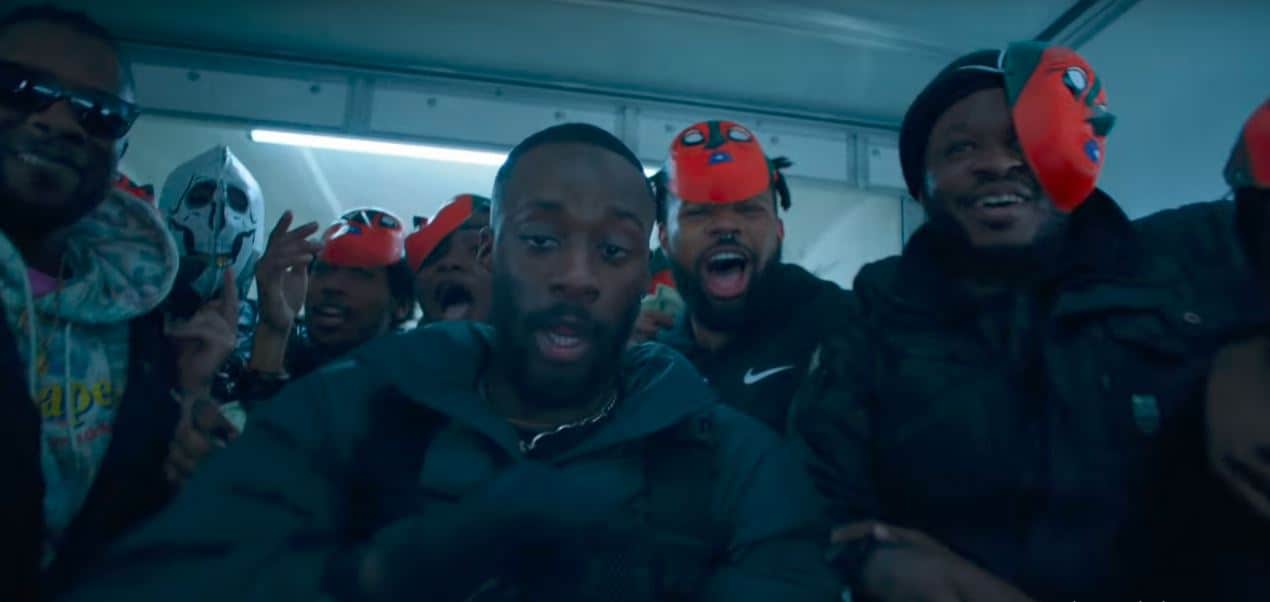
Stormzy has developed quite the reputation for his bold and unapologetic political takes. On his new single, “Vossi Bop”, he takes pointed shots at the British government and political journalist, Boris Johnson, rapping “I could never die I’m Chuck Norris, fuck the government, fuck Boris”, over the catchy trap beat. The music video he shared for the song, however, stays in tune with the song’s upbeat mood through the choreographed dance sequence and the heartwarming cameo from Idris Elba.
Emex – “Hello” Feat. YCee
Emex features YCee for his romantic new single, “Hello”. Kel P produces a sultry mid-tempo beat that sets the lightweight pace for their seductive lyrics, addressed to their love interest. Though the song’s melody is catchy enough to fit in DJ turntable, the laid back ambiance of the beat is more suited for exotic dancing as displayed in the TG Omori directed music video with dancers performing in the strobe-lit and smoke-filled studio set.
Trailer for “Fast & Furious Presents: Hobbs and Shaw”
Everyone knows they can count on the “Fast and Furious” franchise to deliver all-out action with none of the holdbacks being realistic imposes. From the first look at the trailer for “Fast & Furious Presents: Hobbs & Shaw”, the first spinoff from the movie sequel, it’s clear that the plot is barely relevant and the directors won’t let anything as simple-minded as reality stand in the way of a moment that’s going to look awesome on screen. The nearly 4-minute long trailer does a pretty decent job of narrating the whole plot of the film. We know in Idris Elba plays the role of the genetically enhanced villain referred to as “Black Superman” while in typical fashion, there’ll be car chases and family will be involved.
Featured Image Credits: YouTube/MrPVEVO
[mc4wp_form id=”26074″]
You are meeting Debola at a strange time in his life. He wandered into a dream and lost his way back. Tweet at him@debola_abimbolu
Yemi Alade has always recognized Afropop’s appeal to audiences outside Africa since she released a French, Swahili & Portuguese extension of her lauded sophomore LP, ‘Mama Afrique’. For her latest release, she has her eyes on the illustrious American listeners as she features Rick Ross for the dance-driven love song, “Oh My Gosh Remix”.
The catchy beat DJ Coublon produced for the original single is given a bit more bounce to fit the new hip-hop direction of the song. Though his highlife inspired instrumentals are still very much in full swing, 808 drum riffs, vocal samples and Rick Ross’ signature grunt ad-lib are added to accommodate his rap verse. However, the accompanying music video finds both artists in a studio designed to look like a beach scene at night with exotic dancers performing choreographed dance routines.
You can watch the music video below.
Featured Image Credits: YouTube/Yemi Alade
[mc4wp_form id=”26074″]

You are meeting Debola at a strange time in his life. He wandered into a dream and lost his way back. Tweet at him@debola_abimbolu
‘Omo Charlie Champagne Vol. 1’ is Simi’s sophomore project after her critically acclaimed ‘Simisola’ debut, under X3M. While she already asserted her ethos on the self-titled ‘Simisola’, her new album finds her stretching the boundaries of her sonic explorations, covering new grounds, collaborating with new artists and expressing more vulnerability than we’ve ever gotten from the soulful and romantic singer as she offers 12 tracks and a fourth-wall breaking “The Artist” skit.
Though the pre-released single, “Ayo” and its accompanying music video seemed to highlight Simi’s pleasant mood since tying the knot with her spouse, Adekunle Gold, ‘Omo Charlie Champagne Vol. 1’ opens with “Charlie”, a soulful song, mourning Simi’s late dad. Oscar produces the song’s melancholy beat to heighten Simi’s tear-jerking lyrics, singing “I walked down the aisle just the other day, but you weren’t there to walk me/ I’m not mad o/ I take that back, I’m furious”, over the mix of piano harmonies and horn samples.
Fortunately, her somber reminiscing doesn’t last through the whole project and by the third song, “Jericho”, she features Patoranking for a romantic reggaeton number. Though Simi doesn’t have the foul mouth that gives reggaeton it’s raunchy sensibilities, her sweet lyrics and the sticky beat Vtek produces are seductive enough to rise the heat levels on dancefloors. However, the next track, “By You”, loses the club inclined beat in favor of a more emotive one produced by Oscar. And with Adekunle Gold joining in for the romantic duet, “By You” hits all the right notes for sentimental value as both singers profess their undying love for one another.
Maleek Berry assisted “Immortal” returns Simi into the steamy universe of dancehall, expressing more sensual sentiments as she sings “Hold on tight for the ride of your life/ Don’t let go now/ We can go all night” over the synth-led beat Sess produces. Her seductive intentions carry on to the next track, “Love On Me”, a catchy bop with a call and response chorus. But by the 8th track, “Move On”, the mood dips again for a sweetly captivating ode to heartbreak.
Regular collaborator, Falz is brought on for his charming sense of humor as he features on the amusing “Mind Your Bizness” track. Though their cautionary warning against being a busybody is pointed, the animated lyric video helps numb the severity. Simi quickly returns to her romantic sentiments on the next tracks, “Lovin'”, “Please” and previously released “I Dun Care”, addressing her love interest and professing her love. ‘Omo Charlie Champagne Vol. 1’ closes with “Hide and Seek” where she wields her vulnerability with confidence and even sex appeal singing, “Because igboro no dey smile out here, Baby make it loud and clear (na me dey hold you down)”. The catchy beat Oscar produces mixing whistling samples with Afropop percussion and Simi’s relatable and heartfelt lyrics soundtrack Simi’s newfound role as Afropop’s most romantic and lovable personality.
‘Omo Charlie Champagne Vol. 1’ listens even closer to the promised-land destination Simi has been inching toward since her music career kicked off with ‘Ogaju’ in 2008. Her clever lines and captivating vocals have captured the zeitgeist.
You can stream ‘Omo Charlie Champagne Vol. 1’ below.
Featured Image Credits: Instagram/symplysimi
[mc4wp_form id=”26074″]

You are meeting Debola at a strange time in his life. He wandered into a dream and lost his way back. Tweet at him@debola_abimbolu
Korede Bello’s new single, “Mr Vendor” is a gorgeously steamy bop, delivered with intimate and charming lyrics. With the catchy Afropop melodies and the showy accompanying music video set in a location outside the country, the Mavin singer seems geared to repeat the international success of his “Do Like That” single from 2017.
On “Mr Vendor”, Korede Bello’s soft, layered vocals are met by the intricate piano melodies to create a soothing atmosphere for his romantic lyrics. Don Jazzy sleek production is cozy and laidback beat, serving as the backdrop for Korede Bello’s raunchy lyrics as he advertises his sexual prowess to charm a love interest; “I come with the vibe if you need a man wey go come with the pipe”. Kaz Ové directs the music video for “Mr Vendor”, following Korede Bello’s romantic journey with a love interest who he meets while working at a convenience store. Though the video takes a colorful turn into a party and a date, the closing scene back at the store suggests the fun times spent together during the nearly 3-minute length of the video was all in their heads.
Watch the music video below.
Featured Image Credits: YouTube/Korede Bello
[mc4wp_form id=”26074″]
You are meeting Debola at a strange time in his life. He wandered into a dream and lost his way back. Tweet at him@debola_abimbolu
Kizz Daniel is returning to his more pleasant mood. After infecting the entire music industry with the slut-shaming bug from his “Fvck You” single which saw almost every Nigerian musician penning hateful lyrics about their ex-lovers in a #FvckYouChallenge, his latest release is a raunchy celebration of black beauty through the music video for “Poko”, off his ‘No Bad Songz’ album.
MOG produced the catchy beat for Kizz Daniel’s raunchy dancefloor fueled lyrics on “Poko”, singing “Whine Poko, Go Down, Poko”. It’s the sort of bop you’d expect to hear in a club and Clearance Peters directs the video with similar intentions. The music video adds a sophisticated twist to the conventional dancefloor themed music videos as Kizz Daniel is seen singing charming lyrics to a love interest who is also portrayed as an exotic dancer, performing in a dimly lit room. With the sexy dancing and teasing lighting, Kizz Daniel’s pupils become blackened with intoxication.
You can watch the raunchy music video for “Poko” below.
Featured Image Credits: YouTube/KizzDanielVEVO
[mc4wp_form id=”26074″]
You are meeting Debola at a strange time in his life. He wandered into a dream and lost his way back. Tweet at him@debola_abimbolu
Jubilant songs inspired by botched love can be very catchy, but as “Nobody”, the new collaboration from Kwesi Arthur and Mr Eazi shows, songs wallowing in the despair of heartbreak can be just as moving. Ghanaian, Ground Up Chale singer, Kwesi Arthur, just teamed up with Mr Eazi for the new single which is expected to feature on his anticipated ‘Live From Nkrumah 2’ project.
Over the laid back beat Mog Beatz produces, blending mid-tempo drum riffs, ambient synths, flute harmonies and percussion, Kwesi Arthur and Mr Eazi reminisce about the fun times they had with their ex. Though the love has gone sour, they both swear they will never be able to love anyone else and seem unprepared to move on; “If e be Joke Girl Tell Me Say You Just Dey Play/ I Don’t Want To Live a Day Without You/ If e be Sey I Do Somethings, I Just Go Change”. The beat mirrors their heartwrenching vocal performance, infusing a bone-chilling flute harmony to match the breathless melody they sing with as though they are wailing.
The music video Yaw Skyface directs for “Nobody” shows Kwesi Arthur and Mr Eazi’s as they quarrel with their love interests at a fast food place. Though Kwesi Arthur seems to make up with his lover after an emotional performance in the rain, Mr Eazi has no such luck. Mr Eazi’s collaboration is the first from the coming project which is also expected to feature other African artists like Nasty C, Shatta Wale, Santi and Sarkodie.
Watch the music video for “Nobody” below.
Featured Image Credits: YouTube/GROUND UP CHALE
You are meeting Debola at a strange time in his life. He wandered into a dream and lost his way back. Tweet at him@debola_abimbolu
There are no real ways to gauge how much traditional African music has influenced contemporary pop music. Pop, Rock, Hip-Hop, Country and Blues all have African routes, with music historians tracing many of these music forms across the Atlantic to countries in West and Southern Africa. To understand how colonialism and its attendant capitalism would transform Nigerian music requires an understanding of music before it was possible to commercialize and mass produce talent.
Music is an integral part of cultural life in Africa. In countries like Mali and Senegal, Chad and Niger, music and poetry served as the primary method of documenting and preserving history. A special social caste called the Griots served as generational historians, the families in this caste assigned with the task of learning, memorizing and upholding these oral histories and given pride of place in their communities.
In Nigeria, music served a similar function, with cultures like the Yoruba and the Bini preserving oral histories of individuals through complex poetic songs called ‘Oriki’. Oriki’s are either created by an individual’s mother or family matriarch and in richer families learned by the family’s informal biographer. Other designated court musicians include the ‘Alaga’, a specific subculture of praise singers and documentarians comprised almost entirely of women and restricted to important family functions like traditional wedding engagements, funerals and births. The practice of Oriki and its variants endures to today, largely untouched by Western influence. But not all of the traditional Nigerian music has been so insulated.
Before the industrial revolution would democratise music education and commercialise the process of creating and distributing music, musicians were considered as an elite group of professionals whose work was largely ‘artisanal’. Artisanal crafts required decades of practice to master and often age restrictions were placed on apprentices before they were allowed to formally practice the profession. Artisanal crafts required long apprenticeships, periods during which it was near impossible to engage in the traditional labour that ensured individuals and their families had their basic needs met. A direct consequence of this was that music was often a family profession, with skills and trade secrets passed down from parent to child, and closely guarded from competing families.
It also meant that musical families, like other artisanal families, depended on a complex patronage system to free them to pursue excellence in their craft. Musical families were either permanently affiliated to a wealthy patron like the Yoruba royal families, or swore fealty to a religious deity whose worshippers were then obligated to ensure that the musicians were cared for (Lindon, 1990). Other forms of professional musicianship included traveling musicians who worked traditional jobs but also had seasonal periods predicated by a commission based system where they performed during major festivals like the New Yam Festival or during the precolonial wrestling matches that were legendary in Eastern Nigeria.
Some music was purely class-driven and was taught to adherents through secret societies like the Ogboni Cult of Western Nigeria and Nze Na Ozo of Southern Nigeria.
Traditional instruments like the Ngene, the Gangan (talking drum), the gourd rattle, and the Kalangu (Hausa variant of the talking drum), and the Kontigi (a string lute popularized by Nigerian griot Dan Maraya Jos) were hallmarks of this form of music and required mastery before a musician could distinguish themselves. The instrument became as much a part of the brands of these popular pre-colonial musicians as their music, and their trademarks became their extensive instrumental solos.
The patronage system of music meant mastery of the instrumental and vocal style and encyclopaedic recollection of the histories of the patrons was prioritized over having a large catalog of music. Music was also performed at the behest of the patrons, and the musicians themselves had little control over their own intellectual property. Patrons also often sponsored the purchase of expensive musical equipment (a problem that would become very prominent in the ’70s at the height of the Afro Rock revolution) and retained ownership of the equipment, limiting the ability of musicians under their patronage to make truly expansive music.
The introduction of external influence on Nigerian music began long before the British invasion and what we term as ‘colonialism’. The first invasions happened in Northern Nigeria during the religious Jihad of Uthman Dan Fodio in the early 1800’s. Motivated by political and religious reasons, the Jihad saw Fulani clerics and their mercenary armies take over most of Northern Nigeria and establish the Sokoto Caliphate, ruled under strict Islamic law. Islam forbids debauchery and ritual celebrations involving music and as such much of the cultural musical celebrations that existed before the Jihad were either suppressed or completely eradicated, with the new Muslim elite preaching religious piety and the embrace of the Qu’ran as the only acceptable public demonstrations of personal expressions.
The vibrant music and culture that had characterized the Hausa dominated North were suppressed by the colonization efforts undergone by Dan Fodio and Islamic learning replaced the celebration of the indigenous cultures. This suppression would eventually lead to the erasure of much of the Indigenous music and culture in Northern Nigeria. Though the jihadists were thorough, even they were unable to reach all the indigenous ethnic groups. The Nupe and Kanuri preserved their indigenous cultural rituals and music stylings to this day, as did the Gbagyi and Anka communities of Kaduna and Bauchi.
Others were adopted into the version of Islam that was practised in the new Sokoto Caliphate, like the praise singing griots who were an import from the predominantly Muslim Malian empire and sang for patronage from the political courts. There were also religious offshoots that were impossible to eradicate, like the Dan Daudu communities, which comprises of trans and non-binary individuals who identify as adherents of Bori, the syncretized worship of a gambling trickster god that has been subsumed into Islam. Bori culture closely mirrors modern Pentecostalism for its use of high octane music as a vehicle for inciting religious fervour, its practice of exorcisms and its belief in the power of spirits to possess individuals. These pockets of culture bridged the chasm between our existing musical heritage and the deluge of Western influence that would follow.
The Islamic Jihad and the eventual Christian invasion, first by missionaries and then by capitalists were successful because both were able to champion a widespread adoption of religious iconography. And the most prominent aspects of Islamic and Christian religious imagery were its ‘hymnodies’. While Qu’ranic recitations stayed largely true to the source material and only allowed adaptations of the musical scale and melodic choices, early Christian hymns either translated existing European music into local languages or created new hymns to reflect the unique cultural references of the cultures these religions were introduced to. Variants of these hymns exist today. Religious hymns provided the perfect melting pot for indigenous cultures to engage and incorporate Western musical influences into their existing framework, and would provide the foundational material for the popular and secular music that would follow.
Through the practice of hymnodies, missionaries and their new converts are able to study the unique music systems on each side of the divide and create a hybrid that used contemporary instruments but preserved the musical structures of the existing systems. The musical genre High-Life is a stellar example of how the electric and lead guitars and the stationary drumset can integrate into and transform traditional musical forms.
Many factors would create a market for popular music. There was, of course, the agitations for national sovereignty, a movement that was driven by activists, politicians, and musicians. Codifying activism into music was an easy way to reach mass audiences and considering Nigeria’s long-held practice of oral histories, it wasn’t a stretch for musicians to immortalize themselves in this way and for politicians to create solidarity through ditties and jingles.
Then there was the first and second generation of new Nigerian elites. Educated in Europe and the Americas, many chosen at random by the Western missionaries and administrators for their intelligence or curiosity, the return of these elites upended much of the existing social strata and created a new class of repartees not content with their former status and not accepted by the existing elite. They were eager to find spaces that allowed them to socialize without expectations but incorporated the high energy dance and music that was beginning to spread across Europe and America. This new class created the demand for secular entertainment venues. Music clubs, lounges, and bars would serve as performances spaces for many former church musicians looking for commercially viable avenues for self-expression and for many talented musicians hamstrung by the politics of traditional music hierarchies. The religious to secular music pipeline exists till today, largely unchanged except for the musical genres in demand.
The events leading to independence and the Independence itself would create a very specific environment for an explosion of Nigerian popular music and define many of the contemporary genres of music Nigeria would produce in the next two decades.
La Meme Gang’s latest single, “This Year” is the Ghanaian hip-wave group’s first single this year following the music video for “Kemor Ame”, off their ‘Linksters’ EP. “This Year” is a celebratory single, produced by MOG Beatz to a groovy baseline that compliments the elated performance from Kuami Eugene, Darkovibes, $pacely, and RJZ.
Over the mid-tempo mix of percussion, synth harmonies, horns and a catchy drum riff, Kuami Eugene sings a chorus making prophetic declarations about the motif for the year; “This Year, e Go Be My Year/This Year, Chale We All No Go Fear/ This Year, We Dey Come for You/ Anywhere the Party Dey we Must Come too”. His optimistic sentiments are echoed in the verses taken by the La Meme Gang members; Darkovibes, $pacely, and RJZ, who perform in a mix of English, pidgin and a native Twi language.
You can stream La Meme Gang’s “This Year” featuring Kuami Eugene below.
Featured Image Credits: Instagram/lamemegram
[mc4wp_form id=”26074″]
You are meeting Debola at a strange time in his life. He wandered into a dream and lost his way back. Tweet at him@debola_abimbolu
BOJ’s new single, “Awolowo”, is produced by GMK who mixes ambient synth percussion with a catchy drum riff for fans ready to rock steamy dancefloors. With the sultry beat serving as the song’s backdrop, BOJ writes a laid back hook, soaked in confidence inspired by the wealthy lifestyle and the talent he has on the song with him.
“Awolowo” features three verses taken by three of the most exciting new acts from Ghana; Kwesi Arthur, Darkovibes and Joey B. Their vulnerable and cutting lyrics on how wealth complicates their romantic relationships aren’t what you’d expect from such a pop-forward song, but the catchy hook and their smooth flow over the mid-tempo beat make for a refined song that fits in club DJ sets and heartbreak playlists. Lines like, “She Said You Niggas Got Money But I Guess You No Fit Buy Taste/ I Don’t Need Nobody Else’s Validation”, cut to the heart of how spiteful lovers always seem to know the right insecurity triggers to mess with the self-image of even the most confident people.
You can listen to BOJ’s “Awolowo” featuring Kwesi Arthur, Darkovibes and Joey B below.
Featured Image Credits: Instagram/bojonthemicrophone
[mc4wp_form id=”26074″]
You are meeting Debola at a strange time in his life. He wandered into a dream and lost his way back. Tweet at him@debola_abimbolu
The subtle ways our lives have changed for the better since the spread of mobile technology may be hard to miss, but there are also even more peculiar differences to how we interact with the lives of the rich and famous. The wall between celebrities and the audience has been virtually broken down, these days, conversations on separating the art from the artist have grown more prominent as a result of the naturedly human tendency of public figures to be problematic.
Last week, British-Nigerian rapper, Naira Marley surprised everyone with a caption with the words: “If U Know About Slavery You Go Know Say Yahoo No B Crime” on his Instagram. This picture quickly went viral spurring instant backlash, reprimanding his support for cybercrime. While his Instagram page is no court jury and anyone caught committing internet fraud will serve their time jail, once again, it also showed how polarised the country is about the dangers of internet fraud.
Music releases referencing the underground cybercrime culture have a long history in Afropop. In 2007, Olu Maintain released his hit single, “Yahooze”, a controversial single, he explained was a tribute to the Monday to Friday worker-bees. Before Naira Marley’s recent incursion became a headline, the biggest debate around the dangers of Yahoo-Yahoo started after Falz allegedly took shots at artists who celebrate known cyber-fraudsters. At the time, 9ice was pushing “Living Things”, a track where the veteran runs through a list of popular names allegedly suspected of cybercrime.
Although Naira Marley himself has denied being involved in cybercrime, he seems bent on holding on to his belief that ‘Yahoo’ isn’t a crime. For a lot of his supporters, the gritty reality on the streets is often given as an excuse to get rich by any means necessary and artists like SamKlef have even argued that the poor quality of government in the country should be blamed for the crimes. It’s a sentiment similar to Naira Marley’s argument that stealing is justified by slavery. But a life of crime can’t be rationalized and those who attempt to do so are only encouraging bandits. In line with those who believe the whole thing to be a publicity stunt to build hype for a new release, the singer released his reply to media critics in a snippet he shared on his Instagram. The snippet finds him comparing the backlash he has gotten to the oppression Fela, Mandela, and MKO Abiola faced while they were alive.
His conviction is even more troubling than flat earth believers and now fans are faced with the tough decision to keep listening to a cybercrime defender or remove his songs from their playlists. And that’s where the internet has come through for modern society. Consumers have the power to determine who they listen to and can have a direct effect on the banks of artists who hold opinions they don’t agree with.
Featured Image Credits: Instagram/nairamarley
[mc4wp_form id=”26074″]
You are meeting Debola at a strange time in his life. He wandered into a dream and lost his way back. Tweet at him@debola_abimbolu
Johnny Drille fans still haven’t gotten that debut project to earmark their territory in the Nigerian music space, but the singer has certainly kept up a steady stream of releases lately. After sharing “Forever” and a music video for “Shine”, “Finding Efe” is the Mavin artist’s third single for the year and it finds him returning to his tortured romantic sentiments, penning a touching song that mourns the loss of his lover.
A piano-led beat serves as a soothing drop for his heartfelt lyrics addressed to a lover who he can no longer reach. Just like his lyrics, “Even Though We’re Worlds Apart, I Wonder Dear Where You Are”, the music video for “Finding Efe” shows Johnny Drille’s inability to move on from the relationship as we watch him embark on a quest to find the song’s muse. Timmy Davies directs the video following Johnny Drille’s search across the country, armed with a photographer which he shows everyone he meets.
You can watch the music video for “Finding Efe” below.
Featured Image Credits: YouTube/MavinRecords
[mc4wp_form id=”26074″]
You are meeting Debola at a strange time in his life. He wandered into a dream and lost his way back. Tweet at him@debola_abimbolu
This year, Nigeria will celebrate 20 years of return to democracy. This is a landmark achievement for any African democracy, but when the 9th assembly is inaugurated on June 12th—Nigeria’s newly established Democracy Day—there will be fewer women who will sit in the green and red chambers to make critical decisions about inclusion, budgeting for gender issues and participation.
The exclusion of women has long been a crux of the Nigerian electoral process. These days it’s getting harder to tell if anything is actually changing. At the recently concluded general elections, only sixty-two of 2970 women who ran for various offices will be sworn into office to legislate for the nationwide population of 190 million people. This number represents only 3.8% of all the positions in the country, from the office of the President to the Vice, the Members of the National Assembly and the Members of various State Houses of Assembly. In 2015, it was 6.5%.
Younger women under-4o were even more marginalised by the last election. Despite the clamour for younger candidates and fresher political voices at the last election, there are only nine women of the 260 total number of elected candidates under-40, and only two of them are thirty-five years or younger.
Last week, YIAGA AFRICA, a youth non-profit focused on upholding human rights and democracy, brought together a cohort of 20 young female candidates who lost the 2019 elections for a reflection meeting on the challenges they faced and the way forward. The sit-down held at the Center for Legislative Engagement (CLE), where these courageous women, some of whom were understandably still shaken about their loses, discussed their experience during the general elections. The discourse turned out to become a safe space for the women to give context for their candidacy, and share their post-election feelings.
“There are about 10 states in Nigeria with no single female legislator, so how do you plan to legislate for women in the state,” Chioma Agwuegbo, founder of TechHer and Strategy Team Member of the Not Too Young To Run Movement, stated. “In Ondo state, there is only one female legislator amongst 26 in the state that will be sworn into office, which means her voice will most likely be drowned out.”
Alongside Agwuegbo, other leaders of the Not Too Young To Run Movement: Yetunde Bakare, Maryam Laushi, Bella Anne Ndubuisi and Cynthia Mbamalu, the Programs Manager of YIAGA AFRICA, presided over the townhall meeting. The speakers took great effort to ensure the women spoke very frankly about the experiences from their different constituencies, states, polling units and parties, beyond the observer reports and statements by political analysts.
“The whole concept of democracy is incomplete if there is no representation of the different segments or sectors of the society. And that includes ensuring that each time we talk of gender in politics, we are not looking at it as a male-dominated affair but a space, represented by both men and women, which is a true reflection of the society,” Lawyer and activist, Cynthia Mbamalu said. “You cannot talk about nation building itself without talking about the women; we make up part of the population. Statistics show we make up about 49% of Nigeria’s population. We need to sit back and reflect on how we experienced the elections. What challenges did we face and how can we address these challenges going forward?” She queued the female candidates to throw more light.
Once a person has been marginalised and discredited, silence becomes a likely option. YIAGA Africa told The NATIVE, they witnessed an initial reluctance from speakers who repeatedly asked the organisation, “the question is what is our protection after we tell our story, what is our protection after now?”
Rwanda just recently beat its record of 64% to 68% of women in politics because they saw the great change it made for their country. In Namibia, the classification of women in parliament is 48%. In South Africa, it is 42.4%; Senegal, 41.8%; and Ethiopia, 30.3%. In Nigeria, the number of women in parliament will drop from the 6.5% that it has been in the 8th Assembly, to 3.8% in the 9th Assembly, commencing in June.
It took the promise of identity protection and the option for anonymity off the record, for some of the women to start feeling comfortable about speaking up. TechHer founder, Chioma Agwuegbo broke the ice by telling the women to communicate their experiences in one idea. The choice of words that flew around the room, included an odd but predictable register of anguish and disappointment. “Tough, fraudulent, horrible, no respect for gender, an election replica, not credible, quite an experience, vote buying: highest bidder wins, money laundering, and, a market place.” The women echoed.
The participation of women is beyond a basic political issue; it is also the subject of community agreement. Nigeria has notably failed to learn from other countries on the African continent in this regard. Rwanda just recently beat its record of 64% to 68% of women in politics because they saw the great change it made for their country. In Namibia, the classification of women in parliament is 48%. In South Africa, it is 42.4%; Senegal, 41.8%; and Ethiopia, 30.3%. In Nigeria, the number of women in parliament will drop from the 6.5% that it has been in the 8th Assembly, to 3.8% in the 9th Assembly, commencing in June. “So technically it’s like we are hustling backwards. One step forward, 20 steps backwards,” Agwuegbo emphasized.
Some female candidates, however, ran their campaigns prepared for the worst; they offered solutions. “I built a community of men around myself. I went for midnight meetings with my husband.” “I started by telling them stories that never happened as a block to prevent strategy: Sir, everybody I have been asking for support has been sexually harassing me”
A series of recurrent issues were highlighted by most of the women. For example, on election day, some young candidates experienced betrayal from party agents who switched allegiances after they were bought over. In another constituency in the North Central, a female candidate’s campaign manager tried to use sex as a prerequisite to obtaining the money that had been specifically donated to fund her campaign. “He knew that the election had given me exposure, and he wanted to ruin my chances. The money he collected for me, [donated for my campaign] he has it in his pocket,” she stated. Another female candidate in the South West was sexually harassed by a state governor who condescendingly flattered her by telling her how lucky she is and promised to give her “the whole society” if she accepts to be one of his mistresses.
Like this, the conversations that took place among the women and speakers at the reflection meeting were wide-ranging and lasting in impact. One of the youngest female candidates at the reflection meeting who is in her mid-twenties was both a victim of her age and marital status. She was beaten up, for saying “no” to a sexual predator, who had promised support to her but threatened to continue assaulting her because she refused to have sex with him. In the South-South, a female candidate’s husband was kidnapped; her mother-in-law who had warned her not to go into politics, chastised and accused her, saying she “traded her son (the husband) for political conquest”.
We could sense the trauma still lingering from their experiences as the women’s voices caught in their throats, revealing emotions through shouts and cries. Some female candidates, however, ran their campaigns prepared for the worst; they offered solutions. “Have one or two men that will go with you for party meetings,” a candidate stated. This is an experience that their young male counterparts may not necessarily encounter, and it is absurd that this is even a solution, but maybe it is a starting point to protect our women. “I am from a conservative society. So I built a community of men around myself. I went for midnight meetings with my husband”, “I told them a story from my tradition about how men who sleep with other men’s women do not wake up the next day”, “We are not gender-biased but when it comes to elections, work with men”, “Don’t go to places alone”, “I started by telling them stories that never happened: Sir, everybody I have been asking for support has been sexually harassing me”, more female candidates explained.
Once a person has been marginalized and discredited, silence becomes a likely option.
It is true that the subjugation of women in Nigerian politics by old political warhorses and suffragists is commonplace in our communities. But what is common is not normal; it is high-priority that we aggressively refuse to see it as normal. We cannot continue to live in an era of complaints when actions would yield tangible results. Asides Civil Society Organisations and Non-Governmental Organisations, very few stakeholders in the world of politics have shown active concern about the intellectual or emotional well being of the political aspirants. This is why YIAGA AFRICA’s Ready To Run initiative is filming a documentary based on some of the revelations from this town hall meeting.
The complex array of women are stepping out to be known as the winning women—not victims but victors. They have drawn an action plan for election 2023, and they demand our attention and support. Out of their rather painful experience, they still bring bright light and coloured dreams, recognizing that: though the marginalization of women in the socio-political landscape of Nigeria is no new phenomenon, it is also a future we can mitigate.
ImageCredit:OvinuchiEjiohuoforYIAGAAFRICA
[mc4wp_form id=”26074″]
On the ordeals of women who ran in the 2019 elections, Fisayo Okare writes from the Communications and Media department of YIAGA AFRICA, Abuja. Tweet at her @fisvyo
After debuting in 2019 with the release of “Happy”, Koker is following up with a new song titled, “Too Late”. The ‘Kokeboy’ retains his pleasant mood for the sultry new single produced by Rhymebamz to a lightweight synth led groove. His penchant for fusing Yoruba and English lyrics for a melodious performance gives the song it’s a gratifying feeling like a freestyle performed at the bar to impress a love interest.
The music video The Great Murshed directs follows Koker and a love interest around the streets of what appears to be France with clips from the Love Locks in Paris featuring in the video. Though the plot isn’t as much a focus as the colourful city is, Koker seems to be trying to apologize to his love interest for something he did wrong.
You can watch the music video for “Too Late” below.
Featured Image Credits: YouTube/KokeboyVEVO
[mc4wp_form id=”26074″]
You are meeting Debola at a strange time in his life. He wandered into a dream and lost his way back. Tweet at him@debola_abimbolu
Generic and derivative as her name might seem, Teni the Entertainer has earned her ambitious name with her expansive range of talent displays to keep her fans engaged. From sharing funny videos on social media to releasing club songs and even motivational songs, she is a delightful performer and her latest single, “Sugar Mummy” sees her explore her street sensibilities for a new club driven number.
Rexxie and Jaysynths Beatz team up to produce the Afro-house fueled instrumentals for “Sugar Mummy” set to a catchy baseline. Teni has never been one to shy away from sensual expressions and her indigenous Yoruba dialect, and here, she combines both.
You can stream Teni the Entertainer’s “Sugar Mummy” below.
While Nigeria before colonialism and Independence had its own patriarchal structures, the introduction of Victorian-era values to the ‘colonies’ brought with it a paternalistic view of women that demanded they be seen and not heard. Prior to the arrival of the colonial government, existing social structures gave men and women their own social societies, each with considerable power over the communal government. Music was an integral part of these societies and when women were silenced through violent force like the Aba and Ikot-Abasi riots or through policies like arbitrary taxation, their societies were weakened.
By the time Nigeria gained Independence, only a handful of women held positions of power or influence in any field. But this didn’t mean that they were completely invisible. Women made the core of many of the bands and groups of pre-Independence Nigeria; they played instruments, managed group finances and handled image and costuming. The efforts of many of these women are lost to us mostly because it was expensive to record and document music in the 40’s – 80’s, and the labels and individuals, local and foreign, with the finances to record these women and document their careers were simply not interested.
But not all women from this era have been erased and a handful continue to perform music to this day.
The most prominent of the women from this era is multi-genre singer and instrumentalist, Mona Finnih. Credited with being the first Nigerian woman to lead a popular musical band, Mona Finnih began making music in the early 90’s but didn’t really come into her own until 1969 where she began The Sunflowers. Her band stood out for two reasons; first Mona recruited professional instrumentalists who already had an understanding of the sound she wanted to create. There was no experimenting, no teenagers just figuring their way around an instrument or trying out vocal work. Second, Mona was originally managed by Sunny Okogwu, brother to Maryam Babangida (nee Okogwu), the wife of former president Ibrahim Badamosi Babangida.
With Okogwu’s access and her proximity to such an important figure at the end of the Civil War, The Sunflowers had the talent and proximity to have grown a cult following. As with many groups from the era, they chose to create music and tour, rather than focus on burning vinyls. That would prove to be a misstep as an accident during their tour of Northern Nigeria would lead to the loss of The Sunflowers expensive equipment.
Concerned by the accident Finnih would be shipped abroad to study and would return a decade later, as a jazz singer. Finnih is still active today, though her focus is almost entirely on gospel.
The LIjadu Sisters however have had no such change of heart. In an interview given in 2014, both sisters talk about still making music that reflects their feminist values, their love for afro-fusion and their place in an industry that seems to suffer from retrograde Amnesia. Building on the foundation created by Mona Finnih and the commercial success of singer Nelly Uchendu, The Lijadu sisters breakout hit Danger, released in 1976 would catapult them into international stardom and lead to tours around the United Kingdom. It would also make the first female exports out of Nigeria with no male retinue or male bandmates. The self-awareness and sass of the Lijadu sisters continue to inspire young Nigerian women across all creative disciplines as their music continues to fascinate four decades after it was made.
But not all the women from that era were fascinating in conventional ways. Take for instance Area Scatter, an itinerant musician from Imo state who became so famous, her name has long since become a part of Nigerian colloquial English. With one album to her name and adoring fans that included Igbo royalty, her success becomes even more of an anomaly because she was openly trans and accepted for her duality, long before Nigerian feminists on and off Twitter would publicly advocate for the inclusion of all kinds of women into the discourse around acceptance and opportunity. It is a shame we know very little of Area Scatter herself, other than her music and a short documentary that perpetuates itself, challenging many of the myths around women and sexual minorities in music in the 60’s and 70’s.
Women from this era are erased in other ways; the female musicians and performers of the Fela Afrika 70 and Egypt 80 bands were as much a part of his mystique as they were instrumental to his success. Their contribution to the man who is arguably the country’s most famous musician is often reduced to bit roles in his politically charged mass marriage. Their contributions to his composition and music, both as performers and muses are erased, and they merely become footnotes in his success. Plays like the Kalakuta Queens created by Bolanle Austen Peters is trying to correct this, but it is only a small drop in what is an ocean of erasure.
Not much has changed in the industry, female musicians are still pitted against each other and tokenist representation forces many talented women to either align themselves with male musicians or drop out altogether for fear of sexual harassment. There is much to discuss and much to change.
[mc4wp_form id=”26074″]
Emmanuel Tetteh Mensah plays his first gigs with his band, The Tempos in Great Britain. Originally formed by British soldiers stationed in Accra, Mensah reformed the band with an All-African instrumentalist team and began to make music.
High-life had evolved as a Ghanaian response to the forced introduction of Western classical music to Ghanaian colonial school curriculums and the suppression of traditional Ghanaian music. As West African colonialists routinely carried favoured subordinates across West Africa and back to Europe, early cross-pollinations of musical interests and influences were starting to occur.
1954
Bobby Benson, formerly making traditional jive, rumba and Jazz as part of the Bobby Benson Jam Session, is introduced to Highlife by E.T Mensah as they tour similar circles in the United Kingdom. This introduction forces him to change his sounds and sparks his interest to return to Nigeria and replicate the success of jam session back home.
The Lagos Bobby Benson Jam Sessions were characterized by a clearly defined brass section, which was heavily influenced by rock ‘n’ roll and the jazz music from America at the time. The concerts would eventually become a proving ground for some of the country’s most renowned trumpeters, launching the careers of Rex Lawson, Victor Olaiya, Roy Chicago, Zeal Onyia, Chief Bill Friday and Freddie Okonta.
1956
Three years after Sir. Victor Olaiya leaves the Bobby Benson Jam Session to form Victor Olaiya and the Cool Cats, he is invited to perform for Queen Elizabeth II at the State Ball organized in her honour in that year. She was in the country to acknowledge its agitations for Independence and State Balls were the highest level of acknowledgement of talent a musician could be offered at the time.
The honour elevates Olaiya’s status as a respected musician and would become the first of several high profile performance opportunities for Olaiya and his band during and after the Independence process.
1957
E.T Mensah performs with Louis Armstrong, during the celebrations to celebrate and commemorate Ghana’s Independence. As the first West African country to gain independence, Ghana was the first ‘Mecca’ for African Americans looking to discover the ‘motherland’ and reconnect to their African roots. Mensah’s performance with Armstrong would solidify High-life’s position as a contemporary genre in its own right, able to attract the attention of the world’s most renowned trumpeter at the time.
By this time, Mensah’s The Tempos had become so popular, the band routinely toured across English West Africa and Great Britain, with most of its explorations happening in Lagos. His music also created keen interest in Ghana’s Independence and would spur Nigerian agitations for Independence.
1958
After a year of performing the hit in the Bobby Benson Jam Session, Bobby Benson and his combo would officially release Taxi Driver on Vinyl in 1958. The two side combo (along with Gentleman Bobby) would become an instant success, helping pivot the musician from a scene favourite to a bonafide recording artist. The success of the vinyl would create a movement around Benson’s Jam Session in Lagos and popularize Benson’s brass-heavy arrangements; arrangements that would inspire a young Fela Anikulapo-Kuti, then about to leave for medical school in the UK.
1960 – 1961
The Western Nigerian Broadcasting Service (WNBS) was created as a replacement for the BBC, which was going to leave Nigeria to make way for a national broadcasting service. Run in partnership with the Overseas Rediffusion and the Western Nigerian government, the WBNS was formed in response to the growing demand for indigenous music and would begin to broadcast juju and highlife music to its radio audiences, allocating two radio slots per week to highlife in a show slot called ‘Time for Highlife’.
WBNS also signed exclusive performance contracts with artists like Rex Lawson and I.K Dairo to gain first access to their original music. The relationship was mutually beneficial as at the time, Nigeria only had a skeletal road network and travel with equipment was expensive and time-consuming, radio was a quicker way to reach audiences and earn revenue from deals with the WNBS while avoiding risky travel.
1965
After moving to Lagos from Benin City, Sir Victor Uwaifo forms the Melody Maestros band, which is influenced heavily by Latin dance music and highlife. The band releases “Joromi”, “Guitar Boy” and “Mami Wata”. All three go on to become critical and commercial successes in 1966, paving the way for Uwaifo to tour Nigeria during the Civil and perfect what would eventually be called Akwete music, a variation of highlife that references traditional bini music, latin twist and highlife.
Uwaifo’s Magical Maestros benefited heavily from the Civil War and its outsize effect on the growth of traditional highlife in Nigeria, and a good number of the artists who rose to prominence in 1966 were able to do so because of the absence of artists from South-East Nigeria already famous during that era. Uwaifo was also a renowned poet, academic and inventor and was credited with inventing the revolving Guitar belt hook, an 18 string Guitar and inspiring renowned rock guitarist Jimi Hendrix.
1967
Sir. Victor Olaiya is conscripted into the Nigerian Army at the beginning of the Nigerian Civil War and offered the honorary rank of Lieutenant Colonel. In return Olaiya’s band performs for troops in barracks across the country and in the front lines of the Civil War, mirroring similar tactics on the Biafran side of the war. Olaiya’s tenure in the army allows his music reach parts of the country that would have otherwise been financially forbidding.
Olaiya’s position as one of the most successful high life musicians in Nigeria in spite of his Yoruba upbringing is especially relevant to this move, as it positions the genre as Nigerian rather than Igbo.
1970
After a decade in professional residency at the Dolphin Cafe Hotel in Onitsha, and nearly 100 songs in his discography, Cardinal Rex Lawson and the ‘Mayor’s Dance Band of Nigeria record Oturukorote, the musician’s final album as a performing artist. Lawson had already gained significant fame as a result of his partnership with the Western Nigerian Broadcasting Service and was the equivalent to contemporary pop star Wizkid in regards to his national acceptance and the universality of his music.
Six months later, Rex Lawson would die at the age of 33 from injuries sustained during a road accident on his way to Warri.
1976
Prince Nico Mbarga and the Rocafil Jazz Orchestra records and releases “Sweet Mother” the third official single of their residency at the Plaza Hotel in Onitsha. Mbarga’s single goes on to become the most successful Nigerian single ever released on home soil, selling 13 million copies, even though it was sung in Sierra Leonean Krio and favoured a Congolese guitar style.
1976
Nelly Uchendu releases ‘Love Nwantiti’, off her same titled debut LP which takes on the traditional Igbo folk love songs and revolutionizes it with contemporary highlife sounds. At the tail end of the 1975 coup and Fela’s skirmishes with the Nigerian government, a new wave ethnically driven of nationalism had created nostalgia for pre-colonial regional music and culture.
Nelly’s entry into the music scene is prominent because she is the first Igbo woman to attain the level of mainstream musical success as a solo performing artist. Love Nwantiti is quickly absorbed into the colloquial vernacular at that time and becomes a touchstone for young love.
1976
Ten years after reforming his band Celestine Ukwu and His Philosopher National, Celestine Ukwu releases his comeback project Igede Fantasia powered by the sleeper hit Money Palaver, which becomes a critical and commercial success, reintroducing Ukwu to a new generation of Nigerian music lovers and solidifying his legacy as one of Nigeria’s founding highlife practitioners.
Ukwu’s first band The Music Royals formed in 1966 was disbanded at the start of the Civil War when musicians of Eastern descent were forced to either renounce Biafra or return to the region. He is unable to capitalize on this new wave of success as he loses his life from injuries sustained in a car accident the following year. Ukwu’s legacy persists thanks to King Sunny Ade, whose brand of Juju and later Fuji is heavily inspired by Ukwu’s more louche take on highlife.
[mc4wp_form id=”26074″]
Haruna Ishola re-releases his 1958 album ‘The Orimolusi of Ijebu Igbo’, an album released to commemorate the sudden death of the Oba. The original album failed to make commercial success, but the reissue, riding on a wave of ethnic patriotism would become a commercial success and marked the ascent of Ishola as the most famous Apala musician of the era.
The album is distinguished for Ishola’s insistence on conservatism and refusal to join the trend of incorporating Western instruments and influences into the music. Ishola’s album would mark the beginning of the split between traditional Apala music and the more contemporary juju music.
1957
Fatai Rolling Dollar assembles the ‘Fatai Rolling Dollar and the African Rhythm Band’, officially signalling the start of the juju movement. Rolling Dollar was already a regular fixture in the industry at this point and had dabbled in high-life before pivoting to focus his craft purely on juju music.
Around this time, I.K Dairo also forms the Morning Star Orchestra, after nearly a decade of bouncing between bands and working under the legendary juju artist, Daniel Ojoge. Riding on the wave of Independence driven patriotic pride and the substantiation of classical music for more vibrant Nigerian genres, both artists would pioneer the transition of juju from a niche performance art tied to local clubs and bars in Lagos and Ibadan to a mainstream music genre embraced by Yoruba communities across the country
1960
As the country gears towards Independence, celebrations in the Western Region look for musicians who bridge the gap between contemporary sounds and a deep Yoruba heritage to perform at their events. Acts like I.K Dairo, Fatai Rolling Dollar and a young Ebenezer Obey all are introduced to the Yoruba elite and political class as they are invited to perform at celebratory concerts and events commemorating Nigeria’s new status as a sovereign nation. Many of the relationship forged during these events would sustain many of the popular juju artists at this time in the coming decade and through the war.
1963
I.K Dairo releases Ka Soro, his second critical hit following the success of “Salome”, his first song since Morning Star was formed and renamed The Blue Spots. The song is political in a way that deviates from traditional juju music and asks for tolerance among the ethnic groups. Some suggest Ka Soro predicted the civil war that would begin in 1966 and continue till 1970.
The year is distinct because Dairo is conferred the Member of the British Empire by Queen Elizabeth, in recognition of his contributions to the growth of music in Nigeria. His introductions of instruments like the accordion and Harmonica to traditional juju had elevated him as a pioneer among his peers and caught the attention of the British government. Dairo was the first Nigerian musician to be honoured in this way.
1964
Ebenezer Obey starts The International Brothers, official marking his secession from the Bobby Bension Jam Session. He also releases “Ewa Wo Ohun Ojiri”, his official single as the leader of his new band. Obey’s exit from Bobby Benson’s troupe marks the start of the Jam Sessions eventual decline.
Obey would eventually pivot into gospel music later in his career and with him, bring a new sub-genre of juju music dedicated to incorporating traditional Yoruba praise music with Christian iconography.
1965
Moses Olaiya, otherwise known as ‘Baba Sala’ would disband the Federal Rhythm Dandies after just a year of touring and performing together as a group to pursue a formal contract with the Western Nigerian Television (WNTV) to create a variety and comedy show with his comedy troupe, the Alawada Troupe.
Moses Olaiya’s band is best known for giving future Juju legend King Sunny Ade his musical start. Ade tutored directly under Olaiya who was a gifted multi-instrumentalist and a main figure in the Nigerian fuji and highlife scene prior to 1965, serving as the Federal Rhythm Dandies’ lead guitarist. Ade would use the momentum from his time with the band to start his own solo career.
1967
Ishola comes to this agreement after a four-year dispute with businessman, Nurudeen Alowonole, with whom Ishola had started his first record label. Accusations of fraud and stolen copyrights had led to a strongly contested court battle and the first landmark ruling about intellectual property and copyrights for musicians in the genre.
At this time, Kasumu Adio, who would later be referred as Haruna Ishola’s closest rival for the title of King of Apala would release his first two albums ‘Iba Iya Mi’ and ‘Ina Nfe Romi Fin’, under British label Decca Records. Adio’s informal rivalry with Ishola would continue for most of their lives.
By this time, Mensah’s The Tempos had become so popular, the band routinely toured across English West Africa and Great Britain, with most of its explorations happening in Lagos. His music also created keen interest in Ghana’s Independence and would spur Nigerian agitations for Independence.
1968
Ayinde Bakare releases ‘Live the Highlife’ as an LP issue. The album ‘Live the HighLife’ is a compendium of music the artist worked on and recorded during his critically acclaimed tour of Great Britain in 1957 with his band The Meranda Orchestra. Known across Yorubaland as Mr. Juju, Bakare had understudied under the fuji great Tunde King, and had left to form his own band in the early 1950’s. Bakare was also the first Juju musician to use an amplified guitar during his performances, and as such the first to truly deviate from traditional Yoruba music.
The reissue of Live The Highlife, was often misconstrued as a highlife album rather than a Juju album because of the success of the much younger genre.
1969
Apala and Juju music re-converge with a financial merger between Haruna Ishola and I.K Dairo. Both at the creative and commercial peaks of their respective careers in Apala and Juju music, the duo join forces to launch STAR Records, the first African record label owned in its entirety by the indigenous artists on its bill. This merger is relevant for many reasons; it happens as the Civil War is ending and the intense hold Highlife and Afro-funk has had on Lagos’s social circuit and is an attempt by the remaining Yoruba influenced musical genres to fight the growing interest in Soul music.
Kasumu Adio would release Late Adesewa Ogunde, his tribute album to the Herbert Adesewa Ogunde, a pioneer of theatre in Nigeria, renowned for his troupe and his elaborate storytelling. Albums of this nature proved successful because they leveraged on the already outsize legend of other prominent Yoruba figures to elicit emotional responses from the audience.
1971
Haruna Ishola releases ‘Oroki Social Club’, his first album under the management of Star Records. The album, in the tradition of Apala music honours the patrons of the Oroki Social Club in Osogbo, Ishola’s most loyal patrons. The album is an instant commercial success, selling 5 million copies and paving the way for Ishola to tour Europe and introduce an international audience to Apala.
1973
After nearly a decade working as a visual artist at the Osogbo Art School, Twins Seven-Seven moves to Lagos looking for a new challenge. As a student of the Osogbo school, Twins Seven-Seven had drawn inspiration from the works of Amos Tutuola and Daniel Fagunwa for his visual work. His background as a dancer for a travelling medicine troupe introduced him to performance art and rhythm. Both influences would be awakened by Ofo and the Black Company, an Afro funk band active in 1969 whose work was heavily influenced by their preoccupation with the mysterious ‘Ofo’ cult of Igbo land.
Emboldened by the success of this band and Nigerians returning to their ancestral religions in the wake of the Civil War, Twins Seven-Seven started a band called The Black Ghost International and released his debut album called ‘In African Music Explosion Vol.1’. The album was a critical success, carving out a new strain of Juju music and returning it to the mainstream conversation about Nigerian music.
[mc4wp_form id=”26074″]