NATIVE Exclusive: Uche Ikonne talks the legacy and preservation of classic Naija music

When we began researching for the Roots Vol. 1: Rock, War and Funk exhibition, we did so with the worry that while we might find some material about the history of Nigerian music in the 60’s and 70’s we wouldn’t find anyone who had done the work of parsing the music and the events that inspired it. We shouldn’t have worried. Uchenna Ikonne, a Nigerian music head and authority on vintage Nigerian music had paved the path for us and created a trove of information that has become a primer for many looking into Nigerian music.

Our exhibition wouldn’t have been complete without his insight, and he was gracious enough to talk to us about his inspirations, the music and the path ahead. He is a fascinating read.


NATIVE: When we began research on the history of Nigerian music before the 80’s, we found that much of the comprehensive research done on the subject was attributed to you. The sheer scale of the work you have done is impressive. How did you become so involved in the scene and how did you get started?

U. Ikonne: Thanks so much for noticing! This work is not easy and more often than not it feels incredibly thankless. Most of the time I think I’m breaking my back to do this stuff that absolutely nobody cares about except me. So it means a lot when somebody tells me that they appreciate it, and it gives me that much more motivation to keep trucking!

You know how they say “Write the book you want to read?” That’s literally what it was for me. I was trying to do some research on Nigerian music of the seventies and eighties for a film project I was working on about ten years ago, and there were absolutely no resources available. So I had no choice but to create those resources for myself. And then much to my surprise, other people seemed to be interested in it too… and the rest, history. But I can tell you: If I had been able to walk into the library and find two or three decent books on Nigerian music on the shelves, I probably would have never done any of this.
It was a while before I started to take it seriously, though… before I realized the gravity of the responsibility that comes with documenting and chronicling all this stuff. That was when I found I was able to write “Historian” on my CV without feeling stupid and pretentious.

NATIVE: A few days ago, tweets about contemporary artists being the first to export Nigerian music started a conversation about the erasure of the successes of artists from the ’60s and ’70s. Have you experienced that kind of erasure in the course of your work and how do you think it affects the growth of the Nigerian music industry?

U. Ikonne: Nigerian popular culture is in a perpetual state of erasure. In many ways, we’re like the character in the movie “Memento”; due to anterograde amnesia, he can’t create new memories. His brain essentially reboots every five minutes, so he lives in the neverending present. In Nigeria, our collective cultural memory rarely goes back further than a decade or so at any given moment and everything before that is lost. I mean, think about the nineties Nigerian music scene… who remembers that.

But that’s a big problem. Progress is not necessarily just about making new achievements; it’s about being able to sustain them and continue to build upon them. Yeah, you created a successful business, good for you. But can you keep it going long enough to pass it on to your kids so they can expand the business and pass it on to their kids so that they can expand it more and pass it on to their kids? That’s something you don’t see a lot of in Nigeria: that transgenerational progress. That’s how you climb from 1 to 2, pass the baton to the next person who goes from 2 to 3, the next jumps from 3 to 4, and so on. For us, the first person goes from 1 to 2. And then the next person starts from 1 again and gets to 2. And then the next person might hustle hard and get from 1 to 2 to 3 and even hit 4 all on their own sweat. But then the next person after them? 1 to 2… into infinity. And that affects the music business because we’re constantly starting over from scratch and feeling happy when we get to 2.

NATIVE: I know this is a little tangential, but how do you think your own personal experiences as a researcher and documentarian affect your work?

U. Ikonne: Oh yes. My personal experience–especially as I get older–has radically shifted the way I think about concepts like time, memory, history, antiquity and storytelling. And that affects the way I work. And then the work, in turn, shapes the way I view life in general.

NATIVE: While there hasn’t been a proper Afro-rock scene in Nigeria since the ’80s, traditional rock music has thrived here, with communities and scene rising out of Lagos, Kaduna, Abuja, and Jos. Why do you think this schism happened, and in what ways do you think the rockers of today can connect with Nigeria’s afro-rock history?

U. Ikonne: Well, I guess one of the things that happened to afro-rock in Nigeria was Fela sort of displaced it. Fela was actually quite inspired by the afro-rock scene in the early days and regarded the rock bands as fellow travelers who shared his mission to shake up the Nigerian music scene and raise it to international standards. But the thing about the afro-rock groups is that they were originally inspired by American and British rock, and to an extent, they really based their image on that kind of countercultural rebel posturing. But Fela was not just posturing; he was living that rebel life IRL. He was trading blows with the police and the army, getting thrown in jail, then coming out and making a record about the whole thing. Somehow it just made him seem more “real” in that way, and he soon ate up a large portion of the afro-rock audience.

What remaining market share afro-rock had was eaten by juju, which had previously been an old-fashioned kind of music–men wearing ‘filas’ and sitting on stools while they played the accordion. Then you got a new generation of young juju players: King Sunny Ade, Ebenezer Obey, Dele Abiodun, Prince Adekunle who started appropriating the imagery and apparatus of afro-rock. They dressed like rockers and used rock instruments like the electric guitar, bass, and keyboards, drum sets. By combining the modern presentation of rock with the juju foundation that the audience already knew and loved, they sort of rendered afro-rock obsolete by the mid-seventies. That is, in the southwest anyway. Bands in the east kept on rocking before they finally ran out of gas in the eighties

I’ve long wanted to see a return of rock in Nigeria. There have been various groups that have tried over the years but I just haven’t been feeling most of them. I’ve always felt one of the problems is that they just have bad role models because even in the west, rock has been dying a slow death for the last two decades. The afro-rockers of the seventies were inspired by Cream, Hendrix, Santana, Deep Purple… real balls-out hardcore shit. But what do the guys coming up in the 2000s have to look up to? Coldplay? Imagine Dragons? Nothing against those bands, of course, but… come on.

I’ve been encouraged, though: some of these recent Nigerian bands at least are starting showing the potential to rock hard, and I’ve been thinking about maybe trying to produce some of them. How can they connect with the afro-rock legacy? Well… we just have to expose them to it. I think The Native is in a position to be a great portal for that because you guys have the ear of the youth in a way not many others do.

NATIVE: Why do you think there has been so few attempts to catalog and document the history of Nigerian music from the Independence era forward?

U. Ikonne: Nobody cares, mostly. Or maybe I should say nobody cares enough. You always hear people say “We don’t have a maintenance culture in Nigeria.” And it’s true, but it doesn’t pertain only to buildings and roads and such. We don’t have it culturally either. People are fixated with the present moment but that’s just because they don’t realize that contemplating the past and the future are necessary to fully appreciate the full picture of our experience.

Think about how we listen to music: When you listen to a simple melody, you are only hearing one note at a time. And each individual note has no implicit melodic quality, right? It’s just a sound…  a noise. But when notes are heard in sequence, as we hear each new note we process it in relation to the note we heard before it and the note we are anticipating to hear after it. We’re constantly interleaving the sound we hear in the present with the sound we heard in the past, and that we will hear in the future. And that’s how a bunch of individual notes become music. And that’s the way it is with culture–or at least how it should be. Without the past and the future, the present has no real meaning, no real resonance. Did I answer the question? Why are people not documenting and cataloging? I don’t know…. I guess maybe because there’s no money to be made doing it? lol.

NATIVE: What were the biggest challenges you experienced during your years of researching Nigeria’s first ‘golden’ age?

U. Ikonne: Without a doubt, the biggest challenge is even gaining access to music. As we’ve already established, we don’t have maintenance culture. Which means we don’t have a preservation culture either. There’s no library you can go to and find the entire history of Nigerian music neatly stacked and cataloged on the shelves. Most of the record labels that produced the music are gone, and even for the ones that still exist in some form, they don’t have the music. They didn’t keep the master tapes. EMI, which was probably the most prolific of music labels in the seventies and eighties, in the nineties they actually hired a dump truck to cart away their entire library of tapes and incinerate them. Decca, the second biggest label of that era, they dubbed over their tapes. We’re talking about erasure? They literally erased thirty years of music, just like that! So that’s the toughest thing, actually finding the music because so much of it has been lost or deliberately destroyed.

Thank God for vinyl, though. Most of the records still survive because there’s got to be at least a handful of manufactured vinyl copies still out there. Finding them and acquiring them takes a tremendous investment of time, energy and money, but you always hold out hope that the records are still somewhere out there and you’ll find them eventually, even if it means digging through a landfill where they were dumped thirty years ago. But that’s the beauty of vinyl as a medium; it has durability and permanence. As a result, it’s actually easier to research music made in the vinyl era–roughly 1960 to 1993–than it is for music made before or after.

Prior to vinyl, we used records made of shellac and they were extremely fragile. Vinyl is tough. When they first introduced vinyl records in Nigeria, to convince people to make the change (and invest in buying new record players) the head of EMI would drive his car over a vinyl record to demonstrate the resilience of the format. Shellac records? They shattered into pieces if you looked at them too hard. And that’s why so much pre-1960 music is lost to us forever–all the copies of the records broke, and the record companies didn’t keep the tapes.

Music from the nineties is just as lost because the primary format was cassette tape, and people dubbed over the tapes. The compact disc was not much better. I think we’re in even more danger to lose music today now that we’re dealing almost exclusively with digital: A lot of popular music doesn’t even exist in any physical context! People listen to music on their phones, and eventually, everybody deletes it for hard drive space, if they ever actually saved it at all. All the blog links expire. The “master tape” is a wav file on somebody’s laptop, and what happens when that laptop gets stolen or crashes? A lot of music from this era is going be completely gone in a few years.

NATIVE: In what ways do you think music from this era has influenced contemporary music?

U. Ikonne: I don’t think there’s been that much direct influence on contemporary music because there hasn’t been much dialogue between the generations in that way. Sure, you get someone like Flavour who frequently resuscitates classic song forms or that collaboration 2Baba did with Victor Olaiya a few years ago. But even then, I feel those examples are a bit too superficial, a bit too over-reverent. Almost like a kind of musical virtue-signaling: “Look at me, I’m paying tribute to my elders! Aren’t I a good boy? Not like these other disrespectful youths!” The goal of those records is not to create a hot track, but to pay obeisance. Which is not a bad thing, I guess… but not particularly helpful when you want to facilitate a dynamic musical conversation.

I’ve seen people do a lot of mental gymnastics to create those bridges of influence, though. Like all the work some critics were doing to coronate WIzkid as the heir to the afrobeat legacy. I’m not hearing it. “Listen to ‘Ojuelegba’! That is the continuation of afrobeat!” I’m like, “Is it? I don’t hear it, bro.” But mind you, there’s no reason why contemporary artists have to take inspiration from the past. Obviously they are doing quite well without it. But it would be nice if they did. It might make the texture of their work all the richer.

But the first step is to make people in this generation aware of the music of the past to begin with. Yeah, people know all the big, mainstream names like Fela, KSA, Obey, Christy Essien-Igbokwe, Shina Peters, Osadebe etc. But there was so, so, so, so, SO much more going on back then beyond just that.

NATIVE: Do you see any parallels between the music being created by this generation of artists and artists of the ’60s and ‘7os?

U. Ikonne: To some degree, yeah. There’s a similarity in terms of the swagger, the celebration of youth, sex, style, glamour, and the disregard for the concerns of their elders. That’s the thing a lot of people don’t realize about the music of our parents (and grandparents): We’re so used to viewing them as these hoary, forbidding and conservative authority figures that it’s hard to imagine that they weren’t born with grey hair, that they were once young and rebellious themselves.

And it doesn’t help that most Nigerian parents tend to be reluctant to have honest conversations with their kids about their own life experiences. It’s even a challenge when I try to interview old musicians about their younger days because they edit their histories to match their current values: “Oh, we were very responsible boys. We did not smoke, we did not drink, we did not do drugs or chase girls. We just played our songs and then we went to bed by 9 pm. And then we got up the next morning and went to church.” Come on, man! I’ve seen the pics of what you guys were up to then!  I know you were balling out of control!

That’s the reason I don’t really like when people use terms like “golden oldies” to describe vintage music. Because it evokes the image that it’s music made by and for old people. Nah, man… the music maybe be old now but it was made by kids. Kids with lives and thoughts and feelings that were not too different from those of kids today.

NATIVE: NativeMag, the organization I work with is one of a handful of West African media companies that have risen out of the need to document the ‘alte’ movement; in what ways do you think these new gen curators can better document the current movement and preserve it for future generations?

U. Ikonne: Focus on developing, acquiring and archiving audiovisual materials. That’s the fatal flaw I’ve encountered when it comes to curating music of past generations. When I first got into this, I originally wanted to make a documentary about the pop music of the seventies but I ended up having to abandon the project because it was impossible to obtain the archival video. I had interviewed a lot of survivors of the scene but I didn’t want it to one of those docs that are composed entirely of talking head shots of old people reminiscing about their youth. I wanted to be able to cut away to a period film showing them in their prime, really communicating that in-the-moment fire and funk and fun… I can talk all day about those bands, I can write a whole book about them, even play you the music. But in terms of conveying their full impact, none of that compares to being able to show you an eight-minute video clip of them actually playing. But it’s not possible because most of their performances were not filmed.

A lot of bands did perform on tv quite a bit but the tv stations eventually dubbed over the tapes or burned them. Or in some cases, they just resisted being documented. There’s a story about how some indie filmmaker traveled from America to try to make a documentary about Fela and Fela demanded something like $100,000 for the rights to film him. This was back in the eighties when a hundred stacks was a lot of money for an indie filmmaker, and he didn’t have it, of course… so the doc never happened. Osadebe had similar demands, and as a result, there is very little extant video evidence of his performance. Some artists, we don’t even have photos of them.

That doesn’t seem like a huge problem in this modern-day smartphone ecosystem where everybody’s constantly snapping and videoing everything with their mobiles. But people are constantly deleting stuff too. You need to hold on to that material. Back it up and back up the backups. And I don’t mean just candid shots and videos… invest in more high-quality, stylized and structured photoshoots and documentaries. It seems to me that many artists in the movement like Odunsi and Santi are very consciously paying attention to their visual iconography anyway, and that’s really a good thing.

But just save everything, really. Voice notes, demos, photo outtakes, invoices, concert tickets an programs, artist merchandise, magazines, archive web pages. Download videos from YouTube and save them.  You’re trying to preserve a 360-degree picture of the culture and all the people who participate in it. And history starts today.

NATIVE: In what ways do you think the industry will evolve now that current interest in Nigerian music is bringing back all the international music labels that funded the primary wave of post-independence music?

U. Ikonne: That’s hard to say. It completely depends on the parties involved. While I think it’s fantastic that the wider world is showing interest in contemporary Nigerian pop, I don’t have a ton of faith in the international corporations’ ability to market it properly. They already effectively botched the efforts to sell Wizkid and Davido to the world and really… that entire industry is crumbling day by day as is.

It’s important to remember that the global preponderance of Nigerian music happened not because of the international labels but in spite of them. They never had any interest in us before but thanks to the internet we got the music out there. It was all because of the internet that you were able to go to YouTube and see video after video of Filipino teenagers singing and dancing to 2Face’s “African Queen” or girls in Trinidad winning to D’Banj. The industry didn’t make that happen. The internet has given us an avenue to disseminate our music on our own terms, and we should concentrate on that. Of course, one advantage the traditional music labels still hold is their deep purses, and we could definitely benefit from the promotional dollars. But there’s got to be a way to arrive at an arrangement where they provide the finance and let us retain control of the product presentation.

NATIVE: Who is Uchenna Ikonne, outside of music history?

U. Ikonne: Just a regular guy trying his best to be an honest man and a good writer. Or a good man and an honest writer. Either one will do.

[mc4wp_form id=”26074″]

ICYMI: Nonso Amadi talks to NATIVE about his influences, his muse and what brings him joy

Odunsi The Engine: The Dark Prince of Afro-Pop

In just three years, Odunsi The Engine has gone from college dropout bedroom-producer, to The Boy who can do no wrong. Now, he’s preparing for the next act.

Words: Seni Saraki

Photography: Shaheen Soofi

Creative Direction + Styling: VIVENDII

Assistant: Morinsola H-O

MUA: Adewojumi Aderemi

Bowo has always embraced the darkness.

Ever since he was an early teen, Odunsi (his family name by which he is most commonly known now) has felt alone. He doesn’t state it to draw sympathy, but it’s just the fact of the matter.

He grew up with his parents and four siblings – two brothers and two sisters. He credits his older brother with introducing him to R&B, by playing him a classic Donnell Jones record. It was a loving household, and he had a good relationship with his siblings, but during his teens he felt more alone than ever. “It felt like my older siblings were too old for me, and that my younger brother was too young for me. That’s when I really became who I am today.”

Odunsi would hole himself away for a year – not by choice, but due to leaving his first high school – and sneak into his mum’s room every day when she went to work, to make beats on her computer. Gifted a FruityLoops crack by the keyboardist at his local church, and Odunsi would go on to spend every available hour of freedom honing his craft. He says that, at a point, he’s sure his mum knew he was nicking her computer, but she let it slide since he wasn’t getting into trouble anymore.

Although he previously interned at studios frequented by LOS and DRB – two groups that were seen as the leaders of the revolution in Nigerian music at the time – Odunsi The Engine never saw himself as an artist.

“At the time, I was in awe. These guys were the most talented people I had seen in real life.”

The formation of beats had always intrigued him more than anything. As the Limewire generation graduated to the storied halls of Soundcloud, Odunsi began to find more kids just like him. In late 2015, after dropping out of school for the last time, Odunsi began exchanging messages with a man he is proud to call his friend and peer today: Santi. Although they are now regarded as part of the same class, Odunsi looked to Santi as an elder brother figure, at the time. Having developed a cult underground following amongst the youth population in Lagos, during his days as rapper Ozzy B, Santi’s rager fanbase only continues to grow.

“I remember Santi had tweeted one day, that he was looking for alternative beats, and someone recommended me to him.” Odunsi considered this a pivotal moment in his artistic journey. “At this point, I was only making beats for Santi – no one else. We were working on this project called The Valleys. It was very hip-hop and very dark. Then suddenly one day, Santi called me to tell me he was scrapping it and changing the direction of the tape. He sent some samples, and from that, I made ‘Steal A Dime’.”

This was Odunsi’s first real breakthrough as a producer, and his debut as a de-facto member of the Monster Boyz – the collection of creatives that has become Santi’s braintrust. Following this, came his “Star Is Born” moment: the scene-stealing verse on his next Santi collaboration, “Gangsta Fear.” This was only his third ever vocal performance, after dropping two songs on Souncloud to minimal fanfare. His verse, crystallised by the underground Lagos community, was monumental in the life of a young Odunsi. It felt like he had arrived.

Odunsi is late.

Having returned home after sound-check earlier in the day, he’s rushing to get back to the storied London venue The Garage. Just three years on from releasing “Vibrate” – a bouncy hip hop infused cut – Odunsi is headlining a sold-out 600 capacity venue in North London. He’s in a small apartment close to the venue, set up strategically by his manager Kimani Moore, to negate any possible mishaps. Sifting through looks for the night with his stylist Josephine, he can’t hide his excitement when the ‘fit he really wants to wear finally gets delivered, just hours before the show. “Mowalola just dropped this off,” he says, beckoning me to look at the custom ensemble he plans to wear to close the show. Whilst they’re not exactly the best of friends, it serves as an example of the close-knit, cross-code community that young Nigerian creatives have formed between themselves.

Odunsi has just come off a three-city U.K. tour, with London being the final stop. It’s a far cry from the boy who used to steal his mum’s laptop just to make beats. But this has been life for The Engine since he dropped his debut album, rare. Despite dropping out of school, Odunsi has always been a diligent student of the game, and this comes through tenfold on his first studio album, which he released independently, despite some public confusion behind his situation with Universal Music Nigeria – he merely signed a singles deal with them, Bowo confirms.

rare. is a blast from the past. Inspired by the Funk music he heard around the house, and then later on by The Lighthouse Family, it is a concise snapshot into the life of a rising star. He says he thought the sound would take some getting used to, as it was extremely different to his output beforehand.

“I knew I was taking a risk with the sound of the album. That’s why I spent the whole year killing features and collaborations,” he explains, speaking of his work on M.I.’s generation-bridging album Rendezvous, and the cult-classic single “Alté Cruise”. Producing the majority of the album himself, it gave Odunsi the freedom to create freely without any judgment or interference.

This leap of faith he took in himself, was manifesting into everything he ever fantasised about, alone in his room. He describes the full circle moment of returning to Accra for his album release party, years after dropping out of university there, as “a literal dream”. Everything was falling into place for The Engine, and it was all because he decided to do things his way. But the increased scrutiny, and subsequent pressure, slowly seeps into his designer armour.

Odunsi is sitting in an apartment in West London, having just returned from another gruelling 8-hour production session. It’s the weekend, but he barely knows it. He has spent the week in and out of writing labs and production sessions – some for his own music, but mostly for other people.

“I came up as a producer first, so this isn’t weird for me. Working with these writers and producers that have worked with Ed Sheeran, Young Thug, Justin Bieber …everyone. It’s crazy to be here.” He sounds content, but not exactly over the moon, as one might expect him to be. Odunsi has been in England for just over a month, and he loves it. He visits the thrift shop almost every week, and is enjoying trying out new iterations of his favourite meals – he’s currently hooked on Vapiano. However, since he’s been away, the mood back home has changed considerably. 

At the end of 2018, Odunsi The Engine was the poster boy for the Alté movement. Alongside Santi, he was seen to be ushering in a new generation of Nigerian creatives who did things their own way, or no way. Whilst this was first greeted with admiration and groundswell support, the bigger it has become, the more pushback it has received from those determined to to keep the status quo.

Al Gore’s internet is a strange place. You can ignore something for so long, but the minute you decide to just “check it out”, it suddenly becomes inescapable from then on. Odunsi admits he rarely entertains social media commentary about his appearance or his music, but says the comments following the completion of his U.K. tour were slightly more barbed than usual. “I know it had nothing to do with my outfits, or my music,” he says, almost sharing the bitter taste those who put him down must have. “It’s just that these people have finally realised that these kids can actually do something. And it’s not just me – Tay, Donli, Santi, everyone. They’re scared.” He’s smiling now, almost relishing the fear they’re putting into the hearts of the old guard. He may be right, but this isn’t the first cultural revolution we’ve seen. And being a student himself, he remembers:

“LOS and DRB did what they did, so we could get here. Then even when Santi was Ozzy, he did what he did, so we could get here. Now all of us are coming together. There’s this new generation of fans that don’t even know Santi put me on. They don’t even know he was Ozzy B. And there’s another generation that Santi is bringing to the future, introducing them to us.” It almost sounds like an Avengers Assemble type situation, but he’s right. This time, it does feel different. And that’s not a slight at any revolution before them, but more an indication of changing times. The barriers that streaming has broken down are none more apparent than in Nigeria. Despite constantly being reminded of the low penetration that Apple Music (the only major streaming platform set up in the country) has made in the market, music is still travelling faster and more freely than ever before. Odunsi describes going to Port Harcourt for a university show, before the album was released, and being amazed they knew his songs so well. As an independent artist, he hadn’t made a concerted effort to crack the market yet, but they were in the loop. Not only this, but he hilariously describes how they asked him why he didn’t “bring” Santi and Lady Donli. The revolution was spreading, but still, Odunsi can’t shake the hurt.

Despite spending the weeks following his tour holed up in the studio, he was yet to start work on his sophomore album, one he thinks will define him forever. He doesn’t want to rush it, but is slightly concerned at the time it is taking to rediscover his mojo.

“This will be my most honest piece of work, so I can’t rush it. I need to live a bit more. Because of the clear sonic direction on rare. I was able to write songs without really opening up on what was happening in my life. This one will be different. I have to embrace the darkness, the opps. Things have changed, but some things are still the same.”

Throughout our conversation, Odunsi rarely shows any signs of true sadness. Vulnerability, yes – he needs it to be who he is. But rarely does a dark cloud completely consume him.

Odunsi went home shortly before flying to London. He wanted to visit his mum before he left, but the trip shook something inside of him. “She asked me why girls were dancing on me in my video, but that was it. Nothing was different,” he says, staring blankly into space. Despite everything he had accomplished up until this point, he laments that everything back home was still more or less the same. “In other countries, an artist on the same level as me would already be able to buy their mum a new house or a car or something. Look at America, once a rapper blows up, a year later they’re good.” He emphasises the “good” to indicate he’s talking about their financial situation. Money isn’t something Odunsi primarily concerns himself about, but as he approaches his 23rd birthday, he feels more responsibility to provide for those around him.

And he’s embracing this responsibility, even when it comes to his relationship with his peers and the industry as a whole.

“I want to understand how to move with my gift. Santi is a practical leader, he’s very methodical. Like Santi will call a meeting and say ‘yo guys, this is how we’re moving this year’ and everyone listens. I’ve never been that person. I kind of just go out there and try to lay my out blueprint, that you can follow if you want.”

Part of this blueprint, is bringing his shade of darkness to the Pop music landscape in the country. Traditionally looked down upon, Odunsi wants to change the perception of what we hear on the radio and on the dance-floor. As a producer at heart, he’s quick to draw inspirations from the records most may see as vapid. He talks about the deep connotations behind street-hits like Harrysong’s “Reggae Blues”, whilst hitting the woah to a Solange and Playboi Carti collaboration.

Odunsi spent the year leading up to his album testing the waters. In the dark of the night, he started an anonymous Soundcloud page under the alias “friday cruise.” Throughout this year, he would preview singles, references, riffs and mumblings to his few dedicated fans that unearthed the hidden gem. It became vital outlet for him to dip his toe in and read the room – and one that even his peers utilised, as the Iwar brothers both released loosies on cruise. “friday cruise” also served as the birth of the R&B Odunsi we see on “Tipsy”, and one he says we will be saying a lot more in the future. “I want to make the best pop music coming out of Nigeria, whilst redefining what Nigerian pop music even is. I want to bring my darkness to Pop.”

***

Odunsi’s flight is tomorrow, and he’s finally ready to leave London. His demeanour has changed significantly from the Boy from Magodo, with the bleached-blonde hair and wide smile. He’s going out more, religiously drenched in black. I  ask him if he thinks he’s changed since rare. and he answers frightening honestly.

“Before the album, I was so happy with my fanbase. Dropping songs and doing shows, and knowing they loved me and I loved them. But now, after seeing all I’ve seen, I need to be the greatest. Whatever that means.”

He pauses for a moment, packing the duffel bag he originally came with, into fresh suitcase of new things.

“I need to start the second album. It’s time now.”

Teni: The Girl Next Door

Teni broke the mould and beat the odds, now she’s just having fun with it.

Words: Joey Akan

Photography: TSE

Styling: VIVENDII

Assistant: Fadekemi Tejuoso 

Beside me is the most agitated fan in Lagos. It’s the last Friday of the year, and we’re at Muri Okunola Park for the third edition of NATIVELAND. The most guerrilla of NATIVELANDs yet; tickets only went on sale last weekend, and the infamously-guarded line-up was revealed just 48 hours ago. However, somehow, there are over 6,000 ragers here, ready for the last turn up of the year. We’re well into the night, and Pretty Boy D-O is running through his critically-acclaimed EP. As the crowd chants along to “Chop Elbow”, the young girl next to me is still fidgeting, constantly checking the lock-screen of her phone, I assume to keep track of the time. Her friends assure her that she will be fine, though she seems unconvinced. My curiosity got the best of me. “My curfew is at midnight and I’m travelling tomorrow,” she tells me. “If I don’t see Teni today, I won’t see her till next year”

Love is the dominant sentiment that has catapulted 25-year-old Teniola Apata to success. In a country where actual record sales figures and streams are seldom disclosed, fan love is one of the strongest metrics to measure the impact of an artist. A great indicator of that is found in public spaces like NATIVELAND, where the reaction to the music is raw, unfiltered and instant. Teni has this in abundance. Through five short minutes, she crammed in a performance where the crowd screamed her songs, performed abridged acapella versions with her, and begged for more as she signed out with the the customary, “Thank you, I love you!”

Over the past three Decembers, Lagos has cemented itself as the hub of African pop music, transforming itself into a carnival city of live music. Almost every day from the first week of the month, there are music events and showcases lined up throughout the city. Every corner holds something new; a young upstart with a niche fanbase hosting a an intimate concert, a veteran performer, putting up an event to make retirement a little bit rosier, big corporations celebrating a profitable year with themed luxury bashes, pop stars shutting down streets with traffic from their grand jamboree.

It’s the perfect revellers’ heaven. Only a few elite artists are influential enough to be booked for performances at ‘all’ these events. Teni joined that league in 2018. At the start of the year, she was only a promising upstart with a flair for comedy, who had a decent single, “Fargin”. By December, things had changed drastically. She had become a juggernaut. On most days, she shuffled through concerts, dropping unique performances, and picking up cheques. On one particular night, she pulled off four events in Lagos, and made a 130 km road trip in the dead of the night to Ibadan, where a crowd of over 1000 people were gathered for a concert, waiting for her to show up. She arrived in the early hours and went straight to the stage where her weary fans found new strength to turn up.

***

Teni is having lunch.

We’re at the cover shoot, taking a break between two looks, and Teni is posted up in the corner of the studio, digging into a rice and chicken combo box, sneaking glances at her iPhone between bites. Bags and boxes – her accoutrements for the photoshoot – are her closest companions. To her far right, perched by a clothes rack, are Odunsi The Engine and BOJ – her colleagues turned friends who came to show support; but Teni opts for pre-game solitude.

At the other end of the small studio, photographer Thompson Ekong (TSE) pensively paces the set, audibly contemplating which artistic direction to take the shoot that is to come, flanked by Jimmy Vivendii, the stylist for the day. Camera in hand, TSE closes in on the backdrop. Beckoning to two assistants to bring the ladder in for some last minute adjustments, TSE fiddles with the wiring of the projector, distorting the plain backdrop with a visual of a burning flame.

Teni is done. Now changed into her second outfit, she takes centre stage and, just like all the comedic clips that litter her social media, she begins to dominate the room with her humour. First she hugs the flames, calling out the opps who are “blocking her fire.” The room laughs. Next she demands for music to be played, then quickly calls for it to be reduced, accommodating requests for videos of her to be made. Teni looks into the camera, preps herself, and lets the words fly: “My name is Teni, I am going for everything I have ever dreamt of…”

Teni strikes you as someone who has been waiting for this moment her entire life. But, by convention, this moment isn’t meant to be happening. Teni isn’t pop star material, but here we are, a room full of people, everyone playing a role to make her shine the brightest. Gender stereotypes in the music industry stipulates that the quintessential female pop star has to tick a few boxes: ooze “sexiness” – whatever that means and possess palpable sensuality – not sure who’s judging. In many ways she’s the opposite of all the archaic stereotypes, but you wouldn’t know it, when you watch her serenading men and women alike at her live shows.

Teni defies all the rules.

And it is this defiance that scares the industry. It is what prompted Nigerian journalist Osagie Alonge to dismiss Teni out of hand, and straight into a writers’ room, as she does not have “the look”.The argument, that many share but few have publicly aired, is that conformism is the only way to guarantee success. This may have been true of the early-mid 2010s, when all the top names in the industry simply followed a seasonal recipe for hit-making, but with 2018 came the long-awaited confirmation that Nigerian music was at last diversifying. Now, success is no longer dictated by who can best replicate the dominant sound of the moment – talent has never been so defining.

The day that followed Osagz’s moot assessment of Teni’s future, was even more chaotic than the episode itself. Tweeters bashed the tabloid audio-piece, specifically its most notorious voice Osagz, whose gauche comments on Teni’s appearance were joined by an unsolicited exposé of Wizkid’s personal affairs. Wizkid spoke up, threatening Osagz with lawsuits, and  Wizkid FC pulled up to the Pulse HQ. Teni, on the other hand, handled the situation with much more composure.

“That is his opinion. How can I judge a man for his opinion? Hey, this man is not going to kill me, he’s just saying what he thinks about you and is that a crime?” Teni challenges me. In truth, Osagz’s words weren’t particularly groundbreaking, he simply made the mistake of loudly asserting a common belief that women can only succeed at one thing, rooted in the assumption that the system hasn’t progressed. It was bothersome, but it didn’t bother Teni. She refuses to let this analysis weigh her down; “Success is the best revenge,” she says with a smile.

“Everybody used to say ‘Teni you have to look like this, you have to do this.’ I needed to prove to a lot of people – not the naysayers, – but the young girls like myself, you can be yourself and win.”

Any millennial who grew up in Nigeria can tell you that the sparse collection of female musicians who have risen to high acclaim all tick boxes prescribed by the androcentric music industry. Artists who veered from the norm have, for the most part, been booted out. These days, rising female acts are encourage to emulate the course of the Number One African Bad Girl, the uncontested female lead for almost a decade now.

But Teni isn’t trying to emulate Tiwa Savage, Teni isn’t trying to emulate anyone. She can’t -the industry has been void of any aspirational female figures to whom Teni could relate. Growing up, there were no plus-size female singers wearing buba and shokoto, styled with Air Max 97s and a bright pink durag, performing explicit songs about sexual affairs. When she was starting out, there were no comedic musicians who fearlessly flaunted the kind of wackiness that is only reserved for close companions, on social media for their fans to join in the cruise. There has never been anyone as uninhibited and unconventional as Teni, but thanks to Teni there definitely will be in the years to come. She has become the role model she was missing.

“I feel very grateful, but I feel like I have so much more to do,” She tells me as we sit to talk. “I feel like a whole generation is depending on me to break certain stereotypes and to open certain doors, especially for the female child, not only in this country, but the African mentality.”

Teni was destined for stardom, destined to inspire the generations that follow her, from as early as two years old. Born in 1993, to Nigerian civil war hero and retired Nigerian Army Brigadier-General, S. O. Apata, Teni was only two years old when her father was assassinated, on January 8, 1995.

“I always watch my father’s funeral,” she tells me very calmy. “It reminds me I won’t be here forever. I need to make sure that every day is productive. I have to follow my dreams and live my life to the fullest by my own terms and in my own way. Not what Joey or my mum wants me to do, but what Teni wants to do. My father was a fearless man; a man that used to chase armed robbers, very brave, a philanthropist. But he’s was laying there, breathless, and I’m like ‘fuck! That’s going to be me one day and I cannot escape this.’ I might as well just face my dreams squarely and say ‘you know what;? Teni is going to do what Teni wants to do regardless.”

Teni’s mortality is always with her. She’s made peace with the truth of life; Nothing is assured and tomorrow is never given. She’s raised it up a few times in our conversation. It’s a daily reminder for her that life is unpredictable, and no one makes it out alive. This knowledge of our limited time on earth, inspires her to live more, do more, sing more, prank her friends more, and spread joy via every channel and platform. All of this is surreal for her. She’s unconventional and rambunctious. Her hair never leaves the comfort of her signature durag. This current good run was a prayer and a distant dream. But sitting in this parking lot, she knows it real. Her dreams came home. She made it.

Through it all, Teni’s father remains her greatest inspiration for her work ethic and the oracle of her success, thanks to his decades-old prophesy into her life and that of her elder sister, Niniola.

“I always ask my sister, ‘how come both of us are in this music industry and doing well?’ I tell her, I just think God is pitying daddy o! I’m not even joking because my father always used to say his children would be superstars. When his friends come around, he has this camcorder, he’ll tell Nini to come and dance for his friends and she would dance and entertain them and ’he used to tell them, ‘she’s going to be a superstar, my children are going to be superstars’” she recalls.

Niniola’s superstar status came first. In 2015, she broke through the Nigerian music scene, with the little-explored genre of House music. Prior to this venture, Niniola was working full-time at their family school business, and guess who encouraged her to quit? Teni. Their family was livid.

“They were all calling me and saying, ‘You’re a bad person, how can you tell her to quit?’ Teni remembers. “It’s because they knew that Nini is good with administration – telling people what to do. But I grew up listening to Nini sing.” So, after a few conversations with her baby sister, Niniola called a family meeting and left the business. Her first single “Soke” became a hit, as has everything after.

Niniola’s success eased the blow for Teni’s parents when she finally decided to join her sister in music. For all the talk about how technology and information has influenced Africans to reconstruct their value systems, in Nigeria, much of the older generation still believe in traditional job security, rather than creative endeavours. This was rampant in the 80s and 90s. Music especially was regarded as the profession of choice for those with no options left. Parents wanted their kids to secure an education and work through corporate jobs. It’s a conventional and stable path, one that almost ensures a regular dignified life. These days, a lot of that has changed, but not without resistance.

“Look at Nini now, Nini paved the way for me because when Nini did it, my parents didn’t believe it was possible. Although they still didn’t want me to do it, they know that I’m a stubborn goat. They always call me a stubborn goat and they knew I was still going to do what I wanted to do.“

Now that “stubborn goat” is well on her way to being The GOAT.

After her whirlwind 2018, Teni is working on her debut project, to capitalise on her current momentum. This is the first night of recording and her to-do list, growing by the minute, is terrifyingly lengthy. On Instagram, one of her favourite utterances is “That’s how star do.” Well, stars also face burnout and pressure from the weight of expectations. She admits that she’s resigned herself to the rigours of her success and that she’s still learning on the job. She still wants to be a writer, and not just a performer, as she reminisces on her big break, penning “Like Dat’ for Davido. “It was a learning curve for me, but writing comes naturally. I will continue to make music for myself and others till I can’t do it anymore.” She doesn’t see writing as restrictive, but rather just another way to express herself. She does however think more can be done to encourage young girls to access varied corridors in the music industry. “Right now other than Nini, I’m listening to an artist called Tems, who is great. But the environment needs to be less toxic, more structure needs to be put in place.” She’s not wrong – and this is a problem not consigned to just Nigeria. In a 2018 USC Anneberg Inclusion Initiative Study, it was found that only 2% of music producers and 3% of engineers across popular music are women. Whilst the Western market makes strides to correct this, such as the Recording Academy’s Taskforce on Diversity and Inclusion, Nigeria, and Africa at large still needs to wake up

After her rookie-of-the-year worthy season, it would be understandable if Teni was feeling a bit of pressure going into the next act. Whilst a handful of phenomenal singles is a good starting point, the crafting of an album is an entirely different beast. But she’s calm.“It’s not a lot of weight, neither is it a lot of pressure because I’m having fun,” she explains. “The typical Teni doesn’t care. I’m living my life as a normal human being. If there’s traffic, I will come down and enter okada and I’ve heard people say ah! You’re a superstar, you’re not supposed to be entering okada’. But if I die, they are not going to write superstar on my grave, right? I’m going to be buried like every other person. So I’m human, and I don’t want to lose my humanity, just to be the same Teni. I will always evolve, but I don’t want to be pressured into a fake life that isn’t for me.”

Teni could have been a WNBA player. She was offered a scholarship to play basketball at college, but her mum told her in no uncertain terms that she was not going to school to do anything other than read her books. Whilst that dream died, Teni still carries the drive of a player going to the draft. That is why none of what is happening now is fazing her. It took her 7 years to finish school, because she spent hours driving from Atlanta to New York, just to record. Such was her determination to make it, against all odds, that she made this sacrifice. She forgave her mum for pushing back again, when she told a young Teni she had a dream that music wasn’t for her (Nigerian mums and dreams, we’ve all been there). But Teni knew. Her mission was ordained. Now her mum gives her business advice on how to save her money and make smart investments.

Everything that stood in Teni’s way has been conquered. Now she is face to face with her dreams, a showdown she’s been preparing for her whole life. Teni is about to conquer those too, and she’s opening up a whole new realm of possibility for the young girls that follow her as she does it.


Joey Akan is an award-winning music journalist based in Lagos, Nigeria. He is a public relations consultant and commentator on African music and pop culture.


Santi’s Rebellion

How one of Africa’s most innovative contemporary musicians reinvented his way to becoming a force in the strongest cultural rebellion in recent years.

Words: Toye Sokunbi

Photography: Wathek Allal

There were no shawls for the Birth of Santi, nor were there any roses at Suzie’s Funeral.

These are the names of the two defining projects in the musical journey of Santi. The former brought an unceremonious end to Osayaba Ize-Iyamu’s Diaries Of A Loner mixtape series, along with his meta-persona as OzzyB – once seen by many of the earlier users of the Nigerian inter-webs as the saviour of Rap. The latter, a purge; from a hell-scape of vices which he describes were holding him back from reaching the place the “journey” was taking him.

“On Diaries of a Loner, I was on an unclear road using a very rough map to navigate”, Santi says as we start to discuss his roots in Hip-Hop, “Now I can see the whole map. It’s just left to decide where to go.”

Purposeful clarity makes things easier these days, but he is also keen to add, not much has changed. He still envisions himself as a growing artist, spends a chunk of his time by himself and wholesomely trusts in the divine timing of all things.

During our conversation, time, as a concept, is one of the first elemental indicators of Santi’s hyperrealistic artistic view. He doesn’t necessarily dismiss his days as a rapper as a formative phase in his artistry, but he also makes literal allusions to his early musical influences. “People will be surprised [to hear that] ‘okay yeah, he used to be a rapper-rapper before.’ But for me, It’s like, that’s just the side I showed you first. I mean, a 18-year-old guy, in 2010, Lagos, what other kind of music was I going to make?”

Where’s Ozzy?

5 years before Santi started to cobble up his first Diaries of Loner mixtape with his then go-to-producer BankyOnDBeatz, MTV Base kicked off operations in Lagos. Prior to this, Channel O had thrived as the premier music-dedicated cable broadcast in Africa for many years, bringing all the sounds of the continent to one channel, for premium after-school viewing. The arrival of the Viacom-owned music giant transformed the landscape of the music industry we know today. Starting with 2Face’s “African Queen”, the first music video MTV Base aired in ‘05, progressive improvements in the quality and texture of Afro-Pop happened rapidly over the next decade.

Off-air, Nigeria’s growing MTV-Generation was being moulded by the spread of cable TV, mobile technology and digital sharing. Santi remembers laying on his bed, staring at the ceiling while listening to the Ja Rule, DMX and 2Pac CDs his dad bought him, off the staticky computer speakers in his room: “I used to daydream to the stories they were rapping.”

By the time he was gearing up to release his first tape in 2011, the major hip-hop records influencing his sound included an odd but well-fitting pairing of M.I’s genre-defying classic Talk About It, and Drake’s similarly veiled genre-mashing, So Far Gone.

“The day Talk About It dropped, I copped multiple CDs on the way to school and handed them out to my classmates, like ‘bump this shit’”. As a child who had grown up spending a lot of time in his own head, Santi tells me Drake’s emotive imagery and the ambient soundboards on the mixtape stuck with him the most because it fuelled his imaginative mind.

If there is anything Diaries of A Loner is a testament to, it’s how Santi draws his influences from his surroundings in real time, evolving almost instantaneously. The name “OzzyB” itself, was inspired by British collective, So Solid Crew, whose members also had cartoonish pseudonyms. That alongside his past life as a high school freestyler brought the first iteration of Santi as a rapper named Ozzy B to life.

After the first mixtape dropped, Santi began to feel uneasy with the limitations of verse structure and rhyme scheme that came with rapping in the early 2010s. Two things were happening in his life at this time: He fell deeply for someone, and also discovered Vampire Weekend and Santigold, two more of his major far-reaching influences.

“I didn’t even know what they [Vampire Weekend] were talking about, but it made me so sad every time I listened to them and thought about the girl,” Santi tells me.  “Music is feeling” he believes. “Santigold had this song ‘Lights Out’, and every time I listened to it, I always felt like she was taking me on a journey, and even though I didn’t know where we were going, it didn’t matter ‘cause the drive was so mad.”

Santi appears to be very content with living with such ambiguities. While giving me a breakdown of what eventually happened to the crush that drove him to alternative music, he drifts into scenes from his childhood memories. “I was a shy weird child. At home I was very quiet, and in school, I was this wild guy. It was weird.”

It’s hard to explain what it means to be pressed for words if you haven’t grown up in a conservative country like Nigeria. In Chinua Achebe’s classic novel Things Fall Apart, after the arrival of missionaries to Umuofia, families and households started to splinter as younger family members started to break away from traditional religions. Santi’s home vs school duality mirrors that same clash between tradition and change that has always resulted from deep communication gaps between generations, due to difference in beliefs, education and societal expectations.

For any young person who had (or is having) this “normal” Nigerian childhood, the most consistent everyday struggle is safe self-expression. This is the story of the birth of Santi.

“In high school, I liked this girl in my class and I didn’t know how to tell her”, Santi began, “So I started to write stories based on the school but I’d change the name of the characters. My classmates were so into them! And they would always beg me to write new episodes. I used to do them weekly, I was just having fun really. Next thing I know, the girl figured out who she was in my stories and became friends with me”. Santi’s little high-school drama serials were probably banned by the school authorities, but we don’t talk about that. Especially after he grimly added the school shut down a few years ago.

Fast forward to Santi’s second gap year out of school in 2012, his frustrations with Hip-Hop as a primary mode of expression coincided with his eventual decision to quit school altogether. He briefly talks about his parents’ initial resistance, dramatising typical Nigerian parent anxieties, then quickly moves past it. I don’t think his “deep crush” worked out, but he also offers no more information on that subject. The light bulb moment to start experimenting, however, happened just as he began writing for his second project. “Something was changing in me. I feel like I had to switch up, but I also didn’t want to do it out of nowhere. I had to show everyone my process, and that’s why I made Birth of Santi.

The Birth of Santi marked the early days of Santi’s Monster Boyz – the collective he now operates within. Even now, nearly 7 years after he began working on the project, Diaries of a Loner: Birth of Santi still listens like a very raw genre-blending masterstroke. Producer GMK who’d recently completed flight school at the time, joined Santi’s long-time collaborator, BankyOnDBeatz behind the boards. With the exception of opening track, “Waste Your Time”, produced by Retro Dee (Now known as Genio Bambino), both producers managed to craft an avant-garde alternative-Afro-Pop album, packed with an eclectic mash of contemporary sounds.

The 12-track mixtape doesn’t follow a single theme through-and-through, but it was a collection of sounds steeped heavily in the music that dominated the era. A large portion B.O.S still had a hip-hop filter but there was a clear sign Santi was veering into more musically adventurous terrains.

“Summer of ’95”, a promise for the true potential of Hip-Hop and Afro-Caribbean fusions predating Drake’s “One Dance”, segues into conventional Jollof Music like “Money In A Bundle”. Experimental rap songs like “Monster Sorrows”, a stand-out cut with layered vocals that could have easily fit into Kendrick Lamar’s good kid M.A.A.D city, leads up to closing track, “Lagos Party”, a disrespectfully-underrated cut laced with Popcaan-influenced patois.

Once the rollout was done, Santi also categorically decided his days as a rapper were over. According to him, that part of his artistry already served its purpose. “Rapping to me was being rebellious, like ‘I don’t want to do anything I don’t want to do’.” he says.  “But music is a feeling. Even if you don’t understand the lyrics, there is a feeling you can get from hearing sounds that can take you to a place, or help you remember memories distinctively and  I wanted to show feelings”. He returned to school once again, this time around in Dubai where he’s lived ever since.

It had been important for Santi to show the world his transition with his previous project, but the aftermath left fans with more questions than answers, with regards to what to expect next. Birth Of Santi serves as the closest interpolation between the Santi we know now, and the Ozzy B we grew up with. Santi found himself at a crossroad – a familiar feeling throughout his artistic and human journey. Ozzy B holds a very special place in the hearts of 20-somethings who yearn for their teens. It reminds us of the days of Hulkshare and Limelinx, the days of DatPiff and NotJustOK tags all over songs, the days of thinking Nigeria had its first true Rap Messiah. Ozzy B was one of our own. So for Santi to make the decision to put him down, it felt personal – like your best friend moving away just before the summer started, despite all the plans you’d made. There’s a startling sense of entitlement fans develop with artists. We fall in love with one version of a person and their art, and demand nothing more – or less – than this exact thing. The entitlement is mirrored around the music world; from the longing for the return of “Old Kanye” to fans clamouring for The Weeknd to revisit the dark hallways of the House of Balloons, music lovers need their fix: And it better be the right dosage.

One can only imagine the pressure that accompanies the diversion from the comfort zone for both artists and their fans. It takes an artist so utterly convinced of their vision, to be able to step away from what they know, and step into the unknown – especially when the former is working so well for them.

Santi understood the gravity of the decision he was making, and did not make it lightly. He did not make any grand announcements, official statements or tie himself into a release schedule. He simply picked up what he already knew, and went into his sanctuary – the cave that is his mind. With a broadened palette for daring compositions, gained from summers trawling the fringe genres Santigold had introduced him to through her fantastic eponymous album, Santi was ready for the next phase in his metamorphosis. The artist formerly Known as Ozzy B had not quite killed his former self, but simply shed its skin, to prepare for a fresh battle.

Thank You Suzie

When Santi emerged from his cave in the winter of 2015, something was different.

In the time that had passed, the African music landscape had changed drastically, for the better. Mainstream behemoths like Davido and Wizkid were becoming bonafide crossover superstars, utilising both pan-African and international collaborations in the respective missions; the bridge between the UK and Nigeria was growing stronger by the day, thanks for the likes Mr Eazi and Maleek Berry; and even the South had something to say, with Cassper Nyovest selling out his first 20,000 capacity arena, and an 18-year-old Nasty C making a claim for the vacant Hip-Hop throne.

In what turned out to be the beginnings of Suzie’s Funeral, Santi started exchanging music with a 19-year old producer-artist called Bowo – known to many now, as Odunsi The Engine. “I sent this a kid a beat sample for me with a hip-hop vibe. But when he sent it back, It didn’t work. So I told him to work on it some more, then [he] returned it with these dancehall drums and that’s how we made ‘Steal A Dime’”. There was no project on the horizon at the time, but the resulting track was their first official collaboration and Odunsi’s induction as an extended member of The Monster Boyz.

“Because of how much time I spend in my cave, the few times I come out to see what’s going on, I see that there are kids who are now finding themselves and confidently going through ‘the process’.” Santi explains of his first encounters with a fresh-faced Odunsi. “It was like looking at yourself because you know they have also had to fight self-doubt, or African parents who think choosing music is throwing your life away.” Santi disconnected from an industry he thought ill-fitting, and when he returned, he found there were kids just like him. The next chapter had begun.

***

On the 30th of June 2016, Santi introduced us to Suzie.

Suzie’s Funeral happened at a strange time in my life,” Santi explains, with a hint of sorrow in his voice. “I was losing friends, I had too many vices and I was in a place I didn’t like”. To rid himself of these post-adolescent habits that he felt were sabotaging his growth, Santi looked inwards once again and conjured Suzie: a fictional character who became his muse for the the mixtape that changed everything.

“Suzie and I got on this journey to an unknown place”, Santi narrated. “We didn’t know where we were going, or what we were looking for but we sha knew, we would know when we saw it. As we went further and further along, the journey became more dangerous. Demons…monsters…evil people. Just as we were about to reach the destination, the obstacles became even harder to beat. Suzie decided to stay behind and fight so I could go on to reach my dreams. She sacrificed herself. Suzie’s Funeral is the tribute to all the love, vices and people I had to leave behind to become the very Santi you know today.”

Santi intentionally avoided dropping any singles before the mixtape, as he wanted his latest re-introduction to be on his terms: as a full body of work. He still raps on tracks like “The Running”  and “Demon Flow”, but the most progressive standouts off the album featured a mash of Afro-Caribbean mannerisms on alternative electronic production, as seen on the standout record “Gangsta Fear”. The dichotomy between Santi’s incantation-like verses and Odunsi’s crystal clear delivery was the latest feather in their growing relationship.

“I was at home chilling one afternoon when GMK sent me the beat,” Santi tells me of how the song was made. “I went to my studio, recorded this freestyle on it and sent it back. Then Odunsi added a verse that I never heard until the day before they dropped the song and called it ‘Gangsta Fear’” The mutual trust between the brotherhood dubbed Monster Boyz is plain to see, and it is one that they continue to build on. No other track on Suzie’s Funeral captures the universe the project was set in more vividly, and this was exemplified brilliantly in the accomplishing visuals, directed by Santi himself.

In the video, Santi and Odunsi are pictured in an unspecified shanty, somewhere in Lagos. Unlike similarly executed videos since, where squalor and poverty have been used as some sort of trendy new Instagram filter, Santi and co-director, Ademola Falomo, capture the subtleties of everyday ghetto life instead. Santi is seemingly drugged-out in the opening scenes, while Odunsi is seen contemplating, leading up to the video closing at a party with the Monster Boyz.

If you hadn’t noticed how immensely self-aware Santi’s universe was before “Gangsta Fear”, the mid-video interlude before Odunsi’s verse is a great reference point. The scene cuts from Santi and Odunsi to vintage Associated Press footage of a riot on the streets of Lagos, then glitches into a reel of retro-filtered clips of nightlife and Lagos’ Ikoyi Club. Just before the music continues, a flash graphic with the lone text ‘$1 = 500’ flashes, then Odunsi returns to the screen singing his infamous opening lines “She wanna go shopping in Dubai. Shorty make a grown man cry…”

In a country where a chunk of the population still lives below the poverty line, a bunch of teenagers with iPhones, flaunting designer fits seems like an obvious invitation for vitriol intended for their assumedly wealthy families. No doubt, people are poor in Nigeria, but like every misrepresented cultural space, the problem here is with the dangers of a single narrative – and Santi’s visuals are rebelling against this. “Gangsta Fear” dropped in the same year that Nigeria officially went into a recession, after months of economic ‘stagflation’. The ports froze, black market rates for the dollar went as high as five hundred Naira while the cost of literally everything shot to the skies. Headlines were flooded with constant reports of hidden stashes of money being uncovered at unassuming locations. On the other side of the coin, a bustling community of creatives were finding their voices, with a newly energised Santi at the forefront of the rebellion.

To remove the context from a subject is to rob it of a history that justifies its value or existence. One of the more refreshing aspects about our conversation is how Santi doesn’t shy away like from speaking for his “Alté” contemporaries like Odunsi The Engine, Lady Donli and Tay Iwar. Instead of giving a straight-forward response when I ask if he has his kept competitive spirit from his rap days with regards to his peers, Santi gives a sharper summary of the venerating circumstance they all share in common: the freedom to create without limits.

Suzie’s Funeral was Santi at his most expressive: he had finally let us into the new world he created for himself. “I wanted kids to feel how I felt in class parties when Sean Paul came on. I wanted to tap into that feeling, in my own way.” He still thinks there are elements of the OzzyB in Santi, but the key difference was that he was finally making music in a way that felt true to who he was trying to be. “The thing with rapping is that, that was me expressing myself using the music I listened to. But the act itself didn’t feel like me. I haven’t stopped rapping, I just don’t rap in 16s anymore.”

It’s a particularly poignant and self-aware observation from Santi here, one which encompasses the new realm of consciousness he seems to have accessed. If you search hard enough on Youtube, you’ll find one of Santi’s earliest Youtube accounts, Osayaba213, adorned with a collection of freestyles and an Arsene Wenger display picture. This was a teenager in 2010 Lagos, who grew up on 9ice, M.I. and Naeto C, who idolised Lil Wayne and Drake. Why wouldn’t rapping be his first medium of self-expression? It makes complete sense, and is really quite simple when thought about, but it’s rare for for one to make such a blunt analysis of self. He’s almost looking at himself, outside of his own body, able to judge everything at face-value, with no added sentiment or even sympathy.

We barely knew Suzie – introduced to her like a toddler at the funeral of a long lost aunt – but she was without a doubt the most important figure in the life of Santi so far. Just as he built on the foundations of OzzyB to become Santi, he made another bold step in leaving behind his partner, knowing he could only complete the mission alone.

Santi 3.0

It’s hard to tell if Santi is a talker or not, if you’re only asking polar questions. When you leave him to speak at length, pop culture references tumble out of him unabated. No matter how obscure the subject, a quick allusion to a film, song, artist or anime character, could be chipped in to make metaphors more vivid. He uses these influences when creating: whether it’s his own music or the visuals he directs for his peers – which fall somewhere in between Wes Anderson and Old Nollywood. When I ask him to summarise his career so far into three major landmarks, Santi says “On Diaries of a Loner, I was starting a journey to an unknown place. Birth of Santi came as I found somethings that would help me create the map for my journey. With Suzie’s Funeral, parts of the map are now clearer. I am in more control than I thought I was, and there are all these directions, left, right, u-turn, that I could go. Now with Mandy [& The Jungle] I can see the whole map.”

Ambiguity means possibility to Santi. He picked this up from how expansively Anime characters are woven into a cinematic narrative. He waxes lyrical about Light, the lead character In Death Note, one of Santi’s favourite shows of all time. Based around magical death note that can be used to kill people by scribbling down their names, Light, initially starts out as a principled good guy. He follows the footsteps of his father who was a police officer and only used the note to kill actual criminals. But over the course of the series, he falls victim to the corruption of absolute power, goes on a killing spree and even lets his own sister die to avoid exposing his own evil deeds. Santi does not only embrace this potential for duality in expression, he also allows his mind to explore possibilities for interpretation that deconstructs pre-existing stereotypes. As we start to discuss his Gothic-Nollywood inspired visual for “Freaky”, the first single off his debut album Mandy & The Jungle, he excitedly lists Tade Ogidan and Chico Ejiro as two of his favourite Nigerian directors who inspired him by pushing the boundaries of what is possible. His list of visionaries also includes controversial preacher and movie producer, Helen Ukpabio, who Santi used a clip from her horror classic, End of The Wicked, in the trailer for “Freaky” last year, to much criticism.

Mrs. Ukapbio rose to popularity in the late 90s for producing Christian supernatural-horror movies that started a wave of panic about child-witch cults in many parts of the country. She infamously published a book on how to identify child witches, where she claimed babies below the age of two who fall ill often or cry at night are possessed by demons.

Santi doesn’t make light of the allegations against Ukpabio’s legacy, but he staunchly advises me to separate the art from the artist in this instance, emphasising some of the universal themes of fantasy, rebellion and death of innocence that made her films wholesome instead. Whilst he doesn’t quite sympathise with her, there seems to be a hint of him relating to her, in the case of potentially being misunderstood by the Nigerian masses. Santi, as the de-facto leader of his peers, has taken the brunt of the skepticism for the growing Alté community, the latest: a ludicrous accusation of the promotion of cultism. In line with his tendency to stay in his cave, he doesn’t bite at the scandalous suggestions, or his comparison to pop stars in the limelight. He would rather let the music speak, like he always. “Everything will be much clearer when the album is out,” he states rather eerily.


Mandy & The Jungle is the title of Santi’s debut album, and with it comes the introduction of the latest character on Santi’s journey.

Mandy is a story in itself, and the songs on the album are a soundtrack to the universe,” Santi explains. “There’s a girl called Mandy. She’s very quiet. Each day she waits to die, because she doesn’t have anything to live for. She thinks she’s going crazy because she keeps hearing her name. She doesn’t know she has this power over a whole legion of people.” Santi says the album is inspired by his belief in the power in the energy of women, and is a metaphor for gaining strength from within, something he has done his whole life. “You might think you are weak or powerless, but you have no clue the power you have inside you. That’s the world of Mandy & The Jungle.”

Santi emphasises the clear distinction between Mandy and his previous projects: already he has released three singles, with three stunning visuals to match. He’s also preparing comic books based on the album, which he wants fans to read to appreciate the full universe. He knows the pressure that comes with his debut album, but he appears to be relishing it. “I feel like I opened up a bit on this album,” he states candidly. “I wasn’t as vague or mysterious as I’ve been, I said things more clearly.” As excited as he is about the album and the content surrounding it, he tries not to get carried away with the increased popularity and aggressive label courting. He’s phenomenally humble about the interest, but he is not surprised.

Santi has been preparing for this moment his entire life; ever since he shed the sleeve of OzzyB, and birthed Santi; ever since he left Suzie to die, on the road to Mandy; this is the end of that journey, and simultaneously the start of a new one. He’s calm when he explains conversations with the president of OVO, and planning collaborations with Wizkid. He wants to go to Europe for the summer, and teach them Santinese. These are no longer the pipe dreams of the Osayaba that wrote serials for his classmates, this is his life now.

“The key to all of this, is days and days of experimenting. This didn’t just happen. i’m not going to sit here and tell you that.”

Santi knows what it’s taken to get here – and he knows what it will take to go even further. He’s always had his mind, his cave, his most familiar crutch in his time of need. But now, he has his ragers. As Santi has transformed over the years, leaving parts of himself behind, he has taken on more supporters, those prepared to fly his flag through hell and high waters. A quick look at the 6,000 strong crowd at NATIVELAND chanting the infectious chorus of “Rapid Fire” is just a glimpse into the army he has built.

Santi’s Rebellion is well under-way. Bend the knee.


Toye is the Team lead at Native Nigeria. Tweet at him @ToyeSokunbi


Listen to “Pull Up” by Steven Caise

Steven Caise just released a new single, “Pull Up”, a love song, disguised as a party anthem. Though most Afropop songs tend to be that way, designed to serve dancefloor audiences at clubs, Steven Caise offers more context for his deviating lyrics, singing “Every time I Smoke Igbo, Smoke Clario, I Swear To God, My Brain Dey Blow Up oh”. But beyond that, the ‘Freestyle’ tag might offer the best explanation.

Dayo Blaq provides the backing vocals and the lightweight production for “Pull Up”, setting the mood of the song to mimic the buzz from being intoxicated. Through the layers of Afropop drum riffs, synth harmonies, percussion, flute samples, Steven Caise sing-raps a sultry set with patois and reggae inspired vocals, trying to charm a love interest while showing off.

You can stream “Pull Up” below.

Featured Image Credits: Instagram/stevencaise
[mc4wp_form id=”26074″]


You are meeting Debola at a strange time in his life. He wandered into a dream and lost his way back. Tweet at him @debola_abimbolu

ICYMI: Listen to “Signal Waves” by Dayo Blaq, Tonero, Jay R, Jimi Cooper and Bondo

Mr Eazi & Burna Boy Deliver Golden Afropop Moments at Weekend One of Coachella 2019

When the artist line-up for this year’s Coachella was announced back in January, the inclusion of Mr Eazi and Burna Boy as performers had fans of Afropop salivating.

Last year, Wizkid was slated to perform at the two-weekend festival, but he couldn’t make it, ostensibly due to visa complications. Wiz’s absence, many feared, would negatively impact future decisions of the festival organisers in booking Afropop acts, which, thankfully wasn’t the case. That the berth even widened from one to two spots this year, with Mr Eazi and Burna Boy, being two of the genre’s most famous ambassadors, following their well-timed 2018 campaigns.

On Saturday and Sunday, Mr Eazi and Burna Boy showed up and showed out respectively at weekend one of Coachella 2019, both performing on the main stage to the thousands of festival-goers present. Mr Eazi was the first of the two acts to perform, sauntering unto the stage on Saturday evening at 6PM local time—2AM Sunday morning, Nigerian time. Dressed in an iridescent vest, a pair of ripped jeans and dark sun shades, the singer wasted very little time in informing the crowd of his intentions: “I want to take you guys to West Africa”.

https://www.instagram.com/p/BwP5B6spWrD/?utm_source=ig_web_copy_link

Immediately, Mr Eazi bounced into a brief rendition of “Leg Over”—just the first verse and a single recital of the hook—probably to assert some familiarity with the audience. In 2017, he’d performed the song on the Late Late Show with James Corden, a perk of being Apple Music’s ‘Up Next’ act in June of that year. While the performance from two years ago was a tad too lethargic, there was genuine vigour to his performance this time around.

Since becoming one of Africa’s biggest music exports, Mr Eazi has been playing shows across to sold-out crowds across continents, and the experience accrued so far was on full display on the Coachella stage. From the elaborate stage design, notably spotting a replica of the bus adorning the front cover of last year’s ‘Lagos to London’ mixtape, to being supported by a well-oiled band, omnipresent backup singers, and ebullient dancers, Mr Eazi put on a bright show with camaraderie lodged at its centre. What he lacked in a towering presence, he made up for with pure, unbridled entertainment value, visibly compelling a crowd filled with white people who tried to match his tunes and riddims with their own bodily rhythms.

A very significant part of Mr Eazi’s set was how unabashedly Pan-African it was. In the recent past, the singer had come under fire for not being nationalist enough, especially after pointing out the influence of Ghanaian music on Nigerian music, and choosing Gambian Jollof in the inane Jollof wars. Hearing the Banku music connoisseur repeatedly shout out a number of African countries was delightful. Deepening the credence of his self-appoint himself as an ambassador for African music, he peppered his set with Easter eggs many Africans would recognize instantly, like plugging a Juju-based instrumental of popular church hymn, “All to Jesus I Surrender” at the tail end of his Simi-assisted hit, “Surrender”.

At the end of his 40-minute set, the singer yelled “Life is eazi”, to which the crowd audibly replied with his trademark slang, “Zagadat!”, unequivocal confirmation that he’d achieved his set out objective.

Performing on Sunday evening at 4:15pm local time—12:15am Monday morning, Nigerian time—Burna Boy had his work cut out for him considering the high bar Mr Eazi had set the previous day. Currently the fiercest Afropop act out, there was zero doubt Oluwaburna was going to deliver a worthy performance, and when he strolled unto the Coachella main stage alongside his backup singers, to the opening sounds of “Heaven’s Gate”, he moved like the stage was created for him to own.

After an impassioned delivery of the first verse of “Heaven’s Gate”, Burna, similar to Mr Eazi, centred his performance close to home, informing the audience he was Nigerian and African, before barrelling into a one-two punch of “Streets of Africa” and “PH City Vibration”, deep cuts off last year’s classic album, ‘Outside’. Considering the Afrofusion artist released Steel & Copper’, a stellar short tape of meditative Trap bangers with Grammy-nominated production duo DJDS, sticking to songs closer to his roots on his entire set list, was even more proof of Burna’s uncompromising stance as an African Giant.

Unlike Mr Eazi’s Burna’s stage set was significantly minimalist, and for good reason. Known for his lively performances, Burna filled every inch of the stage, bouncing around and radiating ridiculous levels of energy for the major part of his set. Toward the end of his set, the artist and his backup dancers pulled a dance-off to “Killin Dem”, allowing Zlatan’s superb verse to run out while they stomped out an assortment of Zanku moves.

https://www.instagram.com/p/BwSIxoNleSx/

While Burna’s performance was an exhilarating reminder that the artist has delivered a deep well of phenomenal, wildly popular songs over the years—“Tonight” notably received a great reception—it also had an emotional, if not cathartic, quality to it. On a handful of occasions, especially on the more personal songs like “Pree Me” and “Soke”, Burna would spend ample time glued to the microphone stand at the centre of the stage, eyes dilated, each lyric imbued with as much emotional weight as possible. “Ye” inevitably closed Burna’s set, finishing out on a crescendo and walking offstage with a facial expression of conviction.

In terms of benchmarks, the acceptance of Afropop in American markets has been middling over the 20-some months since “One Dance” happened. The only thing that hasn’t happened yet for the genre is a Beyonce feature, making the appearances like Mr Eazi and Burna’s important for such future scaling opportunities. Through their stunning sets, both artists conveyed the magnificent quality of the expansive genre, where mood and form are colourful intertwined to embody the diversity of the people they represent. For a combined 80-minutes, it was really Africa to the World.

Featured images: Twitter/Coachella

Watch the music video for Mojeed’s “Love Spell” featuring Tesh Carter

Mojeed has been quiet since he released his sophomore project, ‘In Search Of Higher Frequencies’ back in 2017. His latest release is a music video for “Love Spell”, one of the standout tracks from the short 6-track EP, featuring Nigerian singer, Tesh Carter.

Mega directs the music video for “Love Spell”, shot on the streets of New York. The video highlights Mojeed’s romantic sentiments, setting him up with a love interest who he tries charm with his sweetly humorous rap bars. While the enchanting guitar-led beat gets a visual representation through the bass guitarist featured in the video, following the couple around, Tesh Carter plays herself in the song as she walks alongside Mojeed and confesses her love for him.

You can watch the music video for “Love Spell” below.

Featured Image Credits: YouTube/whoismojeed
[mc4wp_form id=”26074″]


You are meeting Debola at a strange time in his life. He wandered into a dream and lost his way back. Tweet at him @debola_abimbolu

ICYMI: Essentials: Mojeed’s ‘In Search Of Higher Frequencies’

Listen to “Silent” by Zarion Uti, Odunsi and Jilex Anderson

The “Silent” title and the quarrelling couple themed cover art of the new Zarion Uti single are a big indicator of the song’s primary concerns; speaking on the negative effect technology can have on romance. But with features from featuring Odunsi and Jilex Anderson, it’s rarely a direct path as they contribute verses, offering their own unique narrative and adding a diverse perspective to the love song.

Kelvin Johnson (Veen) produces the atmospheric beat with uptempo drum riffs which serve as the backdrop for Zarion Uti, Odunsi and Jilex Anderson’s confessional verses. Zarion Uti takes the chorus, highlighting how being ignored by a textaholic lover brings out his insecurities; “Oh is it Cause I’m Not Really Know? I’m Not Really Blown”. Odunsi’s verse however finds him partying away his blue feelings, while Jilex Anderson’s verse stays focused on his raunchy intentions. Altogether, “Silent” is a sweet but painful, universal but highly specific song.

You can listen to “Silent” below.

Featured Image Credits: Instagram/zarionuti
[mc4wp_form id=”26074″]


You are meeting Debola at a strange time in his life. He wandered into a dream and lost his way back. Tweet at him @debola_abimbolu

ICYMI: See the house-party themed music video for Zarion Uti’s “YOU”

Ayüü features Prettyboy D-O for new single, “Discuss”

Apex Village singer, Ayüü recently released a new single, “Discuss”, featuring Prettyboy D-O. The uplifting song is a declaration of the singers’ ethos, dedicated to their craft and motivated by their desire for wealth.

Andre Wolff produces the lightweight beat for “Discuss”, set to the lightweight ambience of synth harmonies, rattling samples, 808 drum machine riffs, percussion and horns that highlight the elated mood of the song. Prettyboy D-O delivers the song’s catchy chorus in pidgin English, capturing the hustler anthem theme of the song in a few bars. Ayüü infuses melody with his verses as he tells listeners the extents he’d go to get to the money; “Working Everyday for the Money/ Me I Fit To Craze for The Money/ Smoking up the Jay for the Money/ Go on Holiday for the Money”. Their lyrics portray them as focused on the money, speaking about their drive for success, but the boastful undertone makes some of their lyrics come off as subtle shots at their competition.

You can stream Ayüü and Prettyboy D-O’s “Discuss” below.

Featured Image Credits: Instagram/ayuu_safi
[mc4wp_form id=”26074″]


You are meeting Debola at a strange time in his life. He wandered into a dream and lost his way back. Tweet at him @debola_abimbolu

ICYMI: Essentials: Ayüü’s ‘Mango Juice and Bad Decisions’

Watch the music video for Oxlade’s “Shugar”

Oxlade debuted in 2019 with the release of “Shugar”, a song driven largely by rhythm, and an extensive knowledge of club conventions. Over the dance-club inclined beat produced by Spax to set the lightweight ambience of being buzzed at a party, Oxlade makes a strong case for love at first sight and the recently released music video follows in a similar direction.

Naya directs the music video for “Shugar”, showing Oxlade as he tries to sweet talk a love interest with his charming lyrics as they walk by a footpath. They eventually head out to a club where the scintillating synths, bass set at a languid groove, guitar harmonies, and saxophone cuts are put to good use by dancers who join Oxlade and his love interest on the dancefloor.

Watch the music video for “Shugar” below.

Featured Image Credits: YouuTube/Oxlade Official
[mc4wp_form id=”26074″]


You are meeting Debola at a strange time in his life. He wandered into a dream and lost his way back. Tweet at him @debola_abimbolu


ICYMI: Listen to Oxlade’s motivational single, “Win It”

Watch WurlD’s music video for “Paranoid”

Though YouTube’s displacement of MTV as the primary circulator of music videos has discouraged big-budget music videos, WurlD continues to go the extra mile with epic visual offerings from his growing discography. The electronic fusionist just shared the music video for “Paranoid”, off his recently released ‘Love is Contagious’ EP and it’s a fitting surreal depiction of lovers battling their insecurities to find peace in their relationship.

Directed by Samuel J. Roberts, the video for “Paranoid” is a 4-minute long clip that plays out like a short film with the brief breaks between the song. Though there seems to be a plot following WurlD and a love interest as he performs, using her as his muse, it’s hard to decipher what’s actually going on. Wurld and his muse have a faraway expression like they are deep in thoughts, and the video transports them from the sunlit room with a moving abstract art painting to a cave by the ocean where they are locked in embrace. The closing scene where WurlD appears shirtless in a blue framed shot hints at his embrace of vulnerablity, but it hardly matters what it means. The video is beautifully shot with a mood that matches the intensity of the song.

Watch the music video for “Paranoid” below.

Featured Image Credits: YouTube/WurldVEVO
[mc4wp_form id=”26074″]


You are meeting Debola at a strange time in his life. He wandered into a dream and lost his way back. Tweet at him @debola_abimbolu

ICYMI: Essentials: WurlD’s ‘Love is Contagious’

The NATIVE presents: ROOTS Volume 1: “Rock, War & Funk”

The NATIVE goes to WHITESPACE gallery this Easter as we open ROOTS Volume 1: “Rock, War & Funk”. This is our first exhibition in a series of audiovisual showcases based on West Africa’s rich musical history.

Music forms a chunk of a people’s identity, this is why our debut exhibition will be an interactive timeline of Nigeria’s pre and post-wartime music. In line with the overarching theme for “Rock War & Funk”, we will be displaying licensed works and rare original showcases.

ROOTS is focused on the political and economic contexts for Nigeria’s pre and post war time music. Our muse years for this edition in the series are 1960 – 1979. These years are important in the past and present of Nigeria’s socio-political history because they formed the first-decade before, during and after Nigeria first oil boom.

Curated and edited by Oyinkan Dada and Edwin Okolo, early markers of today’s metropolitan lifestyle will be displayed at ROOTS Vol. 1 with the reimagination of a 60s suburban teenager’s room, as well as other pop-culture emblems from that evanescent era.

ROOTS by The NATIVE was founded by Seni Saraki. Speaking on the opening, Seni Saraki told The NATIVE “We’ve started the series as a direct answer to the increasing popularity of modern Nigerian music. As our sounds continue to travel, it’s so important to pay respects to those before us. For us to truly make progress and crystallise the genre, we have to remember our history, and present it to the new generation – it’s something that’s done very regularly and to a high level in Country Music and especially Hip-Hop, which explains their longevity”. To emphasise why ROOTS coincides with the Easter weekend, he adds “We want this to be like entering into a vault from the time period, and for young Nigerians to truly immerse themselves in our rich musical history”.

ROOTS opens at WHITESPACE, 56, Raymond Njoku, Ikoyi, Lagos next Thursday.


Homecoming is returning to Lagos this Easter

Disney’s Lion King Remake set to hit theatres

The Lion King proved to be one of Disney’s most successful animated films,spurring on multiple sequels and even a long-running Broadway musical. Since Disney announced the live action remake of the 1994 classic, anticipation has steadily grown for what is likely to be a major blockbuster this summer.

To our collective relief, The Lion King’s live action trailer suggests that it will be a pretty close remake of the original animated movie. For those of us who adored the Disney classic, this is amazing news, because it means the script won’t deviate so much that the story ends up changed. The story is perfect as is!

Sure, nothing is ever going to beat the nostalgia factor of the original, but there are a lot of things that the live action now has a chance to improve on, in a world where special effects are better and even good things can be topped.

From cast announcements to plot and music decisions, fans have been eagerly waiting with bated breath for a peep at the forthcoming film. Disney has finally dropped the first full-length trailer for the live-action remake of The Lion King: A film that “journeys to the African savanna where a future king must overcome betrayal and tragedy to assume his rightful place on Pride Rock.”

Much of the anticipation surrounding The Lion King remake is centered around its casting, which, alone justifies seeing the film as it is packed to the brim with amazing talent. Alfre Woodard and James Earl Jones will play First-generation pride rock royals and parents of Simba, Sarabi and Mufasa, respectively and Chiwetel Ejiofor will take on the role of everyone’s least favorite lion- Scar.  This will be Jones’ second time playing Mufasa, and it’s probably going to sting just as much to watch his demise in the live-action version as it did in the original.
For the most popular bff’s of all time, meerkat Timon and warthog Pumba, Billy Eichner and Seth Rogen will step up to the plate. Yup! Seth Rogen will be performing “Hakuna Matata,” the track that trademarked “YOLO” before it was cool. The most exciting casting decisions, however, are those of Nala and Simba, and not just because they are the main protagonists of the story but because they’re being played by Beyoncé Knowles-Carter and Donald Glover.

As far as music for the film goes, some parts of the original’s music composition are kept intact while are changing, such as the soundtrack. Though the live-action iteration doesn’t entirely trash the 1994 Elton John and Tim Rice composed  soundtrack, Disney is only carrying over four of the original tracks (“Can You Feel the Love Tonight,” “Hakuna Matata,” “I Just Can’t Wait to Be King” and “Circle of Life”). A decision that is more exciting than not as Beyonce will be collaborating with the original songwriters to compose a new track for the film and if anything truly  “means no worries,” it’s Beyoncé working with Elton John on a song.

Watch the Trailer here:


Tonero is back with “Thunder”, his first single of the year featuring Trill Xoe

Afropop has gone through drastic changes in texture and composition in the last three years. These days, it’s not so odd to hear songs that sound like familiar whine-friendly Carribean music meets a mix of classical synths, EDM and some other fringe sound you have probably never heard before in your life. Take Tonero’s latest single, “Thunder” for example; the track opens with steelpan drums segueing into a baseline steeped in synths. The drums are neither soft enough to sound purely electronic, yet there are no major bass drops to disrupt the smooth flow of the arrangement.

“Thunder” is a radio-friendly Afropop number lined with themes of love and everyday strife, plus a mix of melody and concept, that continues to surface on some of the best releases of 2019, from Burna’s “Dangote” to Santi’s “Sparky”. “Thunder” is not so much a war cry as it is a promise of Tonero’s impending and unavoidable takeover. If any doubters still exist, this new single is a chance to reconsider.

Stream “Thunder” below

Tope Alabi and TY Bello deliver live music themed music video for “Iwo Lawa O Ma Bo”

Tope Alabi and TY Bello reached for the high heavens on their joint project, ‘The Spirit of Life’. The 17-track album contains pre-recorded single, “Angeli”, and 16 reportedly spontaneous worship songs performed at a three-hour live recording session. Though their free-flowing melodies may serve as hints at their freestyled performance, interpolating “Dide Togun Togun” and “Alayo” along the way, the engrossing praise they sing is moving and remarkably convincing.

The music video for “Iwo Lawa O Ma Bo”, the 5th track from the project, has just been released, following pre-released “Logan Ti Ode” and “Kabi O Osi” which seem to have been shot on the same day with the same clothes and same live studio set. Tope Alabi takes the center stage in the 6-minute long video, leaving TY Bello to sing backup as she sings the praise of her creator in her Yoruba dialect over traditional folk drums and highlife instrumentals. The video also comes with subtext to help non-Yoruba speakers pick up on her joyful worship session.

Watch the video for Tope Alabi and TY Bello’s “Iwo Lawa O Ma Bo” below.

Featured Image Credits: YouTube/TY Bello
[mc4wp_form id=”26074″]


You are meeting Debola at a strange time in his life. He wandered into a dream and lost his way back. Tweet at him @debola_abimbolu

ICYMI: Listen to Koker’s

Watch the music video for Koker’s “Happy”

Koker debuted in 2019 with a Tiwezi produced bop titled “Happy”. It has been nearly four months since the single was released in January but the Chocolate City singer is reviving with a newly released music video which further highlights his reasons for being happy. The Stanz directed music video shows Koker breaking lose from bounds then heading out and riding with a pretty model beside him. It’s a loose interpretation for a song speaking on remaining unyieldingly happy despite all the reasons we all have to be unhappy. But going by the title alone, the video depicts happy sentiments through images of clowns, balloons, a dancing traffic police officer and kids playing with dirt.

You can watch the music video for Koker’s “Happy” below.

Featured Image Credits: YouTube/KokeboyVEVO
[mc4wp_form id=”26074″]


You are meeting Debola at a strange time in his life. He wandered into a dream and lost his way back. Tweet at him @debola_abimbolu


ICYMI: You can watch the music video for Nonso Amadi’s “No Crime” here

6 videos you should see this week

Burna Boy – “Sway in the Morning” 

Burna Boy has been building his superstardom for quite some time, but Sway just finally got the opportunity to have the self-proclaimed ‘African Gaint’ in his studio in New York. The Afro-fusionist found time from his African Giant tour in America to sit for an interview at the Sway’s Universe, speaking on the diversity in African culture and the western culture. The interview allowed him to air his views on western culture’s influence, explaining how he had to smack himself out of the illusion that western culture was somehow better than his African origins when he’d rather listen to DMX while his grandfather was managing Fela. He highlighted the creative prowess of African, calling African women gods and closed by explaining that music is the gateway for black Americans trying to reconnect with their roots. After the interview, Burna Boy also took part in the “Five Fingers of Death” freestyle, where he rapped over 5 different beats.

Jessie Reyez – “Imported (Remix)” Feat. 6lack

After teaming up with Normani, Rita Ora and Bea Miller, 6lack continues being the go-to guy to play the partner on romantic pop songs. “Imported” appeared on Jessie Reyez’s ‘Being Human in Public’ EP last year but she called on 6lack to give the song a duet attribute for the remix as he promises to help take her mind off loving someone else over the catchy beat Hennedub produces. Zac Facts directs the music video for “Imported (Remix)”, setting the two singers in a room where they perform their verses, with their backs to each other. They later take a car trip together with sexual tension growing as they stare into each other’s eyes.

AKtheKING – “White Noise”

Directed by Tchidi Jacobs, the music video for AKtheKING’s “White Noise” is a tribute to the Ohio based rapper’s gritty background, growing up in Ibadan. While he waxes confidently, spitting inspirational bars about his motivation as a rapper trying to make it like any other rapper who came from nothing, the video walks us through AKtheKING’s neighborhood, where he rides bicycles with his friends and plays basketball at a court. Though his candid lyrics, “I’m Not Going To Sit Here and Tell You I Came From The Slums or That I Grew Up With Guns”, portrays him as having grown up in a privileged community, the gritty look of the video seems to say otherwise and make it the perfect fit for a song that glorifies the hustle for a better life.

Anderson .Paak – “Make It Better” Feat. Smokey Robinson

Since releasing “King James” last month, Anderson .Paak has gotten fans excited for his coming ‘Ventura’ album. While we wait for its release, scheduled for the 12th of April, the multitalented artist just upped the ante by teaming up with Motown legend, Smokey Robinson for a new track, “Make It Better”, also expected to feature on the album. The soulful track is produced by Alchemist and Fredwreck and Andy Hines directs the accompanying music video, following the singer and his love interest as they go through the ups and downs of their relationship.

Shane Eagle – “Ap3x (Remastered)” Feat. Bas

Shane Eagle released a remastered version of “Ap3x”, one of the standout cuts from his ‘Never Grow Up’ EP released last year. The remastered version features a verse from Dreamville and Interscope Records rapper, Bas, who also shows up in the accompanying video to rap besides Shane Eagle who also has a new cocksure verse to add.

Warner Bros – “Joker” Teaser Trailer

Heath Ledger’s iconic role as Joker in “The Dark Knight” left huge shoes to fill after his death in 2008. Jared Leto’s Joker in “Suicide Squad” is proof that the madness of the clown-faced villain isn’t easily replicated, but the first look at the coming “Joker” adaptation by Joaquin Phoenix seems more than competent. The 2-minute long teaser trailer shows “Joker” to be an origin story from the Batman comic. But unlike most comic book plots, this story is built like a physiatrist’s study of society, criminal mentality and mental illness. The trailer depicts this as it opens with a therapy scene, allowing his introspective monologue playout while we watch the lead go through his traumatic daily life in the grim and chaotic city of Gotham. Todd Phillips is directing the film expected to hit the big screens in October.

Featured Image Credits: YouTube/Warner Bros
[mc4wp_form id=”26074″]


You are meeting Debola at a strange time in his life. He wandered into a dream and lost his way back. Tweet at him @debola_abimbolu

ICYMI: Watch the music video for “Pull Up” by Prettyboy D-O and Santi

See L.A.X get in a dance-off for his “Sign Si” music video

L.A.X just released the music video for his latest single, “Sign Si”. The Mizzle produced Afropop number is the singer’s first song since he dropped his album debut, ‘Rasaking’, last year. And while he isn’t exactly known for his dance moves, his songs are quite popular on dancefloors with his penchant for boastful pseudo-romantic themed dance numbers.

His new music video for “Sign Si” takes a cue from this and sets his club where he has a dance-off seemingly provoked by his unique dressing style; A black jacket and a cowboy hat. While he sings to charm a love interest with showy lyrics, he gets attacked by those in the party till his catchy music and dance moves win everyone to his side and the video ends with a jovial dancing fiesta.

You can watch the music video for L.A.X’s “Sign Si” below.

Featured Image Credits: YouTube/ Rasaki Music
[mc4wp_form id=”26074″]


You are meeting Debola at a strange time in his life. He wandered into a dream and lost his way back. Tweet at him @debola_abimbolu

ICYMI: Essentials: L.A.X’s ‘Rasaking’

Nigeria’s first local subscription-based music store and streaming service, uduX partners with UMG

Since streaming platforms became so monetized with artist-friendly payment plans, digital streams have slowly replaced physical tapes as the primary source of music and videos, and African consumers are very much in the loop of things. Mainstream streaming platforms like Spotify, Apple Music and even Netflix have launched African centered playlists and shows in a bid for global inclusion, but there are also local streaming services like uduX, Nigeria’s first domestic subscription-based music store and streaming service.

Developed by Groove Platforms, uduX is leveraging on the growing adoption of digital streaming services by consumers on the continent. Aware of the potential African reach and the great growing relevance of the Afropop genre around the world, uduX hopes to bring value to the music ecosystem both here in Nigeria, and the rest of the world. The platform offers high-quality audio and high-definition music videos with exclusive content curated by music professionals close to the culture for optimal user experience.

To further accomplish their goal, uduX has partnered with Universal Music Group which will allow them to provide Nigerian music fans with access to their favorite artists from around the world. Under the terms of the agreement, uduX will distribute music for UMG’s world-renowned artists through its streaming service in Nigeria, allowing users access to UMG’s extensive catalog of both local and global artists like J Cole, Tekno, Eminem, Nicki Minaj, Nasty C, Post Malone, Lady Zamar, Lil Wayne, Bob Marley, Brenda Fassie, Wurld, Hugh Masekela, Larry Gaaga, Tamia, Maroon 5, Aka & Anatii, TJAN, Jah Prayzah, Nonso Bassey, Mafikizolo, Cina Soul, Ella Mai, and Mr. Eazi.

Nigerian artists are already making a huge impact on the international music scenes, and with the partnership between uduX and UMG, the platforms can also contribute to help shape the future of the digital music space as it helps accelerate the growth of the entire African music ecosystem; from digital production, publishing, and marketing.

uduX is currently available via monthly subscription through Habari by GTBank, a leading platform for music, shopping and lifestyle content launched in November 2018. The service will also be fully incorporated into the Nigerian music market as a stand-alone app in the coming months.
[mc4wp_form id=”26074″]


You are meeting Debola at a strange time in his life. He wandered into a dream and lost his way back. Tweet at him @debola_abimbolu
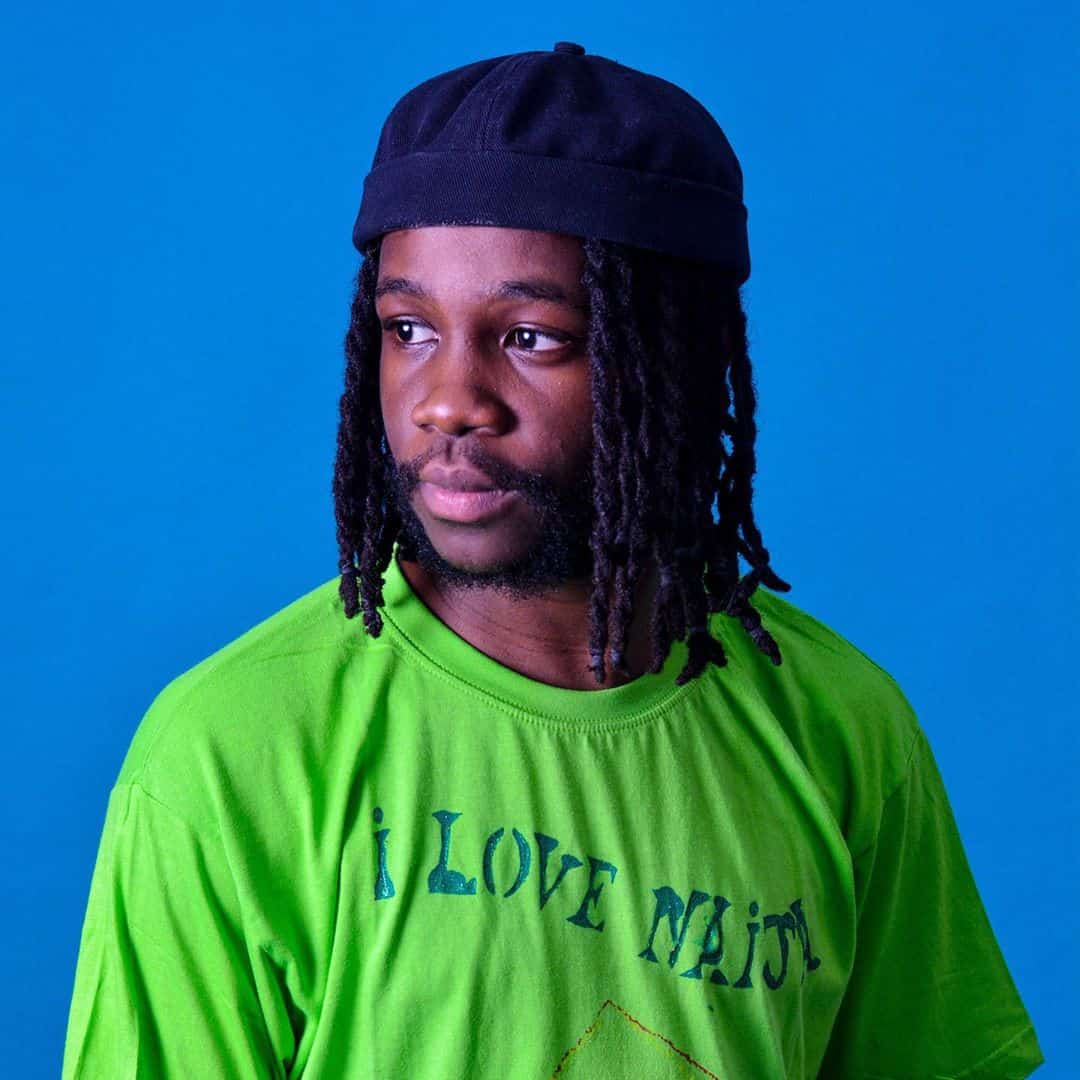

ICYMI: Spotify’s ‘Afro-Hub’ promises good things for African pop culture

Listen to Somadina’s “Lay Low” featuring Orinayo

Last year, Somadina released her debut single, “Ihy”, where she crystallized a breakup into glistening pop-R&B. Her latest single, “Lay Low”, continues to establishing her signature laidback vocals and fascination with channeling heartbreak for relatable pop songs.

“Lay Low” emerges from her contemplation of a past relationship, and the lyrics reflect it: “I Played My Heart For You Like a Bloody Symphony/ If You Weren’t Feeling Me Or My Energy/ Why Did You Say/ We Should Lay (Low)/ Girl Be Care(Ful)”. But the most potent tool in Somadina’s arsenal is her voice, with which seems more interested in the expressiveness of vocal melody than in lyrical details; her words are sometimes lost in densely layered vocals that suggest a choir calling from another plane. One of the song’s most memorable moments stems from her iterate “Lay Low” hook, repeating the phrase till it loses its form in her piercingly high note. It’s an emotional moment, but also a physical one that reminds listeners of the raw power singers can exert. Orinayo Ojo also contributes a verse, playing the role of her ex-lover who is also clueless to why their relationship didn’t work out.

You can stream “Lay Low” by Somadina and Orinayo Ojo below.

Featured Image Credits: Instagram/s0madina

Korede Bello shares “Joko” video with guest verses from Fresh Prince and Miya B

Korede Bello shared his “Joko (freestyle)” back in February, along with a #TheJokoChallange where he promised to give out 500k each for 5 people who participate in the challenge (a rapper, a singer and 3 dancers or a dance group). The Mavin singer seems to have taken that promise even farther as he shares the music video for “Joko” with guest verses from the perceived winners, Fresh Prince and Miya B.

Paul Gambit directs the music video for “Joko”, setting Korede Bello, Fresh Prince and Miya B on the streets of Lagos, accompanied by an entourage of dancers who infuse more energy to the catchy beat Don Jazzy produces. The street theme of the video seems to emphasize the song’s subject matter—“Olowo No Dey Pariwo (Rich People Don’t Shout)—as Fresh Prince and Miya B contribute verses to build on Korede Bello’s rebuke of the proud attitude from people who clearly don’t have as much money as he does. While Fresh Prince performs a fuji inspired verse, Miya B goes the hip-hop route with her verse.

Watch the music video for “Joko” below.

Featured Image Credits: YouTube/Korede Bello
[mc4wp_form id=”26074″]


You are meeting Debola at a strange time in his life. He wandered into a dream and lost his way back. Tweet at him @debola_abimbolu
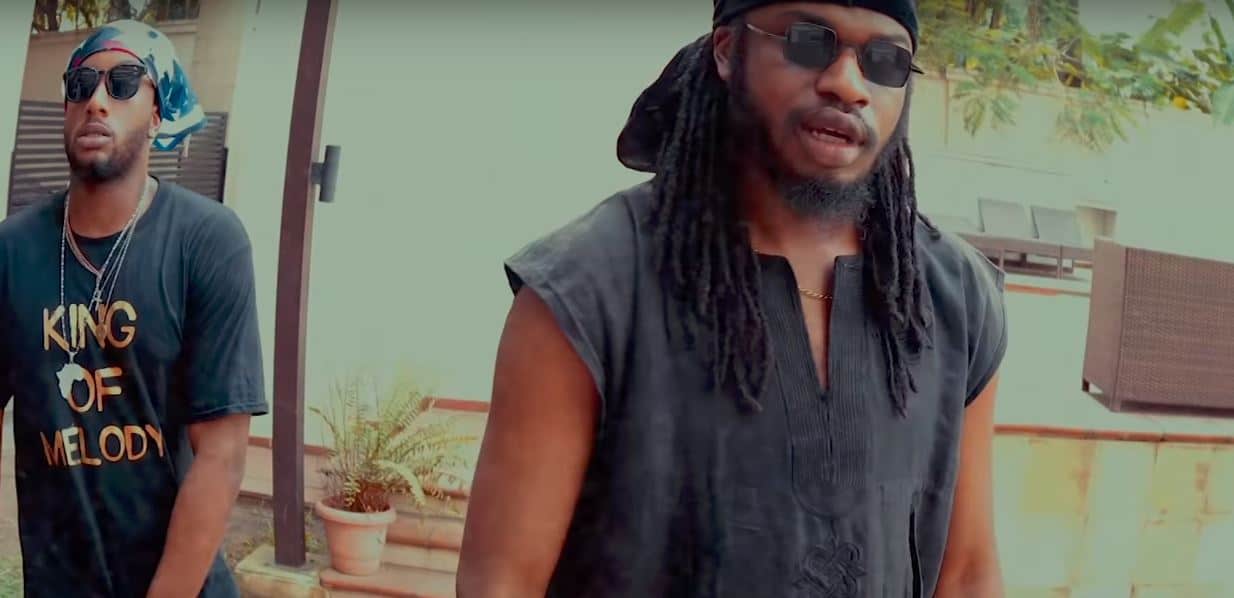

ICYMI: Listen to Korede Bello’s endearing single, “Sote”