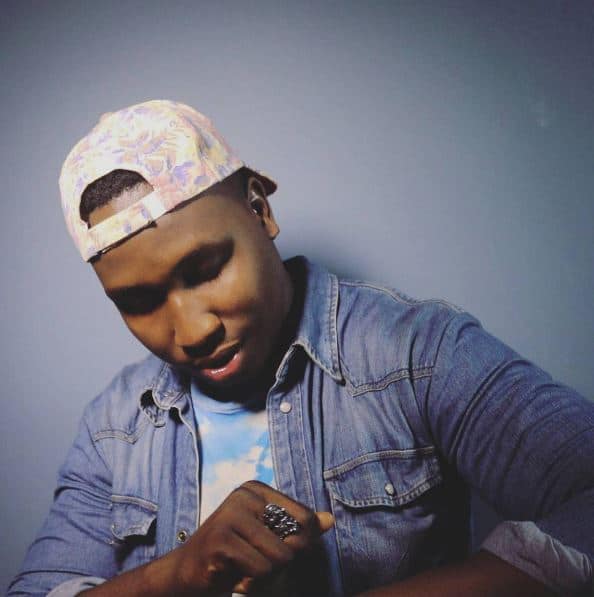
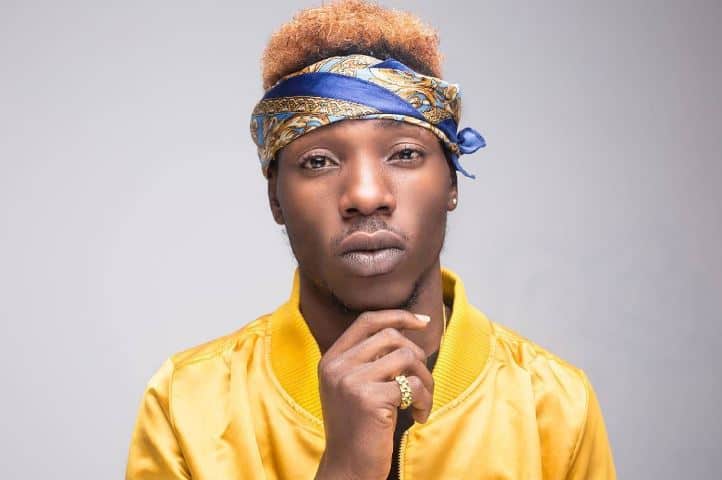
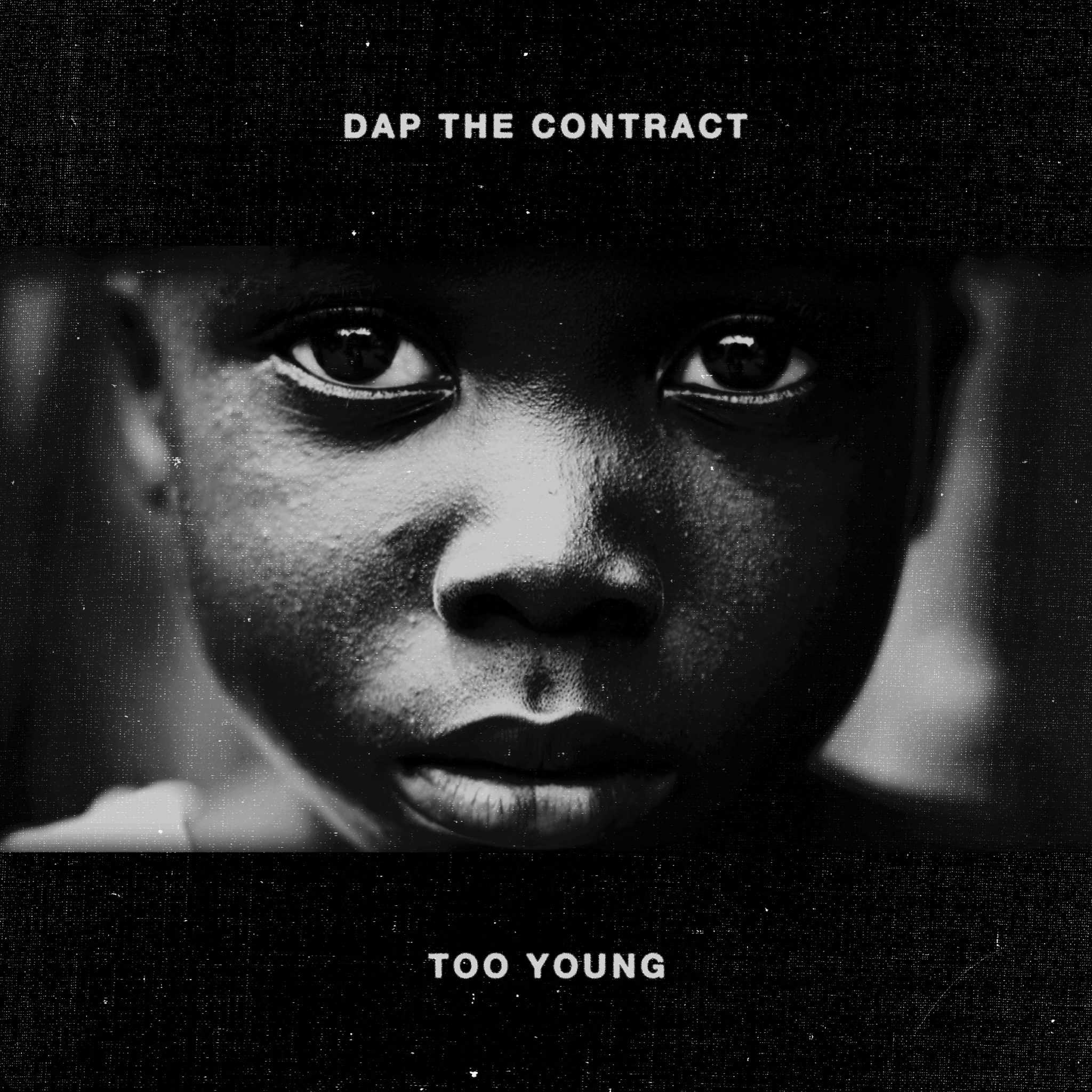
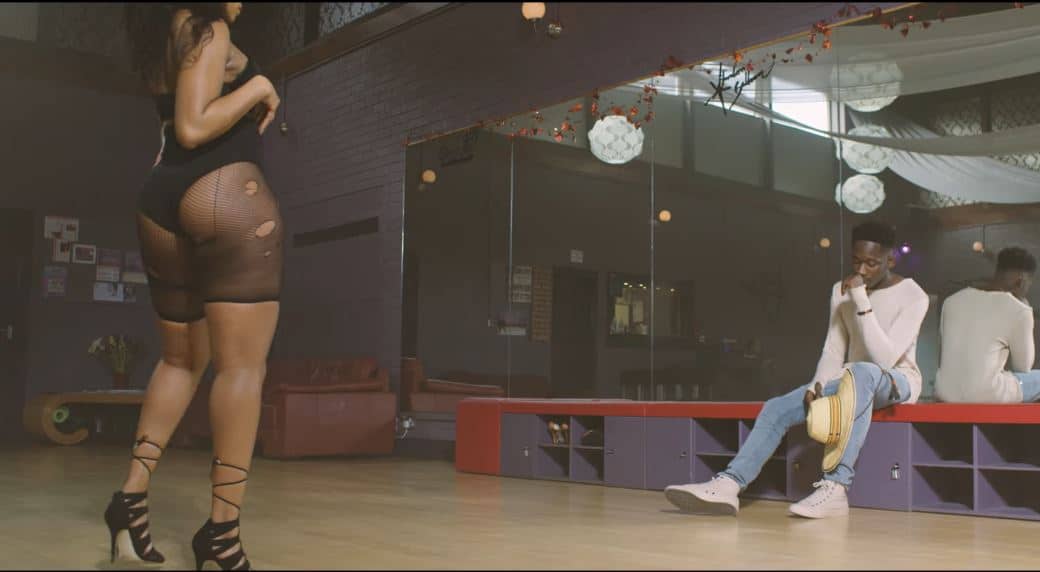
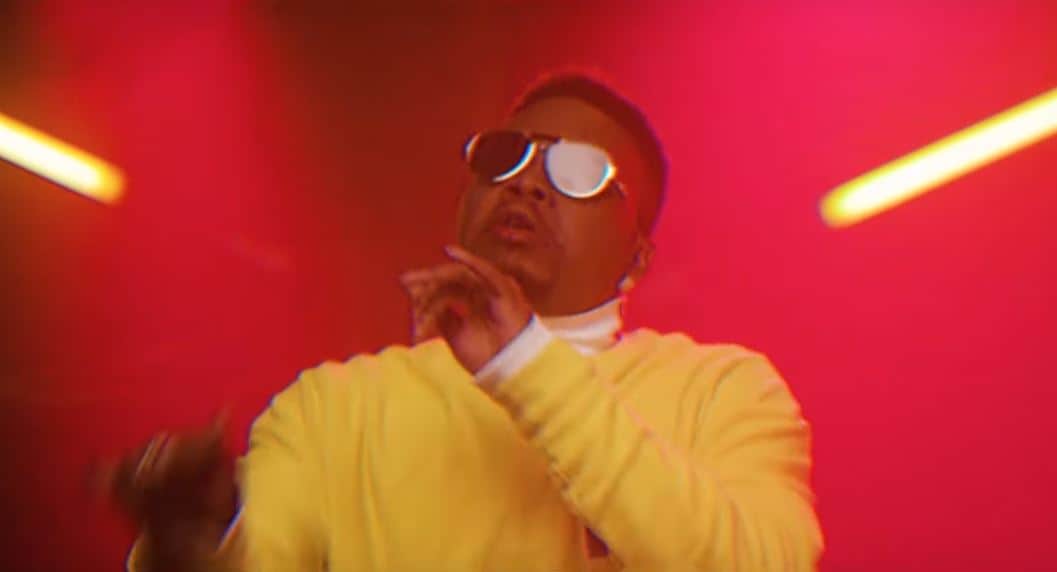
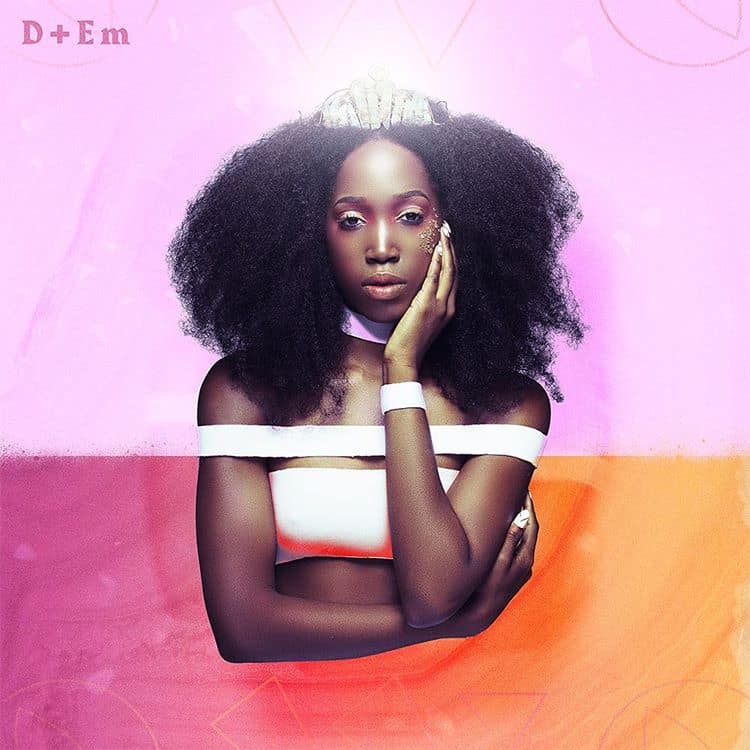
Genio Bambino has been busy this month, appearing as a feature on Santi’s “Jungle Fever” soon after GMK’s “Wasteman” was released in December. “Soul”, his latest single, is the second track off his forthcoming mixtape, Virtuoso and its features vocals from AYLO.
On “Soul”, Genio raps about getting lost in a woman and AYLO sings about a drugged-addled reality with the woman who has got his soul.
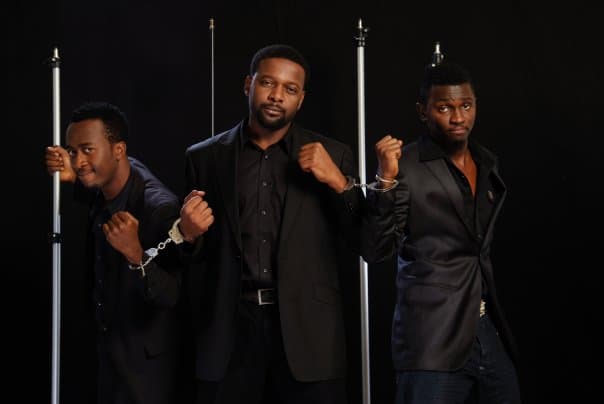
Yesterday, Goldkey released a neo-Afrocentric chill wave single “Take It Slow”– a joint track with Musmah.
Goldkeyz sets a tempo while Musmah raps about having an illicit affair with a woman already in a committed relationship with another man. Its mellow, tame and all about routine of alcohol abuse, heartbreaks and late nights.
“Take It Slow” carries the same psycehdelic composition layered on GoldKeyz’ prior project, Afrocentric, only here its infused with traditional instruments and synths harmonized with Musmah’s singsong rap style.
“Take It Slow” is the lead single off Goldkeyz’s forthcoming project to be released this year
The ability to craft worlds so full and immersive is a skill many artists attempt but few ever manage to master. Even fewer are able to do this across platforms, are untethered to a single medium. Even fewer are able to marry their lives and heritage into their art so that is forward facing but still unique to them. When you find one, it is greedy to keep them to yourself.
I first discovered Eugene Odogwu through IndeGENEous, a Soundcloud account dedicated to audio-stories. There is a single story, Flight, three minutes that remind me of the Greek tale of Icarus, the boy who flew too close to the sun. The story is abstract but the emotions are tangible; loss, hope, determination, failure. It has the singular quality of being both background noise and captivating story. The fact that Flight is all there is on Odogwu’s soundcloud account. So I track him, following his digital footprint to his twitter, where I find another part of him.
Engineer by day and multi-media creator and graphic artist, Odogwu doesn’t only write and narrate his enthralling stories, he also is a poet. Like his stories, his poetry is very good but in short supply, both in volume and word count. Micropoetry, they call it.
Each as beautiful as the last, each presentation, a sight for sore eyes. There had to be more of this, no? And there was, portraits that conjured the dayglo of now vintage futurist Hollywood films and the acid trips of the 90s. Pictures that would work just as well symbols of the past and visions of the future. Art that builds on worlds of fantasy and science fiction, but here and about us.
Nneka is a gem. In a singles-dominated market built on hyper-sexualisation and multiple jaded releases, the Nigerian singer-songwriter plays by her own rules and bypasses the traditional industry tropes. She is constantly touring, performing for crowds all over the world no matter how big or small. For Nneka, the music always comes first and that is a refreshing anomaly in a business where every instagram post or “freestyle” seems meticulously calculated.
Describing her latest release “Nothing”, she simply said she’s “living life in [the] moment” before posting the stunning piano-led visual on Twitter. Watch it below.
You may not agree yet, but the end of days for Jollof music is neigh. The rise of streaming, imminent death of Nigerian labels (labels in general) and the age of new sound gods (precisely, the Wizkids and Teknos of the world) who have fine tuned their music for mainstream appeal, are indicators of a sound shift. Finally, Indie artists who have reveled in critical reverence without mainstream appeal are coming out of their SoundCloud niche bubbles, determined to be anti-thesis to everything their predecessor genre represented.
One artist on the indie frontier is Funbi, a talented singer, composer and storyteller who first surfaced as one of the many underground features on M.I’s 2012 Illegal Music 2 mixtape for “Beg For It”. Single releases, collaborations with Ice Prince, Show Dem Camp and contribution to The Collectiv3’s self-titled debut LP in 2015 strengthened his fan base for a more frontal approach for his brand. Last year, the singer released a few covers and “Hallelujah”, a feel good quasi-gospel song. To keep the momentum of the track on the airwaves, Funbi released its adjoining visuals earlier this week, but despite many many replays it’s still nearly impossible to figure out what exactly he is trying to tell or sell to us.
Don’t get us wrong, by default song crafting and composition design, “Hallelujah” is a strong acoustic reminiscent of quasi-gospel songs that catapulted artists like Darey, Paul Play into mainstream glory. Many critics will raise their brows at the inherent cheapness going mainstream by leveraging people’s actual beliefs, but as we have seen from Korede Bello’s “Godwin”, that’s a dismissible discussion for another day. In fact, by Nigerian (Clarence Peters) standards, Funbi’s video is not all bad, the visuals are crisp with well-angled locations shots. But what is nearly incomprehensible is how Funbi made a song about giving glory to God, then gave us four minutes of wide-angled and close-up shots of his bare chest for its video.
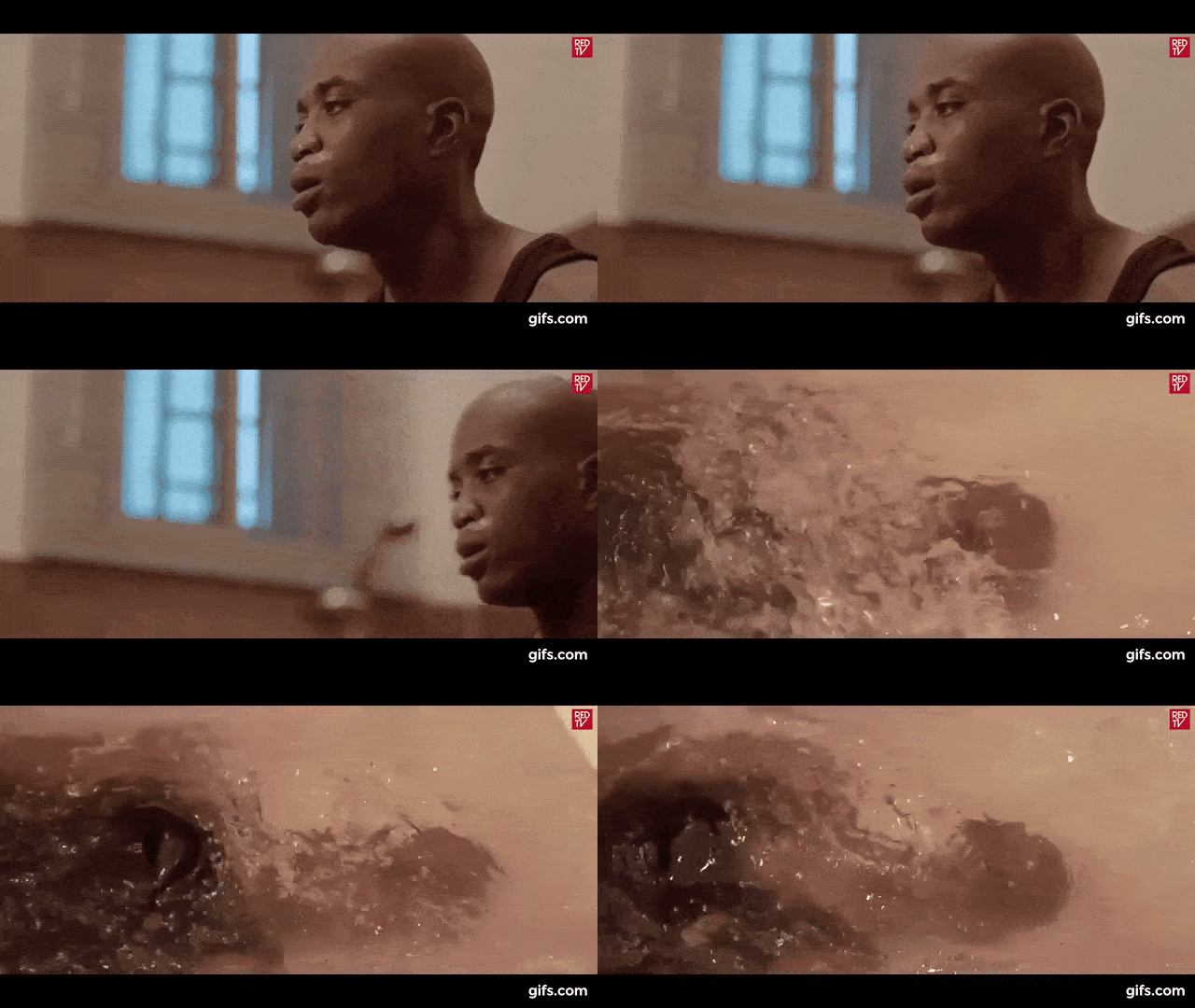
Funbi’s video opens with a near-existential drone shot of him (the only good cut you will see), seemingly lost and walking endlessly to nowhere, only for slow motion transitions to alternate between “sexy time” takes by the waterfall, Funbi still going nowhere fast in slow-mo and an extended scene where he finds solace in front of an old time church on a graveyard(?). It’s hard to make sense of by the heartbeat and by the time the video reels to a close, it’s hard to tell what exactly had been playing.
But Funbi is not alone in the generation of indie artists who do “cool shit” without depth, originality or reason. The SoundCloud bubble is filled with artists who pretentiously double up on their amateur photography, video editing, music production and supposed Africaness to lend, upgrade and leverage pre-existing sound trends and visual aesthetics. The usual result is music released with good melody but bad poetry and (or) carrying unrelatable clunky emotions.
But this only works until it doesn’t. Agreed, there is a growing general consensus Nigerian music is bad, hence for these new-age artist, the goal is to simply stand out and everything else will fall into place. Fans will automatically convert words into quotable captions and everything the artist does will be instantly supported, because everybody loves the underdog. However, Indie artists should know that while improved production and song composition will always be comfortable praise-worthy highlight, it shouldn’t be a place to hide flaws and heinous lack of concept.
Though relatively more authentic when compared to new alt-wave genres, complacency aided by the narrative that fans are not demanding more from their artists is why Afropop is nearing its end of days. For the new school to survive, it has to do better for the culture.
Earlier today, songbird, Simi, released a new single titled “Smile For Me” produced by Oscar Heman-Ackah. Amidst the clamour from every corner of her fan base for more materials and a defining album, “Smile For Me” comes as her first official single of the year and speculated lead single off her upcoming debut LP set to drop in the coming months.
“Smile For Me” is a revamp ofthe more traditional sounding Simi we heard on “Soldier” and “Jamb Question”. Her soulful voice sings poetically to her lover, asking him to smile for her and lie to her if the truth would break her heart.
Listen to “Smile For Me” via iTunes and Apple Music.
Solange’s Seat At The Table has been critically acclaimed as one of the most introspective albums produced by a young black woman that speaks to issues of race and womanhood and now, a university is seeking contributions for a syllabus inspired by the album. The course subtitled “The Truths of Young Women of Color” is curated by a group of professors and students from Wake Forest University, North Carolina and it seeks to explore the themes raised in Solange’s album.
At the beginning this new year, and as we witness the inauguration of a new president we invite young women of color, ages 16-30, to have a seat at the table by helping us collect the texts, music, and visual art that speak to our experiences. If we are to have a democracy in which all of us have a seat at the table, we know that these experiences should be central to the development of America’s practices and policies.
The themes outlined on the website fall into five categories: Resisting Racism, Understanding Gender and Sexuality, the Role of Relationships, Nurturing Ourselves, and A Seat at the Lunch Table. Texts, music, and art that embody these themes will form part of the curriculum. Beyonce’s Lemonade has also inspired a syllabus as well and Candice Bowie, a key contributor to that syllabus, is also participating.
This isn’t the first time contemporary music has inspired university syllabi. Kendrick Lamar’s Good Kid, m.A.A.d. City inspired a composition class at Georgia Regents University in 2014, and Kanye has been invited to teach as well. We’re looking to see how this plays out and possibly watch a lecture or two online if available.
When Gidi Up debuted in 2014 there was nothing quite like it. A contemporary series about contemporary young rich upper middle class Nigerians millennial-ing their way through making it in Lagos. We all related to someone on the cast, whether it was Oreka as the ever supportive best friend, Somkhele as the hustling designer trying to make it, or Deyemi as the from-money techpreneur trying to make a name for himself outside of ‘daddy’s money’. The second season saw some cast members and introduced us to Adesua Etomi. Then Ndani, the parent company behind the series cut us off high and dry. They’ve confirmed that a third season is coming in 2017 but two years is wayyyyy too long to make us wait.
In the meanwhile, everyone’s been looking for a show that has the same kind of cinematic quality and the gritty, realistic storytelling of Gidi Up. This Is Us was too cutesy, Rumour Has It was a forgettable nightmare. I’d kind of given up on everything else when we heard UBA was stepping into the digital media race with RED TV, its answer to Guaranty Trust Bank’s (GTB) Ndani platform. Even better they were partnering with Digital publishing brand The Naked Convos to create an adaption of Our Best Friend’s Wedding, one of the first written webseries on Nigerian digital media. Aaaaaaand the first episode just dropped.
If you like spoilers you can read the whole thing on their site and if you don’t, you can watch the first episode here, then read the review.
The first episode of Our Best Friend’s Wedding opens with a drone shot of 1004 and Victoria Island with Odunsi The Engine’s Happy Hour playing in the background, just to clear your doubts incase you thought this was going to be a show about the mainland. When the drone shots are done, the scene cuts to Kemi (Gbemi Olateru Olagbegi) and Jade (Oreka Godis; not quite sure how I feel about her being back on television). She’s on the phone trying to reach our show’s protagonist Charles (Ill Rhymz) who is in bed on New Year’s eve with a babe while Jade looks desperately for her phone.
“Men are scum”
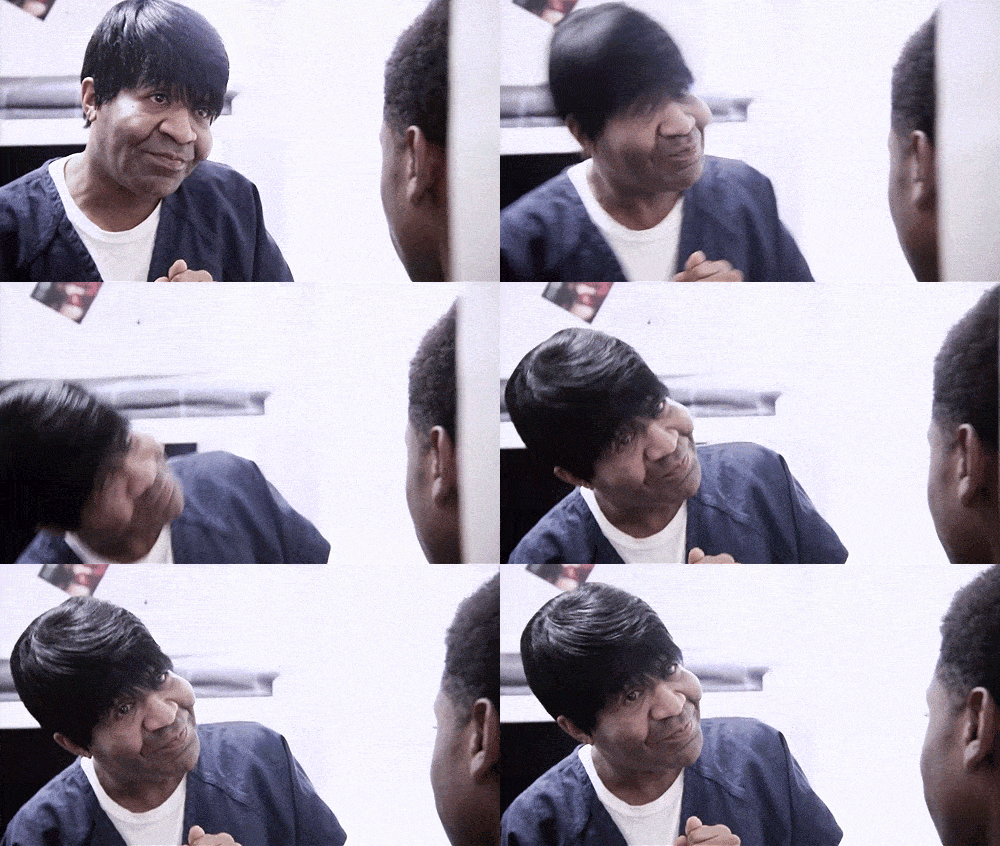
Homeboy lies through his teeth about being at ‘work’ with a ‘special client’ and Kemi who obviously doesn’t believe him, tells him to go see his mother. She’s been trying to reach him. Charles tries to kick the babe Onome out, and when homegirl tries to form sleep, he reminds her he just met her the night before (and therefore is scared for his valuables). Homegirl tries to guilt trip him, suggesting that she’ll leave when she’s ready and then she calls him childish. Our valiant protagonist does not take to being called childish very well. He throws a couple thousand naira notes in her face and orders her to get out.
Turns out, it was Jade’s missing phone that Kemi was using to call Charles all along. While she was at it, she also took the liberty to input some Kunle guy’s number cos it turns out, Jade hasn’t been in relationship for a while. Kemi forces her to take the number and then orders her to get dressed so they can go out. Charles is already out and at his mother’s where she is taking that once a year opportunity every new year brings to demand for a wife and grand children. Charles is only 29 so he really can’t understand why Momsie is all of a sudden agitating. So when he eavesdrop on a conversation between her and someone on the phone and a clue about a bottle in the bathroom cabinet, he goes looking for it.
WELP!
He finds a bottle of drugs and when he googles it in the car after he leaves he finds out that it is medication for cancer.
Congratulations, you played yourself.
When Charles finally meets up with his best friends at a Cafe Neo he has a plan. He sits, teases them about not getting him a cup and then whips out a jewellery box. Inside it is a whopper of an engagement ring. He wants to get married, ASAP, which makes the girls almost keel over with laughter. But it turns out he’s serious and wants the girls to help. He has a list of exes, and he wants them to help him thin it out to the one lucky girl. Could have just ordered a bride from the village but then we wouldn’t have a show, would we?
Charles tries to convince Jade and Kemi to come with him to someone called Promise’s party but both vehemently decline (future subplot?). Charles goes alone and the scene that follows basically reiterates what we already know, Mama might be possibly sick, Charles bought a ring, Charles wants a wife. Gorrit.
Charles wakes up the next morning, and goes for a running, his mind still on everything that happened new year’s eve. And just when I thought the episode was going to end on a low, an SUV COMES OUT OF NOWHERE AND RUNS HIM OVER?!!!!
LORD JESUS IT’S A FIRE!
WHERE IS MY EPISODE TWO? WHERE THE HELL IS MY EPISODE TWO?
Zambian-born South African rapper, PatrickxxLee was one of the new-wave acts, we put on our NativeLand stage last year. His production work on Cassper Nyovest’s Refilo album and the release of his Disco Utopia EP, a critic’s favourite last year made him one of the frontier artists on our soon-to-pop watchlist.
For “Phonerotica”, PatrickxxLee taps fellow underground act, J.Molley for a synth-heavy number about an attraction only sustained by sentimental photo captions and naked pictures. The title “Phonerotica” is directly inspired by a popular porn website and forum of the same name, as a loose critique of the self-publishing social media age where words say one thing and pictures say another.
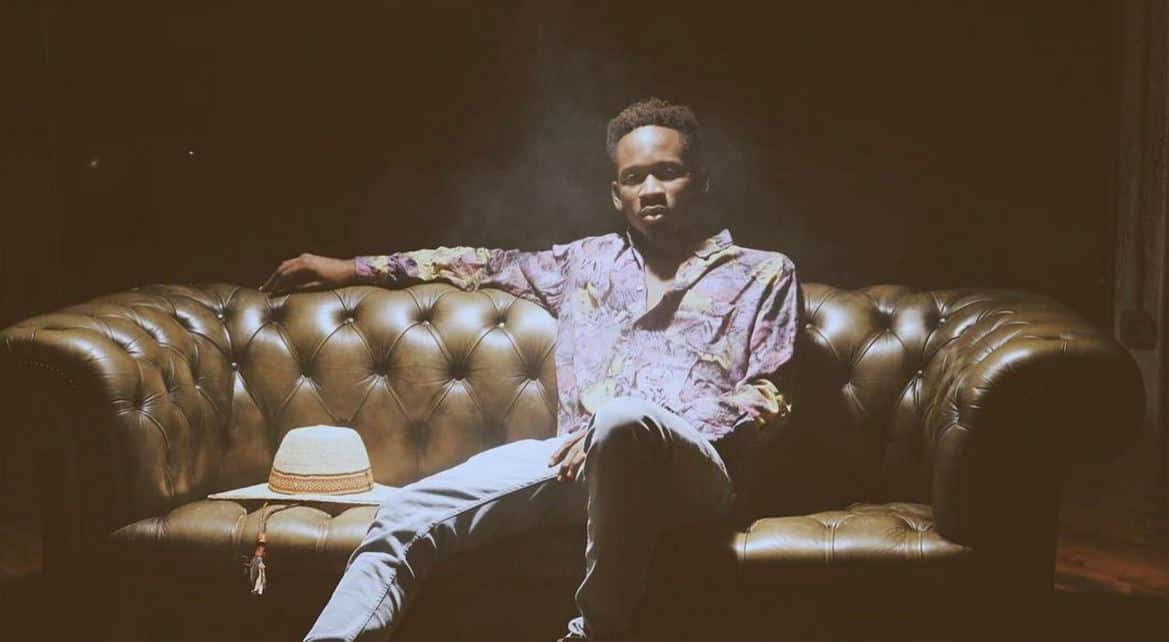
Mr Eazi may have come under fire for ‘disrespecting’ Nigerian music, but there is no denying the “Skin Tight” singer is a sure fire hit maker. After seeping into Nigerian airwaves late 2015, the singer is now looking to drop a debut body of work via a proposed mixtape, Accra To Lagos.
Eazi made this announcement via his Instagram page last night with promotional shots for the upcoming project. According to him, the soon-to-be-released Accra To Lagos tape is an 11-track LP with two bonus tracks. “It surfaces the root sounds, dialects, energy and styles from the two metropolitan hubs which largely influence my music, Accra – Lagos. It takes the listener on an aural journey from the one city to the next beginning with five tracks reflecting the Ghanaian capital, and eventually ending up with five destination tracks from Lagos”
Accra To Lagos will not come without surprises as Masterkraft, Legendury Beatz, Del B, Maleek Berey, Dtunes, Wizkid, Olamide, Medikal, Mugeez R2beez, E Kelly and Falz have all been announced as collaborators on the upcoming project.
Mark your calendars everyone, Mr. Eazi’s Accra To Lagos is set to drop on 11th of 2017.
When was the last time you saw a Nigerian film that you saw yourself in?
In many ways our contemporary media has failed young Nigerians. Riddled with tropes and cliches, and prone to telling repetitive but financially lucrative narratives, we leave studios entertained but unchanged. That’s why it’s always a thing of beauty to see young Nigerians take up film making as a medium to tell their own stories. This is why film makers like Gbenga Saka matter. Saka’s independently made short films are hypervisual snapshots of millennial life, exploring themes of love, loss and mental health, never telling us what we should think, only presenting us with scenarios on which we can imprint our emotions.
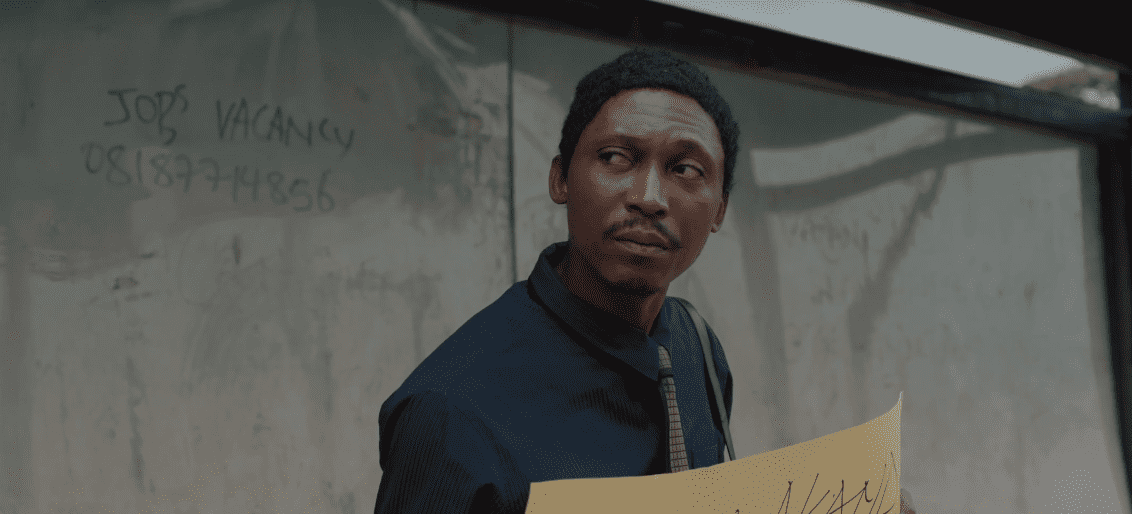
Saka has made a handful of short films, but his newest, Jump! adapted from a short story creates an allegory for the complexities of failing mental health and the isolation it creates in young black men. Shot in grayscale (perhaps to suggest the perpetual gloom of depression and self loathing), the film principal character (played by Dapo Adeputo) struggles to find himself in a gloomy city tenement, hiding his illness from a lover and contemplating death. He cycles through emotions in seconds, runs from confrontations and wanders the city alone, looking for something, what exactly, we are never told. The film ends with a surprising twist (impressive that they were able to slip a twist when the vignette is only 3 minutes long).
Jump!‘s only failing is that Gbenga Saka paints mental illness in broad swaths and never truly specifies what exact mental illness the main character is suffering from. It is part of the problem surrounding mental illness in Nigeria, that exact ailments are never diagnosed and named. But that’s the only mar in an otherwise interesting film. You should watch it here.
Whenever I stumble on a new short film by an emerging Nigerian filmmaker, I’m always cautious. Like short stories, short films are either spectacular or horrible, almost never just average or mediocre. There is just so much you need to get right, especially with the time constraint that often the whole thing ends up an overambitious mess that falls short, or an underwhelming montage of scenes. Seun Opabisi’s debut short film ‘Rahman’ is neither.
I’ve kind of followed Opabisi ever since I stumbled on his digital illustrations as part of a short stories on the Naked Convos with Tokunbo Aworinde and since then I’ve waited to see how his very developed aesthetic would translate to film. Pretty well it turns out.
Rahman has one of the most original premises I have seen in a while. The premise revolves around two Muslim boys of indeterminate tribe. We can tell they are Muslim because of their attire and at least from Northern Nigeria because they exclusively speak Hausa the entire film. The brothers are homeless and live in a shack with their blind beggar father. The boys are simultaneously aware of and oblivous to the biting poverty in which they live. The father braves family ridicule to see a brother (not shown in the film) who gifts him a ram for Sallah. This is the first clue we get that their father seems to be struggling to raise our young protagonists independent of his rich extended family, rich enough to gift whole rams for Sallah.
The boys are asked to care for the ram, now their most expensive possession in the days leading up to the celebration and an older cousin comes to visit them. He baits the boys into a racket and lures them into a bet that set up the film’s twist and it’s subversive ending.
Hassan Mohammed and Kamsulum Bishara. Photo credit; Youtube.
First, it is a relief to see a film set outside Lagos. So much of our cinematic story telling revolves around Lagos that I can even forgive the broad strokes with which Opabisi paints the North (guys Hausa =/= Muslim). The cinematography is gorgeous and Opabisi’s casting choices are inspired, his young leads Hassan Mohammed and Kamsulum Bishara carry the film with surprising ease. The ending was a little ‘eh’ and waves away how their father is supposed to believe one teenager and two children managed to butcher, cook and fry a whole ram but as a whole Rahman shines.
I’m just about ready to see what else Opabisi comes up with.
2016 was quite a year for Santan Dave. He dropped street-anthem “Thiago Silva”, Drake jumped on his track “Wanna Know”, and he sold out his first ever headline tour in 15 minutes. J Hus had a crazy year too. He dropped the infectious banger “Friendly” and killed his set our NATIVELAND Festival with one of the best performances of the year in Lagos, Nigeria.
Dave and Hus have linked up on new track “Samantha”, produced by Jae 5, with the video shot and cut by Director LX. The two rappers trade hook responsibilities across the track with J Hus delivering with his distinctive cadence. Dave as always came through with hard-hitting bars, and we hope the two have more in store together.
Last year, the Recording Industry of America (RIAA) began accepting digital streaming as part of metrics to measure album gold, platinum and diamond certifications. This marked a definitive switch from sales to a consumption based rewarding system.
Earlier this week, Billboard announced it would also begin to accept streaming for its chart ranking. This decision will convert the chart to a multi-metric ranking, including traditional album sales and streaming equivalent albums (SEA) . The implication of this for independent artists outside of the American mainstream is the possibility of charting officially on Billboard’s famous Top 200.
“Adding streaming information makes the chart a better representation of music consumption activity,” says Silvio Pietroluongo, VP of charts and data development at Billboard. “While an extremely valuable measurement, album sales would mostly capture the initial impulse only, without indicating the depth of consumption thereafter. Someone could listen to the album just once, or listen to one track or a number of tracks 100 times. We are now able to incorporate those plays as part of an album consumption ranking throughout one’s possession of an album, extending beyond the initial purchase or listen.”
To give a hint of what this means, Wizkid, became one of the most streamed aritists on Spotify Worldwide after his feature on Drake’s “One Dance”. Maleek Berry’s 2016 summer jam “Kontrol”, off his Last Daze of Summer EPhas been streamed over two million times on Soundcloud and “Eko Miami”, another single off the same EP topped Billboard Twitter barely twenty-four hours after its video was released. Tekno’s “Pana” was catapulted to mainstream glory largely by Apple Music charts and playlists. Even underground breakthrough artist Odunsi, scored the fifth spot on Billboard’s Spotify viral list. This new switch to consumption-based ratings means indie artists who had no chance against major record labels with resources and wherewithal to influence album promotion and sales can now climb up Billboard charts.
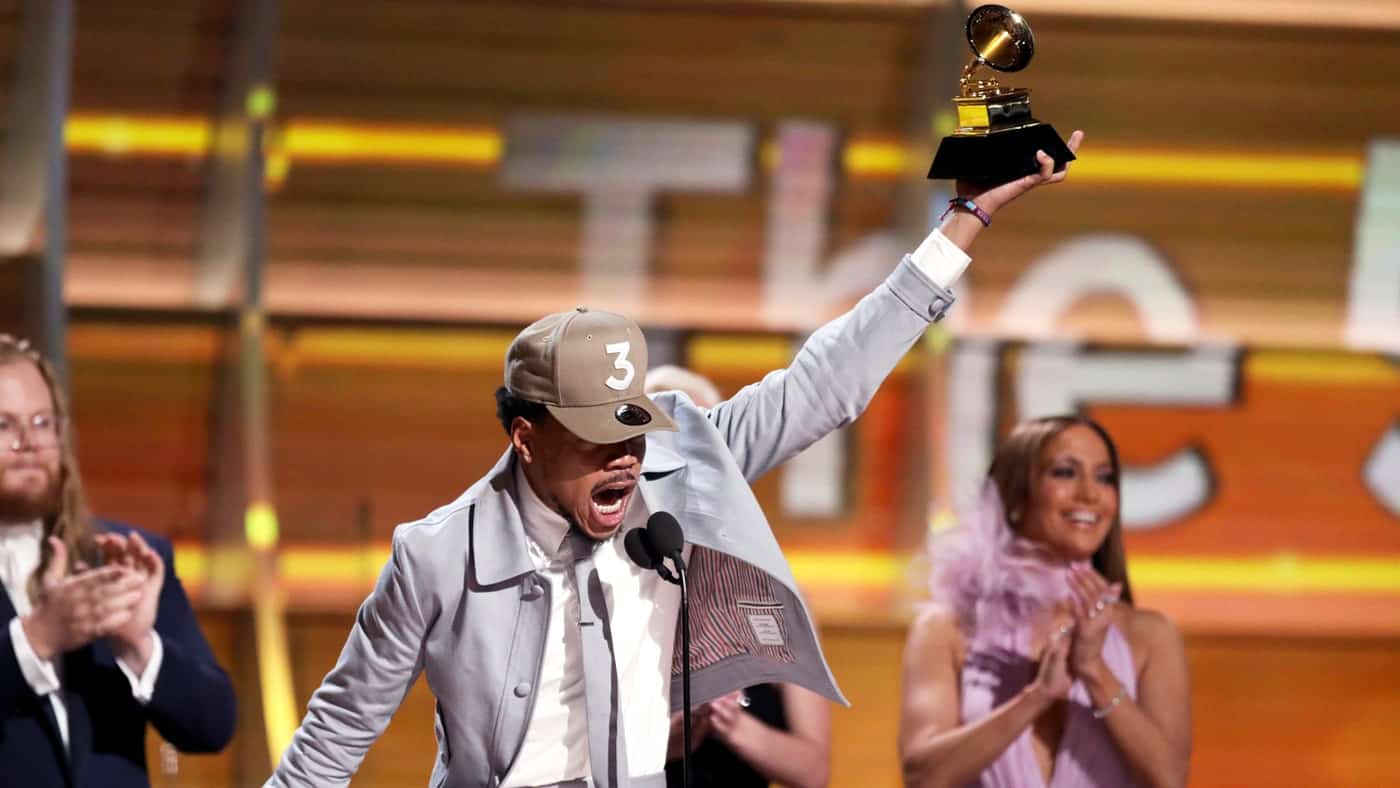
Last year, Chance The Rapper, an independent artist made music history with Colouring Book in May when it became the first streaming-only album to chart on the Billboard 200. Though many African artists will still have to fine tune their sound and pay attention to detail of craft, but now there is a greater incentive beyond social media virality and Billboard Twitter charts. In the real sense of things, the playground has merely been shifted and not exactly elevated and competition will be stiffer on a global front, but now homegrown sounds stand a chance and that’s all that matters really.
Serial hitmakers Major Lazer have just dropped their follow up to summer staple “Cold Water”, and it’s an absolute banger.
PARTYNEXTDOOR seems to be on one-man-mission to bring the whine back to the dance(see: “Work & “Not Nice”), and he carries on his noble cause on this track. On a beautiful sonic bed made by Major Lazer, he delivers a great hook and verse about being the happy go-to for his paramour. He is joined by newly-single Nicki Minaj – surprisingly their first track together – who switches between various characters whilst proclaiming her name is simply a moniker for Queen.
Check out the lyric video for the undeniable hit below.
“With the success we have made with Ycee, we see the need at this period to put out more talents, we are dynamic and can absorb artist of different genres who make good music. We feel this is the right time to that and we believe that the new signings will bring a lot of accolades to the label and give Nigerians more good music” – Arokodare Tinny Timilehin, CEO and Founder of Tinny Entertainment
It’s draft day and YCee’s Tinny Entertainment just signed up Rapper Bella Alubo and Afrobeats singer Dapo Turburna. With kind of success YCee has had in the last year, it only makes sense that he’s in the market to expand his retinue with emerging talent for two reasons. After the consecutive successes of Olamide’s OLIC concerts largely acclaimed because of YBNL’s talent roster, having a roster of supporting/opening acts makes revenue from dedicated concerts more viable. Plus more artists means more streaming services and more revenue.
Bella Alubo as Tinny Entertainment’s first female signing inverts the stereotype of labels signing a singer as their female on a roster full of rappers. Ycee and Dapo Turburna, the other Tinny Entertainment signing, are traditional afro-pop singers with Turbuna’s latest single ‘Nothing’ finally breaching the mainstream. It will be interesting to see how they work this dynamic, especially as Alubo already has two independently released EP’s to her name.
Congratulations to the both of them. Now give us some music.
It’s great, no fantastic to see Bankole Oluwole making music again, under his new avatar Oga Sudo. Oluwole was one of the first Nigerians to truly embrace electronica as a genre with his mixtape EPDon’t Tell Mother under his former stage name The Ises. He reworked instrumentals by The XX and Ill Angelo, former producer for the Weeknd into wholly original songs, including the striking Set Fire and the subversive Iron Maiden, which gave me one of my favorite lines in Nigerian music.
Slim like a cigarette, dirty like the internet.
The EP is no longer online, but you can check out Set Fire here and Iron Maiden here. There were a couple of original singles under the The Ises name, before Oluwole took a break to explore other creative channels.
Dont Tell Mother’s album art.
But now he’s back as Oga Sudo and fully embracing Alternative Electronica as a Nigerian artist. His comeback single Lose You has all the trapping of a traditional torch song; longing lyrics, throaty melodies and a falsetto run through a vocoder and layered to create a wall of sound but then the EDM breaks shake things up, reminding you that Oga Sudo is here to make heartbreak songs you can dance to. There couldn’t be a more appropriate return single.
Poe is already making moves this year with his new release “Lifelines”.His new single rides on a riff off Kwesta’s late 2015 hit “Ngud”, originally produced by DJ Mariphosa. On “Lifelines”, he raps about going through the motions of slowly finding his strength and growing into his own sound.
His narrative fits his progress from last year perfectly. He kicked off 2016 with a feature on Chocolate City boss, M.I’s “All Fall Down” off his final Illegal Music 3 mixtape and remained in our faces with videos for his collaboration with Falz for “Chardonnay Music”, and Funbi for “Adore”.
“Lifelines” is his first mark of 2017, and the rapper has dropped hints on his twitter telling us to expect new stuff from him this year. We don’t exactly know what he’s cooking up at the moment, but we’re looking forward to it.
We already knew L.A.X was onto something when the singer rolled out his own independent print, Rasaki Music, last year. After “Gimme Dat” became a viral hit early in 2016, he released “Awon Da” in September, and to close the year, a feature on Jul’s “Give You Love”.
“Big Daddy” is his first official single of the year and it comes pre-prepared with all the brag, new afro-wave fire and drum swings we expect many tracks to have this year.
Nigerians producers are tired, and we mean tired of hiding behind in shadows of our recording artists, crafting their beats while they get all the credit, fame and mullah. And it isn’t enough to ‘watermark’ songs with their signature catchphrases, they’re taking it one step further by creating and releasing instrumental EP’s that show the range of their abilities and the scope of their interests and influences. We started 2017 with GolddrumMachine’s masterful 808 CRand now the movement is spreading into the mainstream with in-demand producer Oluwasesan Salami Abbas (known to you as Sess Beats) dropping a mixtape of his own.
Sess Beats is far more commercial in his creative leanings and is best known for the superb work he did on Falz the Bad Guy’s sophomore album Stories That Touch, especially Bad, Badd0, Baddest that went on to become a cultural anthem. Considering Sess Beats works largely as a freelance producer untethered to any labels, it is amazing the amount of ground he has managed to cover since then. It makes professional and creative sense that Abbas would choose as his next project to take on an independent project.
On the PRBLM instrumental EP, Abbas works with a number of now saturated musical themes, using chopped and screwed vocal adlibs as percussive instruments and layering synths to shake things up. The production is lo-fi and a lot of the instrument sound decidedly electronic but on songs like Matter and Wind (Gimme More) it works to his favour, giving the music a nostalgic feel. Life is easily the most commercial song on the album, with native drums and a repetitive gong sprinkled through the entire thing for that high life feel that artists like Flavour N’abania always return to. He doesn’t stray too far from afrobeats, afro-trap and mild European EDM strains. It is a decent EP, but definitely not his best work.
Nigerian-American actress, Yvonne Orji, who plays “Molly”, Issa’s crazy, sexy, cool friend on HBO’s hit series ‘Insecure’, announced her new role on award-winning comedy TV series, ‘Jane The Virgin’ earlier this week.
The actress recently started preliminary interviews to promote her soon-to-air sitcom, The First Generation Show , focused on telling the first generation Nigerian-American story to a broader audience is set to air soon. Her role on on ‘Jane The Virgin’ will be her third appearance on a major network series, and we’re looking forward to it.