We Are In The Thick Of A Nigerian Electronic Music Revolution
Much of the work of curating a Nigerian Electronic sound has been led by curators and enthusiasts employing experimentalist tactics.

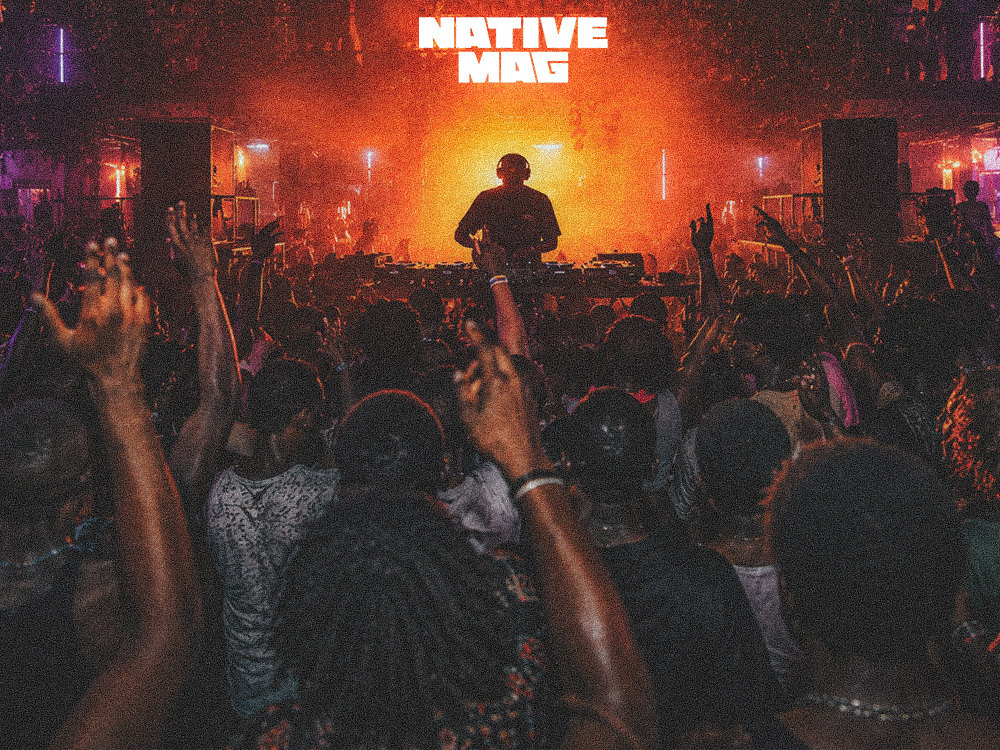
Much of the work of curating a Nigerian Electronic sound has been led by curators and enthusiasts employing experimentalist tactics.
Rhythm and dance are fundamentally embedded in Nigeria’s sociocultural framework. Long before Afrobeats started to have an impact around the world, the people who cultivated the genre always craved a form of music devotion. In fact, it is not far-fetched to say that the political and economic realities of the country have made music and dance an essential form of escape for the populace. For many, music is a religion; a greater force that controls moods, thoughts, and beliefs, while inviting you to submit to its frequency as a means of channeling euphoria or escaping pain.
Indigenous sounds form the core of Nigeria’s dance craze, but the turn of the new decade created the necessity for Afrobeats and its adjacents to coexist with a new type of musical expression in these parts: enter House and Electronic Dance Music. Of course, House and EDM are world staples, however the use of “new” in this context is very deliberate.
On a Nairaland forum dated August 2008, a conversation about the presence of House and EDM in Nigeria’s entertainment space was opened and gathered over 7,000 views, but the responses showed clearly that there was limited presence of these in our soundscape. Fast forward 18 years to 2026, House and EDM have morphed from being a counterculture into a community that is quickly growing to obtain its own share of mainstream Nigerian entertainment.
As a result, music devotion in the country has taken a new dimension. In Lagos—the country’s cultural epicenter—the youth have traded the churches for raves, shedding all their inhibitions at an altar in the form of a DJ booth. Taking a train to neighboring states for their favorite EDM events only adds to the thrill of participating in this new religion. But, when we look through the archives, one begins to feel a lot of this would not be possible if Niniola didn’t release “Maradona” in 2017.
It is not a coincidence that Electronic music duo Maze x Mxtreme moved back to Lagos to spread the gospel of House and Electro Dance Music in that same year. The simultaneous actions of a mainstream push, coupled with Amapiano’s emergence into Nigeria’s music mainstream and underground education about these sounds have merged into the sonic revolution we are currently witnessing.
A Quest For New Rhythm
So what is Dance music? It’s music that simply makes you want to dance, with different perspectives tailored to regional sounds around the world. Electronic Dance Music (EDM) is an overarching term for music created with digital drum machines and synthesizers that set the atmosphere at clubs, raves and festivals. House, a sub-genre under EDM, is characterized by its typical four-on-the-floor beat pattern and intense basslines which usually operates at 115-130 BPM.
Nigerian DJs and musicians hardly paid attention to EDM due to the unfamiliarity of their audience to this sound and instruments. Not until Niniola broke out with “Ibadi” in 2014 by presenting a unique style that blended African percussive instruments like the ekwe and balafon (wooden xylophone) into House production arrangements. Her impact with House-leaning records was evident but ultimately limited within the mainstream, even after “Maradona” stormed the continent with its infectious rhythm. However, her impact was necessary as it created the space for Amapiano and other Afro-EDM variants to land in these parts.
It is staggering to witness the 180 degree turnaround from that Nairaland conversation in 2008 to now. Since 2022, user-generated EDM playlists on Spotify have grown over 350%, aligning with the rise of the genre’s streams of over 400% on the platform. The offline and online realities of the genre’s success align and are telling, but what is most important to consider is the way that the people have made this genre their own. There is an unspoken rule that Western genres have to merge with Afro sounds to stand a chance in Nigeria’s largely lopsided market, and it becomes even more viable when the sound aligns with a culture that can sell tickets. Now, raves are now popping up across the city.
The Big Players
The EDM community in Nigeria is built around different variants of the sound. As a result, a myriad of collectives have sprung up to curate their own unique experiences for those chasing the thrill of music devotion. Sweat It Out, which started out as a private gathering in 2019, created one of the first safe spaces for the enjoyment of electronic music in Lagos, mostly championed by marginalized demographics who wanted to dress and dance as they liked. 2019 also saw the start of Element House, with a series of events that played an equally significant role in blazing the trail for EDM to become a Nigerian nightlife staple.
Founded by ANIKO in 2023, Group Therapy has rapidly become a household name in Lagos’ nightlife scene as it set out on a mission to eliminate pretentious, capitalist-led segregation culture to democratize the dance floor. The event, which usually designs its sound policy around Afrotech, Afrohouse, Deep House, 3-step and GQOM, has housed some of the most vibrant local and international DJs and sound selectors. With shows across Lagos, London, Nairobi and more, DJs like YOSA, Weareallchemicals, YANFSSSS, SoundsOfAce, Abiodun, Earthsurfing, Doghouse TV along with South African stars Dlala Thukzin, QUE DJ and Heavy-K, amongst many others, have lit up multiple venues with dexterous skill.
On another note, Monochroma’s rise, spearheaded by Blak Dave can not be understated. Alongside his ambition to build an enchanting Electronic music experience, the Lagos-based DJ has put out music of his own, with his latest project ‘The Third Step’ being an ode to the 3-step craze that has made its way from its South African origins down to Nigeria. He, like other Nigerian EDM DJs, are going beyond mixes to create their own sonic experiences and bodies of work.
In 2025, Jamie Black put out his ‘FLOW’ EP which featured “OGBA,” an underground slapper built around 3-step fundamentals that has become a popular staple at many raves. His work extends into Afrohouse and Afrotech, releasing the ‘Mafia Busine$$’ EP in April 2026 as part of the Naija House Mafia collective with CALIX and Sigag Lauren. Ifeme C.S, who recently began his own event series called TAMBA, has put out a host of Afrohouse projects starting with ‘Soil’ in 2021 after the COVID-19 pandemic. His profile as one of Lagos’ forerunning EDM DJs has only blossomed since, releasing a series of projects that include ‘Victim of Desire’ (2022), ‘Guest List’ (2025) and his latest ‘Who is Ifeme?’ in April 2026.
DJ collective The Hause leans into Amapiano, House and GQOM, gradually building a sturdy discography that includes ‘Hause Arrest’ (2022) and ‘Noisey Neighbors (Vol. 1)’ (2023), with the latter housing “SUYA,” one of their biggest records till date. Equally importantly, Tobi Peter brings a unique twist with his style of production, lacing his Amapiano and House records with gospel lyrics carried by airy vocals.
Much of the work of curating an identifiably Nigerian Electronic sound has been led by curators and enthusiasts employing experimentalist tactics. “What has changed isn’t just the music, but how it’s being curated,” curator and media personality, Melody Hassan, says. “Today, much of that growth is driven by communities rather than traditional gatekeepers. Nigerian DJs and producers have also helped localise EDM by blending it with Afrobeats, Amapiano, Afro House, and indigenous rhythms, making it feel like an evolving part of Nigeria’s musical identity.”
The modification of Street-Pop into the controlled chaos that is Mara has opened up a new dimension for the possibilities of EDM in Nigeria. Before the likes of DJ YK Mule, DJ Khalipha and Azzi on the Beat stormed TrenchTok with their irresistible legwork-inducing scatterbrained approach to EDM, Terry G had already laid down a blueprint for its essence with the release of “Free Madness” in 2008. This ultra-energetic sub-genre leans on bespoke EDM elements while maintaining the raw authenticity and guttural expression of the Nigerian inner cities. DJ Khalipha molded the sound and coined the name “Street House” for it, taking a global approach to a sound born from local innovation.
An already extensive catalogue of Mara music exists with DJ Khalipha looking to evoke emotional reactions with his beats, releasing records like “Emotional Mara Beat,” “Mara Feelings 2,” “137 Spiritual Mara,” “Eclipse Street House,”and his widely popular “Mara Pass Mara Beat” which is his most streamed record on Spotify.
Azzi On The Beat packs a full arsenal of infectious Mara records in his discography. “Mr Barry” has turned into something of a rave classic in recent months, while he has “Emini DC” with DJ Kracker, “Slow Mara Guitar,” “Ancestral Beats” and the ‘Exapt of Azzi’ EP released in January 2026 have bolstered his reputation. In a show of the genre’s rising appeal, mainstream artists have also joined the Mara craze, ranging from Cruel Santino’s tag-team performance with S-Smart for “FTR” to Seyi Vibez’s “Shaolin” and Rema’s “OZEBA.”
A Sound and a Movement
EDM’s emergence within Nigeria’s entertainment ecosystem has certainly come with important ripple effects that cut across social and economic aspects. For one, it has expanded the Nigerian musical palette in good measure, offering more creative outlets for producers, artists and DJs to reinvent the wheel and add more gusto to a soundscape that frequently gets bored of itself. More hit records are reimagined with EDM remixes, like Omah Lay’s “Moving” receiving an immersive makeover by Francis Mercier and Nitefreak’s reconstruction of “Premier Gaou.”
Economically, raves have provided welcome alternatives to the capital intensive club scene, especially in an economy where disposable income is limited amongst the country’s young demographic. At a time where Afropop is undergoing evolutionary pains with creating sustainable live experiences, raves have lowered the bar for cost but increased the standard of the sonic experience, ensuring communities can keep up attendance through different editions.
Hassan warns that more work is needed to keep the momentum going, arguing that the intentional curation that has defined the scene so far needs to be stepped up. “Sustainable growth requires intentional curation,” she offers. We need to keep investing in cultural tastemakers, DJs, festival organisers, playlist curators, music journalists, and media platforms, who connect artists with audiences and build communities around the genre. By continuing to tell these stories, champion the people shaping the scene, and create spaces for the music to thrive.”
Taking a view of the state of the landscape, EDM looks like it has evolved from a trend into a legitimate staple of the Nigerian sonic palette. Its presence continues to excite new and existing believers of its ministry, while providing a community that recenters music as the most important piece of the puzzle and freedom as a priority of the experience.

