Bemyoda’s “I Told You” is a little ditty with outsize emotions

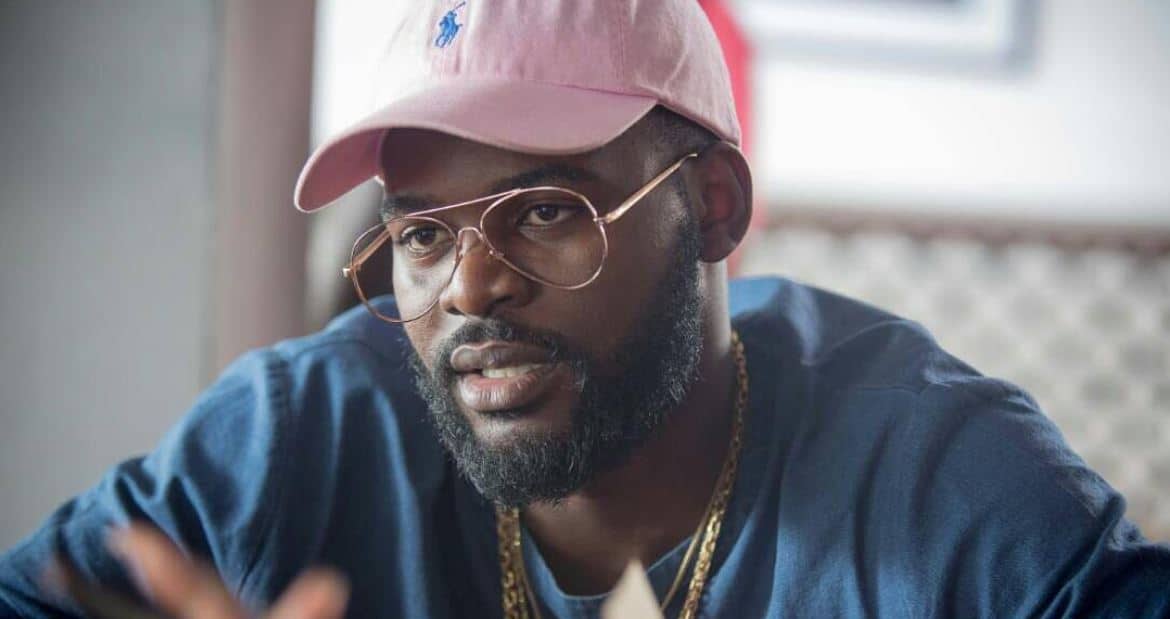
Alt folk singer Bemyoda doesn’t put out much music, which is a crying shame because his music is so personal and the themes he explores universal that he could put a song every day and it would find a loving home in our hearts. But he has spoken at length about being all about the craft instead of volume. The droughts between mean that when he does release music, they come from an intensely personal place.

Bemyoda has just released “I Told You”, announcing via Instagram that it is going to be the first single from his long anticipated debut album Stark. Inspired by a personal experience with depression, his little ditty contemplates as simply as possible the vastness of finding one’s self in a period of strong self doubt. Composed entirely of piano solo and Bemyoda’s smoky vocals, the song lulls and comforts and extends far beyond its modest two minute, fifty four second mark. A understated opener to the album, but then again, the biggest waves start as a quiet wind.

Watch “I Told You” here.

Maleek Berry and Nonso Amadi make Juls shimmer on our Best New Music

Uchman’s “I love you so” has all the trappings of classic noughties alt-rock

At this point I’ve listened to enough songs produced by Atta Lenell Otigba to instantly recognize his acoustic touch. And Otigba is all over the new Christian Rock single by Alt-rocker Uchman. Acoustic guitar chords, swelling symphonies that build progressively into a veritable wall of sound, sustained melodies and choruses that are tailored made to fill auditoriums and draw audiences into a near ecstatic trance, the very sound that the big alternative rock bands of the 90’s perfected into a near science.

That in no way means that Uchman is lost in his own song. On the contrary, he is front and centre, singing his heart out, calm at the eye of the storm that swirls around him. Listening to “I love you so” gave me intense nostalgia induced synesthesia, reminding me of why I loved the genre so much as a teenager, how earnest and honest it can be in the hands of the right singer. Alternative rock used to be big in the noughties in Nigeria with artists like 6-foot Plus, Terry Da Rapman and Djinee all building careers from hit songs that either co-opted the genre or utilized its primary sonic elements. It’s refreshing to see it making a small but assured comeback.

Listen to “I Love You So” here.

Get all four songs off Nonso Amadi and Odunsi’s ‘War’ EP here

On mapping the future of local entertainment and the need for Nigerian child stars

Dedicated programing for children has always been a genre in media and literature. But nothing has become as ubiquitous with children programming as the holy trinity of: Sesame Street and the children’s channels Nickelodeon and Disney.

As it is done elsewhere

Nickelodeon starts off with usually mature child actors from ages 14 and up, although they have younger actors. Disney Channel hires approximately 1200 professional and nonprofessional child actors on a yearly basis. In an attempt to find persons with the potential they seek, casting directors employ talent scouts who search for these children in acting agencies, theatre groups or local talent shows.

Many of these child stars start off as faces on TV commercials. Requiring minimal time and obligation and offering the promise of exposure, this non-speaking genre is the gate into entertainment for many child stars. After building up a portfolio a.k.a. screen credits, they audition for bigger, more noticeable roles. Agents and managers are hired, often by the child’s parents to negotiate equitable deals for the child as soon as he/she secures their first bankable job. It doesn’t end there. There are labour laws e.g. Coogan Bill, that protect their rights as actors, from abuse to schooling and other activities which they might engage in as professionals.

It is interesting to see as these mediums do not only continue to flourish in the western world but also feed off the talents and opportunities here in African countries, where the equivalents of these child dedicated programming are more or less, absent.

What we have had VS what we have now

That is not to say there hasn’t always been dedicated programming for and by children in Nigeria. Anyone above the age of 18 will remember NTA’s “Tales By Moonlight”, which has been in syndication since the late 80’s and featured a retelling and occasional reenactment of Nigerian folktales with the express purpose of transferring oral knowledge of these folk tales to a new generation of Nigerians. “Tales By Moonlight” was the first show of this kind of actively introducing children into its studio audience and eventually incorporate their opinions and input into the show.

But the show was ultimately about its adult host and not until “Speak Out”, also started by NTA in the early 90’s, did children and young adults become the focal point of a children’s oriented show. “Speak Out” was the platform on which child stars like Derenle Edun and singer Niyola started their entertainment careers. But Speak Out was an intellectual quiz show, that pit primary and secondary schools in Lagos against each other. It inspired a whole genre of related shows both on-screen and off, including the “Cowbell Math Olympiad” which still exists in some form today.

But child oriented entertainment shows didn’t really happen till the late 90’s – early 2000’s, the era of the “Kids Know Better (KKB) show”. The “KKB show” started around the time media giant Tajudeen Adepetu was putting out his first set of family oriented shows including “Everyday People” that had child and adolescent actors as series regulars in fully fleshed out three dimensional roles.

The “KKB show” capitalized on this medium, creating an entertainment skit show with regular child actors in the vein of classic Disney show, The “Mickey Mouse club” and the option for recruiting new cast members. Before long the “KKB show” had been syndicated across independent television stations across the country and has endured in a more subdued form until today. There haven’t been any contemporary variety shows which have managed to capture the imagination of a generation of young Nigerians quite like the “KKB Show” did at its Zenith and save for a handful of syndicated television serials with one or two child actors, the genre is all but gone from Nigerian television.

Parents, stereotypes and going forward

One of the reasons a new generation of young Nigerians are being robbed of the opportunity to embrace creating television content is because of the conservative nature of Nigeria’s society. Parents want to protect their kids from the spotlight due to media industry stereotypes of drugs and heavily publicised pitfalls of the Nigerian celebrity life. But even more telling is the complete disdain for the arts, by showrunners who are usually of a much older generation. The few shows aimed at a younger audience currently on air are usually heavy on educational content and light on entertainment instead of being a balance of both.

Entertainment is projected as a possible mainstay for Nigeria’s economy. But while the pre-existing music and film industries have gotten interest from foreign and local investors, it is important to map a bankable future by investing in creating local entertainment for Nigeria’s young. Nigeria is missing out on the value of having young careers mature into well-rounded artists with years of experience acquired from years as a prodigy, the likes of which we have see in Hollywood. To take a hint, Genevieve began her acting career at the age of 8 on popular television soap opera Ripples, now imagine how better Nollywood would be if we had 20 more like her.

These Five cartoon fandoms would help re-awaken your inner child

Wurld’s “Mother’s Prayer” is an Ode To Adulting

Nigerian born singer Wurld was pretty lowkey before “Show You Off” the video for his first single helped springboard his popularity within and outside the country. Not one to let waste precious buzz, he just put his chill bu sexy RnB-leaning pop sensibilities into a new single, “Mother’s Prayer”, evoking at its best, Shakira’s “Waka Waka” in a way that completely sidesteps the somewhat kitschy nature of Shakira’s World Cup Anthem.

https://www.instagram.com/p/BT9ILLNDjVb/?taken-by=thisiswurld

“Mother’s Prayer” starts with triumphant tribal drums and chants on which Wurld’s harmonies soar. His choice of piano chords create a kind of synesthesia, conjuring futuristic images of neon lights and pulsing bands of colour, a baseline on which the singer reminisces on bitter sweet times and regrets. The song builds, its mood shifting from sombre to uplifting, the new wave peaking with masterful samples of Asian string instruments. “Mother’s Prayer’s Afro-Asian fusion clearly illustrate the cross cultural pollination that will define the post millennial generation of music, our cultural boundaries blurring until sounds are no longer specific to any particular region.

Though Wurld’s vocals and lyrics are brooding and the chords are mostly melancholic minors, evoking the Coming of Age Spirit of some of the best cinematic songs (think Lion King),  the beat’s energetic tribal chants do enough to keep “Mother’s Prayer” on summer party playlists. Win-win.

Listen to Wurld’s “Mother’s Prayer” below.

Featured  Image Credits: Instagram/thisiswurld

Nonso Amadi sprinkled fairy dust and turned Tchella’s “Traffic” into dance-bop

Listen to a hip-hop remix of “Based” by To Name A Few, featuring BarelyAnyHook

You might remember our “Best New Music” “Based” by To Name A Few. Well, the band just gave the single a hip-hop make over featuring rapper, BarelyAnyHook

For this remix, BarelyAnyHook takes center stage. His rap verse on the peaks and pitfalls of being in a relationship combines with To Name A Few’s neo-soul sound to push “Based Remix” past the fringes of alternative music. It’s almost too easy to draw comparison to Frank Ocean’s singing and pacier speech patterns without any raised eyebrows.

Listen to To Name A Few and BarelyAnyHook’s “Based Remix” below.

Featured Image Credit: Soundcloud/tonameafew

Introducing To Name A Few

J Hus releases debut album, “Common Sense”

Late last night, J Hus released his debut album Common Sense. Common Sense comes in on the rise of Afro-inspired hip-hop and pop sub-genres produced in the UK. Prior to this release, J Hus dropped album lead single, “Did You See” earlier in the year and the album’s title track, less than two weeks ago, to hint at what was to come.

https://www.instagram.com/p/BTywmoIlCi1/?taken-by=theuglygram&hl=en

On Common Sense, you see J Hus in different shades depending on where you point the light. The anger you hear on low points like “Leave Me” feels nearly motivational on “Who You Are”, a song about self-discovery and curating your inner circle. J Hus brings a blend of hard UK flow sprinkled with new wave Afrobeat and bashment. And where the lines are blur, he restates his purpose as a British rapper with hard-hitting grime-influenced tracks like “Clartin” and “Goodies” .

Listen to J Hus’ Common Sense via Apple Music below

Watch video for J Hus’ “Did you see”

A possible wedding between Matheba and Forbes? Watch AKA’s music video for “Caiphus Song”

Words by Fisayo Okare

The blogs are going to have a field day trying to draw allusion between AKA’s new song “Caiphus Song” and the love triangle that has plagued his relationship with ex girlfriend, Dj Zinhle and his current girlfriend, Bonang Matheba, and speculating about which lines reference which woman. It is… sweet gist, I know. But if we want to know that, we could go to Genius and click on every interpreted line of the lyrics. After all, the single’s been out since February 21st. So, why don’t we talk about the excitement the newly released video gives us instead?

One thing that may not strike you is the single white rose in the very first shot of “Caiphus Song”. So miniature and easy to overlook but it’s the single most important metaphor, a Rosetta stone to understanding the rest of the video.

Some videos are creatively crafted in such a way that you may not easily recognise the subliminal messages. But the director always offers a key of sorts, a way to get in. “Caiphus Song”’s key is its white rose, also known as the bridal rose. This traditional wedding flower signals that the video is of course going to be told as a wedding narrative. Which totally makes sense for a song that embodies the theme of love.

The video features South-African actors, Jessica Nkosi and Warren Masemola who play the newly-weds. Meanwhile, Warren Masemola and his groomsmen, including AKA himself, have just had a hangover from a stag night and are nearly late for the wedding in the morning. Warren realizes and wakes up the remaining people. Eventually, they arrive there even before the bride, Jessica. Warren is all sweaty and anxious in anticipation of his love until she finally graces the entrance of the popular Johannesburg wedding venue, Avianto. And all is a happy-ever-after union. It might not have happened for Zinhle, it might not happen for Matheba, but AKA wants us to at least wonder.

Check out AKA’s video for “Caiphus Song” below.

Feature Image Credit: Instagram/akaworldwide

Read up: The man who gave us two of the biggest songs of the last 12 months back to back is not who you think

Celebrate Marley’s legacy today with this amazing cover from Dj Yin and Bankyondbeatz

The impact of Bob Marley on music across the world is inestimable. From Jamaica Marley’s message of love and equity spread to every corner of the globe and was the first contact many young black creatives got of a musician with substance who didn’t look or sound like the acceptable norms of his time. As such artists who feel a personal connection to his music and legacy often feel moved to record covers of his music as tribute. Lauryn Hill’s cover of “Turn Your Lights Down Low” has become the definitive standard for Marley covers but Dj Yin and BankyOnDBeatz are looking to expand that canon.

After Dj Yin’s debut single “What You Started” critically received across media platforms, there was keen interest to see what next she’d experiment with and if she’d keep her very successful partnership with producer BankyOnDBeatz. Choosing to honor Marley with a tribute is a genius move, a way for her to sate her new fans with music, experiment on her sound without the pressure of a single and basically just explore without any consequences. BankyOnDBeatz does away with most of the instrumentation in the Marley original, only keeping the song’s percussions and distinctive bass guitar riff. Add substituted synths and a chopped and screwed lead guitar melody that plays almost exclusively in the minor range, then you have a barely recognizable but instantly familiar hit. Dj Yin flits in and out of the instrumentals’s silences, blessing us with restrained vocal improvisations and two original verses.

Definitely adding this to our Marley day playlist.

Listen to “I Wanna Love You” here.


Watch Lady Donli on Bankyondbeatz’s “Fale Comigo”

XOE Shows Love To Hip-hop On ‘Tales: The Episode Before’

It might feel that that the rap-sung genre has existed for an eternity but in reality it’s less than 30 years old and only began to gain recognition even later. This blend of styles has become the hallmark of great hip-hop collaborations and spawned many innovative collaborations. Daft Punk’s success and Kanye’s dabbling into the genre might have helped popularized Electronic Dance Music but in Nigeria, the following is still very much in it’s infancy.

https://twitter.com/TrillXoe/status/860216393605754882

Electronic sounds would catch on quicker if more familiar pop and hip-hop sounds gave them crossover poetential. Xoe had done that in previous released EP’s Tales and Tales 2, but while the beats had strains of hip-hop, it was still too purist for the average Jollof music loving Nigerian. Xoe’s latest EP, Tales: The Episode Before shows the Euphonic producer embracing the hip-hop scene more wholesomely.

The four track EP starts with “Constellations”, fusing in a bit of reggae with his Space Traveler aesthetic that carries on into “Switch Up”. He ditches his NASA announcements for “Mask On”, a direct sample of Future’s “Mask Off” beat but he left in vocal samples from the original “Prison Song” by Tommy Butler. Metro Booming’s beat got all sorts of hype from the Internet and we have to assume Xoe including his own version on Tales: The Episode Before will help with the publicity of the tape.

The closing song, “I’m Coming” features Psycho on a beat co produced by Tobay. The collaboration is the most hip-hop song adjacent song on the EP and the whole of Xoe’s discography. Thanks to Psycho’s rapid fire rap bars about all the things he supposedly has Xoe can finally claim to have a rap song and no long be relegated as a Fringe EDM artist.

Listen to Xoe’s “I’m Coming” featuring Psycho below.

Featured Image Credit: Soundcloud/euphonicworldwide


Listen to Xoe’s “Xoe’s Ode”

Reekado Banks and Vanessa Mdee Catch The Love Bug In “Move” Video

How far would you go for love? Well Vanessa Mdee might not go as far as the moon but she has crossed political and label boundaries for Reekado Banks.

https://www.instagram.com/p/BT8VjEolr3q/?taken-by=reekadobanks&hl=en

The Mavins recording artist released a new single, “Move” with an accompanying video directed by Clarence Peters featuring Tanzanian pop singer, Vanessa Mdee. For those who didn’t know already, Reekado Banks shows that there’s more to East Africa than Kenya. With Victoria Kimani’s connection to Chocolate City, it’s easy to forget that other East Africa countries also have talents in their music industries unless Vanessa has something to say about it. Leaving her MTV VJ career behind, she has focused more on music and grown more acclaimed with last year’s “Cash Madame” blowing up outside Tanzania.

Produced by Altims, “Move” is a sultry club number featuring a cross-continental romance between Reekado Banks and Vanessa Mdee. Reekado Banks begins with his “gbedu wey dey burst brain” catchphrase declaring that “Move” would fit right into DJ mixes thanks to a similar drum arrangement with Vanessa’s “Never Ever”. The energetic yet oddly somber beat sees him play against Vanessa Mdee’s emotional vocalizing to effectively deliver the song’s message of wooing and  winning a lover’s affection.

Clarence Peters shot the video for “Money” with a storyline that brings to mind Rihanna’s “What’s My Name” featuring Drake. But the traditional African attires and dancers keep it legit.

Watch the video for Reekado Banks and Vanessa Mdee’s  “Money” below.

Featured Image Credits: YouTube/Reekado Banks

Watch Reekado Banks turn up with Ycee in video for “Link Up”

Wizkid holds the key to ending the Jollof Wars

Words by Ehimenim Agweh

For your own sanity and safety, do not get involved in the Jollof Wars. But if you are in the mood to hear the most political answer to the question of the ages and probably, the last word on the subject, then head to Wizkid’s BBC 1Xtra interview last week.

Rocking a semi-international accent and a pair of quasi-diving goggles, he sat down with the show’s host, Ace to discuss his music, collaborations with Chris Brown and Drake and his rumored legendary beef with Davido. But the highlight of the question-and-answer session came when Ace broached the ‘Jollof question.’

Wizkid begins by delivering his customary smug grin before he launches into his ‘not here, not there’ answer. Giving an answer which can be summarised as ‘the taste changes depending on the location’, Wizkid gives a reply which quite possibly could be the best answer to the question which has torn Nigerian-Ghanaian friendships asunder. It is as political as a response can get: roundabout and on the fence. He does a good job of evading possible trolling and keeping his good standing with his loyalists across West Africa. Good show, Wizkid. Good show.

Click the video below if you would like to see Wizkid’s interview.

Feature image credit: Youtube/BBC Radio 1xtra

Jay Z Enlists Tiwa Savage, Wizkid, Maleek berry & More for “Made in America” 2017

Hear two surprisingly good singles, “Story” and “Odoyewu” from Minz

Producer artists are usually phenomenal with their individual careers. The cliche that the best producers are even better artists resonates both within and outside the Nigerian industry. Tekno’s production credit on Davido’s “If” and Don Jazzy’s fame as a producer who does just enough singing to make sure one of his talent doesn’t impair the quality of the other. Minz’s joins this privileged bunch as a producer/singer career with indications he is on the right path.

https://www.instagram.com/p/BT2Hq8gBjdC/?taken-by=minznse

“Story” taps into the fluid wave of Afropop that became prominent in the sub-genre after Tekno’s “Pana”. Minz produces an effortless cascade of synth piano and guitar riffs with enchanting wind instrument harmonies converging into a mirage of dream-pop purity. He displays candid awareness of his own rare gift by making it clear from the start of the song that he is responsible for all hard work that went into the song’s creation. Designed for dancefloors, “Story” is sparse on plot but Minz’s voice and ad-lib harmonies ensures the single maintains its highest peaks.

Minz gets production help from Mowizzy for “Odeyewu” but not enough to completely leave out his own name from the production credits. “Odeyewu” has the same love song narrative as “Story” but on a quicker tempo. The bass heavy instrumental is held together by poly-synth piano riffs that peak and drop at the sound of a brief flute harmony. Minz delivers lines that are meant to win the heart of a lover with laid back flows and a catchy beat.

Minz has been recording music for over a year, spending more time making beats. While producing good beats and writing good symphonies is a skill that eludes a lot of people, having a good voice that blends perfectly when sprinkled with a touch of auto-tune is a rarity for Afropop. Wande Coal and Wizkid amongst a few others may come to mind as you think of this but for Afropop, they are the exception not the rule. With a producer portfolio under his belt, Minz’s ability to do both is a gift that can really take him to heights that artist with similar gifts have reached.

Listen to “Story” and “Odeyewu” below.

Featured Image Credits: Instagram/minznse

Check out this week’s best new music

Watch Yung L, Chocolate City’s latest signee, in video for his latest single “Cheers”

Words by Fisayo Okare

Every celebrity isn’t always what he or she present their self to be in the spotlight and Yung L’s video explores that concept. On “Cheers” he takes us on a journey starring himself and a motley crew of diverse characters all somehow playing a role in Yung L’s journey to relevance.

The music video for “Cheers” begins with a woman, presumably Yung L’s mum dressed in the Celestial church of Christ white ceremonial dress as she prays in her sitting room for her child (Yung L),

“Oluwa bami gbe ga”.

This represents the typical Nigerian mother and the idea that the intercessions of mothers are integral to the success of their children, as they are the ones who do all the actual praying against all those “enemies” that artists always sing about.

“Cheers acoustic leanings is highlighted with shots of two men hanging out. They are the instrumentalists who will play at Yung L’s party, while the girls that are shown are anticipating the weekend’s festivities. On the side, Yung L’s tailor takes his measurement for the poised outfit he is going to wear at his performance. All is quite calm and boring, but all roads seemingly lead to the weekend.

Artists often have uneventful, even outright boring private lives, every moment of which is geared towards those fleeting moments when the artist gets to slip into their stage personas and really live.

The video ends with shots showing the Choc Boi Nation (CBN) president, M.I Abaga, DJ Lambo and others. They sign out each, as if to show Yung L, their label’s latest signee, is now one with the team.

Check Out Yung L’s video for “Cheers” below.

Featured Image Credit: Instagram/yunglmrmarley

Read up: Yung L’s “Cheers” Can Turn Your Monday To A Weekend

Nigerian knitwear label Bloke tackles existentialism with its A/W17 collection


It takes some serious cojones to go into fashion in Nigeria. Considering the entire system of doing  business is stacked against the niche producer seeking a tiny but dedicated market. It takes even bigger ambition to start a bespoke men’s knitwear brand, considering our climate and our predisposition for light airy clothing. But Faith Oluwajimi has done just that with Bloke, his conceptual mens knitwear label and drawn the keen interest of local and international labels. His pieces and collection dip deeply into the abstract and require a lot of careful contemplation before they are attempted. But they are intriguing enough that in 2015 Oluwajimi’s label was chosen at one of the 200 emerging labels globally that are changing fashion by Vogue Italia.

Oluwajimi is about change fashion some more with his new AW 17 collection “NOBODY KNOWS YOU” a project on how millennial while constantly connected to other through third party platforms often feel invisible. This invisibility pushes them to seek attention by increasing bizarre acts and gestures. It’s a treatise on existentialism, using the designer’s own life and experiences as a sample size for what is happening elsewhere with young Nigerians. The campaign images are monochromatic, which is sad, considering the clothes portrayed are actually in colour, but perhaps this speaks to the dourness of the lives of the millennials the collection seeks to represent. This is also Oluwajimi’s first time experimenting with actual fabric in his designs.

And it will be interesting to see the whole thing, sans the slight kitschy horror trope in the creative directing. There is some interesting lacing on the pieces and lace detailing that menswear, often hypermasculine and unflattering desperately needs.

Enjoy.

Photo Credits:

BRAND: BLOKE @bloke_ng

PHOTOGRAPHY: Kene Nwatu @kenenwatu

STYLING &ART DIRECTION: Daniel Obasi @iamdasidy

MODELS: Mannie Adesoyin @mannie_be  and  Oluwafemi James @oluwafemior

PR: Vr Creative Agency @vrcreativeagency

Bloke

Bloke

Bloke\

Daniel Obasi brings the antebellum to nigeria in ‘Embers of bloom’

Orinayo Ojo battles with Loss on “?”

Words by Fisayo Okare

The cover art for Orinayo Ojo’s new single, “?” elicits many emotions. You are confused at the intent of the tiny pink balloon just floating in white space and how it relates to the song’s title, curiosity at the message behind its deliberate mystery.

https://www.instagram.com/p/BT4yifdjE2e/?taken-by=orinayo_ojo

After listening to “?” and absorbing its context, Ojo’s genius becomes more obvious; from the album art cover to the song’s title, the beat, the tone of his voice and the lyrics, everything symbolizes loss. The theme of loss is evident in all the subtle metaphors.

Orinayo’s “?” has a minimalist balloon design for the cover art, one that has escaped his hold. The realization that it will never return to him triggers a very sinking, empty, and scary feeling– it’s lost into the wide white yonder, never to be seen or touched again. Orinayo’s voice as he croons is the sonic embodiment of his sadness. His voice seems distorted as you listen but it’s heavy with the sadness of heartbreak. So heavy, some of the words are even a bit difficult to comprehend. It’s as though he’s mumbling and hurting at the same time.

“I cannot tell you how I feel,” he says.

This is undeniably, a heartbreak song.

Long time collaborator Kamiti drops a verse on this new release, bringing the same verve he brought to Orinayo Ojo’s previous singles “Siesta” and “Revelations”. Kamiti raps the song’s last verse to tie up the narrative.

Take a moment to listen to question mark by Orinayo Ojo featuring Kamiti below.

Featured Image Credit: Instagram/orinayo_Ojo

Straff Taps Orinayo Ojo For New Single “Hotel Tokyo”

FreshL’s Freestyle On Burna Boy’s “Soke” Is More Romantic Than Banky W’s Proposal

As far as muses go in music creation, love takes first place; It stimulates emotions, makes expressing thoughts easier and is probably the most universal theme relateable to any listener.

https://www.instagram.com/p/BTyxEKKlv0w/?taken-by=freshldrb

This sets a premise for how FreshL re-purposed Burna Boy’s “Soke” instrumental for a sub-romantic freestyle. Orbeat produced the original version for Burna Boy and also gets production credits for FreshL’s freestyle. The DRB rapper changes Burna Boy’s lyrics on the chorus but retains the same rhyme scheme, taking the the opportunity to show off his voice though assisted by vocoda edits. He also gushes over how much he likes his girl, borrowing lines from Frank Ocean’s “Thinking About”.

Usually, rappers struggle to stick to one subject when they freestyle but the short length of the “Soke Freestyle” makes it easy enough for FreshL’s metaphors to stay on topic.

Listen to FreshL’s “Soke Freestyle” below

https://soundcloud.com/freshldrb/freshl-soke-freestyle-prod-orbeat

Featured Image credits: Instagram/freshldrb

Freshl gears up for whistle blowers on “EFCC Nightmares”

Theblackboyjohn Freestyles Over Jidenna’s “Chief Don’t Run” Instrumental

Jidenna’s diverse repertoire has carried him only so far in his career. Sure, “Classic Man” was very much an hit and it did even better after Kendrick Lamar blessed the remix with a verse. But Jidenna’s album, The Chief wasn’t era defining enough to be called a classic by any standards. Crippled by the absence of actual African features and his inability to stick to one genre, The Chief was only hinted at the greatness Jidenna could reach. “Chief Don’t Run” isn’t the first song to come to mind with that regard since he is more of a singer than a rapper, but Jidenna appears to spend more time writing rap lines and so has more character on his rap songs.

https://www.instagram.com/p/BTnBuWVDGD0/?taken-by=theblackboyjohn

That being said, Jidenna’s “Chief Don’t Lie” did really well as a pop single. So much so,  rapper Theblackboyjohn’s took a sample of Jidenna’s beat and did a freestyle on it.

He released a freestyle on his Soundcloud account earlier this week following his performance at Fresh Rhymes Regional Hip-hop Showcase in Dallas. His better understanding of Hip-hop is displayed on the freestyle that retains the same message of being Afrocentric while also showing off his own take on hip-hop. He checks all the right boxes for a Nigerian narrative from his use of Hon. Patrick Obhiagbon’s speech as intro and outro to his lines in pidgin English. He also references everyday events that shows he’s in touch with Nigeria in ways that were obviously lacking Jidenna’s original version.

Listen to Theblackboyjohn’s freestyle on Jidenna’s “Chief Don’t Run” below.

Featured Image Credits: Instagram/theblackboyjohn

Check out Jidenna’s debut album, ‘The Chief’

There’s A New Voice On The Street And He Has A Song With 9ice

I used to wonder why some artists try so hard to affiliate themselves with the street, even when they have to fabricate tales of their street credibility. The insistence at being recognized as a street breed was lost on me till I discovered the subtle trend in the music industry. The bulk of Nigeria’s entertainment is hidden in the streets, waiting to be discovered. Every year, there is at least one new hit maker who manages to break out of street DJ playlists to radio and perhaps TV.

https://www.instagram.com/p/BS_IBSugF9N/?taken-by=swerveinnercity

Granted, not all the artists on the street are talented, but the gems are hidden in the works of those who stick with grit and grime of where they have come. In the past we’ve seen different installations of street artists bringing their own individual brand of street-pop into the mainstream. 9ice’s street-pop “Ganja Man”, Olamide’s “Eni Duro” are examples of two singles that were hot in the streets of Lagos before they gained commercial appeal. Small Doctor, Dotman and CDQ are artists who also similarly built their fanbases from ground-up with local support despite primarily serving a Yoruba target audience. Their post-release following is usually completely organic as well as sentimental. Very little promotion is required before the song becomes a hit and as a result, it could take a whole year before an official video is even released.

But as the artist grows in popularity, label offers, the need for a more marketable brand and so on, often forces them to strip away their street personas in a bid for so-called re-branding, often at the expense of originality. At least until a new street artist like Junior Boy comes along to revive their old selves with a feature.

Junior Boy released “Irapada”, an unofficial refix of DJ Maphorisa’s “Soweto Baby” since last year and it has gradually grown from the street to feature at the One Lagos Festival. “Irapada 2.0” is even better prepared, featuring 9ice’s gruff Fuji-pop vocals. This collaboration is the hottest song on the streets right now and if you haven’t heard it yet, well you’re welcome.

Usually, artists whose songs make it big from the street find it difficult to balance out their appeal between the streets and a more commercial audience. Junior Boy remixing “Irapada” is an easy way out of that conundrum but where does he go from here? Your guess is as good as mine.

Watch the video for “Irapada 2.0” below

Featured Image Credit: YouTube/Swerve Innercity

These are the all the five songs that define Olamide’s career

Newly signed DMW artist, Yonda, brings Burna Boy along for “Las Vegas” remix

Remixes for already good songs are tricky. Most remixes occur as a result of the popularity of an original song and the belief that the wave can get even bigger with a few adjustments and additions.

https://www.instagram.com/p/BTq13Qygann/?taken-by=yonda_music&hl=en

Yonda’s “Las Vegas” already had all the markings of an hit song. He had the beat down with melodies to match it’s dance-hall rhythm. All the newly signed DMW singer needed was an endorsement from an acclaimed artist and Burna Boy is more than a suitable beacon to draw attention to the singer.  The remix appears to be built for the express purpose of giving DJs an extra incentive to play “Las Vegas” because everyone knows Burna Boy song’s are fire on the dance-floor.

The combination of 90’s high-life crooning and of-the-moment drum programming is a great way for the new comer to announce himself into the industry. Yonda does as much singing as pop-hip-hop and he stacks a jumble of questionable metaphors together in a  fluent mixture of Yoruba and English. This might be a flaw elsewhere but Yonda displays a canny understanding of his strengths on “Las Vegas”.

Listen on the remix of “Las Vegas” below featuring Burna Boy.

https://soundcloud.com/africanscangossip/yonda-las-vegas-remixft-burna-boy

Featured Image Credit: Instagram/yonda_music

7 Burna Boy songs you have to get high to

The man who gave us two of the biggest songs of the last 12 months back to back is not who you think

Words by Fisayo Okare

If you’ve become familiar with the light drum and synth patterns on the instrumentation of Tekno’s “Pana” and Davido’s “If”, then you should recognize it as soon as you hit play on Krizbeatz’s produced single “Erima”. And it’s no surprise that these three songs seem to be a rendition of the same beats, as it’s the music producer who began it all that’s produced this new release.

Krizbeatz first created the wave with Tekno’s hit single “Pana”, which Tekno later recreated the same wave for Davido’s “If”. On “Erima” Krizbeatz brings both artists on board to maximize, for full effects, what already seems to be a defining Afro pop sound. It is also noteworthy that Selebobo’s “Waka Waka” shares a lot of similarity with Tekno’s “Pana” and Davido’s “If”. To avoid languishing the un-credited uncelebrated place, where many Nigerian producers go to die, Krizbeats is riding his own wave. Tekno and Davido are along for the ride but it’s hard to ignore they are on a song with the man who crafted two of the biggest songs in the last 12 months, back to back. Oft-times, Krizbeatz has tagged himself the ‘Kingofnewwave’, but hey, who hasn’t?

Check out Krizbeatz’s “Erima” featuring Davido & Tekno below.

Feature Image Credit: Instagram/Krizbeatz

Davido to tour Nigeria with New material

The Shuffle: Before there was trap music made for twerking, Lagbaja had “Konko Below”

Odd balls are common for any music scene in world and Nigeria has a fair share of its own. From Fela’s harem of many wives to Charlie Boy’s goth-punk androgyny, Nigerian entertainers have managed over the years to both be eccentric and mysterious in their ways. One artist who took his penchant for mystery even further is Lagbaja, Nigerian’s own masked non-superhero who did not only cover his face with a physical mask but also experimented with a wide range of unusual ideas and sound shifts.

In 2001, Lagbaja topped the charts with “Konko Below” off his We before Me album. Musically, “Konko Below” is a wonder-work of acoustics, African drums and layered vocals from Ego Ogbaro, all perfectly primed for Lagbaja’s peculiar Afro-Jazz. Between that epic drum breakdown—everyone born in the 90s would probably mime beat-for-beat—and Ego’s sultry interlude, there is really no need to emphasise how good a song “Konko Below” is. The everlasting relevance for Lagbabja’s timeless classic however, is the accompanying dance move of the same name, involving the gyration of the hips and lower back while in a low squatting stance. More or less, a sexually tame variation of twerking.

Of course, this not to say Lagbaja started the twerk movement that eventually became an internet-wide trend in the age of Instagram. Research into similar dance moves however, reveals twerking has West African origins. Pre-colonial Ivorian women have always danced the ‘mapouka’ and in Senegal it was called the ‘leumbeul’. In fact, similar dance moves where the buttocks is isolated from whining hips all bear African and Afro-Latino origins. The first evidence of twerking in popular music was noted in 1993 by American rapper, DJ Jubilee. Twerking has risen in popularity since then, from strip poles to social media.

Its safe to say therefore that twerking is another part of our African culture that has been appropriated by the rest of the world. And despite the sexual undertones of “Konko Below” , Lagbaja was really just celebrating how our foremothers liked to get down.

Agreed, Lagbaja may not have originally blessed us with the twerk, but he honoured our African ancestors by Nigerian-izing it as “Konko Below” and we are grateful for this

Revisit Lagbaja’s “Konko Below” via Apple Music here

Juls’ “Early” feat. Maleek Berry and Nonso Amadi is named Best new music for this week and here’s why