Hear Why Habeeb Won’t Forget Home On “When I Was In Lagos”

Hey, I’m as disappointed at the economic state of things in Nigeria as much as the next guy but there are a lot of things to love about the father land. Between the rich culture, our resilient spirit that ensures we retain our sense  of humor and the obvious economic opportunity in states like Lagos, it’s easy for Nigerians in diaspora to romanticize the country as Habeeb has done. This is what Habeeb does with his new single, “When I Was In Lagos”, painting a glamorous image of the country while also acknowledging the many faults.

Going for a sing song rap melody on the chill wave beat pattern produced by YungLingz, he narrates his experience growing up in Lagos and how he always gets good advise from his mom. He also mentions the ills of the society from the political corruption to the Nigerian Time phenomena. However Habeeb doesn’t believe the media hype of how bad things in Nigeria are even though he admits that the only thing he has taken from home is his rich heritage and upbringing.

Songs like Habeeb’s “When I Was In Lagos” allows us appreciate Nigeria and the positive spirit of the average Nigerian. I mean asides never worrying about getting speeding tickets (though mostly cause the roads are bad plus the hold ups) there are various things to like about Nigeria.

Listen to Habeeb’s “When I Was In Lagos” below.

https://soundcloud.com/habeebmusic/lagos

Featured Image Credits: Soundcloud/habeebmusic

Check out Ditweni’s Ode to his mom and her high standard on “Mama’s Got No Chill”

Hear Tomi Agape’s Feather Voiced Rendition On “Love Melody”

UK based soul singer, Tomi Agape has worked with several African artists from Juls to Poe, marking her place as a new addition to the long linage of female artists whose music hinges on the paradoxical power of vocals that feel like an outgrowth of a whisper. Previous releases like “Higher” and “Go There” featuring Eugy have seen her walk the careful line between the feuding impulses of contemporary R&B—deciding between focusing squarely within the genre or honoring the recent diffused and monetized blend but for her latest single, “Love Melody” her Soulful singing is undiluted.

Electronic productions by JRock gives an enchanting icy atmosphere to Tomi Agape’s sensual singing on “Love Melody”. Her love muse allows her sing with crushing emotions as she confesses her love with a longing desperation. This gives the song a vibe that suits those nights lying alone in bed with nothing but the light of your cellphone on. The production is apt for mood based music and the only thing that’s left to add to the damp throbbing beat, the synth loops and Tomi Agape’s voice is perhaps a glass of wine.

Tomi Agape has no major project out yet but we hope these recent string of releases and guest features will lead to a project soon so she can fully establish her place as an eclectic presence in the landscape of contemporary R&B.

Listen to Tomi Agape’s new single, “Love Melody” below.

Featured Image Credits: Instagram/tomiagape

David Meli and Minz show how hard it is to go wrong making love songs on “The One”

Watch Olamide Debut His New Hairstyle In “Wavy Level” Video

Olamide has come a long way since “Eni Duro” launched his career down the Hall of Fame path. Sticking to the Yoruba rap style, his subsequent releases followed dutifully down success avenue, enjoying acclaim off his street rapper aesthetic. His success has encouraged more ingenious artists to emerge, even signing some to his YBNL record label. But times are changing and street alone might not cut it any more. His new single, “Wavy Level” sees him juggle English and Yoruba as comfortably as Drake goes from Rapping to singing.

https://www.instagram.com/p/BUzJOZSD39i/?taken-by=baddosneh&hl=en

Produced by Adey, “Wavy Level” has a mid-tempo baseline that listens like a mixture of drum patterns from Wizkid’s “Don’t Dull” and steel-pan drums you hear on YCEE’s “Juice”. Olamide gives a brief intro ending with “So far so good” before the beat drops suggesting that “Wavy Level” is a testament of how far he has come. Lines like “Life used to play me like iPod” standout of the jumble of boastful lines on the single. The video is directed by Mr Moe Musa who shoots most part of the video in a garage while also showing birds eye view of Lagos at night. Olamide is seen with models and a couple friends in all black but he stands with his dyed hair and beard that he has recently decided to keep. Content with just a couple choreographed dance battle clips, the video doesn’t try to follow any sort of plot but then Olamide videos rarely ever have those.

This is Olamide’s second single this year after “Love No Go Die” dropped last month but the first release with an accompanying video. Olamide is stringing together new singles like he typically does every year and we wouldn’t bet against it being a piece of a new album the rapper is working on.

Watch Olamide’s “Wavy Level” video below.

Post updated with video.

Featured Image Credits: YouTube/OlamideVEVO

Here is a sum up of songs that defined Olamide’s career

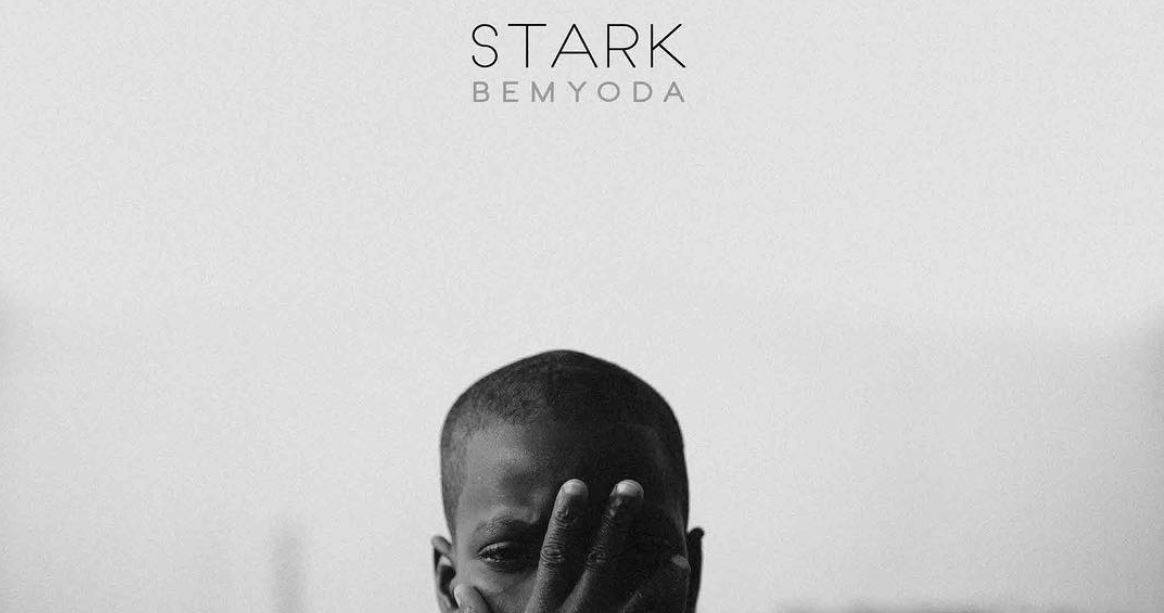
With the ‘Stark’ exhibition, Bemyoda creates an immersive multimedia experience

After announcing that his debut album, which has been in recording purgatory for five long years, finally getting a well deserved roll out on the 9th of June 2017, singer Bemyoda announced that in collaboration with Red Door Gallery, he was organizing an immersive multimedia exhibition of sorts, featuring memorabilia from the making of the album. Artists often use these catchphrases to drum up anticipation for their projects, so when I decided to go see the exhibition for myself over the course of the three days it held, I went with some skepticism.

For Bemyoda, Stark is in many ways a passion project. It features a sound that many Nigerian music pundits would argue is not commercially viable, and its songs littered with lyrics either inspired by personal anecdotes and actual autofiction set to music. There was already a lot laid out for us to ruminate on, but with the Stark exhibition, Bemyoda peels off another layer, to allow us see beyond the music to the actual experiences that have inspired the album.

Silent disco headphones for the exhibition.

The exhibition puts its own spin on the silent disco craze, offering guests a personalized headset premiering three songs from the album on ‘different’ channels. Each song corresponds to a certain cache of paintings. Like complementary accents, as Bemyoda sings in your ears, you see children, shot in black and white, caught as it were in media res. They’re leaving cities in trains, taking a plunge into a cold, foreboding body of water, staring uncertainly out of French style paneled windows. Bemyoda himself was there, silently weaving through the crowd, acquainting himself with each guest, answering their questions. I let these guests, many of whom were discovering his music for the first time have him to themselves and focused on the work.

The biggest problem I had with everything was that there wasn’t enough. Not enough songs, not enough portraits. But perhaps that was the point, to draw us in just enough, that when the album drops June 9th, we’ll be waiting, card in hand, ready to find out what else will be laid bare on Stark. 

We need more exhibitions like Stark, more storytelling from our musicians, more engagement, more immersion. BUt this is a start. A great one. We’ll take starts.

Listen: Bemyoda’s “i told you” is a little ditty with outsize emotions

Jinmi of Lagos is all about the culture

One of the possible effects of the influence of westernization is the tendency to lose cultural heritage as generations come and go. This culture of ours starts losing value when we lack the tenacity to preserve it and adapt it just as it should be in accordance with the times. There is a growing number of strays who forget that it’s only in using the perks of westernization and new age technology as sheer stroke of luck that we can put an edge on the aesthetics already inherent in our culture. But you needn’t worry too much, people like Folarin Oluwafeyijinmi Abdulsalami are ready to take the daunting task of preserving cultural heritage by “staying true to traditional music”.

Born, bred in and from Lagos state, Jinmi is the offshoot of a religious and disciplined Mum & Dad, whom along with his endearing siblings all have some form of interest in music and can play at the least, one instrument each. They’ve all played a role in Jinmi’s creative life. He has a close bond with his sister and describes his brother, Samad, as the conscience of  his music –a music critic and media analyst who always gets first scoop on his new releases.

When I speak to Jinmi Abduls, he tells me he has dubbed his genre as ‘modernized highlife’. I ask him to elaborate, and he answers with the confidence of someone beyond his years, giving a comprehensive analysis that accentuates his passion and reveals his shrewdness from experiences over the past decade. He also has a vivid imagery of the future, with plans to major for some Human rights law after securing a degree in International law in the 1st quarter of next year.

The songs we are singing about right now, aren’t that much different from what happened in the past, we just have unique perspectives on them. My song “Long Distance” [the theme] may have happened in the 50’s but it couldn’t have been told in the context of things that are happening now. The topics I sing are modernized, they are things that are happening right now. On the Ep, you’ll also hear a bonus track on the trending topic that men are scum. The bonus track brushes on the way we are engaging and examining gender roles, even if we use humour as a tool on the track.

When you think Jinmi Abduls, think neo-highlife. But with enough versatility to experiment with other fields and genres, the one constant being his devotion to story telling as a medium for communicating his fears, hopes and desires.

I always say my style is storytelling and for my genre, I call my self a multi-genre artist. In a straightforward form, Highlife and Afrobeats is perfect but it is also restrictive. I’m not making music for the western world, just yet. It’ll eventually spread to the world. But right now I’m making music for my people, where I’m from; for the grassroots.

Hearing him tell stories behind all the songs on his EP is joy, but it’s even better when it’s underscored by the striations of highlife instrumentals, often honed by the blessings of digitization.

Think of the H.O.D-produced, Boj-featuring “Pose” remix, which seems to find a middle ground between traditional highlife instrumentation and sounds provided through electronic instrumentation and modern synths, all coalesced to still give that mid-tempo highlife feel.

Jinmi began as a young upstart in 2008 (to the public) from a rising talent audition on “Moments with Mo”, making a record in the studio, and finally debuting with “Pose” as a recording artist in 2015. To this end, the last quarter of 2017 will mark a decade since the begining of some significant upturns in his career. Although, he hasn’t had a proper mainstream hit, his existence can’t be reduced to a  ‘Just because’ because Jinmi doesn’t quantify his successes with conventional and often shallow criteria. He created ChaseMusicNG with singer Dami Oniru, for this very reason, to provide an alternative support system for emerging artists that focuses on community instead of competition. The strong support and recognition he shows his team, is evident in his continuous use of the inclusive “We” when he speaks, even going on to mention almost all members of the team.

If I eat, we all eat. It’s a circle of support. These are the things I’ll never forget. We are all making our effort collectively even as students, friends and family, with  our own personal goals. My success is our success and this circle of support has been the most frequent thing

Jinmi is towering with a certain control of calm in the face of criticism, but –even he has drawn the line somewhere. For him, the line is having the basic dignity every human-person is entitled to, trampled on for cheap publicity. Recently he was drawn into an altercation across social media platforms when rapper Fresh L took unprovoked digs at him and his music. Jinmi ignored a sneering Snapchat post, and a slew of now deleted subliminal messages on Twitter, before finally responding impulsively. His response went viral and the rapper deleted his provoking tweets, creating the impression that Jinmi was in fact the aggressor. He considers these kind of ‘feuds’ if you’d deign to call them that, distracting. He’s never seen the point of them, but will defend himself if he has to. Jinmi sees himself as a David in an industry full of Goliaths and straw men.

He alludes to historical and fictional characters this way, a tic that probably resulted from his keen passion & the pleasure he derives from historical fiction and non-fiction –a hobby that sure whets his story telling abilities too.

Great leaders understand that the real keys to battle are sometimes obscured by our misconceptions. Perceiving them correctly can amount to a Goliath-sized advantage. So, in the words of Bill Murphy Jr., “the next time you hear about a David versus Goliath story, don’t think of an underdog. Think of a confident competitor who is more than happy to be underestimated.”

To show how committed Jinmi is to his music, he challenged himself to record one song every day in 2016, by December he’d made 374 songs –make that 474, when you add the hundred he’s already recorded within the 1st quarter of 2017. Now he is challenging himself again; thinning out the herd to find the best six for an EP slated for June.

The EP, is just like a compilation of more stories. The issues in the stories are things I see around me so often, things I see as Lagos culture. Because in the end of it all, Jinmi of Lagos actually represents Lagos Culture, Lagos way of Life, Lagos behaviour, Lagos Character. The EP symbolizes ‘the life and Times of Jinmi in Lagos’. It’s actually amazing experiences, world stories, stories about God, things that are happening in the society…will all be in the EP
His EP arrives in What feels like the second decade of a long career. Jinmi came out as a young talent of 11 in 2008, ached through a phase of actually having to encounter God himself beyond being a ‘preacher’s kid’, proving to people his capabilities and gaining a fan base that he’s, in turn, endearing to. This time he has a vivid image of the future and an unwavering desire to stick at the top of the music pyramid.

While he’s still deliberating on titling his upcoming EP: (JOLAG) Jinmi of Lagos or Lights of Lagos, it’s already firmly slotted for a June 16th release date and will elaborate better what exactly he brings to the table, winning the hearts of more audiences.

The debut from the young South Western Nigerian singer is set to be a unique coming-of-age story that shapes the best of highlife, bridging Afrobeat and some synths that fold into a compelling and specific sound.

Feature Image Credits: Fredrick Archibong

ICYMI, Read up: Jinmi Abduls Gives Lana Del Rey’s “Florida Kilos” An Afropop Makeover

Dear Neo Africa, Dennis Osadebe will see you now.

There aren’t that many artists whose early incarnations have embraced other art and design forms quite like as Nigerian multi-medium Contemporary artist Dennis Osadebe. With a color suffused, classic and contemporary pop culture influenced style that suggests experience that far exceed his four years as a professional artist, Osadebe has channeled what he calls ‘Neo Africa’, a post millennial exploration of what it means to be of African descent in an increasing westernized world. His work has drawn parallels with contemporaries like Sam Ebohon, Canadian based Benny Bing and Oluseye Olungesi.

But he didn’t really gain traction 2015’s group exhibition at the 2nd year anniversary of Diesel’s Nigerian art exhibition in partnership with Re Le Gallery. Showcasing alongside John Madu, Osadebe’s themes of millennial disillusion and afrofuturism gave many people pause. That fashion adjacent exhibition led to limited edition prints for an Orange Culture summer collaboration and a boutique clothing line of his own Life Fast Die Slow. 

He was recently invited to take up an Artist-in-Residence position at the prestigious Noa Noa Art Residency in Bali, Indonesia, an unprecedented honor for a self taught artist without the usual pedigree/mentors. That kind of honor always pushes artists to question the motivations behind their art, and for Osadebe, that means circling back to his first love, and finally hosting his first solo exhibition, Remember The Future. 

Generator-powered rockets launching Nigerian astronauts into space. Nigeria seems to be growing its taste for the great unknown, the final frontier. But what will ‘Nigeria in space’ look like using the context of today’s happenings? And what does technology mean for the realities of everyday Nigerian life? “Remember the Future” is a visual journey into Nigeria’s analogue past and its digital present. The Exhibition explores the idea of mixing traditional materials and crafts with technology and new media. The aim is to question the realities about Nigeria’s contemporary society, including those of power, class, and gender whilst suggesting possibilities for the future.

The exhibition will hold from the 3rd of June to the 11th, at Red Door Gallery, at 51, Bishop Oluwole Street in Victoria Island. Add it to your must see list this weekend.

Feature Image Credits: Dennis Osadebe

Read up: Eugene Odogwu’s art is a swirl of psychedelic fantasy & science fiction

Listen To Zee’s Cold Island’s Epic Battle Chant On “Hall Of Fame”

Zee’s Cold Island has devoted his sound to the late 1990s neo-soul sound. Just like his previous releases, “Apollo” and “Dream Ripper” the bass is poised, expressive and brimming with energy on his latest single, “Hall Of Fame”. A few years ago, these arrangement sounded rebellious particularly in Nigerian soundscape where any R&B singers with hopes of radio play has to live by pop rules. Even 2 face’s widely acclaimed Face 2 Face album was riddled with pop songs like “Nfana Ibaga” to ensure its success. But the climate has changed. Lately, Nigerians seem ready to listen to more alternative genres with the recent success of artists like Asa and the growing reception for millennial artists like Tay Iwar, who have completely ignored contemporary pop sounds.

Artists with a comprehensive enough understanding of R&B to avoid pop have grown from being seen as nonconformist to more like members of a thriving loyal opposition. Zee’s Cold Island is a new Nigerian artist ready to break into the royal family and his new single, “Hall Of Fame” follows that narrative. Set on ambient synth beats, Zee’s Cold Island sets himself apart by focusing on a cool conversational mid-range singing about his hunger for the glamour of being in the spotlight.

Zee’s Cold Island’s “Hall Of Fame” is a cry for attention from an artist still uncertainty about his talent but recognizes that he’ll never be satisfied with an ordinary life. He’s ready to risk ridicule from critics just so he can make history with his music. Considering that he’s relatively new to the music industry and his genre isn’t exactly the choicest for a Nigerian market, Zee’s Cold Island faces an uphill struggle. But he appears prepared for it with declarative line: “This thing is getting out of hand, I’ll have to take drastic measures”.

Zee’s Cold Island gets the form right on “Hall Of Fame” but there is a hollowness to his performance. While he might have enough reticence to be seductively distinguished from what we are used to, he doesn’t have enough command in his voice to put his song over with authority.

Listen to “Hall Of Fame” below.

https://soundcloud.com/zeescoldisland/hall-of-fame

Featured Image Credits: Soundcloud/zeescoldisland

Check out Odunsi’s “Lose You”, an Afrosoul work of art

AMSTAG is all about Island vibes and putting Rwanda on the map on “Last Night”

Hailing from Rwanda, the country of a thousand hills, Stapain Gatore or as he is known to fans of his music, AMSTAG, is determined to represent his country and it’s music on a global stage.

Words by Ade Obayomi

With the recent influx of millennial creatives coming from all over Africa he wants to make sure that Rwanda is not missing out on any recognition. He’s put out a debut single “Not Enough” featuring Ni$ha. Capitalizing on it’s buzz he’s dropped a second single, bringing Ni$ha back along with Lenziebeats and Ab Flexin for a bit of extra spice.

Favouring a decidedly dancehall beat, as popularized by artists like Popcaan and Drake “Last Night” tries to distill the essence of Summer and crystallize it into four minutes of song. A simple synth loop is a measured against AMSTAG’s rapid fire sung rap bars, as he professes his love for a girl he sees across the room and promises her that what he feels is way more than just a summer fling. The percussions are a deliberate mix of wooden drums and steel pan drums, a very ‘island music’ move, a vague reminder of the sounds that go all the way back to artists like Harry Belafonte.

Hopping on the track as well, is Ni$ha, who handles the chorus with some serious verse, smoothing over the song’s somewhat unfinished edges. She is subtle but expressive and consistently impossible to ignore. Ab Flexin also delivers by giving us his upbeat flow while Lenziebeats puts the finishing touches on his song by providing the vocals. “Last Night” is ultimately about a vibe, a chill mood that translates quite well and makes us hype for AMSTAG’s future work.

Listen to “Last Night” here.

Read up: Bella Alubo is cool as funk on new music video for “Radio” ft Ycee

Listen To Foresythe Run Through Everything Pop From Late 2000’s Till Date On “kerewa”

Making pop culture references is one sure way to get a hit record. The trick to it is adding enough of your own sound that your sound is distinct from the sources you reference. To borrow an example from the film industry, “Stranger Things” is like a “Star Wars” franchise mash up but the script is original enough to make the references work for the show’s advantage. Creatives always know just the right amount to pinch off pop culture to create a new one but Foresythe is a genius at it. For his latest single, “Kerewa” he takes listeners on a nostalgic trip to Zule Zoo’s “Kerewa” abusing the original song and his own self worth.

For those who don’t already know, “Kerewa” recorded by Tiv duo ZuleZoo was a hit in 2006 even after it got banned by by the Nigerian Broadcasting Cooperation. Foresythe co-opts the song’s title which sounds like the most hilarious sexual onomatopoeia ever but it in fact means adultery. But he doesn’t dwell too much on the themes of the original song. Instead he just wants to catch his cruise, referencing several other pop culture hits from Ubers to social media joke trends like “Say it with your chest” and popular lyrics like “Don’t save her, she don’t want to be saved”.

Foresythe delivers a braggadocios hip-hop number rapping over the synth based instrumentals produced by Jinmi Abduls. He touches on several genres of music from Juju to Afropop to Hip-hop and doesn’t restrict his pop culture samples to time or location. Wizkid’s “Sare wa gba” line was immediately followed by Zule Zoo’s “Kerewa”.  We also hear a quick line from Orezi’s “You Garrit” before something remarkably close to Drake’s “Niggas talk more than girls these days” features.

Biting other people’s lyrics and flows to make a hit record is slowly becoming the norm. But what we have here is more like a crash course in case you’ve spent the last couple years in a coma. Foresythe uses all the popular lines we all know and love to tell his own story without ruining what we love about the old songs.

Hear Foresythe’s “Kerewa” below.

https://soundcloud.com/user-010/kerewa-foresythe-prodby-jinmi-abduls

Featured Image Credits: Soundcloud/Foresythe

Okuntakinte’s “Bula Magina” is also a mash-up of everything pop

Of overused Nollywood actors and burnt out celebrities

One of the recurring topics that have sprung up around the ‘New Nollywood”s second wave of big budget web shows and direct to cable television content is how cyclical its roster of actors are. The same minimal roster of actors are cycled through the system, appearing in lead and supporting roles on various television shows and web series, sometimes simultaneously.

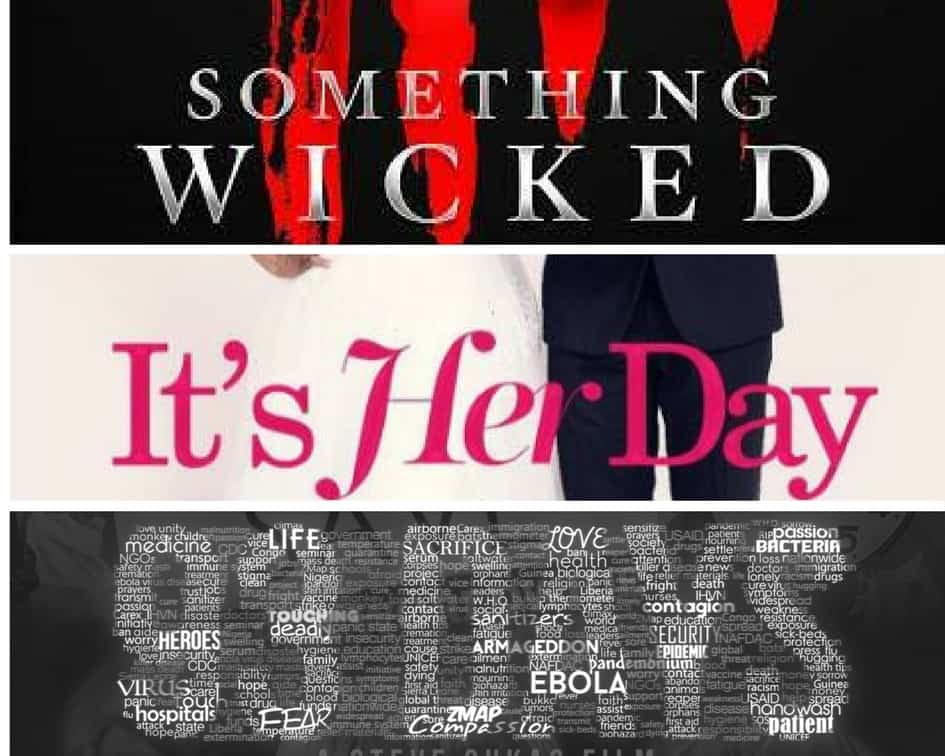
A prime example of this is actress Ini Dima-Okojie, who gained popularity in New Nollywood late 2015. After appearing on the first season of Ndani’s Skinny Girl in Transit as a guest supporting actress, she was quickly bumped up to series regular in the rushed second season in early 2016. By late 2016, Okojie had already headlined her first film, It’s Her Day with comedian Bovie and was either a series lead or supporting character in three web shows for three different studios and content producers. That necessarily wouldn’t be a problem if all three shows weren’t airing simultaneously. It didn’t help that Okojie was playing the same character trope in all three shows and the movie, a typecast spoilt rich girl who throws tantrums to get her way.

This is about how the industry is failing/refusing to change things and find better ways to discover new incontrovertible talent.

By early 2017, many of active followers of content from New Nollywood were already fatigued by Ms. Okojie, and the enthusiasm with which her earlier work was received was replaced with a more tepid acceptance that we’d all have to see consistently expect her on our screens if we were going to patronize New Nollywood. But she isn’t the only one, overused and underserved. There is Akah Nnani, comedian Bolly, Beverly Naya (consistently reprising that one stereotypical vixen role), Adesua Etomi our perennial ingenue, Makida Moka, Blossom Chukwujekwu, and unsurprisingly, veterans like Ireti Lola-Doyle, Funlola Aofiyebi, Joke Silva and Olu Jacobs who get trotted out to play two dimensional roles as elders, parents and politicians.

But this isn’t us condemning these actors for taking as much work as they can.  The industry is mercurial at best, and often actors have to balance financial decisions with creative ones. This is about how the industry is failing/refusing to change things and find better ways to discover new incontrovertible talent.

Nollywood is infamous for its burnouts. Unlike in more developed industries where a complex system ensures actors have to remain in fighting fit shape physically and intellectually to continue to land complex leading roles, the Nigerian film industry tries to capitalize on instant popularity of actors who rise up the ranks and find a fan base, literally cashing out on them by throwing as much work their way as possible. This system is unsustainable, and often unfair to these actors. In response, many of the stars of Nollywood’s first and second waves a have currently left the industry to live fairly ordinary lives away from the chaos.

Actors like Sandra Achums, Pat Attah, Regina Askia, Eucharia Anunobi, Jennifer Eliogu, Benita Nzeribe and Rita Nzelu, Charles Okafor, Hanks Anuku; all sex symbols at the height of their fame had at most, a ten year life cycle in the industry before burning out. Their careers were ended by a mixture of overexposure, a lack of proper management and the allure of a steadier life away from the uncertainty of an industry that banned several of its biggest actors for demanding better wages. Askia is now a registered nurse, Achums and Nzeribe fell headlong into marriage and raising children abroad, Hanks Anuku (ever the drama queen) denounced Nigeria and took a Ghanaian name.

The few actors from that era that have remained have had to take long breaks from acting to reinvent themselves. Stephanie Okereke, Omotola Jolade Ekeinde, Rita Dominic and Genevieve Nnaji have all cut down the number of films they make each year and branched out into directing or producing their own award winning films. Not every actor can take on the financial challenges of privately funding a film, so how then can we parse the problem and protect the actors of ‘New Nollywood’?

Nigeria is gifted with actors, you find them on Instagram, they’re on stage every sunday at church drama performances, they are performing at open mics in their spare time. However, these actors are never scouted by agents or film studios, because there is no culture of seeking out excellence.

We have to look at the framework into which the actors fit, particularly the people who finance Nollywood.

What are the intentions of the average Nollywood producer? To cash out, and if the stars align, make a decent movie in the process. The same financiers are behind the majority of the content Nollywood creates and their goals are simple; profit. If that profit means using the same ‘hot’ actor for several simultaneous projects, they will push for it. These financiers look at films that have been commercially successful and try to cement those films as the universal standard for how Nigerian cinema should work. That means they don’t go out of their way to seek directors and actors that will challenge that status quo.

Nigeria is gifted with actors, you find them on Instagram, they’re on stage every sunday at church drama performances, they are performing at open mics in their spare time. However, these actors are never scouted by agents or film studios, because there is no culture of seeking out excellence. Many of these actors already have comfortable lives, and steady jobs that ensure they can pursue their passion without compromising on quality. Actors like this need to be convinced to work on a project either with an excellent script, or financial incentives that far outweigh what they could earn on their own. Good scripts cost money, and Nollywood, both traditional and new, in their current incarnations is all about maximal profit from minimal investment. So these actors stay undiscovered.

Instead what we have is the ‘open casting’ method. A method largely abandoned in more developed industries. The open casting method often offers no information about the script and the possible characters actors can read for, often setting their casting dates at times that automatically preclude actors with other jobs, older actors and actors with disabilities.


What the dragnet eventually brings in are the lowest rung, amateur actors for whom acting is a desperate last resort, a chance to ‘blow’. Actors for whom any role is a triumph, any opportunity is taken without consideration for whether the opportunity is commensurate to their skill level or complementary to their talents. A casting director would be incredibly lucky to find an actor with the kind of raw talent Bisola Aiyeola has from an open casting, and near impossible to find an actor with the skill and range of a Liz Benson or a Hilda Dokubo. When they do luck out, the cycle of overexposure starts anew.

This isn’t a problem that can simply be solved by abolishing open castings. Our industry needs a viable framework of legislature that protects the rights of actors, a distribution network that ensures investors can put their money behind unconventional ideas and know they are protected from piracy and a network of agents and casting directors that seek out excellent actors from their churches, schools and community drama groups, and help them make the transition on to the big stage. They also need managers who can put their foot down and refuse work, terrifying as that may sound, and help them expand their portfolios with other sources of income so desperation doesn’t become the motivation for taking any role.

Sure Nigeria has nearly 200 million citizens but we can’t keep burning out our biggest stars, eventually we will run out.

On Mapping the future of local entertainment and the need for nigerian child stars

Cabo Snoop Taps Olamide For “Awaa”

In 2010, you’ll be hard pressed to attend a party without at least 2 Cabo Snoop tracks playing. Despite his slightly annoying habit of pausing the beat to speak at intervals, “Windeck” and “Prakatatumba” became anthems in pubs and clubs till satellite television stations took notice and made him a more global pop star. Asides his electronic dancehall beat, his fancy dance steps and colorful jeans gave him a distinct appeal. Lately, his releases are sparse but for his latest single, the Angolan singer is going all out in ensuring that he gets as much acclaim as his debut projects. He enlists Olamide for “Awaa”, produced by Femkeyz and Mixed/Mastered by Swaps.

https://www.instagram.com/p/BUryhuPDim6/?taken-by=cabosnoopreally&hl=en

Cabo Snoop songs have managed to gain wide airplay despite being rendered in his Angolan language but “Awaa” is mostly pidgin English. Written by Swazzi, Cabo Snoop ventures into Neo-Afropop dipping into Nigerian soundscape with lyrics inspired by Tekno’s “Yawa”. The Angolan singer ditches his young, wild and happy flair for a more sombre emotion on “Awaa” but the beat’s baseline is still dancehall. Electronic guitar harmonies and bouncy clap riffs serve as a platform to sing about how helpless he’ll be without his love interest. Olamide makes an appearance in the video directed by Avalon OKPE where he raps with a playful flow and actually stays completely clear of Yoruba language.

The video doesn’t attempt to convey any sort of cognitive message asides the initial scene of Cabo Snoop looking dejected and alone but after meeting up with Olamide at a club, he gets back into his groove and even manages a few noteworthy dance moves.

Watch the video for “Awaa” below.

https://www.youtube.com/watch?v=VO2-GjPNhGI&feature=youtu.be

Featured Image Credits: YouTube/Cabo Snoop AV

ICYMI: Olamide sets sail on a “Wavy Level”, his most impressive release of the year

The Shuffle: Revisit “That’s Wot’s Up” the song that predicted the eternal reign of Wande Coal

Listening to “That’s Wot’s Up” off Wande Coal’s 2008 album, M2M , today, means you will come to terms with how much progress Nigerian music has made with sound mixing and engineering. It also means you will be forced to admit Wande Coal is a rare breed class act and talent, and “That’s Wot’s Up”, is perhaps earliest proof of an eternal reign he affirmed on his latest radio-hit, “Iskaba”.

“Nobody be like Wande, Nobody be like Wande Coal” – Wande Coal, “Iskaba”, 2016

In terms of production, “That’s Wot’s Up” is admittedly one of Don Jazzy’s near-misses on M2M. Don Jazzy starts off well with a melody set on alternating electronic guitars and hard rhythms on the drums. But it all quickly melds with high pitched electronic synths on Wande’s auto-tuned intro and bass drums bounce underlying already loud drums. It’s built to fail and too busy to take in all at once, yet Wande Coal waxes a strong melody, taking reigns of every kick, drum and clap without missing a note.

“That’s Wot’s Up” is your walk-in-the-park Afropop-R&B and Hip-Hop fusion. Wande Coal lays hard brags with the cheery optimism of an emerging newcomer, affirming status of wealth, popularity and his place as one-third of the MoHits crew — who were unarguably the strongest proponents of modern Nigerian music at the time. The sheer wonder of “That’s Wot’s Up”, is not only in the casual manner Wande Coal discusses the details of his new found celebrity, it’s in how he accentuates every element of the instrumental with a matching harmony and (occasionally corny) punchlines. No matter how distracting the instrumental gets, the message is clear: Wande Coal is going to keep winning and records will keep selling.

It’s a cheeky way to assert yourself as ‘in-style’, but when you remember Wande Coal took an eight year leave period from making projects, released a mediocre sophomore and still manages to edge a sleeper hit like ”Iskaba” into the charts, you’re also immediately aware Wande Coal will probably always be ‘wot’s up’ .

Listen to Wande Coal’s “That’s Wot’s Up” below

Featured Image: YouTube/WandeCoalVEVO

The Shuffle: Revisit Wizkid and Wande Coal’s sinfully underrated “For Me”

Essentials: Eugy’s Debut Project, ‘Flavourz’

After Eugy rode the Mr Eazi wave into the Nigerian soundscape with “Dance For Me”, we figured he was a rapper with a enough flair to ‘blow’. Subsequent releases however proved otherwise but that’s necessarily a bad thing. What we didn’t expect was that he would go on to show an array of talent that would make his Flavourz EP such an unexpected delight. The 6 track EP was released over the weekend with features from Ycee and Siza as well as the usual suspects on Eugy productions, Team Salut.

https://www.instagram.com/p/BUjFq1Qh02X/?taken-by=eugyofficial

Eugy kicks off Flavourz with “Prize”, immediately registering what shape the EP would take with the dancehall beats and a love-centric theme. Produce by Team Salut who uses siren noises and DJ scratch echos to simulate a party vibe on the pop song, the beat has a more electronic feel than we’ve heard on previous Eugy singles. “Prize” chronicles a couple with obvious chemistry simply won’t take the plunge. Eugy sings for the most part but delivers a brief Rastaman style rap flow on the third verse but the switch up was too abrupt and it just listens like a featured artist took the verse without credit.

The next track, “Give It To Me” features Ycee and was pre-released as appetizer for the EP. A Ycee feature has never been more timely because the Nigerian rapper has himself been trying out a pop aesthetic lately. His EP was released earlier this year with more pop songs than Lady Gaga has had this year and last combined but “Juice” enjoyed public acclaim regardless so Eugy is in safe hands. Team Salut produces “Give It To Me” with piano baseline riffs that rises but drops back at the start like a loop holding together the high BPM drum pattern. “Give It To Me” is an instant favorite but mostly because the beat is so catchy.

“Captian”, the 4th track is a close second but it’s Siza’s melodies that captures listeners. Also a love song, Eugy sings about an unnamed lover as Siza sings the hook with emotions sipping out of her voice like Rihanna on the mid tempo slow whine dance number.

The last track, “African Beauty” is the closest thing to hip-hop on Flavourz. Touching on his Ghanaian roots and London base inspirations, he samples flows from J Hus’ “Friendly” and just a bit off 2 Face’s “African Queen”. The religious undertone on “African Beauty” serves a perfect closing noting for Eugy’s debut project.

Eugy’s Flavourz EP has just the one theme which like every dancehall song ever is that Heart eyed emoji. Though the EP is short, it describes Eugy’s music as apt as his “Eugy Official. Music so sexual” ad lib.

Listen to the Flavourz EP below.

Featured Image Credits: YouTube/EugyTV

Watch Eugy take his love interest for that retreat you’ve always wanted

Poe Is Real Enough To Recognize Real On “They See (Did You See Freestyle)”

Poe is arguably one of the best Nigerian rappers right now but he’s no doubt the best rapper under Don Jazzy’s label. The Mavins records artist since making the switch from indie darling has used his releases to prove that the contract doesn’t signal a change in his sound or hard work. His debut single, “Man Already” went a long way in satiating fans who felt Don Jazzy’s history with his artists posed a threat to Poe’s artistry. But Poe is already over that and just wants to continue making music the best way he knows how. And what better way to rap free of all label pressures and fan expectations than to freestyle over a laid back beat.

https://www.instagram.com/p/BUrkKFvhbC-/?taken-by=ladipoe&hl=en

Taking inspiration from J Hus, Poe steps to the mic to describe where his mind is at and apparently J Hus is not the only fan of White Benz. With his J Hus reference, he acknowledges the affiliating relationship between London artists and Nigerian music, supporting the narrative that he’s preparing to take Nigerian hip-hop to the global status that Afropop is enjoying. He talks about his hustler ambitions while also serving hard yet decidedly casual bars. “What is it about these white Benz/Got me using all my five senses/I tell myself it’s just a car. I’m forever with the bars/Every line is like a life sentence” he raps. Asides J Hus, DJ Yin and Bankyondbeatz also get credits on the 2 minute long freestyle.

While we aren’t certain about all the nitty gritty of Poe’s deal with Mavins, it’s fair to say he has retained creative control of his sound and content. He might be earning more now but he’s far from a sell out. It’s probably just a publishing and distributing deal that at the very most, controls his image but his “They See (Did You See Freestyle)” proves that he hasn’t dumb down his lyrics to increase commercial appeal.

Listen to Poe’s “They See (Did You See Freestyle)” below.

Featured Image Credits: Instagram/ladipoe

Listen to Poe’s “Man Already”, a battle chant into glory

Osadee’s “Summer Fling” pulls off that rare feat of transporting a career nearer the gates of excellence

The artist, Osadee has his work cut out for him, as far as separating himself from the conventions that are expected of neophyte artists, particularly making their name in the industry by making covers, refixes of hit songs and trying to turnover a feature from a high profile artist into a bonafide hit. He releases “Summer Fling” off his forthcoming EP –his debut.

“Summer Fling” proves his mettle without a label or co signs (yet). With a feature from Johdavincii, whose rhymes in the second verse is applaudable, Osadee croons, using the grittiness of his song writing to expand his sound beyond just an apt “Uber Everywhere” cover. And proves that his music can’t be reduced to just that. His wit lightens the oft sombre mood of the song, sampling a Drake interview from 2013 on Canada’s Q Radio,

“I make my music strictly for the purpose of driving at night time”.

It fits neatly to the beats, which begins on a piano baseline and synths with steady assists of mixing and mastering by Synx, the producer behind Bella’s Radio featuring Ycee.

The theme that runs through “Summer Fling” is evidently, love. I read in an interview two weeks back where Anika Noni Rose on her newly released romantic drama flick “Everything Everything” talks on the theme of love. She says

“how love can be live giving and life changing, but how love can also be suffocating. And how important it is for us to recognize where we are in that spectrum, and what are we doing [?], and is our love healthy [?], the love that we’re getting and the love that we’re giving.”

She couldn’t have articulated this better. And the artist himself knows this about love too. The storyline in “Summer Fling” is in perfect sync with that snippet of Anika’s comment. It’s a glaring omission when you listen beyond the harmonies and that machine-esque voice -you hear- that adds to the vibe of the music.

It’s clear that by the time Osadee releases that debut EP, his sound would have coalesced into something interesting. Of his music, he says: “its fun to play pretend sometimes, helps me practice empathy” and adds that he expresses himself through music too; so rather than wait for that interview when he pops, listening to his releases might be another alternative.

He does make music that makes you feel something. It’s definitive work.

Listen to it below.

Featured Image Credits: soundcloud/Osadee

ICYMI, Read up: Bella Alubo is cool as funk on new music video for “Radio” ft Ycee

3rty x Kid Marley’s “Sunday Morning” is Indie pop greatness.

Alt soul band The Grey Area has one of those origin stories that you only hear from critical darling British rock groups. The group’s members 3rty and Kid Marley were  both making music as solo artists before a chance meeting at the third installment of Lagos based alternative music meet up Cave Wave where they were both billed to perform. They heard each other perform, exchanged numbers and  initially facilitated by Cave Wave’s organizer Amanda Iheme, began the slow process of morphing their individual sounds into a new and interesting whole. Two years later (they first met in 2015) they’re a bonafide supergroup that found that sweet pop between Naija pop, jazz, soul and indie folk.

They’re not slowing down either, together they’ve recorded an album they’re calling The Grey Area, produced in the UK by Tom Misch. The Grey Area is fusion of their sounds and interests and the debut single off the new project “Sunday Morning” makes us excited as fuck. We’re not quite sure if the song’s title references Maroon 5’s interpretation of a Sunday Morning gone wrong, but it certainly has its own urgency and fervor. The guitar work will remind indie instrumental band enthusiasts of legends Explosions in the sky, with the crisp notes and minor melodies. But the song’s clap samples and drum sequence adds a pop airiness that is definitely more Bruno Mars than Coldplay. On such delightful scaffolding 3rty and Kid Marley soar, bringing the best of their discordant but decidedly Nigerian styles to play, telling stories of existentialism, millennial angst and hope that springs eternal.

The Grey Area will definitely be an Opus and put the group in a category all their own, redefining what we’ve come to know as Indie Pop. And they more than deserve it, “Sunday Morning” is a fantastic debut.

Listen to “Sunday Morning” here.

This Story Isn’t going Away: Phyno goes off on Pulse.ng over “I’m A Fan” ownership analysis

While the world awaits for statements from Phyno or Pia Mia’s camp, it is becoming glaring that the “I’m A Fan” saga is not going anywhere.

Yesterday, Pulse music pundit, Joey Akan, revealed that so-called verified sources close to Phyno’s team say Remo The Hitmaker contacted Phyno with the island-ready production for “I’m A Fan”. However, due to remuneration issues, the production failed to materialise into a finished song even though Phyno went ahead to reconstruct the song with Benjamz. According to Akan, Remo’s initial production eventually ended up in Pia Mia’s court leading to her own recently released version of the song.

What Pulse.ng’s Joey Akan failed to mention however was how Phyno ended up with the same lyrics as Pia Mia. Or the fact that Remo the Hitmaker never actually produced “I’m A Fan”. So it came as no surprise when Phyno took to twitter himself to debunk all the details of Pulse’s initial story with the tweet below.

As our investigations would further reveal, not only did Remo not produce “I’m A Fan”, it’s still not quite clear who owns the actual songwriting credits for the same hook both Pia Mia and Phyno’s version share. According to reports “I’m A Fan” was originally made by Yung Berg who is also known as Hitmaka and Samuel Jimenez Person also known as Smash David. While it still unclear who handed off the song to either Pia or Phyno, we know for a fact that Smash, Hitmaka and Jeremih (who is featured on the Pia’s version) have worked together extensively. We also know that DeCarlo,—who has vocals on Phyno’s version of “I’m A Fan”—is a songwriter who has worked with Pia Mia in the past and was quite possibly in the studio with Jeremih last year.

The question of how Pia went ahead to record her version of “I’m A Fan”, still lingers. But a wild guess would place producers, Smash David and Yung Berg alongside singer-songwriters Jeremih and DeCarlo where “I’m A Fan” was originally made. We still have a lot of questions for both Pia Mia and Phyno, but this is what we know for now.

This is still a developing story.

Here are four possible explanations for the existence of Pia Mia’s “I’m a fan”

Abiodun has a sleeper hit on his hands with “Melanin”

Sure, Lagos is front and  center when music is being discussed in Nigeria, but often that means that a lot of the great experimental music that comes from other cities is often either overlooked or ignored entirely. Take for instance, afro fusion rapper Abiodun who reps the ancient city of Ibadan. Since he began making music professionally he’s released four experimental afro fusion singles that challenge the conventions of the genre yet have largely gone unnoticed by the music media machine. His last single Blurry, produced by Lemav and released two months ago, saw a spike in his audience and people finally taking notice. But his new single “Melanin”, fresh out of the mixing booth is the song that everyone needs to hear.

First off, Abiodun is a gifted song writer, able to channel angst and draw the listener into the world of his music’s protagonists. “Melanin’s subject is a mysterious tween with her life split between the North and South, Nigeria and Ghana. The kind of girl who mentions in first conversations that her parent’s marriage collapsed around her, and asserts she’s only here for a good time. It is impossible to be intrigued by her the way Abiodun is, to not want to promise your way into her heart. Understated instrumentation with simple piano riffs, the occasional drum roll, and a thumping bass that is as unrelenting  as a heartbeat, is the perfect counterpoint to Abiodun’s earnest story telling and by the end of the song you’re completely sold on him.

Abiodun will do great things, with this kind of promise, he just has to.

Listen to “Melanin” here.

Listen: Sess puts Terry apala back on trap with new single, “That’s Wassup”

Four Possible Explanations for the Existence of Pia Mia’s “I’m A Fan”

The internet, like other handy inventions of men has a dark flip side. Just as we’ve seen people get dragged days after hitting thousands of RTs and LOLs, Pia Mia appears next in line for a humble pie serving. For those who don’t know her (we don’t blame you), Pia Mia is a Kardashian-Jenner affiliate who famously shot to faux-stardom after singing a rendition of “Hold On, We’re Going Home” to Drake himself at a Kardashian-Jenner family function. She followed that up with a semi-successful single titled “Let’s Do It” featuring Tyga and Chris Brown (more on that later). And now here she is, mixed up in some drama with Enugu’s finest.

The latest single from the internet sensation turned pop star, “I’m A Fan” is just one melody too similar to Phyno’s track with the same title. A deep cut from Phyno’s widely underappreciated The Playmaker album from last year, “I’m A Fan” was first released featuring Decarlo and Mr Eazi with, with the now played out afro-caribbean influences on the production. Pia Mia took that beat (albeit chopped and screwed) and got Jeremih to feature on the single expected to be on her debut album due later this year via Wolfpack/Interscope Records.

https://www.instagram.com/p/BUj62qZAh4V/?taken-by=piamia&hl=en

Let’s not beat around the bush: the similarities between Phyno’s “I’m A Fan” and Pia Mia’s are uncanny. Other than the slightly pitched down beat on Pia Mia’s, ‘produced’ by Hitmaka fka Yung Berg (!!), it is almost verbatim the same song in the first verse and choruses. It’s almost a surprise that she didn’t just go all the way and parrot Phyno’s bars in Igbo.

In the past, we have seen two near identical songs surface in the same time frame, but there’s usually some sort of explanation. We have seen reference tracks (i.e. a demo version of the song made by a songwriter for the artist) such as Future’s “Good Morning” released shortly after Beyonce’s “Drunk In Love”. We have also seen covers of songs/remixes released almost immediately after the release of the original, such as every Conor Maynard song ever. So it’s not unheard of what we’ve seen here, but it’s definitely not without explanation.

Here are four possible reasons for the existence of Pia Mia’s “I’m a Fan”:

Smash David/Hitmaka and Pia Mia “Sampled” The Song

This is the most obvious explanation, due to the fact that the songs are almost identical, and it wouldn’t be the first time this has happened. Usually samples are simply when a section of a song is interpolated in the new song, as seen when Legendury Beatz sampled Dr. Dre and Snoop Dogg’s “Nothing But a G Thang” to produce Wizkid’s “Ojuelegba”. However, the term sampling can also be used in more blatant instances. The title track off Drake’s Take Care album for instance was first sung and produced by Gil Scott-Heron and Jamie xx respectively, but Drake owns full rights to this song. It’s easy to imagine that Pia Mia heard Phyno’s “I’m A Fan”, became a fan (of the sound at least) and recorded her version whilst paying Phyno handsomely enough to get away with the chunk she bit off him. The only problem with this is that as seen in Drake’s situation, Jamie xx worked on the song and along with the late Gil Scott-Heron, was credited deservedly. On Pia Mia’s “I’m a Fan”, the only credited composers – via iTunes – are: Christian “Hitmaka” Ward, Pia Mia, Jeremy “Jeremih” Felton & Samuel David Jimenez (aka Smash David). There is no mention of a certain Chibuzor Nelson Azubuike, aka Phyno, or the producer of the his version of the song, Benjamz.

Phyno Sold The Song To Pia Mia

This seems to be the fan-nominated answer to the mess on social media, as listeners deemed it the only logical explanation due to the songs being practically the same. Whilst selling someone a song that has already been released to the public for purchase is extremely uncommon, it is not unheard of. Davido’s hit single “Gobe” was originally released by a Nigerian producer/songwriter named Password in 2011. Two years later, he took the song to Davido’s longtime producer Shizzi and the rest is history. Till this day it remains one of Davido’s biggest hits, and Password was paid handsomely (according to Davido’s former manager). This seems possible, but it is also hard to believe as Phyno is not exactly a struggling upcoming songwriter (no shade to Password). He is a seasoned rap star, with one of the best fanbases in Africa. Whilst most of the mainstream audience had never heard Password’s original “Gobe”, Pia Mia surely did not think that she could release her version of “I’m a Fan” without any of Phyno’s listeners hearing it. Her Youtube and Instagram comments since the discovery has gone viral will support that. They are appealing to different markets in the grand scheme of things, but with African Pop Music crossing over like never before, Pia Mia really played herself if she bought this song thinking no one would know. (Ed. Note: If this reason turns out to be the true explanation, this may go down as the biggest finesse of all time by Phyno. Ever). 

Pia Mia Tried To Pull A Fast One, Again

Basically, Pia Mia doesn’t care and thinks we’re all dickheads. Look, we don’t know the girl and she seems sweet, but she has previous history in this “song-stealing” game. In 2015, Pia Mia released a single featuring Tyga and Chris Brown titled “Do It Again”. It’s her best performing single till date, peaking at no.71 on Billboard’s Hot 100, and no.8 on the Official Singles Chart in the UK, on the way to going platinum in both countries. However, large sections of the song are almost identical to Hawaiian reggae artist J Boog’s “Let’s Do It Again”, released in 2010. Pia Mia first recorded a “cover” of J Boog’s reggae track as a tribute to him, before Chris Brown and Tyga allegedly heard the song and asked to be on it. In 2015 it was repackaged as a song by Pia Mia featuring Chris Brown and Tyga. Similar to the local popularity of Phyno’s “I’m A Fan”, J Boog’s “Let’s Do It Again” was a dancefloor staple on the islands, leading many to accuse Pia Mia of stealing his song. However, crucially dissimilar to Phyno’s situation, J Boog is credited as being a songwriter on Pia Mia’s version, and has himself come out to say it was not “stolen”. Whether this accreditation happened before she was confronted by angry listeners or after is unclear, but at least J Boog is eating off the song till this day.

Coincidence

I mean Dancehall inspired production and melodies are super in right now. Maybe….nvm. This is the least likely of all explanations. This is impossible.

Right now, it’s pretty unclear as to what exactly has happened. Right now, it’s pretty unclear as to what exactly has happened. Maybe Pia Mia did buy the song from Phyno with a one-off payment, thinking no one would know. Maybe she bought it and she doesn’t even care what people think – it worked pretty well for her last. Maybe she just stole the song and is hoping Phyno hasn’t got his papers straight.  Your guess is as good as ours. Right now, there are multiple questions and seemingly no answers.

We’ve reached out to representatives of Pia Mia’s team and Phyno’s team, but they were not immediately available for comment as of publishing time.

Listen to the two versions below to see what the fuss is all about.

Featured Image Credits: Instagram/piamia

Watch Phyno’s “Link Up” video featuring Burna Boy, MI and everything you’ll expect to see at a riot

Sess Beats Puts Terry Apala Back On Trap With “That’s Wassup”

Terry Apala made his mark last year with singles like “Modernize” and “Champagne Show” but his releases this year have fallen just shy of the acclaim he enjoyed last year. In fact only his cover of Ed Sheeran’s “Shape Of You” came remotely close because it was pop and also because Terry Apala is king of Yoruba trap. While the cover worked to show off his range and versatility, it lacked that vital part of what made last year so good for the Apala-trap artist, namely Sess’ production. The producer who made the hip-hop beat for “Champagne” features Terry Apala for another hot single but this time he’ll be recognized as the owner of the song.

https://www.instagram.com/p/BT4u4p5FdSO/?taken-by=terry_apala

Sess Beats’ production on Falz’s “Bad, Baddo, Baddest” shows that he’s no stranger to commercial success but Falz’s Stories That Touch got all the credit for his work. “That’s Wassup” gives the producer a chance to actually enjoy his acclaim with his synth and electronic instruments that edges the single towards EDM territories. But Terry Apala’s Trap flows and the beat’s heavy bass drum baseline does just enough to make it work as hip-hop. Terry Apala’s mastery of Apala has been put to all sorts of experimental tests from pop to RnB but his brash and boastful lyrics work best as rap bars and “That’s Wassup” is another proof.

Listen to “That’s Wassup” by Sess

Listen to Terry Apala’s “Bad Girl” feat. BBNaija finalist, Bisola

Banky W Shares “Heaven” and “Love U baby” off his ‘Songs About U’ Ep

Words by Fisayo Okare

The month of May has been a lovely one for (soon to be) Mr & Mrs W;  from disclosing their marriage proposal, to the event of their traditional wedding introduction, to teasing the track-list to Banky W’s “Songs About U” EP. If you think you have seen all of their pictures together: selfies and rear view camera shots, think again cause this right here is only the beginning.

His (un)official audio-video release for the track off the Ep, specially written for and about Adesua Etomi anon Wellington, “Heaven (Susu’s song)” takes us on a journey of their love through a slideshow of images and video snippets. Remember that moment in The Wedding Party (part 1), where Dozie Onwuka (as played by Banky) is having that “sit-down-talk” with his Dad (played by RMD) on the day of his wedding ceremony? Recall,

Dozie: How does a man stay with one woman for the rest of his life?

Chief Onwuka: You know son, I’m afraid I haven’t been a very good example to you and your brother, and I know that, and I’m sorry. Your mum and I, we have not always been like this. Time was when we were good…you know, very good in fact. And then, you make a mistake, unforgiveness sets in, bitterness sets in, your ego comes in …then, things just starts going down the hill from there.

Son, I just want you to promise me. That you will fight! You will fight for it no matter what happens. There’ll be bad days, but don’t give up. Just fight for it the way…your mum and I should have.

Dozie: Okay. … but maybe I’m not the one you should be saying this to…

Well, Banky adds an itsy-bitsy of the above in the video too. The video is also created with images from his 2015 “Made for you” music video, The Wedding party, and for a second or two we see that moment he actually graces Susu with the proposal (No, not the moments you’ve seen before).  There is no dubiety songs off his Ep will be played on their wedding day, perhaps for that slow dance. “Love U baby” is the 5th song on the track list and he shares a lyrical video for the track about the same time he released “Heaven” today.

Now all we need is for Banky to tweet “Wedding is on the Ump.th of the month, dash”.

Meanwhile, mark your calendars for June 1st to clinch a copy of the full Songs About U Ep on music platforms, while you listen/watch Banky W’s “Heaven (Susu’s song)” and “Love U baby”, produced by Chris Cubeta and Cobhams respectively, below.


Feature Image Credit: Instagram/Banky W

A meeting of the old and new gods: Maleek Berry, Nonso Amadi to feature on Banky W’s EP