
Watch Wale’s “Fine Girl” featuring Davido and Olamide

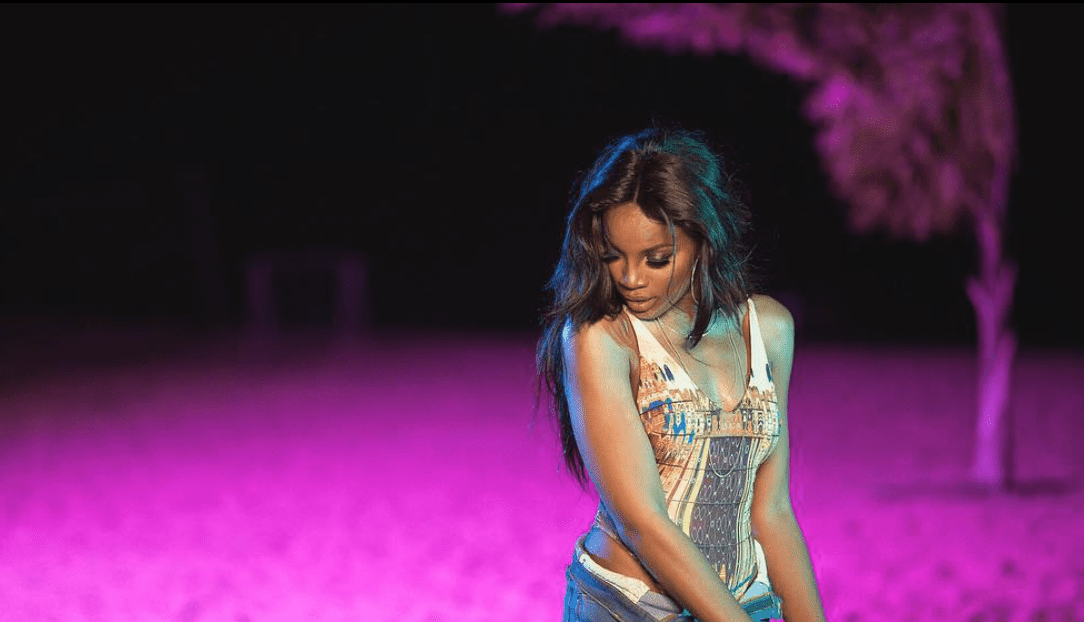
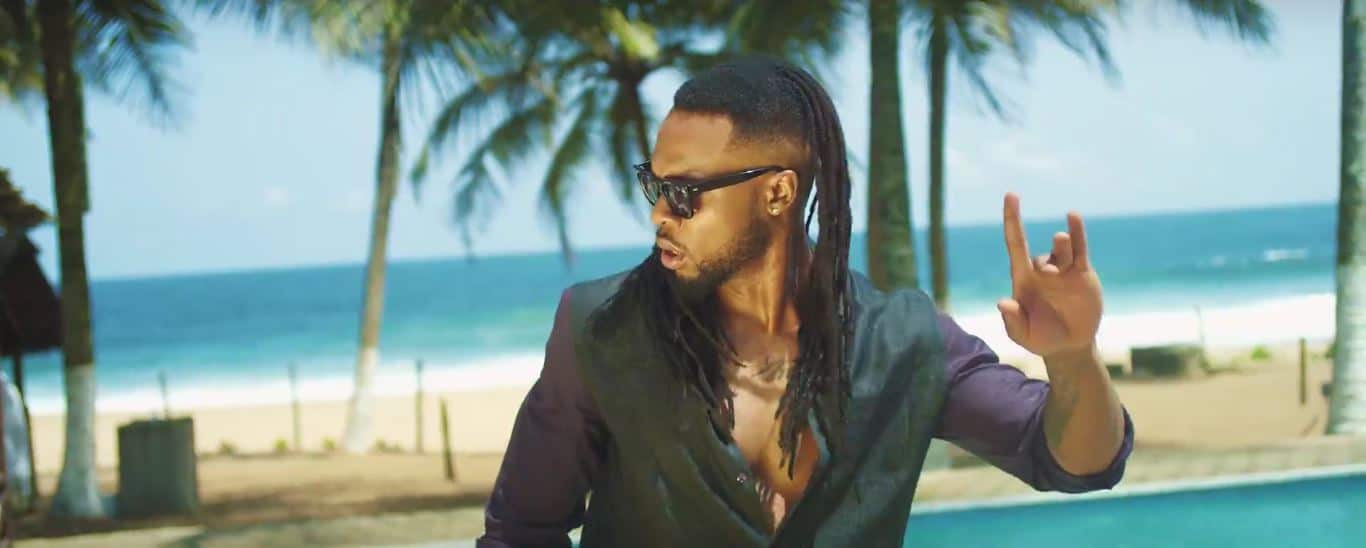
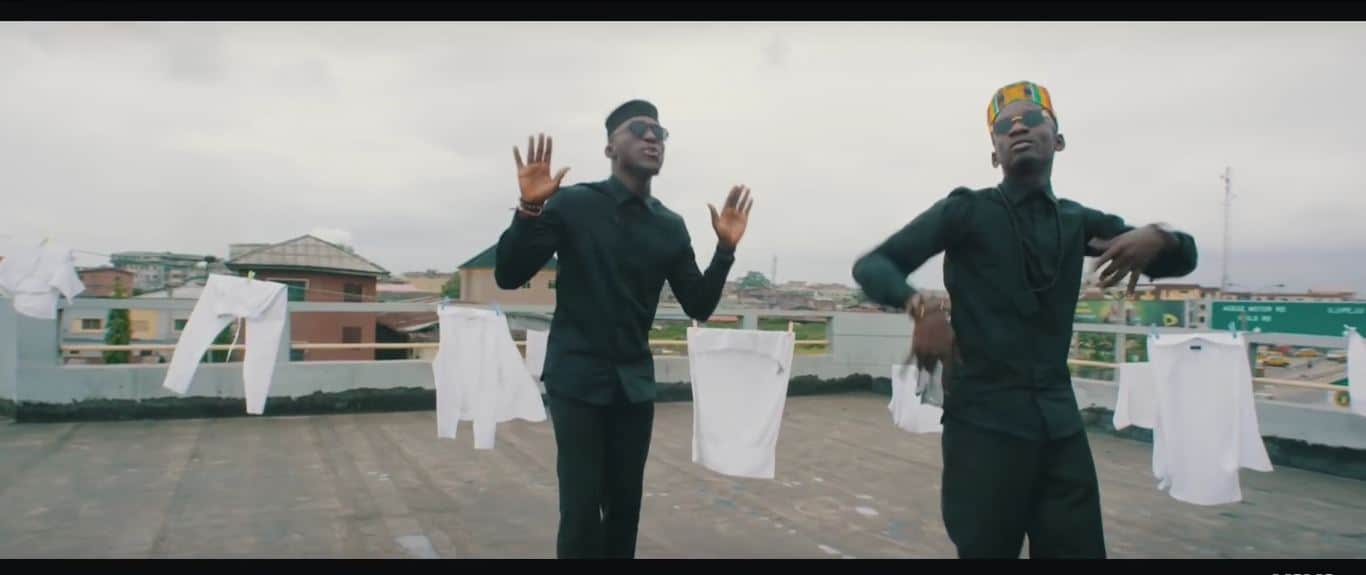
After teasing an image snippet of a particular scene (as seen in the feature image above) in Wale’s “Fine Girl” earlier in June, we had all been steadily anticipating the official release of the video, which has finally been outed today.

https://www.instagram.com/p/BWdExsglRDF/?taken-by=wale

“Fine girl” is off Wale’s fourth studio album, Shine, released in April, and features verses from Davido and Olamide with a chorus uttered by Olamide as well, which drones on even after the track is over.

The video begins with popular comedian Chief Obi, who is having a phone conversation with Wale, having heard that Wale is hosting a house party, which Chief hasn’t been invited to. A very interested Chief Obi seeks to know if there will be Fine girls, “white or black, Tall or short” and Wale, sighing, replies that there will be all. Indeed, the music video progresses with a row of fine girls on the palatial stair case where the house party is to take place.

Asides being a product of the trio’s star power, what better way to sing about Fine girls but actually have a video fully packed with a diversity of them, underscoring the point that there isn’t a single form that defines beauty –though Olamide’s chorus is slyly at odds with this when he croons “Fine girl to ni to ni idi nla to ni to ni di nlaa aahaaa”. Regardless, “Fine Girl” goes a long way in showing their appreciation of feminine beauty.

The video is directed by Patrick Elis and also features appearances by Sam Klef and Kevin Boj.

Watch all them boys with all the Fine girls in “Fine Girl” below.

Featured Image Credit: Youtube/WaleVevo “Fine Girl”


Fisayo is a journalist who thinks writing is hard and reading too. But her journey somewhere reveals, words are like pawns on chessboard when writing. She wants to see, create and share with the world, experience & communicate these experiences. Tweet at her @fisvyo
ICYMI, Revist Native’s comprehensive take of Wale’s Shine Album.

The Shuffle: Why we will always remember Wizkid’s debut gem “Shoutout”

All seems set for the release of Wizkid’s Sounds From The Other Side (expected later this week), a venture more or less into another lap of what has been a rather extraordinary career. To be borne of a generation who rose to fame at the cusp of a radical shift in the outward push of African music —thanks to D’banj, 2face, Don Jazzy and co— means you are in the rightfully balanced between incorporating the old and introducing the new. This is not only a scientifically proven key to innovation, it also comes down to having the raw talent to play that role with relative sustainability.(Because getting to the top is easy, what’s hard is staying there).

Still, whatever happens from here is what will become Wizkid’s legacy and one cannot help but wonder how that will turn out. He may have come to level of success where Future tapping him along on his tour is just another day in the life of Wizkid. Or to power that allows him casually get into twitter banter just so his fans can rip the internet apart. But in the end it will come down to little moments like “Shout-Out”, an album closer produced by Q Beats on Wizkid’s debut, Super Star.

On “Shout-Out”, Wizkid’s somber leanings towards spirituality is channeled towards those who have seemingly been there for him. From Banky W who gave him a shot at EME, to General Pype, one of his early collaborators, and friends and family. ‘God Go make you bigger’ he chants, with the grateful spirit of a man who wishes the best for those who have been good to him.

It is fair to note that “Shout Out” is the only song in Wizkid’s expansive catalog where he successfully balances his own aggrandized personal image with actual humility and excitement. Other songs have come as “Oluwa Lo Ni” and “Ojuelegba” where he is somber from top to bottom. Or “Baba Nla” and “Daddy Yo”, where even Kanye West would never match the suaveness of his acute self-obsession.

“Shout Out” is dedicated to all the many sweats that were broken for Wizkid to breakthrough. As the world turns and night falls, people change as the sun sets, but these few will always be the “real one(s)”. Their place is so special that Wizkid had to incorporate AfroJuju and Fuji music tendencies for people-praise music. Today, the names of the people mentioned in “Shout Out” will be retold as part of the Wizkid story. A church choir child prodigy from Ojuelegba turned international superstar. Who would have thought right?

Stream “Shout Out” via Apple Music below


Toye is the Team lead at Native Nigeria. Tweet at him @ToyeSokunbi


Here is a definitive timeline of wizkid’s releases since ‘ayo’ just in time for ‘sounds from the other side’

Listen to Bils address political issues on “Still Lagos” freestyle

Since his recently released PAY YOUR BILS: Eviction notice EP, Bils seems to be on a pro-Lagos mission. The positively charged project saw him appreciate the average Lagos struggle for what it is—an hustlers heaven. As his tape gathers more listens and carves some space for him in Nigeria’s soundscape, the rapper has dug into his bag of influences for a cover of Jay Z’s subliminal filled standout tracks, “The Story Of OJ” off his much discussed 4:44 album released two weeks ago.

https://www.instagram.com/p/BWSpA8fALxO/?taken-by=officialbils

Good artists recognize the potential to address social issues with their art. Fela might not be the most morally upright person in the world but he will forever be celebrated for speaking against the ills of society and government. Jay Z also managed to discourage violence and encourage forward-thinking sexual liberties on his latest project and it seems to be the blueprint Bils is following for his “Still Lagos” freestyle.

Following Jay Z’s animated video release for “The Story Of OJ”, Bils gets on the viral video to discuss a similarly popular Lekki flood trend in Nigeria. He expands on flood crisis to discuss salient issues in the society over the somber piano lead instrument that he spices up with occasional gunshot onomatopoeia missing from the original cut. Thanks to his heart felt intro where he claims to have just heard of the news of the flood, his “Still Lagos” freestyle listens like a cry for action and not just an artist trying to ride the wave of a trend like Jinmi Abdul’s “Scum”.

Bils makes known his views that all citizens of Lagos should unit because as he puts it Christian nigga, Muslim nigga, Real nigga, Poor nigga, Work nigga, Street nigga, Island nigga, Mainland nigga, Still Lagos”. He references the Biafra split up as he admonishes citizens to stick together by listing out problems everyone can relate with regardless of social class: “Budget missing/Kidnappers missing/President missing/The roads are missing”

Listen to Bils’ “Still Lagos” cover to Jay Z’s “The Story Of Lagos” below.

Featured Image Credits: Instagram/officialbils


You are meeting Debola at a strange time in his life. He wandered into a dream and lost his way back. Tweet at him @debola_abimbolu


Check out all the essentials from Bils’ latest project here

Here is a definitive timeline of Wizkid’s releases since Ayo, just in time for Sounds From The Other Side

If you’ve been a fan of Wizkid since his Superstar debut, it’s safe to say you’ve never been starved of new material to reference during best Nigerian artist Stan wars. He has left his mark on Nigeria’s soundscape with notable releases that have helped shape his career and position him as the toast of Nigerian music. Since Ayo, his last album released in 2014, the starboy has kept up a consistent string of hit singles that led to an RCA recording deal announced in March, this year. And as we anticipate his Sounds From The Other Side international debut, here is a definitive timeline of all Wizkid releases since his last album.

December 2, 2014: Wonder

Perhaps inspired by the growth of his fan base from Nigeria to other parts of the continent, Wizkid already saw his potential to be the artist all Africans can get behind. The single produced by Del. B with loud Afropop drums and spacious synth harmonies that Wizkid uses to deliver a love song confessing that he isn’t satisfied with the amount of love he was currently getting. He samples the Kuti’s “Wonder” track with a similar message for Africa’s unity.

December 8, 2014: Sound It

Wizkid had just released “Wonder” the previous Monday and was already waiting with a new single this time produced by Sarz. The dance number was another Afrobeat song from an artist who seemed confident enough to risk re-branding his sound though no one was complaining about the sound he’d promoted with this debut era.

January 29, 2015: Amin

As much as Wizkid has grown, he is always so quick to remind his listeners how far he has come. Recognizing how enjoyable “suffer-head” stories are, he has cashed in on the theme to make music appreciating his fans and other forces responsible for getting him out of the slums to the superstar life he’s currently living. “Amin” listens like a typical Wizkid freestyle over Afrobeat instrumentals where he thanks his fans and stunts on his haters.

May 12, 2015: Expensive Shit

Wizkid’s “Jaiye Jaiye” featuring Femi Kuti was such a hit that he couldn’t resist another go at the Afrobeat genre. At this point it was becoming obvious that his romance with the Afrobeat wasn’t just a one off thing for his Ayo album, but an aesthetic that will shape his brand. Though Femi Kuti wasn’t featured on “Expensive Shit”, his absence was made bearable by the Sarz produced beat that listened like a continuation of his album’s lead track. The dance number plus its complimenting video was a staple both on radio and on TV in most African states because it sounded good and because of his reference to Fela’s song of the same title.

November 13, 2015: Final (Baba Nla)

New artists were emerging and giving Wizkid a run for his money. Tekno’s “Duro” was already making rounds and Davido already started getting international recognition with his “Fans Mi” featuring Meek Mill. “Final (Baba Nla)” was released at a strategic time to show that while he seemed to be obsessing over the Afrobeat rhythm, Wizkid could still spin a decent Afropop song. Produced by Legendury Beatz, the single put Wizkid back in the airways for the genre he debuted with and he made sure to let everyone know he could do no wrong singing, “Everything way I give am/final”.

June 30, 2016: Shabba

Though Nigerian music had already started to enjoy international attention thanks to artists like D’banj, Drake’s “Ojuelegba” cover featuring Skepta was a game changer of sorts because of how big Drake is. Wizkid established the international direction his career was about to take with “Shabba” featuring Hoody Baby and UK rap group, Section Boyz. He released an official version a day after featuring even more international acts like Chris Brown, Trey Songz and French Montana.

October 17, 2016: More

The move to sign Ghanaian artists R2Bees, Mr Eazi and Efya to StarBoy Worldwide confirmed just how big an artist Wizkid is in Africa. They were already heavyweights in their own rights but with Wizkid’s co sign, Mr Eazi was able to successfully cross over between the two countries and grow a viable fan base in both. The R2Bees feature on “More” is the first collaboration as a label and fans through the continent were anticipating more of such (no pun intended).

December 23, 2016: Daddy Yo

Rumors had already started to go around about Wizkid’s RCA record deal but while there was no official announcement, he released “Daddy Yo”, a song that seemingly came out of nowhere to turn the game on its head. With a fresh new sound that saw him embrace electronic dance music with more vigor than is typical of Nigerian acts—especially one with an Afrocentric aesthetic. The dance-hall number features label mate, Efya and is perhaps the collaboration that helped establish her place in the music scene with her memorable “Wizzy boy, make me dance/ Daddy Yo make me dance” hook. The Caribbean dance melodies of “Daddy Yo” was primed for an extensive listening reach as he blends Afro-percussions with EDM in way that appeals to a foreign audience without losing his African sound.

April 18, 2017: Ghetto Youth

After the success of “Daddy Yo” on streaming sites and on local radio, talks of Wizkid’s next album was already on everyone’s lips. He already gave a name plus a speculative release date for his third studio album and now he just had to ensure that the single didn’t get over played and lose it’s play value. “Ghetto Youth” was released to keep fans entertained while we wait for the album and his freestyle that listened like a cut that didn’t make it to the Ayo album worked for listening pleasure with its refreshing afrobeat melodies.

Going by all these hit singles released since his last album plus his increasing international accolades, his likelihood to get a Grammy isn’t that big of a reach anymore.

Featured Image Credits: Instagram/wizkidayo


You are meeting Debola at a strange time in his life. He wandered into a dream and lost his way back. Tweet at him @debola_abimbolu


Lil Kesh sticks to his affectionate narrative for new single “Love Story”

Lil Kesh’s rise to fame reached a fever peak after the drama surrounding his Headies loss to Reekado Banks in 2015. He has since parted ways with Olamide’s YBNL label that helped his talent get recognized and released a handful of singles that were widely accepted—“No Fake Love” being the most popular of them. After his feature on Young John’s “Bend Down” single last year, there seems to be no love lost between the former label mates but it’s hard to ignore the fact that the “wicked producer” hasn’t touched any of Lil Kesh’s recent releases.

https://www.instagram.com/p/BWPkMjChYRN/?taken-by=lilkeshofficial

The new single, “Love Story” perhaps inspired by how commercial “No Fake Love” was, also has a love theme (duh right?) and it’s produced by Princeton who was also responsible for the production on “No Fake Love”. Their collaboration appears to work as they combine to create another potential club banger with bass heavy drums and synth piano riffs primed for dance floors. Lil Kesh does more singing than we’ve previously heard him attempt as he harmonizes on the chorus, assisted by vocoda machines and layered vocals.

Lil Kesh confesses his love for his muse on “Love Story” as he delivers a rap performance in his usual blend of Yoruba and English. In praising his love interest, there’s a pseudo-conscious message of positive beauty that doesn’t rely on “silicon/contour”. He also references Olamide’s “Pepper Dem Gang” released earlier this year spitting bars like: “Oh Baby/ Me and you, we go pepper them like shito”.

Listen to Lil Kesh on “Love Story” below.

https://soundcloud.com/killersongs/lil-kesh-love-story

Featured Image Credits: Instagram/lilkeshofficial


You are meeting Debola at a strange time in his life. He wandered into a dream and lost his way back. Tweet at him @debola_abimbolu


Watch Lil Kesh returns to the streets for his “No Fake Love” video

“Marry You” is a new addition to Ric Hassani’s catalog of wedding ready afropop ballads.

When Ric Hassani made the transition into music, he did with a well thought out game plan. He decided to go the independent route till he got a contract he could put his weight and talents behind and singled out love and its adjacent themes as the backbone around which he will build his musical catalogue. Added with Afrocentric dandy vibe (think excellently tailored suits with Ankara accents) and excellent grooming, and Ric Hassani became an alternative sex symbol, quickly gaining the interest of the growing Nigerian fashion industry, fronting a number of campaigns for brands like TKamsi Charles and Jason Porsche. But for Hassani, this confluence fashion and music reached its peak at the 2016 Lagos Fashion and Design Week where he was invited to be the showpiece in an elaborate performance/surprise proposal organized by one the designers showcasing. In this way Ric Hassani unofficially became the prince of the romantic proposal.

After taking time off after his African Gentleman EP, Ric Hassani just put out his first single of 2017, “Marry You”.  While this song has been floating illegally on a few Youtube music channels, Ric has only officially uploaded it to his music channels. It is definitely more contemporary afro-pop, starting off slow but then expanding into a full blown mid-tempo power ballad. The instrumental draws from the classic Latin guitar folk song, expressed best through the tempo and the percussive beats that remind you of the maracas but the piano melodies, tacked on at the very end of the song keep the song from veering into kitsch. Hassani’s vocal work is earnest, even though the lyrics aren’t anything we’ve never heard before.

This is a perfectly good song that will find its way into many wedding playlists at the end of the year, and from reports, the last single Hassani will release from the “African Gentleman” project. Hassani might still get the chance to make that perfect wedding music video. We’ll be here for it.

Listen to “Marry You” here.

Watch Vanessa Mdee and Mr. P sweat their relationship Out in the gym

If you can ignore Shrek and Cinderella, happy endings are never forever. It never just ends with a single narrative, there is always another sequel to that happy ending. Vanessa Mdee’s “Move” featuring Reekado banks saw Reekado woo and win a lover’s affection; happy music, happy ending. In Vanessa Mdee’s new release “Kisela” her relationship with Mr P. (Peter of P-square) is ruined after she spots him cheating on her.

https://www.instagram.com/p/BWaXln9lMZS/?taken-by=vanessamdee

Produced by E.Kelly, “Kisela” is a mid-tempo track featuring an intra-continental romance between Peter Okoye and Vanessa Mdee. As lovers, they go to the gym together and never shy away from PDA. Soon after he breaks her heart, she’s shown furious at him and they both work out in the gym separately. “Kisela” is a Swahili term that translates to ‘Stop’ and while Vanessa sings her verses in Swahili, the uttered verses by Peter and the two’s collaborative chorus, “…and I know that you love me, but that feeling is hurting”, makes Kisela comprehensible.

Clarence peters, who also shot Vanesa Mdee’s “Move” in May, shoots visuals that accurately brings to life the narrative of “Kisela”.

Watch Veemoney’s “Kisela” featuring Mr. P below.

Featured Image Credit: Instagram/@Veemoney


Fisayo is a journalist who thinks writing is hard and reading too. But her journey somewhere reveals, words are like pawns on chessboard when writing. She wants to see, create and share with the world, experience & communicate these experiences. Tweet at her @fisvyo

ICYMI, Read Up: Reekado Banks and Vanessa Mdee Catch The Love Bug In “Move” Video

Meet Kwaku Anansi; Mythological African God and First Spiderman

Spiders weren’t always so hated and trampled, once upon a time, they were a huge part of African folklore, introduced to little children at evening fires across Africa. But little did we know, the spiders of African folklore also served as inspiration across the pond for more than one friendly neighbourhood super-hero, Brer Rabbit, and of course, Marvel’s Spiderman.  That fictional comic character was inspired by the Kwaku Anansi, a superhuman trickster from West African folklore mythology. He is one of the most important characters of West African folklore, even he himself had wisdom and prowess in speech.Though much of the original stories about Anansi have been lost to time and translation, his legend endures.

Anansi originates from the Akan people of  Ghana and directly translates to “spider” (Ananse). He is now known in the present day as Mr. Nancy (thanks to British colonialists butchering the original spelling), many however still call him by his traditional name and often spell it as Ananse and Anancy. He takes the shape of a spider but is also depicted in many different ways: Sometimes he looks like an ordinary spider, sometimes he is a spider wearing clothes or with a human face and sometimes he looks much more like a human with spider elements, like eight legs. He is considered to be the spirit of all knowledge of stories. Anansi’s story telling abilities even comes to play in his appearance in episodes of Starz’ “American Gods” series. One of its first episodes has Anansi (as played by Orlando Jones and named Mr. Nancy in the series) deliver a prophetic slavery speech. In the scene, the slaves in a boat offshore pay close attention to him while each of them even reply him in their indigenous Igbo language. While the boat catches fire through a candle light, Mr. Nancy (old trickster god of West African folklore in the series too) of course survives and is seen in his spider form at the scene’s end.

I am Anansi. The Teller Tales, and I am in the middle of a story. And one cannot stop a story in the middle. _Anansi

True to Mr. Nancy’s role in the movie, Kwaku Anansi played a major role in the lives of the slaves. Anansi is able to turn a position of disadvantage into advantage through his art of rhetoric –albeit, cunningly and trickily, just like the quote above– against powerful oppressors, typical behaviour slaves employed in order to gain the upper hand within the borders of the colonialists’ power structure.

It’s unsurprising how the Ghanaian god has now become acquainted with the American people, enough to even see him star in American fictional movies like “Spiderman” and “American gods” as America is really no man’s country but more seriously, tales are told of how Anansi crossed to the Caribbean and other parts of the New World with captives via the Atlantic slave trade at the time. The Caribbeans celebrate Anansi as the god of ‘resistance’ and ‘survival’.

In the Marvel Comics series “The Amazing Spider-Man volume 2 (2003)”, it is revealed by Ezekiel Sims, a supporting character in the series, that Kwaku Anansi was actually the first ever Spider-Man. Considering the circumstances surrounding the Ghanaian God’s literal name translation into English and even tales that are told of him, it’s only logical to say that indeed Anansi is the inspiration behind the narrative that ties into “Spiderman”. The number of illustrated book, audio and video versions of this one tale shows beyond doubt how successfully Anansi has made the transition into literature and other creative works.

Feature Image Credit: Heromachine.com


Fisayo is a journalist who thinks writing is hard and reading too. But her journey somewhere reveals, words are like pawns on chessboard when writing. She wants to see, create and share with the world, experience & communicate these experiences. Tweet at her @fisvyo

ICYMI, Read The First Issue Of “Anikulapo”, A New Comic By Vortex Inc

In curiosity of how Falz the bahd guy became a villain and Evans the kidnapper became a hero

Late last month, a short clip of Falz The Bahd Guy speaking against the Yahoo Boy culture in one of HipTV’s Trivia videos, went viral on social media and triggered a tweetstorm. Without directly mentioning any musician, Falz highlighted in his signature ‘Boda Taju’ accent —albeit with a serious undertone, musicians who laud the activities of Nigerian fraudsters in their music, saying “waya waya mo fe sa se”. His choice of words led to the conclusion that his statements were directed at singer 9ice, who recently released “Living things”, which had some very questionable lyrics.

“Stop hailing Yahoo Boys with your music. It’s killing our future” – Falz.

Before long, opinions were flying across the Internet. The most vocal camp brought up Falz’s  2016 song, “Bahd, Baddo, Baddest”, where he featured Davido and Olamide, and pointed out that he sanctioned Davido taking potshots at his baby mama’s uncle, Dele Momodu. Their argument was, if Falz could let someone disrespect an elder in his music, what right did he have to speak ill of Yahoo boys and the people who praise them.

Paradoxically, at around this time, Chukwuduneme Onwuamadike, otherwise known as Evans The Kidnapper was making the rounds on social media for accusations of a career in intimidation, kidnapping and extortion that had netted him billions of Naira and enabled him live lavish for more than a decade. As more people discovered the nature of his crimes, many people began to publicly sympathize, the sympathy snowballing into a hashtag, #FreeEvans that tried to pressure the Federal Government into pardoning the kidnapper.  Falz The Bahd guy became a villain for speaking against the glorification of criminal activity through music, while Evans became a hero for abducting people with the trending Tag #FreeEvans.  It’s uncanny how what should be a defining line between right and wrong became a debatable trending topic, but here’s why and how.

Falz is the son of celebrated activist and civil rights lawyer Femi Falana, so his perspective on crime has obviously been shaped by his heritage. But that heritage is also privilege, it means Falz got to study abroad in some of the best schools in the world, can pursue a career as an independent artist in a cut throat industry, buoyed by the certainty that he will always find a job if music doesn’t work out. Falz Falana’s name opens doors for him in the industry, that only money opens for others and many upcoming artists are disadvantaged and desperate enough to take money from anyone to make their dreams come true, even fraudsters and cultists.

Falz can call for a boycott of lyrics that reference or glorify Yahoo boy culture because he has hardly been hit with the circumstances surrounding those lyrics in the first place. Backed with a knowledge of the law, he knows he cannot be played in his monetary and copyright concerns. But what of the others who don’t know? Their suffering is not the same as his and it shows in every way. The Yahoo boys open their arms to them for many reasons, most of them money related.

The Nigerian music industry is way more complex than we understand. It is also very, very broke. The labels offer many artists manipulative 360 deals and minimal support, hoping that they ‘blow’ so their labels can cash in. There is virtually no money from album or single sales, piracy effectively has that revenue stream dead in the water. Revenue largely comes from live performances and concerts with inflated ticket prices, part money laundering scheme and part showboat for Yahoo boys who have arrived. And it takes three to five years for even the talented artists to go for performing for free in back water events in the hope of gaining exposure to headlining their own shows. Expenses do not magical disappear in the interim. Nigeria is a place that forces you to make hard, often criminal decisions.

The ecosystem in which the labels, artists and Yahoo boys operate is one which lacks an identifiable structure to keep out the third party and profit the insiders. The Yahoo boys shouldn’t have this much influence in  the music industry if it was structured right.

Sadly, as socially correct as Falz’s message against online fraud is, it is not his place to shun others for referencing it. Even if he has managed to get by without assistance from these celebrated scammers, he has to acknowledge their influence on our music industry. Just as you can’t expect hip-hop acts to ignore the violence and crime in their communities regardless of who is to blame for these crimes because ultimately, it is their reality. But they managed to grow beyond merely glorifying the lifestyle to detailing their reality as we saw Kendrick do on Good Kid M.A.A.d City where he got drunk, robbed a store, was involved in a drive-by, gave his life to Christ and even got shot, all on the same day. Perhaps it was the loss of their biggest artists (Biggie and Tupac) to violence that inspired rappers to discuss progressive themes even if it’s still rooted in drugs and violence as Jay Z does on his recently released 4:44 album where he encouraged young hustlers to invest their money and not live fake lives.

But in Nigeria, the poor expect pity while the privileged are frowned on and questioned. And in both scenarios, the narrative is always lost because the thief wants you to ignore the fact they committed a crime while the privileged don’t want to discuss the circumstance around their wealth. Artists get lost trying to appeal to Nigeria’s love for a suffer head story that forced Davido to sing “Back when” confidently or just ignore the reality all together as Falz seems to be doing.

The Yahoo phenomenon is a reality that we can’t ignore simply because some artist is privileged enough to remove himself from the everyday Nigerian’s struggle for financial backing. Though Falz is obviously talented and his hard work has earned him the respect of critics, it’s slightly hypocritical for him to attack the culture that pays other artists when he could just have easily addressed the label’s lapses that created room for the fraudsters to take root in the system. The industry is too expensive for many artists to bank roll independently so if labels promoted their artists better perhaps the problem would be reduced.


Co-written by Fisayo Okare, Ehimenim Agweh & Debola Abimbolu


ICYMI, Read Up: Falz called out your faves for hyping Yahoo Boys

World population day: Do millennials already have overpopulation figured out?

Words by Ehimenim Agweh

What’s so special about millennials’ sex lives that a bunch of editors decided it was newsworthy? If the panicky headlines of Time and Forbes are anything to go by, millennials shying away from sex is a sign that terrible things are abound but the generation in question doesn’t see anything to it.

In world of billions exists a generation which may be the answer to overpopulation. The millennials of the late eighties, nineties and early 00s are living in a sex-progressive age but they are surprisingly closed up on the act itself. In the research which was quoted by Time.com and Forbes as well, the author of the paper, Jean Twenge expressed surprise on the results of the study but she outlines reasons why this might be so and what essentially would be the possible outcome of it.

Compared to previous generations, millennials just don’t have the time or mental energy to spend on sex. It’s true. Where the Baby Boomers and Generation X were able to fill their free time with hook ups and promises of ‘another time’, millennials are preferring to delay crossing sexual milestones in favour of working towards fulfilling their ambitions. In Forbes, the description was “[It’s] a highly motivated, ambitious generation.” Besides, having yourself and your friends as part of the world’s most chronically depressed people isn’t a great motivation to get down and dirty.

But it’s not just that. The influence of porn and online dating are playing a part in creating a sexless generation. Love is now measured by physical attributes as they appear online. You might blame Tinder for your problems here but let’s face it, millennials are more selective about their sexual partners and porn has created unrealistic expectations for what sex is supposed to be. The expectations for everything are high whether it is looks, sex or relationships. At the end of the day, more millennials turn to porn when they find that continuous rebuffal online isn’t a life worth living.

Funny enough, millennials are just being really considerate. Baby making cannot be a top priority when you’re more concerned with bailing yourself out of student loans, overdue rent or just trying to survive. Contraceptives have made sure of that. If you want to have kids as a millennial, you’ve got two options: sacrifice your time or wait until you are in a better position to have one. Children are just too expensive for millennials. It’s a matter of commitment, something most millennials aren’t ready for in the short run. Maybe later but right now is for surviving and nothing else.

Overpopulation is no joke and millennials know it. After all, they are living on a planet trying to cope with one. What’s the point of having a baby if you don’t have the resources to raise it? There is certainly no need for scientists and social analysts to panic when Generation Z is doing what they can slow down the population growth. Sure, some of them might not know that they are but the truth remains that today’s young people now how the excesses of previous generations have shortened their chances. Quickly depleted resources, scarce amenities and populations which are barely able to afford the average standard of living are the battles that current governments are fighting.

But in countries where the population gap is vast, many attempts have been made to tempt younger into having sex and more if possible. Still, millennials aren’t budging and despite criticisms on how Jean Twenge’s data was gleaned, facts are facts. Millennial sex lives are practically nonexistent. So how about giving the panic a rest and let millennials do what they know best: not having sex and not making babies.


A journalist by training, Ehimenim is a lover of history, good books and Game of Thrones. For her, the real world is just another Westeros and everyone is a supporting character. Read and repeat is her motto. Give her a wave on Twitter @EAgweh.


ICYMI, Read Up: On Environmental Day, The Place of Celebrities and Climate Change

Lekki flood and the Lagos illusion of a Mega-city

While Lagos government’s goal to make the Atlantic city a post-industrialised mega city, seems to be tied to the idealistic notion of bringing the future to Africa, the venture has come at quite the cost of human and material sacrifice. And though it’s true that sacrifices have to be made for such lofty heights to be reached, the floods experienced at Lekki after rain fell for a consecutive five days in Lagos leaves us itching our head, trying to understand if the end even justifies the means of the city’s high-minded administrators.

All the Lagos state government has done to improve its infrastructures and quality of living only seems to widen the gap between the social classes. In the last few weeks, the Lagos state government aided the forceful overrun of Otodo Gbame by estate developers who want to reclaim the ancestral land for luxury condo flats. The developers did not only do this violently, it also marked another one of many questionable actions taken by the state government under the altruistic ideal of a better developed Lagos as the dream for all. The comparative reality however gleans a myopic vision of a dream city set the backdrop of decaying infrastructure and alarming levels of overpopulation.

Despite the indefinite ban of roadside hawking, there’s still incessant traffic on Lagos roads, a far cry from what was promised when street hawkers were cited as one of the major causes of gridlocked roads. Where another state government may have considered providing alternative transportation means for its commuters, Lagos chose the lowest hanging fruit to blame: its own people. This the typical Lagos city reaction to problems that require multi-faceted solutions, with the government seemingly more concerned with short-term theatrics over providing long-term value for its people.

Over the past few days, pictures of flooded Lekki streets have become eponymous with Lagos. Though the irregularity of rainfall and global warming are viable causes, land reclamation by estate developers in cities close to the Atlantic ocean often leads to a rise in water levels. Clearly, while the government eagerly sated investor hunger, very little attention was paid to making the effect of their construction work bearable on the environment .

But this merely adds to the list of ways Lagos has failed to ease the weight of living for its people. Free flowing water in our pipelines have become pipe-dreams that no one is even too concerned about because most citizens are resigned to the fact that it’s not on the government’s agenda. Even sustainable electricity that appears to be on the government’s agenda has failed to be implemented regime after regime. Now our drainage system was put to the test and it failed us. It begs the question of whether we can trust a state that simply ignores decaying post-colonial city infrastructure with an imagined post-industrialised Lagos that requires constant policy implementation and maintenance.

Tax payers deserve to be treated better given their contribution to the state’s purse which is expected to fund a part of the proposed Lagos Metro Rail Transit project that will cost N456 billion according to the Managing Director of The Infrastructure Bank Plc. Sadly, these constructions are given more priority that the people in the state and all we have to show for the “development” is a more endangered middle class. Fewer people can access these infrastructures with the increase in cost of living as we saw people get sent packing from the homes they grew up in because the estate was in demand and they couldn’t afford it anymore.

The flood at Lekki is a sharp reminder to Lagos state that being a mega-city comes with a lot of challenges that they have to learn to manage properly. The citizens are just as important as the infrastructures they are building to disillusion investors, if not more so. More attention needs to be paid to meeting the immediate needs to improve the standard of living of Lagos citizens beyond impressive graffiti on walls and good looking streets.

Featured Image Credits: Wed/glamsquadmagazine.com


You are meeting Debola at a strange time in his life. He wandered into a dream and lost his way back. Tweet at him @debola_abimbolu


ICYMI: Find out what the ‘Streets’ really mean to its firebrands in the face of Injustice

Watch Yemi Alade’s acoustic performance of “Charliee” on BBC Radio 1Xtra

Yemi Alade continues to promote her sophomore album, Mama Africa with her recently released follow up Mama Afrique EP and her world tour, she also recently featured on BBC Radio 1Xtra for a live session. Much like the acceptance “Johnny”, her debut release got, her biggest hit from the new album has gotten her invited to the Maida Vale studio in London where she performs “Charliee”.

https://www.instagram.com/p/BWX42yAluUw/?taken-by=yemialade&hl=en

Armed with her vocal cords, an ear piece, a mic and guitar harmonies provided by DJ Edu for backup, she starts off with a brief introductory freestyle. As soon as she’s done explaining where she is what she’s doing there, she dives right into the catchy “Charliee” chorus. She exaggerates her facial expressions and gestures to emphasize the song’s sensual lyrics as she switches from melodious singing to strongly accented rap speech patterns.

DJ Edu’s guitar provides Yemi Alade with all the instrumentals she needs as he raps his fingers against the wooden frame for bouncy drum riffs. The single framed shot that only zooms into either of their face suggests that the performance was done in just the one take and it turned out quite well.

To find out what Yemi Alade’s “Charliee” sounds like over acoustic guitar, stream the video below.

Featured Image Credits: YouTube/BBC Radio 1Xtra


You are meeting Debola at a strange time in his life. He wandered into a dream and lost his way back. Tweet at him @debola_abimbolu


ICYMI: Yemi Alade’s ‘Mama Afrique’ album

Taste all the flavours of scum on Jinmi Abdul’s ‘Scum’ video

Words by Ehimenim Agweh

Whenever someone tweets ‘All men are scum’, Twitter goes on a holiday and revives an age-old argument. Girls attacking and boys defending, its one of the biggest hate-fests online and everyone’s welcome to the party. But Jinmi Abduls is being the bigger man and telling the girls that truly, all men are scum.

Released at the start of the weekend, Jinmi Abduls published the visual accompaniment to his song, “Scum” which features Mayorkun. The video was uploaded on his Vevo and was shot by TG Omori. “Scum” follows Jinmi Abduls’ pattern of documenting trending topics in song and crafting a story out of it each time. The song is also a track on his debut E.P., Jinmi of Lagos (JOLAG).

The video, which was shot in a school shows Jinmi Abduls and Mayorkun tell the story of two guys trying to get one girl’s attention. Trailing her everywhere as she tries to study and push them away, they try everything they can, from getting her on her own to drawing their affections in chalk. It’s the making of a potential love triangle but she’s not having it. Each move is continuously rebuffed until Jinmi Abduls knocks heads with another girl and falls in love with her immediately. All the while, he sings ‘all men are scum’ and proves the saying true at the end.

Watch “Scum” by Jinmi Abduls featuring Mayorkun below.

Feature Image Credit: Youtube/Jinmi Vevo_”Scum”


A journalist by training, Ehimenim is a lover of history, good books and Game of Thrones. For her, the real world is just another Westeros and everyone is a supporting character. Read and repeat is her motto. Give her a wave on Twitter @EAgweh.


Jinmi Abdul talks to Native on his music influences and more

Nnedi Okorafor’s “Who fears Death” gets the greenlight from Game Of Thrones Creators

Written By Ehimenem Agweh

As Game Of Thrones, a global fantasy phenomenon that annually transports viewers to the middle ages where dragons are real and battles are fought with sheer might, comes to and end, HBO is already looking for fresh source material to replace the show’s centerpiece in the studio’s yearly roll out. At the moment, all indications point to sci-fi author Nnedi Okorafor whose novel, “Who fears Death.” is touted as the next flagship show for HBO.

“Who fears Death” is centered around a female protagonist, Onyesonwu who goes on a quest to defeat her sorcerer father was recently announced to be in the ‘series development stage’ by the author on Twitter. The award winning novel which was published in 2010 is currently in the hands of the studio which produces Game of Thrones and Westworld, HBO. At the head of production with Nnedi Okorafor for the series is the author of the series which spawned the Game of Thrones show, George R.R. Martin. The initial plan was for it to be a feature length film but that was scrapped in favour of a series.

Who fears Death is the story of a child who is the product of rape, exploring her magical abilities and finding the evil which seeks to kill her. Nnedi Okorafor has said that the story was created after she read an article on the rape and humiliation of women during the Darfur Conflict. The novel contains themes of rape, female oppression and circumstance. There is currently no release date for the series.

Feature Image Credit: Instagram/@Nnediokorafor


A journalist by training, Ehimenim is a lover of history, good books and Game of Thrones. For her, the real world is just another Westeros and everyone is a supporting character. Read and repeat is her motto. Give her a wave on Twitter @EAgweh.


ICYMI: 23 year old Nigerian American writer, Tomi Adeyemi earns a deal with Fox 2000 and Macmillan for her debut novel “Children of Blood and Bone”

Listen to OddBallCharlie’s new torch song “GST”

The torch song is a time honoured genre trope that explores love and longing from the perspective of an admirer, entangled with a sexually desirable but not entirely available lover. The classic elements of a torch song are the feelings of love and the exploration of unrequited emotion sprinkled with a healthy dose of fantasizing about this unavailable lover finally ‘seeing’ his/her admirer and committing entirely to her. OddBallCharlie, whose earlier release “Runaway” caught the attention of music head across the country, sinks her teeth into the genre with “GST” which is part afropop and part torch song.

With a stripped down, heavily synthesized instrumental beat, OddballCharlie muses on a lover with whom she’s only been ‘passing time’,vying for his feelings with another lover who is only mentioned in passing. Charlie is tired of being passive and waiting for him to take her on her promise to be his ‘main’ and is taking matters into her hands by giving him an ultimatum, make her his ‘main’ or set her free. OddBallCharlie’s confident delivery creates this image of a girl in total control of her life and decisions but the lyrics give us flashes of weakness, clues to how helpless she really is in the presence of this famed lover. “GST”, is a both rally cry, and impassioned plea, both a song about freedom and captivity. Intriguing.

Listen to “GST” here.


Edwin eats his rice and cabbages. Tweet at him @edgothboy


Hue and the sound’s “Good girl go” is trap excellence and we’re here for it

Harrysong’s “Arabanko” will remind you of Sunny Bobo’s “Arabanko”

Indigenous Igbo highlife musician, Sunny Bobo first released “Arabanko” in the early 90s. The term ‘Arabanko’ is simply one of those onomatopoeic words that can’t be adequately translated into English without sufficiently butchering its meaning. African musicians have long honored this tradition of using onomatopoeia in lieu of hooks. It’s in a similar way Olamide and Davido use ‘Bamurekeji’ on their recently released “Summer Body” Afropop track.  On Sunny Bobo’s “Aranbanko” you can hear the core traditional instruments used for production, now we have a slew of genres inspiring other genres and some electronic music accents on similar highlife releases. This is what you’ll hear in Harrysong’s similarly highlife “Aranbanko”.

https://www.instagram.com/p/BWPqsyHAckj/?taken-by=iamharrysong

Just like Sunny Bobo’s “Arabanko”, Harrysong’s  version is feel good lounge music —despite the enemies he speaks of— that’s intended to get listeners moving and it’s not hard to imagine “Arabanko” gaining airplay at bars in the evening. Harrysong’s unique catchphrases like “Rabarabaribirabaro”, “ohhhAhhhh”, which reminds you of popular nursery rhyme ‘Old Roger’, are terms that also make the track lively and enjoyable. In a similar way ‘Arabanko’ is used on the track is what you’ll find in Seyi Shay’s “Yolo Yolo”, when she utters “arabankoko, o duro soke o”.

Harrysong’s warri bred sensibilities has always been reflective in his exuberant music releases and videos. His feature on D’banj’s “It’s Not a Lie” isn’t lacking in this either. Remember his 2015 sleeper hit “Reggae Blues” which is grounded on Jollification, “Aranbanko” is another track with similar atmosphere for dancing, even though he boasts of overcoming all his haters on this new track instead. And although he goes solo unlike “Reggae Blues” that’s packed with artists like Olamide, Iyanya, Kcee and Orezi, “Aranbanko” shouldn’t fall popular airplay radar, especially as its lyrics point to some of his personal gist and beefs you may want to know of.

Stream Harrysong’s “Arabanko” via Apple music below.

Feature Image Credit: Instagram/@harrysong


Fisayo is a journalist who thinks writing is hard and reading too. But her journey somewhere reveals, words are like pawns on chessboard when writing. She wants to see, create and share with the world, experience & communicate these experiences. Tweet at her @fisvyo

ICYMI, Watch Harrysong in D’banj’s “It’s Not a Lie” music video

Crown Wavy The Creator our new non-conformist it-Girl

Wavy the creator is one of those artists who jealously guard their government name. We suspect this deliberate mysteriousness is part-marketing ploy and part-tool to keep the spotlight on her music and her carefully crafted stage persona. She has cultivated her interest in the arts as an asset while retaining an aura of cool. Wavy has managed to interweave three facets of a career –photography, videography (Wavy Film) and music– without conforming to norms, but the ones she creates for herself. A platinum blonde hair and bleached eyebrows give her an otherworldly mien, one she plays up with a signature legion of neck and hand accessories, facial piercings and tattoos. There is quite literally no one with a visual brand like Wavy’s in Nigeria right now.

Her androgyny is a counterpoint for multiple generations of women and girls who have been told that conforming to established practices is a sine qua non of living. Already, such genuine vision —“I touch the sky, I’m flying I’m just so High”—encapsulates the ethos guiding Wavy since her first single, “H.I.G.H (Her In Greater Heights)”, in June. This draws you into her world and how she’s managed to sculpt herself into this person we see today.

As an artist, she first stepped in the studio for her first ever-recorded song 2 years ago. It was a feature on a friend’s song. He heard her trill after a session and his first impression was “oh shiit! Pretty wavy”. This birthed her music name ‘Wavy’. But you see, Wavy has always been Wavy. Even she doesn’t know it. When we first speak to wavy, she didn’t have much to say. It strikes you as if all there really is, is bound to be shown to you through her works. And if she really does need to express herself, it will be through music or her fashion brand, Azif.

What defines Wavy’s cool isn’t something that has never been created before, but developing something from a thing that already exists to birth a new, which then becomes subjectively hers. She explains this in her words, “To be honest, ideas and anything arts and creative related is really recycled, but what’s cool about that is the fact that you can take an idea and morph it into yours so, I think that’s pretty cool.” And the unique symbiosis between this and her music is she makes her process flexible.

For her, when producing music, the atmosphere of the song comes first. “It’s really Just about the vibes”, she says. According to Wavy, it’s about “whatever I’m feeling, either they are making a beat as I’m writing to it, and I just flow based on the vibes. So, the vibes and the atmosphere are always important to the final result of your music, or whatever you are actually creating.”

Wavy is a girl that doesn’t fight for cool. It’s who she is.

Check out the lyric video to her single “Her In Greater Heights (H.I.G.H)” and her performance at ’90s baby soundoff’ below.

Feature Image Credit: Instagram/@Wavythecreator


Fisayo is a journalist who thinks writing is hard and reading too. But her journey somewhere reveals, words are like pawns on chessboard when writing. She wants to see, create and share with the world, experience & communicate these experiences. Tweet at her @fisvyo

ICYMI, Here is a comprehensive read on Wavythecreator’s “Her In Greater Heights (H.I.G.H)”

Milli channels the king of pop and Chris Brown for “Work” video

Milli released Childish last week, a follow up tape to Don’t Ask Me What Happened and like last year’s “Unlooking” hit track, he has released another aesthetically satisfying video for his lead track, “Work”. True to his craft as a rapper with a tendency to dabble into R&B and pop, he unleashes dance moves for a video that draws inspiration from Chris Brown as well as the king of Pop himself, Michael Jackson.

https://www.instagram.com/p/BWUdA3ljdOK/?taken-by=savemilli&hl=en

Though choreographed dance aren’t everyday occurrences in hip-hop music videos, some dance moves have originated within the culture. In fact rappers like the New Boys, Cali Swag District, Audio Push and the recently viral duo of Ayo and Teo all built their careers from dancing aesthetic and Milli’s “Work” is giving us a similar feel. The song that features singing as well as rapping over a throbbing hip-hop beat starts with a love narrative but it quickly escalates to typical Milli brags “I don’t be around no skinny bitches that ain’t got no buns”.

Jenny Tan directs the video for “Work” with a script that sets Milli up with an attractive model but after seemingly winning her heart with his dance moves, she turns around and bites him before living him to die alone. As if the choreographed dance sequence aren’t enough, the outro also features vocals from Vincent Price’s creepy monologue from Michael Jackson’s “Thriller”. But the performance video does just enough to keep the spoken word from feeling out of place.

Watch Milli’s “Work” video below.

https://www.youtube.com/watch?v=uenj7MejLN0

Featured Image Credits: YouTube/Save Milli


You are meeting Debola at a strange time in his life. He wandered into a dream and lost his way back. Tweet at him @debola_abimbolu


Check out all the essentials from PatricKxxLee’s ‘Diary Of An Arsonist’

Mr Eazi’s Nigerian homecoming turned out to be a stage for everyone else to shine


https://twitter.com/mreazi/status/883770966630952962

Mr Eazi said the above to an eager fan on twitter, who like the crowd at Fela’s New Afrika shrine, is waiting in anticipation for him to open the show. This isn’t just any old concert, this is the first African Leg of Mr Eazi’s Detty World Tour,  and his first Nigerian concert since the one in December 2016. People are eager to see the showman he has become.

Everyone has their idea of what Fela’s shrine represents, nothing quite matches what you actually find when you get there. You’re first welcomed by a horde of guys –which may or may not weird you out– milling around the entrance, taking a drag, some selling and hawking snacks & aphrodisiacs, others discussing or pacing around in social groups. They are quite distinct from the people who have gathered for Mr Eazi’s concert, set apart by their finery.  There are entry tickets selling at the venue’s entrance with two built men checking to see if you have one before access. The ticket does what it says, ‘entry only’, everything else you want at the Shrine –including chairs– you pay for out of pocket. On a stage not so far away, where you have pictures of the Kuti’s, some Fela monuments, a booth with DJ Spinall boldly written on it; lightweight-near-anonymous acts take turns to sing or rap, as informal openers for the headlining acts who will come hours later. Die hard concert goers already know this like scripture, they’ll arrive at midnight, when the party is in full swing. I am here for work, so I find a way to pass the time.

Fela’s New Afrika shrine

The Shrine has always been a banana republic, where every man fends for himself. Doesn’t take long before I mark out my territory and guard it jealously against the late comers angling for a better vantage point. A man aggressively pulls at my chair, bawling that people have to pass. Meanwhile it’s 10pm, the performers on stage have sort of agreed to ignore the unresponsive audience and what sounds like a one-man applause. In our own world beyond the stage, a woman with impaired hearing begs for money with a written note, a cripple passes you by, a hawker thrusts stick of suya in your face trying to stare you down into buying. It is surreal that we all feel at home here, even the millennials live tweeting on their Twitter and Instagram pages. We are united by our desire for a transcendental musical experience and three hours in the anointing was yet to fall. But we had the promises of a high-spirited hype man to hold on to: “Yeah Yeah, Mr Eazi in Lagos”, he says. “Whatever you’re doing, whether it’s smoking or drinking, continue, tonight will be a special one”. When he says this, I’m reminded of Mr Eazi who in June, was appointed an ambassador of tobacco free Nigeria.

Falana performing 

Indeed, the special night begins when Falana graces the stage to perform at midnight. The crowd is not at the peak of their excitement yet, but are warm and welcoming towards her. She wears a Lisa Folawiyo two piece set and instructs the instrumentalists on musical progressions to follow. This is the beginning of what you could deign to call a performance. Falana brings a difference in her musical style, without a discernible accent or influence, like the rest of her.  Ajebutter and Boj perform their 2013 hit single “Omo Pastor” next. It’s just now people have their hands up cheering in the air; it’s like they just remembered what camera phones were made for too.

Ajebutter performing “Omo Pastor” with Boj

Jaywon performing “Odun Yi”

As if to get us into peak consciousness, there’s now a single man on stage, who squats and begins singing. Lights and eyes are focused on him. He croons everyone’s favourite song of his, “Odun Yi”, with no instruments or song playing in the background, bringing nostalgia of 4 years back at 12:30 midnight. Jaywon brings excitement because he signals a change in gear, the transition from opening acts to the evening’s headliners. The crowd is relieved to not have to wait anymore. The hypeman never walks far away as he often comes back in-between and during performances with his short guttural sounding tag line used to pep people up. Of course, he reminds us of Mr Eazi’s presence again as Terry Apala takes the stage with his Fuji refix of “Shape of You”. Anyone who has been photographing Terry does him well to make his small profile discrete. His small stature stands out next to the even slender hypeman, the two are playfully entertaining on stage as Terry switches to “Feel Me”. Half the whole show’s performance is the instrumentalists and the hype man, Spanky Manolo.

Up close with Niniola - The Native
Niniola performing “Maradonna”

By 1:00, what had started as a humdrum experience had swelled into an immobile enthused throng at the sight of Niniola gracing the stage. You are struck by her poise and that smile and her laugh. Part of what makes Niniola an exhilarating performer is her stage presence. She seems to encompass the entire stage as she delivers jiggling dances, as people’s gazes remain locked. When Niniola gives the mic to a fan to perform the song we’ve all been waiting for, our fear is it’s going to be ruined. But it’s washed away when we see her time on stage is the most interactive. She and the fan give a sultry performance of “Maradona”. Audience applause reaches its peak at this point and doesn’t die down even through the next act, Small Doctor.

Small Doctor’s music is energetic as well as his performances. He enters with his classic catchphrase ‘Hain’ and fans are jumping and cheering with him as he sings “Gbera”, hails Agege, takes off his jacket and performs “Penalty”. The crowd is bouncing right in front and his humility as he performs will get at an uninterested person. When you weigh in with the typical person you’ll find at this venue, Small Doctor is that friend of everyone that brings joy and everyone lauds him like a man of the people. In the spur of the moment, we are made to forget all of the heavy Lagos flood and just…focus.

Small Doctor performing “Penalty”

This is what happens when you have two people who know how to move a crowd. Small Doctor and Niniola pause for some effect from the audience when they are at it because they know they need not even sing again, the audience will take over; it’s excitement at the apex of a pyramid. Why did you come and what did you come to do if you didn’t witness these moments? –You’ve missed out on the core of an entire night’s event because all that will happen next is a diminishing marginal utility curve– Oh yes, you’re here for Mr Eazi.

It’s 1:21 when DJ Spinall’s booth finally has him in it because he’ll only play for the headliner who no one will confirm, deny, or explain that that’s what he’s actually here for. The Hypeman gives him a significant mark of arrival. And this is how DJ Spinall will remain a memorable part of our night. He has always understood the concept of branding. To avoid withering in the unacknowledged place many Nigerian DJs and producers do, DJ Spinall plays tracks reminiscent of a decade’s past, like Wizkid’s “Holla at your boy” and Tuface’s “Only Me”, hyping up the crowd as a precursor to Mr Eazi’s entrance at 1:35 AM.

Mr Eazi performing “In the Morning”

The applause is loudest when Mr Eazi appears. He graces the stage with his dance crew, a particularly cool trumpeter, Queensly(sic), and live band members, who he had practiced earlier in the day with. However momentum stalls as he takes time to teach the audience the lyrics to the lesser known songs off  the Accra to Lagos Mixtape. Earlier, we were brimming in excitement for a musical experience of the biggest name in town, now, some of us will spend the first Eazi hours struggling to remain engaged but we remain seated in faith because Mr Eazi is promising and has a prowess for showmanship. But Mr Eazi isn’t a vocalist. His presentation is in twofold, the first half feels like a spoken word session and we slink into the second half after Mayorkun and Lil kesh come to save us from near-drowning in drowse. It turns out our headliner still has many voice lessons in his future if he is going to excel as a live vocalist. Later in the evening, he switches things; performing what appears to be tunes more people now recognize enough to sing along with, like “Alakaida Dance”, “Leg Over” and “Skin Tight”. The best is believed to be saved for the last, just like the evening’s chase after Mr. Eazi, the biggest name in town. Shortly before it clocks 3 A.M, people are now trooping out of the shrine in droves. “He seems to be overrated” one guy says to another. “No, his performances are just laid back”, says the other guy.

Yeah, to a fault.

Featured Image Credit: Twitter/Mr Eazi

Images: Censodd for Native


Fisayo is a journalist who thinks writing is hard and reading too. But her journey somewhere reveals, words are like pawns on chessboard when writing. She wants to see, create and share with the world, experience & communicate these experiences. Tweet at her @fisvyo

 ICYMI, See Niniola make the grade in this First Half of 2017 women in music review

Flavour reclaims his mojo and embraces his sex symbol-hood for “Catch You” Video

Flavour already put out two consecutive videos, promoting singles from his recently released album, Ijele – The Traveler. While very interesting, they failed to gain traction with most Flavour fans. At least not as much as his new hot-off-the-cutting-floor video for “Catch You”. Though “Virtuous Woman” was set in a church wedding and “Baby Na Yoka” with a more festive Caribbean theme, those videos were lacking the most important ingredient in a viral flavour video; sensual shots of his oiled up shirtless body.

https://www.instagram.com/p/BWXFlwmDTvr/?taken-by=2niteflavour&hl=en

“Catch You” is one of the tracks from the album that features Flavour’s archetypal sexual innuendos. Sesan directs, inspired by the sexual context of the tracks. The video is shot in a studio where Flavour shows off his tattoos and toned muscles. He is accompanied by a model who also takes her clothes off throwing lustful glances at the camera as she rubs baby oil over her skin. Both appear naked from the waist up and though that might come off as offensive to some viewers, it’s refreshing to watch a video where booty isn’t referenced.

I don’t know if anyone is still keeping count of Flavour’s simulated make out sessions but “Catch You” is an addition to that long list. Bathed in blue and red light suggestive of the red light district, he locks lips with his love interest in a video chock full of not very subtle sexual metaphors. Nothing like watching a woman deep throat a banana to remind just exactly whose video you’re watching.

Flavour for d gyals dem.

Watch Flavour’s “Catch You” below.

Featured Image Credits: YouTube/Official Flavour


You are meeting Debola at a strange time in his life. He wandered into a dream and lost his way back. Tweet at him @debola_abimbolu


Watch Flavour’s warm-hearted “Virtuous Woman” video

Best New Music: BankyOnDBeatz and Dj Yin make a house bop for the ages with “Good loving”

Good producer-artists duos are the very backbone of the Nigerian music industry. Many of the biggest acts we know right now didn’t really hit their stride till they found a producer that matched their vision and could conceptualize their ideas. There’s the iconic duo of Young John and Olamide, Selebobo and Yemi Alade and of course Don Jazzy and D’Banj. These creative relationships suggest that a certain, carefully maintained synergy is needed to truly transcend industry tropes and find one’s musical path. For an artist to find a producer that completely mirrors her philosophies and encourages her need to experiment with new sounds and genres is pure kismet. Dj Yin is only two singles in, and already she is one of the biggest musical revelations of 2017.

Dj Yin’s first introduction to the Nigerian music scene, she put up “What You Started”, a mid-tempo afro-house gamble that shouldn’t have worked but did, thanks to the production work of in-demand producer BankyOnDBeatz. It seemed like a one-off experiment though at the Native, we hoped it would become a proper working relationship. That’s exactly what happened. Banky produced her cover of Bob Marley’s “I wanna love you” and while officially he features her on his new single “Good Loving”, they reveal in an interview with RadrOnline, that the song is an equal parts collaboration and Banky’s first proper experiment with Afro-house.

Dj Yin proves herself as a vocalist and songwriter with this song, switching between pidgin and English, delivering hook after hook after hook. Her delivery is crisp and concise and the base material around which BankyOnDBeatz builds his beat. For someone who has never composed a house instrumental before, he’s pretty adept, borrowing elements from classic European house, the distinctive woof that reminds of Baha Men’s “Who Let the Dogs Out”. A relentless bass beat thrums like a pulse through the song only lull for the song’s deconstructed dance breaks. BankyOnDBeatz is at his savviest however when he reworks Dj Yin’s vocal samples into adlibs, percussions and especially, chopped and screwed chants. There’s something simultaneously familiar and alien about them that catches you unaware no matter how many times you’ve had the song on loop.

“Good loving” is more than just a house experiment, it is at once distinctly Nigerian yet fully global. If they play their cards right, BankyOnDBeatz and Dj Yin might get to follow in Kahlo’s path and score themselves a best dance recording nomination next year’s Grammy’s.

Featured Image credit: RadrOnline

Listen to “Good Loving” here.


Edwin eats his rice and cabbages. Tweet at him @edgothboy


Maleek Berry’s “Been Calling” previously named Best New Music