The signing of Reekado Banks marked the beginning of post-MoHits years many didn’t expect Don Jazzy to live past. Hence why Reekado Banks’ shoulders have been weighty with pressure for hits like forerunners D’banj and Wande Coal, since his first unveiling in 2014. The pressure increased considerably after bagging two Headies awards back to back for “Rookie of The Year” and “Next Rated” categories respectively, with fans and critics alike pressuring him for an impressive debut album. Spotlight was indeed impressive but due to low level marketing and Reekado Banks’ experimentation with the growing Afrotrap music genre it failed to crease the place of classic debuts like we heard from Wande Coal and Wizkid, two artists he immediately drew comparisons to when he first surfaced on the radar.
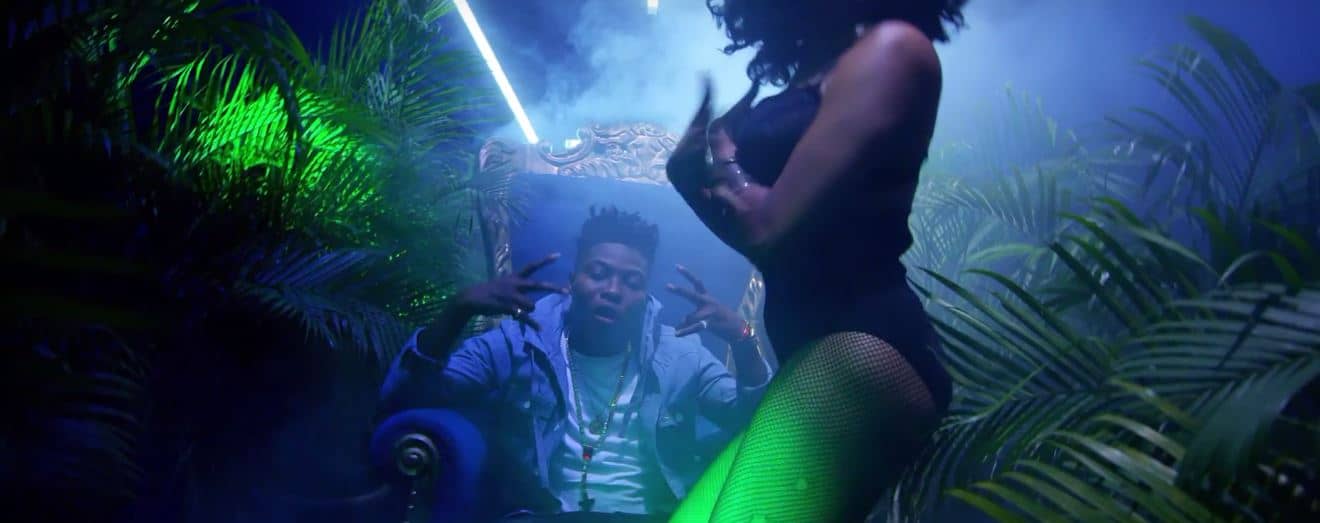
Off the album, comes “Biggy Man”, his second collaboration with Falz since the two first worked together on “Celebrity Girlfriend” in 2015.
Reekado sings on the polysynth baseline and uses the beat’s base drop to good effect with his “Burst Brain” ad-lib. Falz takes the last verse and gives yet another quip filled verse with the swagger of a Yoruba man flipping his Agbada. The video however shows him and Reekado in modern big boy clothes.
Lucas Ried shot and directed the video for “Biggy Man” to like a photo shoot for a clothing line. But then, maybe that was the point.
Watch the video for Reekado Banks “Biggy man” featuring Falz below.
The dedicated section of the South by South West festival, “Sounds from Africa and The Caribbean” hosted its 2017 set earlier this month and just as promised, Afropop was well represented on the Austin stage. Maleek Berry and Mr Eazi were able to make time from their international tours and Ayo Jay was more than happy to take the stage alongside his countrymen and colleagues.
While we wait for the official release of clips from the concert, here’s what our Nigerian artists were able to tell us about the festivals.
Though Runtown was booked to perform at the festival, an earlier Instagram post revealed the singer was also booked to headline his own show in New York on the same day and it appears he chose that over the South by South West stage. Catch a glimpse of what Runtown was up to below.
As a musician you make many calculated risks; what singles to release first, what to promote, your brand and image. Once the passion and emotion is bled off the page and sheet music into the studio booth, a lot of thinking has to go into ensuring that the music doesn’t swallowed in the debris of sound that is churned by out by millions of hopefuls with beat making software and a dream. Tchella is definitely not lost in the debris.
Love hurts, when it’s one way traffic.
As a Nigerian this line resonates, in both literal and figurative ways and music newcomer Tchella definitely has our attention. His first single ,strong>”Traffic” is the kind of gamble only the most self assured in their sound even attempt, an honest to goodness, piano driven torch song. Singing about an ex-love who has moved on to someone else, and the unrequited love the song’s protagonist still feels, Tchella delivers clear notes in a raspy alto, trusting that the emotion he pours into every line will carry past the sparse instrumentation and subtle minors. It works and by the end of the song, you feel everything Tchella wants you to feel.
We don’t know much about Tchella other than the fact that he seems affiliated to the Hills Music Group and is working closely with 2016’s revelation, Nonso Amadi. We’ll wait to see if this mystery is part of a much larger roll out plan for the singer. We don’t know why though, he already has us in maw.
Clones long left the sphere of science fiction since the creation of Dolly the sheep but the shroud of mystery surrounding human clones makes it hard to say for certain if they do exist. That hasn’t stopped all sorts of theories though. Kanye, Taylor Swift, Gucci Mane and quite a lot of other artists have been the focus in numerous conspiracy theories claiming they are clones of some past person or have been cloned and replaced. Though it might be hard to prove actual humanoid clones exist, there are other artists who have dedicated their careers to riding the waves of other famous artists.
Quite famous for making people do a double-take and ask “Is that Wizkid?”, Ceeza Milli’s identity as an artist has been closely mirrored against his more famous colleague, Wizkid. His voice and delivery makes it hard to differentiate between both artists. His most recent release, “Rotate” however exactly doesn’t sound his usual Wizkid whitewash. This time, “Rotate” makes it hard to decide whether one is listening to Davido or Skales.
Over Bizzouch and iLLKeyz’ drum-heavy Afrobeats production, Ceeza sings about being known where ever he goes, be it from South Africa to Nigeria. This very reason coupled with his status as a “dancehall king” is exactly why the girls should dance for him. Despite the initial confusion that comes every time his songs play, “Rotate” makes for an interesting listen. Perhaps, this mirror identity of his might be the factor that might just propel him to an authentic sound.
In a world tainted by xenophobia, the painful reality of being discriminated against weighs heavily on a person’s psyche and it’s exhausting. It’s exhausting to hold yourself to cultural expectations on how to act, how to talk, how to dress. It’s exhausting to have to deal with strangers invading your personal space, demanding to touch your hair, asking you to explain some slang they heard or simply stereotype you based on your race. Unsurprisingly, it’s hard to retain that happiness you need to get through the day with all that negativity hovering around.
By the nature of her status as a black Ghanaian woman living in the U.S, Ria Boss has experienced the subtle and not-so-subtle discrimination meted out to minorities yet she realises the need to keep herself grounded. Her latest single “Carefree” is a defiant stand to retain that black girl magic she needs to get through life.
Barely hovering over the voices in the background and the soft percussions that gradually intensify, Ria states the need to keep herself grounded and carefree in spite of the negativity and sadness that pervades nearly every aspect of her reality and that of every black girl in her shoes.
“Don’t be shy, you’re one of a kind”, she chants. Be carefree.
Mr Eazi’s Accra to Lagos, mixtape was intended to reflect on nuances in both cities in a bid to show the similarity between them. True to his word, the short video teasers posted on his Instagram, “Fight” and “Business” are expected to portray stories of the two major cities of the countries; Accra and Lagos.
The two videos are from the first part of Accra to Lagos, which is stylised as a two-part story, the first 5 tracks for Ghana and the last 5 for Lagos, as he revealed in an Instagram post following its release in January.
https://www.instagram.com/p/BSEqtNdl7pV/
Keeping in line with this narrative, the video teaser for “Business” featuring his Starboy labelmate Mugeez, sees Mr Eazi wearing a sleeveless Jersey, with “Ghana” printed on. Set at a poolside, it’s hard to say what else could possibly happen but a pool party.
https://www.instagram.com/p/BSEt2D_FC7O/
On the short “Fight” teaser, Eazi switches up on the romance and is seen searching for his love interest, a blonde DJ Cuppy. Yet with every turn, he keeps running into another blonde woman.
Eazi’s teaser videos don’t hit anything particularly unique but given the series of conceptual “Vibez Video(s)” has released for tracks on the tape, we expect the upcoming clips to take the same crisp visuals and loose storytelling format
Shakespeare’s classic love story Romeo and Juliet, continues to inspire music, film and literature and it seems the Italian tragedy of unrequited love and star crossed lovers has inspired singer Charles Nkanga. His story might not play out as grotesquely as Shakespeare’s but it honors the story’s overarching theme; young love threatened by outside force and strengthened by trial.
On “Against The World”, Charles has a conversation with his lover, recounting conversations with friends who have expressed worry at the pace of their relationship, just like any sane person would have probably advised the teenage Romeo. And just like Romeo, Charles is deaf to the criticism, deciding instead to ignore everyone but his lover. He makes allusions to “saving this place” probably an allusion to the dystopia that is all the rage in YA literature and cinema yet he still imagines putting his arms around her. Producer X and LT’s electronic dance production fits well with the narrative Charles scripted on “Against The World”, giving the song an aura of a pre-apocalyptic conversation between lovers.
Two years ago, Lil Kesh had just been another rapper off the streets who bagged a record deal with Olamide’s YBNL records. Fast forward to a slew of top-charting hits and a moderately received debut album and you have a Lil Kesh who has been catapulted to mainstream success and popularity. Now the rapper lives in the same glass house celebrities like Drake and Kanye West—who have gotten rich enough to complain about being rich—have reached.
On his new single, Lil Kesh is skeptical about new friends who didn’t hang around to support his grind but want to take part in eating its fruits. To play into this plot, and accompanying video directed by Unlimited L.A tells the story of a boy who cruising a new bike around playmates who refused to share their soccer ball with him in the past.
PatrickxxLee’s “Pocahontas” doesn’t snap into full focus until its closing moments when he sings and raps: “Poke her Honest/ Naked truth in my sonics/ Blaze the booth and pay homage/ Melt my heart when you’re smiling”. The four-bar refrain is unmissable, partly due to Patrickxxlee’s vocal switch into lower level reverb and a clever play on the song’s title while interpolating rhymes and metaphors. In these last four lines, PatrickxxLee’s youthful hedonism and penchant for self-indulgent destruction, meets an equally layered romantic inner self.
Since the release of his rager nights memorabilia, Disco Utopia EP last year, PatricKxxLee has carefully but effectively morphed his sound over a range of emotions, but rage and love are two paradoxical running themes that remain. On “Pocahontas” PatrickxxLee relives familiar woes of intoxication and trust issues while embracing his love of the cold dark where emotions and feelings go to die. It’s supposed to be a love song about a free-spirited “Pocahontas”, but it really listens like a drunken early morning conversation in a poorly lit underground club.
As far as progressive African music goes, PatrickxxLee has positioned himself as a firebrand auto-tune vocalist. Where he excels above his peers, however, is with complex production often built off loud drums and low hollow synths, a sleek distinction in tempo PatrickxxLee has stayed true to despite trap music’s tendency for codeine rap.
“Pocahontas” is not Patrickxxlee’s newest form, but its a refreshing twist from a rapper who has been intent on subverting genre and storytelling norms with trap songs that aren’t really trap and love songs, that aren’t really about love.
Listen to “Pocahontas”, our ‘Best New Music’ for this week below.
The art of parenting is a delicate, unappreciated job that often goes unnoticed. Even before birth, women have to assume the role of the caregiver, taking utmost care to carry the child till delivery. Completely disregarding the fact that postpartum depression might make one unable to concentrate on mothering, women are automatically thrust with almost every aspect of care of the child. In celebration of Mothering Sunday, we’d be doing a special review of one of the greatest odes to motherhood, Christy Essien-Igbokwe’s “Seun Rere”.
Scripted as a conversation between mother and child, Christy plays the role of a concerned mother and advises her child to do good so his lot will be well. “Seun Rere” also gives an insight into how one-sided traditional parenting is. She echoes the idea that when a child is good, the father receives praises but if the child goes down a different path, the blame lies on the mother. Sadly, not much has changed since this song was released in the ’80s.
However, she plays against the cultural nuances regarding conversations between parents and children in Nigeria. The second verse sees the child also appealing to his mum to do well too. Quite contrary to the norm, she recognized that parenting isn’t just about giving instructions and having a child obey. There’s also a responsibility for parents to do right by their children.
The very structure of the song itself was revolutionary, as it showed a realistic open channel of communication between mother and child, one that should be replicated as much as possible.
Celebrate mothers with us this Sunday by revising Christy Essien Igbokwe’s “Seun Rere”
Lana Del Rey’s manic pixie persona is often reflected in free-spirited lyrics about skipping out on responsibilities and her willingness to go all the way for her lovers. “Florida Kilos”, one of the stand-out hits from her 2014 Ultraviolence album was inspired by a ’70s Cocaine Cowboys documentary, a story of a group of traffickers in Miami.
Quite unlike Lana’s song which is more like an ode to selling cocaine and being hopelessly in love with a drug dealer, Jinmi Abdul’s Afropop remake of the love song is more playful with bits revealing his gratitude to his woman and God.
Though Lana Del Rey fans might feel catfished after listening past the first few chords, Jinmi immediately attempts to make up for setting up such a teaser. His version tagged “Amazing Grace” is a story about being in love with a woman who has been hurt in the past. He describes all he calls her and expresses his gratitude for finding a woman he considers a blessing.
Listen to “Amazing Grace”
Update: The artist Jinmi informed us that “Amazing Grace” wasn’t intended as a cover of Lana’s “Florida Kilos”, but an original song where he unknowingly sampled her hit single.
“Anikulapo” is the latest comic from Vortex, a Nigerian company that creates African content using cartoons and comic book illustrations. What this means essentially is a fusion of traditional African art culture and modern designs. They portray traditional African culture with mediums like graffiti, comic and shirt designs instead of the typical canvas and “Anikulapo” is a perfect chance to showcase a Nigerian Story for a global audience.
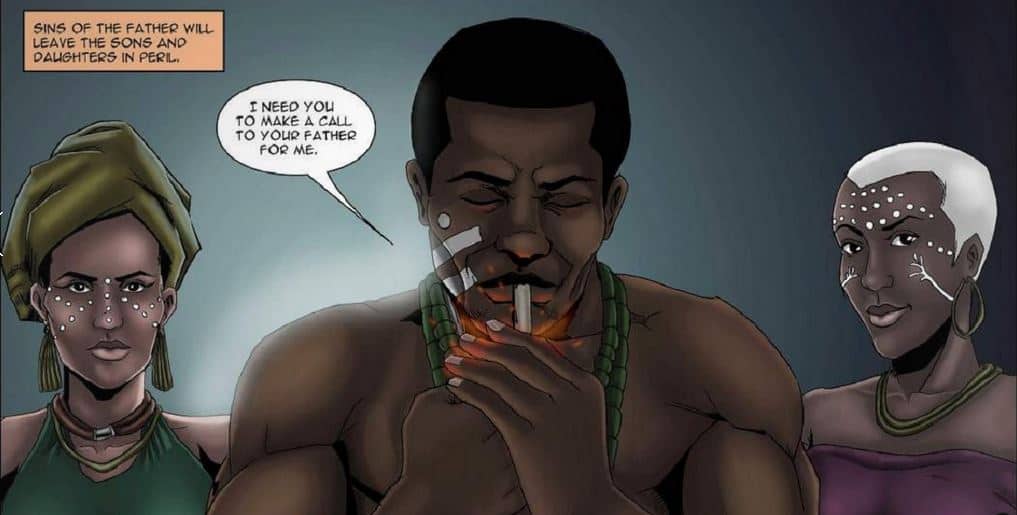
“Anikulapo” is inspired by Seun Kuti, the son of Nigerian legend, Fela. Their ability to use their music as a political tool for activism in the society has inspired a comic book hero, Anikulapo who also shares facial similarities with the musician. The hero falls into the category of anti-heroes like Batman and Deadpool(Marvel first R-rated blockbuster movie). They have an extremely high sense of justice but find themselves in situations where they have to place themselves above the law for the greater good of the society.
The first edition of “Anikulapo” shows the hero working with his seven wives who are skilled African fighters. He is seen as a leader of a team consisting of himself, his seven wives and two dogs that bully criminals into submission. Similar to comics with the anti-hero narratives like the Batman series, Watch Men, Daredevil and the likes, the comic has a noir setting to emphasize the gloomy reality of the “Anikulapo” universe.
While the comic still needs a lot of tweaks to increase the comic’s commercial viability, Seun Kuti’s co-sign highlights a new interest from mainstream culture in Nigeria’s comic industry. The massive turn out at last year’s Comi-con in Ikeja, Lagos indicated a growing appeal for the subculture. “Anikulapo” would join the ranks of, “Agbara”, “June XII -Spirit of Afrika” and other home grown comics that have come out of Vortex inc. Perhaps, like America has Marvel comics, Vortex will become a firebrand for home made animations that attempt to tell Nigerian stories with brush strokes and bright colors.
Our obsession with Darkovibes began with his latest single and this week’s Best New Music, “Tommorow”. The release forced us to scour through his SoundCloud for anything and everything he has ever laid his voice on. This is how we found “Cupid”, a bass-heavy experimental EDM-fused Afrotrap single by producer, Nxrth featuring our new fave, Darkovibes.
Pine and Ginger (feat. Tessellated & Amindi k. Fro$t) – Valleyz
Producer Valleyz may have intended to evoke the wanderlust of a summer holiday with “Pine and Ginger” but solemn lyrics about using substances to cope with the strife of life add an extra layer of surrealism unexpected of an essentially feel-good song.
What You Started – DJ Yin, BankyOnDBeatz
DJ Yin is in the headrush of new love on “What You Started” and every day is a holiday in her field of feelings. You first hear a reflection of this mood in the consistent steelpan bop that slowly unfurls with other sounds. Then in minor sounds that melt into the instrumentation along with Yin’s voice then in a steady tempo that never really peaks.
It’s Alright – Orinayo Ojo
There is a fine line between feeling love and the longing for it but both emotions seem oddly familiar. And perhaps that is why this ambient lullaby is not the happiest one. Orinayo Ojo sings for lover he desperately wants close, but the descent of his voice into thick synths and airy back-up vocals indicate things may not be as simple as they seem. As Orinayo Ojo reveals in the song’s closing moments, it would appear his lover is embattled with old pain and hesitant to let anyone in.
From Our Pot Of Jollof
Yawa – Tekno
Those who only turn ears to Tekno for footwork music may not notice, but Tekno sets “Yawa” apart from his other singles by attempting to tell an actual story, instead of merely rhyming buzz words as we have grown to always expect of him. “Yawa” is a familiar story, nobody will tell it like Tekno.
Overseas
Saturn Barz – Gorillaz (feat. Popcaan)
The internet hasn’t stopped buzzing since Damon Albarn’s Gorillaz announced their first full-length project in six years, Humanz. Off the upcoming LP is “Saturn Barz”, a trademark Gorillaz track in that it destroys any idea of “genres” for the better interest of making a great record. OVO/Unruly leader Popcaan delivers on a collaboration made in Plastic Beach.
Can’t Have Everything – Drake
A scathing deep cut from the sprawling 22-track throne-claiming “playlist”, More Life. “Can’t” is a strong contender for Rap Performance of the Year.
Madiba Riddim – Drake
“One Dance” Drake returns in Super Saiyan form with a standout track from the project of the moment. Get your 2-step ready, “Madiba Riddim” is going to rule the summer.
The Heart Part 4 – Kendrick Lamar
Kendrick returns on the fourth instalment of his critically acclaimed “Heart” series, and we already know what to expect. He has a lot to get off his chest.
Growth always comes with the realization that when things remain the same for a long time, it is usually a metaphor for stagnancy. Change, with its conflicting emotions and volatility is often necessary for growth. For Niyyi, growth came with the need to question everything around him, from “people who come and go” and what he really knows about them. Drawing inspiration from these rocky emotions, he released “Sit Tight”, a song revealing how much of a skeptic he has become. On “Sit Tight”, he raps about having to face demons and question his beliefs, an uncomfortable situation that rings true for anyone who has been in those shoes.
“Sit Tight” is the first track of his Melancholy Series, a sub-series under his soon-to-be-released debut mixtape, Camp Nehru.
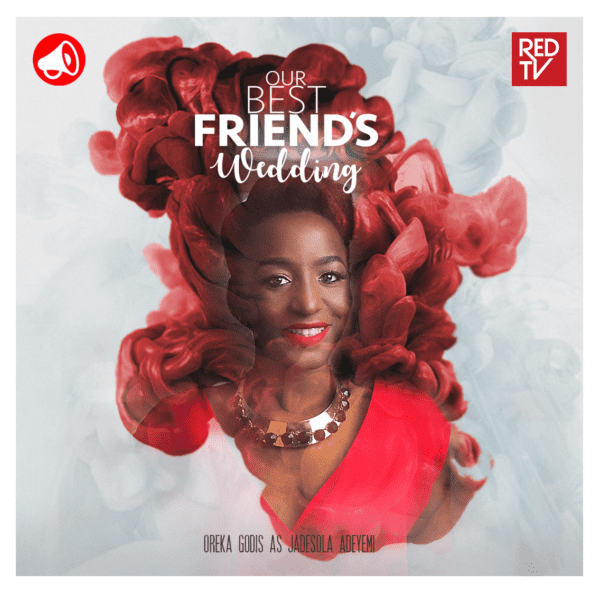
Today is definitely a good day. I moisturized, put my hair in a fineapple, finished all the my work on time and prayed to the Gods that the new episode of Our Best Friend’s Wedding (OBFW) would be the one where things will finally start happening. Praise the Lord, he answered.
SPOILER ALERT
If you haven’t seen the new episode of OBFW, you can watch it below or check out the entire thing on Youtube. Or you could just skip all of that and let me gist you.
Hmmm! Where were we? Oh right.
Jade got her ass handed to her in Episode 8 after she went and overestimated how much access her fancy new title as Tunde’s girlfriend would get her. Charles crossed out yet another woman from his potential wife master list and we’re no closer to finding out what the hell is wrong with Charles’s mother. That is why when episode 9 opens with Jade three weeks after the events of episode 8 I’ll admit this was me.
Jade is at home ‘working’ when she keeps getting assaulted by a persistent caller, most likely Tunde. Someone rings her doorbell (not a pun you pervs) and she reluctantly goes to check who’s at the door. Of all the people I’d expected at the door, I never imagined Tolu, Tunde’s famzing P.A. Jade understandably isn’t about to hear ANYTHING that conniving woman has to say and tries to slam the door in Tolu’s face and ends up slamming it on her hand.
P.S: WHAT. THE. FUCK. IS. GOING. ON. WITH. TOLU’s WEAVE?!
Meanwhile Charles shows up at Kemi’s ‘office’ with coffees and cake, cos appaz the ‘Oracles’ have told him she needs some cheering up. At it’s kind of obvious that the OBFW show runners were just like, ‘we already have too many subplots juggling up in the air, let’s give Kemi an absent husband and call it a day’, cos we’re 9 episodes in and we haven’t even heard Kemi’s husband’s voice. How do we know he isn’t a spirit husband?
Kemi sha steers the topic over to marriage shenanigans. Charles has run out potential brides and finally concedes that his idea was incredibly stupid in the first place. After the chest pain that seeing Jade out of his friendzone and swapping spit with another guy, he’s finally warming up to the idea that just maybe he friendzoned baby J because he thought she’d be there forever.
Jade on the other hand is bonding with Tolu after bandaging her hand. Turns out Jade used to travel the world with the Red Cross getting her Angelina Jolie on but quit because there were ‘people’ (a.k.a. Charles) that said job was keeping her away from. They get to talking and Jade accuses Tolu of sabotaging her relationship with Tunde. Tolu doesn’t convince Jade (or us) that she doesn’t have a crush on Tunde but she at least cares enough for him to swallow her pride and beg baby J to take Tunde back. Conveniently Tunde calls after, and they make up, kind of. And Jade tells him before they can get back together, they need to ‘talk’.
GHEUNS!
Mama Charles makes a surprise reappearance of her own, calling Charles after he has gone months, and sex fueled craze to find her a wife without actually talking to her. She reminds him her birthday in a few days and tensions him about bringing her a wife. Then she cryptically, or not so cryptically tells Charles she needs to introduce him to ‘someone’. But because Ogbofudo Charles never actually listens when a woman is talking to him, he waves her off and ends the call. And Mama Charley turns over to that Doctor from episode three and tells him she wants to tell Charles ‘face to face’.
Okay gurl.
Onome (who has lowkey become the show’s most exciting person) is at a bar ordering Mimosas taking a call from an ‘Olivia’ when she drops a bombshell, she’s ‘keeping it’.
Of all the people to be sitting next to her, it’s Kemi, who like Gbemi turns out to be a radio show OAP. She and Onome get to talking, and Onome spills a lot of subtle tea (definitely a pun) about the father of her child (it’s not Charles) and what it would mean for the rest of her life. Kemi is actually a decent human being and gives Onome some quality advice before homegirl exes to go and face her demons. Jade calls not long after with news of her and Tunde’s pending reunion. Kemi brings up again the as yet unmentioned thing she and Tunde need to ‘talk’ about. Whatever it is, it is obvs huge.
The episode ends with Tunde outchea moisturizing, getting his bald head laid and googling prices for engagement rings. OH EM GEEE!!!
Charles on the other hand is busy scrolling through his contacts looking for who to knack. Bobo yi is an idiot.
Finally sturvs is happurrin. Even though the season is still dragging. But sturvs is happurrin.
One More Thing…
If your 58 something year old mother who raised you as a single mom has to tell you face to face that she has finally found someone she wants to be knacking on the regular, just maybe, just a tiny bit, you might be a fucking jerk. Just maybe.
But nothing Charles is/does should surprise us at this point.
Lazougi is a music producer who has worked on trap beats in the past on “The Receipt”. For his latest release, “Funk The Laser”, he attempts an EDM, Funk fusion and turns out an adventurous house song from his The Only One tape.
The song begins brusquely and hits you with a sugar high jolt that would have been uncomfortable but for steady buzz of the bass drum that never leaves. There is a consistent vibrating hum that listens like comfort in the mist of the synth loops and elastic/recoiling laser sounds. The bouncy beat plays like a video game score inspired by one dimensional games like Pac Man and Tetris.
“Funk The Laser” might not hold the interest of a lot of Nigerian listeners but the niche listeners would enjoy the punk-rock feel of the pianos. But the loop is a little too consistent and makes for low replay value. Nonetheless, this is an experiment that needs only a few more tweaks to hit home.
Watch the uber-minimalist video for “Funk The Laser” below
With the lazy songs coming from 2Face lately, you could just assume he was tired of making music and just goes through the motions of releasing something so he could stay relevant. That tactic has failed to impress even the most hardcore 2Face fans who are finding it harder and harder to defend the legendary status bestowed on the singer since his 2004 hit single, “African Queen”.
Comebacks are tricky to pull off especially for artists who started their careers back in the 90’s. For 2Face, his biggest challenge is getting over his biggest hit tack. “African Queen” saw him get elevated to prestigious heights that he has ever so carefully free fallen from. There is no doubt that 2Baba has had successful hits over the years but none of them have gotten close to scratching the level of “African Queen”.
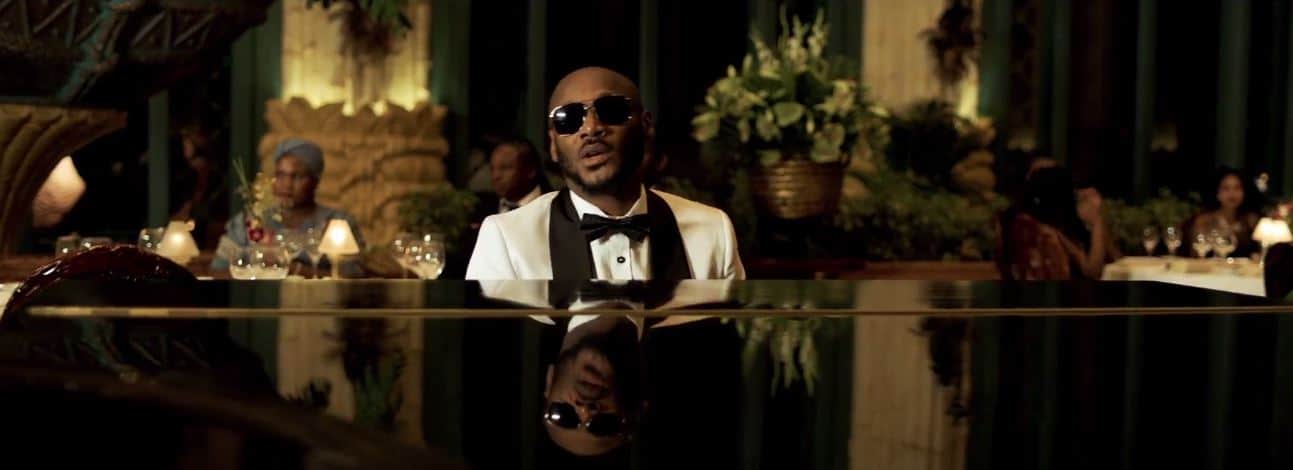
2Face may not be responsible for all the blame here since the remix was uploaded on AY’s YouTube account as a promotional video for his forthcoming Adventures of Akpos movies series, “10 Days in Sun City”. The video for the “African Queen Remix” is the soundtrack to AY’s film but also contains clips from 2Face’s wedding in Dubai. The cast for the film; RMD, Adesua Etomi and Ay were shown in the video while 2Face sings at a wedding as he plays the grand piano.
The anachronistic formula of using nostalgia to sell product is getting boring. While we can all relate with “African Queen” still, and perhaps, the song’s longevity might tend towards the mark of eternal, its legacy should be left for new artists and not for 2Face to over flog his already over flogged success.
None the less, some factions on the internet have argued that this recording is better than the original. Perhaps you should find out yourself.
Watch the video for the “African Queen Remix” here
Update: As is often the case with leaked tracks, the trap version of “Jaiye Jaiye” has vanished off the interwebs. Still no comment from Wizkid or Angel.
Barely hours after he tweeted a picture of himself featuring his new look and a caption hinting at new releases this summer, a reworked international version of “Jaiye Jaiye” featuring British singer Angel surfaced online.
This release however isn’t official as neither Wizkid nor Angel have tweeted or in any way associated themselves with the release of this single as expected of an official release so this trap but absolute fire version seems to be a leak.
Pocahontas, the Disney classic animated film is rife with inaccuracies that attempted to gloss over the atrocities the settlers committed against Native Americans. However, the legend of the real-life Pocahontas, became the tale of an icon for carefree, rebellious girls all over the world because of how she deviated from the norm and marked her own path.
Inspired by the same icon, PatrickxxLee’s new single, plays out a story of the rapper’s drunken meeting with an evasive free spirit in the woods. Over his signature cinematic hollowed synths that sound like a haunting backtrack of a noir horror flick, he raps about feeling like “a walking carcas” and abandoning his emotions. He’s also as hedonistic as ever, choosing to ignore people from his past as he goes on to do “what the fuck he wants to” not necessarily what anyone expects of him.
In his current state, all he needs is a relationship with a free-spirit woman like “Pocahontas” who doesn’t demand anything from him nor he from her.
Despite coming first runner up on the first season of Airtel’s Africa-wide Trace Music competition nearly two years ago, Jitey Peters has been relatively quiet. The songbird made her first mark on the industry last year with the release of her debut official single Butterflies”. But perhaps due to low level marketing, the single sailed underwater, barely surfacing on playlist and charts that should have turned ears to the newcomer.
Her second effort “Let My Love Find You”, is an Afro-EDM single produced by Mavin signee Johnny Drille, who sets Jitey’s vocals on a simple chord progression with soft kicks and loose melody. “Let My Love Find You” is not as stripped down as many new-age Afro-tinted EDM songs out of Nigeria have been, but there is a thick layer of back-up vocals and synths to accentuate Jitey’s every note.
“Let My Love Find You” is not near as ambitious as it should be, considering how this release will serve as a precursor to how new fans will react to Jitey’s future material. But it swings all the right punches to achieve a simple goal: to make listeners dance. And maybe, just maybe this would be enough to look forward to Jitey’s impending bloom into a firebrand vocalist.
I’ll be the first to admit, I’d never heard of Mary Akpa before 2017. That’s a damn shame because as far as Nigerians with a distinct point of view and interesting music she is right up there with the best of them. She was born in Nigeria, raised in the United States, it seems that duality always produces interesting perspective. Akpa has been active as musician she was 18, discovered by the defunct Arista Records under the tutelage of the revered Clive Davis. She’s done almost every genre professionally, from Acapella to Electronic Dance Music and has always imbued every song with a voice that stands with the blues/jazz greats. Personally she reminds me of the Prince anointed Lianne La Havas, never better company.
She put out a debut EP ‘Brave’ as a solo artist in 2013 and now four years later, she’s following it with her sophomore effort, an EP called ‘Unseen’. There is so much to unpack on Unseen, every song is a literal gem and Akpa shows her technical skill and creative range on the EP’s six songs that while experimental, all have uniting bluesy jazz undertones. Here are the essentials from ‘Unseen’
Collide
It is a sign of how much you trust the integrity of your work as an artist to put your powerful song as the album closer. Collide has all the hallmarks of a great enduring ballad; soft beginnings that build into a powerful chorus, teasing a crescendo, but deliberately delivering. The result is a song that stirs up feelings of longing, of need and anticipation, that urges you to give it a second spin and perhaps a third and maybe find that collision Akpa sings so eloquently about. And my God, those adlibs. It’s a marvel.
You Stole My Heart
The skippy guitar that forms the soul of this song is so reminiscent of Lianne La Havas that I had to do a double take. Akpa rides that guitar and that melody with razor sharp lyrics and a chune that stole my heart. I love how she dips into the minors unexpectedly and returns to the major chords before you can settle. It kept me on my toes and it should do the same to you. I was already humming this tune before it even ended.
Ka M Kuo Me (Empty)
Not sure if this is Igbo or not, but it is the song with non-english title. It is also the album’s only true torch song, and my Mary Akpa writes a mean torch song.
Twist a wrench on my soul.
That’s one hell of an opening line. Ka M Kuo Me is bass heavy, and resides almost entirely in the minor chords, lending the kind of melancholy that a song that tackles the kind of self loathing and loss this one does need. Subtle percussions and occasional electronic manipulation for vocal reverb keeps the song modern while honoring all the touchstones of a great torch song. She dug so deep to find him empty, but it gave us this song, so she won after all.
Plus that breakdown at the tail end of the song, complete with layered vocals for a choral feel is like Christmas in July, totally unexpected but definitely worth it.