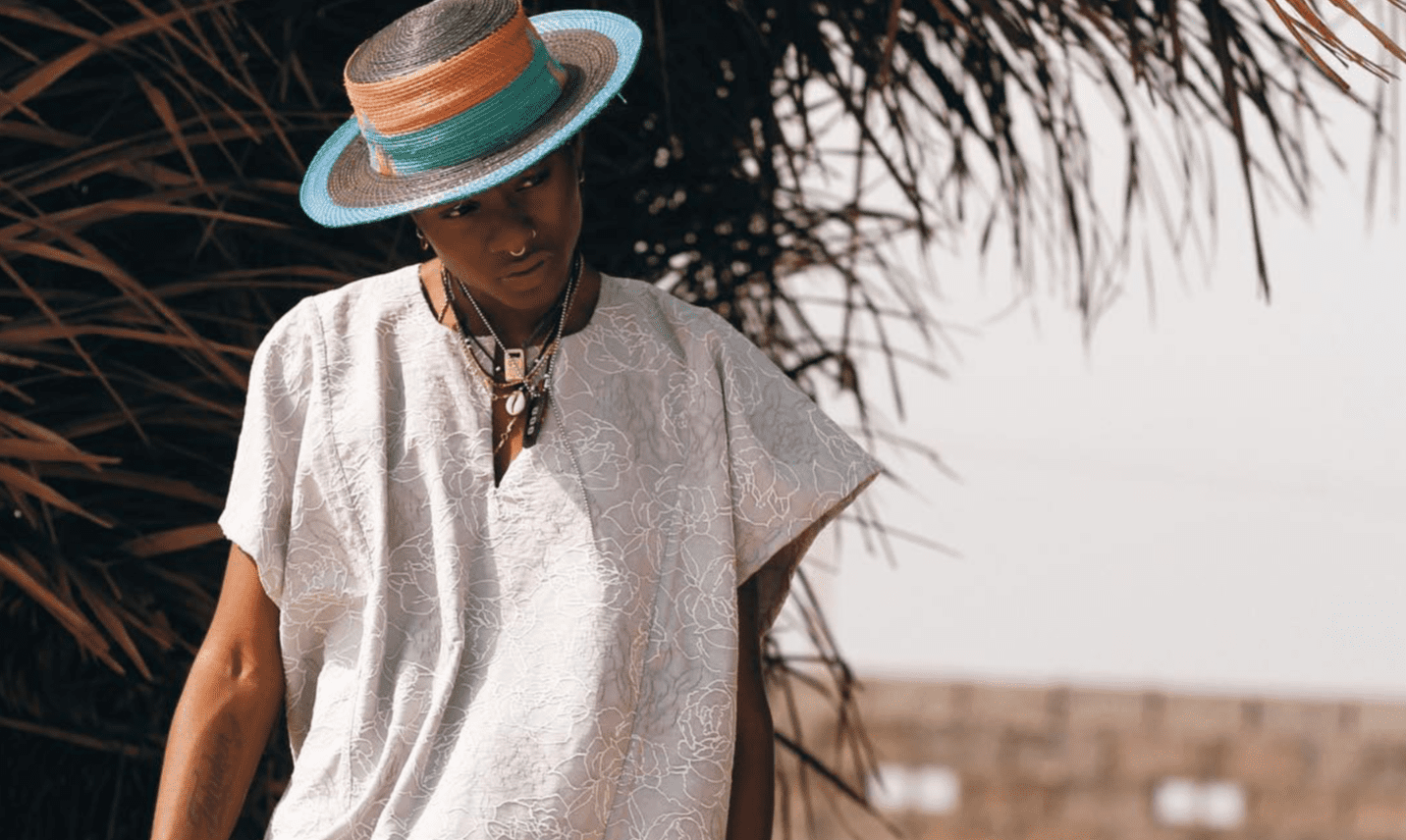
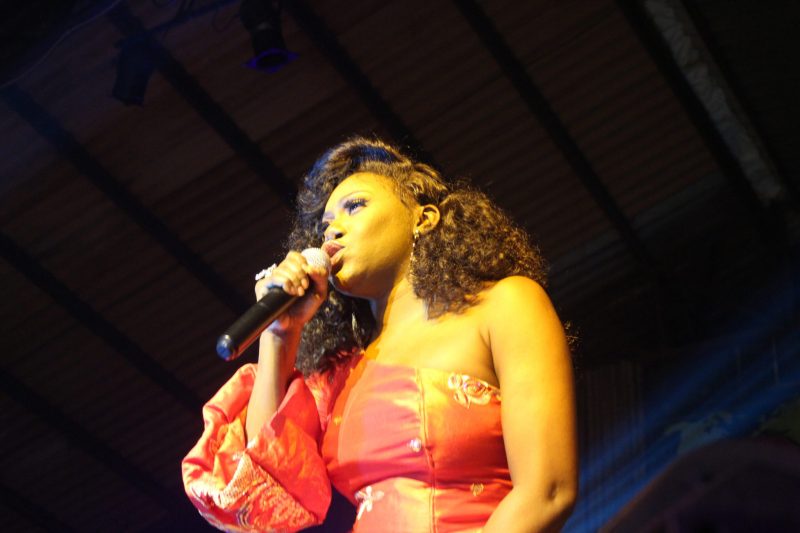
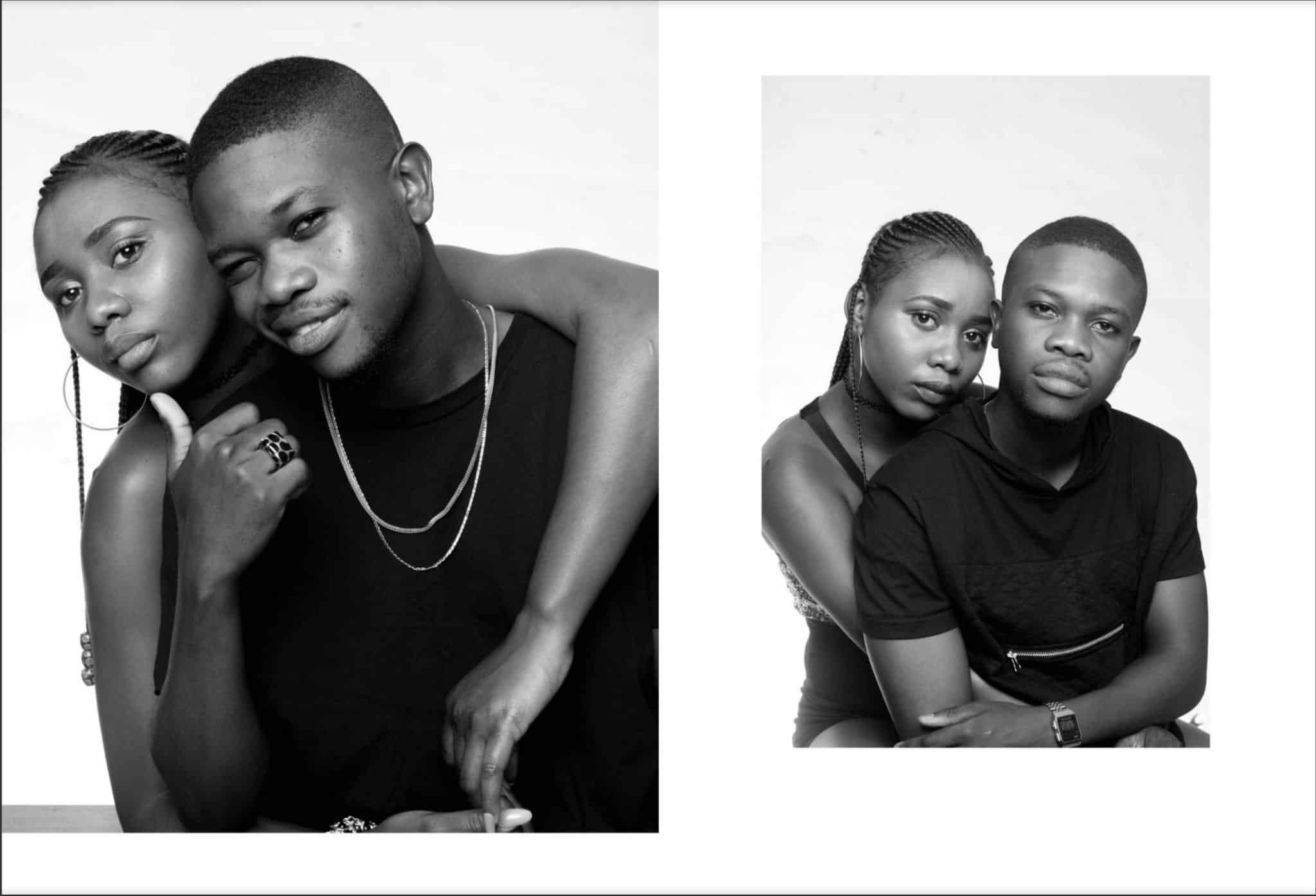
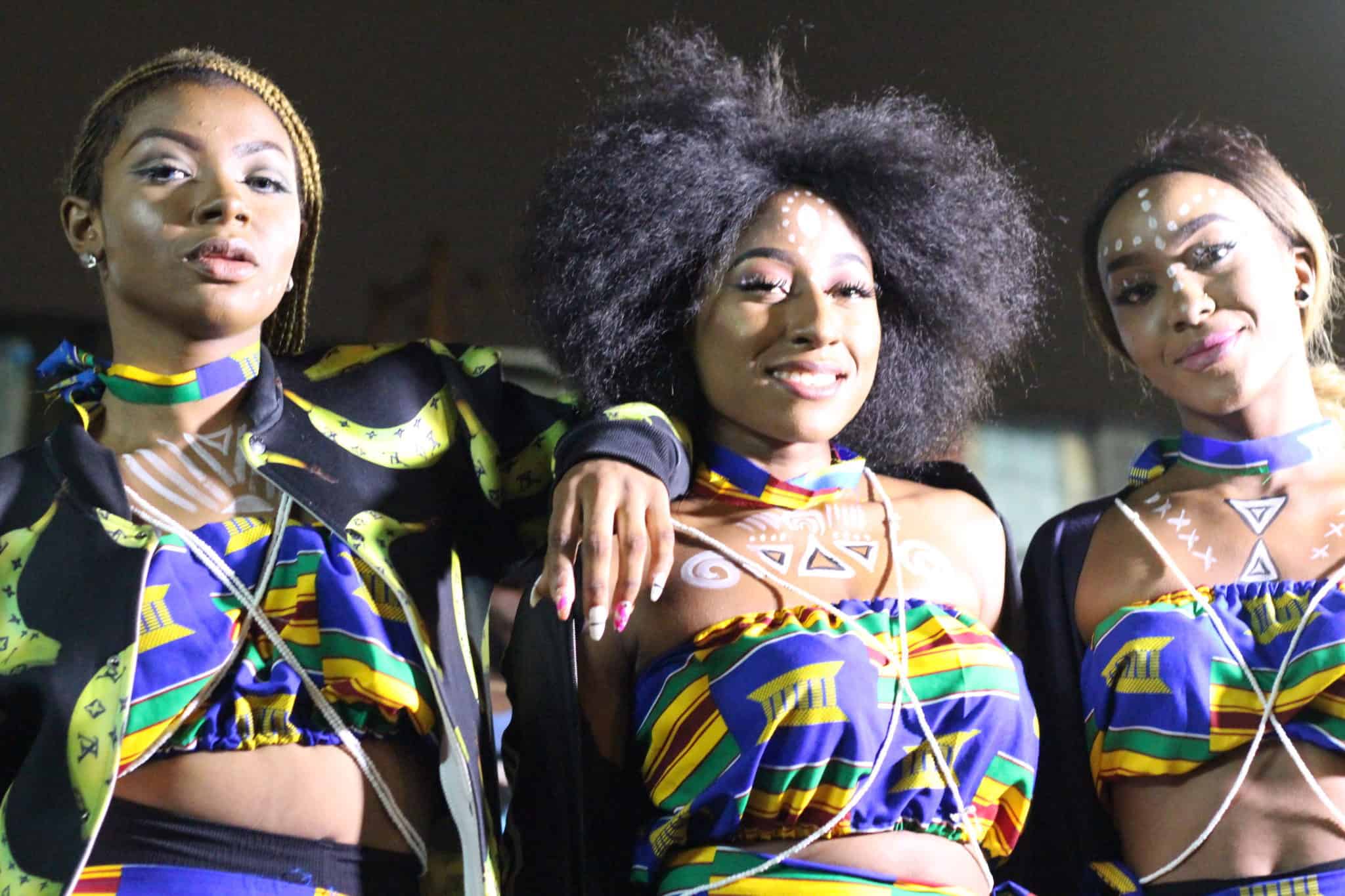
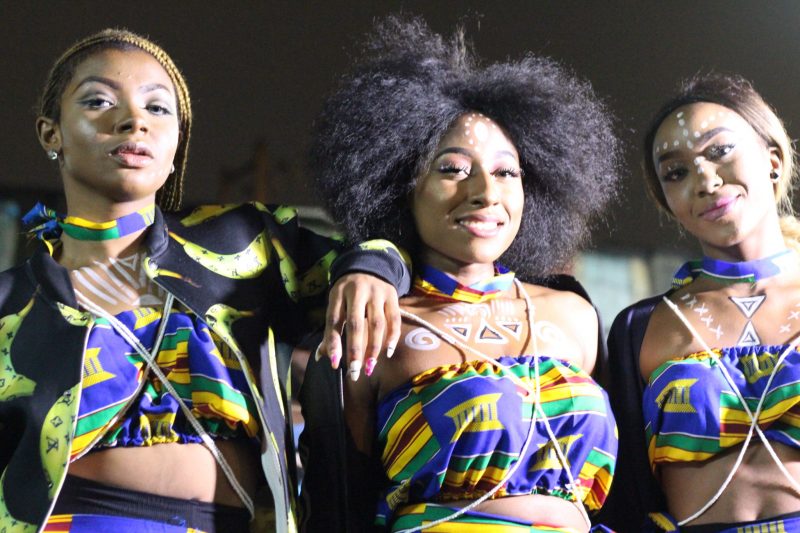
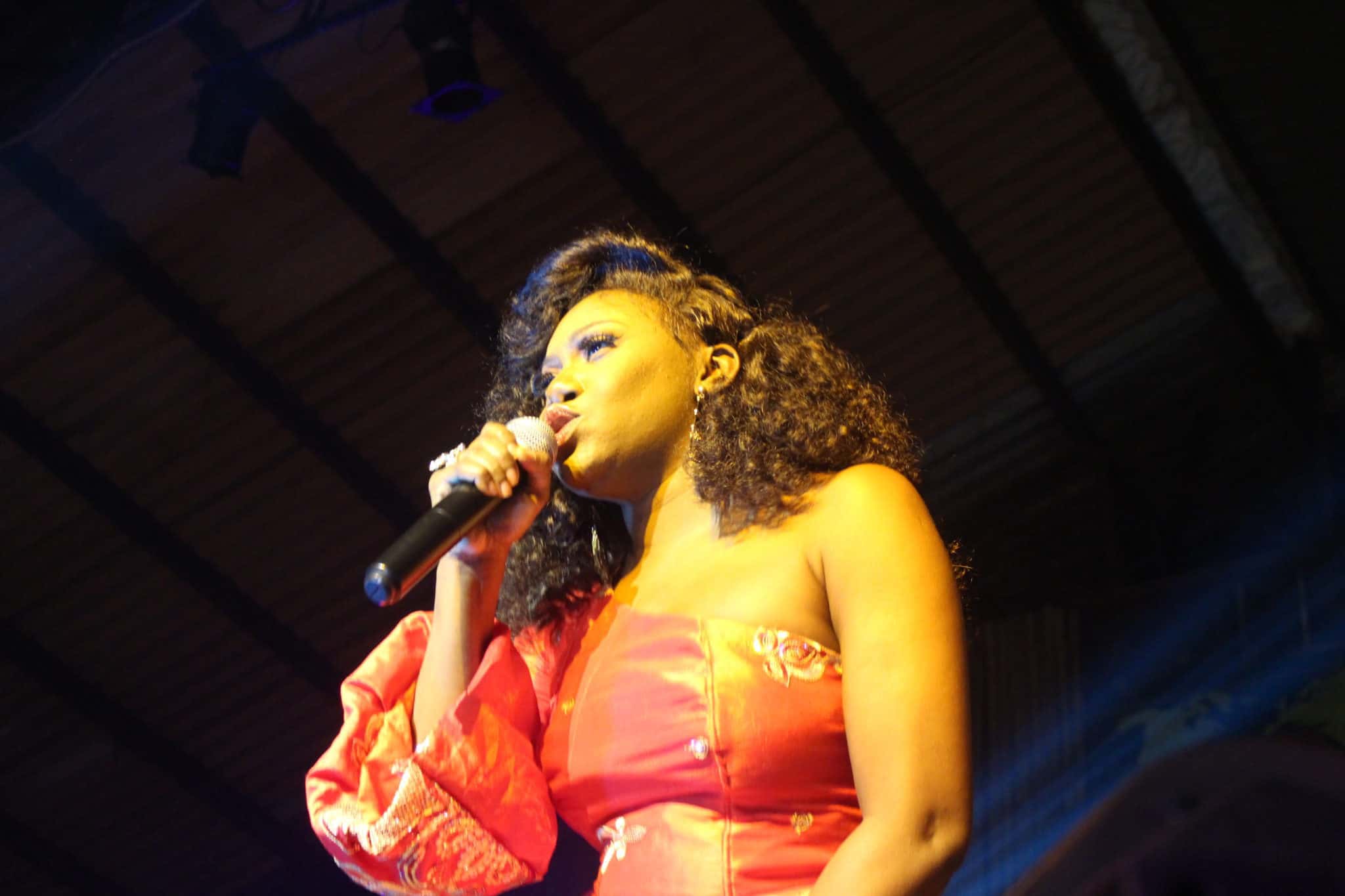
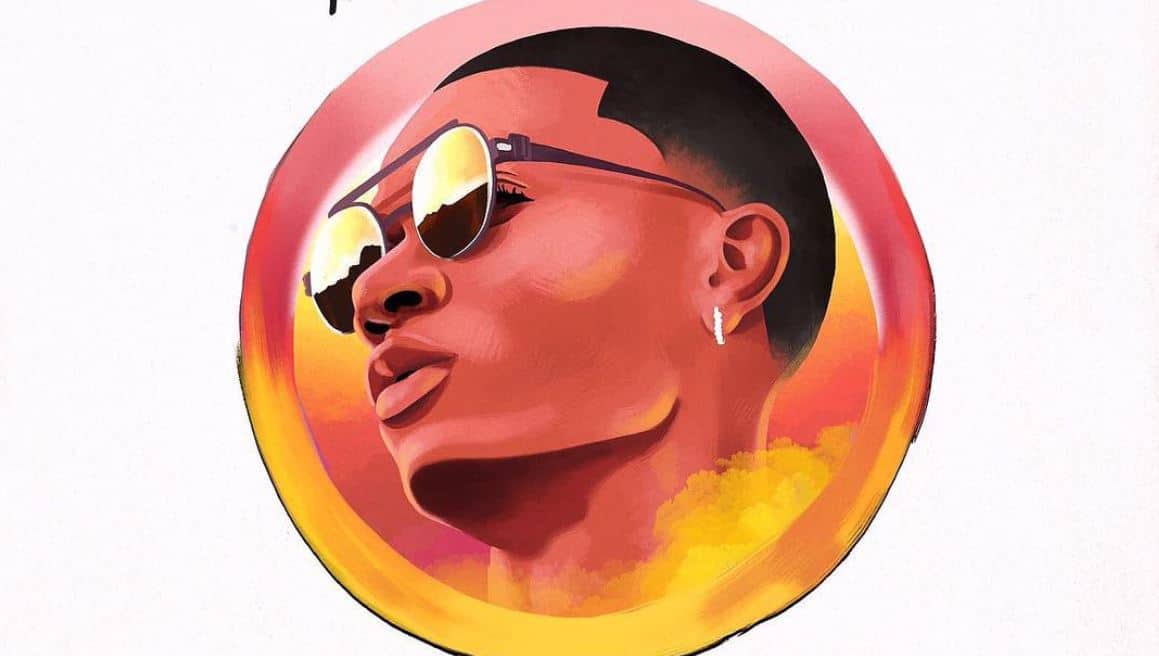
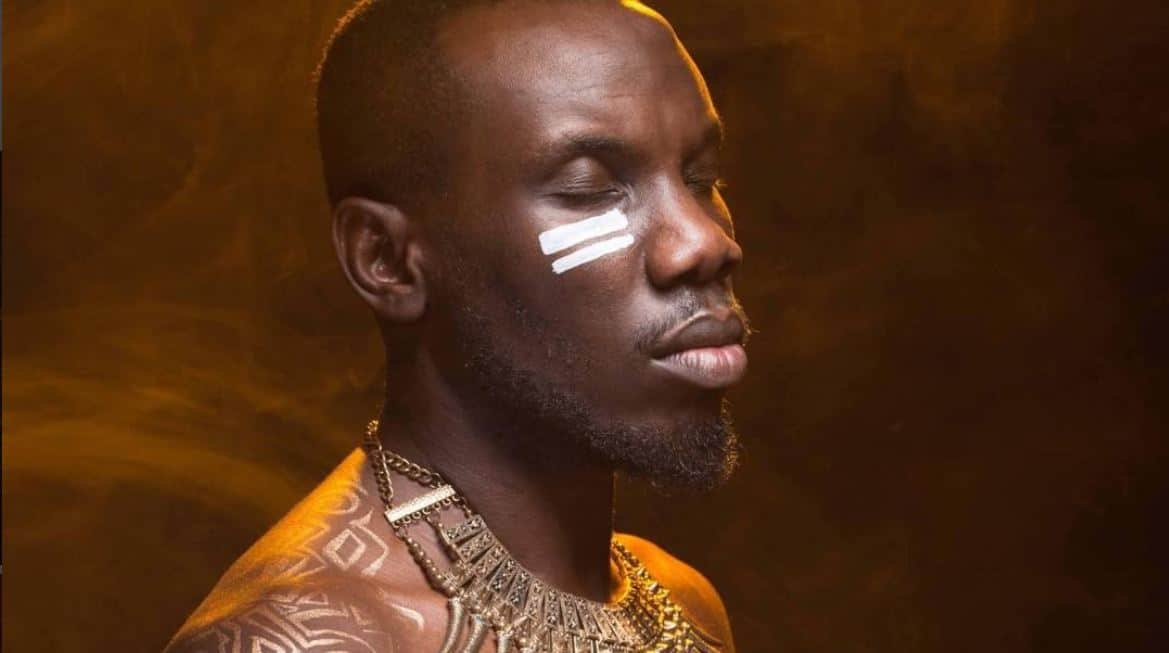
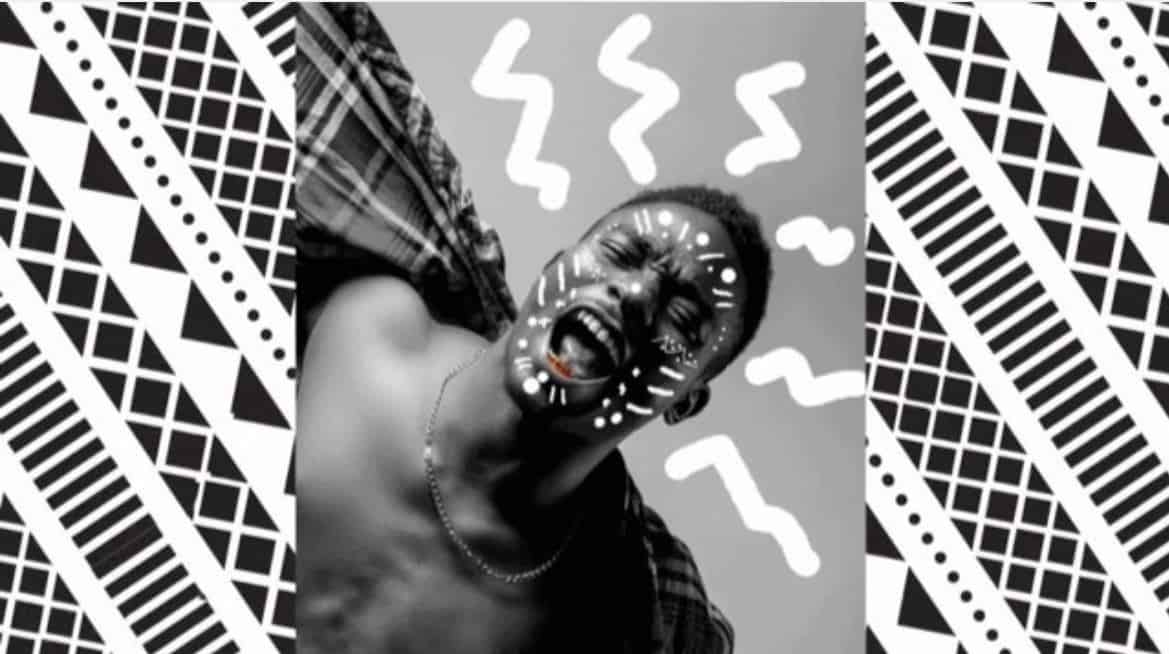
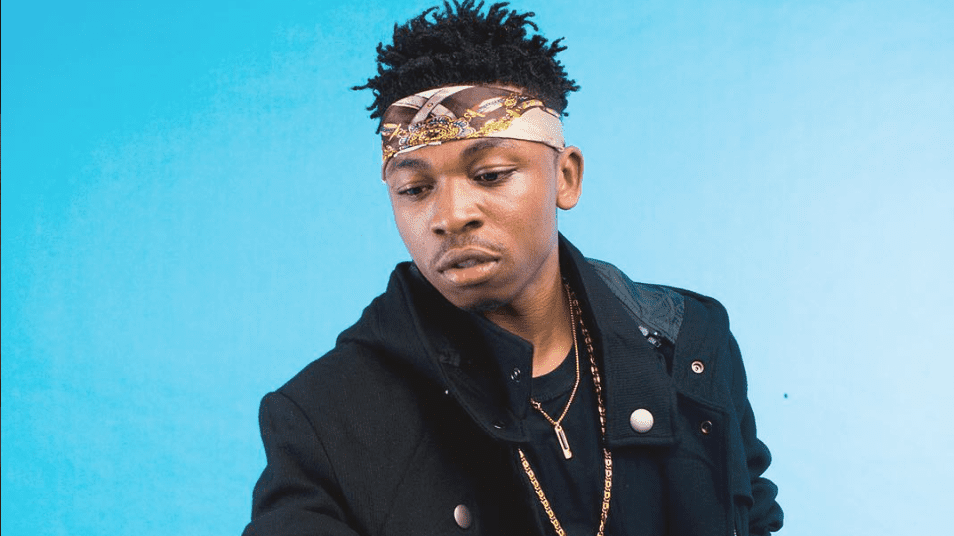
Wavy the creator is one of those artists who jealously guard their government name. We suspect this deliberate mysteriousness is part-marketing ploy and part-tool to keep the spotlight on her music and her carefully crafted stage persona. She has cultivated her interest in the arts as an asset while retaining an aura of cool. Wavy has managed to interweave three facets of a career –photography, videography (Wavy Film) and music– without conforming to norms, but the ones she creates for herself. A platinum blonde hair and bleached eyebrows give her an otherworldly mien, one she plays up with a signature legion of neck and hand accessories, facial piercings and tattoos. There is quite literally no one with a visual brand like Wavy’s in Nigeria right now.
Her androgyny is a counterpoint for multiple generations of women and girls who have been told that conforming to established practices is a sine qua non of living. Already, such genuine vision —“I touch the sky, I’m flying I’m just so High”—encapsulates the ethos guiding Wavy since her first single, “H.I.G.H (Her In Greater Heights)”, in June. This draws you into her world and how she’s managed to sculpt herself into this person we see today.
As an artist, she first stepped in the studio for her first ever-recorded song 2 years ago. It was a feature on a friend’s song. He heard her trill after a session and his first impression was “oh shiit! Pretty wavy”. This birthed her music name ‘Wavy’. But you see, Wavy has always been Wavy. Even she doesn’t know it. When we first speak to wavy, she didn’t have much to say. It strikes you as if all there really is, is bound to be shown to you through her works. And if she really does need to express herself, it will be through music or her fashion brand, Azif.
What defines Wavy’s cool isn’t something that has never been created before, but developing something from a thing that already exists to birth a new, which then becomes subjectively hers. She explains this in her words, “To be honest, ideas and anything arts and creative related is really recycled, but what’s cool about that is the fact that you can take an idea and morph it into yours so, I think that’s pretty cool.” And the unique symbiosis between this and her music is she makes her process flexible.
For her, when producing music, the atmosphere of the song comes first. “It’s really Just about the vibes”, she says. According to Wavy, it’s about “whatever I’m feeling, either they are making a beat as I’m writing to it, and I just flow based on the vibes. So, the vibes and the atmosphere are always important to the final result of your music, or whatever you are actually creating.”
Wavy is a girl that doesn’t fight for cool. It’s who she is.
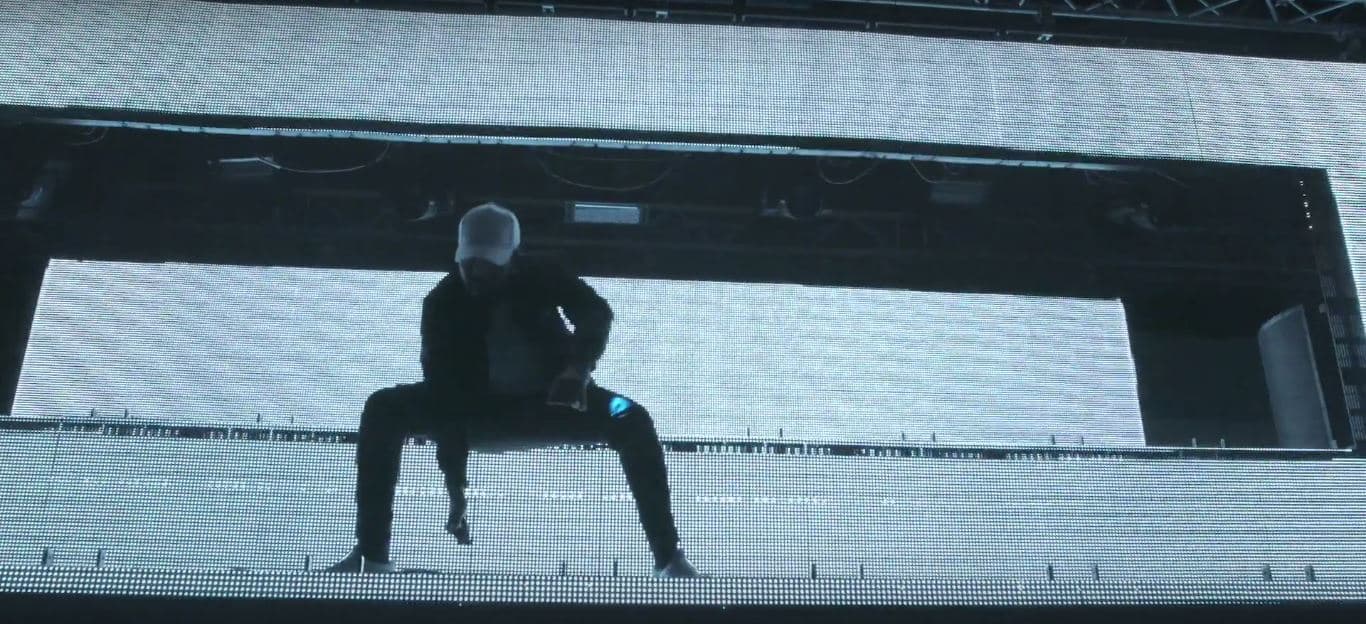
Check out the lyric video to her single “Her In Greater Heights (H.I.G.H)” and her performance at ’90s baby soundoff’ below.
Feature Image Credit: Instagram/@Wavythecreator
Fisayo is a journalist who thinks writing is hard and reading too. But her journey somewhere reveals, words are like pawns on chessboard when writing. She wants to see, create and share with the world, experience & communicate these experiences. Tweet at her @fisvyo
Milli released Childish last week, a follow up tape to Don’t Ask Me What Happened and like last year’s “Unlooking” hit track, he has released another aesthetically satisfying video for his lead track, “Work”. True to his craft as a rapper with a tendency to dabble into R&B and pop, he unleashes dance moves for a video that draws inspiration from Chris Brown as well as the king of Pop himself, Michael Jackson.
Though choreographed dance aren’t everyday occurrences in hip-hop music videos, some dance moves have originated within the culture. In fact rappers like the New Boys, Cali Swag District, Audio Push and the recently viral duo of Ayo and Teo all built their careers from dancing aesthetic and Milli’s “Work” is giving us a similar feel. The song that features singing as well as rapping over a throbbing hip-hop beat starts with a love narrative but it quickly escalates to typical Milli brags “I don’t be around no skinny bitches that ain’t got no buns”.
Jenny Tan directs the video for “Work” with a script that sets Milli up with an attractive model but after seemingly winning her heart with his dance moves, she turns around and bites him before living him to die alone. As if the choreographed dance sequence aren’t enough, the outro also features vocals from Vincent Price’s creepy monologue from Michael Jackson’s “Thriller”. But the performance video does just enough to keep the spoken word from feeling out of place.
Watch Milli’s “Work” video below.
https://www.youtube.com/watch?v=uenj7MejLN0
Featured Image Credits: YouTube/Save Milli
You are meeting Debola at a strange time in his life. He wandered into a dream and lost his way back. Tweet at him@debola_abimbolu
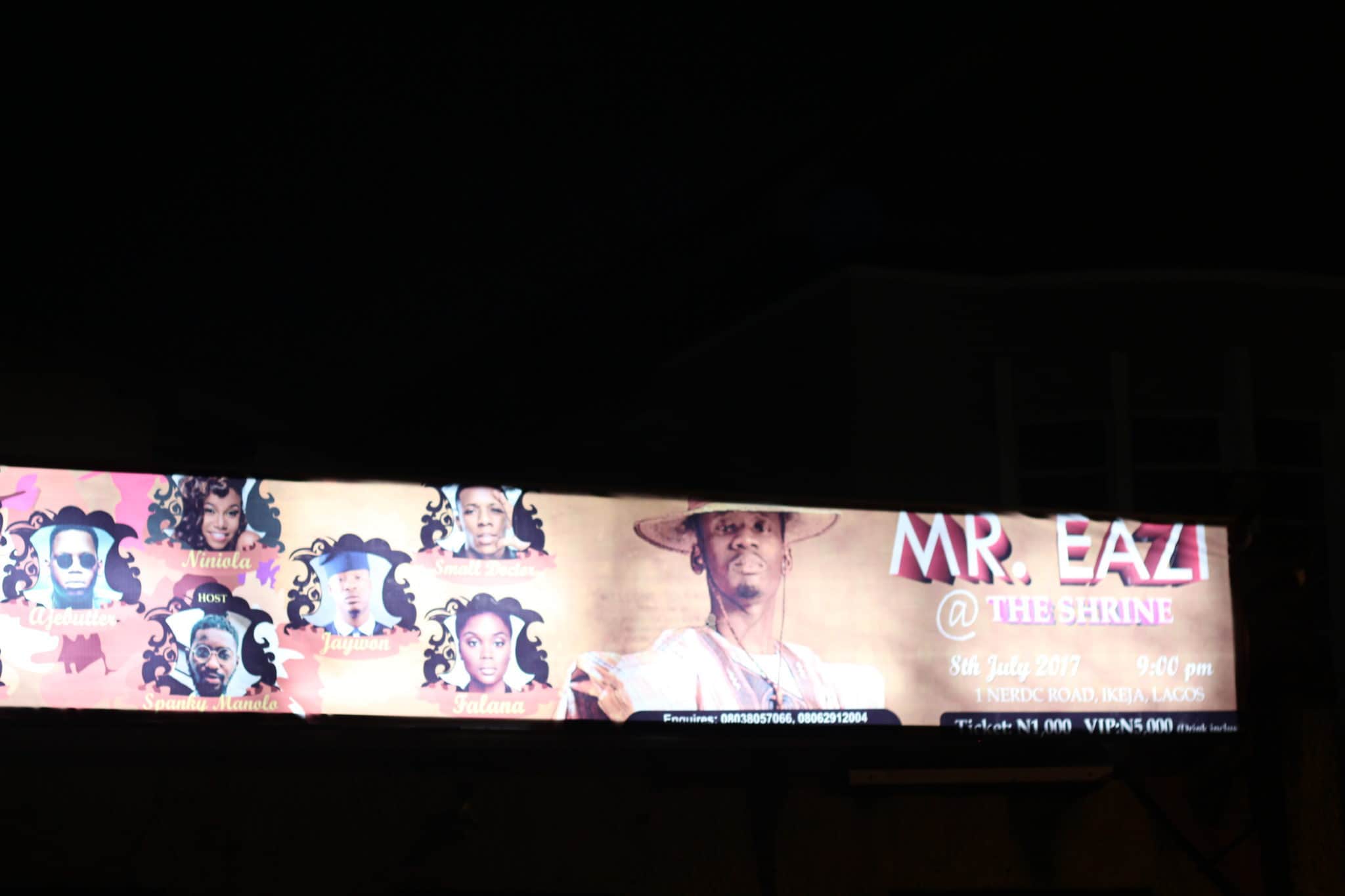
Mr Eazi said the above to an eager fan on twitter, who like the crowd at Fela’s New Afrika shrine, is waiting in anticipation for him to open the show. This isn’t just any old concert, this is the first African Leg of Mr Eazi’s Detty World Tour,and his first Nigerian concert since the one in December 2016. People are eager to see the showman he has become.
Everyone has their idea of what Fela’s shrine represents, nothing quite matches what you actually find when you get there. You’re first welcomed by a horde of guys –which may or may not weird you out– milling around the entrance, taking a drag, some selling and hawking snacks & aphrodisiacs, others discussing or pacing around in social groups. They are quite distinct from the people who have gathered for Mr Eazi’s concert, set apart by their finery. There are entry tickets selling at the venue’s entrance with two built men checking to see if you have one before access. The ticket does what it says, ‘entry only’, everything else you want at the Shrine –including chairs– you pay for out of pocket. On a stage not so far away, where you have pictures of the Kuti’s, some Fela monuments, a booth with DJ Spinall boldly written on it; lightweight-near-anonymous acts take turns to sing or rap, as informal openers for the headlining acts who will come hours later. Die hard concert goers already know this like scripture, they’ll arrive at midnight, when the party is in full swing. I am here for work, so I find a way to pass the time.
Fela’s New Afrika shrine
The Shrine has always been a banana republic, where every man fends for himself. Doesn’t take long before I mark out my territory and guard it jealously against the late comers angling for a better vantage point. A man aggressively pulls at my chair, bawling that people have to pass. Meanwhile it’s 10pm, the performers on stage have sort of agreed to ignore the unresponsive audience and what sounds like a one-man applause. In our own world beyond the stage, a woman with impaired hearing begs for money with a written note, a cripple passes you by, a hawker thrusts stick of suya in your face trying to stare you down into buying. It is surreal that we all feel at home here, even the millennials live tweeting on their Twitter and Instagram pages. We are united by our desire for a transcendental musical experience and three hours in the anointing was yet to fall. But we had the promises of a high-spirited hype man to hold on to: “Yeah Yeah, Mr Eazi in Lagos”, he says. “Whatever you’re doing, whether it’s smoking or drinking, continue, tonight will be a special one”. When he says this, I’m reminded of Mr Eazi who in June, was appointed an ambassador of tobacco free Nigeria.
Falana performing
Indeed, the special night begins when Falana graces the stage to perform at midnight. The crowd is not at the peak of their excitement yet, but are warm and welcoming towards her. She wears a Lisa Folawiyo two piece set and instructs the instrumentalists on musical progressions to follow. This is the beginning of what you could deign to call a performance. Falana brings a difference in her musical style, without a discernible accent or influence, like the rest of her. Ajebutter and Boj perform their 2013 hit single “Omo Pastor” next. It’s just now people have their hands up cheering in the air; it’s like they just remembered what camera phones were made for too.
Ajebutter performing “Omo Pastor” with Boj
Jaywon performing “Odun Yi”
As if to get us into peak consciousness, there’s now a single man on stage, who squats and begins singing. Lights and eyes are focused on him. He croons everyone’s favourite song of his, “Odun Yi”, with no instruments or song playing in the background, bringing nostalgia of 4 years back at 12:30 midnight. Jaywon brings excitement because he signals a change in gear, the transition from opening acts to the evening’s headliners. The crowd is relieved to not have to wait anymore. The hypeman never walks far away as he often comes back in-between and during performances with his short guttural sounding tag line used to pep people up. Of course, he reminds us of Mr Eazi’s presence again as Terry Apala takes the stage with his Fuji refix of “Shape of You”. Anyone who has been photographing Terry does him well to make his small profile discrete. His small stature stands out next to the even slender hypeman, the two are playfully entertaining on stage as Terry switches to “Feel Me”. Half the whole show’s performance is the instrumentalists and the hype man, Spanky Manolo.
Niniola performing “Maradonna”
By 1:00, what had started as a humdrum experience had swelled into an immobile enthused throng at the sight of Niniola gracing the stage. You are struck by her poise and that smile and her laugh. Part of what makes Niniola an exhilarating performer is her stage presence. She seems to encompass the entire stage as she delivers jiggling dances, as people’s gazes remain locked. When Niniola gives the mic to a fan to perform the song we’ve all been waiting for, our fear is it’s going to be ruined. But it’s washed away when we see her time on stage is the most interactive. She and the fan give a sultry performance of “Maradona”. Audience applause reaches its peak at this point and doesn’t die down even through the next act, Small Doctor.
Small Doctor’s music is energetic as well as his performances. He enters with his classic catchphrase ‘Hain’ and fans are jumping and cheering with him as he sings “Gbera”, hails Agege, takes off his jacket and performs “Penalty”. The crowd is bouncing right in front and his humility as he performs will get at an uninterested person. When you weigh in with the typical person you’ll find at this venue, Small Doctor is that friend of everyone that brings joy and everyone lauds him like a man of the people. In the spur of the moment, we are made to forget all of the heavy Lagos flood and just…focus.
Small Doctor performing “Penalty”
This is what happens when you have two people who know how to move a crowd. Small Doctor and Niniola pause for some effect from the audience when they are at it because they know they need not even sing again, the audience will take over; it’s excitement at the apex of a pyramid. Why did you come and what did you come to do if you didn’t witness these moments? –You’ve missed out on the core of an entire night’s event because all that will happen next is a diminishing marginal utility curve– Oh yes, you’re here for Mr Eazi.
It’s 1:21 when DJ Spinall’s booth finally has him in it because he’ll only play for the headliner who no one will confirm, deny, or explain that that’s what he’s actually here for. The Hypeman gives him a significant mark of arrival. And this is how DJ Spinall will remain a memorable part of our night. He has always understood the concept of branding. To avoid withering in the unacknowledged place many Nigerian DJs and producers do, DJ Spinall plays tracks reminiscent of a decade’s past, like Wizkid’s “Holla at your boy” and Tuface’s “Only Me”, hyping up the crowd as a precursor to Mr Eazi’s entrance at 1:35 AM.
Mr Eazi performing “In the Morning”
The applause is loudest when Mr Eazi appears. He graces the stage with his dance crew, a particularly cool trumpeter, Queensly(sic), and live band members, who he had practiced earlier in the day with. However momentum stalls as he takes time to teach the audience the lyrics to the lesser known songs off the Accra to Lagos Mixtape. Earlier, we were brimming in excitement for a musical experience of the biggest name in town, now, some of us will spend the first Eazi hours struggling to remain engaged but we remain seated in faith because Mr Eazi is promising and has a prowess for showmanship. But Mr Eazi isn’t a vocalist. His presentation is in twofold, the first half feels like a spoken word session and we slink into the second half after Mayorkun and Lil kesh come to save us from near-drowning in drowse. It turns out our headliner still has many voice lessons in his future if he is going to excel as a live vocalist. Later in the evening, he switches things; performing what appears to be tunes more people now recognize enough to sing along with, like “Alakaida Dance”, “Leg Over” and “Skin Tight”. The best is believed to be saved for the last, just like the evening’s chase after Mr. Eazi, the biggest name in town. Shortly before it clocks 3 A.M, people are now trooping out of the shrine in droves. “He seems to be overrated” one guy says to another. “No, his performances are just laid back”, says the other guy.
Yeah, to a fault.
Featured Image Credit: Twitter/Mr Eazi
Images: Censodd for Native
Fisayo is a journalist who thinks writing is hard and reading too. But her journey somewhere reveals, words are like pawns on chessboard when writing. She wants to see, create and share with the world, experience & communicate these experiences. Tweet at her @fisvyo
Flavour already put out two consecutive videos, promoting singles from his recently released album, Ijele – The Traveler. While very interesting, they failed to gain traction with most Flavour fans. At least not as much as his new hot-off-the-cutting-floor video for “Catch You”. Though “Virtuous Woman” was set in a church wedding and “Baby Na Yoka” with a more festive Caribbean theme, those videos were lacking the most important ingredient in a viral flavour video; sensual shots of his oiled up shirtless body.
“Catch You” is one of the tracks from the album that features Flavour’s archetypal sexual innuendos. Sesan directs, inspired by the sexual context of the tracks. The video is shot in a studio where Flavour shows off his tattoos and toned muscles. He is accompanied by a model who also takes her clothes off throwing lustful glances at the camera as she rubs baby oil over her skin. Both appear naked from the waist up and though that might come off as offensive to some viewers, it’s refreshing to watch a video where booty isn’t referenced.
I don’t know if anyone is still keeping count of Flavour’s simulated make out sessions but “Catch You” is an addition to that long list. Bathed in blue and red light suggestive of the red light district, he locks lips with his love interest in a video chock full of not very subtle sexual metaphors. Nothing like watching a woman deep throat a banana to remind just exactly whose video you’re watching.
Flavour for d gyals dem.
Watch Flavour’s “Catch You” below.
Featured Image Credits: YouTube/Official Flavour
You are meeting Debola at a strange time in his life. He wandered into a dream and lost his way back. Tweet at him@debola_abimbolu
Good producer-artists duos are the very backbone of the Nigerian music industry. Many of the biggest acts we know right now didn’t really hit their stride till they found a producer that matched their vision and could conceptualize their ideas. There’s the iconic duo of Young John and Olamide, Selebobo and Yemi Alade and of course Don Jazzy and D’Banj. These creative relationships suggest that a certain, carefully maintained synergy is needed to truly transcend industry tropes and find one’s musical path. For an artist to find a producer that completely mirrors her philosophies and encourages her need to experiment with new sounds and genres is pure kismet. Dj Yin is only two singles in, and already she is one of the biggest musical revelations of 2017.
Dj Yin’s first introduction to the Nigerian music scene, she put up “What You Started”, a mid-tempo afro-house gamble that shouldn’t have worked but did, thanks to the production work of in-demand producer BankyOnDBeatz. It seemed like a one-off experiment though at the Native, we hoped it would become a proper working relationship. That’s exactly what happened. Banky produced her cover of Bob Marley’s “I wanna love you” and while officially he features her on his new single “Good Loving”, they reveal in an interview with RadrOnline, that the song is an equal parts collaboration and Banky’s first proper experiment with Afro-house.
Dj Yin proves herself as a vocalist and songwriter with this song, switching between pidgin and English, delivering hook after hook after hook. Her delivery is crisp and concise and the base material around which BankyOnDBeatz builds his beat. For someone who has never composed a house instrumental before, he’s pretty adept, borrowing elements from classic European house, the distinctive woof that reminds of Baha Men’s “Who Let the Dogs Out”. A relentless bass beat thrums like a pulse through the song only lull for the song’s deconstructed dance breaks. BankyOnDBeatz is at his savviest however when he reworks Dj Yin’s vocal samples into adlibs, percussions and especially, chopped and screwed chants. There’s something simultaneously familiar and alien about them that catches you unaware no matter how many times you’ve had the song on loop.
“Good loving” is more than just a house experiment, it is at once distinctly Nigerian yet fully global. If they play their cards right, BankyOnDBeatz and Dj Yin might get to follow in Kahlo’s path and score themselves a best dance recording nomination next year’s Grammy’s.
Featured Image credit: RadrOnline
Listen to “Good Loving” here.
Edwin eats his rice and cabbages. Tweet at him@edgothboy
Last night Mr Eazi made the first Nigerian stop of his #DettyWorld tour at Fela’s New Afrika Shrine, Ikeja, Lagos. The concert came as a parlay for fans who didn’t get to see Mr Eazi at his first live in concert (without an album) last December. This somewhat made his return to concert a reward for Eazi loyalists as well as a live showcase for the singer’s debut mixtape, Accra To Lagos.
Through the night, Fela’s iconic stage hosted a slew of purely home-bred acts with dash of contemporary Nigerian performers including Falana, Ajebutt3r, Niniola, Terry Apala and Small Doctor. Mr Eazi’s headliner set was the highlight of the night, bringing a leaven show of lights and acoustics to perform tracks from his Accra to Lagos mixtape. Despite the inherently dead-pan style of Mr Eazi’s music, the singer also displays an instinctive flair for showmanship, evident in how he manages to sustain energy levels with guest interludes by Mayorkun and Lil Kesh, who were lauded and cheered on with giddy zest.
If you missed the show yesterday, here are all the highlights you need below.
Line Up
Inside New Afrika shrine
MC, Spanky Manolo
Dancers
Singer, Falana
Jaywon performing “Odun Yi”
Ajebutter22
Terry Apala performing “Champagne Showers”
Niniola performing “Maradonna”
Small Doctor performing “Penalty”
Mr Eazi Performing
Mr Eazi Performing
Image Credits: The Native
Fisayo is a journalist who thinks writing is hard and reading too. But her journey somewhere reveals, words are like pawns on chessboard when writing. She wants to see, create and share with the world, experience & communicate these experiences. Tweet at her @fisvyo
The days are slowly counting down to what must be the most anticipated album of 2017: Wizkid’s Sounds From The Other Side a.k.a. SFTOS. With less than seven days to go, Wizkid is keeping himself active on Twitter and accessible to the clamouring fans.
Earlier last week, he released the tracklist to SFTOS, ten days after he showed us the album art. Containing twelve tracks (pre-released songs included), SFTOS is bursting with major collaborations from across the Atlantic. Drake, Ty Dollar Sign and Chris Brown are just a tip of the collaboration iceberg.
https://www.instagram.com/p/BWONZb9AlKi/
In the meantime, Wizkid’s got plans for after SFTOS hits the stores. In a move to excite his fans and do a bit of charity work, he plans to tour four states in Nigeria, sell out their stadiums and give all his profits from his performances to the states. In addition to this, he will also be performing in London soon and give back to the victims of the Grenfell disaster. It’s a brilliant piece of planning and philanthropy rolled into one.
London! playing this special show!And all my profits will go to the evening standard dispossessed fund! The victims of the Grenfell tower!❤️ pic.twitter.com/F3O5dZ9qSX
Within minutes of his announcements, his fans from around the world were all for his plan. Suggestions began to pour in for possible states to perform in.
OK.. Come to Osun/Ekiti/Ondo we need you here too bro.. More joy and blessings… 🙏🙏
Since Blackmagic’s mildly successful Blackmagic (Version 1.0) album that short him into limelight in 2011, the Afrocentric rapper managed to float for a minute only to spiral into silence. Aided by an infrequent release schedule and oblique media presence, the ubiquity of releases like “Pass You By” have not been replicated to the effect expected of Blackmagic. “Trouble”, his Myst assisted debut for 2017 tanked even worse but “based on his brand” new release, he’s doing a better job of ensuring his fans aren’t starved of new material.
That being said, his new releases is a revamp of last year’s “Wonder” (for those who don’t know the song, the fault isn’t entirely yours). The mid-tempo number produced by Xela using trumpets and somber guitar and piano riffs emphasized Blackmagic’s message romantic narrative which he spends more time singing than rapping. Not that that’s a bad thing but for whatever reason, the new version of “Wonder” has a faster tempo thanks to the electronic and Afro drum fusions.
The somber piano riff is retained but given a dancehall shin with the rattling noise, bouncy beats EDM inspired drum rolls leading to a base drops. Additional feminine vocals feature along with a verse from Fetty Wap. Blackmagic delivers the same chorus and verse praising a love interest and while the song is timely for summer themed parties, the Fetty Wap feature would have packed more punch in 2015.
You can stream a lyrics video for Blackmagic and Fetty Wap’s “Wonder” below.
Featured Image Credits: Instagram/ejayblackmagic
You are meeting Debola at a strange time in his life. He wandered into a dream and lost his way back. Tweet at him@debola_abimbolu
I’m going to start by stating that whatever side of the fence you sit on before reading this article, Nigerian music is a very enjoyable art form. And while some certain songs may suggest otherwise, like most art, creating popular music takes time, dedication, effort and let’s not forget, skill. So while it may look like we regard certain artists over others for their lyrical content, this isn’t an indictment on any Nigerian artist.
Now that we are through with disclaimers, let’s dive right into this. The incompetency in most of our industries means we can’t exactly rely on government alone to handle music censorship. Especially right now, when a lot more people care very much about the quality of the music they listen to and the message it is sending. If you want to navigate the treacherous waters of sexual innuendo and praise songs dedicated to Chache boys, this is your list.
Ignore the words, the beat would save you
Nigerian songs are delightfully melodious. Thanks to improved music production tools available to producers and forward thinking producers experimenting with sounds, we have never been short of dance music. Sadly same can’t be said for music to muse to. It’s almost as if the confidence in the producers is having a negative impact on the artist cause the more groovy the song, the more likely an inappropriate line like “omo to dope die bi ti whitney” or “baby aliya cause you fly die” would feature. And because of how infectious these songs are, it’s hopeless to think you can avoid them so just zero in on the beat and wear it like a protective shield.
Forget about radio all together
Because radio will take a good while to catch up on censoring music for its content rather than how much the artist who made it can grease the OAP’s palms. You’re probably better off avoiding mainstream music if you can’t ignore the words. Radio DJs will play anything for the right price so it’s never a good idea to rely on their music tastes.
Make Soundcloud your best friend
Perhaps it’s the desire to get noticed by big labels or just the freedom from the commercial hungry politicking, indie artists tend to pay more attention to their lyrics. You’re better off surfing through Soundcloud releases to discover artists making music of whatever genre of your preference. Their releases seem propelled by a conviction that their positive message is uplifting enough to get listeners through the everyday Nigerian struggles.
Just don’t watch music videos: Because your eyes would be offended
Lately, watching music videos in the living room has slowly become something to do in passing, from the corner of your eye. The slightest noise will throw you in a frantic rush for the remote in order to avoid ridicule for watching explicit videos with PG 18 booty shots and shirtless men walking around unquestioned. So unless you want to look suspicious or you just don’t give a fuck, don’t bother with the videos.
You need a checklist of all the “alternative” artists with “conscious” themes
If you want to have a sanitized playlist that doesn’t glorify cultural appropriation, racism, bigotry or sexism, you might have to thin out your herd of potential favorite bands and artists. Often the rad stuff is so catchy you find yourself half way through before you realise what they are actually saying, so you need to be able to recognize the artist and swerve before the first note even starts playing. Artists who discuss our social realities in their music consistently enough to be quoted in essays and maybe even political arguments are a good place to start. Asa and Bez are the more obvious options but asides alternative artists, we also have hip-hop artists like Falz the Bahd Guy and 2 Face for Afropop.
Choose parts of Fela to follow
Fela is the go to artist for any music enthusiast from any part of the world trying to show his depth in music. But legends’ narratives often get skewered into folklore and Fela is no exception. While his government criticizing songs are a plus, sometimes he can get a bit misogynist and that is an obvious no.
Brace Yourself – One good song means there will be ten others like it
This isn’t even specific to Nigeria. You’ll have to get used to the phenomenon of hit songs replicated in different songs through the year. The laid back and minimalist wave initiated by Tekno’s “Pana” is still making its round in the soundscape and until something more interesting blows up, be prepared to suck it up.
Always be twitter finger ready to start a thread: If you ignore these rules
Because there’s absolutely no other way around it. You either follow these rules or listen to the most provocative lyrics and given how inconvenient these rules are, you should be prepared to announce your discomfort on social media. So, just don’t do it.
Like the food, It is called Jollof music because it is bright and happy
Hey no shade at the beloved meal but nothing is perfect. While we appreciate how enjoyable the music is, some of these artists make it hard to ignore the faults. So be careful out there.
Featured Image Credits: Instagram/debzywayne
You are meeting Debola at a strange time in his life. He wandered into a dream and lost his way back. Tweet at him@debola_abimbolu
D’Prince hasn’t actually been away. He’s just been occasionally dropping by with a new single every now and then like your uber-chill uncle, that brings fun times but never sticks around for long or hint a possible return date. Though many will be quick to accord the singer absent from the mainstream, he released “Show Me” with Small Doctor last year. Before that, he released “Nonso” with Reekado Banks, “Bestie” with Don Jazzy and Baby Fresh, in 2014 he had “Ojoro Cancel” with Wizkid and it goes on. This time around the Mavin singer debuts with three new singles, “Mofe”, “So Nice”, and “Guys”.
“Guys” is immediately sold as a squad anthem with D’Prince reminding us he’s been working hard and looking to a party with his guys. “Guys” features Don Jazzy who doubles as the producer behind the track too.
On “Mofe”, D’prince chants about all the things he would want (‘Mo fe’) to do with his money, “Jeje laiye, mofe lo jaiye bi aanu”. “Mofe” is also a highlife track, though it slinks slightly towards Afrojuju.
“So Nice” , the third track released with the collection features Wizkid, bringing Wizzy’s familiar musings about The woman’s perfect body for a central.
All three newly released tracks are debuted with the same cover art, insinuating subtly an upcoming body of work.
From the Mavin abode which he hails from to his long time affiliation with Wizkid, D’prince has always had people that got his back. So it’s unsurprising that whenever he decides to bench on whatever it is seriously, he’ll have things in place.
Check out D’prince’s “Mofe”, “So Nice”, and “Guys” below.
Fisayo is a journalist who thinks writing is hard and reading too. But her journey somewhere reveals, words are like pawns on chessboard when writing. She wants to see, create and share with the world, experience & communicate these experiences. Tweet at her @fisvyo
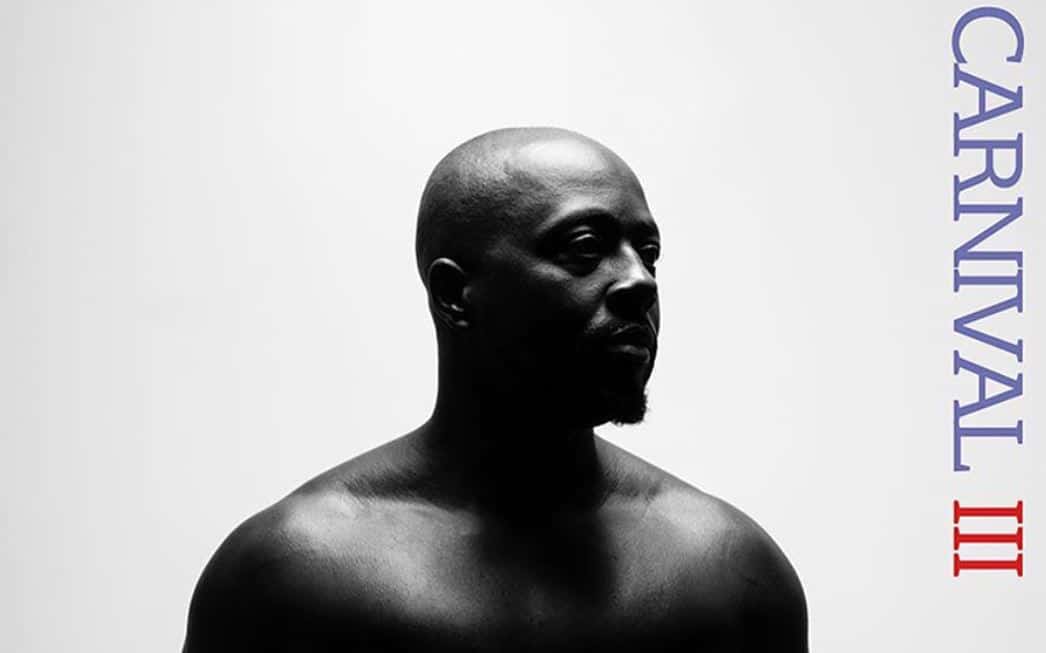
Former Fugees rapper, Wyclef has released the first track off his soon to be released 8th studio album Carnival III. His last noteworthy appearance was having a song on Young Thug’s standout track from Jeffery last year titled after him. But unlike “Kanye West”, his featured track, Wyclef’s “Fela Kuti” doesn’t just name drop his idols without actually referencing them.
The living legend dedicates the lead single to Fela Kuti who he describes as his inspiration. While their music might belong in different genres, it’s easy to understand why Wyclef is so interested in the brain behind Afrobeat. They both studied Jazz as a subject in school and even had similar political ambitions. And although neither of them got into power, their music still remained influential in the political atmosphere of their respective countries.
“Fela Kuti” retains Wyclef’s reggae dancehall feel despite the Afrobeat instrumentals produced by Super Mario. The dance number has a love narrative set on the dance floor as Wyclef sings, “We came to party” and hopes to charm his love interest with tricks like buying drinks and sweet talking. The allusions to Fela’s dance moves aren’t the only legendary reminisce as Prince also gets mentioned.
As we anticipate the Carnival III album set for a later release, “Fela Kuti” gives us a glimpse to what to expect from the tape. The is no hint at conscious theme as we’ve heard from Wyclef in the past but that’s not to say he has changed any since his embezzlement court case. We’ve heard a lot of dance songs from the Haitian rapper in the past and this is just as enjoyable.
On the rise of millennial social justice have come artists who are unafraid to denounce societal ailments while creating awareness that impacts positive knowledge. And this leaves the artist’s lifestyle vulnerable to media scrutiny as seen from the reaction Falz got after speaking against the recent promotion of online fraud in popular music. Gunzz perhaps realizing this, avoids being so direct on his new track, “Sunday School”. Instead of attacking others, he looks inward and questions himself as much as he questions society.
As if that wasn’t diplomatic enough, he delivers his truth over a smooth and ear-grabbing instrumental driven by wind and string instruments. Gunzz gives a varying palette of emotions that ties into one central narrative about his uncertainty on his place in the world. He questions religion: “Like God, what the hell happened to Whitney Huston/ There’s a thin line between the truth and the lies” but still admits his violent tendencies. Referencing racial struggles as a Nigerian artist signed to an European record label in Switzerland called CHOP – KNOCKU, he establishes that his confusions won’t be a distraction from his goals: “I just want to make magic like Willy Wonka”. And also encouraging listeners with his positive message of “Grab(bing) the horn by the bull”.
Gunzz’s “Sunday School” is only limited by the fact that it listens like it was made primarily for headphones and not necessarily for mass radio plays. Kendrick’s DAMN. album already proved beyond any doubt that conscious hip-hop doesn’t have to be so distinct from mainstream hip-hop. Regardless, the conscious charged track works from a come up perspective and a commercial acclaim might just lead to a backlash like his inspiration, JayZ is getting for his 4:44 album.
Listen to “Sunday School”, the 7th track off Gunzz’s recently released Once Upon A goD tape below.
Featured Image: Instagram/obagunzz
You are meeting Debola at a strange time in his life. He wandered into a dream and lost his way back. Tweet at him@debola_abimbolu
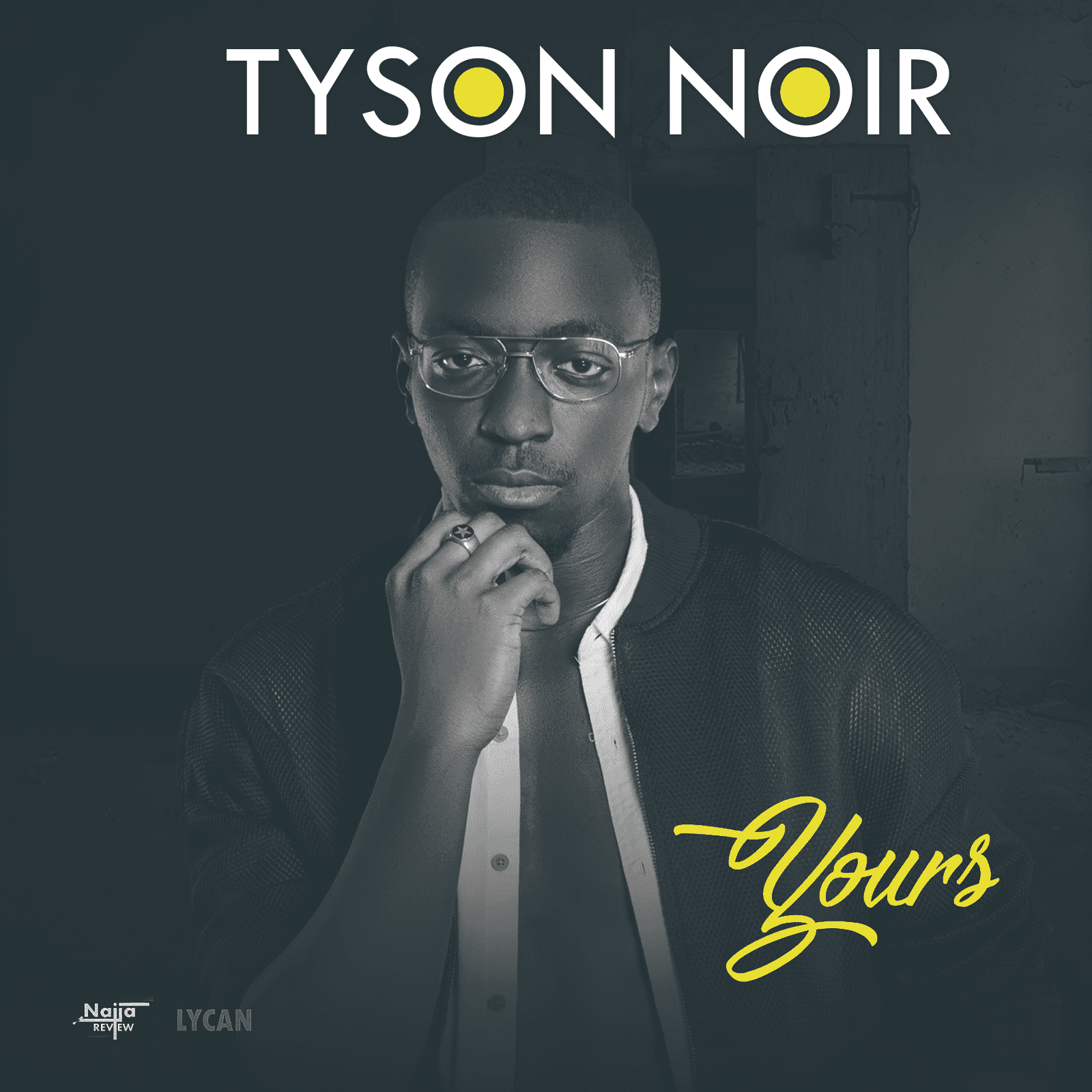
Experimentation has been the unique thread that runs through Tyson Noir’s entire catalogue as a recording artist. He has experimented with his image and his sound, subtly shifting perspective with each successive single. That is not to say that he has been putting out a lot of music, on the contrary, as Tyson figures out how he wants to present himself to the world, long swaths of time are dedicating to crafting each iteration and incarnation we experience. However, Tyson just came under new management; Lycan Records signed him recently as their headlining artist, and what seems like the beginning of new era starting with April’s “Can I” and now “Yours”.
It is always a coup when you can get a producer of TMXO’s calibre to put their magic touch on your instrumental. Collaborating with Somi Jones, TMXO crafts a interesting collage of influences, tribal drums, an ambient wall of sound, suggestive snare and a synth bass melody. They even throw in some trumpet adlibs for a subtle jazz twist. There is so much happening in the instrumental that you can get a little overwhelmed but by some stroke of production genius, Tyson Noir’s vocal work remains the focal point of the song. His discography has overwhelming explored concepts of love and intimacy and “Yours” follows in that vein, an honest to goodness love song, but primed for mainstream access. Definite summer playlist material.
Listen to “Yours” here.
Edwin eats his rice and cabbages. Tweet at him@edgothboy
It can be tricky making money off the internet, especially when you run a business that offers a free service. Online music company SoundCloud Ltd. has been the home to upcoming artists and music listeners to stream songs without downloading them. It has approximately 175 million listeners plugged into its expansive library of songs, podcasts, playlists and other user-generated content uploaded by artists ranging from the already established stars to the underground ones.
Not until last year, since establishment in 2007, the company introduced a music subscription service, Soundcloud Go. in an attempt to better compete against Spotify Ltd. and Apple Inc., two of the leading music streaming platforms. However, earlier in January, the company warned if the music subscription service doesn’t gain as much traction with customers, it may have to look for ways to raise more funds. Unfortunately, one of the major reasons people didn’t utilize Soundcloud Go. when it began is due to the smaller catalog of music it has, which pales next to its competitors (even newcomer, Tidal). So in March, the company raised $70 million in debt funding “to strategically grow our technology and personnel resources to fuel our expected 2.5 times year-over-year growth in 2017.” Now, Soundcloud has announced it is cutting 173 (40%) of its 420 employees from its risk of running out of money. Its offices in San Francisco and London will be shut down too, Bloomberg reports.
Co-founder Alex Ljung said this decision has been made to “ensure our path to long-term, independent success,” and also said, “By reducing our costs and continuing our revenue growth, we’re on our path to profitability and in control of SoundCloud’s independent future.”
However, Soundcloud’s inability to create a stable business model for the growth and sustainability of its business reveals larger concerns about the music industry. Spotify has shown interest in acquiring the platform since last year. Though the deal failed, it is interesting to note that if the company eventually gets acquired by a larger streaming company this just means users may have to prepare for new terms and conditions. A lot of labels back some of the world’s biggest streaming platforms, hence if a likely acquisition happens, labelling an artist who has their catalog on Soundcloud ‘Indie’ may likely come to a halt also.
Feature Image Credit:magneticmag
Fisayo is a journalist who thinks writing is hard and reading too. But her journey somewhere reveals, words are like pawns on chessboard when writing. She wants to see, create and share with the world, experience & communicate these experiences. Tweet at her @fisvyo
As Davido drops hit song after hit song and Wizkid prepares for the release of his SFTOS album, the air should be clear and buzzing with excitement for the two of them. But Wizkid decided to stick his hands into a hornet’s nest and get Davido stung.
In what can be described as one of the most direct hits Wizkid has delivered in his light switch feud with Davido, he made fun of Davido’s voice as he referenced a line in the latter’s new song with Olamide. No names were called but the Twitterverse knew who the punch was directed to and another quarrel started online.
My people make una remember say Yankee passport no be baba blue, e no dey cure frog voice. 🐸🐸
For a whole day, Wizkid and Davido trended side by side, which begs the question: what does Wizkid mean by this?
With SFTOS on its way, Wizkid’s team must be doing everything possible to keep the world on its toes waiting for the album. However, in the days before the Twitter sub, chatter on Wizkid had been minimal. Davido’s name was more prominent in conversations online. But once the sub hit, Wizkid shot up and anticipation for SFTOS went up with it. And it stayed that way until the next morning.
Even though Wizkid has acknowledged Davido’s position as an industry leader, some things still don’t add up about his sudden emergence from the deep just days before his album is set to drop.
Feature Image Credit:
A journalist by training, Ehimenim is a lover of history, good books and Game of Thrones. For her, the real world is just another Westeros and everyone is a supporting character. Read and repeat is her motto. Give her a wave on Twitter@EAgweh.
In March 2009, Sir Kollington Ayinla sat amidst well wishers and a boisterous atmosphere of socialites and Yoruba royalty for the wedding of his daughter. Enter Pasuma Wonder and Saheed Osupa to give the crowd a good time. Unfortunately, things went south as Pasuma performed and Osupa’s fans clamored to remove him from the stage. Their boss was coming, they said, and Pasuma wasn’t wanted around. The situation turned itself into a Royal Rumble and two people were left to rue the day: the bride and her father. What happened at Sir Kollington’s daughter’s wedding is one of the many instances of what happens when Pasuma and Osupa cross paths backed by legions of warring supporters.
From Jazz pioneers, Louis Armstrong and Dizzy Gillipe going toe-to-toe, to more contemporary rivalries between Drake and Kendrick Lamar, feuds have been elemental markers of trend and cultural evolution. In Fuji music, allegiances run even deeper owing to the genre’s genealogy to Apala and similitude with hip-hop, two music styles deeply interwoven into everyday life and the aggrandized personalities of their mouthpieces.
Like TuPac and Biggie Smallz, Pasuma and Osupa initially started off on amiable terms, due to their joint apprentiship in their younger years under Wasiu Ayinde Marshall (Kwam 1) in the early 90s. However, fast forward to the late 2000s, both musicians are at their respective peaks and two of the most celebrated voices in Fuji. This naturally led to comparisons, thanks to the media occasionally speculating bad blood without confirmation. But by the release of “Ijoba” (which loosely translates as ‘government), a title track of an album of the same name in 2009, Pasuma had proclaimed himself the undisputed king of Fuji, rebuffing any other claims to the same throne.
Quite like hip-hop’s reaction to Kendrick Lamar’s grandiose mafia style call out on Big Sean’s “Control” in 2013, Saheed Osupa was one of the Fuji musicians who assumed themselves a focal point of Pasuma’s “Ijoba”. Saheed Osupa saw this self-coronation as an attack on his own ‘kingly’ status conferred on him by the progenitor of Fuji, Sikiru Ayinde Barrister. From then on, what might have been a cold war turned into a full blown battle for supremacy.
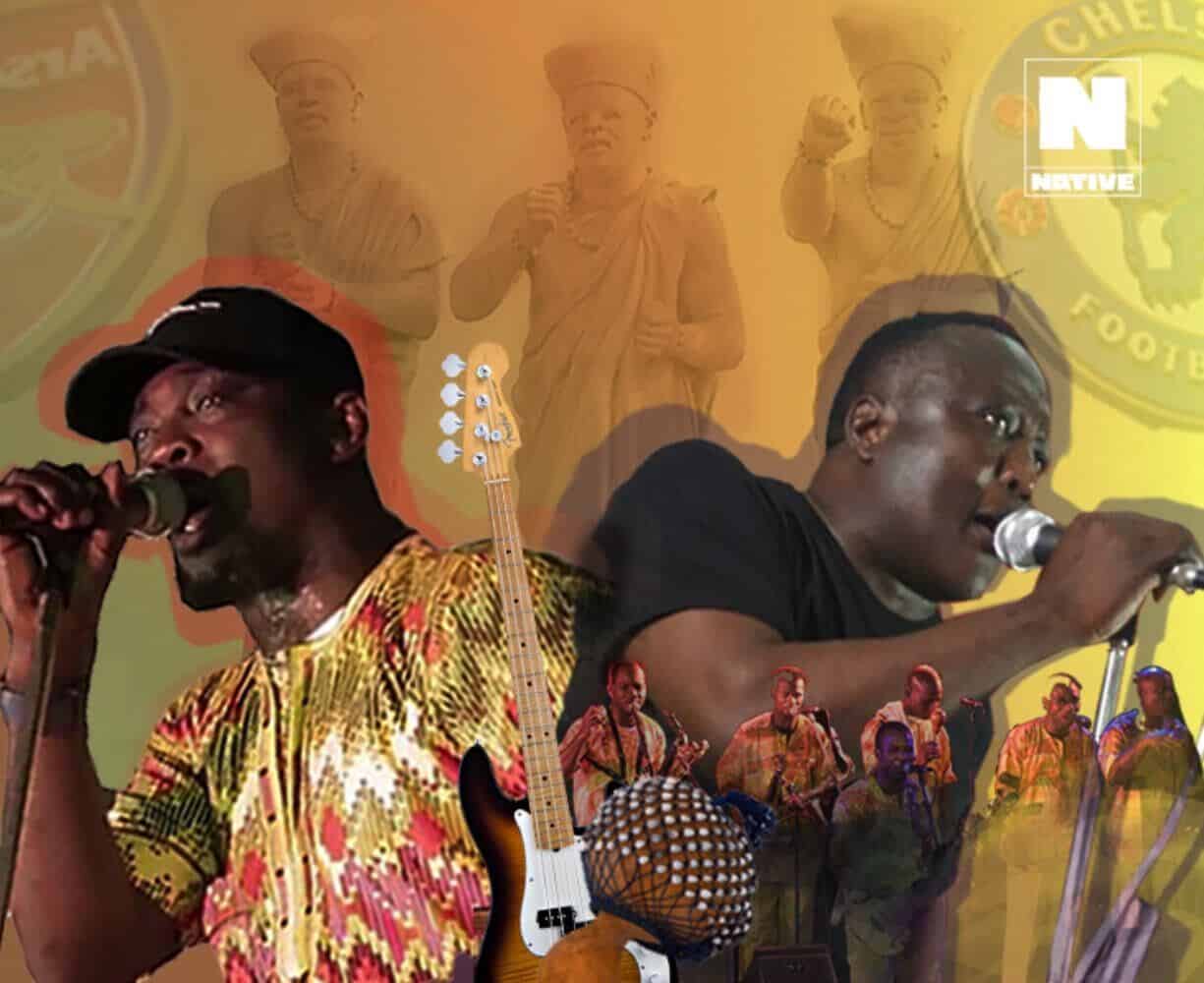
As rivalry for the throne of Fuji continued to fuel the feud, Fuji music fans split into Pasuma or Saheed Osupa factions, each artist readying fans and supporters for all kinds of showdowns. Diss track followed diss track, along with public jabs and subliminal messages using a range of mediums-from T-Shirt inscriptions to album titles. The touchy points of the rivalry sometimes bordered on petty details. Pasuma raps of Osupa’s inability to afford a pilgrimage to Mecca? Osupa goes on one, just to prove he can. Pasuma gets a Chrysler? Osupa gets one too. Even sports is not left out of this bickering malice as Pasuma aligned himself with Premier League side, Arsenal while Osupa brandished Chelsea’s insignia. Both musicians took opposing sides whenever they could and teeming legion of fans would follow suit.
The rivalry often took even more hilarious dimensions, offering respite and humour to watchers of the conflict. Just like their aliases, the men’s personalities were big and close to larger-than-life in proportions. Pasuma styled himself ‘Oga Nla’ (meaning ‘The Boss of Fuji music’). Not to be outdone, Osupa called himself ‘The King of Fuji.’ Later on, he expanded this is into ‘Oba Nla Fuji’- the biggest king in Fuji. The grander the nicknames grew, the more importance their fandoms applied in how the rivalry metastesized.
But this was beyond mindless ego battle between two grown men running circles around each other. Pasuma and Saheed Osupa’s beef often spiralled into violent bouts between their camaraderie. Particularly between Mushin area locals (where Pasuma is from), who protected their home base against the intrusion of the Osupa party from Ajegunle. A chess-like move during these years saw Osupa, an Ibadan native, appealing to the sensiblities of local rulers where Pasuma lived, to bestow him a traditional title. A daring territory grab reminiscent of Tupac and Biggie’s draconian West and East coast seperatism.
Before a reconciliation was made possible between Osupa and Pasuma, the tales of blood from their engagements were near-endless. A Pasuma concert was not a safe place for an Osupa fan and likewise for the other camp. More often than not, fights broke out and blood was spilled. The struggle for supremacy was especially real for fans with matching tales of scars, weapons, death tolls and police arrests.
2015 came as a watershed year for both Pasuma and Osupa as they took the first steps towards reconciliation. The two of them, both muslims were photographed smiling into the camera at a religious event organised in the month of Ramadan. Perhaps it was the atmosphere of holiness around them or something else, but regardless it was a feast of light to the eyes of their fans and the media alike. The war was over and everybody could go home.
But while the darker parts of Pasuma and Saheed Osupa’s beef are quite dismaying, it led to an outpouring of creativity, allowing both artists an imaginative spread to outbest each other. These days, Pasuma and Osupa are rumoured to be working a joint project to commemorate their closure.
If you view an artist’s voice as a bearer of the heart and mind, then Dáramólá has always been perfect. When we first meet Dáramólá early this year, he is coming off the release of “Lotto” , the lead single off his upcoming The Last Time I Triedalbum. “Lotto” opens with a unique strength of personality that hovers incessantly through its 4 minutes. The Last Time I Tried is certainly built around a deep affection. But Dáramólá’s grasp of pain, emotions and feelings are vehicles of his own development.
On the album, Dáramólá lays bare his emotions so compellingly, you’ll easily appreciate him for that. He had just taken the conscious decision to pen down pieces of his life into music notes for the first time in over ten years, in August last year. See each of his projects as a documentary of a particular phase he has been through or he’s in. He deconstructs his experiences in the stories he tells through music, whilst using faintly distributed lines of African vocabulary as a remarkable feature. “Ko ma si oro ti eni body o le so”, he trolls in Yoruba on “Fight For You”. Expressions like this on the track show how profound the Miami-based singer and producer holds true to his Nigerian roots. The last moment of “Fake Friends” features a deeply personal Yoruba prayer session uttered by an elderly female voice.
But it only takes Dáramólá roughly 44 minutes to give you the impression that an air of melancholy surrounds his music. After listening to a number of his tracks, it starts to seem like Dáramólá will join the class of artists who have managed to balance melancholy and pop. Every angle he creates is informed by an affair of the heart or mind. On “Palm groove” he sings, “mama said don’t play with fire”; on “Traffic”, “death came knocking on my door the last time I tried”, vulnerably making allusions to the blues without losing touch with melody.
His thoughtfulness reflects when he speaks of the correlation between pain and emotion in music too, “Pain is the one emotion that people, in a certain way gravitate towards. And then it’s too extreme”. Music, according to Daramola “is like the sounds of how you feel. Even up to the sound of your voice, or the way you pronounce certain words when you’re angry. The feelings of emotions are just so interesting, the correlation between pain, emotion and music is the unfiltered truth that it presents for the listener.”
Although, Dáramólá also recognizes that pain is universal, he is also aware that feelings aren’t static since they are derived from circumstances and we journey through a sundry of them in life. For every space he’s in, it can’t be deigned permanent “because obviously, through life, you go through certain things and emotions. And as an artist, it’s going to tell.”Eminem, one of his cited comparisons, gives strident performances about his personal life in his songs, “through the way Eminem talks of his mum, you can tell that dude is angry and channelling a lot of his pain into that. And then you flip over to heartbreak people, like Drake and you see what they do with the sound, with the voices. Perfect example is Keisha Cole.”
Some of this emotion Daramola accesses for themes are also translated in his composition as a producer. In this regard, Dáramólá places importance on mood-setting, “For the pads that I use, to the drums, to the snare, to the kick, to the hi-hat; everything has to do with how I’m feeling in the moment. If I feel sad…there’s like sad anger and there’s sad sombre”. This in turn effects the composition of the track.
What you may not know is although The Last Time I Tried serves as his album debut (publicly), he had worked on a previous one, Nothing Really Matters, released in the early weeks of 2016. He produces music as his day job and worked on 5 albums last year. So The Last Time I Tried serves as the fifth one. Through Nothing Really Matters and The Last Time I Tried, most of his feelings have been consistent. But Dáramólá does evolve into other versions of himself. It’s reflected in the happy music he released last week, “So Good”.
Above all else, Melancholy is not Dáramólá’s ultimate hide. It’s a sheath he uses to conserve the pain at the core of his art.
Check out a recent playlist curated by Daramola, featuring some of his defining sounds via soundcloud below.
Feature Image Credit: Instagram/@itsdaramola
Fisayo is a journalist who thinks writing is hard and reading too. But her journey somewhere reveals, words are like pawns on chessboard when writing. She wants to see, create and share with the world, experience & communicate these experiences. Tweet at her @fisvyo
The first time anyone heard of Bils, it was as a guest feature on a Sauce Kid’s “Fashi” . Little else is known, but a quick survey through Bils’ Soundcloud may lead listeners to conclude he’s a rapper that belongs in class of wordsmiths famed for story telling and ‘real hip-hop’. But his debut project, Pay Your Bils works on a more inclusive concept.
Designed for the explicit purpose of cracking music charts or at least some commercial acclaim, the 9 tracked ‘PAY YOUR BILS: Eviction notice’ EP is diverse in a way only artists trying to flex their audience reach can risk. It’s tricky to mess with a flow after growing accomplished with it and sacrificing that for other genres where he’ll have to compete with already established artists. While the idea might not be the brightest, Bils pulls it off quite remarkable on the first track, “PAY YOUR BILS”. The opening track is a delicate fusion of hip-hop and Afrobeat thanks to Fela samples and thumbing drums on the instrumentals. Bils gives a loud and confident performance defending his street cred but mostly, it served as an intro to a tape showing just how versatile hip-hop can be in the hands of a desperate rapper and a good producer.
“Benzo” is the most conventional hip-hop track on the PAY YOUR BILS. Though it isn’t his most cohesive song (and while it’s far fetched, it could be a metaphor for his career) because it’s hard to tell if he’s satisfied with where he is or still trying to reach his peak. Either ways, he employs a flow pattern paced like Desiigner’s “Panda” to deliver hard hitting gangster bars. But “Change” sees Bils get into his elements thanking his fans as he addresses his loneliness, trust issues and depression. He also impresses on “Lagos Boy Tin” bringing a bear-bone thug narrative that earns him some points for not botching it with exaggerated violence as he often does.
Bils ventures into Afropop territories on “Bae”, electronic Caribbean dancehall on “Vibe City” and his Daramola assisted “Transitions” has a funk beat. But he manages to represent the African sound and culture in a pleasant manner through most of the tracks to make wading through the murk a worthwhile task. “Transition” in particular showcases African stereotypes but instead of blurring out the negatives, he uses them to explain our strengths for the love themed song.
Stream Bils’ PAY YOUR BILS: Eviction notice below.
Featured Image Credits: Instagram/officialbils
You are meeting Debola at a strange time in his life. He wandered into a dream and lost his way back. Tweet at him@debola_abimbolu
Since Mayorkun covered Nonso Amadi’s “Tonight”‘s refix, we’ve noticed a slight downbeat in Mayorkun’s sound. This is also reflected in his new release, “Mama”. His delivery of “Mama” sounds a tad influenced by the melody progressions on his label master’s “IF”.
“Mama” begins with a mid tempo drum beat birthed by Kiddominant’s work on the track -he also produced Mayorkun’s “Sade” 3 months ago. On “Mama”, Mayorkun sings of a lover who he’s going to stick with like a “Bamboo” because he’s fallen in love with her body and willing to spend all his money on her. Mayorkun chants in pidgin, shedding off a bit of the yoruba oratory accustomed to some of his previous songs, while he uses it just sparingly here with words like “Baluu” and “ma lo ro brekete”.
“Mama” maybe nothing you haven’t heard before but no work goes out without carefully planned tactics to steadily market it enough for listeners not to ignore it. Clarence peters direction on the track is enough to keep you through roughly three minutes.
While Mayorkun is out and about touring Nigeria in his “Mayor 101” campus tour, and set to feature on the visuals to Jinmi Abduls’ “Scum” on Friday, keep yourself a second busy by watching his love-themed latest single below.
Feature Image Credit: Instagram/@iammayorkun
Fisayo is a journalist who thinks writing is hard and reading too. But her journey somewhere reveals, words are like pawns on chessboard when writing. She wants to see, create and share with the world, experience & communicate these experiences. Tweet at her @fisvyo
A huge part of the struggle to find relevance as a post-millennium artist, is getting your voice heard through the literal jungle of upcoming artists all pouring their singles into the swamp of streaming platforms. Only the best music manages to rise to the top of the bog and find its audience. Rapper King Jamal has been working on his second studio project titled Live Long and Prosperafter releasing his first studio EP War Ready in 2016 and man does he have war stories to tell.
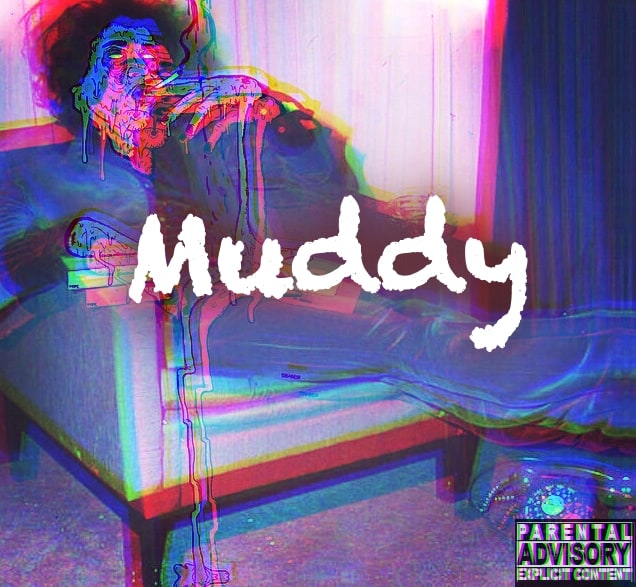
As part of the push to promote the new project, he just put out a second promotional single “Muddy”, a song that is part boastful chant and part journal entry. The song’s instrumental is obviously inspired by Future’s Mask Off, and features a distinct tin whistle riff. Ominous piano melodies and trap percussion provides the dark ambiance that Afrotrap thrives on. King Jamal has always been a decent lyricist as evinced by his debut EP, but as his themes become increasingly personal, there is an extra sheen of honesty to his new material that was somewhat lacking before. This perhaps, more than any other factor is what makes the prospect of the new EP so appealing. That and the features Jamal has suggested might end up on the album; Ice Prince Zamani, Lil Shaker and other upcoming acts.
King Jamal might have come from the mud, but it hasn’t hurt his rise at all.
Listen to “Muddy” here.
Edwin eats his rice and cabbages. Tweet at him@edgothboy
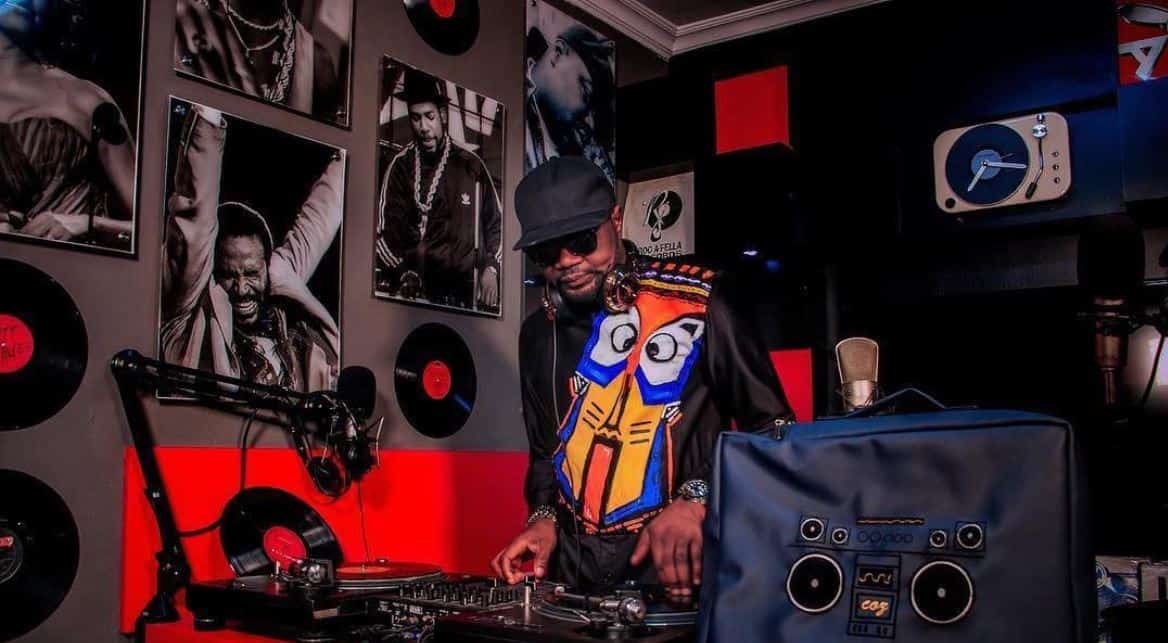
While this era of “online” artists might not fully appreciate the importance of DJs, artists who have been around long enough recognize their cultural influence and ability to shape the collective taste of the music listening audience. Given the backing of radio, DJs held the platform for promoting good music for a national and even global audience using occasional music releases and on-air featured artists appearances on their acclaimed programs. Ten years ago, when “Stylee” featuring Mode 9 and 2 Face was released, DJ Jimmy Jatt cemented his place as music royalty in Nigeria and has since remained unrivaled with subsequent releases and freestyle sessions with rappers trying to prove their mettle.
Because of how widely spaced DJ Jimmy Jatt’s releases are plus his interest in discovering new acts, it’s rare to find reoccurring features in his oeuvre. But Burna Boy’s exceptional skill puts him above the average artist as he gets another feature after his Jimmy Jatt Jump Off session led to a spot as a guest feature on “Glasses Up”. Jimmy Jatt’s latest single, “Chase” sees the singer get another feature and this time he’s front and centre, no more playing second fiddle to 2Face and Sound Sultan.
Produced by Benie Macaulay, “Chase” is a mid-tempo Afropop song with horns and piano led instrumentals and a few guitar harmonies sprinkled for an afro feel. Burna Boy delivers a delightful performance detailing his almost ironic experience as a desirable person that people can’t get enough of. Inspired by Sisqo’s “Unleash the Dragon” he delivers a memorable line for his infamous haters “You know say Burna Boy burn them like acid” but he dwells more on his fans singing; “There most be something about my face/ Way dey make all the girls dem craze”.
Jimmy Jatt has been a pioneer of hip-hop in Nigeria since his The Definition album released in 2007. “Chase” shows he is still every bit as skilled as he was then and could go on to releases an album that could potentially change the shape of hip-hop in Nigeria. The new single certainly listens enjoyable enough to support that.
You can stream to Jimmy Jatt and Burna Boy’s “Chase” below.