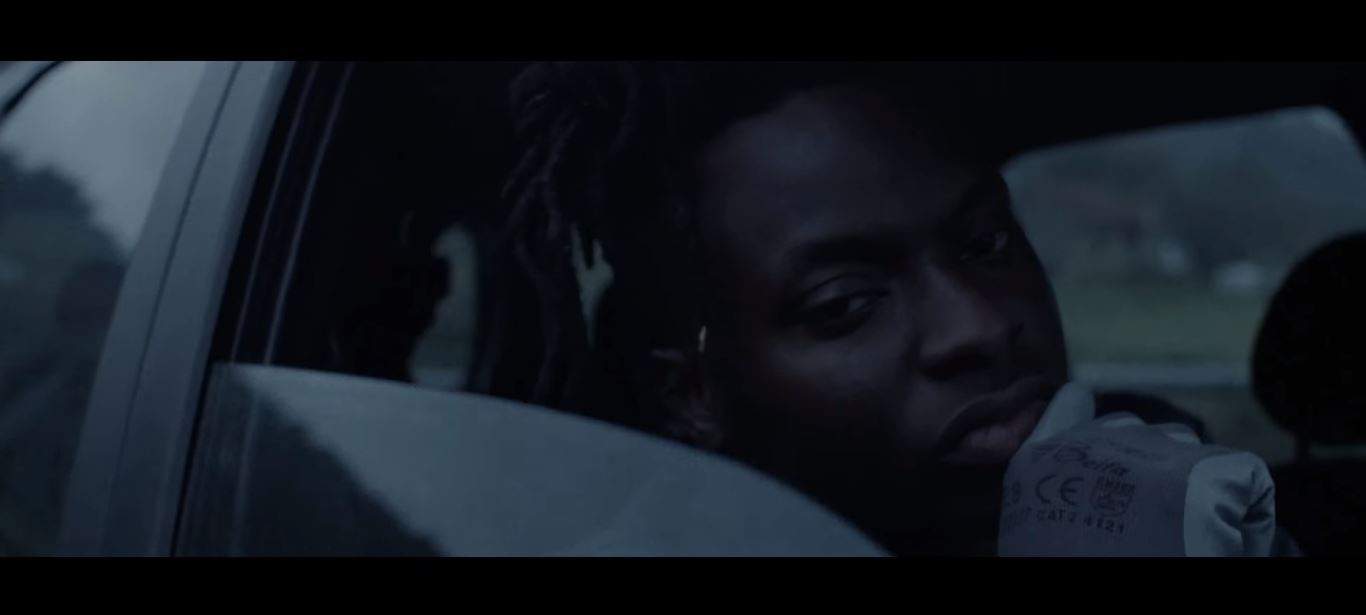
Music videos are as more than just promotional tools to keep people talking about the music for a bit longer. Though the style has evolved from the Michael Jackson era when music videos were treated with the same grandeur of blockbuster films, artists still make cultural impacts through the visual art of music videos. Although Afropop may not be popular for that given the inherent lightness of the music, it’s not a surprise to see Paybac attempt a conceptual video for his “Mami Water” music video.
But while he has always shown a knack for the profound with his pseudo-conscious hip-hop songs, “Mami Water” is far from his most intellectual release. The love story told through his humorous filters; “She Said Violets Are Blue/ But Water Is Too/ Even My Balls For At Least A Month Or Two” is far from conceptual, but you wouldn’t guess that from watching his recently released video for “Mami Water” directed by Palmwine Daddy.
The video is taken in one shot where Paybac climbs on stage to perform with what seems like his band; a guitarist, two backup singers, a drummer, saxophonist, pianist and a masked dancer. But while he raps into the mic, the camera focuses on the rest of the band who dramatise chaotic relationships. Because their drama doesn’t seem to distract Paybac from performing or even do anything to further the song’s narrative, it’s easy to assume the video isn’t literal.
Perhaps it’s nothing worth considering, but maybe it’s Paybac depicting how the often chaotic life of artists doesn’t get reflected in the music. Either ways, this video is sure to leave you wondering what the fuck you just watched and that’s not entirely a bad thing.
Watch the video for “Mami Water” below.
Featured Image Credits: Instagram/lookatpaybac
You are meeting Debola at a strange time in his life. He wandered into a dream and lost his way back. Tweet at him@debola_abimbolu
“If you spend your time hoping someone will suffer the consequences for what they did to your heart, then you’re allowing them to hurt you a second time in your mind.” ― Shannon L. Alder
Following the first explosive report by The New York Times, about Harvey Weinstein’s sexual misconduct , a number of actors are coming with their accusations, against the Hollywood mogul. Majority of his victims are household names, who were young aspiring actresses, at the time of the abuse. Some of whom he had their careers ruined, when they declined, and silenced when they tried to speak up, using his powerful connections in the industry as a shield.
From Angelina Jolie, Mia Kirshner, to Lena Heady, the list of Harvey’s accusers seems to be growing, and among the recent is Lupita Nyong’. Who said hearing the stories of these women, resurfaced in her, memories she has tried to forget.
In an op-ed published at The New York Times, The Oscar winning star of 12 Years A Slave revealed in details, two encounters she’s had with Weinstein, in her first encounter, the mogul had invited her to a film screening at his home, and offered to give her a massage, when she turned the table and offered to give him one instead, he asked her for sex in exchange for a booming career, of course she declined.
In another incident, while at dinner, he suggested they go up to a private room, she writes that he said, she should be willing to do that sort of thing, if she wanted to be an actress, again she declined. And in a bid to be sure he wouldn’t ruin her chances of making it in the film industry, she asked him if they were good, his response was “I don’t know about your career, but you’ll be fine”. This in itself was a threat to her worth, as a woman, and an abuse to her right, as a human.
Like these women in Hollywood, many women in Africa, especially Nigeria, have been Weinsteined by bosses, teachers, friends, male family members, hell, you probably know a Harvey Weinstein. Many a time, women have been forced into silence by societal pressure, to keep abuse and sexual harassment in the same class of taboo topics with homosexuality and gender politics. And by choosing to remain silent, we’re not only making the abuser powerful, we’re helping him lay a foundation that would affect the next generation of girls.
It’s not hard to see that the ripple sent forth by the women of Hollywood, has gathered a global momentum, with an alarming number of women, all over the world, choosing to nullify the conspiracy of silence that has allowed the abuse thrive, by naming their abuser. More importantly is the fact that these abusers are being removed from their places of power and are held accountable for their actions.
“Ifunanya is too queer to live and too rare to die” Tweet at her @Iphynaya
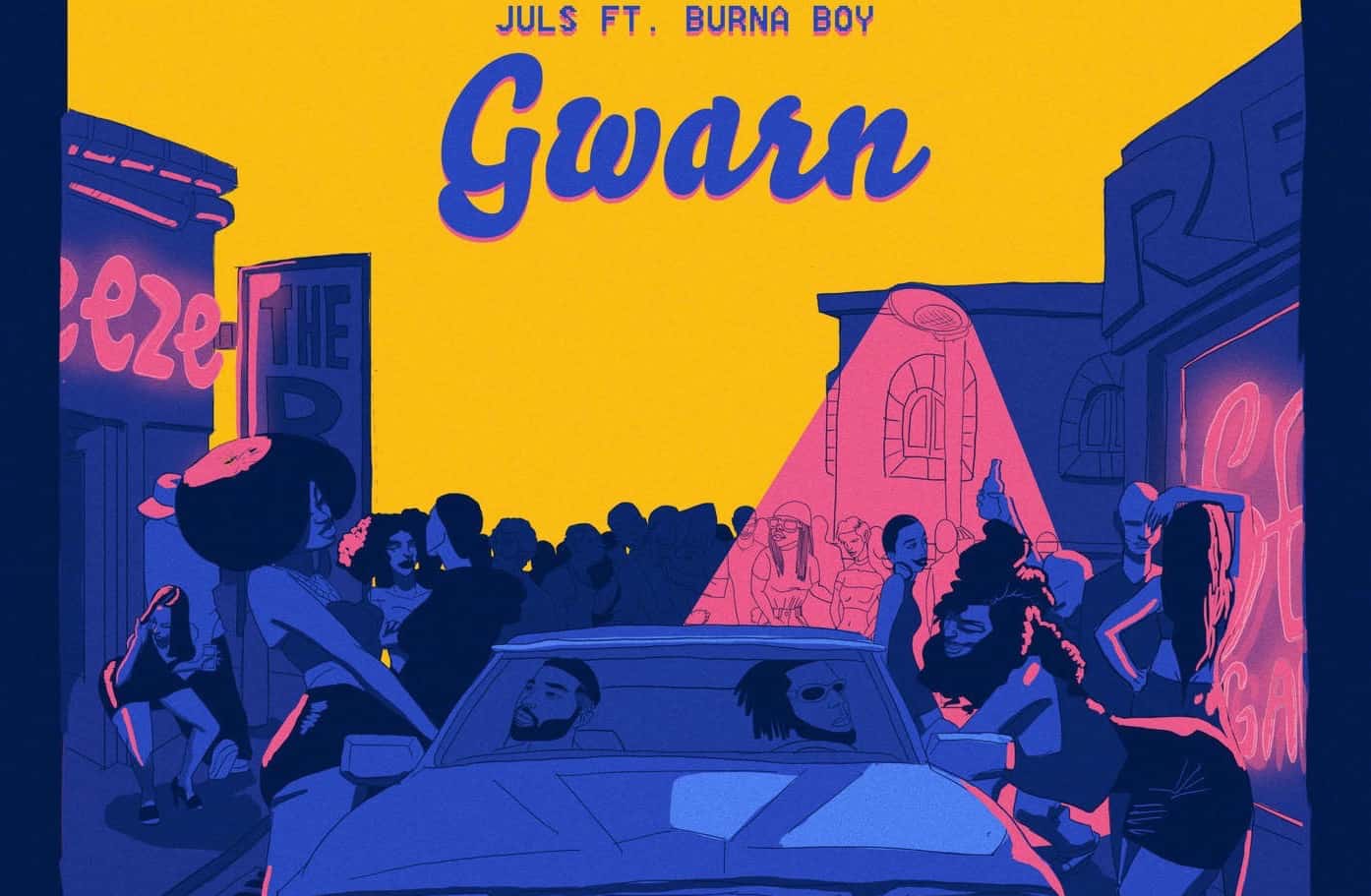
Earlier this year, Burna Boy and producer, Juls gave us the first taste of an unmistakable sonic synergy on “Rock Your Body”, our best new music from May. In a way, this already pre-wires expectation for “Gwarn”, their latest collaboration, but there was no way to anticipate the track’s edgy smoothness or Burna Boy’s uber laidback sub-woofer delivery. Juls has always favoured the use of acoustics from his days with Mr Eazi, the sleekness of “Gwarn”, however, is in a lightness of touch, a deft skill the producer weaves along with Burna Boy’s melody chord-for-chord. With Burna on verse and hook and low drums to set the mood, the sensual central focus of “Gwarn” is decidedly preset. The rest of the track sails like a boat on the Nile, peaking at a guitar solo outro that feels like 4 AM in the morning. “Gwarn” tips into the same collection of Burna Boy’s bedroom music catalog, bearing mark of all the nuances fans have come to love of his under covers Afro-fusion blues.
Stream “Gwarn” via Apple Music below
Toye is the Team lead at Native Nigeria. Tweet at him@ToyeSokunbi
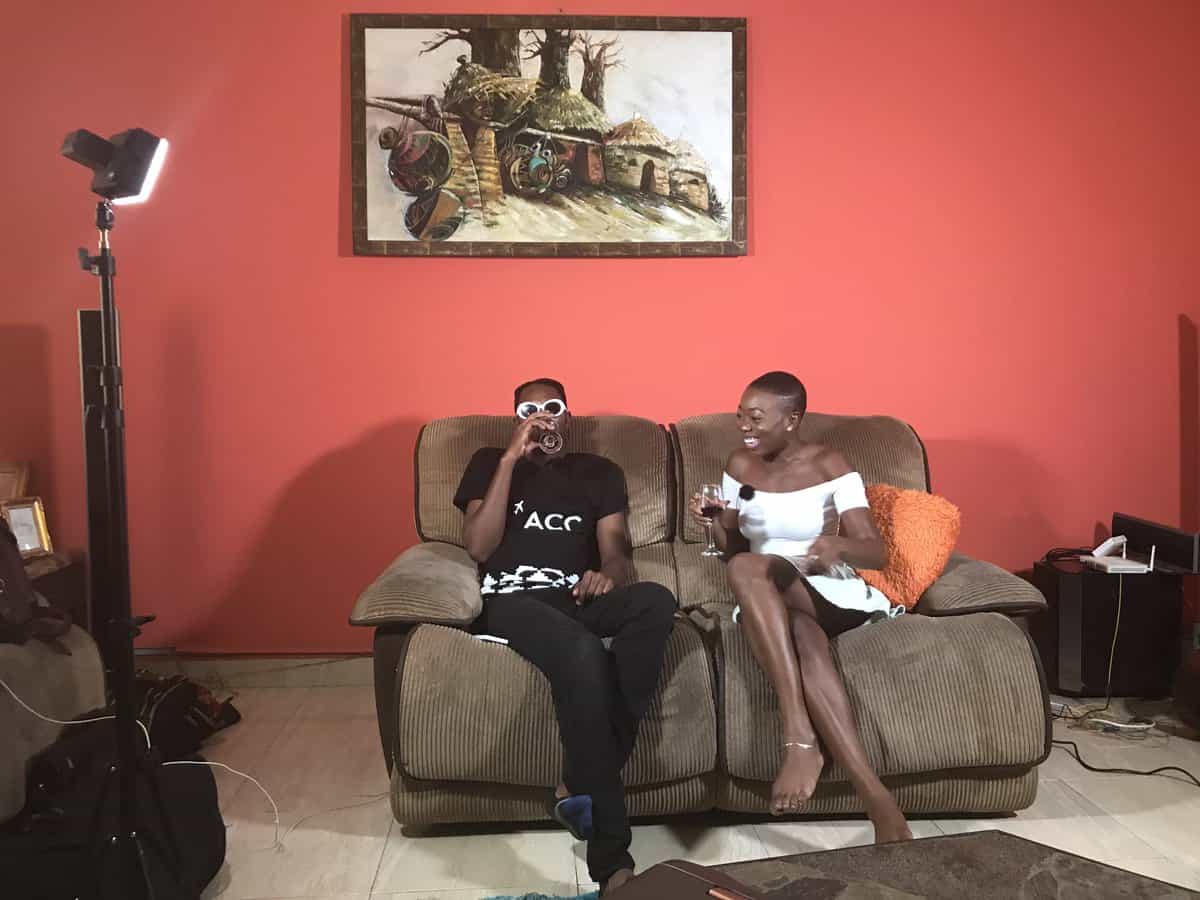
Wana Udobang’s Culture Diaries is interesting for all kinds of reasons. In the digital media space, there seems to be an obsession with virality, with media jargon like ‘conversion rates’ and demographic, and media companies seem obsessed with eyeballs rather than content. The result is that more often than not, the ideas that eventually go from idea to fruition are ideas that incorporate millennials and a mix of some form of manufactured friction or drama. Udobang’s Culture Diaries takes an entirely different trajectory; focusing on niche audiences and bringing much older, distinguished creators from different disciplines and allow them peel away the layers of mystery and mystique that often obscures the artist/creator and makes their art inaccessible. Their latest episode however is extra special because the guest is writer, poet and curator Lola Shoneyin.
It couldn’t be more timely considering it is less than a month before the fifth edition of the Ake Books and Arts Festival, which Shoneyin founded in 2013 and has grown in the intervening years and become a mecca of sorts for writers, readers, artists and other creators. Outside of literary circles, the Ake Festival isn’t quite understood because Book Festivals aren’t really a thing that is accessible to non-literary folk. By and large the Ake Festival has cracked this code by diversifying the palate at Ake, with art exhibitions, artist talks, musical performances and plays. At Udobang’s succinct urging, Shoneyin breaks down her motivations for starting the Festival, and how the festival has helped hundreds of readers connect with their mentors and each other, and how the festival has become a place of validation for younger writers struggling to find a place in Nigeria’s restrictive culture.
It was also pretty interesting to hear Shoneyin talk about her writing, and especially her critically acclaimed book The Many Lives of Baba Segi’s Wives, which is as beloved as it is controversial and what she intends to do in the future, especially as regards literacy.
If you ever wanted to know a little more about Lola Shoneyin, or Ake, or just literacy as a whole, this is one you should watch.
Watch Culture Diaries here.
Edwin eats his rice and cabbages. Tweet at him@edgothboy
Since growing from obscurity to continent-wide acclaim, Nasty C has been a shining beacon for South African rap. And given rap’s foreign influences, his feature on Major Lazer’s recently released Know No Better EP and several nods from international award communities, it was only a matter of time before his reputation pulled in more international features. His latest release, the video for “Allow” features French Montana and reminds listeners the heights his efforts have taken him with French Montana’s cameo in the neon filtered adjoining video.
Falz – La Fête
Excuse my French but the popular consensus that French language is the language of love is just verbal masturbation. But popular consensus being popular consensus, the stereotype provides artists with creative direction and Falz has taken inspiration from it for his latest single, “La Fête”. His humorous rap narrative takes on a more sexual motif assisted by a few phrases in French; “C’est le moment de fait la Fête.” Capital Dreams Pictures directs the video in a garage set, emphasizing the dance motif of the single as the models dance to the Demsa produced beat.
A-Q – Lekki Expressway Feat. Wavy The Creator
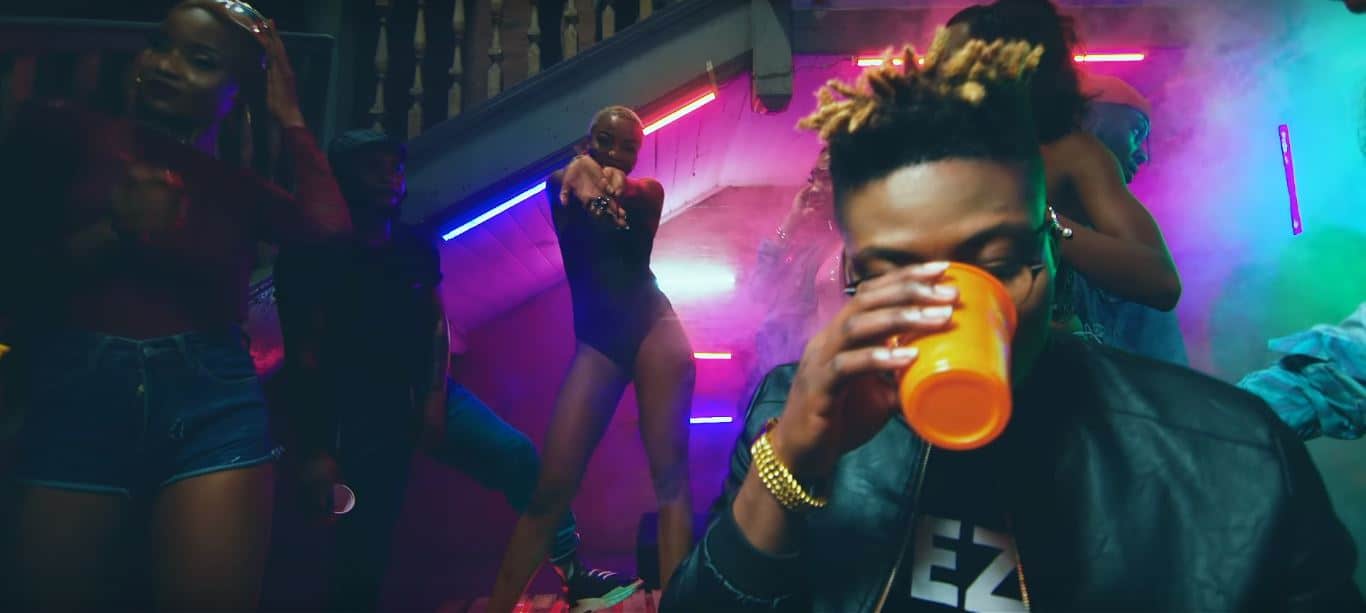
Off his recently released Blessed Forever project, A-Q’s “Lekki Expressway” just got a deserving video directed by Brother Lee for Temple film Productions. The track’s house house infused harmonies and Wavy The Creator’s vocal contribution on the hook give the Jayy produced track an experimental undertone as A-Q’s push the boundaries of his hip-hop sensibilities without compromising his style. The video mimics his drug infused lyrics as he takes viewers on a trip into the wilder Lagos nightlife with psychedelic lighting, smoke-filled rooms and fancy smoke bongs.
Masterkraft – I Go Dance Feat. Reekado Banks
Released a few months ago, Masterkraft’s “I Go Dance” is primed for dance floors and with Reekado Banks’ accent, its place was set on DJ turn tables. Masterkraft has gone a step further by releasing an adjoining music video for the dancehall number. The Adasa Cookey directed video follows the song’s groovy themes with dancers and set at a party; basically all the things you expect to find at a Nigerian dance club.
Tomi Agape – Breeze Feat. Mazi Chukz
https://www.youtube.com/watch?v=KcjbR9pDnak
Produced by Spax, Tomi Agape’s “Breeze” saw venture into Afropop’s bright and sunny. With the Caribbean tanned harmonies and Mazi Chukz’s blend of reggae and highlife melodies, the single listened like a late bloomer for summer playlist. And given the warm afternoon time setting, the video continues her summer affiliation. Tomi Agape and Mazi Chukz perform the song is the sunny themed video showing off some skin and brightly coloured sunshades.
Tipsy – Hustle Feat. Olamide
After debuting in 2017 with “E Dakun” and “Hustle”, Tipsy’s remix of “Hustle” featuring Olamide functions on traditional-trimmed infinity-mirrored portal into the singer’s universe apocalyptic universe; “I’m The Last Man Standing In My Lane Now/ I Never Die, Them Wan Bury Me”. The song that placed Olamide in the more traditional and less showy Yoruba territories. The flutes and somber percussion heighten the eeriness of the song which the recently released video doesn’t also pursues. The scare theme video features shots of flame throwers and a bunch of religious symbolism reminiscent of Yoruba home videos.
Featured Image Credits: YouTube/Masterkraft
You are meeting Debola at a strange time in his life. He wandered into a dream and lost his way back. Tweet at him@debola_abimbolu
There are still only bare facts on the reinstatement or demotion of Acting Police Commissioner, Imohimi Edgal, but news headlines have gone on to suggest the police officer may have been a victim of a witch-hunting by ‘powerful’ people. This particular speculative report attempts cite a timeline of events that indirectly link the Nigerian Police’s failure to ratify the Acting Commissioner’s rank as a result of how he has handled the investigation of the late Tagbo Umeike, an associate of Davido’s.
Over the past weeks, there were several reports by media outlets pulling apart all the public details around the recent deaths of DJ Olu, Chime Ameachi and Tagbo Umenike, three men who were known compadres with Davido before their untimely demise. Even before the police got involved, the information in the media had been conflated by actress and girlfriend to the deceased, Caroline Danjuma, who first alleged her late lover’s body had been suspiciously abandoned at the hospital by Davido’s escort. It didn’t take long for bloggers and newspapers to spin dizzying angles that created the media storm that followed, especially as the days after culminated the mysterious deaths of DJ Olu and Chime Ameachi.
During the week, reports of Davido’s acquittal made once again headlines, but this only comes weeks after all reportage around these deaths have circled back to singer, whom the media and police reports made a focus of the investigation into the death of Tagbo. What initially began as the biggest gossip of the year, snowballed into a narrative that placed Davido at the center of what the public presumed a murder case. Tagbo reportedly spent his last moments in the company of the OBO. A press conference by the Lagos State Acting Police Commissioner Imohimi Edgal also further suggested there were inaccuracies in Davido’s initial statement about his whereabouts at the time of Tagbo’s death. To counter some of the media recourse that followed, Davido’s team released a press statement, as well as CCTV footage from what is said to be the last encounter Tagbo had with the singer.
Somewhere on the internet, there is a cringe-worthy news clip of the police commissioner of Lagos State revealing Davido’s house address while detailing the recovery of the vehicle CCTV footage captured to have dropped late Tagbo at General Hospital, Lagos Island. That Davido’s team came out to deny allegations of instructing escorts to dispose of the deceased did not stop the media from accusing the singer of providing false information and potentially colluding in the death of his late friend.
In a sense the media is often considered as a reflection of the morals, social code and ethics of a society, and because the media itself is a living breathing part of the same society, their relationship is symbiotic in a manner that compliments content with audience. For example, the media wouldn’t publish gossip as news if—even the most post-modern—African societies are still not relatively traditionalist and conservative and vice versa.
Ironically, even in conservative societies, indoctrination does not always reflect the reality of the people’s everyday life. Public figures merely become scapegoats for everything usually spoken of in whispers because the culture is too sensitive for everyone to break gender norms, be young wild and free, or even speak out against the government.
In this part of the world, the lives of the rich and famous is weighed against values and what should be a centrist stance for a journalist is compromised by indoctrination and socialisation. Public figures become easy targets because how the media presents their life glimpses our society’s ideological boundaries of what is deemed acceptable.
Nigerian media’s dysfunctional relationship with the celebrity culture is told in how quickly the value for a brand can be petered by negative press which shortens the life-span of a music career. Over the years, it’s as though Davido’s occasional media controversies have metastasised with the same incremental grandeur and shock factor as his career. But the same can be said for 2face, Genevive, D’banj, Asa and others on the endless list of Nigerian celebrities, who live in a culture where gossip fuels the news and public figures are considered for their headline value. We need to change our thinking, facts should not be rendered at the mercy of headlines that emblazon artists in history with grotesque captions of their worst moments.
Toye is the Team lead at Native Nigeria. Tweet at him@ToyeSokunbi
After releasing experimental singles like “Shabba” and other releases challenging stereotypes for what should pass for pop music in Nigeria, it turned out “Maradona” was all Niniola needed to make the cross to mainstream acclaim. Continuing her African styled EDM harmonies, and a story arch defying female sexual taboos in these parts, she gained pop icon-hood seemingly out of the blue. The hit single asides confirming her ascent as an artist, saw her get booked for shows and boost her fanbase exponentially. But let’s face it, few things scream “Result” louder than a Wande Coal cover.
“Maradona” is proof of Niniola finally hitting her mark and Wande Coal’s recently released cover listens like a testament of that. He offers his own spin to her lyrics but rather than inverting Niniola’s unfaithful lover narrative, he retells it from his perspective as though responding to Niniola’s accusations; “Sey F.B.I. Ni Eh Ni Ton Wa Mi Kiri Oh/ Sey Olopa Ni Eh Ton Shu Mi Kiri”. He goes on to return the accusation singing, “If I Never Had This Money Would You Stay With Me?“.
Wande Coal’s perspective allows him take full advantage of “Maradona”‘s football referencing as he includes more sport metaphors; “Emi Gan Messi Suarez And Neymar”. But Niniola’s mark is still vivid with Wande Coal’s take on her use of ballsy and raunchy Yoruba metaphors. If Niniola wasn’t steamy enough for you, listen to Wande Coal’s “Maradona” cover below.
If there is one thing M.I especially gets right on his new track, “You Rappers Should Fix Up Your Lives”, it’s the self-awareness that he should be close to retirement. Technically rappers never retire, but the goal is presumably to reach a class of living greats where nothing the artist does can go wrong; for perspective, think JayZ, Dr Dre, Lil Wayne and Eminem.
M.I’s rise to critical acclaim and his career since have been documented as part of the Jude Abaga story through the years. Some of it was recently re-hashed during the rapper’s guest appearance on Pulse’ Loose Talk Podcast, recalling years of the media questioning M.I’s legacy. The going premise is that The Chairman‘s cultural value has gradually dampened over time. For an artist, this can mean his music has failed shelf-life tests, or that holes need to be poked in his overblown ego. Thus, it comes as no surprise that M.I has been defensive with his approach to critical judgment of his place in Nigerian music history.
On “The Finale”, the opening track off M.I’s Illegal Music 3 mixtape, he raps of a realisation of purpose, and becoming a structure that ‘can house the homeless’. Though introspection saves the rest of the tape from delving further into a central focus set on M.I’s repeated promise to ‘save the game’, his latest track is a lone single, and once again M.I is charging himself with the task of a resurgence to usurp the current industry order.
Produced by NATIVE #Trybesman, Patrickxxlee, “YRSFUYL” is predetermined with the same ambient synths reminiscent of Patrick’s Disco Utopia days. M.I benefits from Patrickxxlee’s use of low rumbling heavy bass, allowing him to chant over the whole arrangement with the prominence of a man who wants to be heard as clearly as possible. He is not nearly accentuating every word, as he is speaking to his contemporaries with the tampered rage of a kingpin at dinner with his erring mob. ‘Clark Kent, Clark Kent/ we need Superman/ So I had to get in the booth’, M.I raps, self-proclaiming himself, once again as the Messiah to rescue the hip-hop game, in a manner only similar to that infamous mobster movie quote: “If you want a job done right, you have to do it yourself”.
Funnily, this is a narrative M.I has saddled his ride to glory with since he declared himself ‘Naija’s rap messiah’ on “Safe” nearly a decade ago. The years following M.I’s initial success, however, has seen the rapper moving from strength-to-strength by adapting to industry shifts to meet his goals as an artist. Notably, M.I made effort to retain critical reverence with his Illegal Music mixtapes, while cornering the mainstream market with albums primed for radio. Along with other iconic parts of M.I’s discography—where lyrical ability or weight of the subject matter gleaned his deftness as a master wordsmith—Mr Incredible has no doubt made something out of the nothingness, in an industry where rappers are almost predestined to languish in the underground. But it’s 2017 and it appears M.I is being haunted for doing just enough where he could have done more.
The intentions behind “YRSFUYL” are seemingly noble as M.I puts it plainly, when he goes ‘SA rappers out here killing y’all’, an understatement—in fact—of the increasing global interest in hip-hop from South Africa, partially due to the recent international buzz around Casper Nyovest and Nasty C. In a sense, one would also presume the more expansive successes of Wizkid and Davido with Afropop should spill over to related genres like Nigerian Hip-Hop. But the problem lies in the premise of such thinking, firstly, because there is a deep socio-cultural history to why South African music has so many foreign influences, and secondly because M.I is merely alluding to past glory in the oblivion of how much has changed since he first picked up a mic.
Today, digital media and streaming continue to curate and evolve how listeners discover music. And because music tastes often remain consistent over time, even the most stringent soundscapes have broadened to accommodate a blend of ideas. It may have been important to answer questions like: “Who is the best rapper?” a few years ago, but artists are now rated on several scales depending on the direction of the conversation. What is labelled as ‘rap’ today, is solely defined by the listener, and anyone who is still calling out ‘rap-singers’, hasn’t probably been listening to the radio for the last three years or so.
At it’s worst, “YRSFUYL” is M.I’s high-minded approach to the failure of Nigerian rap to sustain a place in the mainstream. Which is almost bizarre, coming from the same man who also profited off an industry where corporate sponsorship artificially inflates artists value thanks to radio being the sole determiner who’s hot and who’s not. Even more questionable is that M.I has often reflected his choice to make commercial albums on fans, but during his appearance on Loose Talk podcast, the Chairman admitted seeking inspiration from his self-publishing millennial counterparts like Odunsi and Tay Iwar. So one wonders which ‘rappers’ M.I thinks should fix up their lives, after all, within the same generation of artists, there are rappers like Sute Iwar, Straffiti, A.T, King Zamir, AYLO, and PayBac amongst others, who are critically revered by small but strong niche followings, against odds of radio support.
Despite a tepid central theme, there are moments of flair on “YRSFUYL”. M.I’s cheeky closing line particularly puts things in focus, when M raps ‘I made this shit easy for ya’ll/ I laid it off the board/ You messing up my alley-oop’. It may not be enough that M.I is on this #FixUp campaign instead of heading back to the studio to work on altering what may become an uncharacteristic legacy, it’s also hard to fault the man’s claim that someone else should have capitalised on the sacrifices he made.
Toye is the Team lead at Native Nigeria. Tweet at him@ToyeSokunbi
Books are a huge part of our lives. We study them, we use them for recording and analytical purposes, we consume them for leisure. But we rarely get to celebrate them, really indulge in the enjoyment of books for their own sake. This is why festivals like the Ake Book And Arts Festival matter.
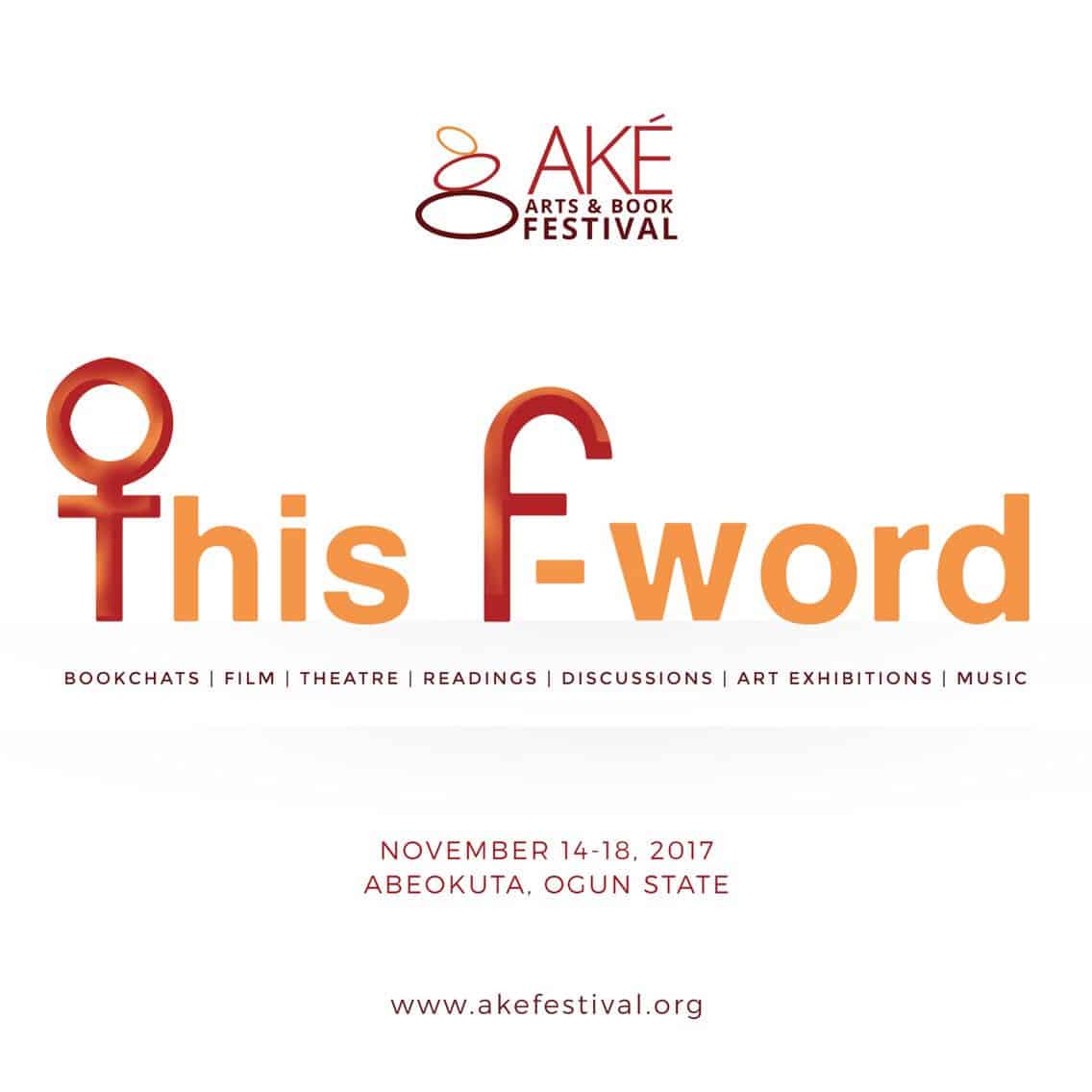
The Ake Arts and Book Festival is an annual five-day programme of cultural and literature focused events centered around a carefully chosen theme. Book chats, panel discussions, readings, workshops, performances, and panel discussions, stage plays, film screenings, art exhibitions featuring Nigerian and international authors, writers and thinkers are arranged. Events also include school visits and a comprehensive book fair to which pupils, publishers, book lovers and the general public are invited to visit. There literally is an event for everyone, no matter your inclinations (no football viewing centres though, sorry).
This year’s festival is theme “That ‘F’ Word”. The first word that obviously comes to mind when you considering this year’s guest list is ‘female’. Women have been marginalized in all spheres of human endeavour, especially in literary circles in Nigeria, even though they are the most distinguished and celebrated writers and novelists the country has produced. This year’s Festival will put them in the spotlight, highlight their achievements, offer them a soapbox on which to explain the limitations that hinder their success and prevent them from telling their stories. Of course this year’s festival will also touch the other taboo ‘F’ word; Feminism.
This year’s Festival is happening mid-November, November 14 – 18, 2017 to be exact. One of the reasons we love the Ake festival is that it takes everyone away from the eternal frenzy of Lagos to Abeokuta, Ogun State, Nigeria. Apart from its significance as a cultural landmark and a major tourist destination (it is home to Olumo Rock) and the capital of Ogun State, it is also home to the people of Ake, an ancient community from the region and for which one of Wole Soyinka’s memoirs is named. Against the backdrop of the rocky hills of Abeokuta in the lush South Western countryside. The main venue for Ake Arts and Book Festival will be the Arts & Culture Center, Kuto, Abeokuta, which boasts of a range purposebuilt event spaces and an amphitheatre.
The best part of Ake however, apart from all the diverse events that will happen over the course of the festival are the diverse guests that have been invited from all across the world world to participate in panels, hold book readings and talks and just generally meet their fans. This year’s line up has a impressive cachet of emerging writers, singers and creators and we compiled our personal wishlistof people we would love to meet and pick brains with. But apart from them, we’d be pretty stoked to see Buzzfeed editor Bim Adewumi, writer and first lady of Kaduna state Hadiza Isma El-Rufai, Director of critically acclaimed film Isoken Jade Osiberu, linguist Kọ́lá Túbọ̀sún, critic and journalist Kadaria Ahmed and memoirist Samira Sanusi, Mazi Nwonu (editor of spec fic magazine Omenana) and Zinzi Clemmons.
The festival this year is organised by the Book Buzz foundation with support from its valued partners; The EU, Ogun State Government, Annoying Logo, Etisalat Nigeria and Park Inn, Abeokuta.
You can register here for this year’s festival OR in person at the Ake Festival Registration Point from 14th.
Once we know more, you guys will know more.
See you at the festival.
Featured Image Credit: Twitter/@Akefestival
Edwin eats his rice and cabbages. Tweet at him@edgothboy
If you grew up in the late 90’s – early 2000’s then your childhood/teenage years are defined by the explosion of Caribbean inspired music. We all know by heart that distinctive island inspired four count percussion that everyone from Shaggy to Kevin Lyttle used, and when singer Nova interpolates this iconic beat, subtly tweaking the base elements to infuse it a significant more pop influenced sound. Add a simple four chord piano progression and some tambourines, and you have the perfect tableau on which to lay out “Heartless”, a new take on some good old heart break.
We don’t often get to hear men sing about emotional distress, especially when it is the result of a straying lover, but Nova really leans into the misery, betrayal and confusion that exact situation could bring. He sees her duplicity, her unwillingness to commit to him and the relationship they’re supposed to be building together, and her infidelities, but the intensity of the emotions he feels for her keeps him trapped in their destructive relationship, somehow hoping that maybe she’ll change for him. But it is obvious to us, if not to him, that there’s no silver lining to their situation, no scenario in which they end up together.
It’s never gonna end well.
Listen to “Heartless” here.
Edwin eats his rice and cabbages. Tweet at him@edgothboy
Six months ago British Ghanaian producer and Disk Jockey, Juls released his Leap of Faith EP to almost immediate acclaim. Three days ago, Juls is nominated for the MOBO awards under the Best African Act category. Today, Juls releases new song “Gwarn”, a natural bop, with Burna Boy. “Gwarn” istheir second collaboration thus far, following Burna Boy’s “Rock Your Body”.
Their teamwork again is organic on “Gwarn”, with twangy guitar riffs, synths and mid-tempo drums of Ghanaian highlife.
Over four minutes, “Gwarn” slowly reveals itself through salacious lines that Burna manages to conceal under his not so conspicuous way of speaking in patois. With lines like “You have to know everything your woman need o before you loose her to a bad man like me”, “She wants me to leave everything I dey do and come along with her”, and a voice murmuring remarks like “Pussy Specialist” woven with Twi in the background, you are assured he tells just one story on “Gwarn”, yet it feels deliberately granular with details that never fully crystallise.
Burna speaks in direct English and metaphors. And when rapping or singing, it’s really no news he always seems to be speaking a jargonistic language of his own. Some lines are easy to spot, but that ambiguous lyrical style always works in the song’s favour. Juls here is the one that takes this thing Burna utters with this thing called time and beats.
Stream DJ Juls’ “Gwarn” featuring Burna Boy via Apple music below.
Fisayo is a journalist in search of words. Tweet at her @fisvyo
Ever since digital marketers worldwide pressured Facebook into optimizing its algorithm to prioritise video, everyone has been trying break into the video industry and become a pioneer. Even MTV dissolved its well respected long form news room and channelled all that money and expertise into a video unit. Africa isn’t too far behind on this trend either, from Capetown to Accra to Casablanca, small media companies seem to be setting up video units and trying out wild and wacky ideas that build on the reality tv, millennial opinion craze that crystallised in the podcast industry and is spreading everywhere. But getting it right is easier said than done, with various talkshows coming and going, just as quickly as they arrived
Joseph Nti’s Off The Top, has proven a runaway success with little PR and just four episodes. Nti, an experimental filmmaker who’s known for his documentaries, went on a tangent with the show, whose premise is similar to many other Q&A shows, except for two fundamental differences; every episode is decidedly Ghanaian, and every episode is deliberately trivial. There are no existential questions thrown at the show’s rotating roster of guests, no fancy make up or elaborate hair dos, no expectations of anything other than an off-the-top-of-your-head answer. There’s a self deprecating silliness to the show that allows us laugh with the show’s cast, even when they make a mess of themselves, flubbing perfectly easy questions. We laugh because we know that they should know the answers, and we root for them when they bluff their way to a win. Joseph Nti’s created a show so carried by its cast’s excellent chemistry that we end the episodes sated and eager for another one.
We don’t know how Off The Top will evolve in the coming months, but we’re curious to find out.
Watch Off The Top Here.
Edwin eats his rice and cabbages. Tweet at him@edgothboy
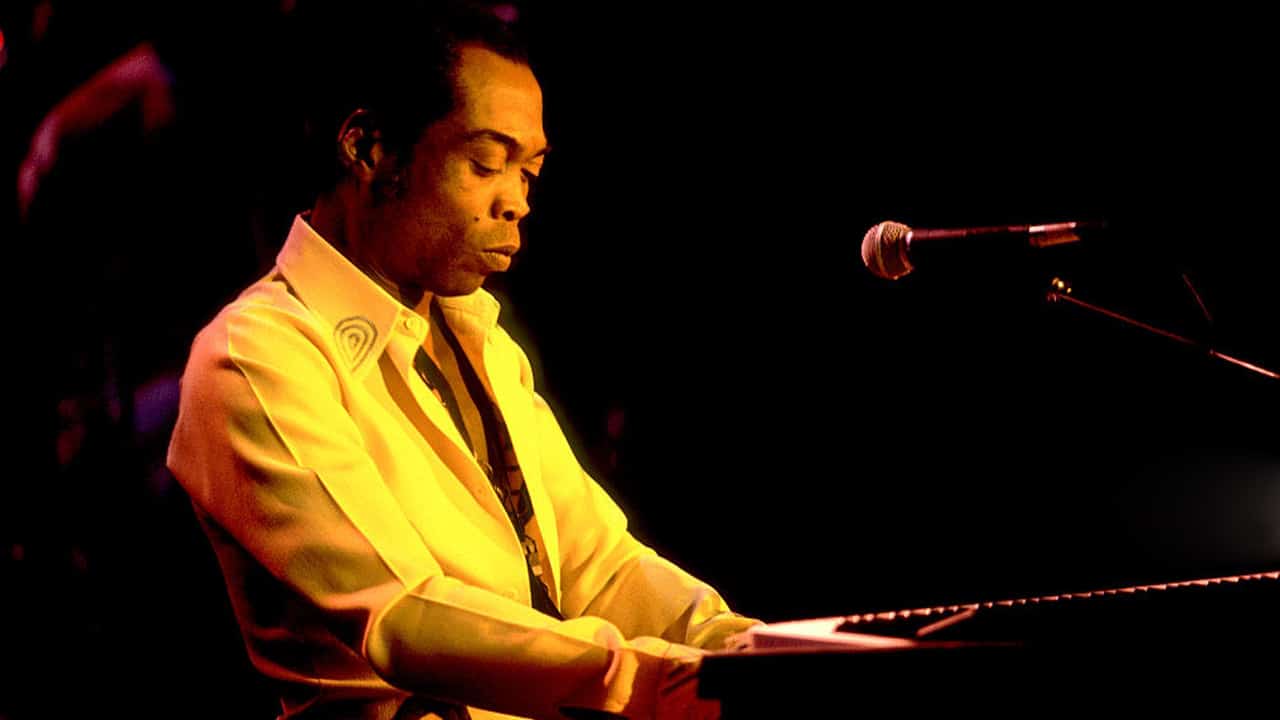
In manner no one before or after him has managed, Fela Anikulapo Kuti’s took our music to the world. But what transcends his legacy past his designation as a musical ambassador, is his role as a public figure and political activist speaking against the oppression of his people. As the world honors his inspirational music and ideologies with the celebration of his 79th birthday anniversary, Knitting Factory Records have announced they are a releasing a fourth installment of their critically acclaimed Fela Kuti Vinyl Box Set with Erykah Badu as curator.
The soul goddess of the galaxy has selected some of her “Favorite Fela Pieces Of All Time” for the 7-album box set expected to be released on the 15th of December. The albums include Yellow Fever (1976), No Agreement (1977), J.J.D. (1977), V.I.P. (1979), Coffin For Head Of State (1980), Army Arrangement (1984) and Underground System (1992).
The limited—3,000 copies—edition box set comes with a 16-inch by 24-inch poster by Lemi Ghariokwu, who designed 26 of Kuti’s album covers. There will also be a 20-page booklet featuring 7 essays by Erykah Badu as well as 7 in-depth commentaries by music critic and historian, Chris May. Never before published photos of Fela Kuti have will also be features in the package selling for $120 a piece.
Erykah Badu through a press statement said, “Fela Kuti is a Fucking Genius” and would prefer if her compilation is played while smoking “A Nice Blunt.. With A Nice Slow Burn”. Pre-orders are going on here but you can see the tracklist below.
Yellow Fever
Side A. “Yellow Fever”
Side B. “Na Poi ‘75”
No Agreement
Side A. “No Agreement”
Side B. “Dog Eat Dog” (Instrumental)
J.J.D.
Side A. “Part 1”
Side B. “Part 2”
V.I.P.
Side A. “Part 1”
Side B. “Part 2”
Coffin For Head of State
Side A. “Part 1”
Side B. “Part 2”
Army Arrangement
Side A. “Part 1”
Side B. “Part 2”
Underground System
Side A. “Underground System”
Side B. “Pansa Pansa”
Featured Image Credits: Instagram/erykahbadu
You are meeting Debola at a strange time in his life. He wandered into a dream and lost his way back. Tweet at him@debola_abimbolu
The personal and the pursuance of approval can often be at odds. For Ozzmanic, it remains to be seen. But he seems poised for a crossover with “Afro Lover”.
Young and interesting, Ozzmanic, very passionate about Rap, emerged in the Toronto music scene as a Trap artist in 2013 with a Diss song titled “Benjamins”, a track that inspired a follow up EP, The Risk Tape in 2016. But Ozzmanic found that what had become his signature sound wasn’t good enough for him to make an introduction in the current Nigerian music scene, so to kick off, Ozz chose to collaborate with Jinmi Abduls for “One Question”, a dancehall number running on over sixty thousand plays on his soundcloud, released in July. His new single “Afro Lover”, Off his upcoming sophomore EP titled Rainbow,is among the more sonically African songs on his small catalog yet. It showcases a person who is trying to get his start in the Nigerian music scene, by conducting his own investigations into the Afropop world.
Despite this, “Afro Lover” is in equal parts compromising and as straightforward as the typical romantic Afropop track.
Right before entering Duktor Sett’s scene, “Afro Lover” begins a little cheeky, set as though he were in a studio session, with one or two voices telling him to kick off with a freestyle. But much of the song exists in the world of Ozzmanic’s and producer Duktor Sett before embarking on a sampling moment on the two-minute mark to detail half a verse from Mo hits’ 2008 track “Booty Call”. While he can’t downright be accused of imitation all through the four-minute track, the way he utters his lyrics and harmonies via his baritone voice, finely begs for a parallel with Boj.
On the song, Ozzmanic bids his love for another’s, seeking to be their ‘Afro lover’. The percussions and synths nods as much to Afropop as his lyrics but even as it progresses, it still refuses to settle into what we could call Ozzmanic’s and may come off a tad corny. There’s nothing more cliched than singing Afropop on a love theme anyway.
However, Ozzmanic, still building and constructing the body of his music, seems set for the Nigerian Music scene with “Afro Lover”.The EP, Rainbow that’s soon to arrive should showcase Ozzmanic’s actual mind or charm and should be more satisfying. So get ready.
Meanwhile, you should bump his new single “Afro Lover” produced by Duktor sett below.
Featured Image Credit: Instagram/Ozzmanic
Fisayo is a journalist in search of words. Tweet at her @fisvyo
There is an on-going conversation about rewarding producers and lately, more and more producers have put out independent releases in an attempt to step out from behind the curtains and share some of the limelight they are otherwise merely instrumental to creating. For his part, Sess has released an instrumental PRBLM EP earlier this year, but with next to no promotion, the tape didn’t get the most encouraging feedback. Not one to go down without a fight though, he has announced a joint Short Renditions tape with Spax, expected to be released at a yet-to-be specified date.
Perhaps learning from the failings of his PRBLM EP, Short Renditions won’t focus on instrumentals alone. And to prove this, “Don’t Worry” is pre-released to give a tip of the iceberg. Spax sticks to production, creating an atmospheric and uplifting Afropop harmony with piano samples, guitar riffs and horns. His mid-tempo synth layering gives Sess the chance to show off his vocals (albeit auto-tuned with experienced precision) and a taste for love inclined lyrics.
Both producers have been prolific in their respective rights, but if “Don’t Worry” is anything to go by, we could see their careers head in different direction. Despite the short—just over a minute—length of the single, Sess has shown promise for a singing career that could potentially see him rise to Don Jazzy-esque acclaim. But “Don’t Worry” is just “The First Piece Off The Project” and we don’t want to get ahead of ourselves. The suggestive Short Renditions project title and “Don’t Worry”‘s brief listening time gives the impression that the project won’t be lengthy but then again, the man did make his name as Sess ‘The Problem Kid’ off working with other artists, who knows what he will do on his own production.
While we wait, you can listen to “Don’t Worry” below.
Featured Image Credits: Instagram/sessbeats
You are meeting Debola at a strange time in his life. He wandered into a dream and lost his way back. Tweet at him@debola_abimbolu
The path to making popular music is often divided along the moral lines of how much pop culture referencing is allowed before it becomes illegal and plagiarizing. However, Nigerian music’s reputation for unapologetic sampling makes it particularly difficult to defend the nostalgic appendage as a form of art or creativity. But every now and then, artists like Wande Coal who have been around long enough to understand the traitorous moral terrains, deliver songs like his recently released “Funkeh”. Reminding us that popular culture should be reflected in pop music and if sampling is what it takes, then so be it.
Perhaps because the allure of “Funkeh” is Wande Coal’s all too familiar vocals and his penchant for sexually exciting songs, his reference to popular “Funke!” meme only heightens the already catchy number. Plus with the distinctly sounding upbeat guitar riffs, piano samples and drums Killertunes produces, the song listens fresh and devoid of samples save for the occasional chants of “What?” and Falz’s “Wehdone Sir”, used here as adlib.
Though “Funkeh” is released as Wande Coal’s gift to fans for his 32nd birthday celebration, the song’s narrative is classic humorous love declaring Black Diamond—“I Say Shout Out To Your Daddy Oh Ah/ Awon Lo Fun Eh Ni Idi Nla/ To Fe Ma Sako Funwa.”
There’s no denying that the meme-ification of music helps in its dissemination. But given the song’s release on Wande Coal’s birthday and his widespread appeal, “Funkeh” is more than a scheme. It is his appreciation of the viral trends in Nigerian popular culture. Stream the catchy new single below.
https://soundcloud.com/user-391678699/funkeh
Featured Image Credits: Instagram/wandecoal
You are meeting Debola at a strange time in his life. He wandered into a dream and lost his way back. Tweet at him@debola_abimbolu
Not to take anything away from the greats of the past, but this era of Nigerian music has been really exciting. The dizzying variety and richness of Nigerian music has led to the incursion of global sounds like EDM within the context of African music.
Released after “Lady”, DJ Java’s third single continues his Afro house intimacy with Kiitan and Poe as guest features. Affirming the increasingly diverse Nigerian music scene, “Sneak” is engineered for the dancefloor with electro/house harmonies rather than the typical highlife and pop influences. Yet, in spite of the ringing difference, the groovey effect is identical.
Kiitan’s looped vocals are so soft, they blend into the beat’s tropical ambience as Poe’s rap flow cuts through the haze without missing a step or bass drop. He performs a club friendly chorus and 2 verses with love themes as anchor for his pseudo-confused-romantic narrative; “Backup Rewind It/ Should I Anoint It Or Bind It?” Asides the undeniably harmonious take on the electronic genre, DJ Java strikes Afrohouse gold on “Sneak” by incorporating Poe, one of Hip-hop’s biggest acts.
Afrohouse’s incursion in mainstream Nigerian music gets a worthy earmark by DJ Java Kiitan and Poe. And you can stream it below.
featured Image Credits: Instagram/djjavaofficial
You are meeting Debola at a strange time in his life. He wandered into a dream and lost his way back. Tweet at him@debola_abimbolu
Since “Holy Ghost” put the indie rock band on our Best New Music spot earlier in the year, Paradise Motel has released EgoSex, a project hinged on soul-numbing confessional style music. “Indestructible”, the follow-up single to the EP accentuates this sentiment, giving the band’s romantic despair a nearly existential polish.
With a deceptively joyful combination of guitar plucks, piano harmonies and lead singer, Wekaforé Maniu Jibril’s restrained cooing, “Indestructible” is the rare breakup song for one night stands. Depicting every relationship’s worst nightmare—“You’re Going To Look Me In My Face And Tell Me It’s NotForever”— “Indestructible” contains some of the most quietly devastating lines of the year: “But I Don’t Feel A Thing”.
Paradise Motel’s growing discography and devotion to Emo themes serves as a razor-sharp reminder that the group has all it takes to be a musical force to be reckoned with.
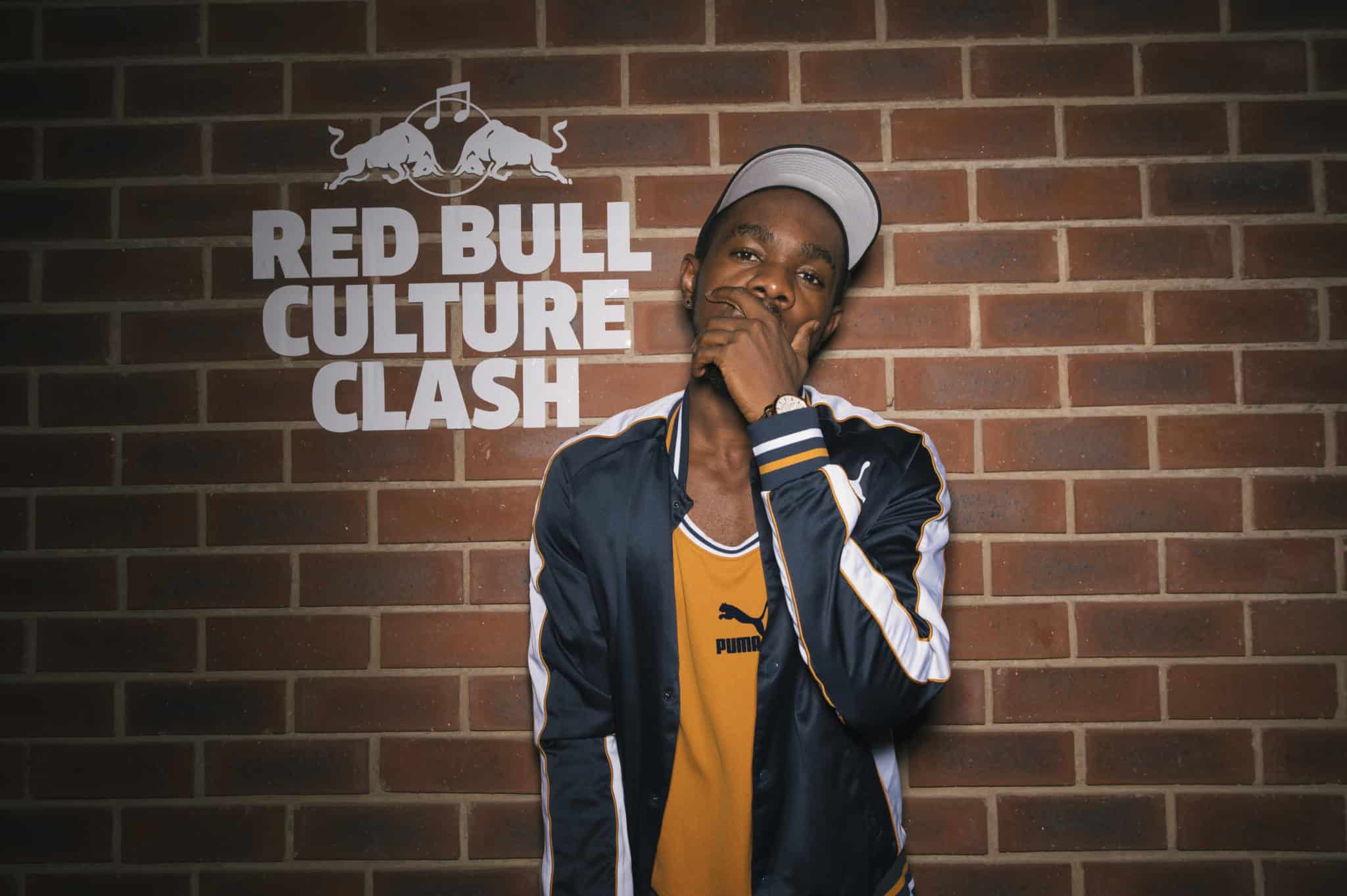
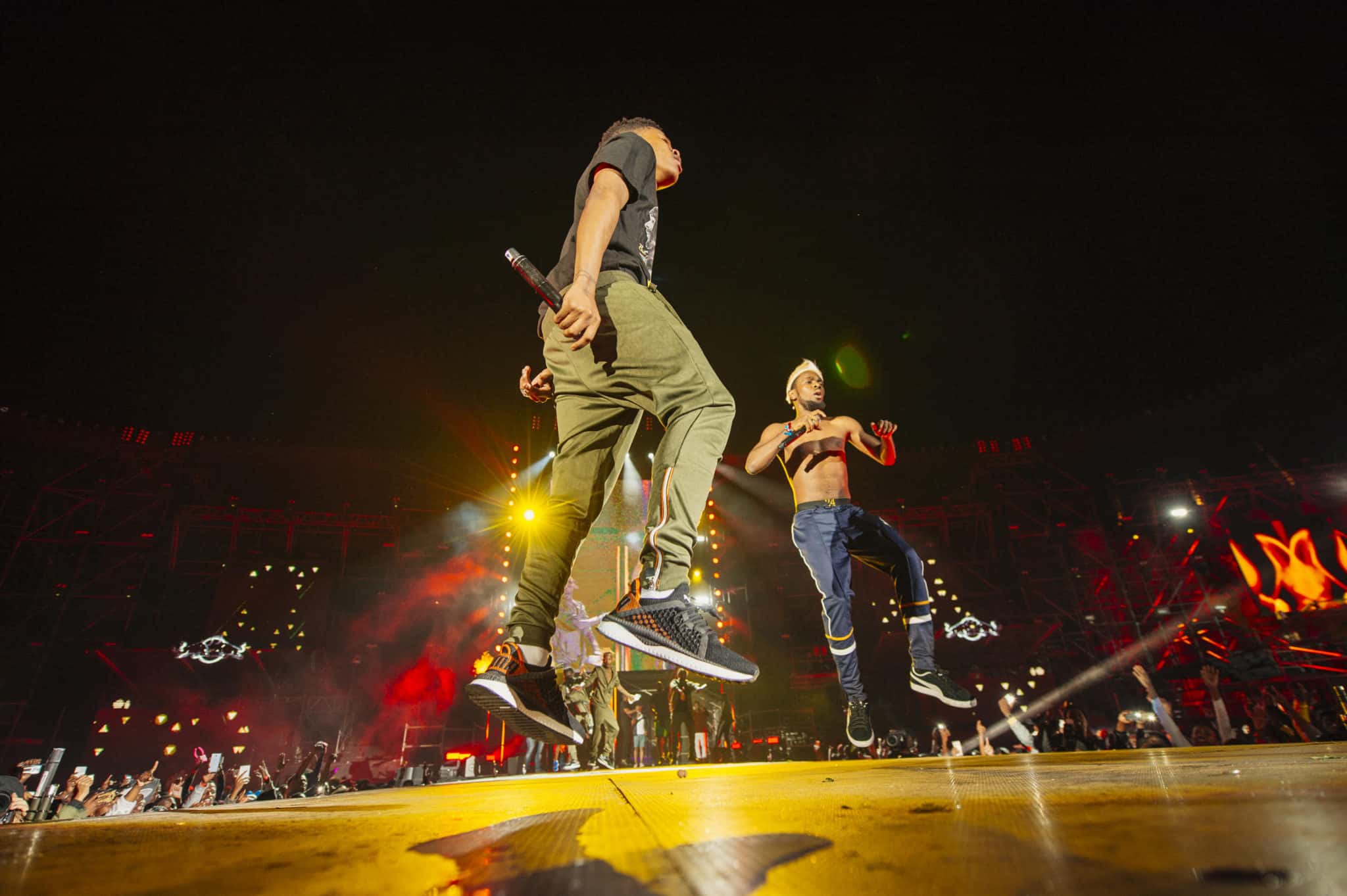
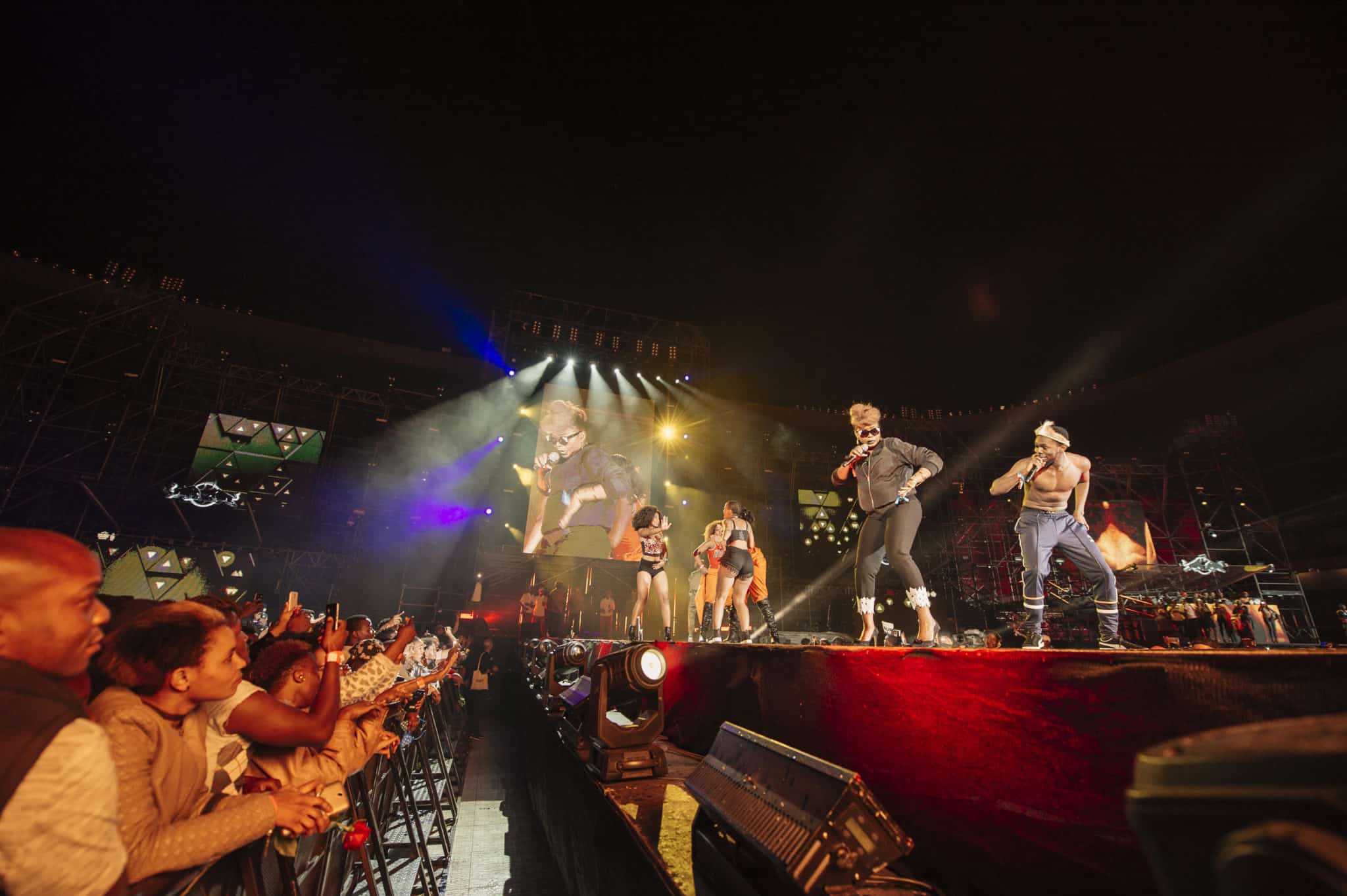
That Culture Clash Johannesburg was the premier edition of the Redbull Music Academy event on African soil, didn’t stop the aftermath of Patoranking’s outing due to a technicality, from making news headlines in Nigeria anyway. The tabloids in the nation seem to take some sweet pleasure in reporting failure, luckily Patoranking’s disqualification is a slight discomfort when measured against what it means to perform at Culture Clash.
Compared to fellow outliers Wizkid and Davido, coverage around Patoranking’s global crossover moment hasn’t matched up to the progressive leaps he has made since he broke out of the streets of Ijegun, Lagos. Performing at one of the most innovative music experiences in the world fits as a perfect example of Patoranking’s understated row over the last twenty four month period. Just before his performance at Culture Clash last month, we caught up with Pato to talk about this and his creative process amongst other related topics.
Read our conversation with the Afro-Dancehall singer below.
Can you describe your music in three words?
My music in three words; amazing, great and inspiring?
Your sound has been consistent since your debut; can you speak about your influences like Fela, The Marleys and artists of recent times?
Fela and Bob Marley have really and truly inspired my music, and if there is anything I wanna take out from them, it would be the longevity of their sound and that is what I’m trying to do, that is what I’m doing, that is what I’m practicing. Recently I listen to everybody, I listen to all types of sounds, but I wanna sound different from everybody. You will definitely know I have a touch of Fela and Bob Marley.
So howdo other markets affect your sound right now, like the Nigerian and Afrobeats sound, how do they influence your market?
Yeah It’s very important I get in touch with other markets because two things; I wanna be known there, and I want to sell my culture to them. My target audience is the global audience, you know, everybody, I wanna capture everybody so it’s very important that I tap into those markets.
In 2015 and 2016 you had two of the biggest songs in the respective years (“My Woman” + “No Kissing Baby”). Why do you think some may still not view you in the elite class of active artists?
I have never thought that…I believe there is enough space for everyone and once I start to see it as a competition, the whole point of winning alongside other African artists, is futile. I think the question is, do people view or see me [at all]? And the answer is yes, they do.My fans do, and I see them too. I am more than grateful for all the love so far.
There has been a lot of talk recently about who “started” this sound or the next etc. As someone who has been making dancehall music from the beginning, what are your thoughts when you see other artists now try their hand at dancehall-inspired songs?
Originality is key and in the same way I had an inspiration and a mentor when i started, is the same way people now see me as one. I have customised and become one with my sound so even though you might know who i draw inspiration from, you can still differentiate me from them. However, sound and style of music is a cycle that rotates with different generations and all are welcome to try whatever genre they identify with, including dancehall. My thoughts are, keep it original, relateable and consistent.
Your debut album GOE, charted on the Billboard Reggae charts. What has changed since then?
A lot of things. In fact, I never expected the album to chart on such a global scale, and since it happened it has made me realise I could get more. Next time we could be looking at winning a Grammy with an album, number one on the Billboard charts, not just number four.
Can you tell us about SummerFest, and how it felt being the only African artist on the bill, at the Summerfest?
Super Excited. My kids will be taught in school that their dad was the first african to perform at the biggest Reggae festival in the world. I learnt a lot in terms of staging and music as well and it’s an experience worth sharing.
Artists mature in their sound as they grow, what has changed since you started?
A lot has changed, my writing skills, the fact that I’m able to interpret how I feel and make it musical. I’ve grown wiser and stronger musically, I’m more musically inclined.
What ‘s the most difficult thing being Patoranking?
The most difficult thing being Patoranking is that you have to keep the brain working 24/7. You have to work smartly-hard. Haha.
What are your thoughts on Clashing coming to Africa, do you think this is a platform that can gain popularity like it has in the UK.
The Red Bull Culture Clash is a different form of entertainment that hasn’t really been felt in Africa. I think it’s a beautiful idea, if we can have more of this and really embrace this movement. We’ve seen all kinds of concerts but the Red Bull Culture Clash is different. I want to see a Red Bull Culture Clash in Kenya, one in Nigeria, just spread out across the continent.
What are your thoughts on Red Bull contributing to the Culture in Africa.
Big shout out to Red Bull and it is a great brand that I’d like to associate myself with, so I’d say on behalf of Nigeria, welcome?
There are a lot of new acts coming out of Nigeria, what do you think of them and the new sound they are creating?
I’m proud of the new guys coming out of Nigeria, like Santi and Tomi Thomas who I’ve been a fan of since his days with L.O.S. He’s different and unique. I’m really happy with their work and if there’s any advice I’d give, it’d be to work smartly-hard, put God first and put in the work. And drink Red Bull, haha!
Finally what should we be expecting from Patoranking?
Expect greatness in its purest form, expect something different. Expect fire, ya dun know, bless.
Last week, most of Nigeria and by extension most of the world put down their briefcases and ploughshares and took a few days off to celebrate the life, legend and legacy of Fela Anikulapo Kuti, arguably Nigeria’s biggest creative export. From exhibitions to concerts, talks to parties, people remembered the man who created what we know today as Afrobeat and who at his zenith held more clout in Nigeria than the Federal government. But few songs best illustrate why Fela remains as beloved and idolized twenty years after his death as “Trouble Sleep Yanga Wake Am”, off Kuti’s 1971 album Roforofo Fight.
Released as part of a quartet of albums from the most productive year of Abami Eda’s career, “Trouble Sleep Yanga Wake Am” has all the hallmarks of a classic Fela single, a languid, self determined instrumental warm up that goes on for several minutes, putting the listener in the right frame of mind, and setting up a tonal theme for the rest of the performance, a choral style, call and response chorus in conjunction with Fela’s omnipresent band, and long winding verse that defy the laws of composition and march at a tempo that only Fela decides. But what really distinguishes this song from the rest of the master’s oeuvre, is the masterful storytelling that Fela employs. Fela had always understood that at the core of his sway over his fans was his ability to empathize with their terribly oppressed lives, and the skill with which he consumed their stories, ruminated on them and regurgitated them back, defiance milled into the broth.
“Trouble Sleep Yanga Wake Am” is brimming with defiance, delivered subtly as an exchange, reflected through a lens of righteous justice. Fela sings of the oppressed, and personifies the oppression of Nigerian people. He asks through a direct chorus and series of vignettes, that the suffering of oppressed be respected and that if it is not, then the oppressed is justified in their decision to revolt, to take arms against the persons who mock their suffering and remain unempathetic to their oppression. He substitutes the government for smaller, more relatable avatars of power, like the landlord who wields the power to deny shelter, or the policeman who can take away a man’s freedom, or even closer. Never to look away from intrigue when the opportunity presents itself, Fela subverts his own theme in the third vignette about a husband, citing that sometimes it is our own avarice and pride, not an external agitator that puts us in trouble.
40 years after it was first released, through military regimes and civilian governments and a world that went digital, “Trouble Sleep Yanga Wake Am” remains relevant, because it tells a fundamentally human story.
Listen to “Trouble Sleep Yanga Wake Am” here.
[mc4wp_form id=”26074″]
Edwin eats his rice and cabbages. Tweet at him@edgothboy
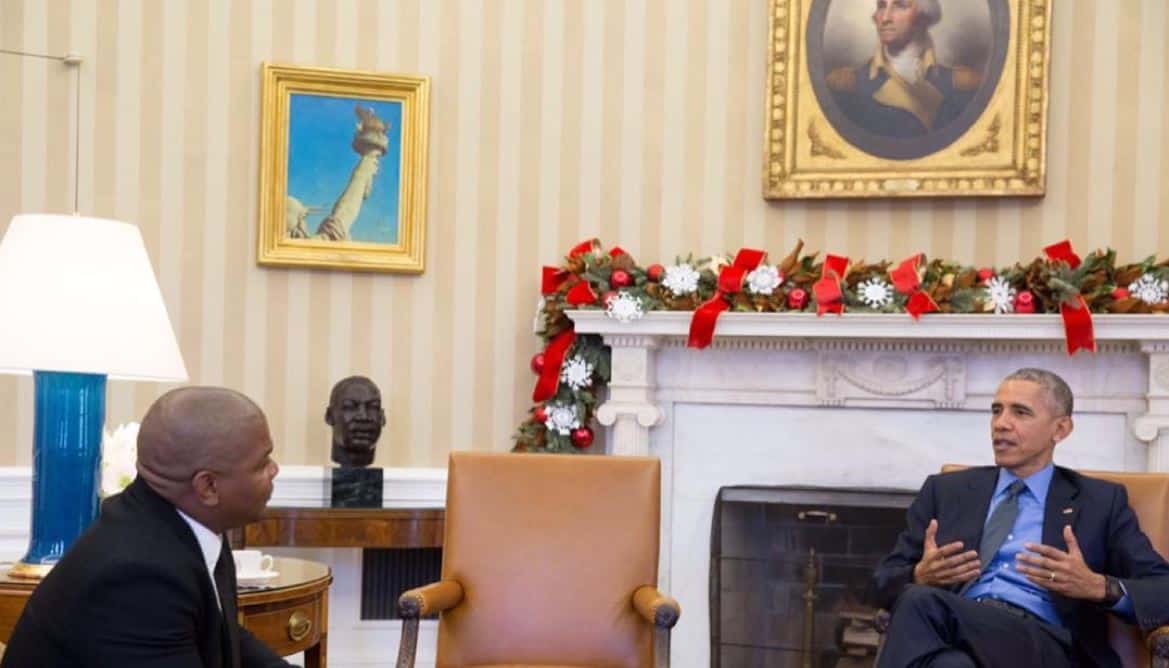
Barack Obama’s presidency might not have lifted black communities out of their struggles, but it certainly put a pep in their steps. The actualization of Martin Luther King’s dreams served as a confidence boost rippling through American society and manifested in the increased appreciation of black lives and ultimately, black artists. But perhaps now more ever, we can feel the direct influence of Obama’s presidency on black recognition with the appointment of Kehinde Wiley and Amy Sherald for the official Smithsonian portrait.
In line with the tradition that started with George H. Bush in 1993, the Smithsonian National Portrait Gallery commissions an artist to create a portrait of the president and the first lady after their tenure. Renowned New York artist, kehinde Wiley who you might remember from Jay Z’s artsy music video for “Picasso Baby” and has a reputation for his portraits of black men in the latest Hip-hop fashion will depict Barack Obama. While Baltimore artist, Amy Sherald will create the former American first lady, Michelle Obama’s portrait.
The portraits are expected to be unveiled in early 2018 and will enter the museum’s permanent collection. Black history is taking a brighter hue and we are here for it.
Featured Image Credits: Instagram/kehindewiley
You are meeting Debola at a strange time in his life. He wandered into a dream and lost his way back. Tweet at him@debola_abimbolu