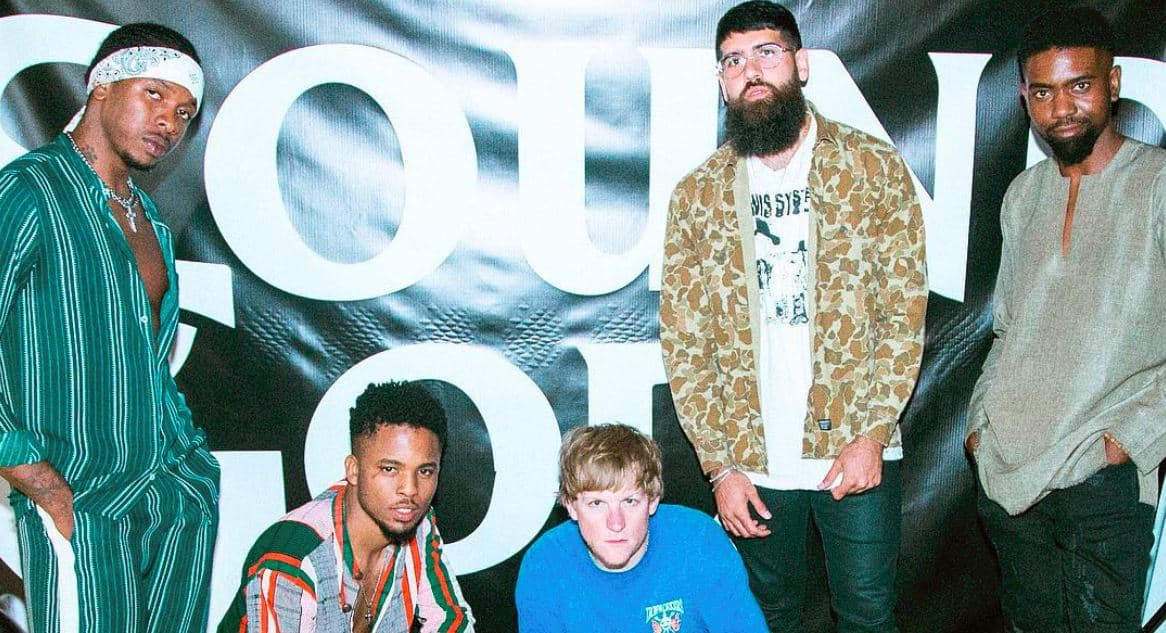
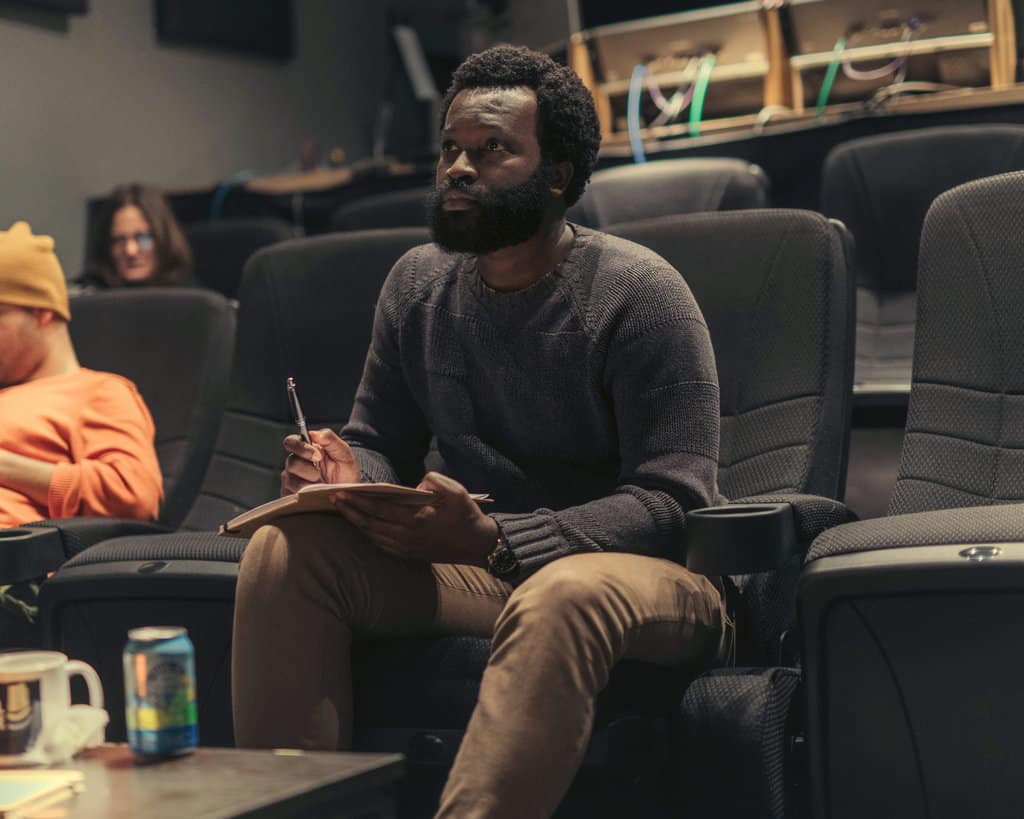
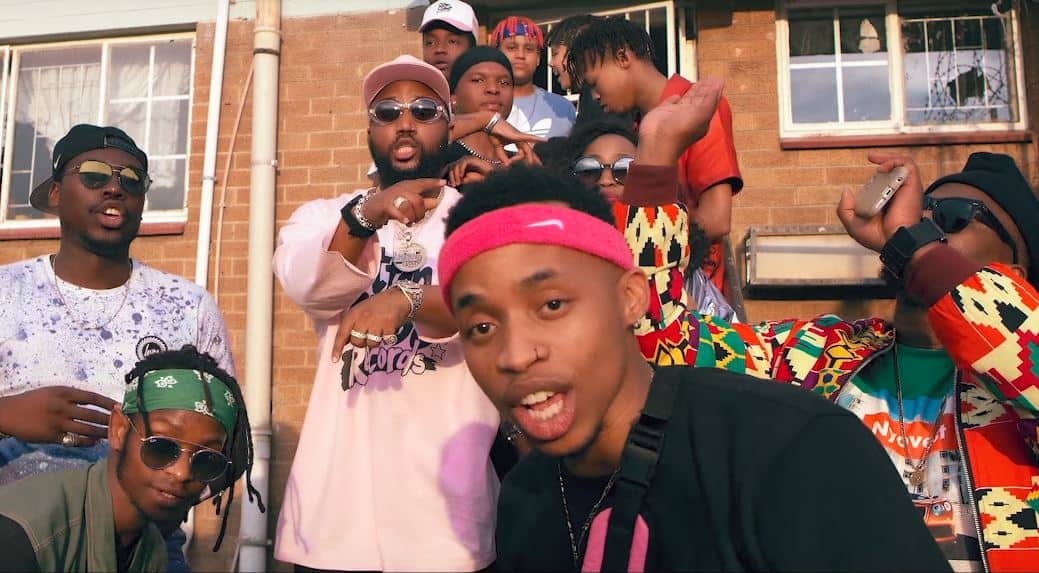
NATIVE11: MOWALOLA

Photography: Joyce NG

Last summer, anybody keeping a close eye on the London Fashion scene could not have missed the name: Mowalola. Her graduate collection at Central Saint Martins, inspired by 70s and 80s Nigerian Pyschedelic Rock, depicted an aspect of the nation that has otherwise been hidden, from its population and the rest of the world. With tight, cropped and printed pieces, Mowalola reconfigures Nigerian menswear as she fulfils her predominant intention of celebrating alternative African history and culture. 

Mowa uses more than just her apparel to celebrate Africa, as she collaborates with other creatives from her motherland, Nigeria. The NATIVE spoke with Mowalola about her industry favourites, philosophical approach to fashion and her perception of the new year. She’s up next  Now.

What does a new year mean to you?

Mo’ Money, Mo’ Problems! (Laughs). No but seriously. I feel like each year I’m just learning more about myself, in terms of what I want to create, who I am. A new year for me is when I can just out-do myself. Doing more than I did the last year, learning from my mistakes, moving forward in a more positive way. Just being more open to new opportunities. It’s really important to keep moving and growing.

What was the one thing you learnt about yourself that you want to take into 2018?

Never be afraid to fail, because [failure] is a real amazing thing. Every time I made mistakes whilst doing my collection, it just pushed me to do something even better.

What inspired you to take that step to making your own collection?

It was my graduate collection at CSM (Central Saint Martins), so it was something I had been working towards for the past six years. I remember being in first year, and being very nervous about having to do my own collection. But all the growth over the years prepared me from that. When it got to it, I knew exactly how I wanted to present my vision.

How would you describe your approach towards fashion and the philosophy behind your brand?

To me it’s about connecting to the people around me, and being able to communicate with them through my clothes and all of the visual imagery I produce. It’s important for me [to] represent my country in a different way [than they already know], and show them our rich history. I want to connect with other Nigerians around the world to inspire them to fall in love with themselves again.

What songs will you play to open and close your first solo presentation on the runway?

Late 90s New Guinea Rock Music. That energy is everything. They mix traditional African instruments with the [electric] guitar, and it’s just crazy.

Where do you feel you fit into the ongoing renaissance of the arts scene in Nigeria?

I am showing people a different narrative. We don’t always have to do all the same stuff to be successful. And [to] look deeper into ourselves to find what we want to create. True Self Expression.

Have you always viewed fashion as the best way to fully express yourself?

No not at all! I studied Fine Art when I was in school. But I feel like all the things I know, I combine it with what I do with fashion. In my work, I create all the textiles, I hand-paint, I pick the music, I create the jewellery. I still have so many ideas of ways to express myself: I want to make furniture, I want to make films, it’s really endless. If you have any creative drive, I feel like your mind will always find new mediums to express yourself.

On Psychedelic, you worked with Ruth Ossai and IB Kamara. Who would you most like to work with next?

Arthur Jafa. Viviane Sassen. Crack Stevens. Jenn Nkiru. Petra Collins. And I want to continue working with IB and Ruth, because I feel like they fully understand my vision, and we all share the same ideas. Working with them is so natural.

How do you intend to use your platform for change?

Instead of working with already established models, stylists and photographers, I try to work with local Nigerians who may not be given a chance: people such as Stephen Tayo and Dafe Oboro. There are so many talented creatives in Nigeria, and I feel like they just need people to give them a chance to show themselves.

Who are you tipping for 2018?

IB Kamara. He is the most original, unapologetically black stylist I have seen in a long time. I am constantly moved by his work. It speaks to my soul.

What does it mean to you to be unapologetically black, in today’s world?

As black people [even in Africa], we grow up being taught that we should be more like The West, as that is the “right” way to be. We fail to recognise the greatness within us. It’s important as black people to look to each other for inspiration. So as creatives, being unapologetically black is to celebrate our beauty, our world and our people through our work.

What do you want out of 2018?

More focus. More collaborations. More enjoyment.

NATIVE11: DABERECHI

Words: Edwin Okolo

Photography: Hylton Boucher

Makeup: Alice Coloriti

Styling: Chrisna Debruyn

Daberechi had to miss Lagos Fashion and Design Week. It was supposed to be her second cycle, and her first since being crowned the first winner of the Face of Few Model Search, a competition that cemented her position as the new girl to watch in Nigerian fashion. But after months of meticulous planning and successfully auditioning for LFDW, she got the call that her visa had been approved for her move to South Africa to begin a new career under the acclaimed 20 Models – just four days before she was due to hit the runway. Whilst she admits it was “unexpected” in its timing, it was a move that was very much in line with her trajectory.

After walking 20 plus shows last season, fronting campaigns for Maki Oh, Lady Biba and Tsemaye Binitie, Daberechi is cleaning slate and starting again – and making a play that she hopes will see her on the catwalks of Milan and Paris come Fall season. Daberechi is part of the Ukoha-Kalu creative sibling trio, subtly but undeniably affirming themselves as the best in their respective fields: her elder sister Yadichinma, a stellar visual artist, is also part of our NATIVE 12.

I had the pleasure of catching up with Daberechi on how she got into modelling, her big move, and how she spends her time off the runway.

How long have you been modelling for, and how did you get into it?

I have been in modelling for about a year now. I got into modelling by actively seeking it out – I decided I wanted to give it a go and not long after that I got scouted by my mother agency, Few Models.

You are a coder when you’re not on the runway. That is super rad and very unconventional. Why did you get into tech?

Thank you! I got into tech when I finished secondary school. I was an art student and I was fully aware that in Nigeria, my career options were limited to either studying Law, Mass Communications, English or something I had never heard about. I wasn’t ready to dedicate seven years of my life to Law so I decided to diversify. I took a gap year and began learning how to code.

What is the biggest difference for you between the two worlds?

Modelling demands that I be very aware of myself physically while coding only demands that I be mentally present. That is the biggest difference for me. At my first photo shoot, before I joined Few, I was an obvious mess and the photographer was giving me tips. I remember actively thinking “I don’t need this, I can code, I’m never modelling again.”

They are both worlds apart but it is so much fun to just perform! Tell a story with your eyes and craft a whole experience [on the runway] with your movement! And other times it is so relieving to jump into any outfit, not worrying too much if it flatters me or not, and sit in front of my computer.

You got your big international break by winning the inaugural Face of Few competition. Do you consider yourself a pageant girl now?

No, I’m not a pageant girl, although I’ve gotten many comments from people encouraging me to do pageantry. But that’s just not where my head is at. Few’s Next Face was a scouting contest, much more high fashion than pageantry which is why I participated in it. Even though I had been working for a few months before then, I saw it as a chance to get scouted and see what the rest of the modelling world had to offer me. It was a wonderful experience and I’m glad it turned out well.

You’ve worked with a number of high profile Nigerian designers, who has been your favourite so far?

It’s hard to just name one. I like Maki Oh, Deola Sagoe, and Tsemaye. In that order. These are designers that I can feel and see the amount of thought and creativity put into their garments. I’m absolutely in love with them, it’s insane.

Do you think models are finally getting their due in Africa?

I believe it’s a work in progress. I can testify to the Nigerian Fashion Industry, it is a small one but it is growing and developing. The scene now cannot be compared to the scene in 2012 and that was just five years ago. Models are definitely being treated with a lot more respect, people are no longer dismissive to models, and we are now fairly compensated for the work we do. It is obviously not where it should be, but we (as models) have become more aware of ourselves and our worth. We are demanding what we deserve.

What are your plans for 2018?

You know what, I believe in organised chaos. I think you run into problems when you try to bend the universe to your will. So I think I’ll just let things fall as they may.

NATIVE 11: BOJ

photography: Baingor Joiner

As the pioneer of the “Alté”sound, Boj has been on the edges of mainstream success for years. From his beginnings as DRB’s enigmatic singer who captured listeners with his deep hooks, he has continued to contribute instrumentally to the dominating mid-tempo sound in contemporary Afrobeats.

He works in his own time, and he finally feels ready to take the next step.

What does a new year mean to you?

For me, it really feels like hitting the refresh button, especially this year.

What was the hardest part about transitioning from being in a band to being a solo artist?

It was never really a band, we were always solo artists who made music as a group. Even in 2013, we (DRB Las Gidi) all dropped solo mixtapes. It has always been like this.

How did it feel to release your debut album in 2017?

It was a big deal for me, and I’m very happy I got to do that. It was actually meant to be the beginning of a new chapter for me, but it turned out to be the end of one. I’m not with that label anymore, but it’s whatever.

What are your thoughts on independence, now you’ve left your label?

I feel like if you already have a following, the best thing to do is grind it out as an indie artist. I won’t lie to you, [looking back] I don’t know why I signed to a label. I wish I didn’t, but it was a learning curve. I am a pure creative – I just want to be in the studio and do shows. But I need to have someone I trust sort out all the other stuff.

What role do you feel you play in the Nigerian music scene?

Not meaning to brag, but I really feel like I’m one of the reasons why there’s this whole “chilled” vibe in Nigerian music right now. When I first started doing it, everyone told me “you can’t do this, it won’t work”, and now everyone is on that P. We created a new generation of music.

I agree. The general tempo in Nigerian pop music has definitely changed. Do you feel like you’re given the appropriate credit for that? Do you care?

Honestly it’s not even about credit. When I first started taking music seriously, one of my main goals was to inspire people to do exactly what they feel like doing. Just knowing I’m influencing people is good enough for me.

Yeah I get that – you want to show people that it’s okay to be themselves.

Exactly.

What is success to Boj?

Happiness. Financial Security. And being perceived as an icon.

How would you describe your music to an alien that just got to earth?

Zone-out music. You know chill music. Assuming aliens chill (laughs).

Who are you tipping for 2018?

I think Burna [Boy] is going to have a big year. I think Maleek [Berry] is going to have a fucking big year. Mayorkun, too.

What are your plans for 2018?

I want to make it a visual year. I want to shoot as many videos as possible for songs off my album. I’m also making a joint album with Ajebutter [22]. It’s something our fans have wanted for a while, so we just started working on that.

NATIVE 11: Odunsi The Engine

Photography: Baignor Joiner

Odunsi [The Engine] has spent the last two years crossing over from the underground – on his own terms. Now, he’s on the cusp of greatness.

What does a new year mean to you?

I relate to people that start their new year whenever they feel like it’s right. Coincidentally, I started my career in January 2016, so for me they both align. I almost feel like every new year is my birthday – so I’ve just turned 3 (laughs).

How does that feel?

It’s scary man, I’m not going to lie. I feel like I’ve passed that stage where people ask “is he good or not?”. They know I’m good. So now, it’s like “what are you going to do next?”

What role do you feel you play in the Nigerian music scene?

I feel the need to recreate an era where everyone is being themselves. Before Afropop, when artists like Tony Tetuila and The Tribesmen were just telling their stories. They weren’t worried about [the structure] of hooks and verses, they were just being themselves and that became Pop. That’s an era I connect to in so many ways, and I want to try and recreate that.

What message do you want to give with your music?

Love. But more than that, I just want to tell my stories. I feel like there’s an under-representation of the middle class in the the music industry, in Lagos anyway. It’s either you’re from the streets…or you’re super wealthy. I’m just a normal guy who watched Channel O, Africa Magic and MTV and was influenced by that. Then I started using the internet – Hi5, Facebook, Twitter, everything. Everyone’s a product of their environment and that was mine.

Who influenced what you listened to growing up?

My big brother. He used to play a lot of Biggie, Aaliyah, Sade Adu, Craig David. Basically all the best stuff from the 90s and early 2000s. We used to have one of those Sony systems that you could put like 20 CDs in there, and all I did was watch those videos.

Did you always know you wanted to make music when you grew up?

Nah, not at all. I wanted to paint at first, I used to draw and shit. Then I went to high school, and girls weren’t really into artsy guys, so I starting getting into sport.

What sport did you play?

I played football and basketball, but my main thing was running track. I was actually pretty fast – like going to all these tournaments and shit, representing the school.

If your life was a 100M race, where would you say you are right now?

I haven’t even started man. For so much of my life, no one took me seriously. Growing up in Nigeria, the only way to prove that you have something to offer is through academics – and to me that’s just an unfair. If I fail an exam, how does that mean all my ideas aren’t good? Then I dropped out and started making music, and people liked it. Suddenly, when I talked, people listened. And I realised I have a lot of shit to say about non-music related things, I have ideas. So when I say I haven’t started yet, it’s because I know what music is going to do for me – it’ll open doors for me to kill shit in other places.

Were you scared to leave school?

For me it was really unavoidable. I was suffering from ADHD, and for so long I didn’t know. My parents didn’t know. My teachers didn’t know, so they would write stuff on my report cards like “yeah he’s smart, but he’s not applying himself.” I went into depression man…I didn’t understand what was wrong with me. I would just be in class staring at someone’s shoes, or staring at the clock. No one could give me answers, I didn’t even know what questions to ask. So once I found out, [that I had ADHD] I made the decision to leave school.

Yeah that’s definitely a big issue, especially in Africa – teachers aren’t necessarily looking out for learning disabilities in students.

Exactly. They’re actually paying more attention to the kids doing well, rather than to the kids struggling that actually really need help.

What helped you through these times?

When I was younger, I just thought things would get better. Then later on, I tapped into music a lot to feel better. Sade Adu and The Lighthouse Family were very key to me. The words were so reassuring. Obviously they made love songs, but they were more than that to me.

You’ve previously spoken publicly about your battle with self-discovery. What does peace of mind look like for you?

Knowing that I can be the best version of myself, even if I’m not quite there yet. Understanding that you can graduate to higher levels of yourself – rather than trying to be someone else – is something I’ve learnt and it’s so important. Self-awareness is the key to peace of mind. At the end of the day, you have to realise that there are certain things only you can understand about yourself.

I’ve heard a lot of people paint you as a lover boy. How do you feel about that?

I feel like there are a lot of sides to me, but that’s definitely the easiest to express. The foundation of life is love and relationships: with your mother, your father, your friends. That’s my language for now.

What is your one true Desire?

I really just want to tour the world man. I want to connect with different kinds of people that just do dope shit. I have so many ideas and I know I just need to meet the right people. Being alone most of my childhood felt like one big mental exercise. It was like how people go to the gym, I was doing that with my mind. Constantly thinking. I would be in my room just thinking for hours, thinking myself to sleep. I would dream up so many scenarios, and in every one I was a star. It was kind of my escape from what I was actually going through. Now I want to live out those dreams.

What does Family mean to you?

Man, to me, family is everything. It’s so important for me to establish honest relationships because I didn’t really have those growing up. I’m making a conscious effort to the understand the role of different people in my life.

How has music helped you establish these relationships?

It helped me find my tribe. I’ve met so many of my closest friends doing this. Instead of feeling like I need to fit in, I’m now comfortable being an outcast.

What are some of the things you and your friends are worried about this year?

Man just the country in general. Everyone is always talking about leaving, because it’s too tough. But I’m not really in a position to be taking vacations. Things are already hard enough for artists like myself, Santi or [Lady] Donli – then add that to what’s going on in the country – it just feels like you’re fighting Goliath. Or two Goliaths. But it’s not something that’s really on my mind, but every now and then it just flashes and scares you a bit. Is this going to work? How long will it take?

Who are you tipping for 2018?

Burna Boy for sure. I feel like this year will be crucial for us, too. 2018 is all about making decisions. For me, it’s like a bus. There’s a bus at 15:15, and there might not be another one till 7PM. So you have to make sure you get on the bus. It’s like the NBA Draft.

Do you feel like that for the genre as a whole?

No, but 2018 is the year that the conversation will intensify.

How does it make you feel when people group you and other upcoming acts under one umbrella?

It’s kind of lazy, but I understand it. They don’t understand us, so they feel like they have to [group us]. But there are definitely two sets of people that do this.

The first set of people legitimately don’t understand what is going on. They’re not grouping us maliciously, it’s just naive.

The second set are actually trying to do all they can to diminish us, so we don’t become anything. I’ll give you a scenario. There is one guy in a room surrounded by a bunch of people.  He is playing darts, and he keeps hitting the bullseye. And everyone in the room says “Wow, bullseye again and again, amazing.” And then the other guy walks into the room whilst all this is going on, and starts playing the flute. A couple of people in the room say “Where is that flute coming from? Let’s go check it out.” The majority of the people in the room just say “We’ll go later, we still love what the darts guy is doing.” They both keep doing their thing: the darts guy continuously hits the bullseye, the flute guy continuously riffing. Then, the girl that the darts guy is really doing all this to impress, checks out the flute guy, and she loves it. Obviously hitting the bullseye is amazing, but she just thinks the flute guy is so cool and original. So the darts guy, seeing this girl giving the flute guy all this attention, summons him over. He pats him on the head and goes“Oh yeah, this is the flute guy everyone, we met last week. How you doing, man? How’s the flute? You know what, let me buy you a new flute.”

That’s a great analogy man (laughs).

I actually deal with all this stuff man. They’re trying to make you feel like you’re going to be small forever.

Word. And little do they know, the flute guy can probably play darts too.

Exactly. They want to force us into this box. It’s like fake support. But at the end of the day, I’m built for it. I’ve done my homework. I’ve watched how transitions happen in any industry – not just music – and it’s always the same. When shit is about to happen, it’s always the same. There’s nothing new.

What do you want out of 2018?

I want to solidify a following. I want to really have a tribe. Like if I [tweet] a full stop, they know exactly what I mean. I want my listeners to become my family. With them, there isn’t anywhere I can’t go.

Duncan Mighty and Wizkid team up for “Fake Love”, a riveting Afropop number

Beyond the reverb effect, there’s something about the way Duncan Mighty sings “I Want To Be Like This, If Love Can Be Like This” that lingers. Dripping with loss, hurt, and regret, it also contains an element of hope. And with a feature from Wizkid, their combination, “Fake Love” is a delightful listen despite the message of romantic hopelessness.

https://www.instagram.com/p/BiWl-FsAspo/?hl=en&taken-by=wizkidayo

The Clarence Peters directed video is mainly performative over the mid-tempo beat Killertunes produces with atmospheric synth backdrop, Duncan Mighty and Wizkid combine to deliver vocals—in English and an indigenous language—that seem to say “Only Fake Girls Be Loving When You Have/ When E Ready Them To Hammer”. Their confessional is a reminder that even the biggest celebrities are humans and aren’t above feeling emotionally confused as Wizkid admits his trust issues, “Sey You Go Dey For Me If I No Pay”, before confessing what seems to be his true feelings, “Make I Be Your Bobo/ Make I Die For Your Matter Oh” regardless.

Watch “Fake Love” by Duncan Mighty and Wizkid.


Featured Image Credits: Instagram/wizkidayo


You are meeting Debola at a strange time in his life. He wandered into a dream and lost his way back. Tweet at him @debola_abimbolu

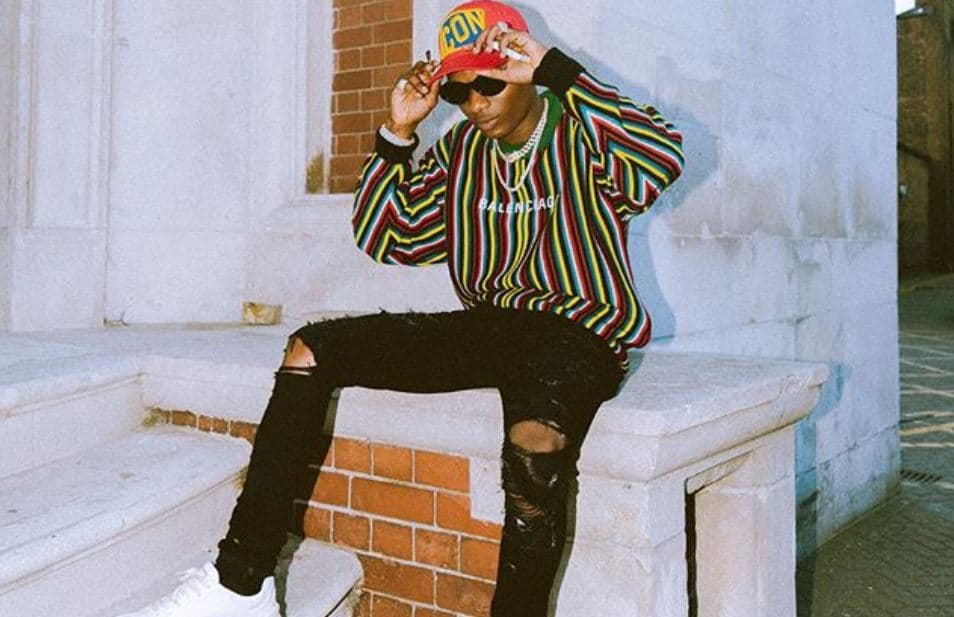

ICYMI: Wizkid and Olamide team up for new single, “Kana”

Listen to Tiwa Savage’s new single, “Tiwa Vibe”

Since her captivating performance on femme anthem, “Kele Kele Love”, we’ve known Tiwa Savage had a long career ahead of her. Her latest single, titled “Tiwa Vibe”, is a testament to her glamour and coming into her own.

https://www.instagram.com/p/BiflzibADuf/?hl=en&taken-by=tiwasavage

It’s not every day you hear electronic guitar solos on dance driven Afropop songs. For “Tiwa’s Vibe”, Spellz provides the pleasant mid-tempo harmonies layered with ambient synths, drums and soaring electronic guitar riffs which serve as theme music for Tiwa Savage’s detailed instructions on what to do before stepping up to her on the dancefloor. Singing “If You Want To Touch My Body/ You Gaz To Spend The Money Oh/ Bottles Most To Pop Oh”, she’s reemphasizing Small Doctor’s criminally underrated lyrics “If You No Get Money/ Hide Your Face”. Tiwa Savage channels party sentiments for “Tiwa Vibe” and the beat doesn’t let her down.

Listen to Tiwa Savage’s “Tiwa Vibe” here.

Featured Image Credits: Instagram/tiwasavage


You are meeting Debola at a strange time in his life. He wandered into a dream and lost his way back. Tweet at him @debola_abimbolu

ICYMI: Watch the video for Tiwa Savage and Omarion’s “Get It Now” remix

YCee gets in his feelings for new single, “Your Love”

After collaborating with fellow Tinny Entertainment artist, Bella Alubo, for their joint romantic EP, Late Night Vibration, YCee still seems stuck in his feelings for his new single, “Your Love”. Singing over the EDM inspired beat Syn X produces with crashing synths and throbbing drums that lead to a bass drop without really peaking, YCee reminisces on love; “January to December”.

https://www.instagram.com/p/BiVWxN7HhnW/?hl=en&taken-by=iam_ycee

YCee’s new single may have missed the season of love by a few months, but the electronic beat ensures the song will fit right into summer playlists.

Listen to YCee’s “Your Love” below.

Featured Image Credits: Instagram/iam_ycee


You are meeting Debola at a strange time in his life. He wandered into a dream and lost his way back. Tweet at him @debola_abimbolu

ICYMI: See all the Essentials from Bella Alubo and YCee’s joint EP, ‘Late Night Vibrations’

6 videos you need to see this week

Childish Gambino – “This is America”

Donald Glover’s alter-ego, Childish Gambino released the video for “This is America” after premiering the song during his hosting gig at “Saturday Night Live”. Like the title suggests, the video offers what seems to be a glimpse at what it’s like being black in America. Hiro Murai directs the carnage and chaos glorifying video being analyzed on Twitter. While some describe it as a powerful rally cry against gun violence, others think it’s a graphic portrait of black-American existentialism. Some, however, aren’t too thrilled at the violence displayed in the video forces them relive traumatic experiences, and it’s hard to blame them with the anarchy being placed side by side with kids playing in the car park.

CDQ – “Aye” Feat. Phyno and Reminisce 

If you thought hip-hop in Nigeria died, you deserve jail time for wrong diagnosis and CDQ’s latest release, “Aye” featuring Phyno and Reminisce should be evidence presented against you in court. “Aye” is hardcore hip-hop number with vengeful diss bars and brags over sombre ambient harmonies, but that’s not the highlight. Whenever you invite rappers like Phyno and Reminisce to spit aggressive rap bars, the odds are they’ll steal the show. Few people can match their mix of English and indigenous lyrics, but CDQ matches their aggression inspired perhaps by the current state of rap in the country and bitter sweet memories of Da Grin. AdamsGud directs the video showing all three rappers performing their verses illuminated by red lights.

Royce Da 5’9 – “Caterpillar” Feat. Eminem

Royce Da 5’9’s new single, “Caterpillar” features a guest verse from Detroit rap’s most famous son, Eminem. The single instant reminds us the electric partnership of Bad Meets Evil heard on their joint ‘Hell: The Sequel’ project. As expected, they come for anyone and everyone who thinks they can compete with them in the rap booth. Eminem’s verse references faecal matter but talking shit doesn’t stop him from threatening the mumble rappers with an axe; “The boom bap is coming back with an ax to mumble rap”.

Sarkodie – “The Come up (Freestyle)”

Sarkodie’s success as a rapper has been a source of inspiration to lots of aspiring rappers in Africa who are struggling to compete with more commercial genres. Sarkodie’s latest release, “The Come Up Freestyle” is presented as a response to one of such fans who wrote him a message asking “As an up and coming rapper, what keys do I need to open the locks in the industry”. The video shows Sarkodie’s response, explaining how he made it through the tough times with a nothing but a couple bottles in the background serving as confirmation of his status. But he’s a renowned rapper and only needs his signature blend of rapid fire Twi and English to rap bars as he encourages upcoming rapper to stick with the struggle till they eventually get a big break.

Wande Coal – Oh No No

Released in September last year, what makes Wande Coal’s romantic Afropop single, “Oh No No”, really hit—besides the catchy beat and hook—is it’s romantic theme. It’s a theme that underscores most of Afropop’s earworming catalog. And Wande Coal has proven time and time again the endearing narrative never gets old. Backed by the atmospheric synths Cheeky Chizzy produces, he sings over a lover’s attractive looks. The Director Q directed video follows that simple script bathing Wande Coal and an attractive model in strobe lights.

Krizbeatz “Erima” Beat tutorial

Krizbeatz is among the producers making his name known in Nigeria’s soundscape. His sound signature has featured on a number of Afropop hits like “Erima” featuring Davido and Tekno. The producer took to his Youtube to give break down the creation of the song’s beat for aspiring producers. The 24-minute long video features tutorials from Krizbeats on how to make Afropop beats and some informed analysis on the creation of the song.

Featured Image Credits: YouTube/Royce Da 5’9


You are meeting Debola at a strange time in his life. He wandered into a dream and lost his way back. Tweet at him @debola_abimbolu

ICYMI: Watch the video for Falz and Simi’s “Foreign” collaboration here

Listen to Korede Bello’s endearing new track, “Sote”

Where 2016 hit “Do Like That” showed off Korede Bello’s dexterity with sultry, metallic club music and R&B, he increases the pace to a well-suited sprint for new single, “Sote”. The song speaks to that spark of insanity, being in love with another person, making grand promises and declaration; “Dangote Na My Father/ Otedola is My Daddy/ Adenuga Na My Papa/ Anything You Want, You Order Till You Tire”.

https://www.instagram.com/p/BieZ_3MBYTj/?hl=en&taken-by=koredebello

“Sote” finds Korede Bello so in love that his promises sound unbelievable and borderline crazy.  But his ridiculous statements make for a fun listen, over percussion and nodding-bass produced by Babyfresh.

Listen to Korede Bello’s “Sote” below.

Featured Image Credits: Instagram/koredebello


You are meeting Debola at a strange time in his life. He wandered into a dream and lost his way back. Tweet at him @debola_abimbolu

ICYMI: Watch the video for Korede Bello’s “Melanin”, a pro-black skin anthem

Check out the Video For Simi and Falz’s ‘Foreign’

Since the release of their collaborative project “Chemistry” in 2016, Simi and Falz have sailed through their solo careers with light-hearted and emotive music, like much of the music on the joint project. Both artists have released excellent albums and equally eye-catching music videos since this project, but it is fair to say that Chemistry has stayed one of the more interesting collaborative projects since it was released.

At the time, the duo kept it limited to audio versions of the songs on the EP, but they have now resurfaced, two years after, with a video for the first song from the project, titled “Foreign” because, echoing Simi’s announcement post, “Some things are too hard to let go of”

https://www.instagram.com/p/BiW_D7aHf9J/?taken-by=symplysimi

Like we hear on the song, both artists take turns explaining to how [and why] they’re “Foreign” [International, not from around town]. The video begins at a local food joint, where both artists take turns trying to out-do one another. With the gimmick accent heard on most of Falz’s music, makes his case with lines like “I’m so janded look at all my garment”. Simi’s singing fits right in, with the singer dropping equally ridiculous lines.

While they both explain that they won’t be caught dead eating the food being served, they somehow gingerly stand in line to eat the same meal. There’s a battle of sorts between both characters at the end, but there are no winners, as both are held by a small mob for not having any money to pay for their meal.

Watch Simi and Falz’s “Foreign” here

Featured Image Credit: Youtube/X3M Music


“Tomiwa is figuring it out…” Tweet at her @fauxxbella


Simi Goes On A love Voyage In ‘Smile For Me’ Video

Wande Coal and Juls serve-up “So Mi So”,

As far as songwriters and composers go, Wande Coal is the bar and the starting point for any artist aiming for Nigeria’s elite class. Since his Mo-Hits days, Wande Coal’s tack has been both a wide breadth of melody and the ability to build compositions that manage equal amounts earworm and ingenuity. Set on guitar-led instrumentals produced by Juls, “So Mi So” is threaded as one of those Wande Coal gems you can expect to snake into playlists gradually until it seems like everyone won’t stop playing the damn song. Thematically, Wande keeps things light, teasing his lover about her beauty with soft lyrics and a smoky delivery lined-up against mid-tempo drums.

Juls has been reaching for new levels of inspiration by tapping into West African highlife with an Afro-Carribean tint; first with Burna Boy’s “Rock Your Body”, now with Wande Coal. If there was ever any doubt about the man’s ability to make distinct yet familiar neo-highlife, “So Mi So”, clears all that shit up.

Stream “So Mi So” below.

Essentials: WANI’s ‘Lagos City Vice’ is the truest mark of Afropop 2.0 yet

Afropop is coming full circle. As opposed to the older generations who relied heavily on American pop music for a frame of reference, we now have a backlog of Afropop classics to sample from. And WANI takes full advantage of this wide breadth of refrences for ‘Lagos City Vice’, his project debut.

https://www.instagram.com/p/Bh9KSMpg4af/?hl=en&taken-by=ayo.wani

Nearly a year after releasing “Blem”, an Afropop cover for Drake’s hit, WANI debuts his EP with mellow lightweight ambience, tailored for the carefree period of vacations and sunshine. The breezy fusion of neo-R&B and Afropop melodies is smooth and his lyrics heightens the tracks’ warmth and delight.

The opening track, “2face Riddim”, named in honour of 2Baba’s influence on Afropop, underpins the WANI’s unabashed loyalty to his preferred style and sound. The mellow synth led invitation to a good time is a slow burner that interpolates lines from 2face’s “Keep on Rocking” and samples vocals from his Face 2 Face album debut. Though the beats build to a climax, the gratification feels delayed, even through 2nd track, “China Designer” with pacier drums. On “China Designer” WANI sings the praise to his love interest over a beat similar to Tekno’s “Be”, but shares lyrics from Baba Dee’s classic, “Sodi E”, another gem from the archives.

Still, it’s not till the 4th track, “What You Like”, that the party really starts jumping. The mixture of horn sounding samples, drums and sweeping synths that peak and drop is catchy, seemingly designed to get listeners on their feet as WANI’s vocals cajole the clubby sentiments, “Catch a Vibe All Night/ I Know That’s What You Like”.

On “MVP”, WANI’s showy side, merely hinted at on previous tracks, takes front and centre. Though the themes of steamy dancing at the club remains present, he manages to sneak in a few brags while cheering the lifestyle. “234”, the last track on the EP, however ditches the partying to perform a more heartfelt declaration of his love.

Listen to WANI’s debut project, ‘Lagos City Vice‘ below.

Featured Image Credits: Instagram/ayo.wani


You are meeting Debola at a strange time in his life. He wandered into a dream and lost his way back. Tweet at him @debola_abimbolu

ICYMI: Pre-released track, “Instaman” is pure dancefloor magic

Odunsi shares new single, “Mine” featuring Hamzaa

Since carving a spot for himself in the music industry, Odunsi has stayed in the spotlight through features and collaborations with people both within and outside the mainstream industry. His first single for the year, “Mine” was released over the weekend and he says he released it because he doesn’t know what other windows to put it out.

“Mine” is a love song with Reggae influences and interpolations of MAGIC!’s 2014 hit, “Rude”. Over the mid-tempo percussion, swinging acoustics, drums and vocal harmonies, Odunsi sings his lovers praise, promising to love her forever. He features London based singer, Hamzaa, who matches his emotional rendition, offering lines in  English and a native dialect.

Listen to Odunsi’s “Mine” featuring Hamzaa below.

Featured Image Credits: Instagram/odunsitheengine


You are meeting Debola at a strange time in his life. He wandered into a dream and lost his way back. Tweet at him @debola_abimbolu


ICYMI: Watch the video for Odunsi’s toe-tapping ballad to one night stands, “In The Morning”

Listen to Simi on Somi Jones’ “Blow Me Away”

After releasing videos for a couple of songs on the Simisola album, Simi teams up with music producer, Dj Somi Jones and OZ for the Somi Jones’ a new single, “Blow me away”.

https://www.instagram.com/p/BiT9D8vBLTX/?hl=en&taken-by=somijonesmusic

Simi and OZ both admit to previously shying away from the intensity of their feelings and keeping things low key but render themselves open to be bowled over by a significant other (with ease though) over what sounds like a vibrant mix of Afropop and EDM but it’s really Simi that blows it out of the water.

Listen to “Blow Me Away” here;

https://itunes.apple.com/ng/album/blow-me-away-feat-simi-oz-single/1377847886


WANI debuts with ‘Lagos City Vice’ EP

From minimally promoted song covers to sleeper hits like “Instaman”, WANI has been infusing nostalgic references for instantly likeable Afropop. It’s a pattern marking how far the sound has come over the years, and everyone from Nonso Amadi, Tekno to Davido have employed this technique for their hits. But it seems only WANI has enough spunk to harmonise a sound that listens and feels truly authentic.

https://www.instagram.com/p/Bh9KSMpg4af/?hl=en&taken-by=ayo.wani

WANI’s debut EP, ‘Lagos City Vice‘ revives wistful R&B influenced Afropop from the early 2000s. If your memory is sketchy, check out the opening track, “2face Riddim” and the rest of the 6-track tape below.

Featured Image Credits: Instagram/ayo.wani

[mc4wp_form id=”26074″]


You are meeting Debola at a strange time in his life. He wandered into a dream and lost his way back. Tweet at him @debola_abimbolu

ICYMI: Read our Best New Music feature on WANI’s refix of Drake’s “Blem”

Listen to “Kana”, the new Olamide and Wizkid joint

Wizkid and Olamide’s career paths may have taken very different trajectories—while Wizkid seems to have tailored his last project, SFTOS, for international charts, Olamide has spent the last couple of years honing his ‘voice of the street’ renown. Yet, both seem to be at their career peaks since their first collaborations on “Omo To Shan” in 2011. Ironically however, it is this divergence in direction that makes their latest collaboration more homogeneous than previous ones.

https://www.instagram.com/p/BiVENvTA9Hg/?hl=en&taken-by=baddosneh

“Kana” Olamide’s new single featuring Wizkid is a mid-tempo Afropop bop produced by Mut4y(AKA, one half of the Legendury beatz duo). Over the layers of synth percussion and drums, Olamide and Wizkid debate how much they’re willing to spend for a good time. Though Olamide has long shown his liking for party-driven Afropop songs, perhaps as a result of the Wizkid feature or the laid-back atmospheric beat Mut4y produces, “Kana” listens smoother than anything we’ve heard from the YBNL boss in recent times. But we still get those brash lines that make his songs so affecting on the streets.

Listen to “Kana” below.

Featured Image Credits: Instagram/baddosneh


You are meeting Debola at a strange time in his life. He wandered into a dream and lost his way back. Tweet at him @debola_abimbolu


ICYMI: Watch Olamide’s thriller-inspired video for “Science Student”

Watch the video for Chidinma’s new single, “Yanga”

As a follow-up to “Love Me”, released earlier this year, Chidinma has dropped a new single titled “Yanga”. Released on the singer’s birthday, “Yanga” follows the same romantic theme heard on the previously released track. But unlike “Love Me”, which tells the story of a couple who fight but ultimately end up together, “Yanga” finds Chidinma demanding for public declaration of affection from a lover who appears to be indecisive, or unwilling to go public with their feelings.

https://www.instagram.com/p/BiSKRL2BI-l/?taken-by=chidinmaekile

Like Tiwa Savage’s 2010 classic (“Kele Kele Love”) Chidinma’s “Yanga” is plea to be shown off. Only Chidinma’s single is more persuasive than threatening. Singing over the pacy traditional drums and Afropop instrumentals, she promises (or threatens) to show her lover off “Because Dem No Know”. The video Mex Films directs highlights the song’s cheerfulness through the colorful costumes and set designs showing Chidinma dancing with a flashmob till she eventually convinces her lover to join her on a date.

Watch the video for Chidinma’s “Yanga” below.

Featured Image Credits: YouTube/Chidinma Ekile


“Tomiwa is figuring it out…” Tweet at her @fauxxbella


Watch Chidimna’s video for “Love Me”

DJ Yin teams up with Bankyondbeatz and Bella Alubo for romantic new single, “Voodoo”

Feelings are often very specific, finding the right words to describe them is like scouring through the dictionary for a word you can’t even spell. It’s why songs that capture our exact feelings are so affecting. DJ Yin’s new single, “Voodoo” featuring Bella Alubo describes her romantic feelings by alluding them to the mysterious and supernatural.

https://www.instagram.com/p/BiPouYmlvzo/?hl=en&taken-by=officialdjyin

There’s something about the windswept beat Bankyondbeatz produces with drums and ethereal synths and the auto-tuned and echoey voice of Bella Alubo that makes “Voodoo” an instant ear-worm. The chorus, “Cause I Hate You, Then I Want You, And I Hate You, And I Want You, And I Crave You”, expresses sentiment from attractions you can’t explain.

Listen to DJ Yin’s “Voodoo” featuring Bella Alubo below.

Featured Image Credits: Instagram/bellaalubo


You are meeting Debola at a strange time in his life. He wandered into a dream and lost his way back. Tweet at him @debola_abimbolu

ICYMI: Listen to DJ Yin’s “Kilimanjaro”, raising awareness on mental health issues

Blackmagic has an important message for everyone on his new single, “No Need”

In this age where social media provides a channel to document all our proudest moments, it’s almost inevitable that at some point you’ll compare yourself to other people in your life. Careers, finances, and relationships can be frustrating when it seems like everyone else is reaching important milestones—enrolling in grad school, snagging promotions at work, in happy relationships, etc.—while you’re stuck treading water.

But rather than sulking at that friend’s extravagant post announcing her weding engagement while she’s vacating in Dubai with her hot boyfriend (who’s a body builder, naturally), Black Magic’s new single, “No Need”, encourages listeners to keep on living life and be grateful what what they have because—and this may seem cliche but—the grass is always greener on the other side.

Backed by soulful percussion and somber traditional drums Xela produces, Black Magic sings and raps, using what seems to be a personal experience with a failed relationship to pass the message that “All That Glitters Is Not Gold”. The video Aje Films directs for “No Need” shows Black Magic playing private detective as he watches a relationship, seen in slow-motion, falling apart.

Watch the video for Black Magic’s “No Need” below.

Featured Image Credits: YouTube/Blackmagic


You are meeting Debola at a strange time in his life. He wandered into a dream and lost his way back. Tweet at him @debola_abimbolu


ICYMI: Listen to the Fetty Wap’s verse on Black Magic’s reissued “Wonder” single

Wean off the lean: The conversation we need to have about Nigeria’s war on Codeine addiction

Growing up, Nollywood stereotypes played a huge role in scaring us off drugs. Smoke weed and you are sure to end up a criminal behind bars, a little nose candy and you become an emaciated addict chained to a makeshift gurney. The older generation loved fear as a means of communication. Yet, drug prohibition costs economies billions annually, and according to the British Medical Journal has “failed to curb either demand or supply, reduce addiction, or minimise harm”; like letting kids watch many horror movies and risking desensitising them  to gore.

Poppies have been cultivated for opium as far back as 3400 B.C. They were commonly called “the joy plant,” because of the “highs” one can get from opium. Opium soon became a popular tool to bolster power and influence  among empires.  For example, Britain smuggled opium into China in the 1800s by leveraging their control of the East India Company. The smuggling guaranteed Britain could meet its citizens’ constant demand for Chinese-produced tea to the detriment of the myriad of  people who became addicted in an exponential progression.

In 1839, China recognised this problem and shut down Britain’s drug trafficking racket. China also confiscated existing opium, which angered Britain and touched off the first of the Opium Wars. China’s Emperor was determined to end opium addiction in his country and enacted laws banning opium in China and cracking down on opium traders. British traders demanded compensation for their lost opium, but when the Treasury could not afford it, the war was used to resolve Britain’s debt. The versatility of Opium however, is what makes it most difficult to eradicate completely.

China’s draconian countermeasures to regulate narcotics did little to lessen their drug problem and even now, the current global opioid crisis goes to show that America’s decades old ‘War on drugs’ is no closer to yielding substantial result.  Codeine by itself is arguably more dangerous than the other derivatives of Opium because it is prescribed to treat common illnesses. Found in many popular cough syrups, it can also be taken orally as pain relief as it is synthesised from morphine. Yet constant or prolonged codeine use carries risk of dependency and addiction.

A report in the British Medical Journal suggests that a quarter billion of adults—one in twenty people worldwide— take illegal drugs every year. These consciousness altering substances provide a Nirvana for those who feel they are drowning in an ocean of loneliness and hopelessness and yearn for a connection to something greater than themselves. And clearly, a lot of people are, especially in developing nations like Nigeria. It’s no surprise that we have lots of drug abusers, and it was always only a matter of time before the government put a ban on products containing Codeine.

Substance abuse has been a thing in Nigeria for a minute now but trust society to heap all the blame on ‘Kids these days’. Too many of us are familiar with parents who are mobile pharmacies in their own right; popping one pill or another. You know the ones, they always excuse as stress or pain relief pills. However, Tramadol and Codeine the mostly publicly abused by the youth today. They’re in the bottles of soda, lean cups, hookah bowls and the handy water bottles. These prescription drugs have become more recreational than they are used for treatment.

To launch its documentary unit ‘Africa Eye’, BBC released an investigative documentary on the extent of codeine addiction in Nigeria. It took a five-month in-depth undercover investigation into the plague of Codeine addiction in Nigeria, but the exposé brought to light major ills in the Nigerian pharmaceutical industry. The documentary served as curtain call for big shots in Nigeria’s pharmaceutical industry who move these legally manufactured products through back channels to drug dens. You want to understand how we got here, there’s a simple explanation: it’s a lot easier to get high than it is to get help in Nigeria.

In response to the BBC documentary and the attention it got on social media and other news disseminating platforms, the government placed a ban on the importation and production of codeine for cough medications. To ensure that citizens with an actual need for antitussives are protected, Dextromethorphan is being floated as a replacement for codeine in cough syrups. Dextromethorphan is a widely used cough suppressant and compared with codeine, is proven to lower cough intensity to a greater degree. Throw in it’s lack of side-effects, it’s safety even in overdose and it’s non-narcotic status, dextromethorphan as a substitute for codeine is a decent choice.

While placing a ban on legal production and importation of the opiate is not a terrible idea, starting off with criminalisation while fighting a drug epidemic is quite shortsighted. Addiction takes off easily for a number of reasons: from poor mental health care, inaccessibility of employment opportunities to a growing sense of social isolation. The rise in deaths of despair such as suicide and alcohol or drug related deaths is proof that we have a lot of complex problems in this country. Focusing on opioid supply without really addressing these socio-economic and mental health problems linked to addiction makes no sense—because people still have these problems. They’ll simply move on to the next available substance if their drug of choice is off the market.

Usually, when drugs are banned, they don’t vanish. Instead, they are transferred from licensed businesses to armed criminal gangs. From the documentary, these criminal rings already exist and the ban only hands them more power to bargain—best case scenario, the price for Codeine goes up and abusers are discouraged. Legal businesses have the law to protect their businesses. Illegal dealers obviously can’t go to the police to protect their property so, they have to establish their trade and defend it—with violence. And just like that, the ‘war on drugs’ births a ‘war for drugs’.

There’s no shutout when dealing with a drug epidemic. Nigeria will have to do a lot more than just place a ban on the substance. From stronger safety net policies, better social services, better integration of mental health care with the rest of the health care system. Fighting this will require rebuilding communities from the ground up. We have to give people meaningful work, some opportunity for recreation— alternative sources of dopamine, so people have something to replace the drugs or can keep from turning to drugs at all. More rehabilitation centres that look better than the ones covered in BBC’s documentary (nobody is getting better under such inhumane conditions) need to be open to be public.

It’s impossible to overstate how much the public’s perception of drugs and addiction needs to change. While doctors and experts recognise that addiction is a medical condition, much of the public view it as a moral decadence.

Perhaps, educating people on the basic realities of addiction and why it needs every bit of attention is a way out of this. Until everyone understands that someone continuing to use despite their lives being in jeopardy is a clear indication that addiction is beyond individual control on some level, it’s likely the policy response will remain inadequate.

Featured Image Credits: YouTUBE/Kurzgesagt

Olamide set for United States tour, this May

Over the last few years, pop music in Nigerian has grown a notable global appeal and our biggest pop stars have taken advantage of tours across the continent. Olamide’s street-centric music means he can always count on fans in Nigeria (particular in the west side) to come for his concerts, but the YBNL chief isn’t blind to the potential in his global audience. He announced a USA tour on his Instagram a few days ago naming it the “USA Culture Tour”. It’s powered by Duke Concerts and is expected to start in New York on the 11th of May before heading to Atlanta on the 13, Washington on the 18th and close in Los Angeles on the 27th of May.

See the flyer for Olamide’s USA concert and the venues for in the Instagram post attached below.

https://www.instagram.com/p/Bh7VH7vAPPw/?hl=en&taken-by=baddosneh

Featured Image Credits: Instagram/baddosneh


You are meeting Debola at a strange time in his life. He wandered into a dream and lost his way back. Tweet at him @debola_abimbolu

ICYMI: Why concerts looking for massive turn out in Nigeria have a long way to go