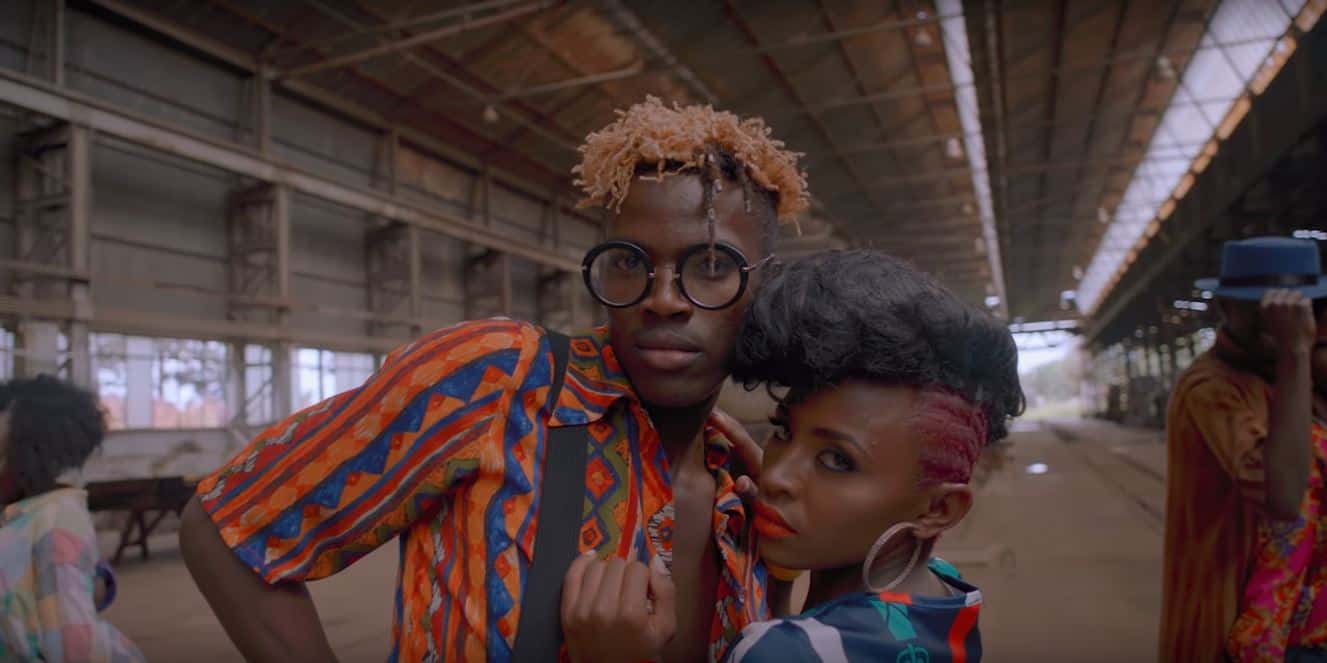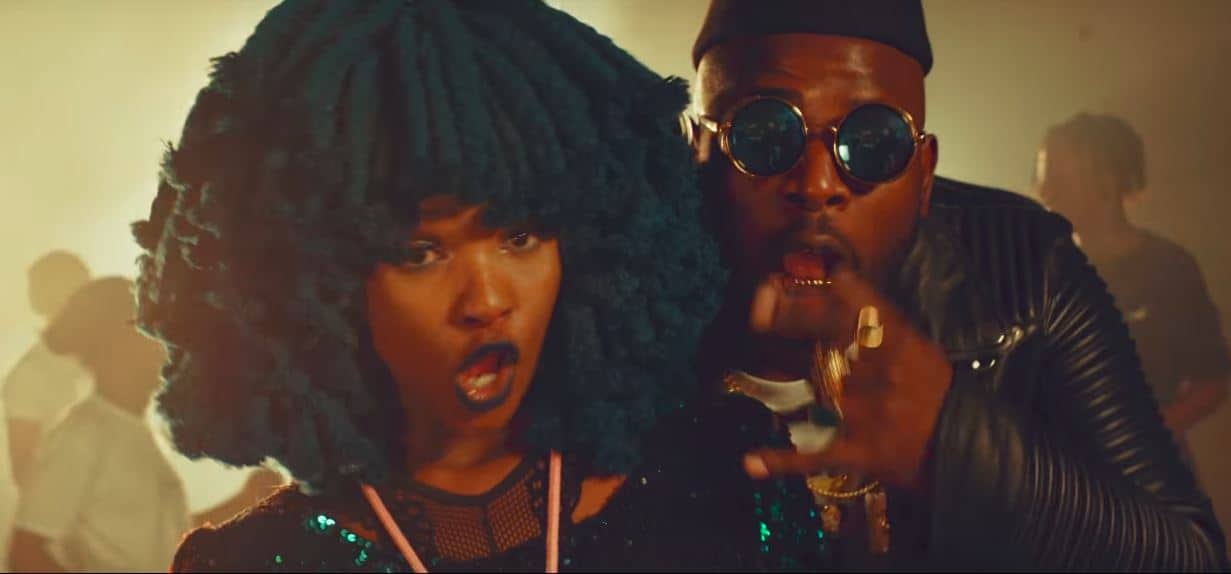
Listen to “Kana”, the new Olamide and Wizkid joint

Wizkid and Olamide’s career paths may have taken very different trajectories—while Wizkid seems to have tailored his last project, SFTOS, for international charts, Olamide has spent the last couple of years honing his ‘voice of the street’ renown. Yet, both seem to be at their career peaks since their first collaborations on “Omo To Shan” in 2011. Ironically however, it is this divergence in direction that makes their latest collaboration more homogeneous than previous ones.

https://www.instagram.com/p/BiVENvTA9Hg/?hl=en&taken-by=baddosneh

“Kana” Olamide’s new single featuring Wizkid is a mid-tempo Afropop bop produced by Mut4y(AKA, one half of the Legendury beatz duo). Over the layers of synth percussion and drums, Olamide and Wizkid debate how much they’re willing to spend for a good time. Though Olamide has long shown his liking for party-driven Afropop songs, perhaps as a result of the Wizkid feature or the laid-back atmospheric beat Mut4y produces, “Kana” listens smoother than anything we’ve heard from the YBNL boss in recent times. But we still get those brash lines that make his songs so affecting on the streets.

Listen to “Kana” below.

Featured Image Credits: Instagram/baddosneh


You are meeting Debola at a strange time in his life. He wandered into a dream and lost his way back. Tweet at him @debola_abimbolu


ICYMI: Watch Olamide’s thriller-inspired video for “Science Student”

Watch the video for Chidinma’s new single, “Yanga”

As a follow-up to “Love Me”, released earlier this year, Chidinma has dropped a new single titled “Yanga”. Released on the singer’s birthday, “Yanga” follows the same romantic theme heard on the previously released track. But unlike “Love Me”, which tells the story of a couple who fight but ultimately end up together, “Yanga” finds Chidinma demanding for public declaration of affection from a lover who appears to be indecisive, or unwilling to go public with their feelings.

https://www.instagram.com/p/BiSKRL2BI-l/?taken-by=chidinmaekile

Like Tiwa Savage’s 2010 classic (“Kele Kele Love”) Chidinma’s “Yanga” is plea to be shown off. Only Chidinma’s single is more persuasive than threatening. Singing over the pacy traditional drums and Afropop instrumentals, she promises (or threatens) to show her lover off “Because Dem No Know”. The video Mex Films directs highlights the song’s cheerfulness through the colorful costumes and set designs showing Chidinma dancing with a flashmob till she eventually convinces her lover to join her on a date.

Watch the video for Chidinma’s “Yanga” below.

Featured Image Credits: YouTube/Chidinma Ekile


“Tomiwa is figuring it out…” Tweet at her @fauxxbella


Watch Chidimna’s video for “Love Me”

DJ Yin teams up with Bankyondbeatz and Bella Alubo for romantic new single, “Voodoo”

Feelings are often very specific, finding the right words to describe them is like scouring through the dictionary for a word you can’t even spell. It’s why songs that capture our exact feelings are so affecting. DJ Yin’s new single, “Voodoo” featuring Bella Alubo describes her romantic feelings by alluding them to the mysterious and supernatural.

https://www.instagram.com/p/BiPouYmlvzo/?hl=en&taken-by=officialdjyin

There’s something about the windswept beat Bankyondbeatz produces with drums and ethereal synths and the auto-tuned and echoey voice of Bella Alubo that makes “Voodoo” an instant ear-worm. The chorus, “Cause I Hate You, Then I Want You, And I Hate You, And I Want You, And I Crave You”, expresses sentiment from attractions you can’t explain.

Listen to DJ Yin’s “Voodoo” featuring Bella Alubo below.

Featured Image Credits: Instagram/bellaalubo


You are meeting Debola at a strange time in his life. He wandered into a dream and lost his way back. Tweet at him @debola_abimbolu


ICYMI: Listen to DJ Yin’s “Kilimanjaro”, raising awareness on mental health issues

Blackmagic has an important message for everyone on his new single, “No Need”

In this age where social media provides a channel to document all our proudest moments, it’s almost inevitable that at some point you’ll compare yourself to other people in your life. Careers, finances, and relationships can be frustrating when it seems like everyone else is reaching important milestones—enrolling in grad school, snagging promotions at work, in happy relationships, etc.—while you’re stuck treading water.

But rather than sulking at that friend’s extravagant post announcing her weding engagement while she’s vacating in Dubai with her hot boyfriend (who’s a body builder, naturally), Black Magic’s new single, “No Need”, encourages listeners to keep on living life and be grateful what what they have because—and this may seem cliche but—the grass is always greener on the other side.

Backed by soulful percussion and somber traditional drums Xela produces, Black Magic sings and raps, using what seems to be a personal experience with a failed relationship to pass the message that “All That Glitters Is Not Gold”. The video Aje Films directs for “No Need” shows Black Magic playing private detective as he watches a relationship, seen in slow-motion, falling apart.

Watch the video for Black Magic’s “No Need” below.

Featured Image Credits: YouTube/Blackmagic


You are meeting Debola at a strange time in his life. He wandered into a dream and lost his way back. Tweet at him @debola_abimbolu


ICYMI: Listen to the Fetty Wap’s verse on Black Magic’s reissued “Wonder” single

Wean off the lean: The conversation we need to have about Nigeria’s war on Codeine addiction

Growing up, Nollywood stereotypes played a huge role in scaring us off drugs. Smoke weed and you are sure to end up a criminal behind bars, a little nose candy and you become an emaciated addict chained to a makeshift gurney. The older generation loved fear as a means of communication. Yet, drug prohibition costs economies billions annually, and according to the British Medical Journal has “failed to curb either demand or supply, reduce addiction, or minimise harm”; like letting kids watch many horror movies and risking desensitising them  to gore.

Poppies have been cultivated for opium as far back as 3400 B.C. They were commonly called “the joy plant,” because of the “highs” one can get from opium. Opium soon became a popular tool to bolster power and influence  among empires.  For example, Britain smuggled opium into China in the 1800s by leveraging their control of the East India Company. The smuggling guaranteed Britain could meet its citizens’ constant demand for Chinese-produced tea to the detriment of the myriad of  people who became addicted in an exponential progression.

In 1839, China recognised this problem and shut down Britain’s drug trafficking racket. China also confiscated existing opium, which angered Britain and touched off the first of the Opium Wars. China’s Emperor was determined to end opium addiction in his country and enacted laws banning opium in China and cracking down on opium traders. British traders demanded compensation for their lost opium, but when the Treasury could not afford it, the war was used to resolve Britain’s debt. The versatility of Opium however, is what makes it most difficult to eradicate completely.

China’s draconian countermeasures to regulate narcotics did little to lessen their drug problem and even now, the current global opioid crisis goes to show that America’s decades old ‘War on drugs’ is no closer to yielding substantial result.  Codeine by itself is arguably more dangerous than the other derivatives of Opium because it is prescribed to treat common illnesses. Found in many popular cough syrups, it can also be taken orally as pain relief as it is synthesised from morphine. Yet constant or prolonged codeine use carries risk of dependency and addiction.

A report in the British Medical Journal suggests that a quarter billion of adults—one in twenty people worldwide— take illegal drugs every year. These consciousness altering substances provide a Nirvana for those who feel they are drowning in an ocean of loneliness and hopelessness and yearn for a connection to something greater than themselves. And clearly, a lot of people are, especially in developing nations like Nigeria. It’s no surprise that we have lots of drug abusers, and it was always only a matter of time before the government put a ban on products containing Codeine.

Substance abuse has been a thing in Nigeria for a minute now but trust society to heap all the blame on ‘Kids these days’. Too many of us are familiar with parents who are mobile pharmacies in their own right; popping one pill or another. You know the ones, they always excuse as stress or pain relief pills. However, Tramadol and Codeine the mostly publicly abused by the youth today. They’re in the bottles of soda, lean cups, hookah bowls and the handy water bottles. These prescription drugs have become more recreational than they are used for treatment.

To launch its documentary unit ‘Africa Eye’, BBC released an investigative documentary on the extent of codeine addiction in Nigeria. It took a five-month in-depth undercover investigation into the plague of Codeine addiction in Nigeria, but the exposé brought to light major ills in the Nigerian pharmaceutical industry. The documentary served as curtain call for big shots in Nigeria’s pharmaceutical industry who move these legally manufactured products through back channels to drug dens. You want to understand how we got here, there’s a simple explanation: it’s a lot easier to get high than it is to get help in Nigeria.

In response to the BBC documentary and the attention it got on social media and other news disseminating platforms, the government placed a ban on the importation and production of codeine for cough medications. To ensure that citizens with an actual need for antitussives are protected, Dextromethorphan is being floated as a replacement for codeine in cough syrups. Dextromethorphan is a widely used cough suppressant and compared with codeine, is proven to lower cough intensity to a greater degree. Throw in it’s lack of side-effects, it’s safety even in overdose and it’s non-narcotic status, dextromethorphan as a substitute for codeine is a decent choice.

While placing a ban on legal production and importation of the opiate is not a terrible idea, starting off with criminalisation while fighting a drug epidemic is quite shortsighted. Addiction takes off easily for a number of reasons: from poor mental health care, inaccessibility of employment opportunities to a growing sense of social isolation. The rise in deaths of despair such as suicide and alcohol or drug related deaths is proof that we have a lot of complex problems in this country. Focusing on opioid supply without really addressing these socio-economic and mental health problems linked to addiction makes no sense—because people still have these problems. They’ll simply move on to the next available substance if their drug of choice is off the market.

Usually, when drugs are banned, they don’t vanish. Instead, they are transferred from licensed businesses to armed criminal gangs. From the documentary, these criminal rings already exist and the ban only hands them more power to bargain—best case scenario, the price for Codeine goes up and abusers are discouraged. Legal businesses have the law to protect their businesses. Illegal dealers obviously can’t go to the police to protect their property so, they have to establish their trade and defend it—with violence. And just like that, the ‘war on drugs’ births a ‘war for drugs’.

There’s no shutout when dealing with a drug epidemic. Nigeria will have to do a lot more than just place a ban on the substance. From stronger safety net policies, better social services, better integration of mental health care with the rest of the health care system. Fighting this will require rebuilding communities from the ground up. We have to give people meaningful work, some opportunity for recreation— alternative sources of dopamine, so people have something to replace the drugs or can keep from turning to drugs at all. More rehabilitation centres that look better than the ones covered in BBC’s documentary (nobody is getting better under such inhumane conditions) need to be open to be public.

It’s impossible to overstate how much the public’s perception of drugs and addiction needs to change. While doctors and experts recognise that addiction is a medical condition, much of the public view it as a moral decadence.

Perhaps, educating people on the basic realities of addiction and why it needs every bit of attention is a way out of this. Until everyone understands that someone continuing to use despite their lives being in jeopardy is a clear indication that addiction is beyond individual control on some level, it’s likely the policy response will remain inadequate.

Featured Image Credits: YouTUBE/Kurzgesagt

Olamide set for United States tour, this May

Over the last few years, pop music in Nigerian has grown a notable global appeal and our biggest pop stars have taken advantage of tours across the continent. Olamide’s street-centric music means he can always count on fans in Nigeria (particular in the west side) to come for his concerts, but the YBNL chief isn’t blind to the potential in his global audience. He announced a USA tour on his Instagram a few days ago naming it the “USA Culture Tour”. It’s powered by Duke Concerts and is expected to start in New York on the 11th of May before heading to Atlanta on the 13, Washington on the 18th and close in Los Angeles on the 27th of May.

See the flyer for Olamide’s USA concert and the venues for in the Instagram post attached below.

https://www.instagram.com/p/Bh7VH7vAPPw/?hl=en&taken-by=baddosneh

Featured Image Credits: Instagram/baddosneh


You are meeting Debola at a strange time in his life. He wandered into a dream and lost his way back. Tweet at him @debola_abimbolu


ICYMI: Why concerts looking for massive turn out in Nigeria have a long way to go

Listen to D’banj’s new single, “Action”

D’banj’s releases might not get the same fanfare they once did, but it didn’t stop him giving himself his most recent moniker, ‘Banger Lee’. Nor did it stop him from releasing new music. His latest, “Action” emphasizes why no one will challenge his claim to the grand title.

https://www.instagram.com/p/BiFLMJpBjNB/?hl=en&taken-by=iambangalee

Pheelz produces the track, providing the melodious backdrop for D’banj’s cheerful ode to the confidence that comes with wealth. The laid-back vocals and innovative ad-lib makes for a pleasant listen. Plus the catchy lyrics remind listeners that D’banj’s charisma will always be irresistible

Watch this video for D’banj’s “Action” below.

Featured Image Credits: Instagram/iambangalee


You are meeting Debola at a strange time in his life. He wandered into a dream and lost his way back. Tweet at him @debola_abimbolu


ICYMI: Check out these 7 iconic things only D’banj could have gotten away with

Best New Music: Davido’s “Assurance” stamps Summer ’18 as the season of love

Many things have been said about millennials and love. Some of the most popular rhetoric presumes that everyone has an agenda, that ours is the generation where mind games are essential for equal parts validation and manipulation.

On good days, I am a realistic optimist; I have faith in the goodness of people, and that all things get better with time. But there are days where I also fear human existence is underlined with so many inconsistencies due to unfair advantages to no fault of random selection. So even in the deepest love, there is still a tendency for things to fall apart due to entitlement, lack of clarity and glitches in the communication of personal limits.

“Assurance” is based on a true story from the most unlikely protagonist; it’s not every day we get a real-life muse at the centre of Davido’s music. I’ve even seen some internet takes suggest Davido is not a worthy ambassador for love because of his track record with women. But perhaps art imitating OBO’s personal inflection is exactly what we need to hear at a time where it seems like the basic prerequisite of trust between two humans feels like a fool’s errand.

While Davido does the most to extoll the beauty of his girlfriend who he dedicates the song to, a songwriting form Davido has been casually showing off since he first declared “I don’t want to be a player no more” on “FALL” last year, also surfaces on “Assurance”. “You’re the one I need o/ before cassava start to AID”, he sings, using the double meaning to address his anxiety with keeping multiple lovers, and to perhaps inspire listeners to practice safe sexual relations.

Indeed, given the accompanying video for the song, doesn’t do anything too ambitious but depict Davido and his lover basking in summer vacation vibes, the message of the track may feel a bit watered-down. However, “Assurance” speaks volumes for the importance of clarity in the age of emojis, validation from our loved ones and putting love first, against all odds.

See Davido in “Assurance” below.

Hear Deena Ade’s new single, “Melo”

On Denna Ade’s latest single, “Melo”, she uses seduction like a charm, backed by soft neo-R&B production from ThaBeatSmith.

https://www.instagram.com/p/BiHgjUVhVbh/?hl=en&taken-by=deenaade

Because it touches some of the women empowerment themes she, as the coordinator of SLUTWALK, has been preaching, “Melo” is an apt lead single pick for her coming project debut, ‘The Cries of My Subconscious‘. Everything from her sultry vocals to the lyrics screams sexual empowerment, with lines like “Invite You To My Crib, Lemme Give You Little Show” giving picturesque descriptions of things she’ll do for her love interest.

Listen to Deena Ade’s “Melo” below.


You are meeting Debola at a strange time in his life. He wandered into a dream and lost his way back. Tweet at him @debola_abimbolu


ICYMI: Deena Ade is crazy, sexy and cool on “I Miss You”

6 videos you should see this week

What You Need To Know Before Seeing “Avengers: Infinity War”

After scoring big with “Black Panther”, Marvel’s cinematic universe seems to be on a roll, following it up with the star-studded “Avengers: Infinity War”. They have however had this coming for quite a bit, releasing one big budget film after the other. The third sequel to “Avengers” is special though because it ties together plots from several feature film characters. It might be challenging to keep up with if you missed certain post-credit scenes or haven’t seen some of their other films like “Thor: Ragnarok”. Here’s a video to help catch you up on everything that would play as a backstory for the film and the precious ‘Infinity Gems’, endangering the lives of earth’s mightiest heroes.

Mr Eazi – Genius’ “Verified” 

Genius’ “Verified” is a show that gives artists a chance to explain their lyrics to the listeners and Mr Eazi just got featured. Asides confirming the marketability of Afropop outside Africa, it also highlights the good work Mr Eazi and his team have done to ensure his songs go across borders. “Pour Me Water”, a recent hit expected to feature on his coming ‘Lagos to London’ tape has been making rounds on radio and has gotten him his first feature at Genius’ “Verified” studio where he talked about the inspiration behind the pseudo-romantic number.

J Cole – “Kevin’s Heart”

J Cole’s recently released album, KOD, just set US first-day streaming records on Apple and Spotify when it was released last week and is on its way to become the fastest selling album of 2018 so far. The video for “Kevin’s Heart” is the second video release from the album after first releasing one for “ATM”. But while “ATM” features his alter-ego, K!ll Edward, the video for “Kevin’s Heart” features Kevin Heart playing himself. And though J Cole is seen lurking somewhere in the background of one of the shots, the video follows the comedian who’s past infidelity was referenced in the song. We watch as he struggles with the public’s reaction to his actions.

Zoro – Mbada

Though Hip-hop never went anywhere, you’ll be forgiven if you thought it was making a comeback after listening to Zoro’s “Mbada”. Indigenous Igbo lyrics asides, “Mbada” listens like a 50 Cent song from back in the day; cocky yet charming. While Zoro brags about his designers and affluence over the catchy Hip-hop beat, the video SOS directs shows off the rapper’s posh swag and lively squad.

Janelle Monae – I Like That

Janelle Monae’s ‘Dirty Computer‘ project is finally out, but the singer has spent the last couple of weeks releasing cuts from the album with exceptional videos, perhaps taking from her successful foray into acting. The soft and soulful ballad is the 10th track on the album. And though it’s one of the more melancholic tracks, the video still shows the confident and defiant energy expected from the electric lady through the artsy imagery employed.

Cassper Nyovest – “Ksazobalit”

Cassper Nyovest just released the video, “Ksazobalit”, a lighthearted ditty that finds the South African rapper bragging about his wealth. Though the video retains the song’s playful nature through the fascinating dancers performing a well-choreographed dance routine of hip dance-steps, the farm plantation setting adds a tinge of seriousness. But for the most part, the imagery only serves as context for why his financial status is so remarkable.

Bonus –

Wanuri Kahiu – “Rafiki” Trailer

Though Wanuri Kahiu’s film, “Rafiki” was considered good enough to feature at this year’s Cannes Film Festival, the filmmaker has announced that it will not show in Kenyan cinemas due to the government ban. The film which highlights the highs and lows of homosexual relationships in Africa will go a long way in promoting LGBT visibility in African communities. Hopefully, the presence of streaming platforms will prevent the ban from having too much of an effect on its reach.

Featured Image Credits: YouTube/Family TreeWorld


You are meeting Debola at a strange time in his life. He wandered into a dream and lost his way back. Tweet at him @debola_abimbolu


ICYMI: See Tiwa Savage serving hot looks in her video for “Get It Now” remix featuring Omarion

Darkovibes’ new single, “Bangers” is an energetic song for your next turn up

Because it’s easy to appreciate things when you realize it could be worse, ‘started from the bottom’ stories are usually the best. For Darkovibes’ latest single, “Bangers”, he narrates his climb to success with energetic, a full-throttle flow that lifts his inspirational tale to eloquent heights.

Over the pacy synth-driven beat NOVA produces, Darkovibes brags about his acclaim, but the point is to highlight the rough patches on his path to success; “We Dey Pop Champagne Like Still Thirsty”. Even though like all ‘started from the bottom’ stories, he takes all the responsibility for his come-up—“Everything I Know, I Learnt With No Help”—he has the presence of mind to shout out his dad. His honesty at the risk of discrediting his hustle, however, makes his story more wholesome.

Listen to Darkovibes’ “Bangers” below.

Featured Image Credits: Instagram/darkovibes


You are meeting Debola at a strange time in his life. He wandered into a dream and lost his way back. Tweet at him @debola_abimbolu


ICYMI: Darkovibes’ “Shut Down” is proof there’s life in Afropop beyond basic raunchiness

Watch the video for Naira Marley’s “Issa Goal” featuring Olamide and Lil Kesh

Anyone who knows how to dance the ‘Shaku Shaku’ will tell you it’s just the Step over soccer move with some extra finesse to it. But if it’s a coincidence the dance got popular just months before the World Cup, no one can say for sure. Conspiracy theory or not, you can look forward to some interesting celebrations from the super eagles team when they score at the world cup starting in a few weeks. If nothing else, Naira Marley’s latest single, “Issa Goal”, featuring Olamide and Lil Kesh all but guarantees it.

Using a catchy line by line writing technique similar to hits like Jabless “Jooor” and Eldee’s “Wash”“Issa Goal” is cheerful dancehall song celebrating the football session while also highlighting Nigeria’s vibrant festive culture. The layered backup vocal harmony adds a nice pseudo-spiritual touch to the verses from all three artists who juxtapose sentiments from scoring in football to everyday accomplishments; “So What If It’s A Penalty; It’s A Goal”.

The video for “Issa Goal” was premiered on Fader’s YouTube as the ‘official-unofficial anthem for Nigeria’s soccer team’. Featuring shots of the artists performing their verses, dancers doing the Shaku shaku, jubilation at football viewing centers, panned shots of Lagos scenery and lots of national jersey merchs, it’s certainly what the director, Crackstevens was going for.

Watch the video for Naira Marley’s “Issa Goal” featuring Olamide and Lil Kesh here.

Featured Image Credits: YouTube/The Fader


You are meeting Debola at a strange time in his life. He wandered into a dream and lost his way back. Tweet at him @debola_abimbolu


ICYMI: Nigeria’s new football kit is fire

Hear Davido’s new dedicated love song, “Assurance”

When you really think about it, love is pretty logical; a series of predefined behaviours and attitudes of empathy and affection towards people we feel attracted to. Davido’s latest single, “Assurance” predetermines this fact as the underlining to a truly prosperous relationship.

It’s almost unlike the OBO to have a muse at the centre of his music, but “Assurance” is no doubt dedicated to his current paramour, Chioma, whose birthday turn-up was splashed across Davido’s SnapChat last night. With the OBO in love and summer underway, one wonders what other mushy themes may surface in Davido’s music in the coming weeks.

Stream “Assurance” via Apple Music below.

Psychology of Things Unknown: First Principle Thinking

  • Analogical Thinking: A method of problem solving where we use information [or transfer knowledge] from one source to solve problems in another. it derives a conclusion from one’s experience in one or more similar situation. 
  • Fundamental Fixedness: The human a tendency to see objects as only working in a particular way, seen as a type of cognitive bias 
  • First Principle thinking: The first basis from which a thing is known. [Elon Musk further explains it as “[When] you boil things down to the most fundamental truths and then reason up from there”]

In maths class, it is demanded that you show your workings. This is so that the person is sure that you assimilated and can reproduce the matter you were taught when the teacher is not there to explain it.

The trouble though, at least with the schools I went to, is that no one was willing to answer the fundamental foundation questions like ‘how did these solutions come to be’, or ‘what were the constraints at the time these solutions were discovered and what has changed since then?’ were not part of the syllabus, so what we needed to do was practice this solution with different forms of the same questions until we could answer all of the forms.

This is what fundamental fixedness is. but sometimes, the questions are asked in exams in ways that we’re not familiar with or haven’t practised them in. A clever kid would rewrite the question in the way that they understood and then answer in the way that they have been taught. This is an example of a combination of fundamental fixedness and analytical thinking.

A person who can solve problems in their field of study, or life, would be referred to as an expert. The flaw in expert’s state of mind is that they have done this thing in the same way for so long that they now just know what to do, they don’t necessarily understand the foundation of their work. So if they were to come to a hurdle the person they outsourced their thinking to had not (or they were asked a question about the foundation they did not look deep into), they get stuck and can’t answer as they would if they had come to the solution themselves.

This is very common because every solution is limited by the restrictions set by the solver, these restrictions are subject to their environment, what information was available to them at the time and their minds. A sweet example is Adam Smith’s assumption that humans are rational, it because the foundation of many economic theories (no one asked how he came to this conclusion), economists only began to question it after the 2008 financial crash and they realised humans are not as rational as they originally thought (in 2008, the global market was growing, population was higher compared to Adam Smith’s time and banking had advanced).

If thought foundations are as fickle as the before mentioned, why do we, who have come after those solutions, take them as is and allow ourselves be restricted by the individuals mind? This is why we must come to our own conclusions, question the foundation of every solution. The questioning is referred to as the first principle thinking.

Kanye West has been on a twitter spiral about thinking for yourself lately, so it is only right that I use his tweets to back up my point. I don’t agree with everything Kanye has tweeted, ideologically and from a political standpoint, but philosophically, he makes good points. Kanye invites us to think for ourselves. His tweets remind us that the mere fact that we can question everything means that we should. That simply because something is how everyone else has said it ought to be, does not mean we should take it as so. We don’t have to agree with anything he says, but we have to understand why we disagree, and this is why first principle thinking should be added to everyone’s mental model.

It is easy to say but difficult to implement, especially in these times when the mere thought of questioning a common conception could scare you because there are a million people (who have borrowed their own ideals) waiting to eat you up for even thinking the idea could be wrong. But we have to remind ourselves that most of the thoughts are borrowed ideologies. That most people, although they seem well versed have most probably only improved upon someone else’s ideologies and there are core beliefs that may later be discovered to be false by someone questioning. But why wait for someone (who will defiantly have their own biases) to discover the cognitive errors in foundations when we can do it ourselves?

What we’d need to do to discover the answers to our questions, or know the questions to ask at least, is go back to basics, try to understand your definitions and where those definitions have come from, we need to compare our realities with those of the people who found these ideologies so that we may better understand them (and even discover ourselves in the process), we need to see if you can break the assumptions further down and come to your own conclusion.

The thing is you may end up with a similar, or the same solutions as the people who you have outsourced your thinking to in the past. But the difference is that you’d understand the core of our beliefs when all of society’s expectations of you, all the terms and definitions, all the intellectual discourse is taken away. You will be confident in the foundation of your beliefs.


Listen to “Show Me” by YEYO

Growing up with hits like P Square’s “Forever” and other Afropop songs with American pop samples, lots of artists in 2018 have developed the habit of writing songs, adapting lines and melodies from the wealth of pop music culture. YEYO’s latest single, like most of the songs in 2018, references familiar songs to make his romantic single more endearing.

https://www.instagram.com/p/BhwPpyahltr/?taken-by=yeyo_pbg

The single titled “Show Me” has a mid-tempo beat Geek produces with a synth piano baseline, rattling samples and a bouncy drum pattern that makes the instrumental catchy. YEYO sings a passionate ode for his love interest, confessing his feelings; “I Like It, I Really Really Like It”. If that line sounds familiar, it’s cause P Square used it on “Forever”. But it was probably inspired by Mase’s “I Really Like It”, which sampled Harlem World’s similarly titled track. YEYO’s heartfelt vocals may be responsible for the romantic feelings “Show Me” inspires, but it’s the familiar harmonies that makes it most charming, shouting out Burna Boy’s “Chillin Chillin” single from last year.

Listen to YEYO’s “Show Me” below.

Featured Image Credits: Instagram/yeyo_pbg


You are meeting Debola at a strange time in his life. He wandered into a dream and lost his way back. Tweet at him @debola_abimbolu


ICYMI: Listen to Burna Boy’s “Chillin Chillin”

Secondhand cars are being used to smuggle electronic waste into Nigeria

The market for secondhand electronic materials in Nigeria is thriving. These materials, either working or not, are encouraged as imports from other countries with designated dumping ports around the country (mostly Lagos), where people dig through these items, break them apart and strip them for valuable metals like gold, silver, palladium and others. This process, according to a report by Aljazeera, is known as ‘Urban Mining‘. However, the trouble with Urban Mining is not only that it compounds and adds to the national waste problem, the toxins released from the process also leads to environmental degradation and human rights violations: the toxins released during, and the heavy metals left behind after the process, release toxic waste that ends up polluting the air, soil, and water, and could potentially kill people living nearby.

Since the import of these electronics became illegal in 2002, the importers and foreign exporters have devised creative ways to bring them in. According to a report conducted by United Nations University, over 70% of the e-waste imported between 2015 and 2016 came from Europe. The items were smuggled through the containers of used cars sent into the country by taking up all spare space left after the cars have been uploaded. According to the study, around 19 percent of the electronics were not functional, which is an indication that the exporters were aware that these were waste materials and have purposely sent their toxic waste into Nigeria. The remaining were brought in shipping containers which were declared in official paperwork to be personal/household goods.

The report also indicated that many of the electronics discarded contain hazardous materials that like most e-waste, are highly flammable and contain materials like mercury, lead, cadmium that could expose the importers, the handlers and the people who live around the environment to health risks. Not to mention the soil and water pollution that could harm the country at large through the cultivated crops and could potentially affect the sea life.

Sure, Nigeria needs stricter laws and better law enforcement policies, but the countries these exports are coming from also need to regulate what happens with their waste too. If they’re not dumped in Nigeria, its going to be some other developing country, or an undeserving desert somewhere. Lets hope international policies get catch up to this problem soon.

Featured Image Credits: Web/aljazeera


“Tomiwa is figuring it out…” Tweet at her @fauxxbella


These kids in Rivers State are being taught to code for free amidst soot blanket

Tiwa Savage serves hot looks in her video for “Get it Now” remix featuring Omarion

After releasing the video for “Get It Now”, one of the more sultry tracks from her last project, ‘Sugarcane‘, Tiwa Savage went on to record a remix featuring vocals from Omarion. His charming take on the radiant, dance-floor-ready track adds a bit more drama to the romantic song, plus recently released video is equally thrilling.

https://www.instagram.com/p/Bh-YSW5H2h5/?hl=en&taken-by=tiwasavage

Meji Alabi directs the video for the remix of “Get it Now” with a cheerful theme, set in a fast food place. Tiwa and Omarion exchange suggestive looks though they both have their partners seated across from them. Though they stick with their dates, the connection is palpable, leaving viewers wondering which of them will eventually make the first move; “Time Is Running Out”. But the real allure of the video lies in its adequate representation of the youthful lifestyle, showing friends laughing, gossiping, dancing and ultimately disturbing the peace of the fast food place.

Watch the video for Tiwa Savage’s “Get It Now” remix featuring Omario below.

Featured Image Credits: YouTube/Tiwa Savage


You are meeting Debola at a strange time in his life. He wandered into a dream and lost his way back. Tweet at him @debola_abimbolu


ICYMI: Tiwa Savage released the video for “Get It Now” back in February

Kiss Daniel embraces the grandeur of his own stardom on “Baba”

Kiss Daniel is having a tip-top time collaborating with other artists; shouts to Venus for contracts and all the loopholes that conveniently come with them.  For “Baba”, his latest collaboration with DJ Spinall, Kiss Daniel settles into his crowd-pleasing high-life comfort zone.

https://www.instagram.com/p/BiFZYEcBDYC/?taken-by=iamkissdaniel

“Baba” resonates with every Nigerian party goer who just wants to have a good time with a healthy account balance. This braggart turn for Kiss Daniel is almost unusual for a singer whose themes usually borders on larger society narratives, but Kiss Daniel uses “Baba” to touch on some of the more intriguing parts of his career: his featureless reign, his growing critical acclaim and most of all, his undaunting ability to make really good Afropop.

With many Nigerian DJ’s trailblazing the hottest songs right now, DJ Spinall continues to prove that he is one of the best at the game; enlisting Killertunes again to follow up his hit track “Nowo” with Wizkid,  paid off heavy.

Listen to “Baba” here;

Featured Image Credits: Instagram/iamkissdaniel

Patoranking’s “suh different” is proof that everything sounds better in Patois

After making a sort of cameo in Black Panther (Sort of), with a featured cut of the instrumentals for his infectious single, “Available”, “Suh different”, fuses an upbeat ‘party till you lose it’ vibe with a bit of romance. Produced by Mix Master Garzy, the energetic beat ensures that the song quickly sticks to you.

There’s something about dancehall music in patois that makes you want to let loose and see how far you can push your sacroiliac joint.  “Suh different” is definitely a fave and we’re looking forward to losing it when it hits the big speakers. Plus, yeahhhh, we’re all excited it’s the weekend Pato.

Watch “Suh different” here;


Here are some epic close-ups of J.Cole on-stage at the Eko Convention centre

Last night, J.Cole performed at the Eko Convention Centre to an arena filled with fans who raged along with him, word for word, track for track for a show worth a thousand lifetimes. From us here at NATIVE, here are some of the best close-ups of J.Cole while he was on stage last night.

Photo Credits: Eniola Olanrewaju/

Listen to “Darlin'”, Tobi Lou’s latest single

Since announcing No I.D as his album’s executive producer in a DjBooth interview earlier this month, fans have anticipated the eventual release of the project meant to establish Tobi Lou as an artist in L.A. The album won’t be released till this summer, but he just put out a new single, “Darlin”, a potential cut from the album.

https://www.instagram.com/p/Bh7a1KClf8e/?hl=en&taken-by=tobilou

“Darlin'” is a cheerful ode to getting rid of lovers who make life miserable. Set over somber mid-tempo harmonies Swrly., LEJKEYS and Tobi Lou produce, Tobi Lou’s melodies ride the beat gracefully, infusing mundane quirks that add a lived-in touch to the song. His penchant for highlighting sentiments from wrecked relationships has become such a staple on his songs that even he seems to acknowledge it; “I Dunno How Ama Get Through Ya/ I Feel Like Tobi Lou”. It’s less a flex than it is a reflection of how honest his music is.

Listen to Tobi Lou’s “Darlin'” below.

Featured Image Credits: Instagram/tobilou


You are meeting Debola at a strange time in his life. He wandered into a dream and lost his way back. Tweet at him @debola_abimbolu


ICYMI: Watch Tobi Lou’s video for “Solange”, an ode to post-breakup blues