When Davido grew out of HKN into establishing DMW in 2016, he listed the names of artists signed to his label without mentioning Ghanaian rapper, Deekay who was also signed to HKN at the time. The list Davido made on twitter became enough evidence for people to speculate that there was bad energy between both of them. In the months that followed, Deekay explained in a video interview with Pulse that it was no more than a misunderstanding. It’s been roughly 2 years since the gist lingered noiselessly.
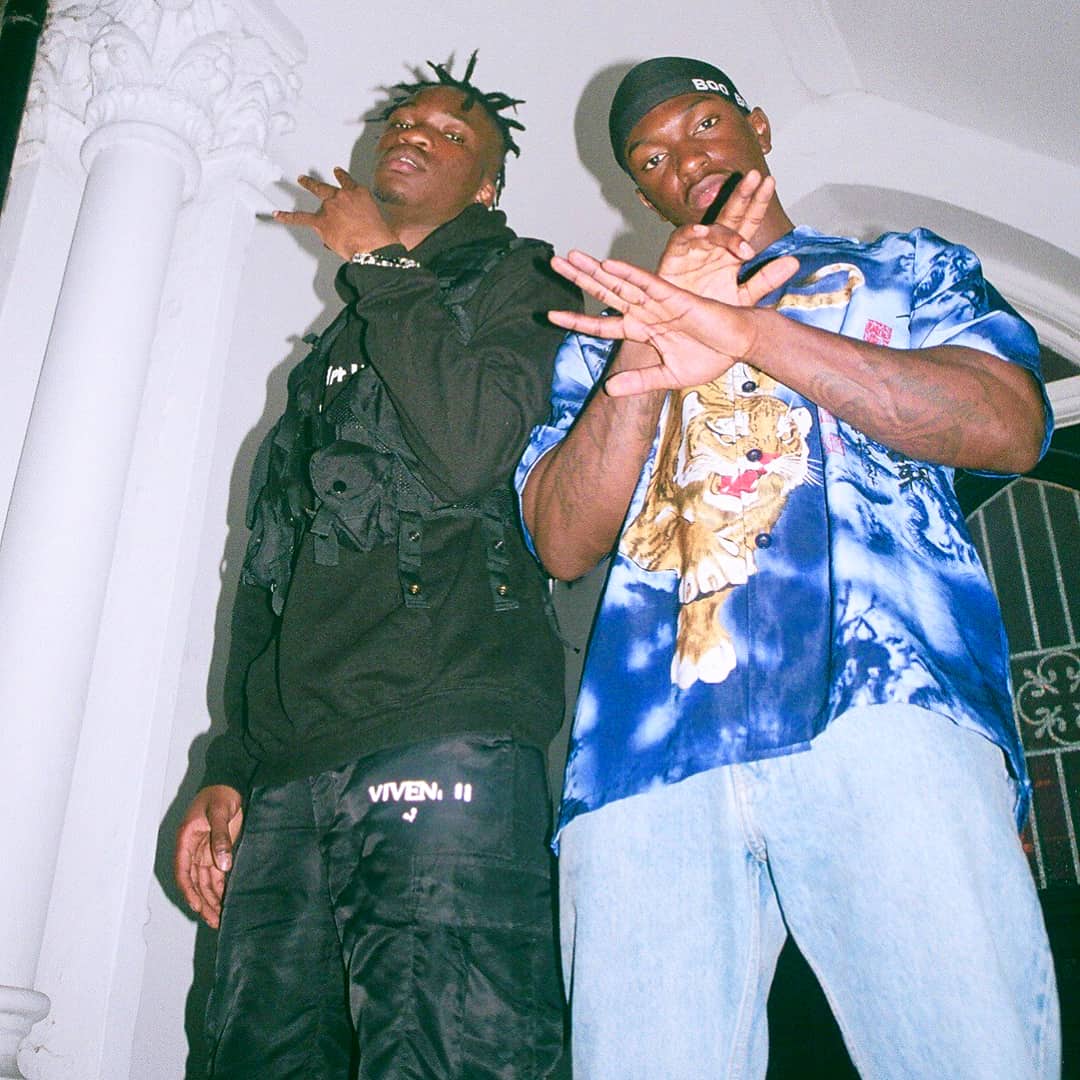
Earlier this year, Deekay finally became part of one of Nigeria’s leading record labels again. To casually substantiate the legal binding to the public, Deekay posted a picture with Davido and his manager, Asa on his Instagram, rebranded his username with DMW, teased a new song, “Hangover”, released an audio last week and followed up with the visuals today.
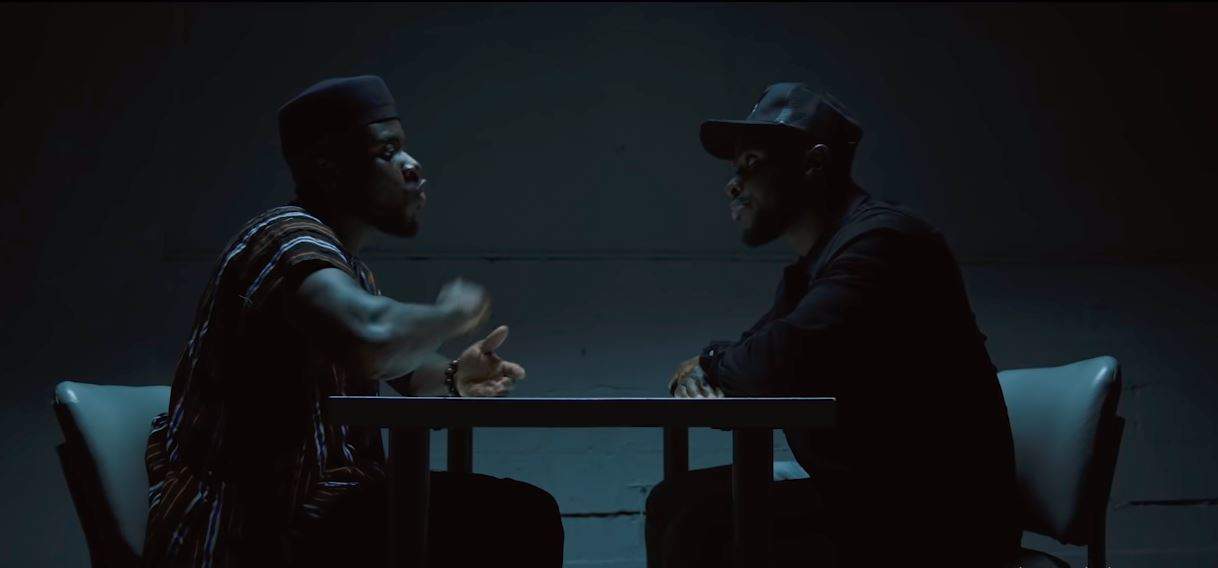
“Hangover” features two of Afropop’s best music collaborators and Deekay’s new label-mates, Davido and Peruzzi. The video also features many of DMW’s crew members/acquaintances and comedian, Broda Shaggi, who engages in a ‘funny’ phone conversation before the video directed by Twitch, kicks off to show Deekay, Davido and Peruzzi in dimly lit rooms singing love praises with vixens over percussion instruments and synths composed by DMW in-house producer, Fresh VDM. With lyrics that are composed to rhyme sweetly with Ghanaian words, “Hangover”, —like most Afropop songs— is set to be a club jam.
Watch Deekay’s “Hangover” featuring Peruzzi and Davido below.
Featured Image Credit: Instagram/@deekay_dmw/Fortune Photography
[mc4wp_form id=”26074″]
Fisayo is a journalist in search of words. Tweet at her @fisvyo
Stonebwoy has been releasing videos off Epistles of Mama since the album dropped last December. “Most Original”, his first single since the project dropped, shows Stonebwoy pay homage to the origins of his basement style dancehall. The new single, which was originally released as a Tidal exclusive, features dancehall legend, Sean Paul, whose presence on the track is no mere gloss.
On “Most Original”, Stonebwoy praises a love interest while tacking the track with patois influenced lyrics on mid-tempo instrumentals.
The increasingly recognizable variety in music has created a space for music curators such as DJ Khaled and —to some extent— Drake to enjoy the spotlight. In Afropop, “Gaga Shuffle” featuring 2Baba established Larry Gaaga’s reputation as a noteworthy curator after the single became a nationwide hit last year. Though he has since released other singles enjoying decent radio time, for latest single, he bridges 3 generations of Afropop, featuring 2Baba, D’Banj and Burna Boy on “Baba Nla”.
Over the mix of Caribbean influenced Afropop instrumentals Dapiano produces, Burna Boy sings a refrain that samples Fela’s “Teacher Don’t Teach Me Nonsense”, while D’banj’s piercing harmonica harmony seems to punctuate the grievance from three pop stars that have been victimized by the media over the course of their successful careers. The recently released video for “Baba Nla” depicts Burna Boy and 2Baba’s anarchic description of stardom through chaotic set designs, showing burning torches, erratic flashing lights and a garage scene with women dancing in cages. Despite all the tumult displayed in the background, all four artists, Larry Gaaga, Burna Boy, 2Baba, D’Banj, look dashing and almost oblivious of the chaos that surrounds them.
You can watch the music video for Larry Gaaga’s “Baba Nla” below.
[mc4wp_form id=”26074″]
You are meeting Debola at a strange time in his life. He wandered into a dream and lost his way back. Tweet at him@debola_abimbolu
Bowale’s follow up to, “Would you“, his first release of 2018, is an ode to honeymoon love, titled, “Good Loving”. “Good Loving” is a mid-tempo-building enthusiastic love monologue, sang over a mix of piano and percussion instruments, beginning with Bowale’s inviting “if I tell you say you are the one I’m waiting for baby”. He pulls off the earnestness required to handle Afropop, carrying everything here with its familiar themes and sound. On it, the Nigerian singer-songwriter, sing-raps in a mix of English, Pidgin and Yoruba, promising a love interest his commitment to their blossoming relationship.
Listen to Bowale’s “Good Loving” here:
[mc4wp_form id=”26074″]

Tomiwa is figuring it out. Tweet at her @fauxbella
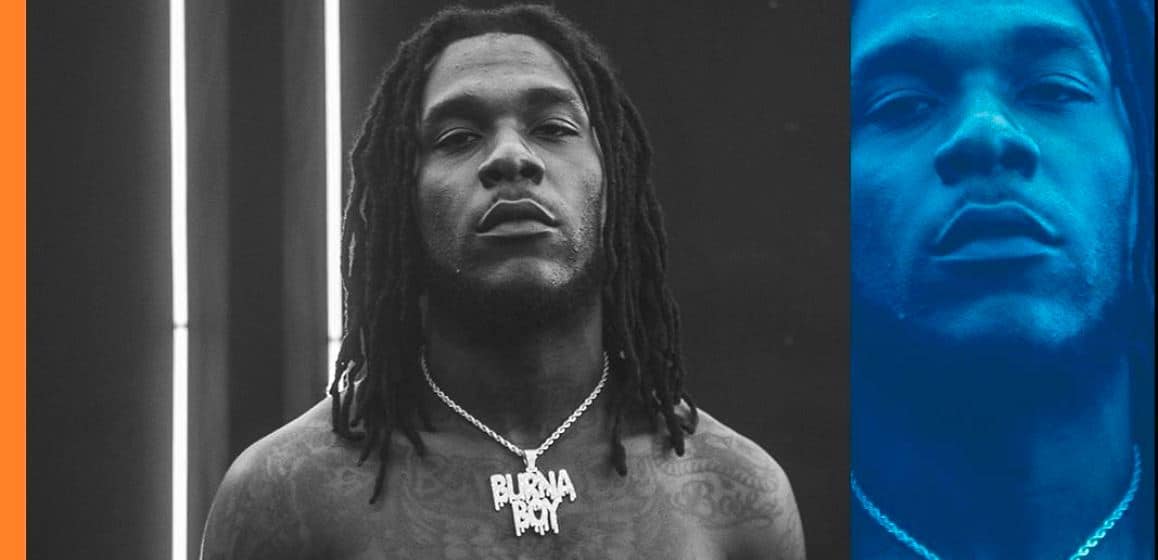
Tongues wagged when Burna Boy’s “Ye” video surfaced earlier last month. Since the release of the singer’s Outside album, “Ye” one of the much-talked-about cuts from the project has been dubbed worthy of being a new national anthem due to its relatable message. Yet, its accompanying video has been labelled a far-cry miss from the song’s message, due to the visuals merely cobbling up a series of hip-hop video stereotypes with no depth or subliminal message.
The track itself, set on the expression “Ye”, an obscure onomatopoeia with a multiplex of meanings, was borne of a series of spontaneities. According to producer Phantom, he produced the beat in less than two hours with nothing but a kick, piano synths and a few snares. The icing on the cake came by way of a vocal sample he had performed himself and layered on to the beat. The result of Phantom’s wailing cry lifted the simple arrangement into a pseudo-spiritual Afrojuju-inspired composition.
This distinctly harrowing sample is first reason “Ye” immediately reckons as an authentically Nigerian song. Enter Burna Boy who cuts straight to the heart of his message with very little intro; “This one na gbedu wey dey ja pata”. It’s not a sombre entry that compliments the wailing vocal sample that makes the beat so poignant, but Burna’s brashness is justified by a point of inflection he introduces on the track: “Dada cover my face, they calling me Lagbaja” .
The metaphor implied with this line is so apt that it could be considered as the strongest argument for a “Ye” premise. In literal terms, Burna refers to the stereotypical negative character assessment often given to Nigerians who carry dreadlocks, a hairstyle Burna himself has donned for many years. The double meaning of the line also speaks to an upward rise in police brutality, which people with dreadlocks are often susceptible victims. Burna’s “Ye” story opens from here, as he embraces the mystique of being ‘Lagbaja’ (which literally translates as a John Doe), with a follow up line about being a “biggie man”, whose social status is undiscernible because he doesn’t wear flashy clothing.
After this eclectic first verse, Burna’s outlook becomes more personal, as he looks for respite in a less altruistic life of switching G-Wagons for Bentleys. While Burna’s self-removal here echoes a man who isn’t overly burdened by larger society ideals, he also appears to be posing as the average Nigerian dealing with the average Nigerian problems; of a society where nothing changes because everyone is too busy looking to save themselves. Nobody wants to suffer or die without reaping the full fruits of coming on the earth, and Burna is no different from every Nigerian in that category whose greatest aspirations lie somewhere between exceeding wealth and personal advancement at all costs.
We no go kpai We no go die We no go kpeme We go enjoy We go chop life We go buy motor We go build house We go still turn up!!! – – Happy Independence Day Nigeria! 🇳🇬
“When it comes to money, I dey concentrate”, Burna sings, exemplifying a common mentality weaved into the life of every Nigerian: the hustle for money. Even Burna’s brag to unknown rivals about his pedigree and status don’t feel out of place with how the average Nigerian motive for seeking wealth is to flex on “haters”. Considering this context for “Ye”, its no surprise that Burna ended up with a hip-hop-inspired music video with models, visible opulence and bright lights. If there is any reason to seriously consider “Ye” as a new Burna anthem, it’s because it embraces the anathema of every self-interest seeking seemingly “good-natured” Nigerian. Many fans will still disagree but it is the most Nigerian portrayal of a very Nigerian story.
It’s a thing of Joy that Nigeria celebrates Independence day today, but looking back, all that can be seen is a lot of blood sacrifice, hard work, determination, commitment and resilience. On his new releases, “Bless Me” and “Champion”, Korede, just like his label mate Di’ja, beckons to Nigerians to spread love and light, putting more hard work and commitment into our greatest positive passions and desires; nothing is a limitation for the grateful —“Omo olope”, as he sings on “Bless Me”.
On “Champion”, which is drenched in flowers of Yoruba Language, he instills a lot of optimism and hope for growth, singing, “no be who first come class, no be him carry first class/na only God show pass, he’ll surely find away”. Although the mixing of “Champion” is a bit uneven with pattering percussion in the background, when one decidedly redirects all focus to Korede Bello’s narration, the song will seem more moving than “Bless Me”, which has a tighter production.
Listen to Korede’s “Champion” and “Bless me”, released by Don Jazzy’s Mavin Records below.
[mc4wp_form id=”26074″]
Fisayo is a journalist in search of words. Tweet at her @fisvyo
With artists releasing music to retrospectively celebrate October 1st, 1960, we are summoned to speak good over the country in all things. Phyno’s release of his new track “Iwa”, as Nigeria observes her independence day today, is a reminder of how poetic Nigerian languages are in writing. With lines like “Nwannem amaka, k’anyi jewa” and “Nyem your number nyem control”, Phyno and Tekno drift between praises of a girl they fancy as deftly as they flit between languages, and as smoothly as the beat by Tspize builds.
The two artists play on words and use good humour as a tool, singing “Oburo film mana onye chota gi m actikwa” and “Imma Watchikwa”, which roughly translate to how far Phyno will go if someone else tries to get his love interest; “It’s not a film, but if someone looks for you, I’d act and I’ll watch it too”. Phyno is loved for his funny puns and it reflects on this track too. “Iwa” even more reflects a person at the centre of the dance floor, as clean tones, crisp thumps and ever-so-streamlined synths set a back drop for a bilingual love serenade.
Stream Phyno’s “Iwa” featuring Tekno, produced by Tspize, via Apple music below.
Featured Image Credit: Instagram/Phynofino
[mc4wp_form id=”26074″]

Fisayo is a journalist in search of words. Tweet at her @fisvyo
Wizkid has been teasing a new album to follow up his 2017Sounds From The Other Side mixtape. On September 16th, he announced the project title via twitter, Zion, giving his third son all the love and glory.
His lightheartedness and ability to spin rivers of flowing sweet nothings into afrobeat is admirable, but it too is emblematic of Wiz’ diminished role in the baby mama drama that went down over a week ago —not long after he teased his third son’s name as his album title. While listening to “Fever” and “Master Groove”,it is difficult to not take cues from his own life to see that as charming as the sweet words he utters on the two tracks are, it will be extreme narrowness of viewpoint, to think that it necessarily translates into the most common and assumed choice of relationship commitment, where a romantic couple chooses to be sexually and emotionally monogamous.
Lines like “come make I touch your body, rock your body/she call me Mr lover lover/love wey no body feel stop am” on “Master Groove” and “girl you make my eye dey red o, anytime you no dey close to me/you be my handbag” on “Fever”, only reinforce moments energised by sheer, desire and lust. In retrospect, “Fever” and “Master Groove” indicate that connection can be stricken with someone you are not romantically interested in pursuing for the long term. However, whatever activities we embark on, responsible actions remain important.
“Fever” and “Master Groove” build their dance floor momentum in a mix of drums, organs and looping synths, integrated with Wizkid’s tradition of streamlining his craft into easy-to-consume pop and the universal language of love. Like all the best Wizkid songs, “Fever” sounds like it was tailored specifically for live performances. You already know what to expect from Zion;more afrobeatthat’ll do nothing more than uplift your body and mind from whatever’s holding it down.
Listen to “Fever“ and “Master Groove” below.
Featured Image Credit: Instagram/wizkid
[mc4wp_form id=”26074″]

Fisayo is a journalist in search of words. Tweet at her @fisvyo
Death hasn’t been kind. Di’ja knows this. In the lead up to Nigeria’s independence day, she released “Save Me”, characterised by an impassioned delivery with an emphasis on the negative headlines that have resulted out of the plague that is death and war in Jos and other parts of Nigeria (and Sierra Leone). Through Instagram, Di’ja made an announcement post for her new track, saying we should “have some empathy for one another, regardless of religion, culture or tribe; people are people and everyone needs love and kindness”.
Fighting terrorism without strengthening the key institutions is fruitless and this is evident in the economic and political situation of the country. 2 days before she released the song, Di’ja was appointed an official Ambassador for United Nations on Sustainable Development Goals (SDGs) in Nigeria. The SDGs are basic; 17 goals, set by the United Nations General Assembly, that cover social and economic development issues including poverty, hunger, health, education, global warming, gender equality, water, sanitation, energy, urbanisation, environment and social justice. And Di’ja seems committed to lead the vanguard for this.
Following the release of her song, she has partnered with the Samira Sanusi Sickle Cell Foundation (SSSCF) and Sanitary Bank Initiative for the “#SaveMeChallenge”, to give free sickle cell blood test, and for free sanitary pad distribution, medication and dispensation to families at the IDP camp in northern states in Nigeria.
Through “Save Me”, she offers an anthem to those in need to visibly express themselves, in turn seeking collective action from everyone, to deal with not just the problems Nigeria and Sierra Leone face today, but the causes of the problems, for sustainable development.
Take a moment to watch Di’ja’s music video “Save Me”, directed by Unlimited LA, with additional vocals by Don Jazzy, below.
[mc4wp_form id=”26074″]

Fisayo is a journalist in search of words. Tweet at her @fisvyo
Upon release yesterday, we established that Burna Boy’s “Gbona”, is a celebration of Afrobeat as a dance genre, reminding everyone that, regardless of Fela’s political prowess with music, sometimes Afrobeat should do nothing more than uplift the mood. The instantaneous follow up with vibrant visuals directed by Clarence Peters, reveals that just like the aura of good spirits encapsulated in “Gbona”, the creator himself is on a prolonged spell of happiness.
From African female dancers similar to those you’ll find at Fela’s Afrika Shrine, to masks and mannerisms that loosely remind of Lagbaja —especially as the video shot of dancers wearing the mask comes in the moment Burna utters the line with an analogously rich baritone voice— the delivery of “Gbona” is a delight to watch. Clarence got it right this time.
Watch Burna Boy’s video for “Gbona” below
[mc4wp_form id=”26074″]
Fisayo is a journalist in search of words. Tweet at her @fisvyo
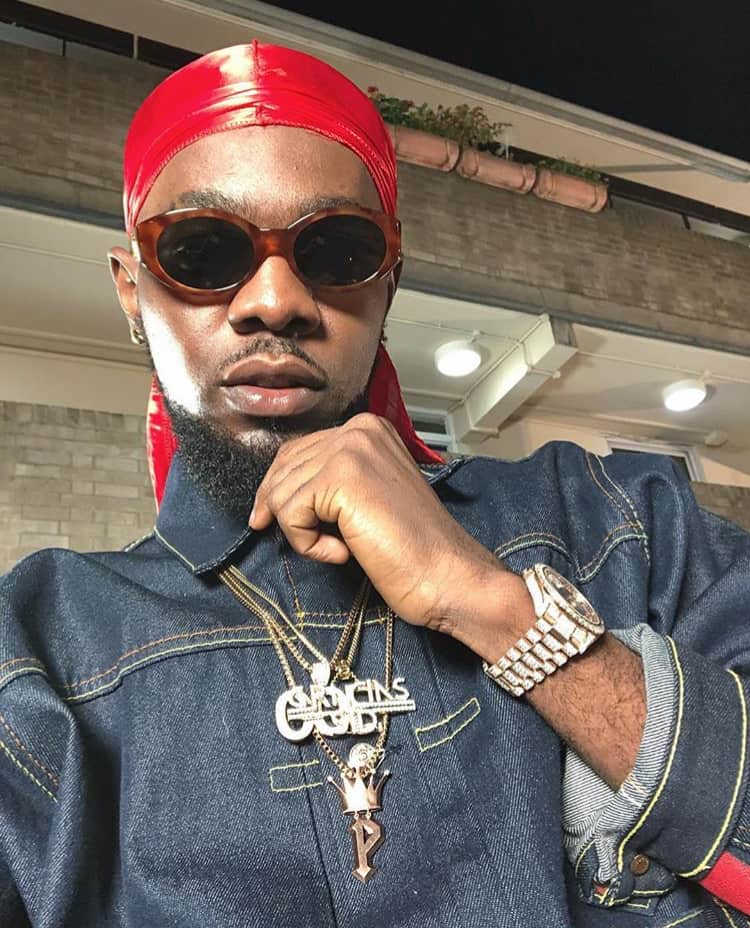
As Mr P of Psquare celebrated on his instagram that he had received his first award recognition as a solo act 4 days ago, the reality of the ex-duo’s future career path as individuals illuminated even more. But Rudeboy’s “Together” is one in a few things that puts an end to the illusion that we will not get Psquare-music anymore since the duo’s disbandment.
Over the first few seconds, Rudeboy’s vocals on “Together” harkens back to a time when we used to get sweet R&B tracks from the two, giving life to an entity that only ended on the surface of things. Woven with that nostalgic tone, is Patoranking who compliments Rudeboy’s verse with his strongly-accented Jamaican patois. On “Together”, they close a boundary between R&B and Reggae to sing love praises to an interest that “brings joy everyday”. Even as the song’s narrative is in the present, when Rudeboy stretches his voice upward, “Whenever, however…we go stay together forever”, he promises a future, appreciating is lover.
Netflix’ black film subgroup, Strong Black Lead, announced that their latest black-led film, “Been So Long” will premiere on the platform on October 26th.
“Been So Long” is an adaptation of a titular soul/funk stage production with music and lyrics by Arthur Darvill, and it’s penned by Ché Walker. It is a romance story that follows Simone, a dedicated mother gets charmed by a troubled stranger, igniting old and new feelings on a rare night in the town. The synopsis highlights that “Been So Long” presents a fresh take on love, life and moving on.
British-Ghanaian actress, Michaela Coel, who has worked with Netflix on a few notable projects, including her comedy series, Chewing Gum leads the all-black cast for the London-based romance story alongside playwright and actor, Arinzé Kene. The film, directed by Tinge Krishnan, casts George Mackay and Ronke Adekoluejo in supporting roles.
Watch the trailer here:
Featured Image Credit: Twitter/Strongblacklead
[mc4wp_form id=”26074″]
Tomiwa is figuring it out. Tweet at her @fauxbella
Tinny Entertainment has been strengthening its A-team of signees since the label released last year’s “Kokoka” featuring Bella Alubo, YCEE, Damilare and Dapo Turburna under a group alias called Tinny Mafia. The label’s strategy has been more overt this year, putting two of it’s leading acts—rappers YCEE and Bella Alubo—on Late Night Vibrations, an emphatic joint project. LNV is technically a romance-themed project, but rather than packing the 6-track EP with corny declarations of undying love and affection, YCEE and Bella Alubo double-down on the real-life niceties that can make or break any relationship. Young love always seems to be constantly going through the motions and this reflects in LNV‘s songwriting and mellow production. Both YCEE and Bella talk communication, romance itself and staying together despite the odds of not knowing how best to do that. As we hear on “Be There”, the EP’s final track: ‘Bad as e bad, we can work things out’, Bella and YCEE sing, exemplifying the flawed humanity at the core of every relationship.
Ecstasy, Just Chill – SoulBlackSheep
SoulBlackSheep’s ‘Ecstasy, Just Chill’ EP was one of this year’s pleasant surprises. The Ibadan-based singer’s subdued vocals are unlike anything you’ve heard from around here. Soul is able to instinctively channel the angst of emo, the tenderness of gospel, and the emotions of R&B. He first surfaced last year, flaunting gorgeously imperfect lo-fi anthems, “Bermuda” and “Space Girl” before releasing his ‘Ecstacy, Just Chill’ project this year. “Ecstacy”, the tape’s lead single, paints SoulBlackSheep’s Ibadan hometown as an ancient city illuminated by the tawny sun, capturing her curious mix of historic and contemporary architecture, and the unmistakable sense of peace and quiet that almost feels otherworldly. SoulBlackSheep channels this ethereal atmosphere to create a 12-track project with gorgeously sung hymn-like tearjerkers for the ones that got away. It makes a compelling case that dealing with a broken heart can be akin to a religious experience.
Kali Uchis – Isolation
Isolation is a movie in the 80’s and in 2018; it’s interesting to see how Kali Uchis balances all her varying styles in such a modern yet vintage-y manner on this debut. She explores bedroom pop, funk and reggaeton, weaving a personal narrative about having binational immigrant parents, living out of her car, and the universal theme of love. None of the artists that Kali Uchis features outshine her on Isolation —Tyler, The Creator, Jorja Smith or the Internet’s Steve Lacy offer complementing verses and they don’t stay for too long, as Kali Uchis sings truth to power. On “Your Teeth in My Neck” she sings about getting recognised in the music industry. “Nuestro Planeta” featuring reggaeton performer from Colombia, Reyton, is sung absolutely in Spanish but it sounds so good, it’s easily amongst the top five from the Colombian-American singer’s album.
Generation XXX – Maison2500
As the Nigerian Music sphere becomes more popular, one of the crucial signs of a healthy soundscape is the existence of varying genres. This is exemplified perfectly on Maison2500’s debut solo effort. As a member of the collective No Politics Mob – featuring NATIVELAND alumni, New World Ray – he shows himself as the next potential breakout rapper from a raucous bunch. The standout record “Do or Die” – with a fitting name for anyone who has ever been to Nigeria – is an infectious, hookless flexing of Maison’s lyrical chops. With clear influences on Generation XXX from Lil Uzi Vert, Maison shows a range sometimes ignored in this strain of 2018 Hip-Hop.
24: How To Find True Love and Happiness – HYUKOH
Though K-Pop remains unrivalled as the biggest cultural export from South Korea, HYUKOH has seemed set to change the sound with the release of 3 projects in the last 5 years, favouring the guitar riffs of psychedelic rock to contemporary pop quirks. Rather than launch a full-on aggressive campaign to ensure their crossover into the mainstream, their latest project, ‘24: How To Find True Love and Happiness’, has a playful clarity that ultimately gained the record reach where other Korean records felt too abrasive. Recorded in English, they come across as eloquent and subtle, making music that’s wiser and less demonstrative. What ‘24: How To Find True Love and Happiness’ may lack in newness and excitement, it makes up for in wit, charm and a comforting familiarity that highlights the intimate sentiments of the EP.
Highlife Konnect – Bisa Kdei
As African music becomes more homogeneous, collaborations between artists from different ends of the continent have become increasingly popular. From Nigeria’s Niniola to Kenya’s Sauti Sol, many artists are wearing the pan-African tag with pride. Bisa Kdei’s third studio album, titled “Highlife Konnect” may be following in this direction. Assisted by acts from both Nigeria and Ghana, Bisa Kdei’s 15-track album creates a web of varying sounds, all pointing back to the indigenous highlife. On the Mayorkun-assisted “Count On Me” for instance, Kedi borrows from 90s RnB and highlife to plead with a lover he intends to marry, while “Pocket” with Sarkodie is heavily indented with Afropop jollof sounds.
Black Times – Seun Kuti
Seun Kuti knew he had huge shoes to fill after his dad passed in 1997 and he had to take command of the Egypt 80 band. Fela’s reputation for using his Afrobeat music to speak against the ills of the Nigerian government has inspired artists from around the globe to take a similarly humanitarian path. But perhaps Seun Kuti and Egypt 80 have had the privilege of a more direct influence. Their latest project, ‘Black Times’ continues right where Fela left off; Jazz-fueled and politically charged. Co-produced by Robert Glasper, an accomplished jazz pianist, ‘Black Times’ is more than just 8 tracks of a pointed statement, opposing Nigeria’s corrupt government. It is also funky with upbeat grooves that make for an interesting pairing with his defiant message.
IAMDDB’s – Flightmode Vol. 4
IAMDDB’s music, as she puts it on ‘Watrfall”, off her 4th project, is what happens when a girl just wants to express herself. Her aesthetic sound, which she describes as “Urban Jazz”, is the contemporary lovechild of RnB, Jazz and her take on trap music. IAMDDB also sometimes layers her music with drum sounds she says are inspired by her Angolan roots. On her 8-track latest release, ‘Flightmode’, the 4th volume of projects she has dropped at intervals, the Manchester-born singer delves deeper into these roots. On “Azul”, for instance, reminds us that she’s not here to play “I ain’t come to play no games, yeah I came to take the throne and bounce like skrt skrrt”, while paying homage to her African roots with thumping drums and lyrics sung partly in Portuguese.
Dear Annie – Rejjie Snow
A year after leaving a football scholarship in the US, Dublin-born rapper, Rejjie Snow released his debut EP, Rejovich which earned him a deal with Elton John’s management company, as well as gigs opening for Madonna on tour. The project that followed was last year’s The Moon And You, a 13-track compilation of pop, RnB and hip-hop sounds he has explored since his first EP. Leaving the nomadic life behind, Snow released his debut album, “Dear Annie” this year, employing the Pop, RnB and other sounds he explored in his past lives. ‘Dear Annie’, as it is called, is a 20-track genre-defying collection that sees Snow lamenting leaving a lover, mainly desperate for reconciliation. Snow is his most laid back on “Egyptian Luvr”, featuring Aminé and Dana Williams, where he expresses romantic nostalgic lines about what once was and a melancholic mantra—“Leave the past behind”— over a groovy house beat Kaytranada produces.
C.O.L.D – Ice Prince
It’s almost odd how little rap we hear from Ice Prince these days. When you think about it, this was a man once believed to undoubtedly be Africa’s biggest hip-hop act. But this is not the only reason Ice Prince’s 2018 C.O.L.D EP lives up to its name and hype. In a manner that can only be considered transcendental, Ice Prince successfully does two things on this project: show-off his often understated range and delivers sorely a missed Afropop touch through the 8-track serving. C.O.L.D opens with “Shutdown” almost unaware of itself because Ice Prince isn’t trying to clear doubts. In his mind, his foray into full-blown Afropop may look like the sideline on the rap bench but he’s “been on the grind for a hot dang minute”. The best track(s) on C.O.L.D is a hard pick between the fan favourite, “Hit Me Up” (featuring Straffiti & PatrickLee), the Remmy Baggins-produced “Tour 234”, and “So High” featuring KaySwitch—the Mo-Hit era’s most underrated artist. If Ice Prince’ solo-projects have failed to impress you in the last four years, C.O.L.D is the fifth year charm that should turn things around.
Fenfo – Fatoumata Diawara
Born in Cote d Ivoire to Malian parents, Fatoumata’s profile in film and theatre provides some context for her climatic storytelling style on Fenfo. Unlike her intimate genre-mashing debut Fatou (2011), Fenfo, her sophomore project is directed at where her heart will always be: home. On Fenfo Fatoumata settles into the warmth of love and nostalgia, edging her rebellion against tradition on prevailing African realities. Fenfo is Fatoumata singing against beliefs that prevent intermarriage on “Kanou Dan Yen”, emphasising the dark skin and honour for black heritage on “Kokoro”, and laying vocals on Vincent Segal’s beautiful cello baseline for “Don Do”, a haunting track about unrequited love. Across 11-tracks—no more, no less—Fatoumata delivers a perfect album that peaks at the Afrobeat-infused dance number, “Negue Negue” before segueing into a sombre second half, starting with album-centrepiece, “Mama”.
The Color of You – Alina Baraz
Some of the adjectives often used to describe Alina’s voice are: sweet, angelic and dreamy. She fuses these three things into a relaxing cruising altitude on The Color of You. The Color of You is Alina Baraz’ first solo album, a follow up to a sultry collaborative project she did with Danish producer, Galimatias in 2015 titled Urban Flora. On the EP, they both achieve alluring sonics. Little wonder we anticipated her 2018 personal debut, and we’ve been pleased. When Alina sings, her angelic vocal style is layered and combined into one beautiful form with the instrumental. Alina’s sensuous music is all about the interplay between soulfulness and technology; this is exactly what makes her album so dreamy. Some songs you’ll want to zero in on include “High”, “Coming to My Senses”, “Tainted”, and “Yours”. There’s some satisfaction in listening to Alina’s album at night to reflect on loneliness and moving-on as she takes us through the mistakes she’s made in her own relationships
Fela’s ethos as a social justice advocate has made it almost impossible to separate the Afrobeat genre he created from its political path. However, the genre also concerns itself with lightweight themes such as dancing and having a good time. Burna Boy’s latest single, “Gbona” reminds everyone that sometimes Afrobeat should do nothing more than lift your mind, your body, and your soul away from whatever’s holding it down.
Over a bed of traditional drums, horns, percussion, guitar riffs and rattling samples, Burna Boy breezes around effortlessly across the melodic web Kelp Amba produces. “Gbona” is a masterfully composed track, tidy around the edges and brightly-lit with every drum line, guitar and horn harmony hanging, seemingly, in midair. More than that, though, it’s a testament to Burna Boy’s ability to make the music of the past feel an awful lot like the future. It’s as the man said; “As I Dey Sing, They Feel The Bounce/ Make All The People Jump Around”. If you’ve been to any Burna concert or seen clips from his on going UK Tour, you’d know exactly what he’s talking about.
In the meantime, you can stream “Gbona” below.
Featured Image Credits: Instagram/burnaboygram
[mc4wp_form id=”26074″]
You are meeting Debola at a strange time in his life. He wandered into a dream and lost his way back. Tweet at him@debola_abimbolu
Not all great love makes you a better person, just ask Shakespeare. Or listen to Mide Michael’s latest single, “Pepe”, nestled between the carefree cheer of a love song and the threat of a diss track to the ops. “The Things That You Do/ Make Me Act a Fool/ When The Guys They See Me For Room/ Them Dey Say You Give Me Juju”, Mide Michael sings over the sparse beat Johnson IP produces. Dressed in sensual tones, his love seems to draw its fire from the underworld and gives a dark spin to us-versus-the-world narrative lovers are so quick to adopt.
Threatening to show anyone who tries to stop his love ‘Pepe’, Mide Michael isn’t looking for redemption or looking to be ushered out of a past life into a purer one. Love is a means and an end in itself—and if it happens to turn you against your friend along the way, so be it.
You can listen to Mide Michael’s “Pepe” below.
Featured Image Credits: Instagram/midemichael1
[mc4wp_form id=”26074″]
You are meeting Debola at a strange time in his life. He wandered into a dream and lost his way back. Tweet at him@debola_abimbolu
Off of Mystro’s ‘Sugar’ album debut, “Immediately” featuring Wizkid was released as the standout track for the summer playlist primed project. Fortunately, it’s summer almost all year round in Nigeria, and the video still resonates with the song’s party themes. Directed by Sesan and styled by Jennifer Eleto, the video for “Immediately” is set at a nightclub where Mystro and Wizkid are bath in neon lights and surrounded by pretty models. While the lyrics of song’s chorus, “Immediately She Starts To Feel The Sound/ Immediately, She Begin To Turn Up”, already emphasizes the proficiency of Mystro and Wizkid’s Afropop vocals on dancefloors, the dancing models and cameos from Maleek Berry and Kelechi Anyikude bring that point home.
The 2016/2017 edition of the National Bureau of Statistics’ Multiple Indicator Cluster Survey (MICS) states that over 1 in 3 Nigerians have no access to safe water. The study, conducted with support from Primary Healthcare Development Agency (NPHDA), the United Nations Children’s Fund, UNICEF also found that only 9.2% of households in the country have constant access to clean drinking water.
This report comes in the wake of a cholera outbreak that slowly spreading across the country. Two weeks ago, Yobe State Ministry of Health declared a cholera outbreak in the state, identifying a total of 989 cases of suspected cholera have been recorded. Earlier this week, Borno State was found to have the same problem after similar casualties hit the state. Of the 3,000 suspected cases in both cities, 97 deaths have occurred.
Poor water supply and hygiene practices were recognized as two pronounced issues in the areas most affected by the epidemic. Worrisome a UNICEF rep says, is how many Nigerians have more mobile phones than toilets. This, along with the reduction of water supply due to global warming, is why there isn’t enough free clean water to go around.
According the the MICS’ breakdown, 90.8 percent of households in the country drink water contaminated by faeces and other impure substances such as Escherichia coli (E.Coli), a bacterial pathogen. This plight has lead to child sickness and deaths from waterborne diseases. According to the MICS report, diarrhea is one of the major causes of child illness and death in Nigeria. It also identifies that 41% of the cases go untreated, increasing the risk of spreading.
A specialist from UNICEF’s Water, Sanitation and Hygiene (WASH) initiative, Drissa Yeo, said: “You can easily get your food and drinking water contaminated even though it is coming from a borehole. This is where E.coli comes in”.
“Diarrhoea is one of the main-killers in the world, today if you get contaminated with cholera, and if you do not receive the appropriate treatment in 24 to 48 hours, you can pass on. Dysentery can give you some time to take care of yourself but not cholera”, He emphasized.
He recommended that people should purify their water, adding that whether a community has borehole or not, with open defecation, handmade wells are not protected because they are prone to external contamination and therefore do not qualify as safe drinking water.
Diseases aren’t the only issues tied with poor water supply. UNICEF identifies inadequate sanitation as a challenge on food security, livelihood choices and educational opportunities around the world. Especially in the rural areas where many children in spend hours daily searching for water, and missing out on school.
Featured Image Credit: Web/weflex
[mc4wp_form id=”26074″]
“Tomiwa is figuring it out…” Tweet at her @fauxbella
A 4-track EP gives you the feel of a man who doesn’t want to say too much, but with Tau Benah such expectations never add up. Honey, his latest EP wraps up just under fifteen minutes, but the themes that surface across the project only need a couple replays to stick.
Opener “Honey” features a verse from Stanley GTK, who slips into an electrified bass baseline. Though the R&B inspirations for the track are obvious, “Honey” plays like it was intentionally slowed down to be a step ahead of listeners expecting a funkier turn around whenever Benah breaks into chorus. The tack exceedingly pays off when synths are replaced with guitars on “Honey 2.0” where the titular track is transformed into pure soul music. Elsewhere on “Honey”, Tau Benah shows off the multitude of his influences on “Calls”, the most creative hip-hop fused track on the project.
Honey concludes right where it started and there’s no surprise there. After last year’s debut G.G.Y, where even a notoriously pop singer like Davido had to work in a world where Tau Benah controlled all the outcomes, you get the sense of an artist who will only indulge in guilty-pleasures if it advances his agenda. With a sensual central theme and tracks like, “Smoking Indoors”, a tribute to ‘the stoner blues’ and the project’s cover art, Honey, may in fact, be Tau Benah’s guiltiest pleasure yet.
Stream Honey via Apple Music below:
[mc4wp_form id=”26074″]
Toye is the Team lead at Native Nigeria. Tweet at him@ToyeSokunbi
Since Major Lazer released their Afrobeats mixtape two weeks ago, they have wasted no time to follow up with promotional music videos. The video for the 10th track on the mix with Burnaboy, “All My Life”was released just about the same time the mixtape was released. The 17th track, “Tied Up” featuring Mr. Eazi and Raye, who is part Ghanaian, now has a music video for public viewing. “Tied Up” is a brief mix of Caribbean, pop and Afropop influences, the accompanying music video is not far far fetched from the culture of the three influences. Mr. Eazi and Raye head to the native country, with shots of dancers and bikers doing extreme sports on the streets of Ghana.
While the production trio are set to perform in Lagos on the 5th of October (next week Friday) for a tour at Hard Rock beach, be sure to keep yourself up to date with Major Lazer’s catalogue just before then, by clicking play below.
Featured Image Credit:
[mc4wp_form id=”26074″]
Fisayo is a journalist in search of words. Tweet at her @fisvyo
US-based Nigerian singer, Mannywellz has teamed up with Nigerian singer, Adekunle gold for the remix of “Yeoo” off his recent EP, Soulfro. Just as the title implies, Soulfro is a compilation of synths, guitars and keyboard instrumentals that play out in different variations over 7-tracks, where Mannywellz expresses an array of emotions ranging from the desire for love to a desire for an honest living in a mix of English and Yoruba.
On the original “Yeoo”, Mannywellz sings of a desire for the freedom that peace and love affords a man. He ponders on the lengths people go to for money, reaching an understanding that happiness is beyond material possessions. The additional vocals from Adekunle Gold on the remix of “Yeoo” echo Mannywellz’ original sentiment, he sings “Where Do We Find Love”, after Mannywellz, conveying in his lyrics that those things we believe will buy happiness, ultimately do not. The remix is set on fast-tempo drums and electric guitars, switching the track up from a head shake music to a dancefloor bop.
Listen to Mannywellz and Adekunle Gold on “Yeoo”
[mc4wp_form id=”26074″]
Tomiwa is figuring it out. Tweet at her @fauxbella
“Maame” Efya’s highlife-tinged pop single with Mr. Eazi, which was released in April, is the duo’s sequel to their 2015 love ballad, “Skintight”. Like the 2015 track, the duo take to expressing their feelings over drum loops and percussion beats produced by MOG Beatz. This time however, Efya takes the narrative of a tough lover only willing to give what she’s receiving, taking a page from the chorus of Busta Rhymes and Mariah Carey’s 2002 collaboration–“If you give it to me, I give it to you”, while Mr. Eazi offers convincing promises about love and dedication. For the “Maame” music video, Xbills Ebenezer directs colorful, dark scenes that show Efya and Mr. Eazi dancing in florescent-lit rooms and on a backdrop of dark skies, performing their lines solo, together and with the support of dancers in various scenes
Watch the video for “Maame” here:
Featured Image Credit: Youtube/Efyavevo
[mc4wp_form id=”26074″]
Tomiwa is figuring it out. Tweet at her @fauxbella