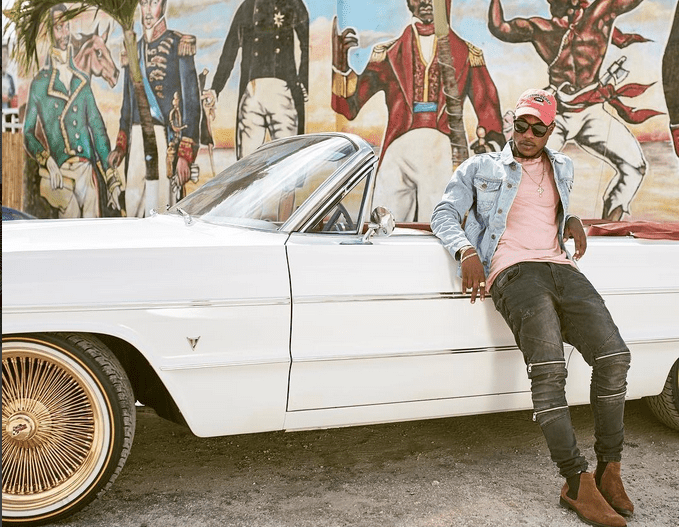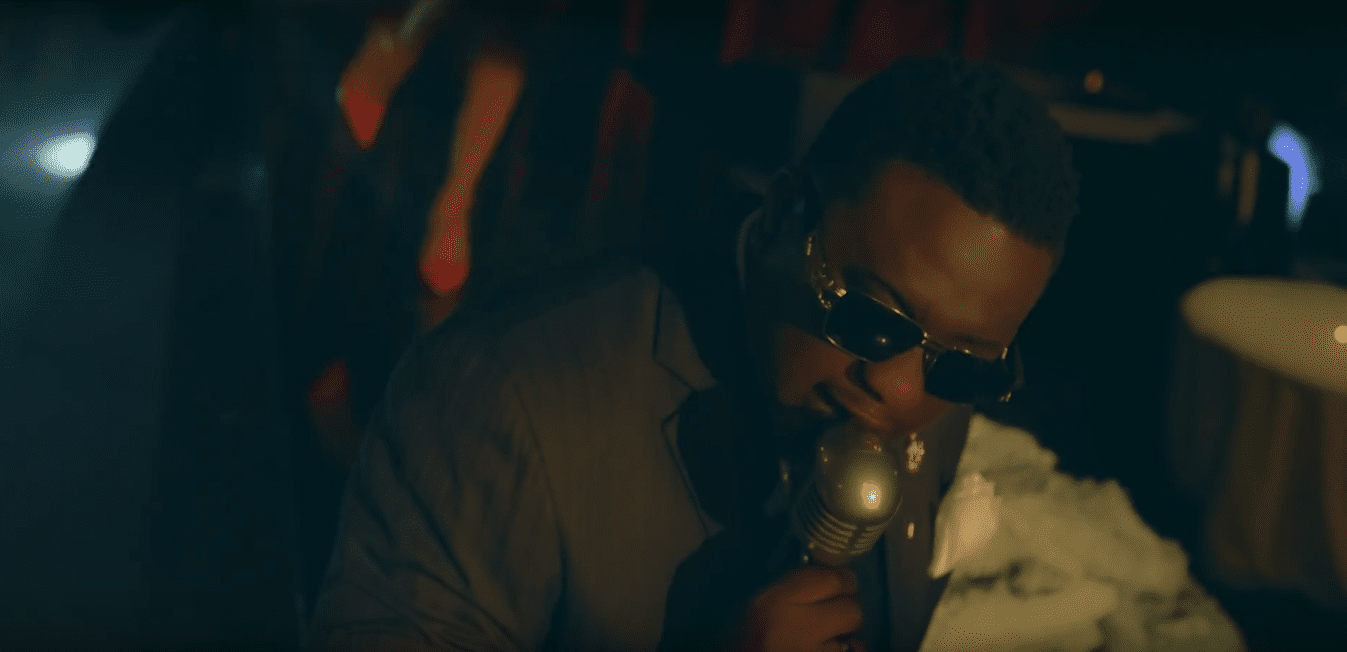

Jidenna recently completed the roll out for his The Chief debut. As part of promotions for the album, Jidenna has released the music video for “Bambi”, an African-folk inspired love ballad about a cheating man’s idea of true love in reverse.
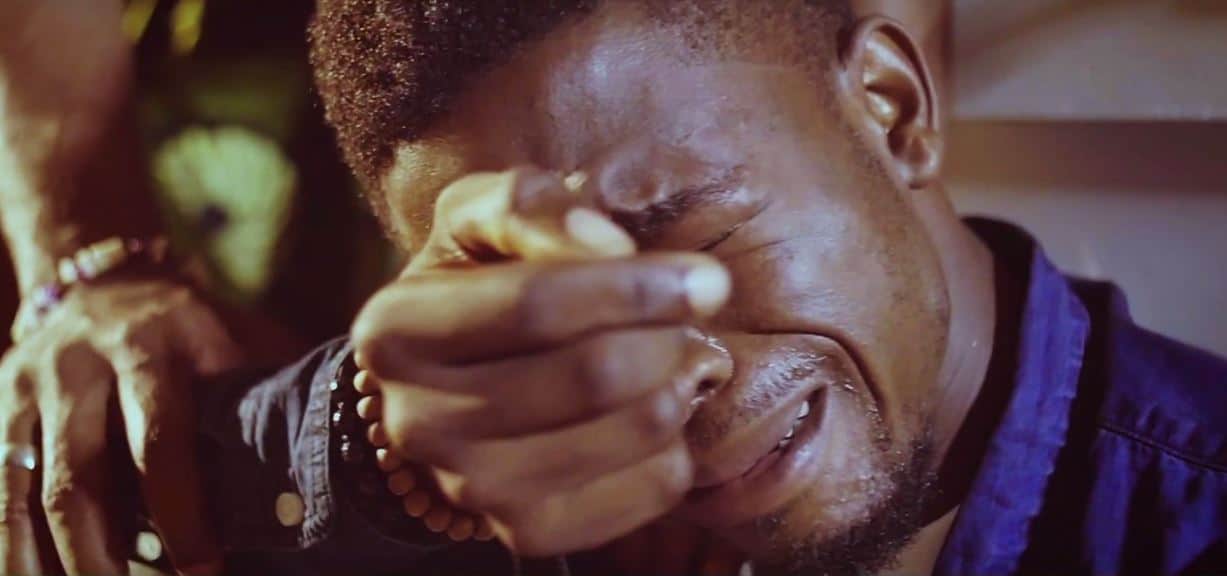
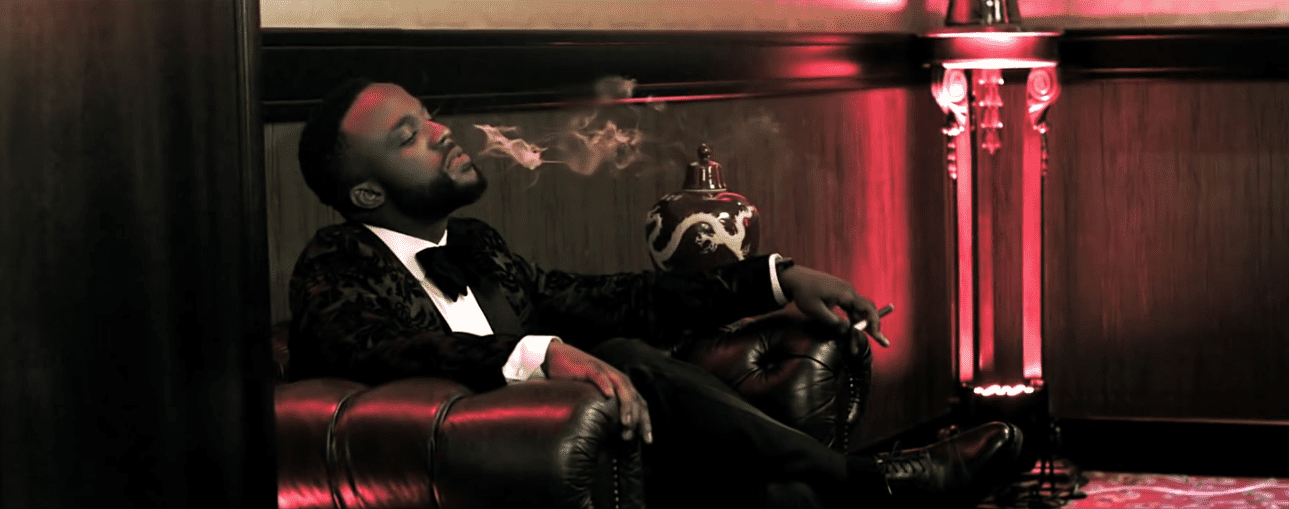
On “Bambi”, Jidenna sings of cheating on his ex, but the first half of the video depicts the singer swaggering through the city drunkenly and reminiscing good times with his former lover. He regrets taking the relationship for granted and their inevitable separation, but he’s not exactly remorseful for making it happen.
At the end of the video we’re shown Jidenna had been burying himself in alcohol as part of mental preparation to crash his ex’s wedding. It’s a tough to watch scene but Jidenna nails the acting to make a befitting final act for a great video.
So we’ve passed the four episode test and here’s the tally so far: two great first episodes, a tone deaf third episode and a forgettable fourth one. This is better far than we normally get from Nigerian webshows (side-eyeing you Rumour Has It) which starts off abysmal and then slowly improves until it becomes bearable.
With the entire premise of Our Best Friend’s Wedding already set up, it would seem that scoring a homerun each episode would be the simplest thing in the world. But not.
SPOILER ALERT
If you haven’t seen the new episode, do so here and if you have, let’s continue with the review.
At the end of Episode 4 Jade and Charles Effiong have made up, and the Bolanle Olukanni’s very married doctor Darlene foreshadows (yet again) that jade has a big old lesbian crush on Charles. But I guess if Charles used his common sense and got with her we won’t have a show, so I’ll allow it.
Episode 5 opens with Onome, the one night stand from episode one who sabotaged his presentation at his office. She’s apparently come to see his boss and personally commend Charles on his ‘great’ pitch and discuss terms with him. His (stereotypical) lascivious boss is already salivating at the thought of Onome all splayed out on his office table instead of Solitaire for a change and gets all creepy. Charles leads her away to his office to discuss. This is going to be good.
We cut to Kemi in bed + a cut scene where a photograph of her husband is shown in case you forgot she is supposed to be happily married. Jade calls, chipper as fuck talking about being at the streetlight opposite her office and asks Kemi if she’d want to meet after. Like any self respecting person Kemi declines, claiming that she’s sick and ends the call on Jade while she’s still talking. She reaches into her duvet and pulls out the longest, shiniest vibrator dildo I’ve ever seen and goes to town. Hallelujah somebody.
That at least explains why Kemi’s the only chill person on the show, she be getting her orgasms steady.
Meanwhile Jade (who desperately needs an orgasm in her life) is at some ‘commission’, which one they don’t specify trying to pitch for approval/funding (they dont specify either) for her pet project ‘The Jaded Initiative’.
The government official she meets is Nollywood veteran and do I even need to tell you how a scene with a young attractive woman in need and a lewd older government official will end? I don’t abi. Moving on.
Turns out Onome has shown up in Charles’s office to sell him the contract they pitched for at her company, she just wants a little ‘finders fee’. Only 5% of the commission, which everything Charles is supposed to get from the business deal. Charles forms bad guy at first, but at the risk of losing his job, he capitulates and agrees to her demands. So much for Mr. Macho.
At the end of the day everyone ends up at Kemi’s house and the girls get Charles to recommit to the terms of their ‘The Bachelor’ pageant. He reluctantly agrees and they ask him to go on the next date with the next woman on the list, Shayo.
Now from the very first moment they introduced Shayo on OBFW I started rolling my eyes. They’re in a fancy place like the Film House iMax cinemas and after baby girl rightfully asks Charles to not take calls during the movie, she proceeds to try to put her hands down his pants in the very brightly lit cinema. Then after the movie, they go to buy suya and home girl fishes a roll of weed out of her bra and tries to light it in the full glare of Lekki street lights. Charles is understandably perplexed that his sweet innocent Shayo is outchea doing bad gang things and he’s all ‘This is not the you I know’ but home girl is not having any of it. Obvs Charles cannot marry a girl who smokes Igbo, so on to the next one.
Can I just say IllRhymz is a terrible actor? His laiskin and fine face had me fooled for the first few episode but watching him blunder through the dialogue on his date with Shayo was one continual cringefest. Not that the actress who plays Shayo is any better. She has so little charm, I can barely stand to watch her on screen.
And what is with Our Best Friend’s Wedding falling back on character archetypes when their self imposed time limit catches up with them. So Shayo is a ‘bad girl’ because Charles left her to go get his Master’s Degree abroad and that meant she got pregnant, got disowned, had an abortion and lost her womb AND is into S&M? Really? Like whose grand idea was it to have this girl do all this character exposition and then proceed to knack her.
At this point, can we please point out how Our Best Friend’s Wedding has become the place where OAP’s looking to expand their portfolios go to show off their ‘acting’ chops. First Ill Rhymz, Then Gbemi Olateru, then Oreka Godis and even Bolanle Olukanni, at this point the only people left are Toolz and Nedu Wazobia FM.
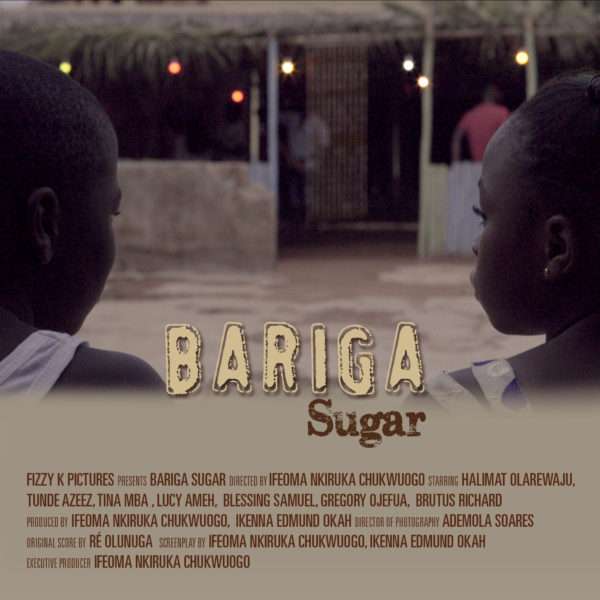
Bariga Sugar is a short film produced and written by Ifeoma Nkiruka Chukwuogo and Ikenna Edmund Okah who have created something dangerously close to a master piece in a barely 22 minutes long film.
Bariga Sugar is out on YouTube now. Check it out and enjoy! Please share your feedback and RT 🙂https://t.co/zXn4BflpsP
Its set in a brothel named Bariga Sugar, ‘working girls’ on the street live under the watchful eyes of “The Queen”, Madam Sugar. The movie tells the story of friendship through the life of 8 year old Ese (Halimat Olarewaju ) whose mother’s insecurity makes her distrust people and her neighbor, Jamil (Tunde Azeez) an excitable boy who makes resilient efforts to make Ese his friend.
We resisted dropping spoilers here so that you can enjoy a story that draws on the nostalgia of our childhood and the lifestyle of struggling Nigerians in the most familiar way possible. At its best, “Bariga Sugar” shatters the notion that you need rose petaled frames to create beautiful cinematography.
Catch a glimpse of ‘Bariga Sugar’ below. You should probably keep a tissue close by, because this is a tearjerker
Omawumi’s career was off to a kickstart after she came in as the first runner-up on the first season of Idols West Africa in 2007. She has since released several singles and two studio albums since then — Wonder Woman and Lasso of Truth in 2009 and 2013 respectively. Earlier this week, Omawumi announced the release date for her forthcoming album Timeless set to drop on March 22nd 2017.
Last month, the award-winning singer released “Butterflies”, a strong ballad and lead single off the forthcoming album. With more artists of her calibre gracefully aging into their oncoming retirement years, Omawumi will be looking to earmark Timeless as an album that will outlive the relevance of its era.
Watch the video for Omawumi’s “Butterflies” below.
After being behind the scenes for many years and working with some of the biggest artists in the game (Davido, Wizkid), producer Del B seems to be taking a more frontal approach with his singing career.
“Boss Like This” is Del B’s first single as a majorly singing artist and it features Mr Eazi. The new single comes with a video starring Del B himself and Eazi in a series of shots panned around hot girls and flourescent lights.
“Boss Like This” is your typical Afropop song, but Del B already proved himself on a slew guest verses on singles from last year. His latest effort is subtle but enough to edge him into the list artists we will be looking out for this year.
See Del B and Mr Eazi in the video for “Boss Like This” below
If the last few years prove anything, it’s that Nigerian music has the potential to get global recognition. That’s not news to anyone but more recent evidence to this is the inclusion of Mr. Eazi, Runtown and Maleek Berry on the setlist of “Sounds From Africa And the Caribbean”, one of the segments at this year’s South by South West festival and conference.
https://www.instagram.com/p/BQlCHOtDvwW/?taken-by=maleekberry
SXSW is an all inclusive annual music, film and arts conference and festival with the core value of bringing music from the outside world to Austin, Texas, USA. In the last two years, part of the event has been the inclusion of a “Sounds From Africa and The Carribeans” set which has featured Davido, Iyanya and Jamaican reggae dancehall artists like Damerco and Christoper Martins in the past.
This year’s edition of “Sounds from Africa and The Caribbean” will take place at The Belmont on the 18th of March. Nigeria will yet again be placed on the global map as Mr. Eazi, Runtown and Maleek Berry will join artists from around the globe to meet, perform and share ideas.
When D’banj and partner in crime, Don Jazzy decided to return to Nigeria to set up a music empire, many thought them mad. Yet come 2005, D’banj would take Nigeria by storm with his No Long Thing debut, gain massive airplay and seal his place as an artist whose storm would not just roll by. But in a bid to change the norm, D’banj made some daring career-defining decisions. In this story we examine 7 of the most iconic “Oh so D’banj” things ever.
“Tongolo”
“Tongolo” was D’Banj’s promise to reveal the magic word that would be the ultimate aphrodisiac. It was provocative and quickly became part of our colloquial vocabulary and till today, no one know what exactly Tongolo means. The song is responsible for the his nickname “Koko Master”, a name which generated a lot of controversy and helped boost his popularity.
Playing the Harmonica
Even D’banj referred to the harmonica as a kids toy but when he’s playing it, his charisma just blows it out of proportion. On Songs like “Why me”, D’banj entertains us with solos from the mouth organ to establish himself as being multi-talented. It would be hard for another artist to show such smug talent and not get bashed for it.
The nerve it takes to call all your female fans “Kokolets” in spite of all the controversies surrounding the term shows D’banj’s confidence in his brand. It was a huge risk to his brand, this was the late 2000’s when feminism was just coming into its own. It could have ended his career, especially because he was already famous. The fear of failing was never an hindrance for him, and he was suave enough to get his fans to take the term and make it their own.
Koko Mansion
D’banj’s pursuit to unlock his full creative potential led him to create a show called the Koko mansion, a ‘Bachelor’/Playboy House style reality show aimed at finding him the ideal woman. The 8 week long show lasted only the one season and has since been abandoned because it failed to gain traction. All bullshit aside, a misstep that bad should have ruined anyone’s career especially after the winner of the show complained that none of the show’s promises were fulfilled. On the bright side, D’Banj helped discover Sharon Rekana Ojong, now a celebrity heavyweight in her own right.
D’banj’s company Koko holdings branched out to farming in 2014. Somehow, D’banj survived all the troll comments this got and even found a way to spin it into a productive venture that meet the needs of Nigerians and make him best buddies with Tony Elumelu, Aliko Dangote and Femi Otedola. I guess when you know your fans, you know your fans.
D’banj had a brief spell as a recording artist under Kanye West’s record label between 2011 to 2016 but he didn’t release any personal projects under G.O.O.D music. Although a number of reasons were given for this, none of them was convincing. He eventually left the label and turned his sights towards a major comeback back home in Nigeria. No one but D’Banj could come out of a snafu that big relatively unscathed.
Iconic Headies Performance
By 2006, D’banj had already become a cultural icon when he got invited to perform at the 1st Headies. It was the biggest stage for the biggest artist in Nigeria to show his stuff and he took that idea literally, getting on the stage in a nothing but his bling and a towel. It had all the trappings of the distinctive shock and awe that D’Banj has pulled out when he needed a win in his career. The NVFCB censor board were scandalized and the crowd and viewers around the world went wild.
His method may be abrasive and off-putting but it got him the recognition he deserved. He embraced his sex symbol status and deserves all the credit it has gotten him.
Korede Bello announced the release of his debut project earlier this month, but things have been quiet from the Mavin singer’s camp since. However, yesterday, an Altims re-worked version of Korede Bello’s hit “Do Like That” surfaced that featured vocals from former Destiny’s Child, Kelly Rowland.
The original is still an ultimate fave, but Kelly Rowland succinctly rides the Afropop wave and Altims showcases more instrumental magic, with more chopped and screwed vocals and lower register sounds popping at unexpected places.
There has been no word from the Mavin camp if Korede Bello’s remix will be on his forthcoming album, but this international collaboration is a great warm-up to more material to come.
Listen to “Do Like That” featuring Kelly Rowland below
It’s been nearly a decade of an active career and M.I will go down in history as one of the most progressive influences of modern African hip-hop. His concept albums and critically acclaimed mixtapes have earmarked his place as an artist with a dedication to craft and presentation.
After tweeting a grey broody art-like photograph and sparking internet-wide speculation of a possible project release, M.I has announced a different project entirely titled, The Love EP. The Love EP appears to be a late Valentine’s project much different from speculations of being his unreleased Yung Denzel album he announced last year.
M.I has also announced a secret performance of the unreleased material for a few select fans at any one of the 16 Lagos Theatre Festival 2017 locations.
After Whiskey brand Jameson hosted Tinie Tempah and other guests at the first edition of JamesonConnects last year, calendars were immediately marked for a follow-up event.
Here's what you missed from the #JamesonConnectsNG held at Railway Compound.
Last October’s JamesonConnects was held at the Jaekel House, an antique pre-independence house on Railway Road, Costain, Surulere. This year’s edition is set to hold this Saturday at the Costain Parks and Gardens.
For the evening’s entertainment, Falana, Jesse Jagz and Ajebutter22 will be taking the stage for special one-off performances while Jameson will bring a blend of relaxation, music and alchohol, perfect for unwinding from the Lagos hustle.
If you don’t have anything to do this Saturday, you probably want to be at an event where there are actual activities and everyone is not just standing around taking selfies and making Snapchat Videos.
Okay, Mr Eazi wasn’t exactly right, but he was definitely on to something when he said Ghanaian music is middle of yet another epochal shift in its sound. This time they’re returning to the basic, stripping down and rediscovering the acoustic themes of the genres the 90’s babies that are making music now grew up listening to and finding ways to infuse distinctive Ghanaian quirks into them. It’s a renaissance and what a privilege it is to watch it happen.
While many of Ghana’s musical renaissance is stripping down the 80’s and 90’s Rapper Klu’s new song jumps forward a decade to the 2000’s and the force that was Lil’Wayne for his new song #IthinkTheBoyIsGreat.
Riding on a beat produced by AfroDistrict (who seems to favor synthesized versions of string arrangements) Klu pours his heart to us, alternately boasting about his invincibility and asking us to empathize with his humanity in a weepy cadence mainstreamed by Wayne in the early arc of his career. AfroDistrict’s subtle violins and harp arrangements worked into a quartet swell and dip, providing the right mood music to allow us fully immerse ourselves in Klu’s narrative and staccato bass drum loop provides tempo, preventing us from sinking too deep in the lull that we forget who we’re here for. It is the slightly awkward, self aware swag anthem that we’ve wished from Lil’ Wayne for years now.
There are only a handful of Nigerian designers whose work is unapologetically Nigerian. There are even fewer whose work captures the contemporary lives of young millennial lagosians, looking for meaning in the chaos of Third Mainland Bridge traffic, codeswitching our way through social circles and ending our days with endless nights seeking love in it’s brightly lit watering holes. Amaka Osakwe, creative director of Nigerian design label Maki Oh is our rosetta stone. Over her six year career, she has created a storied legacy, an in of sorts for foreigners looking to embrace something other than themselves and for us, a way to wear our idiosyncrasies as proudly as the ‘Ehn’ emblazoned across silk skirts.
After showing in Lagos for a couple of years she returned in February to New York Fashion Week, where she’d shown as an ingenue a few years earlier, now a veteran with a story that cannot be denied. Maki Oh’s Fall 17 is peak Maki, with all the distinctive quirks we’ve come to expect from the brand. Vivid Adire prints, ruffling, lurex mesh and classic Nigerianisms used as legend slogans across tees and printed across skirts. While Maki’s oh stories have veered towards the esoteric in the past, this season’s collection, with the tongue-in-cheek name ‘No Dulling’ explores Lagos’s hook up culture from the perspective of a single, upwardly mobile 20-something. Yellow Danfos are represented through bright yellow blouses and striped adire pieces. Sheer shift dresses suggest the art of seduction, a post-coital haze is crystallized in duo-tone terry bathrobes and bright pink short suit suggest the hasty post-sex dash for home. The collection is decidedly younger, deliberately so.
There are subtle nods to Lagos in every piece in the ‘No Dulling‘ collection, little easter eggs that require you to have colloquial knowledge of the city and it’s people before you can really appreciate. To know Maki Oh is to know Lagos, and we wouldn’t have it any other way.
The days may be short but 2011 was nearly six long years ago and nothing will beat the sheer genius of the Wizkid’s Superstar album (argue with your faves).
Before Daddy Yo smoothened the edges of his Afropop with EDM, lighter production and increased focus on vocals, he experimented with electro-dance Afropop. “For Me” opens with a riotous fusion of loud electronic guitars and dramatic synths almost indicating the start of a rare epic event. As if to prove the point, Wizkid’s voice screams an auto-tuned upper register about his love for weed and Wande Coal harmonizes briefly. It’s quiet from Wande Coal after that but his crease is enough to light up ears for the blessing of a song from two of the most progressive artists of their time.
Jay Sleek’s complex production may have designed “For Me” as an ultimate dancefloor heater, but Wizkid and Wande Coal seem a lot more interested in having a good time on the same wavelength. Both artists don’t only exchange casual shoutouts across verses, they also share a bromantic referain on a freeverse where Wiz raps “Tell them what they don’t know is Wande Coal” and Wande Coal sweetly chimes in “And Wizzy!”.
Wizkid and Wande Coal belong to the same breed of Nigerian artists whose presence can overwhelm song owners when featured. If the manner they match-up evenly against the odds of Jay Sleek’s inherently noisy drums proves anything, it is that real recognises real. As Wizkid’s Superstar continues to age into its coming classic years, “For Me” will live on as one of the most efficient collaborations of two premium artists at their peaks.
Everyone knows Davido is a hit making monster. Every song he’s put out has enjoyed some level of major success, locally and internationally and Davido has defied all the odds nearly a decade later in an industry that chews and spits out its best to stay relevant. But even when he wasn’t releasing personal projects he stayed in our radar through his numerous features. We’ve trawled through the archives put a who’s who list of Davido’s very best guest appearances.
Carolina – Sauce Kid x Davido
Davido’s chorus on “Carolina” is a great example of the catchy energy Davido brings to every feature he does. The song was released back when Davido had just started getting airplay after his massive hit singles, “Damiduro” and “Back When”. Sauce Kid had just parted ways with his former record label and Davido was just the right guy to feature to prove he could still pull the best if he needed to. “Carolina” went on to win the best collabo of Nigerian Entertainment Awards that year.
Package (feat. Del B) – DJ Spinall
There is some history to DJ Spinall and Davido working together, but producer Del B—who is also featured on the track—and the OBO first made their collaborative debut a few years before on DJ Neptune’s “So Nice”. Spinall’s “Package” is layered on Afro-house instrumentals, ready with a heated dancefloor tempo for Davido to bounce auto-tuned vocals off, he runs with the punches in his atypical simple but fast-paced flow; matching melody after melody, kick after kick, without missing a note or beat. Davido doesn’t do more than he’s needed to, but it’s more than enough.
Osinachi – Humblesmith
Until last year, we’d always known Davido as the guy who makes near-bizzare analogies about the size of wealth and extent of his influence as a leader of the African new school. But after a tabloid headline made the OBO and his baby mama drama their centre of attention in early 2016, the singer switched things up. Davido made defining statements and turned the conventional media on its head—starting with loud shots at veteran journalist and PR mogul Dele Momodu. Davido’s statements on Humblesmith’s “Osinachi” is a prequel to his infamous iteration on “Bhad, Baddoo, Baddest” but the shade is effortlessly sly and just as poignant. But controversy aside, Davido is always a class act on high-life inspired acoustics (“Dodo”, “Aye”, “The Money”) and Humblesmith could not have chosen a better A-Lister to springboard him into the mainstream.
Bahd Baddo Baddest – Falz
Davido’s controversial reputation earns him his place as the “Baddest” on Falz’s “Bahd Baddo Baddest”. The bar of the year earns this verse its place on this list.
“Mr Dele na my boy// Dele na my boy// If you come into my house// You go see my Toys”
Izzue – Dammy Krane
We don’t get a lot of songs like Dammy Krane and Davido’s “Izzue”. Lack of chemistry between artists and the sheer inability of song owners to contain brands like Davido on a duet without ultimately sacrificing their own presence are two of many reasons. But “Izzue” is a surprising exception from the lot. Davido and Dammy Krane cream this Shizzi produced track with energetic vocals, trading tough-to-beat brags on bouncy synths and soft kicks. This may be a list about Davido, but a look at his past collaboration with Dammy Krane on “Incase Of Incasity”, indicates the duo are onto something that should not be slept on. We’re not saying there are no other iconic Afropop duos, we’re just waiting for you to name anyone that comes close to these guys.
Biko – Lola Rae
Lola Rae may be DMW’s First Lady and latest label signing, but it didn’t stop Davido from bodying her on this reggeaton-inspired club jam. For starters anybody should know better than to give the OBO master opening statements on a song where he sings the hook and a guest verse. But Lola Rae’s literal rookie move is rewarded by Davido’s ability to transform any song. His gruff contra-alto intertwined with hers, a union that titillates in the style of dancehall greats like Shaggy and Patra. Granted, after a couple of replays “Biko” still listens like a Davido song that was gifted to Rae, but it’s times like this that remind us how much of a distinctive artist her co-star is.
Gallardo – Runtown
Davido bagged a second Nigerian Entertainment Award for best collabo of the year in 2014 on the Runtown “Gallardo”. The song was released in 2014 when Davido had already cemented his place in the heart of Nigerians. Runtown was able to take advantage of Davido’s talent and massive fan base to create this party anthem.
It’s a lot harder to get a Davido feature on your music, since he signed a distribution deal with Sony and restructured his label, but when the unthinkable happens, you’re sure to have a hit on your hands.
Praiz is following up the release of his single “Folashade”, with a video directed by Clarence Peters and featuring singer-songwriter-actress Toni Tones, who plays his love interest.
The video opens with an accident scene with Praiz cradling a presumably dead Toni Tones. His voice is heavy with sorrow when he bellows dari jimi oo about loss and forgiveness. There are random flashes of nudity and Praiz appears at the end with a dead Toni bleeding in the bathtub. Sadly, Praiz never gets the forgiveness he’s begging for and he’d have to live without the closure he sought.
See the gloomy video for Praiz ‘s “Folashade” below
After A’rese won the first cycle of The Voice Nigeria and signed a record deal with Universal Music back in 2016 everyone wondered what direction she’d go with her music. As an accomplished stage actor and singer who’d performed on Britain’s West End and several big budget stage plays in Nigeria, she’d already had the shine of fame on her and the tag of musical theatre geekdom. So when it was announced she was releasing her first post The Voice single, as part of a tranche of singles by the top 5, our hopes took a dent.
But we really shouldn’t have worried. “Uwe No” was a collaboration with Project fame winner Johnny Drille, featuring one of Native Mag’s favourite rappers, Ladi Poe. Took them long enough, but they’ve finally put out a video for it.
On “Uwe No”, A’rese favors storytelling and plays to her strengths as a classically trained musical theatre performer. She is a dancer and a wife in a long distance relationship who begins to form a more than professional relationship with her choreographer and dance partner. We see her pine for her lover in a too big bed, and grow closer to her choreographer as he earns her trust. They finish with a big dance routine in the middle of which Poe, looking smashing in a the sharpest pilot uniform, returns unexpectedly from his work trips to sweep away his wife. She blushes, swept by his sweet words, but is any real damage already done?
Uwe No is a proper introduction, and if you’re one for auguries, a sign that A’rese isn’t going to shed her any aspects of her past career to reinvent herself as a Naija pop siren. And we need that, our stars needn’t come in the same mold.
She hasn’t revealed information about an EP or album yet, but we’ll keep our ears to the ground.
At Native Mag we love anthems; those songs that take all the hallmarks of the sounds dominating the charts in any epoch and combines them into an Oeuvre that transcends all the flaws of the genre. This is especially hard to do when you’re a hip-hop rapper in a post-millennial music industry where the scene can just as quickly be changed by a record executive as it can by a 16 year old Tumblr rapper with 4 million followers. So when we first heard the BankyOnDBeatz produced ‘Squad’ by #90’sbaby affiliated bilingual rapper Idris King, I was pleasantly surprised to find, we had on our hands an Anthem!
King pays homage to 90’s rap, the era that he and the other denizens of #90’sbaby, completely stripped of references to violence and drugs or even hypersexuality, choosing instead to celebrate community and camaraderie. When he asks ‘Who you know fresher than my squad’, it’s more a rhetorical question than an affront. King already knows exactly who he is and where he stands. The wordplay comes swift and King makes suprisingly good use of the pauses to emphasize his punchlines.
But Squad simply wouldn’t be the juggernaut it is without BankyOnDBeatz’s production work. He’s been on our radar since his female rapper led mixtape Fuego Senoras, so his technique of stripped down instrumentals, heavy percussion and horn adlibs are quite familiar. Squad is even more impressive when you realise Idris King only met Banky a week before the song was recorded.
In 2016, Yemi Alade headlined Coke Studio Africa, appeared in a short jollof skit with Trey Songz, joined the ranks of Jennifer Hudson, and had a great 2016 altogether.
She continues her Mama Africa reign this year with the visuals for “Get Through This” her MTV Music Award winning single featuring South African group Mi Casa. “Get Through This” is produced by Maleek Berry, and comes directly off her Mama Africa sophomore studio release.
Though the song is decidedly romantic, the video portrays an estranged love, as the couple attempt to work through their problems. Her collaboration with Mi Casa might be a salve of sorts, especially within recent news of conflicts between immigrants and the South African government and xenophobic attacks on Nigerians.
Watch the video for Yemi Alade’s “Get Through This” here:
One of the rap subgenres that soared in the 90’s was ‘heartbreak rap’, mushy ramblings that chronicled love gone wrong bridged by emotion drenched hooks and choruses by the biggest R&B stars of the era. Rappers like Loon and P.Diddy made an entire science out of it, dropping the biggest hits around their yearnings for a woman they could give their all to. No one born in the 90’s can forget P.Diddy’s “I need a girl,” Fat Joe’s “What’s Luv, “and of course, the song that introduced us to Jennifer Lopez Ja Rule’s “I’m Real”.
Rap has drifted away from this ideal and returned to it, slurred by the purp and screwed by vocoders. The kind of heartbreak rap that Drake and Kanye West have championed. This is why the new single by Ghanaian rapper Shabazz “The Theory of (Some) women”is so interesting. It is equal parts cerebral and nostalgic, even more so as it was released on Valentine’s day.
Shabazz enlists the help of fellow rapper Trix (who released his debut EP Brontidein 2015) and singer Otis Price on an ironic tirade that subverts the entire idea of Valentine, chronicling the end of relationship by a frustrated boyfriend.
The very first notes which starts with a vocal sample and a neat delay trick. By the time the Spanish guitar riff starts Shabazz launches into a rapid 16, revelling his newfound singleness after leaving a surprisingly mental girlfriend. Trix drops a wicked verse and Otis Price murders the chorus. By the time the last riff ends you’re firmly on the side of our protagonists and done with (some) women.
Ghana’s music is going through a renaissance where they’re stripping away the electronic acoutrements and exploring all the things they loved about the music they grew up with, and The Theory of Some Women is evidence of this at its most accomplished.
Listen to “Theory of (Some) Women” by Shabazz, our best new music for this week below.
Innovation starts by spotting a problem and creating a solution to fit that void and two young Nigerian freelance writers, have done just that. Kelechi Udoagwu and Tolu Agunbiade came up with the idea of connecting private individuals, brands and startups to a community of freelance writers and editors through an app called ‘Skrife’ last year. The app is now public after Kelechi and Tolu spent most of 2016 test-running the platform.
Skrife allows individuals and companies who need services of a copywriter to be paired up with a writer and editor with the added bonus of two revisions until the copy turns out right.
On their interview with Disrupt Africa, they spoke about the inspiration to create such a platform and whether or not there’s a viable market for it. “From personal experience and from other founders around us, we noticed that most startups always hope to use content marketing, but don’t have the skills to write good content.
“Writing is a chore for most people but not us, so we decided to create something that solves this problem for them and leverages our skills”. Upon launch, Skrife quickly caught the attention of the S Factory, a spin-off from the Start-Up Chile program, receiving US$15,000 equity-free funding as a result.
Skrife’s progress since the launch is particularly noteworthy. It completed over 150 requests for more than 20 clients from seven countries during its beta period, with brands currently using the platform including the African Leadership University, Paystack, Ingressive, Tress and Start Smart.
Tolu said Skrife will strategise on more deliberate expansion plans at the end of next year, but for now it is focused on achieving a product-market fit and conquering Anglophone Africa.
Totally here for independent Nigerian films trying to tell stories from perspectives other than the ones we’ve already flogged to death and Ifeoma Chukwuogo’s Bariga Sugar seems to be one of those films. First off, its attempting to explore sex work in Nigeria from the perspective of eight year old Ese, the daughter of a sex worker who has lived her entire life in a brothel compound in Bariga and becomes with friends with Jamil another slum kid. She has big dreams but is already disadvantaged by the circumstances of her birth and the world in which she lives The trailer of the film does a great job of stirring interest in the film without really giving away any plot points.
There aren’t that many films with a child protagonist in Nollywood and the actress who plays Ese is surprisingly articulate. I do have my reservations, films tend to portray sex work in Nigeria as one dimensional at best, or ‘evil’ at worst. It won’t be too much to hope for a film that is multi-dimensional with fully realised characters, especially for Ese, our lead. Bariga Sugar has already shown at the Africa international film festival (AFRIFF) to critical acclaim and is going to get a wide release on the 23rd of February. So mark your calendars.