More Branches vs LFDW: Millennial entitlement is a very real problem

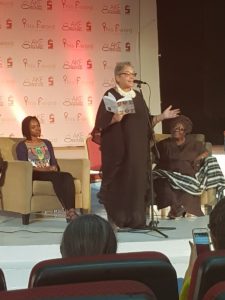
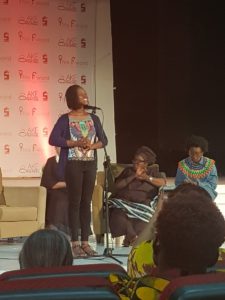
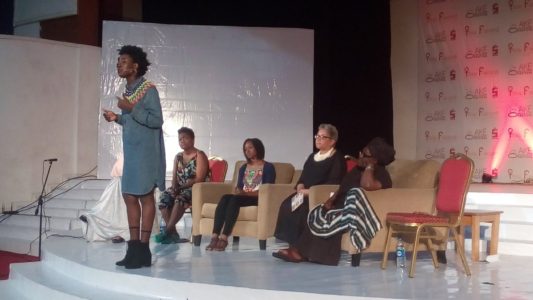
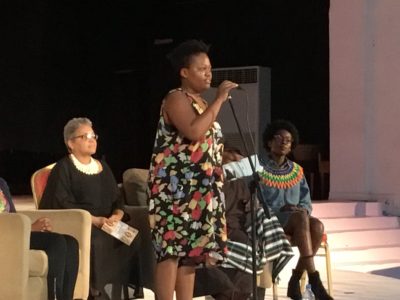
On Saturday, the 28th of October 2017, five of Africa’s biggest and most celebrated designers all showed on the same stage. Gert Johan Coetzee known for his eponymous couturier label , Amaka Osakwe whose label Maki Oh has become the standard for the Afrocentric New York fashion girl, Rich Mnisi the South African Wunderkind whose design challenge the boundaries of gender and sexuality, Tsemaye Binitie who recently completed a prestigious residency at the DC Fashion Institute and Christie Brown who has turned her label into the standard for Ghanaian fashion. In the front rows where Chioma Nnadi, fashion news  director at Vogue US, Mobolaji Dawodu, style editor at GQ, Irene Ojo Felix buyer for Oxosi.com and stylist at Models Dot, Reni Folawiyo creative director and Head Buyer at Alara, Bryan Ramkilawan, head of Fashion at Africa Fashion International, South Africa and even media folk from WIRED Japan and Essence USA. Bloggers from across the continent flew in to see the shows, and document. It was a genuine celebration of the best fashion talent in Nigeria and the continent, a long way from the first showcase in 2011.

The Lagos Fashion and Design Week is easily Nigeria’s most prestigious platform, built painstakingly over the last 7 years by Omoyemi Akerele and her team into an Pan-African authority on African fashion and a global mover in the world of fashion. Akerele has been named an international gatekeeper of fashion and for good reason. She has crushed glass ceilings, courted giant sponsors and created a globally respected brand. Of course, the Lagos Fashion and Design Week has its flaws and shortcomings, many of which several fashion bloggers and journalists have highlighted in the past, but it is important that ignorant presumptions and personal bias never take the place of fact based, context driven critique.

Ignorant presumptions were the scaffolding on which Cosmas Akhere of New Age magazine More Branches built his ‘takedown’ of the Lagos Fashion and Design Week franchise. In his article, which you can read here, he posits that the LFDW is ‘exclusionary’ and ‘elitist’, because the organization sells tickets to see the four day shows. He argues that LFDW doesn’t ‘care’ about youth interested in fashion and the young designers who want to enter the industry based on the argument that there is a fee to see the shows. He also suggests that Nigerian youth have been socialized to feen for western brands and that perhaps opening up the Lagos Fashion and Design Week to everyone will somehow correct this narrative and alludes that the longevity of the music of Ebenezer Obey and Fela Kuti is a direct consequence of them opening their music to the ‘youth’ of their time. These are strong presumptions to make, especially when they are not based by fact.

First of all, we must get rid of this idea that fashion is simply an art form and that we are entitled to a person’s art simply because it exists.

Fashion might be driven by creativity, but it is more than just a medium through which a person expresses themselves. Good fashion always satisfies the tripartite purpose of aesthetic, design and functionality. It must look good, it must tell a design story that draws inspiration from external elements and it must be functional enough that it can successfully integrate into some facet of a person’s life while causing minimal discomfort. Every designer and fashion lover eventually learns that good design exacts a steep price both on the creator and the consumer. The designer must invest time and effort into every piece they make and walk a tightrope of sourcing materials that are durable, aesthetically pleasing and affordable. The consumer must choose to invest limited resources in pieces that are durable and aesthetically pleasing. Fashion is functional art and a fashion consumer only becomes a fashion lover when they start to see clothes as an investment.

How ever you swing it, good fashion costs money.

Not everyone has access to money. In fact, very few people have access to the kind of money that one would need to build a good fashion label. This is why, like in art and music, good fashion is often underwritten by a third party. Artists have galleries and curators and residencies, musicians have record labels and distribution deals, designers have fashion conglomerates and showcase organizations. These organizations provide the capital required for a creative to work on their craft, perfect it and present it to an audience. They also handle the mass marketing of said art and in exchange a take cut of the proceeds of the commercialization of the artist’s intellectual property. The artists and their financiers often have to compromise on how their art will be showcased and/or marketed to an audience.

In Nigeria, we do not have the structures that would guarantee investors proper returns on creative investments (think piracy, corruption) and as such, creative industries remain largely underfunded. Most of our labels are run out of pocket by their owners and this limits their creativity, their reach and their access to the millennial generation of savvy youths to which their clothes appeal. It also keeps their price points high, since many of the benefits of industrial backing (mass production) are absent.

Third party showcase organizations like the Lagos Fashion and Design Week have become an important part of the Nigerian fashion ecosystem; they democratize the process of showing finished collections by providing a mutual pool of resources (models, equipment, stylists, accessories and access to press) which individual designers can tap into by showcasing with the organization for a preset fee. These resources best serve younger designers just breaking into the industry for whom the costs of organizing private showcases would be overwhelming and helps them piggyback off the press and attention celebrated Nigerian designers bring. But running a world class showcase is expensive, and while the LFDW routinely partners with multinational sponsors to defray some of the costs, the organization has to pay for some things out of pocket. This is where the showcase fees and ticket sales that Mr. Akhere cries Wolf about come handy. Ticket sales also serve a secondary purpose; all the venues the Lagos Fashion and Design Week has used for its showcases was designed to hold a certain capacity of people. After VIP ticketing and passes for press have been handed out (about 600 in all) ticketing is used as way to ensure that the spaces are not overwhelmed and damaged. And ultimately, if you cared about an artist’s work, why wouldn’t you want to support them financially? Isn’t that what we all preach to consumers of art?

There have been a few preliminary responses to the Akhere’s “Fuck LFDW” article, but this one in particular by Anthony Audiri, goes some way in correcting Akhere’s errors. But I chose to reference it as well, because Audiri makes an erroneous error of his own, and it is one that many millennial Nigerians secretly hold. This misconception that fashion showcase organizations, and the LFDW in particular do not ‘care’ about the young designers who showcase on their platforms. It is quite simply inaccurate, as anyone who follows Nigerian fashion will tell you.

Programmes designed specifically to provide financial support and access to mentorship opportunities and resources have always been an integral part of the Lagos Fashion and Design Week. A good number of the country’s celebrated young designers are alumni of the LFDW’s Fashion Focus incubator programme which partnered them with the British Council, provided scholarships to Instituto Maragoni in the United Kingdom and internships with eco-friendly New York label Edun and provided them free slots to showcase capsule collections at the showcase itself. The Fashion Focus programme has constantly evolved to better serve young designers, morphing from a month long intensive, to a year long incubator for the 2016 finalists who showed critically received collection’s last weekend. The LFDW also facilitated three consecutive teams of Fashion Focus finalists to exhibit at the prestigious International Fashion Showcase, one of the world’s most coveted fashion showcases. The LFDW has also facilitated for a slew of Nigerian designers, emerging and established, to showcase at several international tradeshows, the companion platform showcases where designers court  sponsors and sell their collections to international buyers, a huge deal if your brand is ever going to transition into the big leagues.

There are also Fashion Business Series held around the country and open to everyone with an interest in fashion and the LFDW’s garment manufacturing partnership with the Human Capital Development Centre for young people who want a way into the fashion industry but don’t want to work as designers, the Lagos Fashion Talks. We could go on and on.

It is important to reiterate that the Lagos Fashion and Design Week has it flaws. Information about their work could be presented in ways that are more accessible to young people without fashion connections, multiple venues could open the showcase to more people, a reevaluation of the current Western fashion calendar is long overdue and guiding designers to create more functional pieces for our cultural and literal climate is something that needs to happen. But it, and all the other mainstream organizations bridging the gap in our punishing socio-economic climate aren’t ‘bad’ simply because they are mainstream. The discussion has far more nuance than that.

And if we are going to contribute to the conversation, ‘New Age’ or not, we are going to have to do so armed with a comprehensive, fact backed understanding of the subject matter that we choose to tackle. Anything less is unconscionable.


Edwin eats his rice and cabbages. Tweet at him@edgothboy


AV Club: Daniel Obasi’s fashion film, ‘Embers of Bloom’ is a facile narrative about gender in Nigeria

There’s more to Falz’ new album “27” than meets the ear

Secrets, we all have them. That part of us we never want to unveil and so tread carefully when we finally do because we fear that these hidden parts of ourselves could deviate so much from the persona we have presented that it could open us to either ridicule or praise. Such is the case of Folarin Falana popularly known as Falz the bahd guy in his new album “27”.  At first it looked like the entertaining, if rather lightweight artist, was being his old comical self. With the way he served us mainstream culture, by pulling a Beyonce and emulating Adele’s style. But two songs into the album, one would realize it is an important record, with equally important messages.

The 17-track album, which contains some pre-released songs, the likes of “Something light” ft Ycee, “La Fete”, “Bahd, Baddo, Baddest” ft Olamide and Davido, touches on a whole lot of social problems.  While giving us traces of that light-hearted artist, who caught our attention in 2015 with his album “Stories that Touch”. And held it with “Chemistry” an EP with Simi. On 27,  he raises the issue of internet scamming in “Confirm”as he ridicules,  “no work but you wan chop” and challenges these scammers to rise up and do better, all the while, reminding them that success in life is a gradual process. He also goes in on internet bullies and braggarts, who leave threatening comments, perhaps forgetting they could end up in prison.

Amongst other notable tracks, the obvious touchstone that many have pointed out is “Child of the World”. A song which throws light on the struggles of single parenting, and victims of sexual abuse. Where he urges the said victims to not feed their integrity to the slum, by clinging to immoral life, as he sings “ don’t be a fool now, don’t go astray”. He goes further to persuade the people life has dealt a hard hand, to stop living in reckless abandon and do better. These messages coming from someone who for quite some time, has thrown around his jolly bahd guy facade In 27, Falz allowed us see if only but a glimpse, a socially woke artist with a vision to create awareness through satire with his platform.  But this album doesn’t transcend the common goal of commercial rap music, as it looked like he targets discotheques [the core demographic for Nigerian mainstream] featuring quite a number of acts like Maleek Berry, Sir Dauda, Burna Boy, Wande Coal, Terry Apala.

For an artist who has a couple of awards to his name, including BET’s “Best Internatonal Act” and City People’s Entertainment Award for “Album of the Year”.  It is rightly expected that Falz’ sonic and visual aesthetics blend in like a brilliant paint, on the rather colourful wall of  Nigerian culture.  And as we witnessed the lyrical progression on “27”, it is likely this artist has got a couple of tricks up his sleeves

Listen to 27 below


“Ifunanya is too queer to live and too rare to die” Tweet at her @Iphynaya


Watch Falz go french on new single “La Fete”

Mafikizolo is finally bridging that gap between SA and Nigerian Afropop

Very much like the American way of things to presume the world revolves around all things American, many Nigerians also falsely presume Afropop is primarily set around its Nigerian firebrands. In retrospect, years of domination of the continent’s sound by some of the most successful Nigerian musicians of their era (think: 2face, Dbanj and recently Davido and Wizkid) has probably played a huge role in skewering the narrative in this direction. But it would be a shame if music anthropologists talk popular African music without mentioning the divergent and equally relevant success of South African Afropop.

Looking through history, the works of Brenda Fassie, Hugh Masekela , Miriam Makeba and Lucky Dube among others, are testaments to the success and cultural impact of South African music. These days, to speak of the biggest acts in South Africa, conversations will have to circle around the likes of Nasty C, AKA, Casper N’yovest and Simphiwe Dana amongst others whose work have set them in the same running class as their superstar African counterparts.

Mafikizolo however is a step further. The group is not only one of Africa’s longest/surviving bands (20 years and going, as at their last release), they’ve also succeeded in recently organically crossing over into the continental market, most notably with 2013’s “Khona”, a tribute track to a late band mate.

“Khona” remains one of the biggest songs in the continent. The years since its release also earmarked the beginning of Nigerian collaborations with producer, Uhuru, who is still largely benefiting from Nigerian Afropop’s penchant for genre-blending. Perhaps seeing this as a potential opportunity for expansion, Mafikizolo has also dabbled into collaborations, working with May D “Happiness”, Davido “Tchelete” and most recently working with producer, MasterKraft on “Love Potion” the first single off their anticipated album 20, in honor of two decades in the game.

“O fana nawe” the second single off 20 has been released and this track also produced by MasterKraft and DJ Maphorisa features  “Mama Africa”  Yemi Alade. Interestingly,  Yemi Alade has also been on a  rather Pan African trail, with collaborations and alternate Swahili and French covers of her own tracks, so it makes sense that her latest appearance is on a Mafikizolo single and album. In  anticipation  for 20  Mafikizolo is no doubt bridging the gap between the divergent but cumulative successes of progressive African music.

Listen to “O fana nawe” below.


“Ifunanya is too queer to live and too rare to die” Tweet at her @Iphynaya


Yemi Alade takes us on a tangent

Essentials: Mars and Barzini debut strong with ‘In Spirit’

Months after releasing their vibrant Afropop single, “Colours” which has gotten over 100,000 plays on their SoundCloud, Mars and Barzini continue to drape themselves in Afropop’s most jolly threads. Their debut tape, In Spirit builds on their fun, polarizing, and oddly rewarding back and forth music style that switches between pop and rap over grubby basslines and hard drum loops.

https://www.instagram.com/p/BadfV_dl9gy/?taken-by=marseze

With their vocal combination and Afropop melodies, it’s easy to mistake Mars and Barzini for cheap P-Square reincarnates. But with their pseudo-satirical lyrics and progressive harmonies that Syn-X, Ricky Beatz, Black Lions and 8-8 Trel produce, they are uncloaked for the gems they undoubtedly are. Over the 8-tracked In Spirit debut tape—including pre-released “No Okada” track featuring DJ Pulz—they mash trap, soul, reggae, dancehall and Afropop flow for an electronic based sonic experiment.

Opening track, “More Songs” showcases their peculiar deftness with songwriting as they exchange boastful punchlines like a well rehearsed hand to hand combat between Jackie Chan and Jet Lee. But rather than attack each other, they rap like a tag team—“Mars, Look At These Children, On IG Slaying And Kinging”. Though the neo-soul beat with hard hitting base drops that 808 Trel produces is a pleasant enough listen, it’s Mars and Barzini’s humor that steals the show; “Roll Dope In The Maintime/ Oh Baby Follow Me Inside/ I Go Dey Your Body Like Skintight.”

Despite the Hip-hop influences heard in the rap flows swimming in and out of their Afropop melodies, Mars and Barzini are hardly what you’ll describe as hip-hop artists. But that didn’t stop them from debunking Hip-hop’s premature postmortem on the EP’s title track, “In Spirit”. However, the most Hip-hop track on the album doesn’t come till midpoint “Thank You” track which still had a lot of singing till Barzini sneaks in a few hard hitting bars over the base heavy beat Syn X produces.

While DJ Pluz assisted “No Okada” saw them deliver low-level hustler anecdotes with a broad grin etched across their face, the last track “Tactics” finds them giving a spiritual take on their come up; “Na God Dey Lift Me Higher”. Crediting a higher being for their success story, their humility transcends the talent. But after listening to some very contemporary themes including drugs and sex, they seem fixated on performing a bigger chorus and a quieter ballad on “Tactics” to show remorse.

You can stream Mars and Barzini’s In Spirit below.

Featured Image Credits: Instagram/marseze


You are meeting Debola at a strange time in his life. He wandered into a dream and lost his way back. Tweet at him @debola_abimbolu


ICYMI: Yung L’s ‘Better Late Than Never’ debut album is finally here

Suede’s “Weekend” has some good ideas for the weekend turn up

Even the most hardworking people recognize how important the weekend is for a healthy lifestyle; it’s the perfect time to kick back, reminisce on days passed and plan for the future. Though let’s face it, after spending so much time grinding for a paycheck, the only way to truely make up for the stress is to turn all the way up on work-free days. Countless songs have been written and dedicated to that two-day break when we’re free to do whatever the hell we want and Suede’s “Weekend” is the latest update to the jovial and carefree experience.

Bond produces a mid-tempo piano led beat that gives Suede’s “Weekend” an atmospheric ambience to mimic weekend’s laidback . The mellow tune though is catchy with repetitive melody, stays clear of upbeat harmonies. Plus with his pseudo-romantic narrative, we get the impression that Suede’s idea for a perfect weekend is to escape into a lover’s arms; “Girl I Want To Wake Up With You On A Saturday”.

However, not to be inconsiderate to single folks who can’t “Make Love All Weekend”, he has other suggests too; “Be Fucking High On A Weekend”. Regardless of the difference between the two, they’ll both help unwind from the stress of the week.

We know the weekend doesn’t start till you clock out on Friday, but there’s nothing wrong with keeping your eye on the price. You can indulge with Suede’s “Weekend” below to take your mind off that 9-to-5.

Featured Image Credits: Twitter/Suedeoff


You are meeting Debola at a strange time in his life. He wandered into a dream and lost his way back. Tweet at him @debola_abimbolu


ICYMI: Check out Suede’s African anthem, “Alkebulan”

Daramola’s reinvents Michael Jackson’s “Liberian Girl” into an Afropop ballad

Michael Jackson’s genius saw him dominate pop charts right from his debut in the Jackson Five and even years after his death. The king of pop has such an iconic discography that several of his releases have inspired covers from different genres around the world of music; R&B, Rock, Reggae, Jazz and even Afropop. But while P Square’s “Personally” music video paid tribute to Michael’s happy feet and penchant for mind blowing music video—suit costumes and his classic anti gravity lean—few Afropop artists have successfully recreated his falsetto. And that’s what Daramola is doing on his recently released “Liberian Girl” cover.

https://www.instagram.com/p/Baorc1bBiFV/?taken-by=itsdaramola

It goes without saying that it’s near impossible to replicate Michael Jackson’s vocals. Fortunately, Daramola doesn’t need to given his reputation for a similar falsetto on previous releases like cult favorite, “Lotto”. His performance goes beyond just a ripoff of the Bad classic as delivers a knock-you-off-your-feet cover that fuses the Remedies’ “Shakomo” (a classic in it’s own rights) with Quincy Jones’ produced beat as though they were always made for each other.

Daramola’s “Liberian Girl”, like the original showcases the infinite shades of longing Jackson can coax with each syllable. The Afropop makeover however builds on the desire by adding “ehh” to add more groove without stripping away the raw emotions.

Listen to Daramola’s “Liberian Girl” below.

Featured Image Credits: Instagram/itsdaramola


You are meeting Debola at a strange time in his life. He wandered into a dream and lost his way back. Tweet at him @debola_abimbolu


Watch Falz and YCee team up for “Something Light”

“Dante’s Awakening” continues PatricKxxLee’s Hip-hop evolution

Hip-hop greats have left in their wake such a startling aura of efforts that for many purist, it’s unimaginable for new acts to knock them. But rather than lay down and accept defeat, it has fueled this era of raw and rebellious rappers to look outside the genre for inspiration. As a result, hip-hop is evolving faster than ever with different mutations by artists incorporating punk, hardcore and emo. PatricKxxLee’s has used tracks like “Today Not Today” among others to channel some of his inherent lyrical nihilism through anime characters.

https://www.instagram.com/p/Bat9ZiNlJ6F/?hl=en&taken-by=patrickxxlee

Previous releases on his debut tape, Diary of An Arsonist already showed his penchant for metaphors alluding to his animated perspective of the world. His latest single, “Dante’s Awakening” finds him in a gruesome Devil May Cry-esque universe where his pseudo-violent narrative feel right at home. Over the haunting mid-tempo synth based beat, he describes how he’s “Killing Demons” and “Leaving Bodies In The Mud”.

His punk like purity and rawness allows him draw parallels between his moral dichotomy and Dante, the lead character in Devil May Cry. While Dante manages to balance both sides of his genes to become the most badass gunslinger and swordsman—being the product of an unholy romance between a powerful demon and an angel—PatricKxxLee apparently is still in struggle with his seemingly opposing sides; “I’m Fighting Demons/ You And I Are Quite Alike And I Don’t Like That”.

Listen to PatricKxxLee’s “Dante’s Awakening” below.

https://soundcloud.com/patrickxxlee/dantes-awakening

Featured Image Credits: Instagram/patrickxxlee


You are meeting Debola at a strange time in his life. He wandered into a dream and lost his way back. Tweet at him @debola_abimbolu


ICYMI: Rage with PatricKxxLee on his energetic single, “Run”

NATIVE MIX 013: Featuring Smoking Indoors

It’s officially the end of summer and the long nights are gone for another twelve calendar month. Playlists need to slow down for the ember months ahead as we prepare to jam out all holiday season to loud, energetic end-of-year music. AYLO opens this mix by Smoking Indoors, with supporting cuts from the A$AP Mob, Ria Boss, Goldlink and more.

Stream NATIVE 013 and see our tracklist below.

Gardens feat Tau Benah & Chris Generalz – Aylo
HeartBreak Kid – Kasien
Blowin Minds (Skateboard) – A$AP Mob
Carefree – Ria Boss
Own Up To Your Shit – PARTYNEXTDOOR
Timeless – A Boogie With The Hoodie
Antidote feat Ycee – Boj
Text Message – Vybz Kartel
Ice Cream feat Tomi Thomas – Lady Donli
Happy feat Ayo Jay – Boj
4×4 – Young T & Bugsey
Murder She Wrote – Tay-K
Paraga – K Sly
Closer Than Close – Rosie Gaines
On My Mind – Jorja Smith x Preditah
Crew (Richie Souf Version) – Goldlink
Hell Shell – Young Nudy
Live Up To My Name – Baka Not Nice
Right Now – Young Nnelg x Larry Racer
Ken Griffey – Focus The Truth
Sunny Delight – Bias
No Wok – Lucki

Revisit: The Native Mix 012 featuring DJ Wayne

The Shuffle: Hope, grind and remembering Bez’ “Super Sun” featuring Eldee, Ice Prince and Eva Alordiah

Like we are revisiting the works of Fela, King Sunny Ade and Haruna Ishola amongst other sound progenitors via their cultural impact today, the classics of our time have also been written. Some of those classics are from careers that enjoyed short-lived but widespread relevance like Remedies, Styl-Plus, Plantainshun-Boiz, others are from elite class artists like 2face, Omawumi, Asa and Bez, outliers who defined their reign with a distinct style and a sound that cuts across the times. “Super Sun”, the original track off Bez’ 2011 album of the same name, opens with what sounds like a rowdy school morning. Bez motivates, dreams and keeps a light-heart, with the airiness of a man who strongly believes in the promise of better days to come.

The remix however somewhat inverts things. Though Cobhams Asuquo initial production is sustained on the Eldee, Ice Prince and Eva Alordiah’s version, verses are given an additional bass lift o give a more hip-hop feel. On the first version of “Super Sun”, Bez proclaims that all one needs to imagine our wildest dreams is closed eyes and a little imagination. Eldee who opens the remix, brings a contrast instead, offering a glimpse at the bleakness of the music grind, the sleepless nights and the long wait to reaping sowed seeds. Ice Prince’s contribution is a bit of bleep on this remix, thankfully Eva Alordiah gives a pitch-perfect sing-song closing rap verse, bearing the same weary optimism Eldee began with, in a manner similar to the style heard on No Name’s 2016 mixtape, Telefone. For Eva who delivers the most potent verse, the problem with success is not just ‘doing it’, it’s wanting more. As she puts it aptly “I see stars/ but the sun is what I’d rather be”

Because there is a new rapper on the block every other day, the uncertainty of the hip-hop game, even for the most successful, is almost tied with its hustle. In Nigeria, the odds are even further stacked against rappers, who have to struggle for airplay because their sound is not as viable for the mainstream as the generic Jollof sound. It’s not a surprise therefore that having three rappers on a presumably uplifting track about reaching for excellence, can quickly turn the number into a mid-tempo reflection of hope amidst unfulfilled potential and the never-ending music grind. Albeit unintended, “Super Sun” remix, reminds us that contentment is not necessarily accepting where you are, it’s appreciating that position but charging forward anyway, especially if your dreams supersede your current reality.

Stream “Super Sun” remix via SoundCloud below


Toye is the Team lead at Native Nigeria. Tweet at him @ToyeSokunbi


Revisit: The Shuffle: “Trouble Sleep Yanga Wake Am” was Fela at his most succinct

All the things to look forward to at Smirnoff’s nationwide X1 Tour

Alcohol’s lightweight feels easily takes credit for directly inspiring the majority of songs—particularly in Afropop’s nimble territories. So it only makes sense that Smirnoff, one of the biggest liquor franchise has tried to merge their brand with the music industry in Nigeria. Their investment in music through organized shows that allow music fans experience music is one of the few instances of truth in advertising. And earlier today, they called a press conference to announce a nationwide tour that promises to bring your favorite artists to venue near you.

https://www.instagram.com/p/BarWumIhohB/?hl=en&taken-by=djspinall

The X1 Tour is expected to help generate publicity for two of the latest flavors of their drink; the Smirnoff X1 extra smooth vodka and the Smirnoff X1 intense chocolate flavoured vodka. To ensure that the experience is as fun as it is advertised, artists such as M.I, Wande Coal, Niniola, Illbliss, Yung L, Timaya, Zoro and more are expected to turn up for the tour that will touch on 7 different states.

Brand ambassador, DJ Spinall will be the official DJ at all shows including his recently released Dreams album’s launch party—essentially making 8 shows where the music can be experienced along with the buzz of a DJ Spinall’s favorite vodka.

Check out the lineup below.

28th October 2017: Owerri

26th November 2017: Lagos

22nd December 2017: Abuja

26th January 2018: Benin

16th February 2018: Port Harcourt

9th March 2018: Jos

13th April 2018: Ibadan

12th May 2018: Lagos

Featured Image Credits: Instagram/djspinall


You are meeting Debola at a strange time in his life. He wandered into a dream and lost his way back. Tweet at him @debola_abimbolu


Watch DJ Spinall’s video for “Olowo” featuring Davido and Wande Coal

#HLFDW2017: 6 designers we’re excited for at this year’s Lagos Fashion and Design Week

Holy shit! It’s fashion week!

The Lagos Fashion and Design Week is the very pinnacle of the Nigerian fashion calendar, drawing designers of Nigerian/African descent from all around the world who come to showcase their newest ideas brought to life on the Lagos Fashion and Design Week Runway. The showcase has also served as a springboard for its own crop of homegrown designers, models, stylists, journalists and photographers who have grown to become internationally celebrated for their groundbreaking work. Now in it’s seventh year, the Lagos Fashion and Design Week is moving house to the Eko Atlantic and promising the best show in years. We are particularly excited about the designers showing this year and have compiled a list of our designers you absolutely have to see this year.

CHRISTIE BROWN GH

Ghanaian design label Christie Brown is finally making its Lagos debut at this year’s Lagos Fashion and Design Week. The brand is known for its attention to detail, its cosmopolitan clothing that celebrates a meeting of African heritage and world class tailoring and its stylish accessories. From what we’ve seen at the Glitz Africa Fashion Week, for this collection Christie Brown has brought on Ghanaian powerhouse talent Papa Oppong. Oppong is master illustrator and a creative genius in his own right, and a collaboration between these two brands is bound to be something to behold. This will be a show you have to see in person.

TITI BELO

Titi Belo rose through the ranks, participating in the 2014 Lagos Fashion and Design Week Fashion Focus Incubator programme where she won a scholarship to study at the Instituto Maragoni in the UK. Since then Titi Belo has honed her talents and built a brand that actual every Nigerian women love and wear. She has focused  her energies on creating clothing for contemporary Nigerian woman and takes inspiration from contemporary Nigerian pop culture. Her collection this season is inspired by her time at Queens College Lagos, and by the secondary school experience in general, and we are intrigued to see how she translates the very specfic style of the 2000’s into contemporary 2017 looks.

GERT JOHAN COETZEE

Another internationally renowned designer making their Lagos Fashion and Design Week debut is South Africa couturier and design behemoth Gert Johan Coetzee. The very apex of design in Africa, Gert Johan Coetzee’s designs have been worn by Hollywood royalty, South Africa’s elite and Nigeria’s biggest socialites. Coming to Nigeria is a strategic decision for him, considering he just finished showing at the South Africa Fashion Week. What better plan to dominate Africa than show on the continent’s two biggest fashion platforms back to back.

CLAN (DEOLA SAGOE)

Since Deola Sagoe focused on her bridal line, Komole by Deola Sagoe, her hip, ready to wear diffusion line run by her daughter Teni Sagoe was put on the back burner for a bit. But now that the Deola Sagoe bridal and bespoke line is firmly established, the designer is turning her attention back to Clan, and making a splash by returning to the Lagos Fashion and Design Week stage. It will be interesting to see just how much of Teni’s influence will play out when Nigeria’s favorite tween high fashion brand makes a play to take back its throne from the other diffusion line by the offspring of a celebrated Nigerian designer.

BRIDGET AWOSIKA

It is always, always, a delight to see Bridget Awosika on any runway. With her attention to detail, her unique and often whimsical approach to design inspiration and her excellent silhouettes, Bridget Awosika has become the label for the woman who wants pieces that will remain evergreen. A firm staple in Tiwa Savage’s dress repertoire, Awosika’s collections are always the standard for subtle but excellent storytelling and we are eager to see where her whimsy takes her this season.

MAKI OH.

Where Bridget Awosika is subtle, Maki Oh is jubilant. Amaka Osakwe never makes a collection that doesn’t take you by the hand and guide you through a whirlwind of emotions as it tells back to you, some intricate but often ignored aspect of living as a contemporary Nigerian woman in a culture that is simultaneously progressive and restrictive. She will be bringing home her Spring 18 collection (which she sort of already debuted in New York) and introducing it again, to us, in person. And anyone who has seen a Maki Oh show in person knows absolutely nothing substitutes for the seeing the real thing up close.

Fashion Week starts today, the 25th of October 2017. If you haven’t gotten your tickets to see the shows yet, here’s how you do it.

You can register for LFDW 2017 daytime events here

You can buy tickets for the runway shows here 


Edwin eats his rice and cabbages. Tweet at him@edgothboy


AV Club: Daniel Obasi’s fashion film, ‘Embers of Bloom’ is a facile narrative about gender in Nigeria

The A.N.A.I Foundation is providing much needed support for Nigerian artists

One of the interesting things we found out while speaking to Aminat Agoro is that while Nigeria consumes what amounts to millions of dollars in ceramics, and has extensive clay deposits, all the ceramics we use in Nigeria is imported. All of it. This is one of the reasons why Peju Alatise, an award-winning contemporary artist created the Alter Native Artists Initiative (A.N.A.I), a non-profit foundation for the visual arts in Nigeria. Aminat Agoro is the arts programme manager at  A.N.A.I. and we got her to answer a few questions about the project and what it means for young Nigerian artists before it launches on the 4th of November 2017.


One of the things she told us was that A.N.A.I. has a physical space, that will house a ceramics studio – the first of its kind in Nigeria, a purpose built residency – another first of this magnitude – that will facilitate training of Nigerian emerging and established artists. The project also plans to manage a cultural exchange programme where artists from Nigeria can meet, learn from and collaborate with international artists and vice versa.

In addition, it will build capacity of women in its immediate community – where it is located – through training in creative practices to create goods and reduce the barrier to entry into the craft market.


Here’s everything else we talked about:

One of the reasons the Alter Native Artists Initiative (A.N.A.I.) really intrigues here at The Native, is your pedigree as an artist and the pedigree of the artists that young creatives who choose to join the initiative will have access to. Was this a deliberate move on your part?

Yes. The very idea of what drives ANAI is to alter the current state of what is native to the Nigerian artist. This is where our name comes from, a play on the word alternative. What is native to the Nigerian artist currently is a standard that is in dire need of raising. Formal arts education in the country is decent. But it is not world class. ANAI seeks to fill existing gaps by bringing the very best of experts in the world across different mediums to train emerging artists and get them accustomed to global best practices.

A big argument used to discredit some young artists trying to make their own space in our often restrictive art community is that the digital mediums they choose to express themselves in are somehow ‘less’ . Is this a concern A.N.A.I is taking into consideration?

We do not think one medium is inferior to the other. We are rather more concerned about the mind of the artist exploring any given medium: what story are they trying to tell, how far outside the box will they push themselves; is their work relevant to, engaging of their immediate communities? These are the things thay matter.

The ceramics studio really intrigues us, especially because of Nigeria’s long history with ceramics and greats like Ladi Kwali. How will this work?

One of our principal objectives is to revive and develop the art of ceramics to a level compatible with international health and quality standards. To this end we have a purpose built ceramics studio that is equipped for professional ceramics practice, with equipment such as kilns, various throwing wheels, slab roller etc. We will also grant access to the ceramic studio to interested artists for hire.

There are a few residencies in Nigeria, but none that really prioritizes the work of emerging artists quite like A.N.A.I. It’s a huge statement. Why now?

Why not now? Clearly the need is there and it is urgent. This residency is the fruit of a years-long dream by founder, Peju Alatise who by virtue of her work has travelled the world and has seen what obtains in other climes. There’s a global mentoring and grooming chain for artists to experiment, grow and thrive and that’s how you keep an industry alive. This is missing in Nigeria. To answer your question simply, for anyone who cares about keeping the Nigerian art industry alive, this is necessary. It had to be done.

Are there any young artists on the A.N.A.I roster already, or artists that the collective is interested in bringing in?

Emerging artists will be taken on through applications through a specific residency for same. Our programme will focus on supporting emerging practice and will enable emerging and mid-career artists in Nigeria an opportunity to produce new work, on a major public platform.  The residency takes the form of free studio provision and aim to relieve an artist from pressure for a period during which they can focus on their practice and progress within their chosen field.

Exhibitions, any planned now or in the near future?

We’ll be announcing our programme for 2018 in a few months. Till then…


Edwin eats his rice and cabbages. Tweet at him@edgothboy


AV Club: Lola Shoneyin dishes on Ake, literature and everything else on Culture Diaries

Omawumi could have done better with her performance at the World Food Prize Event

Omawumi has been making music long enough to know that opinions on any artist’s output tends to ebb and flow. From her brilliant start and the warm reception for her vocals as a contestant on Idols West Africa to her songwriting’s appraisal in critical communities, terms such as “underrated” have been as overused as “genius” to describe her. Given her dime in a dozen aptitude with stage performance in Nigerian soundscape, the high praises were more than justified and have seen her grow to elite status, seemingly invincible to negative press.

https://www.instagram.com/p/Balx__eDB9X/?hl=en&taken-by=omawonder

But after years of building a fanbase with dozens and dozens of perfectly crafted songs, her performance at World Food Price in Iowa, America left a lot to be desired. The annual event, aimed at eradicating global hunger featured delegates and representatives from around the world. Omawumi was one of the acts invited by the African Development Bank (AfDB)’s, Akinwumi Adesina, the honourary of the night for the World Food Prize (the food industry’s equivalence of a Nobel Prize).

Because Omawumi has proven herself a decent vocalist in the past and she isn’t one to develop stage fright particularly in a hall that small, we could chalk her occasional fleet between keys as one of those off-nights that every artist inevitable experiences. The cringe, however, comes when Omawumi switches from a powerful entry with her own ballad, “The African Way”, to Salif Keita’s “Africa”, beaming all smiles in what easily turned into the most predictable ‘African’ performance ever. All due respect is given to the legacy and works of Malian Legend Salif Keita, but to discuss contemporary African music, one must analyse the music within the socio-political context of the times. Thus is could be said that the identity for popular African music artists from Salif Keita’s generation curated and created for the continent is largely a reflection of their era. Is it so hard to fathom then, that popular African music would have made more advancements nearly twenty-one years after Salif Keita recorded that song?

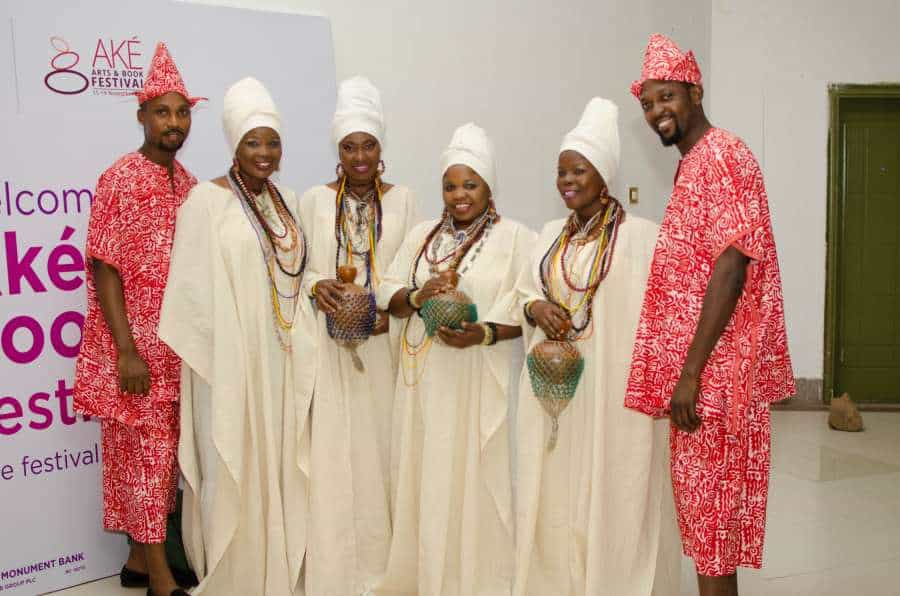
Omawumi is no stranger to Afrocentric themes; she’s constantly using her music to celebrate her culture. But never has it felt this watered down and deliberate—almost as though she considered it far more important to be remembered as the ‘Nigerian singer’ from far-away ‘Africa’, instead of simply being the amazing singer who caused all the bougee white people seated to lose their breaths. Even more frustrating is that before Omawumi’s set, a trio of women from Ibadan already opened the night with an authentic non-pretentious tribute to the man of the night, Mr Femi Adesina. Why then, did Omawu

mi deem it fit to brandish the African flag again with so much brazen insubstantiality on her own set?

Interestingly, much of the reaction from the internet to the video has been positive, particularly from Rubbin’ Minds Host Ebuka Uchendu who captioned a clip from the performance with well-meaning words to the singer. No doubt his intentions are pure, but he also falls victim to the same cultural hype machine that celebrates achievements and efforts over actual transcendental value. Omawumi’s slight work over the years has produced a fair number of deftly written classics, there is actually no excuse for not bringing her A-game with a more inventive setlist, or this average performance that could have been mistaken for a ‘UNICEF for Africa’ fundraiser theme song.

Watch the full video below.

Featured Image Credits: Instagram/Omawonder


You are meeting Debola at a strange time in his life. He wandered into a dream and lost his way back. Tweet at him @debola_abimbolu


Watch Omawumi “I No Sure” off her new album

Watch Shaydee and Wizkid in new video for “Make Sense”

Lately, Afropop artists have taken a minimalist approach to music making and given rise to an era of smooth sounding Afropop songs. These easy listening dance-friendly songs essentially mean summer songs play all year round in Nigeria. And if Shaydee’s recently released “Make Sense” single featuring Wizkid didn’t already establish that through the Spax produced mid-tempo number, the video certainly does.

https://www.instagram.com/p/BamajgkA87E/?hl=en&taken-by=shaydeeboi

In most climates, the bright and sunny Director Q directed video will be a few months too late for the party. But Nigeria’s bipolar—dry and rainy—season calendar leaves a leeway to continue the song’s romantic and joyful themes. “Make Sense” heralds an escape to the excitement of new love and the warmth of hanging out by the beach.

The easy atmosphere of the single carries right over into the video set at pool party. Fader quoted Shaydee describing the video as; “A Birthday Do That Turned Into A Music Video” and this too is reflected in the video’s fun and simplistic outlook. Wizkid joins Shaydee at his birthday pool party to perform his verse, groove along the Spax produced baseline and look cool in his Luious Vittion shades.

Watch the summer tinged video for “Make Sense” below, hinged on the everlasting warmth of Nigerian summer vibe.

Featured Image Credits: YouTube/506MusicNG


You are meeting Debola at a strange time in his life. He wandered into a dream and lost his way back. Tweet at him @debola_abimbolu


ICYMI: Check out Shaydee’s Make Sense” single here

See Paybac’s grim video for cult favourite, “Mami Water”

Music videos are as more than just promotional tools to keep people talking about the music for a bit longer. Though the style has evolved from the Michael Jackson era when music videos were treated with the same grandeur of blockbuster films, artists still make cultural impacts through the visual art of music videos. Although Afropop may not be popular for that given the inherent lightness of the music, it’s not a surprise to see Paybac attempt a conceptual video for his “Mami Water” music video.

https://www.instagram.com/p/BajMSeog5gQ/?taken-by=lookatpaybac

But while he has always shown a knack for the profound with his pseudo-conscious hip-hop songs, “Mami Water” is far from his most intellectual release. The love story told through his humorous filters; “She Said Violets Are Blue/ But Water Is Too/ Even My Balls For At Least A Month Or Two” is far from conceptual, but you wouldn’t guess that from watching his recently released video for “Mami Water” directed by Palmwine Daddy.

The video is taken in one shot where Paybac climbs on stage to perform with what seems like his band; a guitarist, two backup singers, a drummer, saxophonist, pianist and a masked dancer. But while he raps into the mic, the camera focuses on the rest of the band who dramatise chaotic relationships. Because their drama doesn’t seem to distract Paybac from performing or even do anything to further the song’s narrative, it’s easy to assume the video isn’t literal.

Perhaps it’s nothing worth considering, but maybe it’s Paybac depicting how the often chaotic life of artists doesn’t get reflected in the music. Either ways, this video is sure to leave you wondering what the fuck you just watched and that’s not entirely a bad thing.

Watch the video for “Mami Water” below.

Featured Image Credits: Instagram/lookatpaybac


You are meeting Debola at a strange time in his life. He wandered into a dream and lost his way back. Tweet at him @debola_abimbolu


Watch Falz and YCee team up for “Something Light”

How Lupita Nyong’o and other women reopened the global issue of men like Harvey Weinstein

“If you spend your time hoping someone will suffer the consequences for what they did to your heart, then you’re allowing them to hurt you a second time in your mind.”
― Shannon L. Alder


Following the first explosive report by  The New York Times, about Harvey Weinstein’s sexual misconduct , a number of actors are coming with their accusations, against the Hollywood mogul.  Majority of his victims are household names, who were young aspiring actresses, at the time of the abuse.  Some of whom he had their careers ruined, when they declined, and silenced when they tried to speak up, using his powerful connections in the industry as a shield.

From Angelina Jolie, Mia Kirshner, to Lena Heady, the list of Harvey’s accusers seems to be growing, and among the recent is Lupita Nyong’.  Who said hearing the stories of these women, resurfaced in her, memories she has tried to forget.

In an op-ed published at The New York Times, The Oscar winning star of 12 Years A Slave revealed in details, two encounters she’s had with Weinstein, in her first encounter, the mogul had invited her to a film screening at his home, and offered to give her a massage, when she turned the table and offered to give him one instead, he asked her for sex in exchange for a booming career, of course she declined.

In another incident, while at dinner, he suggested they go up to a private room, she writes that he said, she should be willing to do that sort of thing, if she wanted to be an actress, again she declined.   And in a bid to be sure he wouldn’t ruin her chances of making it in the film industry, she asked him if they were good,  his response was “I don’t know about your career, but you’ll be fine”.  This in itself was a threat to her worth, as a woman, and an abuse to her right, as a human.

Like these women in Hollywood, many women in Africa, especially Nigeria, have been Weinsteined by bosses, teachers, friends, male family members, hell, you probably know a Harvey Weinstein.   Many a time, women have been forced into silence by societal pressure, to keep abuse and sexual harassment in the same class of taboo topics with homosexuality and gender politics.  And by choosing to remain silent, we’re not only making the abuser powerful, we’re helping him lay a foundation that would affect the next generation of girls.

It’s not hard to see that the ripple sent forth by the women of Hollywood, has gathered a global momentum, with an alarming number of women, all over the world, choosing to nullify the conspiracy of silence that has allowed the abuse thrive, by naming their abuser.  More importantly is the fact that these abusers are being removed from their places of power and are held accountable for their actions.


“Ifunanya is too queer to live and too rare to die” Tweet at her @Iphynaya


Tiwa Savage and the curse of the groupie effect

Best New Music: Juls and Burna Boy are as cool as the arctic on “Gwarn”

Earlier this year, Burna Boy and producer, Juls gave us the first taste of an unmistakable sonic synergy on “Rock Your Body”, our best new music from May. In a way, this already pre-wires expectation for “Gwarn”, their latest collaboration, but there was no way to anticipate the track’s edgy smoothness or Burna Boy’s uber laidback sub-woofer delivery. Juls has always favoured the use of acoustics from his days with Mr Eazi, the sleekness of “Gwarn”, however, is in a lightness of touch, a deft skill the producer weaves along with Burna Boy’s melody chord-for-chord. With Burna on verse and hook and low drums to set the mood, the sensual central focus of “Gwarn” is decidedly preset. The rest of the track sails like a boat on the Nile, peaking at a guitar solo outro that feels like 4 AM in the morning. “Gwarn” tips into the same collection of Burna Boy’s bedroom music catalog, bearing mark of all the nuances fans have come to love of his under covers Afro-fusion blues.

Stream “Gwarn” via Apple Music below


Toye is the Team lead at Native Nigeria. Tweet at him @ToyeSokunbi


Revisit: Best New Music; Nasty C and Runtown make an unlikely crossover smash with “Said”

AV Club: Lola Shoneyin dishes on Ake, literature and everything else on Culture Diaries

Wana Udobang’s Culture Diaries is interesting for all kinds of reasons. In the digital media space, there seems to be an obsession with virality, with media jargon like ‘conversion rates’ and demographic, and media companies seem obsessed with eyeballs rather than content. The result is that more often than not, the ideas that eventually go from idea to fruition are ideas that incorporate millennials and a mix of some form of manufactured friction or drama. Udobang’s Culture Diaries takes an entirely different trajectory; focusing on niche audiences and bringing much older, distinguished creators from different disciplines and allow them peel away the layers of mystery and mystique that often obscures the artist/creator and makes their art inaccessible. Their latest episode however is extra special because the guest is writer, poet and curator Lola Shoneyin.

It couldn’t be more timely considering it is less than a month before the fifth edition of the Ake Books and Arts Festival, which Shoneyin founded in 2013 and has grown in the intervening years and become a mecca of sorts for writers, readers, artists and other creators. Outside of literary circles, the Ake Festival isn’t quite understood because Book Festivals aren’t really a thing that is accessible to non-literary folk. By and large the Ake Festival has cracked this code by diversifying the palate at Ake, with art exhibitions, artist talks, musical performances and plays. At Udobang’s succinct urging, Shoneyin breaks down her motivations for starting the Festival, and how the festival has helped hundreds of readers connect with their mentors and each other, and how the festival has become a place of validation for younger writers struggling to find a place in Nigeria’s restrictive culture.

It was also pretty interesting to hear Shoneyin talk about her writing, and especially her critically acclaimed book The Many Lives of Baba Segi’s Wives, which is as beloved as it is controversial and what she intends to do in the future, especially as regards literacy.

If you ever wanted to know a little more about Lola Shoneyin, or Ake, or just literacy as a whole, this is one you should watch.

Watch Culture Diaries here.


Edwin eats his rice and cabbages. Tweet at him@edgothboy


AV Club: Joseph Nti’s “Off The Top” doesn’t take itself too seriously and therein lies its magic

6 videos you should see this week

Nasty C – Allow Feat. French Montana

Since growing from obscurity to continent-wide acclaim, Nasty C has been a shining beacon for South African rap. And given rap’s foreign influences, his feature on Major Lazer’s recently released Know No Better EP and several nods from international award communities, it was only a matter of time before his reputation pulled in more international features. His latest release, the video for “Allow” features French Montana and reminds listeners the heights his efforts have taken him with French Montana’s cameo in the neon filtered adjoining video.

Falz – La Fête

Excuse my French but the popular consensus that French language is the language of love is just verbal masturbation. But popular consensus being popular consensus, the stereotype provides artists with creative direction and Falz has taken inspiration from it for his latest single, “La Fête”. His humorous rap narrative takes on a more sexual motif assisted by a few phrases in French; “C’est le moment de fait la Fête.” Capital Dreams Pictures directs the video in a garage set, emphasizing the dance motif of the single as the models dance to the Demsa produced beat.

A-Q – Lekki Expressway Feat. Wavy The Creator

Off his recently released Blessed Forever project, A-Q’s “Lekki Expressway” just got a deserving video directed by Brother Lee for Temple film Productions. The track’s house house infused harmonies and Wavy The Creator’s vocal contribution on the hook give the Jayy produced track an experimental undertone as A-Q’s push the boundaries of his hip-hop sensibilities without compromising his style. The video mimics his drug infused lyrics as he takes viewers on a trip into the wilder Lagos nightlife with psychedelic lighting, smoke-filled rooms and fancy smoke bongs.

Masterkraft – I Go Dance Feat. Reekado Banks

Released a few months ago, Masterkraft’s “I Go Dance” is primed for dance floors and with Reekado Banks’ accent, its place was set on DJ turn tables. Masterkraft has gone a step further by releasing an adjoining music video for the dancehall number. The Adasa Cookey directed video follows the song’s groovy themes with dancers and set at a party; basically all the things you expect to find at a Nigerian dance club.

Tomi Agape – Breeze Feat. Mazi Chukz

https://www.youtube.com/watch?v=KcjbR9pDnak

Produced by Spax, Tomi Agape’s “Breeze” saw venture into Afropop’s bright and sunny. With the Caribbean tanned harmonies and Mazi Chukz’s blend of reggae and highlife melodies, the single listened like a late bloomer for summer playlist. And given the warm afternoon time setting, the video continues her summer affiliation. Tomi Agape and Mazi Chukz perform the song is the sunny themed video showing off some skin and brightly coloured sunshades.

Tipsy – Hustle Feat. Olamide

After debuting in 2017 with “E Dakun” and “Hustle”, Tipsy’s remix of “Hustle” featuring Olamide functions on traditional-trimmed infinity-mirrored portal into the singer’s universe apocalyptic universe; “I’m The Last Man Standing In My Lane Now/ I Never Die, Them Wan Bury Me”. The song that placed Olamide in the more traditional and less showy Yoruba territories. The flutes and somber percussion heighten the eeriness of the song which the recently released video doesn’t also pursues. The scare theme  video features shots of flame throwers and a bunch of religious symbolism reminiscent of Yoruba home videos.

Featured Image Credits: YouTube/Masterkraft


You are meeting Debola at a strange time in his life. He wandered into a dream and lost his way back. Tweet at him @debola_abimbolu


Watch Falz and YCee team up for “Something Light”

The aftermath of Davido’s police drama and why Nigerians love gossip

There are still only bare facts on the reinstatement or demotion of Acting Police Commissioner, Imohimi Edgal, but news headlines have gone on to suggest the police officer may have been a victim of a witch-hunting by ‘powerful’ people. This particular speculative report attempts cite a timeline of events that indirectly link the Nigerian Police’s failure to ratify the Acting Commissioner’s rank as a result of how he has handled the investigation of the late Tagbo Umeike, an associate of Davido’s.

https://www.instagram.com/p/BZ-5dX5F-n_/?taken-by=davidoofficial

Over the past weeks, there were several reports by media outlets pulling apart all the public details around the recent deaths of DJ Olu, Chime Ameachi and Tagbo Umenike, three men who were known compadres with Davido before their untimely demise. Even before the police got involved,  the information in the media had been conflated by actress and girlfriend to the deceased, Caroline Danjuma, who first alleged her late lover’s body had been suspiciously abandoned at the hospital by Davido’s escort. It didn’t take long for bloggers and newspapers to spin dizzying angles that created the media storm that followed, especially as the days after culminated the mysterious deaths of DJ Olu and Chime Ameachi.

During the week, reports of Davido’s acquittal made once again headlines, but this only comes weeks after all reportage around these deaths have circled back to singer, whom the media and police reports made a focus of the investigation into the death of Tagbo. What initially began as the biggest gossip of the year, snowballed into a narrative that placed Davido at the center of what the public presumed a murder case. Tagbo reportedly spent his last moments in the company of the OBO. A press conference by the Lagos State Acting Police Commissioner Imohimi Edgal also further suggested there were inaccuracies in Davido’s initial statement about his whereabouts at the time of Tagbo’s death.  To counter some of the media recourse that followed, Davido’s team released a press statement, as well as CCTV footage from what is said to be the last encounter Tagbo had with the singer.

Somewhere on the internet, there is a cringe-worthy news clip of the police commissioner of Lagos State revealing Davido’s house address while detailing the recovery of the vehicle CCTV footage captured to have dropped late Tagbo at General Hospital, Lagos Island. That Davido’s team came out to deny allegations of instructing escorts to dispose of the deceased did not stop the media from accusing the singer of providing false information and potentially colluding in the death of his late friend.

In a sense the media is often considered as a reflection of the morals, social code and ethics of a society, and because the media itself is a living breathing part of the same society, their relationship is symbiotic in a manner that compliments content with audience. For example, the media wouldn’t publish gossip as news if—even the most post-modern—African societies are still not relatively traditionalist and conservative and vice versa.

Ironically, even in conservative societies, indoctrination does not always reflect the reality of the people’s everyday life. Public figures merely become scapegoats for everything usually spoken of in whispers because the culture is too sensitive for everyone to break gender norms, be young wild and free, or even speak out against the government.

In this part of the world, the lives of the rich and famous is weighed against values and what should be a centrist stance for a journalist is compromised by indoctrination and socialisation. Public figures become easy targets because how the media presents their life glimpses our society’s ideological boundaries of what is deemed acceptable.

Nigerian media’s dysfunctional relationship with the celebrity culture is told in how quickly the value for a brand can be petered by negative press which shortens the life-span of a music career. Over the years, it’s as though Davido’s occasional media controversies have metastasised with the same incremental grandeur and shock factor as his career. But the same can be said for 2face, Genevive, D’banj, Asa and others on the endless list of Nigerian celebrities, who live in a culture where gossip fuels the news and public figures are considered for their headline value. We need to change our thinking, facts should not be rendered at the mercy of headlines that emblazon artists in history with grotesque captions of their worst moments.


Toye is the Team lead at Native Nigeria. Tweet at him @ToyeSokunbi


There won’t be a Wizkid vs Davido face-off at the MTV EMAs

Wande Coal just flipped the script on Niniola with his “Maradona” cover

After releasing experimental singles like “Shabba” and other releases challenging stereotypes for what should pass for pop music in Nigeria, it turned out “Maradona” was all Niniola needed to make the cross to mainstream acclaim. Continuing her African styled EDM harmonies, and a story arch defying female sexual taboos in these parts, she gained pop icon-hood seemingly out of the blue. The hit single asides confirming her ascent as an artist, saw her get booked for shows and boost her fanbase exponentially. But let’s face it, few things scream “Result” louder than a Wande Coal cover.

“Maradona” is proof of Niniola finally hitting her mark and Wande Coal’s recently released cover listens like a testament of that. He offers his own spin to her lyrics but rather than inverting Niniola’s unfaithful lover narrative, he retells it from his perspective as though responding to Niniola’s accusations; “Sey F.B.I. Ni Eh Ni Ton Wa Mi Kiri Oh/ Sey Olopa Ni Eh Ton Shu Mi Kiri”. He goes on to return the accusation singing, “If I Never Had This Money Would You Stay With Me?“.

Wande Coal’s perspective allows him take full advantage of “Maradona”‘s football referencing as he includes more sport metaphors; “Emi Gan Messi Suarez And Neymar”. But Niniola’s mark is still vivid with Wande Coal’s take on her use of ballsy and raunchy Yoruba metaphors. If Niniola wasn’t steamy enough for you, listen to Wande Coal’s “Maradona” cover below.

https://soundcloud.com/musicplugafrica/wande-coal-maradona-cover

Featured Image Credits: Instagram/wandecoal


You are meeting Debola at a strange time in his life. He wandered into a dream and lost his way back. Tweet at him @debola_abimbolu


ICYMI: Revisit our Up close and personal profile Niniola