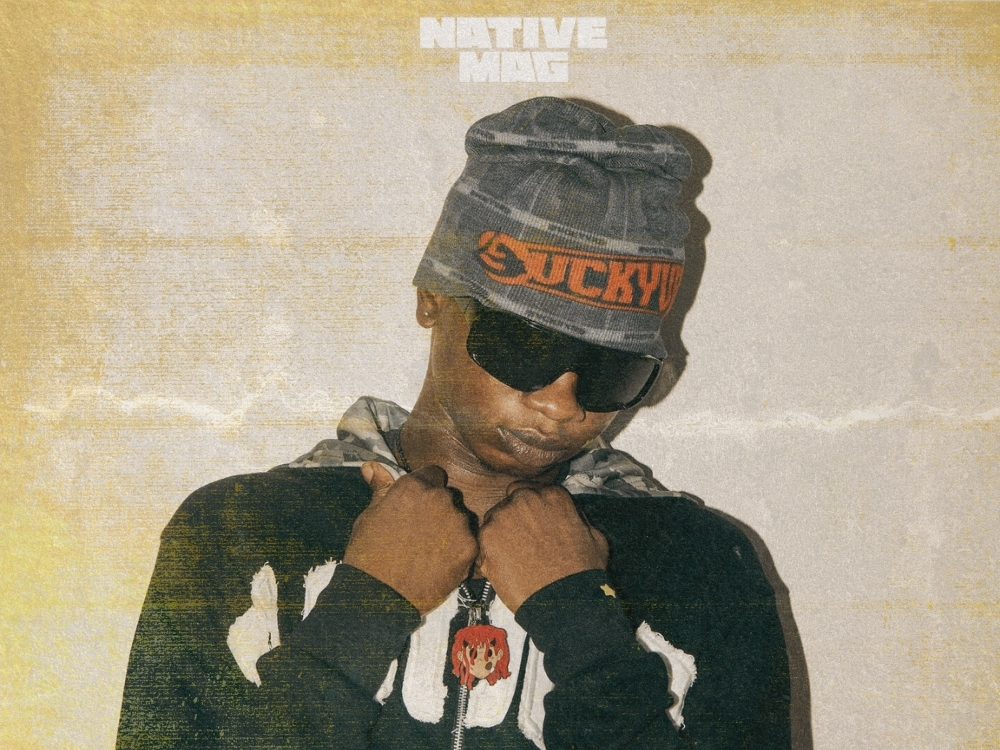
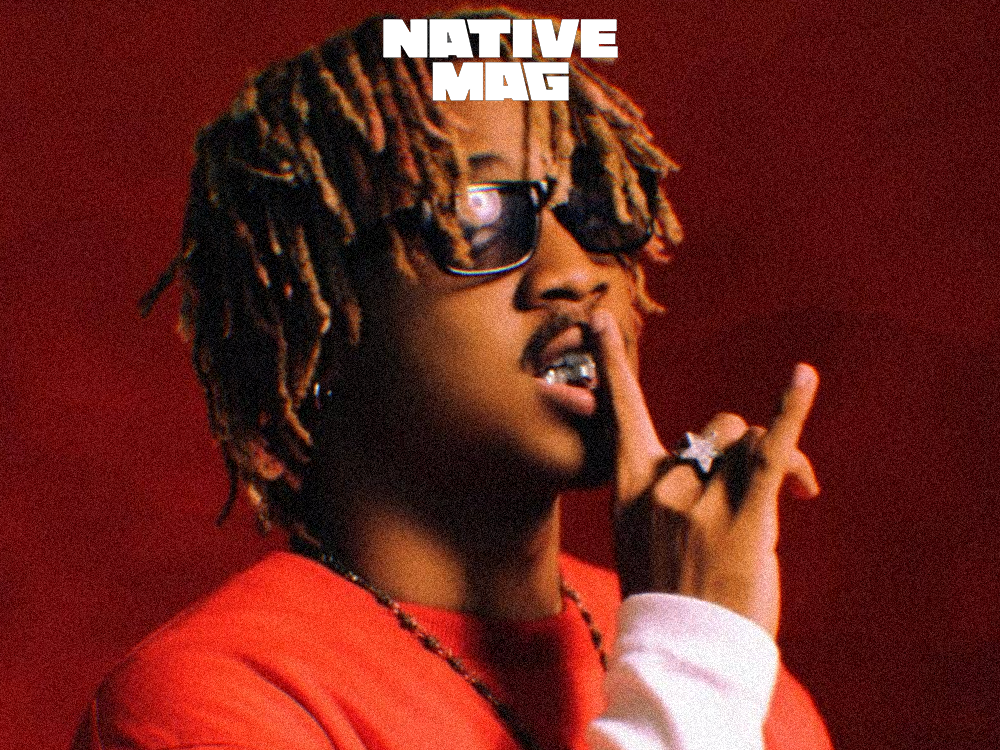
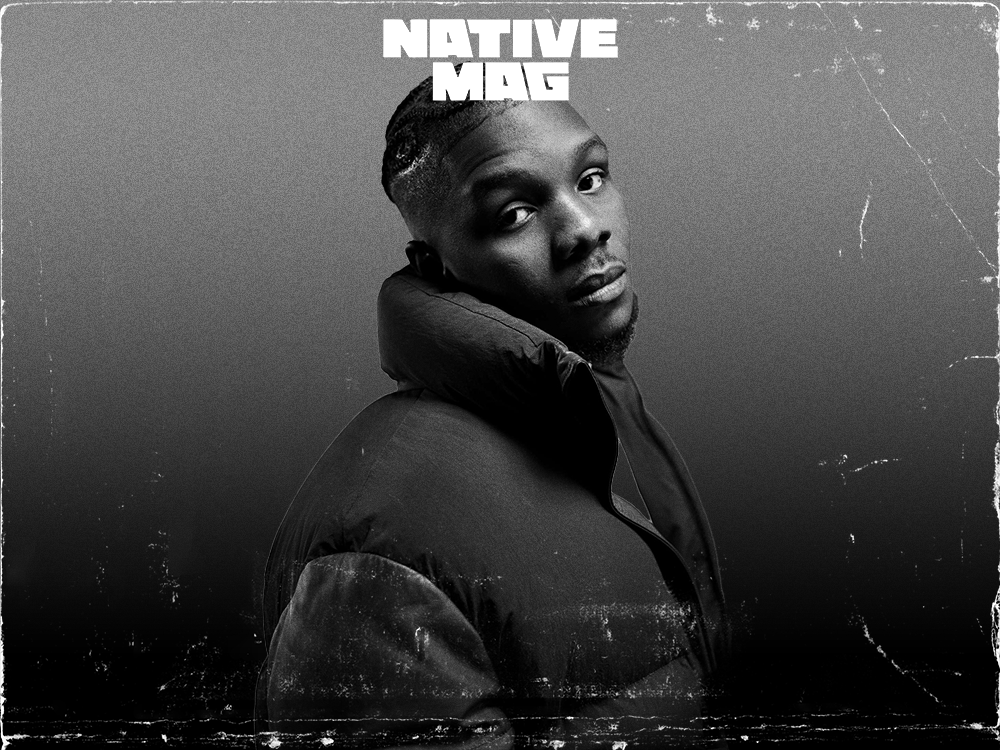
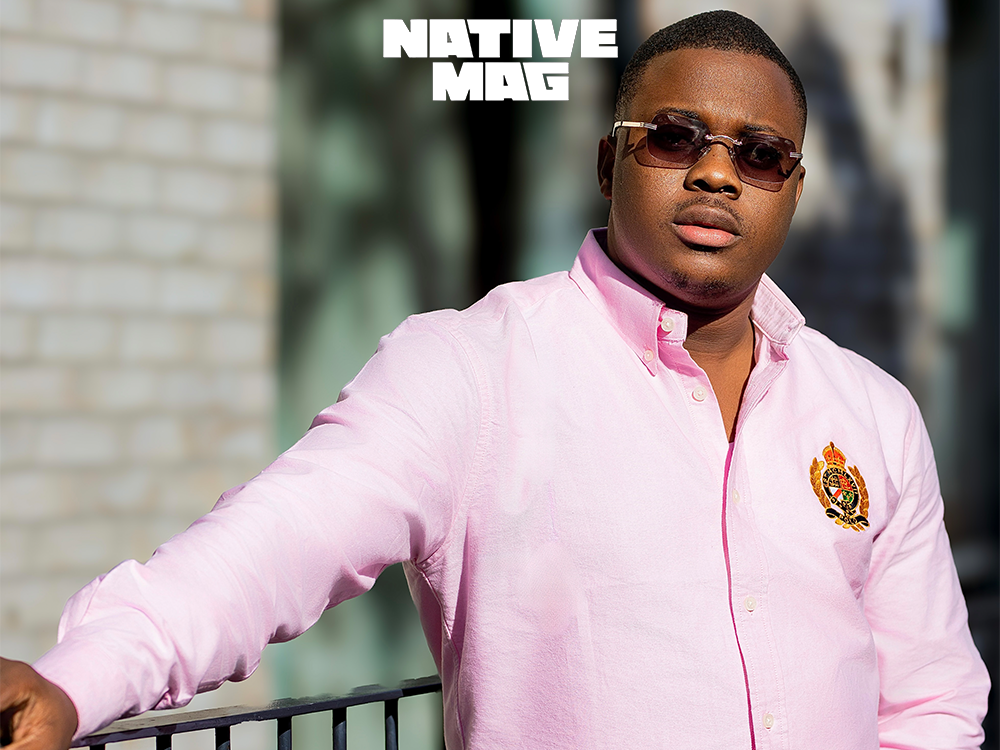
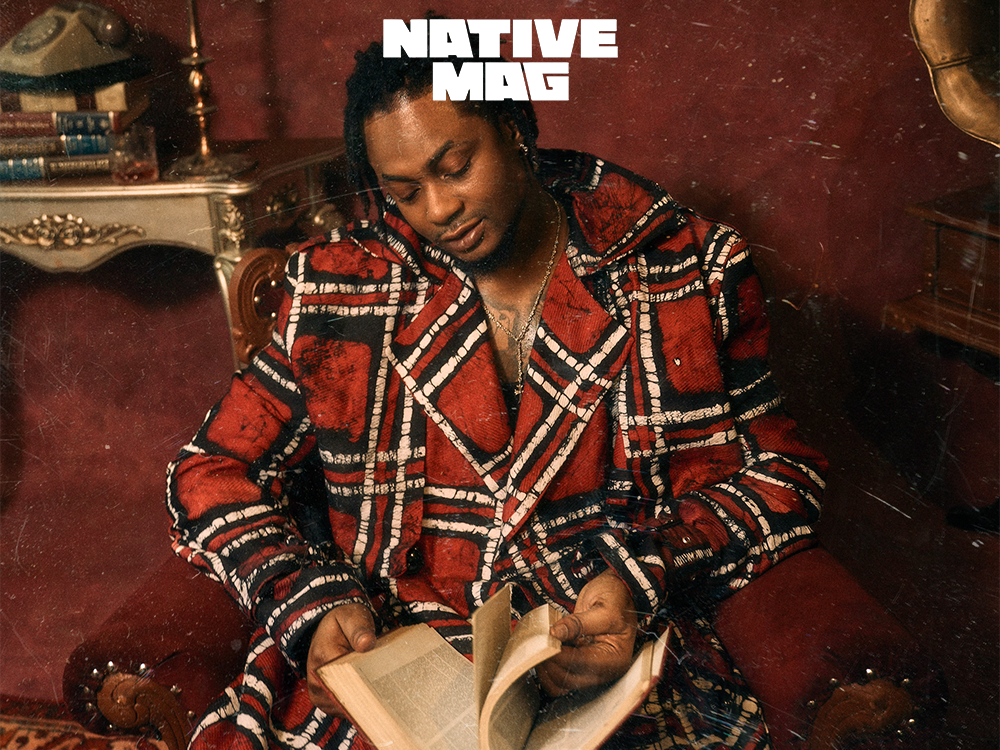
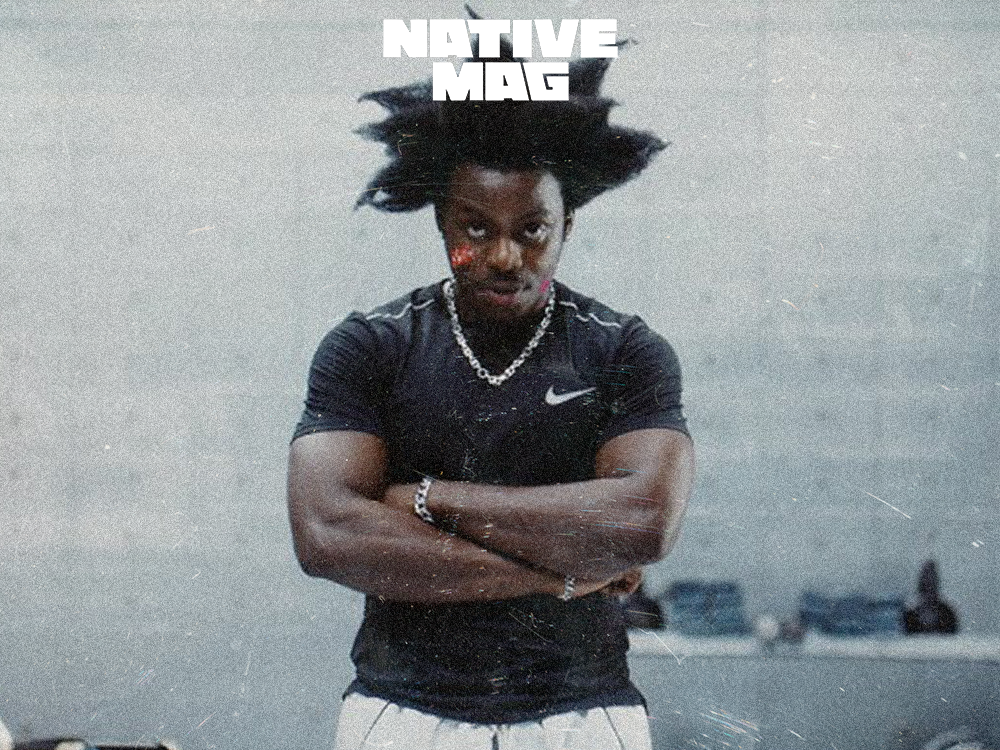
Jordan Adetunji Told Us The Meaning Of ‘kehlani’

The most distinctive quality of Jordan Adetunji’s music is how eclectic it sounds: it’s a melting pot that blends the jerky rhythms of club Rap with elements of Rock, R&B, Jersey Club and Afropop, creating addictive bitesize records that are inventive and strikingly dynamic. His growing discography, which currently includes a handful of singles and a debut mixtape, houses seductive and melodic rap songs that owe much of their influence to Cash Cobain’s raunchy interpretation of Drill music. The animated records erupt with the frenzy of hardcore Punk as well as other colourful and vibrant sounds that could easily soundtrack an anime fight scene. This comprehensive approach to making music that adopts influences from an array of established and obscure styles was inspired by the video game soundtracks Adetunji heard as a kid. 

“Growing up, I played a lot of games like Need For Speed, Fight Night, Tekken, and a bunch of role-playing games, and I heard a lot of music in these games that inspired me to start making my own music as I grew older,” he tells me during a Google Meet conversation one afternoon in late November.

Adetunji’s clear aspiration to stretch his music out across genres and play with form is what birthed 2023’s ‘ROCK ‘N’ RAVE,’ his official debut project that manages to neatly encapsulate much of what he is about. Tender opener “INAUGURAL EPISODE,” is a slow, heartfelt confessional that’s buoyed by elegant violin strings and serves as a soft introduction into his eclectic and distorted world before listeners are immediately jolted to live with the insistent and booming bounce on “DECAY.”. This arbitrary style also birthed “Kehlani,” his inescapable breakout single which took off worldwide and peaked at number 24 on the Billboard Hot 100 chart. The single also recently earned him a 2025 Grammy nomination for Best Melodic Rap Performance where he is up against heavyweights like Beyonce and Future, highlighting just how far he’s come in a short amount of time. 

Long before the 25-year-old became a Grammy-nominated act, he was just an inquisitive teenager with a knack for tinkering with different sounds and melodies. Born in London, Adetunji lived in one of the city’s largest commercial areas for about 10 years before relocating to Belfast, the capital city of Northern Ireland, with his mum and siblings. Even though he had been fascinated by the idea of making music as a kid living in London, it wasn’t until he got to Belfast that he began to cut his teeth as a budding musician. There, he picked up music classes in high school, specifically learning how to play the trumpet. 

“From there on, I started trying to record my own music on my mum’s laptop. After a while, I got my own small computer, a cheap interface and then I started recording songs and putting them online,” he tells me of his early journey. 

After posting a bunch of spirited rap videos on Facebook, Adetunji put out his first official single in 2020 titled “Close 2 You.” The Dancehall-inspired single was followed by the frenetic, Rock-influenced “Wokeup!” just months after, quickly briefing early listeners that he wasn’t one to boxed in. British singer and songwriter Oli Sykes, who is most famous for being the frontman of the Rock band Bring Me the Horizon, happened to be one of Adetunji’s early admirers and he was intrigued by the then-upcoming singer’s Alt-Rock and Rap experimentation. He reached out to Adetunji and subsequently got him a deal with RCA Records. 

Even after his recent signing with 300 Entertainmet/Warner UK Adetunji continued to record music in his bedroom, just like he did as a kid, tinkering and incorporating even more disparate elements to his already expansive sound. It was during one of these recording sessions that the framework of what would eventually morph into “Kehlani” was created.


“I had always wanted to write a song about someone who embodies a certain powerfulness and someone who is strong and stands for what they believe in. So I just ended up putting Kehlani’s name in when I was making the song,” he tells me, speaking of the inspiration behind the song. 

“My brother was there with me while I was making “Kehlani” and I remember debating if I should keep the name in or take it out because I didn’t know what the reaction would be,” he continues. Unsure of how people would take to the song, Adetunji posted a snippet of the song on TikTok and to his surprise, it immediately took on a life of its own. This encouraged him to complete the song which he released shortly after and the rest is history. 

Following the success of “Kehlani,” Adetunji shows no signs of taking his foot off the gas. He secured a highly anticipated remix with the alluring and self-assured inspiration of his Grammy-nominated single before closing out 2024 with the saccharine, Lil Baby-assisted “Options” which is cut from the same cloth as his breakout record. Speaking of how the collaboration came about, he explains that the Atlanta rapper was one of the first people to reach out to him after he released “Kehlani.” 

“He showed me mad love. I finally met him in London and he said he would like to work with me. I sent him two songs that I had recorded and he dropped a verse on one of them,” he explains.

Looking to further acquaint his newfound audience with his eclectic soundscape and to cement his status as one of the most inventive new acts on the scene, the Grammy nominee recently announced the imminent arrival of his latest mixtape titled ‘A Jaguar’s Dream.’ 

“A Jaguar, to me, is someone who moves through spaces and conquers every space it enters. This is how I feel with my sound constantly evolving and conquering every space I enter into,” he explained in an official press release. “A Jaguar’s Dream is an entry into my love life and my world of thoughts through sound and emotion. A real manifestation of my dreams I wish to make reality.”

The Songs Of Detty December

Bright city lights, choc-a-block traffic, beach parties, daily concerts, partying till we see the sun – just a few of the ingredients that make up the recipe for a glorious Detty December. And while December has always been the official party season in Nigeria, laden with lavish splendour and a very busy period for the Nigerian music and entertainment industry specifically, things changed around the mid 2010s, when Mr Eazi popularised the phrase “Detty December.”

What was once the way we celebrated the end of the year and beginning of a new one, transcended into a full blown cultural phenomenon and tourist attraction for Lagos and Accra specifically. Marked by a month-long marathon of concerts, raves, and highly-entertaining activities, music lives at the centre of Detty December.

The music that’s popular around this end-of-year time has always played a key part in the season’s enjoyment, with the biggest hits from the past year culminating into the soundtrack of the season. Nestled at the heart of this exuberance are the party-starters that weave the fabric of our most unforgettable nights, and ultimately soundtrack the timeless memories of Detty December.

Travel through memory lane with us as we take stock of the anthems that have powered Detty December vibes across West Africa for the past decade.

2015

Baba Nla – Wizkid 

When the concept of what we know as Detty December really started to take hold, Wizkid had already spent the previous few years as one of the seasons’ champions with songs like “Don’t Dull,” “Azonto,” “Jaiye Jaiye” and Back To The Matter. As the worlds of Ghana and Nigeria came together to create Detty December, Wizkid and Legendury Beatz’ growing relationship had brought the best of both together sonically with  the first official song of the season, Final (Baba Nla). 

Coming right in the middle of the party season, “Baba Nla” became an instant and inescapable hit, and he had the whole country singing about and affirming his run at the top. With a boastful title and fitting lyrics Say my gbedu is final, wen me drop everybody no dey tire,” it was as though Wizkid knew he had cracked the code, and was bragging about it. 

In a year filled with electronic synth-heavy records such as Skales’ “Shake Body”, Wande Coal’s “Ashimapeyin”, and hip-hop classics like Ycee’s hard-hitting “Jagaban”, “Baba Nla” served as a seismic sonic shift in the music, that reaffirmed Wizkid’s foresight and dominance of the scene. 

2016

Mad Over You – Runtown 

2016 crystallised a welcome shift in the soundscape from these parts. Inspired by Tekno’s mellifluous summer hit, “Pana,” Runtown took charge of the Ghana-inspired “pon pon” sound to deliver a peerless end-of-year masterpiece with “Mad Over You.” 

And with a key part of the Detty December experience being a seasonal whirlwind romance, songs like “Mad Over You” helped serve as a time stamp of these moments. That year, “And if she follow me go, na enjoyment go kill am oh,” was the glue that held all situationships together, stamping a memorable festive period for millennials as they came of age. Sonically, 2016 also crystallised a welcome shift in the soundscape from these parts; moving from a heavy and fast paced dance ready sound, to a more stripped down highlife inspired sound. Whilst Runtown was caught in the thick of a prolonged dispute with his record label, Eric Manny records, the singer turned his adversity into what will forever mark one of the most memorable Detty Decembers to date. 

2017

Manya – Mut4y ft. Wizkid

For the third year running, a delicate blend of Nigerian and Ghanaian culture came together to soundtrack the party season, this time bringing more nostalgia into the mix. Back in the 2000s in Nigeria, “Akhoma Womu,” was an inescapable hit, and Wizkid brought that energy back with an interpolation of the song’s hook. 

In the same year he released his critically acclaimed LP, ‘Sounds From The Other Side,’ which contributed to African music spreading into global terrain, Wizkid rounded off the year with “Manya,” an infectious earworm that felt both nostalgic and refreshingly new. 

That same year, Wizkid illustrated his commitment to community, with a bold move at his concert where he broke the barriers between VIP and regular ticket holders, and united all his concert goers. This move is probably what cemented his GOAT status on the streets, and set him apart from his peers. The mid tempo song was the party starter of the season, and clubs, concerts, parties against strong contenders such as Reekado Banks’ “Like” and Kizz Daniel’s “Yeba”.

2018

Able God – Chinko Ekun

At the beginning of 2018, Nigerian music was decidedly in an era populated by sheeny, mid-tempo, balmy tunes that fixated on the minutiae of affection and the specter of romance. By the end of the year, Street-Pop had roared back to a prominent position within the culture thanks to a series of zeitgeist-shaping sounds that mined the pulse of the streets and came along with a glut of zesty dance styles. Chinko Ekun’s “Able God” was the most propulsive of the songs from the cluster of street-influenced jams that flooded the Nigerian music scene in that year. 

Built around a simple request to have abundant financial resources, it’s a catchy tune that reflected the cultural thrust of the year while hinting at a near-future of Nigerian Pop that would see Street-Pop reach its critical and commercial pinnacle. Produced by Rexxie, “Able God” boasted spurts of the rhythmicity that the esteemed producer infused into Street-Pop without losing the bombast that defined Street-Pop’s underground era. Rapper, Chinko Ekun, dexterously swapped verses with former YBNL act, Lil Kesh, while a then-ascendant Zlatan shared a verse of the year contender amidst his blistering come-up. From its release in August, “Able God” was simply inescapable thanks to its aspirational-yet-demanding call to action and it, rightly, served as a backdrop to year-end revelry across the country. – WO

2019

Ma Fo – Naira Marley

At the height of his powers, Naira Marley had Nigeria in a spell. Whether he repulsed you or drew you in with his devil-may-care disposition, the singer was almost omnipresent in cultural discourse. An unprecedented run in 2019 birthed a series of songs – “Am I A Yahoo Boy,” “Opotoyi,” and “Soapy” – that muscled their way to the top of the Nigerian music scene. Still, of that single streak that year, the one that ruled the airwaves come December was “Ma Fo,” his Young Jonn collab that you couldn’t escape if you were in Nigeria at the time. 

An undeniable victory lap, “Ma Fo” was produced by Rexxie, crystallizing a partnership that had developed between the producer and Naira Marley. The song was a jam for the ages that tapped into the spirit of Detty December while paying homage to Lagos, Nigeria’s economic and financial capital. Mere months after December 2019, the world would go into a lockdown that brought activities to a grinding halt. Thanks to that lockdown, “Ma Fo” was the fuel for the last full-blown blaze of hedonism in Lagos for close to 12 months. – WO

2020

KPK – Rexxie , Mohbad

The COVID-19 pandemic was more than just a global health crisis, it was a reset button on how we experienced music. Amapiano and lo-fi music peeled through the mainstream, albeit reimagined in our own way. We weren’t just listening differently, we were searching for a reminder of what outside felt like. 

Then came KPK, a reinvigorated anthem of defiance after months of isolation. Rexxie, who had quietly been sculpting the DNA of Street-Pop since the Zlatan-led Shaku Shaku explosion, was now fully in the driver’s seat. His signature street bounce paired with log drums dictated the tempo of Nigeria’s reawakening. Anchored by Mohbad’s rebellious charm, irreverent lyricism, and an unfiltered raw energy, “KPK” was a party-starter on arrival in December 2020

When COVID restrictions eased and the streets lit up again, “KPK” wasn’t just a song, it was a victory cry, and a reminder that for the first time in what felt like forever, we were really back outside – J.F..

2021

Zazoo Zeh – Portable, Poco Lee & Olamide

By the middle of December 2021 when “Zazoo Zehh” dropped, Lagos was already in full Detty December mode – streets buzzing, speakers blaring, and the air thick with the energy of a city making up for lost time.

At his core, Portable is a fighter – literally and figuratively – and “Zazoo Zehh” boldly mirrors that energy. The Agege-bred underdog had spent years clawing for attention before earning an invaluable stamp of approval from Olamide, the godfather of Street-Pop. Bolstered by the frenetic production of wonderkid, P.Priime, “Zazoo Zehh” became unavoidable.

Portable rode the wave like a man possessed, sweeping the end-of-year attention with unhinged performances. His unpredictable stage antics, and wild off-stage persona made him an instant sensation and crowned “Zazoo Zehh,” the season’s inescapable anthem – J.F.. 

2022

Chance (Na Ham) – Seyi Vibez

When Seyi Vibez’s debut album, ‘Billion Dollar Baby,’ arrived near the end of 2022, it was with crackling invention and well-earned confidence. The centerpiece of the album was “Chance (Na Ham),” a blistering, if slightly-discordant song that moved between urgent pleas for a chance to be heard and some of the singer’s romantic impulses. 

Steeped in the Yoruba oral music style of apala, “Chance (Na Ham)” was polarising upon release due to its perceived lack of melody, the style of lyricism employed, and comparisons to Asake’s sound. Rather than dull its momentum, the back and forth over the song spurred it to the top just in time for Detty December, earning Seyi Vibez cultural cachet that he parlayed into a staying anthem that played across Nigeria in its peak entertainment season – WO.

2023

Cast – Shallipopi ft ODUMODUBLVCK 

By the time December 2023 arrived, Shallipopi and Odumodublvck had done more than just break into the mainstream, they had rewritten its rules. Shallipopi’s meteoric rise, built on the back of his infectious energy and near-mythical redemption arc through “Elon Musk,” had given Nigerian Street-Pop a fresh new face. Meanwhile, Odumodublvck had bulldozed through the underground with “Declan Rice,” a song as boastful as it was undeniable.

When the two finally joined forces on “Cast,” the result was volcanic. The Busy Pluto-produced track was a heady mix of Shallipopi’s hypnotic Benin-bred swagger and Odumodublvck’s no-holds-barred lyricism. Together, they created a record that moved through the streets like wildfire, fanned further by social media’s insatiable hunger for its unfettered audacity.

It was a match made in controlled chaos. Shallipopi’s surrealist street lingo provided the melody, while Odumodublvck’s guttural delivery turned it into a full-blown call to groove. Despite push back at its abrasive lyrics, “Cast” was one of those rare anthems that did not fade away but instead only got louder – J.F.

2024

Oblee – DJ YK Mule

If there’s one unshakable truth about Nigerian street music, it’s that the most unexpected moments often spark the biggest movements. A single phrase, a beat, or even a throwaway ad-lib can be plucked from obscurity and turned into an anthem provided it falls into the right hands.That’s exactly what happened with “Oblee.”

At first, it was nothing more than a casual phrase, buried deep within Seyi Vibez’ “Flakky” – a fleeting moment in a song that most would have skimmed past. But in the world of Nigerian street music, all it takes is one sharp-eared disruptor. DJ YK Mule was that disruptor.

A mad scientist of sound, DJ YK Mule has long thrived on the fringes of mainstream production, crafting hyperactive, speaker-rattling beats that refuse to go unnoticed.  When he stumbled upon “Oblee,” he drenched it in his signature mara beat, turning it into an irresistible melody . Slimcase, Qdot, and Kashcoming were enlisted for a remix that transformed the track from underground curiosity into a full-fledged street sensation.

Suddenly, “Oblee” was everywhere – pulsing through bus parks, street raves, Lagos markets, and anywhere with speakers loud enough to make walls tremble. It didn’t need a carefully plotted rollout or industry backing; the streets handled that. It reminded everyone that in Nigerian music that the streets dictate the charts, and that anything can become a phenomenon, as long as the people embrace it. And perhaps most importantly, it left behind a mantra that has taken on a life of its own: Oblee delayed is not Oblee denied – J.F.

Pop-Piano Producer, Kooldrink, Releases Debut Single, “Show Me”

Zimbabwean producer and artist, Kooldrink, has released his debut single, “Show Me.” Featuring Nina Nevra, the track marks the beginning of his journey to bring Pop-Piano, a genre he helped pioneer, to the international stage.

Built around the soulful vocals of Nina Nevra, “Show Me” is a reminder of the enduring poise  of Pop-Piano, an interesting interpretation of amapiano that blends the pulsating rhythms of the South African-born genre with the captivating melodies of pop. 

With “Show Me,” the producer is making a statement. The track’s infectious beats, compelling lyrics, and genre-defying sound signal the rise of a new era in his career as a global creator. “I wanted to create something that reflects where I come from while also speaking to the world,” he said about the song. “Pop Piano is about bridging those gaps and bringing the energy of amapiano to a broader audience.”

Just 25-year-old, Kooldrink has already made a name for himself as the creative partner of South African superstar, Tyla. He produced her breakout hit “Getting Late,” a song that launched both of their careers. Since then, he has collaborated with a roll call of international superstars including Ed Sheeran, helming the official amapiano remix of Sheeran’s hit, “Bad Habits.”

Lost In Translation: Street-Pop’s Journey Beyond Language

In 2022, Asake rose to Afropop prominence, driven by an ingenious combination of past and future. He commanded Amapiano, the exhilarating South African genre with which producers and artists alike were forging forward in an experimental Afropop scene, and infused it with the substance of his culture, bringing in Fuji as his own distinctive marker. In September of the same year, just as his popularity was peaking on the back of an impressive run of singles, he released ‘Mr. Money With The Vibe,’ a scintillating debut encapsulating the zeitgeist he had spent the year reshaping. Building on the sonic foundation he had set, the record throbbed with the bluster and urgency of his home city, Lagos Island, and dripped with the slang and proverbs you would expect to hear there. Asake platformed his culture not just in sound but with language too, and his brilliant execution was a testament to the creativity that culture brings to the table. Its widespread acceptance, both across Nigeria and beyond, was proof that language is no barrier for those who appreciate excellent music.

Before Asake and his record-setting run, Street-Pop was already a culturally fluid entity, and producers and artists all over the country found success infusing the Ajegunle-born genre with various languages. Olamide built a career by flipping between being the gruff, battle-hardened mafioso of the streets and a carefree purveyor of street party anthems. Phyno, his friend and longtime collaborator from across the Niger, has been a force for Igbo rap and street music, threading slinky Igbo verses into a fabric that ranges from Hip-Hop to Igbo Highlife. Now, nearly a decade after their monumental collaborative album, their protégés tread the paths they laid down. Today, Asake and Seyi Vibez rule the streets, while younger stars like TML Vibez, Balloranking and Ayo Maff sit at the heart of the movement’s next generation. 

In Eastern Nigeria, Rap devotees like Jeriq, Aguero Banks and Zoro spit bars in Igbo. Other artists like Kolaboy and Kcee lean more towards Pop in their approach, reproducing Afropop or Amapiano with traditional Igbo instruments, like the Ogene and Oja. In other parts of Nigeria, clusters of creatives are working to attach their native languages unto some version of Street-Pop. Shallipopi’s use of Bini language and culture, especially for the standout “Obapluto,” has earned him status in mainstream Nigerian music, while others like One Touch (who raps in Bini) and Blixxy D RapKing (who favours his native Ishan) fly under the radar. In Northern Nigeria, Hausa rappers like ClassiQ, B. O. C. Madaki and DJ AB have found success combining Hip-Hop–like flow, local instrumentation, and the Hausa language. Today, Nigerian Street-Pop is more vibrant, versatile, and unapologetically local than ever, but what happens when its meaning gets lost in translation? 

At its origin, Street-Pop was performed almost exclusively in pidgin. In the ‘90s, artists like Daddy Showkey, Baba Fryo, Ras Kimono and Blacky were its chief proponents, and they shared the commonality of being born and raised in Ajegunle, an area of Lagos where their parents had come to settle from different parts of Nigeria – mostly Delta state. For them, pidgin was more than a lingua franca: it was a means with which they could express distinct thoughts that the rigor and structure of English (and perhaps their own inability to properly express themselves with it) would not allow for.

Galala is accepted by convention as the first evolutionary form of Street-Pop. Like many other sub-genres, it was a dance, but still it was much more. Taking heavy influence from Ragga, Galala was an expression of Ajegunle’s free-spirited response to life in adversity. Songs like Daddy Showkey’s “Diana” and Baba Fryo’s “Denge Pose” are classic cuts from this era. These songs share, in addition to sound and language, an infusion of social commentary and storytelling. Galala artists sought to share little nuggets of their lives in the music – like the moving story of Diana’s childlessness, or Baba Fryo’s admonition of the haughty on “Denge Pose.” 

A few years later, Street-Pop took on a couple of new identities, this time via Konto and Swo, although the first was more often used to refer to the genre of music and the latter designated to mean a related dance move. Konto was a little more melodious than Galala, and didn’t carry as much social commentary. Mad Melon and Mountain Black were its biggest practitioners. Their music relied on call and response choruses – whether it be an effusive “Swo!” chanted in response to the statement “I am a danfo driver” on “Danfo Driver,” or the titular response on the chorus of “Kpolongo,” a sequence that has been interpolated multiple times in modern music, including by Tekno and Zlatan

Among its many iterations and offshoots, Galala continued its domination through the next decade. In the mid ‘00s it was kept alive by a new batch of artists, like African China and Blackface. These disciples kept faithful to the tenets of the genre, like the conscious social commentary, which brimmed in songs like African China’s “Mr. President,” and “No Condition Is Permanent,” and Blackface’s “Hard Life.” This era also saw an increasing democratisation of Street-Pop, encouraged by several factors: its rising popularity and acceptance, Nigeria’s increasing interconnectivity partly brought about by mobile phones (or GSMs as they were popularly known), the Internet, and the opening up of creative hubs in other cities: Delta, Port Harcourt, Benin, and Enugu. 

This growth meant that Street-Pop had escaped the creative confines of Ajegunle, and could be reimagined and remixed by creatives in other parts of the country. Stereoman Ekwe recorded his ‘Sample Ekwe’ album in his hometown of Warri, Delta State; he was among a generation of artists that recreated Ajegunle’s sound outside its physical borders. His version of Street-Pop was delivered in a variation of pidgin that was coarser than Lagos’, with occasional dippings into Isoko or Urhobo. Other South-South artists, like Timaya, made a connection to the genre via collabs and remixes, like 2Shotz’s “In Case You Never Know.”

While the flames of Street-Pop were spreading across Nigeria, an even greater evolution was happening within Lagos state. Lagos represents the ultimate cultural mixer and a trip from Ajegunle to Bariga, or from Alaba to Agege, means crossing multiple cultural lines. As Street-Pop moved into traditionally Yoruba areas of Lagos, it interacted and mixed with Yoruba genres, especially Fuji, and a new era of the genre emerged, championed by acts like Oritse Femi and DaGrin. The genre’s lingua franca shifted, although Pidgin remained as something of a second language. From the mid ‘00s through the mid ‘10s, Street-Pop picked up lingo from the streets that birthed it, and in turn created a flurry of new slang. Olamide was particularly adept at utilizing the fluid breadth of language and vocabulary. He invokes street-worn sayings, while simultaneously creating new ones like the “-Sneh” suffix that was all the rave back in the day, and phrases like “who you epp?” “science student” “pepper dem” or “omo wobe” that took on a life of their own. 

Other practitioners of Street-Pop across Nigeria have sought to indigenize it as best they can. Phyno rode to glory on the back of a series of hits that fused the frank Hip-Hop of Illbliss and Nigga Raw with the Igbo-laced Neo-Highlife of Flavour. Even younger artists are tapping into their native languages to enhance storytelling. Ayo Maff’s debut EP, ‘Maffian,’ is full of ancient wisdom, the kind that would hardly be expected of a nineteen-year-old, but is reflective of the oral traditions of his Yoruba culture. On “Are You There” he sings that “Oju ri k’ẹlẹdẹ mi to dele,” speaking to experiences he faced before he arrived at his current status, while a line like “Lambebe, o gbọdọ wọ́n nile alata,” compares the overflow of wealth he expects in the future to the abundance of bowls of a pepper seller. These lines help build up the storytelling experience for the informed listener.

While indigenous languages are a source of connection to those who speak them, they also have the potential to alienate the non-speaker. How the audience handles this break in communication determines what their experience will be. While some may find it hard to get into music if they don’t understand the words, options abound for a fan willing to take a few steps to seek enlightenment – including online translations, annotated Genius lyrics, or song breakdowns on TikTok and YouTube. With today’s world focused on short-form video, it is not surprising to find an artist making lyric translations to their own song on TikTok. 

Ultimately, Nigeria is a music-loving nation. Even now, Asake’s music – slangs, idioms and all – continues to be a mainstay in barbershops in Enugu and raves in Benin and Port Harcourt; his words often undecipherable, but the groove irresistible. In clubs in Lagos, Flavour and Phyno boom from speakers, as hypemen announce the arrival of the latest big spender. A listener who does not understand the language may miss part of the message, but they are energized by production and serenaded by melodies. Music is a universal language, and in Nigeria’s banging Afropop scene, melodies speak louder than words. 

M.A.D SOLUTIONS UNVEILS “M.A.D SOLUTIONS FOR CREATORS” IN PARTNERSHIP WITH YOUTUBE

Building on its recent partnership with TikTok, M.A.D Solutions, has announced a transformative initiative, M.A.D Solutions for Creators, in partnership with YouTube. This strategic move puts M.A.D Solutions in position as a YouTube Creator Services Provider (CSP), setting new benchmarks for supporting creators in various aspects of their YouTube journey such as content production, optimization, monetization, and audience engagement.

This partnership evolved from M.A.D Solutions’ established Sound Recording and Audio Visual (SRAV) Partnership with YouTube, which previously focused on asset management, Monetization and Rights management for Official Artist Channels  via M.A.D Solutions Content Owner. The new engagement expands this ecosystem with an Affiliate Content Owner For Creators, integrating niche creators such as podcasters, lifestyle influencers, reality TV producers, and experts in travel, fashion, and beauty.

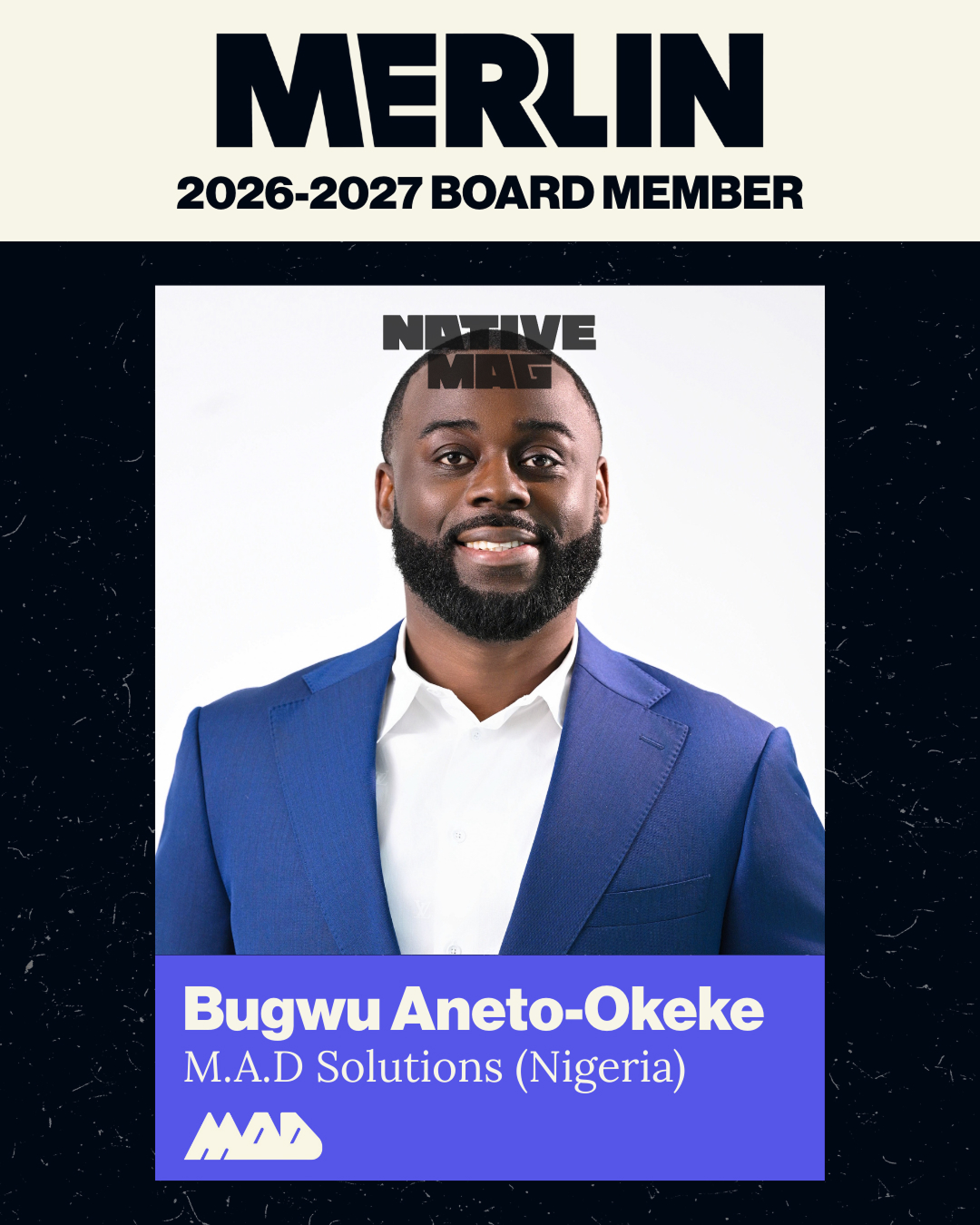
A standout aspect of this initiative is that it allows for provision of funding opportunities to help viable creators cover production costs and other financial contingencies, enabling them to concentrate on their craft while accessing essential resources for sustainable growth and professional excellence. Bugwu Aneto-Okeke, founder M.A.D  Solutions, highlighted the importance of this partnership, saying “Our vision has always been to bridge technology and creativity to unlock opportunities for creators in Africa and beyond. With M.A.D Solutions for Creators, we are not only reshaping the digital landscape but also ensuring that creators, regardless of their niche, have access to funding, strategies, and the global platforms needed to amplify their voices.”

Founded in Nigeria in 2017 and now headquartered in Houston, Texas, M.A.D Solutions has built a solid reputation for promoting African talents on the global stage through innovative and forward-thinking distribution strategies. The company has successfully distributed music from renowned African artists such as Flavour, Simi, P-Square, Runtown, and Phyno, solidifying its position as an industry leader in the African digital music ecosystem. With active operations also in South Africa, Canada, and the United Kingdom, M.A.D Solutions continues to expand its presence globally, connecting over 1,000 artistes to key platforms like Apple Music, Spotify, Boomplay, Audiomack, Amazon Music, and TikTok.

DeeYasso Lets His Music Do the Talking

Despite growing up miles away from Lagos, DeeYasso never felt limited by the popular sentiment that success in music could only happen in the south-western city. The Taraba-born producer always believed that the right opportunities would eventually find him if his music was good enough. His love for music took root early on, nurtured by a chorister father and the support of his church and school,  all of which eventually led him to pursue a career in music production in 2006.

Deeyasso gradually built his profile as a resident producer at his school and churches, collaborating with local and surrounding bands around Taraba. In 2016, DeeYasso suffered a major blow when his hard drive containing unreleased works with artists like Kizz Daniel, Jesse Jagz, and Danfo Drivers was stolen. Then in 2017, he missed a significant opportunity with Mavin Records as he suffered creative slump following his mother’s passing. But 2018 marked a turning point: Chike reached out for a collaboration that has since led to three albums, one of which, ‘Boo of the Boolesss,’ propelled Chike into a different stratosphere, and became widely acclaimed as a contemporary Nigerian classic.

From that moment on, DeeYasso’s sound, which blends African influences with global elements, began to resonate with a wider audience. With hits like “Intoxycated” by Oxlade and Dave and “Egwu by Chike and Mohbad, DeeYasso has become a household name. Whether working with emerging talents like Mr. Dutch, or producing hits for industry veterans like  “Tomorrow” by Yemi Alade, which earned him a 2025 Grammy nomination, DeeYasso constantly ups the ante by drawing from diverse genres. “While songs like “Roju” feel like Igbo Highlife, they also incorporate elements from Congolese, Cameroonian, and Ivorian music. “That diversity comes from my background playing live music with people from different parts of Africa,” he explains.

From his early days experimenting with music in Taraba to finding global validation for his work, DeeYasso reflects on his creative process, his journey to Grammy recognition, and his will to keep making a statement.

Your roots are in Taraba. Can you tell us what growing up there was like and how it shaped your passion for music production?

Growing up in Taraba was incredibly formative. Music was always around me – my dad sang in the church choir, and he was one of my biggest influences. He supported me in every way, which made all the difference. When my church discovered I could play instruments like the drums, piano, and guitar, they went 6all out and bought every instrument I needed.

Even my secondary school encouraged me when they saw that people from town would pay me to play. They bought instruments too, so I could perform on campus. These seemingly small gestures built my musical foundation. By the time I started producing music, my dad let me turn our boys’ quarters into a studio. It was right opposite his bedroom, and I’d play music from morning till dawn, disturbing the whole neighborhood. But my dad never complained. He only checked to make sure we were safe before going back to sleep.

I never felt limited in any way, not even by school. In fact, I graduated as one of the best students in my class. Today, I’m proud to say that I’m also a lawyer.

At what point did you realize music production wasn’t just a hobby but your true calling?

Honestly, from the very first moment. I remember the first time I saw a drum set, I literally shivered. I’m not exaggerating. I couldn’t sleep that night; I kept thinking about it. The next day, I went back to that church, touched the drums, and begged the drummer to teach me. It felt like something in me had been waiting for that spark.

Within two weeks, I was playing drums well enough to impress everyone in my church. A year later, I entered a competition and won a drum set. That was when I knew this wasn’t just a passing interest, it was in my blood.

Many believe you have to be in Lagos to make it in Nigeria’s music industry. Did you feel that pressure residing in Taraba?

Never. I believed that if I created the right material, Lagos would eventually call me and it did. I remember in 2016, I was working on sessions with several artists, including Kizz Daniel, Mr. 2Kay, Jesse Jagz, JOEL, and Danfo Drivers. Unfortunately, after those sessions, my hard drive was stolen, and I lost all the work. It was devastating because I couldn’t deliver their projects. 

In 2017, Mavin Records reached out through Tega (Oghenejobo), but I wasn’t in the right headspace to engage with them because I had just lost my mom. They contacted me two weeks after her passing, and I couldn’t even hold proper conversations at the time. It was a missed opportunity, and I felt terrible.

But in 2018, things took a turn. Out of nowhere, Chike sent me a DM on Instagram saying, “Yo, I’ve been following your sound and seeing your tags. Can you come to Lagos? Let’s work.” I told him, “If you can book my flight and accommodation, and feed me while I’m there, I’m in.” He agreed without hesitation, sent me the money, and the next week, I was in Lagos.

From what started as one or two songs, Chike and I have ended up making three albums together. Beyond that, I’ve worked on albums with Ric Hassani and produced major tracks for artists like Oxlade and many others. I always told myself that when Lagos called, I’d walk in with my shoulders high, ready to dominate and that’s exactly what happened. 

What was it like putting together Chike’s breakout debut album ‘Boo of the Booless’?

A lot of the Highlife on that album isn’t strictly “Igbo” Highlife – it’s African Highlife. You can hear influences from Congo, Côte d’Ivoire, and Cameroon throughout. Between 2006 and 2009, I was actively playing live music with bands, often performing Makossa with musicians from Cameroon, Congo, and other parts of Africa. I played as a lead guitarist, bassist, or drummer, depending on what was needed.

Working with them broadened my musical perspective and exposed me to diverse sounds and rhythms. Over time, those influences became a natural part of my style, which made it easy to combine these elements into the music. While there are traces of Igbo Highlife in ‘Boo of the Booless,’ tracks like “Roju” possess a more contemporary fusion, blending traditional African elements with something fresh and unique. It’s all about creating something that feels timeless yet modern.

Your sound is also behind some of Nigeria’s big records, from “Intoxycated” by Oxlade and Dave to Ric Hassani’s “Thunder Fire You.” How would you describe your style as a producer?

It’s hard to define because I don’t like to be boxed in. I create fusions – blending sounds and influences from everywhere. When we worked on Chike’s ‘Boo of the Booless, people thought I was just a Highlife or Alternative producer. But as my work evolved, the perception kept changing.

Take “Roju” for example. While it feels like Igbo Highlife, it also has elements from Congolese, Cameroonian, and Ivorian music. That diversity comes from my background playing live music with people from different parts of Africa. I’m very, very musical.

What’s your approach when working with an artist on a new project?

It always starts with a conversation. I want to understand their vision and where they’re coming from. Some artists trust me to take the lead – they say, “You’ve heard my past records, so do your thing.” That freedom makes the process exciting.

Other times, it’s more collaborative. They bring ideas, I bring mine, and we find ways to spin everything into something fresh. Usually, we start by vibing, whether with guitars, pianos, or beats. It’s always about finding the magic together.

Let’s talk about “Tomorrow” by Yemi Alade. It earned you your first Grammy nomination. What was it like creating that track?

That session was special. It was my first time working with Yemi Alade. We recorded four songs that day, but when we started writing “Tomorrow,” we all felt something different.

I created the instrumental on the spot, and we built the song in her camp with a team of writers. Yemi brought some lines, I brought some, and the writers added theirs. After recording, I decided to make it even more African by adding choir arrangements and chants at the beginning and end. When the Grammy nomination came, it wasn’t a shock. We knew the song was good. The nomination just confirmed what we felt all along.

“Egwu” by Chike and Mohbad also became one of the biggest songs of 2024. What was it like working on that track with both artists?

“Egwu” wasn’t even planned! We were wrapping up a different session when I called Chike and Mohbad back at 2 a.m. and played them an instrumental I’d been sitting on.

Chike started chanting what you hear at the beginning, and we both worked on the backup vocals. Mohbad wrote his verse in less than 15 minutes, and his arrangement ideas took the song to another level. We finished it in one session. Mohbad even told Chike, Na the main gbedu be this o!” and he wasn’t wrong. May his soul rest in peace.

Has any song ever pushed you creatively more than you expected?

Ric Hassani’s album ‘The Prince I Became’ really challenged me. Ric is a perfectionist. Some songs were recorded over ten times just to get the right emotion. It was intense, but it taught me patience and how to bring out the best in a project.

Now that you’re a Grammy-nominated producer, what does this milestone mean for you and your journey? When I make music, I try not to set huge expectations to avoid frustrating myself. My focus is always on creating something good, something timeless. Whether the song becomes a hit immediately or not, I trust its quality and believe it could resonate at any time in the future.

So, the Grammy nomination wasn’t a shock to me. From the moment we created “Tomorrow,” we knew it was a great song. The nomination was simply a confirmation of what we already felt and it reaffirmed that our work was exceptional and caught the attention it deserved.

I’ve always believed my music has the potential to go global because I’m intentional about making good music. Sometimes, a song might not blow up right away, but I trust that when the time is right, it will find its moment.

Take “Umbrella” by Nasboi and Wande Coal, for example. It was initially part of an EP, but I fought to have it released as a single because I had a strong feeling about its potential. Seeing how viral it went proved that trusting your instincts and focusing on quality always pays off.

Wizkid’s Language of Grief

Wizkid doesn’t really let anybody in. Throughout his decade-and- a-half stint at the top of Afropop, he has mostly maintained that position by the sheer force of his personality and an intuitive knack for rhythmicity that borders on superhuman. Even when he was reflecting on the socioeconomic pressure that served as fuel for his breakthrough on tracks like “Oluwa Lo Ni” and “Wad Up” off his debut album, ‘Superstar,’ he was not so much excavating the trauma of his past as he was pointedly detailing the profound difference in his new reality, afforded him by his musical success. Across his stacked catalogue, we have seen Wizkid sing about his fascination with pretty women, cash, cars, and the flyest outfits without really understanding what lies just beyond that material surface with the rare exception of when the singer mentions his mother. 

Ayo,’ his second album, has two specific mentions of the singer’s admiration for his mother. “Mummy Mi,” produced by Spellz, is a mid-tempo dedication to his mum’s sacrifices and the redemptive nature of her love while “Joy,” placed near the end of the album offers some more context on the relationship between Wizkid and his mother. It’s a soulful dedication to the bond they shared and a reminder of how  Wizkid’s arrival into his mother’s life in 1990 brought so much joy to his family. “In the early ‘90s, that was the beginning, mama had me, she was definitely happy,” he sweetly sings atop the rasping Dokta Frabz-produced instrumental.  Literally translating to his given name, Ayo, “Joy” was a wholesome glimpse into the inner workings of Wizkid’s life that has not been replicated since then as the singer took his campaign global with albums like ‘Sounds From The Other Side’ and the widely-lauded ‘Made In Lagos,’ a more refined version of the R&B flow used in the opening section of “Joy.”

In August 2023, news broke of Wizkid’s mum’s passing, prompting a groundswell of public support for the singer who has leaned very publicly on his mum for support throughout his career. As can be expected, Wizkid retreated from the public eye to process the loss and grief with his loved ones in private. Since then, the monumental scale of his mother’s death has become apparent for anyone following the singer. As part of the schedule of ceremonies to celebrate her life, Wizkid spent some time in Lagos where he revisited his old haunts and made a N100 million donation in his mum’s memory to kids in Surulere. “IDK,” a standout off ‘S2,’ his December extended play was made following his mum’s death according to the singer and it wrestles with the weight of his loss in its margins. 

Raised in a culture that – for better and worse – prioritises a dignified response to pain, the language of grief that Wizkid employs is layered and textured. But, for anyone that’s listening, the signs are abundant. “Tough times don’t last but tough people do, we go stand tall,” he morosely sang on “IDK,” hinting at the pain he was battling before yielding the floor to Zlatan. On her first posthumous birthday, Wizkid wrote a note to his mother on social media: “Happy birthday, love of my life! I miss you every day,” he said. “The first one without you here feels unreal. Nothing makes sense without you, mama! Life is empty without you. Continue to watch over us! My heart is broken forever! Love you, love you, MORAYO mi. Your smile is a memory I will never forget. Your laugh! Your hugs and kisses. I miss you dearly!”


Not long after, he revealed that his next album would be titled ‘Morayo’ in her honour, calling it the best album he ever made. While the jury will remain out on where ‘Morayo’ will rank in his discography for a while, it’s the fullest fusion of all the styles that he has experimented with across his career, building a link between the percussion-led Pop bombast of his earlier years, the Dancehall-inflected crooning of the ‘SFTOS’ era and the orchestral R&B style that he has worked with for much of the last five years. 

Even when it’s not referenced directly, the sorrow that Wizkid feels at the passing of his mum is a near constant, with her presence never too far away from his mind. On Morayo‘s opening track, “Troubled Mind,” there’s an immediate signpost that this album was designed to be a final farewell to a central figure in his career. The song opens with a section of Fuji legend, KWAM 1’s, set at  Wizkid’s mother’s burial, welcoming listeners to his sixth album with words of comfort, while Wizkid’s own lyrics sound disconsolate as he finds escape in hedonism. “Say the blood for my eyes and the pain for my mind, mo le salaye,” he sings after KWAM 1’s stretch ends. 

For 33 out of his 34 years on earth, Wizkid had his mother in his corner to work through some of the most knotty moments of his life; and for the first time, he’s having to navigate loss without a central part of his support system. The sense of unease bleeds into his music and there’s a real sense of desolation in how he constantly sings, “I got a troubled mind,” even if it still ends with an acceptance of his loss and a request for a shot in memory of his mother. Even for the biggest of stars, grief is an unending spiral that can creep up on the most unexpected moments. 

In Yoruba cosmogony, the death of elders is seen as an opportunity to celebrate their lives and the impact they have made on their loved ones and community. In that regard, the burial ceremony for Wizkid’s mother was a celebration for the ages with a selection of stars, well-wishers, and institutional figures joining the Balogun family last year to bid her farewell. Something about his mum’s passing and Wizkid’s time in Lagos last year has made him return to the lively percussion of his youth in a way that he’s not really explored since ‘Ayo,’ the album housing “Mummy Mi” and “Joy.” Songs like “Karamo,” “Kese,” and “Bend” are straight out of the playbook of the sweltering bangers that Wizkid used to churn out steadily as a youngster with a point to prove as his mum urged him on to superstardom – even if they don’t possess the same pomposity of the original. With his mum gone now, these songs on ‘Morayo’ function as a key to remembering simpler times when his current heights were dreams that he was reaching out for. 

Perhaps the most emotionally resonant moment on ‘Morayo’ arrives on “Pray,” the record’s closing song where Wizkid finally directly confronts the elephant in the room. Opening with a story of his struggles as an up-and-coming act, he recounts his mother’s words to him in those tough times: “Mama call me, ‘Ayo Balogun, they can never find another you.” It’s a moment that plainly shows the depth of love that Wizkid and his mum shared, and how her affirmations shaped his career as he went on to become one of the most defining artists of his generation. Later on “Pray,” Wizkid will add, “I know my mama pray for me / And I know the heavens dey for me.” Even in death, the singer is assured of the bond they shared, and we are all public witnesses to that love even if he won’t let us into his life totally.


uNder: Best New Artists (November 2024)

As the year draws to a close and we look back at some of its best music, there’s no denying how much of 2024’s soundscape was powered by fresh, audacious voices from across the continent who were willing to take chances, step outside of the creative boundaries of their predecessors and carve out their own unique lane in Africa’s music scene.

Take Godwin, the Kaduna, Nigeria-born singer whose deep, introspective records have not only resonated with listeners of his own music, but with moviegoers as well; or Onoola-sama, who continues to build a cult following with her eclectic but recognizable sound throughout her steady climb to stardom.  

Rvdical The Kid, whose free-flowing melodies speak to his global influences is just another example of the direction that African music is taking these days – distinct in its own sound, but still having multiple entry-points for any listener. And Kyla Blac, for her part, brings her soulful creations to life with the confidence that many seasoned artists still seek to find in their music. With voices like these leading the way, there’s a lot to be excited about over the next year in African music. 


Onoola-sama

For fans of: Moyoswrld, Len, DEELA

It’s hard to put your finger on the kind of music onoola-sama makes. In her Spotify bio, she describes her music as “super cool fun hot sexy music” – and while that’s fairly accurate, it does not adequately capture the breadth of her hugely imaginative sound. The Toronto-based artist is a genre-agnostic shapeshifter who tinkers with some of the decade’s most prevalent and obscure subgenres like Vapor Trap, Alt-R&B, Shoegaze and even blown-out Bedroom rap to create a kinetic fusion with a foot in almost every corner of today’s internet. While her earlier releases like “tangie’reen,” “magenta” and her 4-track debut ‘ode2me’ were all characterized by ethereal, dreamlike production and delivery, 2022’s boisterous “B1TCH3S!” quickly dispelled any notions that onoola-sama could be tied down to a specific genre or sound. 

If her initial releases showcased her wispy vocals and melodies, “B1TCH3S!,” which came in late 2022, proved she is just as compelling spitting cutthroat bars over animated beats as she is singing emotionally-charged tunes. Her varying styles all came together on ‘i want what i want,’ her second official project which came in 2023. While the project is also buoyed by eerie production, onoola-sama swaps out some of the melancholic autotuned singing that defined ‘ode2me’  for raging growls about convoluted relationships, drugs and designer clothing, highlighting her versatility and willingness to experiment. 

In 2024, onoola-sama’s desire to constantly play with sounds has not diminished in the slightest. After releasing a few successive singles – “myheartbreakparty,” “BRASH,” and “onoola-chan” – through the year that further explored her “super cool fun hot sexy” sound, she released the Soca-inspired ‘fujiBouyon*’ in September. The 3-track pack that takes huge influence from Dominica’s Bouyon music melds frenzied dancefloor energy with some innovative rapping and singing. “fêteRock*,” the standout track on the single pack is an incredibly infectious banger that features a brilliant and fun verse from rising rap star DEELA and begs for the meanest waist whine. “tequila, gin & rum,” onoola’s latest release sees her take another sonic excursion, this time experimenting with other alternative Hip-hop sounds and proving time and time again that she’s not one to be boxed in. -B.A 


Rvdical The Kid

For fans of:  Odunsi (The Engine) and Tay Iwar.

Look past the sonic abstractions of Rvdical The Kid’s music and there’s a warmth just beneath the surface that hints at a deeper vibrancy. Influenced by Hip-hop but not allowing himself to be limited by its stylistic components, the producer and singer’s music draw from a wide pool of sources that includes Jazz, Shoegaze, and Neo-R&B. Born in Nigeria, and raised in Benin and  Baltimore, Rvdical’s music distills distinct aspects of those cultures into a style that’s refreshingly unique and enjoyable while prioritizing self-expression. “I’m definitely global,” he said in an interview with Floor Mag. “I feel like I allow all those parts of myself to express themselves naturally without putting too much thought into it. “I have so many influences so being more of a musician, I feel like I’m a sound curator.”

Rvdical’s preference for free-flowing creation is evident in the unhurried groove of his music and how it rarely follows a defined structure. The instrumentals are orchestral and self-gratifying and the vocals can be fizzing whispers or booming utterances, depending on what Rvdical feels like. He first made an introduction with his 2015 album, ‘Carte Blanche,’ a celebration of freedom and non-conformity that packed skeletal instrumentals, soulful ballads, and dancefloor summons in just seven tracks. Opener, “Miles Away,” pulsates with the essence of being disconnected from the world while the Maesu-featuring “Dopamine” is a lo-fi affirmation of feeling as good as can be. 

Just as he emerged onto the scene with a certain mystique, Rvdical retreated for a while before emerging in 2020 with a new extended play titled ‘Little Planet.’ Just like ‘Carte Blanche,’ it’s a beat-led effort with more colour splashed across its runtime, a legacy of his return to Ghana after completing a degree at the University of Maryland. “One thing I do know is that since moving to Accra my sound has become more open, and I would definitely blame the sun for that,” he said in an interview with Asbo Magazine. “Because you can’t be hot and depressed in the sun, so melodically, harmonically the music just naturally becomes brighter.” Whether collaborating with ‘TAYDK’-era Amaarae on the ethereal “Nasa” or Nonso Amadi on “Often,”  ‘Little Planet’ offers a unique spin on his electronic style that hints at mastery. – W.O


Kyla Blac

For fans of: Amaeya, Kold AF & Qing Madi

After only a couple of features, Kyla Blac made her debut with a 4-track EP, arriving seemingly more confident than most. Although ‘Only A Minute’ leaned in the low-fi direction, stacked with brief tracks and fleeting messages, Kyla’s soulful vocals are hard to miss. From “Unapologetic,” which offered a glowing Pop-leaning soundscape to “Find Ur Way,” geared more towards R&B while presenting her lush chords over a rhythmic balance between singing and rapping, Kyla Blac is clearly comfortable in her musical lane. After that, the Zimbabwean native took a step back only to return three years later with “PROBLEM”. The Murphy Cubic-production featured daunting piano keys and a reverberating bass where Kyla bitterly reminisces of a previous relationship. 

Still, her moment feels like it has only just begun with more refined tracks like “Some Day” under her belt. The Neo-Soul contribution features her infectious vocals stretched across various notes, briefly creating an illusion of multiple voices. She talks about chasing success like there’s no tomorrow and remaining motivated by her responsibilities and support system; “Keep going till I break the chain, too many eyes have prayed for it,” she sings. Thereafter, she joined Sylent Nqo for a heartbreak anthem dubbed “Good One” and Afro-pop number “Energy ” assisted by Da_Kudu and Kbrizzy. For all those ruled by love and searching for those with similar perspectives, look no further than Kyla Blac for all the anguish and buoyant thrills of romance. -N.I


Godwin

For fans of: Asa, Jacob Banks, Dwin The Stoic

Born and raised in Kaduna, Godwin’s music is characterised by his familial experiences, producing what can best be described as kinfolk music. His debut EP, ‘Road to Nirvana,’ released earlier this year, is a tapestry of lived experiences, marked by loss, love, and resilience, with his riveting vocals weaving a fabric of warmth and relatability. 

Long before turning to music, Godwin was a celebrated filmmaker and the founder of The Critics, a Kaduna-based film collective popular for its DIY sci-fi films that gained local and international attention from big names in film such as Morgan Freeman. This filmmaking background is evident in Godwin’s lustrous ability to paint evocative emotional landscapes through his lyrics and melodies. Listening to his music can sometimes feel like watching an indie film — raw, authentic, pulsating with emotion and rich with storytelling. This cinematic appeal is one of the most distinct cornerstones of Godwin’s artistry. His latest single, ‘Blood for Blood,’  was featured by Paramount Pictures as one of the soundtracks to the 2024 thriller, ‘Gladiator 2’. The core of Godwin’s artistry is the intimacy across his music, that can be likened to a heartfelt conversation with a close friend. Tracks like  “Proud of You” and “Now” from ‘Road to Nirvana’ are rooted in universal themes of self-discovery and grief, earmarking his unique ability to turn deeply vulnerable moments  — such as the loss of his mother — into sing-along rhythms.

The 23-year-old expertly blurs the lines between Folk and Alternative music, using  minimalist instrumentation, often led by acoustic strings and piano, to set the stage for his spell-binding stories. Ultimately, Godwin’s art isn’t just about the music; it’s about a shared connection with the listener through relatable experiences. Fresh off opening act duties on the European leg of Tems’ ‘Born In The Wild’ tour, and a feature on the soundtrack of the blockbuster, ‘Gladiator 2,’  Godwin is undoubtedly one of the most promising emerging talents today. With a pristine blend of filmmaking and music, the Kaduna native’s art stands as an invitation to feel deeply, dream boldly, and embrace the beauty of shared humanity. – J.F.


Rigo Kamp is Apple Music’s Newest Up Next Artist in Nigeria

For almost a decade, Apple Music’s Up Next Program has helped spotlight a new generation of emerging talent, exposing them to a larger audience. The program’s alumni includes a class of dazzling acts including Rema, Burna Boy, Tems and more. Since their expansion to Nigeria in 2021, the global artist initiative has consistently presented a roster of the most promising emerging talents from this side. Following his double-feature release, Neo-Soul singer and songwriter, Rigo Kamp, serves as the latest addition to the program.  

His 70s inspired funk debut dubbed ‘Summer/Morning Sun’ displayed Rigo’s irresistible magnetism and charisma over the locked groove of a Disco-inspired beat, alongside an infectious Soul and Jazz blend which scored production credits from Alté pioneers, Odunsi(The Engine) and GMK. Regarding the program’s feature, coupled with a glowing appearance on the accompanying playlist where he sits amongst the likes of FLO and Bree Runaway, Rigo shares: 

“The little boy in me sees the man standing before him now as the Apple Music Up Next Artist for Nigeria and is proud… It’s a special day for me and everyone that has worked with me over the years.” 

Listen to ‘Summer/Morning Sun’ here.


M.A.D SOLUTIONS SECURES NEW TIKTOK LICENSING AGREEMENT

African music distribution and service provider, M.A.D Solutions, has secured a new licensing partnership with TikTok. This comprehensive agreement opens a new frontier for African music, covering TikTok, CapCut and the TikTok Commercial Music Library (CML). Under the terms of the partnership, artistes in the company’s catalogue will be able to generate revenue from their music on TikTok, particularly through branded content campaigns, thereby expanding their reach and income potential.

By integrating with TikTok’s ecosystem, M.A.D Solutions’ artistes will gain access to commercial opportunities from branded content campaigns. The CML is utilised by over 70 million global brands such as Coca-Cola, Diageo, Bose, Dove, ESPN, IKEA, Walmart, allowing for seamless monetization through music usage in advertisements, challenges, and viral trends.

“This partnership with TikTok aligns perfectly with our mission to bridge the gap between African talent and global markets,” said Bugwu Aneto-Okeke, Founder and CEO of M.A.D Solutions. “TikTok has revolutionised music discovery, becoming a vital platform for exposure and revenue generation. Our partnership ensures that artistes under our banner are strategically positioned to benefit from its immense potential. We are committed to optimising artiste revenue while amplifying African culture across the globe.”

Founded in Nigeria in 2017 and now headquartered in Houston, Texas, M.A.D Solutions has built a solid reputation for promoting African talents on the global stage through innovative and forward-thinking distribution strategies. The company has successfully distributed music from renowned African artistes such as Flavour, Simi, P-Square, Runtown, and Phyno, solidifying its position as an industry leader in the African digital music ecosystem. With active operations also in South Africa, Canada, and the United Kingdom, M.A.D Solutions continues to expand its presence globally, connecting over 1,000 artistes to key platforms like Apple Music, Spotify, Boomplay, Audiomack, Amazon Music, and TikTok.

Review: ‘Morayo’ by Wizkid

There’s usually a prevailing narrative heading into every one of Wizkid’s albums. In 2017,  months before the release of his stateside debut ‘Sounds From The Other Side,’ there was a major sense that the Lagos-born singer was looking to expand his reach and find success abroad after years of local dominance. This made perfect sense, as the previous year had seen him gradually transition from Afropop mainstay to rising global star after securing an “Ojuelegba” remix with Skepta and Drake, and guesting on the latter’s global smash hit “One Dance” just months later. When the album finally arrived, the music gave credence to the overarching narrative that had preceded its release. And while the project didn’t help Wizkid fully achieve the sort of crossover success he might have hoped for, it showcased the beginnings of a sonic evolution that would help usher in a new era for the superstar. 

Unlike its predecessor, 2020’s ‘Made In Lagos’ arrived on the back of a slightly precarious notion. ‘Sounds From The Otherside’s failure to resonate at home or abroad created the sense that there was little room for error on ‘Made In Lagos.’ Even though Wizkid’s legacy was already secure at this point, another lukewarm project would have raised concerns about his position at the apex of Afropop’s pyramid, especially as a new vanguard of hugely talented popstars was quickly emerging. ‘Made In Lagos’’ far-reaching success, however, dispelled any doubts about the singer, as he captivated fans and a new global audience with his lustrous fusion of Afropop and R&B. 

‘Morayo,’ Wizkid’s latest studio album, comes a little over a year after the singer lost his mum. The album title, which was revealed months ago, hinted at a pensive, perhaps reverential body of work that would memorialize his late mother. There was also the infamous Instagram rant from earlier in the year where the singer denounced Afrobeats and urged fans who longed for his “Pakurumo” days to not “download this new album.” This stirred speculation that Wizkid no longer wanted to be confined to the perceived restrictions of Afropop – a genre that’s basically synonymous with his name at this point – and that he could be heading in a new musical direction on his latest album. Wizkid, however, has never really been one to stick with the themes or concepts that his album titles might suggest. 

Made In Lagos,’ for all its success, has little in common with the city it claims to take inspiration from. ‘More Love, Less Ego,’ the languid follow-up to his magnum opus, also does very little to address or explore the proverb-like mandate of the album’s title. So it’s no surprise ‘Morayo’ isn’t so much a eulogy, as it is another routine addition to his ever-expanding oeuvre. The record is bookended by vulnerable numbers: on album opener “Troubled Mind,” Wizkid admits to feelings of agitation and unrest, singing “Say, the blood for my eye and the pain for my mind, mo le ṣàlàyé,” over slow drums. And on the poignant “Pray,” the album’s final track, Wizkid also sings about his mum’s ceaseless prayers, even in the afterlife; but these kinds of moments are few and far between on an album many expected to be an homage to the woman whose wisdom, influence and in some cases, actual words, have had a huge presence in the singer’s music. 

Sonically, the album also doesn’t stray far from what Wizkid has been making in recent times. In fact, a more cynical listener might argue that there hasn’t been much progression or innovation in his work over the last few years. But then again, anyone who has been following Wizkid closely would have known to take that early year Instagram rant with a pinch of salt.

In truth, grief and loss are complex emotions that can be processed in a myriad of ways. On ‘Morayo,’ Wizkid seems to find solace in what works, mostly drawing on familiar themes like love, lust and his hedonistic excesses to once again create an intricate and lustrous musical experience. This is in part thanks to P2J, Wizkid’s trusted producer whose distinctive percussive patterns and preference for wind instruments have come to define the popstar’s sound in the last few years. The lead single “Piece Of My Heart” which features Brent Faiyaz, is a pristine two-part duet that benefits largely from the R&B star’s inclusion as well as P2J’s thumping drums. “Bad For You,” which features another American R&B stalwart Jazmine Sullivan, is also immaculate in its composition, as both singers coast nicely over P2J’s lush instrumentation. 

Other collaborations on the album achieve mixed results. “Après Minuit” with French rapper and singer Tiakola is a vibrant and breezy number that is sure to slither into the Francophone airwaves while “Slow” with Canada-based Gabonese singer Anaïs Cardot – who appeared on Asake’s ‘Lungu Boy’ earlier in the year – is a smooth, whispery affair perfect for soundtracking late nights and intimate experiences. “Bad Girl,” with Asake, however, doesn’t quite land, unlike its Grammy-nominated predecessor “MMS.”  Elsewhere, Wizkid looks to rekindle some of the dynamism that made him the foremost hitmaker in the country early on in his career, punctuating the album with a number of zippy club bangers like the pre-released “Kese (Dance),” “Soji,” and “Bend” which brings to mind his *checks notes* “Pakurumo” days. 

“A Million Blessings,” a cinematic cut that sits in the middle of the album, is perhaps its best offering. It opens up with elegant violin strings that set the stage nicely for Wizkid’s silky-smooth flow. The veteran singer takes stock of his blessings while also reasserting his standing amongst his peers. “I’ve heard a million stories,” he sings melodiously on the pre-chorus. Wizkid, however, rarely drops his veneer of cool on the album long enough for these stories to manifest into anything beyond endless braggadocio and prosaic lines that tell us nothing new about the veteran even after all these years.


These artists produced nigerian music’s best 3-album runs

These artists produced nigerian music’s best 3-album runs

Santi, Reminisce, Asa and more.

Written by The NATIVE – 12.Oct.2024


In late 2020, just a few days after Wizkid released his seminal album ‘Made In Lagos, the megastar went on a country-wide press run that detailed his frame of mind while working on the project as well as the rigorous and lengthy process that it took to carefully compile his magnum opus. “Believe it or not, there’s been like 10 [versions of] ‘Made In Lagos’ before this one,” he said nonchalantly on air in conversation with radio host Osi Suave. 


Pulling off one great album with that level of diligence and care is a triumph for any artist. Being able to deliver multiple strong projects consecutively, though, is a feat that’s reserved for acts who are well versed in the science of making an album while constantly showing artistic progression without a trade-off in quality. This year,  the release of ‘Lungu Boycapped off a near-perfect trifecta for Asake in the space of three years. In the list below, we’re going  to discuss some of the best three-album runs the country has ever seen. While there’s a large pool to select from, and a case to be made for several other artists whose projects might not have made this list, we’re keeping ours to just seven spots (with a few honorable mentions) and we’re keeping the timeline to the year 2000 up until now. Let’s get into it.

7. Cruel Santino – ‘Suzie’s Funeral,’ ‘Mandy & The Jungle’ & Subaru Boys: FINAL HEAVEN

There was something special about Cruel Santino right from the start. His early works, the 21-track mixtape ‘Diaries Of A Loner’ and ‘Birth Of Santi’ introduced him as a reclusive rap artist who was not shy to experiment. While there was still some restraint on his first two projects, largely favoring Hip-hop inspired production and flows, ‘Suzie’s Funeral’ represented a turning point that would kickstart an impressive run that established him as a shapeshifting musical genius. The release of the project also coincided with the rise of the innovative alte scene and Cruel Santino’s successive releases – 2019’s ‘Mandy & The Jungle’ and the conceptually dense follow-up ‘Subaru Boys: FINAL HEAVEN’ – not only enforced the Edo native’s ingenuity but it also contributed heavily in giving legitimacy to a scene that has been met with apprehension and scrutiny since its inception.


6. Reminisce – ‘Alaga Ibile,’ ‘Baba Hafusa’ & ‘El-Hadj’ 

Although ‘A Book Of Rap Stories,’ Reminisce’s debut, mostly highlighted the rapper’s hit making abilities, it was through his latter three albums that he truly established himself as a gifted lyricist and a well-rounded act who is not afraid to take risks with his styles. ‘Alaga Ibile,’ his sophomore, showcased his musical dexterity as well as his rap credentials: cuts like the Sarz-produced “Fantasi” find Reminisce employing an infectious Fuji flow over a beat that sounds like it takes influences from both Electronic music and Afropop, while the Olamide and Endia-assisted “Government” served as a ceremonious call-to-arms that proved Reminisce was not one to mess with. ‘Baba Hafusa’ and ‘El Hadj,’ both of which debuted on the US Billboard World Albums chart, also put the 43-year-old’s eclecticism and, most importantly, his mastery of words, on display; cementing him as one of the best rappers of his generation.

5. Asake – ‘Mr Money With The Vibe,’ ‘Work Of Art’ & ‘Lungu Boy’

After years of tinkering with various styles and sounds, Asake found the perfect formula in the early parts of 2022, blending Afropop, Fuji music and Amapiano together for distinctive medleys that were garnished with choral vocals and became one of the long standing highlights of his breakout year. This unique alchemy is what powered his first two hit-laden projectsMr Money With The Vibe andWork Of Art,’ both of which are undeniably modern classics. Lungu Boy,’ his third album in as many years, stripped back some of the vim and the turbo-charged production of his earlier projects and while the result is perhaps not as impressive as what he managed with his debut and sophomore, the album still delivers a handful of memorable records that underscore the 29-year-old’s dynamism and ambitions to push the boundaries of his highly infectious sound.


4. Asa – ‘Asa (Asha),’ ‘Beautiful Imperfection’ & ‘Bed Of Stone’

Asa has a near-perfect catalogue. Across her illustrious career, the acclaimed singer-songwriter has delivered five stellar studio albums that have helped distinguish her as one of the most gifted and eccentric artists of her generation. It’s, however, her first three records that really made her standout. ‘Asa (Asha),’ her compact, eponymous debut which was largely constructed alongside legendary artist-producer Cobhams Asoquo, introduced the singer’s moving soul-alto which sat comfortably atop gentle guitar strums and Reggae-Gospel arrangements as she sang passionately about estranged lovers and the dire state of the country. Her 2010 follow-up ‘Beautiful Imperfection’ trades some of the melancholy of her debut for a wider range, delivering evergreen cuts like the upbeat “Be My Man,” while ‘Bed Of Stone,’ which came four years after her sophomore, completed an impressive trifecta, once again delivering a memorable body of work that proved the singer is in a league of her own.


3. Olamide – ‘Rapsodi,’ ‘YBNL’ & ‘Baddest Guy Ever Liveth’

Two things are consistent about Olamide: cigarettes and projects. Since the rap veteran debuted in 2011, he has released a body of work (collaborative and/or solo) every year since, barring 2019. It is, however, the YBNL boss’ first three albums that are arguably his best yet: ‘Rapsodi,’ which was released under ID Cabasa’s Coded Tunes label, earmarked Olamide as a highly talented rap star in the making, but it’s 2012’s ‘YBNL,’ which he released under his newly formed label at the time, and his magnum opus ‘Baddest Guy Ever Liveth,’ that established him as a superstar who was largely responsible for ushering in a new era of indigenous rap music.


2. Burna Boy – ‘Outside,’ ‘African Giant’ & ‘Twice As Tall’

The release of ‘Outside,’ Burna Boy’s third studio album, represents a watershed moment in the self-proclaimed African giant’s distinguished career. A few months prior, the fusion artist who had showcased his immense talent on earlier albums ‘L.I.F.E’ and ‘On A Spaceship,’ was struggling to connect with his core audience due to his inconsistency and numerous public antics that alienated a large swath of his fanbase. ‘Outside,’ however, signified a fresh start for Burna Boy who went ahead to have arguably the greatest creative run the country has ever seen following the album’s release. African Giant, which came in 2019 earned him a nomination for Best World Music Album at the 62nd Annual Grammy Awards and his follow-up ‘Twice As Tall,’ helped him make history, as he won the Grammy award for the Best Global Music Album, becoming the first Nigerian artist to pick the highly coveted music award.


1. P-Square – ‘Get Squared,’ ‘Game Over’ & ‘Danger’

It’s a testament to P-Square’s insane depth of quality that any three of their first five albums could make this list. While the famed duo boast a pristine discography, albums two to four are where their legend was truly cemented. Even though their 2003 debut ‘Last Nite’ helped the duo gain some recognition – especially with classic cuts like “Senorita,” ‘Get Squared’ is what really launched the duo to superstardom. The follow-up, 2007’s Game Over’ was revolutionary, as the duo embraced a slightly different but more ambitious stylistic approach to both their music and the accompanying visuals. The decision paid off massively as the album reportedly sold over 10 million copies worldwide and they capped off their awe-inspiring run with the release of ‘Danger’ which bookends perhaps the greatest three album run the country has seen since the turn of the century.


Honorable Mentions

 
Kizz Daniel – ‘New Era,’ ‘No Bad Songs’ & ‘King Of Love’

In retrospect it’s hilarious that Kizz Daniel was thought of as a one-hit wonder who was limited in his stylistic scope early on in his career. He beat those allegations fairly easily with the release of ‘New Era,’ his incredible debut that scooped up the Best R&B/Pop Album award as well as the Album Of The Year award at the 2016 Headies. His ambitious follow-up ‘No Bad Songz‘ was arguably even more impressive but 2020’s ‘King Of Love’ unfortunately pales in comparison to his first two works. While the album houses a few hit records like “Fvck You” and “Jaho,” the memorable moments are few and far between, something that his earlier projects had in abundance. 


Wizkid – ‘Superstar,’ ‘Ayo’ & ‘Sounds From The Otherside’

Not much needs to be said about ‘Superstar. It’s an undeniable classic and one of the greatest debuts in Nigeria’s music history. While ‘Ayo’ didn’t quite receive the kind of acclaim ‘Superstar’ got, it’s a very strong body of work in its own right. Evergreen cuts like “Jaiye Jaiye,” “Show You The Money,” “In My Bed,” “Joy” and the timeless “Ojuelegba” ensure that the album is also firmly etched in Nigerian music canon. Wizkid had lofty ambitions with his third studio album, showing his versatility as he attempted to bring more  global exposure to Afropop. While the album remains significant in Wizkid’s career and our collective musical history for a number of reasons, it sadly failed to resonate with the singer’s home-based fans the way his earlier projects did.


M.I – ‘Talk About It,’ ‘M.I 2: The Movie’ & ‘The Chairman’

Of all the albums and mixtapes that M.I has put out over his extensive and decorated career, none has been below par. His strongest run, however, remains his first three studio albums. 2008’s ‘Talk About it’ introduced M.I as the hottest rapper on the block but it was the cinematic ‘M.I: The Movie’ that truly established the rap legend as a creative and lyrical genius who stood head and shoulders above his peers. 2014’s ‘The Chairman’ would have completed a perfect three album run but the project suffered from a lack of focus and a host of supporting cast (26 features in total) that left it feeling stuffy.


LET US KNOW WHO YOU THINK WE’RE MISSING OUT OF THIS LIST


How Weed Became Afropop’s Most Propulsive Muse

“Catch am! Hold am! Slap am! Chase am!” Those were the words that energetically echoed into Fela Anikulapo Kuti’s well-worn wired microphone. He continued to fiddle with and unknot the clumsy wire until the end of his rehearsal of the remarkable and thoughtfully controversial “Authority Stealing.”  Yet for a song so direct, provocative, and still painfully relatable years later, his demeanour was devoid of agitation. The tender chorus of his wives – his backup singers – cocooned his signature raspy, voice-of-the-voiceless tone with their unforgettable ad-libs: “Catch am, catch am, e be thief! Catch am, catch am, e be rogue!”

Throughout the rehearsal session, as the audience’s eyes adjusted to his blue underwear riding dangerously beyond the jurisdiction of his waist, his index and middle clung ever so slightly to a joint – or, as the locals call it, igbo – known for its calming, soothing effects. After it slipped from his fingers and violently crashed to the floor, both fingers knew they couldn’t let go again. From that moment on, as they had done before and would distinctively continue to do until Fela passed, they clenched tightly.

Decades later, Afrobeats – distinguishing itself from its progenitor, Afrobeat, which Fela pioneered – not only inherited the instrumentalism and je ne sais quoi of Afrobeat, but also, its sacred stash of weed. A muse if you may, that many would argue has served the genre and its evolution fruitfully over the years, especially now.

In the early 2000s, weed’s involvement in Afrobeats was a reflection of Nigeria’s attitude towards the substance. On Prof Linkin’s 2003 track,  “Jogodo,” he raps about how getting caught by the police means you’re headed straight to Kirikiri Maximum Security Prison. Similarly, in Danfo Driver’s “Semsimilla” released the same year, the line “if you be army or police man, we no go open the door” captures defiance, even as the song celebrates weed. It doesn’t shy away from telling the story of fear and caution around the usage of weed. Today, with strains like Loud, Arizona, Colorado, and Canada widely available in Nigeria, the deference that older performers showed towards the criminalisation of weed has faded. It’s almost nonexistent now, as weed is now a norm and its scent, a familiar smell to all.

The proliferation of weed culture within contemporary Afropop is perhaps best exemplified on Burna Boy’s 2022 global smash record,‘Last Last’. With its searingly infectious hook, “I need Igbo and Shayo,” the track not only dominated the Billboard U.S. Afrobeats Charts – spending eight weeks at #1 and 74 weeks in total – but also highlights how inseparable weed is from the fabric of Afropop, woven deeply into its creation, sound, cultural aesthetics, and identity.

Beyond Burna Boy, many Afropop artists have increasingly embraced cannabis references as part of their artistic identity. Weed is now a recurring motif in lyrics, almost a marker of initiation into the culture. For instance, Fireboy DML solidified his place in the genre’s unofficial “Igbo Smokers Hall of Fame”with the unforgettable line, “I done dey smoke igbo,” from “YAWA” off his latest album, ‘adedamola.’

Another artist whose relationship with weed has evolved publicly  is Blaqbonez. In an interview with YouTuber, Korty EO, three years ago, the rapper and Afropop artist claimed he doesn’t smoke and never has. On his sophomore album ‘Young Preacher,’ he reiterated this on the track “HOT BOY,” saying, “Incase you don’t know, I no dey smoke igbo.” Fast forward to 2023, and there’s a noticeable shift in his stance. In “BAD TILL ETERNITY” from his third studio album, ‘Emeka Must Shine’ he sings, “smoke igbo for my sanity,” suggesting a more nuanced relationship with cannabis.

Global star, Rema, also falls into this category. While it might seem as though the rave lord couldn’t wait to announce his newfound dalliance with weed, it wasn’t always like this. In 2019, the award-winning singer tweeted “I don’t drink or smoke but what I inhaled that night took me to Mars!”  In 2022, he’d later again tweet, “If Big Wiz [Wizkid] pass the blunt, I’ll smoke.”

While talking about weed may seem cool on records and social media, the reality on Nigeria’s streets is far from glamorous. Marijuana remains illegal, despite Nigerians being its highest consumers in Africa. Recently, the #Smoke-Free Nollywood campaign by the National Film and Video Censors Board (NFVCB) even reinforced their stance against promoting smoking in films and music videos. As a young person in Nigeria, you’ve likely been stopped and searched by the police at some point, and accused of possessing marijuana. What starts as a routine stop can easily derail your entire day. However, instead of ending up in federal prison as the music once suggested, today you’d probably just need to post bail.

Despite endless crackdowns and frightening cautionary tales, many Nigerian creatives, like singer-songwriter Buzz* remain undeterred. With one of the biggest songs of the year, bearing a weed-inspired title, Buzz has no intention of quitting. He loves it, regardless of how many jabs other artists like Adekunle Gold might take at substance use. Contrary to the idea that smoking weed makes you study or work better, Buzz doesn’t see it as an elixir for inspiration. “It enhances it, something I call 3D reasoning,” he tells The NATIVE. “The varied experiences people have with weed also shape how they interpret weed-related content. “Most people have had personal experiences with weed, whether good or bad.”

Directly or indirectly, weed’s reputation precedes it, and that has boosted its relatability and visibility. Despite its illegality, cannabis lingo is embedded in Nigerian culture and daily life. This influence is also evident on the music charts, where many of the year’s biggest hits have been shaped by the aesthetics of weed culture.

Since the release of “Awolowo,” by breakout artist Fido, the track hasn’t dropped below the Top 10 on the Spotify Daily Charts and currently sits in the top five at of the time of writing. Only the powerhouse duo of Asake and Wizkid – two artists who have, interestingly, both woven weed into their identities – are keeping the newcomer from clinching the top spot on Apple Music Top Songs Charts. Fido attributes the creation of his smash hit to hunger – both literal and metaphorical – and the companionship of ganja. “My producer and I hadn’t eaten anything at all. That day, Nigeria was just hot. There was fuel scarcity everywhere, and political issues were adding to the pressure,” he tells The NATIVE.  “I asked myself, ‘How do I do it?’ Then, as the producer played the sound, I found myself ‘talking with the most high.’”

During the second quarter of 2024, consumers were excited to receive not one, but two bespoke interpretations of emotions further amplified by the symbolism of weed. Ayo Maff’s “Dealer,” featuring Fireboy, and Kaestyle’s “My Dealer,” which includes contributions from Omah Lay and, later, Kizz Daniel, in a remix. Buzz doesn’t entirely agree with the notion that weed is the sole driver of these songs’ popularity. “A good song is a good song,” he explains. “I can’t say the weed element alone makes it popular, but it does contribute to its appeal by automatically attracting a target audience. Those who discriminate against weed often dislike those records as well. From personal experience, I’d say a weed song with solid lyrics, an inspiring agenda, and strong wordplay will definitely resonate with listeners.”

Take Ayo Maff’s “Dealer” as an example. His approach on the song is retrospective, reflecting on the paths he, his friends, and, more broadly, today’s youth take to reach their zenith, as well as the muddy waters they must wade through to get there. The poignant lines, “Cana sa ni, ka ma sa. Omo oro mi ma lo sa,” followed by “Ti’le ba ti mo, ma pe dealer mi,” symbolise living in the present while looking back pensively at past struggles and appreciating the journey, seemingly shared with friends over a blunt. Fireboy also contributes to the subject matter, first acknowledging God as his go-to in times of worry and deep reflection, but elucidating that he seeks a different type of absolution – one that only his dealer can provide.

In contrast, Kaestyle’s “My Dealer” offers a different perspective, taking listeners on the scenic route through matters of the heart. The character is unapologetic about his actions, particularly in cutting off a woman who has overestimated her importance in his life. On this track, his dealer assumes dual roles: that of a friendly ear or therapist and, more prominently, the connoisseur of the weed Kaeestyle uses to douse his sorrows.

Both Omah Lay and Kizz Daniel adeptly tether themselves to the plot, adding their unique perspectives. The list of artists doing this continues, with Odumodublvck’s debut album ‘EZIOKWU’ littered with weed references and Asake’s memorable “Gbe kolos, emi nikan ole solo. E be like say ye, I done kolo. Jago say, “Na lie” uhn-uhn, say na igbo” line on Victony’s “Stubborn,”’ alongside Omah Lay on “Holy Ghost” paying homage to weed while charting highly upon release.

Truth be told, 2024 broke the dam in terms of how many songs reference weed and the culture around it . Several global Afrobeat(s) pioneers have indulged in cannabis to varying degrees, with some having left an indelible mark on the genre. Whether listeners embrace it or recoil in disdain, it’s clear that weed inspires tonnes of acts and is helping to open a new lane of expressionism in Afrobeats as the genre  polishes its gleaming international image. Baked into the proverbial national cake, the daily bread we fervently chase contains not just the hunger for success, but also the inescapable allure of igbo.

In a country where the scent of cannabis lingers amidst the chaos, Afropop has turned this once-taboo substance into a muse, celebrating creativity born from the haze of smoke. This duality – where the coolness of cannabis meets the harsh realities of its legality – paints a complex picture of a genre that continues to shape cultural conversations. As we light up, metaphorically and literally, we should consider not just the music but the narratives we’re weaving. The rhythm of Afropop echoes the pulse of a nation, and in its melodies, the homages to  igbo remind us that creativity often blooms in the unlikeliest of places.

THIS YEAR’S LAGOS FASHION WEEK BROUGHT THE OCEAN TO THE RUNWAY

Desiree Iyama SS25. Photography by Outerspace


In 2019, a news report warned that the world’s coastal cities were at risk of being submerged by 2050 due to rising sea levels. Furthermore, CNN reported that Lagos might be uninhabitable by the end of the century for similar reasons. 2024 is coming to an end and despite being 25 years away from that outcome, the city’s fate has already come to pass – but not for the reasons predicted.

It is the 25th of October 2024 and every driver on Marina Road is committing the cardinal driving sin, texting behind the wheel. They have not moved for an hour plus and their cars are partially submerged. It has been a wet day and now passengers are playing quasi hopscotch as they try to keep their feet from getting soaked.

Mine are on the dashboard, as I head to the Federal Palace Hotel, Victoria Island, for the annual Lagos Fashion Week. I am relaxed because if I am stranded, then most people are too. Like Kuvira from the animated series Avatar, the floods of Lagos are a great unifier. The upper echelon who reside in Lagos’ wealthy but frequently-flooded enclaves might even argue that they suffer more.

That day would mark the second time I had found myself in water that month. By the 30th of October, that number would have risen to five. Yet the wet day at Marina is the only one that was not on my schedule. The rest were occupational bonuses, four fashion shows that had ocean-themed collections.

UNDERSTANDING THE LAGOS FASHION WEEK CALENDAR:

Each year, the final days of October are reserved for Lagos Fashion Week. The official calendar reads October 23rd to 27th. However, fashion insiders know that several private shows are held throughout the city the week before. There is only so much one can do in a week, so private off-site shows are organised by a select few brands. These shows appear on the calendar but are not open to the Lagos Fashion Week audience and are invite-only.

THE BANKE KUKU SHOW:

The first of these shows was the highly anticipated Banke Kuku show. At the beginning of October, the founder of the eponymous label, Banke Kuku, held a press conference.


In a Zoom meeting with tens of media houses, the soft-spoken designer read, “Did you know that there used to be dolphins in Lagos? Dolphin Estate got its name because that was a hot spot for dolphins migrating to the Southern African coast. I want to bring that back. I want to tell stories of how our coast once looked before the plastics pollution.” The 18th of October is still a week away and with just a few sentences, the show has already demanded everyone’s attention.

Kuku promised that her Spring-Summer 25 show titled Oceans would be a conscious fashion experience. The brand gained fame through its distinctive prints. “Each print is created by me, and this year’s is no exception.”

Kuku cites the Federal Government Of Nigeria’s announcement to ban single-use plastics from January 2025 as her inspiration. “I saw several comments about how unnecessary it was for the government to focus on that when we have bigger issues. This led me down a rabbit hole and I began to research plastic pollution. That led me to discuss how damaged our marine ecosystem is. The coast used to be pretty, you could swim on the beaches, and at Dolphin Estate, the water was shallow enough for you to pet dolphins.”

Kuku’s words led me down my own rabbit hole. Growing up, I assumed the Atlantic Ocean was ugly because the oceans I saw on National Geographic looked nothing like it. Then I saw more of the Atlantic Ocean and thought Lagos got the short end of the stick. There are no turtles to return to the ocean like in Florida, but hearing that if I was born long ago, I could have petted dolphins and bubble fish sounds impossible.

Nevertheless, Kuku’s story checks out as Forbes details the efforts the Biodiversity Preservation Center in Akwa Ibom is making to save the Atlantic Humpback Dolphins.


Green Bubble Fish Lycra Ring Dress by Banke Kuku.


Kuku wanted to remind the audience of these better days and her collection was an ode to that. According to Saharan Style, she teamed up with  Mikano Motors, MAC Cosmetics, Meeyas Jewels, Beauty Hut, Polo Avenue, and Moët and Chandon. The show was held at the Mikano Motors headquarters which Kuku transformed into an aquarium.

The jewellery and prints referenced marine life and watersports. Meeyas Jewels made dolphin and coral reef-themed pieces for the collection, with the standout piece being an 18-karat gold coral-themed choker.


Model wearing the 18-karat gold coral-themed choker


The garments featured aquatic flora and fauna motifs, including crustaceans and goldfish. The shapes were made to be fluid because the ocean is synonymous with movement. This form helped create a quasi-5D experience for viewers, including a bubble machine that was turned on when the free-flowy dresses with bubble prints walked down the runway.


Meeyas Jewels coral-themed jewellery


THE DESIREE IYAMA SHOW:

Another established designer who sought the waves for inspiration was womenswear founder, Desiree Iyama.

The eponymous label’s show at the 2023 Lagos Fashion Week was one of the year’s most talked about. Its Meraki dress became a fan favourite and was the subject of an online debacle earlier this year.

For its  2024 show, the brand took fans to the beach. The Lagos Fashion Week tents at Federal Palace do not give designers enough room for individual decorations, so on the 26th of October, Iyama had a video of the waters on a beach playing as models walked to the sounds of waves.

“Crab and Lobster/A Timeless Resilience,” she called the collection.  Iyama leans into her strengths, as she is known for her intriguing silhouettes. The collection also sees the return of the Meraki dress, this time in stripes and polka dots. The similarities start with the use of aquatic motifs but end with the animal choice; Iyama opts for Koi fish instead.


Photography by Outerspace


Iyama uses the ocean as a metaphor for the perils of life. “Each piece is crafted to empower, reminding you to seize life’s opportunities, and adapt uncertainty and thrive amidst life’s turbulent tides,” the press release read.

This is a befitting message for a show that was held a day after the streets of Lagos were flooded and fashion week guests faced a catch-22 obstacle; They either walked in the flood to get into the venue or sat in a 30-minute traffic at its gate.

THE EKI SILK SHOW:

As its name suggests, EKI Silk is home to some of the finest silk on the continent. Like Desiree Iyama, EKI Silk is a fashion week fixture and has redefined the way silk is viewed. “I want people to think about the prints too, they tell stories,” Hazel Eki Osunde, founder of EKI Silk, said.

The ever-charming Osunde states her focus is always on women. “Each piece in this collection was designed for the modern woman, graceful, calming, and flowy,” Osunde explains. “Inspired by the calming depths of the Ocean. I take you on a journey through the depths of the ocean; through the shades of blue and green; from the bright shallow waters to the tranquil abyss.”


Photography by Outerspace


Deep Dive by EKI Silk aims to astral project viewers into the ocean trench, dangerous, deep, yet beautiful. The collection palette stuck to shades and tints of blue, green, and black. The colours interacted with each other like the seaweeds in the ocean. Osunde took the Mariana Trench and made it into a print.


Photography by Outerspace


THE LFJ SHOW:

When it comes to consistency, Love from Julez, colloquially known as LFJ, is at the top of the game in Africa. The designer, Juliet Olanipekun, often creates cohesive collections that connect to their predecessors. Every collection feels like a sequel to the previous year.

In 2023, her debut Lagos Fashion Week collection was titled Under the Sea. She used jellyfish-like silhouettes to redefine the way our fashion industry relates to shapes. She returned with a similar outline, silhouettes and texture with this year’s Shores, where she told a story of migration and diversity.


Photography by Insigna Media


“Shores was inspired by the rich beauty and diversity of our coastline, as well as the powerful stories of migration, resilience, and hope tied to these waters,” Olanipekun explains. “Each piece reflects the contrasts and harmony between strength and tranquillity that you find at the water’s edge, as well as the vibrant energy of Lagos, where we began our journey.”

ABOUT THE TREND:

Fashion has always been a mirror for society and in Nigeria, it has become even more conscious. So just as skirt lengths can telegraph a country’s economic status, or an increase in fantasy-based experiences can be read as an attempt to boost the morale of its audience, social commentary is never far from the minds of Nigerian fashion designers.

Banke Kuku tackles this by telling stories of our history and teaming up with organisations to get young people excited about nature. As she disclosed, “I am partnering with Nigeria Conservation Foundation (NCF), we will be creating a project to build 100 trees.”

Desiree Iyama, Hazel Eki Osunde and Juliet Olanipekun approach this metaphorically. Crab and Lobster uses the waves and tides to represent resilience, Deep Dive reminds us that there is more to us than what meets the surface, while Shores focuses on the ocean’s animals, how diverse they are, and how they migrate and adapt.

The repeated use of the ocean as a key theme in these collections serves as a powerful reminder to remain hopeful. The city is not the same neither are we but the ocean has outlasted us. Nigerian fashion has taken a conscious turn and our designers want to entertain and yet inspire us.

As the city grapples with some of its darkest times, the display of creativity at Lagos Fashion Week highlights the potential for resilience and hope. They want to say to you that there is a light at the end of the tunnel; so instead they have their collections say: there is an ocean south of Lagos.

A LOOK INSIDE THE INDUSTRY THAT LAGOS FASHION WEEK BUILT

Kaly is a rooftop restaurant and bar lounge overlooking the Eko Atlantic. It is a hub for young adult Lagos-based influencers. However, on October 23, it became the venue for a party celebrating the first day of the Lagos Fashion Week calendar.

It is my third fashion week in Lagos and my favourite part of the show is the models. So when Nigerian supermodel, Rebecca Fabunmi, walks in, I see her and ask, “Are you wearing Lisa Folawiyoo?” She and everyone within a certain radius corrects my horrendous Yoruba, “It is Folawiyo.”

Then it hits me, everyone knows our designers. Our designers are praised and almost everyone at this party is wearing a Nigerian label. During a BBC Radio interview the next day, the host inquired, “If Nigerian fashion is to have a place on the international agenda, is it attracting the money because that is what it is about? And is that money going to support these younger designers?”


IN THE BEGINNING, THERE WAS TEXTILE

This question has troubled the Nigerian industry since the 2000s; how to make the fashion industry a lucrative one. The 2020s perception of Nigerian fashion is a far cry from its 2010s counterpart; back then, there was a stigma about wearing Made In Nigeria clothes that affected both the social and financial efforts made by our established textile industry.

In 2011, New Cloth Market published an article about Nigeria’s dying textile industry. A paragraph in the article states, “In any developed or developing economy, the indices used in judging growth is primarily based on the producing power of that country. Industries form the bulk of these indices. In Nigeria for instance, more than 80% of all finished consumer products are imported. Nigeria relies more on imports while its once vibrant industries are facing near extinction.” 

Nigeria’s textile industry was once one of the country’s most vibrant. According to New Cloth Market, it played a pivotal role in stemming the tide of unemployment between the late 1950s and early 1990s. This started in 1956, when Nigeria began to process locally grown cotton, and by the 1970s and 1980s, our textile industry was Africa’s third-largest. This period saw significant growth, with an annual expansion of 67% between 1985 and 1991, employing 25% of the manufacturing workforce in 1991. By the 2000s, rates were abysmal, with the New Cloth market reporting, “Exports of textile products dipped below $11m in 2008 from $44m five years earlier.”  Soon, the influx of cheaper textile products from countries like China would further erode the market share of Nigerian textile manufacturers, and the dream of Nigerians wearing home-grown garments as a norm, became more and more distant.


THE MODERN PERCEPTION OF NIGERIA’S FASHION SCENE.

In recent years, Nigerian fashion has experienced a remarkable surge in global popularity, captivating international audiences with its unique blend of traditional African aesthetics and contemporary design sensibilities. Today, the country’s high fashion community boasts household names like Kenneth Ize, Orange Culture, Tolu Coker, Tokyo James, Lagos Space Programme, and many more.


Heineken X Orange Culture at Lagos Fashion Week. Photography by Outerspace.


Its high street industry created a movement in Africa with breakout brands like Street Souk (the largest streetwear convention in Africa), WAF, Motherlan, PITH Africa, and many more. Even Nigerian subcultures such as the Alté community are forces to be reckoned with within the country’s fashion scene. In the words of South African fashion Tiktoker, Tanatswa Amisi, “Especially in South Africa, specifically in Johannesburg and the fashion community here, people are inspired by the Alté scene and I don’t even think they realise it.”

Nigeria has also become one to watch out for in the industry with homegrown fashion figures appearing on the Business Of Fashion 500 list over the last ten years.  In a discussion with the Kenya entrepreneur, Wandia Gichuru, founder of East Africa’s fastest-growing fashion chain, Vivo, she pays homage to the pace set by Nigerian fashion: “Nigeria’s fashion is ahead and established but here in East Africa, we are getting there. It is beautiful to see how far Nigeria has come.” Gichuru’s statement is reflected in other African countries according to Nigerian head designer for ATAFO, Mai Atafo. Atafo mentioned that he is frequently invited to design outfits for government officials in various countries. “They pay attention, they appreciate what we are doing and it inspires them.”

Nigeria accounted for about 15% of the $31 billion fashion market in Sub-Saharan Africa in 2015, and grew to 17% between 2010 and 2019, as reported by Business Day Nigeria in 2024. Lagos Fashion Week attracts the attention of international publications like Vogue, Dazed, and i-D. Several Nigerian designers have gained global success including Kenneth Ize, Orange Culture, Mowalola, Tolu Coker, and Banke Kuku.


ATAFO SS24. Photography: Kola Oshalusi.


HOW LAGOS FASHION WEEK CHANGED THE GAME:

One can not discuss fashion in Nigeria without mentioning Shade Thomas-Fahm. Born in 1933, she was the first fashion designer to open a fashion boutique, Maison Shade, in Nigeria. 

The now 91-year-old Fahm recently sat down with The Guardian’s Life Magazine to discuss how she built her career. During the interview, she noted the difference between modern fashion shows and what they used to be like. “When I came back to Nigeria, I was able to project fashion to the Nigerian people by hosting charity fashion shows,” she explains. She did not profit from the gate fees as they went to charity. Women’s organisations often asked her to create these events to raise funds; similar to Nigerian singer Tems’ annual wardrobe sale in partnership with Women at Risk International Foundation (WARIF).

The modern shows usually act as bridges to connect independent designers with buyers. The most renowned of these shows in Nigeria is Lagos Fashion Week, and it’s also the continent’s largest annual fashion show. Established in 2011 by Omoyemi Akerele, the show set out to bring the Nigerian and African fashion scenes to the global stage, by bringing together media, buyers, manufacturers and consumers. Akerele aimed to excite Nigerians about local fashion and help them see beauty in themselves. She reaffirms, “That is why after 13 years, we still strictly use Nigerian models. We are promoting Nigeria.”

Hazel Eki Osunde, the founder of Eki Silk, has been part of the Lagos Fashion Week family since its inception. “Lagos Fashion Week has had an incredible impact on EKI SILK, significantly elevating the brand’s visibility and credibility in the fashion world,” Osunde explains. “Through this partnership, EKI SILK has had the remarkable opportunity to have collections stocked at Selfridges, a pop-up at Bluebird in the UK, and even a showcase at Clarence House, where King Charles himself hosted an event before embarking on a trip to Africa. Such high-profile exposure would have been challenging to achieve independently.”


EKI Silk SS25. Photography by Outerspace.


Osunde also spoke about the exposure that comes with showcasing at the event. “In addition to these prestigious placements, EKI SILK has gained international media coverage in top-tier publications, including Vogue, Harper’s Bazaar, and the Financial Times.” She has been able to sustain her brand by relying on Lagos Fashion Week to do the heavy lifting when it comes to marketing.

Juilet Olanipekun of LFJ, who debuted at Lagos Fashion Week in 2023, believes that the exposure from the event is unprecedented. “Lagos Fashion Week has been pivotal for us,” she says. “The exposure and media attention have introduced our work to a global audience, and the platform has connected us with buyers, editors, and fashion enthusiasts worldwide. It has not only helped us grow our customer base but also strengthened our connections within the industry, leading to incredible partnerships and collaborations.”

Founder of Dust Of The Earth, Temetan Omolabake, made her debut as a finalist for Lagos Fashion Week’s Green Access Programme in 2023. This year, she returned to its runway as an emerging designer. For her, this was mind-blowing. “Looking back, the experience felt surreal, as though I was still lost in a fantasy world, watching my creation stride confidently down the runway.”


Dust Of The Earth at Lagos Fashion Week by Outerspace


The Green Access Program is a joint initiative by Lagos Fashion Week and Style House Files to promote sustainable fashion.  It supports young designers by providing resources and training to focus on eco-friendly practices like using sustainable materials, reducing waste, and creating long-lasting designs.

Akerele has set up products like Woven Threads, Green Access Programme, and XRetail to find and harness the next big brand. This year, she partnered with the global talent incubator Qaisimi Rising to boost newer designers in Nigeria. She has also held several advisory positions at Industrie Africa and Jendaya, and has been an advisor to the MoMA, the Victoria & Albert Museum, the UN, the British Fashion Council and the State of Fashion Netherlands. She takes care of the larger business propels designers to where they need to be.

In the last few years, the Nigerian fashion industry has seen an array of highlights, with 2024 being a banner year for Nigerian fashion, with several groundbreaking achievements. Designers Tolu Coker, Priya Ahluwalia, and Torishéju Dumi graced the cover of British Vogue, a significant milestone for African representation in global fashion, while Tokyo James made waves by taking over Milan Fashion Week, showcasing his designs on the international stage. 

Banke Kuku, a visionary designer, captivated audiences with her ocean-themed fashion show, a stunning collaboration with renowned brands like Mikano Motors, MAC Cosmetics, and Moët & Chandon. Her talent earned her a spot in Moët & Chandon’s prestigious cross-cultural exchange program, making her the first African brand to collaborate with the luxury house.

The momentum of extravagant shows began with ATAFO hosting a high-quality fashion show at Eko Hotel, showing the rising standards of Nigerian fashion production. Additionally, popular Nigerian artists Ayra Starr, Victony, and BNXN graced the cover of Teen Vogue, wearing designs by esteemed Nigerian brands like Fruche, Lisa Folawiyo, and Abiola Olusola, further elevating the visibility of Nigerian fashion on the global stage. The worldwide recognition of Nigerian fashion was further solidified by the inclusion of African fashion in prestigious exhibitions. The Brooklyn Museum showcased Africa Fashion from June 23 to October 22, 2023, while the V&A South Kensington hosted the Africa Fashion exhibition from July 2, 2022, to April 16, 2023. These highlighted the rich heritage, innovation, and diversity of African fashion, attracting international attention.

Nigerian fashion’s journey to global prominence is also marked by the recognition of talented designers like Kenneth Ize, who was listed by Vogue editor-in-chief Anna Wintour as one of the exciting young designers to watch. These achievements collectively demonstrate the growing influence and impact of Nigerian fashion on the global stage.

Lagos Fashion Week has undeniably played a pivotal role in shaping the trajectory of Nigerian fashion. By providing a platform for both established and emerging designers, the event has catalysed the industry’s growth and international recognition. 

As the fashion industry continues to evolve, Lagos Fashion Week remains a driving force, fostering innovation, creativity, and sustainable practices. By nurturing talent, connecting designers with global opportunities, and promoting African culture, the event has secured its place as a leading force in the global fashion landscape. In 13 years, Akerele’s brainchild has transformed the fashion industry and for the first time, we can proudly answer, “Yes, we are attracting the money.”

NATIVE HORROR STORIES: Witch Tree On This Haunted Hill Shall I Climb Into?

A horror story written by Verem Nwoji

Written by The NATIVE – 13.Nov.2024


She was thirteen, and they were bougainvillaea but she thought they were hibiscus. Because she was thirteen, she didn’t know any better. What she did know was that in the dry season, they went very well with the blondes of the spear grass along the way. “Don’t touch the grass, people pee on them,” she had once been warned by a well-meaning stranger, but she didn’t mind. To her, it was the smallest price she could have been asked to pay for her art.


Her art, was the intricate weaving of bougainvillaea and spear grass and a third item that would often reveal itself eventually. On some days it would be a perfect white feather that would randomly drift down from the sky, on some other days it was the black tape from an old cassette. Most recently they were two plastic straws, one blue and one pink, she would weave them all together into a crown, a crown that she would wear for all of five minutes.


There was this gutter that always flowed with water regardless of the time of the year. A perpetual hotspot for all the chickens and goats, they would come by for a drink of water and a place to sit. The thick moss that clung to its sides kept thousands of resident tadpoles well-fed. She had even seen a little fish once during the rains. It would be at this point that Salome would take off her crown, gently placing it into the gutter just to watch it float away. That was of course until she was scolded by an old woman for throwing rubbish into the gutter and clogging it up. So she decided to just set them by the side of the gutter and keep walking.


Why didn’t she ever take them home? She should have kept them as a prize, a reminder of the beauty she was able to see and make. But no, she would not, because the flowers would surely wilt and be reduced to dust as will all beauty. The only thing that truly lived on was the spirit. That was what her mother believed. Her mother had been named Alice at birth but had since changed her name to Hagar; after the woman who had found rivers in the desert. Her story had been much like hers; counted out and cast aside by the man whom she had built her entire life around. Only to find herself pregnant with Salome.


With a baby and nowhere to go, she’d come to the end of herself but somehow, she had been spared and so had the child. Every moment after that would become a prolonged display of gratitude by the abandonment of all pleasures of the world.


They had no television, one CD player for listening to taped sermons and gospel albums. No smartphones except for the desktop that was powered on every Sunday so Salome could practice her typing. They went to church twice during the weekends and three times during the week. Her mother’s eyes were watchful, so watchful that they became oppressive.


It is said that no fingers are equal but Salome didn’t realise just how short the ones she’d been dealt had been. There were small differences at first, like being the only child in her Primary 1 class who came without a lunch box. As expected, children grow older and learn to compare their lives and by the time she was eleven, she was no stranger to the fact that her school fees were never paid on time or that her mother did not talk or dress like the other mothers at the school and that quite frankly, she terrified them.


Her classmate Stella had once pointed out that she smelt of fish, this could have been because their house doubled as a cold-room. It was all she’d ever known, but she learnt very quickly not to share as freely as she used to. How could she tell anyone that her mother still bathed her every night? Or that the real reason why she wasn’t at school last week was because her mother had been convinced that she was possessed by a demon. Or how that she was only allowed to have the first meal of the day by 6:00 p.m. and another just before midnight because to deny the body was the consecrate the spirit. The one that never wilted.


And so her days were governed by hunger, the kind that swirled like a whirlpool in her stomach all morning and then was reduced to the trickle of surrender by late afternoon. Sluggish, sleepy and unable to concentrate in class, every school day was a limerent blur, a long corridor leading to the next holiday.


Holidays meant time in Mama’s house. Mama was her mother’s mother and the only member of her extended family she was allowed to speak to or spend time with. That was until two years ago when Hagar came to the sudden realisation that just like all her brothers and sisters, Mama was also a witch. But Mama did not seem to be a witch to Salome, she only seemed to believe in a different thing.


She once told her of Tsav – magic, the light and the dark, and the mysterious wonder. She had just finished Primary 5 and was spending what would be her last holiday with Mama. She was sitting on the floor of the veranda, a few pages into Things Fall Apart while Mama sat on a stool, slicing up a yam for pottage.


“Hmm,” she set the book down on the floor, Mama kept slicing.


“This book is something else,” she added, hoping to pique Mama’s interest.


“What happened in it?” Mama asked setting the half-sliced yam down, giving Salome her full attention.


“There was this man that had a swollen stomach, instead of them to try and treat him, they sent him to the forest to die.”


“That’s how it was during our time too, although it was not that bad, there was a hospital but it was very far from my village,” Mama reminisced.


“So what if the person was so sick that he could not walk and did not have anybody to carry him?”


“That did not usually happen, somebody would always help unless he was known as a very bad person, like a thief or a part of mbatsav,”


“What is mbatsav?”


“Those witches and wizards, those wicked people that sit in trees at night and turn into birds.”


“My Social Studies teacher said that those are superstitious beliefs,”


“Then he doesn’t know anything,” Mama’s face grew serious.


“It’s a woman,”


“She doesn’t know anything. This book you are reading…it is this man; I’ve forgotten his name.”


“Chinua Achebe,”


“Yes! Achebe, Igbo man. I don’t know too much about their culture but for us it is different, that swelling of the stomach, for us is usually because of Tsav.”


“So, somebody caused it?”


“No, some people have that witchcraft, that Tsav inside of them, for some it’s in their chest around their heart. Some in their stomach, when they die like that it is because it is finally their turn.”


“How is it their turn?”


“Everything comes with a price, when these people see, it’s not with an ordinary eye, if they say something bad will happen, then it will happen. They are very dangerous.”


“Mama, you’re scaring me,”


“Yes, you should be scared, they look for little children like you to join them. That’s why your mommy is always warning you not to follow people to their houses or eat their food,” so she’d always known that it was wrong. In fact, her grandmother’s words came back to her at that very moment but how could she resist of all things in this world, the whirlpool?


She hadn’t always been an unusual girl; her name was Hadiza but they had once called her Izzy. For their first year of secondary school, she was that small and mild-mannered girl in class that everybody liked – to the secret envy of Salome, an emotion she so often denied. And then one day, with a of snap of the finger that took the passage of several months to actualise, everything changed. She was still the smallest girl in class but she was also intimidating to be around. And while she was still as mild-mannered, there was a lethalness woven into that nature. And so, no one liked her anymore, all her friends grew terrified of her. Terrified in the same way the other mothers were terrified of Hagar.


Everyone said that it was just puberty but to Salome, it was almost as though what lay at the very essence of Hadiza had shifted out of her body and floated away forever. She took no joy in the things she once did. During breaktime, she would go to the far end of the compound sit at the foot of the dogon- yaro tree and watch the vultures swarm in circles or the clouds as they go by. She spoke to no one except for some reason, Salome.


The first time it happened was during Science Class, they were taken out to the school field in search of mimosa pudica. She pointed at a mushroom growing out of a log of half-rotten wood and said, “This one is poisonous,”


“How do you know?” Salome asked, to which she shrugged and walked away. Over the next few weeks, she would drop in with an enigmatic one-liner and each one left Salome with more puzzled than the first.


“Birds are beautiful,” she said once when Salome stood behind her on the assembly line.


“I hate this man so much, he doesn’t know who he’s playing with” she declared after their maths teacher, Mr Sani sent them to kneel outside on the sharp-sand for being the only two people in class who didn’t get his ‘word problem’ questions right.


“The sun is competing with the moon today, but the moon will win,” she was wistful that mid-morning when the white of the moon had still not faded into the blue of the sky.


“He’s not coming back to school on Monday,” she said on the last day Salome or anyone else saw Mr Sani.


On Monday, the Vice-Principal called for an emergency assembly. She looked like she had tried to put powder on her face to conceal her puffy eyes but gave up somewhere along the line.


“Mr Sani, our beloved Mathematics teacher for the junior classes and Physics teacher for the senior classes has gone to be with the Lord,” the words escaped from her lips with a thin shakiness that was foreign to her entire vocal register.


It was pandemonium; starting with gasps, then murmurs filled with disbelief. Soon, several hands were placed on heads and it was not long before the tears came. And those tears quickly turned to wails, not because Mr Sani was the most beloved of staff or the most pleasant person to be around but because for so many of the children who stood in the sun that morning – although not strangers to the concept of death, it was the first time anyone they knew so closely had died. But Hadiza was not surprised, not even by the slightest and Salome looked back just in time to see her lips curl into a small smile.


Salome grew terrified of her, if Hadiza was taking the left, she would take the right. On assembly days she would stand at the front of the line so Hadiza would not speak to her. Avoidance was her strong suit; it was how she survived living with her mother, she could make herself small and invisible and passive and agreeable. And she had to, it was either that or running, which was something she wasn’t any good at.


She couldn’t break free and run down the street like other children did when their mothers descended on them with a cane. She couldn’t pack her bags and steal away into the night in search of a new life like her neighbour’s daughter once did, she just wasn’t brave enough. Hagar knew this, that was why she did what she did. That was why on the day she saw Salome speaking with a boy, she pushed her into the bathroom and pulled down her skirt to search her.


“Girls your age, you only think of one thing. How to know men! How to be used by them. You’ve let him spoil you, haven’t you?” her words were drunken with rage.


“No mummy, I’ve not!” Salome could only cry.


“No matter what I do, you’re dirty and full of sin. A waste of God’s mercy!” Hagar said all those things because the girl had nowhere else to go, no one else to turn to – just like her, and so she wanted Salome to feel just as dirty and as hopeless and as full of sin as she did. And after a full week of exorcism from the spirit of Jezebel was completed, Salome’s own spirit was almost as broken.


“Run, run, run!” The P.E. teacher clapped behind the line of girls and off they went. In the heat of the afternoon’s frustration, he’d set eyes on a group of girls sitting in the shade of a cluster of small trees, pleased to not partake in any of the sporting activities. Salome was one of them and probably the most nervous about being rounded up for a race.


To her surprise, she was off to a great start, Half of them were chubby girls who felt too self-conscious to put in as much effort and the other half were popular girls who thought they were much too pretty to be seen wholeheartedly running to win a race. She on the other hand was running just so the race could be over.


She was the first to touch the wall, turn around and head towards the finish line. Halfway through, everything started to blur and blend into each other. The white shirt of the P.E. teacher faded into the greens of the grass, the trees, the blues of the sky and the parked school bus. Her feet grew heavy, the whirlpool was taking over.


“Keep going! Don’t stop,” the P.E. teacher’s voice was adamant even through distortion.


‘I can’t keep going,’ she protested in her head but her body kept moving and she finished the race.


“Good job, you see how exercise is important?” Ignoring her teacher’s praise Salome went to the tree furthest away from where anyone could see her and leaned on it. Certain she was going to throw up, she wretched but nothing came out.


“Salome, are you okay?” A shadow stood over her, it was Hadiza.


“I’m fine,” Salome straightened up and adjusted her uniform afraid to look back at Hadiza.


“You’re always hungry in school but you don’t like to beg people for food,” Hadiza took one step closer, the sound of her shoes treading the fallen leaves were ominous crunches.


“You’ve been avoiding me, I thought we were friends” she added and Salome for the first time, looked back at her. She was holding a steaming hot eggroll gently cupped between her palms. The aroma hit her
nose instantly.


“I’ve not been avoiding you.” Salome’s lie didn’t sound believable, not even to her.


“It’s okay, I’ll still be your friend even if you don’t want to be mine, I bought this eggroll for you to eat.”


She thought of Eve and Esau, both cheated out of inheritances because of food, she knew she should not but she also could not help herself. If she did not have something to eat at that very moment, she felt as though she would die.


And so, she ate of the sugary dough, and the egg white and the sweet yolk.


Her mouth grew bitter on the walk home, her hands shaky as she wove green palm fronds into a wreath. On the dirt road, she saw the shadow of a bird hovering above her but whenever she looked up she only saw a perfect blue sky.


“Go away from here!” the old woman screamed as she set her wreath down by the edge of the gutter.


“And carry all that rubbish away with you, foolish girl, don’t you know your age?” the old woman kept going.


“You’re dirtying the whole neighbourhood, as big as you are what is wrong with you”


“Stop shouting at me!” Salome screamed back much to the surprise of the old woman.


“So you talk back to elders? Who is your mother? She must hear about this!” Salome was too out of it to feel immediate concern, she just walked away instead secretly wishing that if the old woman found out who her mother was, she would not be able to say a word about it to her.


But the bird never left her, its shadow followed her until she was inside the house. That night she heard a screech from outside her window and a tap on the glass. She covered herself with her blanket not daring to open her eyes.


The next day at school, Hadiza walked up to her with a big smile and asked her if she had slept well and before she could think of a lie to tell, Hadiza had walked away. That girl had done something to her. So she followed her; during break time, she walked to the far end of the compound where the tallest tree stood and hid behind a shrub. There, she saw Hadiza standing with her back facing the tree, she took slow steps backwards until her back was pressed against the tree, and spread her arms out wide, moving them backwards until they were wrapped around the tree trunk. And just like that, she started to climb the tree with her arms and her back. Salome’s heart was like an anvil pounded by a hammer, when she gained control of her shaking body, she went back to class, grabbed her bag and fled the school through the hole in the fence at the back of her class.


But the bird was with her at all times…


The bird would screech five times and by the sixth, it would materialise from the darkness and shadow, its tall silhouette framed by the stray spectres of moonlight. On the first night, she screamed and the bird vanished.


“What happened? What did you see?” Hagar burst into her bedroom seconds after, her wrapper clinging to her chest for its dear life.


“I had a bad dream.” Salome tried to slow her breathing.


“Yes, I know that but what did you see?” Hagar seized her shoulders as though she would draw the answers out from them.


“I saw a bird,” Salome responded at last, making no mention of Hadiza, afraid of what the consequences of that would be.


“Ah, a monitoring spirit!” Hagar declared, “I have fought their kind countless times and the victory has always been mine.”


Hagar soon sprung up from the bed and jolted out the door returning with an entire pack of salt and a pair of scissors.


“We will bind that evil from coming near this house,” Hagar snipped the salt open; she licked her finger and dipped it into the salt approaching Salome with her finger stretched out.

“Lick the salt” she said and Salome did as she was told. Hagar slowly lined a border of salt in a semi-circle around the bed and lines along the windowsills and the door. As she did this, she muttered unintelligible words to herself and the bird did not come the next night.


Then there was the first screech. The second. The third. And a brief pause, just to let the fear sink in. The fourth. The fifth. There was no way the bird could come inside, at least not with the salt in place, right? But after the sixth screech, the bird was there.


It took one step and then the next, looking down at the band of salt and then back up at Salome. It took a step back then three more forward, crossing the arch and Salome could feel her heart drop to the depths of her bowel. She should have screamed like she did the other night but the bird spread its wings and they were wider than her entire bed, it took one quick flap for it to perch at the edge of her bed, pulling the frame down with its weight.


It was then she saw his face for the first time and all thoughts of crying for help were abandoned. She had never seen a bird like that before. Eyes facing forward, those eyes were grey just like it’s feathers, and they stared into her eyes like a man would, intimidating her into the silence of a quivering lip.


Its beak was long, almost as long as it was and had something stuck between it, something that was dripping onto her blanket. It quickly fell from the bird’s beak, landing with a gentle thud and just like that, the bird was gone. She got out of bed and turned on the lights and the wetness on her bed was in the unmistakable shade of blood. The wetness on her bed was in the unmistakable shade of blood and at the centre of it all was a lump of flesh. A human tongue.


Salome couldn’t concentrate in class, she kept thinking about the tongue, how she folded her sheets and soaked them in a basin of water and bleach and flushed to tongue down the toilet. Although Hadiza was not in school, she felt her oppressive presence everywhere.


“Auhhhgh !!!” the old woman let out a throaty moan the moment she set her eyes on Salome, her granddaughters tried to soothe her but all she did was point at Salome and groan. With more eyes turning to her, Salome quickly hurried home and straight into her bedroom with the full knowledge of whose tongue had been delivered to her the night before.


The sun was setting and Salome had completely forgotten about dinner until Hagar walked into the room.


“Why didn’t you come to pray and eat?” Hagar squinted with suspicion.


“I was feeling feverish,” Hagar put the back of her hand on Salome’s forehead.


“Your body is not hot.” Hagar walked around the room, nothing was out of place, so she went into the bathroom.


“Why is your bedsheet still soaked in water? And why…” her voice trailed off and Salome knew that she had seen something. She emerged from the bathroom with wide eyes and dilated pupils.


“Why is there a tongue in your toilet?”


Salome got up from her bed backing off towards the bedroom door.


“You devil! Don’t you dare try to run? I command you!” Hagar’s voice held more fear than it ever did power.


And just like that, Salome took to her heels running faster than she ever had before. She ran past all the houses and all the unhappy street corners until she found herself on the very top of a hill. It was dark and she was all alone.


She saw the bird fly across the sky and then she heard Hadiza’s voice echo with the timbre of her grandmother until they were one and the same. ‘I’ve been waiting for you Salome, climb up the tree and join us. ’


“Which tree?” she looked up to the empty sky and asked.


‘Look around you , ‘It was only then that she finally saw the majestic tree that stood on the hill. She walked to the tree and leaned her back to it, of their own volition, her arms wrapped backwards against the tree. She saw herself go higher and she could hear her bones pop and crack, twist and shatter and the pain was the sweetest

Picture of Verem Nwoji

Verem Nwoji

Verem Nwoji is a writer, poet and scaredy-cat, so you can imagine how thrilling of a challenge it was for him to write this story.

Not one to back down from a challenge, he is the author of the self-published poetry titles “outside” (2023) and “inside”(2024), all the while working as a screenwriter and studying Law.

He was the winner of the Random Photo Journal Prize for Creative Writing 2024 and a finalist for EbonyLife Media and Sony Pictures Television International’s Aló Writer’s Initiative 2021.

Cruel Santino’s Unpredictable Journey Continues With Dazzling Art X Live! Performance

Cruel Santino is a shapeshifter. Emerging over a decade ago with the eclectic ‘Diaries Of A Loner’ mixtape series, the enigmatic rapper and singer has continually reinvented himself, drawing on a myriad of influences that range from Hideo Kojima’s legendary video games to veteran rapper 2shotz. 


Words don’t do Santino’s fluid music justice, you’re better off just pressing play. That’s the only way to truly experience the breathless flows and numerous anime or movie references he can load into a minute detail, like a floor-model television; it’s also the only way to find yourself unabashedly screaming: “I had to run! I had to run! ” even when there’s no cause for alarm. This unconventional approach to making music that’s replete with local and foreign influences has helped Santino subvert expectations and existing industry structures at every turn in his accomplished career while creating unique and storied records that have garnered cult acclaim and have also found expression on multiple live stages, dorm rooms and moshpits. 


After a brief hiatus following 2023’s delightful ‘Cincinnati Pumpin!!’ that looked to augment the eerie and ever-expanding Subaru Boys universe, the talented Edo native recently graced the Art X Live! stage for its ninth edition alongside others like S-Smart, Aniko, and Fuji legend Adewale Ayuba. The annual show’s latest edition looked to offer a mix of genre-bending sounds and styles from both visual artists and musicians like Santi who delivered a memorable set that included cult classics like “Sparky,” and “Rapid Fire” as well as deep cuts like “TAPENGA” from the thematic ‘Subaru Boys: FINAL HEAVEN.’ He was also joined onstage by fellow alte star Boj who assisted him in performing their new duet “Borderline” before closing out with a couple of more fan favourites. 


Shortly before taking the Art X Live! stage, we caught up with the talented singer and rapper for a quick conversation about live performances, his music-making process and the influence of indigenous music on his ever-evolving sound. 

View this post on Instagram

A post shared by ART X Lagos (@artxlagos)


This your first time going on stage since when? 


Shit. Since December last year.


How does it feel like to be going onstage again after almost a year away?


Honestly, it’s nerve-wracking. I took a break this year to work on a genuine piece of media that I’ve never worked on before. I’m talking about the manga that I just made. I tried to finish it this year. All my life I’ve wanted to make films and just something else aside from music. But yeah, it’s always nerve-wracking when you are coming back onstage for the first time in a while. Especially for someone like me who is always in his house, seeing so many people can be a little stressful but yeah, it’s my job.


How do you think you’ve been able to deal with the nerves over the years?


So the thing is I wear glasses, so I don’t see when I’m on stage. I think that’s the best thing honestly. If I could see, I’d be focusing on too many things. Not being able to see much of what is going on helps me be present and just be myself. 


Do you have any favourite memories from performing on stage? 


I feel like that was Paris. Everything about my Paris show was insane. It felt like I was with every Santi fan in the world. It didn’t matter what I did, everyone loved it. It was fucking crazy. 


Still speaking about live shows, do you think they affect your music-making process in any way? Do you think of how your songs will translate live while creating them?


Oh yeah, for sure. In the past year, I think I started experimenting more with live music. Also, I think in the scope of where my mind is right now, a lot of my songs are kind of indie and they’ll be great live. When I make a song, I definitely think of how it will sound live. Right now, I’m even trying to build a band with like two girls who could have background vocals but for all the crazy stuff that I say sometimes. 


This year’s ART X Live! looked to connect the dots between the past and present sounds of Nigeria. How much of an influence do you think these indigenous sounds have on your ever-evolving sound? 


First off, I think homegrown music is the foundation of my music. I don’t think I’ll be able to make anything if not for that. It’s crazy because I know a lot of people think my music has more foreign influences. The thing is, foundationally, I’m brought up on all the sounds and songs that a lot of us grew up listening to. But also, I have a distinct thirst for music in general and I just want to hear different stuff. I wake up every day thinking what is this new thing I can make? In fact, I think right now, a lot of the stuff I’m making is heavily influenced by local music. It’s deeply rooted in the Mo’Hits, 2shotz, BigLo, Sauce Kid, Naeto C era. 


The thing is, some people might see this as nostalgia but then I play it for some of my younger friends and they have no idea where some of the influences come from. What’s crazier is that no one has progressed these sounds or tried something new with them. 


Speaking of progressing sounds, is that what the goal is generally with your music?


I’m not gonna lie to you, the reason why I don’t make the same thing is because progression is all that matters to me. It’s a gift and a curse but I don’t care about anything else. It’s like making a film. Your new film has to be better than your last film but it shouldn’t be the same thing you made before. Music is like the same thing to me. 


How Zinoleesky Fell From Grace

‘I left dem posts on my Instagram, so you can see there was a turning point.’ Those are the famous opening words from “Gone Far,” one of Zinoleesky’s many inescapable hit singles from early in his career. The posts on Instagram that the Lagos-born singer references are the numerous freestyle videos that he and a bunch of other spirited street artists from Agege popularized in the late 2010s. While these videos were mostly populated by eager, high school graduates with lofty ambitions of blowing, Zinoleesky stood out for his dulcet style which favored Fuji-inspired melodies instead of the more traditional rap style that his friends and industry peers opted for. 


This unique and assured style coupled with his sharp, witty lyricism is what helped propel him to fame; scoring a sleeper hit with the Lil Frosh-assisted “Who Knows” before eventually signing to Naira Marley’s Marlian Music in December 2019 after attracting interest from several top labels in the country. In the years that followed, Zinoleesky stood out as perhaps the most exciting Street Pop artist to have emerged in Nigeria in the last decade. The singer’s relatable tales of strife and hustle, memorable one-liners and salient counsel from his sage mother were expertly folded into melodious and irresistible earworms that helped earmark him as one of Afropop’s next great hopes. Not even the web of restrictive COVID-19 regulations that plagued his breakout year nor an inauspicious encounter with operatives of the National Drug Law Enforcement Agency a couple of years later could derail his seemingly unstoppable momentum.


The evening of September 12, 2023, however, represented another turning point in Zinoleesky’s career when news broke that close collaborator and one-time Marlian Music signee Mohbad had died at the age of 27. While initial reports indicated that the “Feel Good” singer died from complications linked to a respiratory infection, the wider details of his illness and eventual death remained suspiciously vague as conflicting narratives began to emerge. This inspired a fiery #Justice4Mohbad outcry on social media which prompted the Lagos Police Command to launch an independent inquiry into the mysterious circumstances surrounding the singer’s death. The public curiosity also began to unearth details about Mohbad’s hostile exit from Marlian Music, as many pointed accusatory fingers towards label boss Naira Marley who Mohbad had previously accused of sending hooligans to physically attack him after he left the label.


While Zinoleesky stayed silent as the entire ordeal unfolded, a heart-rending clip of Mohbad expressing how he felt betrayed by Zinoleesky during the NDLEA fiasco and the ill-treatment he received from Naira Marley surfaced online, causing many angry fans to demand that Zinoleesky speak up and give some clarity to the accusations made against him and his label boss. The sort of maltreatment and bullying that Mohbad was subjected to was something a lot of young Nigerians could relate to, so they were not going to let up until they got some answers. The 24-year-old, however, maintained his silence, causing many to believe he was complicit in Mohbad’s abuse and eventual death. Days after the clip went viral, numerous radio and television stations across the country placed Zinoleesky and Naira Maley’s music catalogue on an airplay ban. Wale Babalola, a United States-based music promoter who heads Fathia Entertainment Showbiz, also announced that he had canceled Zinoleesky’s scheduled US tour. The entire Marlian Music label was caving in on itself and Zinoleesky’s seemingly unstoppable career was trapped under the rubble. 


Months after Mohbad’s death, Zinoleesky resurfaced online, announcing the release of a new single titled “Sakara.” The reception to his comeback was predictably sour as many Nigerians had seemingly canceled him and vowed to never support or listen to any of his music, new or old. In addition to radio and TV stations banning his music, he’d also been blacklisted by numerous platforms and online publications. Several reputable brands and fellow artists also distanced themselves from him as he was noticeably not getting booked for any shows or collaborating with his peers. He had become bad market – a pariah. 


If there was any doubt about where public perception of Zinoleesky stood in 2024, we can look at the public reaction when rising talent Minz released his official debut album ‘By Any Minz’ which included “Sokoto,” a pre-released single featuring Zinoleesky. Even though the song was recorded and released prior to the Mohbad debacle, it didn’t stop many fans from questioning Zinoleesky’s inclusion on the album. A tweet by Minz defending his choice to include the singer on his debut was met with even more backlash, highlighting how opinions about the once-beloved singer have drastically changed as well as the efficacy of cancel culture in Nigeria. 

The independent investigation that the police launched into Mohbad’s death is still yet to be resolved. A contentious autopsy report from earlier in the year stated the cause of the late singer’s death could not be determined and there’s yet to be any notable progress since then. So it only makes sense that many Nigerians are still furious about the situation as details of Mohbad’s unfortunate demise remain vague while Naira Marley and Zinoleesky, who many still believe are somewhat culpable, roam free. And while this is not the first time an artist has been accused of committing a crime or being complicit in harmful behaviour,  it appears this is the first time cancel culture is having any real effect in Nigeria.


In 2020, the same year that Zinoleesky broke out, a woman named Seyitan Babalola accused D’banj of forcibly gaining access to her hotel room as she slept and raping her. She made these allegations on Twitter (now X) and made an official report to the police three days later. D’banj publicly denied the allegations and days after Babalola had made these allegations, she posted another statement on Twitter, describing how officers had forced their way into her apartment, arrested her and detained her overnight without charge. She further explained that she was coerced, and intimidated in person by D’banj and his team to retract all statements and to announce that her testimony was all a publicity stunt. Shortly after this statement, all of Babalola’s posts were deleted from her personal Twitter account and replaced with tweets claiming to retract her allegations, along with videos promoting D’banj’s music. 


While this situation also sparked some online outrage, it was not nearly as serious as the outrage sparked by Mohbad’s death. And for his part,  D’banj simply carried on with business as usual even though he had allegedly raped, abducted and coerced a woman into retracting her statement. The famous singer was neither deplatformed nor particularly blacklisted in the way Zinoleesky and Naira Marley have been. Two years on from the rape allegations, D’banj was revealed as one of the judges of Nigerian Idol and he continues to be celebrated even to this day, underlining the levity with which many Nigerians regard an endemic problem like rape and sexual abuse, a grossly inefficient justice system as well as the considerably high bar for getting ostracized or canceled in Nigeria.  


For many who have refused to boycott some of these controversial acts, the rationale ranges from outrightly choosing to believe the allegations levied against them are false even in the face of overwhelming evidence to the agelong concept of separating the art from the artist. The latter is more common; trying to focus on the intrinsic value of art rather than the actions or transgressions of the artist. While this concept is as nuanced as they come and I believe that art can and should be separated from the artist, ultimately it boils down to what your values are. Unfortunately, it appears for many Nigerians, the bar for refusing to separate an artist from their art is when it involves death. 

NATIVE HORROR STORIES: Girls Who Flew At Night

A horror story written by Gabrielle Harry

Written by The NATIVE – 8.Nov.2024


They’re whispering again. I wish I had someone to whisper with.

Mr Ibekwe’s spit is raining down on my desk as he asks for my Maths note. I see the curl of his lip and his palm flexing against the smooth, skinny cane and I know I should be worried, but my entire body is humming with curiosity. There is no space beneath my skin for fear. He’s running his thumb against the cane, like it’s a comfort, like he’s appeasing it, reassuring it that it will soon bite into soft skin. I imagine it coming down on my palm, whistling through the air to land sharp and stinging.


I do not care. I just wish I knew what they were saying. They’re talking about me. I know from the way their whispers glide up my spine, the way their eyes slither down my face and chest and knees.


It’s nice to be looked at. Not the suspicious way my classmates look at me, as if I’m going to report anything they say to a teacher. Or the bored looks teachers give me when I ask questions. Or the cursory glances my parents toss at me during the holidays to confirm that I’m still alive before their eyes glide inevitably to my brother Ime, like moths to his bright, charming flame.


They look at me like they’re curious.


Edisua and Grace are similar, but you wouldn’t know by looking at them. Edisua is tall and lean-limbed and plain-faced while Grace is the shortest girl in SS1, chubby with delicate, striking features that won her the title of Red House Princess last year even though she was a junior. It’s their eyes, I think. That’s what makes them look alike. There’s a knowledge there that makes them look older, wiser. I wish I knew what they know.


They’re best friends. They must be. I think of them as a unit, a single entity with one murmur of a voice.


Grace has been my classmate since JS1, but Edisua is new. Our class teacher Miss Benson ushered her in unceremoniously one Wednesday in the middle of Easter term, about a month ago. I knew the girl was strange from the first time I saw her with her lazy eyes and too-long neck. Who starts a new school during second term? Who steps into a new beginning on a Wednesday?Her eyes slid over our faces with mild curiosity, as if we were the ones who should be nervous. I felt her eyes on me and looked up. Looking her in the eye felt like electricity, like suffocation, like falling, a shock to all the senses. She cocked her head in mild interest and turned her gaze to Grace, where it settled. That’s when she chose her. Since then, they’ve been inseparable.


I watch them sometimes, taking leisurely walks around the field after afternoon prep, Grace listening intently to the words falling carelessly from Edisua’s mouth, their hands clasped between them as they giggle. I always wonder what they’re giggling about. I want to know what’s funny. I want to be interesting enough to make someone laugh. Maybe even Edisua.


I fish my textbook out of my schoolbag and hand it to Mr Ibekwe. He flips through the pages halfheartedly and passes to the next desk disappointed, with his cane hanging limp by his side. He stops abruptly at Edisua’s desk.


“You!”


Edisua turns her head to him slowly. Edisua never hurries. Whether she’s lifting a forkful of bland Tuesday coconut rice to her lips or skimming her pen across a page, there’s a measured quality to her gestures, as if she’s spent time considering each twitch of muscle, each jerk of her joints. As if she has all the time in the world.


By the time she turns her head to fully face Mr Ibekwe, his annoyance has risen. His temper has always been bright and hot, but what we all really hate about him is how plainly he enjoys inflicting pain.


He wags his cane at Edisua, “Where is your Maths textbook.”


“I don’t have one.”

Mr Ibekwe’s smile slices his face in two. He has thin, sharp canines which make his glee a ravenous-looking thing. Edisua looks almost amused.


“You don’t…have one.”


“No. The bookstore said…”


“Stand up!” he shouts, tapping the cane sharply on the floor. She should be pasting a remorseful look on her face, staring down at her shiny black ballet flats, anything but shrugging nonchalantly and continuing to speak. But she’s completely unbothered, and she does exactly that. I cringe as she continues.


Mr Usman said there are no more copies of New General Maths at…”


We hear the cane before we realise what has happened, a high whistling sound like the wind whipping through the trees just before a storm. It lands with a crack on Edisua’s arm. He didn’t even bother to tell her to extend her palm.


Edisua touches the tips of her fingers to the spot on her arm where the cane landed, then slowly looks up until her eyes are locked on his. My skin prickles as they continue to stare at each other.


“Shut up! Stupid girl…did I ask you to–”


He chokes on his words.


Someone at the back giggles as he hacks out a cough. Then another. And another. The cough takes hold of his body, shaking his shoulders and snapping his neck forward. No one is laughing now.


The chords of Me Ibekwe’s  throat strain against the skin of his neck as he clutches it, struggling to speak. His eyes redden and begin to water as he falls to his knees and begins to wheeze. Tobe who sits in the front row begins to scream and the class prefect, Eni runs out to get help.


Edisua says nothing. She just continues to hold his gaze until he’s lying flat on his back, with drool leaking from the side of his mouth, tears streaming sideways into his ears as he whines pitifully. Then she smiles and looks away, and Mr Ibekwe sits up suddenly, coughing and gulping mouthfuls of air.


Edisua sits back down without being instructed to, smoothing the starched white sleeve of her uniform. She sees me staring at her and smiles. I smile back before I can catch myself.


*


That night, I don’t sleep. I toss and turn, my mind calling back the image of Mr Ibekwe on the floor, helpless and clutching for breath. I feel my heart slapping at my ribs, blood rushing to the tips of my ears. I can’t get it out of my head. Mr Ibekwe with his biting insults and smooth, long cane, curled on the floor like a rumpled gala wrapper, and Edisua standing over him. I let out a long breath.


On nights like this, when I can’t sleep, I like to sneak up to the balcony on the third floor of the hostel. It’s the only balcony that faces away from the teachers’ quarters, and Matron never has the energy to climb all the way up there. Because of this, the third floor balcony is a place where things happen.


Chizoba Ejiofor once waved a red bra like a flag at Jeremiah Cobham from there. Joyce Inyang insists she saw the ghost of one of the hanger-aborted babies the SS3 girls keep telling us their seniors used to throw away like rags. Or was it the ghost of one of the hanger-wielding seniors? I try to remember as I push open the termite-eaten door. Slowly, so it doesn’t creak.


The night air is different here, like a cold palm caressing my cheek. It’s only when I’ve shut the door with a conclusive click that I realise I am not alone.


Edisua and Grace are leaning on the chipped popcorn concrete of the balcony railing. Edisua is whispering impatiently at Grace. Grace’s eyes are watery and red.


“I can’t!” Grace says.


That is when Edisua turns to me.


“What’re you doing here?” she asks, like I’m a fly she’s found nestled in the middle of her Saturday morning akara.


“The same thing as you,” I respond. I try to punctuate it with a sharp hiss, but it comes out wrong, like the buzz of a drunk mosquito. Why does this girl always make me feel like an insect?


Edisua walks toward me until her nose is an inch from mine, “Are you sure?”


I feel my head nodding, even though I didn’t instruct it to. I swallow and rub my fingers together nervously. My palms are sweating.


“Alright,” she nods, “You can stay.”


“What do you mean she can stay?” Grace whines.


“You heard me. Now do it.”


“Edisua, I can’t. I really can’t.” Grace shakes her head vigorously.


My curiosity beats my confusion and I ask “Can’t what?”


“Jump,” Edisua says simply, pointing over the balcony.


“What?” I ask. But she’s already turned her attention away from me.


“Do it…” she pauses for a second, a thick, weighted second.


“Do it now…or you’re not my best friend anymore.”


“I said I won’t!” Grace snaps, then runs back into the hostel with a click of the balcony door.


“Well,” Edisua says when she is gone. She considers my face like I’m a shirt she’s assessing for stains. She walks up to me and holds my hand tentatively. She looks so sad. I want to fix it.


Do you want to be my best friend, Ini?”


I’ve never heard her say my name. It sounds like a discovery on her tongue. Last week during morning devotion, the chapel prefect, Esther Oghenevo spoke to us about old things passing away. When Edisua says my name I feel my sins sloughing off. Sins of silence, of fear, of unimportance. On her tongue, in her hand, I am a new creature.


Suddenly my mouth feels full of spit. I’m afraid that I’ll drool if I speak, so I just nod.


She smiles, and it’s so stunning, so brilliant—like the sun has risen at midnight.


“Good.”


She reaches into the deep pocket of her thin sky-blue nightgown and removes a packet of biscuits.


“Let’s share,” she says, handing it to me.


The pack fits neatly into my palm. The packet has no brand name, just a swirling red and black logo that makes me dizzy after a few seconds of staring at it.


I tear it open, and the biscuits inside are round and cakey. Edisua watches as I bite into one. It’s sweet and thick, sticking my teeth together as I chew. I have to struggle to swallow it. I almost spit it out, but I don’t want to insult Edisua by not enjoying her gift.


When I’m done, she smiles at me and takes one for herself. We chew in companionable silence, and she tells me about her mother’s chicken stew and a new pair of high, high silver heels her sister has just bought. I nod along smiling, swallowing spit to try and get the taste of sweet metal off my tongue.


*


They find Grace’s body the next morning. Folded neatly on the ground below the third floor balcony. She is unbroken, unbleeding and still, lips peeled back from her teeth, mouth wide in a final scream.


The matron calls the guards to clear away the body before the breakfast bell, but not before JS2 chatterbox, Ibinabo Green sees it through her room window. She is the one who describes the body and face that once belonged to Grace to us, between gasps and sobs.


“She…she…she…” the girl mutters, the first time any of us have ever seen her short of words.


Classes are cancelled that day. During night devotion, Matron says a tearful prayer for Grace’s spirit. I hear a muffled sound from Edisua. Joy Akande, the most wicked girl in SS2, walks over to her and rubs her back with a pitying look on her face.


But I know Edisua is not crying. She’s holding back a laugh.


The next morning, while I’m swirling my watery oats in my breakfast bowl, Edisua sits next to me.


“Hi,” she drawls.


“Hi,” I respond, after a pause.


My heart is slamming against my ribs. My breath is catching against the rungs of my throat. I feel every hair on my forearms stand at abrupt attention. Self-preservation is a muffled whisper in the back row of my mind, telling me I should be afraid. Mrs Bala taught us about animal instincts in Biology last term. About lust and fear and hunger. She said fear is a safety mechanism, nature’s way of warning us.


“Grace,” she says the name like it’s something rotten, something she wants to use the roof of her mouth to scrub off her tongue, “Grace was a bad friend. She didn’t trust me. Will you trust me, Ini?”


Her eyes are wide and watery as if she’s scared I will say no. As if I could.


I know then that something is broken in me, that something has overridden sense and safety and nature, because when Edisua whispers “If you trust me, meet me at the third floor balcony tonight.”, I simply nod and swallow a spoonful of oats.


*


My roommates should not be sleeping so soundly. The door to the third floor balcony should not be unlocked. It should not be so easy for me to oblige Edisua. But it is. And I’m here on the bacony. And so is she.


She takes my hand, and my lungs cease to function.


“Do you know why you’re here?”


I shake my head, afraid to speak, afraid to shatter the moment.


She frowns at me, “Yes you do.”


She pulls me to the railing and taps it with her slender index finger.


“Climb over.”


I can’t refuse. I throw a leg over so I’m straddling the railing, then cast her an uncertain glance.


She nods encouragingly, “The other one.”


“I…I’ll fall.”


“I won’t let you. Don’t you trust me?”


“I do.”


And that’s all it takes. I inhale a deep, shuddering breath. I keep my eyes on hers as I lift my other leg over the railing. I’m dangling, gripping at the pockmarked paint of the thick railing. I feel my fingernails scrape against it, but I don’t let my eyes leave hers.


She peels my thumbs off the railing, then my index finger. I gasp helplessly, but I don’t scream. She takes both of my hands and for a moment I think she’s going to pull me back over and tell me I’ve passed her test. That I’ve proven my loyalty. And then she lets go, and I drop.


But I don’t fall.


Her eyes are holding mine, and I am standing on air.


She giggles and claps as I levitate, gasping at the impossibility of it. She lunges over the railing and spins around me.


“Come,” she takes my hand, “Let’s fly.”


Crisp wind floods my nose and chest and throat as I let a wild laugh escape me. Edisua’s hand is in mine. Her eyes are on me and for tonight, we are the swirling sisters of the wind.


*


I’ve never had a best friend before. Yes, I talk to my classmates. I eat dinner with them. I lend them my pens. But no one has ever mattered as much as Edisua.


We do everything together. From the wake up bell to lights out, we’re attached at the hip. And everything is so much better with her.


We walk past a pack of sneering senior boys and they split like the Red Sea and allow us to pass. Teachers think twice before scolding me. During devotion, Matron punished everyone in SS1 for not clapping hard enough. Except me and Edisua. I am untouchable now.


One night, as we stand staring down from our spot on the balcony, Edisua passes her fingers over my scalp, trailing them between the ridges of my braids.


“Your hair is rough,” she notes.


I run a self-conscious hand over the top of my head.


“I hate how tight the hairdressers braid. And whenever I ask Vivian or Temi to do my hair, they tell me they have to finish doing their friends’ hair first so…”


Edisua smiles and places a reassuring hand on my shoulder, “Don’t worry, I’ll show you how to do your own hair.”


“You will?”


“Yes,” she nods, “Get a comb, a mirror, some hair cream…and a towel.”


When I come back with the implements, Edisua is sitting on the night-cooled tile. I join her there. She unwraps the towel and takes out the comb, mirror and cream I’ve nestled within it, handing them to me before gently spreading the towel over her thighs.


“Now, watch me.”


I don’t know why she thinks I need to be told.


I stare unblinking as Edisua grips her slender neck with both hands. And then she begins to twist.


I swallow a gasp, but I sit still. I don’t want her to think I’m a baby or a coward.


Edisua’s head begins to inch to the side, little by little, cracking and popping with every movement, until she’s rotated it completely and I’m staring at the back of her head.  Her neck is corkscrewed into a misshapen mess. The way her skin twists and strains reminds me of the Saturdays when my roommates and I wash our towels, the way we wring them out, two girls to a towel, straining as we try to get out every last drop of water.


She keeps contorting her head until she’s facing me again, smiling. And then she grips it firmly, her thumbs just below her ears, and takes it off.


The beginning of a scream leaks from my mouth, but I suck it back in as quickly as it escapes. I will not disappoint Edisua with my fear.


She drops her head on the towel and wipes her palms on it. Her neck is a wet open wound, like a tender, jagged rose blooming from between her shoulders. I wish I could reach into it, feel warm flesh in the heart of my palm, have her blood seep under my nails and dry there, stay there.


“See?” Edisua’s head says from its perch on her thighs, “Now you can do your hair whenever you like.”


I nod shakily.


“Okay. Your turn.”


“What?” I feel a knot form in my throat.


Edisua picks up her head and places it neatly back on. I squint to check for gaps, for scars, but I find none. The skin of her neck is soft and smooth and seamless, like it’s always been.


“Don’t worry,” she grazes my cheek with a bloodstained thumb, “It’s easy.”


And it is. As she twists my head off my neck, I focus on her palm against my cheek, her nails digging gently into the back of my head. She lifts it gently from my shoulders and I feel the night breeze tickling at my bared flesh. She laughs at the shocked look on my head as she drops it on her lap. What little pain there is is swallowed by my awe.


The pain is a gateway to discovery, to the knowledge that a girl can come apart bloody and bleeding and raw, and then reassemble herself into an intact thing with a full-bodied laugh.


Edisua tugs at the end of my braid. “Next time, you’ll do this yourself. But tonight, I’ll help you. What style do you want?”


“All-back.”


*


The day Mr Ibekwe returns from leave, it rains.


Edisua and I are bundled in duvets, reading borrowed books and enjoying our Saturday, when a junior barges in, panting.


“Edisua, Mr Ibekwe is calling you. He says before he closes his eyes and opens them, you should be in the staff room.”


I don’t expect Edisua to care enough to hurry, but she does. The rain beats down on my newly braided hair as we run to the admin block without an umbrella. I wait outside the staff room as Edisua goes in to answer Mr Ibekwe.


After waiting ten, fifteen, twenty minutes outside the door, I start to worry. Not for Edisua, for Mr Ibekwe.


When Edisua comes out of the staff room, the shoulders of her shirt and the tips of her hair are still wet with rain, and her smile is almost sad.


“What did he say?” I ask as we walk back to the hostel. It’s only drizzling now.


“He said I was never going to pass his class and that he’s going to make my life miserable.” Edisua giggled, “And he called me a little witch.”


I’m silent for a moment.


“Are we?” I ask, “Are we really witches?”


Edisua stops walking and turns to me, “What is a witch?”


“I…I don’t know.”


Edisua frowns and shakes her head impatiently. She doesn’t speak again until we get to the hostel.


As we head upstairs, she says “We’re not going to the balcony tonight. But we’ll still meet up.”


“Where?” I ask, confused.


Instead of answering my question, she says: “Make sure you don’t eat dinner.”


*


That night, I dream of flying.


I’m twirling weightless through a bloodred sky, hand in hand with Edisua, and my chest feels so light I could float into the sun and burn into a joyous burst of ashes.


And then the dream shifts and we are in a white room, wearing white robes.


In front of us, there’s a table with all my favourite foods. I see the egg rolls I used to buy every day during break time when I was in Primary 4, my mother’s abak soup with melt-in-your mouth fresh catfish, the Sizzlers shawarma my father would buy to apologise after calling me useless, the roadside zobo Mrs Bassey bought us after we won the spelling bee in JS2 and in the middle of the table, a heaping plate of peppered chicken thighs perched with translucent rings of onion and chunks of tomato, like the ones Edisua got a cleaner to smuggle into the hostel to cheer me up after tmy parents missed visiting day.


My mouth waters as I stare.


“Is this for us?”


“Yes,” Edisua smiles.


I reach eagerly for a piece of the chicken, but Edisua grips my wrist.


“Before you eat,” she says, “Let me ask you something.”


I nod, waiting for her question.


Edisua’s face straightens abruptly, with no trace of the smile that was just there. In a flat, thick voice, she asks:


“Are you a witch?”


Red light stains the white walls of the room, and the smell of blood floods my nose.


I look down at the table and scream. The plates are filled with meat. Raw, red, bloody meat. No, not meat. A body in pieces. Shy pink lungs. A gleaming liver. Two plump eyeballs. A large , muscled, twitching thigh, jugs of thick, syrupy blood, and at the center, a still-beating heart nestled in a butterflied ribcage.


At the back of my mind, behind the fear and panic, is a stray thought that this is almost beautiful. Did she do this herself, I wonder. Lay this all out so prettily for me?


“What is this?” I finally manage to ask.


“It’s Mr Ibekwe.”


“Oh.”


“I asked you what a witch is earlier, and you couldn’t answer. Well I’ll tell you. A witch is a girl who is free to fly at night, a girl who can take herself to pieces and remake herself whole, a girl who takes revenge in flesh and blood. I’m a witch, Ini. Are you?”


I consider the table carefully. I pick up the pumping heart. It’s warm in my hands. I dig my teeth into it and blood bursts on my tongue. It’s sweet. I didn’t know blood could be sweet.


I look up from the heart in my hands, at Edisua’s face. She looks so proud of me.


“What else do witches do?”


Edisua smiles and takes my hand, “Whatever they want.”

Picture of Gabrielle Harry

Gabrielle Harry

Gabrielle Emem Harry is a Nigerian speculative fiction writer. She won the 2024 Nommo Short Story Award, was shortlisted for the 2024 Writivism Short Story Prize, selected as a 2024 Voodoonauts Fellow and a 2023 LLEAA Fellow. Her work has appeared or is forthcoming in Strange Horizons, Logic(s), The Year’s Best African Speculative Fiction Volume 3, Afterlives: The Year’s Best Death Fiction, the Flametree Press African Short Ghost Stories Anthology, Omenana, Apparition, Isele and more. Her favourite stories are the ones that feel like dreams.

BLACKLIST WEST AFRICA RETURNS WITH ITS THIRD EDITION, IN COLLABORATION WITH GUAP MAGAZINE

In spite of stifling government policies and harsh economic realities, creators across West Africa remain dogged in pushing the envelope of culture, expanding and reimagining experiences for African youth, both locally and globally. Celebrating these creators who keep pushing the boundaries of culture is not only essential to acknowledging the present but also to forging a future that honors the innovation and rippling influence of culture changemakers.


The third installment of THE BLACKLIST, in collaboration with our friends at GUAP Magazine is an initiative set out to celebrate the remarkable individuals who are not only defining but actively transforming West African culture. By giving them their flowers in real time, THE BLACKLIST ensures these trailblazers receive the recognition they deserve, amplifying their contributions and inspiring the next generation of creatives and visionaries. This list underscores the importance of honoring culture-shapers while they’re making history, not just in retrospect.


This year, we highlight 15 of the most iconic voices propelling West African culture to new heights. From groundbreaking visual artists to visionary thinkers and creators, these individuals are crafting a legacy of empowerment, resilience, and innovation.


View this post on Instagram


A post shared by GUAP (@guapmag)

ABIODUN

Abiodun Oladokun is a multifaceted individual, excelling as a crypto research analyst, lawyer, and DJ. He is the founder of ILÉ IJÓ, a monthly house music rave that operates under the brand name MELT. He has gained recognition in the vibrant Lagos and Ibadan rave scene. In just a short span, he has performed at top-tier raves and cultivated a loyal following for ILÉ IJÓ, with returning attendance growing from a few hundred to over a thousand.

Abiodun is not just a talented DJ but also a catalyst for change. With initiatives like ILÉ IJÓ’s ByUSB program, he provides a launchpad for emerging DJs and cultivates a thriving multi-state rave culture that captivates music lovers in Lagos and Ibadan. Beyond the local scene, Abiodun is a virtual resident DJ at Oroko Radio, a prominent Ghanaian music community platform. He also holds residencies at Redlightfashionroom, an elite community of EDM and House Music enthusiasts in Ibadan.


ANIKO

Aniko is a leading electronic music DJ and Founder of Group Therapy, an electronic music event and community in Nigeria which has quickly become a staple in Lagos’ underground nightlife, known for its high-energy parties and top-tier lineups. Known for her dynamic sets, blending afro house, deep house, techno, and progressive beats, her intricate layering, seamless transitions, and ability to connect with audiences have made her a standout figure in Nigeria’s dance music scene and beyond.

Aniko’s influence extends far beyond Nigeria, making waves across the globe with performances that are consistently hailed as some of the best in the space. Her contributions continue to shape the industry, inspiring both peers and fans alike with her dedication, talent, and passion for electronic music. Aniko’s talent has seen her performing prestigious stages and platforms across the world including HOR Berlin, Boiler Room, Homecoming, Nyege Nyege Festival, and many more.


ASHERKINE

Asherkine’s rise from a grassroots content creator to one of Nigeria’s most beloved figures in entertainment is a tale of vision, hustle, and an unmistakable knack for turning ordinary moments into captivating, unforgettable experiences. Originally finding his footing behind the camera, Asherkine first gained widespread attention when he directed the visuals for Asake’s breakout anthem, “Omo Ope.” But while “Omo Ope” thrust him into the spotlight, Asherkine quickly evolved beyond the role of a director, transforming himself into a one-man powerhouse of generosity and social impact.

In the years following his viral success, Asherkine has become something of a phenomenon, often compared to the American YouTube star, Mr Beast, for his seemingly boundless generosity. Whether handing out cash to struggling market vendors or supplying students with essentials, Asherkine redefines what it means to be a creator in Nigeria, bridging the gap between social media stardom and genuine community outreach. His giveaways aren’t simply about social media virality but are rooted in a deep-seated belief in uplifting his fellow citizens. Asherkine’s journey is a reminder of the evolving power of Nigeria’s creative scene — not just to entertain, but to impact lives directly, leaving an indelible mark on the communities that shaped him


AYANFE OLARINDE

Ayanfe Olarinde is redefining contemporary Nigerian art, carving out a space for herself in a scene she has thoroughly transformed with her layered, evocative creations. Known for her intricate scribbling technique and bold exploration of Nigeria’s social realities, Olarinde’s work has not only shaped the visual identity of a generation of artists but also elevated the
conversation around everyday Nigerian life. Self-taught and driven by a fierce commitment to documenting cultural truths, Olarinde blends mixed media, including ink, acrylics, and found objects, to construct textured pieces that speak to self-image, mental health, and identity formation. Her work often doubles as a critique of contemporary society, using imperfections and layered images to question the constructs of beauty, acceptance, and collective memory.

Olarinde’s accolades speak to her growing influence. She’s exhibited at landmark galleries like SMO Contemporary Arts and Rele Gallery, won the First Bank Magic 125 Creative Contest in 2019, and stood as the only Nigerian recognized at the AWIEF Prize for Creativity Award in South Africa in 2020. Her celebrated series “Dem Bobo,” a visually rich commentary on the ironies of urban life, has been featured by CNN, Vogue, and RADR Africa, reinforcing her reputation as one of Nigeria’s most gifted contemporary artists. Last year, Olarinde made waves as the artist behind the cover art for Asake’s celebrated Work of Art album, and she founded the fashion-forward streetwear brand, WWYD. Currently a mentee at The Nlele Institute and director of Unearthical, where she delves into fine art and fashion photography, Olarinde continues to stretch the boundaries of her medium, solidifying her place as one of the most compelling voices in Nigerian art today.


BRYAN IBEH

Bryan Ibeh (He/they) is a 22-year-old Nigerian-born and Lagos-based filmmaker and multidisciplinary creative working mainly as a director, photographer, producer, and editor. Currently in his final year at the University of Lagos, pursuing a Bachelor’s degree in Mass Communication, Ibeh has established himself as a talented filmmaker, photographer, producer, and creative director. His career as a creative began in 2018, experimenting with alternative-style short films, music videos, and images that showcased his unique visual perspective.

Ibeh’s portfolio includes notable collaborations with Lady Donli, Solis4evr, 808vic, Fave, Bloody Civilian, and others, as well as production credits for Adidas, MAC Cosmetics, DAZED, and SHOWstudio. He exhibited his experimental films at EXPO Lagos in 2021 and co-directed the experimental short fashion film “We Are Looking For Ourselves In Each Other,” which premiered exclusively on Nataal Media in 2022. His latest film, “Nowhere is Safe To Be,” a music film for contemporary artist Yinminu, tackles themes of trauma, bullying, and resilience, reflecting Bryan’s commitment to exploring complex social issues through innovative storytelling.


CHINASA ANUKAM

Chinasa Anukam is an award-winning writer, actor, stand-up comic, & digital content creator. Her first degree is in Law from the University of Bristol, UK. She has subsequently studied acting and improv comedy in the U.K & U.S. She has performed on global stages in cities ranging from New York and London to Abuja & Lagos.

She currently produces, directs and hosts the hit Youtube show, “Is this Seat Taken” which has been widely received and viewed in 120 countries with combined views of 8.5 million across 4 seasons. Additionally, ITST is currently airing on television in 42 countries via the Trace Africa TV network. Outside of work, Chinasa is passionate about travel, dancing, pounded yam, young Africans, women’s rights and telling stories. It is one of her deepest hopes that her career is a testimony of possibility to young Africans, young Nigerians, Nigerian women & black women, that we can take up space anywhere as long as we put in the work and believe.


EKOW BARNES

Ekow Barnes is a distinguished fashion writer, producer and creative strategist, with an impressive portfolio of clients across the continent and beyond. He specializes in fashion writing, creative production, and consultancy with several commissions in Ghana and England. Ekow has worked with brands such as Puma, New Balance, Mercedes-Benz, Emirates, Burberry, Spotify, Qatar Airways, Adidas, WSGN, Vogue, i-D , Ebony, GQ , Guardian and more.Ekow holds a degree in Mass Communication from BlueCrest University (Public Relations Major) in Accra, Ghana.

Ekow is the Co-Founder and serves as Chief Creative Officer of Will and Barnes Group; a creative production and talent management agency based in Accra, supporting creatives and sharing inspirational, thought-provoking narrative and audio-visual stories across the globe. Ekow is passionate about promoting emerging talents and showcasing their works to the world. He contributes to Vogue Italia, Guardian, and GQ South Africa as a writer on sustainable fashion stories with 30+ bylines in notable publications including (but not limited to) Glamour, Ebony, Essence, CNN.


ELSIE AHACHI

Elsie Ahachi, also known as “Elsie not Elise,” is a dedicated music enthusiast who’s turned her love for music and storytelling into a full-time passion. Starting out in 2022 with TikTok videos diving into the music she enjoyed, Elsie quickly built a following of people who resonate with her eye for talent and knack for finding artists who deserve more shine. Now, through her engaging
content and platform, Elsie spotlights emerging voices, creating a space where artists can share their work and stories without the usual industry pressures.

What began as sharing the music she loves has evolved into a multifaceted approach that includes artist interviews, documentaries, and storytelling that dives deeper into the creative processes of musicians. She’s also built a thriving community of music lovers across social media, connecting fans and artists over a shared passion for good music.


FEYIKEMI AKIN-BANKOLE

Feyikemi Akin-Bankole is a Business Management graduate from the University of Warwick and the co-host of F&S Uncensored, a leading Nigerian podcast that has transformed music discourse in the country. With over 200 episodes, F&S Uncensored has become an essential voice in Afrobeats, driving conversations that shape and amplify Nigerian and African pop culture. A lifelong
music enthusiast, Feyikemi has always been drawn to the Nigerian entertainment scene, particularly the vibrant Afrobeats landscape.

Upon returning to Lagos in 2019, Feyikemi began her career as an A&R at Aristokrat Records, later becoming Head of Music at Bounce Networks. She now brings her expertise to Spotify Sub-Saharan Africa as a PR & Communications Executive. In her role, she leads the VIP program for SSA and acts as a central liaison between Spotify and its creative agency, skillfully managing talent relations and campaign strategies. Feyikemi’s dedication to fostering talent in Africa’s music ecosystem makes her a crucial player in elevating African pop culture on the global stage. With her forward-looking vision and impact-driven approach, she is committed to empowering the next generation of artists and creators, championing African music and culture far beyond its borders.


JEMEDAFE CALEB UKOLI

At just 24, Caleb Jemedafe, known across Lagos as the “Party Boy of Lagos,” is transforming Africa’s creative scene with a vision that reaches far beyond parties. Starting from his university dorm room, Jemedafe has spent years championing young African talent, guiding emerging artists to global recognition and multi-million-dollar deals. His journey began with a knack for spotting potential, fueled by a Mechanical Engineering background from Landmark University that offered him dynamic knowledge to navigate the business landscape. At 18, he launched “Let’s Relate,” a groundbreaking festival that blended music and sports, drawing over 20,000 young Africans and capturing the attention of top brands like Hennessy, Ballantine’s, Coca-Cola, and TRACE and attracting performers like Rema. This early success led him to found KVLT, a multifaceted creative cloud and talent accelerator that has fueled the rise of talents such as Victony, Llona, Abstraktt, and DJ Six7even. KVLT isn’t just a company—it’s a thriving community of creative enthusiasts who together represent a new wave in African entertainment.

But his influence doesn’t stop there. Through his flagship event series, Even in the Day, Jemedafe is at the forefront of the reimagination of Africa’s party culture, producing 23 high-energy events across West and South Africa and attracting over 50,000 attendees. Featuring internationally renowned DJs like Tyler ICU and DJ Spinall, the series has become a platform for showcasing Africa’s best DJ talent, creating unforgettable experiences for thousands across various nationalities. Driven by a mission to build a global Afro-creative community, Jemedafe is not just rewriting Africa’s entertainment narrative—he’s building an inclusive, opportunity-filled world where young African creatives can thrive. His journey is a testament to vision, resilience, and the power of community.


LAYI WASABI

Layi Wasabi, whose real name is Isaac Ayomide Olayiwola, is a Nigerian comedian, actor, content creator, and lawyer who is best known for his unique style of comedy, often portraying a comical lawyer in his skits. Layi knew that comedy would be his vehicle to connect with audiences and share his unique perspective on life. Armed with a smartphone and a creative spark, Layi ventured into the world of skit-making, using social media as his stage and a canvas for his imaginative sketches.His infectious energy and relatable characters quickly caught the attention of viewers, propelling him into the spotlight of Nigeria’s vibrant comedy scene. His signature style—lively expressions, clever dialogues, and a knack for memorable quips—resonates with fans across generations, turning his social media platforms into a hub for laughter and joy.

Layi Wasabi is more than just a comedian; he’s a storyteller at heart, weaving narratives that reflect the complexities of life in Nigeria. Whether tackling societal issues or simply celebrating the quirks of daily living, he approaches each skit with authenticity and a keen sense of observation. As he continues to push boundaries and explore new creative avenues, Layi remains committed to his roots, reminding us all that laughter is not just entertainment—it’s a powerful tool for connection and understanding. With his sights set on even greater heights, the world truly is his oyster, and Layi is just getting started.


ORRY SHENJOBI

Orry Shenjobi is a British-Nigerian multidisciplinary artist and Creative Director of Studio ORRY, based in London. Her work crosses boundaries, merging techniques and materials to create immersive art that delves into identity, culture, and social narratives. Shenjobi’s dedication to sustainability plays a central role in her practice, with her studio maintaining a zero-waste policy and a strong commitment to upcycling, reflecting her belief in the transformative power of art as a vehicle for social change. In 2024, Shenjobi showcased her solo exhibition A Wà ńbè: A Celebration of Community and Culture at the Venice Biennale, as part of the “Foreigners Everywhere” series curated by Usen Esiet at the European Cultural Centre in Venice, Italy. This milestone affirmed her position as an artist focused on exploring the importance of community and cultural identity.

Shenjobi holds a degree in Product Design from the University of Leeds and an MA in Social Innovation and Sustainable Futures from UAL, blending creative practice with a deep sense of social responsibility. Her mixed media paintings and product design expertise form the foundation of her practice, while her personal background – born in London and raised in Lagos – brings a vibrant duality to her work. This cultural interplay heightens her sensitivity to diverse social experiences, which she translates into her art.In addition to her own work, Shenjobi is committed to artist development through her program, the Laho Initiative, which supports emerging artists in realizing their potential.


PITH AFRICA

Pith Africa founded in 2021 by Adedayo Laketu, Cosmas Ojemen and Nnaemeka Anazodo, began with a goal: to create a brand that resonates with the vibrant spirit of African youth, celebrating creativity and innovation through fashion, narratives and curated experiences that highlight a new age. Founded in Lagos, Nigeria, Pith Africa was born from a desire to reshape global perceptions of African fashion by creating a brand that tells authentic African stories through bold, expressive designs. From the outset, our mission has been clear: to build a brand that doesn’t just create fashion but fosters a cultural dialogue that resonates locally and globally.

At the heart of Pith Africa’s identity is a deep connection to our community. Our brand draws inspiration from the vibrant streets of Lagos—the energy, the pace, the culture. Pith Africa sees fashion as more than clothing; it’s a canvas for storytelling, a medium to amplify the voices, dreams, and experiences of a new age of Africans. Each collection is a celebration of diversity, innovation, and community, encapsulating the combined dreams of us all while challenging conventional narratives of African fashion and creativity. PITH Africa’s aim is to position African streetwear/fashion on the global stage, proving that our designs can compete with—and redefine—the standards of global fashion. Pith Africa is not just a brand; it’s a platform for celebrating African excellence, creativity, and resilience.


TOLU OYE

Tolu Oye is a visionary entrepreneur and creative force with a passion for celebrating Nigerian culture and heritage. She founded Meji Meji, a fashion brand inspired by a love for community and culture during the pandemic. Over the years, she has established Meji Meji as a platform to connect people through fashion, art, and storytelling. Known for innovative designs that blend nostalgia with modern aesthetics, Tolu has created collections like the Midnight Snack Collection, paying homage to Nigerian sweets and snacks, and “Sisi Ologe,” which reimagines classic hairstyles in extravagant, expressive ways to honour hair as an essential to our identity.

Meji Meji has become a beloved brand for its authenticity as Tolu’s vision and creativity never fails to invoke memories while committing to the preservation of the Nigerian identity across all her projects.


TUNDE ONAKOYA

Tunde Onakoya is a dreamer, social reformer, and Nigerian National Chess master. In 2018, he founded Chess in Slums Africa, a non-profit organization that uses the game of chess as a framework to give children in impoverished communities access to education, technology, and mentorship.The impact of this initiative has reached far beyond the borders of Nigeria, with stories of transformation featured on global media platforms like BBC, Al-Jazeera, and Deutsche Welle. Over 10,000 children’s lives have been touched, with 500 receiving fully funded scholarships to local and international institutions.

Tunde Onakoya actively engages in games of chess with fellow thought leaders, fostering connections that have the potential to amplify the impact of Chess in Slums Africa globally. His ability to articulate the mission and vision of his organization constantly garners attention and admiration, reinforcing the organization’s commitment to making chess an agent of change. Onakoya’s efforts have earned him numerous accolades, including The Future Awards Africa Prize for Community Action in 2021, the Business Insider Award for Social Entrepreneur of the Year in 2022, the JCI Ten Outstanding Young Persons of Nigeria Award for Contribution to Children, World Peace, and/or Human Rights in 2022, the Trendupp Award for Force of Social Good in 2022, Leadership newspaper Humanitarian of the year and the Royal African Award in 2022. Tunde Onakoya continues to be a beacon of inspiration, not just within the realm of chess but in the broader context of using strategic thinking to shape a better world for all.

NATIVE HORROR STORIES: The Girl Who Lived

A horror story written by Chidera Solomon Anikpe

Written by The NATIVE – 6.Nov.2024


When a strange illness descended on Ukpo and plucked the life off of children, sent mothers flailing and fathers digging fresh graves every week, Asàgà knew that death had come for her child once again.

As soon as Asàgà realized that the sudden wetness pouring down her thighs was yet another miscarriage, she decided that the devil in her womb would have to be plucked out by force. She had been lenient for long enough.


This was her fourth miscarriage, her seventh lost child. The other three had been kind enough to be born, stillborn as they were.


It had stilled her, how easily she had learnt neither loss nor grief in the face of her dead children, but a shame so pungent, it seeped into every pore of her being. Her husband had taken a second wife after their fifth child was born with vacant eyes and hands that were so tightly fisted, she could not pry them open. It was during that time that the whispers came. She heard them everywhere, in the presence of her in-laws, in the bustle of the market, in the quiet stillness of her dreams.


Barren woman.


Her womb is bewitched.


She must have sinned against the gods!


I pity her!


I pity her!


I pity her!


During that first week when the whispers started, mere days after Ifenkilinnaya—her husband’s new wife—moved into the family compound, Asàgà would startle awake from dreams of hands pressing down her throat, hands poking her stomach as though to pry her womb open and forcefully cause her to conceive a living child.


She began to avoid public gatherings, started to walk to Obunigwe stream only after midnight, when she was sure she would not meet any person on her path; started to finish her chores very late into the night or very early in the morning and then resigned herself to her hut for the rest of the day. And in this, her self-imposed isolation from the world, she bore no grudge against her husband, Nnaka.


He was a kind man and he had resisted the pressures of taking a new wife for as long as he could.


I am only doing this so that our people can finally rest easy. If you do not want this, I will wash my hands off the matter. 


But she had asked him to go ahead, had donned her prettiest smile and assured him that she understood, that it was a good idea for him to marry a new wife. He needed an heir and she was willing to share. He did not resist her acquiescence and she had wanted to resent him for how easily he smiled and hugged her, how earnestly he said, Thank you, as though he’d desperately needed her permission in the first place.


When the new wife arrived, pretty and fair skinned as she was, Asàgà took one look at her and knew immediately that she would bear healthy children. There was a quality about the girl that caused Asàgà to want to wrap her in banana leaves and preserve her forever. An innocence that was neither naive nor performative, a strength that did not wholly show itself.


The first words Ifenkilinnaya said to her were, I understand it if you hate me. I am the daughter of a second wife and so I know very well how these things play out. But do not hate me because you are expected to do so as the first wife. It will be shameful if you do not at least have a valid reason to do so. If you think you cannot like me, then you can ignore my existence and I will keep to myself. I am not here to usurp your place. If I had my way, I would not even be here at all. I just wanted you to know this.


Asàgà had been stunned by her bluntness, by the way her words had come off as curt but not impolite. She had expected a bratty teen who would try to walk over her and she had been met by a young woman who had no such interests. She had been too stunned to say anything other than, Okay.


True to her premonitions, Ifenkilinnaya did bear healthy children. By her fifth year, she had borne two healthy boys, three years apart. They both looked like their father, same flat nose and wide foreheads and mischievous eyes. It pained Asàgà to look at them—for in the place where she should have seen their beauty, she saw only the absence of her own children, the color of her own shame. She had lost two more children during that time.


It was then that she decided to exorcise the devil from her womb.


Her parents had brought her up in the path of the true religion but she had grown agnostic over the years and so, in her desperation, she decided that the only way to free herself of the child eater in her womb was to rekindle her link to the deities.


At midnight, three weeks after the unformed fetus was induced out of her body, she took a gourd of jojoba oil, a live cock and three tubers of yam and began the long trek to the Agbala’s cave in Idú.


As she walked the path, she recited the prayer her mother had taught her as a child, Ogé; Time, the great witness of all that has been and all that is and all that will be, be my anchor. Uwà; Space; the infinity of the universe, the being that never ends, the land that never dies, be my home. Ndú; Life, the great mother, the first breath, guide my path. Onwú; Death; the malevolent eater, the end of all things, turn away from me..


And as she spoke this prayer over and over again, every step came to her lighter than the last, every breath unknotted something within her, and she felt renewed by it.


Asàgà prayed for a week at the cave and when she returned to Ukpo, she arrived with an assurance that her next conception would live. She had felt it on her way back from the cave; a sense of something unbecoming, of something happening and unhappening at the same time.


She conceived on the second month after her visit to the cave and despite Nnaka’s unenthused reception of the news, Asàgà was determined not to hold any ounce of doubt in her mind because doubt, too, was a child-killer.


She nurtured her newest fetus with the fastidious excitement of a first-time mother, singing to the child at night and paying no mind to the whispers around her. 


Every night, she willed the child to live, to be so brilliantly alive and beautiful, even the deities would marvel at it.


As the ninth month neared, Ifenkilinnaya began to offer to help her with her chores, to sweep her hut and fetch her waters and cook her meals.


This is the most delicate time of your pregnancy, she said. You must not put any strain on yourself. Let me help.


Asàgà cried in the face of the other woman’s kindness and nodded her agreement.


This child will live. I know it. She said these words so often, she feared that the others would deem her mad. But every time she said the words to Ifenkilinnaya, the woman nodded in a way that did not seem patronizing or pitying. She agreed that it was true, that the child would live.


On the day that the child came into the world, a storm took over the skies in Ukpo, sent trees toppling over each other, houses crumbling and rivers flooding. But the child came, bright and beautiful with a cry as sharp as a hunter’s whistle and Asàgà wept at the sight of her daughter.


She named her Nkebialu’uwànandú: ‘the one who came into the world alive.’


***


The Agwu struck Ukpo in the eighth year after her daughter’s birth.


The Living Madness was what everyone called it. A sickness that seeped into the heads of children and caused them to gouge out their eyes, to claw open their skin until they bled to death. 


Sometimes, parents bound their children’s hands away from their body to keep them from the madness. Sometimes, they cut off their children’s hands entirely. Anything to stop the Agwu from taking their lives. But even then the madness persisted and caused children to bite their tongues or caused their lungs to reject air until they asphyxiated on sheer unwillingness to live.


By the fourth moon, every family in Ukpo with a child below ten had a freshly dug stump of earth in their compounds.


All except Nnaka’s household.


It did not take long for all of Ukpo to notice this quirk. Most of Nnaka’s children had grown beyond ten years except for his last daughter, Nkebialu’uwànandú. She was eight. And the sickness that had spared no child within the hundred mile radius had simply passed over her.


It was not long before their grief and confusion coagulated into a searing rage, a damning hunger for retribution.


They flocked as one angry mob to Nnaka’s house, eyes blazing in shared fury, mouths spewing threats coated in lava.


The girl is a witch.


Her mother has cursed us all.


End their lives.


Give us back our children!


Give us back our children!


Give us back our children!


Asàgà was the one to meet them at the fore of the compound. A mother ready to smite anyone who would dare harm her child. Nnaka was notably absent but Ifenkilinnaya stood with her and together, with their desperations combined, the mob halted.


Why have you come here? What crime has my child committed against you? Asàgà asked, her voice quaking with thunder. Her eyes brimming with determination. 


Your child lives when all of ours are dead. What do you say for yourself, witch? They asked.


She lives only because the gods have willed it so. If you have any qualms, take it up with them. Ifenkilinnaya responded on her behalf, hands folded against her chest in a show of resistance. Asàgà felt her heart bloom with gratitude.


Don’t you have a man to speak for you, gbo? Have you eaten your husband’s tongue, witch? They asked.


Speak one more foul word to her and you will eat your own tongues this very day, Ifenkilinnaya said back to them.


And in all of this, Nnaka remained absent.


The mob threatened and they cursed and they raged, but in the end, they left. Defeated.


Where is our husband? Asàgà asked, her relief and her trepidations coalescing into anxiety. Why does he abandon me in my hour of need?.


In the days that passed, Asàgà kept close watch over her daughter, Nkebialu’uwànandú, frightened that the raging villagers would hunt her in her moment of vulnerability.


Ifenkilinnaya urged her not to worry too much. It does the heart no good to be this anxious all the time, she said, and yet Asàgà’s heart would not sit still. Always it thudded. Always she jumped in fright at the most mundane of things.


At night, she would startle out of sleep and hurry to her daughter’s cot to make sure she was okay. To make sure she had not been taken by death in the night.


I will go to my father’s place in Ifite, she said to Ifenkilinnaya one day after her daughter woke up with a rising fever. I cannot stay here another day knowing that these people harbour plans to harm my sick child. 


Do you think your daughter’s fever is a result of evil juju from the villagers? Ifenkilinnaya asked, her worry evident.


Grieving parents can do heinous things sometimes, Asàgà answered.


She did not tell Nnaka of her plans to visit her family, still aggrieved as she was by his absence on the day when the mob came. From his hut, he watched her on the morning when she left with Nkebialu’uwànandú and a supplies bag strapped to her back. Something in his eyes spoke of a malevolence directed at her, but he said nothing. Did nothing.


The journey from Ukpo to Ifite took half a day and by the time they arrived, the sun had set in the horizon and her daughter’s fever had spiked alarmingly, but Asàgà was not too worried by it.


Ada’m, her father said upon her arrival, pleasantly surprised.


He hugged her to his frail chest and she felt relief course through her. She remembered her late mother’s words: ‘There is always love at home.’

How is your husband and your co-wife? Her father asked.


They’re fine, she answered, the lie stale on her tongue.


We heard of the horrible things happening in Ukpo. All those dead children. Tueh! Gods be praised my granddaughter was spared.


Gods be praised. 


That night, Asàgà slept at ease despite her daughter’s fever. She slept calm as a dove, and she dreamt of the day when she went to the Agbala’s cave to pray for a child.


She dreamt of the witch doctor; a buxom, middle-aged woman with sharp eyes and a chalk-painted face telling her, in very clear tones, that her womb was a harbinger for doom and that it was only by the mercy of the gods that she had not conceived or borne a living child.


For this one child that you seek, the witch doctor had begun, thousands shall fall. Do you still want this?


Yes. She’d answered confidently and irrevocably before the effigies of her gods. A bargain sown in blood. A covenant crested in death.


In the morning, Asàgà was roused from her sleep by the anguished cry of a nearby mother screaming over the body of her dead child.


She rose, daintily, and walked up to her daughter’s cot. The little girl was still soundly asleep. Still so marvelously alive and beautiful. Her fever had broken in the night.


Asàgà remembered the witch doctor’s last words to her.


For every decade of that child’s life, a hundred unlived lives must be found and sown.


As she caressed her daughter’s head, Asàgà wondered where next she’d go after Ifite had paid its due.


Maybe Igbariam or Otimkpu, she thought aloud as the wail of yet another mother rang into the morning air. I hear they have many children there.

Picture of Chidera Solomon Anikpe

Chidera Solomon Anikpe

Chidera Solomon Anikpe is a 22 year old, queer, Nigerian storyteller and student.
He is currently in his third year of studying Literatures in English at the University of Jos, plateau state, Nigeria.