Inside Platoon & Femme Africa’s She Runs the Boards Camp

From the euphoric release of operating behind the mic to navigating the drama that unfurls at boardroom level, there is no Afropop without the contribution of its women. In the twenty-odd years since the genre has risen from a sub-regional powerhouse to a key component of global pop’s framework, women have been at the forefront of that evolution, working ardently to propel African music to the top of the charts and the minds and hearts of millions across the globe.

The theme for 2024’s International Women’s Day was ‘Accelerate Progress,’ and our friends at Platoon and Femme Africa took this up a notch with She Runs The Boards in London and Lagos last month. At no time has the propulsive force of the women in AfroPop been felt as much as it has now, and the scene seems ripe with opportunities for women to charge their way through the often male-dominated music scene.

To reiterate the initiative’s ethos, Toluwaleke Subair, Programs Manager for Femme Africa explains

“Through She Runs the Boards, we’re not just creating music; we’re shaping the future of the industry and inspiring the next generation of female artists, songwriters and producers, it is important to me that we continue to build platforms for women to connect, collaborate, and create and SRTB represents just that!” 

She Runs The Boards is a global music programme created to challenge the status quo and provide the tools, time and opportunity for women in music to create and connect with each other. The programme was created by Linda Ayoola (Head Of Music, Africa) and Grace Hsiu (Senior Manager of Artist Strategy) with the aim of challenging the lack of racial and gender diversity in the global music industry. Last year, the pair came together for the first She Runs The Boards activation in Lagos, which saw a day-long producer masterclass with women in production.

While women in the far more established global industry continue to create space for themselves, women on the continent are also making their unique marks on the scene. With Platoon and Femme Africa’s latest collaboration, we are being introduced to fresh new voices in the music scene, to add to the already bold and vivacious music we’re getting from women on the continent such as Asa, Tems, Ayra Starr, Bloody Civilian and more.

Speaking to the NATIVE about She Runs The Boards, Ayoola says:

“We believe in the transformative power of music to break barriers and build bridges across continents. By creating a music camp and initiatives exclusively for women, we aim to foster a supportive and inclusive environment where diverse voices can shine, collaborate and inspire.” 

Helmed by a female-led group of musicians, songwriters, producers + more, the Lagos She Runs The Boards camp is the first of its kind, with the aim to develop female talent and give them the opportunity for their music to be heard. The importance of third party spaces such as this for women in music has never been clearer than it is today, and we’re looking forward to hearing more from such partnerships.

[Featured Image Credits/The NATIVE]


ICYMI: SHE RUNS THE BOARDS IS HELPING WOMEN IN MUSIC THRIVE

How J Erving’s Human Re Sources is betting on Global stories

What does it take for a talented artist to achieve superstardom? In recent times, we have seen several artists make this graduation from locally-respected musician, to internationally-acclaimed star. 

From Asake’s meteoric rise which has led to headline shows across the globe, to Uncle Waffle’s steady incline which started from an online community, it’s been made abundantly clear that the continent has a wealth of diverse talent who are ready to present African music and culture to the rest of the world. Acts like Ghana’s SuperJazzClub, a collective of multidisciplinary artists, encapsulate this sentiment. Pushing the envelope through a combination of eclectic soundscapes, authentic chemistry and creative charisma, the group have earned the hearts of supporters both locally and globally as seen by festival placements across the globe. 

As expected, the music industry itself has also had to pay attention to the dynamic scene on the continent and one company seeking to do things differently when it comes to partnering with African talent is Human Re Sources. Founded in 2017, Human Re Sources is a digital distribution company driven by a desire to support and develop artists that move culture. In the murky waters of the music industry, it is the commitment to this ethos which has allowed the company – run by music industry veteran J Erving – to stand out clearly. Boasting success with artists such as the oft-imitated Brent Faiyaz and more recently, turbo-charging the comeback of Raye which culminated in a record-setting night of wins for her at the BRIT Awards, Human Re Sources have a proven track record of taking an artist from cult hero to global success. 

With the backdrop of the first uNder Live – NATIVE Magazine’s bi-monthly live music showcase for emerging artists – we sat down with Founder J Erving and VP Sydney Lopes to talk about the success that Human Re Sources have found and how that informs their desire to develop artists in the hotbed of talent that is the African continent.

Image of Ghanaian collective SuperJazzClub at Native's uNder Live
Ghanaian collective SuperJazzClub performing at uNder Live, hosted by Native and Human Re Sources

Seni Saraki: You guys are having an incredible moment right now. Tell us what’s going on.

J Erving: Yeah, we’re having a moment with Raye, who represents the next phase in this journey of Human Re Sources. I think the goal for us is to continue to have, and work with artists that move culture and move the needle, while breaking some barriers. Take Raye, who’s essentially turning into a global superstar as an independent female artist; it really hasn’t been done before. We want to be connected to people that are really authentically in the culture and care about the art and the artists. We don’t want to misappropriate culture in any way, we want it to always feel very authentic and very real. So I think our points of entry, and how we navigate all of this stuff, we have to be shoulder to shoulder with the real players, and the real people that are doing it and care about it.

SS: 100%. Obviously, Raye’s been this incredible success story, but she’s a British artist and you guys built your company in the States. In the context of coming to Nigeria, and to Africa as a whole, how do you see that strategy of being able to go through a region to break someone globally out here as well?

JE: Again, I think it’s moving into the market in a real way, with real people. I’ve seen some of the ways that other people have done it. And I’m not here to be judge and jury but our approach is to try to do it authentically. We have some teammates that are from there, we have genuine interest and love for the music and the culture. There’s nobody that understands the culture better than [Native] do and we’d like to figure out how do we shed more light on what’s happening there? How do we work these other markets to expand and build something, and take the things that are special and that are deserving? For the artists that are working hard, how do we give them a little more light, to grow and expand their audience? There’s no way that we’re going to come there and set up shop and be “the guy” there; we’re going to lean on people that we trust, and that we know have similar vision. 

Ezra Olaoya: Across different markets, what are the universal things that you’re looking for which tell you that an artist will be able to move culture?

JE: I think it’s authenticity. Like when I met Brent, he was a hood nigga from Baltimore who sang songs about relationships and gave us a point of view of a guy who comes from the streets and didn’t really have the manual for relationships, how to deal with women and how to deal with certain situations in life. He spoke for a lot of us who didn’t know how to put the words together, and certainly not the melodies and the voice to carry it. With Raye, she played me an album that was introspective, that talked a lot about things that she had experienced as a young biracial woman. She showed that she had a wild side and did some fun things, and also had some demons that she was dealing with, and also had some predatory men that were around her and mistreating her and she made an album about it, and it was an amazing group of songs. SuperJazzClub is a collective and I grew up on collectives like Wu Tang and NWA which were collectives of artists that did very different things but it was a movement where the music was kind of like a cherry on top but I would have bought my Wu-Tang apparel regardless. SuperJazzClub is reminiscent of how I grew up. The diversity there, the fact that they’ve cliqued up and the way that they have all of the individuals representing different things, I can sign up for that and it feels very real. 

SS: On that, in America there’s almost an idea of what music from the continent should sound like and you kind of have proven already by who you’ve signed that you don’t believe in that. However entering into this new market do you feel like you have to have certain kinds of artists in order to be successful? Are you looking for your [version of] Tyla’s “Water” or Rema’s “Calm down”?

JE: I want hits, I’m not gonna lie to you. I respect what Tyla’s done. I’ve got a tonne of respect for the folks that are involved in the Tyla project. That old school artist development is a lost art. A lot of labels would have sat over there and waited until something jumped off on TikTok but they got to work. Rema, I think he’s dope, this is what I’d listen to in my free time. I would love to have artists that have that level of success, especially if it’s done as credibly as those guys you mentioned. I would love to have that level of success with any artists that we sign from the continent.

EO: In an industry that’s so data driven, how do you communicate intangible things like “authenticity” especially when you may not have numbers to back it up?

JE: This is very simple for me and it goes back to my grandmother. She used to have a saying that I didn’t really understand until I got older. She would say, “at some point the bill’s gonna come due.” And I’ve applied that to our business. That is a knife that cuts both ways. If you are doing dope shit, and you are authentically serving the art, at some point that bill is going to come due and that bill is going to be in your favour. The numbers are going to work out and you’re going to have success, you’re gonna turn the corner with something like we’ve had with Raye and Brent and others. At some point you’re gonna get paid off of it, the bill’s gonna come through. The same thing works on the other side – if you’re doing shit, that’s fluff, at some point, somebody’s gonna lift up the hood and realise that this is not real. And there might be some numbers that felt good for a second but at some point that bill is gonna come due. We’re cooking soul food and it fills you up a little differently. It takes longer to cook but it fills you up differently. The satisfaction is different and you’re gonna be kept full for the whole day. It’s not microwave food that’s gonna keep you full for 40 minutes then you gotta go eat again. We’re not playing the numbers game, the numbers are going to come out in the wash.

SS: Artists will be seeing the successes that you’ve had and I’m sure many will be wondering what you are looking for in an artist. What is that?

JE: It’s when you and Sydney and the team and everyone says, “this is the one.” When the music gives me goosebumps, and we all are feeling collectively like this is one of them ones. I do things by committee. I don’t know it all and I’m certainly not going to hear every artist. I trust the people around me and the people that are in it. How do I look telling you what’s hot or not in your own backyard? You can’t tell me the best golf balls to play with, because I’m 50 years old and I’m playing golf. In the same way, I can’t tell you the hot artists in your backyard, I would look nuts doing it.

Sydney Lopes: I started going to West Africa five years ago and I was quickly humbled because as Americans, we do this coloniser thing where we go somewhere like ‘Oh my God, this is amazing.’ Meanwhile locally they’ve always known that they’ve had superstars, they’ve always known they’ve had the Remas and Amaaraes and many more in their backyard. Now the music industry here in the US is finally recognising that. We think we’ve “found” these stars when they’ve always been there. So just piggybacking off you J to say we can’t go to your backyard and tell you “they’re a new star,” when you know better than us.


View this post on Instagram


A post shared by Human Re Sources (@human.re.sources)

SS: One of the biggest issues at home that artists find with music distribution companies is that there’s still no transparency so they may as well sign for a major label. How does Human Re Sources provide artists with the sense that they have an idea of what’s going on?

JE: It’s as simple as a dashboard, right? Like we have a dashboard where you can see where every dollar is spent, where every dollar is earned, where your audience is. So you have complete transparency and insight to your financial world there. It’s all about transparency for us. In our space it’s easier to keep an eye on spend and all those things compared to front line labels.

SS: Speaking of frontline labels, you guys are in the Sony system. For African artists who may look at a Wizkid or a Tems and think they need to sign to a major label, do you feel like you have a system in place that allows you to support an artist at the global level like you’re doing with Raye, across different regions and different continents?

JE: All we can do is put in the work. The beauty of where we set up is having boots on the ground outside of the US and being able to act quickly on things that are catching heat. We are absolutely set up to do that. I think it’s having artists that have international appeal and continuing to push market to market. It’s also about artists being willing to do the work. Raye is coming to the US and it’s SNL, Coachella, it’s touring, there’s a lot of building. There’s a lot of work to make it resonate globally in the way that it should.

SL: There’s also so many digital tools that have really opened the market for global growth. Platforms like Tiktok along with AI tools are allowing a lot more creatives to break through in different ways than we’ve seen before. So I think we’re all kind of learning the trends as they come.

SS: Moving forward, looking at where Human Re Sources is at, what are you most excited about?

JE: Growth and expansion. This is part of it. Taking the first step into the continent, finding those other artists that we can break globally and doing it in a very real, cool, authentic way, and have some fun doing it. To me, that is the best thing about what we do. We’re able to do shit that we actually love and care about. And we’re able to have some fun with it.

EO: Having worked in music for some time in established markets in the US, is there anything you’ve learned in your experience that you’d apply to the Nigerian context?

JE: The tough part is vetting the good guys. It’s about trying to get close to people who authentically care and aren’t trying to take advantage of artists. The good guys [have] got to support the good guys if that makes sense, which is why we wanted to work with you. We’ve got to see the good guys collaborating and cosigning one another in a real way and saying if you’re going to do something, do it here, because these are some of the good guys.

SL: I’m a big proponent of the fact that you can’t ideate in a new territory if you haven’t experienced it. I’ve never been to Nigeria before and of course we want to do more there. But I don’t think we can do that until we actually see the market and see how people react to the music. We see how people party, the energy, like that’s wildly important to me. So my hope is that this along with things we do in the future, that we get to see things firsthand, and then we get to J’s point. Meeting with people like you all is the only way we’re going to make our best judgment call –  seeing things first hand, saying how we feel, having open discussions. And I know it’s tricky and we’re new coming in, so we have to be ready to learn lessons, as well.

Shallipopi’s ‘Shakespopi’ Album Review

Consciously or inadvertently, Shallipopi is always toying with gimmicks. It’s a fascinating ploy that has worked in his favour. So far, the Benin-born star has edged his way to the apex of Afropop thanks, in part, to the quotable quirks that litter his music, his jocular personality, and the community-building zest of his Plutomania shtick that has landed perfectly with a Nigerian-majority audience that’s both enamored with and cautious of what he represents. From the very beginning of his mainstream explosion, the singer’s playful interpretation of street-pop–and the ascendancy it afforded him–have been viewed with suspicion by listeners and critics alike concerned with the quality control of Afropop and the politics of who gets to be heard and played widely.

For the singer, it’s been quite an unbelievable rise to popularity. Shallipopi was still living in Benin and harboring cautiously-guarded dreams of music superstardom when he self-released his breakout single, “Elon Musk,” early in 2023. First finding a niche audience in TikTok’s street-pop-consuming TrenchTok community, “Elon Musk” was initially pigeon-holed as a fraud-adjacent one-time hit. But something about Shallipopi’s teasing drawl, the novel unfamiliarity of South-South street-pop, and BusyPluto’s exhilarating meld of amapiano sonics and twinkling flutes soon made the song an inescapable presence at parties and events, setting the stage for Shallipopi’s rise to national prominence.

Still, things could have all gone horribly wrong for the singer. A May 2023 brush with the Economic and Financial Crimes Commission (EFCC) who accused him of internet-related fraud gave credence to the widely-held theory that the inferred meaning of “Elon Musk” lifted directly from his lived experience. His stint with the EFCC was, however, short-lived and culminated with the release of “Ex Convict,” a flippant tongue out that made light of the prevailing narratives swirling around about his alleged criminality and the EFCC affair. It all made the arrival of his debut project, ‘Planet Pluto,’ even more anticipated. Anchored by BusyPluto’s chromatic instrumentals and deft sample choices, listening through the six songs felt like crash-landing into the very heart of Crown Uzama’s id as he navigated his cultural identity, the vestiges of his past life in Benin, and the new lease on life that his freshly-minted stardom afforded him.

Linking up with Dvpper made the prospect of the release of a debut album a foregone conclusion and, when ‘Presido La Pluto’ hit streaming in November, fans and cynics alike approached it with a cautious optimism, hopeful that the singer could expand on the whimsical-yet-engrossing personality and Benin heritage that ‘Planet Pluto’ hinted at. It’s a promise that went largely unfulfilled: the edgy, shining beats supplied by BusyPluto were dulled by an uninspired navel-gazing that consumed the better part of the 13-tracker with very few exceptions like the ODUMODUBLVCK-featuring “Cast,” the previously-released “Things On Things,” and a balmy collab with Tekno on “So What.”

Social media criticism of ODUMODUBLVCK’s verse on “Cast” propelled the song to ubiquity at just the right time and this, combined with the sheer cultural mass of Shallipopi’s influence in 2023, furthered the breakout star’s winning streak into December, Nigeria’s most packed party season. The Shallipopi industrial factory has thrummed on, sharing outtakes from studio sessions with Wizkid, ArrDee, and Rema while hinting at an extensive collaboration with the latter (who shares his Benin ancestry) to the delight of listeners. A lean start to the year for Nigerian music in 2024 opened the field for Shallipopi to make the first major statement of the year and it’s an opportunity he has taken eagerly to release his sophomore album, Shakespopi.

With a title inspired by a running Internet joke about Shallipopi’s writing skills being superior to that of British poet and playwright, William Shakespeare, the singer is clearly leaning into the aspects of his online persona that make him engaging, while conducting a real-time survey on his staying power and reach. There are parallels for what Shallipopi is trying to do on Shakespopi in other fields: a heat check is one of the most exciting things to watch in basketball as a confident player tries a series of challenging shots to confirm a successful streak. A sense of invincibility is at play throughout Shakespopi which offers everything you might expect from a Shallipopi project: a carefully curated selection of beats, flipped samples that pay homage to his Benin heritage, a comical interpolation of a popular rhythm, chest-thumping bars about his success disguised as casual musings on life, and some pointed reflections on his relationships with people from his past.

If Shallipopi has learned anything from his time at the top of Afropop, it is the predictability of the genre’s routines. The singer has a template that has consistently delivered his definition of success–hit songs to tour off–in the last 18 months and he clings to it fiercely on Shakespopi with only slight tweaks from place to place. Lead single, “ASAP,” is a stylistic throwback to ‘Planet Pluto’’s most enthralling listen “Obapluto,” which received critical praise for spotlighting the ageless work of Pa Monday Edo and the Osemwegie Ebohon Theatre International Troupe.

“ASAP” samples the work of another Edo legend, Alhaji Waziri Oshomah and his Traditional Sound Makers whose Afemai music style was a huge draw in the ‘70s. The clever sample of “Ikwekiame Nedumhe” is an inverse of the downstated approach favoured on “Obapluto.” Here, instead of letting his vocals sit over the sampled material, Shallipopi makes the song wholly his, rattling off about his hit-making prowess and the allure of his financial security before looping in the instantly quotable line, “Na Shalli dey write but na Shakespeare dey shake,” for extra effect. It’s a gambit that works for one of ‘Shakespopi’’s most enjoyable listens.

Still, there is a BusyPluto-sized hole at the heart of Shakespopi; the fellow Benin native has helped shape Shallipopi’s sound–the snarly flow, warbled texture, and charismatic fusion of hip-hop and log drums–since he captured mainstream attention. With BusyPluto taking a backseat here, rising producers, Producer X and larrylanes, attempt to imbue Shallipopi’s street-savvy south-south sound with a south-west street-pop sensibility. There are orchestral horn arrangements and traditional drum patterns dexterously woven to urge Shallipopi to a new level and mitigate his writing inadequacies. The instrumental for “New Cat” is a case in point: Shallipopi’s vocals are stacked atop a bouncy beat showing a potential for a strong song in the opening one-minute stretch before the singer regurgitates tired talking points.

There is justifiable criticism for Shallipopi’s improvisational writing style which is often marked by a lack of rigour or could be interpreted as wanting for effort. In one interview from 2023, he admitted to recording all the songs on ‘Planet Pluto’ in a two-hour stretch and it’s not difficult to imagine that some of the songs on ‘Shakespopi’ came to life off the same approach. The malaise of listening to the jarring delivery pattern of “Start Am” fully unfolds around the same time that Shallipopi whispers, “Are you 21 Savage or Tiwa Savage?” It’s an instructive moment that reveals the lengths that Shallipopi will go to stitch words together and the well-earned apprehension he gets from purists and listeners in the know.

Persistence pays and a look through Shallipopi’s catalogue pre-“Elon Musk,” shows the mark of a grifter prepared to take shot after shot in the hope of sinking one. It’s a trait that has played an important role in humanising him to his Nigerian audience and inspiring some of his best work. No song quite channels that impulse like the sticky-sweet “Dey,” where Shallipopi’s verses, ad-libs, and flow coalesce for a thesis on his grind and peace of mind. “Billion” also feels like a fruit of that tenacity; it’s also undeniably the highlight of ‘Shakespopi.’ There is a refreshing clarity of thought and execution to “Billion” that signals last year’s “Speedometer.” The pacing is different but Shallipopi is similarly supercharging his journey while sharing the spotlight with a roll call of talented acts. Zerry DL pays an emotive homage to the Plutomania movement and his testy journey to material success in tandem with fellow Plutomina Records associates, Tega Boi DC and Jeneral, before Reehaa wraps things up with a soulful interlude.

Left to his own devices, Shallipopi will invariably fall into the excessively trite aspects of his formulaic approach to music. “Hightension” interpolates the melody of Manu Pilas’ “Bella Ciao,” off the soundtrack of Netflix’s hit show, Money Heist. It is a spiritual twin to “Oscroh (Pepperline)” off ‘Presido La Pluto’ but it feels like a cheap and callow attempt to reverse-engineer a hit off nostalgia, pure shock value, and the diatribes it can inspire in online circles.

For all its inadequacies, though, Shallipopi is seriously making an effort on most of ‘Shakespopi.’ The writing is more layered than it has been at any moment in his career so far. “Find Me” and “Trees” are proof of this marked improvement even if only the latter manages to further the narrative of the singer’s journey in any discernible fashion. The pitfalls of his staid approach are all too clear to see: there are very few interesting experiences for Shallipopi to to draw off like he did on “Ex Convict,” flipping his brush with the EFCC into a conspiratorial middle finger at law enforcement; and no matter how irreverent slangs and quirks sound, their novelty is bound to peter off.

The thing about heat checks is this: at some point, human infallibility comes into play and a shooter misses a basket. It’s the same with gimmicks, they eventually stop moving the audience in any excitable fashion and all that’s left is a sense of incredulity at what one is witnessing. Shallipopi is playing a delicate game with his audience and ‘Shakespopi’ is a furtherance of his heat check with an audience doubling as a baying crowd with their eyes trained on the rim, watching for how this new shot lands. So, we wait with not-so-bated breath and wonder how much longer the gimmick can last for.

Inside Uncle Waffles’ Stunning Amapiano-Powered Rise To Global Stardom

Picture the scene: it’s a balmy night in 2021, and the lights are swirling around Zone 6 in Soweto, South Africa. Coloured in revelry, the faces are young and excited, and while the propelling force is the music, the focus, the visual centre of this scene, is Uncle Waffles. She’s dressed in a black crop top, moving affectionately to “Adiwele,” the hypnotic hit record from Young Stunna. When she points her hand to the right, the camera pans and the crowd emerges, a miracle of activity and compressed space. A star is born. And ever since, that star has shone even more remarkably, occupying a distinct position in the still-forming canon of Amapiano.

This past December, festival goers at NATIVELAND were treated to an electrifying set by Uncle Waffles. It was a return of significant proportions, as the Nigerian city of Lagos was one of the first places she visited three years ago when her career started taking off. Then, she had performed at the Ghana-held Global Citizen Festival and breezed into Lagos the day after, with tired puffy eyes but an unrelenting vision nevertheless. Her 2023 NATIVELAND performance had none of that rush, however. Assured, well-rested, and coasting on the triumph of successful years before that, the youth-centric audience witnessed a tastemaker approaching the fullness of their artistic potential. 

For Uncle Waffles, that memorable performance was evidence of a well-realised creative run-up which began earlier in August 2023. This was when she released ‘SOLACE,’ a jazz-punctuated EP which sought to expand the sonic base of Amapiano. With seven shimmering songs featuring a talented cast of southern African artists including Lusanda, Tony Duardo, Murumba Pitch and Manana, its centering of soulful sounds and heartfelt themes offered an alternate view to the delirious, upbeat direction the Dance genre is known for. Demonstrating this tendency was “Echoes,” the lead single whose synths soar and lapse with dreamy inventiveness. Elsewhere, those same convictions are snatched at, the expression and expansion provided by features that dissolve into Waffles’ own vision.

In her review of SOLACE, Nwanneamaka Igwe suggests that Uncle Waffles is “leaning towards Private School Amapiano—a school of thought which believes that Amapiano should be more soulful and heavily vocalised. It strays away from the heart-thumping drum patterns paired with light shakers and general production-led facet to the genre. On the contrary, this embraces melancholic interpretations [towards evoking] the same transcendental emotions.”

It’s thus interesting that Uncle Waffles considers SOLACE’ a Side-B to ASYLUM,’ the short project released in March. From the jump, it was clear that Uncle Waffles’ exciting interpretation of Amapiano was forward-thinking, landing her on Spotify’s New Music Friday playlist in the United States amongst other placements. The artist’s honing into such levels in her craft, within five months nonetheless, only reveals her ever-moving perspective. You would be hard-pressed to situate her in one spot. Where ASYLUM had lots of percussive influences, yells and howls, and its associative setting being the light-moving dancefloor, there was a marked change in SOLACE: here the atmosphere renders itself complex, offering a wider spectrum of the experiences which shape the music, which in turn has shaped Uncle Waffles. Both projects are like the Yin and Yang of her yet-forming artistry, heat and ice, in perfect contrast.

Imagine the stuffed soundscape of “Sghubuhandro,” whose epic eight-minute runtime is only punctuated by vocal chops of “Uh uh.In this asylum, words aren’t the focus, but the set mood, which is often achieved by a combusting application of speed and precision. The titular visual reveals the then-prominent red hair of Waffles, not any bit outlandish because there’s a lot of colour around, and in the opening scene she runs to the DJ set-up amidst frenzied yells of “Waffles, we wanna party!”

From her early music—particularly on her first project, ‘RED DRAGON—Uncle Waffles’ curatorial expertise had been clear. She wasn’t one to glide down the obvious road; wasn’t overly keen on courting the attention of the popular names in the Amapiano scene. She was rather open in her process, in those four songs creating a dazzling vision of drums and soul, the reverberating mystique of its sonic core flecked with the pureness of the feature appearances. 

Released in March 2022, a collaboration with Sony Msolo and Tony Duardo, her debut song “Tanzania” was part of those four songs. Speaking prior to her NATIVELAND appearance, she said: “I think one thing about ‘Piano, there is no gatekeeping the sound. So everyone is always open to work with anyone. If you wake up today and you have a good song, you’re probably gonna be in ten studios that whole week cos people wanna work with you. So within ‘Piano, it’s always just about, okay, let’s just do it guys, get a hit song. ‘Cause it’s about the genre outside of just us as individuals and with collaboration, you know that’s the only way to really take it over the edge because we’re combining our strengths to make a hit.”

This kind of  insight into the potentials of collaboration isn’t limited to musical productivity—it also reaches into the marketing side of things. And that’s also another area where Uncle Waffles excels; especially given her entry into the Amapiano scene at a period of burgeoning international acclaim. She has quickly positioned herself as a Gen-Z representative of its expansive soundscape, touching the sweet spot where that demographic aligns with millennials. She has played prestigious global events, but while doing that, made sure to oil the wheels of her homewards vehicle. To this effect she toured several parts of Africa, from Ghana to Nigeria and anywhere else, really, where people knew and loved the name Uncle Waffles.

A cheery disposition shines from her interviews, where she speaks intimately and knowledgeably about her ascent and how it coincides, so beautifully it’s almost poetic, with the soaring wings of Amapiano on global horizons. To understand the story of Uncle Waffles is to understand how essential musical agility has been to the trajectory of not just Amapiano, but the many Dance forms that have come before it, from Kwaito to House and the several subgenres in-between. 

Amapiano’s place as the in-demand Dance subgenre out of Africa cannot be denied. Since the late 2010s, its hypnotic log drums and piano melodies have come to mean something more than just the fact of its existence—Amapiano, an Nguni term which loosely translates into ‘the Pianos’, has now become a marker for youth culture. Its early purveyors like Kabza De Small, DJ Maphorisa and MFR Souls had their tracks played in parties in the Pretoria neighbourhood of South Africa, spurring instantaneous reactions which in turn led these musicians towards fiery productivity, since the music was placed in demand of social realities that were nearby and urgent.

Like many South African genres before it, Amapiano’s success comes from the rigorous demands of the fusion that lies at its core. At once unique, with those fast-knocking drums that have become popular the world over, the sound also takes from the established cornerstones of house and kwaito. In an episode of his show Joy Ride, the legendary South African producer Oskido spoke to Kabza about the demands of musicianship and also asked him how Amapiano started. Kabza responded that it was MDU who introduced the log drums and the sonic culture robustly influenced by township DJs, who were highly competitive in the craft and always experimenting with the latest tools and plug-ins. They took a beat, he said, from 125 BPM to 115 BPM, slowing the sound so that the tempo could be felt and the bass made more powerful. Oskido affirmed by saying that kwaito had similar experimentation at the start, slowing down the beats through a process they used to call ‘international.’

Obviously the genre we all love today has paid its dues, working its way out from the back-corners of creativity and shining onto the big stage. For all the dedicated work its pioneers put in, the growth of its biggest stars cannot go understudied. Black Coffee might not have invented House music but his catalogue immensely propels it, and his international incursions have blazed open a new hall of possibilities for producer-DJs like him. Likewise has DJ Lag been that cultural figurehead for the Afro Techno-influenced style of Gqom, whose pulsating beats have caught ears as big and tasteful as Beyoncé’s.

When one considers the way she’s started out her career, it seems fitting to expect that Uncle Waffles would occupy a similar pantheon of reverence among her generation.  All three of projects so far reveal a progressive movement towards a fullness in artistic perspective, making her the perfect representative of ideals which any movement would be proud of having, especially Amapiano, with the consistent stabs at the flesh of its history, the incessant debates about where it started and where it’s headed.

Uncle Waffles has always spoken knowledgeably about her chosen sound, and her ability to be articulate while reflecting her perspective has been revelatory. A figure like her would be invaluable in the years to come. Thus, Billboard dubbing her the Princess of Amapiano, while seemingly reactionary early-on, feels now quite like an obvious thing to say. But Uncle Waffles can’t wait to be Queen—all those years spent practising and playing the waiting game were an essential lesson in timing, and she’s now here, reaping the dividends of a journey that started a long time ago.

To the world, she’s Uncle Waffles but not too long ago she used to be just Lungelihle Zwane,  born twenty four years ago in Eswatini. Brought up by her grandmother in the countryside, she ventured into South Africa in her older years and lived there until her breakthrough. Her journey into the art of DJing started with the spark of a formed image; she’d been working a job before the pandemic, a means of earning money to finance her way through school, but after finding a DJ set-up at the office and learning its intricacies from a colleague, she went on to spend eight hours everyday on it.

When she started, her mother supported her but always advised her to have a back-up plan. Then the bookings started coming. Then there were more bookings, and even now that her daughter has blown up, she “still doesn’t kind of get what happened to me,” Uncle Waffles explained to The Beat FM a year ago. “She’s still like, ‘how did this happen? Is this forever?’ But [my family] have been very supportive.”

Deeply rooted in the concept of family, Waffles approaches her artistry with a humble rigour that nods at her modest beginnings. It’s obvious in the way she gives herself to the art form of performance too. The traditional image of a disc jockey is one who looms ominously over their set-up, motionless except for intermittent head nods, perhaps a shake of the hand or a smirk captured through the shifting lights. A typical Waffles performance could not be any further from that.

In place of static reserve is flamboyance and colour, movement in varied forms contorting and spreading against each other, an elegant variance. She comes down from the haloed position; she becomes one with the crowd. She dances. Perhaps this seems trite but it’s a fairly novel practice for a DJ, whose set-ups have sometimes included dancers but didn’t have the DJ’s dancing  themselves. Uncle Waffles’ motivation for doing this goes beyond having fun—it’s a decision influenced by nuance. She says: “I started slowly dancing at shows here and there, you know, just a little something and people really loved it. So I started falling in love with actually performing through the music, making sure that the performance and the playing is completely together. I always say that as much as I understand the language of ‘Piano, dance always speaks for ‘Piano. You always understand it through how people dance it. You know, everyone understands dance”.

Uncle Waffles is not shy about her influence on the scene. “I’ve definitely seen a lot of DJs stepping out of their comfort zone,” she says. “I don’t feel like you need to be pushy to dance, as much as you can be unique without dancing. There’s plenty of DJs that actually exist and they’re doing well without dancing. But I haven’t seen a lot of people push themselves that way, you know, try to dance”.

The world of Dance probably agrees with Uncle Waffles because she’s been one of its biggest purveyors ever since that big break three years ago. This is especially relevant, since Dance is one of the most connected genres throughout the world, with variant histories but essentially the same focus on energetic and sometimes swooning music that translates into movement on the dancefloor. Shortly after the release of “Tanzania,” she hosted a residency on BBC Radio 1, a moment that was influential in bringing the radio’s listeners to the vibrance of Amapiano.

Uncle Waffles has already played the sort of stages that artists get after long years of relentless hard work. That she’s been there, and done that, is testament to both her unique strengths and the peculiarities of her generation—social media prominent among those. But to truly understand the magic that is Uncle Waffles, one must leave whatever perception they have of her, abandon imagination and sneak-views into her process; one must watch her perform. From Afro Nation to Coachella, where she was the first Amapiano act to grace its stages, she left international audiences in awe with her electrifying set lists and performances. She’s also played at events such as South Africa’s Cotton Fest, the Germany-held Hype Festival, Lightning in a Bottle and Roskilde Festival, where she played alongside the likes of Kendrick Lamar, ROSALIA and Central Cee among other international megastars. Performing with megastars on global stages isn’t the only way Uncle Waffles is propelling Amapiano forward: in June 2023, she started curating a Tracks IDs playlist with Spotify that spotlights her favourite Amapiano songs, bringing even more of the genre’s rising talent to the ears of audiences around the world.

Last October, Uncle Waffles was named cover star of Forbes Africa. It’s the kind of recognition that underscores the mutability of her brand, since she’s recently had a special burger named after her by KFC and has also been part of Western fashion’s biggest night, the Met Gala. Forbes recognizes this business acumen that Waffles possesses, a necessary other-side to her creative interests. In writing about her, they affirm that she’s “a true depiction of Generation Z, the demographic cohort shaped by the digital age and shifting financial landscape” and Waffles, in an interesting response to a question, sort of echoes the early concerns of her mother, but she’s ostensibly more positive in the subtext she gives the consideration. “Being thrown into the industry,” she said, “I had to learn while running. Because the typical stories [are] that you blow up, and then it falls away, you kind of disappear into the mix. So for me, I’ve blown but, but what do I do to make sure I stay relevant? I’ve been granted this beautiful blessing. How do I make it the rest of my life?”

One of the ways she hopes to do this is through her positioning, not solely focused on brand but also the legacy she leaves for the Amapiano genre and the several artists who’ll hope to emulate her upwards trajectory in the years to come. “[It’s] about ‘Piano, actually leading the voice of ‘Piano,” she said just before getting on the NATIVELAND stage. “It’s about doing headline shows and writing your own narrative, creating your full experience according to you. Because recently, you know, I’ve been going all out on my shows. So Amapiano allows you to prove that DJs can also headline your shows. Having DJs can be a full performance, you know. We haven’t had DJs headline Coachella and stuff like that. I’m definitely going to be pushing myself a lot more.”


[Featured Image Credits/The NATIVE]


ICYMI: REVIEW: UNCLE WAFFLES’ ‘SOLACE’

uNder LIVE: Four artists performing at the live showcase

At the NATIVE, our goal has always been to bridge the gap between the mainstream and underground, while championing tomorrow’s rising talent from the African continent: today. Through our annual end of year festival, we connect those home and abroad to the key cultural drivers and storytellers reshaping the face of music across the continent. For the December 2023 iteration of NATIVELAND, we showcased our dedication to the cause with our first uNder line up, transporting the alum of our monthly column spotlighting rising stars, to the mainstage. But for our inaugural uNder LIVE showcase, we’re focusing the attention on both artists who have graced the column and others who are pushing the envelope of their craft and are on the cusp of a big breakthrough. 

In partnership with Human Re Sources, NATIVE Magazine is presenting special performances from acts across West Africa. There’s SuperJazzClub, who are making significant strides across Electronic and Hip-Hop music with their unique production styles. Alongside the Ghanaian collective is Kold AF, whose sensitivity and visceral edge have earned her a spot amongst a new generation of young women musicians creating resonant epics, as well as the ethereal Nigerian Afro-soul star, Toyé. The fourth act will be Rigo Kamp, who’s already made a lasting impression with enchanting performances across niche audiences in Lagos. 

Get to know the artists performing at  NATIVE Mag’s inaugural uNder LIVE showcase. 

SUPERJAZZCLUB

SuperJazzClub artfully side steps categorization. The Ghanaian interdisciplinary collective’s dreamy music is a rich fusion of lounge music, funk, neo-R&B, and hip-hop that’s deeply marked  by their lived experiences and eclectic interests. Formed in 2018 as a vehicle for its members’ penchant for risk taking and daring music tastes, SuperJazzClub have built their reputation brick-by-brick while nurturing a tight-knit community that’s deeply invested in every single highlight and success that has come along the way. The nine-member group first released its debut single, the self-affirming, reverb-heavy, post-soul experiment, “Couple Black Kids” in 2019, setting the stage for  their intention to subvert sonic expectations for artists operating from Accra. 

With afropop continuing to gain recognition on a global stage, SuperJazzClub have resisted the urge to waver on that  journey of authenticity, instead seeking out the most hypnotic, surrealist sounds as tools for self-expression. “Bordeaux,” the balmy follow-up  to “Couple Black Kids” is a chilling recounting of mental health struggles that is tethered by haunting shrieks at every turn. A couple of other singles like “Cellular” and “What You Want”  also help set the tone for the collective’s first project, ‘For All The Good Times.’ Released in the thick of the COVID-19 pandemic, the eight-track extended play glistens with their contemplations on placelessness (“July 4”), angst (“Wide Awake”), and manic euphoria (“Till the Morning”). It was a crowning moment for the collective and its ethos of freewheeling creativity. 

They have only continued to ascend in scope and vision since the release of ‘For All The Good Times. 2021 releases “Cameras” and “Jungle” saw more overt hip-hop influences on their work while the release of 2022’s soothing “MAD” was an act of self-mythologising that was met with critical acclaim and widespread commercial success. If anything, the success of “MAD” encouraged the group to lean even harder into their con-conformist style and 2023 was a year of explosion of sorts.  A series of mini-EPs, ‘ACT 2’ and ‘ACT 3,’ have shown their knack for layering specific anecdotes into thrilling experiences with a rich storytelling technique that marks them as a force to pay attention to. 

KOLD AF 

Lived experience is what lies at the heart of Kold AF’s music. Still in her early twenties, she’s consistently created songs that both capture and transcend this phase of her life. Listeners were introduced to her back in 2023, when she appeared on two songs from Aristokrat Records’ ‘Open House Vol. 1’. On those records an important sonic inspiration for Kold AF is revealed to be Dancehall, which supplies the sheen and grit of “Pisces,” where Kold explores the recent phenomena of young people using zodiac signs as basis for their personalities. Oscillating between that Caribbean-leaning flow and cold rap cadences, Kold AF may have emerged as a descendant of musicians like Jesse Jagz and Eva Alordiah, but her stories are entirely hers.

That much was obvious on ‘Kold Szn’, a two-pack which was released in December 2022. Totalling just over five minutes, it nevertheless bore witness to the musician’s expanding abilities, especially her song-making. Where previous releases leaned on poignant lyricism, here the production was allowed space to soar, resulting in the sort of pop-tinged accomplishment that’s a TKTK for an original musician like Kold AF. “Blues” sparkles with refinement; over stripped sonics, the musician bemoans the shortcomings of a past lover, but it’s her vocal delivery that really drives the message home. Even more novelty enters “Wasted,” the second song off that release. Understated synths are the production’s central feature, while subtle touches and a beat switch enables the singer’s trademark assortment of flows the space to shine. 

The singer’s debut EP, ‘KOLLIDE’ and her Aema-assisted releases on ‘no PITY,’  showcase the breadth of her artistic growth.  Kold’s sensitivity and visceral edge are her dominant trait and there’s no limit to how vulnerable she can get. Much like Ayra Starr and Bloody Civilian, Kold AF belongs to a generation of young women musicians who are turning everyday experiences into resonant epics. 

TOYE

Toyé’s gravelly vocals hint at his origin clearly. The singer blends Yoruba, English, and pidgin to make a variant of chill soul-pop inspired by his childhood in south-west Nigeria and adolescence in the United States of America.But it is his voice and the way he blends words and feelings into euphoric rhythms that make him a star in the making. His debut single, “Shayo,” was a breathless dedication to Lagos, romance, and enjoyment that was helmed by Grammy-winning Liberian producer Ace Harris. Where “Shayo” is undoubtedly a high watermark for a singer still figuring out how to unleash the full potential of their voice, it’s follow-up, “Attitude.” is a slicker affair that allowed Toyé to simply float over lush, mid-tempo instrumentals that sound custom-made for his voice. 

Those early experiments with Ace Harris helped Toyé refine his sound as he settled on “Faaji” as a descriptor of his music, signalling at the deeply oral style of Yorba traditional music and the work of noted masked singer, Lagbaja. “Take Time,” a 2019 collab with dndSection and Zarion Uti offered evidence of Toyé’s growth as a singer as he switched between belting a falsetto and open-ended singing on his verse. He experimented with dancehall influences on his 2020 remix of “Attitude,” holding court with a rising Jada Kingdom while the release of “Payroll” in 2021 was a bold attempt of synthesising Afropop with his soul sound. 

Later in 2021, Toyé would receive props for his contribution to A Better Time, the third album by afropop giant,  Davido. Toyé was credited as the songwriter on the Chris Brown and Young Thug-featuring “Shopping Spree,” a highlight off the COVID-19-era album. Buoyed by that highlight, Toyé has continued to shine: “Takes Time” is perhaps the most experimental song in his oeuvre with the singer trying his hand at a ballad inspired by his southwestern Nigerian roots interspersed with pidgin. 

Stepping into the pop arena on “Ni Nigeria,” a collaboration with Tomi Tribe, Toyé’s “Faaji” sound is crisp atop a ‘piano-inflected instrumental where he declares that it’s not to be messed with. It’s a powerful impulse that hints at the sublime confidence in his work that would pave the way for his pondering on modern relationship dynamics on “BILLING = CHILLING” and the year-ending groove of “Paper.” At this moment, there’s no one quite as adept at fusing the sonics and feel of 2000s-era southwestern Nigerian music into a soul framework as adroitly as Toyé does. 

RIGO KAMP

Coming soon…

[Featured Image Credits/The NATIVE]

Review: ‘TYLA’ by Tyla

The internet might think otherwise, but Tyla didn’t just appear out of nowhere. 

The Johannesburg-born and raised artist’s rapid ascent to Pop supremacy has been a true testament to how talent, old-school artist development, and the universe can align to make a superstar.

It took just over a year for the singer’s first-ever release to catch fire. Getting Late,” the inexplicably groovy Kooldrink-collaboration took over TikTok a year after its release, thanks to its exceptional, choreography-heavy visuals. Unbeknownst to her, that would be just a precursor to global virality. Since Tyla’s breakthrough, her artistic approach has been a breath of fresh air to many: her R&B and Pop-inspired takes on Amapiano caught attention and established her profile as a must-watch talent. Getting Late” sounded like nothing that had been out in South Africa at that time. Naturally, labels came knocking, a bidding war ensued, in which Epic Records emerged victorious.

Two years after her debut, the singer followed up with the DJ Lag-featuring, Gqom and Afrotech-infused track Overdue (which was featured on the soundtrack of the second season of Netflix Original ‘Blood & Water’) before returning to ‘piano-inflected soundscapes on To Last.” Towards the tail end of 2022, To Last received the remix treatment from Amapiano mainstays DJ Maphorisa and Young Stunna, whom Tyla also appeared alongside on ShaunMusiq & Ftears’ Thatha Ahh.” These collaborations and a feature on Kelvin Momo’s Ngowam,” from the well-received ‘Amukelani,’ gave her much needed credibility within an Amapiano scene that is built upon authenticity. Around the same time, Tyla performed at Scorpion Kings’ Printworks show in London. That stage appearance marked her first performance on UK soil and planted a seed for her return to Europe in early 2023, as an opening act on Chris Brown’s ‘Under The Influence’ tour. 

Tyla continued her sonic explorations on the House track Been Thinking and teamed up for a cross-continental collabs with her Nigerian counterpart Ayra Starr on Girl Next Door.” However, it was her third single of 2023, “Water,” that changed everything for the starlet from Johannesburg. After the July drop, TikTok did its thing, and Tyla was out of here. Late-night  appearances and performances came next, followed by an enticing music video, high-profile interviews, a Top 10 peak on the US Billboard Hot 100, and remixes with Marshmello and Travis Scott. To top all these achievements, Tyla received a gramophone from the Recording Academy for the inaugural Best African Music Performance category at this year’s GRAMMYs, in a highly competitive field including relative veterans such as Davido & Burna Boy. 

After the unprecedented success and a breakout moment on that global stage, Tyla has finally presented the world with her self-titled debut album. The eponymous offering expands on her signature blend of Pop and R&B, paired with a constant undercurrent of her nation’s dear Amapiano – a sonic mixture she describes as “Pop-Piano”. The “Pop” is important. For decades, Black women have been boxed into categories such as R&B, “Urban”, and more recently Afrobeats, by a male-dominated industry intent on protecting its version of Pop, and the perks that come with it. So far, it does appear that Tyla is successfully breaking through as a Pop star from the continent, bringing with her all that comes with that unique identity – her accent, her dance moves, her swagger and an entire continent, and most importantly, her country, behind her. 

Listeners are welcomed to her eagerly anticipated debut set with a sound recording from a studio session with Kelvin Momo, who she describes as her “favourite Amapiano producer.” Akin to her arrival on the scene in 2019, her now unmistakeable velvety vocals pierce through the conversation on “Intro”, singing in Zulu “Wang’bamba/Wang’thatha/Wang’beka” (which loosely translates to ‘you held, took and placed me…’). The 41-second clip is an intentional and touching hat-tip to her roots. While prolific Amapiano hitmakers like Kelvin Momo (the only South African feature on the album) gave Tyla credibility early on, the success of “Water” has made her somewhat of an unofficial flag-bearer for the music from her country. And she’s clearly not forgetting where she came from as she embarks on this transatlantic journey.

Tyla’s upbringing deeply informs her musical makeup and presentation. American R&B from the ‘90s and 2000s is a staple in many households in South Africa, particularly in black and coloured communities, and as such, these influences are a cornerstone of Tyla’s artistry. Other genres, such as South African House, Afrobeats, and obviously Amapiano, have largely inspired the Edenvale native. The arrival of her debut was announced with three new songs that explored and showcased the different styles she has a knack for.

A resounding guitar loop creates a perfect background for Tyla to churn out some memorable sung-rap lines as she does telling a boy off on the R&B-drenched “Butterflies.”I don’t need reparations, boy, bye/Countin’ blessings by the dozen/Oooh, I’m God’s child/All it took was dedication to make me fly,” she sweetly coos. “On and On” is bouncier and more pop-intuitive. The party-themed track was first hinted at during the Chris Brown tour, the songstresswho only had several titles to her name at the time premiered the song in front of thousands of attendees. A day before its official release, the song premiered during Tyla’s debut performance on COLORS. However, from the bundle of songs, it became apparent that the Afropop-influenced “Truth Or Dare” was going to be her primary focus. The choir-loaded and brimming thumper prominently features the same heavyweight cast of contributors as “Water,” which made it a fitting follow-up and bolstered the rising star’s credentials. 

By working with the same producers, composers, and songwriters–which mainly consists of Sammy Soso, Corey Marlon Lindsay-Keay, Samuel Awuku, and Ari PenSmith (whom she playfully calls the ‘Fantastic Four’) – Tyla maintains a cohesive sonic congruence that serves her well, similarly to how she has carefully carved out her visual aesthetics and brand identity.

“Breathe Me” is cut from the same cloth that made “Water” in relation to its subtle and nimbly suggestive lyrics. “Don’t talk too much, I know what you need/Follow me, no need to follow your mind, or your heart/Whoa, mouth to mouth when you’re touching me/Open up baby, I’ll fill your lungs, CPR,” she sings on the bridge before moving to the more daring hook. “You don’t need no air; you can just breathe me, breathe me/One breath ain’t enough, breathe me/Inhale harder, wanna feel your heart beat louder/Take you higher, we can go where you wanna, na-na.” 

In a similar vein, “ART” also touches on the subject of attention with carefully crafted, innuendo-filled lyrics such as “Draw me in/Look at what you started/Good with your hands, can you paint my body?/Go ‘head and brush up on me/Baby, when you want it, sign it, dot it” and “Fresh out the gallery/Can you handle me?/Handle me carefully, I’ll be yours to keep/ I’m your centrepiece/Make the canvas speak.” While love and romance thematically reoccur on the album, such imaginative and meticulous songwriting makes it make the point stick long after the song segues into another.

On “Safer,” an earlier cut on the album, Tyla expresses reluctance to fall in love with someone she knows is wrong for her. “The last time that I met someone like you/ Had some good times and we had some bad times too/And it looks like you gonna be that times two/As bad as I want ya/I know that it’s danger, I know that I’m safer running,” she sings before the crowded vocals of the hook come on. It’s another example of how skilfully Tyla skirts emotional landmines. Nigerian superstar Tems joins her for a scene-stealing contribution on “No.1,” and together, they serve notice about prioritising themselves and leaving a toxic romantic relationship over a polyrhythmic Afropop-inspired bop. It almost feels like a full circle moment for the singer-songwriters who have shown appreciation for each other’s work and are leading the pack for a new generation of women artists from the continent who are redefining the perception of popular music coming out of Africa.

Even with the world’s spotlight and gaze on her, Tyla has remained genuine and authentic to herself. The accent is still the same, and in interviews and performances, her charismatic personality shines out through the occasional “yohs,” “yeeeys” and “asambes,” expressions unique to her home country. The Gunna and Skillibeng-assisted “Jump” is a sticky-sweet Dancehall riddim. But even while orchestrating intercontinental link-ups and settling in new territory, Tyla brings along “hayibo” party chants and the log drum. “They never had a pretty girl from Joburg/ See me now, and that’s what they prefer/ I don’t touch no wheel ‘cause I got a chauffeur/ First class, how I get ‘round the world,” she confidently kicks off her verse on the track.

Similarly, this energy permeates the reggaeton-tinged “On My Body,” featuring Mexican-American superstar Becky G, as she impressively glides across the peppy beat. The collaboration between the two pop stars also highlights and strengthens the already existing relationship between Latin and African popular music.

Whether attributed to good management and artist development, it’s not a stretch to assume that Tyla has been preparing for this moment all her life. In the deep recesses of the internet, there’s a video of an 11-year-old Tyla singing Justin Bieber’s “Die In Your Arms” and “Fall.” And if you stroll down enough on her Instagram feed, you will see posts of young Tyla Laura Seethal singing covers of popular songs and tagging established producers. Artists and music enthusiasts usually say it takes your whole life and lived experiences to make your first album, and this seems to be the case for the Jo-burg born musician. The album, which has been close to three years in the making, fits the bill for a coming of age story. 

As with all coming of age stories, there are bound to be moments of consternation. One such moment arrived early in March when Tyla was forced to cancel her eagerly-anticipated tour due to an injury. Some of the public reaction to Tyla’s reason for cancelling the tour has bordered on vicious trolling of the young star who found herself accused of using the injury to cover up poor ticket sales. It all ties into a larger conversation about accusations of her being an industry plant, mostly from stateside detractors, that have been a constant throughout her whirlwind run since the release of “Water.”

“Priorities,” a refreshingly introspective groove, feels like an attempt at responding to the critics–and finding inner peace through the turmoil, as she asks herself, “How many places can I be at once?/ How many people can I be at once?/ How many people can I please at once?” At its best, the album is a deft attempt at quieting naysayers and non-believers as well as steeling herself for what is sure to be a memorable career.

‘TYLA’ is Seethal’s first victory lap, as she struts the global runway and engraves her artistic and international ambitions, allowing her undeniable talent as an adaptable, international Pop star shine through. 

[Featured Image Credits/The NATIVE]

Dare Olaitan On Directing The Short For Nigeria’s Most Wanted Tour

There was no song quite as ubiquitous throughout the 2023 installation of Detty December as “Cast”–the unmissable late year hit by Shallipopi and Odumodublvck–that got fans amped up from event to event as they tried to keep pace with every word of the song’s salacious lyrics.  Between the Benin-born star’s warped, syrupy flow and Odumodublvck’s acerbic verse, the pair managed to engineer a song that had audiences enraptured and underlined the unique skill sets– unpredictability, insouciance, and charisma–that made them 2023’s undeniable breakthrough acts. 

Just as “Cast” divided audiences upon its release, Shallipopi and Odumodublvk have polarized opinions since breaking out; and their notoriety has made them perfect candidates for infamy within Afropop.  The weight of their individual successes and the popularity of “Cast” always meant that they would get on the road to meet with fans at some point in 2024 and, in a novel attempt at galvanizing their fanbases, they are touring together as a musical superduo dubbed Nigeria’s Most Wanted. 

The Odumodublvck and Shallipopi joint tour was announced early in March with a short film directed by Nigerian filmmaker Dare Olaitan (Ojukokoro: Greed and Knockout Blessing). Providing the visual accompaniment to the tour announcement required a specific treatment that referenced the notoriety of the subjects in relation to their home country and how much their points of view are shaped by the Nigerian living experience  as well. “So the concept we followed was from a TV show back in the day called America’s Most Wanted,” Olaitan says. “I flipped it and tried to imagine what certain things would look like if they were happening in Nigeria, and I just approached it from that angle.”

To better understand all that was happening in the short film announcement for the Nigeria’s Most Wanted tour, we spoke to Dare Olaitan about coming onboard the project, his influences, and what it was like working with Odumodublvck and Shallipoi. 


View this post on Instagram


A post shared by EZIOKWU (@odumodublvck)

Our conversation has been edited for clarity. 

NATIVE: When did you first hear about the Nigeria’s Most Wanted Tour?

Dare Olaitan: I heard about it a week before we shot the video. It was last minute. I am good friends with Kuluspy, who works with NATIVE Records and Odumodublvck. We go way back. She reached out to me and asked if I was interested in working on the project and I told her that I was. I thought it was a great, workable idea and we made it work. 

How did the conversation proceed when you were informed about shooting the tour announcement video video?

The NATIVE Records team sent me the treatment and I saw that it was something for a short film. It was within my area of comfort and I was going to be working with one of my close friends, Dafe [Oboro]. So, I knew everybody involved with the project and that made it very easy to come onboard and make it work. 

Did you make any changes when you came on-board?

At the time I came onboard, the script was just a treatment. I turned it into an actual script. So, all the lines and dialogue that made the film were written by me. 

When was the decision to cast Layi Wasabi made?

That decision was made from the get-go. Seni has decided to do that. He had imagined that and had an idea on what it was going to look like. I just came on to help refine and polish the script and vision. 

What do you think he brought to the production?

With casting actors sometimes, you want someone that would enable the audience to have a feeling from just seeing the character and Layi is associated with humour. Seeing him in that role made it easy for people to accept him because it’s something that he already does in his daily life. It was a good choice for him to have the role because it’s something that the Nigerian audience is already familiar with. 

What was it like shooting the short?

It was fun. We shot it in one day and smashed it. We had about three scenes, and in Nollywood, we shoot an average of about 10 scenes a day. So, it wasn’t anything out of the ordinary to make this work. Everyone had a great time and before we realised it, we were done. 

What was the creative direction for the short?

So the concept we followed was from a TV show back in the day called America’s Most Wanted. Everything in our film is informed in some way by that show. When the idea was shared with me, I just took it and tried to make a Nigerian version of it. I flipped it and tried to imagine what certain things would look like if they were happening in Nigeria, and I just approached it from that angle. 

What are some of the elements you included to make it a truly Nigerian depiction?

Every element in the montage is a replacement one way or the other. If you compare the montage for the original America’s Most Wanted with what we ended with, you’ll see that it’s a very different thing. From the people inside the building smoking to Layi making his entrance, it’s just a bunch of things I found funny from TV shows I found funny when I was growing up. 

The end scene is Odumodublvck and Shallipopi preparing to go on a ride, is there a different meaning?

No, it’s just what it means. They’re going on tour so they’re headed to the airport. There’s very little subtext to it, it’s very on-the-nose. It’s basically a PSA for their tour so we tried not to complicate it. It was nice working with the team, NATIVE Records, Anti World Gangstars, and  Dvpper. They were super professional, everyone came on time, and I have no complaints. 

[Featured Image Credits/DareOlaitan]


Words by Wale Oloworekende

NATIVE Mag presents uNder LIVE in partnership with Human Re Sources

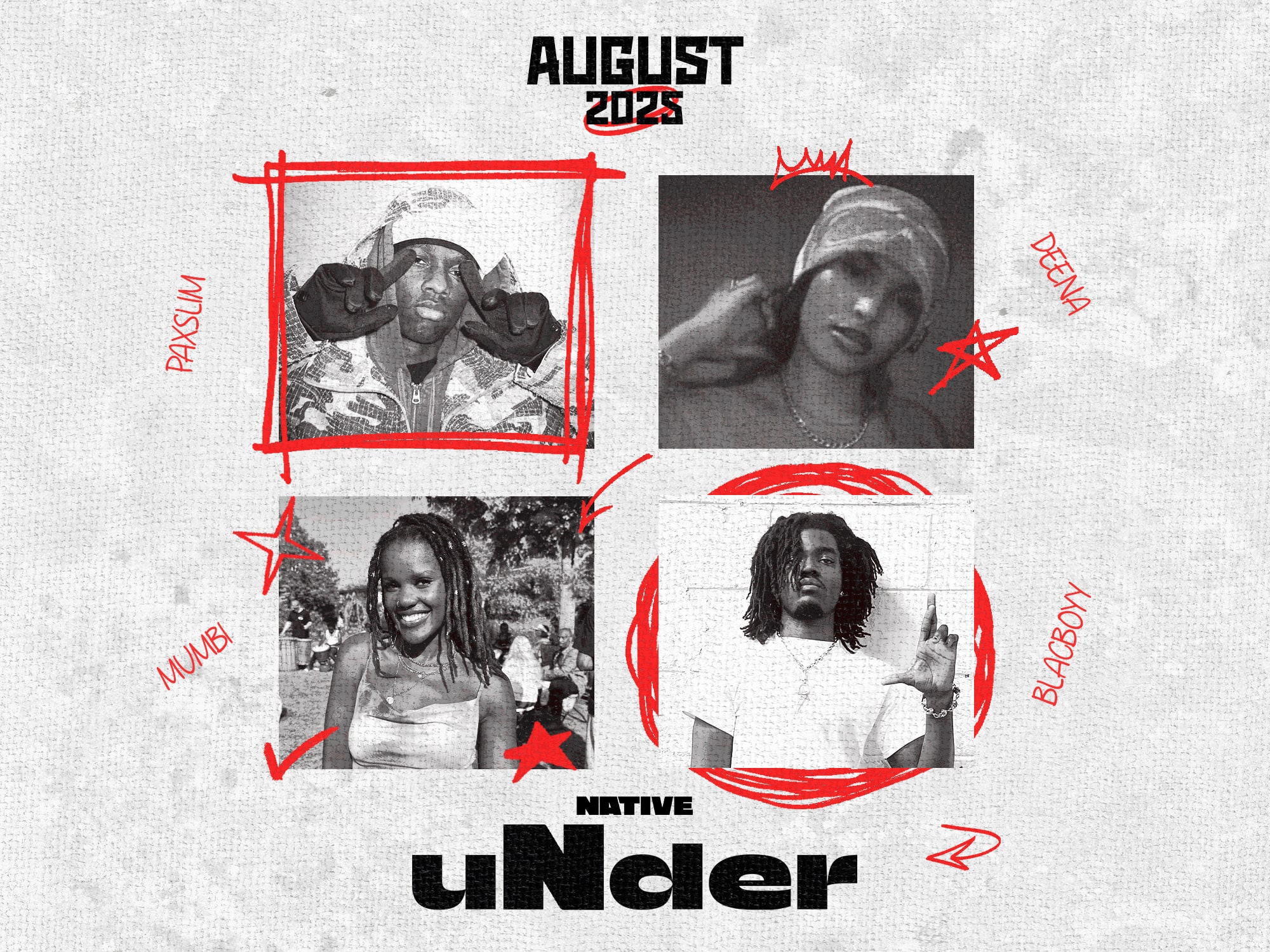
For almost a decade, The NATIVE’s mission has been to champion African youth culture while spotlighting underground and alternative creative communities with the of reshaping the mainstream output. This vision has been actualised in more ways than one, but particularly, our monthly column, uNder, which kicked off four years ago in March 2020. 

Initially termed Fresh Meat, we spent some time every month curating a list of the best and most exciting new artists from around the continent. While some artists had gathered regional acclaim with a couple of releases, others were new to the block and working their way up their first big break. 

In many ways, uNder has always been an opportunity to lightly predict the next big thing. Long before his outstanding debut with ‘Mr Money With The Vibe’, Asake led the February ‘22  edition as a confident and refreshing contributor to street-pop and Deela’s “rapid fire quips” and “unfiltered sense of confidence,” recorded August ‘21, has earned her a blooming career marked with charming remixes from Flo Milli. Regardless of the varying stages of their career, uNder was created to celebrate young African acts pushing the boundaries of their creativity while holding the promise of expanding the scope of music from these parts. 

To bring our monthly column to life, NATIVE Magazine partnered with Los Angeles based artist services and distribution company, Human Re Sources, for our inaugural uNder LIVE showcase. Since establishing in 2017 under the leadership of J Erving, Human Re Sources has remained an outstanding independent powerhouse dedicated to talent development and positioning artists to deliver music to a global audience. The uNder LIVE showcase, scheduled bi-monthly, will similarly give emerging acts across the continent a chance to further their craft and showcase their skill in front of a live audience. The first edition, presenting four exciting acts, is slated for March 28th, 2024 will take place at Miliki, Lagos. 

To secure a front row seat at the action, RSVP here

[Featured Image Credits/Ify Ike-Nwabuoku]


ICYMI: UNDER (JANUARY 2024): FOUR ARTISTS YOU SHOULD BE PAYING ATTENTION TO

Tyla’s Transparency about her health is Refreshing

Tyla is basking in the limelight right now, and deservedly so. Earlier this year, she brought  home the Grammy for  Best African Music Performance, but before “Water” added Grammy winner to Tyla’s list of accomplishments, the Sammy Soso production earned her the ears of millions of social media users across the globe. Joining the likes of CKay’s “love nwantiti (ah ah ah)” and the Selena Gomez-assisted “Calm Down,” the Johannesburg-born singer soundtracked the year with her charming vocals and hypnotic choreography. A confident exploration of seduction and femininity, “Water” took Tyla from a viral TikTok sensation to a Billboard chart topper with millions of streams. She leveraged the momentum with remixes from Travis Scott and Marshmello, followed by a self-titled EP with standout tracks like “Truth or Dare.” And after all was said and done, she announced her debut album currently slated for release on March 22, 2024, alongside her world tour that included a stop at Coachella. Tyla was living the dream but despite the newly added accolades, she decided to step back from all upcoming appearances for health reasons. 


View this post on Instagram


A post shared by Tyla (@tyla)

In an open letter to her fans, who she also calls ‘tygers’, Tyla shared: “I am absolutely heartbroken to have to say this but as of right now, I won’t be able to proceed with the tour. In consulting with medical professionals, it’s becoming increasingly clear that continuing any music festivals or tour dates would jeopardise my long term health and safety.” The singer  explained that this injury is something she’s silently dealt with for the past year and promised a safe return by summer. While some shared messages of support wishing her a speedy recovery, others  suggested the tour cancellation was as  a result of low ticket sales, rather than an illness. The general consensus for the latter audience made claims bordering on the fact that Tyla going on tour “after one hit song” is a poor decision from her management. But these baseless takes show just how  many new listeners aren’t privy to her early days, pre “Water.” 

The 22-year-old  earned early domestic success with her 2019 debut, the Kooldrink-assisted “Getting Late.” A dreamy introduction, buoyed by twinkling keys and the rising prominence of lush log drums set the tone for Tyla’s soothing vocals on the Amapiano record. In 2021, Tyla signed with Epic Records, a subsidiary of Sony Music Entertainment. She sat amongst international household names like Future and Travis Scott, evidently primed for the success she currently enjoys. While these moments weren’t as wild as her debut, Tyla’s “To Last” and “Overdue” for South African Netflix series, ‘Blood and Water,’ proved that she was just a few right moves away from becoming a global phenomenon. Her talent on one hand, Tyla’s journey to stardom was backed by her charming and authentic personality, and once the forces aligned, she easily joined the ranks of  contemporary R&B/pop legends  like Aaliyah and Amerie. 

Knowing that Tyla is more than ready to embark  on any small or large scale tours, it’s also important  to remember the primary purpose of a tour in the first place. Live music, especially delivered across multiple parts of the world, is essentially a way for artists to connect to their fans and build a wider network within the music industry. It takes that sometimes impersonal interaction of streaming your favourite artist’s music through a listening device and  translates those emotions in real time, over a beautifully set up sound system and most importantly, amongst listeners like yourself. Things have  been back to “normal” for a while now following months of COVID restrictions and concerts are in full swing with different precautionary measures in place. Still, a well organised live event relies on a series of factors and people, whose  deliverables include but are not exhaustive of; securing  a venue, ticketing, covering logistics like sound and lighting crews, transportation, hospitality, press, hair & makeup, choreographers, backup dancers & singers, artist’s band, sound engineer, stage designers, private security, medical staff and any other contingencies.


View this post on Instagram


A post shared by Tyla (@tyla)

Bearing all that — including financial investments and pre-bookings — in mind, it’s safe to assume that a tour like the one Tyla was likely planning, would only be cancelled or postponed due to the most  severe of circumstances. All this put into place, the well oiled machine that results in a successful tour must prioritise the health and safety of the star of the show. A typical runtime per show spans across one to three hours of production. For tours stacked with back to back dates, the physical demands are uncountable. And for Tyla who planned to visit 33 cities across UK, Europe and North America, it’s easy to see why she’s refusing to embark on this tour while having health concerns. 

Tyla isn’t the only artist who has had to tread the waters of live performance carefully, out of concern for her health. Ahead of his Tafawa Balewa Square performance in April 2023, we spoke to Davido about his third iteration to the series and what was essentially a comeback from a grief-induced hiatus, ‘Timeless.’ He was basking in the limelight with Musa Keys-assisted “UNAVAILABLE” and “FEEL,” nudging a space into Afropop’s trending soundscape and crossing the borders to soundtrack millions of videos on Tiktok, but Davido could barely express this excitement. For How Davido Got His Voice Back, Davido sipped some tea and cut out all forms of non-essential verbal communication, on doctors orders. Similarly, many live and social media attendees for Beyoncé’s RENAISSANCE tour can attest to the gradual progress in her performance delivery, initially stunted by a knee injury, after nearly 30 years of challenging choreography. Same goes for Rihanna’s 2016 ANTI world tour which was postponed for bronchitis or Lady Gaga in 2013 after suffering a labral tear of the right hip caused by strenuous movement. The list is endless but the pattern is clear. Despite the high stakes, these artists chose to prioritise what was truly important and as the record shows, they were better for it. 

Some on the other hand, have made a lifestyle of globe-trotting without breaks. Artists like  Burna Boy are closing out various venues at breakneck pace, raising questions about how much is too much when it comes to delivering that live experience. For her part, Tyla has recognised her personal limits and decided to take a step back as opposed to postponing the doomsday only to deliver mediocre performances. Her  transparency is particularly commendable considering the ghosting we’ve grown accustomed to by artists we look up to. On one hand, it’s true that  celebrities don’t owe us every detail of  their personal lives. But when the information in question affects their supporters directly,  as is the case with purchased tickets, performers owe it to their fans to be  as open and honest as possible. And even without giving too much away, Tyla did just that. We still don’t know exactly what she’s dealing with,  but the singer offered just enough information to relay the severity of the situation, enforce her personal boundaries and  emphasise that she knows just how inconvenient  her absence will be. If anything, her statement is telling of the sort of relationship Tyla intends to build with her audience in the years to come. 

The million dollar question remains, will Tyla be able to achieve the comeback she imagines? Considering the currently oversaturated music industry, where hundreds of new entrants are vying for attention from an industry highly fixated on “the next big thing,” has Tyla built enough momentum to return even stronger? Only time will  tell. One thing’s for certain, though, Tyla’s health and recovery are priority. 

[Featured Image Credits/The NATIVE]


ICYMI: THE RISE OF TYLA’S GLOBAL HIT SINGLE, “WATER”

Audio Girl Africa launches Produc-HER bootcamp in Lagos

A non-profit organisation based in Lagos, Audio Girl Africa was established to create more opportunities for women in music with audio technology and music business skills. Audio Girl Africa, aimed at nurturing a safe space to create through workshops, internship opportunities and mentorship programs, provides its students the adequate support and professional network that bridges a gender gap in audio engineering and record production in Nigeria. 

In line with Women’s history month, Audio Girl Africa is set to launch their first ProducHER series bootcamp in Nigeria, a sequel to their 5-day bootcamp hosted in March 2023. The initiative will be joined by leading Nigerian music label, Mavin Global for the flagship songwriting and recording boot camp held in Lagos. The writing and recording sessions are aimed at fostering a collaboration amongst female creatives across the industry, mobilising them to create and release a project as a group. This year’s boot camp was supported by a series of sponsors including the Warner Music Group(WMG). Managing Director for Warner music Africa, Temilade Adeniji shared, “In awarding Audio Girl Africa with a grant under the Repertoire Fund supported by the WMG BFF Social Justice Fund, Warner Music Africa furthers our commitment to championing participation of young African women in audio technology and the music ecosystem at large.” 

Through this grant, Audio Girl Africa hosted her first 2-day Live Sound Workshop for 2024 in Ibadan, training fifteen young women on the basic skills of live sounds, including live music set up, sound mixing and recording plus more. The ProducHER boot camp series will hold from 11th March to 15th March, extending an invitation to all emerging and independent female producers, vocalists, songwriters and other creatives, to participate in an opportunity to collaborate with some top creators in the industry. With over four years in the making, according to Founder and CEO of Audio Girl Africa, Febe Adedamola, this inaugural ProducHER session promises to be crucial in expanding our creative community with more bright minds.  

Featured Image Credits/Audio Girl Africa


ICYMI: UNDER: BEST NEW ARTISTS (FEBRUARY 2024)

The women behind the biggest Afropop Stars

From the euphoric release of operating behind the mic to navigating the drama that unfurls at boardroom level, there is no Afropop without the contribution of its women. In the twenty-odd years since the genre has risen from a sub-regional powerhouse to a key component of global pop’s framework, women have been at the forefront of that evolution, working ardently to propel African music to the top of the charts and the minds and hearts of millions across the globe. 

The theme for 2024’s International Women’s Day is ‘Accelerate Progress,’ and at no time has the propulsive force of the women in Afropop been felt as much as it has now. In honour of IWD and the work being done by women in Afropop, we at The NATIVE are celebrating some of the women driving some of Afropop’s acts to success across the globe. 

BOSE OGULU 

Bose Ogulu, popularly known as Mama Burna, is a giant who has history as a linguist, academic, and business woman but she’s most well-known for her role as the manager of her children, Burna Boy and Nissi.  Ever-present from the beginning of Burna Boy’s career, she set up his first recording deal with Aristokrat Records and served as his manager in a first stint until 2014. After returning as his manager in 2017, she orchestrated the run that took Burna Boy from misunderstood virtuoso to Grammy Award-winning superstar, while receiving acclaim for some of her public speeches, like the famous 2019 BET Awards acceptance speech where she reminded the audience that they were Africans first before they became anything else. 


View this post on Instagram


A post shared by Bose Ogulu (@thenamix)

RONAMI OGULU 

A key part of Burna Boy’s transglobal appeal lies in his imagery and fashion. That aspect of his brand is handled by his sister, Ronami Ogulu, who helps to translate his idea of cosmopolitan pan-African co-operation into stylish fashion statements. Even though her role on team Burna only became official in the last half-decade, Ronami has been an ever-present at Burna Boy’s side since his breakthrough with “Like To Party,” in 2012 and has helped to guide him through several style evolutions in the 12 years since then. She officially became a key part of his team as his global campaign took off in 2018 and she’s since curated several timeless looks for him ranging from his 2019 Kenneth Ize outfit for his Coachella performance to attending the 2023 Met Gala in custom Burberry. 


View this post on Instagram


A post shared by Ronami Ogulu (@r0nami)

JADA POLLOCK 

Jada Pollock is a British-American music executive and entrepreneur who has worked with Nigerian superstar, Wizkid, for over a decade, helping to establish his international profile. In addition to her work in music, she has consulted for Premier League footballers and sports stars. Jada has also worked on brand management for a number of music industry personalities like Bu Thiam and managed stars like Pia Mia + more. Since working with Wizkid, Jada has been instrumental in taking the singer’s career to new heights, and bringing Afropop to a global audience with special highlights like the groundbreaking success of Wizkid’s fourth studio album, ‘Made In Lagos.’ 


View this post on Instagram


A post shared by Jada Pollock ☄️ (@jadastyles_)

GRACE LADOJA  

Grace Ladoja is always keen to showcase the diverse range of talent in Afropop. Born in the United Kingdom to Nigerian parents, Ladoja has worked in music for over a decade and has since used that platform to work on landmark initiatives like MetallicInc London and Our Homecoming, an annual showcase of African creativity in music, fashion, and art that aims to connect the diaspora with the motherland. As a co-founder of the music company, Metallic Inc, she has also been instrumental in platforming some of Afropop’s most dexterous performers such as Lojay and the celebrated record producer, Sarz. The release of “Happiness,” the Asake and Gunna-featuring lead single off Sarz’s forthcoming debut album hints at a new era for producers working in Afropop. 

RAYA KHALED

Currently, there are few Afropop acts with a stronger visual identity than YBNL singer and songwriter, Asake. In the two years since Asake has staged a coup on the mainstream of Afropop, he has not only received critical praise for his amapiano-inflected, energetic variant of street-pop, his style has also been in the spotlight. Raya Khaled, his go-to stylist, is responsible for so many of his striking looks, complimenting the artist’s natural swagger. Raya has worked extensively with acts like Ciara, Kelly, Cardi B, Bia, and Davido but it is with Asake that she creates some of her most compelling looks. By blending the traditional elements of Asake’s heritage with the innovative edges of high fashion, Raya is creating a new playbook for fashion in Afropop. 


View this post on Instagram


A post shared by Raya (@morethanraya)

FEYISOLA OGUNBANJO

Feyisola “Kulupsy” Ogunbanjo thinks of herself as a liaison, helping creatives to bring their dreams to life and execute campaigns efficiently. She started her career as a marketing executive at Trace TV and has gone on to work as a public relations and branding officer at Chop Life Crew where she played a key role in furthering the public acceptance of its frontline act Mojo AF. Always evolving. Kulupsy presently works as the project manager for hip-hop star, ODUMODUBLVCK, who has taken Afropop by storm over the last year-and-half  thanks to hit tracks like “DECLAN RICE” and “Cast.” Kulupsy is also the marketing operations lead at NATIVE Records


View this post on Instagram


A post shared by Kulupsy Media (@kulupsymedia.co)

[Featured Image Credits/The NATIVE] 


Words by Wale Oloworekende


ICYMI: 10 AFRICAN ARTISTS WHO ARE ALSO MUSIC EXECUTIVES 

uNder: Best New Artists (February 2024)

As African music continues to take new forms each day, the plethora of talents at our fingertips increases by the second. The purpose of our column, going all the way back to the ‘Fresh Meat’ days has always been to spotlight these budding talents at varying levels of their career and in some ways, predict what’s likely to be the next best thing. If we do say so ourselves, the column has successfully done just that. Long before his outstanding debut with ‘Mr Money With The Vibe’, Asake led the February ‘22  edition as a confident and refreshing contributor to street-pop and Deela’s “rapid fire quips” and “unfiltered sense of confidence,” recorded August ‘21, has earned her a blooming career marked with charming remixes from Flo Milli. So without going into it too much, it’s safe to say that our forecasts are inarguably reputable. 

Since re-evaluating the impact of our column, our limited entries ensure that the best in class acts are brought to the forefront, while still casting the net wide enough to include rising stars from across the continent. This February edition, we’ve brought Labdi, a Kenyan songbird exploring the sadistic highs and lows of life through a solo career with traditional soulful rhythms while delivering Electro-Pop hits with her Norwegian collaborator, Bernt Isak Wærstad, for Unganisha. Joining Labdi are, Fuji-infused Afropop artist FirstKlaz, Laik, a Sierra Leonean crooner armed with gritty urban soul renditions and finally, ALL MY COUSINS, the family-led artist collective from Ghana. With a promising year ahead, these are some of the artists you should be looking out for. 

LABDI

For fans of: Sun-El Musician & Coco Em

Ladbi’s official entry into the scene goes back to 2018 with “Paro,” an upbeat, electronic record she released under her duo commonly referred to as Unganisha. Together with her Norwegian collaborator, Bernt Isak Wærstad, the collective provided what was undeniably a refreshing perspective to electronic music emanating from these parts. Their experimental outlook, buoyed by a continuous pursuit to merge the worlds of east african traditional sounds with the western sensibilities of club music, birth a culturally resynthesized collection of vibrant sounds. Tracks like “Mamarina,” characterised by jazzy synths and steady rhythms or “Ago,” a high-tempo rendition slicked with heart-thumping vibrations, indicate the pair’s penchant for unbridled exploration. The arrival of their debut album, ‘Mbili Mbili’ half a decade later only reiterates their carefree outlook on creating boundary-free soundscapes while capturing the exhilarating and daunting themes of life. 

Lead vocalist, Labdi, managed this while tracking a path to success as a soulful solo artist accompanied by her Orutu since the start of 2022. The single string instrument, originating from the Luo Community of western pre-colonial Kenya, assists Labdi in communicating her emotionally resonant performances across songs like “Nang’o.” Her incessant need to push the envelope becomes increasingly apparent after learning the vertical fiddle is forbidden to women in those parts but according to Labdi in a 2021 interview, “that was reason enough for me to choose it.” Faced by the male-favoured challenges of the music industry, Ladbi continues to prioritise her craft with honest portrayals that key into indigenous Kenyan sounds such as Benga and Ohangla . Her latest 3-track release, ‘Seche Johera,’ shed light on her detailed storytelling skills and tasteful songwriting as she tracks a long-winded journey of love’s highs and lows. 

ALL MY COUSINS

For fans of: Hagan, 95ANTNY, SuperJazzClub 

Considering how far the works of this family-formed group have travelled, it’s clear they would not be underground acts for much longer.  The Accra-born artist collective came up in June 2022, from varying music backgrounds interwoven by their love for DJing and the fast evolving rave culture across the world. Initially, ALL MY COUSINS was born by the need to create a network of creatives across the globe with its founder, Ansah Live, and core members including 95ANTNY, Seyyoh, Common Juls, Cozyshrt, Big Leaflet and Narah. The imprint of ALL MY COUSINS can be felt all across several cities in Europe, a nod to their experience in building community through arts, music and nightlife. Together, they lead conversations concerning youth culture through the arts while encouraging freedom and curiosity through various modes of expression. 

Last year, the group showcased their skills beyond the deck with a few singles produced, written and recorded in-house, thanks to the varying creative backgrounds of its members. Largely house-focused tracks, “Tricky” and “ACT A FOOL” are upbeat tunes layered with heavy drum patterns and soothing croons, fit for the dancefloor where the group’s mission originated. Their latest release,  “SOIRÈE,” showcases a string of seamlessly chords helmed by charming lead vocals of 95ANTNY, all pieced together under the shared production credits with Nigerian DJ-Producer, Kikelomo. Pulled in from afro-tech and electronic elements, the production crafts a bouncy yet soulful canvas for the balmy performances that follow. It goes without saying that ALL MY COUSINS is one of Ghana’s best kept secrets, steadily pushing the envelope of Afro-House and reiterating the unifying forces of music. 

FIRSTKLAZ 

For fans of: Fireboy DML, TAR1Q & Taves

Abuja is currently an oasis of creative explosion across cultural formats. The success of the capital city’s bustling hip-hop scene has belatedly cast a nationwide spotlight on the sea of talent that dot its musical scene and the city’s ascendant stars have taken the increased limelight with a mission to prove themselves. Currently, one of the city’s brightest stars is the pop fusionist, FirstKlaz, who warps influences from soul, R&B, and hip-hop with a distinct African sheen that is rooted in the specifics of his lived experiences. FirstKlaz first registered on the scene with the release of his mid-tempo sizzler, “Tonight,” in 2019, displaying a knack for crafting emotive tunes that cut to the heart of his desires while its follow-up, “Jo (Freestyle),” showed a more extemporaneous side to the singer who melded influences from hip-hop and afrobeats over a skittering instrumental. 

More proof of his FirstKlaz’s omnivorous pop appetite was served on his next single, “Gbese,” a feisty collab with fellow Abuja stars, ODUMODUBLVCK, Reeplay, and DJ Nitro Boomin’ accessorized with groovy horns and rolling drums. Another song, “Show Them,” with ODUMODUBLVCK followed in 2021, showing FirstKlaz’s knack for pulling his collaborators into his genre-agnostic, hypnotic sonic world.  Always keen to expand the range of his work, “Ogini,” FirstKlaz’s final release of 2023 offered a glimpse into his star turn on the horizon as he futuristically adapted highlife influences to thrilling effect. Breaking new ground on his 2024 release, “Gen-Z Fuji,” the singer re-interpreted the storied Yoruba oral genre, tapping into the lyrical prowess associated with Fuji while stylistically recasting his delivery scheme. It’s a punt that has borne results for the singer who has seen “Gen-Z Fuji” chart on several streaming charts and positioned him for future success –including a soon-to-be-released second instalment of  “Gen-Z Fuji” with Terry Apala–as afropop heads for an era defined by indigenous sounds. 


LAIK  

For fans of: Omah Lay & DarkoVibes

Laik might live and work in the United States of America but the singer’s worldview is definitively shaped by music from the breadth of the black diaspora and the sounds of his home continent, Africa. Since he started his career in 2017 with the release of “Love Me,” the singer has made it a mission to use music as a tool of effusive expression about the intricacies of love and the uncertainties of life from his point of view. The release of his song, “Talk To Me,” in 2020 set the stage for the arrival of his debut E.P, ‘Wanted,’ a meditative dome on desire and romance that arrived in the thick of the global pandemic that shut off most of the world. Most of the charm on ‘Wanted’ came from the easy-going manner in which Laik fused elements of dancehall, Afropop, and R&B to create highlights like “Wantin” and “Gimme Dat.”

Always edging closer to a refined version of his sound, the singer blended influences from his Sierra Leoneonian origins with a distinctive island bounce on 2022’s “Onika,” another number dedicated to a love interest. 2023 propelled the singer to a more widespread audience thanks to the success of his single, “Story,” which takes listeners on a journey with Laik as he recounts all he’s been through in the last half-decade. A more lively showing on “Kiss Kiss” sees the adoption of more pop-driven production while remaining true to the message of romance that has been omnipresent throughout his career while the year-ending “Ahje” showed a singer at ease with his ability to conquer the world with the power of his music. 


Featured Image Credits/The NATIVE


Words by Nwanneamaka Igwe and Wale Oloworekende


ICYMI: UNDER(JANUARY 2024): FOUR ARTISTS YOU SHOULD BE PAYING ATTENTION TO 

The Shuffle: Odunsi (The Engine) & RAYE bring their seductive charm to “Tipsy”

When Odunsi (The Engine)’s ‘rare.’ arrived in 2018, it cemented him as one of the youngest mavericks spearheading the second coming of a creative renaissance in Nigerian music. Initially led on by the likes of Black Magic and Show Dem Camp, the alternative creative community took a new face with the likes of Odunsi and his peers leading the pack. Armed with a penchant for experimentation, ‘rare.’ tapped into the depths of the singer’s psyche to produce otherworldly music that rebelled against mainstream formulas audiences had grown accustomed to. His impact stretched beyond the country, gaining ears from music lovers across the globe. British-Ghanaian crooner and recent record-breaking recipient of six BRIT Awards, RAYE, was not exempt from keying into Odunsi’s imminent star power. 

With the synth-heavy nostalgia derived from the rattling samples explored on the genre-defying debut, Odunsi’s prowess as a well rounded artist and producer shone through brightly, setting the tone for chameleonic artistry he currently boasts of. A few months after the release, RAYE caught wind of Odunsi’s light and the result was a pristine collaboration dubbed “Tipsy” – a sweet spot between his avant-garde methods and her charming chords, meeting for a timeless R&B record. While the track was only released in 2019, the teaser—pre the seasoning of RAYE’S sultry rendition—was featured in the visuals for “In The Morning” two years prior. 

The track’s misty atmosphere is set with lush slow-tempo piano chords and groovy rhythms of 808 drums, followed shortly by Odunsi who begins narrating a tale of a risky night out. Set up by deep club-ready synths, it’s quite fitting that the scene is set on the dance floor, where a woman in another relationship catches the narrator’s eye. The intro line sings, “Sipping on something light, but you can’t think right” immediately establishing an intoxicated scene that whets our appetite for the series of bad decisions about to be made. 

Odunsi carries on to rain his muse with a series of praises and a couple lines and drinks later, it becomes evident that she is welcoming his advances. A brief consideration to retreat sees Odunsi masked with desire as he begs for divine assistance to inform his next steps in desperate croons, “God show us the way, God not another day, ah.” He holds on to a semblance of restraint despite his urge to reciprocate and briefly turns to address his love interest’s partner, “But your girlfriend tipsy, your girlfriend freaky/And she trying to impress me, she better not text me, ‘less it gets messy.”

Ahead of the melodious hook, Odunsi resigns his faith, indicated by softly delivered double entendre lines, “But baby you thirsty, so why don’t you have a drink?” The contemplative tone has now shifted to a slightly braggadocious one where he relishes the feeling of being desired and now, he is ready to engage consequences be damned. Odunsi’s cheery vocals are accompanied by a kaleidoscopic fusion of electric percussions, getting us ready for RAYE’s luscious perspective buoyed by soothing chords. 

Unlike Odunsi, she arrives at the table significantly more self-assured, backed by low cadence hums ready to seduce her love interest. She immediately confesses at the crown of the second verse, “Baby, I’ve been sipping now I’m tipsy again/Babe, I know you love, you like me moving risky again.” However, the following lines provide new information that leads us to believe that more than one member of this equation is in a relationship. “If you got a girl, you shouldn’t kiss me again/You won’t let me go cause you gon miss me with him,” RAYE warns. At this point, all caution is thrown to the wind as they give into the highs of their intoxication which have blurred the lines between right and wrong. 

RAYE has now taken full charge of the song and the situation for the rest of her verse, where she invites him to understand that the feelings are beyond her control. Subsequent lines also reveal that this isn’t the first time the pair are meeting on the dancefloor, “You’re the only one I call when I’m drinking, should be flattered by it.” After a brief rendition, Odunsi takes over again with the intoxicating hook, charming his way through the questionable morals behind their actions. At this point, the pair no longer feign remorse for their actions as they fully commit themselves to the helms of the liquor. 

They’re on the same page when the track draws to a close as they banter back and forth the tuneful chords. “Now when the liquor go down, I’ll be needing you now/So drop everything and pull up on your girl, cause you know I’m your favourite,” RAYE leads. Odunsi affirms her suspicions, beckoning her to leave all reservations behind as he confesses the dizzying effect she has over him. By the end of the song, the verses indicate that the alcohol-motivated affairs are only to be engaged within the dance floor as Odunsi lulls, “But when we sober up we can leave that in the past tense,” an agreement that’s clearly mutual. 

Listen to “Tipsy” here.

[Featured Image Credits/The NATIVE]


ICYMI: REVIEW: ODUNSI(THE ENGINE)’S ‘RARE.’

How Asa has explored romance and relationships over the years

No one could accuse Asa of optimism when she released her eponymous debut album back in 2007. On the now-iconic cover, there’s an immediately arresting photo of the singer born Bukola Elemide, part of her swinging dreads frozen in the air and her mouth wide open, as if she was captured while yelling, or wailing, or somewhere in between. For a moment, maybe you could read her expression as ecstasy, but when the first words sung on the LP are, “I’m in chains, you’re in chains too,” any notion of pleasure flies out of the window.

Album covers have always been a great way to envisage the thematic disposition of an Asa album, from the glossy, touched-up portrait of the pop-rock fare, ‘Beautiful Imperfection’, to her stoic demeanour on the inquisitive ‘Bed of Stone’. In her more recent work, Asa has become far less heady, as evidenced by the breeziness of 2022’s ‘V’ and her most recent single, “Odo,” a sweetly-scented ballad dipped in the honey and warmth of being romantically adored.

Perhaps, it makes a lot of sense that a 41-year old, now-seminal figure would be far less likely to probe everything and be more comfortable with embracing their own definition of wholesomeness. That’s what Asa’s last album and latest single seem to signify, with their overt focus on personal joy and fulfilling relationships, intimate kinds of ecstasy. This shift is nowhere more striking than her approach to making songs about love, a subject Asa has often treated with an engaging level of complexity.

Amidst the existential uncertainty of “Fire on the Mountain” and “No One knows,” as well as the bracing reverence in “So Beautiful” and “Iba,” there wasn’t too much digging into romantic love but you could hear cynicism with which she approached the subject, especially on “Subway.” Referencing the lessons she picked up from her mother, Asa describes falling in love as a transient feeling, a situation that inevitably seems to lead to emotional doom. It carries over into the other related songs in ‘Asa’.

One of the other two songs in that range is “Awe,” a telenovela-ready tale of paternal abandonment. The other is “Bibanke,” a misery-filled portrait in the throes of a heart-rending breakup. “I could cry you a river, I could cry you a waterfall,” she sang in the coda of a live rendition while performing in Paris just over a year after the release of ‘Asa’, a version I often return to for how it wrings out even more misery.


It is often said that an artist has their entire life to pull from in making their first album, which leads to deeply rooted expressions, and in the case of ‘Asa’ it was disillusionment. It’s not that she believed there was no joy to be found in loving someone wholeheartedly, but she saw through the madness of the world on that album, and that carried over into all the hurt she poured into “Bibanke.” Whether the experience that informed the song was Asa’s or not didn’t matter, she was angsty enough to share the same sentiment as Peyton Sawyer: People always leave.

For her sophomore album, ‘Beautiful Imperfection’, Asa was much more chipper. The change was drastic—maybe too drastic for some. In the video for lead single, “Be My Man,” Asa danced and slid across the counter of a restaurant, glasses double the size of what she wore before and colours popping all around her, as she proposed unreserved  reciprocity. What changed? The answer is most likely in the album’s intro, “Why Can’t We,” a song where she openly canvases for happiness, aided by the sagely advice of a friend. “Why not have some fun when you’re still young and still ok?”

It’s not that Asa was buying into a delusion, she was simply choosing to move from cynicism to excitement, embracing the brighter hues of life without being oblivious to the madness. “This world is full of pain,” she sings on “Maybe,” ultimately choosing to emanate positivity. As far as love, “Be My Man” is where all the giddiness stops. “Bimpe,” spiritual kin with “Awe,” mentions being in a relationship but only within the context of being deeply annoyed with the sister of her partner. Similarly, “Baby Gone” is kin with “Bibanke,” except this time Asa is ruing not being a better partner to a man who deeply cherished her.

Even with these few relationship-themed songs, the trademark profoundness in Asa’s writing and singing carried over, and what was most moving to glean was the singer’s innate understanding of how effort goes both ways, as well as the self-acceptance needed to nurture affection. To the latter point: “I always give love, never thought I deserved/To be the one to get love,” she sang on “How did Love Find Me,” a mid-album ballad from 2014’s ‘Bed of Stone’.

Compared to her previous albums, Asa was more even-keeled on her third LP, if more complex as a person. That manifests itself in songs that range in emotions, from the confrontational, no-fucks-given attitude of lead single “Dead Again,” to the rousing exultations of “Eyo” and “New Year,” and the customary ruminations on the title track and a song even titled “Sometimes I Wonder.”

More than before, ‘Bed of  Stone’ felt pointedly personal. Not that she had ever dabbled in mythos, but Asa seemed to make the point that she dealt with being human at the most sensitive levels, keenly aware of her own insecurities. On “The One That Never Comes,” she pleads with a person whose affection she can’t seem to reciprocate – at least not with the same intensity – asking them to move on. Depending on who you ask, there’s a certain grace in not leading a person on, the kind of reality check that goes both ways, since making that decision also confronts you with questions that need answers.

Emerging five years later with her fourth album, ‘Lucid’, Asa seemed far more at ease. It wasn’t necessarily that she may or may not have found answers, it’s that she seemed to have embraced the flaws of the human condition in our search for satisfaction. On the album, she sang of love as a risk worth taking, even if there’s the possibility a relationship will end on unceremonious, particularly mournful terms. On “Femi Mo,” she sings of the demise of a ten-year relationship from the perspective of the dumped partner, and the closer “My Dear,” she’s the bride left at the altar on her wedding day.

Balancing those romantically fatal narratives on ‘Lucid’, Asa sang some of her most euphoric love songs till that point, from the destination-hopping cheeriness of “You and Me” to the brassy anthem, “Until We Try (This Lo’).” Those were the precursors for the overall atmosphere of joy that hangs over ‘V’. In the period between, Asa was more outward-facing, showing herself to be a much lighter, vivacious person than many thought she was. She played virtual live sets during the Covid-19 lockdown, hung out and worked with younger artists who not only indulged her whimsical side, but actively encouraged it.

In a recent video shared to her social media, Benjamin Okorie, of Highlife-fusion brother duo the Cavemen., participates in a theatrical dance to “Oddo,” prancing around and behind Asa while the lyrics, “Money don’t impress me/I just need someone who complements me,” coos loudly in the background. Clearly, “Oddo” is tied to ‘V’, where she sings of wanting to be shown off by her person, and describes a romantic partner as the “Ocean.”

In a career that has spanned two decades and counting, Asa has explored what it means to love and be loved from a forthright outlook and a dreamy perspective. At a time when the complexity of romantic relationships is at the core of music, her shift towards something purer and easier feels alternative to the norm, which, more than anything, proves Asa doesn’t even need to try to be unique—even if her temperament has changed over the years.


[Featured Image Credits/The NATIVE]


ICYMI: THE SHUFFLE: ASA’S “BIBANKE” REPRESENTS AN ERA OF ROMANTIC NIGERIAN MUSIC AT ITS BEST

10 unrivalled pairings in Afropop

Many would agree that one of the more interesting aspects of music consumption that keeps it refreshing, is born out of great knowledge of collaborations. More than knowing what works for each creator’s sound, bringing various talents together allows the birth of new sounds and ultimately guarantees great music. 

Think Wizkid and Skepta, fostering a bromance that brought on timeless jams like “Energy (Stay Far Away)” or the brewing sisterhood between our resident IT girls, Tyla and Ayra Starr. Even official pairings like Mellow and Sleazy or TxC, taking the melodies of Bacardi and AfroHouse to the world, or The Cavemen, for their innumerable contributions in the resurgence of Eastern-Nigerian Highlife, do not fall short in this conversation. Read on to find out the pairings whose collaborations redefined African music forever. 

REMA & LONDON 

When you think of iconic artist-producer pairings in music history, most references are pulled from the hip-hop scene. Whether it’s the OG’s like Snoop Dogg & Dr Dre or Snoop Dogg & Pharrell Williams, or this decade’s stars with 21 Savage & Metro Boomin or Tay Keith & Travis Scott. Regardless of the combination, we’re reminded of the duo’s heaven sent collaboration the moment the iconic producer tag lands on the beat. Though the artists may branch out once in a while, the announcement of that all too familiar tag gives listeners a sense of relief that they have another banger in their hands. Speaking of bangers, one of Afropop’s most successful artist-producer duos to date is Rema and London. On most of the rave lord’s biggest hits, the charming chant of ‘another banger’ is usually accompanied by ‘London!’ 

The earlier days of Rema’s career, soundtracked by “Dumebi” and “Woman,” he mostly worked with Ozedikus Nwanne, another perfect pairing. But Rema’s relationship with London came into full bloom prior to his debut album, ‘Rave & Roses,’ where he snagged ten of sixteen production credits.  Remember the lush guitar strums and rhythmic drums on sex-themed “Soundgasm” to the high-tempo shrills and humming bass of “Addicted,” not to mention monster hit, “Calm Down” or the raver’s favourite “Oroma Baby.” The mutual understanding between the pair is undeniable, to the extent that they play within Rema’s soundscape while leaving room for experimentation. They reiterate their harmonious alliance on the debut’s deluxe, ‘Rave & Roses (Ultra)’ and further with the surprise 5-track EP dubbed ‘RAVAGE.’ These two are music’s version of jollof rice and chicken, good alone but even better together. 

KABZA DE SMALL & DJ MAPHORISA 

Since the pair’s joint release in 2019, this South African dynamic duo have collectively gone by the title of the hit-stacked 12 tracker, Scorpion Kings.’ Their impact is so far reaching, it is hard to track the astronomical growth of Amapiano without mentioning Kabza De Small and DJ Maphorisa. Originally, the project’s title was the idea of Maphorisa who, being born on November 15th, is a Scorpio. While Kabza’s birthday is twelve days later during Saggitarius season, the pair bonded over their love for ‘piano and sharing the same birth month. Maphorisa, who considered himself a long time admirer and student of Amapiano, took interest in learning from who many call the genre’s king. Their meeting, half a decade ago, has played such a key role in transporting this underground movement from SA’s burbs to the world stage. 

It is almost impossible to point out all the ways these DJ-producers have done this, but songs like “Lorch,” or “Vula Vula” do a good job of encapsulating a fraction of it. Not only are those monster hits, but the pair’s dedication has made room for a younger generation of astounding acts like 22 year old Virgo Deep to emerge. When Kabza isn’t expanding the scope with cross-country collaboration from Wizkid and Burna Boy-assisted “Sponono,” Maphorisa is stepping away from the deck to deliver memorable verses on chart toppers like “Izolo.” Apart or together, the pair represent the broad spectrum of what the domineering genre could achieve. Then if you throw in the staggering vocals of Ami Faku, the result is bound to be an unrivalled partnership. Side by side, these three have created some of the biggest and most emotionally resonant tracks of ‘Piano; “Abalele” and “Asibe Happy,” and in the spirit of love, these piercing stories are worth bringing to the top of your playlist. 

BOJ & AJEBUTTER22

Music has a stockpile of successful stories of bromance. Not only have they produced tracks that remain relevant across several decades but you can’t call one’s name without the other due to their inseparable bond. The likes of Jay Z and Kanye West or Dave and Central Cee come to mind. Within the Nigerian context, Boj and Ajebutter22 fall close in replicating that admirable synergy between solo artists who in another lifetime would have formed the perfect group. 2014’s “Omo Pastor” launched the world into the pair’s potential individually and collectively, with a pop-rap classic that tells a captivating tale of a forbidden relationship. Together, they joined acts like Black Magic and Show Dem Camp, to usher in the first wave of alternative music in Nigeria, with hits hinged on individuality and a renewed creative perspective of music making. 

Boj and Ajebutter22 solidified their peerless union with the ‘Make E No Cause Fight’ trilogy, of which the third and final iteration was released in the final quarter of 2023. The first part housed buttery, slow jams like “24,” a heartfelt declaration of love on “Tungba” and three others in a brief narration of the tumultuous journey of finding love in Lagos. The project’s warm reception set the stage for Falz on the second version, who expanded the project’s reach with stories of infidelity, sex and his non-committal tales of love prominent amongst the younger generation of Nigerians. While “Baninam,” a play on Birmingham, showcases Falz’ whimsical touch as he recaps travelling across the world to visit a woman, “Too Many Woman” shows the trio spoilt for choice with the plethora of women vying for their attention. Boj and Ajebutter close off the 5-track trilogies with “DITR,” part three’s outro translating to ‘diamond in the rough,’ showcasing maturity as they veer away from the  player ways. These two’s contributions to the love-themed catalogues from Nigerian artists are invaluable and their unwavering bond is one Afropop will forever be thankful for. 

CRUEL SANTINO & ODUNSI(THE ENGINE)

You know those two inseparable friends in class, sharing everything from snacks to textbooks, wreaking havoc at the back and likely getting punished together? That’s Santi and Odunsi. Together, they reconfigured Nigeria’s music space with a penchant for originality and experimentation. Led on by the likes of Black Magic and DRB Lasgidi, they introduced a refreshing perspective to the ways we create and consume music, steering eyes away from the formulas of mainstream music. On one side, we have Santi with cult classics like “Rapid Fire” or “Freaky” which teased the world of the faultless release that is ‘Mandy & The Jungle.’ On the other hand is Odunsi with staple alté numbers like “Alté Cruise” padded by a sprinkle of mainstream touches with Runtown and Davido on “star signs” and “divine” for ‘rare.’

Fast forward to over half a decade later and the pair’s relationship is blossoming brighter than ever as they deliver spotless verses on the other’s track, coupled with a slew of production credits. The ties come through clearly on “NOSTALGIA,” off Odunsi’s ‘SPORT’ and “Panic Island” off Santi’s ‘Cincinnati Pumpin!!’  Together, Santi and Odunsi have, and are still redefining the face of African music of this decade. When you throw repeat collaborator and Ghana’s pop princess, Amaarae, into the mix, you have an unbeatable trio. From Santi’s “BORN AGAIN” and Amaarae’s Kojey Radical-assisted “JUMPING SHIP” or Odunsi’s “body count,” these three are alternative music’s holy trinity.  

UNCLE WAFFLES & TONY DUARDO 

For a genre that was originally hinged strictly on production without vocal accompaniments, most consider the instrumentals the primary ingredient to a great Amapiano song. As such, a significant number of songs house several production contributors. If you comb through the discography of Amapiano’s princess, Uncle Waffles, there’s a recurring collaborator across over half of her works. The Johannesburg-born producer, Tony Duardo is one of the other brains behind Waffles’ biggest singles, “Tanzania” and “Yahyuppiyah.” 

Other than producing some of the biggest ‘piano tunes, this team are the brains behind all 4 tracks on ‘Red Dragon,’ Waffles’ debut as well as two-sided EP, ‘ASYLUM’ & Manana-assisted pre-release, “Echoes” forSOLACE’ One of the pair’s most impressive works can be seen on “Love I Need,” decorated with production so masterful, they can be compared to the veteran hands of DJ Lag or Kabza. The perfectly cinematic intro is distinguished from anything Waffles has made when the signature log drums take a back seat to looming piano chords that set the pace for Kunene’s rich vocals to take over. BoiBizza later arrives with sonorous croons to set a contrast, all the while maintaining the track’s airy atmosphere with the appearance of light shakers and crystal synths. This match made in heaven offers Amapiano’s spectrum of facets, making sure to include their unique inflections that make room for limitless possibilities. 

ASAKE & OLAMIDE

When you’re a star signee to a Nigerian rap and street pop legend like Asake, you’re bound to earn the title as one of Africa’s biggest breakout stars in decades. From a debut stage performance at Obafemi Awolowo University, Olamide decade-plus knowledge expertly positioned Asake as Nigeria’s next big thing, setting him up to sell out one of the world’s biggest stages, O2 Arena. Asake recalls the moment that started it all in his first cover, reminiscing on his viral reaction after hearing his friend delivered on his promise to get a verse on “Omo Ope” from Baddo, as he fondly calls the YBNL (Yahoo Boy No Laptop) label boss. “There’s up in your life and there’s down, and I was in the part of my life where I didn’t really know what next. So I wasn’t even taking Yemi[Yhemolee] seriously until I heard it,” he shared. 

Shortly after the astronomical growth of the single and a later Burna boy-assisted remix for hit single, “Sungba,” the pair were inseparable, smoking, catching a vibe and playing snippets of what will later be Asake’s Mr Money With The Vibe’ — a promising LP  summation of his scorching streak thus far. The brewing mentor-mentee relationship quickly blossomed into a friendship and bromance of mutual benefit: Asake’s learning first hand under the tutelage of a Nigerian music icon and Olamide’s status as a legacy builder is further emphasised even taken to a world stage, after earning his first Grammy nomination for his contributions on “Amapiano” off Asake’s sophomore release, ‘Work of Art.’ With years and more tuneful hits like “New Religion” stacked up their sleeves, Olamide and Asake or Baddo and Mr Money, as they are colloquially referenced, remain a perfect example of potential from a collaboration written in the stars. 

SHOW DEM CAMP 

The duo of Wale Davies (Tec) and Olumide Ayeni (Ghost) have been, for over a decade, a permanent fixture in Nigerian rap, providing a refreshing perspective to the traditional formulas in the country’s Hip-Hop scene. While their gritty reflections on ‘Clone Wars’ launched them into the scene, Juls-produced “Feel Alright” introduced a new outlook on their battle-ready bars with a conscious addition of Highlife. The pair spearheaded the movement of what’s now dubbed Palmwine music, a melting pot of airy productions, groovy progressions and bars exploring love and lived experiences. The new series displayed their incomparable wit and masterful lyricism as they touched on generational topics with an emotionally resonant edge. 

Perfectly positioned at the centre of Nigeria’s budding alternative scene, the pair completed the final iteration of the series with ‘Palmwine Music 3,’ two years ago, a nod to their dedication to preaching the palmwine gospel and expanding the genre’s scope. The first version brought on breezy raps accompanied by tuneful hooks, soundtracked by the likes of Boj, Odunsi(The Engine) and Funbi, who would grow to become recurrent collaborators for the two. The second instalment brought on a unique summer warmth, set up by a stack of melodious confessions of love and desperate longing with tracks like Lady Donli-assisted “For A Minute.” Before the finale, the pair closed out 2019 with ‘The Palmwine Express,’ to balance the harsher realities of ‘Clone Wars Vol.IV “These Buhari Times”’ released at the start of the year. It goes without saying that Tec and Ghost’s innumerable contributions to Afropop and Hip-Hop’s rich tapestry, in Nigeria and beyond, will never go unnoticed. 

MAJOR LEAGUE DJZ

This twin-producer duo, Bandile and Banele Mbere, takes inimitable pairings to a whole new level. Collectively dubbed Major League DJz, the Sandton-raised duo drew inspiration from their pianist father and uncles, including Hugh Masekela and Caiphus Semenya. They propped up as Hip-Hop but made the switch to Amapiano when the infant scene began gaining traction locally and globally. Speaking on the pair for the NATIVE’s 2021 cover Sounds From This Side: Amapiano, Mohlomi explains, “Starting out producing New Age Kwaito music, which they describe as more Hip-Hop inclined variant of the House sound that prevails in South Africa, Major League are champions of the approach to “hlanganisa” (combine) that The Lowkeys describe as the principal characteristic in the collaborative ethos of Amapiano.”

In the spirit of love, it would be an injustice not to recognise their contribution to the romantic catalogue of the dance-driven genre. “Dinaledi” stands out from their generously delivered 31-track debut LP ‘Pianonation,’ with a stunning rendition delivered by Mpho Sebina and production-assist by Abidoza. The rhythmic log drums are accompanied by lush piano chords and a vibrant, passionate declaration of love in a lifetime commitment, “No matter where you are, I’ll be there beside you/No matter how deep, I’ll be there to guide you.” Nearing half a decade later and that song, alongside most of their contributions, continue to weave permanent imprints in the fabric of Afro-House. Together, they have and continue to take Amapiano to the furthest parts of the world, including a masterful set in Ibiza for one of the largest music broadcasting platforms, Boiler Room

BURNA BOY & JHUS 

With the amount of appearances this pair have made on each other’s projects, it’s surprising that they aren’t an official pair or at least, put out a joint project. This Nigerian and British-Gambian duo have been inseparable for nearly decade, with collaborations going back to Burna Boy’s 2018 album, ‘Outsider’ and J Hus’ ‘Common Sense.’ Dubbed “Sekkle Down” and “Good Time” respectively, these tracks opened a world of possibilities within Afropop’s melodious catalogue and the gritty refined touches of the Hip-Hip outputs from the UK. Burna would later deliver an unrivalled performance on “Play Play,” assisting J Hus’ resounding comeback into the scene after a near three-year hiatus. Even after Hus’ absence from the scene through 2022, he still lent a stellar verse to “Cloak & Dagger” from the Grammy nominated album. As expected, Burna returned the favour on ‘Beautiful And Brutal Yard,’ joined by an impressive feature cast including Jorja Smith, Popcaan, Drake and more. 

And this brotherhood runs deeper than a couple verses. Though J Hus didn’t make an appearance on Burna’s recent addition, ‘I Told Them…’ the comically narrated intro at the start of crowd favourite, “City Boys” was picked up from a video of Hus’ shared Instagram a couple years back. As these two continue to achieve outstanding feats in their respective genres, it is clear that this friendship is bound to birth more timeless hits that emphasise the sea of possibilities born of an Afropop-UK rap marriage. 


MOHBAD & BELLA SHMURDA 

The sudden passing of Mohbad October 2023 brought about a number of distraught fans, friends and music lovers across the world. With a rich discography etched with his life experiences, Imole’s death was particularly bitter news to digest considering the circumstances of his death. In his later years, the ex-Marlian Music signee spoke up about threats and contract tensions he faced after parting with the label, shedding light on the darker side of the country’s music industry. Fellow street-pop crooner and friend, Bella Shmurda, openly voiced his support and upon his passing months later, understandable bore the weight of his loss. He later released “My Brother,” a heartfelt tribute  where he reminisces on the bond they shared.   

Pre the tragic loss, the pair shared their sonic strengths on track’s  like “Pariwo” of Mohbad’s ‘Blessed’ EP. Ready to track a new path, Mohbad enlisted him for a short but passionate rendition where he opens up about the emotions of living. The pair take turns to effortlessly slide across the wave of the beat with sheer vulnerability, etching the track for a clear top spot for contemporary Nigerian pop hits. While these two undoubtedly had a blossoming relationship and slew of potential hits, stunted by a series of regrettable events, their brotherhood and support for each other was still a beautiful one to be modelled after. 

[Featured Image Credits/The NATIVE]


ICYMI: THE SHUFFLE: ASA’S “BIBANKE” REPRESENTS AN ERA OF ROMANTIC NIGERIAN MUSIC AT ITS BEST.

An African Takeover at the 2024 NBA All-Star Weekend

Since its establishment several decades ago, the National Basketball Association (NBA) has stretched it’s impact beyond the court to cut across a slew of creative industries including fashion, music, art and more. This introduction of other elements including the halftime show or fashion tunnel, currently considered as one of the most priced runways, has enabled a smooth intersection between sports and entertainment that allows others beyond stakeholders and superfans key into the fun. We’ve seen this influence trickle down to Africa, with the aid of Gbemisola Abudu, the Vice President of NBA Africa and country head  for NBA Nigeria. Back in 2022, Tems, Burna Boy and Rema graced the stage of the Afropop-themed halftime show and Nigerian visual artist, Dennis Osadebe, partnered for an installation dubbed ‘Passing/Building/Victory’ late last year.


View this post on Instagram


A post shared by The NATIVE (@thenativemag)

Consisting of five figurines, the exhibition explored the key role of teamwork and how collaborations aid in community development, a message that perfectly aligns with the NBA’s efforts to inspire audiences across the world with basketball. As expected, the 2024 All-Star game in Indiana last weekend was no different. In addition to a Milwaukee Bucks and Miami Heat link-up via Nigerian players, Giannis Antetokounmpo and Bam Adebayo, a slew of African creatives; TV and film personalities, Bontle Modiselle, Korty and Tobi Bakre, alongside  South African music stars, Robot Boii and Kamo Mphela, joined in the celebration of this sport-pop culture intersection. 

Speaking about the NBA Africa All Star Luncheon, Abudu shares “It was a great opportunity to engage with NBA senior leadership, FIBA [International Basketball Federation], NBA Africa investors and former NBA players and stakeholders from a cross section of industries. Some of them [were] from Nigeria, including Tope Lawani of Helios Investments and Afrobeats musician Pheelz to name a few. It was also a great platform [to] showcase the NBA and BAL’s economic and cultural impact to the continent. We look forward to continuing to build on this momentum and expand the game in Nigeria and across Africa seeing as the fourth BAL [Basketball Africa League] season is set to get underway in less than three weeks.” With the promise of more cross-industry collaborations and partnerships in the future, the NBA’s mission to enrich world communities is well under way. 

[Featured Image Credits/The NATIVE]


ICYMI: NATIVE EXCLUSIVE: IN CONVERSATION WITH DENNIS OSADEBE & GBEMISOLA ABUDU ABOUT NBA MEETS ART 

Best New Music: Una Rams makes a compelling declaration of love on “ilikeyou”

In some corners of the internet, there’s an ongoing requiem for the present state of R&B. The growing ubiquity of a nihilistic edge in the genre since the 2010s has raised concerns among listeners, critics, and fans about an assumed disintegration of the genre they love and recognize thanks to the popularity of songs about loveless sex, complicated romance, and puerile machismo. While there’s indeed a spike in songs that fixate on these themes and propagate them, the global spread of R&B and its adjunct sounds means that hubs in South Africa, Nigeria, and the United Kingdom are still creating music that’s unabashedly pro-romance and whimsically erotic. 

There’s hints of all that’s alluring about golden age R&B and more in the work of South African singer, Una Rams. Across the six years of his professional recording career, Rams has made breaking down the intricacies of romance– both his and his partners’–an earnest mission while sneaking in influences from a broad spectrum cutting across shoegaze, electronic music, and Afropop in his experimentalist sounds. 

The title of Rams’ projects have also often sounded like cogent treatises on romance that should not be passed up. 2021’s ‘hold me when it’s cold: a mixtape’ set the pace for a more concise reflection on intimacy on 2023’s ‘hold me when it’s cold: the cuddle pack.Songs like 2 AM and Body Party channeled a powerful yearning that wouldn’t have looked out of place in the 1990s R&B landscape. 

The follow-up to ‘hold me when it’s cold: the cuddle pack’ is an even shorter, pithier dispatch on love, romance, and attraction with a special focus on how these emotions move the components of Rams’ world. Subtlety has never been the forte of the Shy singer and he does away with all inhibitions across the 16-minute runtime of his latest project ‘so in love…’ And no song on the EP offers a more definitive proof of the singer being in tune with his feelings and spelling out his desires than the project’s first song, ilikeyou.” From the beginning, the cards are all on the table with the first words offered being, “Don’t you want to start a relationship?”  It’s a potently declarative one-liner that cuts through the uncertainties that typically mess with modern relationships and sets the tone for what’s to come. 

Part of what has made Rams such an engaging listen is how he manages to invigorate his whispery style with innovative vocal tics and quirky production choices that allow his balmy voice to breathe and shine through without overpowering the message.ilikeyou is no exception in this regard; afrohouse grooves powered by production duo, London Rhodes, give an atmospheric feel to Ram’s weighty romantic impulses with Roctonic adding an extra layer of warmth. 

When Rams says, “I just thought I should speak / Say you’re perfect for me,” it rolls off his tongue with the same lightness and clarity of thought that made “next2me” a favorite off ‘hold me when it’s cold: a mixtape.’ While the world continues to go back and forth about the present and future of R&B, there can be no doubt about the ingenuity and applicability of Una Rams’ work and how ilikeyou  set the stage for his most declarative work yet. 

Listen to ‘ilikeyou” here.

[Featured Image Credits/The NATIVE]


Words by Wale Oloworekende 


ICYMI: TYLA’S TRANSPARENCY ABOUT HER HEALTH IS REFRESHING 

Identify: FromJerome is embracing the present of being a new, growing artist

FromJerome would rather not classify himself as an R&B artist. Part of that is because he thinks of the genre in pure terms, from the Boyz II Men and Usher that his siblings played in the house, to the formative influence of Bryson Tiller and PARTYNEXTDOOR on his craft. Across his several songs, mostly released via SoundCloud, the R&B elements in his music are vivid, but there are other components, including the bounce of dancehall and Afro-swing.

“I think of other people that are making real R&B music, and it’s not that there’s anything wrong with being called an R&B artist, but I personally wouldn’t say that about myself,” the London-raised artist tells The NATIVE over a Zoom call, while gearing up for a studio session. “I’ve made R&B songs and I love R&B, but I’ve never envisioned being labelled as that.” On “Granted,” the earliest song on his SoundCloud, FromJerome portrays the exhaustion of seeking reciprocity from a love interest, his soft tenor gliding over ambient keys and a sultry afro-Caribbean drum groove.


View this post on Instagram


A post shared by Jerome (@fromjerome)

Growing up in a part-Nigerian, part-Grenadian home, the 21-year old singer was surrounded by a diverse range of music. “I listened to the Afrobeats from dad, then dancehall, reggae, soca from my mum,” he says. In addition, his older siblings played a lot of R&B music. Interestingly, it was the wildfire success of Canadian superstar Justin Bieber, during his teen years especially, that lit the idea of someday becoming an artist. A decade after teens and tweens raved to “Baby,” FromJerome started recording his own songs during the Covid-19 lockdown, with Bryson Tiller as a template and primary inspiration.

“I remember my first time making music, I literally just typed in ‘How to Sound like Bryson Tiller’,” Jerome recalls. “I just kinda copied and built from that foundation.” It’s evident in the music, Tiller’s influence, from a preference from darkly lit music choices to his exploration of romance across the spectrum of lovelorn and lovestruck. Oh, and he has bars too: In the middle of his SoundCloud page, there’s a freestyle to the beat of Drake’s “Lose You,” where he proudly proclaims his worth with declarative quips like: “Tired of these A&Rs showering me with compliments, I’m good on my own/Don’t need no studio, I’m good in my home.”

To start 2024, FromJerome has dropped “Next Day Delivery,” his official debut single, where he sings devotional words over a silky groove. It’s an ear-holding introductory song that will stay with listeners immediately they hear it, and it sets the singer up for a potentially remarkable breakout year, as he preps his first project to be a timestamp of being a young, growing artist.

Our extended conversation with FromJerome has been lightly edited and continues below.


What’s your background like?

I’m half-Nigerian and half-Grenadian. My dad’s from Nigeria and my mum’s Grenadian, and I grew up in a musical household. I listened to the Afrobeats from dad, then dancehall, reggae, soca from my mum. I just had a mixture of genres that was brought to me, and I’ve got two older siblings, who I got a lot of influences from as well, just the type of music they were listening to as well. They listened to R&B from Usher, Chris Brown, Boyz II Men, that type of music. So, in my house, there was that mixture of culture and music, from my parents and my siblings.

What artist would you say pushed you to want to sing?

Honestly, the first person, it had to be Justin Bieber. For real. He was the first person that made me listen to the music and made me want to sing as well, it was when he came out with “Baby” and people were going crazy. I was like, “If he can do it, I can do it as well.” So, yeah, definitely Justin Bieber.

As you grew older, which artists became a blueprint for the kind of artist you want to be?

I’d say the likes of Bryson Tiller, PARTYNEXTDOOR, majorly those two artists. I started recording in lockdown, that’s when I was a big fan of the R&B scene. I remember my first time making music, I literally just typed in “How to Sound like Bryson Tiller.” I just kinda copied and built from that foundation. It’s basically those two artists that showed me who I want to be as an artist.

What was recording for the first time in lockdown like?

I got introduced to music by my brother, he used to make music as well and he had a little MacBook that he made music on in his bedroom. I just sat and watched him make music, and it was really interesting to me. One day during lockdown, he let me use his laptop to record music, and that was literally my start. It was the first week of lockdown, he was busy doing some stuff and the laptop was free, so I just decided to try and see if I could make my own song. I got a YouTube beat, put it into the computer and recorded. The song was terrible but it was fun to make, and I realised that I really like how this feels.

What was the first not-terrible song that you made?

It was called “Insecure.” I can’t remember what it sounds like right now, but for someone who was just making his first songs, it sounded good to me. All my friends were surprised that I made it. That was the song that made me think that, if I keep going, this could be something.

I don’t think “Insecure” is on your SoundCloud.

Nah, it’s not. I only started releasing stuff on SoundCloud in 2022 and I recorded that way earlier. It’s on my laptop with some of my old stuff that I never released, maybe I’ll put them out eventually, but that’s when I really perfect my craft, so I’ll just be going down memory lane if I drop them.

What do you think you need to perfect your craft?

I’d say lyricism. I’ve definitely gotten better and I’ve taken more time with my songwriting, but I feel like, as time goes on and I get old, I can go through life more, get more experiences and my writing will get better. Obviously, singing too, you can always get better. I don’t produce yet, but I definitely want to learn how to produce and make my own beats, I think that would help my music a lot. But improving my songwriting and singing ability is really important now.

Where do the romance-themed stories in your music currently come from?

Some of it is from what has happened to me and my friends, stuff that we’ve gone through, or just stuff I see. Also, I have a broad imagination. I’d say 40% of the time, I have a made-up story, a made-up character in my head. I’ve even made songs based off movies and TV shows, I just try to flip it in a way that it sounds like it’s coming from me. It’s a mixture of everything.

What was the confident push for you to leap from dropping songs on SoundCloud to now debuting officially?

When I’d record, all my friends would be telling me they want to hear the full song. I was trying to figure out how to put my stuff out because I couldn’t pay for beats or the mastering and all of that, so I just started dropping on SoundCloud. I didn’t expect anything but the songs got around quickly, a lot of people in my Uni heard them, and that helped my confidence.


View this post on Instagram


A post shared by Jerome (@fromjerome)

Why did you go with “Next Day Delivery” as your official debut song?

When I showed my team, everyone loved it. I remember when I put it on TikTok, it just went off—that’s my biggest TikTok till date. I had other songs that could have been the first single but with the reception it got before it dropped, it just made sense to put this one out as the lead single. You can ask anyone, too, I always felt this song was the one and I’m happy that I stuck to my gut. I remember when I was making it in the summer, around June, I just looked for a beat and recorded spontaneously, all freestyled, and I got to the end of the song and I thought, “This is a banger.” When I make songs, I usually leave them and go back after a while with a fresh mind. I went back after a week and I still felt really good about it.

Do You Create off Spontaneity a lot?

Yeah, 100%. I truly believe that the best music is made off of a whim. Obviously you’ll plan some stuff, but you get an idea and I don’t think you should sit too long on it. I have this belief that the first idea is the best idea, it’s in your head for a reason. It might take some time to execute and fine-tune but it’s already there.

There’ll be more drops from you this year, including a project. Do you have any expectations?

I have expectations of what I want things to be. I’m still in the process of making the project, but I want it to be the perfect embodiment of where I am in life now. I feel like music is a perfect timestamp of an artist’s time and journey, and that’s what I want my first project to be, just away from the past and the future and just being in the present. I want it to be something I listen to in 10 years’ time and think, “Okay, cool. This is what I was going through as a 21-year old just starting to navigate the music scene, learning more about himself and the people around him.”


IDENTIFY: MILA SMITH IS MAKING HEALING MUSIC

The Shuffle: Asa’s “Bibanke” represents an era of romantic Nigerian music at it’s best

Ask anyone who’s recently stumbled on a playlist from the 90’s or noughties, and they’re likely of the opinion that our generation’s musicians are just not speaking of love in the same way. Whether or not you think the music stars of R&B had no business dancing fully clothed under the rain, the truth remains that no one’s desperately begging for the others’ affection like they used to.  

In fact, we’ve grown accustomed to exactly the opposite. We have CKay who after shedding the scales of “Love Nwantiti” and all its accompanying remixes, proudly wore the armour of toxicity on “you cheated, i cheated too” and “WATAWI” for his debut LP, ‘Sad Romance.’ For the latter, a monster hit and admittedly catchy tune in its own right, enlists top crooners to reiterate his non-committal approach to relationships. The track’s intoxicating Amapiano-infused melodies almost distract from its message where the trio of CKay, Focalistic and Davido repeatedly tease a woman for asking the forbidden question, ‘what are we?’ CKay’s buttery chords set the pace for the track where he sings, “She wants to have my kids but I don’t want to have kids.” “She tell me watawi, she tell me watawi/I tell her we are what we are, I tell her baby, no reason am too fast,” he adds. And that’s fair enough: no one wants to be rushed into a relationship they aren’t ready for. 

On the extreme end, we have Ruger’s “Girlfriend,” garnering millions of streams and undoubtedly one of the artist’s biggest songs yet. For a song with such a title, you’d at least expect a declaration of love here and there but Ruger takes the Kukbeats-produced, drum-led instrumentals to do just the opposite. He starts off strong as he admits to his love interest, “Can’t seem to take my eyes off you,” but before we can fully bask in the journey we’re about to embark on, Ruger aptly changes course “Oh, lord. I want all the girls in the whole world/I know what I’m doing is so wrong.” While the situation is now far from ideal, we atleast have an acknowledgement of wrongdoing with possibly even guilt. That doesn’t last long though because Ruger follows up saying, “Since no man can focus, we definitely don’t give a fuck.” With all that behind, the most comical part and evidently the inspiration for the track’s title is revealed on the tuneful hook, “She know me got a girlfriend and so what?/What if I do?”

And these aren’t the only examples of the relationship and allegedly romance themed catalogue Nigerian musicians are putting out. To a great extent, they aren’t solely to blame. The new era of teenagers and young adults have adopted a largely nonchalant attitude to love, with terms like situationship or talking stage ruling the decisions on how we share affection. That isn’t to say that cheating or external lovers aren’t an age old phenomenon, Brick and Lace were right to soundtrack the early 2000s with “Love is Wicked,” but at least people were less keen on finding a thousand loopholes to justify their issues with commitment. Many believe that in order to move forward and grow, some reflection and digging into the past is necessary. That’s where we have songs like “Tungba,” off Boj and Ajebutter22’s joint debut, ‘Make E No Cause Fight’ or Davido’s classic “Aye,” the love song of this decade and likely decades to come. Of this sparse but rich collection, we have standout acts like Asa’s “Bibanke,” taking home gold as arguably one of the best love songs from Nigeria’s vast discography. 

Asa’s lush chords and slow guitar strums set the tone for dreamy violin notes to take over and warm up for the vocal’s arrival, a seamless blend delivered in Yoruba and English. She is heartbroken and this is instantly clear from the weighty tone the intro lines hold, “I wake up, I see you as you leave/I feel it, I see it as you leave.” The mood is further established shortly after with the all too familiar pre-hook “Bim ba n ke, bomi ban shan, fi mi si le, Bim ba n ke, bo’jo ba n ro, fi mi si le,”  which loosely translates to “if i’m in tears in the rain, leave me alone.” It instantly feels like an elegy is imminent, as she recaps the lover she used to know and the natural death their love has now undergone. Asa’s take is raw as she pedals back and forth between questioning the things she once believed and just how much she regrettably invested into the relationship. 

As many do while basking in the ruins of a former relationship, Asa reminisces on ecstatic feelings shared with a new found love, and how looking back, it might’ve been too good to be true, “He used to be my everything, treated me like I was a queen/What spell did you cast on me?, Or is it the make believe?”  She blames herself for believing the words, “Oh God, I was a fool” and she reprimands herself for sticking beside him, despite having an inkling that things could go south. The bridge’s arrival showcases an undeniably distraught Asa, who’s vocals peak octaves higher as she cries “Bi ba n ke o ko kun basia fi mi sile, Bim ba n ke o, ko kun ba si a, ko kun ba si a” which explains that even if her tears are enough to fill a basin, she wants to be left alone. 

She eventually resigns her faith to God with a deflated spirit characterised by solemn vocals and distant keys, “K’o so, k’o so wa” – “May He guard us,” but not before taking time to repeatedly express her desire, “Iwo, Iwo ni ko shosho”“It’s you and only you.” Granted, this love story is not a happy one but “Bibanke” undoubtedly encapsulates the familiar feeling of a love, shared or lost, and the uncertainty of what the future could hold. As the track’s keys fade away, the most refreshing aspect of Asa’s song is how honest and non-performative it felt. Over a decade down the line and Asa isn’t letting up from expanding her love-themed catalogue, housing potential classics in each new release. 

Listen to “Bibanke” here.

[Featured Image Credits/The NATIVE]


REVIEW: ASA’S ‘V’

The important history of Nigeria and South Africa’s relationship in African football

Last night, Nigeria’s Men’s National football team, the Super Eagles, defeated South Africa’s Bafana Bafana in the semi-finals of the ongoing African Cup of Nations (AFCON). After 90 minutes of regulation time and 30 minutes of extra time, the teams were deadlocked at a goal apiece, both scored from the penalty spot, which made it fitting for the knockout match to be determined through penalty shootouts.


Nigerian goalkeeper Stanley Nwabali, who plays his club football in the South African Premier League with Chippa United, saved two penalty kicks enroute to being named the Man of the Match. Striker Kelechi Iheanacho buried the deciding penalty kick off the inside of the post, sending the Super Eagles into the final of this year’s AFCON, a feat that was last achieved eleven years ago, which is also the last time Nigeria won the top continental prize in national team football. (In Sunday’s final, they will face the host country’s team, the Elephants of Cote d’Ivoire, who also qualified last night after a lone goal win over Congo.)

This marks the third straight time Nigeria has defeated South Africa in the knockout stage at AFCON. Back in 2000, Nigerian football legend Tijani Babangida scored two goals against Bafana Bafana in the semi-final, a clean sheet win which sent Nigeria into that year’s AFCON final match. 24 years later, although on the much dicier terms of a penalty shootout, Nigeria’s latest win exemplifies how its male football team has edged South Africa’s over the decades. In 15 recorded meetings since 1992, Nigeria has won eight times, South Africa has won just twice, and both sides have drawn five matches.

In October ’92, the Super Eagles scored four unanswered goals against Bafana Bafana at the National Stadium in Surulere. The match was a continental group stage qualifier for the FIFA World Cup, USA ’94, which Nigeria easily qualified for as top of its group. The return fixture in January ’93, at Johannesburg’s Soccer City, was a goalless draw. For the rest of the ‘90s, both teams didn’t face each other, more for political than footballing reasons.

In 1996, South Africa hosted AFCON, two years after Nigeria had won the tournament in Tunisia. As title holders, the Super Eagles were due to defend their award at AFCON ’96, but the country pulled out at the directive of its then dictator Sani Abacha. The marquee event was the execution by hanging of nine Nigerian activists in November 1995, to the horror of Nigerians and loud criticisms of the international community.

Led by author Ken Saro-Wiwa, the nine were members of the Movement for the Survival of the Ogoni People (MOSOP), an organisation campaigning against environmental degradation in Ogoni land, due to the crude oil mining operations in the region. Saro-Wiwa, who was president of MOSOP at the time, was vocally critical of the Nigerian government, at a time when political dissent was met with brute force by a brutal authoritarian. The nine activists were arrested for allegedly orchestrating the murder of several Ogoni chiefs, and were sentenced to death upon trial by a special military tribunal.

To many observers, the charges were trumped up as a way for Abacha to get rid of these critics and also send a message to any opposing figures. In response to their execution, Nigerian was banned from the Commonwealth of Nations for over three years, and many countries were loud in their disapproval, none more than South Africa. In the documentary, ‘Super Eagles ‘96’, several players shared their disappointment at not playing in AFCON ‘96, with Emmanuel Ammunike stating that football didn’t need to mix with politics, especially since the sport was a bright spot for Nigerians who were reeling under despotic rule.

Boasting of one of the most complete squads in Africa at the time, and also widely regarded as the golden generation of Nigerian football, the Super Eagles were the favourites going into AFCON ‘96. For post-apartheid South Africa, Bafana Bafana was a rising force in African football, and in their path to winning the Nation’s Cup, they could’ve faced Nigeria during the knockout round.

In the 2000s, the football history between Nigeria and South African has been extensive so far, with matches whose results have been consequential. At the 2004 edition of AFCON, the Super Eagles beat Bafana Bafana 4-0 in a group stage that played a key role in South Africa not qualifying the competition’s knockout stage. (That match was also notable for introducing forward Osaze Odemwingie to Nigerians, as he scored two goals off the bench in that match.) Four years later, the Super Eagles stopped South Africa from participating at AFCON 2010, handing them two clean sheet losses during the qualification group stage.

In 2014, Bafana Bafana repaid the favour, forcing two draws against Nigeria during the qualifiers, while three of their four other matches to emerge as one of the two countries—alongside second-placed Congo—to play in Equatorial Guinea for the competition proper. For AFCON 2019, both countries were drawn in the same qualifying group again, but they both qualified to the main competition this time, with Bafana Bafana winning the fixture in Nigeria and holding the Super Eagles to a draw at home. During AFCON 2019 proper, though, Nigeria eliminated South Africa in the quarter-final phase, ending a 5-match winless run against Bafana Bafana.

As the most important football match both countries had played against each other in the hyper-connected era of social media, the 2019 match resulted in vitriolic banter being exchanged, primarily on X (fka Twitter), between citizens of both countries. Often, football banter is loaded with witty insults, but the exchange after that Nigerian win became particularly toxic. Playing a central role was the late rapper AKA, who shared several tweets about his deep annoyance at losing to Nigeria.

Also embedded in that conversation was South Africa’s history of xenophobia towards African migrants, of which several Nigerians had been victims of xenophobic attacksFor decades, South Africa has been dealing with high poverty rates, stemming from the brutal inequality of apartheid, as well as the constant mismanagement and deep corruption practices of post-apartheid governments. That has led to no lasting, tangible solution to high unemployment rates, with many imbibing nationalist ethos and blaming prospering immigrants for taking jobs that they think should be reserved by locals.

None of those sentiments are new, and it’s even a key part of Nigerian history. (For the oblivious, find out the history of those hugely popular ‘Ghana Must Go’ bags.) In South Africa, though, its effects have gone beyond mere sentiments into injurious acts. As recent as Operation Dudula in 2022 and the heart-breaking events of 2019, just two months after that quarter-final match, African migrants in South Africa have been greeted by xenophobic attacks on a frequent basis.

Generally, Nigeria and South Africa have a complex, long relationship. Nigeria was an ally during the fight to end apartheid, and it made sense that the South African government would stand with the Nigerian citizenry in opposition to the autocratic Abacha. Currently, citizens of both countries are being led by governments that continue to plumb new depths of economic lows, largely due to rampant, endemic corruption and questionable monetary and fiscal policies. Nigerians don’t have electricity? Well, load shedding isn’t paradise for South Africans.

Possibly the most relevant one for young Nigerians is music. Nigerian artists and South African artists have collaborated over the past decade to great results, from AKA and Burna Boy to Davido and Focalistic. These days, the conduit is Amapiano—albeit controversially. For The NATIVE, there’s no need to rehash our stance: Nigeria cannot and should not be aiming to own Amapiano. In the aftermath of last night’s win, the banter flowed and the primary narrative is that Nigeria owns the genre now. It’s easy to say that it’s all jokes, but at the expense of being called a killjoy, jokes can go too far—especially when you consider Nigeria’s cultural dominance as far as dictating the narrative within African music.

Even before last night’s match, there was a viral video circulating X (fka Twitter) where several Nigerians supporting the Super Eagles in Cote d’Ivoire were blatant in stating that Nigeria is responsible for the growth of Amapiano. With how much Nigerians view its music through the “Afrobeats to the World” lens, and very little regards to local and pan-African narratives, those assertions aren’t shocking. These sentiments are only going to get bolder, which would increase animosity. Describe it as arrogance or the need to dominate or whatever else, the loudness of Nigerians is integral to its relationship with South Africans, and just like the music, football will always be a rallying point to exchange words.

It doesn’t feel appropriate to deem the Super Eagles and Bafana Bafana as rivals. For the former, two wins in 15 matches—one in a friendly and one in AFCON qualifying—means it’s playing catch-up from afar, a distance that just got wider with yesterday’s loss. Amidst all of the celebration (for Nigerians) and ruing (for South Africans), it feels relevant to acknowledge how connected both countries are where the round leather game is concerned. It’s not a rivalry, but the history is important.


ICYMI: ASAKE, DJ MAPHORISA & NIGERIA’S QUEST TO ADOPT AMAPIANO

uNder (January 2024): Four Artists You Should Be Paying Attention To

In a few months, NATIVE’s uNder column will hit the 4-year milestone—‘Fresh Meat’ inclusive. That means four years of consistently presenting artists we believe are deserving of the wider world’s attention. It’s remarkable, but this is not the time to pat ourselves on the back; we’re just committed to our mission of spotlighting the future right now. As we recommit ourselves this New Year, it also means re-evaluating and making sure our column is impactful.

For the January edition of uNder, we’ve selected just four artists, each with their unique appeal, from rapping to making soulful R&B. There’s Delasi, the Ghanaian music veteran who’s been underground for over a decade but should really be heard by many more; we bring you London-raised FromJerome, an R&B-fusion upstart who has made the leap from SoundCloud. Nigerian drill rapper Daddyluwa and South African songbird Phiwo complete the list. Read on to find out why you really should be pressing play on these artists’ music! (And listen to our uNder playlist here, too.)

DELASI

For Fans Of: Juls, Fokn Bois, Karyendasoul

With projects dating back to 2013, Ghanaian multidisciplinary artist Delasi is an OG. He joined Yaw P on ‘Imperfections: The Break up, Vol 1’ for an official long-form introduction, stacked with emotionally resonant love-themed tracks. He broadened the scope of his music even further with generous offerings inform of a 25-track Hip-Hip opus dubbed ‘#ThoughtJourney.’ Here, he effortlessly merged influence from his then base in Nairobi, Kenya, coupled with several neo-traditional influences. Delasi, armed with trap snares and a deep bass, paid homage to his Ghanaian roots with his Ewe mother tongue and folksy drums, paired with an unbridled confidence used to track a journey of self-discovery.  The rest of his discography is earmarked by a series of honest and raw moments, packaged with a slew of influences and sounds from various parts that perfectly allude to Delasi’s exploratory spirit.

After almost a decade, Delasi returns as an artist with a renewed vim on the new EP, ‘The Audacity of Free Thought.’ Self-described as a “prophetic insight into the future,” Delasi provides a sonic melting pot of alternative R&B, jazz,  and inventive dance elements, shone through the gleaming chords on “Perception” and electronic synths of “Amplifier.” At its core, The Audacity of Free Thought’ provides a soulful approach to deliver a cutting edge message that refreshingly encourages self-assuredness and individualism through thought, while preaching against all notions that encourage herd mentality for our society. Delasi effortlessly presents these perspectives in a light and digestible manner, without distracting too much from its overarching themes or taking away from the track’s melodious nature. For an artist who already has great mastery of craft, new listeners are bound to be enthralled.

DADDYLUWA

For Fans Of: ODUMODUBLVCK, PsychoYP, Backroad Gee

From his small but substantial catalogue of songs so far, it’s easy to get the impression that Daddyluwa has never been scared a day in his life. Obviously, there’s the imposing effect of his baritone voice, a tool that amplifies every larger-than-life bar in his raps. Tracing it back all the way to “Secure the Bag,” off a 2017 compilation tape featuring teen rappers, the Lagos-born artist always sounds like he has both middle fingers perpetually stuck up. On that song, the Migos influence is incredibly clear, his staccato triplet flow bouncing off a beat that sounds like a low-res adaptation of Wiz Khalifa’s “We Dem Boyz.” Years later, Daddyluwa is a much refined artist, channelling that trademark overconfidence into exuberant drill bangers.

With American and UK rap scenes as obvious touchstones for his style, he cycled through trap on a handful of singles, before settling into his current position as one of the more exciting young drillers in Nigeria. “Man, fuck all that city talk, bring me in Abuja/I’m probably the sickest young rapper they heard,” he declared on last October’s “Girlie Dem Crase,” an irreverent nod to Abuja’s tone-setting drill scene within Nigerian rap. Daddyluwa’s songs are always high-octane capers, packed with boastful, outlandish taunts, like on “Opic,” a standout on Lemon Vinyl’s compilation project, where every line lands with a playful, energetic force. It’s taken him time to figure out the intricacies of his style, up next is the part where he elbows his way into wider attention.

PHIWO

For Fans Of: Elaine, Maya Amolo, Shekhinah

As the social climate evolves, so does the way we interact with others and in turn the way we create and consume music. From the early to late 1900s or the early 2000s and 2010s, the themes we bother on and the ways we deliver them have seen significant levels of change. The shift is particularly clear for R&B, and as many keen consumers have expressed, the men just aren’t dancing in the rain anymore. Whether their approach to love is toxic or refreshing, a consistent quality spanning across decades is the soul stirring vocals of the genre’s proponents. Since her 2021 debut, South African crooner, Phiwo, has stayed true to the cause with chilling performances on emotive tracks. 

Following her MILES-assisted debut in 2021, she joined fellow songbird, Adrienne Foo, popular for her verse on Scorpion Kings’ “Nguwe,” for a three track joint offering dubbed ‘NMBRS.’ The pair delivered passion-driven renditions, reaffirming themselves and brazenly expressed their desires while calling out the bs of their love interests. Phiwo’s solo debut on ‘Letters’ tracked the same thematic path with an even more confident approach, loosely tied together by soft guitar strums and soothing rhythms of the bass. Her dedication shines through even clearer on Things We Feel,’ her sophomore EP stacked with pointed addresses and raw reflections that feel straight out of a diary entry. “In the Moment” ruminates on the conflicting feelings shared post-breakup, punctuated by airy whispers and daunting keys while pre-release, “ALL4U” struggles to understand her commitment to unreciprocated love. For all those ruled by love and searching for those with similar perspectives, look no further than Phiwo for all gut-wrenching and buoyant thrills of romance. 


FROMJEROME

For Fans Of: Odeal, Ayo Jay, Wani

No genre wholly embraces the task of mirroring the complexities of our interior romantic lives like R&B. While sonic boundaries have expanded and its thematic breadth has been adjusted due to the current realities and conversations of finding and staying in love, the human core is unmissable. FromJerome is an R&B artist, even with his musical fusion base. The evidence is in the songs he’s released so far, starting from SoundCloud with August 2022’s “Granted,” where he’s baffled and disappointed at the lack of reciprocity from a love interest. “Trying to find love but you wan take me for granted,” he sings over ambient piano and chunky bass.

Raised in London, FromJerome’s Nigerianness shows itself on every song, whether that’s throwing in some pidgin lines or the distinct ‘Afro-R&B’ bounce (via Carribean pop) of his music selection. This adds colour to his songs, even when they’re wrenched with navigating toxicity. That doesn’t mean he doesn’t deal in the more wholesome side of things. Last Valentine’s single, “Kosi,” rides the ecstasy of chipmunk vocals into a love-drunk confession. New single and official debut, “Next Day Delivery,” is commitment personified: “You’ll get it right away,” he sings several times on the smooth hook. After some time in the underground halls of SoundCloud, FromJerome is out in the sun, looking to shine brightly in the near future.


[Featured image credits/The NATIVE]


Words by Dennis Ade Peter & Nwanneamaka Igwe