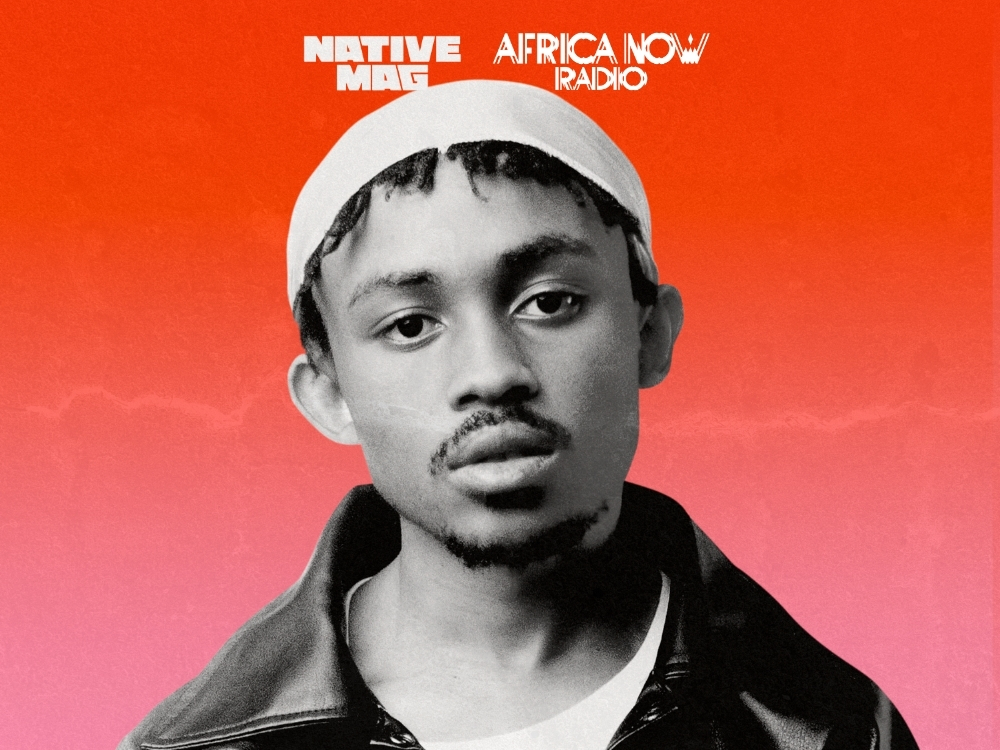
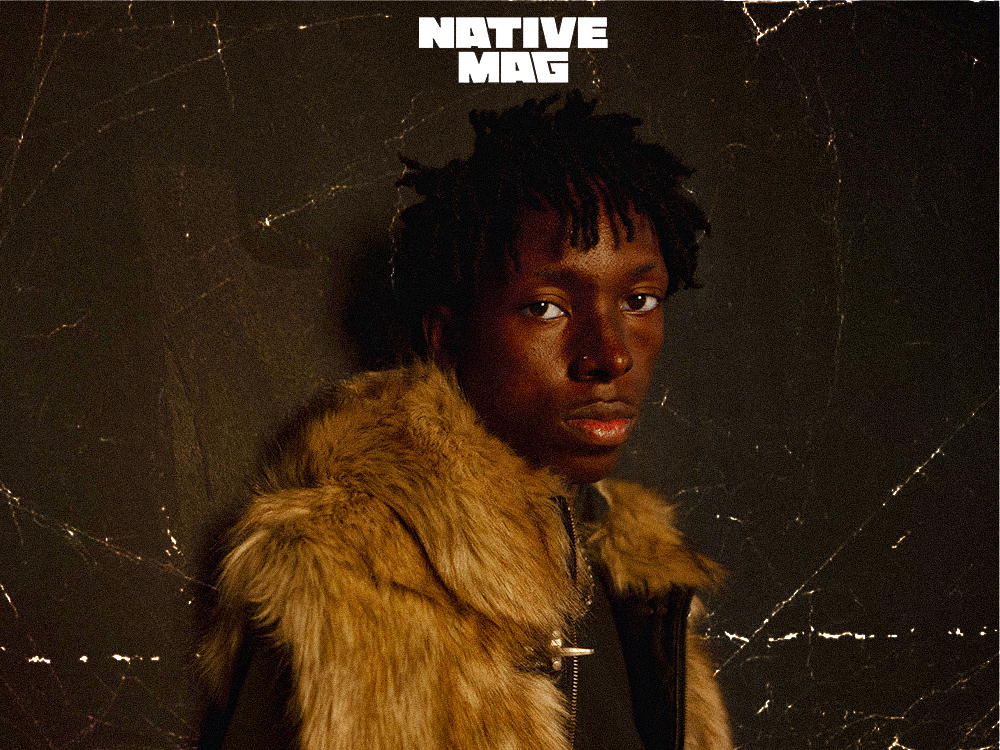
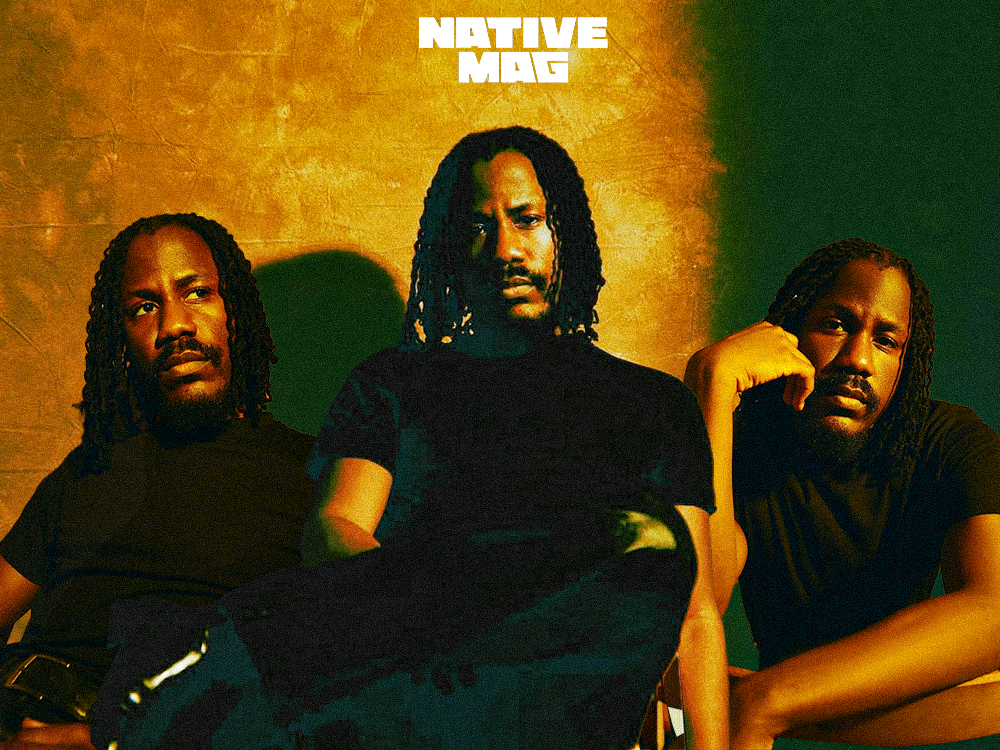
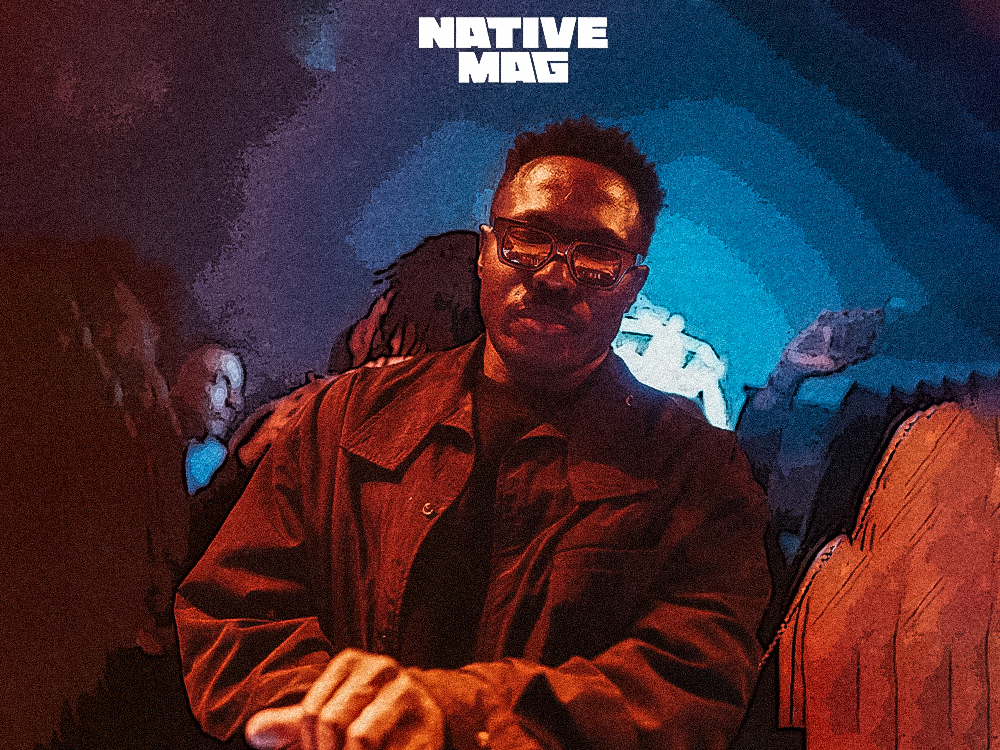
Adekunle Gold Is Finding Uncharted Journeys Inside

It has been nearly a decade since Adekunle Gold first announced himself with ‘Gold,’ a record that reshaped the possibilities of contemporary Nigerian pop conventions by wholeheartedly embracing influences from Highlife, Fuji, and Juju. Back then, he was a young man staking a claim with vibrant melodies and a bold reimagining of sonic traditions. Today, Adekunle Gold speaks from a different place. The years between have given him a catalog that stretches across genres: five albums that trace his growth, and a life that is no longer only his own.  

His latest album, ‘Fuji, is a mosaic of heritage, grief, joy, and uncharted journeys. It is a pilgrimage back to the roots of the man born Adekunle Kosoko, a descendant of kings, a father, a husband, and a sonic alchemist who has spent a decade distilling his soul into music. The journey of an artist is rarely a straight line, and for Adekunle, the path has been a winding one, marked by bold pivots, fearless experimentation, and a willingness to take risks, sometimes against the expectations of those who wanted him to stay within a sound they had come to love. 


“Releasing ‘Call on Me’ was when I’d say it was the hardest for me,” he says of the pressure of making his famed sonic switches. “I released it off the back of the ‘Gold’ album, which was a predominantly Highlife sound, and then I dove right into Pop. People were like, ‘What are you thinking?’ But I did it because that’s what my soul was yearning for.” 

The act of embracing change has never been a burden for Adekunle Gold. If anything, it is a natural extension of his outlook on life. He has learned that not every battle is his to fight, and not every moment requires resistance. “Overthinking,” he readily answers when asked what he has had to let go of since his early days. “I used to think the world was against me, like it was conspiring for me to fail. What I realized is that in the grand scheme of things, I don’t matter that much for the universe to conspire against me. I’m the author of my own life.”

That perspective has shaped not just the music but the man. When he speaks of highlights outside the studio, he places family above all else. His voice softens as he recalls marrying his Popstar wife, Simi, and raising their daughter. “My family, marrying the love of my life, having my beautiful daughter, growing, living, making memories,  those are the highlights,” he says.  “I can afford to be a failed musician, but not a failed father or a man. That’s very important to me.” 

In an interesting twist of fate, family has also opened him up to other creative pursuits, providing a wider vision of what artistry can be. “I’m a man of the arts,” he explains. “I’ve designed my album covers, my single covers, sometimes my posters. I’ve been involved in my video direction. Now I’m fully designing. The earrings I’ve been wearing, that’s my design. It’s called Wave. The glasses, too. ”

The sense of intimacy he cultivates extends beyond music and design. In recent years, Adekunle Gold has built a direct channel to fans through his newsletters. For him, they are not marketing tools but bridges of friendship, honest notes sent when there is something to share. “I’ve never wanted to just take and not give back,” he explains. “My newsletter is a form of talking to people, sharing my experiences. I like my fans to know me, to know where the music is coming from, to know the depth of my being. The best part is there’s no pressure. Even when the fans want to hear from me, I don’t just write until I have something to say. I’m grateful I have that community.”

Recently, Adekunle Gold attended the Ballon d’Or, stepping into a world of football which he has always loved. “It felt so good to be in a room where footballers are celebrated,” he says. “People in the public eye are actually real people who go through things, but their life is magnified. Seeing them on stage, watching their speeches, hearing them talk about how rigorous it is to be what they are, it felt very good. Seeing Dembele win, seeing him bring his mom on stage—that was a moment I could relate to.”

This balance of personal and artistic life reaches its fullest expression in ‘Fuji’. Its story began years ago, with the song “Simile, written after the passing of his father in 2019. Adekunle Gold kept it close, waiting for the right moment. That moment presented itself on his sixth album.  “This project is the most honest I’ve been since ‘Gold’ and ‘About 30,’” he says. “I wanted to share my life in the past decade, everything I’ve experienced, my grief, my joy, having my daughter, the friendships I’ve lost, my royalty, the new confidence I’ve found. That’s what ‘Fuji,’ the album is.”


To create ‘Fuji, Adekunle Gold had to return home, not in a nostalgic sense but in a literal and spiritual journey. “ I went back to my palace. My name is Adekunle Kosoko, and if you know history very well, Kosoko was a king in the 1800s,” he explains. “He was the first person to fight the British government when they were trying to colonize. He came back as a king. I was never interested in this history before. When I dug deep in 2023, I realized I’d given my life to only music and nothing more. I wanted to understand where I come from and why I do the things I do. Every time I go to the palace, it feels like coming back to myself. That’s what gave birth to Fuji—finding uncharted journeys inside.”

The 15-track LP is as much about heritage as it is about sound. Adekunle Gold grew up surrounded by Fuji, and traces of it have appeared across his work since ‘Gold.’  With this project, he steps fully into it, presenting it as both a personal and cultural statement. “I need the world to see this beautiful sound that I grew up on,” he says. “It’s the sound of Lagos, the sound that I know. Even if you’re listening to my R&B songs, you’ll hear my tone; it’s Fuji. I’m meant to do it.”

That conviction pushed him into new creative territory, particularly on “Big Fish”, the album’s opener and most evocative track. “For the first time, I said I don’t want loops in production,” he explains. “With most Afrobeats songs, once you hear the beginning, the beat carries on to the end. I’ve been listening to Kendrick, J. Cole, and Drake, and I see how they switch flows. I wanted to try that. I made ‘Big Fish’ four times with different producers. I was heavily involved in production. I reached out to TMXO, told him exactly what I wanted. It took a while, but we got it.”


Collaboration has always been a thread in his career, and on ‘Fuji,’ he stretches it further. There are appearances from stars like Davido, but also from younger artists carving their own narratives like TK and Mavo. “I’ve done it since about 2013,” he says of collaborating with a new generation of artists. “I’ve had new artists that people don’t know about on my projects because I genuinely enjoy music. It doesn’t matter your size or reach. If you can add your emotion to a song, then by all means, you’ll be on a song with me. Collaboration serves the music more for me than optics. It’s nice to have a big artist, but when the music’s not good, it’s not good.”

If ‘Gold’ announced Adekunle Gold as an artist of promise, ‘Fuji’ presents him as an artist of depth. It is a record that looks backward to ancestry and forward to possibility. In it lies joy, grief, experimentation, and conviction. Above all, it is the sound of a man who has grown into himself. “I want people to see a man who’s not afraid, a man who’s found himself, a man who will keep on giving a gift that lasts forever, a man who’s sincere.”  

Best New Music: Sarz Is All About His Money On “Getting Paid”

It’s quite interesting that music making, a historically collaborative process, has long relegated a number of the practitioners responsible for its moving parts to the background, placing much of the focus on the recording artist. It’s understandable to see how we got here: artists are expected to bring the charm, charisma, and lyrical prowess that tends to captivate the average listener, while songwriters, engineers, and particularly producers, who are arguably as important as the lead artist in the music creation process, are simply names resigned to the credits.

The turn of the 21st century, however, heralded a noticeable shift in this dynamic, with producers beginning to step into the spotlight, actively asserting their creative authority and establishing themselves as integral, recognisable figures in their own right. While heavyweights like Don Jazzy and the late OJB Jezreel came to the fore in the early noughties, it was Sarz–who began to make a name for himself in the early 2010s– that arguably changed the idea of what a super producer is from these parts. 

The Benin-born maverick’s avant-garde spirit and tastemaking and curatorial skills, as well as his unique ability to bring the best out of his collaborators, have made him perhaps the defining producer of the past decade and a half. His solo 2019 release ‘Sarz Is Not Your Mate,’  as well as collaborative tapes with vocalists WurlD and Obonjayar, demonstrated his prowess in not only crafting individual hits but also in meticulously putting together cohesive bodies of work. He brings this ability and wealth of experience to his long-overdue debut album ‘Protect Sarz At All Costs,’ which arrived this past Friday. 

Along with a host of guest appearances from the likes of WurlD, Gunna, Qing Madi, Joeboy, Fireboy DML, Lojay, and Byron Messia, Sarz delivered a host of sturdy records, many of which showcase the ingenuity in his now-favoured minimalist approach. The album’s strongest offering comes three tracks in on “Getting Paid,” an uber-cool affair that brings together Afropop titans Wizkid and Asake, both of whom seem to have developed a creative synergy of late, and Dancehall act Skillibeng. 


Sarz provides his collaborators with an impeccable background of bouncy percussion, a captivating guitar loop, and some floating synths. Asake’s concise and crucial contribution is applied judiciously across the entire track, almost like perfectly placed punctuation marks, while Skillibeng and Wizkid, who seem to be incapable of making bad music with Sarz, both deliver standout verses that are certain to reverberate through speakers for months to come. 

Even though “Getting Paid” features a couple of A-listers, Sarz’s contribution to the record is just as integral, if not more so, to its entire appeal. His magic fingers manage to conjure a simple, buoyant atmosphere that combines different conspicuous and subtle elements, casually showcasing the type of understated brilliance that has placed him the the illustrious Afropop hall of fame. 

Listen to ‘Protect Sarz At All Costs’ here

An Alternate History Of Nigeria In Seven Songs 

It was the renowned musical firebrand Fela Anikulapo-Kuti who famously described music as a weapon. There is also a conversation to be had about music as an archival tool. Throughout human history, we have used music as a means of remembering and recounting events and momentous occasions. Nigeria is no different; 65 years after independence from the United Kingdom, one can trace a history of the country’s existence through songs and musical compositions. 

From the dreamy-eyed optimism of the immediate post-Independence era, the bitter aftermath of the civil war waged between 1967 and 1970, and decades of successive military rulership, an alternative history of the country can be gleaned from the work of musicians who have tinctured the entertainment factor of their music with a more subtle call to remembrance. In honour of Independence Day, we have compiled a list of seven songs that give a glimpse into the Nigeria of their eras and let us know a little bit more about who we are and where we are coming from.  

“Zombie” by Fela Kuti – 1976

Fela was never one to bite his tongue, and on his 1976 album, ‘Zombie,’ the Nigerian military was the subject of his ire. Comparing them to zombies on the titular track, he critiques the Nigerian military for carrying out the whims of their leaders to the detriment of everyday citizens at a time when Nigeria was in the throes of successive military regimes. This song is thought to have been responsible for the military’s attack on the musician’s Kalakuta Republic on February 18, 1977. More than 40 years later, “Zombie” has continued to be an instructive guide into the political and social structure of Nigerian society in the 1970s, giving a glimpse into a country governed by despotic authoritarians. 


“Osondi Owendi” by Chief Stephen Osita Osadebe – 1984

Fourteen years after the Nigerian Civil War ended, Highlife was once again in an enviable position as one of the leading music genres of the day, and the peerless Chief Stephen Osita Osadebe was one of its foremost practitioners. Built around a spin-tingling string and percussive section, this melodic masterpiece was built around the philosophical assertion that one person’s meat is another’s poison. Released squarely in the midst of a national oil boom that reshaped several facets of the Nigerian state, “Osondi Owendi” is a soothing, timeless classic that continues to hold steady and thrill listeners decades after its release. 

“Send Down the Rain” by Majek Fashek – 1988

Few songs have the power to establish the legend of an artist like Majek Fashek’s “Send Down The Rain.” A timeless classic of epic proportions, it launched the solo career of the Reggae star and was the soundtrack to a year of immense rainfall across Nigeria. It is perhaps fitting that the rains have returned just in time for Independence Day in homage to the Rainmaker. 

“The Way Forward” by King Sunny Ade and Several Artists – 1995

In 1995, Nigeria was experiencing severe political turmoil. General Sanni Abacha, the military head of state, had displaced the interim government installed in the aftermath of the June 12 Elections and imprisoned Yoruba billionaire and philanthropist, Chief MKO Abiola. King Sunny Ade, one of the founders of the musicians’ union, Performing Musician Association of Nigeria (PMAN), rallied his colleagues with “The Way Forward I.” This 12-minute-long tune revels in positive messaging on good citizenship and community participation, eschewing hatred of all kinds, serving as a salve for citizens in troubled times. 

“African Queen” by 2Baba – 2004

In the wake of Nigeria’s return to democracy in 1999, a creative renaissance was taking place in the country’s music industry. By merging influences from Hip-Hop, Soul, and R&B with local genres and rhythms, a generation of young musicians was reshaping the cultural landscape of the country with a sound that would reach global audiences just a few years down the road. 2Baba’s “African Queen”  best exemplified the soothing appeal of that creative experiment, delivering a strong canonical addition to the list of unforgettable African pop songs. It was Afropop just before the attention of the entire world was attuned to what was happening on the Western coast of Africa. 

“Jailer” by Asa – 2008

Nigeria’s democracy has been fanously referred to as a militarized democracy. That honest summation of events is the subtext for Asa’s breakout single, “Jailer.” Truth be told, at the time when “Jailer” dropped, it was Alt-Pop that stood at odds with what was available at the time in Nigeria, but the thematic resonance of the song’s message elevated it. Years later, it sounds as timeless as ever, pulling up a mirror to a Nigerian society that continues to fall short in its responsibility to itself. 

“Ye” by Burna Boy – 2018

Recorded in a backroom at Quilox, a popular nightclub in Victoria Island, Lagos, it’s an irony of sorts that “Ye” became the anthem of a generation of young Nigerians. Still, the reasons for its ascension to the list of top Nigerian songs are all visible upon listening to it: Nigerians are jaded and just want to have the good things of life without losing their lives and landing in mortal danger. 

uNder: Best New Artists (September, 2025)

The conversations that keep coming up during our daily newsroom more often than not revolve around platforming the music we love and the communities that surround its wider culture. Very regularly, the music that excites our team reflects The NATIVE’s vision of being a bastion of music from parts of Africa and the Black diaspora. There are exciting acts from the ever-evolving Nigerian music underground, rappers experimenting with Dance Music and Hip-Hop from South Africa, as well as emotive singers whose work blurs the boundary between Hip-Hop and R&B. 

Discovering these acts, being blown away by their skills, and sharing our community about them continues to excite us more than three years after we conceived this column as a platform to spotlight talents that represent all that’s exciting about African music. In a world where marketing budgets, ad spends, and PR placements continue to reshape the music landscape, uNder is still our way of raging against the system and spotlighting deserving acts whose works are vital to sustaining the creative spirit that makes African music indispensable. For our September entry, we have Txmmyily, Lusanda, Kwelit, and Wanavokali. This cohort is united by a thrilling sense of freewheeling experimentation that is sure to serve them well as their career progresses. We hope you enjoy discovering them half as much as we enjoyed listening to their music and writing about them. 

Kobilou

For Fans Of: Shallipopi, Olamide, and Victony.

There has never been a better time to be an artist from Abuja. In recent years, musicians from Nigeria’s capital city have surged to popularity without losing sight of the unique sonic callisthenics that distinguish them. Singer and rapper, Kobilou, is keenly aware of the strengths that mark him out as a potential era-definer. Blessed with a blistering flow and a knack for searing melodies, he has been steadily building up his profile since 2021’s “October (PS32,” a zappy Hip-Hop collab that saw him flex his lyrical prowess in tandem with IDK Young J and CloudyNotes. The next time we heard from Kobilou was on “My Woman,” an Afropop-leaning duet with Tartmon that showed a sensitivity for rhythm that has become more pronounced as the years have gone by. 

Last year, he made a big splash with ‘Kobilou Kilobizzy,’ a four-track collaboration with Mavo. Meeting on an equal footing, both rising stars explored their fascination with women, life in the fast lane, and looking fly over luxurious instrumentals that sounded retrofitted for their spastic flow. On “Swaggernometry,” all of these subjects collide for a fascinating insight into the inner workings of the duo’s mind, while “Nemesis” is a pared-down investigation into the dynamics of modern friendships that found both acts reminiscing on the highs and lows of camaraderie. 

If  ‘Kobilou Kilobizzy’ provided a glimpse into Kobilou’s process, 2025’s ‘Pretty Girls Love Lou’ offers the most extensive summation of his id. As always, he’s still inspired by romantic desires and impulses. “Waist” is a heartfelt declaration of interest in a potential lover expressed over a blend of flutes, muted drums, and twinkling chords. There is a dedication to the enduring promise of Friday nights out on the town on “Friday Night,” that sees him lean into a playboy stance, but the true gems of ‘Pretty Girls Love Lou’ are “Abj City Vibrations” and “Lagos Love,” a pair of city-specific jams that expand on the dating cultures of both cities. 


Lusanda 

For Fans Of: Shekhinah, Elaine, and Ami Faku.

Lusanda wasn’t supposed to make music professionally. As a child, she trained to be a ballerina, going on to study choreography at the University of Cape Town. Still, music was always in her life in some fashion, with teachers asking her to sing in school plays and join the choir as a young student . It was an education that played a role in shaping one of the most important new voices emerging from South Africa. To listen to Lusanda is to be entranced by the beguiling grooves she conjures from the depths of her soul, weaving her feelings on love, desire, and divinity into neatly-woven candid narratives that pack a punch. 

Like most singers in the digital era, Lusanda got her start by making covers of popular songs and sharing them with a growing community of listeners on social media. A delightfully inventive cover of OutKast’s “Hey Ya” particularly launched her to the fore, leading to opportunities to show her gift on a string of collaborations starting from 2023’s “My Ride Or Die,” a sung-rap highlight off  ‘Big Boy,’ an extended play by Tony Dayimane. If “My Ride Or Die” set Lusanda off, “Higher Power,” the emotive opener of Riky Rick’s posthumous album, ‘Boss Zonke Forever,’ catapulted her to national fame. 

Further appearances on songs like “Sundays Ate For Lovers,” “Mehlomadala,” and “Imibuzo” have shown her range and sharpened her voice, displaying her capacity for emotional rigour without sacrificing thematic balance. For all her contributions to a range of thrilling songs, Lusanda never sounds out of place on her own, delicately peeling at the layers for an intimate exploration of self that gives her songs emotional heft. In September 2024, she released “When You’re Around,” a sweeping declaration of devotion to a love interest, which found the former ballerina dovetailing effortlessly with London-based polymath Noxz. 

Ever keen to broaden the scope of her work, Lusanda returned with a new song, “Progress,” a little over one year after “When You’re Around.” Built around the same minimalist pattern that birthed her debut single, “Progress” is a document of growth, even if she’s still working her way to the finish line. Produced by Biako and Sunny Kale, it’s hauntingly delicate, capturing the tension between progress and hanging on to what one finds comfortable. Not to be tethered by the past, Lusanda is squarely focused on the future, with her delivery skating between traditionalist R&B flows and a more Hip-Hop-influenced style. 


Kwelit

For Fans Of: Nasty C, A-Reece, and Stogie-T.

Kwelit does not abide by genre-bound conventions. The Ghanaian act has mastered the art of blurring the lines between genres into abstraction. Whether experimenting with Shoegaze, R&B, Soul, Jazz, or Bossa Nova, the enigmatic rapper pulls a diverse range of influences into his universe to create music that pays homage to the specificity of feelings rather than any specific sonic style. He’s as prolific as he’s ingenious, releasing a steady stream of music since 2021. More importantly, he prefers to explore his thoughts on growing up, pain, and the experience of being a young African within highly dense album structures that give him the space to parse his feelings properly. 

He kicked off his run with 2022’s ‘WHAT YOU DOING CARL ?!,’ a free-wheeling collection of 10 songs that moved from the reverb-heavy trap-adjacent braggadocio of “F U PAY ME” to a spaced-out dedication to chasing after money on “I dey stress / RAMPAGE.” Across ‘WHAT YOU DOING CARL ?!,’ Kwelit is keen to let his listeners know that he’s in a fight for sustainability, bringing it to a close on the Soul-tinged “Save Me.” 2023 was an especially prolific year for the rapper, kicking off with the Jazz-inflected “Lone On Valentine,” a mournful look at the sobering reality of spending a day for lovers alone. A collaborative single, “Mr Anonymous,” portended the arrival of ‘Rage Bruddas,’ a joint tape with Cyril Shey and RAGE BRUDDAS that captured the dynamism of Ghana’s hip-hop underground. 

Not quite done with the year, Kwelit returned later that year with ‘PA!N,’ a sprawling 14-song tribute to the boundless limits of hurt. Largely, the subtext of ‘PA!N’ is romantic anguish, with Kwelt wholeheartedly embracing a range of sonic influences to bring this project to life. The tyler-leigh-featuring “BULLET PROOF” is a chest-thumping declaration of not being hurt by a disappointing lover. At the same time, “WHEREAREUNOW” is a teary-eyed heartbreak anthem built on a simple drum loop, clearly hinting at the emotional undercurrent of ‘PA!N.’ The stakes are drastically upped on ‘Luv*,’ his 2025 orchestral opus that has the scope of love as its primary influence. “On my way back to your arms,” regular collaborator, tyler-leigh, sings dreamily on “Back In Your Arms,” a song about renewing bonds. There’s a similar invocation to embrace love on the “Hopeless Romantic.” In other parts of the project, he continues to be as genre-agnostic as always, embracing Dance influences on “Sellin N Dealin,” showcasing a sensitivity that continues stands him apart from his peers. 


Wanavokali 

For Fans Of: Sauti Sol, SuperJazzClub, and Ezra Collective.

Wanavokali might be comprised of six members, but the sextet is in sync with each other, living up to their name, which means “Those with the vocals” in Swahili. Made up of Chep, Lena, Mella, Riki, Sam, and Ythera, they first met one another as background vocalists during the 2018 Safaricom Twaweza Live tour in Kenya. Encouraged by the chemistry between them, they came together to set up the group in 2019 with the hope of creating bigger opportunities for themselves in Kenya’s music scene. They have since established themselves as one of the most unique voices in the scene while deepening their connections with one another. “Unioshe,” their first original and collaborative project with Kenyan Gospel artist Collo G, was a widespread success that set the stage for 2021’s “Rhumba,” a celebration of the golden age of the genre with the same name. 

The positive reaction to “Rhumba” encouraged the group to work on their debut album, ‘Wanavokali: The Album,’ a breezy showcase of the synergy between the six friends that saw them put their spin on Pop, Gospel, and R&B across 11 songs. At different turns, they explore a variety of subjects without watering down the essence of their message. “Trying” is a call for a love interest to return the attention given to them, while there’s a call to action to demand a better world on “Revolution.” For the majority of its 41-minute run,  ‘Wanavokali: The Album,’  presents an integrated version of the group’s vision, providing an invigorating debut that planted them as voices to look out for from East Africa. 

Close to one year after ‘Wanavokali: The Album,’  the group released a new single, “Dunia,” presenting their take on Bongo Flava, an artistic declaration that they would do whatever they wanted with their music. A series of singles followed before the release of 2024’s “Supa Dupa,” an instant fan favourite that found the group paying homage to Rhumba like they did with 2021’s “Rhumba.” Their second studio album, ‘Vibes & Vokals,’ soon followed, with the group doubling down on their genre-bending ethos across 10 songs. The voice of actress, Nyokabi Macharia, ushers fans into the album on “Intro.” From there, listeners are immersed in a daring journey through the group’s reflections on growth, love, and faith. There is a growing confidence in the way Wanavokali orchestrate a dance anthem on the Iyani-featuring “Whine Selekta” and urge bravery on “Selina.” Following their exploits on ‘Vibes & Vokals,’ 2025 has been a somewhat quiet year for the group, who only popped up to support Kethan on “Niangalie,” in February. Still, no one can ever accuse the group of failing to live up to their name with a ‘Vibes & Vokals’ concert forthcoming.  

The NATIVE’s First Impressions Of Sarz’s ‘Protect Sazz At All Costs’

The protracted wait for ‘Protect Sarz At All Costs’ has, at times, been long and arduous. For at least two years, fans have been hanging on the promise of Sarz’s debut album, with fans eager to know what direction the producer could be heading towards on a solo project after several collaborative extended plays. ‘Protect Sarz At All Costs’ was all set to be released last year until a last-minute announcement that it was being postponed indefinitely. In truth, this album has probably been a decade-plus in the making, a map of the timespan when Sarz has been a fixture of Afropop. In the period, he has gone through several eras and epochs without losing the far-ranging vision that has made him one of the most respected producers in the genre.

In recent weeks, he has been sharing videos hinting at the belated arrival of the album, with speculation building among fans and listeners about what guests to look out for on the album. The visual teasers have been theatrical and engaging, further proof of the high standards that Sarz holds himself to. With just a few hours to the release of the album, he shared a snippet of a collaboration with Wizkid, Asake, and Skillibeng that’s sure to be a beloved track, ramping up expectations for the album. In usual NATIVE Mag fashion, we are collating opinions from our newsroom about the album. Enjoy!

WHAT WERE YOUR EXPECTATIONS GOING INTO THIS ALBUM?

Kemnachi: Given his track record, I expected an album with genre-bending innovation to highlight his versatility, while pairing that sound with star-studded collaborations. What made the anticipation even sweeter were the playful skit-like videos he dropped in the lead-up, which gave the rollout character and increased my eagerness to experience how he’d flip his signature sound with fresh perspectives.

Kofoworola: I expected nothing less than a masterclass in production, to be very honest. Sarz kind of has this way of making every release feel like a moment, so for his official debut album, I was looking forward to something bold. I didn’t want just good music; I wanted it to be a real statement, and that’s exactly what this felt like.

Boluwatife: I’d imagine the same as most people: pretty high expectations. Since he began making a name for himself many years ago, Sarz has gone on to become arguably the most respected and influential producer in the Afropop sphere. His illustrious catalogue speaks for itself, so I had even higher expectations going into this one, seeing as it’s his official debut album.

WHAT SONGS STOOD OUT ON THE FIRST LISTEN?

Wale: Very easy answer. “Getting Paid” and “BMF.” I saw a tweet where someone said what a disaster it was that Sarz and Wizkid stopped working closely together for so long. I’m probably exaggerating the tweet slightly, but Wizkid and Sarz are responsible for some of the most iconic moments in Afropop in the last 15 years, and it’s just great to hear them together again–and that Asake opener is just superb, what a guy. I also really enjoyed “BMF” because Fireboy DML and Byron Messia put on a masterclass. Fireboy DML gets a lot of slander online, but I think people forget that he has an insane capacity for melodies, and that just shines through on this song. He sets up Messia perfectly for his verse.

Daniel Akins: “In A Mustang,” with Qing Mad and “African Barbie,” with Teni and Libianca, are real standouts on the project.


HOW WELL YOU THINK THE GUEST APPEARANCES ENHANCED THE LISTENING EXPERIENCE?

Daniel Banjoko: A Sarz project just isn’t complete without guest features, and he never misses! Every collaboration feels so well-crafted, like he handpicks the exact sound each artist was born to ride. With Sarz, it can never go wrong.

Wale: The guests are the heart of ‘Protect Sarz At All Costs.’ I don’t think people are going to expect what they get on “Mademoiselle” because it’s just so inconceivable to put Shallipopi and ODUMODUBLVCK next to Theodora and Zeina. Sarz has always excelled at urging his collaborators to a higher level, but he manages to outdo himself on ‘Protect Sarz At All Costs.’ It’s very interesting to hear all the guests glide across different moods and settings here, great choices.

WHAT SONG IS THE BIGGEST SKIP?

Kofoworola: I’m not gonna lie, I think the album is solid from front to back with almost no skips. But “Happiness” with Asake and Gunna. Yeah, that one has just never synced with me, but I’ve also accepted that I’m never the one vibing to the so-called “bangers.”

Wale: It’s hard to decide on this, but I’m going to go for “Billions.” The new beat is just not working for me at all; it feels like a tweak gone too far. The genius of the original version was how certain parts of the instrumental felt spartan, allowing Lojay’s voice to soar, but that’s not the case on the album version, where it feels clogged up. I will only be returning to the single version.

WHAT SONG HAS THE BIGGEST HIT POTENTIAL?

Boluwatife: I guess the obvious answer is the star-studded “Getting Paid.” A Wizkid and Sarz collaboration is almost guaranteed to be a hit, as their extensive working history suggests. Add Asake to the mix and a killer verse from Skillibeng, and this is one of those songs that would probably become inescapable in a few weeks.

Daniel Banjoko: I’m already adding “Getting Paid” to every Afrobeats playlist I own. It’s a certified hit, and every verse is straight A+. You just know there’s no escaping this track come December.

Kemnachi: “Getting Paid” with Wizkid definitely has the biggest hit potential on the album, undeniably.


OVERALL FIRST IMPRESSIONS

Wale: I love what Sarz has created. It’s a bold vision of the future of Afropop told with contributions from across the Black diaspora. A lot of people will understandably be hooked on “Getting Paid,” but there are a lot of gems to be discovered, like “In A Mustang,” “Grateful,” and “African Barbie.” I would have loved to see Sarz tap in with Reminisce, another of his OG collaborators, but it’s a balanced album, and he deserves this moment.

Daniel A: Sarz is my GOAT, the GOAT even, that’s undeniable. But ‘PSAAC’ feels more like a safe effort than a standout moment. The production is solid across the album, but it lacks a bit of the risk-taking I’ve come to expect from Sarz.

Listen to ‘Protect Sarz At All Costshere.

ODUMODUBLVCK Releases “Industry Machine,” Shares More Details About Album

ODUMODUBLVCK has shared the title track of his forthcoming new album ‘INDUSTRY MACHINE.’  The single comes as the project’s second official drop, building on the impressive momentum garnered by the release of “2:02 PM IN LONDON (FREESTYLE),” a viral loosie that set the ball rolling and lead single “PAY ME,” which features sturdy guest verses from Zlatan and British rapper Stormzy. 

Days before the release of his latest single, ODUMODUBLVCK unveiled a portion of the album’s tracklist and the official cover, once again, teaming up with popular designer and artist Slawn, who was also responsible for creating the artwork for his 2023 breakthrough album, ‘EZIOKWU.


On the new “INDUSTRY MACHINE” single, ODUMODUBLVCK favors his infectious Okporoko rhythm, singing melodiously over midtempo percussion, even as he announces his fierce arrival. He also enlists several close collaborators who have previously contributed to his work. Producer Ucee is back behind the board, this time alongside the rapper himself, who has noticeably been racking up co-production credits on his work, while Mizzle and Juno contribute additional backing vocals. 

Along with the release of “INDUSTRY MACHINE,” the full track list of the forthcoming album was also revealed by the rapper. It features 23 tracks and a wide-ranging guest list that features high-profile names Wizkid, Davido, Skepta, Saweetie, Giggs, Modenine, and many more. 

Listen to “INDUSTRY MACHINE” here.

The 50 Greatest King Sunny Ade Songs

This week, 79 years ago, Sunday Anthony Ishola Adeniyi Adegeye, popularly known as King Sunny Ade, was born in Ondo Town on the 22nd of September 1946. Spending his formative years in Osogbo, he took a keen interest in music, particularly drums, but this was frowned upon by his family. His parents, both descending from royal lineages, thought the ambition of playing drums and making music was that of subjects, not princes. Undeterred, he hid his ambition from them, playing clandestinely with several local bands.

In 1963, King Sunny Ade fled to Lagos to make his fortune, abandoning his secondary education. First, he joined Moses Olaiya and his Federal Rhythm Dandies as an apprentice Samba drummer. During his stint with the band, he bought his first guitar and taught himself how to play. Shortly after Moses Olaiya pivoted from music to theatre, King Sunny Ade formed his first band in 1966.  This began Sunny’s extraordinary journey of popularising Jùjú, an indigenous variant of Palmwine music that emerged in colonial Southwestern Nigeria around the late 1920s.

By 1966, the genre was well established with pioneers like Tunde King, Akanbi Ege, Theoliphus Iwalokun, Suberu Oni, Ambrose Campbell, Ayinde Bakare, IK Dairo and Tunde Nightingale. In many quarters, Jùjú was perceived as lowbrow compared to Highlife, the preferred music of Nigeria’s emergent elite class. It was to be the life work of Sunny Ade and his contemporaries—Chief Commander Ebenezer Obey, Wale Glorious, Expensive Olubi and General Prince Adekunle—to modernise Jùjú.  Sunny Ade introduced several modern musical instruments into the mix, trialed new performance modes and strategies, particularly dance choreography, evolving Jùjú into a genre that enjoyed wide appeal. 

This occurred in the  1970s, coinciding with Nigeria’s economic prosperity from the oil boom. Flush with cash, neotraditional ceremonies—birthdays, naming, weddings, and funerals— popularised by settler communities in Lagos from the 1920s had become a constant source of patronage for juju bands. Sunny Ade and his band, African Beats, grew their clientele among the Yoruba elites, hobnobbing with a wide range of patrons from wealthy traders to affluent Yoruba communities in the Diaspora and Yoruba kings. In 1977, he was declared a king by his fans after emerging at the top of a poll conducted in the dailies. This was formalised by a chieftaincy title, King of All Music, bequeathed by the Alaafin of Oyo later that year. 

With no fewer than hundreds of records to his name, King Sunny Ade is arguably the greatest living musician in Nigeria. He has distinguished himself as an exceptional singer, composer, and multi-instrumentalist. As a band leader, he has maintained African Beats through decades, holding his musicians to the highest standards. His performances, at concerts or parties, are delightful, packed with dance choreography, delightful solos, and soulful anthems. To celebrate the occasion of the legend’s 79th birthday, we have dived deep into his discography to celebrate the 50 greatest King Sunny Ade Songs of all time. Enjoy! – Dami Ajayi


50. “Alanu L’Oluwa” (1967)

Just at the beginning of the Biafran War in 1967, a 21-year-old Sunny Ade shared his first single,  “Alanu L’Oluwa, with the world. Heavily influenced by the leading Jùjú star of the day, Tunde Nightingale, Sunny’s salvo copied the maestro’s guitar work and nasalised tenor. This song’s theme is divine praise—a first in a career with many such thematic leanings—showing more ambition than promise from the eager upstart who would elevate the genre to global status. It sold only 13 copies. – Dami Ajayi


49. “Mori Sisi Meji” (1975)

Ita Faaji is a familiar description of spaces designed for relaxation in urban Yoruba life. Not quite a love song, Sunny Ade describes two beautiful ladies selling fish at Ita Faaji on “Mori Sisi Meji.The song is held by his use of M’olo as a double entendre. In its contracted form, M’olo prefixes flattery in Yoruba. Deep into the song, Molo is the musical instrument lyre, a fixture of Sakara music. In this song, Molo is a signifier for old things. Sunny is certain that Juju would win the love of these beautiful ladies and upstage Sakara. – D.A.


48. “Me Le Se” (2004)

Me Le Se” translates to “I can’t do without” in English.  For King Sunny Adé, that essential thing is giving thanks to God. A constant across his career, this tendency to defer to the divine remains ever-resonant. With riveting instrumentation accompanied by harmonising backup vocalists, he strongly advocates for gratitude. – Tomide Marv


47. “Emi A Gbadura” (1977)

One of two songs recorded in London in 1977, “Emi A Gbadura” carries the cadence of a hymn rendered in Yoruba. It is also a gentle song of divine gratitude. And after each verse, the guitars and talking drum respond vibrantly, taking centre stage in an extended, joyful play. – Eniola Ayedun


46. “Oba Ta’ye Njuba” (2008)

“Oba Ta’ye Njuba,from KSA’s late 2000s album, ‘Blessing,’ is a praise song of heartfelt thanksgiving. It is upbeat and carries the flavour of Jùjú-derived Gospel Tungba. The music video captures the ever-agile KSA, moving with youthful vigour on what appears to be an altar. – E.A.


45. “Emi Won N’Ile Yi O (Sa Jo Ma L’Owo L’Owo)” (2010)

Always the avid revisionist, King Sunny Ade found new uses for his old melodies, songs, and themes on “Emi Won n’Ile Yi O (Sa Jo Ma L’Owo L’Owo).” It opens with a voiceover of members of the African Beats band. The music itself harks back to the 1950s Jùjú Roots, which has a close affinity with Palmwine Highlife and Agidigbo melodies. – D.A.


44. “Sokoyokoto” (1987)

Between 1985 and 1988, Sunny released 15 albums on which he completely altered the sound of Jùjú, creating his signature Golden Mercury style that ‘Jealousy’ and the other LPs typified. The song was ostensibly named after a delicacy, but knowing KSA’s bawdy tendencies, you know that “Sokoyokoto” was NOT about food, abi? You’re welcome. – The Jide Taiwo


43. “Afai Bawon Ja” (1972)

An early classic, “Afai Bawon Ja” is part of a four-song medley of modern Jùjú music far removed from IK Dairo and Tunde Nightingale’s overt influences. Steeped in paranoia and an overtly conscious presence of detractors slandering, it is also a profoundly optimistic tune about triumph. – David “Elemoh” Olaoye


42. “Odun De Keresimesi” (1985)

Christmas albums are darlings of popular culture (cue in Mariah Carey). On “Odun De Keresimesi,KSA leans into his Christian roots and delivers a guitar-driven rhythm that captures the festive spirit of Christmas. He celebrates Christ as the reason for the season, urging his listeners to be grateful for surviving the year’s trials. – D.O.


41. “Ile Labo Sinmi Oko” (1971)

King Sunny Adé was at the tail end of his second contract with African Songs Limited and playing a tour in London at the time of this recording in 1971. Homesick, patriotic, and anchored by his faith, he keeps Nigeria at the top of his mind on “Ile Labo Sinmi Oko, drawing inspiration and title from the age-long farmer’s adage, which translates to “home is the place of rest after work.” – T.M.


40. “Challenge Cup” (1968)

Look away now, young people: there was a time when football fans didn’t care for your Barcelonas and Chelseas. Instead, Nigerians supported local clubs like Stationery Stores, I.I.C.C., and Enugu Rangers. Sunny had broken through in 1967, and when Stores won the Challenge Cup trophy in 1968, he recorded this song in their honour. It sold 500,000 copies. – T.J.T.


39. “Igbagbo Ndupe” (1977)

A proper reenactment of iconic Yoruba parties recorded in London, “Igbagbo Ndupe” features polyphonic melodies and extravagant guitar riffs. King Sunny Ade’s lyrical concerns vary constantly across the length of the song. He deftly moves from eulogising Yoruba values of religious tolerance and stoicism to offering age-long praise tributes to his numerous patrons, including a hotelier who also sells ice cream. Deep into this medley, watch out for an interlude where the talking drum leads the party, accompanied by a metronomic gong. – D.A.


38. “Kirakira” (1984)

Kirakira” captures the everyday struggles of the common man on the road to success. With minimal lyricism and exquisite instrumentation taking the lead, it serves as a call to keep pushing forward, reminding listeners that persistence is key to actualising their dreams. – D.O.


37. “Iya O Se Paro” (1986)

Iya O Se Paro” opens the side B of KSA’s 1986 album ‘My Dear.’ On it, he sings glowingly of mothers. The album itself signals a shift, from gentle loops and elaborate guitar work to a groovier, faster Jùjú style built on vocal harmonies and dance summons. – E.A.


36. “E Ba Mi Dupe F’Oluwa”  (1987)

In the spirit of gratitude, KSA goes before his creator, inviting others to join him in thanksgiving on “E Ba Mi Dupe F’Oluwa.He’s alive, blessings abound, and his steps are guided—all divine promises kept, and these orchestrations are beyond human reasoning per the singer. For this, KSA is appreciative and basks in the results of  answered prayers while making a covenant he vows to fulfil. – T.M.


35. “Omo Tuntun” (1988)

Omo Tuntun” sits on Side A of the ‘The Child’ album. Upbeat and celebratory, it is the sort of song you’d expect to hear at a Yoruba naming ceremony. KSA marks the joy of a new birth, congratulating both mother and father for surviving the dangers of delivery.  – E.A.


34. “Orisun Iye” (1988)

Rustic and zesty, the interplay of talking drums and guitars in praise of God as the source of salvation and the infinite provider that collects tribute and gives joy that defines “Orisun Iye” was standard fare in 1980s Jùjú music. It became codified in the genre as an economic recession, and successive heavy-handed military governments meant the Church was a place of refuge for most Jùjú-loving Christians. – T.J.T.


33. “I’m Searching For My Love” (1980)

This 1980s sprawl of a love song might almost pass for an American Country song. Sung entirely in English, it involves a romantic voyage carried by an assortment of string instruments. Guitars, the occasional throbbing talking drum, but the true star of the show is the steel pedal guitar, a foreign musical instrument coopted into Jùjú by King Sunny Ade from the late ‘70s. – D.A.


32. “Baba Orun A Mbe O” (1981)

On “Baba Orun A Mbe O,KSA seeks the face of the Lord, asking for salvation in a prayer-centred tune. He recalls his humble beginnings, pleads for divine guidance, and delivers a Jùjú anthem for Christian fellowship—it’s a soulful blend of faith, rhythm, and heartfelt supplication.- D.O.


31. “Ise Agbe” (1988)

Ise Agbe” is a cover of the popular Yoruba rhyme composed by the prolific Chief Dayo Dedeke in 1953. This song celebrates the dignity of labour, asserting that education is incomplete without farming knowledge. Like “Clean Lagos,” “Wait for Me,” “Omo L’ododo Eye,” and “Yoyo Bitters,” KSA again uses Jùjú music to advertise products and promote a social cause.E.A.


30. “A Gbe Kini Ohun De” (1982)

Ariya Special’ opens strongly with “A Gbe Kini Ohun De. It gestures at novelty—a familiar trope in Jùjú where a bandleader, egged on by their members, insists on the newness of their approach to music. Talk is cheap, yes, but King Sunny Ade and his African Beats let their musical instruments hold their brief in a cascade of concerted celestial sounds. The effect is spacey, hypnotic, and visceral. To resist their dancing invocation would be sinful. – D.A.


29. “E Dide E Mujo” (1990)

This is an experiment and KSA’s attempt at shorter songs to capture the radio. In perfect sync with strumming guitars, vibrant key chords, and eclectic percussion, “E Dide E Mujo” draws listeners into a celebratory mood. The song title calls: “Get up and dance.” The lyrics say: “Let your feelings show, let your body move /Jùjú music is so nice and the mood is alright.” Classic party rocker. – T.M.


28. “Alase Laye Alase Lorun” (1990)

As much as Sunny was worldly and keen to enjoy all of its offerings, he also kept one eye on his Christian background. So, when he made a comeback after a period of illness, he used this song to reiterate his authority as Jùjú’s numero uno, but not before acknowledging the supremacy of God. – T.J.T


27. “Ki Isu To Diyan” (1981)

Somewhere deep into this number, it  dips into a satisfying stretch of undisturbed guitar dialogue. On “Ki Isu To Diyan, KSA reflects on the labour parents extend over a child, painting a not-so-vivid picture of familial responsibility with proverbs. – E.A.


26. “Isu Joba Lori Iyan” (1979)

Opening the ‘Golden Mercury of Africa’ LP with “Isu Joba Lori Iyan,King Sunny Adé delivers a gentle yet firm warning. He urges his listeners to respect and bow to the powers that be. Paired with smooth, hypnotic instrumentals, this track sets a thoughtful, understated tone for the rest of the album. – D.O.


25. “Mo Ti Mo” (1983)

King Sunny Ade readdresses the existential angst that clouded his 1974 magnum opus here, ensuring an assured sense of creative direction and destiny. Insistently percussive, he returns with incantatory Yoruba aphorisms. This version on his Grammy-nominated ‘Synchro System’ album blends aspects of several songs from ‘Sunny Ade Vol. 1’ and ‘Sunny Ade Vol. 2’ into a smooth medley that underserves the expansive storytelling of the earlier version but retains the triumphant mood specific to creative breakthrough, if not superstardom. – D.A.


24. “Ekilo F’omo Ode” (1974)

On “E Kilo F’omo Ode,” KSA’s calm vocals issue a warning to an unnamed rival while three guitars trade riffs over shekere, bass, and talking drum. KSA opens by citing women’s culturally perceived limitations as a metaphor for his rival’s inferiority. – E.A.


23. “Yoruba”

This is for the kindred spirits. In a sound crafted to kickstart àríyá (merriment), the Jùjú maestro salutes his kinsmen, the Yoruba ethnic stock, and thanks them for their unwavering support, which is the compass guiding his journey. As the song reaches its close, KSA remarks that this song isn’t a farewell, but a promise that they will meet again in love and harmony, delivering with renewed purpose. – T.M.


22. “Jigi Jigi Isapa” (1998)

Although Sunny Ade introduced the Jazz drum kit into Jùjú music in the 1970s, its best feature came decades later, specifically, in the late 90s, at the Dockside Studios in Louisiana, where the energetic Grammy-nominated album, ‘Odu,’ was recorded. The drummer, Ali Mohammad, formerly of Sir Shina Peters and his International Stars band, was in fine form. He single-handedly turned the milder local version of “Jigi Jigi Isapa” into a jazzy masterpiece. It was a perfect introduction to the phenomenal record ‘Odu,’ and the drum work surpassed the onomatopoeic aspect of the song.  – D.A.


21. “Omode O Mela” (1980)

Originally from his 1980 ‘G.M.A.’ album, “Omode O Mela” was brilliantly re-imagined 15 years later on the ‘E Dide (Get Up)’ album. Rich in metaphor and pithy proverbs steeped in Yoruba folklore, it feels like an elder’s counsel to a bumbling youth. – D.O.


20. “365 is My Number – Dial”  (1982)

Sung entirely in English, KSA is after a love interest on “365 is My Number – Dial. He’s lovestruck and sings to this prospective partner who’s the only woman in his life, assuring that he’ll make her place permanent if she wants. He promises commitment, although reciprocity is expected. He even calls out a few digits of his telephone number in a bid to initiate communication. Like a relationship deserves a gentle but captivating approach,  KSA treats this song and message tenderly. This song has a slower pace, but it’s busy enough to swing waists and feet into controlled and graceful movements. – T.M.


19. “Ma J’aiye Oni” (1981)

Afropop is better known for its escapist ethos, for dance as an act of survival, but Sunny’s Jùjú does the same on this tune. The song starts as a hedonist creed, then lapses into poetry reminiscent of an Ifa creation myth. Watch out for the most soulful steel pedal guitar solo on this version and for the additional guitar flourishes on the version on the celebrated album, ‘Juju Music.’ – E.A.


18. “Penkele” (1983)

If the 1983 ‘Ajoo’ album or Hollywood movie “O.C. and Stiggs” didn’t draw you to this track, “Penkele,” here you go. Praise singing comes to the fore, guitars shimmer, synthesizers bolster, conga and talking drums slap, as KSA hails late Ibadan politician Adegoke Adelabu, AKA Penkelemesi. – T.M.


17. “Sunny Loni Ariya” (1986)

Sunny Loni Ariya” crowned KSA the “King of Ariya,” somewhat like Michael Jackson’s King of Pop title. Ariya, which means joyful, lively celebration, defines Sunny Ade’s musical ethos. Made for owambe functions, this song brings to life the spirit of Yoruba faaji and communal joy. Ariya was also the name of his nightclub based in Yaba, which closed in the early 2000s. – E.A.


16. “Alhaji Rasak Akanni Okoya (Eleganza)” (1985)

Long before Raheem Okoya tried his hand at making music, musicians sang plentifully in honour of his father, Chief Razak Okoya, who reached the peak of his billion Naira empire in the mid-80s, coinciding with KSA’s golden era. More importantly, this track exemplifies Jùjú’s role in social commentary and high-society patronage. – T.J.T.


15. “Ore Meji Lo Nbe L’aiye” (1986)

For many people, the fundamental difference between KSA and Ebenezer Obey was in their approach to music. While Obey was known to be introspective, Sunny was exuberant and lively to the point of veering on carefree indulgence. “Ore Meji Lo Nbe L’aiye” was Sunny at his introspective finest, musing on friendship, loyalty, and betrayal. – T.J.T.


14. “Let Them Say” (1987)

In “Let Them Say,” King Sunny Adé delivered a message of defiance against gossip and criticism. This song uses powerful imagery of divine support to encourage listeners to stay strong and not be swayed by the noise of the world. It’s an evergreen reminder to find strength within and trust in a higher power. – T.M.


13. “Kitikiti” (1978)

Jùjú in the 1970s had a mid-tempo rollicking style, which makes the ‘Sound Vibration’ rendering of “Kiti Kiti” slightly superior to the percussion-heavy take on the much-revered international album, ‘Odu.’ Furthermore, it was also expansive in length, range, and musical accompaniment and flourishes, which allows for free-spirited creativity and wholesome storytelling. Kiti Kiti and Kira Kira are kinetic Yoruba verbs describing strife, which KSA and his African Beats do not wish on their loyal listeners. – D.A.


12. “Appreciation” (2000)

“Appreciation” appears on both the locally released ‘Kool Samba’ and internationally released ‘Seven Degrees North.’ Both albums released in the 2000s carry a contagious optimism that the song “Appreciation” embodies. It is mostly about praising the divine God; little wonder versions of these songs have been co-opted by churches in Southwest Nigeria, where dance is an act of ritual, as with traditional Yoruba religion. There is a sublime interplay of percussion and strings that accentuates melodies. – D.A.


11. “Aye Nreti Eleya” (1992)

Aye Nreti Eleya,” means “the world awaits my disgrace.” It kicks off King Sunny Ade’s 1992 ‘Surprise’ album, a cheeky clapback to haters following his protracted illness and rumoured death after a busy decade touring and prolific album release schedule. – D.O.


10. “Oshodi-Oke” (1995)

In radio-friendly fashion, KSA assembles a large percussion section, talking drummers, and pedal steel guitars to accompany his flirtations with a love interest whom he likens to an original Land Cruiser due to her voluptuous body type. The Jùjú maestro, fully in paramour mode on “Oshodi-Oke, gets into a one-on-one conversation with her, encouraging her to ignore the noises of naysayers and turn a deaf ear to their counsel against their relationship. KSA, always ready to stomp the yard, asks for a dance with her: “Omode yi o le pami layo, ijo ni o ba mi jo.” But it isn’t show-off time, it’s to charm her, initiate closeness, and feel each other’s passion. He directs all of her attention to himself while he gently plants his desire for intimacy at every chance he gets. – T.M.


9. “Congratulations (Happy Birthday)” (2000)

There is hardly a Yoruba birthday party where this timeless song is not played. Timed correctly, it ushers the celebrant and well-wishers to the dance floor for a birthday throwdown. KSA’s lyrics highlight the importance of birthdays and the joy of marking them, and the need to give thanks to God for the gift of life. With his signature guitar riffs delivered with warmth, the maestro opens his arms to every celebrant, offering a song that feels personal, like he is singing just for you on your special day. Sitting at the grand outro of the iconic ‘Seven Degrees North’ album, this track is the quintessential birthday anthem. – D.O. 


8. “Chief Mrs Abiola Erelu-Fernandez” (1988)

Praise-singing is a cornerstone of Jùjú music—or any genre of Yoruba extraction, for that matter—and King Sunny Ade excelled at it. His tribute to Erelu Abiola Dosunmu—who at the time was once-widowed (Major Adekunle Elegbede) and once-divorced (Chief Deinde Fernandez)—was released during Sunny’s most dominant era in the mid-80s. It was after his stint with Island Records that had seen KSA include more guitars, more synths, and a global approach in making music, while still embodying the head-swelling exaltation of Jùjú music. The result is this delicious symphony in honour of one of Nigeria’s most glamorous figures ever, which extended to the 23rd Oba of Lagos, Adeyinka Oyekan II. It was music so exhilirating that her ex-husband took offence at his name being included on the record, and Sunny had to record another version without “Fernandez.” – T.J.T.


7. “Wait for Me ft Onyeka Onwenu” (1989)

In the late ‘80s, the Planned Parenthood Federation of Nigeria sponsored and distributed King Sunny Ade and the great Onyeka Onwenu’s “Wait for Me,” a campaign anthem promoting chastity and family planning to a rapidly growing population. Among the most iconic duets in Nigerian music history, “Wait for Me” reflected the then-First Lady, Mariam Babangida’s ‘four children maximum’ advisory at a time when the national average stood at six children per household.  This track is remembered for the seamless blend of their voices, carried by the distinctive ‘80s retro production style, their harmonies never overshadowing the message: “If you love life, you go plan am well; if you love me you go wait for me,” they sang. Their chemistry in the accompanying music video, heightened by rumours of a romance at the time, gave the song more appeal and further amplified the national message behind it. – E.A.


6. “The Way Forward I Ft. Various Artistes” (1995)

In 1995, Nigeria was experiencing severe political turmoil. General Sanni Abacha, the military head of state, had displaced the interim government installed in the aftermath of the June 12 Elections and imprisoned Yoruba billionaire and philanthropist, Chief MKO Abiola. KSA, one of the founders of the musicians’ union, Performing Musician Association of Nigeria (PMAN), rallied his colleagues with “The Way Forward I.” It is the Nigerian equivalent of the 1985 “We Are The World” moment but they were not raising funds for a cause; they were soothing Nigerians with a song. 

With delightful guitarwork and synth-laden production, groovy melodies were delivered in Yoruba, English, Pidgin English, and several indigenous languages. This 12-minute-long tune revels in positive messaging on good citizenship and community participation, eshewing hatred of all kinds. KSA showed sound leadership in initiating this project and also showed good judgment three years later when he turned down the controversial Abacha-led regime’s Two Million March concert, which, in retrospect, marked the twilight of Abacha’s dark years. 

Today, Nigeria is as divided as it was in 90s. Economic strife and insecurity challenges have worsened the paranoia along ethnic lines with cyber-minions spreading hate, vitriol, and fake news. Afropop is yet to rally its troops to deliver something similar, so “The Way Forward 1” continues to be the soothing balm for those who still care for a united Nigeria for altruistic reasons. – D.A.


5. “Eri Okan” (1983)

Eri Okan,’ KSA’s 1983 album, features songs of prayer, existentialism, and praise singing.  On the morning devotion style titular track, “Eri Okan,” KSA appeals to his inner moral compass, seeking validation in the midst of an implied audience. The thought-provoking lyrics are tempered with cascades of twangy, slightly dissonant electric guitar riffs, matching the metronomic rhythm of an easygoing loop. Many younger Nigerians likely recall this track from its use on the introduction of The Teju Babyface Show, though their parents first encountered it in the early 1980s. – E.A.


4. Easy Motion Tourist. Odu ( 1998)

Easy Motion Tourist” is a humorous song first recorded by JO Araba and his Rhythm Blues in the ‘50s. It tells the story of a child being locked out. Beneath the humour, it co-opts this frustrating experience to illustrate life’s vicissitudes. King Sunny Adé’s version, recorded for his 1998 ‘Odu’ album, keeps this song alive in a modern Jùjú template, brimming with KSA’s inventive style: interlocking guitar riffs and tremulous talking drums. This is not a song prized for its deep, consistent themes. Instead, its charm lies in its subtle shifts. It jumps from a song of praise to a complaint, and then to a heartfelt prayer, all in a seemingly random, yet captivating flow.. – T.M.


3.“Merciful God” (2000)

A timeless gospel tune, “Merciful God” resonates with both young and old listeners. It opens with thanksgiving to the Almighty God for his mercies and protection, then blossoms into an irresistible groove that calls listeners to the dance floor.  What makes it special is the harmony of the Jùjú ensemble of guitars, drums, and piano blending to create polyrhythmic melodies that are both soothing and exhilarating. It is not just a song; it is an experience, one that reminds you of a praise session in a Nigerian church where worship is layered. 

That this song was named in English might give the impression that it is entirely sung in Yoruba with deep poetry and aphorisms eulogising the virtues of the divine God. Two versions of “Merciful God” exist, and both are hugely popular. The 1987 version on the eponymous album, ‘The Merciful God,’ is a fulsome medley, while the version on ‘Seven Degrees North’ released in 2000 is brisk and bright, slightly edging its earlier version. – D.O. 


2. “Ja Funmi” (1982)

In Yoruba cosmology, ori is the seat of one’s destiny. Part arbiter, part guardian angel, it should not be confused with the hard exoskeleton that the Yoruba also refer to as ori. Sunny Ade mobilises Yoruba cosmology and deep Yoruba wisdom to dramatise metaphysical wars where one’s destiny is the protagonist on  “Ja Funmi.A colourful sense of hierarchies in wildlife is co-opted, where parrots, mahogany beans, and warthogs have consequential destinies. This foray into animism animates a consequential moment in KSA’s career. 

He had signed with Island Records in the early 1980s, with a charge to bring Jùjú music to the global center stage. The production template that made Jamaican superstar Bob Marley was deployed to curate a reverb-loaded and dub-effect-heavy version of KSA’s Jùjú. This experiment turned KSA’s typically indulgent locally-released records into sophisticated and hypnotic dance tunes that thrilled the club scenes of  Europe in the 80s. It gained KSA a cult following in the World music scene. It was not quite what Island Records projected in terms of financial gains. Still, we must agree that gambling on a lowbrow genre like Jùjú music to capture the world like the revolution-conscious reggae did is the kind of idea psychedelic drugs can suggest to woke record executives. As for the metaphysical war of destiny, King Sunny Ade won and is still winning. – D.A.


1.“Esubiri Ebo Mii” (1974)

Despair or defiance? In 1974, King Sunny Ade stood at a crossroads that could end his career. He had already defied his aristocratic family to pursue music, beaten the odds as a budding musician in the 1960s, become a superstar, and had recently sidestepped the exploitative contract with African Songs Limited (ASL) that saw him earn only 3% in royalties. In the same year, he was in court for breaching that contract, and if legend is to be believed, facing other battles of a metaphysical nature. Yet, Sunny chose defiance once again. “Esubiri Ebo Mi” was the first release on his own newly formed record label, Sunny Alade Records Ltd., and on it, he gave as good as he got: he sang of his defiance of spiritual forces and the futility of trying to hold him back. In the end, he won: ASL is a forgotten powerhouse today, but King Sunny Ade will live forever. – T.J.T.


Words by Dr. Dami Ajayi, The Jide Taiwo, Eniola Ayedun, Tomide Marv, and David Olaoye.

Skales Is Carrying A Legacy Forward With ‘Martina’s Son’

It is past ten on a September evening, and my power supply has just flickered out. On the other end of the line, Skales laughs, unfazed. It is the kind of reaction that suggests he has lived through the frustrations that come with Nigeria long enough to see the humor in them. That moment, unplanned, mirrors much of what defines his story.

For more than a decade, Skales has been part of the lifeblood of Nigerian music. From his beginnings in Kaduna State to his present place on the global stage, his journey has carried him through competitions, record label signings, and a run of hits that partly soundtracked the coming-of-age of a generation. He remembers those early days clearly, growing up across Kaduna, Jos, and Abuja before eventually finding his way to Lagos. That move set everything in motion. “I won competitions, got signed, had one of the biggest songs in Nigeria and Africa,” he recalls. “Now, we’re making waves globally. It’s been incredible.”

Among the many songs in his catalog, one continues to define him in the eyes of fans, both old and new. “Shake Body, released in 2014, refuses to fade. It is not unusual to hear it drifting from car stereos or clubs, and every few years, the song finds a new way to resurface, reclaiming space in conversations and on dance floors. Asked why the track has endured, Skales keeps his answer simple: “It’s hard to pinpoint, but it’s the power of music. When you hit the right spot, it resonates with people.”

That resonance took on fresh life recently through an unlikely source: Spanish footballer Lamine Yamal. A random video of the footballer enjoying the song led to a resurgence in its popularity. The Lamine Yamal phenomenon brought “Shake Body” to a new audience, tying Skales’ voice to the excitement of football culture and a new generation of listeners. For the artist, it was both surreal and validating. “It’s a full-circle moment,” he notes. “Every artist dreams of having a song that lasts for years, something future generations can vibe to. Being reintroduced to a new audience is an opportunity to stake my claim and keep pushing forward.”


Yet for Skales, the moment is not just about nostalgia. It is about using the renewed attention as fuel for what comes next. That next chapter is ‘Martina’s Son, an album born from the memory of his late mother, his grief, and the love they shared. The title itself is a tribute to Martina, whose presence shaped him as a child and whose absence continues to reverberate through his adulthood. “I might hate to admit it, but I was a mommy’s boy,” he says quietly. “She was everything to me. Losing her felt like she didn’t get to enjoy the fruits of her labor. ‘Martina’s Son’ is about keeping her legacy alive. It’s my way of paying her back, making her proud, and carrying her story forward through me.”

The project’s origins stretch back years, yet its final form only emerged after rounds of recording and reconsideration. “I kept changing my mind, feeling some songs weren’t right for the project’s direction. There are even songs I recorded that I’ve forgotten about,” he admits. In terms of creative challenges, Skales takes a relaxed view. Where some artists might describe sleepless nights in the studio due to the pressure of crafting an album, he speaks about ease. “Honestly, no song felt challenging in that way,” he states. “For me, music should flow freely. Overthinking it makes it less fun and authentic. With all my years in music, I’ve learned that trying too hard can make it sound forced. As long as I vibe with a song and feel it’s great, that’s what matters.”

The 16-track pack album is an attempt at keeping memories secured, it is deeply inspired by the sounds his mother loved. That direction guided his choice of features and samples. Yinka Ayefele appears on the project on “Tota E Mole, a direct nod to Skales’ mother’s taste. “Her music collection shaped a lot of what I know,” he says. “Yinka Ayefele’s music was something she jammed to. When I spoke to my producer about sampling one of his songs, he’d already worked on it before, and when I heard it, I thought, ‘This is cool.’ That’s how that collaboration happened.”

He also draws from the legacy of K1 De Ultimate, another of his mother’s favorites. The Fuji legend’s influence appears on “Colors,” which carries echoes of K1’s classic track “Show Color Medley.”  “My mom would always sing, ‘Baby mi sho color re,’ quoting his lyrics. That song stuck with me because I heard it so often growing up. Sampling it was a natural choice to connect with her memory.” 


The project’s breadth also includes  “Alcohol Na Your Mate,” a collaboration with veteran artist Faze, “Glory,” featuring rising star Fave, and the poignant “Until We Meet Again,” a moving ode to his mother as well as the Brazilian Funk-influenced  “Dance Like Lamine Yamal, inspired by the Spanish youngster’s cheerfulness. That song reflects the spontaneous side of Skales’ artistry, the willingness to seize a cultural spark and turn it into music. “I was in Europe during the viral Lamine Yamal moment,” he says about the song. “I was inspired by the energy and the story tied to it. My producer, KillerTunes, played a beat I heard on Instagram, and I was like, ‘This is it.’ I hit him up, he sent it over, and we made it happen.”

Through all these layers, ‘Martina’s Son’ plays out as a declaration of growth. Skales sees it as a turning point. “This album feels like my coming-of-age moment,” he says. “I’ve always known what I wanted, but now I’m more confident and mature in my approach. It’s about being sure of my direction and expressing it boldly.” At its core, he wants listeners to find encouragement in the music. “I want listeners to believe in themselves and love themselves more,” he explains, “I’ve struggled with inferiority complex and low self-esteem, even while achieving big things. I want people to celebrate their loved ones while they’re still here. I have regrets about not doing enough for my mom before she passed, and I don’t want others to feel that way.”

His openness about self-esteem struggles adds depth to the album’s narrative. Growing up, he often felt overshadowed by others who seemed to have more—better circumstances, more supportive families, and stronger financial backing. “I always felt I wasn’t enough, even when I was achieving great things as a teenager,” he says. It took near-death experiences in 2020 to shift his perspective. “I realized I’m all I’ve got. I started telling myself, ‘There’s nobody like you, and no one can do what you do.’ That’s when my confidence grew stronger.”


Resilience, he emphasizes, has kept him moving through the fast-changing terrain of Nigerian music. He compares it to sharpening a weapon for battle. “There’s always someone great out there, so you have to keep learning, practicing, and staying sharp,” he explains. “Like warriors sharpening their swords before battle, I stay ready by working with different people, vibing off their ideas, and keeping up with what’s happening in the industry. That’s how I evolve with Afropop and stay relevant.” 

Looking ahead, Skales is already thinking about the future with a tour in the works that will take him across Europe, Africa’s northern, eastern, and western regions, the Middle East, and Australia. ” As our conversation winds down, he expresses a quiet gratitude for where he stands today. “I’m deeply grateful for where I stand today, blessed to have come this far on a journey that’s been nothing short of incredible, carrying my mom’s legacy and sharing my story through music with the world.”

Even in the shadows of grief and the grueling requirements of an unpredictable industry, Skales continues to rise, turning pain into legacy and legacy into light, carrying his story forward one song at a time.

Listen to ‘Martina’s Son’ here.

Best New Music: Valentino Rose Leads An Intoxicating Call For Resilience On Activity Records’ Debut Single, “Higher”

It is an absolute delight to exist in the same timeline as Valentino Rose. Something about the rising singer’s incandescent vocals seems perfectly attuned to capturing the range of feelings, experiences, and emotions that young people experience in the 21st century. To complement her talents, the singer possesses a rare kind of grit, pushing herself to experiment with a wide array of sonics and styles that have marked her out not just as a talent to watch, but one to actively root for. 

In December last year, she released the two-song EP, ‘EQUILIBRUM,’ calling for a chill pace to a relationship on the playful “Go Easy” and displaying range with “Borderline,” a house-influenced track where she’s reiterating her lack of fear and willingness to fight for something or someone she believes in. 

2025 has been an interesting year for the singer who continues to ascend to new heights. She teamed up with ODUMODUBLVCK again on “TOY GIRL,” a highlight off the rapper’s surprise mixtape, ‘THE MACHINE IS COMING.’ Still, it’s her contribution to the June-released “C’est La Vie,” a collaboration with B Wise, a Nigerian-Australian rapper that perhaps offered the clearest hint of her new direction: layering her soulful, smoky verse over delicate electro-influenced instrumentals. 


It’s a direction she fully commits to on “Higher,” the debut single by Activity Records, the monthly ASC3NSION events under the Activity Fest umbrella. Working with B3AM, Jamie Black, The Phremen, and Valentino Rose, Activity Records delivers a sublime debut that’s as deeply considered as it is poignant. There is a lot to be said about the rise in popularity of a selection of house variants in Nigeria, with sub-genres like AfroTech, 3-Step, Afrohouse, and Dubstep surging in reputation thanks to a growing rave culture that has blossomed into a legitimate counterculture that’s broadening the scope of expression for several DJs and community members. 

Higher” taps into that bounce. Starting with a scintillating shaker pattern that transforms into a sturdy drumming section coated in electronic synthesizers, it pays homage to Lagos’s electronic music scene with Valentino Rose providing the song’s emotional anchorage.  Built around the refrain “I tell Mama, don’t you worry, I will make you proud,” it’s a track steeped in the language of sacrifice and hustle despite its electronic obfuscations, with Valentino’s soulful voice leading the charge. 

A generation of young Nigerians are all too aware of the sacrifices that their parents had to make to give them a better life, and together, B3AM, Jamie Black, The Phremen, and Valentino Rose provide a song that acknowledges the enormity of those sacrifices. With sacrifice very often comes the weight of expectations, and while it’s not explicitly inferred on “Higher,” the ghost of delivering a return on those sacrifices skulks around. It’s why Valentino Rose singing, “All the pain and worry/ All the sacrifice/ I go make am,” hits so hard. 


With “Higher,” Activity Records is turning our innermost anxieties into a lifting pop banger that reaches a crescendo with  the soaring hook, “Take me higher, my desire.” There’s nowhere to go but up, and we all know it.   

Listen to “Higher” here.  

How To Listen To Afropop

One of the beauties of the human experience is being able to not only create art but to appreciate art in all its expressions. Whether that is through attending an exhibition by the wildly talented Slawn, diving into a novel by the masterful Chimamanda Ngozi, or being swept up by a range of emotions as the incredibly skilled Mercy Johnson brings a Nollywood character to life. There is beauty in experiencing.

To experience art is to hold a quiet kind of privilege, carved out by geography, class, and time. In the Western world, we carry it so casually that we forget it’s even there. For us, these are regular activities that help us unwind and reconnect. But for others back home, the privilege of experiencing is something that poverty has robbed them of.

Poverty is much more than a lack of material resources; it is a systemic exclusion from the everyday experiences that define a full life. It quietly denies people access to the cultural and artistic moments that others may take for granted. For many Africans on the continent, this can mean being shut out from the simple yet profound act of engaging with music not just as background noise, but as a full, intentional body of work: an album. 

I grew up on Afropop. I’m talking about D’Banj’s “Oliver Twist,” P-Square’s “No One Like You,” and Davido’s “Gobe” era of Afropop. Honestly speaking, it wasn’t until later on in my teenage years that I was even able to identify Afropop as a genre. For me, it was simply just the music that I was always surrounded by. It was played at every birthday party, graduation, drive to school, and on Saturday mornings as we were cleaning. 


That is why it was so jarring to me when Afropop became popular in the early 2010s. The cultural shift was exciting, but it also humbled me. As a music enthusiast, I realized how easily I’d taken Afropop for granted. How I’ve danced to it, lived in it, but never truly listened to it. I found myself eager to dissect the latest Beyoncé album and deep dive into the thousands of hidden messages in ‘To Pimp A Butterfly,’ yet I overlooked the depth in the music that raised me, failing to understand and appreciate the artistry and talent that have been with me all along. 

That was until I heard ‘Twice As Tall.’ Released in 2020, Twice As Tall was Burna Boy’s fifth studio album. The album is a fusion of Dancehall, Pop, and Hip-Hop, featuring a wide range of artists, from UK rapper Stormzy to Kenyan band Sauti Sol, to Coldplay’s Chris Martin. Beyond the impressive features, the album was a powerful statement. It was the first Afrobeats album to win a Grammy for Best Global Music Album at the 63rd Annual Grammy Awards in 2021. Needless to say, it’s a landmark moment for Burna Boy’s career and for African music as a whole.

This album was personally significant because it was the first time that I properly sat down and listened to an Afropop album in chronological order. For four months, it was on repeat. I spent hours peeling back the layers of each song, seeking to uncover Burna’s message, a powerful tale of colonial legacy in Nigeria, the current state of the African diaspora, and the strength of Black unity. 

For me, it wasn’t just about the words; it was the way the production and sounds brought the story to life. It came together as a complete body of work, perfectly tailored to tell a tale that only Burna Boy could tell. Since ‘Twice As Tall,’ there have been a handful of other albums that have had a similar impact on me, including ‘Made in Lagos’ Mr. Money With The Vibe,’ ‘Sincerely, Benson,’ ‘The Year I Turned 21,’ and most recently, ‘The Summer That Saved Me.’ For me, all those albums have beautifully translated a story, while staying rooted in Afropop. 


While much can be said about each of these albums, the real catalyst for this piece, and the heart of my reflection, comes from an interview Davido’s manager, Asa Asika, did with Afropolitan. Asika talked about the monumental year Davido had in 2017, when he dropped two of the biggest songs both in Africa and worldwide, ”If” and “Fall.” He goes on to explain that their choice to drop singles consistently, rather than an album, reflects the reality of Afropop being more of a singles market than an album-based one at the time. According to him, this trend is driven by the rapid pace at which music is consumed today. 

After hearing that, I found myself asking: What makes Afropop different from other genres when it comes to the consumption of albums? In search of the answer, we must turn our focus to the genre’s main audience, which is largely based in Africa. This requires taking a sociological approach and analyzing the socioeconomic factors that influence experience in Africa. More specifically, how poverty plays an instrumental role in shaping the Afropop market into what it is today. In order for this to make sense, it’s important to recognize that poverty and art are not two separate aspects of life. They are deeply intertwined. The inability to experience art is a result of poverty.

Even for those in more stable socioeconomic positions, carving out moments for personal interests can be a challenge. So, imagine how challenging it is for those caught in the grip of poverty to indulge in their interests. Africa holds some of the highest poverty rates in the world, and with that comes a daily reminder that survival takes precedence over personal fulfillment. 

For many Africans living in poverty, the idea of carving out time to explore personal interests whether that’s reading, painting, or simply resting feels out of reach. Leisure becomes a luxury. So, it comes as no surprise, then, that listening to full-length albums isn’t always a priority, not out of disinterest, but out of necessity. They literally can’t afford to sit with a project, to peel back the layers, to anticipate the transitions, or to even register the intentions behind the sequencing of songs. Albums require time, presence, and mental space, all of which poverty makes incredibly difficult to access.


That is why songs are short, catchy, and immediately gratifying. The market is fast-paced because life is fast-paced. People are quite literally fighting to survive, and the music they consume is a reflection of that urgency. In this context, it is worth remembering that in a world where so many are denied the time to feel, reflect, and indulge, the ability to truly experience art becomes its own quiet rebellion. Poverty takes away the ability to sit with something meaningful, to be still long enough to listen, and to feel. That’s what makes the experience of an Afropop album sacred. It’s layered, full of story and intention. 

Afropop is no longer confined to home speakers and dance floors. It’s a global force, reshaping music markets and cultural conversations. So, when you press play, remember: you’re not just hearing music. You’re participating in a cultural shift. You’re using your privilege to sit with something others may never have the chance to. Listening fully is more than enjoyment; it’s a way of honoring the art and respecting the journey, and acknowledging that in a world shaped by inequality, choosing to slow down and feel deeply is its own radical act. 

Review: Nasty C’s ‘Free’

A milestone five albums deep and now fully independent through his Tall Racks Records imprint, Nasty C’s latest album ‘Free’  has all the hallmarks of a victory lap. There’s the freedom from contractual obligations and the musical flexibility to explore Trap, R&B, Maskandi, and Rock, but perhaps what’s most palpable has been Nasty’s unrestricted creative explorations surrounding the release of ‘Free’. The album rollout has seen Nasty in real-life promotion mode through his Pass The Aux shows and Ivyson Tour,  pulling off a fan engagement masterclass with a job experience series and aligning his brand with Doritos.   


If his previous solo project, 2023’s ‘I Love It Here, represented Nasty C settling into his worldly duties and responsibilities, ‘Free’ is him further embracing this new version of himself and trading external pressures for internal peace. His artistic outlook is similarly trained inward, balancing out international market appeal with the localised refrains that define both “Leftie (Dlala Ngcobo)” and “MSP.”

Breezing through punchy tracks while wading through the life and romantic experiences of a 20-something alongside Blxckie, Usimamane, DJ Speedsta, Tellaman, and Tshego, Nasty sounds as comfortable as ever. While admirable and even enviable, it’s this precise sense of comfort that sometimes leads to an overfamiliarity. Owing to the sheer magnitude of his musical output, Nasty C has tread several relatable topics across multiple mixtapes and albums. Once more, themes of love (“Selfish”), religion (“Evidence”), and loyalty (“Switch”) show up on ‘Free,’ and they’re still couched within the similar sonic frameworks of his earlier offerings. 


With only four songs breaching the three-minute mark across ‘Free‘ and the criminally short “10 Shooters” and “Other Plans” making for a swift listen, there’s an unresolved feeling that comes from the album lacking any lasting moments of tension. Between the sound and content, this is a perfectly serviceable outing bound to rack up streams due to the ease of the listening experience, but everything points to the double-edged sword of Nasty’s artistry. His ability to be lyrical and seamlessly get in his melodic bag means a singular, cohesive direction is sacrificed at the altar of his artistic desires. Nasty’s fluidity is spellbinding but also a limitation.

It’s a freedom he’s earned, and while there are no shackles here, this expansiveness can be restrictive in its own way. Although being unbound by expectation anchors this release, it can sometimes feel like a better experience may have resulted from Nasty being more deeply bound to a concept. Like Nasty C finding his own north star, this album could have been more firmly rooted by attaching its musical direction and penmanship to an overarching ethos. 

Across ‘Free,’ Nasty C ably captures his feelings and shares his thoughts, but a complementary manifesto that can thread these songs together is lacking. This isn’t to say there is no thought behind this in totality, and the evidence is in the great sequencing and other creative areas like the album artwork, telling a story of its own. Even the outfit Nasty dons on the cover has been tied into his roll-out. What’s missing is how each song relates to the idea of freedom and extends the worldbuilding Nasty has so clearly put a lot of effort into.


It’s to his credit that when Nasty offers glimpses of his growth, he provides the album’s strongest moments in this vein. Almost midway through “That’s Wassup,” there is a poignant reflection on Nasty’s evolving relationship with fame and his role in the wider familial context. The line, “All my nieces and my nephews started smiling when they see me. They say, ‘Uncle, we just saw you on the TV,’” is as much about his status in the game as it is about how his career trajectory translates into his domestic life. 

This introspective lyricism over pensive piano keys is a perfect example of Nasty C’s duality at play; it’s something that “Soft” accomplishes as well. On this luxurious anthem, the artist born Nsikayesizwe David Junior Ngcobo combines the hustle of striving towards your goals and the reward of attaining them, while folding together infectious melodies and smooth bars. Form meets substance perfectly here, and this is the template that could elevate ‘Free’ from good to great over its 16 tracks.


It’s a sobering feeling to have experienced Nasty’s growth as both an artist and a person over the past years. First as a teenage prodigy and globe-trotting African voice, to a new father, and now as an independent artist occupying the space between being ‘the coolest kid in Africa’ and an elder statesman in South African Hip-Hop. One of the coolest things about ‘Free’ is the respective appearances of Blxckie and Usimamane, Durban rap stars who represent two distinct musical generations that have prospered after Nasty C’s initial come-up. 

Aside from swatting off suggestions of beef brewing between him and both these and other prominent rappers, Nasty C embodies a maturity that can only come from experience, even if these experiences can sometimes be bad ones. ‘Free’ is the bookend of a phase in Nasty’s career that brought with it ups and downs, and somewhat kept him in a box. “I was tryna get that mass appeal and ended up signing them bad deals,” he shares on “That’s Wassup,” before adding that it was all in service of elevating,  “But that’s how we grow up.” 


For all the seasons Nasty C has experienced since his breakout and the peaks and valleys he’s traversed, his embrace of freedom is well deserved. This project is a capsule of lessons learned and the growth attained in the process, highlighting Nasty C’s liberation in many senses. Musically, there’s no concern for the limitations of genre or convention, and personally, a heightened appreciation of self permeates. This isn’t a victory lap in the pompous way the genre often demands, either.  It’s a conquering of doubt, mastery of desire, and shunning of unwanted influence. ‘Free’ derives its potency from this sense of being unburdened, but the expression of that feeling simultaneously undercuts its effectiveness. In pursuing artistic emancipation, Nasty C favours the explorative and, perhaps, leaves too little room for a sense of groundedness on ‘Free’.   

Listen to ‘Freehere.

Activity Records Debuts with “Higher” Featuring B3AM, Jamie Black, The Phremen & Valentino Rose

Activity Records has released “Higher,” a collaborative single that unites B3AM, Jamie Black, The Phremen, and Nigerian vocalist Valentino Rose. Now available on all major streaming platforms, “Higher” is both a testament to resilience and an anthem for ambition.

Built around the refrain “I tell Mama, don’t you worry, I will make you proud,” the track channels universal themes of sacrifice, hustle, and triumph. With its soaring hook, “Take me higher, my desire,” the single captures the restless drive to push beyond limits, making it an uplifting record for anyone striving toward their dreams.

 “‘Higher’ is about pushing through the weight of expectations, honoring the sacrifices made for us, and celebrating the triumphs along the way,” B3AM says. “We wanted to create something that feels personal but speaks to everyone chasing their dreams.”

Going further, Valentino Rose described “Higher” as an anthem inspired by belief. “The song resonates with me; it’s about hope, ambition, and the love that fuels both. I’m proud to bring that message to life with Activity Records,” she said. 


For Activity Records, “Higher” sets the tone for what listeners can expect from the label: music that uplifts, connects, and resonates globally. As the creative force behind the monthly ASC3NSION events under the Activity Fest umbrella, Activity Records has already built a reputation for crafting unforgettable experiences. With “Higher,” the label takes its first step into recorded music, signaling its commitment to shaping culture both on stage and in sound.

Activity Records is a creative powerhouse blending music, culture, and community. As the label arm of the acclaimed Activity Fest, it is dedicated to producing music that uplifts, inspires, and connects on a global scale. “Higher” marks the label’s debut single, setting the stage for a new era of storytelling through sound.

Listen to “Higher” here

Zaylevelten Releases “Pawon” and “Fly” Ahead Of Forthcoming Project, ‘then 1t g0t crazy’

Zaylevelten has dropped two new singles, “Pawon” and “Fly,” ahead of his upcoming project, ‘then 1t g0t crazy.’ Earlier in the week, the fast-rising rapper took to social media to announce the imminent release of the highly anticipated follow-up to 2024’s ‘before 1t g0t crazy,’ which is scheduled to arrive on the forthcoming Independence Day. 

Leveraging the viral success of “watching me” earlier in February, Zaylevelten has been able to capitalise on this momentum all year long. He’s released a steady string of singles, most notablyMaye,” which has already amassed over 1 million streams across different DSPs, and inked a deal with Lizzy Records, a record label that’s home to names like Lancey Foux, Fimiguerrero, and Len.


The release of “Pawon” and “Fly” ensures the rapper keeps his hot streak going while also priming fans on what to expect from the new project. Both self-produced, the former, which he’s previously teased online, like many of his other releases, sounds slightly despondent, thanks to some loopy, eerie synths, while the latter features more upbeat and animated production. 

His rapping is razor-sharp on both, regardless, weaving intricate rhyme schemes with braggadocious and relatable lines delivered in pidgin English, Yoruba and Igbo. Along with “Pawon” and “Fly,” the pre-released “Maye,” “SHOW ME LUV” and eight new tracks are also expected to feature on his forthcoming project, as he looks to solidify his status as one of the most exciting rappers around. 

Listen to “Pawon” and “Fly” here

Review: Fola’s ‘Carthasis’

Over the last 18 months, FOLA, born Afolarin Odunlami, has entered a new tier in his music career. A gifted singer-songwriter who is a touch more tonal and digestible than most of his peers, he got his start towards the end of 2018. His early singles like “Beholder” and “cool me down” are thematically romantic, a meandering display of young love, equal parts passionate and all-consuming.

A cursory listen to his music reveals that he possesses the charm of a lovestruck man and the sleekness of a paramour. Through it all, he’s motivated by middle-class aspirations and subtle street orientations that jolt even the most affectionate lovers to use their heads as much as their hearts.

FOLA was still an emerging name when he released 2024’s “alone” featuring Bhadboi OML, and declared that, “Music na my iyawo,” meaning his music is his companion. Although this mid-tempo jam touches on his passion for music, it also intersects with other feelings that paint a picture of lovers drifting apart yet longing for each other. What was supposed to be a song written for a friend became the start of something big for FOLA. Months later, a remix of the song with BNXN followed, leading to bigger momentum as FOLA’s music got on the radar of many, including achieving his first No. 1 entry on Turntable Charts.

As his star rose and internet chatter turned into a record deal, A-list features, and rookie debates, he has held onto his style and spotlight with all his might. He officially signed to Bella Shmurda’s Dangbana Republik in 2024, two years after he collaborated with Shmurda on “Ginger Me,” a tune steeped in longing and desire. Impressively, FOLA operates in a musical world where his Street-Pop sensibilities don’t encroach on his lithe Afropop-R&B tone.


FOLA’s debut EP, 2024’s ‘what a feeling,’ took advantage of his virality and progress with a project that fused contributions from Bella Shmurda, BNXN, Bhadboi OML, and Magixx into an EP revolving around the excitement of his momentum and romantic notions. The EP was concise and had the effortless charm of a new Afropop sensation in the thick of a blistering come-up.

Since his rise to fame, FOLA has leveraged his stardom astutely, popping out occasionally on new tracks with Afropop’s heavy hitters of diverse music styles, but pulling more influence from the Afro-Emo style than anything. He continues down this road with ‘catharsis,’ his debut album that strips his writing to the bare essentials while staying hip enough to cultivate creative ties with celebrated artists like Kizz Daniel, Victony, Young Jonn, and Gabzy.  Behind the boards, producers like Sbthaproducer, Kel-P, LOL, Damie, Shallythechampion, KTIZO Hoodini, Jhay2unez, Harrison Song, and Adam Fritzler help shape this odyssey towards relief. 

At 24, we encounter FOLA at that tender moment when love, passion, and stardom are staring you in the face. He chases his dream while notably juggling love interests. A lot of the tracks on ‘catharsis’ revolve around the complexities of dealing with it all, but while much of this new album exists in reaction to emotional bonds, it’s also informed by the singer’s commitment to music, especially now that he’s in the spotlight.

New chapters of his life are unfolding, and the singer is transforming his vicarious experiences into music to a remarkable degree of success. FOLA, crushed under the weight of love in “gokada,” wields his confidence to emphasise his competence at maintaining a satisfying relationship. His pragmatic commitment comes to play here as he sings, “Even if she cheat on me, I won’t baja.” FOLA seems to believe that, unfairly or not, forgiveness and the relationship’s benefits outweigh the pain. He strips himself of the fragile ego that usually makes a man hide tolerance for infidelity. Perhaps, forgiveness is a calculated choice.

Some of the album’s boldest moments result from finding the middle ground between prospective relationships, unreciprocated feelings, and the complicated feelings on the margins of his love life. “golibe” featuring Victony is built around an attempt to impress a love interest, even if that means prioritising material gains over emotional connection.


On “you,” FOLA continues to put himself at the mercy of this love interest, itching for attention. In the first verse, he speaks about the need to see every day, expounding that “I no go like if you forget the bobo.” There is a subtle evolution in the dynamics of how FOLA approaches romance by the time we reach “lost.” The tone he employs across the song with Kizz Daniel exposes his weariness as he tries to hold on to his lover for an enduring relationship, even if money is her only motivation for being with him.

Still, Kizz Daniel’s verse is a problematic addition here. The context of the song title suggests deep dependence on a lover, but it gets completely out of hand when he sings, “Getting agitated when you never say yes oo.” It reflects sexual entitlement and coercive behaviour. Just before that, he says, “Anytime you carry tampon, I know say that night no go transform,” which implies that her menstrual period is a barrier to sex. Kizz Daniel’s verse gets more sour as he closes his verse dismissing a woman who isn’t doing his bidding as one who wouldn’t receieve material benefit. This not only shows Kizz’s mentality and how he views women, but it also amplifies patriarchal views. It’s a rote rehashing of views he’s expressed on songs like “Yeba,” “Fuck You,” “Pak ‘n’ Go,” and “Cough (Odo).”

For all the attempts at polarisation, this is FOLA’s moment. Love washes over the singer on “healer,” moving back to the cute romantic notions that made him lovers’ choice. Here, his songwriting fully explores affection and bonding, and the validation and pride that almost erase the feelings of abandonment expressed in the opening tracks. He sounds noticeably self-regulated on “cruise control,” less willing to come off as an attention junkie. The woe is back on “robbery” featuring Gabzy. It’s a song that clearly shows the pitfalls of being with an emotionally withdrawn partner who starves their relationship of time and presence. Frustration has set in, but FOLA remains keen to hold it together, even on “caricature,” the track that follows.

On “disco,” featuring Young Jonn, the production opts for log drums to amp up listeners and free them from the moody mid-tempo lull that has dominated the project so far. When the tension’s been released, FOLA sounds lighter and ready to sing his ass off. His sharp writing remains intact, straightforward and economical while being reflective and motivational: “Everyday, reminiscing about the pain / Stacking my paper, I wasn’t ready for this game / But I keep chasing, I can’t stop chasing,” he sings on the closing track “it’s going.”


At this point, the words he utters are slivers of the tough circumstances that shaped his journey. There are some smug brags and self-motivational quips to persevere with his newfound success. It’s a continuation of the hustle-themed “eko,” a quasi-aspirational song that tracked his evolution from struggling singer to newly minted music star. By throwing it back and reminiscing on the early days, he keeps himself grounded.

Clocking in at approximately 28 minutes, ‘catharsis’ offers FOLA’s new music as a diary of a young hustler who decided to leave Ibadan suddenly to pursue music dreams in Lagos in 2018. Seven years later, he’s still in Lagos, living out some of his dreams. The only difference from all those years ago is that FOLA is now arguably on top of his game, digging into personal experiences and relishing his musical freedom. He’s reaching into every corner of Afropop to get him there. Across ‘catharsis,’ he’s trying to make sense of himself through romantic exploration and suave songwriting. There’s no right way to release tension, but it’s riveting listening to one of this era’s more talented acts try to figure it out on the journey to finding himself. 

Best New Music: Maya Amolo Is At Her Most Assertive On “Hocus Pocus”

In the challenging landscape of mid-2020, as the world adjusted to the pandemic-induced lockdown, Maya Amolo made her delicate introduction to a jaded and hemmed-in audience with ‘Leave Me At The Pregame,’ a 7-track EP that exuded a striking poignancy and melancholy that was fit for the times. The project was immediately well received, shooting up the No. 1 spot on Kenya’s Apple Music R&B charts shortly after its release. 

In the years that followed, Amolo continued to establish herself as one of Kenya’s most promising rising stars, releasing her impressive debut album ‘Asali,’ and an equally sturdy deluxe version, which highlighted her clever songwriting skills and minimalist take on R&B. It wasn’t, however, until 2024’s ‘What A Feeling,’ that she truly began to show some dynamism, exploring a few Dance subgenres that gave her music a more effervescent edge. 

In an interview from earlier in the year, Amolo revealed how her home city, Nairobi, inspired much of ‘What A Feeling.’ ‘So much of how I’ve been experiencing Nairobi has been through nightlife, and with What a Feeling, I wanted to make an album that shows that.’ Cuts like the House-inspired “Let It Flow” and the self-produced title track, both of which bubble with hedonistic fervour, capture the vibrancy of a city that comes alive after sundown while also highlighting Amolo’s desire to explore sonically. 

On her latest album, ‘The Sweetest Time,’ she dedicates a few more numbers to this exploration, showcasing versatility and, perhaps more importantly, a desire to grow artistically. The album’s highlight, “Hocus Pocus,” comes as a result of this exploration, taking inspiration from Brazil’s Baile Funk to create something refreshing and infectious. 


At just under two minutes, Amolo manages to make “Hocus Pocus” the album’s most seductive offering, as she sings of herself like a dangerous enchantress. ‘Look at me like you want all the smoke,’ she bellows softly on the track’s opening lines, setting the tone for a sexy and hypnotic cut that manages to be both subtle and bold at the same time. 

Along with Amolo’s slightly muted sonic exploration, another one of her latest album’s highlights is her assertive tone, which is evidenced across several tracks, especially on “Hocus Pocus.” While the Kenyan singer may project an image of sweetness and charm, her latest batch of songs reveals she’s as clear-eyed and astute as she’s ever been. ‘Angel face, but please don’t be deceived,’ she warns over CAP’s percussion and moody synths. 

Pre-released singles like the title track, “Guidance,” and new cuts like “Hollon” and the AYLØ-assisted “I Like It” appear to be early favourites on the album, further consolidating the singer’s reputation as one of the most promising R&B voices on the face of the continent. “Hocus Pocus,” however, gives a hint at where the Kenyan star could be headed sonically in the future, even as she continues to evolve and showcase different sides to her artistry. 

Listen to ‘The Sweetest Timehere.

Ilé Ijó Is Carving Out A Space For Itself

A city as diverse as Lagos inevitably serves as fertile ground for the regular emergence of dynamic subcultures that reflect the city’s ever-evolving spirit and the numerous ways that its inhabitants navigate, adapt, and express themselves. In the late 2010s, a small community of partygoers with a shared appreciation for Electronic and Dance music began to emerge, creating an alternative space for those similarly dissatisfied with the city’s more mainstream-leaning nightlife scene. The nascent subculture naturally began to attract like-minded people, fostering a vibrant scene that soon morphed into larger-scale gatherings.

Events like Sweat It Out and Group Therapy quickly rose to prominence, evolving into full-scale EDM events that became havens for sonic exploration and uninhibited self-expression. A little over a year ago, Ilé Ijó added its name to this growing list of events, carving out a unique space for itself in the city’s Electronic music landscape.At the core of my DJing is a fascination with how people feel when they dance. I wanted to create something centered on that energy,” Abiodun, Ilé Ijó’s founder and curator, tells The NATIVE of how the event was originally conceived. 

In the relatively short time since its conception, the bi-monthly event, which initially started as Miliki, has quickly become one of the go-to raves in the city, thanks to a bunch of reasons that range from a willingness to trial new ideas with the music shared with their community to the style of communication employed. Equally important is how the party’s community is centered in every decision.

In truth, Ilé Ijó’s main allure lies in the different ways they have been able to evolve and experiment while catering to their growing community, who buy into their vision. Adeola Akinloye, a regular attendee, tells me she’s kept coming back since the first edition because of the event’s intentionality and sense of community. ‘Every single edition leaves you wondering if this is the peak; would I feel this way again? If so, When? When is the next edition?’ 


On August 24, Ilé Ijó kicked off its first anniversary celebrations, tagged Kòmínítì, with ‘Over 160,’ an event hosted under the Drum N Bass arm, which was launched earlier in the year. The idea to play Drum N Bass music was conceived by Marina Rd., an open format DJ who recently became a resident at Ilé Ijó.Drum N Bass came from a desire to try something different,” Abiodun explains.“The idea felt fresh and exciting, so we went for it.

The music at Drum N Bass dials up the pace and euphoria of the dancefloor, typically ranging from 160 to 180bpm. ‘Over 160,’ which was held in a Were House, a compact space in the heart of Lekki, was no different. Atracta opened up the night with a killer set before making way for Crasher Josh, who delivered some breakbeat hardcore gems. Marina Rd. took the wheels around midnight, further cranking up the energy with an equally spirited set.  

They rounded off their first-year celebrations with Kòmínítì club night on the 29th of August. The event drew more of the Ilé Ijó regulars thanks to an exciting lineup that largely delivered on its promise. William Eni, an Ilé Ijó debutant, kicked the night off, via ByUSBNetwork, another arm of the growing event dedicated to spotlighting the next wave of Electronic Dance music DJs coming out of Lagos and across other cities. 

Another debutant, YTG, took over the reins before handing over to Sons Of Ubuntu, one of the more prominent names in the Lagos Electronic music scene, who delivered a memorable set. The night’s highlight came courtesy of Nyege Nyege’s Jay Mitta, an Ugandan producer and DJ, who brought the frenetic energy of Tanzania’s Singeli, a fast-tempo genre that often operates between 200 and 300 BPM, to an empty parking lot in Lagos Island. 

The collaboration with Nyege Nyege was inspired by our desire to put people onto something new. We first came across Boiler Room’s feature on Singeli in Tanzania, and the sound immediately fascinated us,” Abiodun says of how they came across Singeli and Nyege Nyege, an Ugandan music incubator and festival that promotes Electronic music. “As we dug deeper, we discovered that Nyege Nyege is the collective at the forefront of pushing the sound globally. So, we reached out, had a conversation, and brought the idea to life.”

The night was closed out by exhilarating sets from WEAREALLCHEMICALS and Abiodun himself, who made his first Ilé Ijó appearance of the year. Both nights, charged with an electric and carefree atmosphere, perfectly encapsulate Ilé Ijó’s very essence and spirit: innovative, rhythmic, and undeniably cheery. 


Moving forward, Abiodun says they’re looking to expand Ilé Ijó even further, teasing a few other exciting plans that are sure to keep their momentum going and their community engaged. This distinctive ethos of experimentation and commitment to innovation, while also platforming talented, upcoming DJs, has been the cornerstone of Ile Ijo’s remarkable ascent in the past year. It’s what attracts and keeps their growing community and what’s likely to keep powering them on, even as the city’s Electronic music scene continues to evolve and diversify. 

Txmmyily Is All About Having The Time Of His Life On “Jaiye” 

Rising singer Txmmyily has released a new single, “Jaiye,” continuing to showcase the inventive streak that has earned him praise for his music. Produced by Dan Akins, “Jaiye” is a no-frills party anthem that sees Txmmyily run through his bucket list for enjoying a great time while reminiscing on a past romance that he’s still pining after. It’s his first release since putting out “Angelina” in April 2025. 

Txmmyily has been steadily building momentum since he first released “Rack$” in 2022. His recent songs have proven his continued ability to command attention. “Body Work” with Mavo surpassed one million streams, while “Angelina” crossed the 400,000 mark, cementing his growing fanbase and credibility as one of Afrobeats’ most exciting new voices.


With “Jaiye, Txmmyily is preparing to break barriers. Even before the song’s release, it was eagerly anticipated by fans and onlookers, with over 2,000+ sounds created on social media platforms. The buzz continues to rise with the announcement of a visually striking music video. 

Directed by Jupefruit, the video draws inspiration from the song’s thematic direction, featuring the singer performing on stage before an enraptured audience. It cuts to several scenes of him lounging with friends before ending with clips and stills from a performance. 

Listen to “Jaiyehere

Maya Amolo Explores The Intricacies Of Romance On ‘The Sweetest Time’

Maya Amolo has released her sophomore album titled ‘The Sweetest Time.’ The album, which was officially announced about two weeks ago, comes as the follow-up to the Kenyan rising star’s 2024 EP ‘What A Feeling.’  While the 5-track EP explored a Dance subgenres in an homage to her home city, Nairobi, ‘The Sweetest Time’ finds Amolo delivering more of the same soulful cuts and melancholy ballads that have earned her renown, only making subtle production adjustments that help keep her sound fresh.

The album’s eponymous lead single arrived earlier in March, a tender earworm featuring fellow Kenyan singer Ywaya Tajiri, which set the tone for what much of her latest full-length release would sound like. The follow-up single, “Guidance,” which was released in May, radiated a similar warmth, as she softly sings about a love interest’s endearing qualities over some moving piano chords.  


On the album’s third and final single, “Look The Other Way,” Amolo takes a break from her sweet girl persona, directly confronting, according to her, “internet thugs” who do too much online but lack the same energy in real life. The Kenyan R&B singer, however, does not dedicate much of ‘The Sweetest Time’ to detractors; instead, she channels her energy to familiar love-inspired themes that have continually served as the bedrock of much of her music. 

Tracks like the sombre opener “October 10th,” the percussion-driven “Hollon,” “I Like It,” a sensual duet with AYLØ, and the wistful ballad “Truth Be Told,” immediately stand out on ‘The Sweetest Time,’ serving as testament to the rising singer’s supple vocals, which she seems to be having more command over, and her poignant songwriting skills. 


While she largely delivers on the sort of acoustic, tender tunes she’s come to be known for, the back end of the album houses a few tracks like the Dance-influenced “Miss Me,“Flawless,” a collaboration with upcoming rapper Albeezy and the Baile-Funk-inspired “Hocus Pocus,” that clearly highlights the Kenyan singer’s expanding sonic palette and her ability to seamlessly navigate different genres. 

Listen to The Sweetest Time’ here

CRALOR BOI CIC IS LIBERIA’S LOCAL CHAMPION 

It is impossible to tell the story of Liberia’s music scene over the last fifteen years without a mention of Cralor Boi CIC due to the sheer number of his hits, extended dominance, and a decade-long, multiple award-winning career, which includes a 2018 and 2024 Artiste Of The Year award at the MTN Liberia Music Award, Liberia’s premier music award. 

Usually called Cralo or CIC, he has stamped his imprint at the apex of Liberian music, a music scene that has seen its fair share of challenges, which often stagnated growth. However, coming off a 2024 win as Artist of The Year at the MTN Liberia Music Award, a just-concluded tour in the United States, coupled with the July 2025 release of his second solo studio album titled ‘Local Champion,’ CIC has no intention of stopping his dominant streak.

Born Maurice Tosh Gayflor, CIC’s foray into music began as a member of the children’s choir in his local Baptist church in Brewerville, a suburb outside Monrovia, Liberia’s capital city.  By the 12th grade, he had started recording music. “Professional music for me started in 2012 when I started recording in the studio,” he tells The NATIVE.  “At that stage, I gravitated to music because at an early age, I had anger issues and music helped to calm me, music was my therapy.”


By 2015, CIC scored his first nationwide hit with “Jon Buttay,” an infectious Afropop record that owned the streets as well as the clubs. More importantly, the record was delivered strongly in Liberian colloquial, commonly spelt as koloqua, a unique variant of creole that is widely used throughout Liberia. While Hipco–Liberia’s naming of a subgenre of Hip-hop delivered in koloqua–had seen success, CIC’s delivery in koloqua went on to define his sound and inspire a new generation of artistes, especially ones doing Afropop. 

Gbanja Scott, a Liberian rapper and media executive, says that CIC helped redefine the sound. “While there were pioneers who used koloqua in their sound, especially Hipco, CIC stood out because of the way he infused koloqua,” he explains.  “He brought his own distinct swag and melody to the use of koloqua. As a result, he is a big influence on how the use of koloqua in music has evolved. These days, you see a lot of artists trying to infuse koloqua and make it more melodious; he played a monumental role in that.”

That position is reiterated by CIC, who now claims it as part of his legacy. “I was intentional in my use of koloqua because I wanted to influence our sound and ensure it was reflective of Liberia,” he says. “I wanted people to hear me and immediately know this is a Liberian artist instead of mistaking me as being from Ghana, Nigeria, or another country. After me, more people became comfortable with infusing koloqua.”


However, much as CIC has come to represent what success means for a Liberian artist, his dominance and success are as much because of Liberia as it is despite it.

While Liberia’s creative scene has received limited international coverage in recent times, the country’s music scene experienced relative success in the past, especially in the 1970s and 1980s. The country even hosted American singer and civil rights activist, Nina Simone, who briefly relocated to the country in the 1970s. The local scene has also influenced music in the region, with Liberian Kru music being one of the underlying pillars of West African Highlife. 

Unfortunately, civil unrest and the bitter legacy of two civil wars fought from the 1990s to the early 2000s set back the music scene, and have largely defined reporting on the country. Consequently, in part due to the war, and also as a result of numerous challenges, including limited investment in the creative sector, the music scene has experienced restricted growth. These challenges include a lack of adequate venues to host concerts nationwide, high data costs, and low internet penetration, which have made streaming a less viable source of income for artists. There’s also the prevalence of poverty, which limits the spending power of music consumers.

“Although there are studios everywhere, we are also lacking in skilled personnel for mixing and mastering,” Scott notes.  “As a result, a lot of artistes have to send their records out of the country to have them properly mixed and mastered. There are not enough video production houses, and there are no proper industry structures. Also, artistes find it hard to access publishing and publishing rights.”

Due to these challenges and limited access to international distribution channels, Liberia has been unable to take advantage of the renewed global focus on African music. Nonetheless, these challenges have  inspired CIC. “As an independent artist in Liberia, it can be hard to execute ideas without significant investments,” he admits. “But we have to make it work, so it’s better not just for everyone, but also for the ones coming after us”. 

More significantly, CIC’s current run of success comes after a period of personal struggle. Between 2021 and 2022, CIC was virtually absent from the music scene, dropping only two songs during this period. He needed the time away to deal with his mental health. In a January 2023 Instagram post, he spoke about what he was going through, stating that, “I’ve had suicidal thoughts and issues of mental health.”

Undeterred, he has since made a comeback. He went on to release “Don’t Give Up On Me” in January 2023, a gospel-inflected record that captured CIC’s plea to a divine figure not to give up on him. That song would propel his ascent back to the top of the scene as he dropped several tracks culminating in his 2024 win in the Artist  Of The Year category at the MTN Liberia Music Award and the subsequent release of ‘Local Champion’ in July 2025.


His triumph in the Artist  Of The Year category specifically lifted his spirits. “The win meant a lot, it was a comeback trophy for me,” he says. “It was important for me, especially coming off of my break. These days, my mental health is better, I am more engaged, and I am also having more discussions around mental health. These discussions are not just with myself, but with others, and I inspire people by sharing how I coped with depression; if I can do it, they can as well.”

His sophomore album, ‘Local Champion, is a testament to the singer’s longevity, solidifying his position at the apex of Liberia’s music scene. “Critics have said my music was purely koloqua and as a result, it wouldn’t move beyond borders,” he noted, “They said the sound wasn’t international, but koloqua is the way we speak, it is our identity. That’s why I titled my ‘Local Champion,’ I want my sound to carry our identity. Being a local champion is a tag I own.”

The 15-track LP gives listeners a 43-minute crash course on contemporary Liberian pop music, guided by CIC’s smooth signature delivery in koloqua. With features including Liberian stars Stunn and Lyrical Joe, as well as Nigerian rapper, Dremo, on two songs, it’s a coronation of sorts for CIC. ‘Local Champion’ also sees him expand his sound to explore other genres like Reggae, Drill, and Amapiano. “This album is about the sounds I wanted. I have always wanted that variety, to have my discography have a touch of everything,” he shares. “With this album, I got to do that, I did something on Reggae, did some acoustic music, I am proud of the album.”


While the album has seen initial positive reviews locally, for CIC, it’s just another step in crafting his legacy: “The album is out, I am taking it one day at a time. I am making Liberian music and defining our sound. I am proud to be a local champion of my people.”

Listen to Local Championhere.

Amaarae Embraces Her Ghanaian Identity On ‘BLACK STAR’ 

On the surface, Amaarae’s ‘BLACK STAR’ is a sleek, hyper-modern pop project designed for global consumption, but to listen on that level alone is to miss its profound depth. Dig just a little deeper, and you find that the album is meticulously coded: a love letter to Ghana that builds a sonic world upon a foundation of a local identity without diluting it. This isn’t an artist merely sampling her heritage; she is using it as her compass.

Amaarae has never shied away from her identity. If anything, she’s flaunted it unapologetically, owning her role as a Ghanaian artist on the global stage. Her dedication runs deep. From consistently expressing love for her homeland to the determined effort to perform at home, as seen with her committed though ultimately unrealized preparation for TGMA 2024. Despite a tight rehearsal window, she flew her entire crew to Ghana, ready to deliver for the nation of her heritage. 

Artists, after two consecutive successful albums, tend to put pressure on themselves to replicate that energy on their previous albums. Amaarae, in her true artistic non-conforming nature, sidesteps that entirely. Her third album, ‘BLACK STAR,’ isn’t just a collection of songs; it’s an ode to the Ghanaian girl. Look at the rollout, every move was drenched in Ghanaian essence. From her infectious online conversations with the Asakaa boys, expressing a genuine desire to collaborate, which later materialized into a link-up in London, to her Coachella debut, where she didn’t just perform but represented Ghana by flying the Ghanaian flag high and performing records by other Ghanaian artists; and in doing so platforming those talents on one of the biggest music and cultural stage.


Intentionality has been the throughline. She owns her identity as a Ghanaian artist working within an unconventional medium, striving to connect with a local audience that may not always grasp her sound, yet persistently showcasing the culture on her own terms. In interviews, she consistently speaks of emerging Ghanaian talents such as Darkua, Anabel Rose, SuperJazzClub, and more, ensuring that the next wave gets shine. 

On ‘BLACK STAR,’ the title, along with the cover artwork is the first clue to her ambitions. It draws from the history of the Black Star, the iconic symbol at the center of the Ghanaian flag, which represents the “Hope of Africa.” She replaces the black star with herself, making her reclamation more personal. She is the Black Star, a true Ghanaian artist creating beautifully curated artistic and sonic expressions deep-rooted in the heritage of her motherland while concurrently pulling global Pop into her orbit and redefining it on her terms. 

The most striking evolution is her full embrace of the “Ghanaian Bounce.” The drum isn’t just an element in the mix here; it’s the entire foundation. On tracks like “Stuck Up” and “ms60”-that deeply resonant, almost humid rhythm-the unmistakable heartbeat of Accra’s clubs, is infused. Ghanaians are a rhythmic people and, as such, like to not just dance to music, but engage with it. Thus, nothing beats a call-and-response element in a song. On “Stuck Up,” this is incorporated with the “Pa-Pa-Pa Pa-Pa” hi-hat rhythm, complemented with kick-backs. This rhythm is mostly heard on multiple instruments in different tempos during a “Jama” session. It’s evidence of a local rhythm achieving global appeal without shedding an ounce of its identity.


Across ‘BLACK STAR,’ Amaarae engages in a conversation with the nation’s entire musical history. You can hear the legacy of Highlife–the sophisticated, post-independence sound that dominated from the 1950s through to the 1980s–in the melodic structures employed. It’s there in the smooth, infectious guitar work that underpins many of her tracks, even when they’re glitched out and run through a Hyperpop filter. 

It’s a connection to a time of elegance and cultural pride. More directly, she pulls from Hiplife, the genre that ruled the 1990s and 2000s, fusing HipHop sentimentalities with Highlife melodies and samples. This is where the narrative swagger finds its roots. She pays homage to the Hiplife genre by perfectly executing a record that samples one of the most iconic records of the 2000s, “DEEBA,” on “FREE THE YOUTH. Then there’s the exploration of Asorkpor, this fast-paced genre, which surged to popularity across Ghana in the late 2010s, 

Born in the streets of Greater Accra by the gifted and energetic musicians and dancers from the Ga tribe, Asorkpor can  be heard on records like Skrewfaze’s “GBALAGAZA” and Article Wan’s “SOLO.” Amaarae doesn’t just reference the sound; she recontextualizes it. Asorkpor’s rapid rhythms and tweaked Highlife elements–faster than Azonto and more intense than Alkayida–find a new lease of life in her hands. A record like “FREE THE YOUTH” also hints at the Asorkpor sound. Although “S.M.O.” might not incorporate the Asorkpor beat, the dance by Iveth Stunner in the music video is one of the types commonly defined by the Asorkpor beat.


From the start, an Amaarae project has never been just about the sound, the themes are just as potent. The playful exploration of desire and confidence from ‘Fountain Baby’ has calcified into pure, unapologetic assertion on ‘BLACK STAR.’ This isn’t just about discovering her power, it’s about wielding it. Take “Fineshyt” and “Girlie-Pop!,” these records are anthems of audacious agency. Amaarae’s lyrics are a masterclass in confident seduction, placing her in complete control of the narrative, her desires, and the dancefloor. This is the female gaze, mastered. It presents a modern African femininity that is sexy, smart, and utterly in charge. She’s not showing off; she’s simply existing in her realm. 

However, perhaps the most Ghanaian theme on the album is artistic hospitality; it’s a deeply cultural tenet. Amaarae translates this into her curation. Where her sophomore, ‘Fountain Baby,’ skewed solo, this album welcomes a community of voices. The increased features aren’t just artistic choices or a bid for Western validation; they’re cultural statements. Amaarae is the host, inviting her guests to partake in her world, to add their flavour to a foundation that is unequivocally Ghanaian. This hospitality is reiterated on “ms60” as Naomi Campbell reads out the lyrics, “…I am the Black Star,” where she is embraced not only as a guest, but as an honorary citizen. That’s Ghanaian hospitality embodied. This is “Akwaaba” as a curatorial power move.

This extends to the intimacy of identity. To the world, she is the acclaimed auteur Amaarae, a name that headlines articles and songs on major streaming platforms. Her given name, Ama Serwah Genfi, is often reserved for formal introductions or small print. Yet, in her song “Dove Comeron,” a revealing line is uttered: “I let this girl call me Ama.” It’s an instructive moment that lets us know that being referred to by her real name is a privilege reserved for those closest to her. By sharing this on the record, she offers the world a glimpse into her identity as a native Ashanti woman, born on a Saturday, for whom “Ama” is a deeply cultural namesake. It is a subtle invitation to the global audience to discover the rich meanings behind Ghanaian names and, in doing so, to explore the nuanced beauty of the Ghanaian culture she so artfully weaves into her music.


Amaarae brings  Bree Runway on board, another Ghanaian artist who can boast of an exceptional linguistic dexterity. On “Starkilla,” Bree’s code-switching into Twi and English with the line, “…yeah, Ma Ninko all night,” serves as a wink and a nod to her Ghanaian audience. Amaarae, through Bree, is indirectly teaching the world, albeit briefly, to sing in a language from her motherland, ensuring her most futuristic productions feel tangibly connected to the warmth of home.

BLACK STAR’ is Amaarae’s most confident and culturally resonant work to date. It’s an album that doesn’t ask for a seat at the table; it builds its own and sets the menu. She draws from the rhythms of her home, the legacy of Hiplife, the soul of Highlife, and the language of her youth to power an utterly limitless vision.

The album’s central thesis is compelling: true global appeal is born from deep local authenticity. Amaarae’s Ghanaian identity isn’t a marketing angle; it’s the fuel for her artistic essence. ‘BLACK STAR’ is a declaration that she isn’t just bringing Ghana to the world; rather, she’s showing the world how to find its way to Ghana, on her own impeccably curated terms, and that might be the most powerful statement of all. 

Listen to BLACK STARhere

Gyakie Finds Light In The Dark 

Gyakie’s day is running a little late. An interview earlier in the day had lasted longer than it should have, delaying the shoots she had scheduled for late afternoon, and subsequently pushing back our meeting by a couple of hours. When we finally get to talk, it’s past 7 p.m. in Lagos, an hour earlier in Accra, and Gyakie is seated comfortably in a long-sleeved mock neck top, the tiredness of the day occasionally slipping into her voice and shadowing her eyes, but otherwise looking very much relaxed and content. 

It is eight days before her debut album, ‘After Midnight,’ arrives, and she is caught in the gruelling stretch just before a project release—consisting of interviews with people all over the world, hours spent in studios shooting promotional material, multiple strategy meetings, and listening sessions. Like any true artist, she doesn’t particularly relish this stage of the cycle—more business than music—but she endures it. “One of the big ways to get yourself out there in the world right now is really to market yourself,” she admits. 

Now six years since she made her debut, Gyakie is no longer the wide-eyed university student who recorded “Forever” as part of a semi-serious debut EP and saw it soar beyond her wildest dreams. She is now every inch the professional artist, and ‘After Midnight,’ her long-awaited debut album, carries an unmistakable air of maturity and intentionality. If it does spawn another world-conquering track, it would be a more deliberate, foreseeable outcome, and this time, she would be even better prepared to handle it.


Gyakie recalls the period immediately following that burst of fame, as a university student on campus, watching as the world around her—on social media, on the radio, even in real life—grooved to her music under the lonesome blanket of the COVID-19 pandemic. She also remembers the less-talked-about stretch afterwards, when that brightness slowly faded into gloom. 

Gyakie is acutely aware of the downsides to fame. Being an artist who can express herself through music and have millions of people enjoy it is one thing. Being a celebrity and having to succeed and stumble in the public eye is another. Online commentators were not always kind to her in the period that followed her introduction to fame.“I would go on the internet and I would see people asking, ‘What am I doing?’ I’m not getting in there. I’m not doing anything,” she says. “Meanwhile, you don’t know that I’m actually working behind the scenes. So all of that just sometimes reduces your motivation to even work because people just say anything. Sometimes it gets tiring. Sometimes you kind of want to put everything down and then just leave it.” 

Her new album, ‘After Midnight,’ is named for Gyakie’s favourite time of the day. It’s the time when the noises recede and she is left alone with her thoughts and music. The bulk of the songs on her debut album were written or recorded in moments like these, and Gyakie recounts dragging sleepy-eyed producers to studio sessions at odd hours of the day, but she insists that nearly everyone ended up loving the routine. 


More than just a time of the day, ‘After Midnight’ is a mindset and a safe place for Gyakie, who often has to shut the world out to listen to herself. She has emerged with an album that is as rounded and multifaceted as she is, one that brilliantly captures her music and story in the last half-decade. It’s bold in its exploration of both Gyakie’s highest and lowest moments, and keen to show the 25-year-old as open and transparent as she can be seen. 

The album’s main vehicle is love—mostly for romantic interests, but also for herself and God—and with it she takes laps around the genres you would expect, like Afropop and Dancehall, but also those you might not, like Hip-Hop. A lot of the album’s genius lies in striking a balance: musically, where it can embrace Pop elements while remaining incontrovertibly African; and thematically, where it circles love without any of its 17 tracks sounding too similar. Gyakie tells me this second feat was achieved with careful precision. “We really had to find what would be unique and distinct and what would fit the theme of the project. So, if we have two songs that we are finding difficult to choose from, we just try and look at the theme of the album and the message they’re trying to get, and then that would be a reason why one of the songs would drop.” 

Up until weeks before its release, ‘After Midnight’ was billed as a 16-part album. The difference? “Sankofa,” the Afrolektra-produced number, which went from last-minute addition to first single. The track’s title draws from the Adinkra symbols of the Akan tribe. Sankofa, one of these symbols, which is often represented with a mythical bird or a heart, means to “go back and get something from the past.” “When I say, ‘Sankofa dier yɛnpɛ,’ I’m saying we do not like Sankofa,” she explains, “I am literally saying, or the person is telling her love interest, to treat them right so they don’t have to go back to an ex-relationship.” 


Not all the experiences on ‘After Midnight’ are directly Gyakie’s, but she enjoyed imagining storylines that the audience could relate to. It’s why she’s releasing a love-themed album while currently single, and why she can bend her vision of love to fit into a wide range of situations. To bring these stories to life, she is joined by a diverse selection of male guest stars: British Drill heavyweight Headie One, Ghana’s Dancehall frontman Shatta Wale, Afropop star Young Jonn, Alternative R&B singer 6lack, UK-Ghanaian rapper-poet Kojey Radical, and Ghanaian rapper Omar Sterling, who is one half of the iconic duo R2Bees. Each artist brings their own flair in delivery and songwriting, but ultimately provides a foil for Gyakie’s romantic storylines. 

When she isn’t extending these emotions to a romantic partner, she directs them at the woman in the mirror. “no one” and “is it worth it?” are a pair of songs born out of some of Gyakie’s lowest moments, and they hold the parts of her that are most vulnerable and delicate. ““is it worth it?’ has a lot of soul in it because of the ambience of the studio at the time,” she says. “I scheduled a studio session with the producer [Sosawavegod], but before the session, we were having a conversation about life. After all this hustling and working ourselves out, to what end? So, the room became very moody, and when I was writing the song, most of the things we spoke about were exactly what I put in the lyrics. So, that one is really, extremely personal.”

As you might have surmised, Gyakie has a deteriorating relationship with the internet and social media, and it keeps getting worse. When she wins, her online community—about 600,000 followers on X and nearly three times that on Instagram—cheers loudly, but in her bleaker spells, she has to endure people going out of their way to leave mean comments. 

“The internet space, unfortunately, is not the same anymore,” she says.“So anytime I have to go online, I don’t have the same happiness as I used to. Somebody will wake up, and they just want to say something bad so that they will feel okay. Everything is also more calculated. Everybody is trying to pretend. Everybody, everything is fake.” It is one of her biggest downsides to fame, having to perfect every bit of herself to pass the scrutiny of social media, where commenters notice everything, from outfits to hair to even earrings. 

But what she really resents about fame is the distance it has brought, both literal and metaphorical, to those closest to her. “When I got into music and it started really taking off, my communication with my family changed,” she admits. “There was a point in my life where I didn’t see my mom in over seven months.” Gyakie comes from a close-knit, strict family, with a childhood mostly spent indoors, and outside activities consisted chiefly of school and church. Now much older, Gyakie still possesses many traits persisting from her indoor upbringing. Her favourite vacation destination is her bed. “I watch movies, read books. Just spend time with myself because I don’t get to spend time with myself. Whenever I get any free time, I spend it with myself. 


Or perhaps her reclusion is an inherited trait from her parents, much like she suspects her music is. Gyakie’s father, Highlife great Nana Acheampong, was one of her earliest and biggest musical inspirations, while her mother nudged her into music long before she recognised her own talent, often coaxing a young Gyakie to give impromptu performances to visiting friends. 

Gyakie recalls these memories with warmth. Those were the times before passion became profession, and the weight of expectation threatened to drain the joy that fueled it in the first place. Today, she speaks about her new album with the same warmth: “I would say I have really found peace of mind and I think that’s what has got me writing so many positive things.” For Gyakie, ‘After Midnight’ is at once a reflection of the darkness she has endured and a hopeful first step toward a radiant future. 

Listen to ‘After Midnight’ here