Inside Mautin Tairu’s Nollywood Talent Management Model
Sitting at the intersection of talent management and production, Tairu is thinking not about the next project but about the next decade.

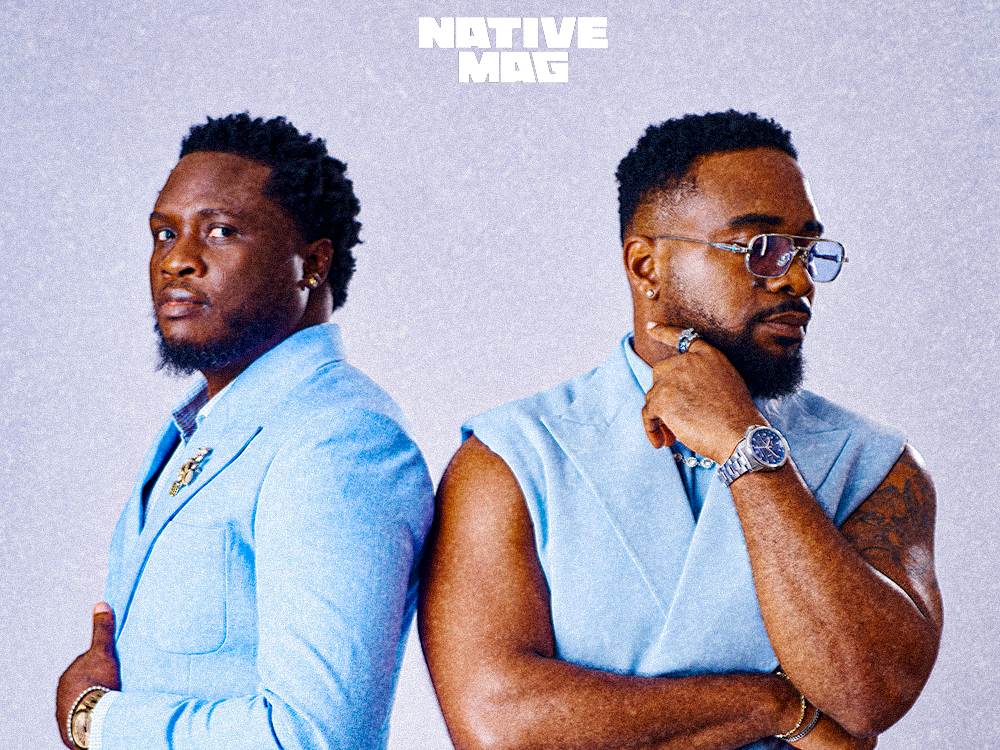
Sitting at the intersection of talent management and production, Tairu is thinking not about the next project but about the next decade.
The most important work in any industry rarely happens on screen. It often happens in the conversations before a project is greenlit, in the frameworks that determine which talent gets positioned for what, and in the long view that most people are too busy to hold. In Nollywood, that work is increasingly being done by a new generation of operators who understand that the industry’s biggest problem is not a shortage of talent–it is a deficit of structure.
Few people embody this shift as precisely as Mautin Tairu, founder of Guguru Talent Management and executive producer on ‘Mami Wata,’ the C.J. Obasi-directed film that premiered at Sundance, won the World Cinema Dramatic Special Jury Award for Cinematography, and served as Nigeria’s Oscar submission in 2023. Sitting at the intersection of talent management and production, Tairu is thinking not about the next project but about the next decade. “I’m not just managing talent or working on projects,” he says. “I’m thinking about how everything connects. How talent is developed, how projects are packaged, and how they move beyond Nigeria into global spaces.”
Nollywood’s story has always been one of extraordinary output. For years, the industry ran on speed, producing more films per year than almost any other movie industrial complex in the world. The model worked on its own terms, but it was never built for longevity or global reach. What is changing now is the ambition. “For a long time, Nollywood was about volume,” Tairu explains. “But now, the conversation is shifting toward value and dominating our space on the global cinema stage.”
That shift did not happen overnight. The turning point came gradually, sharpened by his experience on the ‘Mami Wata’ festival circuit, where the contrast between how Hollywood talent was treated and how Nollywood talent was positioned became impossible to ignore. He found himself in rooms with Hollywood names, watching how they moved, how they were received, how the machinery around them functioned. He came back with a sharper question: “We have the same incredible talents everywhere. Actors, writers, directors, people who could stand anywhere in the world. But the systems around them weren’t designed to help them travel.”
That observation became a mandate. It was ‘Mami Wata’ producer Oge Obasi who first named the gap directly, pointing out that talented Nollywood actors lacked a clear framework for turning their ability into sustainable careers. Tairu took the challenge and found it mapped exactly onto what he already knew how to do. Guguru launched in 2021, and the proof of concept came quickly.
“People were saying, ‘Oh, now we can tell there’s a management behind you,” he reflects. The referrals have not stopped since. Guguru’s roster now includes Uzor Arukwe, Omowunmi Dada, Uche Jombo, Adunni Ade, Najite Dede, Jude Chukwuka, Sharon Rotimi, and Kanyin Eros, talents who command both commercial and artistic attention across the industry.
The dual role Tairu occupies, talent manager and producer, is a deliberate design. Understanding production means you stop waiting for opportunities and start creating them. Every project decision carries a longer frame of reference. “If I’m working with talent, I’m also thinking about the kind of projects that can elevate them. And if I’m involved in production, I’m thinking about how the talent attached fits into a bigger, long-term trajectory of a franchise or a cinematic universe.”
The ambition is careers that compound, bodies of work that travel, stories that represent something beyond a single box office weekend. Uzor Arukwe’s trajectory is the clearest illustration of where that model leads. He served as executive producer on ‘Three Working Days,’ participated in backend profits, and co-produced ‘Alive Till Dawn,’ the first zombie film in Nigerian cinema.
Global positioning, in Tairu’s model, starts at home. “You have to first conquer your home turf before transitioning into a global brand,” he points out.“The value you bring from your home turf is what converts on the global stage.” A strong Nigerian audience creates demand among diaspora audiences, which becomes leverage in international casting conversations. Every step outward is locally earned first, informed by data, industry trends, and a close study of where African films are being consumed and by whom.
The ‘Mami Wata’ festival run confirmed that the global appetite for African stories is real. Tairu watched audiences respond, watched the curiosity in the room, and understood that the door was open. But appetite is not access, and access is not sustainability. “Festivals, distribution, audience. Everything has to be part of the plan at the early pre-production stage.”
Nollywood’s relationship with the global film industry is shifting. The adaptation of African stories by international studios, the growing interest from the UK and Hollywood in co-production, and the continued expansion of streaming platforms across the continent are all signs of real movement. But interest from outside is not the same as a partnership between equals. “Collaboration only works when both sides can offer each other value through a structured framework,” he says. Tairu’s role in that dynamic is a bridge, not just opening doors, but ensuring that when those doors open, the industry is prepared to walk through them with confidence and leverage.
That is ultimately the measure. Not whether a single Nollywood film screens at Sundance, but whether the systems exist to make that a regular occurrence. Not whether one actor crosses over, but whether there is a pipeline that makes crossover part of the plan. “It won’t be about whether African stories can travel,” Tairu says. “It’ll be about who built the systems that made them global.”

