How DJ Sholz Soundtracked Nigerian Modernism at Tate Modern
Rather than presenting a straightforward Afrobeats set, the mix was conceived to reflect Nigeria’s history of reshaping global sounds

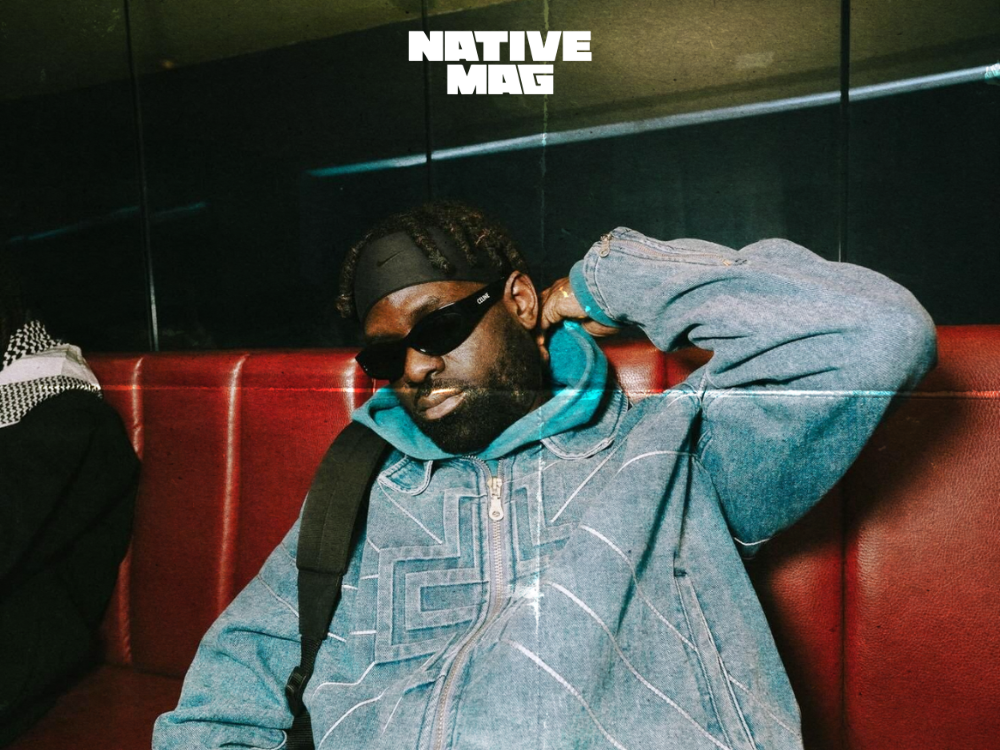
Rather than presenting a straightforward Afrobeats set, the mix was conceived to reflect Nigeria’s history of reshaping global sounds
To close out the UK’s Black History Month in October, NATIVE Sound System brought its monthly party Till Day Break into the Tate Modern, programming a night that centred Nigerian and diaspora sounds within one of Britain’s most recognisable art institutions. In collaboration with Play Piem, and featuring live performances from British-Nigerian artists, Ife Ogunjobi and Strandz, the intention for the night was to bring a distinctly Nigerian atmosphere into the museum space, to accompany the newly opened exhibition, Nigerian Modernism.
That same spirit shaped the DJ mix filmed in front of Our Journey, where digital DJing, live percussion and saxophone merged into a performance that mirrored the exhibition’s own themes of synthesis and exchange.
Rather than presenting a straightforward Afrobeats set, the mix was conceived as a live reinterpretation, layering multiple musical influences to reflect Nigeria’s long history of absorbing and reshaping global sounds. “The idea was to place Nigerian art inside a British museum and create an exchange of cultures,” Sholz notes in our conversation with him, where we dug deep about the way the sonic programming functions as an extension of the exhibition itself.
This conversation has been edited slightly for clarity
How did your initial connection with Tate come about?
I’ve been going to the Tate for a long time. It is one of the largest art institutions in the UK. I had always known about the Tate, and I attended a Tate Late event featuring Little Simz, which was one of the best parties I have ever been to. One thing led to another, and a close friend sent me a message stating, “I know someone who works at the Tate and I will connect you.” She introduced me to Jesse, who runs the Tate Lates programme.
We spoke for some time, and she mentioned they were planning a Nigerian Modernism exhibition. I felt it would be valuable for The NATIVE to be involved because we’re closely connected to how the Nigerian story is being told globally. The exhibition felt like the right opportunity for us to contribute, whether through events, the content we have produced, or the Nigerian Modernism cover. We became involved across the entire exhibition. It came down to a degree of serendipity and chance. I appreciate when things happen that way, and I am excited and grateful for the opportunity.
Thinking back to your experience at the previous Tate Late, what kind of vibe were you aiming to create this time around?
For the parties, we wanted to bring our monthly event, Till Daybreak, to a wider audience. We programmed it with our friends Play Piem, a sound system based in the UK. The idea was to curate the best DJs playing the best club music and bring that energy. We featured live performances from Ife Ogunjobi and Sola Akingbola, both British-Nigerians. The aim was to bring a Nigerian atmosphere to the Tate and transform the space, and I think we succeeded. The mix came from a different place. My girl had been sending me videos of DJ mixes on YouTube, and it was inspiring to see people creating mixes in different settings. She showed me a video by Sundial Tapes, who recorded a mix outdoors in a crowd in an unconventional space, which was striking. I wanted to highlight the beauty of the Tate’s modern space while complementing it with African music.
Rather than doing a standard Afrobeats set, I wanted a live performance that juxtaposed digital DJing with live percussion and saxophone. The idea was to place Nigerian art within a British museum and create an exchange of cultures. We featured Sola Akingbola on percussion and Ife Ogunjobi on saxophone. I played tracks while we created live reinterpretations, so it felt like a performance that was constantly changing and evolving. It was an engaging experience. The goal was to blend as many influences as possible, reflecting how Nigeria itself has been shaped by global cultures while making them its own. With the mix, I wanted to create something distinctly Nigerian, slightly chaotic, ambitious, and still exciting.
How would you say the audience responded? Did you notice anything new in how people engaged with the music in that space?
Yes, absolutely. We had a live band with talking drums, and people really connected with it. It felt elemental and is not something you encounter everyday. Seeing people from different cultures respond to the talking drums and saxophone felt reminiscent of the New Afrika Shrine. I am glad we were able to give people that experience.
How important is it for you, as a producer and DJ, to ensure African music is represented on global platforms like Tate?
I think it is important to have a voice and to be part of a wider conversation. By presenting Nigerian Modernism at the Tate, there are many people who may have visited Nigeria or have Nigerian friends. Creating spaces where they can engage with our culture, and where Nigerians in the diaspora can connect with something they may have heard about growing up, can spark a deeper sense of connection. The more we inspire people to connect with one another and with our history, the stronger we become as a community. All of this contributes to building community, sharing knowledge, exchanging ideas and ensuring that our history is not forgotten.
Do you feel the work you brought to the exhibition spoke directly to its core themes?
The exhibition sought to showcase Nigerian creators who had rebelled against the structures of their time. As Nigerians, we are often in a state of rebellion, so by creating this mix, organising the party in this way, and pushing our art forms to new levels, I see that as a form of rebellion. It was also about coming together and allowing others to experience Nigerian culture in an authentic way. The more we present ourselves and invite others in, the more accessible and respected our culture becomes. If the aim is to preserve Nigerian culture and present it to as many people as possible, then we certainly made progress towards that.
How do you, as an artist, actively challenge the usual expectations or conventional frameworks around your work?
By not listening and just listening to the little voice inside you. When I say not listening, I mean not listening to the outside world. To be an artist, you need to have your own voice and your own internal validation system. It’s more about adding your own piece of thought or your own competence to what has already come before you. There’s been so much that’s been done and I’ve experienced so much. I was born in the ’90s. I’m a child of Hip-Hop. I went through gangster Rap, Trap, House, EDM. Everything I create draws on those experiences, translating what I absorbed when I was younger into something new and unique but it feels like it came from me, because it has a mix of all my influences.
What genres are you currently fascinated with?
Right now I’m really into the UK underground Rap scene, Nigerian Rap, Afro-House and Psychedelic music. I’m just listening to everything and staying inspired.
Looking at contemporary African creativity more broadly, what conversations do you think are still missing?
New conversations can be challenging, but it is important to encourage them, especially from underrepresented voices. Much of the arts has been dominated by the three major tribes, yet there is still so much more to learn. There are far more perspectives than we typically hear, and it is important to create space for voices that may not be widely recognised, so that new and less familiar ideas can emerge. A great deal has been shared with the world in recent years, but it does not represent the full breadth of Nigerian culture. Encouraging a wider range of voices can only strengthen and enrich that cultural narrative.
Native Sound System works very deliberately as a collective. Why was it important to foreground that sense of community within this exhibition?
You need a community to achieve anything. We have been organising parties with Native Sound System in cities such as London, Lagos, Los Angeles and Paris. Over time, we have built a following of people who want to experience and understand the world with us, and to grow through these changes together. Having a sound system means it is not centred on one individual. We can continue to invite more people into the fold and expand what we are building. That is the essence of a collective: to keep evolving and sharing our culture with the world.
Reflecting on the exhibition as a whole, what role do you think music plays in connecting audiences and ideas across continents?
Music brings people together. As a DJ, playing a song can give someone the confidence to speak to another person or create a meaningful moment in their life. In that sense, you can shape a small chapter of someone’s story through music. There is a real power in storytelling and in how people experience moments. At its core, the intention is to bring people together and create space for individuals to discover and express their true selves.

