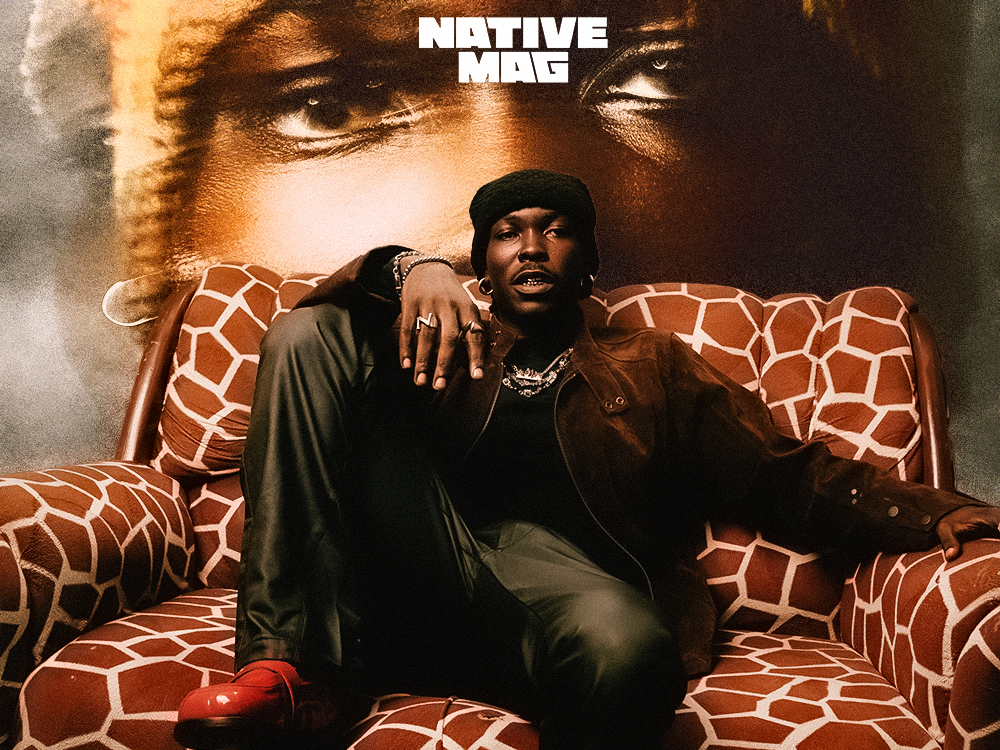
Rema Has Another Banger With Explosive “Kelebu”

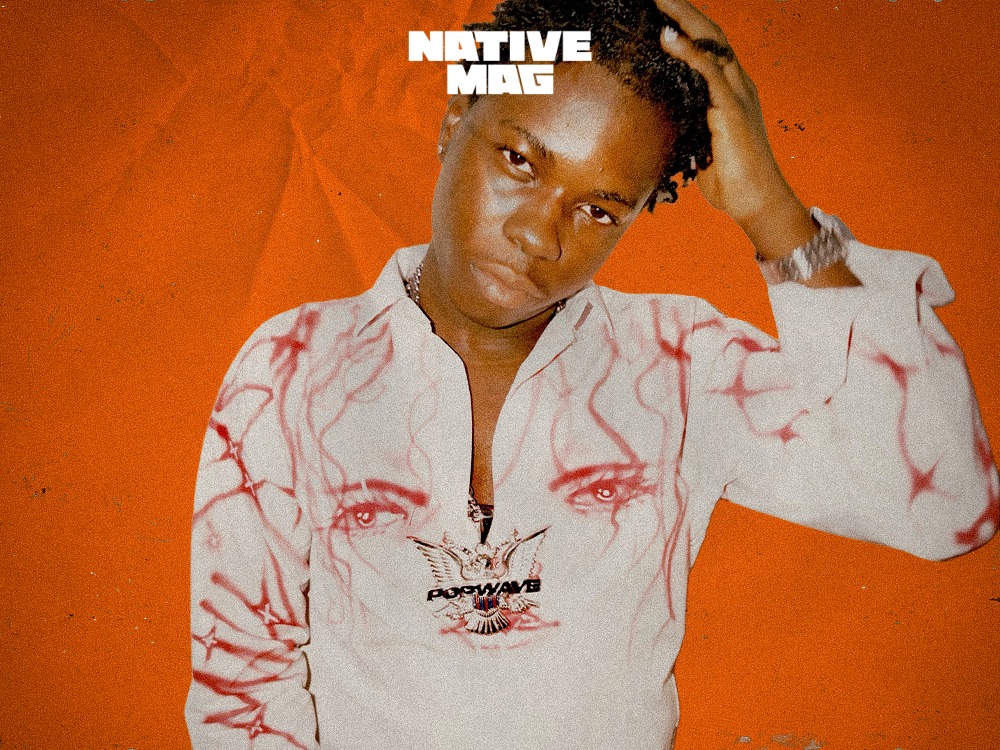
Rema has released his highly anticipated new single “Kelebu.” Early last month, the Benin-born star took to social media to promise an incoming summer release. ‘Still owe y’all that summer Banger,’ he tweeted. Weeks later, he gave more insight about the direction of his forthcoming release, tweeting, ‘Ok.. I want y’all to DANCE this summer!’ 

After much anticipation, the singer posted a snippet of “Kelebu” in usual fashion, promising $10k for whoever comes up with an easy dance challenge and raising excitement for what is probably about to become a dancefloor staple quickly. 

The self-proclaimed Rave Lorde seemed to have favoured a more tempered approach in the last few months, opting for the sheen and soulfulness of R&B on his first two releases of the year. “Baby (Is it a Crime),” which had already taken on a life of its own even before its official release, gives Sade’s 1985 classic “Is It A Crime” an Afropop and R&B facelift, while “Bout U” sounds like it was picked out of a 2004 Marion Winans release. 


With the release of “Kelebu,” Rema returns to the familiar chaos of 2024’s ‘HEIS,’ borrowing from an array of genres to create what is, without a doubt, one of his most exhilarating releases to date. Teaming up with close collaborator London and the German-born Ambezza, “Kelebu” takes inspiration from a host of regional genres like Dominica’s Bouyon and Mara, the new Street-Pop subgenre that’s recently come into prominence. There’s also strong Makossa and Coupé-Décalé influences across the track as Rema tears through the riotous beat with breakneck pace. 

Whether “Kelebu” fits into a bigger picture or is the start of something new remains to be seen. You can never be too sure with Rema. He could be teasing several Trap-inspired songs one minute, and then go ahead to release a sensual R&B record the next. The Mavin star is somewhat unpredictable, and that’s part of his huge appeal. You’re not certain what comes next, but you’re seated for the ride regardless. 

Listen to “Kelebuhere

The Locales That Shaped Our Favourite Afropop Stars 

The concept of origin and heritage has never been more important in Afropop than right now. As the edges of the sound broaden and influences spring forth from all over, artists are increasingly taking on ambassadorial roles that see them represent the people, attitude, and ideals of where they hail from. Whether by birth or upbringing, artists are intrinsically tied to and influenced by these places where they have spent significant time socialising and soaking up influences. The markers of those places inevitably show up in their music, enriching our soundscape and furthering our collective cultural memory. 

Whether it is Olamide putting on for Bariga on “Oga Nla 1” in tandem with Alhaji Wasiu Alabi Pasuma and Lil Kesh or Burna Boy beautifying Port Harcourt on “City Vibration,” we get a glimpse into these places beyond run-of-the-mill news that doesn’t offer a rounded perspective on the inner workings of the community. We are at once witnesses to communal struggles and pain via these artists’ perspectives, as well as willful participants in their ascension to musical superstardom while doing their best to hold on to their communities. 

We compiled a list of some artists whose rise and continued success pay homage to the communities that raised them. 

Wizkid, Ojuelegba, Surulere

It’s pretty befitting that the quintessential Wizkid song is “Ojuelegba,” a cut from his 2014 sophomore studio album, ‘Ayo’. While the singer has paid homage to his birthplace on a few previous occasions, no song venerates the Lagos suburb quite like “Ojuelegba.” Even as he made the smooth transition from national hero to global superstar shortly after the release of ‘Ayo,’ the album’s standout track continued to serve as a melodious autobiography that helps establish his roots for those unfamiliar. The song’s accompanying music video also captures the suburb’s bustling energy, as well as the unforgiving conditions that produced him. B.A


Burna Boy, Port Harcourt 

One of the many things that Burna Boy speaks with pride about is his native Port Harcourt. He constantly ensures that his city is at the forefront of his craft, dedicating songs that either narrate his experiences in the Garden City or highlight some of the social and political issues plaguing his home city. Songs like “Where I’m From” and “Ph City Vibration, highlights from his third studio album ‘Outside,’ double as sturdy deep cuts and brief history lessons about Port Harcourt. In late 2022, the pop star also released a short documentary for “Whiskey, detailing the environmental crisis in his birthplace. – B.A


Olamide, Bariga 

No Nigerian artist is as representative of mainland Lagos as Olamide Baddo. Still, even the mainland is not a monolith, as different areas have their quirks and unique colorations. Bariga, Olamide’s neck of the woods, has been an ever-present in his music from the very beginning of his career, providing inspiration and grounding for the street-pop juggernaut who references the lessons learned and tales handed down in his hood. “Money,” the opening track from his sophomore album, ‘YBNL,’ features a bus conductor calling out for passengers to Ladilak, Bariga, forever immortalising the Lagos hood on wax. On “Rep Adugbo” from his incendiary ‘Baddest Guy Ever Liveth,’ he’s similarly unabashed about his dedication to Bariga, its inhabitants, and authority figures. Even superstardom hasn’t dulled those representative instincts: on “Supplier,” from his 2023 album, ‘Unruly,’ he’s keen to remind anyone listening that he carries Bariga with him everywhere he goes. – W.O


Asake, Lagos Island 

Asake could only have emerged from the crucible of Lagos Island. There’s something about his carriage that undoubtedly suggests an upbringing in the oldest part of Lagos, and even though he doesn’t always directly reference Lagos Island, the seeds of its influence are in the margin of his work. The back and forth between Islamic and Christian motifs in his work is a legacy of the religiously tolerant culture of Lagos Island, and his slang usage reflects a stint living in the ocean-side community. Perhaps the clearest sign of his connection to Lagos Island came on his third studio album, ‘Lungu Boy,’ a detailing of his come-up story from Lagos Island hopeful to global superstar. On “Uhh Yeahh,” he sings, “Beere mi ni Kakawa,” directly shouting out the popular street in Lagos Island. Visual elements of his tour dates from 2024 also heavily featured and celebrated the streets of Lagos Island as the singer leaned into his heritage. Places like Adeniji Adele, Freedom Park, and Marina were featured, letting the world know that Asake has not forgotten his roots. – W.O


Zlatan, Ikorodu 

Zlatan Ibile takes great pride in giving game to ambitious young hustlers looking to move beyond the current situation of their lives. His rise from Ikorodu hoodrat to Nigerian Hip-Hop royalty is the stuff of legend, but the stories of his woes, troubles, and sufferings in Ikorodu keenly display the relentlessness and dogged determination that saw Zlatan make a name for himself. He’s keen to reminisce on those days from time to time. On “Elevated,” off SuperWozzy’s 2021 ‘Light Of The Trenches,’  he sings, “Won fe k’enu mi gbe seh, biti church rat/ Mo moyan pupo n’Ikorodu ton ti te Shoprite,” reflecting on the lack that plagues huge swathes of Ikorodu. It’s a similar impulse that births his verse on Ajebo Hustlers’ “Dreams II,” which features a reference to his mischievous streak growing in Ikorodu. – W.O


Rema, Ekenhuan Road, Benin

If the syrupy trap-adjacent flow Rema employed on his introductory project or his incursions into diverse genres on several occasions since then have fooled you, his 2023 album, ‘HEIS,’ was a defiant reclamation of his identity as a Benin boy. To be fair, ‘HEIS’ didn’t just drop out of the blues; the Mavin singer had been preparing his audience for that home-leaning lurch since he stepped on stage adorned in a replica of the iconic mask of storied Benin royal, Queen Idia, during his first sold-out concert at the O2 Arena in London.

Reminding his audience of the painful history of British incursion in Benin, Rema set the stage for ‘HEIS,’ an album steeped in Benin-specific lore and acts of remembrance. “BENIN BOYS,” his blockbuster collaboration with Shallipopi, could not have passed the message of his origin better. Featuring a shoutout to his old neighbourhood, Ekenhuan Road, and an urge to the Oba to award him a medal, “BENIN BOYS” is a larger-than-life celebration of his city. Taken together with the rage-inducing “OZEBA,” it was a spiritual return home for one of Benin’s most iconic sons that showcased his identity for the world to see.  – W.O


Seyi Vibez, Ikorodu

No one puts on for Ikorodu quite like Seyi Vibez. While the singer was originally born in Ketu, it’s in Ikorodu that he honed his craft as a skilled musician. He’s referenced his upbringing and Ikorodu specifically in a lot of his earlier interviews and songs, and it’s in that same administrative division that he put together his first show that pulled a crowd of about 200 people. The singer returned in 2023 for a free homecoming concert as a way to celebrate and give back to the community that helped kickstart and support his musical journey. He’s continued to rep Ikorodu even in recent times, most notably on his hit record “Shaolin. B.A


Mohbad, Ikorodu 

Mohbad was one of Ikorodu’s crown jewels. In August 2023, just about a month before his passing, the singer posted a video of himself on Instagram visiting his old neighbourhood in Ikorodu. He went around distributing gifts and reconciling with longtime friends without any security, interacting organically with a community that regarded him as one of their own. He put on for his community just as much as they did for him. After his unfortunate passing, the youth rallies that were organised in Ikorodu to commemorate and demand justice for his death highlighted just how important he was to one of Lagos’s most populous hubs. B.A 


Shallipopi, Sapele Road, Benin 

Even if his golden drawl and sonorous pidgin didn’t betray his Benin heritage, Shallipopi wouldn’t pretend to be from anywhere else but his hometown. That Benin heritage is in how Shallipopi perceives the world, the way he talks, and, particularly, how he approaches his music. “Obapluto,” the standout on his debut project, ‘Planet Pluto,’ features a prominent sample of Pa Monday Edo’s “Ogbaisi,” an homage to the Oba of Benin. It’s a trick he repeated on “ASAP,” off his sophomore album, ‘Shakespopi,’  sampling Alhaji Waziri Oshomah’s “Ikwekiame Nedumhe.” The chorus of his 2025 hit single is almost entirely sung in Bini, displaying the reverence that Shallipopi has for Benin – W.O.


Omah Lay, Port Harcourt

On the opener of Omah Lay’s critically acclaimed debut album ‘Boy Alone,’  he’s unequivocal about where he’s from. ‘All of the way from Port Harcourt/Water Side,’ he sings proudly, emphasising the city that shaped his music and creative voice. Throughout the album, he makes multiple other references to his background, whether it’s singing in his native Ikweere language or name-dropping neighbourhoods like the Marine Base area. In a Hypebeast interview from 2022, the singer spoke about his city with similar pride. “Port Harcourt is different from the rest of Nigeria in the way that we talk, eat– everything. It’s really different. All of that definitely influenced my music so much because it was really tough growing up in Port Harcourt, but that experience made me who I am today. I’ll never forget that or stop repping my city.– B.A

Best New Music: Ayra Starr Turns Youthful Swagger Into Sensual Elegance On “Hot Body”

All year, Ayra Starr’s music, visual aesthetic, and social media presence have shown us a new version of her. She seems to be outgrowing the teenager we met in 2021, and molding her grown woman identity right in our presence. In the video for “Gimme Dat,” her second single of the year, featuring Wizkid, we see the red convertible that featured on the cover for her 2024 album, ‘TYIT21,’ and extensively across music videos from that era being blown up into a crisp. It seemingly symbolised the end of one era and the birth of “Hot Body” and everything it represents. 

When Ayra was introduced, her music explored themes tied to youth and the emotional fragility that comes with navigating that period of your life. The ‘19 and Dangerous’ era showed us a self-confident teenager who was sure of who she wanted to be. However, “Hot Body” signals something entirely different. Produced by Ragee with additional input from The Elements, it’s crystal clear from the first listen that Ayra is owning her allure and agency. 

Employing a rhythm that feels retro-made for a cross between GRWM prep with the girls and sweaty dancefloor shifts, her vocal delivery feels almost like an incantation. It’s seductive. She’s fully in control of your gaze and even dictates what you do with it. On “Hot Body,” Ayra Starr sings with the relaxed certitude of a woman in command of her sexuality and space. 

Her performance here is rife with context. Having graduated from teenage histrionics on ‘19 & Dangerous’ to the introspective, emotional maturity of her 2024 sophomore album, ‘The Year I Turned 21,’ Ayra Starr has grown not only in voice, but in message and presence. ‘The Year I Turned 21’ charted at No. 1 across DSPs in Nigeria and cracked the US Billboard 200, making her the first Nigerian female artist to enter that chart. This is a clear marker of her ascension into adulthood, and we can hear it in the music and see it in its visual accompaniment.

Hot Body” feels like the logical next step after ‘The Year I Turned 21.’ Where that record explored vulnerability, grief, ambition, and identity, “Hot Body” distills the confidence born from that journey into a potent, sensual exhale. She’s no longer defining herself against the world; instead, she’s defining how the world should perceive her. 

Lyrically, “Hot Body” is playful but bold, with just enough suggestion to feel grown and sexy without losing the thrill of young self‑discovery. Sonically, it’s sleek and minimalist, yet it’s brimming with the palpable charm of some of the best music of the 2000s–think Beyoncé and Sean Paul’s “Baby Boy” or Rihanna’s “Rehab.” 

The rollout for the song matched its effortless energy. A snippet on TikTok and Instagram teased an accompanying dance to the song, and fans responded instantly,  turning the anticipation into instant engagement. Capped at two minutes, it’s a release primed for our era of bite‑size virality: short, immediate, and boasting insane replay value. 

Yet, what distinguishes “Hot Body” from many viral tracks is the assuredness of Ayra’s journey. She stormed charts with “Rush,” became the youngest Nigerian woman to surpass 100 million YouTube views, and earned a Grammy nomination for it–a badge of early achievement and youthful potential. 

That youth is now transfigured. On “Hot Body,Ayra embodies her new identity. What once sounded like a prophecy has become her reality: global collaborations, awards, stadium stages, modeling runways, and a major film role all fit into a broader canvas that her early self prayed for. “Hot Body” sits at the convergence of Ayra’s journey. It’s youthful swagger that has mutated into deliberate elegance; curious vulnerability solidified into mastery; and ambition shaped into ownership. 

Hot Body” is made for the dancefloor, but when you’re alone, it’s the perfect backdrop for the walk of recognition in a well-lit room as you give yourself flowers. Ayra tells us in this song that she knows who she is, what she looks like, and that’s enough. 

Listen to Hot Bodyhere

uNder: Best New Artists (July, 2025)

The conversations that keep coming up during our daily newsroom more often than not revolve around platforming the music we love and the communities that surround its wider culture. Very regularly, the music that excites our team reflects The NATIVE’s vision of being a bastion of music from parts of Africa and the Black diaspora. There are exciting acts from the ever-evolving Nigerian music underground, rappers experimenting with Dance Music and Hip-Hop from South Africa, as well as emotive singers whose work blurs the boundary between Hip-Hop and R&B. 

Discovering these acts, being blown away by their skills, and sharing our community about them continues to excite us more than three years after we conceived this column as a platform to spotlight talents that represent all that’s exciting about African music. In a world where marketing budgets, ad spends, and PR placements continue to reshape the music landscape, uNder is still our way of raging against the system and spotlighting deserving acts whose works are vital to sustaining the creative spirit that makes African music indispensable. For our July entry, we have Danpapa GTA, Luwa.Mp4, BrotherKupa, and Andi K, a cohort that is united by a thrilling sense of freewheeling experimentation that is sure to serve them well as their career progresses. We hope you enjoy discovering them half as much as we enjoyed listening to their music and writing about them. 

Luwa.Mp4

For Fans Of: Odunsi (The Engine), Naeto C, and Odd Future. 

In many respects, Punk Rock and Hip-Hop share similarities. They are defiant artistic responses to being misunderstood or marginalized by wider society. They can be loud and abrasive, and center their creators’ angst or disquiet to the max. Fused, Punk Rock and Hip-Hop presents a whole new proposition, delivering a heightened sensory experience that shocks, jolts, and instantly demands attention. The most recent music by rapper and singer, Luwa.Mp4, channels the livewire edge of that fusion in his music, musing on topics from seeking freedom and peace as well as celebrating financial success while revealing a fascinating contradiction between the thunderous sonics of his music and the subtler thematic references he works with. 

It’s all part of a process that has been in the work since the start of his career. Some of his earliest works, like the three-pack, “iLuwa,” with songs like “Goku” and “Revenge,” present a cyber abstraction of his music that is at once riotous and thrilling in its embrace of the macabre. Almost as though he’s aware of the trade-off between satisfying a diverse audience, the trap-influenced “Left-Right,” is an earnest anthem that reveals a layer of sensitivity to the singer born Ayooluwa Akindeji-Oladeji. That eternal struggle between his dystopian vision and the grounding human impulses has continued to influence and colour the margins of Luwa.Mp4’s work. He brought a twinge of acuity to 2022’s “Rage Anthem” with Jeremy Cartier, SportVVS, and Danielscoffin, showing that raging is a function of feeling first and foremost. 

As prolific as he is genre-nonconformist, Luwa.Mp4 has experimented with Pop, Soft Rock, and Afropop across his career, displaying a preternatural ability for deconstructing sounds and reinterpreting them in his image. 2024’s “Don Gorgon,” a searing yearner’s anthem, set the stage for “Cython +,” a futuristic two-pack take on Afropop and Rock. Later that year, he released his debut album, ‘Trial & Error,’ referencing the frenzied nature of his releases and the genre-hopping that he has made a calling card. Still, ‘Trial & Error’ is not a random collection of loosies or B-side releases.  Across 10 songs and 22 minutes, we are immersed in his life, his motivations, and the fits that catch his fancy. ”Imma show you what it really means for me to live like this,” he sings on “H OR H.” He has kept up his prolific streak in 2025, releasing two new extended plays, ‘lore skool’ and  ‘lore skool; xtra crediT,’  that find new ways to memorialise his lifestyle while opening new lanes of expression for Luwa.Mp4. – W.O


Andi K

For fans of: Tyla, Elaine, and Tinashe

Andi K always wants you to move. Even with only a handful of singles released, it’s pretty obvious that the Atlanta-based, Congolese singer and dancer’s musical sensibilities are largely rooted in R&B, but it’s her choice of production that’s usually tailored for the dancefloor or, at the very least, suited for hip gyration. While her honeyed voice, smooth like silk, gives her music a lustrous feel, it’s the way she wields it across different dance-inspired beats that truly sets her apart.

On “All Night,” her first official release from early in 2020, she interpolates the famous melodies from Kevin Lyttle’s 2003 hit single “Turn Me On” over a groovy Dancehall-inspired beat. Her next appearance on a record wouldn’t come until two years later, when she collaborated with super producer Shizzi and WurlD on a single titled “Forever.” Even with only one single under her belt before this collab, she displayed a convincing proficiency alongside two seasoned acts that belied her limited experience. A few months later, she linked up with Atlanta-based producer Quantum Flash for “Ignite,” a House-inspired number that excels thanks to its minimalist groove and Andi K’s sweet harmonies. 

Between 2023 and 2024, the singer released two solo singles: the Amapiano-influenced “Kiss” and “Don’t Let Me Go,” a slinky joint that consolidates elements of Afropop and R&B with seamless ease. This year, the singer has released two extra singles. “Ceilings,” which came out in early January, is arguably her most experimental release yet. It centres her rich Congolese heritage as she mixes the percussive Coupé-décalé with R&B and Afropop, making sure she keeps her listeners on their feet. Her latest single, “Amour,” is a tranquil addition to her catalogue. It’s also the closest she’s come to making a traditional R&B song, proving she’s just as proficient making bulletproof bops as she is delivering slow jams. – B.A


BrotherKupa

For Fans Of: Internet Girl, Blxckie, and Playboi Carti

It’s almost a given that new monarchs will rise with frequency in South African Hip-Hop. In the country that gave the continent rap stars like Cassper Nyovest, Nasty C, and A-Reece, Hip-Hop continues to co-exist with its dance variants. In rising star, BrotherKupa, the Rainbow Country has a new Hip-Hop hero who’s demanding attention for his exciting lyricism, tight-knit worldbuilding, and spastic flow. Taking inspiration directly from his experiences, the circumstances of his come-up, and how he navigates the unpredictable nature of life, BrotherKupa’s songs sound lived-in, boasting an interiority that’s informed by stuff he’s seen and heard of without being overburdened by the tough times. 

He first emerged with a series of loosies and freestyles on SoundCloud around 2020. “SWGBCK” and “GOIN’ 2 HARD” laid bare the motivation for his grind: he just wanted to elevate himself and his family while looking fly. Those early dispatches were built of rattling percussions and fluid snares that platformed BrotherKupa’s voice as he worked his way to some sort of emotional catharsis on these songs. The singer started to come into his own on 2023’s “Motion in pain,” a shapeshifting thesis on pain that was bookended by ‘Worstfeelineva’ and ‘Worstfeelineva2.’ He experienced mainstream breakthrough with the release of 2024’s ‘Teen Revolution,’ a groundbreaking release for the singer who incorporated elements of spoken words, trap, and trance music into a coming-of-age arc that was packed with his thoughts on family, love, and working his way to the top of South African music. 

He showcased his comfort with South African dance music on experimental releases like “GQOM FREESTYLE” and “Limpopo Freestyle,” setting the stage for the May release of  “BEFORE THE WORST,” an eight-track release that picked up where ‘Teen Revolution’ stopped.  It’s a freewheeling journey through the singer’s mind, motifs, and traumas, with specific highlights on “Today is a good day” and “Cups and Feels.” With back-to-back well-received projects,  BrotherKupa is on an upward trajectory that shows no sign of stopping as he continues to excavate the minutiae details of his life for inspiration for a new generation hanging on his every word. – W.O


Danpapa GTA

For Fans of: July Drama, Minz, and Seyi Vibez

Describing Danpapa GTA’s music is no easy task. While many of the young singer and producer’s songs draw inspiration from Afropop, it’s the multitude of other influences he manages to infuse into his records that make them both unique and sometimes hard to pin down. Take “Oja” for example, the opener from his latest three-pack EP ‘Balenciaga kuti.’ The song opens up with these blaring horn arrangements that sound like it was put together by a brass band ensemble, before transitioning into a bouncy Afropop number with a slight psychedelic twist. “Vanity,” the project’s closing track, is also similar in its eccentricity. Think of those quick-fire flows that acts like Asake and Seyi Vibez popularised, over the sort of immersive and experimental production that the likes of Cruel Santino or Odunsi The Engine might favour. 

Taking the reins of his music production, Danpapa GTA, born Akinlemibola Omotoyosi, has been able to craft tracks that are almost singular in their creation. Listening to his lean discography, which currently comprises two EPs and a few singles, is like watching a flower bloom in real time. After releasing a handful of loosies on his Soundcloud page, some of which feature prevalent samples from artists like Tems and anonymous American singer-songwriter Shiloh Dynasty, Danpapa GTA made his first official release in early 2024 with a five-track EP titled ‘Chanel.’ The project is defined by a slightly muted sound and the sort of eclecticism he only showed in bits on his earlier releases. Cuts like the title track, “Demonic,” which features Pilzee and “High Fashion Love” all excel thanks to GTA’s innovative singing and production.

Following the official release of his debut, Danpapa GTA put his foot on the gas, releasing a handful of other singles like “4G” and the short but extremely catchy “Pressure,” while also teasing multiple unreleased songs across his different social media accounts. In that timeframe, he also featured on a couple of tracks from similarly upcoming acts, broadening his oeuvre while also solidifying his reputation as a uniquely gifted act to keep an eye on. His recent three-pack, ‘Balenciaga kuti,’ continues his left-field sonic experimentation, as he looks to establish himself as one of the leading figures of this new wave of talented underground artists striving to leave their mark. – B.A

Tiwa Savage Teams Up With Skepta For “On The Low”

Tiwa Savage has released a new single titled “On The Low.” After teasing a snippet of her new release a couple of weeks ago, the queen of Afrobeats’ latest single finally arrives with an elegant guest verse from British rapper and producer Skepta, and it’s set to appear on ‘This One Is Personal,’ her fourth studio album, which is reportedly set for release on August 29, 2025.  

The iconic singer has been promoting her forthcoming album for a few months now after first announcing it in April with a trailer video that saw Savage admiring nostalgic footage that cuts across her extensive career. She confirmed in press releases that this new project was about her reconnecting with her first love, stating that ‘I’m a ’90s R&B girl at heart.

The album announcement was accompanied by the release of its lead single “You4Me,” a soulful ballad that cleverly works a snippet of Tamia’s 1998 classic “So Into You” into its orbit. “On The Low” continues Savage’s promise to return to the soulful R&B style that initially formed the bedrock of her sound. The two legends dovetail nicely over Rymez’s smooth production, as the UK MC’s typically sturdy and enunciated verses bookend a heartfelt performance from the award-winning singer. 

‘This One Is Personal’ is set to arrive as Savage’s first album in almost five years. In the period since her last album and this upcoming one, she’s released a handful of singles like “Pick Up,” “100 Million,and she’s also featured on standout tracks like “Toma Toma, and “Awolowo (Remix).” Last year, she also released a soundtrack album for her debut motion picture ‘Water & Garri.’ 

Listen to “On The Low” here.

Davido And Martell Is A Partnership Rooted In Authenticity

Celebrity brand endorsements have become a stamp of artists’ weight in the game, and Davido has been certified many times over. His recent album rollout for ‘5ive’ included partnerships with brands like FoodCourt, Stake, PlayStation, and of course, Martell with whom he has had a long-standing relationship for the past few years. 

When Davido’s face first lit up Martell billboards across Lagos in 2021, it marked the beginning of a broader cultural shift. In the years since, Martell has soared to the top as Nigeria’s number one cognac brand, and the world has been watching.

Ask Davido why this partnership works, and his answer is simple: authenticity. “Honestly, it’s just a real alignment,” he says. “Martell stands for boldness, legacy, moving with purpose, and that’s exactly how I operate. From day one, it didn’t feel like a typical brand partnership; it felt like a collaboration. We both represent excellence, and we’re not afraid to shake things up. That’s why it works.”

That authenticity has proven to be Martell’s secret weapon. Rather than treating Davido as a decorative face, the brand invited him into the room to shape the narrative. “I didn’t want to just be the face, I wanted to shape the story,” he explains. “I saw the opportunity to bring in a new energy, a new vibe that speaks to the culture. Something that’s fresh but still classy. We’ve been able to infuse that African excellence, that Naija spirit, into everything we do. That’s what makes it different.”

Martell’s campaigns under Davido’s influence have been electric, thrumming with the same energy that animates the streets of Lagos and beyond. The now-iconic “Be the Standout Swift” campaign particularly stands out. It featured sleek visuals, a thumping soundtrack, and Davido himself front and center, embodying exactly what it means to move with purpose. “The response was mad,” Davido recalls to The NATIVE. “The visuals went crazy, the soundtrack hit, and people connected with it instantly. I remember seeing Martell billboards with my face on it and realising it meant representation for African artists. That made the whole thing bigger than just branding.”

It’s precisely the point of their collaboration. The Martell-Davido partnership has been more about rewriting the rules than it has been about selling bottles of cognac. In the past, African artists were often brought in to add flavour to campaigns conceived elsewhere or were typically not the main characters. Now, thanks to moves like the Martell-Davido partnership, they’re leading them. “It set a new tone,” Davido notes. “I think it made a lot of brands wake up and realise that African culture is global culture now, you can’t ignore it. You have to invest in it properly.”

This shift in thinking has had real-world impact. Martell, which once competed with long-entrenched cognac brands in Nigeria, is now the market leader. Beyond the sales, this connection marks a strategic victory for culturally-grounded branding. Its connection to youth culture, Afrobeats, and the aspirational lifestyle Davido embodies has turned it into a status symbol at the center of Nigeria’s thriving nightlife and social scene. 

For Davido, these wins go beyond commercial success. He’s acutely aware of the weight of his platform and chooses partnerships accordingly. “I’m very, very conscious,” he admits, “I know the power of my platform. I’m not just repping myself, I’m repping Africa. So, any brand I align with has to respect that. It’s not just about money or clout. It’s about legacy. It’s about how we tell our story, how we elevate the culture. I always ask myself: ‘Does this partnership open doors for others? Does it make the culture look good?’ If the answer is yes, then we move.”

That consciousness is perhaps the biggest driver of Martell’s success story. By aligning with a figure whose influence runs deeper than celebrity, Martell has built a bond with Nigerian consumers that feels personal; their fave is drinking Martell, and so they will. Davido’s swagger, his work ethic, and his sense of cultural pride are now the same as Martell’s. 

The biggest takeaway from this partnership is that true cultural resonance comes from collaboration, not co-option. Davido getting the space to lead and align his core self with the brand has not only boosted sales but also given Martell the credibility needed for that. This sort of influence flattens the curve and builds the culture. 

With Davido at its side, Martell has become more than a cognac. 

In Tribute To Daddy Lumba, Ghana’s Most Beloved Maverick

Death is said to be the end of all things, but for some, it is just a process of immortalization. That is the case for legendary Ghanaian artist Charles Kwadwo Fosuh, also known as Daddy Lumba. On the 26th of July, 2025, reports of his demise spread across the world, causing doubts and confusion until his family released an official statement through its lawyer, Fati Ali Yallah, Esq., confirming the devastating news. 

For six decades, DL, as he is affectionately referred to, has been a son, a husband, a father, an artist, a teacher, an innovator, and a cultural icon. The accumulation of the lives he lived has earned him the admiration and respect of Ghanaians and music lovers around the world for generations. 

Daddy Lumba started exploring his musical talent in the 1980s during his time in secondary school, eventually emerging as the lead of the school choir. Years later, during his stay in Germany, he would be introduced to Highlife music through his friendship and partnership with Nana Acheampong. The duo would form the group “Lumba Brothers” and work on the projectYee Ye, aka Akwantuom,’ which was released in 1989. After the group’s breakup, he launched his solo career with his 1990 solo debut album, ‘Obi Ate Meso Buo.’ 

Daddy Lumba would go on to have an illustrious career. Credited with over 30 albums and more than 200 songs, his seminal works included “Playboy,” Mesom Jesus,” “Aben Wo Aha,” Poison,” andSika, to name a few. Characterized by his charismatic approach, lyricism, and nonconformity, Daddy Lumba reshaped the music and art scene in Ghana. His control over his native language, Twi, allowed him to pen songs that spoke directly to the soul of the listener. His proverbial lyrics and addictive melodies made his songs easy listens for those who didn’t even fully understand the languages he sang in. He composed songs that served as a guide for people across the different facets of life.

Raised in a gospel background, Daddy Lumba blessed the world with multiple gospel albums that showed his admiration for God and were a testament to his past as a choir leader. In an interesting twist of events, he also had songs that dissected his thoughts on lust, love, and relationships and provided motivation and hope, as well as songs that would get you dancing. During his active years, Daddy Lumba’s songs ran wild across the media, streets, pubs, weddings, and funerals, and echoed from home to home across Accra to Europe.

As a student of Highlife, he ensured the growth and evolution of the sound through his songs and albums over the years. He mastered the craft so well that he would be instrumental in ushering in Borga/Burger Highlife, a sub-genre of Highlife that was steeped in contemporary influences and defined by its funky essence. Borga Highlife was not just in the sound but was also evident in his visual identity. He curated music and art in a style that bewildered people at the time. In today’s world, he would have been described as alté

Beyond music, his influence on Ghanaian pop culture was immense.  It was rooted in nonconformity and the deconstruction of stereotypes. While aspects of his music appealed to Ghana’s conservative outlook, he was also regarded by some as a moral miscreant. As the moral police came for his sensual lyrics and subversive influence on the youth, the love of the music from the wider public was louder. 

Where traditional media tried to bury his songs, the masses gave them more life at parties, pubs, and any gatherings where music could be played. Around the early 2000s, Daddy Lumba would come to be accepted as a symbol of modern Ghanaian culture, eventually beating the system by finding a balance that appealed to those who wanted songs that mirrored their sensuality, youthfulness, and freedom without alienating the conservative faction of the country. 

He introduced a swagger and flair to Highlife that many were not accustomed to. Winning over not just the older generation but also young people, both at home and abroad. From his many hairstyles–be it a fade, cornrows, or permed hair–he always stood out. Coupled with eye-catching aesthetics, as seen in his photos and music videos, he provided a visual blueprint that rising acts today still draw inspiration from. 

Regardless of the genre, theme, or style, Daddy Lumba kept topping charts and winning over listeners. He wore many hats and played diverse roles, and executed all of them brilliantly. It did not matter if he was paying homage to his long-lost love on “Theresa,” bidding farewell on “Makra Mo,” singing praises to God on “Eye N’adom,” craving intimacy on “Pony/Enko Den,” or even preaching diversity on “Bubra,” it all came together as long as it was orchestrated by Daddy Lumba.

His songs not only mirrored his own experiences but also provided a sonic reflection of the lived experiences of the people who listened to his music. He was an artist for the people, and he never shied away from making his fans feel loved and heard.. DL was so enshrouded in Ghanaian popular culture that it is no surprise how many momentous Ghanaian occasions and memories of the last 30 years are intrinsically tied to his songs. 


In a country where people often get backlash for showing their political affiliations, Lumba was appreciated more when he took a public stance on supporting a political party. He was so loved that his campaign song “Nana Winner” for the New Patriotic Party (NPP) is played at non-partisan events like raves and parties to a wild reception and excitement. Recognizing his influence, he always platformed talents as best as he could. He nurtured and mentored several artists. Through his album ‘Wo Ho Kyere’, he introduced Ofori Amponsah, his protégé, to the wider public. Ofori would go on to become one of Ghana’s most celebrated artists with hits likeOtolege,” “Odwo,” and “Emmanuella.” Daddy Lumba also mentored artists like Felix Owusu, Borax, and Ateaa Tina, among others. 

While his peers were left behind with the advent of music digitalization, Lumba stayed with the times. His music became the stuff of urban legend and was among some of the most-streamed Ghanaian music across platforms in recent times. There were frequent conversations, stories, and breakdowns of his songs on social media, steered by a generation of older listeners, handing down a lived-in perspective for a younger generation. His career is a testament to the fact that good music will always stand the test of time.

When news broke of his death on the 26th of July, 2025, an entire nation fell into a state of mourning. Artists, politicians, and various individuals took to social media to share their condolences with the bereaved family. In a heartfelt message on his Facebook page, his old friend, Nana Acheampong, shared a farewell note to his old friend and brother: “You have indeed done what the creator brought you on earth to do, you will forever inspire generations,” he wrote in a post on Facebook. 

Daddy Lumba lived an exciting life and had an enviable career working with artists of different eras. From Pat Thomas to Samini, Kwabena Kwabena, Okyeame Kwame, and Sarkodie, he collaborated with several acts. He also won awards and performed in multiple countries. However, his biggest win remains earning the love of an entire nation. Perhaps the most loved Ghanaian artist across generations, people were born to his music and buried with his music, completing the lifetime cycle with Daddy Lumba’s music booming in the background. 

There have been public calls for a state burial for Daddy Lumba, with a vigil already planned for August 2, 2025, at Independence Square, Accra. Lumba’s legacy as an innovator and trailblazer will be etched in Ghanaian music history and the hearts of listeners across the world. He was a strong believer that he was just biding his time on earth, doing his best till it was time to leave. 

While he departs the world, his songs and messages will continue to live on throughout time. 

Asake Links With Tiakola On Gritty “BADMAN GANSTA”

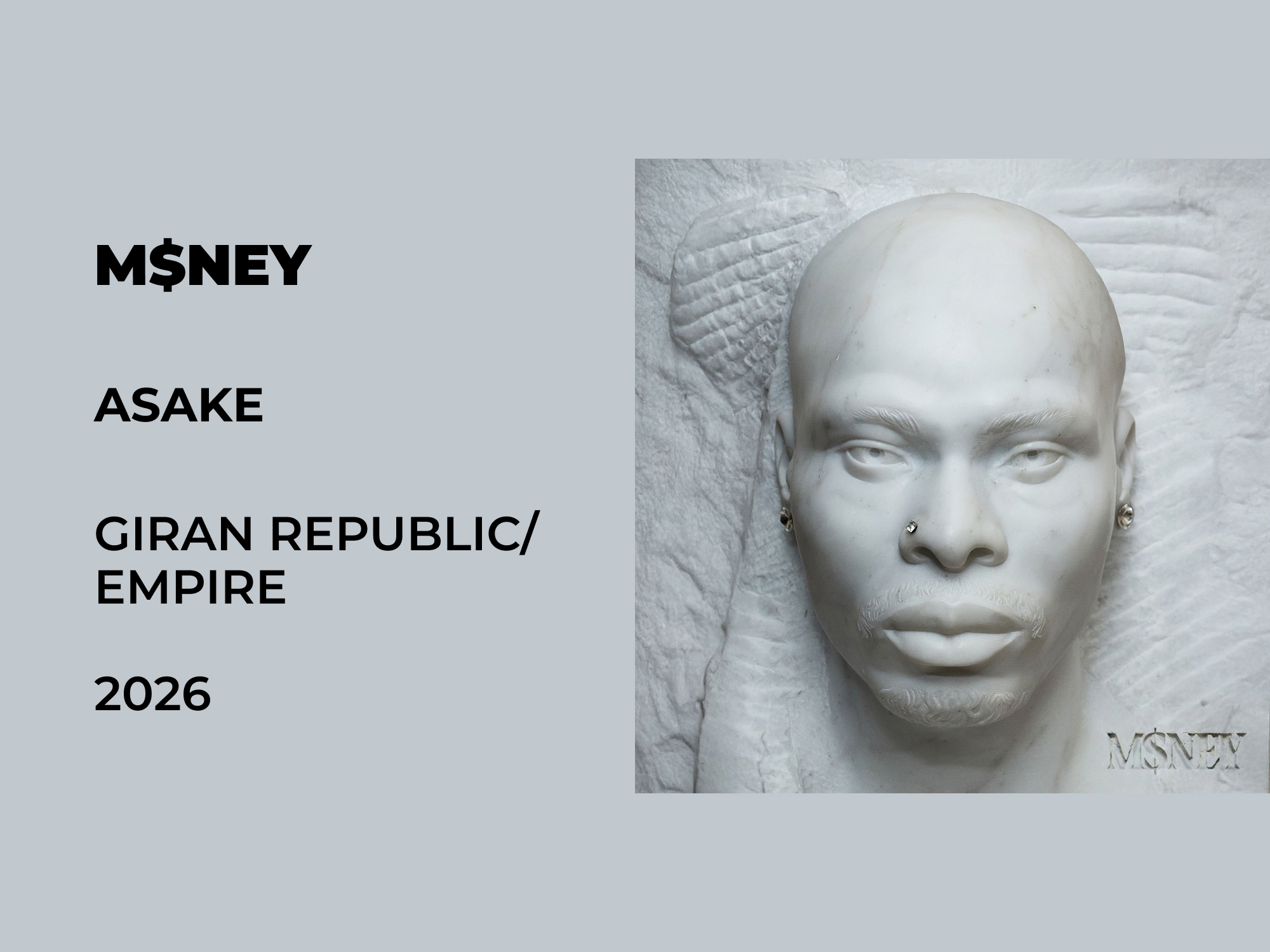
Street-pop star, Asake, has released a surprise new single titled “BADMAN GANSTA.” Produced by super producer,  P.Priime, the single, Asake’s second of the year, arrives with a crisp black and white feature and a stellar guest verse from French rapper and singer Tiakola.

The singer posted the full music video–a monochromatic montage of dazzling shots and scenes of his opulent lifestyle–across his different social media handles on Thursday evening, July 24, with a caption that read, ‘The World Of Money.’ 

Earlier in June, the ex-YBNL star announced a new album titled ‘Money.’ A few months before that, he released a loosie titled “Military” and then “WHY LOVE,” his first official single under his new imprint Giran Republic. “Military” served as a bookend to the first arc of his impressive career as much as an announcement of a new era, while “WHY LOVE” officially kicked off season two. 

Following the release of “WHY LOVE,”  Asake has also featured on songs like Olamide’s “99,” J Hus’ “Gold”, and Young Jonn’s “Che Che,” delivering standout verses that favour a melodious, laid-back approach as opposed to the spirited, fast-paced style that earned him success early on. “BADMAN GANSTA” also excels with this approach, as Asake’s melodious musings about his current lifestyle dovetail nicely with Tiakola’s equally sturdy verse over a plush beat that samples Amerie’s 2005 classic “1 Thing.”  

With Asake releasing three albums in as many years, it’s not unreasonable to assume ‘Money’ might arrive before the end of the year. There’s also the possibility that he might be willing to take his time a little more now, seeing as he his under his imprint now.

Whatever the case may be, ‘Money’ is likely to arrive sooner rather than later, and it will be fascinating to see what other aces Asake has up his sleeves. 

Listen to “BADMAN GANSTA” here

Ayra Starr Releases Her Sizzling Anthem, “Hot Body”

Ayra Starr has released her highly anticipated single “Hot Body.”

The Mavin popstar has been teasing the new single for a few weeks now, posting multiple promotional videos across social media that built up significant excitement for her third official release of the year. The release of “Hot Body” comes on the heels of recent reports that confirmed the Grammy-nominated singer had officially joined Roc Nation’s roster, the American music label, entertainment, and sports services company founded by rapper and business mogul JAY-Z.

Earlier in February, Ayra Starr shared “All The Love,” a sumptuous Afropop ballad produced by labelmate Johnny Drille and Teemode, before releasing the sleek and sensual Wizkid-assisted “Gimmie Dat” about months later. In that time period, the singer picked up two awards at the 2025 MOBO Awards for Best African Music Act and Best International Act before also clinching her first BET award for Best International Act in June. 

It was recently announced that the pop singer would be joining Coldplay on the UK leg of their Music Of The Spheres World Tour between August to September, and her impressive year continues with the release of “Hot Body.” Once again, teaming up with close collaborator Ragee and UK production duo The Elements, Ayra Starr manages to deliver a sweetly erotic summer jam that’s sure to elicit plenty lip-biting, hip gyrating, and flirty winks. “Look what a hot body can do,” she sings repeatedly, almost like an enchantress performing a magic trick. 

With her current deal with Mavin and Universal Music still running and the recent confirmation of her management deal with Roc Nation, it’s safe to assume that “Hot Body” might garner significant momentum both at home and abroad. Outside of her music, the singer recently wrapped up the shooting of the film adaptation of Tomi Adeyemi’s Children of Blood and Bone which is reportedly set for release in early 2027. 

Listen to “Hot Bodyhere.

Zulo Details His Evolution On New ‘Z’ EP

ZULO is no stranger to reinvention. Formerly known as Lil Trix, the rapper rose through the ranks with a series of gritty mixtapes that chronicled his upbringing, thrills, and connection to the community.  Since his rebrand, he’s steadily grown into a renowned voice in South African Hip-Hop, regarded for his storytelling, cultural homage, and genre fusion.

Three years after the release of ‘Talk To Me Naace,’ his reintroduction to the scene, ZULO has returned with ‘Z,’ a three-track EP that shows a glimpse of his evolution as an artist and human. Packed with his reflections on faith, love, and cultural pride, ‘Z’ distills ZULO’s thoughts into a refined sound that’s bold, emotional, and distinctly South African.

The three-tracker opens with “God’s Armour,” a gospel-inflected protest anthem layered with brass and trap drums. It is followed by “Sweeter Success,” an infectious Afropop-inspired groove built around a nostalgic sample of UPZ’s iconic “Pure Surprise”. Beneath its shine lies a darker message: the emotional cost of ambition, the toll of always pushing for more. ZULO produced the track himself, with additional production from Miglow and SpiceDrums.

‘Z’ closes with “Spaan”, a gritty street anthem that samples Kamazu and confronts addiction, poverty, and the lingering scars of apartheid through the lens of coloured identity. “These songs are battle cries and war journals,” ZULO says. “‘Z’ is everything I’ve fought through to stand where I am. The EP  follows a strong run of 2024 singles, including “Adawise,” “JOL,” “Garden,” and “Smaak To Love (Lamza).”

Listen to ‘Z’ here.

NATIVE AND TRUE CLRS ARE BRINGING THE PARTY TO HOUSTON WITH ODUMODUBLVCK AND SARZ

At a time when club culture has become more about the flex than the music and the dance, True Clrs is building something grounded: a travelling party that treats Afropop, Amapiano, and the wider spectrum of African sound as an integral core to the identity of the dancefloor itself.

Launched by a crew of diasporic tastemakers and cultural connectors, Adeola Kofoworade and Menab Tesfu, True Clrs has spent the past two years popping up in cities all over the states: LA, New York, Atlanta, and Houston. These parties have created a consistent environment where sounds from back home feel central to the party and not in the periphery. 

It’s a formula that works because it knows exactly who this is for–a generation of Africans and diasporic kids who grew up moving between genres, cities, and timelines, and still want to dance like they’re in Lagos, Joburg, or Accra.

Houston’s edition of True Clrs, holding this weekend, will mark our first collaboration, with ODUMODUBLVCK and Sarz headlining the Global Sounds Stage, featuring Native SOUND SYSTEM’s DJ Sholz, Lowkey Ade, Khulumars, and a special guest. You can expect a full vibe of Afrobeats, Gqom, Afrohouse, Garage, and Brazilian funk in rotation, without apology. 

True Clrs is a reminder that the best parties are the ones where culture leads. And in a time where African music is dominating charts, this travelling party gives out music a proper home on the dance floor.

Best New Music: Kabza De Small, Nontokozo Mhkize, And Mthunzi Embrace 3-Step On “Siyabonga”

There’s something profoundly interesting about getting to the pinnacle of one’s field and having the rare benefit of taking a glance from the top of the mountain. For some, all the arduous effort it took to reach such an enviable position can unlock an unexpected level of cynicism that blithely affects their point of view. For others, achieving that level of success requires gratitude and acknowledgment of all the ways things could have gone wrong but didn’t. For a while now,  ‘piano kingpin, Kabza De Small, has been reverential of the immense success of his career and the legacy he’s built. 

2023’s ‘Isimo,’ a collaborative project with vocalist Mthunzi, was a soulful affair replete with songs that showcased Kabza’s evolution as he tweaked his formula for a more percussion-heavy take on amapiano, while his guest provided emotional lucidity across a variety of topics, including betrayal, love, family, and thanksgiving.  Since ‘Isimo,’ Kabza has kept a lower profile than fans and long-term listeners are used to, only working a sprinkling of collabs and one-off features in the last two years, like the hypnotic “3 Step To Funk” and “Hayi Baba.”

As the Amapiano landscape shifted thanks to the work of stars like Kelvin Momo, Uncle Waffles, and Aymos, the man who audaciously proclaimed himself the king of the Jozi-pioneered genre was at work on what would become his fifth solo studio album. ‘Bab’Motha,’ Kabza’s new album, is the super-producer’s most vulnerable album to date, capturing the spiritual essence of the genre and marking a rebirth for one of its most popular acts. Where previous albums like ‘Pretty Girls Love Amapiano’ and the titanic ‘I Am The King Of Amapiano: Sweet & Dust’ were treatises on the scope and direction of the then-ascentant genre, ‘Bab’Motha’ comes to terms with the legacy of what was built and is fastidiously concerned with embracing the current iteration of South African Dance Music. 

No song quite articulates that objective like “Siyabonga.” Featuring rising singer Nontokozo Mhkize and Mthunzi, “Siyabonga,” is steeped in gospel culture, with Mhkize’s soulful singing bringing vivid imagery of a chorister’s impassioned cry to the almighty. Here, the subject matter is not so far; the singers are invoking the protection that a divine being promises his followers, stating that they can’t be stopped.  Interestingly, Kabza leans into the 3-step sub-genre that has risen in popularity over the last two years. The instantly identifiable three kick drum rhythm of the sub-genre combines with the soulful vocals of Nontokozo Mhkize to thrilling effect. 

The slick singing style employed by Mhkize contrasts with the jagged approach taken by Mthunzi. It’s a nod to the traditional Maskandi influence on his music, which allows his emotive style of singing to rise over the instrumental and take center stage in this tribute to the divine and its redemptive powers. On Bab’Motha’,  Kabza De Small is reaffirming his position as the father of the amapiano movement, but even the greatest fathers are aware of how the world is changing around them and find a way to be a part of that progress, like Kabelo Motha does by embracing 3-step on his terms on  “Siyabonga.” There’s also the matter of a spiritual crutch to make sense of the world around him, and this delightful collaboration packs the punch in that regard. 

Tracing The Peerless Influence Of Wande Coal

Longevity in the music industry manifests in different ways.  Some artists have maintained their commercial prowess, selling just as much as they did at their peak, as they continue their careers for decades. However, others have continued to have a cultural impact and influence that can outpace their commercial dominance. One way this happens is when an artist spawns a musical dynasty that keeps their name or musical style alive in the game, and those artists from that dynasty go on to influence culture thanks to their musical forebear. 

Globally, we have seen the rise of ‘Taydaughter’-artists whose style is very similar to Taylor Swift’s lyricism and sound like Gracie Abrams. Similarly, we have been witnessing a continued search for the next Beyoncé. Although this trend has gained significant popularity recently, it is not a new phenomenon. People have long understood new artists by placing them alongside established legends in the game, and this isn’t limited to Western audiences either. Within the Nigerian and larger Afrobeats space, however, it seems no other artist has had their style as imitated as much as trailblazer Wande Coal. 

This ‘Wandecoalization’–borrowing the word from Melvitto’s recent tweet–of Afropop wouldn’t shock anyone who paid attention to Wande Coal’s releases in the 2000s. His harmonisation, the production, and the shocking rawness packed in each record made it feel like some of the best music Afropop had to offer during that era, and years later, those songs feel like some of the best to have come out of the genre. 

‘‘I like to think that Wande Coal is peerless in regards to his versatility and ability to enhance the work of a producer,’’ music and culture journalist Ify Obi shares. ‘‘I rate Wande Coal highly as one of the Afrobeats’ forebears. His music laid the groundwork for contemporary artists looking to blend R&B with afrobeats while maintaining the uptempo flair of afrobeats.’’  Wale Oloworekende, an editor at The NATIVE, shares the same view, noting: ‘‘He’s comfortably a legend of Afropop. One way or the other, he’s stuck around, and his past work is very integral to understanding the evolutionary era of Afropop. The only case to be made against him is the paucity of his catalogue, but he’s such a gifted artist that he still stands out when all is said and done.’’

Wande Coal’s influence in music can be felt around you, often in bits and pieces, snippets and particular harmonisation choices, but how much can we rightfully claim is directly Wande Coal? Or better yet, who can we establish as part of Coal’s musical dynasty? Who are Wande Coal’s sons and daughters in the music industry who, while naturally having their musical signatures and perspectives, have been sonically shaped and influenced by, admittedly, one of the GOATs of Afropop?

Chances are, if an artist is making Afropop, you can hear Wande Coal in them. With most of the recent Afropop stars being late millennials and Gen Z-think people between the ages of 30 and 22, this slew of artists was shaped by Coal’s music. ‘‘Back in 2006-2009, Wande’s music was so inescapable,’’ Obi tells The NATIVE. ‘‘I remember birthday parties back then and how we always waited for the DJs to play ‘You Bad’ because no party was ever complete without that song. At the time, it just felt like he had been a star for such a long time. I didn’t realise until I was much older that he was just a newbie during that era. I now understand that feeling to have come from the fact that there was so much clarity in his vocals and how skilled he was at crafting the catchiest and most quotable bridges that made his songs unforgettable.’’

There is also the impact of his magnum opus, Mushin 2 Mo’Hits,’  the definitive Afropop Bible still mentioned in Afropop discourse today. It serves as the cornerstone for many people’s listening experience. ‘‘His debut album, ‘Mushin 2 Mo’Hits,’ is such a high watermark for Afropop, and it’s still referenced in rarefied terms because everything came together so perfectly–the instrumentation, approach, lyrical content, and execution,” Nelson C.J., a Nigerian journalist, notes. “That album shifted the genre and firmly established Wande Coal’s genius. I think many people wrongly call a lot of stuff classics, but ‘Mushin 2 Mo’Hits’ is an undisputed classic.’’ 

It’s not hard to surmise that nearly every Afropop artist who defined the late 2010s and early 2020s has been influenced in some fashion by Wande Coal. When Afrofusion and Afropop were all the rage a few years back, and, even now, whenever vocal-powered emotiveness is the more dominant feeling in a record, it is hard not to hear Wande Coal. ‘‘There are a lot of artists that–directly or indirectly– take influence from Wande Coal,’’ Oloworekende shares. ‘‘Stylistically, he’s perhaps the most-imitated Nigerian music act from the early to mid-2010s. I’ve heard and seen Fireboy DML and Oxlade talk about how important Wande Coal is to the type of music they make.’’ 

Obi echoes this, noting: ‘‘No one does Wande Coal like Wande Coal, but it’s not difficult to see that a few contemporary Nigerian artists like Fireboy DML and Oxlade have taken a page or two out of his book when it comes to their vocal texture and sometimes, writing. Cruel Santino also recently sampled ‘Se Ope’ on his track ‘Trilogy.’”

There are consistent picks for who makes up this musical dynasty. Artists like Oxlade, who himself noted that Wande Coal is his biggest musical inspiration, and Fireboy DML are very clear examples of Coal’s lasting impact on Afropop.  There are a few less obvious artists who have earned their spots in this dynasty. Reekado Banks is another artist who isn’t just inspired by Coal but is enthused about talking about it, noting in 2021 that Wande Coal was the first artist he fell in love with and how Coal inspired Banks’s approach to making music. 

Artists like Joeboy should fall under this category. I find it hard to imagine a world where Joeboy would exist the way he does musically without Wande Coal setting the precedent that he did back then. The style of melodic vocal-powered fusion bops that Joeboy is known for is eerily reminiscent of Wande Coal. One of the reasons it is so important to give Wande Coal all his flowers is that when you look at the run of the people who are influenced and inspired by him, they have kept us dancing and in good spirits through the years, sure. They have all orchestrated and played active roles in making Afropop global and are the reason why ‘Afrobeats to the world’ became a reality. 

Take Wande Coal out of the equation, and the building blocks of Afropop start to disintegrate. 

A Primer On 3-Step’s Rise To Prominence

One of the many things synonymous with South Africa is Dance music. From Durban’s Gqom, popularized by the likes of Distruction Boyz and DJ Lag, to Amapiano, which has dominated the 2020s so far, South Africa has consistently produced captivating Dance music. Now, the country’s latest iteration of Dance music is making waves, known as 3-Step.

3-step is a hybrid of Amapiano and Afrohouse, another one of South Africa’s popular dance subgenres. The subgenre typically combines Amapiano’s weightless bass and log drums with the elegance of Afrohouse. It also sometimes infuses elements from other subgenres like Afro-Tech and Deep House. Even though 3-step is a fusion of other styles, it has its own unique groove and signature feature: a three-kick-drum rhythm.

3-Step pulls from a bunch of genres: Afro-Tech, Deep House, Afro-House, and Amapiano. Similar to Amapiano’s defining log drum, 3-Step has a similarly unmistakable signature feature: a three-kick-drum rhythm. While there are plenty of arguments about what is strictly Amapiano and what isn’t, you can’t miss the three kicks of the 3-Step, and that’s what makes it so special. 

Dlala Thakzin, a DJ and producer from Johannesburg, is credited as the mastermind behind the rising genre. He created 3-Step back in 2020, but it wasn’t until 2022’s viral “The Magnificent Dance” that the genre began to receive national attention. Heavyweights like Shimza and Black Coffee bought into it soon after, popularising it even more. 


Today, 3-Step has taken over airwaves and dancefloors across South Africa and beyond. Dlala Thukzin, one of the hottest DJ/producers in South Africa at the moment, is a big ambassador of the rising genre. His continental hits “iPlan” and “Ama Gear” have helped the genre transcend South Africa’s borders, with his recent headline set at Lagos’ Group Therapy one for the books. 

Thukzin’s wins at the most recent South African Music Awards—Best Dance Album for ‘Permanent Music 3’ and Best Collaboration for ‘iPlan’—are testaments not only to his talent and rising popularity but also to the institutional recognition that 3-step is beginning to receive. 

CIZA, Jazzworx & Thukuthela’s hit single “Isaka (6 am)” is also helping the genre break new ground. Powered by a viral TikTok dance challenge, the single currently boasts over 30 million streams across different streaming platforms since its release in April. It has undoubtedly become a continental hit, reaching the No. 1 position on Spotify’s Viral Chart in Nigeria and No. 1 position on the Apple Music iTunes charts in countries like Uganda, Kenya, and Namibia. 


“My Confession,” Da Capo’s latest single from his upcoming album, ‘Indigo Child II: Love & Frequency,’ is another 3-step gem setting dancefloors on fire. The single finely blends Da Capo’s unique sonic aesthetic with R&B star Elaine’s hypnotic melodies and soulful vocals. It’s both soothing and groovy, showing just how expansive 3-step can be. 


Other songs like Jazzworx, Thukuthela & MaWhoo’s “Uzizwa Kanjan,” which is currently the most Shazamed song in South Africa, and Issa Sisdoh’s hit single “Vuma Dlozi Lami” are also a couple of other dancefloor favourites. Many more South African acts are also championing the blooming subgenre, keeping alive the country’s long history of innovative Dance music. 

Ms. Kanyin Represents A Convenient Take on The Ms. Koi Koi Legend

Nigerian boarding houses are replete with folklore of scary figures with vendettas against schools or students. Sometimes, they are just stories senior students tell to scare new boys as part of the initiation ritual into boarding life.

One that was common in my time at a boarding house was that of the bush baby. It made my mates and I scared of the little bush outside our dorm that we thought was a forest. It didn’t help that we once had a wild dog problem, which hunted our housemaster’s cattle and evoked fear throughout the school. The injuries and death of livestock solidified the myth of the bush baby, leaving everyone worried and scared. If my memory serves me correctly, a few children were withdrawn from school while the school attempted to resolve the issue.

Eventually, it was just a local dog with a peculiar energy and taste.

That nightmare is nothing compared to the ones supposedly unleashed in Ikechuckwu Jerry Ossai’s Ms. Kanyin, Nemsia’s latest release from their Prime Video deal, which explores the urban legend of Ms. Koi Koi—a maleficent female spirit whose steps in clacking shoes are enshrined in the ears of every boarder.

Ms. Kanyin, like Netflix’s Lady Koi Koi, tries to tell this myth via a revenge horror thriller story, which makes sense given that teenagers, especially boarders who grow up in formative years without parental guidance, can be mischievously wicked and are the film’s villains. The story centers on Ms. Kanyin, the school’s French teacher, who is a 90s chic: stockings in her heels, floral gowns with hair well packed retro-style in a nice front bun.

The film makes sure we notice her stilettos; after all, the Ms. Koi Koi legend is about the distinct sound pointed heels make as women beautifully stride in them, except at night, of course, when such sounds suddenly evoke fear. It also presents her worries and fears, especially her extreme case of cynophobia, which is outlandish but necessary for a crucial part of the third act. We are also informed that she’s kind and cares about her work, right and wrong, and students, almost too much to the point that the principal thinks she’s too good for the school, and some of her colleagues hate her uprightness. 

Not Mustapha, though, the dashing, slim Agricultural Science teacher who likes everything about her and courts her publicly.

Amongst the students, we have the prominent six: Chisom, the principal’s dutiful daughter; Lami, who dreams of life as a model in New York; Amara, the good-girl-turned-bad who hopes to go to Harvard. Then the siblings Finditae and Fiona, and her dummy boyfriend, Uti, who’s chasing a swimming record.

We meet them after their WAEC mock result is released, and everyone is worried about Amara getting a C in French. She needs an A in her final exams to get into Harvard. As they comfort her, we learn Finditae fancies her and is also the school’s resident bad boy.

Amara and Chisom decided to take French classes to save Ms. Kanyin from being sacked, as her role would be redundant without enough French students. But that good deed has become a bottleneck as she must pass French to achieve her dreams of going to Harvard. However, she fails the subject during the mock exams. Even in her private practice, she does not hit the mark. Then one day, she notices that the actual exam papers were handed to Ms. Kanyin, who never wanted them, by the way. 

She approached her teacher quite audaciously to ask for an expo. The honorable Ms. Kanyin refuses, but not with the authority of a teacher setting her student aright. Instead, she does so feebly, to bolster her victim arc and cast these teenage students as aggressors. It’s the first warning: this film already knows its end and is going to get there however it can.

Amara informs her friends about the papers and tells them she wants to get them. They all have reasons to pass their WAEC, but Finditae in particular is hesitant. A public spat between him and Ms. Kanyin changes his mind. So they plan a heist to get into Ms. Kanyin’s room. There’s a lovely segment heavy in classic heist tropes as they lay out their plans, with guns and violent strategy replaced by teenage mischief.

Ms. Kanyin goes on a date with Mustapha on the planned night but returns early.

However, Amara, in her determination to get the papers, stays back while her friends flee the scene. A scared Ms. Kanyin sees her house ransacked and feels the presence of someone in her house. She grabs a knife and approaches Amara, and just as she is about to reach Amara, Chisom throws a rock onto her window to distract her and help Amara escape. 

Ms. Kanyin steps outside to check what’s going on and meets her worst nightmare: a dog. Fueled by fear, she runs and runs as far as she can into the forest that hugs the school, with the dog chasing relentlessly after her until she trips, hits her head on a tree and dies. Her blood splashes all over a tree that we first see in the film’s beginning, which brings forth evil when it tastes blood. In that forest, Ms. Kanyin transforms into the malevolent Ms. Koi Koi. It is a convenient way to create a monster, but that’s what we are working with.  

There’s something to say about how Ms. Kanyin captures the nostalgic feeling of secondary school and boarding house, escaping the trappings of most Nollywood films that want to replicate American high school in our films. It’s also beautifully shot and set thanks to the lush scenery of the Adesoye College in Offa, where the film was shot. But it doesn’t fail to follow Nollywood’s casting of clearly older people in teenagers’ roles. It’s not just that they are older, the true problem is they do look older, and you never truly believe they are secondary school students.

When you forgive that because a film this beautiful and a story this crucial must be watched and enjoyed, you’re burdened with the lack of creative ideas to tell an origin story without a cheap escape route. The legend of Ms. Koi Koi here is attributed to a special tree deep in the forest that’s awakened by blood, and a poor teacher who’s forced out of character by her students.

It’s too convenient, too easy, that you don’t believe the characters and their motivation. There are interesting ways to establish the legend of Ms. Koi Koi that could even define how we see the legend or what we believe. But this film has no interest in establishing such a lasting legacy. It’s a film in a rush to get to its third act, where blood splashes and the Ms. Koi Koi spirit emerges to exact revenge that’s not earned. She goes after the aforementioned six who ransacked her home and caused her death and serves revenge in not-particularly creative (or local) ways, but as established, this is a film in a rush. 

The Songs Of The Summer 

No season of the year is as anticipated by many as summer is. The promise of sunny days, clear skies, and lounging with friends has established a long tradition that has come to be defined by music. Over the last half-century, the song of the summer phenomenon has gained popularity as artists, fans, and casual listeners strive to imprint their choices on the broader cultural landscape. 

The rise of the internet and the democratization of access to culture have profoundly reshaped the nature of what we consider the ubiquitous song of the summer, with no consensus on what song is the overpowering anthem of the season. That doesn’t mean that there are no songs that still soundtrack the parties, beach hangouts, and warehouse raves that are a fixture of summer months. Afropop is no exception in this regard. Although summer typically falls in the rainy period in Africa, there’s always a party popping off somewhere, and there are jams to keep things spirited. 

2025 has not been any different. From South Africa to Ghana and Nigeria, we have had anthems go off that pay homage to the breadth of African expression. Just like how specific songs define the Detty December seasons, we have songs that just sound like summer. This list puts together all the songs that add colour to this joyful part of the year and pays homage to the songs that soundtracked it all.

While commercial success is a requisite for songs that made this list, it’s not the only factor that we considered. The NATIVE has always been a bastion for alternative expression and we believe that music from the fringe deserves as much acclaim as those created by mainstream heavyweights. So, our songs of the summer list is a homage to everything from the alternative to the mainstream and even some curious places you might not be looking at yet. What we do promise is that these songs sound like the unbridled energy of summer. Enjoy!

1. Davido ft. Omah Lay – “With You”  

Both Davido and Omah Lay spoke about this collaboration with enthusiasm a few times before its official release, but I imagine even they might not have envisioned it would take off as rapidly as it did. Those opening guitar licks are enough to cause delirium in functions across the continent at the moment. It’s arguably the undisputed song of the summer already, and judging by its momentum, it’s likely to end up as one of Davido’s biggest songs yet. – B.A

2. Shallipopi – “Laho” 

When Shallipopi teased a snippet of “Laho” in February 2025, many listeners were sure that it would go on to be one of the most definitive songs of 2025. Four months on from its release, that assertion has proven to be true. The laidback style of Shallipopi’s delivery and infusion of Bini language has made it a hit that has resonated with listeners across the world. It has also birthed numerous versions and unofficial remixes, hinting at the song’s staying power.  – W.O


3. Vanco ft AYA – “Ma Tnsani (Yalla Habibi)”

South African DJ and producer, Vanco, is popular for his stirring and propulsive tracks that pay homage to the dance music culture of the Rainbow Nation. The April release of “Ma Tnsani (Yalla Habibi)” with Kuwaiti singer, AYA, further showcased Vanco’s deft touch, merging an AfroTech pulse with lyricism inspired by the Arabic language. The result is a globally resonant sound that’s infectious and joyful while highlighting themes of love and connection. In a world that’s increasingly divided, “Ma Tnsani (Yalla Habibi)” is a reminder of music’s ability to bring us together for a fun time regardless of any barriers. – W.O


4. CIZA, Jazzworx, & Thukuthela – “Isaka (6am)”  

Propelled by a viral TikTok challenge from earlier in the year, “Isaka (6am)” became practically inescapable on the internet. The single, originally released in April, soundtracked millions of videos across the internet in just a few weeks of its release, and it has now become a dancefloor favourite across the continent. CIZA’s smooth delivery works nicely with Jazzworx and Thukuthela’s infectious 3-step groove for what is undoubtedly one of the songs of the year already. – B.A


5. Ayra Starr – “Hot Body”

From the moment that Ayra Starr teased a snippet of her latest single, “Hot Body,” it sounded ready-made for revelry and summer thrills. Always a keen advocate for the girlies turning up and appreciating themselves, Ayra Starr takes things up a notch with “Hot Body,” helming an hypnotic anthem about all the things that a hot body can conceivably do. Produced by Ragee and The Elements, it also marks an evolution in Ayra Starr’s career as she leans into themes directly tied to the pleasures and freedom of being a young woman at the pinnacle of Afropop. – W.O


6. Davido ft. ODUMODUBLVCK & Chike – “Funds”

The lead-up to Davido’s celebratory fifth album, ‘5IVE,’  saw a clever synthesis of all the themes that the singer has explored across his career. Love, staying power, opulent consumerism, and a zestful commitment to his loved ones are topics that he reinterpreted with gusto on songs like “Awuke” and “Offa Me,” but “Funds” is where it all falls squarely into focus. From the sample of Brenda Fassie’s timeless hit, “Vul’ Indlela,” to Davido’s playful opening and the synchrony of ODUMODUBLVCK & Chike’s verses, it’s a song diligently worked to evoke the chromatic joy and ease of summer. – W.O


7. ODUMODUBLVCK, Victony – “Pity This Boy” 

Released just seven days before Valentine’s Day 2025, “PITY THIS BOY” is ODUMODUBLVCK at his pithiest as he promises a world of luxury to a love interest. Still, like all the best ODUMODUBLVCK songs, that narrative is only the entry point for a more tightly-packed story. On “PITY THIS BOY,” he’s also contending with the overwhelming nature of black tax and the guilt of not being able to help everyone. It’s all delivered in his signature melodious style, helping the song achieve ubiquity as the year has gone on.  – W.O


8. Mavo, WAVE$TAR – “Escaladizzy” 

Mavo has been one of the year’s most exciting success stories so far. The young singer has been making waves in the underground scene for a minute, but it’s his recent collaboration with rapper WAVE$TAR that has proven to be his breakthrough moment. Everything is in perfect sync on “Escaladizzy”: 2frosh’s hypnotic beat, WAVE$TAR’s silky bridge, and Mavo’s eccentric lyrics and flows. Just two months later, a new version of the song featuring Ayra Starr, Zlatan, and Shallipopi upped the stakes, further extending the song’s star power. Someone please get Armin Boehm (Escalade CEO) on the phone with Mavo already. – B.A


9. Rema – “Baby (Is It A Crime)”

After delivering a jolt to Afropop with the left-field release of ‘HEIS,’ many would have expected Rema’s follow-up releases to toe the same line. Instead, his next release, “Baby (Is It A Crime),” was a pivot to an R&B-adjacent sound that emphasized his attraction to a love interest. Released in February, months after he originally teased it, the song quickly became a hit thanks to his infectious verses and its lithe sample of Sade’s “Is It A Crime” from their 1985 album, ‘Promise.’ – W.O 


10. Amaarae – “S.M.O.”

In the span from ‘The Angel You Don’t Know’ to ‘Fountain Baby,’ Ghanaian-American star, Amaarae, distinguished herself as a peerless Pop visionary with her futuristic interpretations of Soul, Hip-Hop, and Rock. On her third album, ‘BLACK STAR,’ she deconstructs eras of Dance music, redefining their ebb and flow on her own terms. “S.M.O.,” one of the pre-released singles from ‘BLACK STAR’ carries the essence of her Dance detour. It is daring, forthright, and ridiculously catchy, the sort of song to listen to on loop in hopes of embodying the zesty sensuality and boundless energy that courses through Amaarae’s verses. – W.O


11. Famous PLuto, Shallipopi & Zerrydl – “Ewo”

The Uzama family have staged a coup on Afropop over the last three years thanks to their drawling South-South intonation, devil-may-care attitude,  and memorable slang that has endeared them to an ever-growing audience. In many ways, “Ewo” carries the evidence of all that makes them thrilling listens. Produced by Torye and King Ice, the brothers are in fine form as they pass the baton from one person to the next, reflecting on their blistering come-up, the lifestyle it affords them, and their fantasies. – W.O 


12. MOLIY, Silent Addy, Shensea, & Skillibeng – “Shake It To The Max (FLY)” 

Moliy was hard at work in late 2024, building momentum behind what has quickly become her biggest single yet and perhaps the biggest song from the continent so far this year. An uncomplicated viral dance challenge helped the original release become a regional hit. Still, it was the Shenseea and Skillibeng remix from earlier in the year that took the song to the next level. Now, even Cardi B is shaking it to the max. – B.A


13. Olamide, Young Jonn, Asake, Seyi Vibez ft. Daecolm  – “99” 

Very rarely does an Afropop Avengers lineup work. Most times, it’s always a case of too many cooks spoiling the broth. But this one works a charm. Yung Willis’ House-inspired beat is soothing and groovy, making it a blissful backdrop for all the featured artists who bring something unique to the table without overstaying their welcome. Also, hats off to Daecolm. Star of the show. – B.A


14. Dlala Thukzin, Zee Nxumalo, SYKES – “Mali” 

The first instalment of Dlala Thukzin’s ‘031 Studio Camp’ series found the Durban star exploring the boundaries of 3-step and Afro-tech. The project produced “Ama Gear,” one of the standout songs of 2024. The second instalment of the series was released earlier this year, and it also came bearing another song of the year contender in “Mali.” The award-winning producer continues to impress with his prolific output and unwavering commitment to evolving the sound of South African Electronic music. – B.A


15. Jazzworx, Mahwoo, Thukuthela ft. GL_Ceejay – “Uzizwa Kanjan”

Johannesburg’s production duo Jazzworx and Thukuthela have been on an impressive run since the turn of the year, becoming one of 3-step’s most prominent flagbearers. “Uzizwa Kanjan,” which quickly became one of the most Shazamed songs in South Africa in only a few weeks of its release, is just one of the few hits they’ve been responsible for this year. The song perfectly captures the duo’s innovative fusion of multiple dance styles and the soothing feeling it evokes. – B.A


16. DJ Tunez, Wizkid & FOLA – “One Condition”

2025 has seen increased activity from Wizkid, with the Afropop titan taking things to a whole new level in terms of features and collaborations. On “One Condition,” long-term DJ and collaborator, DJ Tunez, orchestrates a cross-generational meeting of talents between Wizkid and rising singer, FOLA. Both singers combine for a languid dedication to attraction and living their best lives over a fizzing instrumental by Ozedikus. Wizkid starts things off with a vivid description of his ideal woman and the qualities he admires before FOLA takes over the mantle, displaying the emotive style that has won him thousands of  admirers over the last 18 months. – W.O


17. Joé Dwèt Filé ft. Burna Boy – “4 Kampé II” 

Originally released in October 2024, the re-up of  “4 Kampé” has breathed new life into the catchy tune. Teaming up with Burna Boy, rising Haitian act, Joé Dwèt Filé, invites the Afropop star into the heart of his celebratory track that shows that there’s always the possibility for magic when the Black diaspora unites. W.O

Lojay Announces Long-Awaited Debut Album Titled ‘XOXO’

Lojay’s long-awaited debut album titled ‘XOXO’ is set for release on August 22. The Grammy-nominated singer, who made a name for himself a few years ago thanks to his fruitful partnership with ace producer Sarz, took to social media a couple of days ago to announce his album’s imminent arrival. “XOXO is everything I couldn’t say in a conversation,” he stated in an Instagram caption. “It’s messy, emotional, sexy and honest. I wanted it to feel like a late-night text you probably shouldn’t send… but you do anyway.’

The album’s lead single, “Somebody Like You,” a groovy number about unrequited love, was released earlier in February before the Odeal-assisted “Mwah” came about two months later. A new single from the album titled “Tenner” was released earlier today, building momentum behind arguably one of the more anticipated Afropop debut albums in recent times.

Teaming up with the rising producer Black Culture, “Tenner” finds Lojay in top form as he bellows smoothly over a House-inspired beat, weaving savvy, erotic and sometimes humorous lyrics together in a way only he can. “My inhaler, you dey blow my mind like hurricane,” he sings passionately, showering his muse with countless endearing similes.

While ‘XOXO’ is set to arrive as Lojay’s official debut album, it will be his third body of work since his breakthrough with 2021’s ‘LV N ATTN.’ Last year’s 4-track EP ‘Loveless’ with British-Ghanian producer came about a year after the release of ‘GANGSTER ROMANTIC,’ his solo debut project that produced popular singles like “MOTO” and “LEADER!.”

Listen to ‘Tenner’ here.

ARATHEJAY WANTS TO FIND GOD

AratheJay believes strongly in the divine. Born Samuel Ofei Ankrah Badu, the rising Ghanaian singer-songwriter speaks to me with certainty about the divine ordination of his musical journey when we catch up for a conversation one warm afternoon in April. This ironclad conviction is what has formed the bedrock of his music and career trajectory so far. It’s also what gives most of his songs a profound sense of dedication as he strives to channel a higher power in every note and lyric he sings. “As an individual, I believe God is always working and talking,” he tells me halfway into our conversation. “That’s why as a child of God, I also need to keep working and I need to keep putting out the message he’s passing across.” 

Yet even though AratheJay is certain about his purpose to make music, he hasn’t always been sure about what style of music to make. Before he made his official debut in 2021 with “Sankofa,” the singer had tried his hand at Jazz and Rap before eventually settling on a refreshing fusion of Afropop, Highlife and Rap, which he refers to as ‘world music.’ Following the release of his hit single “Sankofa,” the singer secured a remix with the bankable King Promise, before a couple of other singles – “CHOSEN” and “MY BABY” – and guest appearances established him as one of the most exciting names in Ghana’s music scene. 

Despite the success that AratheJay’s unique style has brought him, the singer doesn’t want to be tied down. Shortly before the release of his official debut project, ‘Finding Nimo Series: The Capsule,’ he adopted a fascinating alias called Nimo Constantine. A portmanteau inspired by Koo Nimo, a Ghanaian Highlife music legend and the Roman emperor Constantine the Great, this persona embodies the different sides of AratheJay, and was created to guide listeners through his continual evolution. ‘I’m on a journey with my audience, trying to find the accurate sound God wants me to put out,’ he explains the thought process behind his debut and the alias. “‘Finding Nimo’ is the album, but on that journey, I’m going to release a couple of projects that will lead into the album.” 

AratheJay has continued to extend his impressive streak in 2025, taking his divine message and sound across Ghana and even beyond the country’s Gold Coast. Following recent collaborations with Ghanaian acts like M.anifest and Quamina MP, he’s also teamed up with Nigerian stars like T.I Blaze and the Dangbana Republik huncho Bella Shmurda for a single titled “Fire.” We recently caught up with the Ghanaian rising star to discuss his remarkable journey so far, his debut project, and his plans for the future.

I learnt that you were born in Ghana, but you grew up in Kenya. Please tell me more about that.

Yeah, I was born in Ghana, but I grew up in Kenya. That’s where I learnt Swahili. Kenya taught me a lot about cultural appreciation, and that’s also where I met DJ Wils. I met a lot of other people in Kenya who were into Jamaican music. Wil specifically introduced me to Vybz Kartel and Popcaan. At the time, I didn’t have intentions of making music, even though some other people in my family did. Then, when I moved back to Ghana, I met a few friends who were always going to record in the studio, and that’s how I started recording as well. 

Do you remember the first song you put out?

Yeah, the first song I ever put out is a Jazz song called “Spite.” It’s still up on SoundCloud. I was doing quite a bit of Jazz when I first started putting out music. I’m quite open-minded when it comes to music. I’ve tried my hand at different genres. I believe I have to take my message to the world, regardless of what genre I’m making. 

What do you think drew you to Jazz early on?

I believe it’s the soul in it. I love Highlife music so much, and what makes me love it so much isn’t just the instrumentation but also the soulful vocals. There’s a certain depth to Highlife vocals that just touches you even if you don’t understand what is being said. For me, Jazz is similar. Aside from the cool instrumentation, it has a way of conveying a certain soulful feel, and I’m so big on that. 

You almost always have a mask on. Why is that?

Big love to the team and God Almighty, they are the reason why I even decided to show a part of my face. Initially, I wanted to cover my whole face because I believe the music is not about me. I just wanted people to focus on things I’m saying and not on me. I believe my music is intentionally crafted to impact lives, so I wasn’t really big on image at first. But thanks to my team, I decided to use the knitted mask. The mask has cowries, crosses and chains; those things all represent who AratheJay is. 

Your breakout moment came in 2021 with “Sankofa.” Can you tell me the inspiration behind that song and how it came together? 

Yeah, “Sankofa” is my first official release. At the time when I made it, I wasn’t even really trying to record music or put it out. But thanks to my team, some of them are people I’ve known since school – they saw something in me, and God saw something in me as well – and they encouraged me to keep going. So that’s where “Sankofa” came from, those moments of uncertainty. “Sankofa” means go and take it back. 

Your debut project, ‘Finding Nemo Series The Capsule,’ came two years after “Sankofa.” What was the process of putting together your first album like? 

As an individual, I believe God is always working and talking. That’s why as a child of God, I also need to keep working and I need to keep putting out the message he’s passing across. So, there was never any point in particular where I finally thought it was time to record a project. All the songs that made the ‘The Capsule’ are songs that were recorded along the way. Each track conveys a message that I believe God wanted me to convey at the time.

‘The Capsule’ is part of a project where we are trying to find Nimo. I’m on a journey with my audience, trying to find the accurate sound God wants me to put out. ‘Finding Nimo’ is the album, but on that journey, I’m going to release a couple of projects that will lead into the album. The first of the projects is ‘The Capsule,’ which came out last year.  The project is a variety of genres, themes, and feels, and I believe people enjoyed it. 

Just before you released ‘The Capsule,’ you adopted a persona called Nimo Constantine. How did you come up with this persona, and how does it tie into your ongoing series?

So Nimo is like the Highlife part of AratheJay. There’s someone in Ghana called Koo Nimo. He’s one of the pioneers of Highlife. So that’s where the idea for the Nimo part of the alias came from. Constantine is referring to King Constantine, the Roman emperor who introduced Christianity. That’s the spiritual part of my music. So Nimo Constantine is AratheJay expressing the different sides of himself basically. 

Themes of faith, spirituality and positivity come up a lot in your music a lot. I’m interested in knowing if you have a religious background or if Christianity and spirituality are something you found later in life. 

I had a religious background, but it’s more of a personal thing to me now. It gets to a point where it is not about what someone is saying, but about who you know God to be for yourself. When I got to that point, that’s when I realised there was something called purpose, and purpose is something given by God. 

Your recent collaboration with Bella Shmurda was pretty fire, no pun intended. Are there other Nigerian artists you would love to work with?

I’ll love to work with everybody. It’s my dream to send a message every time, so I can’t wait for the next opportunity to do that with a Nigerian artist. I love Brymo, Duncan Mighty, Wizkid, Davido, and Burna Boy. I love everyone. Bella Shmurda recently introduced me to Burna Boy when I was in Nigeria. 

You mentioned that ‘The Capsule’ is the first instalment of the Finding Nemo series. When can fans expect the next instalment in the series?

So “Fire” with Bella Shmurda, “Jesus Christ 2” with Black Sherif and “Grenade” which was also released recently are all part of the next project in the series. The project will be out very soon. Very, very soon. 

Listen to “Alhaji Poppinghere.

Best New Music: Rigo Kamp Flexes His Creative Range On “Check It”

Some of the best artists are hard to pin down. Artists who elude definitive categorisation, operating in those interstitial spaces where genres converge and new sounds emerge. Rigo Kamp is one of such artists. At the core of the Lagos-based singer’s appeal is his moving falsetto and a fluidity that allows him to navigate a wide spectrum of genres with compelling flair. A spirited Juju-inspired performance could be suspended for an ethereal Alt-Pop bridge before returning to the party, or he can seamlessly hop from Disco-Pop to soulful Jazz. There are no rules when it comes to his music, and he’s been able to prove that even with a lean discography.   

While “Summer/Morning Sun,” his two-pack drop from late 2024, offered a tantalizing glimpse into his diverse soundscape, it was his well-received eponymous debut EP from earlier in the year that truly exhibited his unique approach to making music. Songs like the vibrant opener “Marathon” to “Miss You,” a wistful number about an elusive love interest, really showcase the singer’s ability to straddle the lines between genres but still manage to create beautiful music. 

Now, building on the momentum of ‘Rigo Kamp,’ the singer has released his latest single titled “Check It.” The Under alum was recently announced as Most Likely To Dream Big by music distribution company United Masters Africa as part of a larger initiative, which includes an album titled ‘Most Likely’ set for release on July 18.  Here, he interjects his melodious vocal runs with silky, braggadocious raps about his elegant style and gushing love interests. “When I check in, it feels like a cameo, I pop out I no dey for all this iranu,” he raps with the effortless swagger of a seasoned MC, highlighting his flexibility as an artist as well as his growth in such a short period.  

Elsewhere, he deftly switches through multiple sing-rap flows to convey his amusing stream of consciousness. One minute, he’s humorously suggesting an intimate relationship with a friend, the next, he’s expressing his lack of fucks to give. It’s the perfect blend of groove, braggadocio, and humour all brought together on one song. 

Following the release of his debut “Summer/Morning Sun,” the singer stated in a press release that while his listeners might not be able to connect to him lyrically, his main aim is for them to feel something sonically. So far, it’s fair to say that he’s been able to keep to that objective. His eclectic songs have all managed to evoke a distinctive feeling of their own, and his latest addition, “Check It,” is no different. 

Listen to “Check Ithere.

Brazilian Funk is Afropop’s Bouncy New Muse

After Skales captured the world’s attention with the belated success of “Shake Body” earlier this year, his next move was to freeze his moment in the sun with another smash. To do this, he needed a similarly punchy sound to capture the same market without being repetitive. He arrived on “D.L.L.Y (Dance Like Lamine Yamal),” an ebullient jam built on Brazilian Funk beats produced by Killertunes. Weeks later, Burna Boy became the latest Nigerian artist to connect with the genre via “TaTaTa,” a steamy club banger which features American rapper Travis Scott, with producer-cum-artist, Chilleaux (fka Chillz), behind the boards. The song became the most recent of several Nigerian songs in the last few years to dip into the energetic, audacious South American genre, as artists and producers seek to inject its novel energy into Afropop.

While Brazilian Funk is most famous for its thumping percussion, its Hip-Hop-inspired grittiness, and the frenzied, nearly abrasive rave parties it inspires, the genre as we know it is built on centuries of history and culture, and not all of it is celebratory. Brazilian Funk emerged from the favelas of Rio de Janeiro and the urban peripheries of São Paulo, shaped by the experiences of Brazil’s Black underclass, many of whom are descendants of Africans forcibly enslaved by Portuguese colonizers during the transatlantic slave trade. Like American Hip-Hop, it was born from decades of systemic exclusion and economic hardship, becoming a symbol of both creative expression and resistance. It evolved to absorb Miami Bass, Afro-Brazilian rhythms, Electronic Dance Music, and more into its unique structure. 

Even today, Brazilian Funk still brushes up against the law, the police, and upper-class society who associate the genre with crime and decadence. In 2019, DJ Rennan de Penha was arrested and later released for offences related to drug trafficking, a move believed to have been rooted in racial bias. Earlier this year, conservative lawmakers passed a bill to stop government funding to artists who promote criminals or criminal activity in their music, targeting specific subgenres of Brazilian Funk. Nicknamed the “Anti-Oruam” bill (after trapper Mauro Davi dos Santos Nepomuceno, AKA Oruam), the legislation directly targets Funk Proibidão and Funk Ostentação, genres often criticized for glamorizing gang violence and lavish wealth. 

Still, Brazilian Funk has continued to flourish within Brazil. And outside its borders, Funk has made many global excursions – the most recent of which has happened in the last few years, propelled by the sound gaining TikTok virality. Brazilian Funk is now more of an umbrella term than a specific genre, like Pop or Afrobeats, having expanded to birth multiple offspring. Baile (or “dance party”) Funk originated from Rio de Janeiro, earning it the nickname of Funk Carioca; it often utilises socially conscious lyrics that depict life in the favela. Funk Paulista (from São Paulo) is often referred to as funk ostentação (or ostentatious funk) and features more upbeat themes around fast cars and flashy jewellery. Other Brazilian cities imprint the genre with their unique flair: Funk Mandelão is hard-hitting and expressive, while Brega Funk from Northeast Brazil is more loose and unpredictable. 

As the genre gains prominence and popularity, it inevitably invites innovation and reinvention from all over the world. Brazilian Phonk is a Funk-inspired genre with tentacles all over the Americas and beyond, with each song built over the near-identical abstract bounces that have become the soundtrack to millions of TikTok videos. American Rap titans have also caught the bug in the recent past – from Cardi B and Megan Thee Stallion on “Bongos” to Travis Scott on “K-POP” – as the genre continues to grow in stature. Nigerian music, too, being as shape-shifting as ever, has adopted Brazilian Funk in recent years. But it has done so with some hesitation, as artists approach this new genre to see how it can expand Afropop’s sound. 

Teni’s last album, ‘Tears of the Sun,’ opens with the genre on “YBGFA,” where Teni’s self-expository musings are set to a basic Baile Funk beat bearing the characteristic tap-tap rhythm that is the hallmark of the genre, but producer Rymez steers clear of any other embellishments; a safe yet satisfactory exploration. For “Naija Funk,” Aykbeats leans into the Rap-readiness of the genre, as PsychoYP is joined by frequent collaborator Azanti for a tale of brotherhood while a gentle Baile Funk beat unfurls unobtrusively. 

Tha Undisputed Champion (T.U.C.), who produced “Free of Charge,” a recent collaboration between Joeboy and Olamide, believes that Nigerian artists are still relatively cautious about the genre. “They haven’t fully accepted it,” he says.“I’m sure they are waiting for more people to try it and see it work before they get on it.” The visionary disruptors in any artistic scene do so at a certain risk: when it works, they become pioneers, but if the audience does not resonate with the experiment, it can backfire quite badly. 

For T.U.C., real name Hyacinth Obidi, these genre-bending explorations are the high point of music production, and they led him to Brazilian Funk: “I always like to try new things,” he notes. “I’ve always been fusing genres, it makes me happy whenever I try an idea and it comes out nice. In my quest to discover something different, I tried Baile, and “Free Of Charge” is one of the products.” While the rest of the industry plays catch-up, several artists are breaking the mold. Aside from these three songs, the synergistic pair of Melvitto and Gabzy paid homage on “Brazil,” off Gabzy’s 2020 EP, ‘Malone,’ while Ruger and Tiwa Savage’s “Toma Toma,” a Funk Paulista-Afropop joint, was among the highlights of last year’s Detty December season. 

With “Free of Charge” and “D.L.L.Y.,” Joeboy, Olamide and Skales make a more conscious effort to indigenize the genre. While percussion is immutable, they add a texture that feels decidedly African: in the latter, it’s the strings, and for the former, Olamide’s quippy verse. Asake’s “Whine,” off his recent album, ‘Lungu Boy,’ is more Pop than Funk, but it draws heavily from the Brazilian genre, as he taps up singer Ludmilla to star in a spirited video shot on Rio de Janeiro’s pristine beaches and favelas.

Killertunes, born Otaniyen-Uwa Daniel, produced “D.L.L.Y.” with no great expectation. “I discovered Brazilian Funk via a Spotify playlist,” he tells me. “I made the beat so I would have one extra content to post on my Instagram story that evening. Skales reached out for the beat about thirty minutes after I posted it, and he recorded two days later.” He describes Brazilian Funk as “basically distorted dance music” and believes its kinetic bounce endears it to Nigeria’s dance-loving audience. He lists several Nigerian songs that share a similar feel, going on to become major hits: “Shoknorris” by Sarz and Burna Boy, “Shoki” by Lil Kesh, “Skelewu” by Davido, “Ukwu” by Timaya, “Beat of Life” by Sarz and Wizkid.”

For Chilleaux, discovering Brazilian Funk was a little more intentional. “Years of research led me to Baille Funk,” he says. “From the days of listening to Sangobeats on SoundCloud circa 2012, 2013, to reconnecting with the sound recently. I like how effortlessly catchy and groovy its beats are.” The producer, who recently released his own single “Skooby Snack,” thrives on versatility and experimentation. “As a creator, sometimes you just go with the flow. Burna strikes me as an artist who has never been one to conform, and I am someone who loves to experiment, so it was the perfect playground.” Also along for the ride is Travis Scott for a sequel to his “K-POP,” and Chilleaux was surprised when he received the verse. “In one of the final arrangement sessions, he had asked me to leave a space for a feature, and I didn’t think much of it at the time. A few weeks later, it was Travis Scott!” 

Chilleaux believes that Nigeria and Brazil’s musical connection flows from the same cultural core. “Music from Africa and Brazil generally possesses similar groove patterns and time signatures,” he explains. “From what I’ve heard, Brazilian culture as a whole is heavily influenced by West African culture, from the food to religion and music.” Indeed, Nigeria and Brazil share a cultural history that runs deep, but the bottom of it is dark: the transatlantic slave trade. Portuguese slave ships forcefully transported Nigerians, especially of Yoruba origin, to Brazil beginning in the 16th century.

These settlers and their descendants fought to preserve their culture, identity, and, especially, their religion. They continued their worship of Òrìsà, albeit covertly, and preserved this heritage through generations, in a religion now known as Candomblé. As such, modern-day Brazil is now a significant convergence point for Yoruba culture. In 2018, Rio De Janeiro adopted Yoruba as a foreign language, while the Ooni of Ife, Adeyeye Ogunwusi, visited Salvador in 2023 as part of a move to enhance relations amongst the Yoruba-speaking communities of home and abroad. 

Will the Afropop-Brazil connection grow even further and become the next Nigerian gem? Killertunes is sure it will. “I know it will become popular here. We’ve had other crazy dance music in the past,” he asserts. For T.U.C., that answer is a little less certain. “Nobody can tell what will and what won’t work, you only have to keep creating and making sure your next work is better than the previous one. If you try it and the fans don’t resonate with it, you go back to the drawing board.” 

Chilleaux shares similar sentiments. “It’s hard to say at this point, but a banger is a banger. All bangers are welcome,” he says. One thing is sure, though. Brazilian Funk has given Nigerian creators an opportunity to imagine Afropop a little differently, and it serves as a reminder of music’s capacity to build bridges across continents and cultures.

Ayo Edebiri Makes Emmy History With Nominations For Acting and Directing 

American-Nigerian actress, Ayo Edebiri, has made Emmy history by becoming the first woman ever to be nominated for both lead acting and directing in a comedy series in the same year. She earned the nominations for her work on the hit comedy-drama TV series, The Bear

Edebiri earned a nomination in the Outstanding Lead Actress in a Comedy Series category for her role as Sydney Adamu in season three of The Bear. She also picked up her first-ever directing nomination for the evocative episode “Napkins,” which also marked her directorial debut. Impressively, it is the second successive nomination in the Outstanding Lead Actress in a Comedy Series category for Edebiri. 

In total, The Bear received 13 nominations for its third season, down from last year’s record-setting tally of 23. It brings the FX series’ total to 49 Emmy noms across three seasons. For the first two seasons, The Bear has won 21 Emmys. The show focuses on a chef and his staff attempting to turn a family-owned sandwich restaurant into a fine-dining establishment. 

Impressively, another American-Nigerian actress, Uzo Aduba, picked up a best comedy actress Emmy nomination for her work as eccentric detective Cordelia Cupp in the Netflix murder mystery, The Residence.

In 2014, Aduba won an Emmy for outstanding guest actress in a comedy for her role as Suzanne “Crazy Eyes” Warren on Orange Is the New Black, and a year later won the Emmy for outstanding actress in a drama for the same role.