The Shuffle: Patience Ozokwor’s “Make We Jolly” Is A Reminder Of The Enduring Link Between Nollywood And Afropop

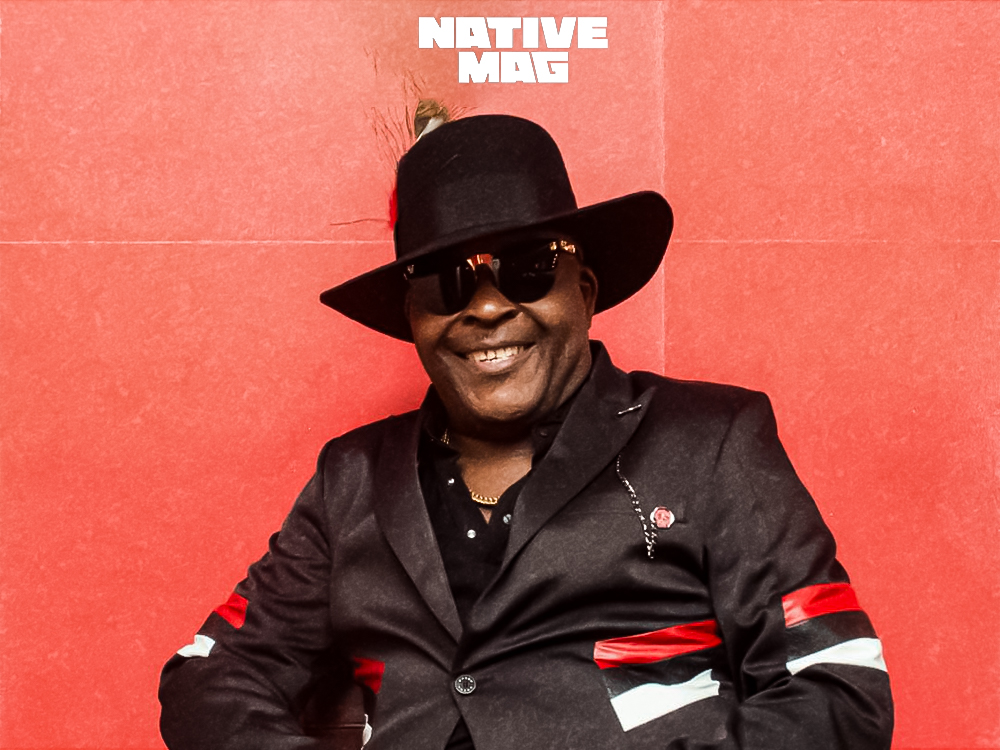
Few faces are more iconic on the Nigerian screen than that of Mama G, a moniker for the popular actress Patience Ozokwor. Her brilliant execution of, more often than not, villainous, charismatic, and mulish characters made her a household name in the 2000s. 

Alongside her highly accomplished acting career, which boasts over 100 credits, the 66-year-old also led a brief but equally successful music career. She released several songs, including “Ihe Neme N’uwa,” “Iyo Ngwo Ngwo,” and “Adaeze,” most of which were lengthy and featured other Nollywood stars who also doubled as musicians, with extensively choreographed visuals and heavy backup vocals. Her debut album, ‘Ojadili,’ housed these songs, along with others, predominantly conveying messages of morality and social commentary. 


One of the album’s standout songs, the socio-politically charged “National Moi Moi, featured fellow Nollywood stars Tonto Dike and Charles Awurum. Its catchy hook and satirical music video, which depicted Mama G cosplaying as a Nigerian politician, contributed to its controversial success and further legitimized the actor and singer’s musical career. While “National Moi Moi” became ubiquitous in the early 2000s, it’s one of her other songs, “Make We Jolly,” which also features Dike and Awurum, that has arguably had the more enduring legacy. 

Stepping away from the solemn musings on the sorry state of the country, “Make We Jolly” is an instant party starter that employs its listener to forget their troubles and get lost in its rhythmicity and euphoria. Mama G beautifully reworks the melodies from VIP’s 2003 classic hit “Ahomka Womu,” as she delivers a memorable performance both in English and her native Igbo. This clever interpolation not only pays homage to a foundational track in African music but also infuses “Make We Jolly” with a familiar and infectious energy that continues to help it resonate with audiences across the continent.


While the Ghanaian Hip-life group declared their undying desire for a love interest on their hit single, Mama G was more concerned with the collective need for escapism on hers. “Come my brother, Come My sister / Jam the gbedu, drink the pammy,” she sings cheerily as she masterfully transforms the original’s romantic tenor into an anthem of communal celebration, urging listeners to shed their worries and embrace the present moment with unbridled enthusiasm. 

The song’s accompanying music video, which Nollywood filmmaker Ifeanyi Azodo directed, is as ecstatic as the record itself. Shots of different groups of uniformed vixens executing meticulously choreographed dance moves are punctuated by scenes of Mama G at the heart of a lively function, almost like a general rallying her troops to celebrate and be joyful. It’s vibrant and amusing in parts, capturing the simplicity and nostalgia of a bygone era.

Even though Mama G’s music career was truncated as she chose to focus on her acting career instead, she managed to leave an indelible mark with releases like “Make We Jolly,” which continues to stand as a testament to her indisputable musical talent and ability to craft songs that speaks to the heart of everyday experiences, providing a much-needed antidote to the pervasive anxieties of the modern world.

Moonga K. Refuses To Be Put in A Box

Over the past few years, the tides have visibly shifted in Country music. A new wave of Black artists is transforming the genre and refusing to be shut out of a musical style their progenitors helped shape. Artists like Beyoncé, Shaboozey, and Tanner Addell have played influential roles in this change by pushing the genre forward with experimental sounds and powerful lyricism. Zambian artist Moonga K. has come forth with his proposition to be added to this pantheon.

Known for his bold experimentation and poignant storytelling, he is stepping into new territory with his latest, ‘OUTLAW,’ a six-track Country-inspired record that explores themes of courage, queer love, community, and mental health. “I love constant evolution,” Moonga explains. That’s what I think outlaws are: individuals with unadulterated spirits, wild and free in everything we run towards.” 

Echoing Black Country trailblazers like Herb Jefferies, Ray Charles, and Charley Pride, he describes his new project as a love letter to the past, present, and future. “Black hands built the banjo, Black mouths sang the Blues, and Black feet beat the rhythm of the South, yet we’ve been ghosted from the genre we helped create,” he explains.


The project takes influences from genres like Funk, Pop Punk, Rock, Soul, Electronica, and Hip-Hop. Crafted with the help of co-producers Hannah V and Ryan Marshall, Moonga K. created a sound that strikes a balance between feel-good tracks and soulful ballads. “Artists like Breland and Beyoncé allowed me to be more experimental with my sound,” he says. “I love that when you listen to their records, it always sounds unmistakably like them and reflects their joy for music, and so I attempted to emulate that.” 

Born in Zambia and raised in Botswana, the South Africa-based artist is a product of diverse cultural influences. This exposure has pushed him to reflect more deeply on the kind of music he wants to put out in the world, having grown up in a heternormative society that dictated how he was expected to exist in the world. Despite this sense of alienation, he strives to make music that resonates with others who have felt like outcasts or “misfits” as he likes to call them.

The last time I spoke to Moonga K., towards the end of the pandemic in 2021, he was preparing for the release of his sophomore EP, ‘Candid,’ a defining point in his budding career as he grappled with what it meant to be a queer artist in today’s times.  ‘OUTLAW’  features a queer love song, “stole my heart,” and marks the first time he has used pronouns in his music. “I truly didn’t intend to be political about it,” he explains. “I just thought I’d never really heard a black man sing a country song about loving another man, so I wanted to write my version of that. I’ve always been fluid in who I love or interact with romantically, and I wanted to contribute something I hope could make it easier for a black male queer artist in country to feel motivated in pursuing without fear.” 


Set in a futuristic world where technology, time travel, and cowboy life merge, Moonga’s story in ‘OUTLAW’ follows Kai, a lone ranger who falls in love with another Black man, Elijah. Though society in this imagined future has progressed, remnants of oppression and queerphobia still linger, and people are fleeing from traumatic families. On their journey, they encounter fellow outsiders in clubs and intergalactic ranches and find a community, ultimately discovering the transformative power of their love. 

This is a story he is hoping to bring to life soon. His love of sci-fi deepened the project’s visual approach, and through this aesthetic, he hopes to evoke a sense of community among fellow misfits. “I’ve stepped further into accepting that I’m on my path musically,” he reflects after feeling othered throughout his life. 

The road to releasing this body of work has not always been a steady one. “I had a lot of white folks, specifically, who were hesitant about me stepping into Country, not because they didn’t believe I could do it, but because the country industry is cut-throat and racist,” he shares. “Stories from writers in Nashville, while disheartening to hear, didn’t faze me in any way.”  This experience speaks to challenges many Black artists face while trying to break into the Country genre without taking into account identity markers like gender and sexuality. “I have always felt pigeonholed, but I have always found people who resonated with my music, so I just stick to the truth that someone out there will like my shit,” he says. 


In many ways, ‘OUTLAW’ is also defined by an almost obsessive focus on world-building. It is imaginative, ever-expanding, and attempts to create new narratives and worlds for the Black community to exist in. “Lyrically, Africans have always been storytellers, and there’s always passion in vocalising, which is spiritual,” he says. “So, I couldn’t do this record without paying homage to those call and response devices, or choral arrangements, and the banjo, which is rooted in West Africa.” Grounded in these cultural musical devices that are specific African culture, he delivers a distinctive project replete with genre-blurring sounds as seen on tired! which infuses traditional Country elements while honouring the genre’s African, Mexican and African-American roots. 

Beyond musical musings, he also drew inspiration from literary and artistic works such as The Negro Cowboys by Philip Durham, visual imagery from series produced by the likes of Ivan McLehann and Gabriela Hasbun, and acclaimed films like ‘The Harder They Fall.’ The common thread between these works is that they reclaim and spotlight often erased history and presence of Black cowboys and Black life while also exploring themes like identity, resilience, and cultural pride.

With this new offering, Moonga K.’s ambition is fiercely global. “I’d love to do some shows in Montreal, Berlin, London, and Los Angeles; they’ve been showing a lot of love to the singles, so it would be great to go out there and perform,” he shares. “The ‘OUTLAW’ Tour is the plan, and I’m trying to secure dates around the world, so fingers crossed, because I’ve never gone on tour before, so this could be the soundscape that sparks that.” 

Listen to ‘OUTLAWhere.

uNder: Best New Artists (August, 2025)

The conversations that keep coming up during our daily newsroom more often than not revolve around platforming the music we love and the communities that surround its wider culture. Very regularly, the music that excites our team reflects The NATIVE’s vision of being a bastion of music from parts of Africa and the Black diaspora. There are exciting acts from the ever-evolving Nigerian music underground, rappers experimenting with Dance Music and Hip-Hop from South Africa, as well as emotive singers whose work blurs the boundary between Hip-Hop and R&B. 

Discovering these acts, being blown away by their skills, and sharing our community about them continues to excite us more than three years after we conceived this column as a platform to spotlight talents that represent all that’s exciting about African music. In a world where marketing budgets, ad spends, and PR placements continue to reshape the music landscape, uNder is still our way of raging against the system and spotlighting deserving acts whose works are vital to sustaining the creative spirit that makes African music indispensable. For our August entry, we have Paxslim, Blacboyy, Deena, and Mūmbi. This cohort is united by a thrilling sense of freewheeling experimentation that is sure to serve them well as their career progresses. We hope you enjoy discovering them half as much as we enjoyed listening to their music and writing about them. 

Paxslim

For Fans Of: SahBabii, LUCKI, Lil Yatchy 

One of the most influential but slightly underappreciated names in Hip-Hop’s storied and illustrious ranks is Lil B. The American rapper and producer popularised a self-proclaimed “based” style in the early 2010s–an artistic style that prioritised eccentricism over a defined framework–giving Hip-Hop an extra coat of sophistication (read: swag) and creating a new lane for Hip-Hop artists that were similarly fed up with the underpinnings of traditional Rap. He was a visionary in many respects, influencing a generation of modern-day artists like  Nigerian-Swiss rapper Paxslim, who embraces the trailblazer’s artistic tenets.

Like Lil B, Paxslim, born Pax Anthony, is not concerned with conventions or the general orthodoxy of Hip-Hop. While he largely operates as a rapper, his songs, more often than not, takes on a fluid form thanks to his experimental flows and production that give his music a vibrant, kaleidoscopic quality. With the help of Swiss producers Modulaw and Xzavier Stone, the rapper was able to try out his off-kilter melodic musings and vocal flourishes on hard-hitting, synth-heavy beats on his 2021 mixtape ‘H.G.P. (Hands Got Potential),’ helping him garner some attention from listeners who were drawn to his brand of oddball rap. 

His 2023 follow-up, ‘HOLY,’ expanded on his unique style as he opted for a more muted but equally experimental sound that further highlighted his dynamism. More importantly, the project kicked off a fruitful creative partnership with producer Haram, who produced 4 out of the project’s 11 tracks. The two developed a close working relationship, burrowing down to further explore more unique styles, as they cranked out a healthy chunk of music in a short period. A string of half a dozen singles across the first half of 2024 paved the way for ‘EXECUTION,’ a 6-track EP that highlighted Paxslim’s more efficient, smoother delivery and Haram’s evolving production style. 

Ahead of the release of his latest project, ‘D5NCIN,’ Paxslim shared ‘DBD5,’ a 5-track EP that served as a sonic compass of sorts, indicating what musical direction he and Haram were headed in on the rapper’s new full-length release. The dark and melancholic production that defined some of his older work makes way for a more cinematic and animated style, producing highlights like the energetic “Powers” and the spacey opener “Nirvana.” ‘D5NCIN,’ expounded on the two’s creative synergy as Paxslim lays his slurry, experimental flows over some of the same cinematic beats that defined ‘DBD5,’ as well as some groovy, Dance-inspired production that continues to prove the rapper’s insatiable and ever-present desire to explore and push the boundaries of his musical expression.


Blacboyy

For Fans Of: Playboi Carti, Destroy Lonely, Maison2500

That exciting atmosphere that defined the early years of the famed alte scene seems to be returning. Thanks to a raft of talented, upcoming acts that have emerged over the last year and a half, making their mark with unique sounds and equally impressive releases, there’s genuine and growing excitement within the underground scene again. These acts have also begun to band together, charting their collective path to success while fostering a sense of community. There’s 808collective, a producer group that comprises names like Darius, Andi, 3CB and Topsy, all of whom have been instrumental in creating some of the blooming scene’s best music yet. There’s also CYK, an acronym for Cyber Youth Kings, a creative collective that seems united in their desire to blend the old with the new. One of CYK’s standout affiliates is Blacboyy, a rapper and producer who, like a swath of others in modern-day Rap, seems to have graduated from the university of Playboi Carti’s ‘Whole Lotta Red.’ 

Born Jabber Abu, Blacboyy’s music clearly draws heavily from the mania and molten, experimental sound that defined Playboi Carti’s magnum opus, but it’s in the other styles that he’s able to combine with that of ‘Whole Lotta Red’s, almost like varied toppings on pizza, that makes his music uniquely appealing. After producing the entirety of ‘$oda Archives,’ a collaborative tape with rapper $odaman in 2021, he released his official debut single “Miltant” in late 2022. The single was quickly followed by ‘Come Out And Play,’ ‘Stardust Romance,’ and ‘Bornstar,’ three projects that featured a lot of zoned-out sing-rapping as he looked to find a sure footing sonically. 

2024’s ‘gnarly’ is where he truly began to step into his own as his vocal stunts and inflections began to sound a lot more assured, his beats more explosive, and his style more varied. “prada u,” is built about sticky R&B-inspired melodies, he sprinkles some psychedelic glitter on the hypnotic “cant feel my face,” while “body” which features fellow upcoming rapper Tobias, draw from the eclectic hyper-jerk style that rappers like Fimiguererro has popularised recently. Other cuts like “fashion killa,” which takes inspiration from A$AP Rocky’s 2013 hit of the same name, “supermodels,” and “shine,” featuring Zaylevelten, also stand out, showcasing his ability to bring something inspired and fresh to the table. 

Building on the momentum of ‘gnarly,’ the rapper released the melodic “TMZ” earlier in the year before sharing “Say Twin Say Peter,” a single with frequent collaborator S1orDie, which has proven to be the biggest moment in both their budding careers. The record is powered by sneering synths and a simple, repetitive hook by Blacboyy that seems to echo long after the record stops. The rapper recently released two new singles, “Wasted” and “gutta,” as he continues to expand his oeuvre as well as his eclectic style. 


Deena


For Fans of: DEELA, BKtherula, Molly Santana

On Deena’s growing Soundcloud page, her bio reads: “I make music you’ve never heard before.” While that’s somewhat debatable, at least with the current evidence that’s available to the public, however small, it’s the execution and delivery of her music that makes the upcoming rapper, born Ayodele Bisi-Daniels, special. Even with only a couple of tracks to her name, four at the time of writing, Deena has already managed to display a remarkable ability to deliver savvy one-liners and nimble shit talking with so much finesse, thanks to her bank of melodies and flows that she switches out like a seasoned rapper. 

In terms of production, Deena seems to favour snappy, bass-heavy beats that give her ample space to fire off reams of flexes and her motor-mouthed flows. On her first single, “1nce,” which was produced by Darius and pzalm, she’s assertive and slightly unpredictable, as she gets off free-associative lines with sufficient panache that makes them land. Her follow-up tracks, “way Up!” and “plan” follow the same model, imbuing both with more of a searing edge. The former features some incredibly dizzying flows that’re sure to have your head bopping, while the latter, which was produced by killua katana, is powered by the same daredevil flows and a cool nonchalance that makes her stunts all the more impressive.

“ACTIVE,” her official debut single, arrived in June, marking a pivotal moment in her budding career as she looks to establish herself as one of the most exciting rappers around. It’s more of the same expressive, high-energy and hypnotic style that her growing listenership has come to anticipate from her earlier, unofficial works. At just over two minutes, she manages to cram so many flows and melodies into ”ACTIVE” that it almost feels like a rap marathon, leaving you exhausted in the best way possible. 


Mūmbi

For Fans Of: Tems, Maya Amolo, Elaine

Last year, we published a comprehensive piece about the majestic voices of African R&B and the way the somewhat underappreciated genre is tightly woven into the tapestry of the continent’s collective musical heritage. Names like PSquare, Tems, Odeal, South Africa’s Ami Faku, Ghana’s Ria Boss, and Eswatini’s Manana were all highlighted and their inimitable contributions to the genre. Kenya-born Mūmbi is one of many upcoming singers hoping to add her name to this illustrious list with her refreshing tunes that blend her contemporary R&B sensibilities with an undeniable East African flair. 

The Toronto-based singer and songwriter began her music career a few years back, showcasing her supple and sweet vocals with covers of songs like Sauti Sol’s “Short N Sweet,” Vanessa Mdee’s 2018 hit “Nobody But Me,” and Lauren Jauregui’s “More Than That,” on her Youtube page. She put out her first official in single in late 2023, a dreamy, love-inspired number titled “Float (All I wanna Do).”

She released her second single “Fake Love” in mid-2024, tearing into a two-faced and insincere love interest with a self-assured acuity. ‘Now, here’s what we’re gonna do, no one needs to cry if it’s clear i’m not the girl for you,’ she sings gently with a tone of resignation and resolve. She followed up “Fake Love,” with two other singles in 2024: the sensual “Tonight” and “Steppin’ Out,” a self-confident anthem that features Haitian rapper Kemdilo. Her latest Dance-tinged single “Letting Go,” came recently in June, as she continues to showcase her skill and vulnerability, crafting narratives and soothing melodies that resonate deeply with her growing audience.

Taves Returns With Magnetic Two-Pack “W2Y”

Taves has shared a new two-pack single titled “W2Y.” The new songs, which the rising singer has been teasing for a few weeks now, arrive as his first official release since he put out ‘Are You Listening?,’ his 8-track debut that came out in mid-2024. Perhaps more importantly, the new singles are released under Mother Africa Reigns Supreme’s imprint, suggesting that the singer might have parted ways with his former label. 

While it’s taken Taves over a year to follow up on his debut, he’s ensured he didn’t lose all momentum by delivering a couple of standout features in that time period. Late last year, he stole the show on L.A.X’s euphonious “Let Me Know,” as well as “Compose,” a sleek collaboration with Mavin rapper LADIPOE. This year, he’s continued his impressive collab streak, adding his deft touch to Loti’s “Okrika” and Yarden’s “Ifeoma.” 


Teaming up with producer Arieenati, the singer’s latest two-pack, which includes “Way2Yung” and “6ways,” is imbued with the same type of charm and magnetism that helped previous singles like “Folake” and “Eleyele” resonate with his growing fanbase. The two-pack’s title track serves as a perfect soundtrack to youthful optimism and exuberance, as he delivers riffs and runs that explore his newfound vices and the thrills of adolescence. 


If “Way2Yung” is adequate for house parties and shindigs, the sensual “6ways” is better suited for close quarters. Here, Taves yearns and croons about a potential love interest whom he can’t seem to get out of his mind. “Is it too late? I’m calling, I don’t mean to bother you,” he sings charmily in the song’s opening seconds over evocative production that smoothly combines influences from both R&B and Trap. 

Listen to “W2Y” here.

ODUMODUBLVCK, STORMZY, AND ZLATAN WANT TO STAY PAID UP ON “PAY ME”

After months of warning that the machine is coming, including a mixtape to portend its arrival, ODUMODUBLVCK is kicking off the much-awaited and anticipated ‘Industry Machine’ era with the release of “Pay Me,” a blockbuster collab with Nigerian rapper, Zlatan, and British star, Stormzy. 

Produced by Scarr, the track is cut from the Abuja rapper’s signature Okporoko sound, hinging on a silky and slick beat propelled by head-nodding drums and airy keyboard loops. Across the song, ODUMODUBLVCK confidently balances an effortless and engaging flow with the confident and chantable chorus, “Pay me my money,setting the stage for Stormzy and Zlatan to deliver their verses. 


Pay Me”  opens with a prominent feature of “Make We Jolly,” an old Nollywood soundtrack by Patience Ozokwor in collaboration with Tonto Dike and Charles Awuram. It offers a nostalgic glimpse into the past, showcasing ODUMODUBLVCK’s longstanding grasp and appreciation of pop culture references. 


Close to two years after ‘Eziokwu,’ the rapper is gearing up for another transformative release with ‘Industry Machine,’ and “Pay Me” is his opening salvo. He links up with Zlatan after first working with him on his breakout single, “Picanto.”  The video for “Pay Me” taps into the message of the track as the trio humorously attempts to pull off an ATM jacking. 

“Pay Me” is coming after the surprise March release of “The Machine Is Coming,” a surprise 16-song mixtape that housed songs like “LEGOLAS,” the Victony-featuring “PITY THIS BOY,” and “WAGE WAR.”

Listen to “Pay Me” here

Fido Wants To Leave A Mark

Confidence is a rare trait that eludes many, but Fido, born Olayemi Josiah Awosika, wields it like a maestro conducting a symphony. Growing up between Lagos and Matogun in Ogun State, locales where hope and grind intertwine, Fido describes his childhood as amazing. “I was born in Lagos, but my parents are from Ondo State,” he tells The NATIVE. “I don’t have much to say about it, but I had a great childhood with the best parents in the world. They supported me, and I’m grateful for that.” 

Unlike other artists who inherited their passion for music from family, Fido’s interest came about by self-discovery. “My music came from within me,” he says. “No one in my family is a musician or into music professionally. I discovered this talent in me, and it just felt natural to pursue it.” That realization hit at age 14, igniting a zeal that propelled him toward the industry. “That’s when the zeal to pursue music hit me,” he recalls. “I knew I wanted to make a name for myself in the industry.” 


Inspired by Afrobeat legend  Fela Anikulapo-Kuti, Juju great King Sunny Adé, and Fuji icon K1 De Ultimate, Fido developed his unique style, drawing on the soulful storytelling style and infectious energy of the trio’s music. “Their music had soul and told stories that connected with people,” he explains. “That energy and authenticity pushed me to create my sound.”

Fido’s breakout single, “Awolowo,” released in 2024, became a defining moment for him, blending melodic Afropop grooves with streetwise lyricism, the song elevated him to the top of the genre. “It’s a ganja vibe, you know?” he says, laughing. “When I heard the beat, the inspiration just flowed naturally. It was divine, like the music came straight from my soul.” Navigating fame has been a learning curve, but Fido has embraced it with gratitude. “It’s been great, but it’s also a learning process,” he admits. “Fame comes with new responsibilities, and I’m figuring out how to grow and develop myself.”

For Fido, timing is crucial, yet the singer believes there’s no such thing as a perfect moment to share his music. His debut EP, ‘Olayemi,’ was released on August 1, 2025, marking a vibrant, new chapter in a journey ignited by self-discovery all those years ago. “There’s no perfect time, you know?” he says with a grin. “My fans kept asking, ‘Fido, when’s the project dropping?’ So, I worked with my team, and we decided it was time to put it out.” 


Building on the momentum of hits like “Awolowo and “Joy Is Coming,” ‘Olayemi’ marks a pivotal milestone for the singer. With a title taken from his birth name, the EP is a deeply personal reflection of his upbringing and journey. “The project is about me, my culture, my upbringing, and my roots,” Fido explains. “It’s about letting people know who Mr. Fido is.” The eight-track project, curated from a vault of recordings spanning years, balances introspection with infectious energy. “I’ve been recording for years,” Fido notes. “For ‘Olayemi,’ I picked songs that felt right for my fans and aligned with my story.” 

Across its tracks, ‘Olayemi’ captures Mr. Fido’s remarkable journey from the quiet streets of Matogun, a border town in Ogun State, to the global music stage. The EP traces his path from a struggling unknown to a rising artist on the cusp of stardom, weaving tales of hardship, hope, and triumph. Songs like “Lungu”  and “Boko” lay bare the weight of his past struggles, while Money Moves” channels a buoyant resolve and Dollarpor” blends Yoruba and English to manifest future success. 

Fido’s creative process is a masterclass in effortlessness, a quality he proudly owns. “It’s always easy for Mr. Fido,” he declares with a laugh, a mantra that defines his approach to music-making. “I get in the studio with my producer, he plays the beat, and I vibe. Sometimes I write, sometimes the inspiration hits right there. It’s natural. When asked about challenges in the studio, he doubles down on his confidence, “Nah, it’s always easy for Mr. Fido.” 


That ease shines through on ‘Olayemi,’ seeing the singer blend  Fuji and contemporary pop influences to create a sound that feels both nostalgic and fresh. His ability to let the music flow without forcing it has become a hallmark of his artistry, setting him apart in an industry often marked by overproduction.

In all, the release of ‘Olayemi’ is a defining moment for Fido, who describes it as “a huge milestone and a step toward greatness.” He’s thrilled with the response from his fans, who have embraced the project with enthusiasm. “The reception has been amazing, fans are streaming it, and they love it,” he shares, his excitement palpable. “When you listen to the EP, you hear my story, my upbringing, and where I come from. It’s personal, and I’m thrilled that people connect with it.”

As he looks to the future, Fido is focused on taking his music to new heights. “Expect more greatness,” he declares. “I’m aiming to take my sound international, representing us on a global stage. I want to be a good example for the genre, both locally and worldwide.” 

Listen to ‘Olayemihere.

Best New Music: Luwa.Mp4 Lays Bare The Anxieties Of A Non-Conformist Lifestyle On “pEEP MY RIDE”

Luwa.Mp4 has always committed to the part right from the start. The rising singer and rapper presented himself early on as a musical chameleon who embodied the Punk ethos of non-conformity and a do-it-yourself ethic. If his fluid songs which mostly fused Hip-Hop with elements of Rock didn’t convey his message adequately, his outlandish fashion choices drove home the point. 

His signature mohawk and audacious fits earned him the “alté Balotelli” moniker as he also channelled some of the football maverick’s mercurial spirit. He’s kept that unwavering commitment to this artistic vision alive on his recently released debut album ‘punKstA*,’ a definitive and concise body of work that helps solidify his creative identity. 


Across the album’s 12 songs, Luwa.Mp4 expands on his auto-tune-drenched, sing-rap melodramatic multiverse, displaying the remarkable dynamism that has established him as one of the most unique and daring acts around. On the pounding album opener, he declares himself a “staR” rapping, ‘Apart from the fact that you ain’t got my teflon, nigga I’m the best and no one’s reaching me I swear,’ with the confidence and arrogance of a certain American controversial rapper-producer phenom. 

He goes on to back up this claim through the album’s 25-minute runtime, fusing genres like Punk Rock, Afropop, Hyperpop, and Rap with a breezy nonchalance while also making frequent excursions into Electronic music terrain. Arguably, the album’s strongest offering comes in the form of “pEEP My RIDE,” one of the few downtempo cuts that appear in the project’s second half. 

Produced by JTRN, “pEEP My RIDE” is an instant feel-good record that evokes some of the nostalgia of the MTV television series that its title slyly references. It’s the kind of music you want to drive around town with the top down to. “This is the Lagos living, ooh? (Ooh) / Yes, I’m driving in a Lexus, down Bourdillon Road,” he sings coolly in the record’s opening seconds. 

The first verse, however, gives a depressing glimpse into the shared reality of many young Nigerians, but more peculiarly, one that he faces due to his lifestyle and creative choices. “First stop I see police but they won’t stop me / Coz me and cyk riding in a big body / Only thing they could ask me for is a lil’ money / But they won’t tell me, “Get down,” they think I’m somebody’s son,” he sings. 

The follow-up lines paint a more frightening picture: “If I was in an Uber, it wouldn’t be fun / They always say I’m a scammer or I have a gun / Acting like I’m Jeffrey Dahmer but I’m not on the run.” It’s relatable and distressing, but like many great artists, Luwa.Mp4 manages to turn some of his most morbid experiences and moments into something truly compelling. 

After crossing the first metaphorical checkpoint, the rest of the ride/record feels more celebratory and less anxiety-laden. The song eventually transitions into the more boisterous “pAPARAZZI,” as he resumes making bold artistic choices and claims that deliver on the album’s title. However, through the sticky melodies and ambience of “pEEP MY RIDE,” he’s able to reflect on the price of choosing and living a non-conformist lifestyle, forcing a confrontation with the solitude and misunderstanding that accompany a path less traveled.

Listen to  ‘punKstA*’ here.

Review: ‘Black Star’ by Amaarae

When you arrive at “FREE THE YOUTH,” the closer of Ghanaian-American singer Amaarae’s third studio album, ‘BLACK STAR,’ you’re left with a buzz. The last 44 minutes have been spent immersed in a spacey and euphoric place where the glamour of dark synths swell and ebb. Throughout the album, Dance Pop sensibilities are cranked to the max to meet the sweaty desires of bodies seeking release on the dance floor. 

While the ambitious “FREE THE YOUTH,” takes a peek into the future sonically, its title (derivative of the now popular Ghanaian streetwear brand) calls back to mind the no-holds-barred youth culture scene in Ghana from where Amaarae, much like the brand, first found stardom in the late 2010s. The inclusion of this track is a deliberate full-circle moment, a powerful grounding of her international success in local origins. When the last notes hit, questions linger on the mind: “What is a black star? What does this mean in the context of Amaarae’s career?” 


It’s been a few years since her 2020 debut full-length album, ‘The Angel You Don’t Know,’ which produced the transcendent viral hit “Sad Girlz Luv Money” and its eventual remix featuring Kali Uchis. From TikTok feeds to dance floors across continents, the album opened a new world of possibilities. Its success, however, was merely the genesis of a broader, more ambitious journey. 

In that time, Amaarae has charted on Billboard’s Hot 100, released her sophomore project, ‘Fountain Baby,’  joined Sabrina Carpenter on tour, made history as the first Ghanaian woman to perform at Coachella solo, carved an expansive fanbase, and opened for Kaytranada. She has successfully crossed over into the global sphere in a way that’s true to her eclectic nature, proving that wide appeal and authenticity are not mutually exclusive. In many ways, ‘BLACK STAR’ functions as a reflection of the perspective of a now actualised superstar. 

The album arrived powered by two singles, “S.M.O.” and “Girlie-Pop!” as well as a Twitch livestream party in its honour. They offered a glimpse into the pulsating and inventive energy that was to come. It was clear that we were once again about to bear witness to Amaarae’s ability to ignite a titillating spark. If her career so far has shown anything, it’s that avant-gardism is where she shines best. In her airy sonic world, freedom, defiance, and deftly-written lust thrive. “Flip positions, switching genres/ till you make it pop,” she mulls on “Girlie-Pop!.”


Even for seasoned Amaarae listeners, ‘BLACK STAR’ might come off as overwhelming despite the warning the singer put up moments before its release. It’s audacious and exciting— two adjectives that always seem to follow any Amaarae project. Regardless, it eventually sticks. The opener “Stuck Up” wastes no time in establishing this new world. Its palette is a vibrant, carefully curated clash of genres, a defiant rejection of a single label. The heavy bass and crashing synths you hear on “Stuck Up” are not just for effect; they are the foundation of a sound ready to light up dimly-lit clubs around the globe. In the margin of the track, Amaarae expertly weaves Electro and Techno with the driving rhythms of Amapiano, Gqom, and Baile Funk. 

In this new arc, self-indulgent hedonism is turned up to the max, and fun is the primary obsession. “Ketamine, coke, and molly,” she hauntingly repeats on the hook of the Bree Runway-assisted “Starkilla.” It’s not a glorification of drug use, of course; rather, she’s presenting a matter-of-fact testament of a night out marked by unbridled desire and pleasure. “I want your body black, make it sex attack/ I got some sexy ways, I move my body right,” Runway intones, creating a sense of immediacy to the song, contrasting the initial bravado with a genuine need for connection.

On “ms60”, Naomi Campbell attempts an all-encompassing definition of a black star:  “They call me a bitch, a villain, a controversial diva/ No I am the Black Star.” Her understanding of being a black star does the phrase some justice. A test of stardom is being the constant subject of conversation, of which Campbell is a seasoned veteran. However, the album proves that a black star in this borderless digital age is an honest transverse product of black diasporic culture.

Ultimately, the Black Star of Africa, the symbol on Ghana’s national flag (and Amaarae’s cover art), represents emancipation, unity, and the guiding light of hope for the continent. What does this mean for the artist? Well, it could be a representation of where she currently finds herself in her journey. She is framing her success not just as an individual achievement, but as a victory for a new generation of Ghanaian and diasporic artists. 

While some might argue that there was space for her to lean into more Pan-Africanist themes and conversation, Amaarae has never had the penchant for doing the expected. Instead, on the album, she creates sounds that are both universally danceable and distinctly diasporic.  She trots the globe, tapping various dance styles from the US, Europe, Brazil, and South Africa to connect their shared Black origins. It does not stay tethered to a singular era as it ventures into different periods for inspiration. 

On “Kiss Me Thru the Phone pt 2,” Amaarae is joined by fellow sample-maestro and whispery-toned singer, PinkPantheress. With unsurprisingly great chemistry, both artists take turns offering a modern spin on the lovestruck anthem by American rapper Soulja Boy over a flip of Sisqo’s “Thong Song.” “I’m not hanging up/ Could replace your love/ But I don’t want to,” they sing, yearning over their interests. Similarly, “Stuck Up” interpolates Gucci Mane’s “I Might Be” and Cher’s “Believe” finds new life on “She Is My Drug,” where Amaarae passionately asks, “Do you believe in love off the drugs?” While the sample choices may seem disparate at first glance, a late ’90s Cher hit next to a 2008 Soulja Boy track makes all the sense when viewed through the lens of Amaarae’s pursuit of connection and desire.  

Though ‘BLACK STAR’ offered the promise of a major departure from its predecessor, some tracks like the wispy “B2B” and the trance-like standout, “Fineshyt” leave a familiar taste in their wake. Unlike ‘Fountain Baby, the subject matters explored on ‘BLACK STAR’ dive deeper into longing and embracing vulnerability. While Amaarae’s previous work was characterised by a carefree and detached confidence, this album reveals a softer, more introspective side. 


Hedonism isn’t just about fun; it’s a way of coping, of seeking connection. The yearning and sensitivity feel like a palpable counterpoint to the album’s often hard-hitting production. “Dream Scenario,” starring the lauded Charlie Wilson, is as starry-eyed as it sounds. Amaarae breaks down her fantasies of a fashion-forward lover nestled in a Barbie dream house who’s willing to accompany her on lasting vacations to Ghana. Wilson’s addition is a masterstroke. His soulful, seasoned voice adds a layer of sincerity to Amaarae’s fantastical lyrics.

In all, ‘BLACK STAR’ is an agreeable contradiction that ordinarily shouldn’t work, but for some reason, it does, and it does so effortlessly. For this,  we have Amaarae’s singular artistic vision and ability to find the emotional core of every song to thank. This is an album not just to be heard, but to be experienced thoroughly. It is clear that Amaarae now regards herself as a cultural polymath, relentlessly working her way to a resolution of her take on cross-pollinated Dance influences in each song. By the time the last notes of ‘BLACK STAR’ are sung, we have encountered an artist who has truly found her place in the cosmos—a shining, undeniable black star in her own right.

Listen to ‘BLACK STARhere.

DEELA Teases Forthcoming Mixtape ‘Wicked’ With Unapologetic “Slide”

Rising rapper DEELA has shared a new single titled “Slide.” The latest release comes as her third official single of the year, as she continues to build anticipation amongst her growing fanbase for ‘Wicked,’ a new forthcoming mixtape that she has been teasing for a few weeks now. The mixtape, which is set for release imminently, will arrive a few months shy of a year since her last project. 

After kicking off 2025 with a couple of producer edits of “Kryptonite,” one of her standout releases from last year, DEELA released the bouncy “HEATER,” her first official single of the year, which featured Genio Bambino and American rapper and producer Vayda. A few weeks later, she released the fiery “Supreme Dee,” a self-assured bop where she declared herself, ‘The one, the truth Supreme Dee.’ 


“Slide,” which was produced by frequent collaborator Genio Bambino and Dera, features more unapologetic shit talking in usual DEELA fashion. The pace here is a lot quicker than her earlier releases from the year, as she mouths off about the jewellery on her wrist and her dislike for hypocrites over pulsating drums and swirling synths. ‘Used to be shy, so meek / Bro fuck that, I want the whole world now,’ she raps confidently with the same brazen swagger that continues to earn her a growing audience. 

The forthcoming ‘Wicked,’ will come as the follow to 2024’s ‘Good Girl No Dey Pay.’ Shortly before the release of “Slide,” the rapper appeared on Foundation.fm, a female-led community station where she revealed that the new mixtape will feature 8 tracks, a couple of fun features and different sounds. 

Listen to “Slide” here

June Freedom Finds Clarity On ‘Casa Mira Mar’

June Freedom is at peace, and he wants you to feel it, too, through his new album ‘Casa Mira Mar.’ 

Expansive in scope and light on its feet, the buoyancy of Casa Mira Mar is framed with a through-line of healing, reflecting an artist being centered. But this ease was only made possible through the stillness that he found in a pilgrimage home. 

Forged across continents, June’s sound is an itinerant synthesis of Afro-Latin rhythms, Alt-Pop, and R&B. However, after a 10-city tour in Europe backing his sophomore album, ‘7 SEAS,’ left him adrift, he found his focus by narrowing his field of vision. Thus, Casa Mira Mar—meaning “house with an ocean view”—is named after his grandfather’s store in São Filipe on Fogo Island, Cape Verde, and is a record conceived from his conscious retreat to that tranquil place.

Born in Boston, but raised on the island of Fogo, June Freedom grew up surrounded by live music: his mother’s restaurant hosted bands every weekend, and his teenage years were spent representing Cape Verde in small inter‑island competitions. Moving to the United States at 15 brought new sounds fully into his orbit: R&B, Pop, and Hip-Hop, all without dulling his fundamental ties to Cape Verde’s musical bedrock. 

Distilling all these influences, ‘Casa Mira Mar’ is a collection of tracks fitting his expansive view of global Black music. His first full-length project since 2023, the record marries the Cape Verdean genres of Coladeira, Funaná, Kizomba, and Batuku with modern R&B and Pop templates. Featuring a cosmopolitan group of collaborators including Nigerian artist Cheque, Cape Verdean singers Djodje and Éllàh, Ghanaian-Dutch vocalist Nana Fofie, Spanish-Brazilian artist Lua de Santana, and Dutch singer-songwriter SABRI, it reflects the serendipity and openness that June envisions for his career.

We sat down with June Freedom to discuss making ‘Casa Mira Mar’ as a love letter to home, exploring the full range of his transatlantic identity on the album, and his excitement at being a vessel for carrying Cape Verde’s sound into new territories. 


You’ve said the album began taking shape after you returned to your grandfather’s home in Cape Verde. What was it about that trip that grounded you enough to make this project happen?

It’s the house I grew up in. When I moved from Cape Verde to the US at 15, I always wanted to experience something faster. Back home, everything is on ‘Island time,’ it’s really slow, and at a certain point, I felt like I needed more. Now, with the world feeling so fast and active, going back there always makes me think, “Ah, this is what life is supposed to feel like.” It’s a pace that matches where I’m at in life. Given everything I’ve been through, every time I return, I feel peace and calm. The way of life there is different; it gives me perspective. It shapes the way I think about tempo, about balance, even about my creative process. I find myself coming back with new ideas, but also with a clearer head. It’s a place where I can decompress and take it all in. It’s always good to go back home. I’m planning a trip there in a few weeks.

Having such a colorful musical childhood and then returning home for the record, how nostalgic was it? Have you revisited sounds from your childhood?

I always try, especially when it comes to sampling, to go back to chords and sounds that remind me of the music I started making. When I was younger, it was Coladeira and other genres from Cape Verde. For this record, I began with very specific chord progressions and guitar loops that instantly brought me back there. The album is full of those references; it has a lot of home in it. There’s a familiarity in the sound, but it’s still experimental and forward-looking, with strong R&B influences and elements from the West as well. It’s very much a blend. In Cape Verde, our main traditional genres are Coladeira, Funaná, Txabeta, and Batuku. We have Kizomba too. Although the Angolans will say Kizomba is from Angola, we’ve made our version of it. You’ll hear these different tempos in a lot of the songs on the album. If you enjoy this record, I think you’d also connect with a lot of the music from back home.

If you hadn’t felt burnt out after the 7 SEAS tour and gone home to recharge, what kind of album might you have made instead?

I would have made a completely different album. Who knows? It could have ended up as a trap record, maybe even drill. I mean, it’s funny because the Afrobeats genre as a whole is just now becoming popular globally—in the West and Europe—whereas for us in some parts of Africa, it has always been popular. My sound is specifically Afrobeats, but it’s even more niche because of other things happening, from the language I use to different kinds of musical bounce. I feel like the Afro space still has so much room to grow. I want to keep exploring as much as I can, using drums from across Africa, chords inspired by different indigenous traditions, and influences from across the diaspora. There’s still so much ground to cover, so many rhythms, textures, and ideas waiting to be discovered. There’s just so much left to explore, and I’m excited about the potential. 

The album’s soundscape is curated with a recurring softness, but what themes doesCasa Mira Marreach toward?

I think a lot about how certain sounds can affect you, and I wanted this album to offer moments of escapism, to create a place that pulls you away from all the chaos happening around us. The album has layers. Each song highlights different things we experience in this day and age: the way the world is shifting, how certain things are getting darker, and how social media is constantly in our faces. There’s a track called “Are You Still You?” that opens the album. Even though it’s built on an Afro-Swing rhythm, there’s real substance in what’s being said. From there, the record moves into songs that heal, grooves that feel good, but also carry intentional frequencies and hertz in the production. It does a bit of everything. There are different messages woven through the songs. The record also moves across languages—English, Kriolu (Cape Verdean Creole), Spanish, Portuguese—and plays with different rhythmic swings. It’s meant to feel like a journey, with something familiar but also something unexpected at every turn.

“Are You Still You?” is an exceptional opener, and Cheque does a great job. I love that the album has a wide cast of talented collaborators. How did those features come together?

Many of the collaborations on the album were spontaneous, though some were intentional. For example, when I knew a specific song needed a female vocalist. Most of the time, the features came together through random, in-the-moment connections. The main focus was on the theme of the album, but the artists themselves came from unexpected encounters. For example, Éllàh, who’s on “” just happened to be in Rotterdam at the same time that I was. She’s Cape Verdean but lives in Lisbon, and she was passing through the city. She came by the studio, and we ended up creating all kinds of different vibes. We dug deep on that one, and the hook she came up with was so strong it had to make the record. Nana Fofie also happened to be in Rotterdam during my camp there. She came to a show of mine in Madrid and was just there to support. Six months later, we followed each other on social media. I discovered she was an artist, sent her a song, and she sent back a verse. The feature with Cheque was similar. I had met him a few years back and thought, “This song needs something from him.”

.

Who are some other artists you would like to collaborate with in the future?

Mayra Andrade. Check out her music, you’ll love it. She’s amazing. I’d also love to work with Tems, she’s incredible. Tyler, the Creator is doing innovative work. Yeah, those are a few of the artists I’d be excited to collaborate with sometime in the future.

Earlier, you said the record moves between English, Portuguese, Spanish, and Kriolu. During songwriting, what typically comes first: the language or the melody?

It depends. The beat talks to me, the mood, the place, the time, how it starts. It never happens the same way twice. It just comes when it comes, and I try to leave space for a beat to tell me where to go. It’s all intuitive. There’s no fixed process. Sometimes it starts with a melody, sometimes with something I’ve written down, sometimes with a beat someone sends me, and other times I’ll just pick up a guitar. It can begin in any way. When it’s specifically from my Cape Verdean producer friends, it often depends on the chords. If they’re super romantic, I’ll usually sing in Creole or Portuguese. If the beat leans more toward Afro or R&B, I tend to write in English. Growing up in the US, I wrote for a lot of artists, which helped me understand Pop and R&B better. That background is something I naturally fuse with my Cape Verdean influences, so the process always shifts depending on what the music calls for.

You often talk about representing Cape Verde globally. Why does that matter to you in the context of Africa’s current music scene?

We’re small. We’ve got about 500,000 people back home. We’re a small nation, just 50 years into our independence. That’s why being able to represent Cape Verde on a platform like this means so much. But even though we’re small, the music back home is incredible. I’m not just talking about the popular music we put out now; we’ve always taken different genres and made them our own. Nigerians are amazing at that, too. blend styles and make it pop. But within every culture, there’s traditional music at the core. I’ve always gravitated toward that, to “the real stuff,” not just the Pop side. If you go back and listen to the traditional music from different regions, you’ll find so much richness. Cape Verde has a deep musical history, especially in the decades after independence. The 1960s, 70s, 80s, and 90s were a golden period; we made some of our best music during those years. Some of the music being made today makes me wonder what happened to that sound. We’ve got to go back to that, to pull from those sounds, those feelings. That’s the space I try to create from.

Of course, it’s not easy. We don’t have the same visibility as larger countries or a huge diaspora to back us. But in these past few years, I’ve seen growth, and it makes me proud. I can’t wait to keep bringing our music to more people, and most importantly, to bring it to life on stage.

I think you’re doing a good job. In making this album, did reconnecting with your roots also prompt you to reconsider your general direction as an artist?

I’m trying to live in a place where I remember why I do this. We always want more, especially once you’re established, or at least starting to cement yourself. It takes your whole life to make your first tape, but after that first project, you’ve got to keep the consistency, the hype, the build-up. You can lose yourself in that, looking at numbers and thinking about how we need money for promotion, for marketing, for everything. It’s not easy as an independent act, especially now when everything is so saturated. So I’m trying to remember that I’m not in it for that, and to stay in the moment. That’s what I’m trying to live with these days, because it’s hard. We want it all.

Listen to Casa Mira Mar’ here.

Mbryo Is Stepping Out Of The Shadows

Not many noticed what was unfolding when Mbryo quietly began shaping the sound of Afropop from the shadows. Long before he took center stage, his fingerprints were already on some of the genre’s biggest records. His pen had travelled farther than his name, and that was fine with him for a while. “I didn’t join Mavin thinking I’d be in the spotlight,” he tells The NATIVE. “I just wanted to write.”

Mbryo’s earliest memories of music are not tied to studios or stages but to language itself. “I’ve always had a thing for words, poetry, movies, stories,” he explains. Growing up, lyrics were how he made sense of the world. He found rhythm in speech, depth in simple phrases, and melodies in everyday sounds. That instinct for language soon morphed into full songs initially written in isolation, then gradually shared with friends who encouraged him to keep writing. “At first, it was just for me,” he says. “I didn’t even care if anyone heard it. It was the process I loved.”

By 2019, Mbryo was turning casual conversations into complete records. “Somebody would say something random, and I’d turn it into a hook,” he recalls. “I didn’t even care about credit at that point. I just wanted to create.” His songwriting wasn’t driven by ambition; it was an outlet, a form of expression. But that quiet passion eventually opened doors. A song he wrote, “Kayama,” landed on the DNA Twins’ ‘Gemini’ EP, an early career milestone made possible through his affiliation with White Wolf Entertainment’s Brymoor, who introduced him to Mavin Records’ A&R team.

That introduction changed everything. Mavin Records sent him beats for a new artist they were developing named Ayra Starr. The moment he heard the instrumentals, Mbryo knew exactly what to do. “There was a vibe,” he says. “I didn’t overthink it.” What came next were two of Ayra’s most defining songs: “Bloody Samaritan” and “Lonely.” “Bloody Samaritan” in particular became an anthem for defiance and self-assurance. “I just knew that line, ‘I’m feeling vibes on vibes,’ would stick. It sounded different, and it felt bold.”


That feeling crystallized when he wrote “Rush,” the global smash that launched Ayra Starr to new heights. It wasn’t planned. Mbryo had been vibing to the beat at home when a plumber came over to fix his water supply. The artisan asked, “E dey rush?” Mbryo, ever attuned to language, froze. “I was like, ‘Yo, that’s a line!’” He turned it into a lyric that millions would sing. The song earned Grammy consideration in the Best African Music Performance in 2024 and cemented Mbryo’s place as one of the most gifted penmen in contemporary Afropop. Yet even after that, he didn’t make a fuss. “I just went back to work,” he says.

Success didn’t change Mbryo. If anything, it made him more intentional about staying in the background. He didn’t chase clout or social media validation. “Every hit I wrote felt enough,” he explains. “I didn’t need the camera on me.” But the industry noticed, the artist pool he worked with started expanding, including everyone from Runtown to Tiwa Savage and Johnny Drille. 


As a writer under Mavin Records, Mbryo’s method goes beyond simply stringing lyrics together. It’s almost surgical. “I try to hack the artist’s mind,” he says, describing how he immerses himself in their world to create songs that truly resonate. It’s about understanding their strengths, quirks, and untapped pockets. Sometimes, it means crafting a song that sounds like them more than they even know themselves. 

Other times, he records a demo with a particular artist in mind. More often than not, it lands. “Nine times out of ten, they like it,” he explains. For Mbryo, the challenge and thrill lie in offering something the artist didn’t know they needed, songs that feel personal because they are. “I just want to do what you can’t do for yourself,” he says. “That’s the whole point.”

Before Mavin Records, Ayra, and all the accolades, Mbryo had tried his hand at recording. He featured on a few records with Ruggedman, experimenting with rap and melody, testing his voice in the frenzy of Nigeria’s underground scene. “I didn’t know myself then,” he says. “I was still figuring it out.” Writing for others offered clarity, structure, control, and a sense of quiet mastery. Performing, however, was a different kind of vulnerability: “When you sing your songs, there’s nowhere to hide,” he offers. “It’s your truth.”

My Shayla,” his first solo track in a long time featuring Magixx, marks Mbryo’s return to the artist spotlight, but he isn’t doing it with the urgency or pressure that often fuels comebacks. For Mbryo, the question wasn’t why now? But rather why not? 

“I just felt like, why not?” he says with a shrug. “I’ve got great songs, and I love to create. I’m not chasing anything or trying to prove a point. I just want to share what I’ve made.” Backed by a supportive family and grounded in a sense of peace, Mbryo sees “My Shayla” as a natural next step. “There’s no pressure. I’m living good, by the grace of God,” he says. “So I’m just letting the music speak, and whatever comes out of that, I’m good with it.”


Now, Mbryo is stepping into that reality, one record at a time. “My Shayla” showed a different side of him; the lyrics feel lived-in. “I take more risks as an artist compared to other artists,” he admits. “I am not scared to move outside of my comfort zone.” Even now, he records weekly, keeping a strict schedule. “If I don’t record once a week, I feel like that week is wasted,” he says. He also admits that he doesn’t experience writer’s block because his songwriting is deeply rooted in what’s happening in the moment.

Mbryo’s style is patient, deliberate, built on tension and release. He doesn’t force punchlines or overdecorate melodies. Every lyric is there for a reason. “Sometimes, less is more,” he says. “The hardest part of writing is knowing what not to say.” That discipline is what has made him an invaluable collaborator—not just to Ayra Starr, but to artists like Crayon, Magixx, and Bayanni, all of whom have benefited from his ability to distill complex emotion into digestible hooks.

His artistic influences speak volumes: John Mayer and John Legend. Artists who are known for a fastidious focus on their craft. “Those guys made music that made you feel something,” he says, “That’s what I want.” He’s also deeply aware of how trends come and go, but impact remains. That awareness guides his sound, a rich blend of Afropop, Soul, and R&B. “You won’t hear me shouting on a track,” he jokes. “But you’ll feel what I’m saying.”

With his own music, Mbryo is telling a story of triumph,  a quiet declaration rooted in persistence, patience, and pride in a path that many overlook. In a landscape where songwriting has long been undervalued, Mbryo carved out a lane that wasn’t always respected. “A lot of artists didn’t want to admit someone helped them write their songs,” he explains. “It was like a taboo.” But over time, the space has evolved. More songwriters are stepping forward, more artists are opening up and Mbryo stands as one of the quiet forces who helped shift that narrative. “It feels good to see it becoming more fluid now,” he says.

Similarly, his own music is  a statement envisioned as a celebration of the unseen grind, the overlooked skill, and the slow but steady rise to the spotlight. As our conversation winds down, he touches on the idea of being a vessel. “At the end of the day, the music isn’t really about me,” he says. “It’s about what people feel when they hear it.” That philosophy keeps him grounded.

He’s not in a rush to drop a full album or dominate airwaves. He’s building piece by piece. “There’s more to come,” he promises. “But I’m not forcing it. The music will speak when it’s ready.”

Best New Music: Amaarae Gives A Glimpse Of Dance-Pop’s Future On “B2B”

Early in her career, Amaarae largely stood out for her earworm melodies and whispery vocals, which often cooed over airy Afropop-inspired beats. Her 2020 debut album, ‘The Angel You Don’t Know,’ however, represented a shift in her approach, ambitiously fusing genres like Afropop, sultry R&B, Hip-Hop and Pop-Rock into something that gave an exciting glimpse into what the future of Pop could sound like. The album’s runaway hit single, “SAD GIRLZ LUV MONEY,” provided Amaarae with significant momentum and a bigger platform to push the envelope even further with her 2023 sophomore ‘Fountain Baby,’ an opulent and sonically diverse album, which positioned her as a new gravitational force in Pop.

On her latest studio album, ‘BLACK STAR,’ Amaarae shows how far out there she’s willing to go, exploring a wide range of dance genres like Jersey Club, Zouk, Detroit Techno, Baile Funk, Deep House, and Kpalongo with equal enthusiasm and reverence, while painting a fuller picture of herself as a Pop savant with no limits. There’s arguably no dull moment across the album’s 44-minute runtime, but the best Amaarae songs tend to be the ones where she sounds like she’s having an intimate conversation with her listener: lush, delicate, and most importantly, sensual. That’s exactly what “B2B” represents


B2B, bi to bi / Fuck on me, fuck you back / I unleash, you attach /Fuck on me, fuck you back,” she sings softly in the opening seconds of B2B,”  setting the tone for what is a deviously hypnotic and sexy record that marries the reverie of Deep House with the blissful melodies of South Africa’s Amapiano sub-genre. It’s the kind of song that immediately evokes strobing lights and the humid embrace of a crowded dancefloor, thanks in part to the genius of frequent collaborator Kyu Steed and Ape Drums, the newest member of Major Lazer.  

If the first half of the track’s pulsating rhythm is fit for the function, its second half, ushered in by elegant guitar strings, is fit for the wind down, the ride home, where you’re staring out the window, exhausted from the night’s activity. Amaarae’s helium vocals would be fit for company as she gently contemplates the complexities of a steamy affair. ‘Are you my virtue or vice?’ she sings with a dose of skepticism in her voice. 


On an intricate body of work where Amaarae manages to infuse most of the songs with a wealth of influences–from the expansive feature list to sampling and interpolating a couple of niche and popular records–“B2B” stands out as arguably the most straightforward track on ‘BLACK STAR.’ It’s breezy in the way a lot of earlier Amaarae tracks were, but also a little more sophisticated than your run-of-the-mill Dance bop, highlighting just how unique the Ghanian-American star’s style has grown to become. 

Shortly after the release of ‘BLACK STAR,’ Amaarae took to her active X account to give her opinion on her new album. “icl BLACK STAR is my personal favorite amaarae album,” she stated in one tweet like an excited fan account. In another tweet, where she gave her initial thoughts on the album, she lists “B2B” as one of her personal favourites from the album, saying “I THINK B2B IS POSSIBLY THE BEST EXPRESSION OF THE SIGNATURE AMAARAE SOUND (OR ATLEAST MY FAV).” We’re inclined to agree, Amaarae.  

Listen to ‘Black Star here.

Mavin Records Opens Applications for the 2025 Edition of Mavin Future Five

As part of its efforts to equip future leaders in the African music landscape with the skills required for successful careers, Mavin Global is now accepting applications for the third cohort of its Executive Talent Accelerator, Mavin Future Five. 

Originally launched in 2021, the Mavin Future Five programme was envisioned to bridge the gap between ambition and practical experience. Two cohorts later, the results speak loudly: over 3,200 applications have been made that have led to 10 selected fellows gaining critical tutoring and mentorship across diverse aspects of the music business. 


“People always talk about ‘the next big artist,’ but rarely about the next great executive. That’s what we’re changing,” says Don Jazzy, Founder and CEO of Mavin Global. “Talent is Nigeria’s greatest export  and that includes the thinkers, builders, and strategists behind the music. Future Five is about giving those people the launchpad necessary to accelerate their development and build on the success we’re experiencing as an industry.”

Applications for the 2025 edition is open to young creatives and professionals aged 18 to 25, across five core pathways: Digital Intelligence Intern, New Business Intern, Content Licensing Intern, Audience Development Intern, and Artist Development Intern. Fellows will be embedded into Mavin’s team for a six-month immersive experience, working on live campaigns with access to mentorship from some of the continent’s top executives and creatives.

“Mavin Future Five is now part of how we recruit, how we innovate, and how we stay young at heart as a company,” says Tega Oghenejobo, President and COO of Mavin Global. “But more than that, it’s our way of investing in the future of the entire African music landscape. When we equip brilliant young minds with the right tools and exposure, the ripple effect goes beyond Mavin. It strengthens the ecosystem, raises the bar, and ensures the next generation of leaders are ready before the spotlight hits them.”

Applications can be made here.  

Luwa.Mp4 Releases Riotous Debut Album, ‘punKstA*’

Rising singer and rapper Luwa.Mp4 has released his debut album titled ‘punKstA*.’ The underground star who has been on a release spree all year long, announced the imminent arrival of his debut only a couple of days ago with a cryptic trailer video and an Instagram caption that simply read ‘PUNKSTA* MONDAY.’ 

Before the arrival of ‘punKstA*,’ the rising fusion star had been showcasing his diligence and talent with a consistent output that has seen him put out over a dozen songs since the start of the year. A string of singles led to a 6-pack titled ‘lore skooL,’ while a deluxe version that housed 5 new songs came just a month later. 


His debut album’s lead single, “pUNK FANTASY,” arrived in late July, setting the stage for what could prove to be a pivotal moment in the underground star’s burgeoning career. 

Across the album’s 12 tracks, the eclectic singer continues his fiery exploration and fusion of genres like Punk Rock, Afropop, Hyperpop, and Rap into something uniquely different. Tracks like “Pure Water,” which was previously teased on Cruel Santino’s Subaru Live Stream, the abrasive, Tecno-influenced “pROMISED NEVERLAND,” and the more laidback “pEEp MY RIDE” put on display the sort of varied, autotune-soaked approach that has set him apart and helped carve a growing niche. 


While Luwa decided to go solo on his debut, credited as the only recording artist, the album was brought to life by a cast of talented producers like frequent collaborator TOPSY, Emyboi, JTRN, 3CB, FVKK.ANDI and Jeremy Cartier.  

Listen to ‘punKstA*,’ here.

Shekhinah Returns With Surprise Album, ‘Less Trouble’

South African R&B and Pop singer Shekhinah has released a new surprise album titled ‘Less Trouble.’ The Durban star, who had been quiet for most of the year, took to social media shortly before midnight to share the new album’s cover, synopsis, and tracklist, simply stating, ‘If you’re seeing this my album LESS TROUBLE is out now at Midnight,’ in an Instagram caption. 

The soulful singer first began teasing ‘Less Trouble,’ her first album in over four years, about a year ago when she released its lead single “Risk,” a bouncy Afropop-inspired collab with Ghanaian star MOLIY. A few months after the release of “Risk,” she put out “Steady,” a dreamy pop number that suggested that something bigger was on the horizon. But then it was largely radio silence about a project until its surprise arrival at midnight. 


If 2021’s ‘Trouble In Paradise’ represented a coming-of-age for Shekhinah, subsisting some of the dreamy, youthful exuberance of her debut album for more measured musings on themes like heartbreak and grief, ‘Less Trouble’ finds her at her most assertive, writing and singing with the acuity of someone who is grown, decisive and discerning. The delicate opener “Break Up Season” sets the tone for the rest of the album as she shows little tolerance for shady behaviour and toxic patterns. 

Other standout cuts on the album like “Bare Minimum,” a sombre collab with fellow South African award-winning singer lordkez, the ethereal, in-your-face interlude “New Casanova,”  and the percussive “What Are We,” where Shekhinah contemplates the nature of a relationship but ultimately demands all or nothing, all drive home a part of the album’s synopsis, which reads ‘A BOOK ON MORE HEARTBREAK BUT LESS HEARTACHE.’ 


Shekhinah invites a couple of new collaborators on ‘Less Trouble,’ featuring the aforementioned MOLIY and lordkez as well as multi-instrumentalist Mars Baby and Young Stunna across the album’s 11 tracks. Mpilo Shabangu handled the majority of the album’s production, while other producers like Michael Morare, her longtime collaborator, Mthintheki Mzizi, and Vuyo also contributed to the album. 

Listen to ‘Less Trouble’ here.

The NATIVE’s First Impressions Of Amaarae’s ‘Black Star’

Change has always been a constant theme in any discussion about the career of Ghanaian-American star, Amaarae. Since she emerged as a singular voice in the late 2010s, she has evolved from a sirenic Afropop-adjacent singer into a Punk-Pop firestarter with minimal fuss. ‘Fountain Baby,’ her 2023 sophomore album, was a sweeping departure from the lilting melodies and shapeshifing cadences of the hypnotic ‘The Angel You Don’t Know,’ emphasizing her commitment to charting new courses with her music. 

In the lead-up to her new album, ‘Black Star,’  she has wholly embraced a Pop aesthetic and sheen that was reflected on the album’s promotional singles, “S.M.O.” and “Girlie-Pop!.”  Now that the album has arrived, the singer has advised listeners not to go in expecting a continuation of the soundscape on ‘Fountain Baby.’  As keen followers of Amaarae’s career from its start, we are sure that ‘Black Star’ marks another evolutionary arc for her, and we offer our thoughts after a few listens. 

WHAT WERE YOUR EXPECTATIONS OF AMAARAE GOING INTO THIS ALBUM? 

Kemnachi: I had zero doubts that she would impress me again. Amaarae always comes correct. She is audacious with her choices, taking creative risks most artists would not dare to imagine, and somehow rendering them seamless, deliberate, and effortless. Her music has a way of enveloping me: it’s fluid, slightly dangerous, and yet irresistibly sensual. Every project feels like an immersive world she has curated down to the finest detail. With ‘Black Star,’ I knew it was not going to be a mere collection of songs but another meticulously constructed realm.

Bamise:  I expected something fun, genre-bending, and sonically diverse in the fashion that Amaarae’s music typically is. I may have taken the album title a bit too literally, though, because listening made me realise I had an eye out for some Pan-African statements or something to spark discourse on African identity, but I didn’t quite catch any of that. 

Boluwatife: Amaarae has largely delivered throughout her career, so I knew she was going to come correct again. She’s one of those forward-thinking artists who take the kind of risks most others wouldn’t, but she always manages to make it work. She’s proven to be a musical omnivore who constantly meshes her wide-ranging influences into something new, fluid, icy, and more often than not, sensual. I knew ‘Black Star’ wasn’t going to be any different. 

WHAT SONGS STOOD OUT ON THE FIRST LISTEN?

Wale: I liked “Girlie-Pop!.” I feel like it captures Amaarae’s vision of pushing Afropop into the future. She’s also really grown comfortable with music and lyricism and will not dumb down her message for anybody. The instrumental for “Girlie-Pop!” is also a wonder; it’s so dense, but there are pockets for Amaarae to be emotive about her feelings. Top song!

Daniel Akins: I need to hear  “B2B” at the next rave I’m at. Amaarae is in her Dance era, and I’m here for it. Kiss Me Thru The Phone pt 2”  with PinkPantheress is the collaboration I  knew I needed, and I’m glad they finally linked up.  It’s a clear standout on the project; their ethereal style complements each other. 

Shina: “B2B” was the one that did it for me. That is my favourite track on the project. The number of times I ran it back was unhealthy for a first listen. It was also really fun to catch the Don Toliver “Best You Had” sample. I need to hear this outside!

HOW WELL  YOU THINK THE GUEST APPEARANCES ENHANCED THE LISTENING EXPERIENCE?

Israel: The guest features on Black Star aren’t mere flexes. They’re strategic, theatrical, and sometimes emotionally resonant. They enhance, yes, but they do so on Amaarae’s terms. A standout for me was PinkPantheress on “Kiss Me Thru The Phone pt 2. The tradeoff is that a few songs feel like dazzling cameos rather than an integrated conversation, yet overall they enhance the album’s drama, texture, and bravado with precision.

Daniel Banjoko: Everyone showed up and delivered, no weak links here. Instead of just guest spots, they felt like vital pieces of a bigger puzzle. Charlie Wilson on “Dream Scenario” nailed his part especially, making the track sound exactly like its name promises.

Moore: The guest appearances on ‘Black Star’ feel very intentional; each one enhances the album’s world without overshadowing Amaarae’s vision. PinkPantheress’s signature airy delivery meshes with Amaarae’s experimental pop sound. Naomi Campbell’s commanding voice on “ms60” is an unexpected but powerful addition, adding drama to the track. Each feature feels carefully chosen. 

WHAT SONG IS THE BIGGEST SKIP? 

Bamise: Not to be a party pooper, but I don’t get the PinkPantheress collab, “Kiss Me Thru The Phone pt 2.” It feels like a PinkPantheress song with less pop in it, and just borrows the title of the iconic Soulja Boy song but has no other similarities. It’s between that and “ms60.For me, the chorus of that sounds like something I’ve heard from Amaarae before, and I doubt its absence would have diminished the album. 

Shina: I feel like biggest skip is a strong word for a solid project, but if I have to pick a song to skip, it’ll be “ms60.I think it’s easily forgettable.

Wale: It’s hard to single out a song that stuck out to me, but hearing Naomi Campbell on “ms60” threw me off. It’s just too contrived to bear for me. 

WHAT SONG HAS THE BIGGEST HIT POTENTIAL?

Boluwatife: My gut answer would probably be “She Is My Drug,” just because of how she beautifully reworks the melodies from Cher’s “Believe.” DJ remixes of this song could go crazy. But if I were to think a bit more logically,  TikTok would probably lap up “Kiss Me Thru The Phone pt 2.”

Daniel Banjoko: “Kiss Me Thru the Phone pt 2” goes crazy. Amaarae and PinkPantheress are the perfect match. This collab feels like it was destined to happen, and it delivers in full. Honestly, I can’t believe it took this long, and now I just need more tracks from these two, ASAP.

Moore: “Kiss Me Thru The Phone pt 2” has the biggest hit potential on the album. The song has a nostalgic, sad party girl vibe that makes it appealing, and it’s also catchy and well-produced. PinkPantheress consistently performs well on platforms like TikTok, and her fanbase overlaps in a really interesting way with Amaarae’s. The collaboration feels organic and exciting, and will likely create a lot of buzz.

OVERALL FIRST IMPRESSIONS

Wale: There is a very visceral quality to how Amaarae expresses desire that I don’t hear very often in a lot of music. It’s abstracted and warped in futuristic textures, but it’s very profoundly human, and it’s always great to hear that even as she advances the sonics of her delivery. I do, however, have an issue with the thematic scope of ‘Black Star.’ I thought there would be overt references to her experiences of navigating her Ghanaian identity, but those references are limited to samples and interpolations. It’s still an incisive listen and a triumph for finding ways to advance music from Africa. 

Bamise: It’s Amaarae; she can never go wrong. But for me, this is the album that excites me the least from her catalogue. Other than how bass-heavy some songs on the album are, like “S.M.O.” and “She Is My Drug” among others, it feels similar to other projects I’ve heard from her in a way that’s not exactly refreshing or mind-bending. I may have gotten spoiled by how diverse and eclectic Amaarae’s music tends to be, but I wanted more from her. I expected more gangster, Hip-Hop Amaarae.  Thematically, I didn’t get anything that gives the Black Star of Ghana, or black stars are ruling the world. Will I listen again and enjoy every bit of it still, though? Yes, I will. 

Shina: So first off, this is a solid body of work. I love the fact that Amaarae stuck with the Dance, Electro-Pop route she was going with throughout the album. The features also played their part, adding their unique touches to each record. I would say, though, a feature I would’ve loved to hear on this project is 070Shake. I think she would have been perfect on “100DRUM, but we don’t always get what we want, do we? Thematically, I think Amaarae could’ve leaned heavily on her Ghanaian heritage, seeing as the title and cover of the album are a nod to that. Maybe Amaarae just wants us to dance, and that’s what I’m just gonna do, and you should too.

HENNESSY PARTNERS WITH TEMS THROUGH THE LEADING VIBE INITIATIVE

Hennessy is proud to join two-time GRAMMY® Award-winning artist and global phenomenon, Tems, to celebrate the launch of the Leading Vibe (LVI) Initiative in Lagos, Nigeria. Held on August 8th and 9th, the two-day event marks the beginning of a bold new chapter in Hennessy’s long-standing commitment to music and culture in Africa.

Inspired by Tems’s own journey in the music industry, the Leading Vibe Initiative aims to champion the next generation of female artists, producers, songwriters, and music professionals, increasing representation within all areas of music across the continent and beyond. With Hennessy as a lead partner, this ambitious programme kicks off with an immersive event in Lagos—Tems’s hometown—featuring curated workshops, networking moments and panel discussions, led by top-tier talent from across the global and African music industries. 


“I’m excited to partner with Hennessy in bringing this initiative to life, supporting talented young women in music as they find their voices, embrace their power, and shape the future of the industry across Africa and beyond,” Tems said about the partnership. 

The Leading Vibe Initiative aims to champion the next generation of female artists, producers, songwriters, and music professionals, increasing representation within all areas of music across the continent and beyond. 

With Hennessy as lead partner, this ambitious program kicks off with an immersive event in Lagos featuring curated workshops, networking moments, and panel discussions led by top-tier talent from across the global and African music industries. 

“Her vision, talent, and purpose align deeply with Hennessy’s legacy of championing those who push boundaries and redefine the world around them. We’re honored to support the Leading Vibe Initiative and to continue empowering African communities and cultures,” said Vincent Montalescot, Hennessy Global Chief Marketing Officer.

Hennessy’s partnership with Tems builds on the brand’s decades-long history of supporting music and artistic expression globally and on the continent. From Hip-Hop to Afrobeats, Hennessy continues to stand beside the artists and communities that shape culture. 

In Africa, the Maison has deepened its commitment through meaningful initiatives like In the Paint and now, with the Leading Vibe Initiative, is taking a focused step toward amplifying women’s voices in music. With the Lagos launch as a powerful first step, the Leading Vibe Initiative will expand across Africa and globally, creating a cross-continental network of empowered women ready to shape the future of African music.

Photo credit: Bet Bettencourt.

The Battle for Safe Spaces in Lagos’ Rave Communities Continues

Something shifts in the air when you walk into a Lagos rave. There is, for lack of better words, a quiet radicalism that settles over you. A knowing that here, you can move however you want, move however you like, because everyone else is doing the same. “Outside, I calculate every gesture, monitor my voice, watch my walk,” Deji, a 26-year-old graphic designer, tells The NATIVE. “But when I attend raves, I just exist and I dance. Raves taste like freedom.”

This feeling, the opportunity to finally breathe without reservations, is what these spaces offer to so many young Nigerians, particularly those marginalized within society. In a city where authenticity often carries devastating consequences, the thrumming basslines of underground raves have carved out rare pockets where vigilance can momentarily surrender to abandon, where calculation yields to expression, and the perpetual performance of conformity dissolves into the honest fluidity of movement.


A Community Built On Freedom

Cultural historians trace the beginning of Nigeria’s electronic music evolution to the mid-2010s, when local DJs began experimenting with blends of traditional African percussion and global electronic production. It started with house parties. WhatsApp & Telegram flyers passed like secrets. Intimacy mattered more than scale. It wasn’t about clout or big venues. It was about creating a space that felt safe. A space where people who often felt out of place in the real world could finally belong.

These gatherings were built around a shared love for the genre, a communal appreciation for sounds that weren’t mainstream. People found one another through EDM playlists and mutual connections, creating communities anchored by musical taste first. The spaces were accepting by nature, rejecting judgment and embracing differences. Queer people naturally gravitated toward this openness, finding rare solace in venues that didn’t question gender expression or sexual orientation. The rave community became a refuge not by explicit design, but through an organic understanding that everyone deserved to feel comfortable and free.

Gbadebo, a filmmaker who has been involved with the Lagos rave scene since 2019, recalls the early days fondly. “The buzzing DJs then were DJ Aye, DJ Combs, and Tigran,” he says. “It was low-key, chill community gatherings. There used to be mats and rugs spread on the floors during early raves, where people would lie between sets. It was lowkey, but it felt like home.” These spaces became and remain essential for queer people. Places where you could kiss who you wanted, wear what you wanted, move freely, and love loudly. The dance floor became one of the few places where it felt possible to exist on your terms within the melodrama of Lagos.

Back then, it was simple. You showed up with your drink, found your people, and flowed. 


What Even Is This Sound?

What struck me most at my first rave was how present everything felt. People were there for the music. They screamed genuinely at beat drops, at brilliant transitions, at that one unexpected song. It felt like communion. Like everyone was holding their breath for that exact moment. The soundscape is difficult to box in. It borrows from everywhere—Afrohouse, Amapiano, and weird soulful remixes of Afropop songs. It’s layered, warm, and often bizarre. It loops when you expect it to break. It stretches where it should snap. It doesn’t ask to get under your skin, it just does.


The scene still sits at the margins of Nigerian music, described as too “alternative” or  too “strange.” That strangeness holds its kind of magic. Strange, beautiful music for strange and beautiful people. The kind that gets side eyes at house parties or a confused “what kind of music is that?” But maybe that question feels familiar, because what kind of music is that, really, if not the perfect soundtrack for people who’ve always been asked: “Why are you so different?”

You Can Always Tell

You can always tell a raver from a Lagos outsider. Or at least, I can. The fashion is different.

Bolder colors. Intentional clashes. People wear things that might be seen as “abnormal” anywhere else—fishnet vests, platform boots, mesh, metallics, glitter, lace. What might be mocked on the street feels perfectly ordinary here.

Rave fashion, which intersects heavily with the alté aesthetic, has long been criticized online. But in these spaces, people dress without fear of mockery. And that alone draws many in. Still, as rave culture expands rapidly, new faces arrive—some merely curious, others less understanding—which threatens the safe and accepting environment that initially defined these gatherings.

StyledByNasky, a rising Lagos stylist, explains this phenomenon: “There’s no limit to self-expression here, no policing of it,” she says. “For me, rave fashion embodies freedom, fun, and comfort.” She points out that practicality is as important as style. “It’s usually warm, and things get very heated, so comfort is essential. The choice of shoes, the amount of skin exposed, the selection of breathable fabrics; every element serves both style and functionality within the rave setting.”


Going further, she says that rave fashion in Lagos represents an intentional defiance of cultural norms around dress and presentation. In her words, what we see is a “visual language that communicates belonging to a counterculture.” The clothes become flags of identity rather than mere aesthetics. Oversized silhouettes, gender-neutral styling, and DIY alterations all signal a rejection of mainstream Nigerian fashion constraints.

For queer folks and other marginalized communities, these clothes transcend aesthetics. They become armor and announcement simultaneously. “Before, they felt safe dressing however they wanted, breaking gender stereotypes,” Nasky adds. “But now, in a country where dressing ‘weird’ or outside norms is frowned upon, these spaces don’t feel as safe anymore. It’s exposing.”

These spaces offered something rare: the ability to perform gender—or avoid performance entirely—without punishment. To show up in the truest version of yourself and still be enough. In a country where stepping outside of gender norms can mean ridicule, violence, or worse, the freedom to dress as you feel has always been a gift. But that safety now feels less certain.

The Shadow of Surveillance

More than ever, Nigeria’s Same Sex Marriage Prohibition Act of 2014 looms large over queer communities. Beyond banning same sex marriage, it criminalizes public displays of affection between same sex people, advocacy for queer rights, and even queer-friendly gatherings. Penalties can stretch to 14 years in prison.

The economy is withering, as it has been for years. But now, it feels like it’s on its last breath. Traditional nightlife is following the same path because purchasing power shrinks every day. Nobody can afford to order expensive bottles of alcohol anymore, and regular night crawlers are hunting for cheaper alternatives. Underground raves have emerged as a viable option, much to the detriment of the tight-knit communities that built them.

“Back then, there weren’t tickets; you just came and made ‘donations,’” Gbadebo recounts fondly. Today, a few raves still run on donations, but most have leaned into steep pricing. “Prices are now crazy,” Gbadebo admits. “I don’t attend races much ever since I paid 8k and had to stand from 11 to 4 am. I even saw a flyer for a rave with tables for reservation.”

In April 2025, a local online blog threatened to leak the location of Group Therapy, one of Lagos’s most beloved, queer-inclusive raves. The post was laced with moral panic and targeted language. It didn’t go viral, but it didn’t have to. In a city like Lagos, where rumors move faster than facts, it only takes one post to make people feel unsafe. 

The damage wasn’t physical, but it was deeply felt. It was the first time some attendees realized just how exposed they were. “I didn’t even wait to see if it was serious,” Faith, a regular attendee, told me. “I just didn’t go. I couldn’t risk it. All it takes is one wrong person showing up.” Even after the post was taken down, the damage lingered. For queer people who rely on these spaces to feel normal, it was a reminder that the safety they’d built was still fragile. 

“An attack on Group Therapy is actually an attack on the rave scene in Lagos,” one tweet said. “God forbid that actually happens. You cannot take out queer people from raves, it started from them as a refuge in music. We literally do not bother anybody”.

For some, these risks are worth it. For others, the threat is too high.

Holding On To A Fragile Future

Lagos raves are gaining popularity. As more people know about them, many more want in, and the energy is infectious. There’s talk about raves becoming mainstream. When that happens, many queer folks and original community members start retreating, creating smaller, more exclusive gatherings. These “mini-raves” become refuges within refuges — intimate, secret, and protected.

The question for organizers is: As raves gain cadence and popularity, is it worth risking losing the original community that gave them meaning? The people who built the scene, who know why it matters, who rely on it as a lifeline? Are we ready to welcome everyone — even those who might not understand the deeper value these spaces represent?

Rave culture in Lagos stands as a form of resistance, a reclamation of identity, and a fight for safe space in a world that too often denies it. It testifies to the resilience of a community that refuses to be erased. In a city as complex and vibrant as Lagos, where the stakes are high and the risks real, raves remain one of the few places where marginalized people can truly be themselves, if only for a night.

In these charged, fleeting hours, queer Nigerians reclaim what the world keeps trying to steal: joy, safety, belonging. By dawn, the masks of caution are back on. The city resumes. But somewhere, someone is already planning the next one.

Somewhere, safety is being rehearsed. In another place, the bass is warming up.

True Clrs Want People To Dance

One of the more pressing topics of discussion amongst party-goers today is the curious question of why people don’t dance at gatherings anymore. While partying, theoretically, includes other activities like talking to strangers, getting drinks, and conducting business, it is primarily geared towards dancing and living in the moment. 

These days, however, there seems to be more emphasis on these other activities than actual partying. People are doom scrolling on the dancefloor or are more occupied with trying to take the perfect selfie. Enter: True Clrs, a travelling party series launched by Adeola Kofoworade and Menab Tesfu that aims to bring the dance back to the parties by centering on the richness of African sound and the communities that love it. 

“We found that there were a lot of parties in Dallas that had cultures that didn’t encourage dancing or interaction between customers,” Kofoworade tells The NATIVE about the inspiration for True Clrs over a Google Meet conversation in July. “Seeing how parties were being thrown in L.A., New York and other places in Europe, we thought to bring that idea here to Texas.” 

Since its inception in 2023, True Clrs has hosted over 15 editions of its travelling party series across cities in the United States. In addition to a dedicated real-life following that engages with their series, they have also cultivated a robust online presence thanks to their meticulous branding and active CRLS YouTube page that features various thrilling DJ sets. 


Ahead of the latest Houston edition of True Clrs, which featured ODUMODUBLVCK and Sarz headlining the Global Sounds Stage and others like Native SOUND SYSTEM’s DJ Sholz, Lowkey Ade, and Khulumars on DJ duties, we caught up with Adeola Kofoworade to discuss how they’ve managed to position True Clrs as the go-to party series in Texas, what makes them unique, and what their long-term plans are. 

What inspired True Clrs?

We originally started True Clrs about two years ago because we noticed that there was a space in Dallas that we could infiltrate. We found that there were a lot of parties in Dallas that had cultures that didn’t encourage dancing or interaction between customers. That’s something pretty notable down here in the South. In clubs, there are a lot of sections and no big dance floors, so people are stuck in their sections without really interacting with other people. Seeing how parties were being thrown in L.A., New York and other places in Europe, we thought to bring that idea here to Texas.  At first, we started with Afrobeats and Amapiano-centred parties, but then we started branching out to other genres as well. 

How have you been able to position True Clrs as one of the go-to diaspora-focused party series in the U.S, especially in Texas?

We try to be innovative. We always try to make every event better than the last one. So if you came to one of our events the previous month, we try to switch things up and make sure you have a better experience the next time you come. We do this by booking notable DJs from around the country and even around the world. We also started booking a lot more talents. Last year, we had Lancey Foux; we had Sholz, who brought ODUMODUBLVCK; and we also had Skyla Tyla. This year, we’re looking to do more of that so we can always give our audience a notable experience. 


How do you balance catering to the African diaspora with appealing to a broader audience that might be unfamiliar with the music and experience? 

There are a couple of ways we try to do this. First, since we have monthly events, we try to switch between different genres and vibes. So let’s say, one month we have an Afrobeats and Amapiano party, the next month we could switch to this concept that we call the R&B rave. In the R&B rave, we basically play all types of R&B music, whether it’s old, contemporary or alternative, and we curate a rave-like setting. 

We also run this concept where we have like two or three stages playing different genres. We could have one stage playing Amapiano, the other R&B and the other more global sounds. I guess it just depends on the venue we use. But we’re able to offer different experiences even at the same party. 


Are there any other unique elements that set the True Clrs experience apart from other nightlife events?

One of our main appeals is recording DJ content. I know DJ content has become saturated recently, but what separates us is that a lot of our content is very genuine. It’s not made up or staged. We get real-time reactions from people. A lot of the time, people don’t even know they’re being filmed. Our content makes us notable, and it’s helped push our brand forward.

Since you began True Clrs, how have you been able to cultivate a strong online presence as well as a thriving community in real life? 

With our online presence, it’s really been our content that has helped put us out there. We’ve had a couple of reels or YouTube sets go viral, and that’s definitely helped our online presence. Also, just being the kind of people we are, we take our time when it comes to branding True Clrs. We get a lot of feedback from people regarding our content, and we take it into account moving forward. For our real-life community, my partner and I had already been heavily involved in the entertainment space and the African community here before we began True Clrs. So we got a lot of support when we first started, and we’ve just kept building from there. 

What’s the long-term vision for True Clrs? Are there any plans to expand into other U.S. cities or even international markets? 

Definitely. Last year, we had our first international event in Addis Ababa, Ethiopia. My partner was up there for a holiday, and we decided to throw an event there. In the future, we do plan to expand to other countries, whether in Africa or Europe. With our connections with talents like Lancey Foux, Skyla Tyla, we’re also looking to see if we can put together festivals. That’s what’s on the horizon for True Colors. 

What would you say to someone who’s never been to a True Clrs party? What should they expect, and why should they come?

Our goal is community curation through music. So what I would tell someone who’s never been to a True Clrs party is they should come with an open mind. They should trust our DJs because they might hear songs they’ve never heard before and still be able to have a good time. Also, while we don’t force people to interact, we encourage people to interact and dance while listening to good DJs.

Best New Music: Tiwa Savage and Skepta Are Stuck In A Loop On “On The Low”

There are only a few artists in Afropop with the range, longevity, and lustre that Tiwa Savage has. Since she emerged on the Nigerian music scene in 2011, Ms. Savage has set an inimitable standard in terms of platforming the point of view of women at the pinnacle of Afropop, working to show that women are multi-dimensional and layered, capable of going through the motions of joy, angst, distress, and optimism just as much as the next person. By unapologetically leaning into the very minutiae of what makes her tick as a woman, she’s become a fan favourite and an undisputed legend of the genre.

Impressively, she’s done this while making great strides sonically. From the throbbing afropop of ‘Once Upon A Time’ to the swaggering house-inflected triumph of ‘R.E.D,’ and the dense polyrhythmic structure of  ‘Celia,’ Tiwa Savage has continued to tincture her R&B-adjacent sound with influences from home and abroad. It is an accurate reflection of Tiwa Savage as a person: grounded by her Lagos heritage but shaped by global influences. For the last six months, she has been talking up her forthcoming fourth album, describing it as a full-throttle return to the R&B sound that was her stock in trade before she returned to Nigeria in 2011 to establish herself as an Afropop powerhouse. 


In April, she released the emotive “You4Me,” clearly establishing the direction for her new album, ‘This One Is Personal.’ Produced by Mystro Sugar, “You4Me” put a fresh spin on Tamia’s ’90s classic “So Into You” with percussion work by Magicsticks adding a decidedly Afropop sheen to the song. Upping the ante, Tiwa Savage returned with “On The Low,” a delightful sung-rap bop featuring British-Nigerian rapper, Skepta. Like “You4Me” before it, “On The Low” is steeped in R&B tradition, finding Tiwa Savage pining after a love that feels like a taboo or forbidden pleasure. Produced by Rymez and Mystro, it is a surefire pointer that Tiwa Savage wasn’t joking when she said ‘This One Is Personal’ had overt R&B influences. 


After over a decade helming some of the most romantic cuts in Afropop, Tiwa Savage’s dalliance with R&B is helping to propel her artistry to new heights. Just as the soundtrack for ‘Water & Garri,’ her debut as a filmmaker, pared down universal emotions like longing, desire, and anxiety into digestible bits on standouts like “I Need You,” “Lost Time,” “Love O,” her latest song chronicles the intangibles of a romance that’s quite not out in the open. “I know you want to link on the low / We have to stay discreet, you don’t know,”  she sweetly intones on the song’s hook, clearly obfuscating the true status of the relationship but revealing just enough to let her listeners know that the dynamic of this relationship is not the usual. 

It’s a premise that is established from the opening lines of the song when Skepta breezily starts with an offer to travel, presumably after being unavailable for a while. “Yeah, I’m off tour, we should celebrate / Dedicate some time for you, baby, it’s a date,” he says. It sets off a sequence where Tiwa Savage admits to being annoyed by the complexities of this relationship. 


Still, there’s something about the thrills of these tenuous romances that keeps one tethered to them, and Tiwa Savage manages to capture the dilemma of the situation when she sings, “Boy, you make me stressed, you don’t know / Then you send me sweet texts on the low.” Her measured delivery and tonal inflections lend an air of believability to the story that would be inaccessible in lesser hands. 

It helps that even as she revisits her R&B origins, the singer still maintains a strong connection to the sonic references that made her an Afropop juggernaut. There is seriously impressive percussion across “On The Low” with enough Yoruba ad-libs sprinkled across to remind any doubters that this is a Nigerian star paying homage to an elemental part of her evolution without losing touch with her roots. It sets the stage for This One Is Personal’ perfectly. 

Listen to “On The Lowhere

Louddaaa Wants The World To Listen

The world first discovered Louddaaa’s artistry on Ayra Starr’s eponymous debut EP, where he produced three of the five tracks. “Away,” his first collaboration with Mavins Records, became Starr’s breakthrough, gaining over one million Spotify streams by April 2021 and establishing him as a force behind the boards. 

His signature lies in the spaces between sounds: synths that drift like the morning mist of Lagos, percussion that falls with the gentle persistence of rain, and arrangements so delicate they seemed to float. On Starr’s debut album, ‘19 & Dangerous,’ Louddaaa’s evolution unfurled across five tracks:Cast,” “Beggie Beggie,” “Lonely”, “Amin,” and “In Between.” By then, his work had blossomed, the beats becoming muscular without losing their supple grace, and the melodies flowing like liquid silk across each composition. Now, in 2025, the quiet kid from Lagos has found his voice.


Like many great artists, Louddaaa’s calling found him. Walking home from a church rehearsal at just eleven years old, he experienced what he describes as divine revelation. “God showed me that I was going to be a producer,” he says during our Google Meet conversation on a chilly Sunday afternoon in mid-July. 

Born Kehinde Alabi, he grew up in Oshodi, Lagos, where he had his basic education. At age nine, his family moved to Ejigbo, the part of the city he would come to call home. A true Lagosian, he traces his ancestral roots back to Ekiti through his father and Osun through his mother. He’s one of three children—and a twin. Music wasn’t a profession in his household. As a child, he’d sneak out to church rehearsals to play, fearful of the punishment that might follow if his father found out.

At age 11, didn’t know what the term “music producer” meant. He simply knew that his destiny lay in creating music. The calling required preparation, and unknowingly, he had been getting ready for it since the age of seven. While his siblings attended children’s church, he would linger behind the drummer during services, soaking in the rhythms. Eventually, at nine, he took up the role himself, becoming one of the church drummers. 

As he grew older, he added the keyboard to his repertoire, driven by instinct. “I’m the kind of person who likes to learn new things,” he explains, excitement audible in his voice. “Everything was just God preparing me for production.” It would take some time for the prophecy to come to pass because prophecies, even divine ones, require patience. 

Louddaaa’s earliest musical influences came from home: his father played a lot of gospel, Apala, and Baba Ara, while his mother was a huge fan of Tope Alabi. Growing up, he gravitated toward artists like 2Face and Styl-Plus, D’Banj and Don Jazzy, who left a lasting impression on him. As a professional drummer throughout much of his young adulthood, he was exposed to a wide range of genres, learning to adapt his playing style for different artists and audiences.


In his first year at the Federal University of Technology, Akure, Louddaaa began telling anyone who would listen that he was a producer despite having never actually produced a single track. The universe, it seemed, was listening too. In his second year, tired of Louddaaa’s endless talk about production without action, a friend put a laptop in his hands. The gift came loaded with FL Studio, a software that would become his gateway to actualization. 

That night marked the first of countless all-nighters spent hunched over glowing screens, crafting beats while his classmates slept. His hunger was insatiable. His makeshift production journey began when he salvaged a pair of old speakers from his dad and set them up in his school dorm. With nothing but earphones and those aging speakers, he started calling up friends who could sing, drafting them into his self-declared label. In 2016, he officially founded his record label, Tal Entertainment. Throughout his years in university, he visited local studios, absorbing knowledge through internships and observation.

Armed with an Industrial Design degree and an unfulfilled musical prophecy, Louddaaa graduated from school in 2017 into a world that had no immediate use for either. He found himself in Port Harcourt, interning as a sound engineer, still chasing the dream, just from a different angle. Then fate intervened. In 2019, he moved back to Lagos, and not long after, a friend forwarded him a job listing: Mavin Records was looking for a recording engineer. It wasn’t his dream of music production, but it was a door, and Louddaaa walked through it. 

If you had told him then that he would one day craft hits for Ayra Starr, he would have laughed at the possibility. In 2020, he was simply the sound engineer who stayed late, making beats when no one was watching. He expected nothing in return. But the universe rewards persistence in mysterious ways. One evening, as Louddaaa lost himself in a rhythm that had been haunting him all day, footsteps echoed in the hallway. Don Jazzy paused at the door, drawn by the loop spilling from the speakers.

“Who owns this beat?” he asked.

“I’m just playing around with it,” Louddaaa replied, perhaps too casually for a moment that would reshape his entire trajectory.

Don Jazzy wanted Mavin Records’ newest signee, Ayra Starr, to try something over it. By the next day, she had, and history was quietly being written in that Mavin studio. His first collaboration with Ayra Starr never saw the light of day, but it did something else: everyone who heard it believed. “She started sending me ideas to help her make beats,” he recalls. At the time, he couldn’t fathom why.

This period of his life was Louddaaa at his most vulnerable: a producer who didn’t yet trust the title. No one had ever paid for his beats. His credentials consisted of a childhood prophecy and an ambitious university label. When the melody that would become “Away” first whispered through his headphones, he had no idea he was architecting his breakthrough. “I didn’t even know why Ayra wanted me to produce for her,” he admits, the bewilderment still fresh in his voice years later.

Away soared. It became number one on the charts, earning millions of streams locally and internationally, morphing into a cultural moment that transformed two careers simultaneously. For Ayra, it was stardom. For Louddaaa, it was validation on the grandest scale possible. The prophecy had flesh now, and the producer who once questioned his abilities finally understood what everyone else had already seen. “Away” was his creative genesis, not just the song that introduced him to the world, but the voice that said: You can do so much more. That voice has since become a roar, leading to collaborations with Afropop royalty including Davido, CKay, Simi, Ladipoe, and Lojay.


The origin of his name dates back to when he worked as a sound engineer at Mavin Records. Kenny (as he was called) preferred to keep his speakers at a modest volume, but the artists and managers around him wanted high volumes. “Kenny, turn it louder!” they’d urge, again and again. Louddaaa stuck, first as a joke, then as a brand. Now, a Louddaaa instrumental is instantly recognizable by his vocal tag and the emotional core running through the music. He calls his sound “soulful,” and it’s a quality that is traceable across his work. 

But perhaps the producer’s most intriguing dimension is his growing intersection between music and film. “Film is my retirement plan,” he used to tell himself until a conversation with director Kemi Adetiba reframed that thinking. “She asked me, ‘Why make it your retirement plan when you can start now?’” The question stayed with him, especially since scoring films had been a long-held dream. So when director Afolabi Olalekan approached him to work on the score for ‘Freedom Way,’ it felt like destiny.

The score came naturally to Louddaaa, as Freedom Way draws from his own lived experience with police brutality. That personal resonance shaped the project’s emotional core. Since its completion, the film has premiered on prestigious international stages, including the Toronto International Film Festival (TIFF), the Red Sea International Film Festival in Saudi Arabia, and a screening in New York. On July 18, 2025, it finally made its debut in Nigerian cinemas and is now available for public viewing. For his work on ‘Freedom Way,’ Louddaaa earned a nomination for Best Score/Music at the 2025 AMVCAs. 

Louddaaa is part of a compelling wave of Nigerian producers and artists expanding their creative reach beyond the charts, venturing into film scoring and sound design. This cross-pollination of talent has been brewing for years. Take Falz, for instance. Known for his genre-blending sound, he’s also made a name for himself onscreen. His breakout role in Jenifa’s Diary earned him an AMVCA in 2016, followed by appearances in hit films like Chief Daddy, Merry Men, and 10 Days in Sun City. Tiwa Savage joined this cross-medium movement in 2024 with her film debut, Water & Garri, named after her 2021 EP. The project served as a visual interpretation of the emotions and themes embedded in the music.

For Louddaaa, the pull toward film is rooted in a desire for deeper expression. “Music and film go hand in hand,” he explains. “That’s why we shoot music videos, we’re trying to tell a story, to express ourselves.”It’s this understanding that positions him not as a producer dabbling in film but as a storyteller expanding his canvas, recognizing that some emotions require more than three minutes and a hook to fully unfold.

Today, Louddaaa’s father speaks of his son with pride, often referring to him as “the big producer.” “My dad carries it on his head now, literally,” he says, half in awe, half amused.

A typical day in Louddaaa’s life includes hitting the gym, working on music, and reading self-help books. “My favorite book depends on the problem I’m trying to solve at the time,” he says. It was while trying to navigate one of those problems that he decided—on a whim—to create a few ideas for Davido. At the time, he didn’t even know the global superstar was working on a new album that would become ‘Five.’ He sent the ideas to Davido’s manager without overthinking it. To his surprise, Davido liked them. “Next thing I knew, David started following me on Instagram.” 

Louddaaa went on to produce “Anything” and “10 Kilo” on the album, both tracks carrying the signature elements of a Louddaaa production: emotive, featherlight, and breezy. There comes a moment in an artist’s journey when the work begins to speak louder than the name, and Louddaaa was honing in on that moment.


Louddaaa sees Nigeria’s distinctive sonic identity as a responsibility, something to preserve, evolve, and carry forward through both music and cinema. “It’s a blessing that I’m able to contribute to the evolving nature of African music and film,” he says. The future he imagines reaches far beyond mere music scores. “I don’t plan to wait a long time before directing films,” he says with the same certainty that once made him claim the title producer long before the world agreed. It doesn’t sound like ambition; it sounds like purpose, stepping into his next chapter. That sense of purpose has become his anchor, transforming what might otherwise be an anxiety-laced career into a stress-free one.

“I don’t enter a session to make a number-one song,” he says. “I enter to tell a story.” That distinction defines everything he does. The charts might applaud his work, but his heart is tuned to something deeper. “I don’t know how long this moment will last, but I do know I want to contribute something. I want my work to touch someone’s life.”