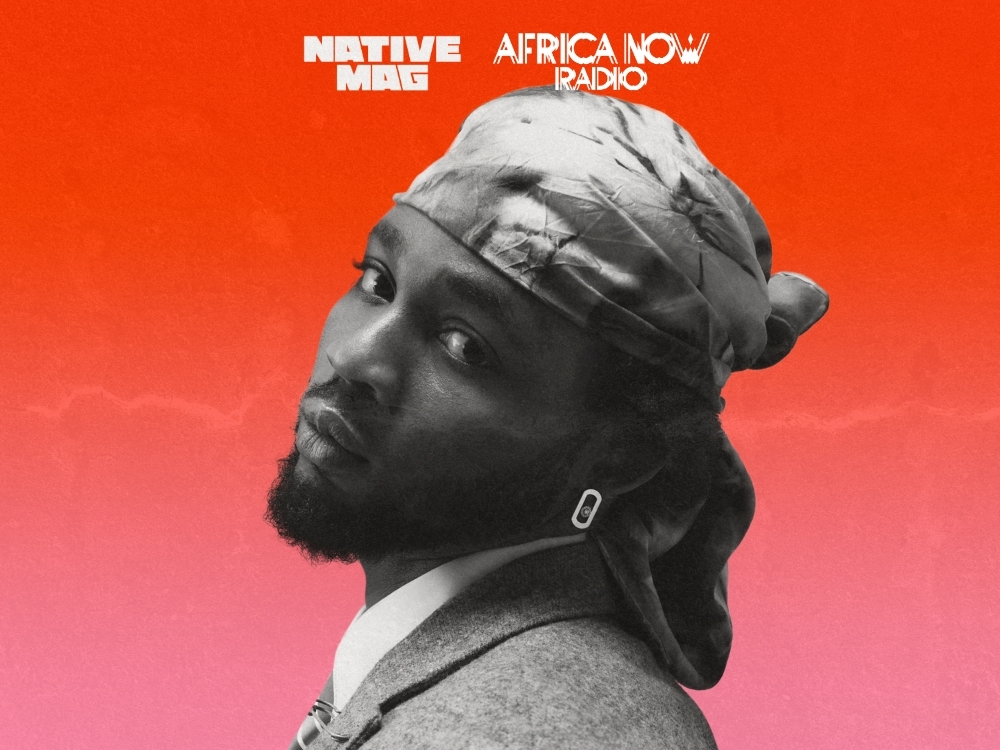
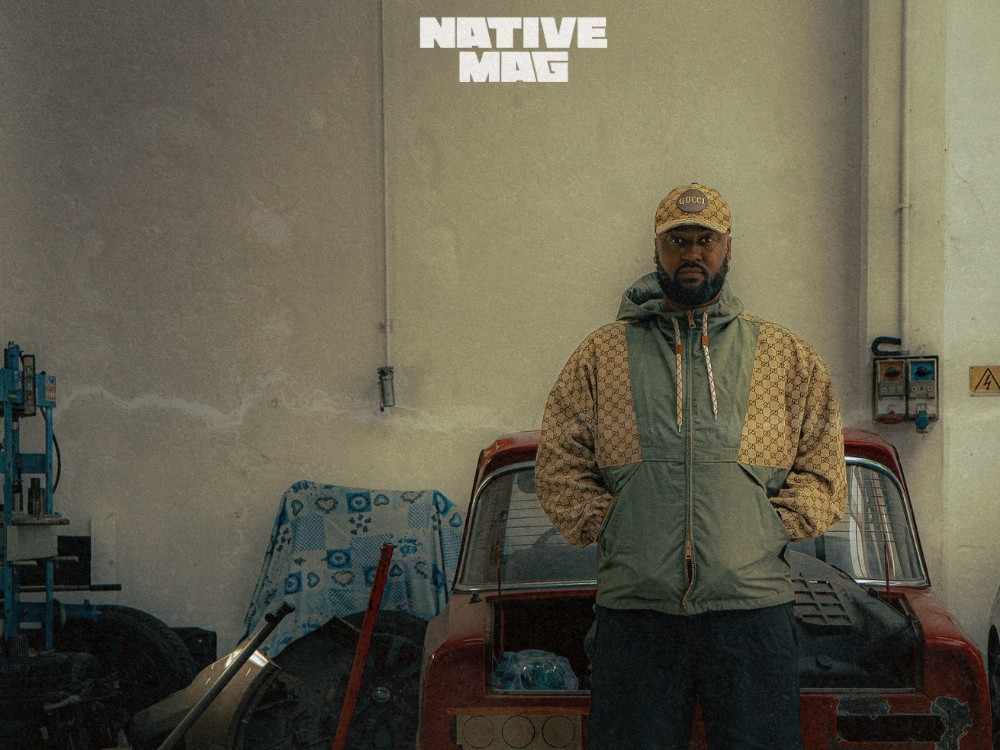
Best New Music: Amaarae Rings In A New Era On “S.M.O.”

If you look past the tonal alterations and futuristic production choices that litter Amaarae’s work, a career-long embrace of fervid desire emerges from her work. From the whimsical, soulful ballads of ‘Passionfruit Summer’ to the playful, sirenic calls-to-action of ‘The Angel You Don’t Know,’ and the riotous, Punk-influenced extravaganza of ‘Fountain Baby’ as well as its sprawling addendum, ‘rose are red, tears are blue – A Fountain Baby Extended Play,’ Ama Genfi has crafted a catalogue that basks in her indulgent embrace of desire – sexual, material, and emotional – while cavorting with a multitude of sonic influences. Songs like “FEEL A WAY,” “Angels in Tibet,” and “sweeeet” all contend with the nature of sexual desire in the humorous yet layered fashion that could only emerge from the hallways of Amaarae’s mind. 

In recent months, Amaarae has been teasing her next album, an eagerly anticipated follow-up to ‘Fountain Baby.’ The rollout for the album, now confirmed as ‘Black Star,’ has seen her lean more into her Ghanaian heritage than ever.  During her performance at Coachella in April, where she made history as the festival’s first solo Ghanaian performer, she paid homage to Ghana’s musical history by playing songs by La Même Gang, Asakaa Boys, and Joey B. She also hosted a block party for the ‘Black Star’ album in Accra, hinting at an evolution of her relationship with her home country. 

In the lead-up to the release of ‘Black Star,’ Amaarae has shared its striking cover art as well as a new song, “S.M.O.” that espouses on her gospel of desire. Shortened for ‘Slut me out,’ the lead single of ‘Black Star’ opens with brooding drums and a thumping bassline that sets the stage for Amaarae’s requests from a love interest. As always, she is forthright and clear with her demands, with lines like “Slut me out / Show me how you like to love” and “I lay it all on the waist line/ Ginga me, ginga” instantly standing out. 

One of the most interesting parts of listening to Amaarae’s music since the lead-up to ‘The Angel You Don’t Know’ has been resolving the internal dissonance between her silky, enthralling vocals and the salacious details on her tracks. “S.M.O.” is similarly risqué while maintaining the alluring tenor of her voice. Unlike many singers who raise a temple dedicated to desire, Amaarae’s music contemplates all angles of her requests and what they mean, lending a layer of authenticity to her songs. On “S.M.O.,” it manifests in the shape of a love interest that she has to make comfortable. “You don’t like talking salacious / I understand / Sex is a part of your nature,” she sings. 

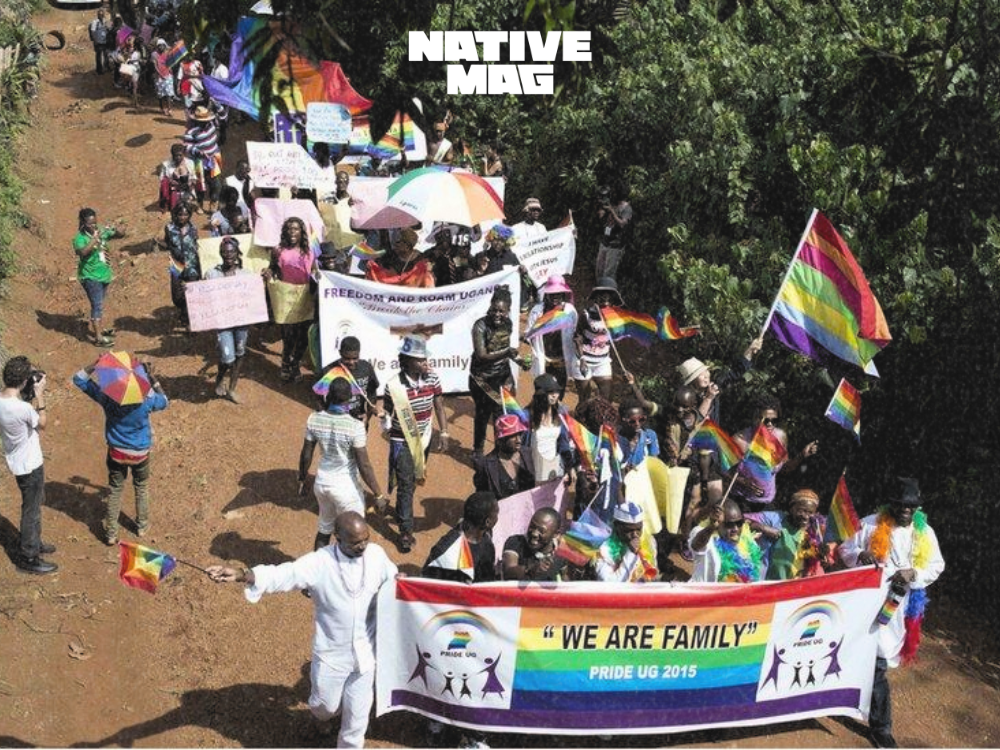
More significantly, Amaarea seems to continue to sing about her desire for women, taking a stand against the restrictive anti-LGBTQ beliefs and legislations that are commonplace and prevalent in her home country and West Africa at large. Lines like “I’m wavy / I wanna taste her” and “I wanna week witb her / She taste like lexapro” unabashedly show that Amaarae will not be censored by homophobic performativeness or perform overt heterosexuality just to advance her music. Ultimately, “S.MO.” sounds like a mix of The Angel You Don’t Know’ and ‘Fountain Baby,’ taking the high points of both albums for a song that’s undeniably in line with Amaarae’s stated vision of making futuristic Afropop. It’s also a strong opening salvo for what could be one of the best albums from anywhere in the world this year. 

THE RISE OF AFROBEATS IN THE UK

It should come as no surprise that Great Britain has become a key nexus for Nigerian and Ghanaian cultural innovation. Due to a deeply unequal colonial relationship that saw opportunity concentrated in the metropole, both countries possess long histories of migration and interchange with the United Kingdom–histories that have bred critical innovations in music.

Indeed, a young Fela Kuti studied trumpet performance at London’s Trinity College of Music, making his first-ever recordings in London and meeting artists like Oladipupo “Ambrose” Campbell, who would eventually influence the signature sound behind Afrobeat. Osibisa, one of the most influential bands in Ghana’s history, was formed in 1960s London, led by the Kumasi-born Teddy Osei and renowned for meshing African rhythms with genres like Rock, Funk, and Soul. It is understandable, then, that a genre as global as Afrobeats would have a deep relationship with the United Kingdom, one whose seeds were sown before the start of the 21st Century.

Early 2000s: The JJCs

Triggered by varied political crises–ranging from Sani Abacha’s murderous regime to the Somali Civil War–and neoliberalism-driven economic strife, Africans across the continent, from the mid-1980s to the early 2000s, migrated to the United Kingdom at an unprecedented rate. This fresh crop of migrants, some of whom had also travelled to further their university education, found themselves in an environment where their home music was largely inaccessible in the public arena, and this encouraged the efforts of brave cultural innovators who would work to make a space for African music in the United Kingdom. 

This is where we’ll find figures like the Kano-born JJC, a rapper who migrated to the UK as a teenager, later becoming a producer for the famed Black British Hip-Hop group Big Brovaz. Fed up with the lack of representation for African culture in the British music mainstream, he formed a group called the 419 Squad. Emblematic of what JJC called “Afro-pean” music, the Squad was known for meshing both Yoruba and English in their releases, fostering a unique sense of belonging for Nigerians in the British heartland. Their 2003 debut LP ‘Atide’ featured collaborators like Weird MC, Kween, Maintain, Dr Sid, and Don Jazzy, revealing the extent of their relationship with the continental Nigerian music scene. 

Cultural curators like Ayo Shonaiya and DJ Abass helped carve out distinctly African and Black diasporic music spaces through live events and media. Shonaiya’s BEN TV became a pioneering source of African music entertainment TV in the UK, and with Abass as a major presenter on the channel’s Intro talk show, the pair featured individuals like Tony Tetuila, Jazzman Olofin, Ruggedman, and even Jamaica’s Chaka Demus & Pliers. Through events like 2003’s Nigerian Independence Intro Jam, they provided a stage for acts like The Trybesmen, Tony Teutila, AY, JJC & 419 Squad, Eedris Abdulkareem, Maintain, and more to perform in London, a groundbreaking feat for the period.

Quite notably, the UK was also where Don Jazzy properly cut his teeth as a producer. In the early 2000s, he started out in a UK-Nigerian outfit called the Solek Crew, who fused indigenous Nigerian sound with genres like Hip-hop and R&B. He eventually went on to work with JJC & the 419 Squad, where he properly learned the intricacies of music production. He then met D’Banj, whose 2005 debut album ‘No Long Thing,’ Don Jazzy would produce. The pair made the critical decision to move back to Nigeria and release the project there under their newly-formed label Mo’Hits, kickstarting an era of success for themselves and, ultimately, the next era of Nigerian music.

Amid these industry-level innovations, there was also community-based work that furthered “Afrobeats” and African music culture in the United Kingdom. Hall parties were community gatherings hosted by immigrants from across the continent, where music from the likes of Daddy Lumba and Awilo Longomba would loudly play. Notting Hill Carnival’s “Nigerian Corner” offered a stage for diverse London audiences to experience performances from Nigerian artists and comedians alike. Show promoters like the 90 Per cent Group with Dennis Tawiah and DJ Abrantee (who was popularly, albeit erroneously, credited with coining the term “Afrobeats” in 2011) produced community gatherings like Ghanaian Independence nights, ultimately laying the groundwork for the next generation of Afrobeats in the United Kingdom.

Early 2010s: British Afrobeats and Preliminary Fusion 

Even with the spirited efforts of the previous era, the prevalence of Afrobeats in the British mainstream and even amongst Black Britons remained marginal in a landscape where Caribbean (and particularly Jamaican) cultural expression had greater visibility. Afrobeats and African music struggled to find a consistent place in the Black British cultural fore–but this was challenged in the late 2000s and early 2010s by the African “uni scene.” Here, Christian Adofo–British-Ghanaian journalist and author of A Quick Ting on Afrobeats–weighs in:

“It’s a whole entrepreneurial kind of scene,” Adofo explains, detailing the rise of the “uni scene.” “A lot of [event] promoters were of West African heritage, and they realized…they used to go to a lot of Nigerian independence or Ghanaian independence raves in the mid 1990s to the early 2000s. They saw there was a gap in this market where a lot of people who had [West African] heritage were going to these events that were selling out two or three-thousand-capacity venues. They thought, ‘How come we can’t come together more regularly as opposed to during this kind of annual event?’ [Furthermore,] the more dominant population in terms of the Black population [in Britain] is no longer Caribbean; it’s overtaken by people of West African heritage. In turn, you see a lot of people who are in university but want entertainment that reflects where they’re from. So [promoters] build these ‘uni’ raves [where]…DJs and emcees are… making reference to their respective motherlands, shouting out people in the crowd.”

It was through these university raves that African youth who had spent their formative years in the UK–unlike the previous set of innovators who, mainly, had recently migrated to the United Kingdom–could have their voice. These university-centered events progressed beyond the older Fuji, Soukous, and Hiplife that defined the hall parties of their childhood, and offered a platform for contemporary “Afrobeats” in the British heartland.

The rise of these African social spaces both paralleled and helped foster the production of homegrown Afrobeats amongst this set of British Africans, forming what can be called British Afrobeats. Early British-Ghanaian Afrobeats artists–Mista Silva, Kwamz & Flava, and A-Star–sampled the immensely popular “Move Back” by Ghana’s 5five, creating their track “Bo Won Sem Ma Me.” Mista Silva starts off the track singing in Ghanaian Twi, then quickly transitions to Black British English while using a standard grime flow, reflecting the confluence of Ghanaian and Black British culture. 

In this same era, the South London-bred Fuse ODG travelled to Ghana in 2011 and returned to London with a sonic gold mine. That same year, he released “Azonto,” shaking the UK and the African continent alike while offering a major soundtrack to the Ghanaian dance craze following Sarkodie’s iconic “U Go Kill Me.” With a top 30 slot on the charts, the track reflected the increasing popularity of music inspired by Africa, rivaled only by D’banj’s top 10 hit “Oliver Twist.” It was soon followed by “Antenna,” peaking at number 7 on the UK’s singles chart and earning a remix with Wyclef Jean. 2014’s “Dangerous Love” with Sean Paul, the biggest song of his career, reached a startling number three on the UK singles chart and remained there for 24 weeks.

As evidenced by Fuse ODG, British African artists were already creating work that impacted the progression of Afrobeats back on the continent. British-Ghanaian producer Juls produced “Feel Alright” for Show Dem Camp in 2012, and the following year produced “Bankulize” for Mr. Eazi. At this point, it was unknown that the same producer would go on to form a key part of soundscapes across the UK, Ghana, and Nigeria, shaping Afrobeats, Banku music, Alté, and Afroswing among others. Similarly, British-Nigerian artist-producer Maleek Berry was steadily producing tracks for continental stars like Davido, Sauce Kid, and Wande Coal, and after having joined Starboy Entertainment as an in-house producer, put out his own songs alongside his label boss Wizkid.

Other artists such as Mitch, and British-Nigerians SK, Timbo, Sneakbo, and YFS furthered the Afrobeats sound by meshing it with genres like UK Rap and Dancehall, as seen in Mover and Timbo’s 2013 hit “Ringtone.” 2014’s “Marry Juana” by then Peckham-based Naira Marley was another highly popular track in the burgeoning scene that showcased the early meshing of Afrobeats and Dancehall. This routine straddling of Afrobeats, Rap, and Dancehall both pioneered and prophesied the syncretism that would characterize the following movement: Afroswing.

While these artists were responsible for pushing British-born African sound, they could not have achieved widespread resonance without the help of DJs propelling the scene. Almost as important as the acts themselves, disc jockeys like DJ P Montana, DJ Funkz, DJ Larizzle, and Afro B were pivotal in pushing both British and continental Afrobeats in clubs, raves, and at radio stations.

2016 – 2018: The Golden Age of Afroswing

By 2015, the UK still had a crop of acts pushing “pure” Afrobeats. Kwamz & Flava–still known today for their infectious Afro Dance tracks–represented their country of origin well with tracks like 2015’s “WO ONANE NO” and the following year’s “Takeover.” In 2015, Juls’ production on “Skin Tight” with Mr. Eazi and Efya created one of the biggest songs of Mr. Eazi’s career to date. That same year, Jaij Hollands put out the addictive Azonto-influenced number “PINGA” alongside NSG, birthing one of NSG’s early breakthrough tracks. All in all, Afrobeats had much more of a presence in the UK, reflected in 2015’s “Ojuelegba” remix with Drake and grime giant Skepta, where the latter aptly reminisced back to his school days when “being African was a diss.”

In a twist of events, this same era would witness the mainstreaming of a syncretic African sound native to the United Kingdom–one that merged Afrobeats with genres like Bashment, Hip-Hop, and Road Rap, and featured interplay between African, Black British, and Caribbean dialects and flows.

“It’s not just rooted in West African culture,” Christian Adofo says of Afroswing. “It’s also rooted in Caribbean culture and an idea of Black Britishness. And then you jump on top of that with your own kind of pidgin, or that UK or Jamaican patois, these are all different kinds of elements that speak to a sort of code switching within different settings. They’re uniting Black people from different environments.”

If possible, perhaps too many individuals and tracks are representative of the Afroswing renaissance. East London’s Kojo Funds captivated listeners back in 2014 with Afro-Dancehall tracks “Want From Me” and “Arriba!.” While 2016’s “My 9ine” offered him increased popularity, it was the famed “Dun Talkin’” featuring British-Ghanaian rapper Abra Cadabra that truly inked his name into the annals of Afroswing history (and arguably inspired the refrain of Davido’s “Fall”). The song’s blend of Rap, Dancehall, and African beats saw Kojo Funds incorporate African sonics into the Black British cultural fabric, making the song a certified anthem whilst catapulting Kojo Funds to national fame.

His following track, “Fine Wine, was a similarly significant hit, one which led to the breakout of its featured act Yxng Bane. Bane, a Congolese-Angolan vocalist and MC, began his journey into the world of Afropop through 2016’s “Should’ve Known Better.” He made his name as a standout in the scene through the aforementioned “Fine Wine” of the same year, a sexy remix of Ed Sheeran’s “Shape of You,” and his biggest feature “Bestie,” a summer-ready Afroswing banger about clandestine love that peaked at number 10 on the UK Charts. 

Not3s’ “Addison Lee” became a gigantic hit in 2016 Afroswing, followed soon after by the indulgent “Aladdin” and “My Lover,” marking the beginning of his career as a consistent player in the genre. Ramz’s “Barking” similarly dominated the scene, shooting up to number two on the UK Singles chart. Dave and MoStack’s “No Words” – crafted by Afroswing producer Steel Banglez – was a massive triumph, as were the joyous “Unsigned” and “Best Life,” both highly successful collaborations between British-Nigerians Hardy Caprio and One Acen. MoStack alone was a force in Afroswing, pushing genre-defining collaborations with acts like MIST and J Hus. Lotto Boyzz blended melodic trap with Afro-influenced production on “No Don,” and with their successful 2017 EP ‘Afrobbean’ (unintentionally hearkening back to JJC’s “Afro-pean” music), they also attempted to define the unfurling Afroswing phenomenon. British-Nigerian artist Tion Wayne began his journey into the world of Afro-fusion sound with “Can’t Go Broke” alongside Afro B, triggering the start of numerous collaborations with the latter artist and Wayne’s career as a formidable rapper in Afroswing. Maleek Berry’s “Kontrol” and Afro B’s “Drogba (Joanna)” found dominance back on the continent, while Eugy & Mr. Eazi’s “Dance for Me” saw an explosive collaboration between the homegrown and the diasporic.

However, no artist is quite as emblematic of the Afroswing wave as J Hus. The Gambian-Ghanaian rapper first gained attention in 2014 for his versatile freestyles on popular Black British music platforms, known to alternate from gritty rap to melodic hooks, betraying a grip on the balance that defined Afroswing. His street anthem Dem Boy Paigon” perfectly reflected the genre’s fusion ethos, while “Friendly”–a similarly “greasy” tune blending Afrobeats, Dancehall, and rap–further distinguished J Hus as a never-before-seen talent. Both tracks found their way onto his highly influential mixtape ‘The 15th Day’ –an ode to his Stratford origins that featured acts like NSG and Mista Silva.

It would ultimately be 2017’s “Did You See,” produced by Hus’ long-time collaborator Jae5, that would leave an indelible, Hus-shaped mark in Great Britain’s music ecosystem. One need only watch J Hus’ 2018 performance at the nomination show for the infamous BRIT Awards, as he performs “Did You See” to a crowd of white British youths who recite every word back to him.

His wildly successful debut album ‘Common Sense’–also produced majorly by Jae–was a symbolic microcosm of Afroswing’s golden age. Equipped with Afrobeats, Rap, Bashment, soul, and a penchant for fusion, the project saw previously marginal sounds become the soundtrack of a nation–the entire thesis of the Afroswing movement.

In this same era, individuals like Juls produced music that had deep resonance both within the UK and on the continent. His 2017 debut project ‘Leap of Faith’, recruited British African acts like Kojey Radical, Not3s, Kojo Funds, Eugy, and Tomi Agape, whilst forming soothing soundscapes with alternative artists such as Odunsi the Engine, Cruel Santino, Nonso Amadi, and Moelogo. Juls’ signature sound traveled back to the continent in the forms of gems like Burna Boy’s “Gwarn” and Wande Coal’s “So Mi So” and “Sister Girl,” solidifying his role as a key player both on the continent and in diaspora.

2018 – 2021: The Second Wave 

By late 2018 and 2019, the Afroswing scene had begun to acquire new leading players, many of whom offered fresh and innovative interpretations of Afro-syncretic music that differed from the representations of the previous epoch. NSG fully reigned in this era, releasing the ever-danceable “Yo Darlin’” with Geko, “Options,” and “OT Bop.” Their 2020 mixtape ‘Roots,’ drawing on genres like Afrobeats, Reggae, and Hip-Hop, served as a symbolic meeting place for disparate Black diasporic listeners while emphasizing the centrality of Africa, authentically representing the essence of Afroswing. 

Ms. Banks, known primarily as a rapper, became a strong contender in Afroswing with 2019’s release of her Afrobashment track “Snack” featuring Kida Kudz. The same year, Darkoo’s breakout “Gangsta,” followed by “Juicy,” laid the foundations for her future as an Afropop hitmaker. Shaybo operated in a similar vein, incorporating Yoruba and pidgin into her drill tracks before releasing the syncretic Afroswing number “Dobale” (which later earned a remix with Bella Shmurda). Ghana’s Br3nya, however, had a more consistent relationship with the genre, often rapping rhythmically about her feminine wiles over thumping African beats. In this same era, the Afroswing hit “Don’t Rush” by Young T & Bugsey–a Nigerian-Jamaican rap outfit–gained mass virality, highlighting the genre’s international resonance.  

Midas the Jagaban was particularly novel for being the first woman to incorporate Street-pop into British Afropop, evidenced in “Come We Bill Ehh” and “Party With a Jagaban.” While raw Street-pop was slightly uncommon in a British context, pushed primarily by acts like Naira Marley and Damibilz, Midas’ joyful, upbeat interpretation of the genre made it highly accessible to wider audiences. Her work–and the effort of the women mentioned before her–represented that the changes of this era were not only sonic, but also identarian. For the first time, Black women were significant players in the Afroswing scene, taking up space as leading artists whose swagger, aspirations, and sexualities could be expressed through the genre without inhibition. 

While West London’s WSTRN is known mainly for their innovations in Dancehall, R&B, and Hip-Hop, the collective’s diversity of sound also embraces Afrobeats and Afroswing–as seen in “Wonder Woman” and their Fireboy DML collaboration “Be My Guest.” Odeal opted for an Afro-R&B route, his melodic offerings like “Composure 2” and “Na You” prophesying his current reign. A-Star, while outside of the realm of Afroswing proper, made his name as a force in Afro Dance music, releasing his 2018 breakout “Kupe Dance” and following up with the viral “Balaya,” “Nana Riddim,” and “Stepping Good.”

There was, of course, Pa Salieu, Coventry’s British-Gambian gem, who put out gritty, rap-driven Afroswing as well as drill. His popular tracks “Frontline” and “My Family” are exemplary of his Afro-road sound, and he calls on the continent often with Afrocentric works such as 2020’s “B***K” (pronounced “Black”) and his 2021 EP ‘Afrikan Rebel.’

The dominance of Afroswing standardized the incorporation of African influences into the Black British music canon. As such, it became commonplace for rappers like Nines, Loski, and Giggs to incorporate smooth Afropop b-sides into their own projects, working with artists like NSG, Davido, and Obongjayar, respectively. The most glaring indicator of Afroswing’s influence in Great Britain, however, was the new UK Afrobeats chart. In 2020, the UK’s Official Charts company created a distinct chart to document the extent of the genre’s resonance in the country, demonstrating the sheer extent to which the nation consumed African sound. 

2021 – Present: The Death of Afroswing?

As the UK continued to call, continental Afrobeats acts continued to answer. It was only such strong fervor for African sound that could have inspired Mr. Eazi’s seminal ‘Lagos to London’ mixtape, where he invited the likes of Lotto Boyzz, Sneakbo, Maleek Berry, and the legendary Giggs to his Banku-driven world. Live events like Davido’s sold-out 30 Billion UK Tour, or Wizkid’s sold-out Afrorepublik show–both held in 2018–convey the extent of Afrobeats’ popularity in the United Kingdom. Such frequent cross-breeding naturally inspired collaborations that made waves in both Africa and diaspora, such as Wizkid and Skepta’s “Energy,” or Dave and Burna Boy’s “Location.”

The UK’s Afrobeats craze only intensified with time. While Wizkid’s 2020 magnum opus ‘Made in Lagos’ helped spread Afrobeats to global markets that it had scarcely reached before, the project only fanned Great Britain’s pre-existing flame. Building off of this zeal, Wizkid occupied London’s O2 Arena in a sold-out, three-day-long residency in 2021. Bringing out Nigerian stars like Tems, BNXN fka Buju, and Burna Boy, as well as UK acts like Giggs, Juls, and Skepta, Wizkid created an unrivaled space of cultural communion for Africans in Britain, whilst producing what became one of the most infamous international performances in the history of Afrobeats. Burna Boy followed suit in 2023, with a sold-out concert at the iconic 80,000 capacity London Stadium. The same year, Rema sold out the O2 Arena on his ‘Ravage’ tour, as did Asake in 2024 during his ‘Lungu Boy’ tour. In the most symbolic–and perhaps controversial– display of Afrobeats’ influence in the United Kingdom, Tiwa Savage performed at King Charles III’s 2023 coronation alongside the likes of Katy Perry and Lionel Richie. Here, what was brought to the metropole via colonial processes now sat side by side with the empire.

Now, it is almost common for the biggest Afrobeats acts to surpass the reach of their British peers – with acts like Burna Boy, Ayra Starr, Asake, and Rema leading lineups at the Glastonbury and Wireless Festivals. And while many British Africans lament the “death of the hall party,” their absence has technically been supplemented by the rise of countless event series that amplify African music. Afro Nation–arguably the world’s biggest Afrobeats festival–is a direct product of London-based Nigerian show promoters, revealing the sound’s dominance within the country.

While Afrobeats’ standing in the UK is firmer than ever before, the same cannot be said for Afroswing. 2021 produced a solid crop of Afroswing hits, such as Dave’s “System” and “Lazarus” with Wizkid and Boj, Darkoo’s “Bad From Early,” and NSG’s “Petite,” “After OT Bop,” “Don’t Play Me,” and “Colonization.” A newer set of Afro-centric artists now dominate the scene, namely JayO, Odeal, Gabzy, and Darkoo, amongst others. However, far deviating from the glorious summers of old when Afroswing reigned, the past 3 years have seen national fervor for the sound wither. Some blamed the lull on the disappearance of anchors like J Hus, who, after releasing his critically acclaimed sophomore album ‘Big Conspiracy’ at the top of 2020, all but vanished on an indefinite hiatus. 

It’s more likely that the scene’s decline is linked to the natural progression of history. At its foundation, Afroswing gained popularity on a highly local level, becoming the primary framework for Britons looking to incorporate African influences into their music. Now, as African genres have gained unprecedented global prominence, UK-based artists looking to “Africanize” their sound are more likely to draw from continentally-produced Afrobeats and Amapiano, no longer relying on a homegrown, syncretic British sound. 

In fear of the scene’s demise, artists and consumers alike have clamored for change, brainstorming ways that we can collectively save Afroswing. In 2023, NSG began a campaign to “Make Afroswing Great Again,” releasing their debut album AREA BOYZ and hosting a “Make Afroswing Great Again” concert featuring Timbo, Geko, Ramz, Kojo Funds, Not3s, Young T & Bugsey, One Acen, Darkoo, Tion Wayne, Steel Banglez, and Jae5, among others. J Hus, in a return of Avatar-like proportions, broke his project hiatus in the same year, releasing his TSB-anchored third album, ‘Beautiful and Brutal Yard.’ Possibly reflecting the changing times. However, the project failed to have the same impact as its predecessors. 

Ultimately, part of the beauty of the Afroswing movement was that it represented a kind of renaissance, where, for what felt like the first time, African music held a dominant position in Great Britain’s cultural landscape. Following this renaissance, the barriers had been broken, and the representation had been achieved–making the novelty of the moment impossible to replicate. Essentially, it is difficult for Afroswing to be as revolutionary as it was during its golden years, because its revolutionary character was rooted in just how unprecedented it was.

While many mourn Afroswing’s “death,” it might be more accurate to say that the genre’s prime has passed but that its legacy lives on. It now forms an indelible component of the Black British music canon, both continuing and strengthening the fusion tradition that allowed it to come to life in the first place. Moreover, the genre–and all other British-born manifestations of African music–forcibly made a home for Afrobeats within Great Britain–a home whose lease will fail to expire for the foreseeable future. Recent projects from Pa Salieu, NSG, Young T & Bugsey, and Jae5 serve as proof that the Afro-influenced sound in Great Britain is alive and well, and that the impact of Afroswing remains. British-African artists like Len, Jim Legxacy, and LeoStaysTrill incorporate African rhythms into their rap explorations, revealing the genre’s impact beyond the constraints of a singular sound. In Afroswing’s wake, African sounds unabashedly thrive in Britain–no longer relegated to the margins, but instead taking up their rightful position on the center stage.

How South Africa Became Africa’s Premier Touring Destination 

For a long time, debates have gone back and forth about which city truly deserves the crown as Africa’s cultural capital. From Lagos to Accra, Nairobi to Dakar, several cities are boldly putting their hands up. But while the continent is thriving with creative energy, one nation is stepping forward with the infrastructure, influence, and global pull to back its claim: South Africa. In recent years, South Africa has emerged as the continent’s leading destination for international touring artists from Beyoncé and Kendrick Lamar to Chris Brown and Travis Scott. This surge is not a coincidence, but rather the result of decades-long socio-political transformation, strategic infrastructure investment, and the global rise of its cultural exports, particularly in music.

During the apartheid era, South Africa was effectively cut off from global cultural exchange. As the world rallied against racial segregation, the country was subjected to widespread cultural boycotts endorsed by the United Nations that barred international artists from performing in the country. Legendary South African artists such as Miriam Makeba, Hugh Masekela, and Abdullah Ibrahim were forced into exile, using their music as a vehicle of resistance and global advocacy against the apartheid regime.

The end of apartheid in 1994, marked by Nelson Mandela’s election as president, catalyzed the country’s reintegration into the global community. The first multiracial elections, the establishment of the Truth and Reconciliation Commission, and the drafting of a new constitution signified a rebirth. Cultural sanctions were lifted, allowing South Africa to reconnect with the global entertainment industry and open its doors to international artists and organizations.

THE SPORTING EVENTS THAT DOUBLED AS AUDITIONS

Taking place a year after the end of apartheid, the 1995 Rugby World Cup was a watershed moment for the country. Not only did South Africa host and win the tournament, but it also demonstrated to the world that the country was ready politically and infrastructurally to host large-scale events. This precedent was solidified with the 2010 FIFA World Cup, the first to be held on African soil. According to FIFA, the event generated an estimated $3.6 billion in economic impact and brought more than 300,000 visitors to South Africa. The event also resulted in the construction and upgrading of world-class stadiums like FNB Stadium, which now routinely hosts concerts with a capacity exceeding 90,000 attendees.

South Africa’s robust transport networks, stadiums, and hospitality infrastructure set it apart from many African nations. Major cities such as Johannesburg, Cape Town, and Durban boast international-standard airports, luxury accommodations, and modern venues. The Gautrain rapid rail system, high-end shopping districts, and extensive event support services make logistics relatively seamless for international acts.

AMAPIANO AND CULTURAL CAPITAL

Beyond infrastructure, South Africa’s appeal lies in its burgeoning cultural capital. Amapiano–a homegrown subgenre of house music–has exploded globally, in part due to TikTok and YouTube virality since the COVID-19 pandemic. In 2019, Amapiano saw 34 million streams on Spotify; by the end of 2020, that number had surged to over 102 million. Songs like “Mnike” by Tyler ICU and “Tshwala Bam” by Tito M and Yuppe have broken beyond South Africa’s borders, becoming global anthems that dominate dance floors and playlists worldwide. Platforms like Major League DJz’s Balcony Mix and viral hits like “Ke Star” Remix (featuring Nigerian superstar Davido) helped export the genre globally. Meanwhile, vocalist Sha Sha made history in 2020 by becoming the first Amapiano artist to win a BET Award. Also, South African acts like DJ Maphorisa, Kabza De Small, Uncle Waffles, and  DBN Gogo have become a permanent fixture on international festival stages.

Tyla’s 2024 Grammy win for “Water” further underscores South Africa’s relevance on the global music scene. With 33 Grammy Awards and 113 nominations to date, South Africa’s musical prowess is long-established. From artists like Black Coffee and Zakes Bantwini to the harmonies of Ladysmith Black Mambazo, the country has an international pedigree that stands it in good stead. 

South Africa’s youth are among the most active on platforms like TikTok on the continent. According to DataReportal’s 2024 report, South Africa has over 17.4 million TikTok users, making it one of Africa’s top content creation hubs. Viral dance challenges and music trends often originate or gain traction in South Africa before spreading across the continent and beyond, establishing the country as a tastemaker in digital culture.

BIG BRANDS AND BIG BUDGETS

According to the World Bank’s Doing Business Report, South Africa consistently ranks among the top three sub-Saharan African nations for ease of doing business. Its legal frameworks, visa policies (notably the artist visa), and established IP laws make it a favorable environment for touring companies and artists.

Additionally, South Africa has a well-developed creative industry ecosystem supported by both local and multinational corporations. Live Nation and Big Concerts regularly book global stars for South African legs of their tours. The DSTV Delicious International Food and Music Festival has hosted artists like Jill Scott and Busta Rhymes, while the Global Citizen Festival brought Beyoncé and Jay-Z in 2018, in partnership with the Motsepe Foundation. Corporate brands like Heineken, Jameson, and Flying Fish have also curated branded concerts and pop-ups with acts such as Gunna, J.I.D., and Anderson.Paak

In 2024, Chris Brown’s Breezy Tour drew over 180,000 attendees at FNB Stadium over two nights and generated an estimated R900 million (approximately $48 million) for Gauteng’s economy, while creating more than 6,000 temporary jobs. These figures highlight how the entertainment industry is becoming a key driver of tourism and youth employment in South Africa.

Still, it’s not always smooth sailing. “There are so many hurdles,” says Dale de Ruig, Managing Director of Steyn Entertainment, the force behind festivals like Rocking the Daisies, In the City, and the award-winning label Stay Low. “[Between] the ever-weakening currency, agents who want to extract as much money as possible without regard for local spending power, it’s probably the only industry where you pay, but the talent is treated like the customer. It’s very nuanced and takes real experience to navigate.” Despite the challenges, the interest keeps growing. “Everyone seems to want to perform in Africa,” De Ruig explains. “And with our infrastructure, South Africa becomes the key destination. Artists who are flexible and willing to make it work are coming down in their droves.” 

South Africa’s trajectory from cultural isolation to global entertainment magnet is one of strategic investment in infrastructure, policy reform, and cultural capital. The rise of Amapiano, the global acclaim of artists like Tyla, and the country’s unmatched capacity to host large-scale events signal that South Africa deserves its spot as a global cultural landmark. As the world looks toward Africa as the next frontier of cultural and economic growth, South Africa’s model offers a compelling blueprint for other nations on the continent.  

M.A.D SOLUTIONS ANNOUNCES NEW PARTNERSHIP WITH SONGTOOLS

M.A.D Solutions, Africa’s largest music distribution company, has sealed a partnership with  SongTools, the fast-growing music marketing platform empowering music creators with one-click marketing and ad-tech solutions. With a roster that includes notable artists from across the continent, including Simi, P-Square, Mercy Chinwo, 2nite Flavour, Phyno, Runtown and Moses Bliss, as well as renowned rapper DeJ Loaf, and global Hip-Hop legend Akon. 

This strategic integration, dubbed ‘Engage Pro, ’ brings SongTools’ powerful marketing toolkit—featuring one-click playlisting, digital ad automation, smart links, and real-time performance analytics—directly iito the M.A.D Solutions dashboard. It will allow artists, managers, and labels across Africa to have unprecedented access to seamless, data-powered marketing tools, streamlining release campaigns and maximising visibility from a single platform. 

“At M.A.D Solutions, our mission is to power the future of music,” says Bugwu Aneto-Okeke, CEO of M.A.D Solutions. “Through our label and services division, Engage, we’re proud to introduce Engage Pro — a cutting-edge digital marketing and playlisting solution developed in collaboration with Songtools. This platform is built to equip our artists and label partners with smarter tools to amplify their reach and grow their global impact.” 

“This partnership represents a major milestone in our global mission to democratize access to impactful marketing tools,” said Danny Garcia, CEO of SongTools. “M.A.D Solutions is a force in the African music industry, known for elevating some of the continent’s most exciting artists. We’re honoured to align with them in giving creators the tools to grow smarter, faster, and more efficiently.” 

With a rapidly expanding music market and a global spotlight on African talent, the partnership between M.A.D Solutions and SongTools comes at a pivotal moment. By integrating campaign automation, playlist outreach, and paid media tools directly into M.A.D Solution’s ecosystem, the collaboration removes technical barriers and empowers artists to focus on what matters most: the music. 

Remembering Fridaycruise As a Depository Of Odunsi’s Artistic Evolution 

Back in 2017, a year before Odunsi (The Engine) released his critically acclaimed debut album ‘rare.,’ the singer and producer created an anonymous Soundcloud page listed as fridaycruise. The alt account was a way for both him and his friends to test the waters before major releases, uploading demos, covers, and a few loosies that went on to become cult favourites. The account served as a playground of sorts, a low-stakes environment where Odunsi and friends could freely experiment and sometimes offer a glimpse into the developmental stages of tracks that later became official releases. 

Some of the earliest releases on the fridaycruise account include “Last Night,” a sensual duet with Joyce Olong as well as a short, melancholic number titled “lose u.” “Science” with Zamir, and “RnB Odunsi,” a slinky R&B bop that’s cut from the same cloth as his breakout single “Desire” were also firsr released on fridaycruise. Months before her angelic vocals opened up “hectic,” the penultimate track on ‘rare.,’ 234jaydaa made her debut on the fridaycruise account with an Odunsi-produced minimalist dream-pop release titled “coral.” The account also houses Sute Iwar’s “Overtime” and Tay Iwar’s “call u,” which went on to appear on his debut album ‘GEMINI.’

In our NATIVE 003 issue, which featured Odunsi, he explained that fridaycruise was created as a means to experiment and connect with his core fans, but more importantly, it’s a platform for him and his friends to freely create without the stress of planning releases and roll-outs. One of the earliest defining qualities of the alté movement was how they danced to their tune, cultivating a DIY culture that helped them bypass existing standards and gatekeepers early on in their careers. The fridaycruise account was particularly emblematic of this ethos, a free creative space that was crucial in shaping the sound and artistic direction that would go on to define Odunsi and some of his close collaborators.

Even after the success of ‘rare.,’ Odunsi continued to release music via the fridaycruise account. He responded to the world shutting down in 2020 with “Stayin’ Low (Quarantine)” and the following year, he uploaded a couple of leaks like “luv issa drug/flood my wrist,” “JJC,” as well as an extended version of “Shuga Rush,” which features a standout verse from British rapper Lancey Foux. More recently, the singer continues to service fridaycruise with gems like “DREAM MACHINE,” an ethereal collab with Steve Lacy and fellow experimentalist Yves Tumour, and “3//CERTIFIED” with Lancey Foux. There’s no telling when the next fridaycruise drop might be, but the account continues to exist as a functioning relic of some sort, one that captures the charm of a bygone era and Odunsi’s relentless artistic evolution.

Our First Impressions of Olamide’s ‘Olamide’ album

10 solo albums into a glittering career, the legend of Olamide is largely written. When the historians of the future revise the period between 2010 to 2024, they’ll find a legacy that’s been forged through countless hits, cultural-shaping contributions, and an equally successful pivot into becoming an Afropop executive with his ears close to the ground. 

While Olamide has undoubtedly morphed into an excellent executive, he still has the zest for music that saw him rise from a young upstart working his way out of Bariga to a global music icon. The hunger made his assertion that 2023’s ‘Unruly’ would be his final album unbelievable for long-term Olamide listeners. True to expectations, Olamide has continued to release music with 2024’s ‘Ikigai / 生き甲斐’ serving as a palate cleanser for him. 

His new eponymous album finds him in unrestrained territory with nothing to prove and a lot to be appreciative of. As his 11th album, it’s also his most globally reaching album, boasting two songs with Wizkid and collaborations with Popcaan and Dr. Dre. Still, the Street-Pop icon does not forget his origins, teaming up with Seyi Vibez on two songs and tapping his protege, Asake, for an exciting interpretation of Afropop on “99.” At an age where many of his peers are content to put their feet up and call it a day, Olamide is still evidently raring to go. 

After our first couple of listens, here is The NATIVE’s team sharing their early thoughts on ‘Olamide.’

FAVOURITE SONG 

Wale: I love “Stronger” with Boj. I saw a tweet that Olamide made about them finally having a song together on the album, and I was looking forward to that. I like the fact that girls who have gone through toxic relationships and come out on the other side of it have something to turn up to. Boj’s chorus is very mellow, allowing Olamide to dig in on his bars, and that just works perfectly on “Stronger.”

Boluwatife: I’ll pick “99,” but it’s probably because of familiarity bias. I thought it was underwhelming when I first heard it, especially considering the stacked lineup, but it eventually grew on me. It has a chilled house vibe that’s so relaxing and irresistible. It’s exactly the kind of music you want to play when you’re at a beach house with friends. 

Bamise: I really like “Hybrid.” It feels like a Fuji action movie and has that Olamide energy that built him up as the OG Street-Pop rapper and icon that we know and love. 

BEST PRODUCTION

Dan A: “Indika” is a quick standout on the project production-wise. It’s a quick excursion into Highlife/Palmwine music. It’s highly percussive, the guitars are grooving, and the saxs don’t let you down. It brought the best out of Dr. Dre on Afrobeats, and I need to hear more Olamide on Highlife.

Boluwatife: I think SPINALL did a madness on “Indika.” The bass guitars, the percussion, the trumpets, everything seems layered to perfection. Dr Dre & Olamide’s smooth verses are both strong on their own, but they sounded even more pristine over SPINALL’s lush and groovy beat. 

Dan B: The production on “Indika” was superb. The beat that SPINALL crafted was the perfect blend of Afrobeats and Hip-Hop to allow Dr. Dre and Olamide to have as much fun with their verses as they needed; nothing sounded out of place. 

WHAT WAS YOUR FAVOURITE VERSE 

Moore: I enjoyed most of “Luvaluvah,” but particularly the the part where Olamide goes, “Lova lova mi/Don’t you suffer me/Treat me special, treat me properly/It’s a cold world/My baby cover me.” It perfectly captures the yearning feeling of the song.

Israel: Wizkid’s verse on Olamide’s “Billionaires Club” is hands down my favorite moment on the entire album. It feels like vintage Starboy with a new edge. The way he slides into the beat so effortlessly, blending Pidgin and English with that cool, understated confidence, just commands your attention without ever raising his voice. There’s a calm luxury in his delivery that matches the theme of the song perfectly. He sounds like someone who’s already won, who doesn’t need to prove anything, and that energy is infectious. It’s one of those verses that reminds me why Wizkid is still in a league of his own.

Sien: For me, it’s the first verse of “Lalakipo.It gives me the feel of an Olamide song I listened to in high school, but also the newness of a song I know will get me on my feet at the club 

BIGGEST SKIP

Sien: I’ll say “Ruba.” I love a Semzi and Olamide team-up, but for some reason, this doesn’t speak to me. Still, a part of me also feels I might end up revisiting this song more frequently. 

Wale: I don’t like dancehall-leaning Olamide as a principle. I think it’s not a style of music that suits his best strengths, so I have to go for “Rain” with Popcaan. Olamide sounds insipid on this one and doesn’t particularly mesh well with Popcaan. I doubt I’ll be revisiting this one. 

Dan B: “Ruba” didn’t do much for me, the song felt a bit weaker than the other tracks on the project, especially since it’s coming after such a heavy hitter like “99.”

WHAT’S THE BIGGEST POTENTIAL HIT

Dan A: “99”  and “Indika”  for sure. I didn’t think “99”  got enough love as a single simply because people placed too much expectation on the music when the lineup on the track was announced, but I think slowly, the people are starting to see the beauty in the track. “Indika” speaks for itself, it’s groovy, it’s slightly different from what we’ve come to expect from Olamide, and it will resonate. 

Boluwatife: It’s a little difficult to pick a potential hit because it seems the general mood of the album suggests Olamide wasn’t necessarily looking to engineer hit records on this album. But if I must pick one, it’s a toss-up between “Hybrid” and “Lalakipo.”  “Lalakipo” is the most club-ready track on the album, while “Hybrid” is reminiscent of the iconic 2010s Olamide era. 

Bamise: For me, the first option is “Duro”, it’s catchy, it’s heartfelt, and is a song about the one that got away, something we can all relate to, especially with the added context of the said lover leaving before Olamide came into fame. Men love a grass-to-grace story that elevates them above their ex, and I can see how this song would be deployed to save a troubled relationship or as a crutch to lean on in the aftermath of a breakup. I can also see it taking off on TikTok and other social media apps with the craziest breakup stories ever. Other potential hits, in my opinion, include “Hybrid”, which has that big energy/ street banger feel, and also “99” by virtue of its heavyweight collaborations. All that song needs is to find solid footing online and on the airwaves, and it’s up from there. 

OVERALL FIRST IMPRESSION 

Wale: This album reminds me of ‘Morayo’ in how it attempts to fuse all the different styles that its creator has worked with across his career. This is a career that’s into its 15th year, so there’s a lot to work with, and Olamide’s ear for innovative production remains a constant too. Interestingly, Olamide is only now just realising an eponymous album, and I had half-hoped that he would lean more towards biographical elements and what’s happening in his life these days, but he just wants to have a good time. Overall, I think it’s an interesting album that just finds Olamide at his thrill-seeking best without making any radical changes to the formula that has served him well recently. 

Moore: Nothing about this album feels particularly flashy or concerned with following trends. Instead, it was an emotive project, with lots of range but also cohesion. It made for a very pleasant listening experience.

Israel: My first impression of the project is that it feels really smooth and well put together. Olamide sounds focused and intentional, like he knew exactly the kind of vibe he wanted to create and stuck with it. The production is clean, the features are well-chosen, and there’s this grown, reflective energy throughout the album that makes it feel personal without being heavy. It’s not trying too hard to be a hit record, but it still has replay value. It feels like something you can live with for a while, and that’s what I appreciate the most.

Nigeria’s Trenchtok Community Is Charting the Rise of Mara

Scroll through a certain enclave of Nigerian TikTok colloquially dubbed ‘TrenchTok,’ and you’ll find a concentrated display of unvarnished creativity. In recent years, TrenchTok has become a digital hub for some of the nation’s most audacious young talents, many of whom are dancers central to turning what was once a loose underground experiment into one of the most recognisable new movements in Nigerian pop culture: Mara

This is not the first time dance has worked as a pertinent vehicle in the evolution of Nigerian popular music. Dance has always anticipated and amplified major shifts throughout the history of modern Afropop. Every major change in Nigerian popular music has often come with, and been driven by, a distinct dance style. In the late 1990s and early 2000s, Ajegunle, a residential district on the mainland of Lagos, produced Galala, a low-swinging, leg-shuffling dance that moved in sync with the bounce of ragga-inflected songs introduced by Ajegunle-based artists like Daddy Showkey, African China, and Baba Fryo. Later, it morphed into Swo, which was followed by Alanta, with its somewhat comical series of gestures: exaggerated arm flaps, a contorted face, and a leg aloft. Then came the nationwide craze of Yahooze, fueled by Olu Maintain’s hit of the same name, which reflected the controversial lifestyle associated with the rise of internet fraud, commonly known as “Yahoo Yahoo.”

The 2010s were years defined by the formalization of Afropop. As the decade went on, the Efik-based Etighi rose to fame with Iyanya’s seminal hit “Kukere,” its hip-swaying movements inextricably linked with the song’s success. Concurrently, Azonto, despite its Ghanaian origin, found an immense Nigerian foothold. From its stylistic wellspring, P-Square’s Alingo materialized, with Davido’s Skelewu closely in its wake. 

This period also saw the rise of indigenous rap and a new wave of Street-Pop, bringing with it a fresh arsenal of moves. The Lil Kesh-popularized Shoki was a playful, shoulder-based dance with a quirky lean, adaptable, and widely embraced. By the late 2010s, the landscape shifted with the emergence of legwork, a broad category of rapid foot movements that became synonymous with Street-Pop. Mr Real’s “Legbegbe” initiated Shaku Shaku, a dance that involved a shuffling, almost drunken-like movement of the feet and hands. Zlatan Ibile then introduced Zanku, a more aggressive and athletic form of legwork that required high leg lifts and stomps that, ultimately, became his signature. Currently, it’s Mara‘s turn. As an Afrobeats subgenre, Mara draws its sonic elements from House music and EDM, but is rooted in the sound palette of Lagos’ Street-Pop scene. The music is often characterized by dense, polyrhythmic percussion and kicks that typically range between 140-160 BPM. Unlike the slick production of mainstream Afropop, Mara is intentionally abrasive, built on a foundation of raw, frequently distorted drum samples, vocal chops, and unexpected sound effects. 

Long before Street-Pop found a foothold on TikTok, DJs were laying its foundation in clubs, neighbourhood parties, and on platforms like Audiomack and SoundCloud. Similarly,  Mara figures like DJ Cora, DJ Khalipha—whose “Mara Pass Mara” is a standard-bearer—and the ubiquitous DJ YK Mule have been key to building the sound from the ground up. 

As DJ Khalipha described to The NATIVE, an authentic Mara track “blends percussive Afrobeats rhythms with atmospheric synths, deep basslines, and often a dark or moody undertone.” Continuing, he says, “It’s designed to hit you in the chest and pull you into a trance-like groove. The feeling it gives is what defines it: emotional and intense.” You hear this on some popular Mara cuts like DJ YK Mule’s “Northerners Mara,” Rema’s “Ozeba,” and Seyi Vibez’s “Shaolin.”

In many cases, dancers are the first to engage with a new mix. They interpret the beats through choreography, upload their routines, and in doing so, set a track in motion across the digital space. When a song hits, it rarely does so in isolation. It rises through TikTok videos, club appearances, and bootleg uploads, with DJs continually tweaking their mixes to respond to audience reactions.

The dance that is built around Mara is equally intense. The movements are a clear evolution of legwork, but are noticeably different from earlier forms. While Zanku focuses on quick footwork, Mara is a different beast altogether. It pushes the tempo and complexity, demanding a new level of physical dexterity, stamina, coordination, and creative interpretation. This involves full-body contortions, acrobatic leaps, sudden drops to the floor, and a disorienting, almost convulsive, attack that seems to defy anatomical limitations. The legwork, in particular, is executed at an astonishing pace, a blur of quick-fire steps and powerful kicks that sometimes send clouds of dust billowing around their feet; this stirred-up dust is part of the appeal. There’s an impressive, almost daredevil quality to it. 

One of the fascinating aspects of Mara dance is its syncretism. Dancers borrow from everywhere, extending beyond regular African dance forms to subsume elements from Hip-Hop and even martial arts. Some dancers, like the aptly named Kung Fu Master, explicitly draw on Shaolin imagery and kung fu cinema, incorporating a flurry of feints, strikes, kicks, and gravity-defying postures that resemble fight choreography.  “When the beat hits, my body just takes over and does things that sometimes even surprise me,” Kung Fu Master tells The NATIVE.  

The movements are thrillingly untamed, an explosive outpouring of energy that is spontaneous and incredibly skilled, born from an almost compulsive need to innovate. “Mara dance is created from a bunch of freestyles,” says dancer and choreographer AfroFeet. “Most times we just want to try to do something no one has seen or done before.” Teee Dollar, one of the scene’s charismatic choreographers who doubles as an artist, explains it more viscerally: “Creating steps is through vibes and ginger. Inspiration comes from anywhere — the street, Fuji, Naija classics, anywhere. Most of the time, I feel the beat and enter freestyle mode. I move according to what the rhythm shows me. Then I refine it, package it, and, gbam, it’s ready.”

This relentless pursuit of the unprecedented is the core of Mara’s visual identity. Dancers often inject comedic timing, creating a sense of lightheartedness even as they execute mind-boggling feats. It’s not uncommon to see backflips, handsprings, and other gymnastic feats all performed with a captivating looseness, their faces often etched with a mixture of intense concentration and ecstasy. Sometimes they engage in friendly battles, constantly one-upping each other with new steps, twists, and contortions.

Much of Mara’s ascent is owed to TikTok. Since the platform arrived internationally in 2017, its algorithm, which favors discoverability and rewards engaging, short-form content, has proved to be the perfect incubator for dance trends. The Mara dances are not specially designed to be widely replicable in the way TikTok dance trends often are. They are performances: rip-roaring, competitive, meant to impress. And the dancers, many of whom operate without formal training or institutional support, use the app to test out sequences, showcase routines, and build virality, sometimes before a song has even dropped. The late Odogwu Mara was one of the early dancers to popularise this on TikTok. His videos were filled with joy, technical prowess, and an unmistakable hunger to break new ground. 

The impact of this digital ecosystem is profound. For many of these dancers, TikTok serves as a studio, stage, archive, and primary promotional tool. The platform itself may not directly monetize their output and creativity, but it provides considerable visibility. Teee Dollar’s career took off after he started sharing dance videos on TikTok in 2018, which led to significant street recognition and subsequent collaborations with major industry figures like Davido, Olamide, and Seyi Vibez. According to AfroFeet, TikTok has helped to push dancers into believing they can be whoever they want to be. He affirms that, beyond being perceived as vanity metrics, the likes, comments, and shares are a form of direct audience feedback that is very encouraging. This exposure allows talent from the “trenches” to gain a significant following, a path Poco Lee had earlier exemplified through platforms like Instagram, paving the way for dance to be seen as a viable route to fame and influence. 

Even DJ Khalipha attests to the positive utility of TikTok. “TikTok helps me test new beats, gauge audience reactions in real time, and spark dance trends that bring the music to life,” he explains.  “It’s also created a direct feedback loop between me and my community.” Viral fame, even in its often ephemeral TikTok iteration, can translate into brand partnerships with local businesses, mobile phone companies, or beverage brands. There are also performance opportunities at smaller club nights or even, occasionally, as backup for more established artists, and a level of influence that was previously the preserve of those with significant industry backing or connections. 

Moreover, the digital amplification of Mara is translating into tangible real-world influence and commercial viability. The subgenre is expanding beyond its niche origins, infiltrating pop culture and fueling Nigeria’s emerging rave scene. Its imprint is visible on mainstream efforts like Rema’s Grammy-nominated ‘HEIS’ and even in the genre-hopping styles of alté staples like Cruel Santino on the S-Smart-assisted “FTR” and Brazy on “Daddy.” 

At street level, it’s propelling a new wave of hyperlocal Street-Pop, giving the sound both edge and elasticity. Mara is still evolving, its direction and how far it can reach is already being shaped by these talents who have built an informal but powerful engine around it. “Mara is a sound from the trenches, from the gutter, but I see it as the new face of Street-Pop,” Teee Dollar asserts. This ambition also comes with a sense of duty. As an artist, he’s clear-eyed about what’s at stake: “The mission is to take Mara worldwide without losing what makes it real,” he says. “It is the food for the streets. It got me to where I am, and it’s my responsibility to take it further.”

 The Significance of Billboard’s Expansion into Africa

Last Thursday, at the iconic Troxy venue in East London, Temilade Openiyi took the stage as the inaugural artist to perform at Billboard’s The Stage, held for the first time in London, where music, film, and technology merged at SXSW.  As she entertained the excited crowd with sure-fire favourites like “Burning, “Ice Tea, and “Love Me Jeje,” it was the perfect accompaniment to the night before where the singer and producer had been recognised for the Diamond Award at Billboard’s Global Power Players as a true embodiment of some of the most vital cultural conversations right now.

In a little under six years, Tems has risen from a bright upstart singing in small rooms to a Girl on Fire, who is inching beyond household name status. She has carved out her own space in Nigerian Pop’s crowded corner with her honest and introspective music. The singer has also edged closer to global superstardom and found success in many ways, from bagging Grammy awards and Oscar nods to becoming the first African artist to hold ownership stakes in a Major League Soccer team. Each accolade has brought Tems closer to this moment, where she ushers in a new arc for Billboard as a business and a cultural powerhouse.

Tems’ recognition with Billboard’s Diamond Award was even more momentous, given that she was welcomed into the Global Power Players hall of fame by Nkosyati Khumalo, the newly announced Editor-in-Chief of Billboard Africa, the regional-focused music platform formed in collaboration with Global Venture Partners. “We’ve seen how many African artists have made history on those charts worldwide already. I think it’s a great moment to bring some of that home and not just celebrate in New York or LA or London, but to celebrate it right at home in Cape Town, in Lagos, in Accra,” Khumalo said in a chat with The NATIVE a few hours before the iconic platform announced its entry into its 16th market. “I think we know how powerful music from Africa is, and it’s nice to see it outside, but it’s also nice to celebrate it at home.”


Through Billboard Africa, the media conglomerate will introduce its world-class editorial content, music charts, awards, videos, interviews, and exclusive events on the continent, showcasing and projecting the power and diversity of African music to a global audience. It will mark its expansion into the African market with its headquarters in Gaborone, Botswana–a detail that is based on a nuanced and intentional approach to show up on the continent ready to learn, partner, and grow the music ecosystem for both artists, record labels, fans, and music industry professionals. 

While its central base will spring from Botswana’s rich economic climate, the Billboard Africa team says that there will be a regional presence in major cities around Africa. “We need to look at it from a future standpoint, as it pertains to what markets were important for us to want to emulate,” said Billboard Africa managing director, Josh Wilson.“If you look at a place like Botswana with 2.5 million people, its citizens have free healthcare, free education, and free land. These things are important for us to look at. The economic safety, stability, and freedoms were key. So, whether that is a market like Rwanda or Botswana, there are markets that have these elements that truly stand out.”

Each aspect of  Billboard’s expansion into Africa was intentional. From partnering with Tems and showcasing rising Batswana talent like Amantle Brown and British-Nigerian singer LULU in London, itself a cultural melting pot, to aligning with a global opportunity like Power Players, which celebrated the best talent working behind the scenes in the music industry. Mike Van, the CEO of Billboard, echoes this sentiment, reiterating that the entire team approached the launch with absolute care, paying attention to strike a balanced representation of both diaspora audiences and listeners back at home. “We are also intentional about laying the proper groundwork in helping the African music industry, helping the infrastructure of it to be built. We intend to be a very foundational pillar to that.”

Taking on the arduous task of representing an entire continent of 54 distinct nations in language, culture, and expressions is no easy feat. Accurate representation is crucial to gaining the trust of audiences, and Billboard Africa is keen to understand the way our culture, dialect, values, and heritage shape us and the music we create. Khumalo believes that these hybrid expressions of culture are the sweet spot when telling truly representative stories. “There’s the kind of third culture element of an artist from one culture living somewhere else and existing at the hybrid,” he explained. “I think a lot of that will also be told through the charts, where, as we have the opportunity to expand those and to also dig into genres and educate the rest of the world about some of these genres that exist, that are also hybrids of various things, and also have deep cultural roots across countries and within countries, but also cross-continentally.”


Given this context, it’s easy to see how Billboard’s methodological approach to its music charts works and how it intends to replicate that formula in Africa. Billboard’s global charts are based on an industry-wide accepted standard collated in partnership with Luminate, which ingests and verifies data from all major labels, DSPs, sales, and hard copies since its first chart was launched in 1940. “We plan to take that credibility, that authenticity, that worldwide acceptance of the validity of our data and our charts, through Africa as well,” says Van about his team’s approach. “I naturally understand that there is scepticism by those local audiences or those local teams and businesses of people within the continent in terms of how are we going to show up?”

While Billboard is already building music data in countries like Nigeria, South Africa, Ghana, and the Democratic Republic of Congo, this begins to trail off once it gets to smaller markets on the continent. The plan is to now bring this same value proposition to more countries, artists, labels, and even more music fans. “This is not just about starting a publication for us,” says Wilson. “It’s about creating an ecosystem of growth and development in the music industry. So, charts and data, you’ve got to think about them as a value chain as part of the ecosystem. This is about growing an industry to make sure that we’re growing that commercially, as well as making sure that we are informing the public at large.”

All of this boils down to the pan-African vision of boosting a diverse, omnivorous, but comprehensive and collaborative ecosystem.  “I think it’s important to mention that as a single market, you look at Africa, we’re the sixth or seventh biggest market in the world,” says Wilson. “When we look at the music industry and with these charts, that’s what we can start to create, is looking at more as a single market rather than a divided market.”  Billboard aims to create reservoirs of knowledge about music emerging from every part of the continent, providing contextual information to guide artists, labels, and fans. “We’re not trying to promote one person over another or one country over another, by any means,” Khumalo adds. “If we can come in with an independent platform, that also levels the playing field in a lot of ways and makes that data available on many different fronts, from a commercial, cultural, and entertainment, and arts and culture perspective. Collaborators and brands and different industries that are looking to work with artists and new artists will have so much more visibility into who they are and what they’re about through a platform like this.”

This moment would not be possible without the decades of groundwork laid by African artists, teams, labels, and professionals who have helped bolster the industry to prosperity and boost its economic and cultural power. Indeed, reports show that Afropop and Afrobeats fans spend 121% more on music monthly than the average US listener, while genres like Afrobeats and Amapiano videos saw nearly four billion global views on Vevo in 2023, reflecting a 56% year-on-year increase in viewership. Now, Billboard Africa wants to help elevate, recognise, and build an infrastructure for sustainable growth. This will include a 13 million dollar investment into Botswana, including financial services for seamless payments and transfers, commercial residences, arenas, energy storage, research, and policy. “This is not just about the music, this is about the growth of the continent and also the recognition of the continent, and the collaboration of the continent,” says Wilson.

Ultimately, Billboard’s entry into Africa is one of recognition of the dynamic power of music on the continent and a desire to place local music communities at the heart of that expansion. In today’s fragmented news landscape, maintaining trust and authenticity is challenging for brands. Still, Billboard hopes to emerge as a credible source, leveraging its global authority to resonate with music lovers and power existing structures. “Live experiences are what Gen Z and Gen Alpha demand,” Van offers.“For us to leverage our proven business practices as well as our DNA to give fans, as well as the music industry, those kinds of live experiences that they expect, I think, is going to be a massive factor for us in terms of how we’re going to grow.” 

Jeriq And Moolah Greenz Team Up With BLOKENT On Catchy “Get The Bag”

Eastern Nigeria is experiencing a Hip-Hop renaissance with fresh talent like Nowlee, K-Large, and Hugo-P springing forth from the region with a dizzying regularity. Up-and-coming label, BLOKENT, is banking on that wave growing into a movement that achieves significant success, officially marking their debut with a highly infectious song appropriately called “GET THE BAG,” reflecting the doggedness that defines the new generation of Eastern Nigerian hip-hop

Featuring the talents of Moolah Greenz and Jeriq, “GET THE BAG” delivers an infectious energy and a message that resonates with anyone on the grind. With hard-hitting 808s and a trap-influenced bounce, “GET THE BAG” is centered around the relentless pursuit of success, encouraging listeners to stay hungry, work hard, and live life on their terms.  On the song that barely scratches two minutes, Moolah Greenz provides the catchy hook, perfectly capturing the essence of the hustle and making the track instantly memorable, while Jeriq delivers a fiery verse in his signature raspy flow, providing narrative and authenticity for the song with his raw, powerful lyrics.

Produced by 911Towerz, “GET THE BAG” features modern trap drums with deep bass lines and infectious melodies, creating a sound that’s both fresh and undeniably in the lineage of the ominous-sounding hip-hop anthems coming out of Eastern Nigeria. Speaking about the song, BLOKENT describes it as call to action: “‘GET THE BAG’ is all about ambition and the grind,” he says. “It’s for everyone who is putting in the work to make their dreams come true. Working with Moolah Greenz and Jeriq on this was amazing—they both brought their a-game, and with 911Towerz delivering a top-notch beat, the result is something special.”

Listen to “ GET THE BAG “ here

Filmmaker Momo Spaine is changing the way Nollywood tells women’s stories

For many viewers, Amazon Prime’s After 30 will register as the latest sexy Lagos-based romance to hit streaming services, and one that gives a fresh voice (and look) to that beloved four-girls-just-trying-to-survive-in-a-big-city motif. But for the film’s director, Momo Spaine, and the legions of fans who have been clamoring for a follow-up to the original series that the film is based on, this project has been a long time coming. 

Spaine first cut her teeth in filmmaking on After 30’s predecessor, Before 30. Released in 2016, Before 30 was a series that followed the love lives of four young women navigating the well-known, uniquely Nigerian pressures to settle down and get married before they hit 30. Now, armed with nearly a decade’s worth of experience and a sweet Amazon production budget, Spaine has brought the four women’s stories to the big screen, picking up eight years after viewers last saw them.  And while there’s no shortage of stories about women navigating love and career life in Nigeria — think hit series like Unmarried, Smart Money Woman and Skinny girl in transit — Spaine brings an attention to detail that radiates as you watch its four lead actresses, Dami Adegbite, Beverly Naya, Ane Ocha and Meg Otanwa, reprise their starring roles. 

From carefully curated color palettes to meticulous costume design to hair and makeup, the pages of sketches and decks that Spaine shows me on our late-May Zoom call are nothing short of a creative shrine to a very personal story. “I had hours of conversations with my [director of photography] and with our makeup artist, Lillian,” she says. “Talking about [things like] light reflecting makeup, what kind of underpainting we’re doing under the foundation so that when the light hits their skin it just glows and pops.”

Spaine’s filmmaking journey began when she was attending university in South Africa in the early 2010s. Back then, she’d assist her close family friend and veteran rapper, Sasha P, whenever she came to South Africa to shoot music videos. “That was like my first proper exposure to filmmaking, and I just fell in love,” Spaine recalls. 

It was toward the end of her time in South Africa that Spaine received a script for the pilot episode of what would become Before 30. Soon after, she started an internship with the show’s producers, Nemsia Productions, who produced After 30, as well as other projects like Soft Love and the AMVCA-award-winning Breath of Life. Spaine worked with Nemsia over the roughly four years it took to make Before 30, and helped build the story and the audience that helped make its follow-up, After 30, possible.  

”People loved the characters, they loved that the story was relatable,” she said of the positive response to the show. “It felt different. It felt like something that was slightly more elevated in terms of the storytelling, [and] the character development.”

Spaine also attributes the show’s success to the fact that it took risks with the kinds of stories it told. “Back then, you were talking about a Muslim couple bringing women into their marriage for sex, about a sexually free character in Nkem. We’re also talking about a born-again virgin who wanted to use spirituality to reverse her past sexual relations. So it was a lot of edge for that time as well, that I think we got feedback on being very successful.”

Before 30 was re-released on Netflix in 2019, and then saw a resurgence during the COVID-19-necessitated lockdowns in 2020 that brought a broader audience. After two years on Netflix, Amazon commissioned After 30 to continue the women’s story with a look at where they are now. Spaine spoke to us about how her personal experiences helped shape the film, how she’s continuing to push the envelope in terms of what kinds of Nigerian stories are being told, and what she hopes 

This interview has been edited for length and clarity. 

I’m assuming there are parts of you that are in this movie. Can you tell me about that?

I struggle to think of a part of the film that does not have a piece of me in it. But starting with the characters, I’ve always had my favorites. I fancy myself a [Temi] in some ways, which is the lead character. I love fashion, I have that legal background, and I have almost the same relationship with my mom. But Nkem (played by Beverly Naya) is who I would like to be: that level of confidence, sexiness, just being this powerful woman that does what she wants and is unapologetic about it, but is still soft and honest at heart. Ama, for me, is an expression of who I think we should all aspire to be. The kind of good, pure-hearted, well-intentioned person, — that youthful, naive energy. And then for Aisha, it’s just that strength; she already has the security, but you also kind of have to show that being married does not mean all your problems are solved. 

All these years after making the original show, how do you think the ways that you have grown as a person show up in the way that these characters have changed?

For [Temi], I don’t know, [Temi] pisses me off. She’s very confused. I don’t agree with how she runs her dating life. Like, I could not stand Carrie Bradshaw, and I love Sex and the City, but all she does is make bad decisions. And that’s kind of what makes a complex and dynamic character. With [Ama], I wanted to do a storyline where a character had to contend with their sexual identity, but from a very respectful place, from a true place that was not going to make fun of or minimize that experience. And for Aisha, the biggest thing with her is the conflicts that she has with Nkem. In the last eight to 10 years of my life, I’ve fallen out with friends that I thought we would die together. That kind of devastating friendship fight where you don’t think you can come back from. 

Talk to me about the music for the show, Before 30. How did you put that together, and what decisions went into that process?

The music on this show makes me so proud. I was not as involved in the music of season one. We had no budget for music, so all we could do was approach people. After begging and pleading, maybe two people collected money; the other people just gave us permission. Bez, I think, just gave us permission because he was close with someone on the team at the time.I begged TeeZee for “Toyin” – we were just going around asking family members who had made music. But then there are ones that were chosen because they were so perfect, like Temi Dollface and Blackmagic. So half of it was just using our community,  music from our existing community.  And the other half of it was just begging, and everybody was upcoming at that time. Everyone was so willing back then to do things as a favor or to do things because they liked the idea.

What was it like securing music this time around for the film?

I’m really happy that the industry has boomed now, but even with what we thought was a comfortable budget, we could not get all the artists [we wanted] for the film. 

Kaline [our music supervisor and the composer on the film], did a good job of going back to the drawing board like we did in season one, and just using our community. So, Kaline was able to pull together a bunch of songs from artists [who were willing to work with our budgets]. Everybody got paid, but it wasn’t a massive life-changing amount. They just did it because they believed in the story, and they wanted their music to be attached to the film.

What was your favourite part of making Before 30? 

My favorite part was just getting to direct. Honestly, I spent seven years of my life producing thinking, “Okay, this is what I’m good at,” and I feel like I have a natural flair for producing, but I wouldn’t say I ever enjoyed it. It’s just something I knew I could do. Directing makes me so happy. I’m just like, “Why have I been wasting my life producing?” Every time I’m directing, I’m at my best professionally. I get to be creative, I get to tell people what to do because that is my favorite thing in life. So, just getting to direct in itself was a blessing and a journey of self-discovery. I realized: this is what I’m supposed to be doing with my life, this is what makes me happy. 

This film was produced by Nemsia, but you have your own production company called Blush and Slate. Can you tell us about that?  

Now that Before 30 is out in the ether, I am just excited to continue building a company that centers stories about women, because I really think those are the stories that I am best placed to tell. I know how to speak to women, and I know what they care about. I care that they come off looking the way that they want to look. Whether it’s commercial, reality, documentary, or scripted [stuff], I gravitate towards content that either centers women or is targeting female audiences. So, just continuing to be able to build my own style, my own company, and my repertoire of films with Blush and State is what I am most excited about. Blush and Slate is a vehicle that allows me to express myself fully creatively, 

For people who have a story and don’t know where to start,  what is your advice?

First of all, call Blush and Slate. If you don’t know where to start, hire a production company or a producer who sees your vision and believes in it and is willing to help you move it to the end. If you are that person and you have the time and resources, and energy to produce it yourself, then just get started. If it’s a documentary, book your first interview.

You don’t have to film the interview. Just figure out who the first person you want to talk to in your documentary is. Call them and have a conversation with them. Ask them if they would even be interested in featuring in a documentary. You just have to start. If it’s a scripted thing, write the first page of the script. You don’t have to write the whole script. Just write the first thing. For people who want to produce things, it’s very overwhelming because there are 2000 things that you need to do at the same time to really kick off a production. But there’s only one way to eat an elephant, and that’s bite by bite. So you still have to do the first thing that you can do and then build the momentum from there. Ideas in your head don’t do anyone any good.

Braye Confronts The Complexity Of Human Connections On ‘I Wish I Had More Time’ 

As a young boy growing up in Port Harcourt, Braye found solace in the sweet ecstasy of music. “I’ve kinda always sung,” the singer and songwriter says about his relationship with music. “Since I was a kid. Then, when I was about 13, I started writing songs and arranging them into verses and choruses, creating full songs. Since then, I’ve listened to a lot of music and written a lot too.”

While music has remained a constant, his life has always been in a state of flux. At age 15, he moved to Accra to study at Regent University while trying to find himself as a young adult. Importantly, being in Ghana provided much-needed conviction to chase his music dreams. In Accra’s creative community, he also started to hone his skills: making acquaintances with acts like Kwesi Arthur and Kayso and recording demos that didn’t quite see the light of day. 

Following a return to Nigeria in 2018, Braye has spent considerable time sharpening his music while navigating a move from his Port Harcourt base to the chaotic frenzy of  Lagos. It’s a transition that has been taken in stride while reflecting on years of experience that have led him to be one of the most exciting up-and-coming acts in Nigeria. His reflections find expression on his debut project, ‘I Wish I Had More Time,’ a quaint four-song collection of dreamy jazz-influenced songs that examine the tenuous nature of human connections and the scope of ambition. Keeping up with the fluid elegance that he stepped out with on “Bossa Nova” and “Painless Melody,” the songs on ‘I Wish I Had More Time’  are delicate vignettes that take inspiration from jazz, neo-soul, and texturised reggae.

Following the release of  ‘I Wish I Had More Time,’  we had a chat with Braye about his career, changes, and what inspires him. 

You came from Port Harcourt to Lagos. How did you navigate that move, and what convinced you to make the move? 

Since I was like 14, I’ve just always felt that music was the thing I knew how to do best. So I kept on doing it. People convinced me to record my songs, but I didn’t feel any purpose behind it until 2022. I was getting there, slowly finding my purpose with music, until I met Boj, and he convinced me to come. And I did. I moved from PH to Abuja, and in the same year, I moved to Lagos. 

Your music has a heavy jazz influence. Where does that come from? 

I listen to quite a lot of jazz. I have a haphazard collection of jazz songs from different eras and styles. From Nat King Cole to Frank Sinatra, Dean Martin, Nina, Lee Morgan, Miles, Herbie Hancock, to Hugh Masakela, Fela. There’s quite a lot to be honest. 

What’s your creative process like? 

Sometimes I get ideas from nowhere, sometimes I get ideas from listening to music. Most times, I just freestyle haphazardly, then I take that freestyle and shape it into a song. 

What’s the inspiration for I Wish I Had More Time?  

The song was made in a 3-minute freestyle I did with Michael Brun, then I went back to the apartment I shared with DUKE where the full production was done. I believe the lyrics came from a place of regret and remorse. It was inspired by the complex nature of human connections, where love, emotional attachment, and desire transcend into a kind of war for survival.

How does it feel to have your debut project out?

It feels great, I’m so grateful. Doing music is a privilege. I’m excited that I am now about to go into the next phase with my ideas. The fact that I hadn’t released this kept those other ideas locked somewhere, but now I’m finally free to begin preparations for more.

Listen to I Wish I Had More Time here

Anthony Azekwoh Wants To Design A Visual Vocabulary For Nigerian Art 

One Wednesday afternoon in May, mid-answer about the growing popularity of African art, Anthony Azekwoh ponders the effect he wants his art–an intergral part of the rising wave of African art globally– to have on people. “I just want people to always look at my work and be in awe,” he finally says after quietly conferring with himself for less than a nanosecond.  In a career spanning a decade of work, Azekwoh has found fresh ways to keep his audience engaged and enraptured, thanks to an engaging style that has seen him explore his interests in painting and sculpting. 

More impressively, he has garnered global recognition for paintings such as “The Red Man” and “Yasuke,” which present a vibrant vision of African art rooted in mythology and urban folklore. It’s all part of his plan to create a visual databank of Nigerian and African art.  “If I ask you who Thor is, there’s a mental image of him, but if I ask you who Sango is, it’s muddy,” he says. “It’s the same with Amadioha and other African folk heroes. I’m trying to add to the visual vocabulary that allows people to visualise our culture.”

Having turned 25 years old this year, Azekwoh’s focus is now on paying homage to the places, people, and experiences that have shaped his rise in the art world. A new exhibition, The Stars I Followed Home, details the history of his career faithfully, serving as a visual memoir of his journey. Divided into three sections, The Stars I Followed Home features pieces that offer a glimpse into the beginning of Azekwoh’s career, as well as portraits of a series of individuals who embody his interpretation of Lagos. The final section, aptly titled The Core, presents an intimate self-portrait. 

Our conversation, lightly edited, follows below. 

How did you get into art?

It started in December 2016. My laptop had broken, and my mind starts going wild if I’m not doing something creative, so I needed to find something to express myself. There were leftover A4 papers and pencils in the house, so I just started drawing designs and other things. A couple of months later, I was looking at the work of Duro Arts, Duks Art, and people like that, and I was like, “I’m trying to do this.” I started teaching myself how to draw with a mouse. From there, an American artist said he’d pay me $50 to do the cover art for his song. I did the cover, and I’ve just gone down this road since then. 

You left university at some point. Did that in any way shape your artistic journey?

At some point, I found myself in a tough spot with school. I was at Covenant University, and the place didn’t make sense. I thought about it and came to a realization that this thing was bad and depressing me, and on the other hand, I’m making actual waves in this other field, and I can go the distance. So, I decided to pursue art and see if it’s a good fit. 

You mentioned Duks Art and Duro Arts. Were there other people that you admired?

There were artists like Renike, Chigozie Obi, and Niyi Okeowo. They are people whom I liked, and I’ve disturbed them when I was around 17 years old. I would tell them what I wanted to do and ask for their advice. All of these people are now my friends, and they were always very helpful. 

You started drawing on A4 paper, but now draw digitally. What do you think is the biggest difference between drawing digitally and manually?

What I did on paper was very brief. I taught myself to draw on my computer; that’s where I honed my skill. So, I didn’t have that transition because all I know is drawing on Photoshop and Procreate. 

How did you settle on a style that works for you?

For me, finding a style has been the byproduct of experimenting and figuring out what I enjoy. I try not to concentrate on what I think people might like or what I think might sell; I concentrate on work that I fuck with. 

“Yasuke” is one of your most famous paintings. How did you approach making that? How did you react to the acclaim it received?

For context, I had made the “Red Man,” and that had gone super viral. It was kind of fucked because I’d just turned 20 and I didn’t have a strong sense of self. I kept trying to get another hit because, using music terms, you just want to have another hit because everyone is asking you for it, but that’s just not how it works. I kept on thinking, “Damn, am I a one painting wonder?” At some point, I sat down and just told myself to do what I know. So, I painted this story I’d heard of this Japanese samurai who came from Africa. It seemed very interesting to me, so I did something in that style. It was just one of those things where you’re like, “Let me just see,” and it went viral again. At this time, I was more ready and secure. I didn’t panic and I was just chill 

You’ve been learning how to sculpt digitally, how much effort does it require of you to lean into another medium?

I’ve always wanted to sculpt. I just didn’t have the money for the tools, but two years ago, I was at a point where I could start it. I was able to get the tools for it, and nothing was stopping me. It was very frustrating at first, but over time, I’ve been able to get to a point where it’s like this is what I want to do. Right now, I’m working on a big project, there’s a lot that I’m trying to say and tell in terms of African storytelling. 

You mentioned your work being inspired by African folklore and mythology. Where did that influence come from?

As a child, I was always fascinated by our stories and culture and how they interplay with who we are and how we relate with one another. So, I’ve just grown into it. For example, if I ask you who Thor is, there’s a mental image of him, but if I ask you who Sango is, it’s muddy. It’s the same with Amadioha and other African folk heroes. I’m trying to add to the visual vocabulary that allows people to visualise our culture. With the Owambe series, sculpting the Nigerian culture in marble is something that nobody has ever seen. The minute you see that, you can recognize that there’s something here. 

Transformation is a theme that is regularly referenced in your work. Is it deliberate, or is it just something that comes up?

I feel like, as a human being, as you grow up, you experience transformation. When you also get the chance to represent your community or something huge, you have to transform into something bigger, and that plays into my work. For my journey, I’ve had to transform into something stronger than who I normally am. I’ve become more focused, disciplined, and wiser than I was before. 

You recently turned 25. How does that feel with the knowledge of where you started from?

I’m just happy to be here.  It’s been a very crazy and long journey, so I’ve just been resting and preparing for the show. I’m just content with where life has been. 

What inspired The Stars I Followed Home?

It came from a need to showcase how I’m feeling artistically. I want people to see where all these influences have led me. I wanted people to be able to step into that, and at the heart of the exhibition is my new collection, Children of the Sun. It’s 25 new paintings, 25 editions, all priced at 25,000 naira. As an artist, I feel like if Nigerians don’t own my paintings then I’ve fucked up. 

What did working on The Stars I Followed Home show you about yourself?

Back in 2020, I used to be very militant. I would just wake up and be like, “This month, I want to write a book,” and I’d be able to see it through. I’d write 3,000 words every day, and if I failed on one day, I’d pass it on to the next day. I used to be very militant when I started drawing, too. I’d draw different studies to fix my art. It was a very disciplined approach, but over the years, my life got more complicated. There was family and salaries to think of, and I felt like I didn’t have that edge anymore. Working on The Stars I Followed Home made me realise that I still had that edge because I was working on many projects from January to April. By the time I locked in to work on this series, it was the last week of April, and I essentially had 10 days to pull off the paintings. It was insane, but I learned that I still had that edge and it hadn’t gone anywhere. It was really beautiful to bring forth beautiful work again. 

You reference Lagos a lot in your work. How central to your artistic vision is the city?

Lagos is in everything that I’ve done. I was born and raised in Lagos. It’s rough, dangerous, and it can be insane sometimes, but when you look at the people of Lagos, it amazes you. Despite the city’s madness, there are still people pushing, and that’s the resilience that I want to showcase. My parents are resilient, my siblings are resilient, and my friends are resilient. That strength is something that I always want to showcase in my work. 

What’s happening next for you?

We have a plan to release a drop of new prints. We are working on a sculpture show that I’m trying to push and that I’m excited about. 

uNder: Best New Artists (May, 2025)

The core of our mission at The NATIVE has always been to celebrate great music from Africa and the Black diaspora. It’s what led us to create our uNder column to spotlight talented acts who are primed for a breakthrough. Across over 30 editions, we have shared some of our favourite up-and-coming artists with you and have seen some of them rise to unimaginable heights that we could scarcely have imagined when we first encountered them and were excited by their work. 

The names on our list might be unfamiliar to you yet, but trust us – they possess the same level of ingenuity, grit, and improvisational excellence that put all our uNderr alumni on our radar. Whether it’s the streetwise confidence and swagger of Zaylevelten, the clear sonic identity of Joeyturks, the sharp-witted raps of Fimi, or the clear-eyed vision of Lia Butler, these artists have a gift that makes them great ambassadors of Africa’s ever-evolving musical landscape. 

Fimi

For Fans of: Sasha P, Eva Alordiah, and SGaWD. 

Almost yearly, conversations on X occur about the state of Nigerian Hip-hop and its direction, as Afrobeats continues to be the most dominant music culture in the country. For the longest time, Hip-hop in Nigeria had an unabashed American sheen about it, directly mirroring the thematic inspiration, visual elements, and delivery style of the New York-pioneered art form. The rise of indigenous genres in Nigeria and a pivot toward the authenticity that they proffer has left Hip-hop on the ropes in Nigeria. Recently, though, a new crop of rappers has emerged to reshape Hip-hop around local Nigerian contexts and innuendos. 

Rising star Fimi holds the epistolary essence of the genre without losing sight of her immediate society. When hip-hop emerged in New York over 50 years ago, it was an instrument for archiving, in part, the institutional racism, societal neglect, and virulent discrimination that African-Americans faced in their interaction with the world around them. In many ways, Fimi wields Hip-hop like a tool in the same fashion, using her raps as a statement of record to recount her experiences with naysayers, social obligations, and the sexism that she faces in day-to-day life. As a woman navigating life in Nigeria, she’s intimately aware of the potential landmines that can show up, and she confronts them with a sardonic rage. On “Spitting,” she recounts the story of a teacher who said she was ugly because her “melanin body dark as fuck” but, liberated in the margins of her track, she admits, “For a poor lil girl it was a problem/ Now I wear it around like a emblem.”

Unlike many of her Hip-hop peers, Fimi has an intuitive understanding of melody, rapping over instrumentals and beats that are sweet cocktails of Neo-soul, Jazz, and buttery Soul. Her lithe voice also allows her to lean into spurts of melodies with an insouciant edge. 2024’s “Welcome To Therapy” is a contemplative letter to herself about her journey as an artist and the cost of blowing up, while “Viral” is a technically flawless showing of her capability for world-building.  Things have kicked up a notch for Fimi in 2025 with a bigger audience dialled in for her work. “Pookie” finds her reflecting on a love interest and the factors that make their relationship feel like it’s headed for the rocks. 

Still, Fimi is at her best when she’s satirically picking apart deep-rooted social norms that, too often, function as a tool for restricting women’s autonomy.  Her two-pack April release, ‘Halo,’ confronts these issues head-on: the titular track takes aims at aunties who want to impose puritanical ideas on her while she’s defiantly reiterating that she’s shed all her insecurities. Fimi’s gift for crafting euphonious rap anthems shows up on the other song, “BEEF,” a sweeping Hip-hop statement that casts her as a wordsmith ready to step up anyone who doesn’t rate her work. “I’m a big name, don’t try me, don’t test me,” she warns over the mid-tempo instrumental.  Things are much lighter on “Hei God,” a party-starting collaboration with WeTalkSound and SGaWD that’s all about turning up for a great time, but Fimi still makes a mark with her distinctive verse. Boasting a sweltering flow and nimble mastery of melodic interludes to go with her skills, Fimi is well on her way to establishing herself as the rare star with a cogent message that needs to be listened to. – W.O.


Lia Butler

For Fans of: Shekhinah, Ami Faku, and Amanda Black 

In today’s hyper-commercialised music ecosystem, artists are eager to define their music as a genre with little or no groundbreaking work being done sonically, but Lia Butler – born Nombulelo Mzebo – bucks that trend with a lilting sound that could only have emerged from the hallways of her mind. In the Durban native’s hand, the dividing lines between Hip-hop, Soul, and dreamy R&B disintegrate to present a sound that is incisive and has modern connotations and triggers, but feels packed with prescient wisdom. Growing up, Butler’s interest in music was shaped by the canonical soul and R&B work from Whitney Houston, Erykah Badu, and Beyoncé that she heard around her. Back home, acts like Ladysmith Black Mambazo, Brenda Fassie, and Thandiswa Mazwai provided more inspiration for her. 

Across her career, Lia Butler has done things her way, prioritising expression over conformity. SoundCloud has proven to be an adept lab for her work. ‘AMAKHAVA,’ her first project, is a sweet cocktail of Jazz and trance music that finds her exploring – and celebrating – the multifaceted nature of Blackness. There are wispy odes to Black beauty and spirituality as well as balmy ditties about Black love. A series of freestyles and remixes has further prepared her for the bright lights of the mainstream. In 2023, she released “U C U,” fully tapping into the emotional undercurrents that power her Neo-Zulu sound. 

2024 proved to be the biggest year of her career yet. Her song “Imimangaliso” was a candid reflection on the anguish of lost love. It was inspired by being ghosted, but rather than wallow in the pain of that experience, she chose to focus on the feeling of falling in love for the first time. She’s also featured prominently across ‘MAGLERA TAPES,’ the December mixtape by Maglera Doe Boy. Slowly, Lia Butler is building up her profile as a custodian of a new sound that centers her heritage, and she’s gaining attention without yielding an inch of who she is. – W.O.

Zaylevelten

For Fans of: Maison2500, Psycho YP, and New World Ray

In recent years, Ikorodu, one of the five administrative divisions of Lagos State, has grown to become one of the city’s most fruitful musical incubator hubs. While the populous division already boasts names like Lojay, Mohbad, and Seyi Vibez, the latest promising act coming out of there is an unlikely underground rap star known as Zaylevelten. “watching me,” the rapper’s breakout single from earlier in the year, has already amassed over 100,000 streams on Spotify alone and, perhaps more impressively, also earned him several cosigns from the likes of Davido, Blaqbonez, YT, Cruel Santino, Odunsi The Engine, and just about anyone with their ears to the ground. 

Before his breakthrough moment and the gazillion co-signs started rolling in, Zaylevelten went by Aizay, an exciting young rapper who sounds like Yeat if he grew up in Ikorodu. His style owes its influence to the buzzy, raw, and hyper-energetic Rage Rap subgenre that has grown increasingly popular in the United States in the last decade, but his lyricism is woven in distinctly Nigerian fashion. “Poe Up,” his official debut single, came in 2021 before going on to release a host of other tracks like “Rich as $HiT.” After releasing music under the Aizay moniker for about two years, the rapper changed his name to Zaylevelten in 2023. In an interview from earlier in the year, he explained that he changed his name because most people couldn’t pronounce Aizay right. While the name change didn’t necessarily come with a change of style, an added streetwise confidence and swagger came with his drops under the new moniker. 

In early 2024, he released “No Gree,” a fan favourite amongst his growing cult following, before releasing ‘l0cked 1n,’ his first project under his present stage name. The 7-track EP produced melodious cuts like “rush” and “what1become” as well as slappers like the title track, and “yaad,” both of which are engineered to transport you from the privacy of your room to the sweltering center of a mosh pit. The rapper built on the relative success of ‘l0cked 1n’ with the release of his debut album ‘before 1t g0t crazy,’ an insane premonition that can only come from a place of utmost belief in one’s ability. His unbridled confidence and charisma are on display across the project’s 15 tracks, dialling up the swag, chaos, and decibels to new levels. Cuts like “nina,” “money calling,” “dr0p” and “jago” showed just how smooth and polished his style had become even before his breakthrough moment came with “watching me.” Now with even more eyes on the rising rapper, he’s primed to make the jump from underground renegade to bona fide Rap star. One of his unreleased singles, “Maye,” is already making the rounds on social media, and with a new project possibly on the way, we might be about to witness just how crazy it can get. – B.A.

Joeyturks

For Fans of: Sute Iwar, Maya Amolo, and MAUIMØØN

Joeyturks’ discography is extremely lean, only releasing five official tracks in as many years, but that’s enough songs for him to make a serious impression. As a founding member of Ghanaian collective SuperJazzClub, the talented drummer, singer, and producer spends most of his time expanding the scope of his group’s expansive sound that subsumes genres like R&B, Neo-soul, Reggae, Hip-hop, and even muted washes of Dubstep. He, however, takes a more focused approach with his solo tracks, opting for something more understated and breezy. “Always,” his official debut solo single from 2020, is a mellow confessional that excels more for its layered and immersive production than for its lyricism. The swirling melodies that carry the song’s sparse lyrics only serve to augment the hypnotic drums and guitar strums that give the record its balmy feel. “Selfless,” his follow-up track, is equally similar in its composition, lyricism, and warmth.

2023’s “LEANING,” which features Boistory, is a clear standout in the artist’s discography. On the sensual duet, Joeyturks is mostly on production duty, ceding lead vocal duties to the late singer, whose caramel vocals excellently complement the record’s lush production. “BAli,” the most upbeat song the producer has released so far, is also spacey and warm, evoking a keen sense of serenity that’s synonymous with the shores of the island it takes inspiration from.

Even with just a handful of tracks, the Ghanaian singer and producer has managed to carve out a clear sonic identity that feels instantly summery and tender. Even collaborations with the likes of AYLØ, Joya Mooi, and Oshunda all land in that warm, sweet spot that all his other solo records seem to also exist in. His latest release, “CRUISE,” is just like the name suggests: a light and glimmery smooth jam that drifts by before you even realize it. – B.A.


Kwate teams up with fast-rising producer Mikaba for new single “Usain Bolt (Speed)”

Edo-born singer Kwate recently shared his first official single of the year, “Usain Bolt (Speed).” The new single comes off the back of 2024’s ‘Shout Out to My Ex,’ his latest project that houses the semi-viral title track, which has found success on streaming platforms and social media. 

Lyrically, “Usain Bolt (Speed)” is a classic grass to grace anthem, with the Edo-native contrasting his modest upbringing to his current affluent status. Sonically, things are more interesting, with the singer collaborating with Mikaba – a fast-rising producer, responsible for songs like Davido’s “Awuke” and Ayra Starr’s “Gimme Dat” – who delivers an infectious beat that fuses traditional Hausa elements with modern Afropop rhythms. 

In a recent press release discussing “Usain Bolt (Speed),” Kwate explains that he’s particular about his approach to music making. Even though a couple of his songs have found some success on social media, the singer adds that he’s not making music that’s necessarily tailored to TikTok or other social media platforms. “Sometimes I think people end up trying to find ways to make TikTok-worthy music, or music that will trend on TikTok. And I think sometimes that takes the heart out of the music. It has to start with authenticity. If you can feel like an artist is being honest and if they are being true to themselves, I think that’s what we as human beings can pick up on, even if you don’t know them personally,” he explains. 

Speaking specifically about his latest drop, he reveals that the record was inspired by pain, recovery and divine speed. “It’s more than music; it’s a testimony. From coma to comeback, this is resurrection.”

Listen to “Usain Bolt (Speed),” here.


Gilmore Launches VELUM Studios To Support Digital Creators 

Africa’s creative and digital economy is growing rapidly. With over 570 million internet users across the continent and social media penetration increasing by the year, opportunities for content-led careers have never been greater. Popular content creator and skitmaker, Gilmore, knows about the opportunities that abound on the internet after rising to fame thanks to his comedic skits that reflect the lived experience of millions of Nigerians. 

Since he rose to fame during the COVID-19 pandemic, Gilmore has risen to fame with over 100,000 YouTube subscribers and millions of views. Still, in many ways, his success story is an outlier with many talented African content creators lacking access to the structure, resources, and training needed to scale their influence globally. To solve those issues, Gilmore has launched VELUM Studio, an innovative content creation studio built to empower Africa’s emerging talent. Founded by the viral sensation in conjunction with music label executives Godfrey and Giovanni, VELUM Studios is designed to redefine the creative journey for digital creators, bridging the gap between local creativity and global recognition.

“Our goal is simple,” Gilmore says, “to show creators you don’t need limitless resources to succeed. You need an idea, the courage to execute it, and the right support system. At VELUM Studios, we provide exactly that.”

Over the next year, the studio plans to sign and develop up to 100 emerging digital storytellers, drive hundreds of millions of views across digital platforms, and position its talent to access international grants and funding opportunities. To achieve these goals, VELUM Studios is building an in-house team of seasoned media professionals—including videographers, photographers, publicists, and marketing strategists—who will play a direct role in amplifying the work of selected creators.

In many ways, VELUM Studios is the first initiative of its kind on the continent—built to not only spotlight emerging talent but also structure their growth within the global digital economy.

For further details and information, visit the website.

Raybekah And Tha Boy Myles Are In Sync On BIRDS OF A FEATHER (B.O.A.F)

Collaborations are at the heart of Nigerian pop. Some of the most storied records in the history of our music have sprung from artists acting on those collaborative impulses. In recent years, the very nature of those collaborations have evolved beyond just singles to lengthier projects that test the chemistry and bond between acts across a variety of settings. The most famous case would, perhaps, be the trio of tapes that Sarz has worked on with WurlD, Lojay, and Obongjayar respectively. In 2024, Ruger and Bnxn took things up a notch with ‘RnB,’ their surprise seven-track project. 

Rising singers, Raybekah And Tha Boy Myles, take something from that playbook on their new project, ‘BIRDS OF A FEATHER (B.O.A.F),dexterously colliding their worlds for a six-tracker that reverberates with the weight of reflections on the modern dynamics of love and relationships and the factors that aid romantic bliss. 

In the five years since Tha Boy Myles piqued interest with his emotive style and soul-inflected music, the singer has risen through the ranks to become a respected curator of the intricacies of  love, attraction, and betrayal. Tha Boy Myles’ rise has occurred tangentially to the come-up of singer, Raybekah, who is regarded as one of Afropop’s most talented rising acts. Born Rebecca Chinonso Arinola, she first piqued interest with her 2022 single, “EX BOYFRIEND,” before working her way up to a debut extended play, ‘Lazy Girl,’ in 2024. 

Like all great collaborations, BIRDS OF A FEATHERworks because it doesn’t just situate itself in one world. It moves long at its own pace between the universes of its primary creators with a leisurely pace that allows for the conversations its broaches to go down with a light-hearted summons to the dancefloor. ‘BIRDS OF A FEATHER’ kicks off with “Gatchu,” a mellow reflection on the depths of service that romance can inspire as both singers sweetly sing about the things they’ll do for a romantic partner. Sprawling over a bouncy mid-tempo instrumental, Tha Boy Myles and Raybekah swap verses that course with a thrilling intensity. It sets the pace for  “Nights Like This,” a swaying tribute to an escapist dream fuelled by attraction and love. 

The highlights on ‘BIRDS OF A FEATHER’ present themselves when the artists gently nudge themselves into their specific visions for the project. “Wet, Wild & Wicked” finds Raybekah at her most unrestrained as she delivers a stunning chorus about cutting free to enjoy herself while Tha Boy Myles sets the stage for a tungba-influenced extravaganza on the  enjoyable“Roki,” displaying an intuitive understanding of each other that allows them to find a place in each other’s world without misstep.    


Speaking about the project, Raybekah said that ‘BIRDS OF A FEATHER’ was dedicated to people who are experiencing love: “It’s for the lovers; everything about how the project was designed and the sequencing is to celebrate love in its essence.”

Also, Tha Boy Myles described it as a project that has been a long time coming. “We’ve always talked about linking up to do something and when we started we just couldn’t stop,” he explains. “We created these songs from a deep place in our hearts and we know that it’ll resonate with our fans.”

Listen to ‘BIRDS OF A FEATHER’ here

Studio monkey shoulder is funding ideas to bring music communities to life

Following a successful first campaign, Studio Monkey Shoulder returns to Nigeria for the second year in a row. A brainchild of the Scottish Whisky brand Monkey Shoulder and online radio station Worldwide FM, Studio Monkey Shoulder is a grassroots music initiative created to fund trailblazers who are pushing sonic boundaries while also fostering real-world connections across different regions. Last year, Jazzhole received the Nigerian grant to digitally remaster rare archival recordings that preserve and celebrate Nigeria’s rich musical heritage. 

This year, the competition, in continued partnership with legendary DJ and Worldwide FM founder Gilles Peterson, once again invites the country’s most innovative and ambitious grassroots music communities – everything from from independent record stores to DIY music venues, online radio stations and collectives – to apply for a £10,000 grant (₦20 million) to bring their hugely imaginative music projects to life. 

“I am thrilled to see Studio Monkey Shoulder grow in its second year in partnership with Worldwide FM. It’s been a privilege to work with the communities we supported in 2024, seeing their projects thrive and come to life,” Peterson stated in a press release. “I am excited to uncover more amazing community-driven projects in Nigeria and witness the talent that comes with it as the project evolves in year two.” 

The winner of this year’s grant will join an international creative network that’s designed to elevate community voices and bring their stories to a global stage. Applications for Nigeria’s Studio Monkey Shoulder Fund open on April 28th and close on June 1st.

For full details and to apply, visit this website


View this post on Instagram


A post shared by The NATIVE (@thenativemag)

How Shallipopi Bent Culture To His Will

One of the most interesting ways that I’ve heard Shallipopi’s music described is that it does nothing for the mind and everything for the body. Recently, I had a conversation with a friend that altered this ethos: music can’t do anything for the body if it does nothing for the mind, the mind has to find those bars and melodies pleasing before backsides move. As “Ahead Ahead” plays in the background of my two-man apartment, one midnight in March, it’s fitting to explore this in more detail, to understand how Shallipopi, self-appointed Pluto Presido, has risen to such heights and what part his Benin roots play in his unrelenting rise to Pop supremacy. 

Shallipopi’s Rise to Fame

Shallipopi’s story begins in Benin. To be fair, all stories start in Benin if you believe in the Bini oral pedagogy that the 825-year-old kingdom is the source of the world. The phrase, “Oba ya, oto s ‘evbo ‘ebo, alludes to the Oba owning all the lands from Benin to the rest of the world.  25-year-old Shallipopi—born Crown Uzama—started making music in 2016, after younger brother, Zerrydl, did in 2015, as mentioned in an October 2024 Echo Room interview. 

The rapper, who comes from a line of kingmakers—the Uzamas are one of the highest-ranking chiefs who anoint Obas–didn’t experience success until March 2023 with “Elon Musk” which catapulted him from South-South unknown to TikTok star, and then, breakaway mainstream success. He followed up with club banger, “Shapiru,” in April. An EFCC arrest in May for ‘alleged internet fraud’ somewhat stalled his momentum while increasing his infamy, setting the stage for a remix of “Elon Musk” in June and–in typical Hip-hop chronicle fashion—“Ex-Convict” the following month.

Since June 2023, Shallipopi has performed at the O2 Arena and Stade de France, sold out two concerts in London in 2024 on his Plutomania tour, sold out a homecoming concert at the Victor Uwaifo Creative Hub in Benin City. Both of his LPs, ‘Presido La Pluto’ (2023) and ‘Shakespopi,’  (2024) debuted at No. 1 on the TurnTable Charts. The latter was the first project since Davido’s ‘Timeless’ to produce a first-week No.1 record, “ASAP.” His song with fellow 2023 breakout star, Odumodublvck, “CAST,” has over 55 million Spotify streams and earned him four nominations  and a win at the 2025 Headies Awards. With co-signs from the big four, a new deal with Sony Music UK after a messy split from Dvpper Digital, and immense street cred, Shallipopi operates at the upper echelons of the industry. 

The Benin Influence

The Bini—and Edo people as a whole—are music-loving. From Africa’s first gold plaque awardee, Sir Victor Uwaifo, to Alhaji Waziri Oshomah, Majek Fashek and his mystical rain-making rhythms, and an adolescent Benita Okojie at the turn of the century, contemporary Edo musicians have always found their way to national prominence, their influence being a continuation of a long-held tradition. Ethnic groups in Edo State like the Esan and Owan have a strong hold on oral music forms till today. But only a few of these groups can lay claim to sons and daughters who infuse their traditional, ceremonial music like Crown Uzama does, wielding it as all he is, all he will unapologetically be. 

In December 2023, he told More Branches about how a tough childhood shaped his music. “My background was a rough one so my sound is different, and it shows in the music,” he said. “Only those who grew up in Benin City under harsh conditions will understand my sound.” And that cultural distance also shaped some of the early reception to his other releases. For example, unless you lived in Benin, or a sister city like Warri, you’re not likely to know what the term ‘Oscroh’ or ‘OS’ means. Any insight would be the product of someone in the know—like a classmate of mine, who spilled how secondary school boys in his home Benin City ‘order OS’ (patronise sex workers) after ‘cashing out’ (getting proceeds from Internet fraud or cryptocurrency deals.) This, perhaps, explains the initial poor reception to October 2023’s “Oscroh (Pepperline).” The use of Benin-specific lingo didn’t translate as smoothly as ‘Inside that your Evian,’ from “Elon Musk seven months earlier. 

Turn to 2025 and Shallipopi has one of the biggest songs in the country (“Laho.) The chorus  is sung entirely in Bini: “Ghẹ gunmwẹn dẹ ọ, lahọ/Ni paste aza, lahọ/ Don’t let me fail, please/Can I send my account number, please?” The catchy song employs traditional call-and-response rooted in Benin culture and yet it is loved far beyond our shores. Shallipopi’s dexterous use of Bini language has shown up throughout his time as a mainstream star. Many Shallipopi fans know the “Obapluto sample, they even know about the legal dispute that ensued post-release. But elsewhere in Shallipopi’s discography, another sample leads back to Igodomigodo—the ancestral name for Edo. The intro on his second LP, ‘Shakespopi,’  ASAP samples Alhaji Waziri Oshomah’s 1979 single, “Ikwekiame Nedumhe.” Similarly, “Iyo,” the eighth track on his first LP, ‘Presido la Pluto,’ samples the 1978 Drivers Union Dance Band Uselu Motor Park and Osaro Nomayo single, “Ovbiyemwen,” and much like the sample on “Obapluto,” it constitutes the spine of the record. 

When there’s no sample, there are shoutouts, like on “More Than Me” where he hearkens home with “Straight out of Benin for sure” and the fittingly titled BENIN BOYS”Remy, Ekehuan Road/ Shalli, Sapele”where he props up his neighbourhood on the Benin-Sapele-Warri Road, and Rema’s on Ekehuan Road in Benin. There’s evidence that Shallipopi’s music is of the people in a way that lots of Nigerian Pop is not. In clips from Mai Atafo’s Spring/Summer ‘24 Show, “Obapluto blares right after Pa Monday Edo’s “Nogbaisi,” as models in reimagined versions of traditional Bini outfits strut the runway. 

Understanding Afro-Pluto

But what is Afro-Pluto? As he referred to his sound in an October 2023 Factory78 interview: “Not straight-up hip-hop, not straight-up Afrobeats, not straight-up Afro-pop,” he explained.  “Even my music is not more of singing, it’s more of talking. So there’s no one that does that except me.” In a time where every artist and their A&R wants to craft their own unique ‘sound,’ that statement isn’t so outlandish.  His Benin contemporary, Rema, named his subgenre ‘Afro-Rave,’ and only fully leaned into it on October 2023’s ‘RAVAGE’ EP. 

Shallipopi’s music is a fusion of Hip-Hop, Street-Pop, and Afropop. However, Afro-Pluto’s core is Hip-Hop. Shallipopi’s songs—especially on his first two projects—follow a simple pre-chorus-verse-chorus pattern with minimal internal rhymes, di-syllabic schemes, and rhythmic motifs. What he lacks in a vast vocabulary, he makes up for with same-word end rhymes and haphazard lyrics. For example, on “Speedometer” off ‘Planet Pluto,’ he raps, “Who fall go rise up again, on a speedometer/You wan know how men take dey mount/Men are men on meter/It was nice to meet ya.” It’s a simple A-B end rhyme with ‘meter’ repeated multiple times until the homophone lands on ‘meet ya.’ 

On “Evil Receive”—his most cherished musical creation per a February 2024 Floor Mag profile—he rhymes ‘vibe’ with ‘vibe.’ The unpredictability of his lines often falls outside conventional street wisdom. “Network no dey no mean say wi-fi disconnect” on “ASAP” is discernible—things aren’t always as they seem. But “men are men on meter” doesn’t quite translate. There’s also shock value: Legacy South-South rap acts like Erigga and Yung6ix are known to incorporate vulgarity, and Shallipopi follows in their footsteps. It’s a trait that has drawn him as many fans as foes with a hit like “CAST” and its lyrics placing that divisiveness in context. 

Per his lyricism, Shallipopi embodies Street-Pop. Money, sex, fraud, family struggles, resilience, and social injustices like police brutality are subjects that he constantly returns to. He’s a man of the people: the fun-loving, night-crawling people. Shallipopi is unlike Balloranking or Seyi Vibez, Street-Pop acts who balance party staples with spotlighting the ordeals in inner-city streets, and even his brother, ZerryDL, whose storytelling prowess rivals most. In the aforementioned Floor Mag profile, he drives the point home: “Social change and my music, I don’t think they’re close to each other,” he admits. “My music is for fun and to get your mind off troubles.” It takes seeing the Pluto Dance on dimly lit dance floors to process this fully. For all its ties to home, Afro-Pluto evades the dual merriment-enlightenment function that traditional Edo music upholds. 

Afro-pluto embodies Afropop through praise-singing, verbiage, and drawing from pre-existing music. Shallipopi praise-sings on “Ex Convict” like Wizkid did on 2014’s “In My Bed” and Olamide did on 2019’s “Oil & Gas.” In the two years since he burst onto the scene, he’s arguably become the biggest influencer of pop culture lexicon. ‘Men mount’ is an everyday slang to signify movement. ‘Evian’ made it into Zikoko’s Official Afrobeats Glossary. Everyone has been ‘Active’ since “Elon Musk.”  Similarly, ‘OS’ has crossed the threshold that proves its thorough pervasion; misuse, or rather, abuse.

Shallipopi’s producers—especially BusyPluto, who produced all but one track on his first two projects—draw regularly from older Nigerian music. BusyPluto’s zest for older Nigerian music is evident on a song like “Eazy” which interpolates 1996’s “Diana” by Galala legend, Daddy Showkey, a musician of South-South origin. Despite interspersing elements of Afropop and Street-pop, Shallipopi’s music is Hip-hop. When he speaks about fucking his enemies with no condoms on “Never Ever,” he’s echoing Ice Cube on “No Vaseline.” His verses on ostentatious living and the nature of fame are a mainstay of the genre. There’s insufficient innovation to term ‘Afro-Pluto’ a genre. There is no novelty in production—and influential as it is, per increasing adoption, it fails to be sufficiently distinct. 

The Plutomania Effect

Speaking of influence, Shallipopi’s musical impact has been felt the most at home. His younger brothers, 2025 Headies Rookie of the Year winner, Zerrydl, and new kid on the block, Famous Pluto, are ambassadors of Shalli’s homegrown rap brand. Zerry (Divine Uzama) is the most technically gifted of the three, a storytelling maestro with a flair for uncanny pockets. His one million plus Spotify listeners tell of his growing reach. The youngest, Famous Pluto (Osahon Uzama) debuted with “Na Scra on March 7th this year, bearing similar flows and street wit as his brothers (“One round plus one round equals two bone straight.”) Their cadences are identical. Both younger brothers rap over BusyPluto’s instrumentals and are signed to Shallipopi’s Plutomania Records. Their subject matter is the same: women and the pursuit of financial freedom. 

Still, the impact of Shallipopi’s sound has not only been felt at home. Due to his outsized influence and success, there are a number of acts whose works fall directly in the lineage of his syrupy, drawn-out sound; acts like Tega Boi DC and Reeha, both Plutomania Records signees and crusaders of the Benin sound. There’s Smur Lee, one of only four Nigerian female artistes with over 15 million streams on a song in 2024. The track, “JUJU,” features Odumodublvck and Shallipopi and has over 37 million Spotify streams. Her style is almost a mirror image of Shallipopi’s, with multiple Elon Musk references and fraud lingo littering her latest singles. 

Beyond direct musical influence, Shallipopi’s artistry has impacted his peers who seek his raps over deep cuts (Victony’s “Ludo”), Afropop bangers with far-reaching cultural implications (Rema’s “BENIN BOYS”), and cross-border, market-focused singles (King Promise’s “Continental”). The virality of “LAHO” on the global stage – which has thousands singing along at destination nightclubs, NBA and European football superstars making TikToks, and top-5 placements on global charts like the UK’s Official Afrobeats Charts – forecasts newer zeniths for the 25-year-old phenom. It’s as welcome an outcome as any, just two years into his career in an industry peppered with stories of fadeouts after similar label splits. It also means going forward, Shallipopi is unlikely to veer off his sonic template. But his is a winning formula, so there are no worries. When he enthusiastically says, “Worldwide Plutomanians,” it truly is a worldwide phenomenon.

Skyla Tylaa Is Taking Off 

As a child growing up in South-east London, Skyla Tylaa had a natural affinity for the arts. Whether it was music or stage performances, she found herself exploring these interests intently from a young age. That devotion manifested in multiple ways – her attending the BRIT School and Sylvia Young Theatre School where she performed in a West End production of Annie or her fiddling with several musical instruments while she figured out her creative identity. Through it all, music was a constant, the backdrop to her home life where she grew up between Jamaican and English influences. She remembers being exposed to Drum & Bass, Funky House, and Garage. “I think that’s had a big influence in my DJ career,” Skyla Tylaa admits. 

Progressing into adulthood, those musical influences persisted even if she didn’t always engage with them professionally. Things changed when she started DJ-ing during the COVID-19 pandemic. Possessed by a visceral desire to experience the euphoria of interacting with people through music, she burrowed deeper into DJ-ing. “I couldn’t be in my room and just have people commenting,” she recalls. “I need to see people’s energy, and feel everything in the moment.”

Since then, she’s enjoyed a meteoric rise that has taken the world by storm. Mentored by DJ Tunez, she performed multiple times on the American leg of Wizkid’s ‘Made In Lagos’ tour and came out of the experience raring to go. “Opening for Wizkid on his tour was a transformative experience,” she says. “It taught me a lot about resilience and adaptability in my craft. I was still pretty much a start-up DJ when I went on tour and it made me really realise how important it is to connect with the audience. Touring from city to city with different crowds, it helped me to learn how to read the room and keep the vibe going.”

Almost as importantly for Skyla Tylaa, Rihanna was present at one of those tour stops and was impressed by her set, stopping by after the show to congratulate her. “After that I felt like I could conquer the world,” she says. Since then, she’s been selected by Rihanna to DJ at a Fenty X Puma Creeper launch event in London in 2024, marking a full-circle moment between the women. 

Like Rihanna, Skyla Tylaa is inspired by music from the breadth of the Black diaspora, playing sets that take as much influence from the fervid restlessness of Hip-hop as they do the wavy melodies of House music, and the dancefloor summons of Afrobeats “I love partying! I genuinely love it,” she explains. “When preparing my sets, I’m always thinking of people having a good time. Whatever I can do to connect with them, I’m down to do it!” 

In the last few years, few genres have shown the propensity for inspiring a great time with the regularity that Amapiano does. From Johannesburg to Windhoek, to Lagos, London, and New York,  the log drums and mutating basslines of the  genre have proven integral to a new Pop framework that is as amorphous as it is exhilarating. Since first hearing the genre while on a visit to Ghana years ago, Skyla Tylaa has been hooked. “It was the log drum, the sound, just the vibes that came with it,” she says. “I was like ‘wait – what is this?’ When you hear Amapiano, it’s one of those sounds that no matter what, you’re gonna dance.”

Diving into the genre, she’s picked up valuable lessons from important figures like Maphorisa, Uncle Vinny and Major League DJz while putting her youthful spin on the sound. It’s all coming together for the DJ who’s working with her sister, music heavyweight Jada Pollock, to figure it all out one step at a time. “When I found my passion for DJing, Jada was right there, urging me to dive into the ‘Made in Lagos’ tour,” she says. “I wasn’t sure I was ready, but she believed in me and knew I could handle it. My love for music has been with me since school; it just took some time for me to realize that this was the direction I wanted to pursue. Once I found my calling, her support became endless–she attended my early gigs and pushed me to perform at major festivals like Afro Nation.”

She’s since performed at leading festivals such as Wireless, Piano People and Australia’s Promiseland as well as selling out headline shows across London, London,  and Ghana. For the next phase of her career, she’s actively working on creating music. This month, she released her debut single, “Bombshell,” a searing Amapiano banger that has all the hallmarks of a potential summer hit. “Bombshell” features Tanzanian Bongo Flava act, Diamond Platnumz, as well as South African acts, Tyler ICU, Khalil Harrison, and DJ Exit. It’s a blockbuster showing that sits well in the tradition of the genre. “The idea was initially played to me by Tyler ICU in March 2024,” Skyla Tylaa says. “He and I had a session while he was in London, and this was one of the ideas we worked on. Khalil was already on it, at the time, and I loved what I heard!”

After seeding it into her live sets last summer and starting live teasers with a dance challenge, Diamond Platnumz reached out about potentially working on the song and it was arranged. “I started teasing the new version of the song in my sets and then a whole new viral dance challenge came about online in December,” she says. “From that point, I knew the track had all the elements (features included) to be a big release in 2025 !” For DJ Exit, a chance to be part of a transformative song like “Bombshell” was an opportunity he didn’t want to pass up. “What drew me to this single was the chance to be part of something boundary-breaking,” he explains. “Gqom and Amapiano are both powerful in their own right, but fusing the raw, percussive energy of Gqom with the soulful, hypnotic swing of Amapiano creates a sound the world hasn’t fully experienced yet. This isn’t just another collaboration–it’s a cultural statement.”

The Xhosa word, ‘basazomangala,’ meaning ‘to be shocked,’ is uttered several times on “Bombshell,” and it reflects the message that Harrison was trying to pass on the track.  ““Bombshell” is really about letting people know that there’s still so much more to come from me,” he says. “It’s a celebration of the present moment, but also a reminder that this is just the beginning. We’re all dancing to what’s happening now, but there’s an energy in the air that says the best is yet to come.”

In light of Amapiano’s rise to global prominence and the international acclaim it enjoys, Harrison is right about more things being on the horizon, and Skyla Tylaa agrees with him: “When I was introduced to Amapiano, I fell in love instantly and that time it was just on the verge of global appeal. It’s global now and still growing and that makes me appreciate it even more! I love it, and the world loves it! The feeling is mutual ! We can all enjoy it together!”

For Tyler ICU, having DJs from the diaspora like Skyla Tylaa engage with Amapiano and its culture is a win for the genre. “This shows the power of the genre–it’s not just a sound, it’s a movement,” he says. “When someone like Skyla, who appreciates the culture and brings her own flavour, plays Amapiano in places like London, New York or Toronto, she’s not just playing music, she’s building bridges. That’s how we grow–by letting the world feel it in their own way, but staying true to where it started. It’s important that the roots are respected, but the branches can reach far.”

Just a couple of weeks since its release, “Bombshell” has crossed over 650,000 thousand views on YouTube and continues to be a sensation on TikTok. Like everything Skyla Tylaa has done up till now in her career, it’s shaping up perfectly and has shown that she has a knack for the right collaborations. She intends to keep making music. “This year, my focus is all about music,” she says. “I recently signed with Robots and Humans (Sony) in the UK and Epic in the US, which has given me a different level of drive to really want to create good music. I’m also looking forward to exploring the Afro-house genre and collaborating with other talented artists.”

What OdumoduBlvck’s Greatest School Tour Could Mean For Touring In Nigeria

There’s no denying that OdumoduBlvck’s 2023 mixtape ‘Eziokwu’ established his musical genius. While the half dozen projects that preceded ‘Eziokwu’ almost served as target practice, largely showcasing the early iterations of Okporoko music – his unique melodious rap fusion – it was his major label debut that truly grounded the rapper in Nigeria’s rich Hip-Hop lineage. The album’s far-reaching success culminated in a historic joint tour with fellow 2023 breakout star Shallipopi, which saw the two share the stage across 9 cities in the United States. Similarly, riding the high of his latest mixtape, ‘The Machine Is Coming,’ the Anti-World Gangstar head huncho recently announced a new tour. This time, however, instead of taking his new collection of infectious bangers to stages abroad, the rapper decided to visit different universities across the country for what he calls the ‘Greatest School Tour Ever.’ 

Touring in Nigeria is a subject that has become somewhat controversial over the last few years, splitting opinions amongst many fans, industry experts, and artists themselves. Back in the mid-2000s to early 2010s, local touring was very much the norm. Platforms like Star Music’s ‘The Trek,’ as well as a few prominent local promoters, enabled some of the biggest names like 2face, Olamide, and M.I to hold annual nationwide tours. These tours included stops in cities like Warri, Makurdi, Owerri and many other places that artists are less likely to visit today. University tours were also popular as they presented an avenue for these artists to connect with their younger audience, who mostly served as the bedrock of their fan base. 

The rise of digital streaming platforms, which has partly informed the industry’s rapid evolution over the past decade, coupled with other economic and infrastructural issues, has, however, forced a sharp decline in local touring, making it an almost altruistic endeavour in today’s Nigeria. Afropop gaining global exposure meant that the international market immediately became more viable and lucrative to our biggest stars, and this reshaped their priorities. The extensive, multi-city shows became reserved for diaspora fans, while the local audience, in most cases, are treated to a solitary annual show. 

OdumoduBlvck looks to buck this trend with the ‘Greatest School Tour Ever,’ prioritizing his primary audience before tending to those abroad. In truth, the Lagos-born rapper is not the only one who has embarked on this type of tour in recent times. A couple of years ago, UK-based rapper Kida Kudz and Ckay also went on similar campus tours, with the latter making stops at 10 different universities across the country. Llona, one of the breakout stars from last year, is also currently on a nationwide tour coming off the success of his impressive debut album ‘Homeless.’ The ‘Greatest School Tour Ever,’ is however, peculiar and momentous because of its timing and OdumoduBlvck’s standing as one of the biggest names around. 

At the recent 17th Headies Awards, the rapper became the latest recipient of the Next Rated award, a highly coveted plaque that’s historically reserved for standout acts whose music defines the zeitgeist at a given period. He received the award just two days after he gave an electrifying performance at Afe Babalola University. His latest mixtape, ‘The Machine Is Coming,’ a precursor to his highly anticipated forthcoming debut, currently sits at the No. 2 spot on the Turntable Top 50 Album charts. It is unheard of in recent times: that the Headies Next Rated act, who has one of the top projects in the country, is on a local university tour. The Abuja-native has, however, shown on numerous occasions that he has never really been one to abide by existing standards. The famous opening lines from his breakout single “Declan Rice” (I can do without their Policy I Know), did not only serve as a message to gatekeepers and naysayers but also as a manifesto that declared his mode of operation going forward. 

At the time of this writing, the rapper has only made two stops on his ongoing tour, but his decision to embark on a local tour of this nature already looks to be paying dividends. The first two shows have produced viral clips that capture his star power, the hysteria of his headline shows and his rapidly growing influence, especially amongst younger listeners. The viral clips have already created an increased demand for shows, with many young fans harassing the rapper to add more dates to the tour. With the release of ‘The Machine Is Coming’ and his recent crowning moment at the Headies, it’s safe to assume there’s more attention on him now than ever. While it is, of course, still early days, the rapper’s decision to embark on a local university tour, especially given that he’s currently experiencing a career high, could go on to become a significant moment, one that potentially inspires a shift in the touring landscape in Nigeria.

Ryan Coogler’s Vision For SINNERS

There is an alternate version of African-American history stitched together by music. From the harmonic melodies that followed them off slavers ships to the home-harkening cottonfield tunes that provided succor during the horrors of slavery, African-Americans have always used music to remember and call one another to action. The stakes are seemingly as important in Ryan Coogler’s new movie, SINNERS, where the music of Sammie (played by newcomer Miles Caton), a prodigious blues singer, turns a night of revelry on its head as a horde of vampires attack a juke joint set up by the identical Moore brothers (played by Michael B. Jordan).

Set in the Mississippi Delta in the 1920s, SINNERS is faithful to its timeline in tone and tenor but confronts issues like racism, colourism, and Black ownership that continue to have modern resonance while deftly sidestepping stringent categorisation. It is Ryan Coogler’s first original conception and it bears the defining personal insights and quirks that have made franchises like Black Panther and Creed hugely successful, while sealing Coogler’s reputation as one of the most respected filmmakers of his eras. 

Ahead of the release of SINNERS, we had a brief chat with Ryan Coogler about his latest film. 

Where did the inspiration for ‘SINNERS’ come from?

It came from my relationship with my uncle. He came from Mississippi and he loved Blues music. I would listen to the music with him and that happened for most of my life. He passed away 10 years ago and, since he passed away, I got more interested in the music and that’s where the seed of the idea came from. 

Do you think the movie was made to honour your uncle’s memory?

Yes, for sure. 

SINNERS’ is set in the 1920s American South. Why did you settle on that time period? 

I settled on that time period through studying what year would make the most sense for Blues history. What I think this time period represents for African-Americans is that it was the Great Depression and, while studying, I found out that it didn’t affect Black people as much as it affected white people because there was nowhere for Black people to go socio-economically, they were already as down as they could be. Interestingly, it was a time when white people and Black people were in contact with each other due to what happened with the economy. 

You collaborated with Michael B. Jordan again, what made him the right fit for the role?

I think Mike has a unique combination of range and charisma. Charisma is something that can’t be learnt, you have to be born with it and, a lot of the characters in this movie, are extensions of their charisma. You have to believe that these guys can come back into town after seven years and throw a party and get people to show up. For me, that was the biggest part of it. I wanted an actor that was flexible and charismatic in two different kinds of ways. Smoke has his own charisma but he’s an introvert whereas Stack’s charisma has to be more of a projection, and that’s very difficult because you have to be born with that charisma. Also, you have to know how to manipulate through acting techniques, and Mike is uniquely capable of that.