TYSON SYBATELI IS RAILING AGAINST DYSTOPIAN REALITIES ON ‘AMEHLO’
Traversing genres like Rock and Electronic music, Tyson Sybateli formulates an Alternative-Rap soundscape centering resistance on 'Amehlo.'

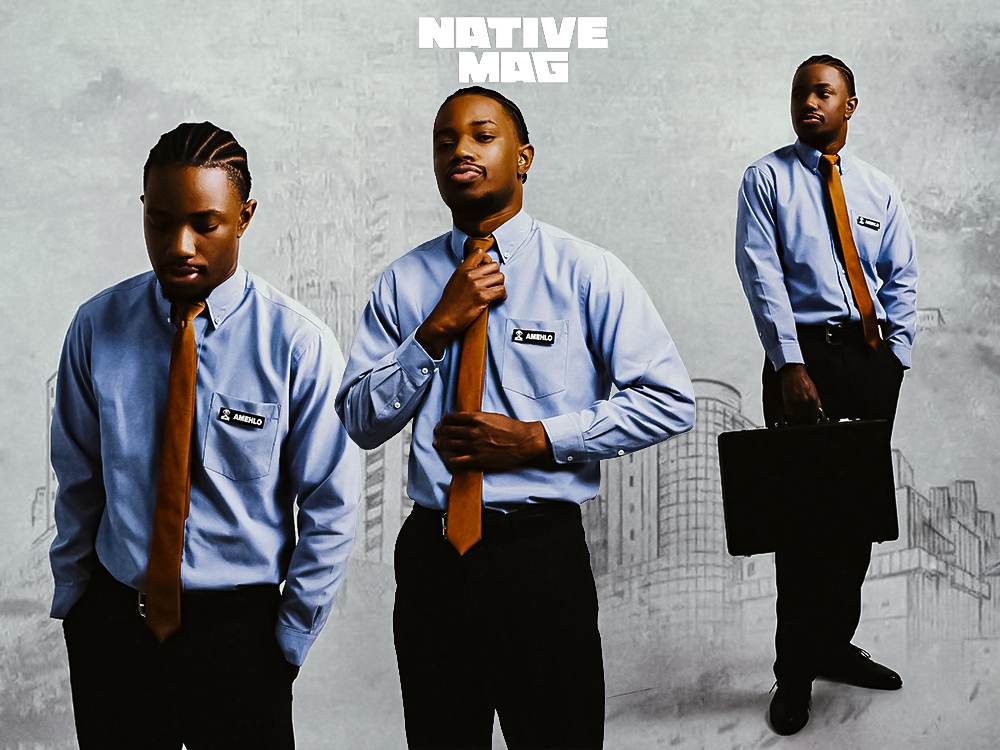
Traversing genres like Rock and Electronic music, Tyson Sybateli formulates an Alternative-Rap soundscape centering resistance on 'Amehlo.'
Translating to “Eyes,” Tyson Sybateli’s sophomore ‘Amehlo’ is a meditation on today’s surveillance culture, censorship, and our algorithm-driven existence. Leaning on his signature worldbuilding, Sybateli clocks in as an employee at Amehlo Advertisement Agency to explore the concept of constantly being surveilled and its effects on our collective psychology.
Alongside Marcus Harvey, Buzzi Lee, TRON PYRE, Filah Lah Lah and Thato Saul, Sybateli ponders on the broader consequences of the simulated environments we inhabit. More than an examination of the social aspects of this prevailing zeitgeist, ‘Amehlo’ turns inward to convey exactly how it all feels—conducting a temp check on our mental and emotional states.
Traversing genres like R&B, Rock and Electronic music, Tyson Sybateli formulates an Alternative-Rap soundscape centering resistance. Over 14 tracks, he evaluates how we digest the world around us with and folds in splashes of vernac lyricism, retro snippets, ads and his trademark ‘my bit*h bad’ motif. Pushing back against a digital world that flattens experiences and personalities alike, Sybateli comments on the superficiality embraced by his peers with lines like, “Same narrative MCs on mp3s, then there’s me” on “New Man,” while the aptly titled “Analogue” provides a further intervention, Bra Nyoga railing against the materialistic system by rapping, “For a change, I switched the ‘dibas just to pay attention”. ‘
The delivery here is underpinned by a defiant attitude and Sybateli’s anxious tone is palpable across the album, but at its core ‘Amehlo’ reveals a deep concern for the preservation of the human condition—and the art of storytelling. So, while the Umlazi-born and Pretoria-based artist foregrounds disquiet, he plots an alternate future by fusing Hip-Hop’s present with the anti-establishment attributes of yesteryear’s prominent soundtracks such as Punk and Kwaito.
This conversation has been edited for clarity.
Your famous rollouts usually live beyond the actual music experience, how does the ‘Amehlo’ concept extend into the ‘real’ and digital world?
For ‘Amehlo’ to make sense we have to tie in where the story began with ‘Home,’ that identity-finding album about where I’m from and how that made me who I am. [It was] fully digital storytelling, presentation-wise and ‘Amehlo’ follows that up to mock corporate structures in this digital era—the lack of interaction and day-to-day procedures we all follow for a living. I call for us to denounce the systems we reside in and really experience life… to wake up and open our eyes to the simulation.
On “No More Parties,” you bring the social commentary home by mentioning surveillance, gambling, drugs and the political parties you mention on “The Program.” Are you expressing your exhaustion at the decay and what would the solution to it be?
With the call back to the start of the album on the outro, I see it as a need to tell us we’ve been partying too much (“Company Party”) and the music has been numbing us instead of informing and challenging us to think. It’s all escapism now, so it’s me just putting everything that’s bothering us forward because the system we once knew is decaying. But also, build and destroy. We’re in a big transitional period in the world so we will build again once it’s reached its worst. I have faith in humanity!
“Teflon Cards” is also somewhat non-defeatist, built around playing the hand you’re dealt. How does that theme fit into the corporate or capitalist reality you’ve constructed here?
Many can relate to not coming from a background that equips them with the tools necessary to win, let alone survive in these trying times, but your life is yours alone. It’s not the end of the world, so do what you can with what you have. It’s the most personal song on the album, to compare your work access card at your job to being as hard as the Teflon Card you received in life. Overcoming reality with luck really.
Zoom out a little, what kind of company or corporate entity is Amehlo and what informed that choice in your head? Also, what is the significance of “*Advertisement*?” Is it a deliberate interruption of the listening experience?
Amehlo is an Ad company. I think it started as me finding humour in how all technological advancements find a way to incorporate ads—from touchscreen TVs to mirrors with WiFi! I laughed thinking how there’s one kind of company that shows up to the others’ growth meetings. It’s a system that’s eating itself and selling our data back to us at the same time. I added pop-up ads to my old album covers on DSPs and let the idea build ‘till I knew what my full story was, the root of my problem so to say.
The initial plan to drive this idea home was having an ad on every song but it leaned too much on satire. So with the “*Advertisement*” acting as an interlude, I catered each as though it’s a specific ad for each user on different platforms, instead of it being an ad selling mindless junk. It is the most important piece of my commentary.
“Humour Me” is a great jam and so is that ‘La La La’ line.
“Humour Me” being the longest song to make after “Teflon Cards” makes it that special to me, because all I ever wanted was a Filah Lah Lah feature when I was at the label [SONY]. I’m so glad I took my time with it and let things fall into place. It’s about being isolated in a good way, limiting your energy from things that don’t feed you and building confidence again after a couple of woes. The ‘La La La’ line is a Slick Rick homage, you know “La Di Da Di / We love to party” off “La di da Di” because it metaphorically speaks to the song before being about people loving the Company Party a bit too much. I tried to tie in as many Hip-Hop homages throughout this album, like the JAŸ-Z “back home” line from “Streets Is Watching” or “Picture This” with TRON PYRE being my version of an LL Cool J song.
You reference Trompies and HHP’s flow on “Cheers” and “Property” has a Kwaito feel too. What links do you find between kwaito and punk?
“Cheers” pays homage to so many local acts! I want people to spot the two others before I debunk them, but yeah this album is a rebellious album so I picked genres that were birthed during rebellions to get the message across. Cyberpunk and Kwaito have never had a link until I put my eyes on it (pun intended). Kwaito culture was formed in times of actual rebellion, during Apartheid, and the art spoke for the youth. It was a movement that painted a system that had failed them, and that sounds Punk to me.
Coming to your album title choice, why the eyes and not the ears, considering this is a musical experience?
This album is to open the listeners’ eyes to the world and what’s going on, that’s one. Two, it’s through the eyes of Hip-Hop, the vehicle for this message towards rebellion. Three, it’s through my eyes and personal experiences. Then, overall man, from us all policing each other online and the surveillance state being here. ‘Amehlo’ reflects all that, the all seeing eye.
Listen to ‘Amehlo’ here.

