Bella Alubo’s “Abo Le (How are you?)” Is a Love Letter to Jos
"I want people to remember that Jos is still the home of peace and tourism."

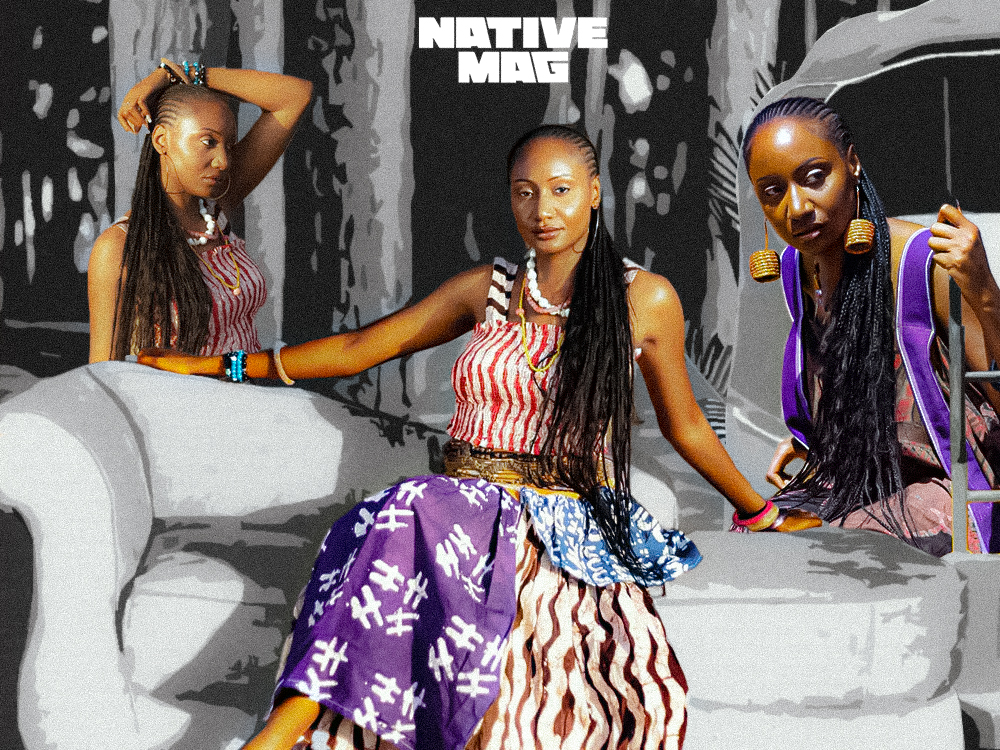
"I want people to remember that Jos is still the home of peace and tourism."
There is a particular kind of love that only people who have left a place truly understand. It is quieter than pride, heavier than nostalgia, and it tends to surface at the most unexpected moments. For Bella Alubo, it resurfaced after another round of headlines about Jos, the city where she was born and raised, making the news for all the wrong reasons again earlier this year.
“Abo Le (How are you),” her latest record, is her response to that feeling. The title translates to “how are you?” in Idoma, and the question is not rhetorical. It is the kind of question you ask when you already know the answer might be complicated, when you are not trying to fix anything but acknowledge that someone is still standing. That is the emotional core of the song, and it is what separates it from the long tradition of issue music that tends to perform concern without actually extending it.
Alubo is deliberate about that distinction. She did not want to make a song about loss in the way loss usually gets packaged for public consumption. No political accusations or sweeping statements about what the government should or should not be doing. “When everybody’s talking about it politically, they stop focusing on the people dealing with the actual thing,” she notes.
“Abo Le (How are you),” bypasses the noise entirely and goes straight to the people living inside the reality. That choice comes from personal experience. Bella went to university in Jos and lived through multiple interruptions caused by the crisis in the city. In primary school, she watched the unrest begin. About six years ago, she was in town shopping for a Christmas outfit with her sister when a bomb went off less than a kilometer away. “I know what that fear is like,” she says. “I know what it is to question your life in a moment like that.” She is not writing from a distance, it is a task of remembrance.
What makes “Abo Le (How are you)” especially compelling is that it refuses to be only one thing. The hook carries the weight of the song’s intention, checking in, acknowledging home, sitting with what Jos has been through. But the verses hold their own energy. Alubo is still in the building, still talking about the DJ playing her song, still fully herself. That tension reflects something she has been working toward in her career, a refusal to separate the artist from the person. “I’ve never been the baddie type exclusively, or the stereotypic good girl either,” she explains. “I’m a mix of everything that I am, and I feel like this song captures that.”
The music video extends that honesty into the visual. It was shot partly at a school in Jos, one with particular significance. The secondary school did not exist when Bella was initially growing up in Jos, because it was founded by her mother, who saw a gap in the community and built something to fill it. Bella was part of the first set of the primary school, which opened when she was just starting primary one. Returning to shoot there was layered with meaning: “It was two things at the same time,” she says. “Going back to a place that actually meant something to me, and representing my mom’s dream. The main reason I dream as big as I do is because of how big she dreamed.”
The video also makes a conscious choice to center real people. Market women, tricycle drivers, students, faces that belong to the city rather than a curated version of it. “You hear all these stories and it sounds so far and distant, because if you haven’t lived that reality, it’s hard to visualise, even if you sympathise,” Bella says. She wanted to close that gap, to make Jos legible to people who have only ever encountered it in crisis reporting.
The official slogan of Jos is Home of Peace and Tourism, a designation that speaks to what the place actually was and, Bella insists, still is. It sits at the highest point in Nigeria, with a climate so distinct that temperatures drop to around seven degrees in December. It has Shere Hills, a wildlife park, Kurra Falls, and a natural spring that supplies Swan water. It once hosted a Volkswagen plant, still has Nasco and Coca-Cola operations, and used to draw large concerts before security concerns made that difficult to sustain. The international community that has long called Jos home, British, American, Lebanese residents and their schools, did not settle there by accident. “I want people to remember the potential of Jos,” Bella says. “I want people to remember that Jos is still the home of peace and tourism.”
She shot parts of the video on rocks in the city that most tourists never reach. The climb was difficult, and that was part of the point. It is the Jos she grew up in, not the one photographed for travel guides or reported in tear-jerking news reports. “I wanted to give people an insider’s perspective,” she says, describing it in terms of what she calls an ethnographic approach, a view of the city from within rather than from outside looking in.
For Bella, returning to Jos to make this video also marked a personal shift. The last time she shot visuals there, she was around seventeen, rapping freestyles on a bridge, just starting out. The person who came back is different. She works with melodies now. Her collaborators have included YCee, the Notorious B.I.G., Mr Eazi, Sho Madjozi, Niniola and many more. The career she could only imagine from a room in Jos has become real. “It’s still crazy to me when I go back to that state of mind,” she admits. “I was just some random girl in a small town with no connections whatsoever.”
That is what she wants someone from Jos to hear when she listens to “Abo Le (How are you).” Not a celebrity looking back with nostalgia, but proof that the distance between where you are and where you want to be is crossable. The song does not promise anything easy. It does not claim that grief disappears or that the problems facing Jos have been resolved. It just shows up, asks how you are, and means it.
Listen to “Abo Le (How are you)“ here.

