Adekunle Gold Is Finding Uncharted Journeys Inside
To create ‘Fuji,’ Adekunle Gold had to return home, not in a nostalgic sense but in a literal and spiritual journey.

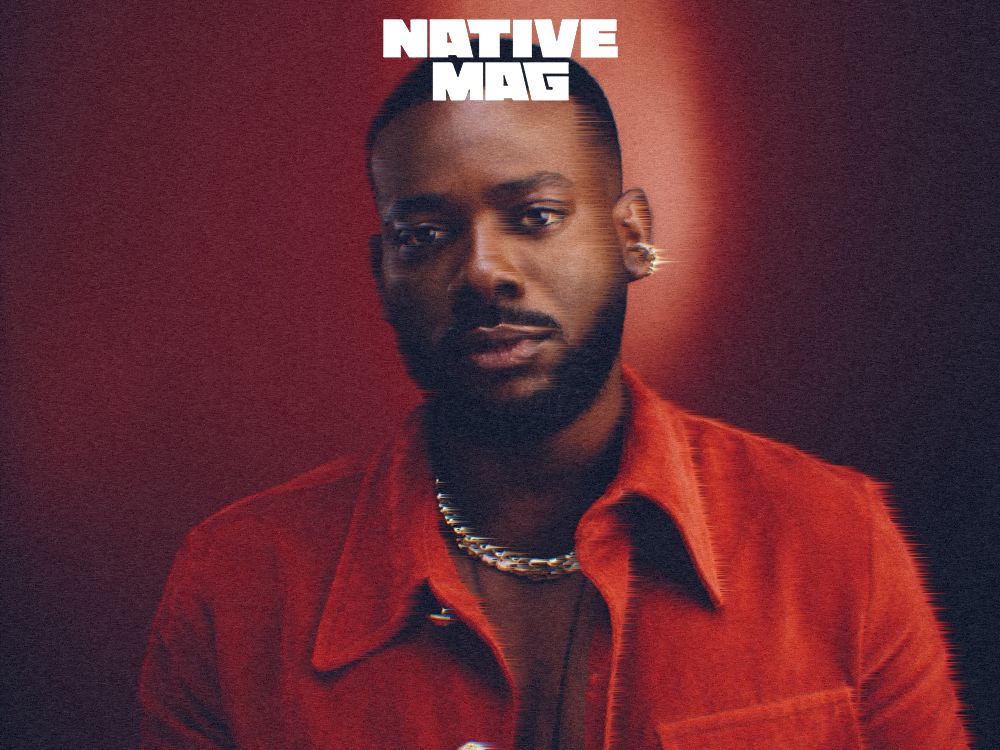
To create ‘Fuji,’ Adekunle Gold had to return home, not in a nostalgic sense but in a literal and spiritual journey.
It has been nearly a decade since Adekunle Gold first announced himself with ‘Gold,’ a record that reshaped the possibilities of contemporary Nigerian pop conventions by wholeheartedly embracing influences from Highlife, Fuji, and Juju. Back then, he was a young man staking a claim with vibrant melodies and a bold reimagining of sonic traditions. Today, Adekunle Gold speaks from a different place. The years between have given him a catalog that stretches across genres: five albums that trace his growth, and a life that is no longer only his own.
His latest album, ‘Fuji,’ is a mosaic of heritage, grief, joy, and uncharted journeys. It is a pilgrimage back to the roots of the man born Adekunle Kosoko, a descendant of kings, a father, a husband, and a sonic alchemist who has spent a decade distilling his soul into music. The journey of an artist is rarely a straight line, and for Adekunle, the path has been a winding one, marked by bold pivots, fearless experimentation, and a willingness to take risks, sometimes against the expectations of those who wanted him to stay within a sound they had come to love.
“Releasing ‘Call on Me’ was when I’d say it was the hardest for me,” he says of the pressure of making his famed sonic switches. “I released it off the back of the ‘Gold’ album, which was a predominantly Highlife sound, and then I dove right into Pop. People were like, ‘What are you thinking?’ But I did it because that’s what my soul was yearning for.”
The act of embracing change has never been a burden for Adekunle Gold. If anything, it is a natural extension of his outlook on life. He has learned that not every battle is his to fight, and not every moment requires resistance. “Overthinking,” he readily answers when asked what he has had to let go of since his early days. “I used to think the world was against me, like it was conspiring for me to fail. What I realized is that in the grand scheme of things, I don’t matter that much for the universe to conspire against me. I’m the author of my own life.”
That perspective has shaped not just the music but the man. When he speaks of highlights outside the studio, he places family above all else. His voice softens as he recalls marrying his Popstar wife, Simi, and raising their daughter. “My family, marrying the love of my life, having my beautiful daughter, growing, living, making memories, those are the highlights,” he says. “I can afford to be a failed musician, but not a failed father or a man. That’s very important to me.”
In an interesting twist of fate, family has also opened him up to other creative pursuits, providing a wider vision of what artistry can be. “I’m a man of the arts,” he explains. “I’ve designed my album covers, my single covers, sometimes my posters. I’ve been involved in my video direction. Now I’m fully designing. The earrings I’ve been wearing, that’s my design. It’s called Wave. The glasses, too. ”
The sense of intimacy he cultivates extends beyond music and design. In recent years, Adekunle Gold has built a direct channel to fans through his newsletters. For him, they are not marketing tools but bridges of friendship, honest notes sent when there is something to share. “I’ve never wanted to just take and not give back,” he explains. “My newsletter is a form of talking to people, sharing my experiences. I like my fans to know me, to know where the music is coming from, to know the depth of my being. The best part is there’s no pressure. Even when the fans want to hear from me, I don’t just write until I have something to say. I’m grateful I have that community.”
Recently, Adekunle Gold attended the Ballon d’Or, stepping into a world of football which he has always loved. “It felt so good to be in a room where footballers are celebrated,” he says. “People in the public eye are actually real people who go through things, but their life is magnified. Seeing them on stage, watching their speeches, hearing them talk about how rigorous it is to be what they are, it felt very good. Seeing Dembele win, seeing him bring his mom on stage—that was a moment I could relate to.”
This balance of personal and artistic life reaches its fullest expression in ‘Fuji’. Its story began years ago, with the song “Simile,“ written after the passing of his father in 2019. Adekunle Gold kept it close, waiting for the right moment. That moment presented itself on his sixth album. “This project is the most honest I’ve been since ‘Gold’ and ‘About 30,’” he says. “I wanted to share my life in the past decade, everything I’ve experienced, my grief, my joy, having my daughter, the friendships I’ve lost, my royalty, the new confidence I’ve found. That’s what ‘Fuji,’ the album is.”
To create ‘Fuji,’ Adekunle Gold had to return home, not in a nostalgic sense but in a literal and spiritual journey. “ I went back to my palace. My name is Adekunle Kosoko, and if you know history very well, Kosoko was a king in the 1800s,” he explains. “He was the first person to fight the British government when they were trying to colonize. He came back as a king. I was never interested in this history before. When I dug deep in 2023, I realized I’d given my life to only music and nothing more. I wanted to understand where I come from and why I do the things I do. Every time I go to the palace, it feels like coming back to myself. That’s what gave birth to Fuji—finding uncharted journeys inside.”
The 15-track LP is as much about heritage as it is about sound. Adekunle Gold grew up surrounded by Fuji, and traces of it have appeared across his work since ‘Gold.’ With this project, he steps fully into it, presenting it as both a personal and cultural statement. “I need the world to see this beautiful sound that I grew up on,” he says. “It’s the sound of Lagos, the sound that I know. Even if you’re listening to my R&B songs, you’ll hear my tone; it’s Fuji. I’m meant to do it.”
That conviction pushed him into new creative territory, particularly on “Big Fish”, the album’s opener and most evocative track. “For the first time, I said I don’t want loops in production,” he explains. “With most Afrobeats songs, once you hear the beginning, the beat carries on to the end. I’ve been listening to Kendrick, J. Cole, and Drake, and I see how they switch flows. I wanted to try that. I made ‘Big Fish’ four times with different producers. I was heavily involved in production. I reached out to TMXO, told him exactly what I wanted. It took a while, but we got it.”
Collaboration has always been a thread in his career, and on ‘Fuji,’ he stretches it further. There are appearances from stars like Davido, but also from younger artists carving their own narratives like TK and Mavo. “I’ve done it since about 2013,” he says of collaborating with a new generation of artists. “I’ve had new artists that people don’t know about on my projects because I genuinely enjoy music. It doesn’t matter your size or reach. If you can add your emotion to a song, then by all means, you’ll be on a song with me. Collaboration serves the music more for me than optics. It’s nice to have a big artist, but when the music’s not good, it’s not good.”
If ‘Gold’ announced Adekunle Gold as an artist of promise, ‘Fuji’ presents him as an artist of depth. It is a record that looks backward to ancestry and forward to possibility. In it lies joy, grief, experimentation, and conviction. Above all, it is the sound of a man who has grown into himself. “I want people to see a man who’s not afraid, a man who’s found himself, a man who will keep on giving a gift that lasts forever, a man who’s sincere.”

