Vanco Wants to Score the Best Night of Your Life
We caught up with Vanco to discuss his ever-expanding creative world and mission to create resonant, memory-defining moments through music.

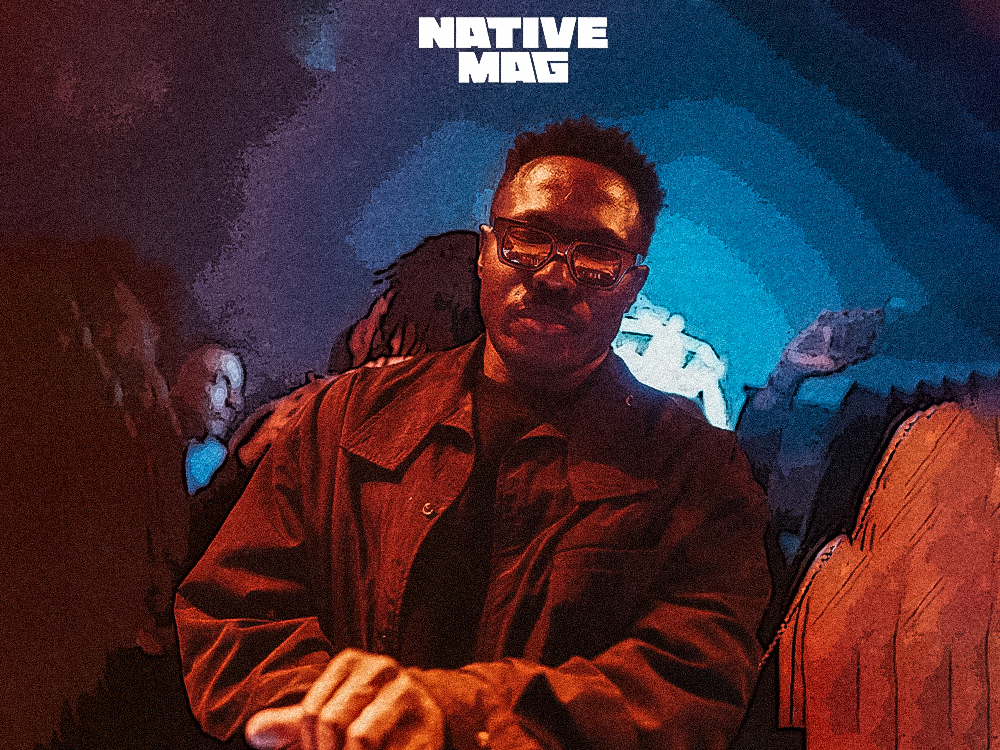
We caught up with Vanco to discuss his ever-expanding creative world and mission to create resonant, memory-defining moments through music.
Vanco never really second-guessed that his 2025 hit song “Ma Tnsani (Yalla Habibi)” would take off. “When I release something, I’m confident people will enjoy it,” the South African DJ/Producer tells NATIVE Mag. That confidence has guided him every step of his career, pushing him to walk away from his day job as a quantity surveyor to pursue music full-time after years of balancing both worlds. A chance trip to the Amsterdam Dance Event in 2018 revealed to him glimpses of what was possible and proved his creativity was worth the gamble.
To those just tuning in, Vanco seemingly appeared out of nowhere. “Ma Tnsani (Yalla Habibi),” a collaboration with AYA, which was Ibiza’s most shazamed track of 2025, was evocatively contemporary in spirit, sitting right within the Afro-House revival happening globally and earning a successful remix from Tiësto. But Vanco is no overnight success. His foundational breakthrough came a decade earlier with 2015’s “Regeneration.” His journey since then has seen him continue to expand through constant travel, larger stages, and deeper engagement with diverse audiences and cultures, all of which feed back into his evolving sound.
This evolution unfolds against a broader shift in African Dance music, with South Africa remaining a fertile ground for the birth and blossoming of the different iterations of the sound across the continent. Raised on a cocktail of Gospel, Hip-Hop, and especially Kwaito—which he identifies as a precursor to contemporary styles like Amapiano and 3-Step—Vanco’s sound enables him to connect South Africa’s vibrant Dance tradition with parallel movements across the continent, specifically towards Nigeria, a territory he views as a primary creative foil.
His new single with Deela, “Repeat,” is a thumping six-minute excursion through winding electro rhythms buried deeper into a shape-shifting bed of Afro-Tech, as Deela’s hypnotic chants lead it in headier directions. We caught up with the globetrotting artist as he prepared for a Hungarian tour stop to discuss his ever-expanding creative world and his mission to create resonant, memory-defining moments through music.
What have you been up to lately?
I’ve been up and down. I’ve been busy touring and making music on the road, while also balancing family time and spending time with friends. I’ve taken up interior design again as well, something I used to do when I worked in real estate as a construction engineer. Now, I pursue it as a hobby to help maintain balance in my life. Creatively, I feel I’m in a very good place. I’ve been travelling more and gaining exposure to new territories and larger stages, which has enriched my creative process. These experiences naturally find their way into my music.
Growing up, would you say you were very musically inclined?
Yes, very much so. In South Africa, music is a big part of our culture. It’s a form of expression for us, and it speaks to us in many ways, so you can’t deny or ignore it. From going to school and coming back home to spirituality, especially church, which is significant, music is always present. People are deeply rooted in spirituality, so music becomes part of the journey. In other words, you’re born into it.
What kind of music was playing when you were growing up?
Old-school music, of course, Gospel, which my parents played. There was also Kwaito and House music, as House was quite mainstream even then, you’d always hear it on the radio, along with a bit of Hip-Hop.
It’s interesting how you distinguished Kwaito from House music. Can you talk more about that?
Kwaito is different from House music. Kwaito is the originator, and much of the music is heavily influenced by it, including Amapiano and 3-Step. Most of our local music draws from Kwaito. It also comes from a time when South Africa gained freedom, so many artists used it as a form of expression and celebration. It was about sharing relaxed, enjoyable music to lift people’s spirits, given the country’s difficult history.
One of the things I like about Kwaito is the message behind it, the songwriting, and the melodies, especially the basslines. For me, the basslines on those songs are unbeatable. It’s something I always go back to. Even though I was young at the time, now that I’m an adult, I relive those moments. It brings a sense of nostalgia. Some songs carry strong messages about enjoying time with your boys, life getting better, and personal growth. Sometimes it’s about girls, too. It’s similar to Hip-Hop and Pop in that way, something people can relate to, especially in the hood. It’s positive, uplifting music.
What music have you been listening to lately?
I’ve been listening to old-school Hip-Hop and a lot of local music, such as uMaskandi, which is heavily guitar-driven with a distinct rhythm. I also listen to Highlife a lot. I enjoy it very much.
When did you realise you wanted to make music full-time?
I took a trip in 2018, when I was still running a construction consulting company with my mentor. It was my last year working as a quantity surveyor, in real estate development and interior design. I travelled to Amsterdam for a holiday, and that was my first ADE. People recognised me and were taking pictures because they had been listening to my music. At the time, I had been doing music part-time since 2015. That trip gave me confidence and belief. The following year, in 2019, I took a leap of faith and started doing music full-time.
Where were you in your career when you worked on “Ma Tnsani (Yalla Habibi)”?
I was in London. The idea started on the plane, mainly the melody. There’s a strong melody before the vocals come in. I often create ideas on flights, usually melodies, chords and grooves. Then the full song was produced in London.
Did you anticipate how successful it would become?
I always expect my tracks to do well, not in a cocky way, but in a positive and motivational sense. When I release something, I’m confident people will enjoy it. But the success of that track went beyond my expectations. I didn’t anticipate it reaching those heights, although I do believe in everything I put out.
How did “Repeat,” the collaboration with Deela, come about?
It was about good energy. These things aren’t always planned. I was introduced to Deela through my management, and we met at a studio session in London. We worked on the track, and it was good, but we felt strongly about this one. It was natural, just good vibes, and before you know it, you have something special.
How do you view the creative synergy between Nigeria and South Africa right now?
We are all Africans at the end of the day. The rhythms may differ, but they are connected. It’s important to bridge those cultural and musical gaps. Nigeria has a strong, long-standing music culture. You can see it in collaborations like AKA and Burna Boy. The Nigerian scene has incredible artists, with strong support within the community. That energy spreading across the continent is powerful. It’s time for Africa to explore its creativity and share it with the world.
Are there other Nigerians you’d like to work with?
I’m open to making good Electronic music with anyone. I really love Nigeria. I’ve been coming to play every year for the past five years, and I’ve become deeply connected with the culture. One of my favourite things to do is drive around and visit the Shrine. It’s a great way to understand the culture more deeply. I also enjoy watching local DJs, like Aniko, and seeing what others in the scene are doing. Meeting people and seeing the work from platforms like Spektrum is inspiring.
Are you experimenting with any new directions in your music at the moment?
I wouldn’t say I’m experimenting, but I’m open to making good Electronic music. The experimental side comes from working with different vocalists, artists, and producers across various genres. I’m focused on creating strong electronic music and developing within that space.
How would you say Electronic music has evolved from when you started releasing music until now?
It has definitely evolved. Social media, the internet, and AI have all played a role in that growth. Like any region, Africa has its own rhythm, which is different from other parts of the world. Europe also has its own distinct sound. Right now, Africa is in the spotlight. There were times when America, especially during the rise of hip-hop, was in focus, and later the UK had its moment. Now it’s Africa’s time to shine. The world is starting to catch up with what we are doing. We are different in our own way, and we are able to tell our own stories. In the past, people were not widely exposed to our creativity, but now they are discovering more African artists. It shows progress. It’s also helping to remove stereotypes about Africa and highlight our identity through music.
You’ve been touring a lot. How has the experience been?
It’s been good. I’ve been touring for the past five years. Since 2019, which was my first European tour, I’ve continued performing. The difference now is that I’m playing bigger stages and more shows than before. It’s been a beautiful journey and a great experience. You get to learn about different cultures, then go back to the drawing board and incorporate some of those elements. As much as I’m African, I also take influences from other parts of the world through travel and performance. So far, I’ve adopted different sound qualities, mixing and engineering techniques, and even how DJs in other countries approach their business.
What do you want to make people feel on the dance floor?
I want people to have a memorable night, moments they can connect to their life experiences. For example, remembering when a particular track played during an important moment in their lives. I’ve performed at private events where couples got engaged after meeting on the dance floor. Those kinds of stories matter. I want people to leave with moments they will carry with them for life.
What does the next phase of your career look like?
It’s about staying committed to the music and the culture, and continuing to grow and improve. I want to take things to greater heights, be more innovative, and eventually create a platform for others. I would like to be an example for emerging artists, especially in Africa, who want to break into the international scene, and help them progress in their careers.
Listen to “Repeat” here.

