Taves Is Living His Popstar Moment
‘Popstar - Side A' is anchored in romance rather than the fame Taves has enjoyed in recent years, it's a reflection of how he sees himself.

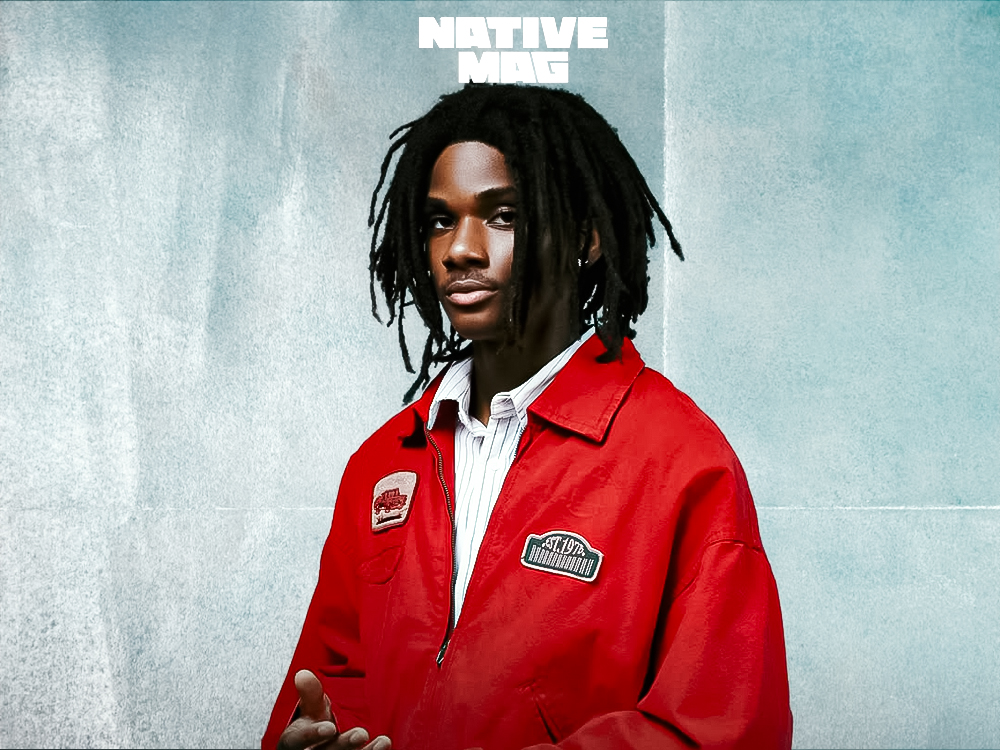
‘Popstar - Side A' is anchored in romance rather than the fame Taves has enjoyed in recent years, it's a reflection of how he sees himself.
The first thing that becomes clear when breaking down ‘Popstar – Side A’ is that the album was never designed to stand on its own. It is only one half of a larger body of work, and Taves speaks about it with the restraint of someone who knows the conversation is still unfinished. Released in July, the project has since begun to settle into listener’s hands, the excitement around records like “Uche Jumbo” and “Simone” still palpable, but he is already thinking beyond the moment. ‘Side A,’ as he sees it, is only the beginning. “I needed people to experience the first half before they could experience the whole,” he says. “I’ve also been learning a lot about patience, and that plays a part in it too.”
Patience is not a word often associated with Pop music, particularly at a time when artists are encouraged to move quickly from one release to the next. Yet it comes up repeatedly throughout our conversation, quietly connecting the decisions behind the singer’s project. The choice to split the album. The time it took to finish it. The songs that stayed. The ones that disappeared. Rather than rushing towards an album because it seemed like the expected next step after ‘Are You Listening?,’ he chose to wait until the music felt complete, even if listeners would only hear half of it at first.
‘Popstar – Side A’ could just as easily read as playboy, given how much of the album is anchored in romance and attraction rather than fame itself but he picked its title because it’s simply how he sees himself right now, at this specific point in his career, and he wanted the album to carry that self-image plainly “It’s a very good representation of what the music sounds like and where my head is at right now,” he explains. “It’s how I see myself.”
Getting there was another story altogether. Work on the project stretches back to the end of 2024, long before listeners knew anything was on the way. Over those months, the project changed constantly. Songs that once looked certain to make the final tracklist disappeared. Others evolved until they barely resembled their original versions. Looking back now, he says the earliest version of the album sounds almost unfamiliar. “There were so many songs I thought would make the final cut,” he says. “It kept changing. I’m happy with the way it is now, but it sounded so different before.”
No song reflects this dynamic more than “Chaos.” Although it opens ‘Popstar – Side A,’ it is also the oldest record on the album, dating back about three years. Instead of preserving it exactly as it was, he rebuilt it to fit the world he envisioned. “The initial version of ‘Chaos’ sounds so different from what it is now,” he shares. “We had to take what we had before and tweak it so it fit into this project.” Before listeners encountered the romance and confidence spread across the rest of ‘Popstar – Side A,’ he wanted them to understand the emotional space he was writing from. “We start with ’Chaos,’ which is a song I made to put the listener in my headspace,” he says. “To let them know where my head has been before we get into anything else.”
That decision shapes everything that follows. “Isn’t It Beautiful,” “Simone,” “Deliver Me” and “Uche Jumbo” carry a lighter energy, moving through relationships, parties and moments of enjoyment without staying in one place for too long. By the closing stretch of the album, the mood begins to shift again. “Preaching,” “Space” and “Take Me Away” become noticeably more reflective because it begins to share space with something else.
“As much as fun is fun, and real life gets very real sometimes,” he starts , “I need to find a way to balance the two so I can be okay in myself.” Looking back at the sequence, he sees those closing songs as part of that search. They arrive after the celebration rather than before it, recognising that both experiences often exist side by side. He never expected listeners to interpret the album exactly the way he does, but he wanted every record to carry its own emotional weight. “I just wanted it to feel like a ride,” he says. “No two songs are the same, each bringing out a different emotion.”
One of those emotions found its way into “Uche Jumbo,” though the song itself began almost accidentally. Feeling bored at home one day, he called producer OG Sterling, who invited him over to the studio. They spent the session working on several ideas, and “Uche Jumbo” emerged.. At that point, there was no connection to Wizkid’s “Don’t Dull.” That came later, after he returned home and began playing the unfinished record for friends. His stylist was the first person to hear the possibility. “At that point we hadn’t even thought about it,” Taves says. “He pointed out that it could go crazy on the song.” The suggestion was enough to send him back into the studio with OG Sterling and Arieenati, where the record took on an entirely different direction.
Back in the studio, the conversation shifted from whether they should use “Don’t Dull” to how they could make it feel natural. The goal was never to recreate Wizkid’s record or lean on nostalgia. Instead, they searched for the part of the song that had stayed with Taves over the years. “My favourite part of ‘Don’t Dull’ is the intro, those drums,” he says. “I needed that same effect on the new song.” Together with his producers, they gradually found a way to blend both records without losing the identity of either one. The familiar rhythm became an entry point into “Uche Jumbo” rather than its defining feature.
Considering the conversation the interpolation has generated, it is easy to assume he was aware of its significance while making the record. He insists otherwise. “I’ve never really thought about it that way,” he says. “I just do things I feel like doing. I don’t think about whether it’s been done before.” Only afterwards did he begin to appreciate that very few artists had revisited that period of Wizkid’s catalogue. “I don’t think anybody has really tapped into that era of Wizkid when it comes to songs you could sample or interpolate. I’ve heard a couple of things, but nothing definite. So it’s a pretty cool thing that we were able to do that.”
The music he listens to follows a similar instinct. Rather than chasing sounds he wants to recreate, he gravitates towards records that put him in the right frame of mind. “It’s not in a direct sense where it’s like, ‘I heard this and I want to try it in my own music,’” he explains. “It’s more that I listen to music that puts me in the right headspace.” More recently, he has found himself returning to contemporary Pop, particularly Post Malone’s ‘Austin’ and The Weeknd’s ‘Dawn FM,’ which he describes as his favourite project from the Canadian artist.
Those influences meet a creative partnership that has become central to the way he works. Across most of ‘Popstar – Side A,’ Arieenati occupies a role that extends beyond production credits. The two have worked together for years, developing a relationship built on familiarity as much as communication. “He understands me in a different way,” he says. “I don’t have to tell him things before he knows exactly what to send or what to do on a song.”
Arieenati’s contribution stretches across arranging songs, recording sessions, engineering and helping shape the final tracklist. Around that partnership sits a wider circle of collaborators, including Spax, Black Culture, Anoop D’Souza, Omzi, Michael Synx and OG Sterling. Michael Synx also engineered several records while producing “Space.” Despite the number of people involved behind the scenes, one part of the process remained entirely personal. “I wrote all the songs myself,” he says. There are no featured artists and no outside songwriters on ‘Popstar – Side A,’ leaving the project to be carried by a single voice from beginning to end.
For all the clarity he has about ‘Popstar – Side A,’ Taves becomes noticeably more guarded when the conversation turns towards what comes next. Asked about Side B, he pauses before answering. “That’s a tough one,” he admits. “We haven’t even gotten there yet.” It didn’t sound like an attempt to protect a surprise, it was more like a reflection of how he wants the project to be experienced. Instead, he returns to the same idea that shaped the album from the very beginning. “It is supposed to be a whole album,” he says. “It just comes in parts. When we get to Side B, it’ll be a whole album, and everybody can experience it together.”
It is an unusually restrained way to introduce a project in an era that often demands immediate gratification. Rather than treating one part as the final destination, he presents it as the opening chapter of a much longer story, one that asks listeners to stay with the music instead of moving through it as quickly as possible. The decision says as much about where he is as an artist as any lyric on the album. ‘Popstar’ may arrive in two halves, but it was always conceived as one complete statement. Until that final chapter arrives, ‘Popstar – Side A,’ offers the clearest picture yet of an artist willing to let both his music and his audience take their time.
Listen to ‘Popstar – Side A’ here.

